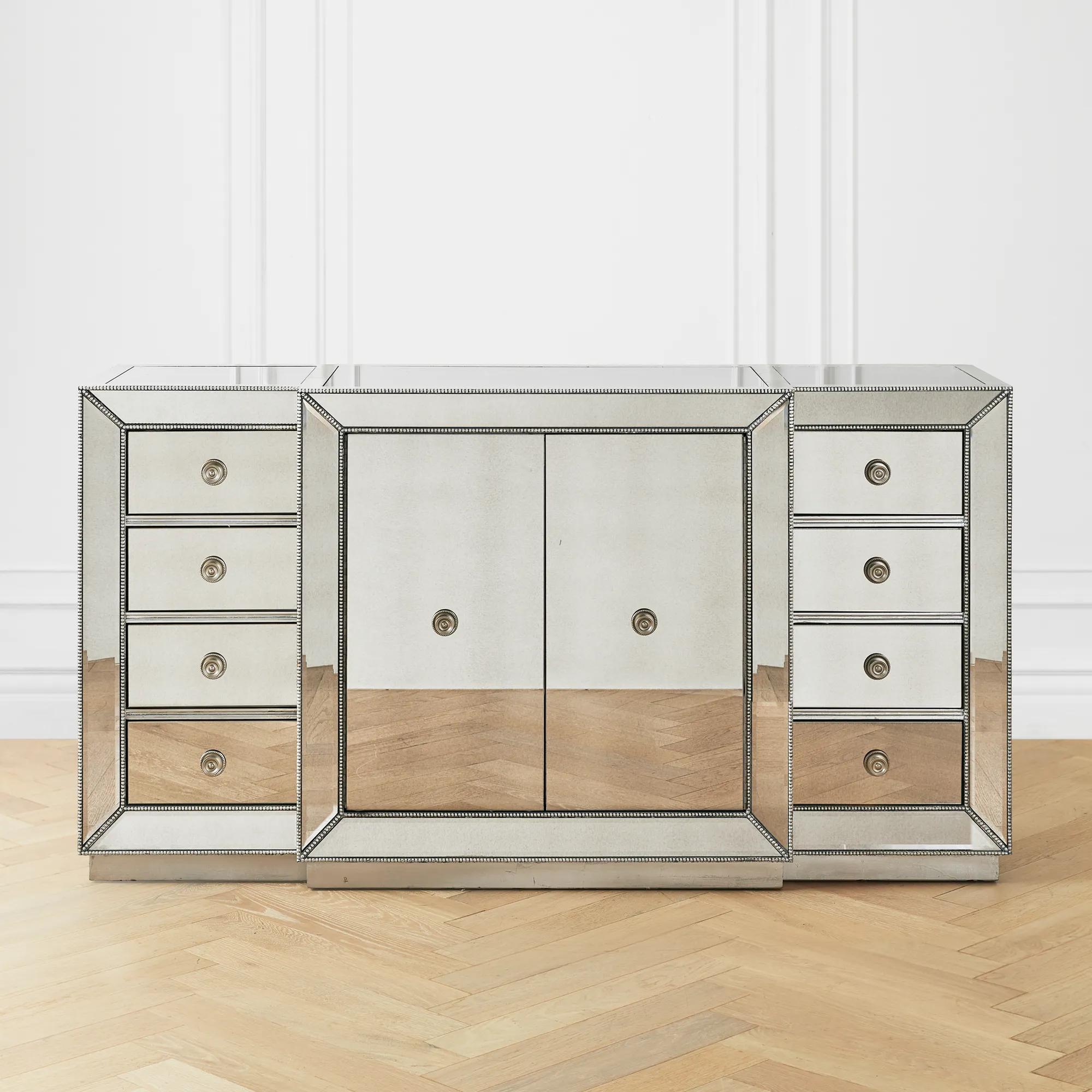
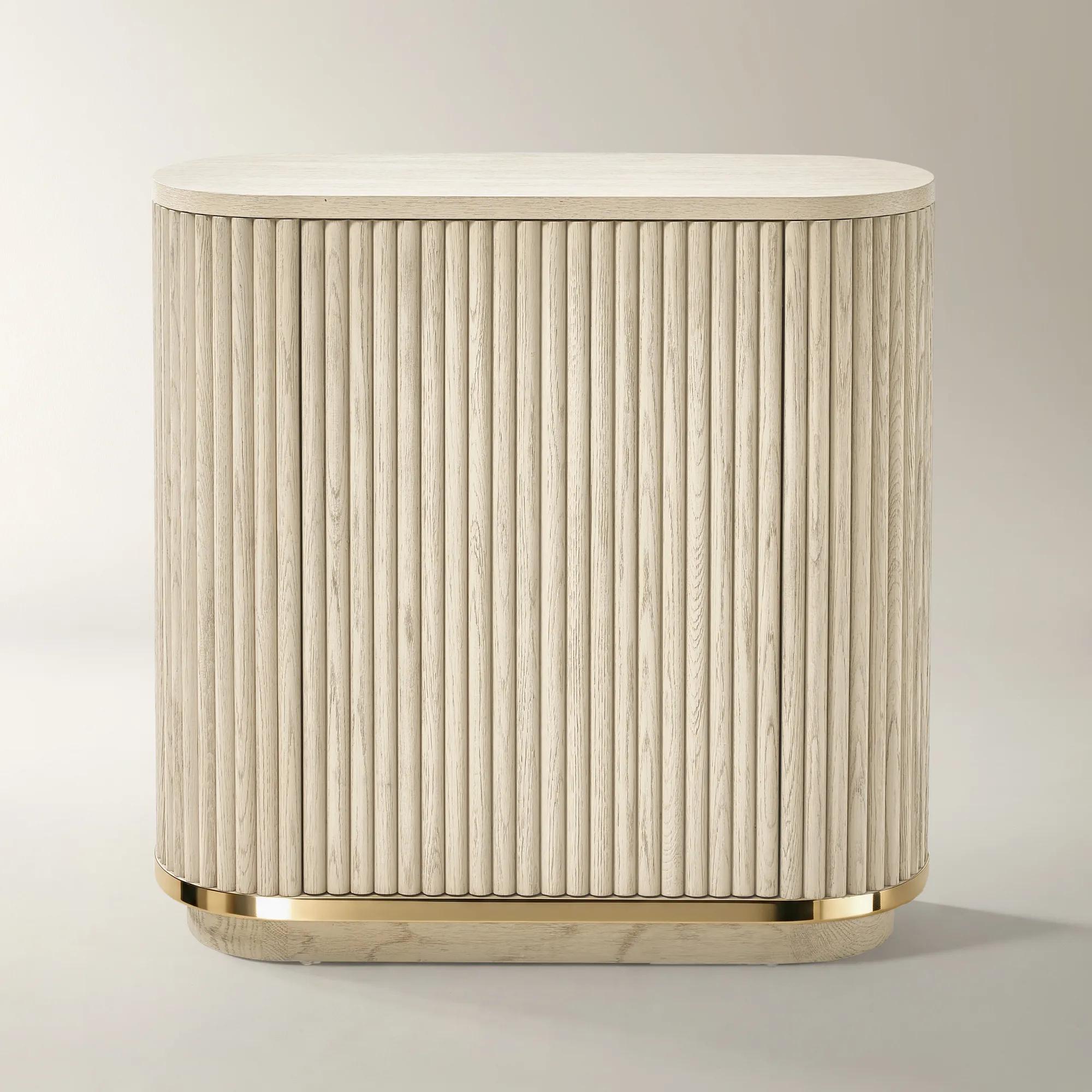
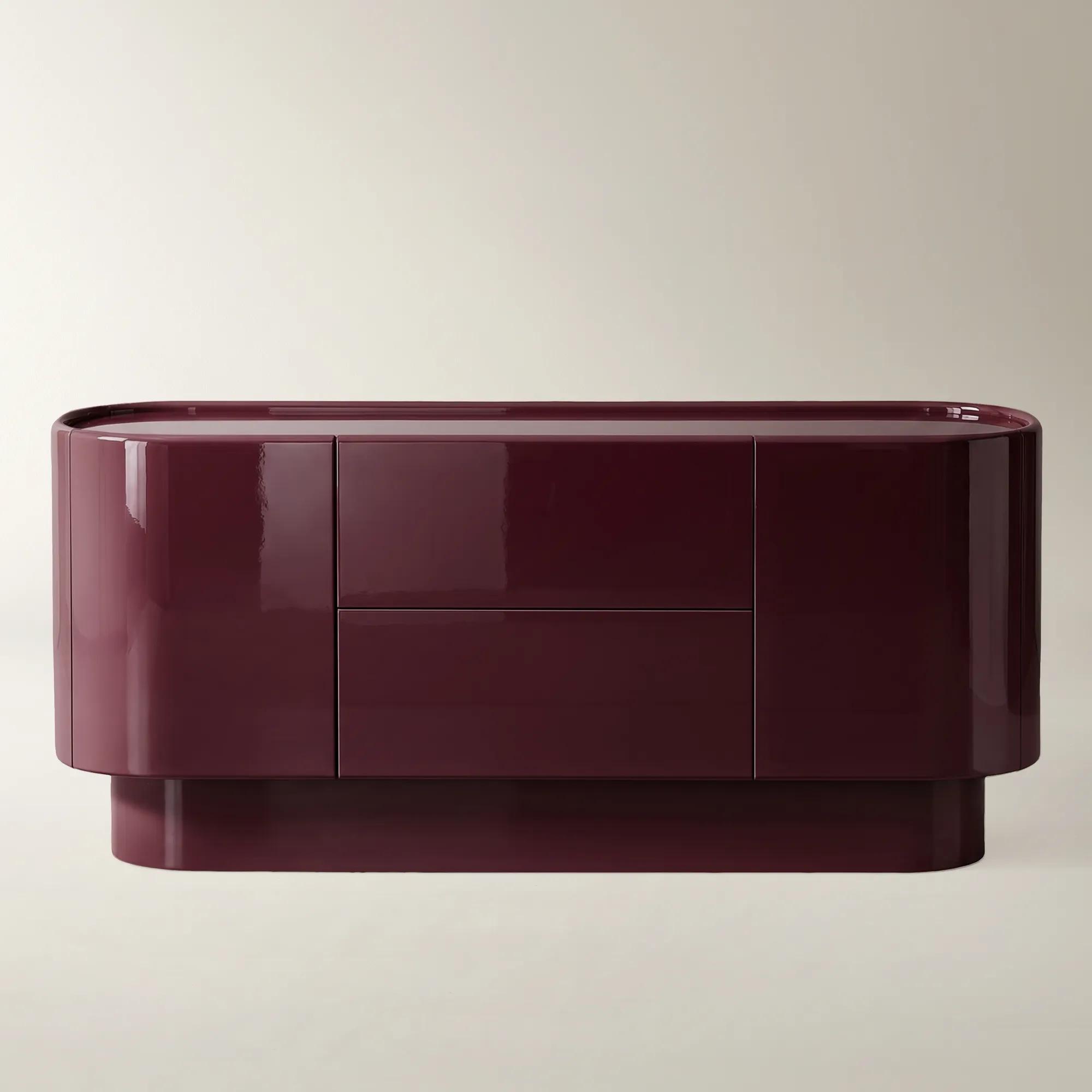
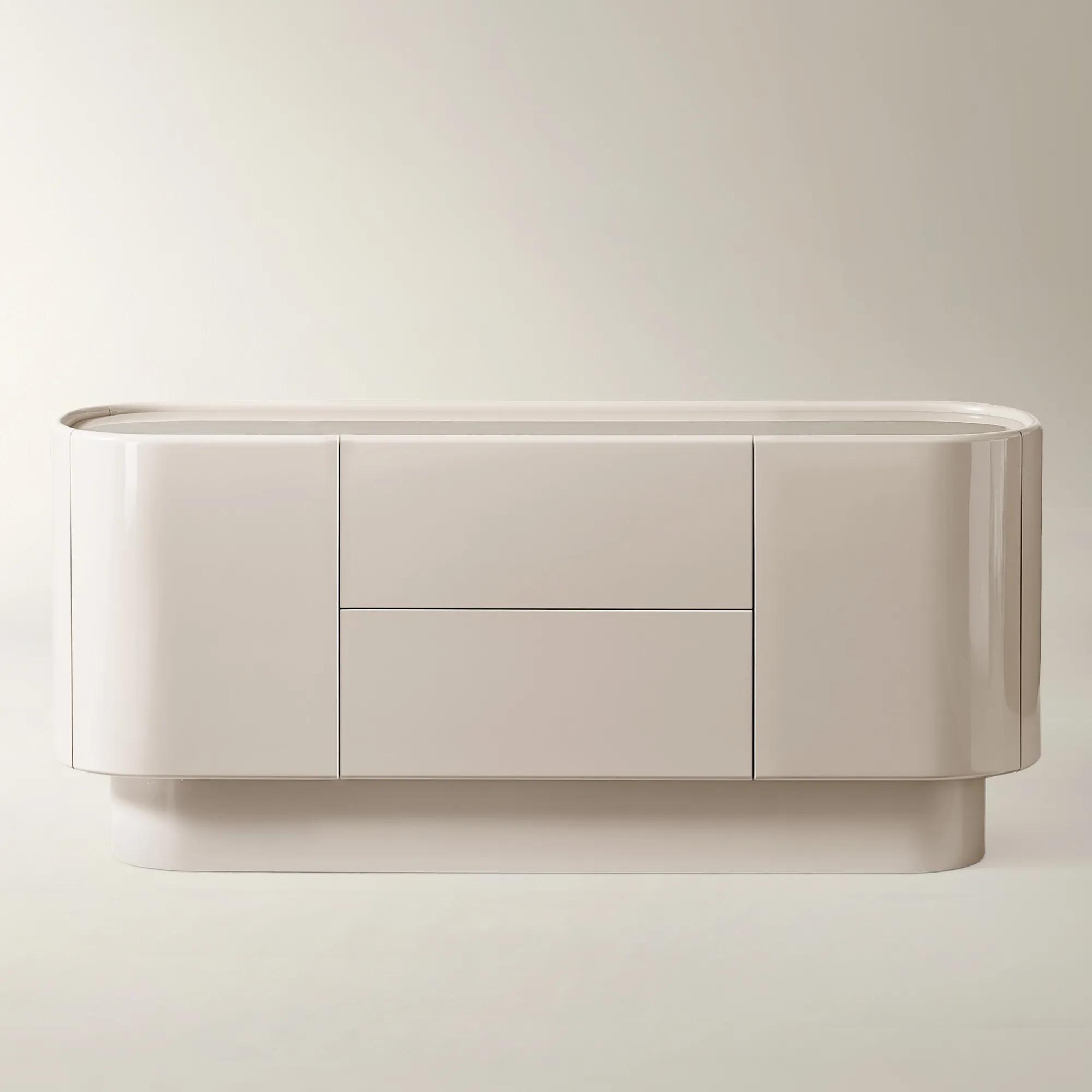
Sideboards For Decor
Sideboards For Decor
-
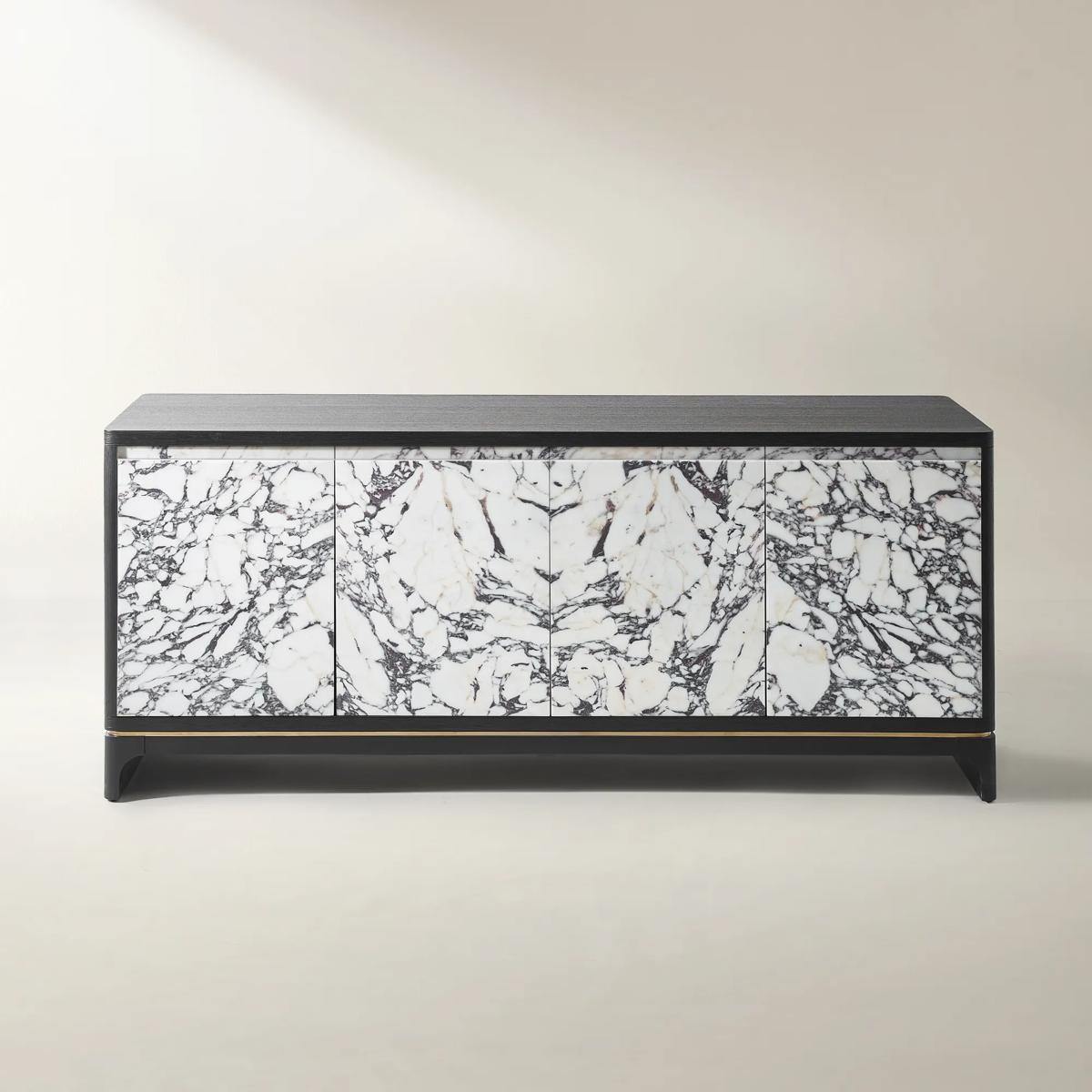
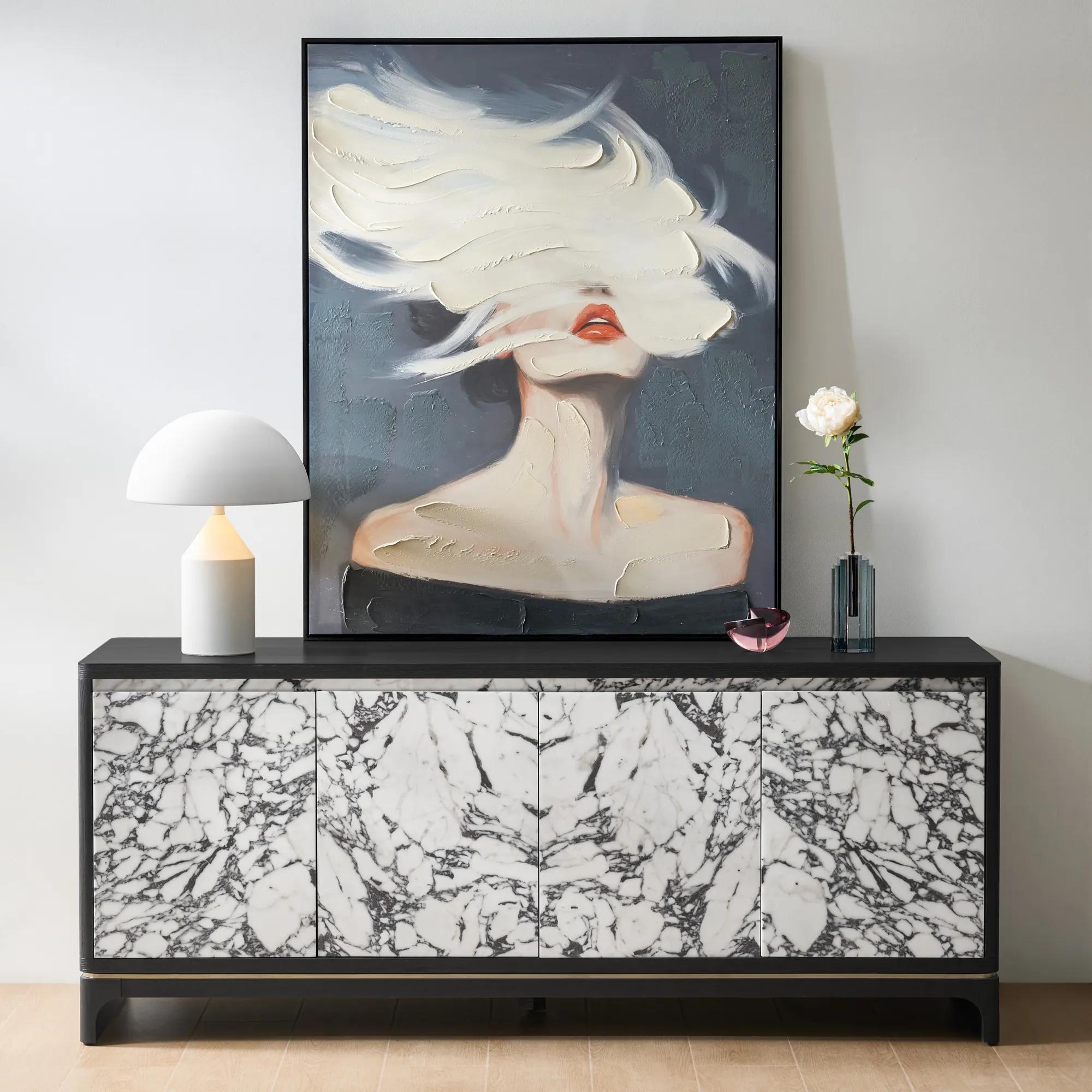 Vanta Black Oak And Calacatta Marble Buffet (72")$2499
A striking matte black oak sideboard featuring genuine Calacatta Viola marble fronts with dramatic violet veining.
Add To Cart -
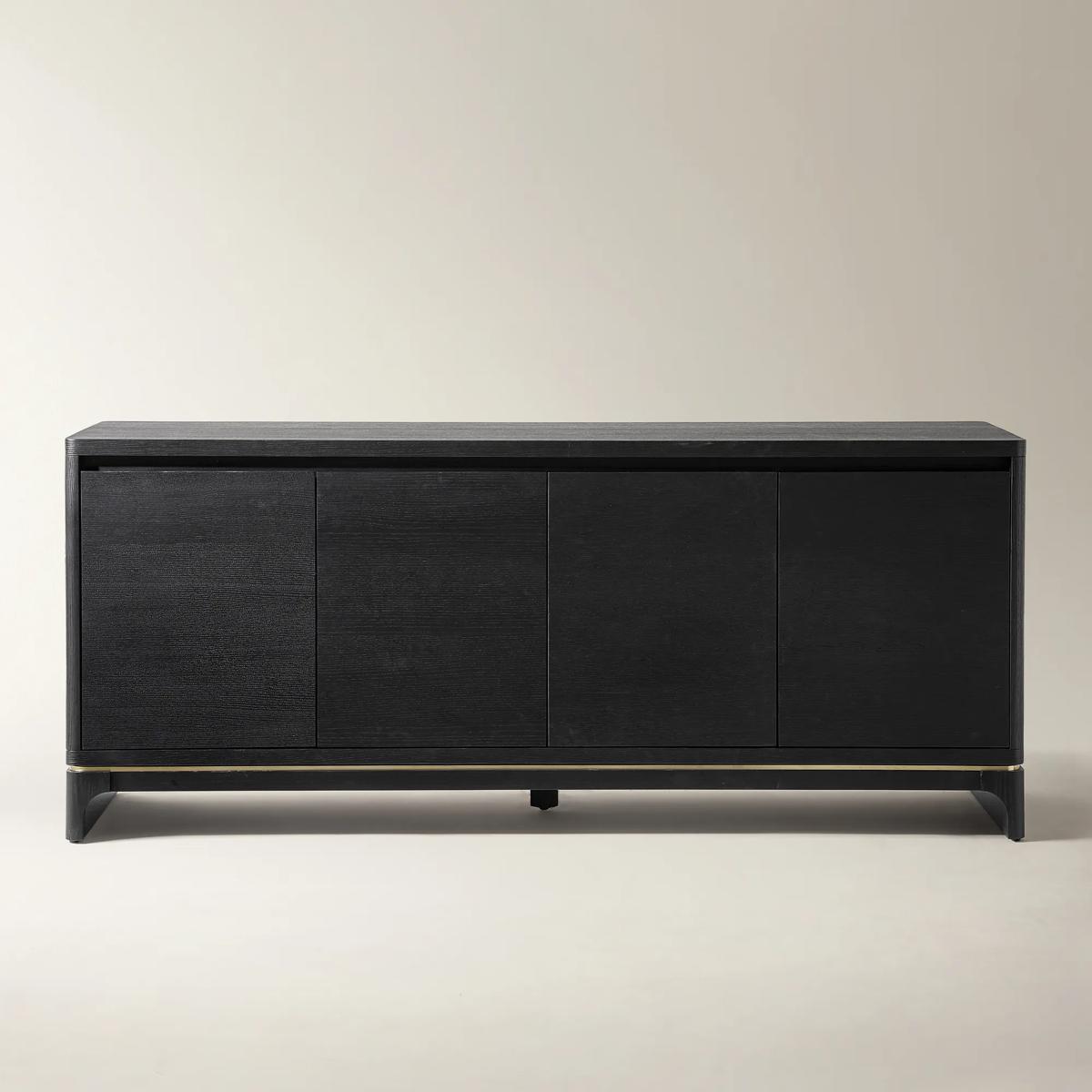
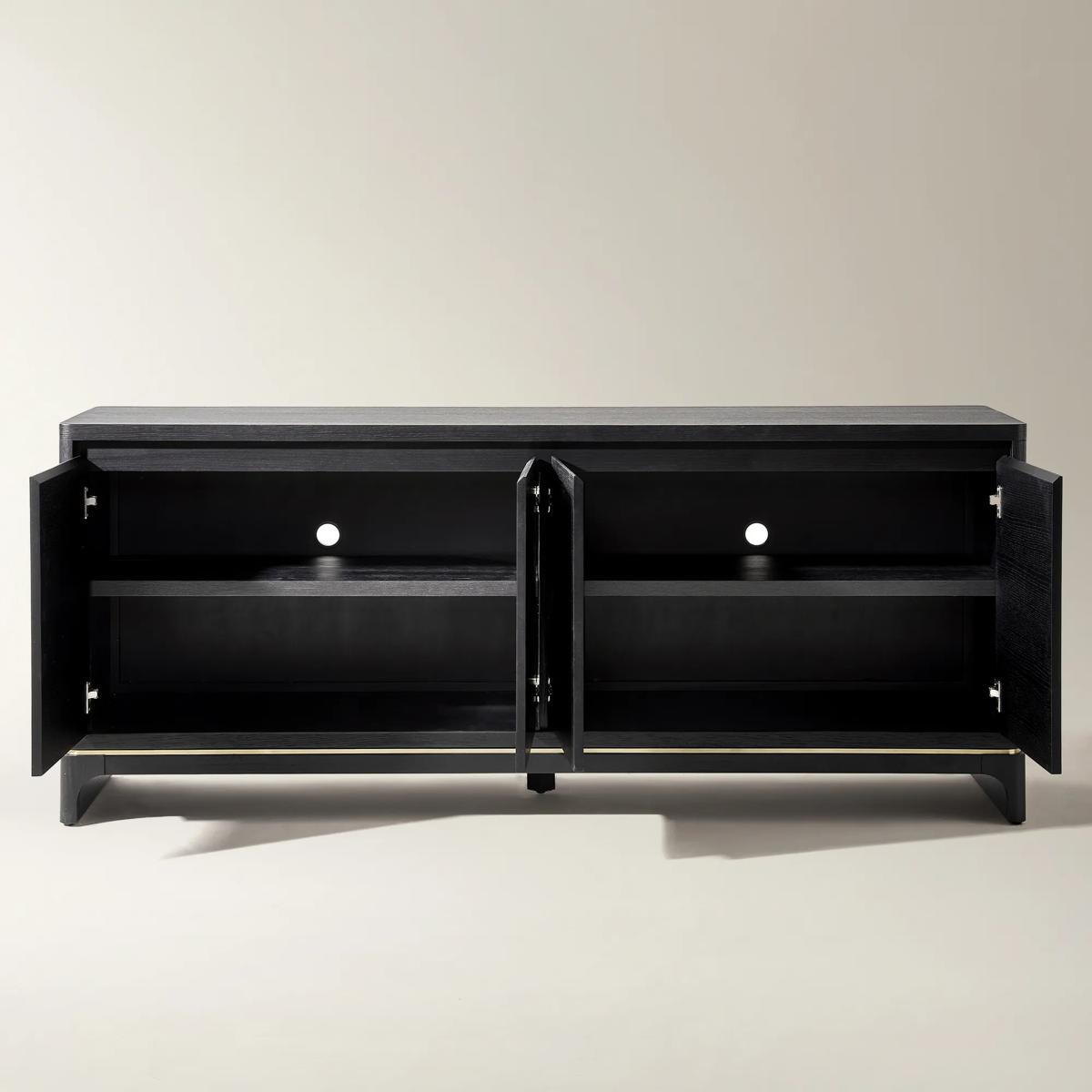 Vanta Black Oak Buffet (72")$1799
A matte black oak sideboard with gold stainless steel trim and concealed pulls for modern, elegant storage.
Add To Cart -
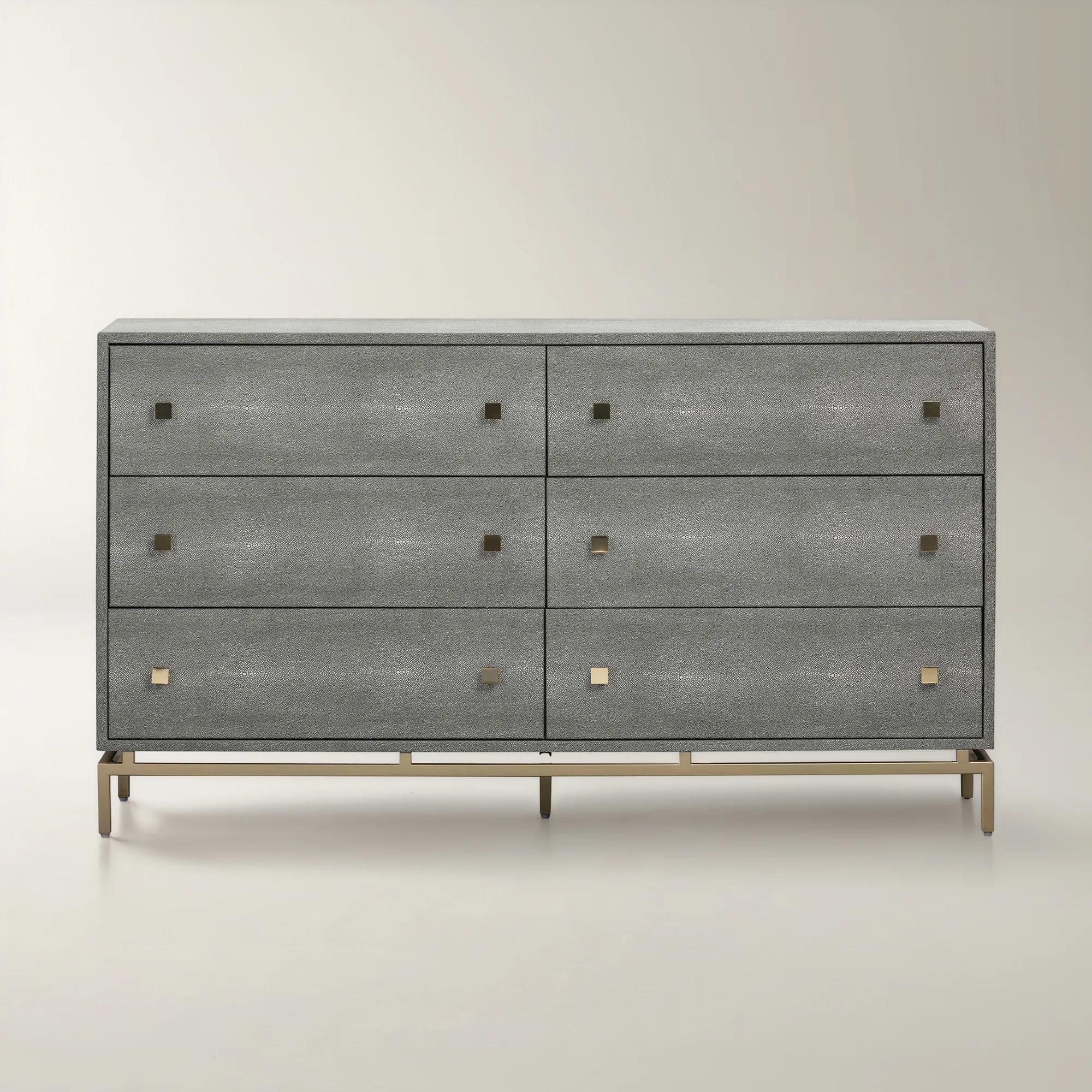
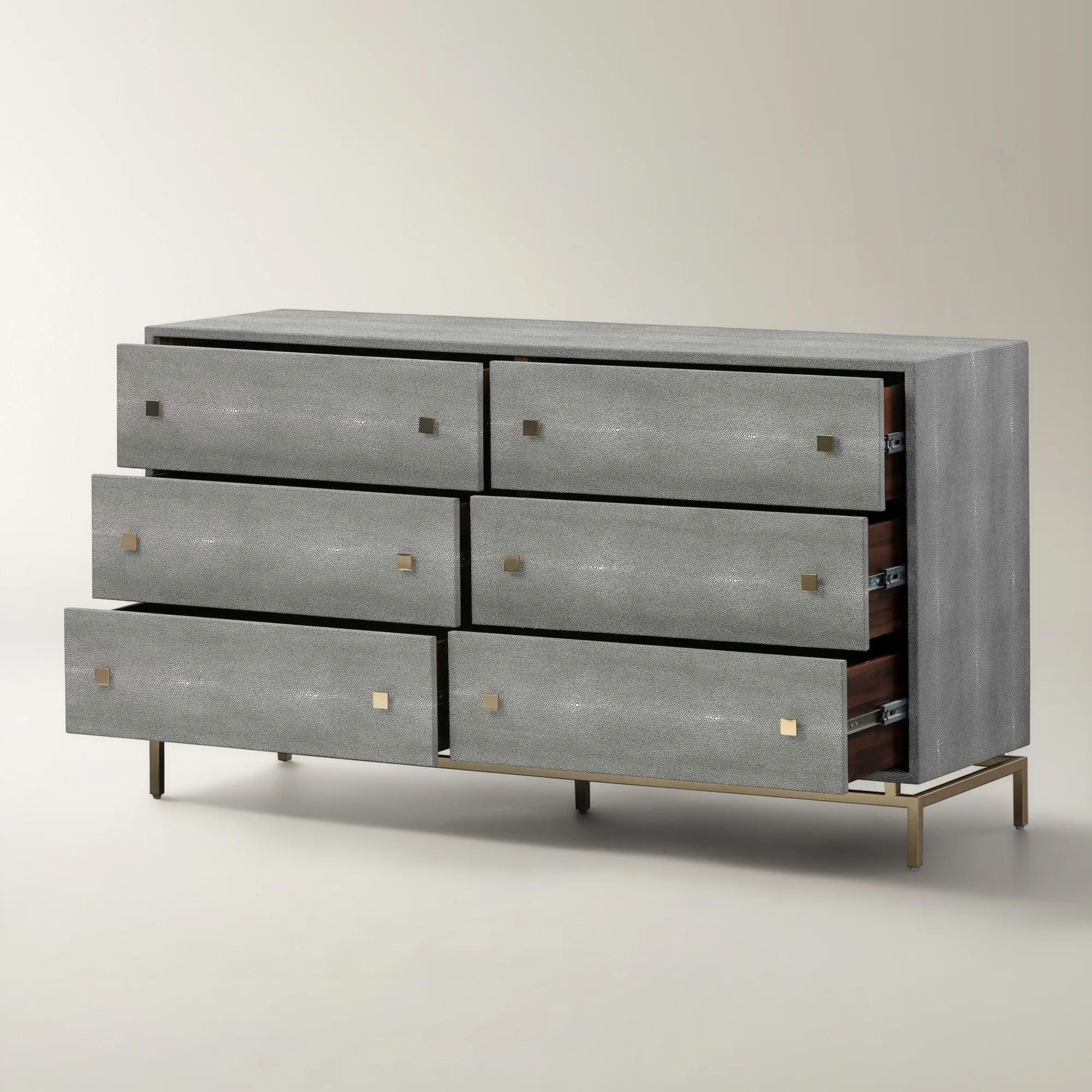 Misha Grey Shagreen 6-Drawer Dresser (57")$2249
A modern dresser featuring faux shagreen texture, brass-finished base, and six drawers with cherry wood interiors.
Add To Cart -
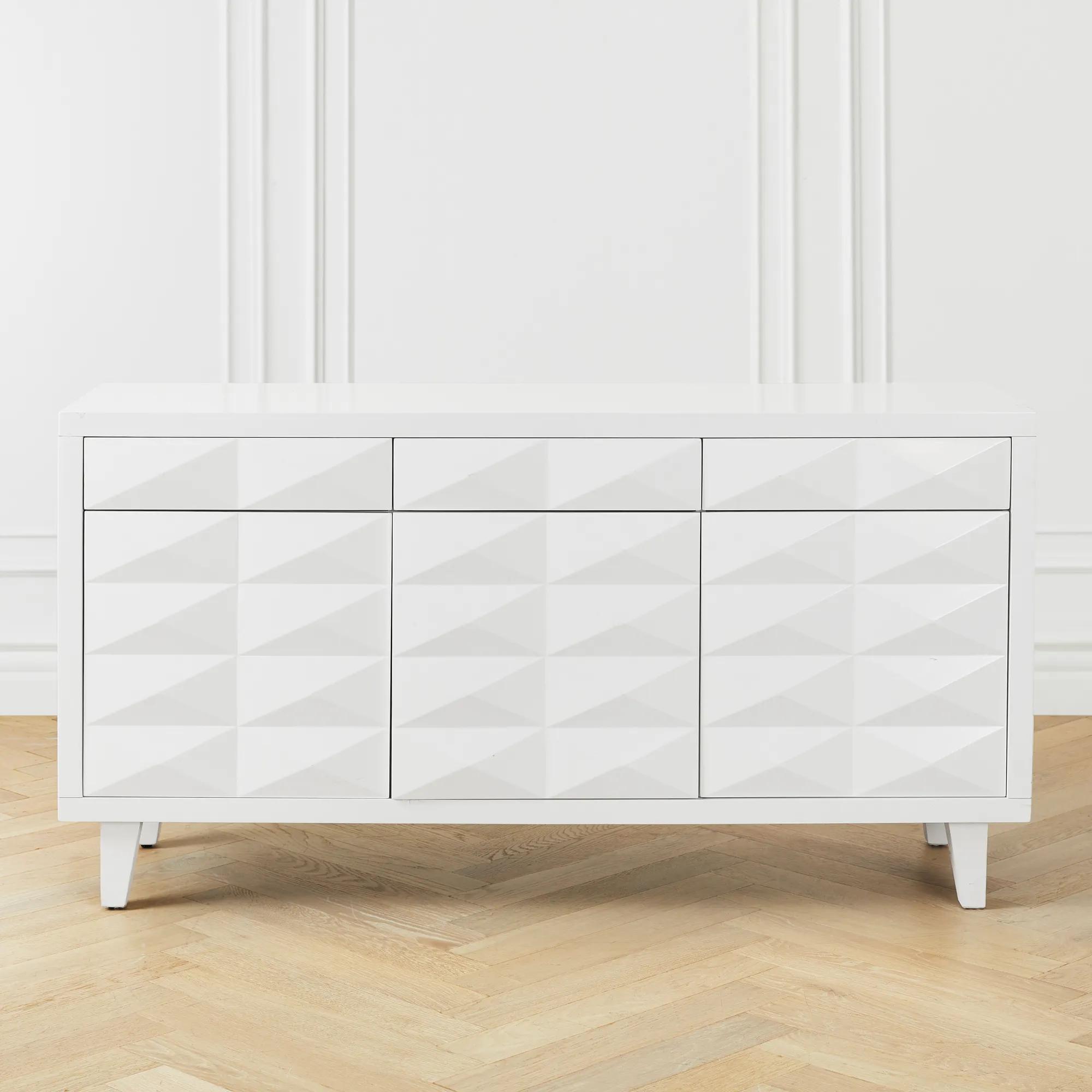 Palmer White Wood Cabinet (66.5")$1649
A sleek white hardwood cabinet with geometric detailing, three drawers, and push-latch doors for modern storage.
Add To Cart

Sideboards For Decor
Sideboards for decor are the unsung heroes of expressive interiors—elevating every room with their striking silhouettes and artful presence. These versatile pieces invite you to orchestrate moments of grandeur, whether anchoring a dramatic dining vignette or adding a layer of sophistication to your living space. With each gleaming surface and sculptural detail, sideboards for decor become more than just storage—they transform into statement-makers, ready to showcase your boldest treasures and reflect your singular sense of style. Indulge in the allure of curated living, where every sideboard is an invitation to live—and decorate—magnificently.
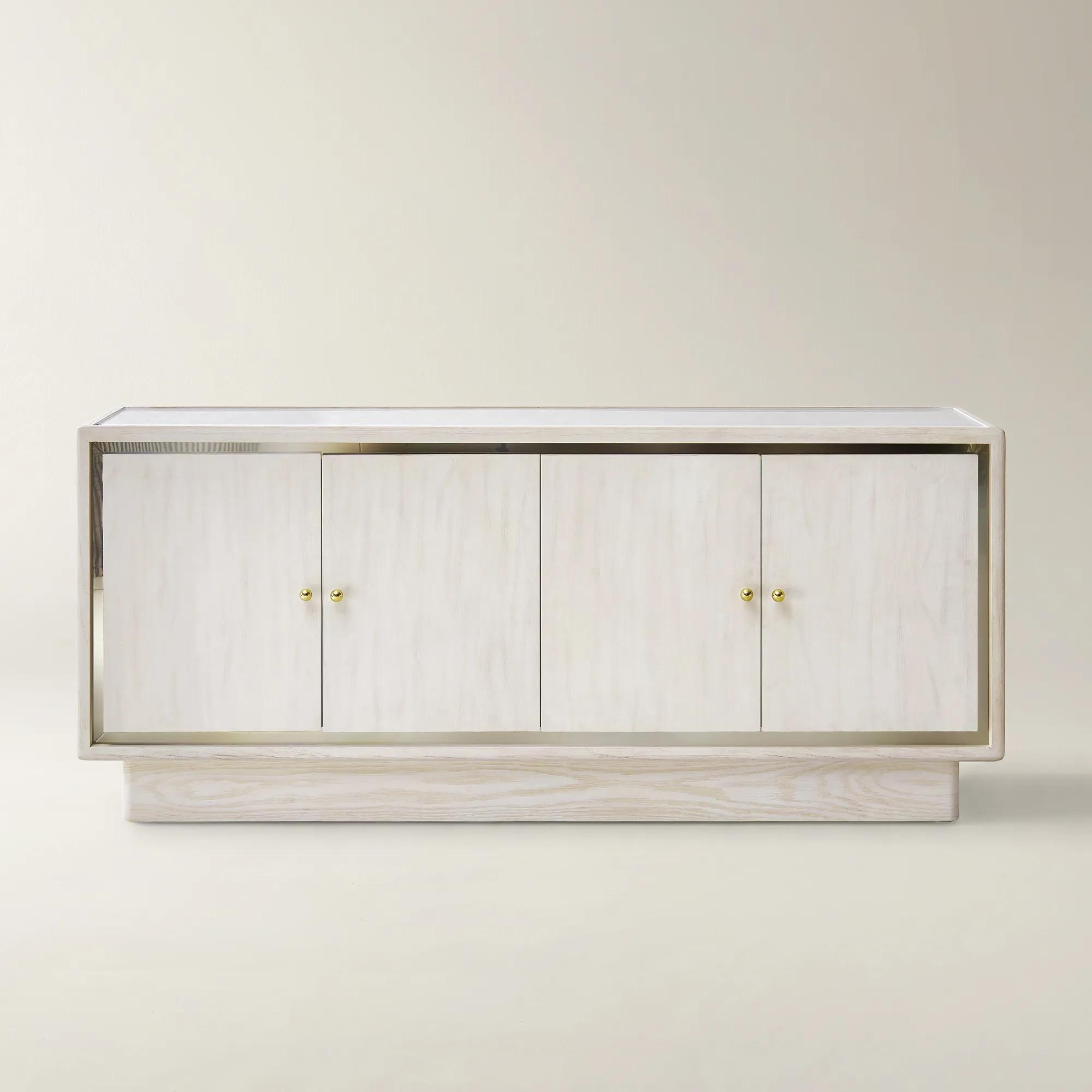
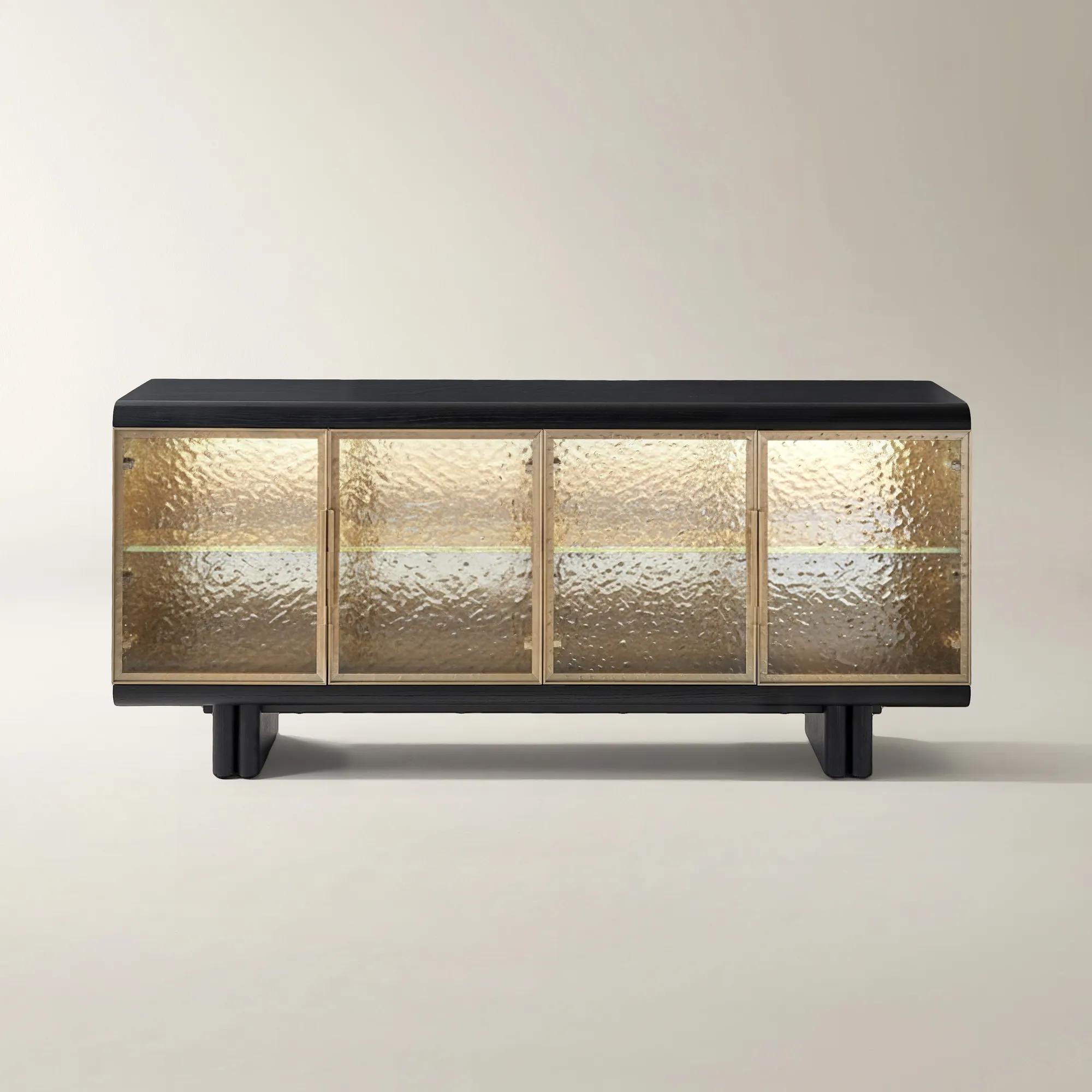
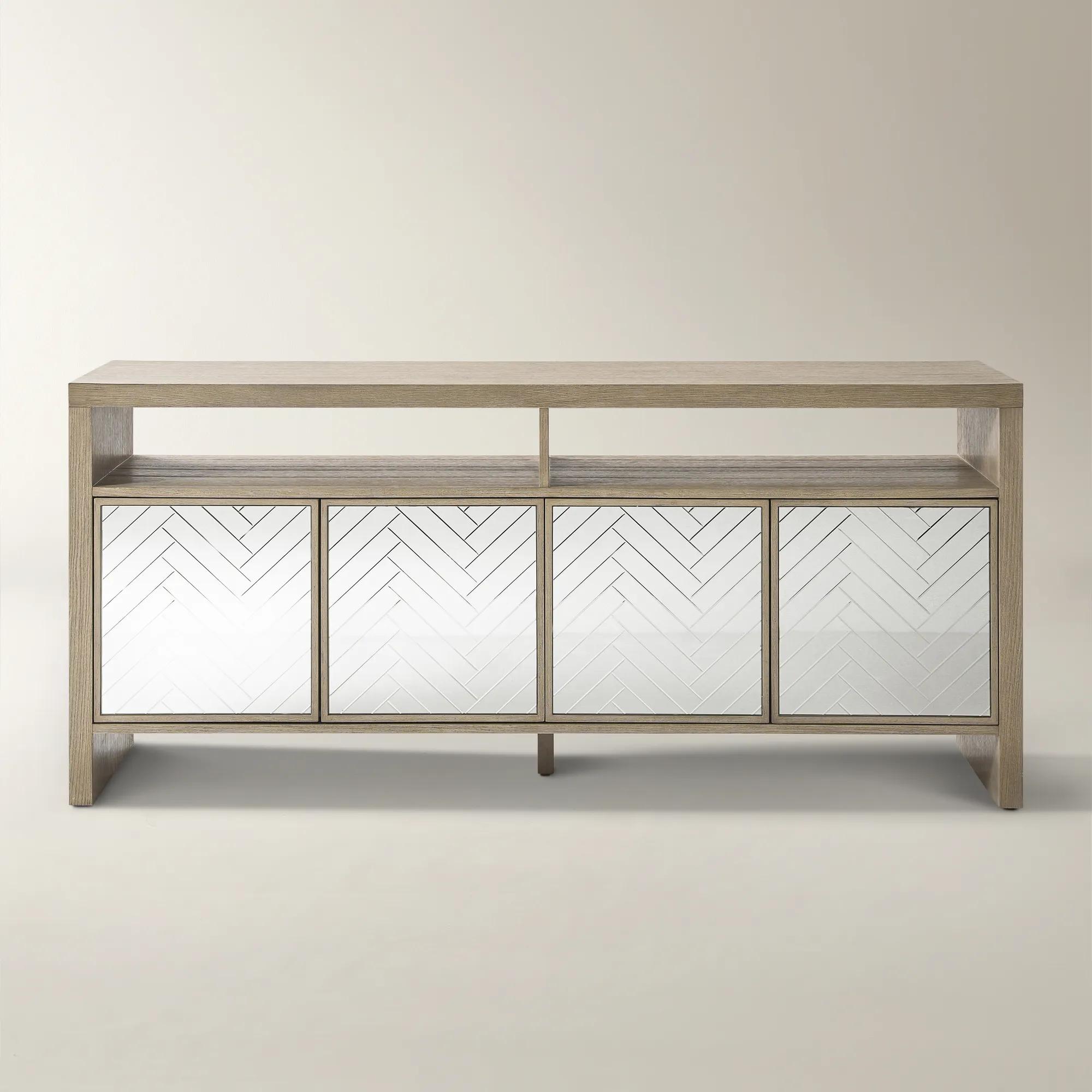
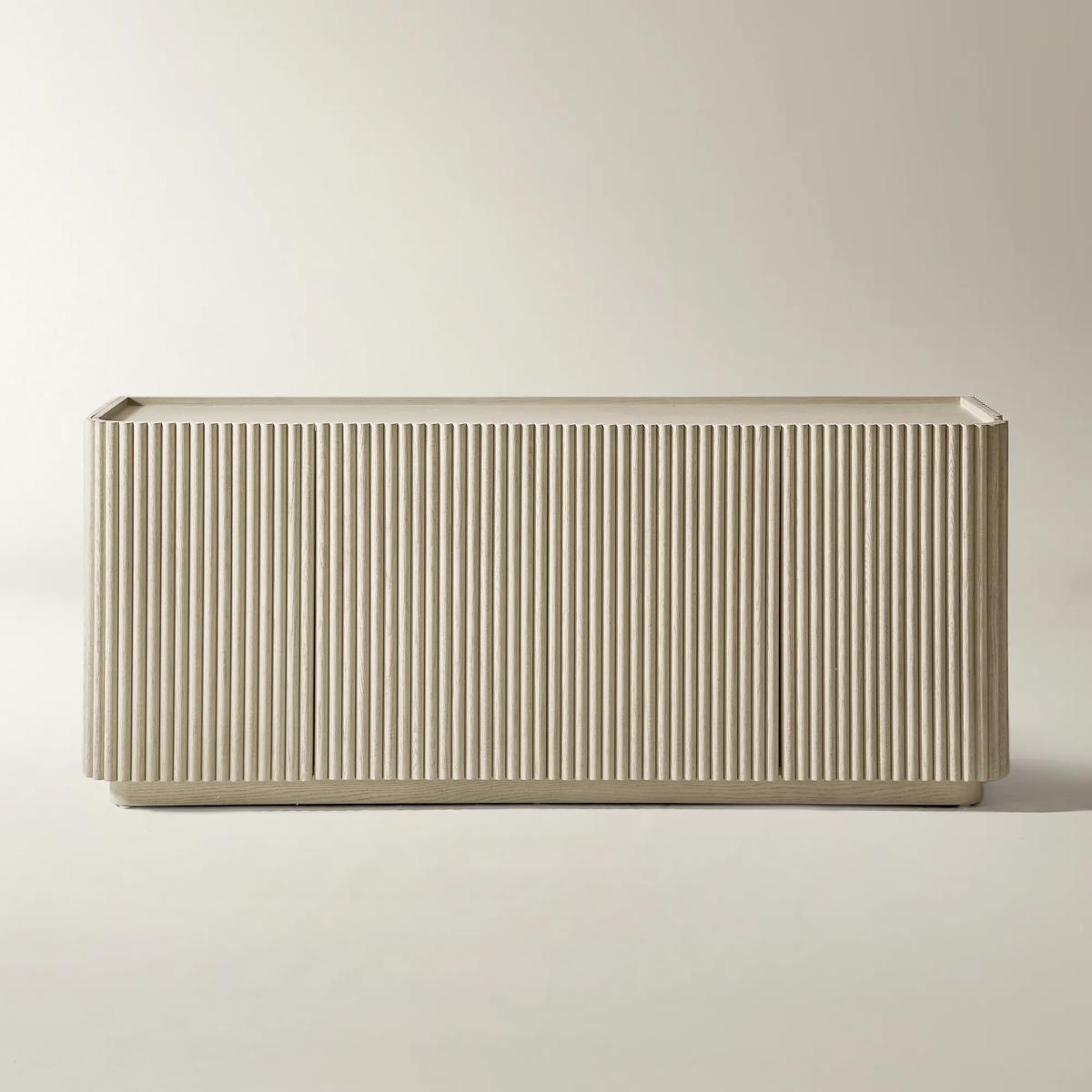
Sideboards for decor bring sculptural presence, display space, and concealed storage into a single piece of furniture. Traditionally used in dining rooms to hold serving pieces and table linens, sideboards also make striking additions to living rooms, entryways, and open-plan interiors. Their long, horizontal proportions create a visual foundation for artwork, lighting, and collected objects, while cabinets and drawers keep everyday necessities behind an elegant facade. A beautifully proportioned sideboard can give a blank wall architectural weight, introduce a gleaming finish to a softly layered room, or establish a distinct dining area within a larger space. Often described as buffets or credenzas, these pieces share similar functions, though their height, depth, interior layout, and intended use vary by design. The most compelling choice balances its role as furniture with its role in the room’s composition. A broad silhouette with richly grained doors feels substantial beneath an oversized canvas; a rounded profile softens the meeting point between angular dining furniture and expansive walls. Mirrored surfaces reflect surrounding light and color, while fluted fronts, dimensional patterns, and metallic details create interest even when the top is left relatively open. For someone who loves expressive interiors, the sideboard becomes a place to compose a personal vignette without sacrificing useful storage. For frequent hosts, it provides a polished setting for serving dishes during a gathering and a home for entertaining essentials afterward. In a city apartment, a compact design can hold dining linens and treasured objects without requiring a separate cabinet for each. In a more expansive room, a longer piece can anchor the entire wall, giving a large mirror or pair of lamps the scale they deserve. During the cooler months, that surface takes on particular warmth beside shaded lighting, textured ceramics, and branches with an open, sculptural shape. Its appeal extends well beyond seasonal decoration: a sideboard gives cherished possessions a deliberate setting and helps a room feel composed rather than simply furnished.
Materials and finishes shape both the character of a decorative sideboard and the attention it needs over time. Solid wood brings natural variation, warmth, and grain that can lend depth to an otherwise polished interior, though it can respond to changes in humidity. Wood veneers showcase distinctive grain over a supporting core, and their longevity depends on construction, finish quality, and thoughtful care rather than the veneer label alone. Lacquered surfaces offer a smooth, luminous effect, with high-gloss finishes making a particularly dramatic contrast against upholstery and woven textiles. Mirror panels and glass accents introduce reflection, but fingerprints and smudges tend to be more visible; stone tops add pattern and visual substance, with care requirements that differ according to the stone and its sealant. Metal bases and hardware may appear crisp and architectural or softly burnished, and their finishes should be protected from abrasive cleaners. For regular care, a soft cloth and the manufacturer’s recommended cleaning method are more appropriate than a single all-purpose treatment across every material. Coasters, protective pads, and a tray beneath drinks help guard against moisture rings and scratches, while spills deserve prompt attention. Heavy decorative objects should sit on suitable protective backing and remain within the stated top-load capacity. Durability also rests in less visible details: secure joints, well-supported shelves, smoothly operating drawers, and doors that align properly all contribute to lasting everyday use. Fit deserves equal consideration. The dimensions should suit the wall without crowding nearby furniture, and the depth should preserve comfortable movement around a dining table or through an entryway. Doors and drawers need room to open fully, especially opposite chairs or beside a doorway. A raised base can create a lighter visual impression and allow easier cleaning underneath, while a grounded silhouette conveys a more substantial presence. Delivery access, baseboard clearance, nearby outlets, and any required wall anchoring also affect how comfortably the piece settles into its intended location.
The interior arrangement determines how gracefully a sideboard supports the life unfolding around it. Adjustable shelves offer flexibility for serving bowls and taller vessels, while drawers keep napkins, placemats, and smaller entertaining accessories organized. Shelf depth and usable interior height matter more than the exterior dimensions when storing platters or delicate stemware. For households where entertaining centers on wine glasses, cocktail coupes, and celebratory toasts, Sideboards For Storing Glassware offer a related focus, with particular attention warranted for shelf clearance, capacity, and easy access. A living room sideboard might instead conceal games, albums, and extra throws, leaving its surface available for a more expressive display. When a piece is intended to support electronics, its suitability depends on adequate ventilation, cable access, and the manufacturer’s weight limits; a decorative cabinet is not automatically a media console. On top, a few deliberate relationships create richness without making the surface difficult to use. A large artwork or mirror establishes the backdrop, a lamp introduces height and atmosphere, and a lower grouping of books or a shallow bowl brings the eye back toward the furniture. Objects with contrasting silhouettes often feel especially dynamic together: a sinuous vessel beside a squared frame, or an irregular mineral form against a glossy cabinet front. Some open surface preserves the beauty of the finish and leaves room for a serving tray when guests arrive. In dining spaces, lighting should enhance conversation rather than place exposed glare at seated eye level. In an entryway, a shallow decorative dish can give keys a discreet landing place without overwhelming the display. Repeating one finish or color from elsewhere in the room creates continuity, while an unexpected texture keeps the arrangement personal. The result is furniture with a clear purpose and a distinctive point of view: storage that supports daily rituals, proportions that bring balance to the room, and a display surface where individual taste can take a wonderfully dramatic form.
FAQs
To create a dramatic focal point, opt for sideboards featuring bold finishes such as high-gloss lacquer, mirrored surfaces, or richly grained woods. Sculptural hardware, metallic accents, and intricate detailing can further elevate the piece, transforming it into a work of art that commands attention and sets the tone for the entire space.
A decorative sideboard is the ultimate stage for seasonal entertaining, offering a generous surface for artful displays of candles, florals, and curated serveware. Its ample storage keeps essentials tucked away yet within reach, allowing you to seamlessly transition from cocktail hour to dinner party, all while adding an air of effortless sophistication to your gatherings.
Absolutely. Sideboards are versatile pieces that can anchor an entryway, provide stylish storage in a living room, or serve as a chic media console in a den. Their refined silhouettes and decorative finishes allow them to complement a variety of spaces, from bedrooms to home offices, wherever you desire both beauty and function.
Style the top of your sideboard with a mix of heights and textures—think dramatic vases, gleaming trays, sculptural objects, and layered artwork. Incorporate seasonal touches like autumnal branches or festive candle groupings, and let your arrangement reflect your personal aesthetic for a look that feels both curated and inviting.
A sideboard makes an unforgettable gift for newlyweds, new homeowners, or anyone who relishes the art of entertaining. It’s also a thoughtful gesture for those who appreciate expressive interiors and crave a statement piece that marries beauty with practicality, enhancing their home for years to come.