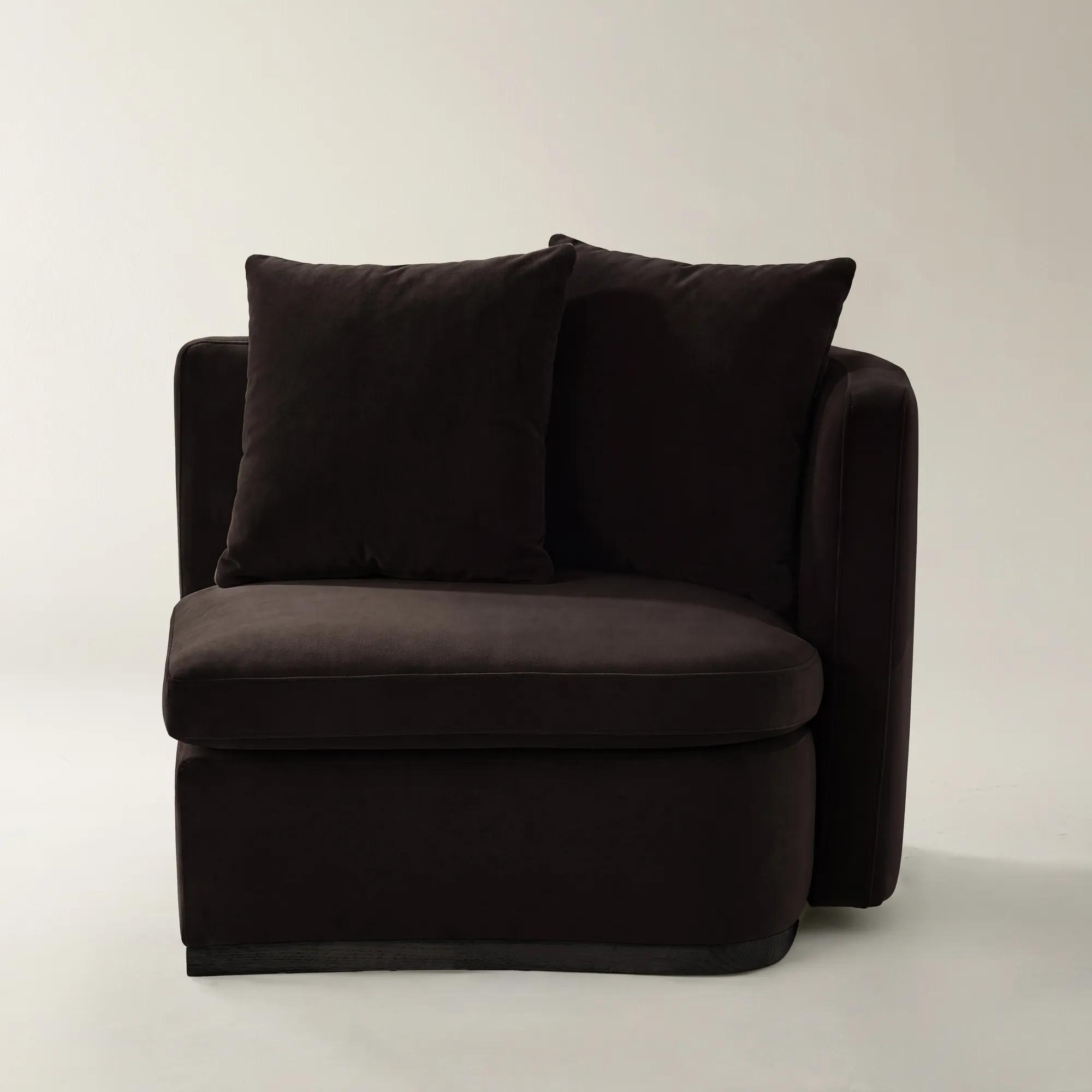
Modular Armless Sectional Sofas
Modular Armless Sectional Sofas
-
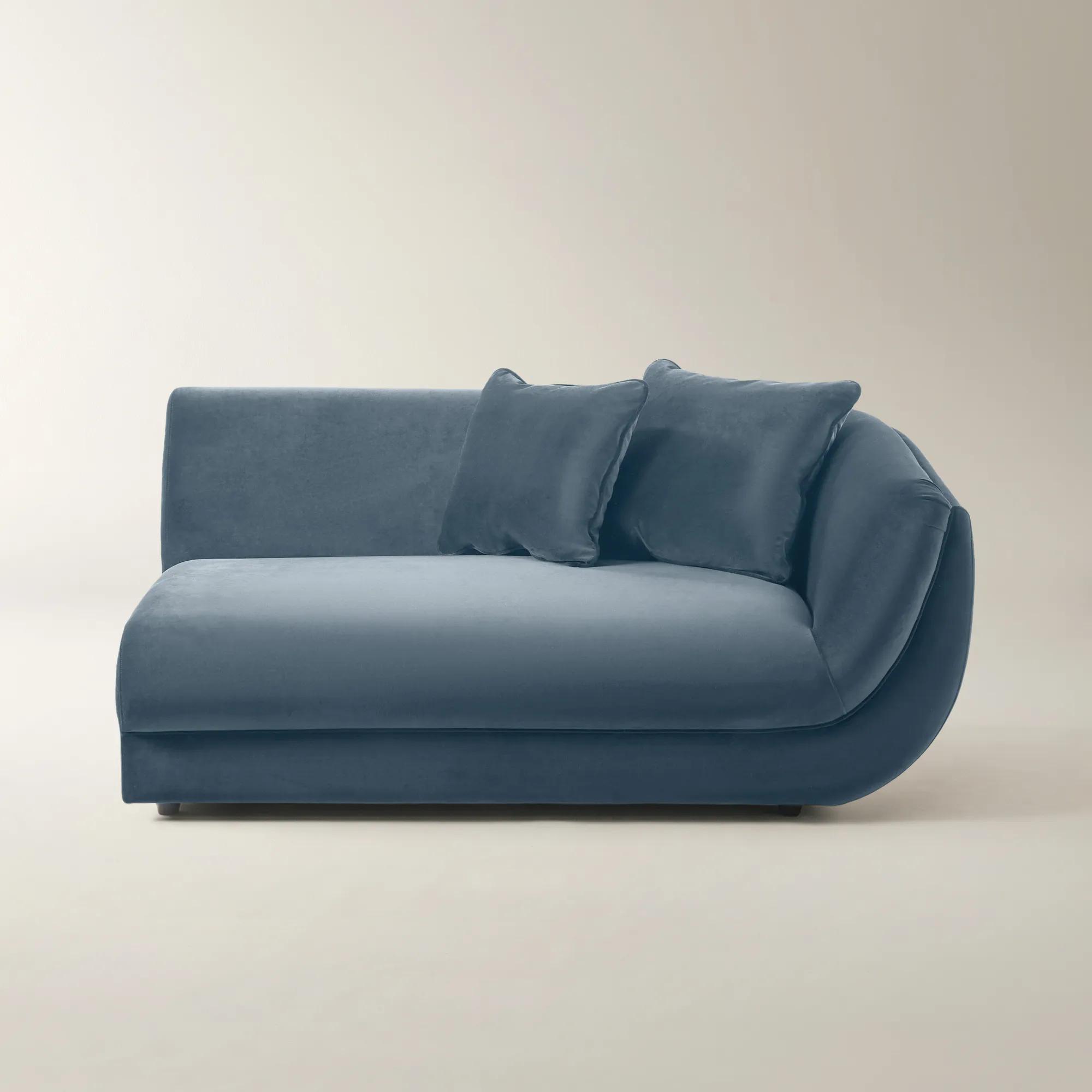
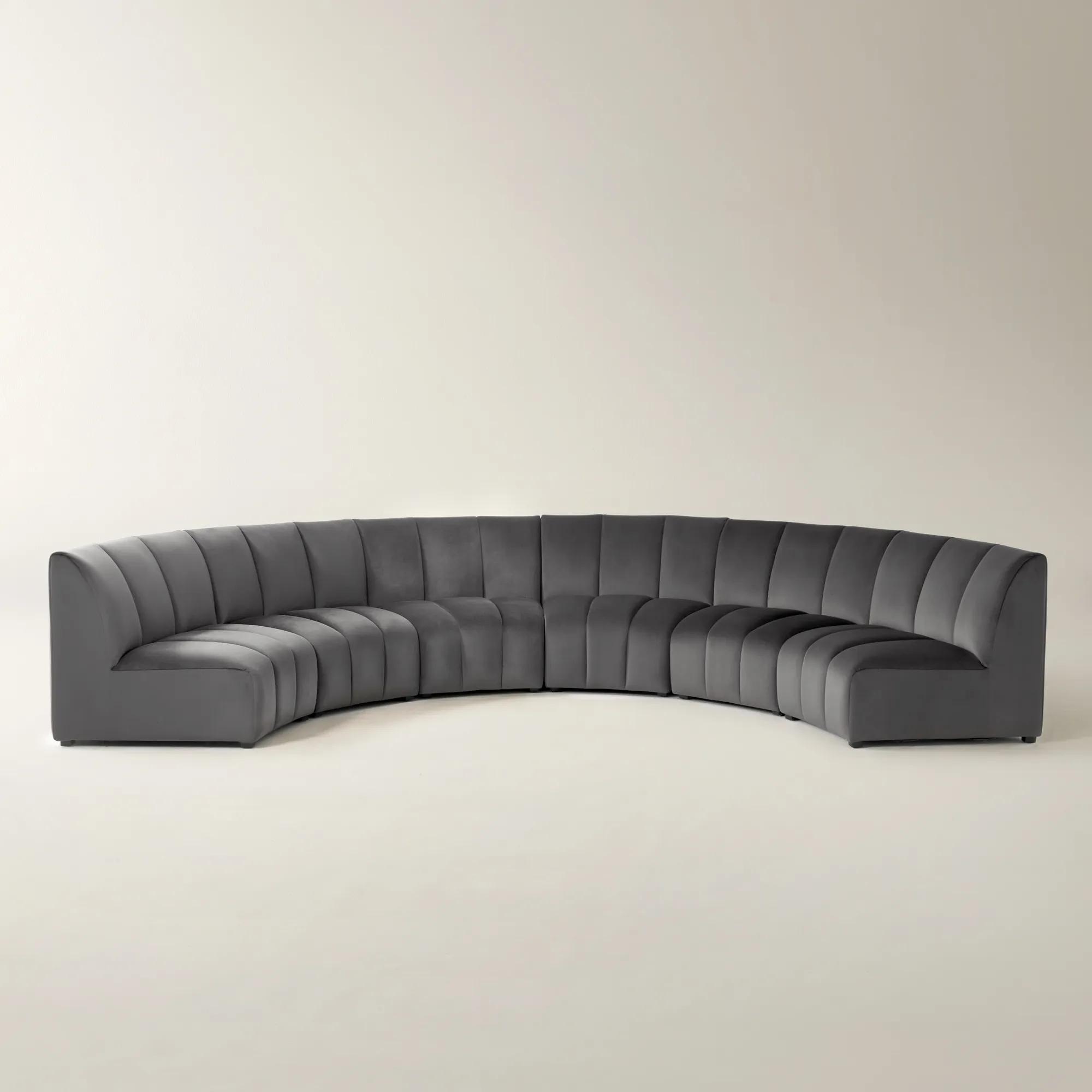 Jayce 6-Piece Channel-Tufted Smoked Pearl Velvet Sectional Sofa$5499
A modern curved sectional in silver grey velvet with deep channel tufting and plush, high-density cushions.
Add To Cart -
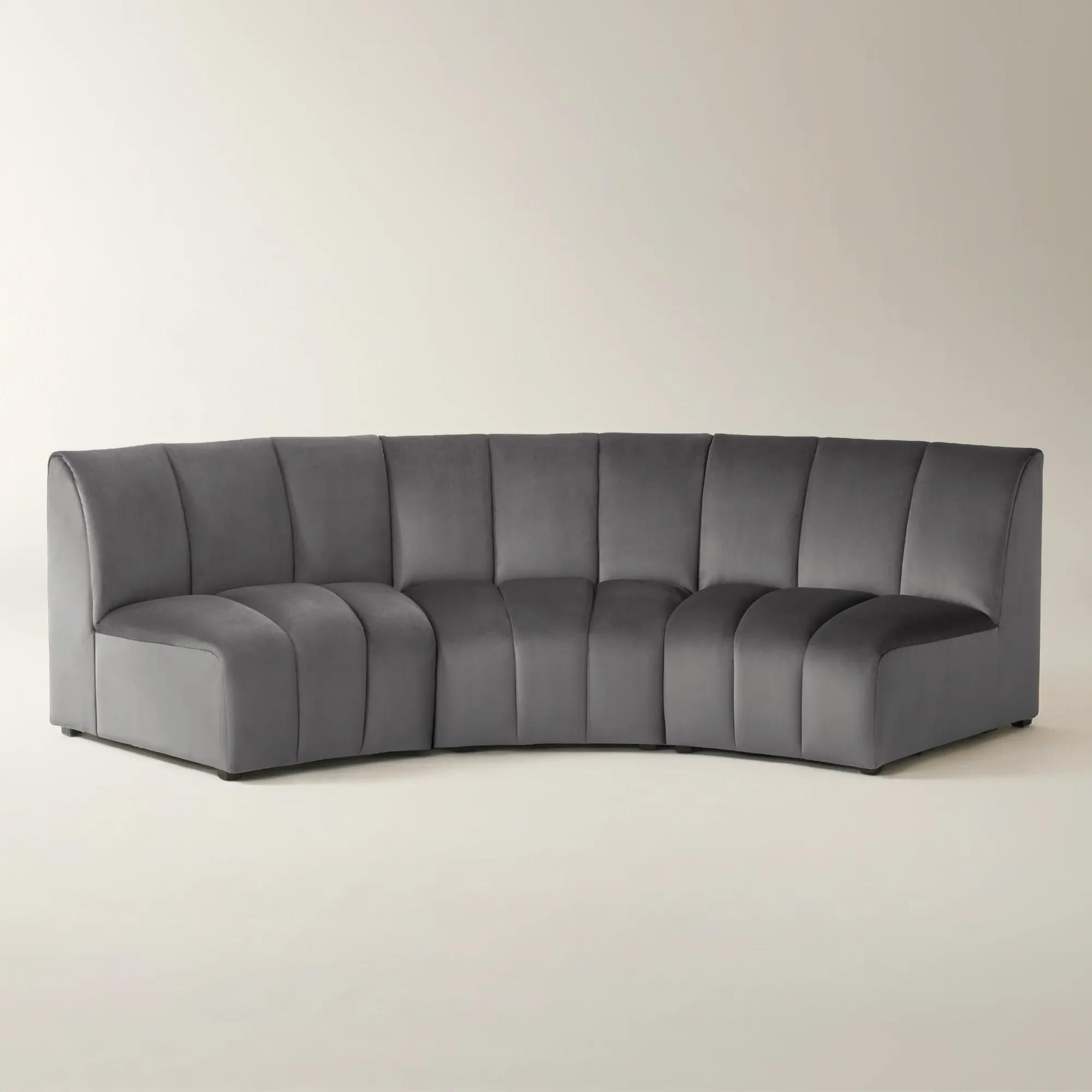 Jayce 3-Piece Channel-Tufted Smoked Pearl Velvet Sectional Sofa$2799
A modern curved sectional in silver grey velvet with deep channel tufting and plush, high-density foam cushions.
Add To Cart -
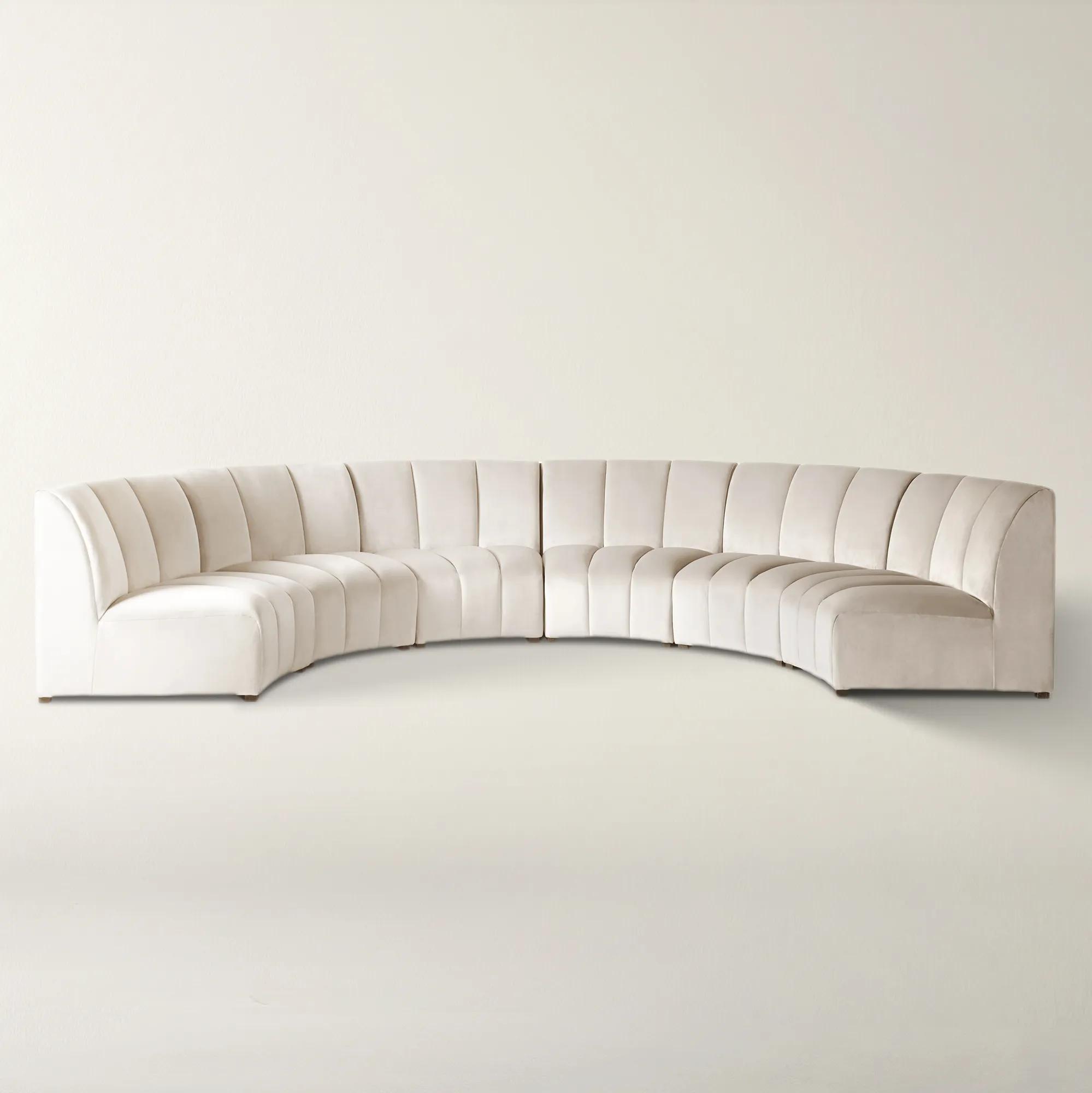 Jayce 6-Piece Channel-Tufted Ivory Velvet Sectional Sofa$5499
A modern curved sectional in stain-resistant Velvet Ivory with deep channel tufting and plush, structured cushions.
Add To Cart -
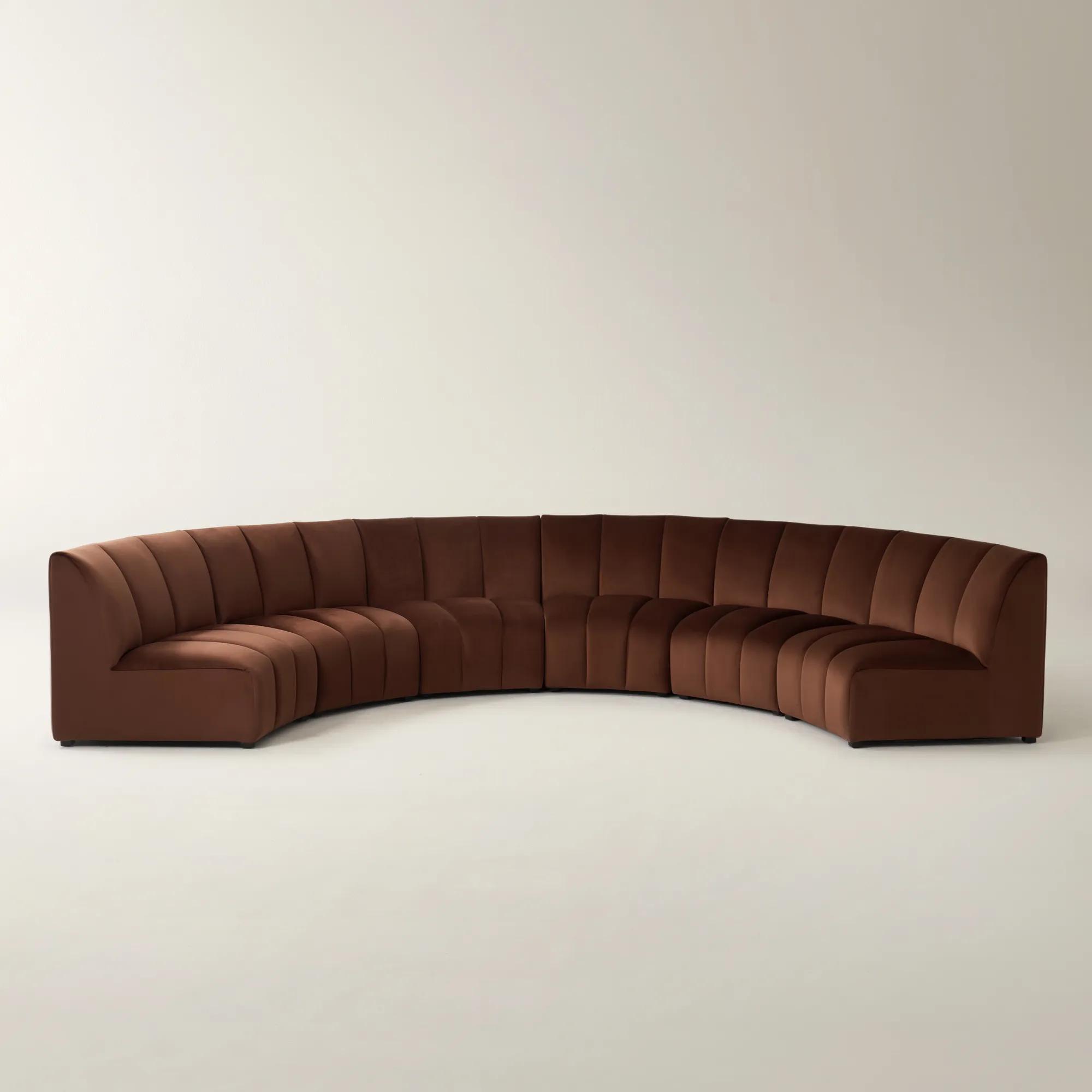
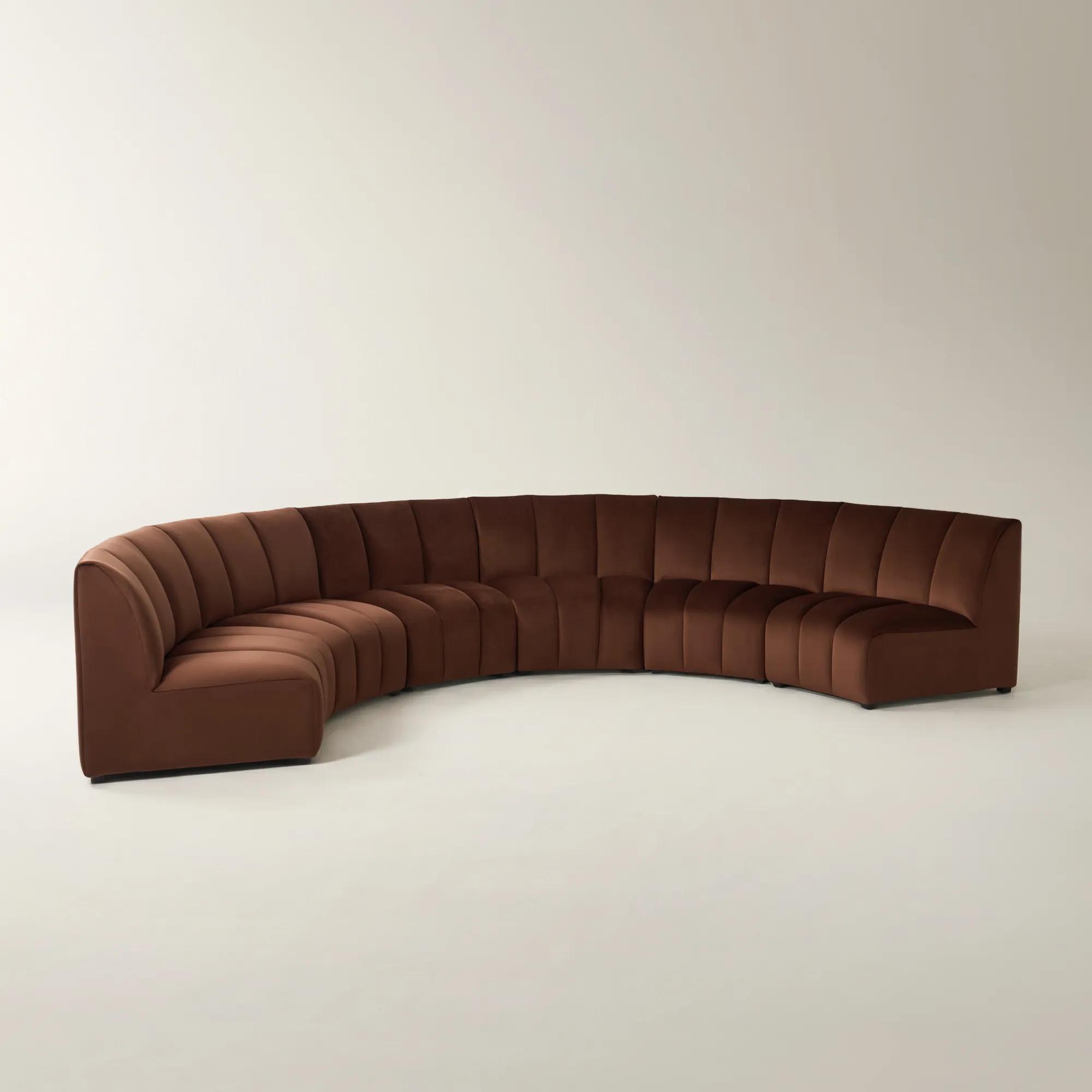 Jayce 6-Piece Channel-Tufted Burnt Umber Velvet Sectional Sofa$5499
A modern curved sectional in silver grey velvet with deep channel tufting and plush, high-density foam cushions.
Add To Cart -
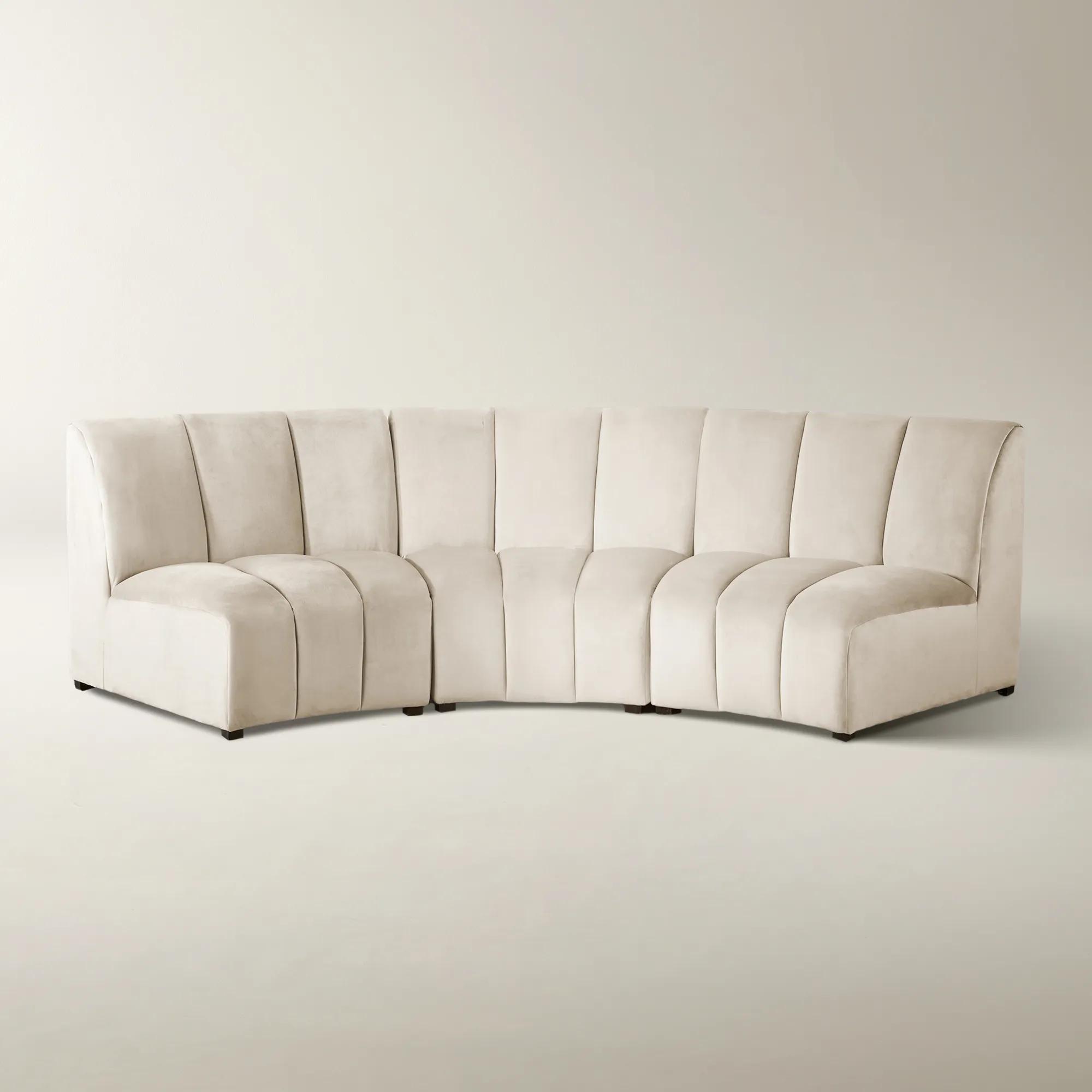
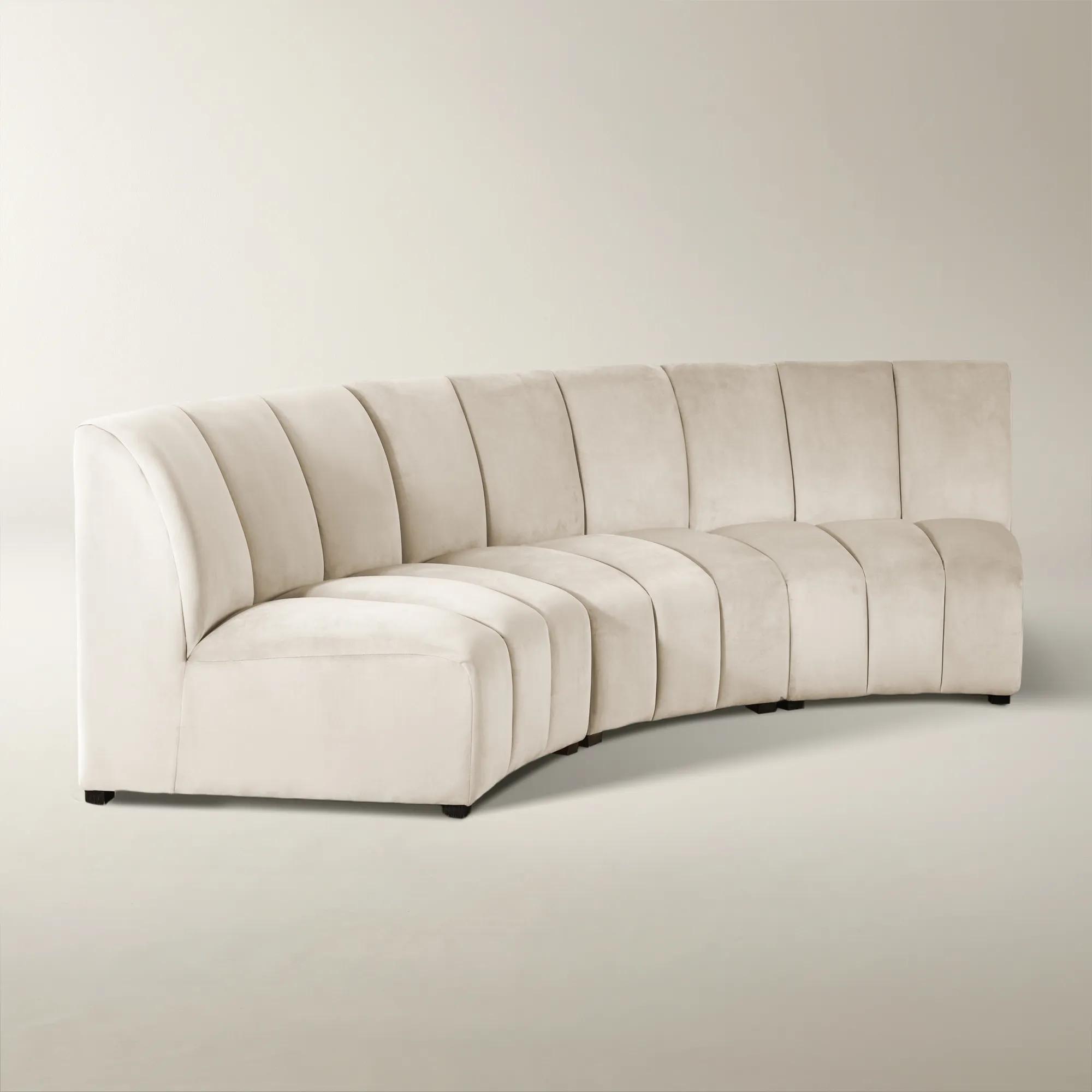 Jayce 3-Piece Channel-Tufted Ivory Velvet Sectional Sofa$2799
A modern curved sectional in stain-resistant Velvet Ivory with deep channel tufting and plush, structured cushions.
Add To Cart -
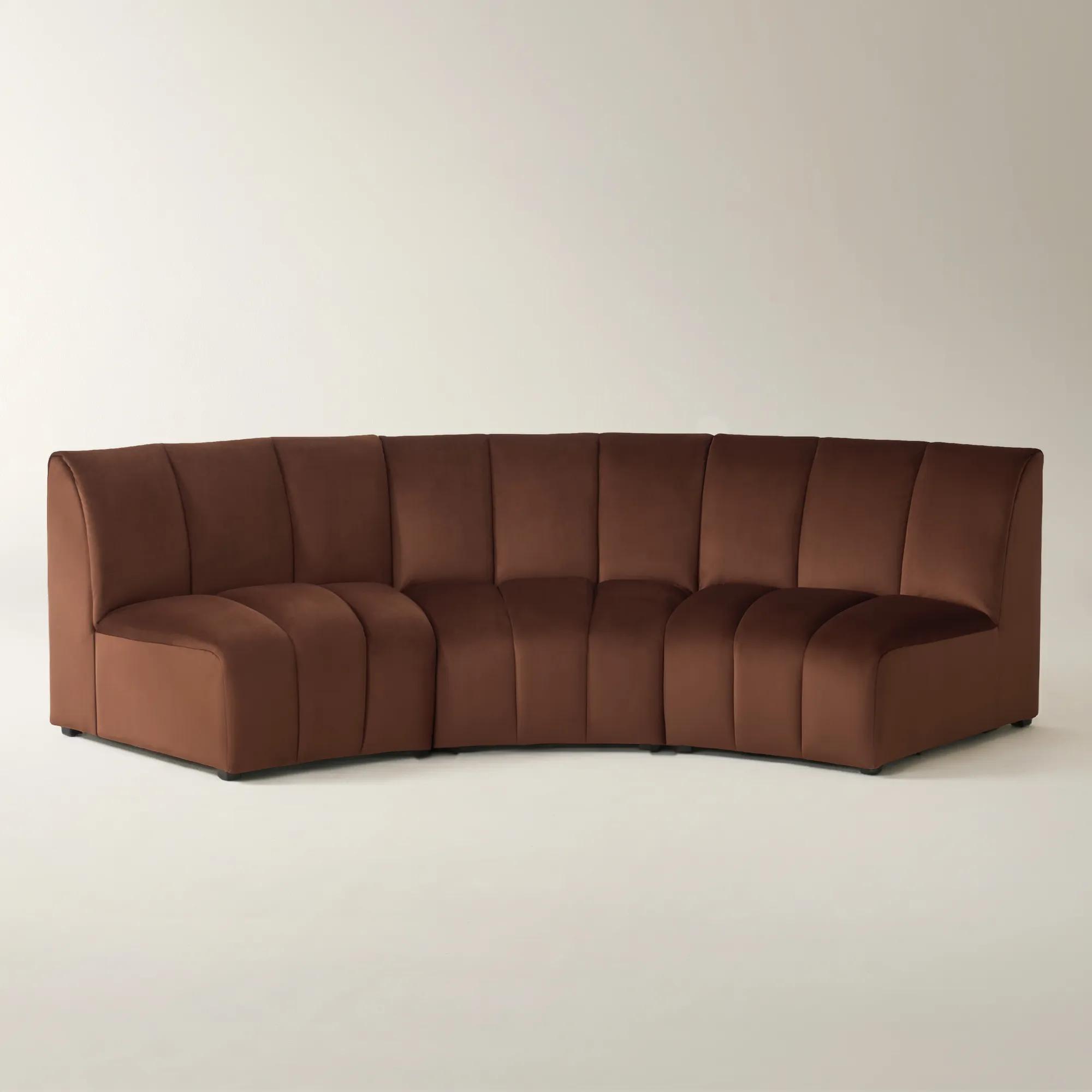 Jayce 3-Piece Channel-Tufted Burnt Umber Velvet Sectional Sofa$2799
A modern curved sectional in silver grey velvet with deep channel tufting and plush, water-repellent upholstery.
Add To Cart -
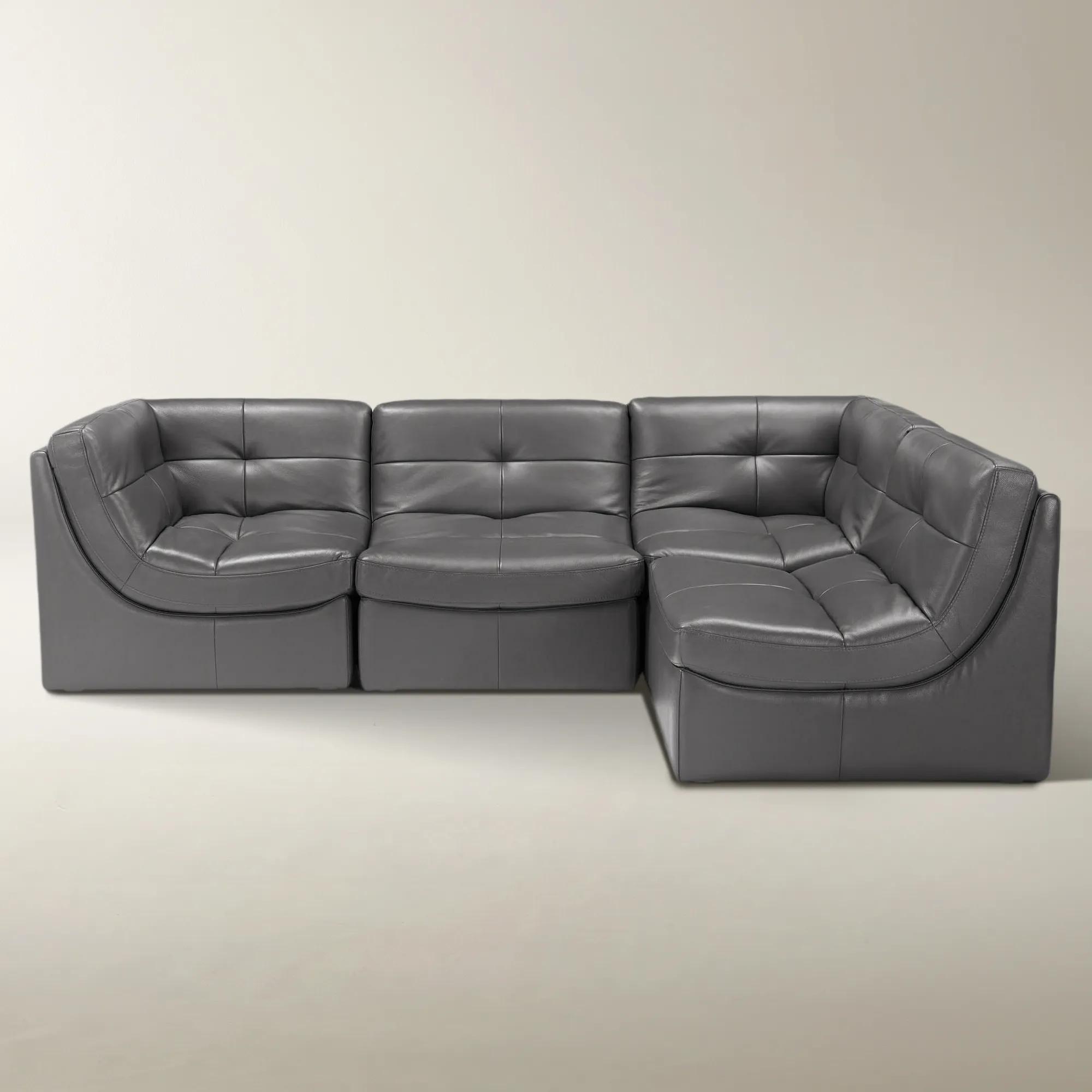
 Convo 4-Piece L-Shaped Charcoal Leather Sectional Sofa With Armless Chair$5199
A modular charcoal leather sectional with kiln-dried hardwood frame and gently curved, blind-tufted seats.
Add To Cart -
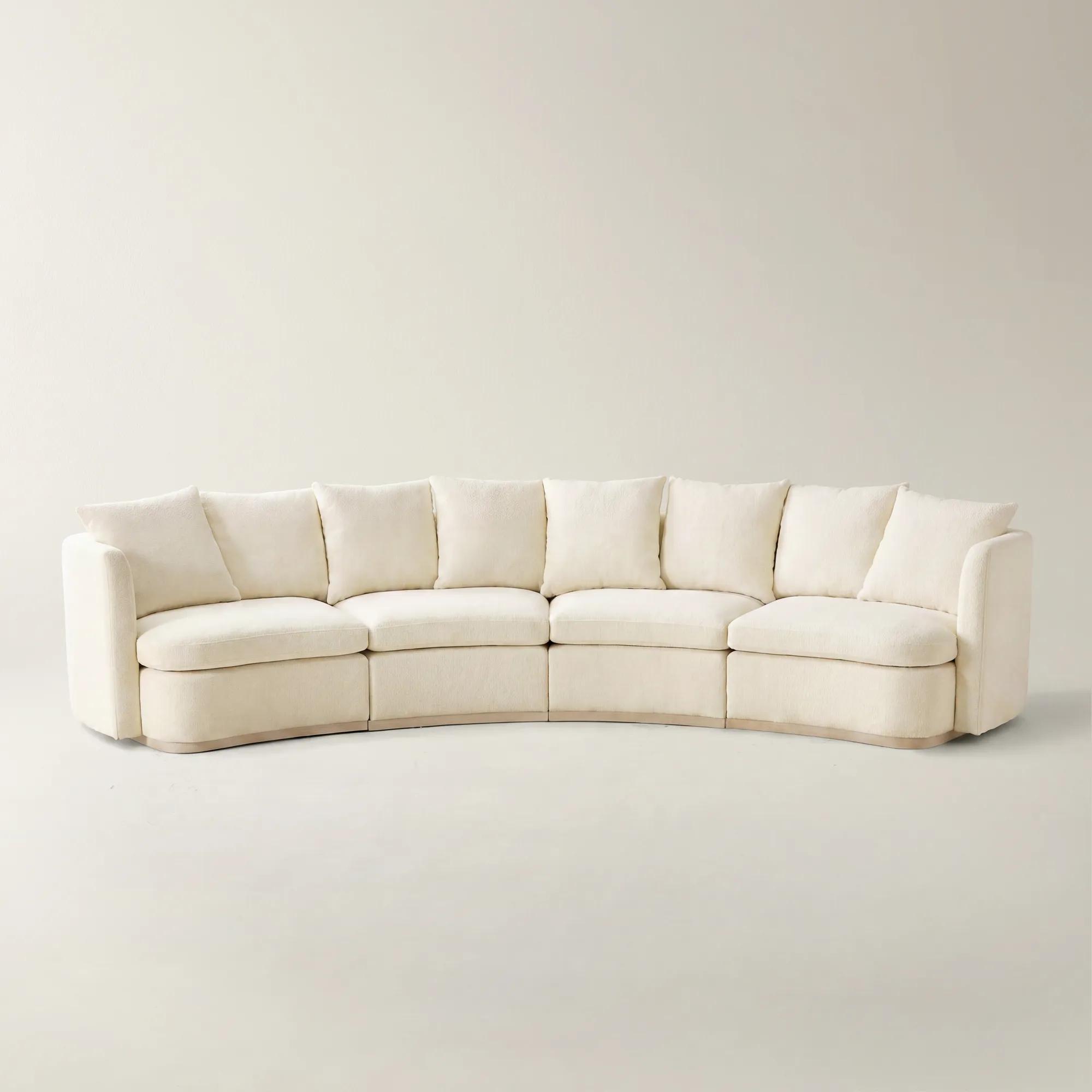
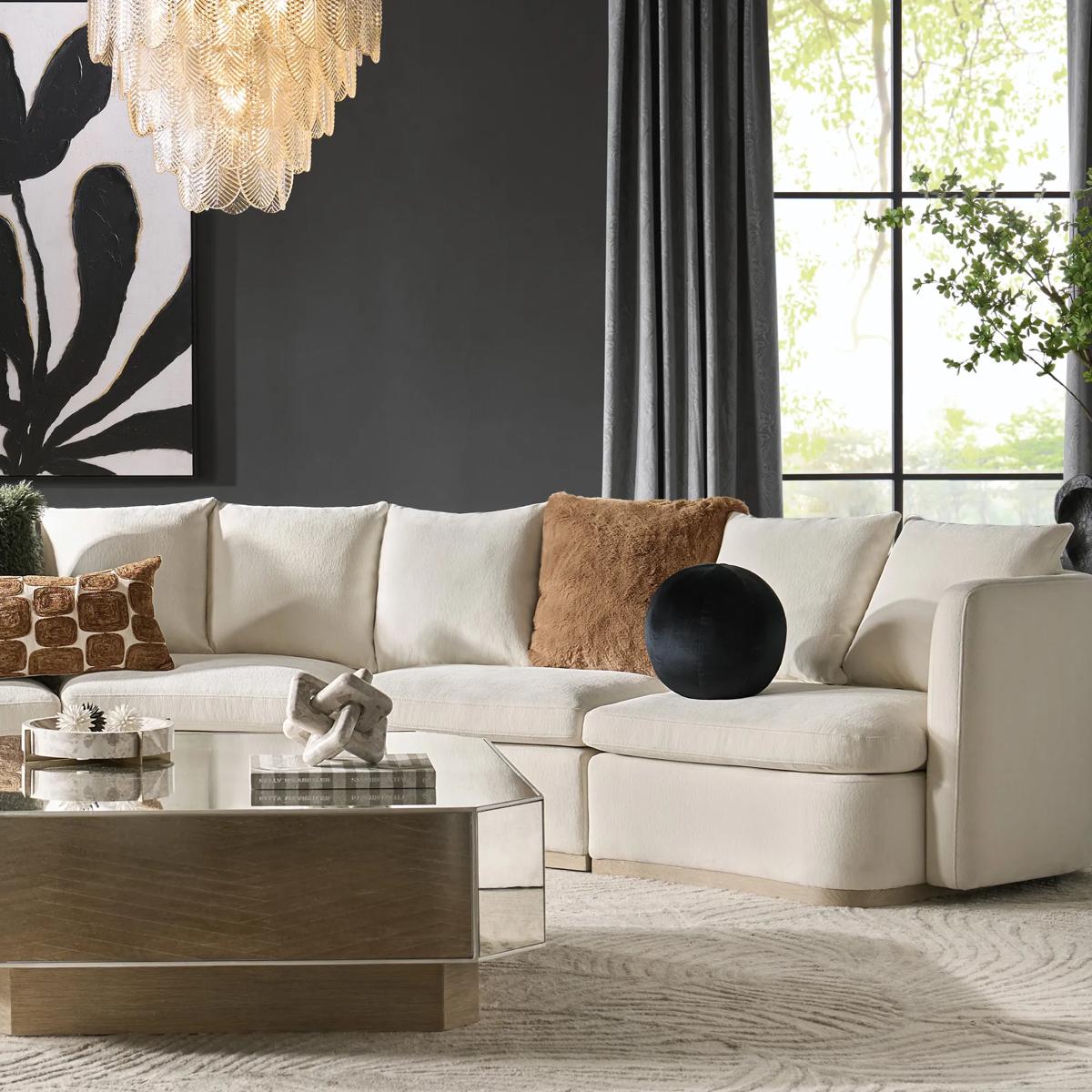 Stria 4-Piece Oatmeal Velvet Sectional Sofa$4499
A sculptural oatmeal velvet sectional with modular connectors, curved styling, and layered foam-down cushioning.
Add To Cart -
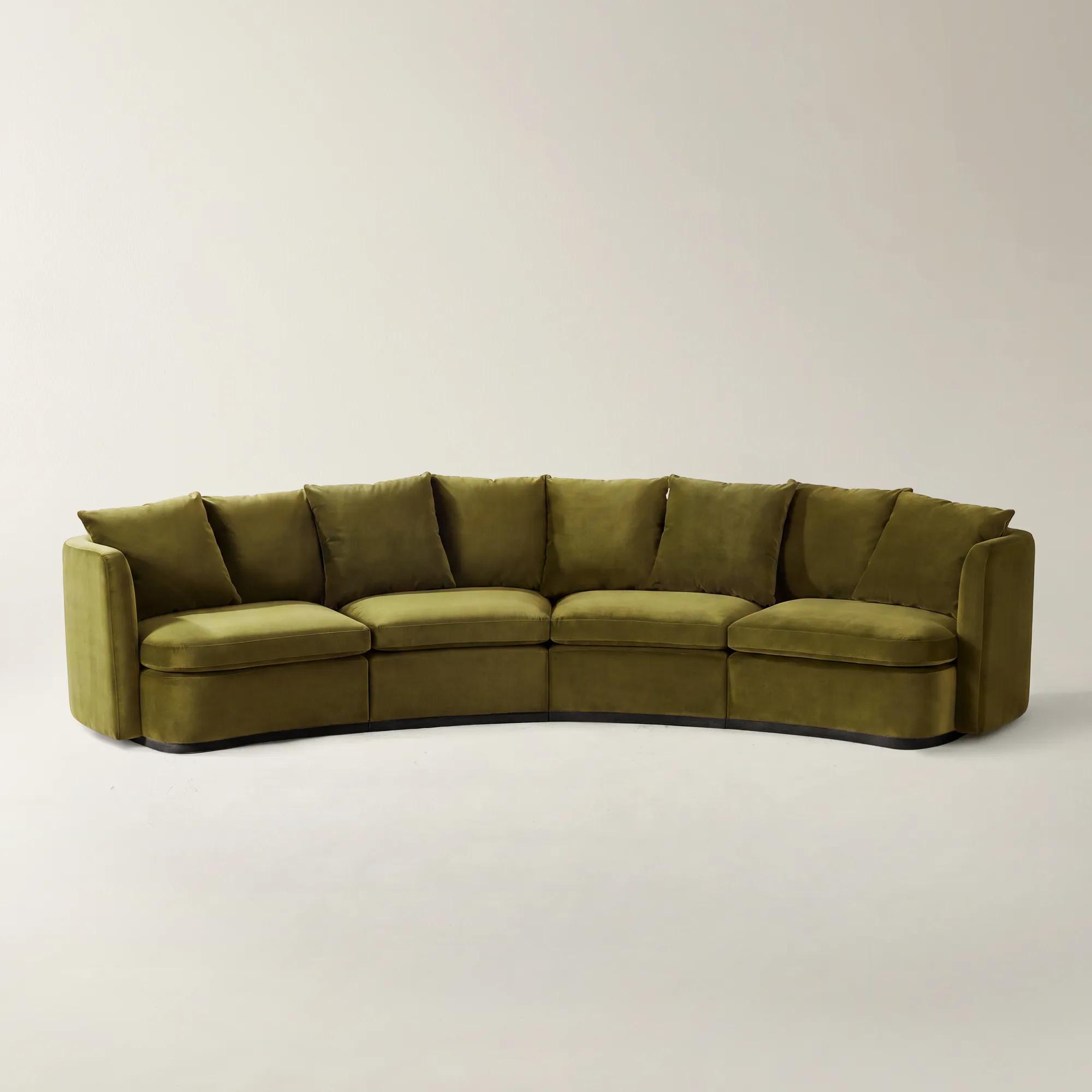 Stria 4-Piece Deep Olive Velvet Sectional Sofa$4499
A sculptural deep olive velvet sectional with modular connectors, kiln-dried wood construction, and layered foam-down cushioning.
Add To Cart -
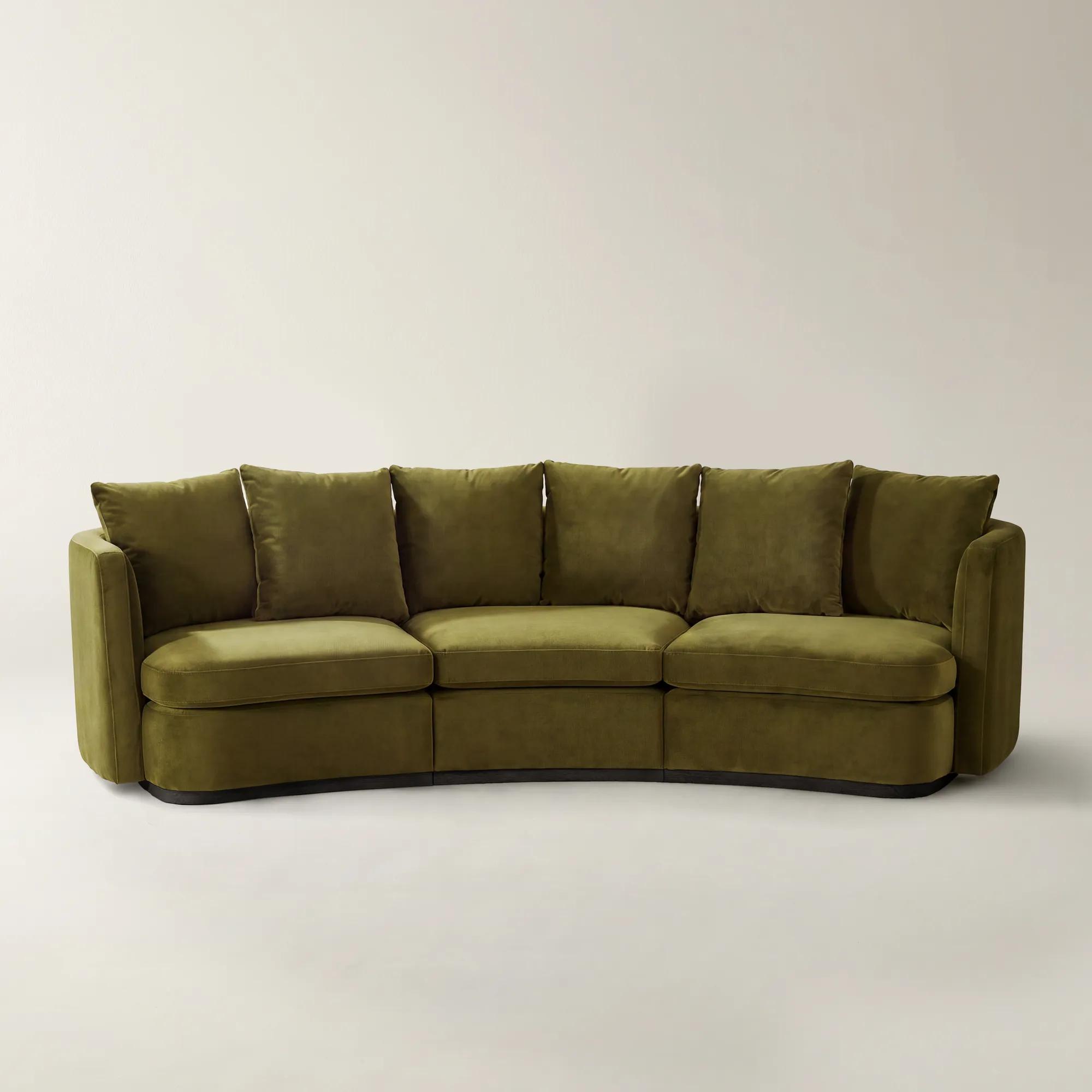 Stria 3-Piece Deep Olive Velvet Sectional Sofa$3399
A sculptural deep olive velvet sectional with modular connectors and layered foam-down cushioning.
Add To Cart -
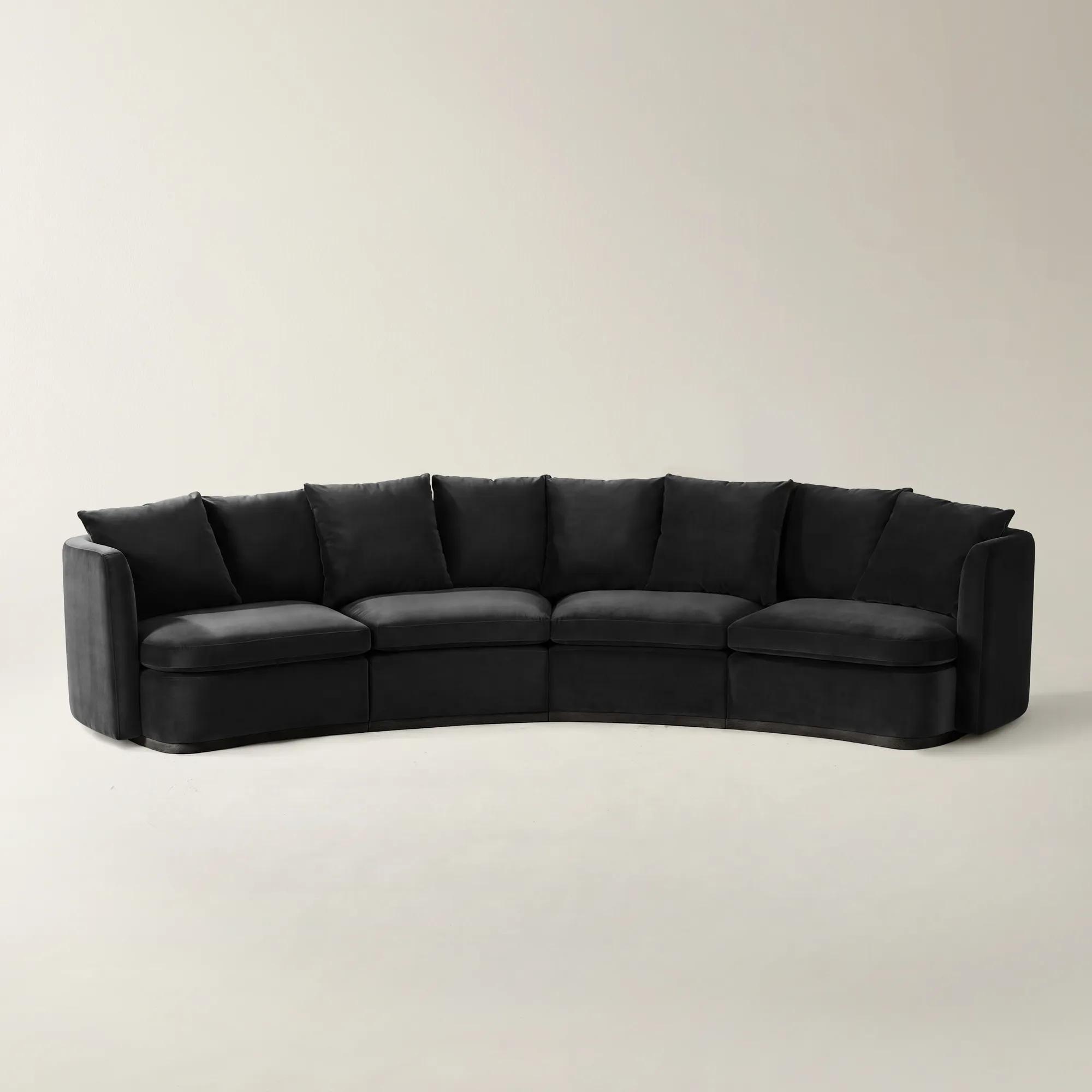 Stria 4-Piece Charcoal Velvet Sectional Sofa$4499
A sculptural charcoal velvet sectional with modular construction, curved edges, and supportive layered cushioning for comfort.
Add To Cart -
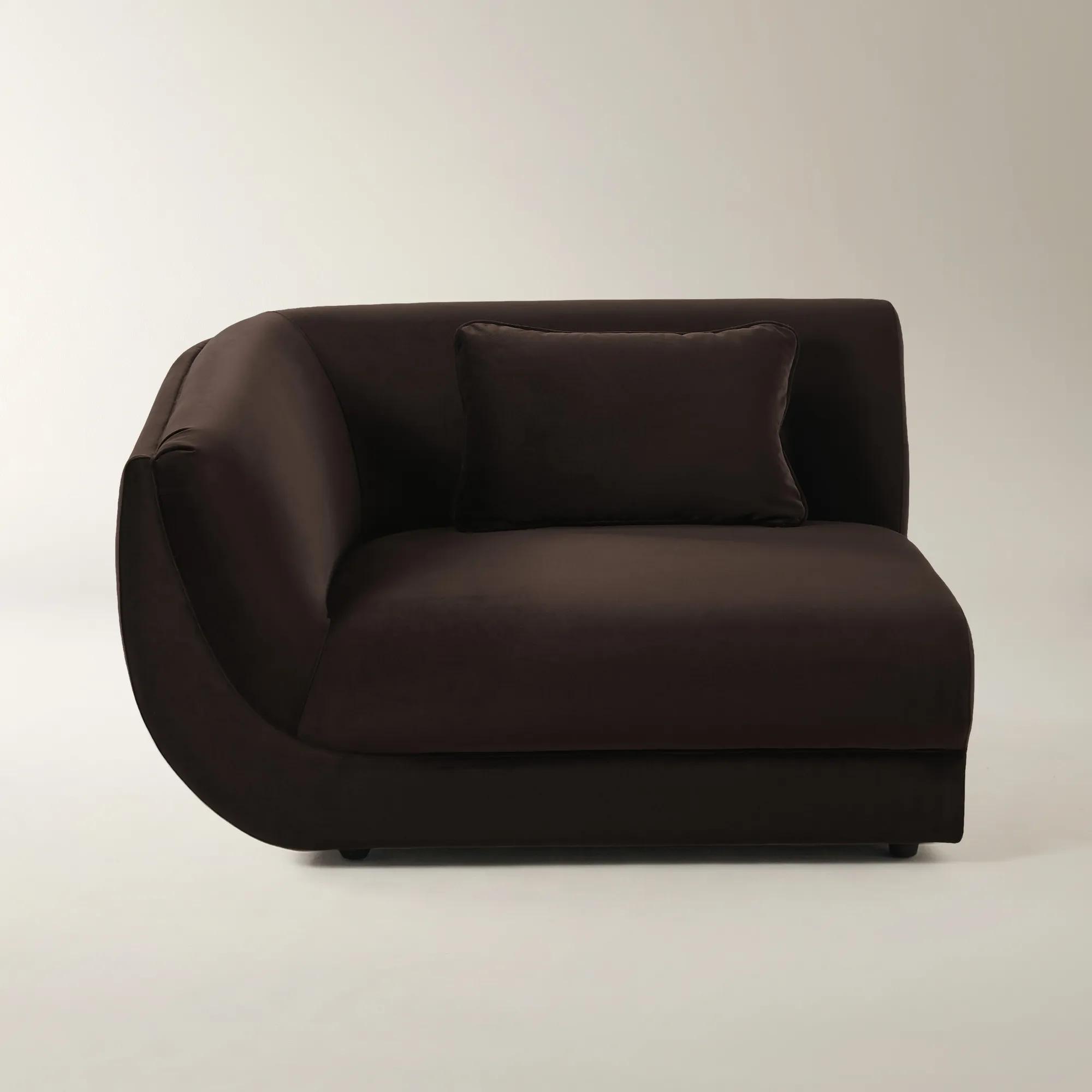
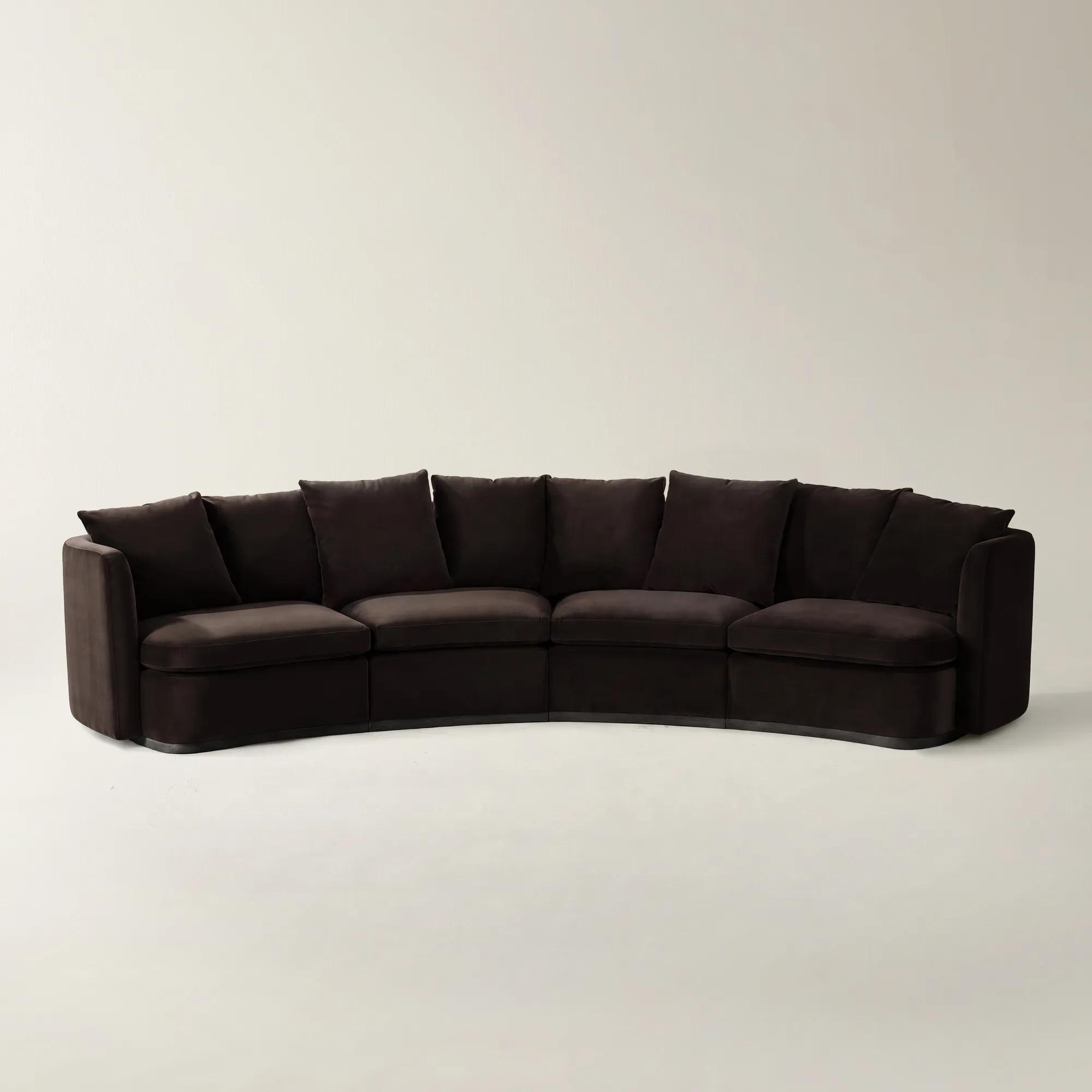 Stria 4-Piece Dark Chocolate Velvet Sectional Sofa$4499
A sculptural dark chocolate velvet sectional with curved edges, layered foam-down cushioning, and adaptable modular connectors.
Add To Cart -
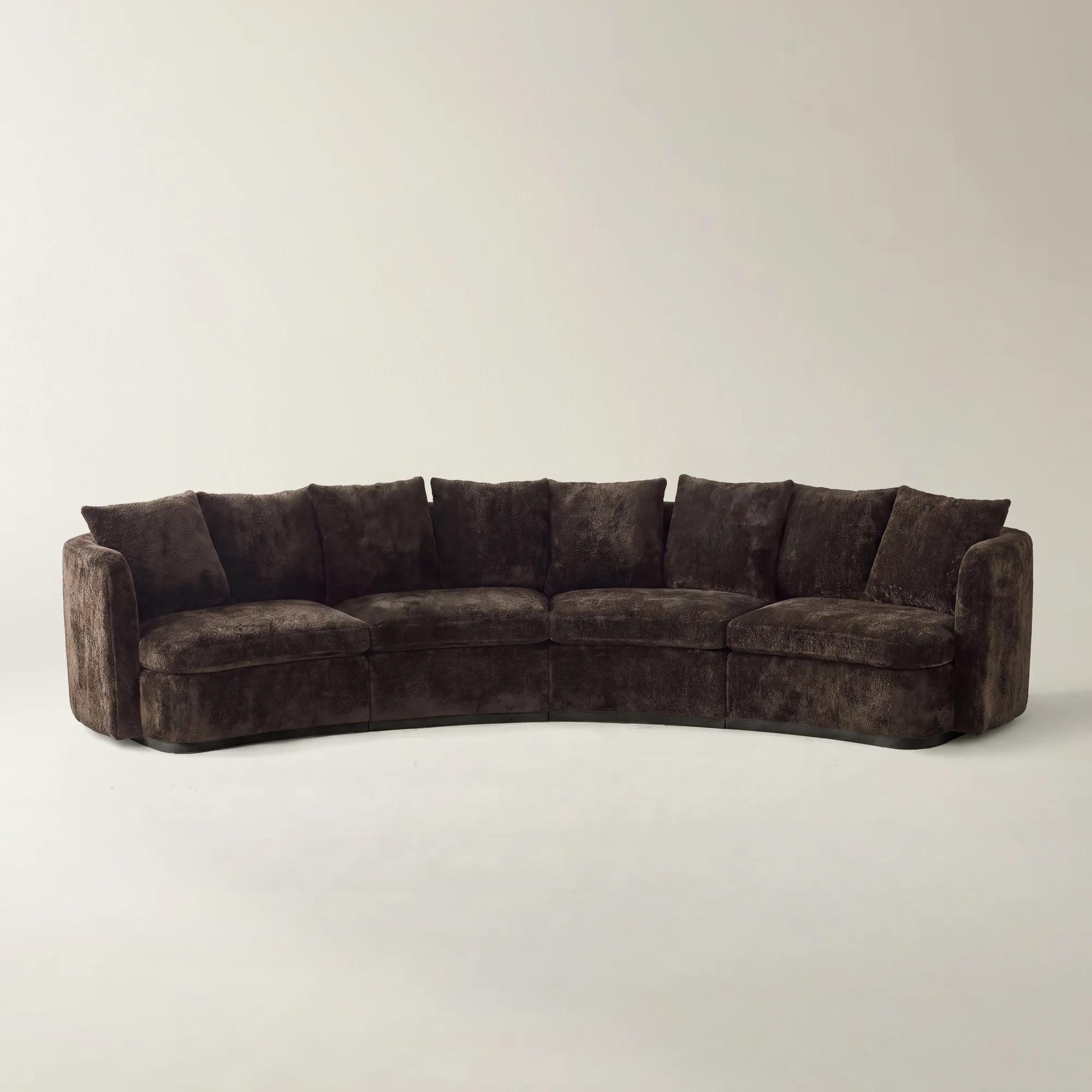 Stria 4-Piece Dark Chocolate Chenille Sectional Sofa$4499
A dark chocolate chenille sectional featuring sculptural curves, layered down-blend cushioning, and modular connectors.
Add To Cart -
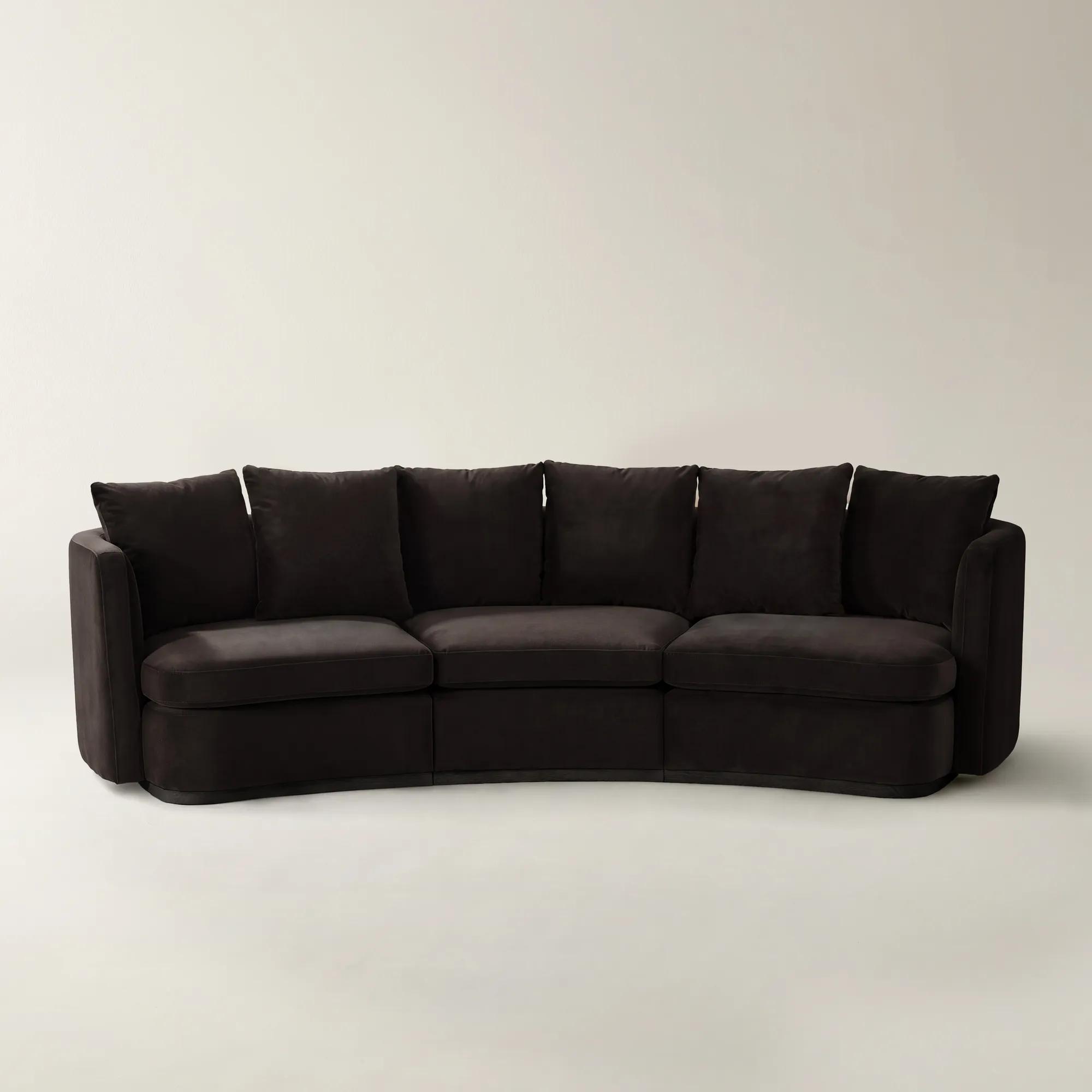 Stria 3-Piece Dark Chocolate Velvet Sectional Sofa$3399
A sculptural dark chocolate velvet sectional with curved styling, layered cushioning, and adaptable modular construction.
Add To Cart -
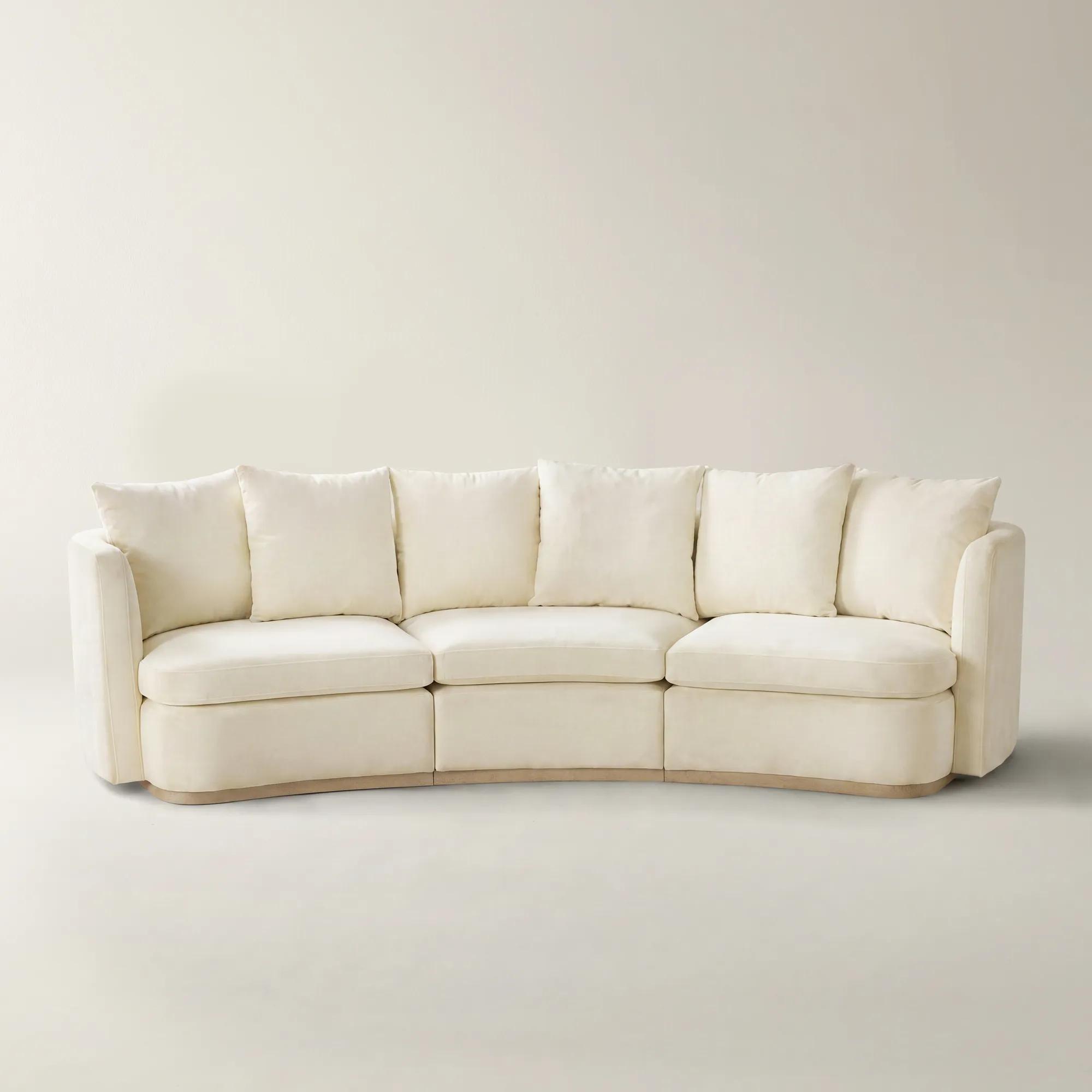 Stria 3-Piece Oatmeal Velvet Sectional Sofa$3399
A sculptural oatmeal velvet sectional with modular connectors, layered foam-and-down cushioning, and a kiln-dried wood frame.
Add To Cart -
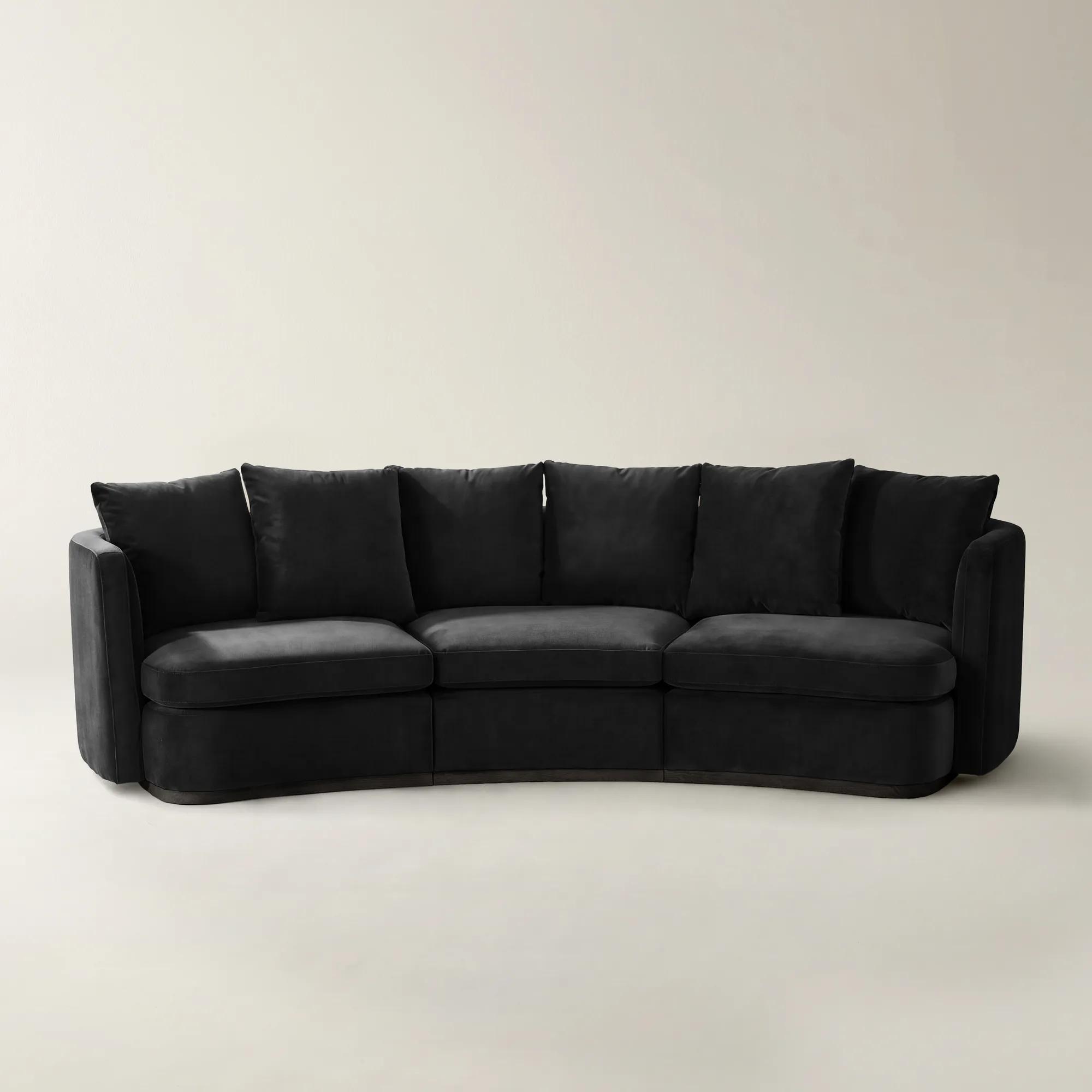 Stria 3-Piece Charcoal Velvet Sectional Sofa$3399
A sculptural charcoal velvet sectional featuring curved styling, layered cushioning, and modular connectors for adaptable comfort.
Add To Cart -
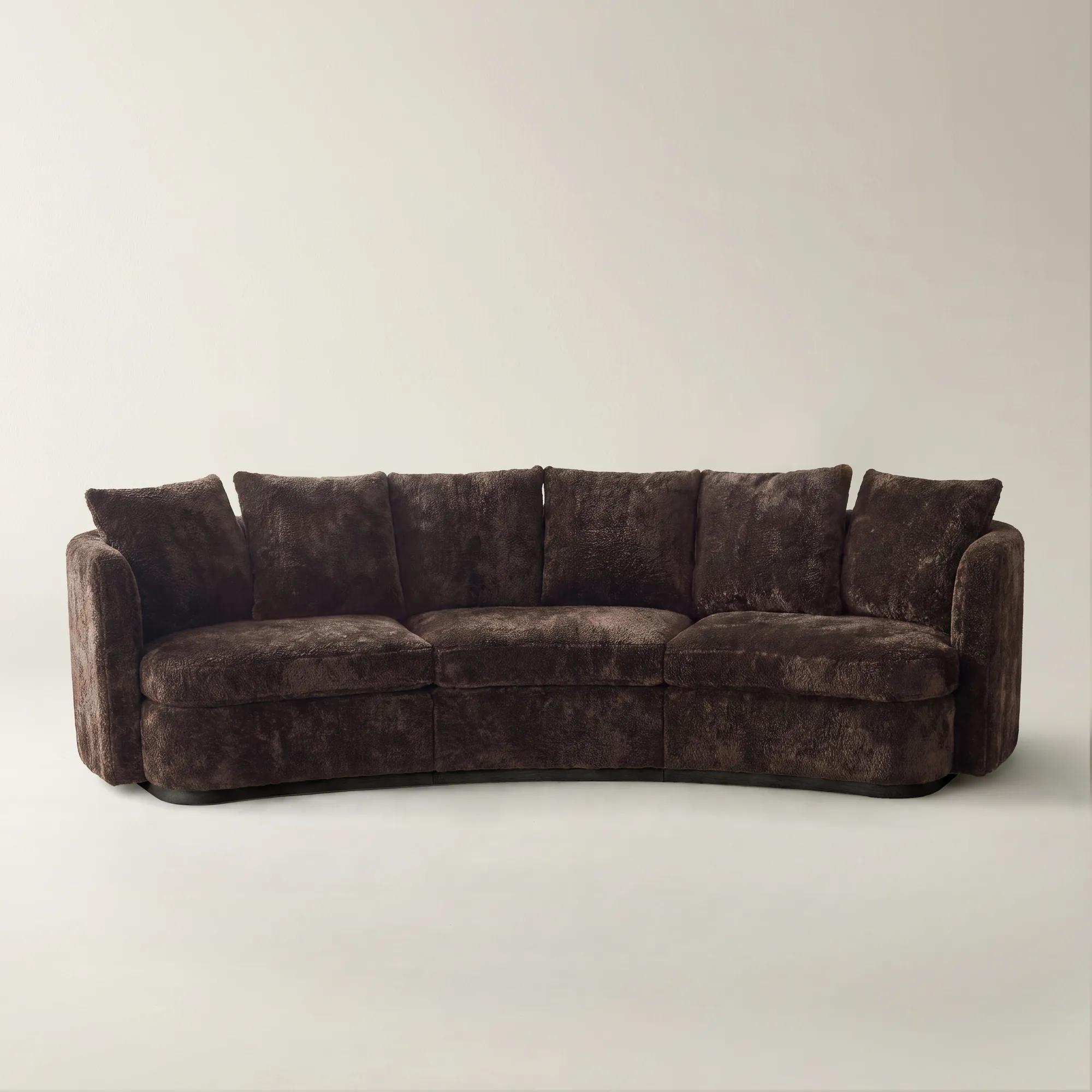 Stria 3-Piece Dark Chocolate Chenille Sectional Sofa$3399
A dark chocolate chenille sectional with sculptural curves, layered cushioning, and modular connectors for tailored comfort.
Add To Cart -
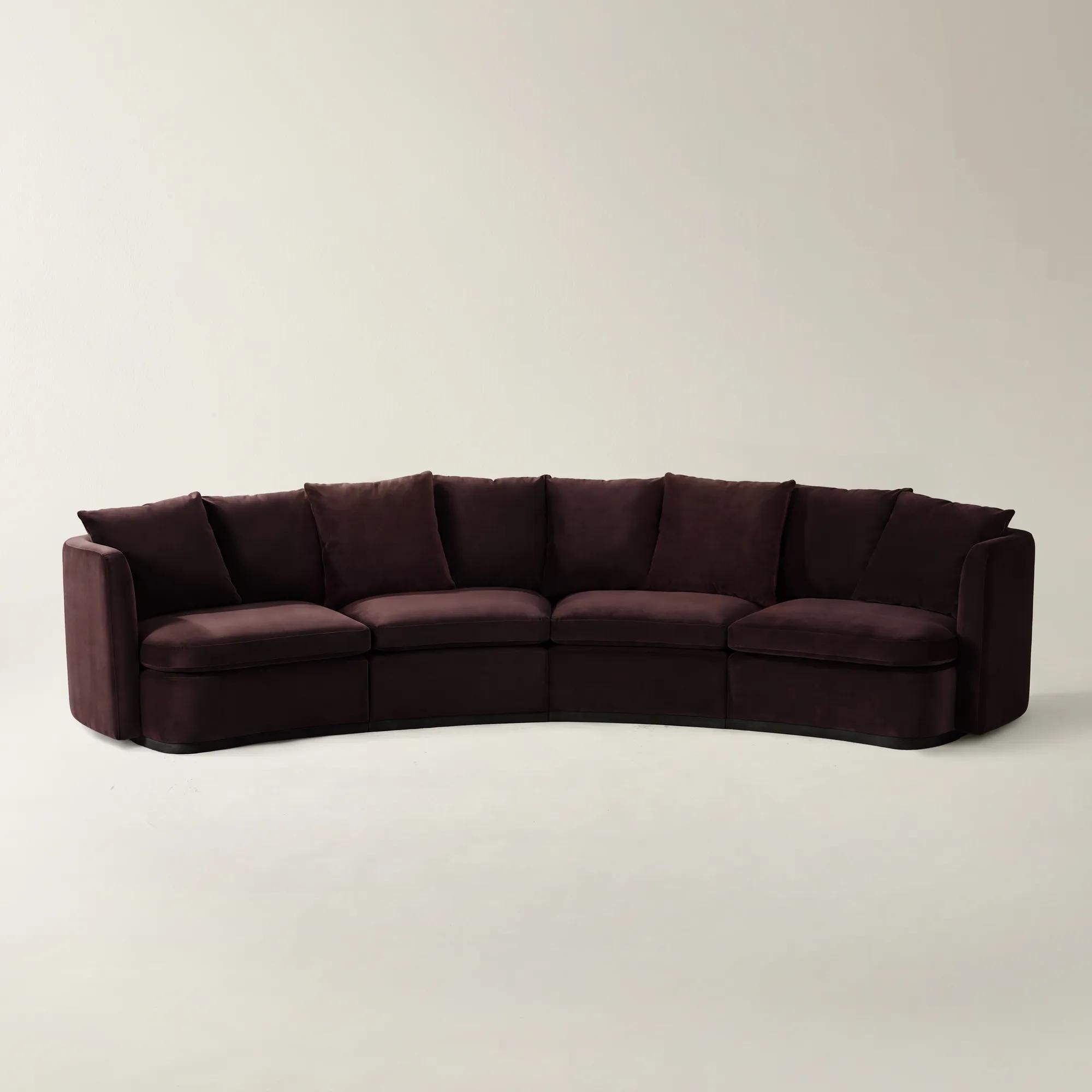 Stria 4-Piece Fig Velvet Sectional Sofa$4499
A sculptural fig velvet sectional with curved lines, layered foam-and-down cushioning, and modular connectors for comfort.
Add To Cart -
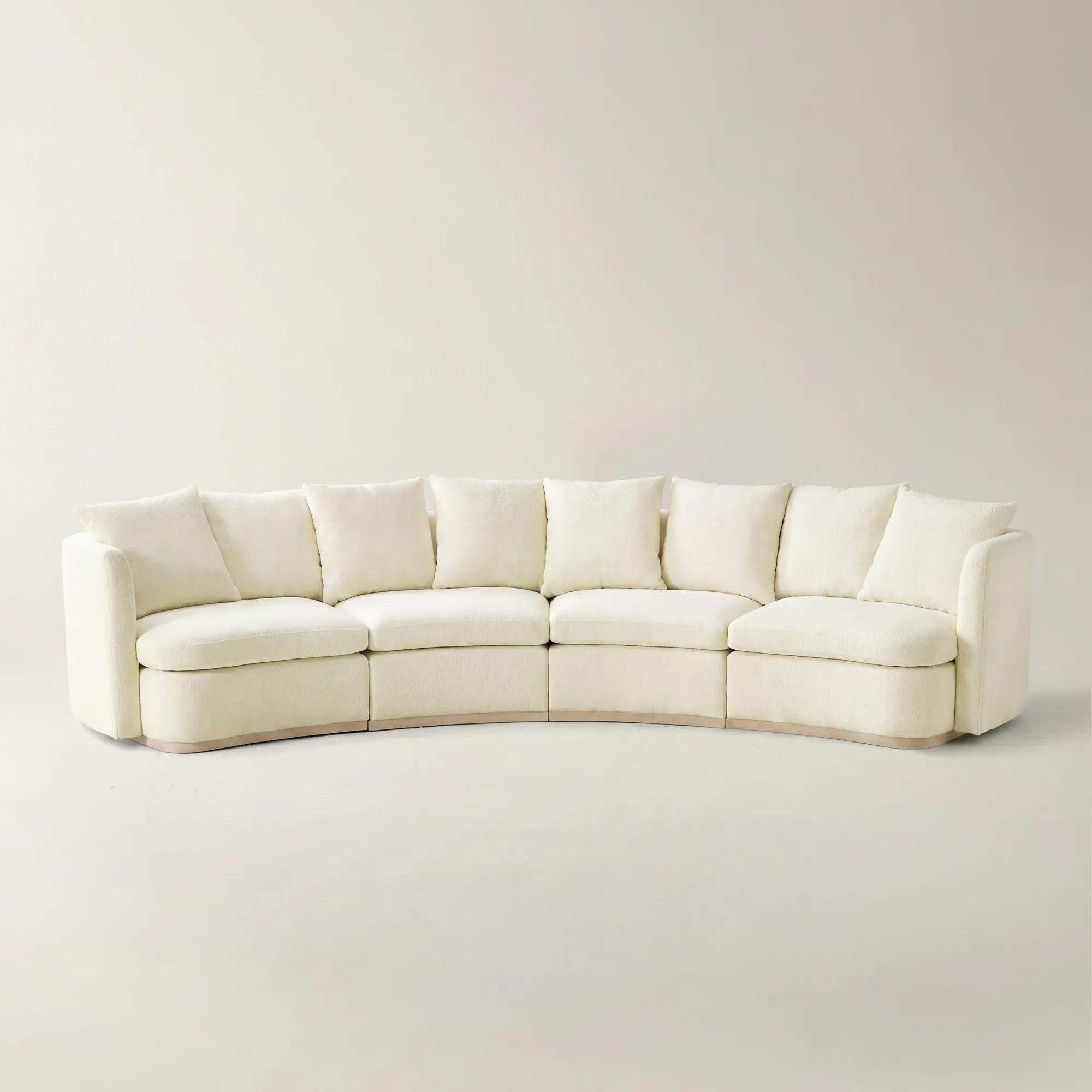 Stria 4-Piece Cloud Velvet Sectional Sofa$4499
A sculptural cloud velvet sectional featuring curved lines, modular connectors, and layered foam-down cushioning.
Add To Cart -
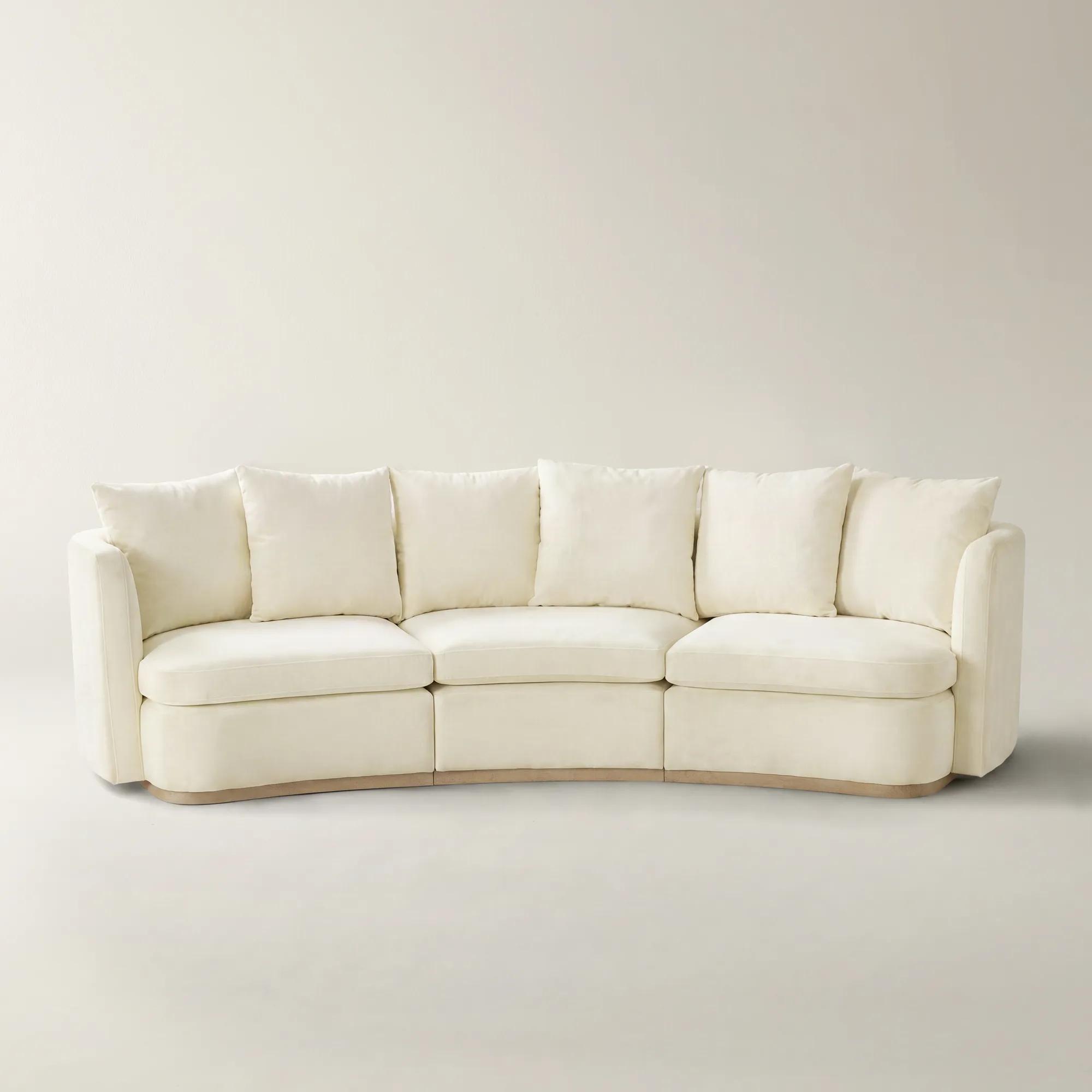 Stria 3-Piece Cloud Velvet Sectional Sofa$3399
A sculptural cloud velvet sectional with a curved silhouette, modular design, layered cushioning, and oak base.
Add To Cart -
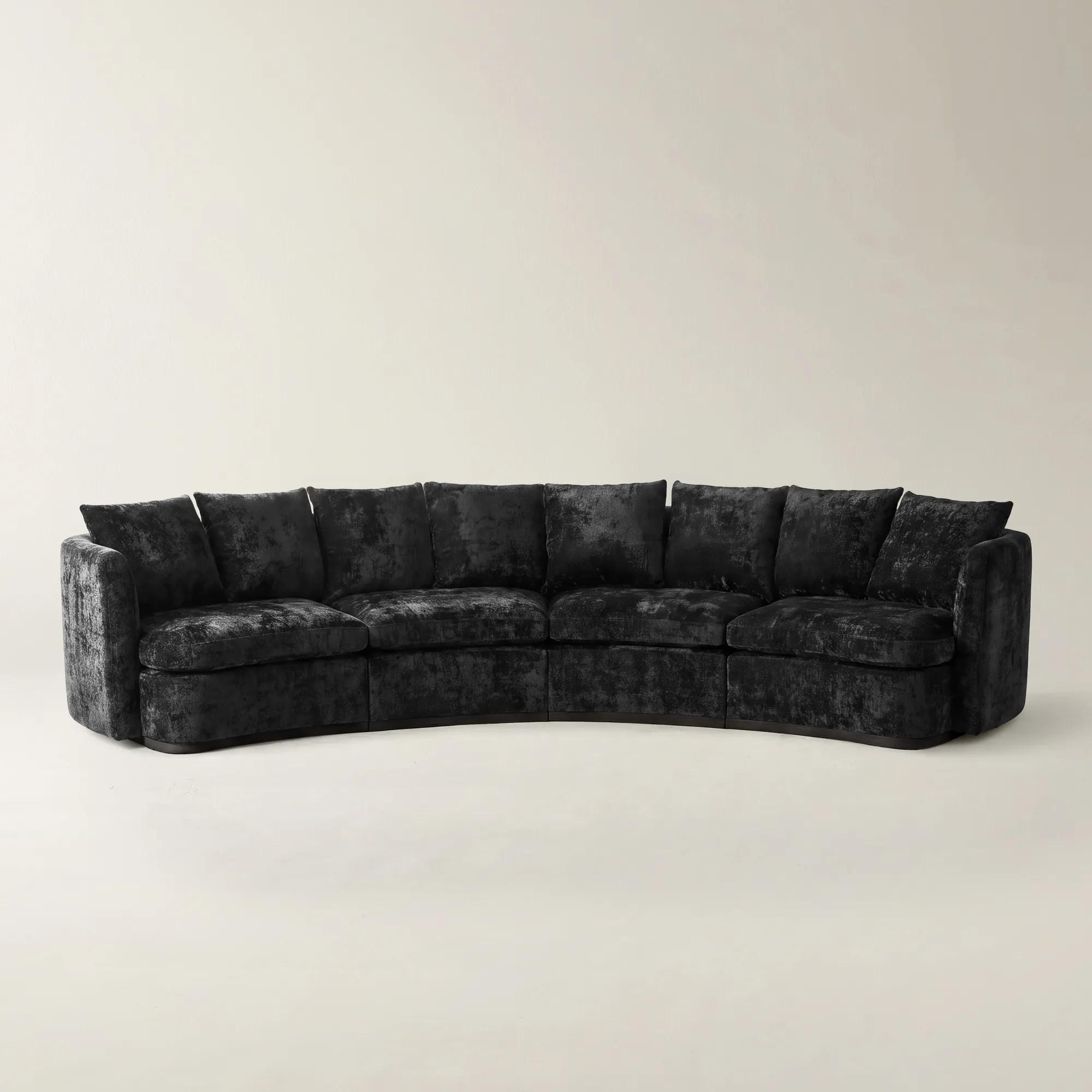 Stria 4-Piece Black Chenille Sectional Sofa$4499
A sculptural black chenille sectional featuring modular construction, curved edges, and layered foam-and-down cushioning.
Add To Cart -
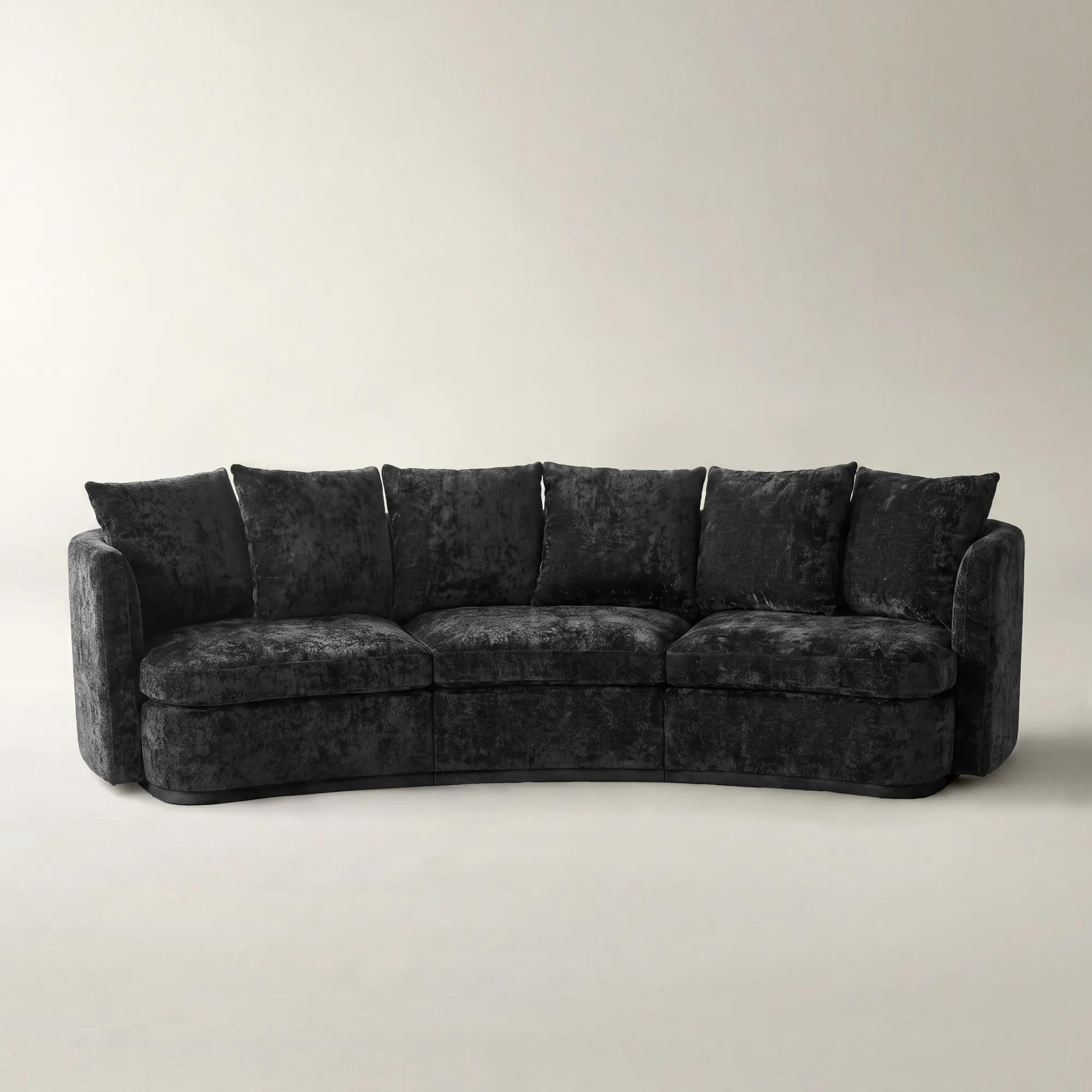 Stria 3-Piece Black Chenille Sectional Sofa$3399
A sculptural black chenille sectional with modular connectors, kiln-dried wood construction, and layered foam-down cushioning.
Add To Cart -
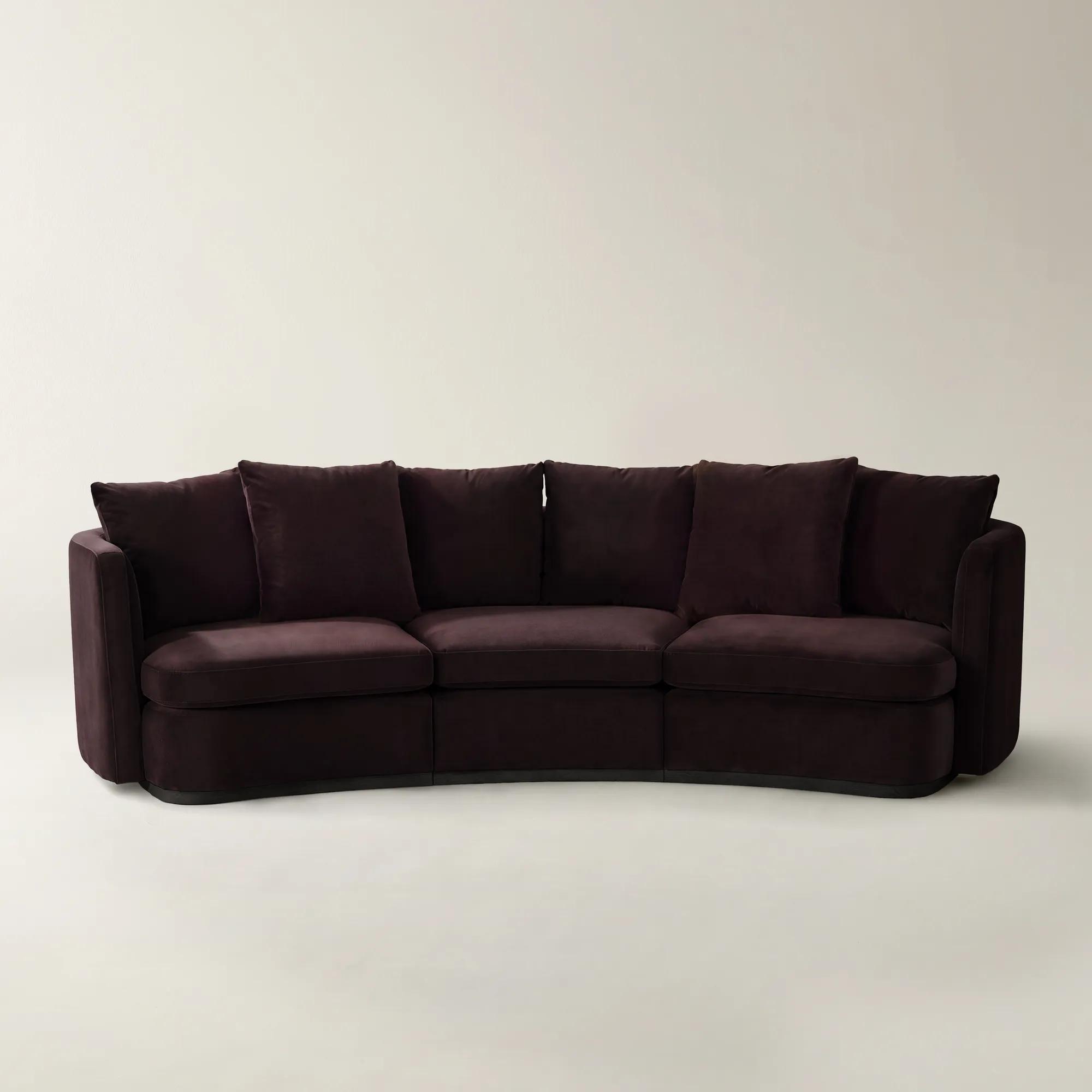
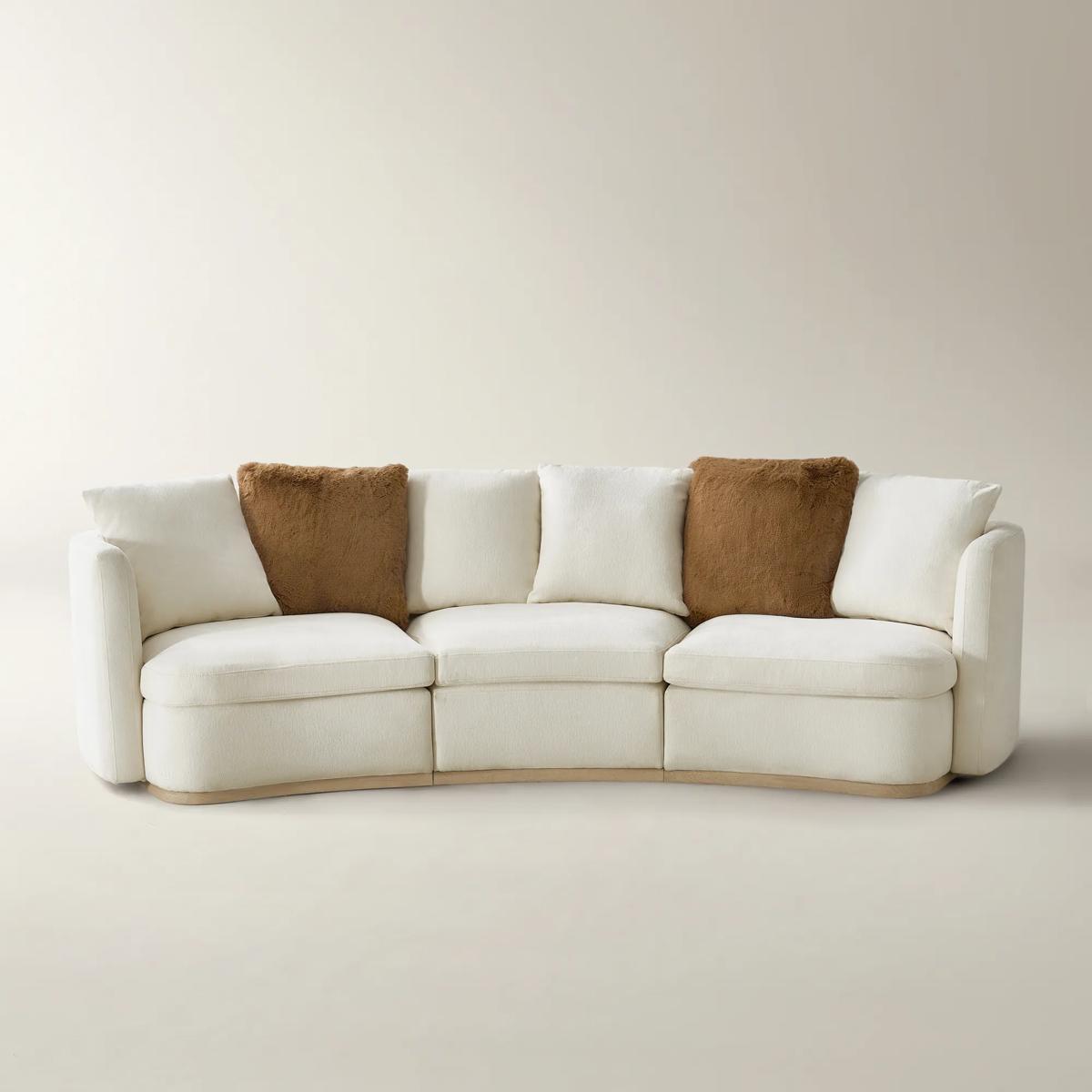 Stria 3-Piece Fig Velvet Sectional Sofa$3399
A sculptural fig velvet sectional with curved silhouette, layered cushioning, and modular connectors for flexible comfort.
Add To Cart -
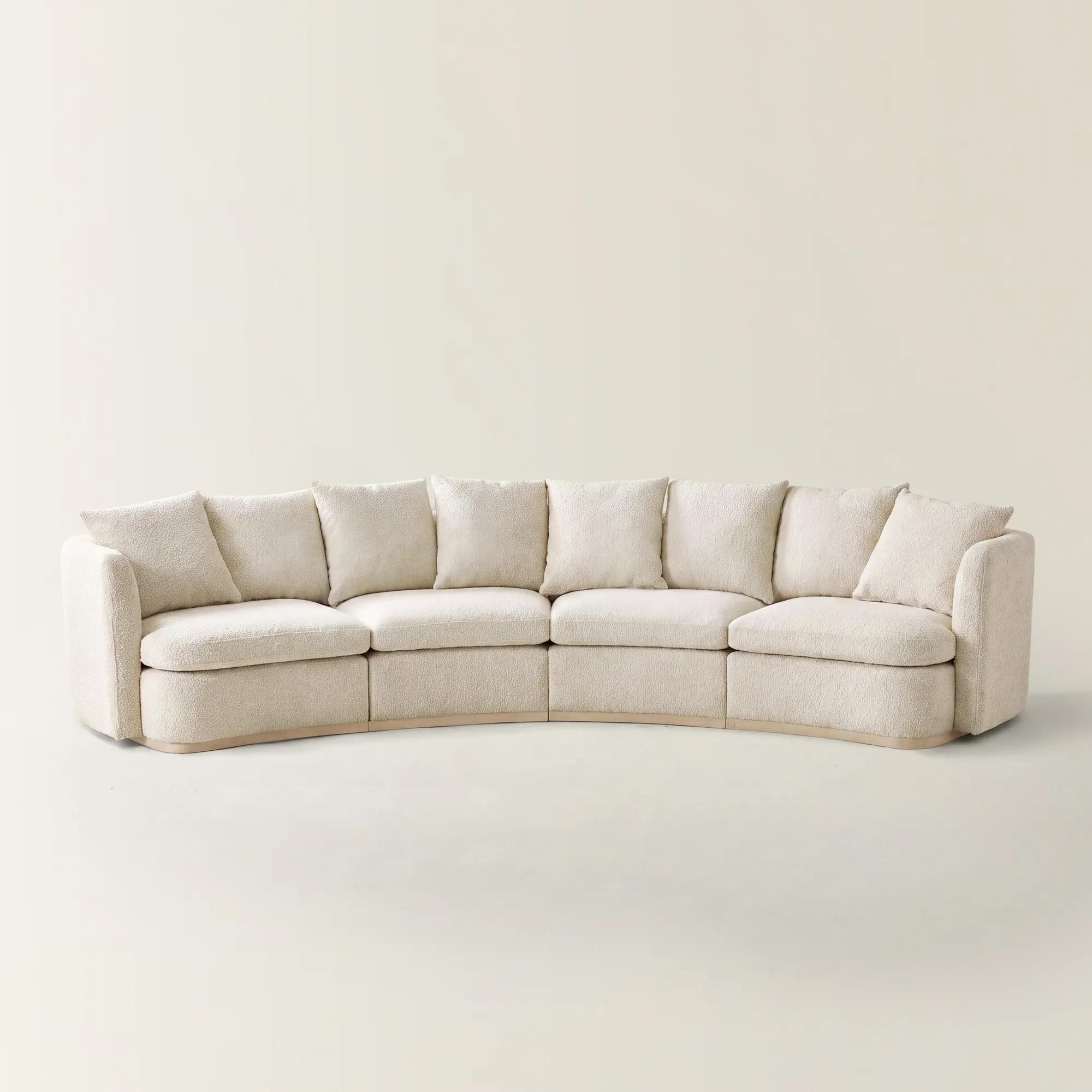 Stria 4-Piece Ivory Performance Boucle Sectional Sofa$4499
A sculptural ivory performance boucle sectional with modular connectors and layered foam-down cushioning for relaxed comfort.
Add To Cart

Modular Armless Sectional Sofas
Modular armless sectional sofas are the ultimate expression of curated comfort and sculptural sophistication. Designed for those who crave flexibility without compromising on style, these seating masterpieces invite you to compose your living space as boldly as you imagine. Each piece becomes a building block in your personal design story—effortlessly shifting to suit gatherings grand or intimate, all while radiating an air of modern glamour. Transform every moment into an occasion and let your living room become a gallery of luxurious possibility with modular armless sectional sofas that celebrate artistry, versatility, and unapologetic self-expression.
Modular armless sectional sofas are seating systems made from separate, compatible upholstered units without side arms, allowing a seating arrangement to expand, contract, or change configuration within the limits of its design. Armless does not mean backless: these modules typically have backrests and seat cushions, creating an inviting place to settle in without the visual interruption of an arm between seats. Individual units can form a straight sofa, while compatible corner sections and other components may support L-shaped or U-shaped layouts. The effect is architectural yet generous—a continuous sweep of upholstery that gives a living room a distinctive silhouette. Unlike a conventional sofa with a fixed frame and arrangement, a modular sectional offers flexibility through separate components, although connection systems, dimensions, and configuration options vary. Pieces from different collections are not necessarily interchangeable. For an apartment living room, a compact arrangement can establish a polished gathering space without introducing bulky arms at either end. In an expansive family room, a broader composition can become the room’s social center, with space for conversation, movie nights, and unhurried afternoons with a book. The absence of arms also creates a more open approach to the seating, particularly where the sofa faces an adjoining dining area or sits away from a wall. That openness carries a practical distinction: an exposed end seat has no built-in arm for leaning, so anyone who prefers a more enclosed perch may appreciate a compatible corner or end component where the system permits. Sculptural cushions, a deeply textured rug, and a gleaming accent table give the uninterrupted upholstery definition without diminishing its fluid character. For households that entertain frequently or expect their furniture layout to evolve, modular construction offers a way to shape seating around actual routines rather than asking the room to accommodate one permanent outline. Its drama comes from proportion, texture, and the freedom to compose a setting with intention.
Upholstery and interior construction determine how that striking outline feels in everyday use. Depending on the design, modular armless seating may feature velvet, woven fabric, textured bouclé, leather, or other upholstery, each bringing a different character to the room. Velvet catches light across its pile, lending broad seats a rich, dimensional appearance; tightly woven textiles can create a more tailored surface, while bouclé introduces a tactile contrast to polished metal and glass. Leather develops its own visual character according to its type and finish, with care requirements that differ from fabric. Color matters beyond the initial impression: pale upholstery reveals the sectional’s sculptural lines, while saturated hues give a large arrangement depth and presence. In a household with children, pets, or frequent guests, fabric composition, weave, snag resistance, and documented cleaning requirements deserve as much attention as color. A performance designation does not make upholstery immune to stains, abrasion, or damage, and removable cushion covers are not automatically machine washable. The manufacturer’s care instructions remain the reference for appropriate cleaning methods. Routine vacuuming with a suitable upholstery attachment helps remove dust and debris from seams, while prompt blotting rather than rubbing can help contain a spill before the recommended treatment is applied. Cushion construction also shapes the experience: foam can provide a more defined seat, while fiber or feather blends may offer a softer, more relaxed feel and require regular fluffing. Neither softness nor firmness alone establishes quality. Frame construction, joint reinforcement, suspension, cushion resilience, and secure module connections all contribute to how well a sectional holds its shape and supports repeated use. Where cushions are designed to be rotated or repositioned, doing so can help distribute wear. Upholstery protected from prolonged direct sunlight and concentrated heat is better positioned to retain its appearance, though individual materials respond differently. The most compelling sectional balances its sumptuous surface with construction suited to the people who will settle into it every day.
Fit is both a matter of dimensions and a matter of atmosphere. An armless profile can appear visually lighter than a similarly sized sofa with substantial arms, but it does not necessarily occupy less floor space. Overall width, depth, back height, and the footprint of the complete configuration establish how comfortably the sectional belongs in the room. Seat depth and seat height influence daily comfort just as directly: a deep seat encourages lounging, while a shallower seat may feel more supportive for upright conversation or for someone who prefers to keep both feet on the floor. In an open living area, a finished upholstered back allows the sectional to act as a graceful divider, provided the design is intended to be seen from every angle. Clear passage around the seating preserves that sense of ease, especially near doorways, dining chairs, and frequently used routes through the home. Delivery access deserves equal consideration, including stair turns, elevator interiors, and doorway clearances; separate modules can simplify handling, but each component still needs to fit the route into the room. Once arranged, connectors should be secured according to the assembly instructions so adjoining sections remain aligned during normal use. For layouts that call for a movable place to stretch out or an additional upholstered element, Modular Ottoman Sectional Sofas offer another approach to composing a lounge-centered setting. An ottoman may create a chaise-like extension when dimensions and compatibility allow, or serve as a separate footrest without fixing the entire arrangement around a permanent chaise. Alongside armless seating, a well-placed side table gives an exposed end a practical companion, while a substantial rug visually gathers the individual modules into one composition. Contrast brings the scene into focus: a luminous table against matte upholstery, a patterned pillow against a broad solid seat, or an expressive artwork above a low, sweeping back. The result is seating with presence and adaptability, designed to anchor a room without dictating every detail around it.
FAQs
An armless sectional sofa offers a sleek, uninterrupted silhouette that creates a sense of openness and flow within any room. The absence of arms allows for seamless transitions between seating elements, making it ideal for both entertaining and everyday lounging. This design also enables flexible configurations, allowing you to adapt your layout to suit your evolving style and space.
Personalizing a modular armless sectional is all about layering textures, colors, and accessories. Drape sumptuous throws over the back, add a collection of statement pillows, and incorporate metallic or mirrored accent tables for a touch of glamour. The modular design encourages creativity—rearrange the pieces to suit the mood, from intimate gatherings to lavish celebrations.
An armless sectional makes a thoughtful gift for design enthusiasts, newlyweds, or anyone setting up a new home. Its versatile, modular nature appeals to those who appreciate both comfort and the freedom to customize their living environment, making it a cherished addition to any home where style and adaptability are prized.
An armless chaise sofa can serve as a luxurious lounge spot, perfect for relaxing with a book or enjoying a cozy movie night. Position it at one end of your sectional to create a dramatic focal point, or float it in the center for a sculptural, conversation-starting element. Its flexibility allows you to reinvent your space as your needs and inspirations change.
Armless sectionals are ideal for open-concept layouts because their clean lines and modular construction help define zones without creating visual barriers. They encourage a sense of unity and flow, making the space feel larger and more inviting while still offering distinct areas for relaxation, conversation, and entertainment.