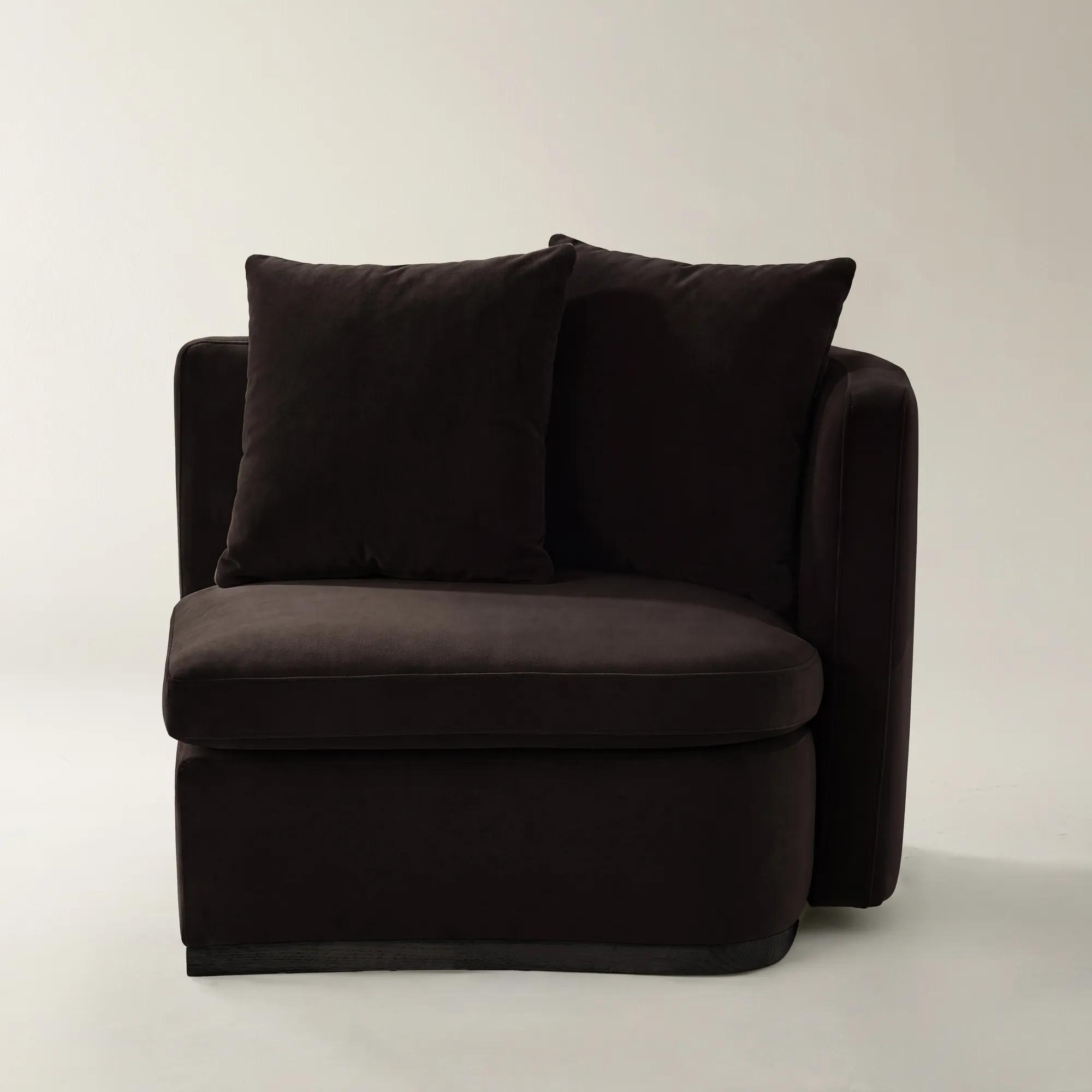
Modern Sectionals For Open Spaces
Modern Sectionals For Open Spaces
-
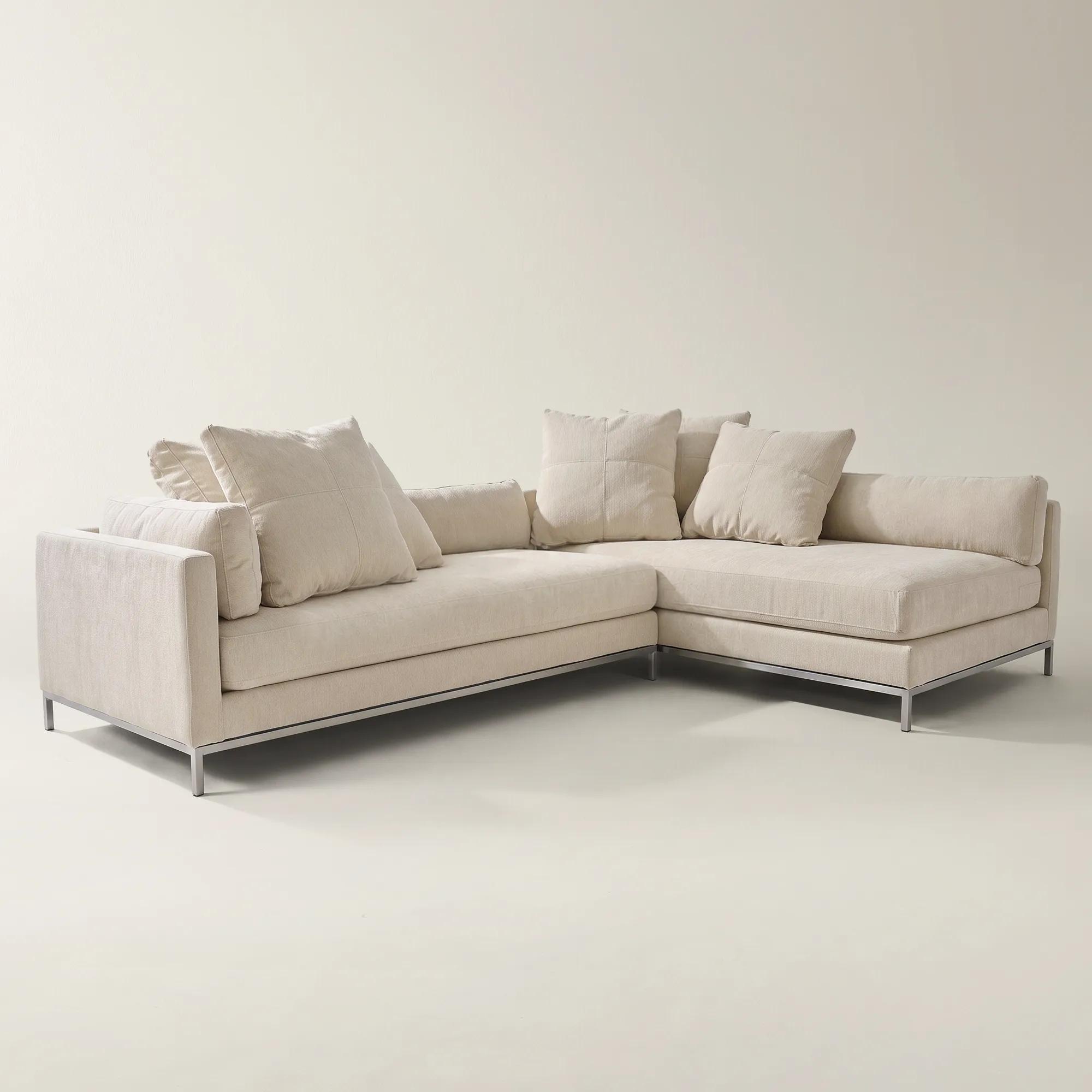
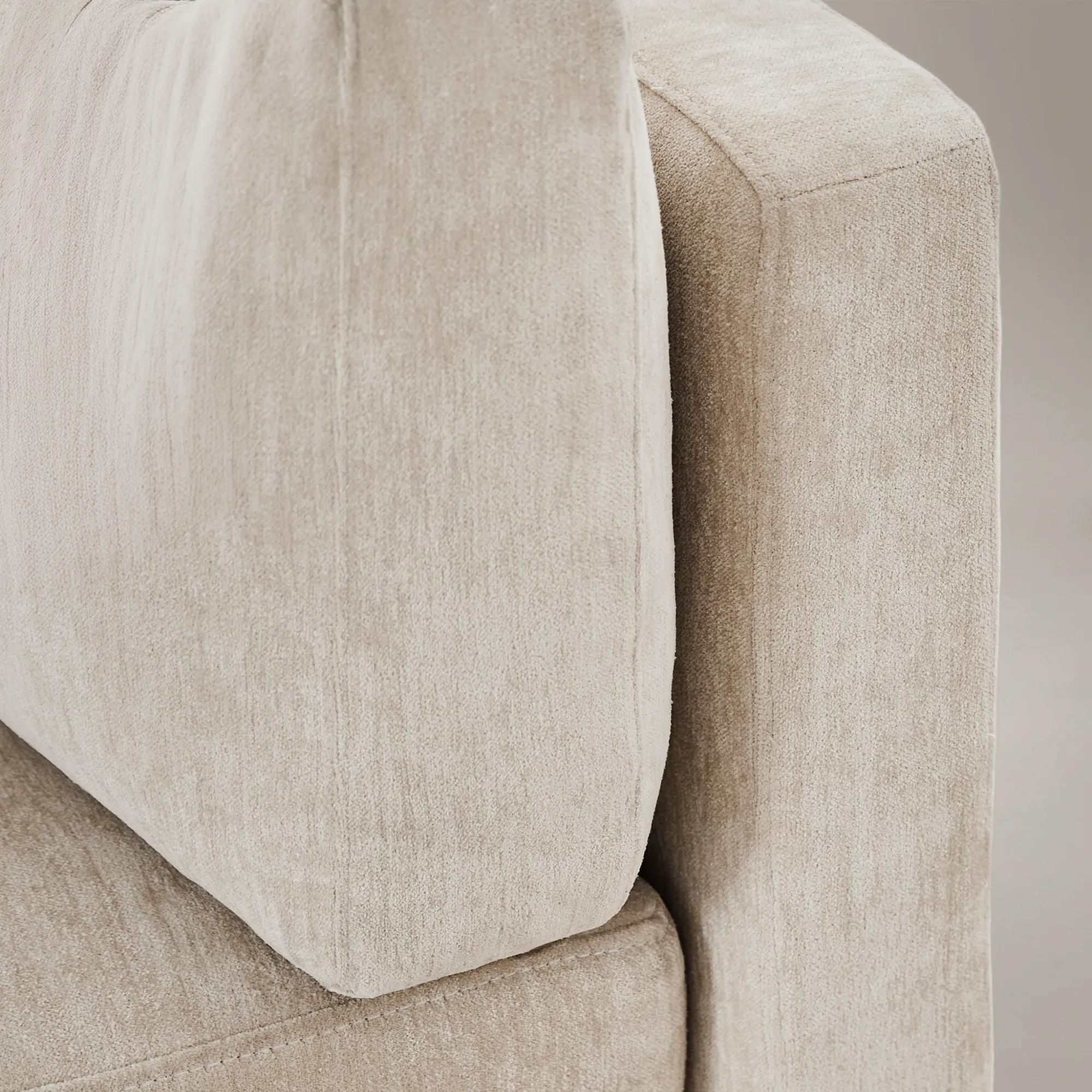 Ventura 2-Piece L-Shaped Snow Chenille Sectional Sofa With Left-Arm Chair$4099
A modern Snow chenille sectional with plush feather-filled pillows, supportive cushioning, and a stainless-steel base.
Add To Cart -
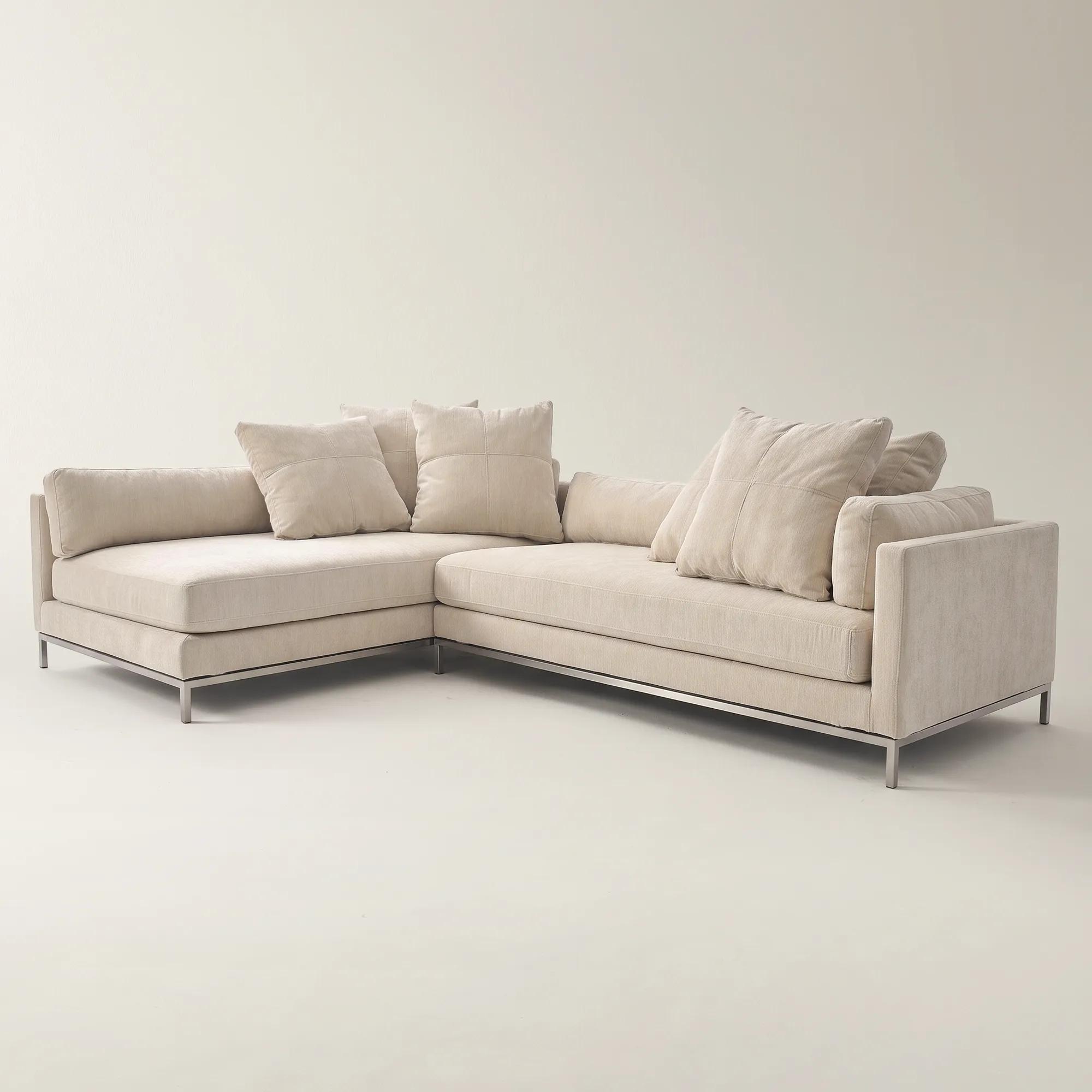 Ventura 2-Piece L-Shaped Snow Chenille Sectional Sofa With Right-Arm Chair$4099
A modern Snow chenille sectional with plush feather-filled cushions, streamlined metal base, and versatile L-shaped comfort.
Add To Cart -
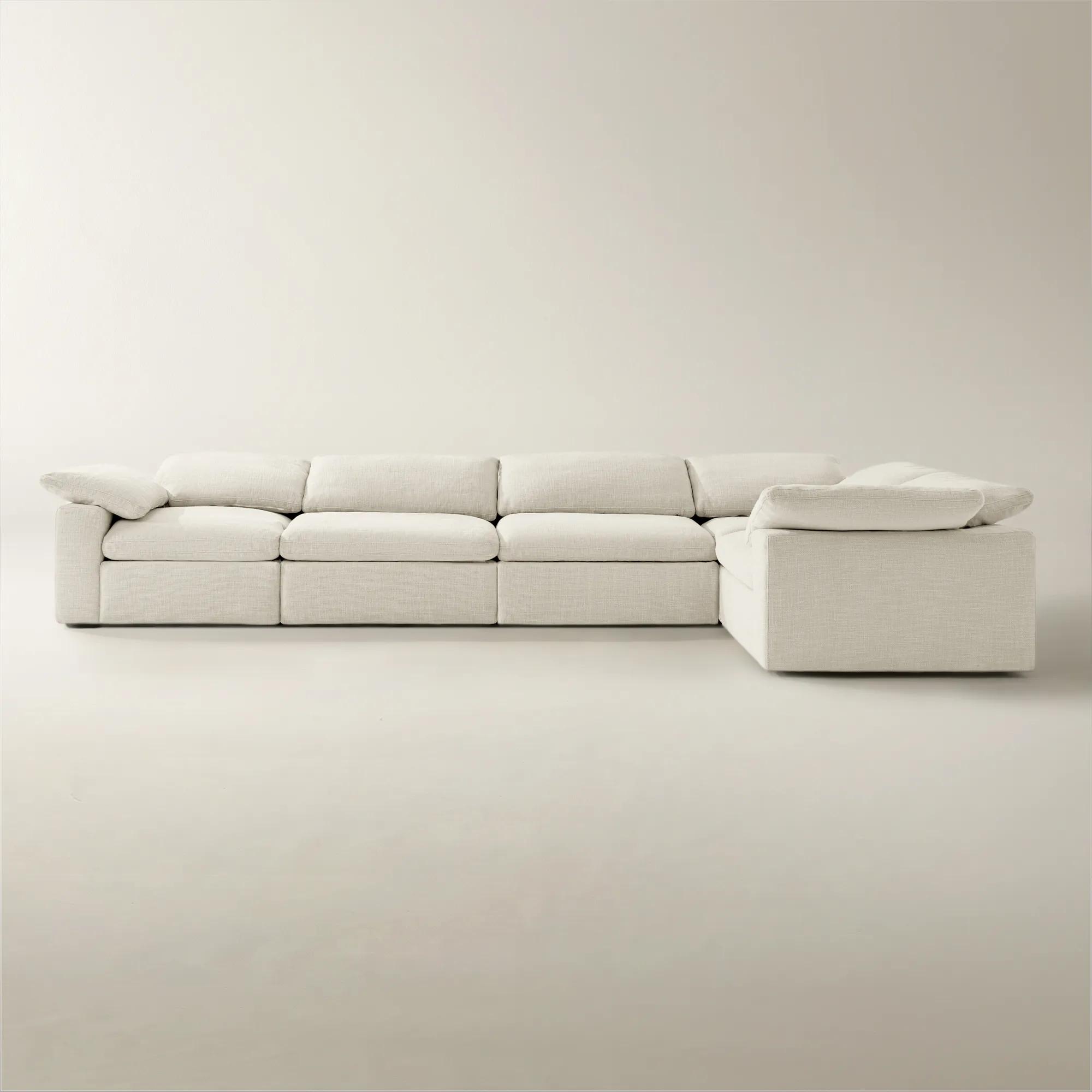
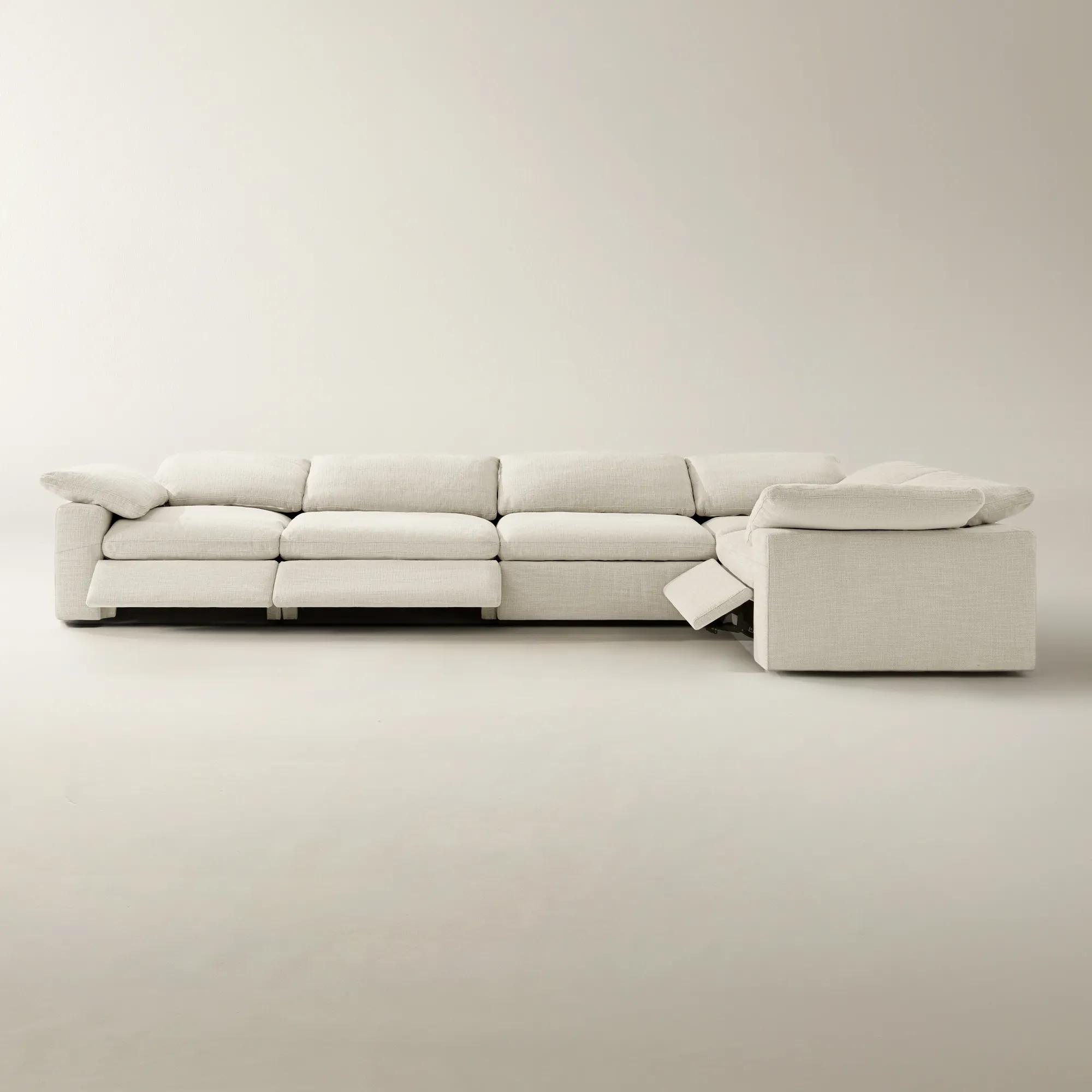 Milo 5-Piece Reclining Ivory Performance Fabric Sectional$5499
A modular sectional sofa in ivory performance fabric with plush cushioning and independent power-reclining footrests.
Add To Cart -
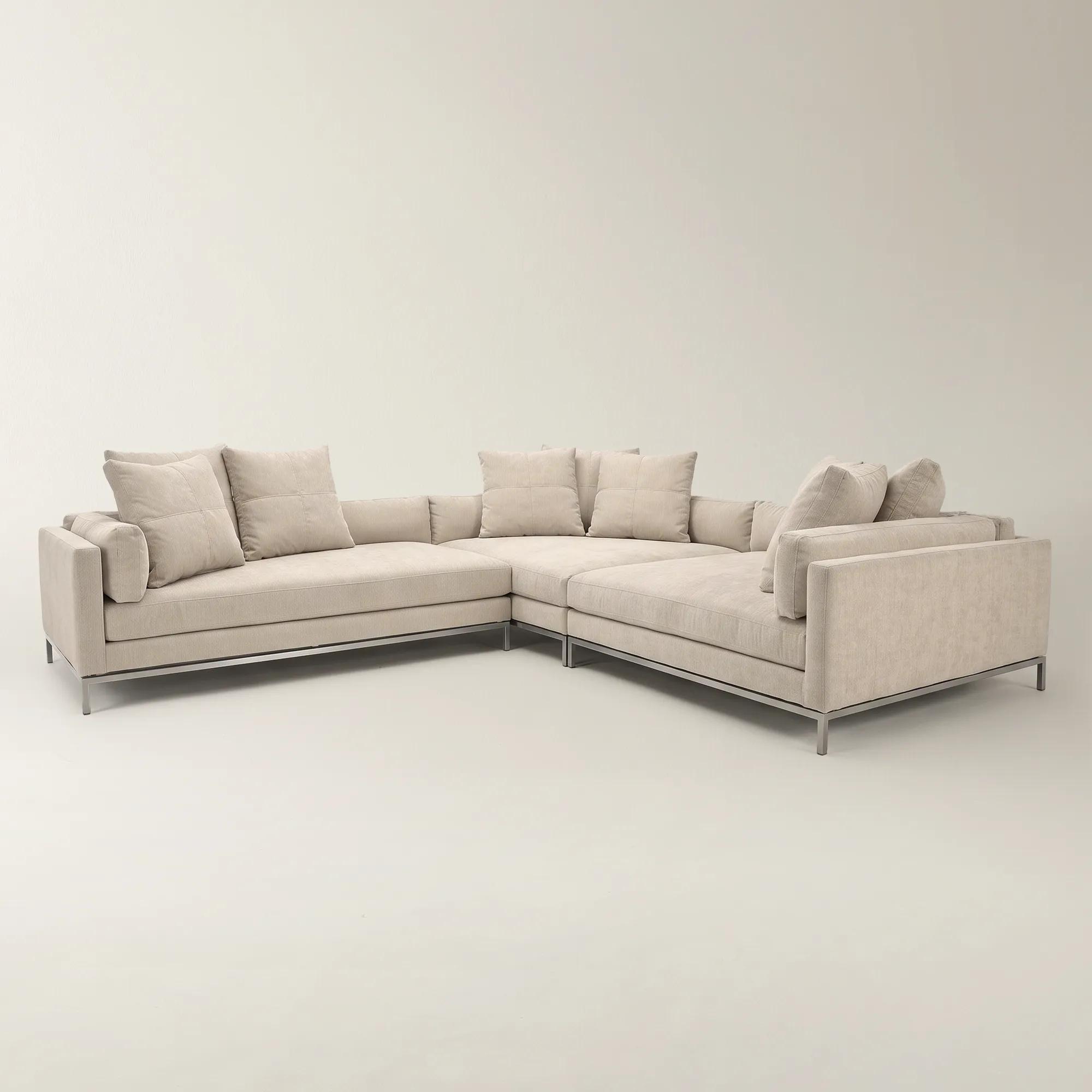 Ventura 3-Piece L-Shaped Snow Chenille Sectional Sofa With Left-Arm Chair$5999
A modern Snow chenille sectional with a stainless-steel base, plush feather pillows, and deep-seated comfort.
Add To Cart -
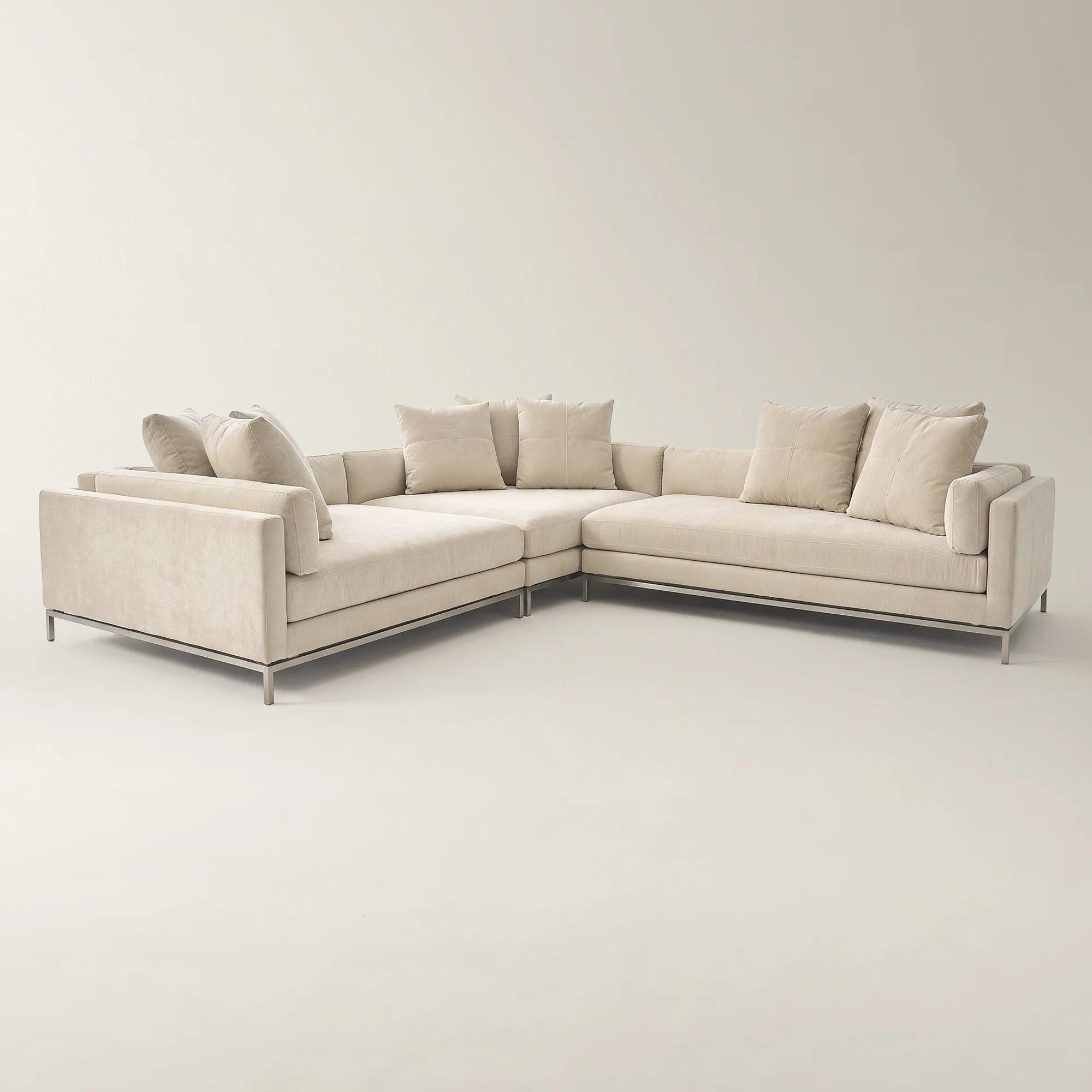 Ventura 3-Piece L-Shaped Snow Chenille Sectional Sofa With Right-Arm Chair$5999
A snow chenille sectional with a streamlined floating silhouette, plush feather-filled cushions, and versatile L-shaped seating.
Add To Cart -

 Sabrina 5-Piece Oatmeal Velvet Sectional$5999
An inviting L-shaped sectional in soft oatmeal velvet with plush feather-blend cushions and modular design.
Add To Cart -
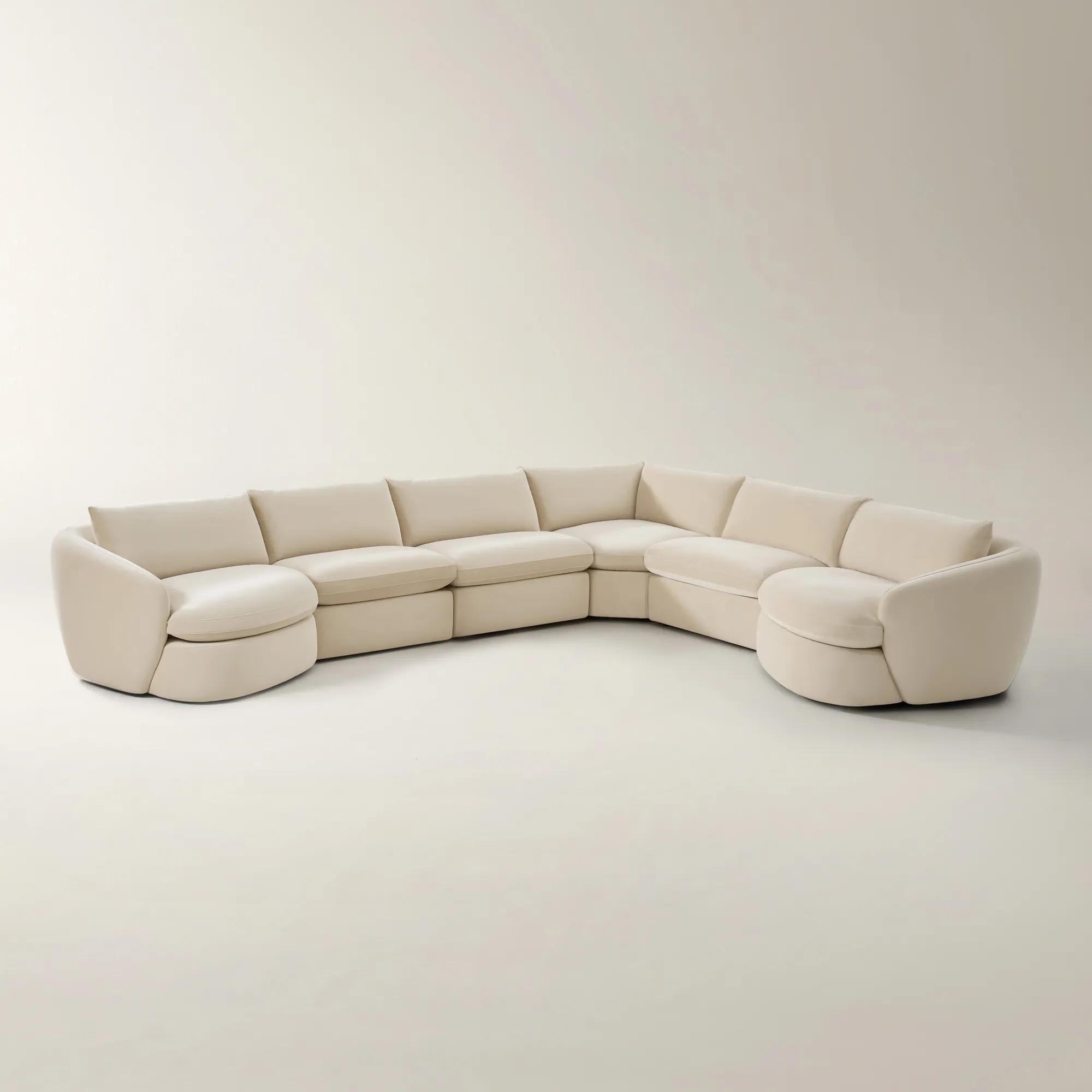 Sabrina 6-Piece Oatmeal Velvet Sectional$6999
An inviting L-shaped sectional in soft oatmeal velvet with plush feather-blend cushions and modular design.
Add To Cart -
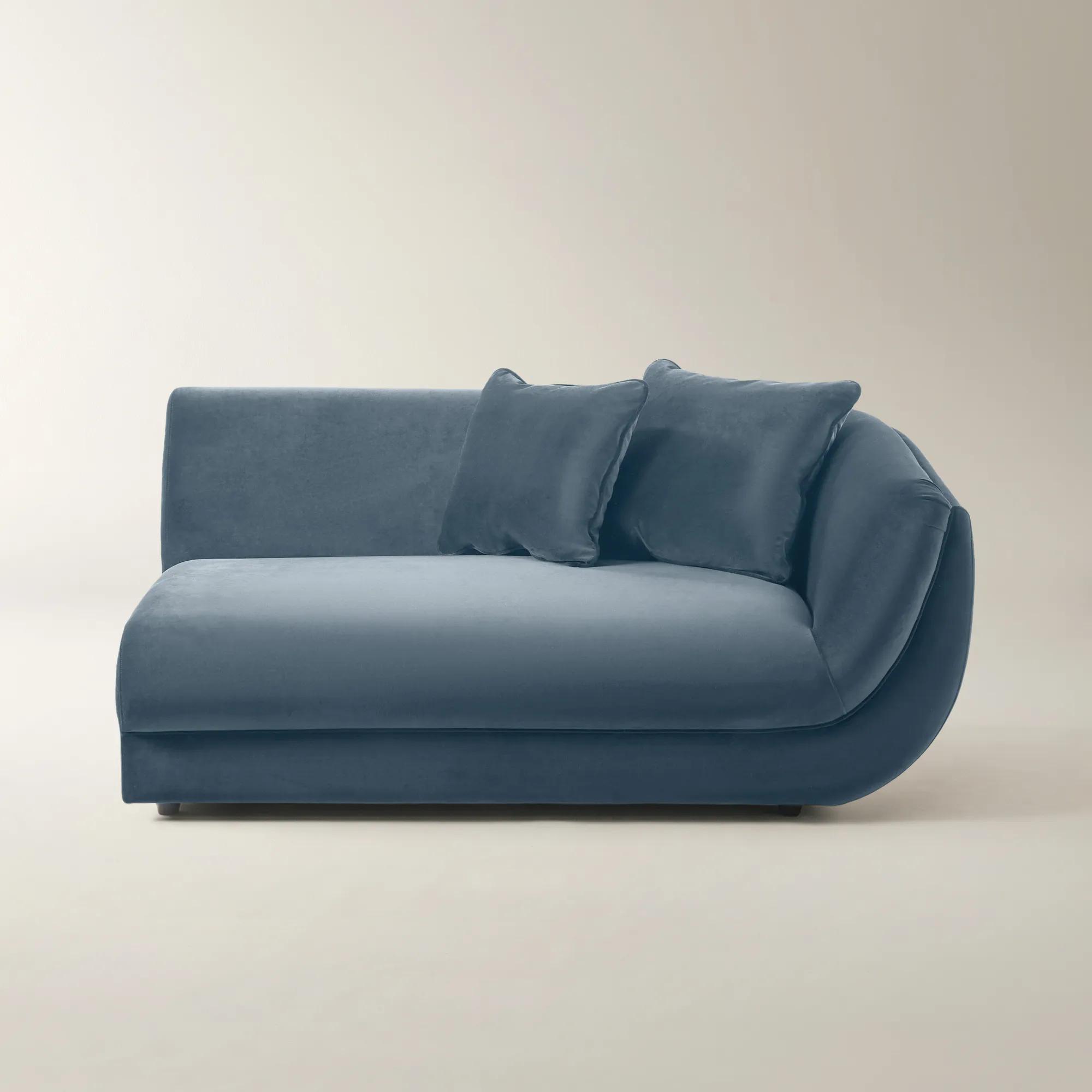
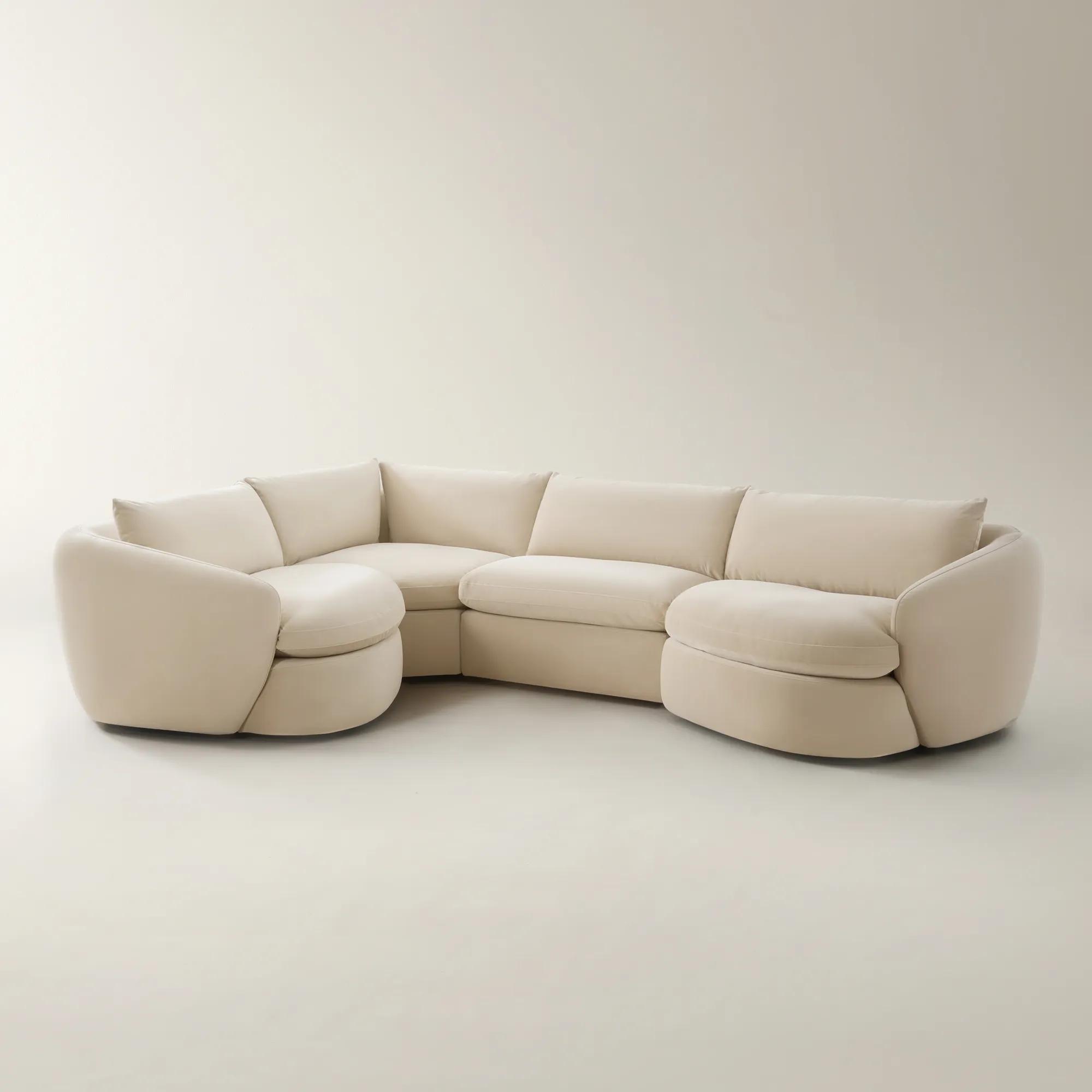 Sabrina 4-Piece Oatmeal Velvet Sectional With Left-Arm Chair$4999
An inviting L-shaped sectional in soft oatmeal velvet with feather-blend cushions and a modular, curved silhouette.
Add To Cart -
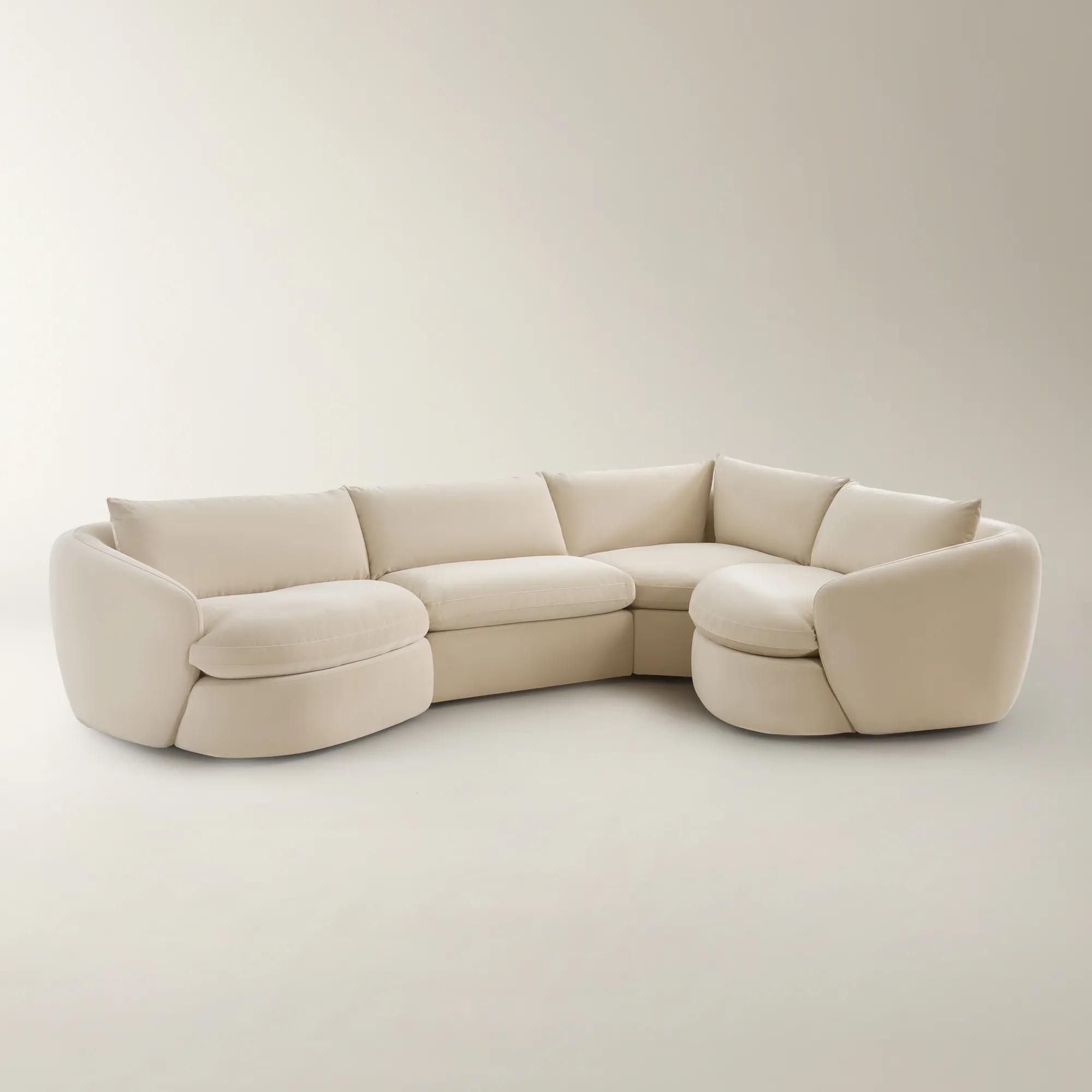 Sabrina 4-Piece Oatmeal Velvet Sectional With Right-Arm Chair$4999
An inviting L-shaped sectional in soft oatmeal velvet with plush feather-blend cushions and modular design.
Add To Cart -
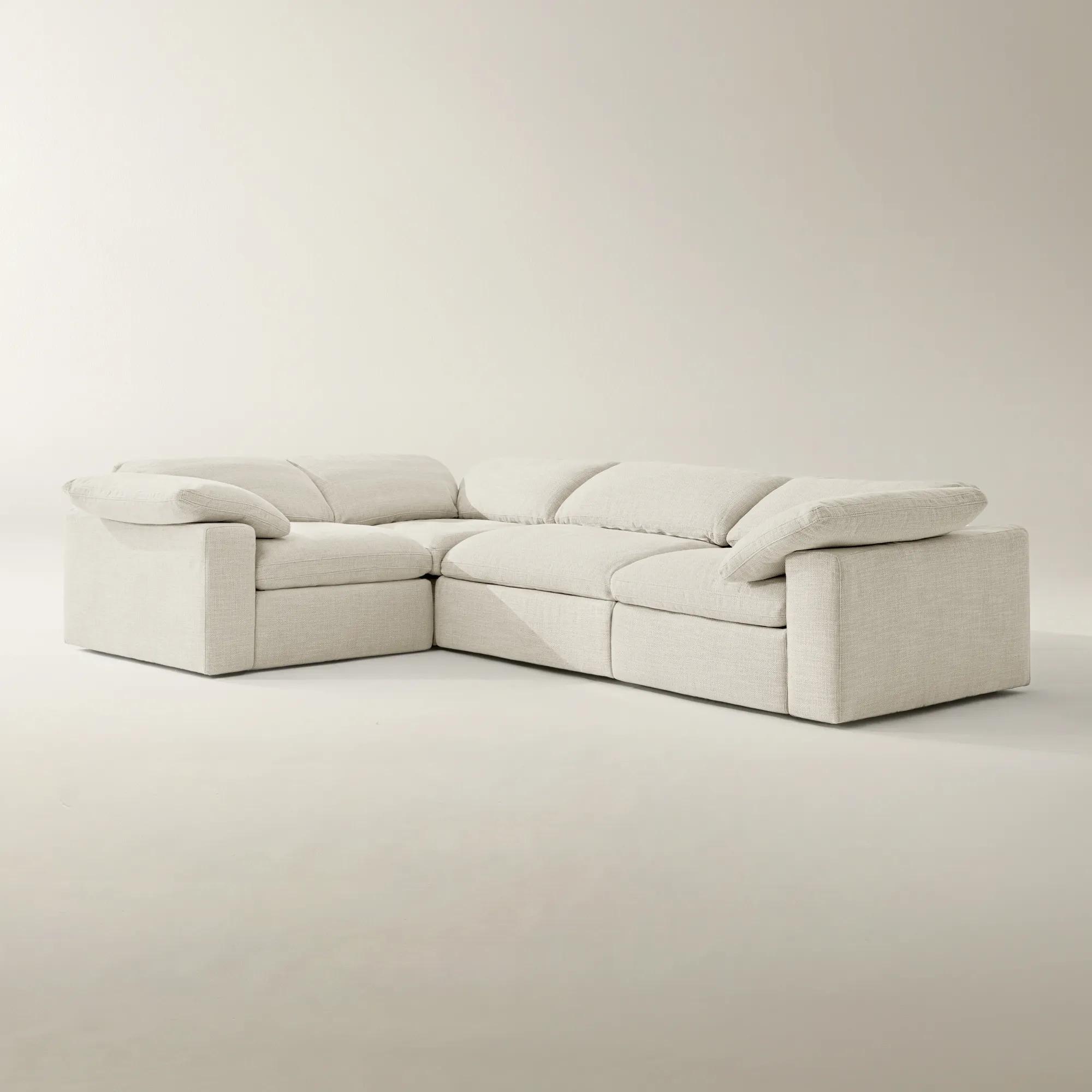
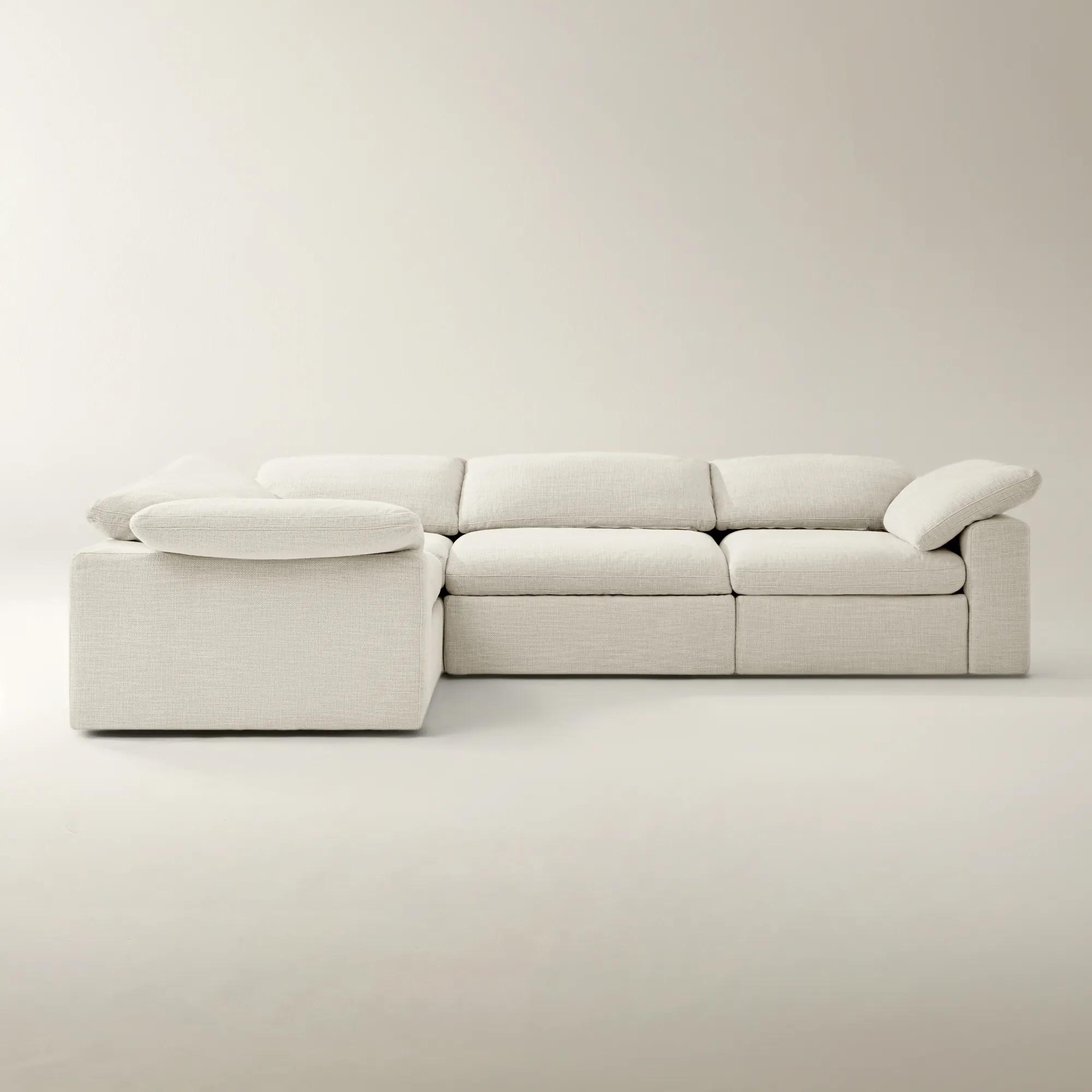 Milo 4-Piece L-Shaped Reclining Ivory Performance Fabric Sectional Sofa With Left-Arm Chair$4399
A modular L-shaped sectional sofa in ivory performance fabric with plush cushioning and independent power reclining.
Add To Cart -
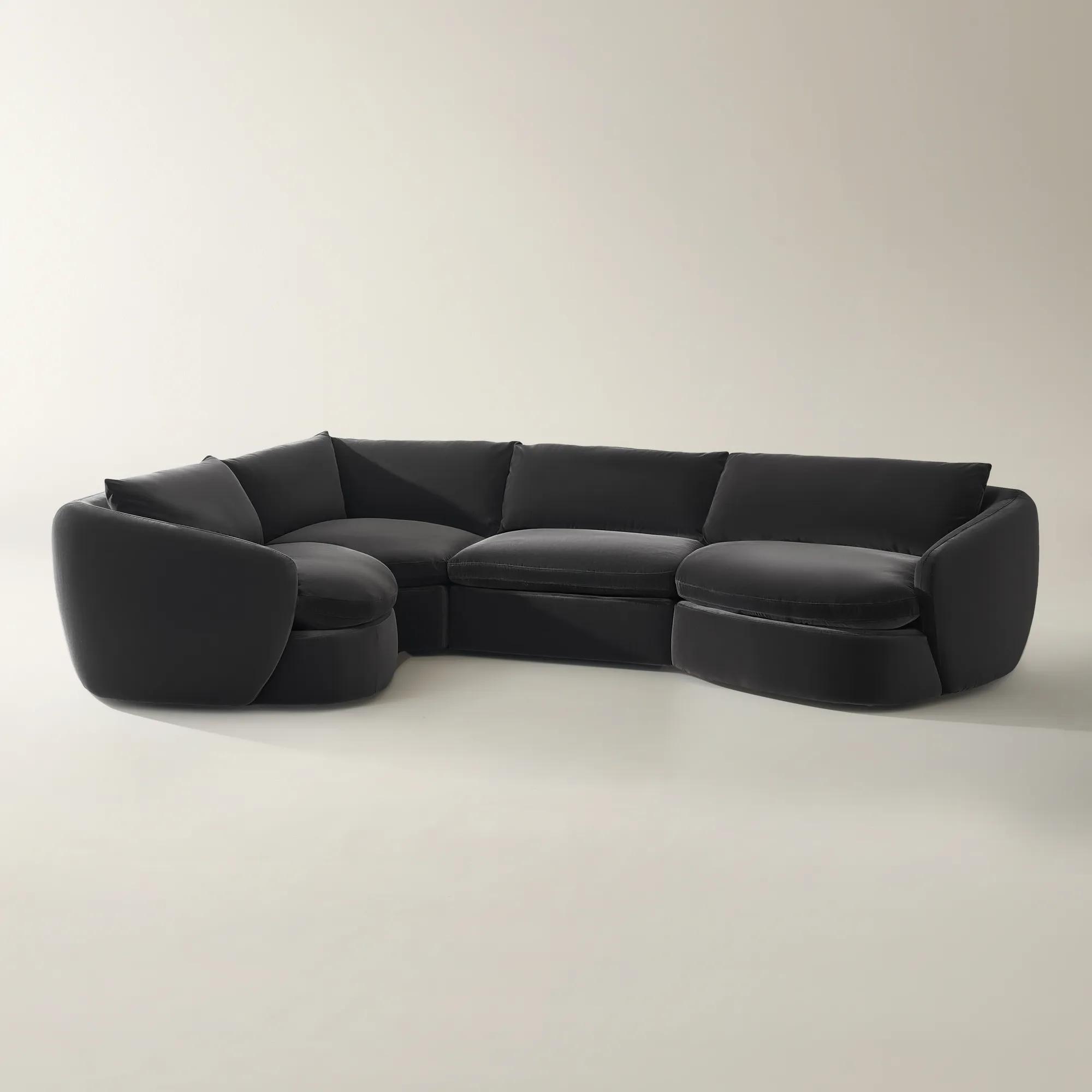
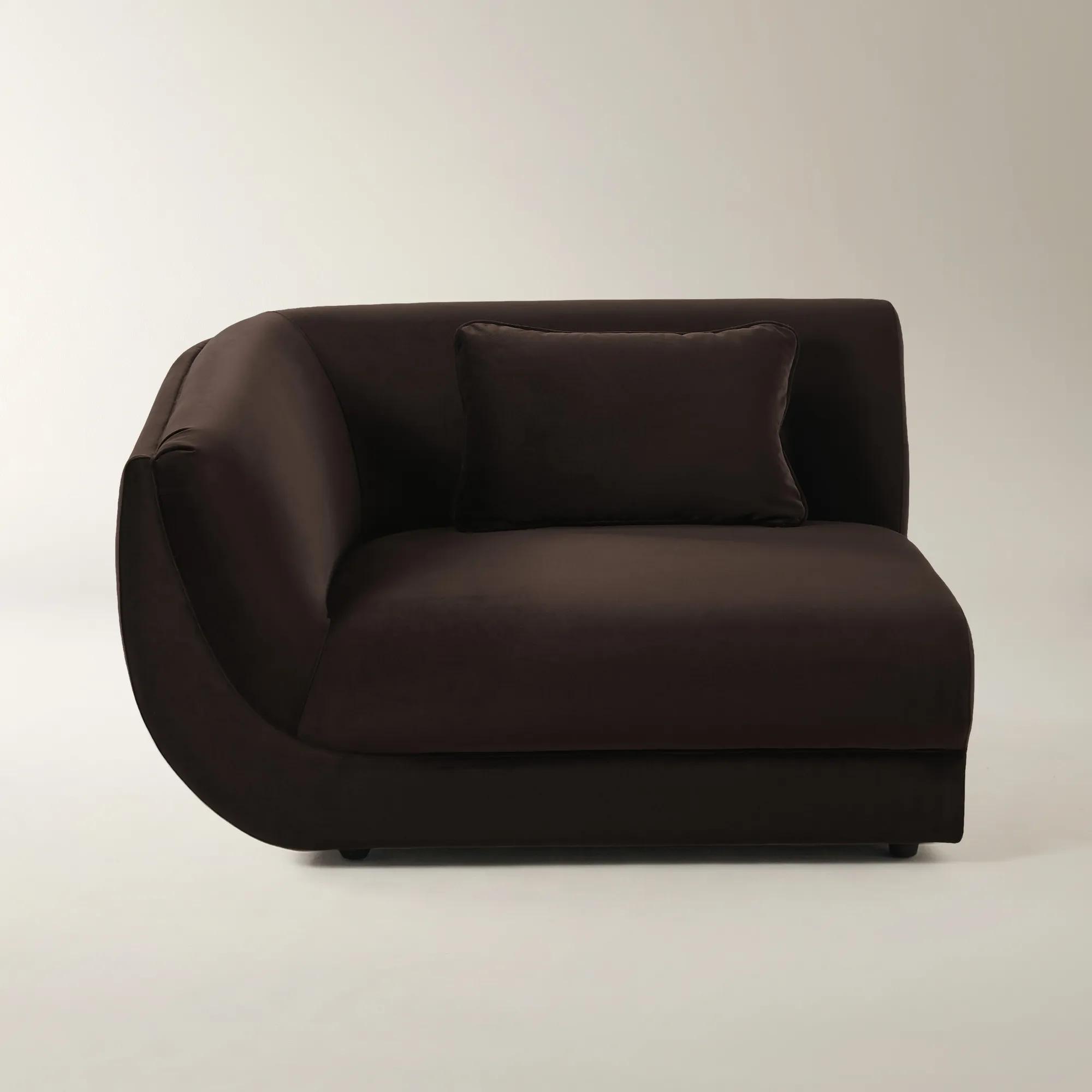
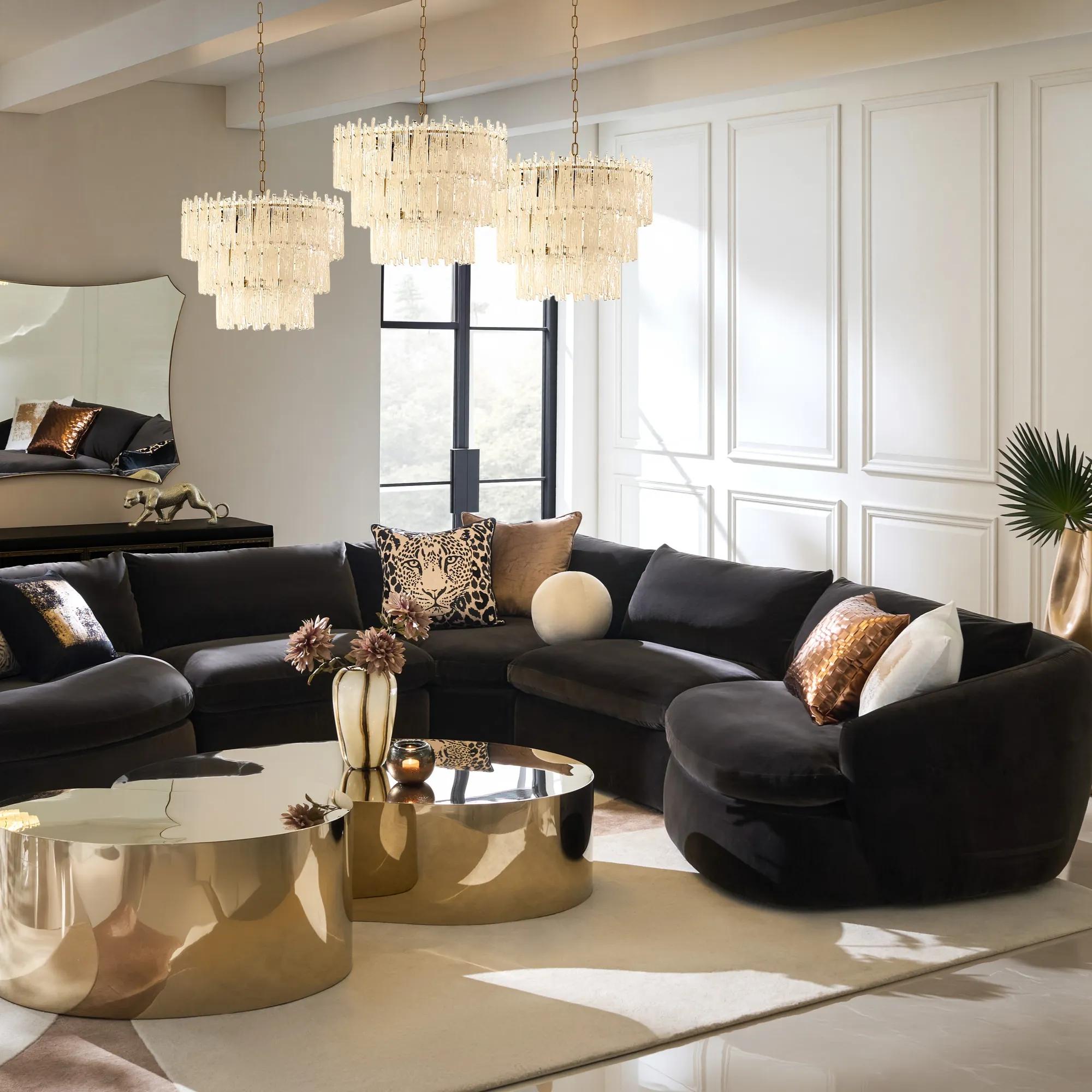 Sabrina 4-Piece Charcoal Velvet Sectional With Left-Arm Chair$4999
A modular charcoal velvet sectional with plush feather-blend cushions and a softly curved, modern silhouette.
Add To Cart -
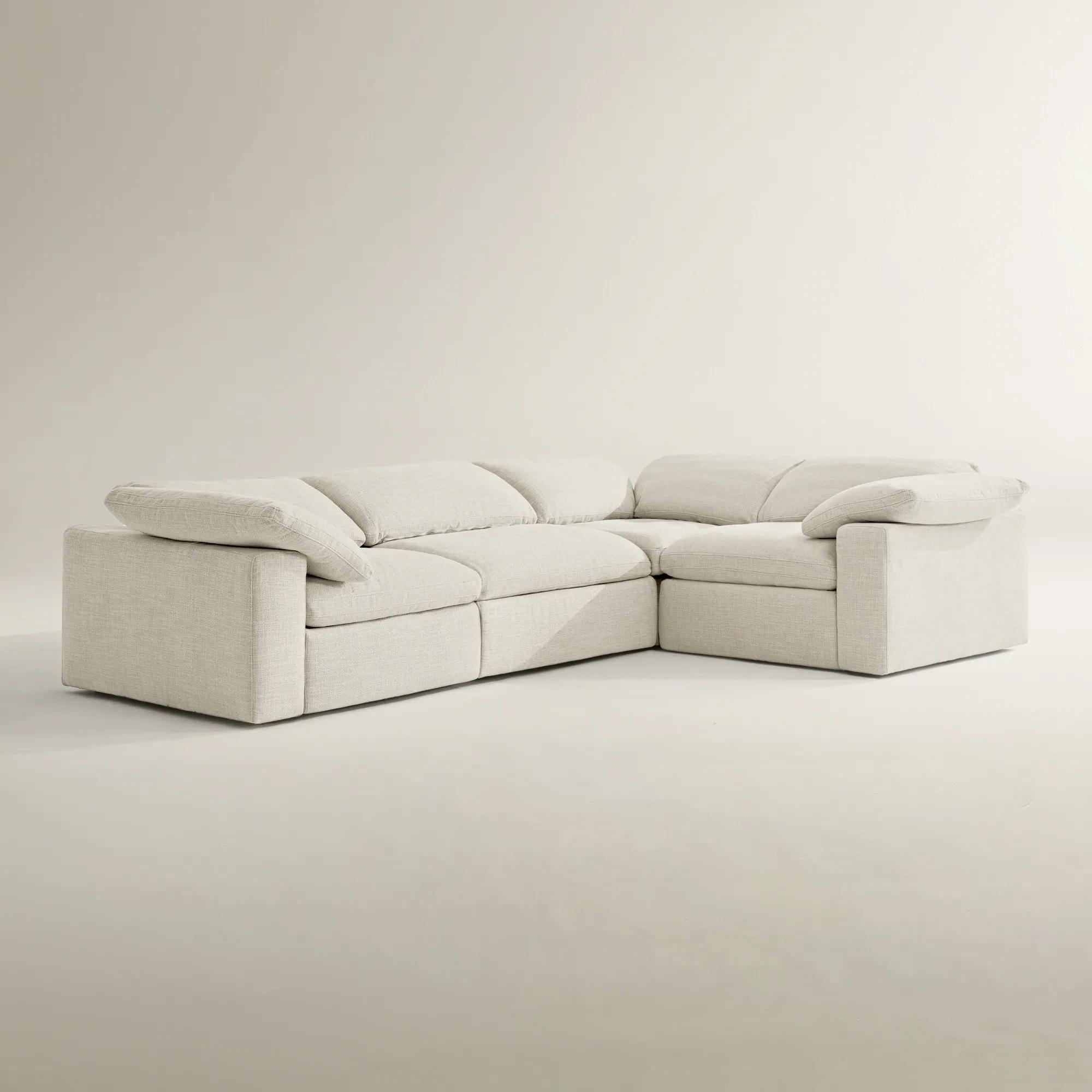
 Milo 4-Piece L-Shaped Reclining Ivory Performance Fabric Sectional Sofa With Right-Arm Chair$4399
A four-piece L-shaped sectional sofa in ivory performance fabric with power reclining and plush feather-blend cushions.
Add To Cart -
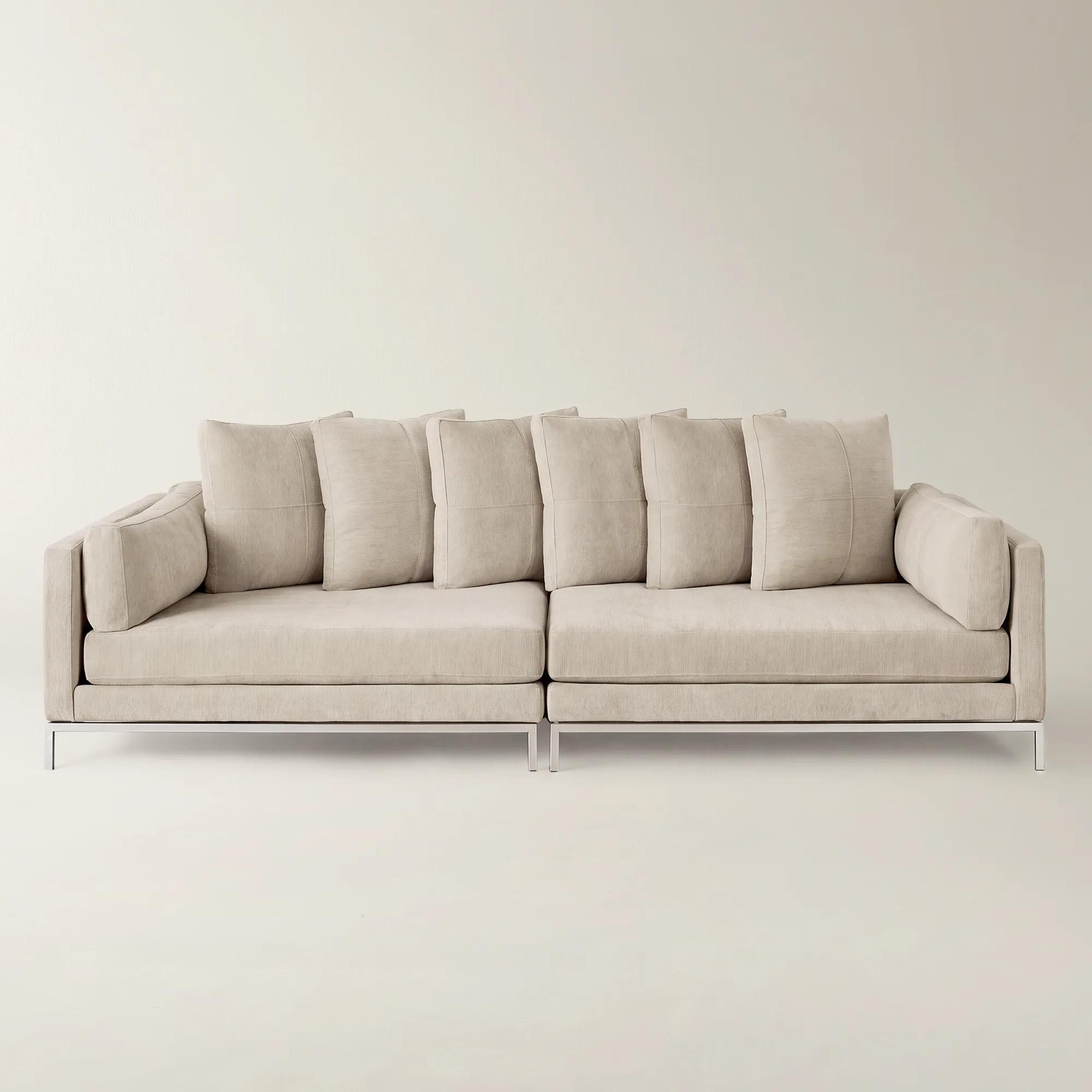
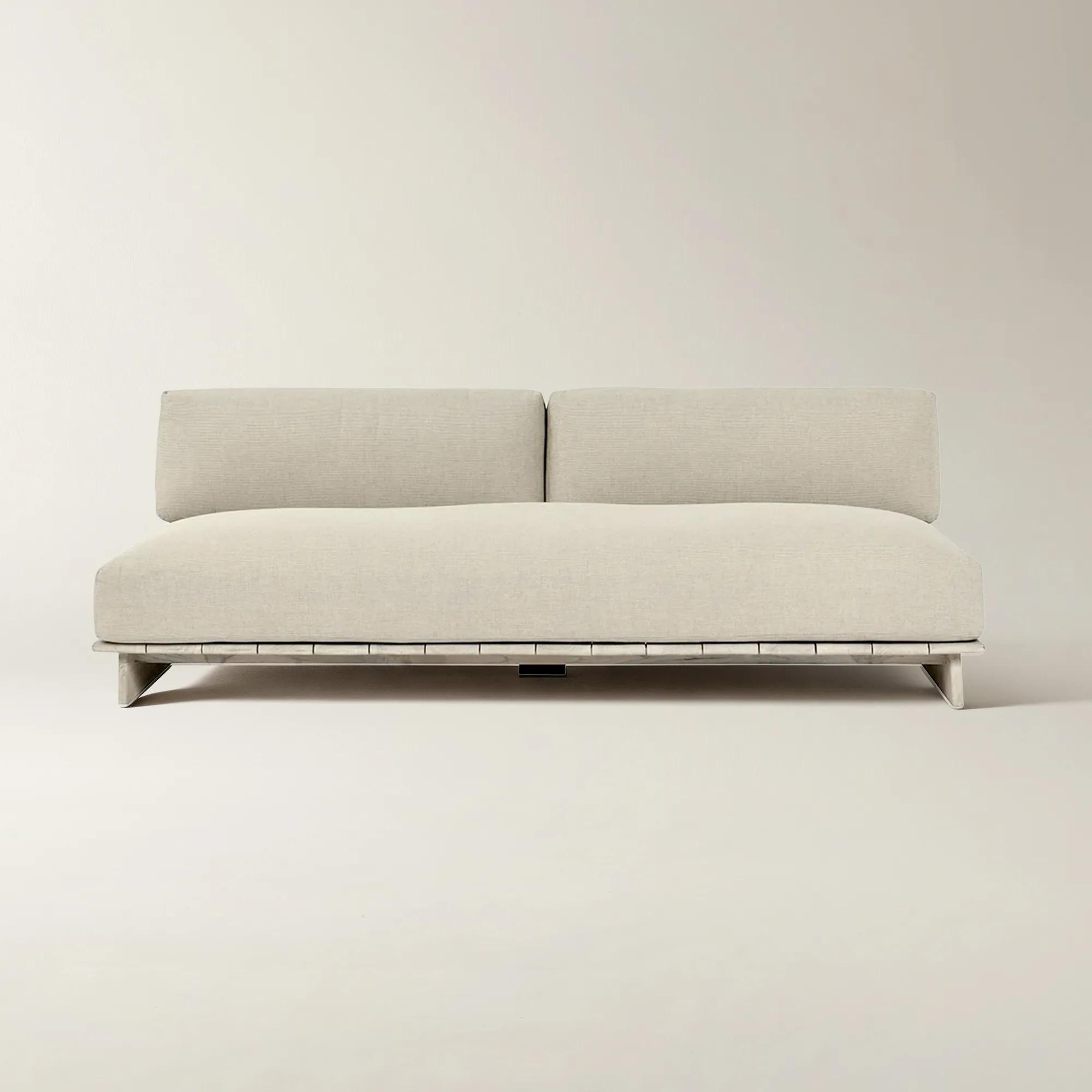
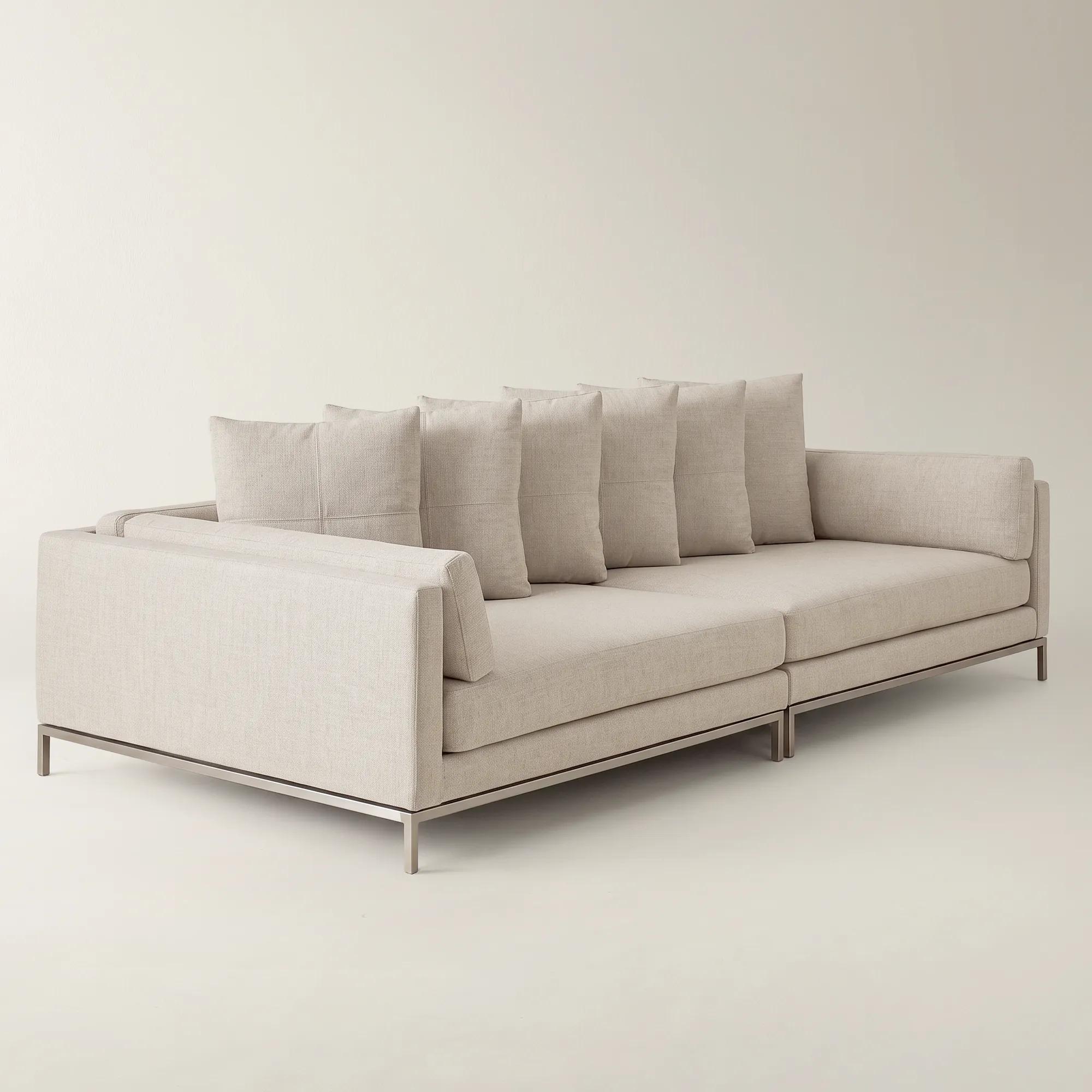 Ventura 2-Piece Square Snow Chenille Sectional Sofa$4299
A modern snow chenille sectional with a floating stainless-steel base, plush feather-filled pillows, and versatile configurations.
Add To Cart -
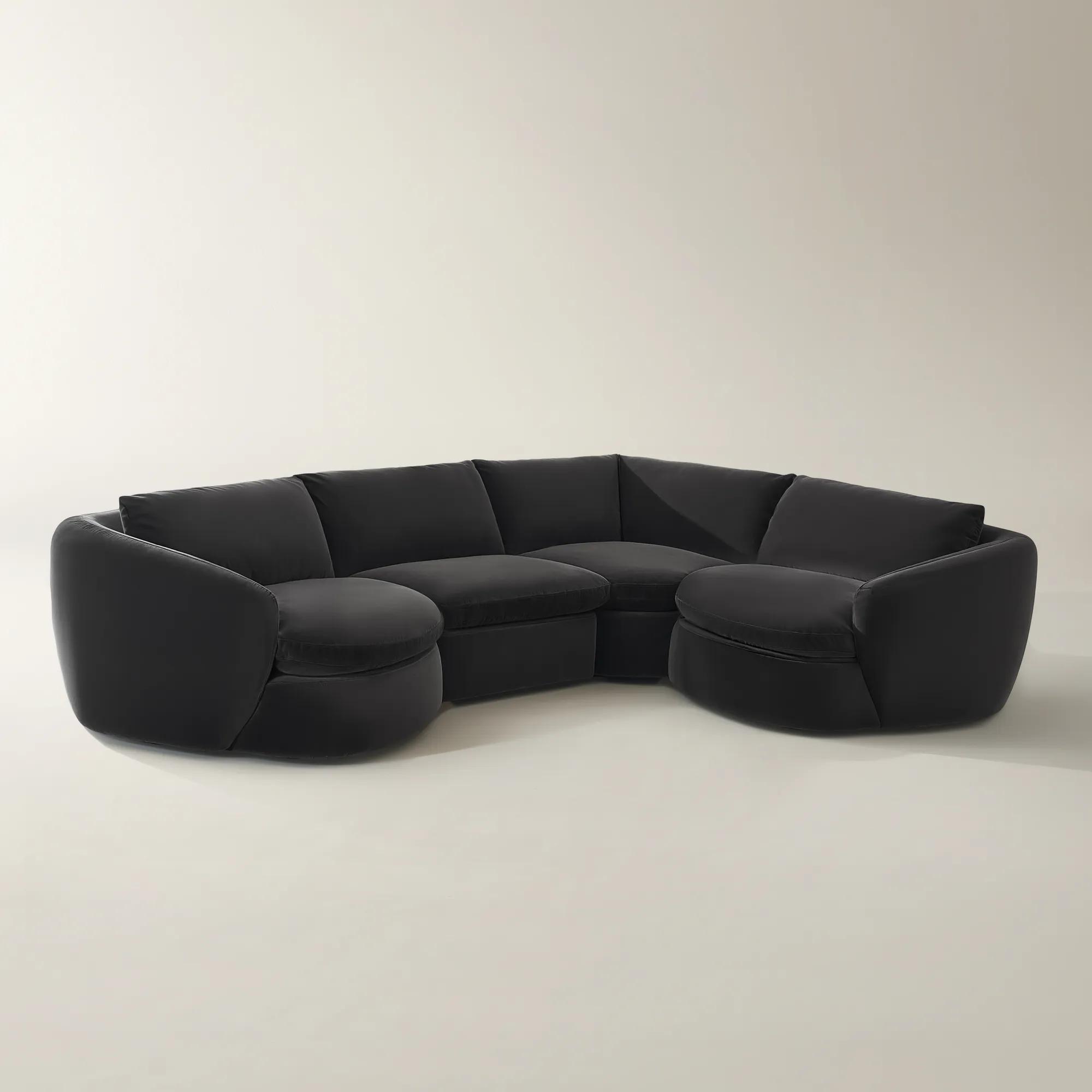 Sabrina 4-Piece Charcoal Velvet Sectional With Right-Arm Chair$4999
A modular charcoal velvet sectional with plush feather-blend cushions and a softly curved, modern silhouette.
Add To Cart -
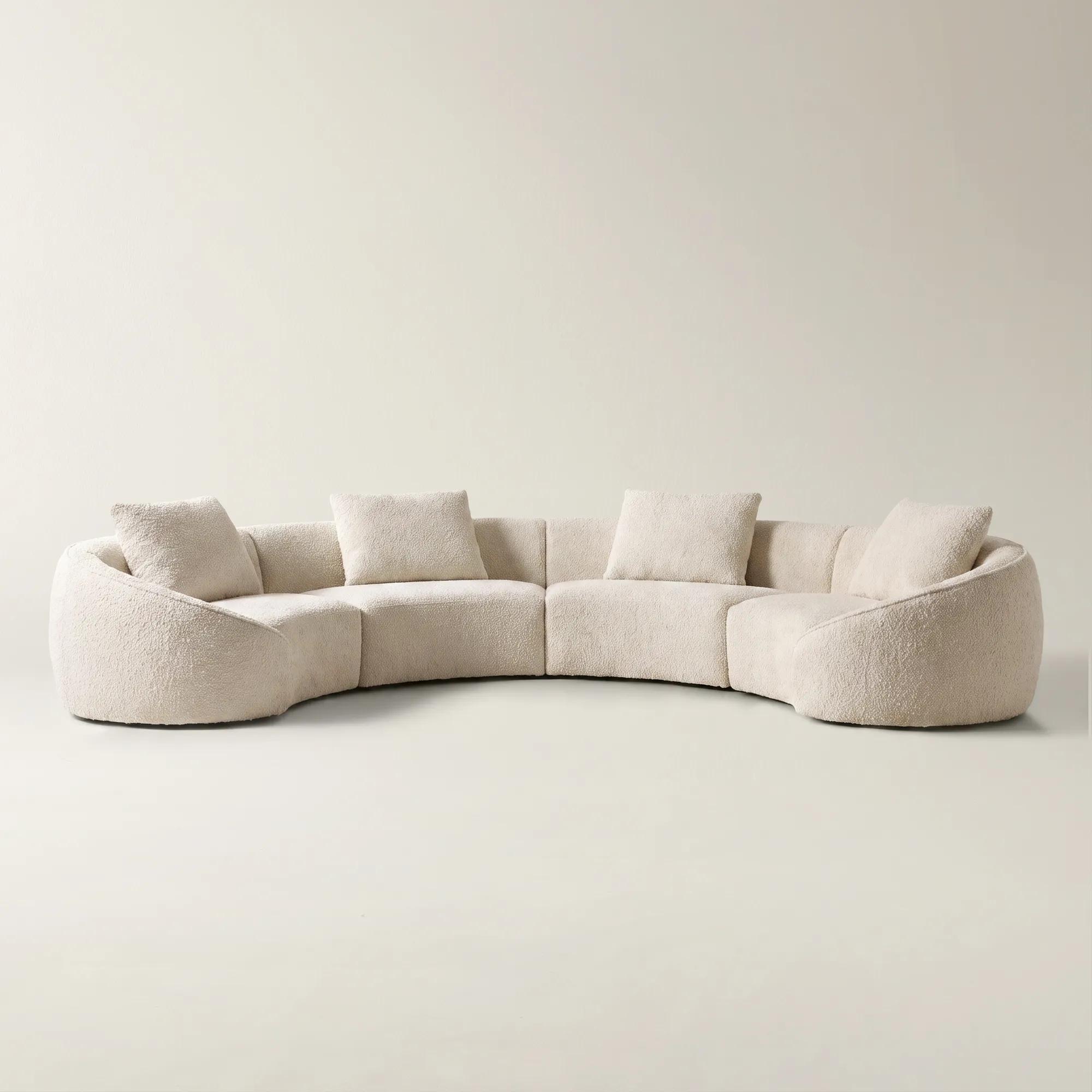
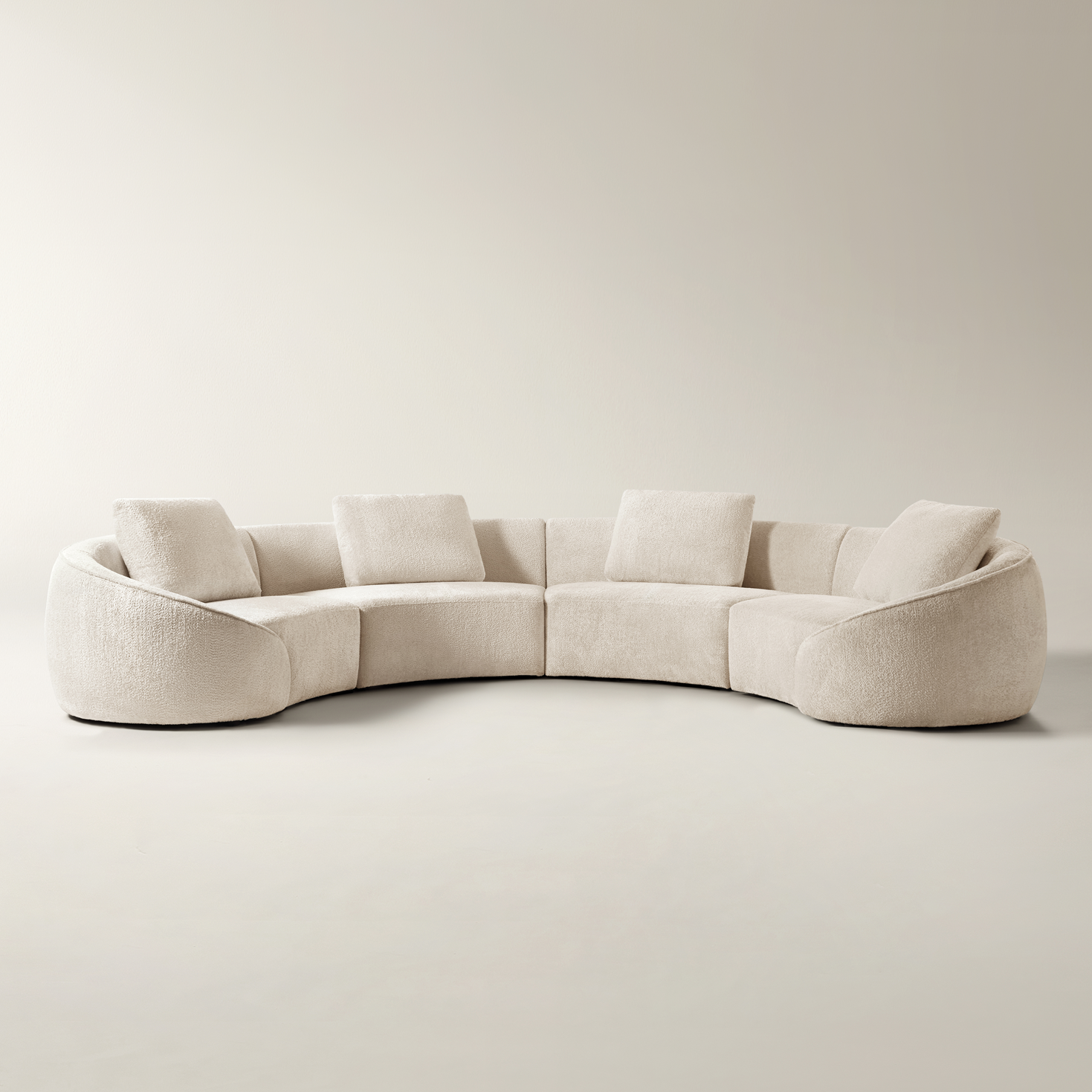 Irene 4-Piece Ivory Performance Boucle Sectional Sofa$5199
A sculptural ivory performance boucle sectional featuring hand-finished upholstery and high-resiliency foam cushions.
Add To Cart -
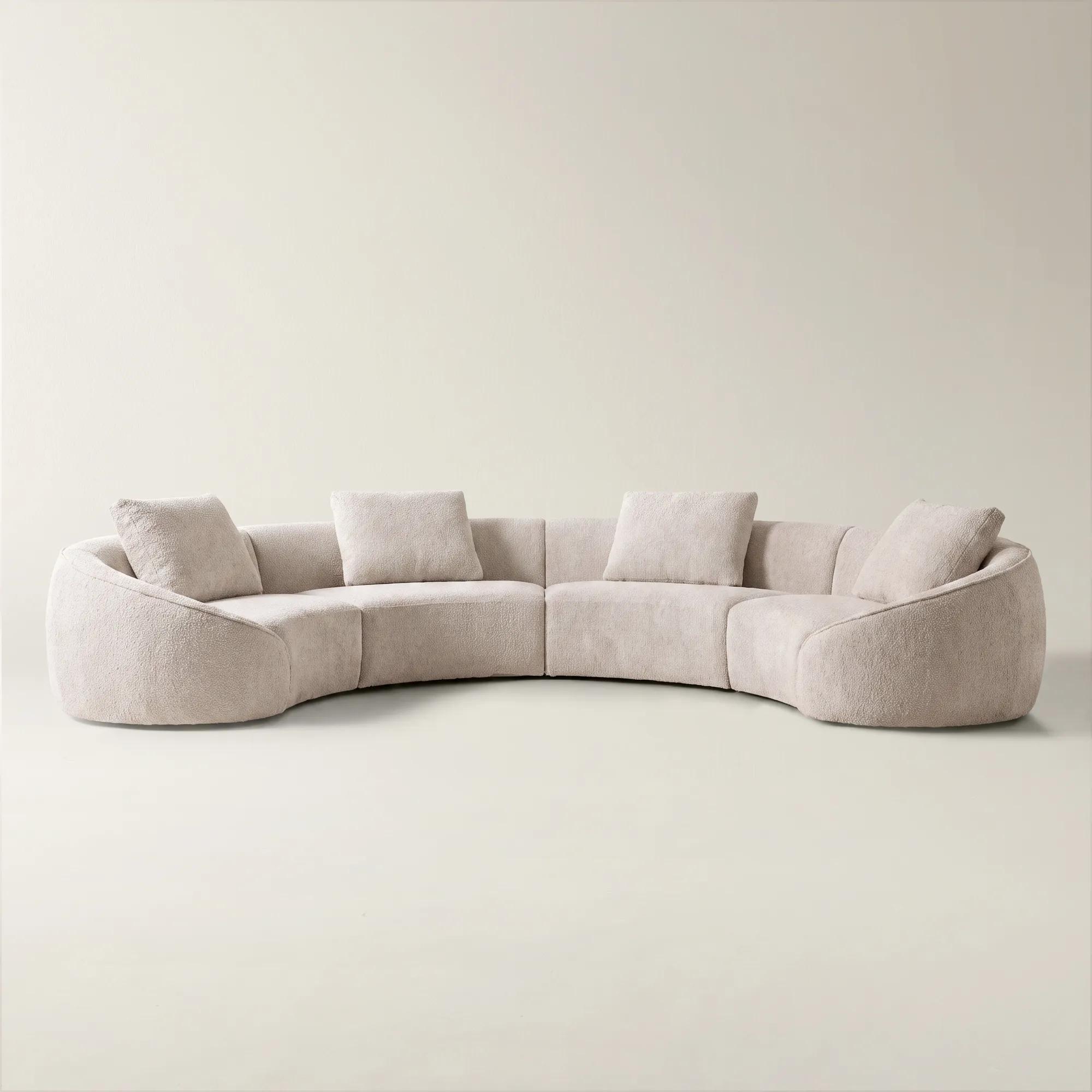 Irene 4-Piece Ivory Performance Boucle Sectional Sofa$5199
An inviting ivory performance boucle sectional featuring sculptural curves, high-resiliency foam, and artisan hand-finished upholstery.
Add To Cart -
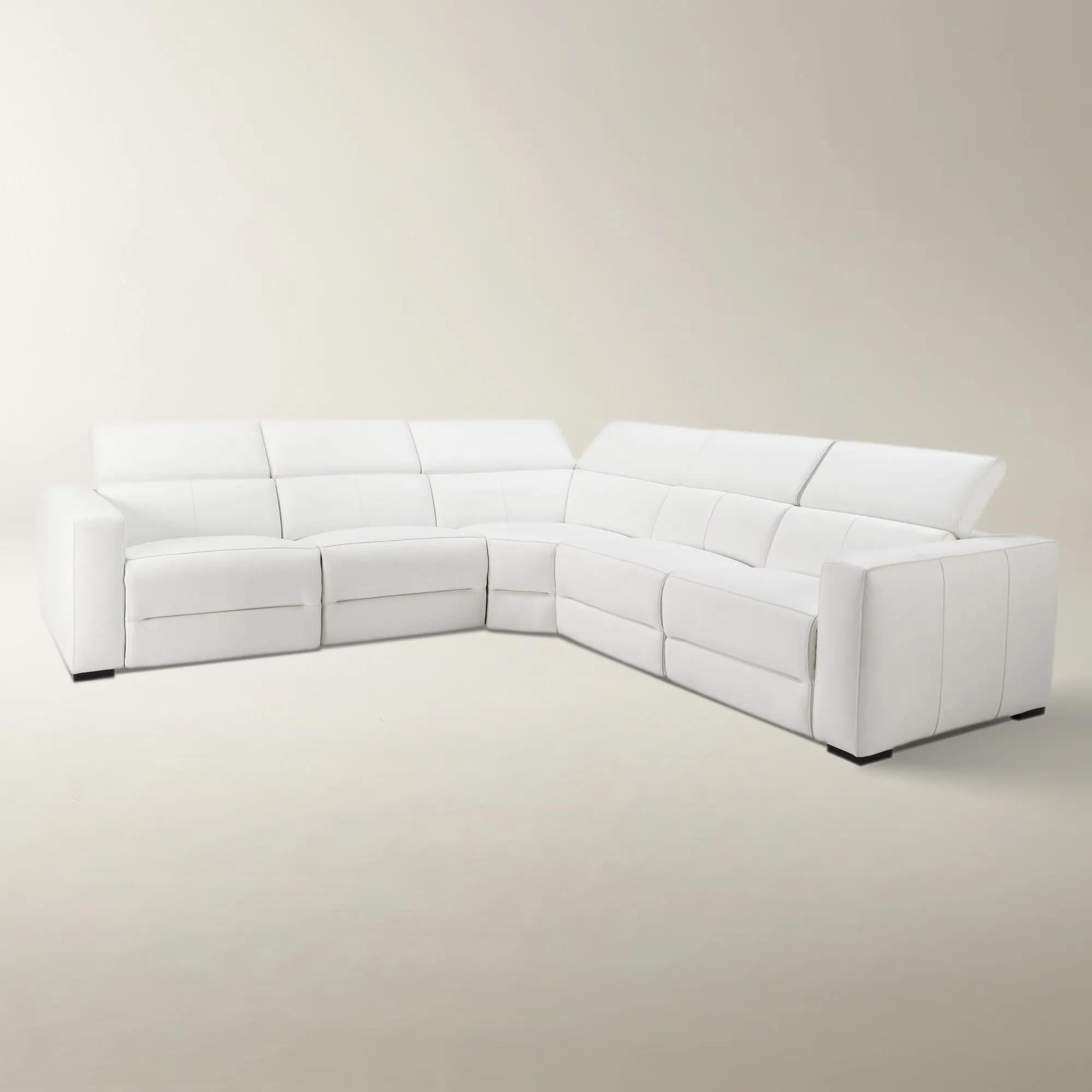
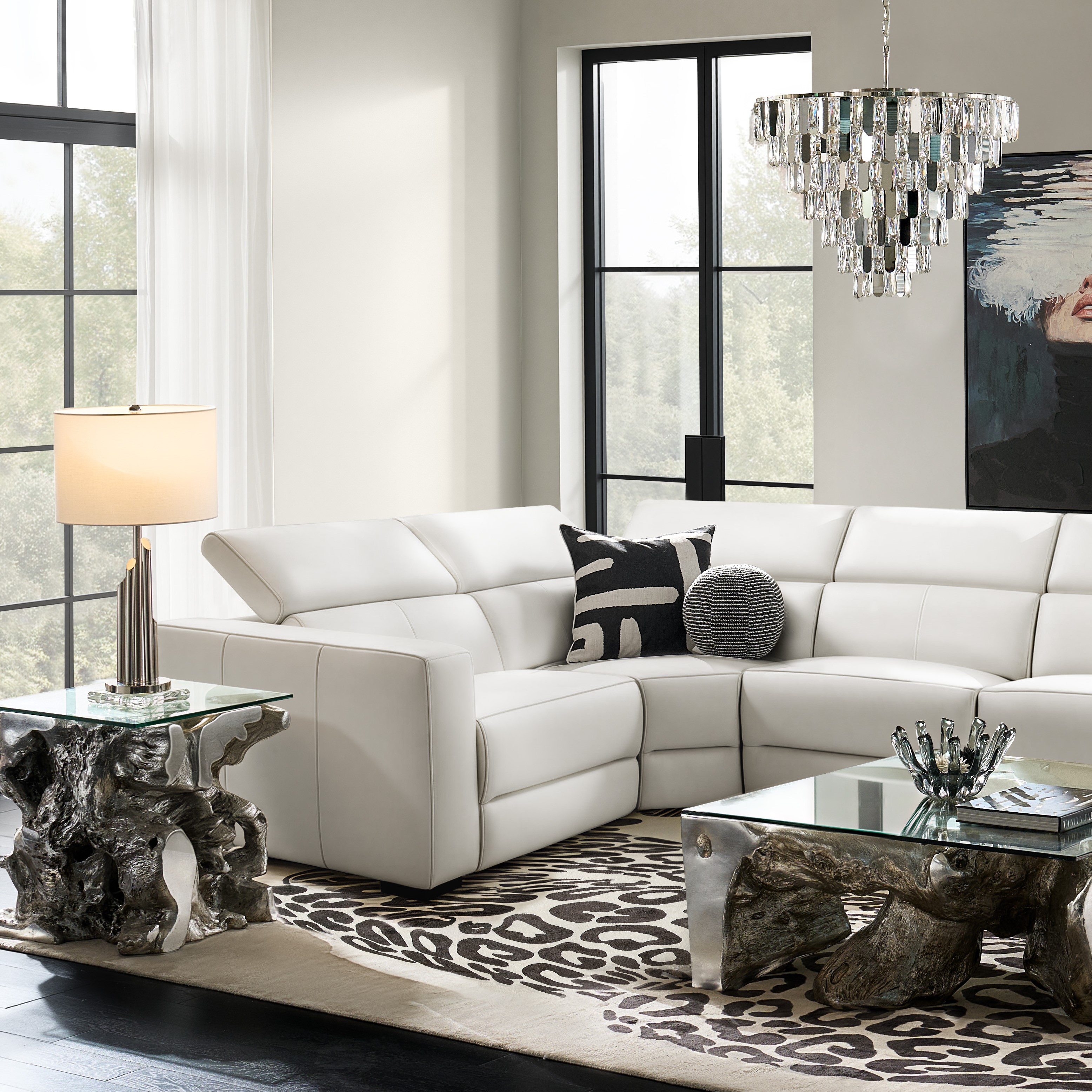 Verona 5-Piece Reclining White Leather Sectional Sofa$7199
A modern sectional upholstered in supple white semi-aniline leather with adjustable headrests and power-reclining seats.
Add To Cart -
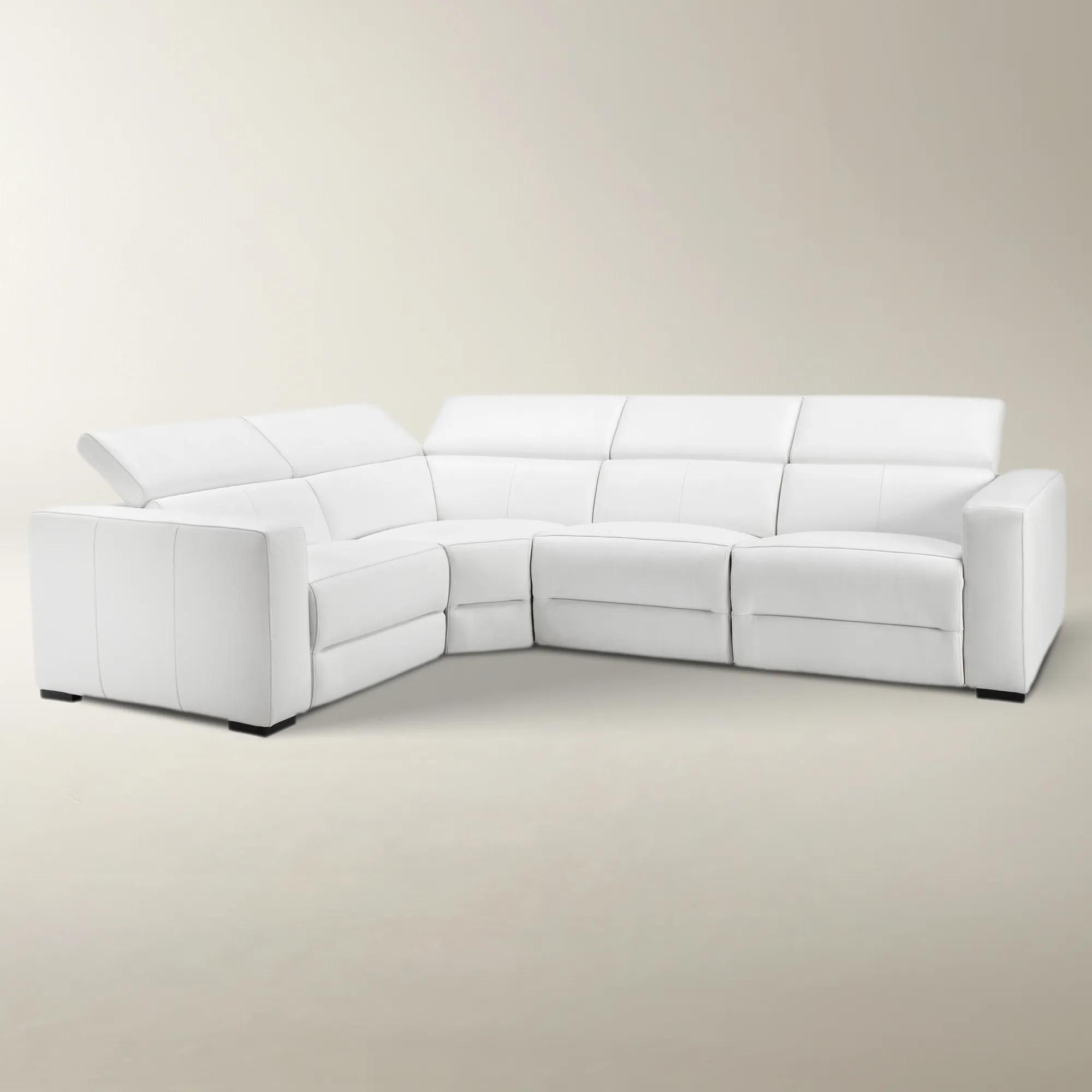 Verona 4-Piece L-Shaped Reclining White Leather Sectional Sofa With Left-Arm$5899
A modern sectional upholstered in supple white semi-aniline leather with adjustable headrests and power-reclining seats.
Add To Cart -
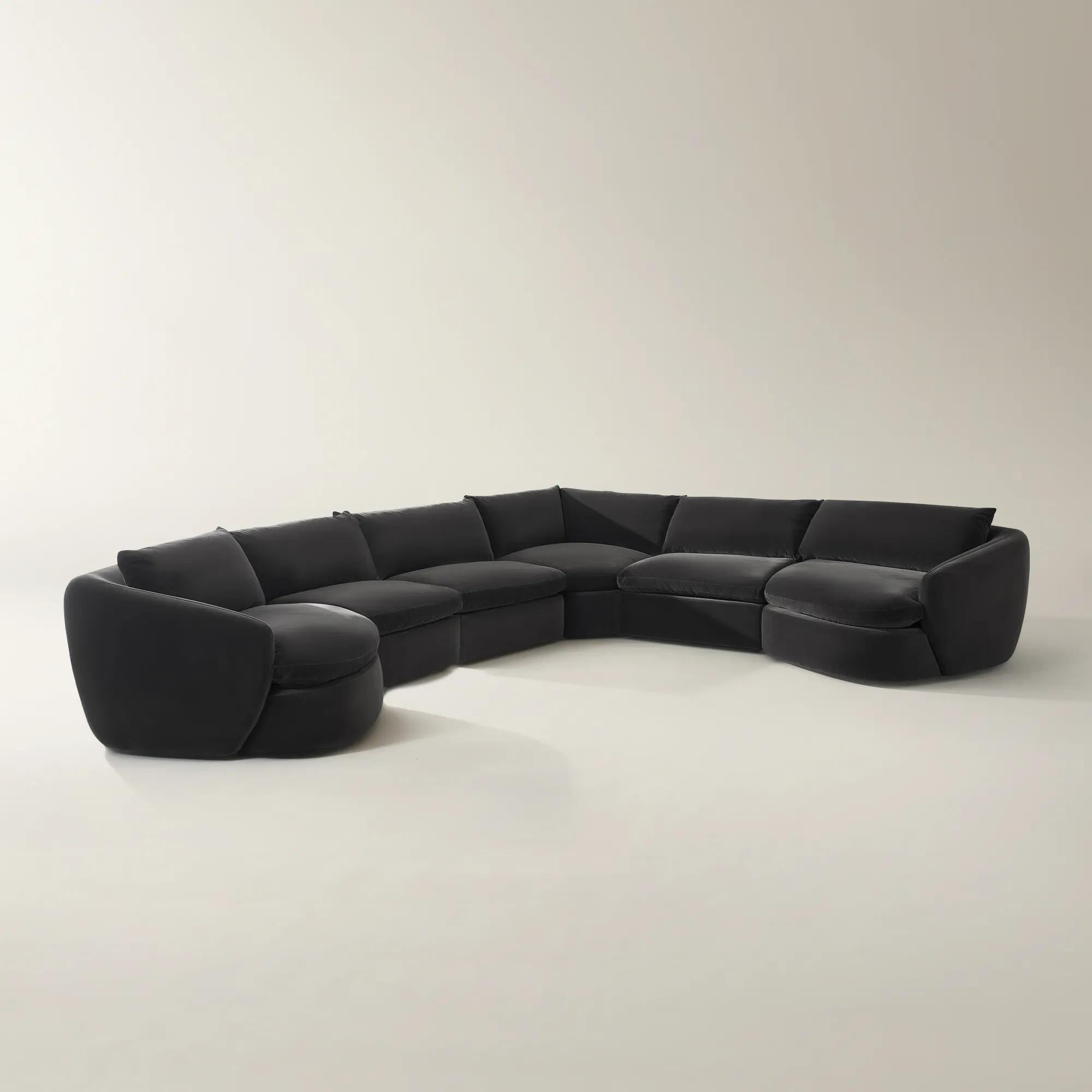 Sabrina 6-Piece Charcoal Velvet Sectional$6999
A modular L-shaped sectional in charcoal velvet with plush feather-blend cushions and a softly curved silhouette.
Add To Cart -
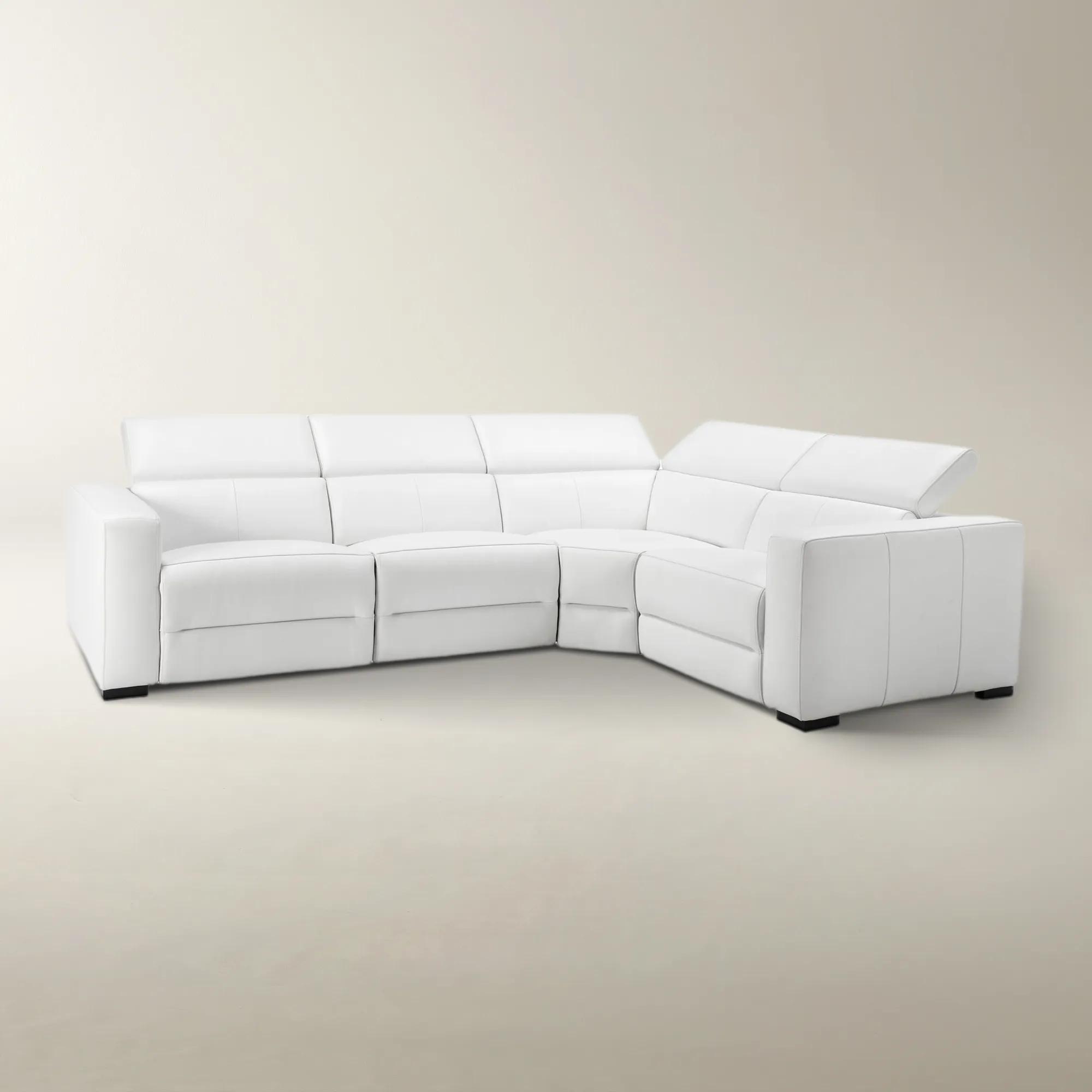 Verona 4-Piece L-Shaped Reclining White Leather Sectional Sofa With Right-Arm$5899
A modern sectional upholstered in supple white semi-aniline leather with adjustable headrests and power-reclining seats.
Add To Cart -
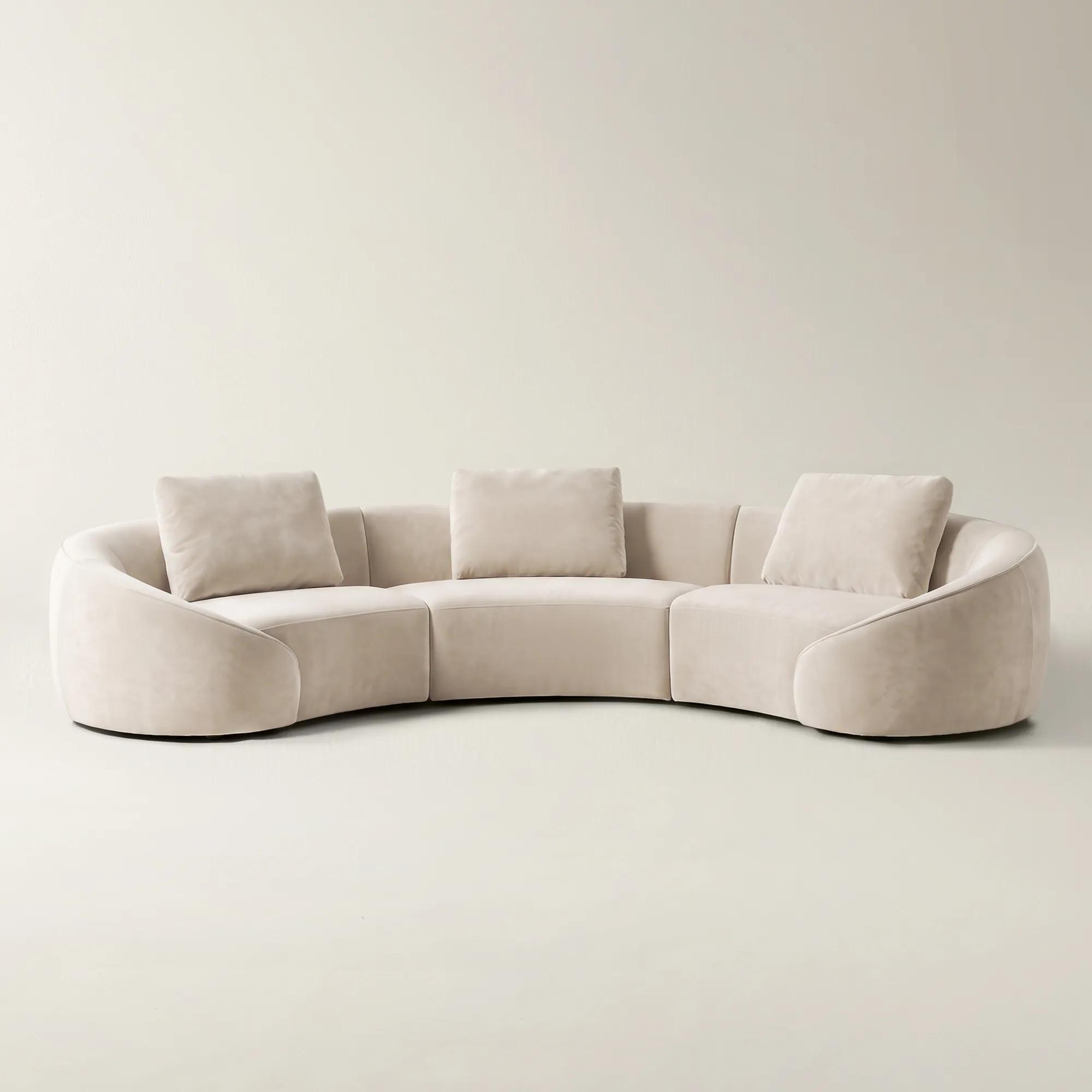 Irene 3-Piece Oatmeal Velvet Sectional Sofa$3899
An inviting oatmeal velvet sectional featuring sculptural curves, high-resiliency foam cushions, and artisan hand-finished upholstery.
Add To Cart -
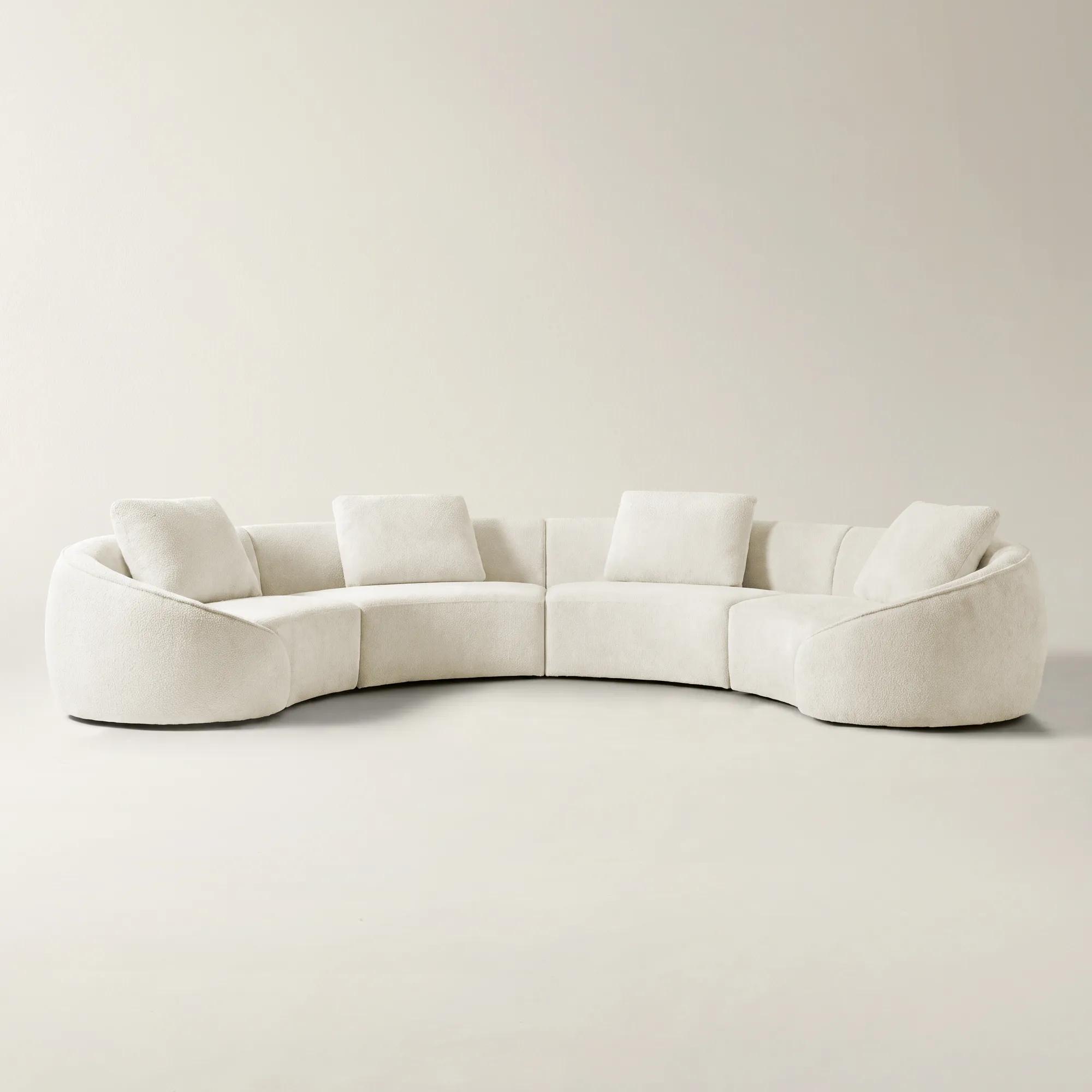 Irene 4-Piece Ivory Performance Chenille Sectional Sofa$5199
An inviting ivory chenille sectional featuring sculptural curves, performance upholstery, and artisan-crafted detailing.
Add To Cart -
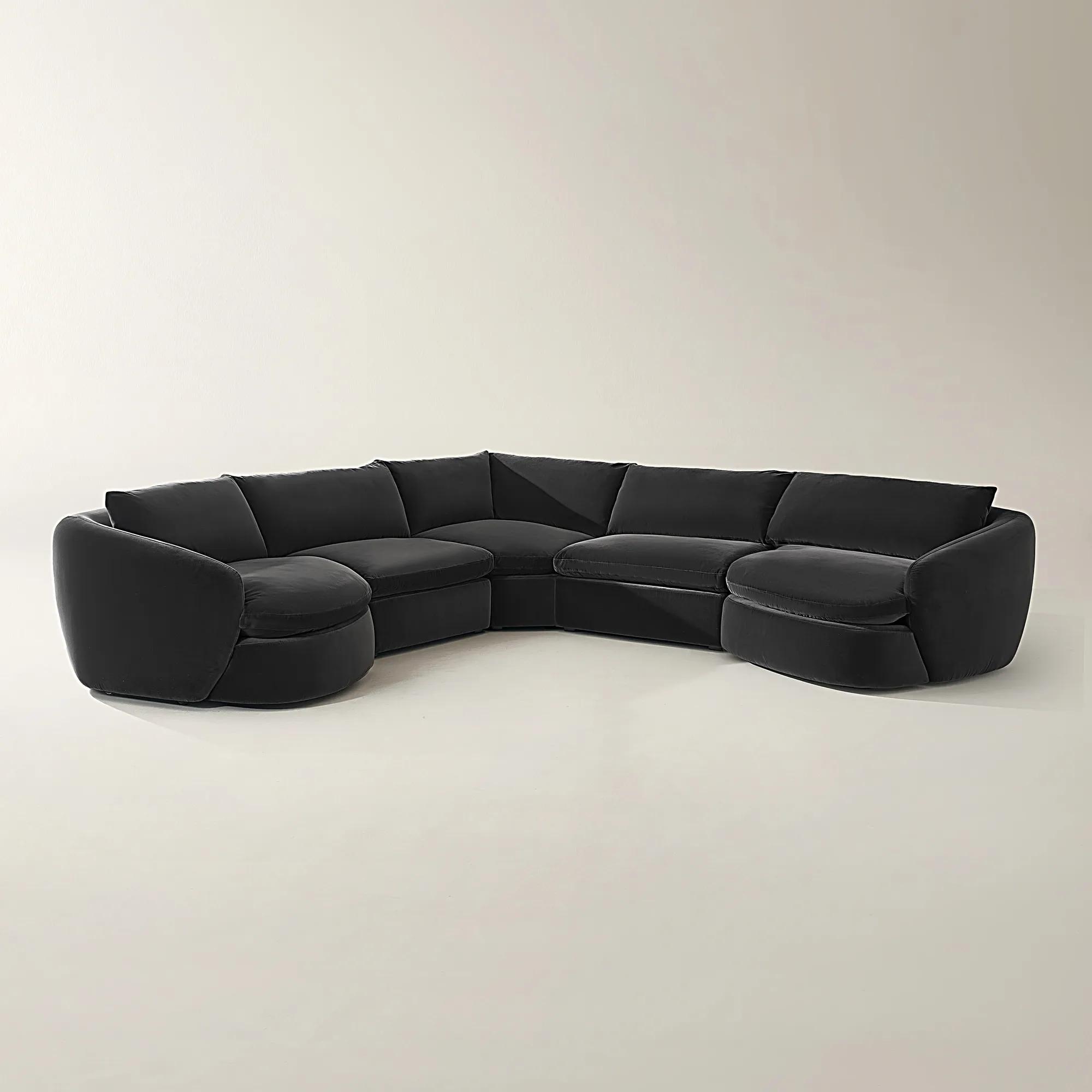 Sabrina 5-Piece Charcoal Velvet Sectional$5999
A modular charcoal velvet sectional with plush feather-blend cushions and a softly curved, modern silhouette.
Add To Cart -
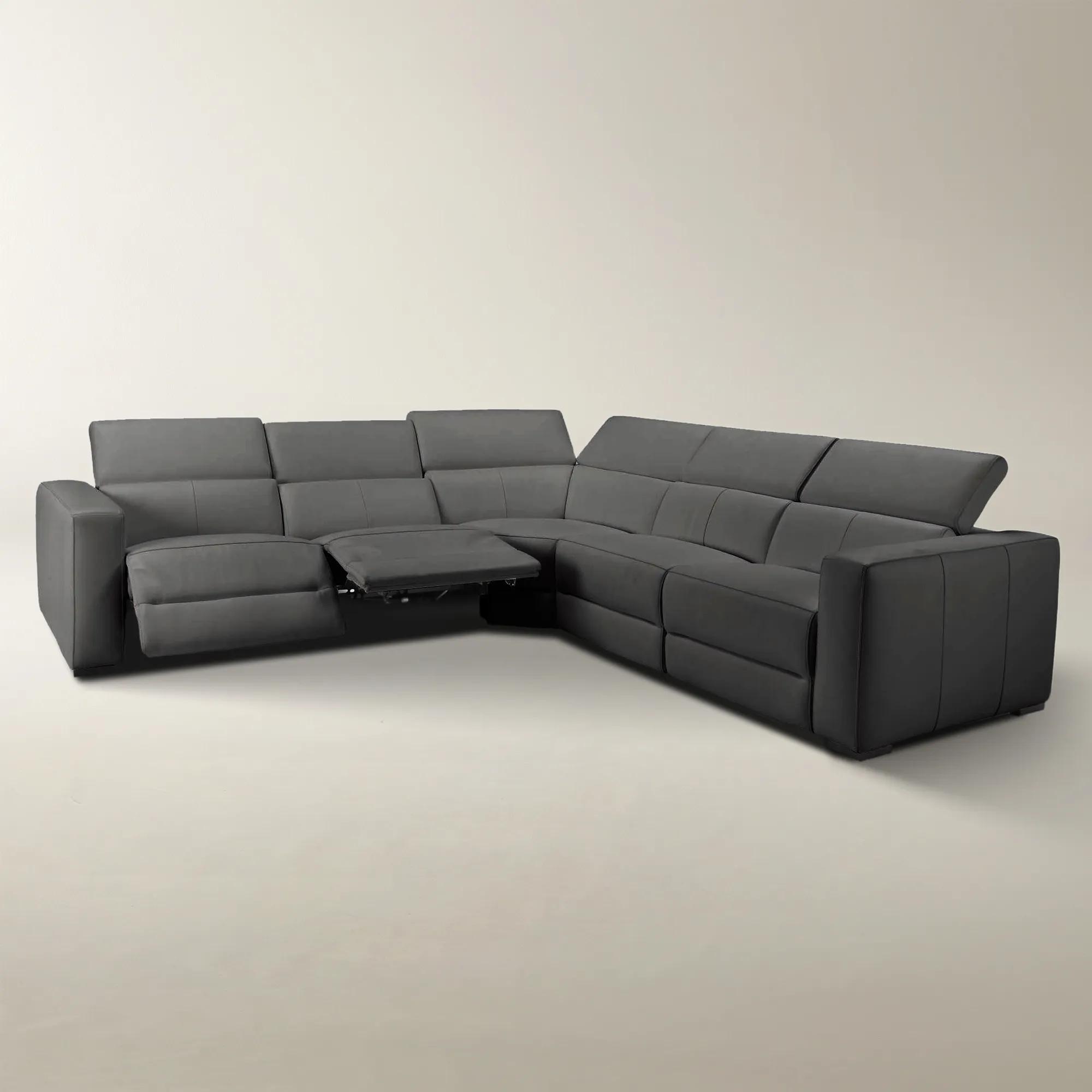 Verona 5-Piece Reclining Charcoal Leather Sectional Sofa$7199
A charcoal semi-aniline leather sectional featuring adjustable headrests, kiln-dried hardwood frame, and optional power recline.
Add To Cart

Modern Sectionals For Open Spaces
Modern sectionals for open spaces transform vast interiors into curated sanctuaries of style and connection. Each silhouette is an invitation to linger, to lounge, to gather—sculpted forms that command attention while effortlessly defining the room’s flow. With striking lines and sumptuous upholstery, these pieces become the heart of your living area, orchestrating movement and conversation with artful precision. Discover how modern sectionals for open spaces bring architectural drama and tailored comfort together, turning every open floor plan into a gallery-worthy masterpiece.
Modern sectionals for open spaces define a living area without closing it off, using an L-shaped, U-shaped, or modular arrangement to establish a distinct gathering place within a larger room. Unlike seating arranged entirely against walls, a floating sectional creates a visual boundary between lounging, dining, and kitchen areas while preserving the openness that makes these interiors feel expansive. Its silhouette becomes part of the architecture: a long, tailored back draws a graceful line across the room, while a chaise extends an invitation to linger. An L-shaped sectional can frame a conversation area without enclosing every side; a U-shaped configuration creates a more enveloping setting for larger gatherings. Modular sectionals offer another approach, with separate components that may allow the arrangement to evolve as the room’s needs change. The most successful proportions respond to the living zone rather than the entire floor plan. A generous room does not automatically require the largest sectional, particularly when the same space accommodates a dining table, a kitchen island, or a frequently traveled route to the patio. Allow approximately 36 inches of clear passage along primary walkways, with more room where doors open or people regularly pass one another. Measure the sectional’s full width and depth, including its chaise, and consider how those dimensions affect movement between adjoining areas. Mapping the footprint on the floor can reveal whether an appealing silhouette will feel beautifully grounded or unexpectedly imposing. Chaise orientation also matters: the extended seat should support the room’s rhythm rather than interrupt an entrance or narrow a natural pathway. Because left-facing and right-facing terminology can vary, configuration diagrams deserve close attention. In a floating layout, a finished, fully upholstered back is especially important, since the sectional will be seen from the dining area as often as from the front. Low profiles can preserve sightlines across connected spaces, while taller backs offer a more sheltered seating experience. The right balance gives the lounge its own identity without making the surrounding rooms feel disconnected.
Upholstery brings the sectional’s scale into focus, transforming a substantial piece of furniture into a statement of texture and mood. Velvet lends depth and a luminous, directional sheen, making curved arms and generously cushioned seats feel particularly sculptural. A tightly woven fabric creates a more tailored impression, while a textured weave introduces dimension that remains compelling from across an open room. Pale neutrals can soften the visual weight of a broad silhouette; saturated tones give the seating area a confident center of gravity. Neither approach needs to disappear into the architecture. An ivory sectional can be just as expressive as a jewel-toned one when its proportions, fabric, and surrounding finishes are thoughtfully composed. Material choice should also reflect everyday life. For a household with children, pets, or frequent guests, upholstery with documented resistance to abrasion, staining, or pilling may be worth prioritizing, depending on the demands of the space. Performance fabric is not a single material or a promise of complete stain protection, so the stated characteristics and cleaning requirements matter more than the label alone. Visible texture, pile direction, and fabric composition can all influence how upholstery wears and how marks appear. Beneath the surface, frame construction, joint reinforcement, suspension, and cushion composition shape long-term comfort and durability. Well-constructed hardwood or engineered-wood frames can provide dependable support, while resilient foam and layered cushion fills create different seating experiences. Higher-density foam may support lasting structure, but density and firmness are not the same characteristic. Plush cushions encourage relaxed lounging, whereas a more supportive seat can feel better suited to upright conversation and frequent entertaining. Seat depth deserves equal consideration: deeper seating offers room to curl up, while a shallower seat may feel more comfortable for someone who prefers their feet on the floor. In modular configurations, secure connectors help adjacent pieces remain aligned; removable components should still be evaluated as part of a complete, cohesive arrangement. Comfort is most convincing when the sectional feels as considered in daily use as it looks from the doorway.
An open living area often serves several purposes in a single evening, and a thoughtfully proportioned sectional makes those transitions feel effortless. It can accommodate conversation while dinner is being prepared, provide a relaxed setting for a movie, and offer an inviting place to read without requiring separate furniture groupings for every activity. A broad chaise suits someone who loves to stretch out; a configuration with more upright seats may better serve a household that regularly hosts friends. Where the floor plan calls for a lighter seating footprint or a separate conversation area, modern loveseats for open concept spaces offer a complementary sense of definition without the extended reach of a sectional. Supporting furnishings should reinforce that sense of intention. An area rug large enough to accommodate at least the sectional’s front legs gives the arrangement a clear foundation, connecting the upholstery with nearby seating and tables. A slender console behind a floating sectional can create a polished transition toward the dining area, provided it leaves adequate clearance for circulation. Sculptural lighting, a reflective accent table, or a richly textured pillow can add drama without competing with the sectional’s lines. Practical care preserves that composition. Regular vacuuming with an appropriate upholstery attachment helps remove dust and debris from seams and cushion edges, while rotating or turning cushions, when their construction allows, can encourage more even wear. Blot spills promptly rather than rubbing them into the fabric, and follow the upholstery’s care instructions before applying any cleaning solution. A removable cover is not necessarily machine washable, and different fabrics may require water-based cleaning, solvent-based treatment, or professional care. Prolonged direct sunlight can affect upholstery color, making window treatments a useful consideration in bright, expansive rooms. With materials matched to the household and proportions matched to the floor plan, a modern sectional becomes more than generous seating: it gives an open interior a confident focal point, a welcoming rhythm, and room for personal expression.
FAQs
Modern sectionals are designed to complement open-concept living by defining zones without interrupting the visual flow of a room. Their modular shapes and low profiles help delineate living areas while maintaining sightlines, making your space feel cohesive, inviting, and effortlessly chic.
To create a dramatic focal point, consider placing your sectional at the center of your open space and accenting it with bold pillows, a sculptural coffee table, or a statement rug. Choose upholstery in luxe fabrics like velvet or leather, and add gleaming metallic or glass accents to amplify the sense of glamour and artistry.
Modular sectionals are perfect for those who love to entertain, families who value flexibility, and anyone who enjoys updating their layout to suit different occasions. Their adaptability makes them an excellent choice for evolving households and creative individuals who view their home as a canvas for self-expression.
Performance fabrics, buttery leathers, and plush velvets are all popular choices for modern sectionals. Performance fabrics offer durability and easy maintenance, while leather provides a sophisticated, timeless look. Velvet adds texture and warmth, making it a favorite for those who want their sectional to feel both luxurious and inviting.
A sectional transforms winter gatherings by offering ample, cozy seating that encourages guests to relax and linger. Draped in sumptuous upholstery and surrounded by soft throws and ambient lighting, a sectional creates a welcoming, intimate environment perfect for hosting friends and family throughout the season.