Minimalist Bedroom Nightstands
Minimalist Bedroom Nightstands
-
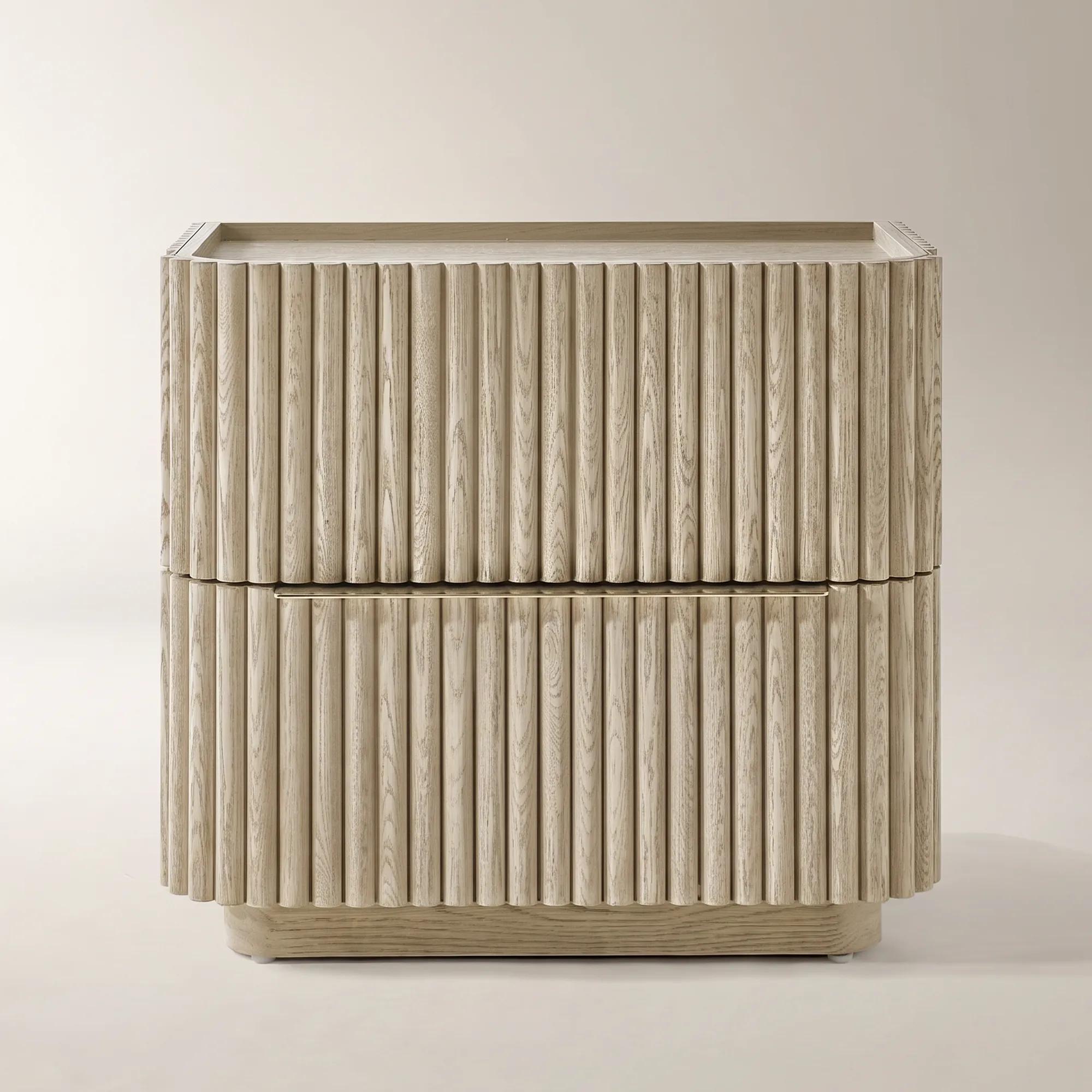
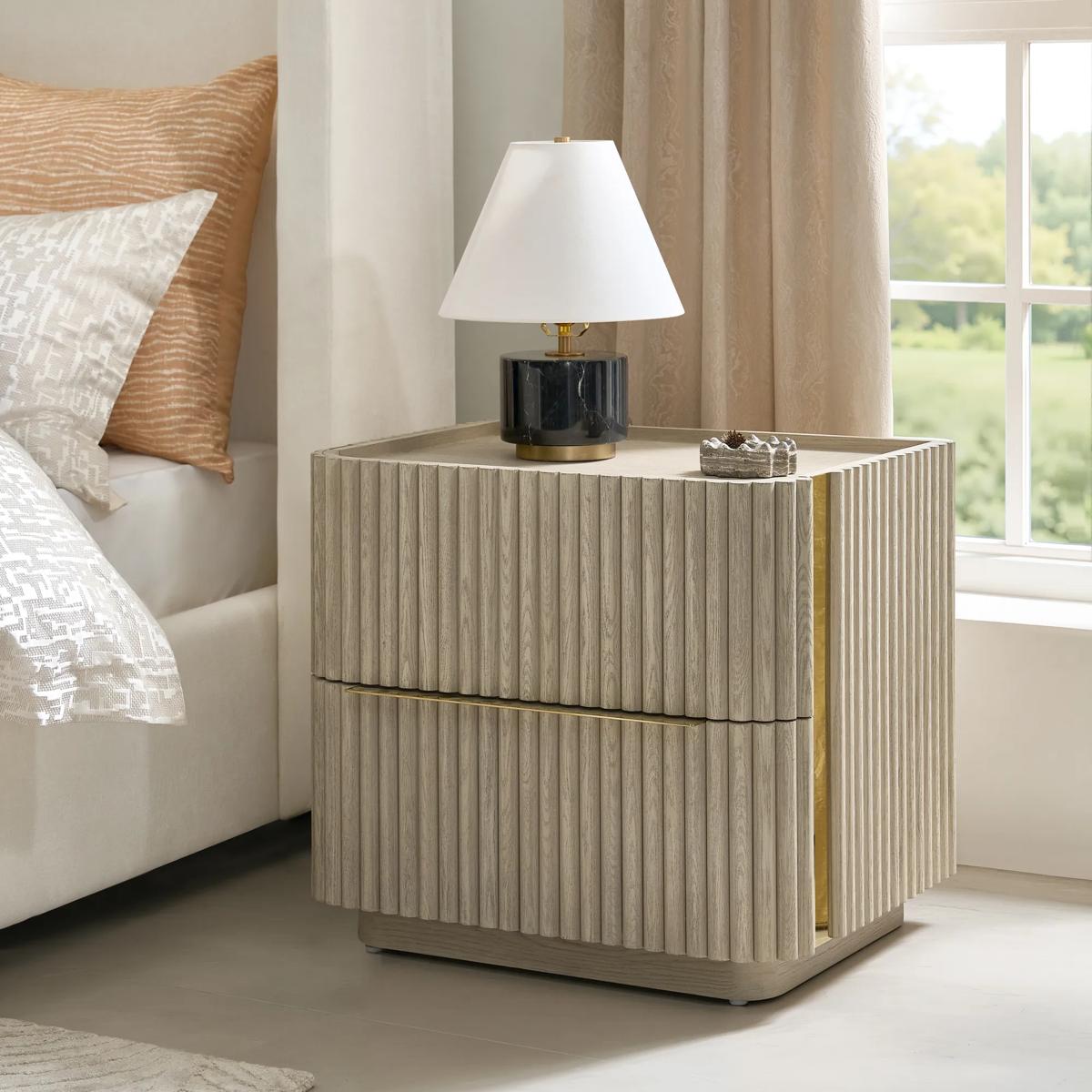 Stria Reeded White Oak 2-Drawer Nightstand (26")$899
A sculptural oak nightstand with reeded wood details, gold-plated trim, and soft-close felt-lined drawers.
Add To Cart -
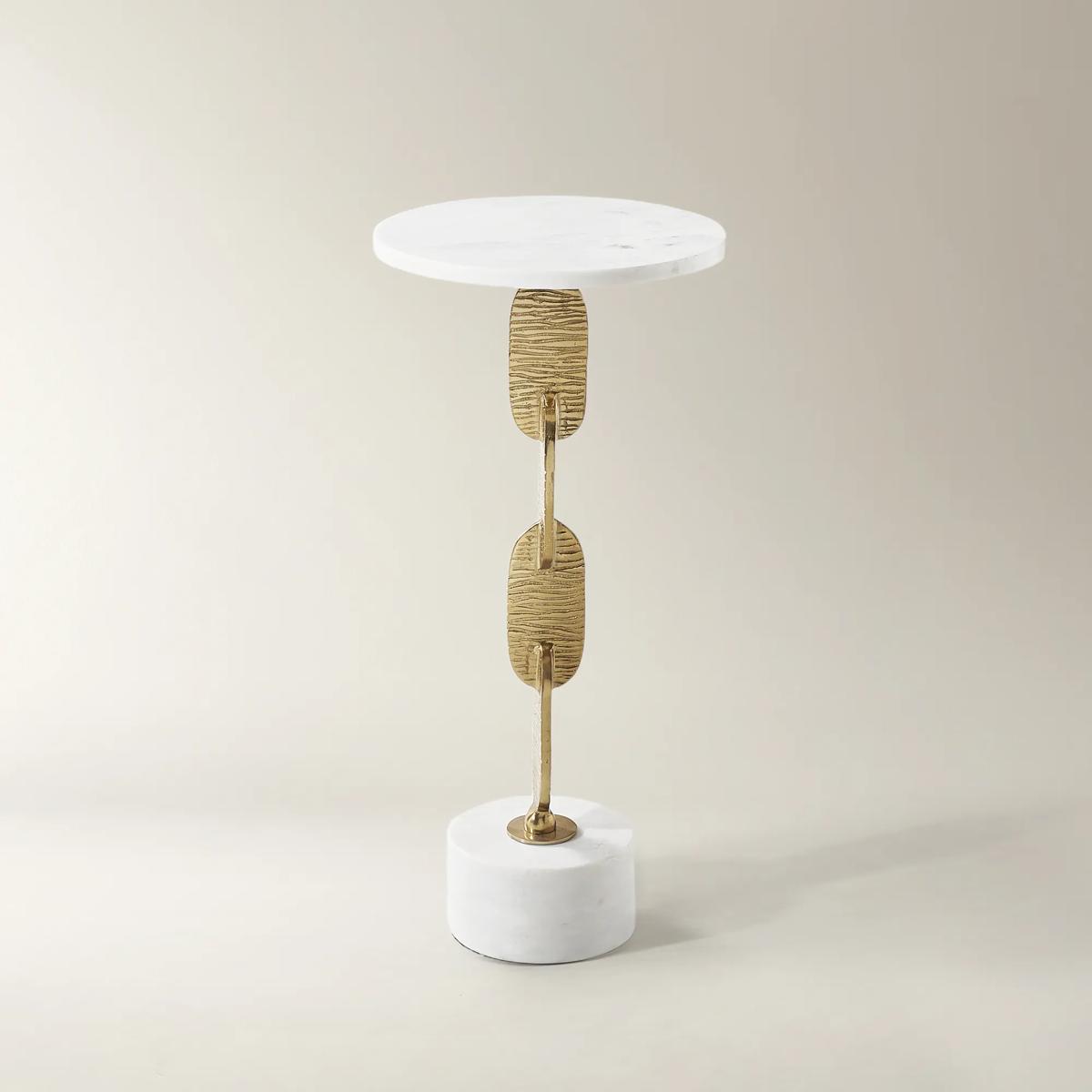
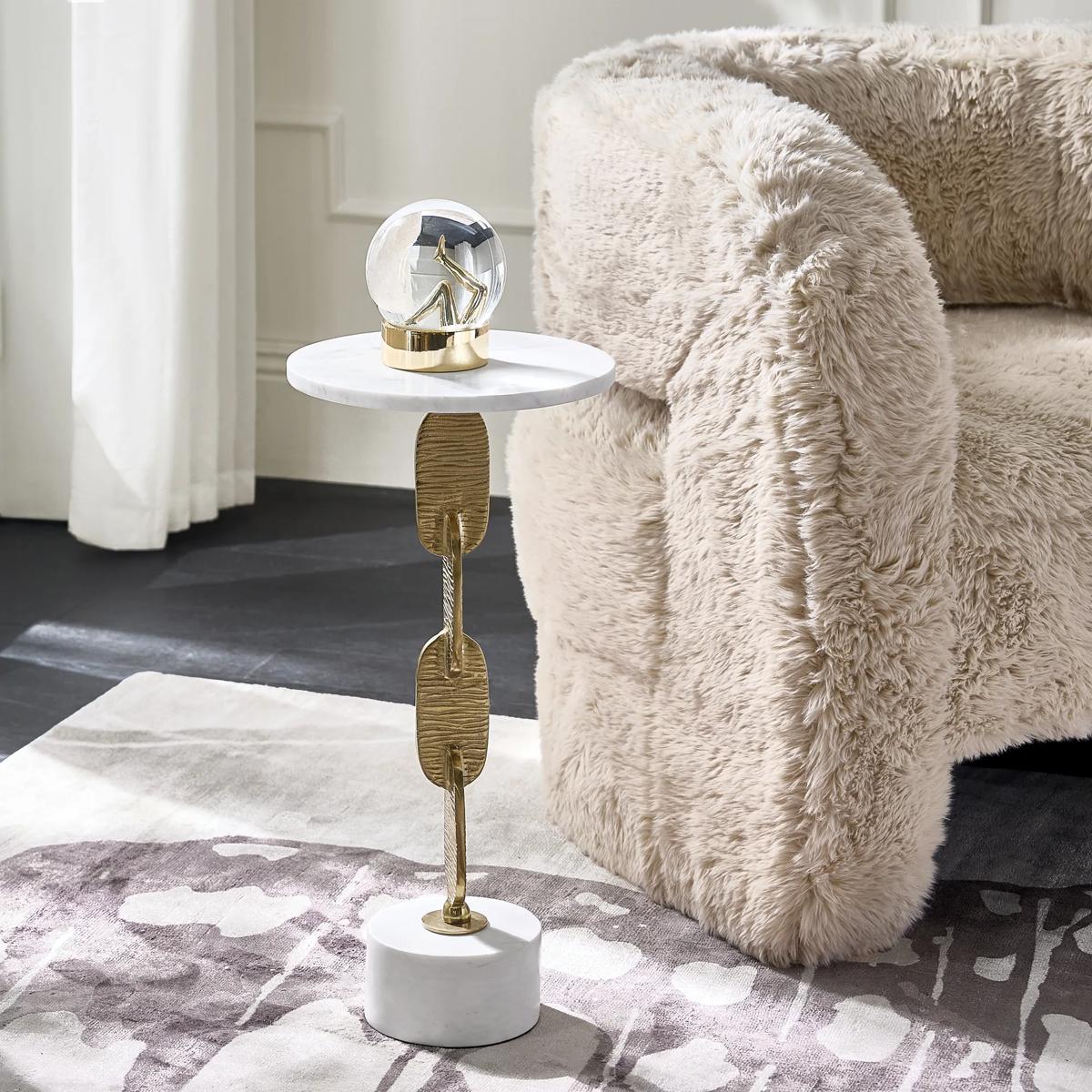 Luna Round White Marble Side Table (11.25")$199
A sculptural side table featuring a genuine white marble top and an open gold-finished metal frame.
Add To Cart -
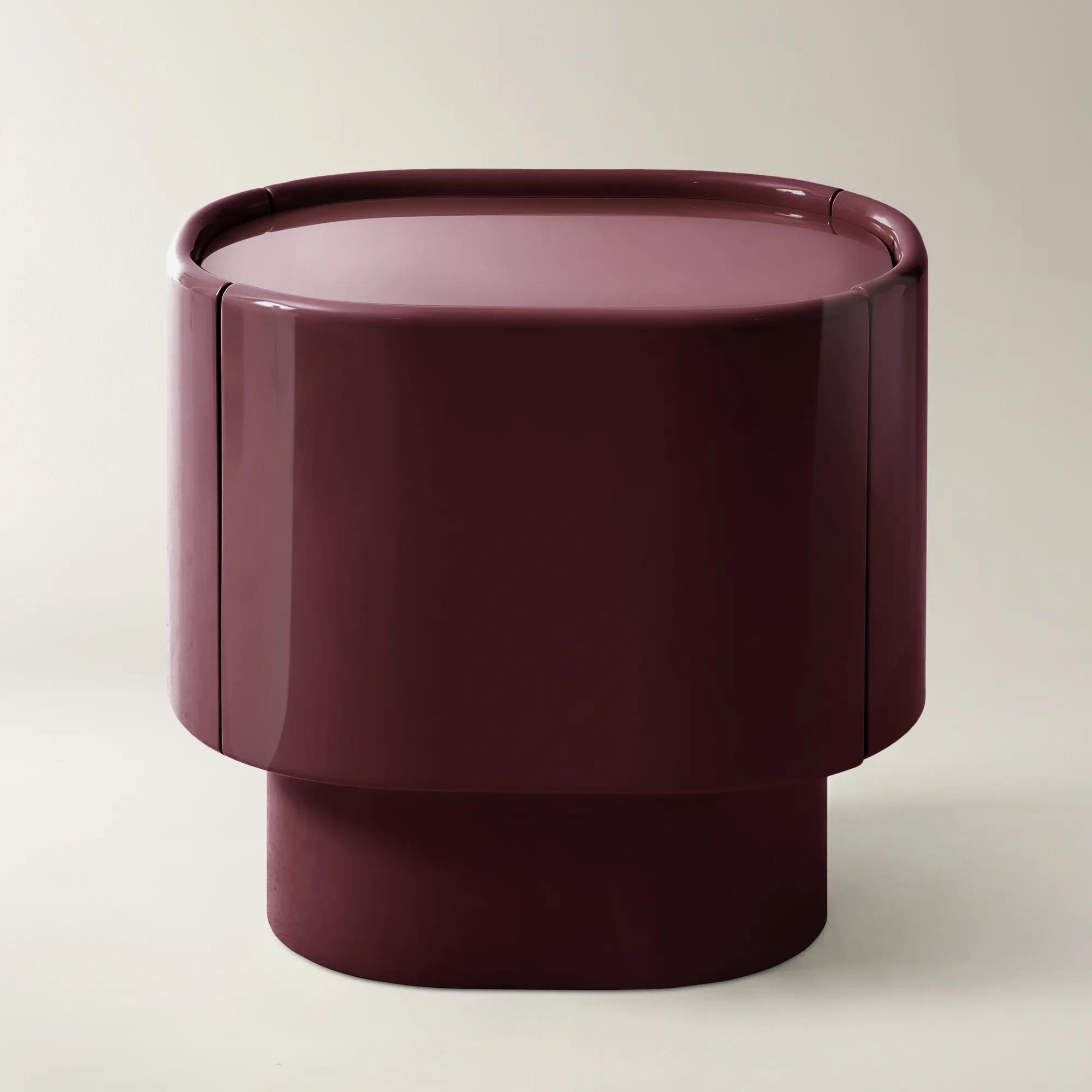 Velar Lacquered Ox Blood 1-Drawer Nightstand With Glass Top (24")$649
A sculptural ox blood nightstand featuring a high-gloss lacquer finish and a sleek glass top.
Add To Cart -
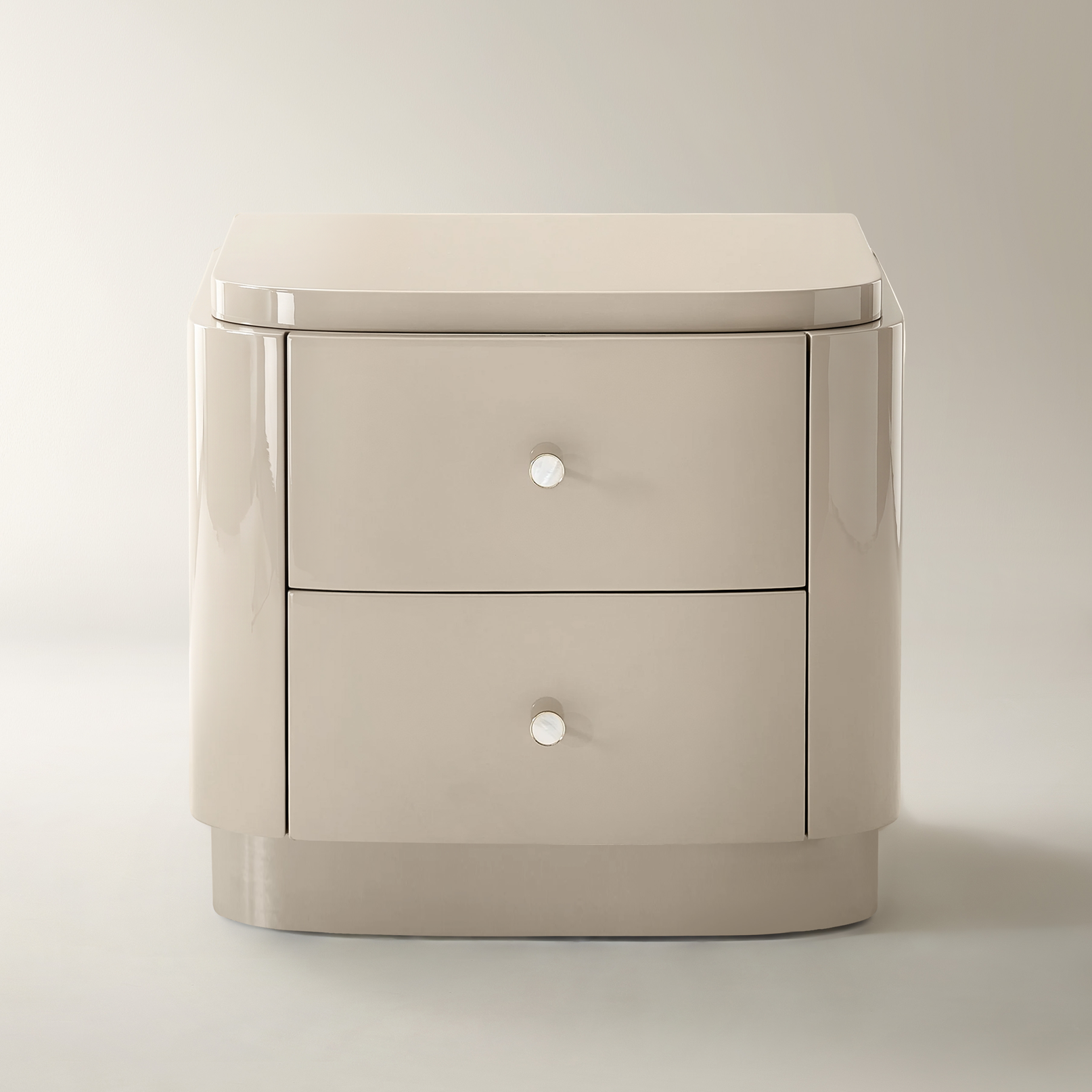
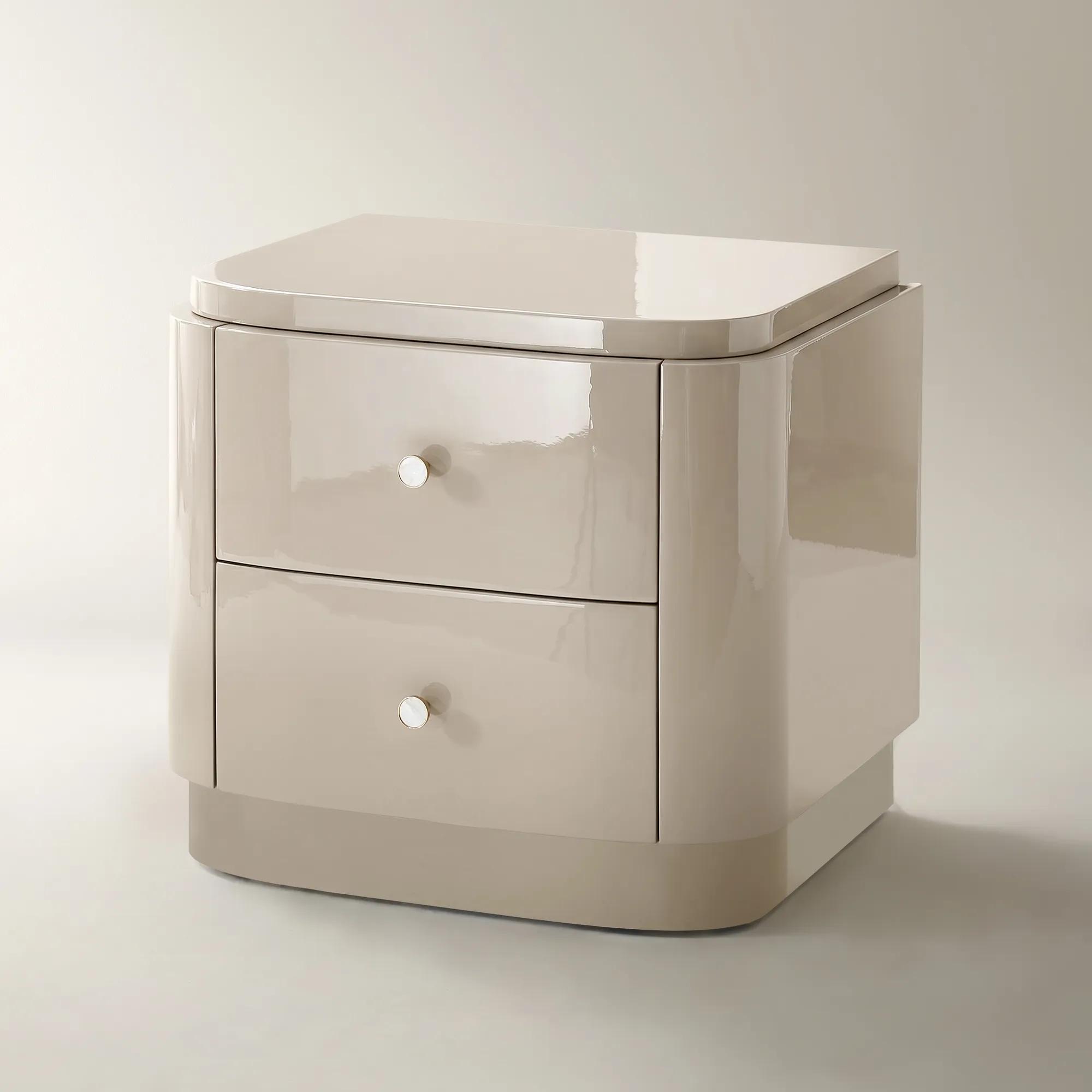 Nia Lacquered Turtle Dove 2-Drawer Nightstand (26")$599
A softly sculpted nightstand in turtle dove lacquer with pearlescent handles and two soft-close drawers.
Add To Cart -
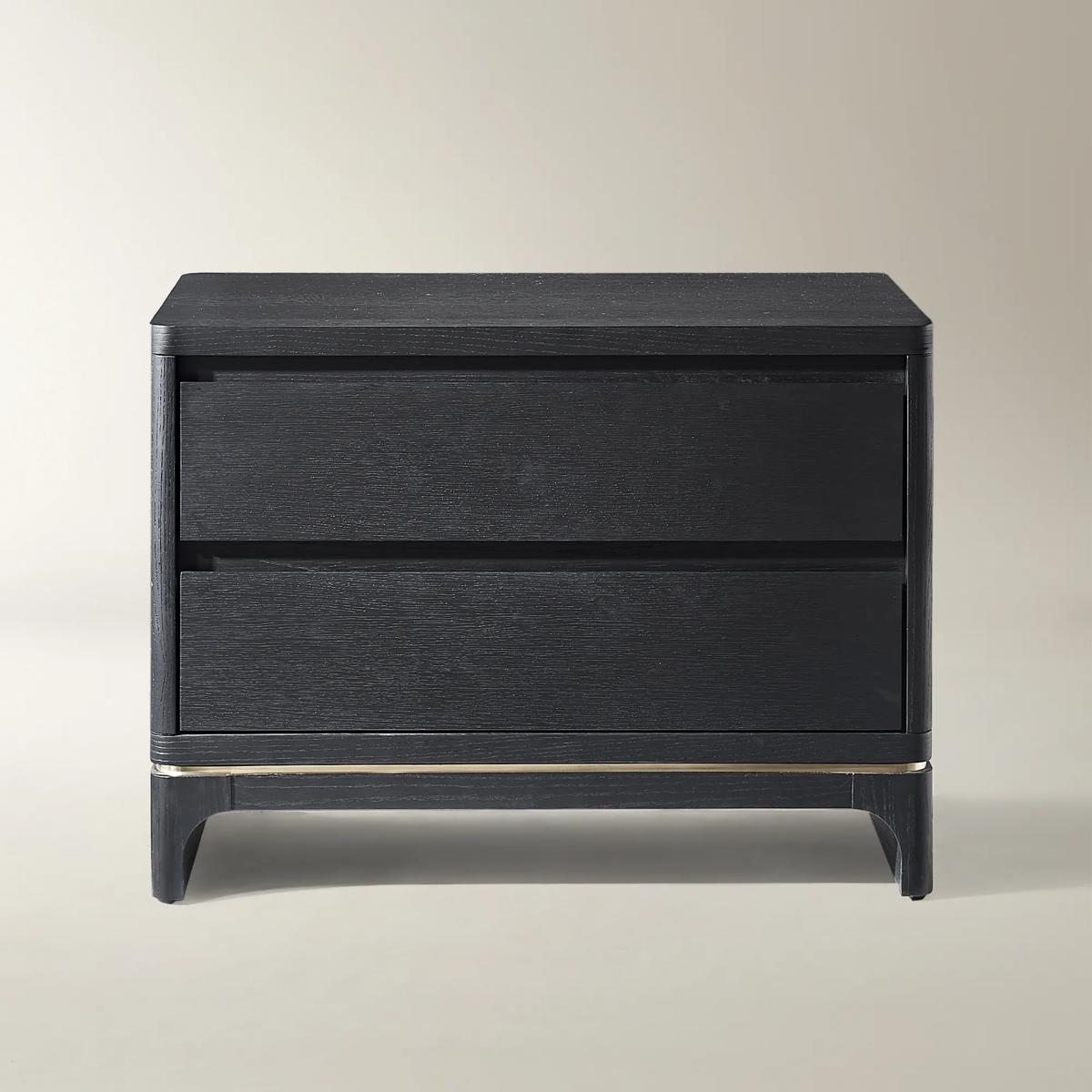
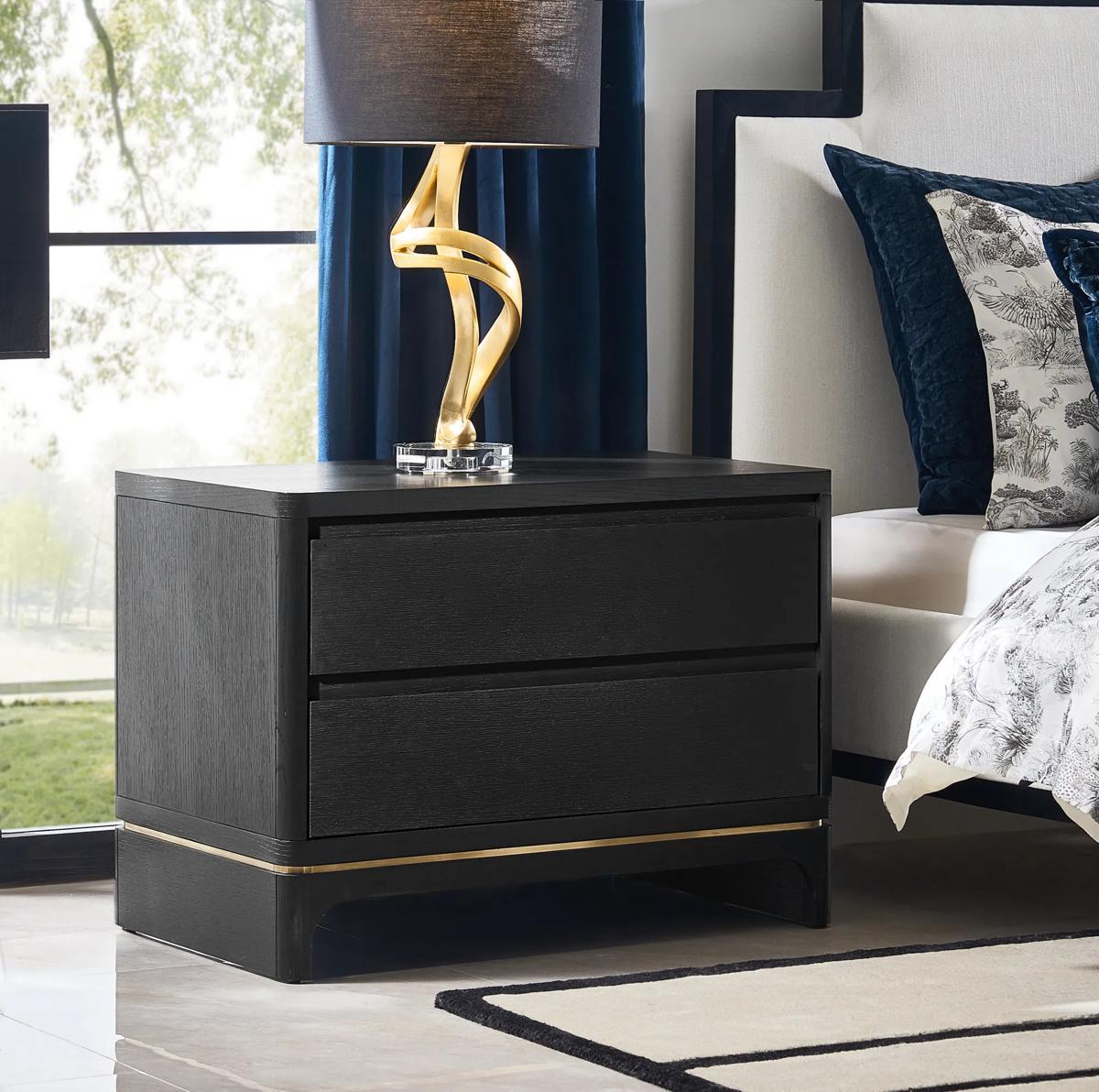 Vanta Black Oak 2-Drawer Nightstand (32")$899
A matte black oak nightstand accented with gold stainless steel trim and soft-close, felt-lined drawers.
Add To Cart -
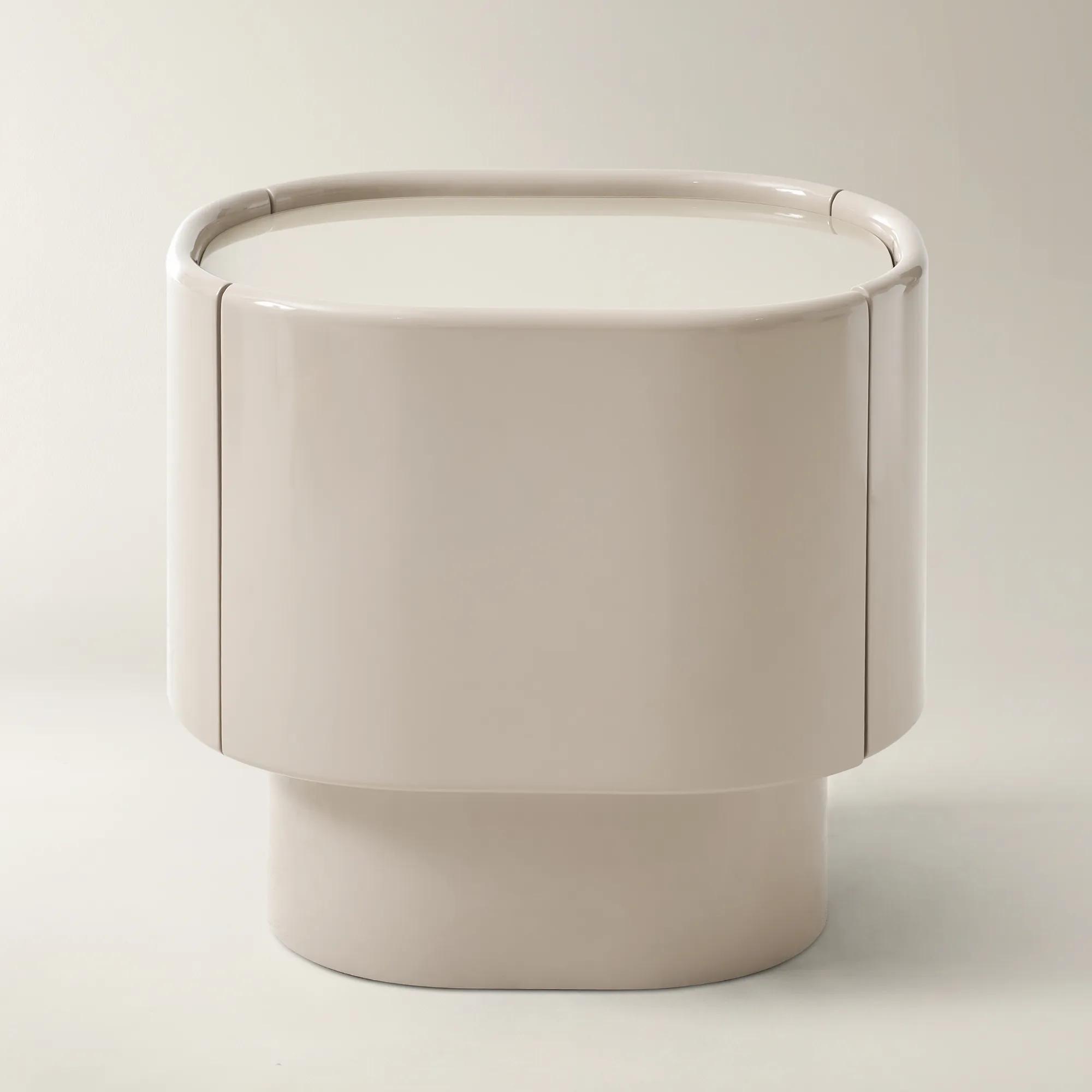 Velar Lacquered Turtle Dove 1-Drawer Nightstand With Glass Top (24")$649
A sculptural nightstand in turtle dove lacquer with a tone-on-tone glass top and velvet-lined drawer.
Add To Cart -
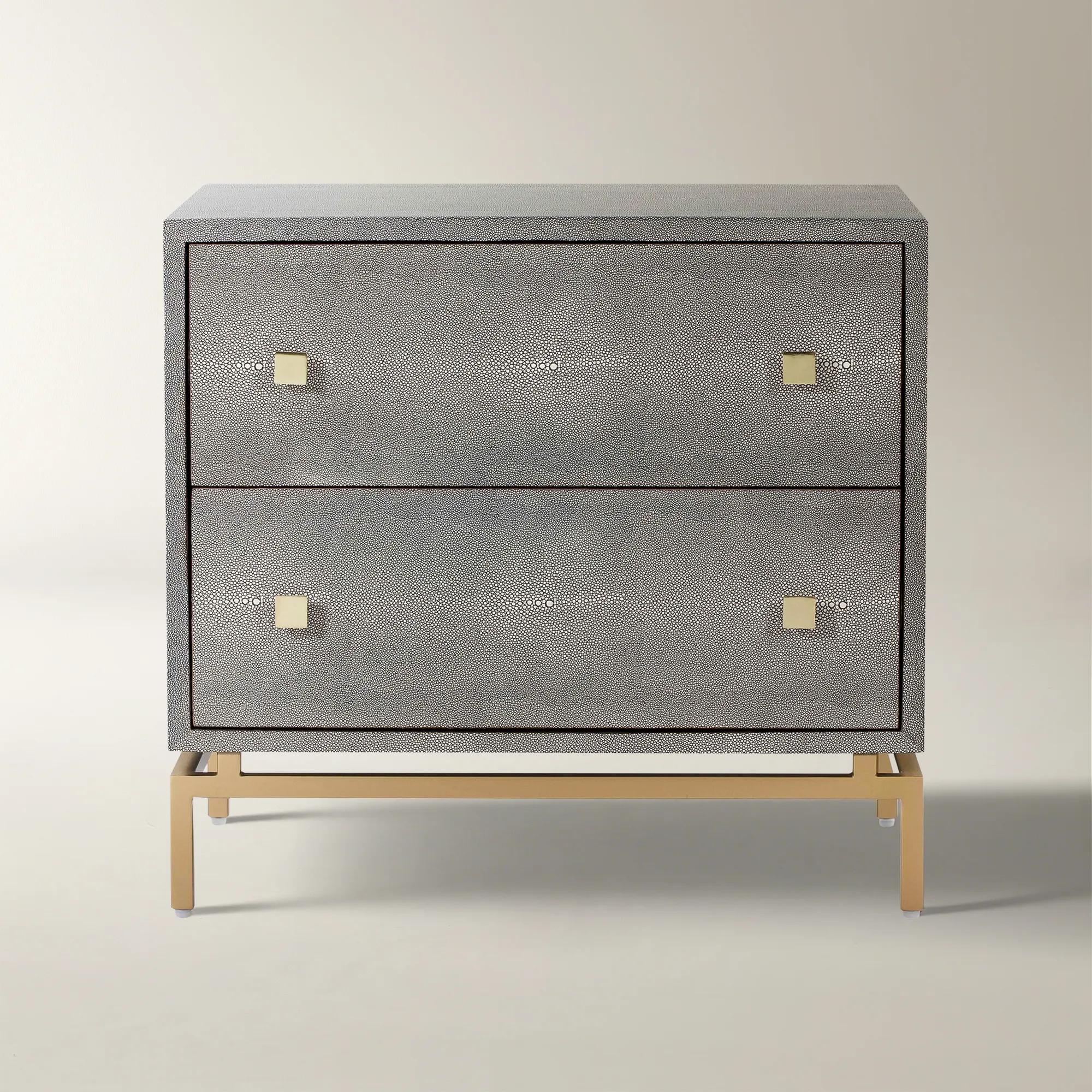
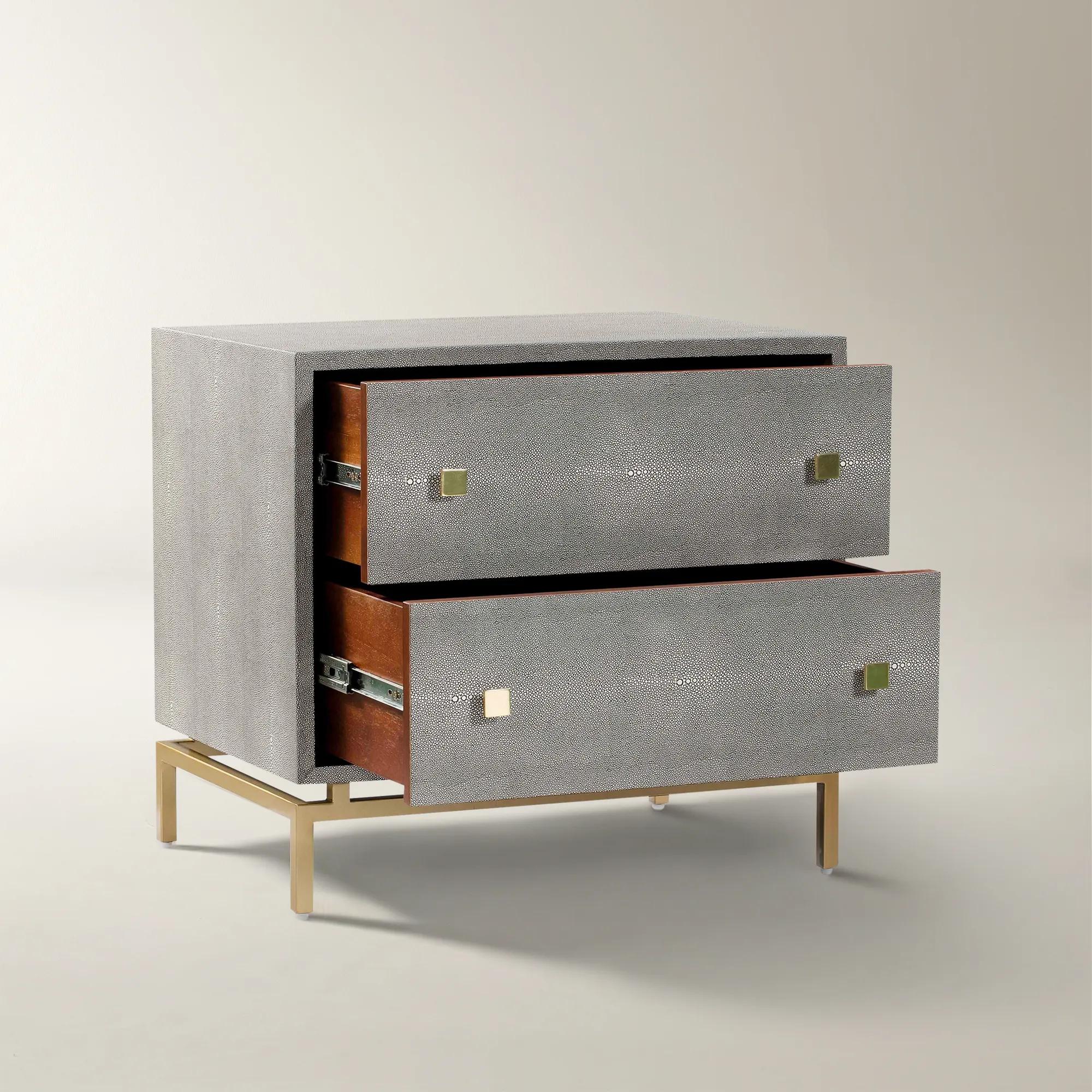 Misha Grey Shagreen 2-Drawer Nightstand (25")$749
A modern nightstand featuring faux shagreen texture, brass-finished base, and two cherry wood-lined drawers.
Add To Cart -
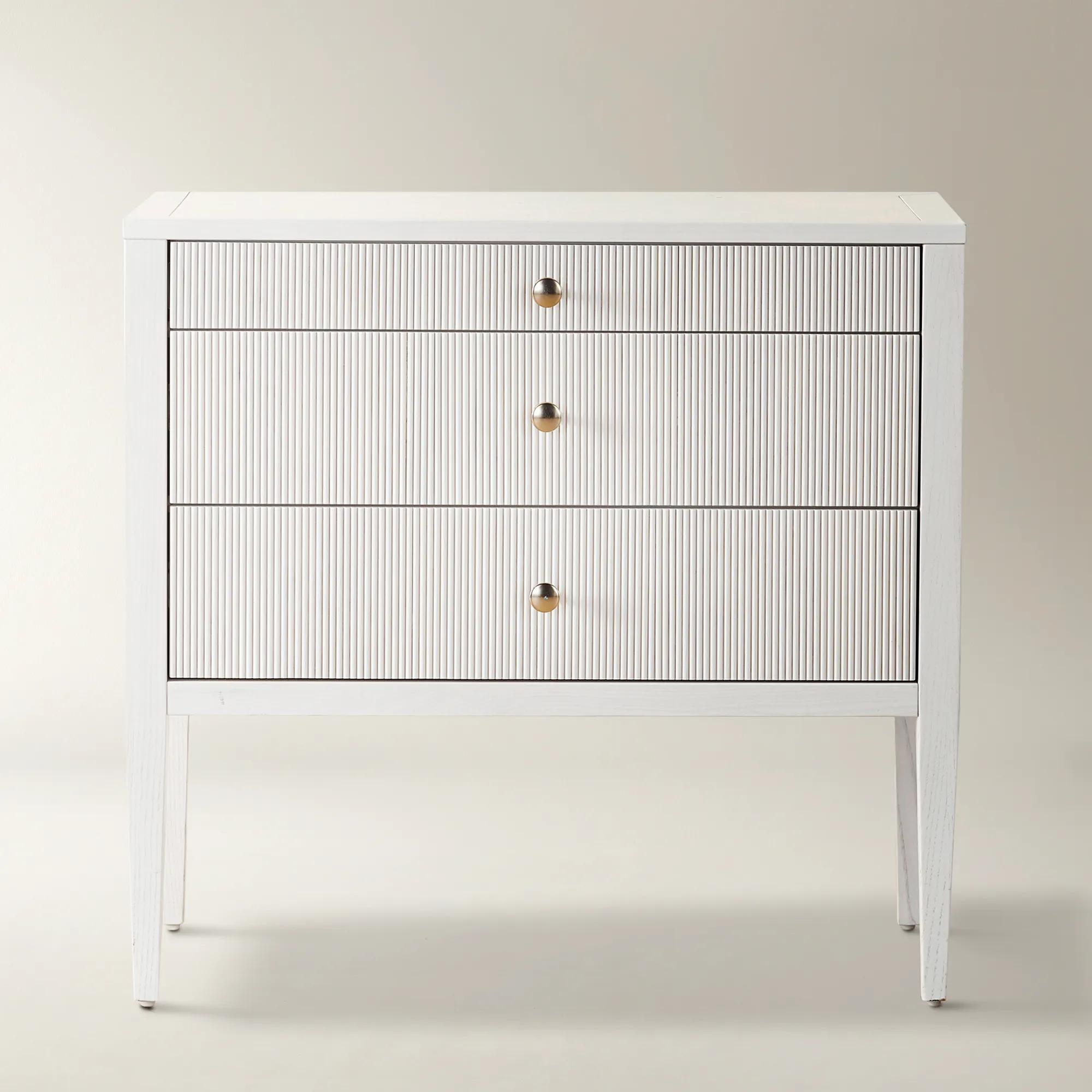 Viola Reeded White Ash Wood 3-Drawer Nightstand (31")$899
A modern nightstand in bone white ash wood with reeded drawers and brass hardware for a luxe touch.
Add To Cart -
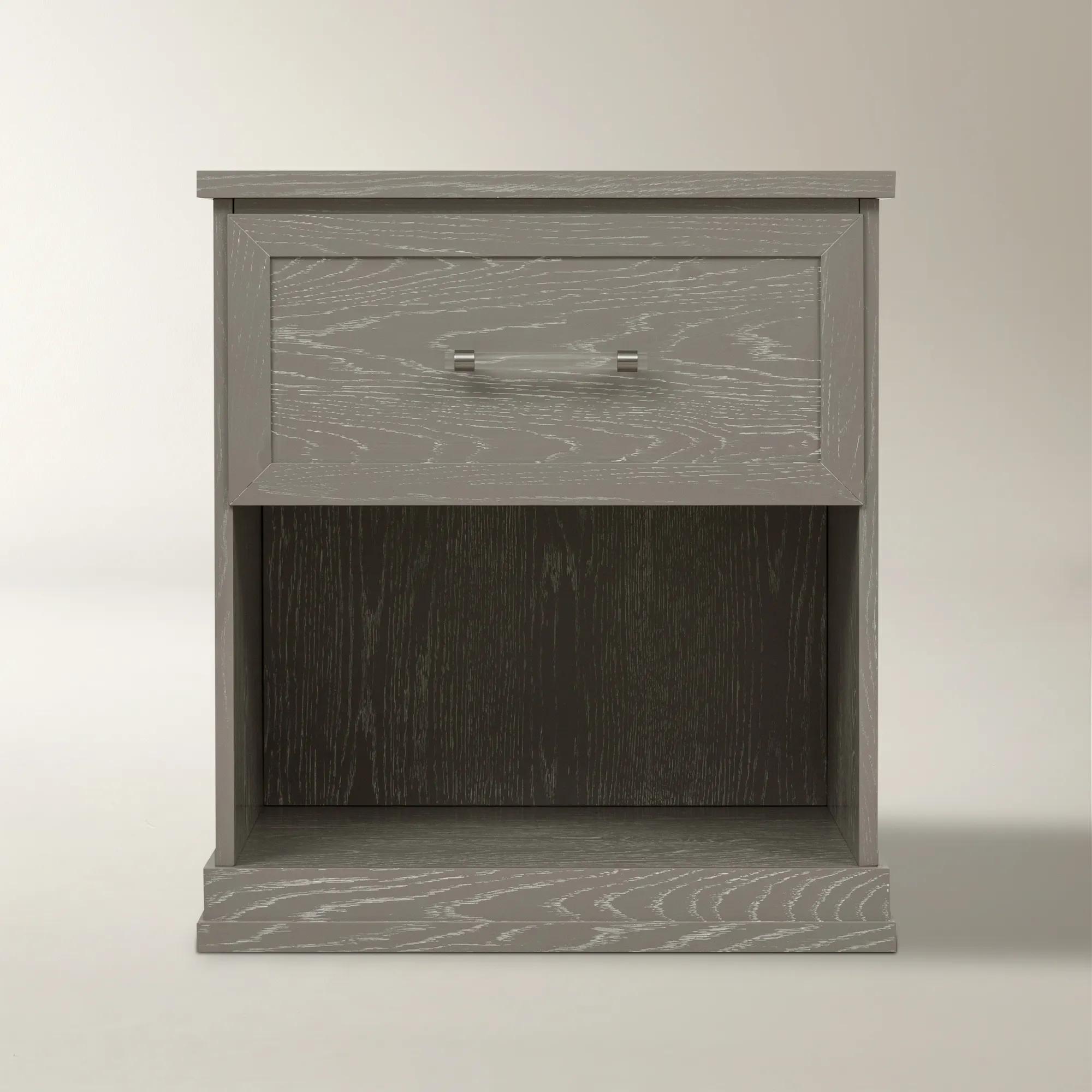
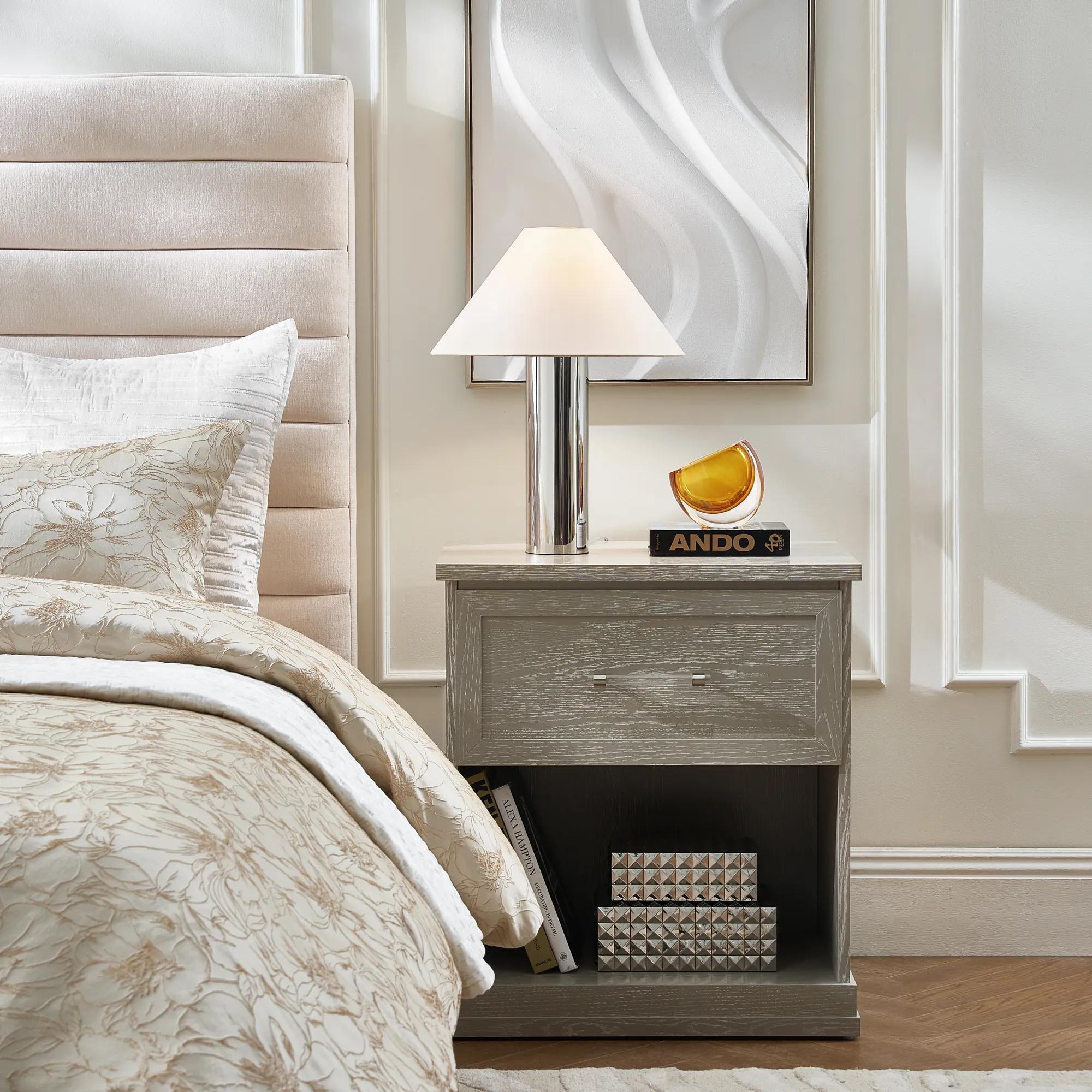 Arwin Grey Oak 1-Drawer Nightstand (26")$699
A contemporary grey hardwood veneer nightstand featuring acrylic and brushed silver handles with soft-closing drawers.
Add To Cart -
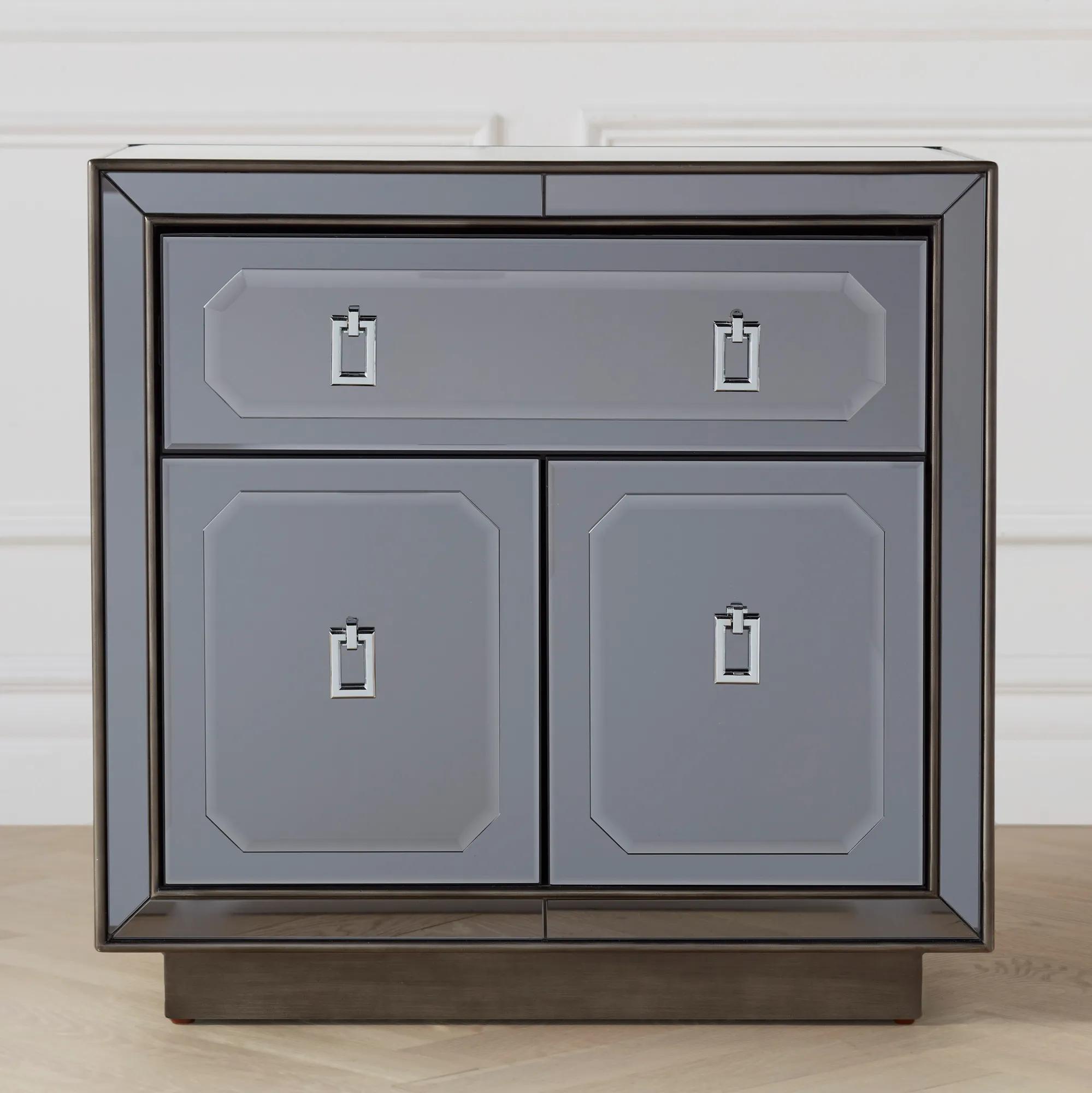
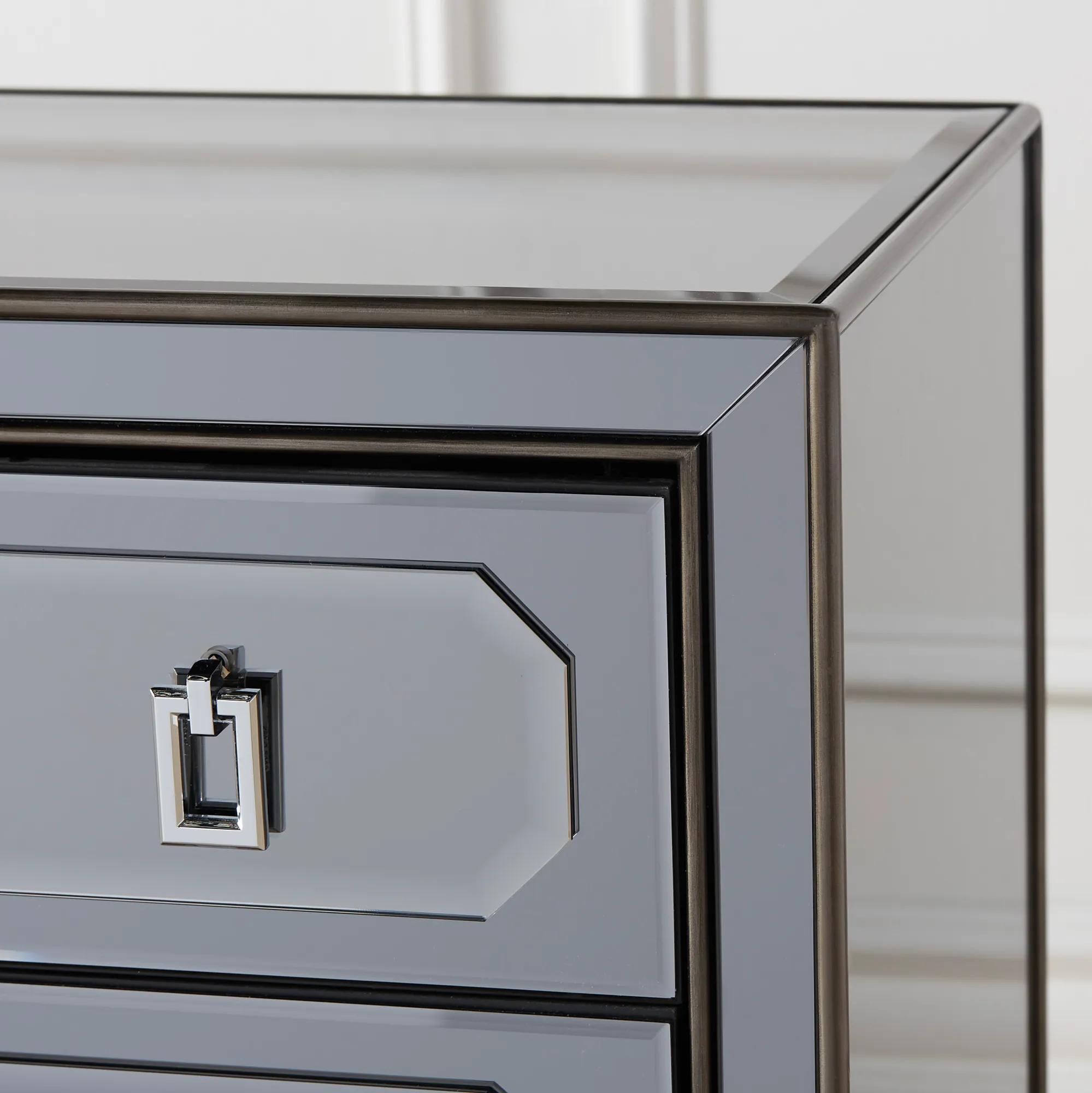 Maddox Mirrored Grey 1-Drawer Nightstand (30")$1099
A modern nightstand featuring beveled mirror paneling, graphite finish, and polished nickel hardware for a luxe touch.
Add To Cart -
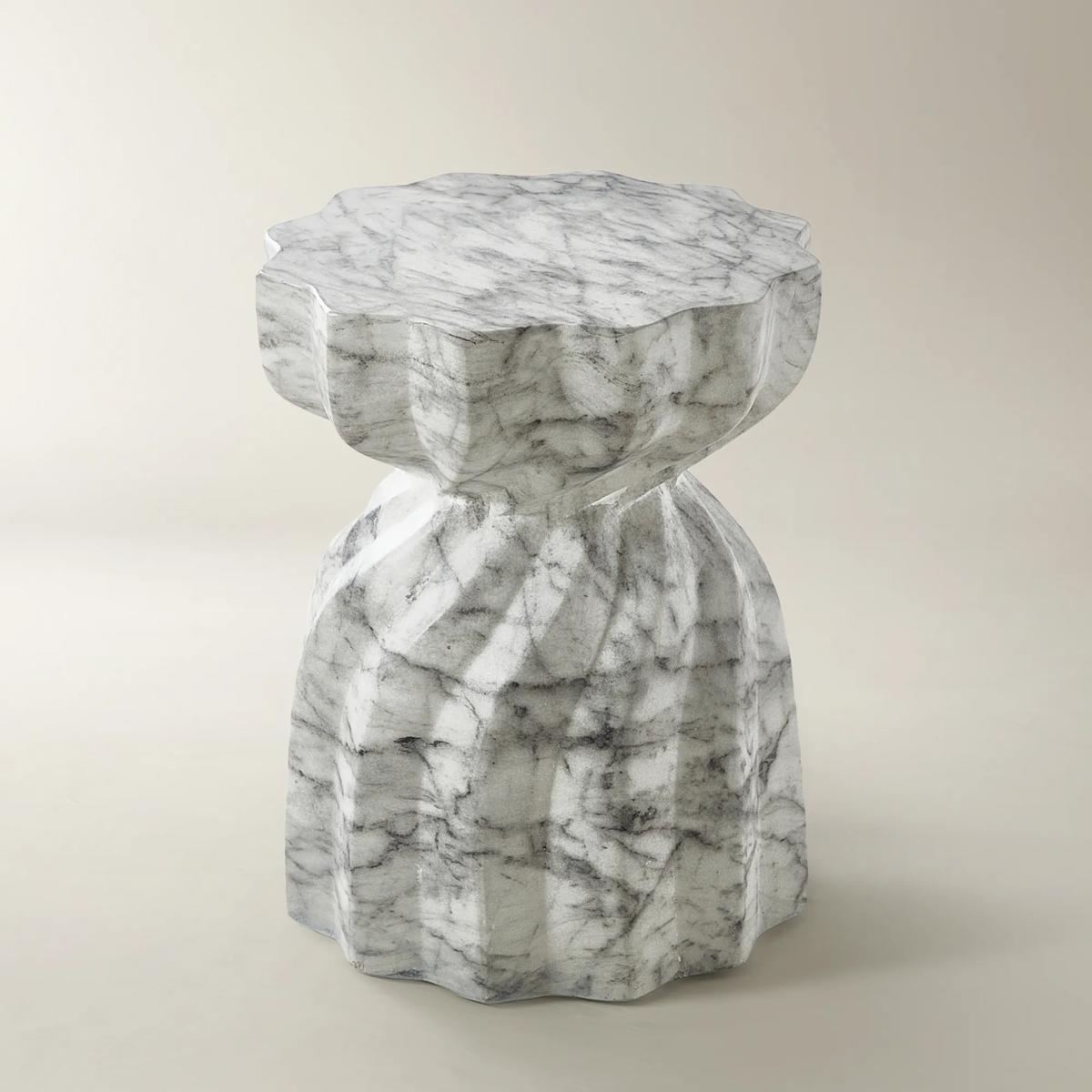
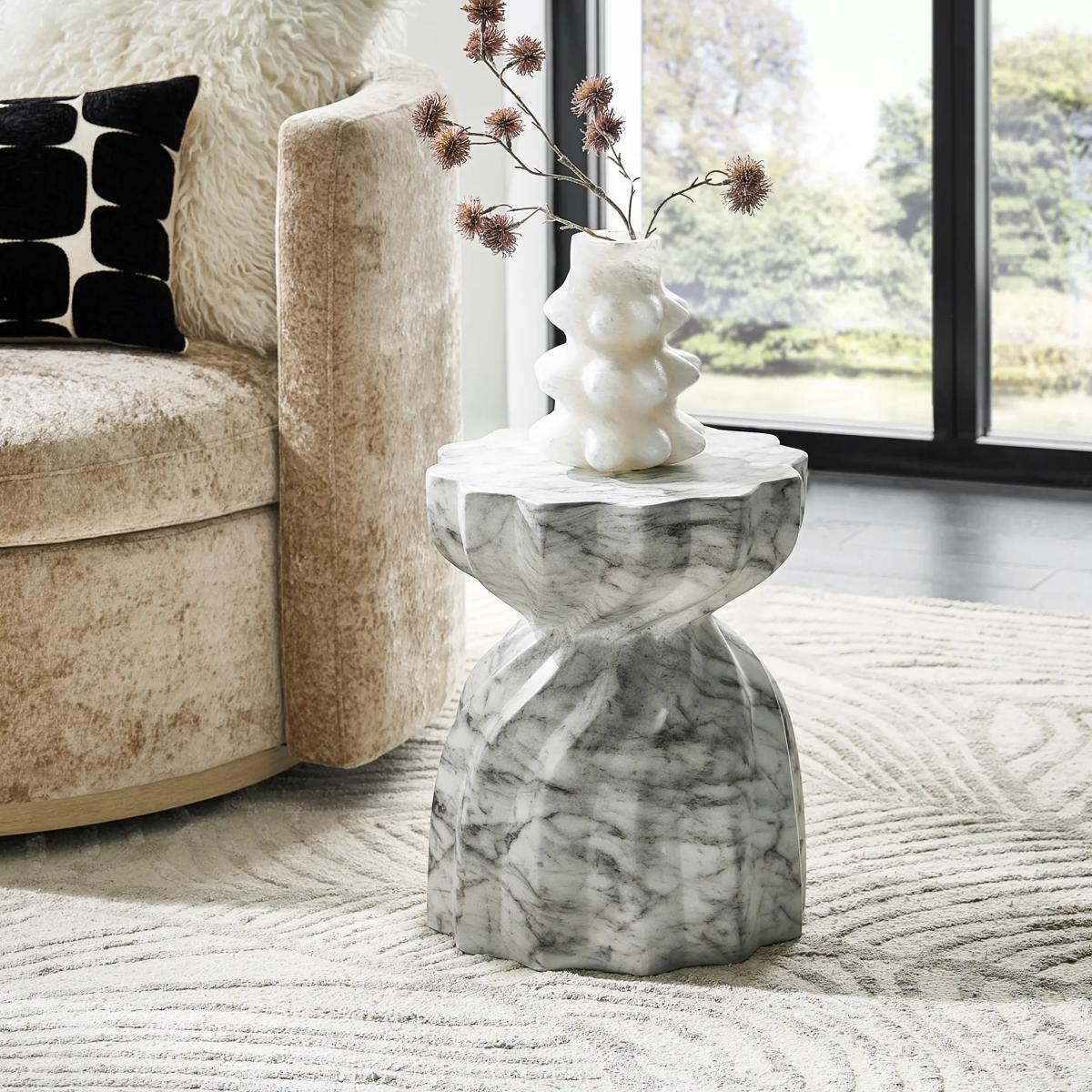 Lithia Scalloped White Concrete Side Table (15")$299
A sculptural white marble-look side table crafted from durable, lightweight fiber concrete for indoor or outdoor use.
Add To Cart -
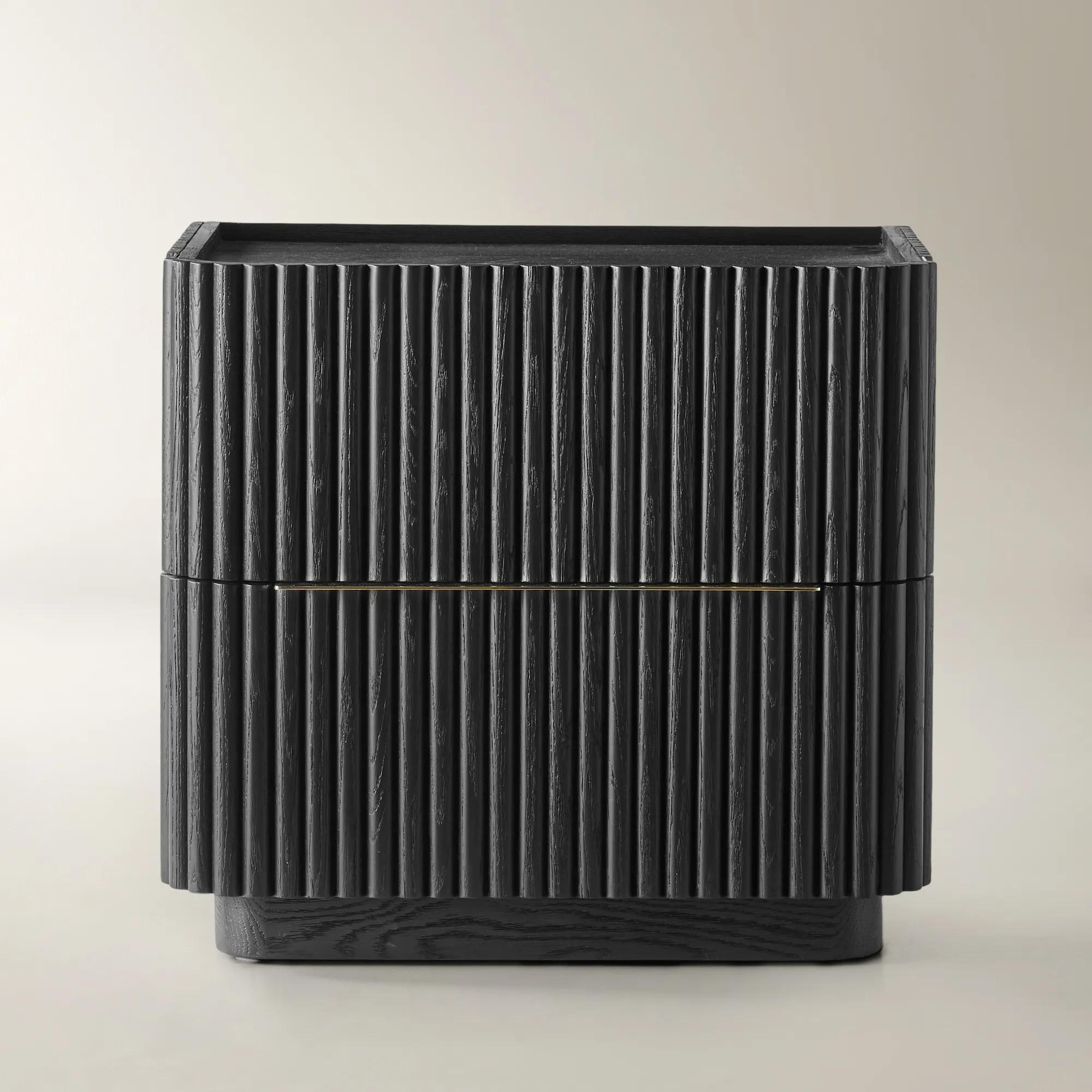 Stria Reeded Black Oak 2-Drawer Nightstand (26")$899
A black oak nightstand featuring vertical reeded texture, soft gold accents, and soft-close velvet-lined drawers.
Add To Cart -
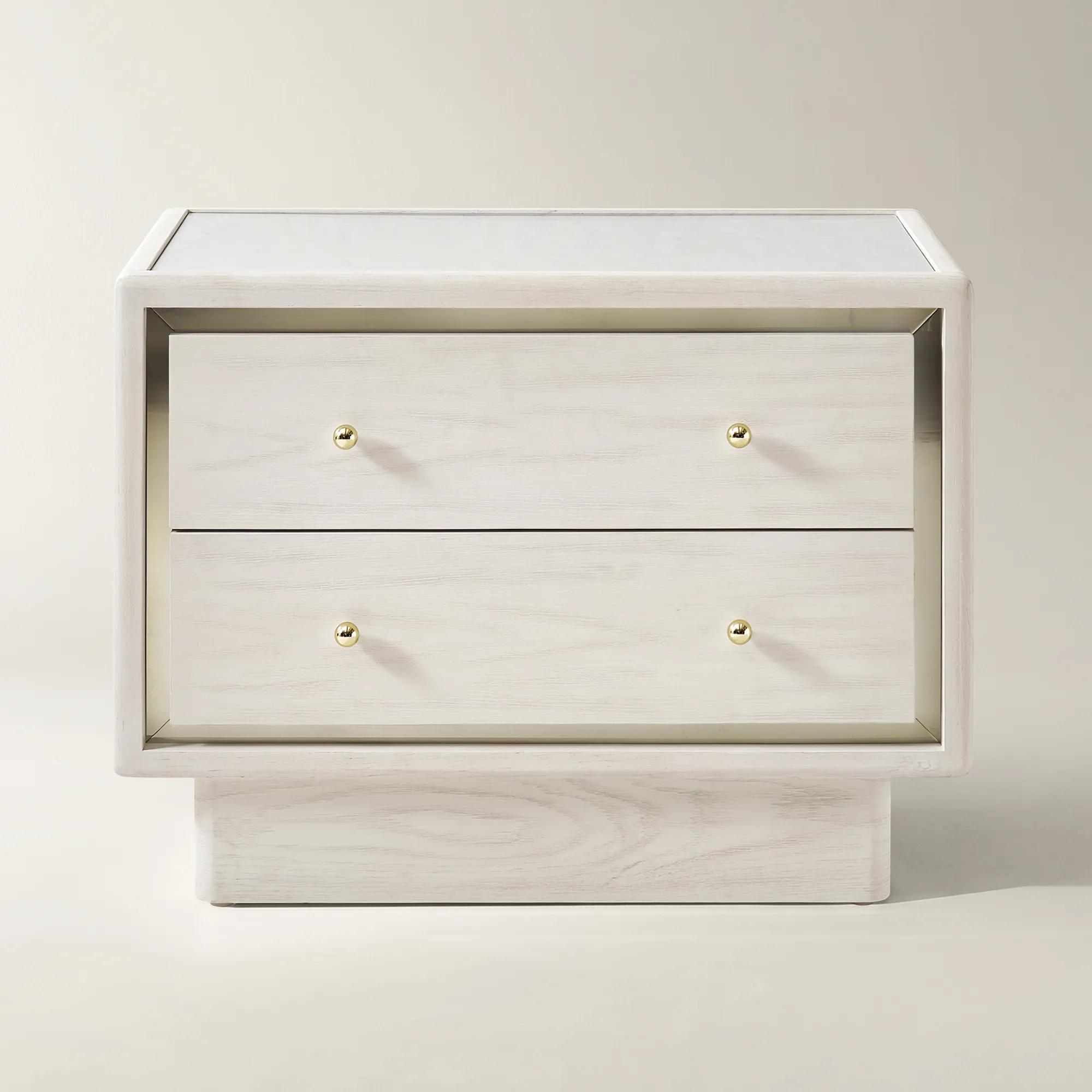
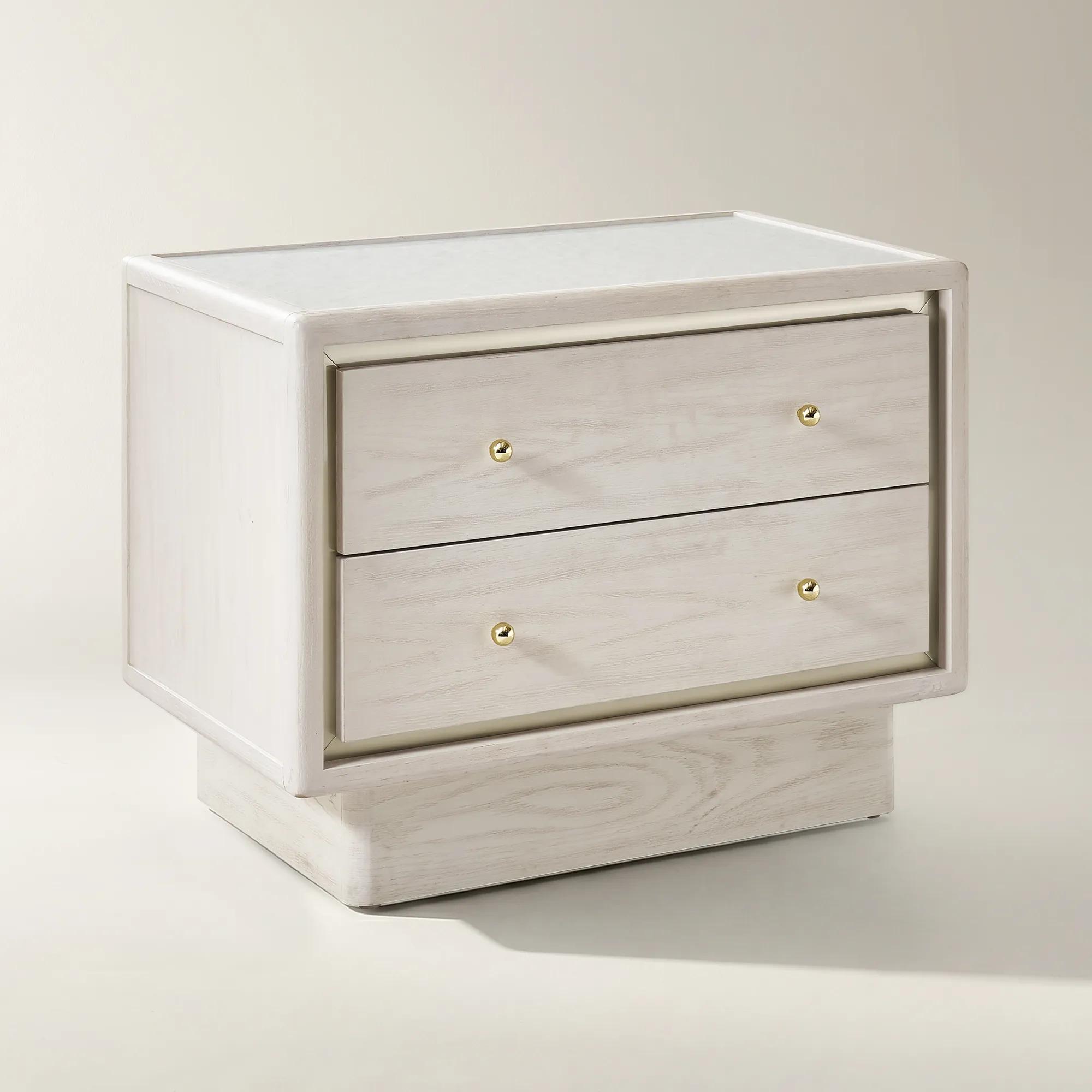 Lumina Bleached Oak 2-Drawer Nightstand With Pearl Lacquered Top (32")$999
A bleached oak nightstand featuring a pearl lacquered top, champagne gold trim, and soft-close drawers.
Add To Cart -
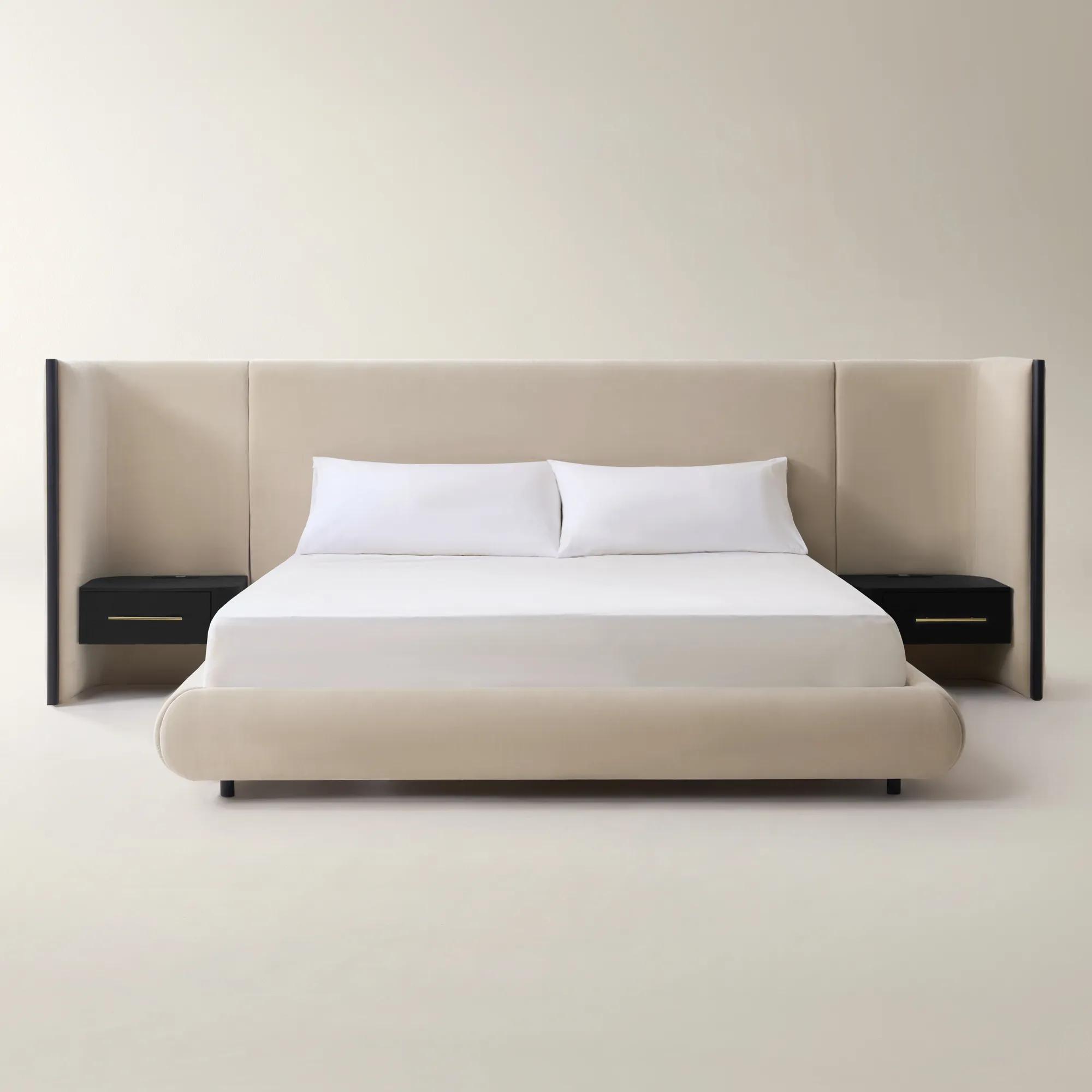 Sierra Oatmeal Velvet Upholstered King Bed With Nightstands$2799
An oatmeal velvet-upholstered platform bed with an extended headboard, floating nightstands, and built-in power access.
Add To Cart -
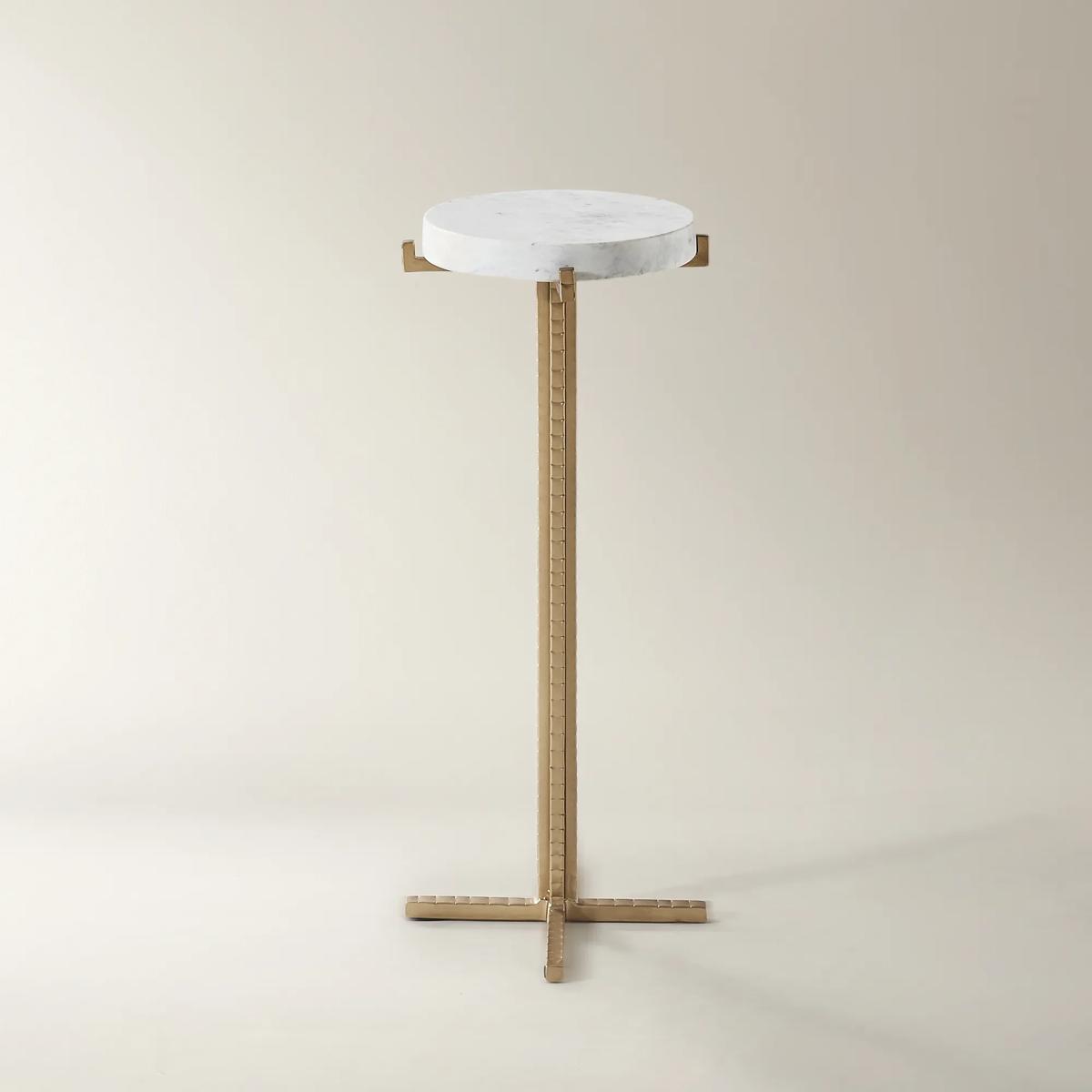 Anya Round White Marble Side Table (10")$199
A sculptural side table featuring a genuine white marble top and gold-finished metal pedestal base.
Add To Cart -
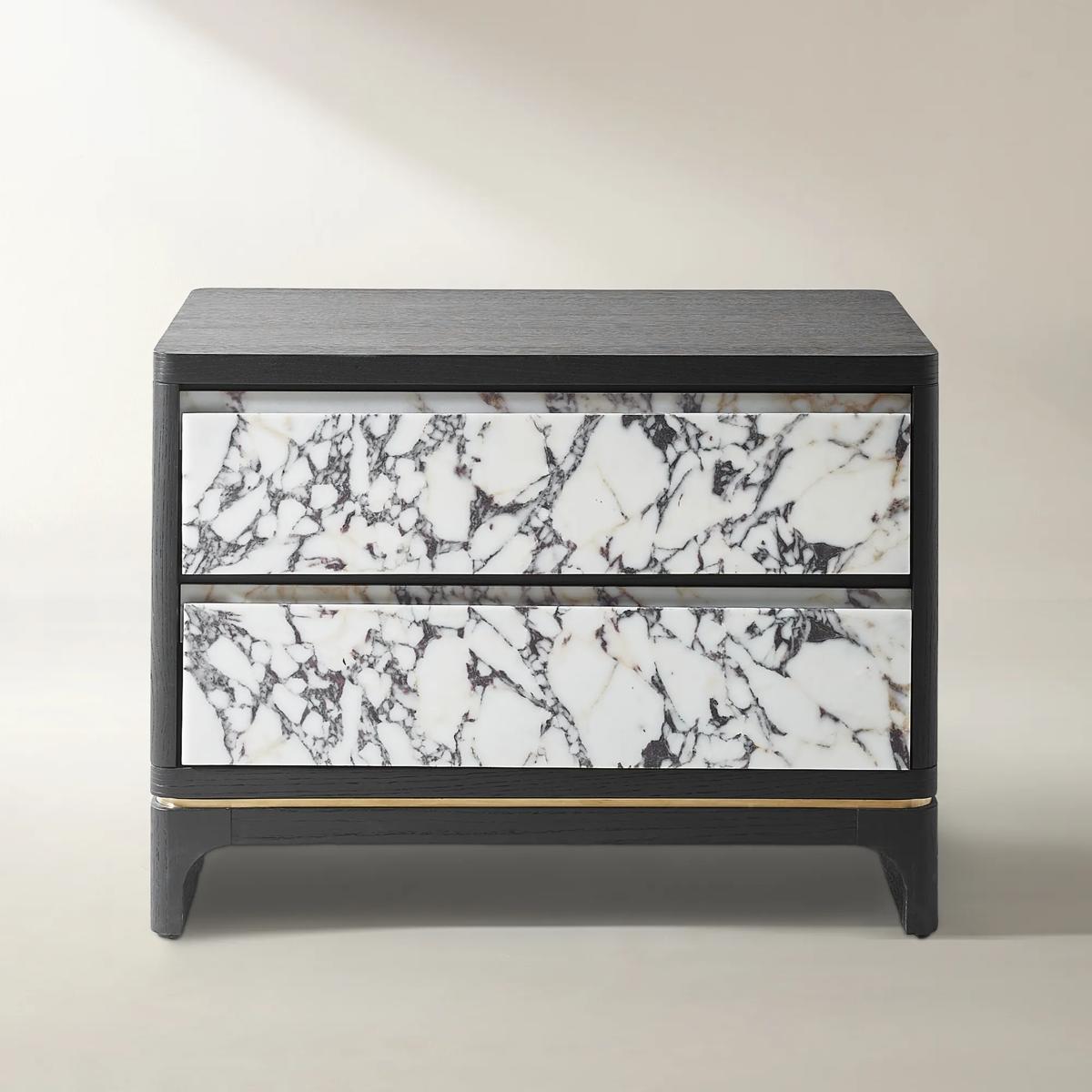 Vanta Black Oak And Calacatta Marble 2-Drawer Nightstand (32")$1099
A striking nightstand featuring genuine Calacatta Viola marble fronts and matte black oak veneer for bold elegance.
Add To Cart -
.jpeg?w=1200&h=1200)
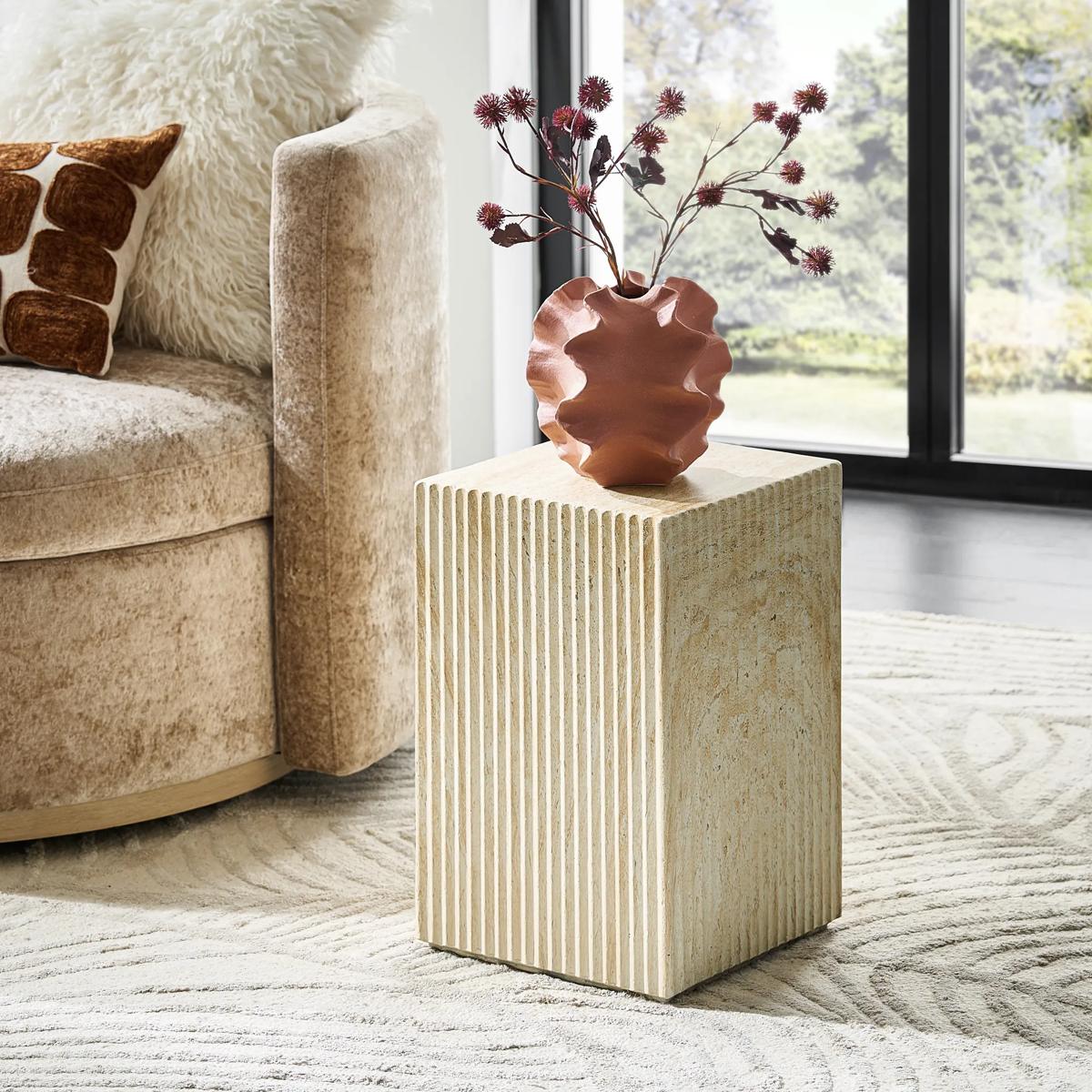 Strata Square Travertine Concrete Side Table (11.8")$259
A travertine-look fiber concrete side table with grooved panels, offering lightweight durability for indoor or outdoor use.
Add To Cart -
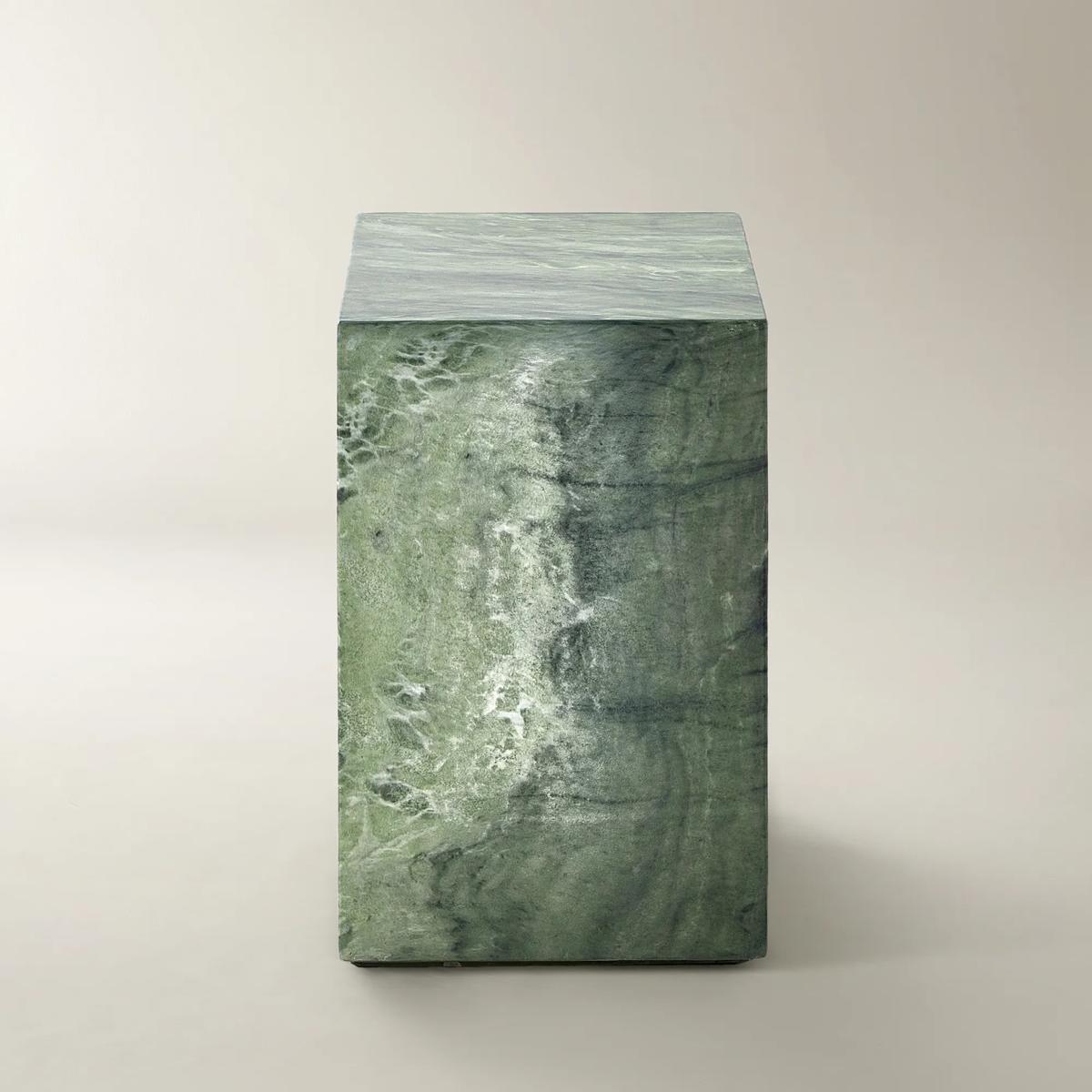
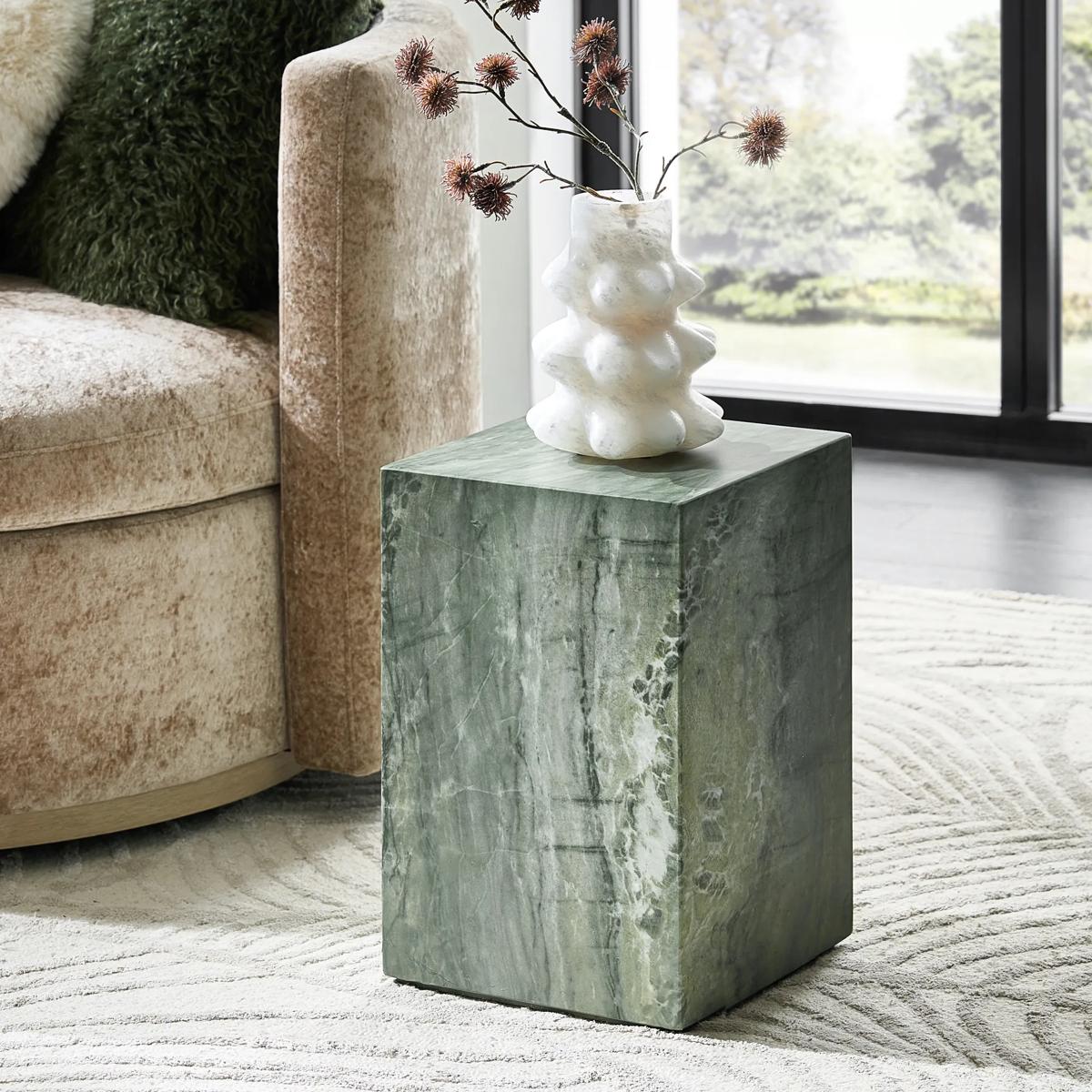 Strata Square Green Concrete Side Table (11.8")$259
A sculptural green marble-look side table crafted from lightweight, durable fiber concrete for indoor or outdoor use.
Add To Cart -
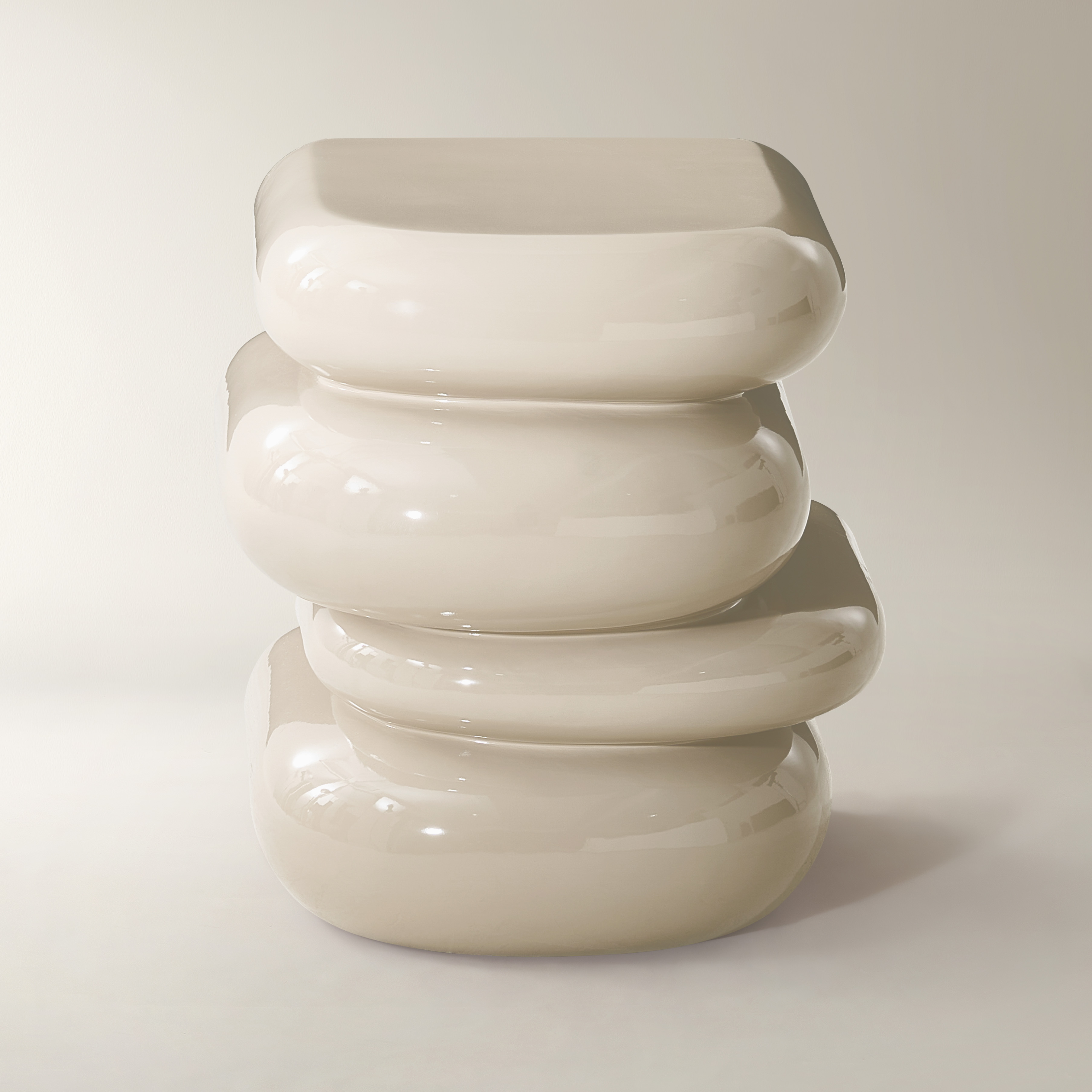
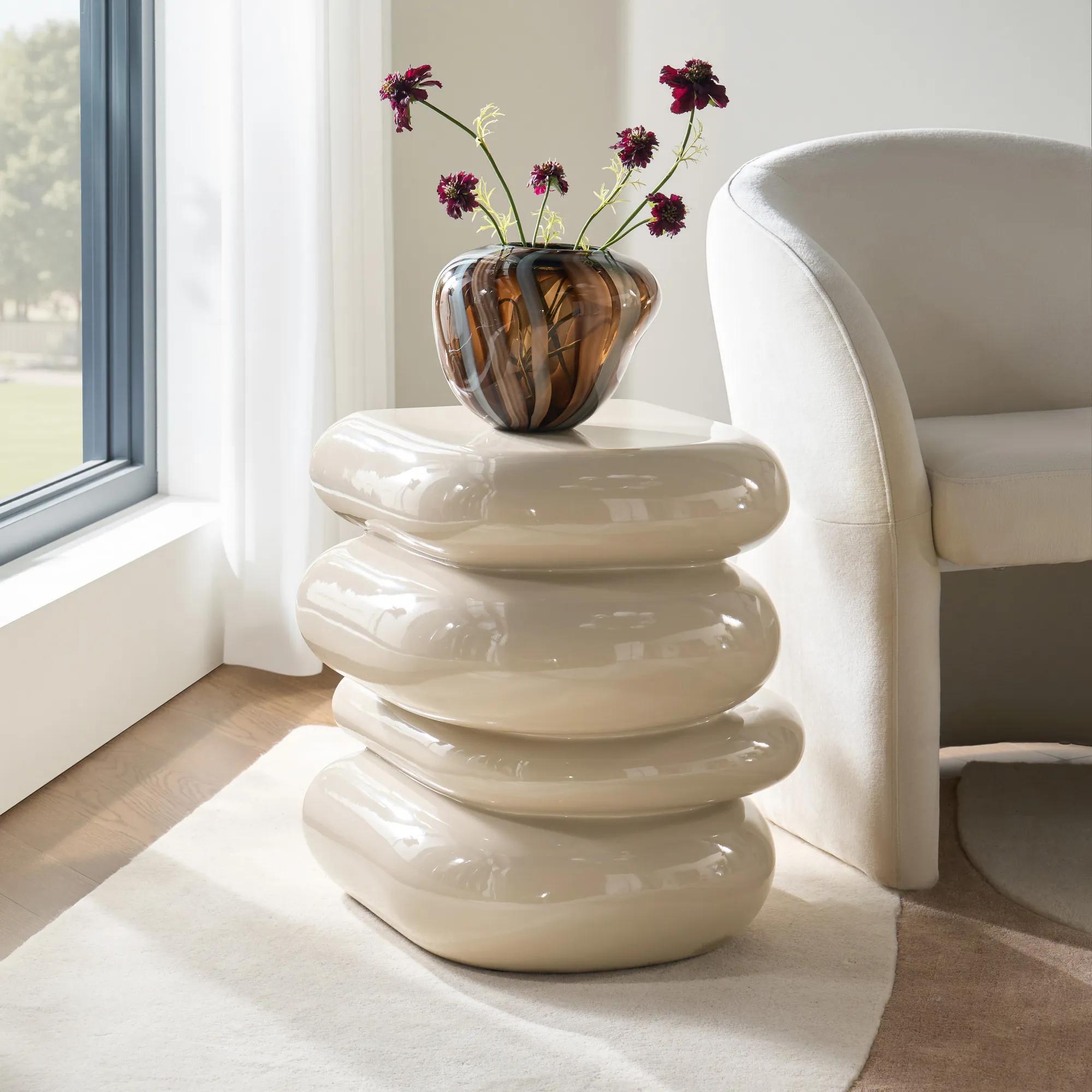 Forma Stacked Turtle Dove Side Table (19.9")$459
A sculptural accent table crafted from high-gloss turtle dove fiberglass with softly stacked, rounded tiers.
Add To Cart -
-0.jpeg?w=1200&h=1200) Strata Round Green Concrete Side Table (15")$299
Strata Round Green Concrete Side Table (15")$299A sculptural green marble-look side table crafted from lightweight, durable, and weather-resistant fiber concrete.
Add To Cart -
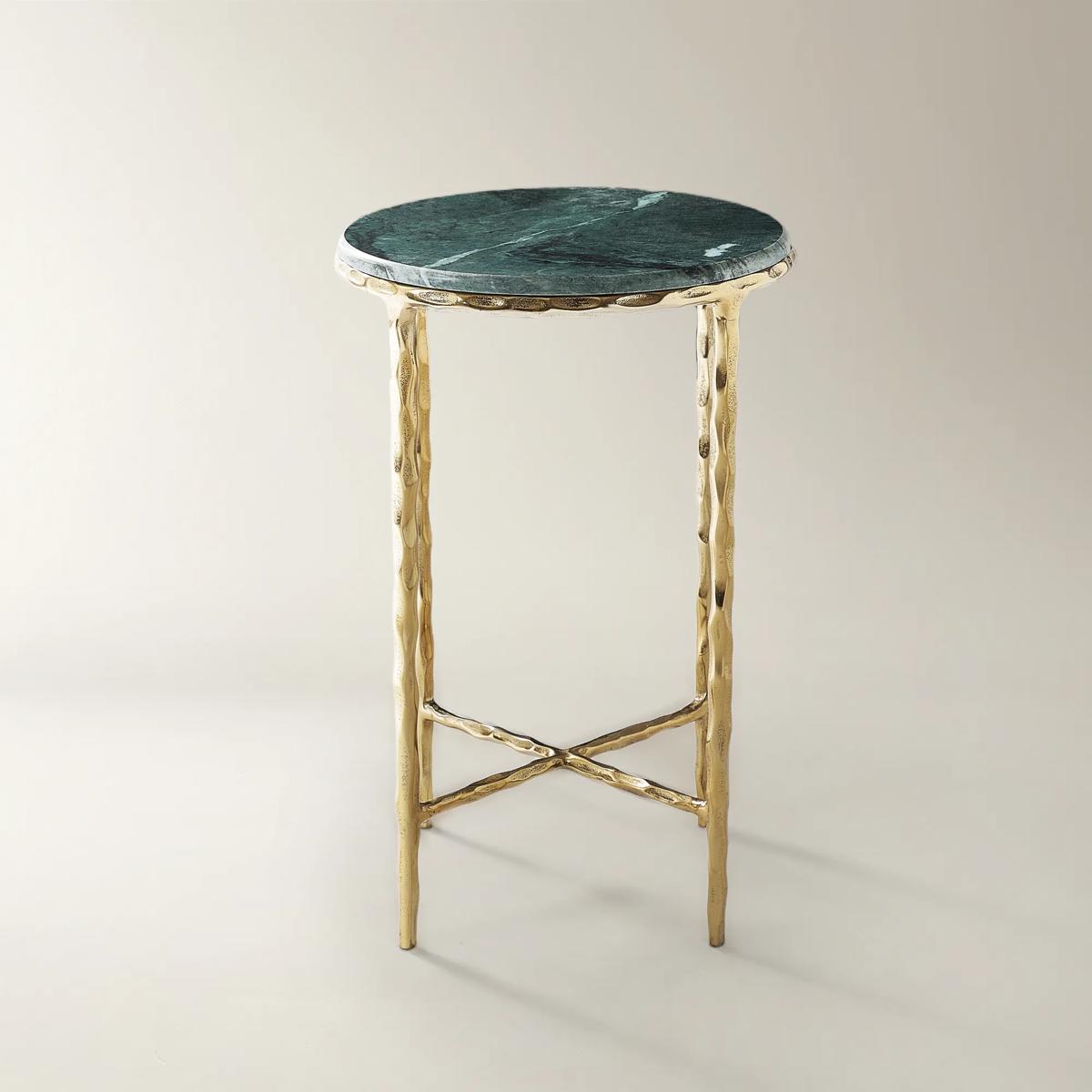
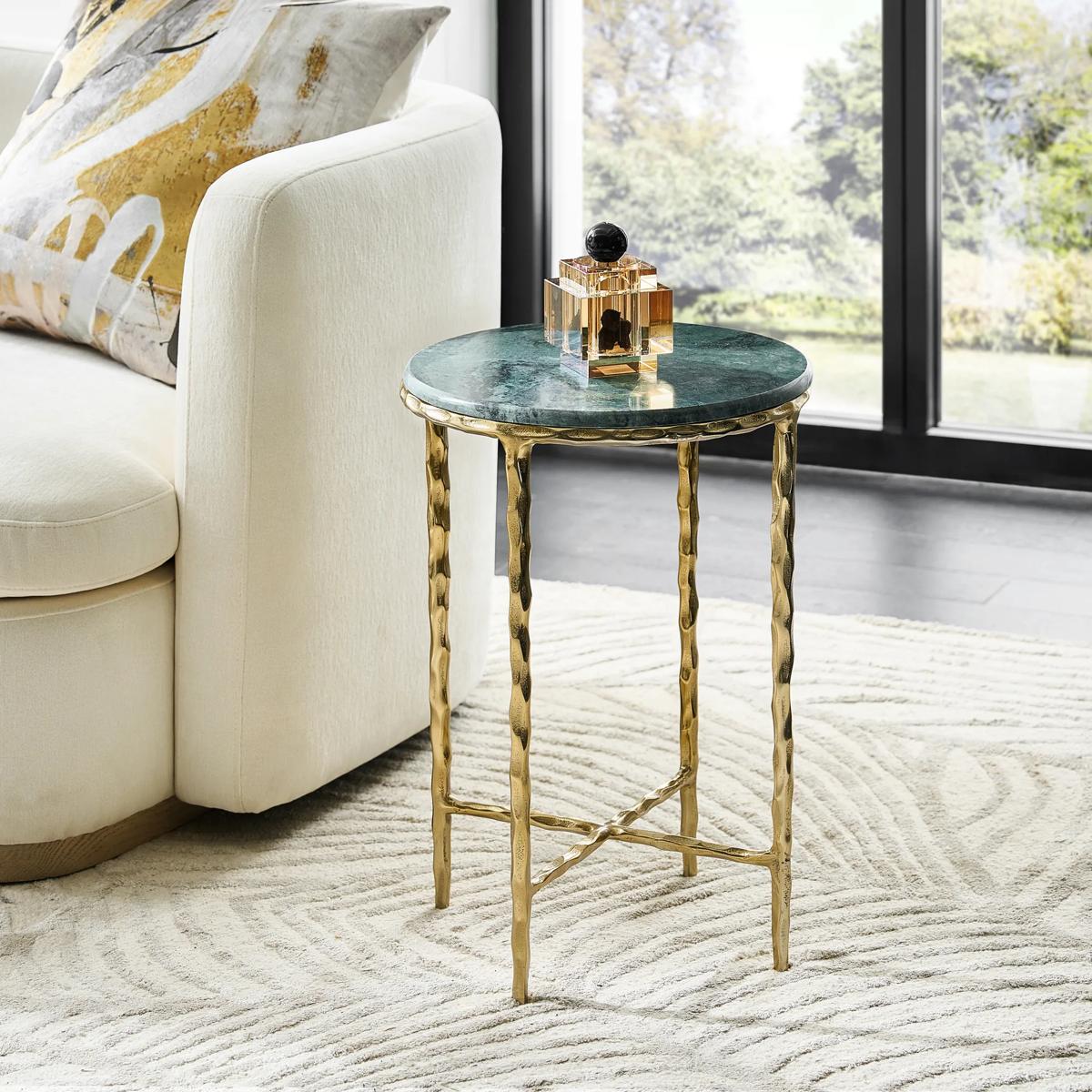 Juliet Round Green Marble Side Table (15")$269
A striking side table featuring a deep green Indian marble top and a hand-hammered metal base.
Add To Cart -
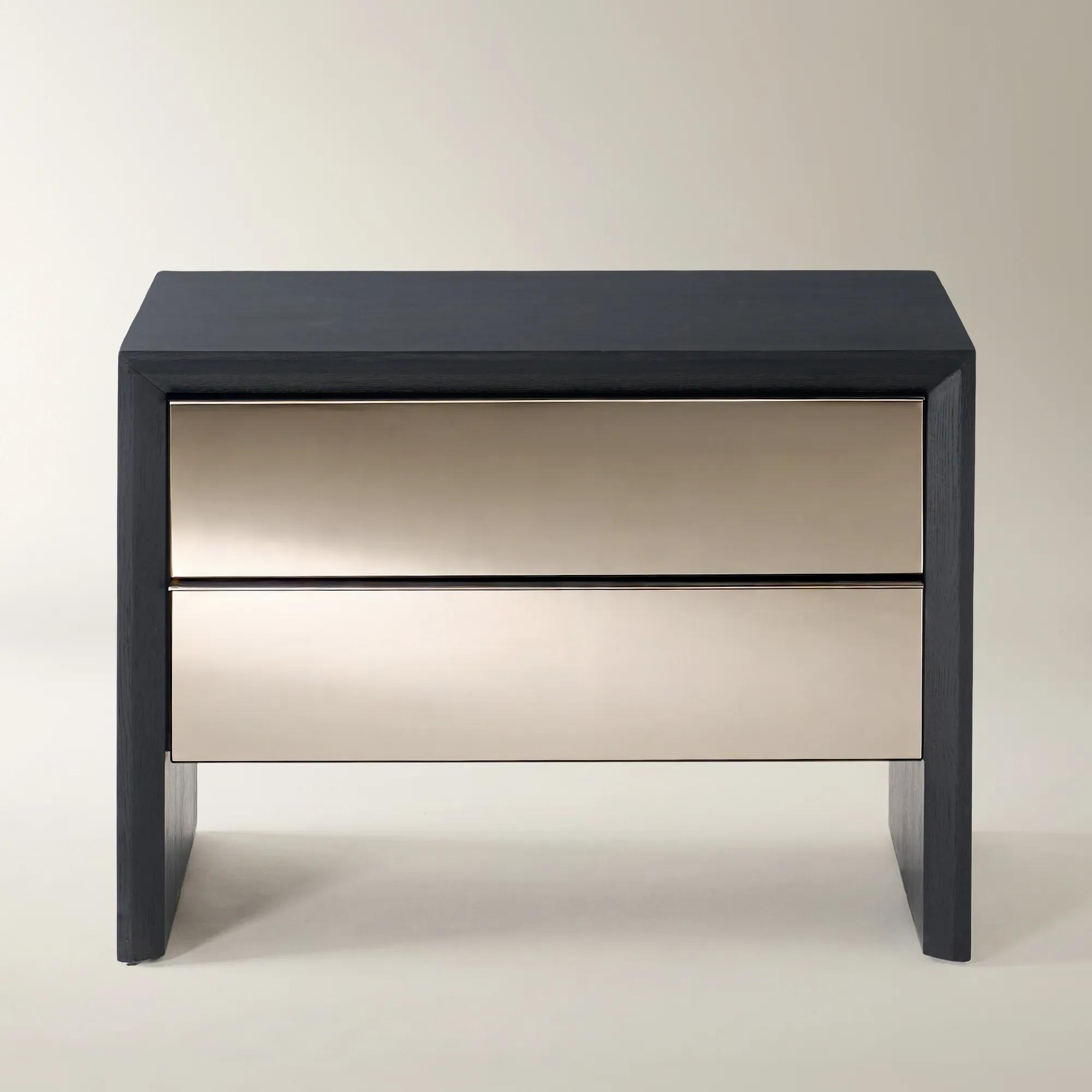
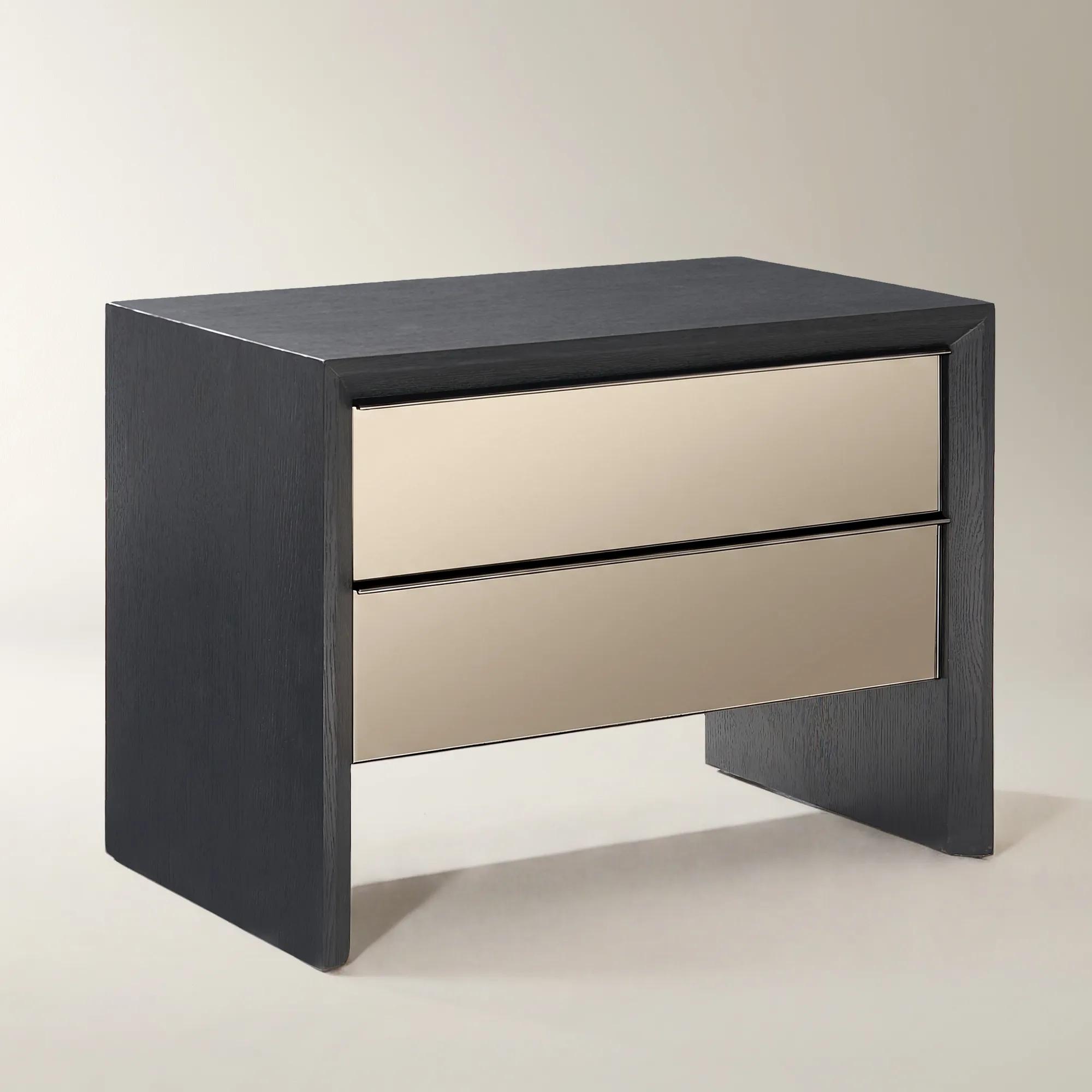 Glimmer Mirrored Black Oak 2-Drawer Nightstand (32")$799
A modern nightstand featuring black oak veneer, bronze mirrored drawer fronts, and soft-close velvet-lined drawers.
Add To Cart -
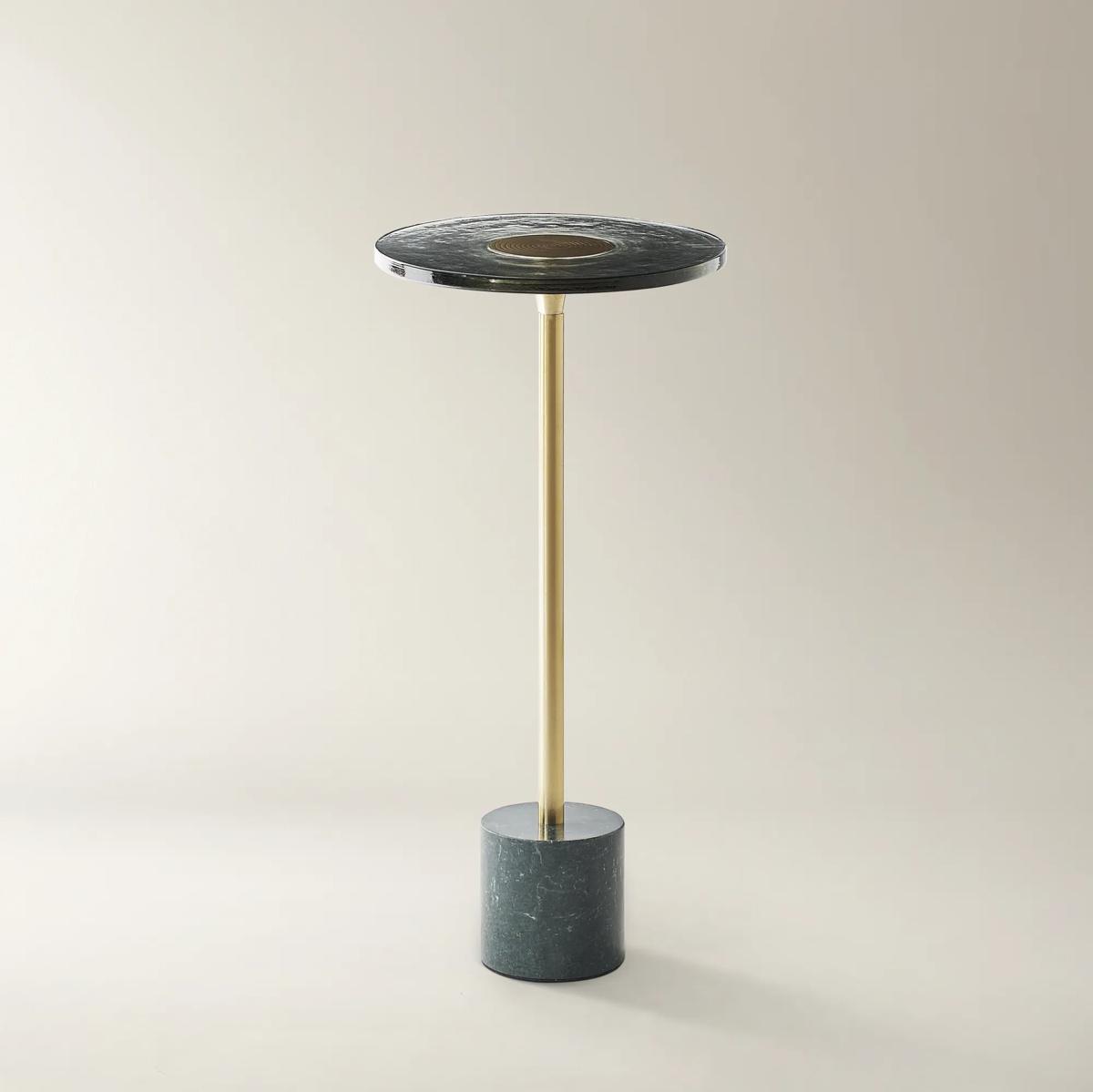
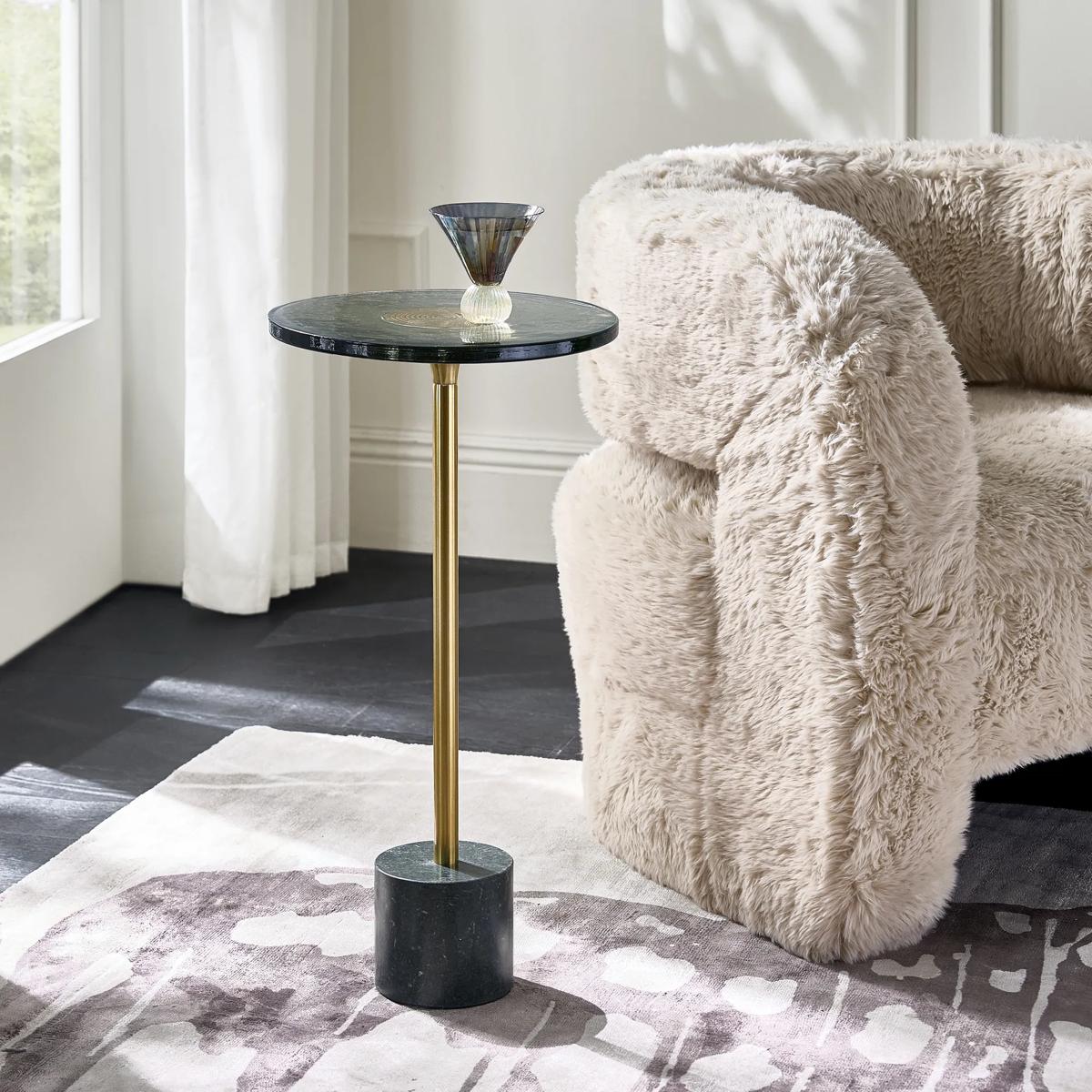 Seraphy Round Green Metal Side Table With Glass Top (13.75")$179
A modern side table featuring a green cast glass top, brass-finished post, and Indian green marble base.
Add To Cart -
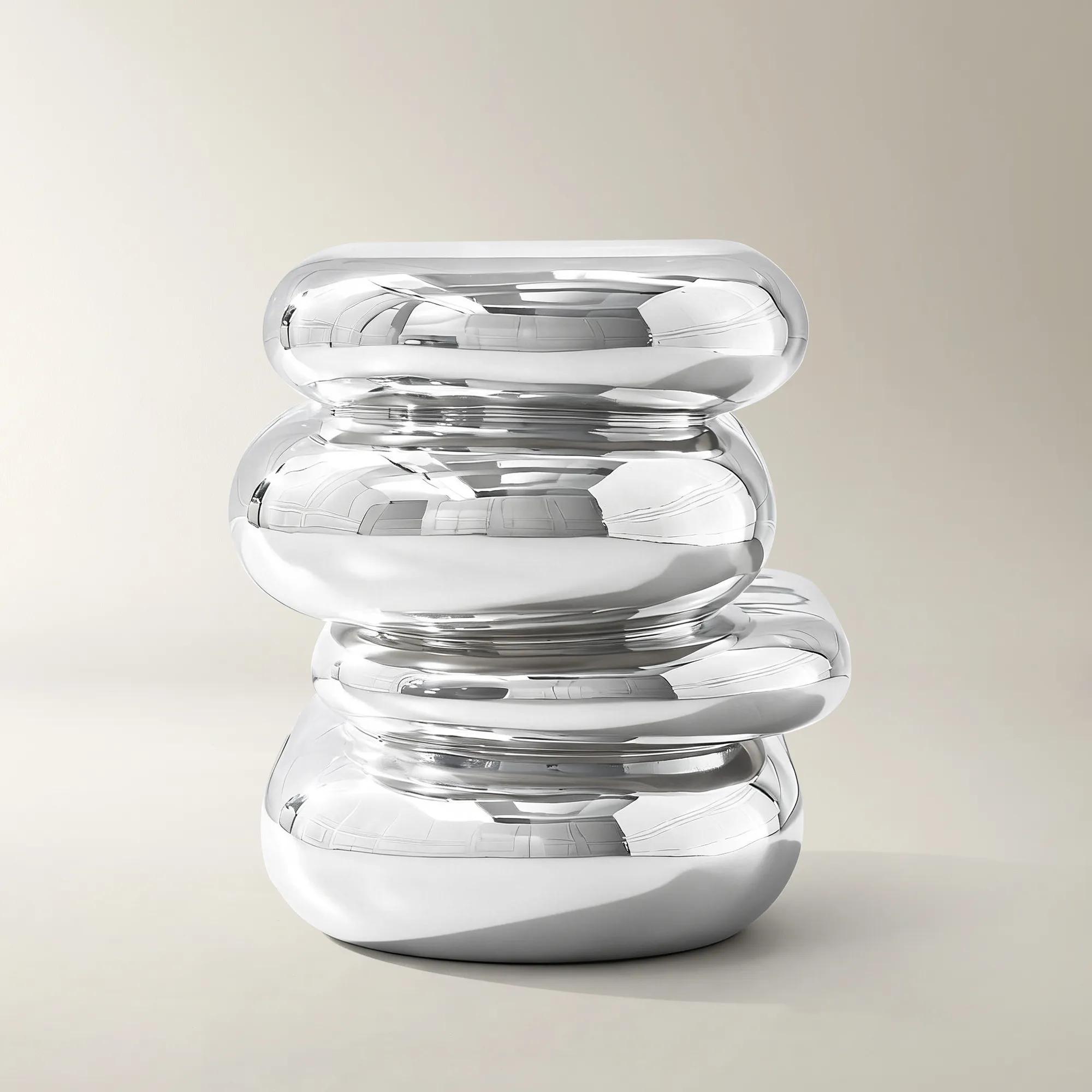 Forma Stacked Chrome Side Table (19.9")$599
A sculptural accent table crafted from seamless fiberglass with a reflective chrome finish and rounded tiers.
Add To Cart

Minimalist Bedroom Nightstands
Minimalist Bedroom Nightstands invite a sense of serene sophistication, transforming the ordinary bedside into an exquisite focal point. Each design is a study in restraint and elegance, marrying clean lines with subtle artistry to create a canvas for your nighttime rituals. These nightstands don’t simply hold your essentials—they elevate them, introducing a whisper of modern luxury that grounds your sanctuary in calm and clarity. Discover how sleek silhouettes and refined finishes can infuse your bedroom with understated drama, making every evening feel like a curated experience.
Minimalist bedroom nightstands bring clean lines, purposeful storage, and considered proportions to the bedside, creating a composed setting where a few expressive details can shine. Their defining qualities are straightforward: streamlined silhouettes, limited ornamentation, and enough surface space for the essentials without overwhelming the bed. The effect can be quietly luxurious rather than austere. A softly rounded cabinet beside an upholstered headboard, a wood grain illuminated by a reading lamp, or a slender metal base beneath a substantial top gives the room depth without visual clutter. Handle-free drawers and recessed pulls preserve an uninterrupted profile, while discreet hardware can introduce a glint of polish. Push-to-open drawers offer another seamless option, though the opening mechanism should feel comfortable to operate from bed and close securely after use. Concealed storage keeps charging cables, reading glasses, and nighttime necessities out of sight; an open shelf gives a favorite book or a small decorative box a deliberate place. Floating nightstands leave the floor visible beneath them, and slim-legged designs create a similarly airy impression while remaining freestanding. Both can help a compact bedroom feel less crowded, although usable storage and stability matter as much as appearance. A solid, plinth-style base creates a more grounded composition, particularly beside a tall headboard or generously layered bedding. Minimalist bedside tables suit primary bedrooms, guest rooms, and apartment retreats, with different proportions answering different routines. A reader may favor a generous top and a drawer for bookmarks and glasses, while a guest room benefits from an accessible surface with room for a phone and water glass. For a broader interpretation of this look, modern bedroom furniture nightstands offer a related design direction, where sculptural forms and distinctive finishes can remain beautifully composed. The strongest bedside arrangements give each element room to register: the curve of a lamp, the texture of a drawer front, the contrast between crisp bedding and richly toned wood.
Materials shape both the mood of minimalist nightstands and the way they live over time. Solid wood brings natural variation and warmth, with grain patterns that lend character to an otherwise restrained form. Because wood responds to changes in humidity, a stable indoor environment and placement away from direct heat help preserve its appearance. Wood veneer can deliver a beautifully continuous grain over an engineered core; its longevity depends on construction, edge protection, finish quality, and thoughtful care rather than the material name alone. Painted and lacquered surfaces create a more uniform field of color, allowing the silhouette to take center stage. Pale finishes can soften the transition between furniture and walls, while deep brown or black creates a sharply defined accent against lighter bedding. Glossy surfaces catch lamplight with a jewel-like sheen but may show fingerprints more readily than textured or matte finishes. Metal introduces precision through slender frames, inset details, or understated pulls, with the protective finish influencing resistance to scratches and corrosion. Glass and mirrored accents can brighten a bedside composition, though smudges and reflected cords may become more visible. Stone tops offer tactile richness and individual patterning; natural marble, in particular, can be vulnerable to staining and etching from acidic liquids, so material-specific care matters. For everyday use, a coaster beneath a water glass and a protective dish beneath lotions help prevent avoidable marks. Dust with a soft cloth, blot spills promptly, and follow the manufacturer's cleaning directions rather than assuming a multipurpose spray suits every surface. Abrasive pads and harsh cleaners can damage delicate finishes, and even a durable top benefits from lifting objects instead of dragging them. Construction deserves equal attention: a stable frame, secure connections, neatly finished edges, and drawers that move smoothly support years of daily use. Reeded or fluted fronts add shadow and rhythm without elaborate ornament, although their grooves require more detailed dusting than flat panels. These distinctions help balance expressive texture with the level of upkeep that feels natural in the room.
Fit gives a minimalist bedside arrangement its ease, and the most useful measurements begin with the bed as it is actually used, including the mattress and any topper. A nightstand top approximately level with the mattress, or a few inches higher, usually makes a lamp switch, book, or water glass easier to reach; personal mobility and the bed's construction may call for a different position. Width should respond to the available wall space and the scale of the headboard rather than a fixed rule. A narrow nightstand can be elegant beside a smaller bed, but its top still needs to accommodate the lamp base without pushing essentials to the edge. Beside a king-size bed, a wider cabinet may create better visual balance and provide more useful storage. Depth is just as important in rooms with close circulation: a cabinet that projects too far beyond the headboard area can interrupt the route around the bed. Measure the footprint, check nearby closet and bedroom door swings, and leave sufficient clearance for drawers to open without catching bedding or striking another piece of furniture. Rounded corners can soften the silhouette along a tighter passage, but they do not replace adequate walking space. Wall-mounted nightstands require suitable wall construction, secure installation, and adherence to the stated weight limit; freestanding cabinets should follow any supplied anchoring instructions. Rental homes may make a slim-legged alternative more practical when wall attachment is restricted. Storage works best when its interior dimensions match the objects it will hold, from a substantial hardcover to a charging adapter. Where integrated outlets or cable openings are included, their location should suit the room's power access without leaving cords stretched across a walkway. Matching nightstands establish symmetry, while different widths or storage configurations can serve two sleepers' distinct habits; a shared finish or similar height keeps that pairing intentional. Finally, reserve enough clear surface to make the furniture comfortable to use. One sculptural lamp and a small catchall can create a more compelling composition than a crowded collection of accents. Against sumptuous bedding and a richly textured rug, the clean outline of a minimalist nightstand provides a poised counterpoint, making everyday rituals feel considered and the bedroom feel distinctly personal.
FAQs
Minimalist bedroom nightstands are characterized by clean lines, uncluttered surfaces, and an emphasis on form meeting function. They often feature sleek silhouettes, subtle hardware, and neutral finishes that allow the beauty of craftsmanship and materials to shine. The focus is on simplicity and elegance, making these pieces versatile enough to complement a wide range of bedroom aesthetics.
A minimalist nightstand acts as an anchor of calm in the bedroom, providing visual clarity and a sense of order. Its understated design allows other elements—such as bedding, artwork, or lighting—to take center stage, while still offering a practical surface for essentials. The result is a harmonious, serene environment that feels both luxurious and inviting.
Absolutely. While minimalist nightstands are often associated with modern or contemporary spaces, their timeless design and subtle elegance allow them to blend seamlessly with classic, transitional, or even eclectic interiors. The key is in the thoughtful pairing of materials and finishes to create a cohesive, curated look.
Styling a minimalist nightstand is all about intentionality. Consider a single statement lamp, a stack of artfully chosen books, or a sculptural vase with fresh greenery. For a touch of luxury, add a velvet-lined tray for jewelry or a scented candle in a sleek holder. The goal is to curate a vignette that feels both functional and artful, reflecting your personal taste.
A minimalist nightstand makes a thoughtful gift for design enthusiasts, newlyweds, recent graduates, or anyone moving into a new home. Its enduring style and practicality ensure it will be treasured for years, serving as a daily reminder of both elegance and intention. It’s a gesture that speaks to the recipient’s appreciation for quality, beauty, and the art of living well.