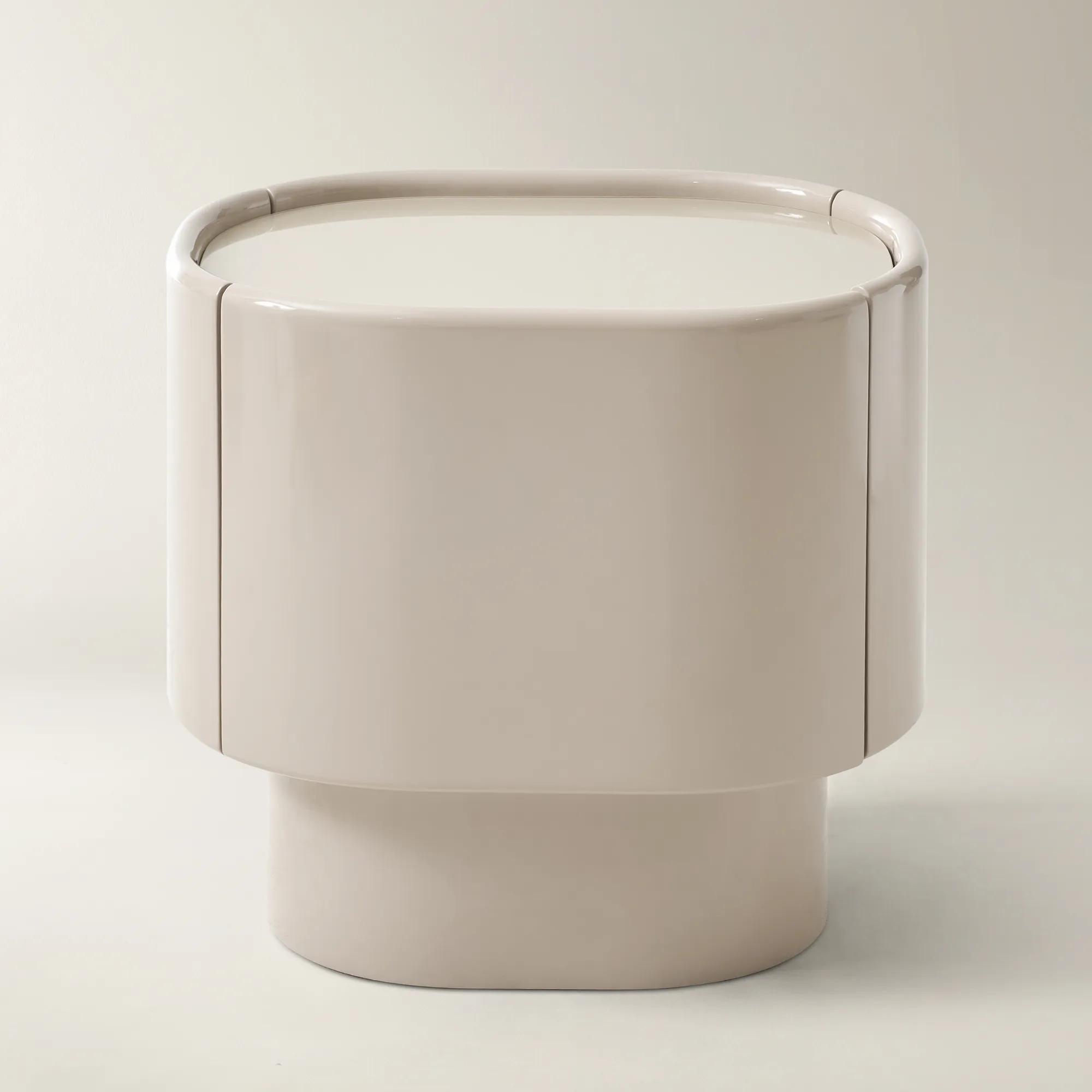
Bedroom Mirrored Nightstands
Bedroom Mirrored Nightstands
-
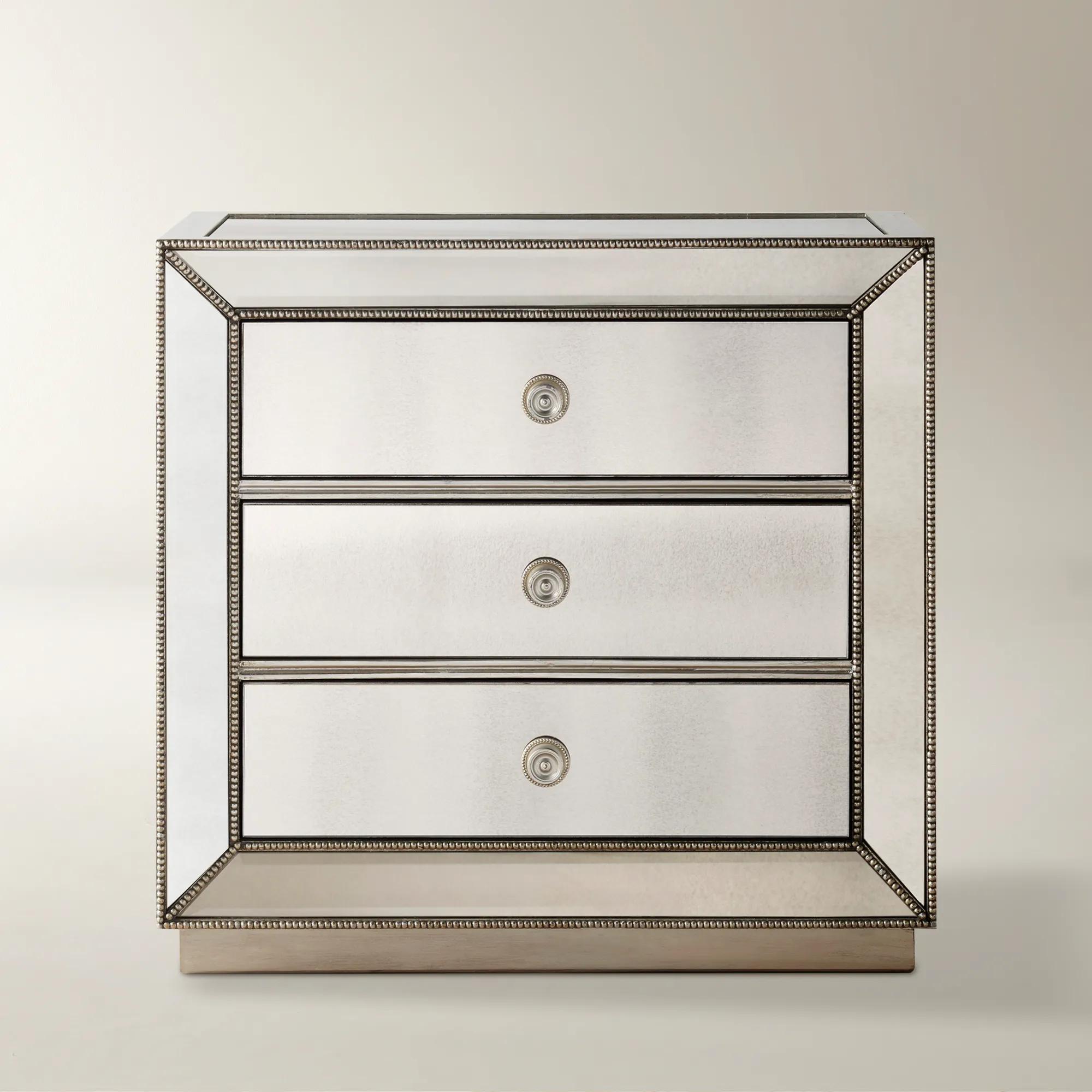
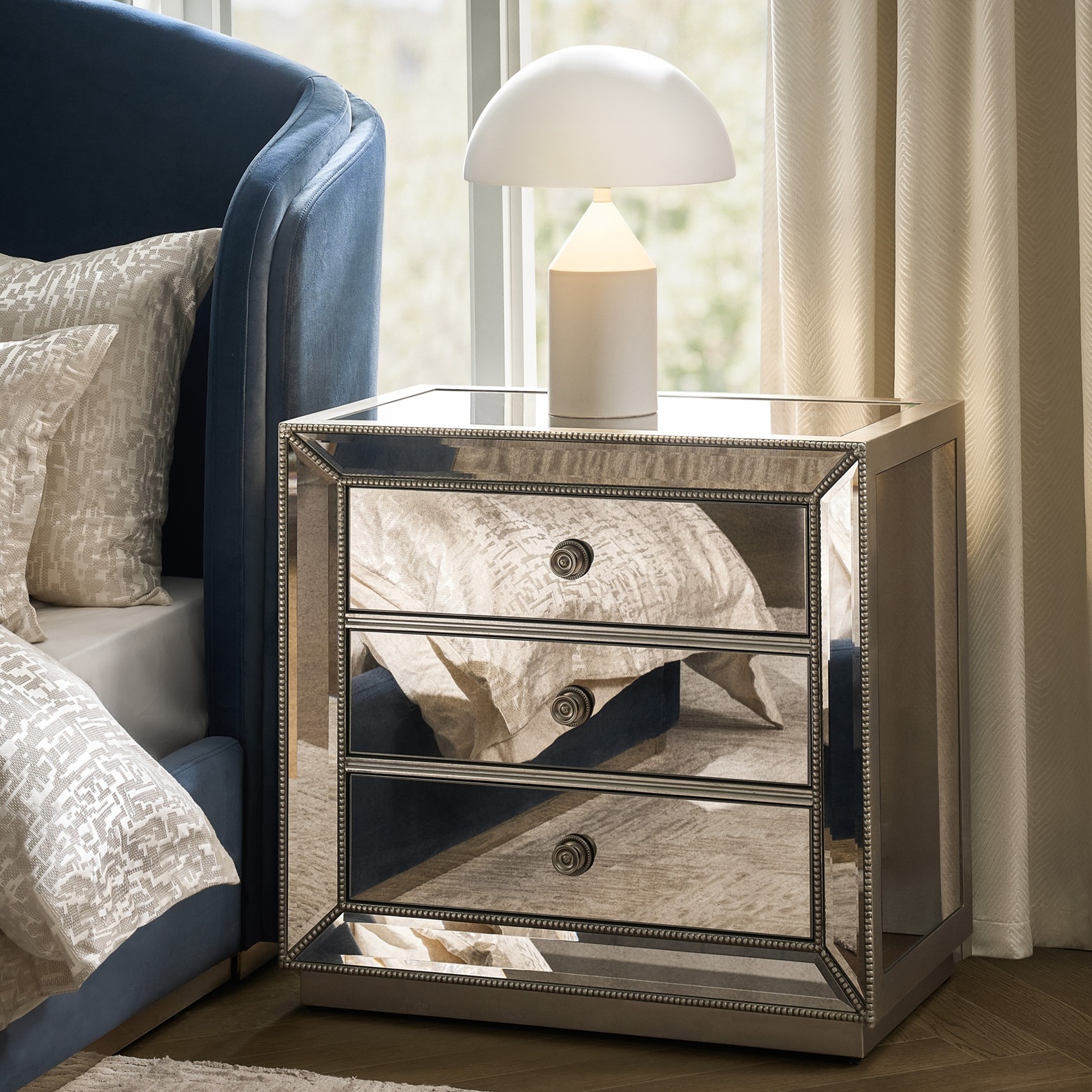 Omni Mirrored Silver 3-Drawer Nightstand (32")$1299
A glamorous chest featuring antiqued mirrored panels, hand-applied silver-leaf finish, and beaded trim.
Add To Cart -
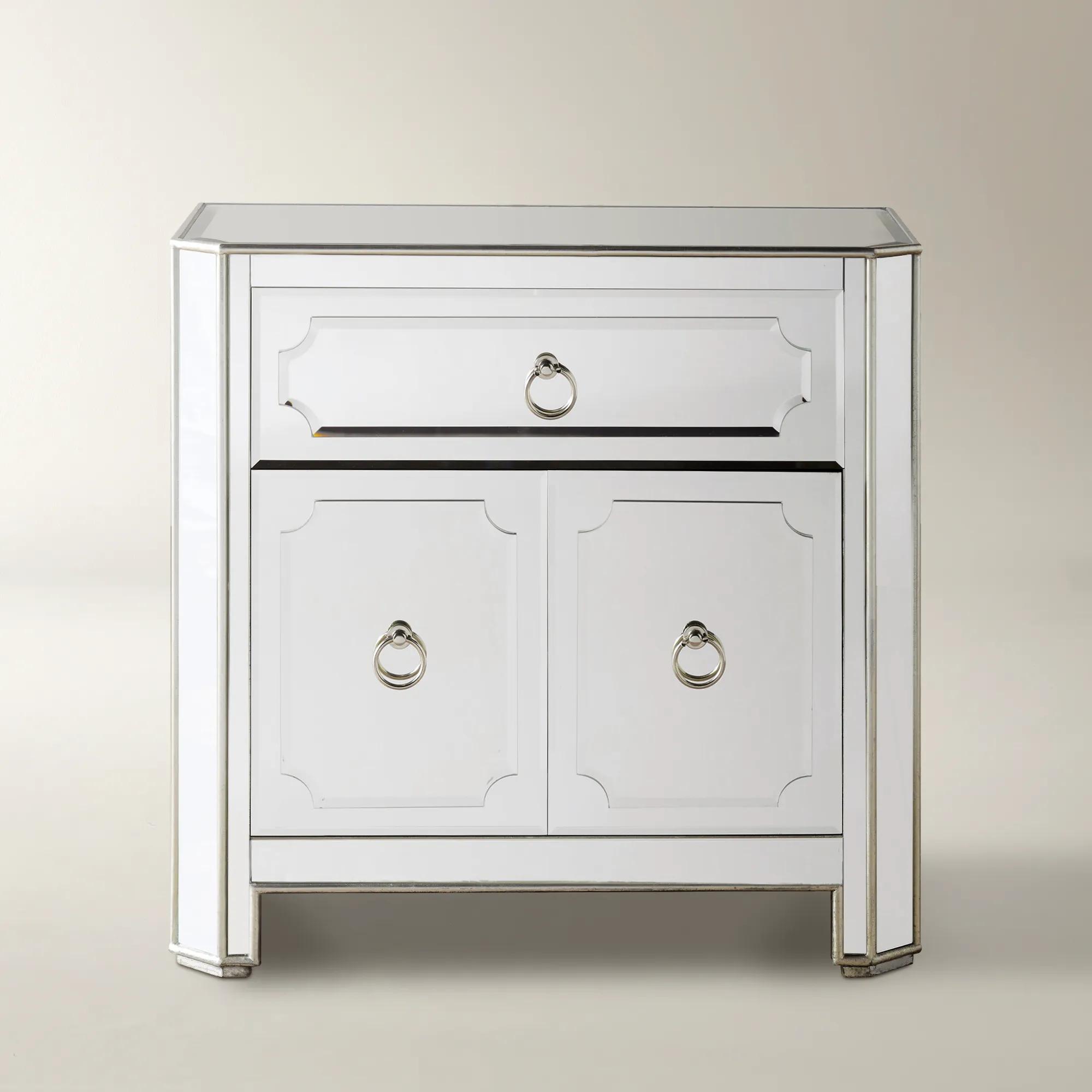
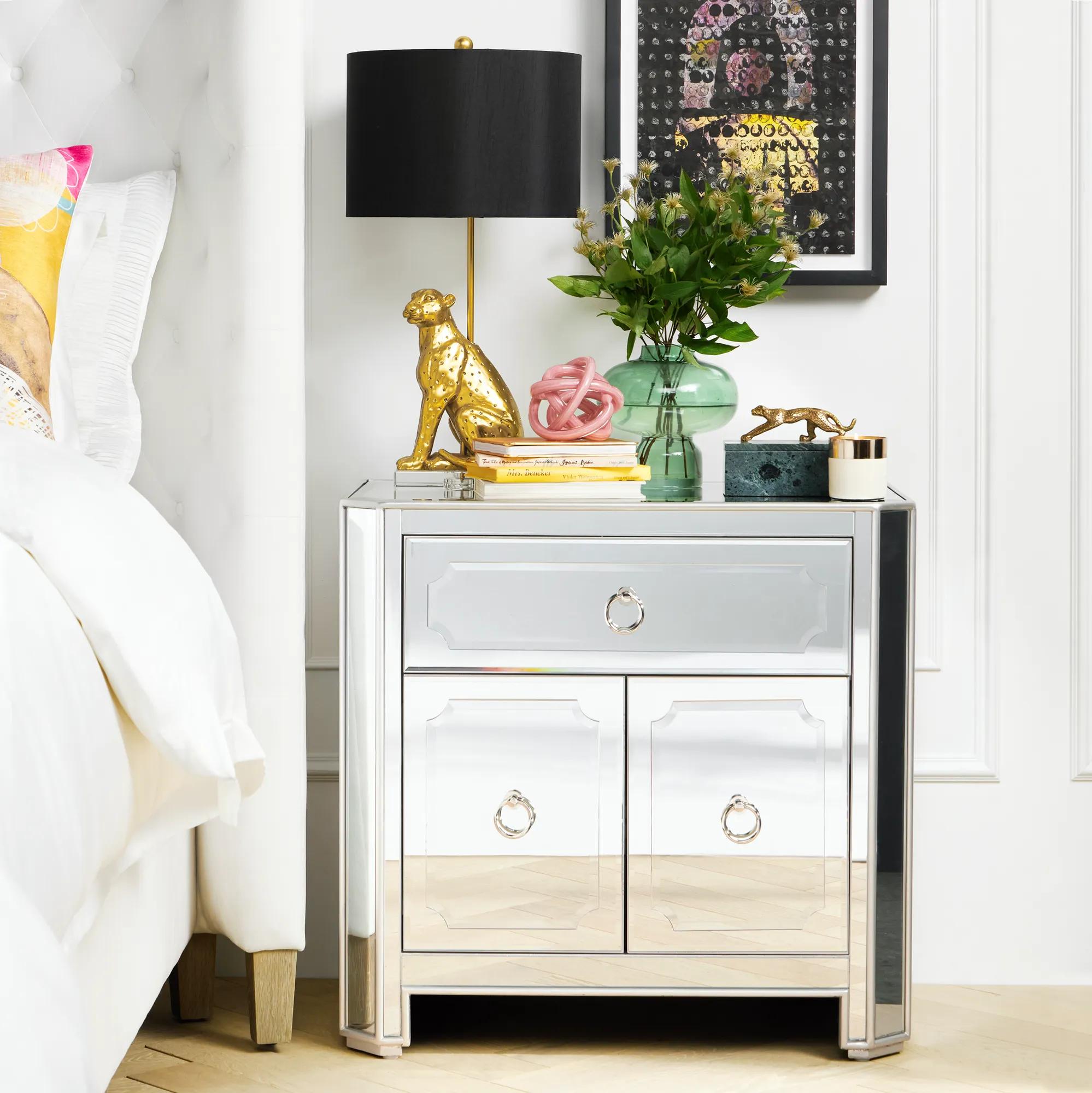 Simplicity Mirrored Silver 1-Drawer Nightstand (30")$899
A glamorous nightstand featuring beveled mirrored panels, hand-applied silver-leaf trim, and polished nickel hardware.
Add To Cart -
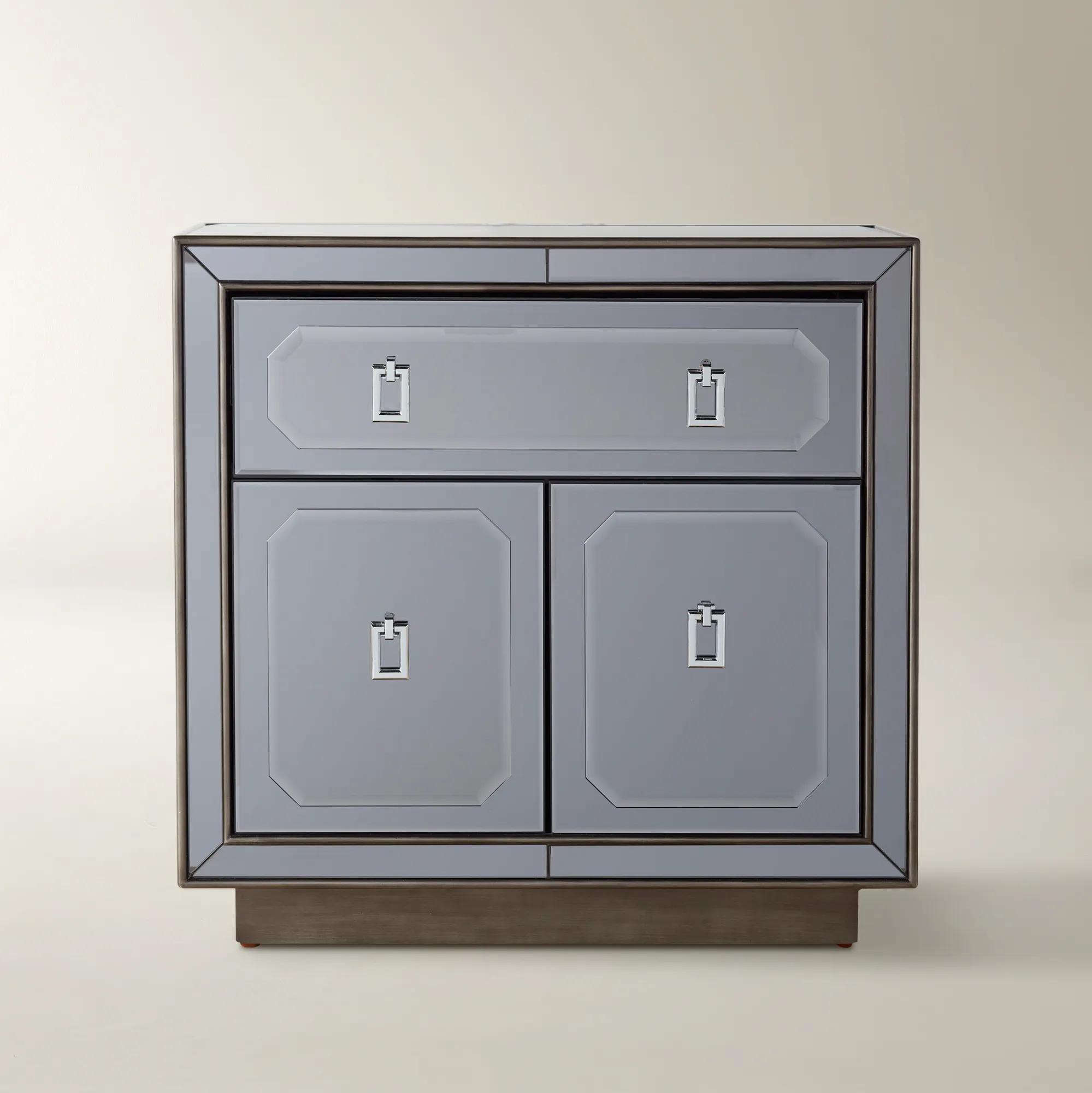
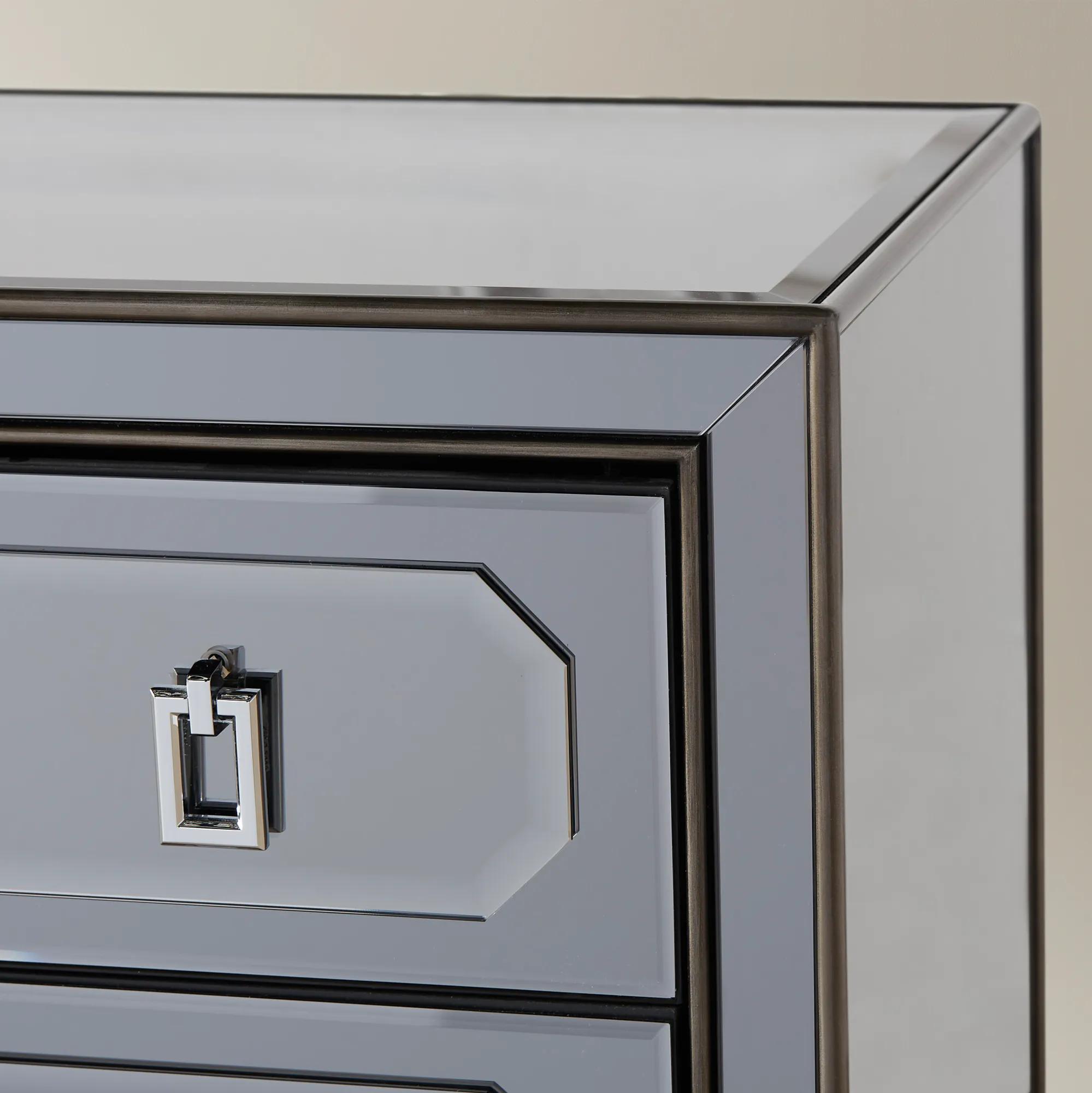 Maddox Mirrored Grey 1-Drawer Nightstand (30")$1099
A modern nightstand featuring beveled mirror paneling, graphite finish, and polished nickel hardware for a luxe touch.
Add To Cart -
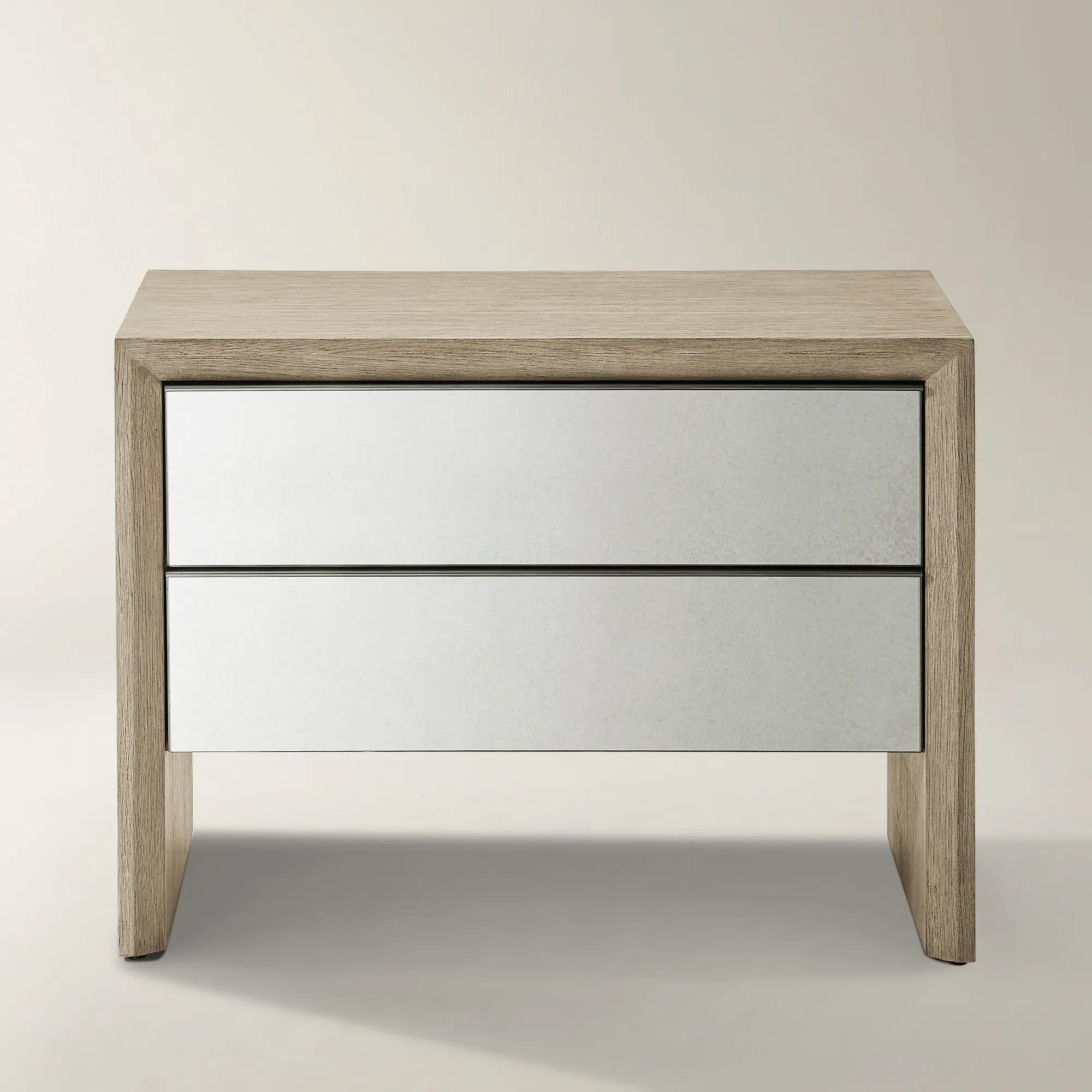
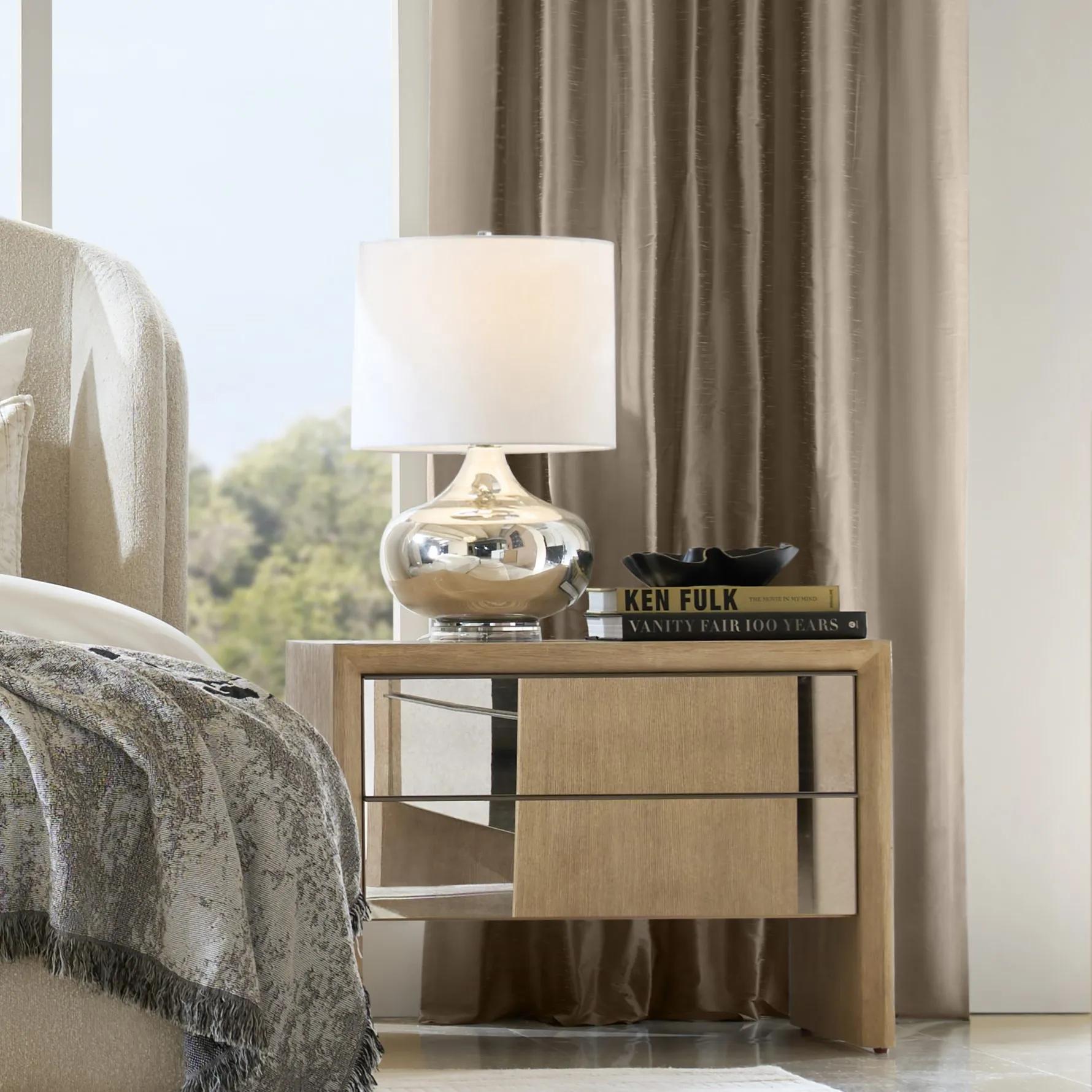 Glimmer Mirrored Seadrift Oak 2-Drawer Nightstand (32")$799
A glamorous nightstand featuring sea drift oak veneer, antique mirrored drawers, and soft-close storage.
Add To Cart -
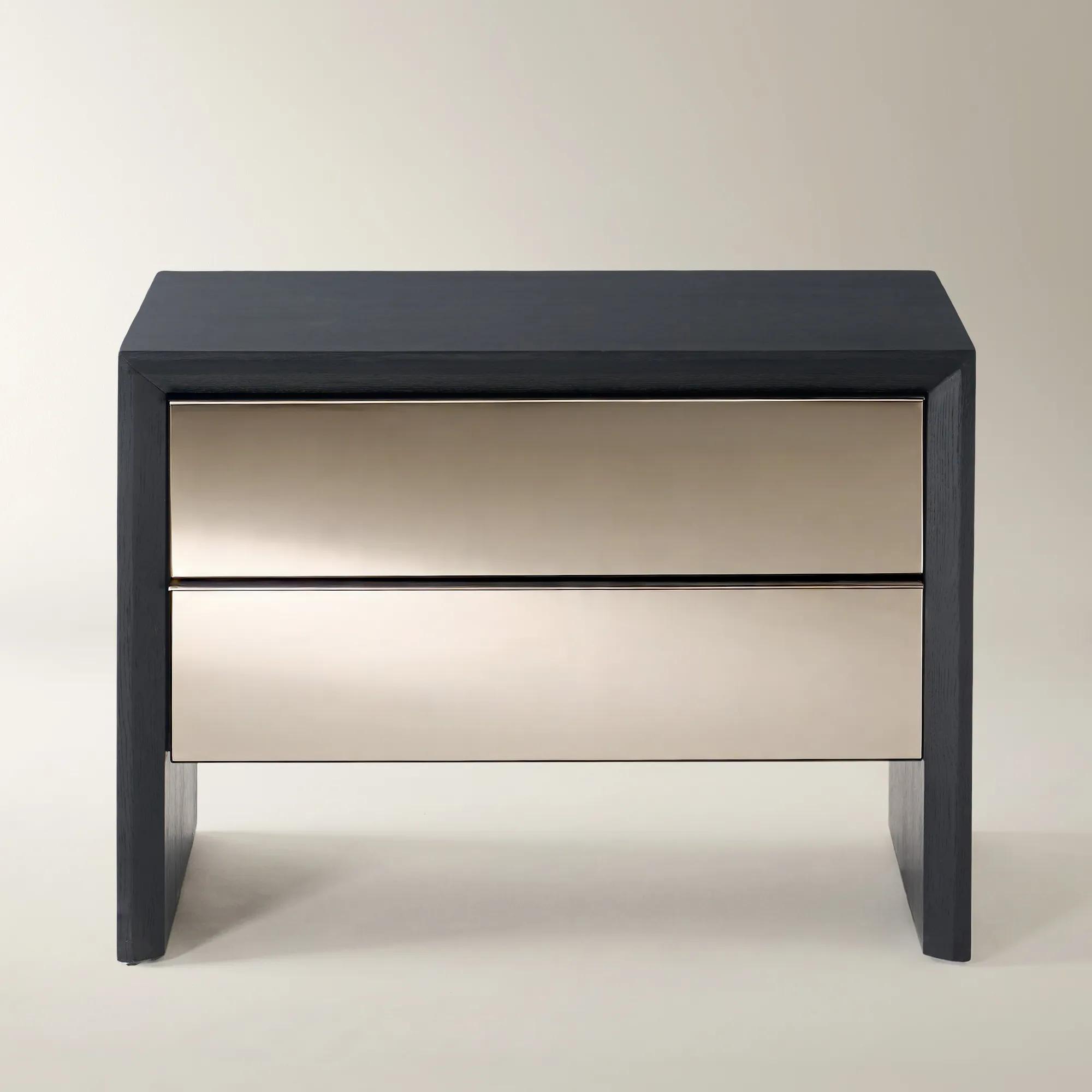
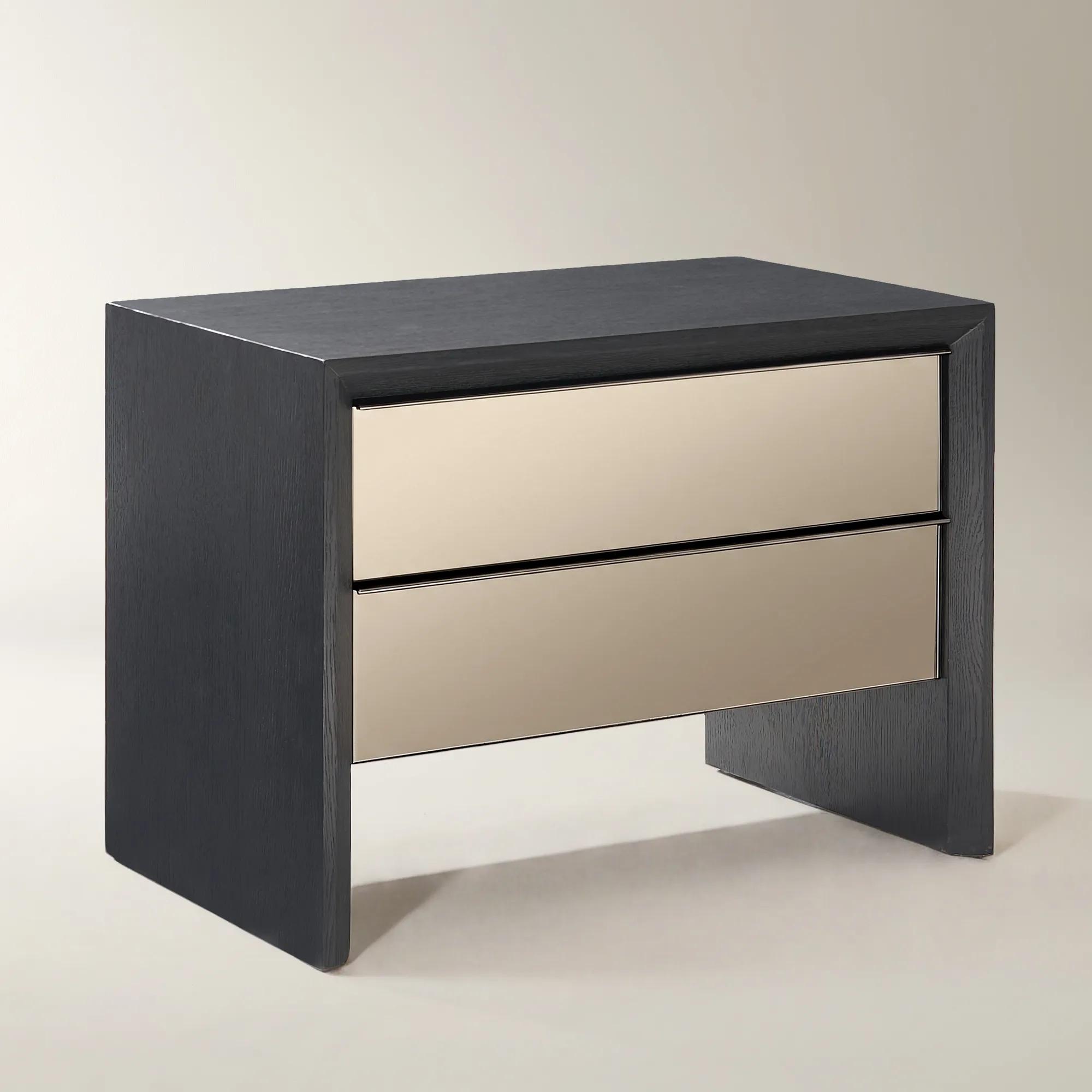 Glimmer Mirrored Black Oak 2-Drawer Nightstand (32")$799
A modern nightstand featuring black oak veneer, bronze mirrored drawer fronts, and soft-close velvet-lined drawers.
Add To Cart -
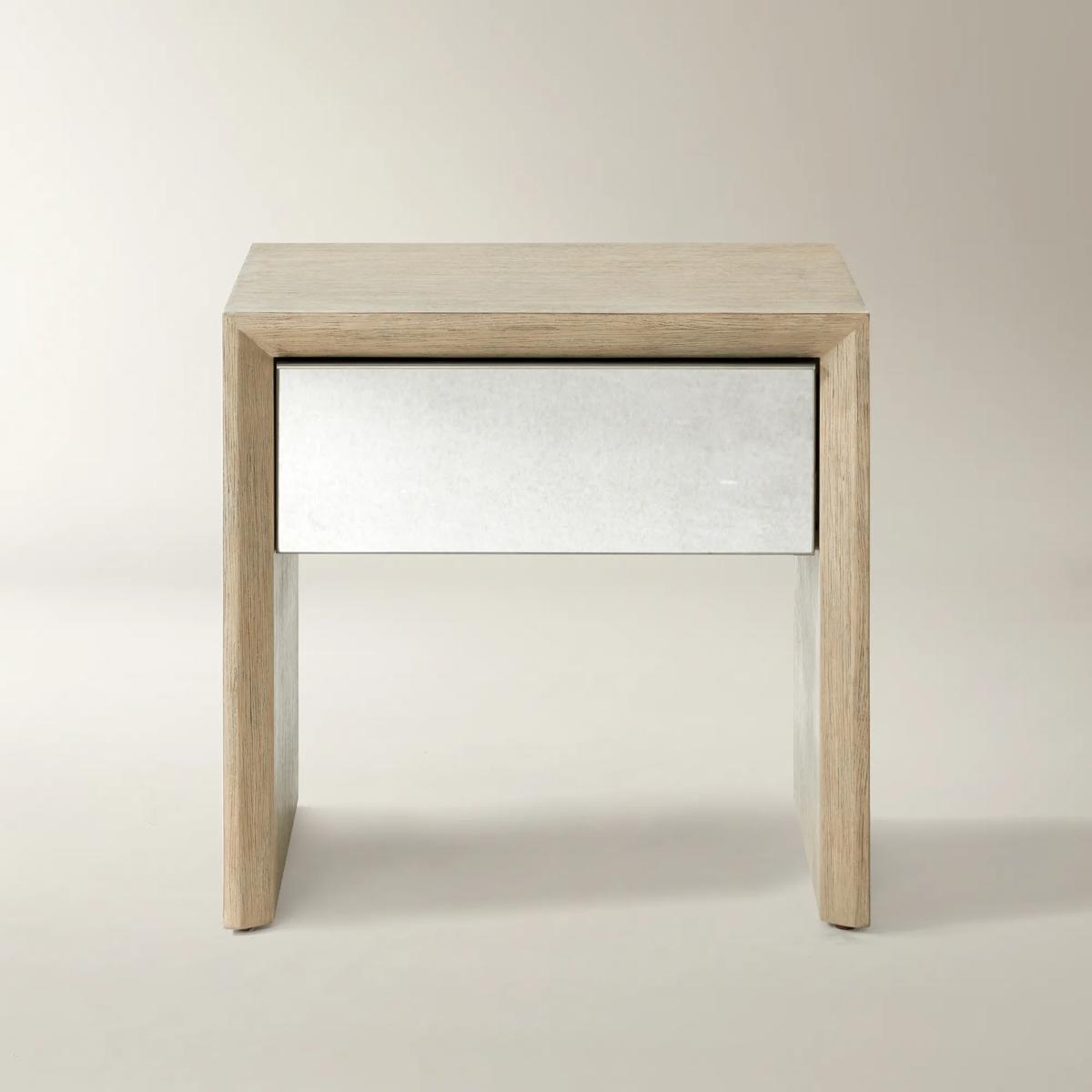 Glimmer Mirrored Seadrift Oak 1-Drawer Nightstand (23")$549
A sophisticated nightstand featuring a sea drift oak veneer frame and antique mirror-faced soft-close drawers.
Add To Cart -
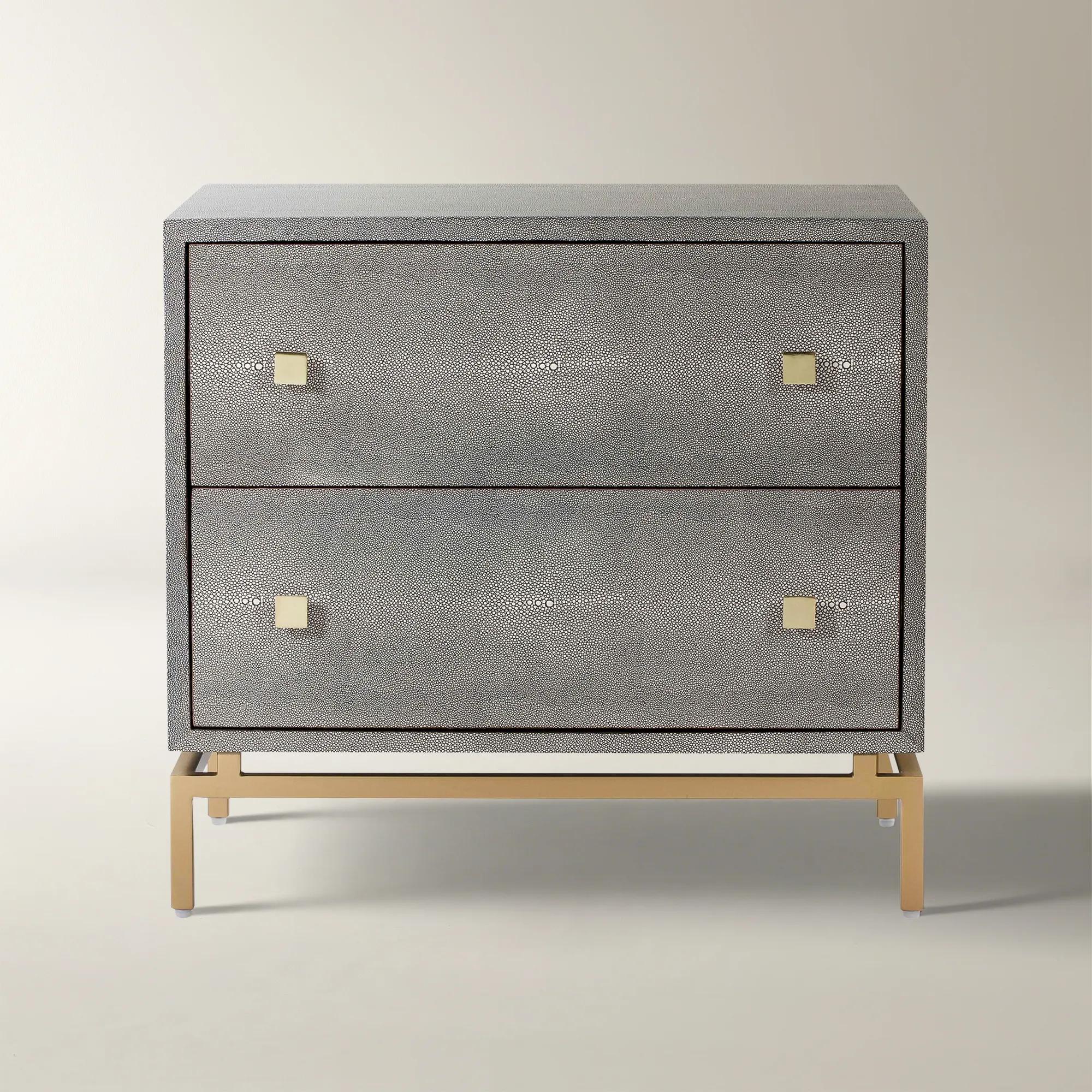
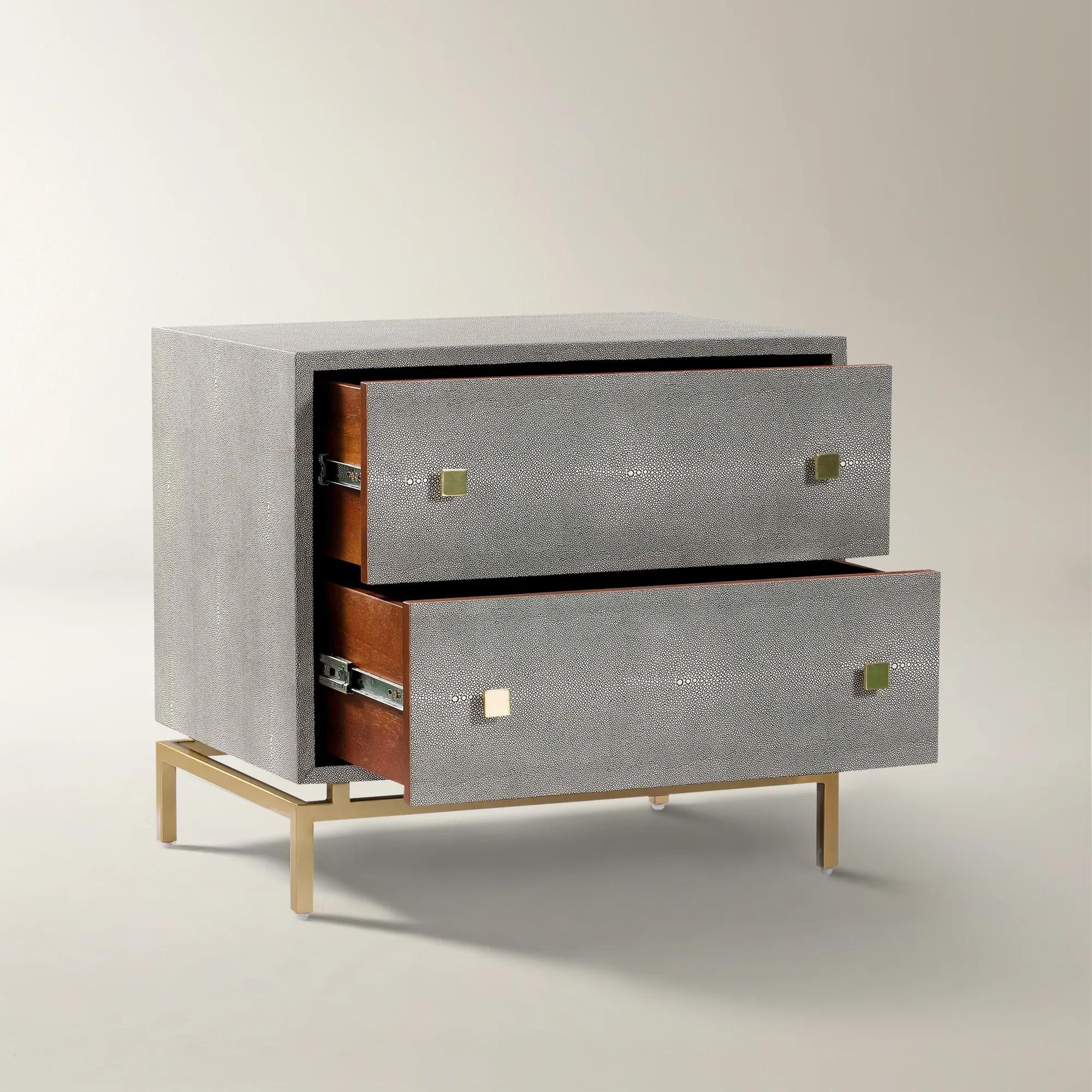 Misha Grey Shagreen 2-Drawer Nightstand (25")$749
A modern nightstand featuring faux shagreen texture, brass-finished base, and two cherry wood-lined drawers.
Add To Cart -
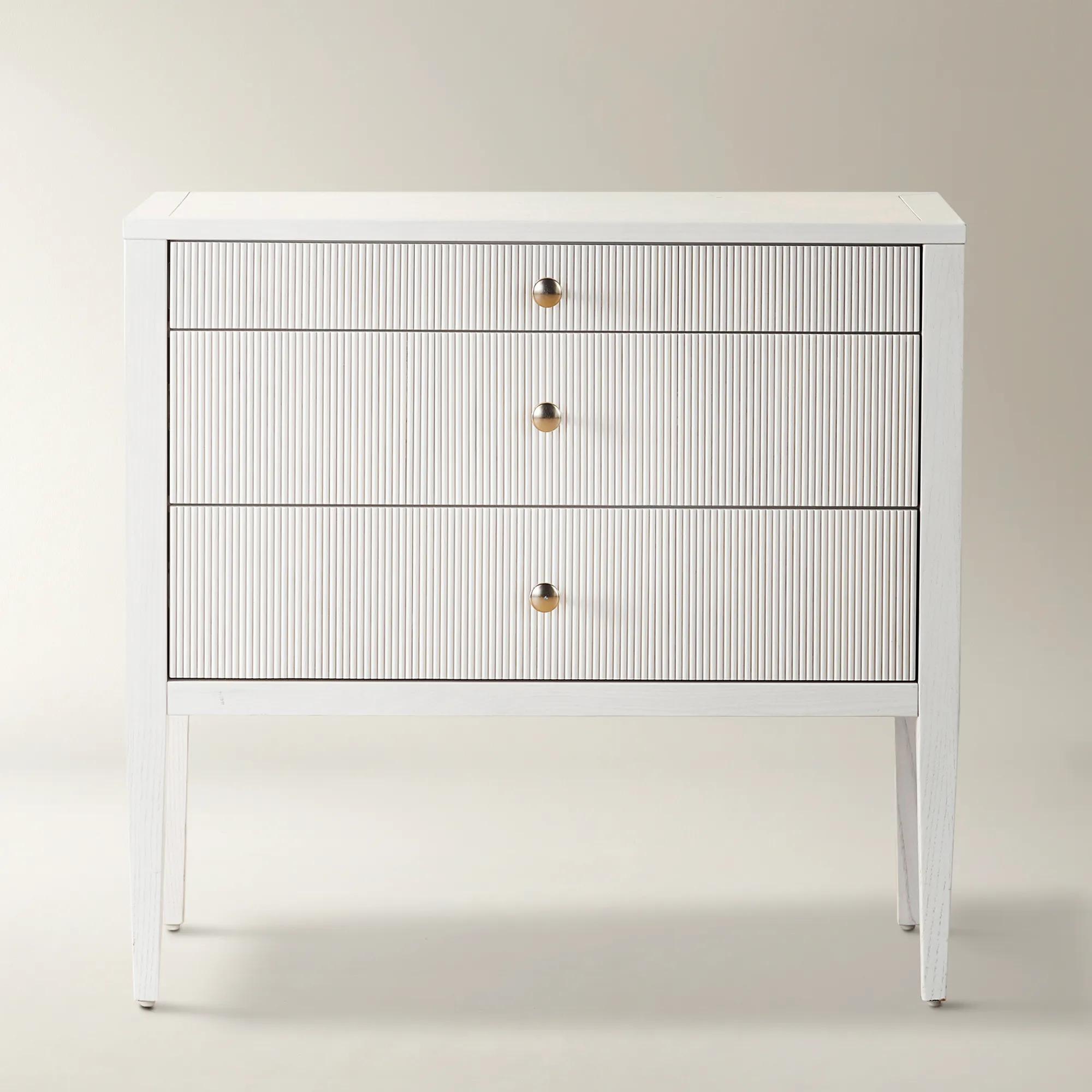 Viola Reeded White Ash Wood 3-Drawer Nightstand (31")$899
A modern nightstand in bone white ash wood with reeded drawers and brass hardware for a luxe touch.
Add To Cart -
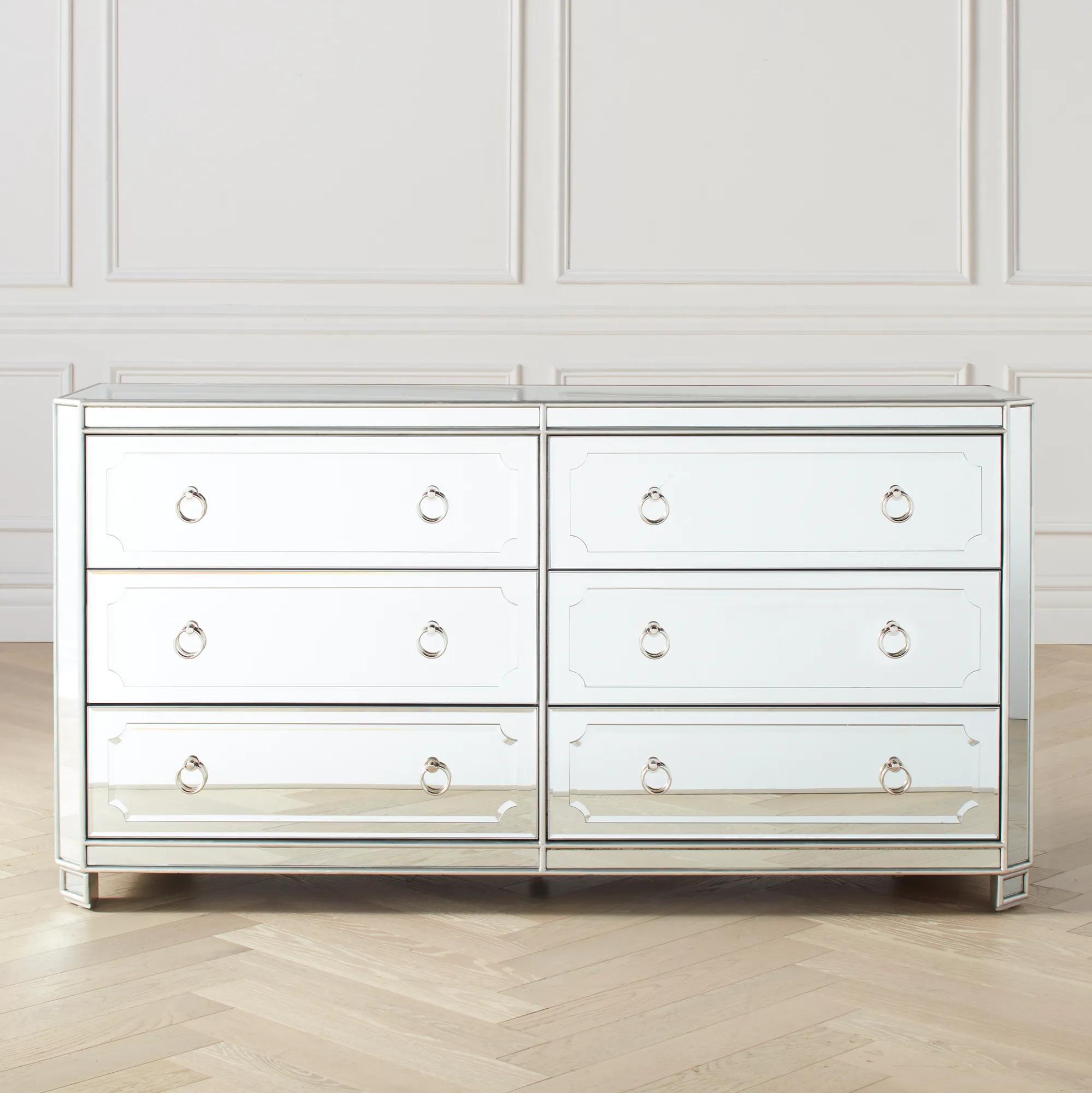
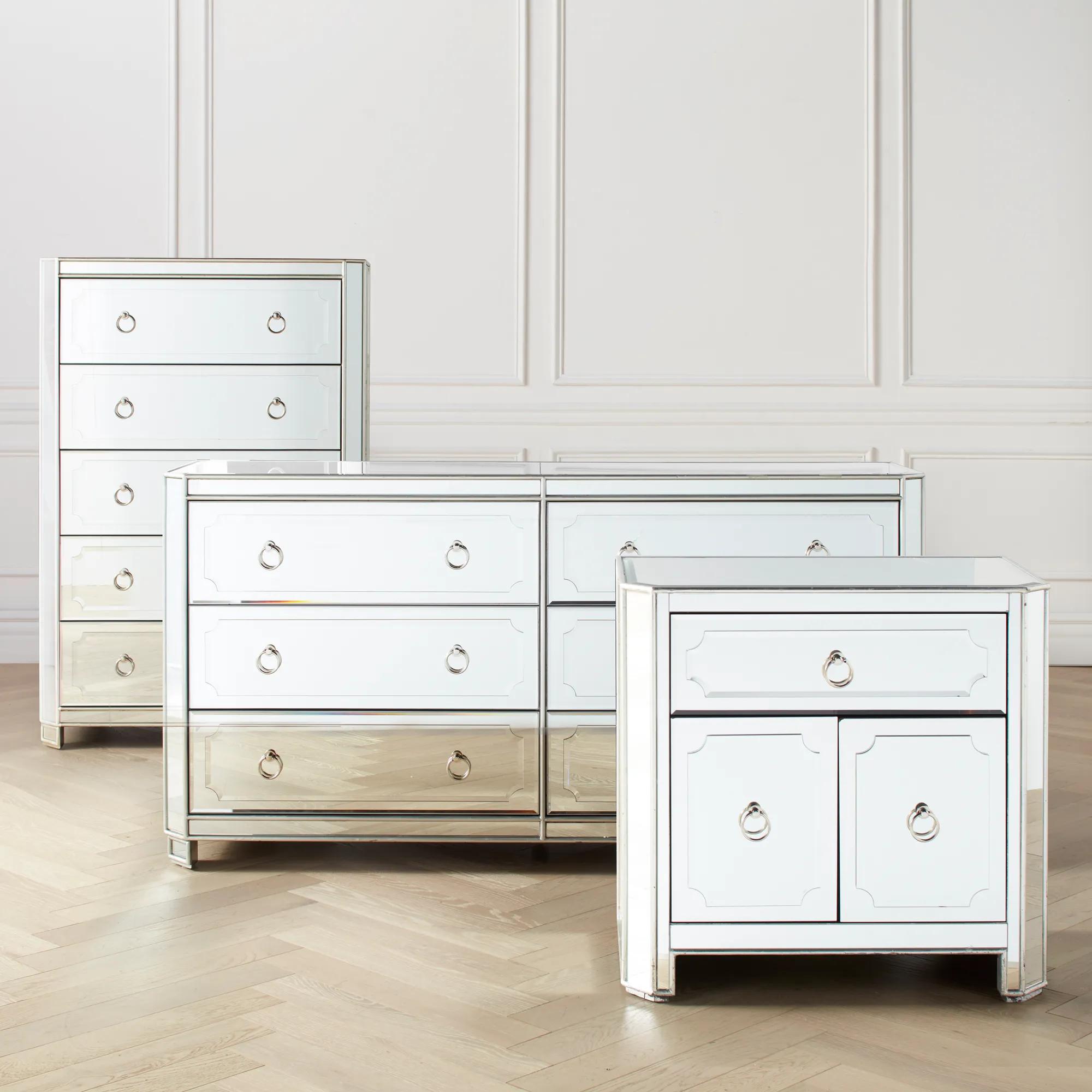 Simplicity Mirrored Silver 6-Drawer Dresser (66")$2299
A glamorous chest featuring beveled mirrored panels, hand-applied silver-leaf trim, and polished nickel hardware.
Add To Cart -
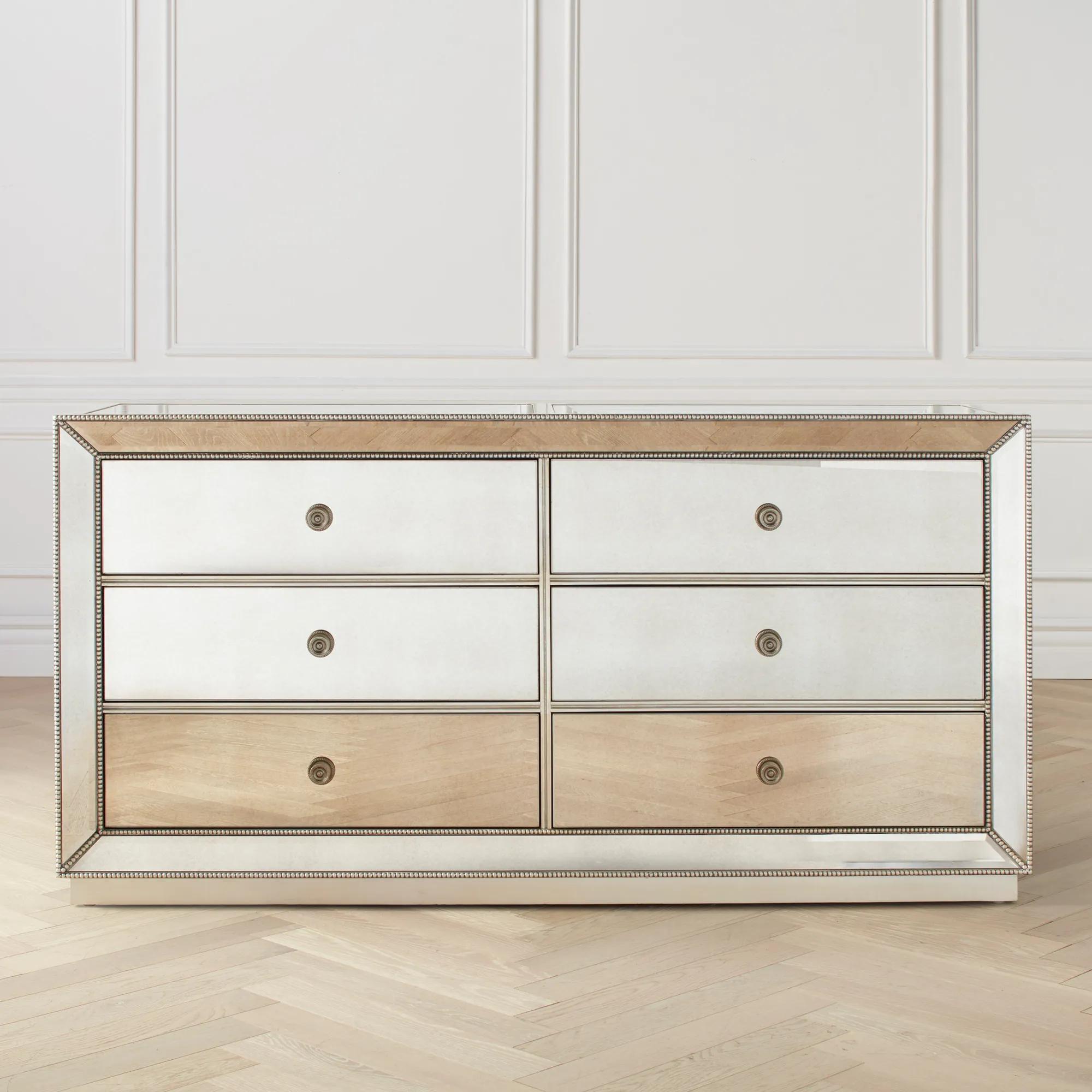 Omni Mirrored Silver 6-Drawer Dresser (72")$2599
A hand-applied silver-leaf chest with antiqued mirrored panels and beaded trim for dramatic bedroom shine.
Add To Cart -
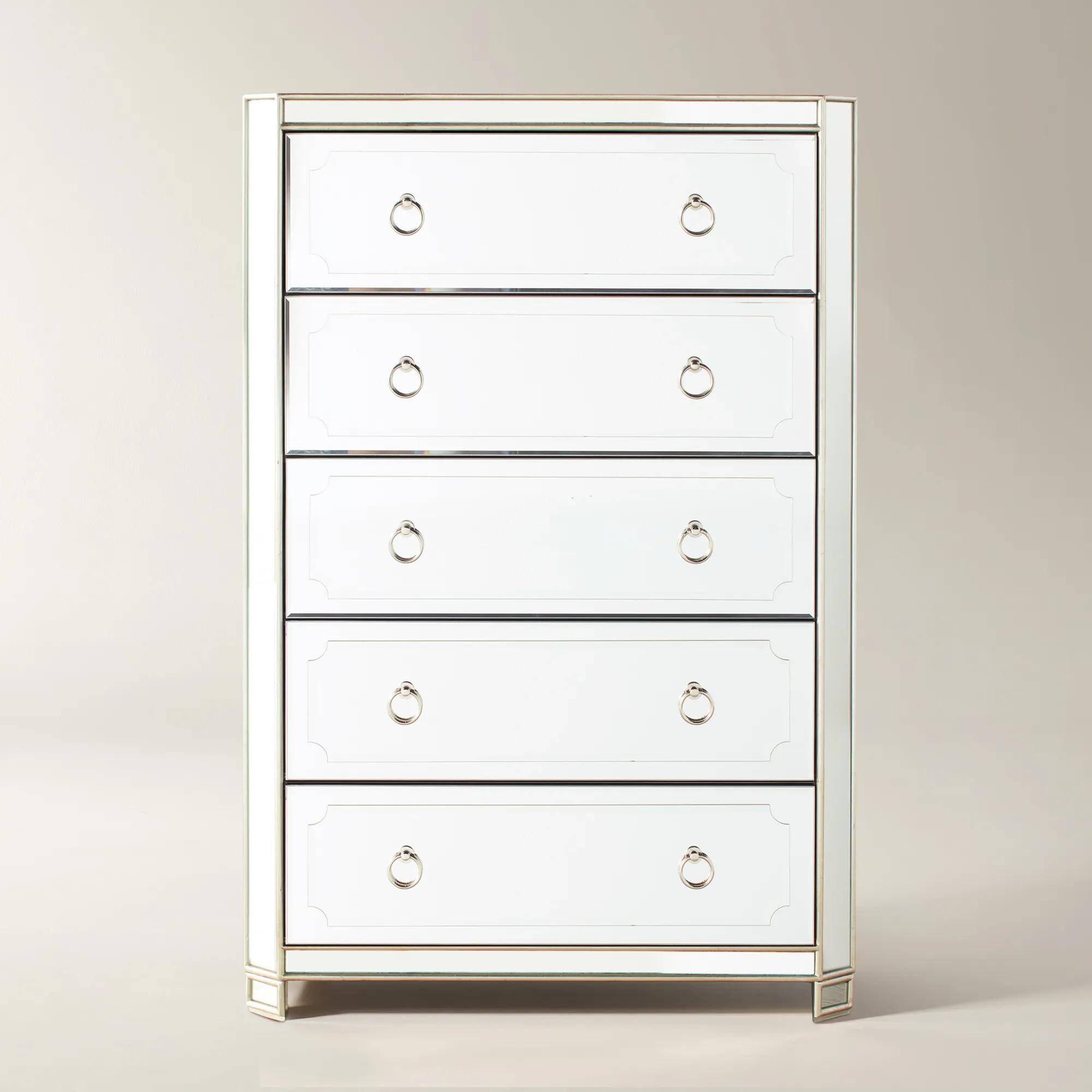 Simplicity Mirrored Silver 5-Drawer Tall Dresser (36")$1999
A glamorous tall chest featuring beveled mirrored panels, hand-applied silver-leaf trim, and polished nickel hardware.
Add To Cart -
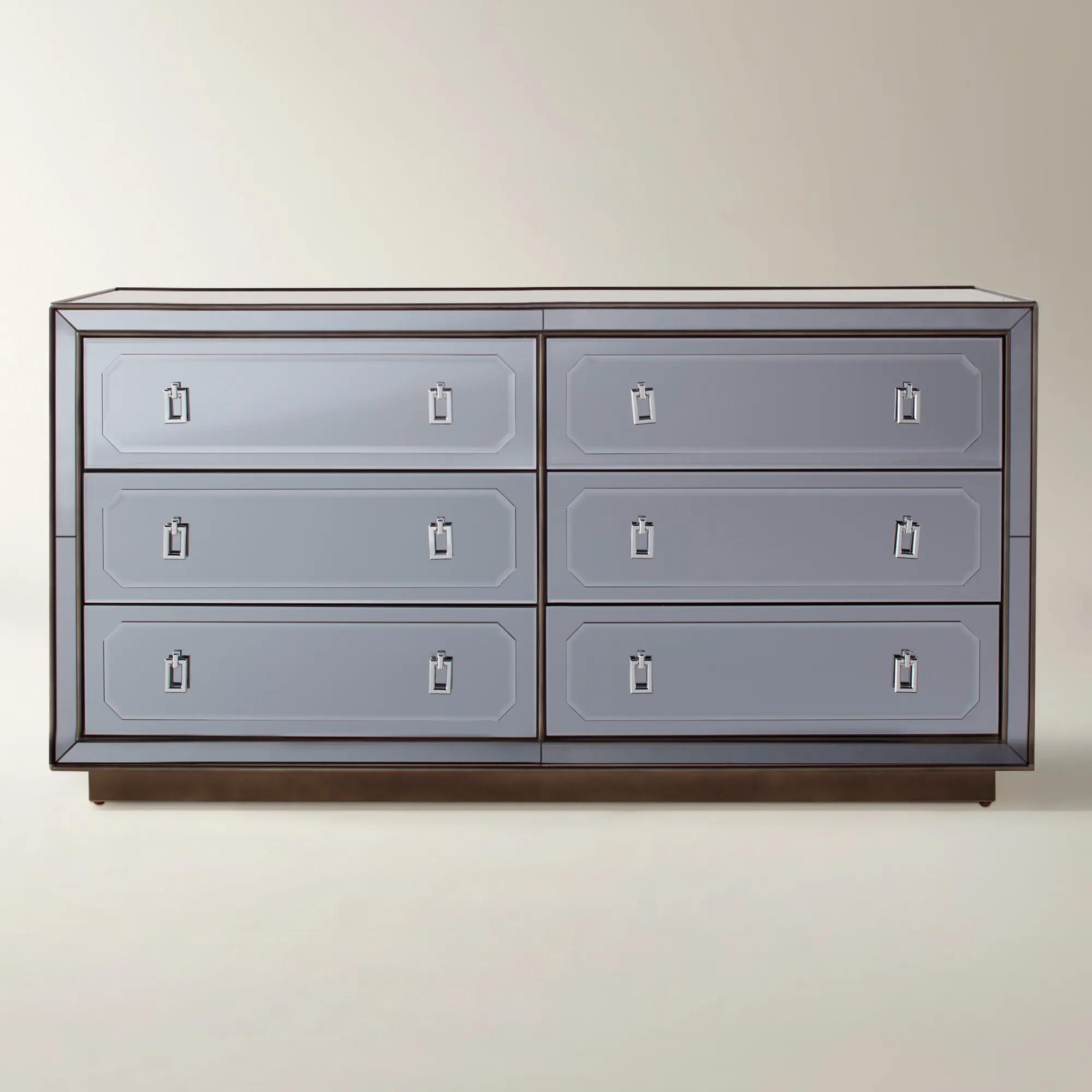 Maddox Mirrored Grey 6-Drawer Dresser (66")$2299
A modern dresser featuring beveled mirror paneling, graphite finish, and polished nickel hardware for sleek sophistication.
Add To Cart -
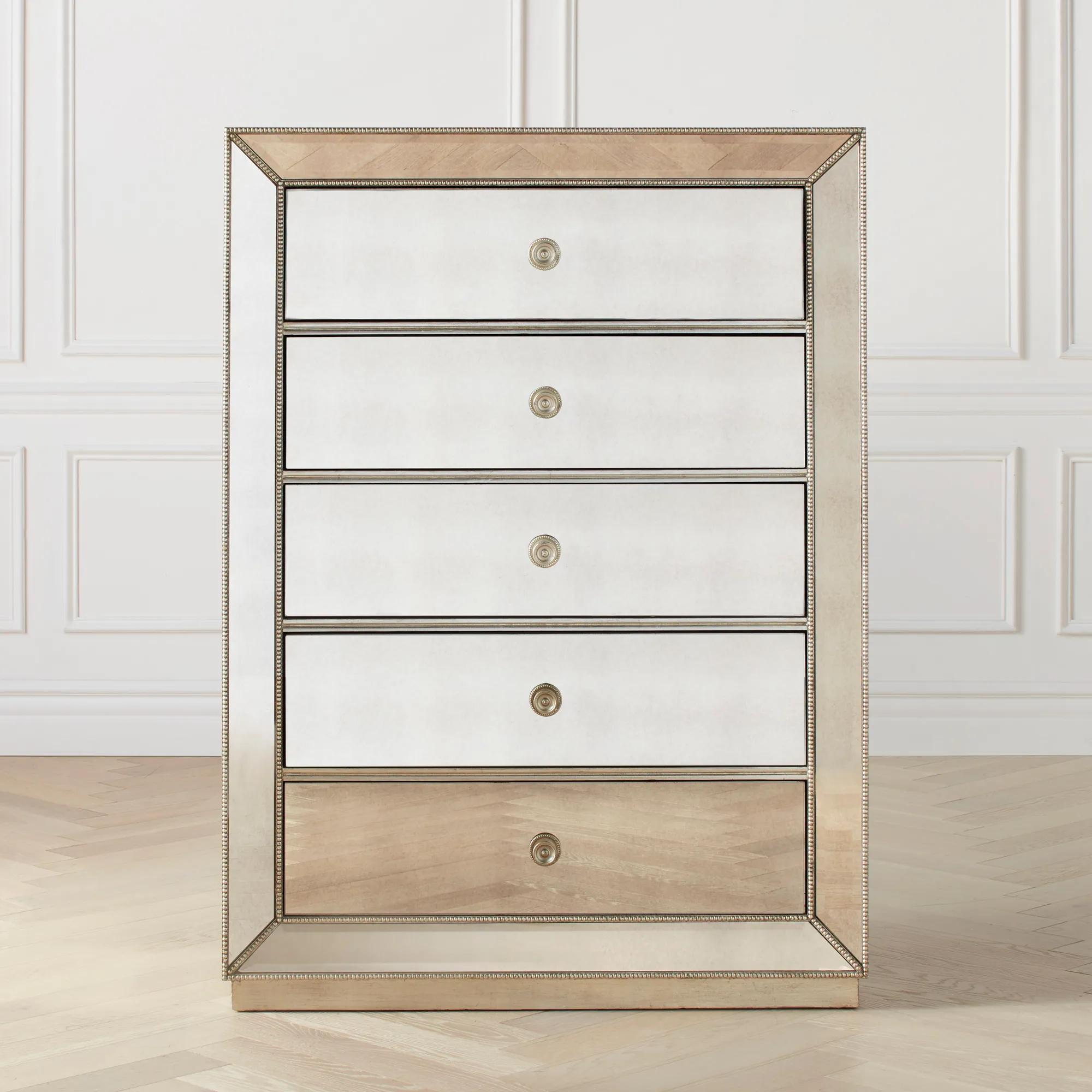
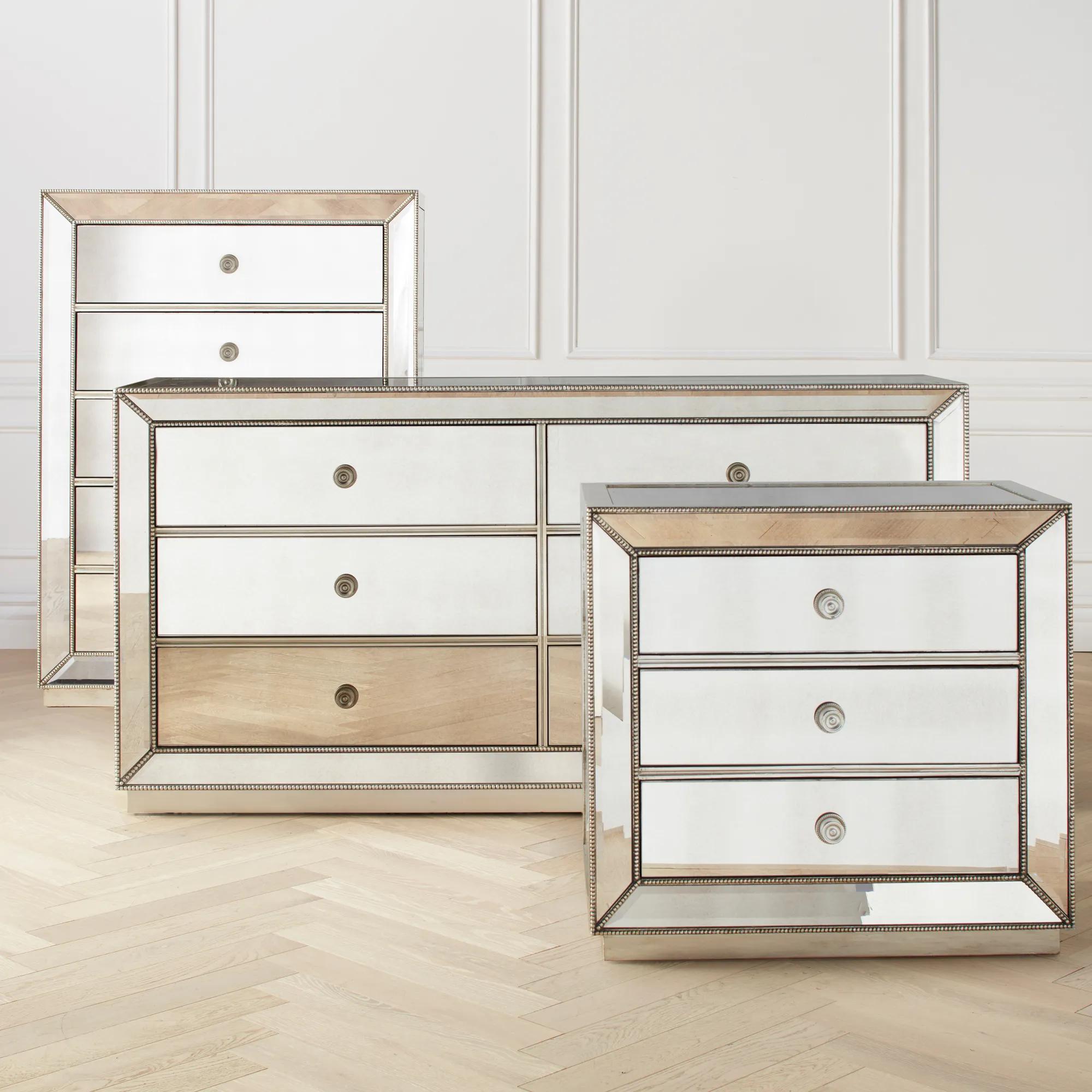 Omni Mirrored Silver 5-Drawer Tall Dresser (40")$2199
A dramatic chest featuring antiqued mirrored panels, hand-applied silver-leaf finish, and kiln-dried hardwood construction.
Add To Cart -
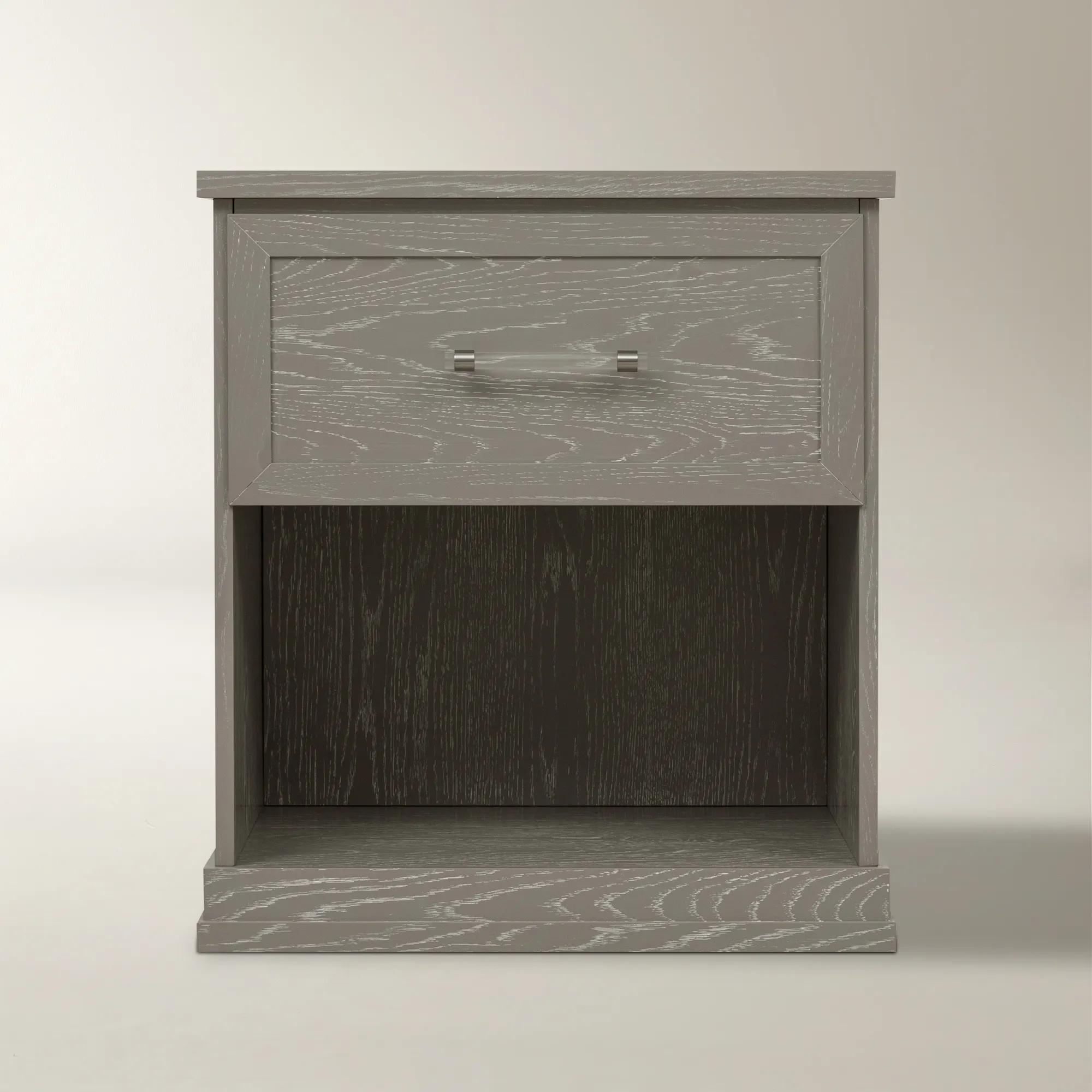
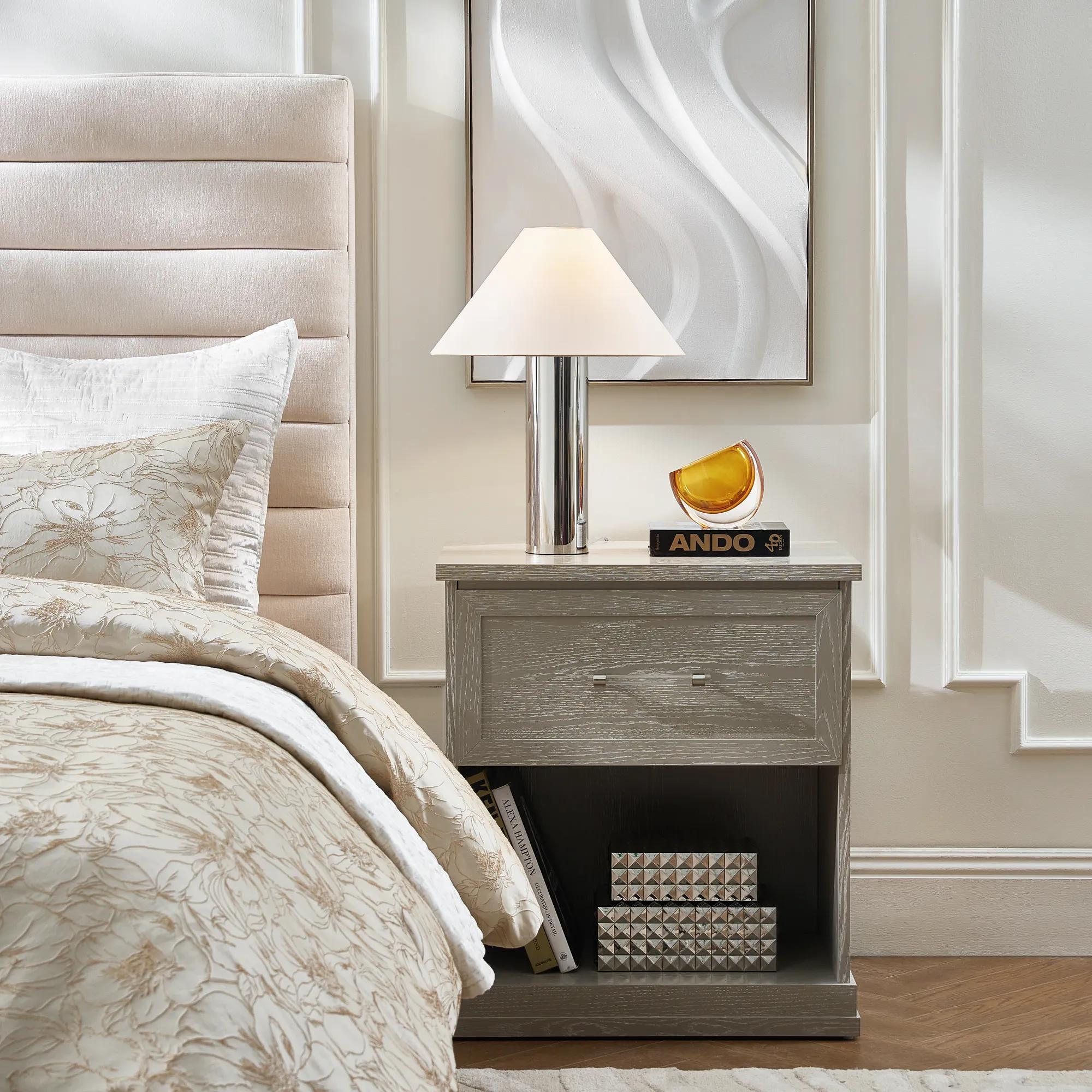 Arwin Grey Oak 1-Drawer Nightstand (26")$699
A contemporary grey hardwood veneer nightstand featuring acrylic and brushed silver handles with soft-closing drawers.
Add To Cart -
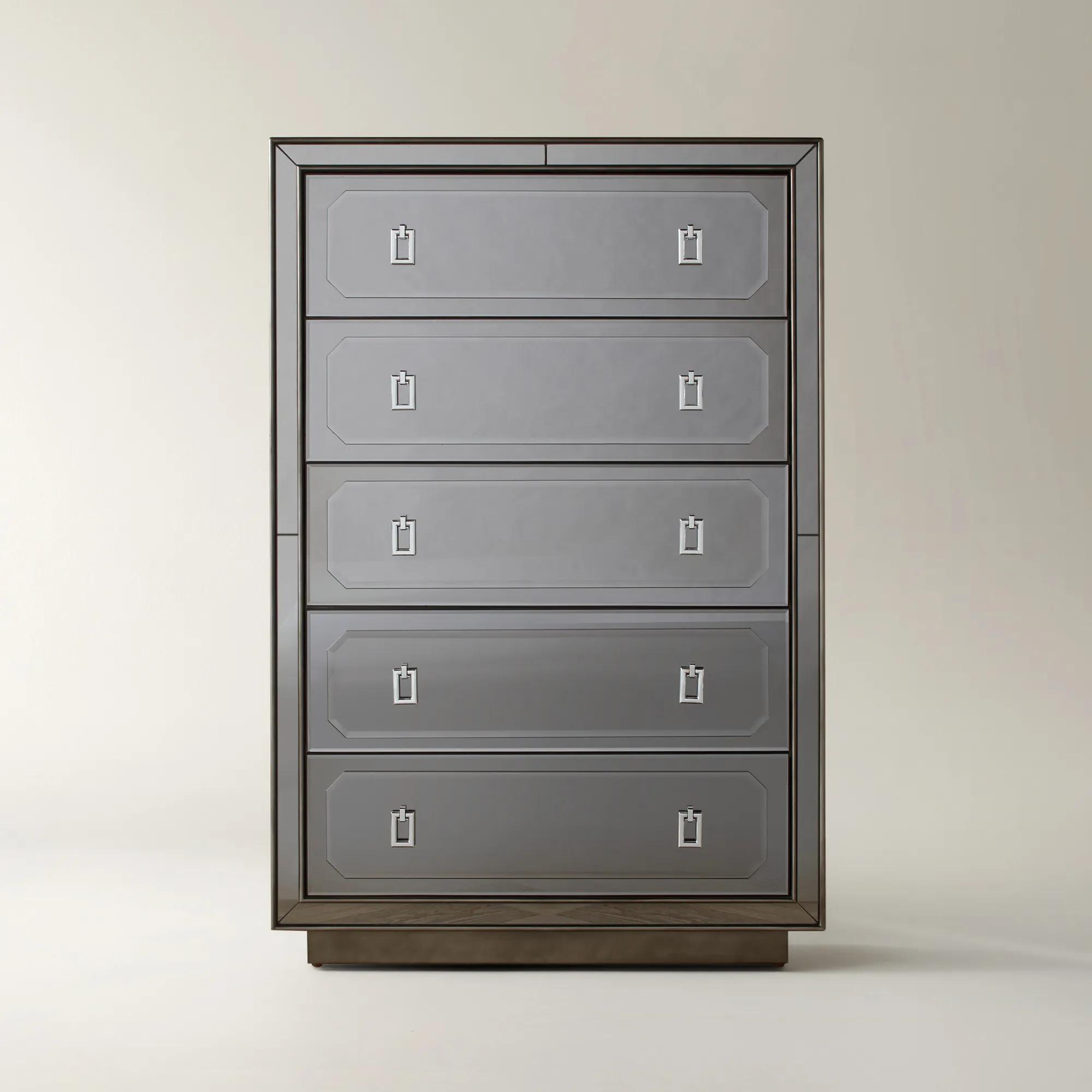 Maddox Mirrored Grey 5-Drawer Tall Dresser (36")$2099
A modern chest featuring beveled mirror panels, graphite finish, and polished nickel hardware for sleek sophistication.
Add To Cart -
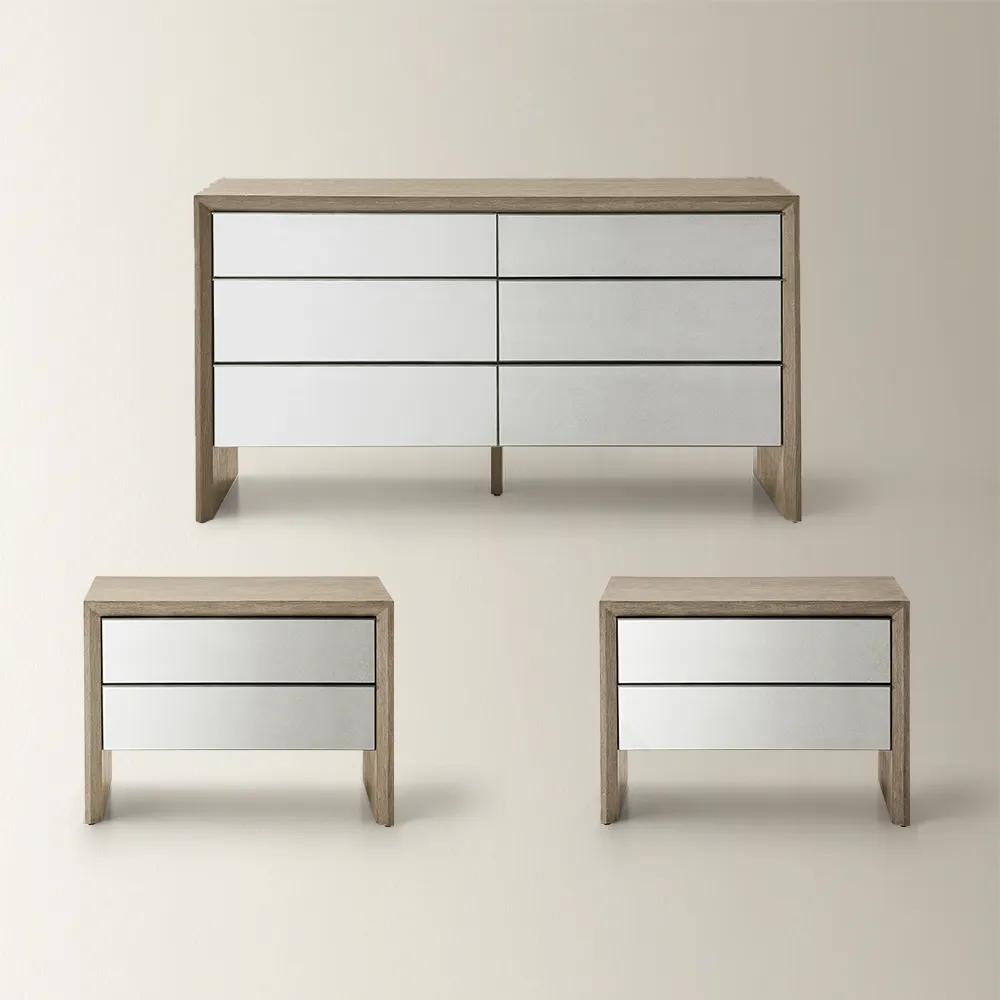 Glimmer Set of 3 Bedroom$3097
A coordinated bedroom furniture set featuring a dresser and two nightstands for cohesive storage.
Add To Cart -
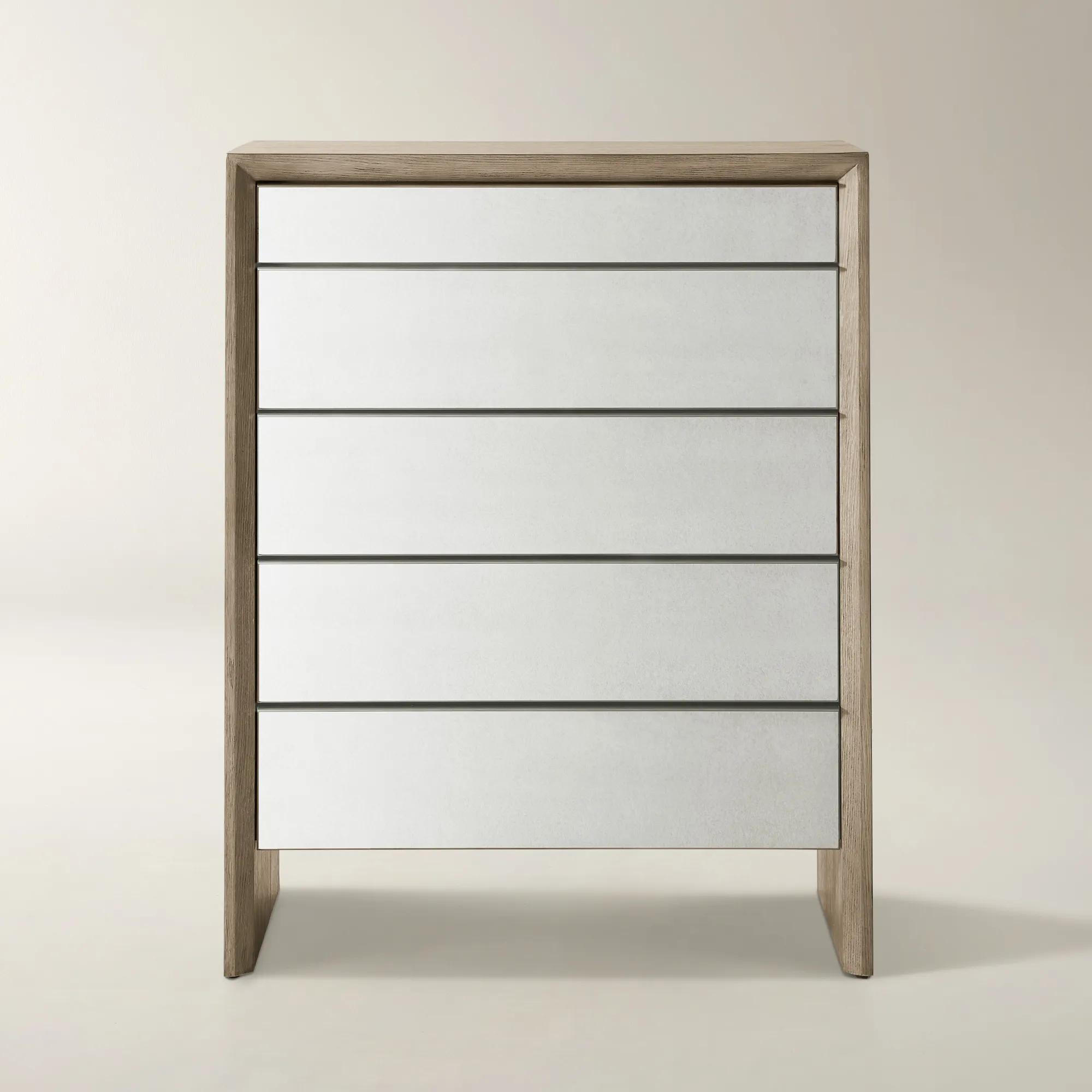
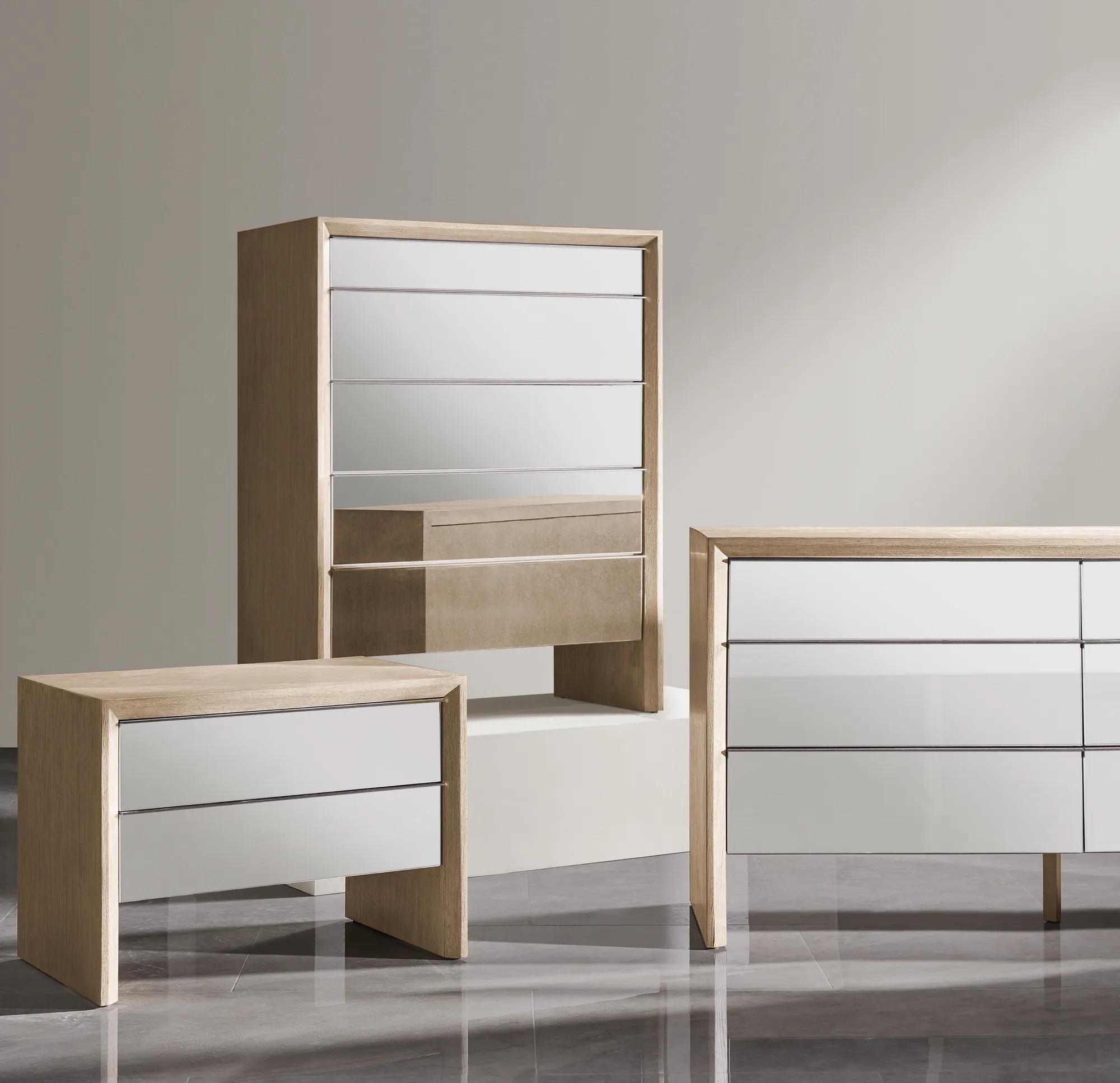 Glimmer Mirrored Seadrift Oak 5-Drawer Tall Dresser (40")$2099
A versatile chest featuring sea drift oak veneer, antique mirrored drawer fronts, and soft-close drawers for elegant storage.
Add To Cart -
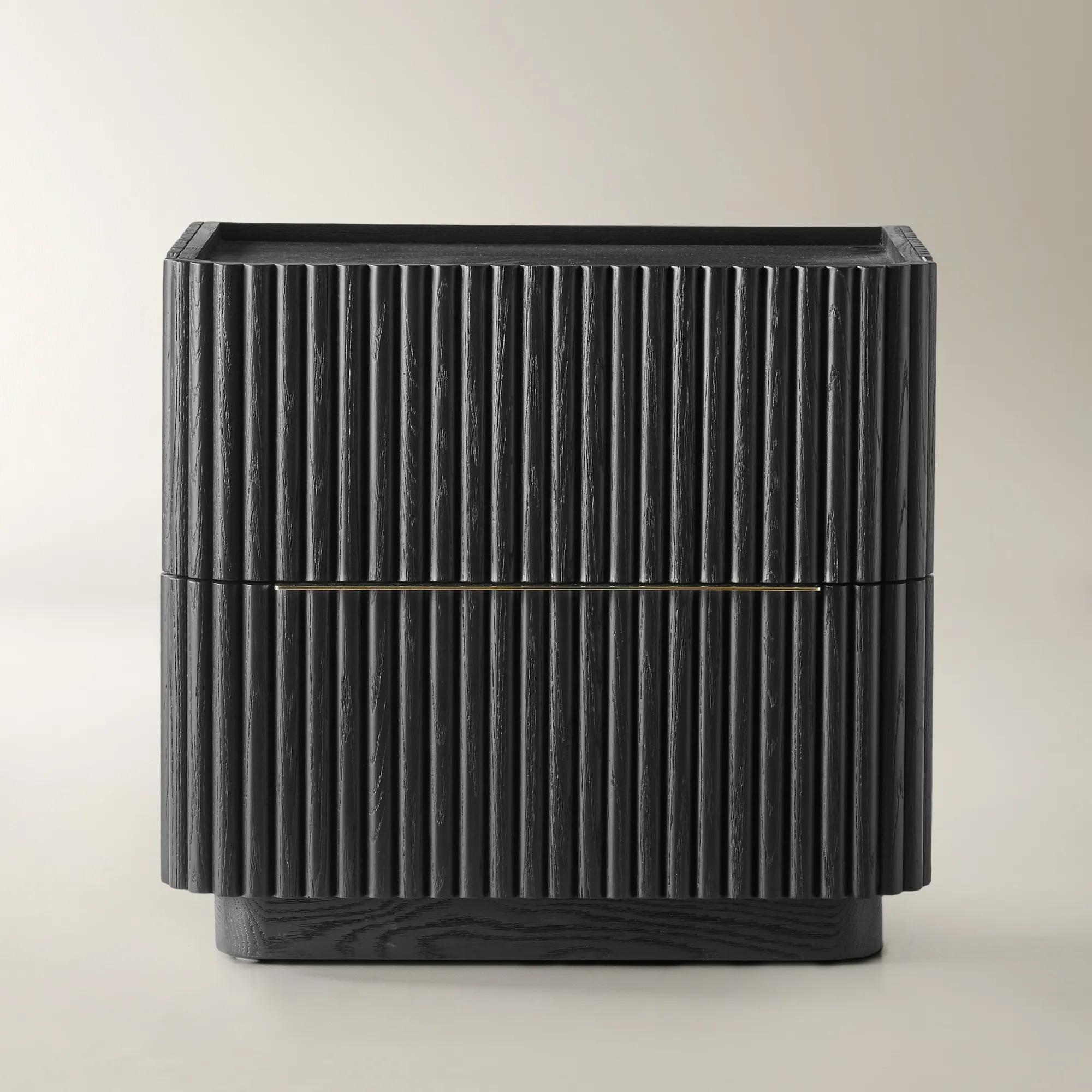 Stria Reeded Black Oak 2-Drawer Nightstand (26")$999
A black oak nightstand featuring vertical reeded texture, soft gold accents, and soft-close velvet-lined drawers.
Add To Cart -
 Glimmer Set of 3 Bedroom$3597
A refined bedroom furniture set pairing an ivory or grey bed with two coordinating nightstands.
Add To Cart -
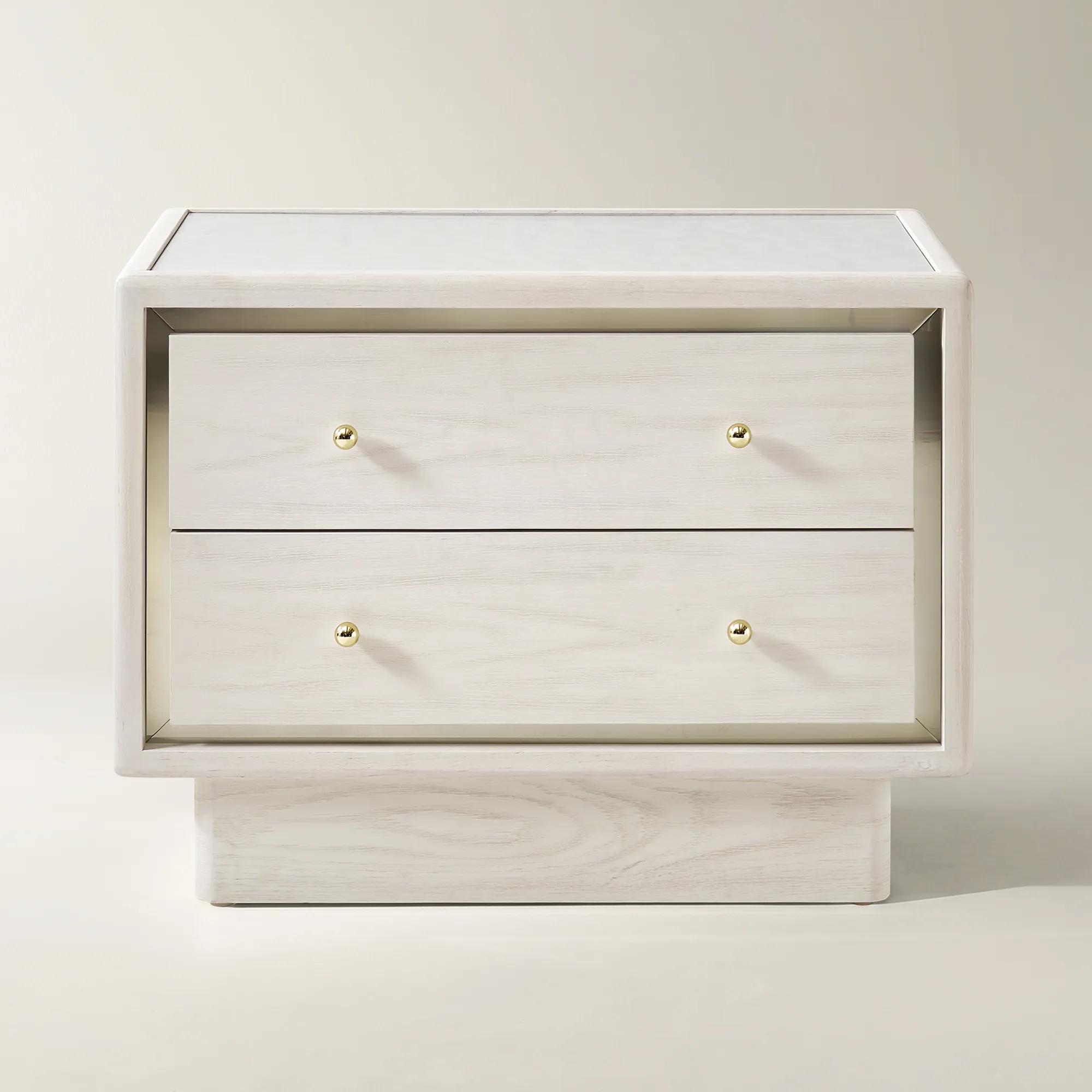
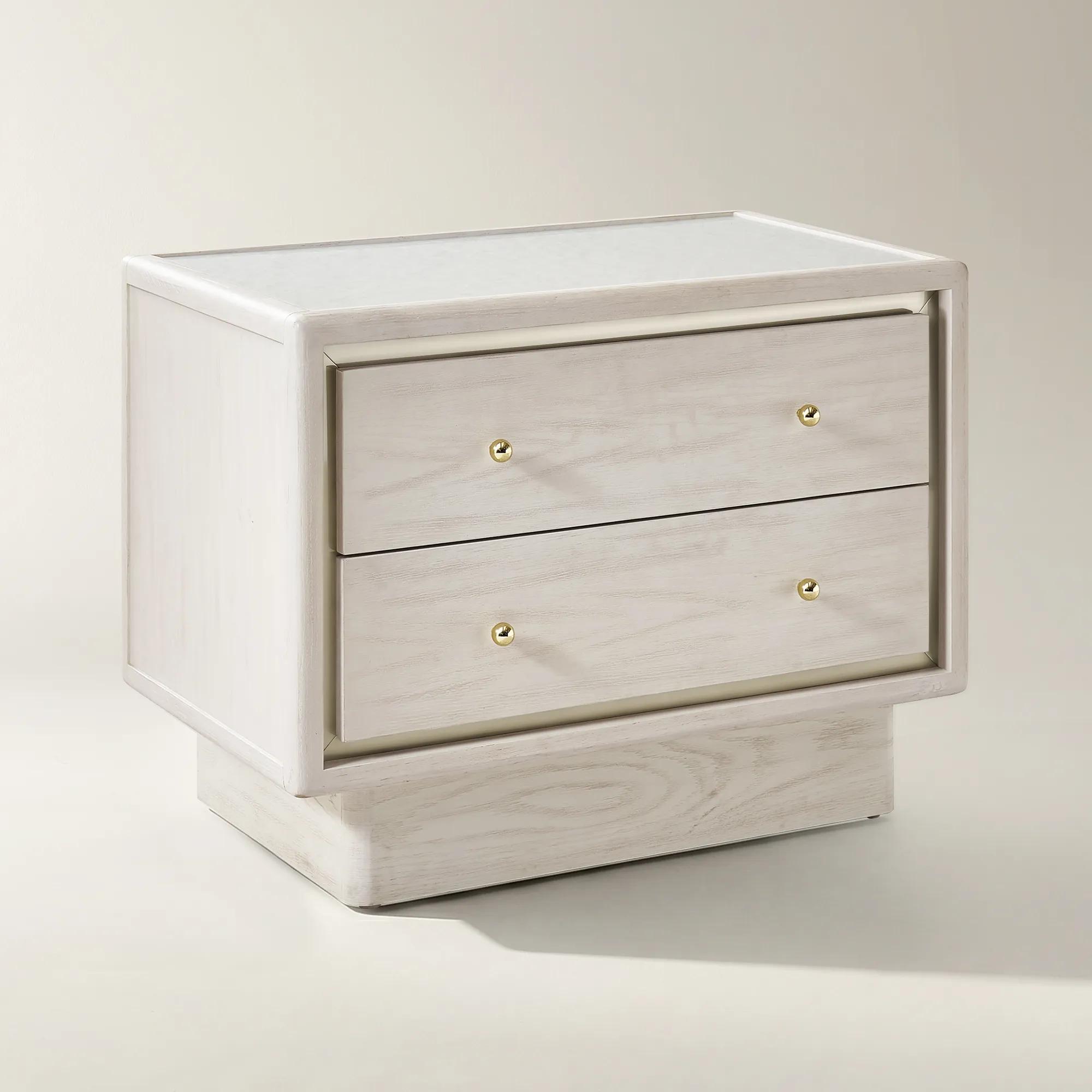 Lumina Bleached Oak 2-Drawer Nightstand With Pearl Lacquered Top (32")$1199
A bleached oak nightstand featuring a pearl lacquered top, champagne gold trim, and soft-close drawers.
Add To Cart -
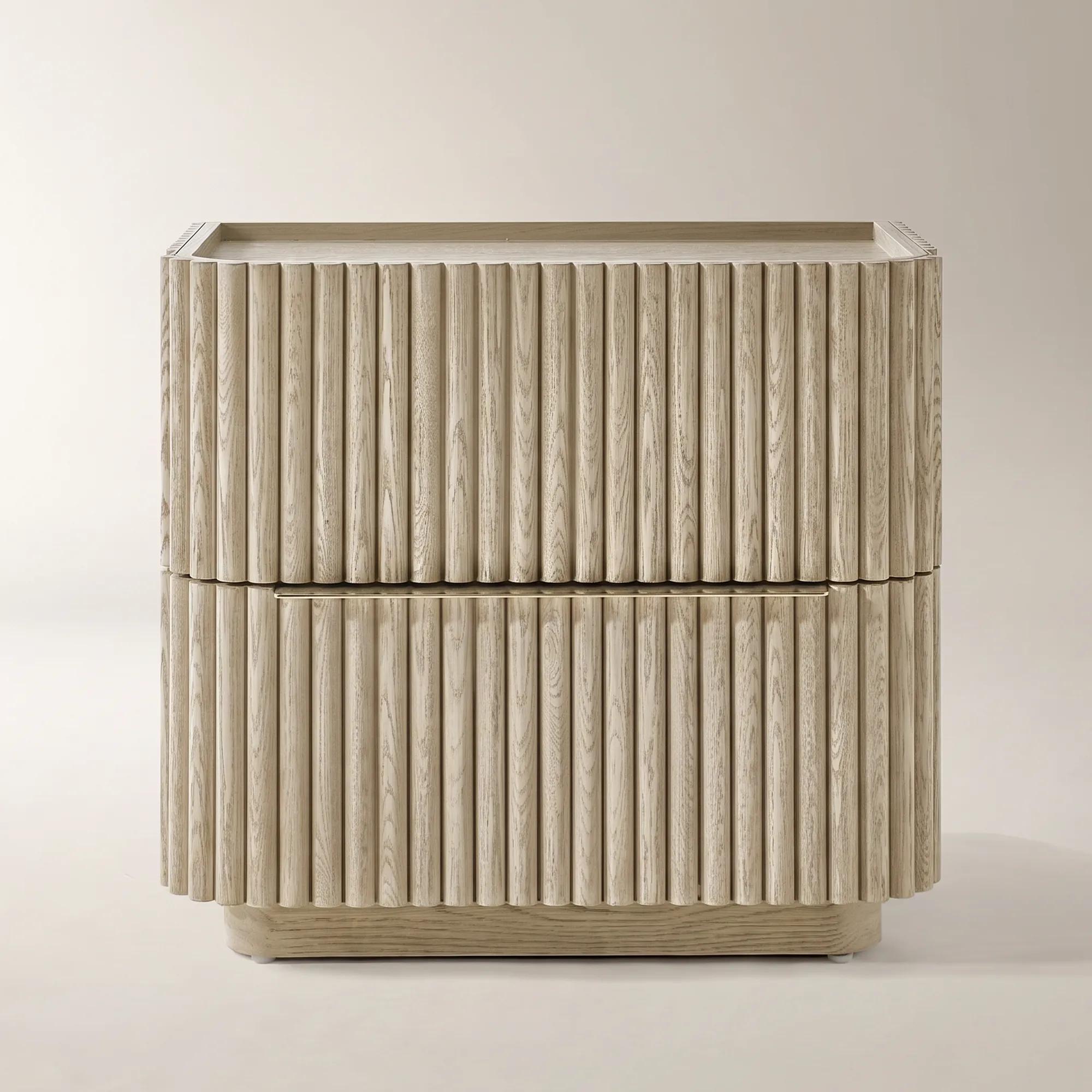
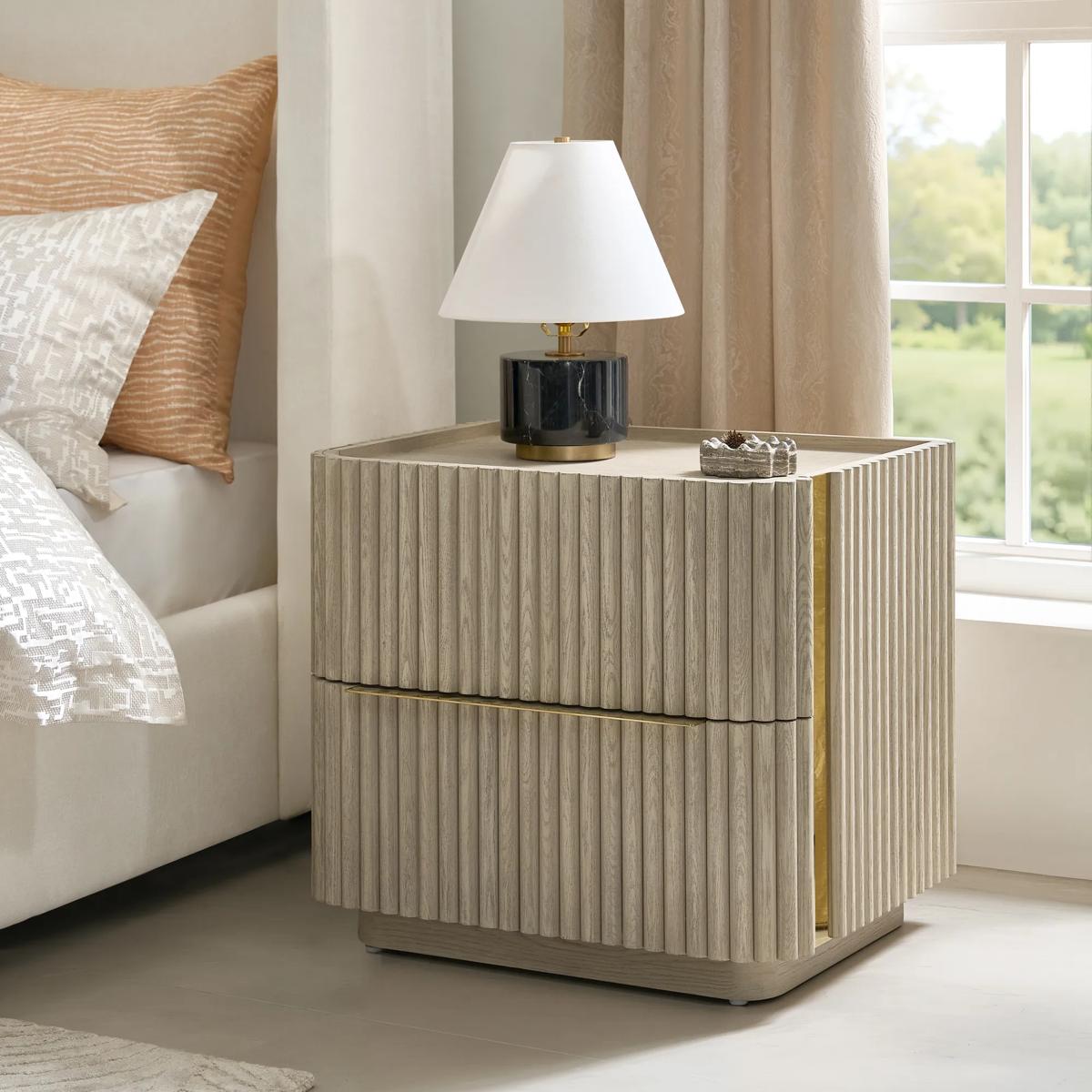 Stria Reeded White Oak 2-Drawer Nightstand (26")$999
A sculptural oak nightstand with reeded wood details, gold-plated trim, and soft-close felt-lined drawers.
Add To Cart -
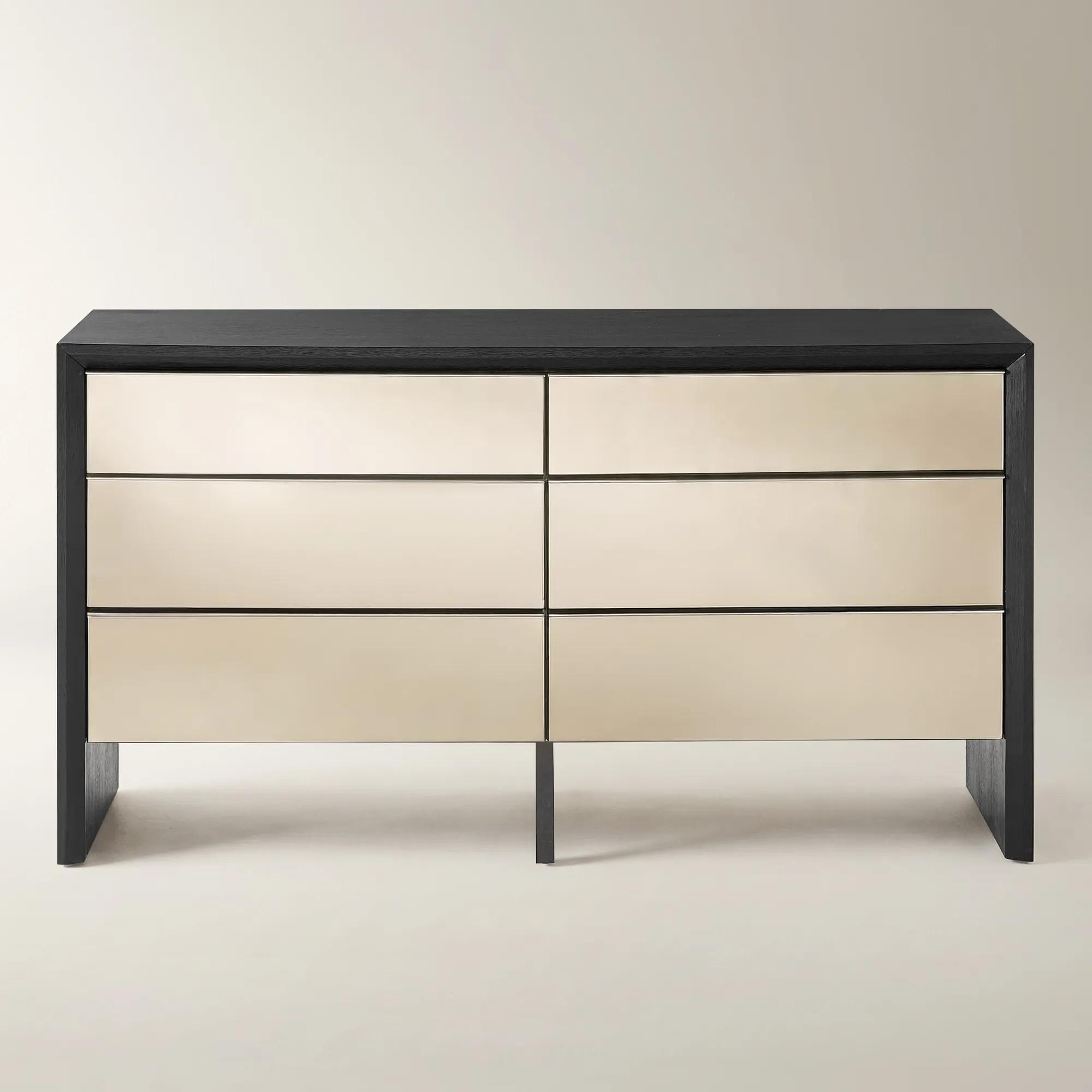 Glimmer Mirrored Black Oak 6-Drawer Dresser (65")$2099
A modern dresser featuring black oak veneer, bronze mirrored drawer fronts, and six velvet-lined soft-close drawers.
Add To Cart -
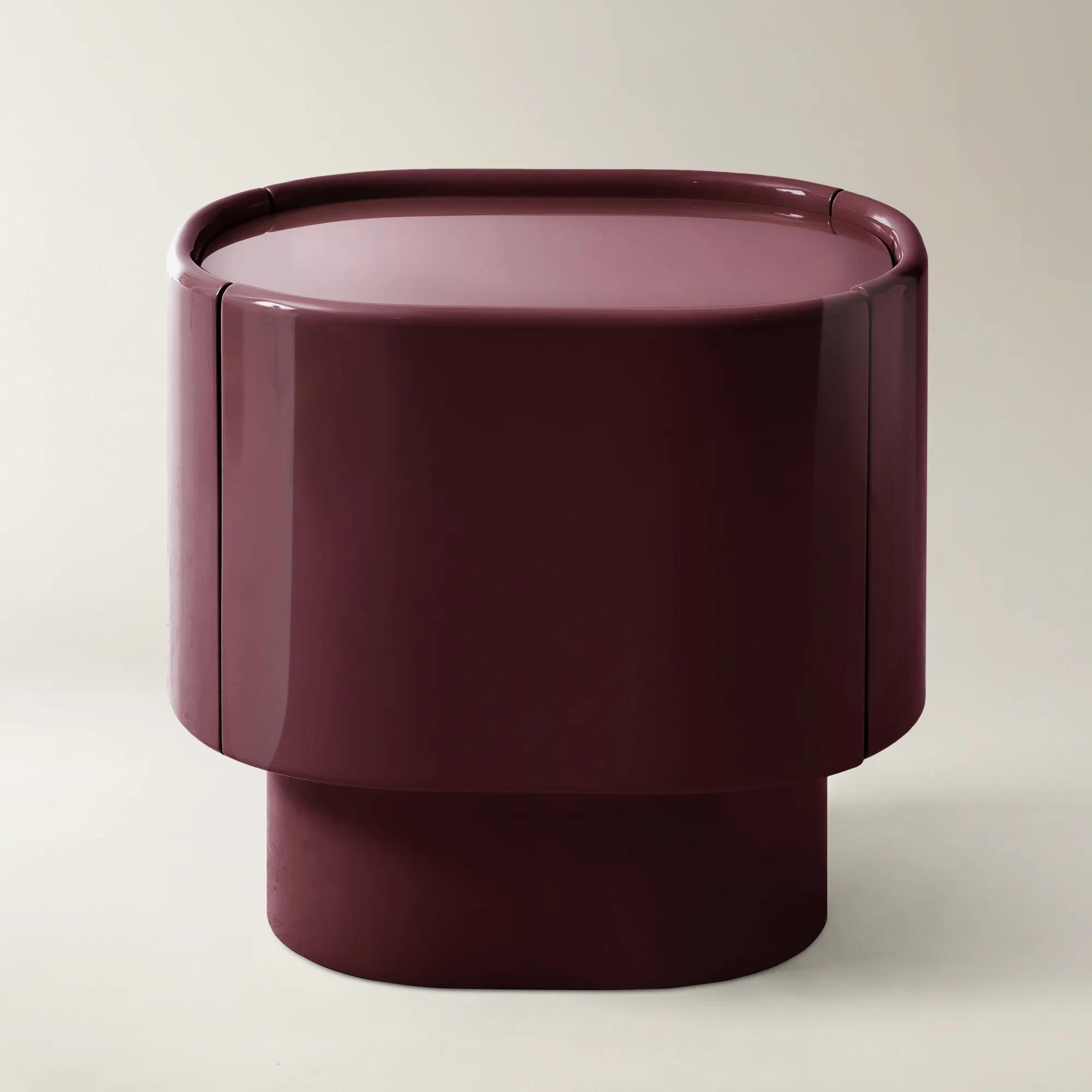 Velar Lacquered Ox Blood 1-Drawer Nightstand With Glass Top (24")$699
A sculptural ox blood nightstand featuring a high-gloss lacquer finish and a sleek glass top.
Add To Cart -
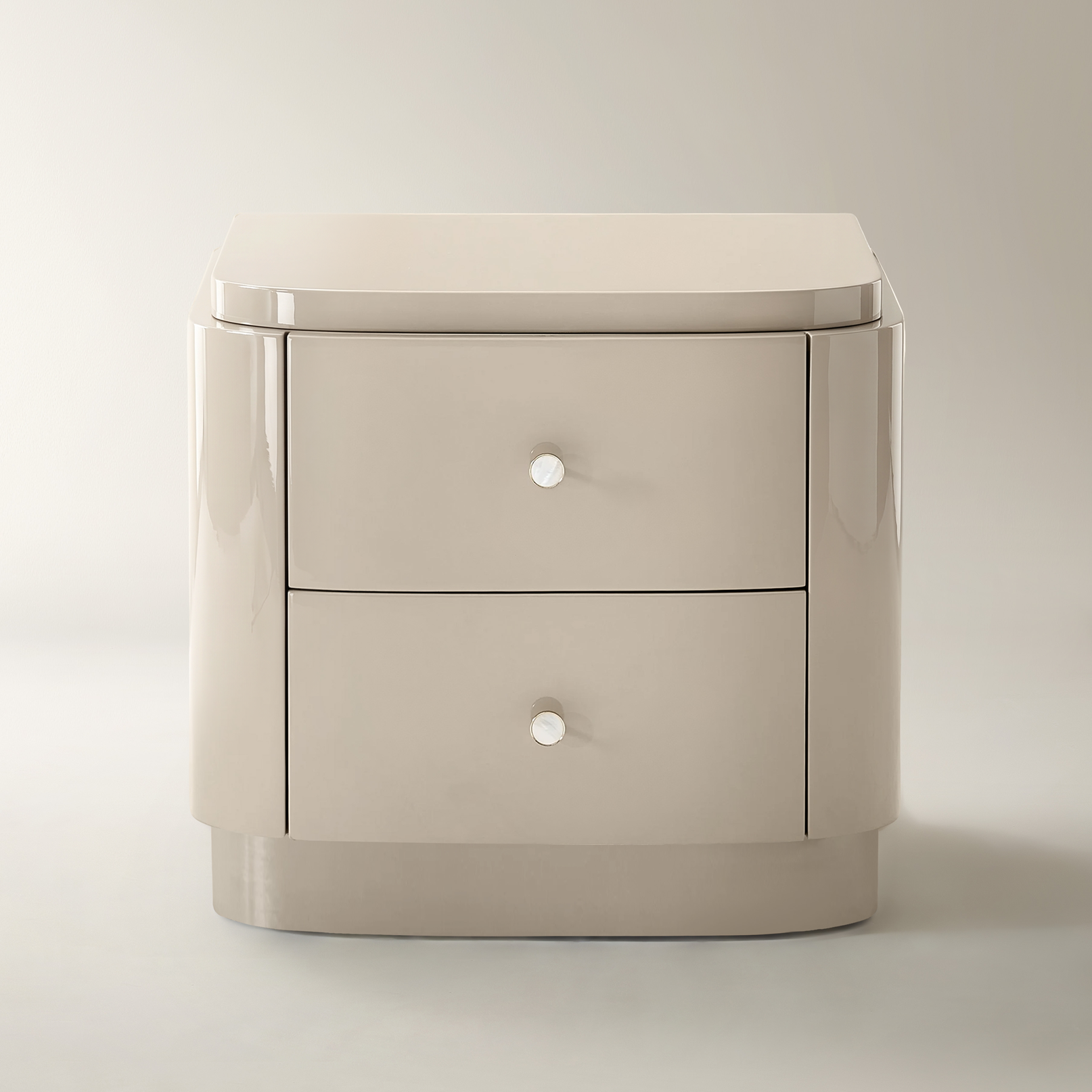
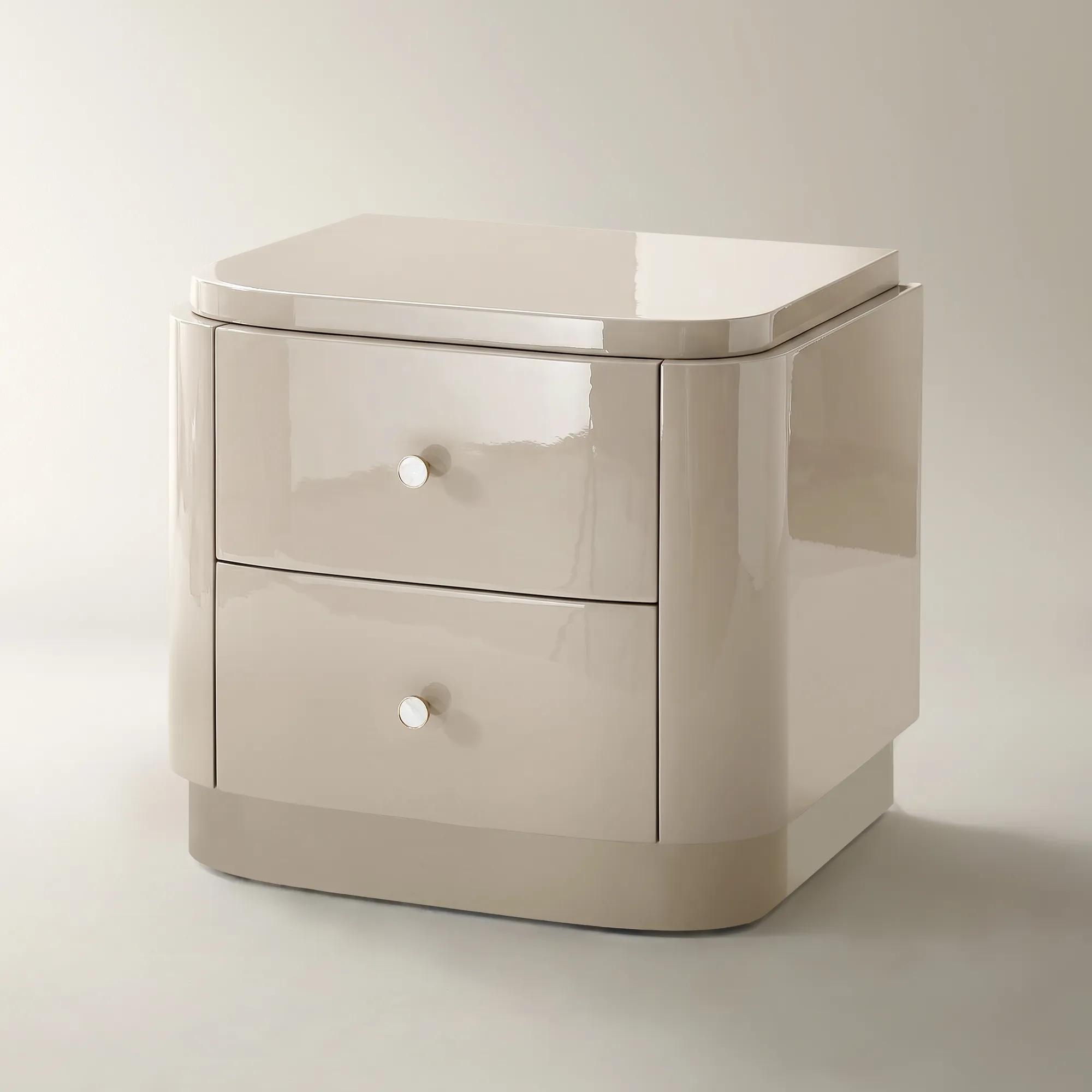 Nia Lacquered Turtle Dove 2-Drawer Nightstand (26")$599
A softly sculpted nightstand in turtle dove lacquer with pearlescent handles and two soft-close drawers.
Add To Cart

Bedroom Mirrored Nightstands
Explore bedroom mirrored nightstands that bring light-catching dimension and a touch of glamour to your bedside. These reflective bedside tables create a striking frame for the bed while keeping nighttime essentials within reach. Consider height and width in relation to your mattress and available space for a look that feels composed, not crowded.
Bedroom mirrored nightstands bring a distinctive kind of glamour to the bedside: polished, luminous, and intimate enough to belong in a room designed for rest. Their reflective surfaces catch the curve of a lamp, the folds of a duvet, and the tones of nearby furnishings, making a practical piece of furniture part of the room’s visual composition. Beside a deeply upholstered headboard, mirrored panels introduce a crisp contrast to sumptuous fabric; against painted walls, they pick up surrounding color without adding another large block of it. The effect can feel especially expressive with velvet, textured linen, or a rug with a subtle sheen, where reflection and softness give each other definition. Among bedroom nightstands, mirrored designs offer a balance of useful bedside storage and decorative presence. A pair can frame a bed with tailored symmetry, while a single piece can become a luminous accent in a more individual arrangement. The character depends on the details: beveled edges create delicate lines of reflected light, metallic trim outlines the silhouette, and faceted hardware adds a jewel-like finishing touch. Clean, straight profiles suit a bedroom with architectural restraint, while curved legs or more elaborate framing introduce a richer, more ornamental mood. Reflection does not eliminate a nightstand’s physical footprint, but it can soften the visual weight of bedside furniture, particularly when the surrounding palette is cohesive. In a compact room, that distinction matters: the piece still needs adequate space, yet its surfaces can keep the corner from feeling visually dense. In a generous primary bedroom, mirrored nightstands can hold their own beside a substantial bed without competing with a dramatic headboard. They also lend guest rooms a sense of occasion, giving visitors a defined place for personal essentials while making the bedside feel thoughtfully composed. Their appeal is not limited to a single decorating style; the surrounding textures and proportions determine whether the mood feels quietly polished or lavishly expressive.
The beauty of a mirrored nightstand rests on more than its reflective finish. Mirrored glass is typically applied over a supporting furniture structure, which may include solid wood, engineered wood, or metal, depending on the design. That underlying construction, together with drawer hardware, joinery, and the way the panels are secured, influences how the piece performs through everyday use. A substantial-looking exterior does not necessarily indicate greater storage capacity, so interior dimensions matter as much as the overall silhouette. For someone who keeps reading glasses, charging cables, and a journal beside the bed, drawers can preserve an uncluttered surface while keeping small essentials close. An open shelf creates room for a stack of books or a decorative box, though its contents become part of the visible arrangement. A broad top can accommodate a lamp and a water carafe with comfortable separation; a narrower surface calls for a more edited composition. Bedside height is another important consideration. A top near the height of the mattress generally makes it easier to reach a phone or set down a book without stretching awkwardly, while an unusually high or low bed may require different proportions. Width should feel balanced against the bed and leave enough room for movement, especially where a doorway, closet, or dresser sits nearby. Drawer fronts need clear space to open, and a projecting handle or shaped leg can extend beyond the apparent footprint of the cabinet. For paired nightstands, consistent scale creates a composed frame even when lamps or accessories differ. In a shared bedroom, storage can reflect different routines without disrupting that sense of balance. Someone who reads before sleep may value room for books, while someone with fewer bedside belongings may prefer a simpler interior. Mirrored furniture also benefits from thoughtful placement around outlets: accessible power helps keep cords from draping across reflective fronts, where even small visual interruptions can become conspicuous. These practical details allow the glamour to feel effortless rather than staged.
A mirrored bedside surface is most compelling when it has room to reflect something worth seeing. A lamp with a sculptural base, a small ceramic vessel, or the edge of a richly textured throw can create an elegant interplay of shapes without crowding the top. Because mirrors repeat nearby objects, a few carefully spaced accents often have more presence than a dense arrangement. The same principle applies to light: a shaded bedside lamp can cast a soft glow across the panels, while an exposed bulb reflected toward the pillow may feel distracting. Placement and lamp shape help preserve the calm atmosphere expected of a bedroom. Everyday care keeps that clarity intact. Fingerprints and dust are more noticeable on mirrored finishes than on many matte surfaces, so gentle, regular cleaning is preferable to occasional vigorous scrubbing. A soft, lint-free cloth and a nonabrasive cleaner approved for the surface help maintain the finish; applying cleaner to the cloth rather than directly to the furniture reduces the chance of liquid collecting at seams, edges, or hardware. Wood, metal, and decorative trim may require different care from the mirror itself, making the manufacturer’s instructions important for mixed-material pieces. Coasters protect against condensation, and a tray with a soft backing can give frequently handled essentials a defined place without dragging hard objects across the top. Mirrored glass is not immune to scratches, chips, or impact damage, and its edges deserve particular care when furniture is moved. A stable, level position supports smooth drawer operation and helps prevent rocking; any supplied anchoring instructions should be followed, especially in homes with children. For a primary suite, a guest bedroom, or a newly furnished home, mirrored nightstands offer lasting visual appeal when their dimensions, construction, and daily demands are well matched. Their role is both personal and expressive: keeping necessities within reach while lending the bedside a gleaming layer of detail. With considered styling and attentive care, that reflective finish becomes an enduring part of the room’s character rather than a flourish reserved for special occasions.
FAQs
Mirrored nightstands bring a luminous accent to Hollywood Regency, Art Deco, and contemporary bedrooms. Pair them with plush upholstery and metallic accents for lavish glamour, or place them alongside richly grained wood for a more layered composition. Their reflective surfaces create an expressive contrast with matte finishes and sumptuous textiles.
Treat your mirrored nightstand as a bedside vignette. Begin with a sculptural lamp, then add a decorative box or a favorite book for a personal note. Balance gleaming accents with a matte ceramic vessel, leaving some of the reflective surface visible so each detail has room to command attention.
Mirrored nightstands do not need to match the bed or dresser to create a beautifully composed bedroom. Instead, connect the pieces through a shared detail, such as geometric lines, curved silhouettes, or a recurring accent color. An upholstered bed and a wood dresser can offer a rich counterpoint to the nightstands’ reflective finish.
Mirrored nightstands reflect the surrounding palette, making color an integral part of their character. Ivory and champagne tones create a soft, luminous mood, while charcoal, midnight blue, and emerald lend a more dramatic backdrop. Carry your chosen hues through bedding, artwork, and decorative accents for a cohesive, expressive retreat.
Follow the furniture’s care instructions, especially when mirrored panels sit alongside other finishes. For routine dusting, use a soft, lint-free cloth. When an approved cleaner is needed, apply it to the cloth rather than spraying directly onto the furniture, and avoid abrasive tools. Attend to fingerprints and spills promptly to preserve a polished bedside presentation.