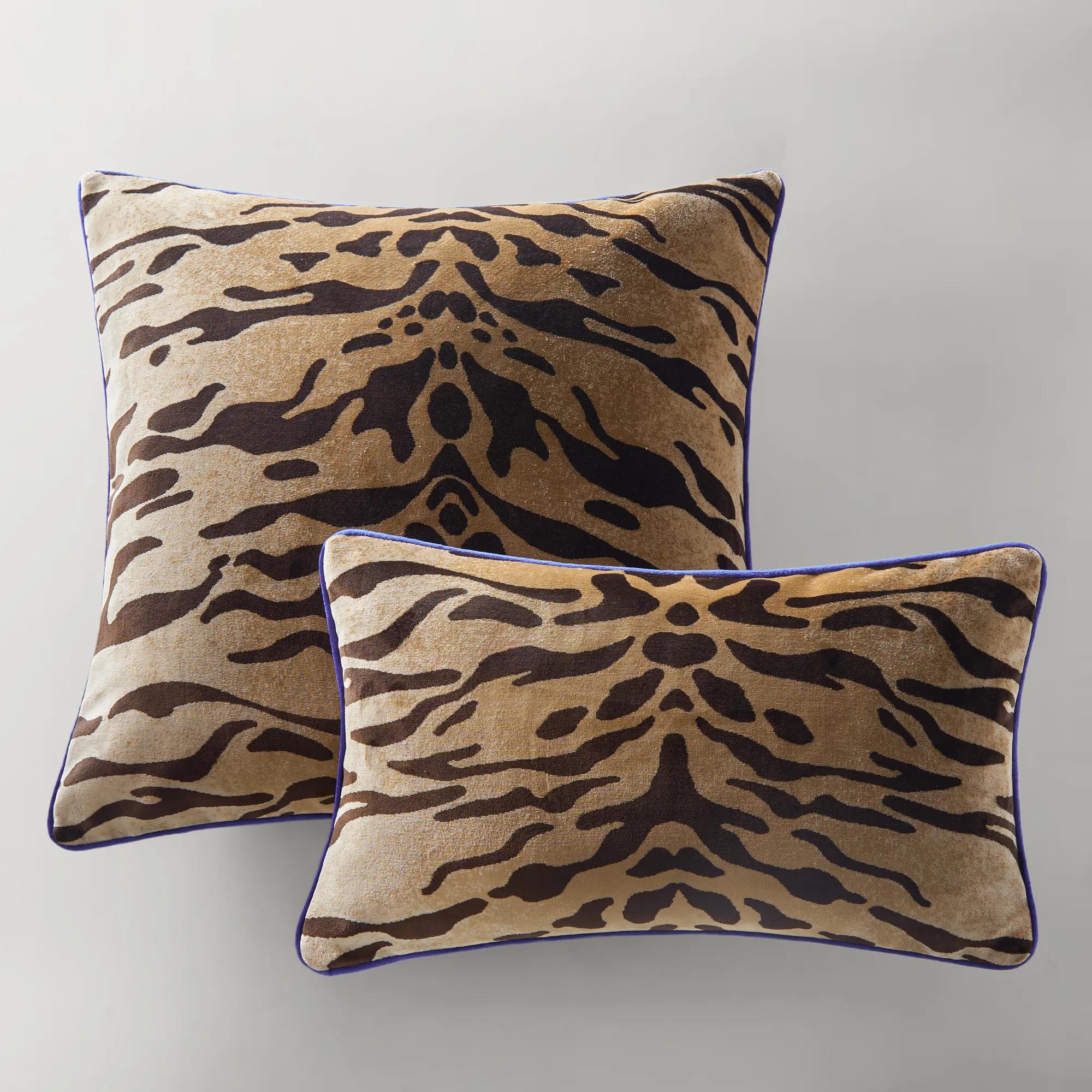
Ivory Pillow Covers
Ivory Pillow Covers
-
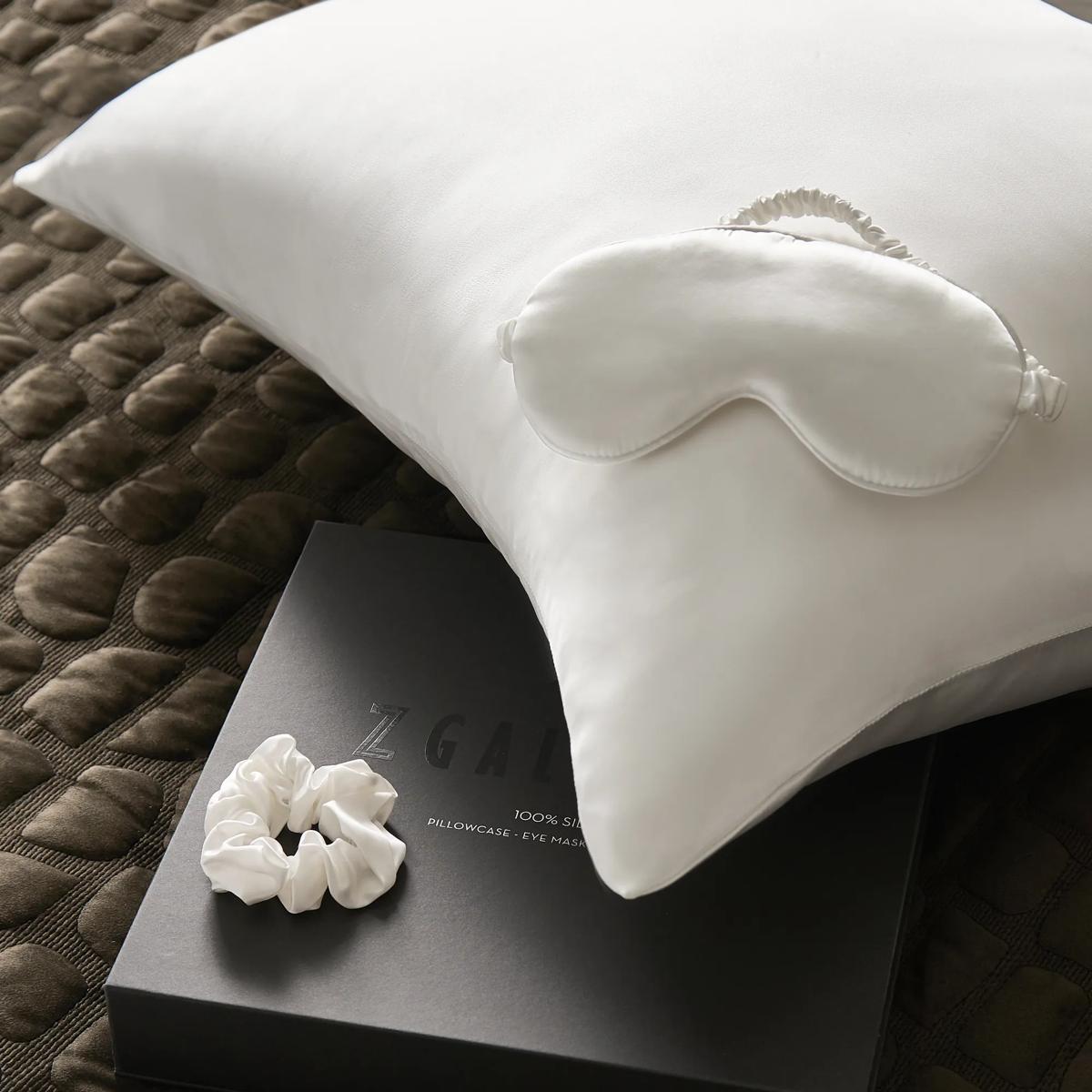 Silk Pillowcase & Mask Set Ivory$149
An elegant ivory sleep set crafted from 100% Mulberry silk, including pillowcase, eye mask, and scrunchie.
Add To Cart -

 Minka Jacquard Ivory Pillow 22" x 22"$89
A highly textured ivory chevron pillow with a removable cover and plush feather down insert.
Add To Cart -

 Frond Soft Nude Beaded Embroidered Velvet Pillow 20" x 20"$149
A soft nude velvet pillow featuring intricate beaded embroidery for a refined, textural accent.
Add To Cart -
 Namir Leopard Beaded Embroidered Ivory/Gold Velvet Pillow 22" x 22"$129
An ivory velvet pillow featuring an embroidered leopard face and a plush feather-down insert.
Add To Cart -

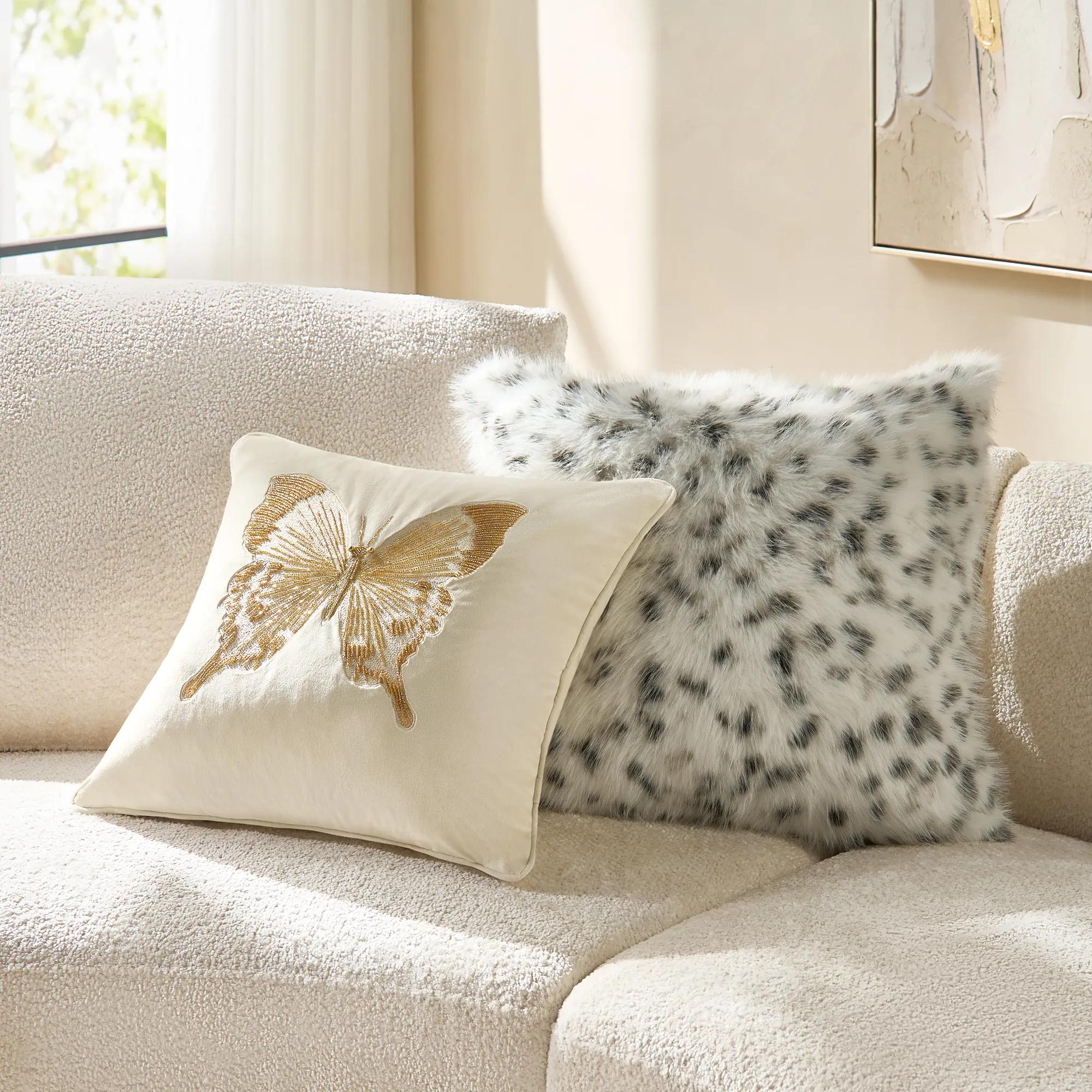 Bella Butterfly Beaded Embroidered Ivory/Gold Pillow 20" x 20"$99
A soft ivory velvet pillow featuring gold beaded butterfly embroidery and a plush feather-down insert.
Add To Cart -

 Nomi Beaded Embroidered White/Champagne Velvet Pillow 20" x 20"$119
A white and champagne velvet pillow adorned with intricate beadwork and embroidery for glamorous texture.
Add To Cart -
 Corseca Pillow 24" - Ivory$79.95
A plush ivory faux fur pillow crafted from silky acrylic and polyester with a removable insert.
Add To Cart -

 Solenne Embroidered Pillow 22" - Ivory/Charcoal$89
An ivory and charcoal embroidered pillow adding sophisticated texture to contemporary spaces.
Add To Cart -
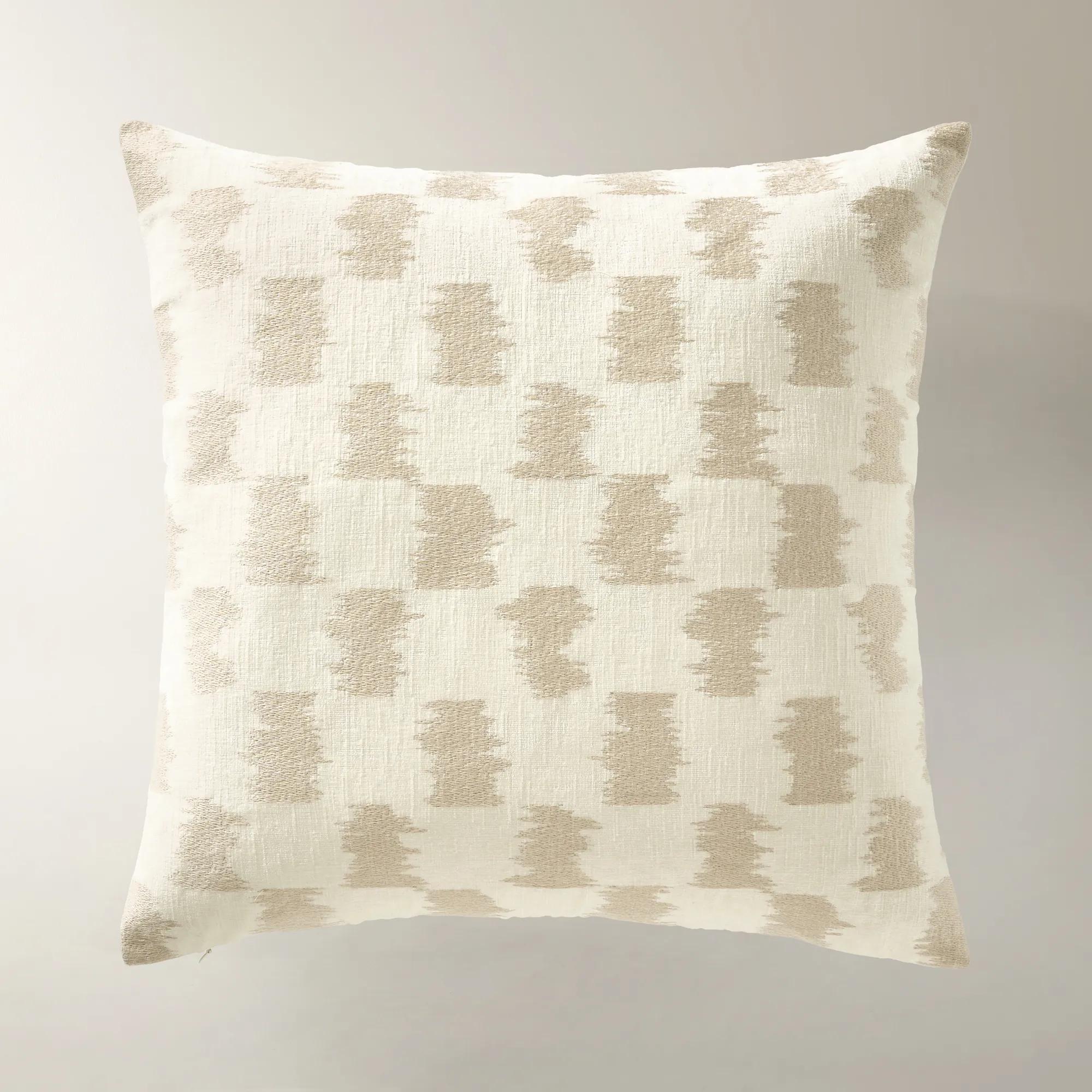
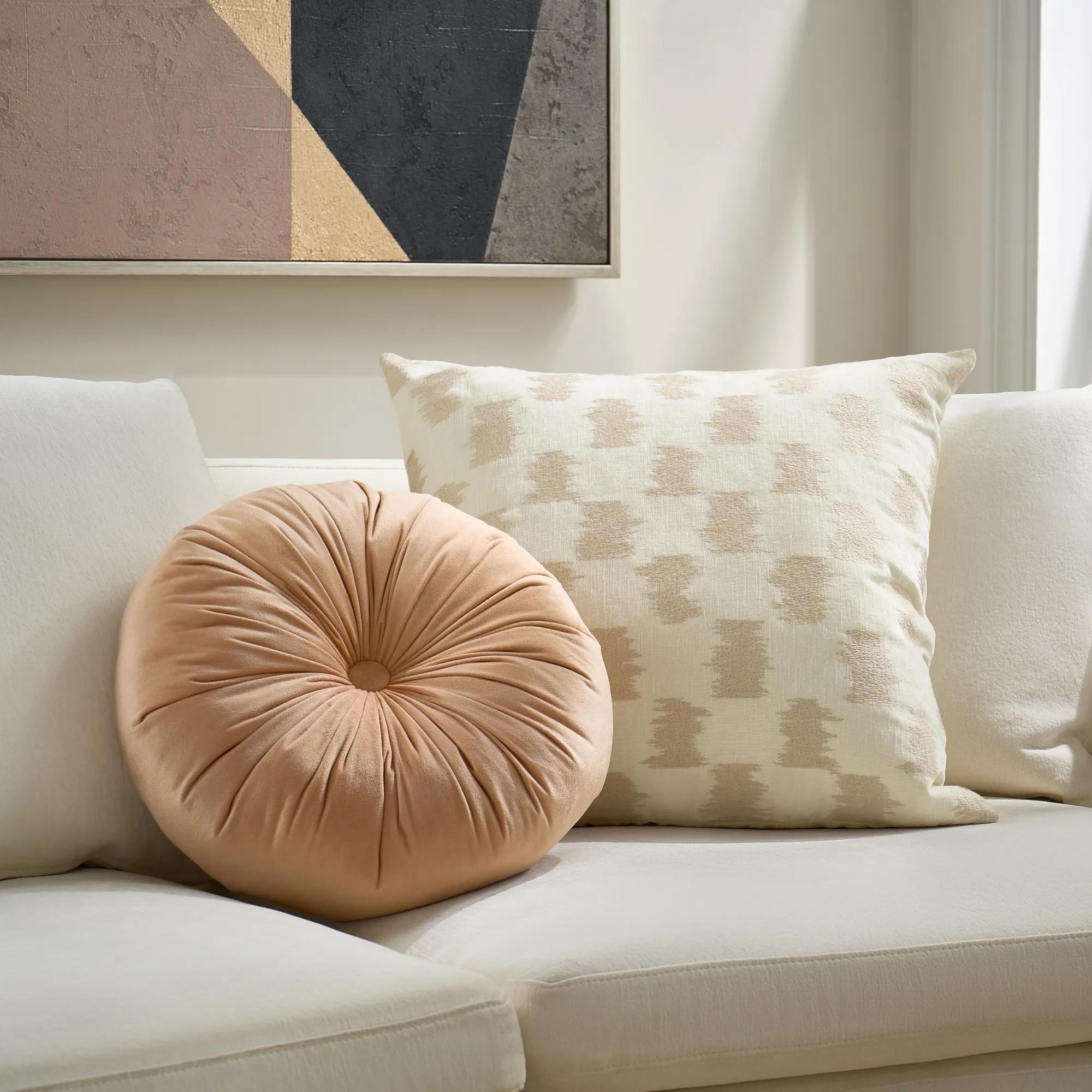 Scacco Check Embroidered Taupe/Ivory Pillow 22" x 22"$89
A taupe and ivory velvet pillow featuring an embroidered geometric checker pattern and feather-down insert.
Add To Cart

Ivory Pillow Covers
Ivory Pillow Covers invite a sense of refined serenity into any space, transforming ordinary seating into a showcase of understated elegance. Their creamy hue evokes the timeless allure of classic interiors, casting a soft glow that elevates both modern and traditional settings. Whether layered atop a tufted settee or paired with bold accent pieces, these covers create an atmosphere that is as tranquil as it is sophisticated—an effortless canvas for personal expression. Let your living room, bedroom, or reading nook bask in the subtle drama and quiet luxury that only ivory can impart.
Ivory pillow covers are removable decorative coverings that dress cushion inserts in a soft, creamy neutral, bringing luminosity and texture to sofas, accent chairs, benches, and beds. Warmer than crisp white, ivory creates a backdrop for sculptural embroidery, lustrous velvet, and richly woven surfaces without overwhelming the room’s other details. Its appeal lies in that balance: understated color with the capacity for extraordinary dimension. On a charcoal sofa, an ivory cover creates a striking contrast; against pale upholstery, it allows texture, rather than color, to define the composition. Materials shape both the appearance and the experience. Cotton offers a soft, familiar hand, while linen brings a gently irregular weave that lends character to tailored seating. Velvet gives ivory a more sumptuous expression, with a directional pile that catches light and reveals subtle shifts in tone. Bouclé and other textured weaves introduce sculptural depth, while jacquard creates patterns within the fabric itself. Embroidered, appliquéd, or beaded details add another layer of artistry, particularly where a pillow is intended as a decorative focal point rather than an everyday backrest. Fiber blends can combine different qualities, such as softness, structure, or wrinkle resistance, but the exact composition matters more than a broad material name. Ivory itself also varies: some shades lean toward buttery cream, while others carry a restrained beige or gray undertone. Viewed beside warm wood, polished metal, or cool stone, those differences become more apparent. Consider the upholstery and lighting where the cover will live, not just its appearance on a screen. A creamy ivory can soften a high-contrast black-and-white setting, while a quieter, less yellow ivory can complement silver finishes and gray furnishings. The result is a neutral accent with presence, capable of bringing cohesion to a richly layered room without fading into the background.
Proportion gives ivory pillow covers their finished effect, making dimensions and insert compatibility as important as color. Covers are commonly described by their width and length, and square, rectangular, and lumbar shapes each create a different silhouette. Check the stated measurements and whether an insert is included; a decorative cover is not necessarily a complete, filled pillow. When refreshing cushions already at home, measure the existing cover laid flat from seam to seam rather than estimating across a plump pillow. An insert that is too small can leave corners empty and fabric looking loose, while one that is too large can strain seams or make a zipper difficult to close. A slightly larger insert may create a fuller profile when the cover’s construction and care guidance allow it, but there is no single sizing rule for every fabric or shape. Insert fill also influences the result: resilient fills tend to hold a more structured outline, while softer fills can produce a relaxed, sink-in appearance. Closure details deserve attention as well. A concealed zipper preserves a clean edge, while an envelope closure overlaps at the back; either should suit the intended use and allow the insert to be removed without forcing the fabric. Piping, flanges, fringe, and dimensional trim change the visual footprint, so account for those details when arranging several pillows together. On a deep sofa, larger squares can establish the composition, with a smaller rectangular cushion adding contrast in front. On a compact accent chair, one thoughtfully scaled pillow can make a more assured statement than several competing layers. For a bed, ivory covers can connect patterned bedding with an upholstered headboard, creating continuity without requiring every textile to match. Pair a smooth surface with a nubby weave, or place a restrained geometric design beside a more elaborate embroidered face. Leave enough seating space for comfort, and reserve delicate embellishment for positions where it will not be pressed against repeatedly. For a coordinated arrangement that includes filled accents, explore ivory throw pillows alongside covers selected to refresh existing inserts.
Care and construction determine how gracefully an ivory pillow cover lives beyond its first arrangement. Read the care label before cleaning, because similar-looking fabrics can require very different treatment. Some covers permit machine washing, while others call for spot cleaning or professional care, particularly when they combine contrasting materials, elaborate trims, or dimensional embellishments. Remove the insert before cleaning a removable cover, follow any instructions for securing closures, and avoid assuming that warm water or a dryer is suitable. Heat can shrink certain fibers, alter the surface, or affect decorative elements. If spot cleaning is permitted, test the recommended method in an inconspicuous area first, and blot rather than scrub to reduce the risk of spreading a mark or disturbing the texture. Ivory’s pale surface makes texture beautifully visible, but it can also reveal everyday contact with makeup, hand lotion, food, or dye transferred from dark clothing. For a frequently used family-room sofa, a washable cover with sturdy seams and a closely woven face may be a more practical choice than one with loose loops or exposed beadwork. Homes with pets benefit from considering snag resistance, especially where claws can catch fringe or raised yarns. No material is universally pet-proof or stain-proof; durability depends on fiber, weave, finishing, and how the pillow is used. Rotating cushions and limiting prolonged direct sunlight can help reduce uneven wear and fading. Where the reverse side differs from the decorative front, check its texture and care requirements too. These considerations also make ivory covers thoughtful gifts for a housewarming, a wedding, or someone who enjoys composing expressive interiors. Confirm the recipient’s cushion dimensions and preferred care routine, then consider whether a quietly textured neutral or a more ornate finish suits the home. A pair can bring visual continuity to separate chairs, while a single richly detailed cover can give an established seating arrangement a new focal point. Chosen with attention to touch, scale, and daily life, ivory pillow covers offer a way to introduce softness and artistry while allowing the room’s larger design story to remain distinctly personal.
FAQs
Ivory pillow covers are celebrated for their timeless elegance and remarkable versatility. Their neutral hue effortlessly complements a spectrum of color palettes and design styles, from modern minimalism to classic glamour. Whether layered with bold patterns or paired with other neutrals, ivory brings a sense of balance and sophistication to any room.
To achieve a luxurious look, experiment with mixing textures such as velvet, silk, or linen. Layer ivory pillow covers with metallic accents, jewel-toned throws, or richly patterned cushions to create depth and drama. Adding an ivory pillow sham to a bed or sofa instantly elevates the space, making it feel curated and inviting.
Absolutely. Ivory pillow covers make a thoughtful and sophisticated gift for housewarmings, weddings, or special occasions. Their classic appeal and adaptability ensure they will be cherished, while their soft, inviting texture brings comfort and style to any setting.
Ivory pillow covers transition beautifully through the seasons. In winter, their warmth and plushness create a cozy atmosphere, while in spring and summer, their light, airy presence brightens and refreshes any space. They serve as a perfect backdrop for seasonal accents and ever-changing decorative themes.
Luxury ivory pillow covers are often crafted from premium materials such as velvet, silk, linen, and high-thread-count cotton. Each material brings its own unique texture and sheen, allowing you to tailor the look and feel of your space while celebrating the artistry of fine textiles.