
Elegant Window Treatment Ideas
Elegant Window Treatment Ideas
-
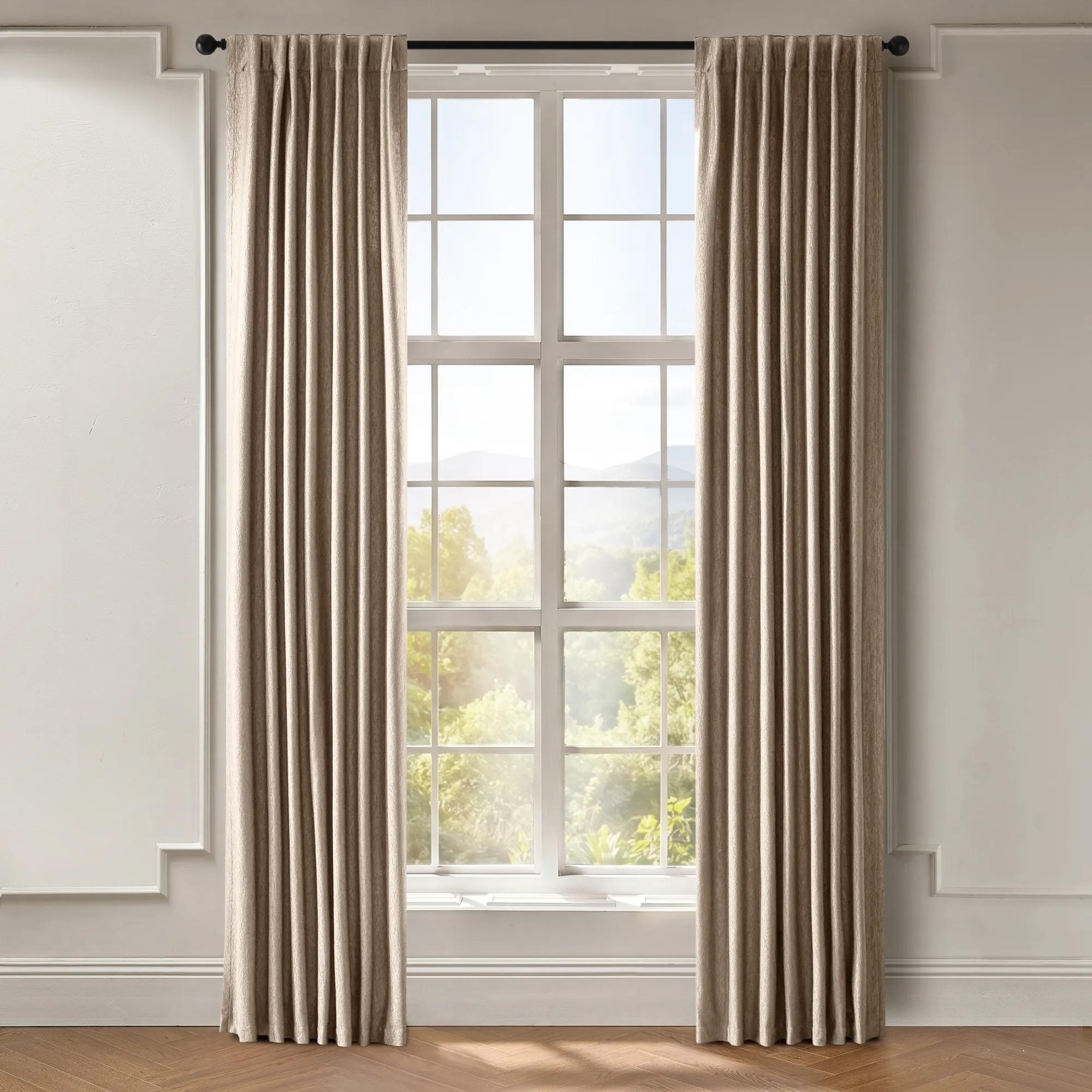 Anson Mocha Rose Textured Window Curtain Panel$109
A light mocha rose curtain panel with crushed sheen texture and room-darkening, dual hanging design.
Add To Cart -
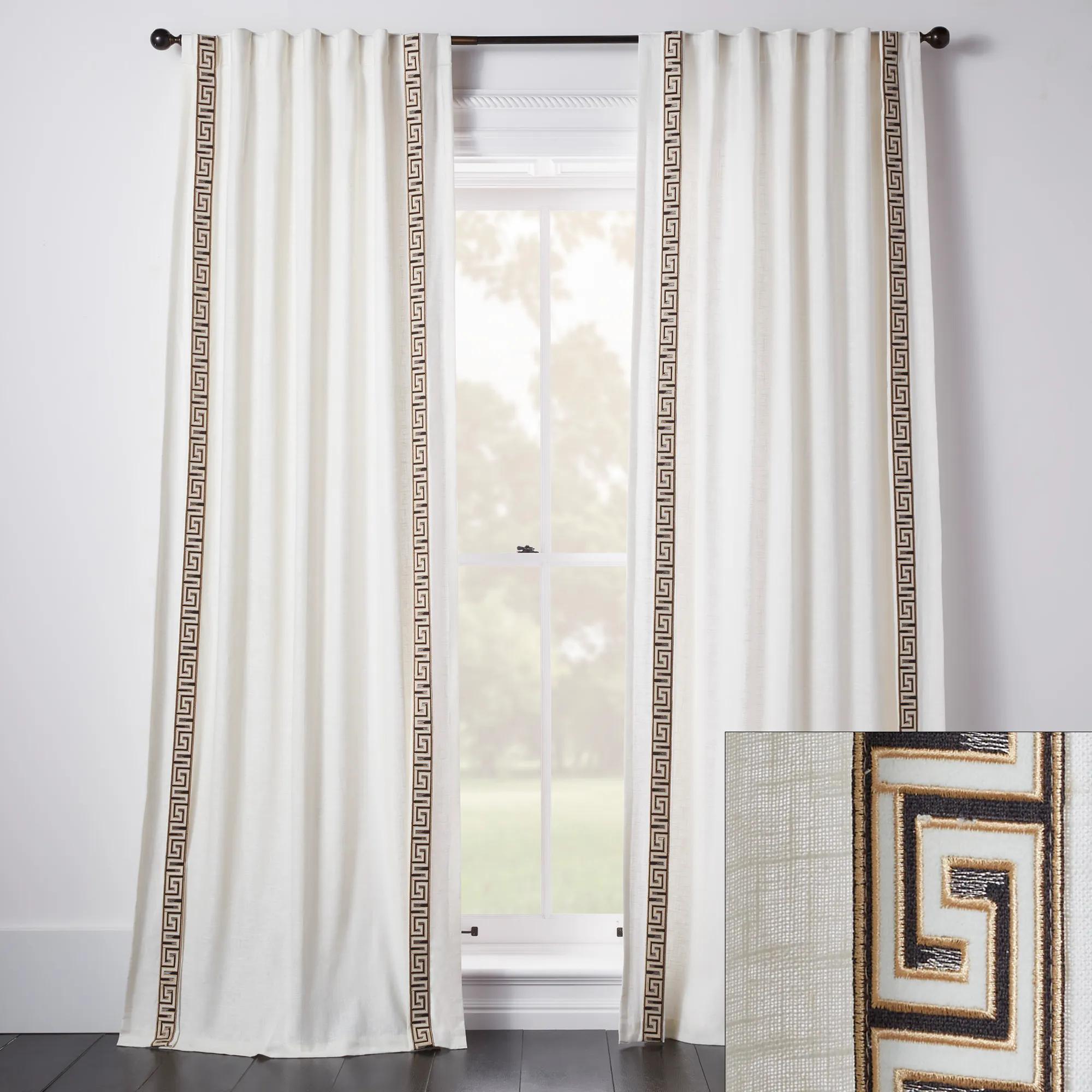 Chole Greek Key Border Velvet Widow Curtain Panels Custom$349
A white linen-blend curtain with black and gold velvet Greek key border and customizable hanging options.
Add To Cart -
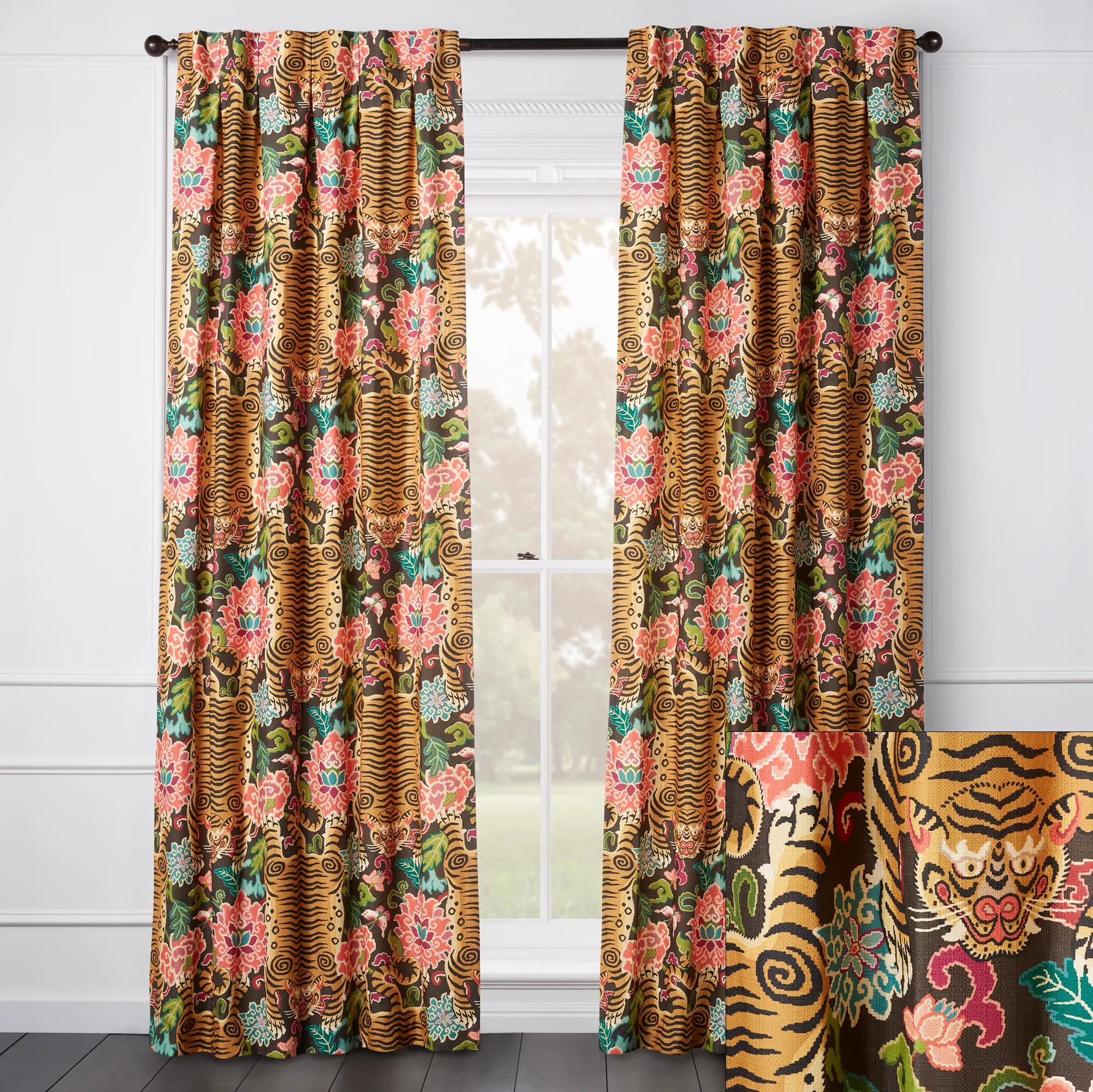
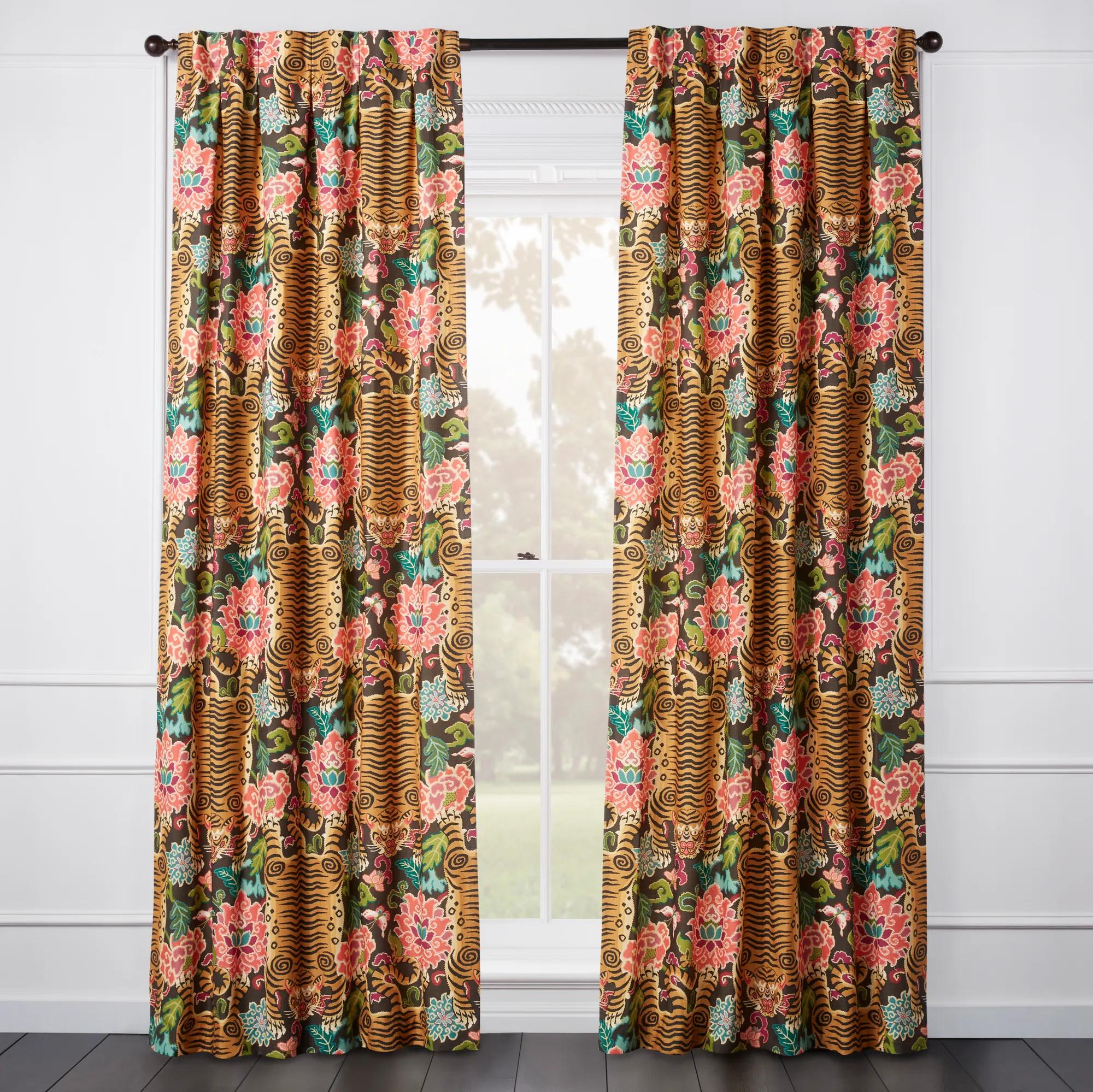 Nimer Gold/Multi Printed Slubbed Cotton Window Curtain Panel$349
A lively gold and multi-colored cotton curtain panel featuring a bold tiger print and customizable options.
Add To Cart -
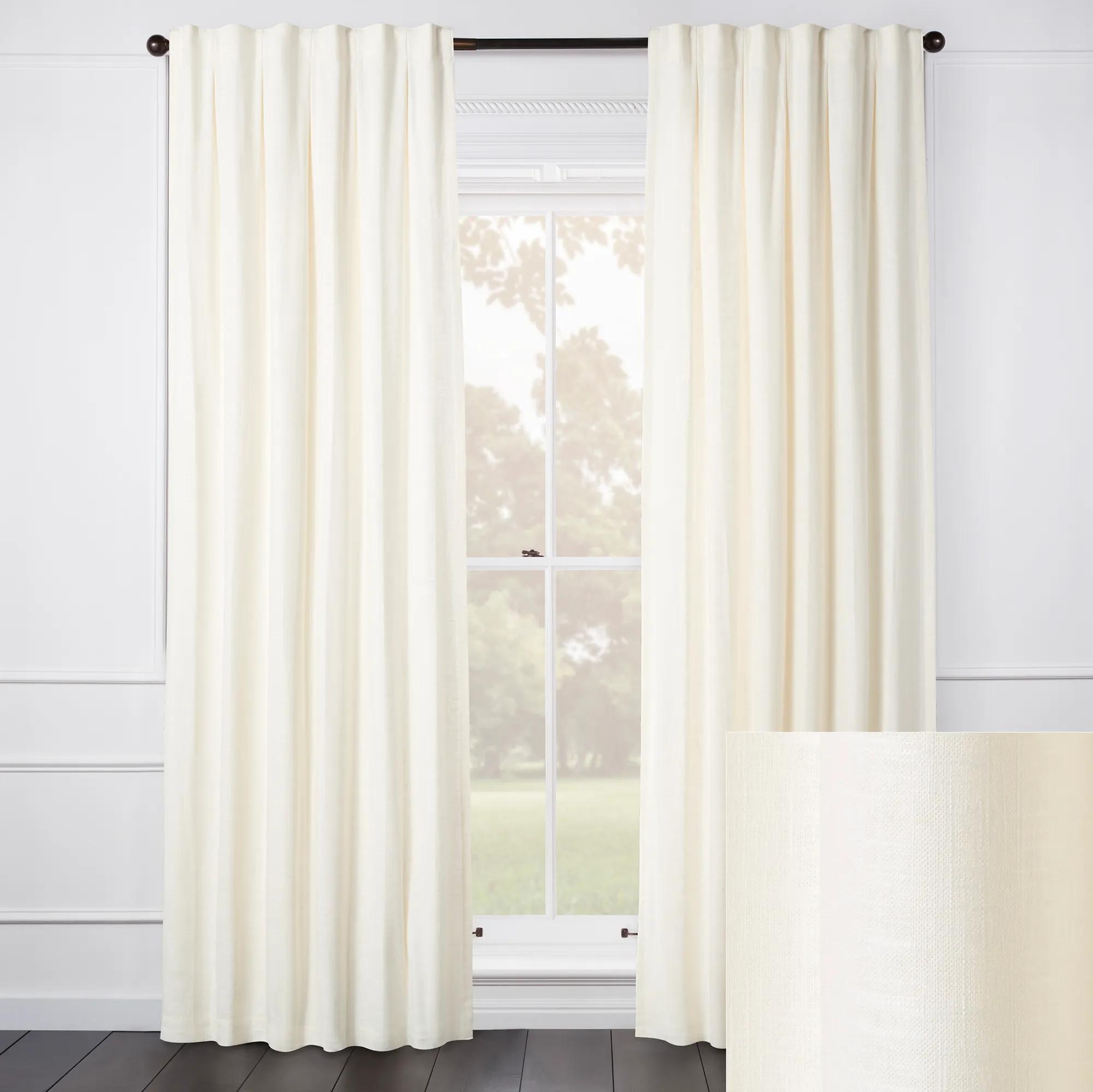
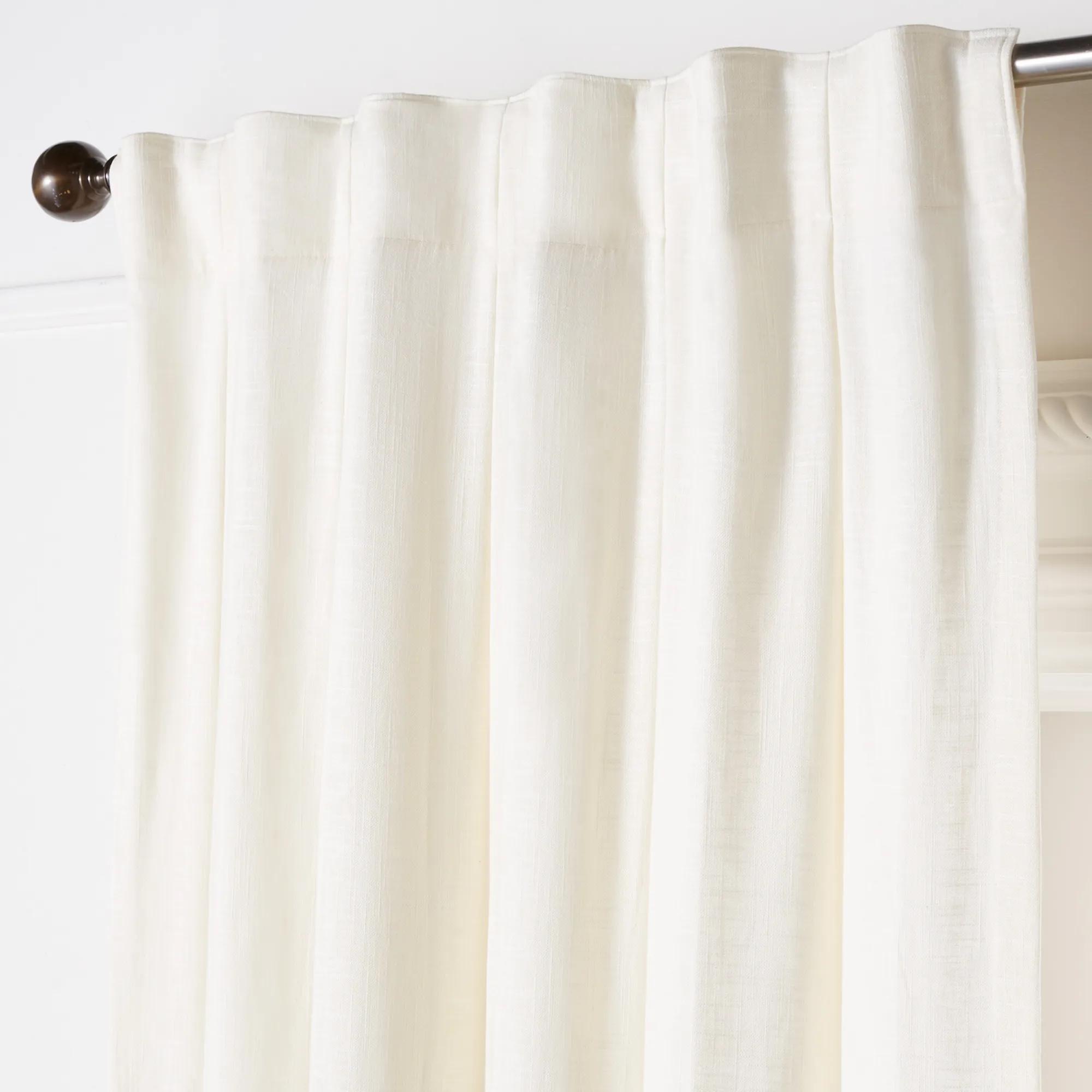 Audrey Linen Ivory Curtain - Custom$269
An ivory linen-blend curtain panel with lining, offering customizable lengths and two elegant header styles.
Add To Cart -
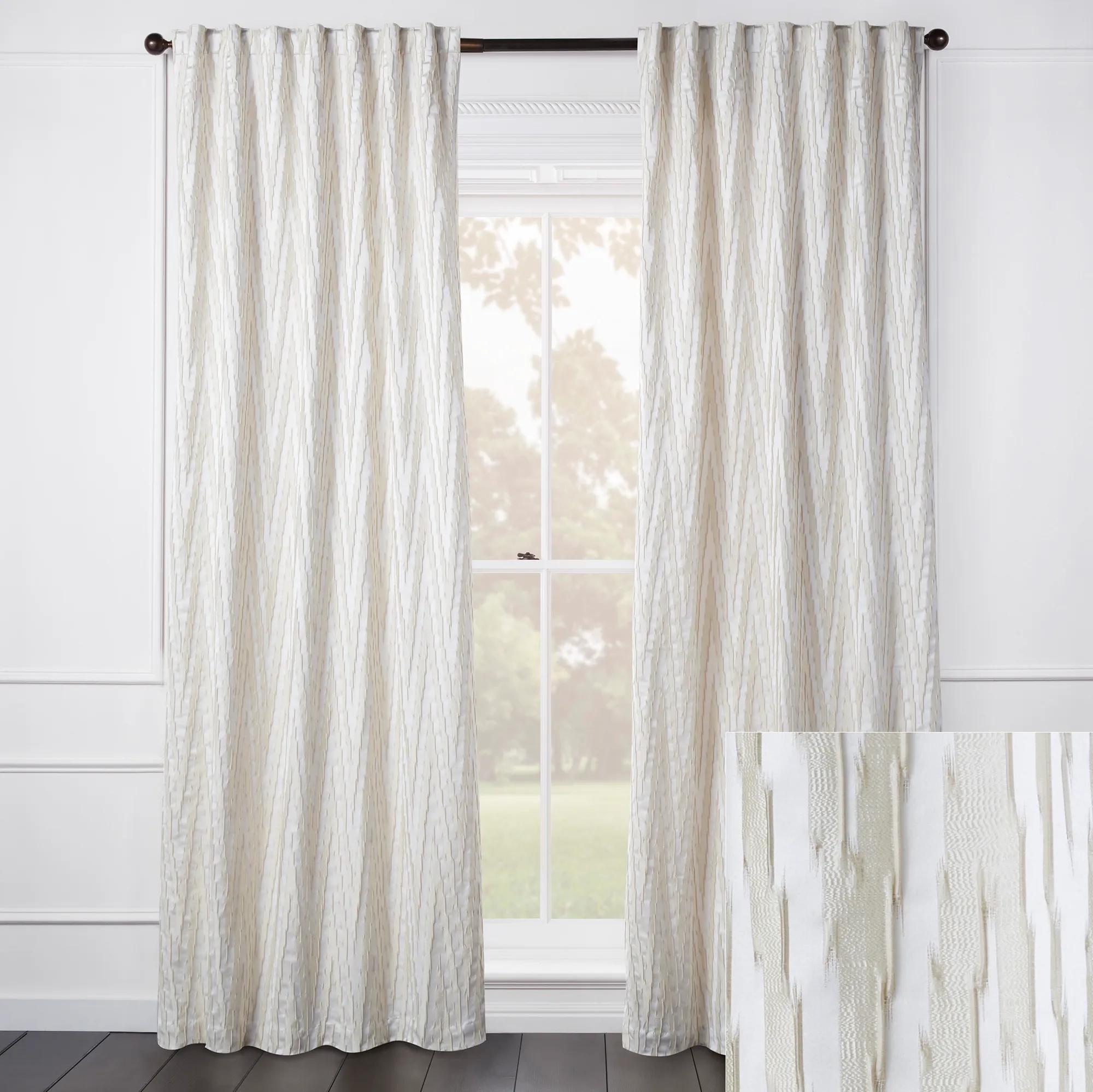
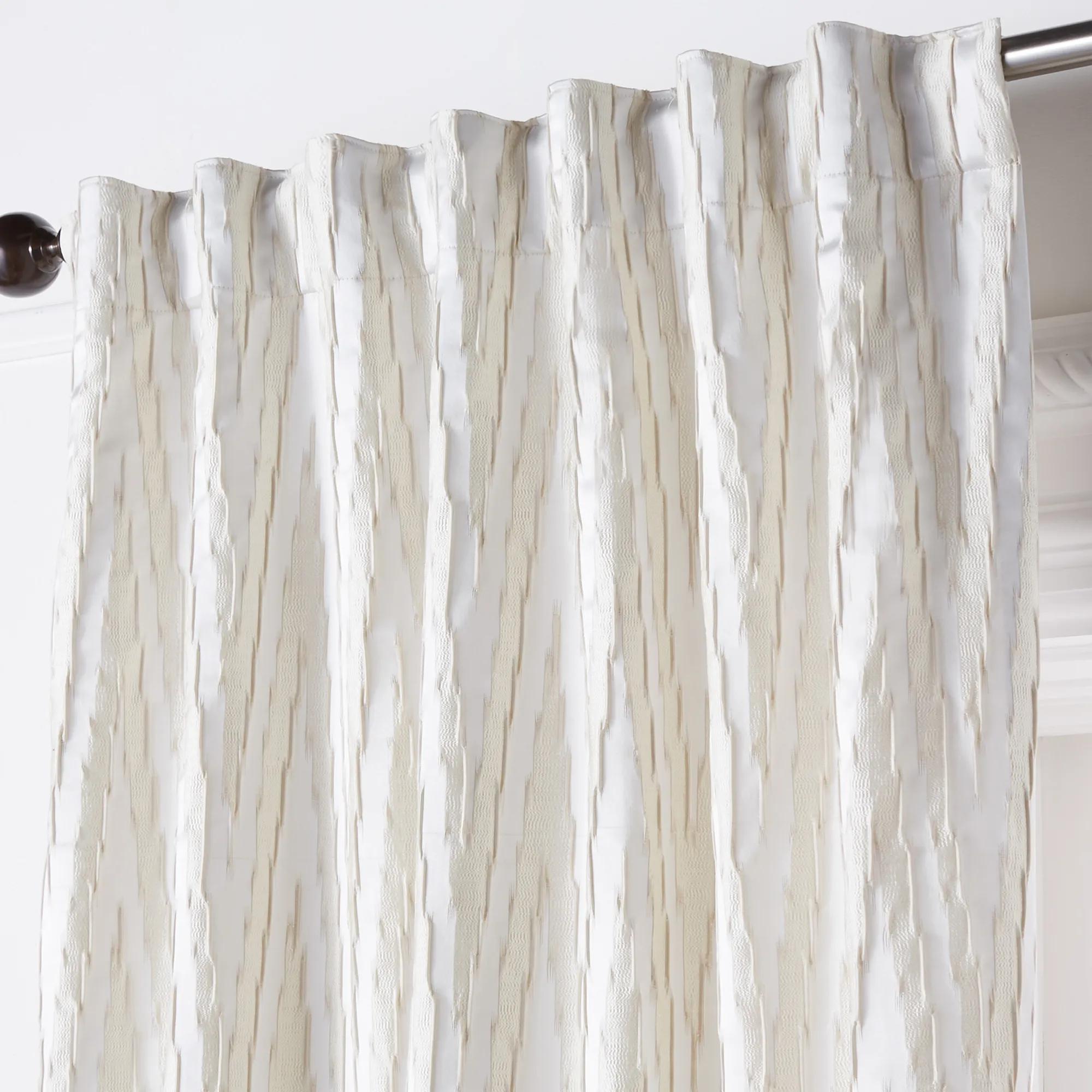 Minka Jacquard Pearl Window Curtain Panel Custom$289
A highly textured chevron curtain panel in pearl, grey, or natural polyester with customizable hanging options.
Add To Cart -
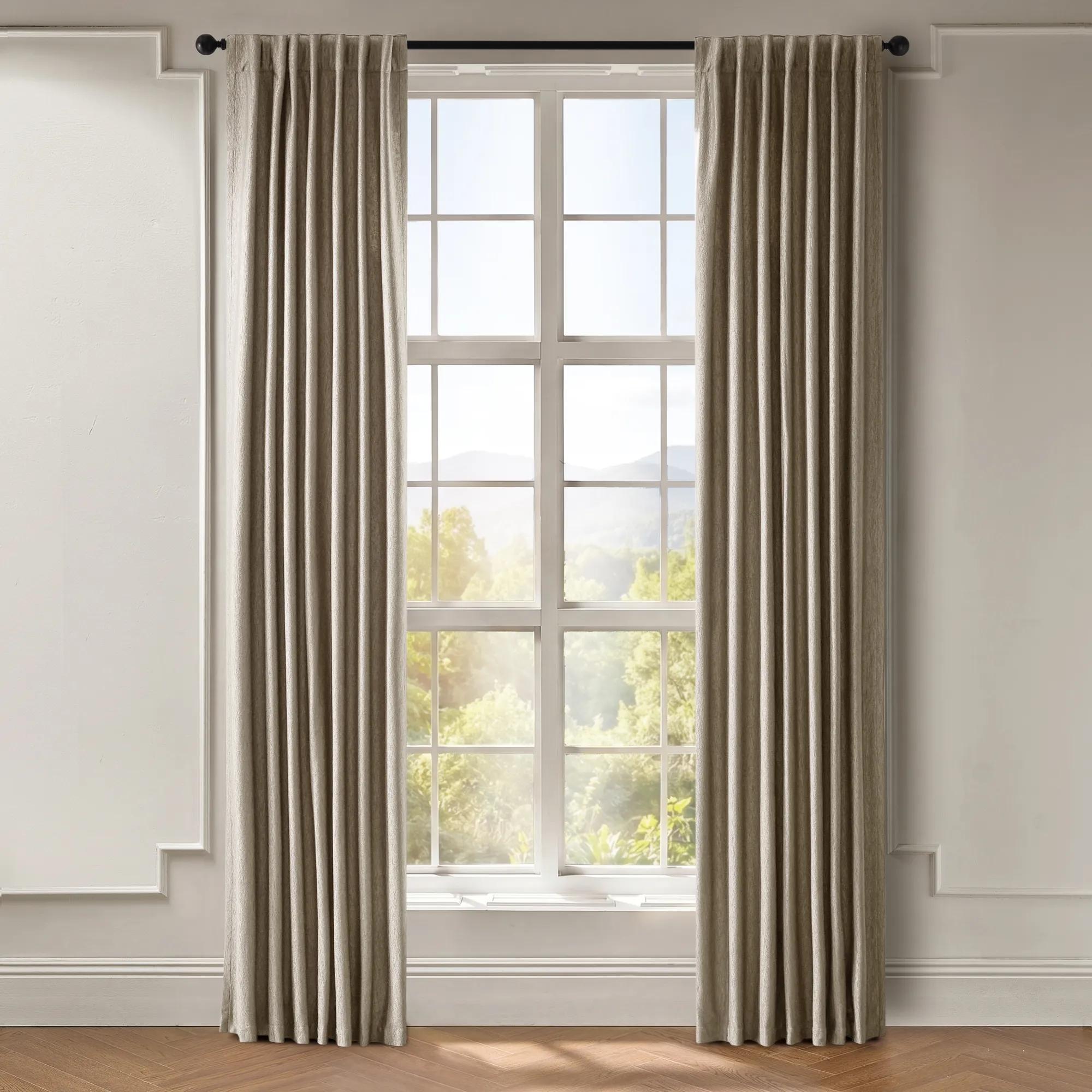
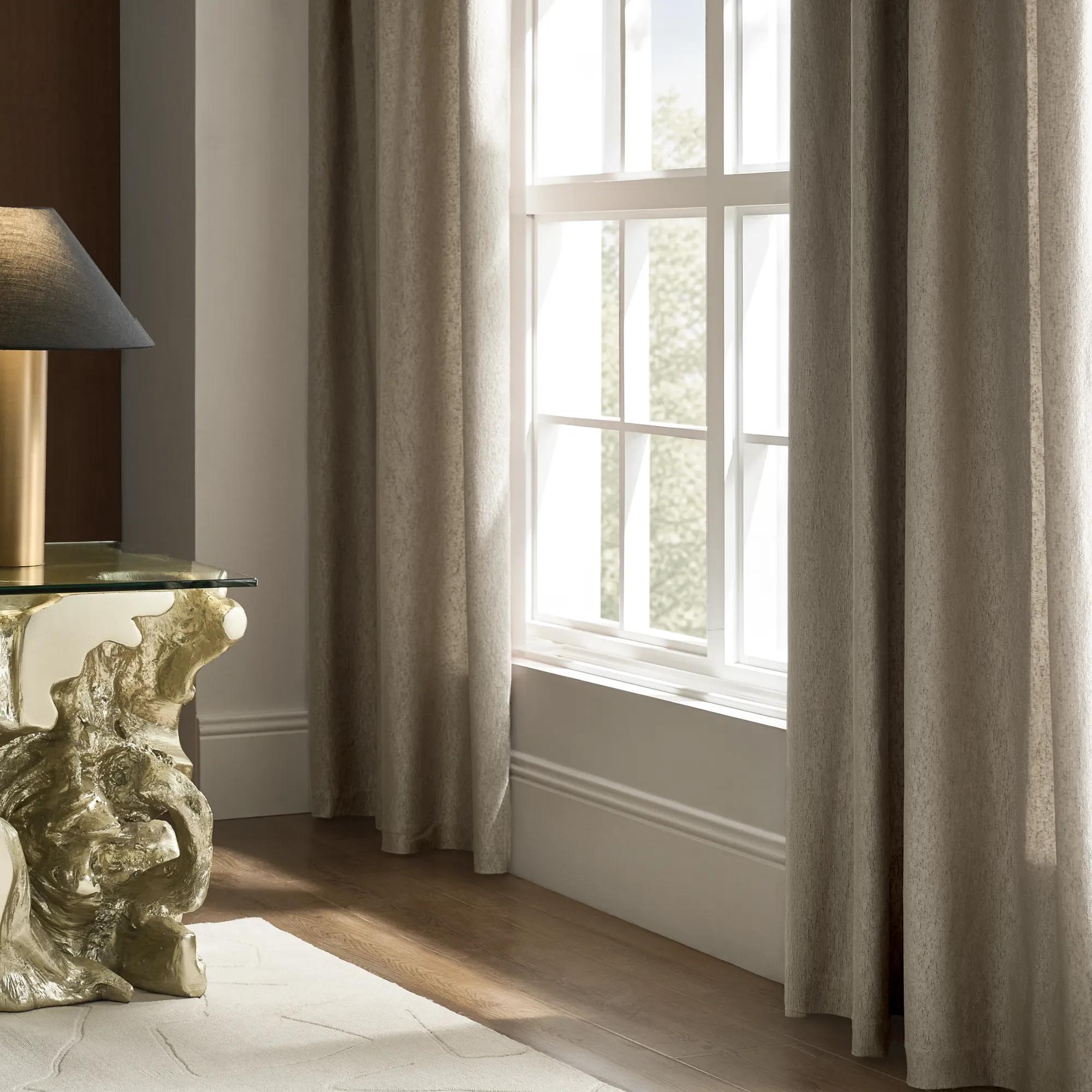 Anson Taupe Textured Window Curtain Panel$99
A taupe polyester curtain panel featuring a crushed sheen texture and versatile room-darkening design.
Add To Cart -

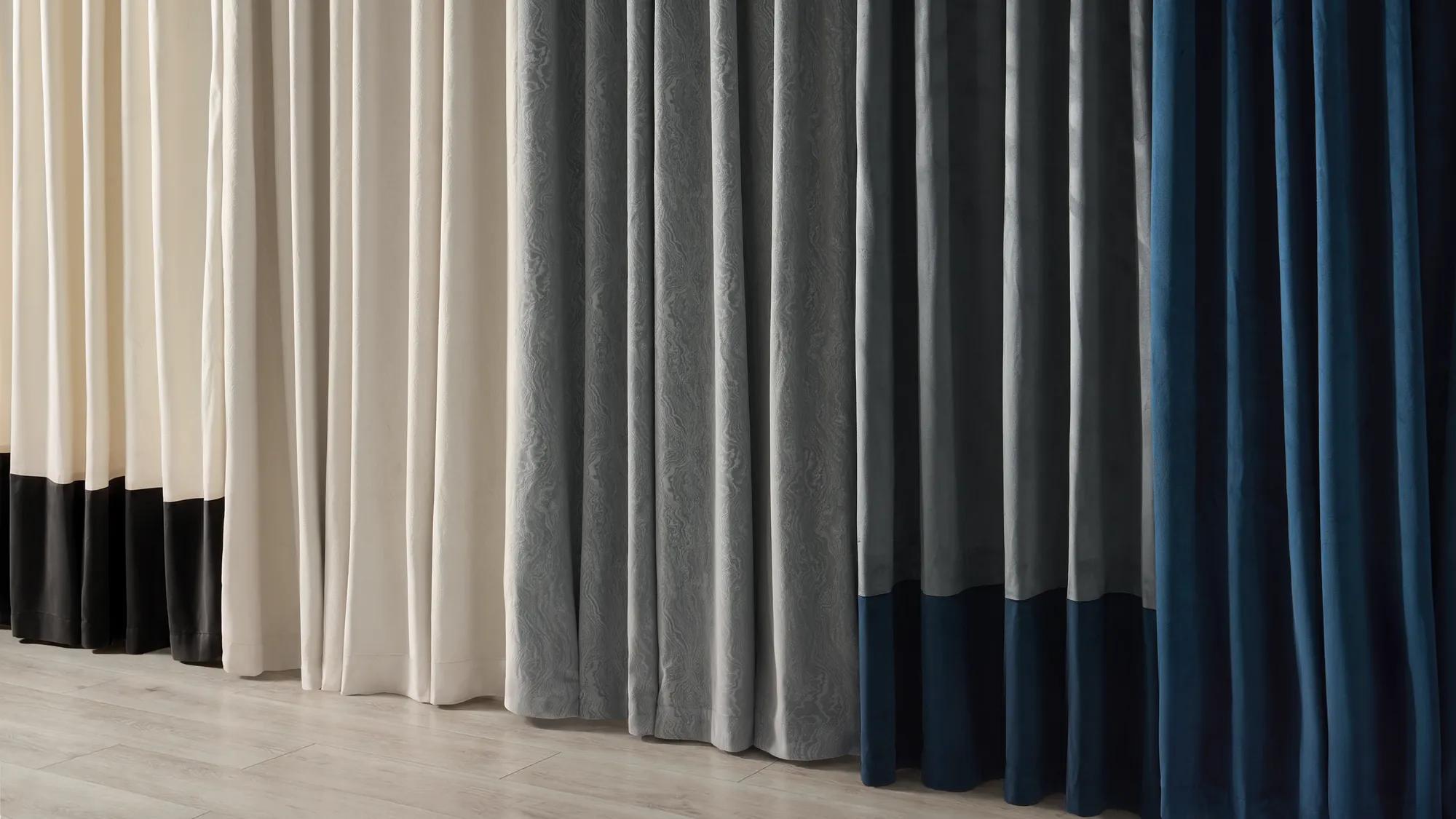 Mabel Velvet Swirl Curtain - Grey Blue$99
A grey blue velvet curtain featuring a tonal swirl pattern and versatile dual hanging options.
Add To Cart -

 Mabel Natural Velvet Swirl Window Curtain Panel$109
A warm neutral velvet curtain with a tonal swirl pattern and room-darkening, dual hanging options.
Add To Cart -
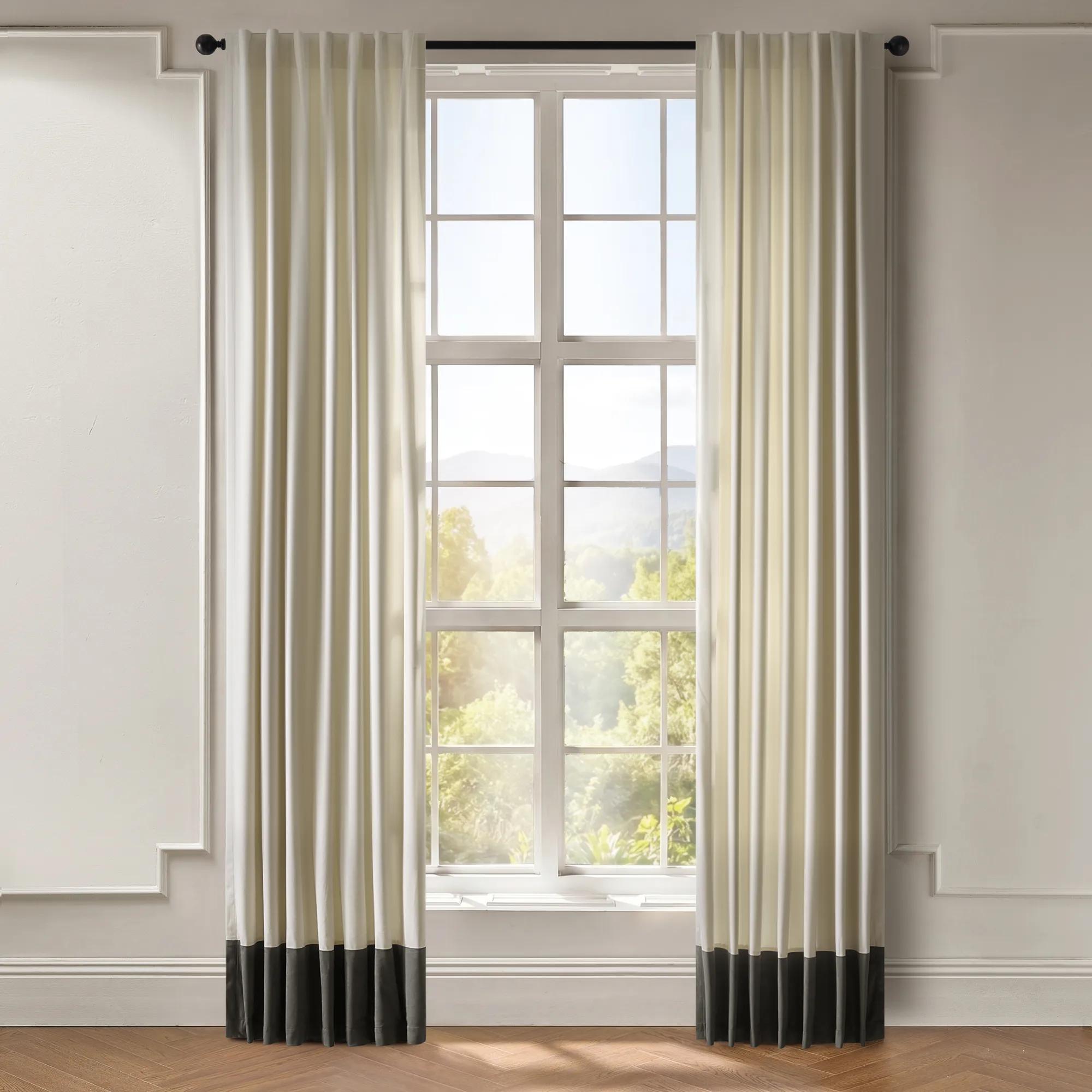
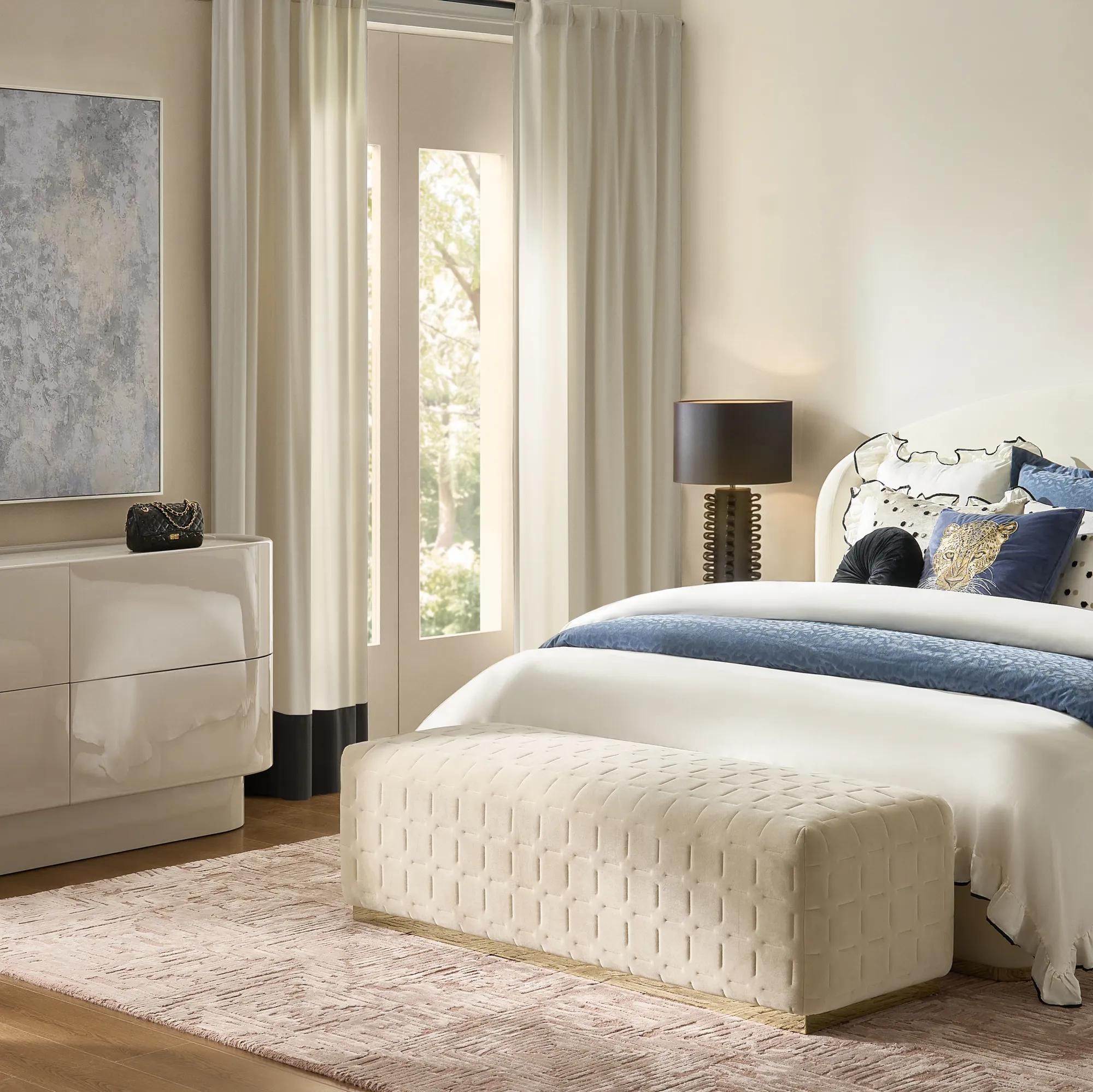 Bastien Ivory/Graphite Velvet Border Window Curtain Panel$109
A two-tone ivory and graphite velvet curtain panel with a Deco-inspired border and room-darkening design.
Add To Cart -

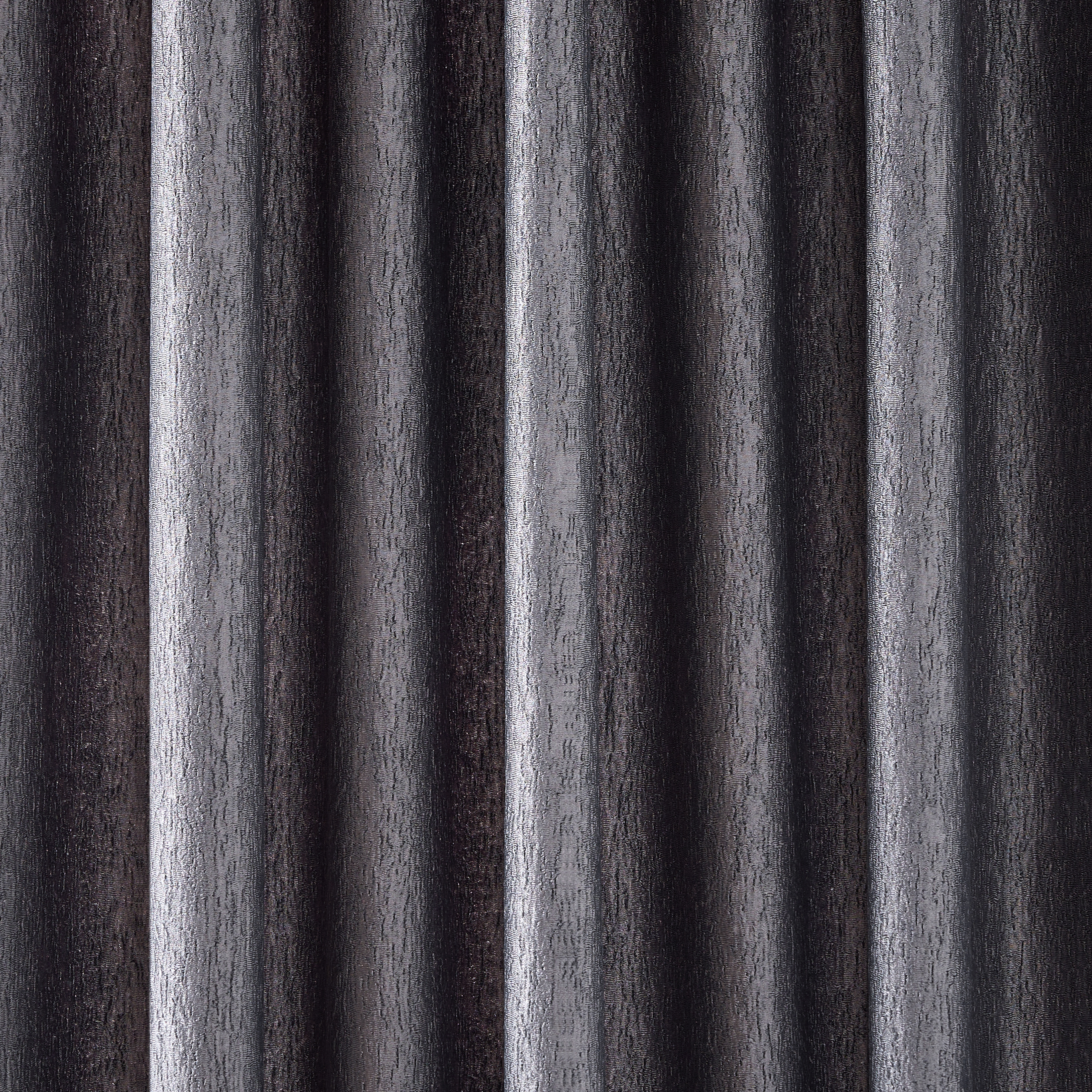 Anson Charcoal Textured Window Curtain Panel$89
A moody charcoal curtain with crushed polyester texture and subtle sheen for stylish, room-darkening appeal.
Add To Cart -
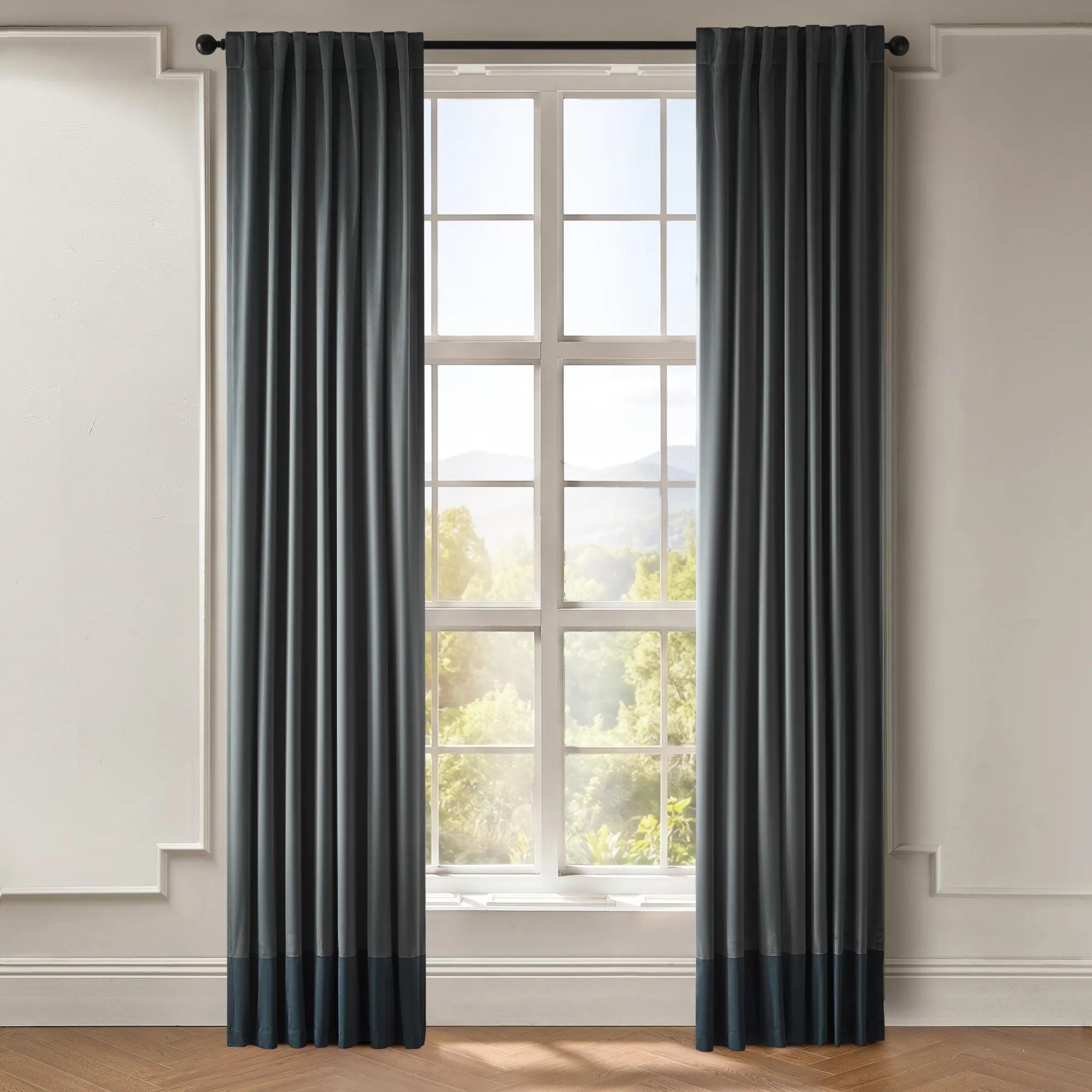
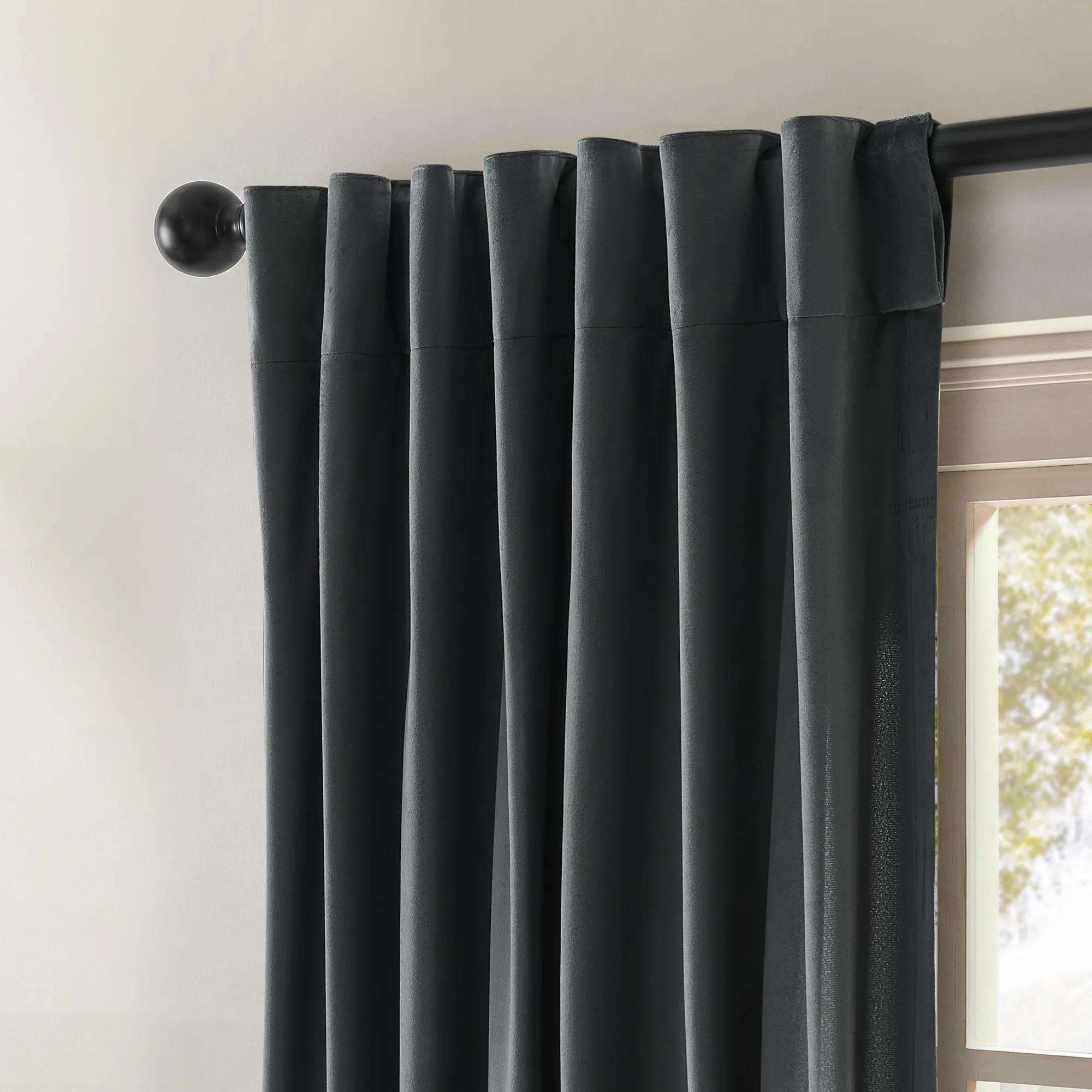 Bastien Blue/Midnight Velvet Border Window Curtain Panel$99
A two-tone dusty and midnight blue velvet curtain panel with a Deco-inspired border and room-darkening design.
Add To Cart -
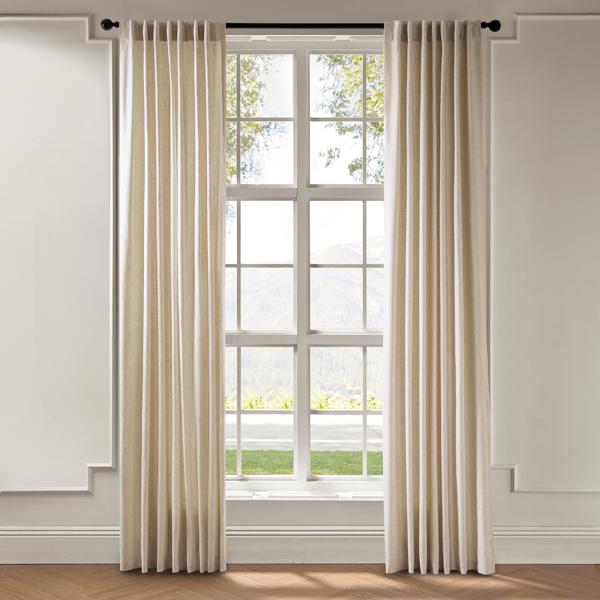
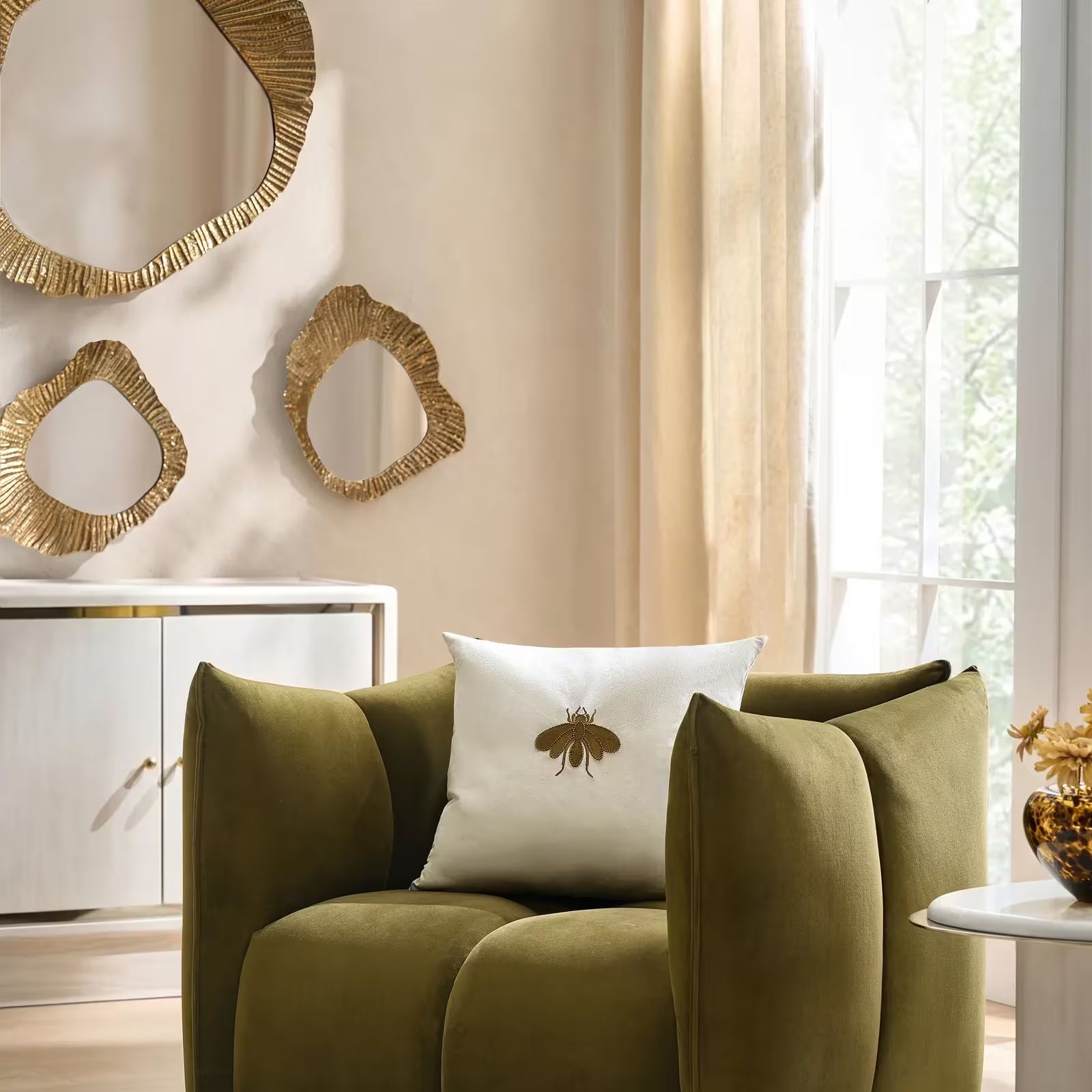 Anson Ivory Textured Window Curtain Panel$99
An elegant ivory curtain panel with a crushed, light-reflective texture for subtle shine and room darkening.
Add To Cart -

 Adair Midnight Blue Solid Velvet Window Curtain Panel$89
A sumptuous midnight blue velvet curtain that adds elegance, depth, and room-darkening style to any space.
Add To Cart -
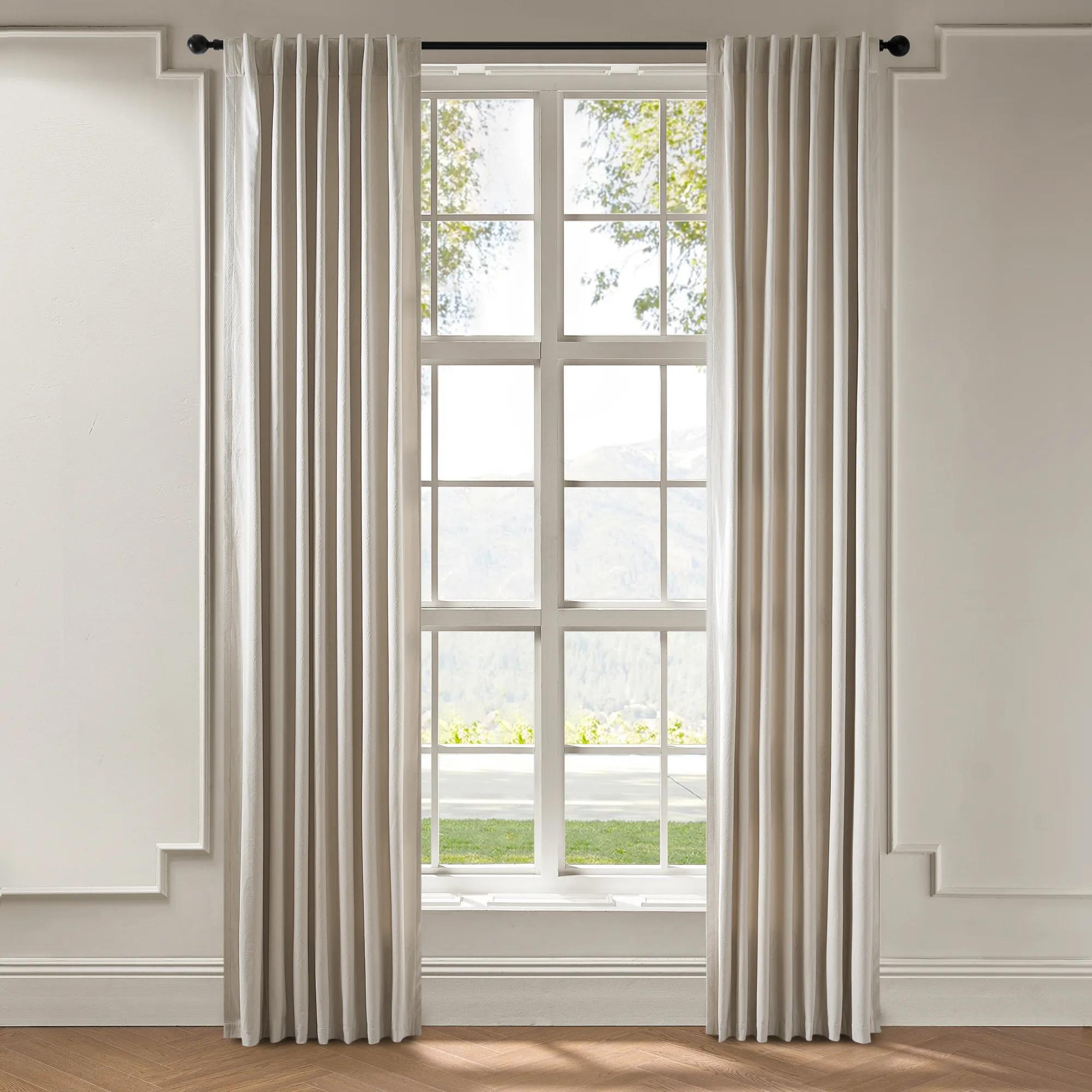
 Mabel White Velvet Swirl Window Curtain Panel$99
A crisp white velvet curtain featuring a tonal swirl texture and versatile dual hanging options.
Add To Cart -
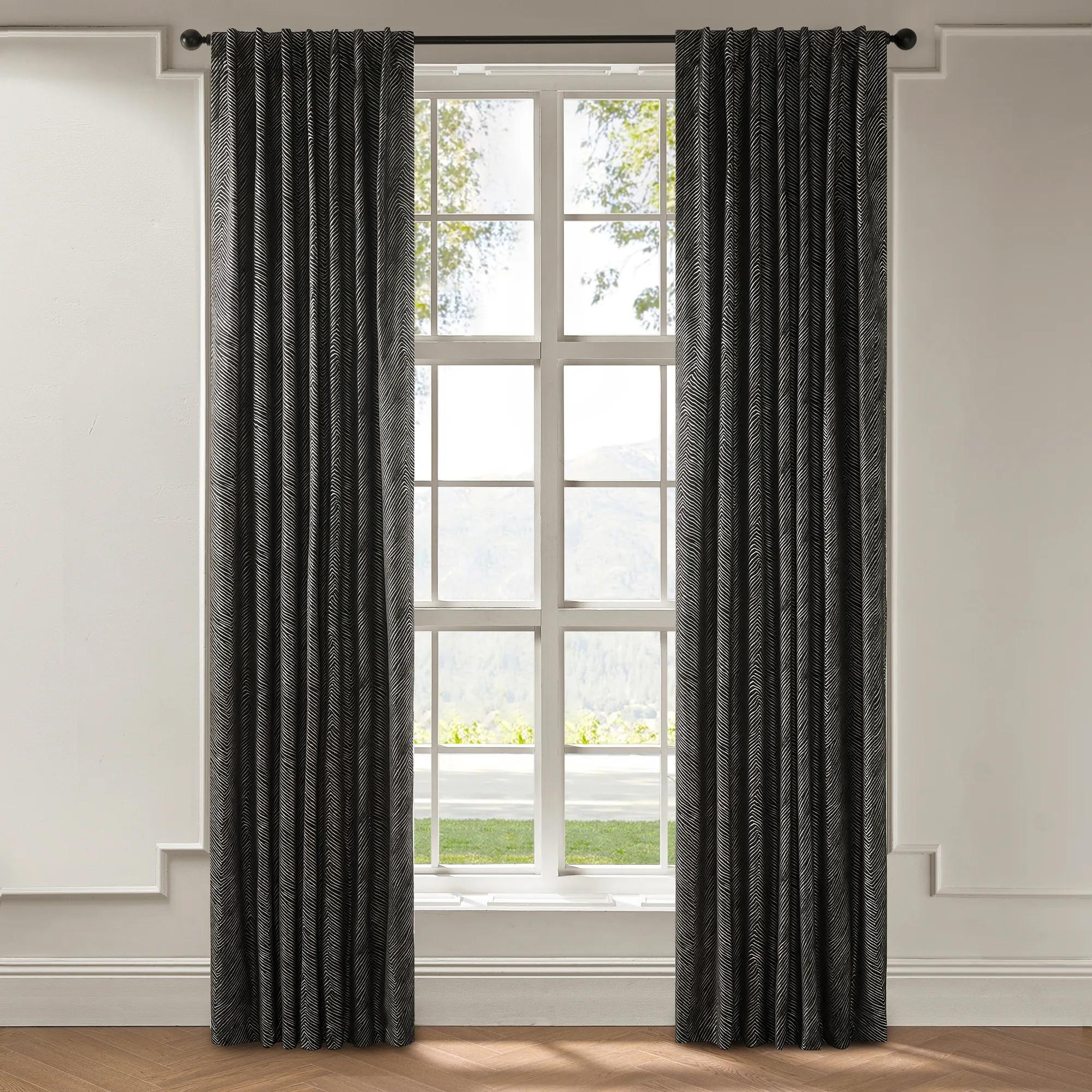
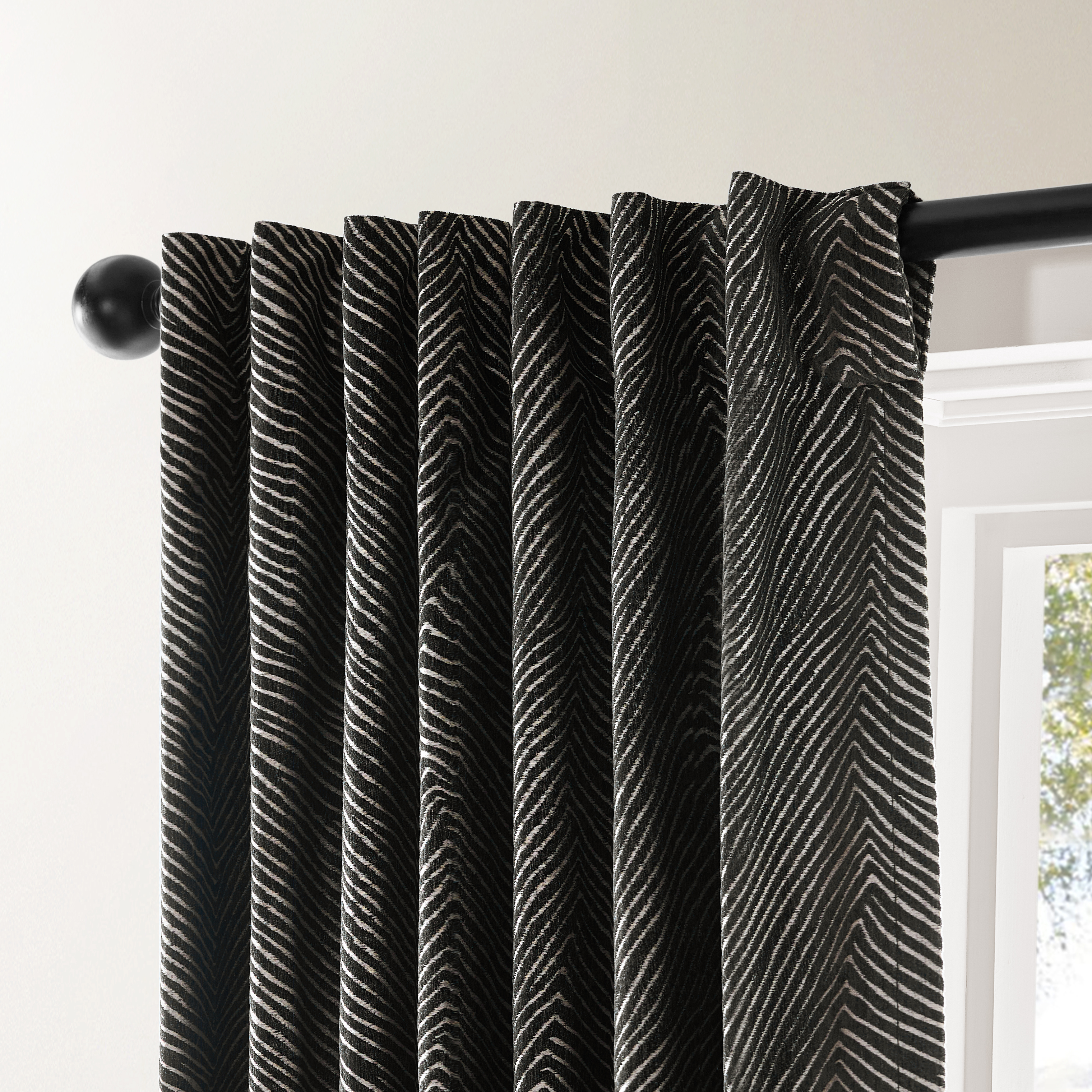 Kenzo Black Chenille Window Curtain Panel$139
A black chenille jacquard curtain with a room-darkening finish and versatile dual hanging options.
Add To Cart -
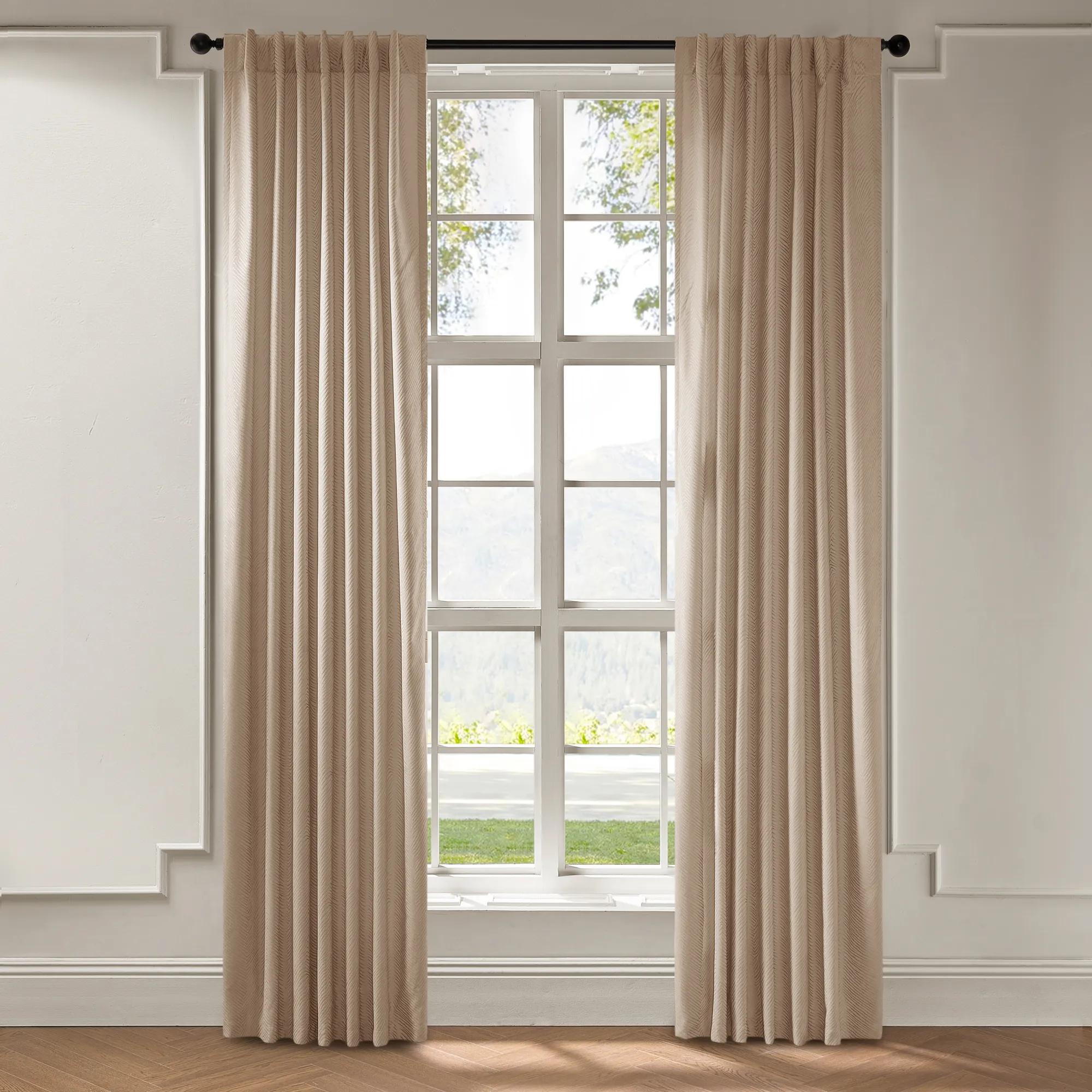 Kenzo Jacquard Beige Chenille Window Curtain Panel$129
A warm beige chenille jacquard curtain with a subtle sheen and versatile rod pocket or back tab hanging.
Add To Cart -

 Adair Sand Solid Velvet Window Curtain Panel$69
A sand-colored velvet curtain offering room-darkening privacy and versatile hanging options for refined interiors.
Add To Cart -
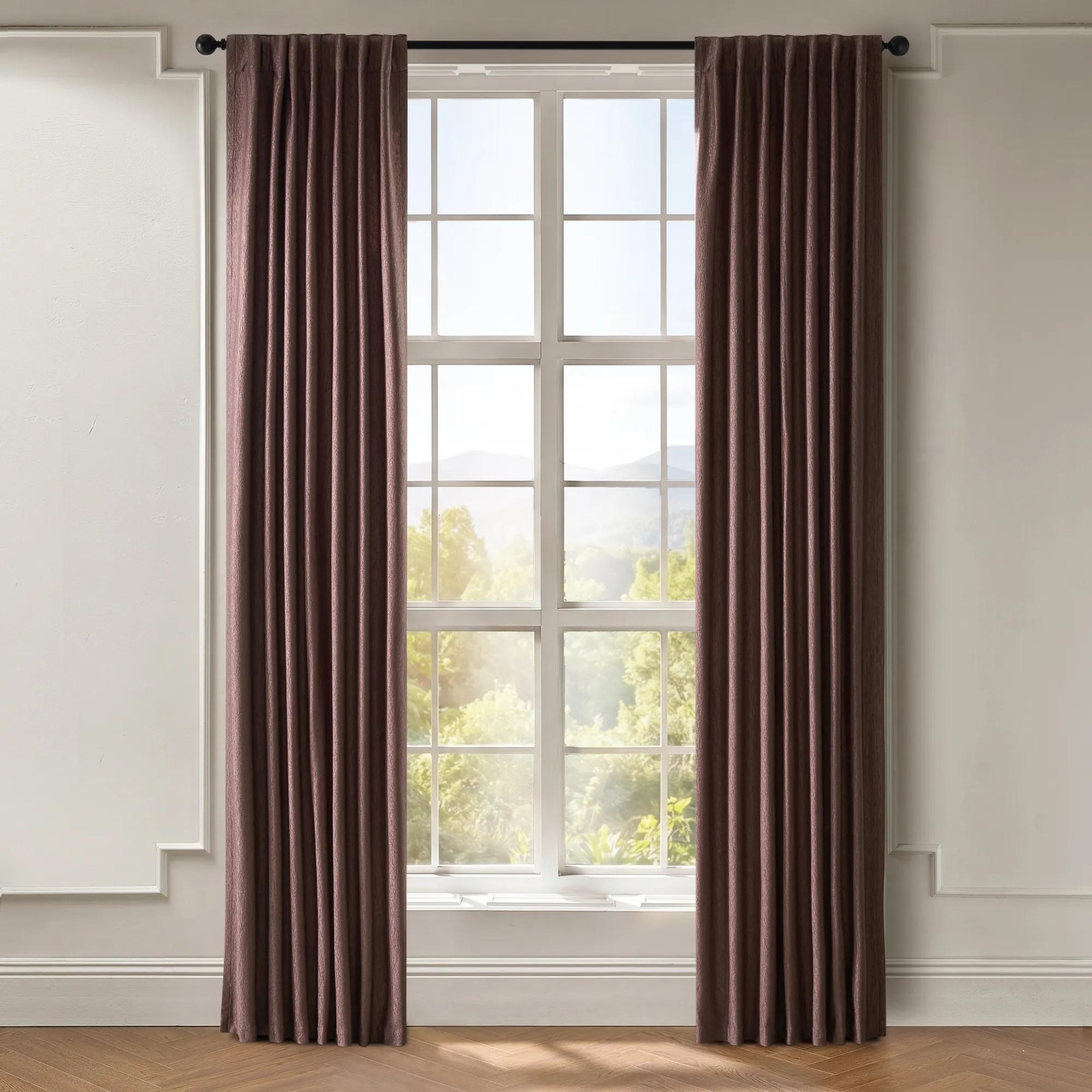
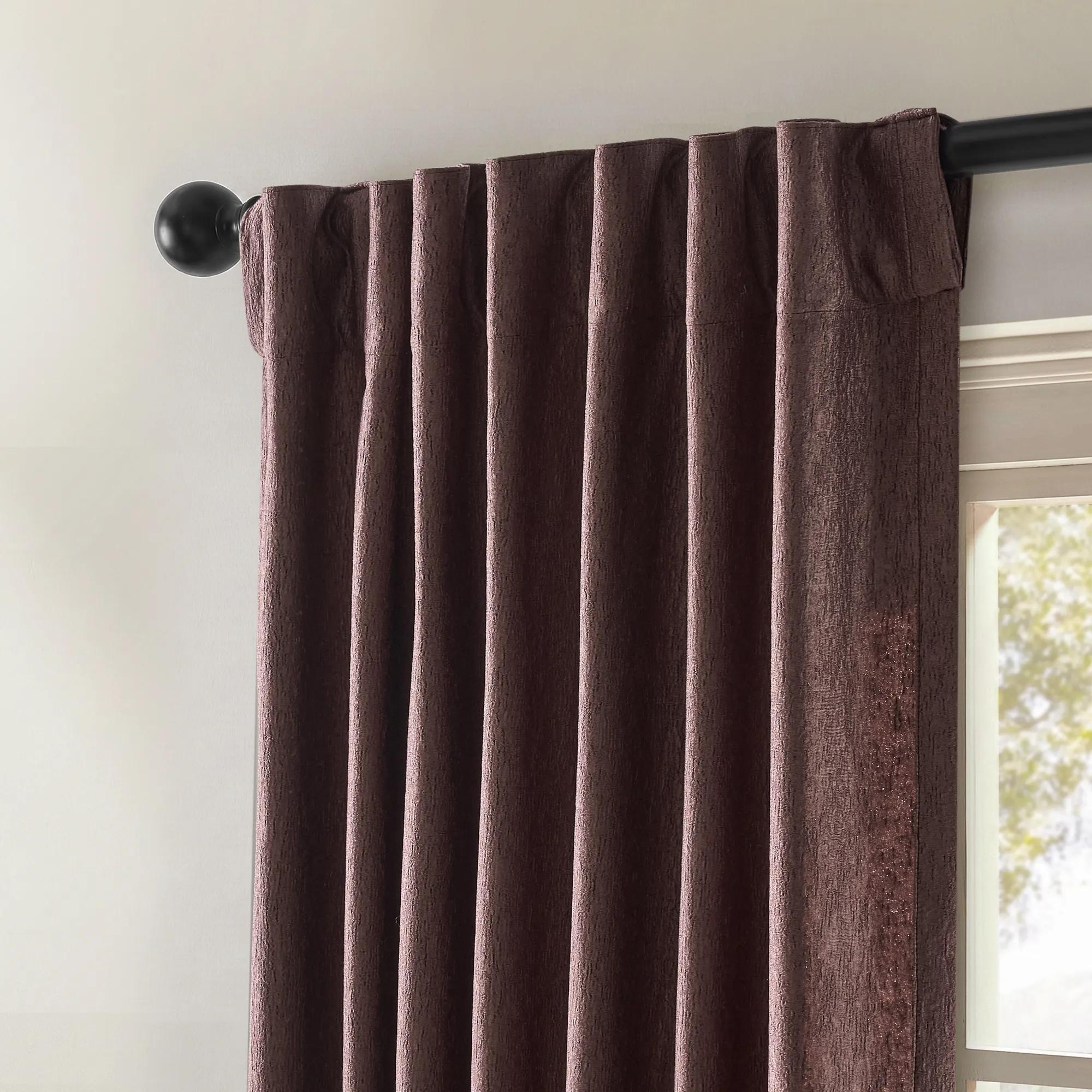 Anson Fig Textured Window Curtain Panel$99
A deep fig curtain panel in crushed, subtly sheened polyester with room-darkening and dual hanging options.
Add To Cart -
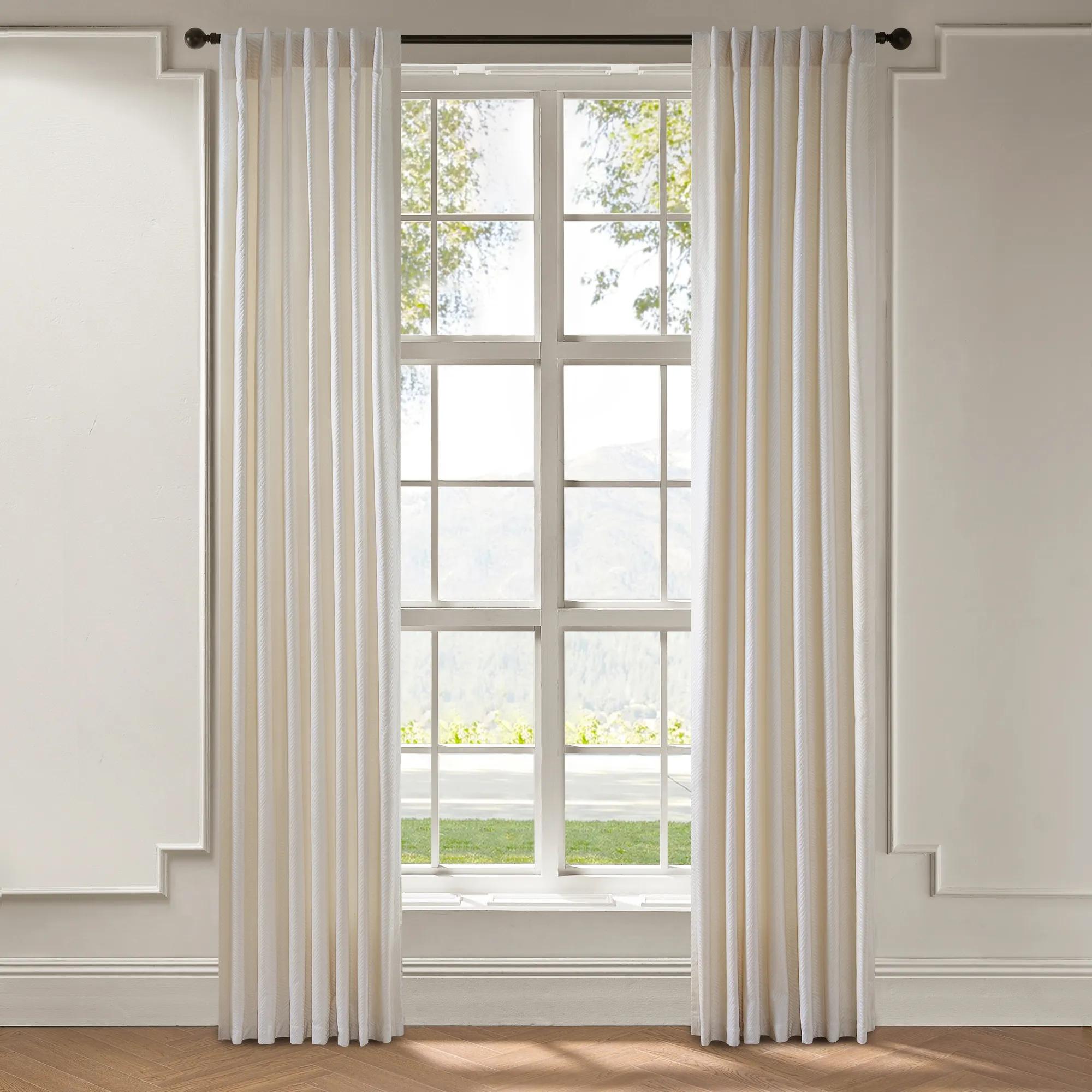
 Kenzo Chenille Curtain - White$129
A luxe white chenille jacquard curtain featuring a subtle high-contrast pattern and versatile dual construction.
Add To Cart

Elegant Window Treatment Ideas
Explore elegant window treatment ideas to frame your views and give your room a polished, expressive finish. Discover options that complement your space’s palette and proportions, whether you envision a softly layered look or a dramatic focal point. As you browse, consider window dimensions, desired privacy, and how much natural light you want to welcome into the room.
Elegant window treatment ideas take shape through fabric, proportion, and the way a room receives light. Curtains and drapery do more than frame a view: they introduce movement, soften architectural lines, and give furnishings a more composed setting. In a living room with a sculptural sofa and gleaming accent tables, generous panels can create a quiet backdrop that lets distinctive silhouettes command attention. In a bedroom, sumptuous drapery brings a sense of enclosure, turning the area around the bed into an intimate retreat. Material sets the mood. Velvet offers depth and a rich, light-catching surface, making it especially expressive beside polished metal, lacquered finishes, or richly textured upholstery. Linen and linen-blend fabrics bring a more relaxed elegance, with visible texture that lends character to a tailored room. Silk has a luminous quality and a fluid drape, while fabrics with a silk-like finish can offer a similar visual effect with different care requirements. Cotton provides a softer, often more matte appearance, and synthetic blends may offer useful resistance to wrinkling or dimensional changes, depending on their construction. Sheer panels diffuse daylight into a delicate veil, allowing architectural details and furnishings to remain visually prominent. Their transparency, however, means they should not be mistaken for dependable privacy coverings, particularly when interior lights are on. Color creates another layer of expression. Ivory, champagne, and pale gray can connect a window to a tonal interior without making the room feel bare. Deep charcoal, sapphire, or other saturated hues give drapery a stronger presence, especially against lighter walls. Subtle woven patterns reveal themselves gradually, while larger motifs turn the window into a focal point. Texture deserves equal attention: a lustrous panel reflects light differently from a brushed or nubby weave, even when both occupy the same color family. The most compelling combinations echo something already present in the room—a metallic accent, a painterly artwork, or the depth of an upholstered chair—without requiring every surface to match.
Scale is what gives elegant window treatments their architectural confidence. A slender window can feel more substantial when its drapery extends beyond the frame, while a broad wall of glass benefits from panels with enough fullness to maintain graceful folds. Panel width should account for the complete span of the rod, the desired fullness, and the space needed for fabric to gather when open. Two panels that technically cover a window may still look stretched and sparse once closed; generous fabric creates a more finished silhouette. Length is equally consequential. A hem that just meets the floor reads as tailored and deliberate, while a small break introduces softness. More pronounced pooling creates drama but requires extra attention in spaces where fabric might be stepped on or collect dust. For a frequently used doorway, a clean floor-length treatment generally makes more sense than a lavish pool of fabric. Mounting position also changes the room’s proportions. A rod placed above the window frame can draw the eye upward, provided the placement respects ceiling moldings and leaves sufficient room for installation. Extending the rod beyond the sides of the frame allows open panels to rest away from more of the glass, preserving the view and admitting light. Hardware is part of the composition rather than an afterthought. A polished finish can pick up the gleam of nearby lighting, while a darker finish gives pale fabric a crisp outline. Decorative ends should have room to sit comfortably beside adjacent walls or cabinetry, and the rod, brackets, and anchors must be appropriate for the fabric’s weight and the mounting surface. Heading styles influence both appearance and operation: pleats create an orderly rhythm, rings offer visible structure, and rod pockets form a softer gathered effect. Layered treatments combine atmosphere with flexibility, pairing a translucent inner layer with more substantial outer drapery. In a dining room, that arrangement can preserve an airy daytime setting while offering a more enclosed backdrop for evening gatherings. In a media room or bedroom, a lining designed for room darkening may be useful, although coverage around the edges remains important.
The beauty of window treatments depends as much on thoughtful construction and care as on their first impression. Lining can add body, help panels fall more consistently, and shield decorative fabric from some direct exposure to light, but its purpose varies by fabric and design. A lined panel is not automatically a blackout panel; light filtering, room darkening, and blackout describe different intended effects. Bedrooms, street-facing living spaces, and rooms used for screen viewing may call for stronger light control, while a sitting room overlooking a private courtyard may benefit from a more translucent treatment. Durability also deserves attention in rooms where curtains are opened and closed every day. Secure seams, suitable hardware, and fabric that moves easily along the rod help the treatment retain its shape without unnecessary pulling. Homes with children or pets may favor hems that remain clear of busy pathways and fabrics without easily snagged surface details. Any cords associated with a window covering require particular attention to child safety, and cordless designs avoid that hazard. Care should always follow the attached instructions, since fiber content alone does not determine whether a panel can be washed, steamed, or dry-cleaned. Some fabrics tolerate gentle laundering, while others need professional cleaning to preserve their finish, lining, or dimensions. Regular light dust removal, using an appropriate method, can help keep folds looking fresh; vigorous brushing or direct heat may damage delicate surfaces. Silk and certain dyed fabrics are especially vulnerable to prolonged direct sunlight, making placement and lining worth considering. For renters, homeowners refreshing a single room, or anyone completing a larger decorating project, accurate measurements are as important as the desired aesthetic. Existing rod dimensions, ceiling height, nearby furniture, and the way the window opens all influence a successful fit. Thoughtfully chosen Elegant Window Treatment Gifts can also be a distinctive housewarming or wedding gesture when the recipient’s measurements, decorating preferences, and installation plans are known. The result should feel personal: a beautifully framed view, a richer interplay of texture and light, and a room whose finishing details carry the same intention as its most expressive furnishings.
FAQs
Give windows an architectural presence with tailored curtain panels, expressive folds, and decorative hardware. For a quietly glamorous setting, echo the room’s palette with tonal curtains; for a more dramatic composition, choose a contrasting hue that frames the view like a work of art.
Pair airy inner panels with more substantial outer curtains to create a rich interplay of light, texture, and movement. Keep the layers within a cohesive color family for a polished effect, or juxtapose delicate translucence with a more pronounced texture for added depth.
Ivory, champagne, and warm gray offer a luminous foundation, while ink blue, emerald, and charcoal introduce a more theatrical mood. Draw inspiration from a favorite artwork, rug, or accent chair so your window treatments feel woven into the room’s visual story.
Let patterned curtains lead the composition, then carry one or two of their colors into surrounding accents. Graphic motifs bring crisp definition, while painterly designs lend expressive movement. Balance the pattern with quieter surfaces to give every detail room to be appreciated.
Treat curtain hardware as the finishing jewelry of the window. Gleaming finishes add a luminous accent, while darker finishes create a striking outline. Sculptural finials can echo the curves of a chandelier or the geometry of nearby furniture, giving the room a beautifully considered finish.


