Designer Glass And Metal Tables
Designer Glass And Metal Tables
-
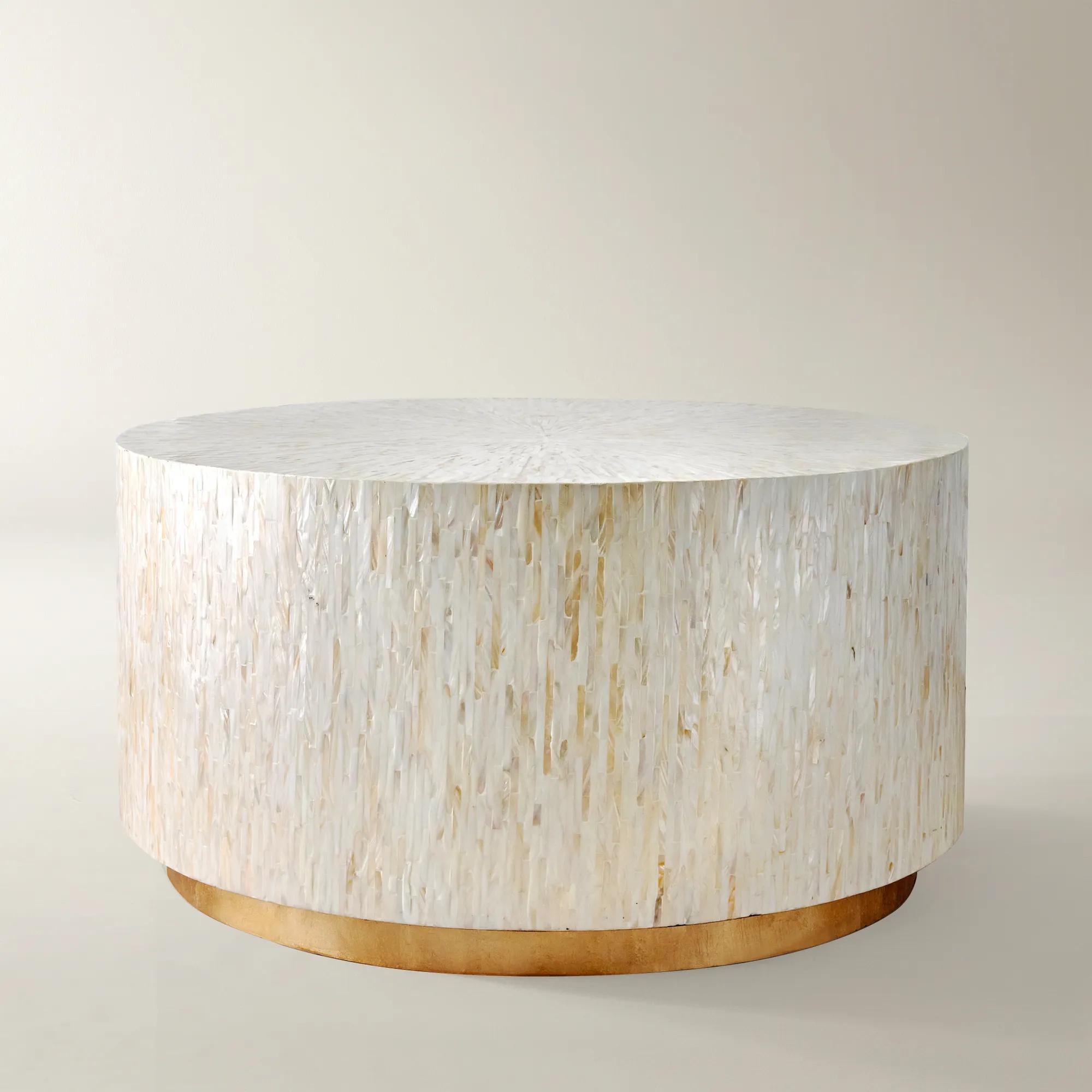
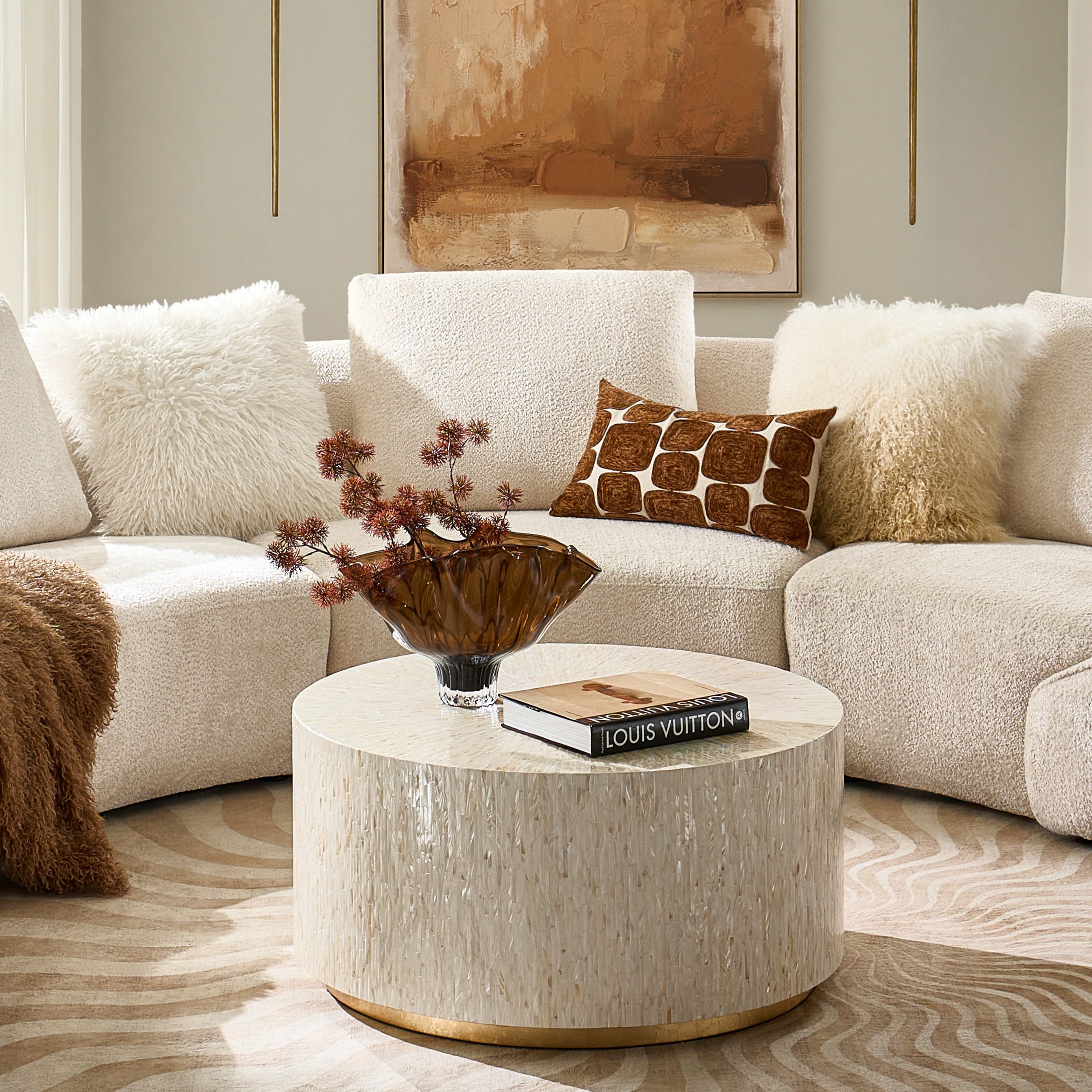 Alexandria Round Mosaic Platinum Coffee Table (36")$799
A luminous ivory coffee table featuring hand-applied mother-of-pearl mosaic and a gold leaf-accented base.
Add To Cart -
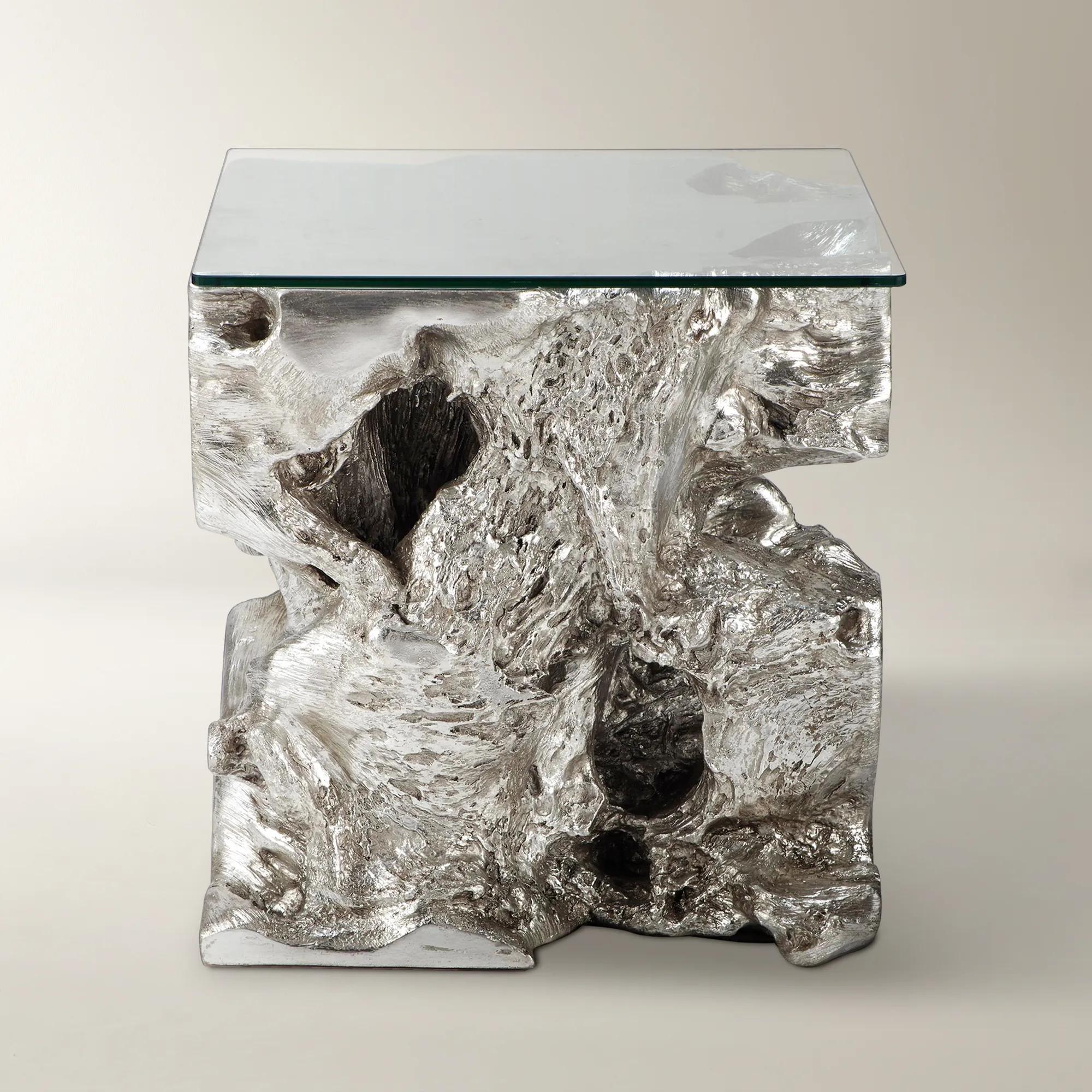 Sequoia Silver Resin End Table With Glass Top (22")$999
A sculptural end table featuring a silver leaf resin base and tempered glass top for modern elegance.
Add To Cart -
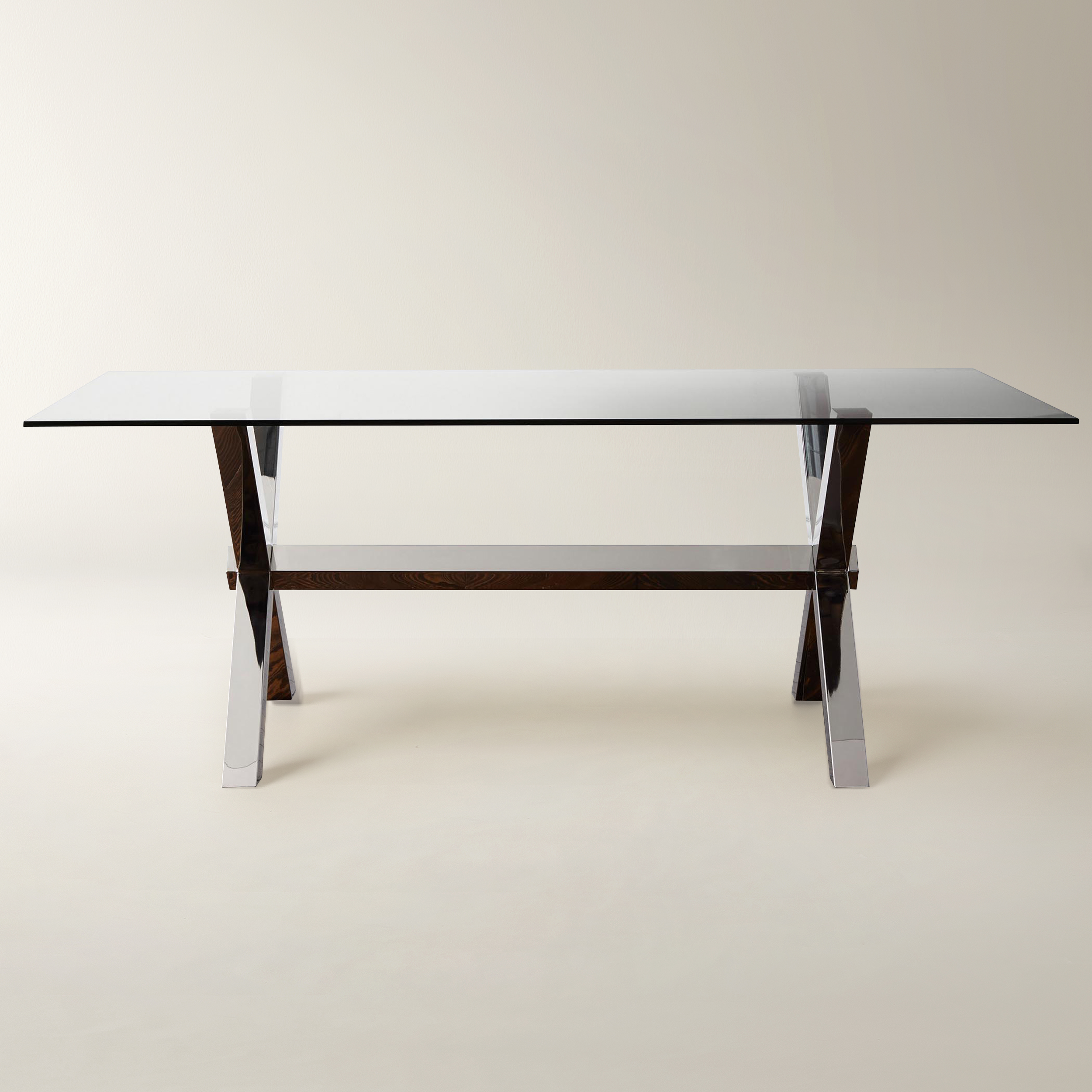
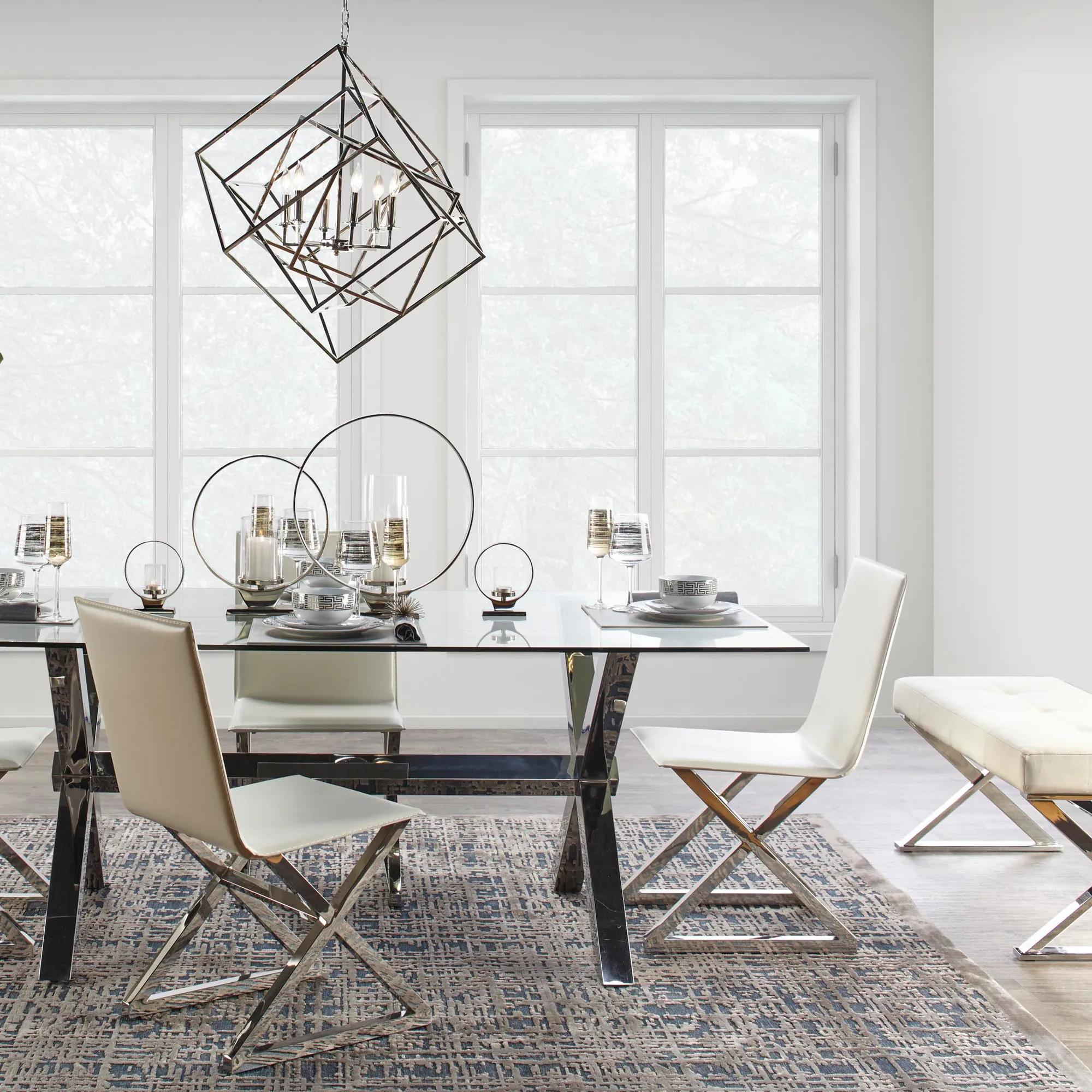 Axis Rectangular Silver Dining Table With Glass Top (78")$1199
A contemporary dining table featuring a polished stainless steel base and durable tempered glass top.
Add To Cart -
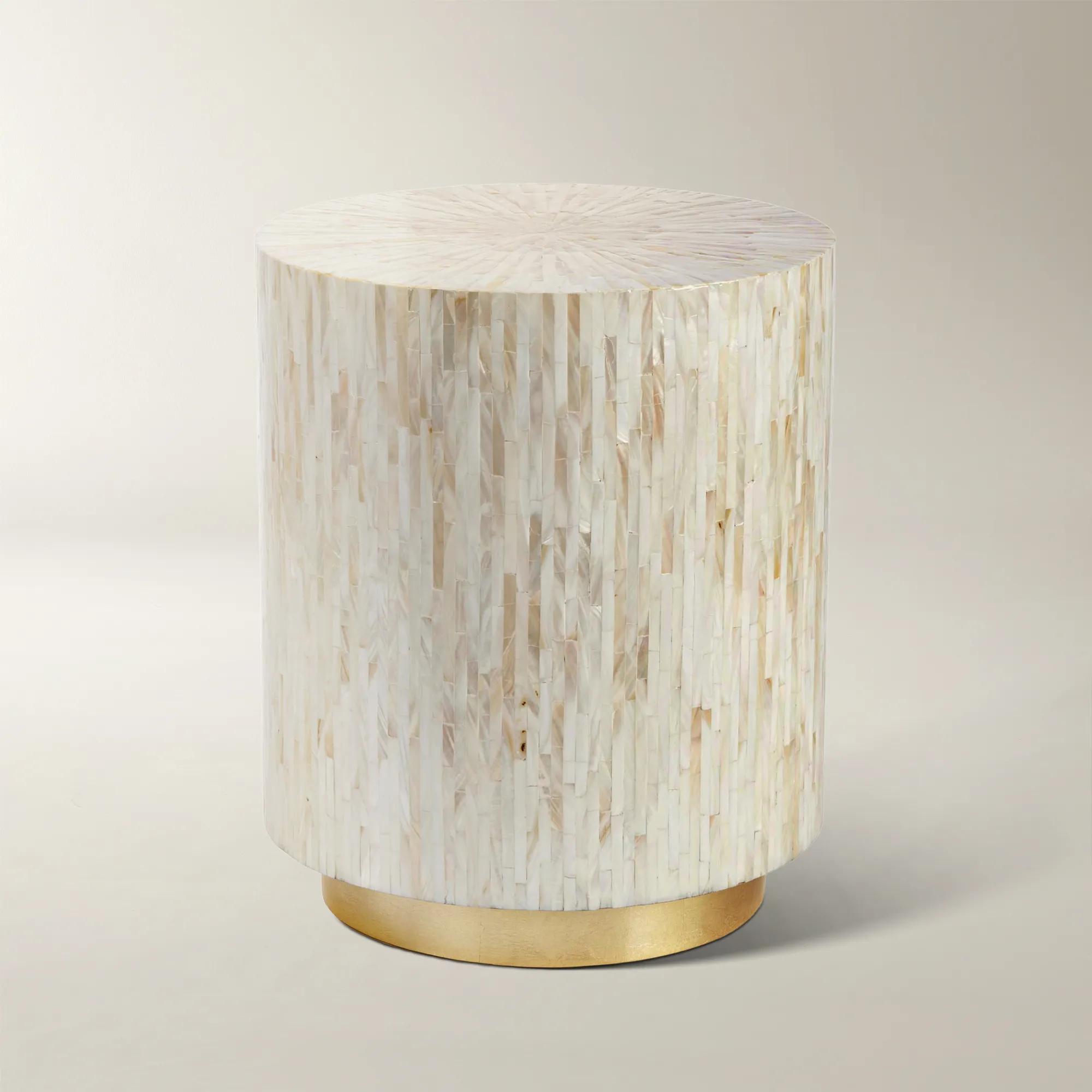 Alexandria Round Mosaic Platinum End Table (13.75")$299
A glamorous accent table featuring hand-applied mother-of-pearl mosaic and a gold leaf-accented base.
Add To Cart -
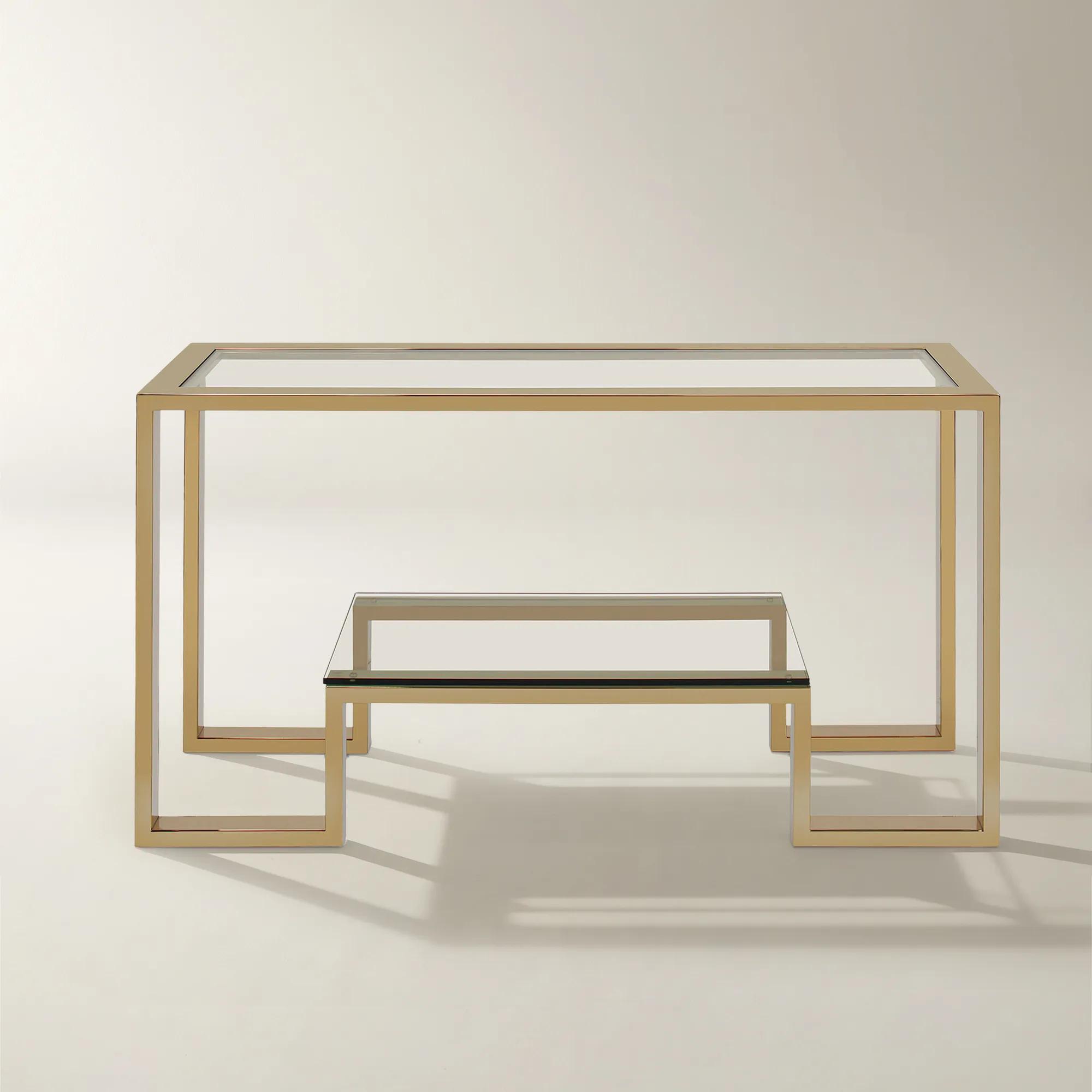
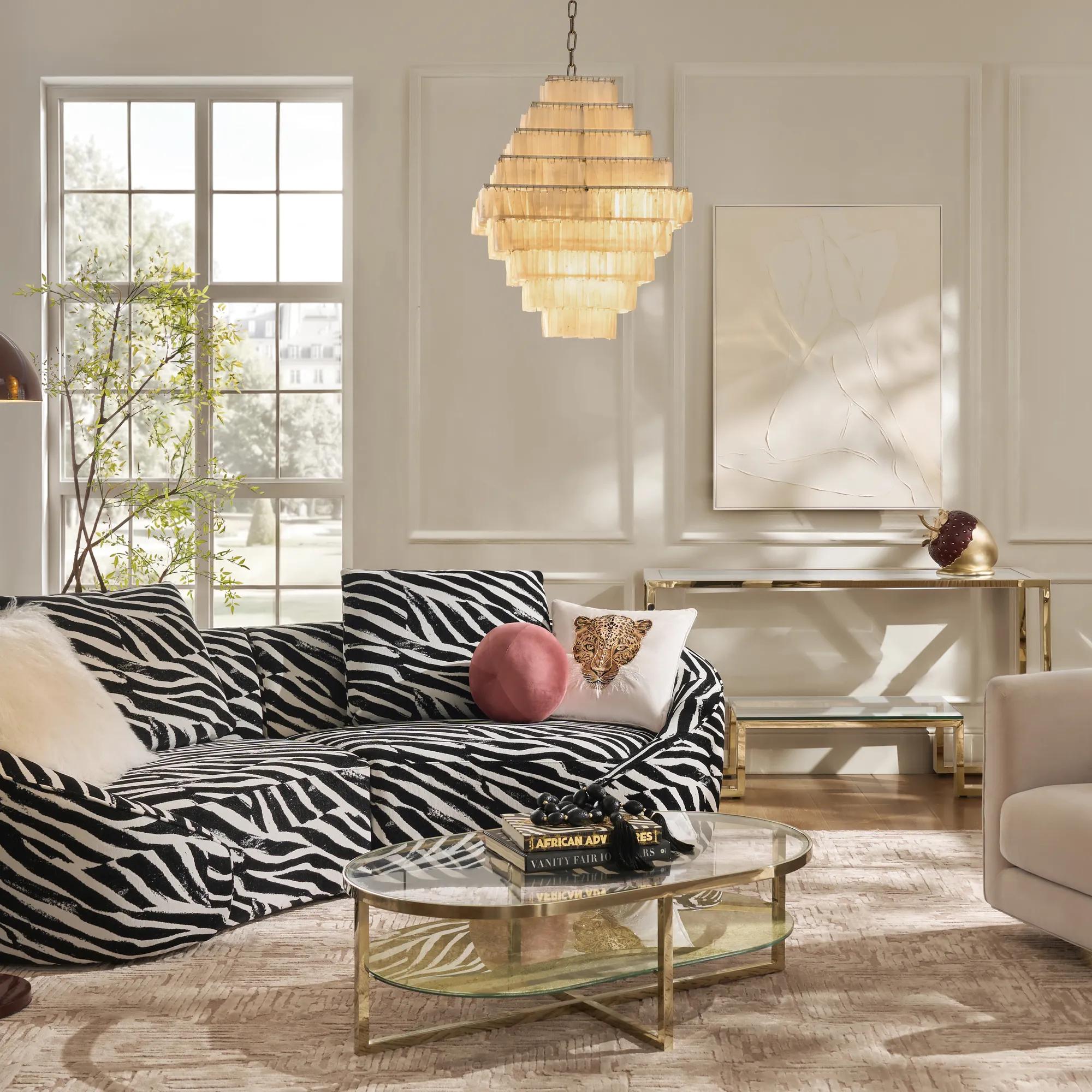 Duplicity Rectangular Gold Stainless Steel Console Table With Glass Top (59")$1399
A modern console table crafted from stainless steel and tempered glass with a floating bottom shelf.
Add To Cart -
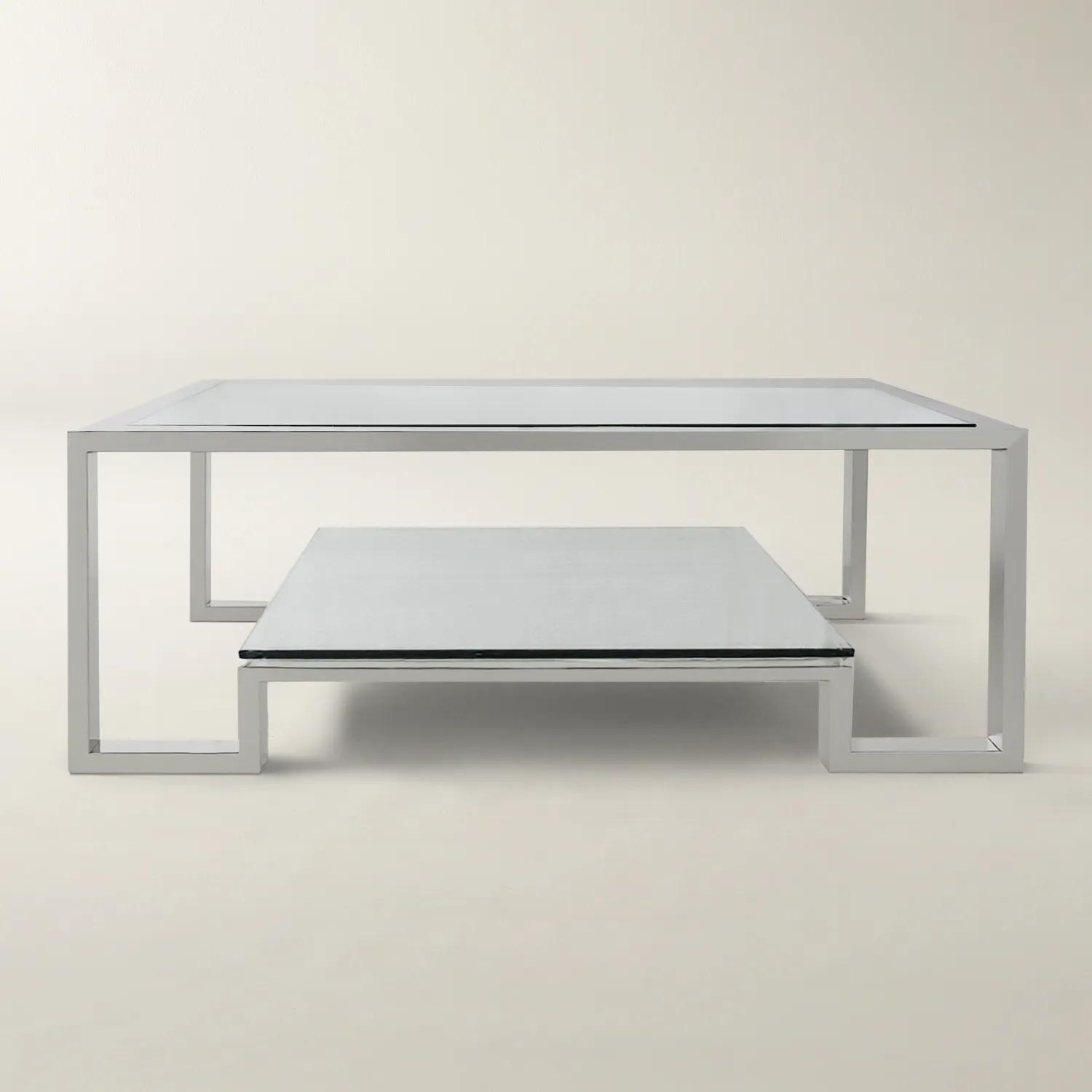
 Duplicity Rectangular Silver Stainless Steel Coffee Table With Glass Top (50")$1399
A modern coffee table featuring a stainless steel frame, tempered glass top, and floating bottom shelf.
Add To Cart -
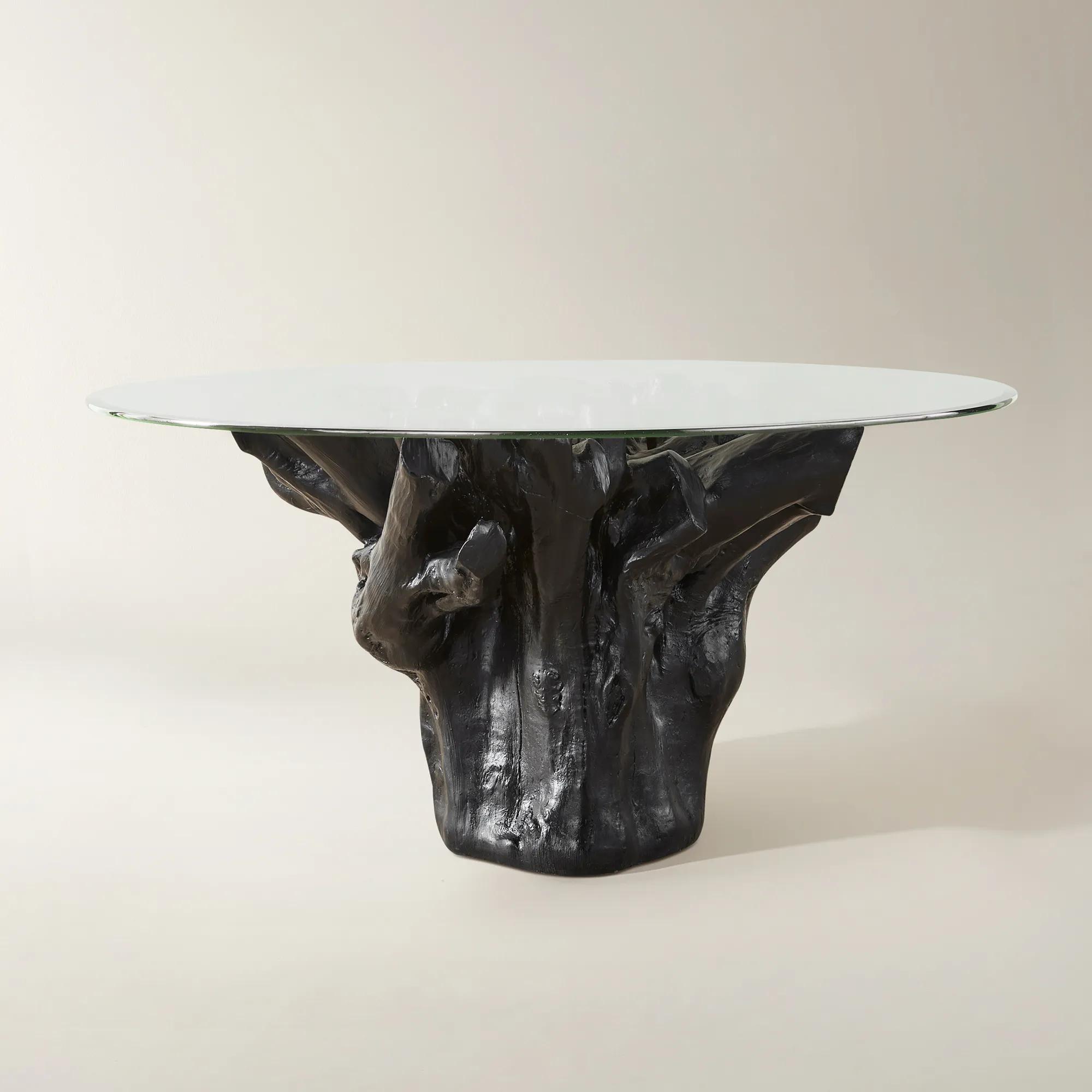 Sequoia Black Resin Dining Table With Glass Top (60")$2299
A sculptural black resin base with real stone fragments supports a round tempered glass top for organic elegance.
Add To Cart -
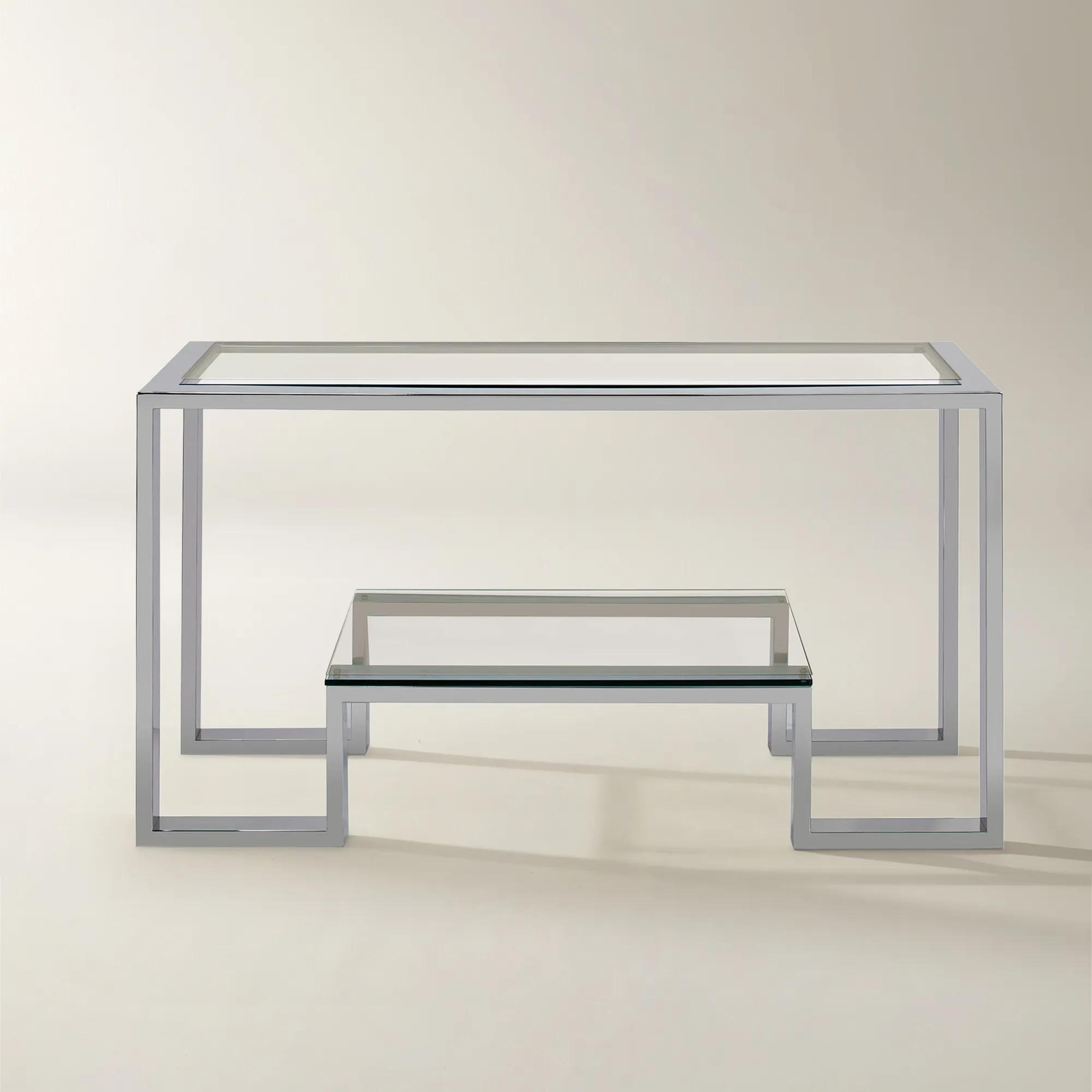
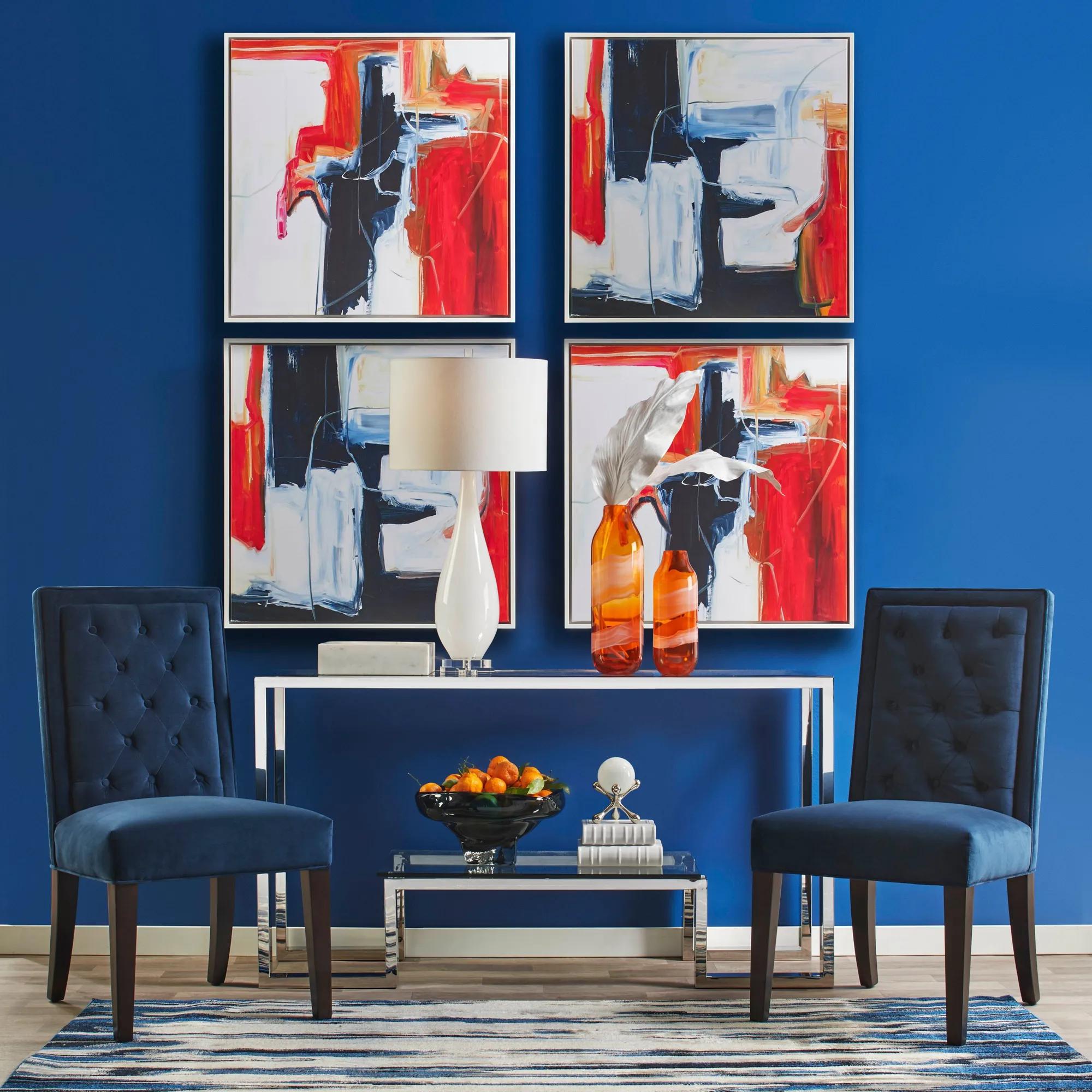 Duplicity Rectangular Silver Stainless Steel Console Table With Glass Top (59")$1399
A modern console table crafted from stainless steel and tempered glass with a floating bottom shelf.
Add To Cart -
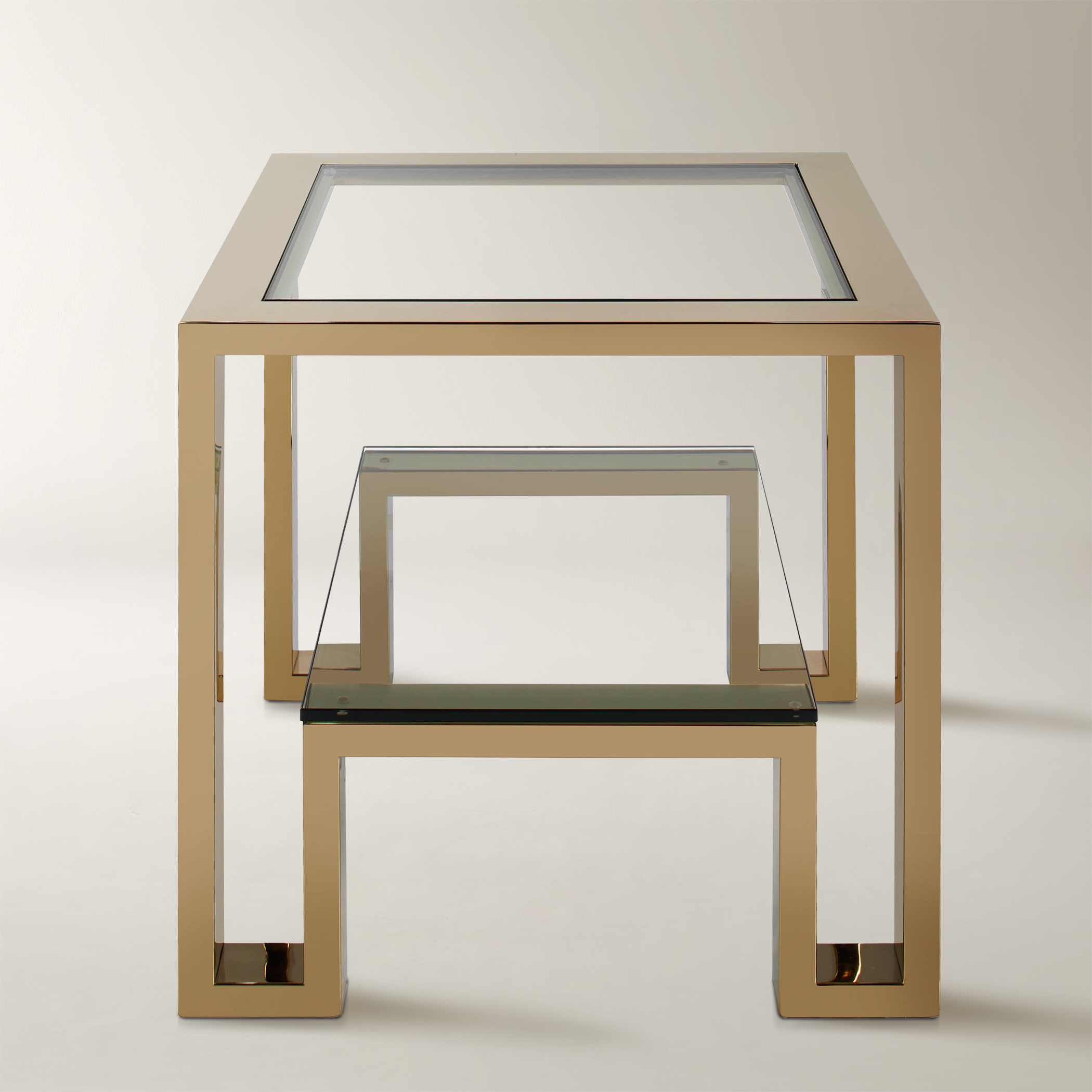 Duplicity Square Gold Stainless Steel End Table With Glass Top (24")$749
A modern end table crafted from stainless steel and tempered glass with a floating bottom shelf.
Add To Cart -
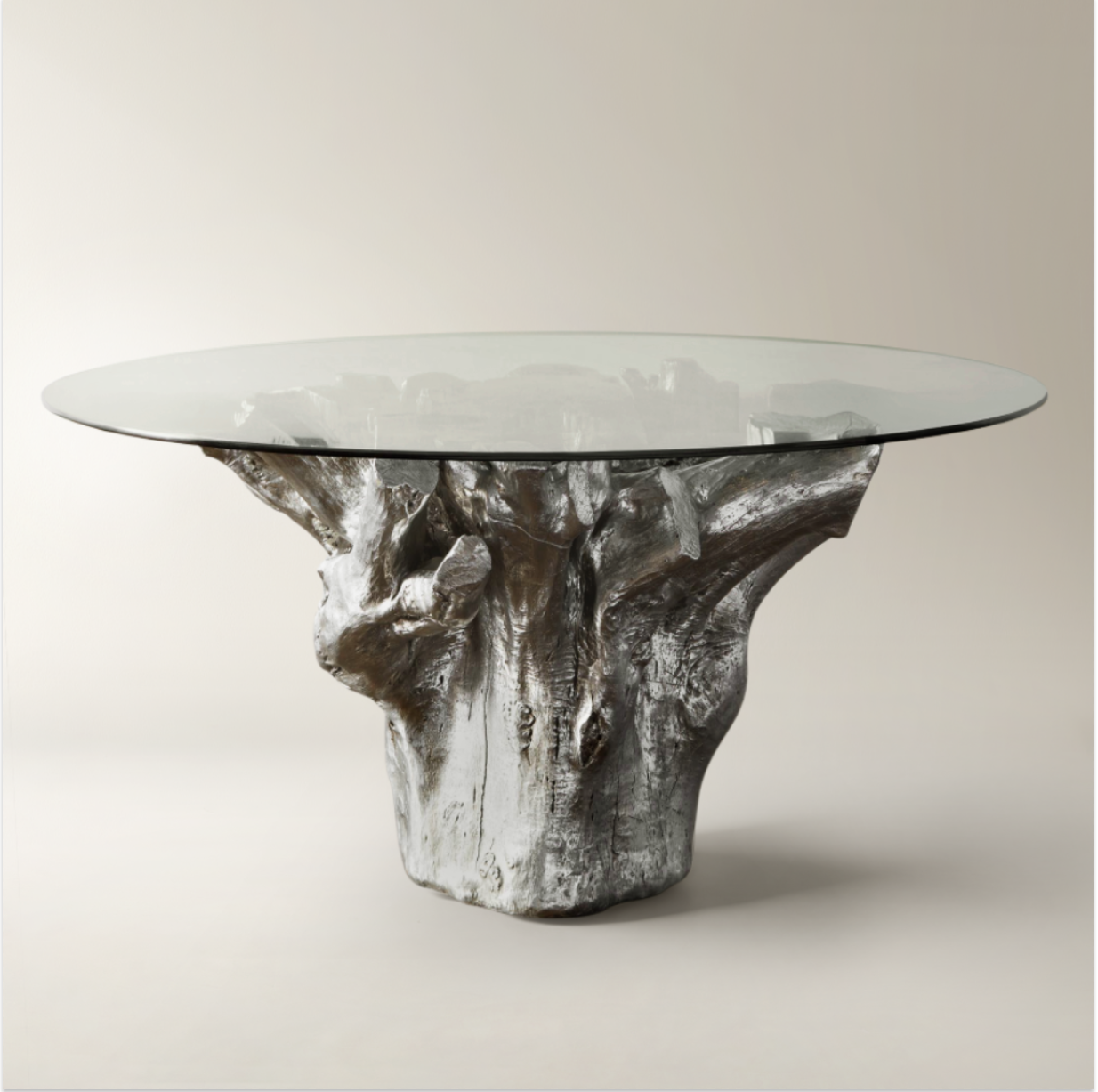 Sequoia Silver Resin Dining Table With Glass Top (60")$2199
A sculptural resin base with hand-applied silver leaf supports a round tempered glass top for modern elegance.
Add To Cart -
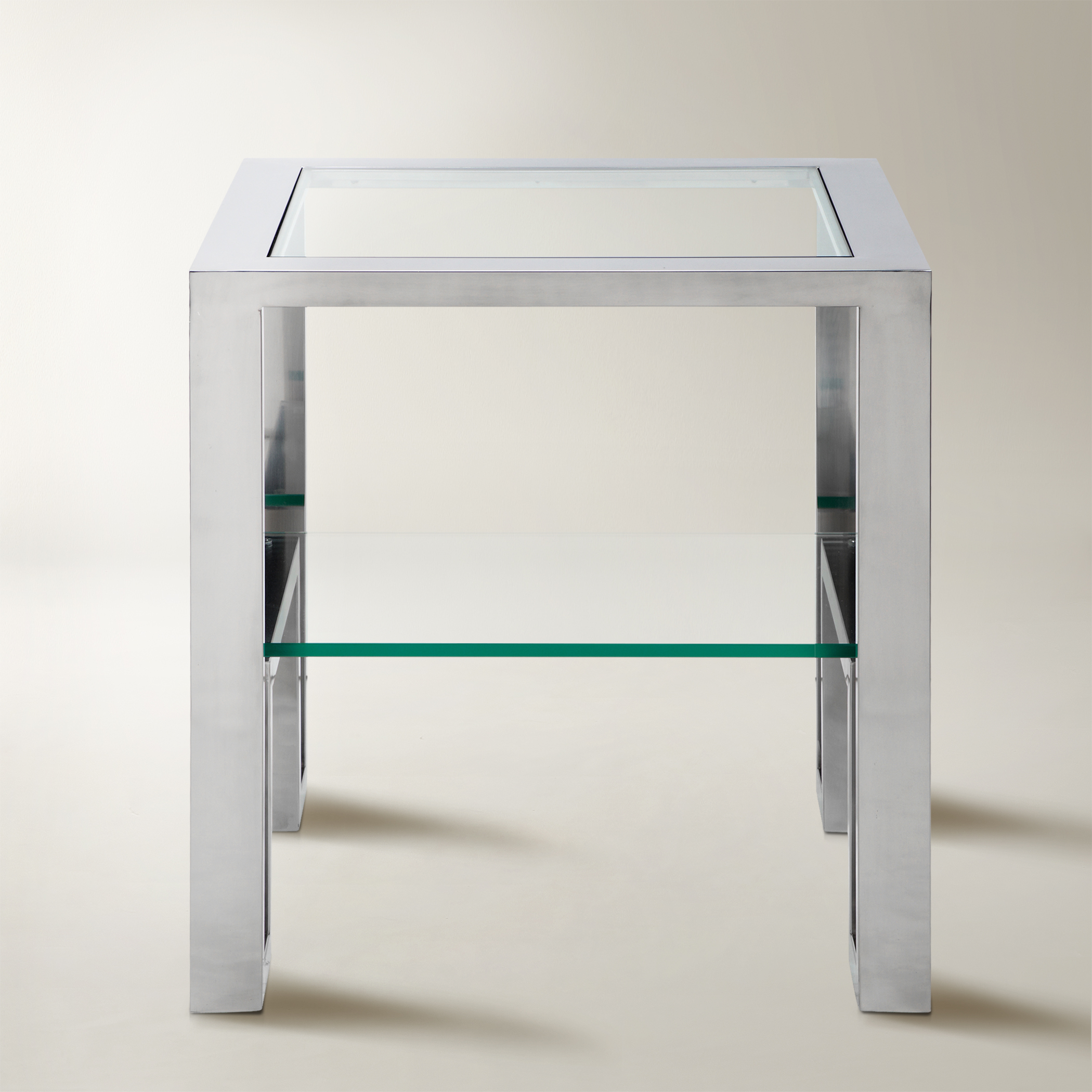
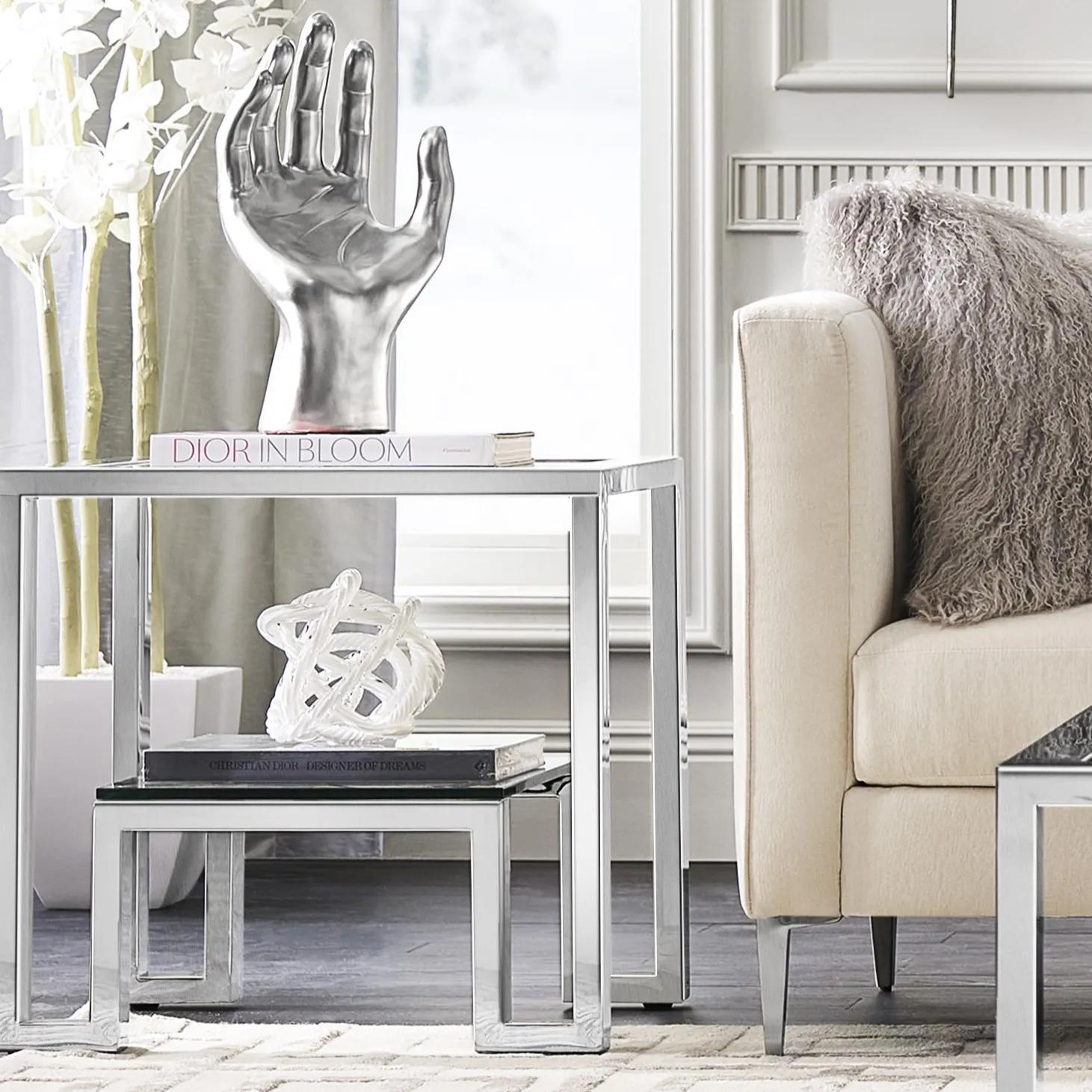 Duplicity Square Silver Stainless Steel End Table With Glass Top (24")$749
A modern end table featuring a stainless steel frame, tempered glass top, and floating bottom shelf.
Add To Cart -
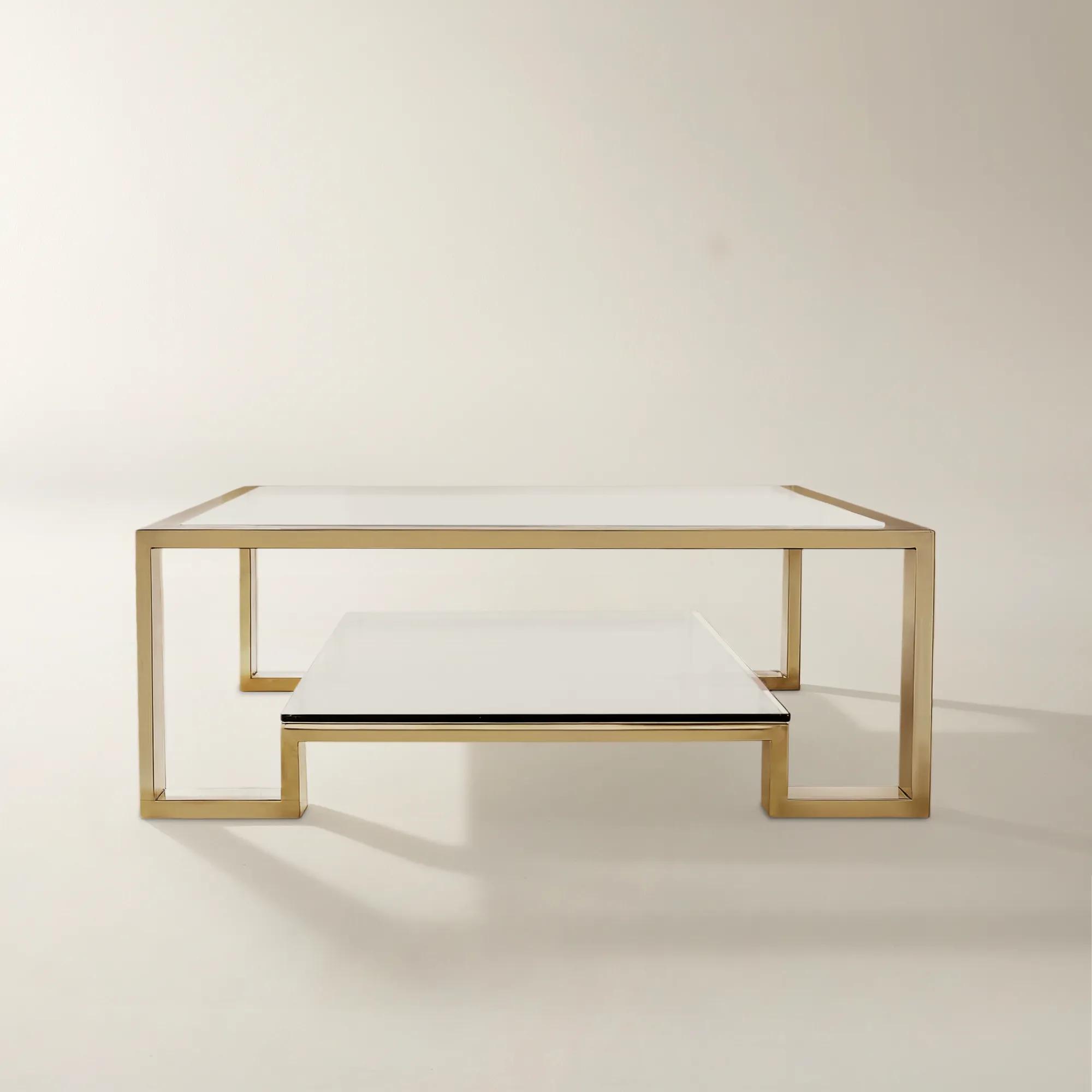 Duplicity Rectangular Gold Stainless Steel Coffee Table With Glass Top (50")$1399
A modern coffee table featuring a stainless steel frame, tempered glass top, and floating storage shelf.
Add To Cart -
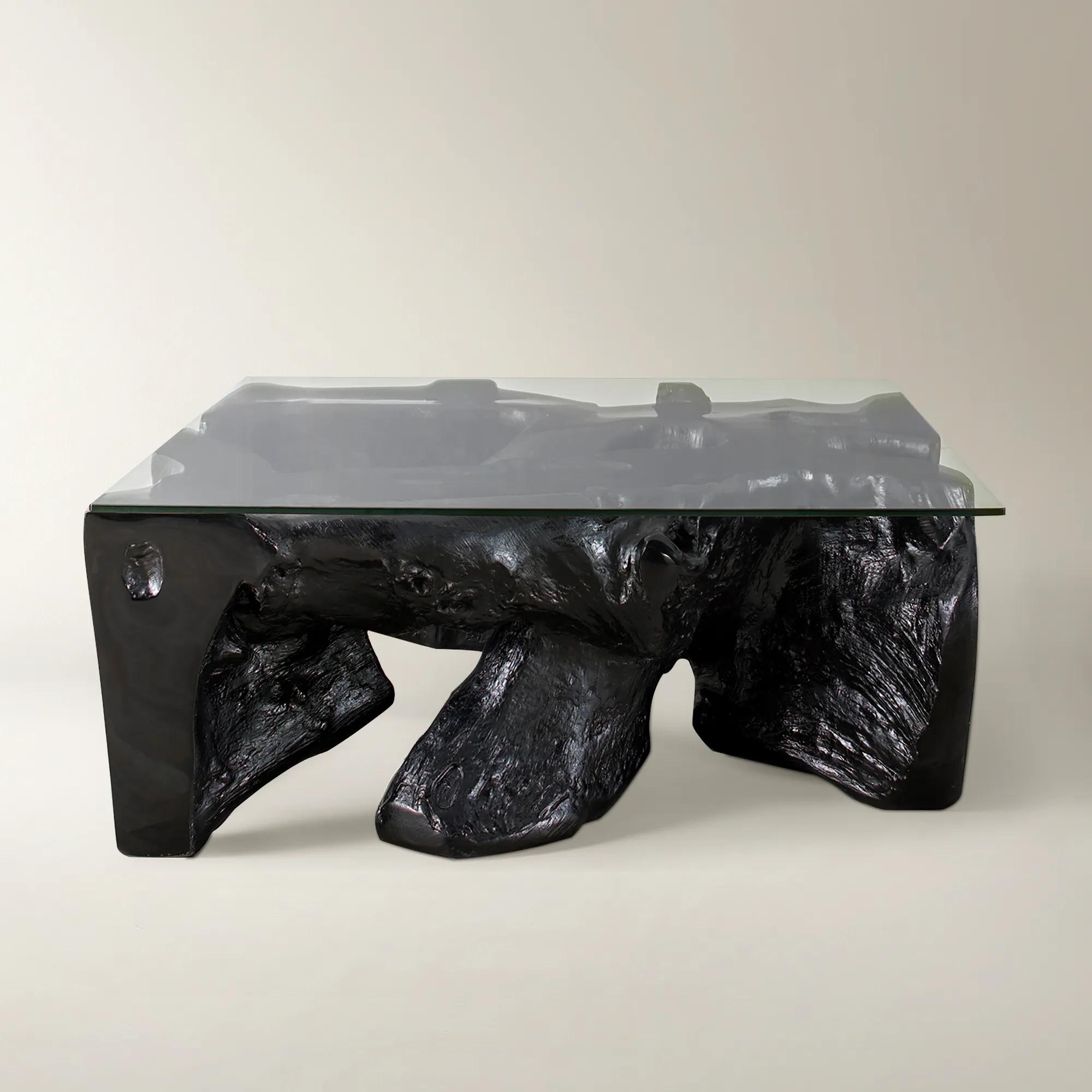
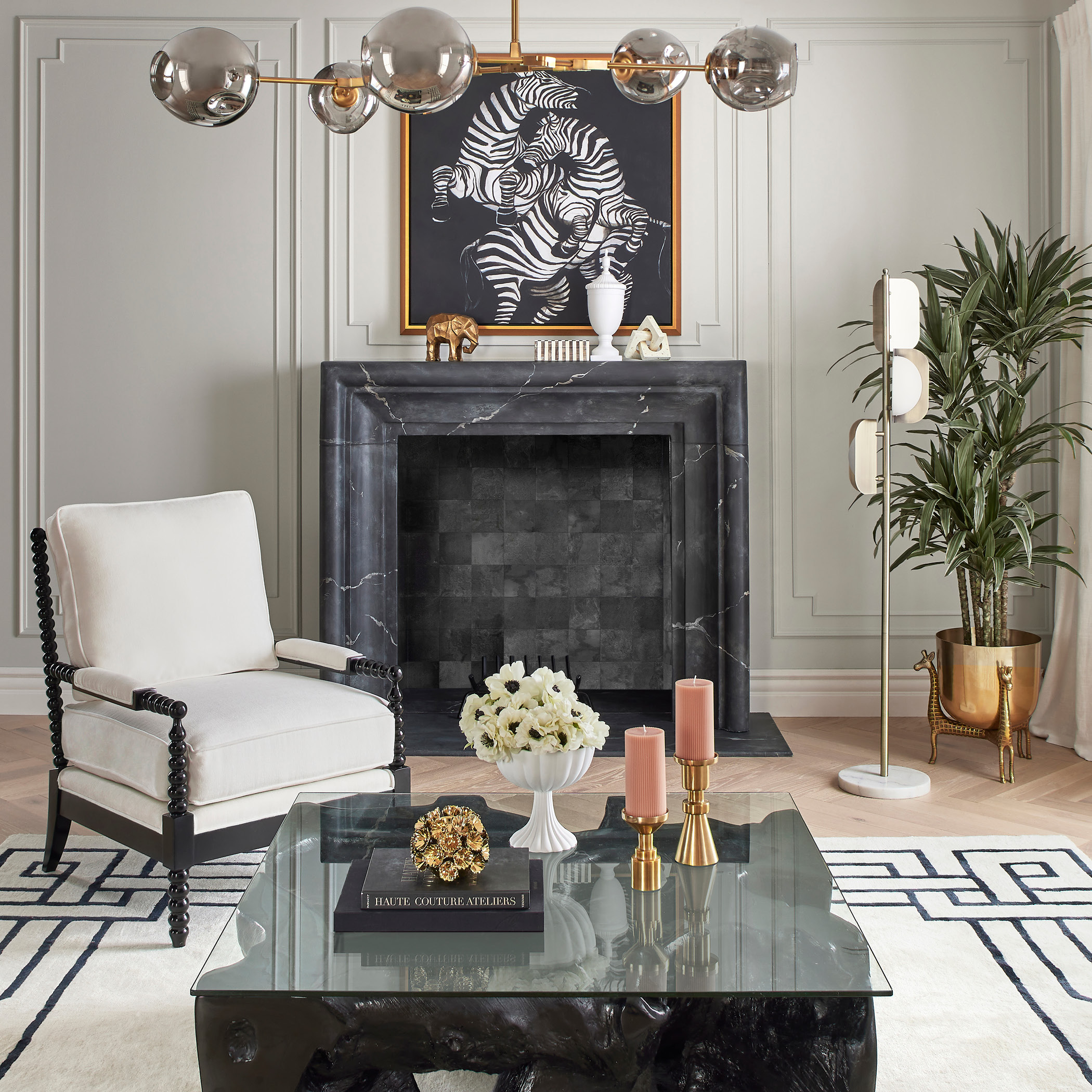 Sequoia Black Resin Coffee Table With Glass Top (44")$2299
A sculptural black coffee table crafted from resin and polished stone fragments for indoor or outdoor use.
Add To Cart -
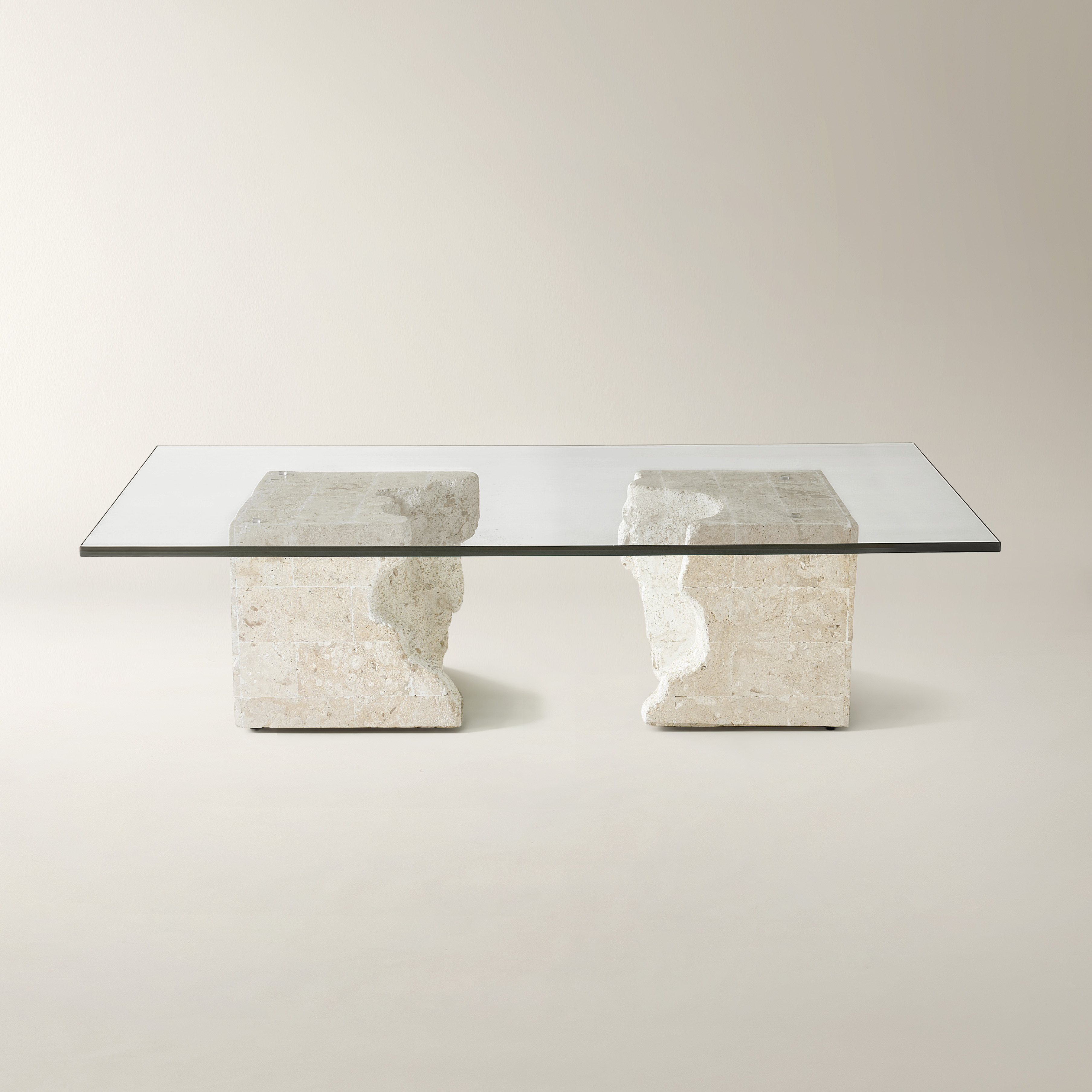 Cairo Rectangular Mactan Stone Coffee Table With Glass Top (63")$1899
A contemporary coffee table featuring a clear tempered glass top floating above hand-carved Mactan stone bases.
Add To Cart -
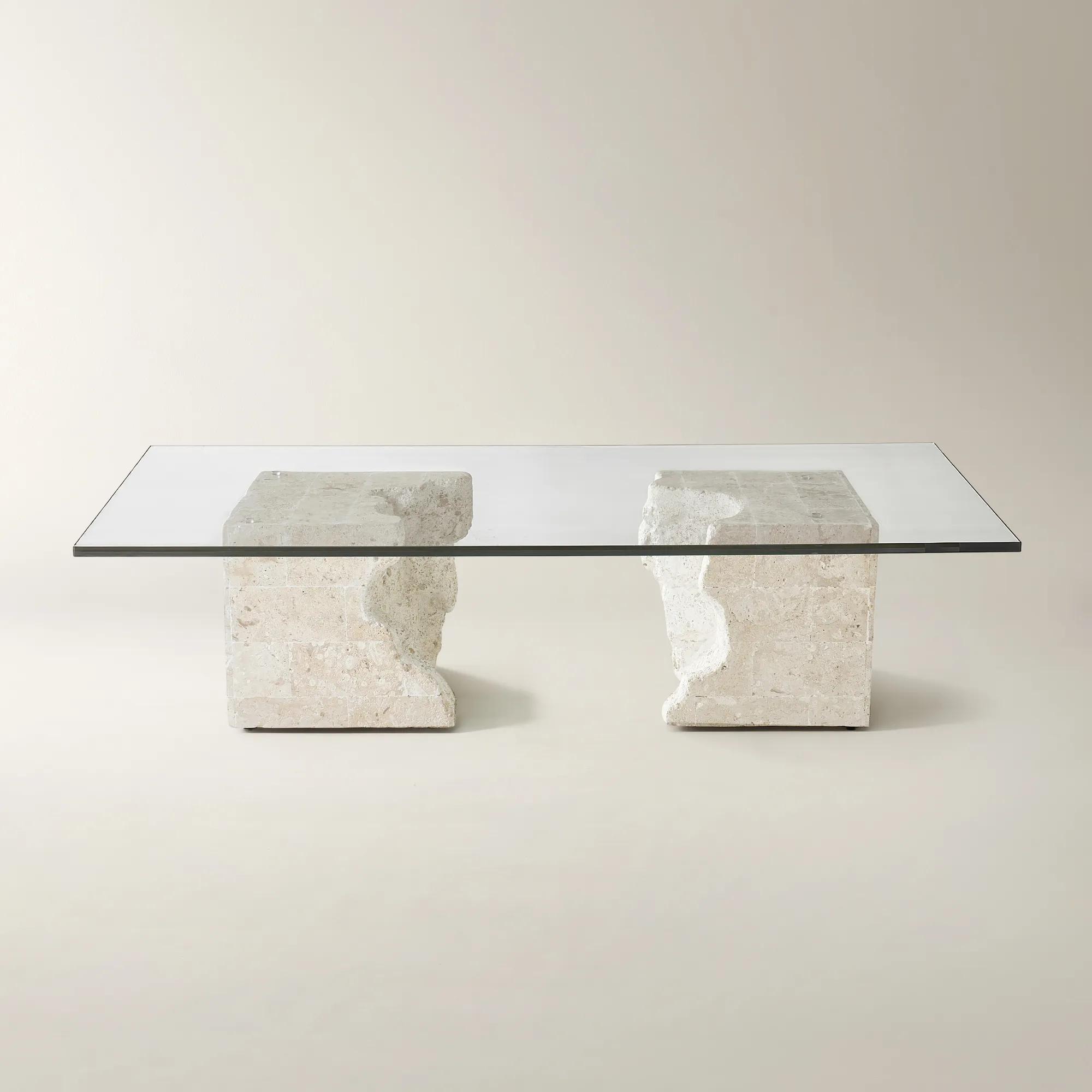 Cairo Rectangular Mactan Stone Coffee Table With Glass Top (70.87")$1999
A contemporary coffee table featuring a clear tempered glass top floating above hand-carved Mactan stone bases.
Add To Cart -
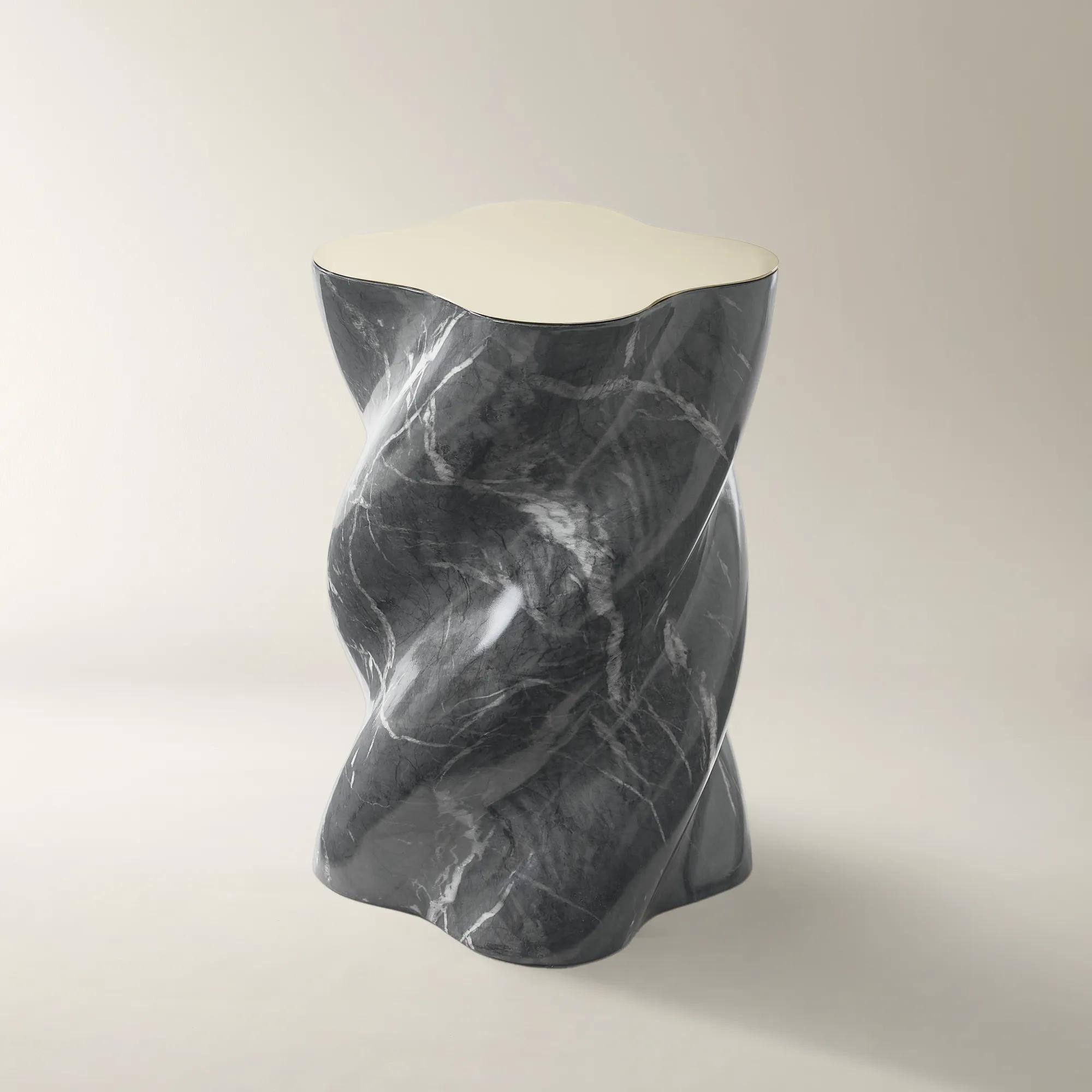 Vega Bvlgary Black Concrete Side Table With Stainless Steel Top (13.8")$459
A sculptural black side table featuring a marble-inspired fiber-concrete base and removable stainless steel top.
Add To Cart -
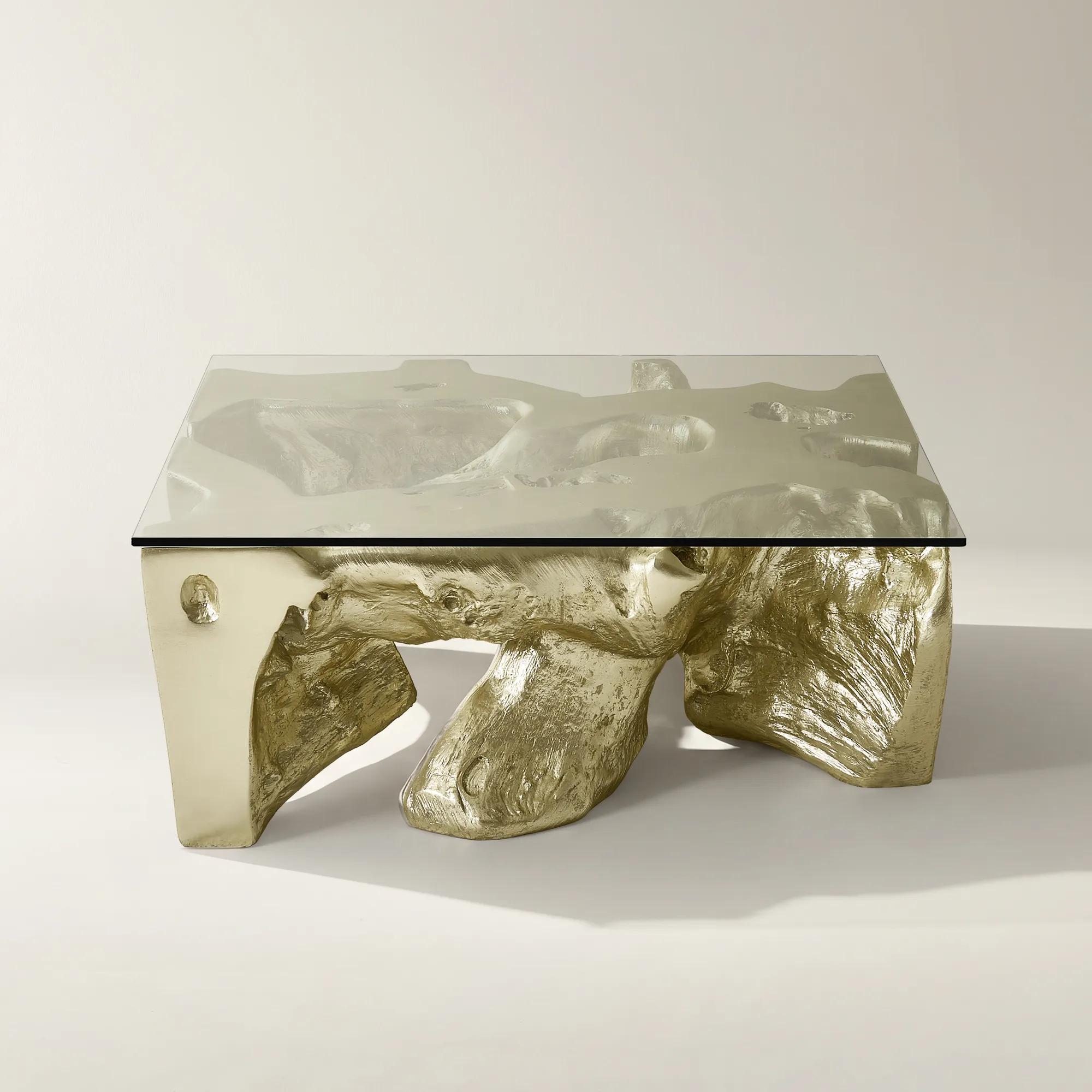 Sequoia Champagne Gold Resin Coffee Table With Glass Top (44")$2299
A sculptural resin coffee table with a champagne gold leaf finish and a clear tempered glass top.
Add To Cart -
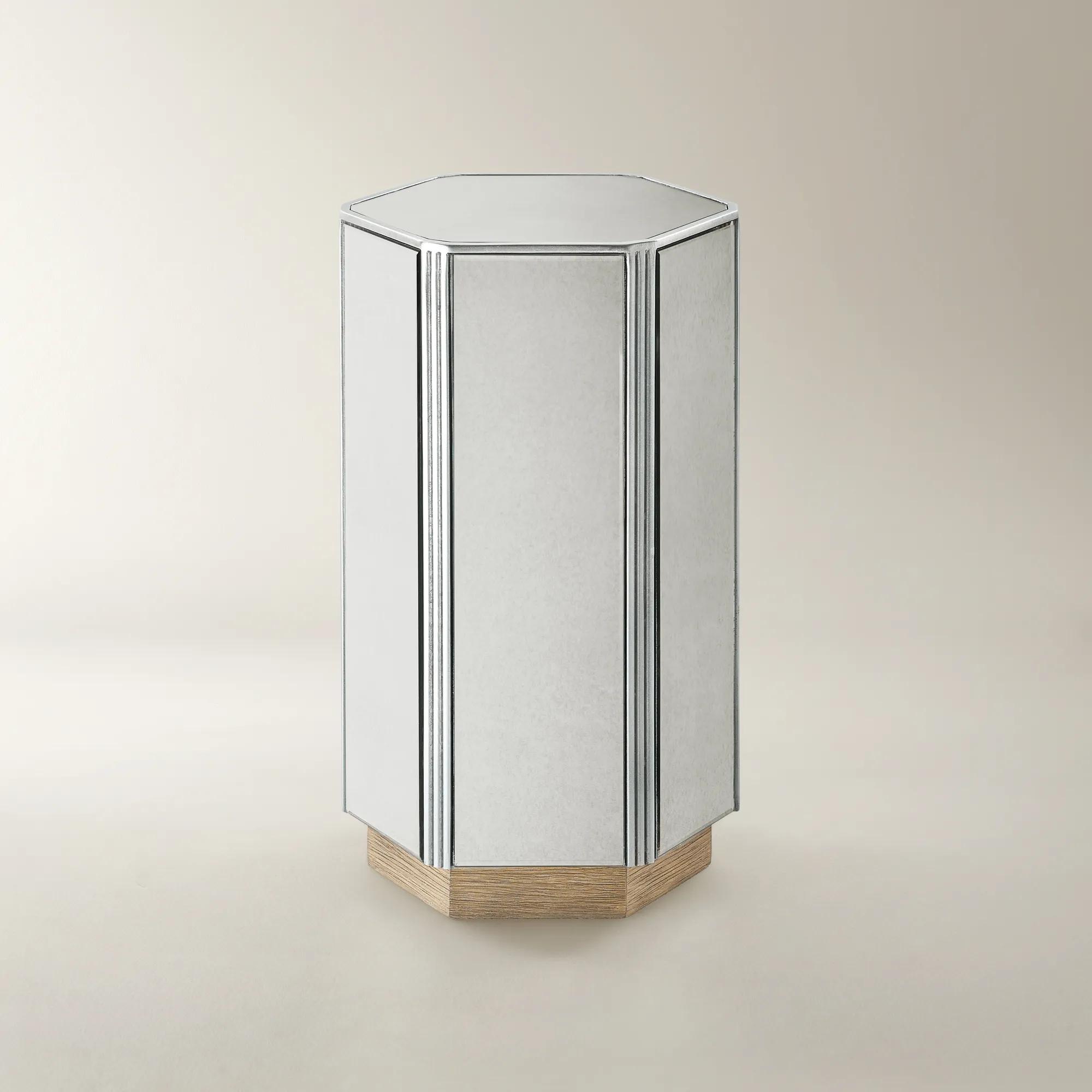 Glimmer Silver Mirrored End Table (12")$399
A chic side table featuring an antique silver mirror top and warm oak veneer base with handcrafted details.
Add To Cart -
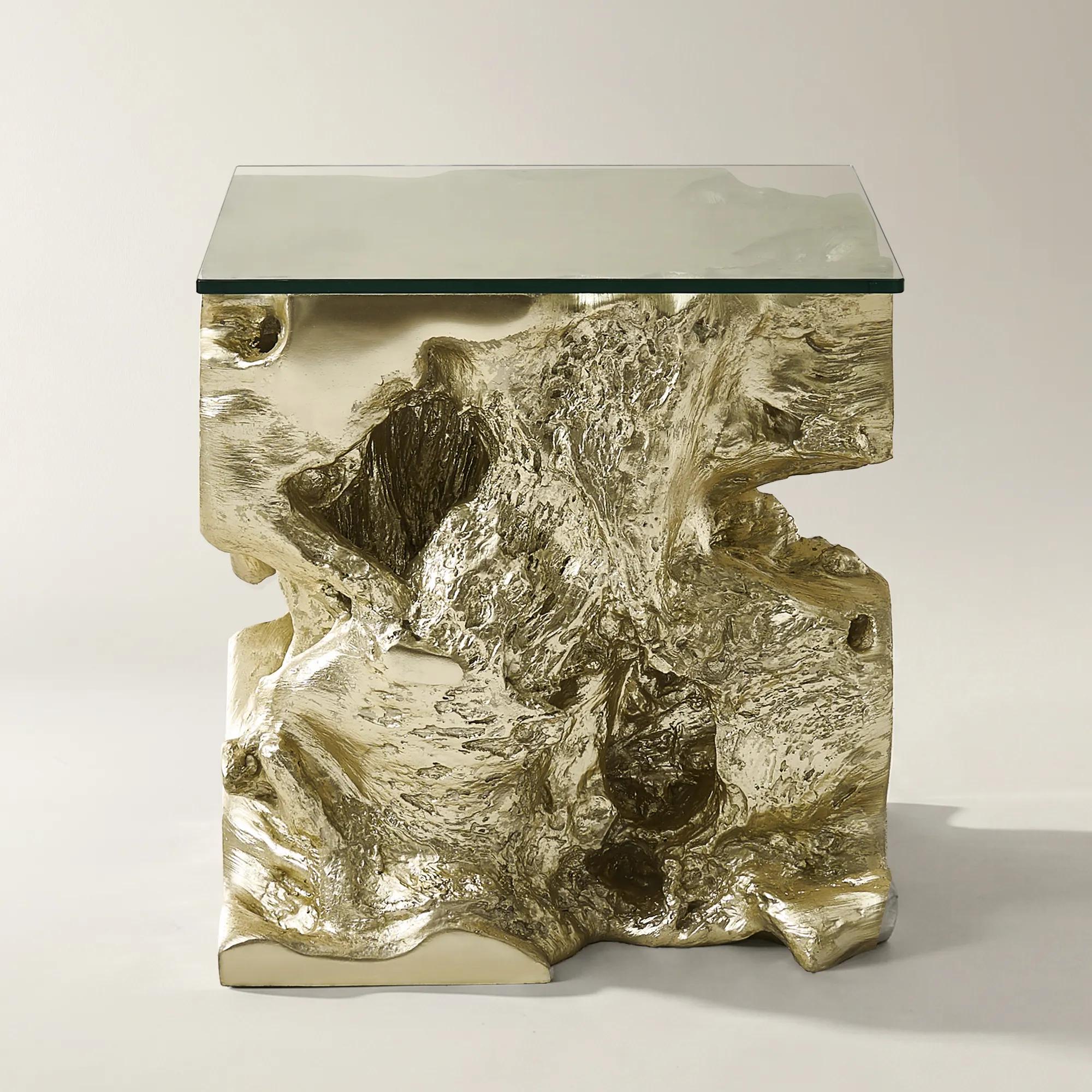 Sequoia Champagne Gold Resin End Table With Glass Top (22")$999
A sculptural resin end table with a champagne gold leaf finish and a clear tempered glass top.
Add To Cart -
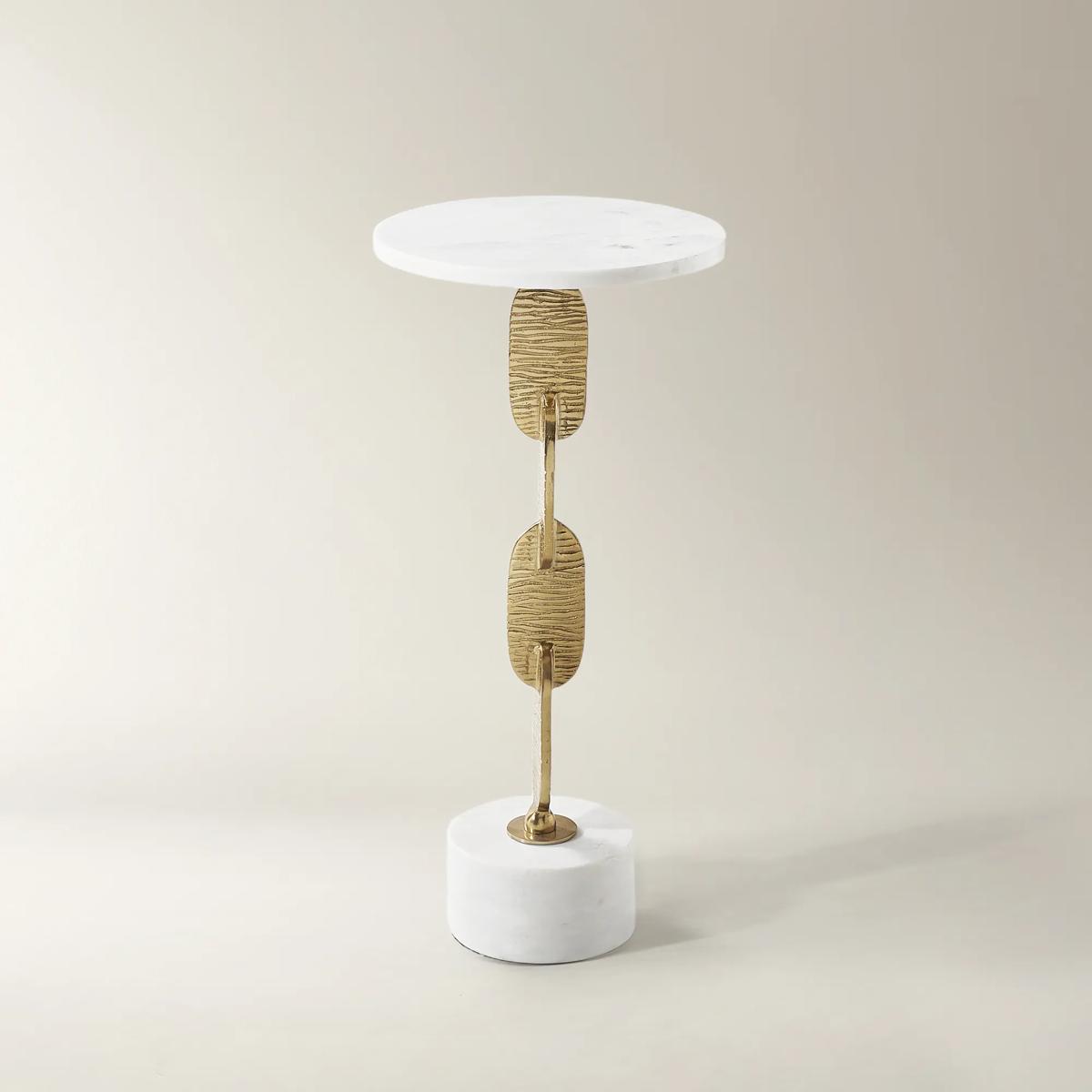
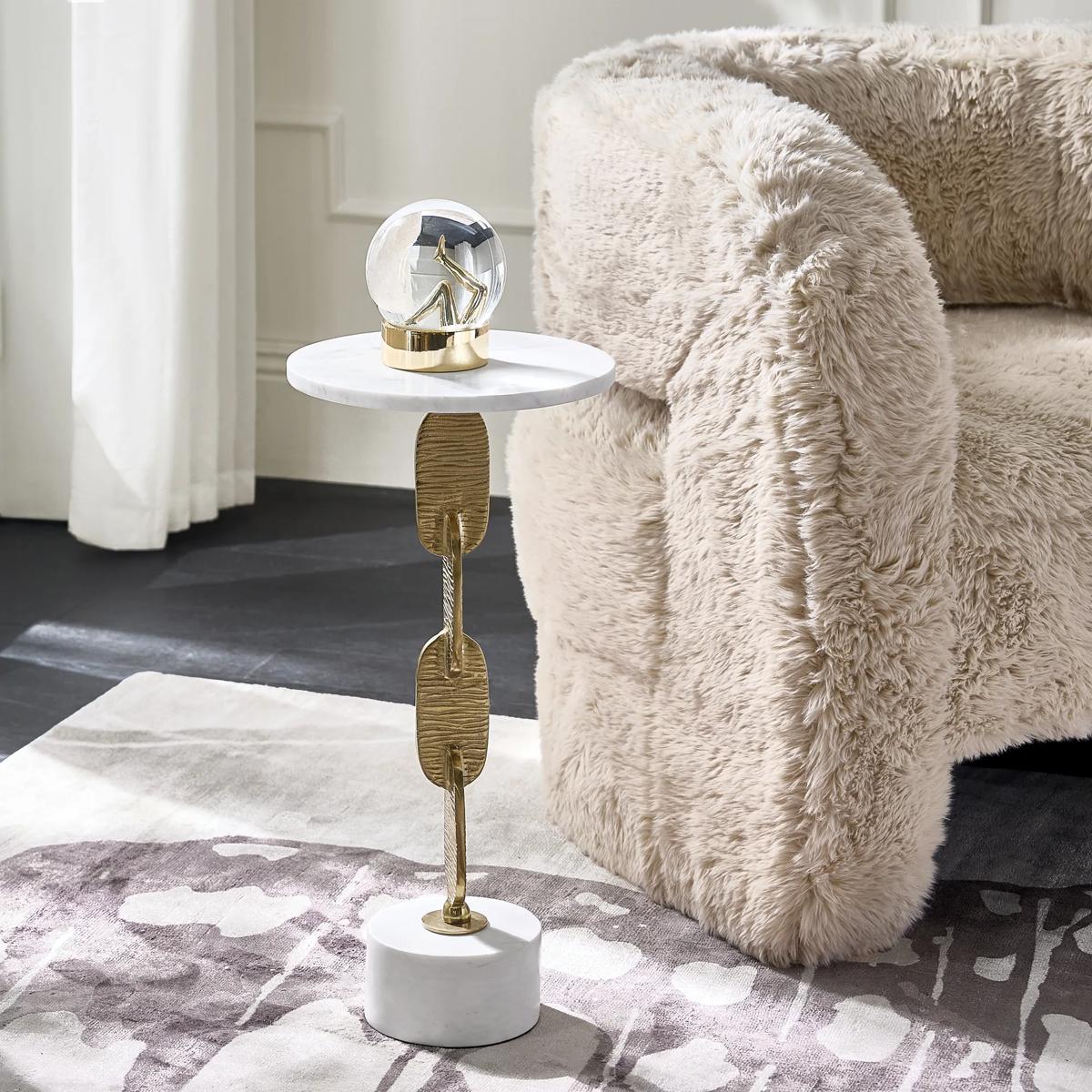 Luna Round White Marble Side Table (11.25")$199
A sculptural side table featuring a genuine white marble top and an open gold-finished metal frame.
Add To Cart -
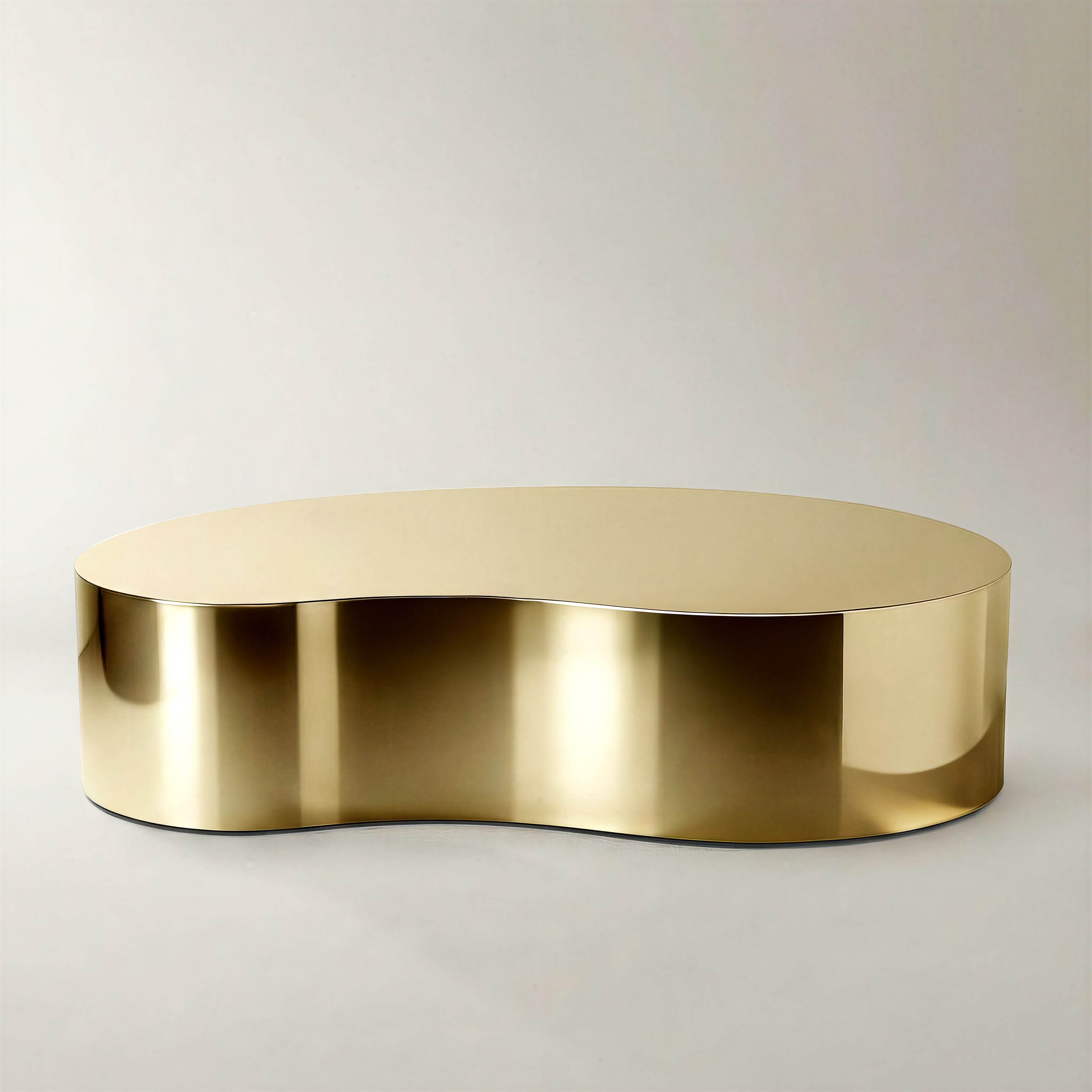
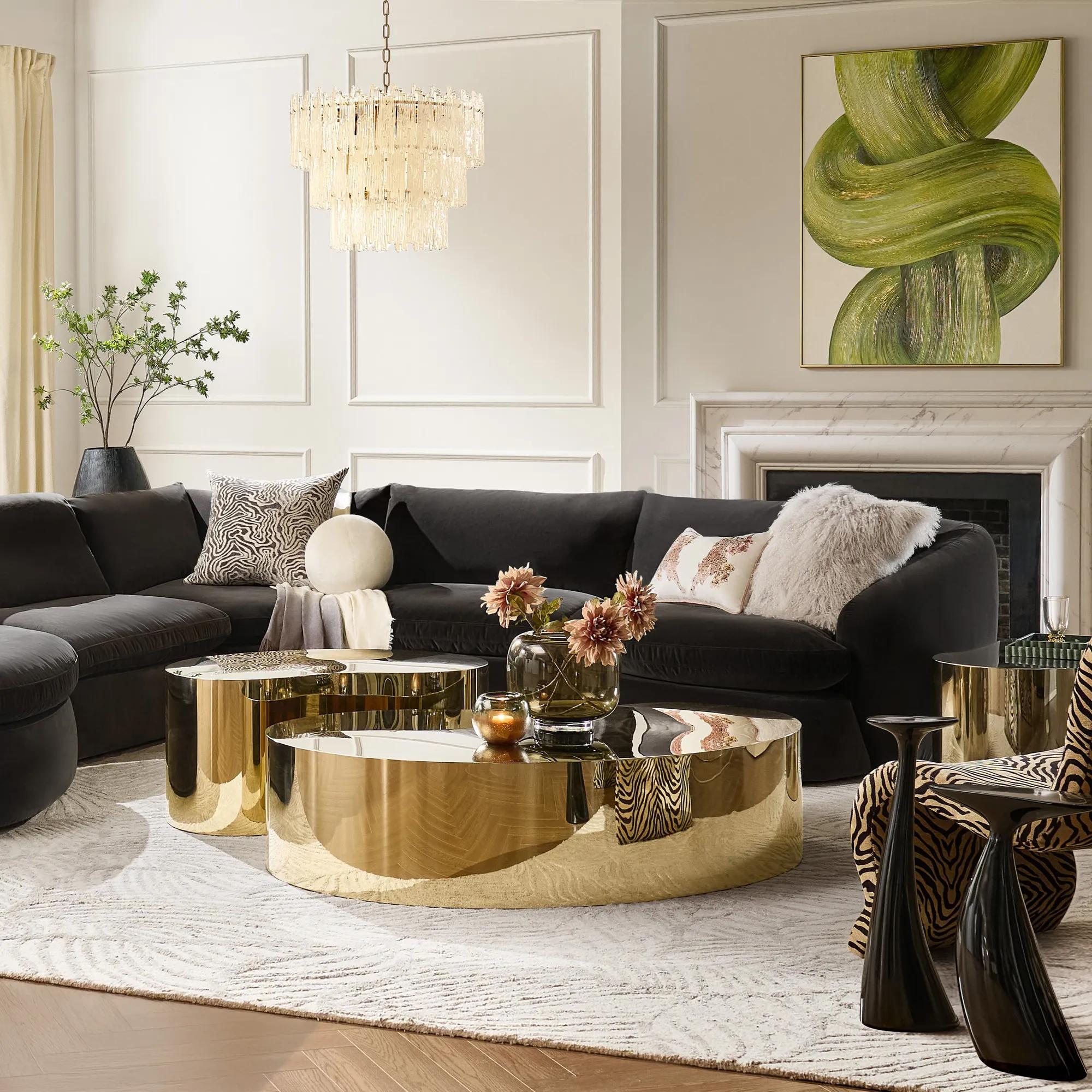 Aurea Soft Gold Coffee Table (57")$1299
A sculptural coffee table crafted from stainless steel with a high-gloss soft gold finish and rounded edges.
Add To Cart -
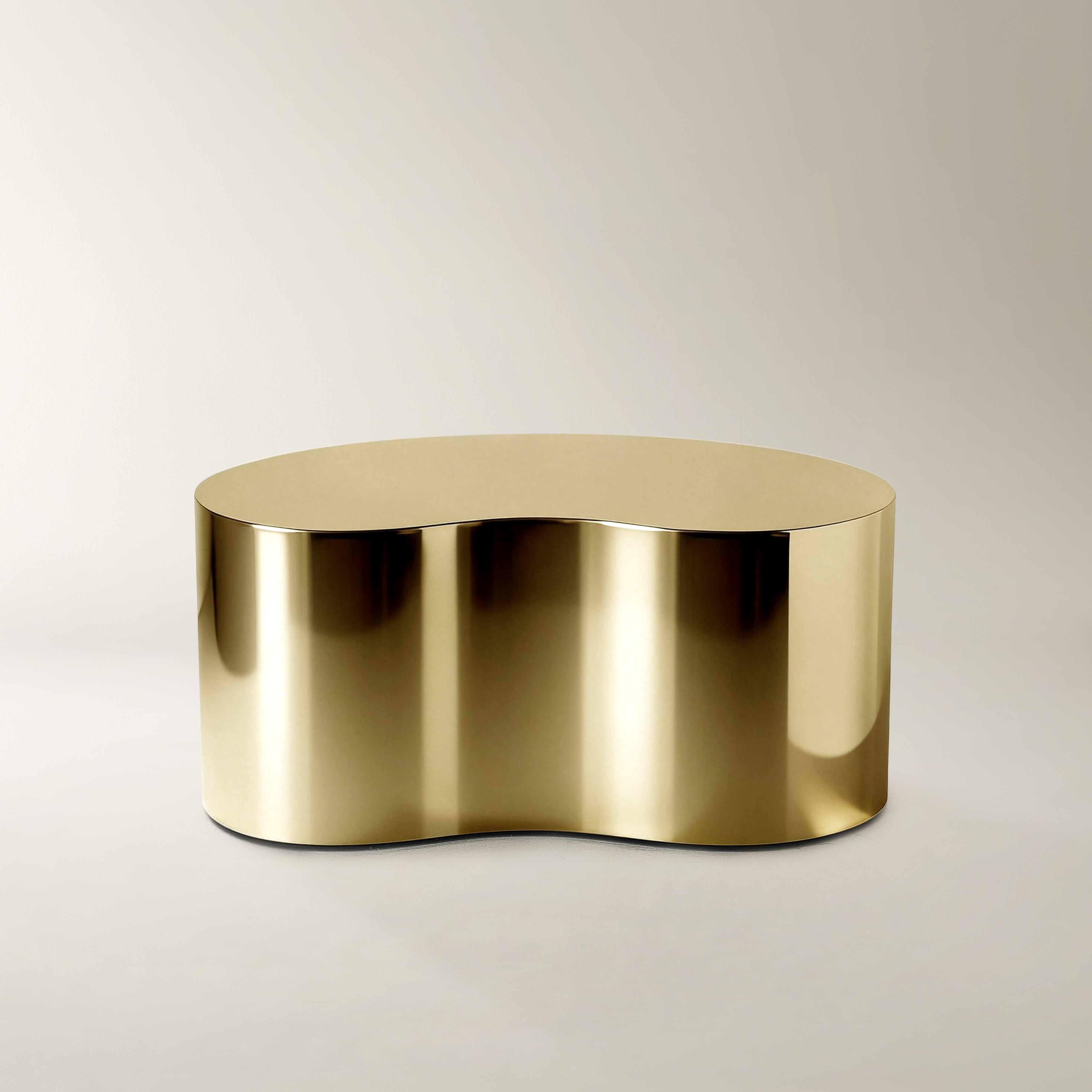 Aurea Soft Gold Coffee Table (37.5")$999
A sculptural coffee table crafted from premium stainless steel with a high-gloss soft gold mirror finish.
Add To Cart -
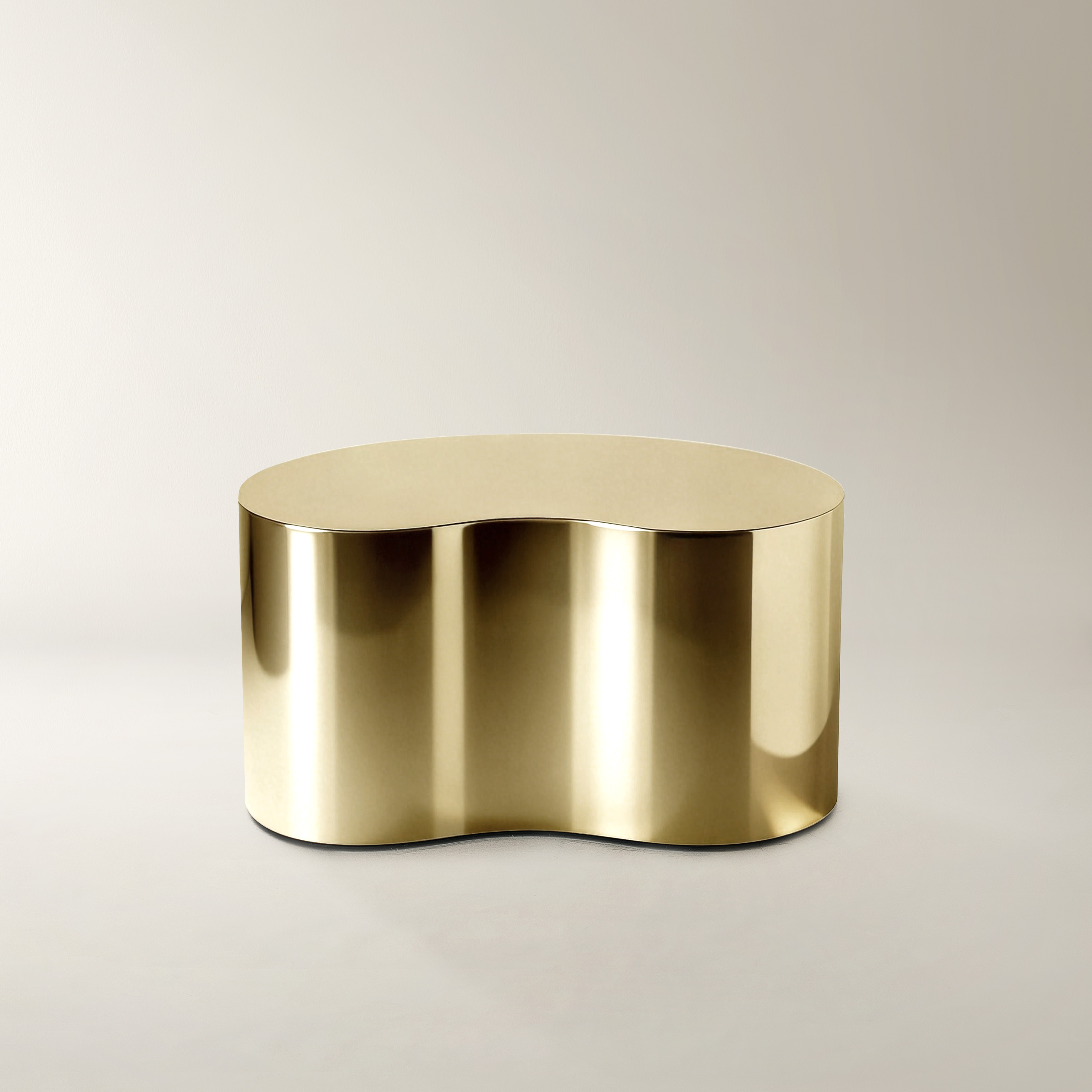 Aurea Soft Gold Coffee Table (32")$699
A sculptural coffee table crafted from premium stainless steel with a high-gloss, soft gold mirror finish.
Add To Cart -
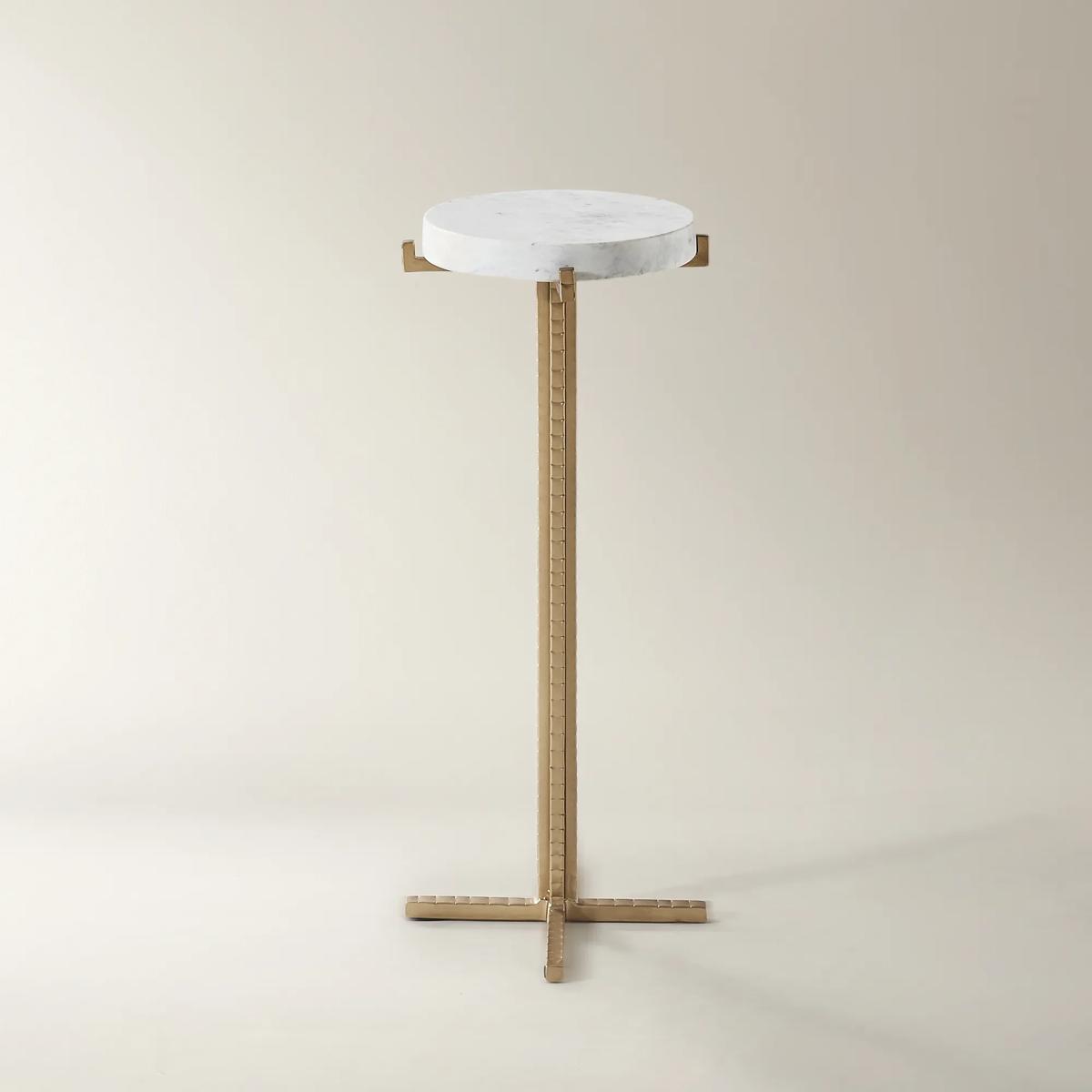 Anya Round White Marble Side Table (10")$199
A sculptural side table featuring a genuine white marble top and gold-finished metal pedestal base.
Add To Cart

Designer Glass And Metal Tables
Designer glass and metal tables are the ultimate expression of modern artistry—where gleaming surfaces and sculptural silhouettes converge to create moments of pure visual poetry. Each piece is a bold interplay of light and reflection, transforming everyday function into a dazzling focal point. Whether anchoring a living room with luminous presence or punctuating an entryway with architectural finesse, these tables invite you to curate a space that is as daring as it is refined. Elevate your interiors with furniture that shimmers with sophistication and celebrates your passion for statement-making design.
Designer glass and metal tables pair glass surfaces with metal bases to create furniture that feels visually open yet architecturally defined. Their appeal lies in the contrast: light moves through the top while the frame draws a deliberate line in the room, whether that line is a slender curve, a bold geometric intersection, or a sweeping pedestal. Across coffee tables, end tables, consoles, and dining tables, this combination gives everyday rituals a more expressive setting without concealing the textures and colors around it. A clear glass coffee table lets a richly patterned rug remain part of the composition; a smoked glass surface brings depth to a seating area dressed in velvet and warm neutrals. Satin-etched or textured glass can soften reflections, while transparent tops reveal the artistry of the supporting structure. Glass type matters as much as appearance. Tempered glass is heat-treated for greater strength than ordinary annealed glass and breaks into smaller fragments when it fails, though it is not unbreakable or scratchproof. Cast glass may introduce dimensional texture and subtle variations that give the surface a more sculptural character. Steel, stainless steel, iron, and aluminum offer different possibilities for the base, with durability depending on construction, protective finishes, and intended use rather than the metal name alone. Polished chrome and silver-toned finishes sharpen the interplay of light; brass-toned finishes add warmth; matte black creates a graphic outline against pale upholstery or stone-colored walls. These finish descriptions do not necessarily indicate solid-metal composition, so material specifications help distinguish a plated or coated surface from its underlying frame. A reflective base brings particular drama to a room with luminous accents, while a brushed finish creates a quieter counterpoint to glossy accessories. The result can feel glamorous, gallery-like, or richly layered depending on its surroundings. For interiors with substantial sofas, upholstered dining chairs, or generously scaled artwork, the transparency of glass offers balance without asking the furniture to disappear.
The right proportions allow that visual drama to work comfortably in daily life. A glass and metal coffee table generally feels balanced when its top sits near the height of the sofa cushions, with approximately 14 to 18 inches between the table and seating to keep drinks within reach while leaving legroom. A length around two-thirds of the sofa is a useful starting point, adjusted for the room, the seating arrangement, and the shape of the base. Rectangular silhouettes echo a long sofa, while round and oval tops soften arrangements with strong angles and can make circulation feel less abrupt. Rounded edges still require care, especially in homes with young children; clear glass can be less immediately visible than an opaque surface. End tables work best when their tops sit close to the adjacent chair or sofa arm, creating a comfortable landing place for a book, a cup, or a lamp. A narrow console can bring a gleaming horizontal line to an entryway or the space behind a sofa, provided its depth leaves the walking route clear. Consider the actual footprint of the legs as well as the tabletop, since a flared base may extend farther into a passage than expected. For glass and metal dining tables, allow about 24 inches of tabletop width per person and, where possible, at least 36 inches between the table edge and surrounding walls or furniture for chair movement. More clearance is helpful where people need to pass behind occupied chairs. Pedestal bases can offer flexible seating positions, but the placement of supports still determines knee and foot room. Measure chair arms against the underside of the table, not simply its overall height. In a compact apartment, transparent surfaces preserve views across the room; in a larger living area, a substantial metal base can anchor an expansive seating group. Styling can stay deliberate rather than sparse: a low ceramic bowl, an art book, and a sculptural object give a glass surface dimension. Along a console or beside a reading chair, designer glass table lamps can extend the luminous effect while adding a softer pool of light, provided the surface comfortably accommodates the lamp’s base and weight.
Lasting beauty depends on choosing a table for the way it will actually be used and treating each material according to its finish. A dining surface that hosts meals every evening has different demands from a console reserved for decorative objects, and a frequently used coffee table needs room for practical protection as well as display. Glass is nonporous and readily wiped clean, but fingerprints, dust, and water marks can be visible, particularly on darker or highly reflective surfaces. Follow the manufacturer’s care directions, using a soft, lint-free cloth and an approved cleaner rather than abrasive pads or powders. Apply cleaner to the cloth when directed, keeping excess moisture away from joints, attachment points, and metal finishes. Metal bases may be plated, painted, powder-coated, or otherwise sealed, and a polish suitable for one finish can damage another. Gentle dusting and prompt drying after spills are sound everyday habits; harsh chemicals and vigorous scrubbing can dull or compromise decorative coatings. Coasters, placemats, and protective pads help reduce scratching from ceramics and accessories, while trivets protect against direct contact with hot cookware. Avoid dragging heavy objects across the top, striking the glass edges, or sitting or standing on the table. Glass thickness alone does not establish weight capacity: the span, supports, connections, and overall engineering all matter. Check the stated load limit and assembly requirements, and make sure the finished table sits level without rocking. Larger glass tops can be heavy despite their airy appearance, making careful delivery planning and the recommended number of people for assembly especially important. Unless specifically rated for outdoor use, glass and metal furniture belongs indoors, away from conditions that could compromise its finishes or construction. For newlyweds or someone establishing a new home, a thoughtfully chosen accent table can be a meaningful gift when dimensions and finish preferences are known. Whether supporting an intimate dinner, a richly styled entry, or a favorite place to read during the cooler months, these tables give familiar moments a setting defined by light, proportion, and expressive detail.
FAQs
Designer glass and metal tables are remarkably versatile, complementing a range of interior styles from modern glam and Art Deco to transitional and contemporary. Their luminous surfaces and striking metal bases bring a sense of drama and sophistication, making them ideal for spaces that embrace bold design, layered textures, and curated artistic accents.
A glass and metal table serves as a stunning canvas for seasonal displays. In winter, layer it with metallic candleholders, crystal ornaments, or a sculptural bowl filled with pinecones and greenery. The reflective qualities of glass and metal amplify twinkling lights and festive details, creating a captivating focal point for your celebrations.
Absolutely. The durable nature of tempered glass and the resilience of metal bases make these tables a chic yet practical choice for lively households. Their easy-to-clean surfaces allow for quick refreshes after gatherings, and their timeless design ensures they remain a conversation piece through every occasion.
Glass and metal tables transcend traditional spaces. Use a sleek side table as a glamorous nightstand in the bedroom, or showcase a sculptural console in the entryway to greet guests with style. In dining areas, a glass and metal table elevates everyday meals to elegant affairs, while in a home office, it brings a touch of artistry to your workspace.
These tables capture and reflect light, creating an airy sense of openness and adding visual intrigue to any setting. Their gleaming surfaces amplify surrounding colors and textures, while their bold silhouettes anchor the space with a sense of curated luxury. The result is a room that feels both expansive and intimately styled.
.jpeg?w=2999&h=3000)
.jpg?w=3951&h=3951)