
Coffee Station Organizing Trays
Coffee Station Organizing Trays
-
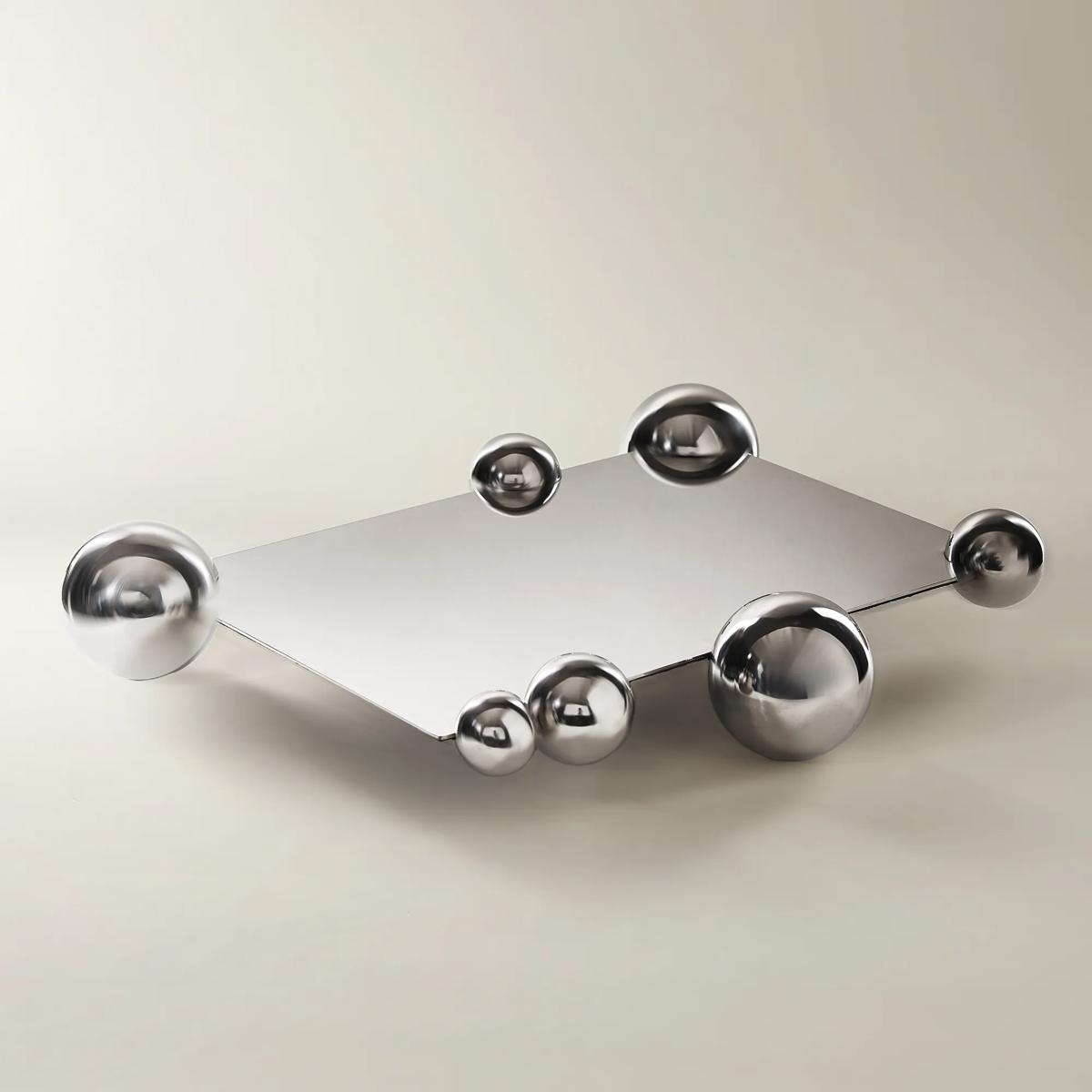 Chrome Bubble Silver Stainless Steel Serving Tray 13.25" x 3.25"$139
A polished stainless steel tray with sculptural bubble accents for a playful, modern entertaining statement.
Add To Cart -
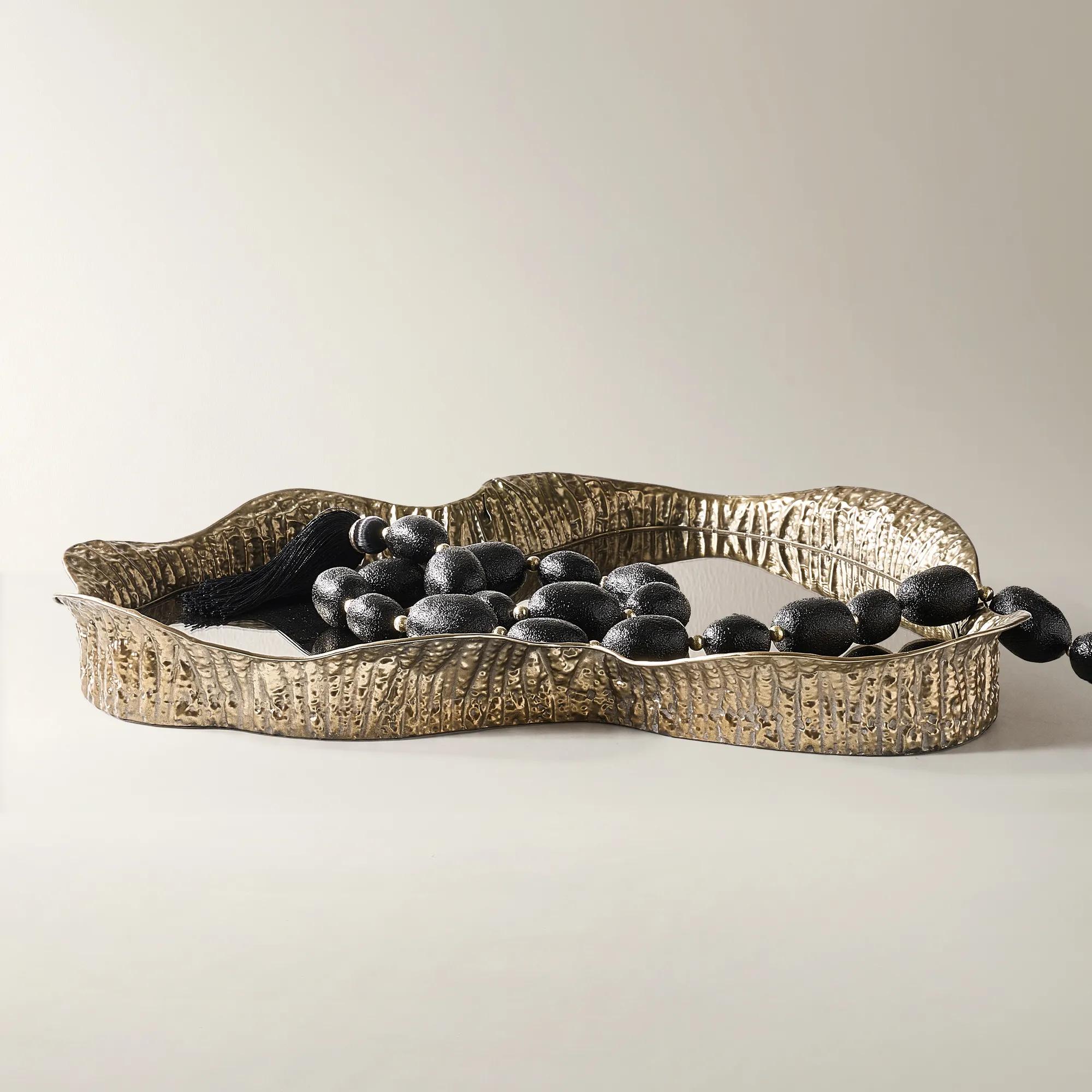 Cara Antique Gold Hand-Forged Iron Organic Shaped Amber Mirror Decorative Tray 21" x 23.5"$319
An antiqued gold iron tray with a bronze-tinted mirror surface for elegant, decorative display.
Add To Cart -
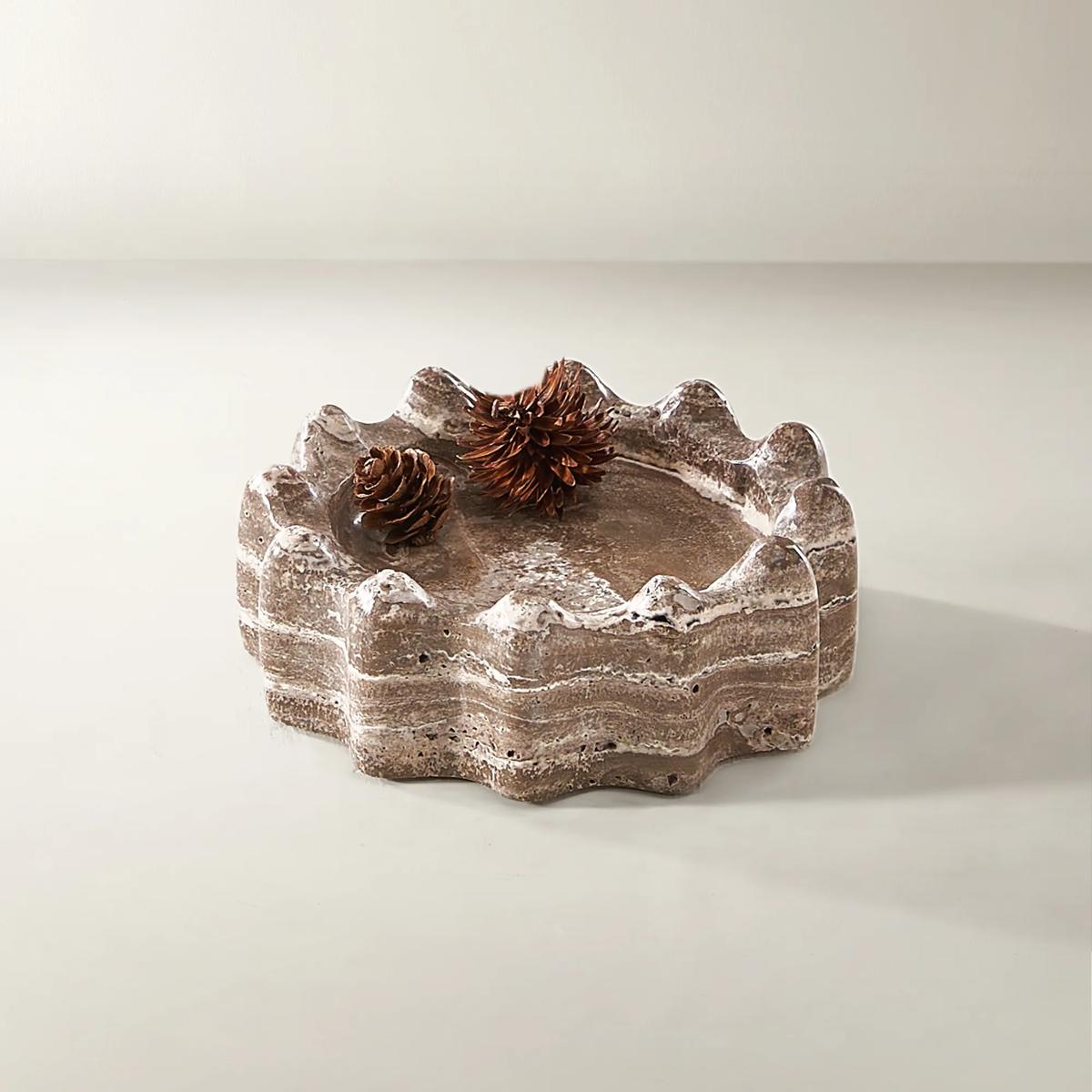 Flora Marble Catchall - Small$89
A hand-carved sand travertine catchall featuring unique veining and undulating, flower-inspired edges.
Add To Cart -
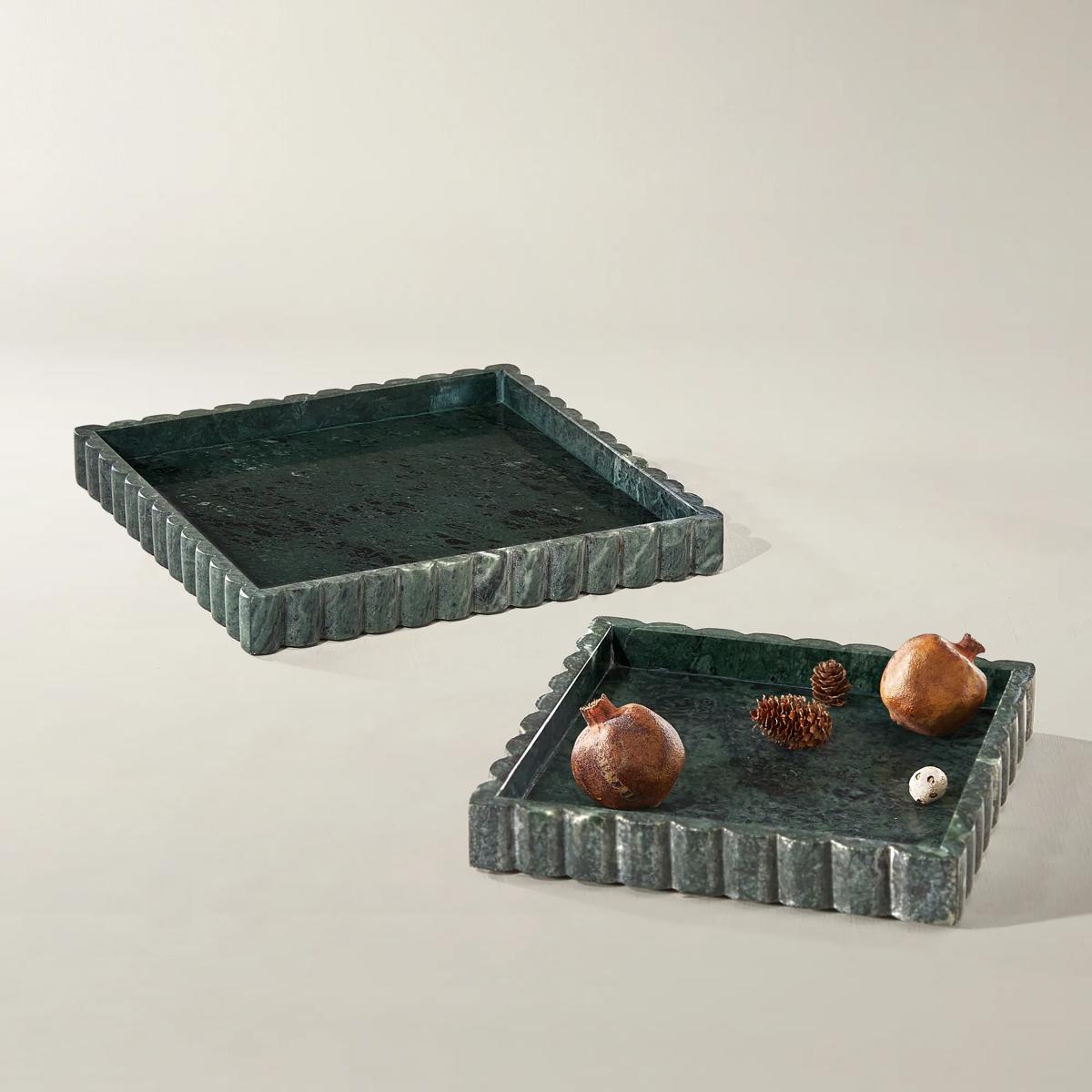
 Scallop Tray - Emerald Marble$69
A handcrafted Baroda green marble tray featuring unique veining and elegant scalloped edges for decorative display.
Add To Cart -
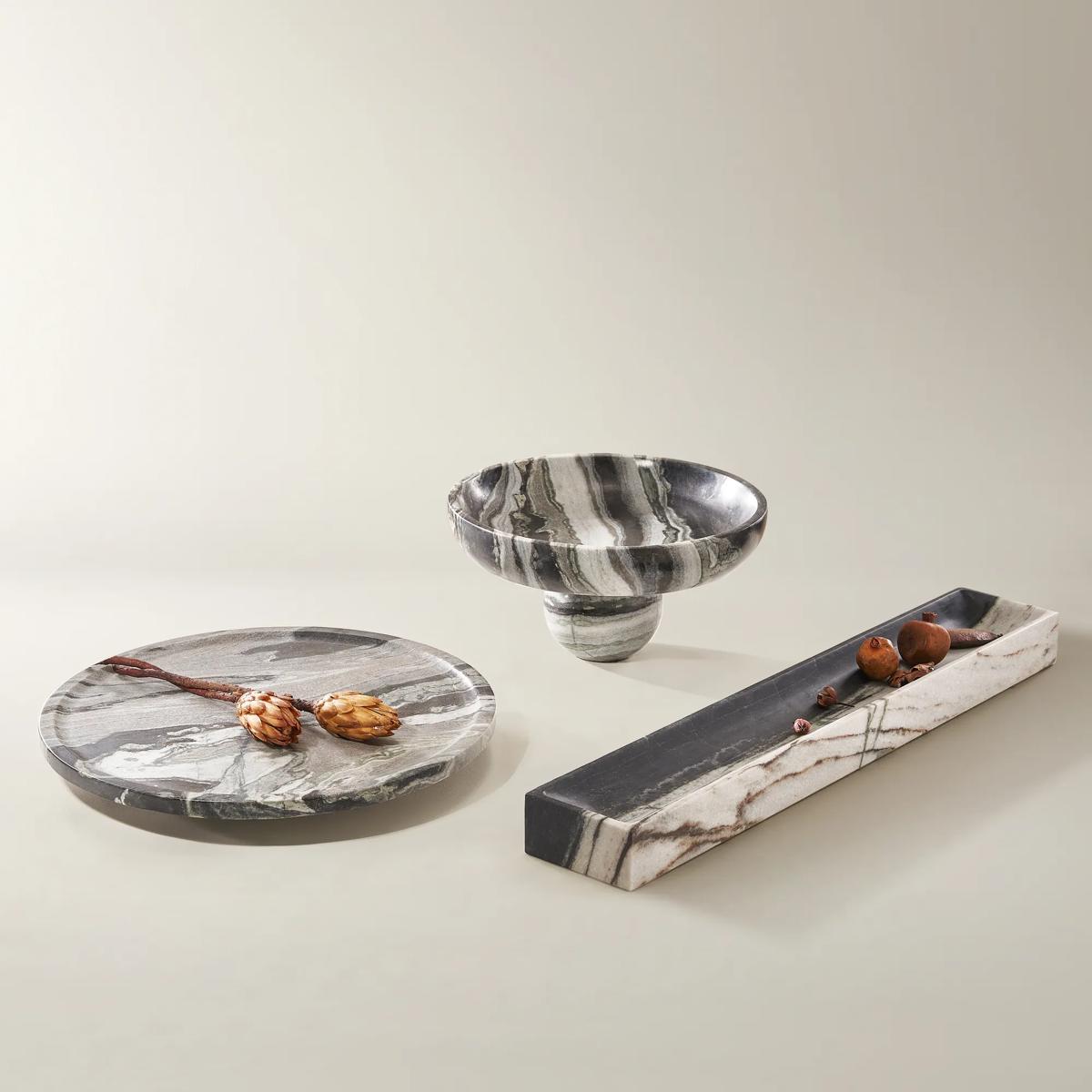
 Luxe Marble Collection$169
A striking black marble décor collection featuring unique veining and elegant footed bowl, tray, and riser.
Add To Cart -
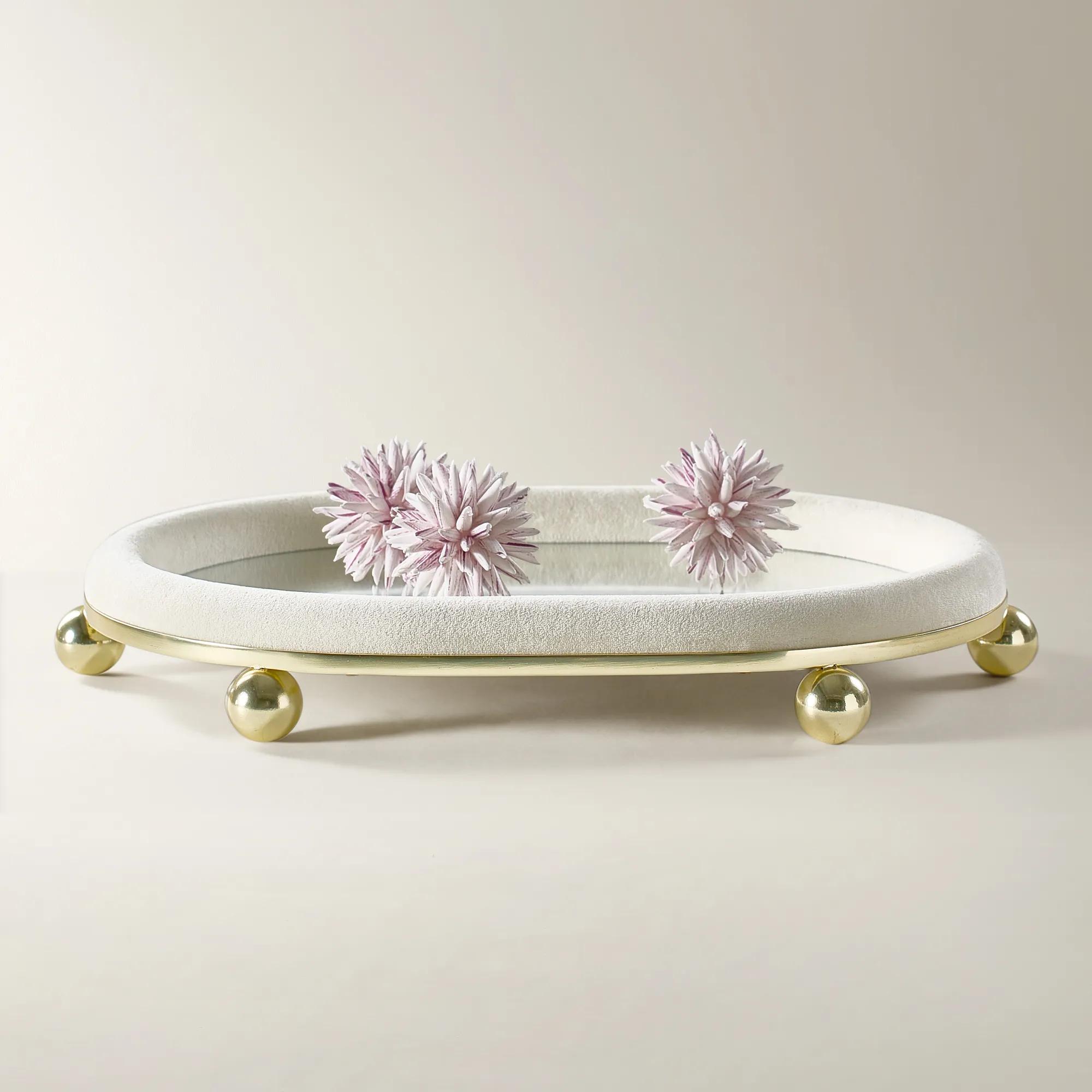
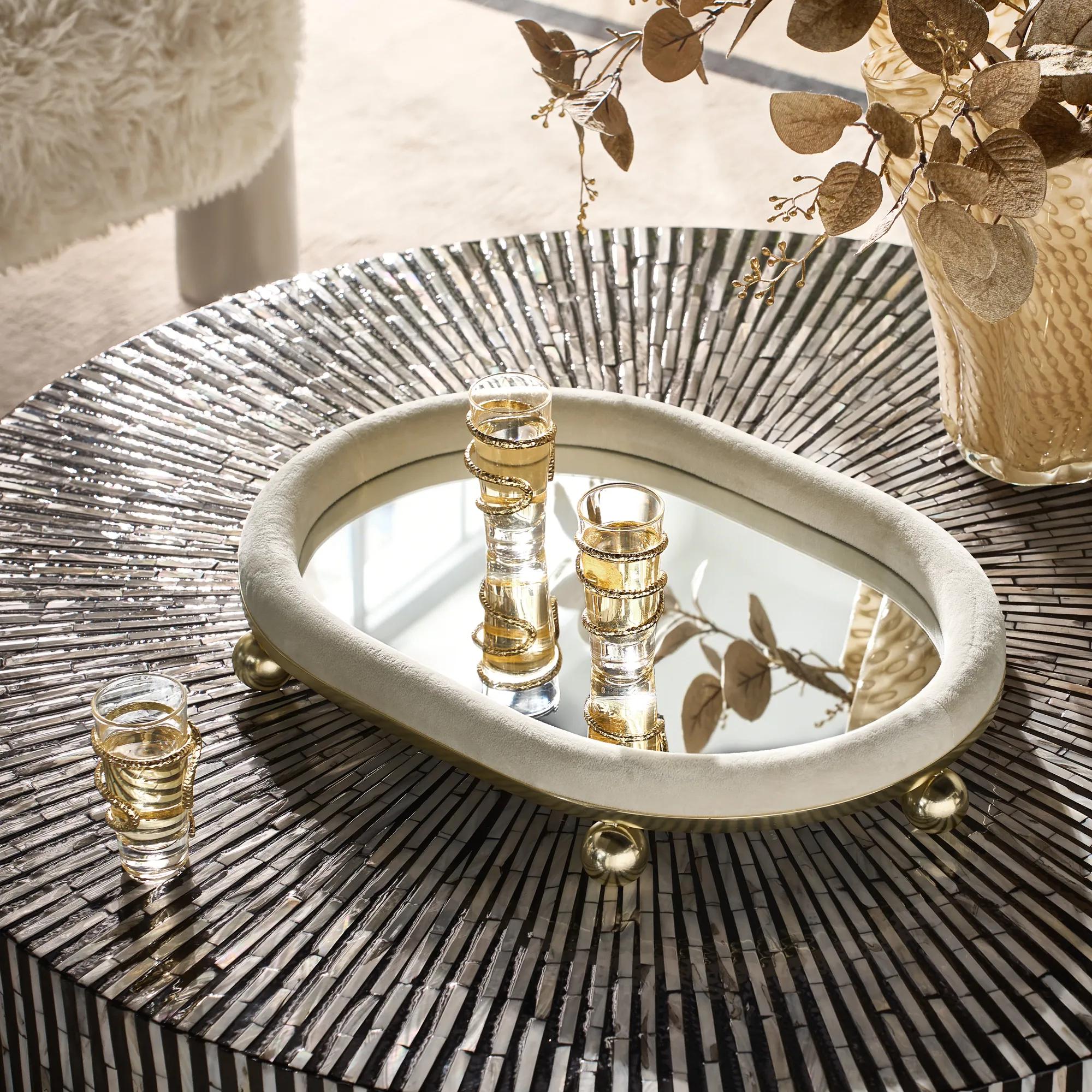 Capri Vanity Ivory Soft Gold Velvet Mirror Tray 17.75" x 2.25"$99
A soft gold iron tray with a mirrored base, velvet accents, and playful bauble details for chic display.
Add To Cart -
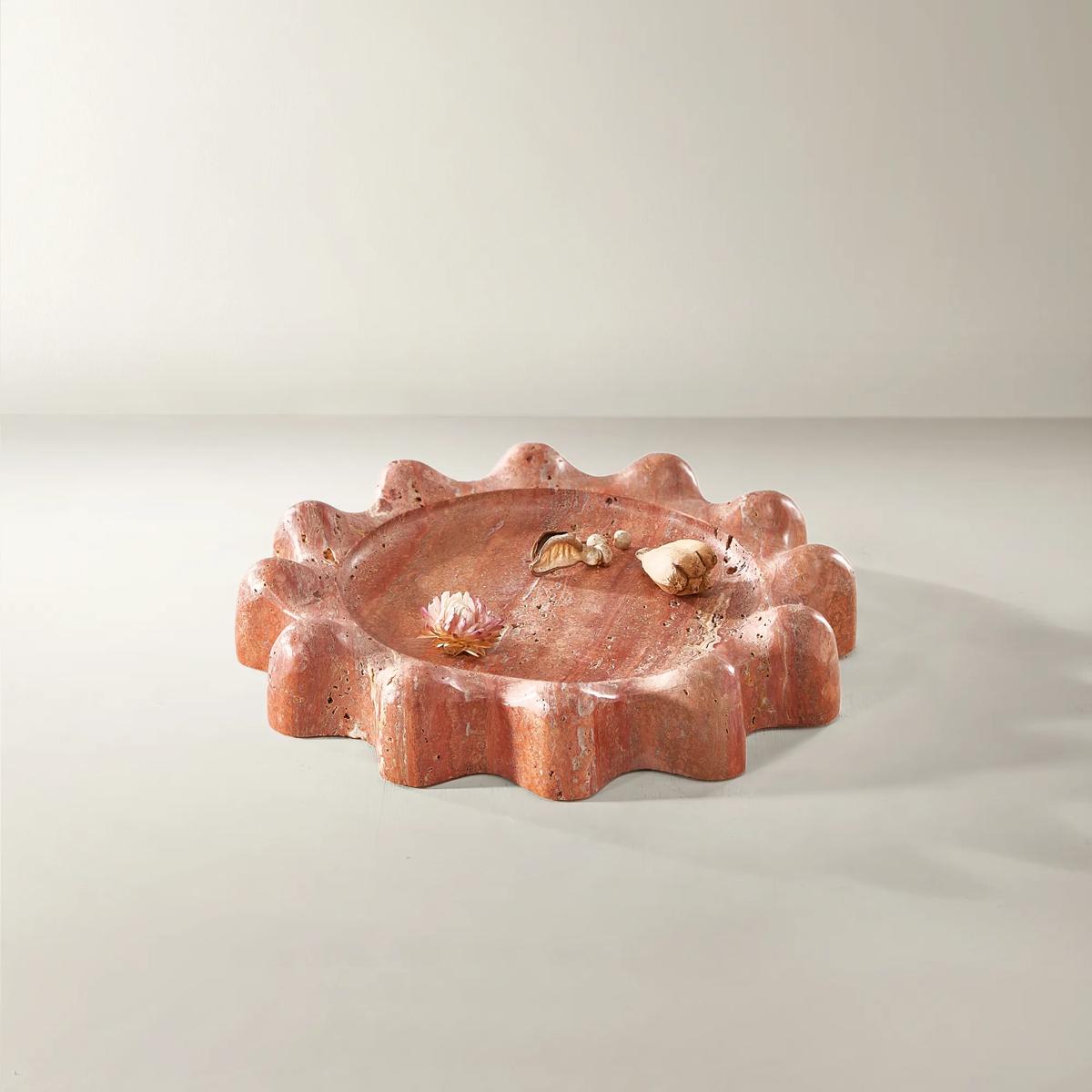 Flora Marble Catchall - Large$159
A hand-carved red travertine catchall with unique veining and undulating, flower-inspired edges.
Add To Cart

Coffee Station Organizing Trays
Coffee station organizing trays bring a polished sense of order to your morning ritual, grouping mugs, sweeteners, and stirrers into a thoughtfully styled arrangement. Look for a tray sized to your countertop or coffee bar, with enough room for your daily essentials and a design that complements your decor.
Coffee station organizing trays bring mugs, coffee pods, sweeteners, syrup bottles, and stirrers into a defined arrangement, giving a countertop coffee bar both structure and presence. Rather than allowing each accessory to drift across the counter, a tray establishes a dedicated place for the details that make a daily coffee ritual feel personal. A gleaming border can frame porcelain cups like a small collection; a dark, sculptural base can lend depth to clear canisters and polished spoons. The effect is decorative, but the purpose is practical: frequently used essentials stay together, stray sugar is easier to spot, and the surrounding work surface remains open for preparing a drink. The most useful proportions depend on what the station needs to hold. A compact tray may accommodate two cups and a sugar bowl beside an espresso machine, while a broader rectangular shape can gather taller bottles, a pod container, and a vessel for stirrers. Interior dimensions matter more than the outer measurements alone, especially when thick rims or inset handles reduce the usable surface. A generous footprint should still leave space to fill a water reservoir, open a cabinet, and reach an outlet without shifting the entire display. Rectangular trays often make efficient use of narrow counters, while round and oval silhouettes soften the straight lines of cabinetry and appliances. Rim height changes the experience, too: a low edge keeps small accessories visible and easy to reach, while a deeper border helps contain loose packets and gives the arrangement a more enclosed appearance. Removable compartments or smaller vessels can separate sweeteners from pods without committing the whole tray to one fixed layout. For a station used by several people, that flexibility allows regular coffee, decaf, tea bags, and different sweeteners to share a polished setting without becoming visually tangled. An open area beside the organized essentials gives a cup room to land, preserving the distinction between a beautifully arranged station and a crowded countertop.
Material gives a coffee organizer tray much of its character, but it also determines how comfortably the piece fits into a splash-prone setting. Wood introduces grain and depth, balancing glossy appliances with an organic surface; its suitability near moisture depends on the finish and the care instructions. Lacquered surfaces offer saturated color or a luminous sheen, though abrasive cleaners and rough-bottomed containers can compromise that finish. Metal brings a crisp architectural edge, whether the effect is softly brushed or highly reflective, and its resistance to staining or corrosion varies with the metal and protective coating. Mirrored trays amplify light and lend glass jars and sculptural cups a particularly dramatic backdrop, but water spots, fingerprints, and scratches tend to remain visible. Glass offers visual lightness, while acrylic can create a similarly transparent effect with less weight; both benefit from gentle cleaning and protection from abrasive contact. Marble and other natural stone surfaces have substantial presence, although their weight and potential sensitivity to coffee, acids, and staining deserve consideration. No decorative material should be assumed waterproof, heatproof, dishwasher-safe, or suitable for direct food contact unless its stated care and use information confirms it. Cups, saucers, wrapped treats, and contained ingredients keep the arrangement versatile without relying on the tray itself as a food surface. A small saucer beneath a syrup bottle can catch sticky drips before they reach a delicate finish, and washable inserts can make loose-packet storage easier to maintain when their materials permit washing. Spills are best addressed promptly with a cleaning method appropriate to the surface, followed by thorough drying rather than prolonged soaking. Protective feet or a suitable liner can help limit contact between a tray and the counter, provided they remain clean and do not trap moisture underneath. For carrying, secure handles, a balanced load, and manageable weight matter as much as appearance; a decorative rim alone is not necessarily a carrying handle. Coffee machines generally belong on a stable surface with the clearance specified by their manufacturer, rather than on a decorative tray that could obstruct ventilation, collect water, or make the appliance less secure.
A well-proportioned coffee station tray can make even a modest stretch of counter feel deliberately furnished. In a compact apartment, a slender silhouette beside the coffee maker creates a distinct beverage area without overtaking the kitchen. On a dining room sideboard, a more substantial tray can hold cups and accompaniments for after-dinner coffee, leaving the rest of the surface available for serving. A home office arrangement may call for a restrained grouping of pods, a covered sweetener container, and a favorite mug, while a shared household benefits from clear categories that make preferred ingredients easy to recognize. When guests help themselves, visible cup handles, accessible spoons, and neatly separated additions make the setting feel gracious without requiring explanation. Styling works best when the practical pieces contribute to the composition: repeated cup shapes establish rhythm, clear containers reveal texture, and a single reflective finish connects the station to nearby lighting or cabinet hardware. Taller bottles can sit toward the back, with shorter vessels in front, provided everything remains within comfortable reach. One distinctive accent is often enough; leaving breathing room around the essentials allows a richly finished tray to remain part of the visual story. Related entertaining spaces can share that sense of intention through Designer Trays For Coffee Tables, bringing a complementary approach to gathering objects and framing a room’s focal points. Coffee station organizing trays also make thoughtful housewarming or wedding gifts for someone who enjoys espresso rituals, weekend brunches, or welcoming friends for conversation over a cup. A versatile size and a finish suited to the recipient’s interior give the gift a useful life beyond a single arrangement. As preferences change, the same tray may move from holding coffee essentials to presenting cups at the table or gathering accessories on a sideboard. That adaptability gives a beautiful object lasting purpose: it brings order to small necessities while letting the room’s personality remain unmistakably on display.
FAQs
Create a curated coffee ritual with favorite mugs, a sugar bowl, coffee canisters, and a vessel for stirring spoons. Add one expressive detail, such as a sculptural accent or a petite floral arrangement, to give everyday essentials an artful presence.
Begin with a cohesive palette, then layer contrasting silhouettes for visual drama. Pair clean-lined canisters with curved mugs, arrange accessories in intentional groupings, and leave a little open space so each detail feels considered rather than crowded.
Echo a color or finish already featured in your cabinet hardware, lighting, or decorative accents. For a more expressive composition, introduce a contrasting tray finish and repeat that accent through your mugs or canisters, giving the coffee station its own distinctive identity.
A kitchen counter, dining room sideboard, or dedicated beverage console can become a beautiful setting for your coffee ritual. Let the surrounding decor guide the mood: tailored and tonal in the kitchen, or richly layered beside statement artwork in the dining room.
Give your coffee service a sense of occasion with coordinated cups, an elegant creamer, and a curated selection of sweeteners. Introduce a seasonal floral accent or a distinctive sugar bowl to create an inviting final chapter to dinner.


