Coffee Bar Carts
Coffee Bar Carts
-
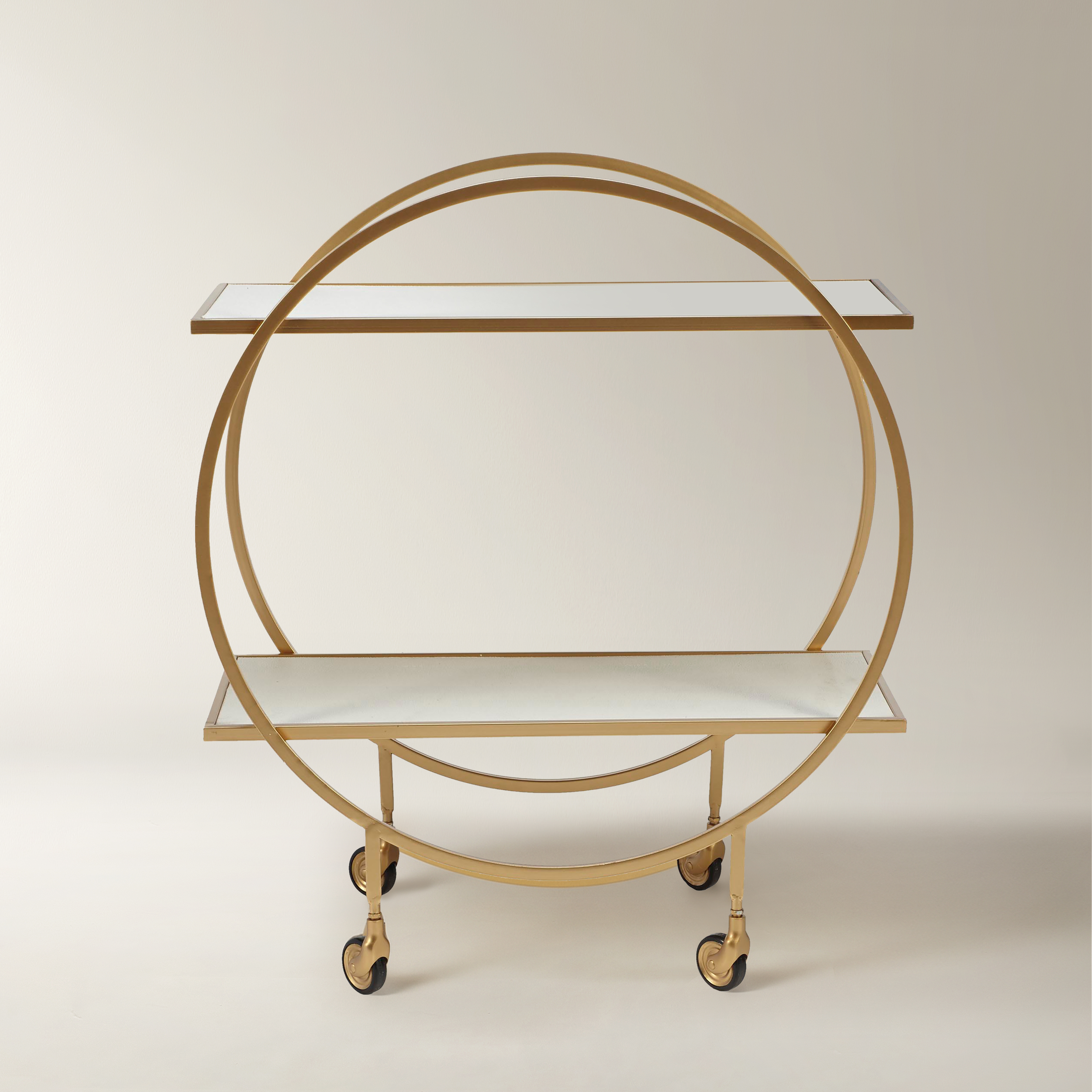
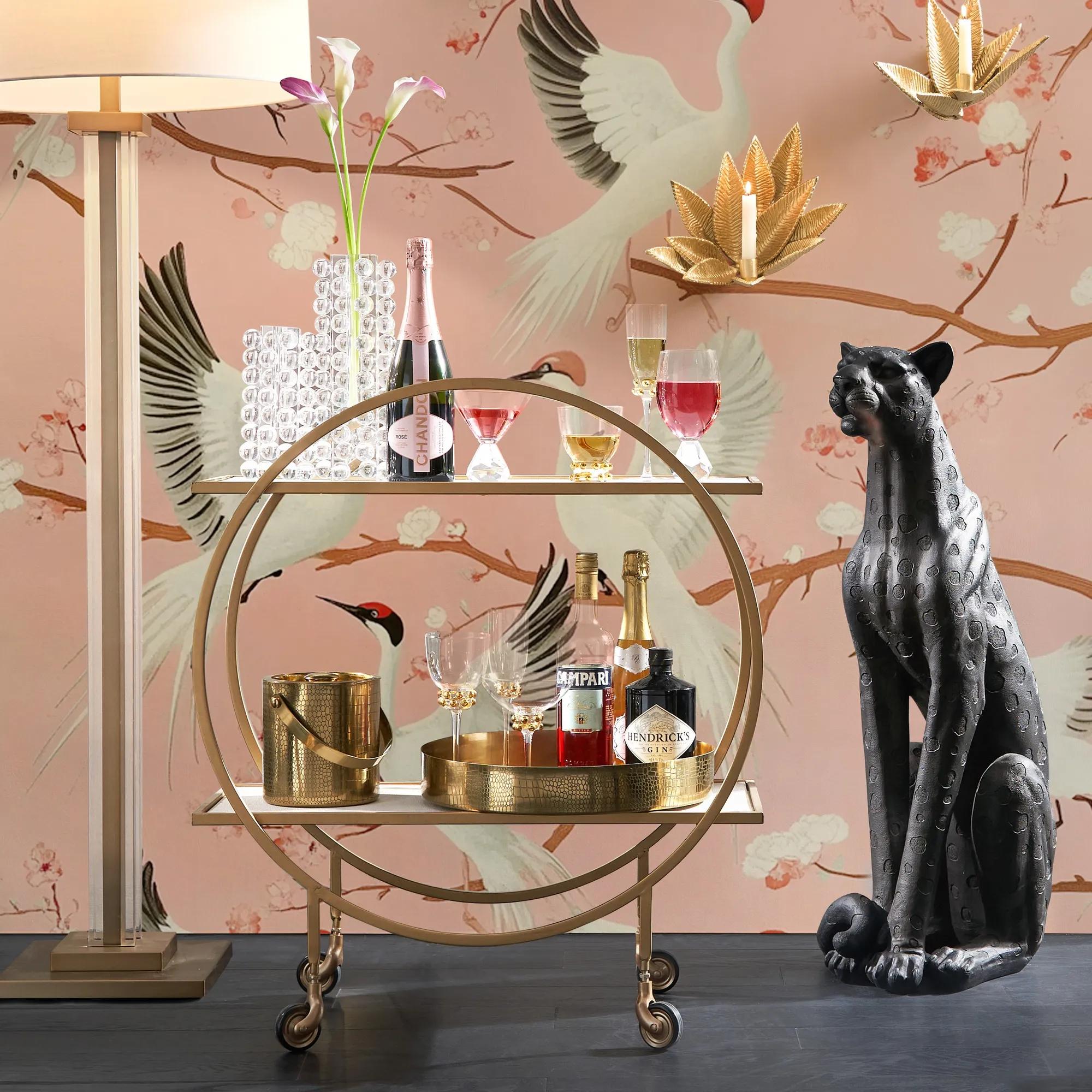 Russo Gold Metal 2-Tier Bar Cart (28")$349
A two-tier bar cart with a metallic gold frame, rolling casters, and white faux leather trays.
Add To Cart -
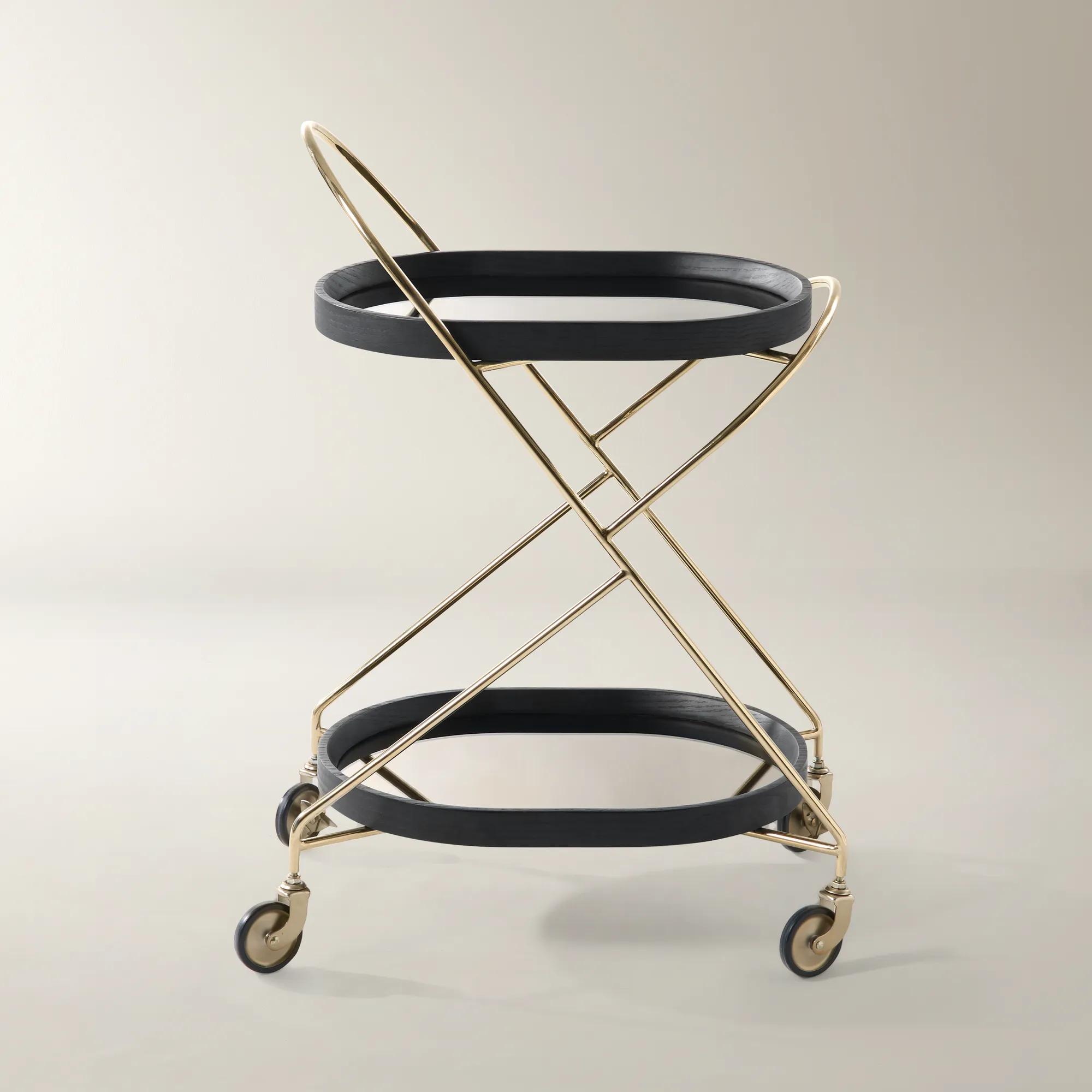 Cleo Black Oak 2-Tier Bar Cart (22.5")$599
A sculptural bar cart featuring matte black oak, bronze mirrored shelves, and a gold-plated stainless steel frame.
Add To Cart -
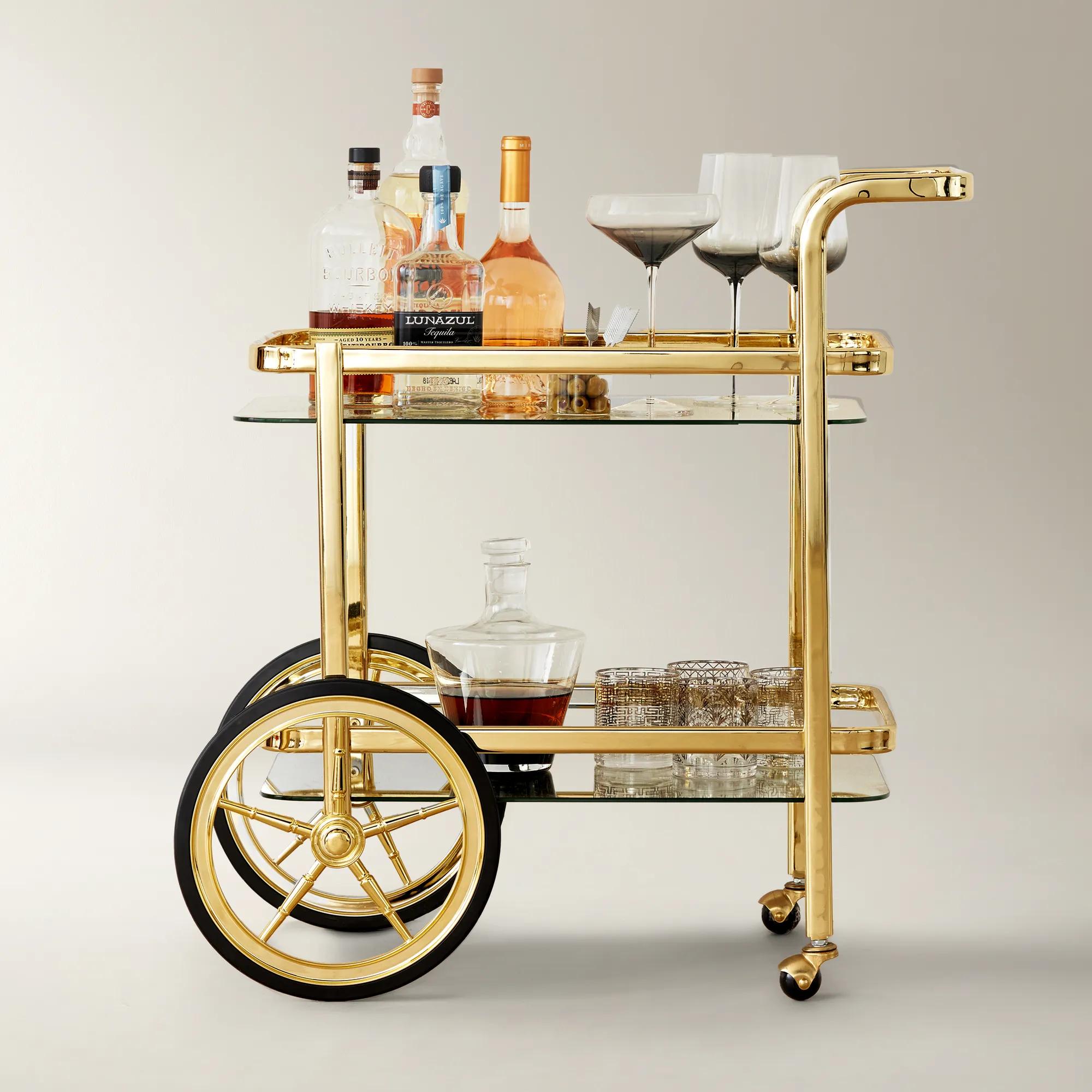
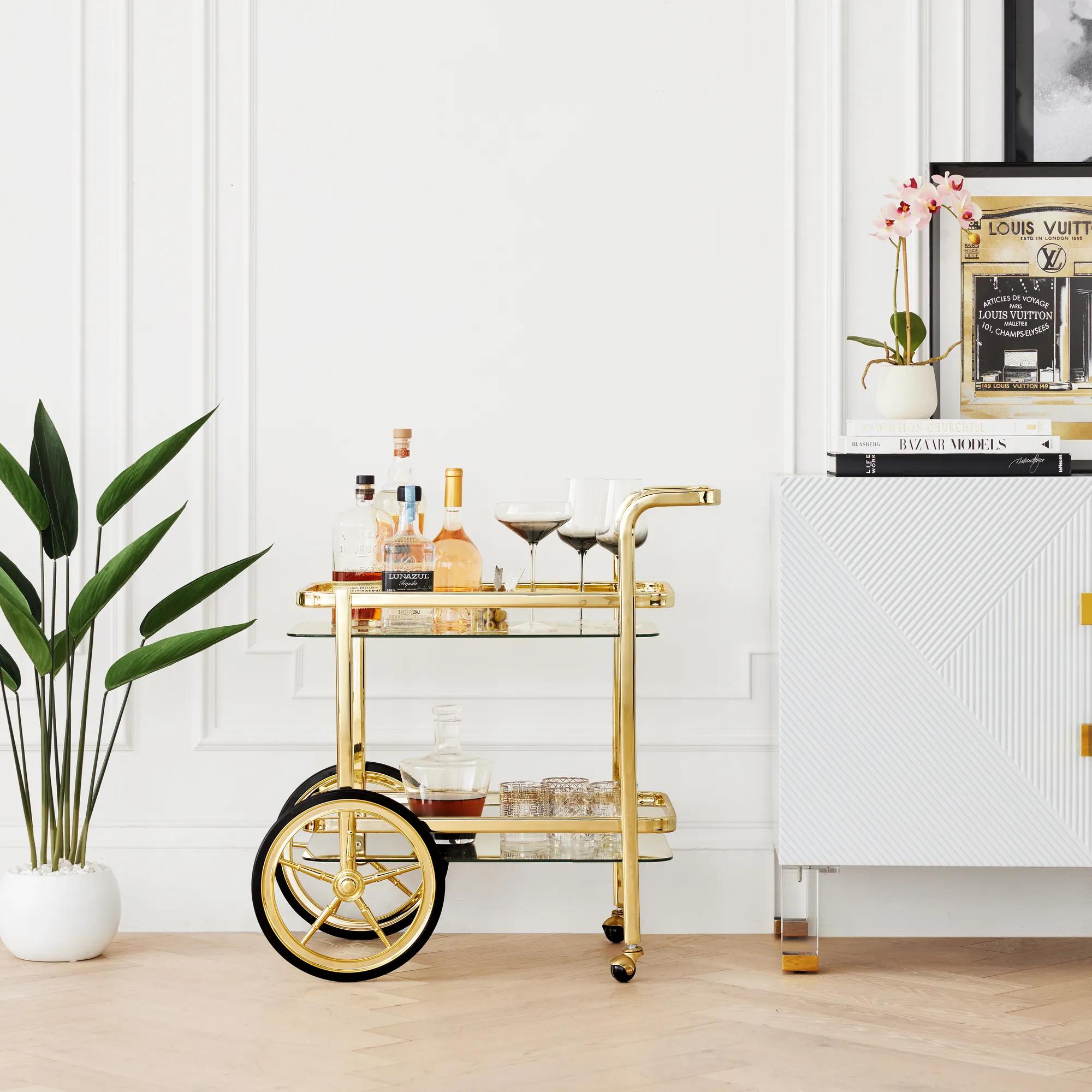 Trolley Soft Gold Steel And Glass 2-Tier Bar Cart (29.5")$399
A soft gold bar cart with a stainless-steel frame, mirrored glass shelves, and elegant statement wheels.
Add To Cart -
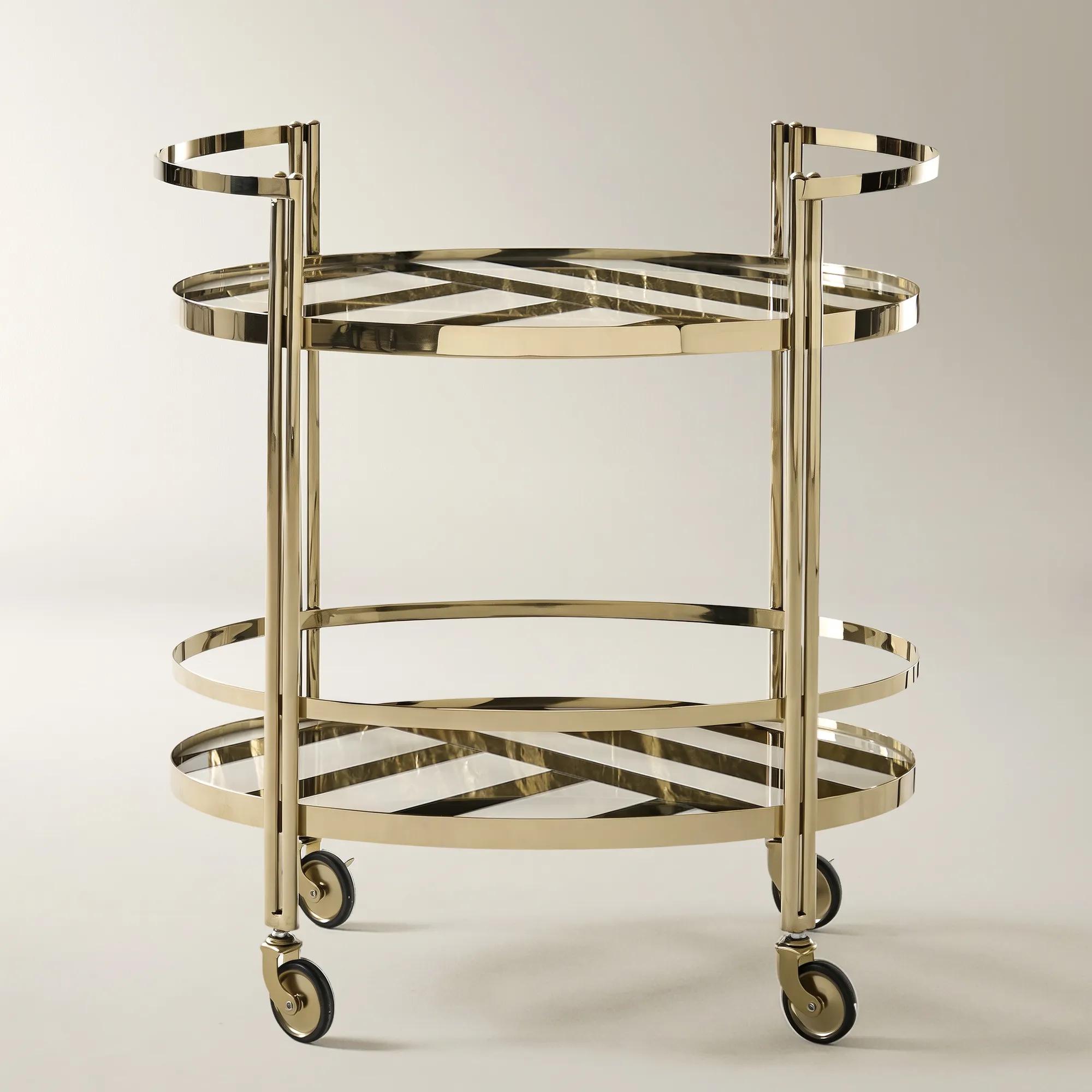
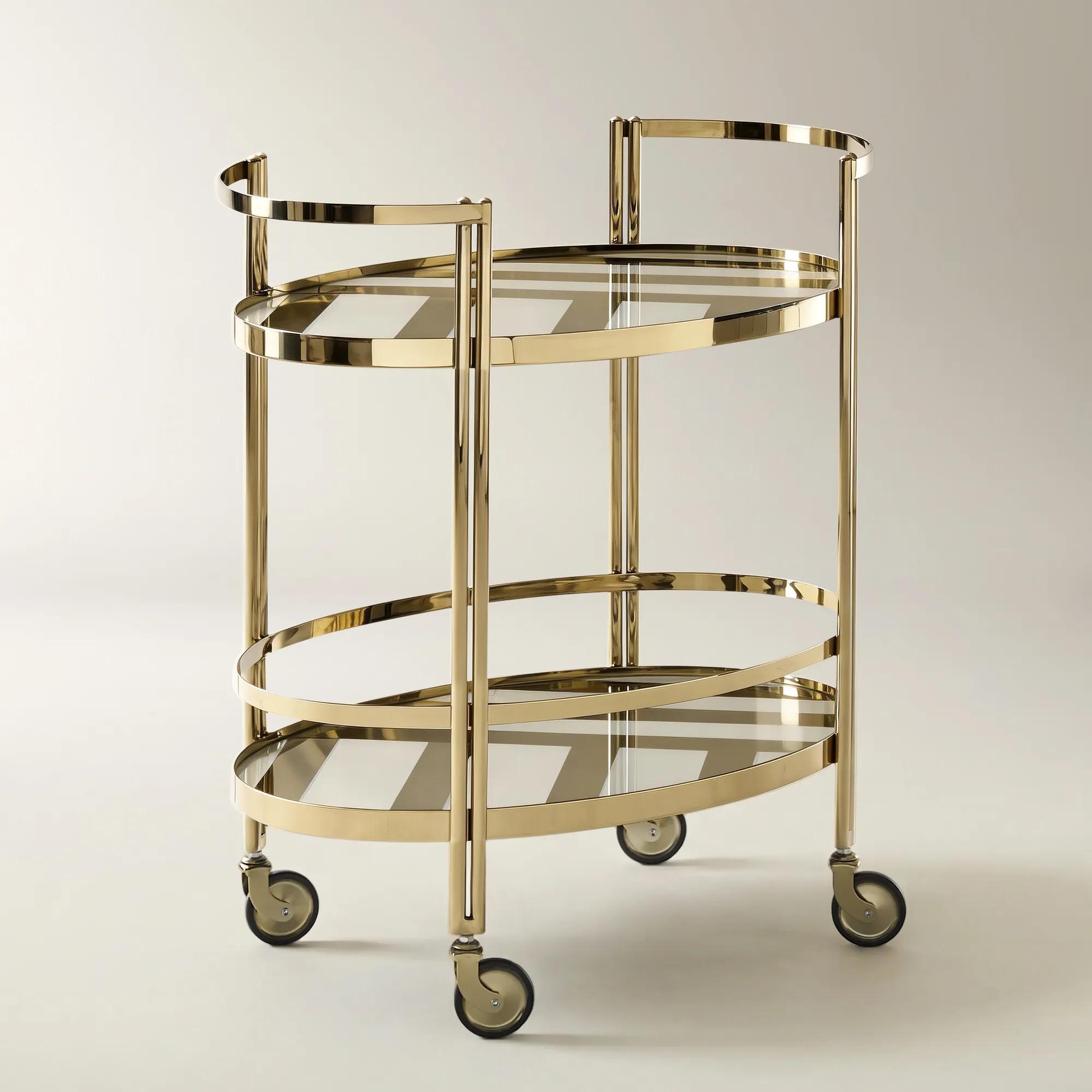 Rivoli Geometric Two - Tone Mirror 2 - Tier Bar Cart (30")$799
A sculptural bar cart featuring geometric bronze and clear mirrored shelves with a luminous soft gold frame.
Add To Cart -
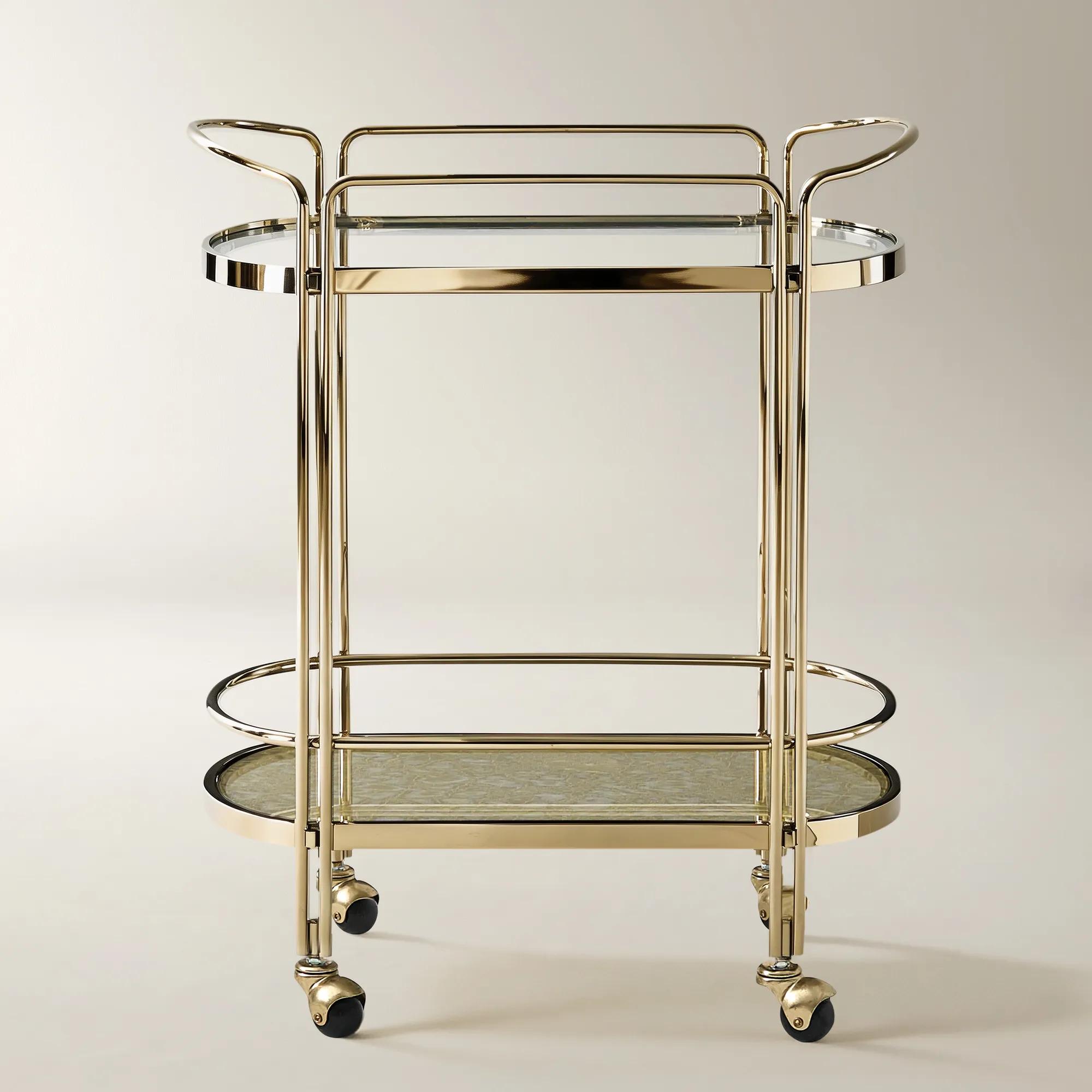 Duality Fabric-Laminated Glass 2-Tier Bar Cart (25.3")$499
A two-tier bar cart featuring a clear tempered glass top, fabric-laminated shelf, and soft gold stainless-steel frame.
Add To Cart -
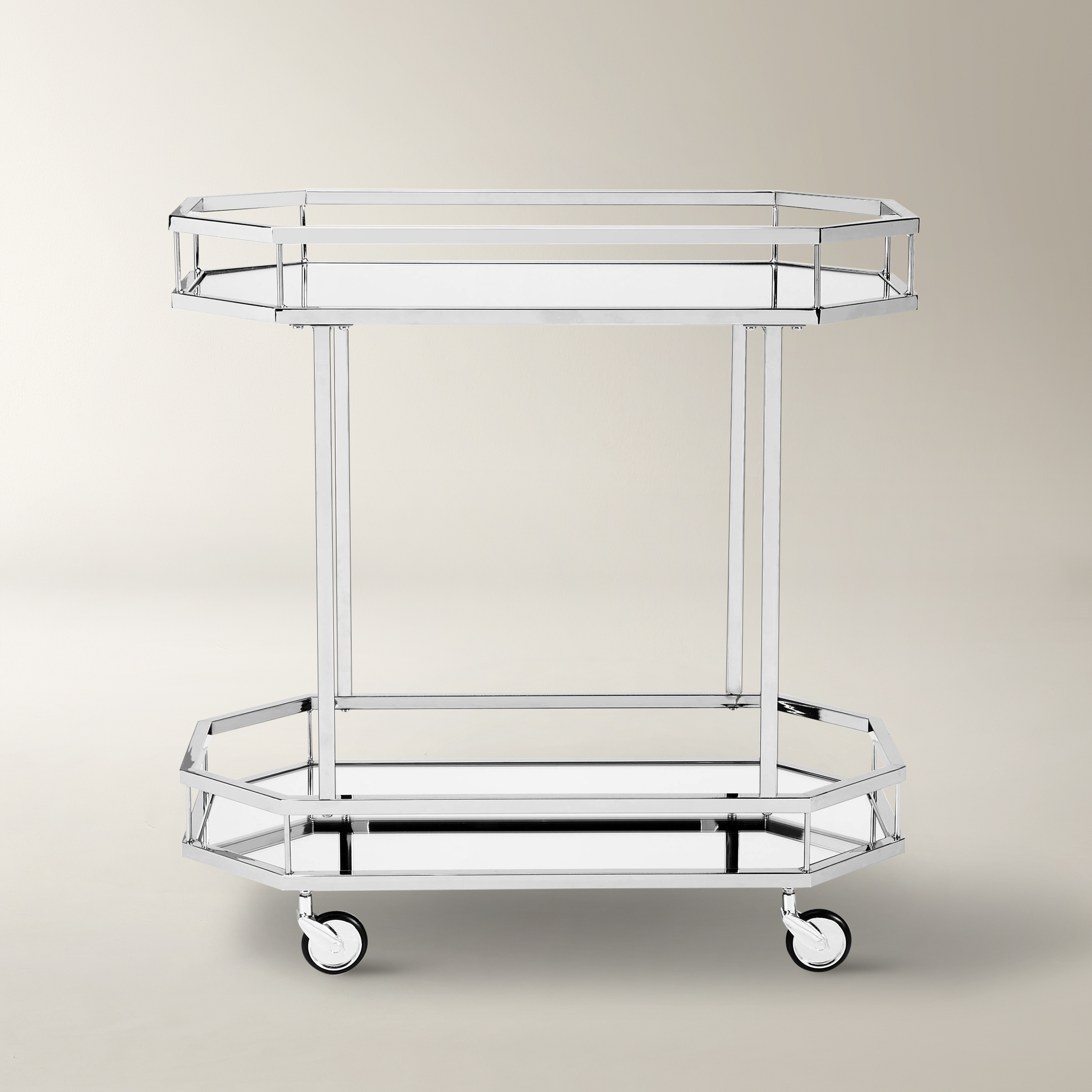
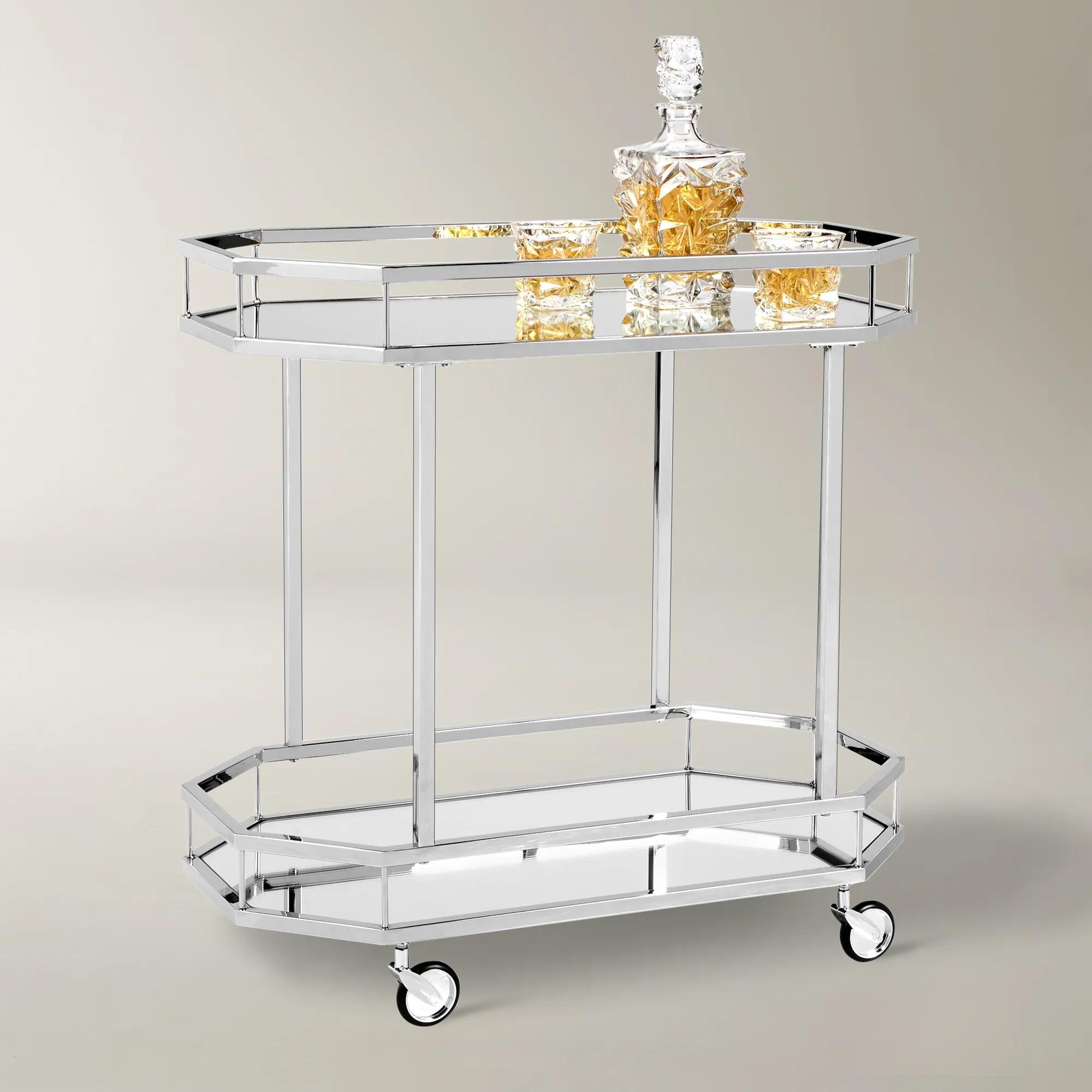 Metropolitan Silver Chrome Plated Steel 2-Tier Bar Cart With Mirror Tray (29.5")$449
A silver chrome-plated steel bar cart with two mirrored tiers and smooth-rolling casters for stylish entertaining.
Add To Cart

Coffee Bar Carts
Explore coffee bar carts to create a dedicated coffee station with a polished, expressive presence. Compare dimensions and layouts with your coffee maker, cups, and brewing essentials in mind, and choose a silhouette that complements your room. The right proportions keep your morning ritual beautifully arranged without overwhelming your space.
Coffee bar carts are freestanding furniture pieces that bring coffee preparation, serving, and storage into one defined space, often with wheels for flexible placement. They can hold an espresso machine or coffee maker alongside cups, beans, tea, and serving essentials, creating a dedicated coffee station without requiring built-in cabinetry. Beyond that practical role, a beautifully proportioned cart gives an everyday ritual a distinctly personal setting. A gleaming frame, an expressive silhouette, or a richly finished shelf can turn the space beside a dining table into a polished destination for morning espresso and after-dinner conversation. In a kitchen, a coffee cart can separate beverage preparation from the main work surface; in a dining room, it keeps refreshments close to the table; in a home office, it offers an inviting pause between appointments. The appeal is as much about atmosphere as organization: favorite cups gathered on a tray, a sculptural canister, and a small arrangement create a composition with purpose. Material and finish shape that impression. Metal frames can introduce crisp architectural lines, while wood brings depth and a more grounded presence. Glass shelves lend visual lightness, and mirrored surfaces reflect surrounding colors and objects for a more theatrical effect. Stone and stone-look surfaces can give a coffee station a substantial appearance, though their performance and care requirements depend on the actual material. A warm metallic finish feels especially expressive against dark cabinetry, while polished silver tones can echo nearby lighting and hardware. Rather than matching every finish in the room, a coffee bar cart can establish a deliberate contrast, provided its scale and detailing feel connected to the surrounding furniture. Open shelves put beautiful everyday objects on display, making the cart part of the room’s design even between uses. For someone who enjoys the presentation of coffee as much as its preparation, that combination of display and function gives a familiar routine a richer setting.
The most successful coffee bar carts feel generous enough for daily use without overwhelming the room around them. Width and depth matter, but the working surface deserves equal attention: a coffee machine needs a stable footprint, space for a cup beneath its spout, and enough clearance to refill its reservoir or open its lid. A compact cart may suit a single brewer and a small collection of cups, while a broader surface can accommodate a more elaborate setup with a grinder and a dedicated serving area. Shelf spacing determines whether taller canisters, pitchers, or spare supplies fit comfortably below. Overall height also changes the experience; a surface that is comfortable for pouring and preparing drinks is more useful than one chosen for appearance alone. In a narrow dining area or apartment kitchen, the cart should leave doors, drawers, and walking routes unobstructed. Handles and projecting hardware count toward that footprint, as does any space needed to move the cart. Wheels can make repositioning easier, but a loaded coffee cart is still a substantial piece of furniture. Smooth travel, secure wheel attachments, and locking casters, where included, are important considerations for a station holding hot liquids or breakable cups. Appliances should be switched off and allowed to cool before the cart is moved, with loose objects secured and cords disconnected. For everyday brewing, placement near a suitable outlet helps avoid cords stretched across pathways; appliance instructions should determine electrical requirements and necessary ventilation. Steam should not collect beneath low shelves or against delicate wall finishes. Weight capacity matters at both the top and individual shelves, particularly with heavier machines or dense serving pieces. A rigid frame, well-supported shelves, and joints that remain steady under the intended load contribute more to lasting usefulness than decorative detail alone. With the practical proportions resolved, even a modest corner can accommodate a coffee station that feels composed rather than crowded.
Organization gives a coffee bar cart its finishing layer of luxury. A tray can establish a defined serving zone, while coordinated containers bring visual rhythm to the smaller necessities that might otherwise look scattered. Keeping frequently used cups within easy reach and reserving lower shelves for backup supplies creates a natural hierarchy without making the arrangement feel rigid. Some open space around the machine preserves the beauty of the surface and leaves room to set down a filled cup. In shared households, a coffee and tea station can accommodate different routines, from a quick first cup to a more leisurely afternoon serving. In an entertaining space, it can support dessert service without competing with the dining table. Daily care helps preserve that polished presentation. Coffee splashes and standing water should be addressed promptly, and the cart’s material-specific care instructions should guide cleaning. Wood finishes generally benefit from protection against lingering moisture, while glass and mirrored surfaces show fingerprints and require suitable, nonabrasive cleaning products. Metal finishes vary, so harsh cleaners or abrasive pads may damage decorative coatings even when the frame itself feels substantial. Protective pads beneath accessories can reduce scratching where appropriate, and appliances should rest only on surfaces suitable for their weight and operating conditions. Accessible shelves and uncomplicated corners make routine cleaning easier, an important detail for furniture used around grounds, sugar, and milk. For a more enclosed furniture statement, Coffee Bar Cabinets provide an alternative format that can conceal supplies behind doors, while carts emphasize open display and, when equipped for it, mobility. The distinction often comes down to the desired balance of presentation, storage, and flexibility. A coffee bar cart can also make a considered wedding or housewarming gift for an enthusiastic host or devoted coffee drinker, especially when its dimensions and finish suit the recipient’s home. Chosen with those daily habits in mind, it becomes more than an accessory: a distinctive piece of furniture that gives coffee service a place of its own.
FAQs
A coffee bar cart is a freestanding station for coffee essentials, serving pieces, and decorative accents. Styled with expressive drinkware and artful details, it transforms a daily ritual into a distinctive part of your home’s design.
Begin with your preferred coffee maker or brewing accessories, then add cups, saucers, spoons, and canisters for coffee or tea. A serving tray brings the arrangement together, while sculptural decor or a floral accent gives your coffee station a signature flourish.
Choose a cohesive palette, then introduce contrast through texture, pattern, and gleaming accents. Group drinkware on a tray, display distinctive canisters, and add one expressive decorative piece. Leave breathing room between groupings so each detail feels intentional rather than crowded.
A coffee bar cart can complement glamorous, contemporary, or eclectic interiors through its styling. Metallic accents and dramatic contrasts create a glamorous mood; tonal ceramics offer a more restrained composition. For an eclectic look, pair collected cups with an unexpected piece of sculptural decor.
Create an inviting coffee service with coordinated cups, a creamer, sweeteners, and a selection of coffee or tea. Present pastries on a decorative platter and finish with elegant napkins. A deliberate color story turns the arrangement into a polished focal point for brunch or after-dinner conversation.