Brass Hanging Lights
Brass Hanging Lights
-
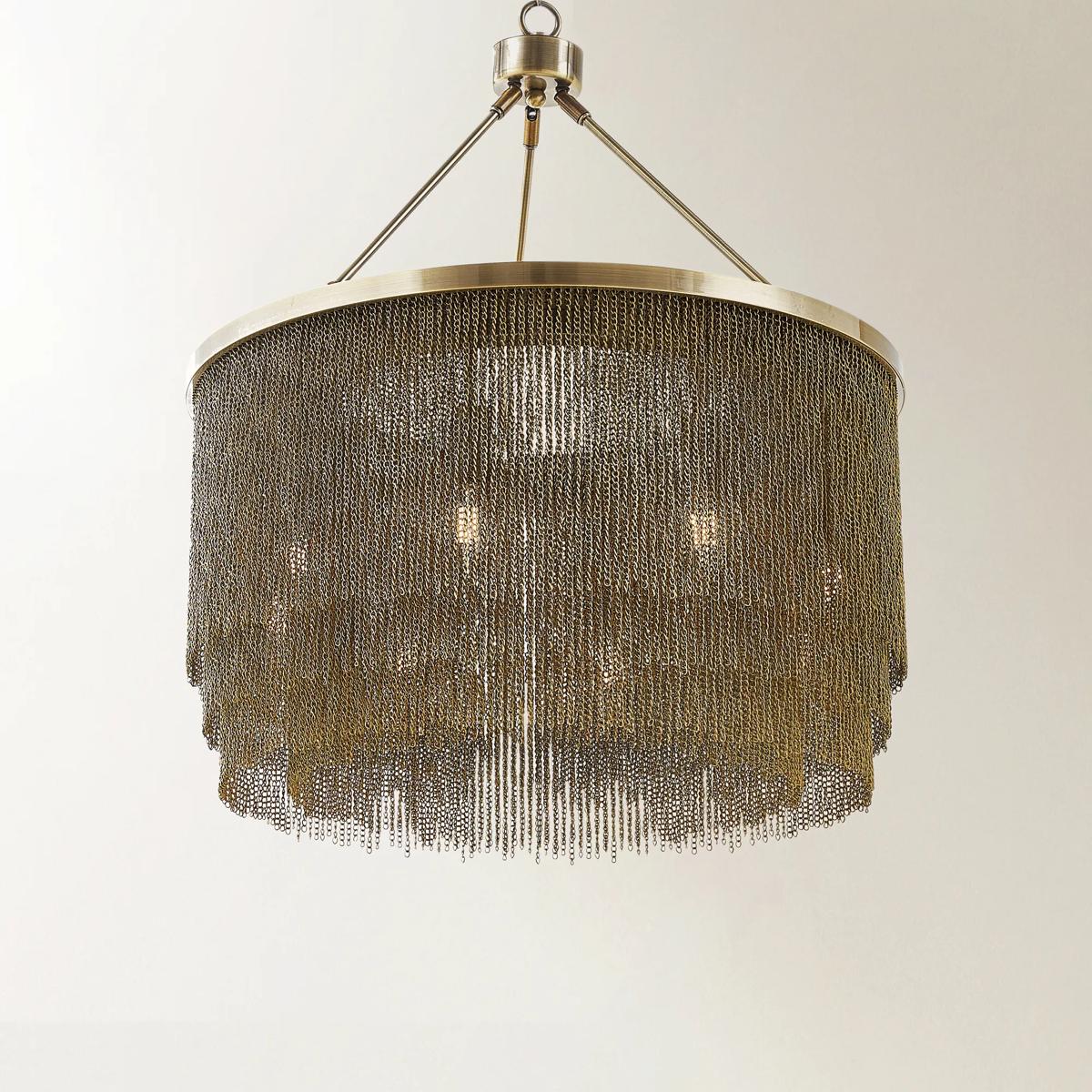
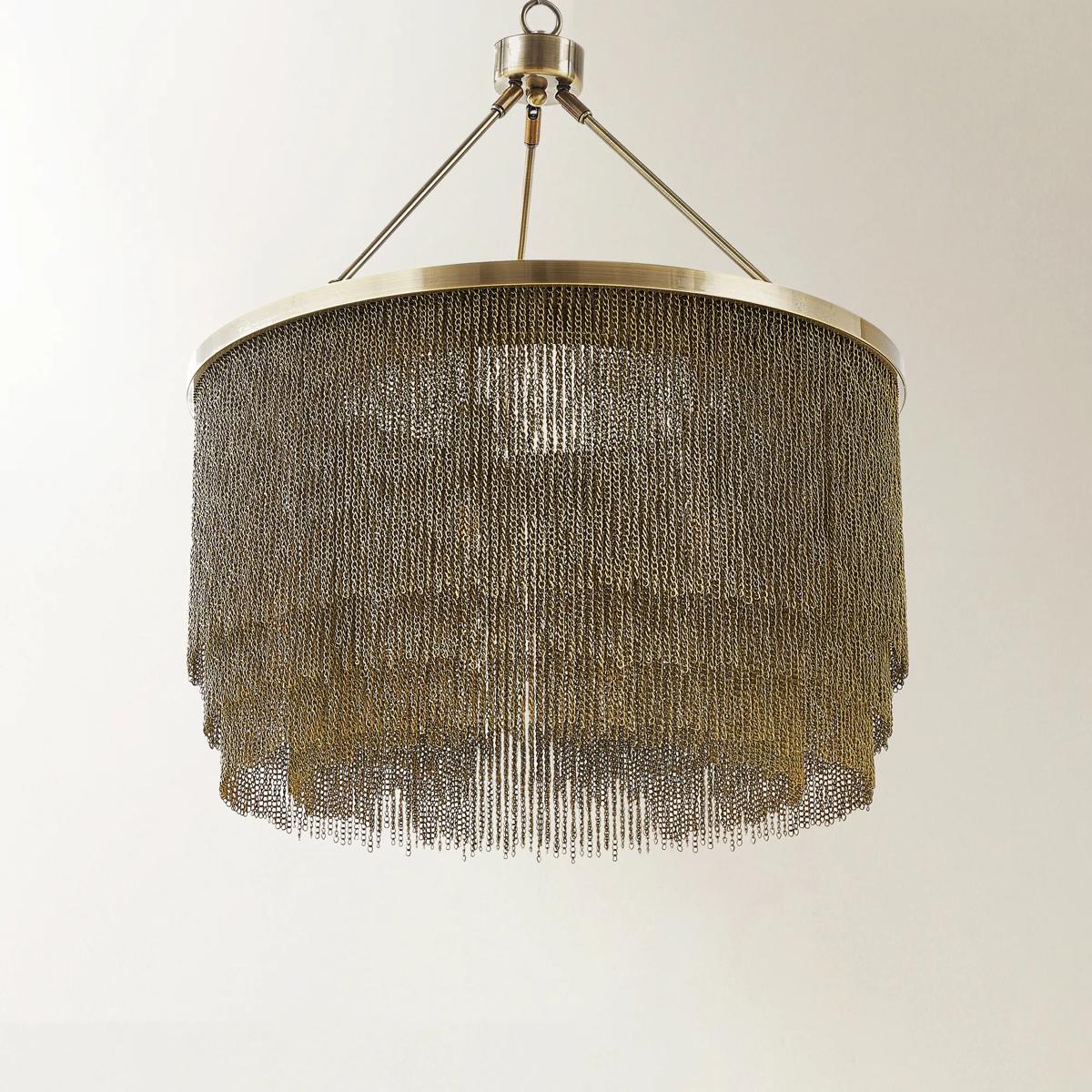 Dagny Brass Link Chain Chandelier 23.5"D x 27.5"H$999
A brass iron chandelier with cascading chain tiers and eight dimmable candelabra lights.
Add To Cart -
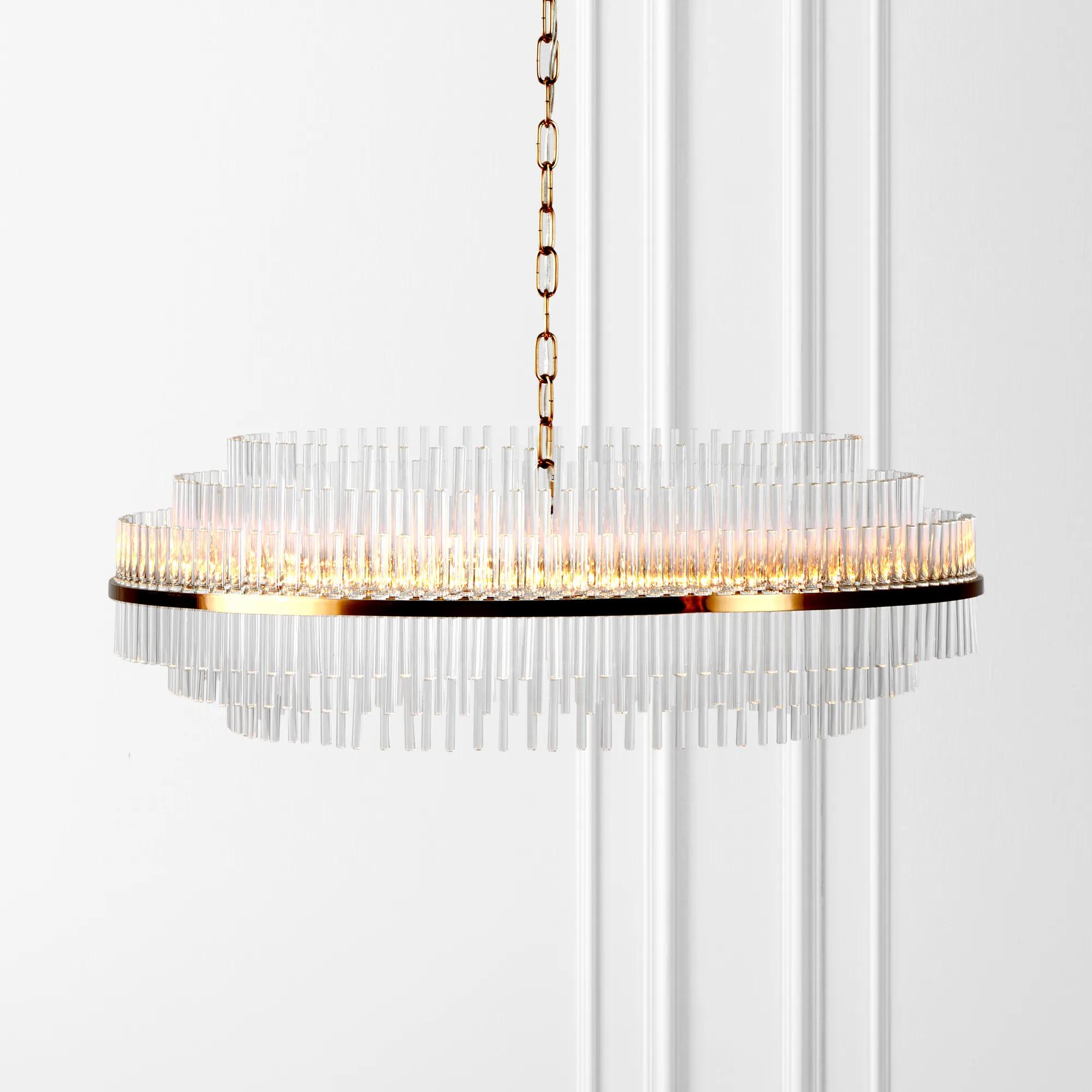
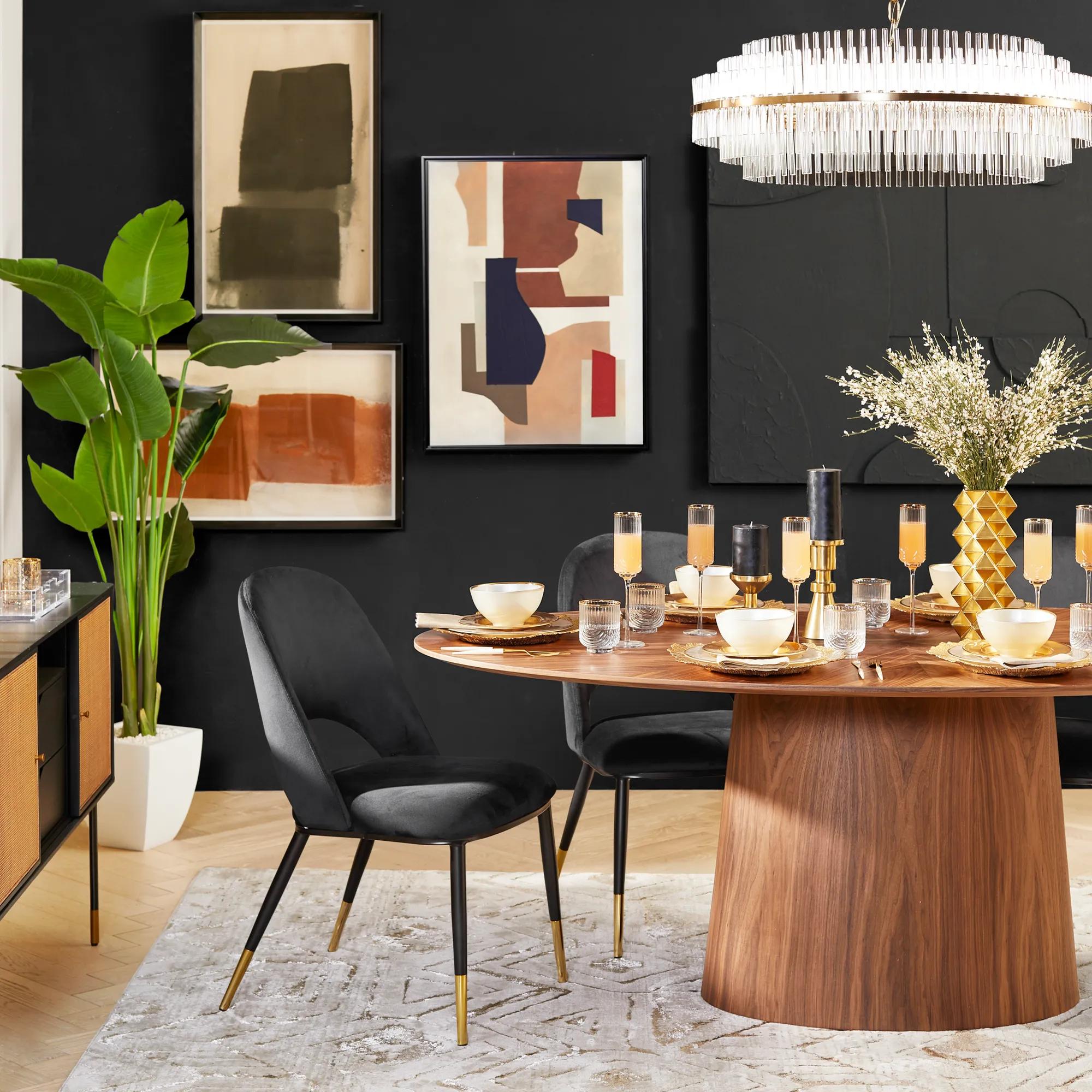 Renata Clear Glass Rod Chandelier 31"W x 10"H$799
A low-profile glass-rod chandelier with a brushed brass iron frame and eight dimmable candelabra lights.
Add To Cart -
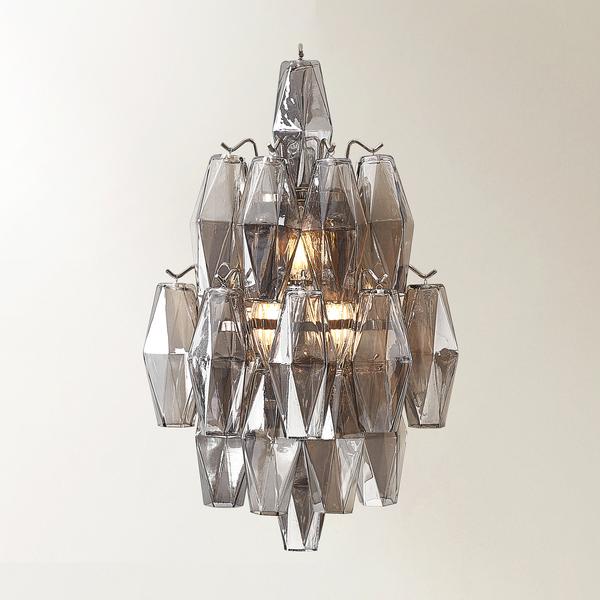
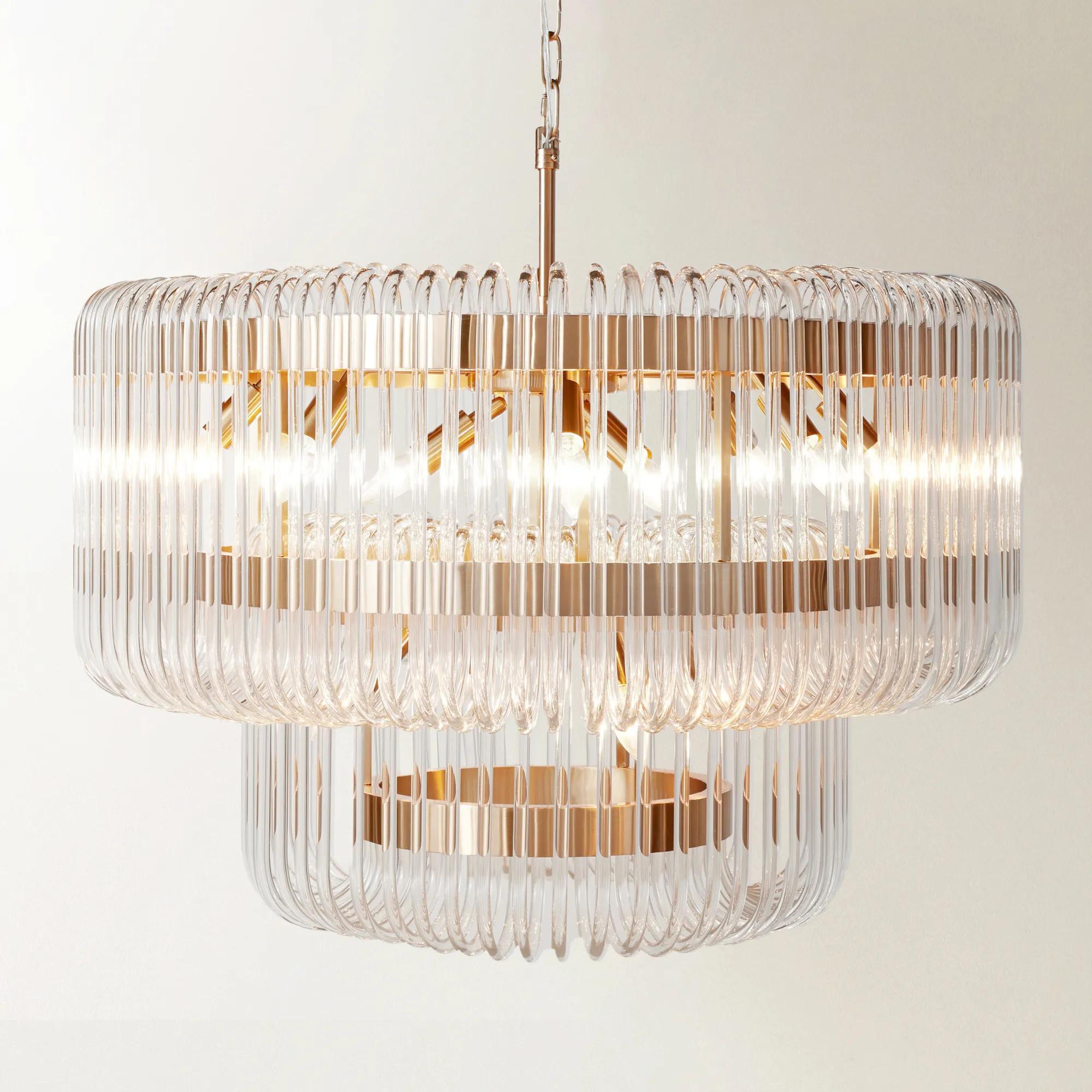 Allure Clear Curved Glass Chandelier 31.5"D x 27.75"H$1499
A chandelier featuring clear curved blown-glass rods, a brushed brass iron frame, and fifteen-light illumination.
Add To Cart -
 Sawin Chandelier$699
A sculptural brass-plated steel chandelier with frosted acrylic diffusers for a soft, ambient glow.
Add To Cart -
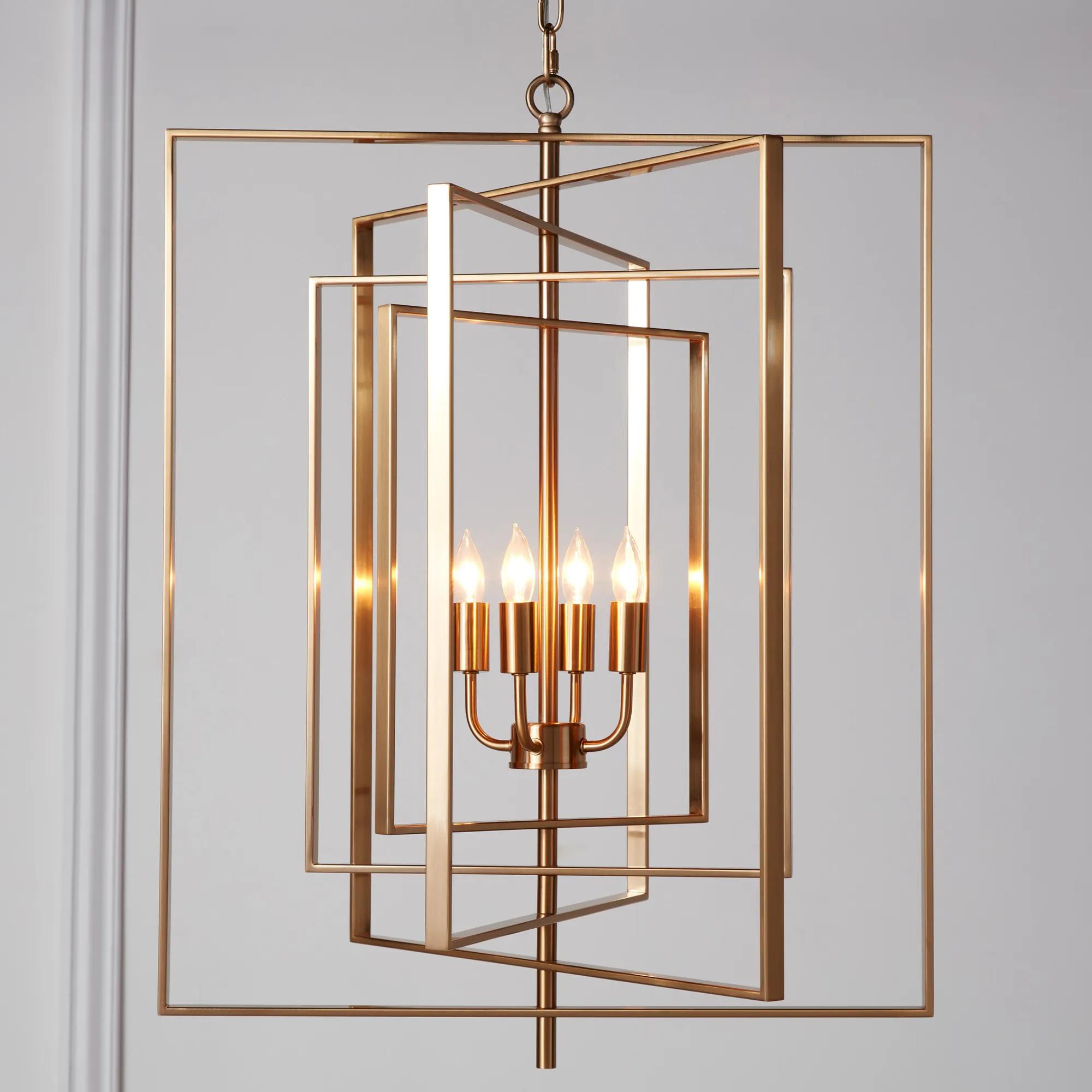 Hollis Chandelier$499
A geometric brass-finished iron chandelier with four lights, perfect for modern and minimal interiors.
Add To Cart -
 Willa Natural Alabaster Chandelier 13"D x 17"H$599
A chandelier with hand-cut natural alabaster panels, a brushed brass iron frame, and four candelabra lights.
Add To Cart

Brass Hanging Lights
Brass hanging lights are the jewelry of the modern home—suspended in midair, they command attention with a gleaming presence that transforms mere illumination into an artful display. Each fixture bathes your space in a golden glow, casting intricate shadows and sculpting ambiance with every flicker. Whether gracing a grand entryway or adding allure above a dining table, brass hanging lights evoke timeless glamour and bold sophistication. Let your ceilings become a canvas, adorned with luminous works of art that invite admiration and ignite conversation.
Brass hanging lights bring a golden note to a room, drawing the eye upward and giving furniture, art, and architectural details a more expressive setting. Suspended above a dining table, a luminous brass silhouette can make an intimate dinner feel beautifully composed; in an entryway, it establishes a sense of arrival before a single decorative object comes into view. The appeal lies in the interplay of metal and light. Polished surfaces catch surrounding colors and return them with a jewel-like gleam, while brushed or satin finishes offer a softer sheen that feels rich without becoming visually restless. Antiqued treatments introduce deeper shading and tonal variation, lending dimension to streamlined interiors or complementing furnishings with a collected character. Brass has a long decorative history, yet its warmth feels especially compelling alongside sculptural upholstery, lacquered furniture, veined stone, and expansive glass. Against charcoal walls, it creates a striking outline; against ivory, it adds definition without interrupting an airy palette. Materials deserve attention beneath that beautiful surface. Solid brass, brass-plated metal, and brass-tone finishes can share a similar color while differing in construction, weight, and maintenance needs. A finish description helps distinguish the appearance of brass from the underlying material, and a protective coating can influence how the surface changes with use. Unlacquered brass may develop a patina over time, creating a more nuanced appearance, while coated finishes are generally intended to preserve a more consistent look when cared for as directed. Neither character is inherently more desirable; the choice depends on whether the room calls for a crisp metallic accent or a finish with evolving depth. Glass, fabric, and other shade materials further shape the impression, allowing brass hanging lighting to feel tailored, ethereal, or unapologetically dramatic. Repeating the finish in a picture frame or a slender furniture leg can create continuity, but an exact match across every metallic surface is unnecessary. A thoughtful mix of brass, chrome, and darker metal can give a room the layered confidence of a carefully assembled interior.
The right proportions allow that drama to feel intentional rather than overwhelming. A broad chandelier can hold its own above a substantial dining table, while a slender pendant may bring a concentrated gleam to a reading corner or a petite breakfast space. Over a kitchen island, a balanced arrangement of hanging lights creates rhythm across the work surface, with enough separation to keep each silhouette distinct. The relationship between the fixtures and the furniture beneath them matters as much as the dimensions of the room: a light that feels delicate in an open living area may become commanding above a narrow console. In an open floor plan, coordinating the visual weight of neighboring fixtures helps distinguish dining, cooking, and lounging areas without making every space look identical. Shades also affect perceived scale. Clear glass can preserve sightlines and reveal the sculptural form of the light source, while opaque shades create a stronger visual presence and concentrate illumination where it is needed. Suspension contributes its own decorative language. For a more pronounced architectural connection between ceiling and fixture, Chain Hung Pendant Lights offer a distinctive look in which the hanging detail becomes part of the composition. Chain, cord, and rod suspensions have different adjustment possibilities, so the stated dimensions and installation requirements deserve close attention, particularly beneath sloped or unusually high ceilings. Above a dining table, approximately 30 to 36 inches between the tabletop and the bottom of the fixture is a common starting point, with adjustments for ceiling height, fixture shape, and comfortable views across the table. In passageways and open seating areas, generous headroom keeps a striking silhouette from intruding on movement. Installation should account for fixture weight, ceiling support, electrical connections, and applicable local requirements, with a qualified electrician handling the work. These considerations protect the visual effect as well as everyday function: a beautifully suspended light should feel integrated into the room, never awkwardly low or disconnected from the setting it illuminates.
Beyond its silhouette, brass hanging lighting shapes how a room feels after the light is switched on. A dining space often benefits from a gentle glow that flatters faces and brings depth to table settings, while an island used for food preparation needs useful illumination across the surface. Shade construction, bulb output, and light direction all contribute to that difference. An exposed bulb can add sparkle but may create glare when positioned directly in a seated sightline; a diffuser or shaded design can soften the effect. Clear glass allows a more open expression of the bulb, while frosted glass creates a quieter wash of light. Warm-white bulbs tend to emphasize the golden character of brass, and consistent color temperature across nearby fixtures helps an open room feel visually composed. Dimming can extend a fixture’s usefulness from focused activity to relaxed entertaining, provided the fixture, bulbs, and dimmer are compatible. Bulb base, maximum wattage, and any integrated LED specifications should follow the manufacturer’s requirements rather than appearance alone. The setting matters, too. A hanging light intended for a dry interior should not be assumed suitable for a bathroom or another moisture-prone location; the appropriate location rating and required clearances are essential. Thoughtful care preserves the finish that gives these lights their presence. With power switched off and bulbs allowed to cool, a soft, dry cloth is often the gentlest way to remove surface dust, while any deeper cleaning should follow the fixture’s care instructions. Household metal polish, abrasive pads, and harsh cleaners can damage plated or coated surfaces, even when they appear suitable for bare brass. Keeping moisture away from electrical components and handling glass shades carefully helps maintain both appearance and function. For homeowners furnishing a first dining room, refreshing an established living space, or creating a memorable entrance, brass hanging lights offer an expressive finishing layer with enduring versatility. Their strongest effect comes from the balance of luminous material, considered scale, and comfortable light—a golden accent that gives the entire room greater depth and presence.
FAQs
Brass hanging lights are remarkably versatile, adding a touch of luxury to a wide range of interiors. They shine in glamorous, contemporary, and eclectic spaces, where their golden tones can serve as a focal point or a unifying accent. In traditional settings, they evoke timeless elegance, while in modern or industrial rooms, their sculptural forms introduce warmth and sophistication. Whether your aesthetic leans bold and dramatic or refined and classic, brass hanging lights bring a curated sense of artistry to any décor.
Brass hanging lights create an inviting ambiance by casting a warm, golden glow that instantly elevates the mood of any space. Their reflective surfaces add depth and dimension, making rooms feel more layered and dynamic. When used as statement pieces, they draw the eye upward and add a sense of grandeur, while subtle designs can imbue a room with understated opulence. The result is a space that feels both intimate and luxurious, perfect for entertaining or unwinding.
Absolutely. Brass hanging lights make an extraordinary gift for housewarmings, weddings, anniversaries, or milestone celebrations. Their enduring style and artisanal quality ensure they’ll be cherished for years to come. Gifting a brass hanging light is more than offering a decorative object—it's presenting the recipient with a piece of functional art that transforms their daily living experience and adds a personal, luxurious touch to their home.
Brass hanging lights are not limited to dining spaces—they can make a dramatic statement in entryways, hallways, bedrooms, and even powder rooms. Suspend one above a reading nook to create a cozy retreat, or use a series of smaller pendants to illuminate a kitchen island with artistry and flair. In open-concept spaces, they can help define different zones and add cohesion to your overall design scheme.
Finishes and textures play a crucial role in the character of brass hanging lights. Polished brass exudes a sleek, mirror-like brilliance that feels modern and bold, while brushed or antiqued finishes offer a softer, more romantic glow with vintage appeal. Hammered or textured surfaces catch the light in captivating ways, adding visual interest and artisanal charm. Choosing the right finish allows you to tailor the mood of your space, whether you crave drama, warmth, or subtle sophistication.