Blue And White Abstract Artworks
Blue And White Abstract Artworks
-
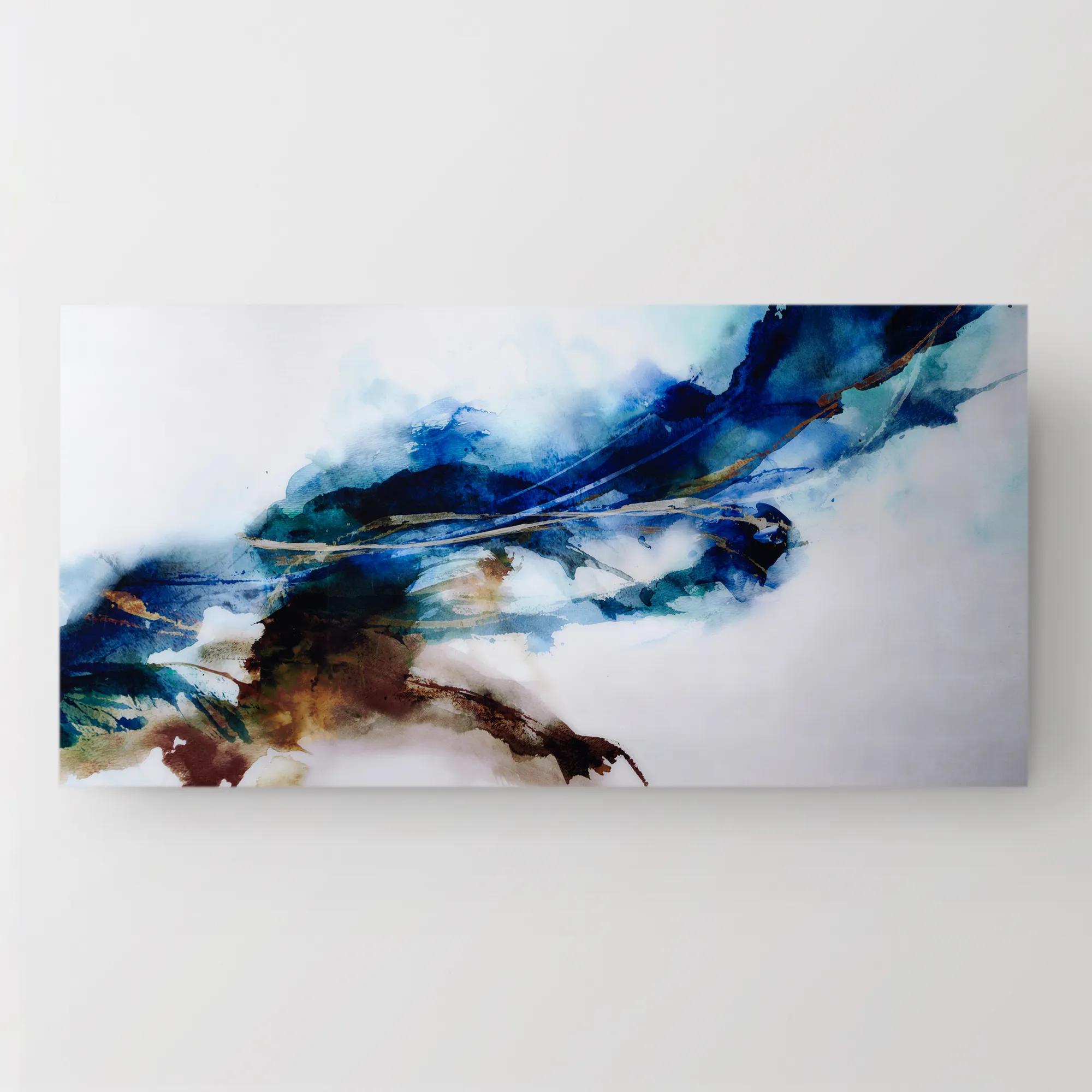 Cerulean Movement Acrylic Art 72" x 36"$1299
A vibrant abstract artwork printed on high-gloss acrylic, infusing your space with dynamic energy and movement.
Add To Cart -
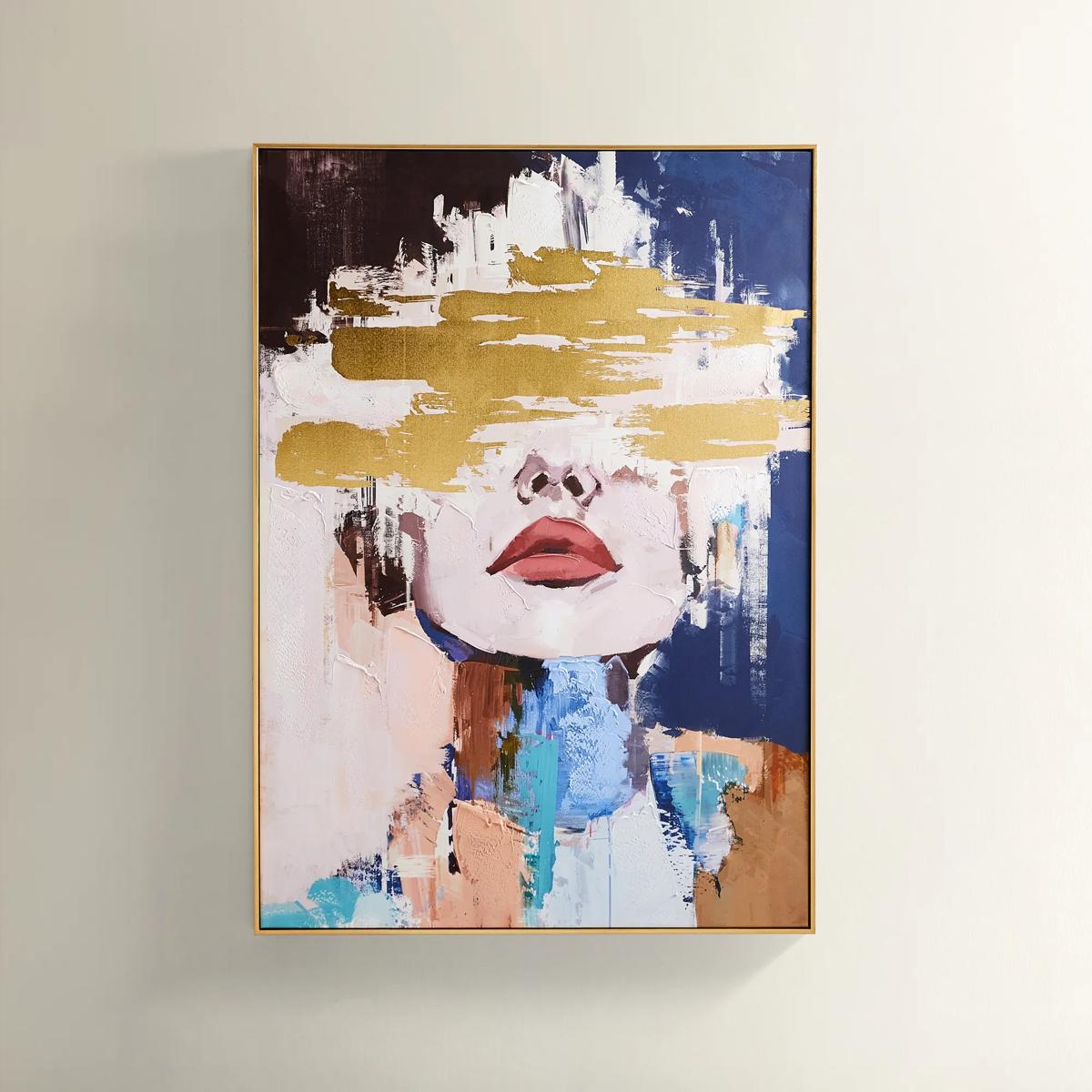
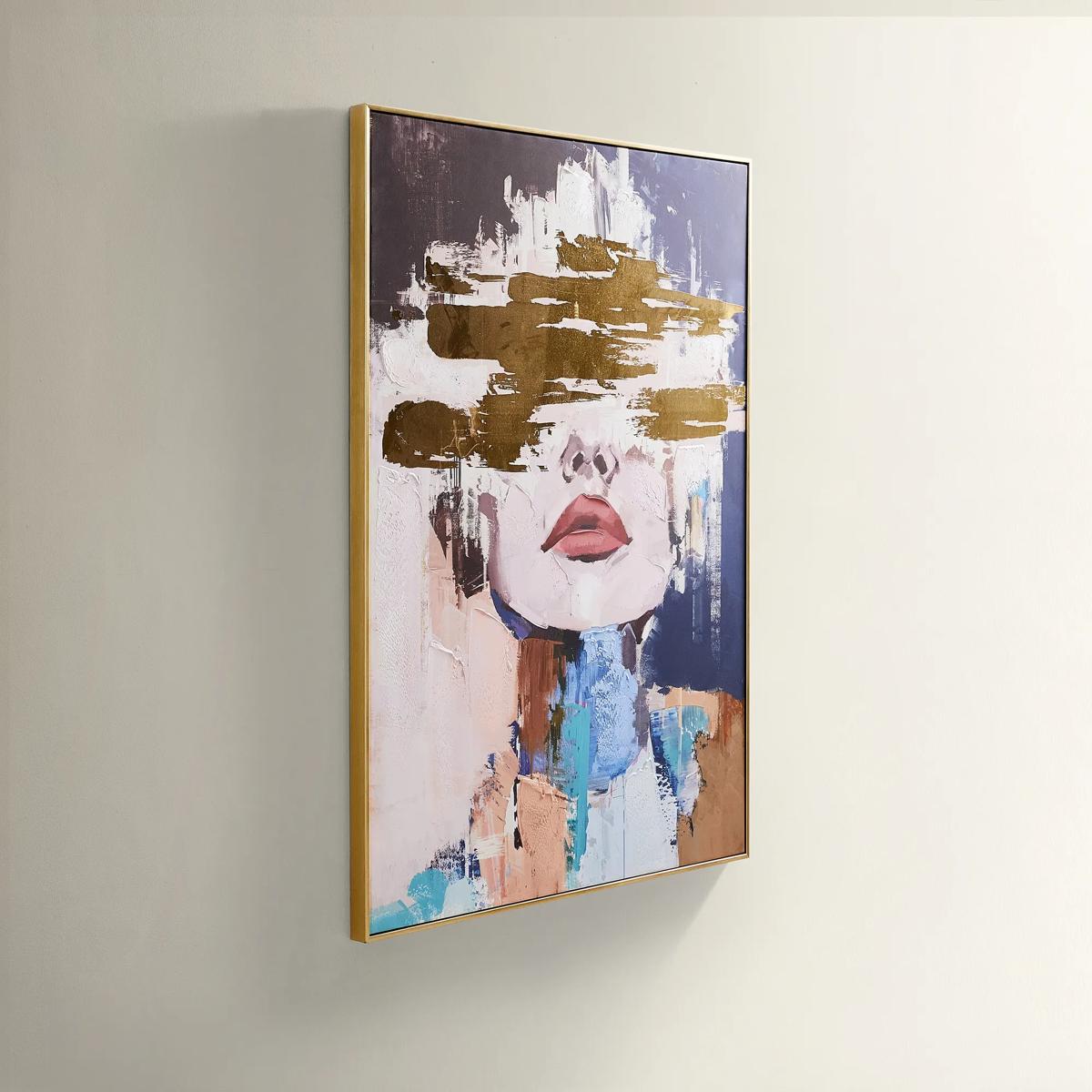 Waiting in Color Gold Foil Painted Wall Art 39.25" x 55"$499
A hand-painted abstract portrait in vivid blue, blush, and gold foil, framed in luxe gold.
Add To Cart -
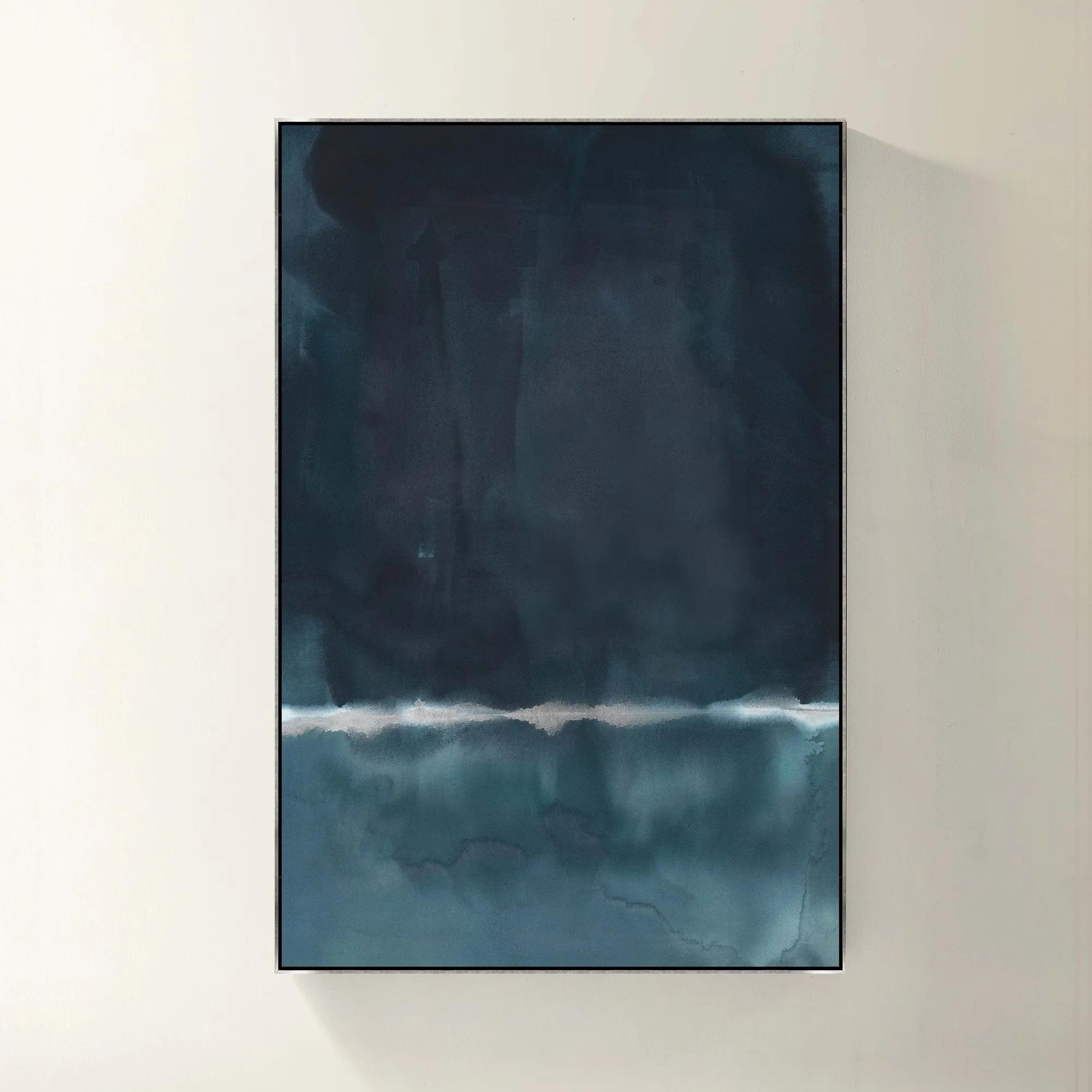 Blue Monday Framed Wall Art 40" x 60"$1119
A gallery-wrapped blue canvas with hand-embellished silver accents in a sleek silver floater frame.
Add To Cart -
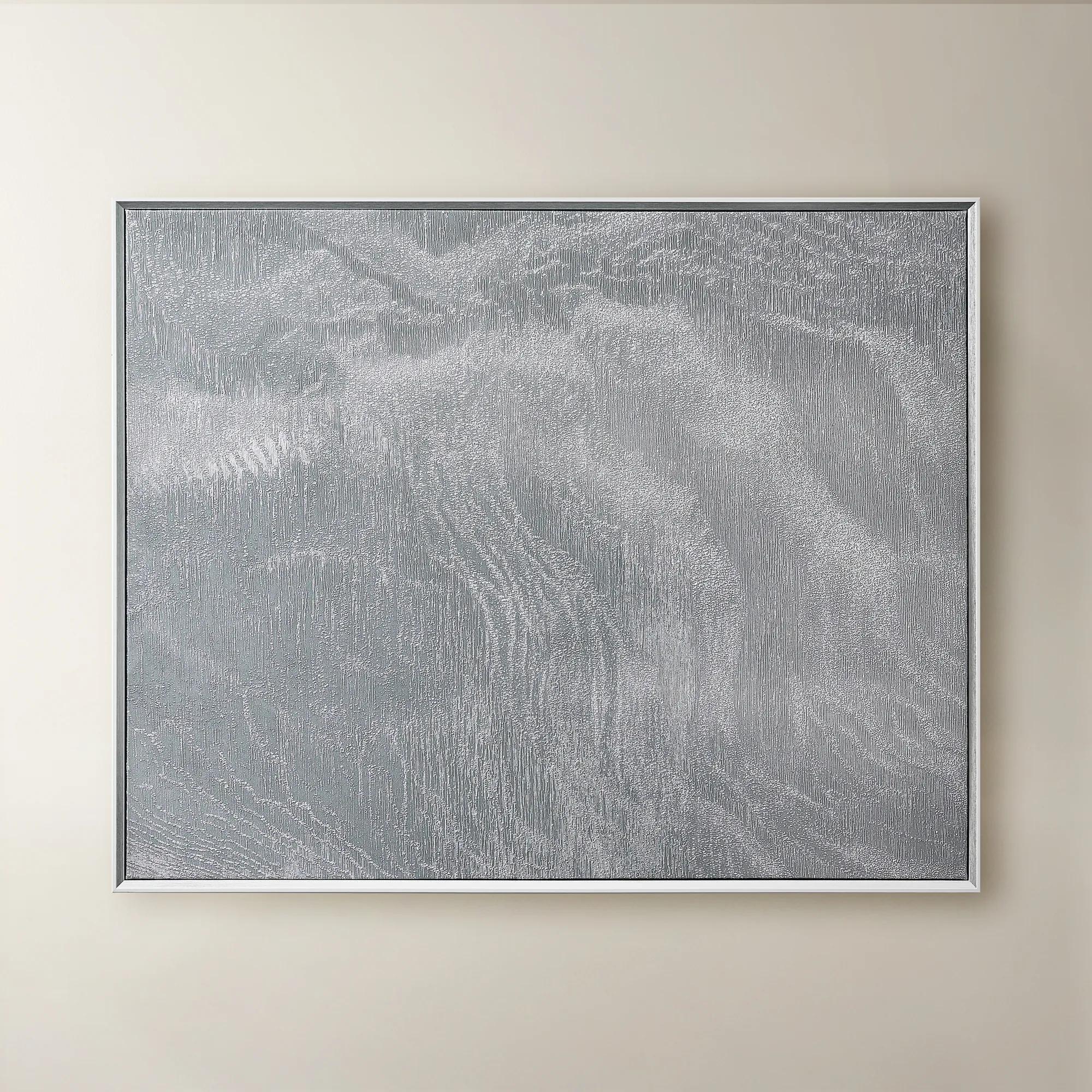 Slow Blue Morning Framed Silver Foil Wall Art 48" x 60"$599
A serene powder blue abstract canvas with silver foil accents, framed in silver and white for modern elegance.
Add To Cart -

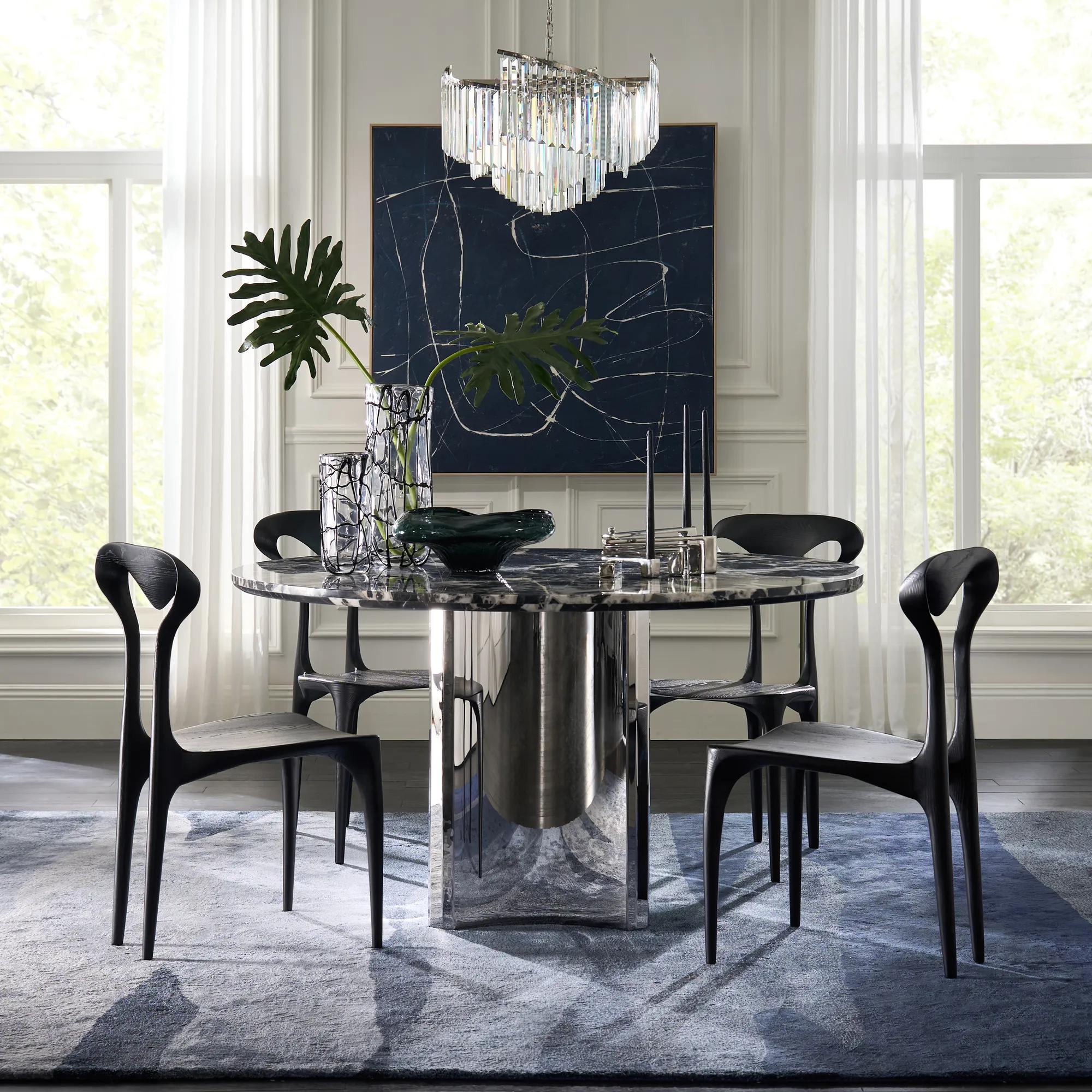 Almost Midnight Painting - Blue$439
A hand-painted canvas featuring bold blue and black tones with delicate white lines in a light wood frame.
Add To Cart -
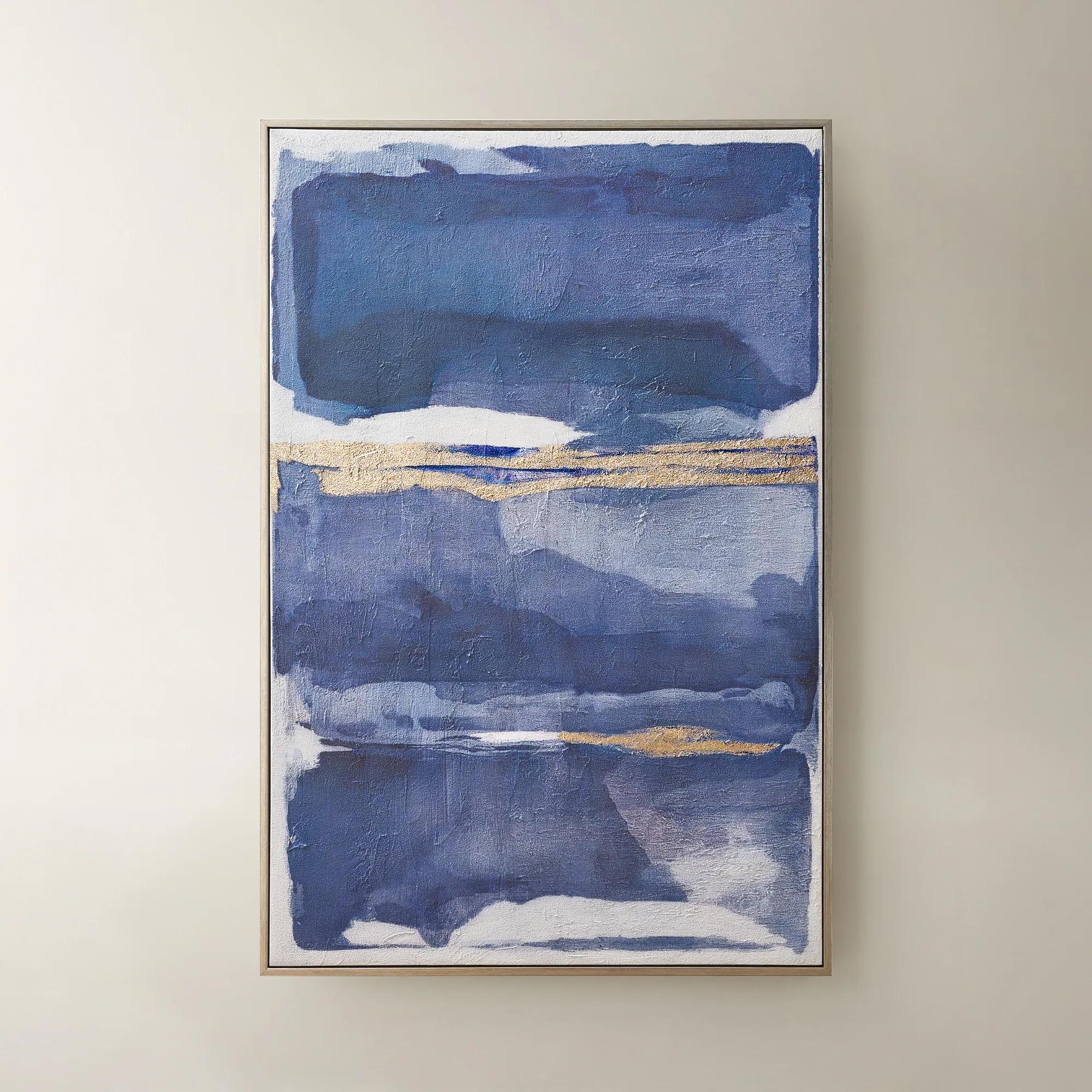
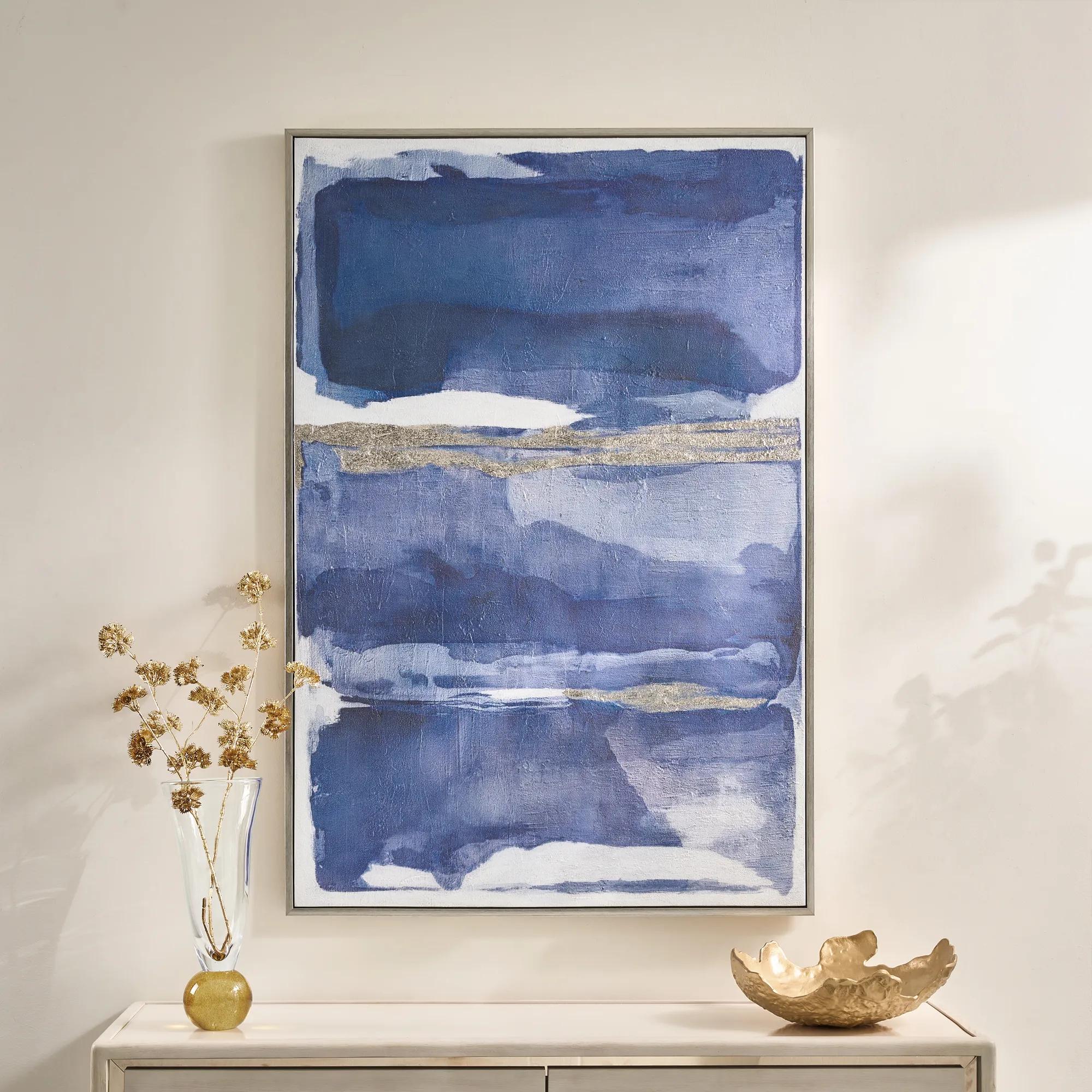 Memories in Blue Framed Painted Wall Art 40" x 60"$499
A hand-painted canvas in deep ink blue with champagne leafing for a sophisticated, gallery-inspired look.
Add To Cart -
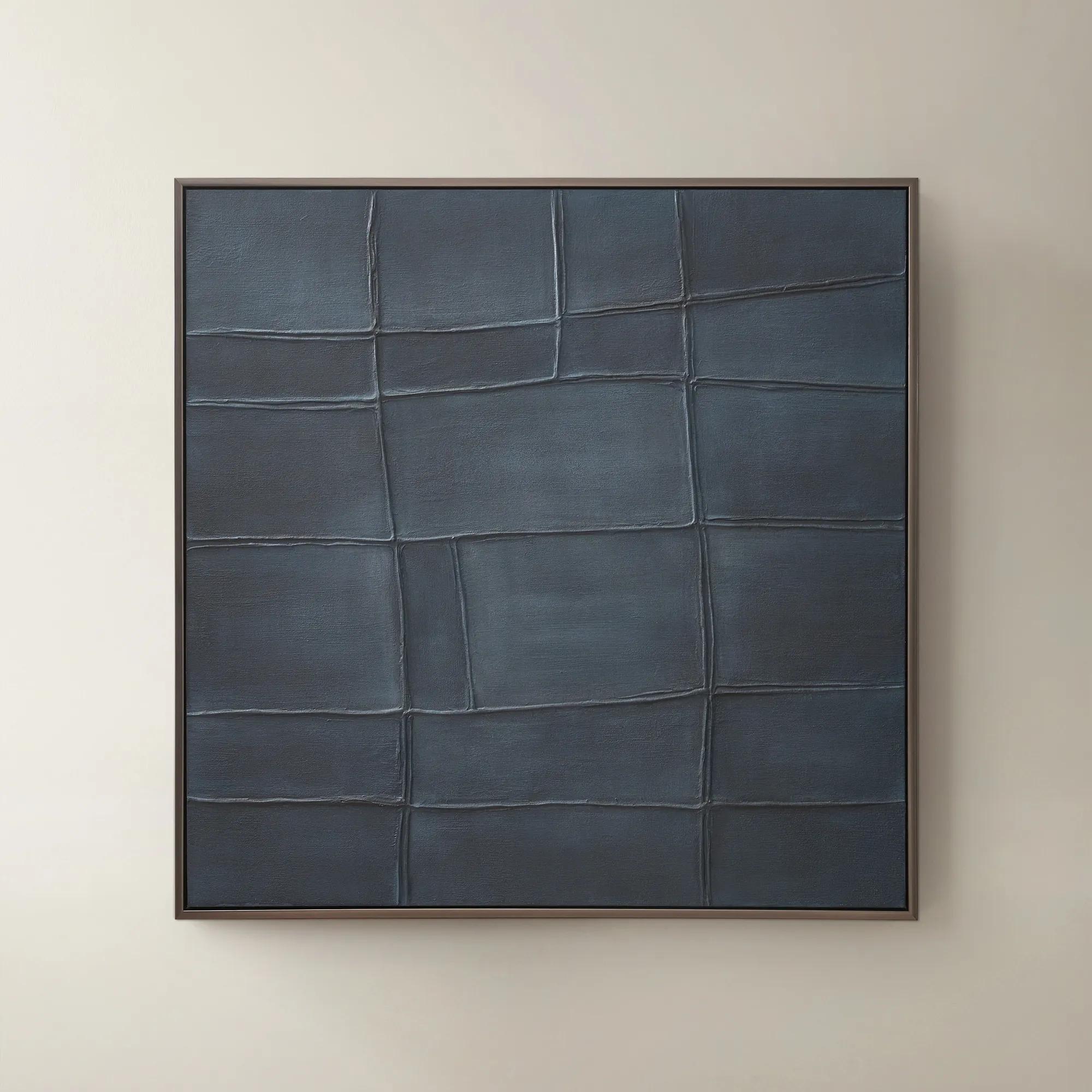
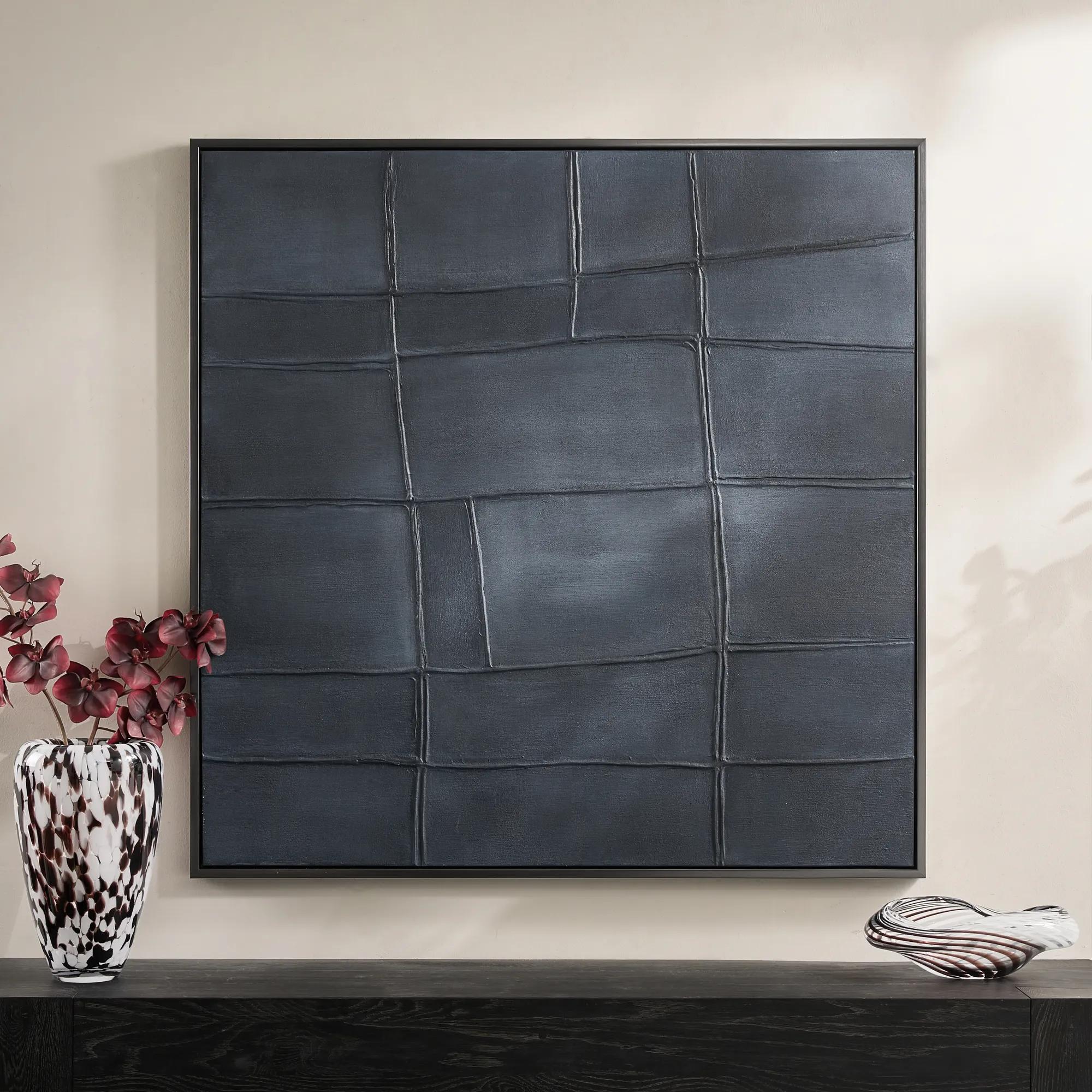 Ink Blue Interval Framed Painted Wall Art 48" x 48"$599
A hand-painted abstract canvas in deep ink blue, finished with a sleek gunmetal frame for modern appeal.
Add To Cart -
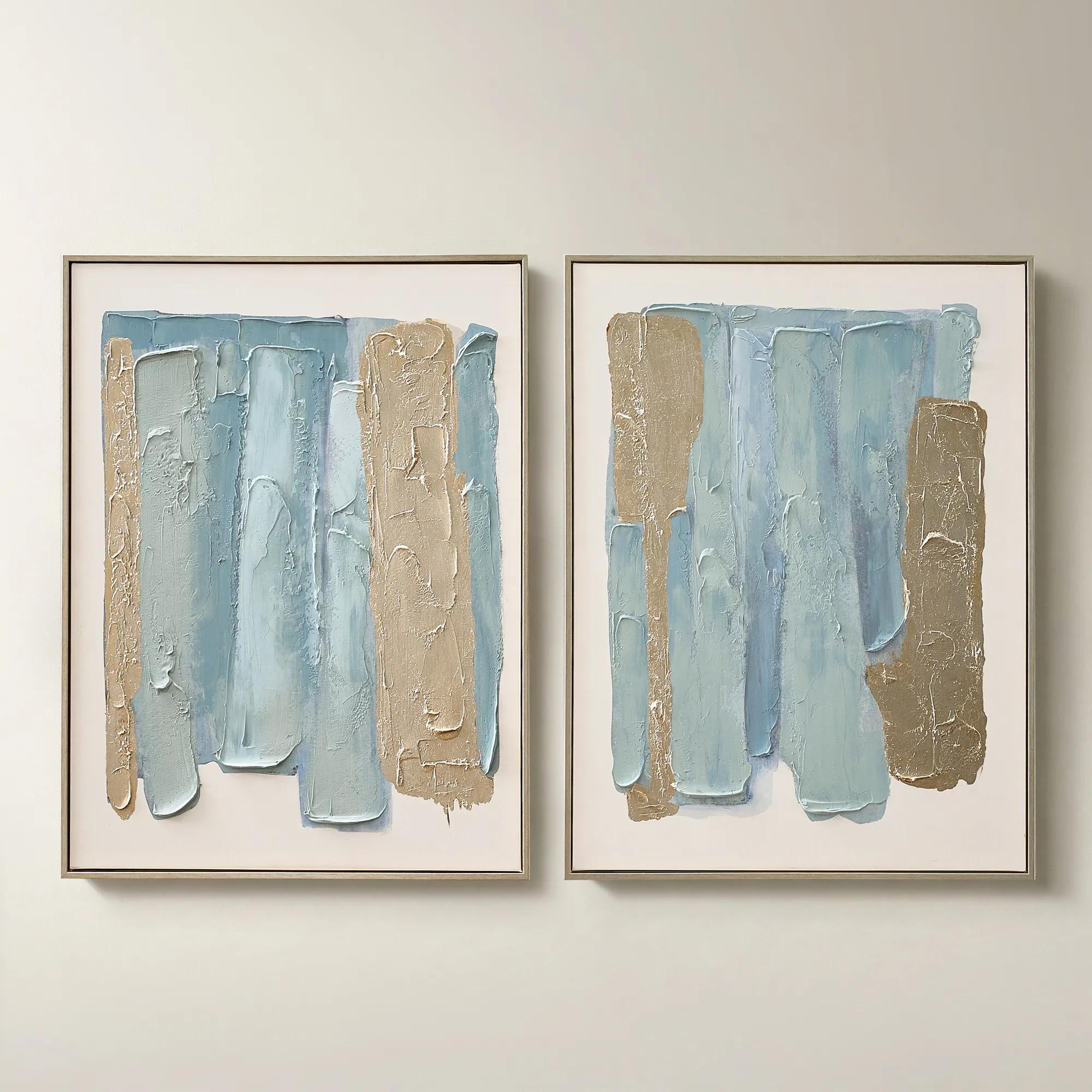
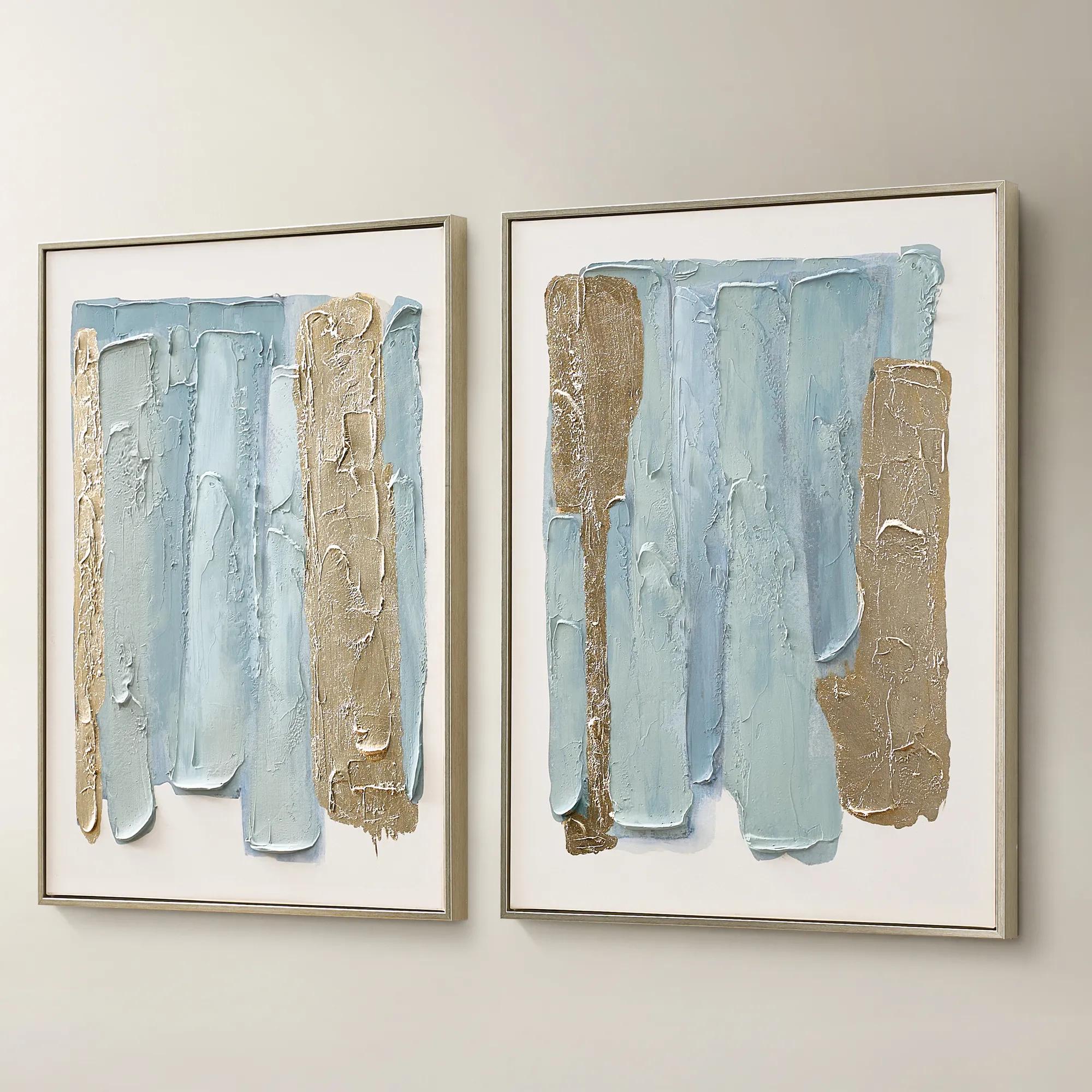 Blue Drift Framed Champagne Painted Wall Art 24" x 32" Set of 2$199
A set of two hand-painted canvases in dusty blue with champagne leafing and modern abstract movement.
Add To Cart -
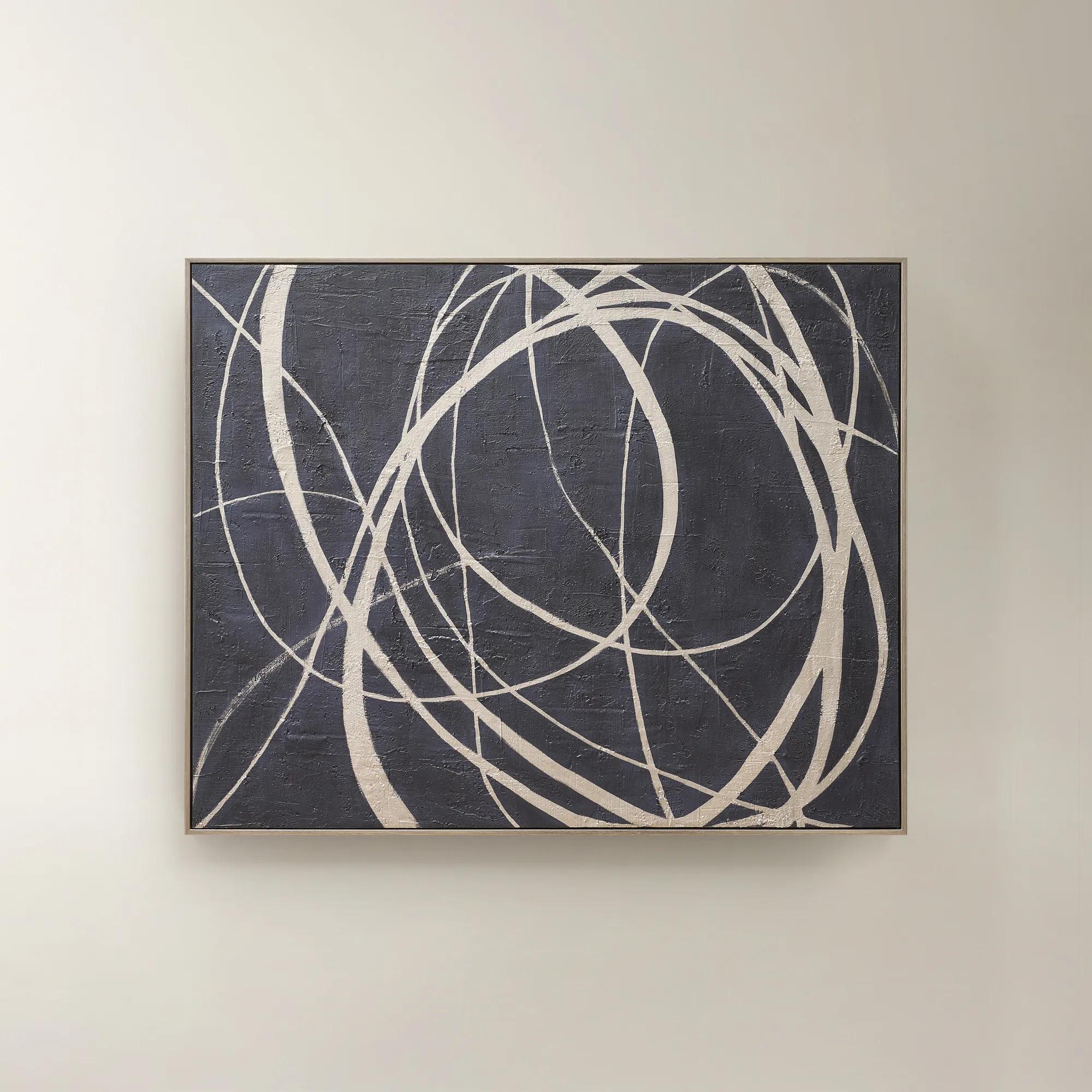 Wandering Framed Painted Wall Art 48" x 60"$699
An expressive hand-painted canvas in deep ink blue with champagne accents for a bold, sophisticated statement.
Add To Cart -
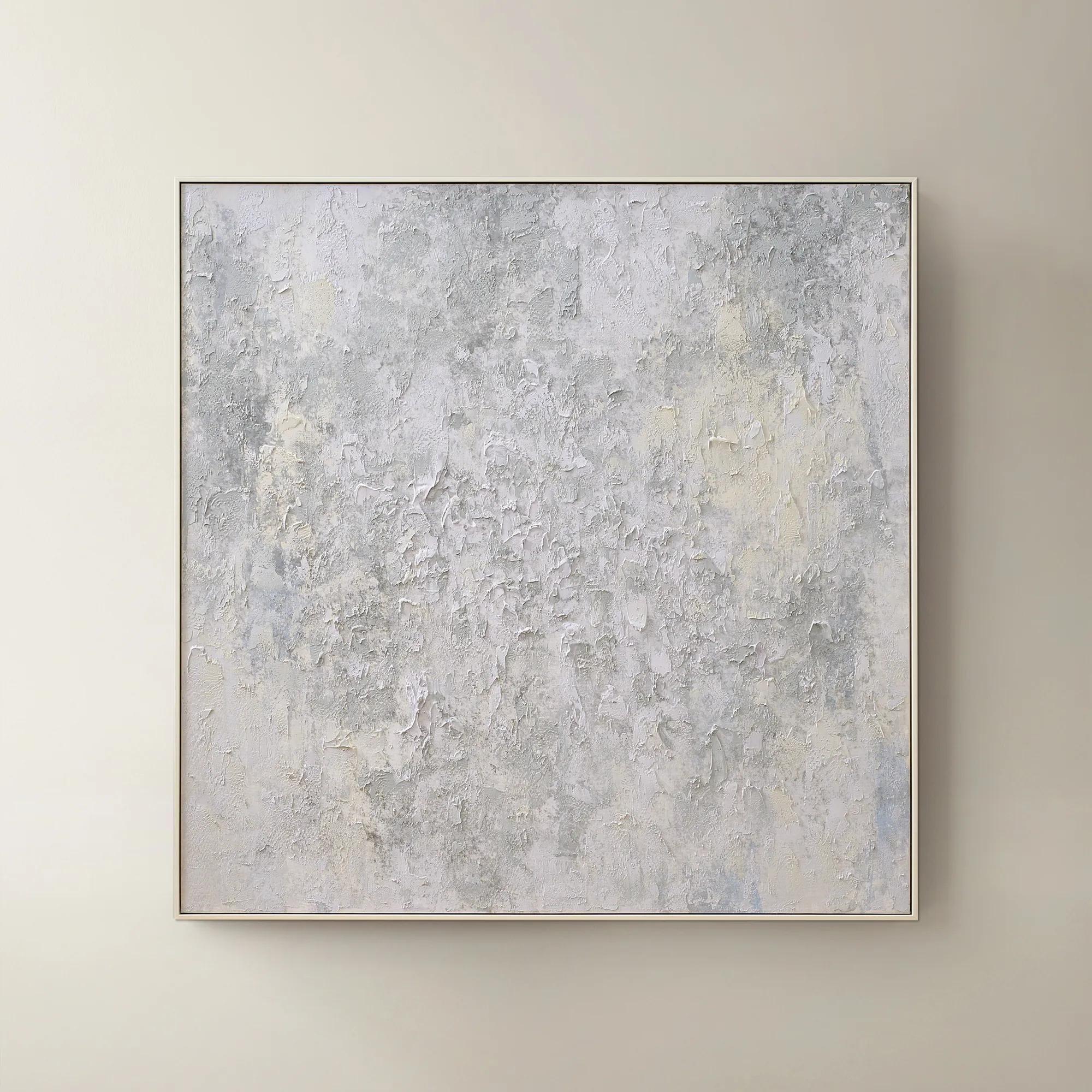 Breathe of Fresh Air Framed Painted Wall Art 50" x 50"$499
A hand-painted abstract canvas in dusty blue hues, elegantly framed in white for a serene, modern accent.
Add To Cart -
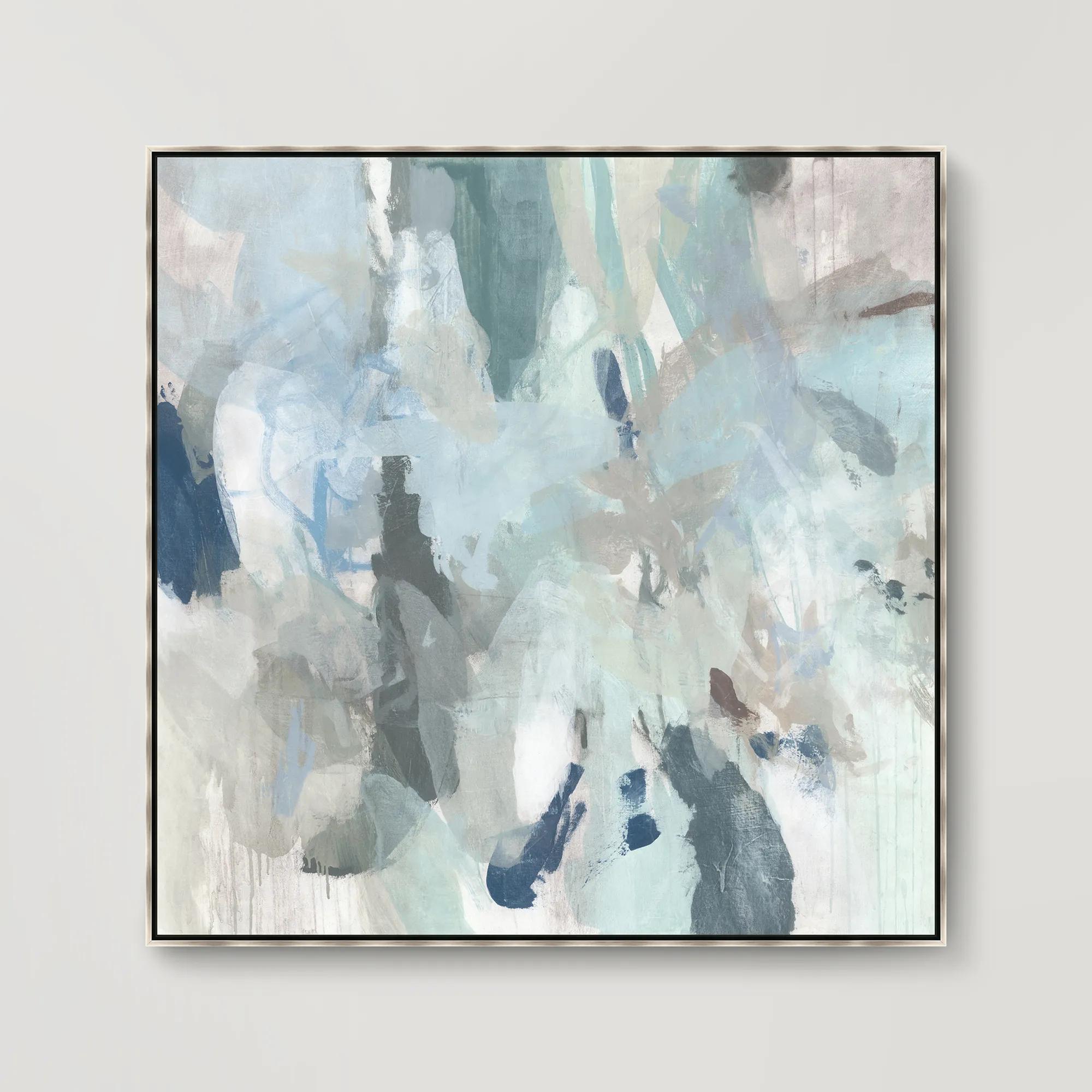
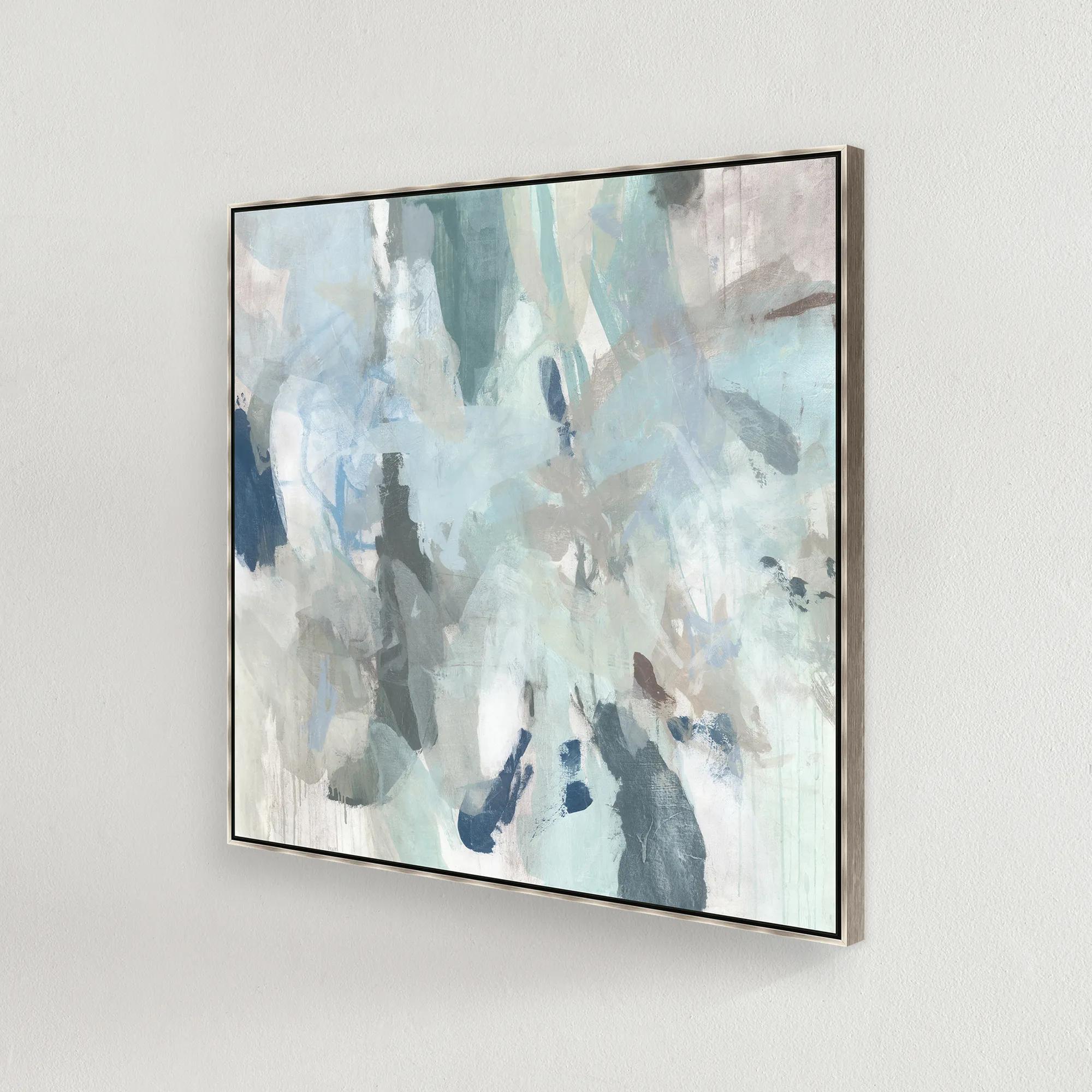 Sage Honey Dew I Framed Wall Art 41.5" x 41.5"$749
A gallery-wrapped abstract canvas featuring hand-applied gel finish in a silver floater frame.
Add To Cart -
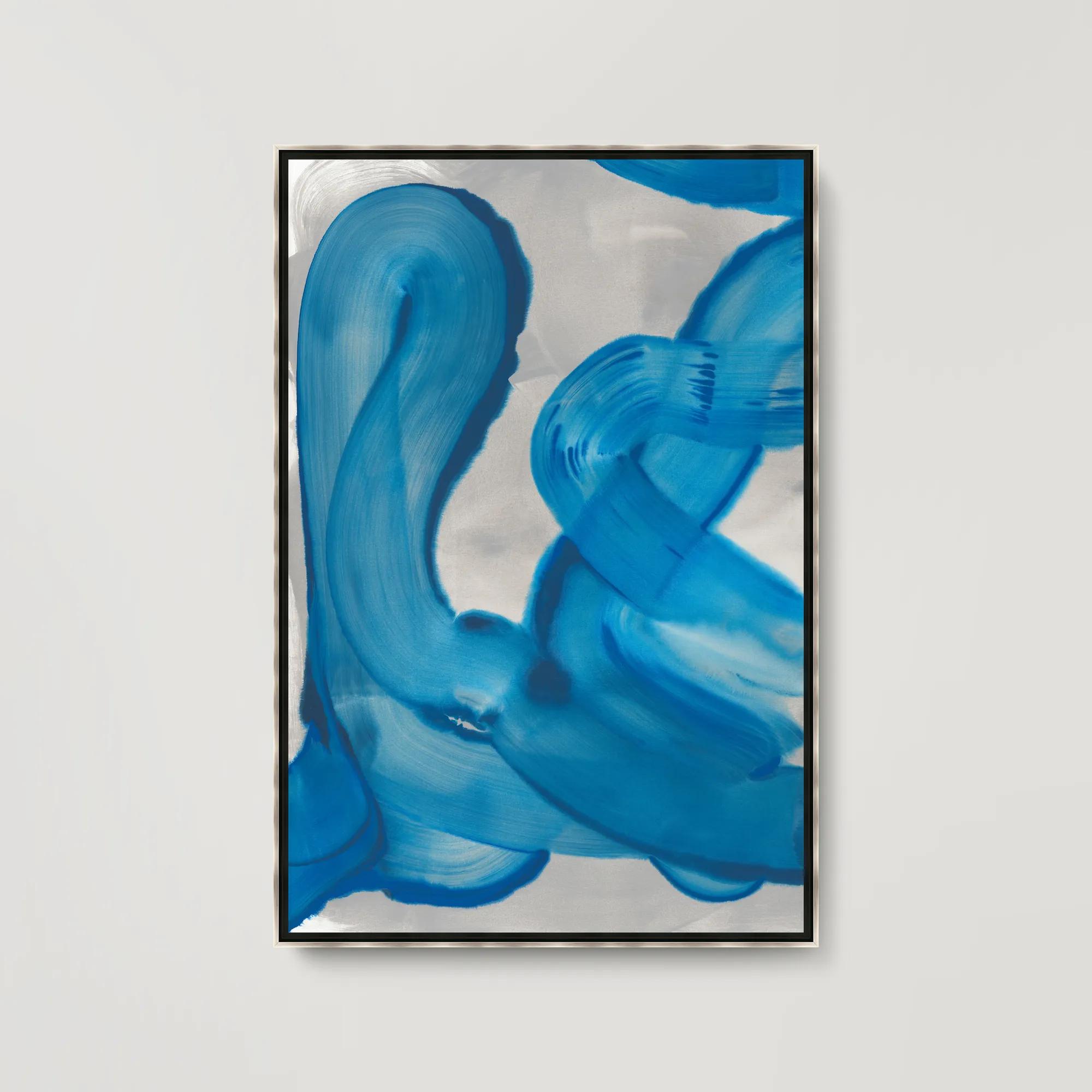 Royal Waves I Framed Wall Art 31.5" x 46.5"$699
A gallery-wrapped abstract canvas featuring hand-applied brush gel and set in a sleek silver floater frame.
Add To Cart -
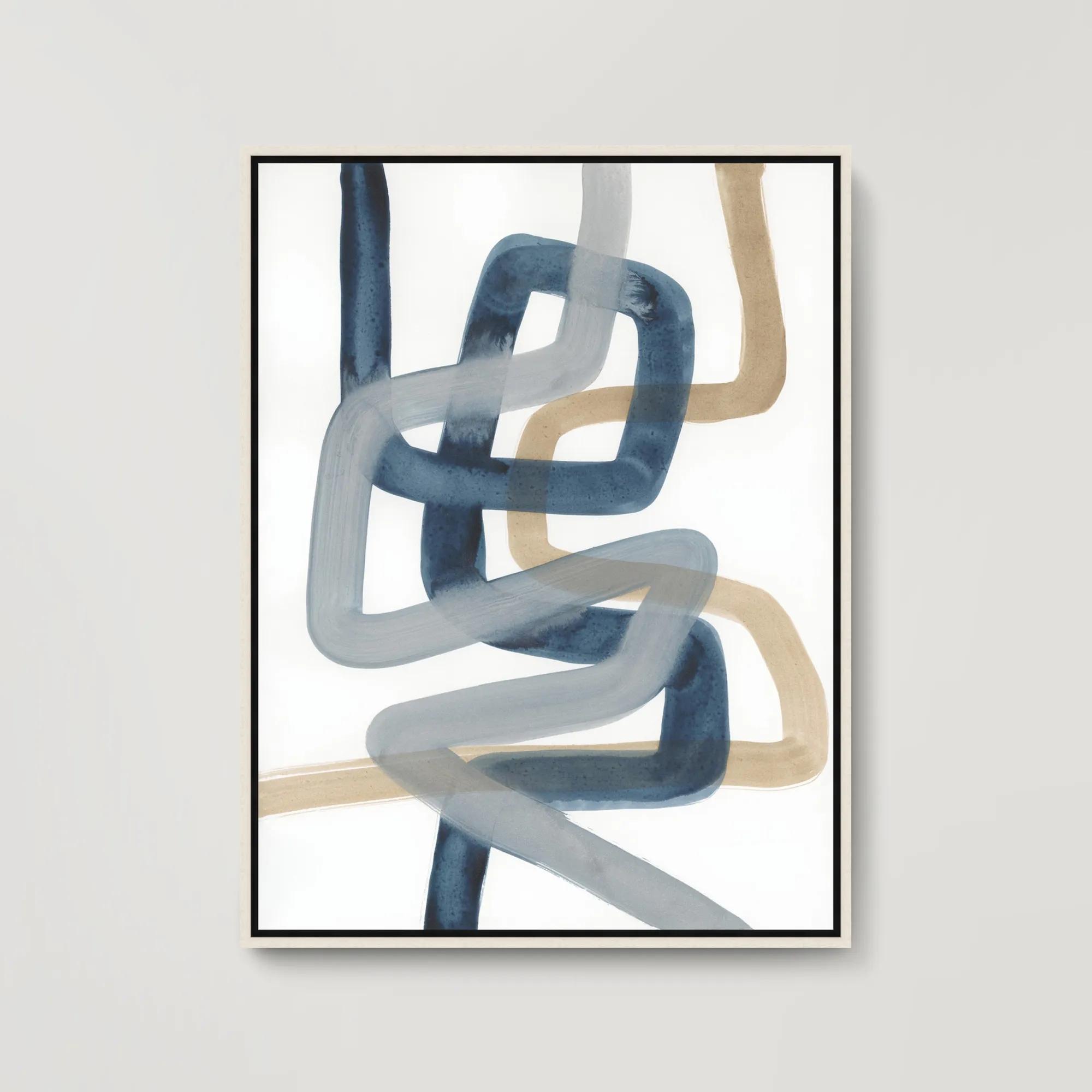 Looped In II Framed Wall Art 31.5" x 41.5"$699
A gallery-wrapped abstract canvas with hand-applied brush gel finish, set in a sleek white floater frame.
Add To Cart -
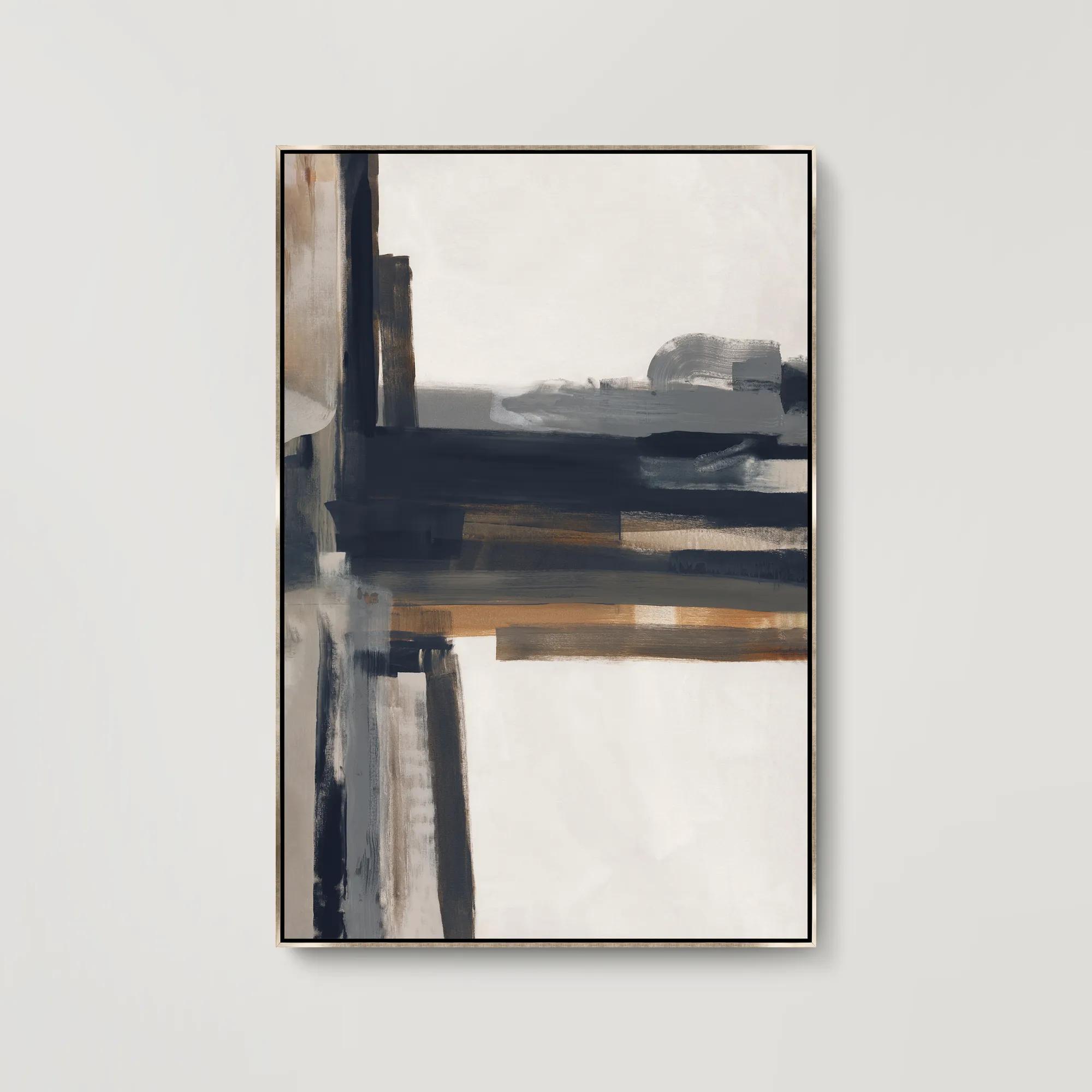
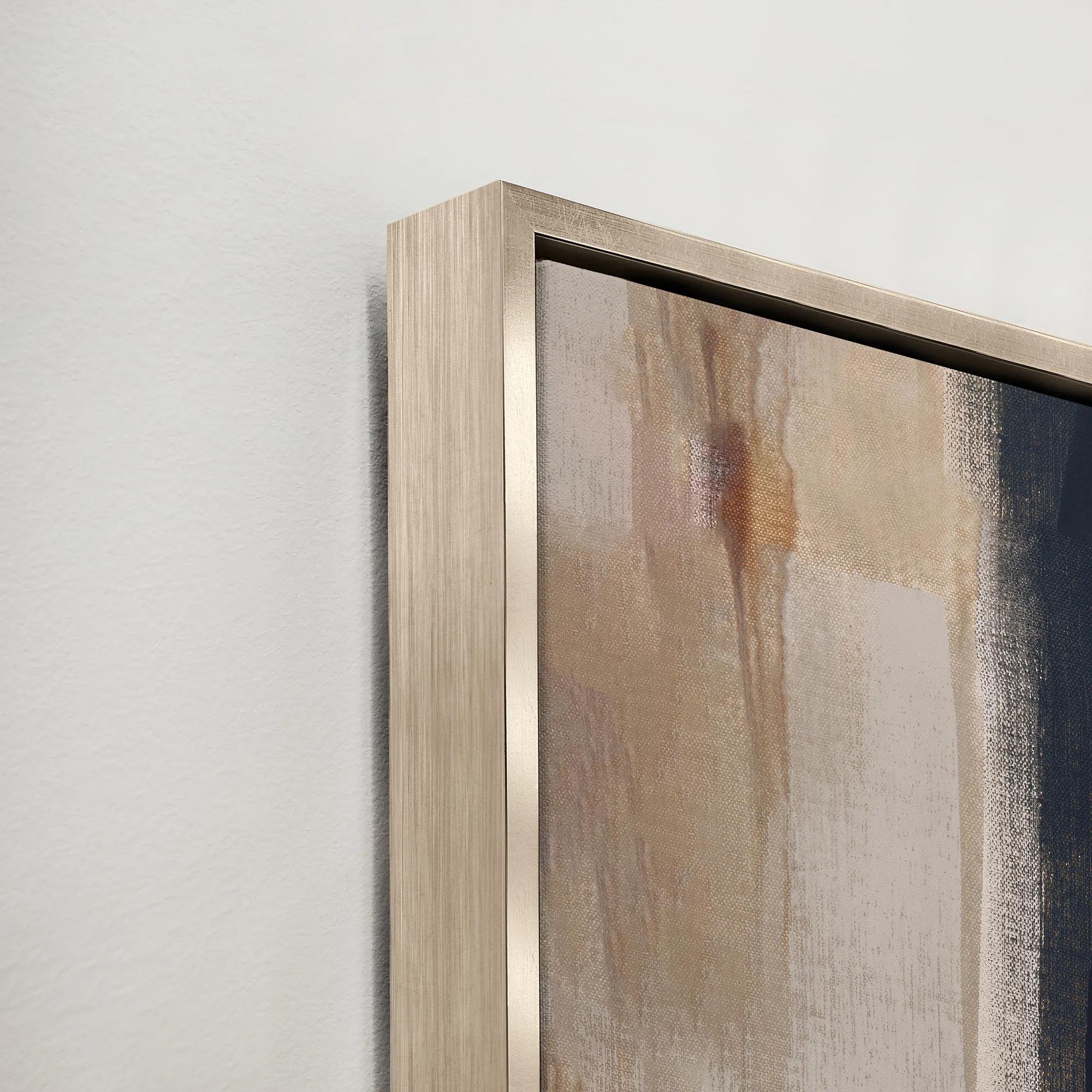 Imposing Construct I Framed Wall Art 41.5" x 61.5"$949
A gallery-wrapped abstract canvas featuring hand-applied brush gel and set in a sleek silver floater frame.
Add To Cart -
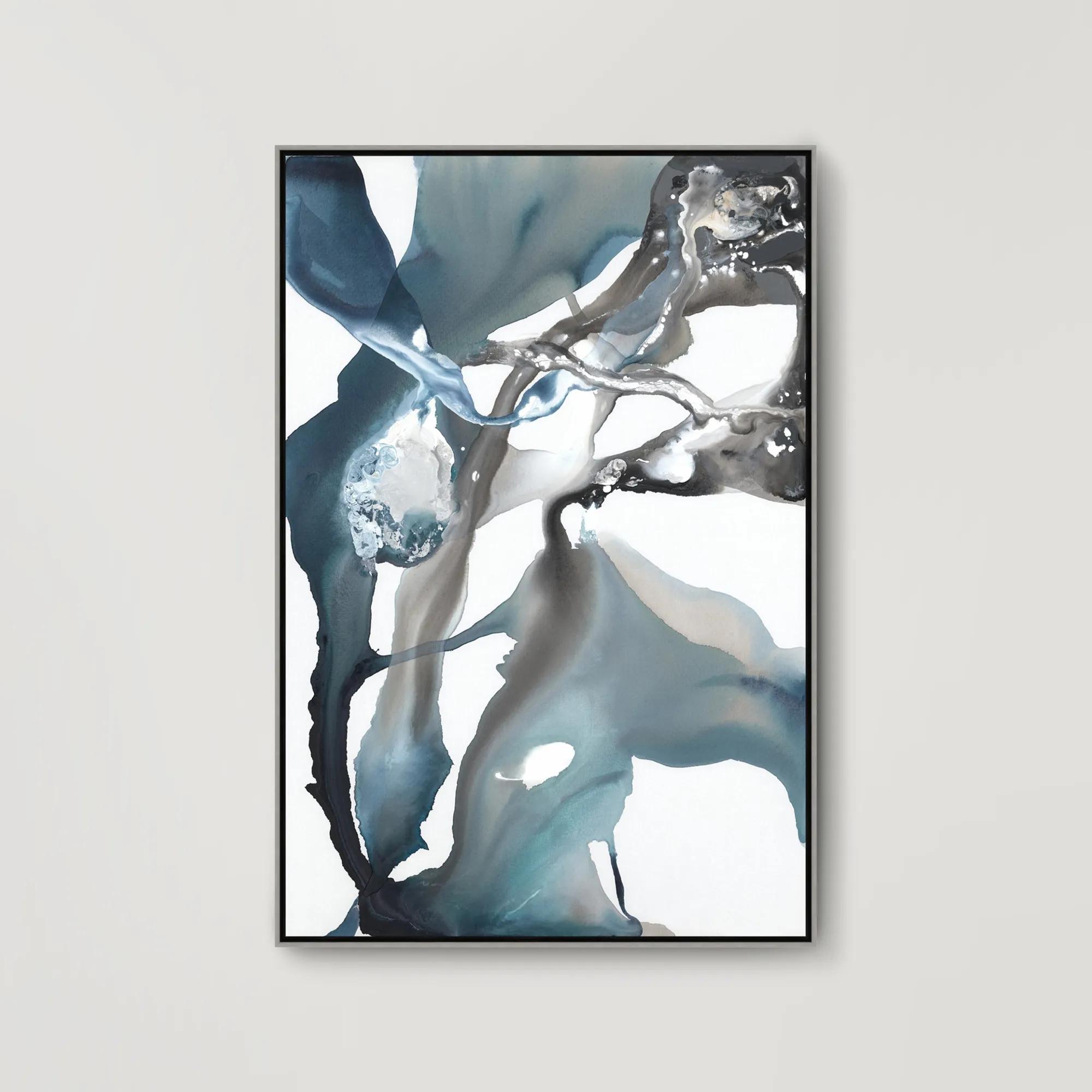
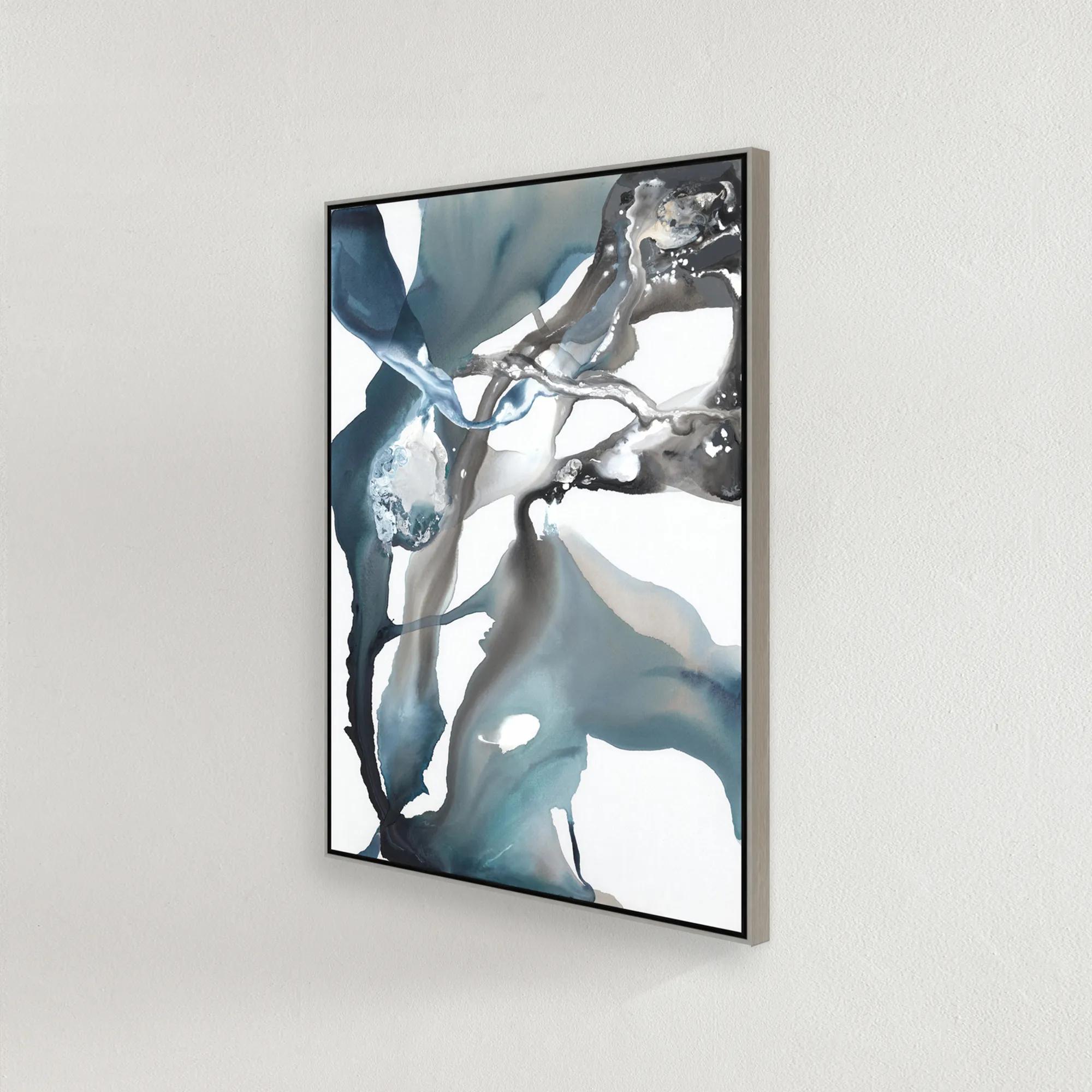 Cool Cascade Framed Wall Art 37.5" x 55.5"$849
A gallery-wrapped canvas artwork featuring expressive colors, hand-applied brush gel, and a gunmetal floater frame.
Add To Cart -
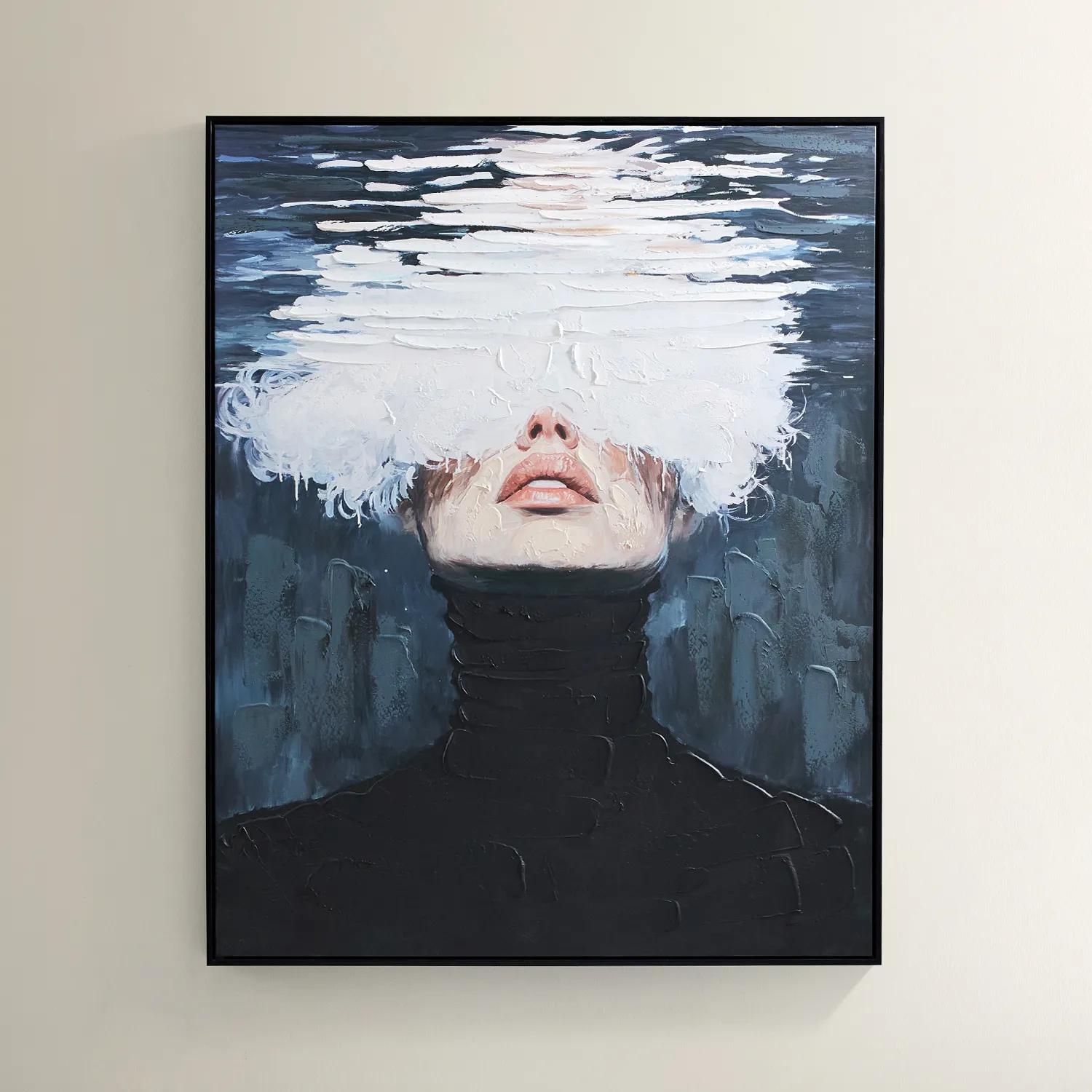
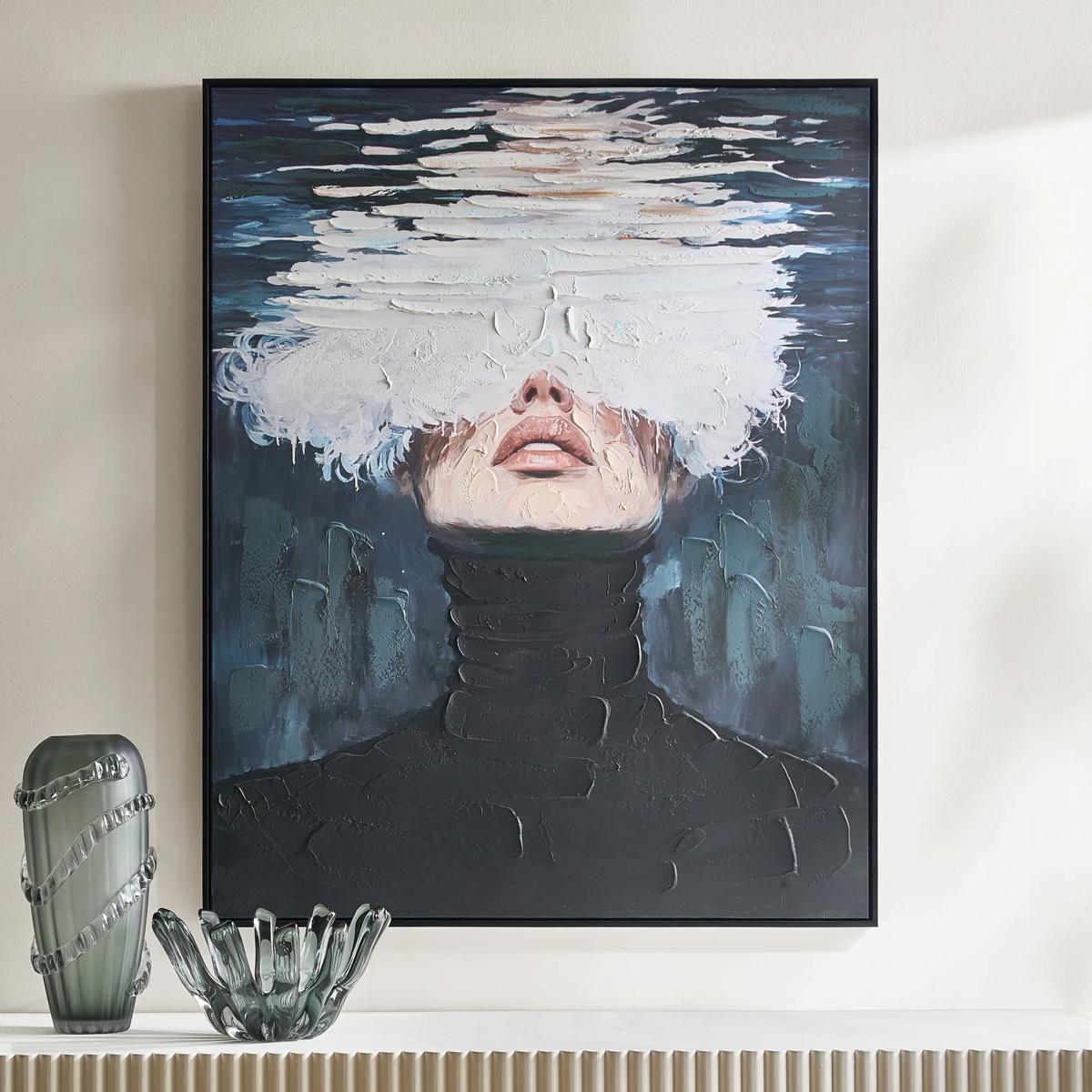 Submerged Framed Painted Wall Art 40" x 50"$599
A hand-painted canvas featuring a surreal portrait in black, blue, and white with a black floater frame.
Add To Cart -
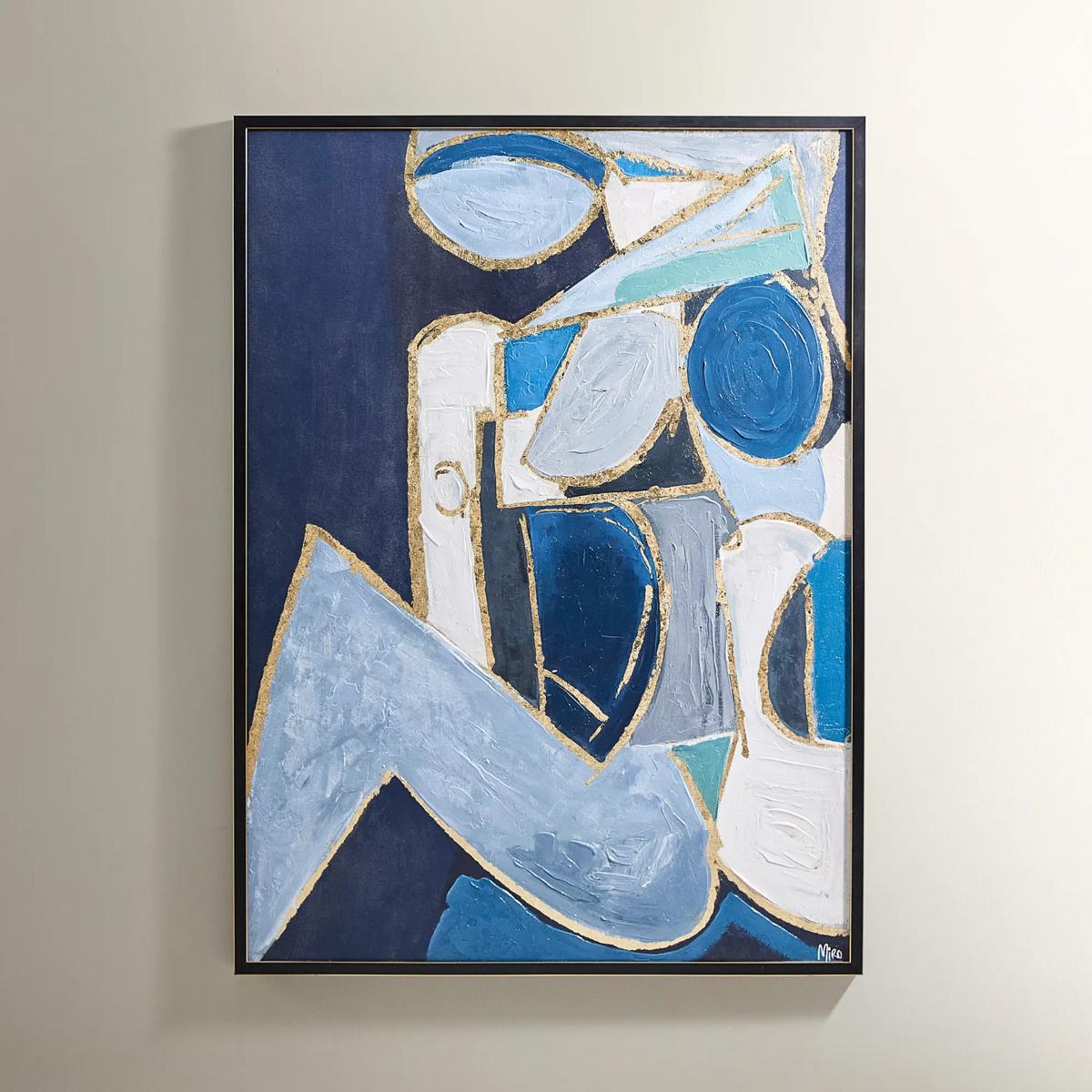
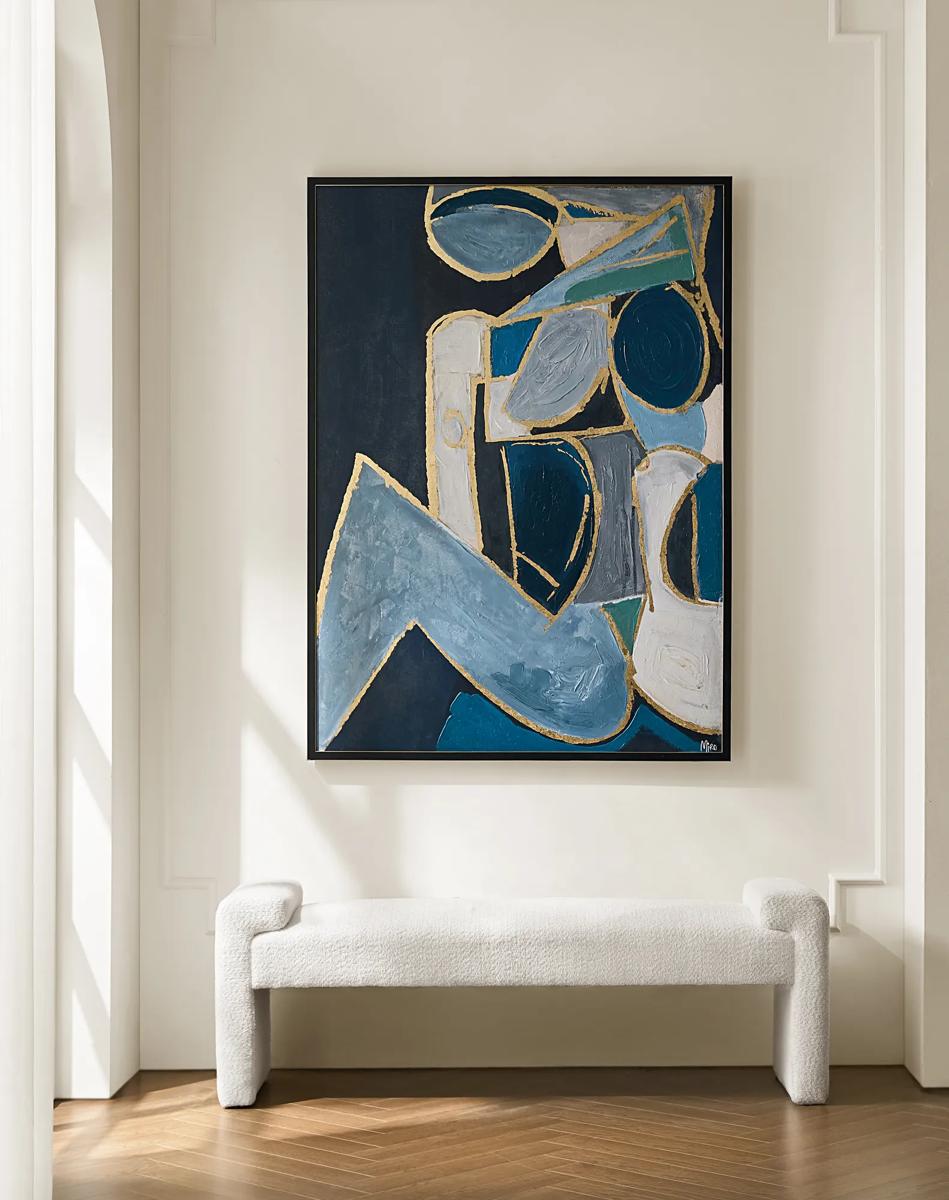 Figure in Cubism Painting$599
A hand-embellished canvas artwork featuring blue, gold, and white hues with elegant silver foil accents.
Add To Cart -
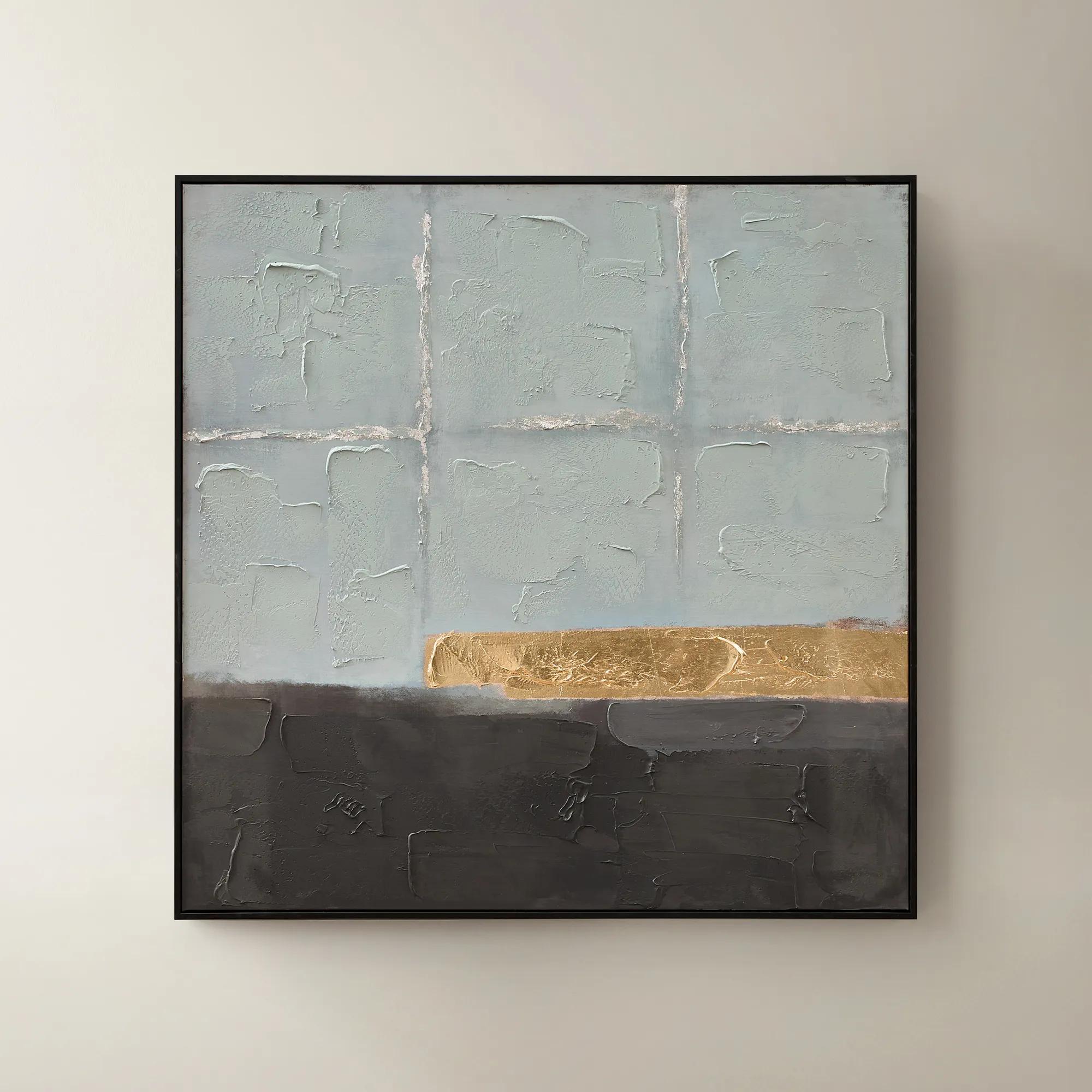
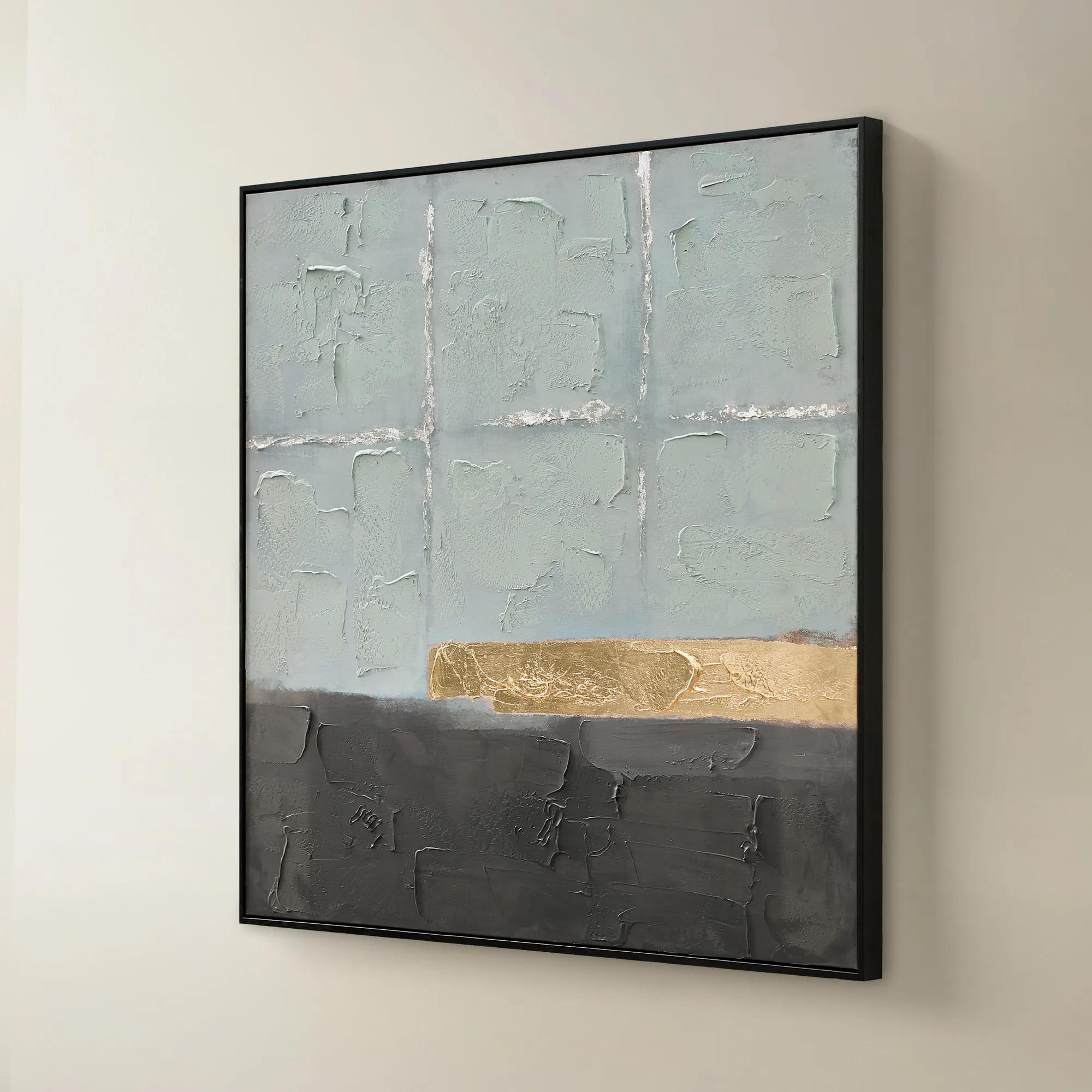 Jules Framed Gold Leaf Painted Wall Art 40" x 40"$299
A hand-painted canvas in mineral blue with gold leaf accents and a sleek black frame for modern appeal.
Add To Cart -
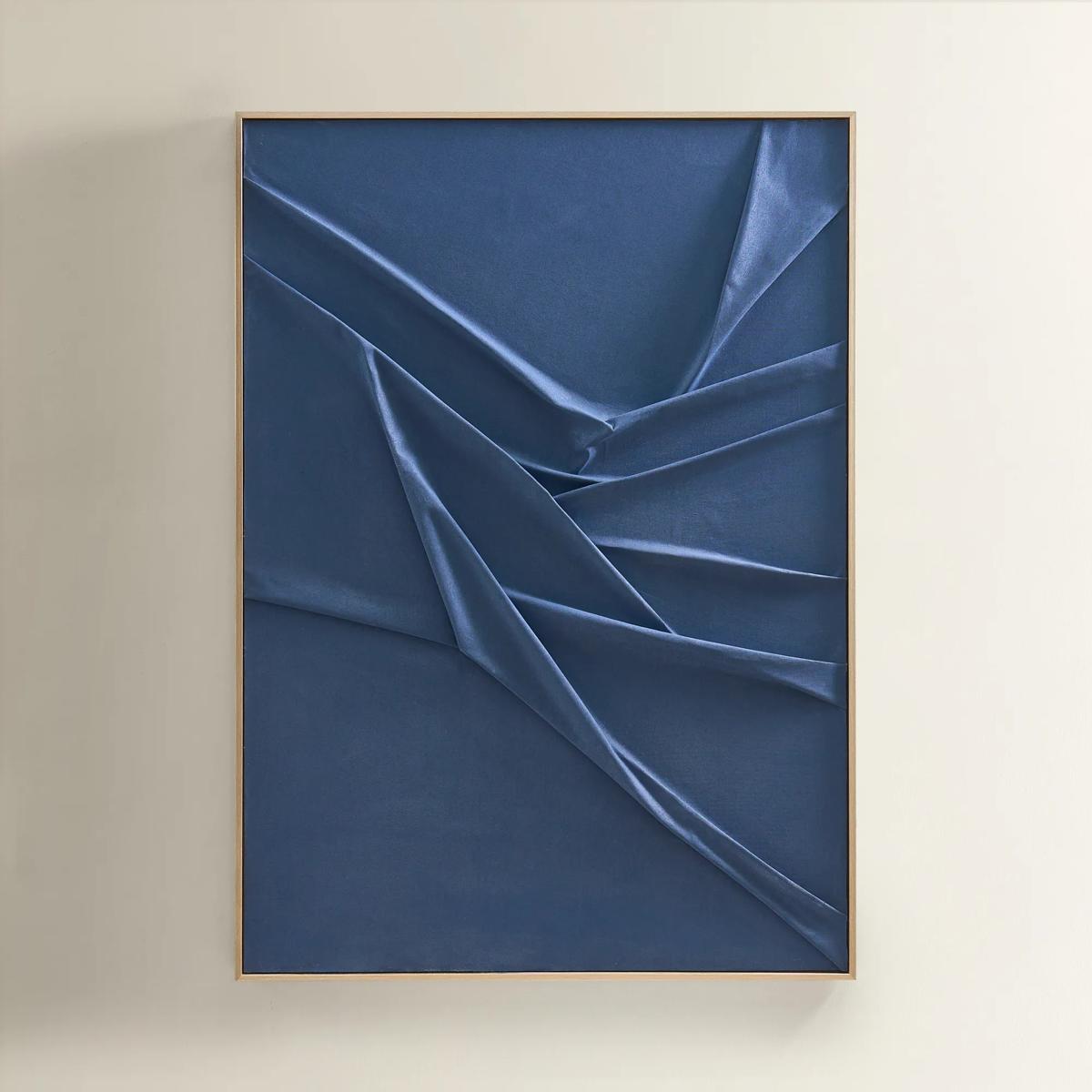 Deep Sea Painting$599
A hand-sculpted navy canvas with dimensional folds, framed in soft champagne for modern, serene elegance.
Add To Cart -
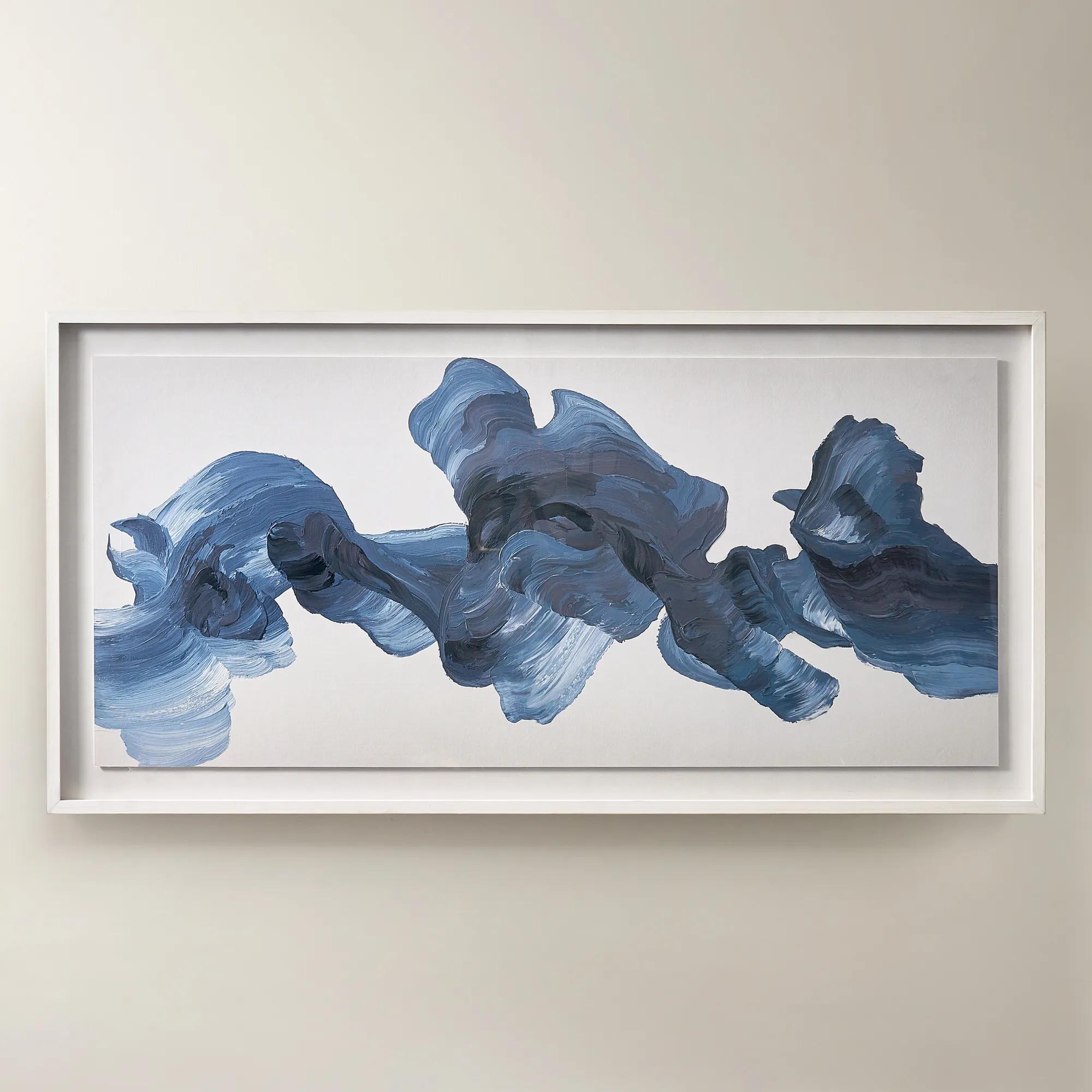
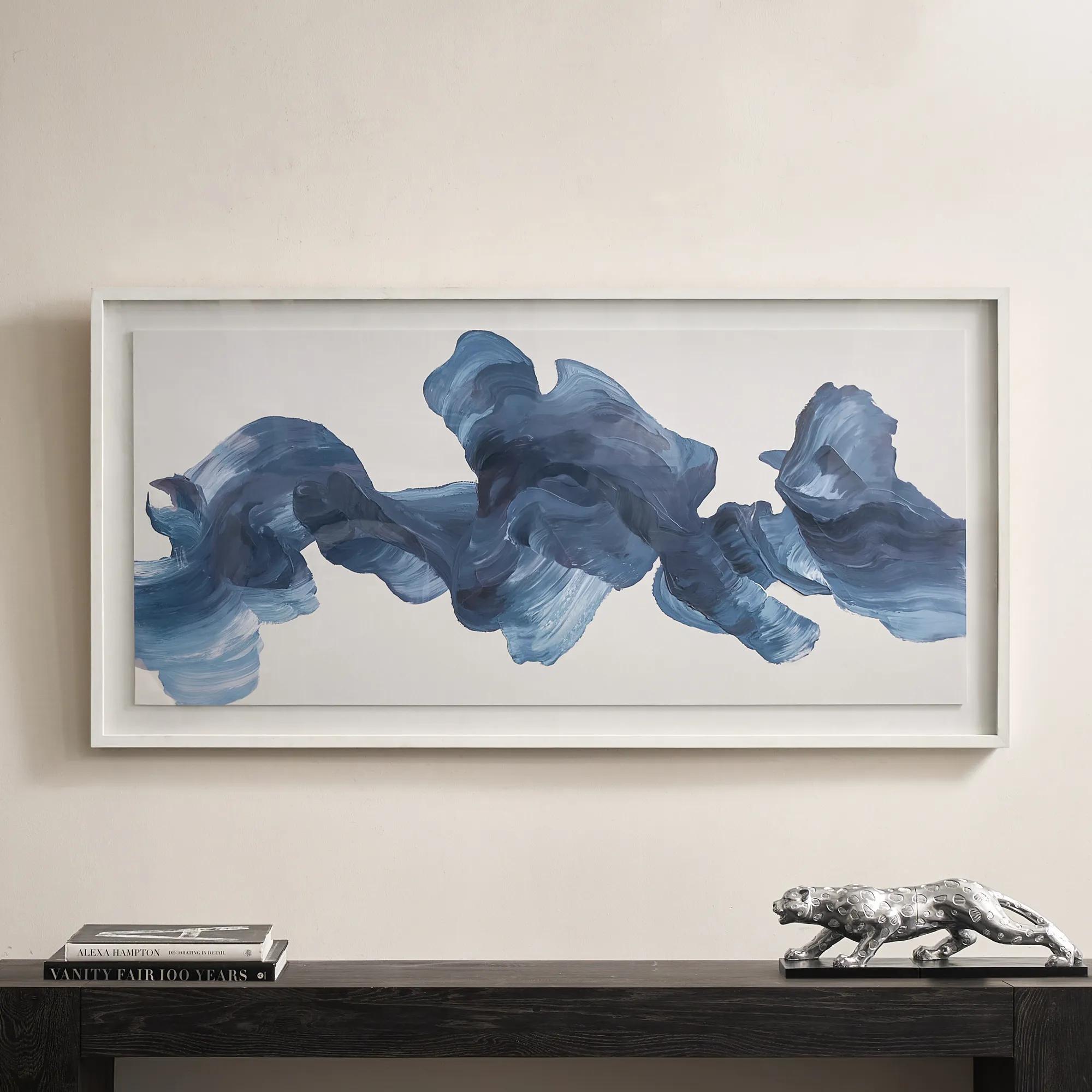 Blue Theory Framed Painted Wall Art in Acrylic 60" x 30"$499
A hand-painted canvas in deep ink blue, framed under acrylic with a whitewashed wood frame.
Add To Cart -
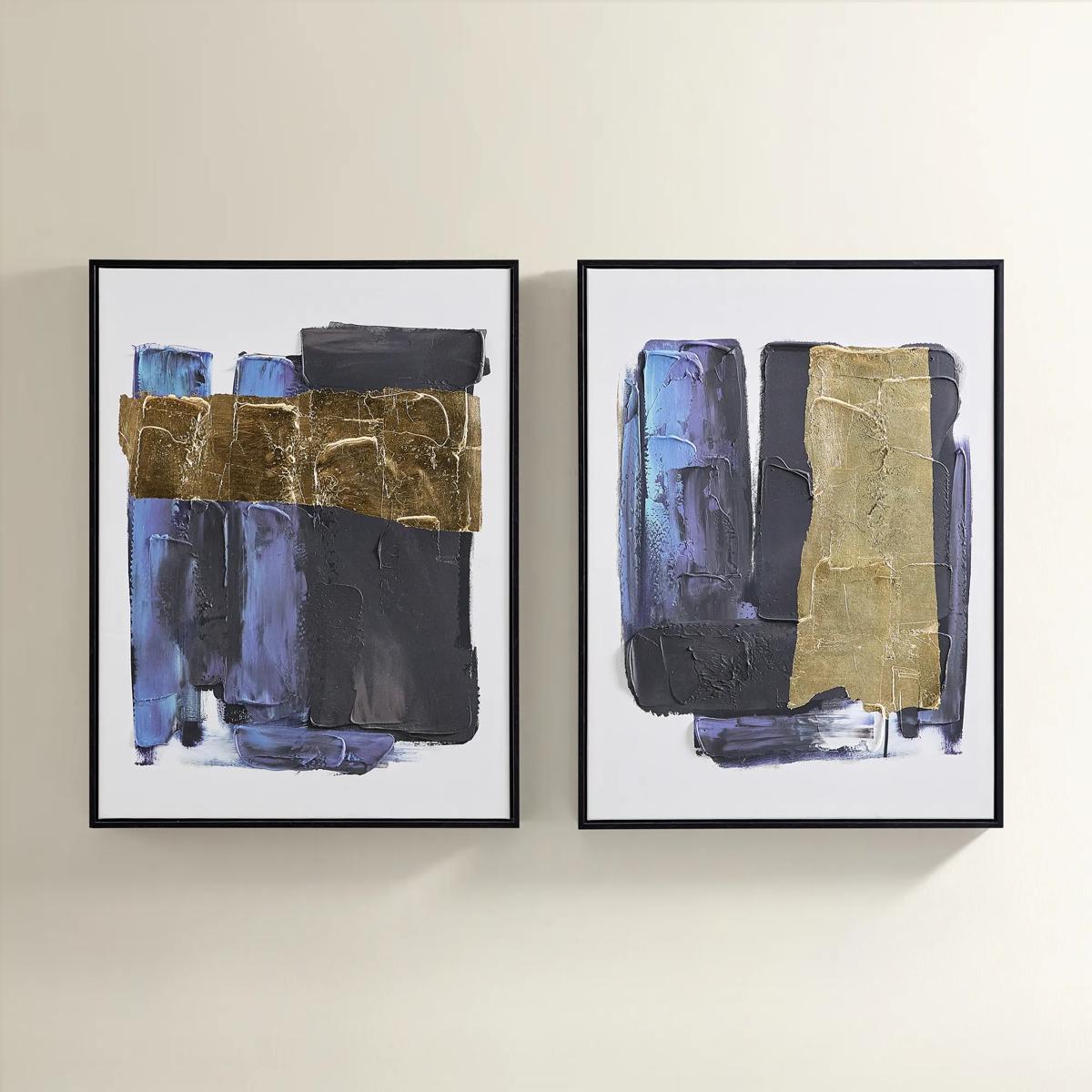
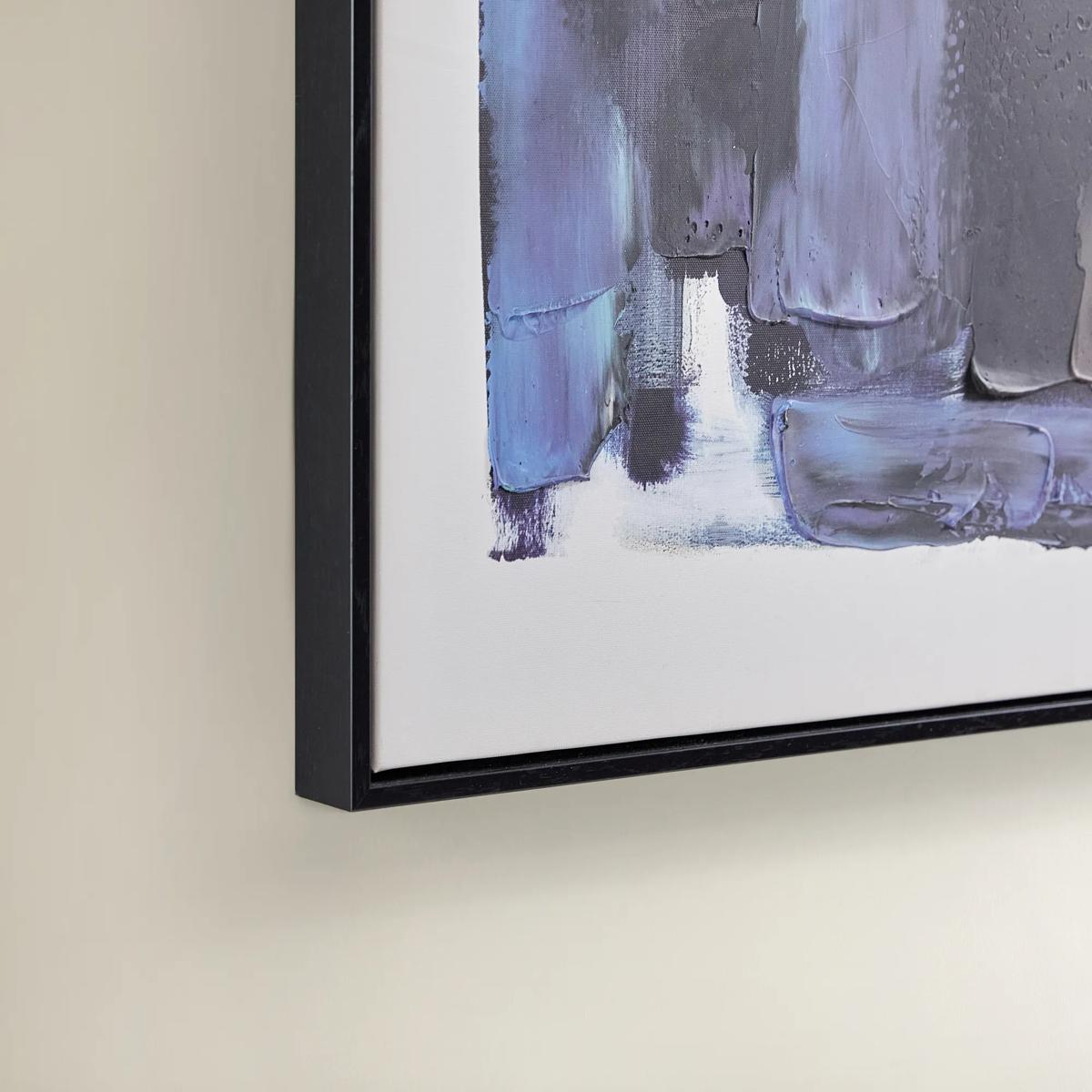 Deep Thoughts Gold Leaf Painted Wall Art Set of 2$199
A set of two hand-painted abstract canvases in blue and gold leaf, framed in sleek black.
Add To Cart -
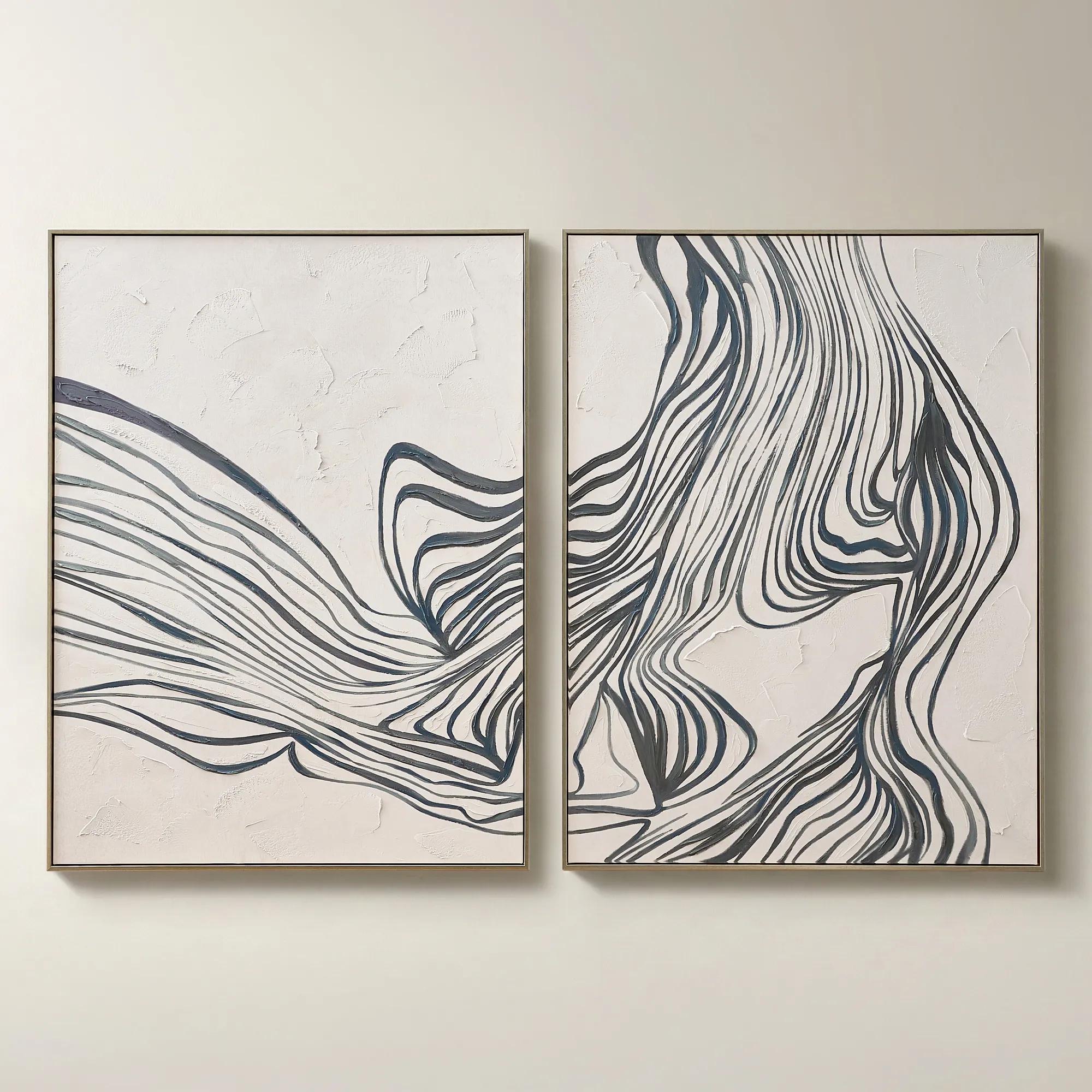
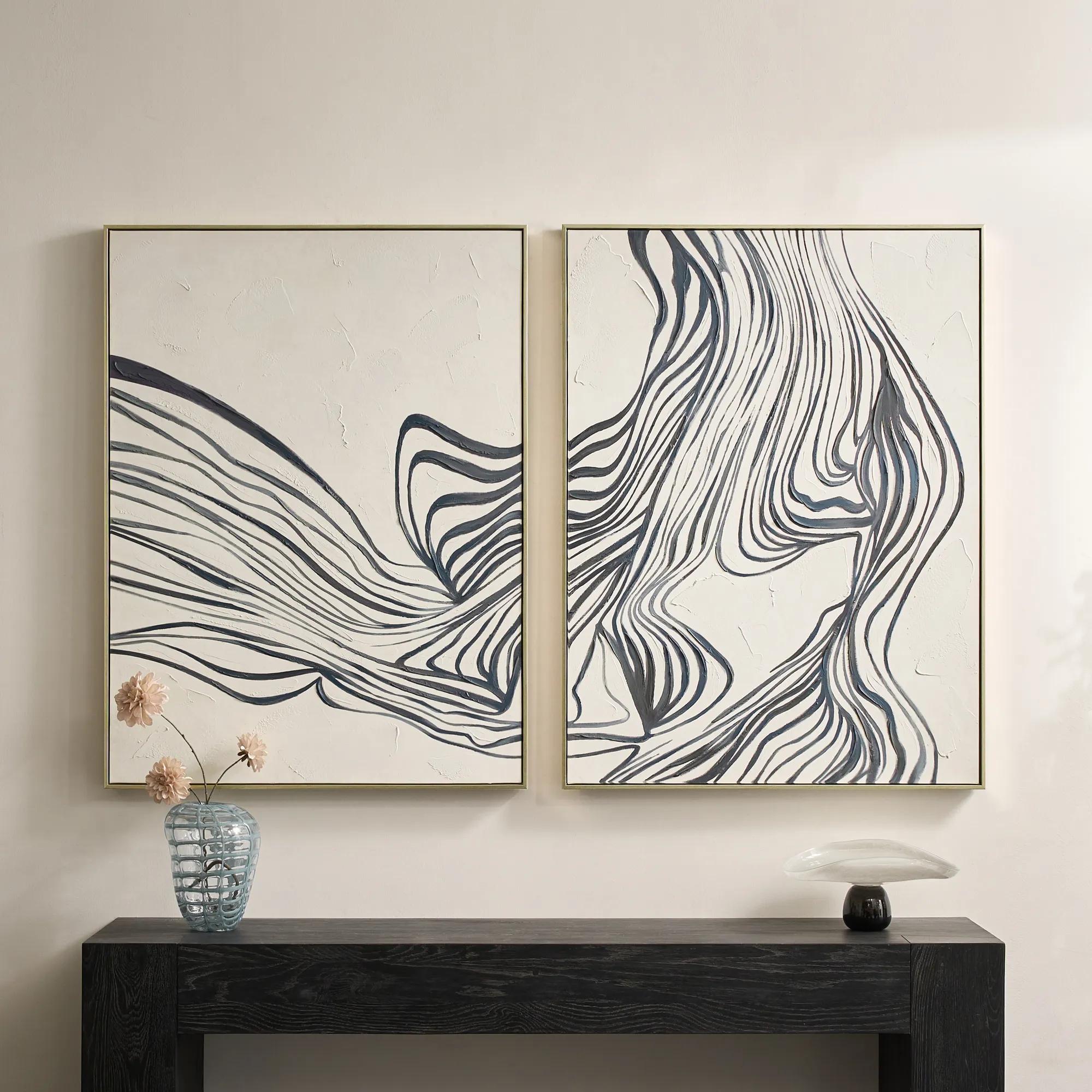 Rhythmic Framed Painted Wall Art 36" x 48" Set of 2$599
A hand-painted diptych featuring bold abstract stripes in dark slate and dusty blue with champagne frames.
Add To Cart -
 Relic Framed Painted Triptych Wall Art Set of 3$399
A hand-painted abstract triptych in deep navy and neutral tones, set in sleek black floater frames.
Add To Cart -
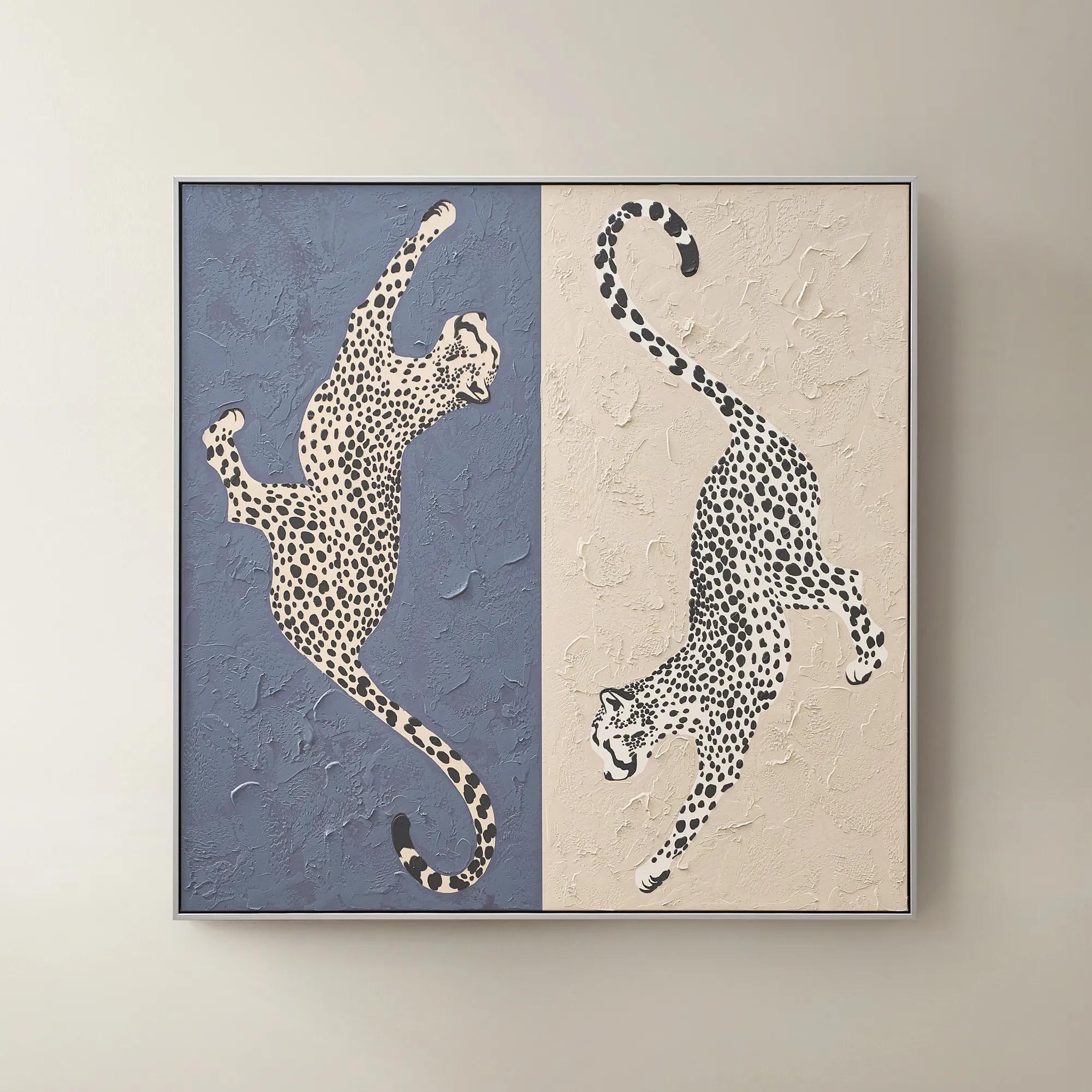 Leopard At Play Framed Painted Wall Art 40" x 40"$299
A hand-painted canvas in ink blue and taupe features playful leopard-inspired art with a silver-black frame.
Add To Cart

Blue And White Abstract Artworks
Blue and white abstract artworks transform any interior into a gallery of striking contrasts and serene sophistication. Each piece invites the eye to wander through waves of cobalt, ivory, and indigo, creating a visual symphony that feels both timeless and daringly modern. Whether you’re seeking to anchor a room with bold brushstrokes or to evoke tranquility with delicate washes of color, these expressive canvases awaken walls with artistry and allure. Let blue and white abstract artworks infuse your space with the perfect balance of drama and elegance—where every glance reveals new depths, and every moment feels exquisitely curated.
Blue and white abstract artworks pair the depth of blue with the luminosity of white, creating wall art that can feel serene, architectural, or boldly expressive. Rather than depicting a recognizable subject, abstract compositions use color, line, shape, and texture to establish a mood. Sweeping indigo strokes against an ivory ground suggest movement; pale washes of blue invite a softer, more contemplative atmosphere. Cobalt delivers a sharper note of energy, while navy brings visual weight and a tailored presence. The balance between those colors matters as much as the shades themselves: a predominantly white composition can lend breathing room to a richly furnished interior, while a blue-dominant work draws the eye and gives a pale wall a compelling focal point. That range makes blue and white abstract wall art a distinctive choice for living rooms, bedrooms, dining rooms, and home offices. Above a velvet sofa, broad brushwork adds an artistic counterpoint to sumptuous upholstery. Behind a dining table, a composition with strong lines can echo the geometry of the furniture without making the room feel overly coordinated. In a bedroom, diffused edges and generous areas of white create a quieter impression than crisp contrasts and densely layered marks. These artworks also move comfortably between interior styles. Blue and white can suggest coastal light without relying on shells or nautical imagery, complement polished contemporary furniture, or introduce an unexpected flourish among traditional silhouettes. The most persuasive combinations give the artwork something to converse with: the smoky blue of a rug, the gleam of a silver lamp, or the warm grain of a console. Repeating one shade elsewhere in the room creates continuity, but matching every accessory can diminish the composition’s individuality. Let the artwork introduce its own rhythm, whether that means a concentrated sweep of midnight blue or a scattering of delicate marks across an expansive white field. Its role is not simply to occupy a wall, but to give the surrounding furnishings a more expressive setting.
Materials and presentation shape how blue and white abstract art looks at close range and across a room. Canvas prints reproduce an image on a woven surface, bringing a subtle texture that can soften the appearance of expansive color fields. Hand-painted canvases may reveal raised brushwork, layered pigment, and variations that become especially noticeable under light from the side. Embellished prints combine a reproduced image with added surface details, so the description should make clear whether a work is printed, painted, or finished with hand-applied accents. Paper prints offer another visual character, particularly when a mat gives the image a generous border and separates it from the glazing. A narrow frame keeps attention on the composition; a more substantial profile adds definition and presence. Silver-toned finishes can emphasize the palette’s cool luminosity, while gold-toned frames introduce warmth against crisp white and deep blue. Natural wood creates a gentler transition, especially in rooms with linen, pale oak, or woven textures. Consider the white within the artwork as carefully as the blue. A creamy ground may harmonize with warm upholstery, while a bright white can appear more graphic against charcoal or cool gray walls. Screens and room lighting can affect perceived color, so material descriptions, detail images, and any stated finish information are useful when evaluating a piece. Durability depends on the printing or painting process, the substrate, the frame construction, and the display environment rather than on appearance alone. Paper works generally benefit from appropriate protective framing, and UV-filtering glazing can help reduce light exposure, though it does not eliminate the risk of fading. Keep artwork away from prolonged direct sunlight, damp walls, and strong heat sources. For routine care, follow the maker’s instructions; frames can often be dusted gently with a clean, dry microfiber cloth, while painted or textured surfaces may require a more delicate approach. Avoid applying household cleaners directly to artwork, and spray glazing cleaner onto a cloth rather than toward the frame to limit moisture at the edges.
Scale determines whether a blue and white composition reads as an intimate accent or the defining gesture in a room. Measure the usable wall area alongside the furniture beneath it, accounting for sconces, molding, door swings, and nearby shelving. Over a sofa or console, artwork spanning roughly two-thirds to three-quarters of the furniture’s width often provides a balanced starting point, although the composition and room architecture may call for a different proportion. A broad horizontal work can reinforce the sweep of a long seating arrangement, while a vertical piece brings emphasis to a narrow wall or a space beside a doorway. For an expansive wall that needs a single commanding focal point, Large Blue Abstract Paintings offer a related direction, with greater emphasis on scale and the expressive range of blue. A coordinated pair or a multi-panel arrangement creates a different effect, introducing measured intervals that become part of the overall composition. Include those gaps when calculating the total width, and keep the spacing consistent enough for the pieces to feel connected. Before hanging, paper templates can reveal whether the arrangement overwhelms a compact room or feels too restrained above substantial furniture. Check framed dimensions, total weight, and hanging requirements as well; hardware should suit both the artwork and the wall construction. In a home office, positioning art where it can be enjoyed from the desk gives it a purpose beyond a video-call backdrop. In an entryway, a striking blue gesture above a sculptural console establishes a confident first impression. Softer compositions can bring welcome visual ease to a reading corner, especially alongside tactile upholstery and warm lamplight during the cooler months. Blue and white abstract artworks can also make thoughtful housewarming or wedding gifts for someone whose interior style and wall space are familiar. Consider the recipient’s preferred color intensity, framing taste, and room proportions rather than assuming that a versatile palette suits every setting. Chosen with that attention, the artwork feels personal: an expressive presence that lends depth, light, and distinction to the room.
FAQs
Blue and white abstract artworks are remarkably versatile, complementing a range of aesthetics from modern glam and coastal chic to classic traditional and eclectic maximalism. Their crisp palette can anchor a minimalist space with a touch of drama, or provide a serene counterpoint to richly layered, textured interiors.
Consider the overall mood of your space—blue and white abstracts can serve as a bold focal point above a sofa or mantel, or as part of a curated gallery wall. Layer them with metallic accents, mirrored surfaces, or plush textiles for a sophisticated, multi-dimensional look that feels curated and intentional.
Absolutely. Their timeless palette and expressive forms make them thoughtful gifts for art lovers, new homeowners, or anyone seeking to refresh their space. Blue and white abstracts convey both tranquility and artistic flair, making them ideal for special occasions and memorable milestones.
Hand-painted pieces capture the artist’s technique and emotion in every brushstroke, offering a sense of depth and energy that prints can’t replicate. Each artwork is one-of-a-kind, adding an exclusive, gallery-worthy presence to any room.
Look for areas where natural light can highlight the artwork’s texture and color, such as entryways, living rooms, or dining spaces. Blue and white abstracts also make striking statements in bedrooms or home offices, where they can inspire calm focus or creative energy.