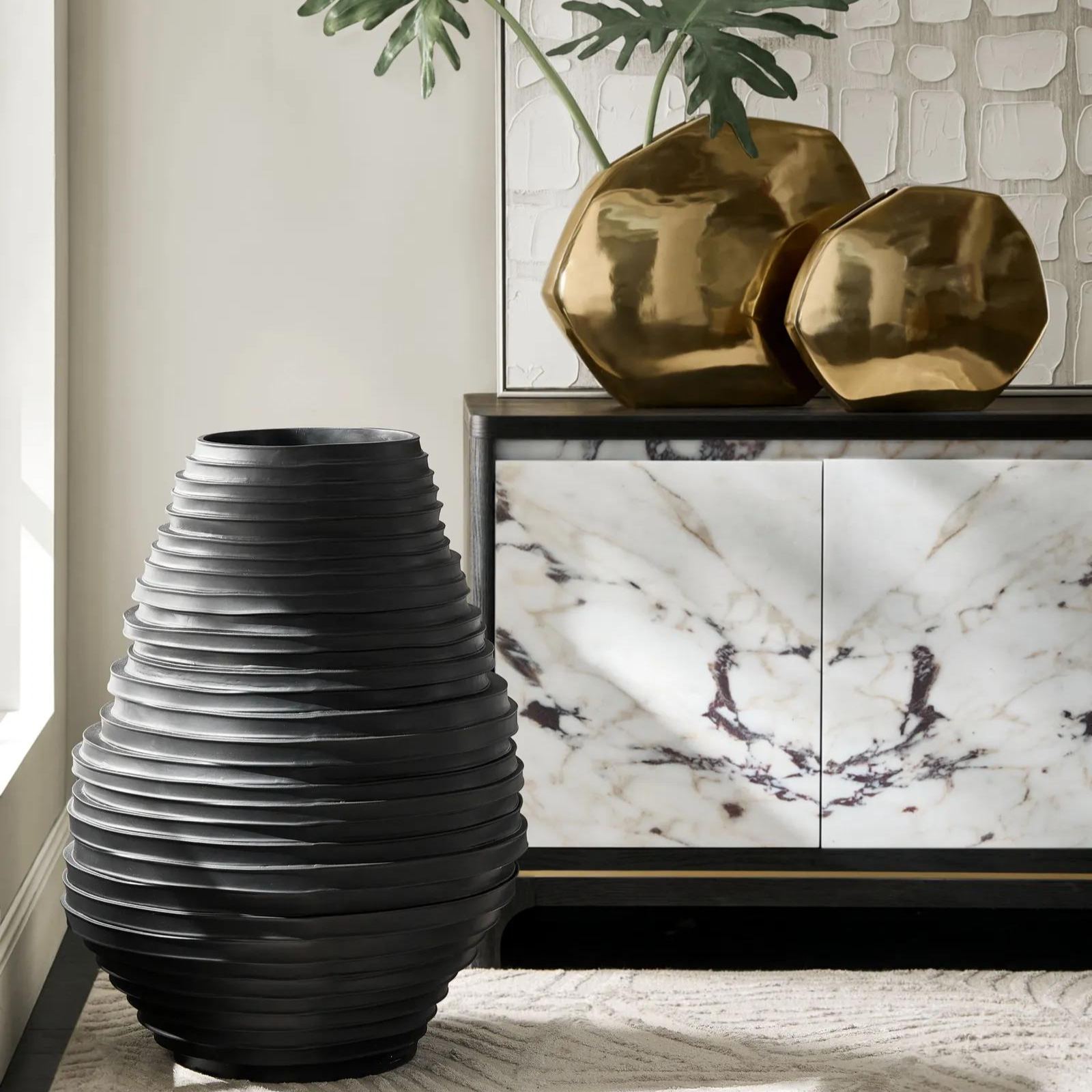
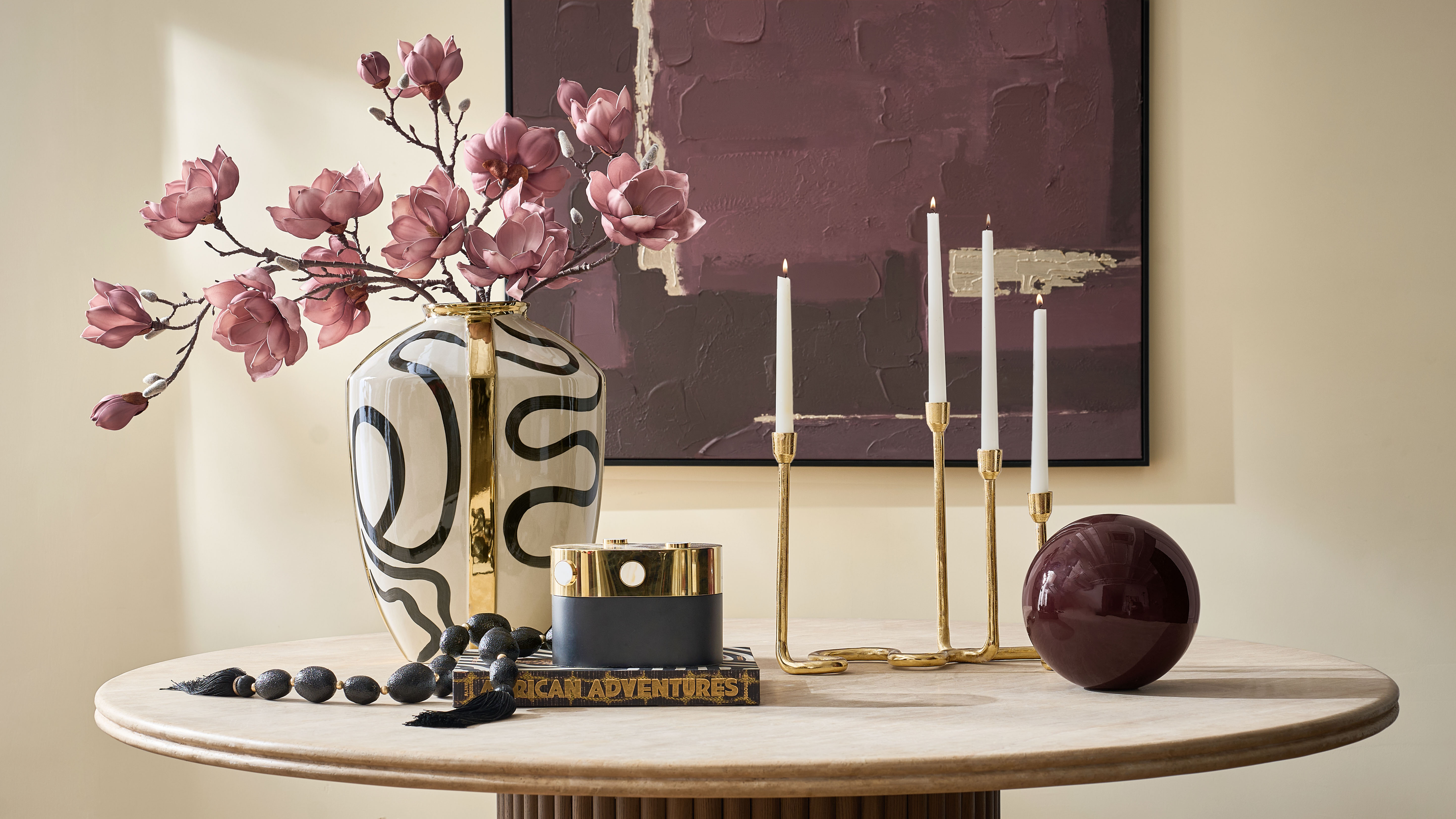
Wood, glass, opaline pearl, soft gold, velvet, and bronze mirror can share one room beautifully. The key is giving every finish a different job.
The rooms we remember tend to have one thing in common: they do not look as though they were bought in a single afternoon. Pale oak sits beside smoky mirror. Velvet softens glass. A lacquered surface catches daylight while something darker holds the room steady. The finishes are different, but the mood is unmistakably one.
That is the point of mixed material furniture. It gives a room the depth of something collected through instinct, travel, memory, and a few very good decisions. The goal is not to make every surface match. It is to let each material contribute something the others cannot, whether that is warmth, reflection, texture, weight, or a little visual tension.
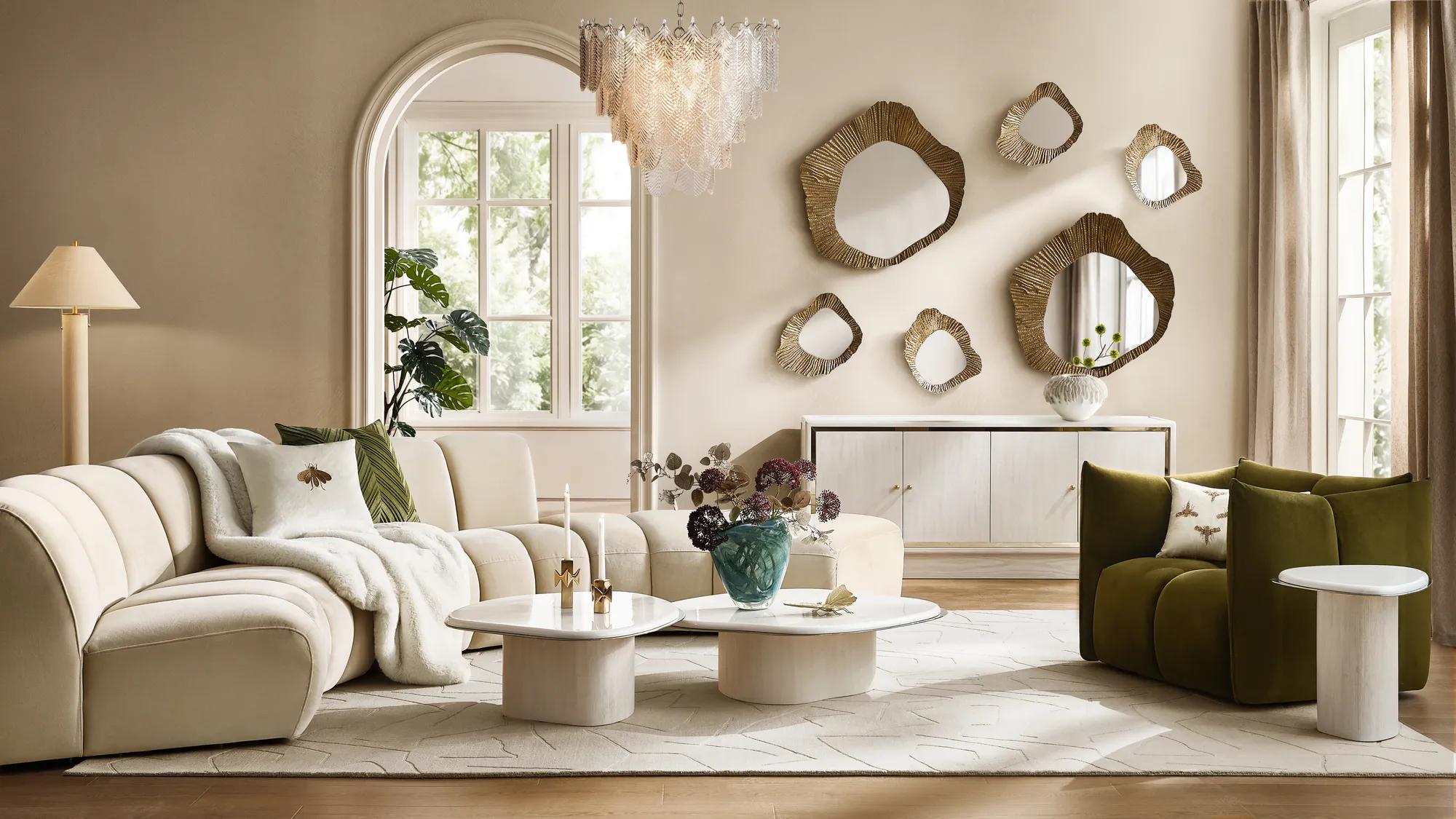
Z Gallerie’s Fall/Winter 2026 collection makes a compelling case for this kind of room. Lumina brings bleached oak and luminous pearl lacquer. Sequoia introduces sculptural gold and clear glass. Glimmer adds black oak and bronze mirror. Upholstery in fig, deep olive, cloud, and dark chocolate keeps the harder finishes from feeling too polished. Together, the collection lands somewhere between gallery and home, which is also the idea explored in From Gallerie to Life: Inside the FW26 Collection.
A collected room repeats a mood, not a finish.
Begin With the Quietest Finish
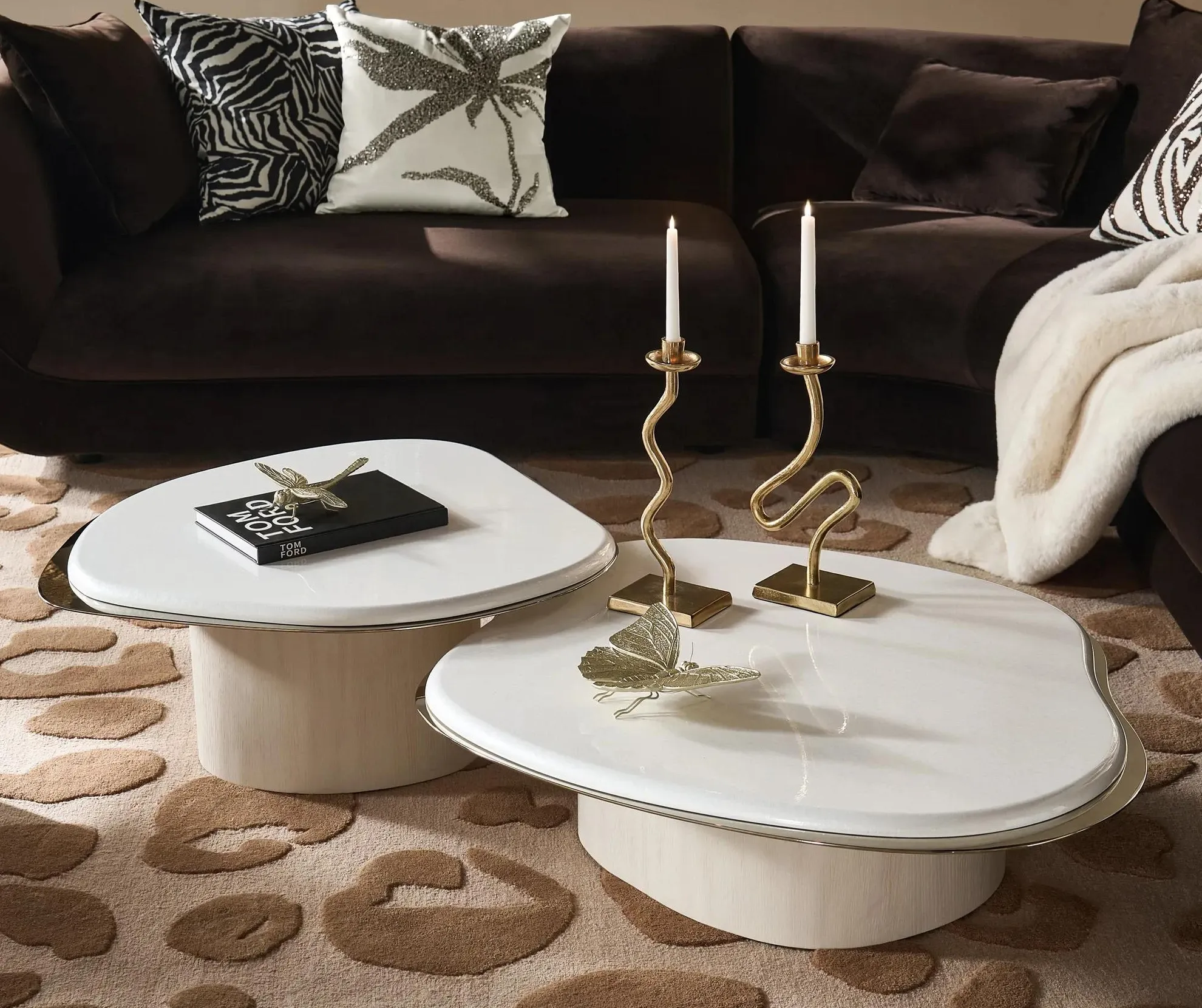
Lumina is the quietest voice in this room, and that is precisely why it works. The collection pairs bleached white oak veneer with a custom opaline pearl lacquer made with natural shell powder. Champagne gold stainless steel traces the organic edges, giving the tables a fine line of warmth rather than a loud metallic statement. The surface has a soft iridescence that changes with the light, while the visible oak grain keeps it grounded.
The Lumina Bleached Oak Coffee Table Set of 2 is an especially good place to begin because the two freeform tables create movement before anything has been styled on top. Stagger them slightly rather than lining them up with perfect symmetry. Let one carry two or three books and leave the other almost bare, perhaps with a smoked-glass bowl or a dark sculptural object. A little contrast allows the pearl finish to register. In a dining room, the Lumina Bleached Oak Dining Table has the same calming effect at a larger scale. Pair it with oatmeal upholstery for softness, or use deep olive, fig, or dark chocolate chairs to keep the pale finish from becoming too delicate.
The instinct with pale furniture is often to surround it with more pale furniture. Resist that. Lumina looks better when there is something darker nearby. For more on proportion and shape, How to Choose a Round Coffee Table with Quiet Drama offers a useful guide to scale, placement, and breathing room.
Then Add Something That Refuses to Disappear
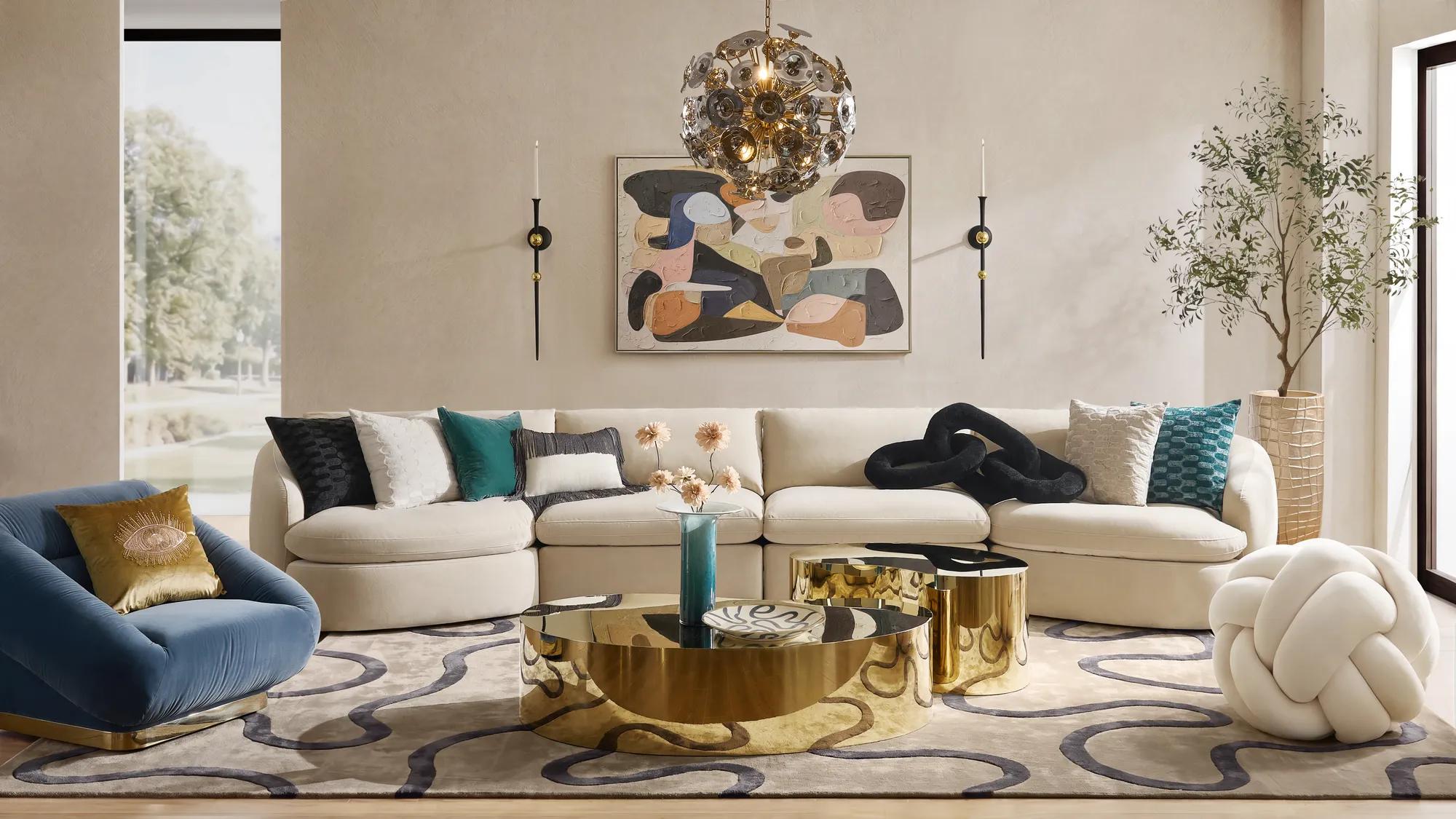
Once the room has a quiet anchor, it needs one piece with a pulse. Sequoia is not background furniture. Its richly textured resin form takes its cues from natural root structures, then covers them in champagne gold leaf. On the coffee and end tables, a clear glass top leaves the sculpture exposed, creating a useful surface without hiding the part people will want to look at. The console has a more solid, monolithic presence and works best where its form can be seen from several angles.
The Sequoia Champagne Gold Console Table is ideal on a transition wall, behind a sofa, or in an entry where the room needs one decisive gesture. Style it with restraint. One substantial lamp, a short stack of books, and a branch in a simple vessel are enough. Skip the gold tray, the gold bowl, and the cluster of metallic objects. Sequoia already supplies the sculpture, texture, and shine.
The same principle applies to the Sequoia Champagne Gold Coffee Table. Let it be the center of the seating area rather than asking it to compete with another statement table. The full Sequoia Furniture Collection includes dining, living, and accent pieces, but a single Sequoia element is often all a room needs. The idea is closely related to The One-Piece Rule: one confident piece can give the entire room its point of view.
A Pale Room Needs a Little Night
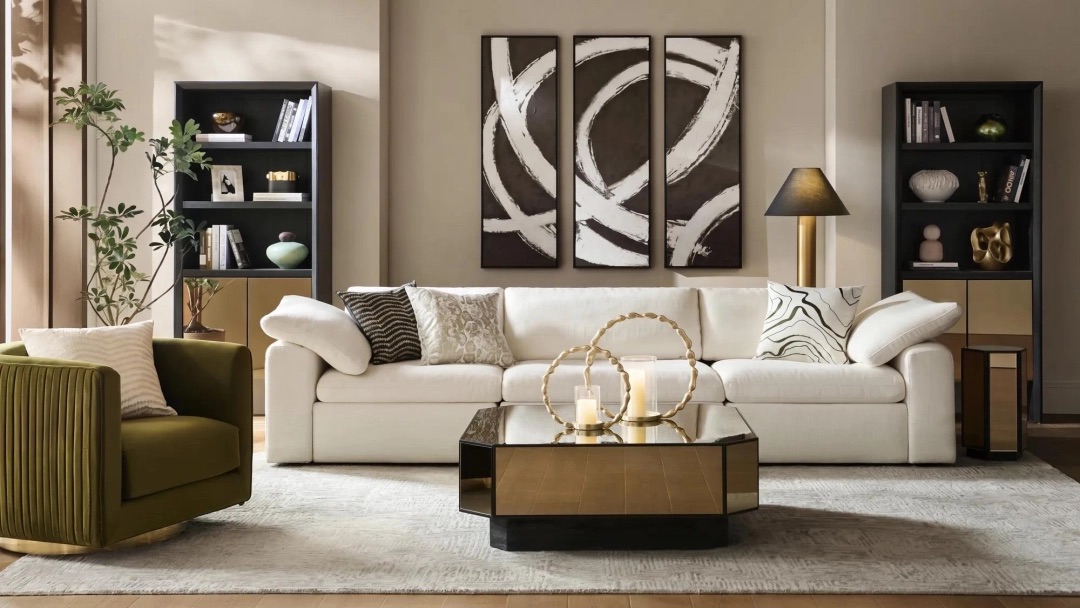
A room filled with pearl, pale oak, and soft gold benefits from something that holds the shadows. Glimmer provides that contrast through bronze mirror and black oak. The tables use angled, faceted planes rather than a flat mirrored box, so the reflections change as you move around them. The effect is moody and architectural, especially beside softer upholstery.
The compact Glimmer Bronze Mirrored End Table works well beside a lounge chair, across the room from Sequoia rather than directly next to it. That bit of distance matters. Gold and bronze can belong to the same room without becoming a matching set. The larger Glimmer Bronze Mirrored Coffee Table can serve as the darker anchor in a more dramatic living room, with Lumina appearing elsewhere through a dining table, buffet, or smaller accent.
Mirrored furniture rewards a firm editing hand. Whatever sits on top is reflected, sometimes more than once, so a crowded surface becomes crowded very quickly. One low bowl, a sculptural object, or two books will usually look better than a full tabletop arrangement. The Glimmer Furniture Collection expands this idea into bedroom, living, and dining pieces. For a deeper look at using reflection without overwhelming the room, see Mirrored Furniture: A Luminous History, Styling Ideas and Best Pieces for Every Room.
The CMF Story: Ground, Glow, and Shadow
Design teams often use the shorthand CMF, meaning color, material, and finish. It sounds technical, but it comes down to three useful questions. What sets the room’s temperature? What gives it visual weight? What happens when light touches the surface?
For this FW26 room, the simplest formula is ground, glow, and shadow.
| Role in the room | Materials and colors | What they contribute |
|---|---|---|
| Ground | Bleached oak, velvet, wool, oatmeal, cloud | Warmth, softness, calm, and visual stability |
| Glow | Opaline pearl, champagne gold, clear glass, honey gold | Light, movement, warmth, and a refined focal point |
| Shadow | Black oak, bronze mirror, dark chocolate, deep bronze | Contrast, definition, atmosphere, and depth |
The proportions should not be equal. Let one group lead, another support, and the third act as punctuation. In a light room, bleached oak and upholstery might form the ground, with gold as the supporting note and bronze mirror as the accent. In a moodier room, black oak and bronze can lead, while pearl lacquer gives the eye a place to rest.
Matching undertones matters more than matching exact finishes. Champagne gold, gold leaf, honey gold, and bronze are visibly different, but they all share warmth. That relationship makes the room feel considered without making it look coordinated. Quiet Luxury, Brilliant Contrast: How to Mix Metal Finishes Like a Stylist goes further into lead, supporting, and accent metals.
The Exact Room Recipe
Here is how the materials can live together in one open living space without turning the room into a showroom.
- Place Lumina at the center. Use the Lumina Coffee Table Set as the pale, luminous anchor. Keep the styling asymmetrical and give part of the surface room to breathe.
- Bring in softness with Dover. Set the Dover Fig Velvet Swivel Accent Chair at an angle beside the seating area. Its low, enveloping form, softly gathered velvet, and slim gold trim add color and texture without introducing another hard finish.
- Give Sequoia its own wall. Place the Sequoia Console across the room or along the transition into the dining area. It should be visible from the seating zone, but it should not sit directly beside another highly reflective piece.
- Use Glimmer as punctuation. Add the Glimmer Bronze Mirrored End Table beside the chair. Its compact scale keeps the bronze mirror from taking over, while the black oak base connects it to darker textiles, art, or lighting.
The final layer is textile. FW26’s Mod Naturalist palette includes dark chocolate, rich olive, sea glass, honey gold, soft nude, cloud white, and deep bronze, with velvet, embroidered details, pleating, abstract pattern, and tactile surfaces doing much of the softening. A tonal rug beneath the room will quiet the hard materials, while one patterned pillow and one solid velvet pillow are enough to make the furniture feel lived with. Pillow Styling 101 offers a practical formula for balancing pattern, texture, and shine.
Five Designer Rules That Keep Mixed Finishes From Looking Messy
1. Choose a lead finish
Every material should not occupy the same amount of visual space. The largest piece usually establishes the direction. A Lumina table might lead, Sequoia might support, and Glimmer might appear as a smaller accent. When every finish asks for equal attention, the room loses focus.
2. Vary the sheen
A room needs surfaces that absorb light as well as surfaces that reflect it. Pair pearl lacquer with velvet, bronze mirror with visible wood grain, and glass with something woven or nubby. Three glossy finishes placed together will compete. A deliberate shift from matte to luminous to reflective creates depth.
3. Repeat, but do not duplicate
A finish looks intentional when it appears more than once, but the second appearance does not need to be another large piece of furniture. Echo champagne gold in a picture frame or lamp. Pick up bronze mirror with smoked glass. Repeat the cloud tone of Lumina in a pillow, artwork, or rug.
4. Separate statement pieces by sightline
Stand at the room’s entrance and notice what you see first. One strong focal point is compelling. Three reflective pieces shouting from the same view can feel restless. Place Sequoia, Glimmer, and other high-impact finishes where the eye discovers them in sequence.
5. Let textiles do the peacemaking
Wood, glass, lacquer, resin, metal, and mirror are all hard materials. Velvet, wool, chenille, faux fur, and embroidery give the room somewhere soft to land. They also help bridge colors that might otherwise feel unrelated. A fig velvet chair can connect pale pearl, warm gold, and dark bronze in a way that another hard-surface piece cannot.
Use shine to move the eye, not to hold it hostage.
What to Edit Out
The most common mistake with mixed material furniture is not using too many materials. It is giving all of them the same volume. A large pearl table, a large gold table, a large mirrored piece, and several glass accessories can each be beautiful, yet still feel chaotic together. Choose one hero, one supporting finish, and one smaller surprise.
The other mistake is styling every surface as though it needs to be photographed on its own. Sequoia does not need a dramatic vignette. Glimmer does not need a collection of small objects. Lumina does not need to disappear into an entirely cream room. The more expressive the furniture, the quieter the objects around it can become.
Take a phone photo from the doorway. The camera compresses the space and makes visual competition easier to see. When the eye does not know where to land, remove something before adding anything else.
The Room Should Feel Found, Not Furnished
The most successful mixed-material room is not the one with the greatest number of finishes. It is the one where every material brings something specific.
Lumina quiets the composition. Sequoia gives it movement. Glimmer supplies depth. Velvet softens the edges, glass opens the view, and dark color prevents the pale finishes from becoming too precious. None of the pieces needs to imitate the others. Their differences are what make the room feel complete.
That is the distinction between a room that has been coordinated and one that has been considered. One makes sense immediately. The other keeps revealing itself.
Explore the complete Fall/Winter 2026 Collection, or continue to When the Gallery Comes Home for more ideas on composing furniture, art, mirrors, and lighting as one personal story.
Frequently Asked Questions About Mixed Material Furniture
What is mixed material furniture?
Mixed material furniture combines two or more materials within a single piece or across a coordinated room. Common combinations include wood and metal, glass and resin, pearl lacquer and oak, or mirror and dark wood. The contrast adds depth, texture, and a more collected appearance.
How many furniture finishes can be mixed in one room?
Three main finishes are a useful starting point. Choose one dominant finish, one supporting finish, and one smaller accent. Additional materials can appear through rugs, pillows, lighting, artwork, and decorative objects as long as the overall palette stays connected.
Can gold and bronze finishes be used together?
Yes. Gold and bronze work especially well together when they share a warm undertone but have different levels of sheen. Textured champagne gold can act as the brighter note, while bronze mirror or aged bronze adds depth.
Can mirrored furniture be paired with natural wood?
Mirrored furniture and natural wood are a strong pairing because they balance each other. Mirror reflects light and creates movement, while wood adds warmth and visible texture. Keep one material dominant and use the other in a smaller dose.
How do you keep mixed material furniture from looking too busy?
Start with a clear hierarchy. Let one finish lead, vary the sheen of surrounding materials, and separate statement pieces across different sightlines. Rugs, velvet, wool, and other textiles can create visual quiet between reflective or highly textured surfaces.
Does mixed material furniture work in a small room?
Yes. Glass, mirror, open bases, and lighter wood tones can reduce visual weight in a small room. Choose one reflective focal point, keep the larger pieces relatively quiet, and avoid filling every surface with accessories.
Do all metal finishes in a room need to match?
No. Metal finishes feel more collected when they relate rather than match exactly. Choose finishes with compatible undertones, then repeat each one once or twice through lighting, furniture trim, hardware, frames, or decorative objects.