A round coffee table softens the center of a room, creating movement, intimacy, and a more artful living space.
A living room often reveals itself from the center outward. The sofa sets the tone, the rug frames the mood, but the coffee table gives the room its rhythm. A round coffee table brings a particular kind of ease: no hard corners, no abrupt visual stops, just a sculptural focal point that invites gathering.
Its appeal is both practical and poetic. The circular form creates better flow around seating, softens angular furniture, and makes a room feel more composed without feeling overly arranged. For shoppers deciding between shapes, finishes, and proportions, the question is not simply which table looks beautiful. It is which one completes the room.
The right piece should feel intentional from every angle: scaled to your sofa, suited to your lifestyle, and expressive enough to hold its own.
In This Story
- How a circular table creates softness, balance, and movement in a living room
- The sizing rules that help a coffee table feel proportionate to your sofa and seating plan
- Which materials bring polish, warmth, texture, or visual lightness
- How to match a table to modern glam, natural, luxe, sculptural, or minimalist interiors
- Styling ideas that turn the tabletop into a curated design moment
Explore the edit: Round Coffee Tables
Why a Round Coffee Table Changes the Room
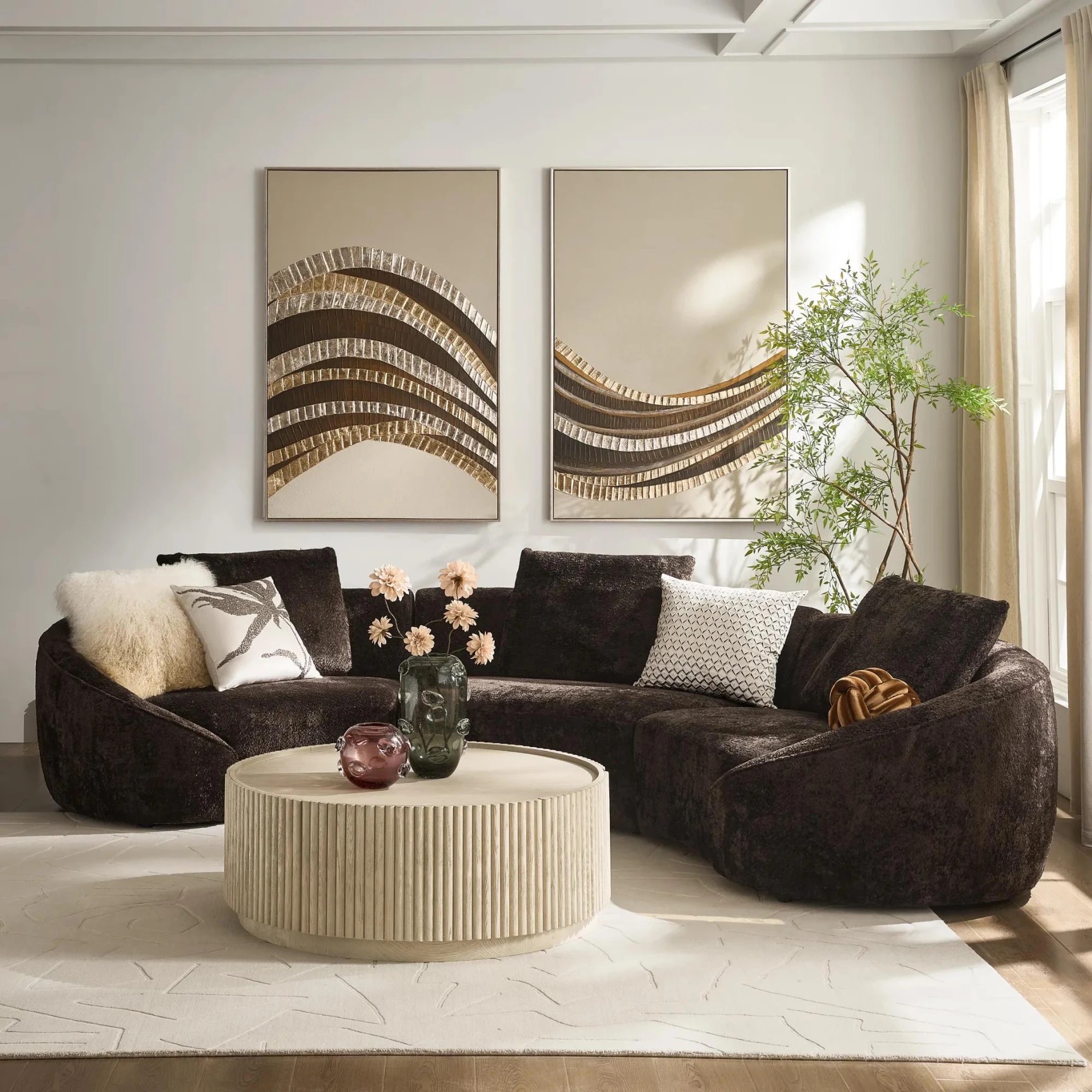
A round coffee table has a natural softness that makes it especially effective in living rooms filled with strong lines: sectional sofas, rectangular rugs, media consoles, or architectural windows. Its curved silhouette breaks up the geometry and introduces a sense of ease.
It also encourages movement. Without corners, the table feels more approachable from every seat and easier to navigate in tighter layouts. This makes it a smart choice for small living rooms, open-concept spaces, curved sofas, and conversation areas where people naturally move around the furniture.
Visually, the shape has a quiet centering effect. It draws the eye inward, anchors the seating arrangement, and gives decorative objects a graceful stage.
Stylist Note: A round table works beautifully when a room feels too linear. It softens the composition without requiring a full furniture refresh.
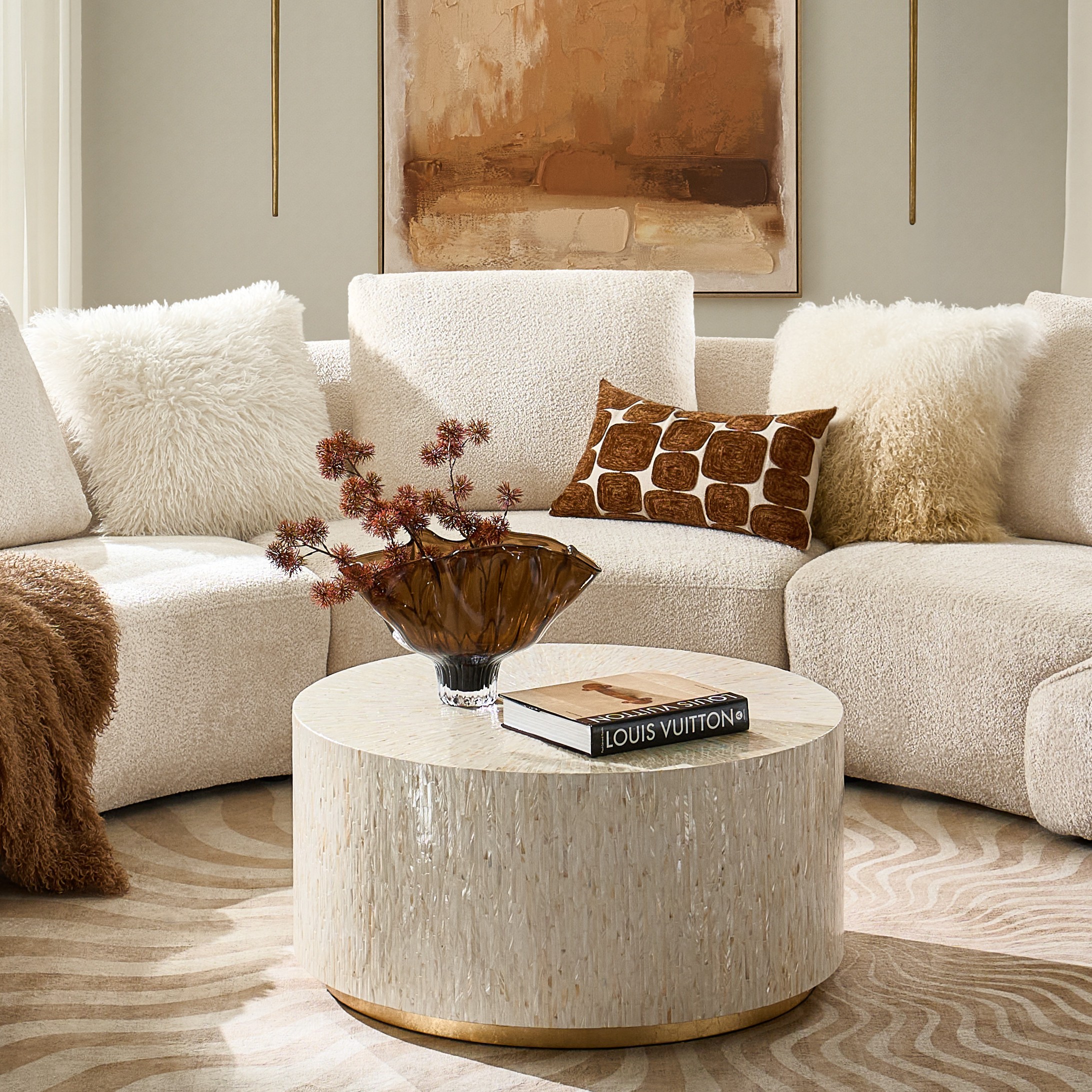
A circular silhouette brings movement and balance to a tailored seating arrangement.
How to Choose the Right Round Coffee Table Size
Scale is the difference between a coffee table that looks considered and one that feels accidental. A beautiful piece can lose its impact if it is too small for the sofa or too large for the walkway around it.
As a general design guide, choose a table diameter that relates to the length of your sofa and the footprint of your seating area. For a standard sofa, a coffee table often feels balanced when it is roughly one-half to two-thirds the length of the sofa. With a round shape, this translates into choosing a diameter that visually fills the center without crowding the room.
Height matters as much as width. Look for a table that sits close to the height of your sofa seat, or slightly lower, so the proportions feel elegant and usable. A table that is too tall can interrupt the sightline. One that is too low may feel more decorative than functional.
Quick Sizing Guide
- Small living room or apartment: Consider a 24 to 32 inch diameter.
- Standard sofa layout: Look for a 32 to 40 inch diameter.
- Large sectional or expansive seating area: Consider 40 inches and above.
- Two sofas facing each other: Choose a larger diameter or pair of nesting tables to fill the space.
- Curved sofa: Let the table echo the sofa’s arc with generous breathing room around it.
Did you know? In tighter rooms, a round table often preserves more walkable space than a rectangular table because the absence of corners creates a smoother path around seating.
Consider the Room Layout Before the Material
Before choosing marble, glass, wood, or metal, study the seating arrangement. The layout will tell you what the table needs to do.
A round coffee table is especially strong with sectionals because it softens the L-shape and offers access from multiple seats. It also works well between accent chairs, where its shape encourages conversation rather than directing attention toward one side of the room.
In small spaces, a round silhouette can feel lighter than a blocky rectangular piece. Choose an open base, slim metal frame, or glass top to preserve visual air. In larger living rooms, a heavier stone, travertine, or sculptural wood table can hold the center with more presence.
Best Layouts for Round Coffee Tables
- Sectionals: Round tables balance the angles and keep the center accessible.
- Curved sofas: The repeated curve creates a cohesive, architectural feel.
- Small living rooms: A circular profile improves flow and reduces visual clutter.
- Conversation areas: Every seat feels connected to the center.
- Open floor plans: The shape creates a defined gathering point without feeling rigid.
Explore the living room furniture.
Which Round Coffee Table Material Fits Your Style?
Material sets the mood. It determines whether the table feels glamorous, grounded, airy, dramatic, or quietly minimal.
Marble: Polished and Collectible
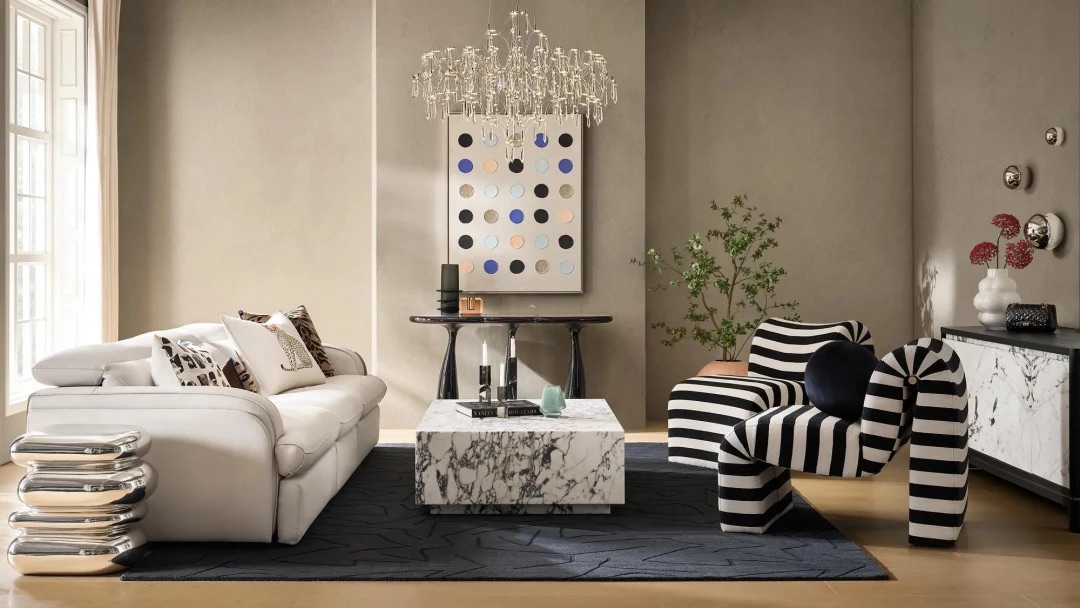
A marble coffee table brings instant sophistication. Its veining adds movement, while the stone surface creates a gallery-like focal point. Choose bold veining for drama or softer tones for a more serene expression.
Marble works beautifully in modern glam, luxe, and transitional interiors. Pair it with velvet seating, polished metal accents, sculptural lighting, and artful accessories.
Glass: Light, Reflective, and Elegant
A glass round coffee table is ideal when you want the room to feel open. It allows the rug, seating, and surrounding finishes to remain visible, which can make a smaller living room feel more spacious.
Glass also introduces reflection, especially when paired with metallic bases, smoked finishes, or sculptural forms.
Wood: Warm, Natural, and Grounding
Wood adds warmth and texture. A round wood coffee table can soften formal seating, balance glamorous finishes, and bring a more organic note to the room.
Light oak feels relaxed and modern. Burl wood feels expressive and collectible. Dark wood creates depth, especially in rooms with neutral upholstery and layered lighting.
Metal: Sleek, Sculptural, and Refined
Metal brings structure and polish. A brass, bronze, chrome, or blackened metal table can feel architectural without overwhelming the space.
Metal bases are especially useful when the top is stone, glass, or mixed material. The contrast adds definition and gives the table a more designed presence.
Travertine and Stone: Natural Luxury
Travertine, limestone, onyx, and richly veined stone introduce tactile luxury. These materials feel substantial, but their natural variations keep them from feeling overly formal.
A stone table is especially beautiful when the rest of the room includes soft upholstery, curved silhouettes, and warm ambient lighting.
Mixed Materials: The Most Layered Choice
A mixed-material table creates depth. Think glass with metal, marble with wood, stone with brass, or lacquer with sculptural legs. These combinations work well when the room already has a curated, collected point of view.
Stylist Note: If your room has several polished surfaces, introduce wood or travertine for warmth. If the room feels too soft, glass, marble, or metal can add definition.
Material is the mood setter, from marble polish to natural stone texture.
Match the Table to Your Interior Style
The most elegant rooms do not match every piece perfectly. They create conversation between forms, finishes, and textures.
Modern Glam
Choose marble, glass, mirrored finishes, polished metal, or high-gloss lacquer. Look for a table with a sculptural base, dramatic veining, or a reflective surface. Style it with a tray, candleholders, florals, and one artful object.
Sculptural
For a gallery-inspired space, choose a table that feels like functional art. Rounded pedestal bases, stacked forms, carved silhouettes, and organic curves create visual intrigue even before styling is added.
Natural Luxe
Look for travertine, oak, burl wood, woven textures, or stone. This style feels refined but grounded, especially when layered with warm neutrals, boucle, linen, ceramic accents, and tonal artwork.
Minimalist
Choose clean lines, restrained materials, and a simple silhouette. A glass top, matte black base, or smooth wood form can feel sophisticated without competing with the rest of the room.
Bold and Expressive
For a room with personality, consider a table with unusual proportions, tinted glass, mixed materials, or a dramatic base. Keep styling edited so the form remains the focal point.
Think About Function Before You Fall for the Shape
A coffee table should look beautiful, but it also needs to support the way the room is lived in. Before choosing, consider what you use the table for most.
If the living room is a place for entertaining, choose a generous surface that can hold drinks, small plates, and decorative objects with room to spare. If it is a family room, look for durable materials and rounded edges that make daily use easier. If the space is compact, consider nesting tables or an open base that feels lighter.
Functional Details to Consider
- Storage: Useful for remotes, coasters, throws, and everyday living room essentials.
- Open base: Keeps the room feeling airy and is ideal for smaller spaces.
- Nesting design: Offers flexibility for entertaining or compact layouts.
- Statement-only styling: Best for formal living rooms, sitting rooms, and spaces used primarily for entertaining.
- Durable surface: Important for high-use rooms where the table needs to be as practical as it is beautiful.
A round coffee table with storage can be especially helpful in a polished living room where visual calm matters. Hidden compartments keep necessities close without interrupting the styling.
Discover modern coffee tables.
How to Style a Round Coffee Table
Styling a round surface calls for balance rather than symmetry. The goal is to create height, texture, and negative space so the table feels curated, not crowded.
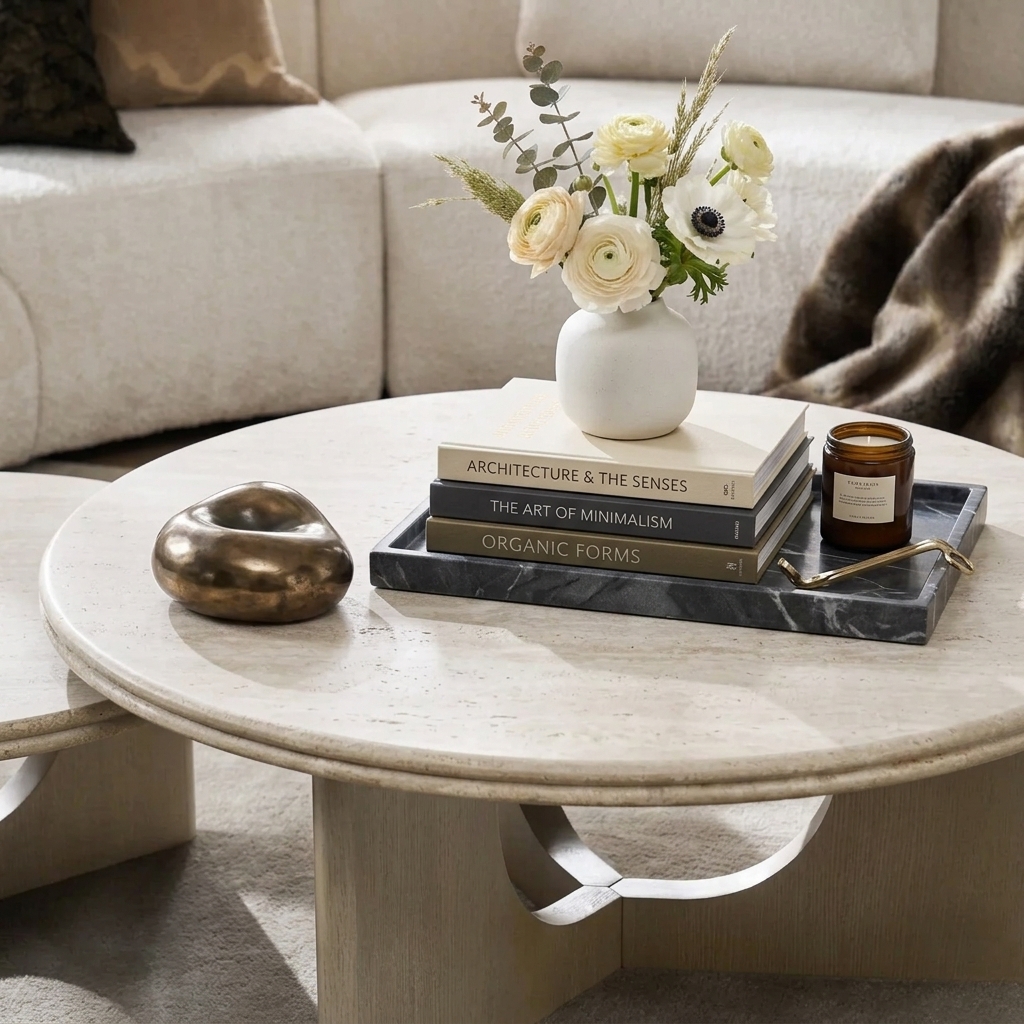
Start with a tray to create structure. On a circular table, a rectangular or organic-shaped tray can add contrast and define a focal zone. Then layer in books, florals, candles, and sculptural objects.
Vary the heights. A low stack of books, a medium-height vessel, and a taller floral arrangement create a more dynamic composition. Leave part of the surface open, especially if the table is made from marble, travertine, glass, or burl wood. The material should have room to be seen.
A Simple Styling Formula
- One tray for structure
- Two to three design books for height and layering
- One floral arrangement or sculptural vase
- One candle or decorative bowl
- One object with form, shine, or texture
Stylist Note: On a round surface, group objects slightly off-center. The result feels more editorial and less staged.
.jpg?h=1503&q=90&w=1503)
The most refined styling leaves room for the table’s material to breathe.
Frequently Asked Questions
What size round coffee table works best with a sectional sofa?
For most sectionals, choose a larger diameter that can be reached from multiple seats, often 36 to 48 inches depending on the sectional’s scale. The table should fill the center without blocking walkways or making the seating area feel tight.
How far should a round coffee table be from the sofa?
A comfortable distance is usually about 14 to 18 inches from the sofa. This keeps the table close enough for everyday use while leaving space to move around the seating area.
Is a round coffee table good for a small living room?
Yes, a round coffee table can be an excellent choice for a small living room because the curved shape improves flow and reduces the visual weight of corners. For an airier look, consider glass, slim metal, or an open-base design.
What material is best for a luxury round coffee table?
Marble, travertine, onyx, glass, burl wood, and mixed materials all create a luxury look. The best choice depends on the room’s mood: marble feels polished, wood feels warm, glass feels light, and travertine feels natural and sculptural.
How do you style a round coffee table without making it look cluttered?
Create one edited grouping with a tray, books, florals, and a sculptural object. Vary the heights and leave open space so the table surface remains visible. Restraint is what makes the styling feel elevated.
Should a round coffee table match the side tables?
It does not need to match exactly. A more refined approach is to coordinate through tone, finish, or shape. For example, pair a marble coffee table with metal side tables, or a wood table with stone or glass accents.
The Art of the Centerpiece
A round coffee table is more than a practical surface. It is the quiet architecture of the living room, softening the layout, gathering the seating, and giving the space a composed focal point. Choose it with attention to scale, material, and mood, then style it with enough restraint to let its form speak.
Discover the finishing touches: