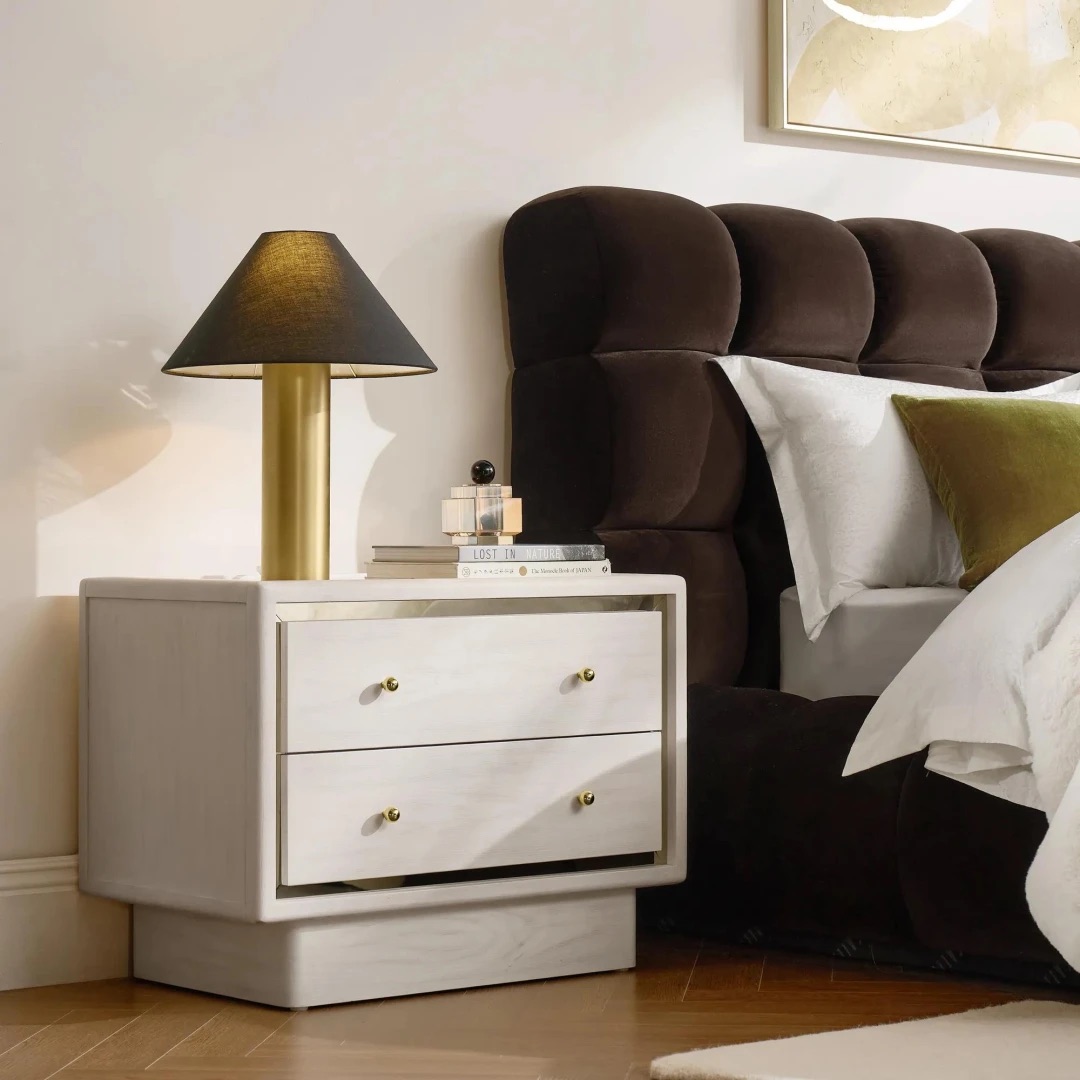
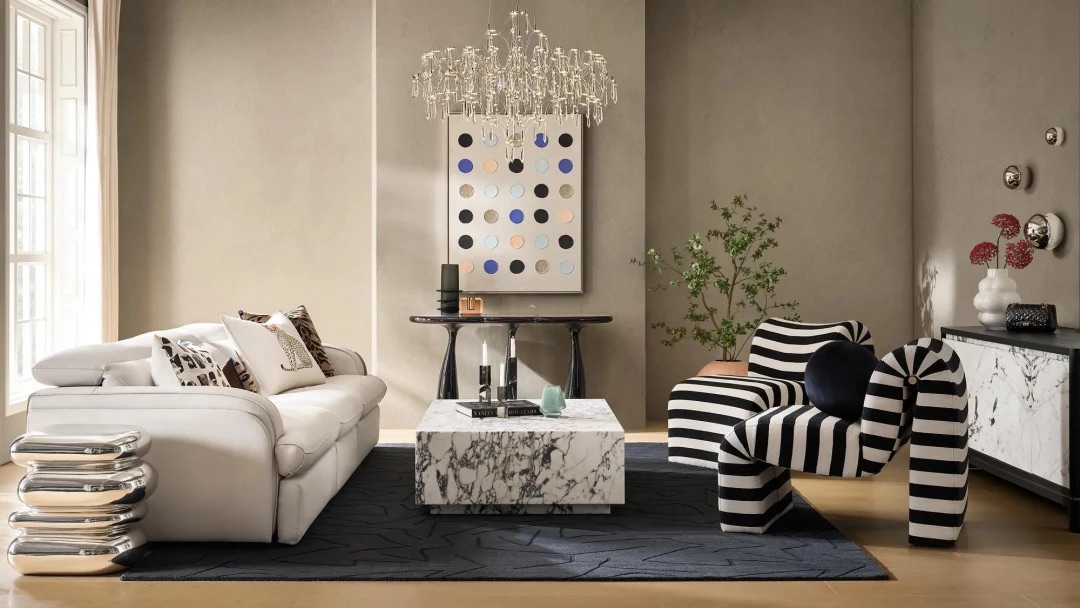
A living room feels complete when the furniture, art, light, and smaller objects begin to speak to one another. Start with the seating, solve the room’s proportions, then add only what makes the space warmer, more useful, or more personal.
For FW26, that story begins with Irene seating and the luminous finish of Lumina. Decorative mirrors extend the view. Art establishes the mood. Pillows and textiles loosen the composition just enough to make it feel lived in.
In This Story
- Building a living room around curved seating
- Choosing the right side table
- Where to place a decorative mirror
- Styling art and mirrors in the same room
- Layering pillows and textiles
- Knowing when the room is finished
Begin With the Room, Not the Shopping List
The best living rooms rarely look as though everything arrived on the same day.
They gather slowly. A sofa becomes the place where everyone sits, even when other chairs are open. One side table holds the lamp that stays on late. Books move from the shelf to the coffee table. Pillows are rearranged, then left where they are most comfortable.
This is the more personal side of the FW26 collection story. The forms may begin with the precision of a gallery, but they are intended for rooms that change throughout the day.
A useful place to start is with the room’s weakest point.
If the layout feels scattered, the seating may need a stronger center. If the room feels dark, a mirror or lighter table finish can carry more light through it. If the furniture is in place but the space still feels impersonal, art and textiles can introduce the missing point of view.
Do not add more simply because there is room. Add the piece that solves something.
Irene Gives the Living Room Its Shape
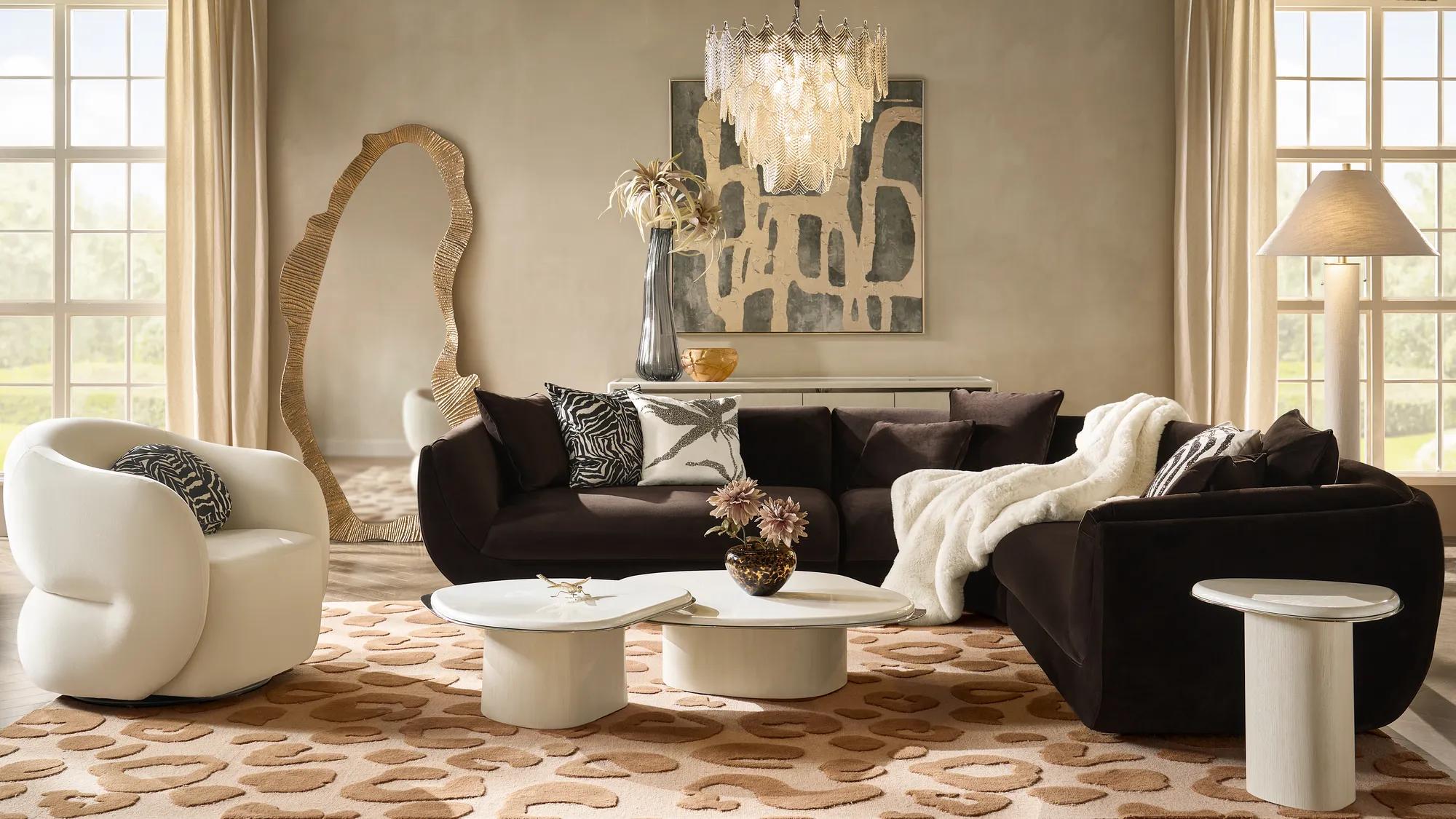
Every living room needs an anchor. Irene takes that role without making the space feel rigid.
Its curved profile draws the furniture inward, creating a more natural setting for conversation. The chenille upholstery softens the silhouette, while high-resiliency foam cushioning and generous proportions make Irene suited to daily use, not just occasional entertaining.
Curved seating is especially useful in an open floor plan. It can define the living area without closing it off from the kitchen or dining room. The curve becomes an implied boundary, giving the room a center while keeping the view open.
It also calls for restraint elsewhere.
If the sofa carries the strongest curve, avoid surrounding it with a room full of rounded furniture. A rectangular artwork, structured side table, or more architectural floor lamp creates the contrast the arrangement needs.
The aim is not to repeat the shape. It is to give it something to play against.
What We Recommend
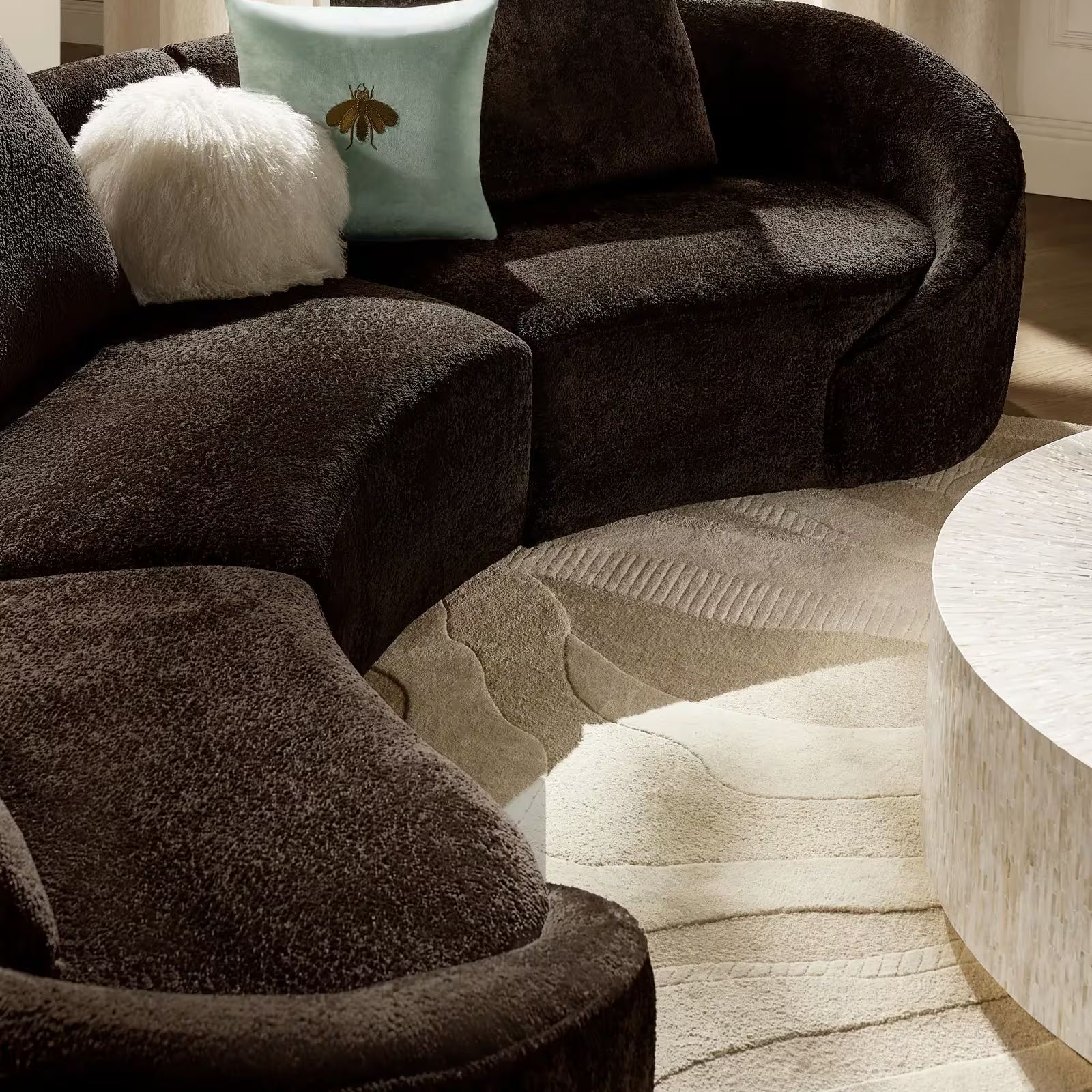
Keep the coffee table close enough to be useful. A practical starting point is approximately 14 to 18 inches between the sofa and table.
In a larger living room, it is tempting to spread the furniture farther apart. That often makes the arrangement feel colder, not grander. Bring the pieces close enough that someone can set down a drink without leaning forward halfway out of the seat.
Let the Side Table Be Useful
A side table for the living room should earn its place.
Before looking at finish or shape, decide what needs to sit on it. A table used for a lamp requires more surface area and visual weight than one intended for a drink. A table beside a frequently used seat should be easy to reach and simple to maintain.
Height is the first measurement to check. As a general guide, the tabletop should sit within an inch or two of the sofa arm. A table that is far lower may look undersized. One that rises well above the arm can feel awkward in use.
Lumina brings a lighter finish beside Irene’s textured upholstery. Its bleached oak, pearl lacquered top, and champagne gold detailing introduce reflection without the sharper effect of a fully mirrored surface. The lacquer includes natural shell powder, which gives the top subtle iridescence and variation.
That contrast matters. Chenille absorbs light. Pearl lacquer catches it. Together, the materials give the room dimension without requiring a stronger color.
Keep the styling spare. A lamp, a small vessel, and the book currently being read may be enough. When a side table becomes crowded with objects, it stops serving the seat beside it.
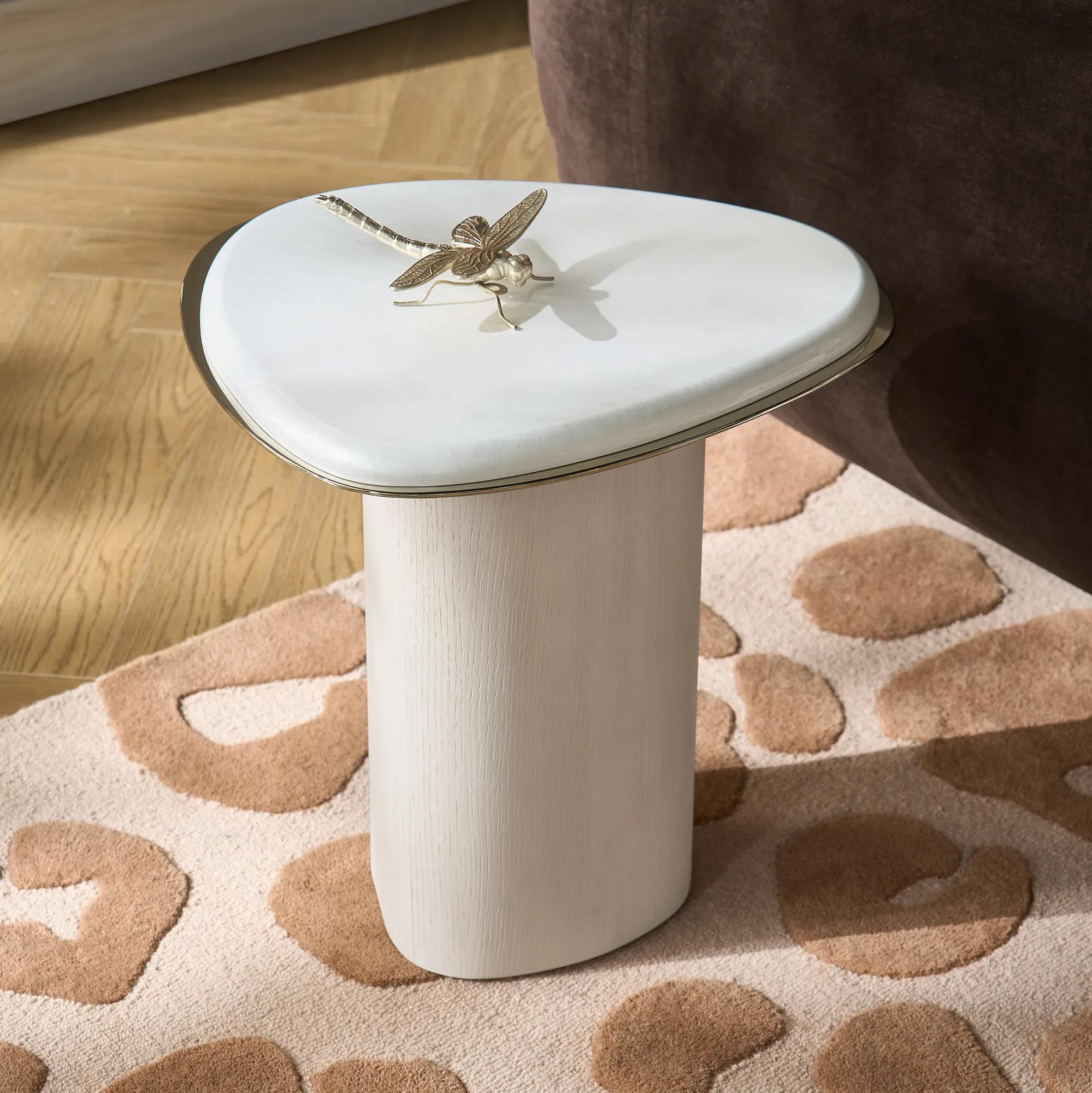
Explore Side Tables for the Living Room
A Decorative Mirror Should Improve the View
Do not choose a mirror only because a wall is empty.
First, stand where the mirror will hang and look in the direction it will face. What will it reflect?
A window can bring daylight deeper into the room. A chandelier or table lamp adds another layer of light after dark. Artwork seen in reflection creates a second view of the composition. A television, cluttered doorway, or unfinished corner may be less successful.
This simple check can determine whether a decorative mirror feels purposeful or merely present.
Scale comes next. Above a console, a mirror that measures roughly two-thirds to three-quarters of the furniture’s width usually feels more connected to the piece below it. A much smaller mirror can appear stranded unless it belongs to a deliberate grouping.
Beside curved seating, a tall floor mirror adds height and keeps the room from feeling too low and horizontal. A cluster of smaller sculptural mirrors can work as wall art, but the arrangement needs enough breathing room to read clearly.
FW26 includes floor and wall mirrors alongside expressive artwork, continuing the collection’s interest in reflection, sculptural form, and rooms that change with the light.
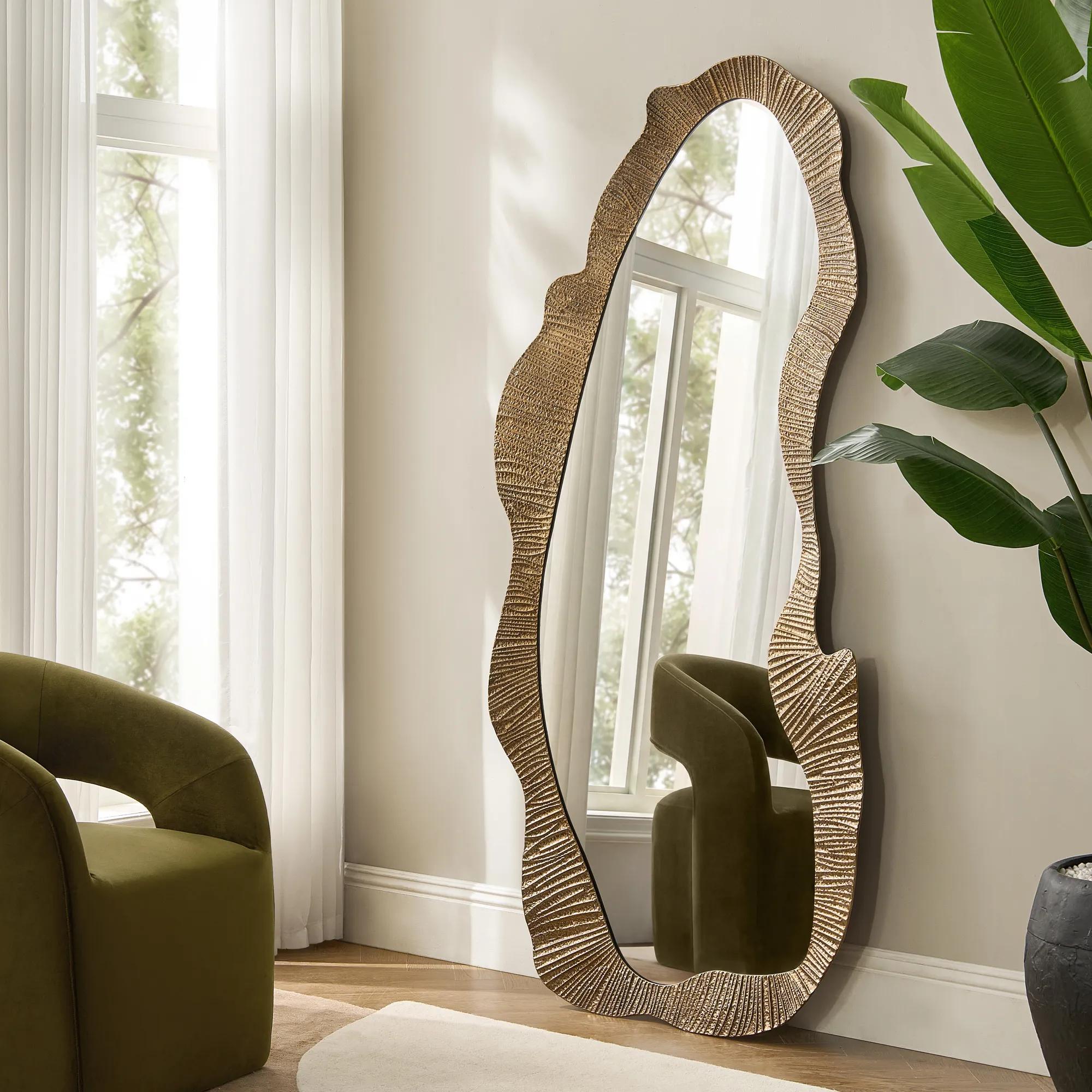
Mirror Placement at a Glance
To brighten the room: Place the mirror opposite or adjacent to a window.
To add height: Use a floor mirror near a low sofa or console.
To finish a vignette: Hang a wall mirror above a sideboard or console, leaving visible space between the two.
To add movement: Position the mirror where it catches art, lighting, or an interesting furniture silhouette.
Give Art and Reflection Different Jobs
Art and mirrors can share a living room without fighting for attention. They simply need different responsibilities.
A mirror extends the view. Art decides where the eye should rest.
Above a sofa, one large artwork often has more confidence than several small pieces arranged to fill the wall. The width should relate to the furniture below it, but the colors do not need to match every fabric in the room.
In fact, matching art too closely to the pillows can make the space feel planned down to the last inch. Look for a more interesting connection.
A darker painting can ground pale wood and pearl lacquer. A sharp graphic line can offset Irene’s softer curve. Metallic detail can quietly reference a lamp or table without repeating the finish exactly.
The right artwork may also introduce a color found nowhere else in the room. That small break from the palette can be what makes the composition feel personal.
Place the mirror where the room needs light or depth. Place the art where it needs a voice.
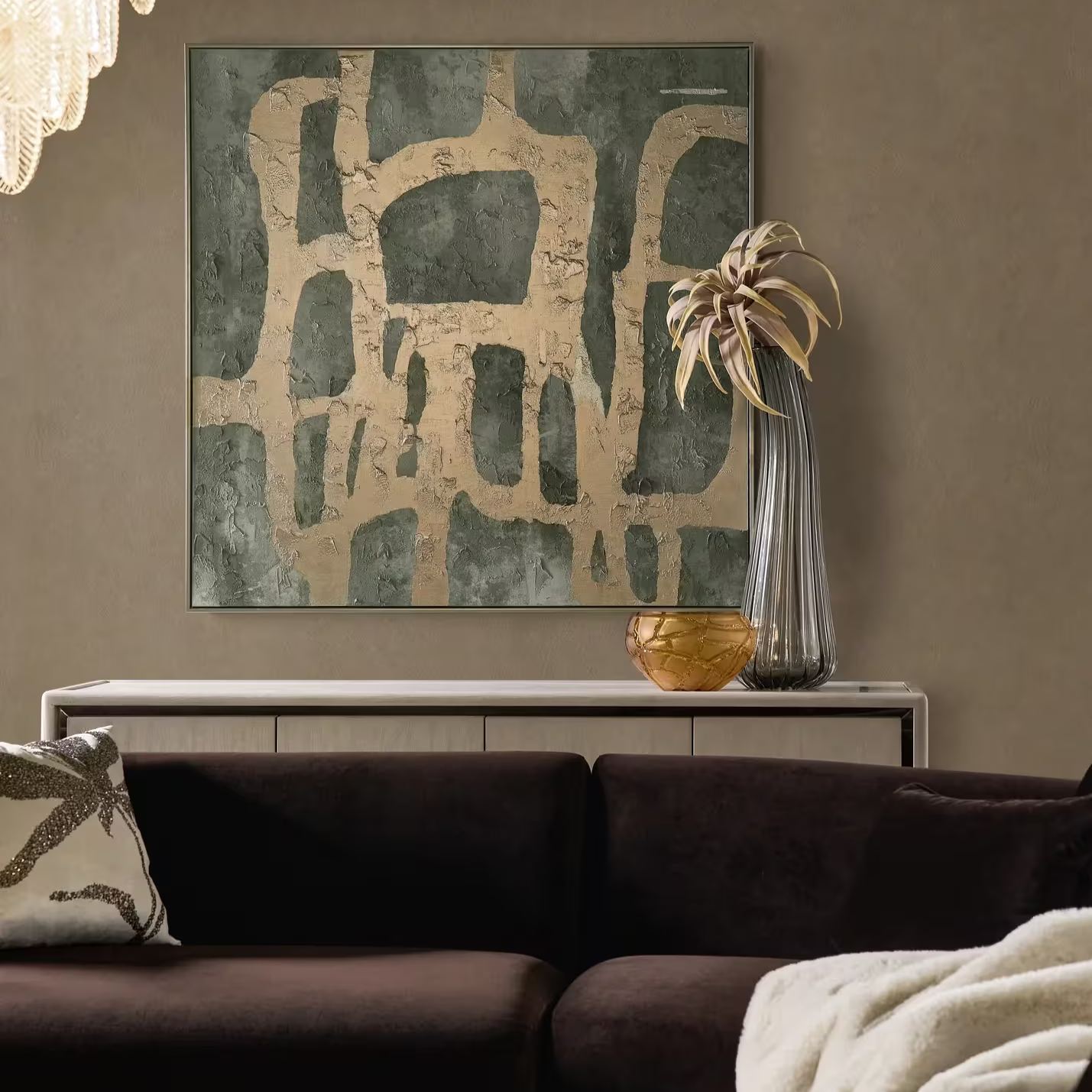
Use Textiles to Relax the Composition
Pillows and throws should make the sofa more inviting, not hide its shape.
Irene already has a strong silhouette and tactile upholstery. Covering it with a row of matching pillows would work against both.
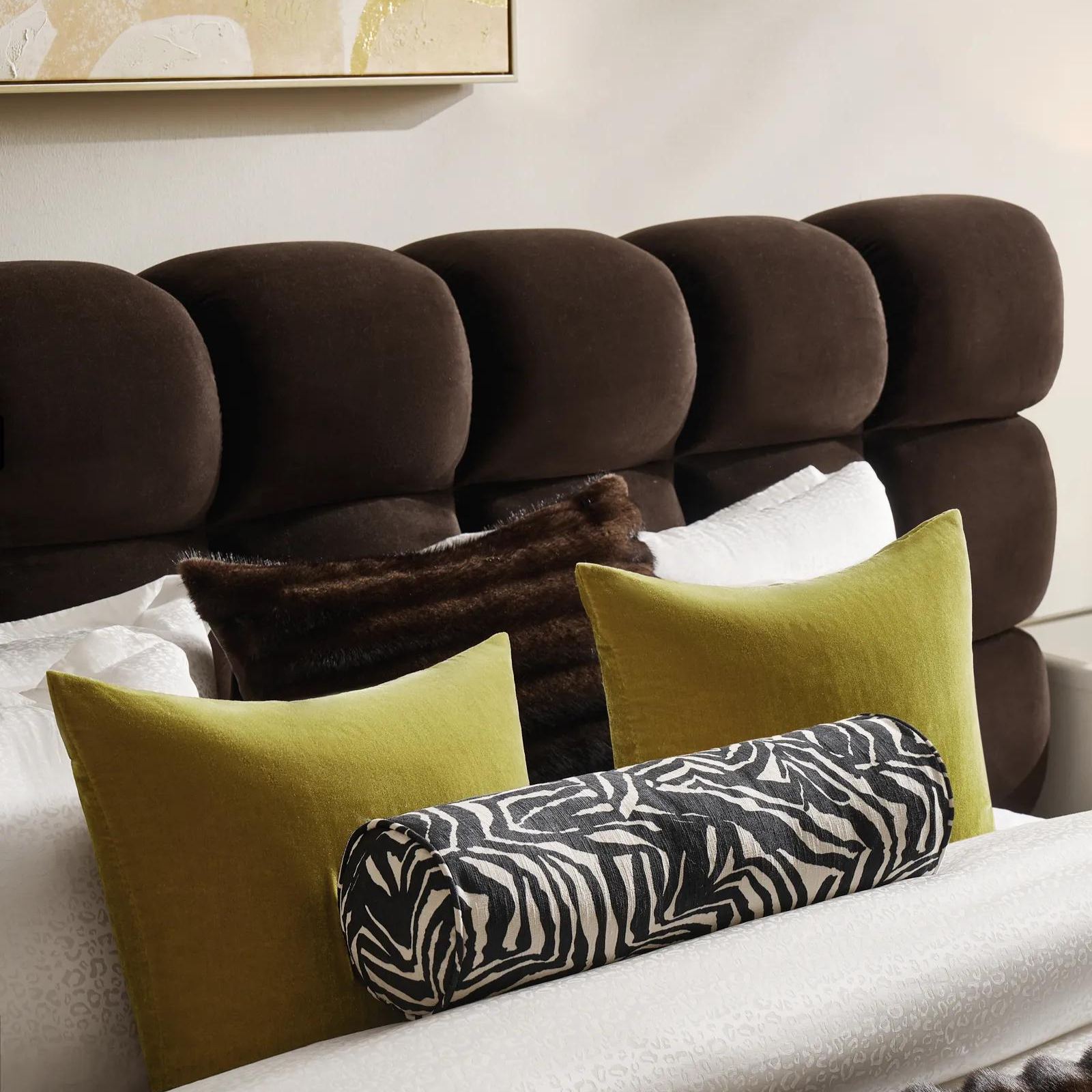
Begin with contrast. On a light sofa, one deeper tone such as chocolate, fig, graphite, or black can give the arrangement weight. On darker seating, ivory, dusty blue, or taupe can create relief.
Then vary texture before adding more pattern.
A smooth velvet pillow feels richer beside embroidery, fringe, or faux fur. One graphic design can sharpen the room, but it needs quieter pieces around it. Three equally bold patterns usually compete rather than layer.
Perfect symmetry can also make a sofa feel more formal than comfortable. Try one larger pillow at each end, then add a smaller shape or patterned piece slightly off center. Leave enough upholstery visible for the curve of the sofa to remain part of the design.
The current fall assortment carries this mix through velvet, dimensional embroidery, animal-inspired pattern, checks, fringe, and colors including dark chocolate, fig, dusty blue, ivory, and graphite.
A throw should feel similarly relaxed. Fold it once, drape it over an arm, and leave it alone. The room does not need every edge corrected.
Build the Room in the Right Order
Buying everything at once makes it easy to focus on individual objects and miss the room as a whole.
A more useful order is:
1. Establish the seating
Decide where conversation, television viewing, and circulation need to happen. Let the sofa create the foundation.
2. Place the tables
Choose the coffee and side tables according to reach, height, and how they will be used. Finish matters, but function comes first.
3. Solve the walls
Use art to create focus and mirrors to bring light, height, or another view into the room.
4. Adjust the lighting
A room with only one overhead light will rarely feel complete. Add a table or floor lamp near the seating so the space works differently in the evening.
5. Add the soft layer
Introduce pillows, a throw, and a rug after the larger relationships are working. Textiles should support the room, not rescue an unresolved layout.
6. Edit
Remove one or two objects and look again. The room may not need them.
What to Choose First
If the room feels empty despite having furniture, start with art or a decorative mirror. The walls may be the missing layer.
If the layout feels loose, begin with the seating. A curved sectional can create a center and make the remaining placement decisions easier.
If the room feels heavy, introduce a lighter or more reflective side table. Lumina can break up a setting filled with darker upholstery, wood, or rugs.
If the space feels polished but not comfortable, adjust the pillows and lighting before buying another piece of furniture.
The most useful first purchase is not always the most noticeable one. It is the piece that answers the room’s clearest need.
Leave Space for Life to Enter
A room can be beautifully styled and still feel strangely untouched.
Often, the problem is that nothing has been left open.
The coffee table does not require an object at each corner. The console can hold a lamp without a matching partner. One wall can remain quiet. A decorative mirror does not need smaller accents placed around it.
Open space allows the materials to register. It also leaves room for the objects that arrive without a styling plan.
Fresh flowers. A book carried in from another room. A glass left beside the sofa during a long conversation. These details are temporary, but they are what make the setting believable.
FW26 provides the structure through Irene, Lumina, art, mirrors, and tactile textiles. The room becomes personal through everything that happens afterward.
That is when the gallery comes home.
.jpeg?w=2259&h=1271)
Frequently Asked Questions
Where should a decorative mirror go in a living room?
Place it where the reflection contributes something to the room. A mirror opposite or near a window can increase the sense of daylight. One near art or statement lighting can create a more layered view. Avoid placing it where it mainly reflects clutter, a television, or a busy doorway.
How tall should a side table be next to a sofa?
A useful starting point is to choose a side table within one or two inches of the sofa arm height. The final choice should also account for how the table will be used and whether it needs to support a lamp.
Can I pair a curved sofa with a rectangular side table?
Yes. A structured or angular table can provide useful contrast beside curved seating. Repeating rounded shapes throughout the entire room may make the arrangement feel overly soft.
Can wall art and a mirror be used in the same living room?
Yes. Use art to establish focus, color, and mood. Use a mirror to add reflection, light, or visual depth. Placing them on separate but visually connected walls often creates the strongest result.
How many pillows should go on a curved sofa?
There is no fixed number, but the sofa’s silhouette should remain visible. Begin with two larger pillows, then add one or two smaller or more decorative pieces according to the sofa’s size. Avoid covering the full back with a perfectly matched row.