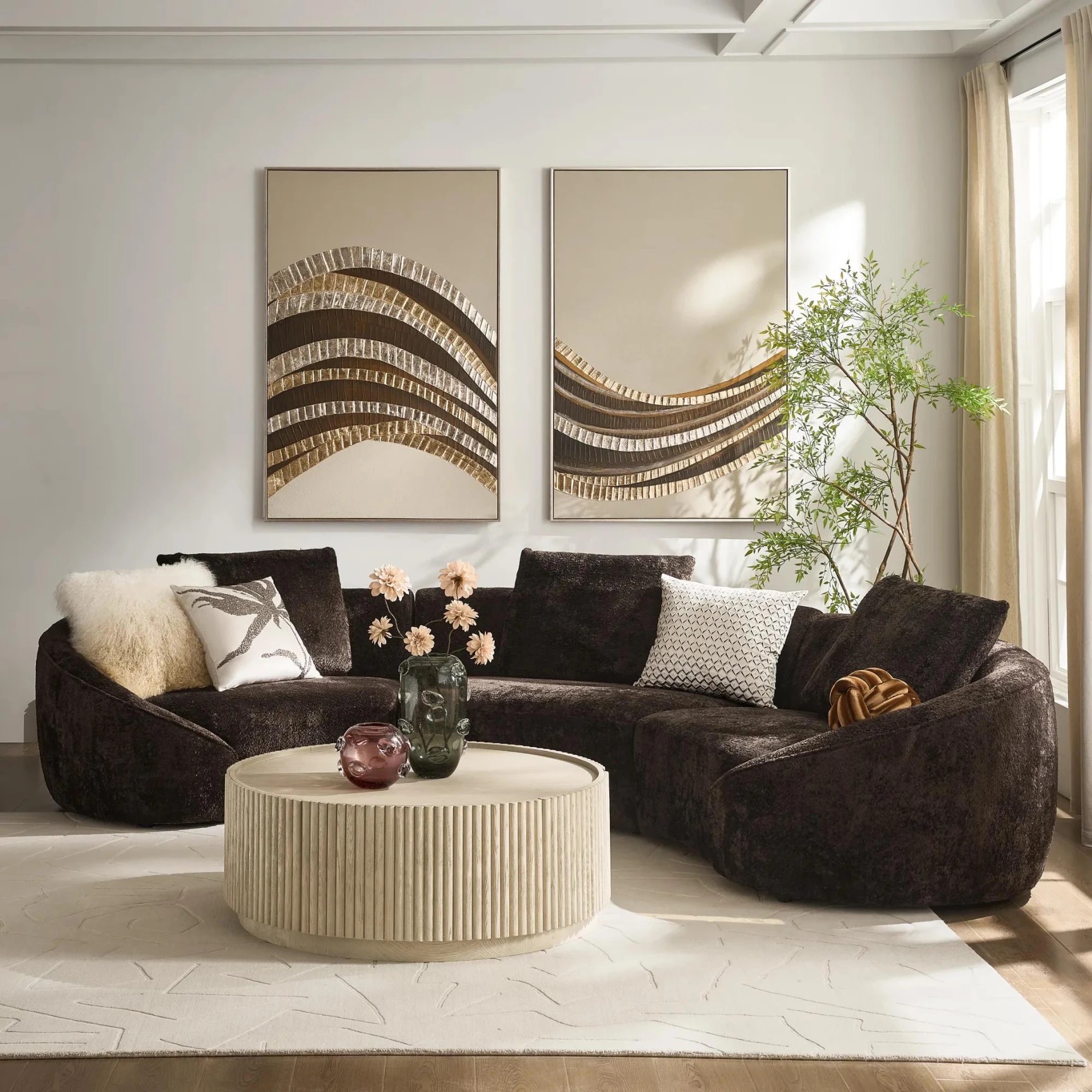
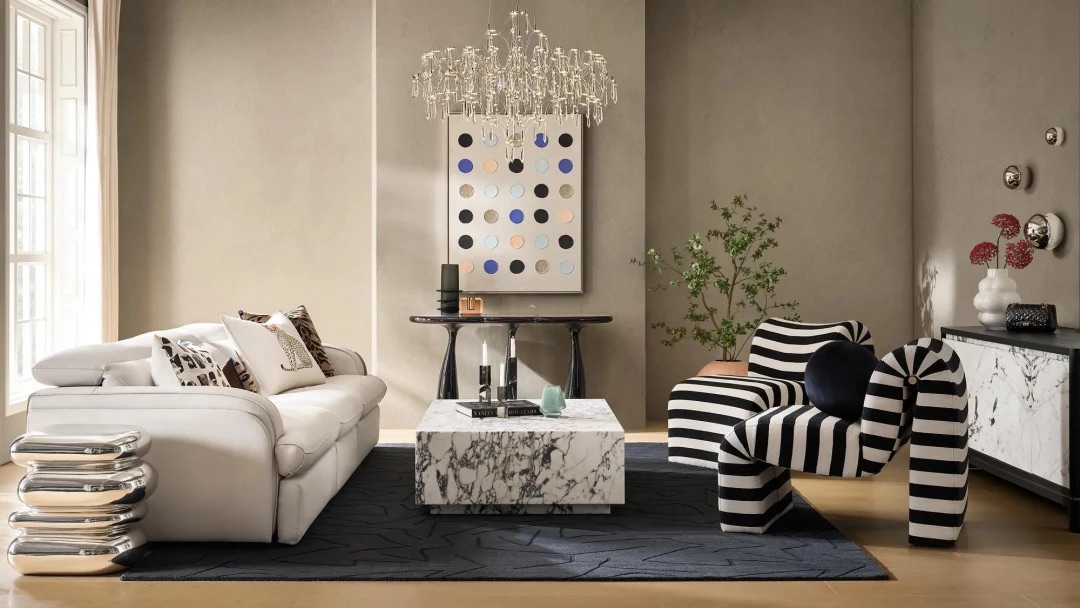
The right bedside piece balances the bed, earns its space, and turns an everyday surface into a deliberate design moment.
The bedside works when height, width, and material answer the bed.
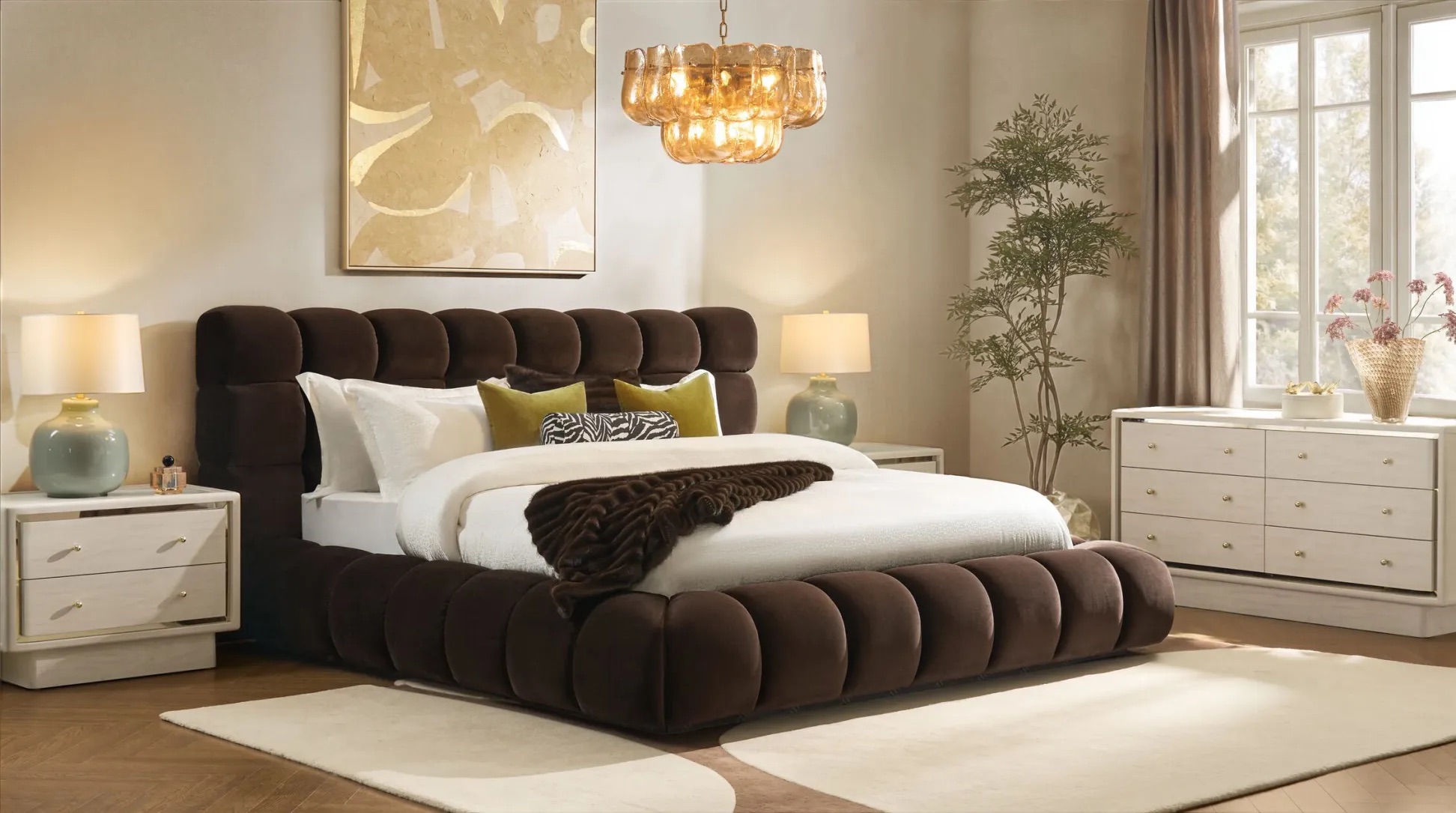
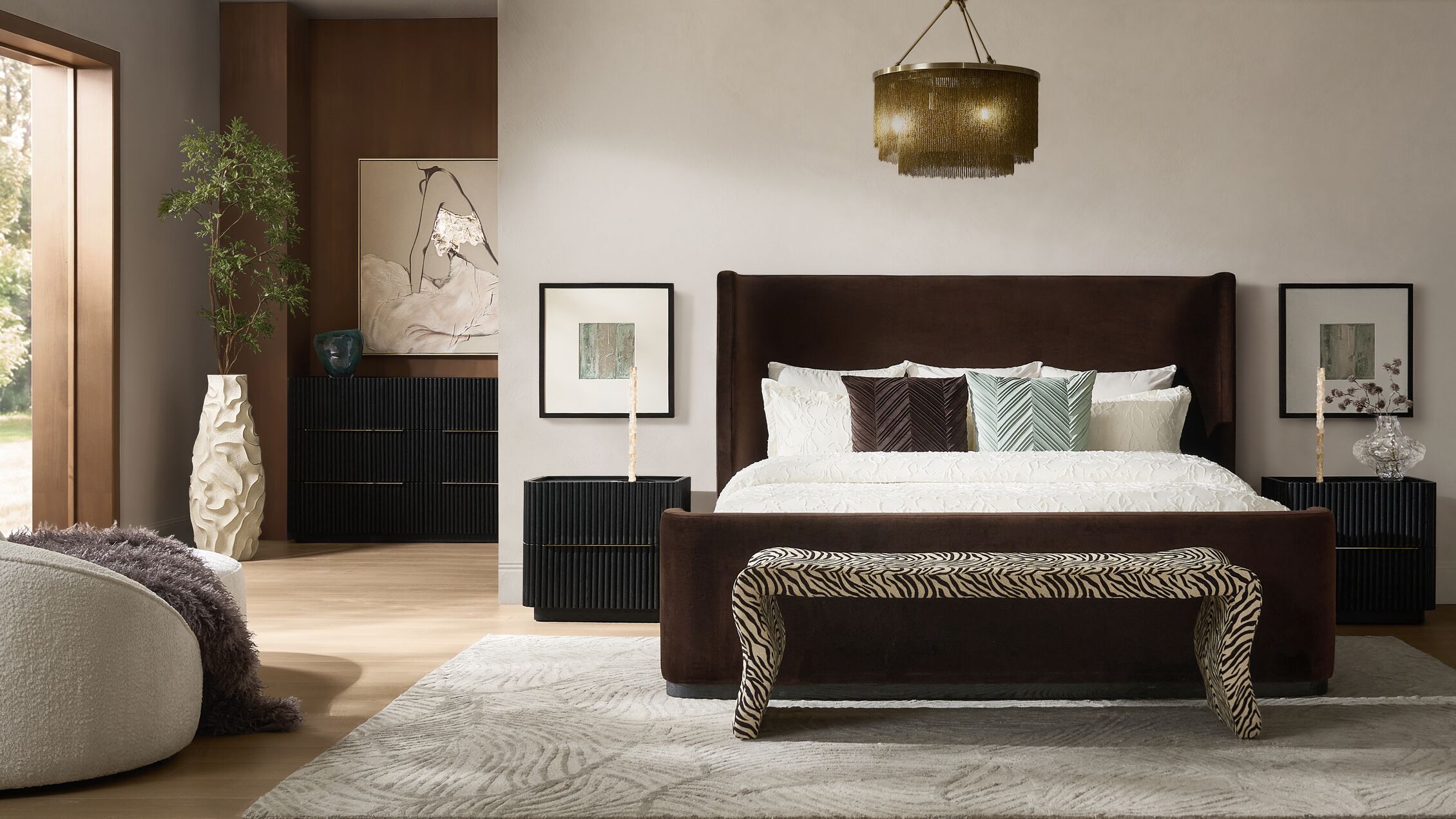
A bed is broad, soft, and visually dominant. The nightstands give that mass a frame.
Choosing a nightstand for bedroom use is less about finding a place for a lamp than completing the architecture around the bed. The top should meet the mattress at a comfortable height. The width should answer the scale of the headboard. The storage should reflect what actually accumulates after dark.
Too small and the table looks incidental. Too tall and it breaks the calm horizontal line of the mattress. Too ornate and the bedside competes with the bed instead of supporting it. The strongest bedroom nightstands solve proportion first, then let material and finish set the mood.
The bedside is a small composition. That is why every choice shows.
In This Story
- The Bedside Proportion Playbook
- Start With the Mattress Line
- Let Width Answer the Bed
- Choose Storage for the Way the Bedside Lives
- Let Material Set the Mood
- Match, Mix, and Style the Surface
- Frequently Asked Questions
The Bedside Proportion Playbook
A nightstand should register as part of the bed composition, substantial enough to belong and quiet enough to support it. The decisions are connected. Height controls comfort. Width controls visual balance. Storage controls clutter. Finish controls atmosphere.
The quickest way to choose well is to judge the whole bedside wall, not the table in isolation. Start with the mattress line, then look outward to the headboard, lamps, wall space, and circulation.
| Decision | Why It Matters | What to Look For |
| Height | Keeps essentials within reach and preserves the horizontal line of the bed. | A top that finishes within a few inches of the mattress surface. |
| Width | Gives the bed enough visual support without blocking circulation. | Enough surface for the lamp and routine, with doors and drawers able to open. |
| Storage | Contains the objects that otherwise make the bedside feel crowded. | Drawers for concealment; an open shelf or base when the room needs visual air. |
| Finish | Sets the mood at close range and changes how lamplight moves around the bed. | One clear material story, repeated once elsewhere rather than everywhere. |
| Pairing | Establishes either formal order or intentional asymmetry. | A matching pair for symmetry; mixed pieces only when height or another cue connects them. |
| Surface Styling | Protects function while allowing the material to remain visible. | A lamp, a landing zone, one object, and deliberate open space. |
A measured choice still needs intuition. The table should feel related to the bed without becoming a miniature version of it. Similar scale creates order. Contrast in material creates interest.
Start With the Mattress Line
Match the Top to the Mattress
The most useful nightstand height is usually within a few inches of the top of the mattress. That keeps a glass, book, or phone easy to reach and preserves a calm line across the bed. Measure after the mattress, topper, and frame are in place, because the frame alone does not tell the full story. Browse bedroom nightstands with that finished measurement in hand.
A one-inch difference rarely disturbs the composition. A dramatic step up or down does. The eye notices the broken line before it notices the finish.
For a Low-Profile Bed
Choose a lower nightstand with a clean top and a lighter visual footprint. Visible space beneath the piece can keep the bedside from feeling dense, especially when the bed sits close to the floor.
For a Taller Upholstered Bed
A taller or more substantial nightstand gives the headboard enough counterweight. A tiny accent table beside a generous bed can look charming in isolation and under-scaled once the entire wall is visible. Read the nightstand beside the bed silhouette, not as a separate purchase.
STYLIST NOTE
Measure from the floor to the top of the made mattress, not to the bed frame. The duvet changes softness, not the working height of the bedside surface.
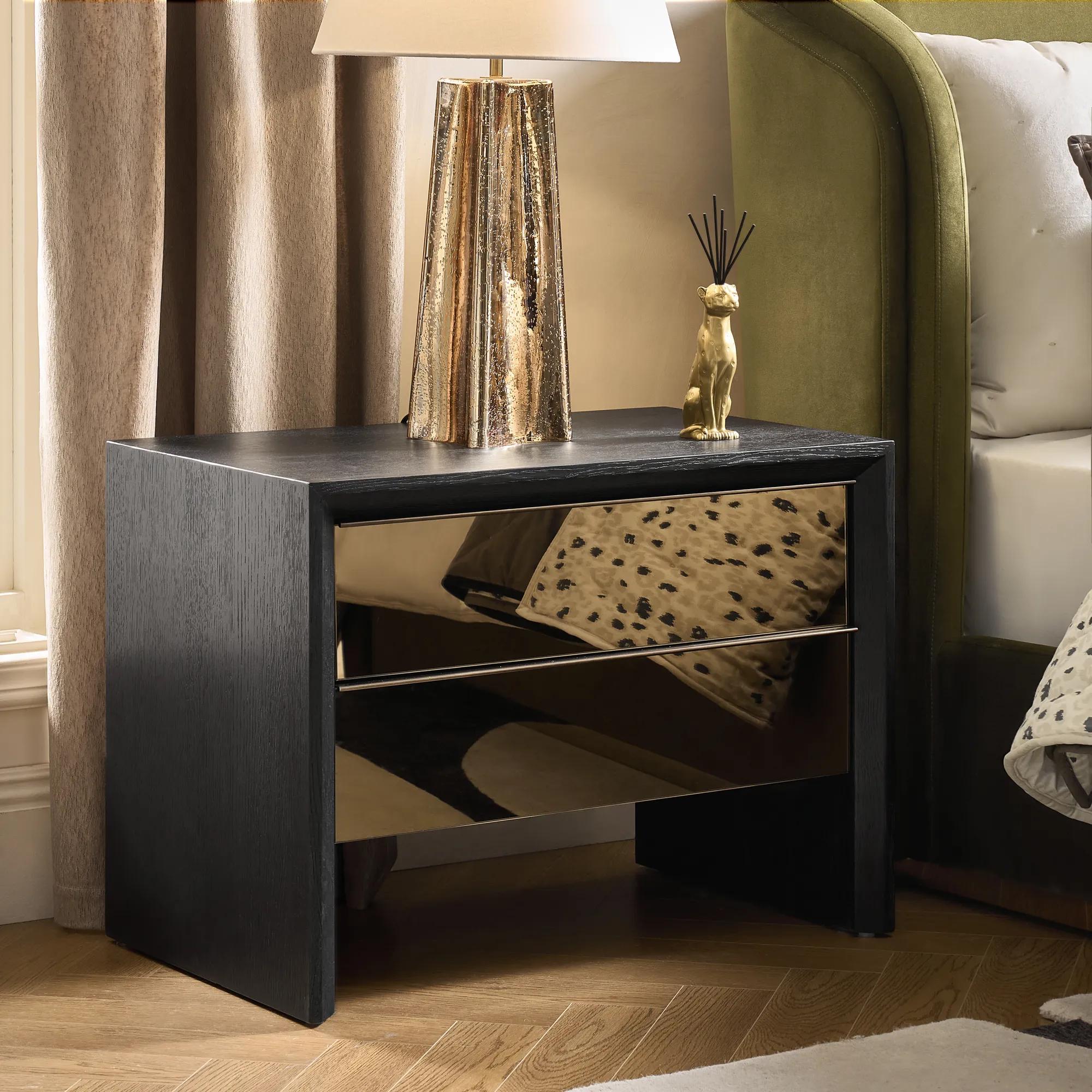
Comfort and composition meet at the mattress line.
Let Width Answer the Bed
Height makes the table usable. Width makes it look intentional.
Give a Broad Bed Enough Visual Support
A king bed, an extended headboard, or a tall upholstered silhouette can carry a wider nightstand. The added surface creates room for a properly scaled lamp while extending the horizontal line of the bed. The Lumina and Glimmer nightstands, both 32 inches wide, have enough presence to sit beside a substantial bed without disappearing.
Broad does not have to mean bulky. Rounded corners, reflective fronts, an open base, or a light-toned finish can soften the visual weight even when the footprint is generous.
Use a Tighter Footprint Without Losing Character
In a smaller room, reduce width before sacrificing function. The Stria nightstand measures 26.25 inches wide and still brings two drawers, a recessed top, and a strongly textured face to the bedside. Its narrower scale leaves more visible wall and floor around the bed, which can make the arrangement feel composed rather than squeezed.
Before ordering, map the full footprint with painter’s tape. Open the bedroom door, closet door, and every nearby drawer. A nightstand that fits only until the closet door opens does not fit.
STYLIST NOTE
Judge the gap as part of the design. A narrow strip of breathing room between bed and table keeps bedding from bunching and gives each silhouette a clear edge.
The best footprint supports the bed without interrupting the room.
Choose Storage for the Way the Bedside Actually Lives
Storage is not an abstract feature. It is a record of the evening routine.
Use Drawers to Keep the Ritual Edited
A drawer gives reading glasses, charging cords, medication, remotes, and hand cream a place to disappear by morning. Two drawers are useful when the bedside needs to hold both nightly essentials and less frequent items without turning the surface into a catchall.
The top drawer should contain what is reached for in the dark. The lower drawer can hold backup chargers, notebooks, or the book that is not currently in rotation. Good storage shortens the search.
Let an Open Base Lighten the Silhouette
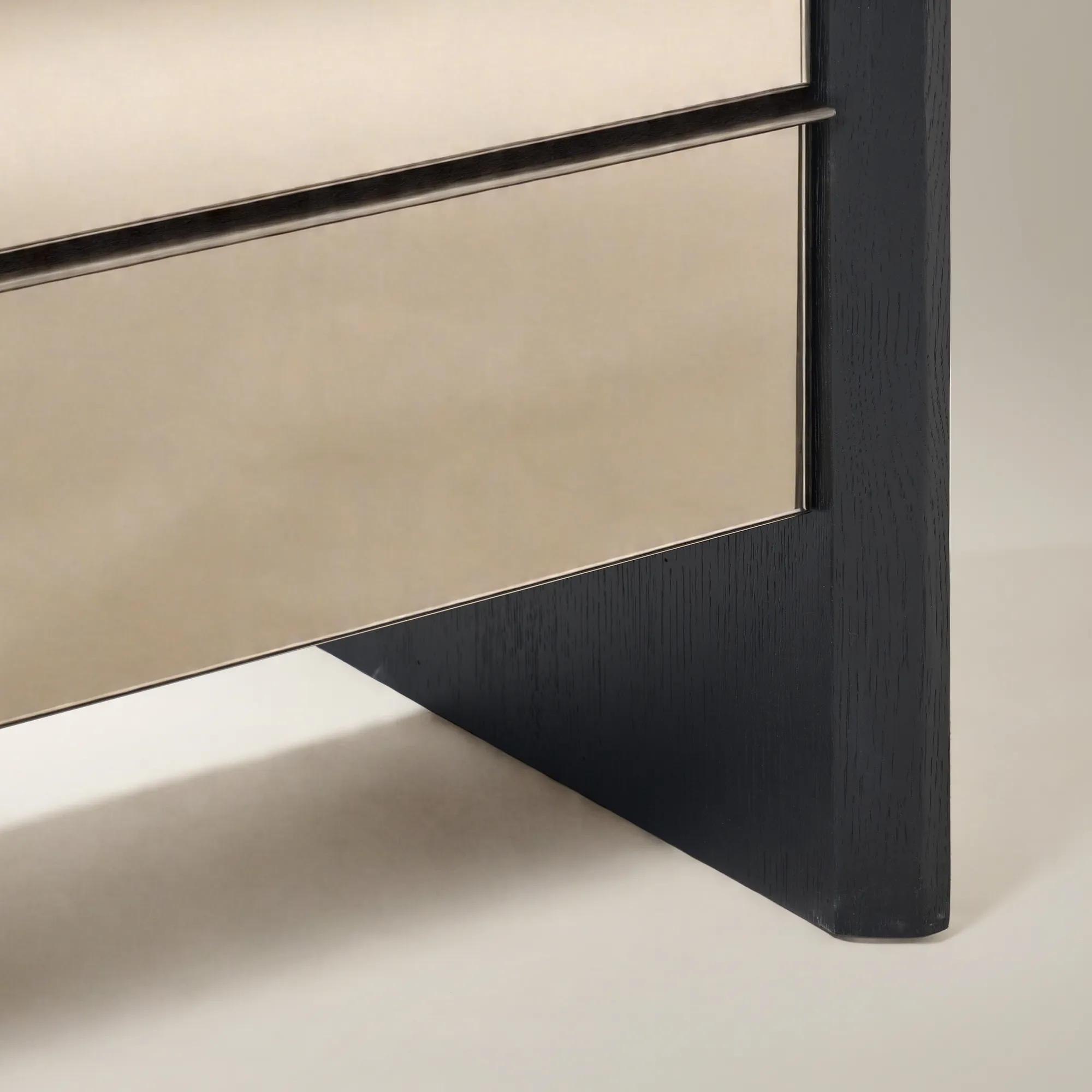
An open lower space makes a nightstand feel less blocklike and allows more of the wall or floor to remain visible. The Glimmer nightstand uses this openness beneath its drawers, balancing a dark black oak finish and bronze mirror fronts with visual air.
Open space only works when it stays edited. One small stack of books or a restrained object is enough. A crowded shelf cancels the lightness it was meant to create.
STYLIST NOTE
Empty the current nightstand before shopping. What immediately returns is the real storage brief. Everything else is habit, not necessity.
Let Material Set the Mood
The bedside is experienced at close range. Grain, reflection, texture, and trim matter here because they are seen in morning light and again under a lamp at night. For a broader approach to contrast, see The Best Rooms Never Match: The New Rules of Mixed-Material Furniture.
Material changes the reading of the room.
Lumina: Luminous Calm
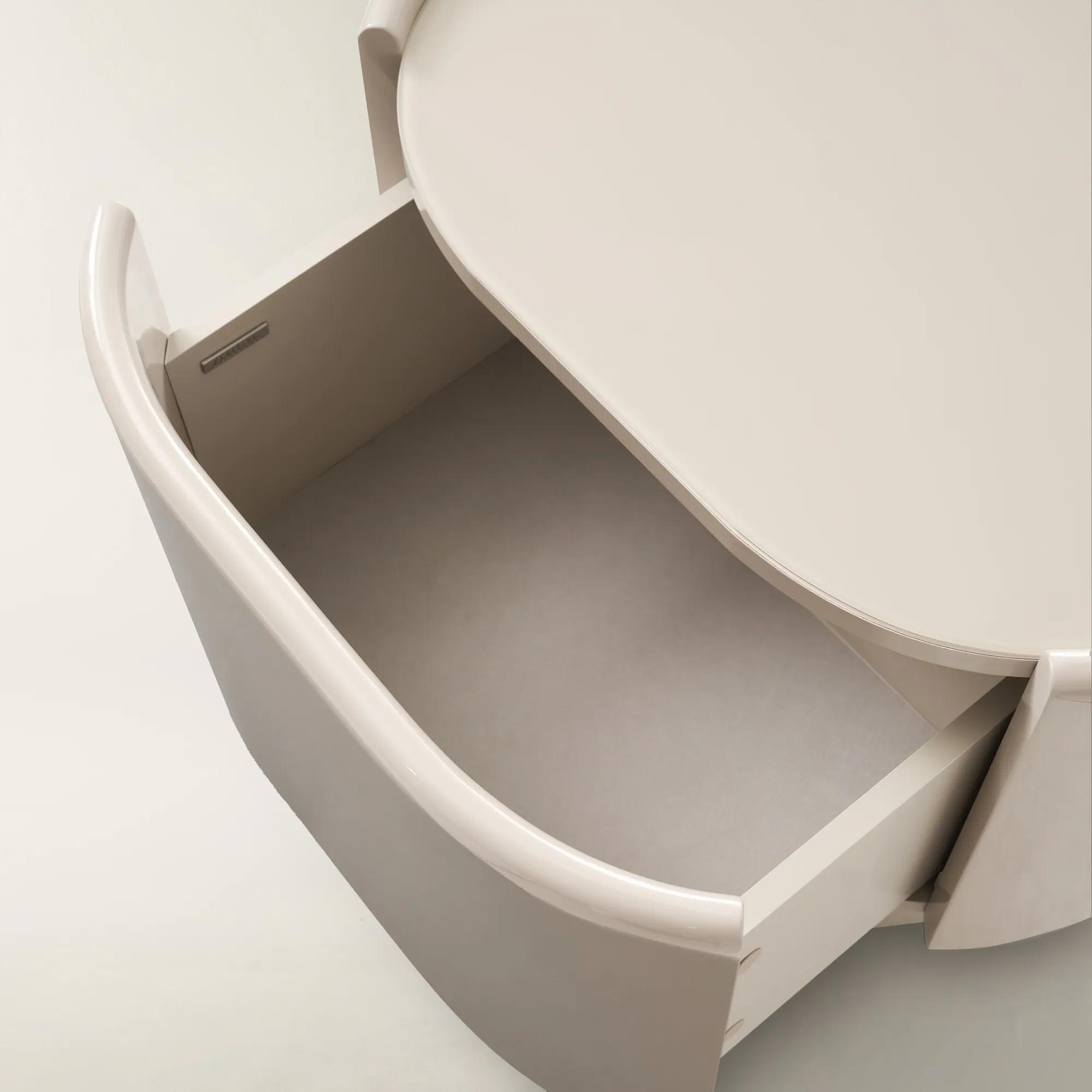
The Lumina Bleached Oak 2-Drawer Nightstand With Pearl Lacquered Top pairs a rounded architectural silhouette with white oak veneer, a pearl lacquer top made with natural shell powder, champagne gold trim, and two soft-close drawers. The effect is tonal and softly reflective, polished without feeling precious.
What It Does in the Room
Lumina adds glow rather than hard contrast. It works beside cream, cloud, taupe, or softly colored upholstery, where its bleached oak and pearl surface can keep the bedside light while the gold detailing gives the composition a finished edge.
Keep the top restrained. A lamp, a small tray, and one sculptural object allow the rounded form and material variation to remain visible.
Glimmer: Reflection With Depth
The Glimmer Mirrored Black Oak 2-Drawer Nightstand combines black oak veneer with bronze mirror drawer fronts, velvet-lined soft-close drawers, and an open lower space. Reflection sharpens the silhouette, while the dark finish gives the bed a grounded frame.
What It Does in the Room
Glimmer can give a pale upholstered bed more definition or continue a darker, cocooning palette. The bronze mirror catches lamplight without reading as bright silver, so the effect is atmospheric rather than cold.
Balance reflection with matte surfaces nearby. Linen, velvet, textured bedding, or a softly finished wall keeps the room layered instead of glossy.
Stria: Rhythm Through Texture
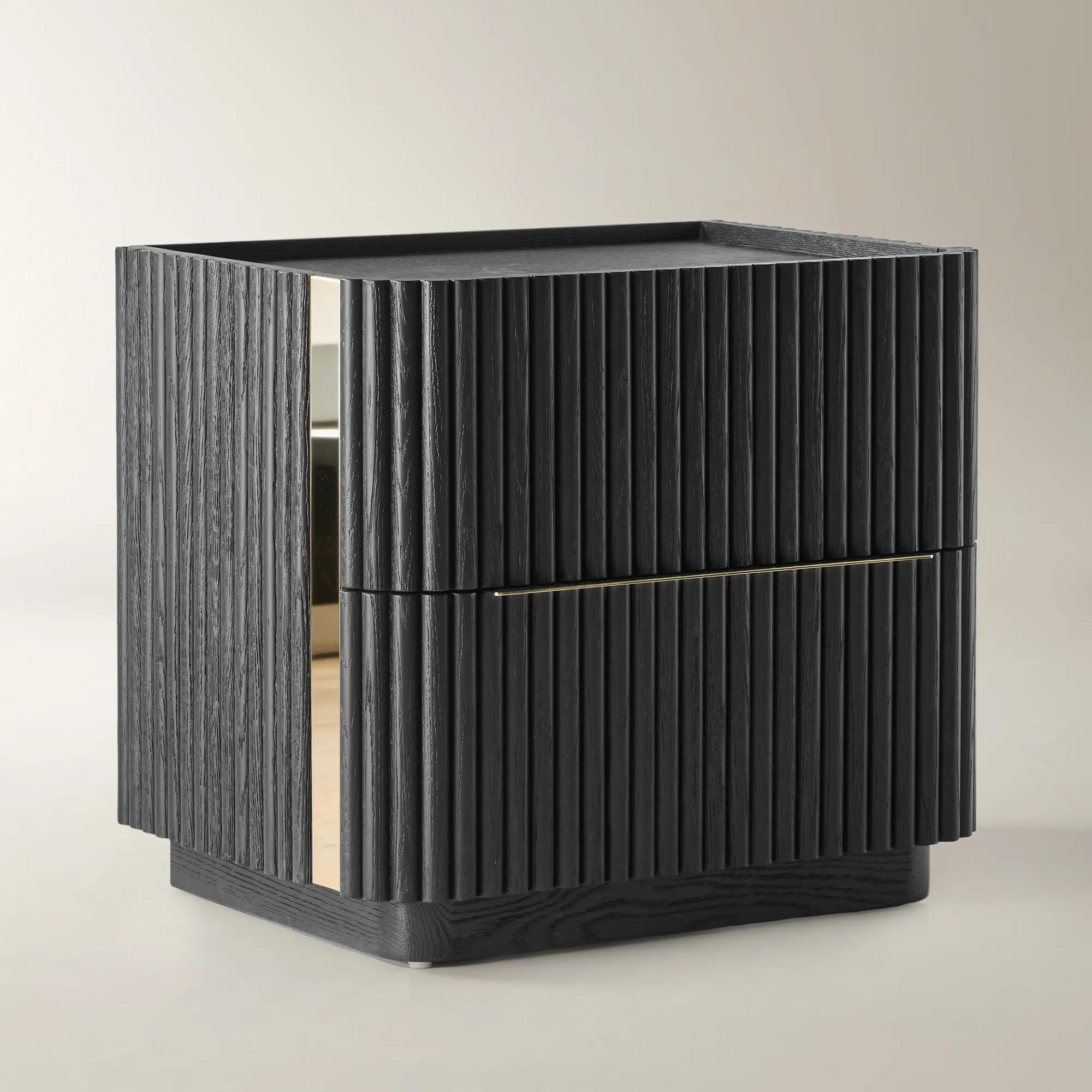
The Stria Reeded Black Oak 2-Drawer Nightstand uses vertical reeded oak, soft gold trim, a recessed tabletop, and two soft-close drawers to create a more graphic bedside. The ribbed surface introduces movement without pattern.
What It Does in the Room
Stria brings structure to soft bedding. The vertical lines are especially effective beside velvet, chenille, rounded upholstery, or a broad unpatterned headboard because the contrast is tactile rather than loud.
Repeat the black or soft gold once elsewhere in the room. A lamp base, picture frame, or small hardware detail is enough to make the nightstand feel connected.
Glow, reflection, and texture give the same bedside three distinct moods.
Three Nightstands, Three Different Readings
The right choice is not simply the one that fits. It is the one that gives the room what it lacks: glow, contrast, or texture.
| Product | Dimensions | Verified Details | Design Role |
| Lumina Bleached Oak 2-Drawer Nightstand With Pearl Lacquered Top | 32"W x 19"D x 24"H | White oak solids and engineered wood; white oak veneer; pearl lacquer top made with natural shell powder; champagne gold stainless steel trim; two soft-close drawers. | Luminous, tonal, architectural |
| Glimmer Mirrored Black Oak 2-Drawer Nightstand | 32"W x 19.5"D x 23.5"H | Engineered wood with black oak veneer; bronze mirror drawer fronts; two soft-close, velvet-lined drawers; open lower space. | Reflective, grounded, dramatic |
| Stria Reeded Black Oak 2-Drawer Nightstand | 26.25"W x 20"D x 23.75"H | Oak solids and veneers; vertical reeded oak; soft gold stainless steel trim; recessed tabletop; two soft-close drawers; top drawer velvet-lined. | Textural, graphic, compact |
Lumina is the quietest of the three, but not the least expressive. Glimmer creates the strongest contrast and the most reflective depth. Stria sits between them, dark and architectural, with texture doing the visual work.
Matching Nightstands Create Order. Mixed Nightstands Create Character.
Matching bedroom nightstands create immediate symmetry. They reinforce a centered bed, a pair of lamps, and the formal rhythm of a balanced wall. In a room with matching windows or a strong central headboard, that repetition often feels calm rather than predictable.
Mixed nightstands can work when the architecture is already asymmetrical. A window on one side, a doorway on the other, or different storage needs may justify two distinct pieces. Keep their top surfaces close in height and repeat one visual cue, such as color, material, hardware, or lamp shape, so the pair feels related rather than accidental.
Do not manufacture asymmetry for novelty. A balanced room rarely needs to be corrected by mismatched furniture.
Style the Surface With Restraint
The nightstand is useful because it is close. It looks polished because not everything close at hand remains visible.
Let the Lamp Establish Height
Choose a table lamp with enough scale to relate to the headboard and enough visual quiet to support the bed. A very small lamp can make a broad nightstand look oversized. A dense, opaque lamp on a narrow table can make the entire corner feel heavy.
For a deeper look at ambient, task, and accent light, see The Room After Dark. Then browse table lamps with the nightstand dimensions in hand, not as a separate decision.
Create a Practical Landing Zone
A tray, shallow bowl, or small box gives loose objects a boundary. That simple edge turns a collection of necessities into one controlled gesture and protects more delicate surfaces from the nightly shuffle.
Leave One Area Deliberately Empty
Negative space is part of the arrangement. It gives the finish room to register and leaves a practical place to set down a book or glass.
The surface should look considered at noon and still work at midnight.
The Bedside Edit
Lumina Bleached Oak 2-Drawer Nightstand With Pearl Lacquered Top — 32"
Why it belongs: A luminous choice for a calm, tonal bedroom, with enough width to balance a generous bed and a softly rounded profile that keeps the composition fluid. View the Lumina nightstand.
Glimmer Mirrored Black Oak 2-Drawer Nightstand — 32"
Why it belongs: A stronger frame for pale upholstery or a darker bedroom, using bronze mirror to catch light and an open base to keep the silhouette from feeling closed. View the Glimmer nightstand.
Stria Reeded Black Oak 2-Drawer Nightstand — 26"
Why it belongs: A compact, textural option that adds vertical rhythm, dark contrast, and a controlled gold accent beside soft bedding. View the Stria nightstand.
Explore the full bedroom nightstands edit, then consider the bed, table lamps, and surrounding bedroom furniture as one composition rather than separate purchases.
Frequently Asked Questions
How Tall Should a Nightstand Be?
A nightstand should usually finish within a few inches of the top of the mattress. This keeps everyday objects comfortable to reach and preserves a level visual line across the bed.
Should a Nightstand Be Higher or Lower Than the Mattress?
Slightly higher or lower can both work, provided the difference is modest. Choose the position that feels easiest to reach from bed, then avoid a dramatic step that makes the pair look disconnected.
How Wide Should a Nightstand Be?
The width should respond to both the bed and the available wall space. A broader bed or headboard can support a wider nightstand, while a tighter room benefits from a narrower piece that still provides the needed storage and lamp surface.
Should Both Nightstands Match?
Matching nightstands are the clearest choice for a symmetrical bedroom, but they are not required. Mixed pieces work best when their heights are close and at least one element, such as color, finish, hardware, or lamp shape, visually connects them.
What Should Be on a Bedroom Nightstand?
A lamp, a contained landing zone, and one personal or sculptural object are usually enough. Leave open surface for a book, glass, or phone so the arrangement remains useful rather than purely decorative.
Is a Mirrored Nightstand Too Glamorous for a Bedroom?
No. A mirrored nightstand can feel atmospheric and architectural when reflection is balanced with matte bedding, textured upholstery, and restrained styling. Bronze or antiqued mirror reads softer than a bright, high-shine surface.
How Do I Choose Between Drawers and Open Shelving?
Choose drawers when visual calm and concealed storage matter most. Choose open shelving when the room needs a lighter silhouette and the items stored there can remain edited.
Frame the Bed, Then Let the Room Settle
A nightstand is small, but it controls how the bed meets the room. Get the height right, give the width enough presence, choose storage honestly, and let the finish contribute one clear note. The bed begins to look anchored, the lighting feels intentional, and the evening routine has somewhere to land.
Good bedside design does not call attention to every object. It makes the whole wall feel resolved.
Explore bedroom nightstands, beds, table lamps, and the complete bedroom collection. For help reading the room as a whole, Z Gallerie Design Services can assist with proportion, placement, and the final edit.