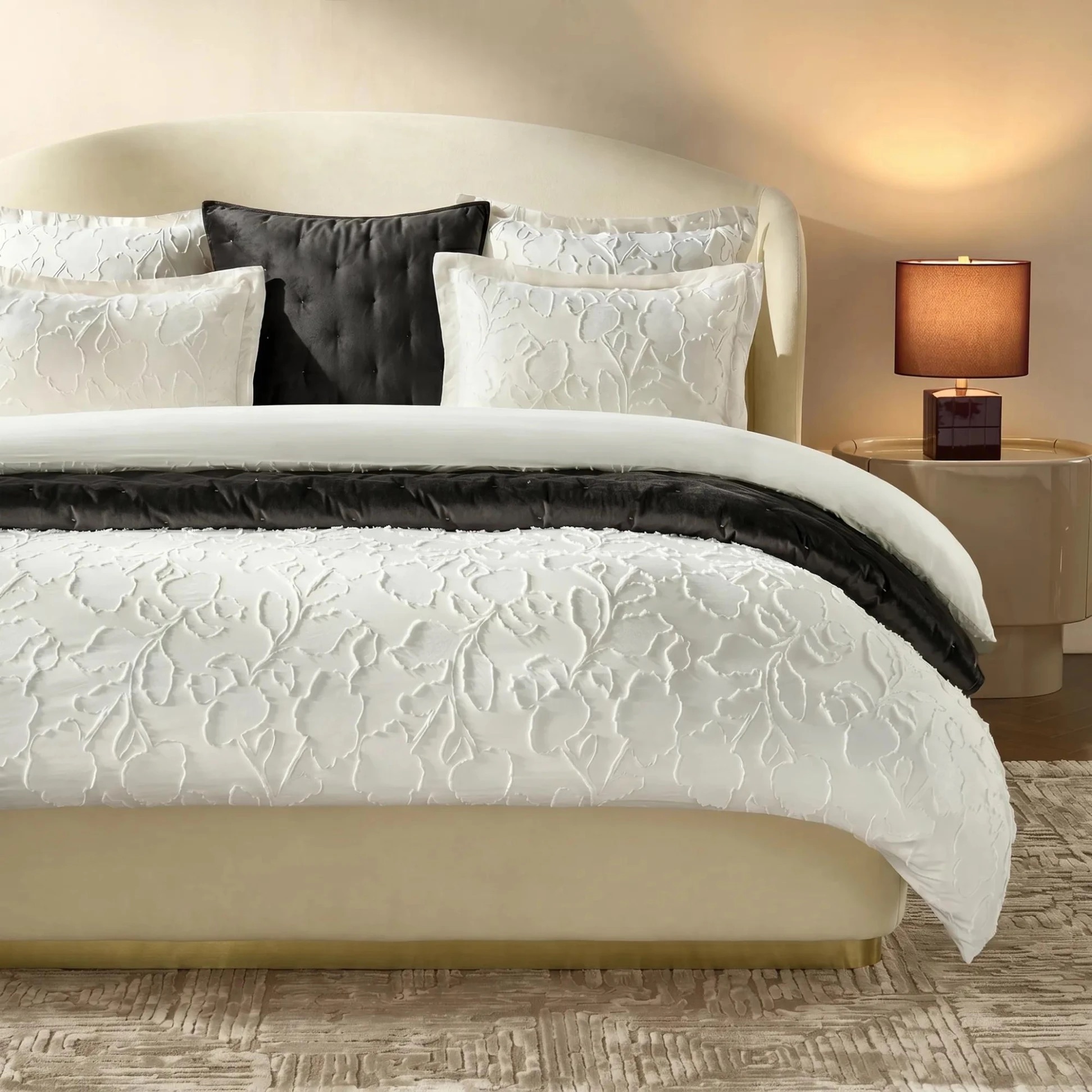
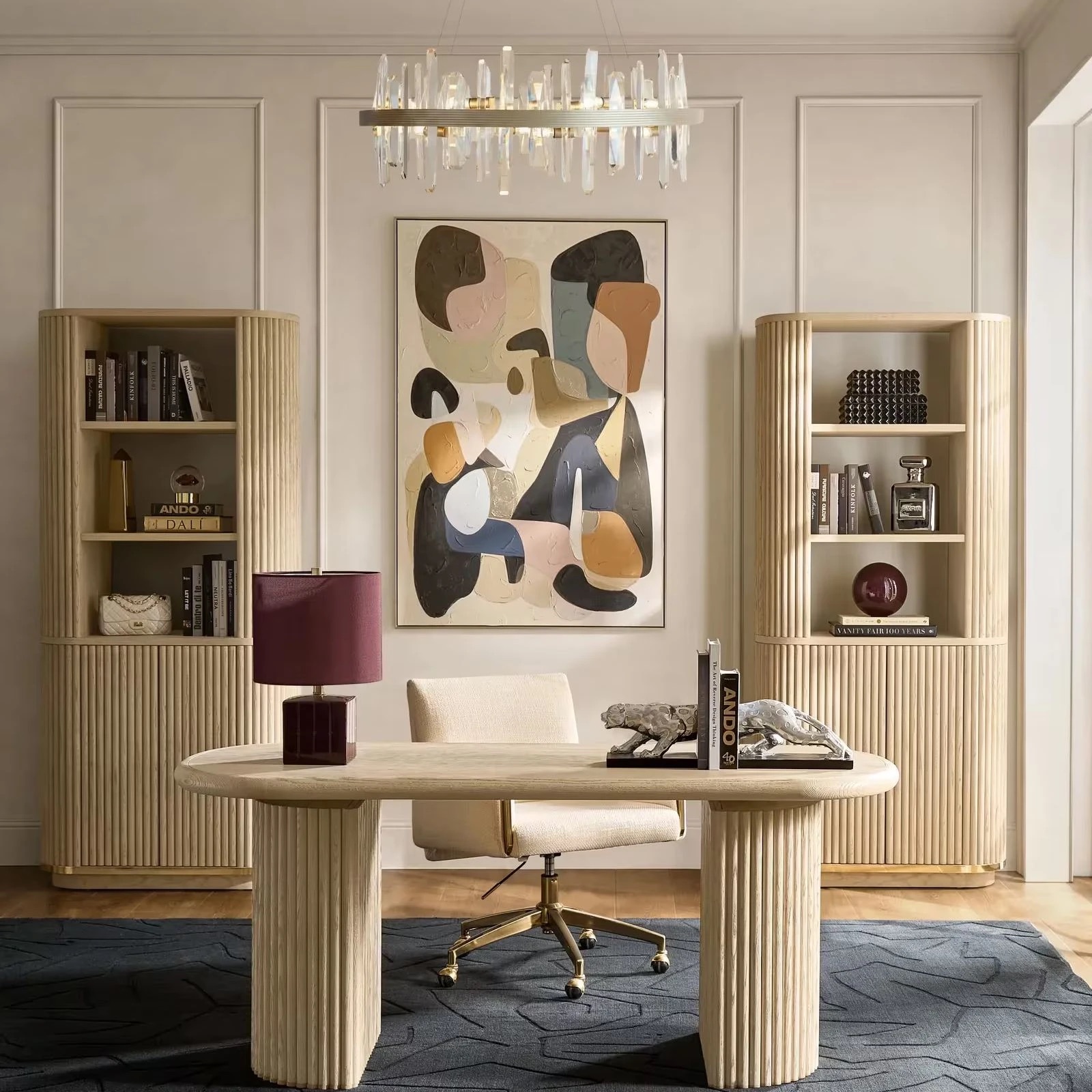
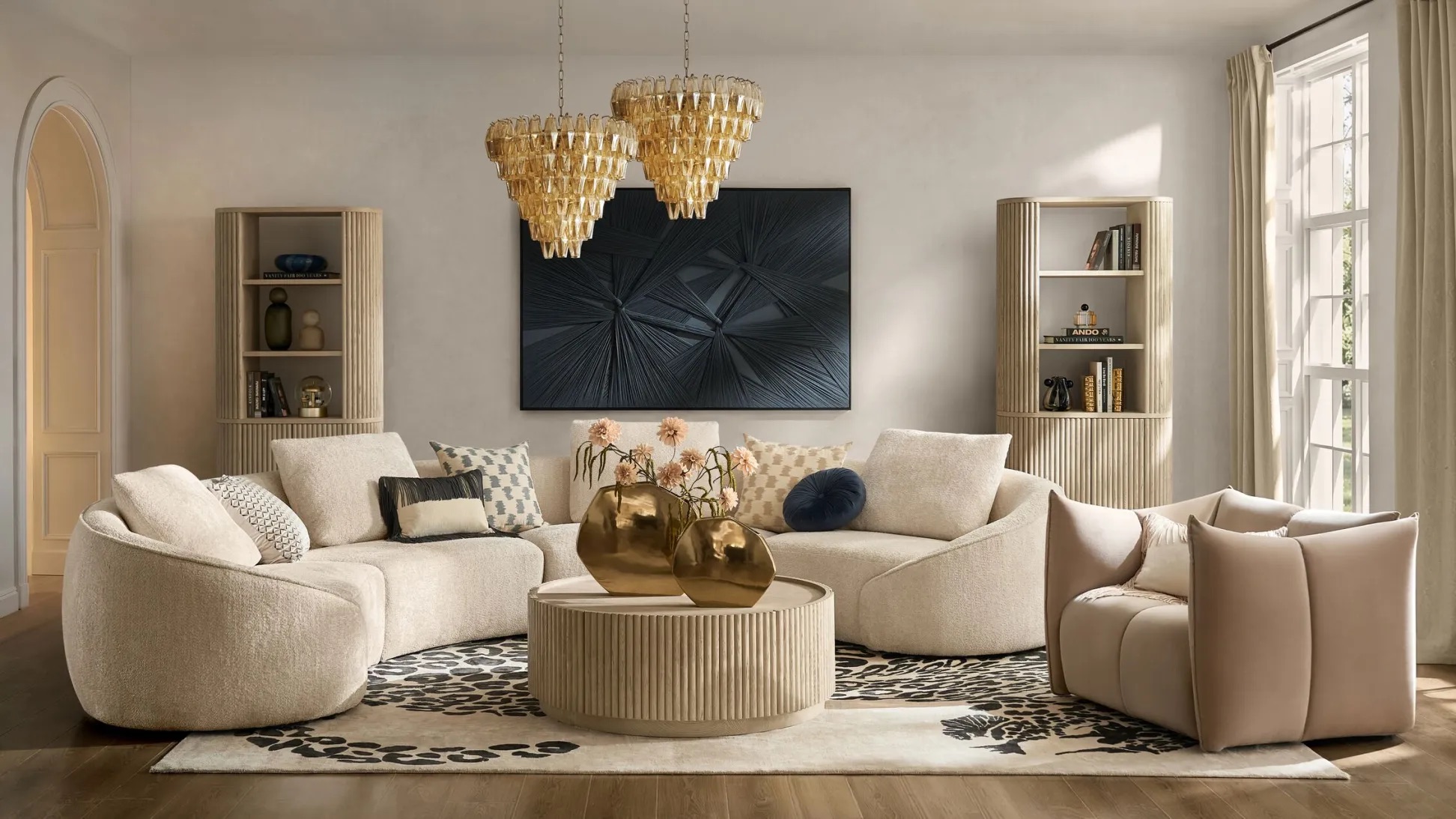
As interiors move away from blanket brightness, sculptural lamps, decorative wall sconces, and reflective surfaces are giving rooms a more intimate life after sunset.
At 4:30 in the afternoon, the room is easy to understand.
The pale console looks pale. The glass lamp is transparent. The mirror reflects the windows, a patch of sky, perhaps the branches outside. Even the darker pieces, a chocolate chair, a black ceramic vase show their edges clearly.
An hour later, the arrangement has changed without anyone moving a thing.
The mirror now reflects the room instead of the outdoors. Brass loses its sharp daytime flash and begins to glow. Tortoise glass becomes darker and more complicated. A corner that felt empty at noon suddenly feels quiet and intentional.
This is the room after dark, when lighting stops being a practical matter and starts editing the interior.
“People tend to turn on everything because they think more light will make the room feel better,” says Z Gallerie designer Carol Alda. “Usually, I do the opposite. I switch a few things off and see what the room actually needs.”
That instinct runs through Z Gallerie’s FW26 idea of Light as Language, an approach centered on atmosphere, layered illumination, and the deliberate use of shadow. The collection brings together warm metals, translucent glass, dark ceramic, reflective finishes, and sculptural forms designed to change character as daylight fades.
A Lamp Should Have a Day Job
The best table lamps earn their place twice.
During the day, they contribute shape, material, and scale. At night, they affect everything nearby: the color of the wall, the texture of a chair, even the apparent depth of an artwork. That is why unique table lamps are beginning to function more like small sculptures than anonymous sources of light.
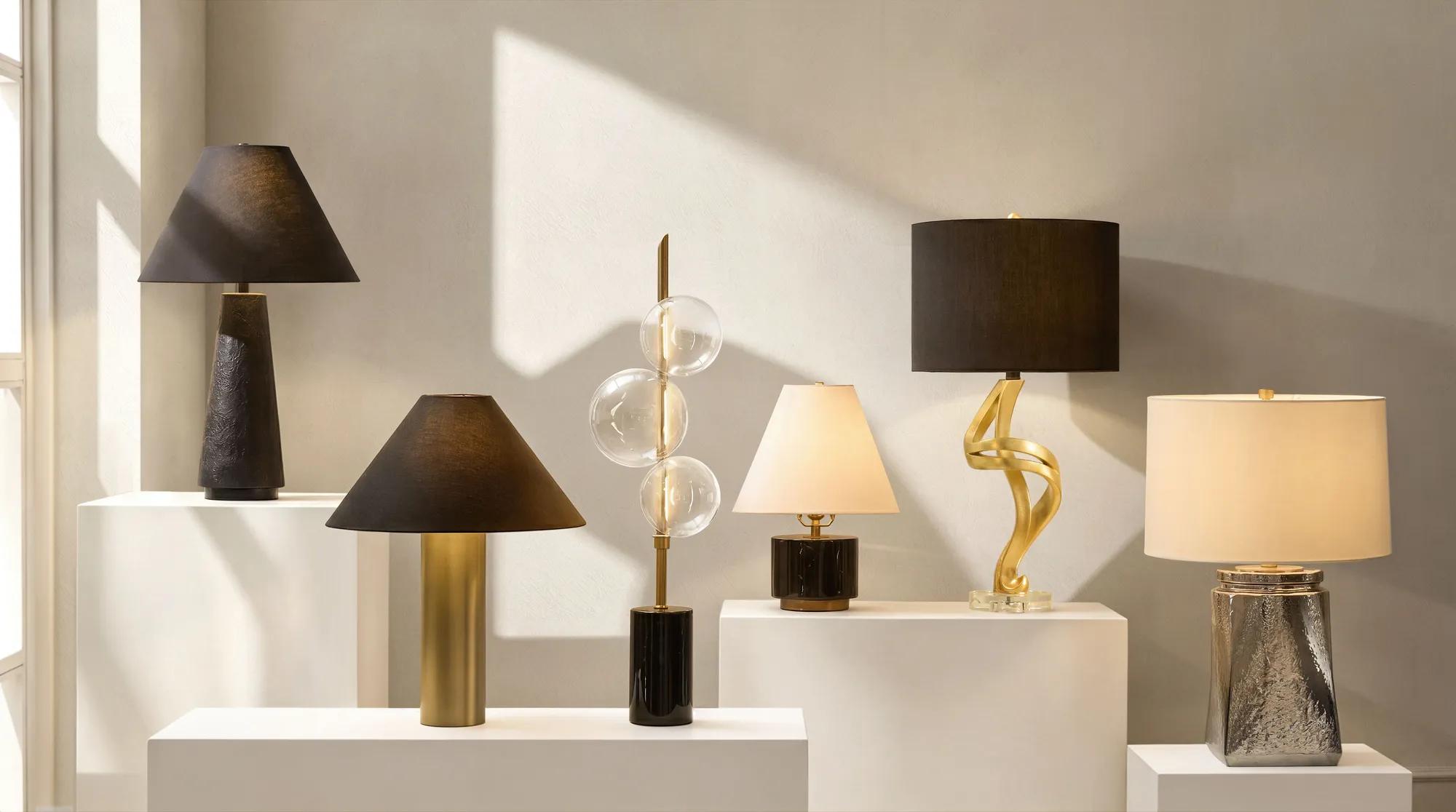
In the FW26 collection, the Blair Glass Table Lamp has the round, substantial silhouette associated with the season’s fuller, inflated forms. It appears in Sea Glass and Tortoise Brown—two versions of the same design that create noticeably different moods.
Sea Glass is soft and translucent, particularly against cream upholstery, pale wood, and quieter metallic finishes. Tortoise Brown is more mercurial. In daylight, its mottled surface has an almost animal quality. Under a warm bulb, the pattern shifts between amber, chocolate, and near-black.
The lamp does not need much company. Place it on a console with one low object—a lacquered box, perhaps, or a shallow bowl and let the glass remain visible. Too many small accessories around a substantial base will make the arrangement feel nervous.
The Bolla LED Glass Bubble Table Lamp has a lighter presence. Its rounded glass forms catch nearby reflections, allowing the lamp to look slightly different depending on where it is viewed. Beside a sofa, it adds shape without introducing another dense or opaque object.
For something more graphic, the gold-and-black Tova Table Lamp introduces a sharper line. It is especially useful when the furniture is rounded or heavily upholstered; the contrast prevents the room from becoming too soft.
“I look at the lamp with it turned off first,” Alda says. “Does the shape help the room? Does the size make sense on that table? The light matters, obviously, but it cannot be the only reason the object is there.”
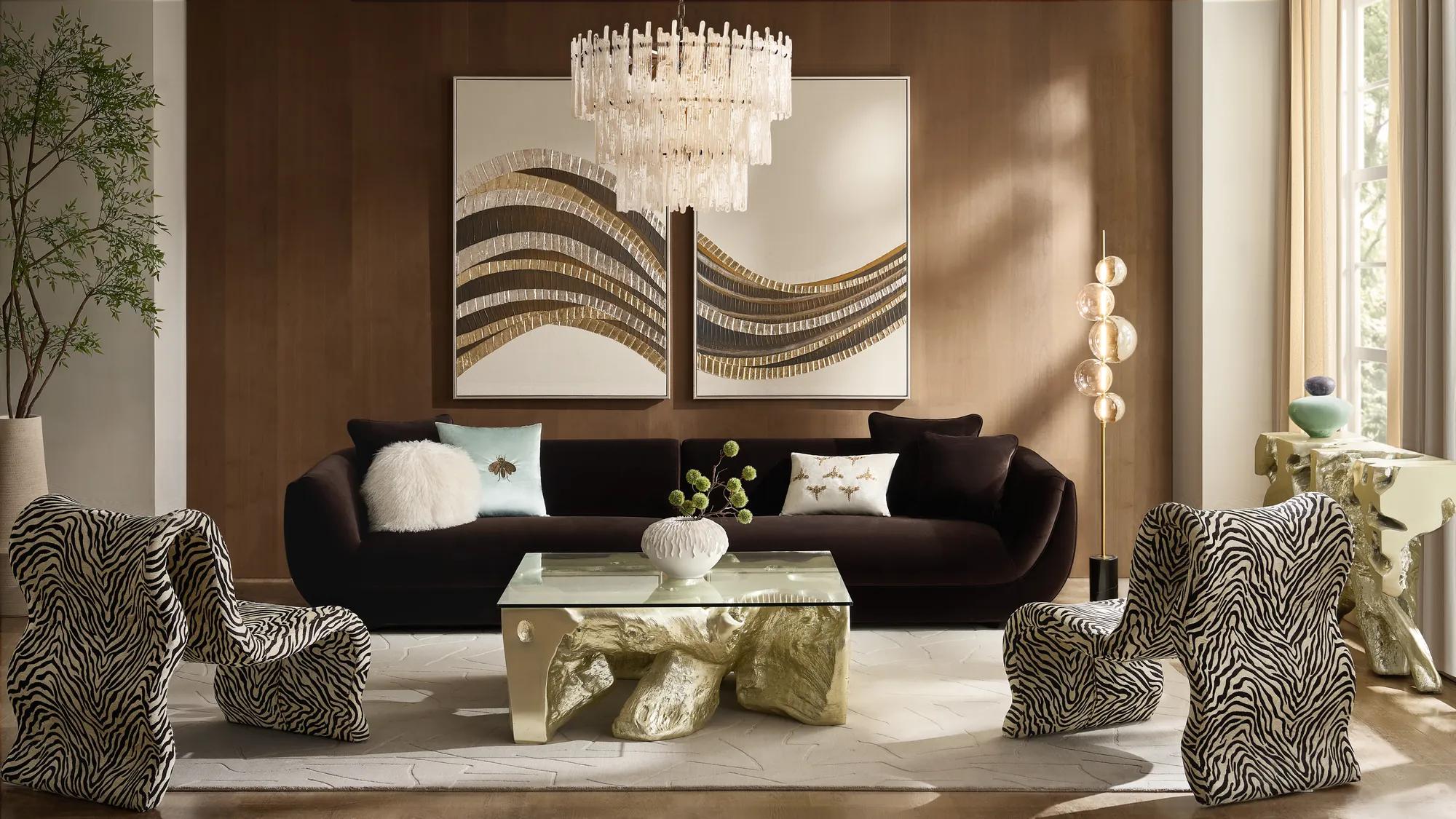
The Lamps Do Not Have to Match
A pair of identical lamps can bring welcome order to a bedroom or a long sideboard. Symmetry is useful. It is simply not compulsory.
In a living room, two different lamps often make the space feel as though it developed over time. The connection between them may be subtle: a repeated black detail, related shade proportions, or glass in two different tones.
A Tortoise Blair might sit on one side of the room while the more linear Tova appears across from it. They are not a set, but both speak to the FW26 palette of dark brown, black, warm gold, and smoked metallic finishes.
“I don’t need the lamps to be identical,” Alda says. “I just want them to feel as though the same person chose them.”
That is a more useful test than asking whether two objects match. Consider whether they share a point of view.
The Wall Wants Light, Too
Most living rooms are illuminated at only two levels: from the ceiling and from the tabletops. The wall between them is often left out of the conversation.
A wall sconce changes that. It draws the eye upward, gives a hallway rhythm, and introduces light where a floor lamp or table would be impractical. Flanking a mirror, sconces lend architecture to an otherwise simple arrangement. Used alone, one can occupy the narrow space beside an artwork or mark the end of a passage.
The FW26 Aspar Sconce in hammered antiqued gold has an unusually slim profile, closer to a gestural line than a conventional fixture. Its softly irregular surface catches light in small flashes. A second black-and-soft-gold Aspar Sconce gives the design a more graphic, Deco-inflected character.
The antiqued-gold version works naturally beside stone, tactile plaster, or an organically shaped mirror. Against a chocolate or charcoal wall, the metal becomes warmer and more pronounced. The black-and-gold interpretation has greater contrast and can hold its own against cream, fig, or pale blue.
Although shoppers searching for a brass wall sconce may be drawn to its warm metallic finish, the Aspar is a decorative candle sconce rather than a wired electric fixture. Candlelight is part of its character. It moves across the wall instead of producing a fixed beam, keeping the composition from feeling too controlled.
“The wall does not always need another framed piece,” Alda says. “Sometimes one vertical line and a small amount of light are enough.”
Pairs remain appropriate when the room calls for ceremony—on either side of a mirror, doorway, or console. A single sconce feels less expected. It can sit just off-center beside an artwork or illuminate a corner that would otherwise disappear after sunset.
Explore more decorative wall sconces to bring that same vertical glow to an entry, dining room, or living space.
.jpeg?w=2259&h=1271)
A Mirror Should Reflect Something Worth Seeing
Mirrors are often recommended for dark rooms because they can make a space feel larger. At night, their more interesting role is to carry light.
A mirror positioned across from a lamp repeats the glow without requiring another fixture. One angled toward a candle sconce introduces a small moving reflection. Mirrored furniture gathers points of illumination from around the room and turns them into part of its surface.
Placement is what makes the difference. A mirror facing an unlit wall simply reproduces the darkness. Before hanging one, stand where it will go and look at what it is likely to hold. A lamp, artwork, illuminated doorway, or glimpse into another room is preferable to an empty corner.
The FW26 Glimmer Furniture Collection uses reflective surfaces across consoles, desks, tables, and bedroom furniture. Dark framing gives the mirrored panels definition, preventing them from dissolving into the rest of the space.
Mirrored furniture benefits from contrast. Place it beside velvet, boucle, dark wood, or a textured wall rather than surrounding it with additional gloss. The tactile material keeps the reflection from feeling cold.
A lamp on a Glimmer console needs very little beside it. One vessel, a few books, or a low tray will do. The surface is already participating in the arrangement.
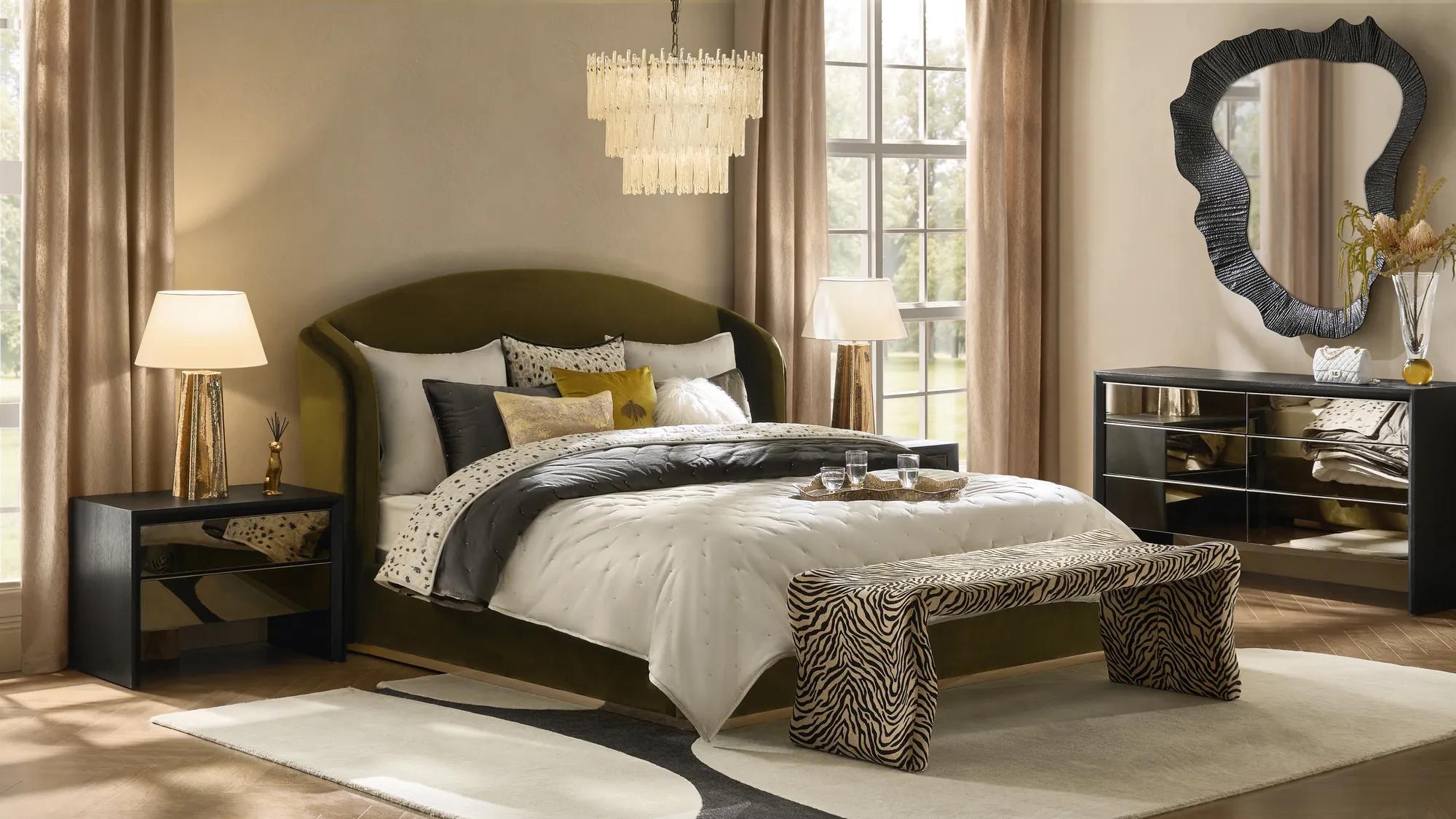
Chocolate, Black, and Gold Look Better at Night
Some palettes reveal more after sunset.
Chocolate brown is one of them. During the day, it reads as grounded and earthy. In the evening, it becomes enveloping. Velvet appears deeper. Tortoise glass grows darker. Antiqued gold and soft brass stand out without looking overly bright.
FW26’s design direction combines chocolate, black, charcoal, smoked champagne, soft gold, and warm off-white. The palette is luxurious, but not pristine. It relies on texture, irregularity, and contrast rather than shine alone.
A room does not need to be painted brown to take part in the idea. One concentrated note can shift the atmosphere: a cocoa-colored chair, a tawny rug, a tortoise lamp, or dark artwork behind a gold sconce.
The metals should not match perfectly, either. Polished gold behaves like jewelry. Antiqued gold is quieter and has more depth. Brass has a slightly earthier quality. Used together, they keep a room from looking as though it was purchased in one coordinated package.
One finish can repeat, but it should not dominate every object.
The Problem With One Bright Light
There is a familiar moment in many homes: evening arrives, someone flips a single wall switch, and the entire room is exposed at once.
It is practical. It is also the fastest way to flatten an interior.
When one overhead fixture is asked to do all the work, shadows disappear, textures become less visible, and every part of the room receives the same amount of attention. The sofa, doorway, artwork, and empty corner all become equally bright.
Layered lighting is less about having many fixtures than giving each source a clear role.
The chandelier or ceiling light establishes the general level of illumination. A table or floor lamp brings light down to the height where people sit. A sconce, candle, or smaller accent lamp addresses the perimeter.
They should not compete at equal strength.
In a living room, a lamp beside the sofa may lead while the overhead fixture remains low. A candle sconce can bring movement to the far wall. In a dining room, the pendant takes precedence, but a table lamp on a nearby console keeps the rest of the room from falling away.
This does not require a complete renovation. Often, the biggest improvement comes from lowering the source of light already in the room.
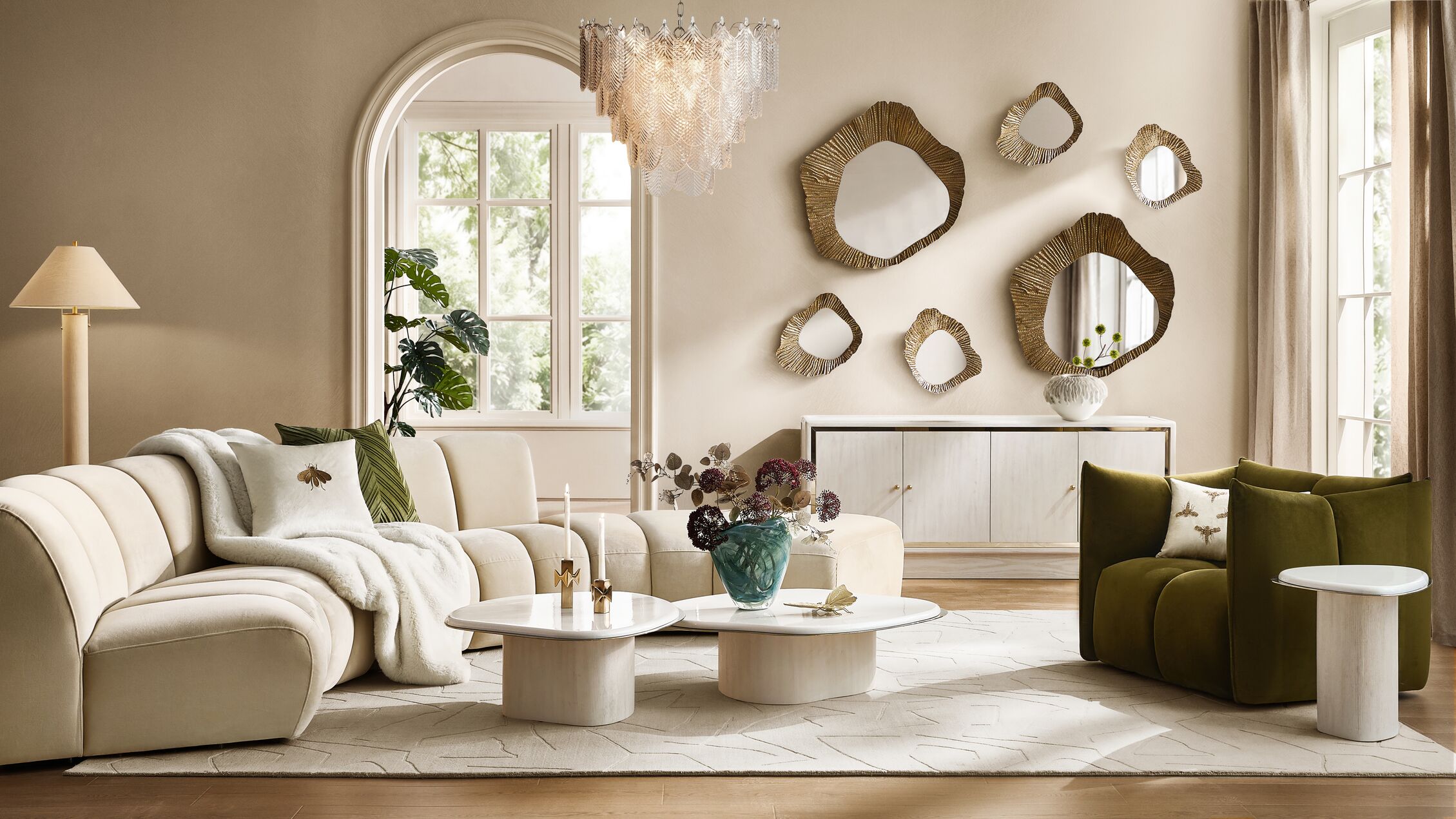
Carol Alda’s Evening Test
Alda’s quickest lighting edit begins at the doorway.
Turn off the brightest ceiling fixture. Switch on the lamps near the places where people actually sit. Then step out of the room and look back in.
The doorway changes the view. From there, it is easier to see whether one corner feels neglected, whether the mirror is reflecting anything useful, or whether a lamp is too small for the furniture beneath it.
Move a lamp a few inches before buying another one. Aim its glow toward a textured wall, a velvet chair, or an artwork rather than the empty center of the room.
Then remove something from the busiest tabletop.
Lighting and styling are closely connected. A lamp cannot create a focal point when it is surrounded by a dozen objects competing for the same attention.
When the Room Finally Settles
A well-designed room should not look exactly the same at 10 in the morning and 10 at night.
Daylight explains the space. Evening makes it personal.
The glass lamp becomes warmer. The gold sconce turns into a narrow glimmer on the wall. The mirror begins to hold pieces of the room rather than the view outdoors. Areas that mattered during the day recede, while a chair, painting, or small pool of light becomes the place the eye returns to.
Nothing has been rearranged. The room has simply settled into its second life.
Frequently Asked Questions
How do you style unique table lamps?
Begin with scale. A substantial table lamp generally looks best with fewer surrounding accessories. Pair it with one low object or a small stack of books, and leave enough open surface for the lamp’s silhouette to remain visible.
Do table lamps in the same room have to match?
No. Different lamps can work together when they share a detail such as finish, shade color, proportion, or visual weight. Identical lamps create symmetry, while related designs give a room a more collected feeling.
Where should a brass wall sconce be placed?
A brass wall sconce can flank a mirror, define a hallway, frame a doorway, or add vertical interest near a console. Its position should respond to nearby furniture and artwork rather than follow one universal mounting height.
What is the best way to layer lighting in a living room?
Use light at several heights. Combine an overhead source with a table or floor lamp near seating and a smaller source along the perimeter. Keep the fixtures at different intensities so the room retains depth.
How can mirrors make a dark room feel brighter?
Position a mirror where it can reflect a lamp, candle, illuminated doorway, or brighter adjoining room. Avoid placing it opposite an unlit blank wall, which will simply repeat the darkness.
Should every light in a room use the same finish?
No. Brass, antiqued gold, polished gold, and blackened metal can coexist. Repeating one or two details will create continuity without making every fixture appear to be part of a matching set.