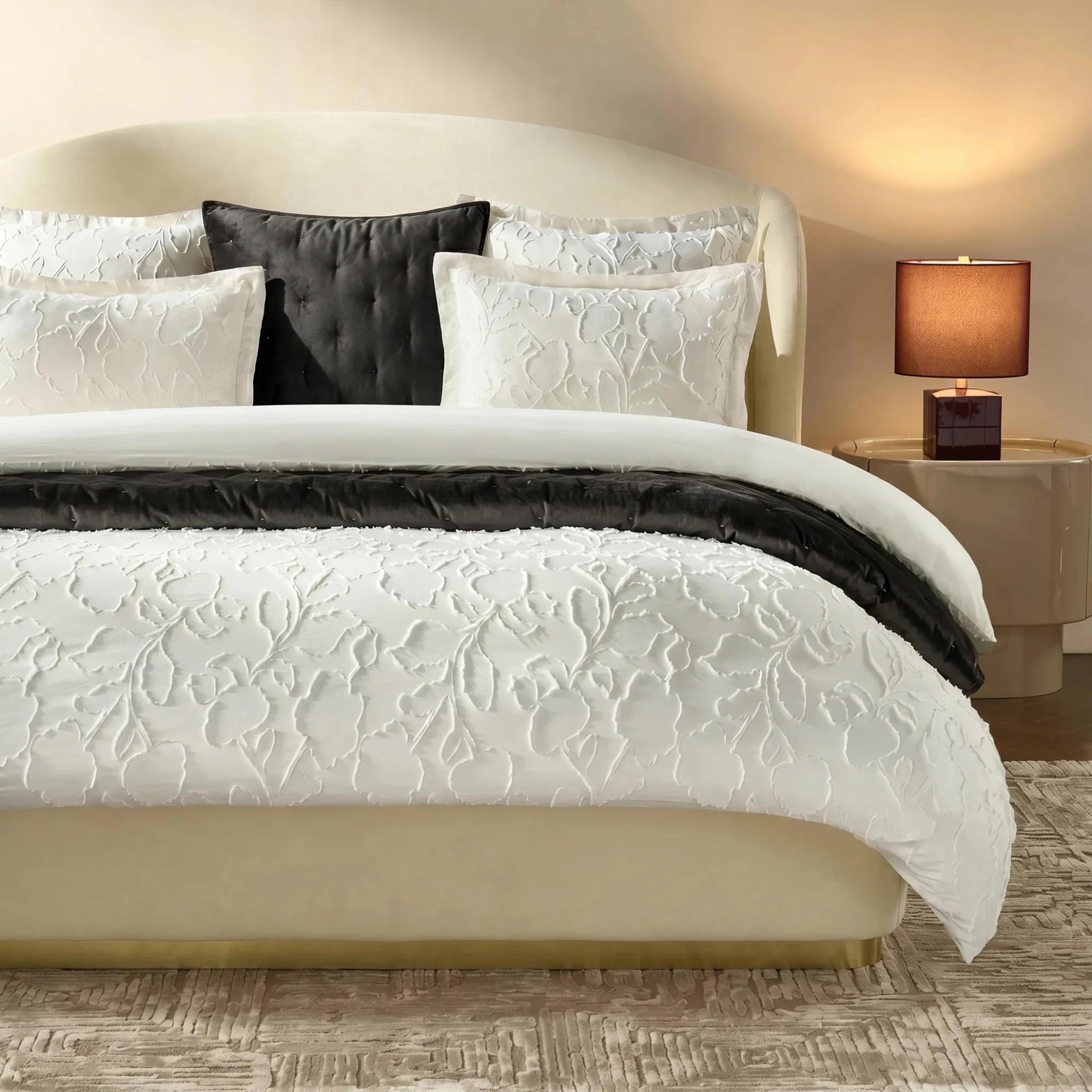
Beautiful doors, an orderly drawer, and somewhere to put the serving platter. Let the cabinet do more so the table can do less.
The spare napkins are in the bedroom. The serving spoon is somewhere in the kitchen. And the platter you need is beneath three others in a cupboard that requires both hands and a little patience.
A dining room sideboard can bring those small negotiations to an end. It can also be the piece you notice first: a sweep of lacquer beneath a painting, or a beautifully grained cabinet against a pale wall.
These dining room storage ideas begin with the inside of that piece. The aim is to keep dinnerware, serving pieces, and table linens close to where you use them, then let the top become useful when guests arrive. That is our approach to Gather With Glamour: a room with presence, and a host who can sit down.
How to choose a dining room sideboard: start inside
Before comparing finishes, bring together the things you want to store. Include the oversized platter, the salad bowl with the awkward handles, and the tablecloth used only when the table is extended.
Measure those pieces. A long cabinet is not necessarily one long storage compartment; partitions, drawers, hinges, and shelves determine what actually fits. Ask for usable interior dimensions, shelf adjustment options, and load limits before planning where the heavy dishes will go.
Look for drawers when small items or folded linens are the priority. For bowls and serving pieces, compare shelf height and the clear opening through the doors. A cake stand that fits inside but cannot pass through the opening is still a problem.
Give the practical choice a point of view
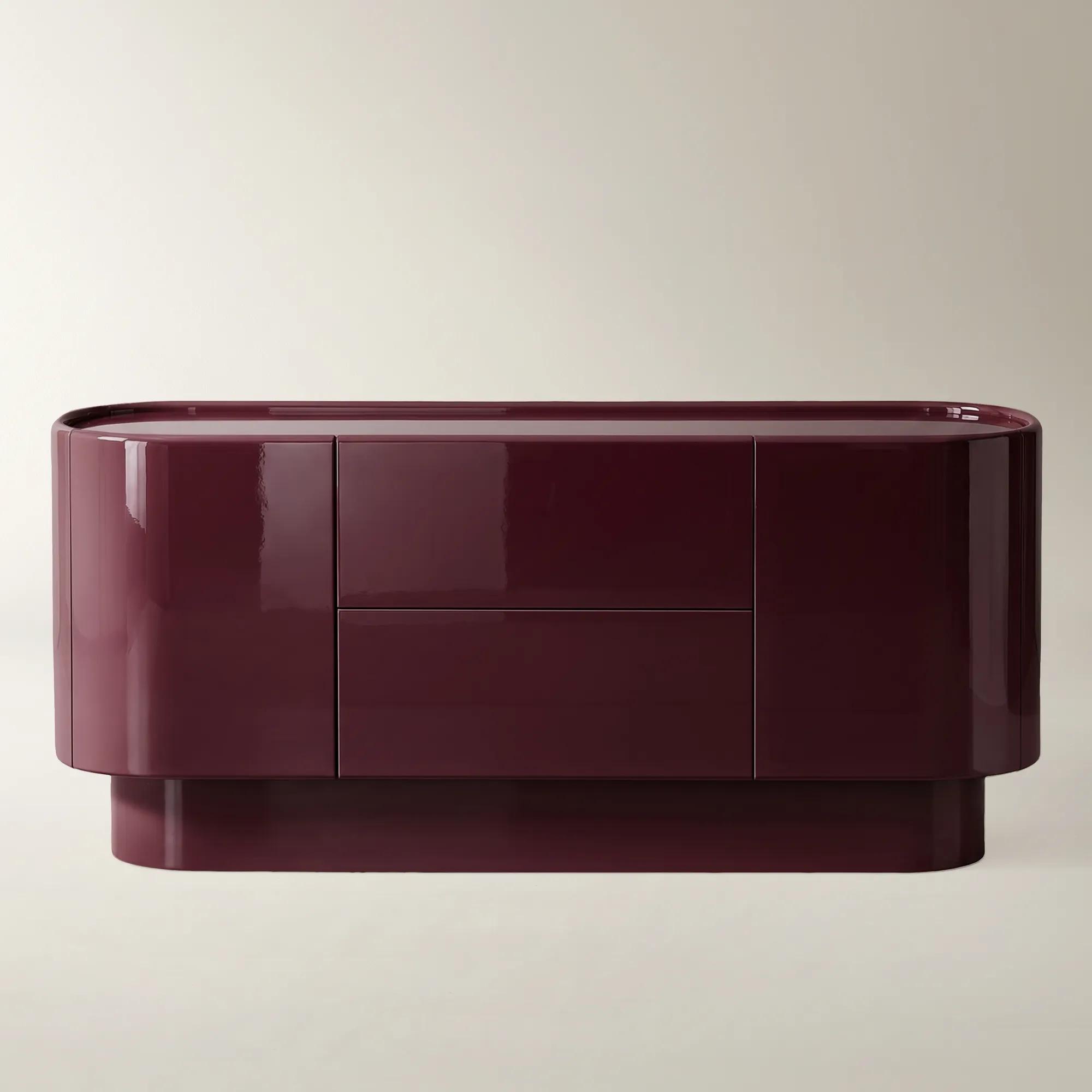
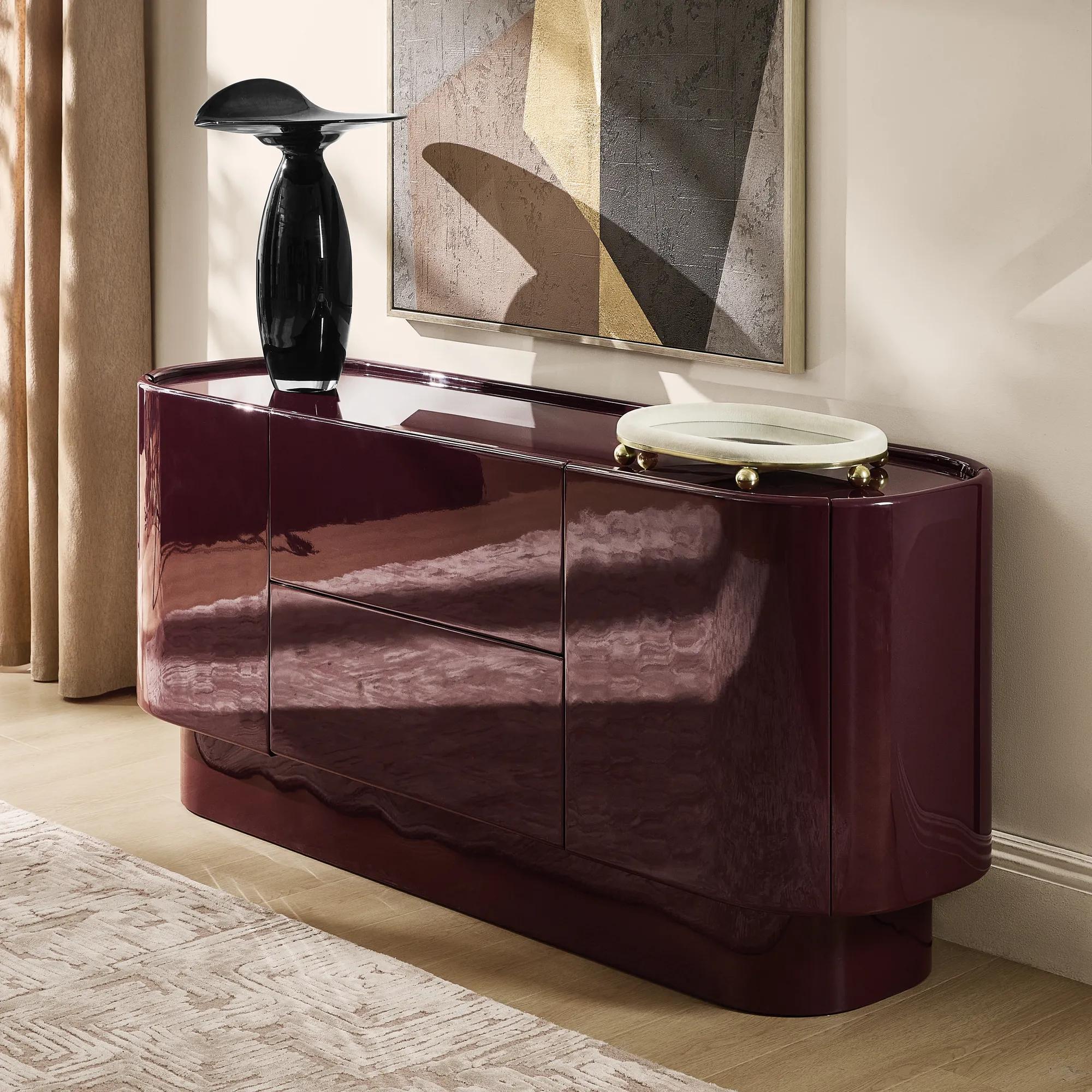
The Velar Lacquered Turtle Dove Buffet With Glass Top pairs a pale high-gloss case with back-painted tempered glass, two drawers, and concealed cabinet storage. Rounded ends give the long silhouette a softer outline.
Picture it beside a dark wood dining table, with an artwork that introduces a little blue or fig. The table and cabinet need not match; the contrast between wood grain and lacquer can be the reason they belong together. Keep the objects on top restrained enough to see the finish.
Velar is the example for the arrangement below, not a prescription for every dining room. The same organizing decisions can improve a sideboard you already own.
Measure for the room while it is being used
A sideboard should fit with someone sitting at the table, not only with every chair tucked in.
Mark the proposed footprint with a floor-safe method, then pull out the nearest chair as you would to sit down. Allow for the cabinet doors and drawers to open, and try the route from the kitchen carrying an empty serving tray. Increase the space where people need to pass behind a seated guest or where your household needs easier access.
Velar measures 70 inches wide by 20 inches deep by 31 inches high. Those are overall dimensions, not the dimensions of its storage compartments or the space needed to use it.
Check baseboards, outlets, and the delivery route as well. A cabinet may stand farther from the wall than the floor plan suggests. Its top should also feel comfortable to reach when you lift a serving dish.
Before loading it, secure the cabinet to the wall using appropriate hardware and the manufacturer's instructions. Store heavier items low within the stated shelf limits, but do not treat that arrangement as a substitute for anchoring.
How to organize a sideboard without buying another set of containers
Empty the cabinet first. Put away anything that has arrived there by accident, then group what belongs: plates, serving pieces, linens, and the small tools used to set the table.
Decide where those groups fit before purchasing dividers. The organizer should not take up the space needed by the serving dish.
Give dishes a shelf you can reach
For dining room storage for dishes, keep frequently used pieces accessible without moving an entire collection. Where your dinnerware is suitable for stacking, make manageable groups of similar plates rather than one mixed tower. Use appropriate soft separators between delicate surfaces, and follow the maker's guidance for fragile or decorated pieces.
Leave enough room above a stack to lift it comfortably. A shelf that holds the plates but leaves no space for your hand is not quite working.
Put serving bowls and their utensils in nearby compartments, without nesting hard pieces against delicate finishes. An occasional platter can sit farther back than the dishes you use each week, but it should still come out without dismantling the shelf.

Give the small things a defined place
A removable divider can separate serving spoons, napkin rings, and place-card holders in a drawer. Check the length of the longest utensil before choosing it.
Keep extra coasters together, and give candle accessories their own container away from fabric. The objective is to open a drawer and recognize what is there, not to conceal an assortment inside several identical boxes.
| What you store | A place to consider | The check that matters |
|---|---|---|
| Dinner and salad plates | An easy-to-reach lower shelf rated for the load | Enough clearance to lift the dishes, with protection where needed |
| Serving bowls and platters | Cabinet space that accommodates their full shape | Handles, rims, door openings, and the route out of the cupboard |
| Napkins, runners, and tablecloths | A dedicated drawer or protected shelf | Room to remove one set without crushing or disturbing the rest |
| Serving utensils and small accessories | A divided drawer | Compartments that fit the objects and let the drawer close freely |
This is a proposed layout to adapt to your cabinet, not a claim about how many place settings a particular model will hold.
Give table linens their own drawer
Good dining room storage for table linens begins with a little separation. Keep everyday napkins together and reserve another section for the tablecloth and runner you use when friends come over.
Choose folds that suit the drawer rather than forcing the drawer to accommodate a tall stack. Group napkins by set; a small removable label can identify an occasional tablecloth's dimensions without making you unfold it to check.
Let cleaned linens dry completely before putting them away. Keep embellished or heavily textured linens loosely arranged rather than crushed beneath dishes or tightly packed fabric. Follow the care instructions for each piece; a plain cotton napkin and a beaded placemat need different treatment.
For fragile heirloom textiles, consider separate, supported storage with minimal folding rather than squeezing them into the everyday drawer.
Leave napkin rings in a separate compartment. The linens should be ready for the next occasion, not permanently dressed for the last one.
Style the sideboard with somewhere left to put a platter
A sideboard does not need a decorative object at every interval along its top. Give it one strong relationship with the wall, a painting or a securely mounted mirror and keep the smaller objects easy to move.
With pale lacquer, try a matte ceramic vase and an artwork with a darker frame. The changes in surface provide interest without a line of matching ornaments. A lamp can work at one end when its footprint and cord leave the serving area clear; it is not compulsory.
Group smaller objects on a tray you can lift away in one move. Then leave an uninterrupted area of the surface available. You should not need to find new homes for eight accessories before setting down dessert.

Our dining room decor guide considers the table, lighting, and artwork together. Here, the useful finishing touch is space.
The same sideboard, ready for dinner
Imagine the Velar arrangement on an ordinary afternoon: artwork above, a vase to one side, and the doors closed. Napkins and serving tools are in the drawers; dishes occupy the cabinet space that suits their size and weight.
When friends are coming, move the tray of decorative objects to another room. Bring out the serving pieces you will need and put them on the empty top first. This is the moment to discover that the salad bowl and bread basket need more room, not while carrying them in from the kitchen.
For a family-style dinner, let the sideboard hold spare plates, extra napkins, and the next course's serving pieces. Pass the main dishes at the table, then return the ones no longer needed to the sideboard. For a help-yourself meal, arrange only what fits comfortably, with utensils beside the corresponding dishes and a clear approach for guests.
Use food-safe serving pieces and the protection recommended for the furniture's finish. Keep cookware straight from the oven in the kitchen rather than assuming a glass, lacquered, or stone top can take the heat. A decorative runner is not a substitute for suitable protection.
Once everything is washed and fully dry, return it to the same compartments. Velar's care guidance calls for a soft dry or slightly damp cloth and avoiding harsh or abrasive cleaners.
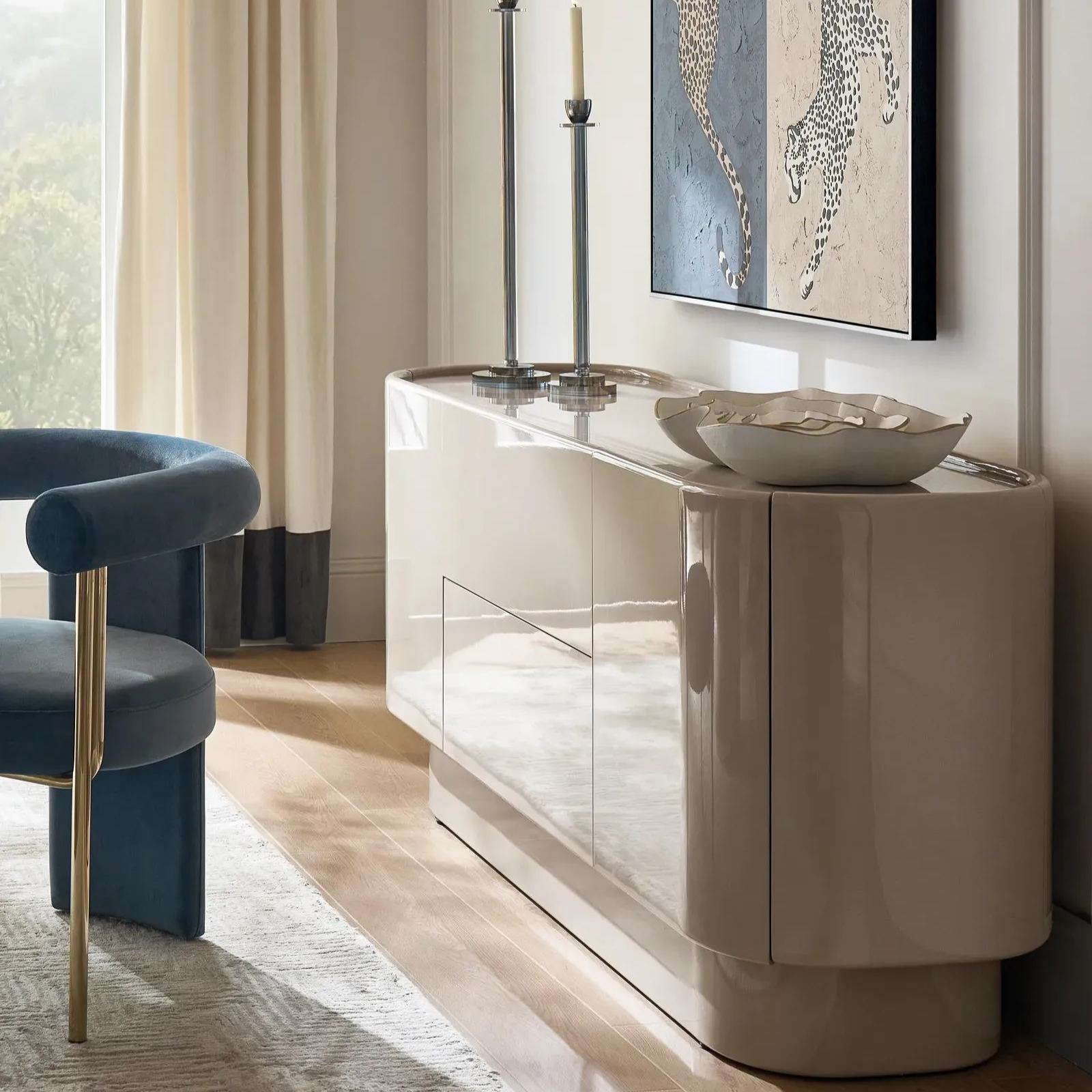
The transition should be small. The cabinet changes jobs; the dining room does not need another makeover.
Small dining room storage: shorten the cabinet, not the walking space
A long wall does not always mean there is room for a long buffet. Start with the dining chairs and the route around them, then consider how much storage can fit.
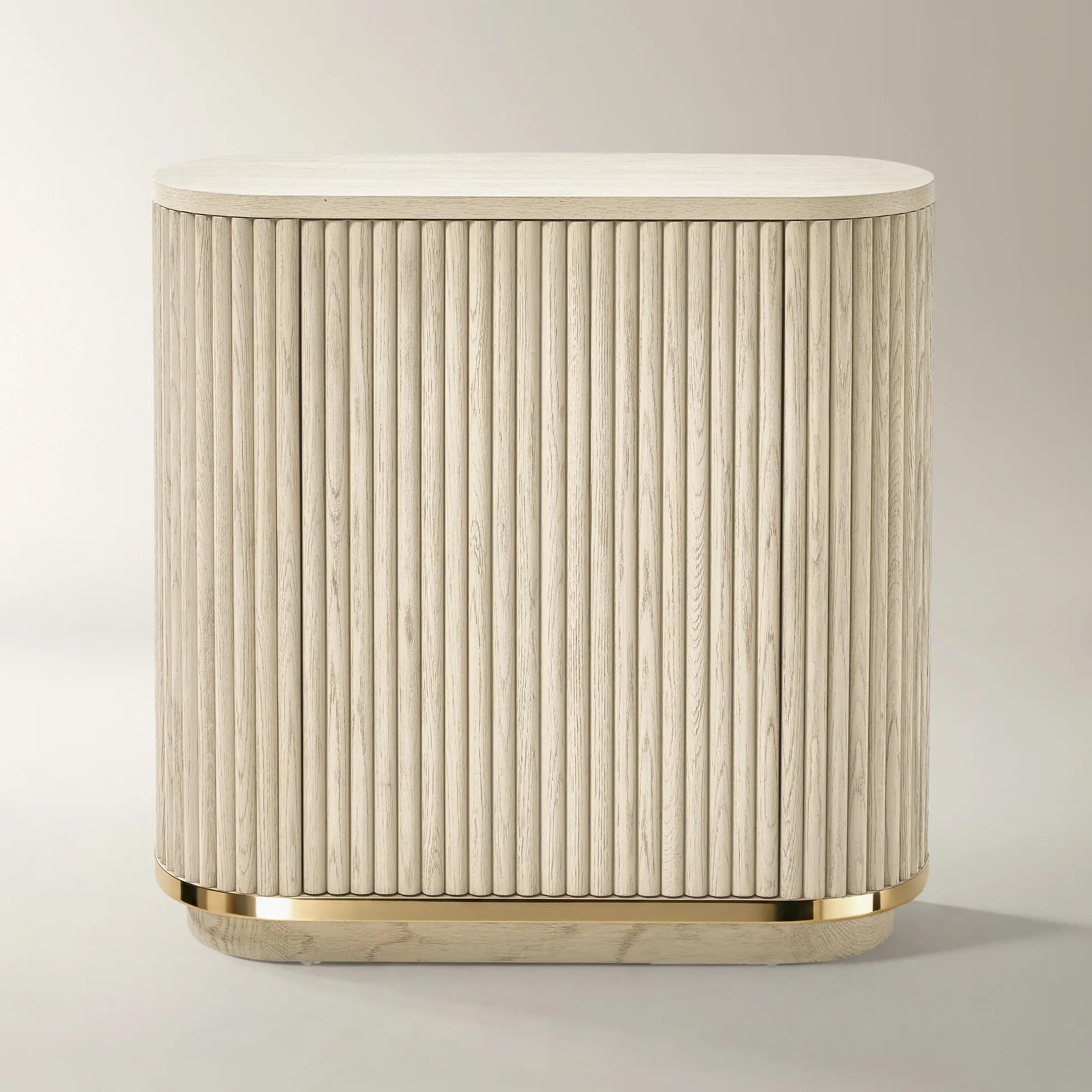
The Stria Reeded White Oak Buffet in the 36-inch size offers a narrower alternative, with a reeded surface, soft-gold trim, two doors, and adjustable interior shelving. It measures 36 inches wide by 17 inches deep by 35 inches high.
Its cabinet-only arrangement calls for a different plan from Velar's mix of drawers and doors. Use a suitably sized removable tray for small accessories, and check the usable interior before assigning a shelf to the largest platter.

A shorter piece may hold the things you use for most dinners while the once-a-year serving dish stays elsewhere. That can be a better decision than filling the room with storage to accommodate every possible occasion.
A few questions about dining room storage
What is the difference between a sideboard and a buffet?
The names are often used interchangeably. For this decision, focus on the particular piece's dimensions, storage layout, and usable top rather than expecting the label to tell you what it can hold. Our buffets and sideboards collection brings both terms together.
Does a sideboard have to match the dining table?
No. Try connecting the pieces through one detail, a related wood tone, a rounded shape, or a metal finish while letting another differ. A lacquered cabinet can be an appealing contrast beside a wood table without repeating its material.
What should I keep in a dining room sideboard?
Begin with dinnerware, serving pieces, table linens, and the utensils you use near the table. Give frequently used items the easiest access, and store heavier pieces within the cabinet's load limits. Keep the arrangement specific enough that the sideboard does not become overflow storage for unrelated belongings.
A beautiful reason to put things away
The pleasure of a good sideboard is not only the way it looks when the doors are closed. It is finding the extra napkins without leaving the room, and having somewhere for the platter when everyone needs a little more space.
Explore our buffets and sideboards, beginning with the pieces you need to store. For help with scale and placement, our complimentary design consultation offers guidance around your room.
Keep the essentials within reach. Leave the table for dinner.