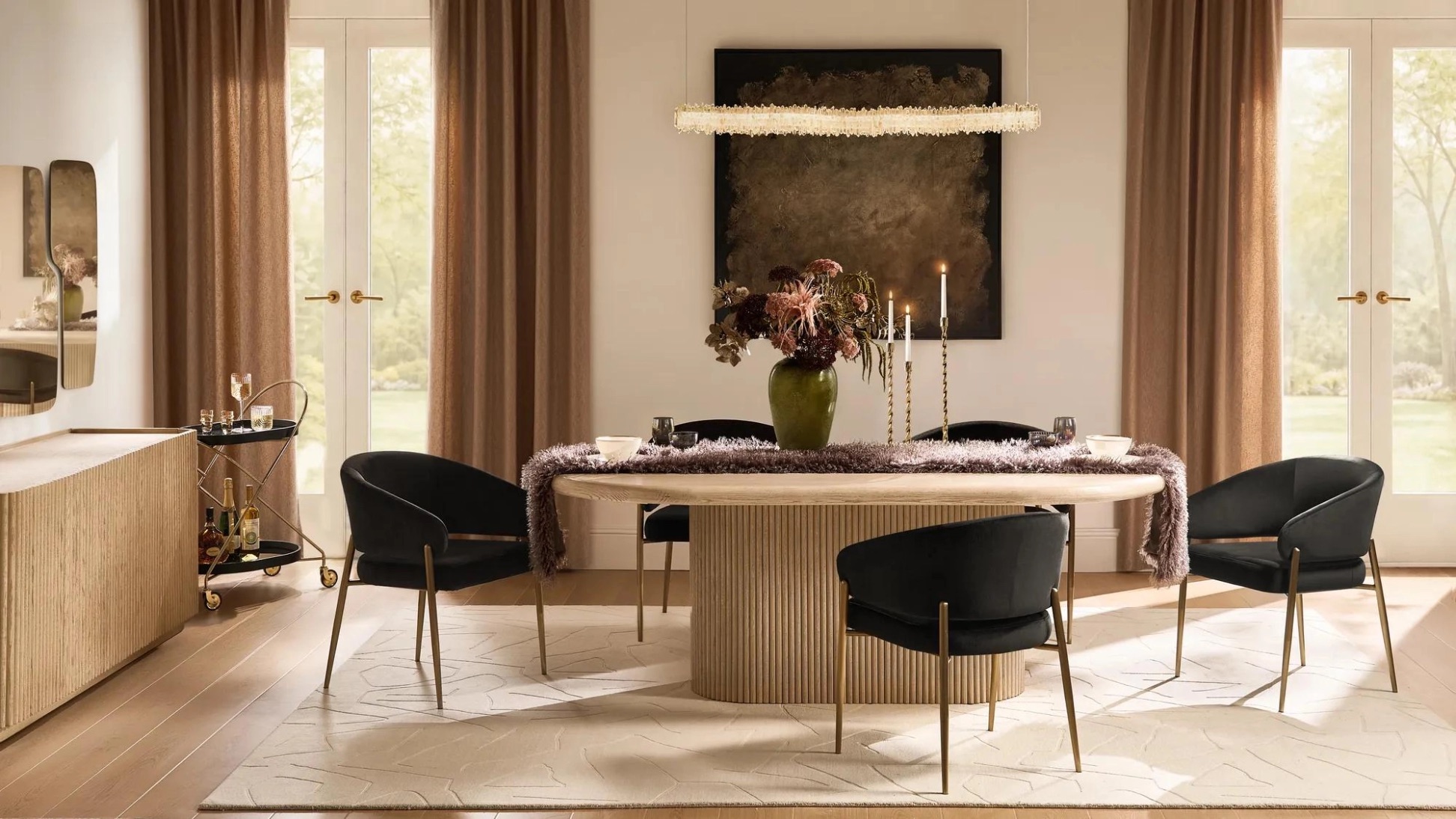
The designer look is rarely about buying everything new. It is about making a few decisions look intentional.
There is a difference between a room filled with beautiful things and a room that feels designed.
Usually, it is not the price of the sofa.
It is the chair placed in the corner because the shape changes the room. The two inches of empty shelf left deliberately unfilled. The headboard large enough to make the bed feel architectural. A patterned rug paired with a quieter sofa because someone understood where the room needed energy—and where it needed none.
That is the useful part of designer-inspired home decor: not recreating someone else's room piece by piece, but borrowing the decisions behind it.
These five ideas can change the way a room reads without requiring a full makeover.
1. Make One Corner Feel Like Its Own Room
The designer move: give an unused corner a purpose before you give it more décor.
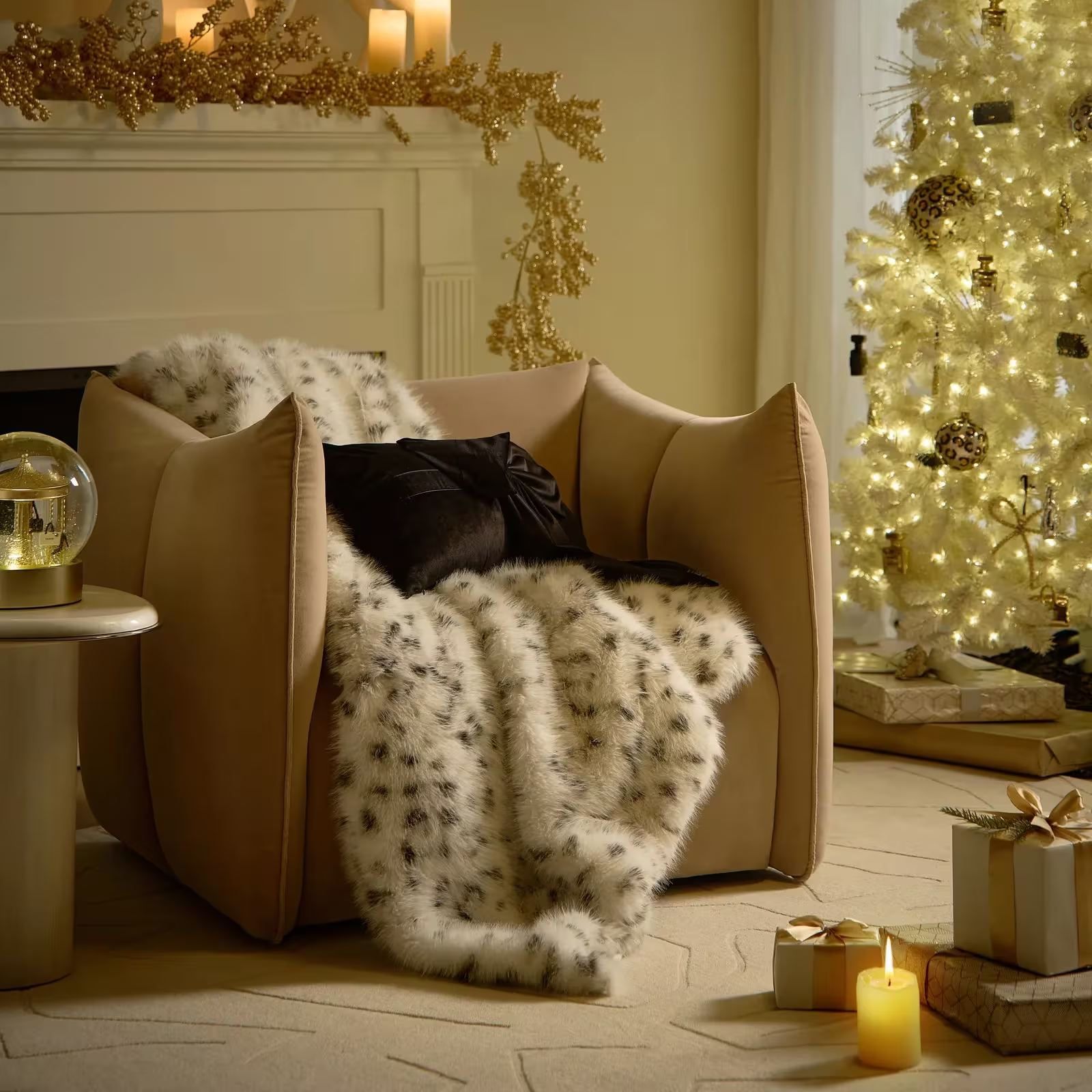
The reading nook is often presented as something that requires built-in shelving, a window seat, and an entire library.
It does not.
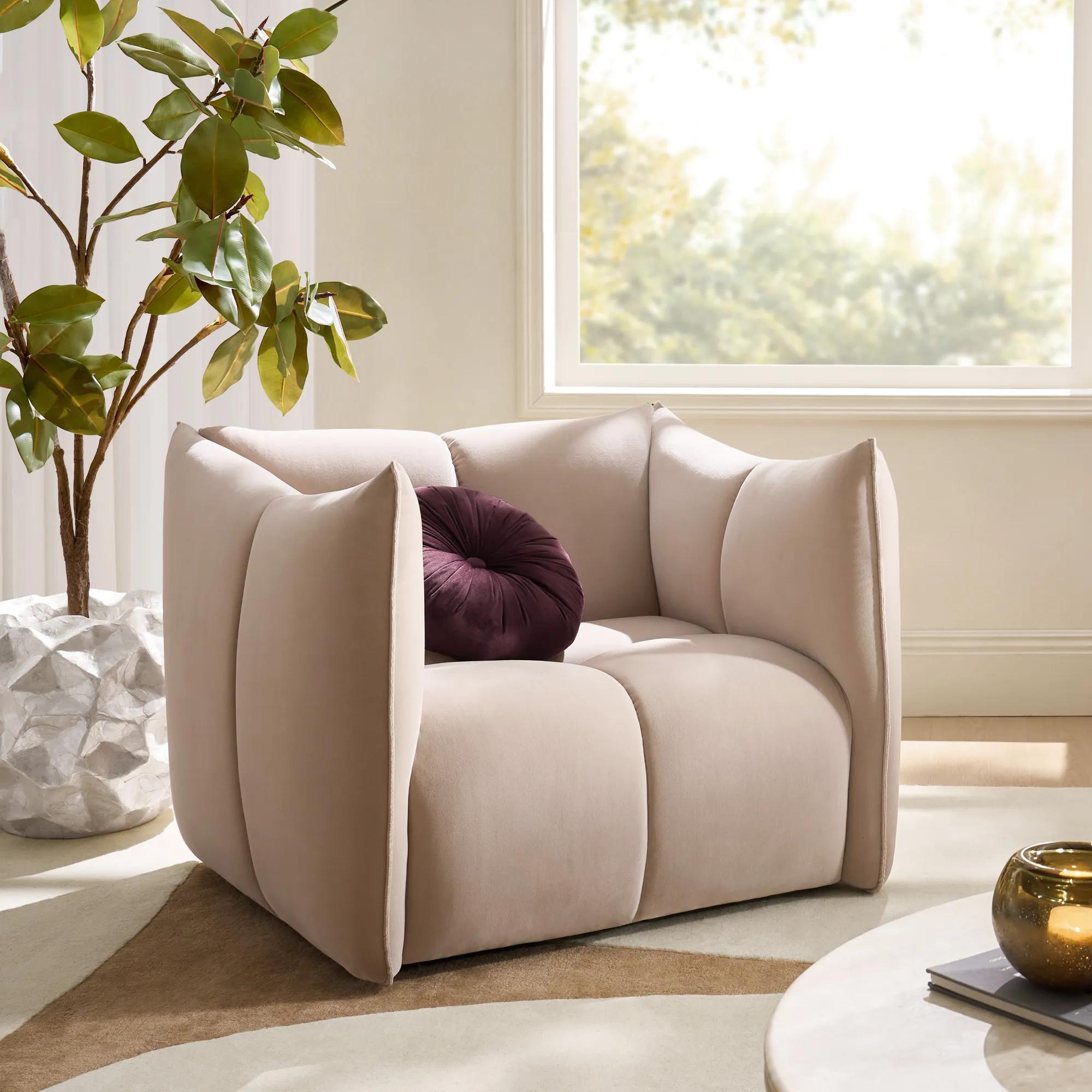
Sometimes the most convincing version begins with a chair positioned slightly away from the wall.
That small shift matters. Instead of looking like extra seating pushed into an empty corner, the chair starts to define an area of its own.
A sculptural swivel chair works especially well because its shape is visible from several directions. Explore Z Gallerie's accent chairs for curved silhouettes, swivel seating, velvet, boucle, and other tactile finishes that can give the corner personality.
Then add light where the person sitting there actually needs it.
A floor lamp should illuminate the chair rather than simply occupy the nearest empty patch of floor.
Finish with one small table.
Not a console.
Not another cabinet.
Just somewhere for a book, a drink, and perhaps one object.
The styling rule: Let the chair be the personality. If the chair is colorful, textured, or sculptural, the surrounding pieces can become quieter. The corner needs a focal point, not a committee.
Recreate the Look
- Accent Chairs — choose the silhouette first.
- Floor Lamps — add useful vertical light.
- End & Side Tables — keep the surface compact.
The best reading nook looks as though someone actually intends to sit there.
2. Style the Bookshelf Like an Exhibition, Not a Storage Unit
The designer move: display less so the things you keep become more visible.

Bookshelf styling often goes wrong for a very understandable reason.
There is a shelf.
So we fill it.
Every book gets a companion object. Every gap gets a vase. Every decorative piece that never quite found a home ends up somewhere between the novels.
The more elevated approach is editing.
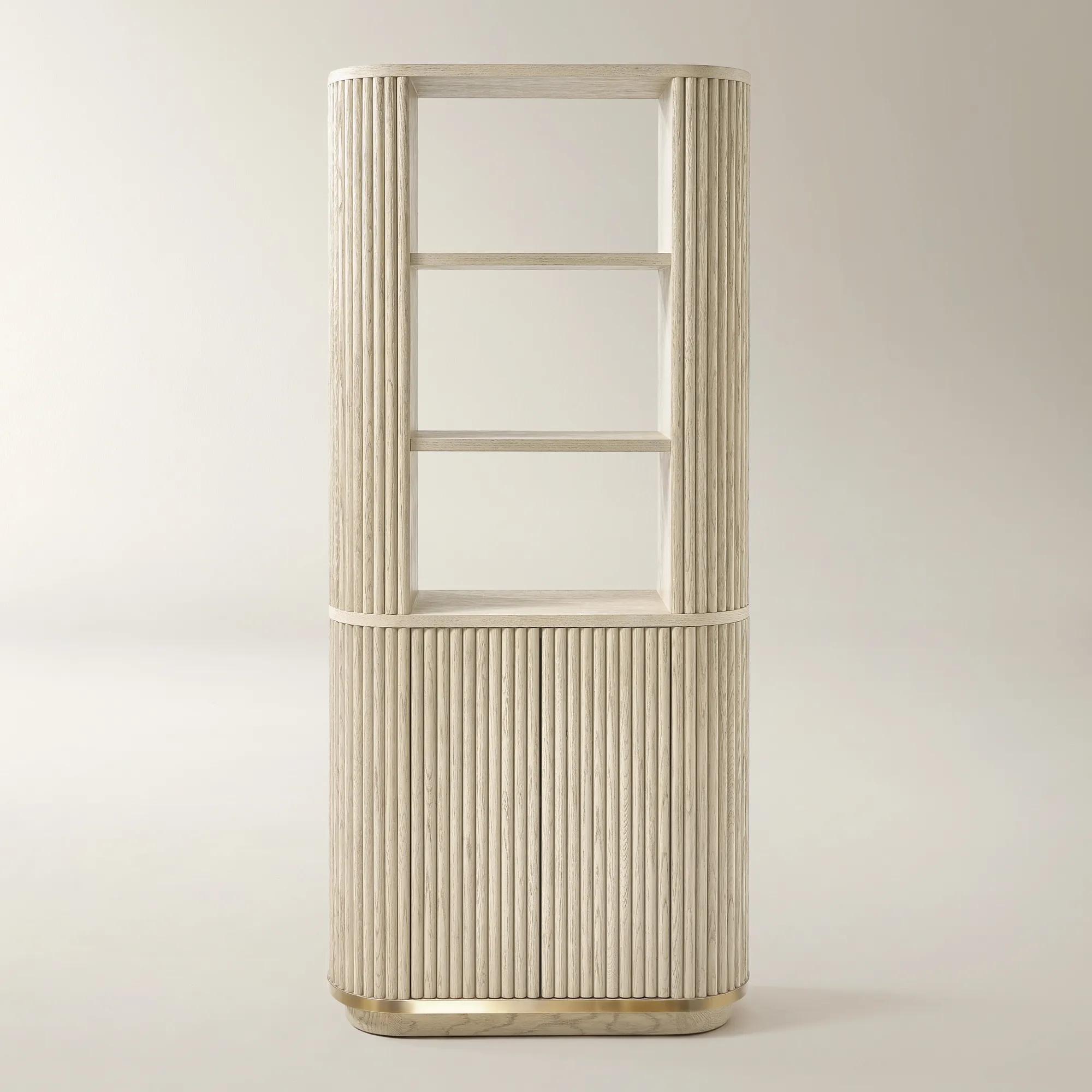
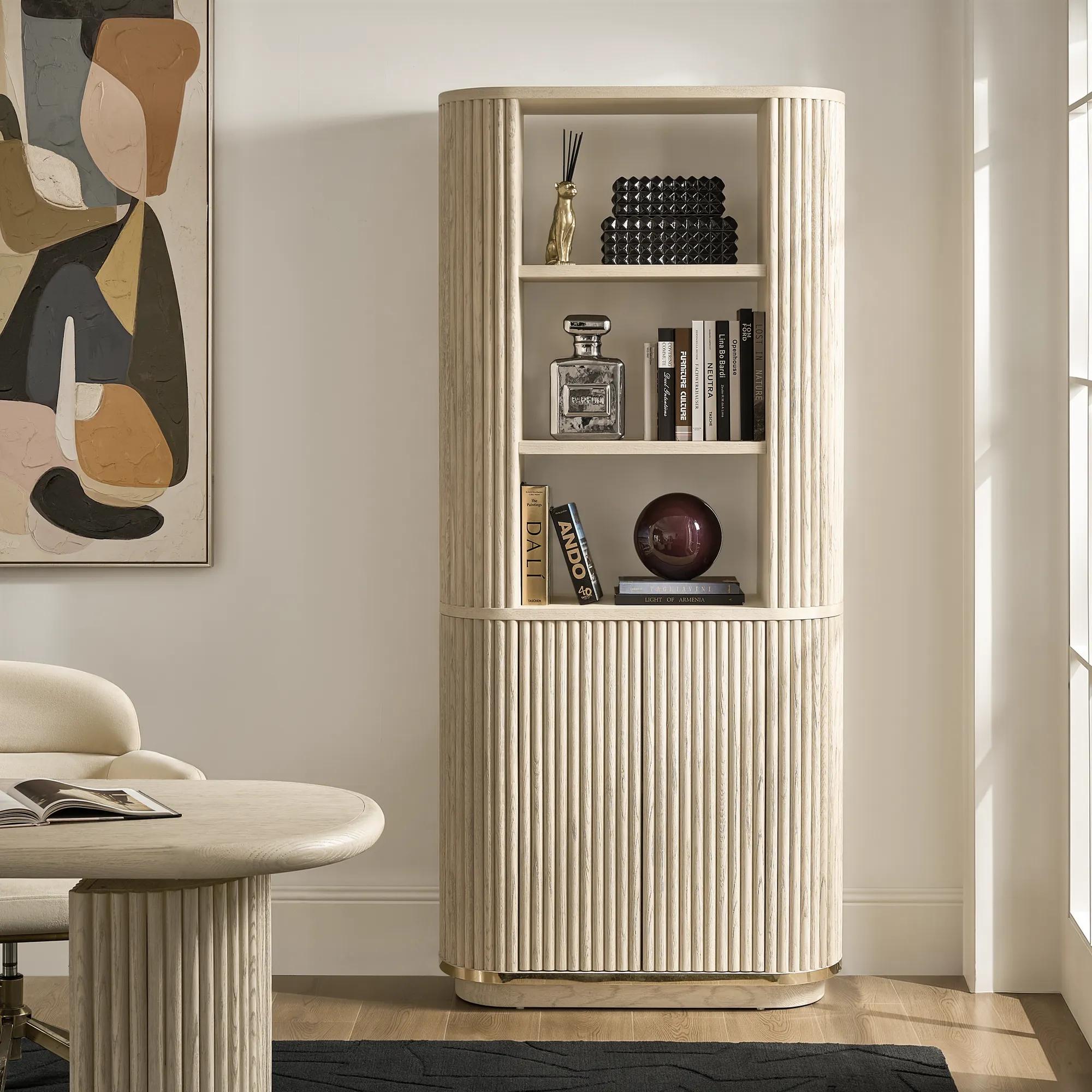
The Stria Collection offers a useful example because the reeded finish already brings material and texture into the room. The shelving does not need to disappear beneath accessories.
Start with the books you actually want there.
Place some vertically.
Stack a few horizontally.
Then introduce objects with enough scale to hold their own: a sculptural pair of bookends, a hand-blown glass bowl, a framed photograph, or one larger decorative object.
Browse decorative objects for pieces whose silhouettes can register from across the room.
Leave Some Shelves Unfinished
This is the difficult part.
Stop before every gap is filled.
Negative space lets you see the silhouette of a vase, the color of a book spine, and the texture of the shelf behind it.
Think of the entire bookcase as one composition rather than several unrelated shelves stacked vertically.
If the upper-left section is visually heavy, the shelf directly beneath it may need almost nothing.
If one shelf has a tall vase, the next might be a low stack of books.
The eye needs changes in height, depth, and density.
Recreate the Look
- Stria Collection — bring reeded texture into the shelving itself.
- Decorative Objects — choose fewer pieces with stronger silhouettes.
- Shelf Accessories — introduce one playful or sculptural moment.
A bookshelf should reveal something about the person who lives with it. Otherwise, it is only merchandising.
3. Let the Bed Become the Architecture
The designer move: if the headboard is strong enough, the wall can do less.
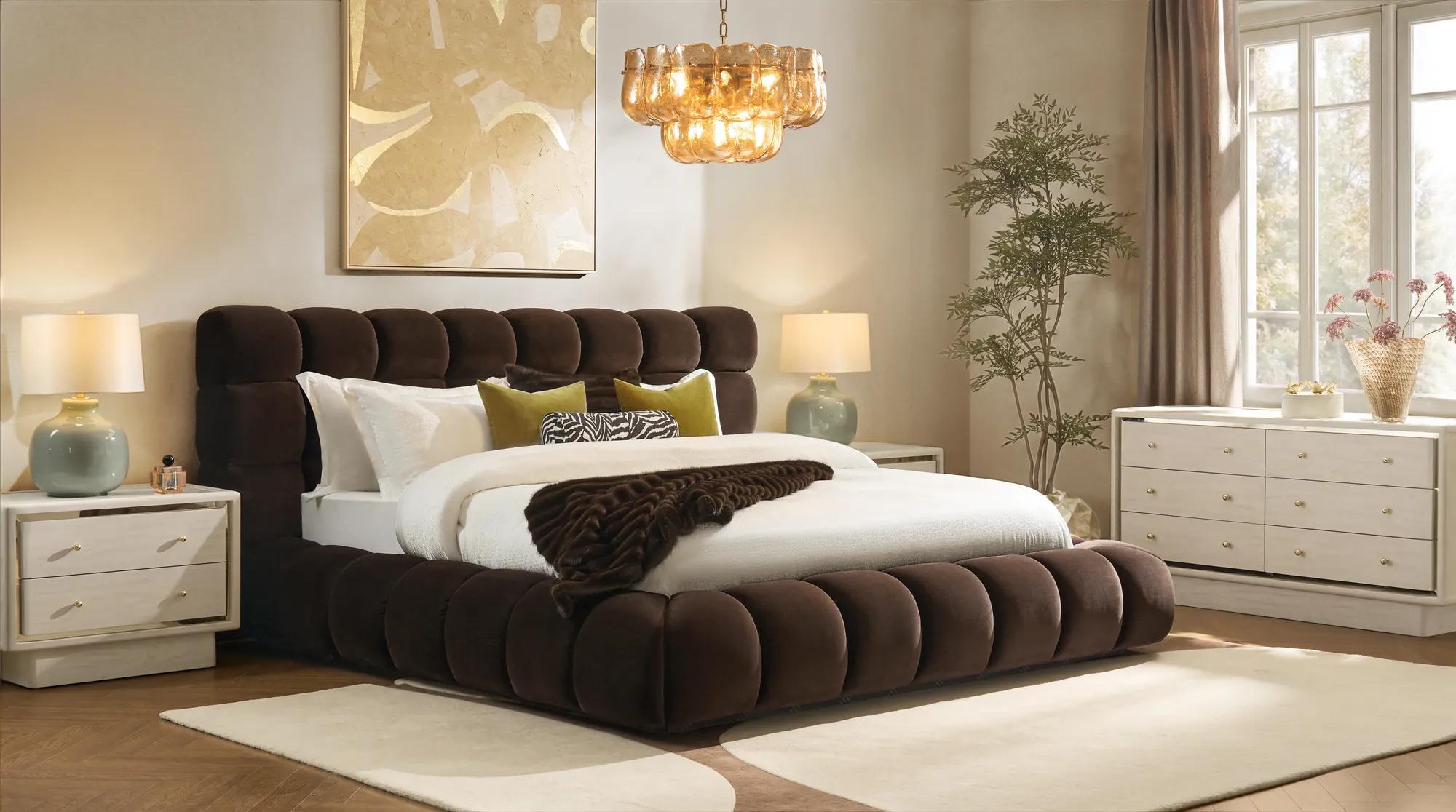
Bedrooms often accumulate decoration because the wall behind the bed feels important.
Artwork. Mirrors. Sconces. Pillows. Another row of pillows.
But sometimes the most effective decision is to make the bed itself the feature.
Explore Z Gallerie's statement headboards for tall upholstery, sculptural profiles, and forms that give the wall architecture before another object is added.
The Paloma Bedroom Collection takes the idea literally, with a fan-patterned upholstered headboard designed to create a strong focal moment.
Move the Interest Outward
You may not need art directly above the bed.
Instead, add interest at the edges: a lamp on each nightstand, art on an adjacent wall, a rug extending beyond the frame, or one strong pillow rather than an elaborate stack.
A dramatic headboard looks strongest when the neighboring objects do not repeat the same visual intensity.
Recreate the Look
- Beds — begin with silhouette.
- Paloma Bedroom Collection — create the architectural moment.
- Table Lamps — add light without competing with the bed.
The room does not need more decoration.
It needs one decision strong enough to organize everything around it.
4. Layer Pattern by Scale, Not by Matching
The designer move: let patterns relate without making them identical.
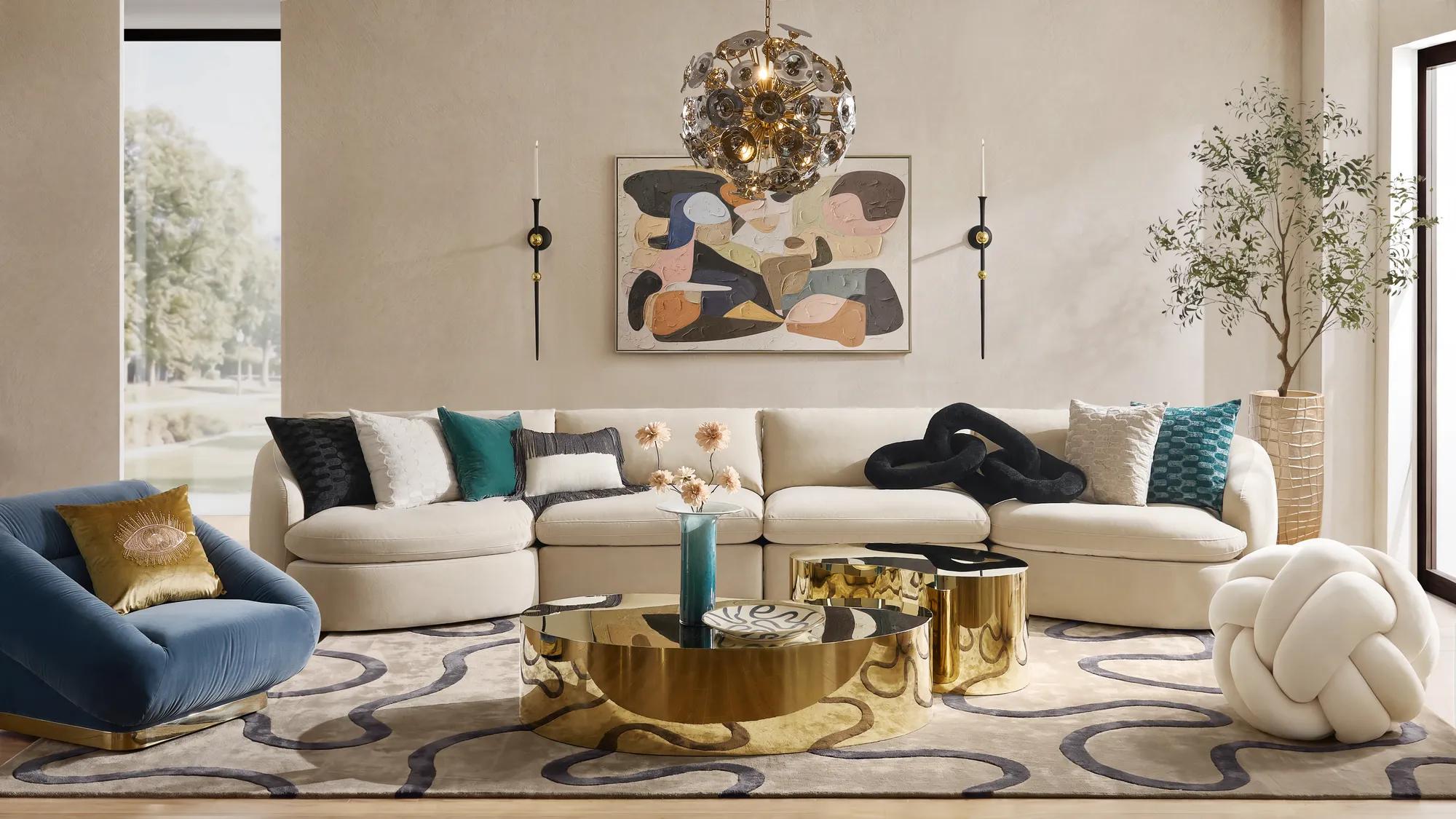
A room with one patterned cushion can look decorated.
A room where pattern moves intentionally from the floor to smaller details begins to feel layered.
The difference is scale.
Start with the largest patterned surface.
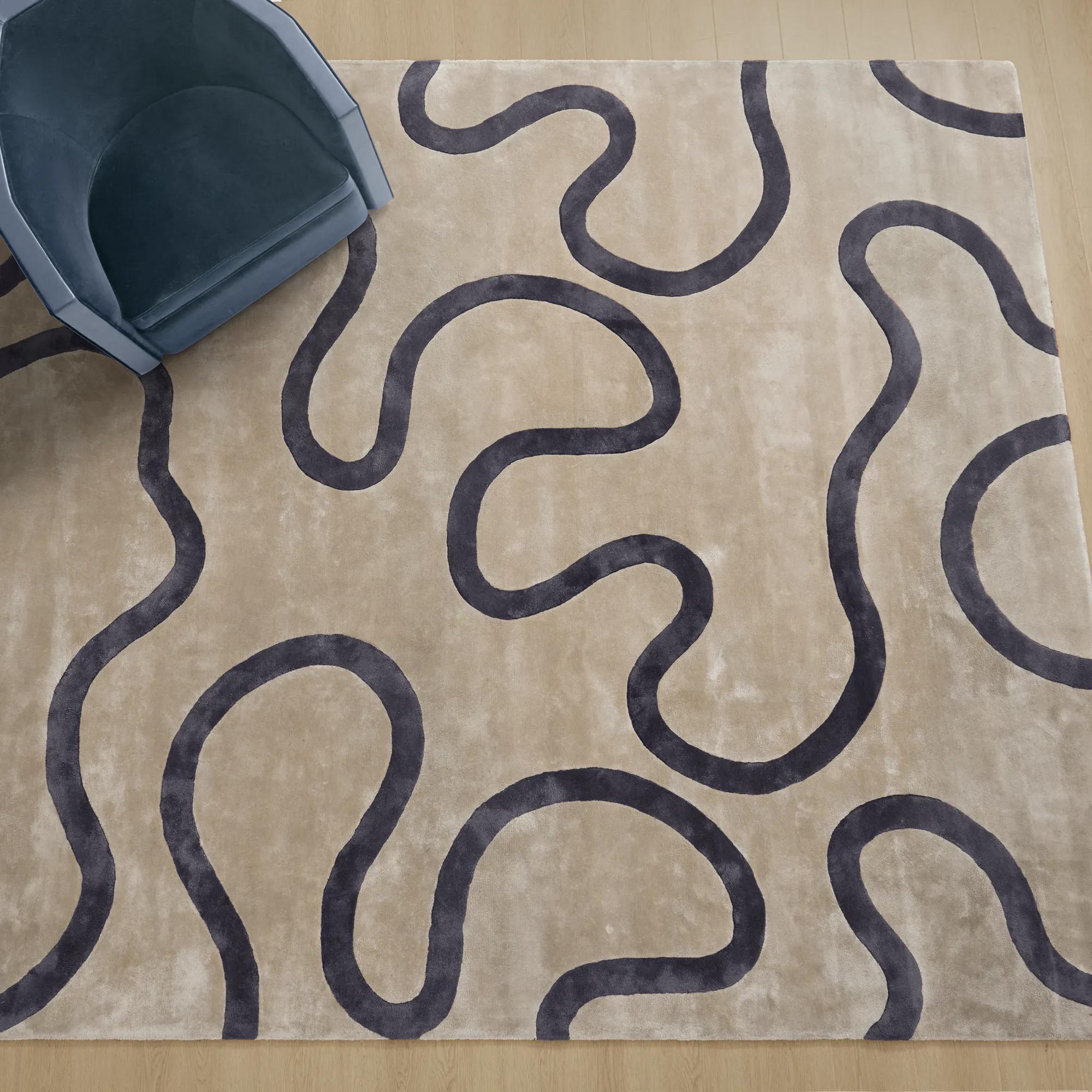
Usually, that is the rug.
Z Gallerie's patterned rug collection ranges from animal motifs and graphic geometry to softer abstract designs.
Now make the next pattern smaller.
A geometric pillow.
A narrow stripe.
An embroidered motif.
The patterned pillow collection can carry one piece of the larger pattern story without copying the rug exactly.
Repeat Color Instead of Print
If the rug contains taupe, ivory, and fig, the pillow does not need the same motif.
It simply needs one reason to belong.
Bring back the fig.
Repeat the black.
Echo the ivory.
Then stop.
Let the sofa remain solid.
Recreate the Look
- Patterned Rugs — establish the room's largest motif.
- Patterned Pillows — repeat the idea at a smaller scale.
- Solid Pillows — give the pattern somewhere to pause.
The room does not need matching patterns.
It needs visual relatives.
5. Treat Greenery Like Sculpture
The designer move: use botanical shape to change the silhouette of a room.
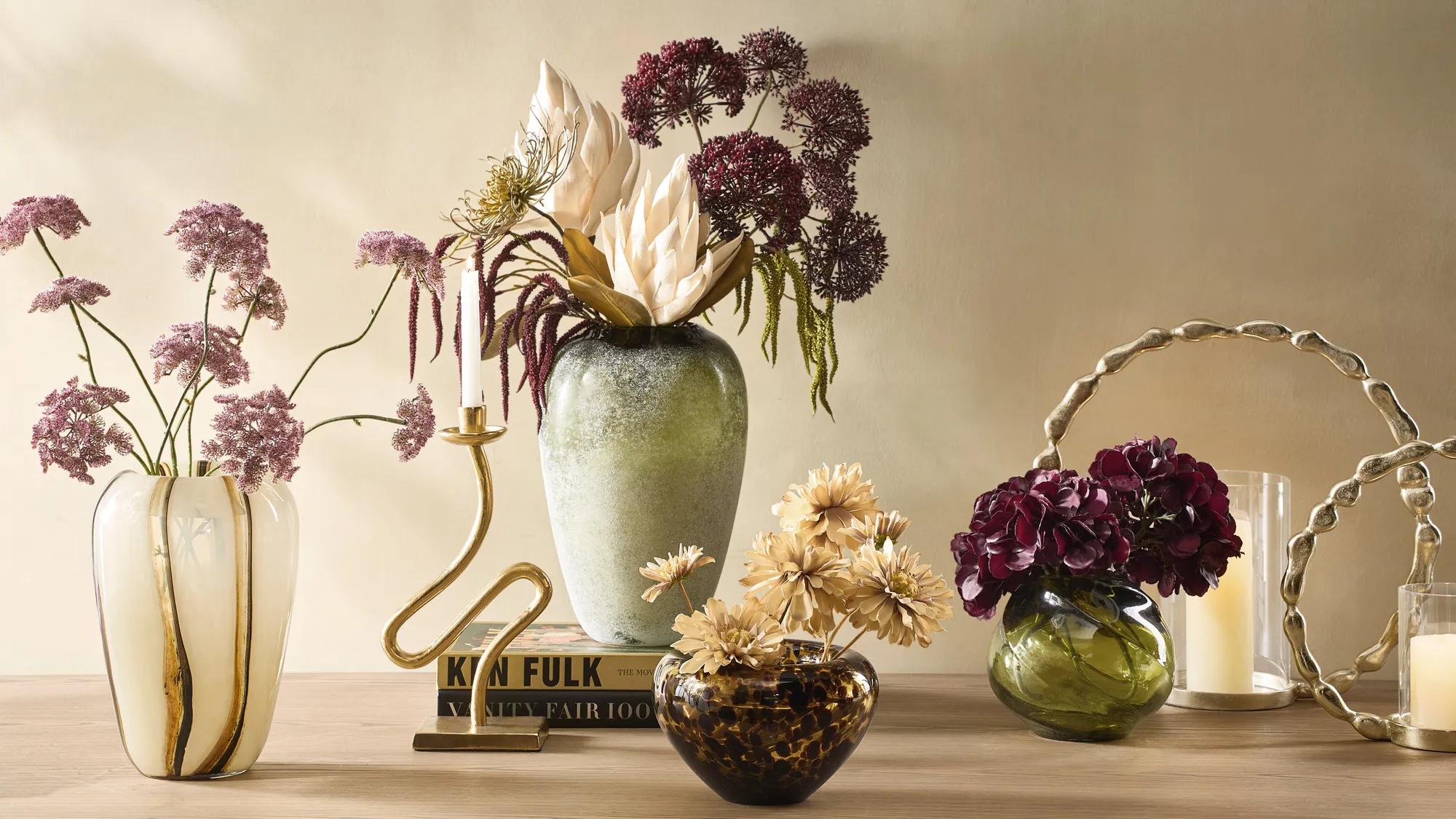
Greenery is often treated as something added after the room is finished.
A plant goes into the empty corner because the corner is empty.
A branch goes into a vase because the vase needs something.
Try reversing that logic.
Choose the botanical for its shape.
Z Gallerie's faux floral and greenery collection includes tall palm stems, magnolia, sculptural foliage, cascading stems, and other forms that can behave almost like three-dimensional drawings.
Three tall palm stems may be enough.
One magnolia branch can create more drama than a tightly packed arrangement.
A cascading stem can introduce the curve missing from a room full of straight furniture.
Give the Stems Enough Room
The vase matters.
A small opening naturally controls the arrangement. A floor vessel exaggerates height. Clear glass makes the stems themselves part of the composition, while ceramic or metallic finishes give the base more visual weight.
Browse décor and vases by shape rather than simply by color.
Then resist the temptation to fill the vessel completely.
Recreate the Look
- Faux Florals & Greenery — choose for line and movement.
- Décor & Vases — match vessel scale to the stems.
- Artificial Plants & Stems — create height without crowding the arrangement.
A plant does not need to disappear politely into the background.
Sometimes it should change the entire outline of the room.
What These Five Rooms Have in Common
The reading corner has fewer pieces than expected.
The bookshelf has empty space.
The bedroom lets one headboard carry the wall.
The patterned room gives the sofa permission to stay quiet.
The greenery is treated as form, not filler.
That is the common thread.
What leads?
What supports it?
What repeats?
What can disappear?
Those questions are more useful than trying to copy an entire room.
A Few Questions About Designer-Inspired Home Decor
How can I make my home look more designer?
Start by creating hierarchy. Choose one focal point in each area, then make the surrounding pieces support rather than compete with it. Pay attention to scale, lighting, texture, and negative space before adding more accessories.
What makes home decor look expensive?
Material contrast and editing often matter more than quantity. Pair tactile upholstery with glass or metal, use larger decorative objects instead of many tiny accessories, and leave enough open space around strong pieces for their form to register.
How do designers style bookshelves?
Begin with books and a few meaningful objects, vary their heights and depths, and leave intentional areas of empty shelf. Avoid treating every shelf as a separate vignette; look at the bookcase as one composition.
How do you layer patterns without making a room look busy?
Choose one dominant pattern, usually on the largest surface, then use smaller-scale patterns elsewhere. Keep the color palette related and leave at least one major surface, often the sofa or wall, solid.
Does every room need a statement piece?
No. But every room benefits from hierarchy. The focal point may be a dramatic chair or headboard, but it can also be a view, an artwork, a beautiful material, or a well-proportioned piece you already own.
Borrow the Decision, Not the Entire Room
The most useful inspiration rarely comes from copying every object in a photograph.
Borrow the way the chair created a corner.
Borrow the empty shelf.
Borrow the oversized headboard.
Borrow the decision to put the pattern on the floor instead of the sofa.
Borrow the single palm branch against the quiet wall.
Then make the next decision yours.
Explore Z Gallerie's new and featured collection or work with our design services to build a room around the
pieces and the point of view, you already love.
A designer-inspired home should not look like someone else designed it.
It should look like you knew exactly what to keep.