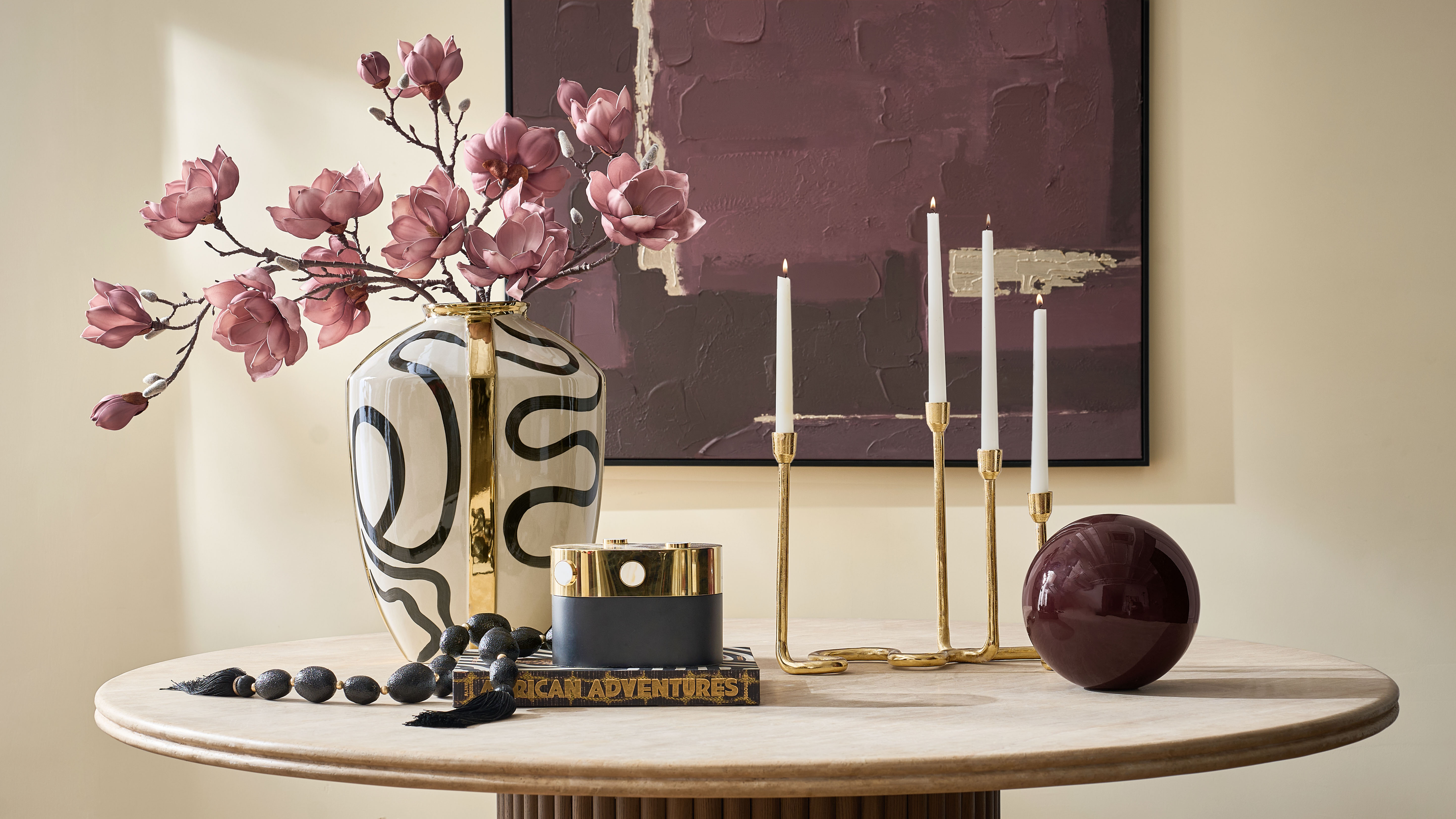
The best rooms rarely choose just one.
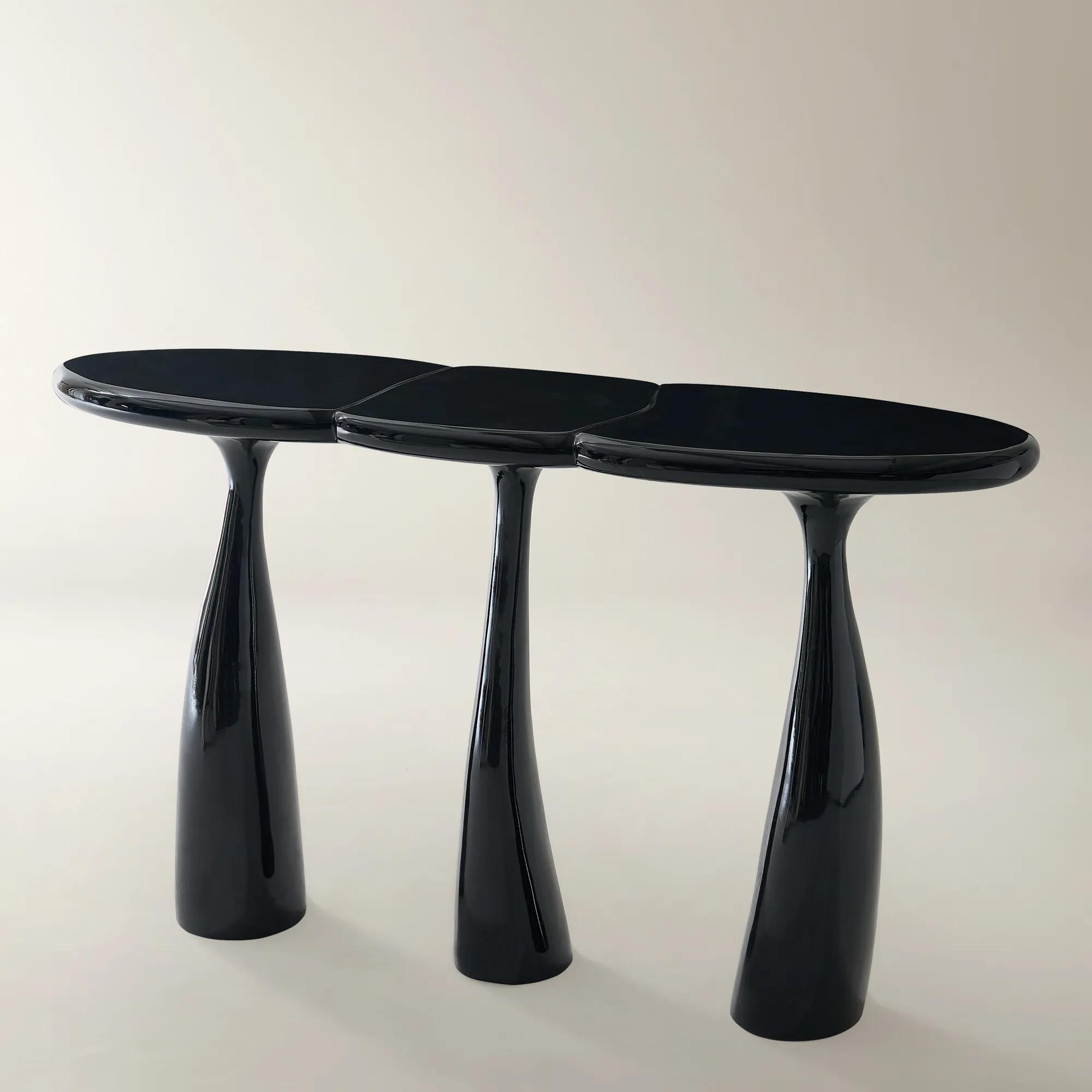
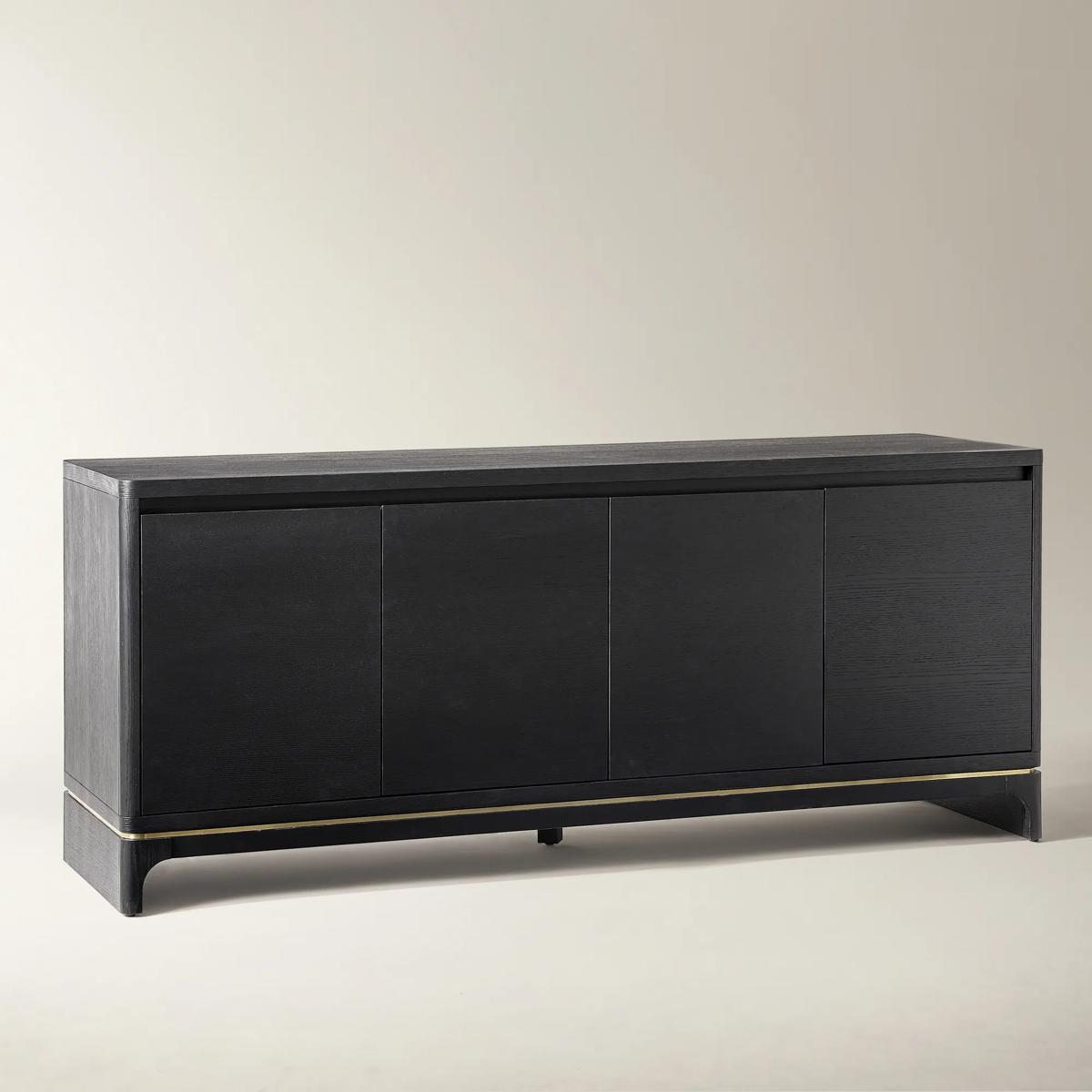
A glossy black console and a matte black cabinet can belong to the same palette yet do entirely different work. One brings reflections into view; the other keeps the attention on its outline and surface. The difference is worth considering before you commit to a finish.
The question is not whether your home is glamorous enough for gloss. It is where a little reflection would make the room more interesting and where you would rather let the eye rest.
That contrast sits at the heart of High Gloss Society. It also runs through the Deco Pop direction in our Fall/Winter 2026 collection, where lacquer, chrome, and velvet meet matte black and softer textures. Think of shine as a choice you place deliberately, not a look you must apply everywhere.
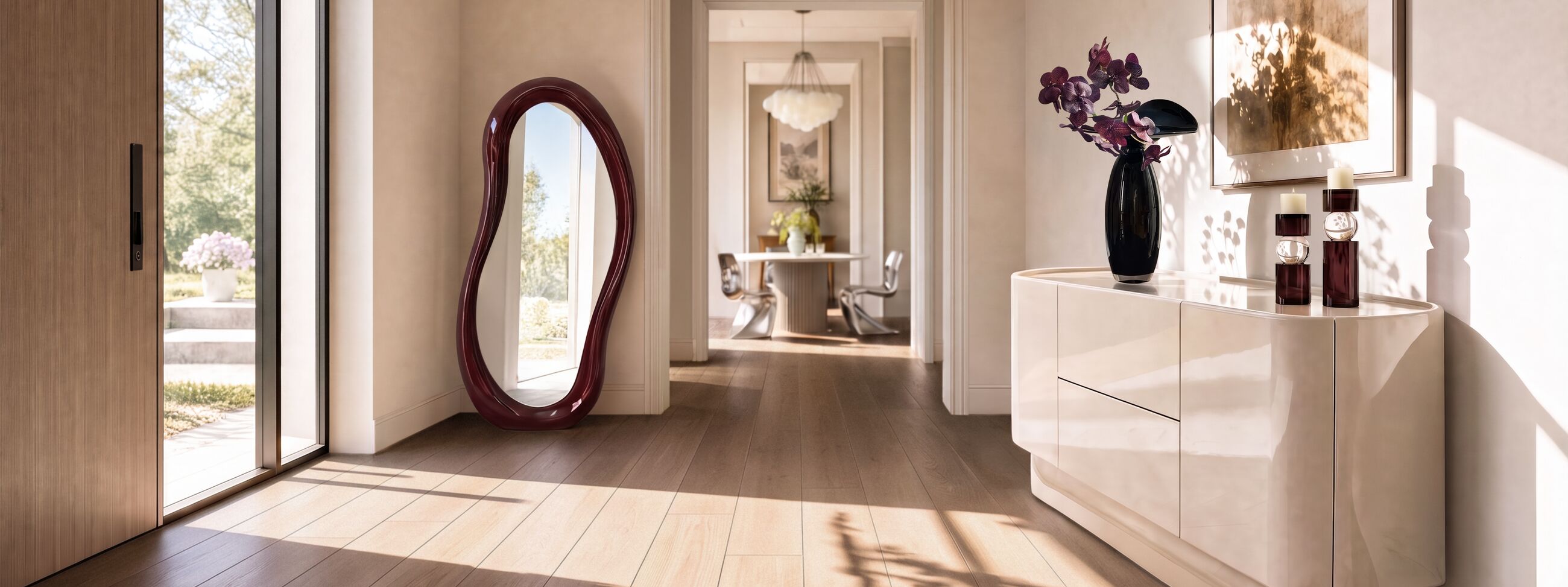
What is the difference between glossy and matte furniture?
High gloss furniture has a strongly reflective surface; matte furniture has a low-sheen surface with softer, less distinct reflections. The distinction is how the finish handles light, not whether the furniture is modern, traditional, expensive, or well made.
There is also a middle ground. Satin finishes offer some luster without the sharper reflection associated with high gloss. You do not have to choose between the two extremes.
Where does lacquered furniture fit?
Lacquer describes a coating, while gloss describes its sheen. Lacquered furniture can be glossy, satin, or matte. Equally, a glossy appearance does not tell you that a piece is lacquered; other coatings and materials can create shine.
Read the material and finish descriptions together. A lacquered case with a glass top has two different surfaces to consider, even when their colors are closely matched. Our guide to lacquer furniture explains that distinction in more detail.
Glossy vs. matte furniture at a glance
Use the visual differences below to guide the look. For durability and cleaning, compare the actual product specifications rather than judging by sheen alone.
| What you are deciding | High-gloss finish | Matte finish |
|---|---|---|
| How much reflection you want | More defined highlights and reflections | Softer, more diffuse reflections |
| The decorating role we would give it | A focal cabinet, sculptural table, or concentrated accent | A quieter large surface, or contrast beside reflective pieces |
| What to check in your room | Window and lamp reflections from your usual seat | Whether the color, grain, and shape have enough definition in your lighting |
| How to build contrast | Add lower-sheen surfaces and woven textures | Introduce glass, a polished detail, or a glossy accent |
| What the label cannot guarantee | Scratch, stain, or heat resistance | Scratch, stain, or heat resistance |
Neither finish wins every room. The useful question is which surface you want to notice first.
Read the light before choosing the finish
A finish sample is more useful in the position where the furniture will live than under a single showroom light. Hold it upright for a cabinet front and flat for a tabletop. Look at it during the day and again with your evening lamps on.
The direction of the light and your viewing angle affect the reflection. A highlight that looks appealing from the doorway may be distracting from a reading chair.
For a room with large windows, test the placement rather than ruling out gloss. You may prefer the reflective surface along a side wall instead of directly in your main view.
In a darker room, do not ask a glossy finish to substitute for lighting. Consider the furniture's color, its size, and the available light together. A dark glossy cabinet is not automatically a better choice than a pale matte one simply because it shines.
At night, try a shaded lamp beside the furniture rather than directing a bare bulb toward it. Our guide to layered living room lighting offers more ways to plan the room after sunset.
Where glossy and matte finishes work, room by room
Living room: choose the surface you want to notice
In a seating area filled with upholstery, a glossy accent table is an easy place to introduce a different finish.
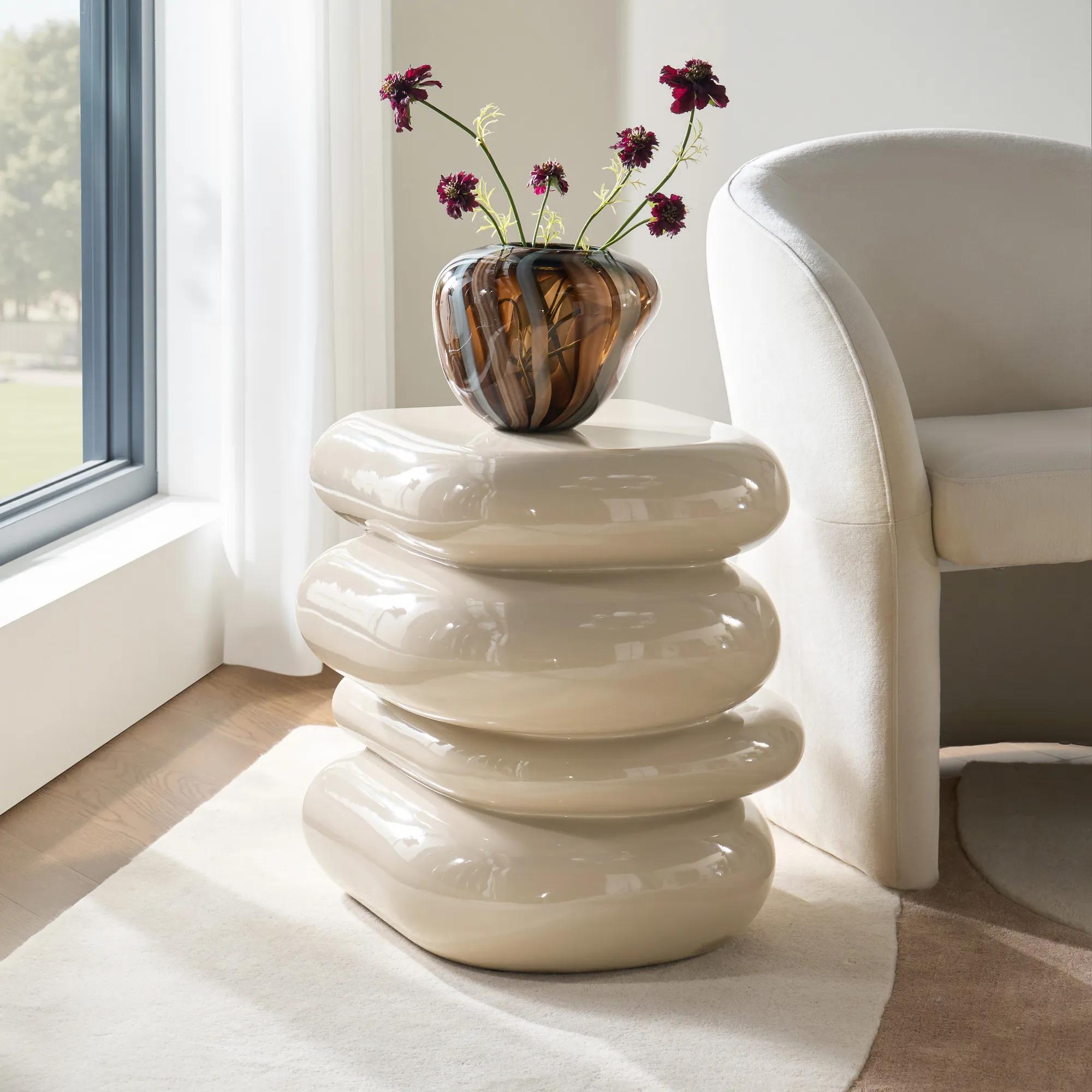
The Forma Stacked Turtle Dove Side Table has a molded fiberglass body, four rounded tiers, and a high-gloss lacquer finish. Its pale color offers a way to try shine without adding a strong new hue.
Place it beside a textured chair, then keep the coffee table simpler. For a neutral room, repeating a similar color in different finishes can be more interesting than introducing another accent color.
Already have a large glossy coffee table? Let it keep that role. A lower-sheen cabinet and a woven rug can supply the contrast without another furniture purchase at the center of the room.
Dining room: decide between the buffet and the tabletop
Start with the piece you already own. With a glossy dining table, we would look for a buffet that brings a different surface to the room.
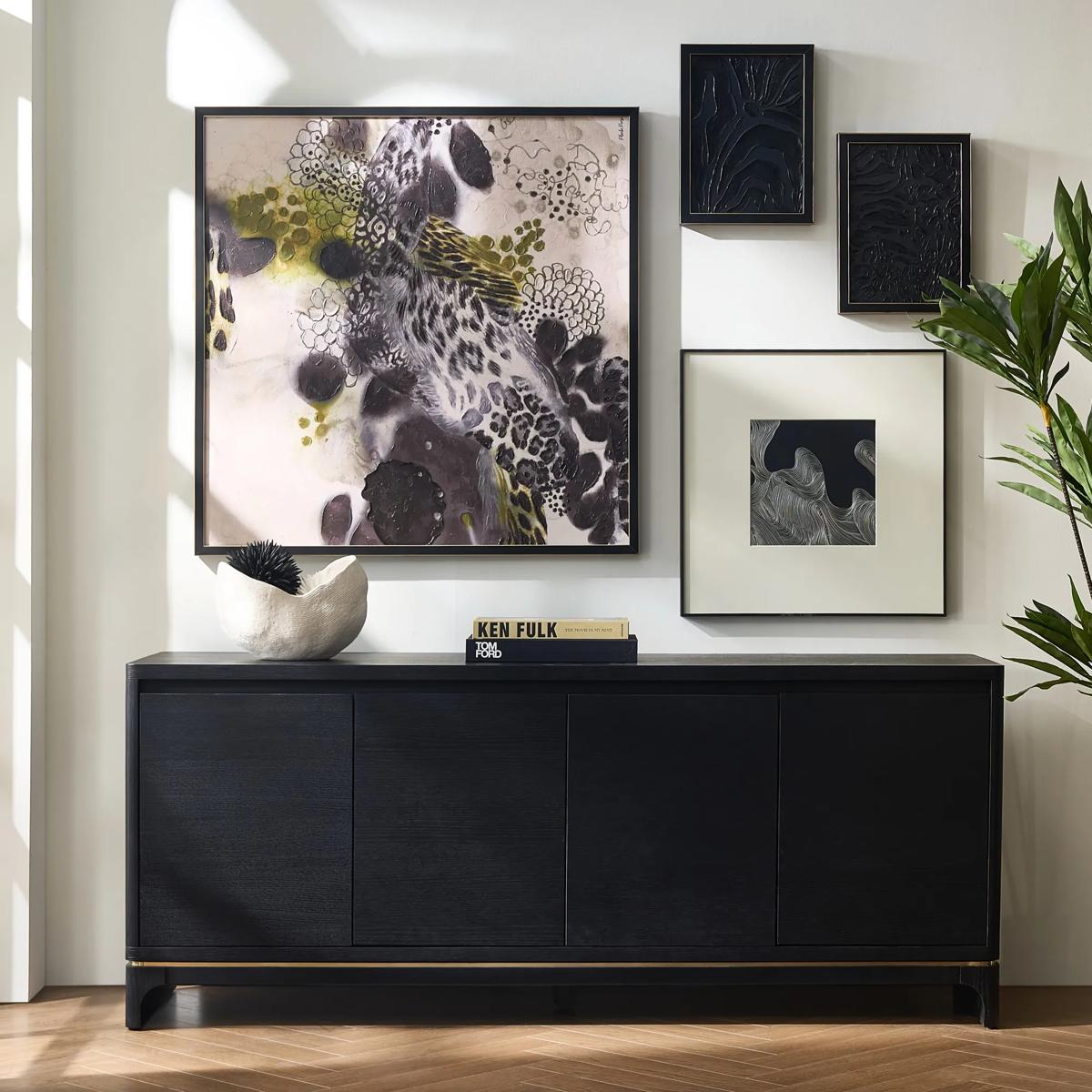
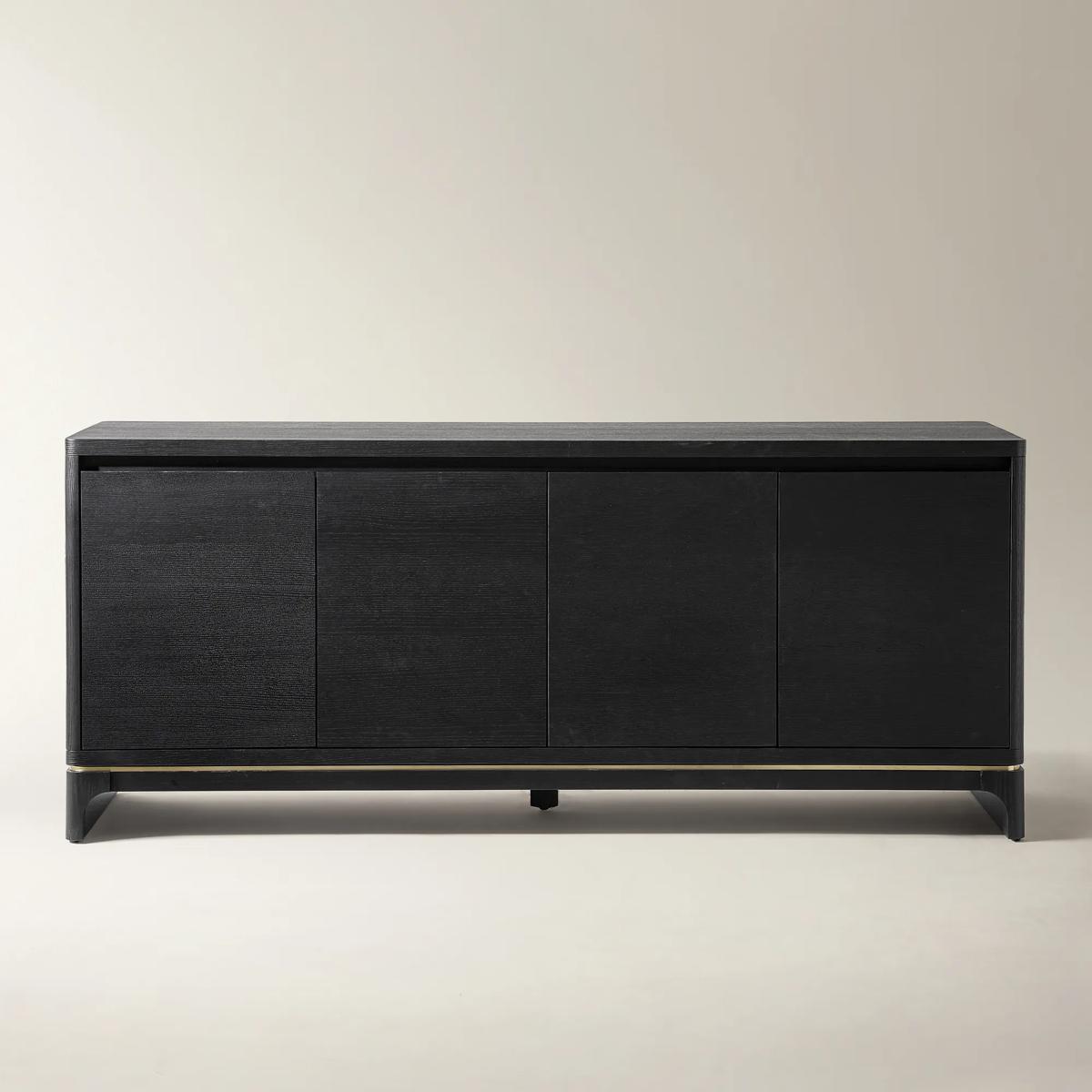
The Vanta Black Oak Buffet pairs a matte black finish with oak grain and light gold–finished stainless-steel trim. It demonstrates that matte furniture can still have plenty of presence and that the contrast can happen within a single piece.
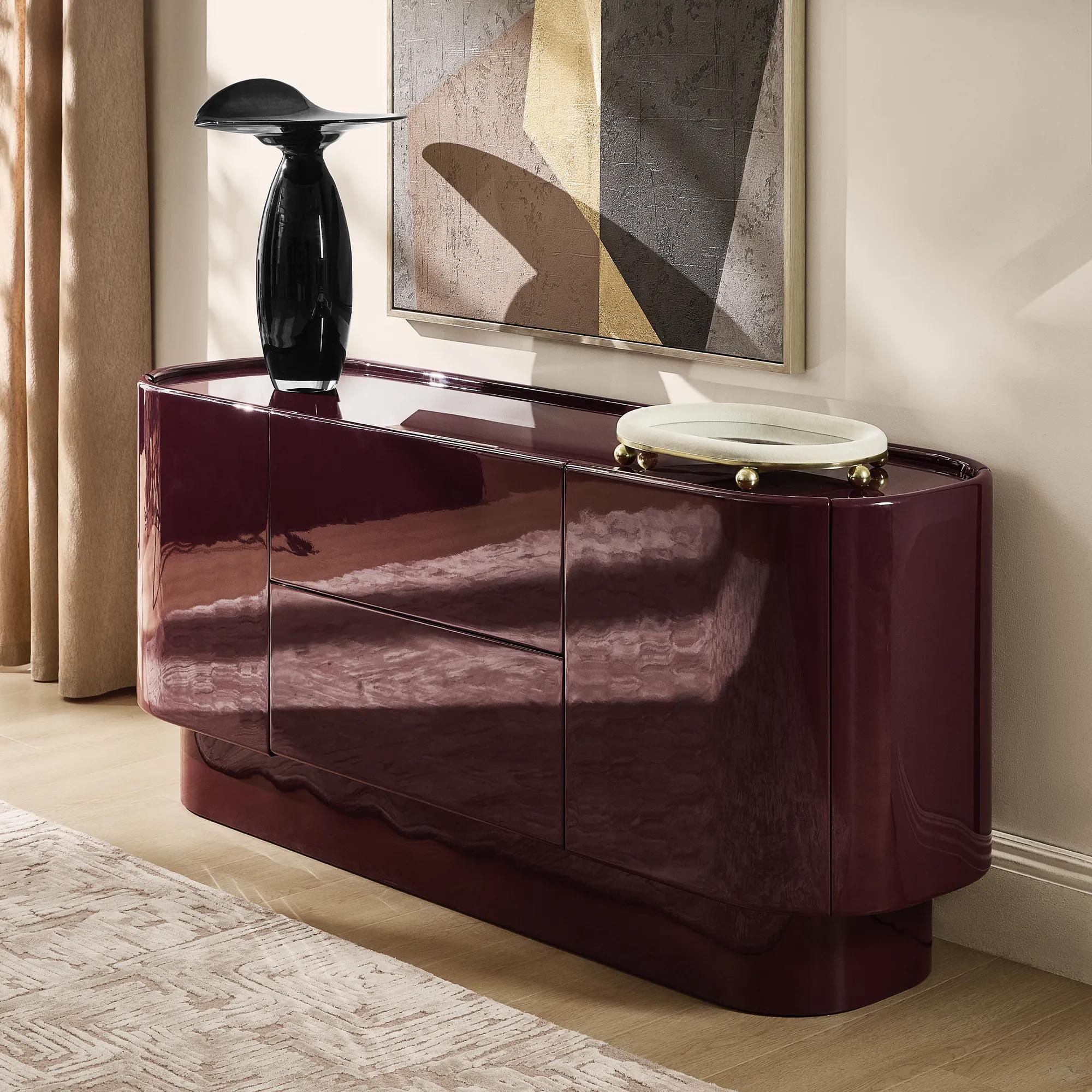
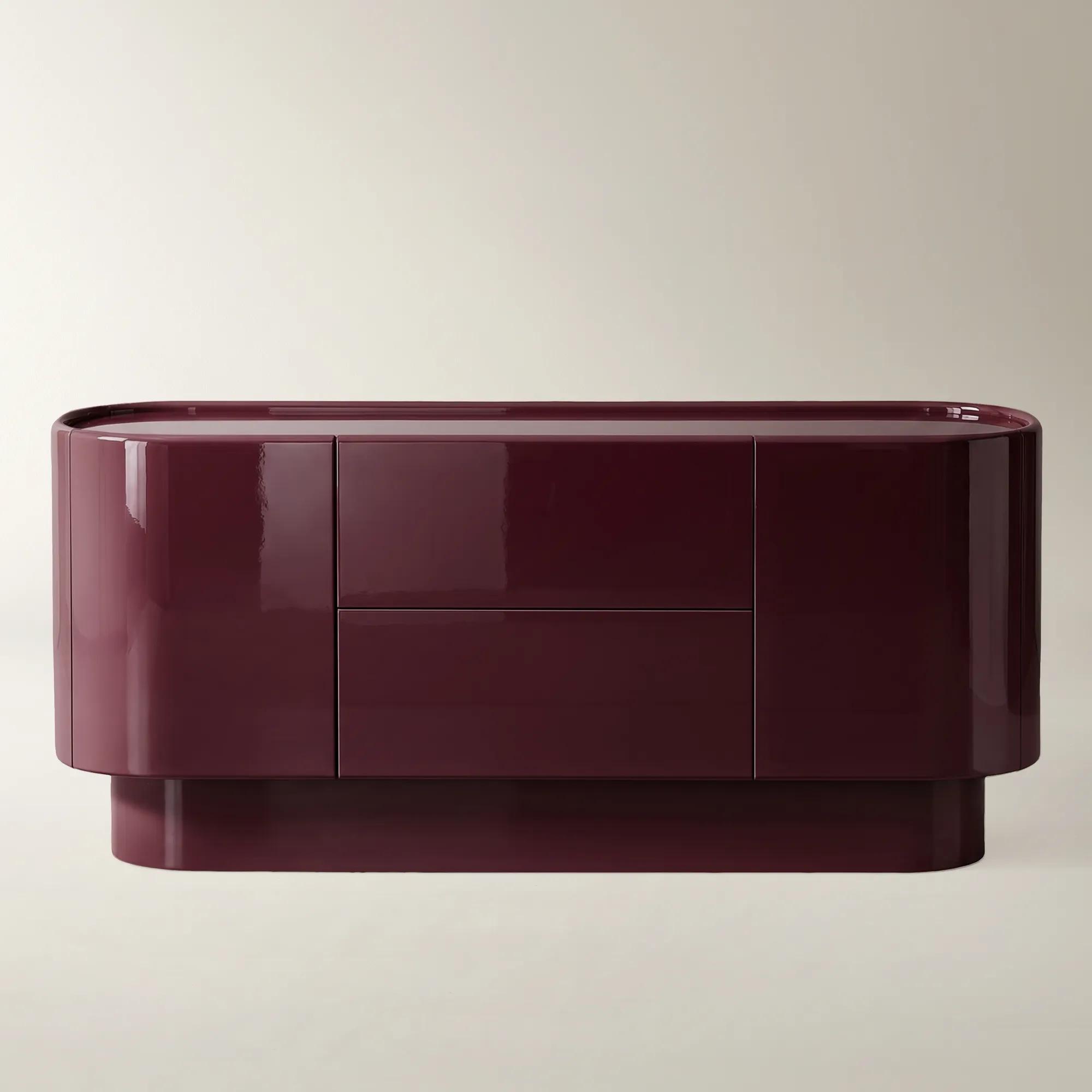
For a dining room built around a lower-sheen wood table, consider the opposite approach. The Velar Lacquered Ox Blood Buffet With Glass Top combines a glossy lacquered case with a back-painted tempered-glass top.
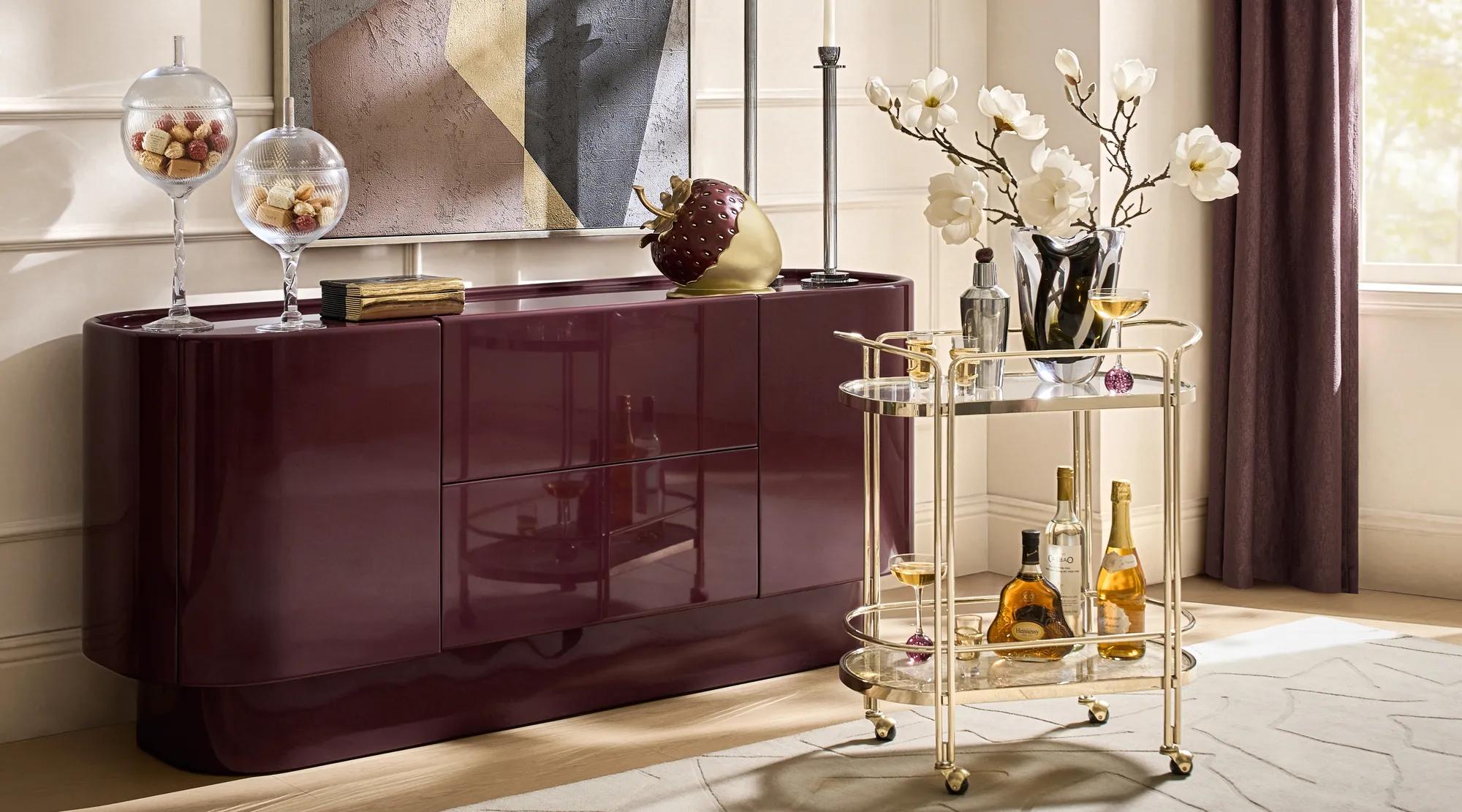
We would pair its deep red with simple upholstery and a substantial artwork, rather than lining the top with equally shiny objects. Let the buffet provide both the color and the reflection.
Bedroom: keep the shine close, not constant
A bedroom does not have to be entirely matte to feel restful. Try limiting the glossy finish to the bedside furniture and keeping the larger areas tactile.
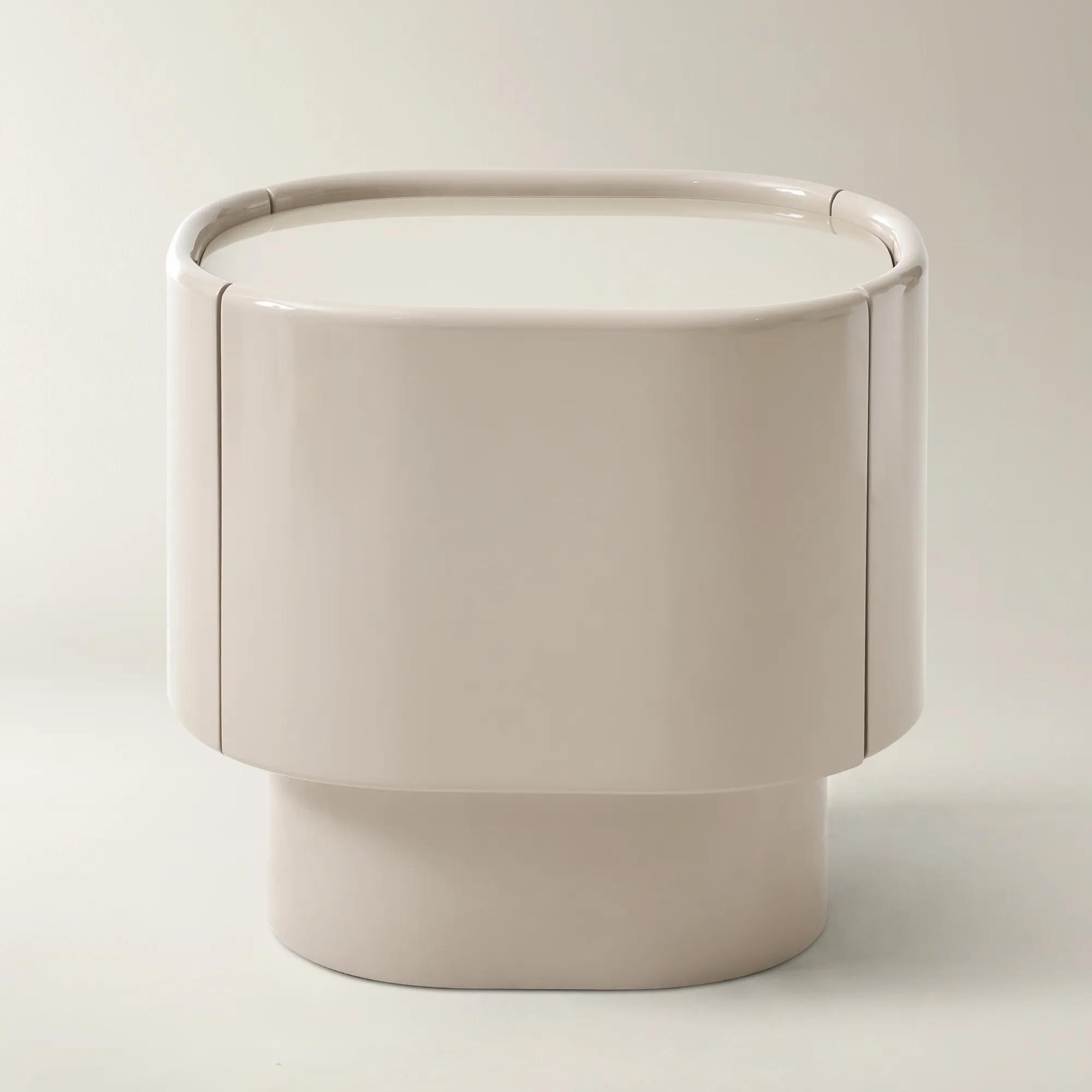
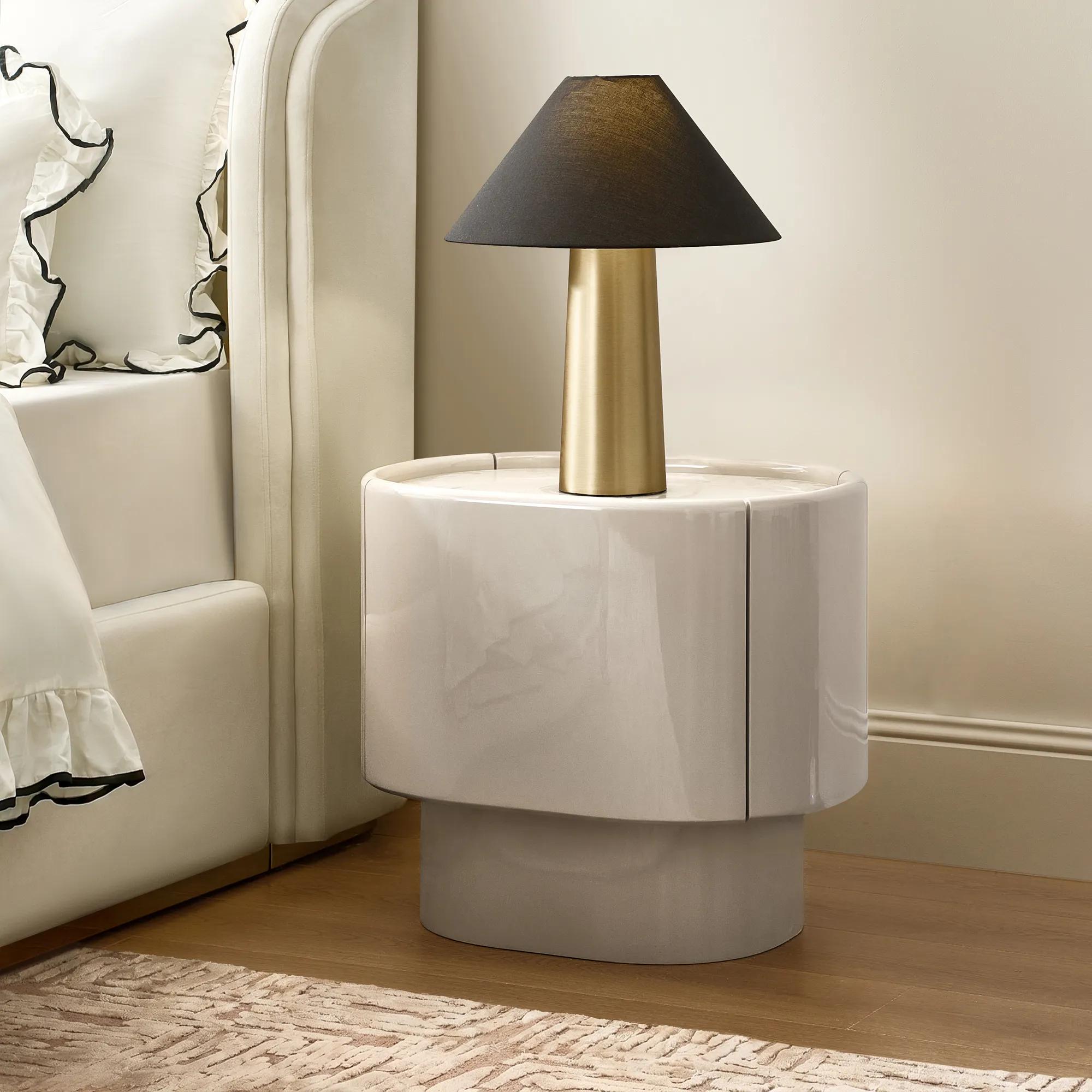
The Velar Lacquered Turtle Dove Nightstand With Glass Top combines high-gloss lacquer, back-painted tempered glass, and a concealed soft-close drawer.
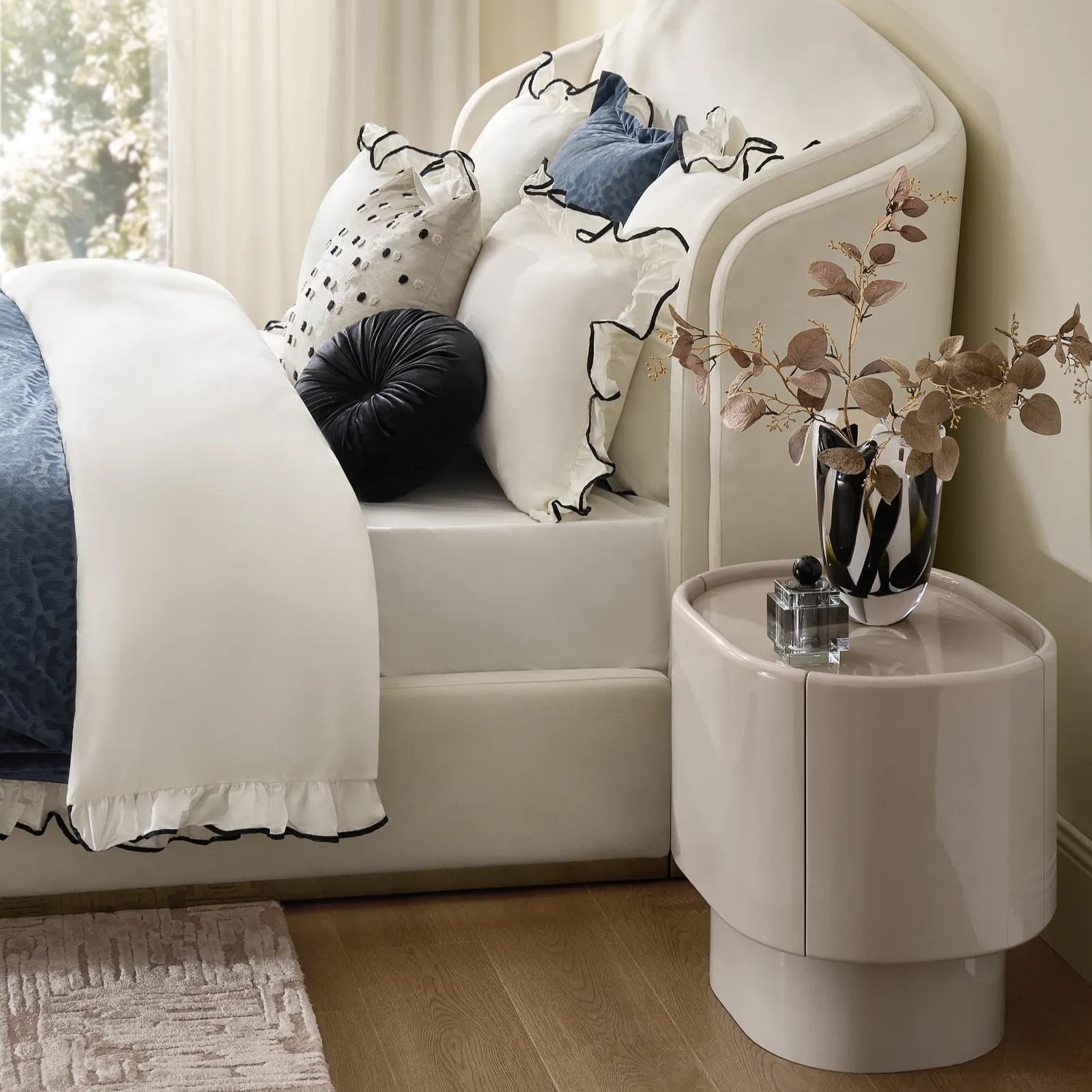
Set it beside an upholstered bed with cotton or linen bedding. Check the bedside lamp from your sleeping position before settling on its placement; the reflection should be something you enjoy, not something you need to turn away from.
A matte dresser can remain across the room. There is no requirement to carry the bedside finish through every storage piece.
Entryway: let one piece make the introduction
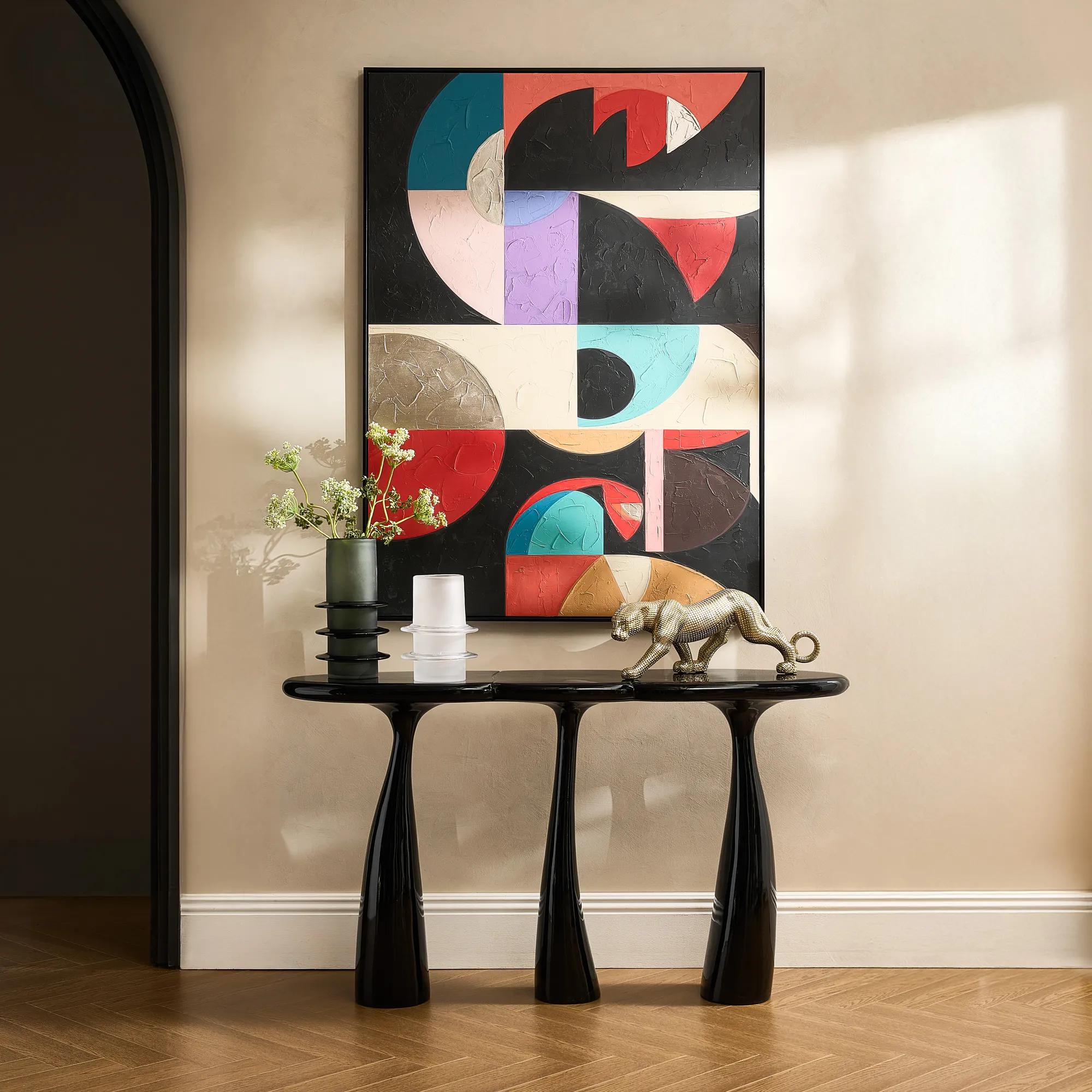
An entryway is a good place to be decisive. The Thalia Glossy Black Console Table brings three flowing pedestal forms and a high-gloss black lacquer finish over fiberglass.
Try it against a matte-painted wall with a single artwork above. Before adding a mirror, consider whether you prefer the art itself or another reflection in that spot.
Make room for daily habits, too. Use a suitable protective tray for keys rather than letting them land directly on the finished surface.
Home office: judge the finish from the chair
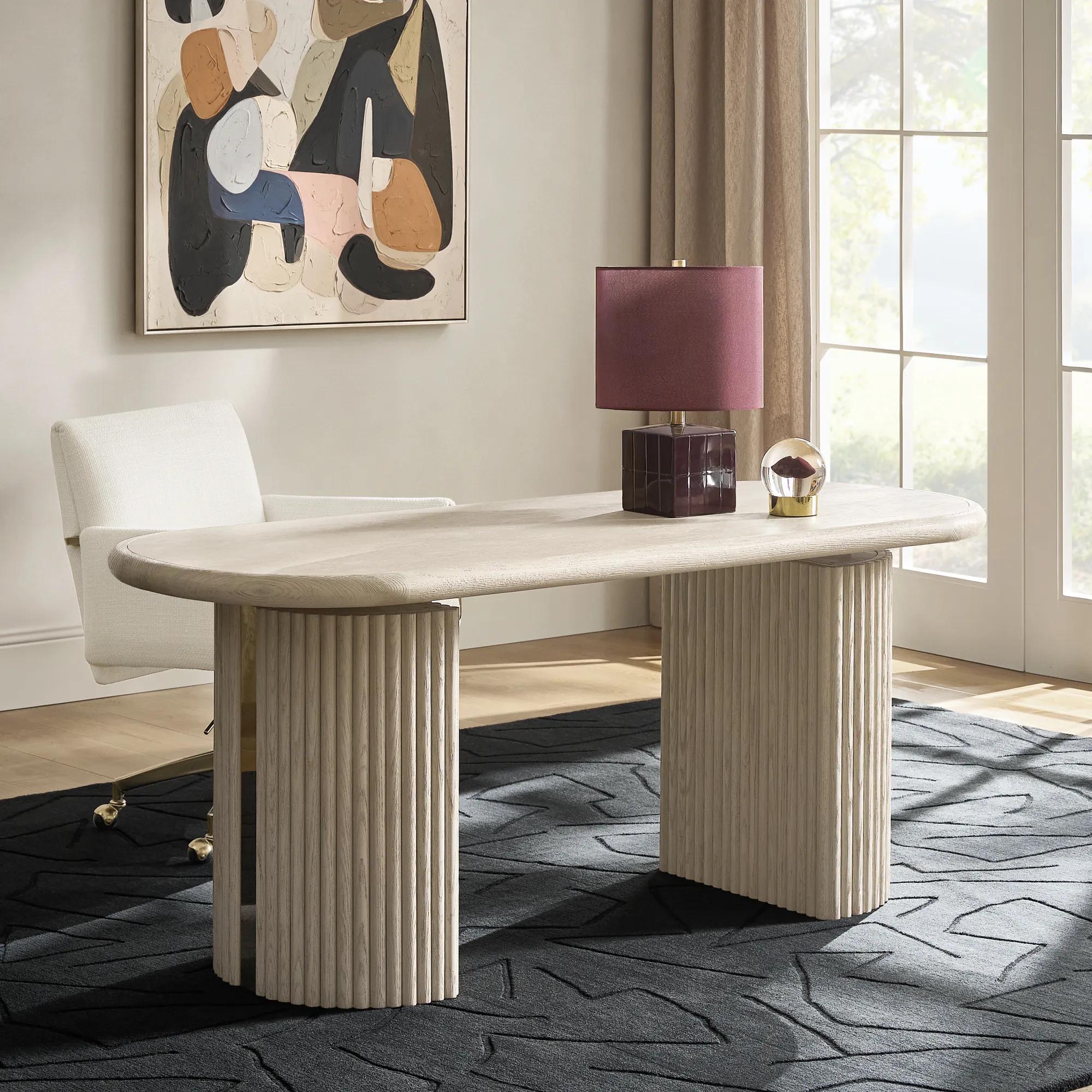
For a desk, the view from the working position matters more than the view from the hall. A lower-sheen desktop is worth considering when reflections from a task lamp or window distract you.
Gloss can move to a nearby cabinet or occasional table instead. The room keeps its polish without making the work surface responsible for the entire look.
How to mix high gloss furniture with matte finishes
Keep a color connection
Try glossy black beside matte black, or pale lacquer near upholstery in a related neutral. The finishes provide the difference, so the palette can stay relatively restrained.
For more color, take a note from the Deco Pop palette: burgundy with blue, or deep teal with mauve. Those combinations are part of our FW26 direction; how much of each to use is a decision for your room.
A burgundy cabinet and a dusty blue textile can be enough. They do not need matching accessories on every surface.
Compare the amount of shine, not the number of pieces
One large reflective cabinet can make a stronger impression than several small polished details. Look at how much glossy surface you see from the doorway, then from your usual seat.
Give the most prominent piece some separation from other strong reflections. A wood cabinet or textured chair between them may be more useful than removing every other metallic accent.
Our guide to mixing furniture materials and finishes explores these broader combinations.
Use texture without confusing it with matte
Wood, stone, and fabric are not automatically matte. A piece can have visible texture and still catch plenty of light. Check the actual surface rather than relying on the material name.
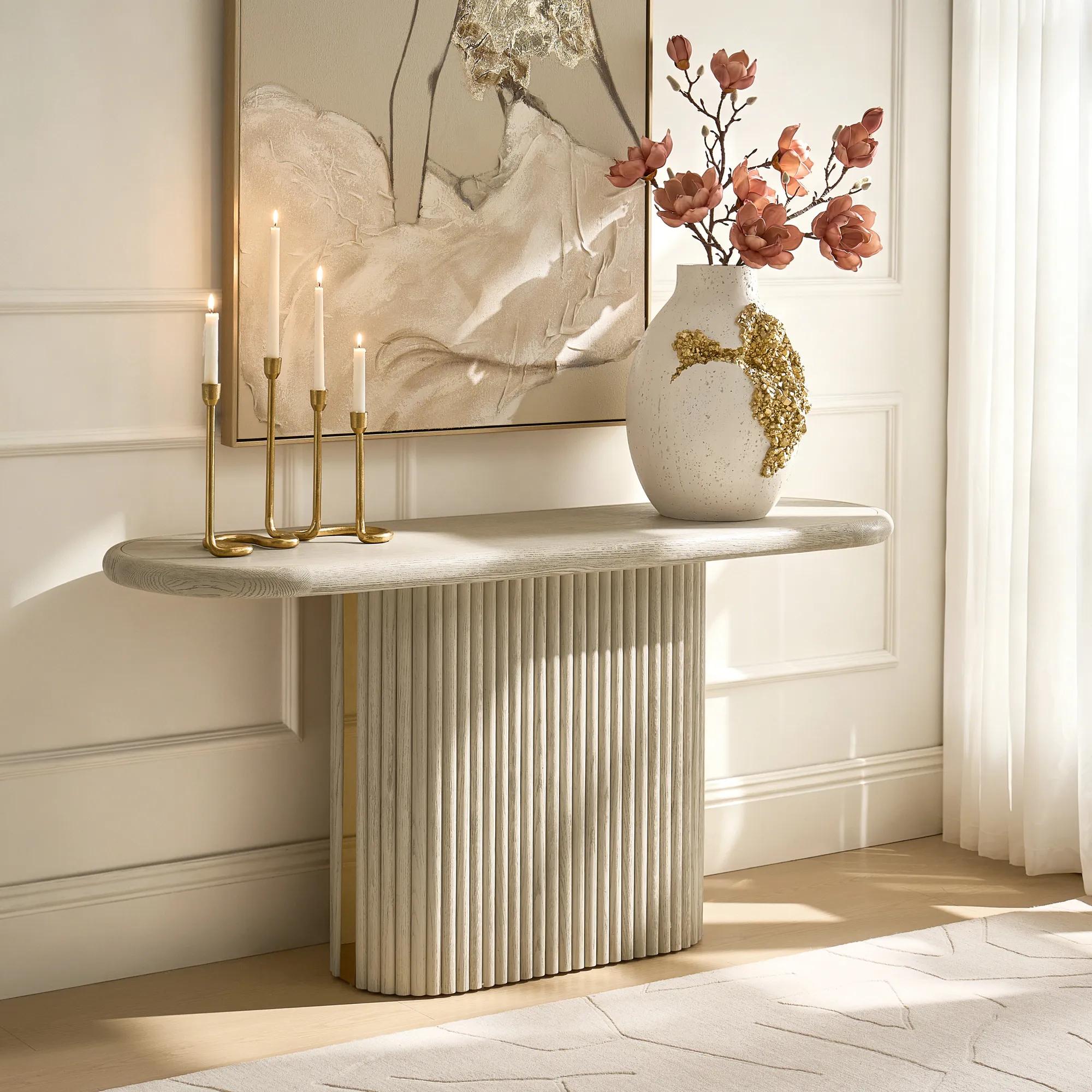
For this look, try a low-sheen wood surface, an unglazed ceramic object, or a plainly woven textile beside the lacquer. Velvet can offer a softer tactile contrast, even when it has a sheen of its own.
You are not trying to remove all luster. You are giving it something different to sit beside.
Durability and care: what sheen cannot tell you
Neither glossy nor matte is a reliable stand-alone promise of durability. The coating system, construction, and intended use matter. A finish designed for frequent handling deserves a different assessment from one on an occasional decorative piece.
Think about the contact each surface will have. Drawer fronts meet hands; tabletops meet glasses, ceramics, and laptops. Ask about scratch resistance, heat protection, and cleaning separately rather than expecting the word “matte” or “lacquer” to answer everything.
Nor should a matte finish be treated as permission to scrub. Some flat coatings can develop a shinier patch when repeatedly rubbed. Follow the care instructions before attempting to remove a stubborn mark.
How to clean high gloss furniture
Use the instructions for the specific piece, not a general furniture-polish routine. Forma's guidance calls for a soft, dry cloth and avoiding chemical cleaners, abrasives, and excess moisture. Velar allows a soft cloth that is dry or slightly damp.
That difference is a useful reminder: similar-looking finishes do not always have identical care requirements.
Use the recommended coasters or protective pads, and follow guidance on sunlight and placement. Do not assume that a glass top and a lacquered case should receive the same cleaning product. For marks that remain, ask for product-specific advice rather than experimenting with abrasives or solvents.
Before you choose, make one final comparison
Look at the proposed piece from three positions: the doorway, your main seat, and directly above the surface you will use. Compare the finish with your wall color, flooring, and the furniture that is staying.
Then ask one practical question: is the room missing reflection, or does it already have enough?
When the main pieces are quiet, a glossy table or cabinet may be the most satisfying addition. When the room already includes mirrored furniture, polished stone, and a dramatic light fixture, matte storage may do more for the arrangement.
Neither answer calls for a complete redesign.
Questions about glossy and matte furniture
Can you mix glossy and matte furniture in the same room?
Yes. Connect the pieces through color, scale, or shape, then let their finishes differ. A glossy accent table can work beside a matte cabinet; a lacquered buffet can sit across from a lower-sheen dining table.
Is high gloss furniture suitable for a small room?
It can be. Begin with a side table, nightstand, or console whose dimensions leave comfortable circulation. Choose gloss because you like the reflection, not because it guarantees the room will appear larger.
Is lacquer always high gloss?
No. Lacquer can have a matte, satin, or glossy sheen. Read the stated finish rather than assuming that “lacquered furniture” always means a mirror-like surface.
Which is easier to maintain: matte or gloss?
There is no universal winner. Compare the care requirements of the actual products and how often you will touch or use them. A finish with less shine is not automatically stain-resistant, and a glossy surface is not automatically fragile.
Find your balance of shine
A room can have a glossy entrance and a quieter place to settle in. Keep the contrast deliberate, and let the finish serve the furniture rather than dictate everything around it.
Explore our high gloss furniture and decor collection, or bring your room photos and measurements to a complimentary design consultation to work through the choices.
The right finish is the one you enjoy at noon, after dark, and on an ordinary evening at home.
-1500x.jpeg?w=1500&h=1500)