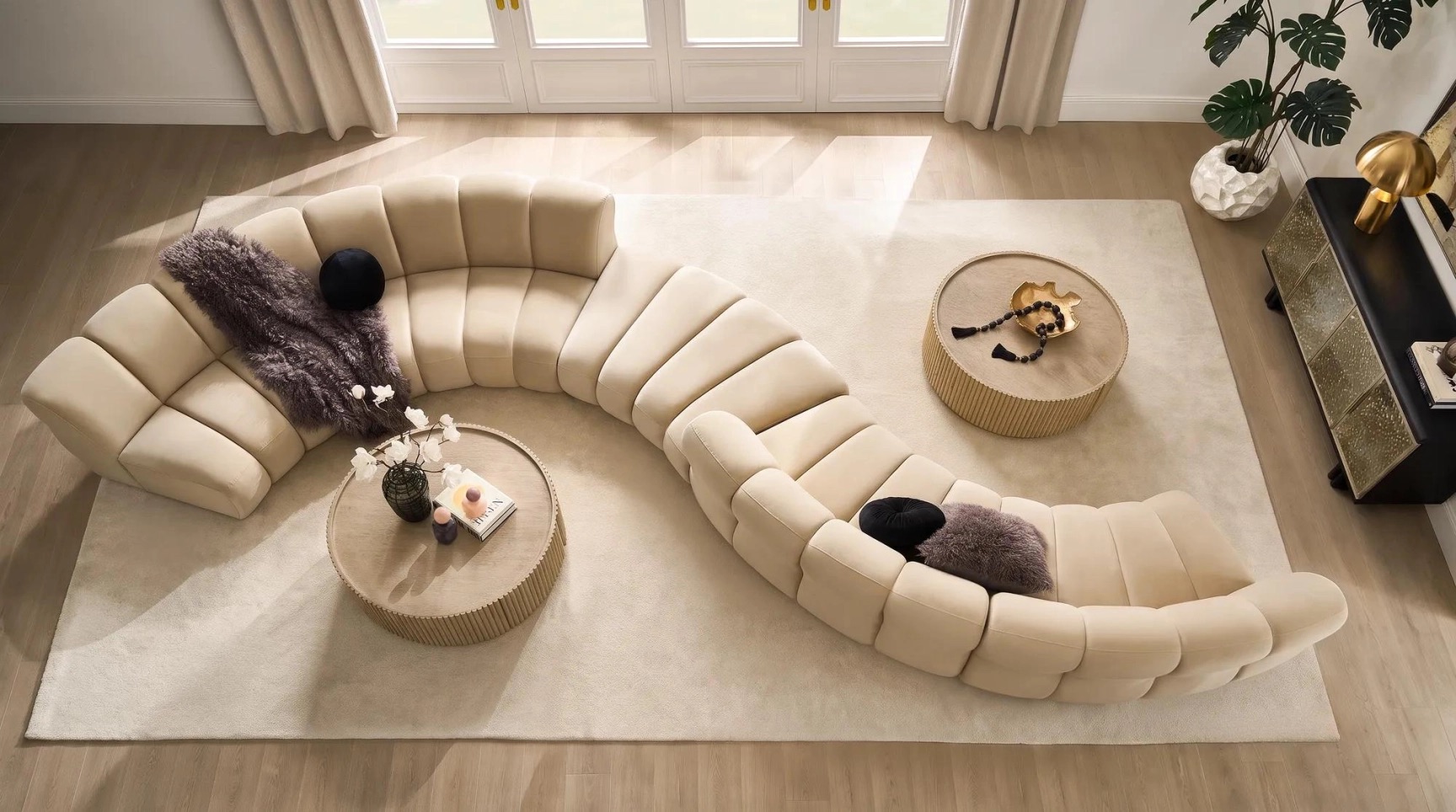
A painting at the turn, a pair of portraits between doors, a glimpse of light. Let the walls do the decorating.
The picture you pass on the way to make coffee deserves as much consideration as the one above the sofa. You may notice it more often: a flash of blue in the morning, an expressive line on the way to bed.
What that moment does not require is a console underneath.
In a narrow hallway, adding furniture to make the space feel finished can solve the wrong problem. The passage needs to remain a passage. Its personality can come from an artwork, a small collection of framed pieces, or a mirror placed with something worth reflecting.
These hallway wall decor ideas begin with three arrangements you can adapt to your home. Choose the one that suits the wall and the view, not a checklist of things to squeeze between rooms.

First, look down the hallway—not just at the wall
Stand where you normally enter the passage. Notice what you see first: an uninterrupted end wall, a long side wall, or a series of small spaces between doorways.
An end wall gives you a view you approach directly. A side wall is seen at an angle, with the artwork revealing itself as you move. Between doors, the available space may call for a vertical pair rather than a broad composition.
Choose the location before choosing the size. Measure the usable wall between door casings, switches, and other fixed features, not simply the full length of the corridor.
Then open the nearby doors completely. A frame that fits when everything is closed may sit exactly where a handle swings. Check the route with the things you actually carry through it, whether that is a laundry basket, a suitcase, or a child on your hip.
For this refresh, leave the floor clear. A wall can feel finished without a piece of furniture beneath it.
1. Give one artwork a wall of its own
For the view at the end of the passage—or the first clear wall you see when you turn.
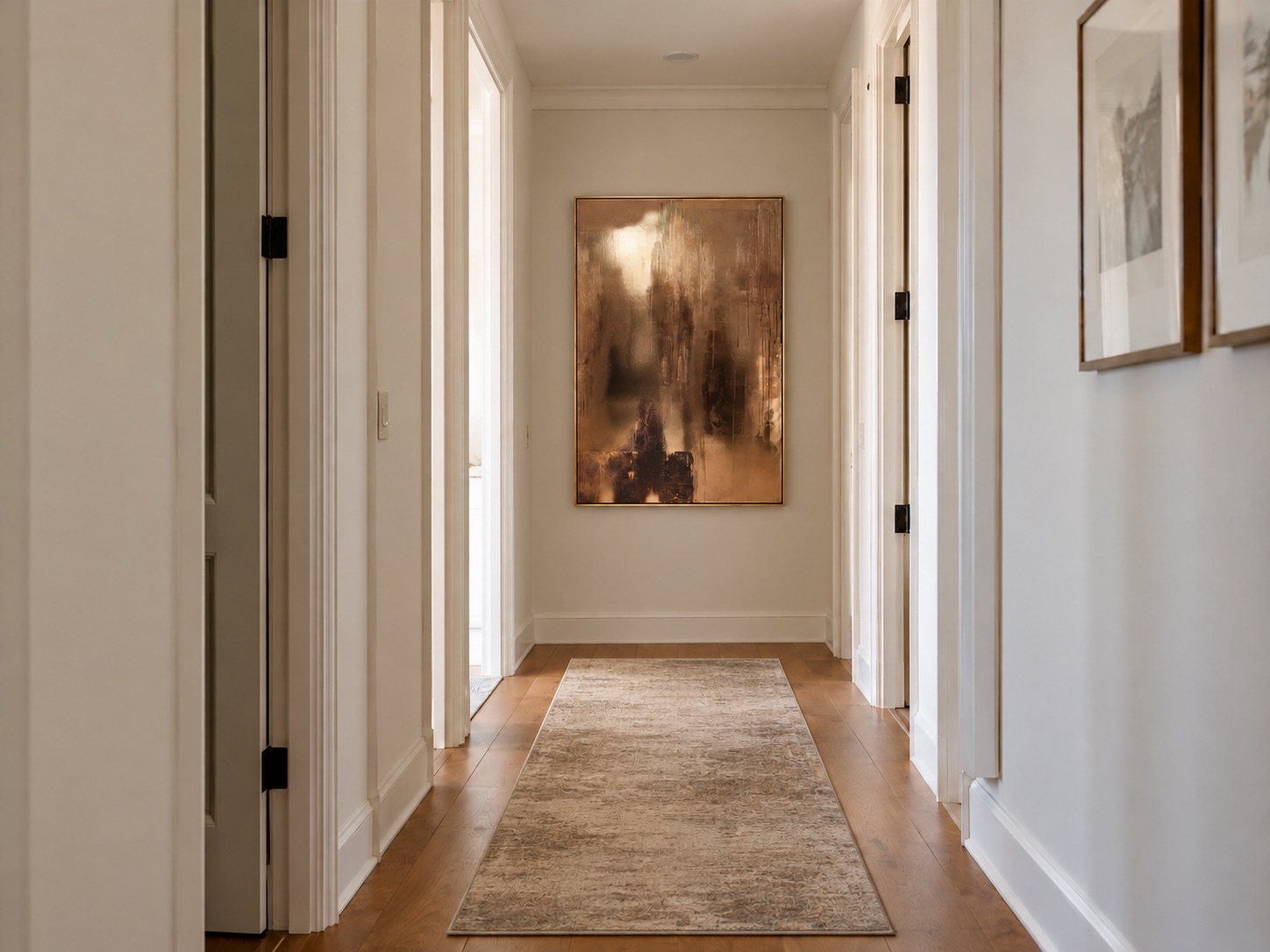
A single artwork is a good place to be decisive. Choose something you enjoy noticing from a distance: a strong line, an unexpected color, or a composition that has enough presence without nearby accessories.
The Fractured Currents II Framed Wall Art brings blue and gray to a gallery-wrapped canvas in a silver floater frame. Imagine it on a pale wall with dark wood flooring: a concentrated note of color with a cooler edge, rather than another neutral surface between rooms.
Choose the scale relative to that section of wall. A small hallway does not automatically require miniature art. Equally, the largest piece that technically fits is not always the most satisfying choice. Step back to the doorway and see whether you can appreciate the composition from where you normally approach it.
Explore framed art by the complete framed dimensions. The border is part of the arrangement, and so is the wall left visible around it.
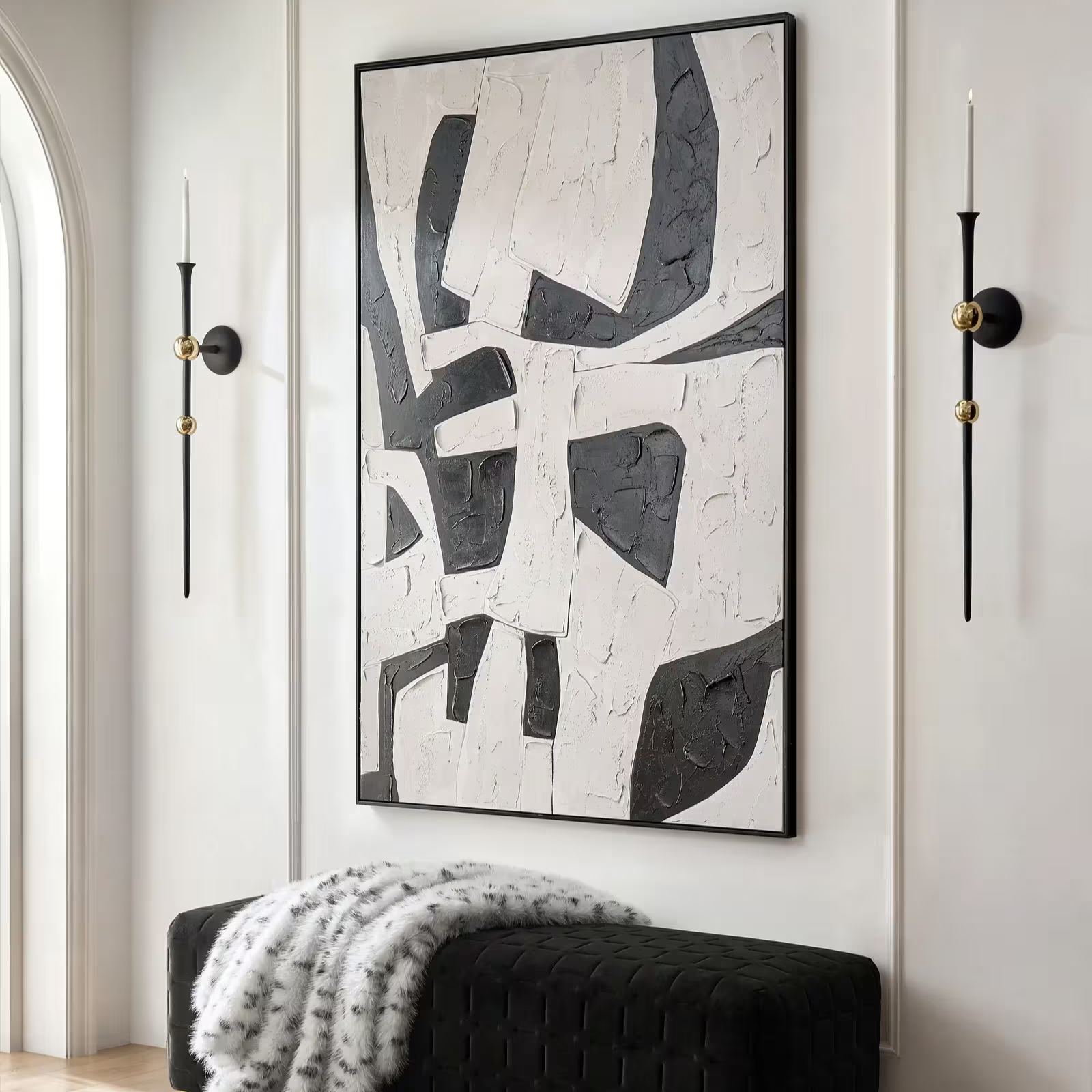
2. Make a small gallery wall—not an endless one
For a stretch of wall that invites a closer look.
A hallway gallery wall can begin with two pieces. There is no obligation to gather a dozen frames before making the first arrangement.
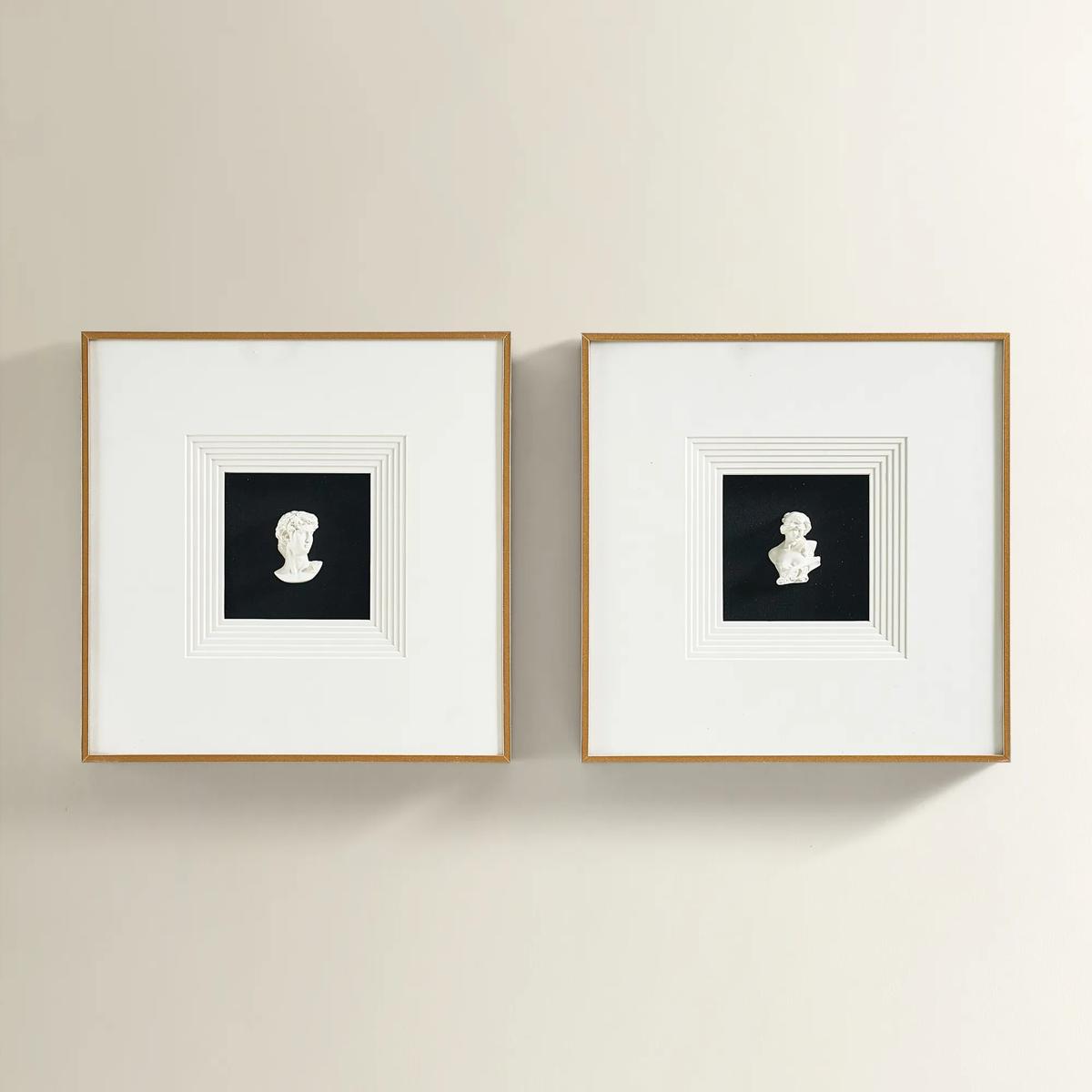
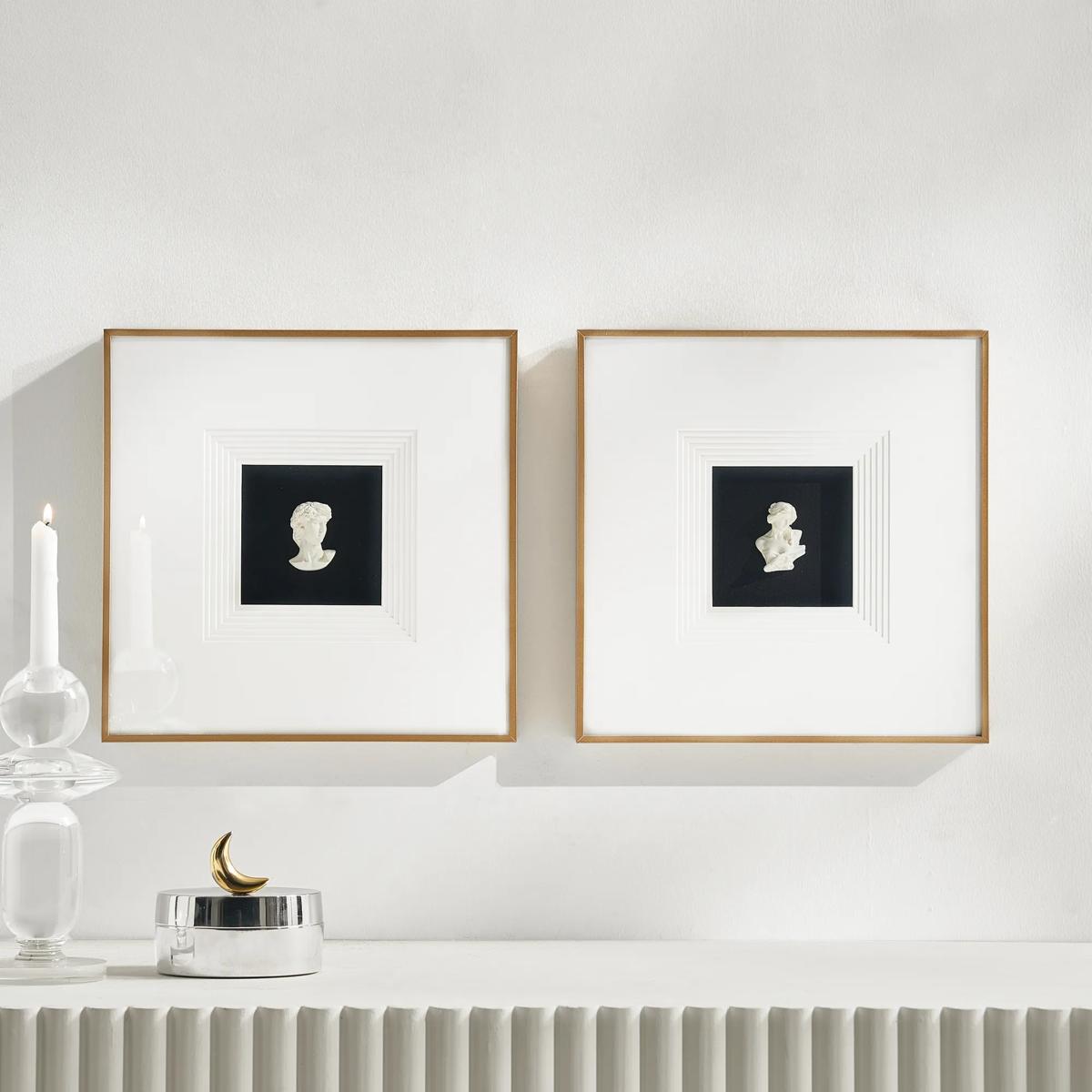
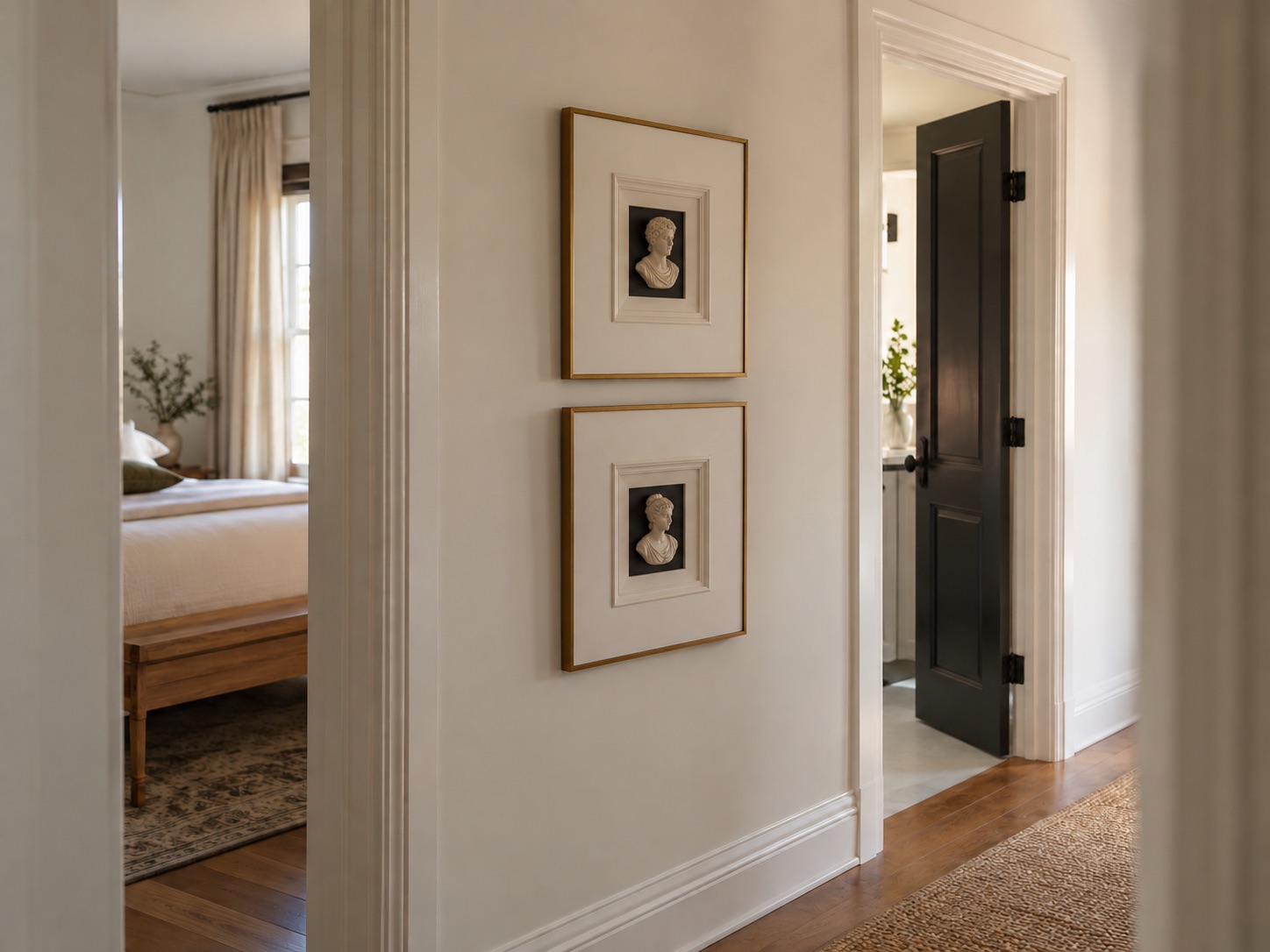
The Classics Framed Plaster Wall Decor Set of 2 places plaster portraits in aluminum frames, using ivory and black for contrast. The portrait detail rewards the closer view you get while walking past.
Each piece is 13.75 inches square with a 1.8-inch depth. Try the pair stacked between doorways or side by side along a shorter wall, keeping both portraits upright. With a proposed 2.5-inch gap, the arrangement measures 30 inches in the direction of the pair. Include that gap when making your templates.
For a more personal grouping, bring together three photographs or drawings you already own. Give them one clear connection: matching frames, similar mats, or a color that appears in each image. A family photograph can sit beside a sketch without the subjects needing to match.
Keep the grouping together rather than spreading small pictures across the entire corridor. One composed section followed by a quiet stretch of wall can feel more deliberate than a frame placed at every opportunity.
Our gallery wall guide explores larger compositions. Here, the useful question is smaller: which pieces do you want to encounter together?
3. Choose the mirror for its reflection and its profile
For a wall where the reflected view adds something to the passage.
Before choosing a mirror, consider the view it will return. A glimpse of an adjoining room, a window, or a favorite artwork may be worth bringing into the hallway. An open storage cupboard probably is not.
Check that view from both ends of the passage. What looks appealing straight on may change as you walk toward the bedrooms.
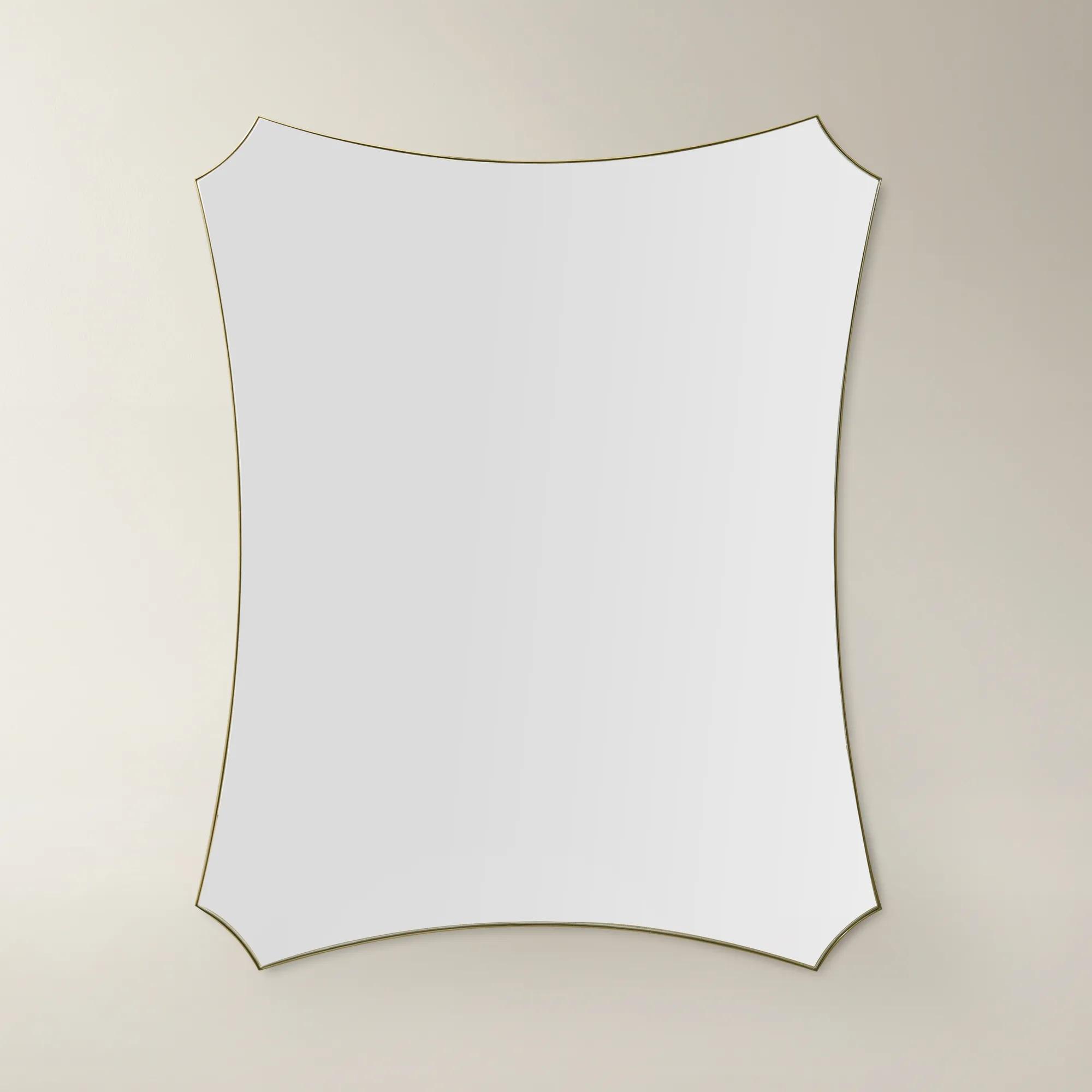
Among hallway mirror ideas, the frame’s depth deserves as much attention as its shape. A decorative mirror can be wall-mounted and still project noticeably into the route.
The Ava Gold Stainless Steel Wall Mirror has notched corners and a gold-finished frame. Against warm white paint, the outline can be the wall’s main decorative detail. On a deeper-colored wall, leave the surrounding area simple enough to appreciate the shape.
In its portrait orientation, Ava measures 40 inches wide by 50 inches high, with a listed depth of 0.75 inches. Its profile is relatively shallow, but its overall size still calls for a broad wall. Check the projection of the complete installation, including the mounting, before deciding it suits your passage.
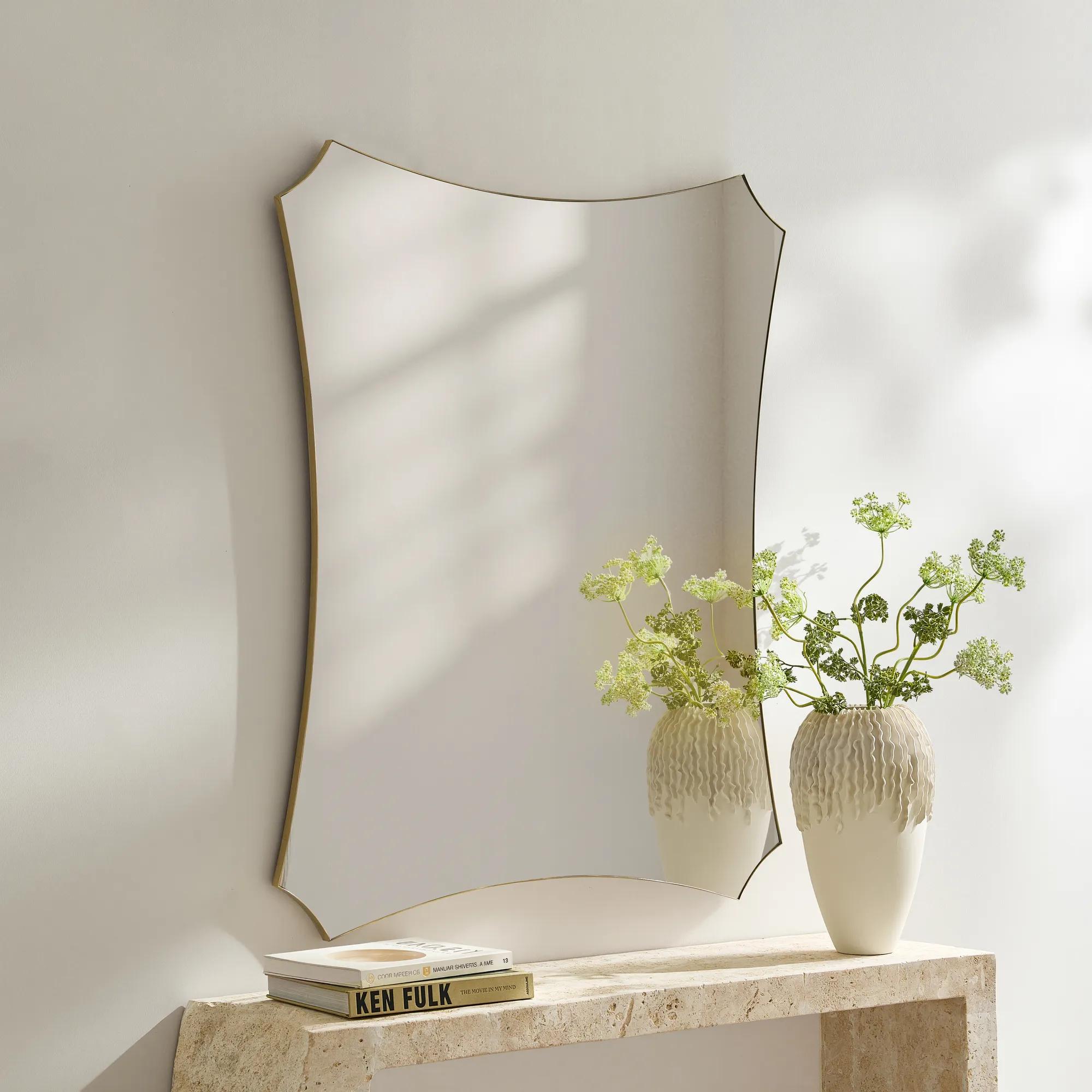
When neither piece fits, choose a smaller, shallower option from the wall mirror collection, or use art instead. There is no benefit in forcing a mirror into a space that works better with a picture.
Three arrangements, three different views
Choose the approach that responds to the wall you have. You do not need all three in the same hallway.
| What your hallway offers | An arrangement to try | What to check |
|---|---|---|
| A clear end wall | One vertically oriented artwork with space around its frame. | The view on approach, complete framed size, and nearby door swings. |
| A wall between doors or a short uninterrupted stretch | Two stacked pieces or a compact grouping of photographs. | The overall arrangement, including gaps, and the height of its shared center. |
| A broader wall with a view worth reflecting | One securely mounted mirror. | Width, height, installed projection, reflected view, and mounting requirements. |
For narrow hallway wall decor ideas, the arrangement should solve the space you are decorating—not borrow the proportions of a much larger foyer.
Use color and light to connect the passage to the rooms
There is no requirement to repaint before hanging art. Start by looking at the colors visible through the doorways. A blue detail in the living room might reappear in the hallway artwork. A black picture frame can relate to darker doors or existing hardware.
The connection can be slight. A hallway does not need to repeat the full palette of every room it joins.
For a more enveloping effect, test a deeper wall color with pale or light-framed artwork. For a lighter setting, try warm white walls with a strong black frame. Look at paint samples under the hallway’s actual lighting before committing.
Then check the art after dark. Is the picture visible, or does the ceiling light leave it in shadow? Does a reflection obscure the image when you walk past?
Start with the existing ceiling lighting. A picture light or wall fixture is an option only when its projection, placement, and installation suit the passage. Do not add a shelf or table merely to create a place for a lamp.
Our guide to layered lighting considers how light and reflective surfaces work together. In a narrow hallway, keep the approach simple: illuminate the route and let the artwork remain easy to see.
Hang for the person walking past
For art on an open wall, a center height of approximately 57–60 inches from the floor is a useful starting point, rather than a requirement. Adjust for the people in your household, the artwork, and the architecture. For a pair or grouping, consider the center of the whole composition, including the gaps.
Start with roughly 2–3 inches between smaller framed pieces, then judge the complete arrangement with paper templates. Consistency matters more than forcing a gap that does not suit the frames.
Check the side view before installing. The frame, mounting hardware, and any projecting corners all count. Avoid leaning artwork or a floor mirror into a passage where the purpose of the refresh is to preserve clear floor space. Allow for the access and mobility needs of everyone using the route.
Use mounting hardware appropriate to the wall construction and the piece’s weight, following the product’s instructions and permitted hanging orientation. For heavy mirrors or uncertain wall conditions, arrange qualified installation rather than improvising a fixing.
The final check is a walk, not a photograph. Approach from both directions, open the doors, and notice what happens when you turn the corner. The arrangement should be enjoyable in passing without making you change the way you move through your home.
A few questions about hallway wall decor
How do you decorate a hallway without furniture?
Choose a wall-based focal point: an artwork, a small framed grouping, or a properly sized mirror. Use the existing wall color, trim, and lighting as part of the arrangement. Leave the floor clear rather than adding a console or bench simply to finish the scene.
Should you decorate both walls of a narrow hallway?
You do not have to. Start with one wall or the end view, then assess the passage before adding more. A quiet opposite wall can give the artwork space to stand out. When using both sides, check the combined projections as well as the visual effect.
What can you put at the end of a hallway?
A single artwork is a useful starting point when there is an uninterrupted wall. A mirror is another option when its size and reflected view suit the location. Where the passage ends at a door, keep that door’s movement clear and shift the arrangement to a suitable side wall.
Give the in-between space something of its own
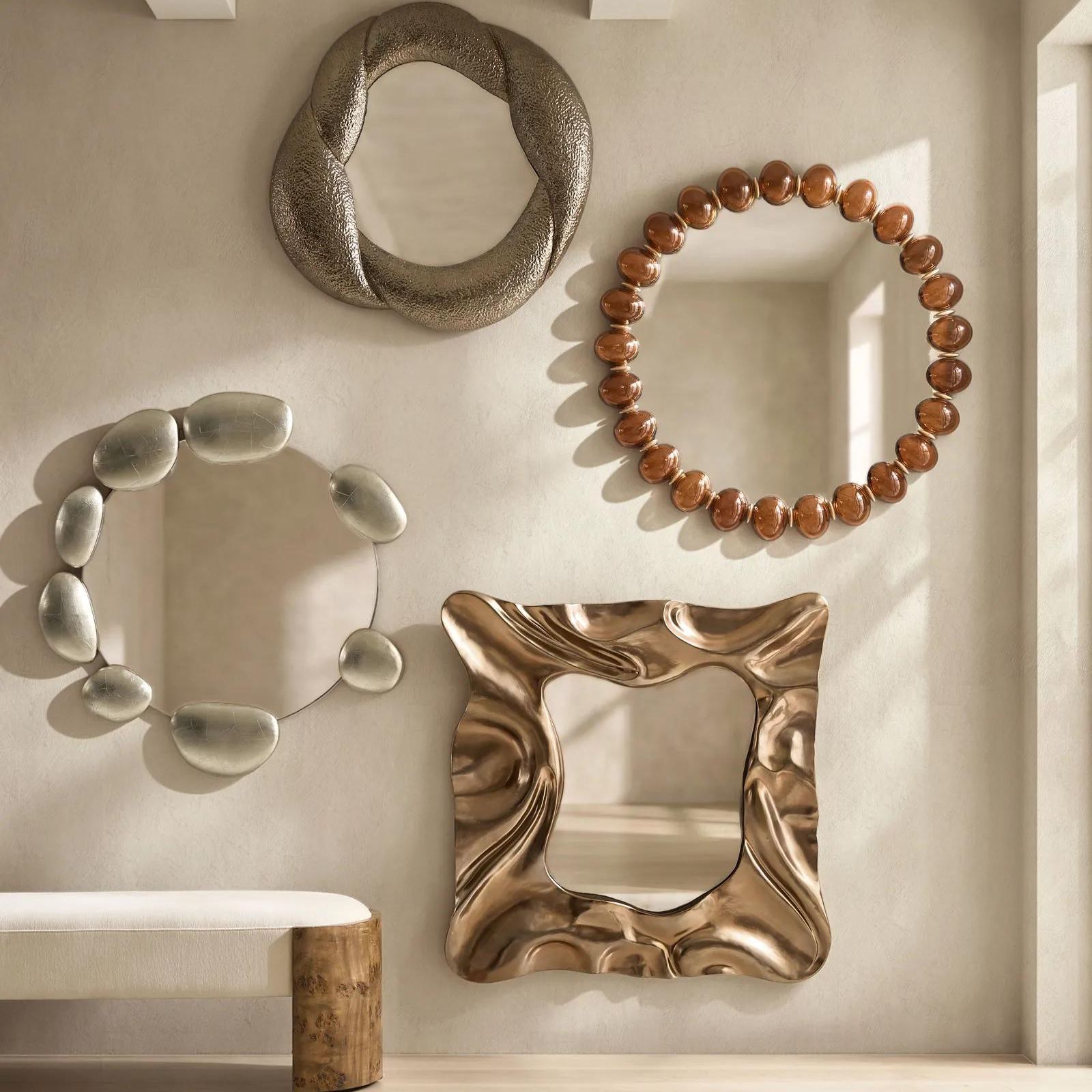
A hallway can hold a picture you want to see every day, a pair of portraits that makes you look twice, or a reflection of the room you have just left.
Begin with our framed art and wall mirrors, choosing for the space that is genuinely available. For help comparing scale and finishes, our complimentary design consultation offers guidance around your room and measurements.
Leave the floor open. Give the walls something worth passing.