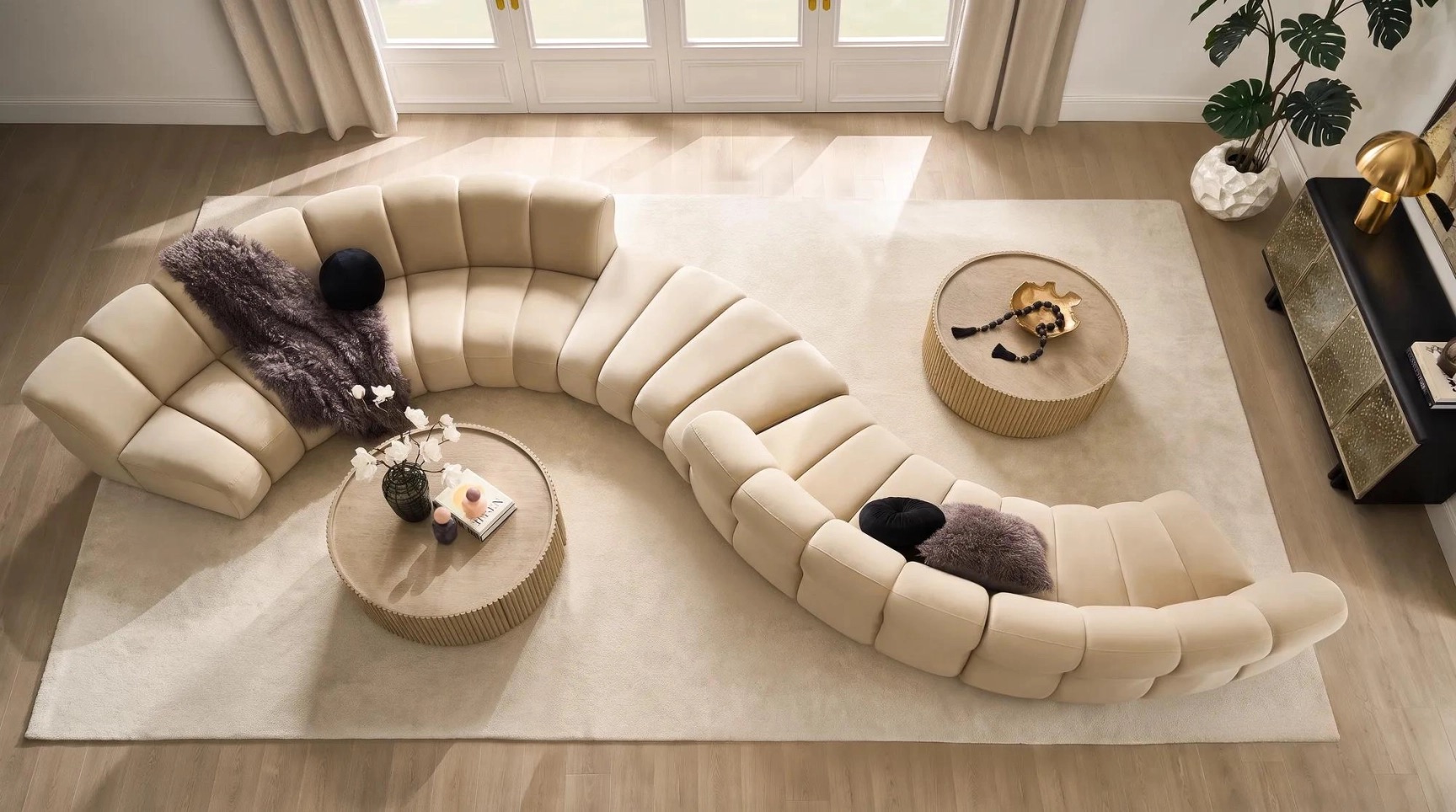
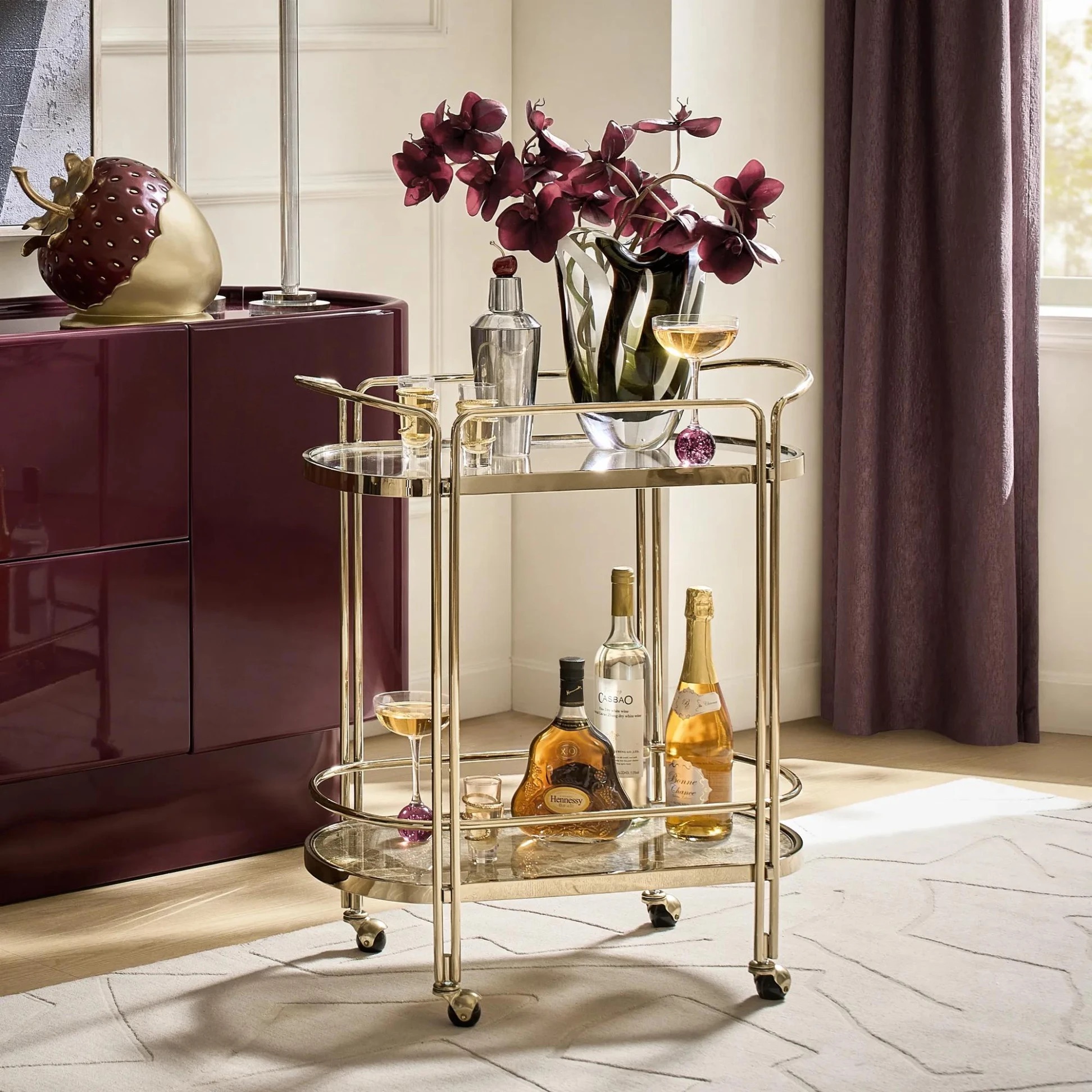
Keep the sofa. Rethink what goes beside it.
The sofa is staying. So is the wood cabinet you found years ago. But the marble coffee table you have your eye on looks nothing like either and that might be exactly what the room needs.
Learning how to mix and match living room furniture starts with finding a connection, not a set. A color can travel from upholstery to stone. The curve of an armchair can soften a straight-lined cabinet. Pieces bought at different times can belong together without pretending they came from the same collection.
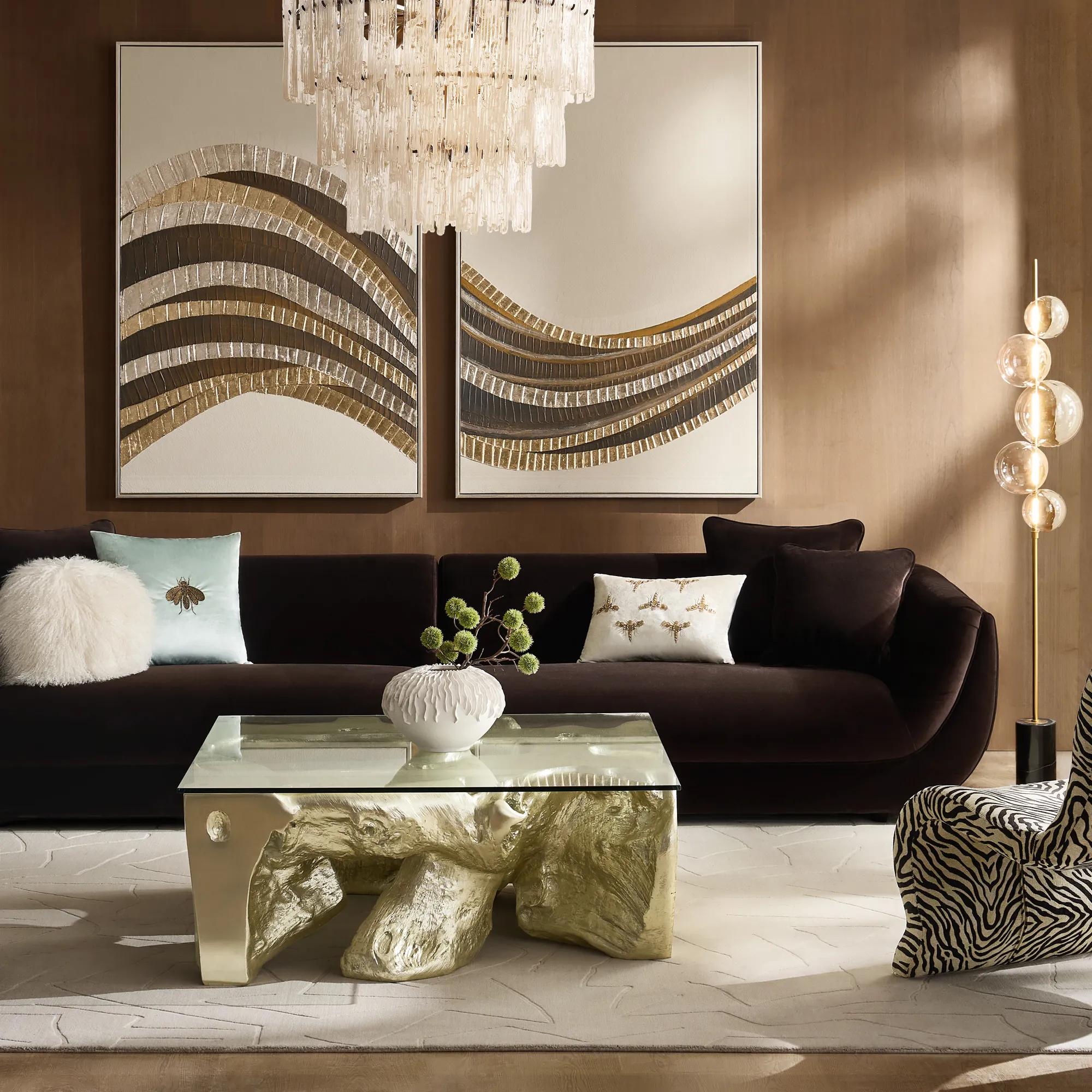
For our Fall/Winter 2026 edit, that conversation runs between the tactile surfaces of Mod Naturalist and the reflective finishes of Deco Pop. Here, marble, onyx, glass, and metal are the possibilities, not a checklist.
To mix and match living room furniture, start with the pieces you are keeping, establish a small color palette, and vary the materials and silhouettes. Connect the arrangement with a properly sized rug and a few repeated details, while checking that every piece works with the way you use the room.
Start with what already belongs
Before looking for something new, decide what deserves to stay. It might be the sofa that everyone finds comfortable, a cabinet with useful storage, or a rug whose colors still make you happy.
Use that piece as your starting point. An ivory sofa gives you several directions to explore: pale stone and warm wood for a softer room, or black marble and a silvery finish for more contrast. A richly colored sofa might need quieter tables rather than another large block of color.
Keep the fixed finishes in view, too. Your flooring, fireplace, and built-in shelving are already part of the material mix. Place fabric samples and finish samples against those surfaces before deciding they work together.
Try describing the room you want in ordinary terms: warm and relaxed, tailored and dramatic, or light with a little shine. That is a more useful shopping filter than asking every piece to be “modern.”
Mix sofas and accent chairs through color and proportion
A sofa and an accent chair do not need matching upholstery. We would rather give them a reason to sit together.
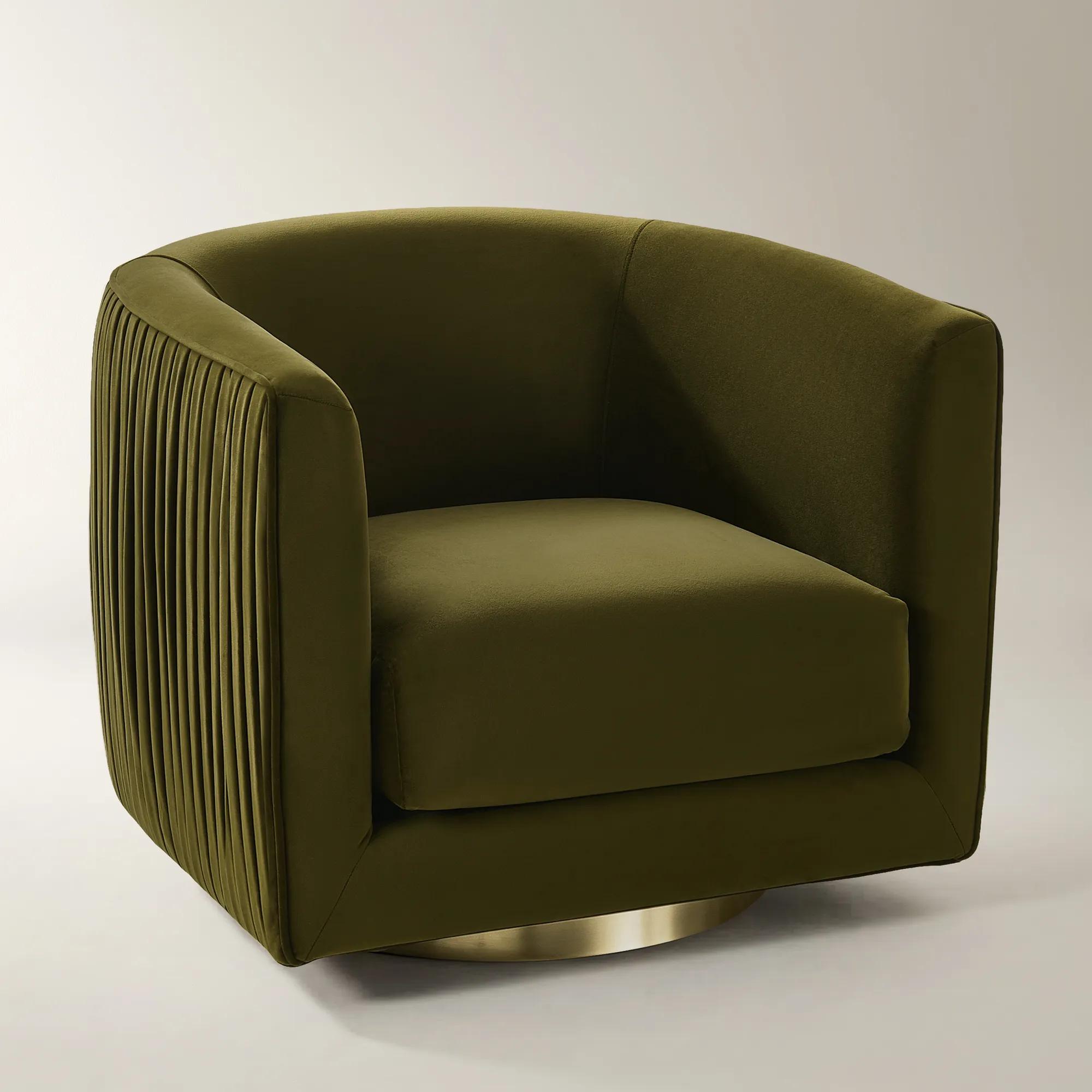
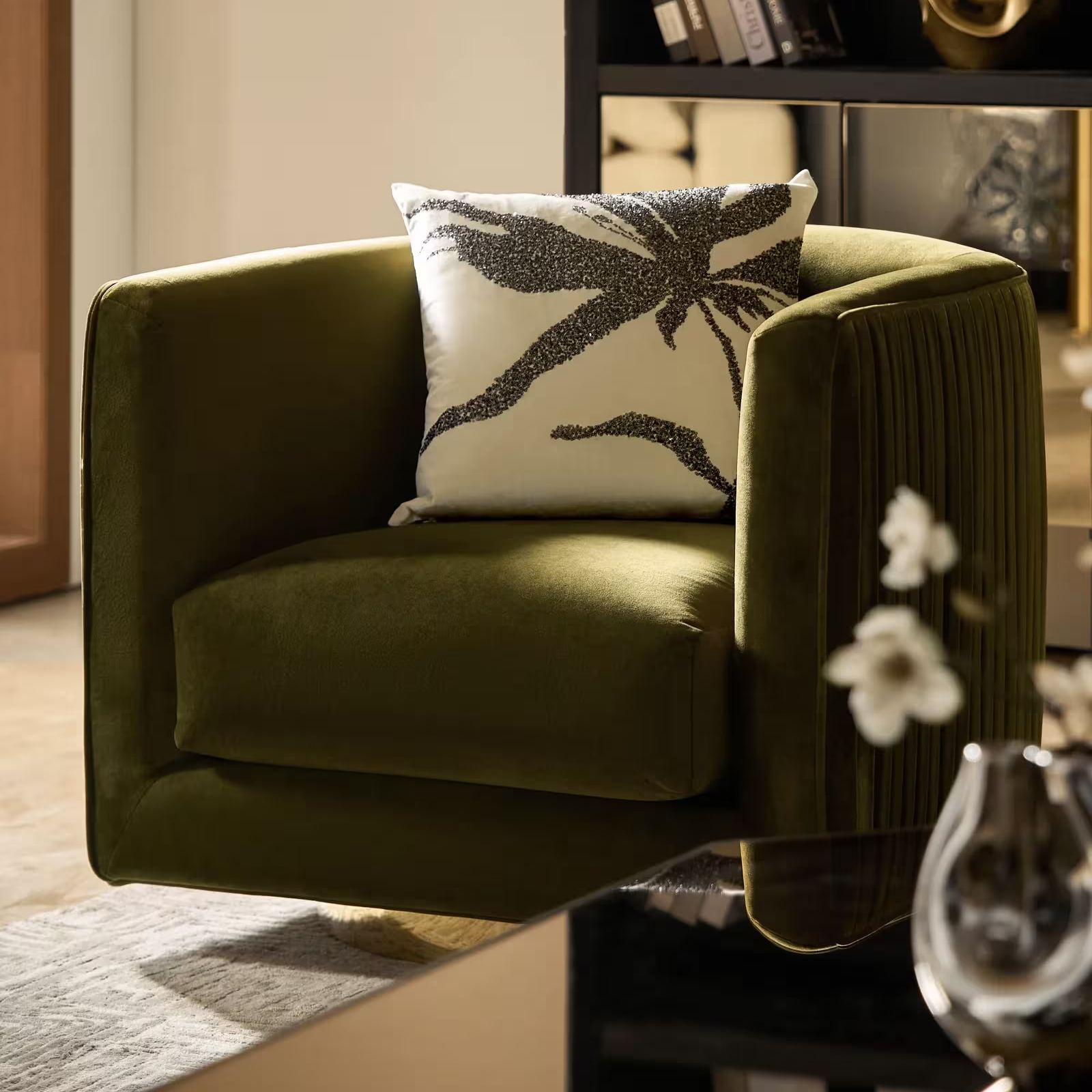
Beside a simple cream sofa, the Lyssa Pleated Deep Olive Velvet Swivel Accent Chair introduces a rounded profile, pleated outer panels, and a swivel base.
We would pick up a little of that olive in a painting or a patterned cushion, rather than adding several matching green accessories. The chair can remain the room’s main expression of the color.
Pay attention to the furniture from the side as well as the front. Compare seat heights, back heights, and overall depth. A tiny occasional chair beside a deep sectional may look misplaced even when the fabrics coordinate beautifully.
For two different sofas, look for a shared quality, a similar sense of scale, related upholstery colors, or comparable arm shapes. Then let something else differ.
Our guide to styling curved living room furniture explores how rounded seating and straighter pieces can work together.
Choose a coffee table that changes the material mix
The coffee table is a useful place to depart from the sofa and cabinet. It sits close enough to the upholstery for the contrast to register.
A marble coffee table when the room needs a focal point
The Flare Black Marble Coffee Table combines a crescent-shaped natural marble top with a polished stainless-steel base. The stone’s veining varies from piece to piece.
We would place it against relatively simple upholstery and let the dark stone supply much of the pattern. A quiet rug, a generous sofa, and one well-chosen chair leave space for the table to be noticed.
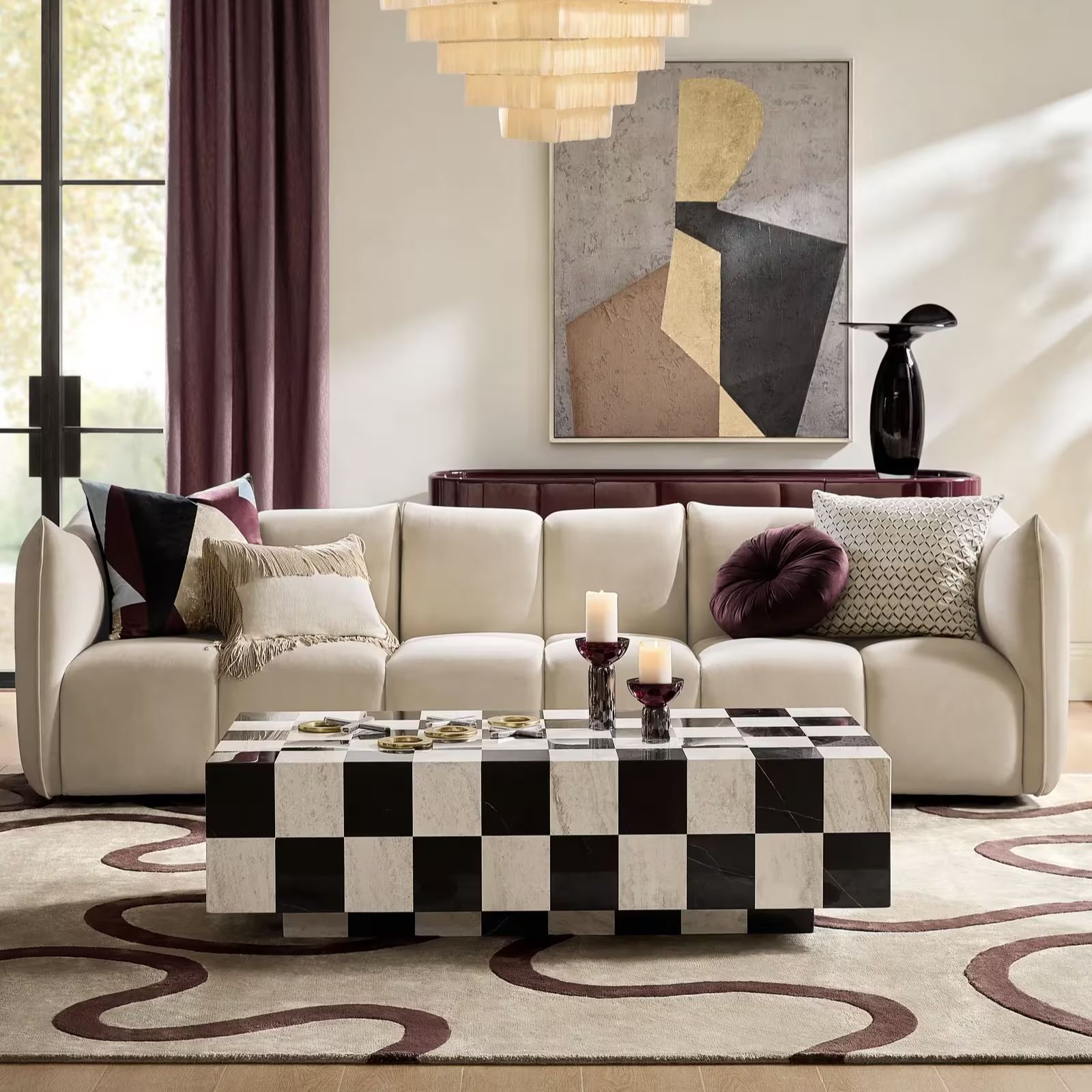
There is no need to follow it with marble end tables. Try wood or a smaller metallic accent instead. You can repeat a pale line from the stone in a lampshade or textile without repeating the material itself.
A glass and metal coffee table when the room needs openness
For a seating area with substantial upholstered furniture, consider a more transparent center.
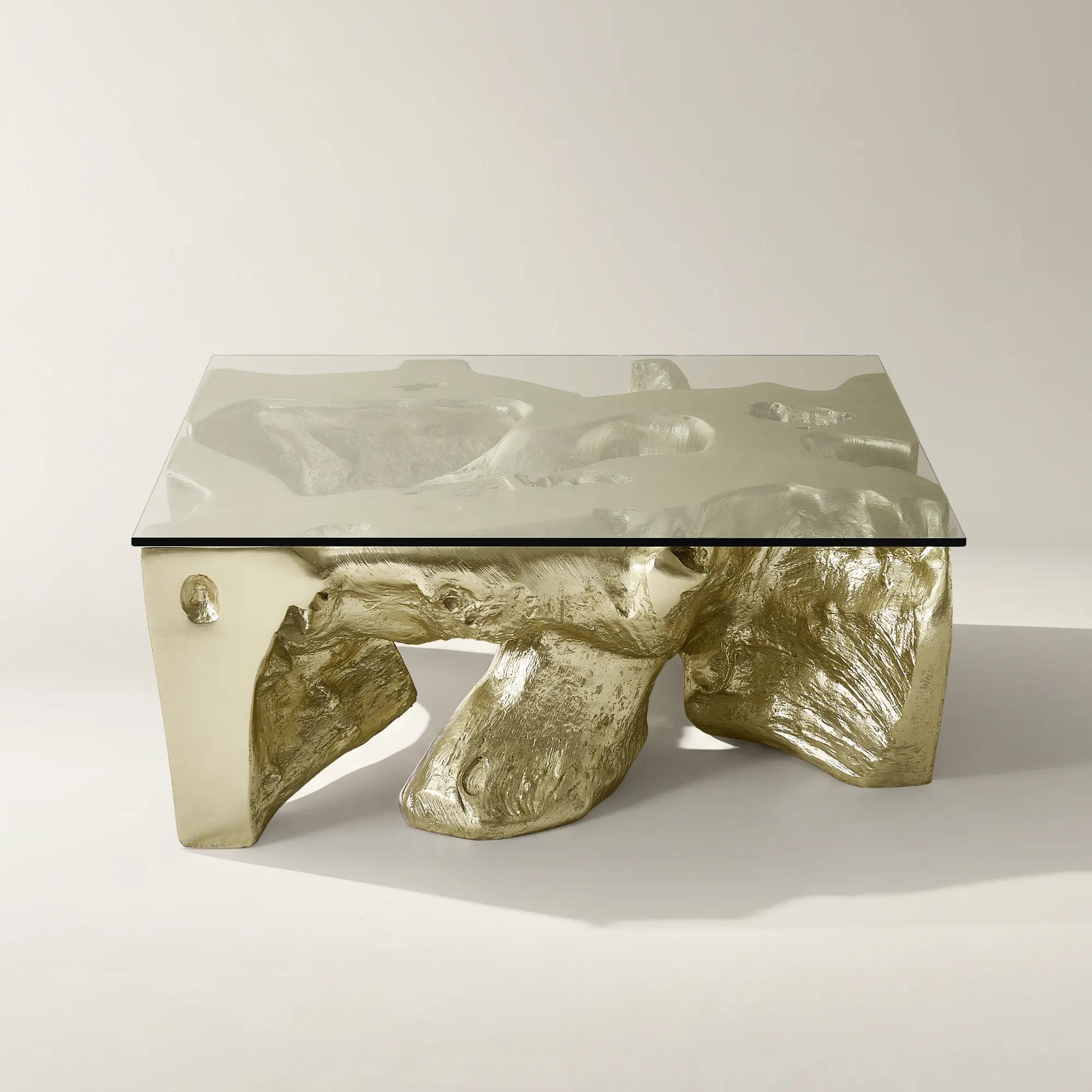
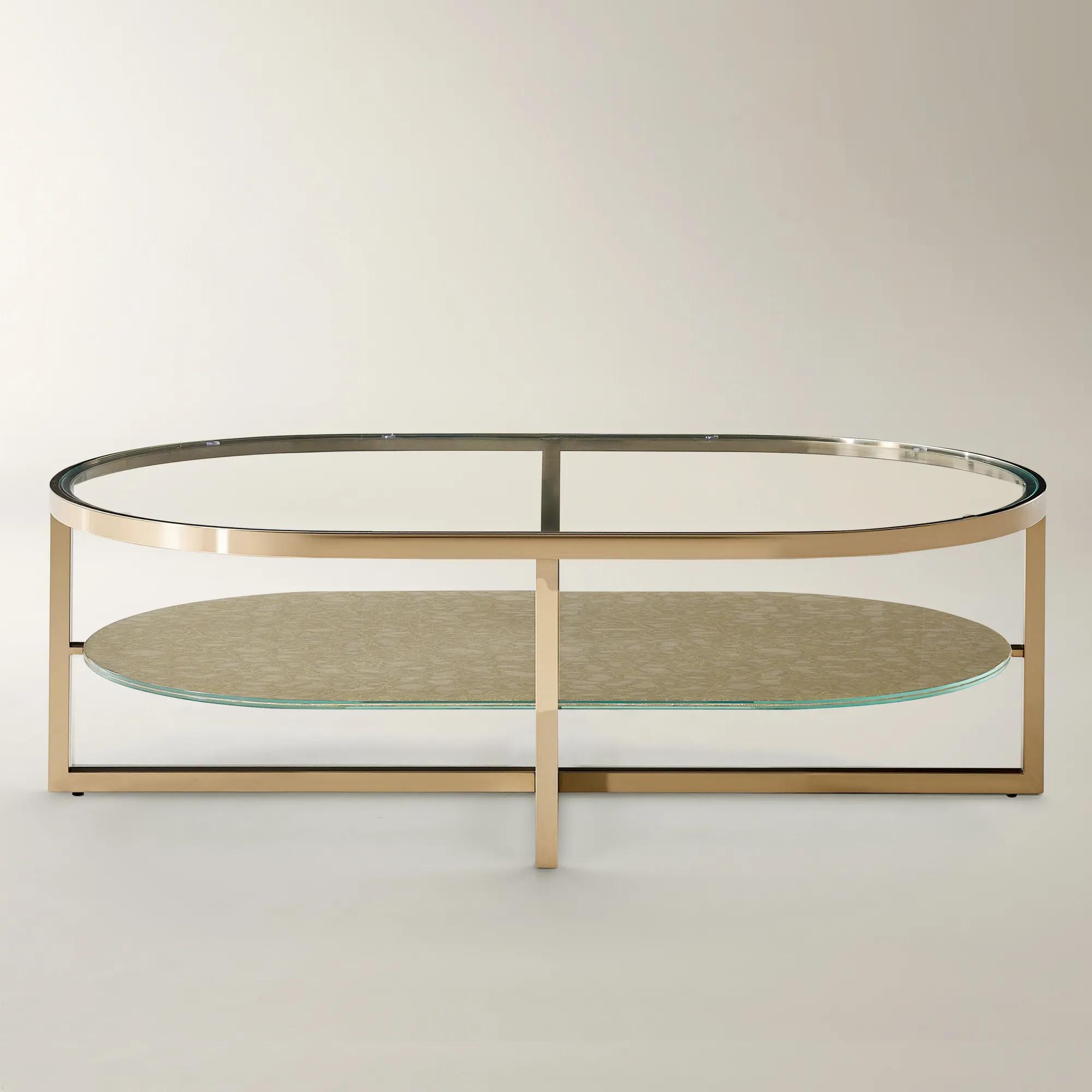
The Duality Oval Fabric-Laminated Glass Coffee Table pairs a clear tempered-glass top with a fabric-laminated lower glass shelf and a soft gold–finished stainless-steel frame.
We would use it beside a deep sofa and a wood cabinet, allowing the glass to interrupt a succession of solid-looking surfaces. Keep the lower shelf lightly styled; it is part of the view through the top.
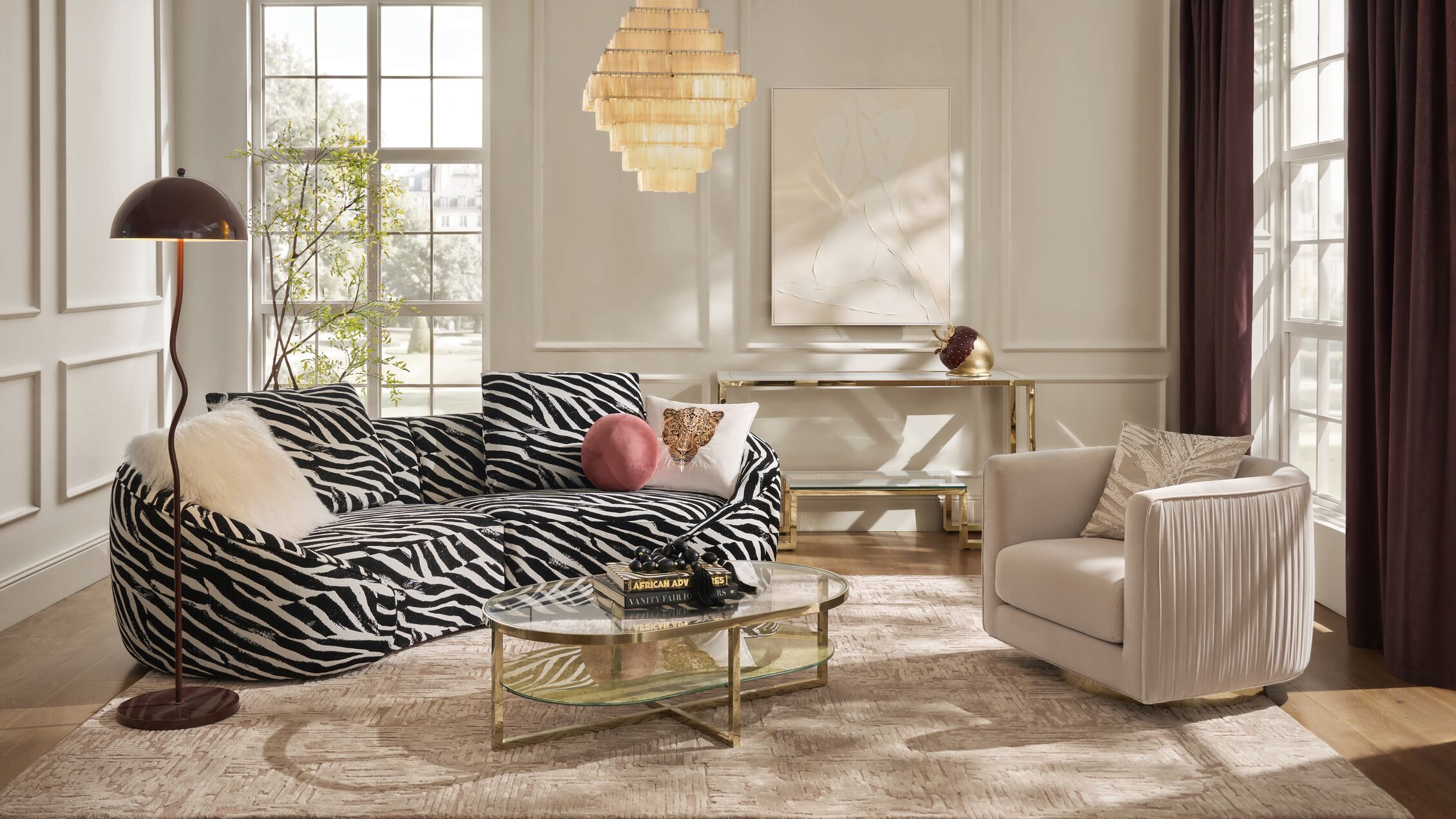
Whichever material you choose, check the table’s height and footprint against the seating. A table should be easy to reach without taking over the route through the room.
Mix wood tones without chasing an exact match
You do not have to find an end table in precisely the same finish as your cabinet. Start by comparing the colors you actually see: does the wood lean honeyed, reddish, smoky, or almost black?
For an approachable combination, try woods with a similar warmth but a clear difference in depth. Pale oak and a darker brown can give you more contrast than two medium finishes that nearly match.
Put the samples beside the floor as well. A finish that looks appealing on a white screen may be less convincing next to the wood already covering most of the room.
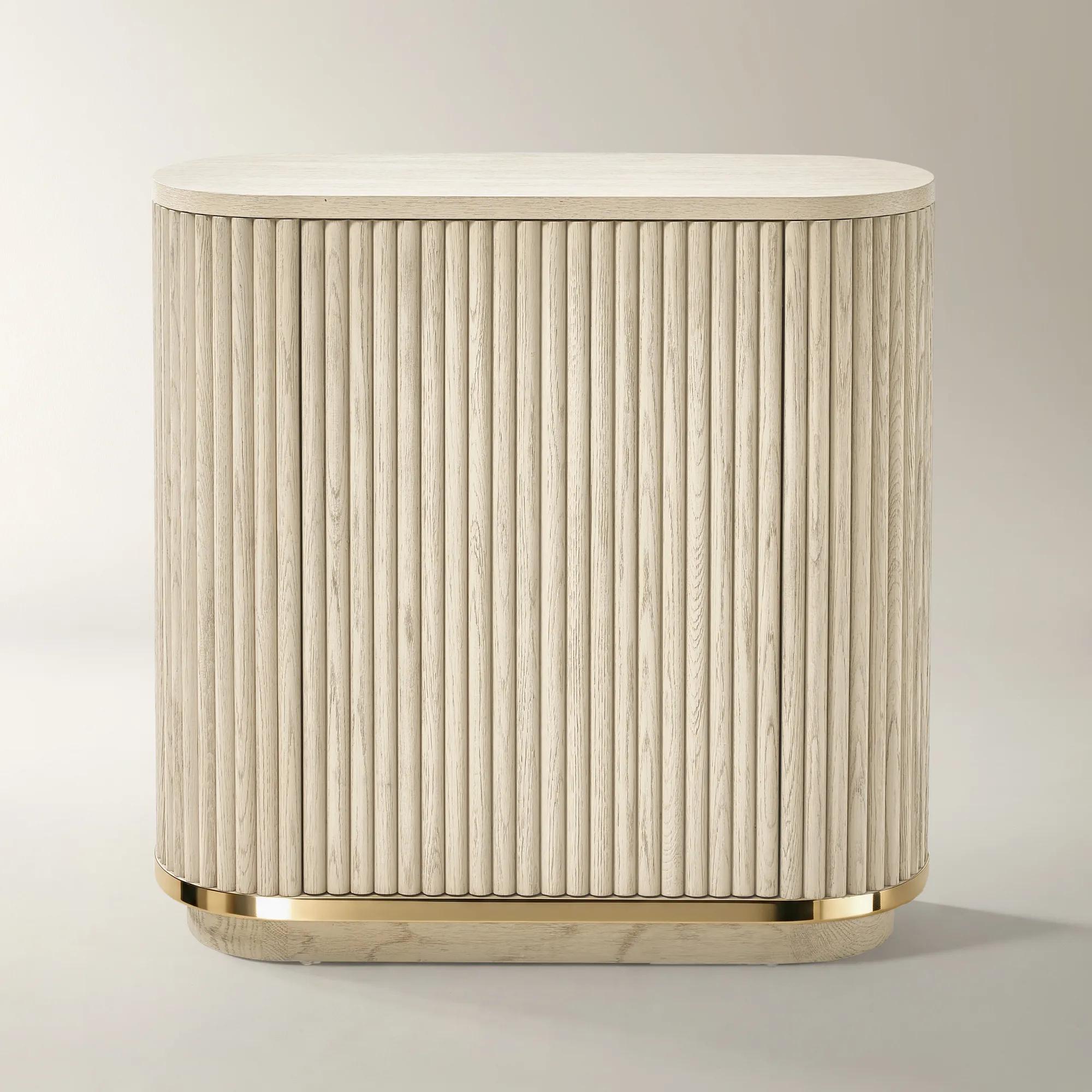
Vary the grain, too. When a cabinet has a lively burl pattern, we would choose a simpler grain for a nearby table or move to glass or metal instead.
A rug can create separation between wood furniture and wood flooring. It also gives you a place to introduce the upholstery color, so the cabinet is not the only piece connecting the arrangement.
Let chrome and soft gold appear in different amounts
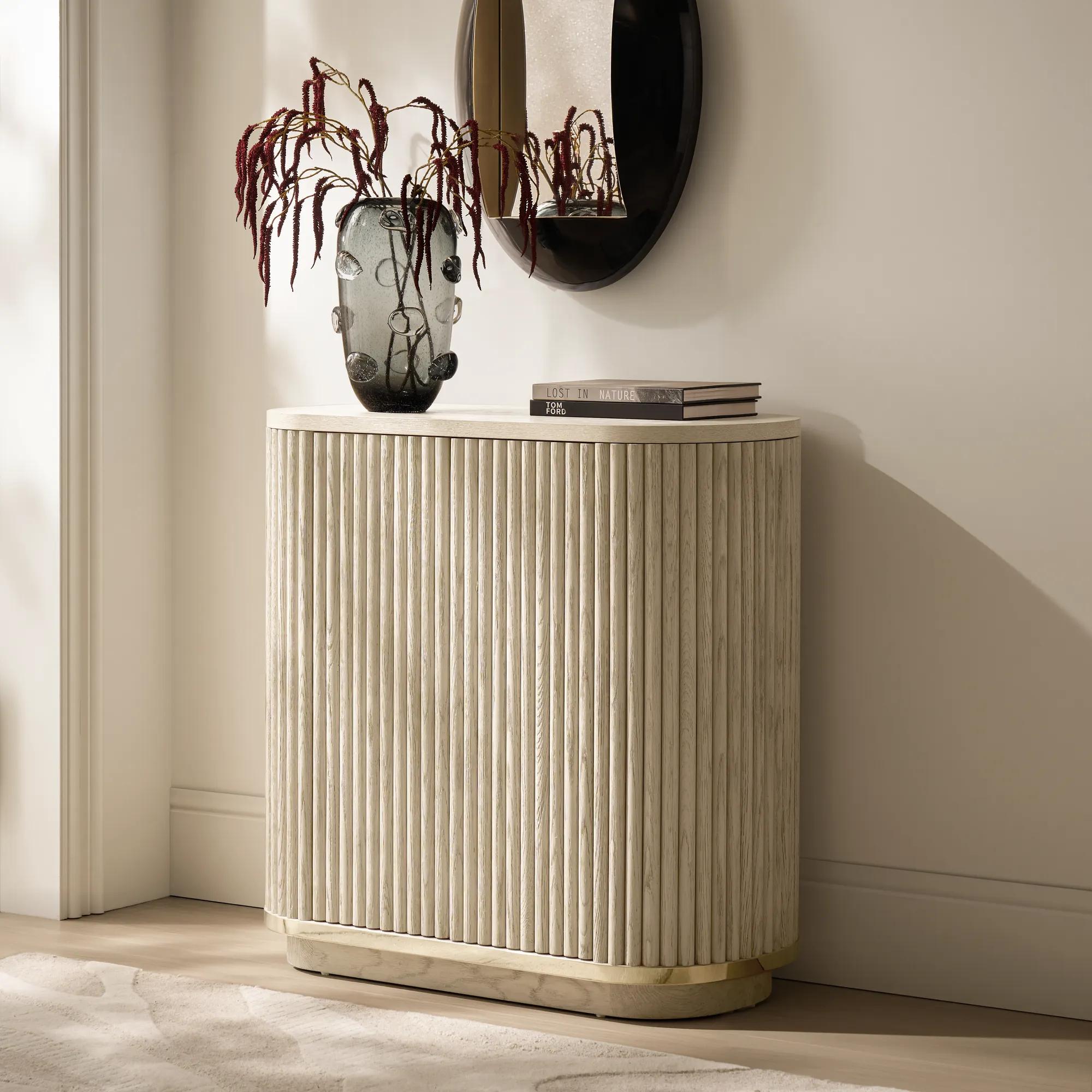
A gold-finished table does not commit you to gold in every lamp, mirror, and handle.
For marble and metal furniture, we would start by looking at the metal already attached to the largest piece. With a polished stainless-steel table base, try a smaller warm-metal detail elsewhere. With a soft gold frame, a restrained chrome accent can introduce a cooler note.
Compare the sheen as well as the color. Satin, brushed, and mirror-polished surfaces create different relationships with the surrounding furniture; names alone are not enough to judge a pairing.
Our preferred approach is to avoid giving every reflective finish equal space. Let one be more prominent and keep another to a smaller detail, with wood or upholstery between them. Our guide to mixing metal finishes explores this balance further.
You are building a room, not assembling a hardware sample board.
Give onyx and expressive stone some breathing room
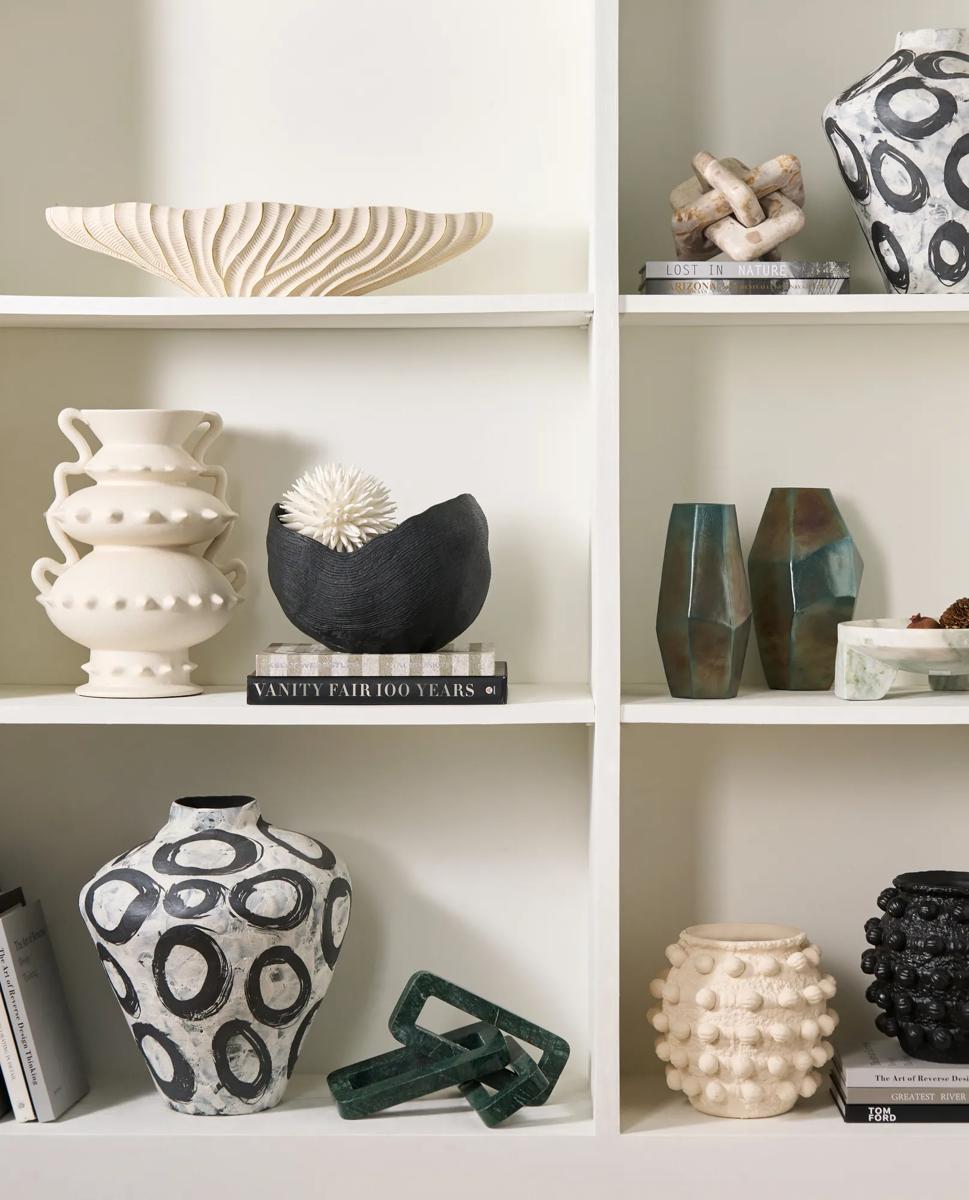
Onyx can be a smaller gesture: a decorative bowl or sculptural object on a wood cabinet, rather than another large stone table.
Choose the individual piece for its coloring and markings. We would place a pale green stone object against dark wood, then leave enough of the cabinet clear to appreciate the outline. Check the product’s stated material and intended use before purchasing; a decorative bowl is not automatically suitable for serving food.
Marble and onyx can share a room without sitting side by side. Try separating the strongest patterns, and look for a color they have in common rather than identical veining.
The same restraint applies to the coffee table. Leave a generous part of the stone uncovered. Books, coasters, and one object may be enough.
Use rugs, lighting, and consoles to bring it together
Once the main furniture is in place, work on the spaces between and around it. This is often where an assortment of pieces starts to feel like a room.
Give different seats a shared rug
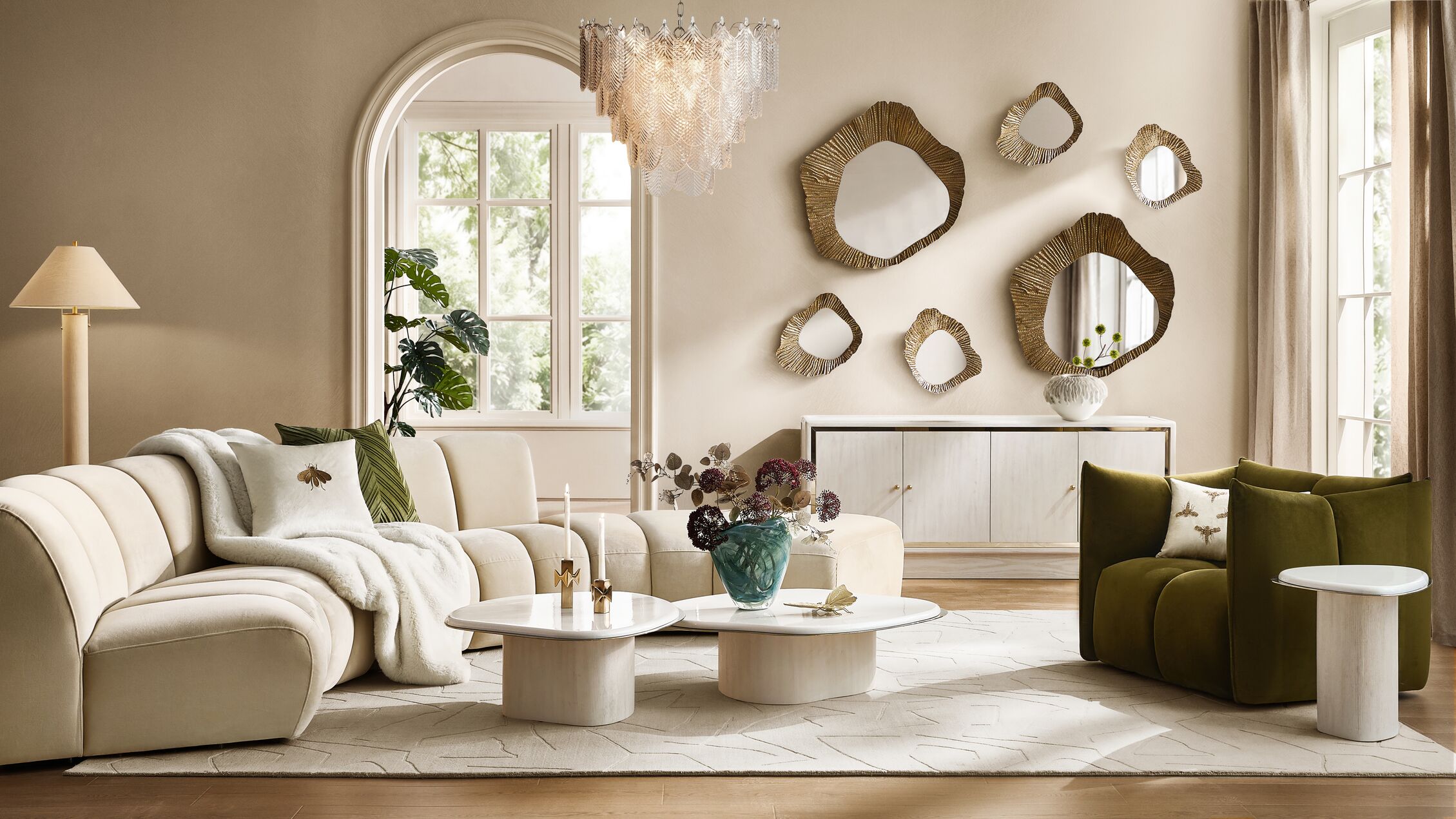
Choose the rug for the seating group, not only for the coffee table. For a wall-based arrangement, bringing the front legs of the sofa and chairs onto the rug is a useful starting point. A larger floating arrangement may suit a rug that holds the complete group. Our area rug buying guide illustrates both approaches.
Try a quieter rug beneath heavily patterned stone. With simpler tables, a patterned rug can help connect colors from different upholstery fabrics.
Choose lighting that relates to more than one piece
The Arden Black Marble Table Lamp combines genuine black marble, brushed brass-finish accents, and a warm white linen shade.
On a wood cabinet, it could relate to a dark coffee table while the shade picks up the color of pale upholstery. One useful object makes several connections.
Test the light from your usual seat, not just from the doorway. For a room that needs more than one source, our guide to layered living room lighting offers a starting point.
Put a refined finish beside a rawer one
The Cairo Mactan Stone Console Table brings a linear profile and a hand-carved, raw-edged detail in Mactan stone.
We would try a simply framed mirror above it, or a smooth glass vessel on top. That is “raw meets refined” at a useful scale: two surfaces making each other more interesting.
Before hanging the mirror, check the reflection from the sofa. A good arrangement on the wall can still return a view you would rather not emphasize.
Living room combinations to make your own
These are proposed pairings, not sets. Start with the row closest to what you own, then check the dimensions and finishes of the pieces you choose.
| What you are keeping | What to introduce | The connection to look for |
|---|---|---|
| An ivory sofa and dark wood cabinet | A black marble coffee table and a soft, textured rug | Repeat ivory in the rug; let the darker furniture relate through color. |
| A deep neutral sectional and wood tables | A glass and metal coffee table in place of the central wood piece | Retain the useful side tables and introduce a more transparent center. |
| A straight sofa and pale rug | An olive velvet chair and a small stone accent | Pick up a trace of olive in the art; keep the rug as the common ground. |
| A living room that already has plenty of shine | A raw-textured stone console or a wood accent | Add a different surface rather than another matching reflection. |
You do not need to add everything in a row at once. Change the piece that solves the clearest problem, then look again.
Make the mix work for everyday life
An interesting combination still has to leave room for a person carrying a tray.
Mark out new furniture before ordering. Check the walking route, drawer openings, and the space needed for a swivel chair to turn. Compare a coffee table’s height with your seat height rather than judging its proportions only in a product photograph.
Read the care instructions alongside the material description. For example, Flare’s guidance calls for wiping spills promptly because its marble is porous and can stain.
Keep coasters close, follow the instructions for each finish, and choose surfaces you are willing to look after. Do not assume the cleaner used on a glass top is also appropriate for its metal frame or the stone table beside it.
Then edit the accessories. When a room feels busy, try clearing the table and removing a few small reflective objects before replacing any furniture. The larger pieces may already work together.
FAQs about mixing and matching living room furniture
Does living room furniture have to match?
No. Coordinate selected details such as colors, proportions, or finishes while allowing other elements to differ. A matching pair of chairs can bring order to a room with different tables; a coordinated sofa and chair can sit comfortably beside a contrasting cabinet.
Can you mix modern and traditional furniture?
Yes. Try connecting them through color or scale rather than forcing every piece into the same style. A traditional wood cabinet can be a useful counterpoint to simple upholstered seating and a contemporary glass table. Keep enough open space to see the individual shapes.
Should a coffee table and end tables match?
They do not need to. Consider a marble coffee table with wood end tables, or a glass coffee table with a stone accent table. Give each the appropriate height and surface area for its location, and use a shared color or finish to relate them.
How many materials should you use in one living room?
There is no fixed number. Consider the amount of each material and how prominently it appears. A small metallic lamp detail is a different commitment from a large mirrored cabinet. Start with fewer dominant finishes and add variety through smaller pieces.
Build the room around what you love
The point of learning how to mix and match living room furniture is not to make everything deliberately different. It is to give yourself more choices.
Keep the pieces with history. Introduce the material the room is missing. Let a favorite artwork help decide the next upholstery color.
Explore the Fall/Winter 2026 collection for the next addition, or bring photos and measurements to our complimentary design consultation for help with furniture selections and the room’s layout.
The room should feel like yours long before anyone notices whether the finishes match.
.jpg?w=3423&h=3423)