Wedding Registry Bedding
Wedding Registry Bedding
-
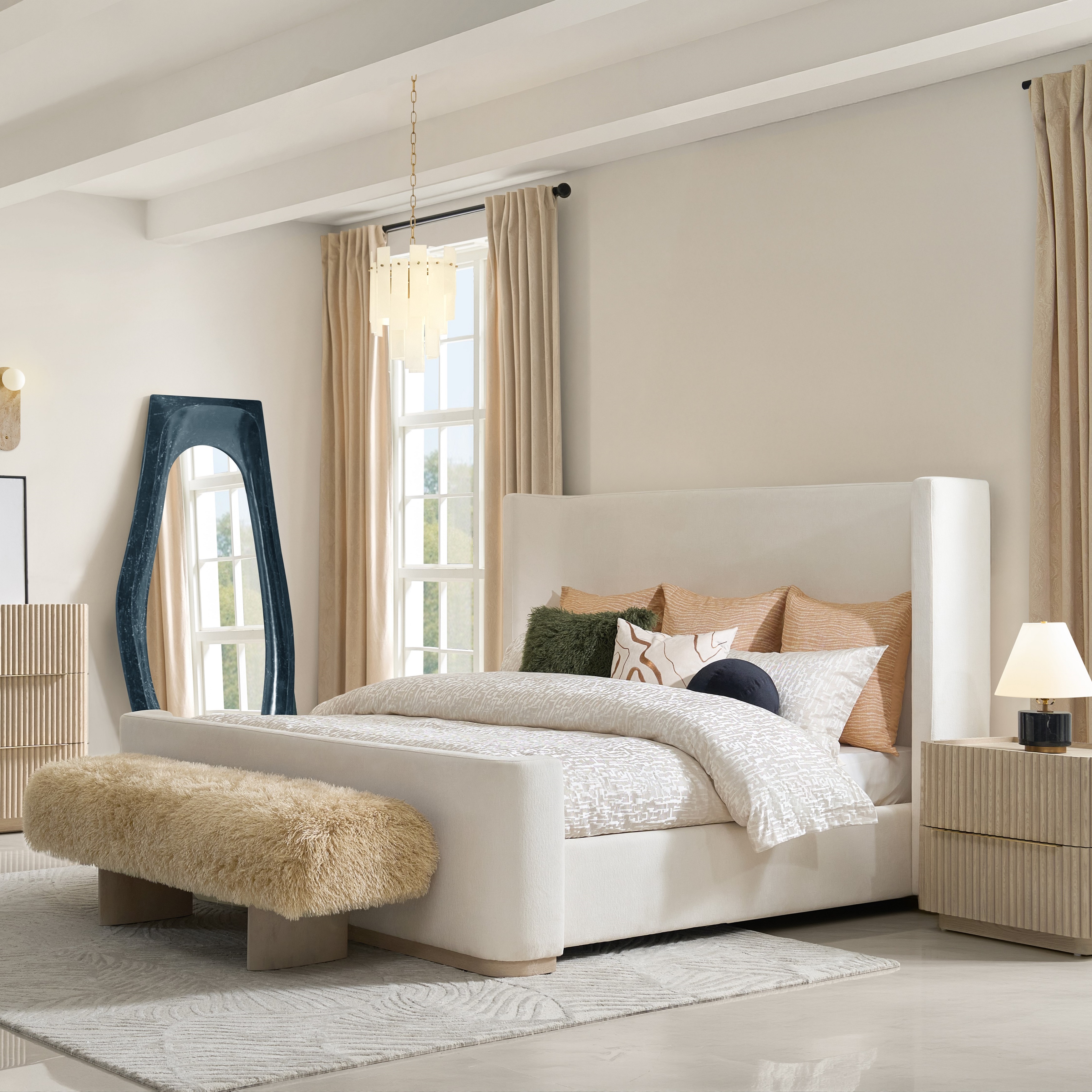 Podva Embroidered Pearl/Ivory Bedding Set$279
A serene pearl and ivory bedding set featuring a modern embroidered motif on smooth satin and cotton.
Add To Cart -

 Jungle Toile Bedding Set - Pale Pink$189
A luxurious satin bedding set featuring a delicate black jungle print on a pale pink background.
Add To Cart -
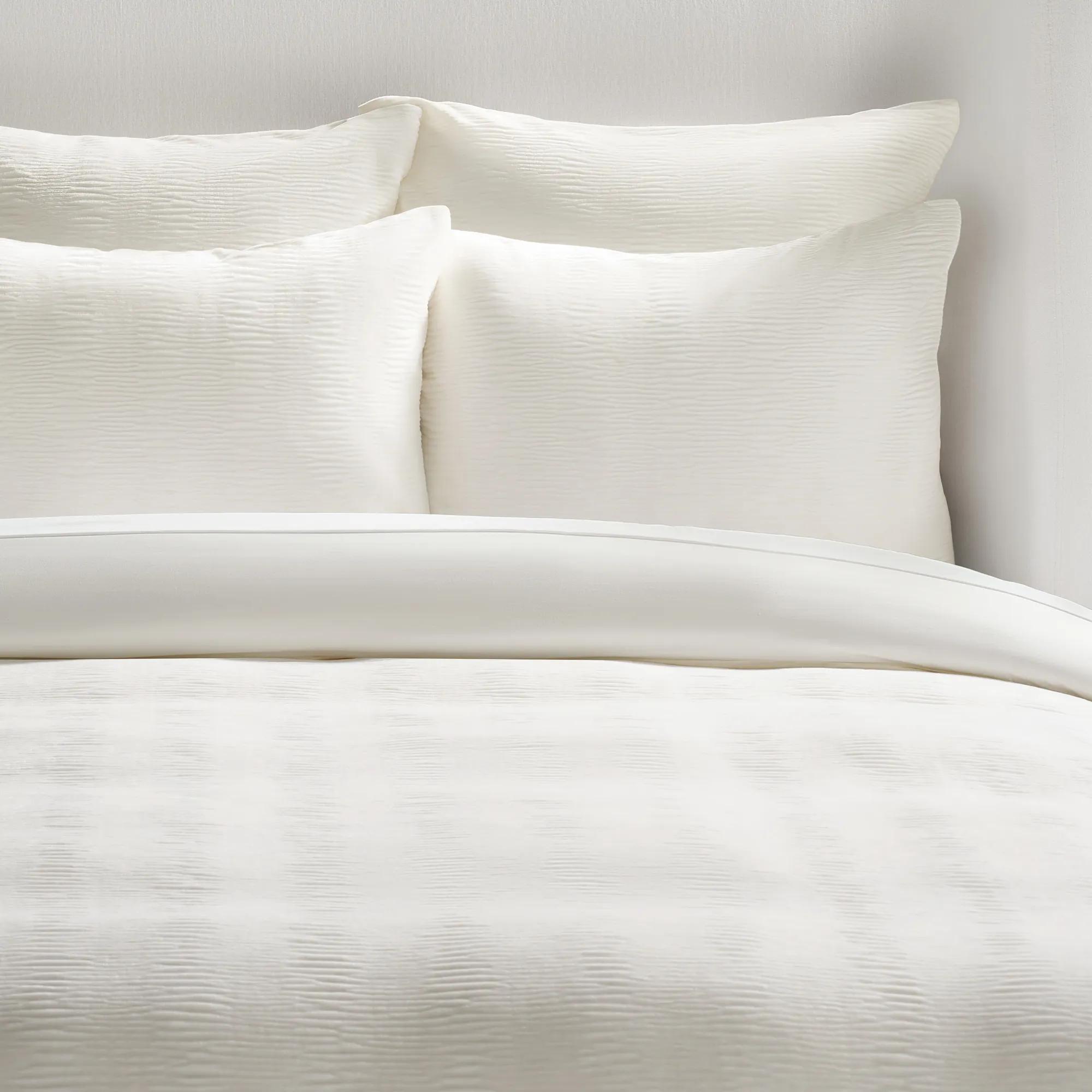 Vera Cloud White Soft Pleated Velvet Bedding Set$249
A cloud-white velvet bedding set featuring soft pleated texture and coordinating duvet and sham covers.
Add To Cart -
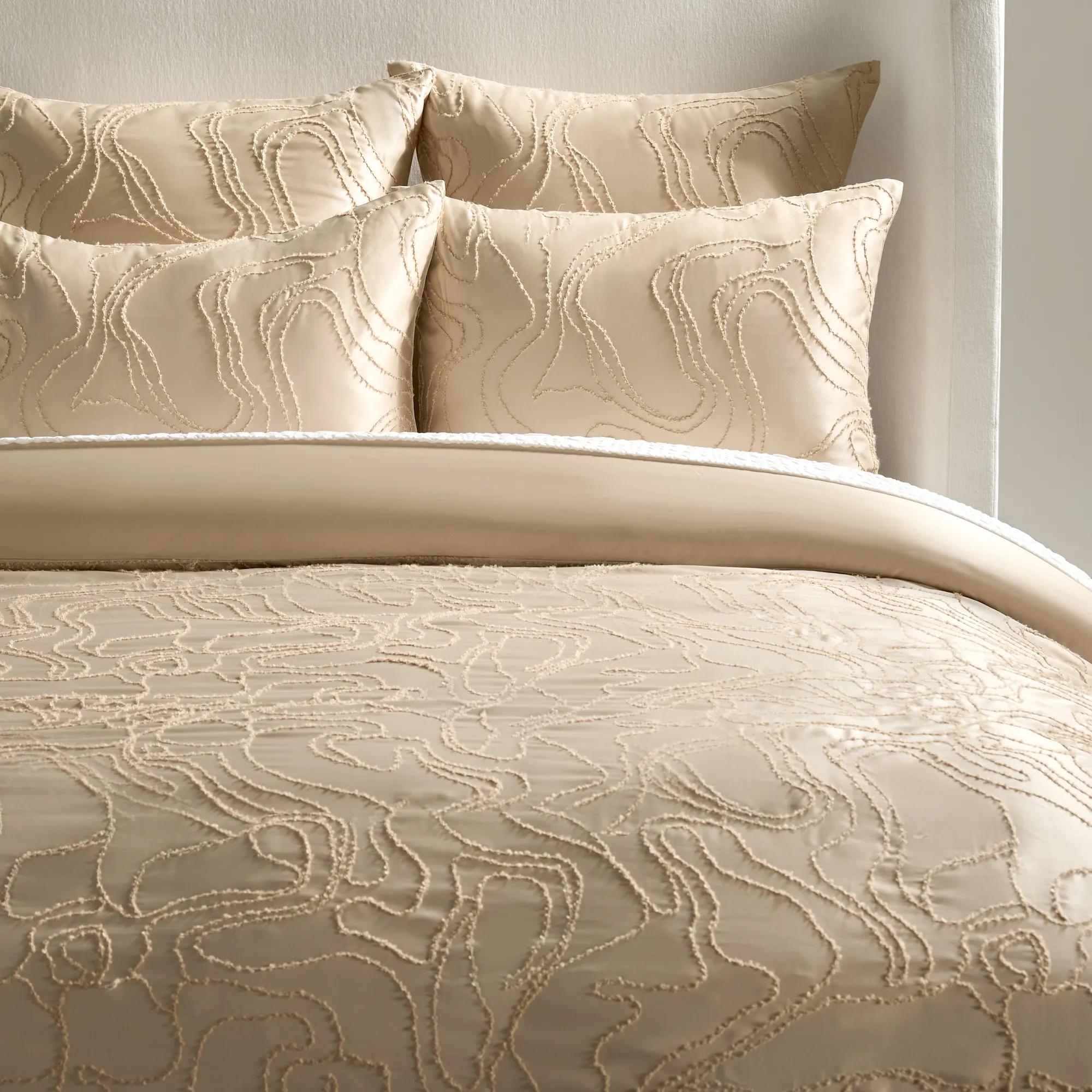 Noa Embroidered Champagne Beige Bedding Set$249
A champagne beige bedding set featuring elegant embroidered detailing for a refined bedroom aesthetic.
Add To Cart -
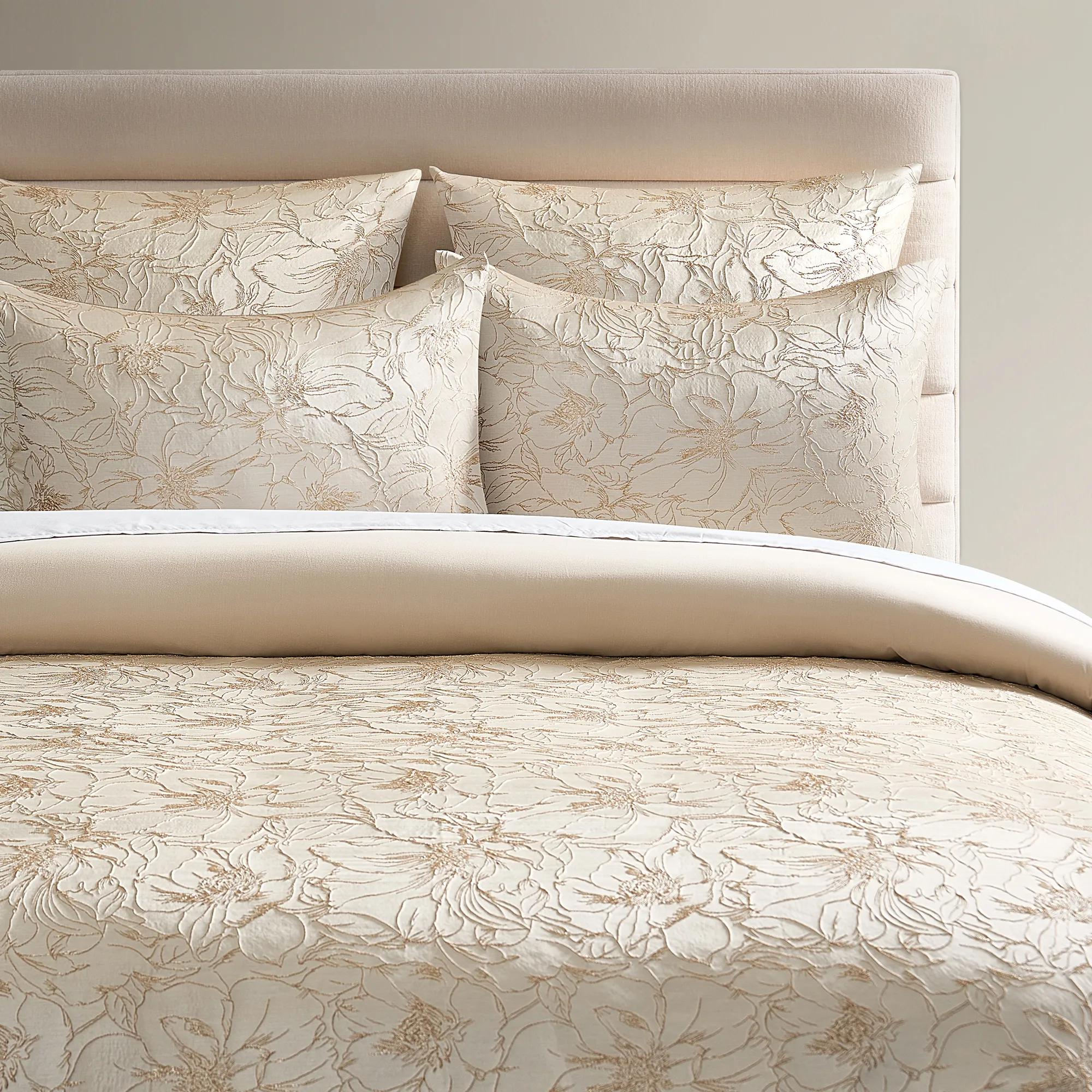 Mimoza Floral Jacquard Champagne Gold Bedding Set$229
A luminous champagne gold jacquard bedding set with delicate floral embroidery and polished knife-edge details.
Add To Cart -
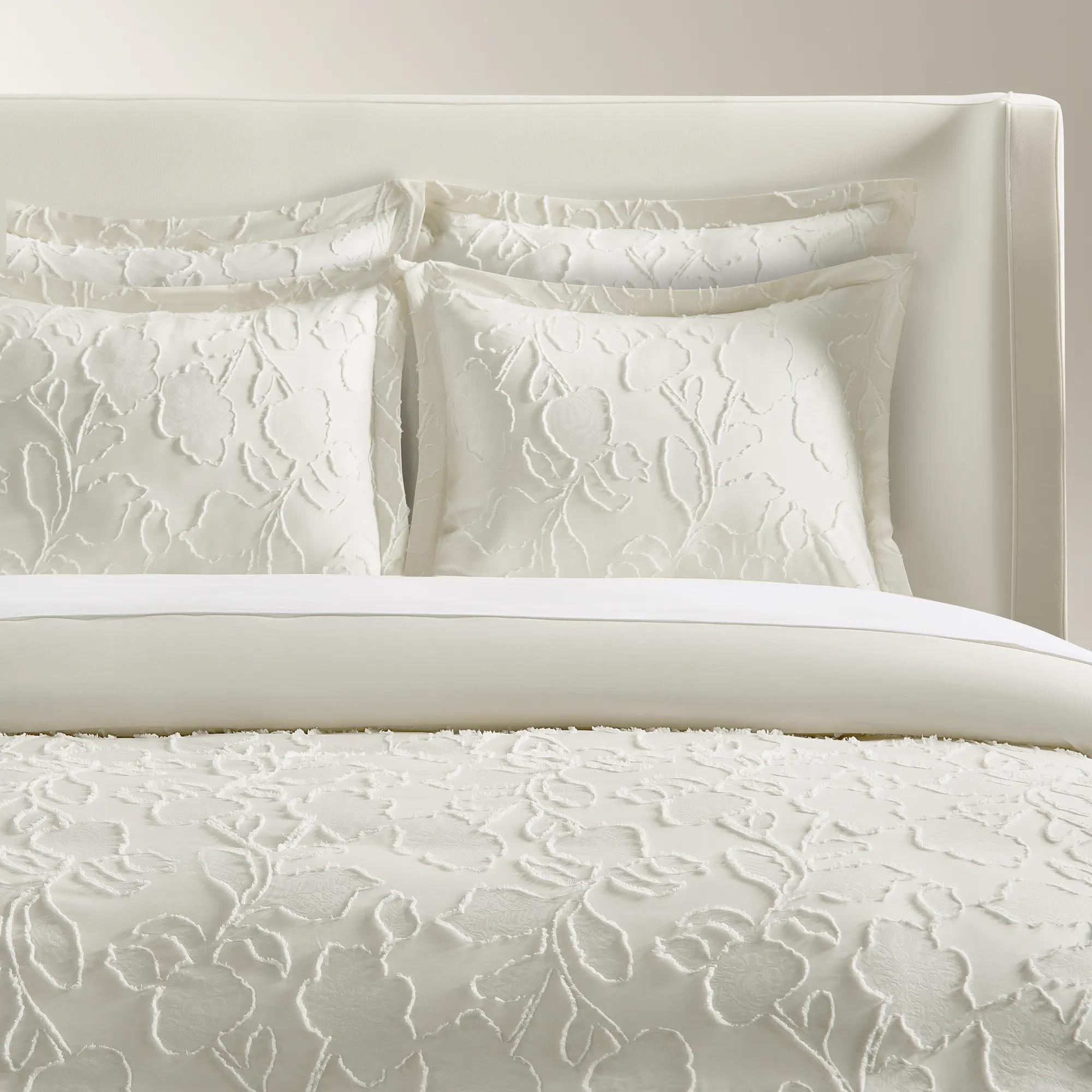
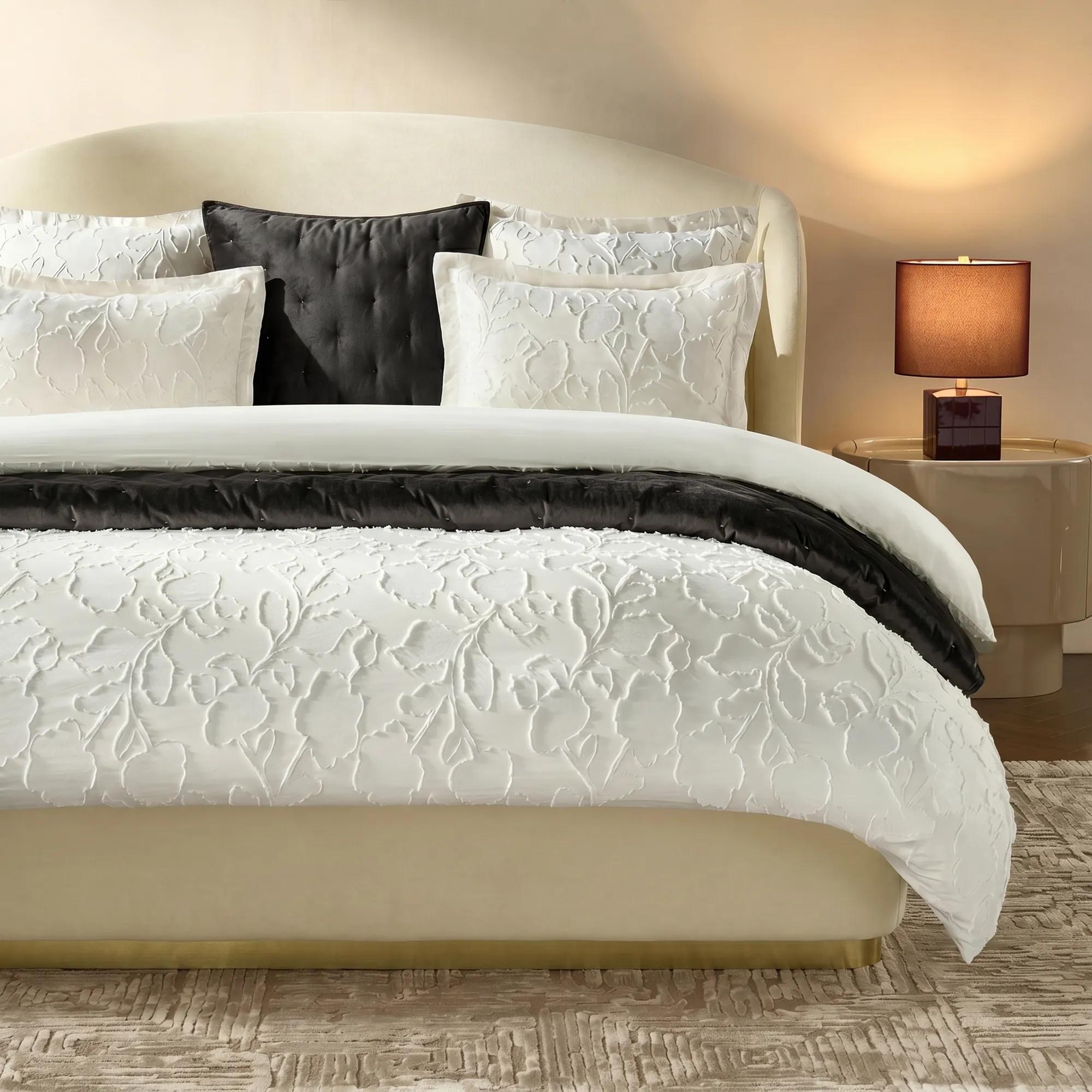 Cosette Ivory Cotton Floral Jacquard Bedding Set$229
A warm ivory bedding set featuring a tonal floral jacquard, eyelash fringe, and soft cotton backing.
Add To Cart -
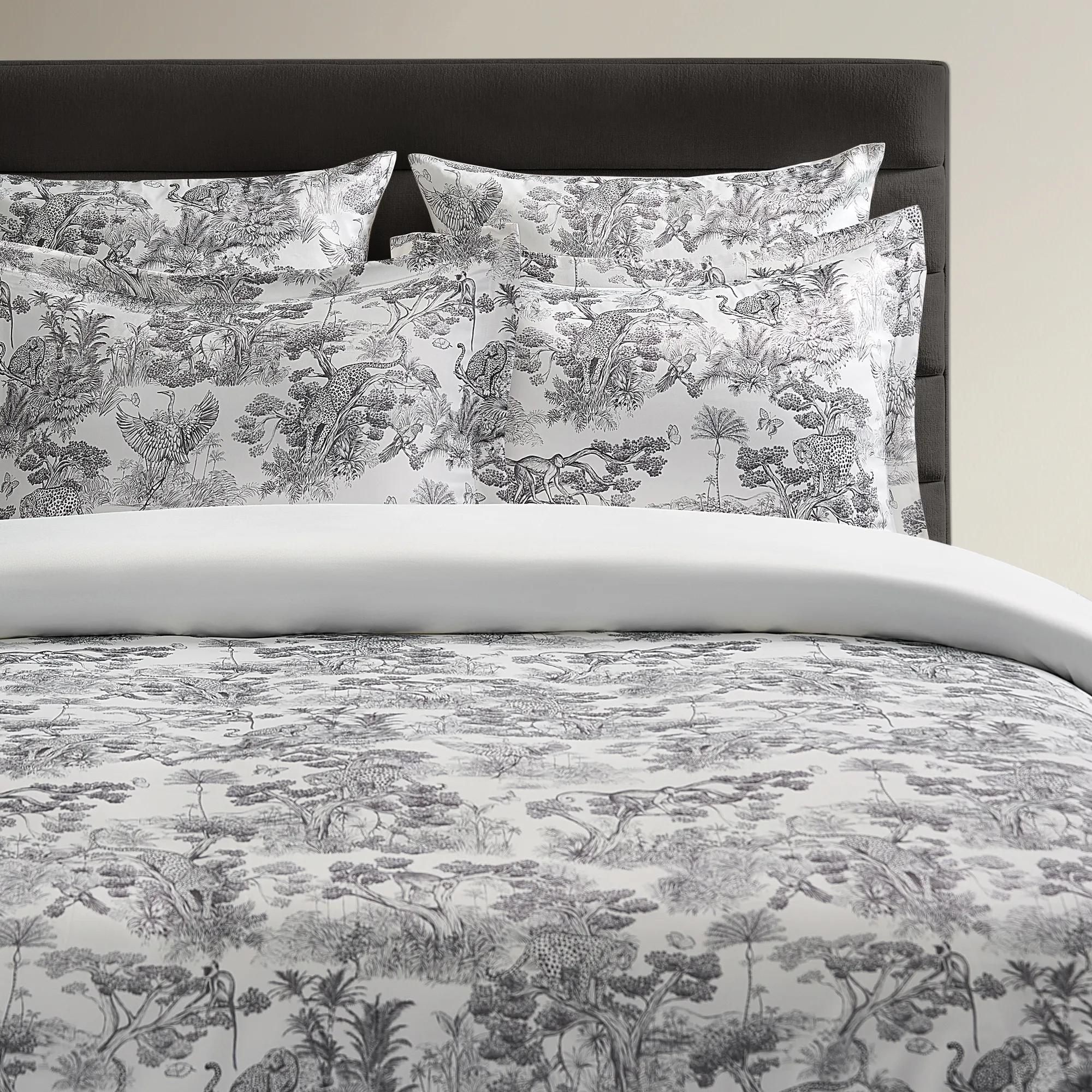
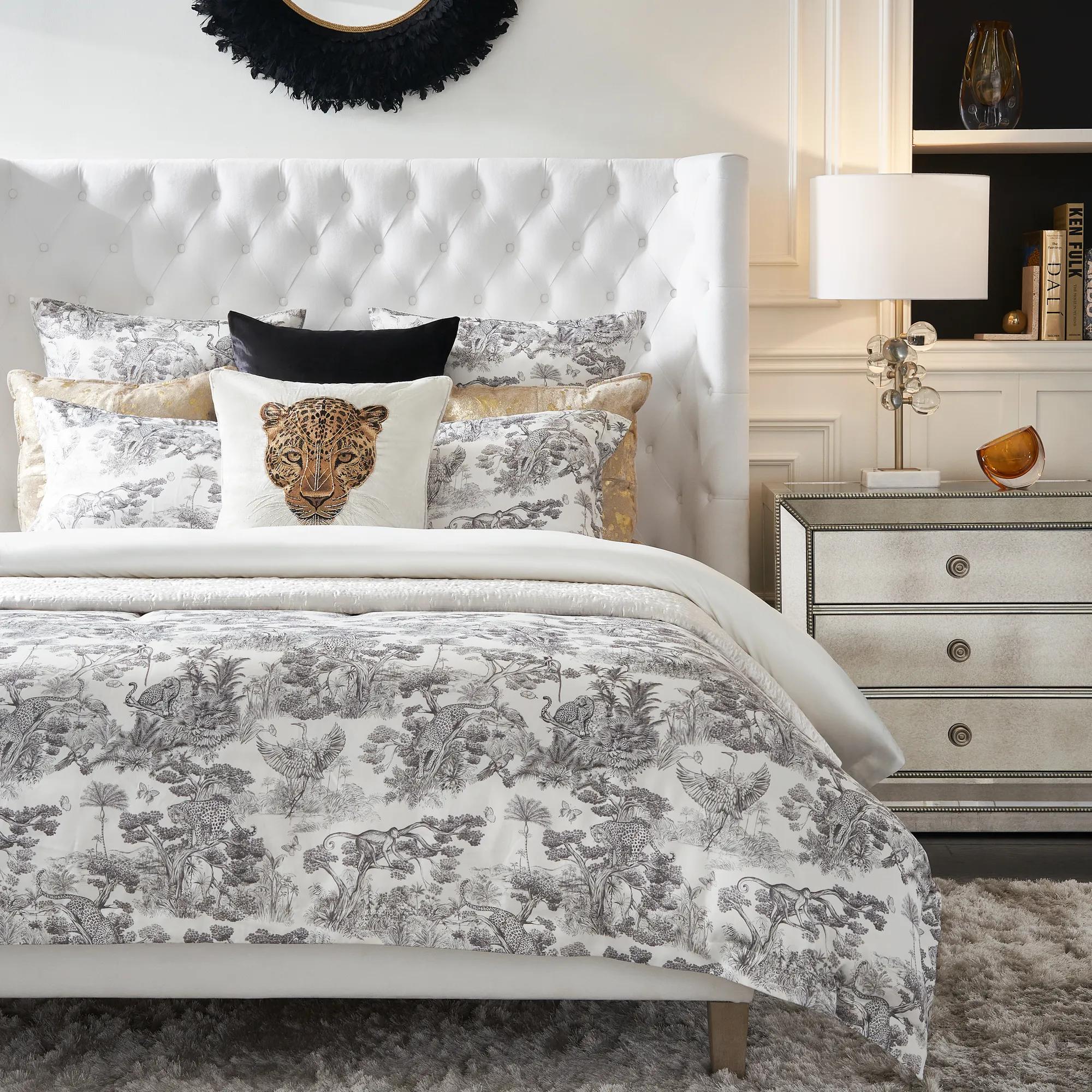 Jungle Toile Bedding Set - Ivory/Black$189
An elegant ivory and black bedding set featuring a luxurious satin jungle print and refined flange edging.
Add To Cart -
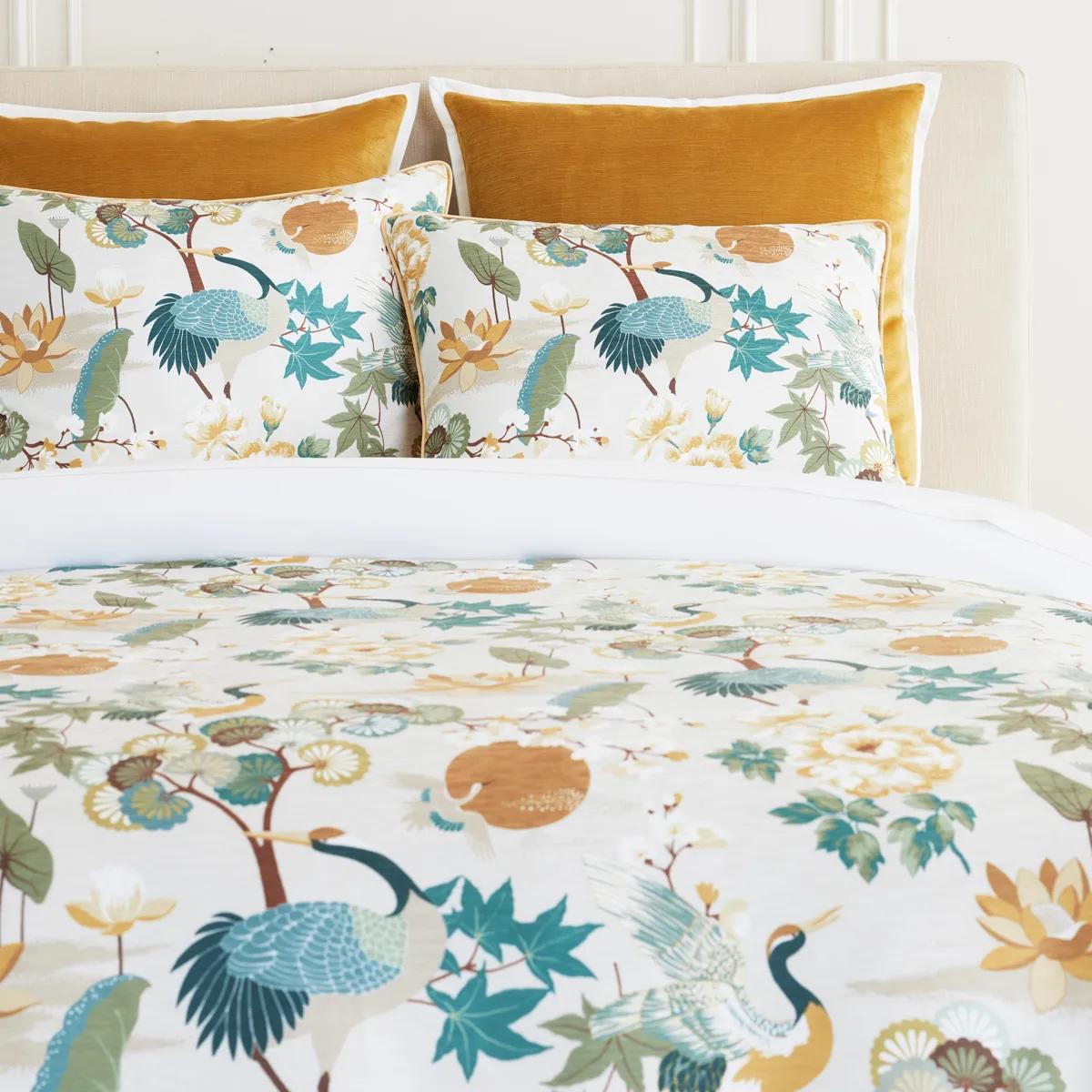
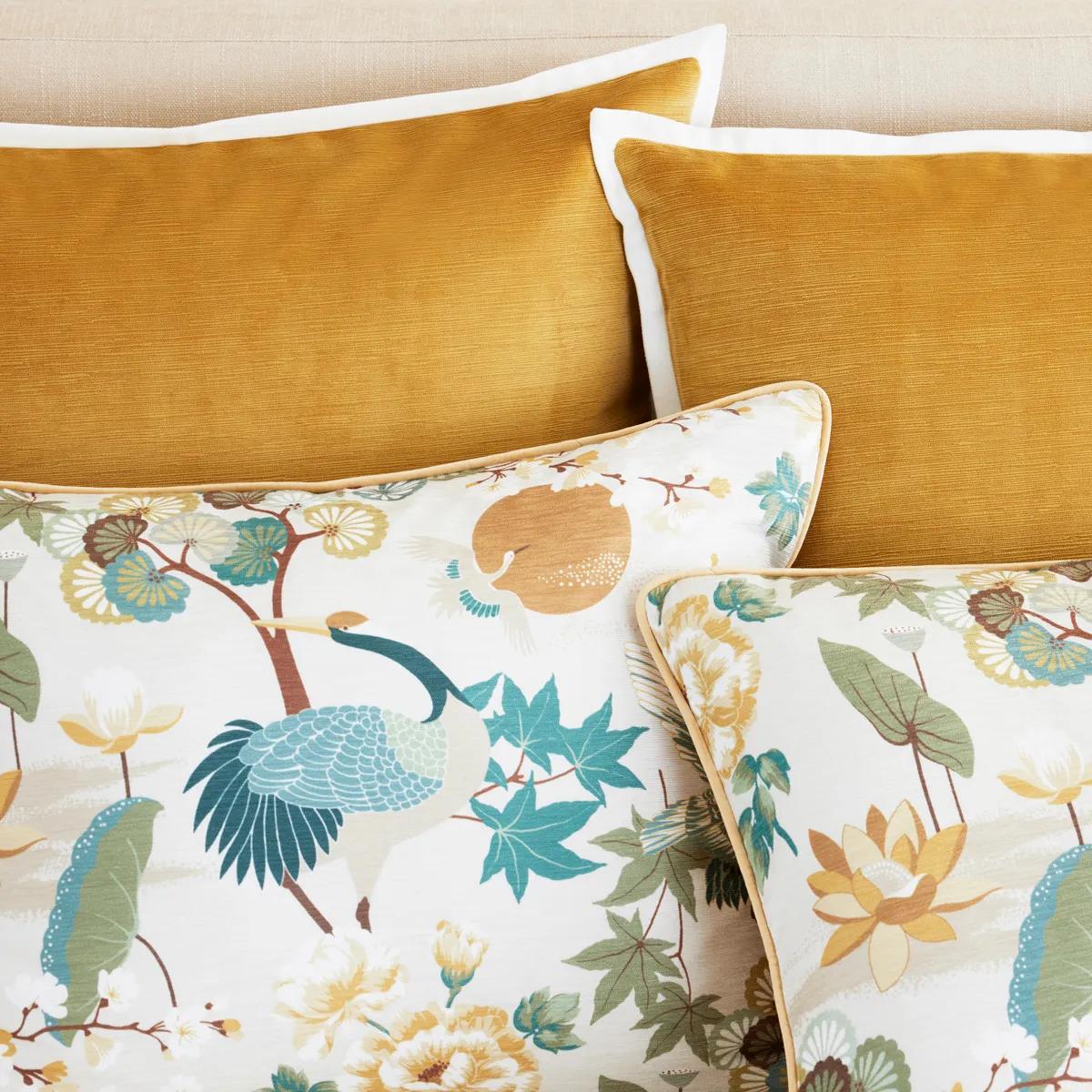 Sandhill Ivory/Multi Color Printed Bedding Set$229
An ivory bedding collection featuring earthy tones, gold velvet accents, and a soft cotton-polyester blend.
Add To Cart -
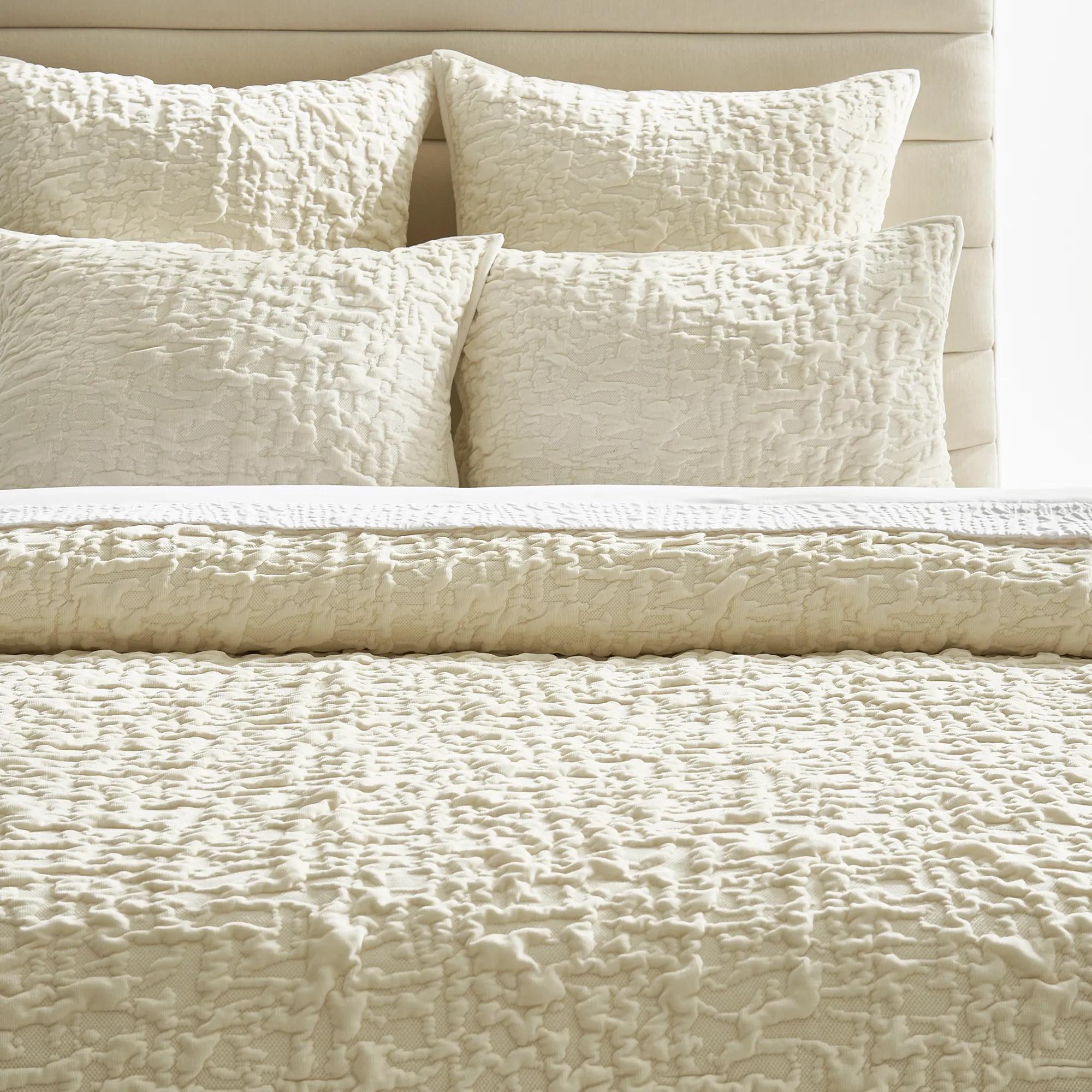
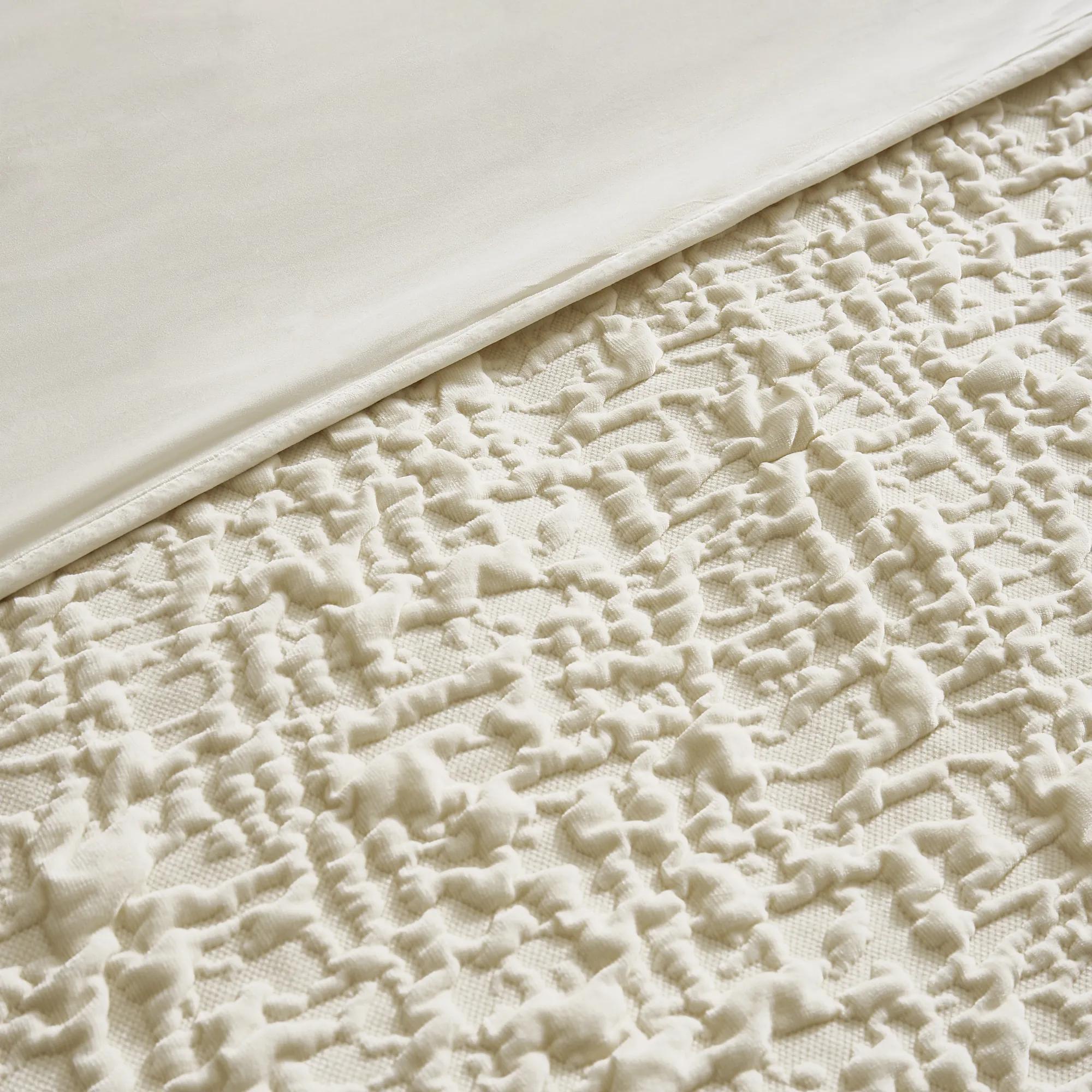 Madera Ivory Textured Velvet Bedding Set$249
A plush ivory velvet coverlet set with crushed embroidered texture and breathable cotton backing for serene style.
Add To Cart -

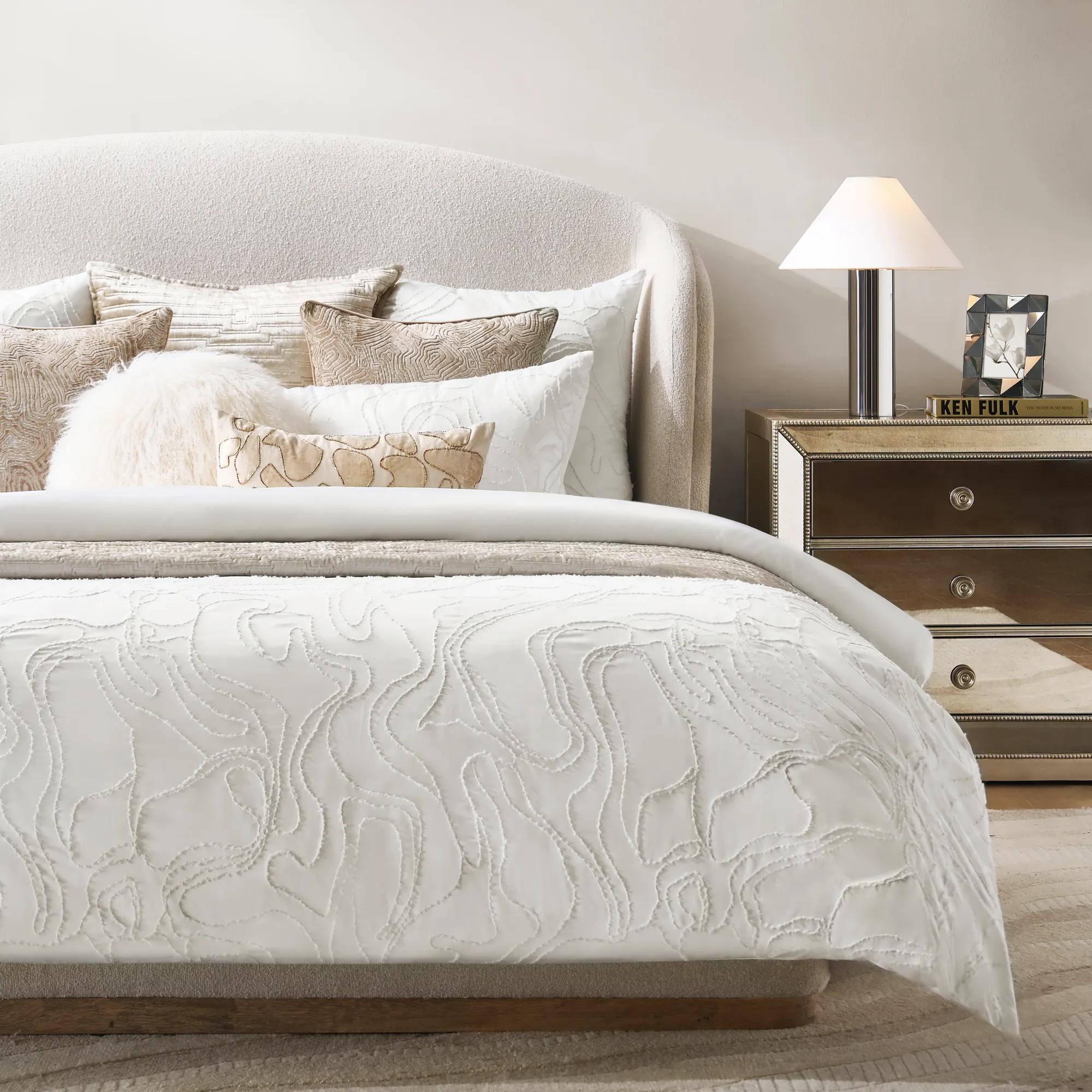 Noa Embroidered Pearl White Bedding Set$229
A luminous pearl satin bedding set featuring an embroidered swirl pattern for a touch of sophisticated elegance.
Add To Cart -
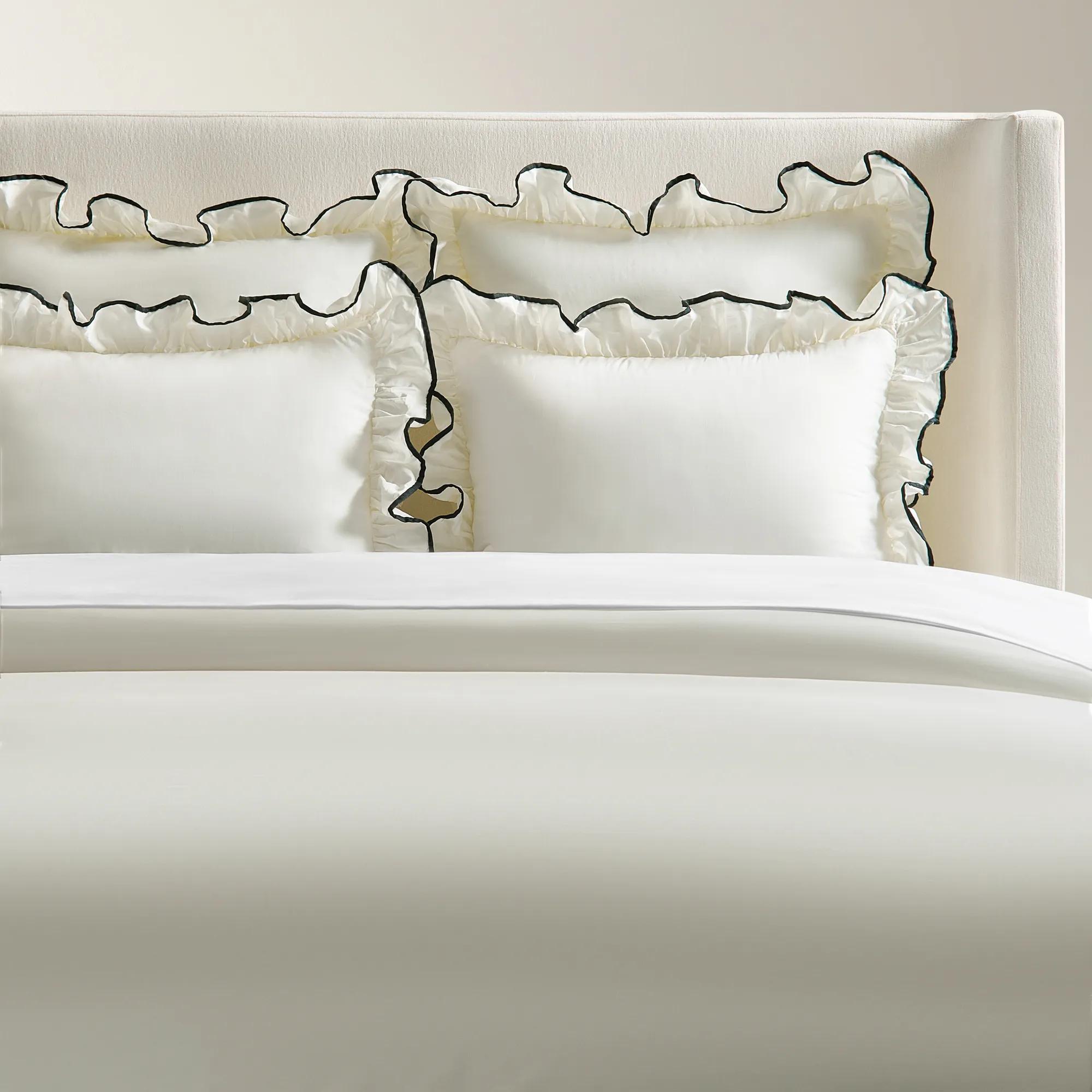
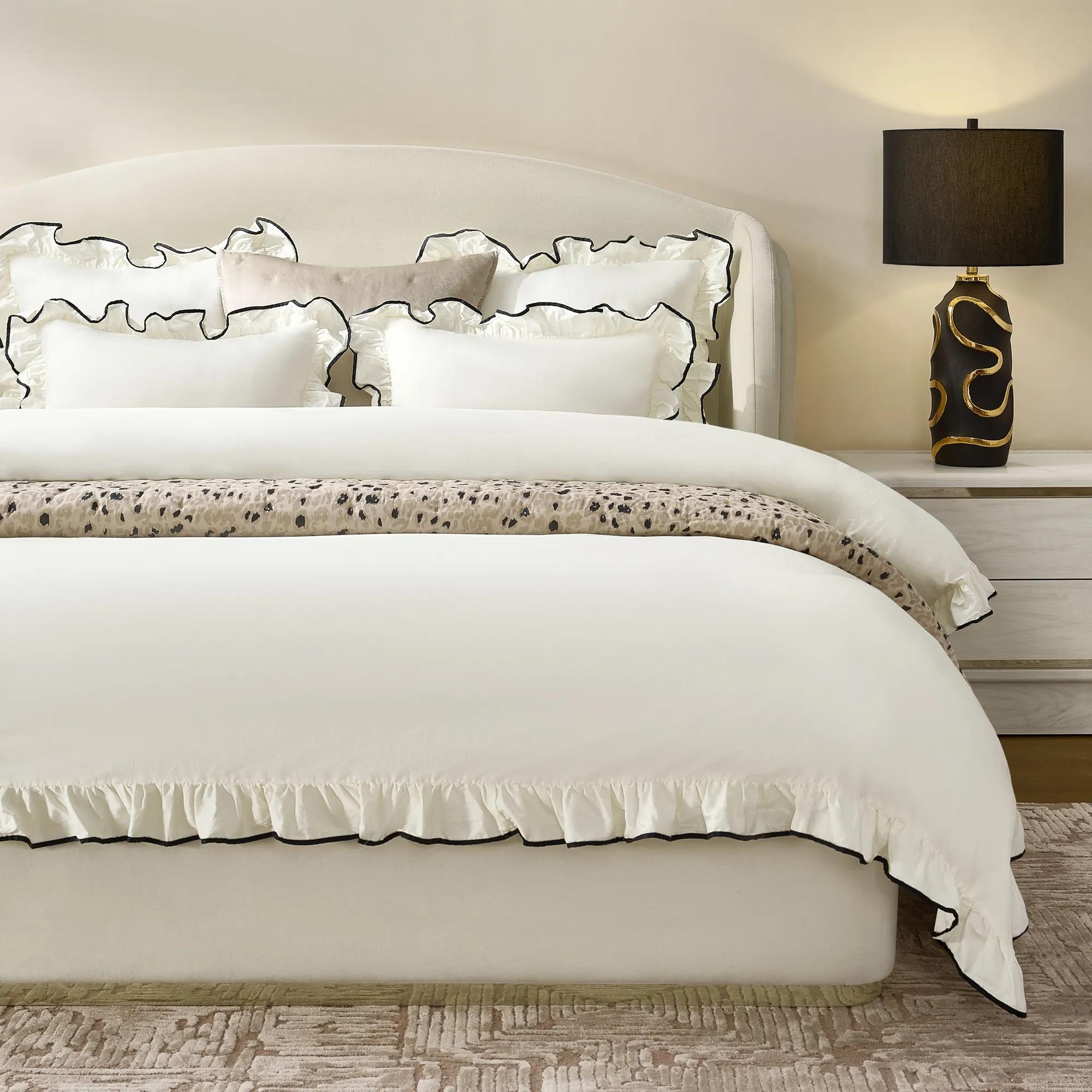 Vittoria Ivory/Black Cotton Percale Ruffle Bedding Set$79
An ivory cotton percale bedding set with dramatic black ruffle trim for a crisp, Deco-inspired look.
Add To Cart -
 Eve Pistachio Green Textured Velvet Quilt Set$69
A green textured velvet bedding set with coordinating duvet and sham covers for polished comfort.
Add To Cart -
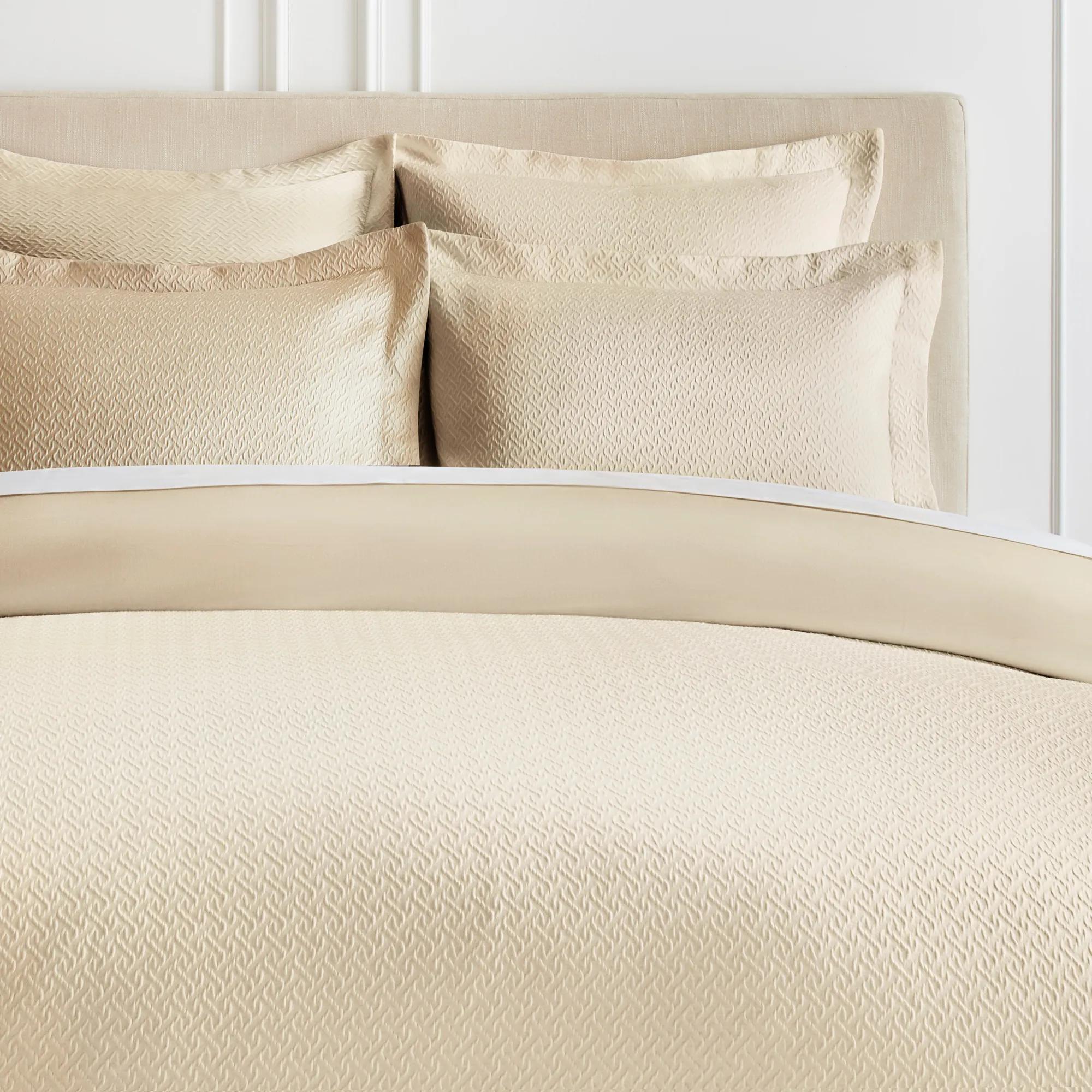
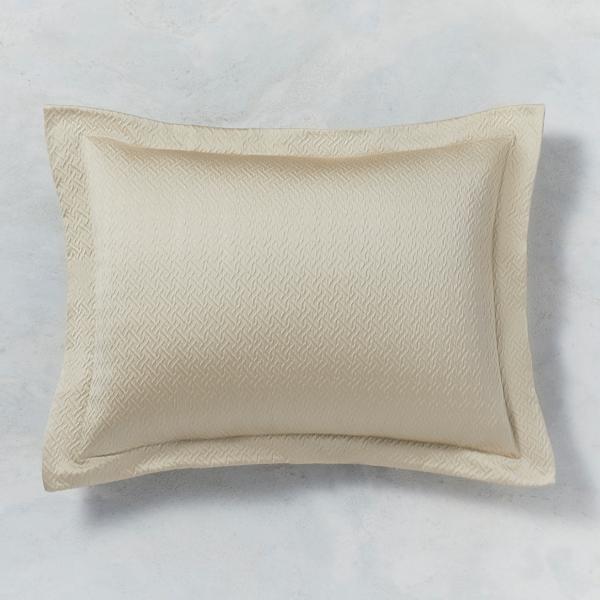 Marlowe Jacquard Gold Bedding Set$549
A jacquard-woven gold bedding collection offering subtle texture and year-round comfort with polyester and cotton.
Add To Cart -
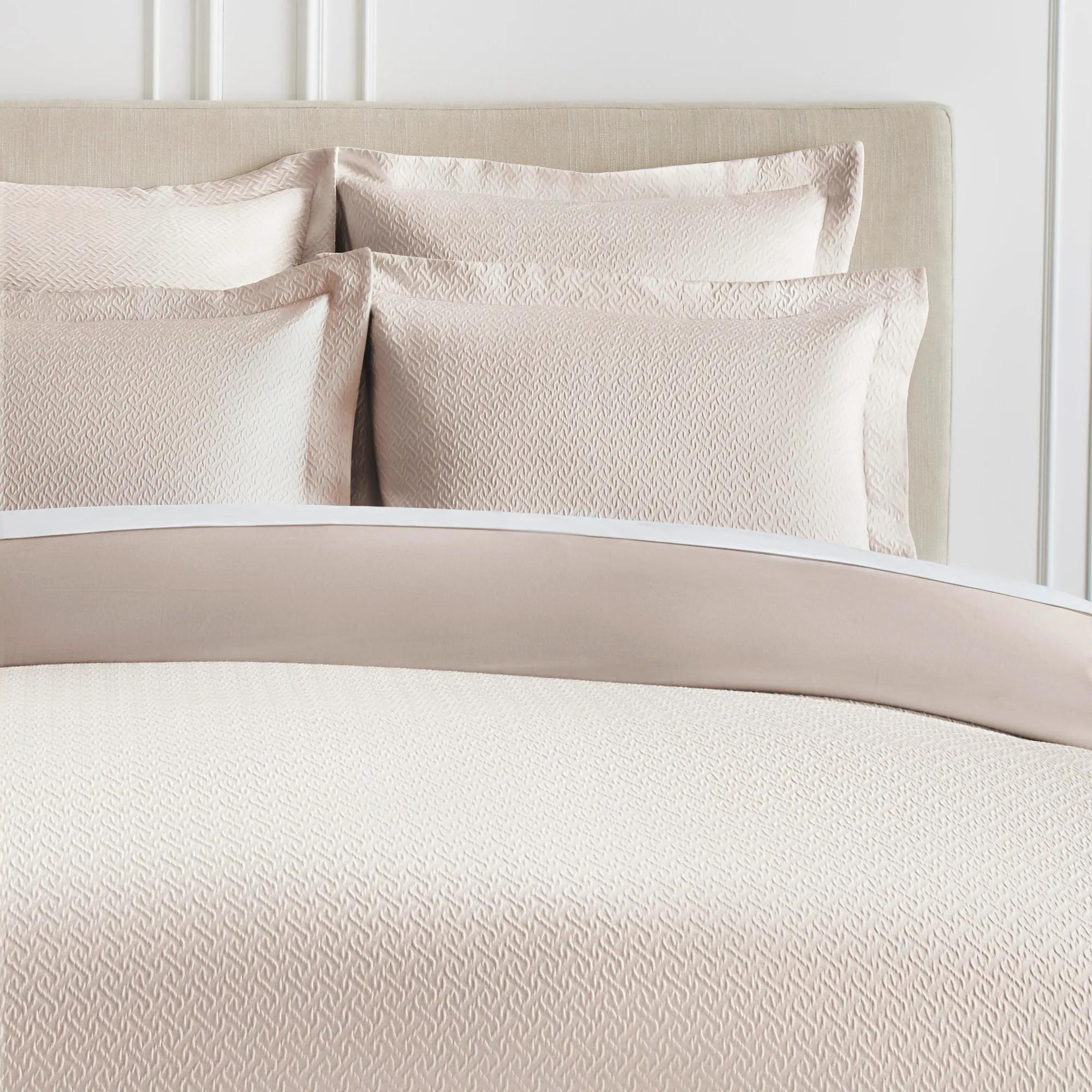
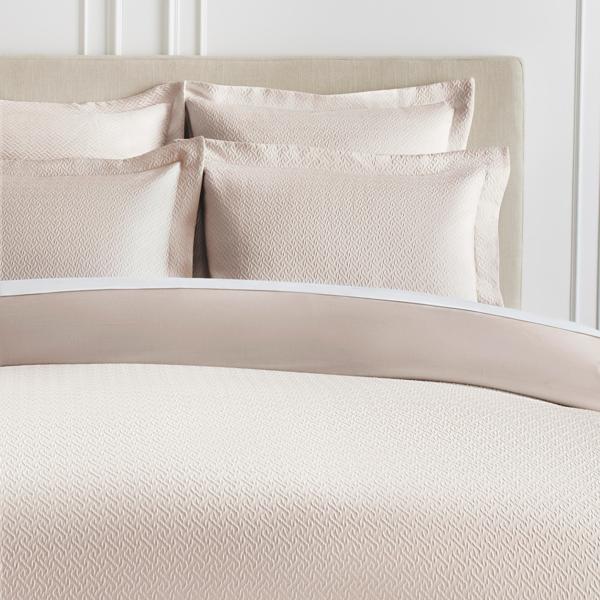 Marlowe Jacquard Blush Bedding Set$599
A blush jacquard bedding collection offering subtle texture and year-round comfort with a soft cotton blend.
Add To Cart -
 Cora Crane Multicolor Satin Bedding Set$179
A smooth satin bedding set featuring a whimsical fig, white, and charcoal crane print with tailored flange edges.
Add To Cart -
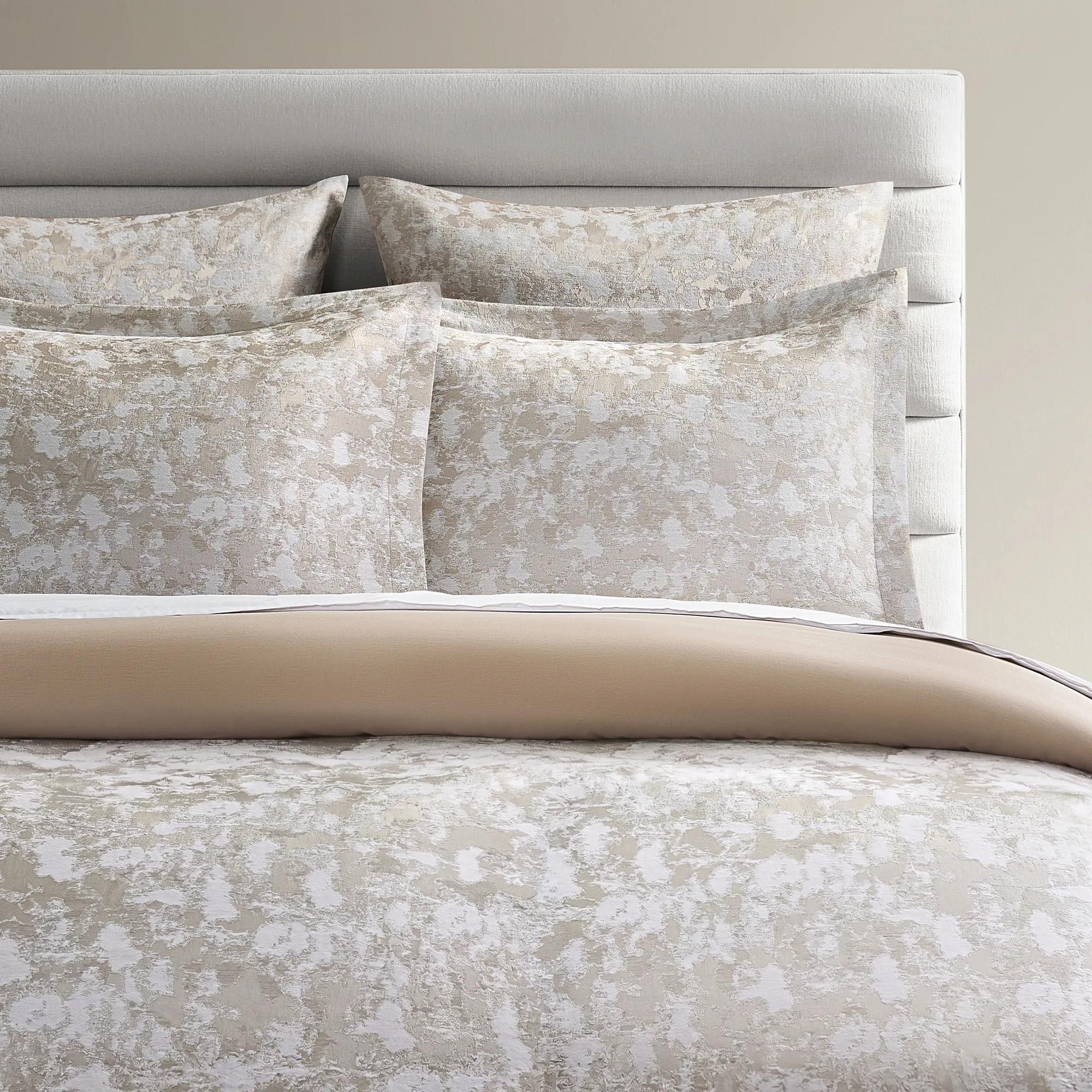 Nimbus Jacquard Metallic Champagne and Silver Bedding Set$49
A cloud-inspired bedding set in champagne and silver metallic jacquard with a soft marbled shimmer.
Add To Cart -
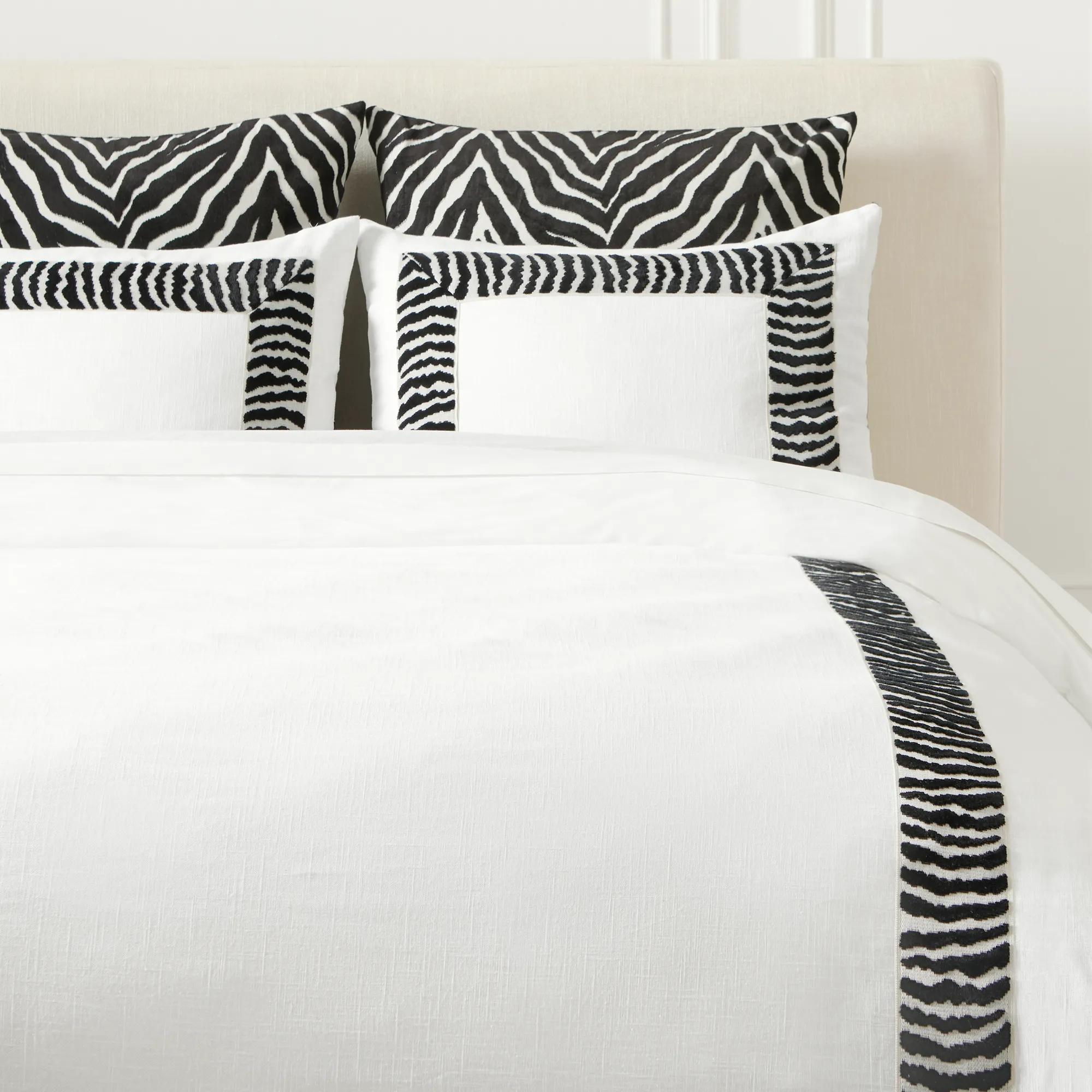
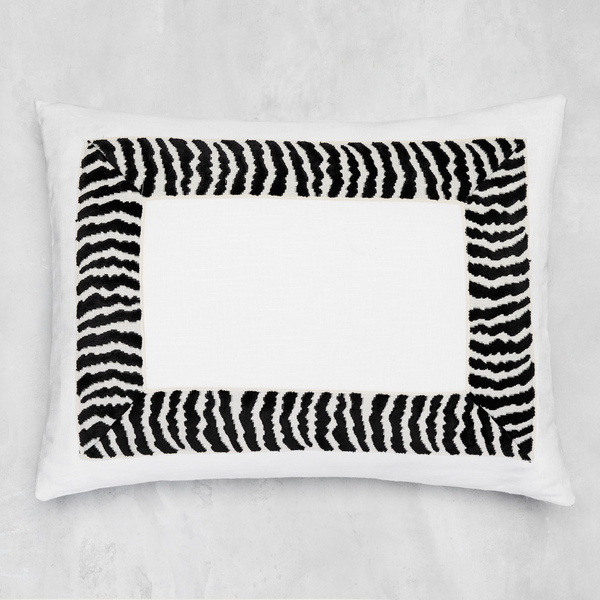 Nikki Chu Hasina Animal Print Black/White Velvet Appliqué Border Bedding Set$319
A striking black animal print bedding set featuring textured slubbed linen and soft cotton blends.
Add To Cart -
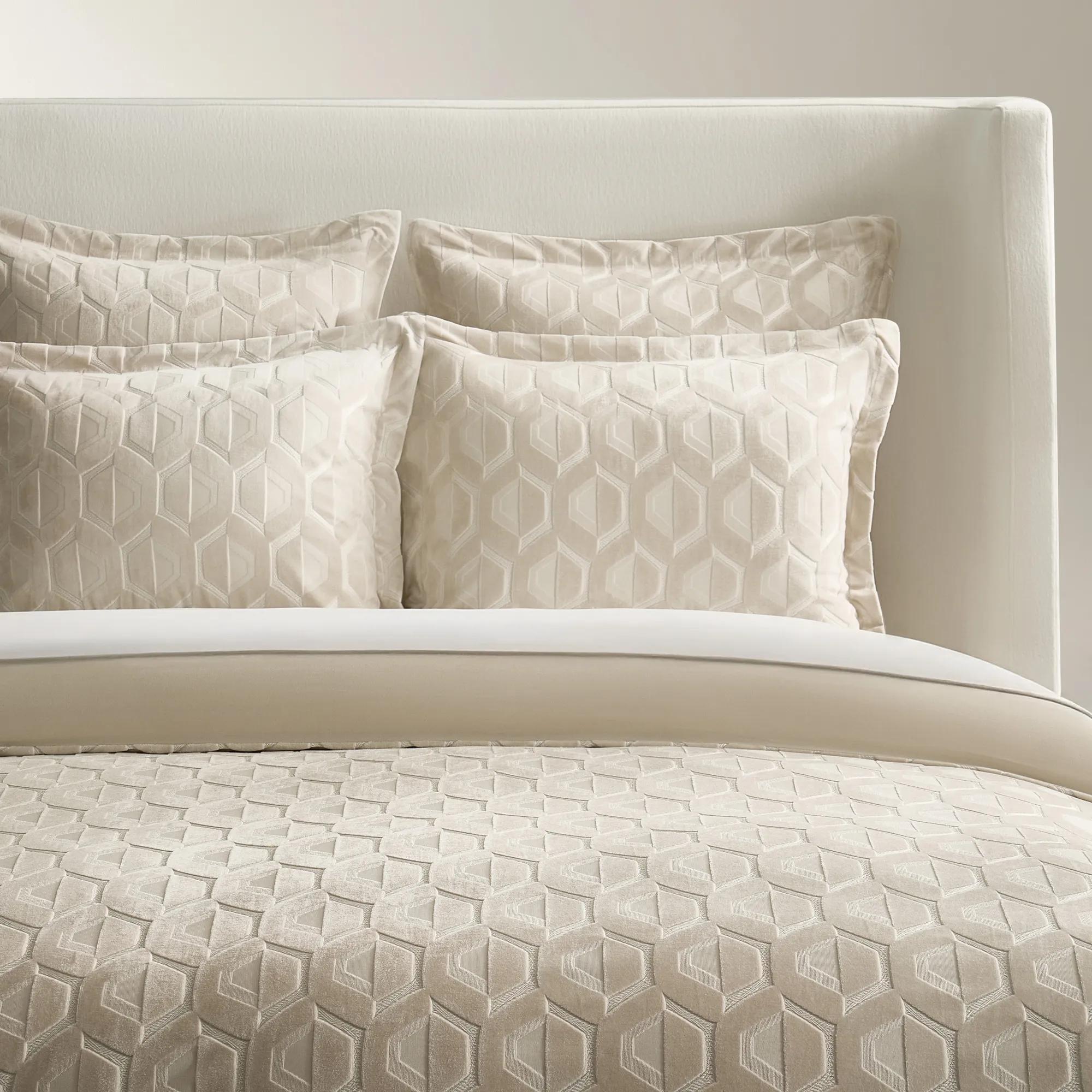 Cielo Alabaster White Geometric Cut Velvet Bedding Set$249
A white cut velvet bedding set with geometric detailing and coordinating duvet and sham covers.
Add To Cart -

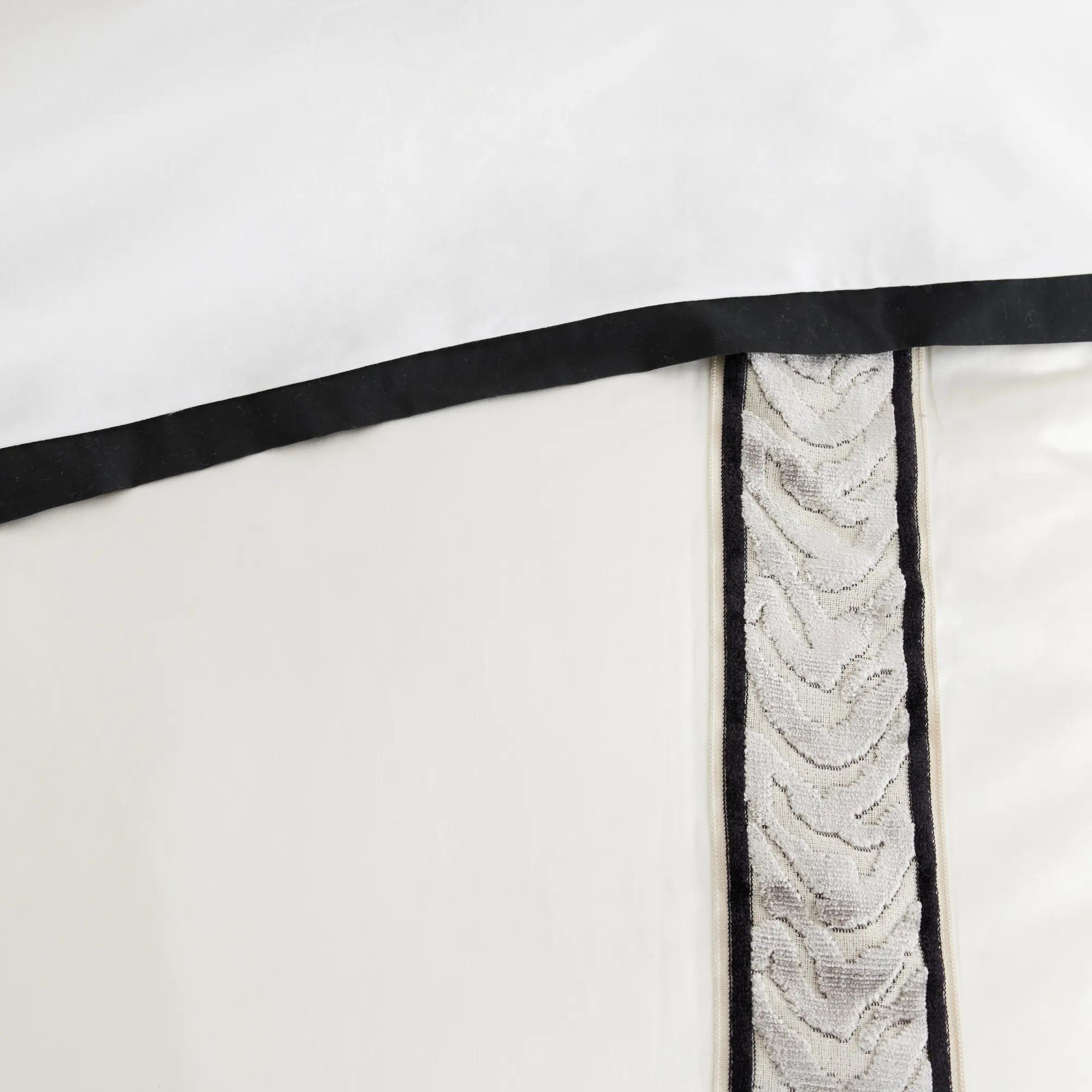 Gianna Grey/Black/White Animal Print Cut Velvet Appliqué Border Bedding Set$799
A luxurious grey and black bedding collection featuring a cut velvet tiger-stripe appliqué border for bold style.
Add To Cart -
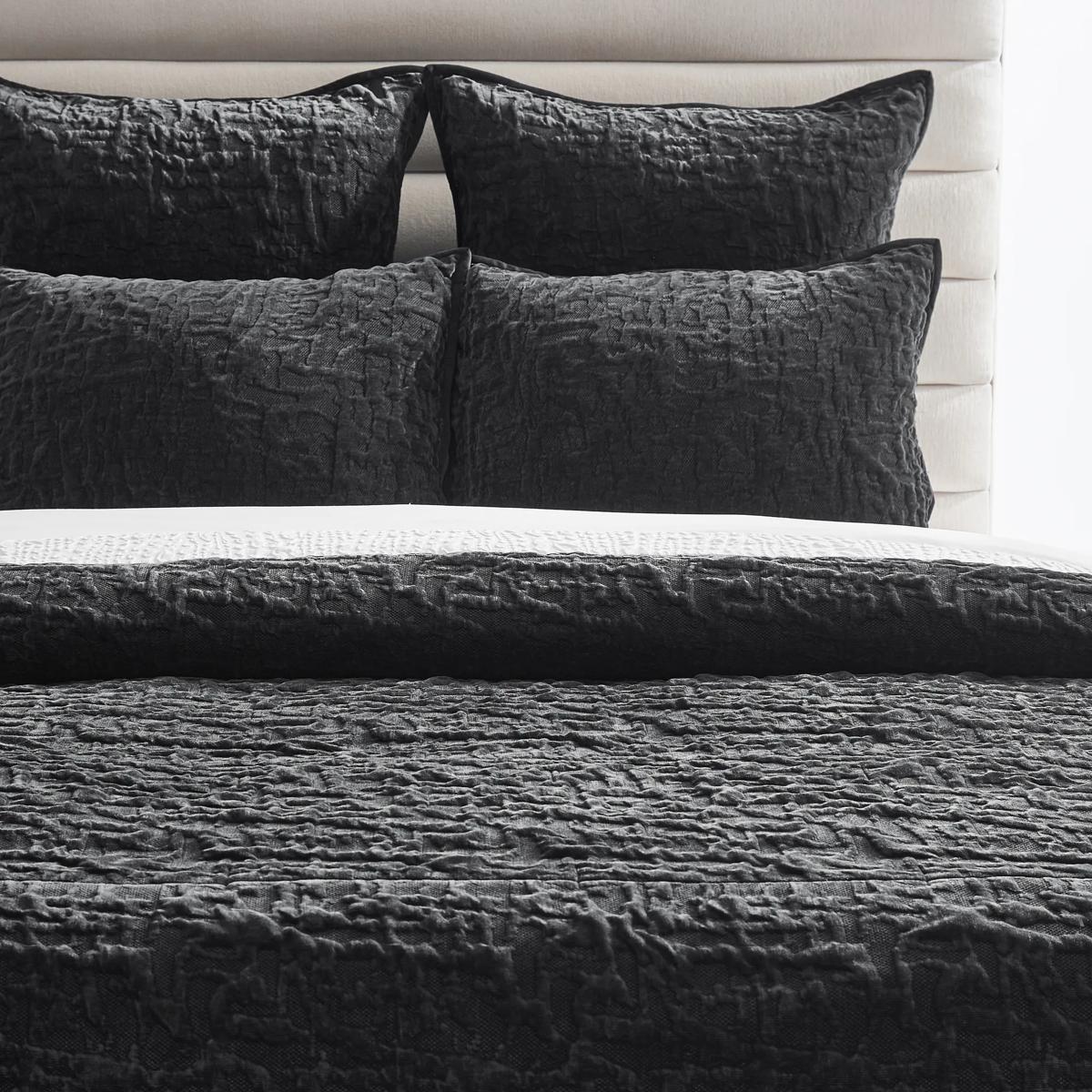
 Madera Black Textured Velvet Bedding Set$299
A sophisticated black crushed velvet coverlet set with tonal embroidery and breathable cotton backing for year-round luxury.
Add To Cart -
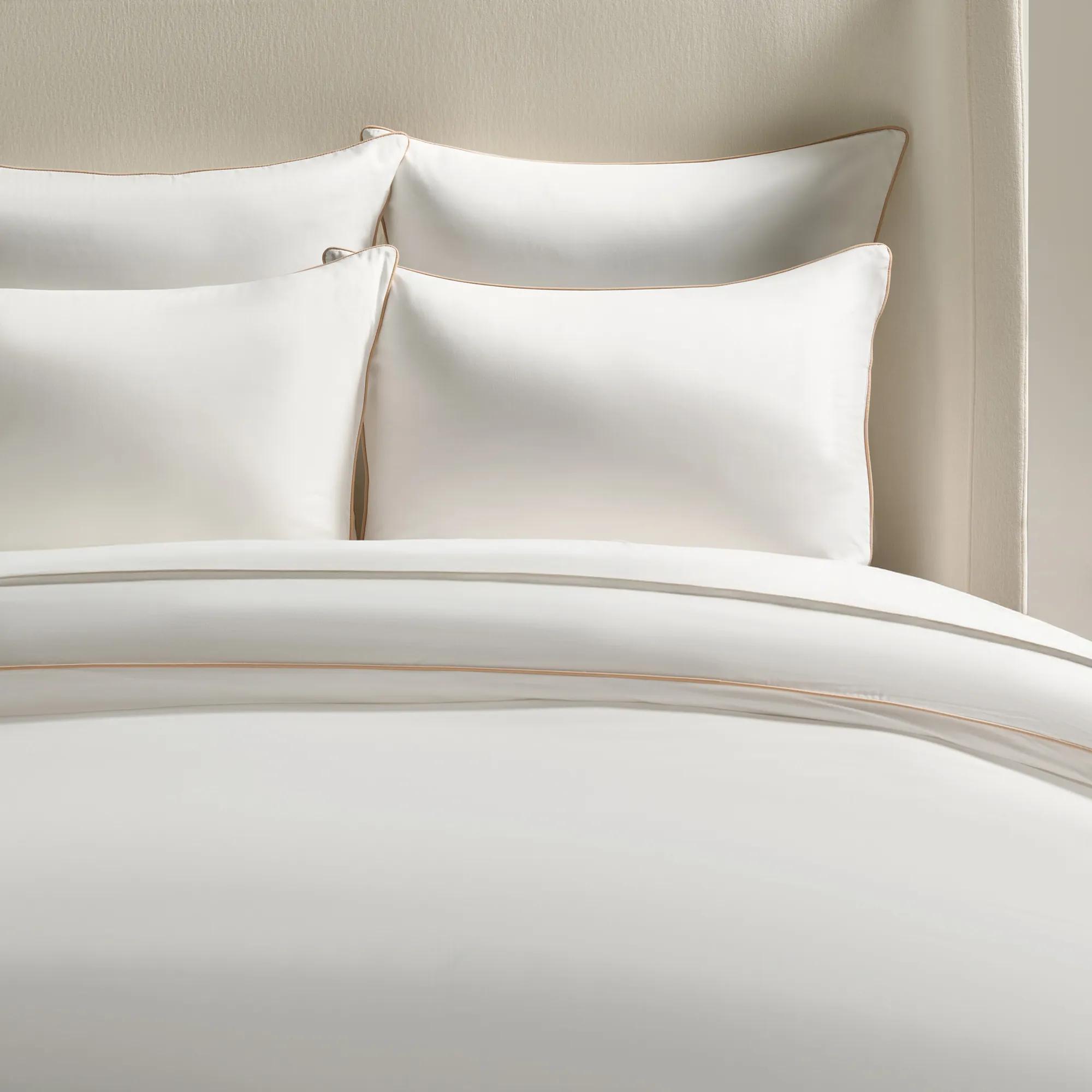
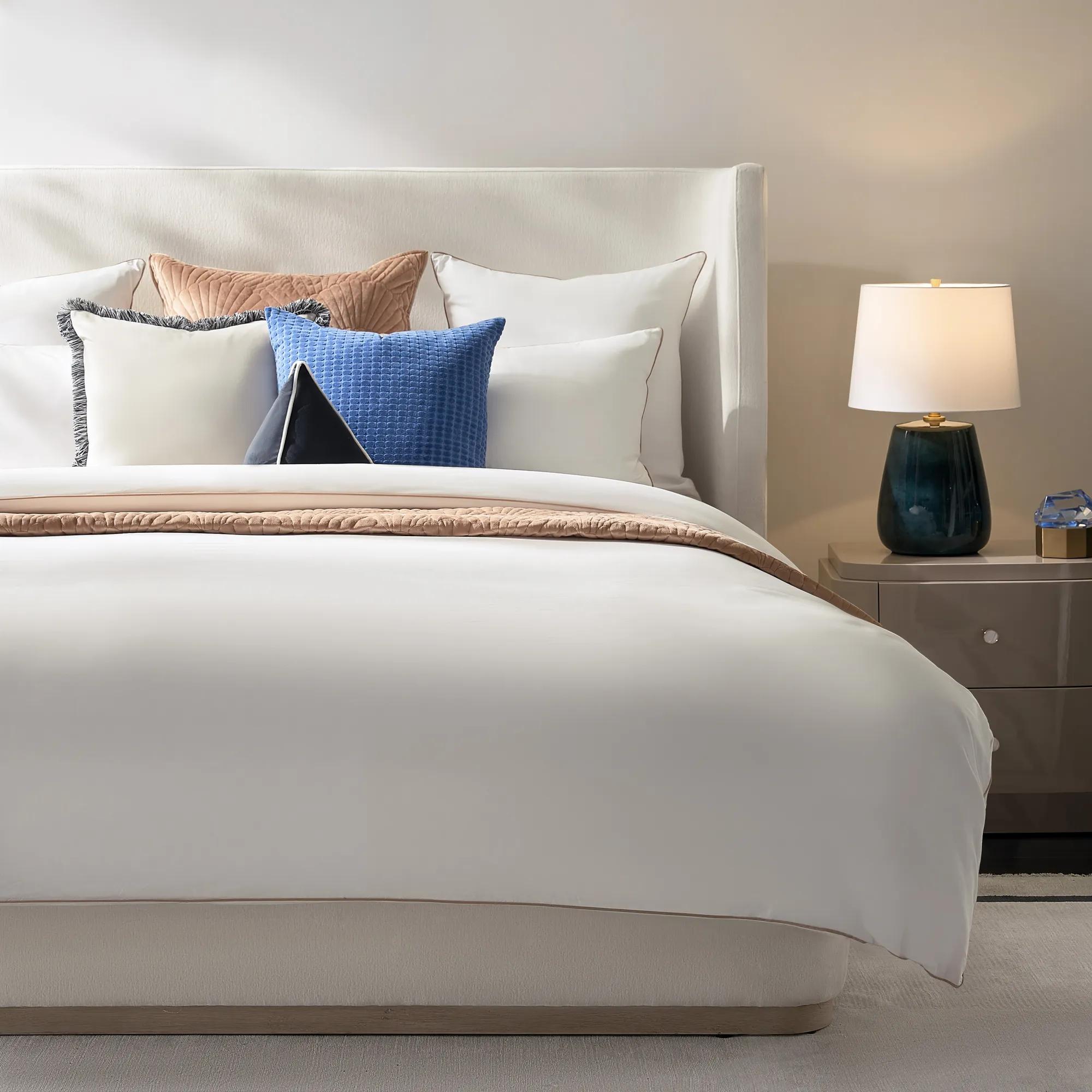 Sarla Contrast Cotton Percale Bedding Set - White/Tan$229
A crisp cotton percale bedding set in white and tan, featuring coordinating duvet and sham covers.
Add To Cart -
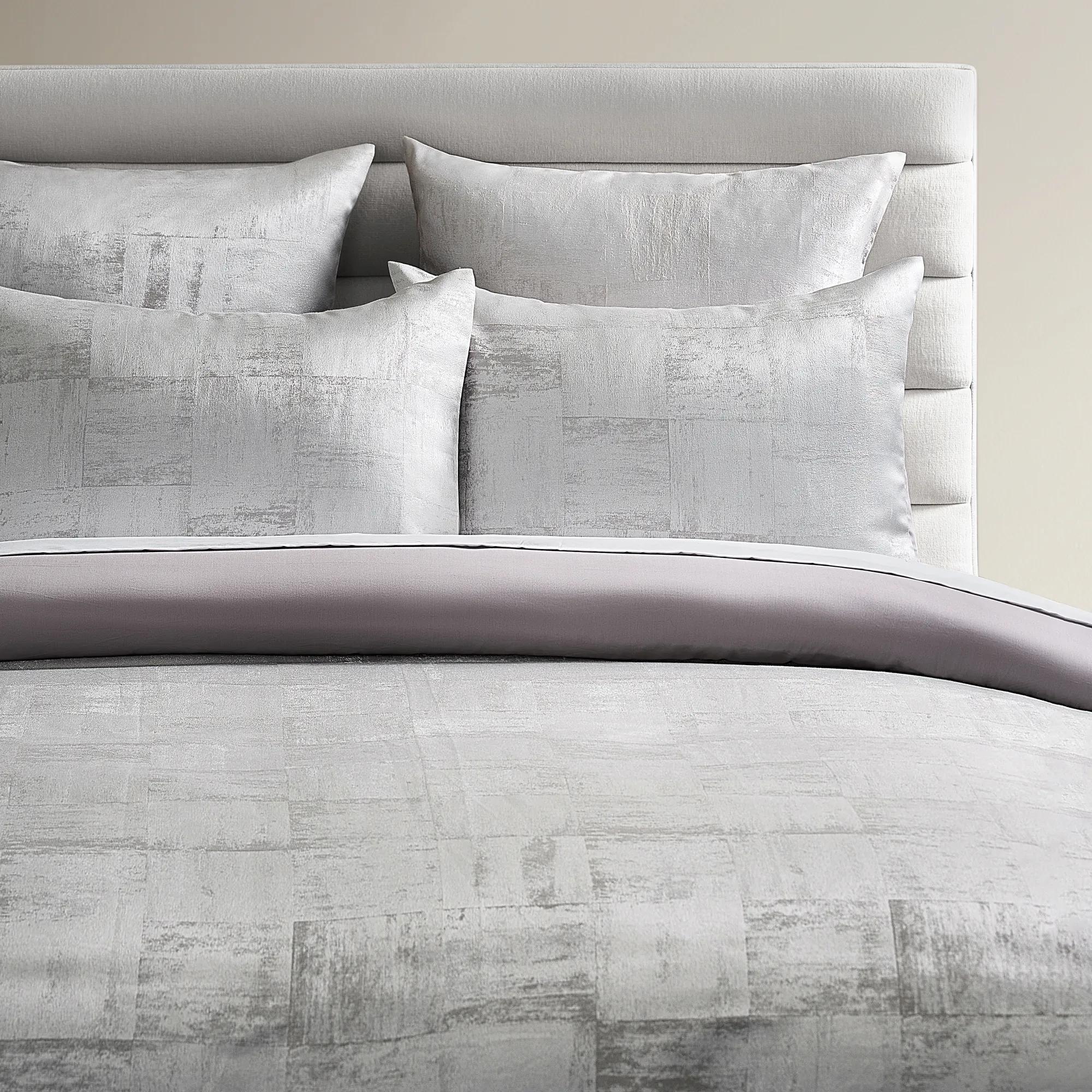 Auden Bedding Set - Platinum$229
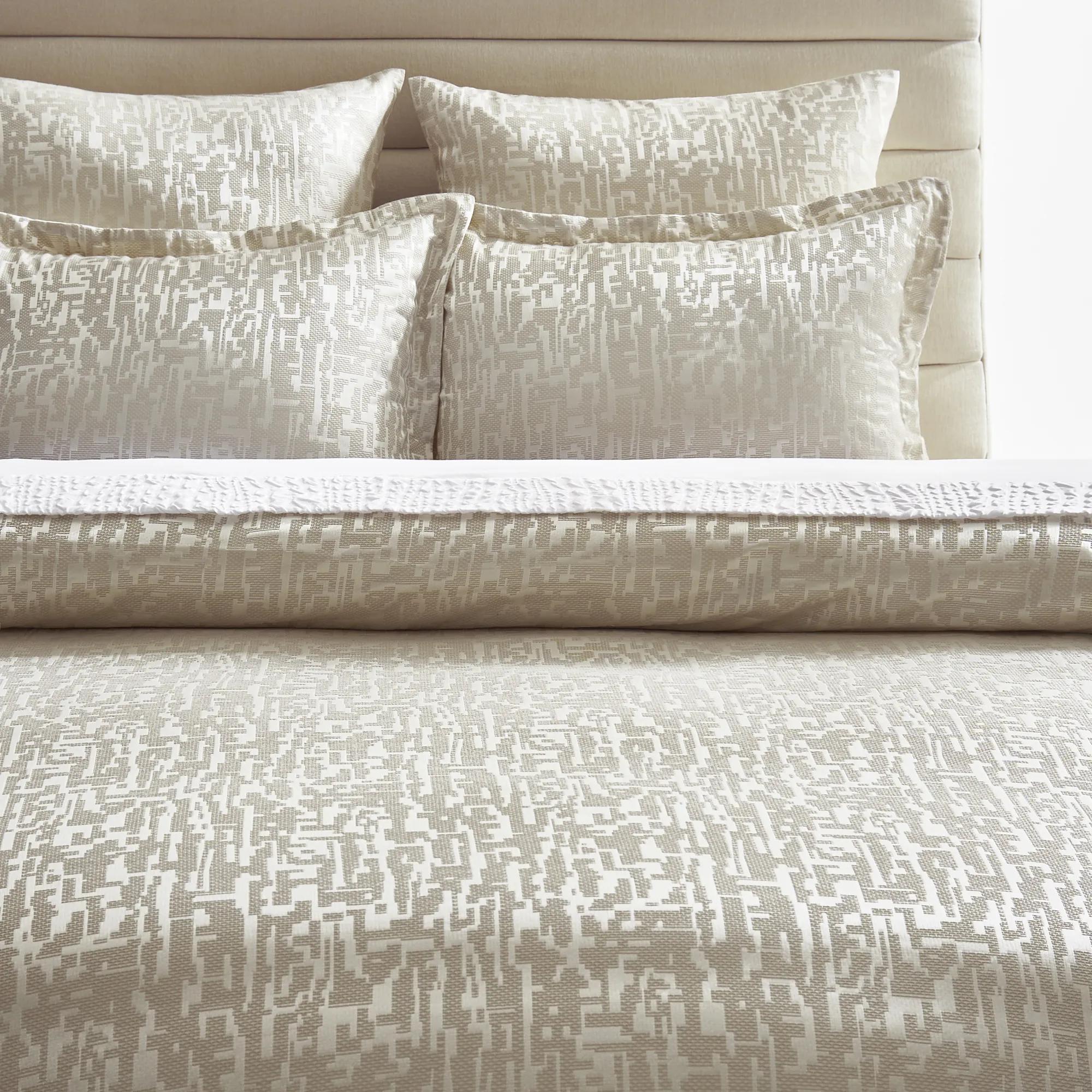
A platinum jacquard bedding set featuring a subtle block pattern, knife-edge detail, and polished button closures.
Add To Cart -
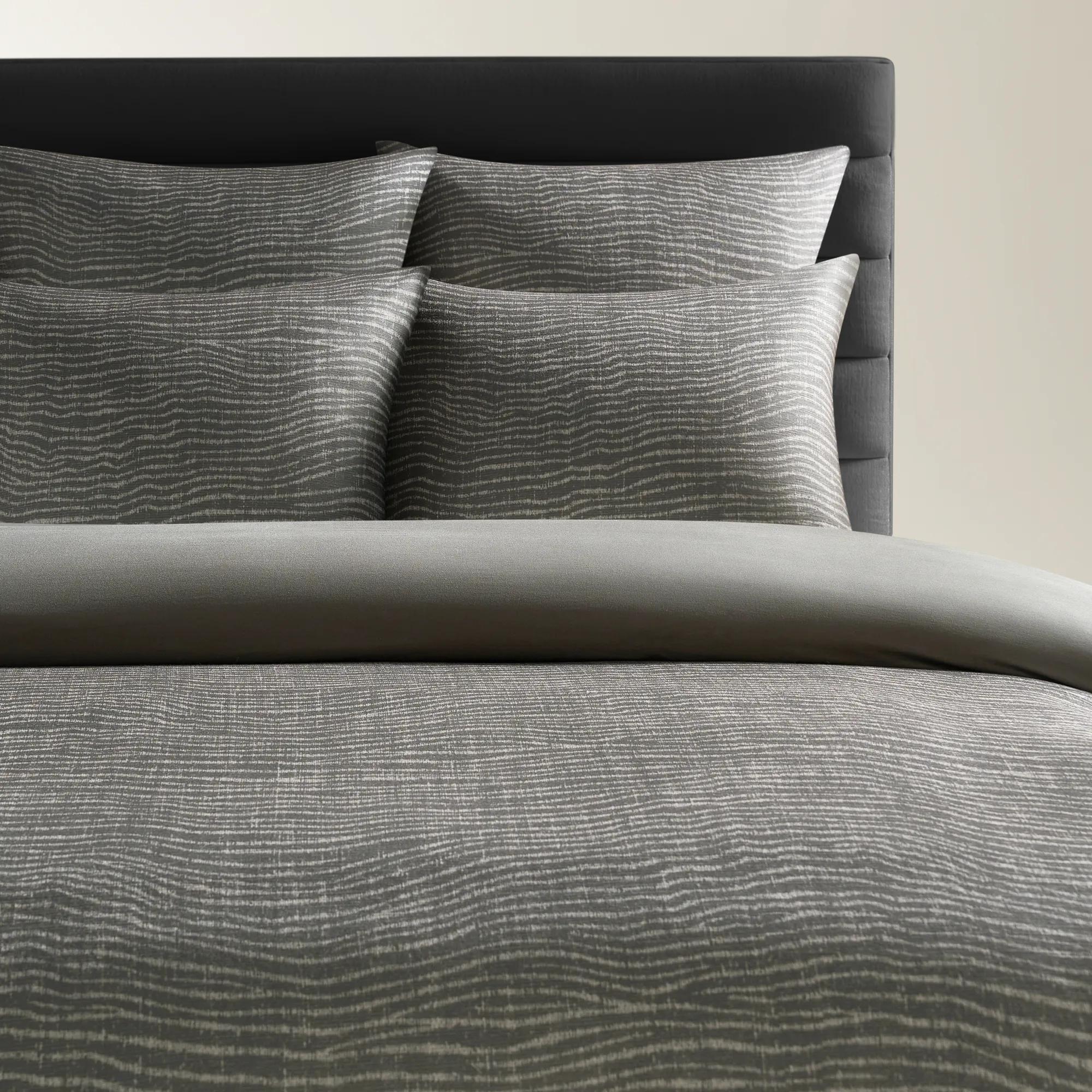 Sahara Bedding Set - Charcoal$229
A soft jacquard bedding set in calming charcoal with a subtle wave-inspired zebra print and refined details.
Add To Cart -
 Vera Velvet Bedding Set - Mocha Rose$249
A luxurious mocha rose velvet bedding set with coordinating duvet and sham covers.
Add To Cart

Wedding Registry Bedding
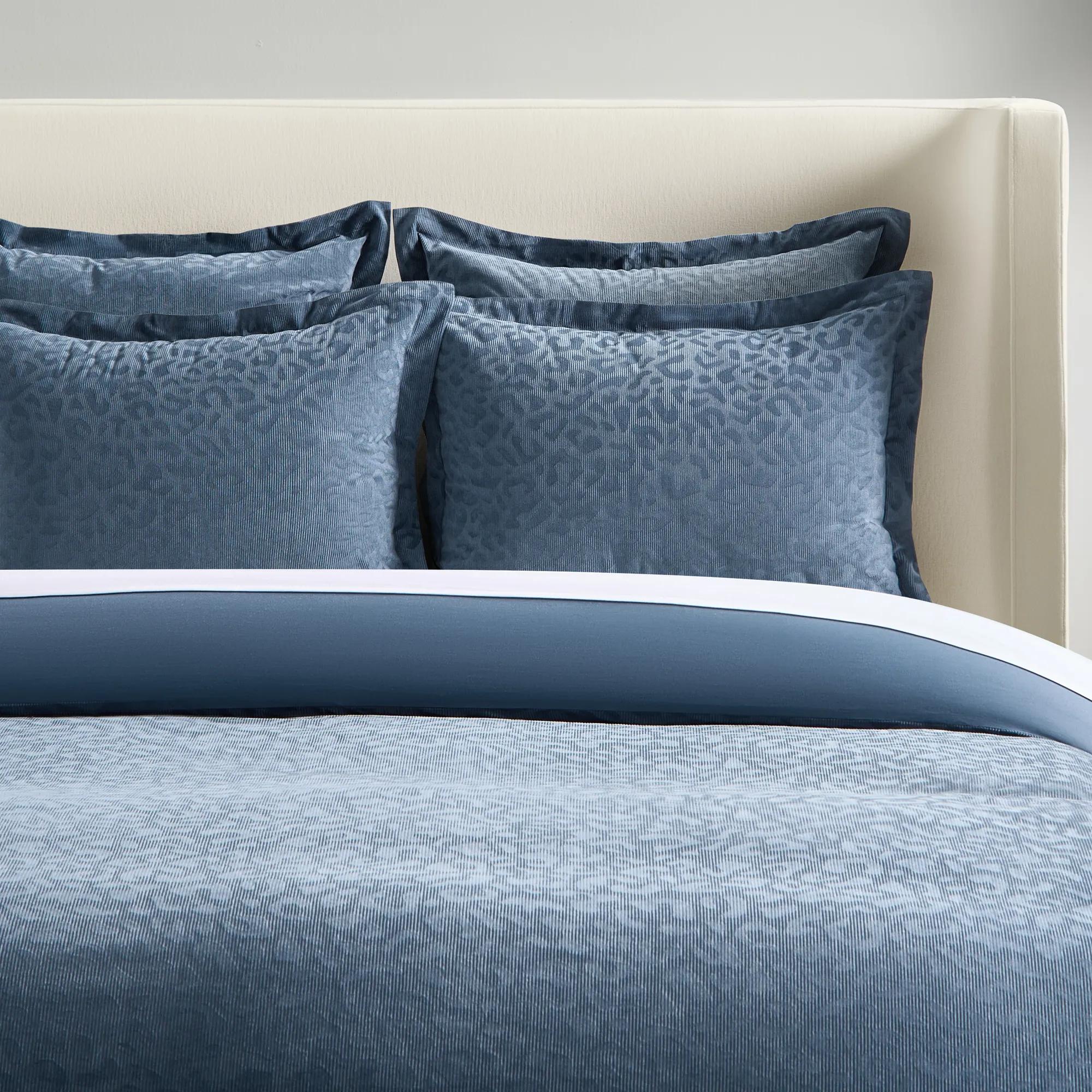
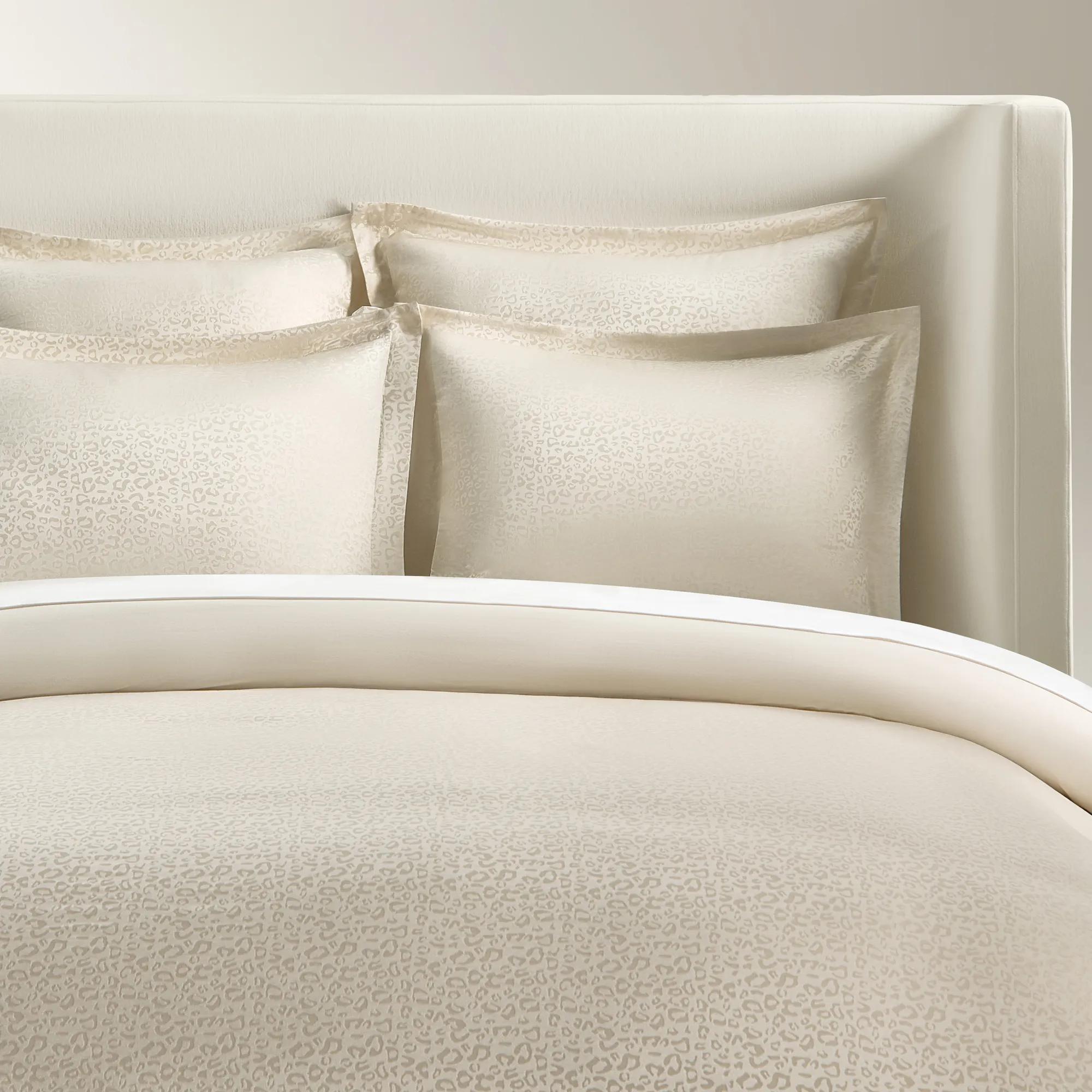
Wedding Registry Bedding transforms the ordinary into the extraordinary, setting the stage for a lifetime of sumptuous comfort and unforgettable style. Imagine your newlywed sanctuary adorned with layers of plush textures, luminous finishes, and artful details that speak to your unique love story. Each piece in our curated collection invites you to indulge in nightly rituals wrapped in elegance, creating a haven that’s as romantic as it is refined. With Wedding Registry Bedding from Z Gallerie, every night becomes a celebration of your shared journey, enveloped in luxury and expressive design.
Wedding registry bedding brings together the pieces that make a shared bedroom feel beautifully considered: sheets, pillowcases, duvet covers, comforters, coverlets, and decorative layers chosen for everyday comfort and lasting visual appeal. As wedding gifts, these essentials offer something unusually personal—a foundation for daily rituals, from lingering over breakfast in bed to turning down a softly layered coverlet at night. For couples furnishing a first home or refining an established space, bedding can give the room a shared design identity without requiring every preference to match. A luminous neutral palette might satisfy a love of understated color, while dimensional quilting or a lavishly textured accent brings the drama. Materials shape that experience as much as appearance. Cotton is valued for its softness and versatility; cotton percale has a crisp, matte finish, while cotton sateen generally feels smoother and displays a subtle sheen. Percale and sateen describe fabric constructions, not separate fibers, so the fiber content still matters when comparing options. Linen offers an expressive, gently rumpled surface and typically softens with repeated laundering. Velvet adds depth through its light-catching pile, creating a more sculptural effect across a duvet cover, quilt, or accent pillow. Because velvet may be made from different fibers, its feel and care requirements vary. Thread count alone does not establish quality: fiber quality, yarn construction, weave, and finishing all influence how sheets feel and wear. For two people with different preferences, the layers closest to the skin can emphasize familiar softness, while the top of the bed carries a bolder design statement. That balance makes wedding registry bedding both intimate and practical, with room for individual taste inside a cohesive composition. The strongest selections suit the couple’s actual habits, whether the bed is carefully dressed each morning or finished with an easy sweep of a textured coverlet. Luxury feels most convincing when it belongs naturally in the life being built together.
Fit gives beautiful bedding its polished presence. A fitted sheet needs to accommodate the mattress’s full depth, including any topper, rather than simply match a twin, full, queen, or king designation. Pocket depth and the stated mattress range deserve particular attention on a generously layered bed, where an undersized sheet can pull loose at the corners. Flat sheets, coverlets, and comforters also vary in their finished dimensions, affecting how much fabric falls along the sides and whether the mattress and foundation remain visible. On a tall bed, a more generous drop creates a sweeping silhouette; on a low platform, a shorter fall can keep the composition intentional. King and California king mattresses have different proportions, so those labels are not interchangeable. Duvet covers should be compared with the actual dimensions of the insert, since a mismatch can leave empty corners or produce excessive bunching. Interior ties or other attachment points, when included, help hold a compatible insert in place. A duvet cover is a removable outer layer designed for use with an insert, while a comforter generally combines its decorative shell and fill in one finished piece. That distinction matters for laundering, storage, and the way the bed is dressed. Pillowcases and shams need the same attention to dimensions: a decorative sham frames a pillow but is not necessarily intended to replace the pillowcase used for sleeping. Durability depends partly on choosing constructions that suit daily use and following the care label consistently. Washable sheets and removable covers can simplify routine upkeep, while embellished surfaces and some velvet constructions may require more specialized cleaning. Thorough drying before storage helps prevent trapped moisture, and gentle handling protects embroidery, textured stitching, and delicate trim. A second set of sheets allows the bed to remain dressed while another set is being laundered. These practical details preserve the pleasure of a beautifully finished room rather than competing with it.
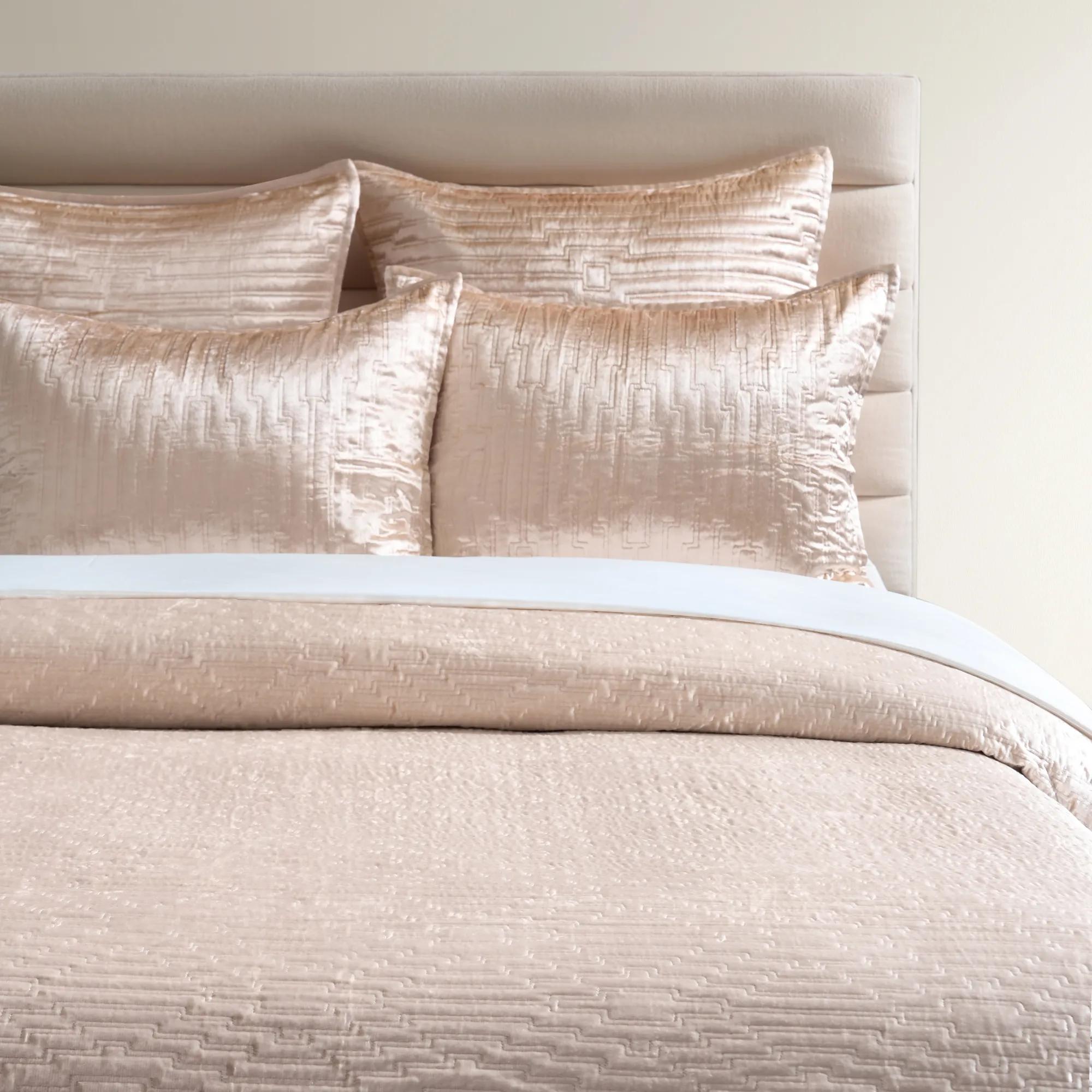
The visual character of wedding registry bedding can be as expressive as the couple receiving it. Ivory sheets beneath a richly textured coverlet create quiet luminosity; a deeper duvet cover paired with pale pillowcases gives the bed striking definition. Tonal layering offers another kind of richness, allowing a matte weave, a subtle sheen, and raised stitching to stand apart even within a restrained palette. For couples drawn to plush surfaces and pronounced depth, velvet bedding for bridal registries brings a sumptuous focal point to the bedroom, especially when balanced with smoother layers that let the pile catch the light. Texture works best when each element has a role: sheets provide the intimate foundation, the main covering establishes color and scale, and shams or accent pillows add dimension. A bed does not need every possible layer to feel complete. Couples who prefer an uncluttered routine may appreciate a duvet and a restrained arrangement of pillows, while those who enjoy a more theatrical setting may favor a coverlet folded across the foot and generously proportioned shams. Registry selections are more useful when they reflect those habits instead of an imagined routine that requires constant arranging. For wedding guests, bedding offers a meaningful way to contribute to a shared home, particularly when the couple has identified preferred sizes, colors, fabrics, and care requirements. Coordinated choices help gifts from different guests become part of one finished setting rather than unrelated accents. Couples with an established bedroom may value fresh sheets or a distinctive top layer, while those combining households may need a more complete foundation. Easy-care fabrics can suit frequently used guest rooms as well as the primary bedroom, provided each bed’s dimensions are considered separately. The result is not simply a coordinated bed, but a room with a clear point of view: tactile, inviting, and personal. Well-chosen wedding bedding makes that expression part of everyday life, carrying the significance of the occasion into the ordinary moments that follow.
FAQs
Bedding is a timeless and intimate gift that transforms a couple’s bedroom into a sanctuary of comfort and style. It’s an everyday luxury that celebrates the start of a new chapter, offering both practical warmth and a touch of artistry to their shared space.
Couples can express their unique aesthetic by selecting bedding in colors, patterns, and textures that resonate with them—whether it’s the luminous sheen of sateen, the rich drama of velvet, or the crisp elegance of classic white. Mixing and matching layers allows for a personalized look that feels both curated and inviting.
Luxury bedding elevates the everyday, offering newlyweds a sense of indulgence and comfort that lasts well beyond the wedding day. High-quality materials and exquisite details create a memorable gift that becomes part of a couple’s daily rituals and shared moments.
During winter, plush duvets, cozy quilts, and sumptuous velvet or sateen layers are especially popular. These options not only provide warmth but also add a dramatic, inviting touch to the bedroom, making them ideal for couples starting their new life together in the colder months.
Wedding registry bedding can serve as a statement piece in the bedroom, setting the tone for the entire space. Thoughtfully chosen bedding brings texture, color, and a sense of luxury, helping couples create a home that feels both welcoming and uniquely their own.