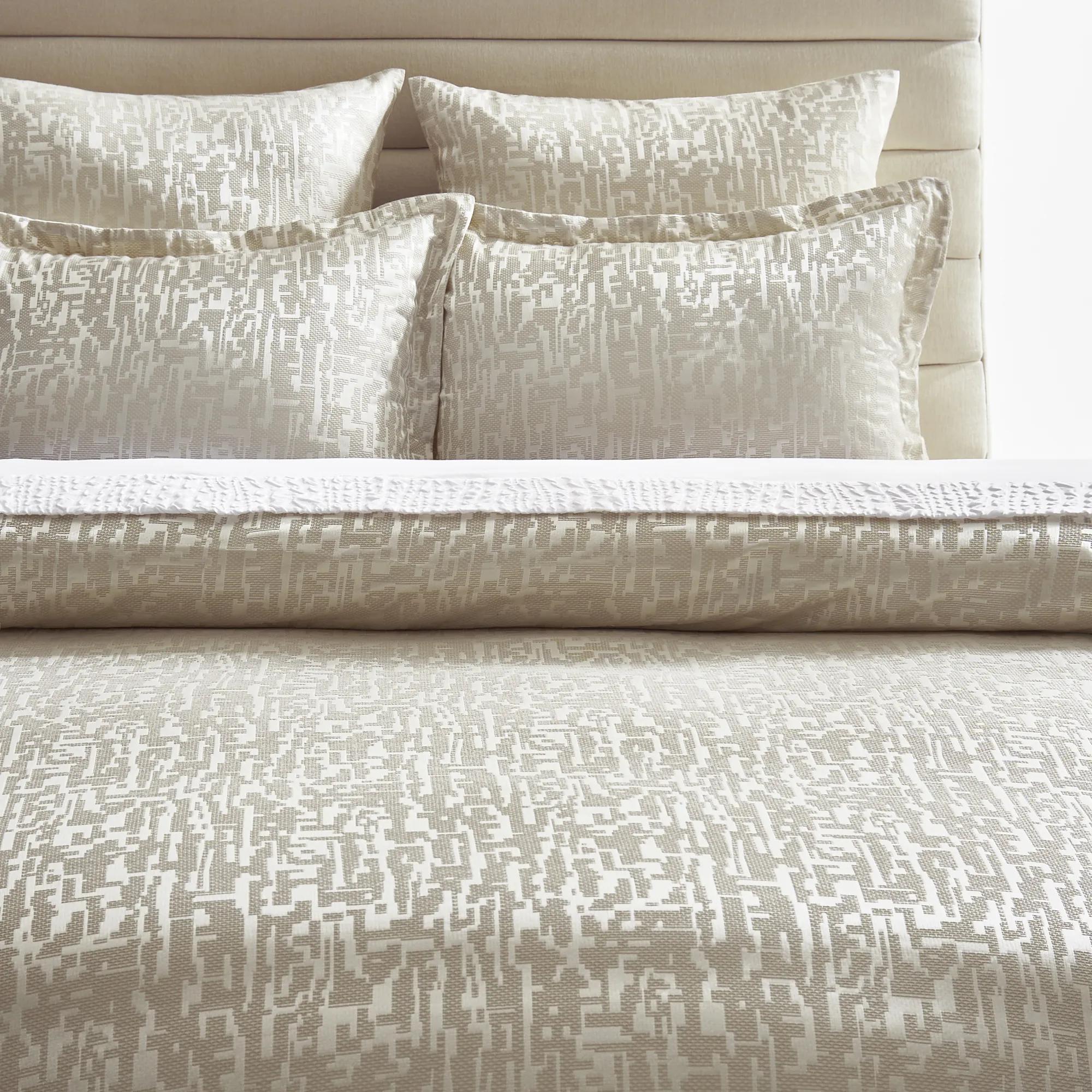
Velvet Bedding For Transitional Decor
Velvet Bedding For Transitional Decor
-
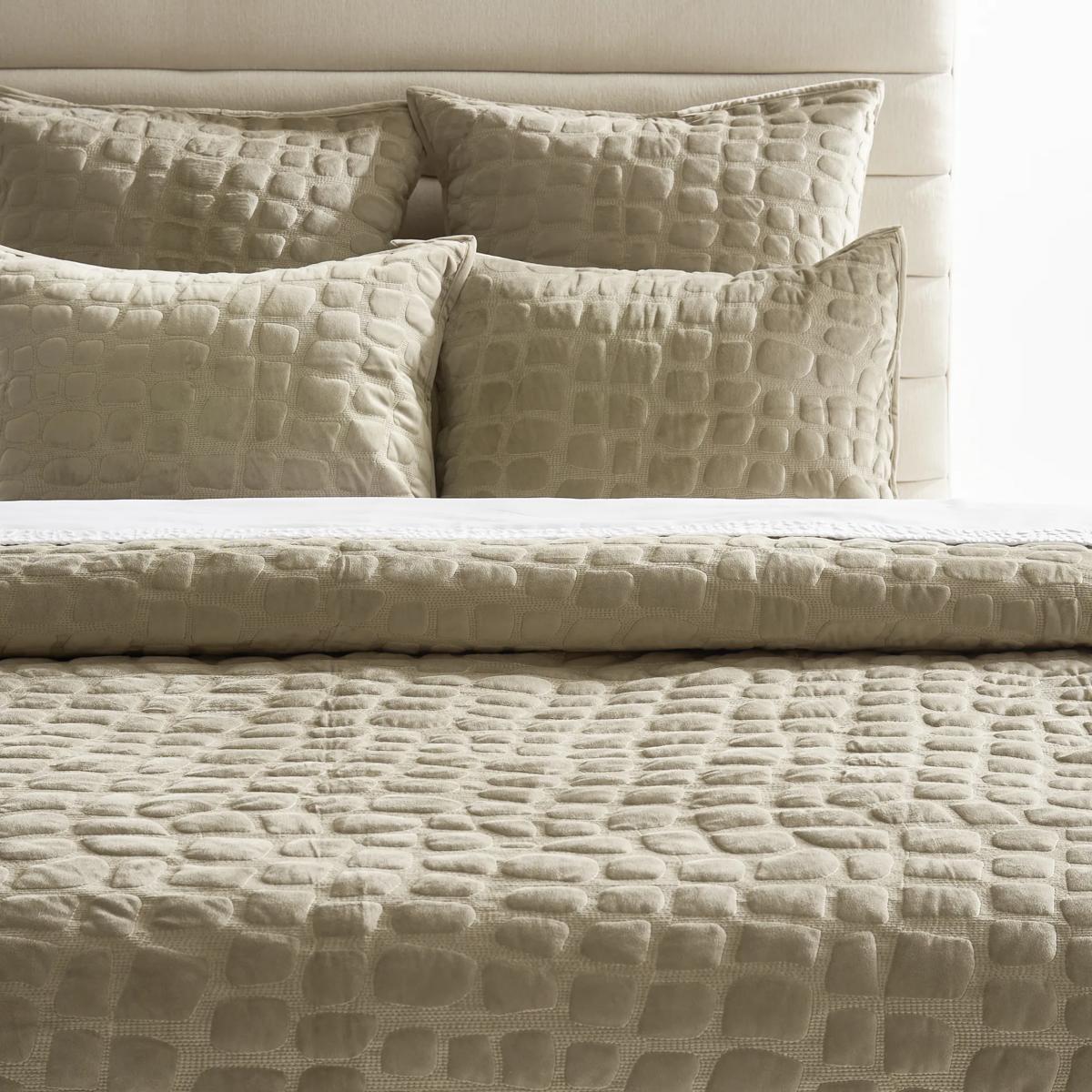
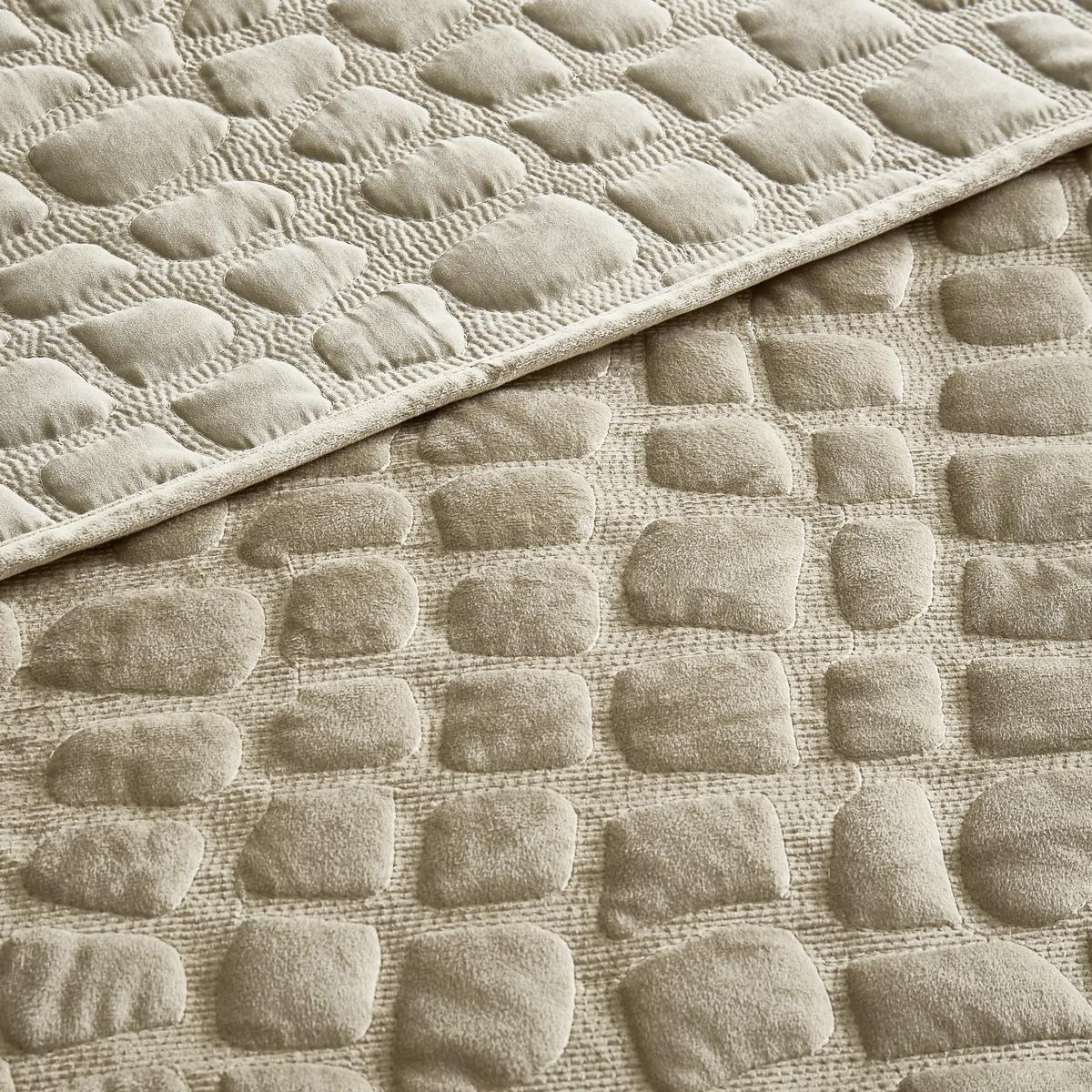 Valen Velvet Quilt Set - Sand$229
A plush sand velvet quilt set featuring a croc-embossed pattern and tailored piped edges.
Add To Cart -
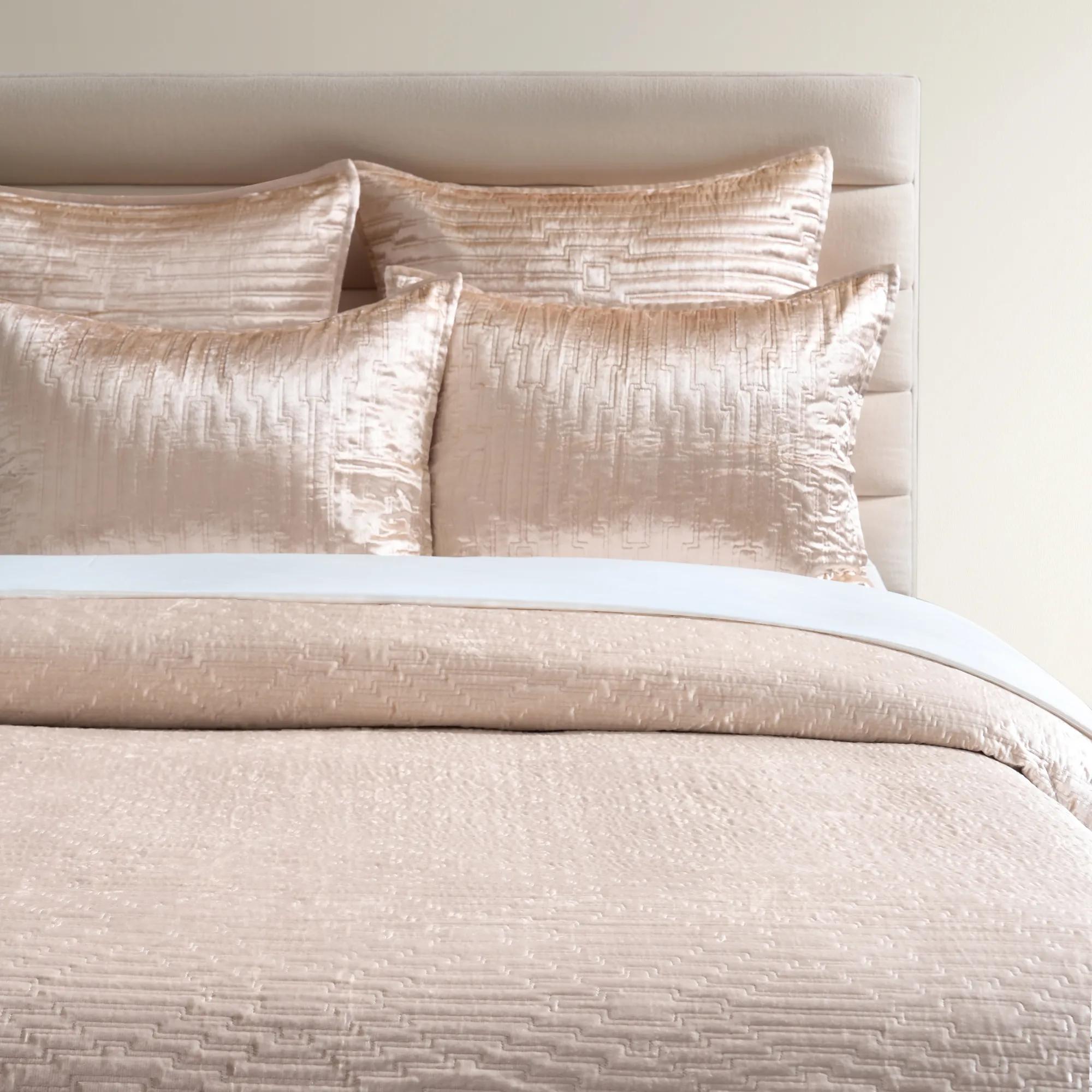
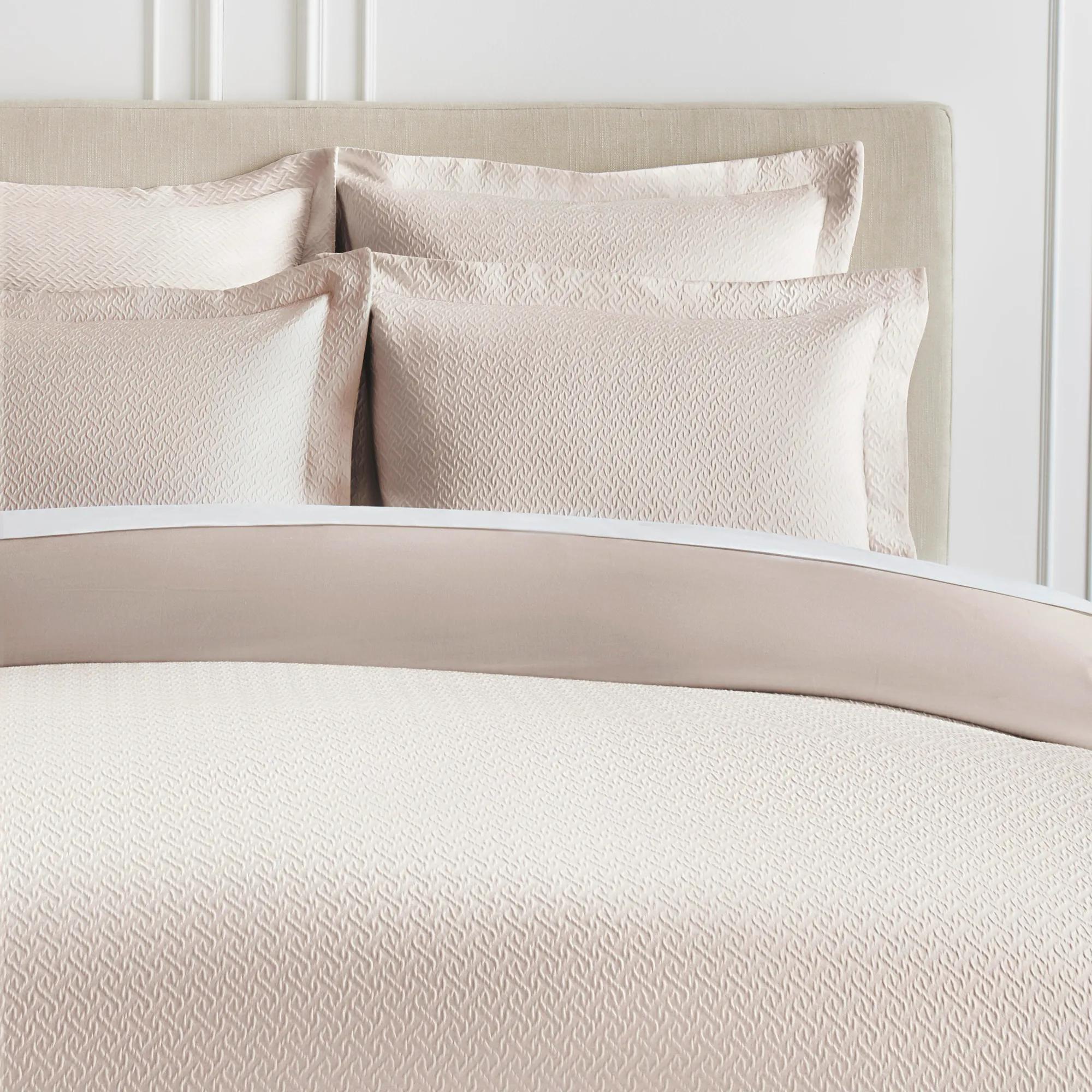
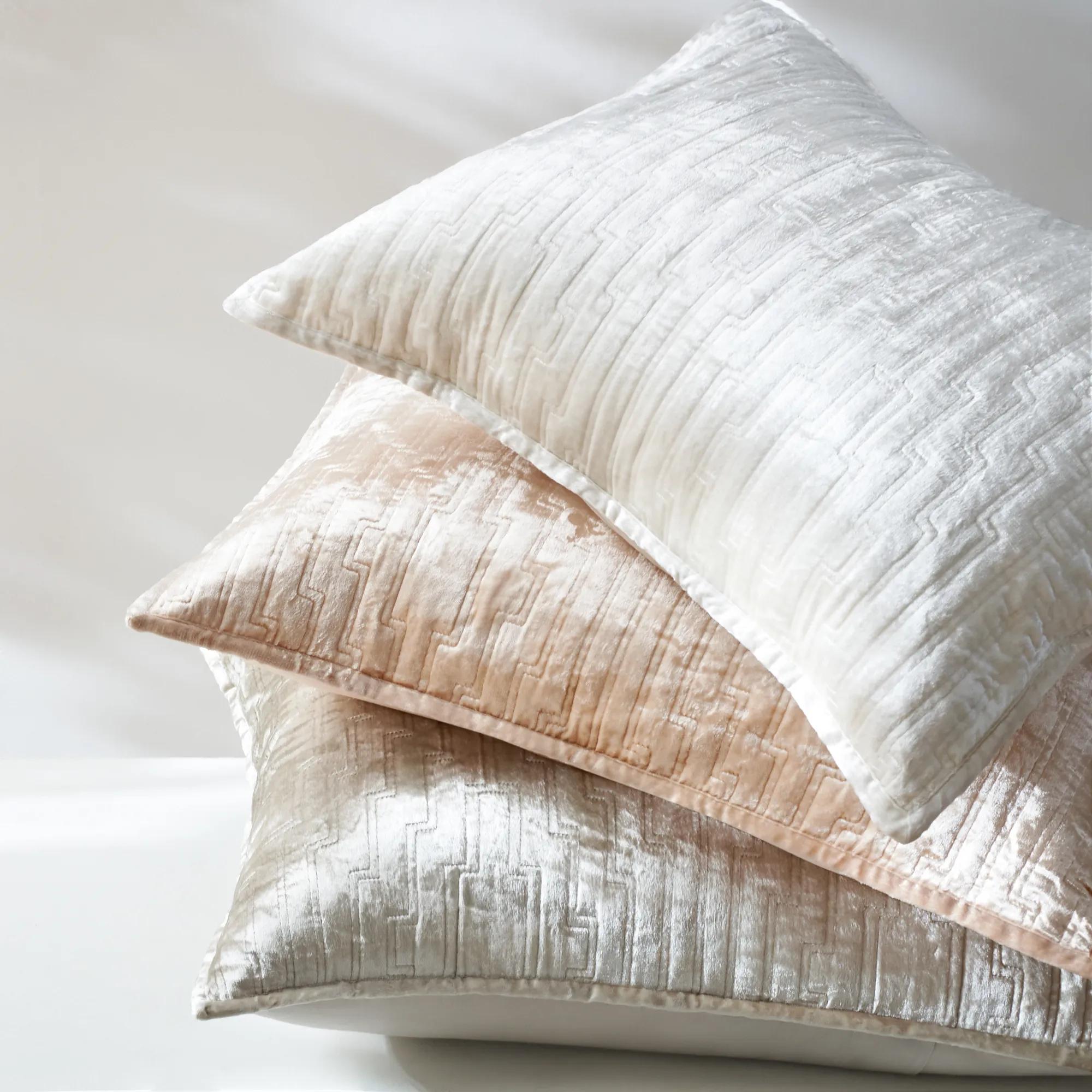 Glam Velvet Bedding - Blush$89
A blush pink quilted velvet bedding set with geometric stitching and piped edges for a luxurious look.
Add To Cart -
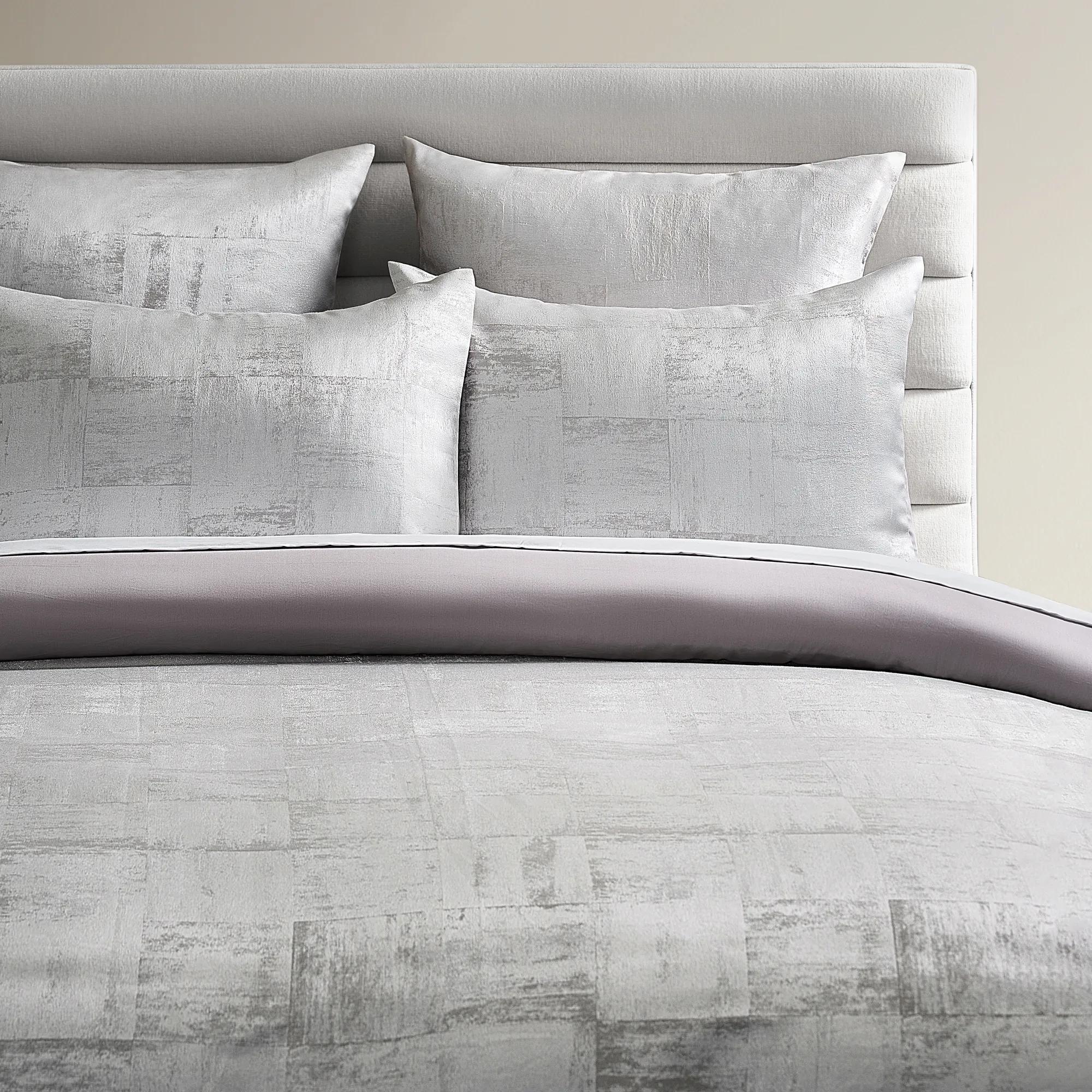
.jpeg?w=1200&h=1200) Glam Grey Shiny Viscose Velvet Quilt Bedding Set$89
Glam Grey Shiny Viscose Velvet Quilt Bedding Set$89A lustrous grey velvet bedding collection featuring modern quilted stitching and refined piped edges.
Add To Cart -
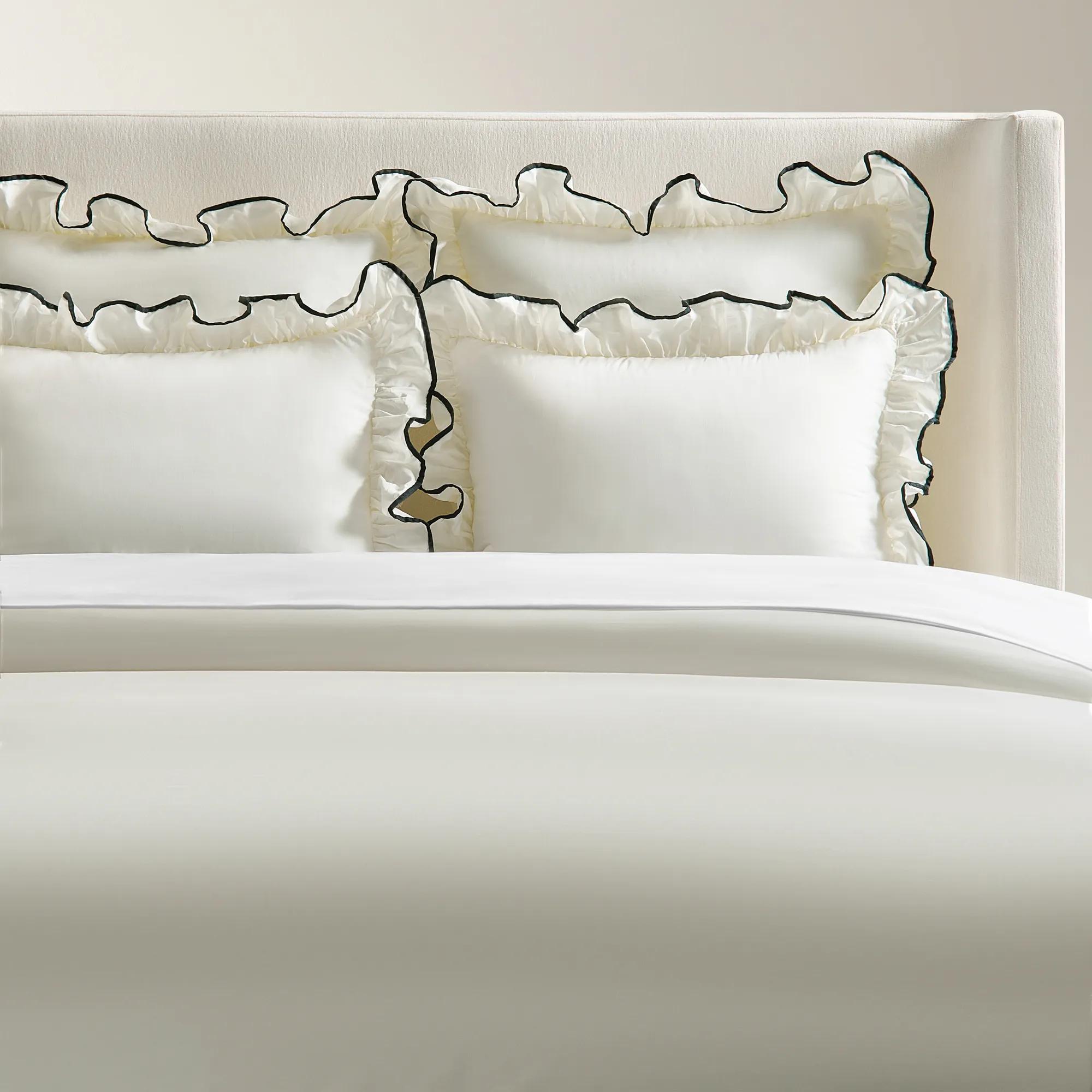
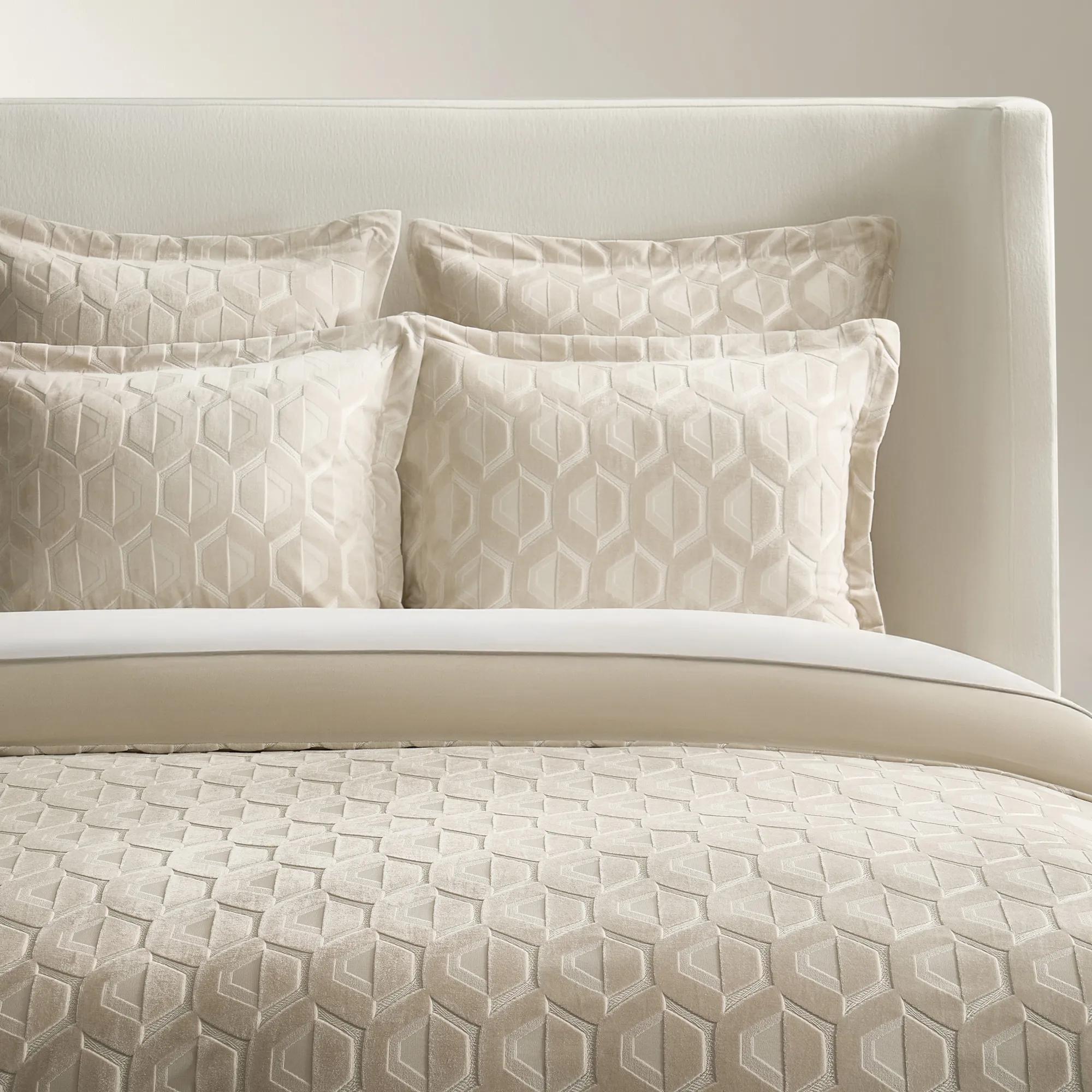 Cielo Alabaster White Geometric Cut Velvet Bedding Set$69
A white bedding set featuring geometric cut velvet textures for a luxurious, modern bedroom aesthetic.
Add To Cart -
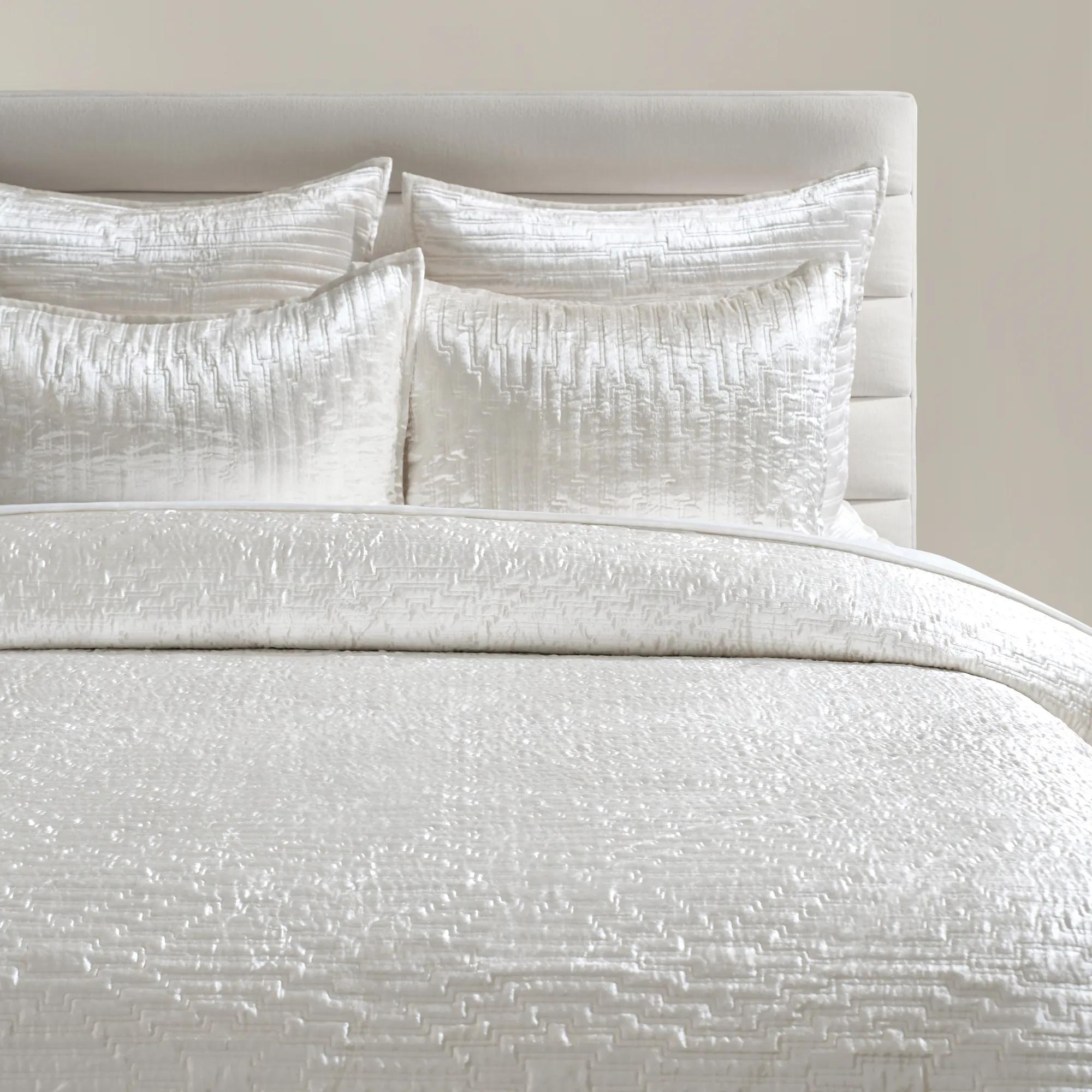
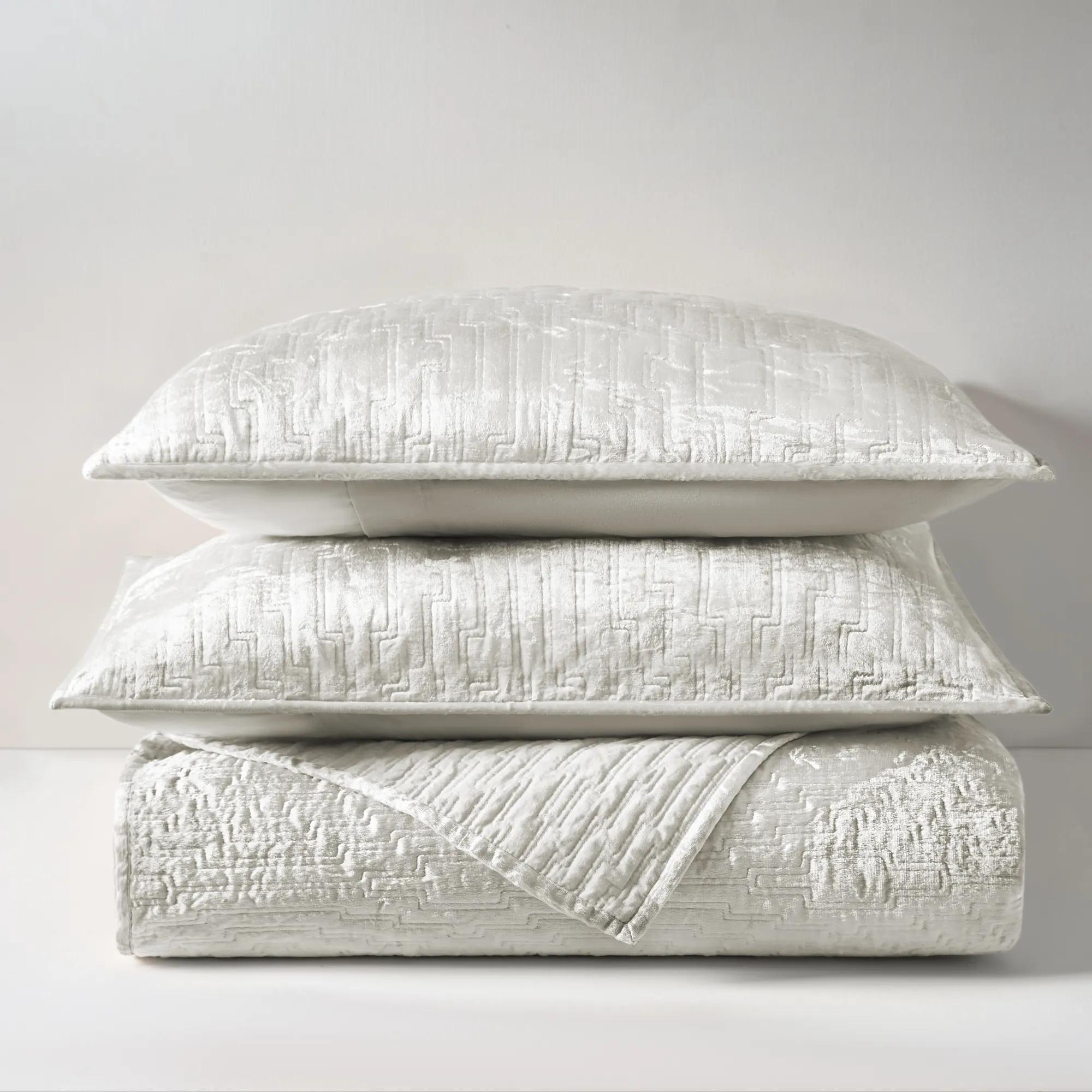 Glam Cloud White Shiny Viscose Velvet Quilt Bedding Set$499
A lustrous cloud-colored velvet quilt with modern geometric stitching and refined piped edges for sophisticated comfort.
Add To Cart -
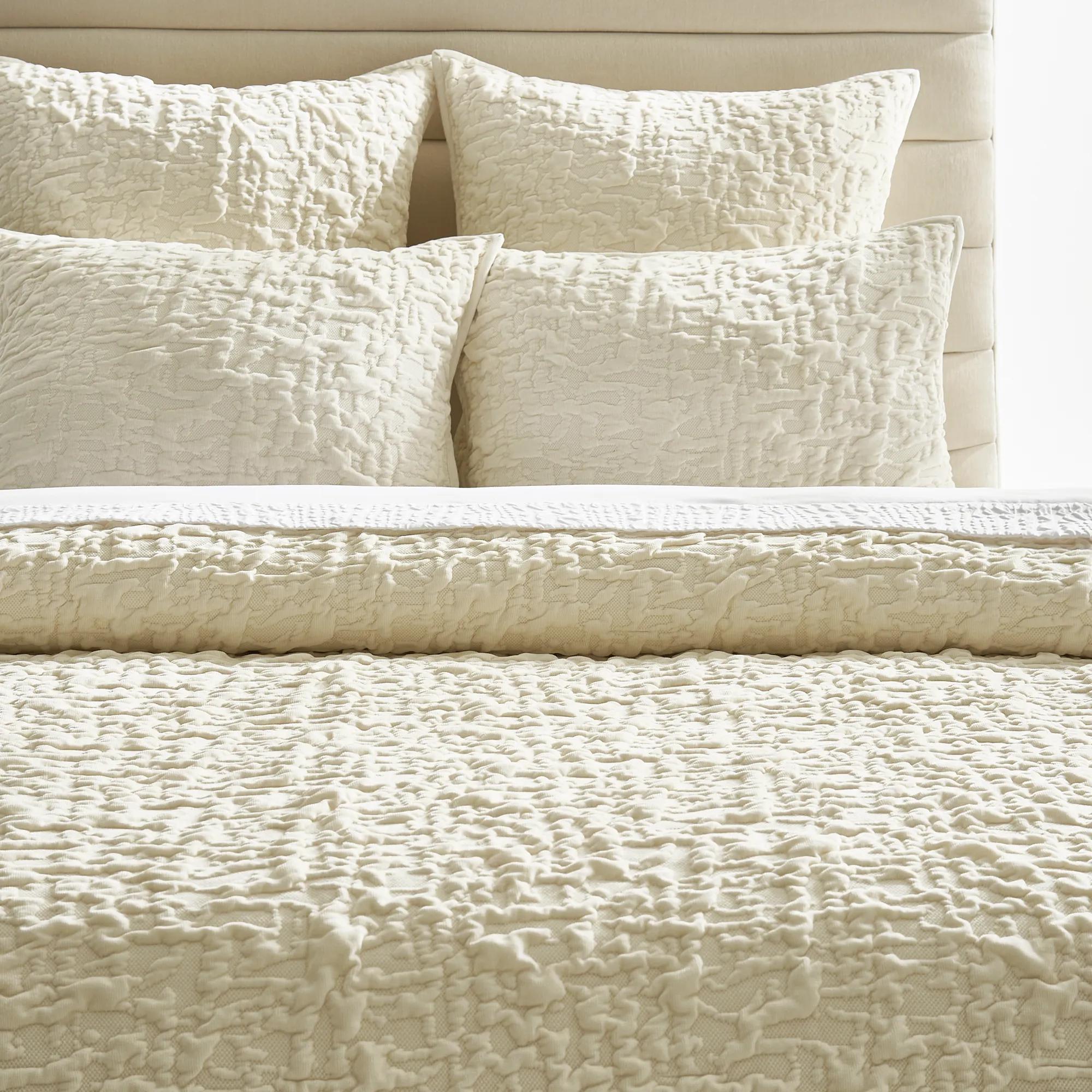
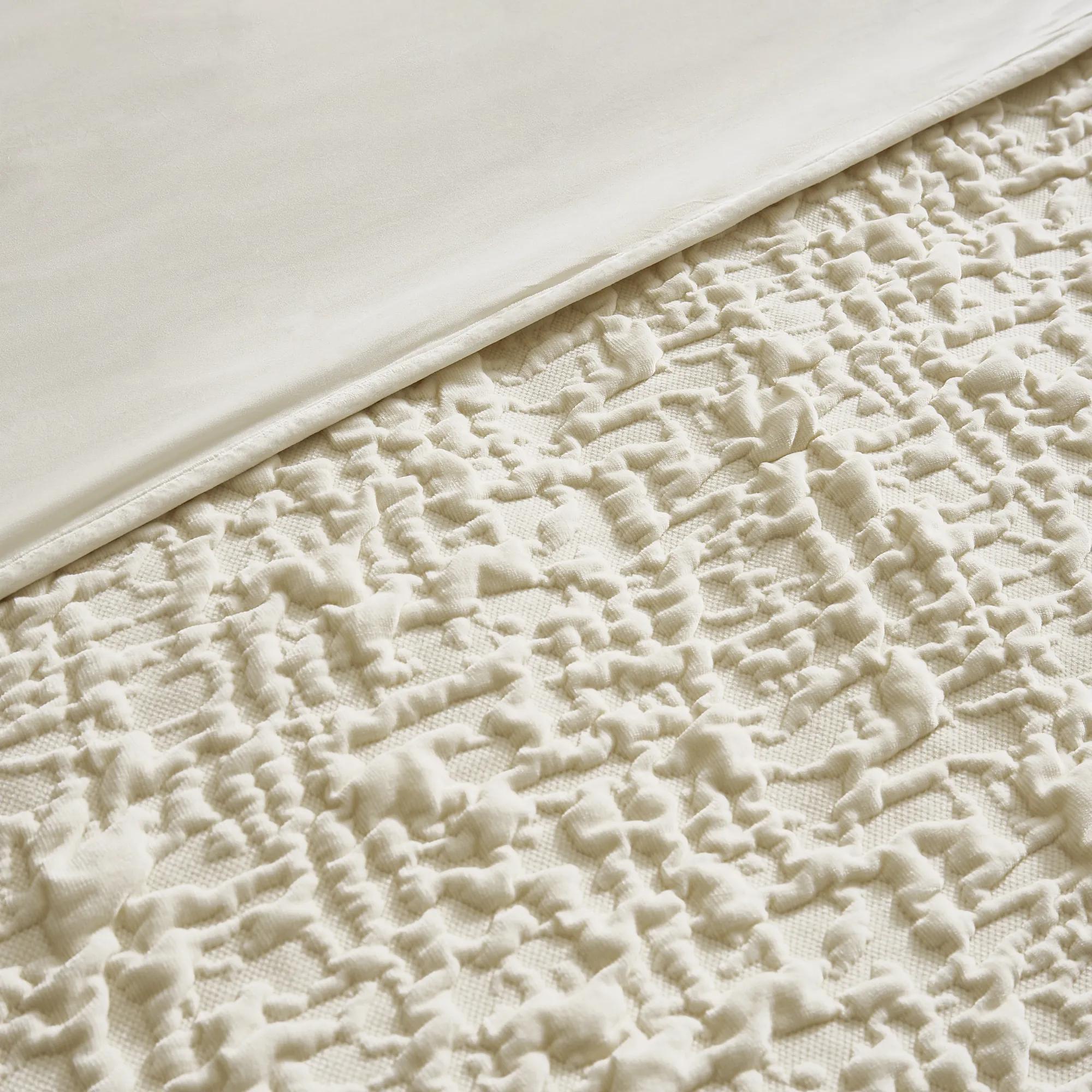 Madera Ivory Textured Velvet Bedding Set$249
A plush ivory velvet coverlet set with crushed embroidered texture and breathable cotton backing for serene style.
Add To Cart -
GRY.jpeg?w=1200&h=1200)
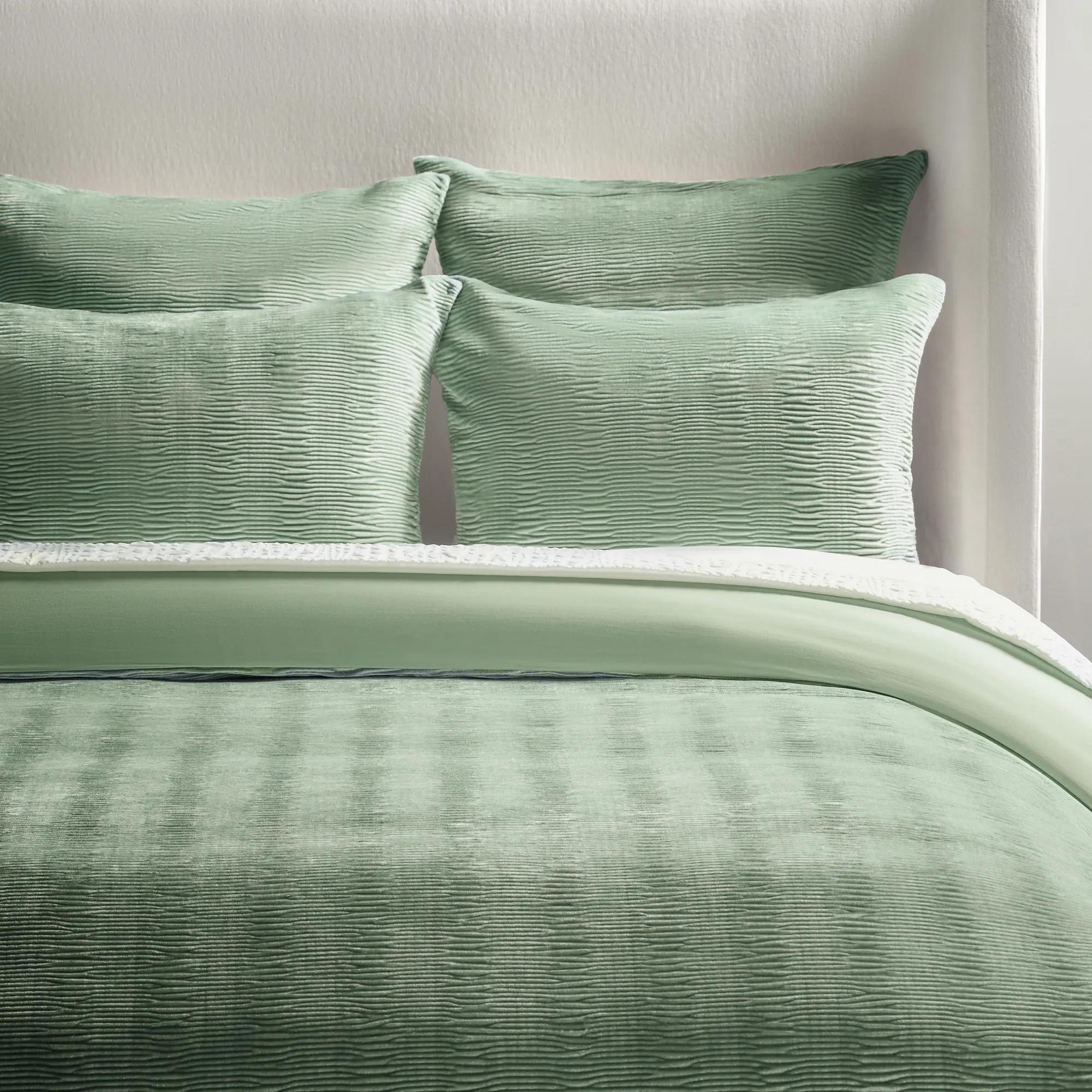
 Fan Velvet Quilt Set - Smoke Grey$69
A luxurious smoke grey velvet quilt set featuring a sculptural fan pattern and polished piped edges.
Add To Cart -
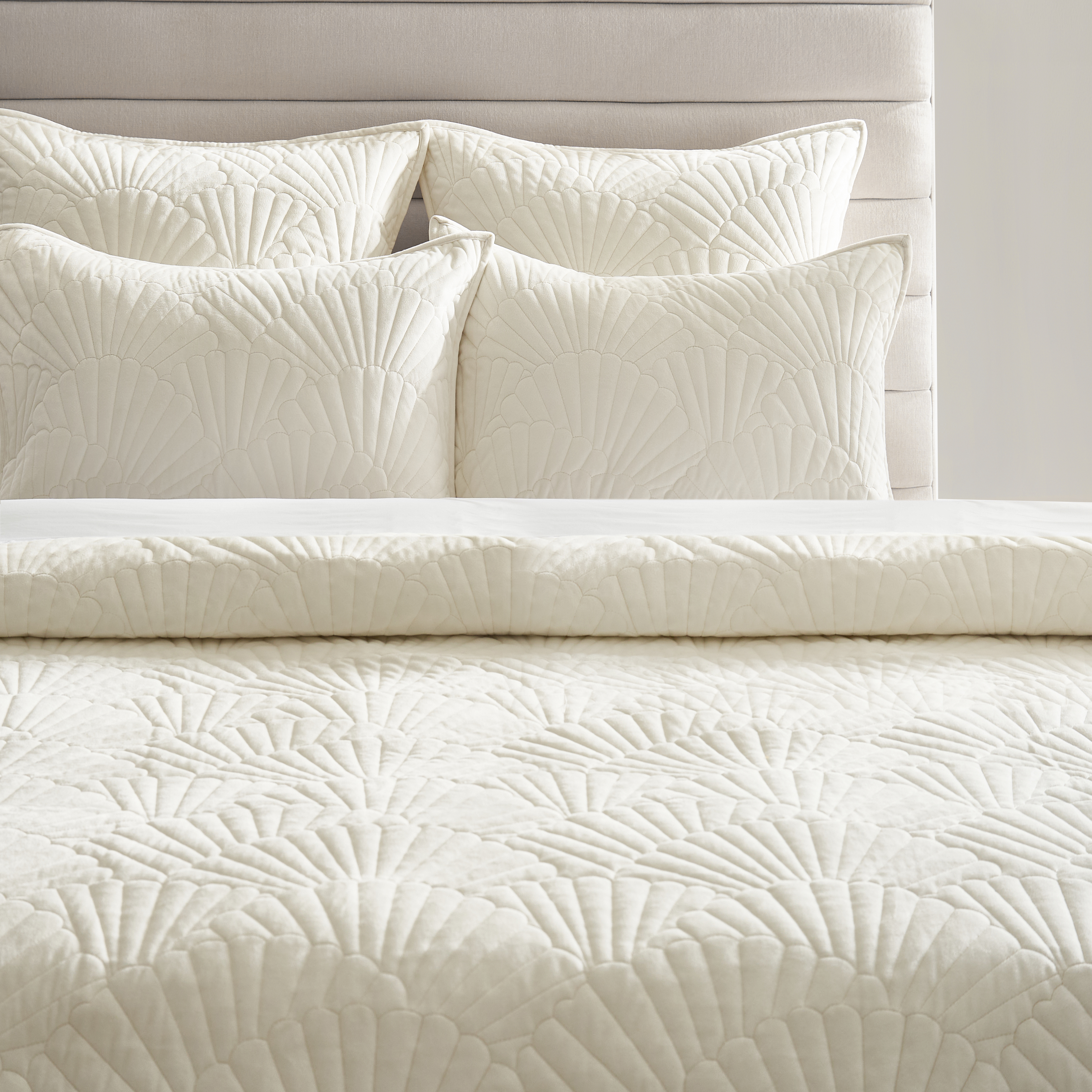
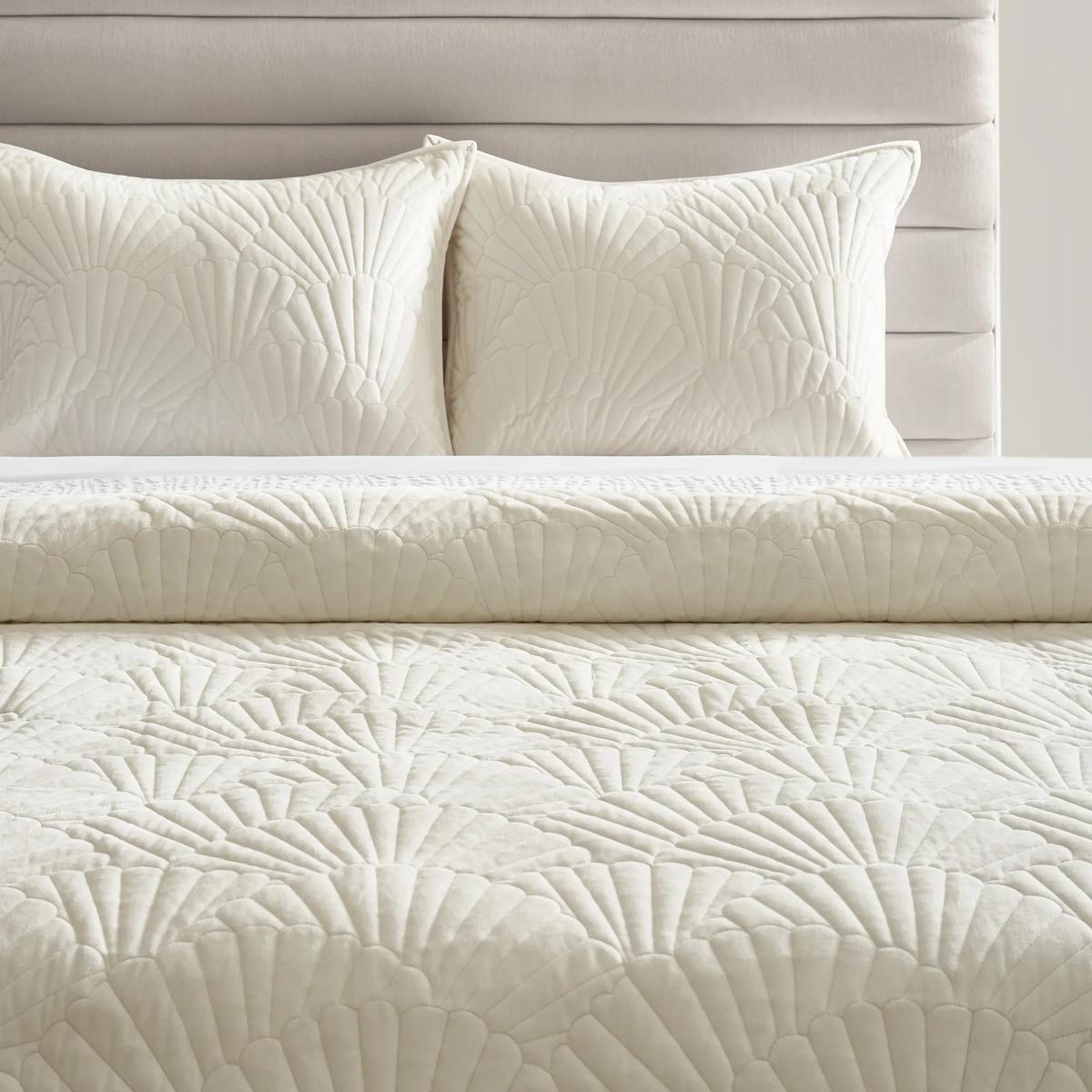 Fan Velvet Quilt Set - Ivory$69
An airy ivory velvet quilt set featuring sculpted fan quilting, piped edges, and plush polyester fill.
Add To Cart -
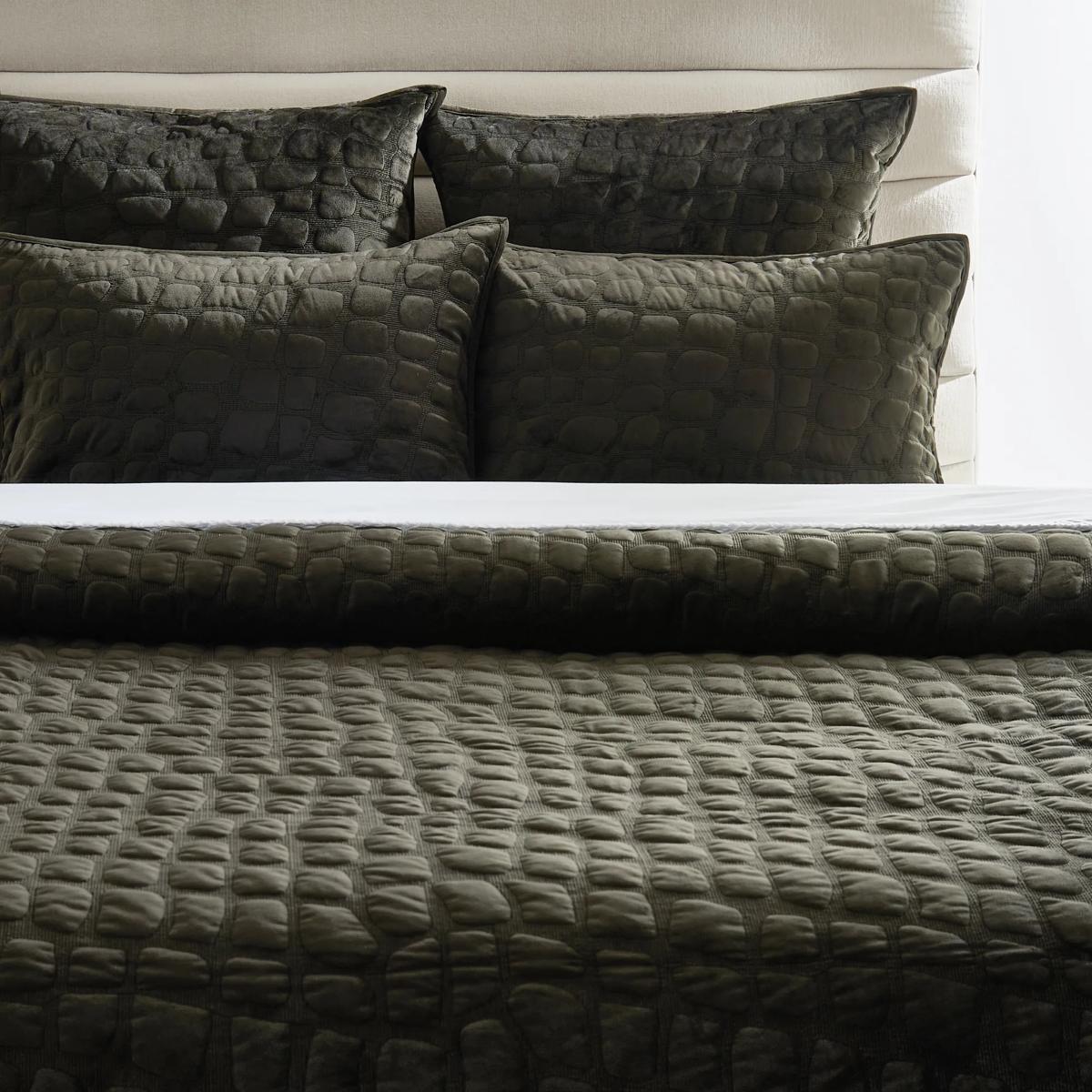
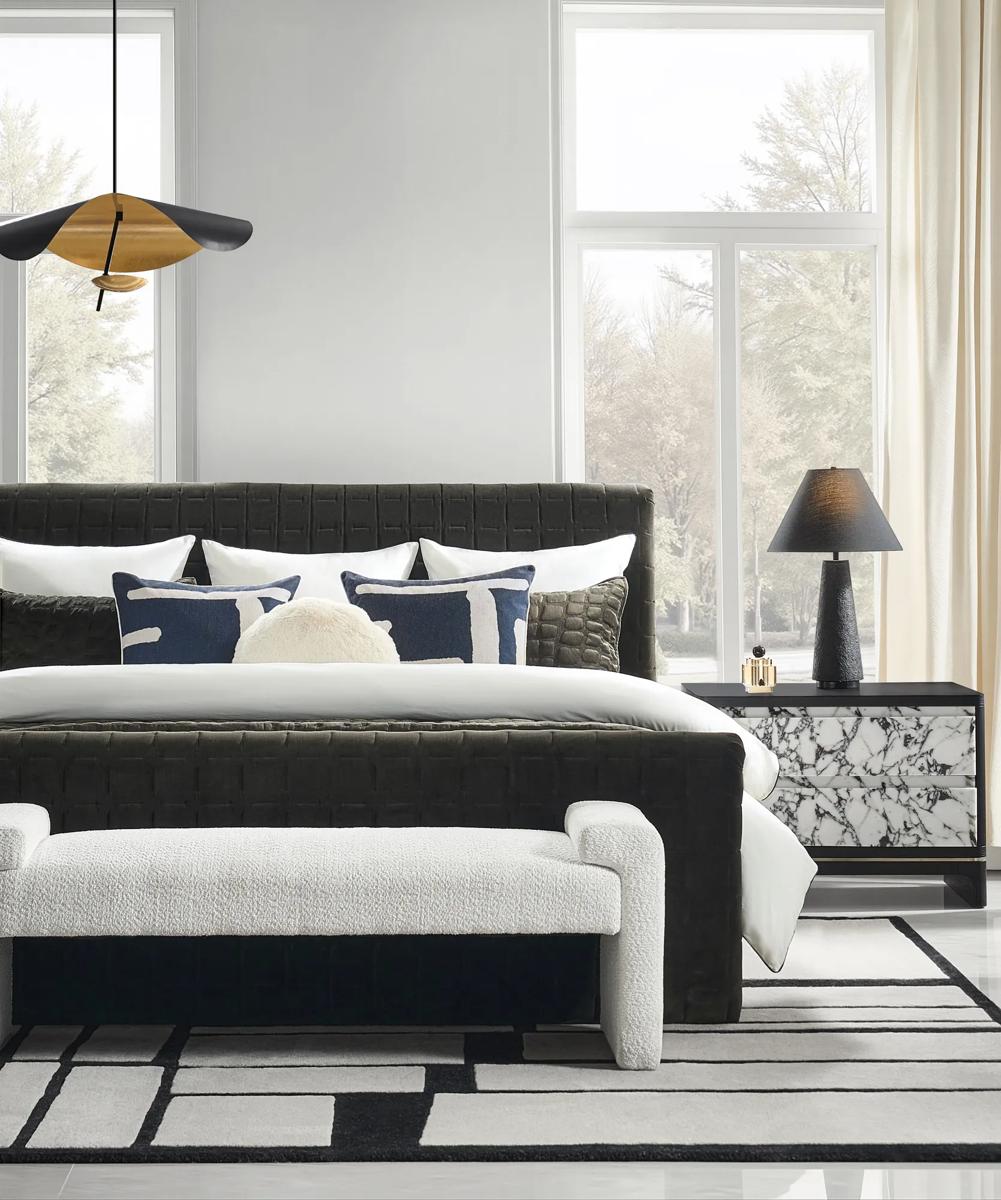 Valen Velvet Quilt Set - Black$69
A bold quilt set featuring luxe black velvet with a quilted croc pattern and tailored piped edges.
Add To Cart -
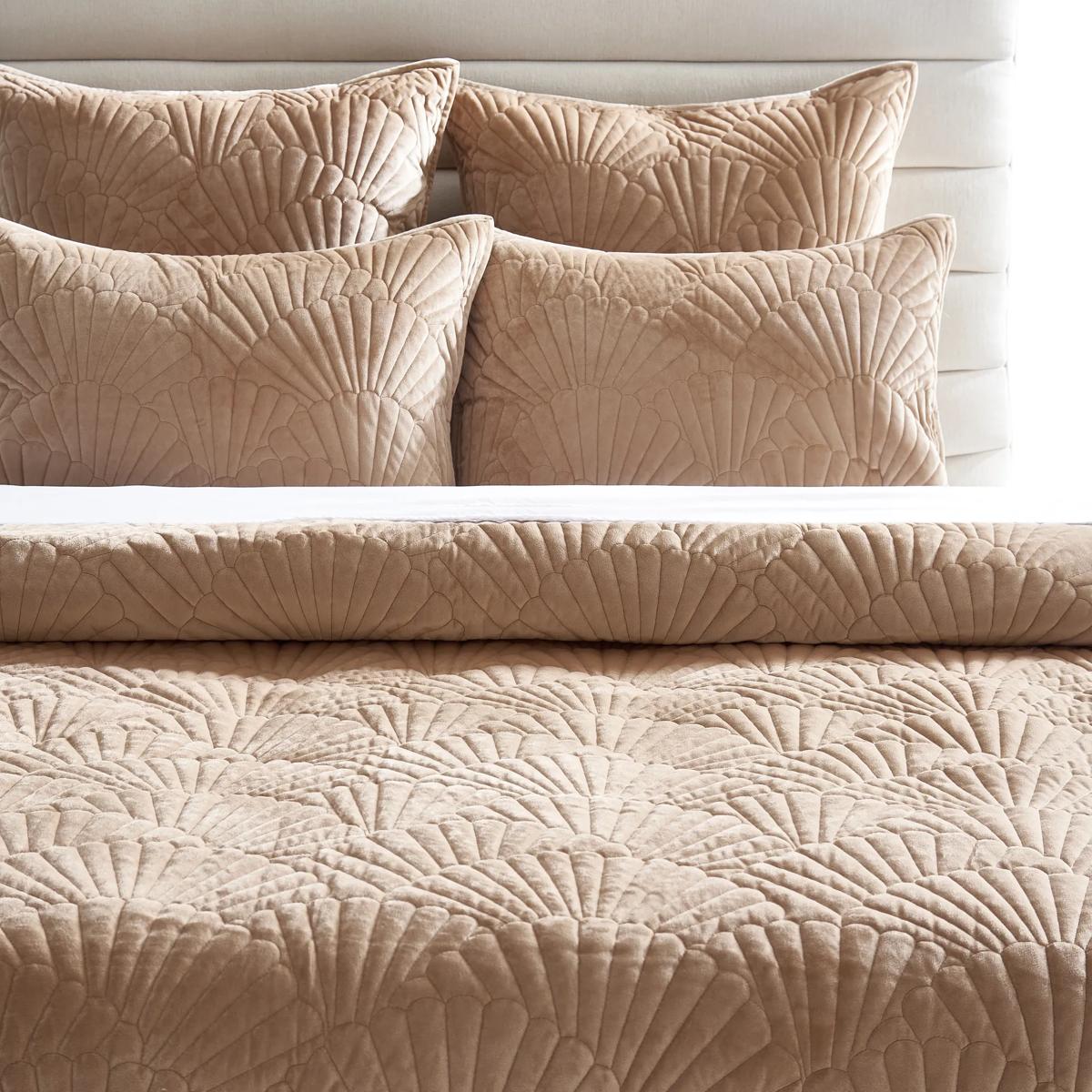 Fan Velvet Quilt Set - Muted Coral$199
A plush muted coral velvet quilt set featuring a sculptural fan motif and piped edges for modern elegance.
Add To Cart -
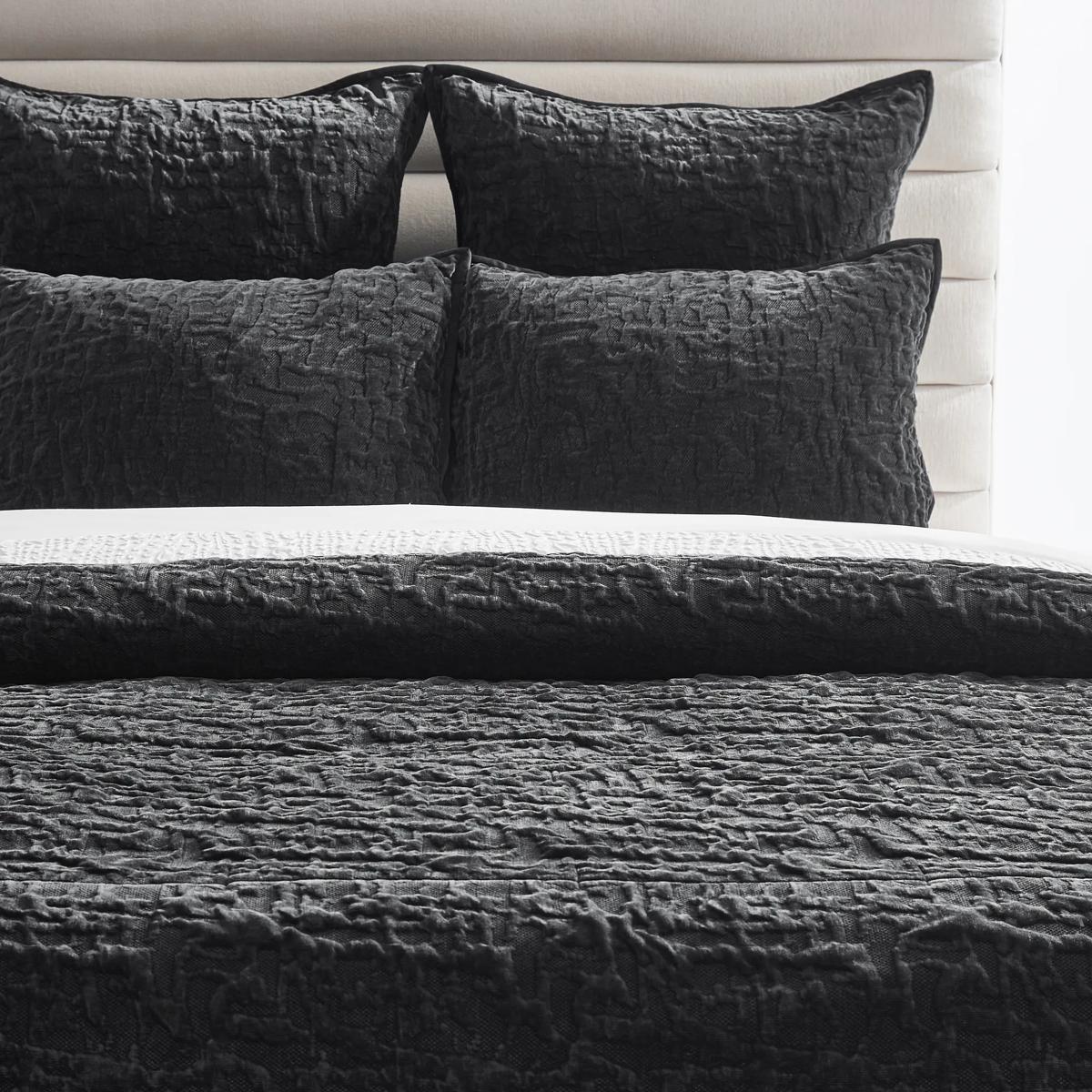
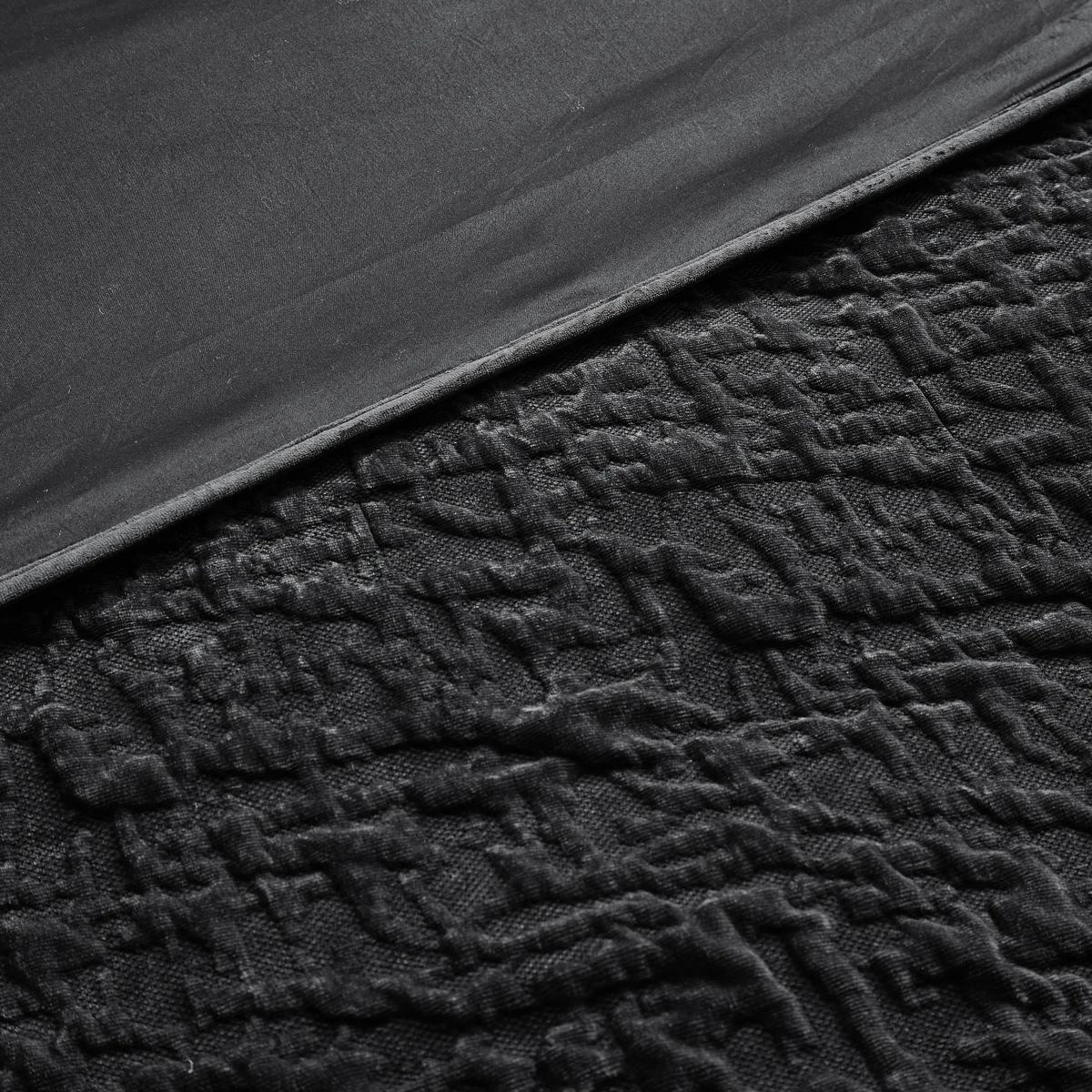 Madera Black Textured Velvet Bedding Set$299
A sophisticated black crushed velvet coverlet set with tonal embroidery and breathable cotton backing for year-round luxury.
Add To Cart -
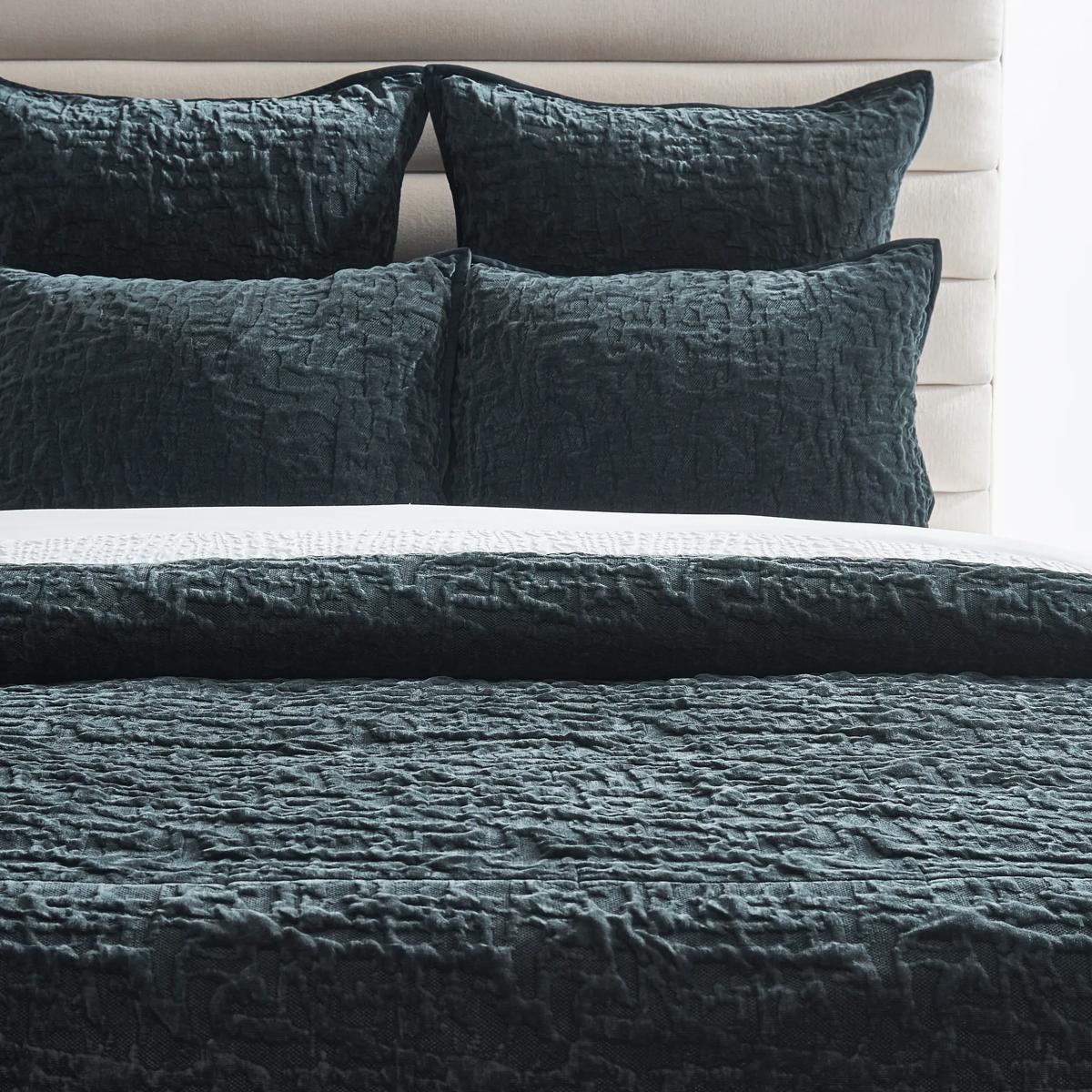
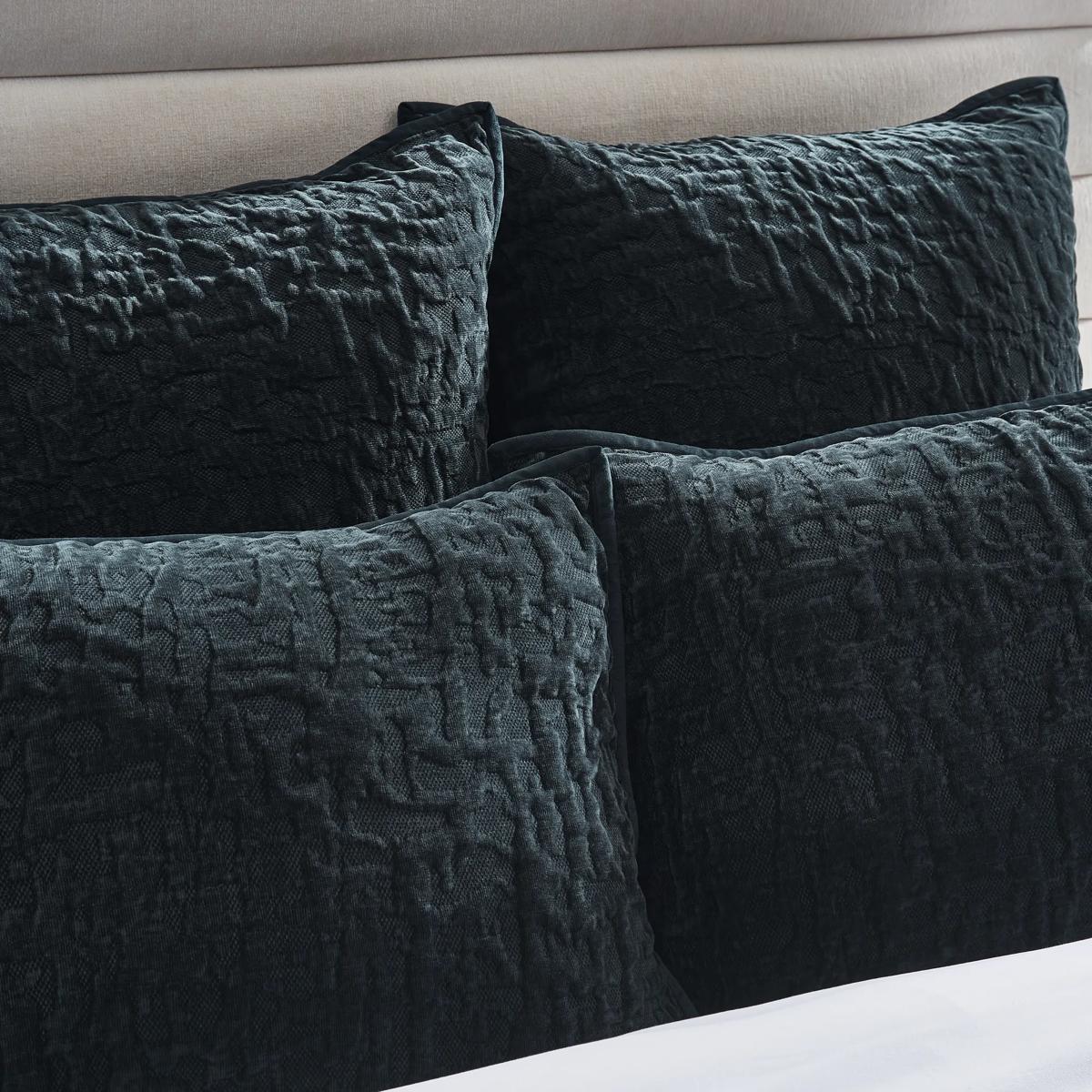 Madera Velvet Coverlet Set - Midnight Blue$69
A midnight blue crushed velvet coverlet set with embroidered detailing and a soft cotton backing.
Add To Cart -
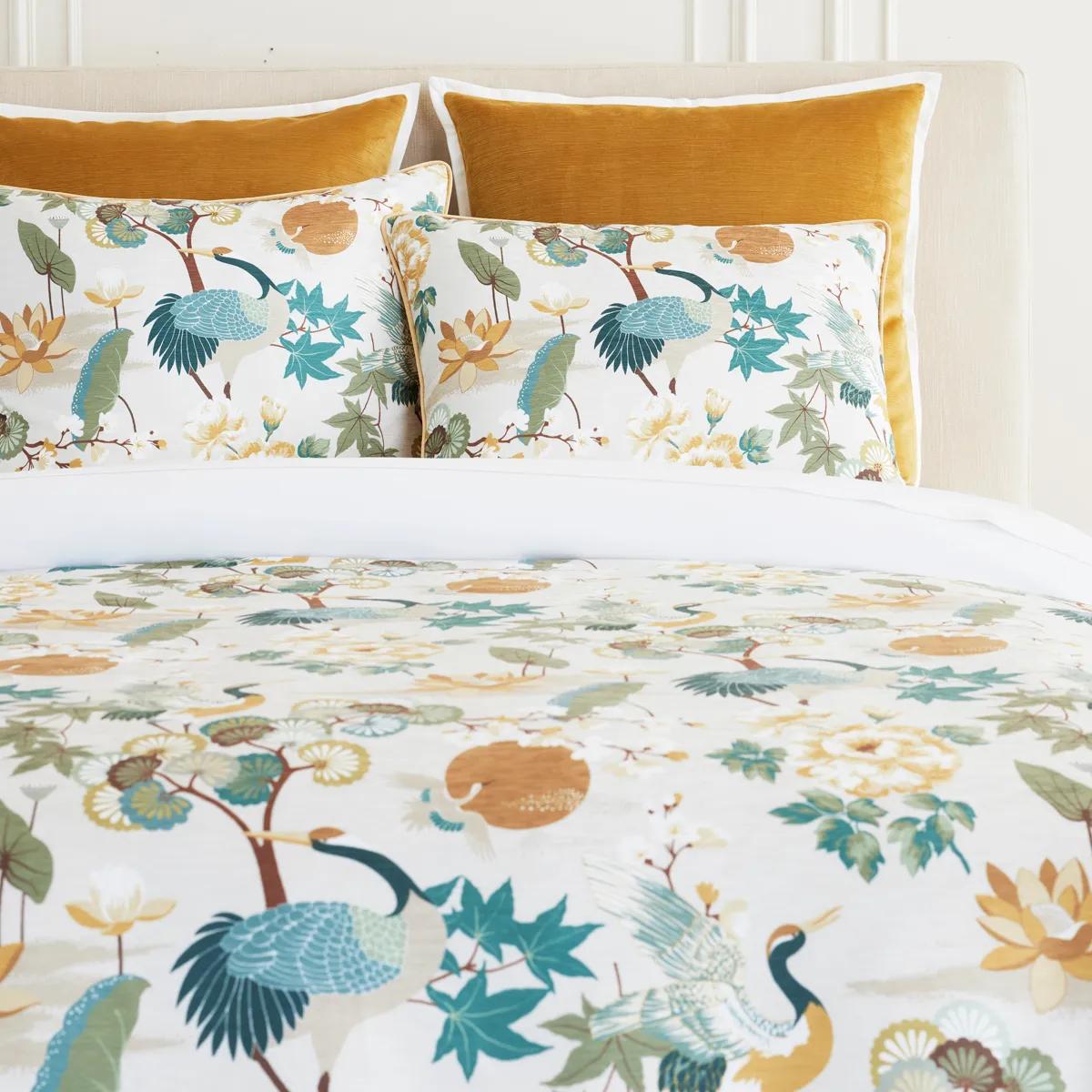
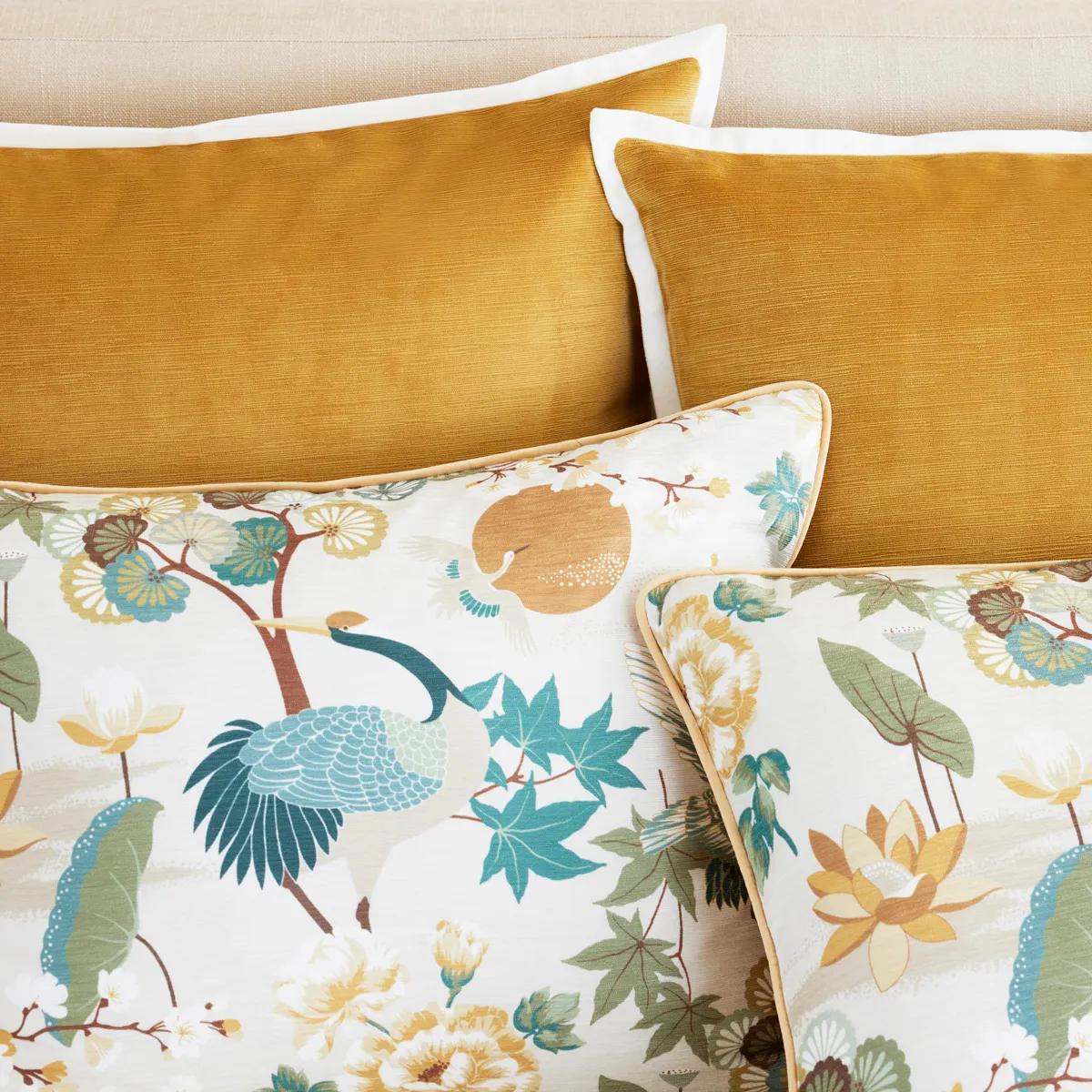 Sandhill Ivory/Multi Color Printed Bedding Set$639
An ivory bedding collection featuring earthy tones, gold velvet accents, and a soft cotton-polyester blend.
Add To Cart -
.jpg?w=1200&h=1200)
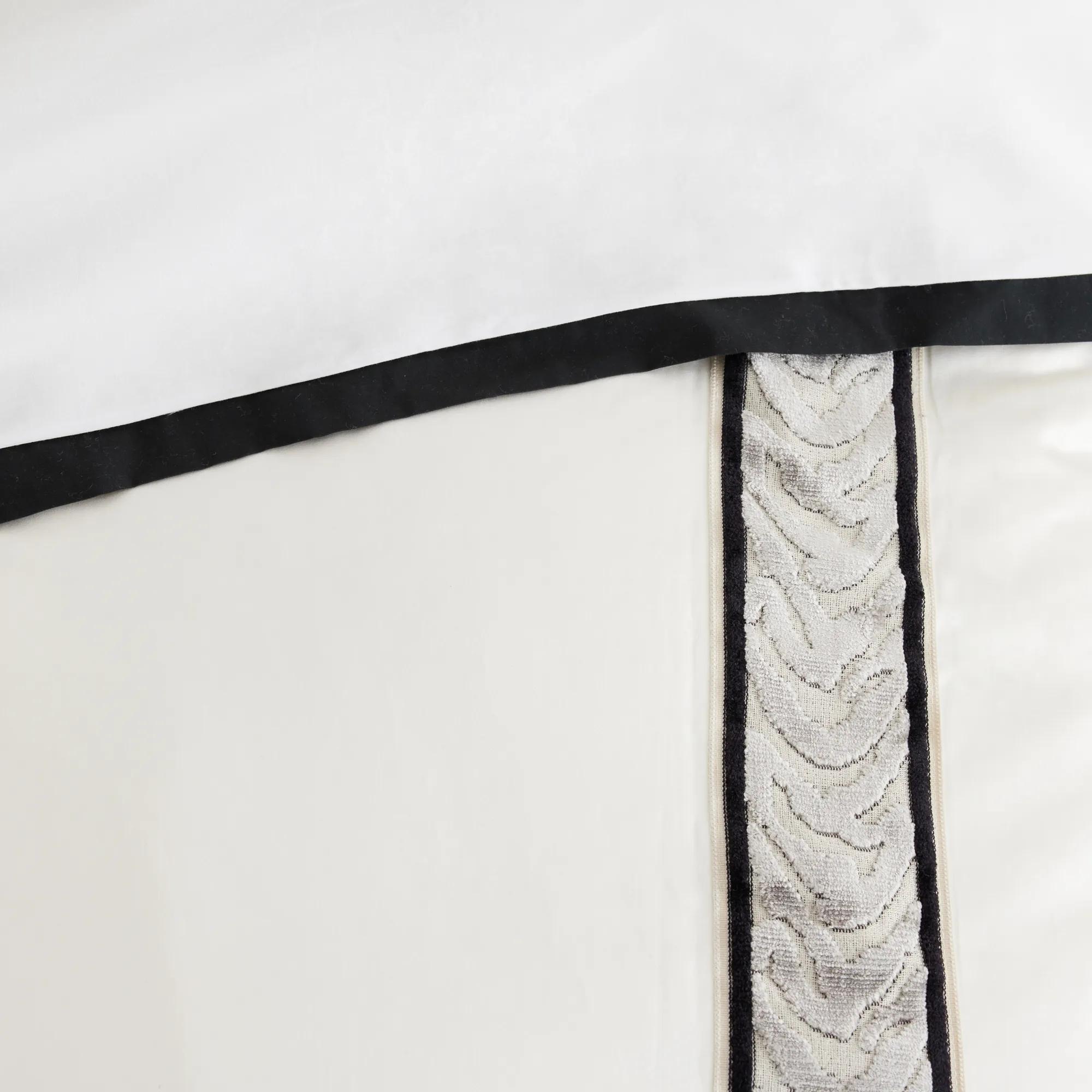 Gianna Grey/Black/White Animal Print Cut Velvet Appliqué Border Bedding Set$779
A luxurious grey and black bedding collection featuring a cut velvet tiger-stripe appliqué border for bold elegance.
Add To Cart -
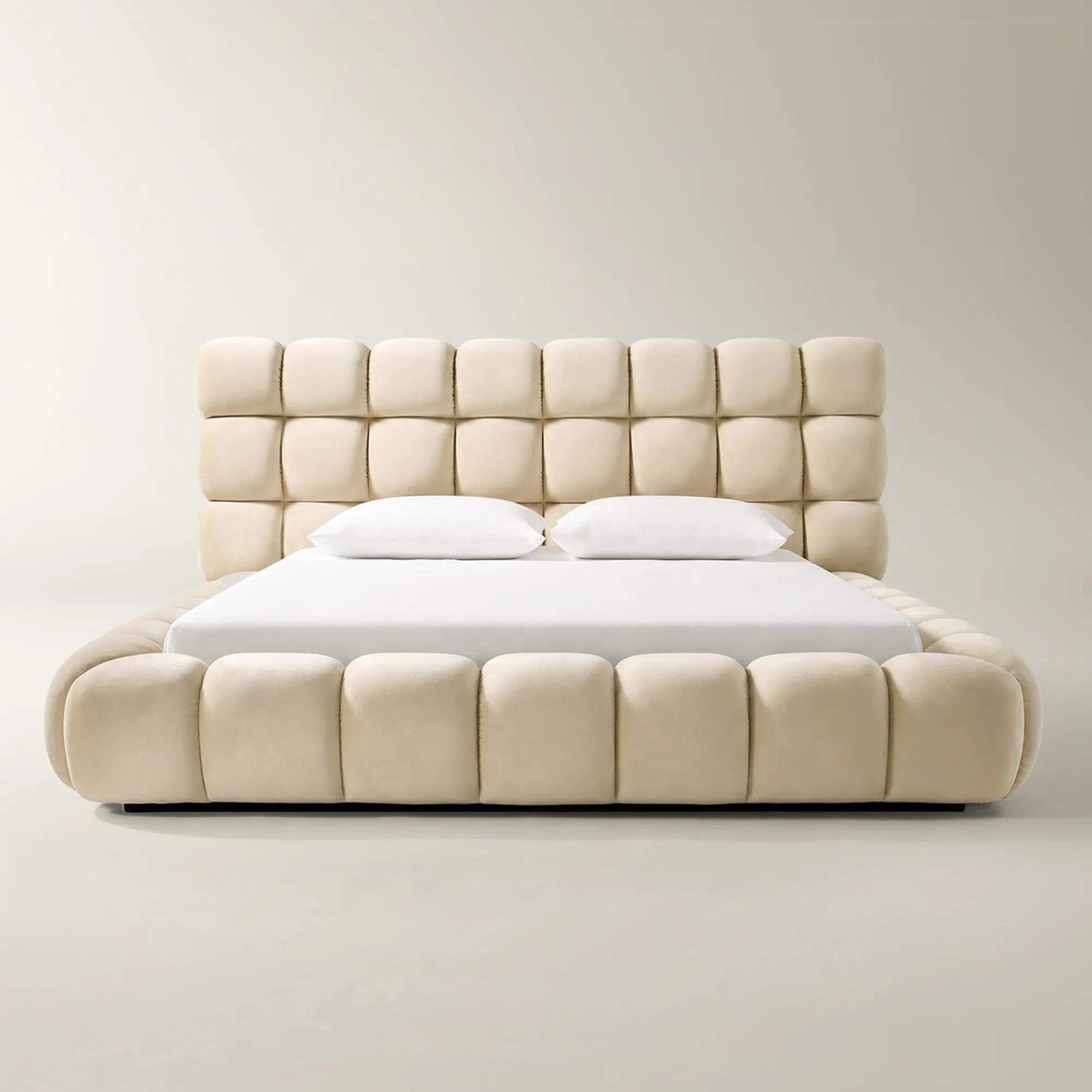 Paloma Tufted Oatmeal Velvet Upholstered Queen Platform Bed$2399
A sculptural platform bed upholstered in plush oatmeal velvet with oversized tufted blocks and solid wood frame.
Add To Cart -
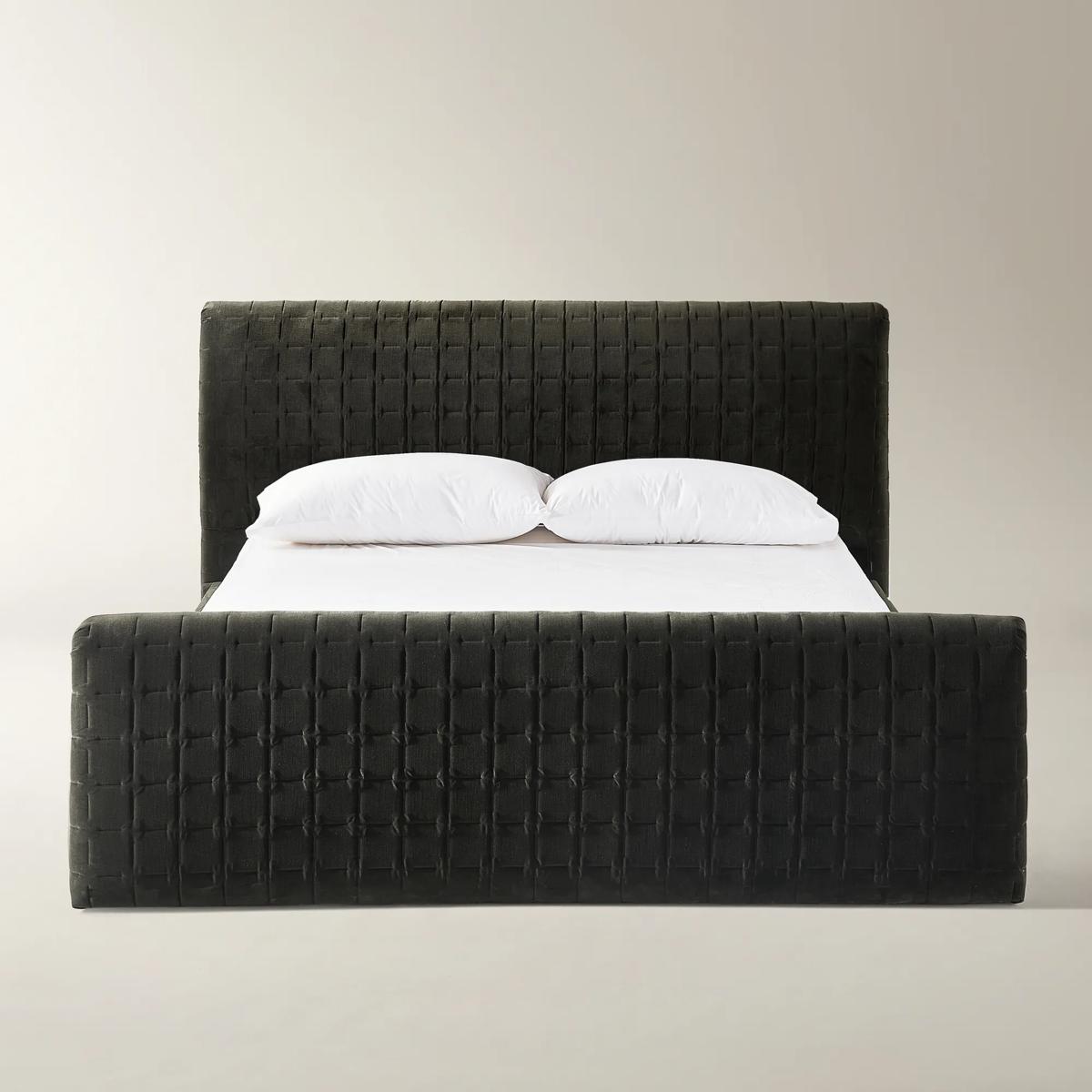 Vanta Charcoal Velvet Upholstered Queen Platform Bed$2199
A sculptural bed featuring charcoal velvet upholstery, three-dimensional checker quilting, and sleek stainless steel inlays.
Add To Cart -
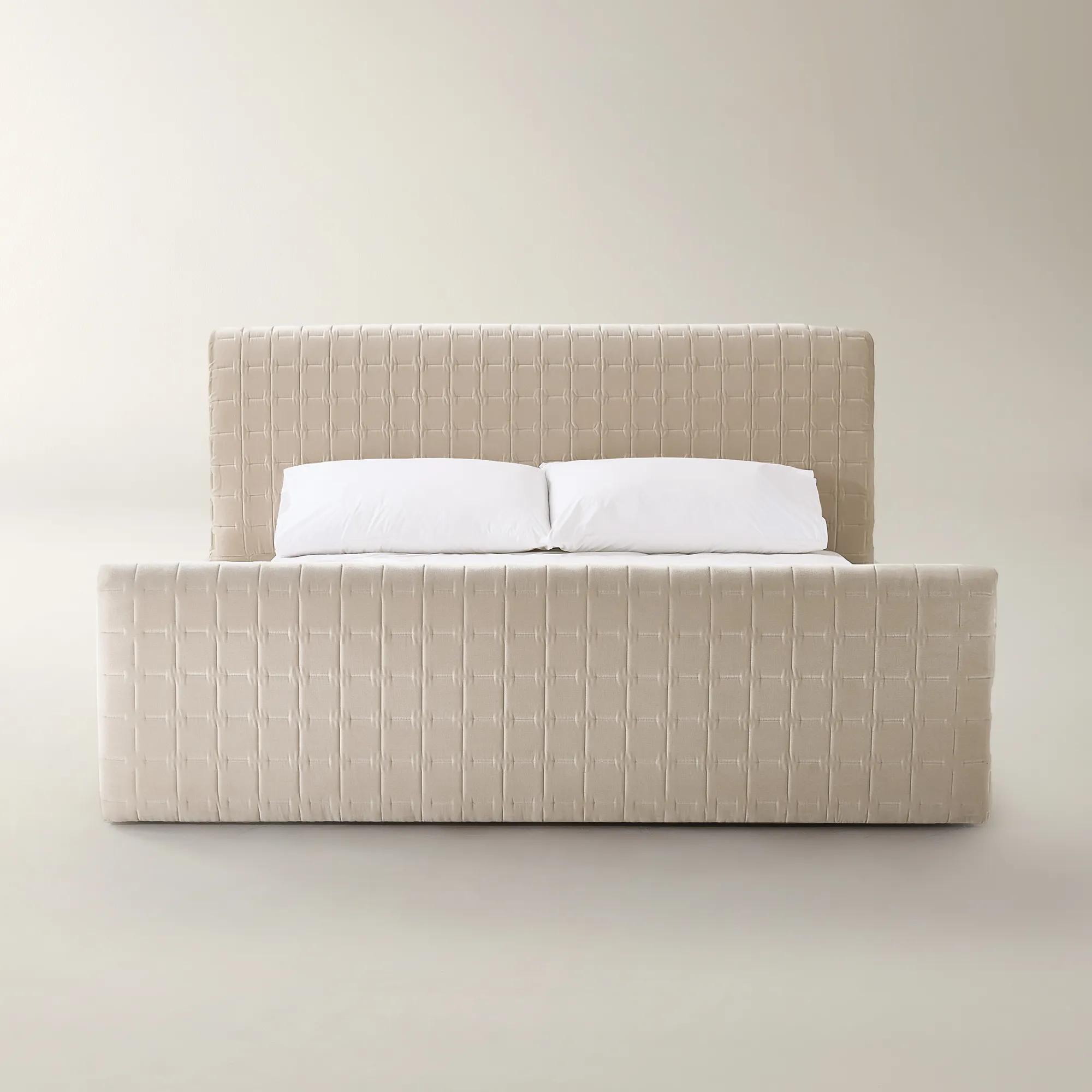
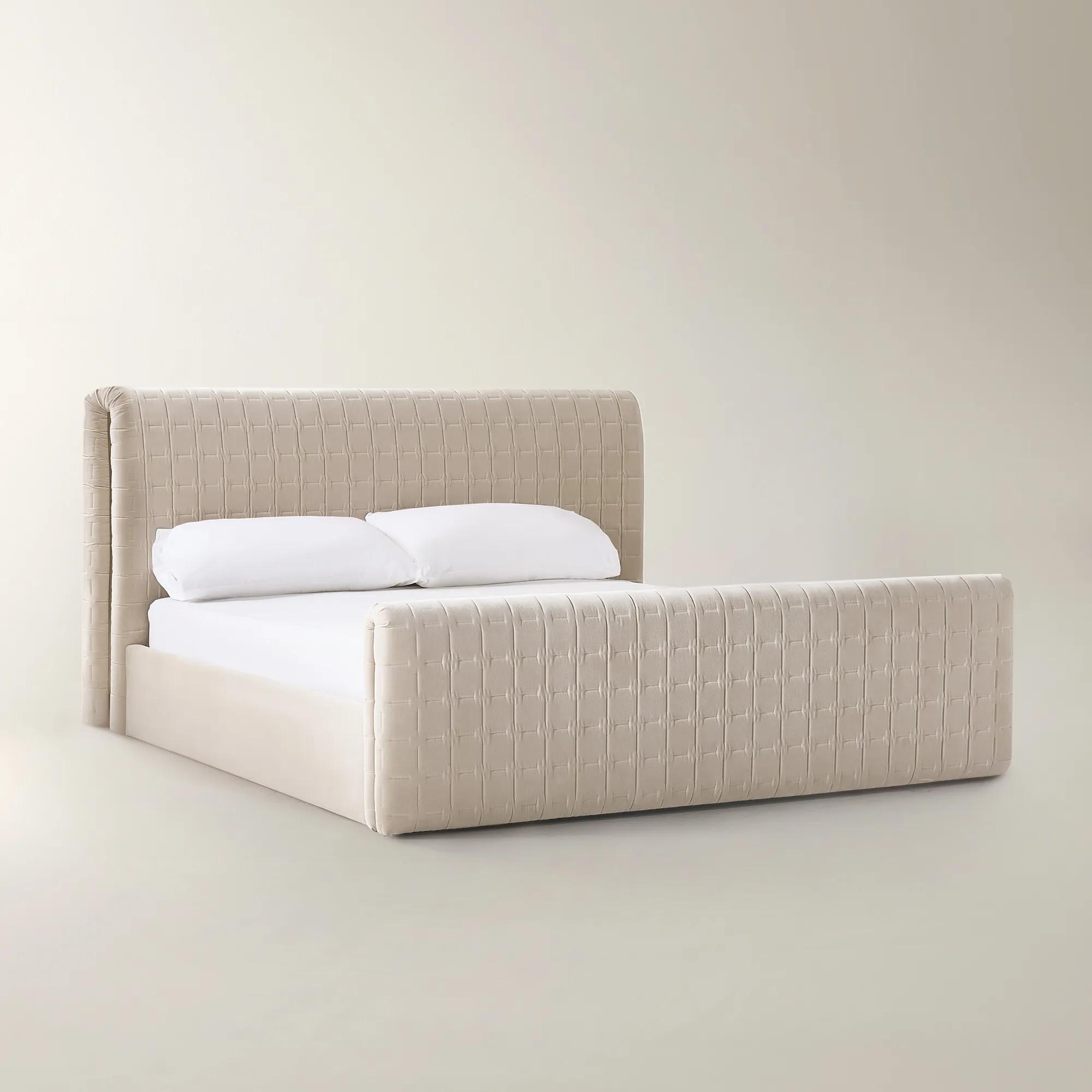 Vanta Oatmeal Velvet Upholstered King Platform Bed$2399
An oatmeal velvet-upholstered bed featuring a checker-quilted headboard and elegant gold-toned metal inlays.
Add To Cart -
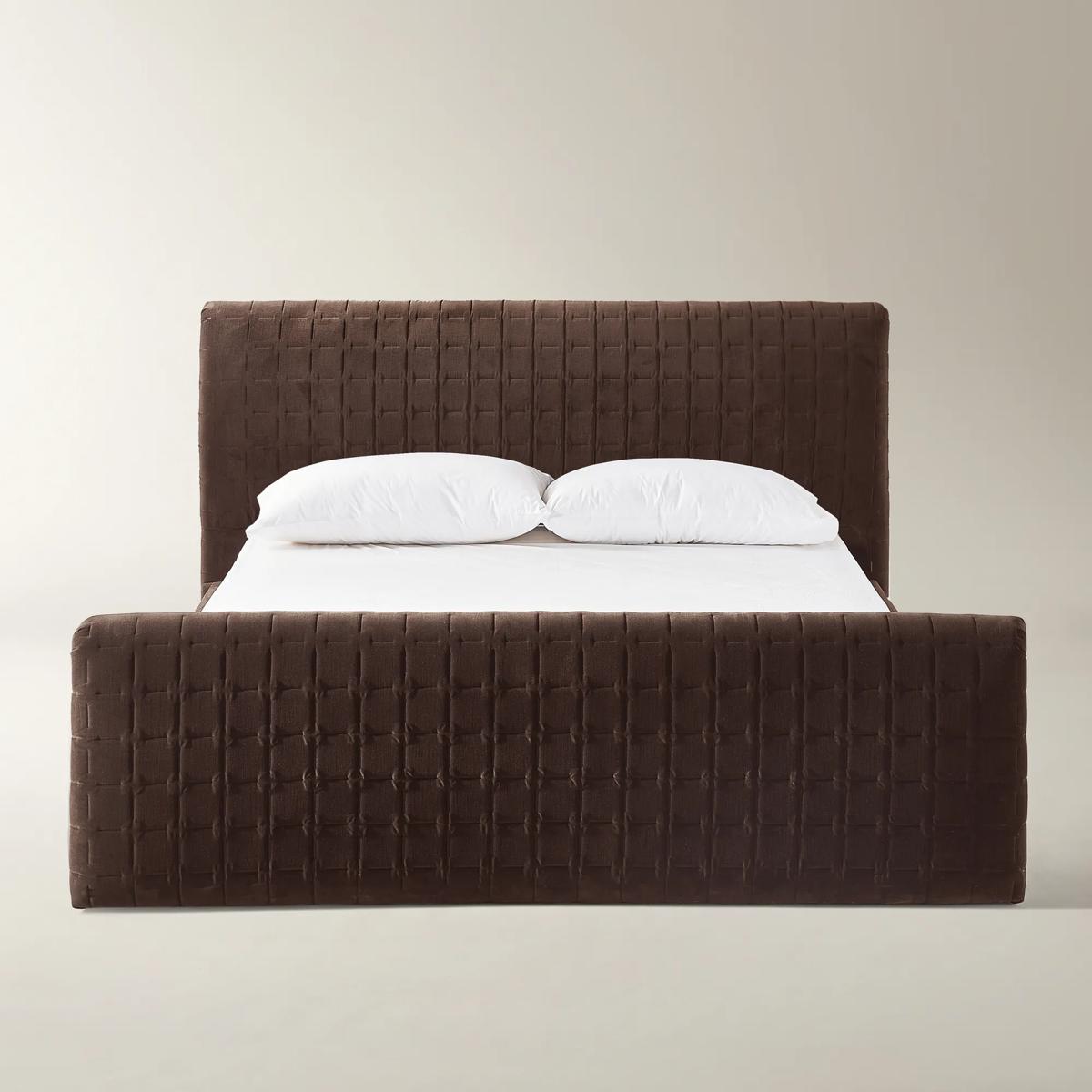
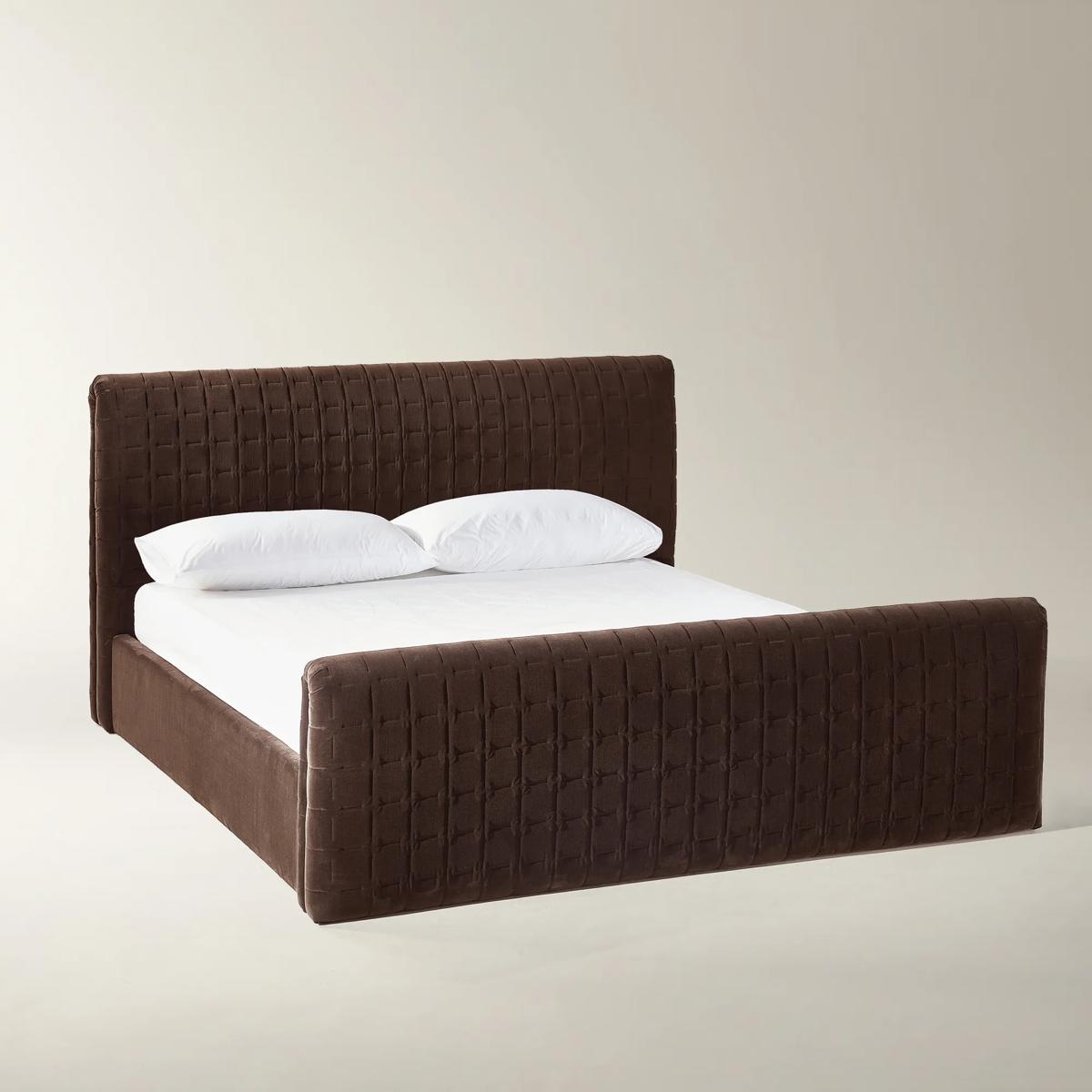 Vanta Burnt Umber Velvet Upholstered California King Platform Bed$2399
A chocolate velvet bed with hand-tufted checker quilting and brushed stainless steel inlays for modern elegance.
Add To Cart -
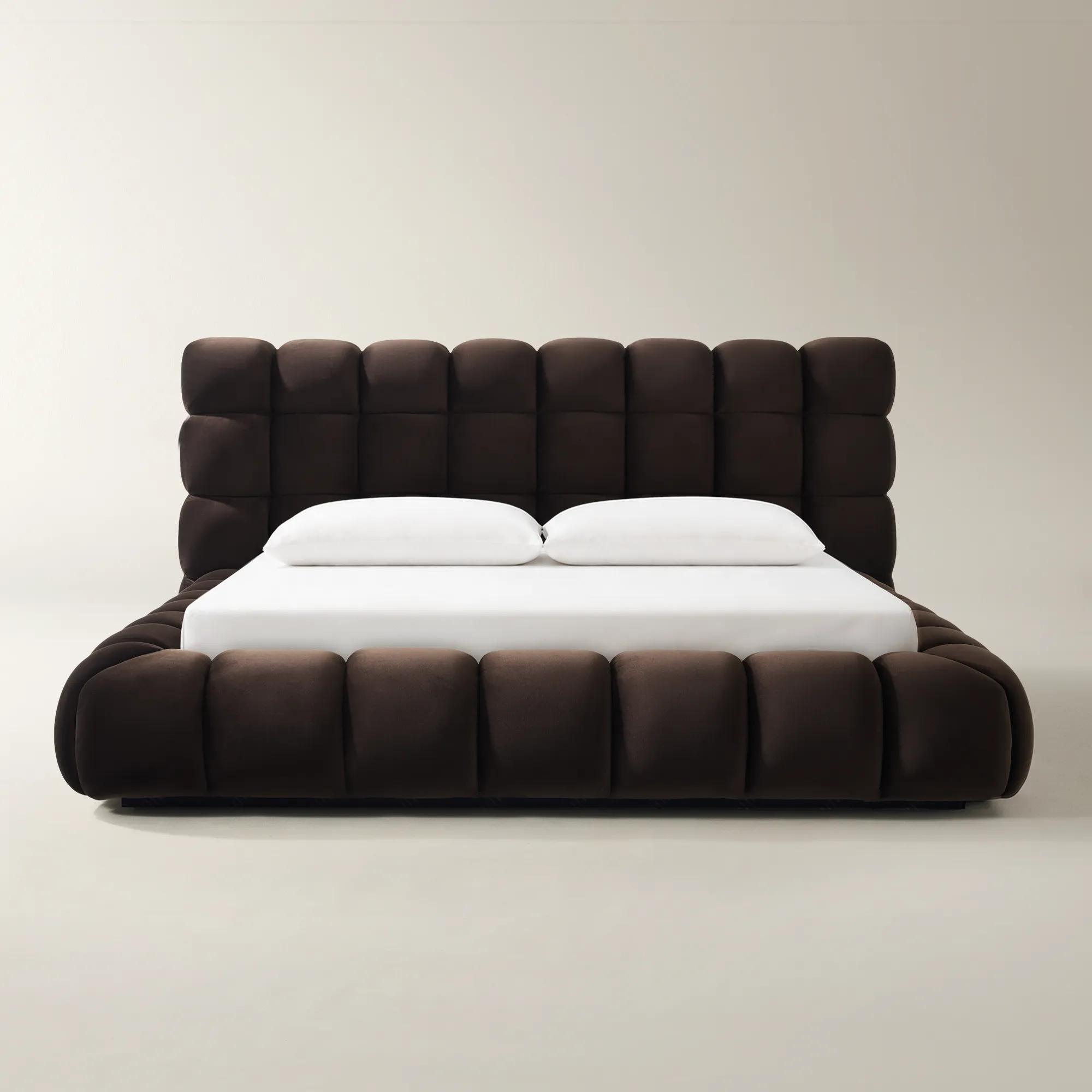 Paloma Tufted Dark Chocolate Velvet Upholstered Queen Platform Bed$2399
A sculptural platform bed upholstered in dark chocolate velvet with plush, oversized tufted blocks for modern elegance.
Add To Cart -
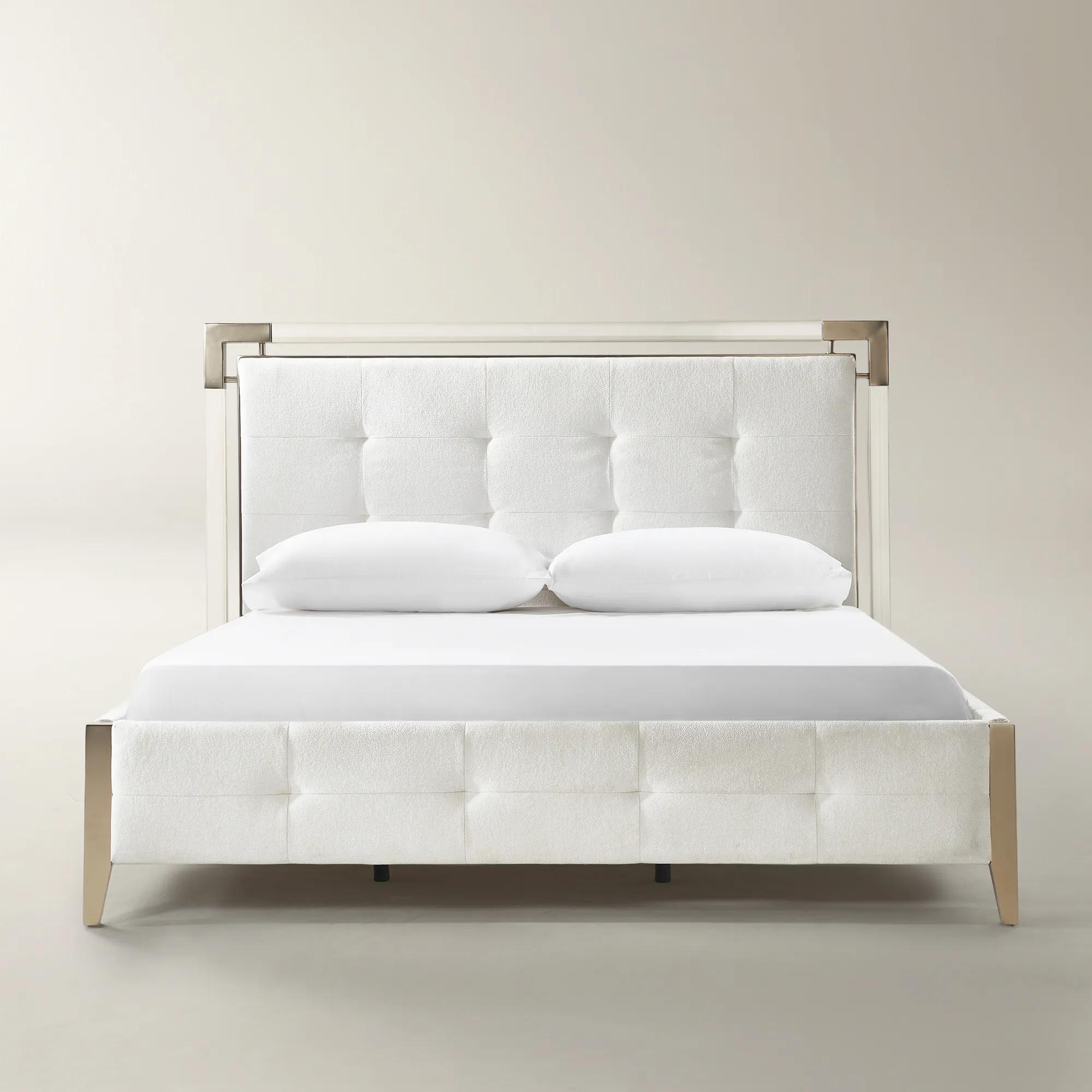
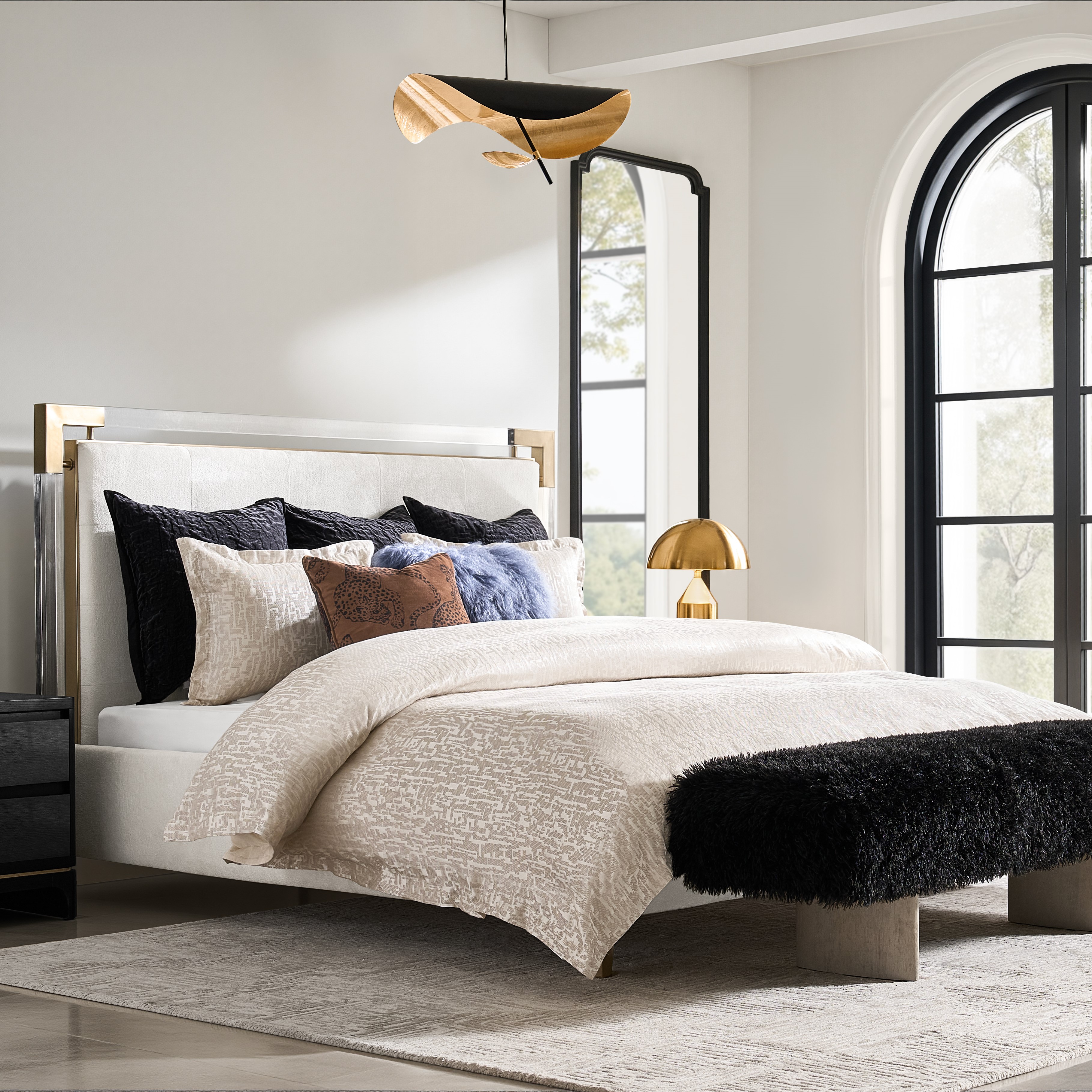 Vitrina Box-Tufted Ivory Velvet Upholstered King Platform Bed$2799
An ivory velvet upholstered bed featuring grid-tufted details, acrylic accents, and champagne-finished stainless steel trim.
Add To Cart -
Vanta Burnt Umber Velvet Upholstered King Platform Bed$2399
A hand-tufted chocolate velvet bed with brushed stainless steel inlays for a plush, sculptural statement.
Add To Cart -
Vanta Burnt Umber Velvet Upholstered Queen Platform Bed$2199
A chocolate velvet bed with hand-tufted checker quilting and brushed stainless steel inlays for modern elegance.
Add To Cart -
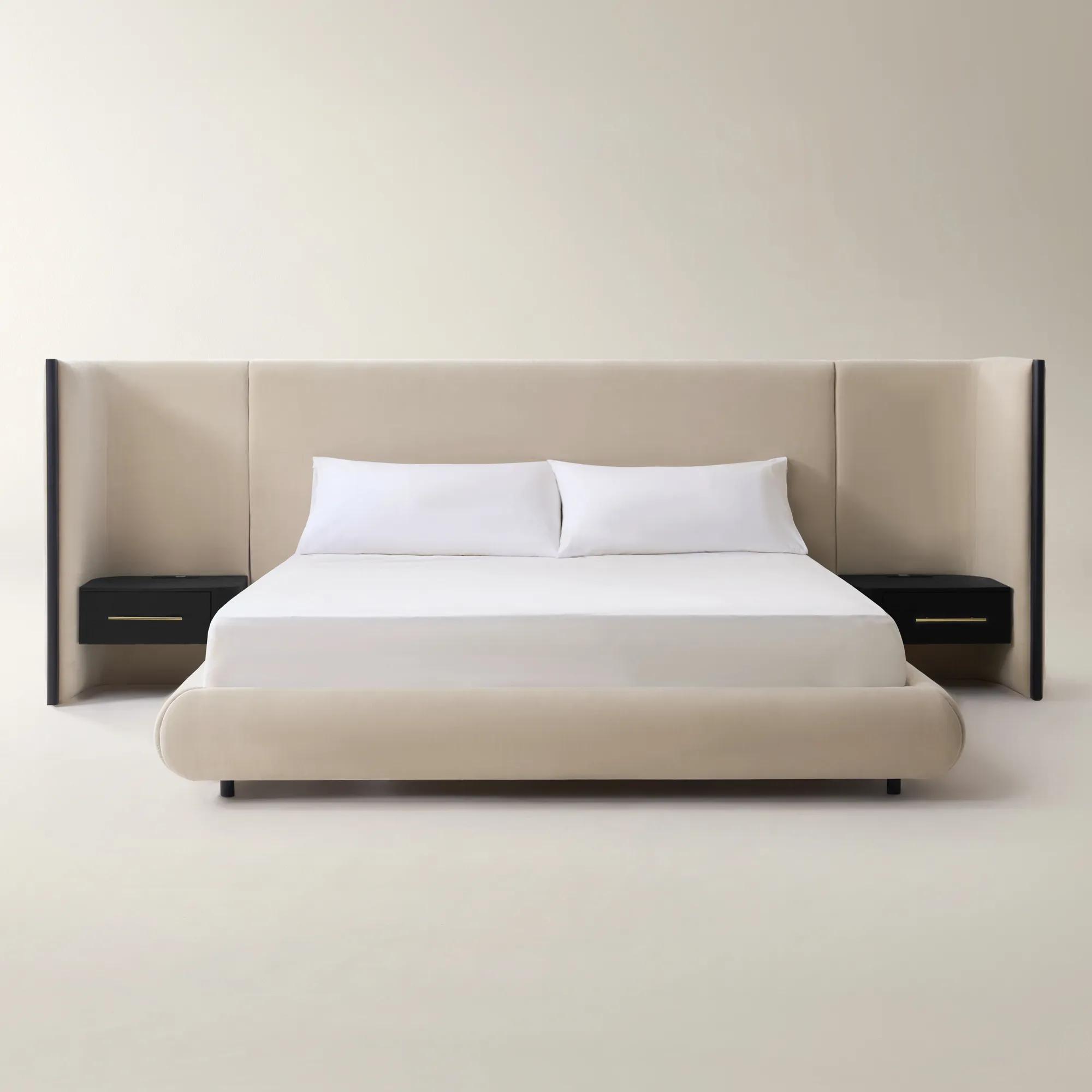 Sierra Oatmeal Velvet Upholstered Queen Bed With Nightstands$2599
A modern oatmeal velvet bed with an extended headboard, floating nightstands, and built-in power access.
Add To Cart -
Paloma Tufted Oatmeal Velvet Upholstered King Platform Bed$2599
A sculptural platform bed upholstered in oatmeal velvet with plush tufted blocks and fully wrapped design.
Add To Cart

Velvet Bedding For Transitional Decor
Velvet Bedding for Transitional Decor transforms the bedroom into a sanctuary of tactile luxury and visual intrigue. Here, the timeless allure of velvet meets the effortless sophistication of transitional style—where classic elegance dances with contemporary flair. Each piece is an invitation to indulge in sumptuous softness and rich, dimensional color, creating a space that feels both current and enduring. Layer your retreat with bedding that doesn’t just complement your aesthetic—it elevates it, infusing every night with a sense of artistry and serene glamour.
Velvet bedding for transitional decor brings together the graceful proportions of traditional interiors and the clean lines of contemporary design. Its defining contribution is texture: a soft, dimensional pile that catches light across a quilted surface, giving even a restrained palette depth and presence. In a transitional bedroom, that richness feels especially compelling against a tailored upholstered headboard, sculptural bedside lighting, or the warm grain of a wood dresser. The result is a bed with a distinctly luxurious point of view, without requiring ornate patterns or elaborate trim. Velvet quilts and coverlets with channel quilting introduce a measured rhythm, while box stitching lends a more classic, balanced appearance. A velvet duvet cover creates a fuller silhouette when paired with an appropriately sized insert, making it an expressive centerpiece for a room that otherwise favors understated forms. Color determines much of the atmosphere. Champagne, parchment, taupe, and soft gray offer a luminous foundation that accommodates both antique-inspired furnishings and contemporary accents. Olive, rust, and deep blue add greater intensity while remaining grounded enough to live comfortably alongside natural wood and warm whites. Undertones deserve attention: a golden beige can flatter warm brass and walnut, while a cooler gray may feel more harmonious beside polished nickel and pale upholstery. Because velvet reflects light differently as its pile changes direction, the same color can appear luminous near a window and deeper beneath evening lamplight. That movement is part of its artistry. A tonal arrangement of velvet bedding, crisp sheets, and a subtly patterned pillow allows the material to carry the drama; a contrasting border or embroidered accent can provide a sharper finishing note. For bedrooms that bridge different tastes, velvet offers a persuasive meeting point between classic comfort and modern polish. Those drawn to fewer decorative layers can also explore velvet bedding for minimalist decor, where the same expressive texture complements a more pared-back composition.
The feel and performance of velvet bedding depend on more than its appearance. Velvet describes a pile construction rather than a single fiber, so cotton, polyester, and blended versions can differ in sheen, softness, weight, and care requirements. Cotton velvet often has a softer, more muted luster, while some polyester velvets offer a brighter sheen and greater resistance to wrinkling; the actual finish and construction matter as much as the fiber name. The reverse fabric also deserves consideration, particularly when it will rest against the body. A cotton or other smooth woven backing can create a different sleeping experience from an all-velvet surface. For quilts and filled coverlets, the fill material and amount influence warmth and loft, while a duvet cover takes much of its insulating character from the insert inside. Velvet is not automatically lightweight or breathable, and a substantial filled layer may feel too warm for someone who sleeps hot. Pairing a velvet top layer with cotton percale or linen sheets introduces a crisp or gently textured counterpoint, allowing the bed to feel sumptuous without making every layer dense. In a bedroom kept cool overnight, a velvet quilt over sheets may provide comfortable coverage; as temperatures fall, a separate blanket underneath allows warmth to be adjusted without changing the entire arrangement. A folded coverlet at the foot of the bed offers another approach, delivering a generous sweep of texture that can be pulled up when needed. Euro shams create height against a headboard, while a lumbar pillow with restrained geometric stitching can connect the bedding’s softness to the room’s more architectural elements. Leaving a little space between decorative accents helps those details remain distinct. In a primary bedroom, this combination supports an inviting nightly retreat; in a guest room, it creates a memorable welcome while allowing visitors to adjust their layers. Velvet bedding can also make a thoughtful housewarming or wedding gift when the recipient’s preferred colors, bed dimensions, and laundering needs are known, turning an everyday essential into something personal and enduring.
Proportion gives velvet bedding its finished, tailored character. Size names provide a starting point, but actual measurements determine how a quilt, coverlet, or duvet will fall across the bed. Mattress depth, toppers, bed height, and the presence of a footboard all affect the desired drop. On a tall mattress, a narrower coverlet may reveal more of the sheets or foundation than intended; on a low platform bed, excessive overhang can obscure the frame’s sculptural lines or gather near the floor. Comparing the bedding’s stated dimensions with the mattress width and preferred side coverage helps establish a balanced silhouette. Duvet covers should correspond closely to the insert’s measurements, with secure closures and interior ties, when included, helping keep the fill from shifting. Shams likewise need inserts of the appropriate size so their corners look supported rather than collapsed. For everyday use, examine the qualities that influence longevity: stable seams, evenly distributed quilting, a well-finished backing, and care instructions suited to the household’s routine. A velvet surface may show pressure marks, changes in pile direction, or impressions where someone sits repeatedly; these are not always signs of damage, but they can change the visual finish. Households with pets may also find that the pile makes loose hair more noticeable, particularly on darker colors. Gentle handling and care appropriate to the fabric help preserve its character. Some velvet bedding is machine washable, while other constructions require professional cleaning, so the sewn-in care label should govern washing, drying, and stain treatment. If machine washing is permitted, the bedding needs enough room to move freely; an overloaded drum can compromise cleaning and put stress on seams. Avoid high heat or pressing the pile directly unless the manufacturer specifically allows it, and store bedding clean and completely dry without prolonged compression. These practical details protect the pleasure of the material itself: the shifting glow of a champagne coverlet, the depth of blue velvet against ivory sheets, and the quiet sense of occasion that a beautifully dressed bed brings to daily life.
FAQs
Velvet bedding is the epitome of transitional style, seamlessly blending traditional opulence with modern sophistication. Its plush texture and subtle sheen introduce a layer of visual and tactile interest, allowing it to complement both classic furnishings and contemporary accents. This versatility makes velvet bedding a stunning anchor for spaces that celebrate the harmony between old-world charm and fresh, current design.
To achieve a layered, luxurious look with velvet bedding, start by choosing a rich color palette that complements your room’s existing decor. Pair velvet duvets or quilts with crisp cotton sheets, textured throws, or faux fur pillows to create depth and dimension. Incorporate metallic or mirrored accents on nightstands or lamps to enhance the fabric's natural luster, and don’t shy away from mixing patterns for an artfully curated feel.
Absolutely—modern velvet bedding is crafted to be breathable and comfortable in every season. During cooler months, its warmth and coziness are especially welcome, while in warmer weather, pairing velvet with lightweight layers ensures comfort without sacrificing style. The adaptable nature of velvet makes it a timeless choice for year-round elegance.
Velvet bedding is a luxurious gift for anyone who delights in fine design and tactile comfort. It’s especially meaningful for newlyweds, new homeowners, or anyone celebrating a milestone moment. Its dramatic flair and inviting texture make it a cherished present for those who appreciate artistry and crave a touch of everyday indulgence.
To preserve the sumptuous look and feel of your velvet bedding, gently shake or brush off dust and debris, and follow the care instructions provided with your piece. Most modern velvet bedding is designed for easy maintenance, but occasional professional cleaning or careful spot treatment can help maintain its rich texture and luminous sheen for years to come.
.jpeg?w=3762&h=3762)