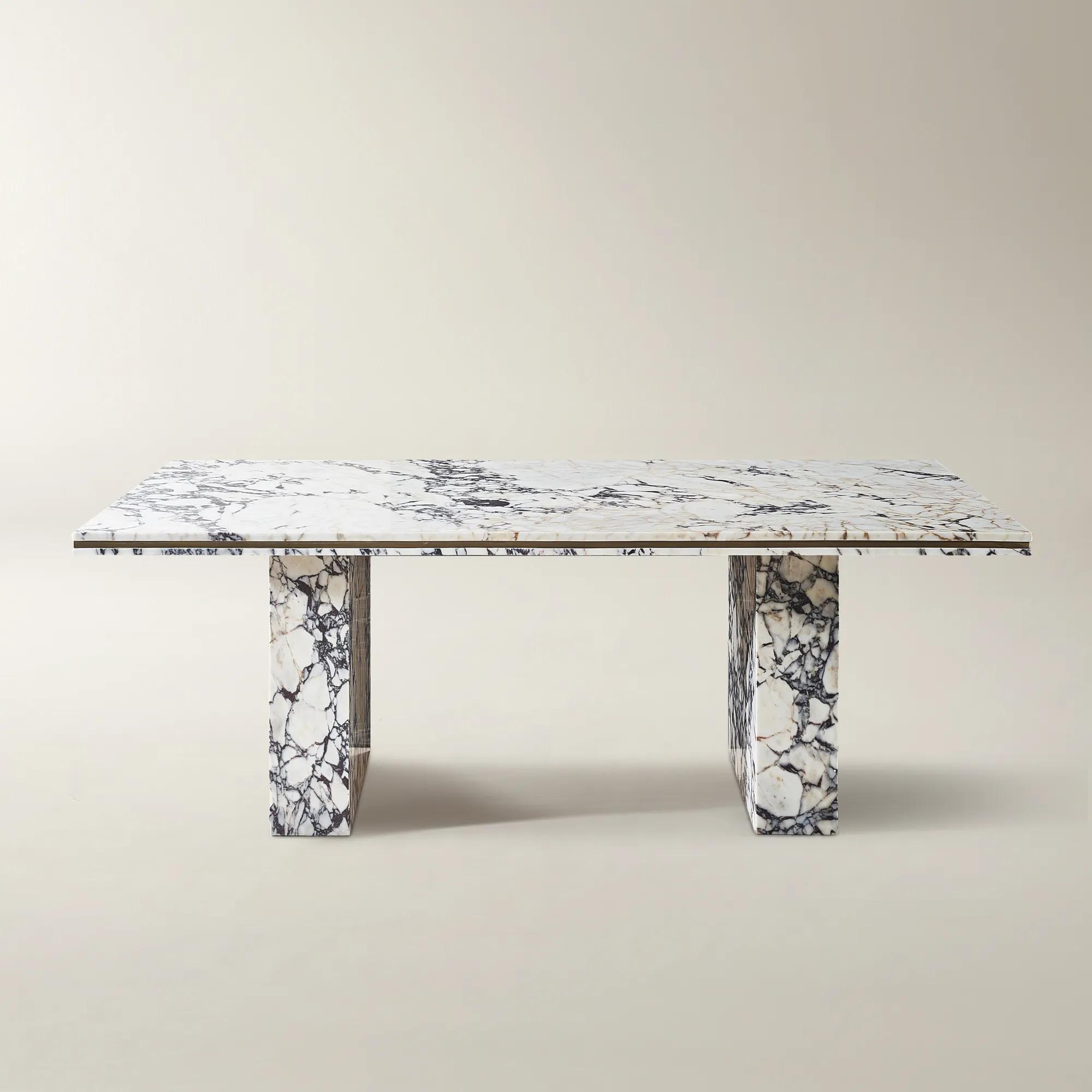
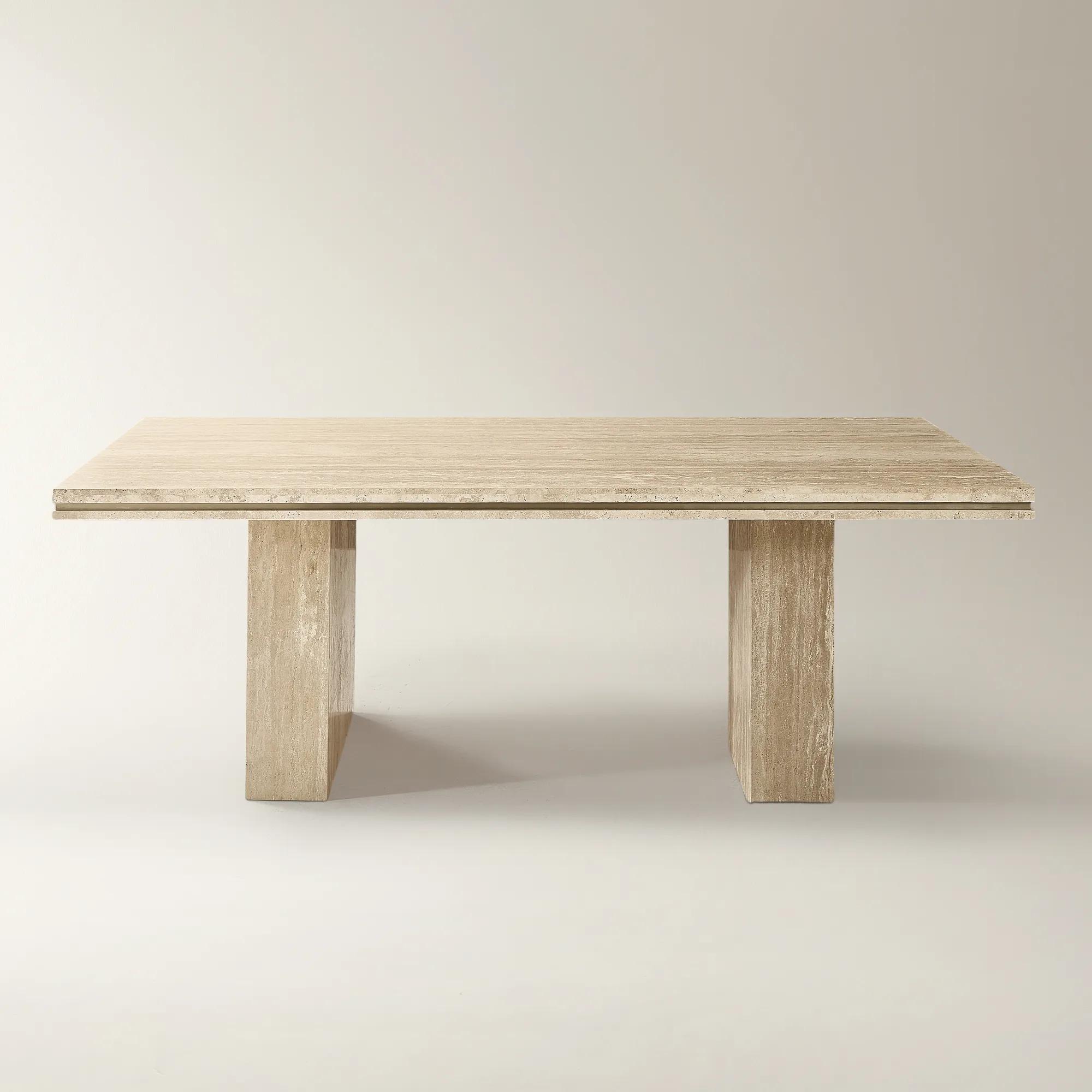
Single Pedestal Dining Tables
Single Pedestal Dining Tables
-
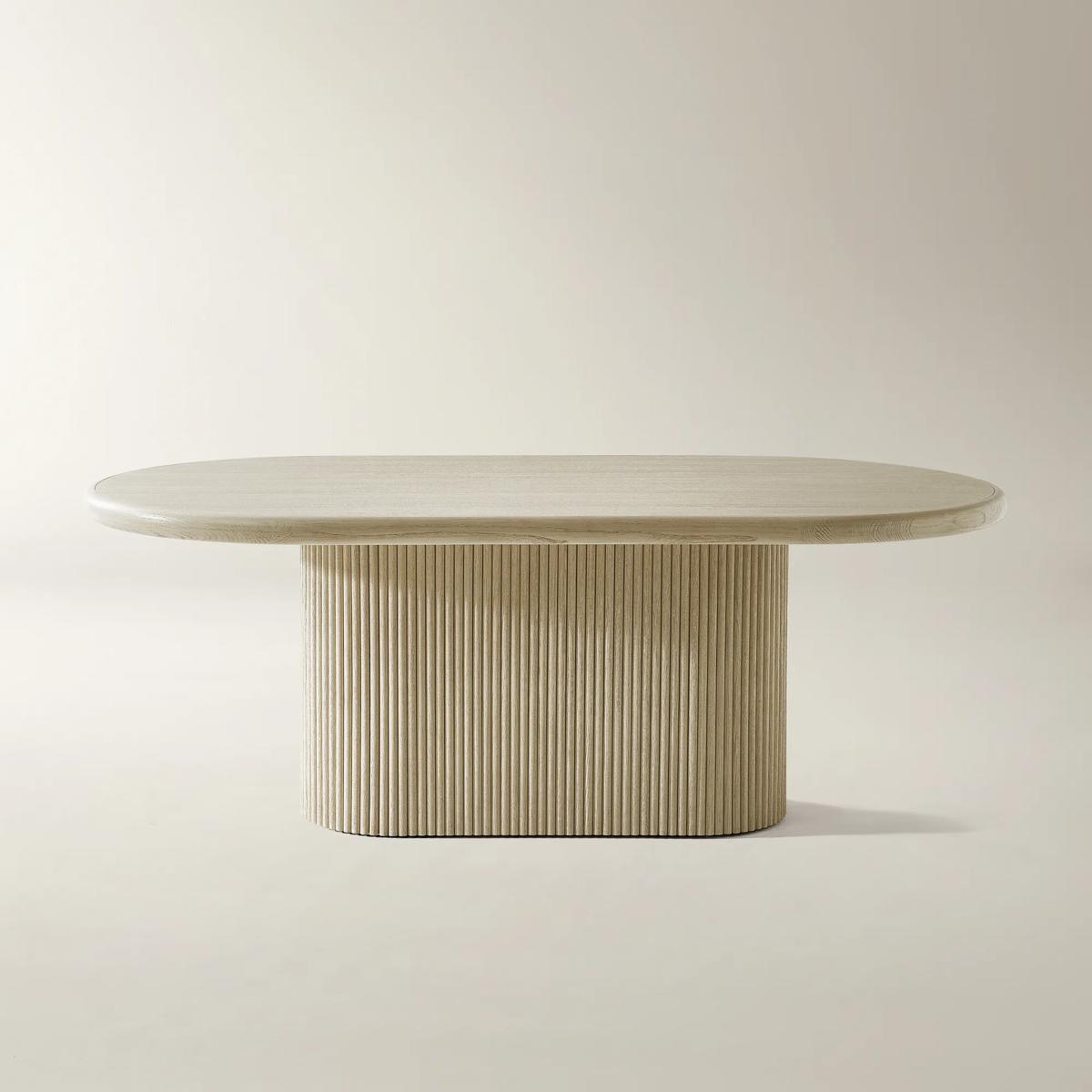
 Stria Oval Reeded White Oak Dining Table (82")$2199
A sculptural oval dining table featuring reeded oak, a single pedestal base, and gold-plated steel trim.
Add To Cart -
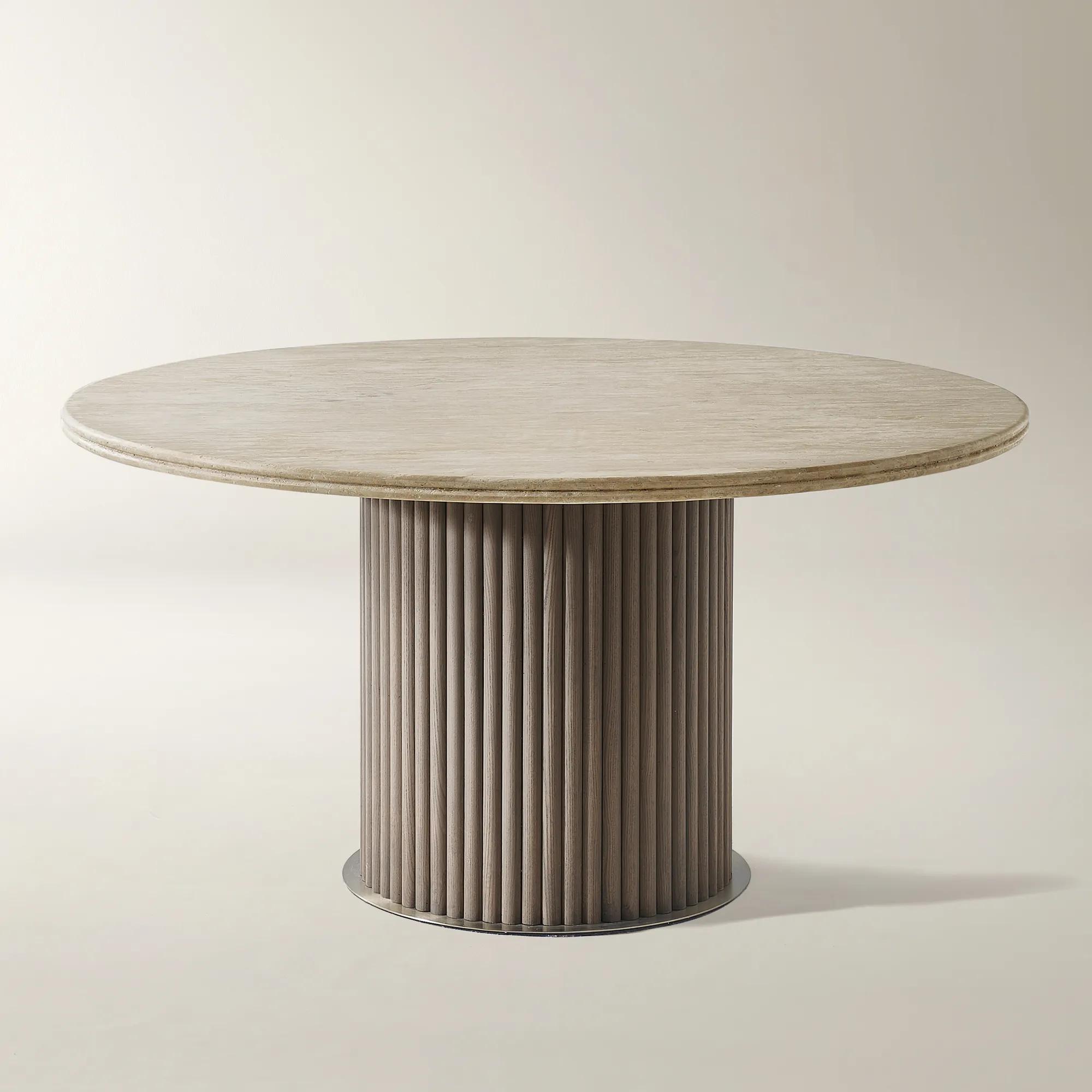 Bond Round Reeded Travertine and Wood Dining Table (59")$3499
A round dining table featuring a genuine natural travertine stone top and a fluted solid ash base.
Add To Cart -
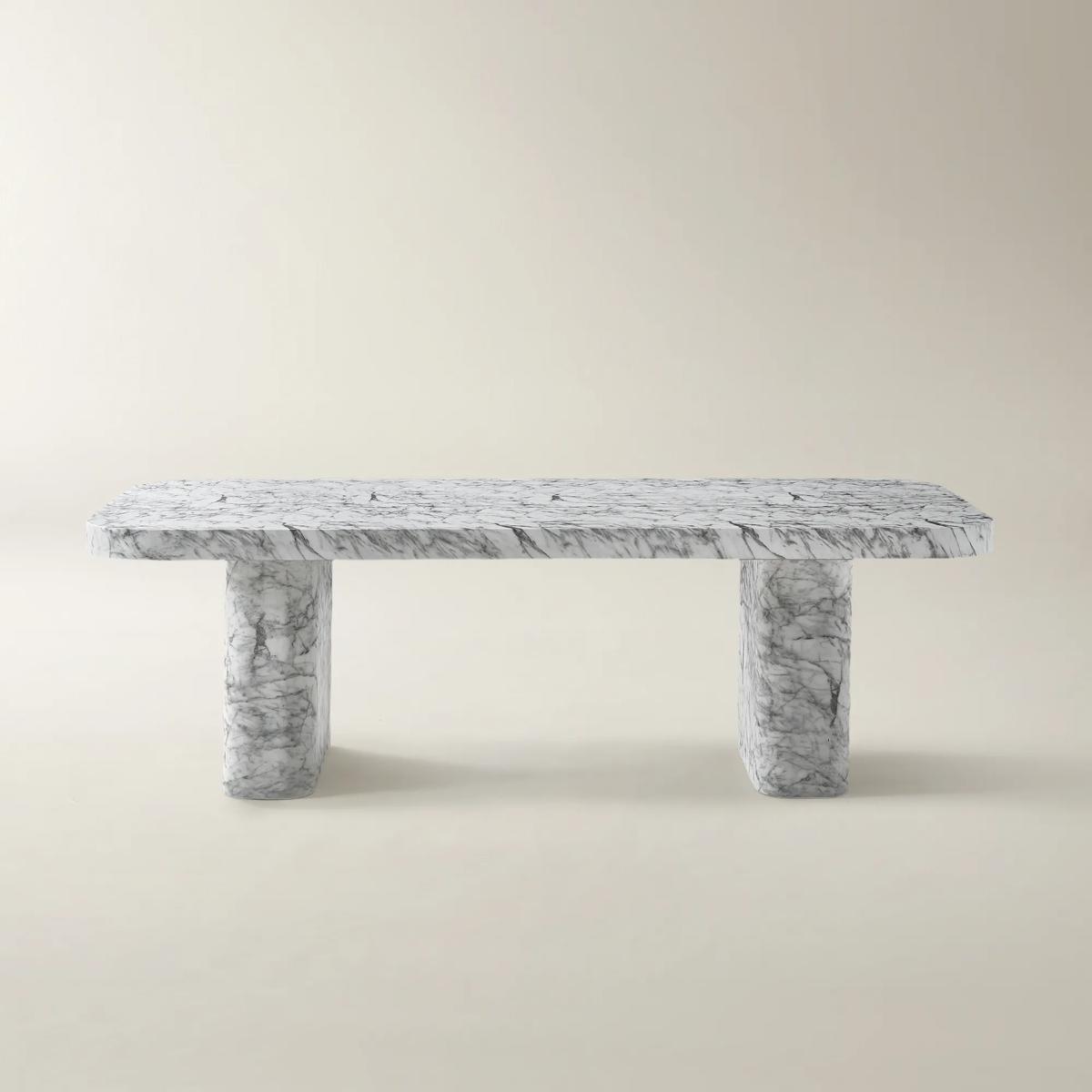
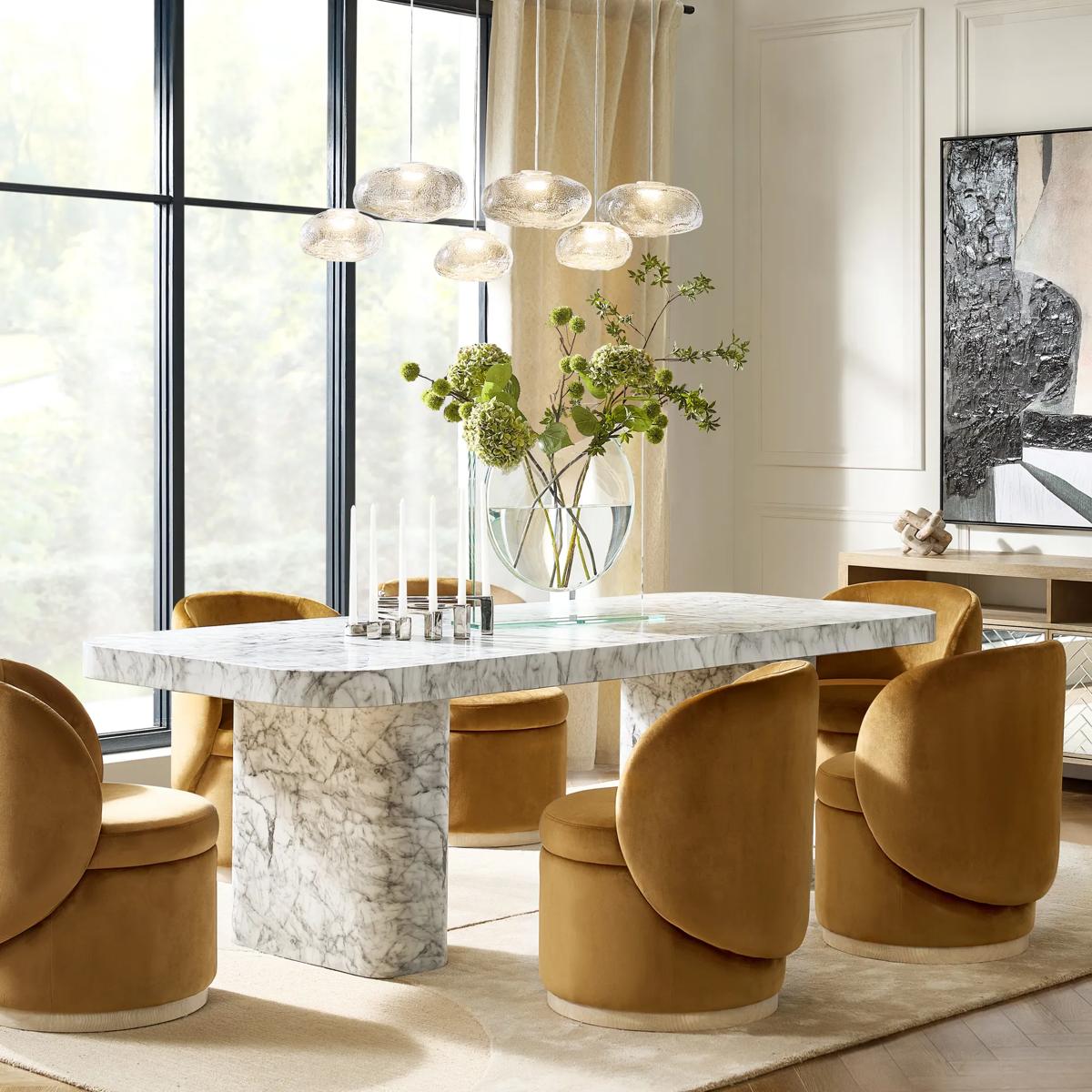 Silex Rectangular White Concrete Indoor/Outdoor Dining Table (94.5")$1999
A white concrete dining table with a sculptural pedestal base, marble-inspired veining, and indoor-outdoor versatility.
Add To Cart -
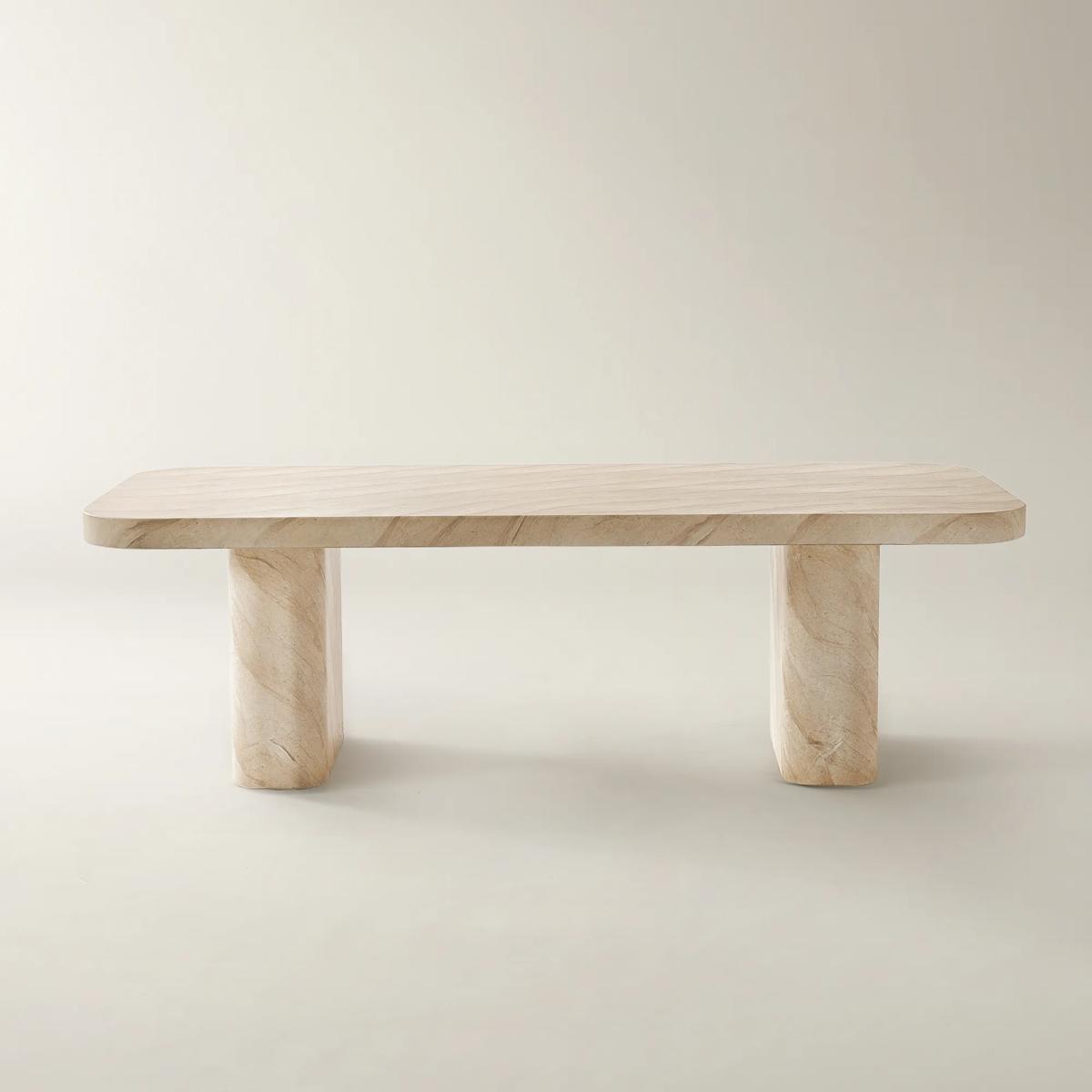 Silex Rectangular Travertine Concrete Indoor/Outdoor Dining Table (94.5")$1999
A rectangular dining table with pedestal legs, travertine-inspired veining, and resilient fiber concrete for indoor-outdoor use.
Add To Cart -
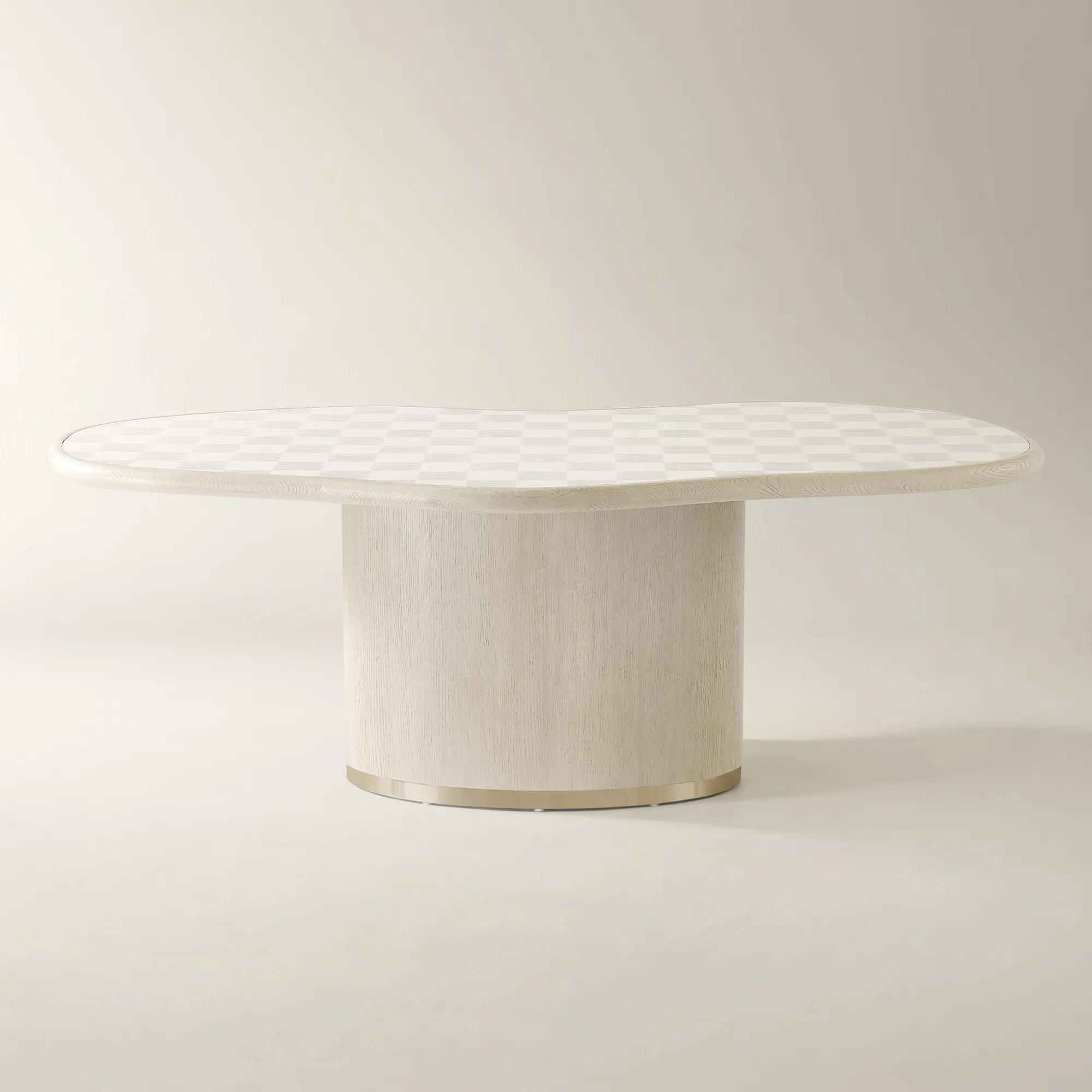 Vetra Checkerboard Oak and Maple Dining Table (84")$2399
A striking dining table featuring a hand-arranged oak and maple checkerboard veneer with soft gold accents.
Add To Cart -
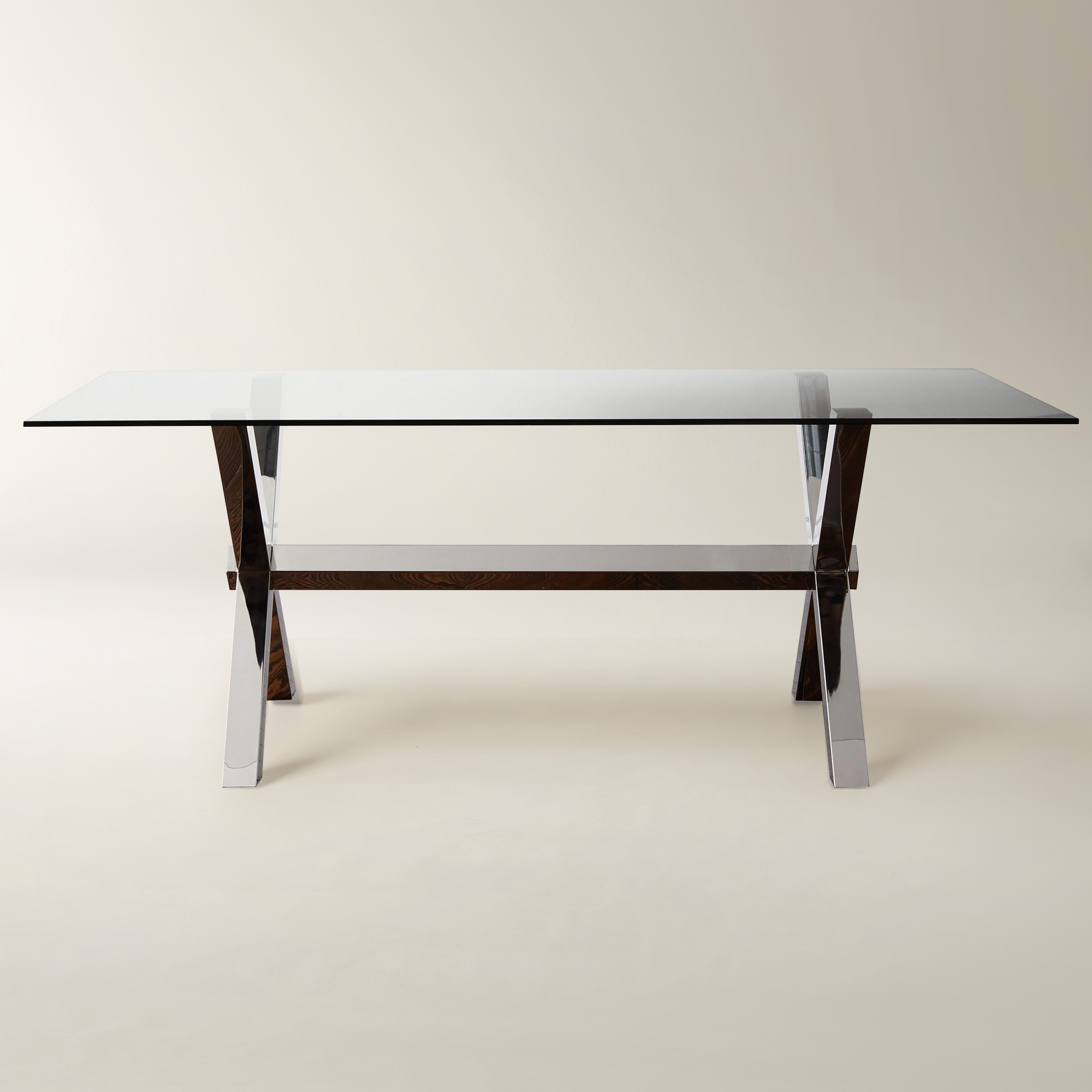
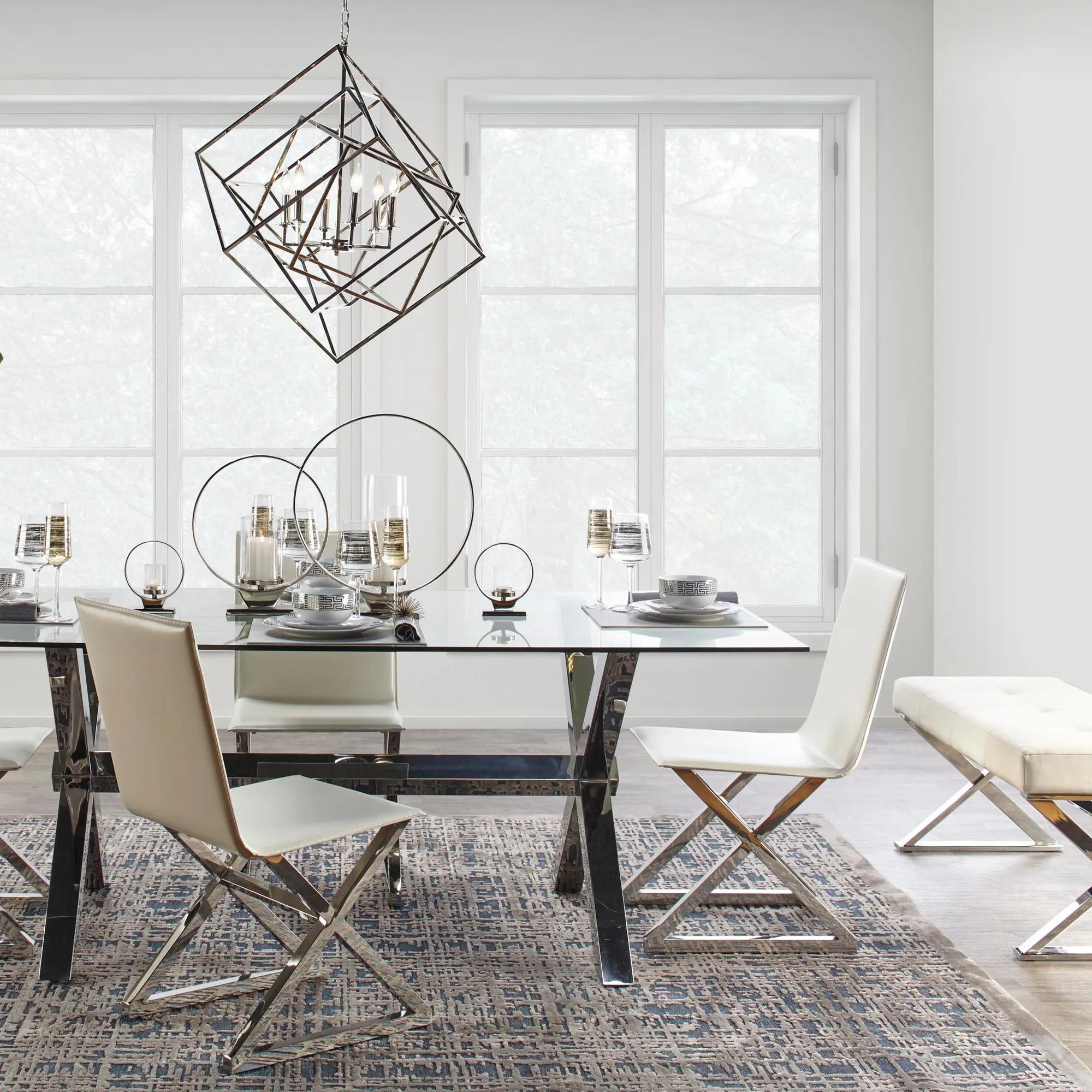 Axis Rectangular Silver Dining Table With Glass Top (78")$1199
A contemporary dining table featuring a polished stainless steel base and durable tempered glass top.
Add To Cart -
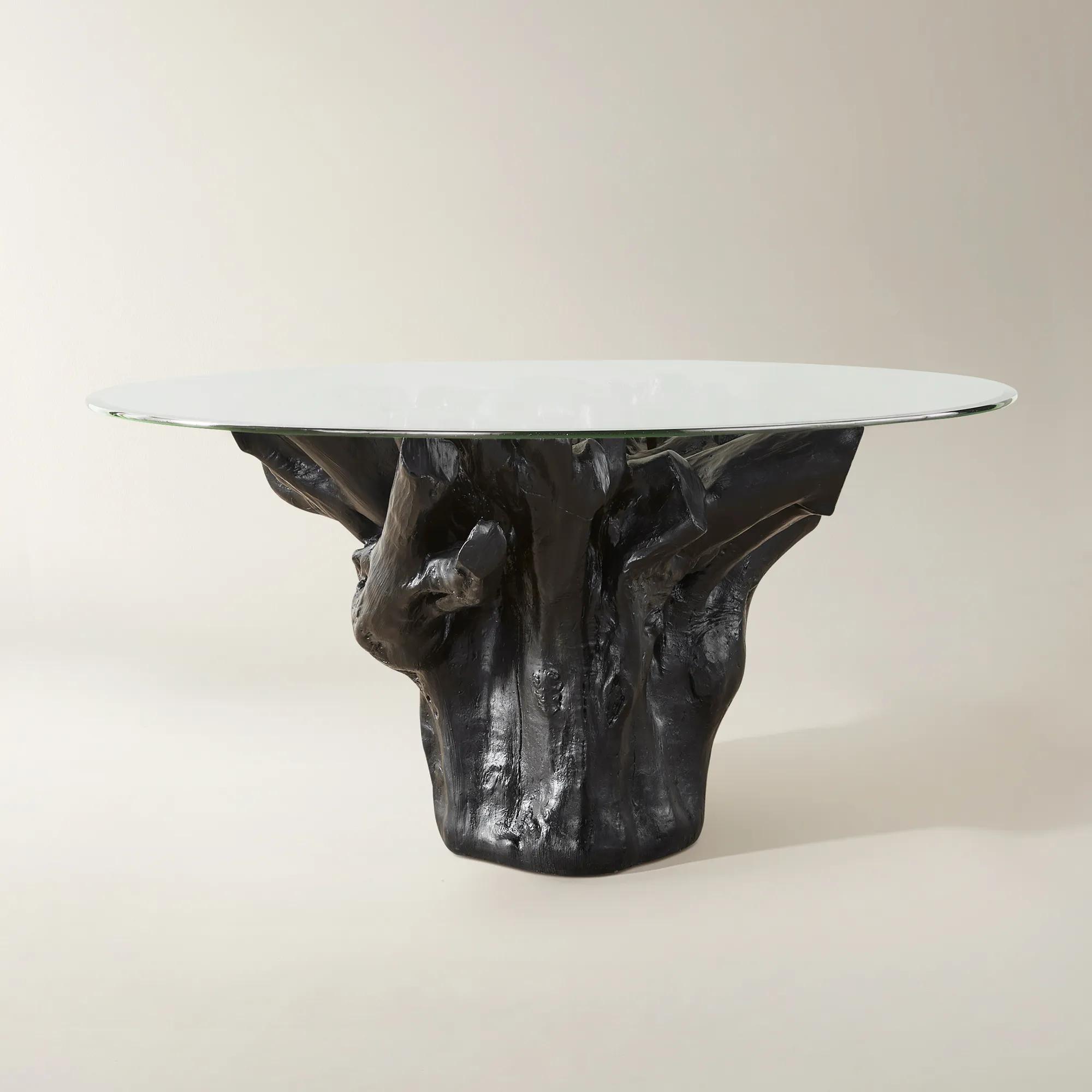 Sequoia Black Resin Dining Table With Glass Top (60")$2299
A sculptural black resin base with real stone fragments supports a round tempered glass top for organic elegance.
Add To Cart -
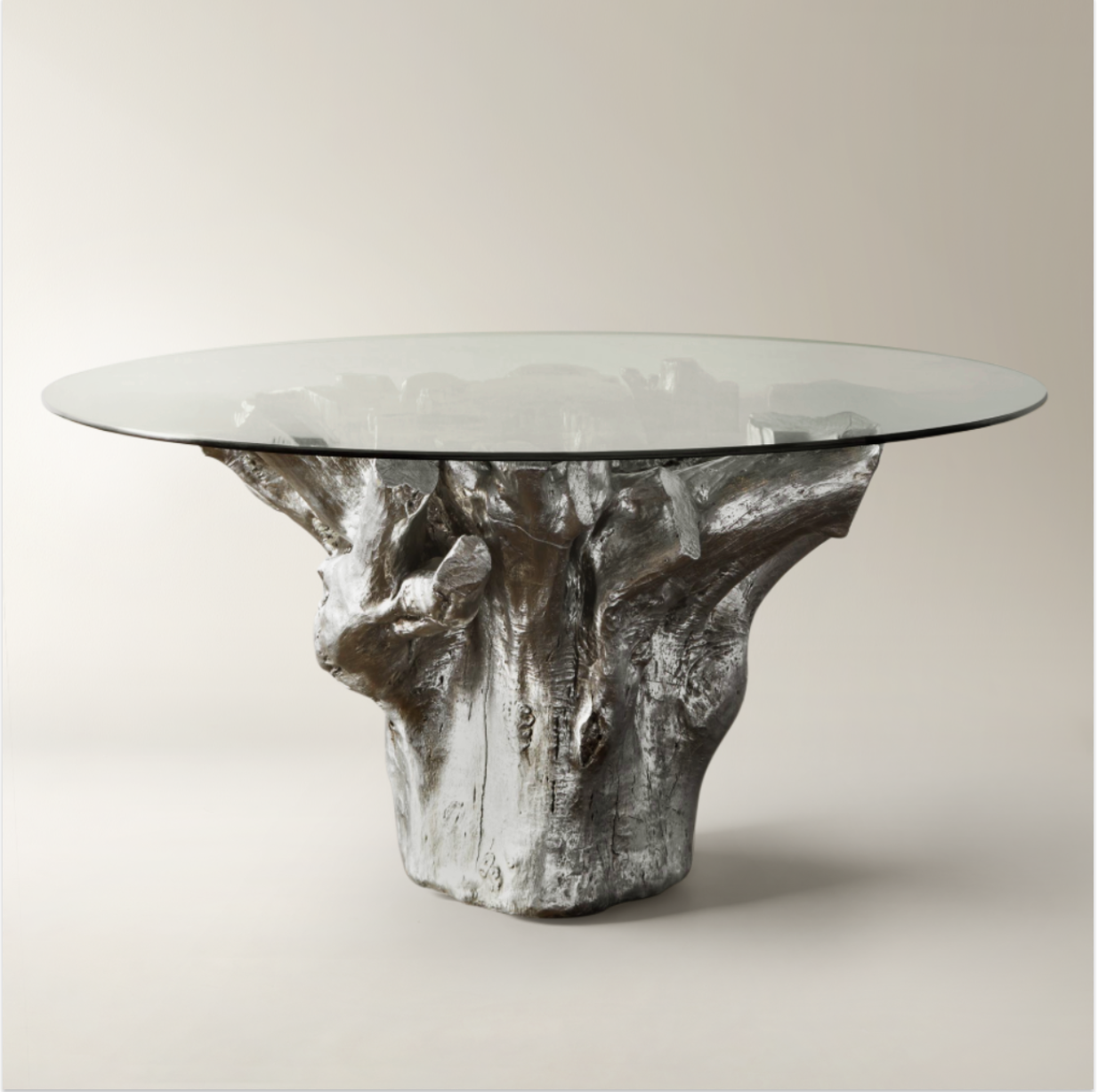 Sequoia Silver Resin Dining Table With Glass Top (60")$2199
A sculptural resin base with hand-applied silver leaf supports a round tempered glass top for modern elegance.
Add To Cart -
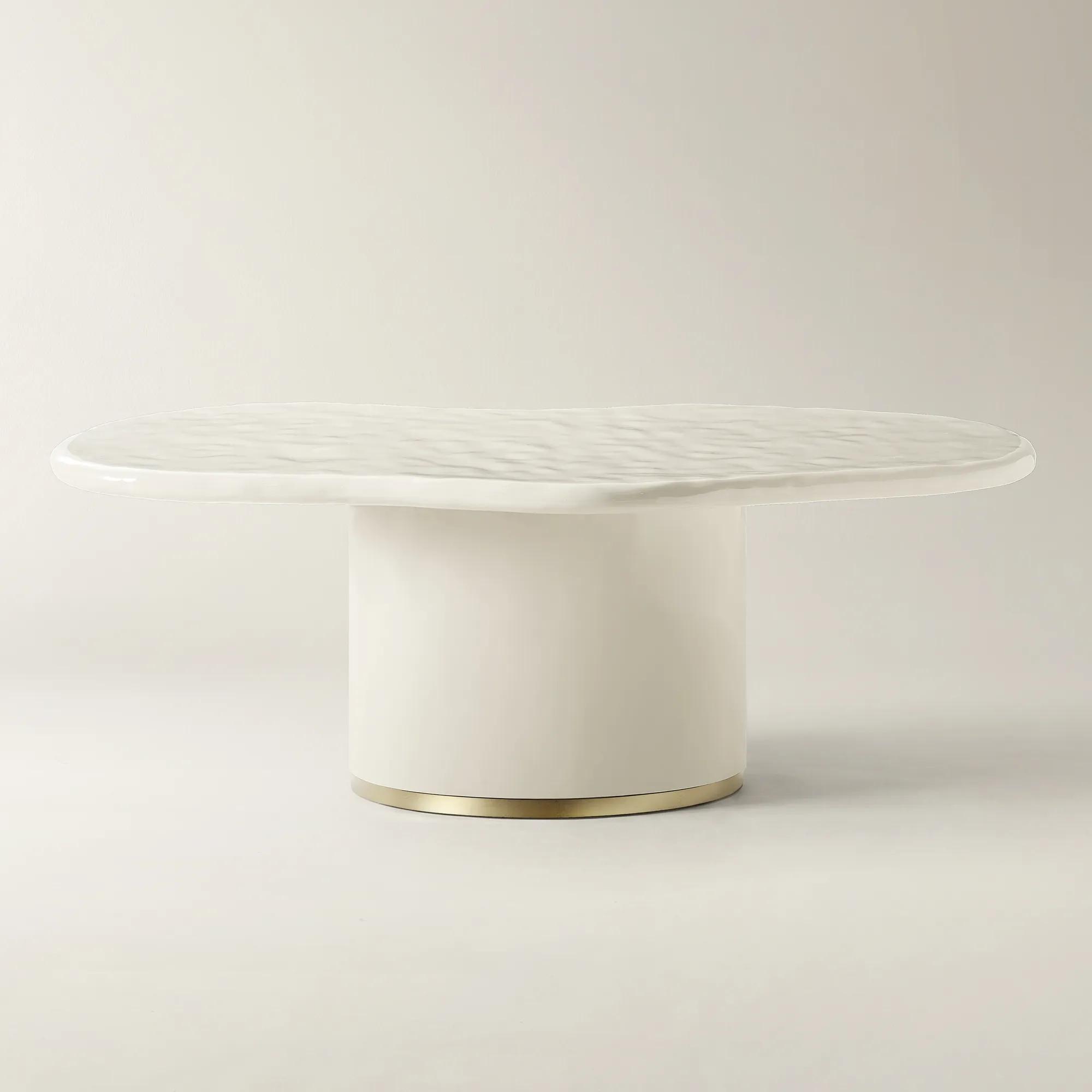 Celia Lacquered Cloud Resin Indoor/Outdoor Dining Table (84")$1999
A sculptural, high-gloss resin dining table with gold stainless steel accents for indoor or covered outdoor use.
Add To Cart -
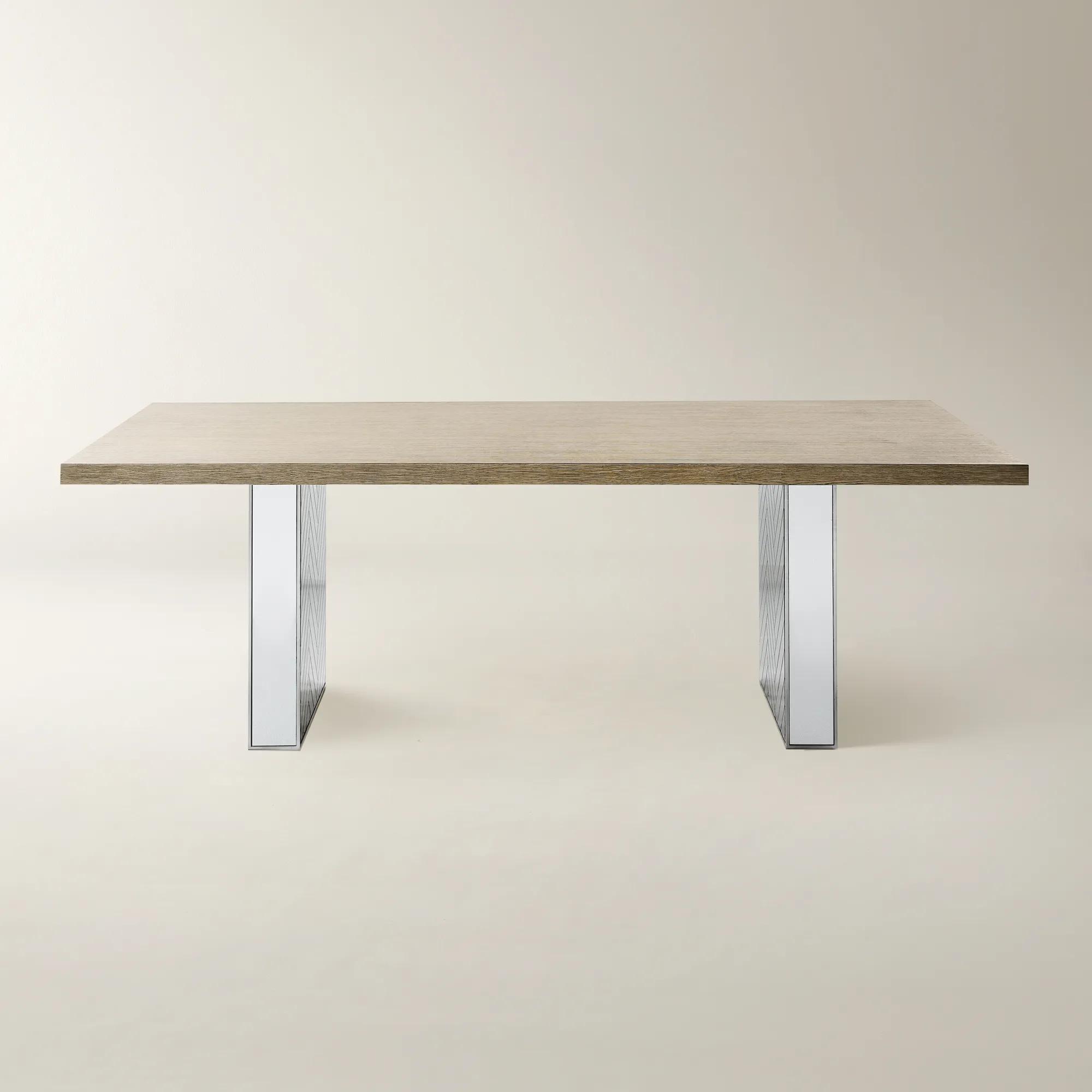
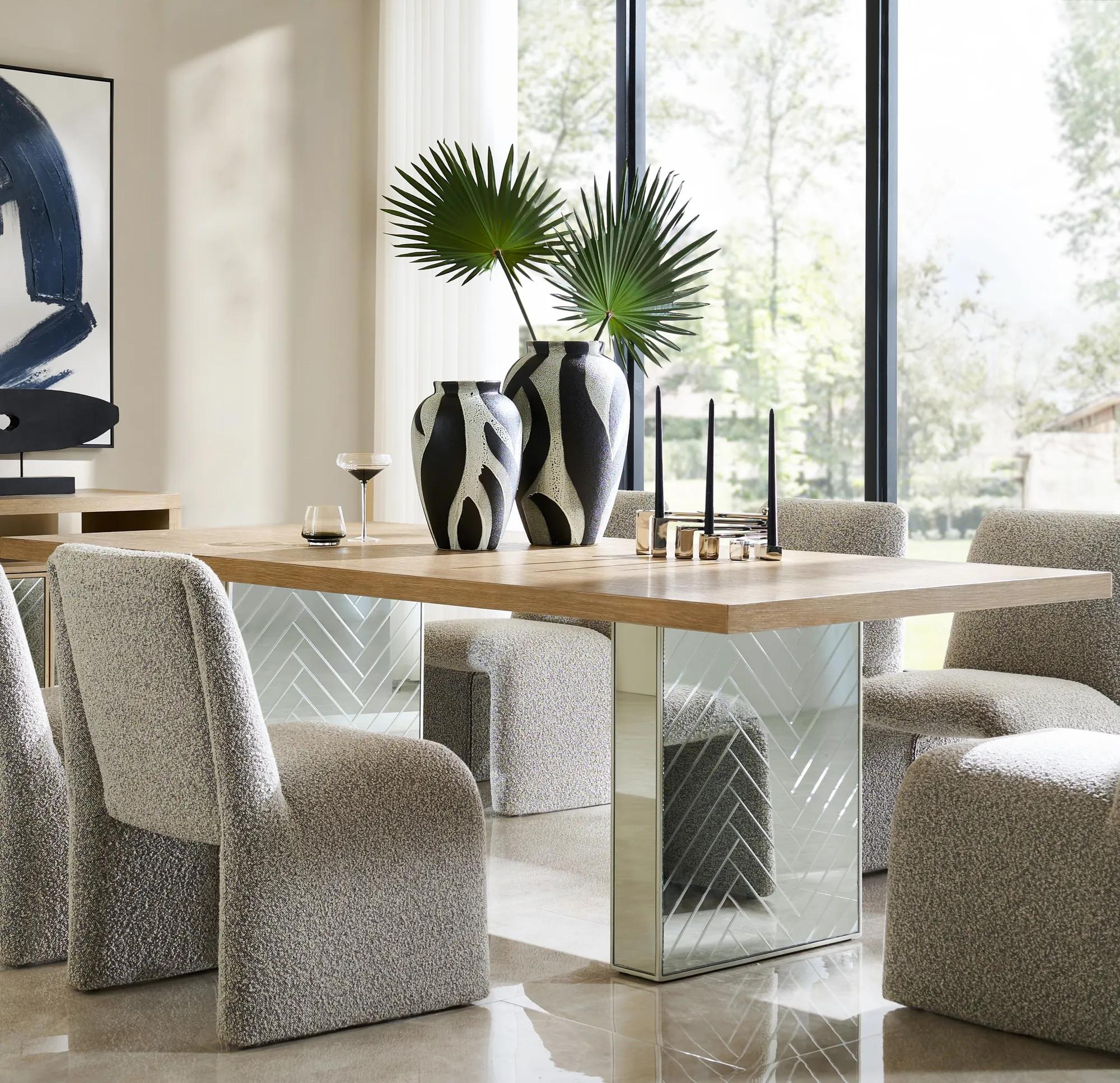 Glimmer Rectangular Seadrift Oak Dining Table With Mirrored Base (90.5")$1799
A modern dining table featuring a warm oak veneer top and a silver mirror-faced parquet base.
Add To Cart -
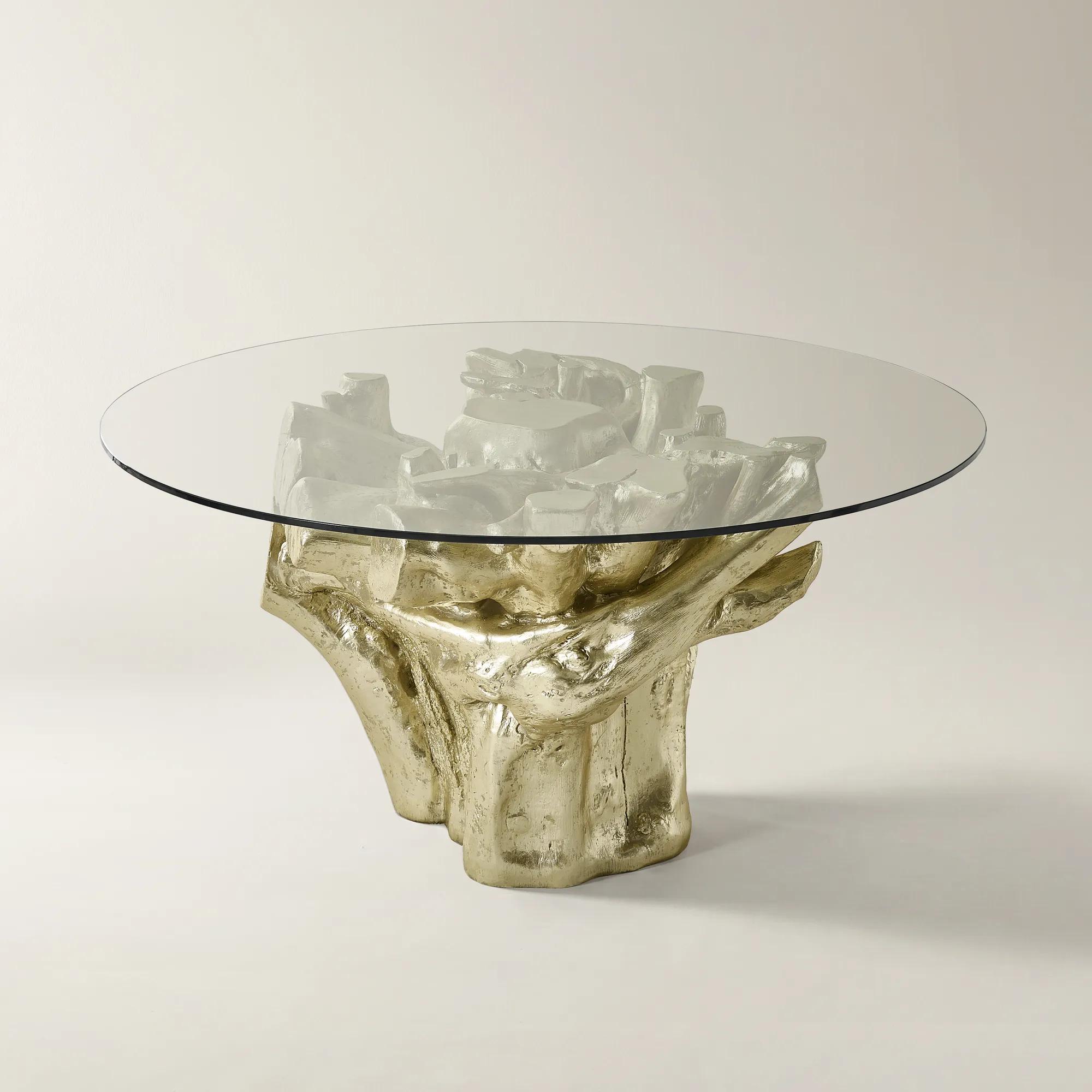 Sequoia Champagne Gold Resin Dining Table With Glass Top (60")$2199
A sculptural resin dining table with a champagne gold leaf base and a clear tempered glass top.
Add To Cart -
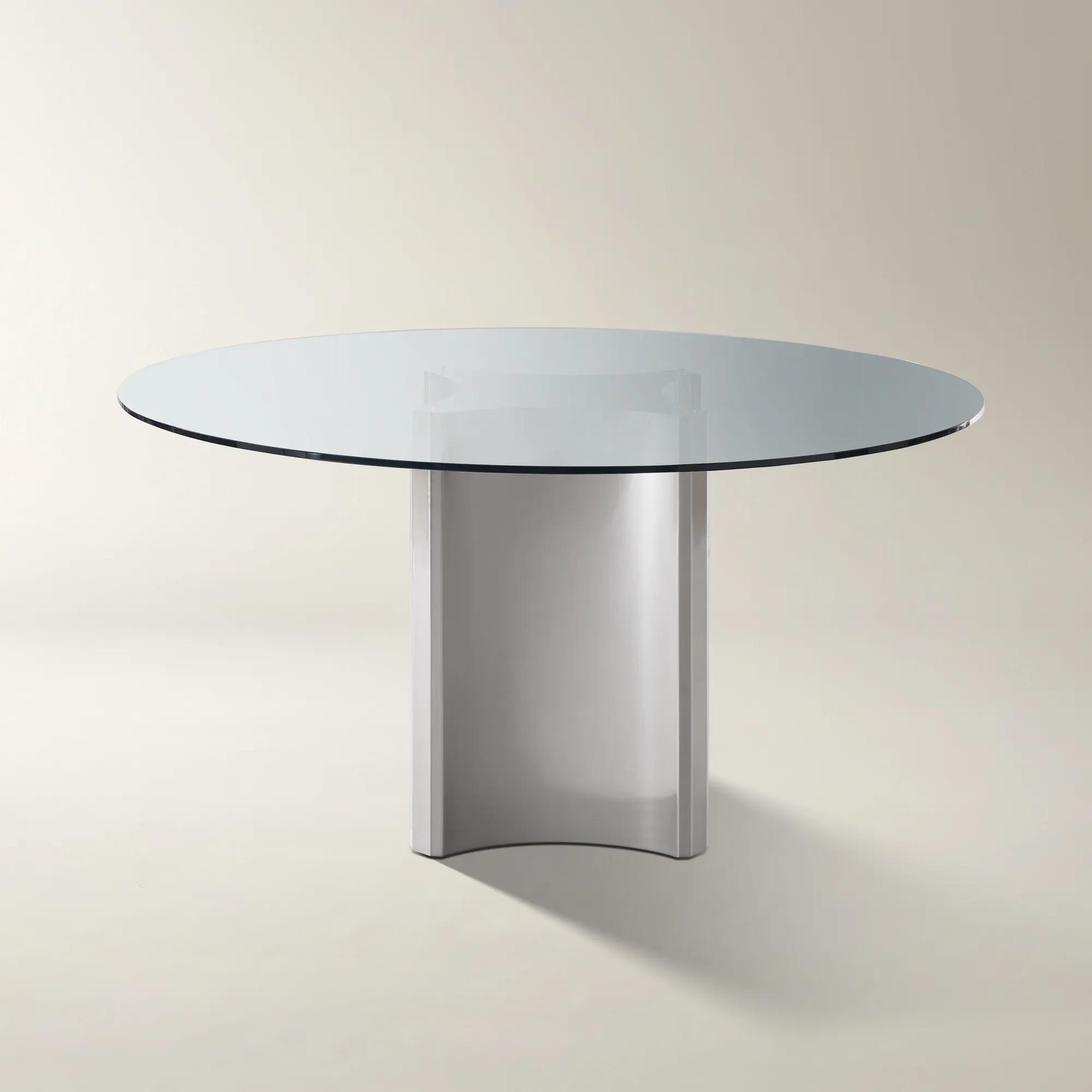 Ventane Round Clear Glass and Stainless steel Dining Table (58")$1499
A modern dining table featuring a clear tempered glass top and polished stainless steel base with anti-fingerprint finish.
Add To Cart -
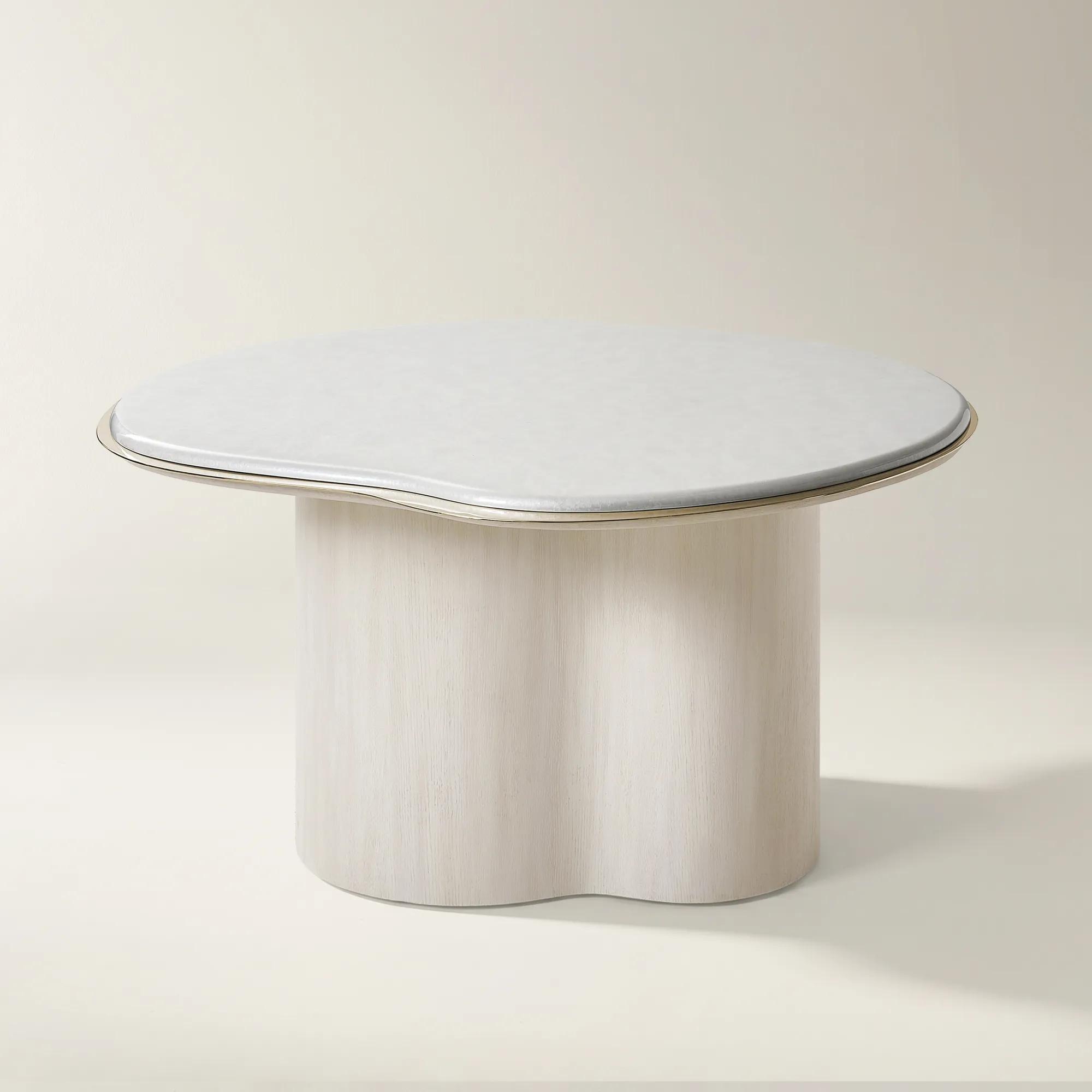 Lumina Bleached Oak Dining Table With Pearl Lacquered Top (58")$2699
A sculptural dining table featuring a pearl lacquered top, bleached oak base, and champagne gold trim.
Add To Cart -
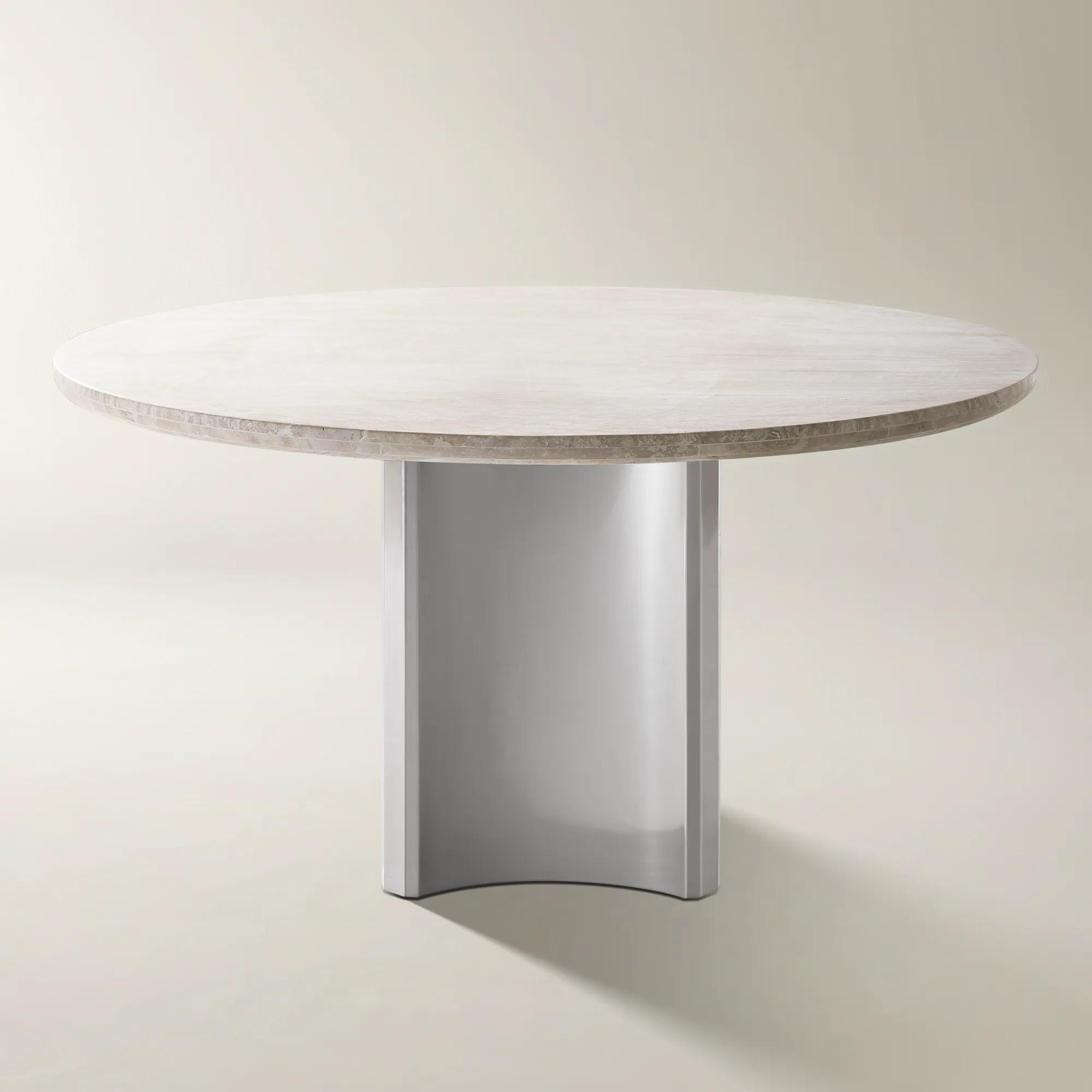 Ventane Round Tan Marble and Stainless steel Dining Table (58")$2999
A round tan travertine marble table with a polished stainless steel base for modern, elegant dining spaces.
Add To Cart -

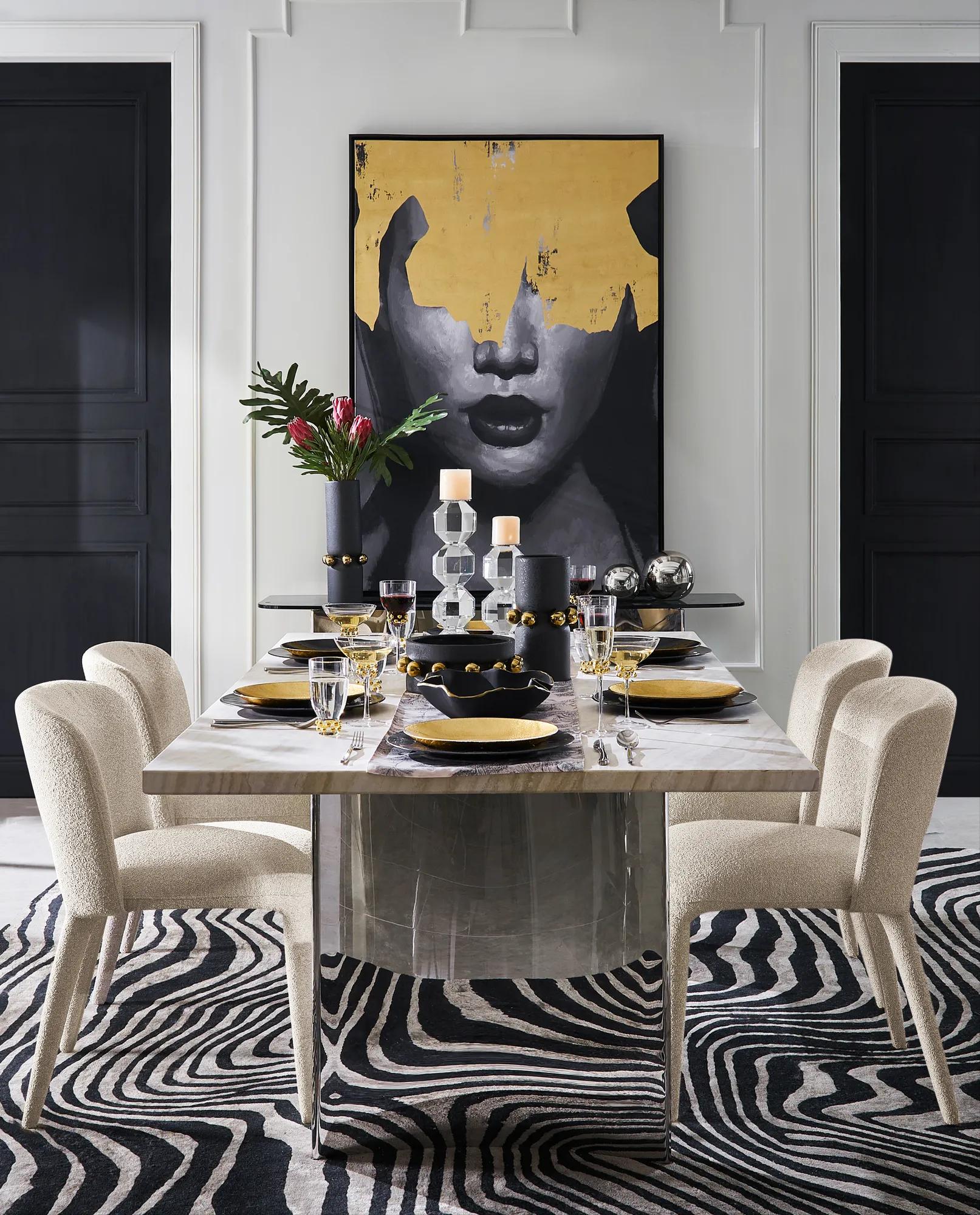 Muscat Rectangular Tan Marble Dining Table With Stainless Steel Base (84")$3099
A sophisticated dining table featuring a tan travertine marble top and polished stainless steel base.
Add To Cart -

 Matera Rectangular White Marble Dining Table With Stainless Steel Base (86.61")$2499
A modern dining table featuring a white marble top and polished stainless steel base for timeless elegance.
Add To Cart -

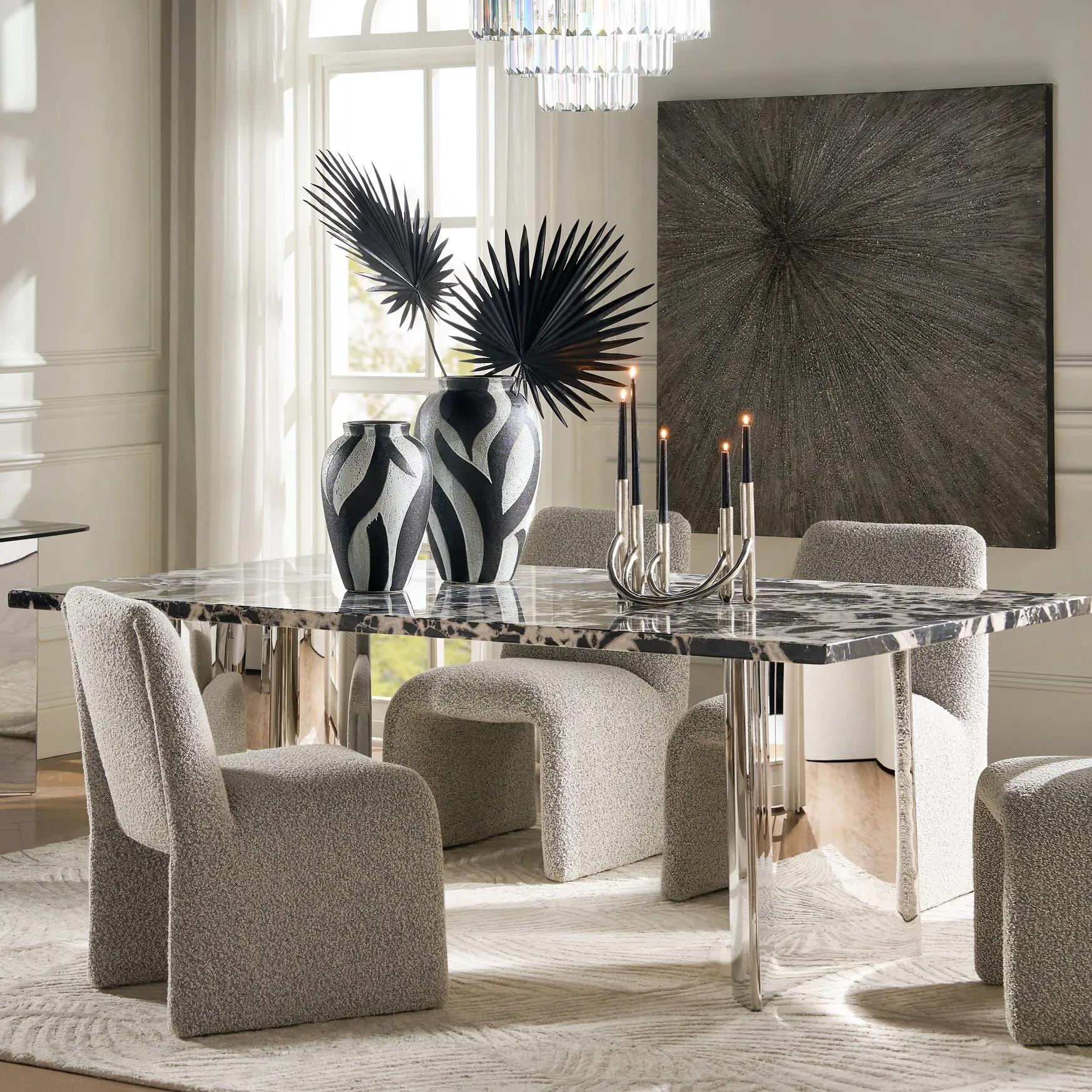 Muscat Rectangular Black Marble Dining Table With Stainless Steel Base (84")$3099
A dramatic black marble dining table with unique veining and a polished stainless steel base.
Add To Cart -
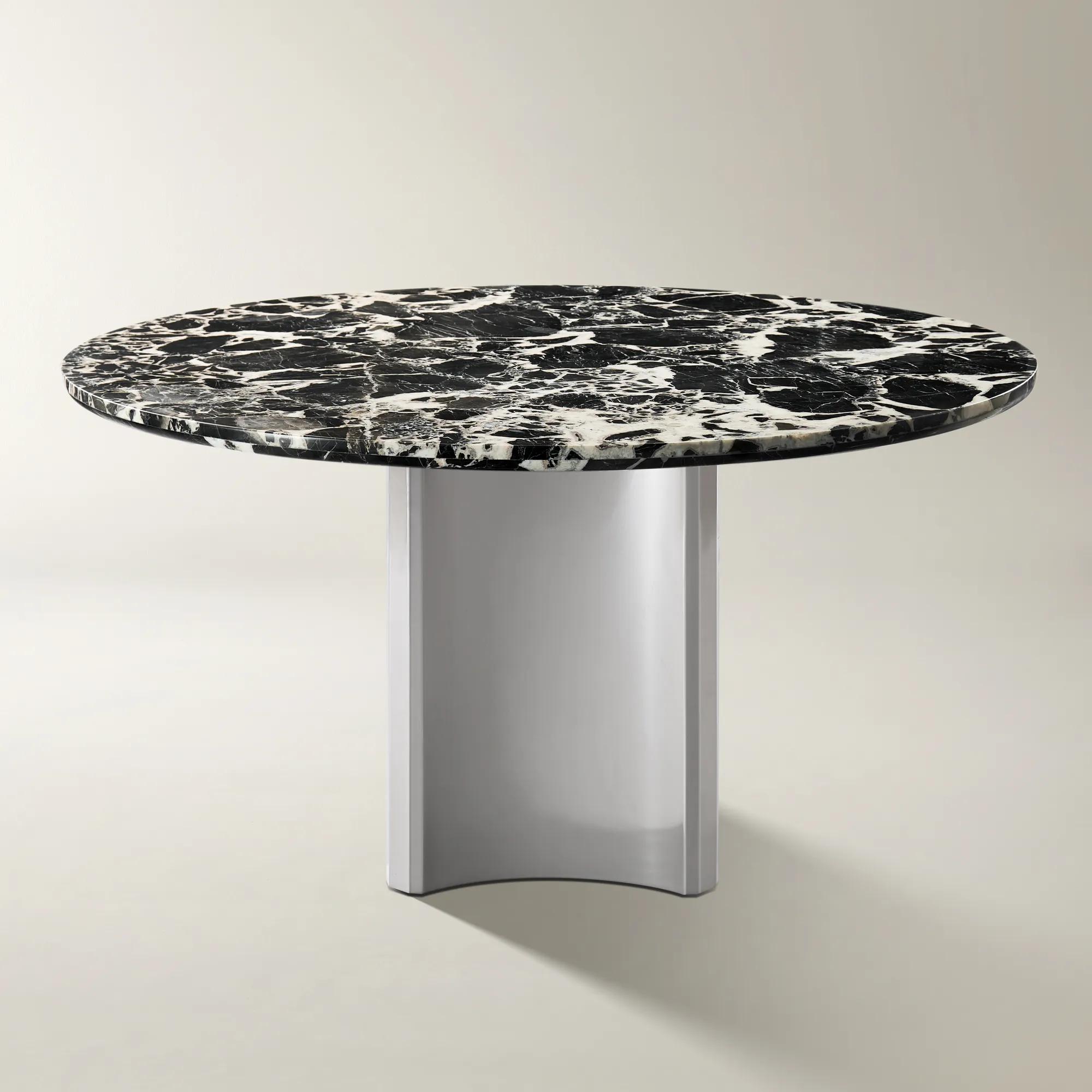
 Ventane Round Black Marble and Stainless steel Dining Table (58")$2999
A dramatic round dining table featuring a natural black marble top and polished stainless steel base.
Add To Cart -
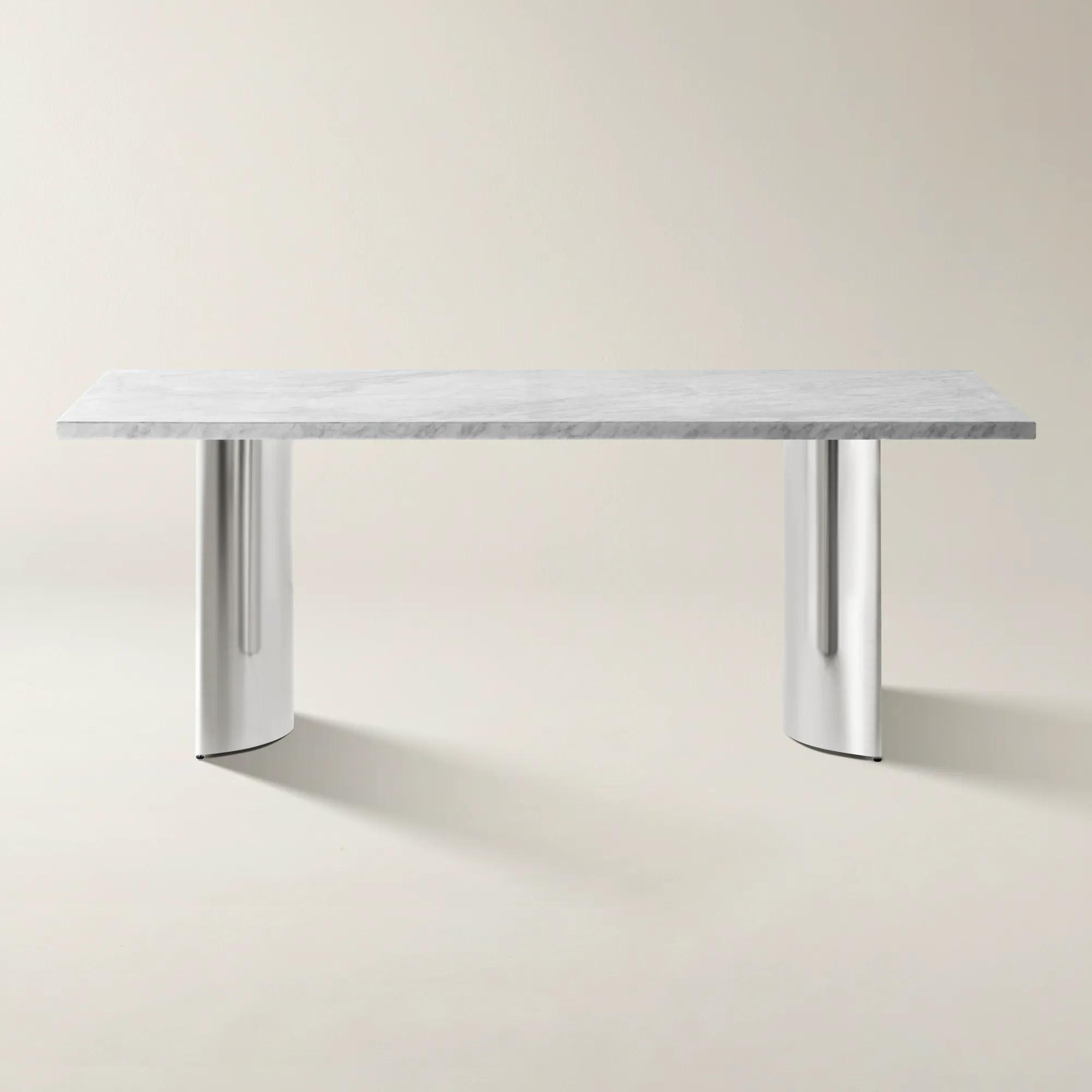 Muscat Rectangular White Marble Dining Table With Stainless Steel Base (84")$3099
A striking dining table featuring a natural white marble top with unique veining and a polished stainless steel base.
Add To Cart -

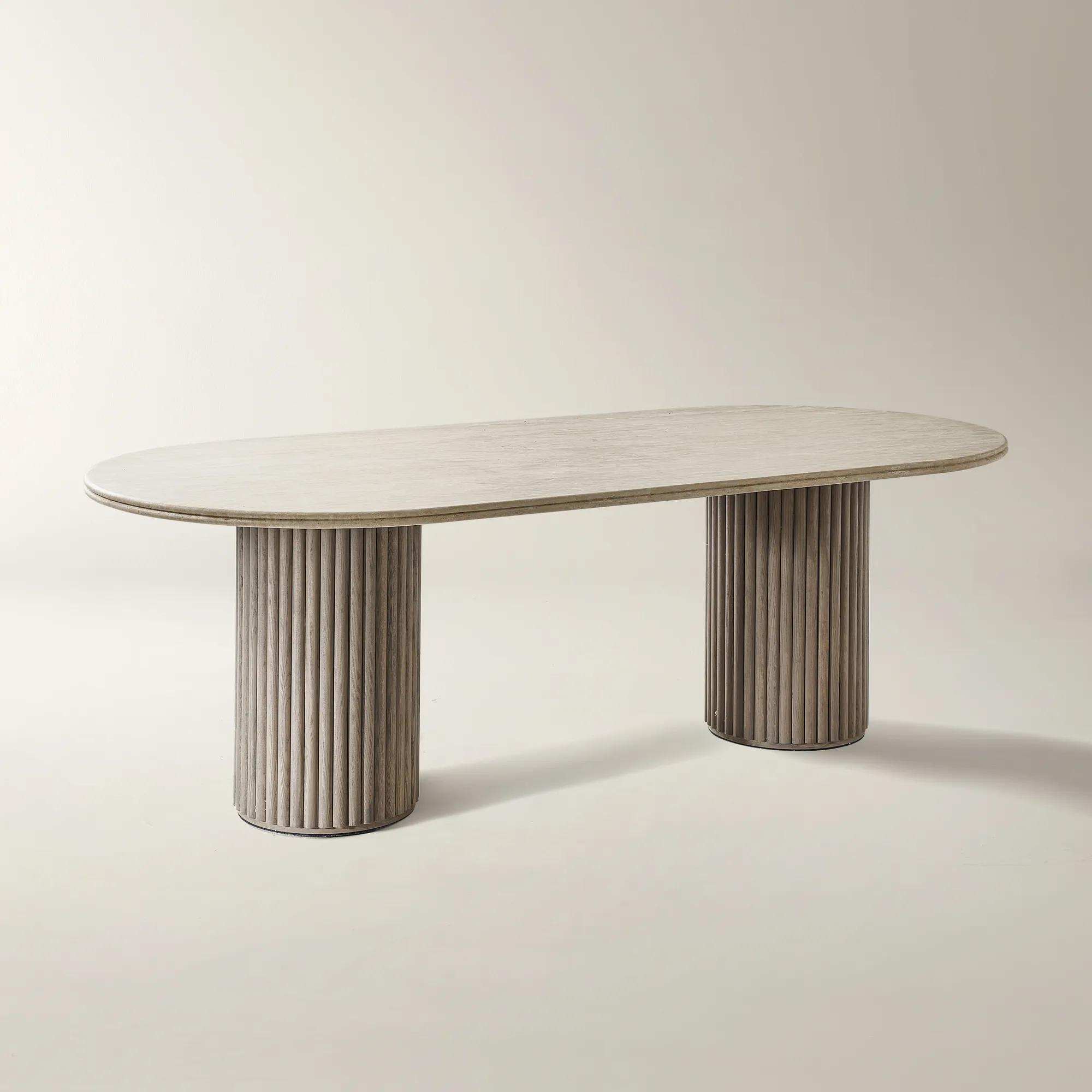 Bond Oval Reeded Travertine and Wood Dining Table (94.25")$4599
A natural travertine stone top pairs with a fluted solid ash base for refined, organic elegance.
Add To Cart

Single Pedestal Dining Tables
Explore single pedestal dining tables for a sculptural centerpiece with a visually open silhouette. Defined by one central support rather than corner legs, this style puts the base in focus. Consider tabletop dimensions, base proportions, and chair clearance to find a statement piece that accommodates your seating needs and leaves room for guests to move comfortably.
Single pedestal dining tables feature one central support instead of four corner legs, creating an open perimeter that can offer more flexible chair placement and greater freedom of movement beneath the tabletop. The amount of usable legroom depends on the pedestal’s shape and footprint, but the effect is unmistakable: a dining surface that appears poised above a sculptural foundation, with seating gathered naturally around it. That balance of presence and openness gives these tables a distinctive place in expressive interiors. A sweeping base can bring movement to a tailored dining room, while a substantial column lends architectural weight beneath a slender top. With fewer supports interrupting the silhouette, the relationship between the tabletop and base becomes the defining detail, whether the mood is polished and glamorous or rich with texture. Round single pedestal dining tables encourage conversation across the entire setting, making them especially appealing for intimate dinners, shared appetizers, and lingering conversation after dessert. Without a designated head of the table, each seat feels equally connected to the gathering. Oval silhouettes extend that sense of flow across a longer surface, while square or rectangular tops introduce a more linear composition when supported by an appropriately engineered central base. Shape alone does not determine seating capacity; tabletop dimensions, chair width, and the room needed for place settings all matter. A generous upholstered chair with sweeping arms requires a different arrangement than a slender, armless dining chair. For a breakfast nook, a pedestal table can create a graceful focal point without the visual repetition of multiple legs. In a dedicated dining room, the same construction can feel decidedly grand, especially when the base has enough sculptural character to stand on its own. The appeal is both practical and expressive: room to gather, a clearer view of the surrounding space, and a centerpiece that gives the entire dining area its point of view.
Materials establish the table’s character as much as its outline. Wood brings depth and warmth through grain, tone, and finish, creating a tactile counterpoint to gleaming lighting or mirrored accents. Solid wood can develop character with use, though it may also respond to changes in indoor humidity; wood veneer over a suitable substrate offers the beauty of a real wood surface with a different construction beneath it. Neither description alone determines quality or durability, which also depend on joinery, finish, and the strength of the connection between the top and pedestal. Glass offers another visual language, allowing a distinctive base to remain visible and giving upholstered dining chairs a stronger presence in the composition. Its transparency can make a compact dining area feel less visually crowded, although fingerprints and surface marks tend to be more apparent. Tempered glass, where specified, has different safety characteristics from ordinary glass, but edges still deserve protection from impacts. Natural stone introduces veining and tonal variation that make the surface feel almost like a piece of abstract art. Marble and other calcareous stones can etch when exposed to acidic foods or drinks, and sealing, when recommended, does not make them immune to staining or damage. Engineered stone and ceramic surfaces have their own performance characteristics, so care should follow the requirements of the particular material rather than assumptions based on appearance. Metal pedestals can contribute a luminous accent or a quieter, satin-finished foundation; their protective coatings also influence how they should be cleaned. Across materials, coasters, placemats, and trivets help protect the finish without diminishing the beauty of the setting. A soft cloth and a manufacturer-approved cleaning method are better companions to a considered dining space than abrasive pads or harsh chemicals. Prompt attention to spills is particularly important around seams and porous surfaces. These details make care part of preserving the table’s original character, from the clarity of a glass top to the depth of a richly finished wood surface.
The most satisfying single pedestal dining table feels generous in use and composed within the room. Allowing approximately 24 inches of tabletop width per diner is a useful starting point, with additional space often needed for broad chairs, elaborate place settings, or shared serving dishes. Around the table, roughly 36 inches between the tabletop edge and a wall or other obstruction generally allows chairs to pull out; a route used regularly for walking may benefit from 42 to 48 inches or more. These are planning references rather than guarantees of fit, particularly where a sideboard, doorway, or deep upholstered chair changes the available space. The pedestal deserves the same attention as the top: a wide foot may extend into the area where chair legs or diners’ feet would otherwise rest, and a flared support may affect how closely seating can tuck in. For banquettes, checking the relationship between the seat, table edge, and base helps preserve comfortable access. Stability depends on the table’s complete design, including base weight, tabletop size, assembly, and placement on a level surface; a substantial appearance alone is not proof of strength. Following assembly instructions and avoiding sitting or standing on the tabletop help protect both the furniture and its users. Within an open living and dining area, a single central support can also create a welcome visual pause among sofas, cabinetry, and accent furniture. For spaces shaped by clean lines and expressive finishes, Contemporary Pedestal Dining Tables offer a related design direction to explore. Styling can then build on the table’s strongest feature: low ceramics that echo a rounded top, a luminous bowl above a dark pedestal, or textured upholstery against polished metal. Centerpieces kept below seated eye level preserve conversation, while overhead lighting draws attention to the surface without competing with the base. From everyday meals to a carefully composed dinner party, the right proportions allow the table to feel equally inviting and dramatic—a place to gather that gives the room lasting distinction.
FAQs
A single pedestal dining table features one central base rather than separate legs at the corners. That distinctive structure gives the table a sculptural presence, turning its foundation into part of the design statement. It creates a striking focal point for a dining room with an expressive point of view.
Single pedestal dining tables suit modern, glamorous, and art-inspired interiors. Emphasize their sculptural character with expressive artwork and dramatic lighting, or create a more restrained composition with tonal layers and clean-lined accents. Let the base’s contours guide the room’s visual rhythm.
Look for dining chairs that echo or deliberately contrast the pedestal’s silhouette. Curved chair backs can carry a flowing design throughout the room, while angular profiles introduce a crisp counterpoint. For a collected look, choose chairs that share a visual detail with the table without matching every element.
Treat the tabletop as a canvas for a considered composition. A sculptural vessel, expressive floral arrangement, or artful grouping of decorative objects can establish the mood. Leave portions of the surface unadorned so the table’s outline remains part of the scene, then introduce layered place settings when entertaining.
Choose lighting that creates a visual dialogue with the table’s base. A chandelier with fluid curves can echo a rounded pedestal, while an angular pendant offers deliberate contrast. Connect the two through a shared design motif for a dining space that feels composed, expressive, and rich with detail.