Seating Ideas For Dinner Parties
Seating Ideas For Dinner Parties
-
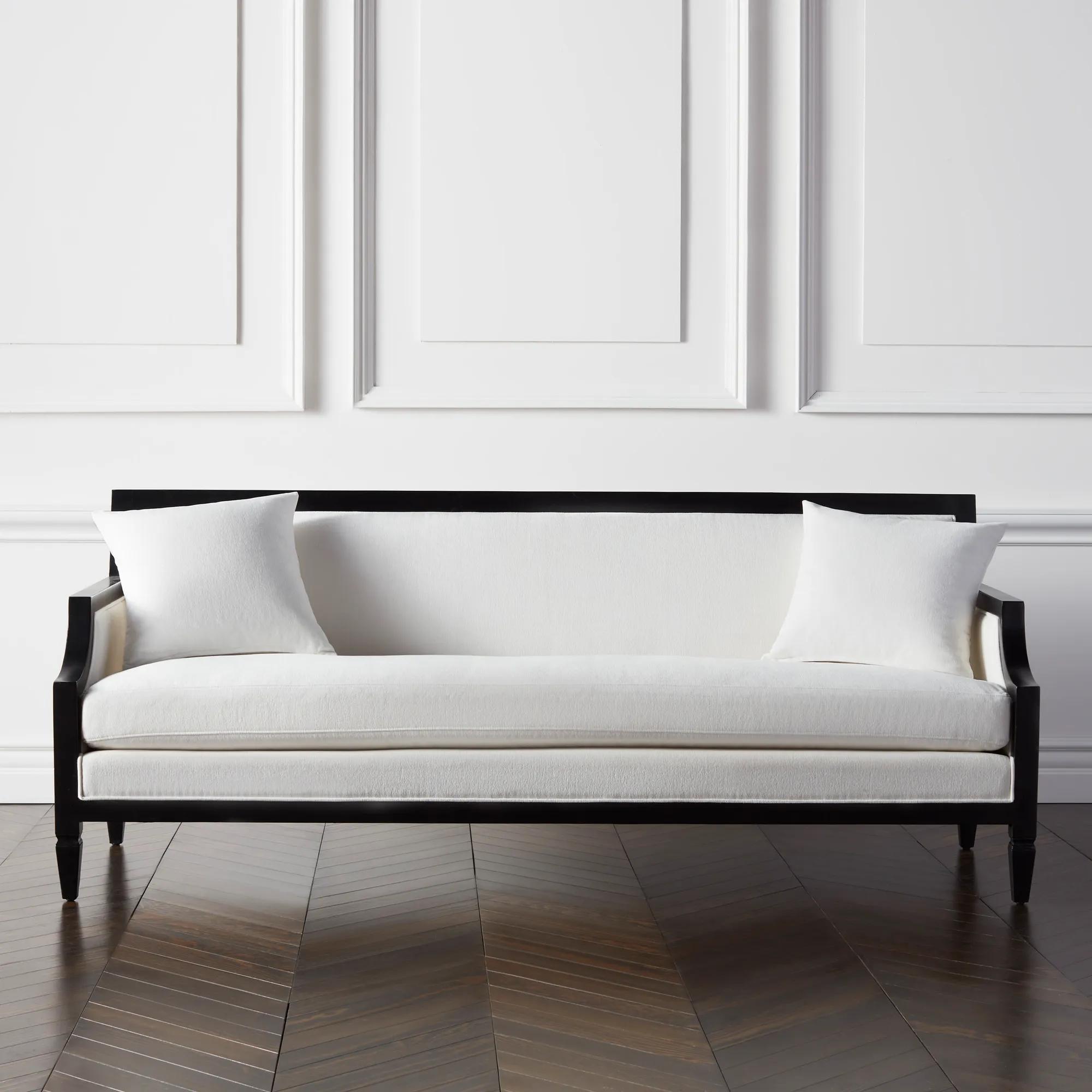
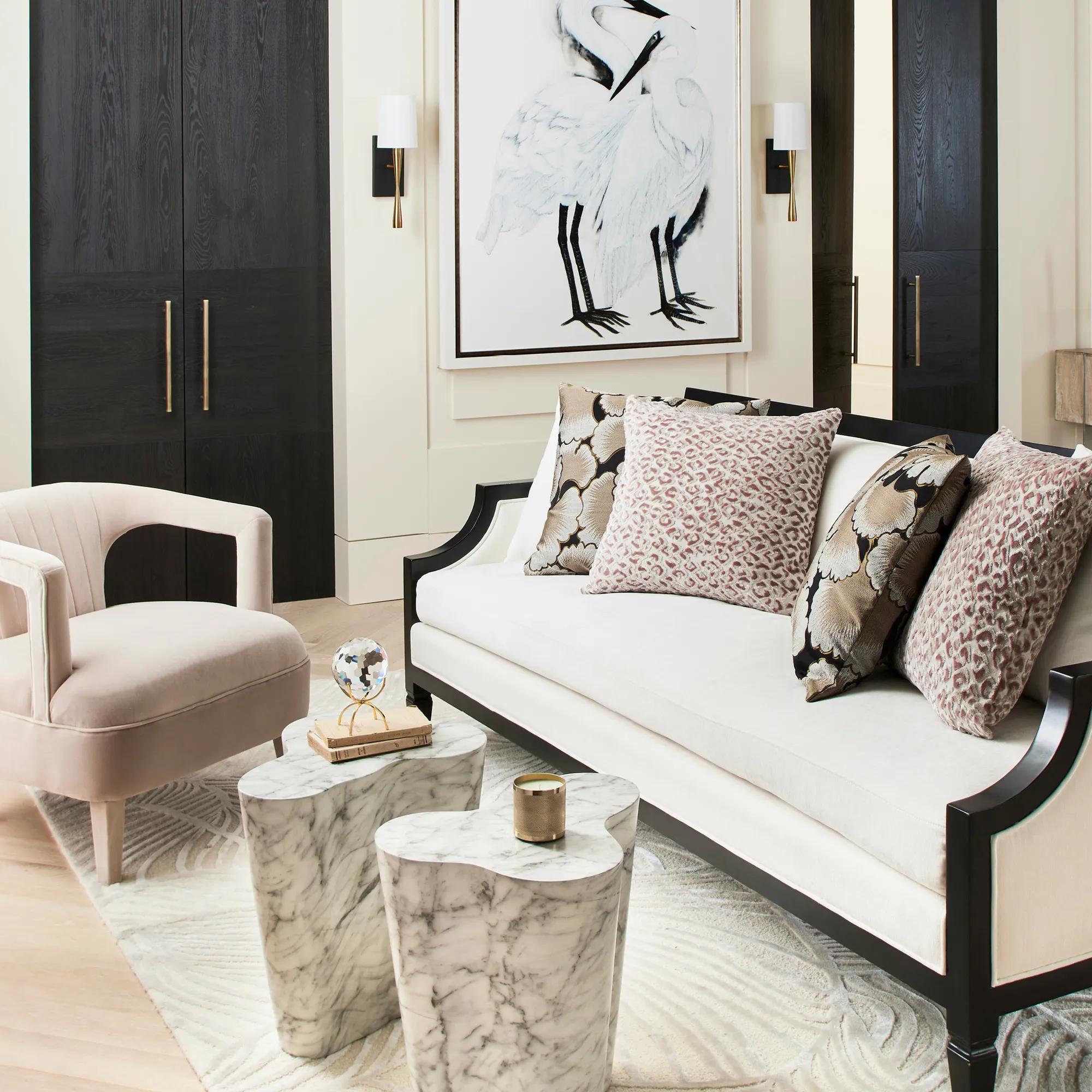 Kayla Sofa$2249
A plush, modern sofa featuring notched arms, matte black wood frame, and soft Kenley Chenille Snow upholstery.
Add To Cart -
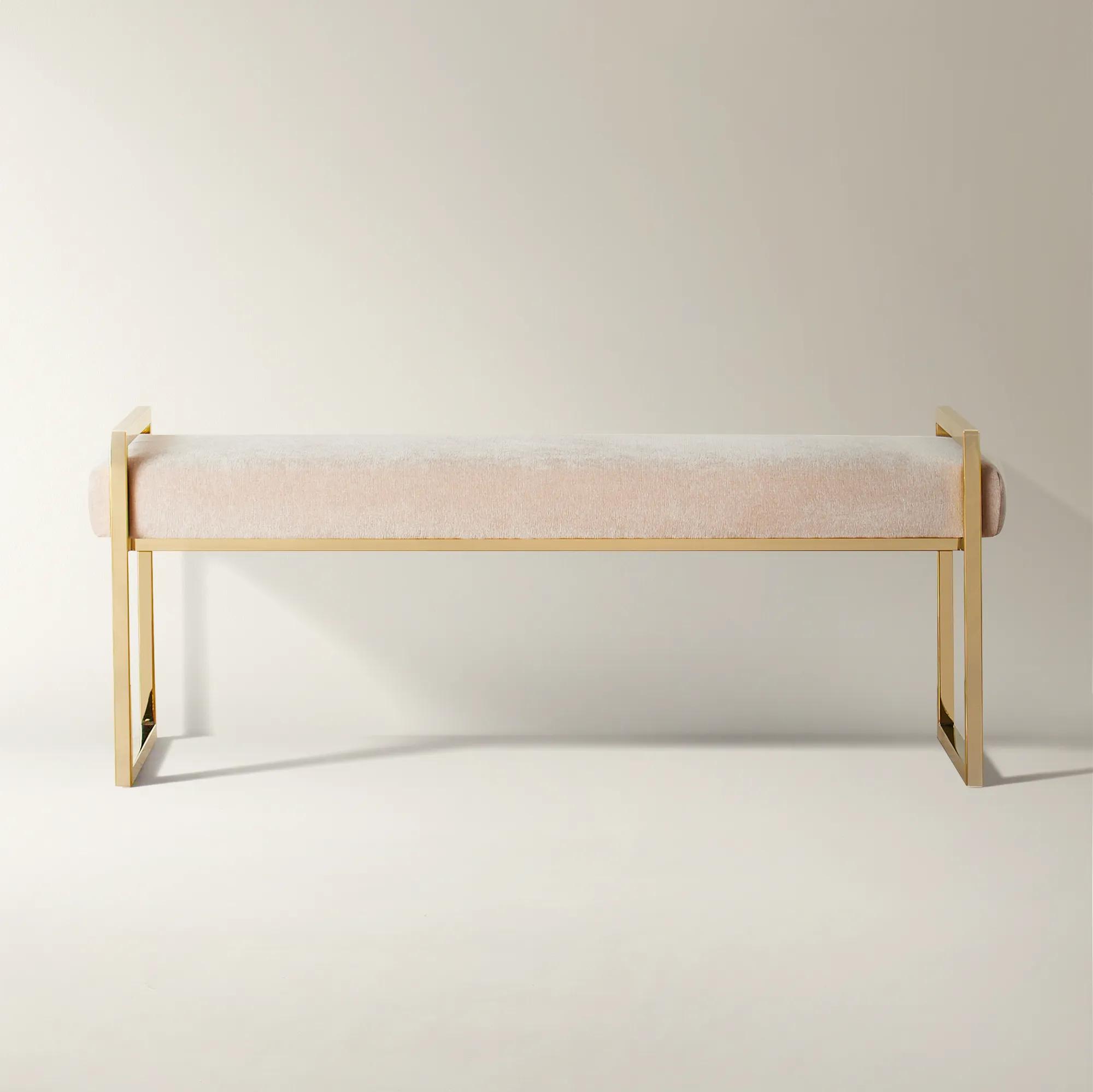 Clara Bench$699
A chic bench featuring a plush chenille seat and polished gold metal legs for modern elegance.
Add To Cart -
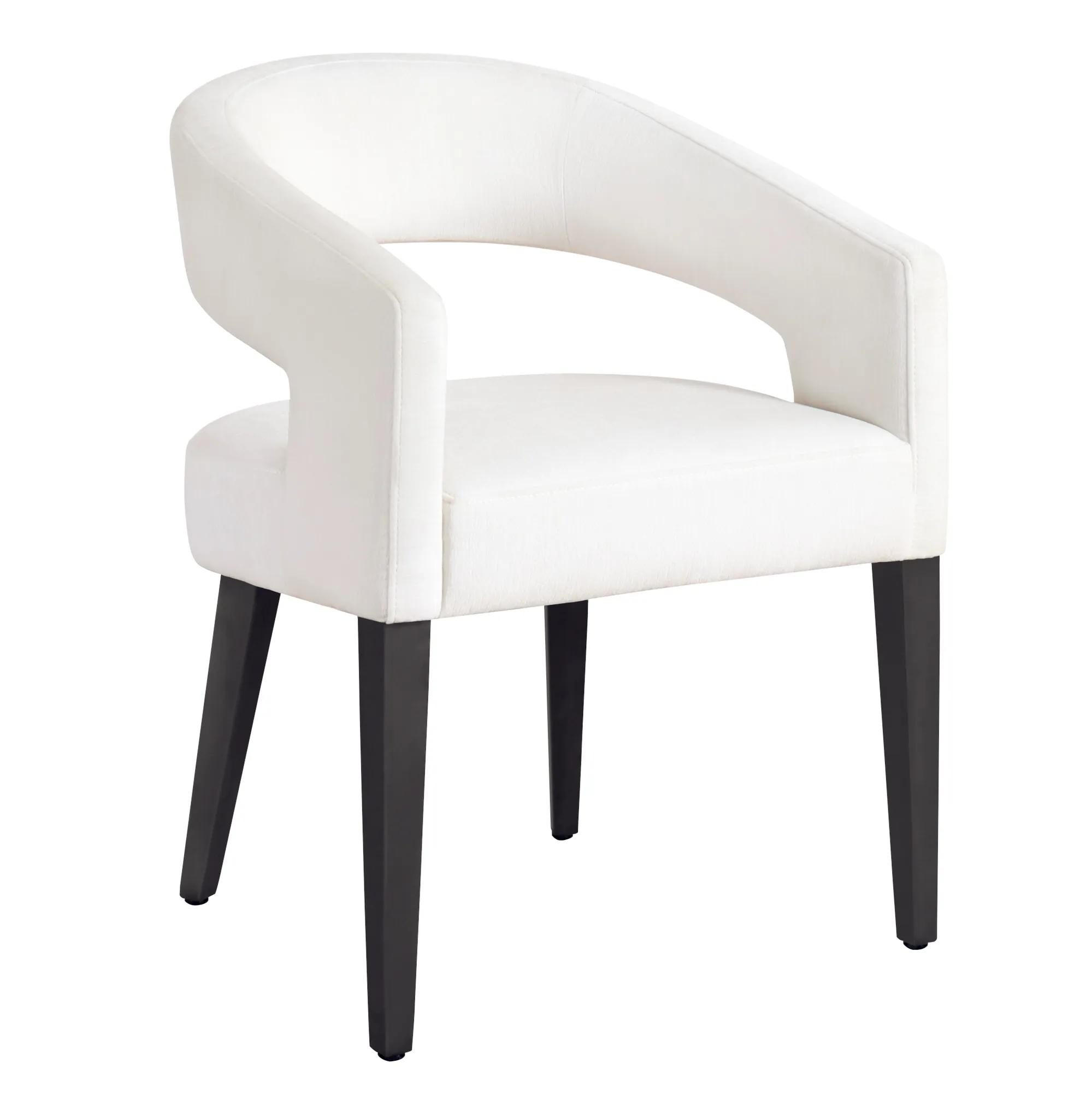
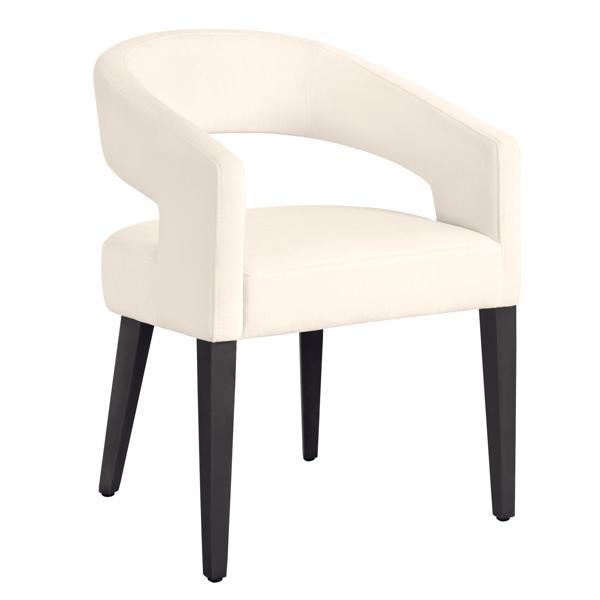 Philippa Dining Chair - Espresso$699
A modern dining chair featuring a curved silhouette, espresso legs, and neatly tailored chenille upholstery.
Add To Cart -
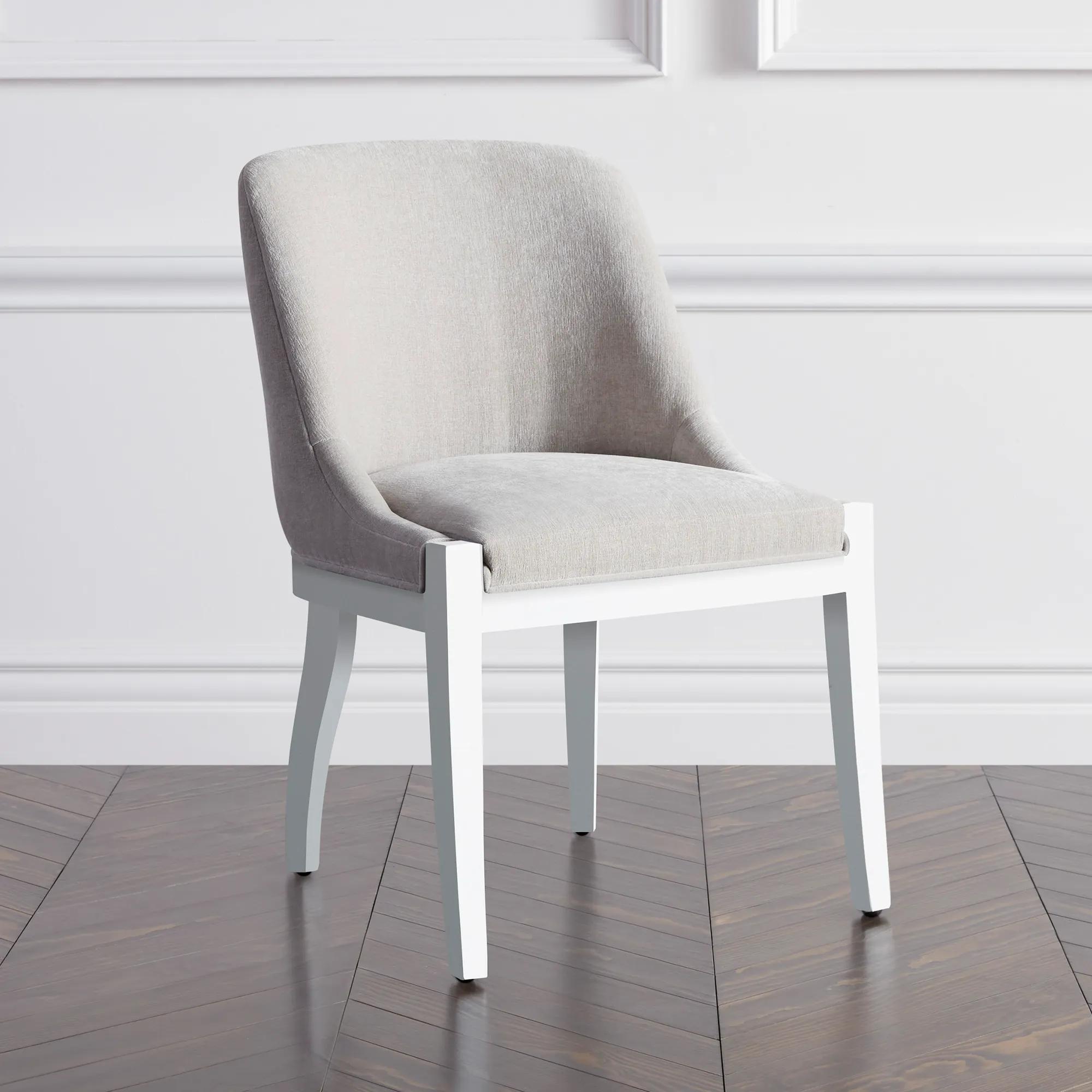
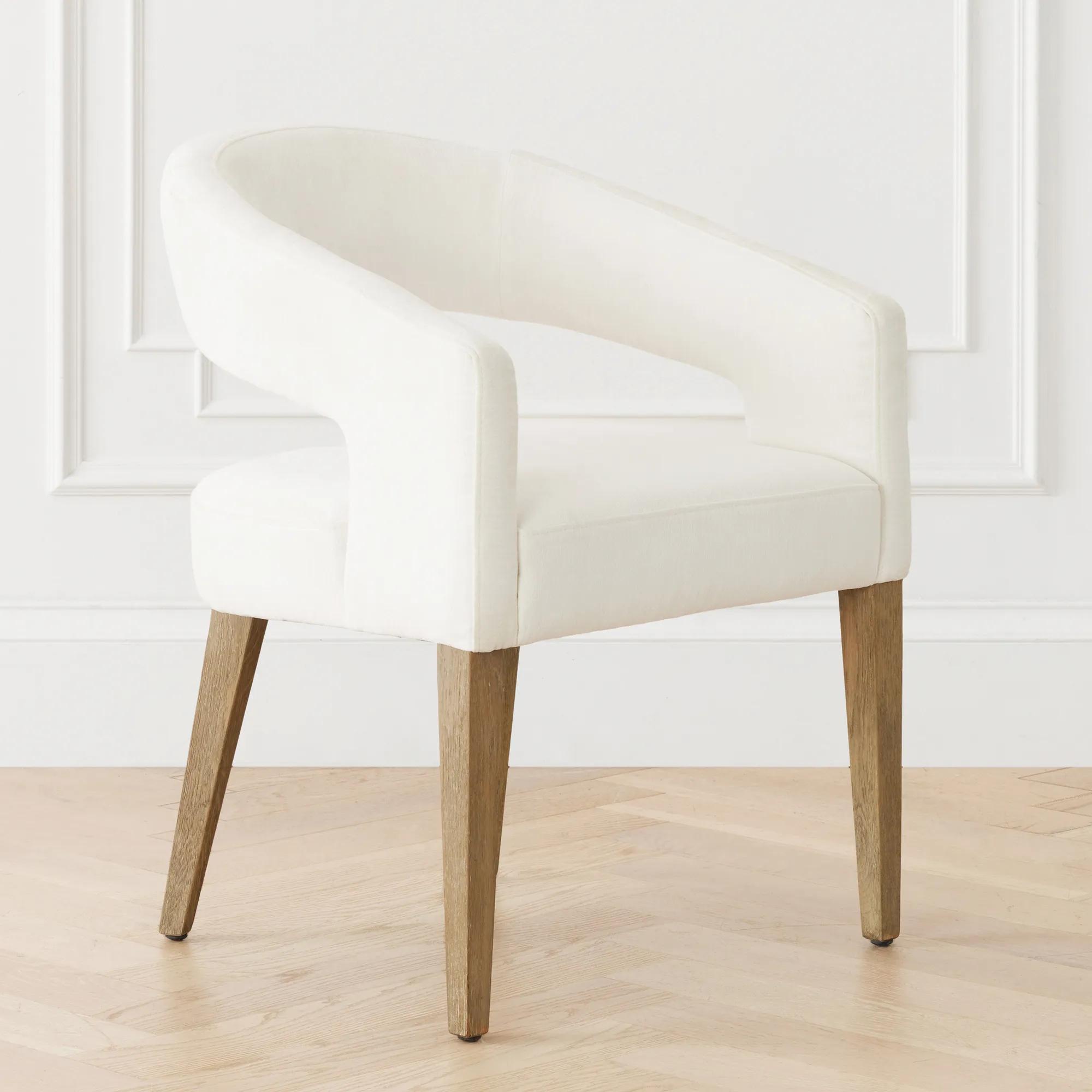 Philippa Dining Chair - Natural Grey$749
A modern dining chair featuring a curved silhouette, grey upholstery, and a kiln-dried hardwood frame.
Add To Cart -
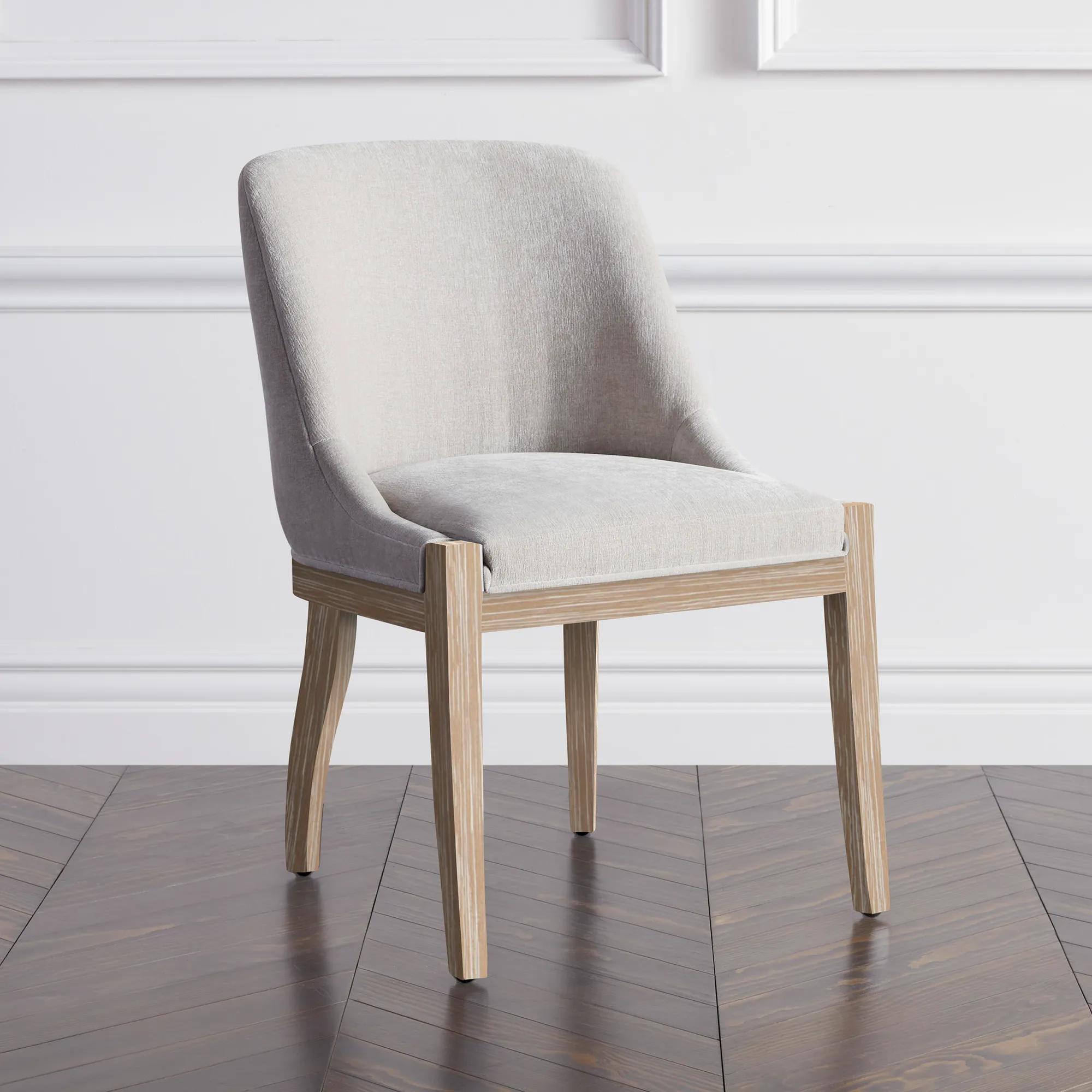
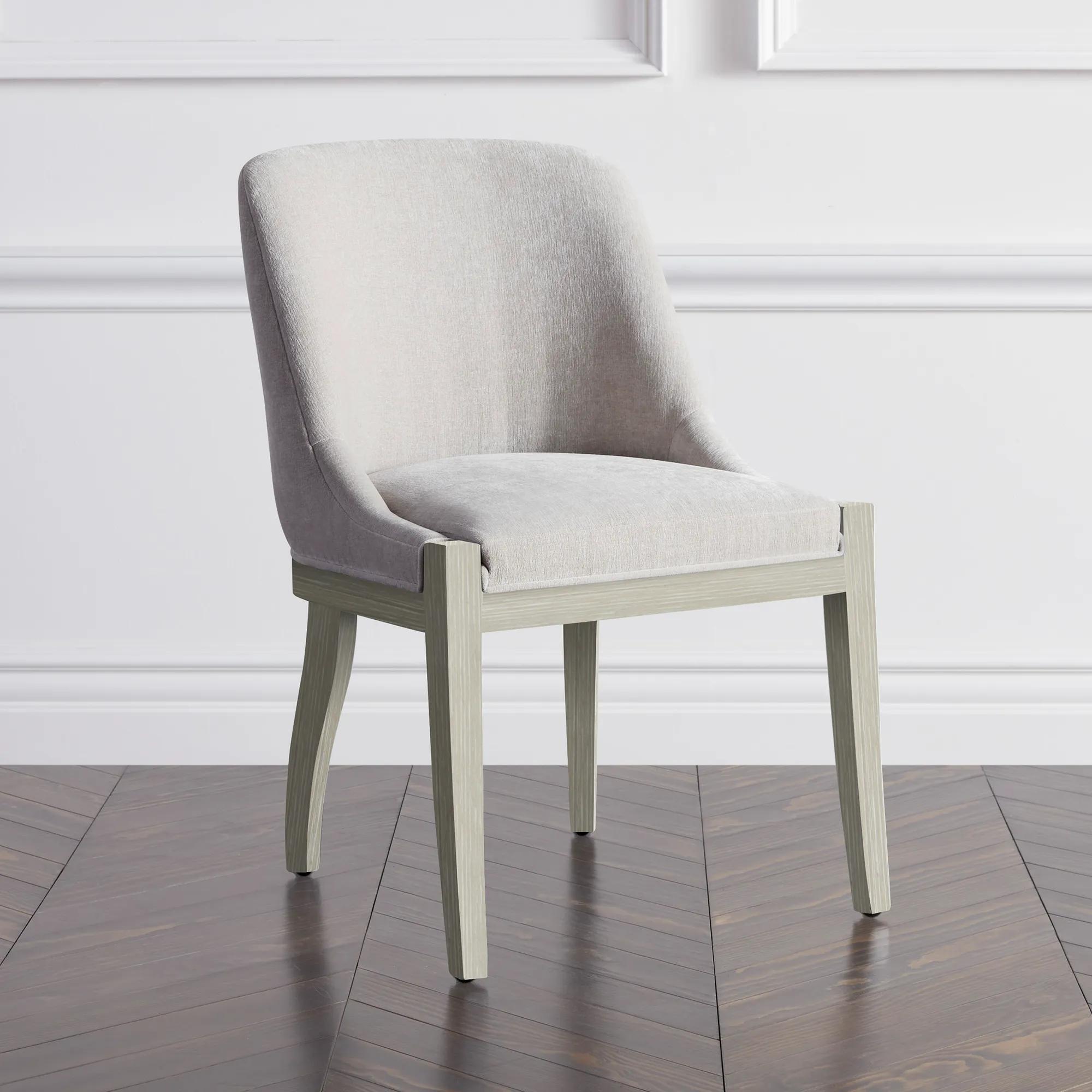
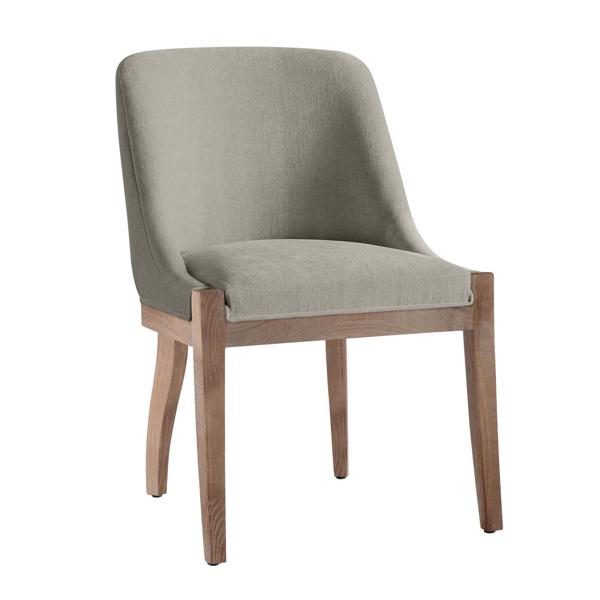 Lily Dining Chair - Wash Oak$649
A modern dining chair featuring a kiln-dried hardwood frame, wash oak legs, and tailored chenille upholstery.
Add To Cart -
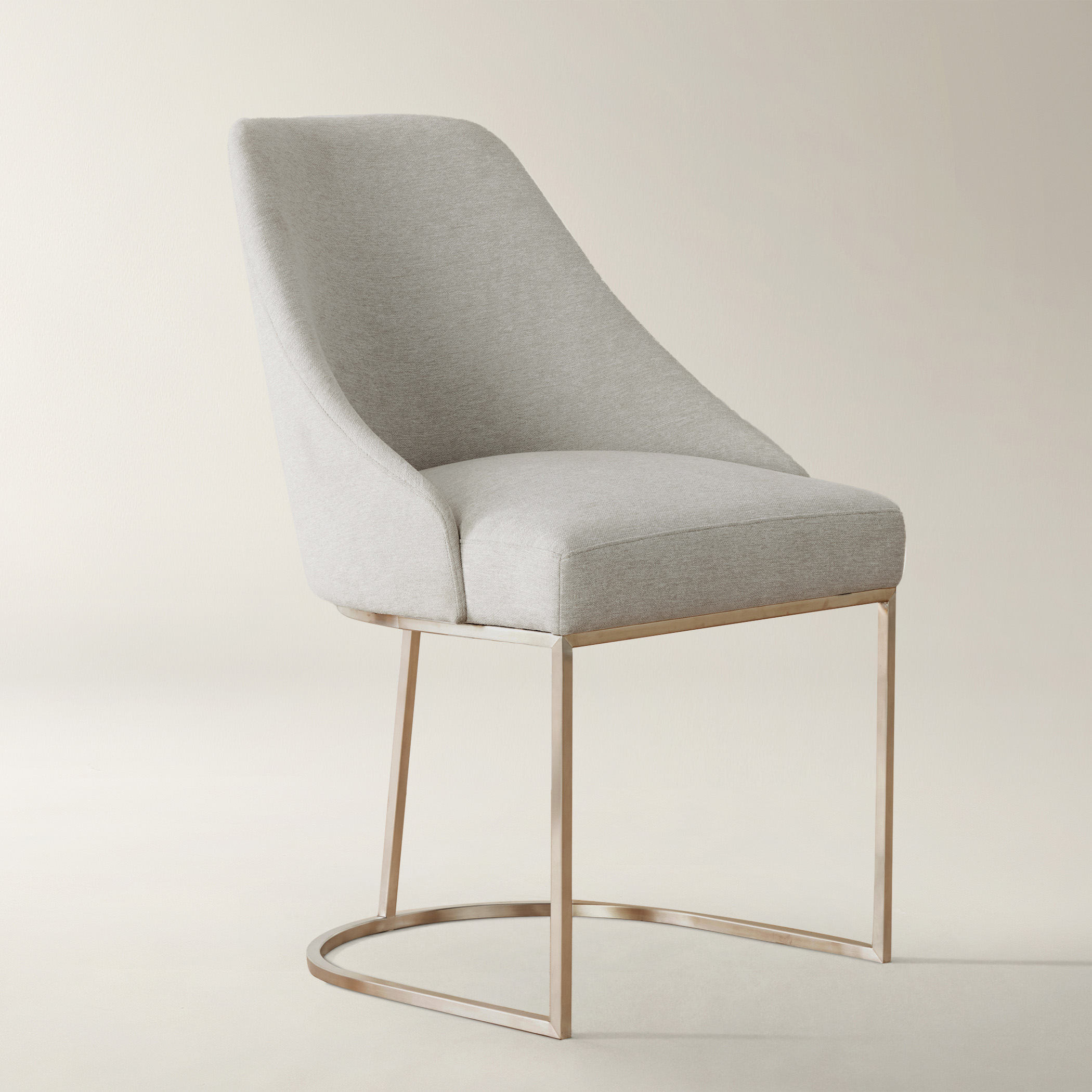
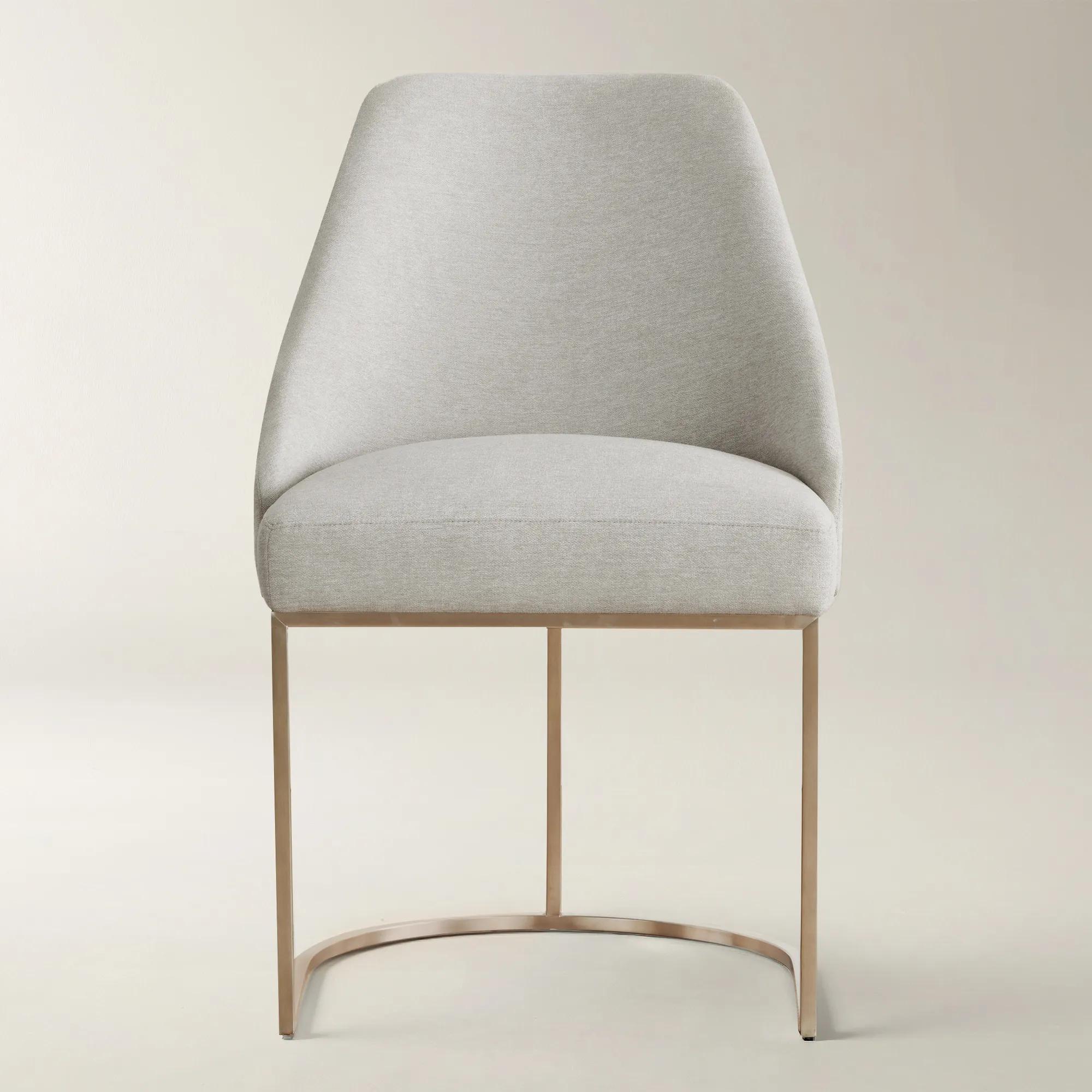 Rowan Ivory Fabric Dining Chair$599
A modern chair featuring brushed stainless steel legs and stain-resistant, water-repellent Roxboro Frost fabric.
Add To Cart -
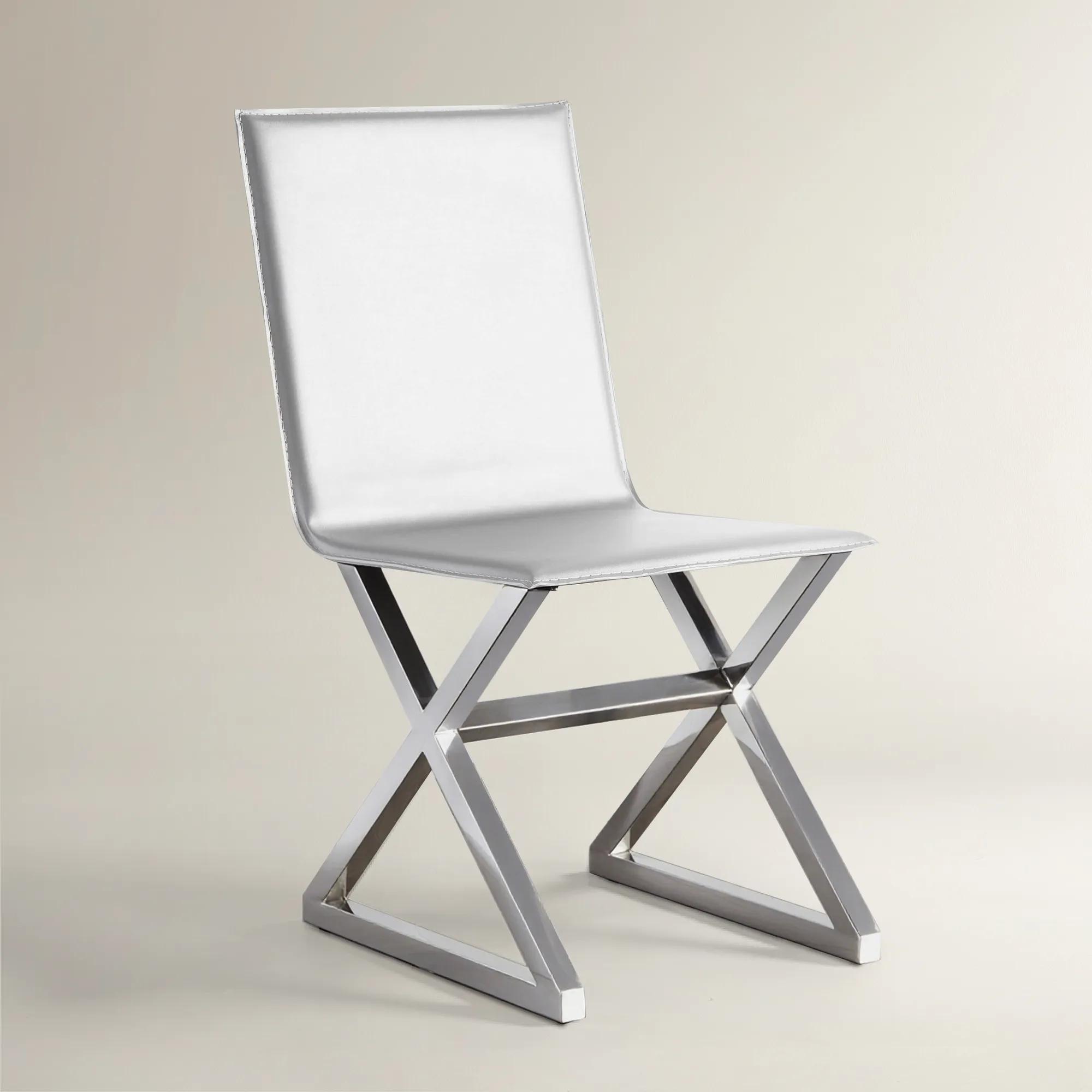
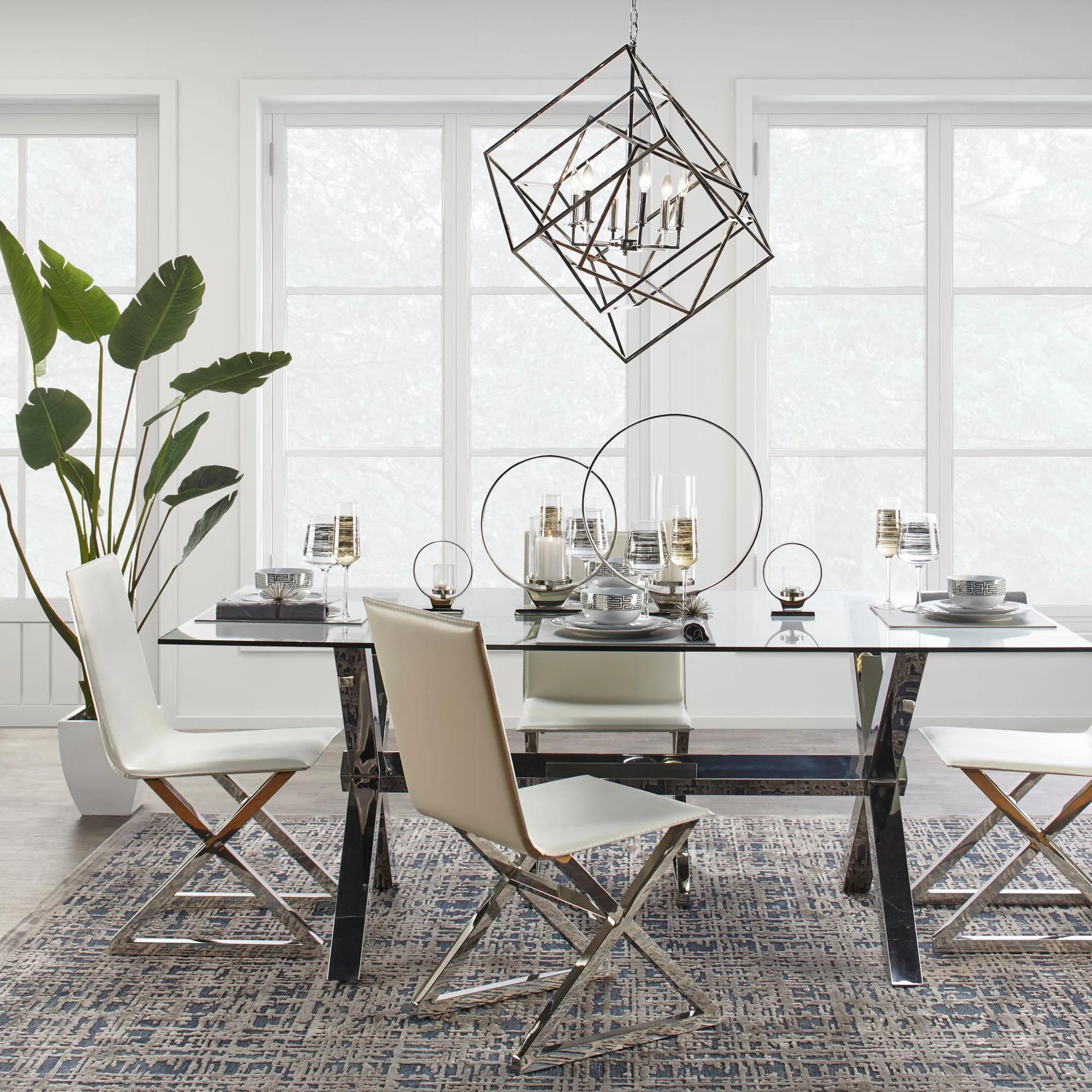 Axis Dining Chair - Set of 2$399
A contemporary dining chair set featuring white bonded leather upholstery and a polished stainless steel base.
Add To Cart -
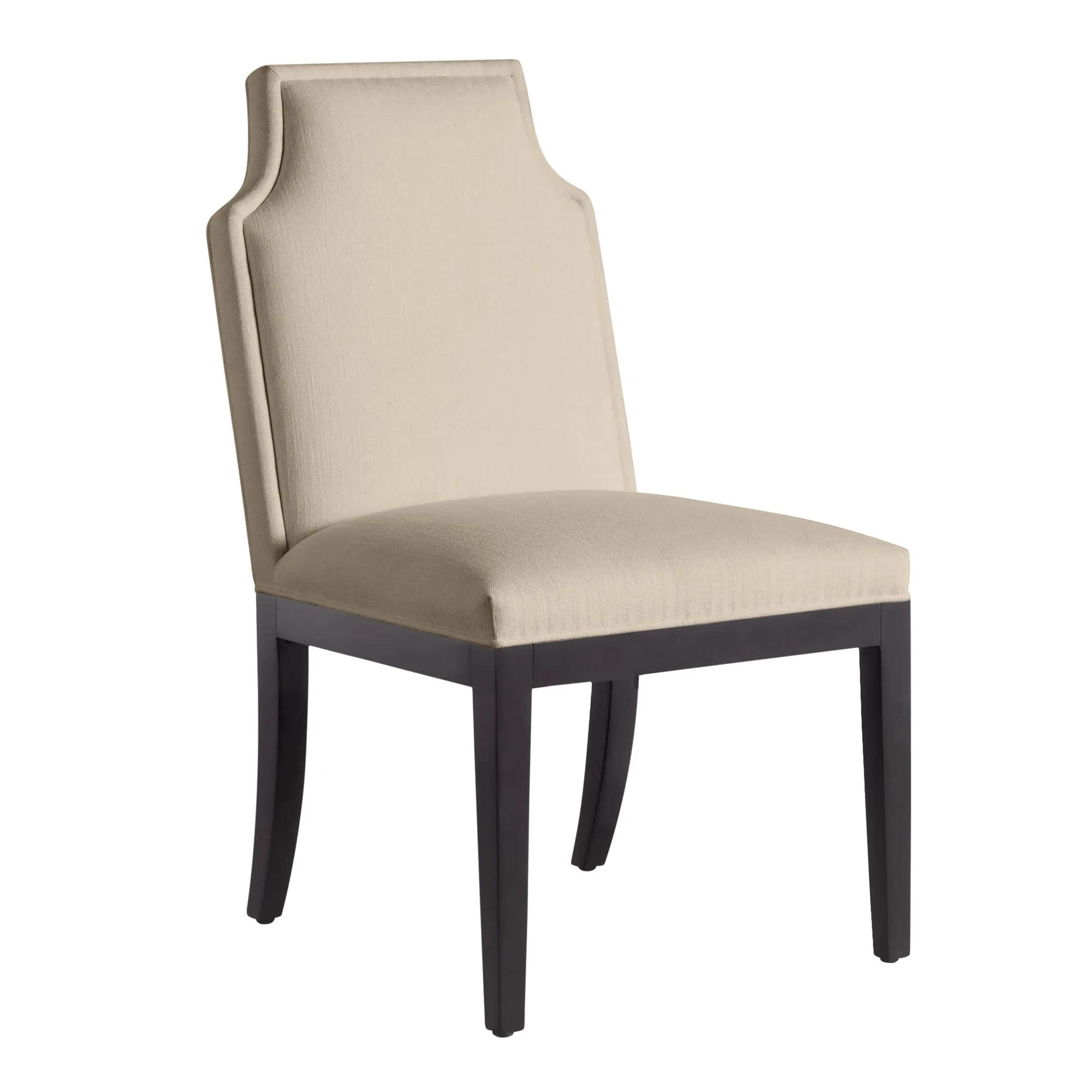
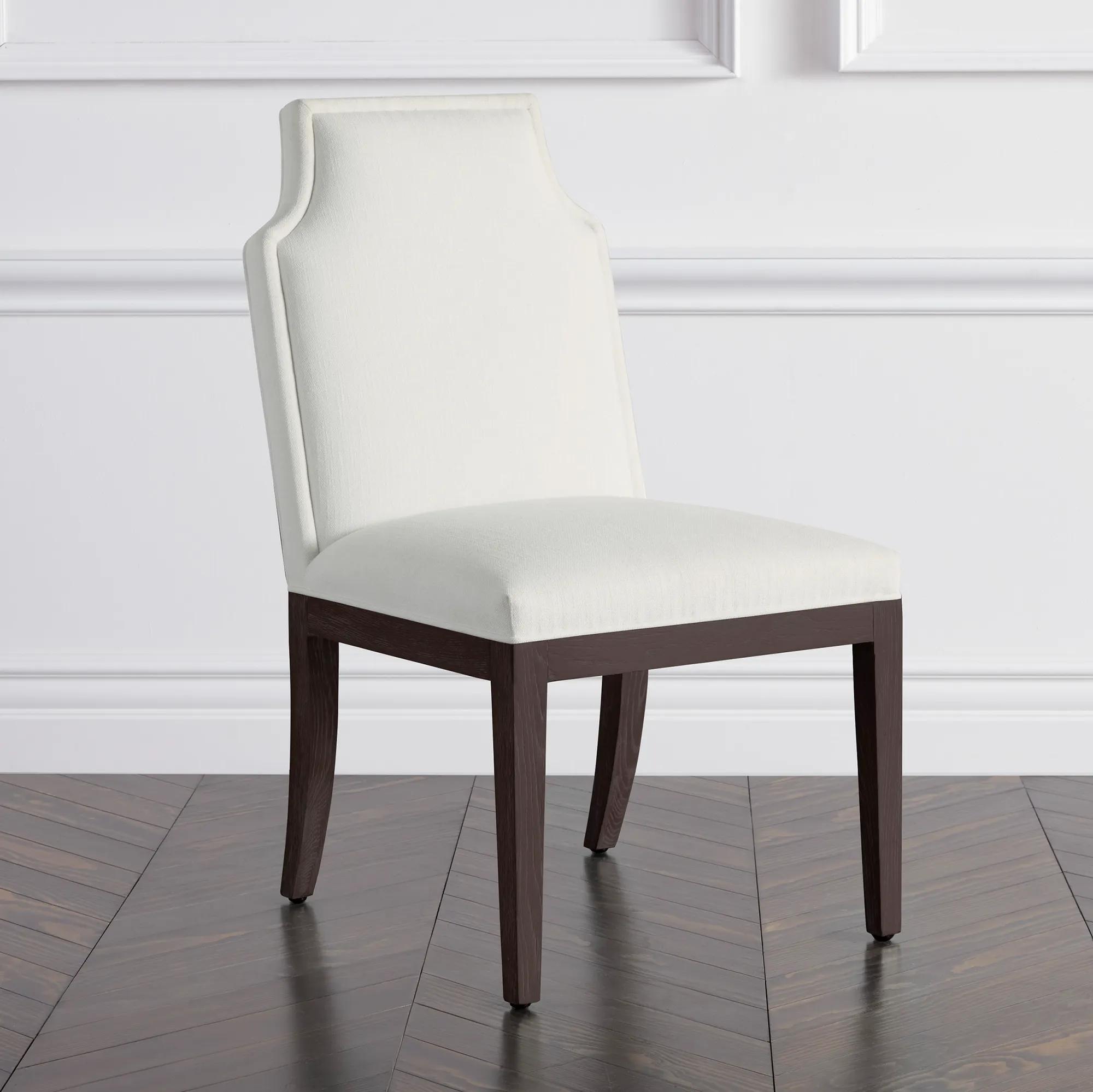 Jasmine Dining Chair - Espresso$649
A chic dining chair featuring a notched back, espresso legs, and plush upholstery for lasting comfort.
Add To Cart -
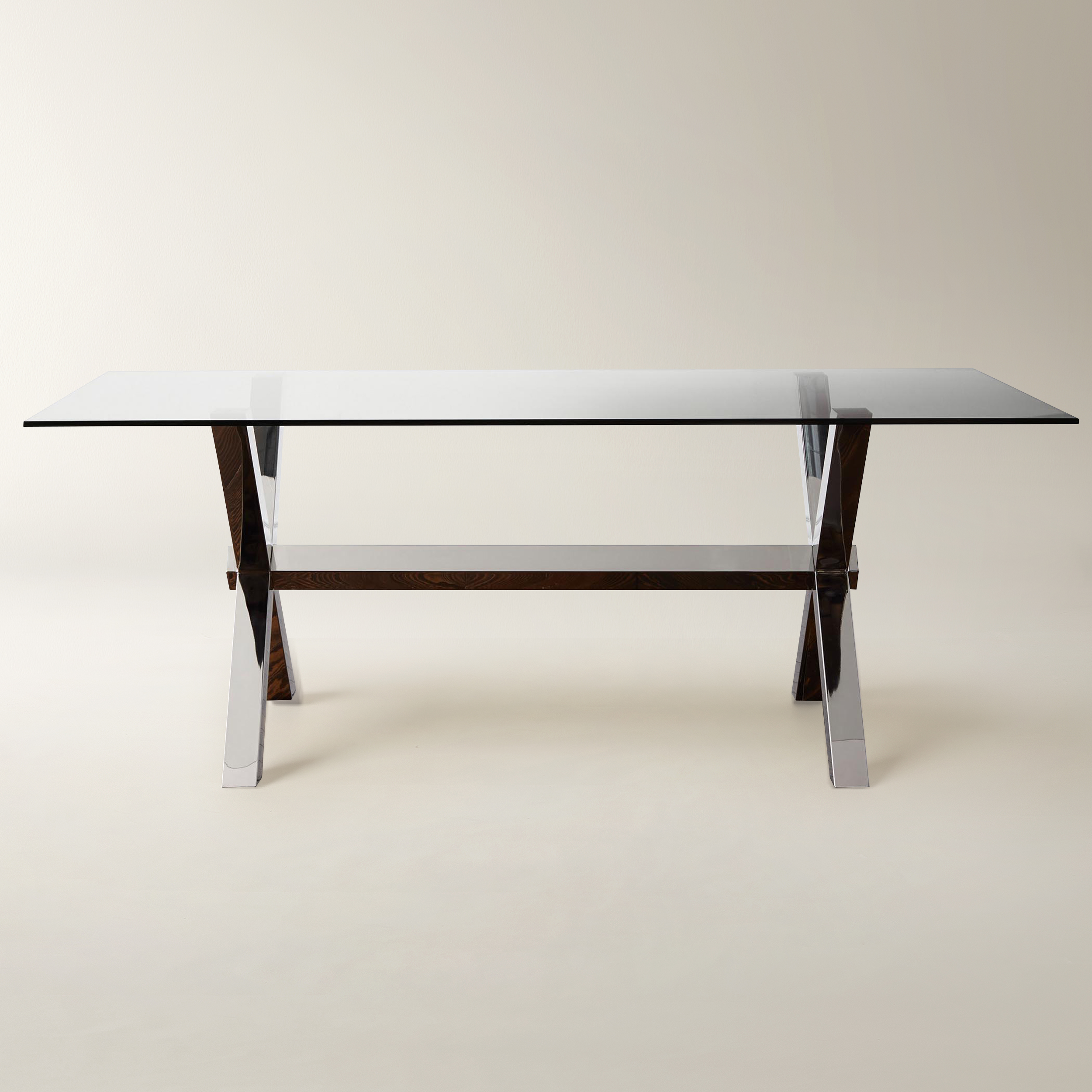
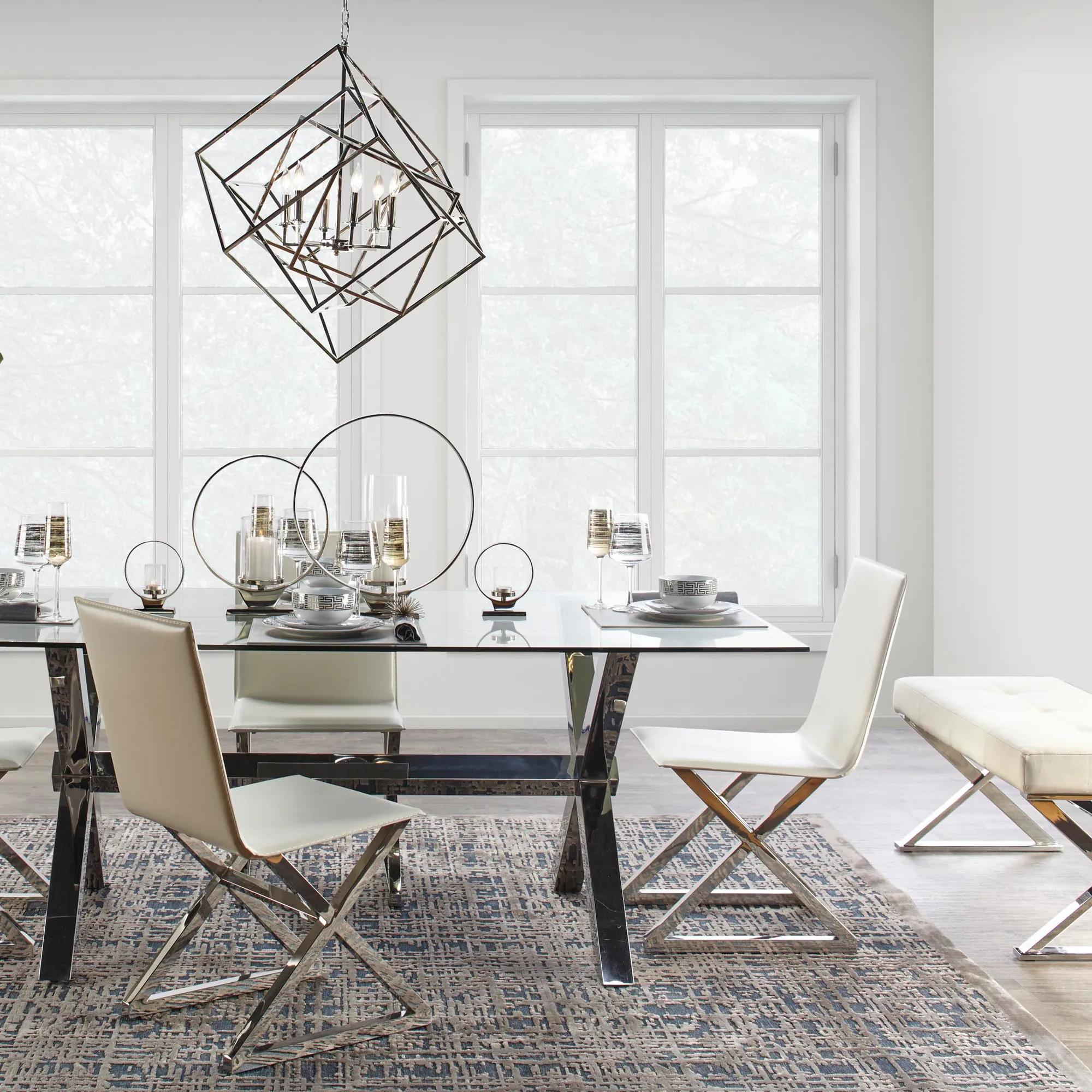 Axis Rectangular Silver Dining Table With Glass Top (78")$1199
A contemporary dining table featuring a polished stainless steel base and durable tempered glass top.
Add To Cart -
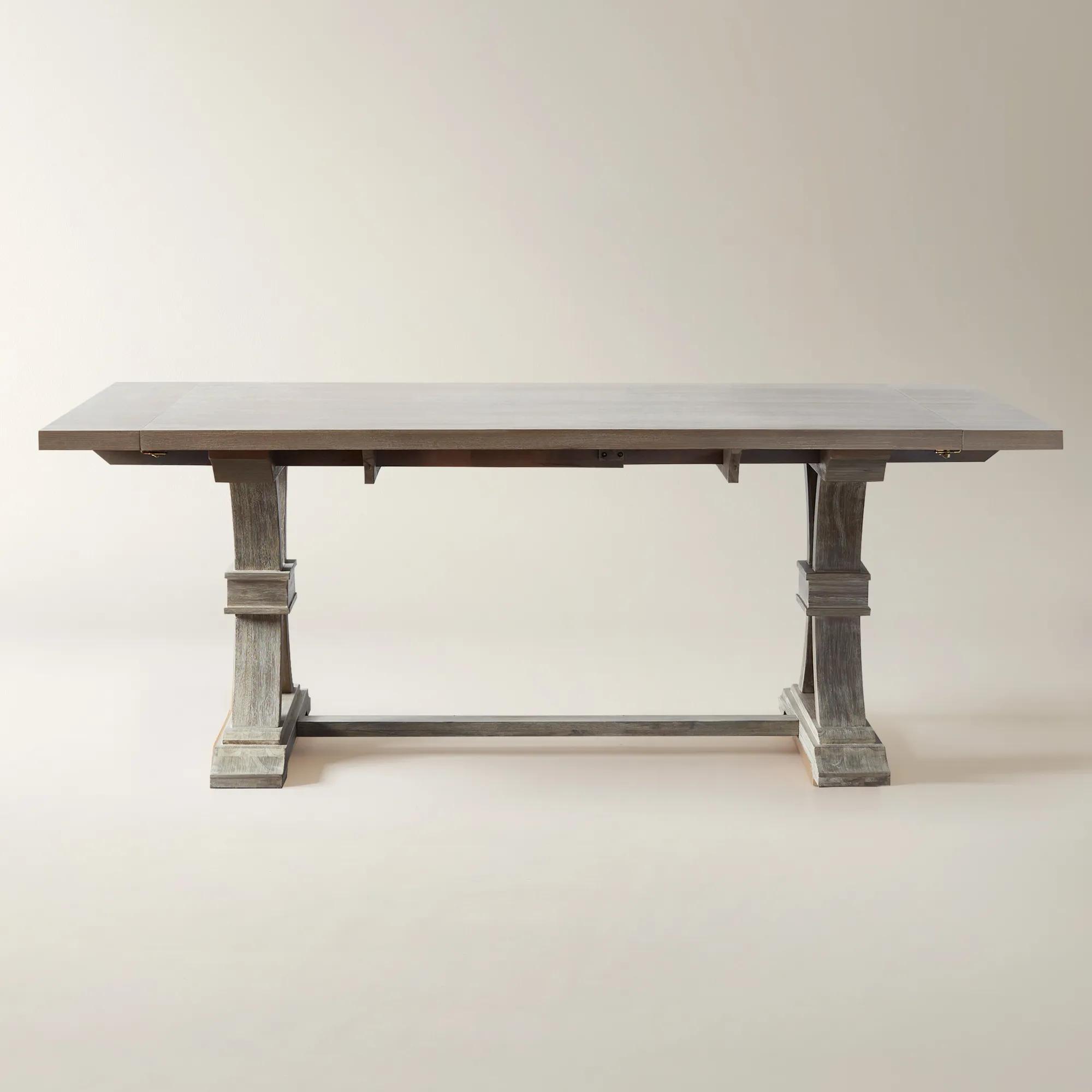 Archer Rectangular Grey Acacia Wood Extending Dining Table (78" - 110")$2499
A weathered grey acacia wood dining table with removable leaves and a kiln-dried hardwood frame.
Add To Cart -
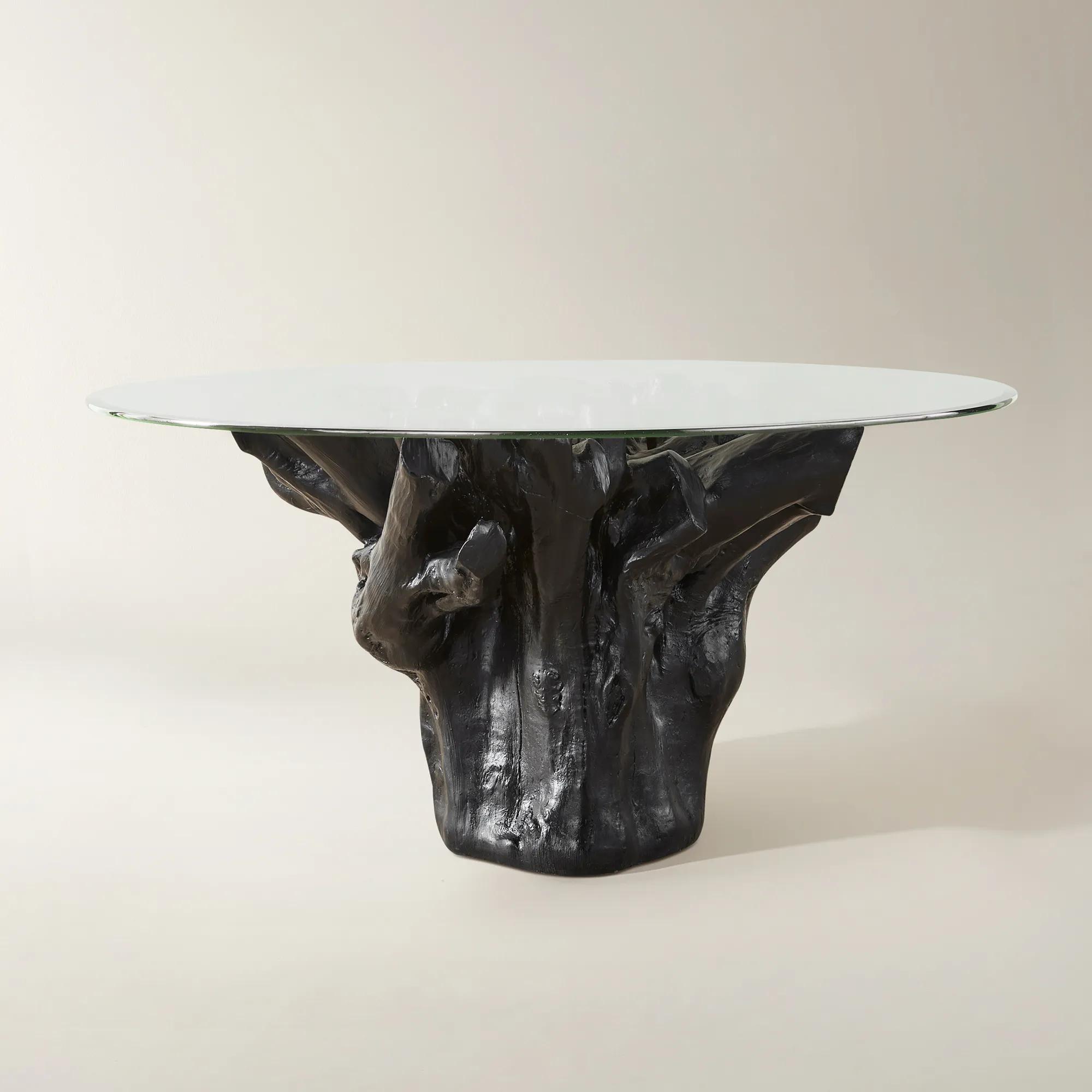 Sequoia Black Resin Dining Table With Glass Top (60")$2299
A sculptural black resin base with real stone fragments supports a round tempered glass top for organic elegance.
Add To Cart -
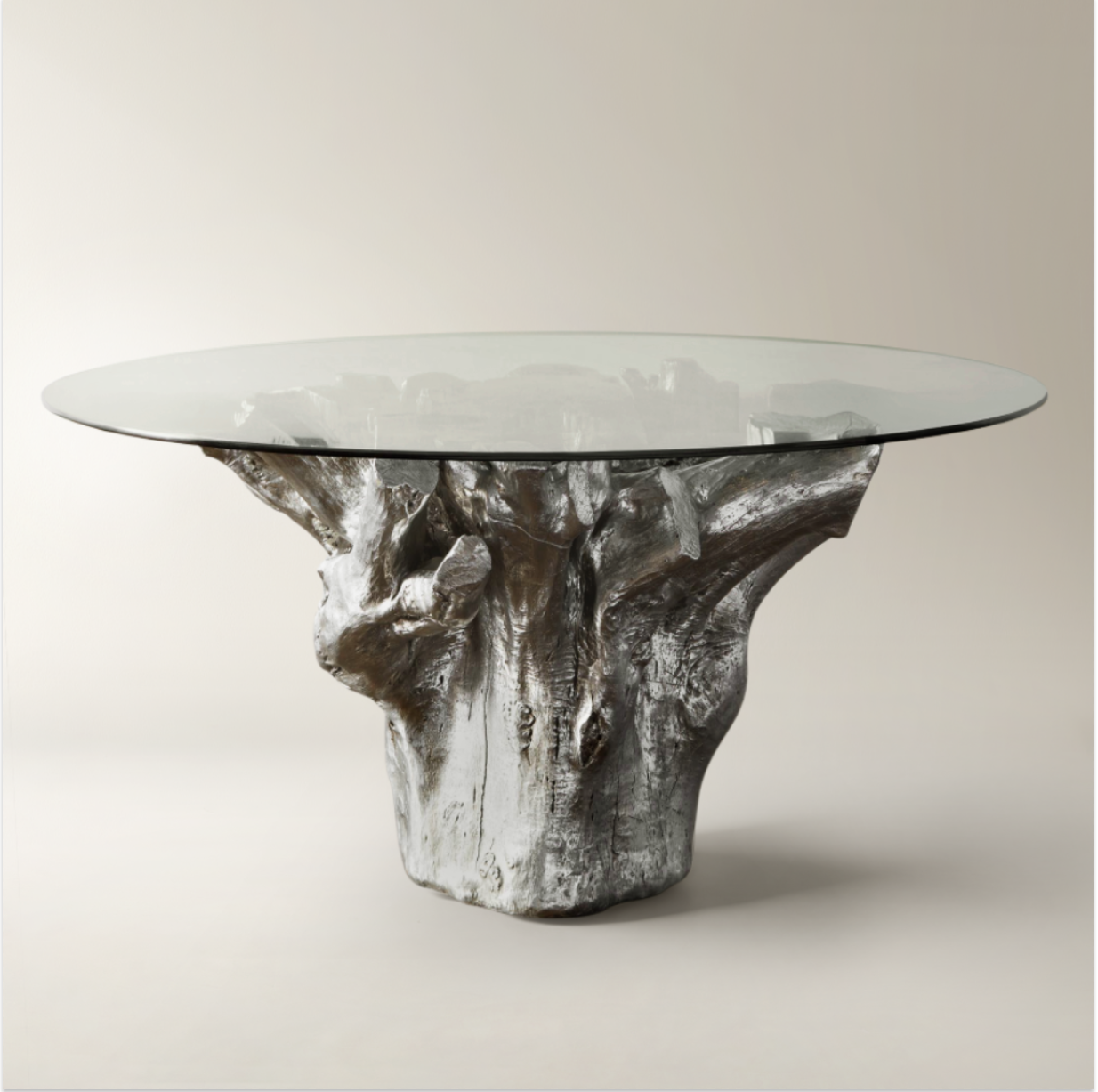 Sequoia Silver Resin Dining Table With Glass Top (60")$2199
A sculptural resin base with hand-applied silver leaf supports a round tempered glass top for modern elegance.
Add To Cart -
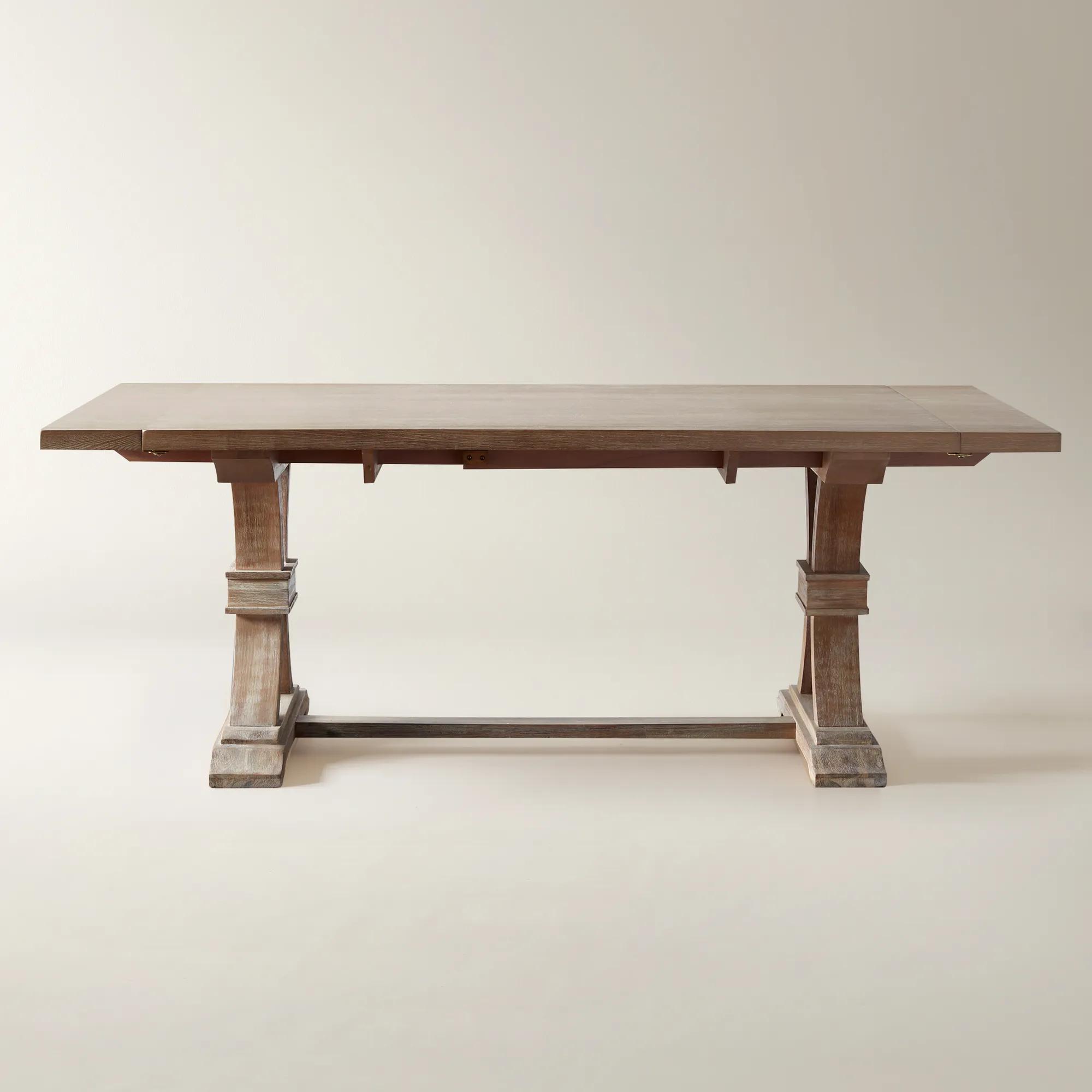 Archer Rectangular Whitewashed Acacia Wood Extending Dining Table (78" - 110")$2499
An extending dining table crafted from kiln-dried hardwood with a whitewashed oak finish and acacia veneer.
Add To Cart -
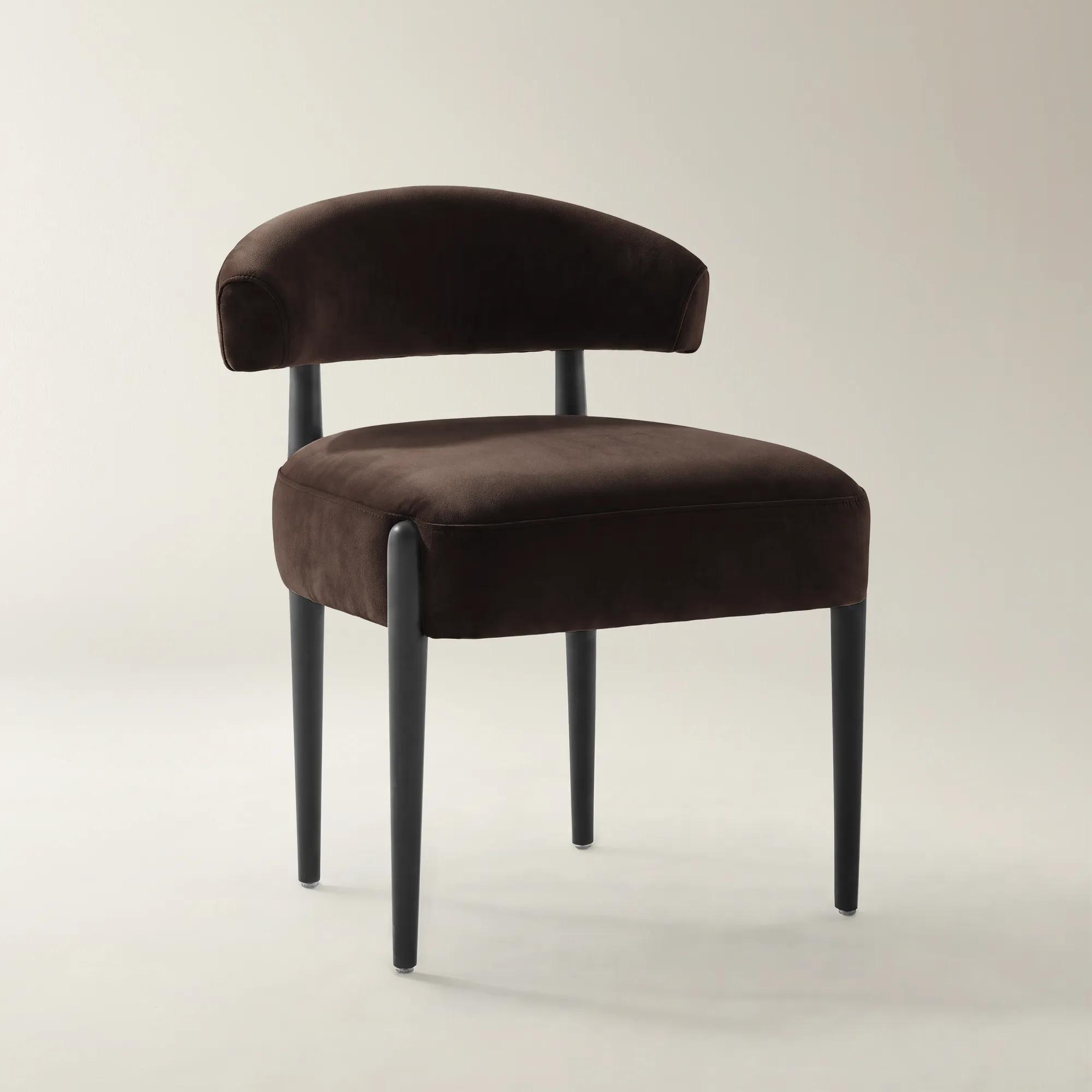
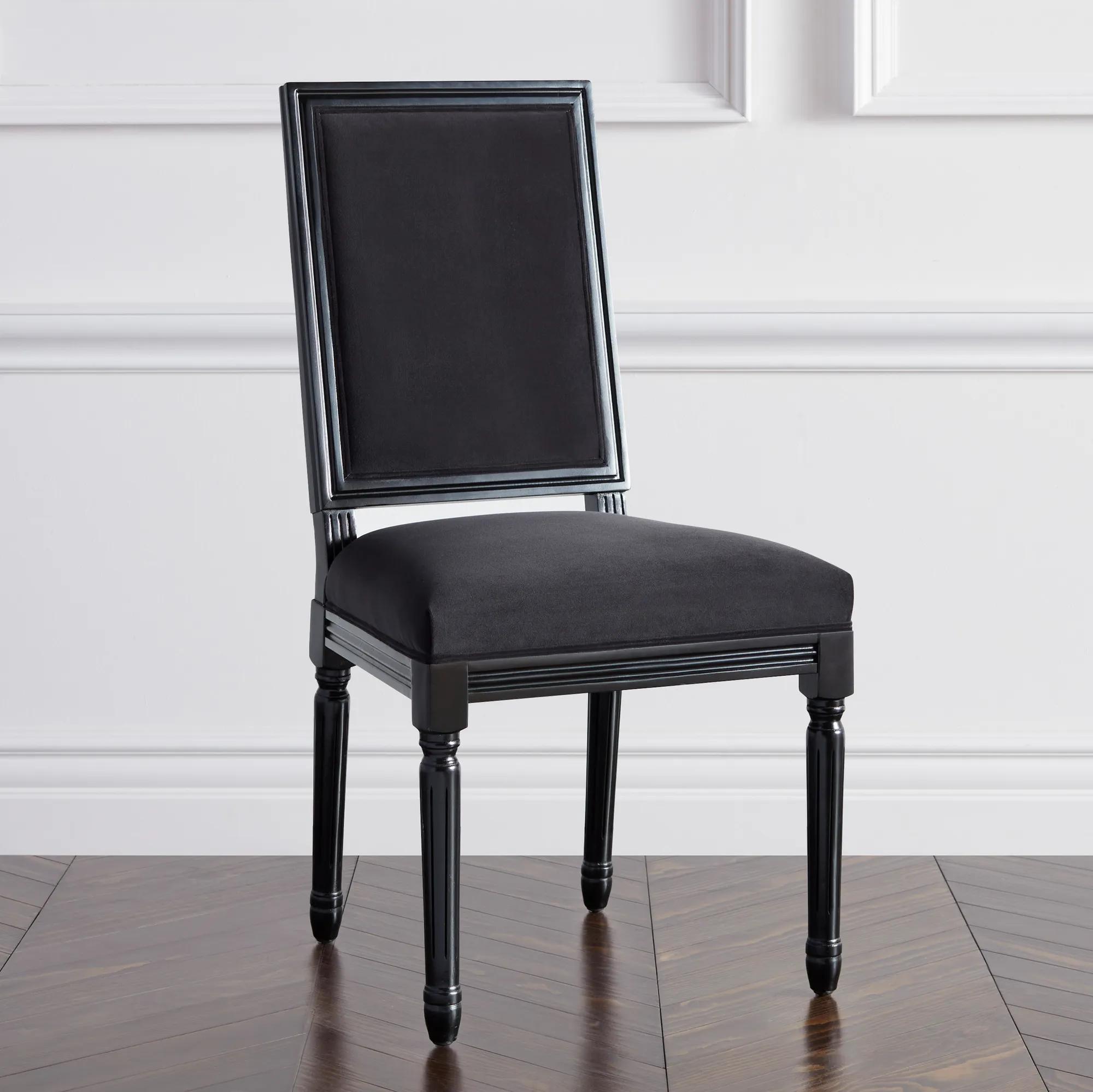
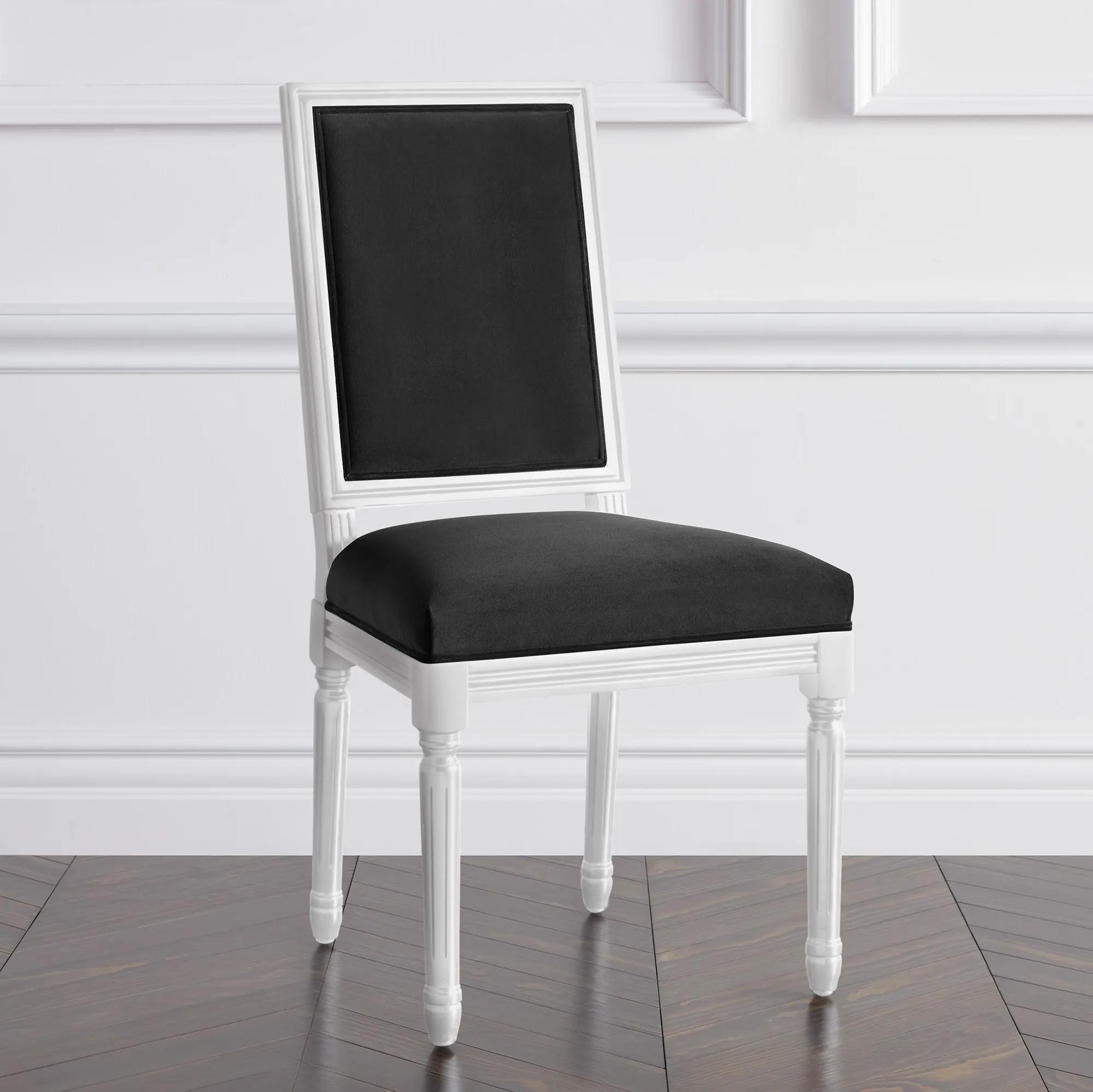
 Anna Dark Chocolate Velvet Dining Chair Set of 2$599
A dark chocolate velvet dining chair set featuring an arched back, high-density foam, and solid wood construction.
Add To Cart -
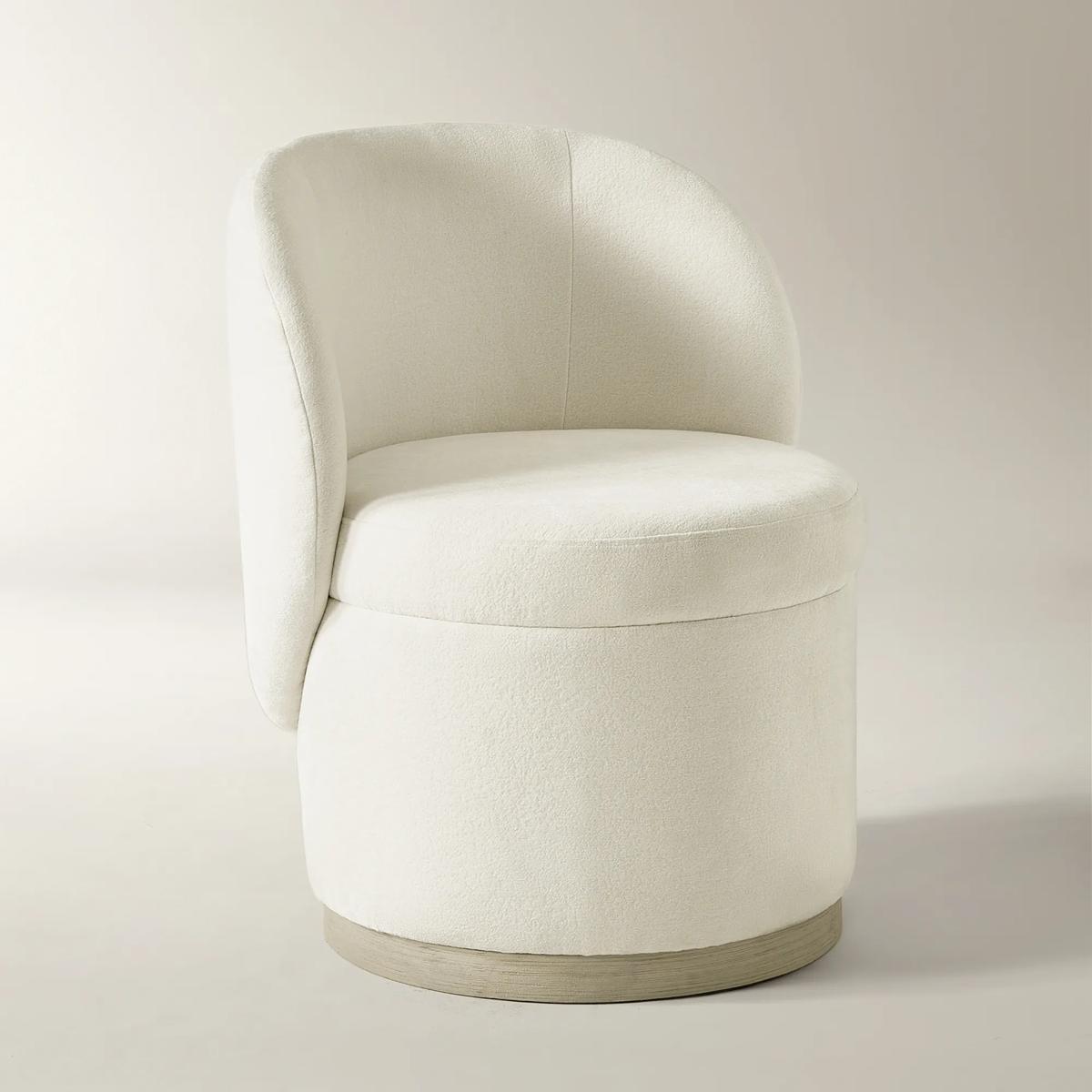 Stria Ivory Chenille Dining Chair With Oak Base$449
An ivory chenille chair featuring a plush, velvet-like finish and a handcrafted solid oak base.
Add To Cart -
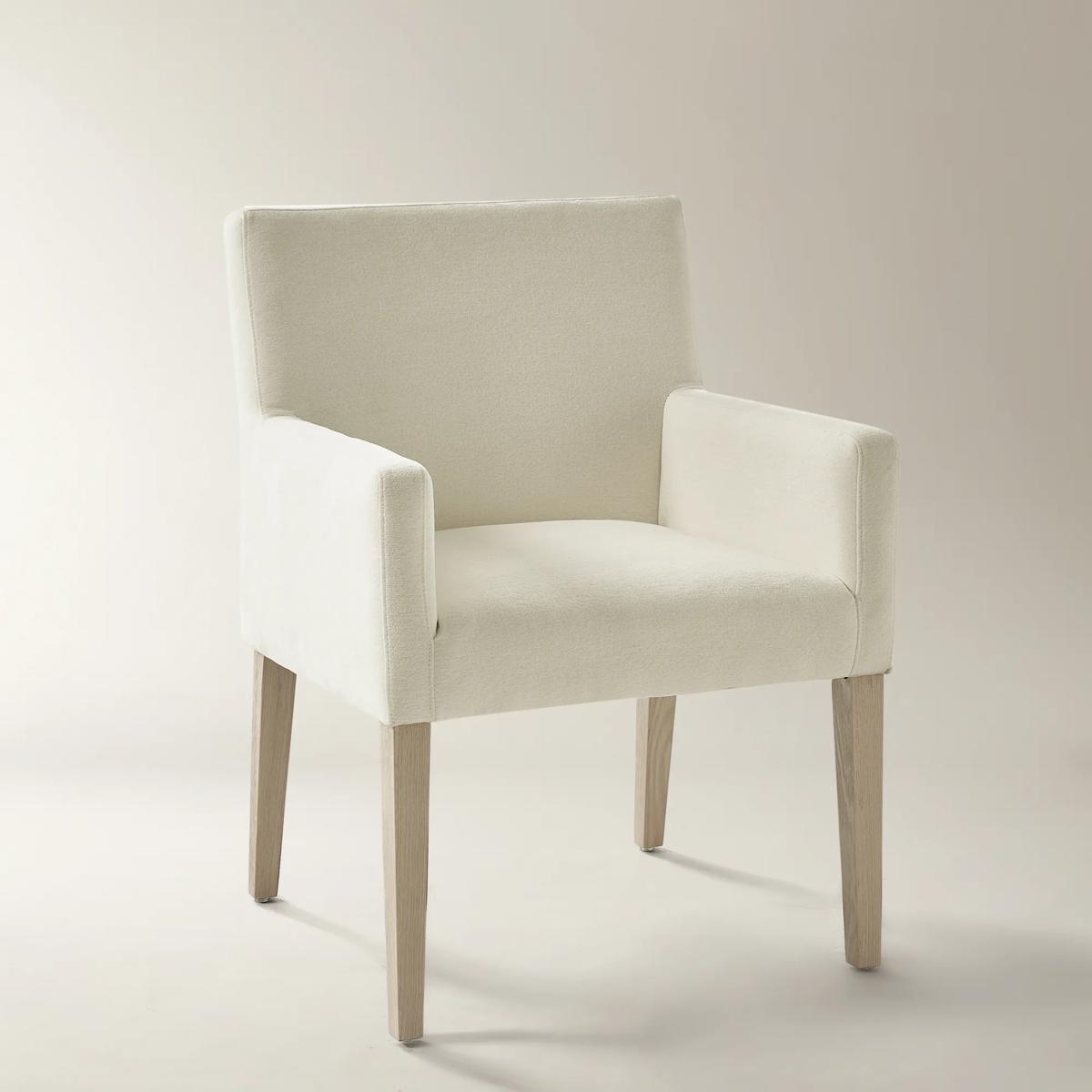
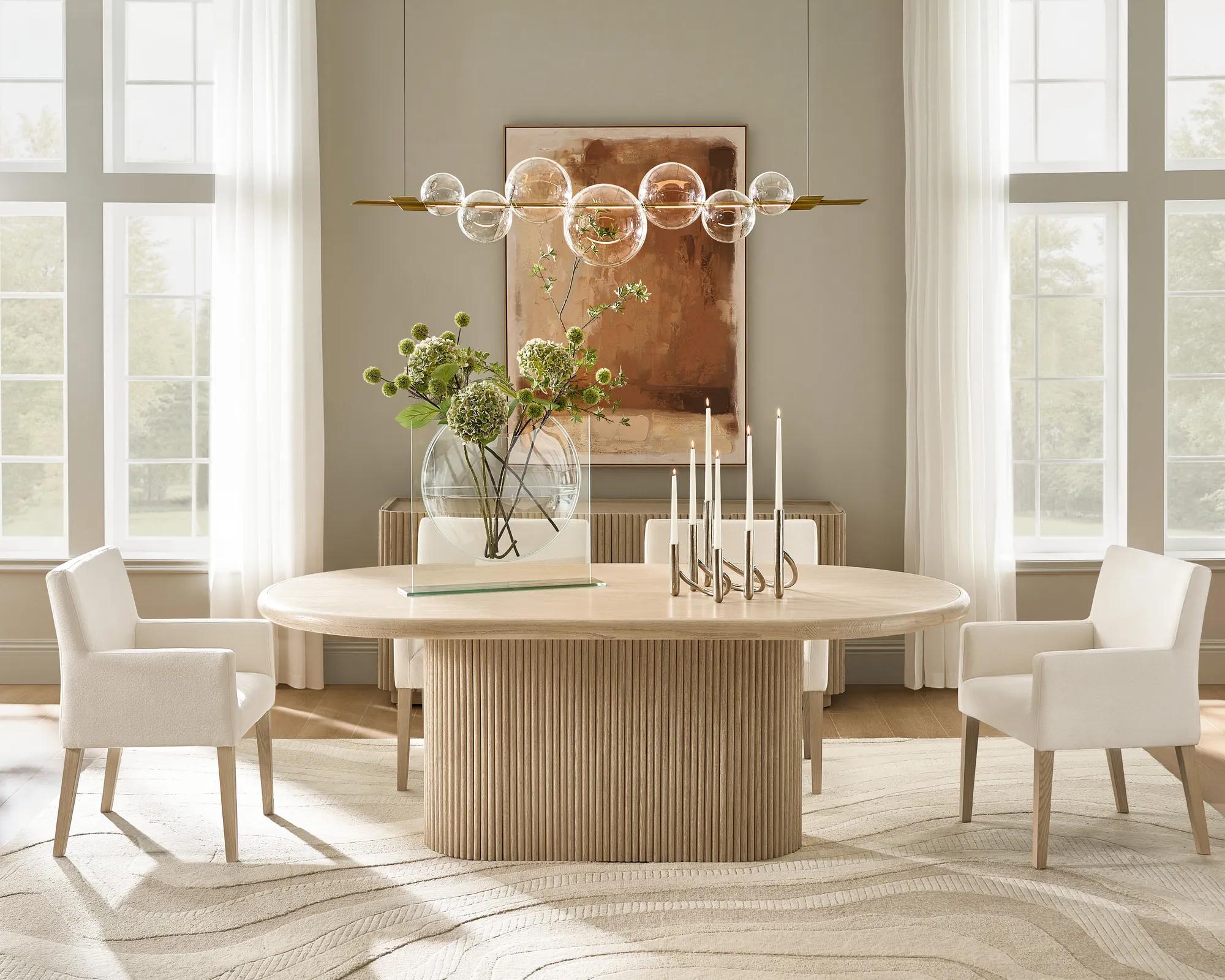 Stria Ivory Chenille Dining Chair Set Of 2$599
A pair of ivory chenille arm chairs with natural oak legs, offering plush comfort and modern elegance.
Add To Cart -
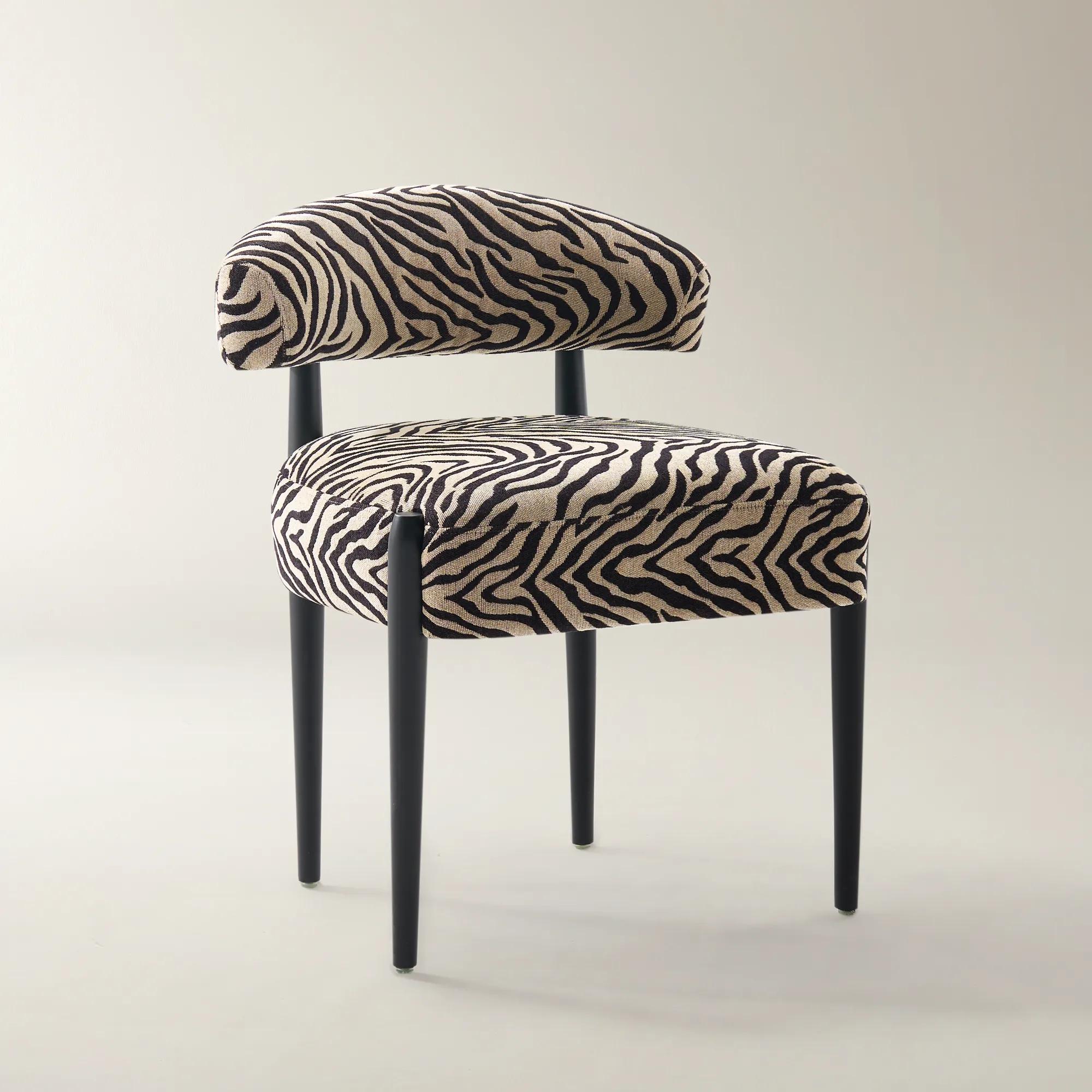
Anna Zebra Chenille Dining Chair Set Of 2$599
A set of zebra-print chenille dining chairs with high-density foam cushions and sturdy rubberwood legs.
Add To Cart -
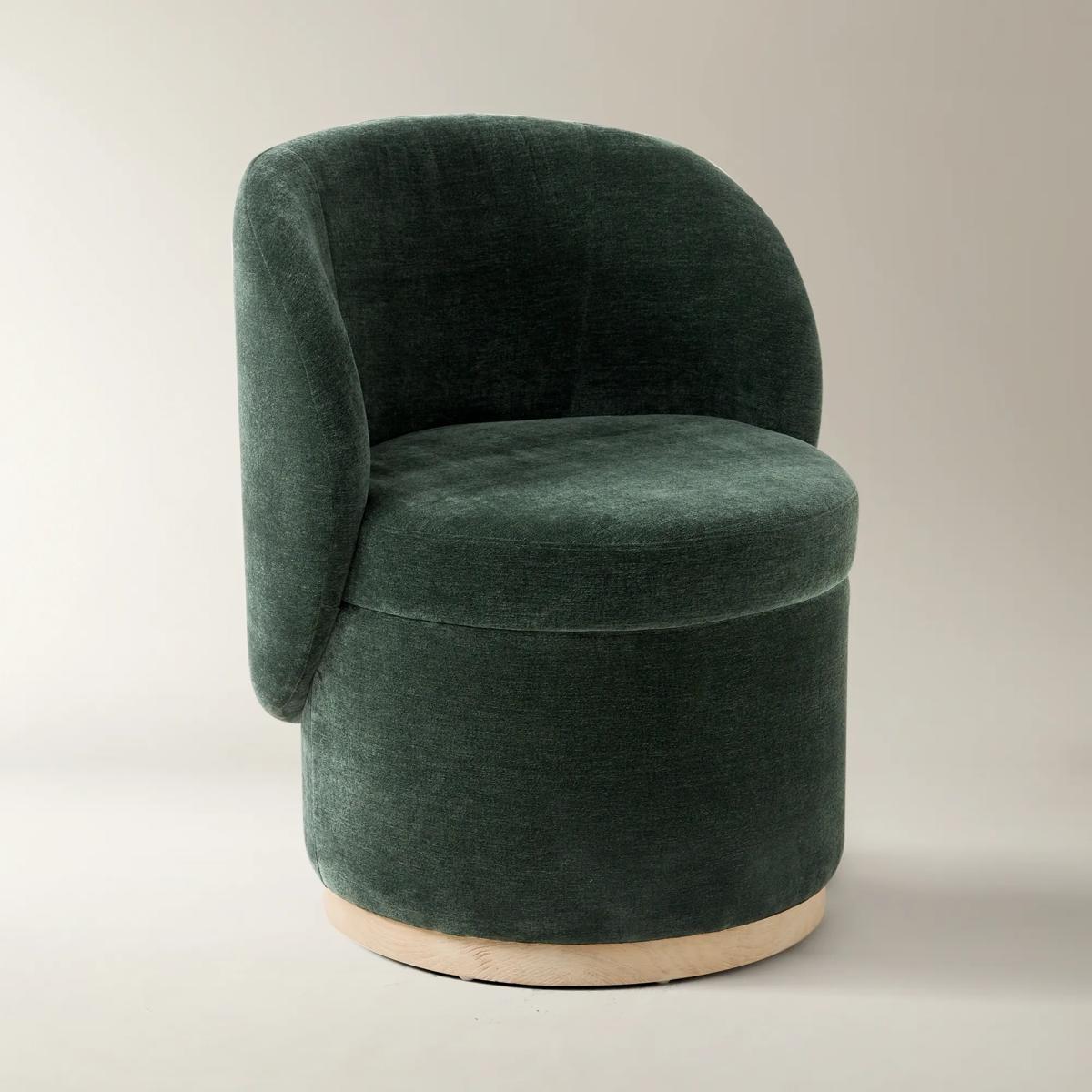
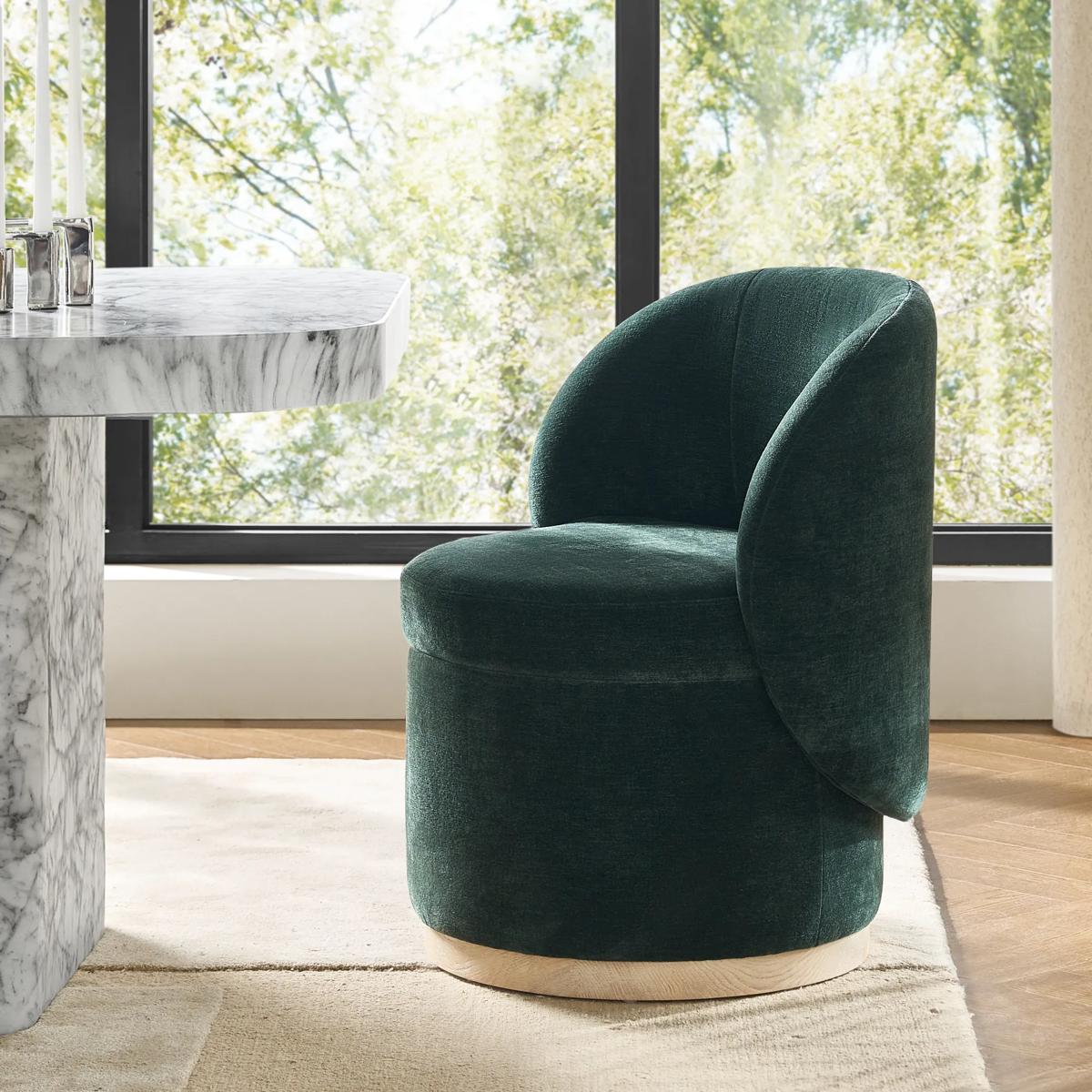 Stria Green Chenille Dining Chair With Oak Base$449
A green chenille dining chair with a handcrafted solid oak base and inviting, softly curved silhouette.
Add To Cart -
.jpg?w=1200&h=1200)
 Stria Green Chenille Swivel Dining Chair With Oak Base$599
Stria Green Chenille Swivel Dining Chair With Oak Base$599A green chenille arm chair with a solid oak swivel base, offering cozy comfort and modern versatility.
Add To Cart -
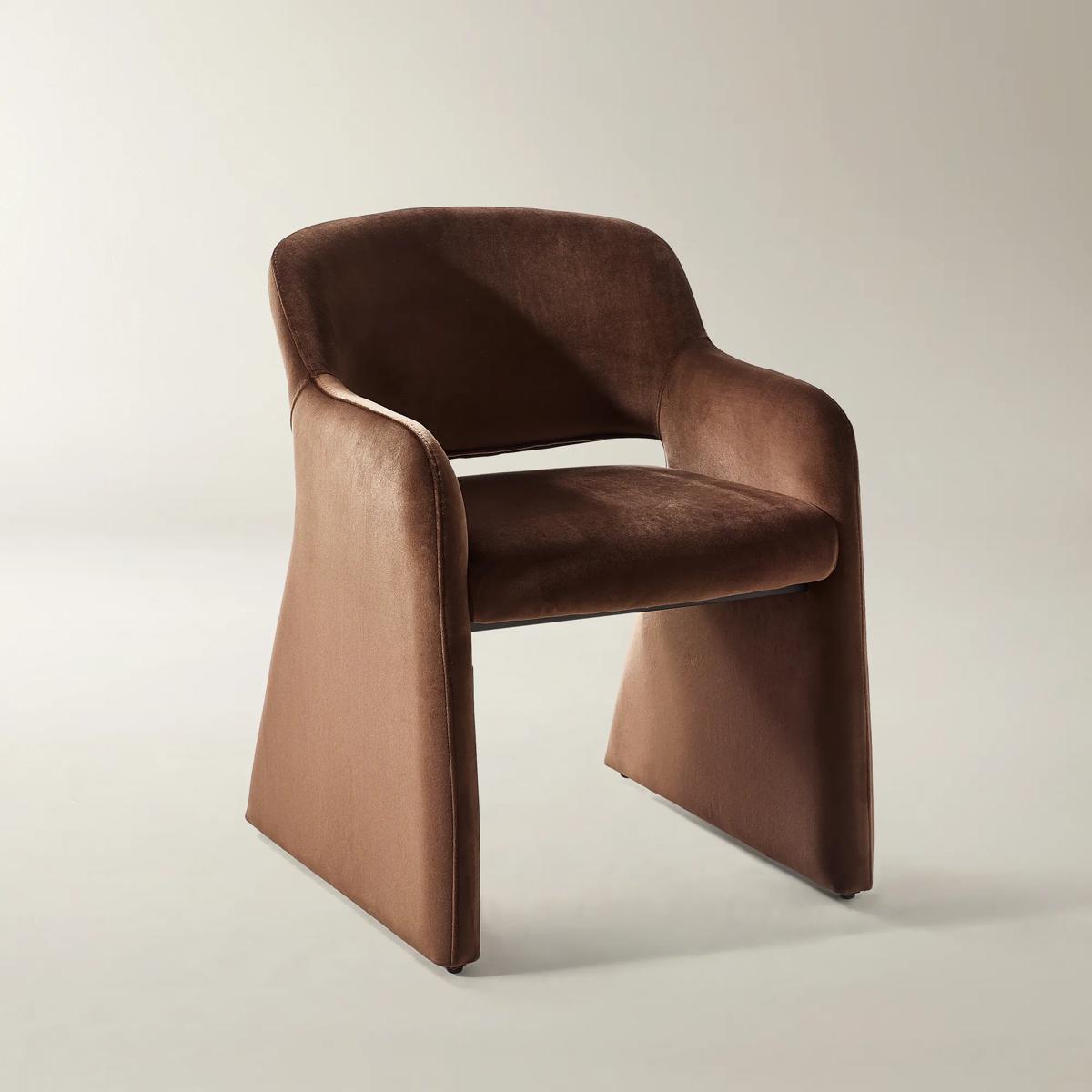
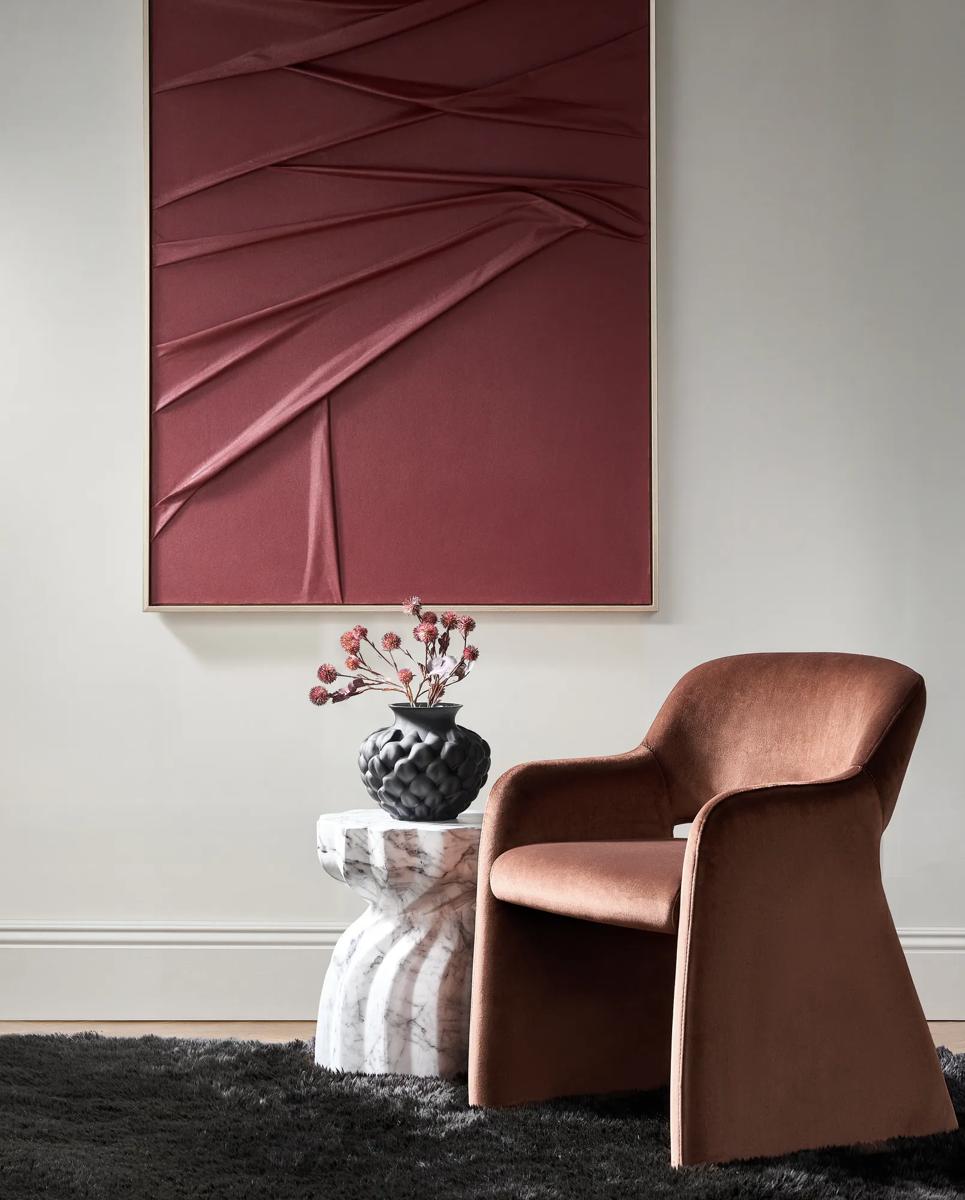 Elara Burnt Umber Velvet Dining Chair$399
A plush brown velvet armchair with sinuous curves, ergonomic support, and hand-crafted, reinforced details.
Add To Cart -
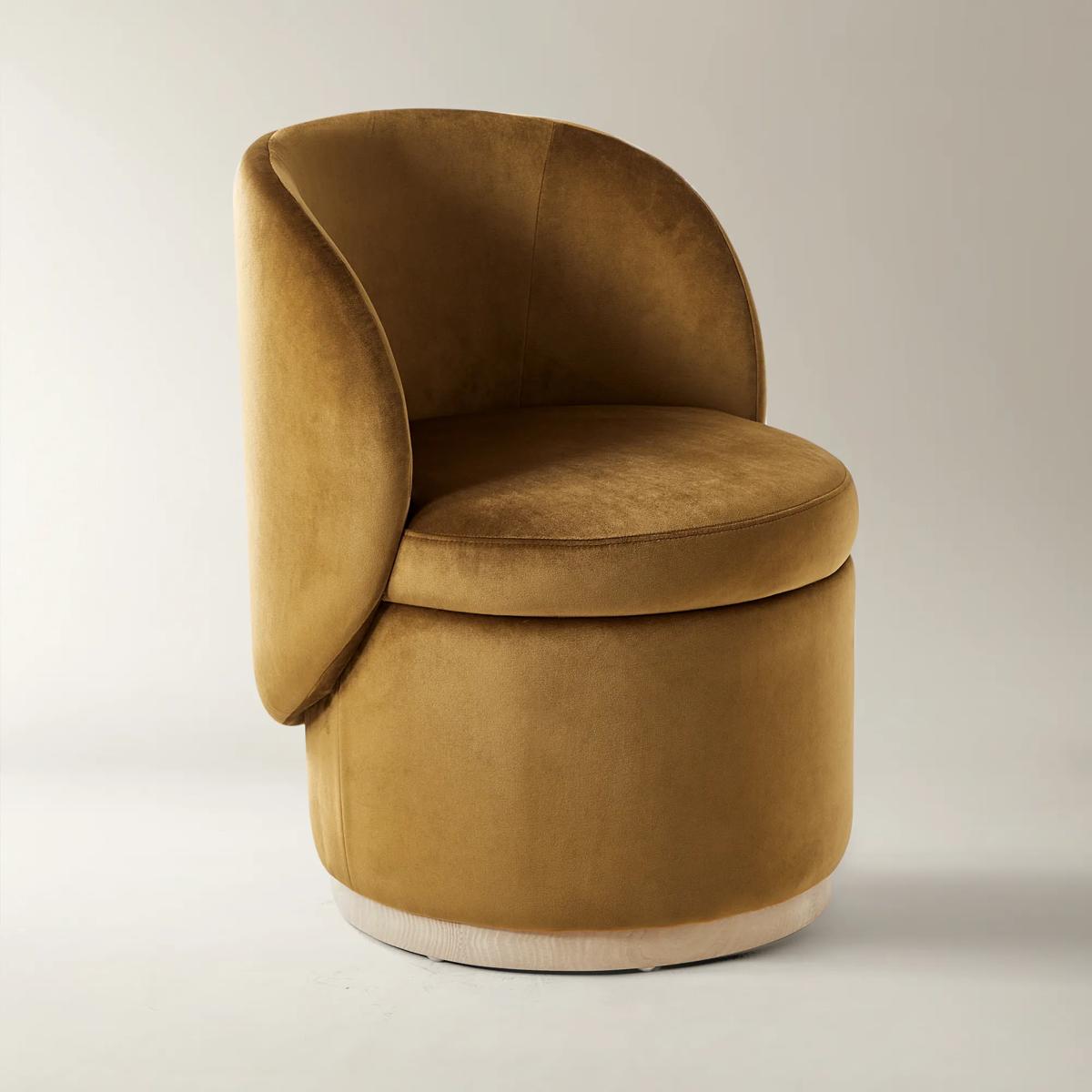
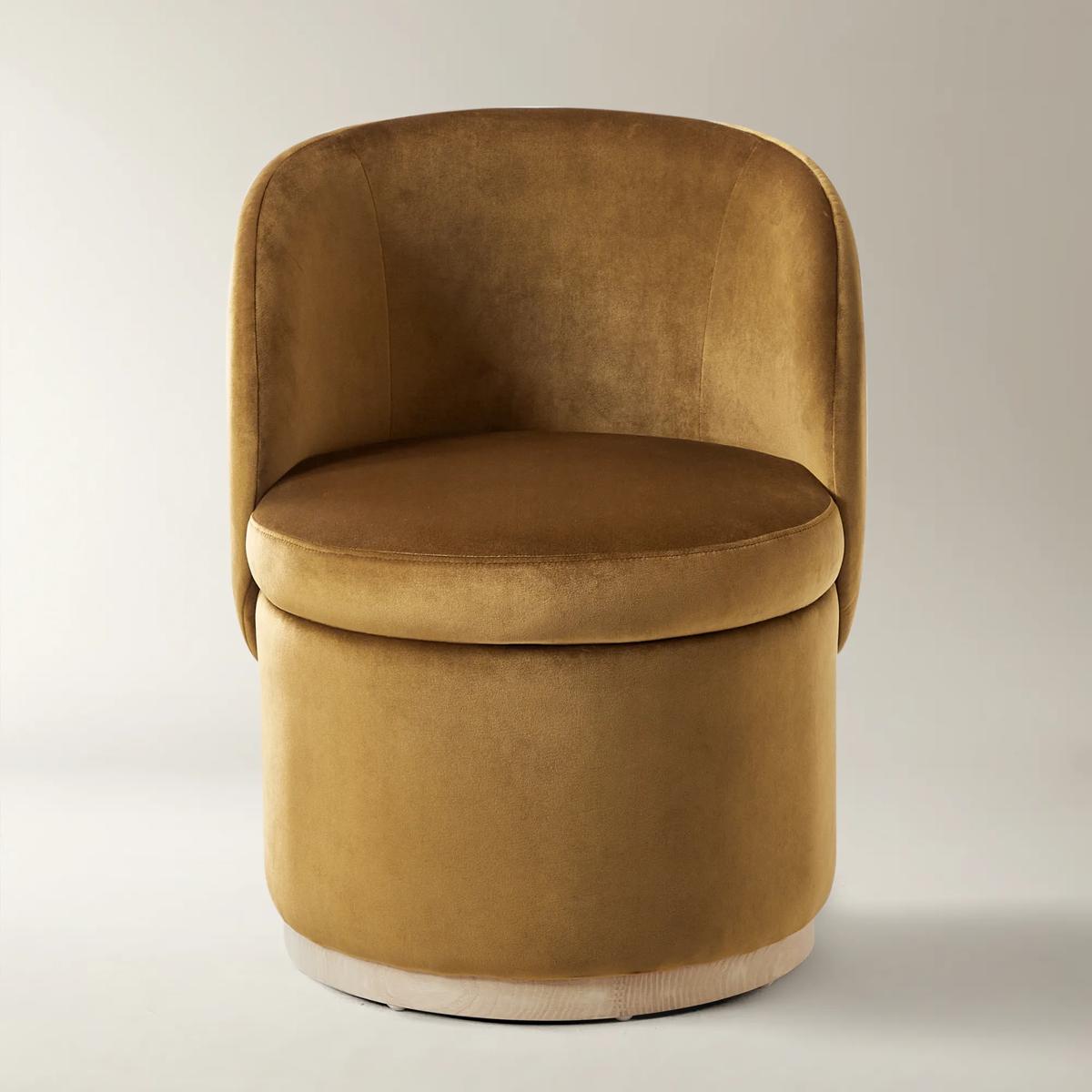 Stria Roasted Pecan Velvet Dining Chair With Oak Base$449
A khaki chenille chair featuring cozy upholstery and a handcrafted solid oak base for organic warmth.
Add To Cart -
.jpg?w=1200&h=1200) Elara Burnt Umber Velvet Dining Chair Set Of 2$699
Elara Burnt Umber Velvet Dining Chair Set Of 2$699A pair of brown velvet chairs with sinuous curves, ergonomic support, and hand-crafted, sculptural design.
Add To Cart -
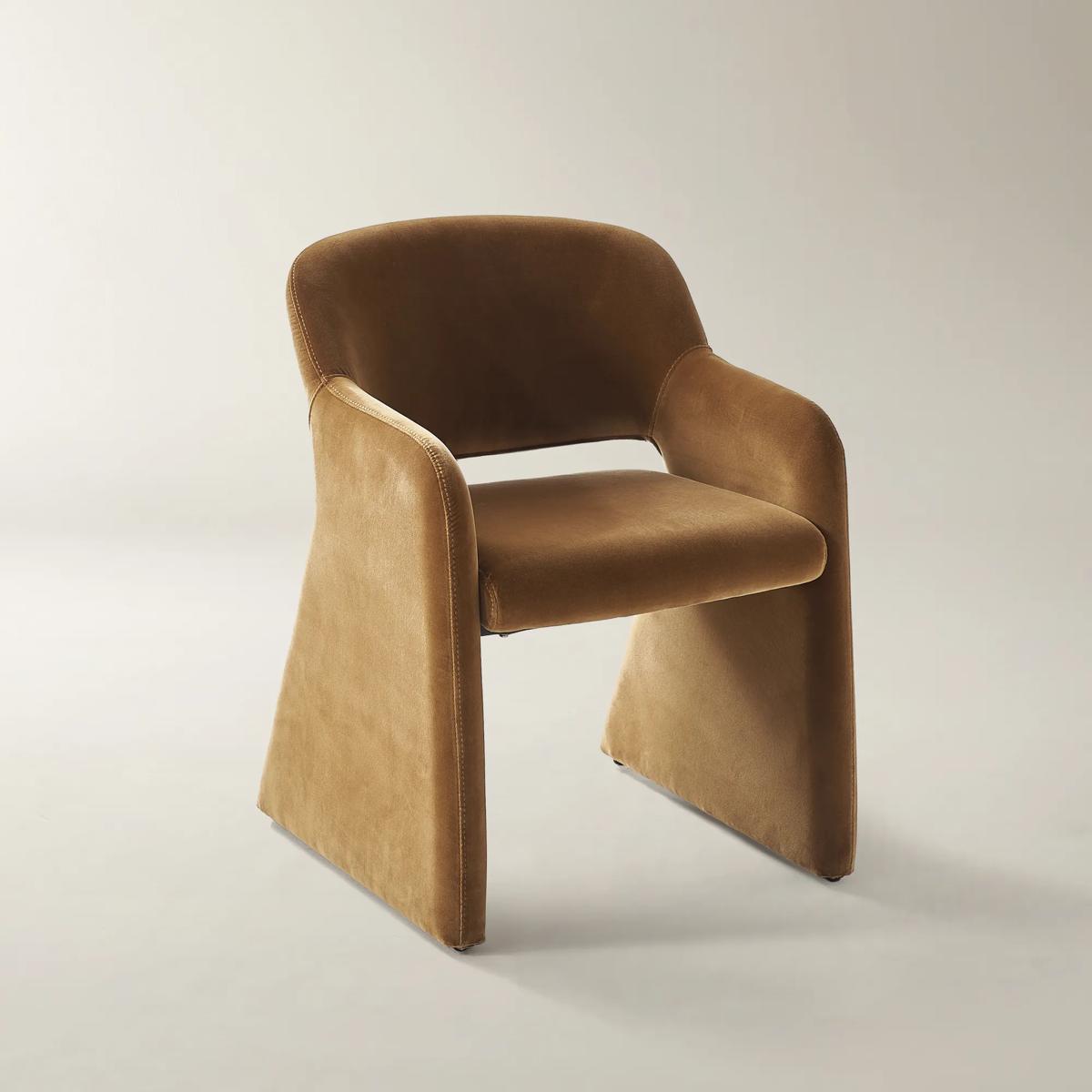
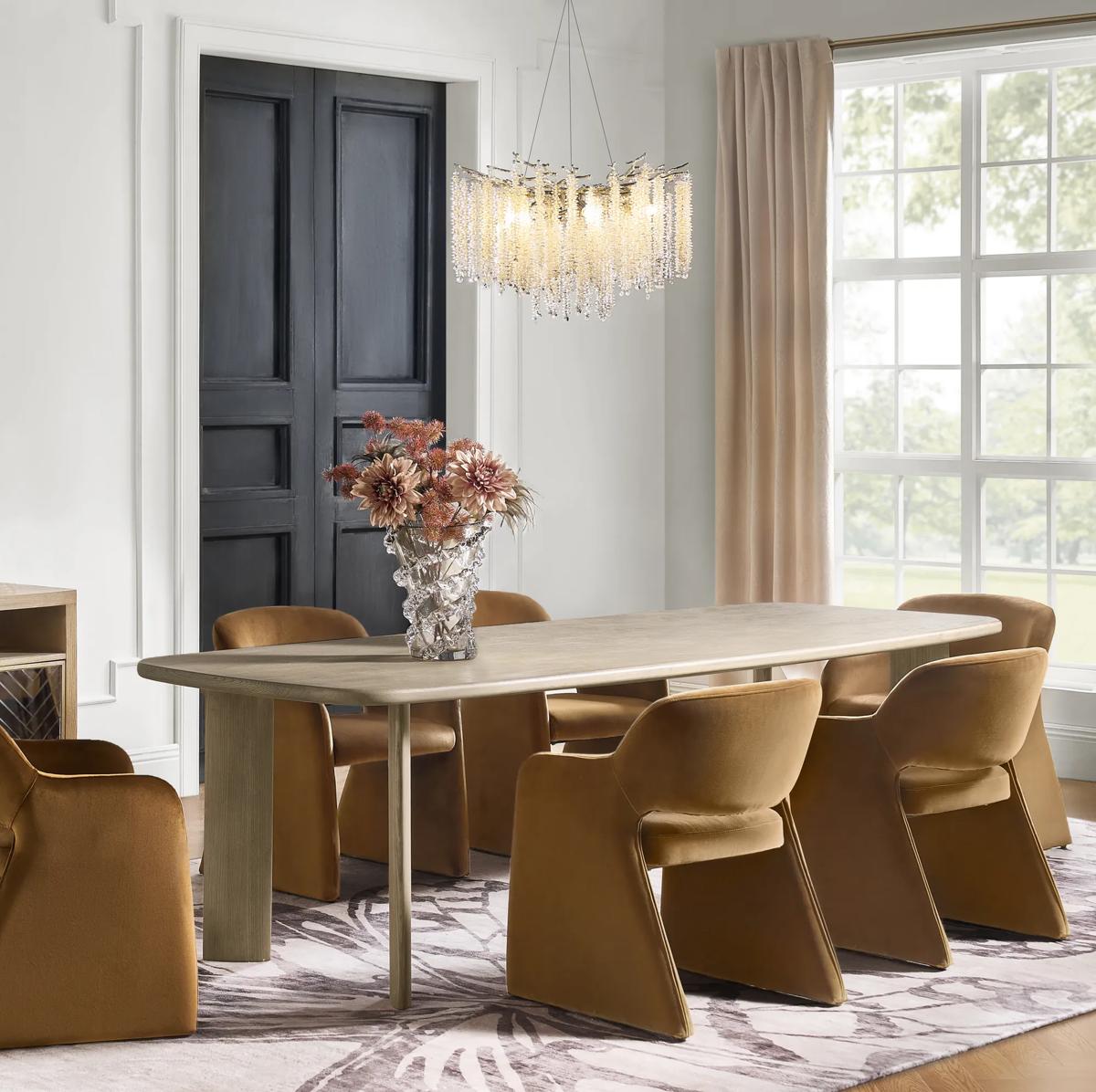 Elara Roasted Pecan Velvet Dining Chair$399
A sculptural armchair in mustard velvet with ergonomic curves, metal frame, and hand-crafted detailing.
Add To Cart -
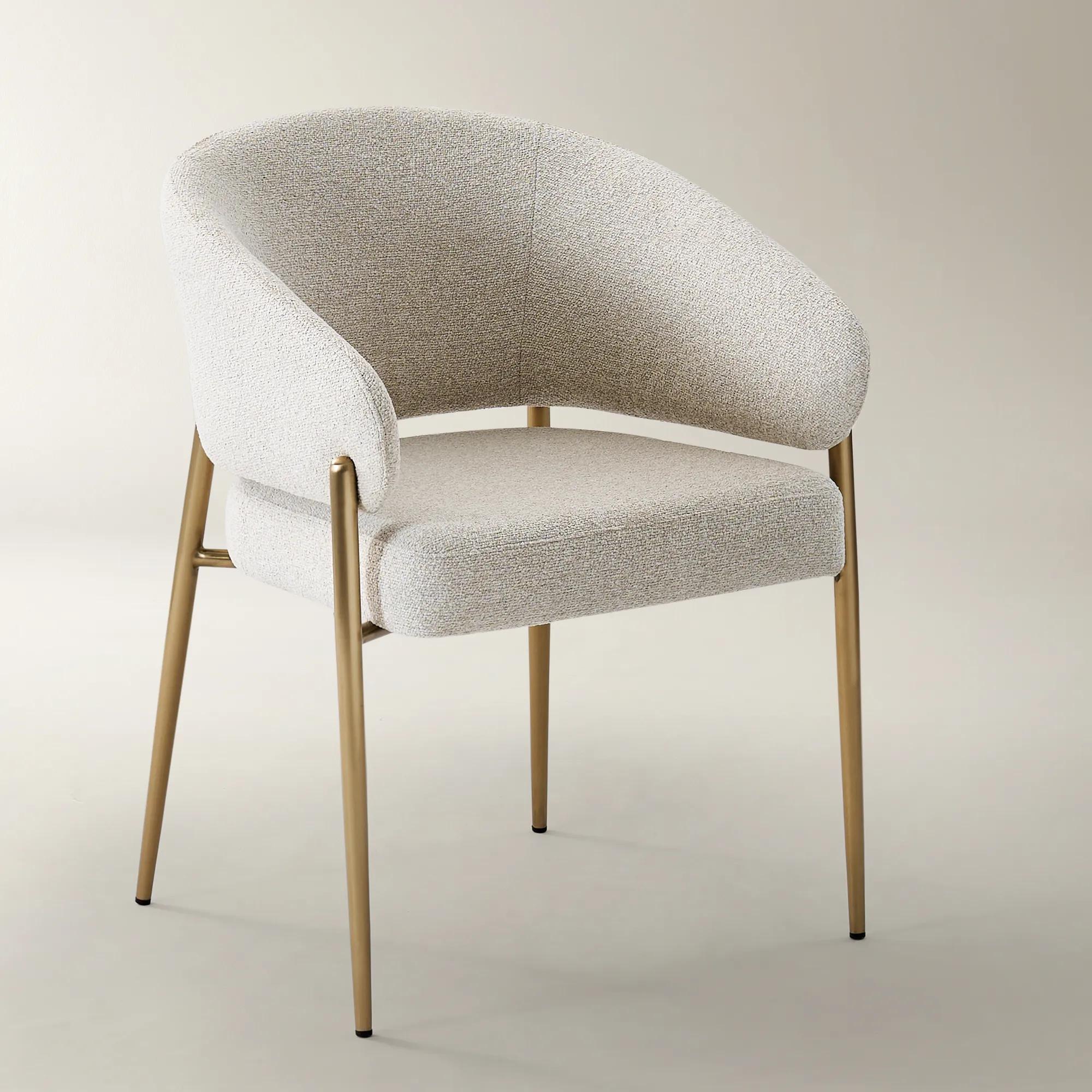
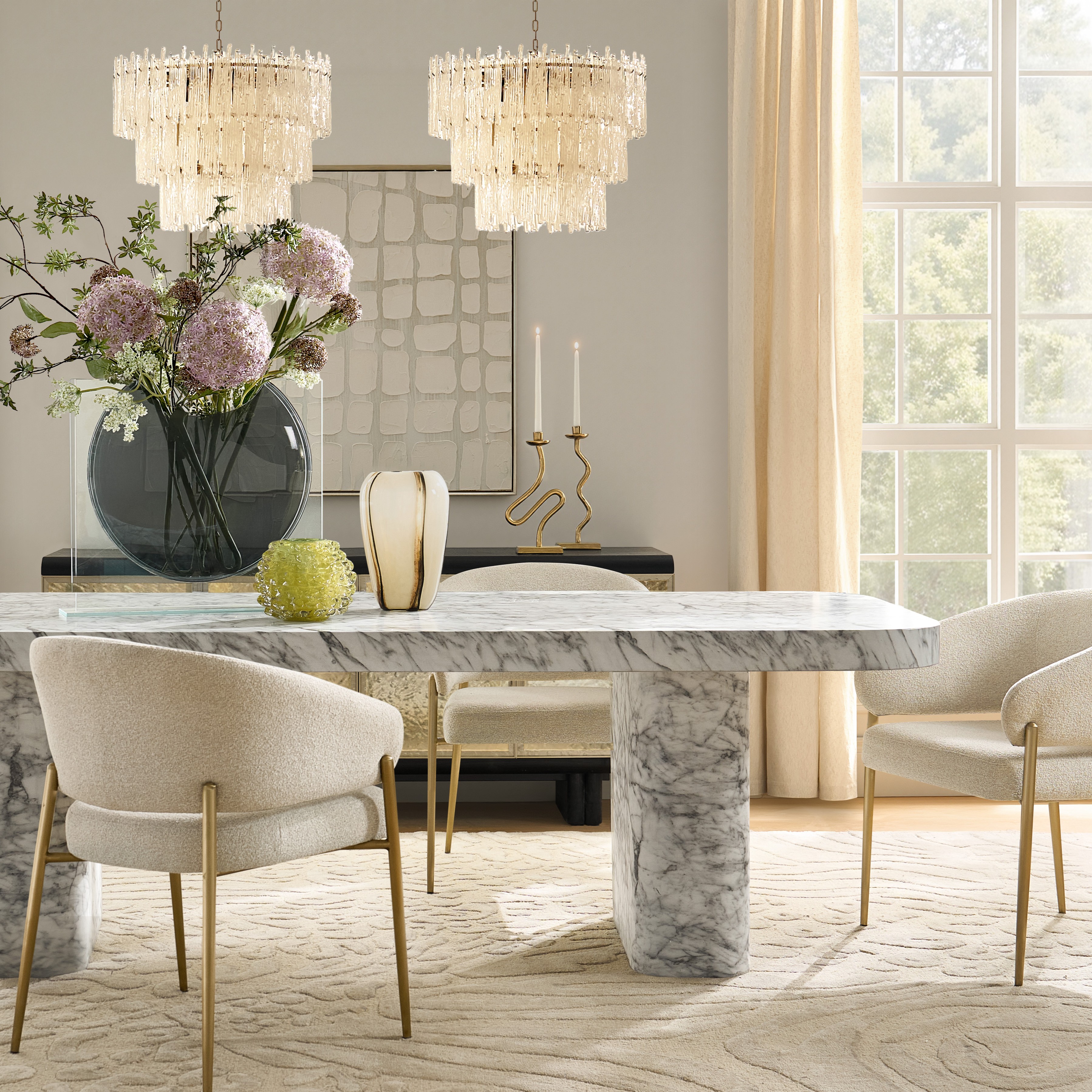 Nara Ivory Boucle Dining Chair Set Of 2$599
An ivory boucle dining chair set with a curved backrest and brushed stainless steel frame for modern elegance.
Add To Cart

Seating Ideas For Dinner Parties
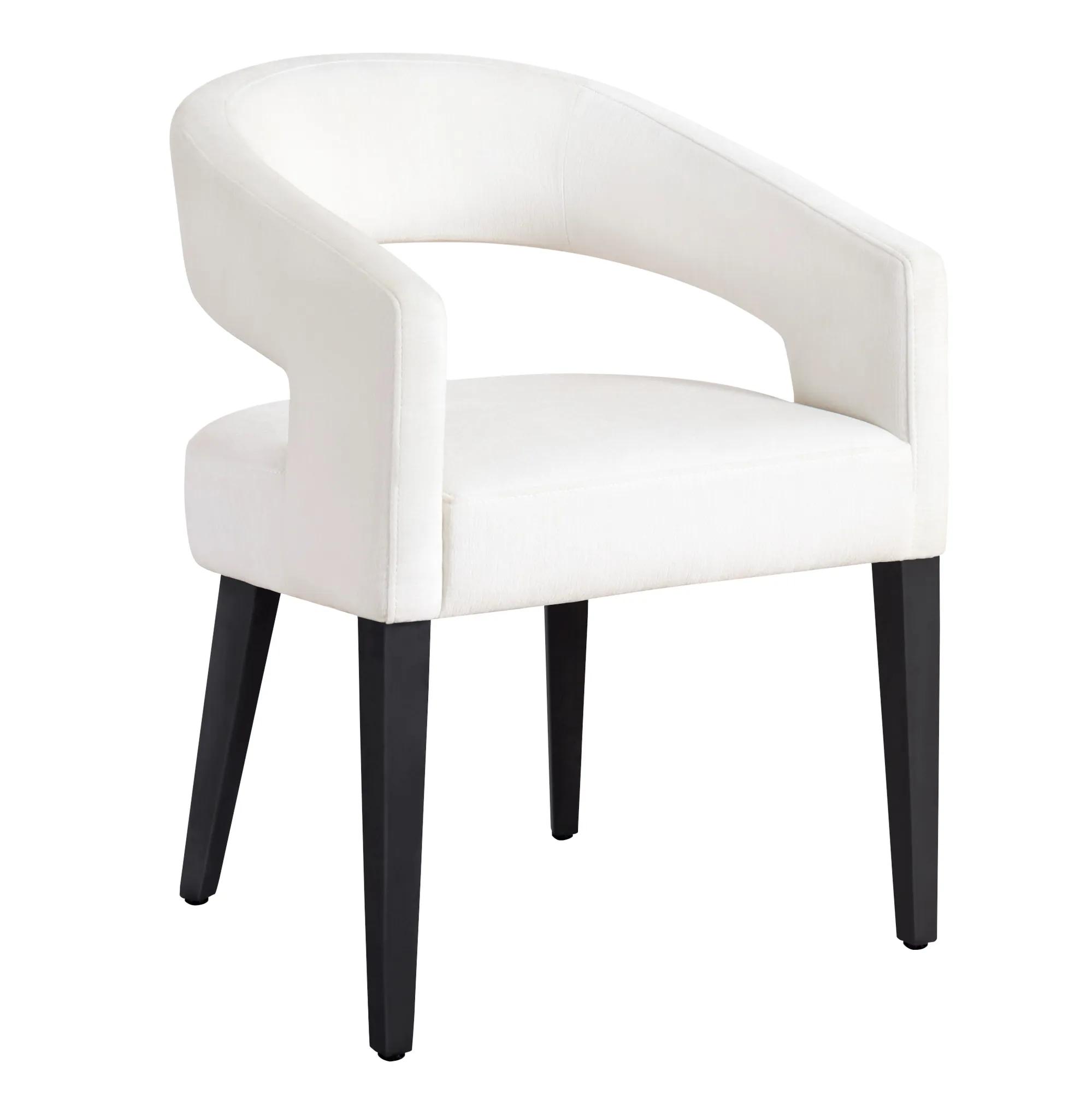
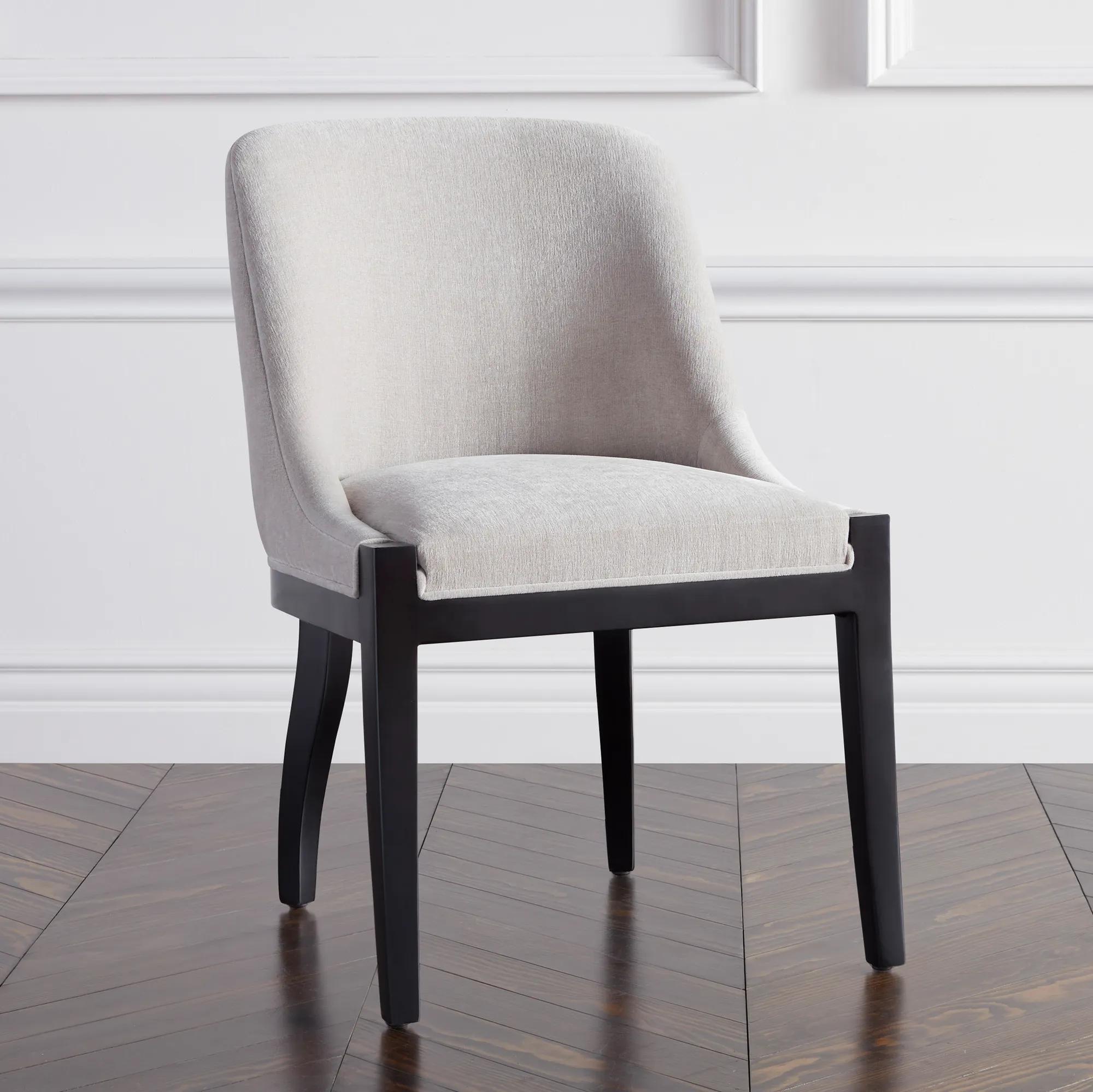
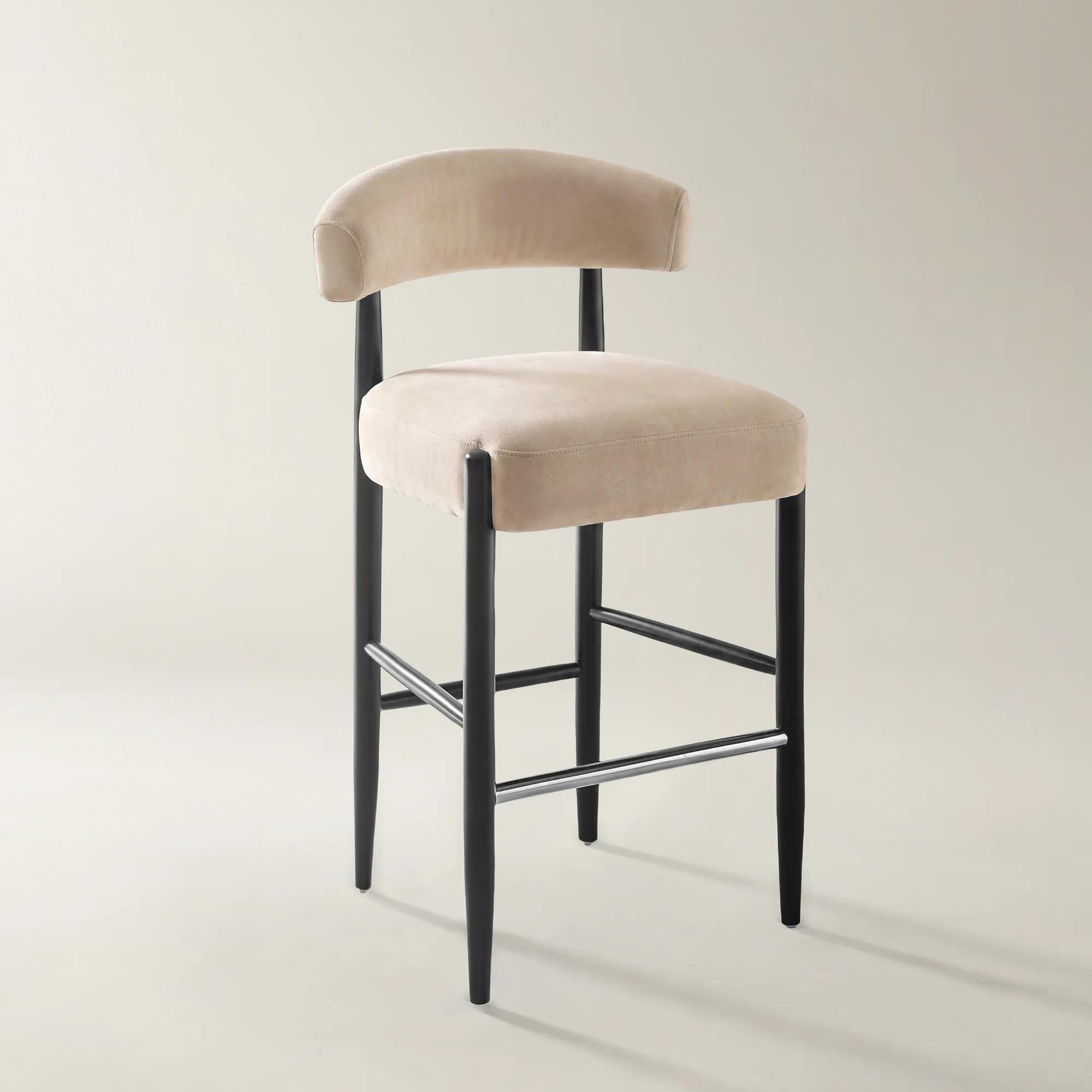
Explore seating ideas for dinner parties with dining chairs and seating that bring a sense of occasion to your table. Consider silhouettes that complement your dining table, proportions that give each guest room to settle in, and styles that feel expressive together—whether you favor a coordinated arrangement or a dramatic mix.
A dinner party begins long before the first plate arrives, with a room that invites guests to settle in and stay for another story. Seating gives that invitation its shape: a graceful curve at the head of the table, a sweep of rich upholstery along the sides, a sculptural silhouette that looks as compelling from the doorway as it does up close. Seating ideas for dinner parties center on dining chairs, upholstered armchairs, benches, and occasional seating that bring comfort and visual presence to the gathering. For hosts who love a composed, formal table, repeating a chair silhouette creates an elegant rhythm beneath the lighting and around the place settings. A more expressive arrangement might pair tailored side chairs with generously proportioned host chairs, giving the ends of the table a distinct sense of occasion. The mix feels intentional when a finish, fabric tone, or curved detail carries through the arrangement; every seat can have character without competing for attention. Upholstery adds softness to a room filled with glass, metal, and polished surfaces, while exposed wood or gleaming metal frames introduce definition. Jewel-toned fabric can deepen the atmosphere around a neutral table, and pale upholstery can create a luminous contrast against darker furniture. Texture deserves as much attention as color: velvet catches light differently from a woven fabric, and smooth seating surfaces offer another visual note beside layered linens. These choices suit everything from an intimate anniversary dinner to a lively gathering of friends, with the seating establishing how relaxed or ceremonious the evening feels. A bench brings a continuous line to one side of a rectangular table, while individual chairs give each guest a clearly defined place. Curved backs can soften an angular dining space, and open-frame designs allow more of a striking table base to remain visible. The most compelling arrangement lets the furniture and the people share the scene, with enough presence to make the room memorable and enough ease to keep conversation at the center.
Beautiful dining room seating also needs to belong comfortably to the table and the room around it. Seat height, overall width, back height, and arm clearance all influence how an arrangement works once guests are seated. Many dining combinations allow roughly 10 to 12 inches between the seat surface and the tabletop, although a deep apron or substantial table base can reduce usable legroom. That relationship matters more than matching silhouettes alone: a chair may look perfectly proportioned beside a table yet feel restrictive beneath it. Armchairs need particular attention because the arms may prevent them from sliding under the edge, increasing the space the arrangement occupies even between gatherings. Allowing about 24 inches of table edge per person offers a useful starting point, with more room often needed for broad chairs, generous place settings, or guests who appreciate additional elbow space. A pedestal table can offer flexibility around the perimeter, while corner legs may limit where chairs sit comfortably. Behind each seat, room to pull back and stand makes dinner feel gracious rather than crowded; a passage used by other guests needs additional clearance beyond that movement. In an apartment dining nook, slimmer profiles can preserve breathing room without sacrificing expressive design. In a larger dining room, substantial upholstered chairs can give a long table the visual weight it deserves. Comfort becomes especially important when the evening moves from appetizers to dinner and an unhurried dessert. Supportive backs, well-proportioned seats, and cushioning that retains its shape contribute to that experience, although the ideal level of softness varies by guest. For older relatives or anyone who benefits from support when standing, a stable chair with arms may be a thoughtful choice. Benches can accommodate a flexible arrangement, but individual chairs often make entering and leaving the table easier. Extra seating borrowed from a living area works best when its seat height and footprint suit dining, rather than simply filling an empty place. The result should feel considered, with no guest tucked awkwardly beside a table leg or left balancing at a seat designed for a different purpose.
Materials and construction determine how confidently seating moves between daily meals and more elaborate entertaining. Wood frames bring warmth and varied grain, while metal frames can lend a crisp, architectural outline; either can support a dramatic dining room when the finish complements the surrounding surfaces. A well-constructed frame, secure joinery, and a stable base matter as much as decorative detail, particularly in households where chairs are moved frequently or dining spaces serve several purposes. Upholstered seating offers a rich range of textures, but fabric selection deserves attention beyond its appearance. A densely woven textile may suit frequent use, while velvet introduces a plush, light-catching surface whose pile can show changes in direction or pressure. Performance fabrics may offer enhanced resistance to staining or wear, depending on their construction and care requirements, but no fabric should be treated as immune to spills. Leather and leather-look upholstery can create a sleek effect, though their composition and maintenance needs differ. Manufacturer care instructions remain the best reference for each material: prompt blotting, appropriate cleaning methods, and regular gentle removal of dust help preserve the finish without unnecessary abrasion. Decorative metal finishes and painted wood surfaces also benefit from compatible cleaners rather than harsh products that can dull or damage them. Floor-protective pads suited to the chair and flooring can help reduce marking when guests pull seats in and out. For households with children, frequent visitors, or pets, cleanability and resistance to everyday wear can be as important as a striking profile. For hosts whose gatherings extend beyond the dining table, coordinating dining furniture with Home Seating For Parties creates a visual connection to the places where guests enjoy drinks before dinner or linger afterward. Seating chosen for a new home or a shared household also deserves that balance of personality and practical fit, especially when dimensions and fabric preferences are known. With thoughtful proportions, expressive materials, and care suited to the finish, dinner-party seating becomes part of the home’s enduring character: distinctive enough to frame a celebration, comfortable enough to welcome another course.
FAQs
Give your dining table a collected, expressive look by pairing contrasting silhouettes with a shared design detail. Sculptural host chairs bring drama to the ends of the table, while streamlined side chairs create a graceful rhythm. Repeat an upholstery tone, wood finish, or metallic accent to make the mix feel intentional.
Velvet brings sumptuous texture and rich color to a candlelit table, while leather offers a sleek, tailored contrast. For a more layered composition, pair textured woven upholstery with gleaming chair frames. Let the fabric establish the mood, then echo its tones in napkins, florals, or dinnerware.
A dining bench introduces a convivial note without sacrificing polish. Style an upholstered bench along one side of the table and balance it with individual chairs opposite for an artful contrast. A channel-tufted silhouette or sculptural base can give the arrangement a distinctly glamorous character.
Treat your seating as the opening note of the tablescape. Jewel-toned chairs invite richly layered linens and luminous glassware, while neutral upholstery lets dramatic florals and sculptural candleholders command attention. Repeat a chair-frame finish in select tabletop accents to draw the entire composition together.
Create a distinct conversation setting with accent chairs angled toward a sofa or arranged around a cocktail table. Carry a color or texture from the dining room into this vignette so the evening feels visually connected. Sculptural chairs, sumptuous upholstery, and softly glowing lamps give guests an inviting setting for lingering conversation.