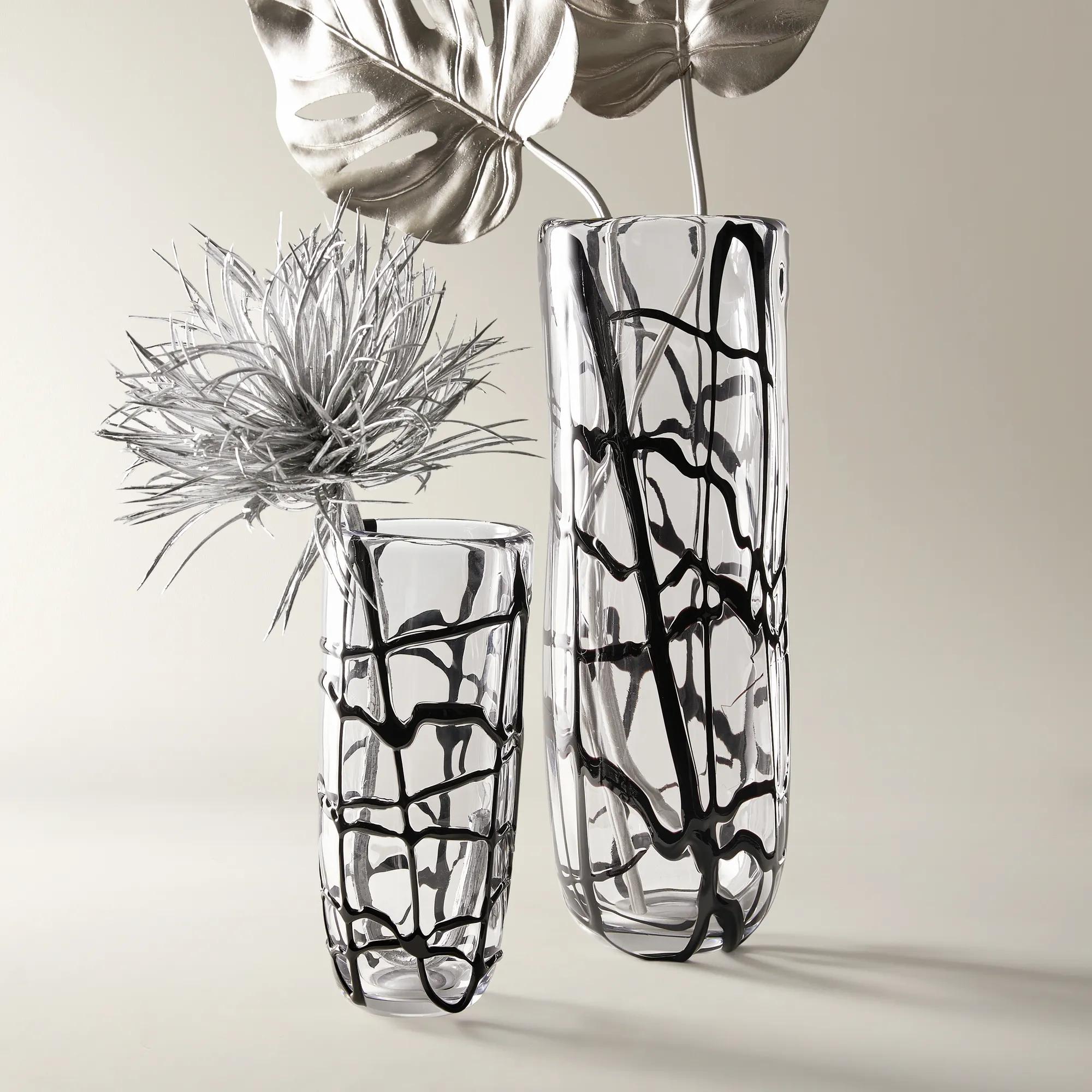
Glass Decorative Canisters
Glass Decorative Canisters
-
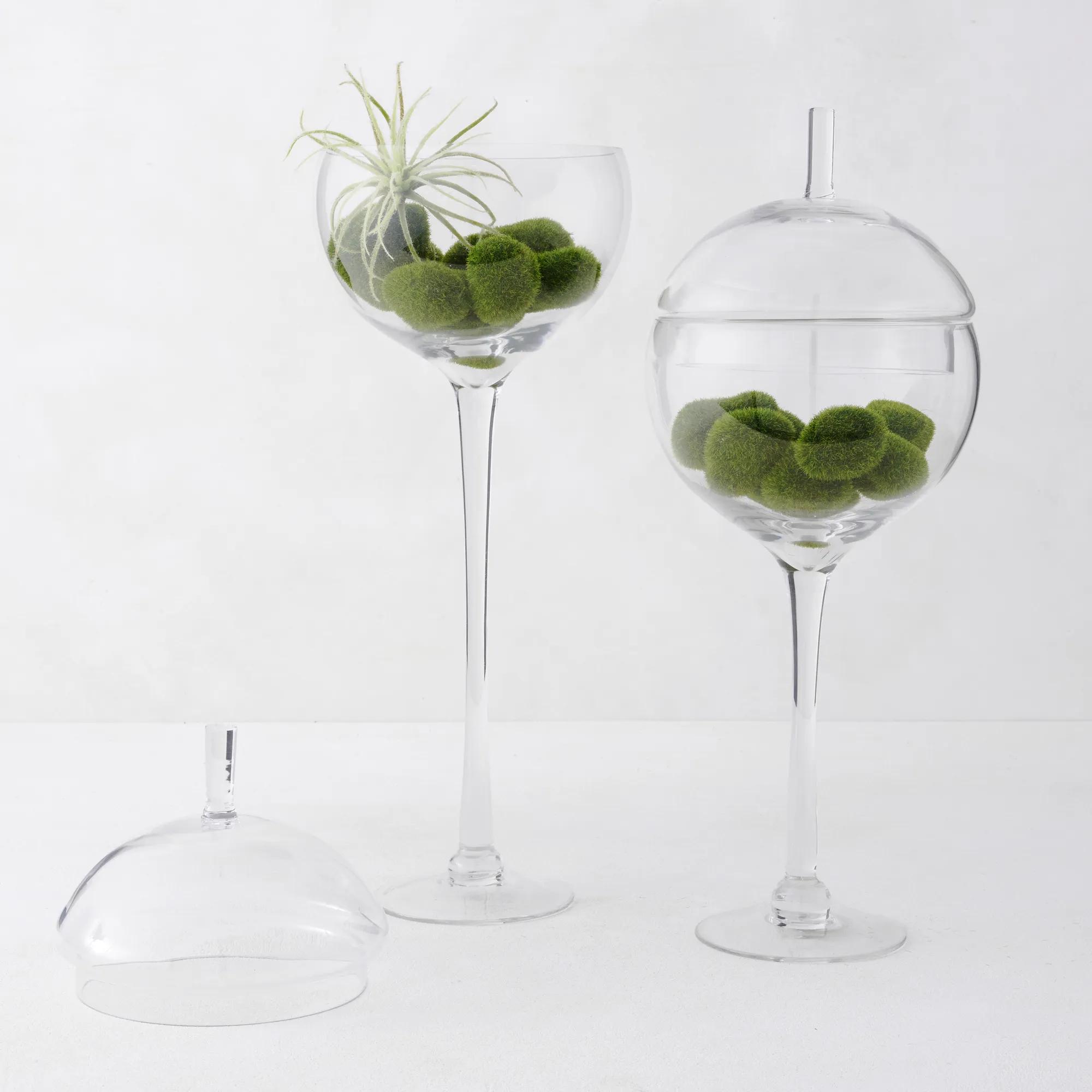 Jules Glass Decorative Canisters$99
A shapely mouthblown glass canister perfect for displaying cherished objects as decorative art.
Add To Cart -

 Angelica Soft Nude Handblown Glass Canister 9.25"$59
A soft nude handblown glass canister adding artisanal elegance to modern décor.
Add To Cart -
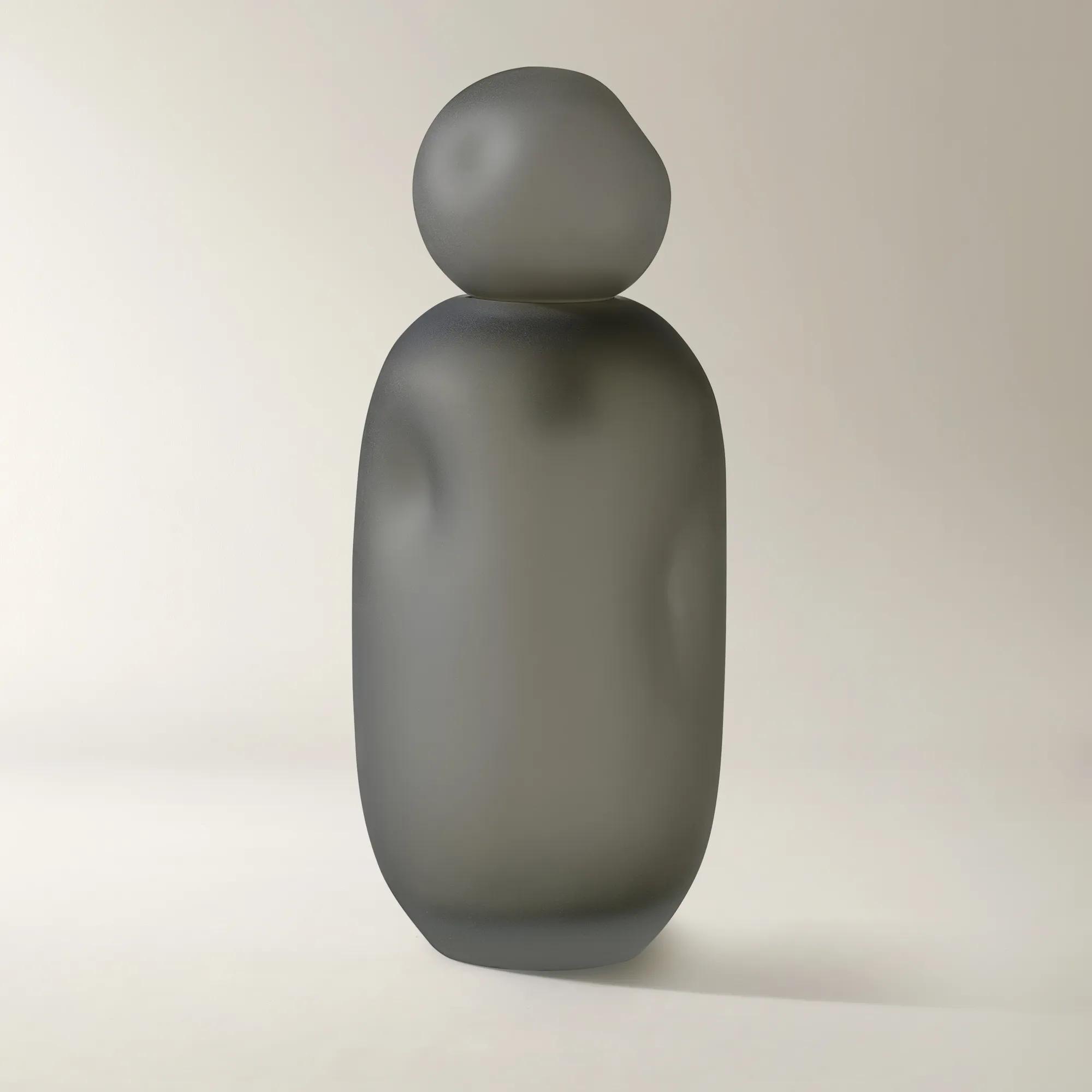 Angelica Charcoal Handblown Glass Canister 14.25"$79
A charcoal handblown glass canister offering an elegant accent for modern decorative displays.
Add To Cart -
 Camilla Mouth Blown Antique Mauve Blush Glass Canister 4.5"$39
A handblown glass canister in antique mauve and blush with playful bauble accent details.
Add To Cart -
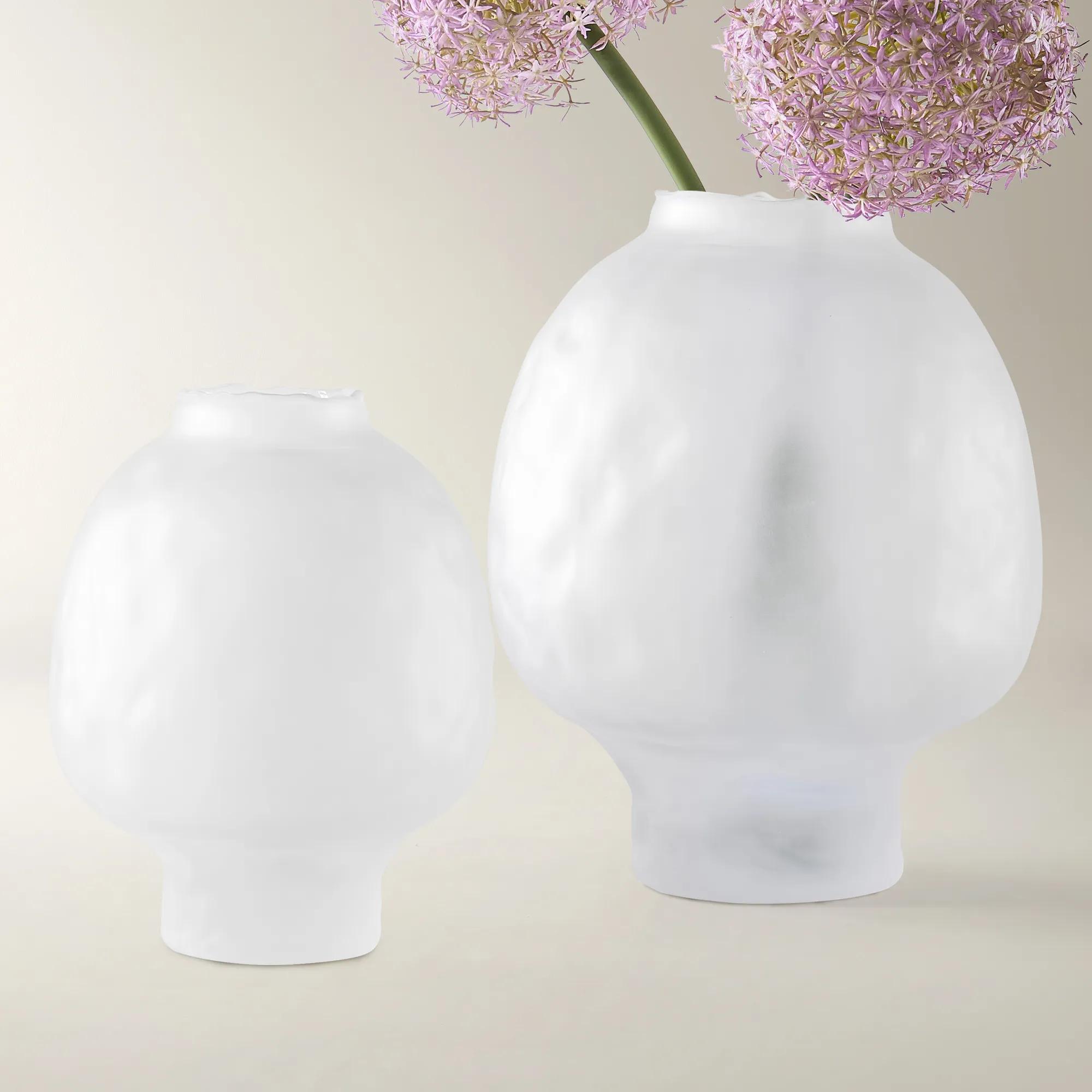
 Pippa Mouth Blown Seaglass Glass Canister 9.25"$79
A handblown glass canister in a calming seaglass hue with a bold, sculptural silhouette.
Add To Cart -
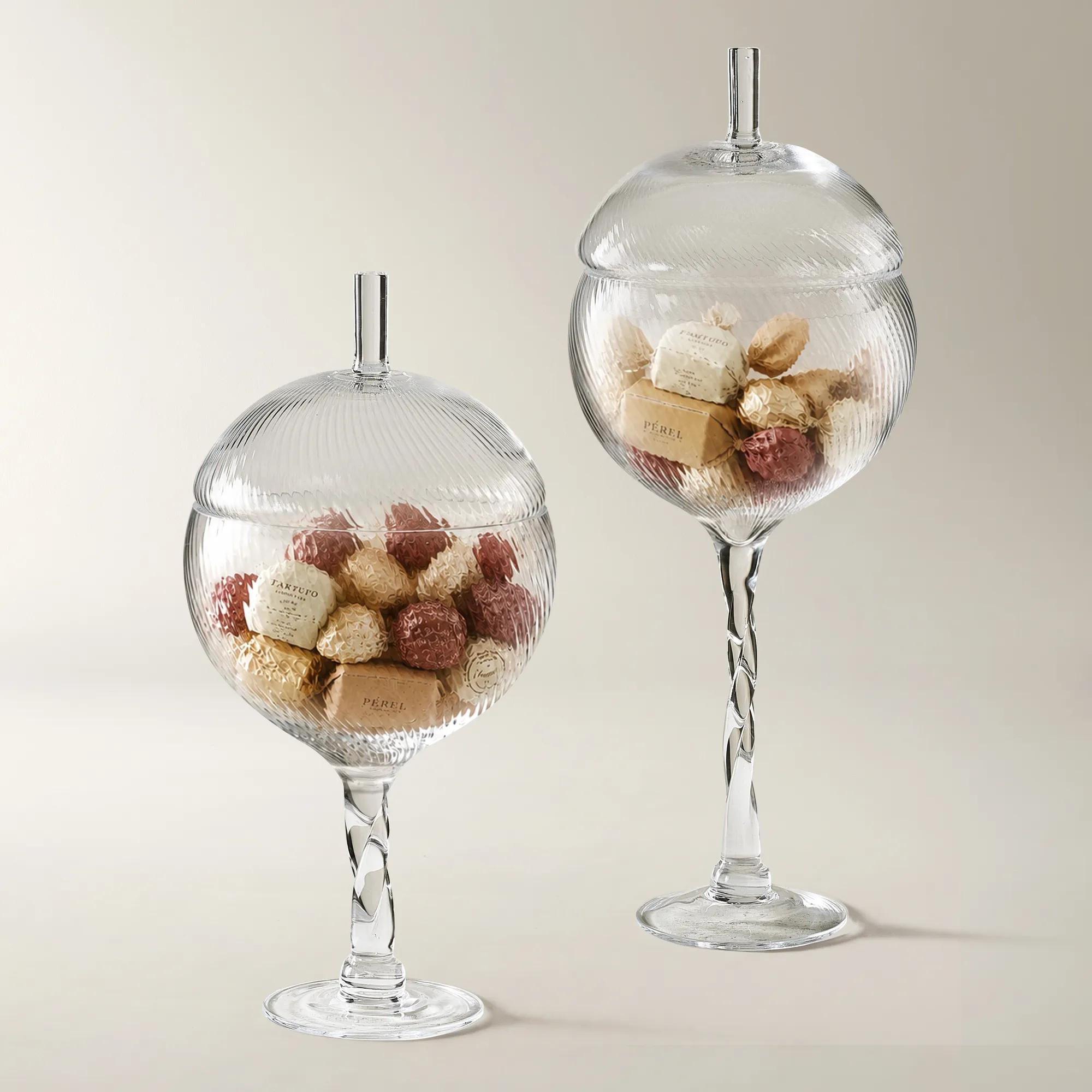
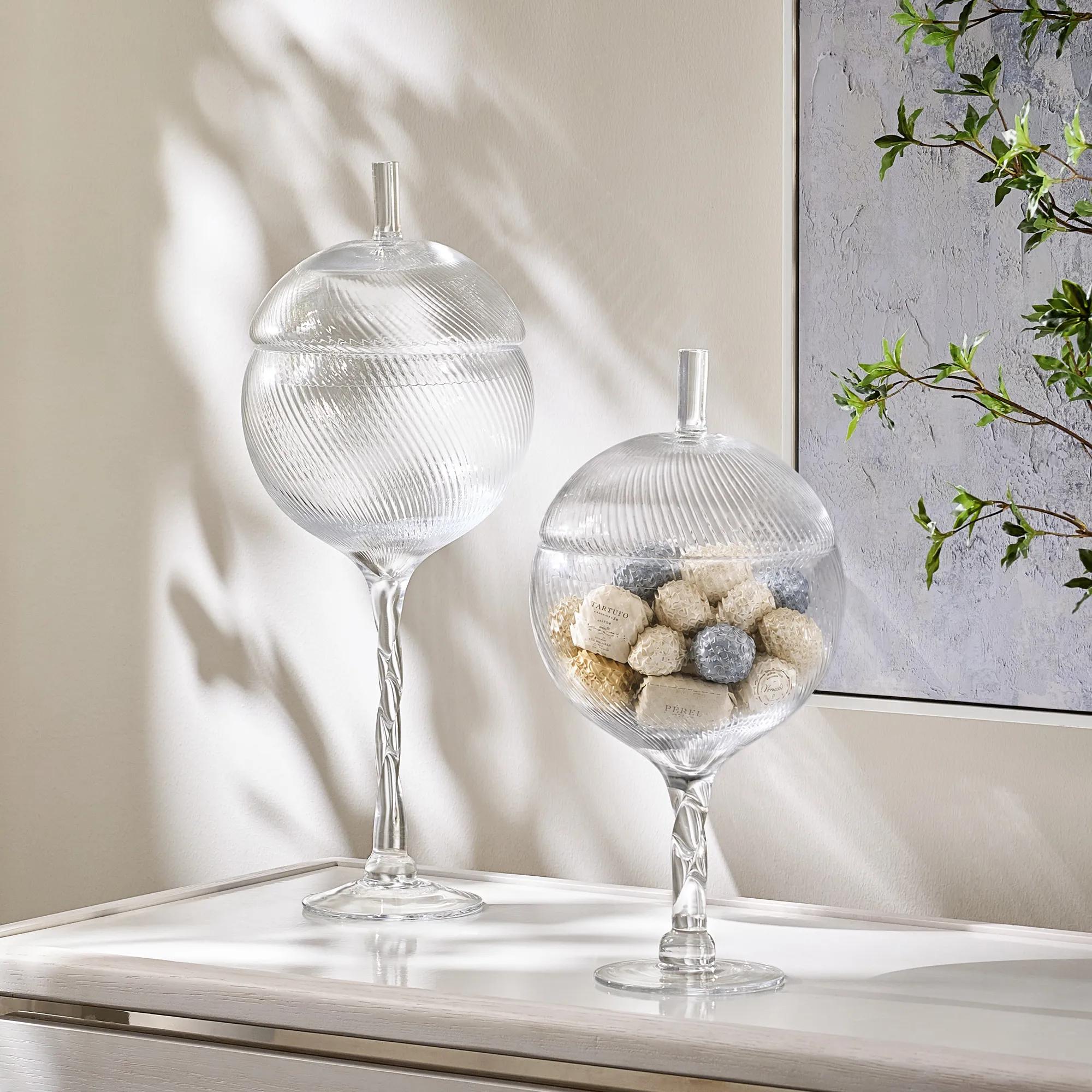 Opal Mouth Blown Clear Glass Canisters$89
A clear handblown glass canister with a sculptural twisted design, offering food-safe decorative storage.
Add To Cart -
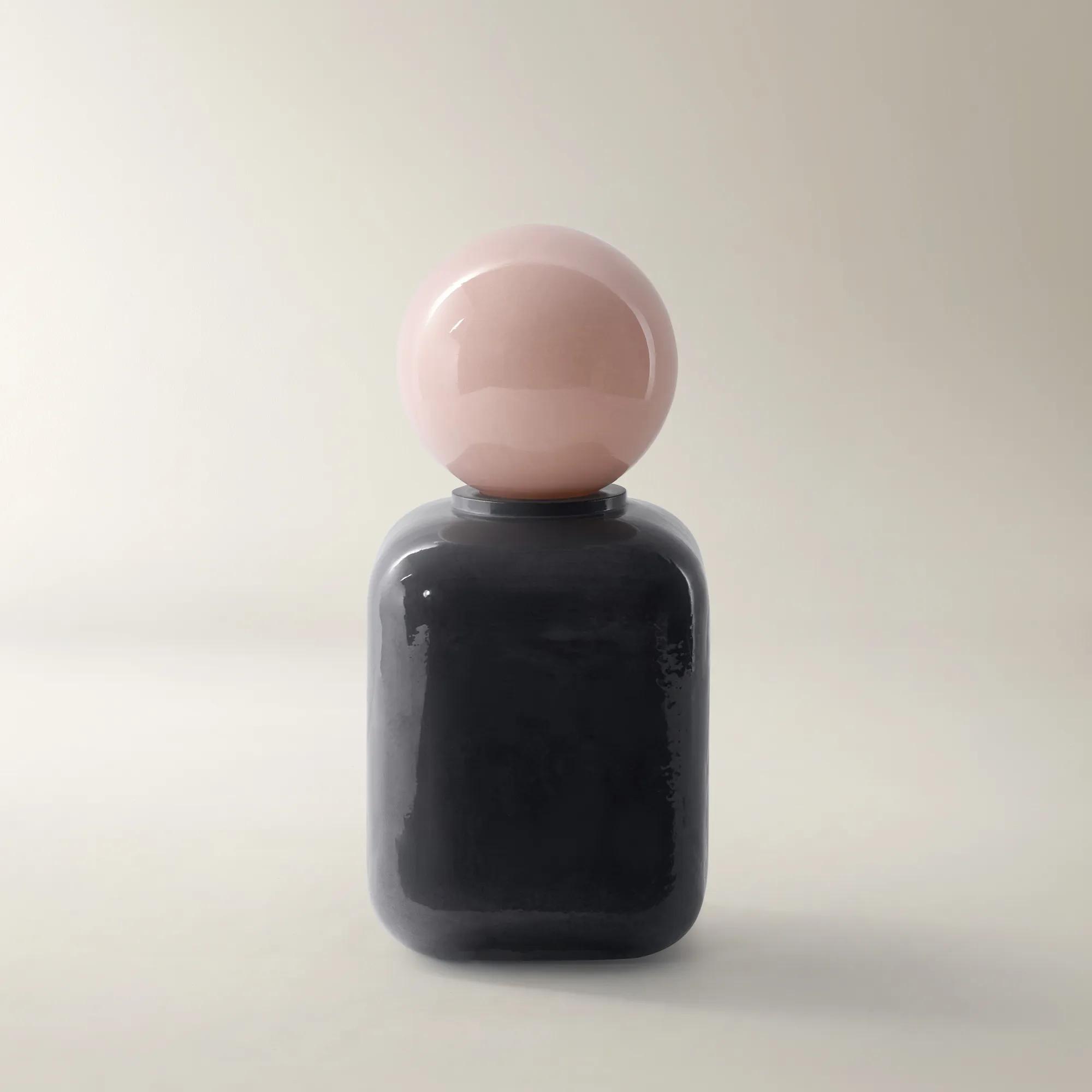 Camilla Mouth Blown Smoked Pearl Blush Glass Canister 6.5"$39
A handblown glass canister in smoked pearl and blush with playful bauble accents for decorative charm.
Add To Cart

Glass Decorative Canisters
Explore glass decorative canisters to bring light-catching dimension to shelves, consoles, and tabletop displays. Consider each canister’s proportions and silhouette alongside your existing decor, whether you’re selecting a sculptural focal point or creating a layered arrangement with other decorative accents.
Glass decorative canisters bring a distinctive tension to a room: the lightness of transparent glass balanced by the presence of a sculptural silhouette. A generous rounded vessel can soften the crisp geometry of a console, while a slender, lidded shape introduces height beside a low bowl or a stack of art books. Their appeal lies in that interplay of form, reflection, and detail. Clear glass allows the contents to become part of the composition; tinted or textured glass creates a more mysterious effect, filtering what sits inside and adding depth to the surrounding palette. Ribbed surfaces, faceted patterns, and smooth curves each interact differently with light, giving decorative glass containers a character that changes with their placement. Near a lamp, a textured vessel may scatter small highlights across a tabletop; against a dark painted wall, clear glass can reveal its outline with striking precision. The lid contributes just as much to the overall impression. A rounded knob offers a graceful finish, while an elongated finial gives the piece a more architectural profile. Where metal accents are present, their finish can echo nearby hardware, picture frames, or lighting without requiring every detail in the room to match. Scale deserves equal attention. A substantial canister can hold its own on a broad sideboard, but a narrow shelf calls for a smaller footprint and enough clearance to remove the lid comfortably. Consider the full height, including any decorative top, rather than the height of the vessel alone. A pair can establish a composed rhythm on a mantel, while a grouping of different heights creates movement across a longer surface. Leaving space between the pieces lets their contours remain visible. For an expressive interior, the strongest arrangement often combines one richly detailed canister with quieter surrounding shapes, allowing its glasswork to command attention without competing with every object nearby. Even an empty vessel can feel complete when its proportions and finish are given room to speak.
The beauty of a glass canister is most compelling when its intended use supports the room around it. In a dressing area, a lidded container can give cotton rounds or other dry essentials a polished home, provided its opening and depth make them easy to reach. On a console or bookshelf, a decorative vessel can frame a collection of shells, smooth stones, or other small keepsakes, turning familiar objects into a deliberate display. Uniform contents emphasize the silhouette; a more varied collection creates layers of color and texture. Avoid packing the vessel so densely that the glass disappears behind what it holds. For kitchen or dining use, suitability matters more than appearance alone. Only canisters expressly identified as food-safe should hold food directly, and a decorative lid should not be assumed to provide an airtight seal. Cookies, coffee, and other pantry staples have different storage needs, so confirm the vessel’s intended use and closure before choosing it for everyday food storage. Painted surfaces, metallic accents, and decorative interior finishes may require additional restrictions. The same care applies to liquids: a canister designed for display is not automatically watertight or appropriate for fresh stems. Glass thickness, base width, and lid design also influence how a piece feels in daily use, although a heavier vessel is not necessarily resistant to impact. A broad, stable base is especially valuable on a frequently used vanity or countertop. Keep fragile glass away from crowded edges and places where children or pets might knock it over. Care should preserve both clarity and decorative detail. Follow the manufacturer’s instructions, using a soft cloth and gentle cleaning methods where appropriate; abrasive pads can scratch surfaces, and prolonged soaking may damage applied finishes or attached embellishments. Do not assume embellished glass or metal-topped lids are dishwasher-safe. Dry washable interiors thoroughly before replacing the lid, and avoid sudden temperature changes that can stress glass. Setting the lid on a protected surface while cleaning helps safeguard its rim and keeps delicate finials from bearing weight.
Glass decorative canisters also offer a refined way to connect different areas of a home without repeating an identical arrangement. A clear vessel on an entry table and a subtly textured one on a bedroom dresser can share a visual language while serving entirely different purposes. In a living room, their transparency gives the eye a place to rest among upholstered furniture, richly patterned textiles, and substantial decorative objects. On a dining sideboard, their vertical lines can balance the breadth of serving pieces and framed artwork. Paired with Unique Glass Candle Holders, decorative canisters create an interplay of curved profiles, luminous surfaces, and varied heights. Keep adequate distance from any open flame, and let the arrangement feel collected rather than crowded. A tray can establish a boundary for a small grouping, especially on a large tabletop, but each vessel should remain easy to lift without brushing against its neighbors. Color can make the composition more expressive: clear glass against a lacquered surface feels crisp and dramatic, while softly tinted glass beside warm metal introduces a gentler richness. Consider the background as carefully as the objects themselves. Busy wallpaper may call for a simple silhouette, whereas an unadorned wall can give intricate glasswork the attention it deserves. For a housewarming, wedding, or host gift, a decorative glass canister can be a thoughtful choice for someone who enjoys arranging meaningful objects and refining the details of a room. The recipient’s space and habits provide the best clues: a compact vessel suits a small vanity, while a taller form may be better suited to a generous console or built-in shelf. An easy-to-handle lid matters for frequent use; a more elaborate profile may be best reserved for display. Whether chosen for a cherished collection, a graceful countertop accent, or an architectural flourish among books and art, a well-proportioned glass canister adds more than storage. It gives everyday belongings a considered setting and brings another layer of light, shape, and personal expression into the home.
FAQs
Style glass decorative canisters as a curated collection on a console, sideboard, or open shelf. Pair their luminous surfaces with a sculptural accent and an art book for a composition rich in contrast. Leave a little breathing room around the arrangement so each silhouette has its own moment.
Turn glass decorative canisters into personal displays with collected seashells, decorative beads, or ribbons in a deliberate color palette. A single type of filler creates a composed, gallery-inspired effect, while layered textures bring depth and intrigue. An unfilled canister can be equally expressive, allowing its form and transparency to take focus.
Glass decorative canisters bring a luminous accent to modern, glamorous, and transitional interiors. Set them against dark finishes for striking contrast, or pair them with tonal accessories for a softer expression of luxury. Their transparency lets surrounding colors and textures remain part of the story.
Create cohesion by repeating a color or shape from nearby artwork, vases, or decorative objects. Then introduce contrast: glass looks especially expressive beside textured textiles, matte ceramics, or gleaming metallic accents. The interplay of finishes gives a vignette dimension without requiring every piece to match.
Refresh glass decorative canisters with a thoughtful change of contents and surrounding accents. Showcase pastel ribbons in spring, collected shells in summer, richly colored decorative beads in fall, or lustrous ornaments for the winter holidays. Keep one signature color throughout the arrangement to make each seasonal transformation feel distinctly yours.