Formal Dining Room Tables
Formal Dining Room Tables
-
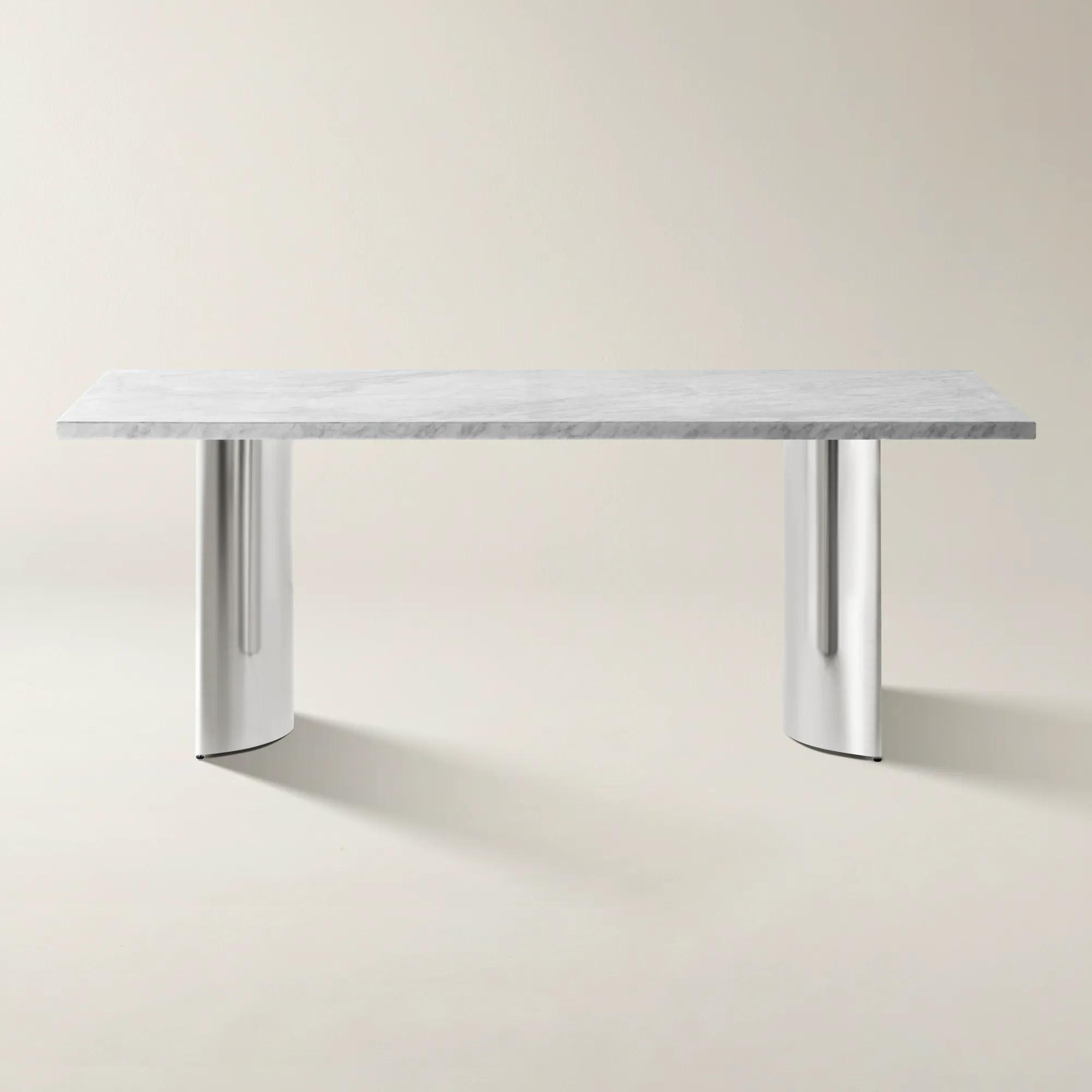 Muscat Rectangular White Marble Dining Table With Stainless Steel Base (84")$3099
A striking dining table featuring a natural white marble top with unique veining and a polished stainless steel base.
Add To Cart -

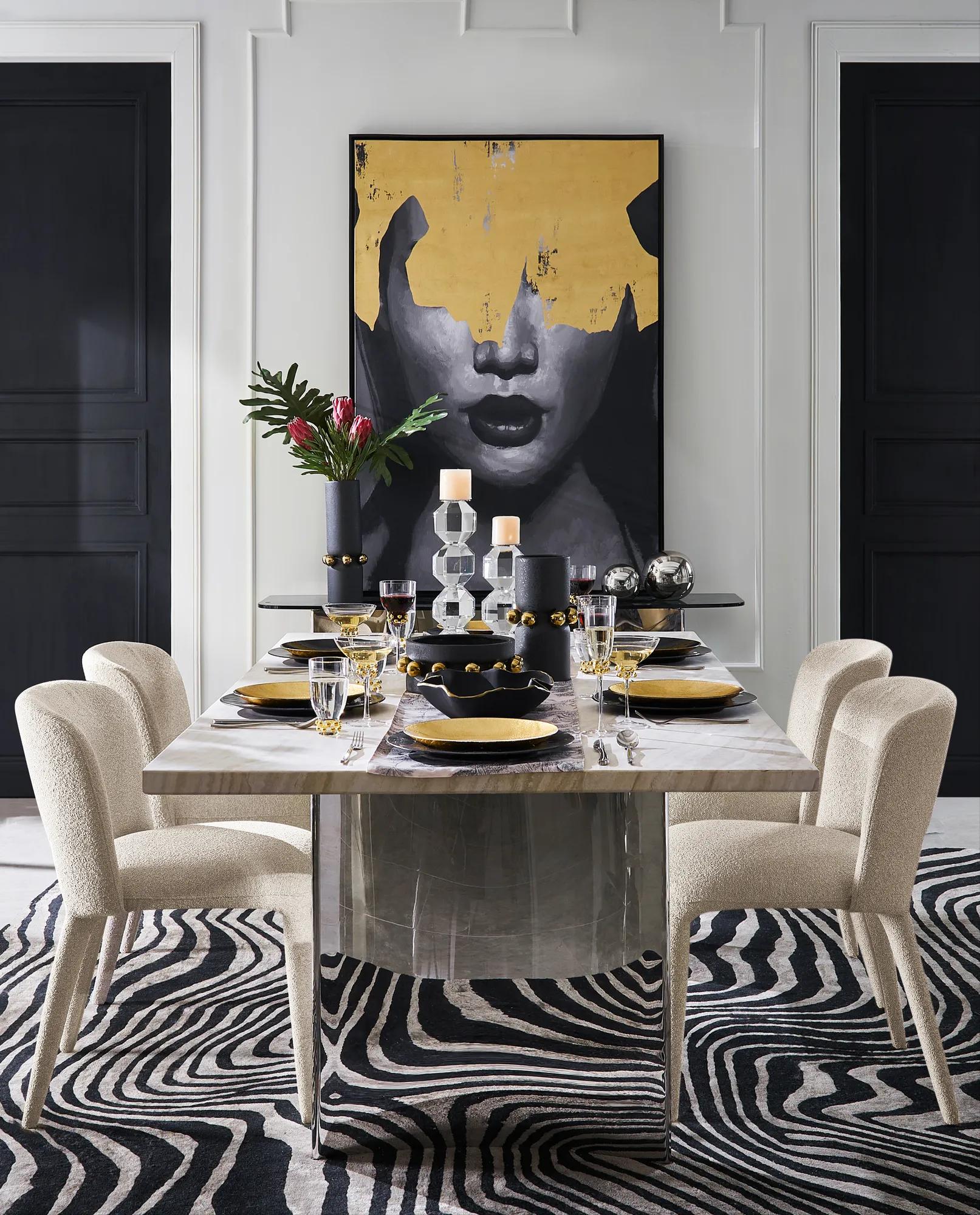 Muscat Rectangular Tan Marble Dining Table With Stainless Steel Base (84")$3099
A sophisticated dining table featuring a tan travertine marble top and polished stainless steel base.
Add To Cart -

 Matera Rectangular White Marble Dining Table With Stainless Steel Base (86.61")$2499
A modern dining table featuring a white marble top and polished stainless steel base for timeless elegance.
Add To Cart -
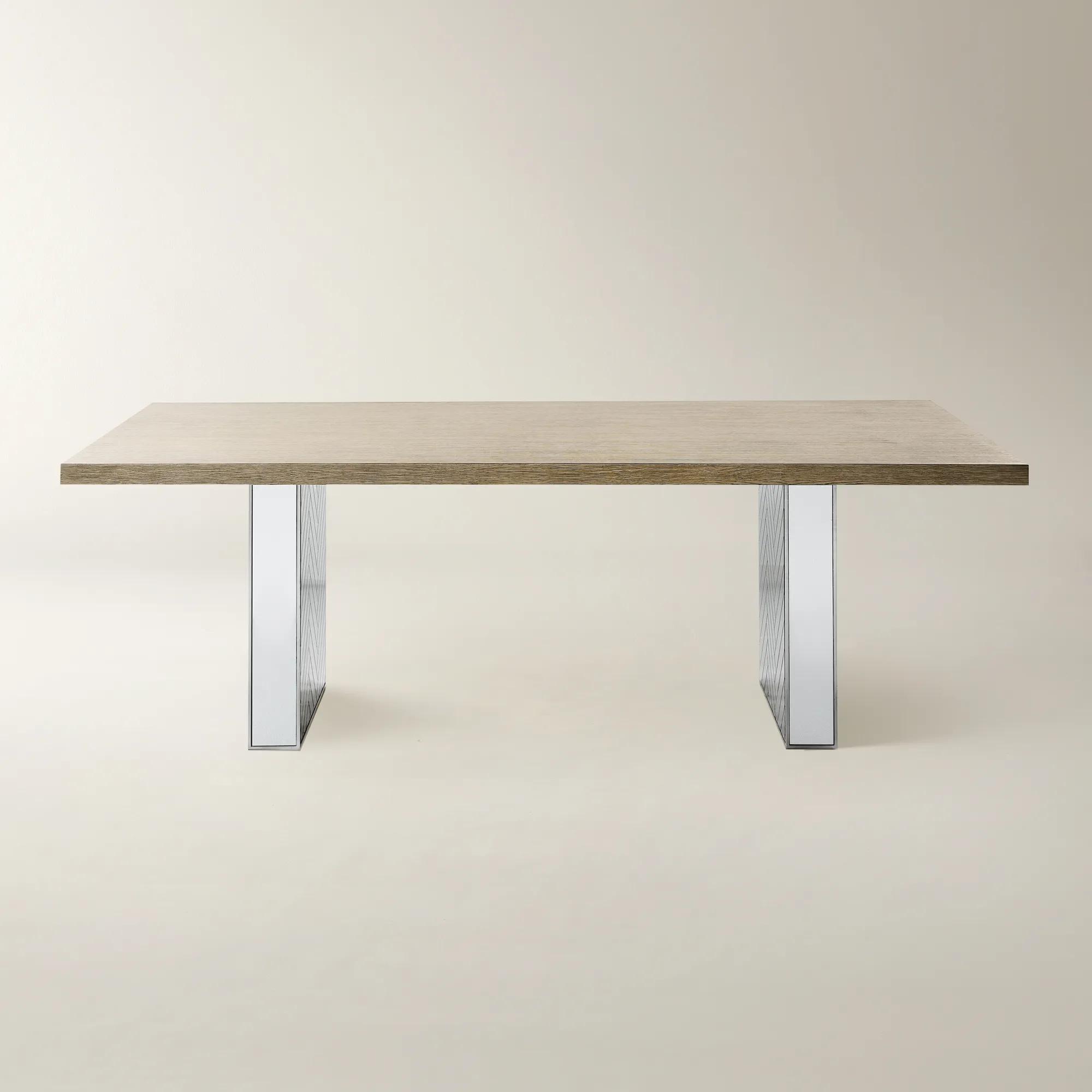
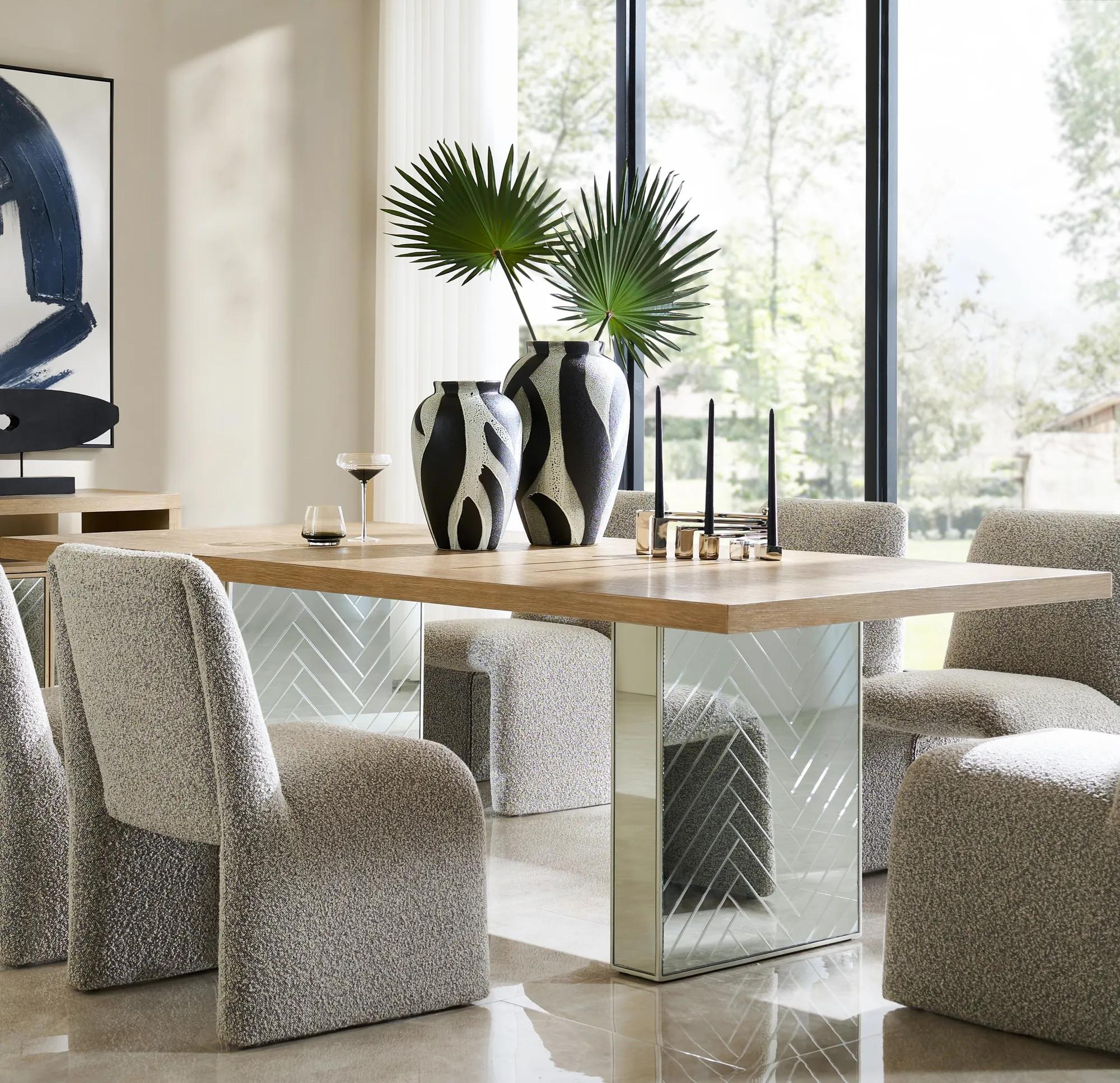 Glimmer Rectangular Seadrift Oak Dining Table With Mirrored Base (90.5")$1799
A modern dining table featuring a warm oak veneer top and a silver mirror-faced parquet base.
Add To Cart -

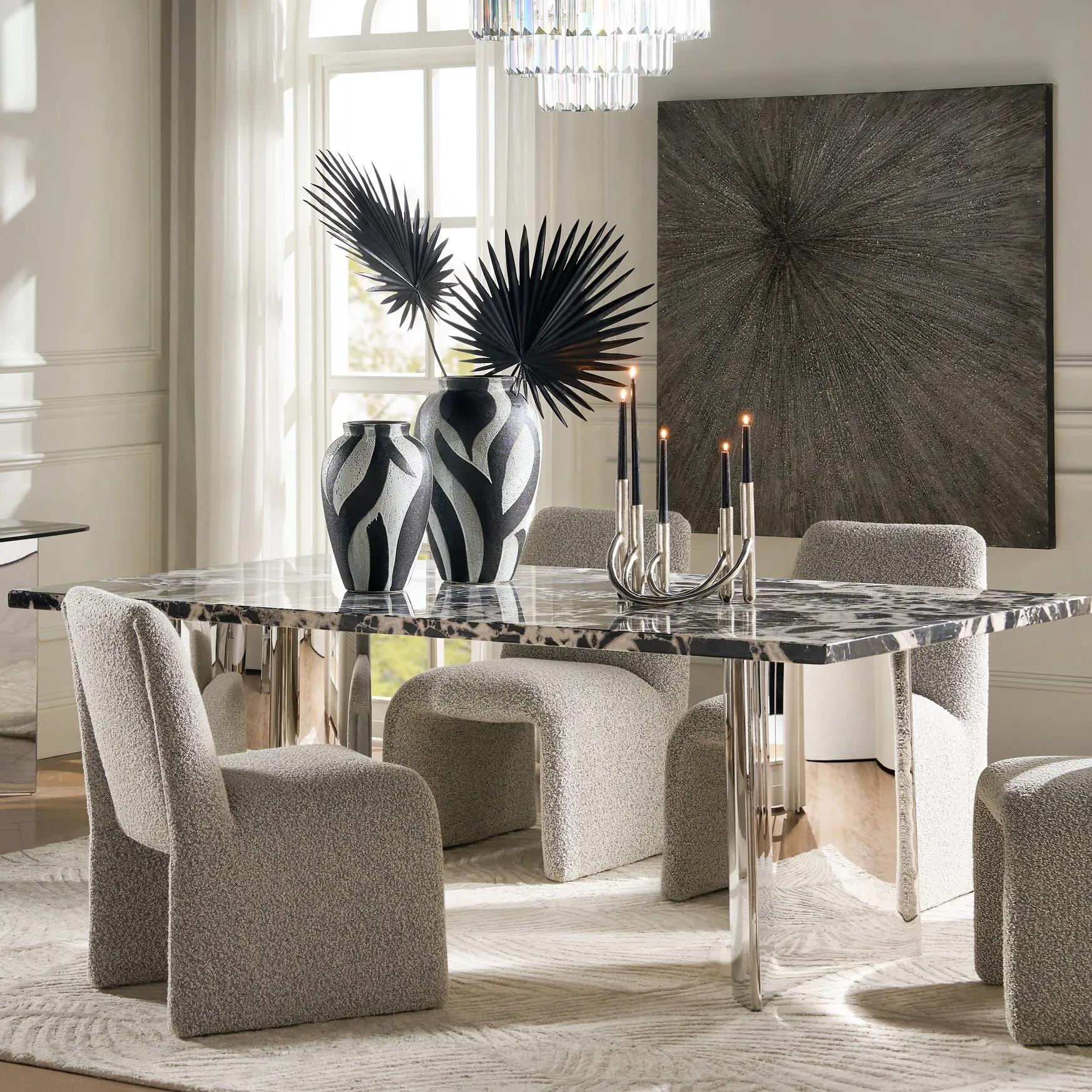 Muscat Rectangular Black Marble Dining Table With Stainless Steel Base (84")$3099
A dramatic black marble dining table with unique veining and a polished stainless steel base.
Add To Cart -
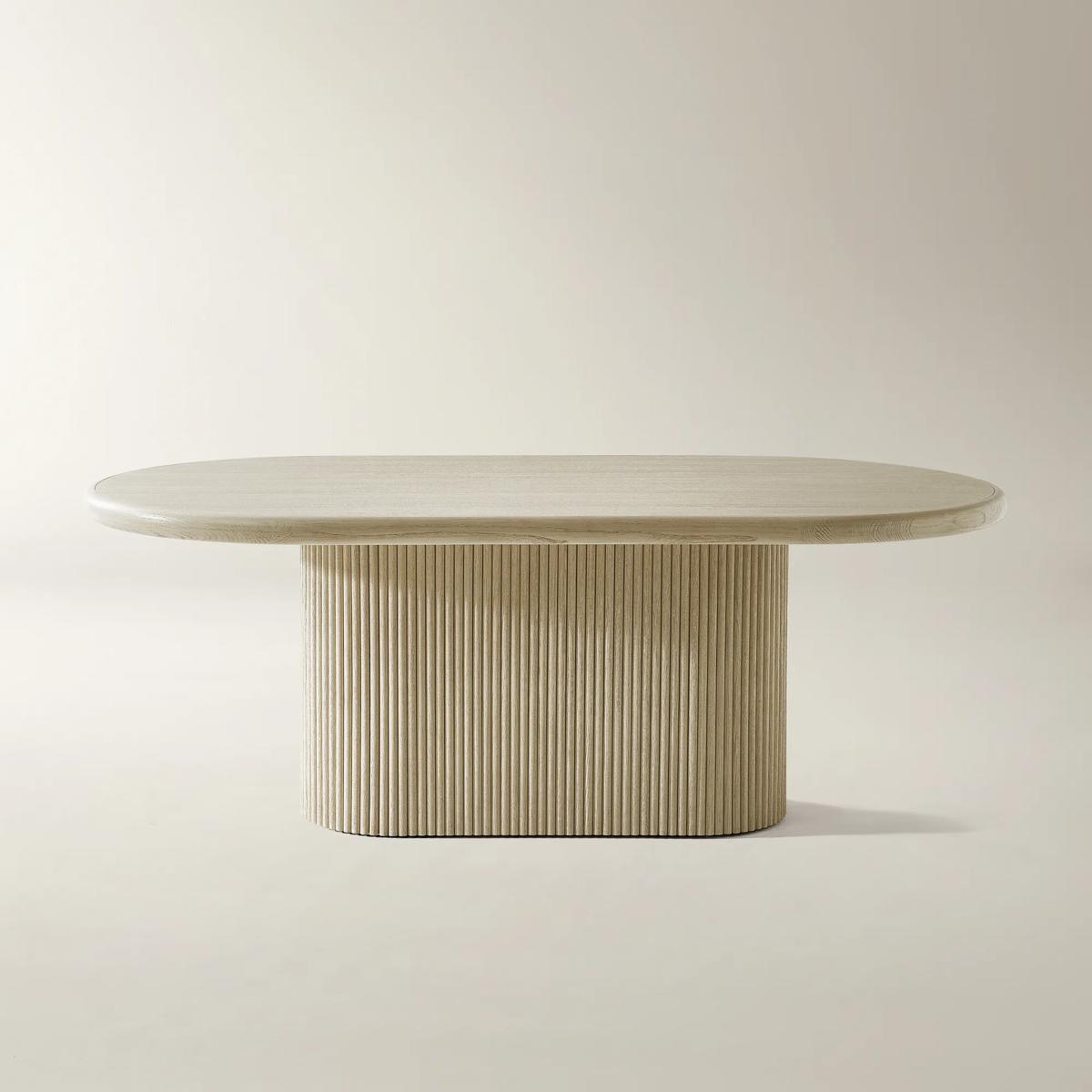
 Stria Oval Reeded White Oak Dining Table (82")$2199
A sculptural oval dining table featuring reeded oak, a single pedestal base, and gold-plated steel trim.
Add To Cart -
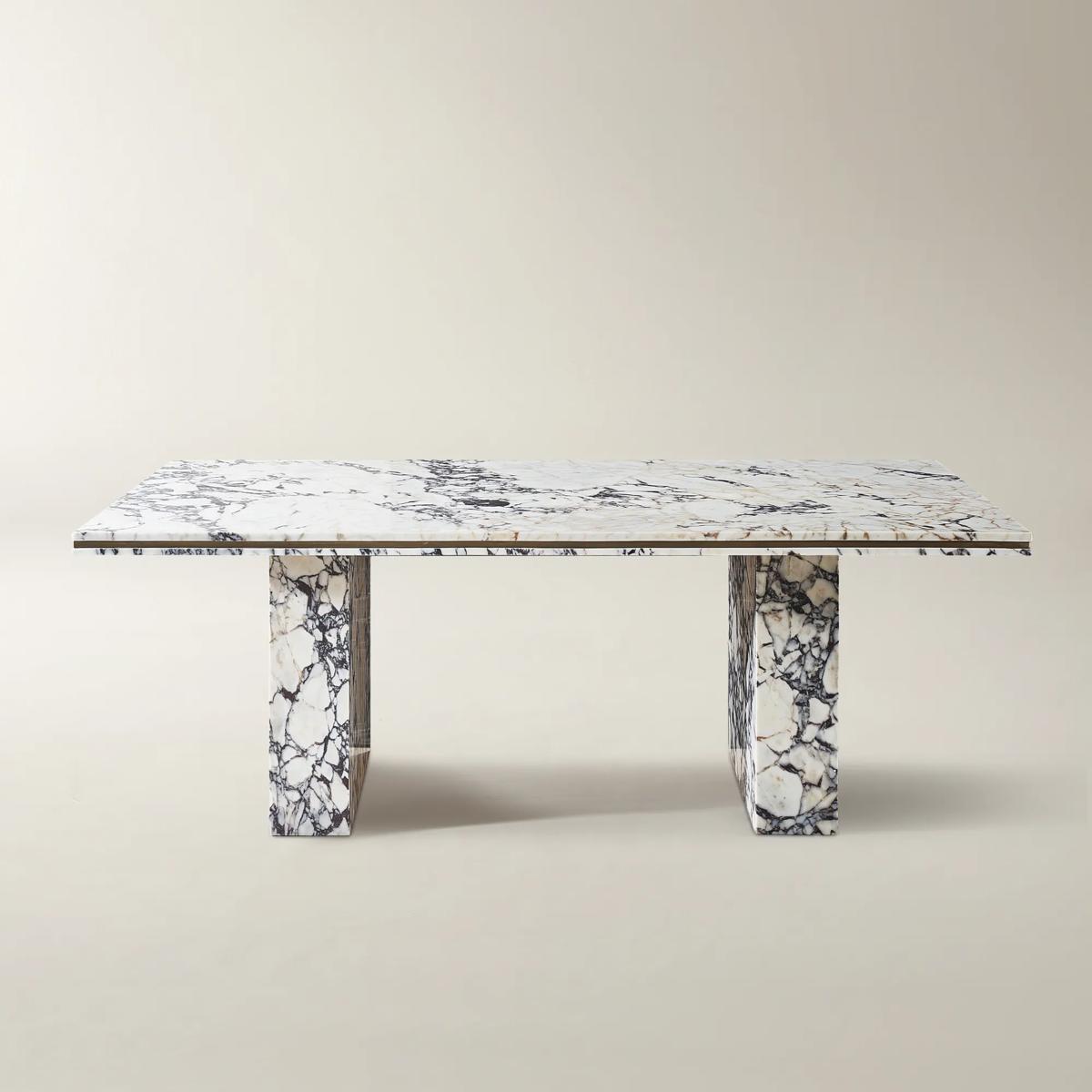
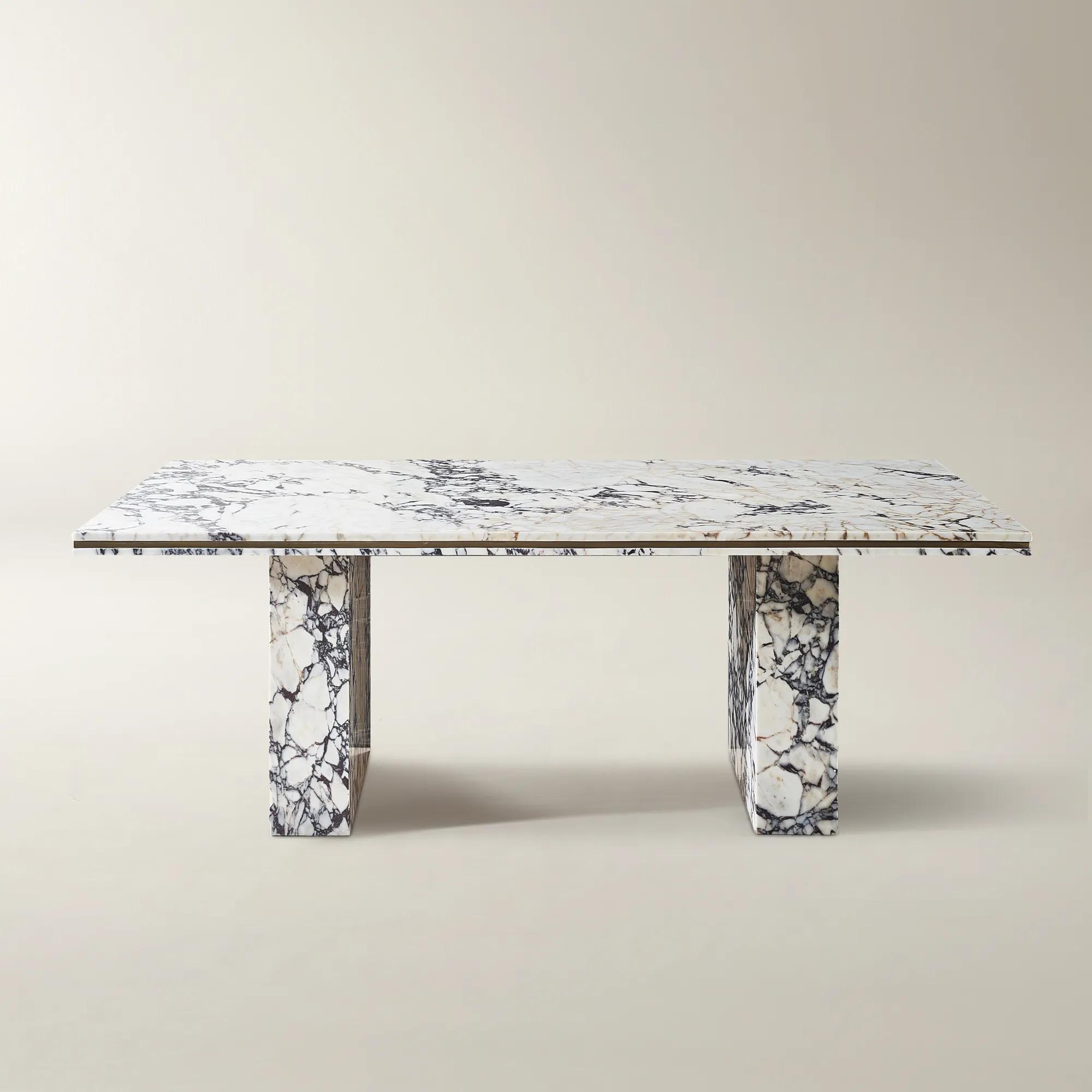
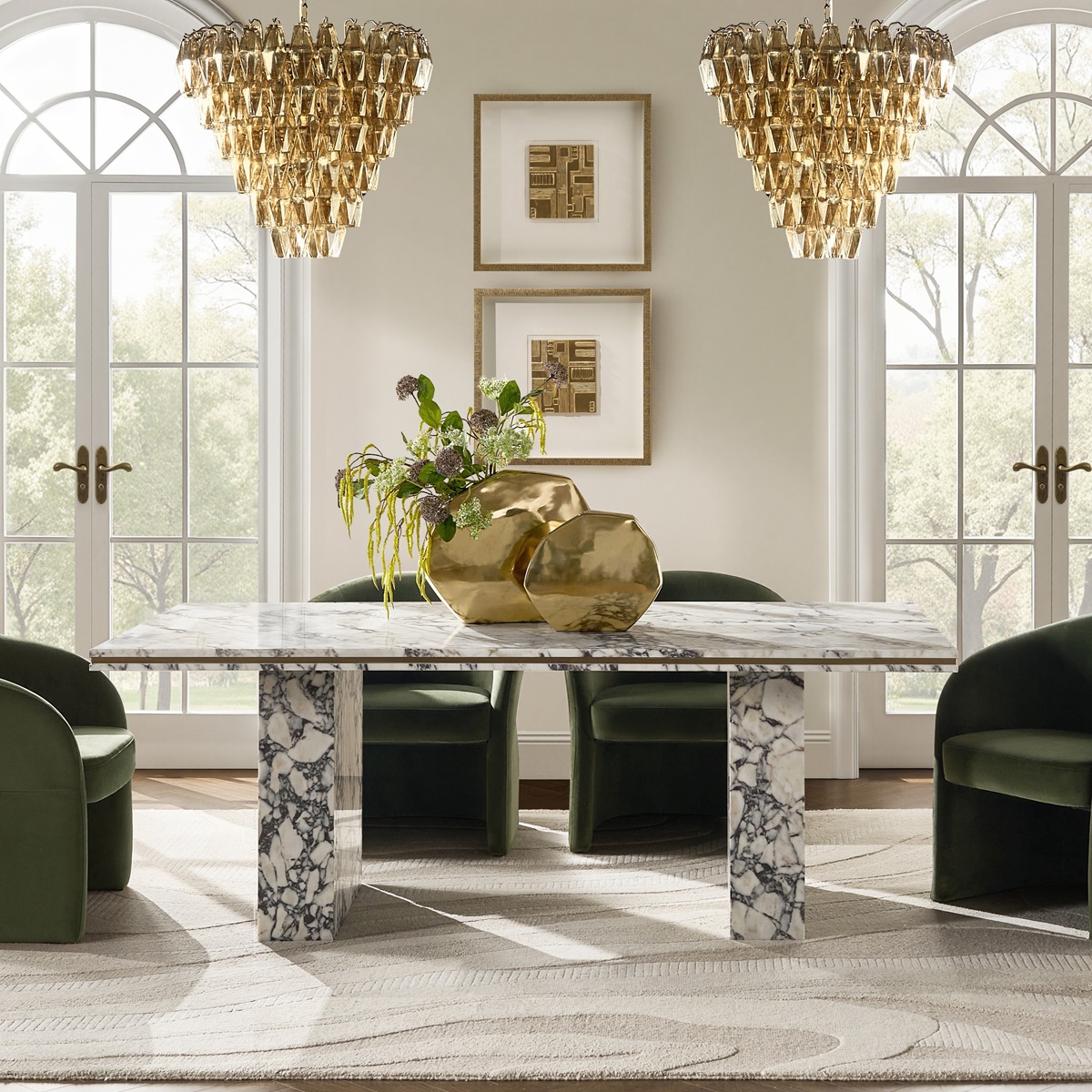 Vanta Rectangular Viola Calacatta Marble Dining Table (84")$6599
A striking Calacatta Viola marble table with vivid violet veining, gold stainless steel inlay, and aluminum core.
Add To Cart -
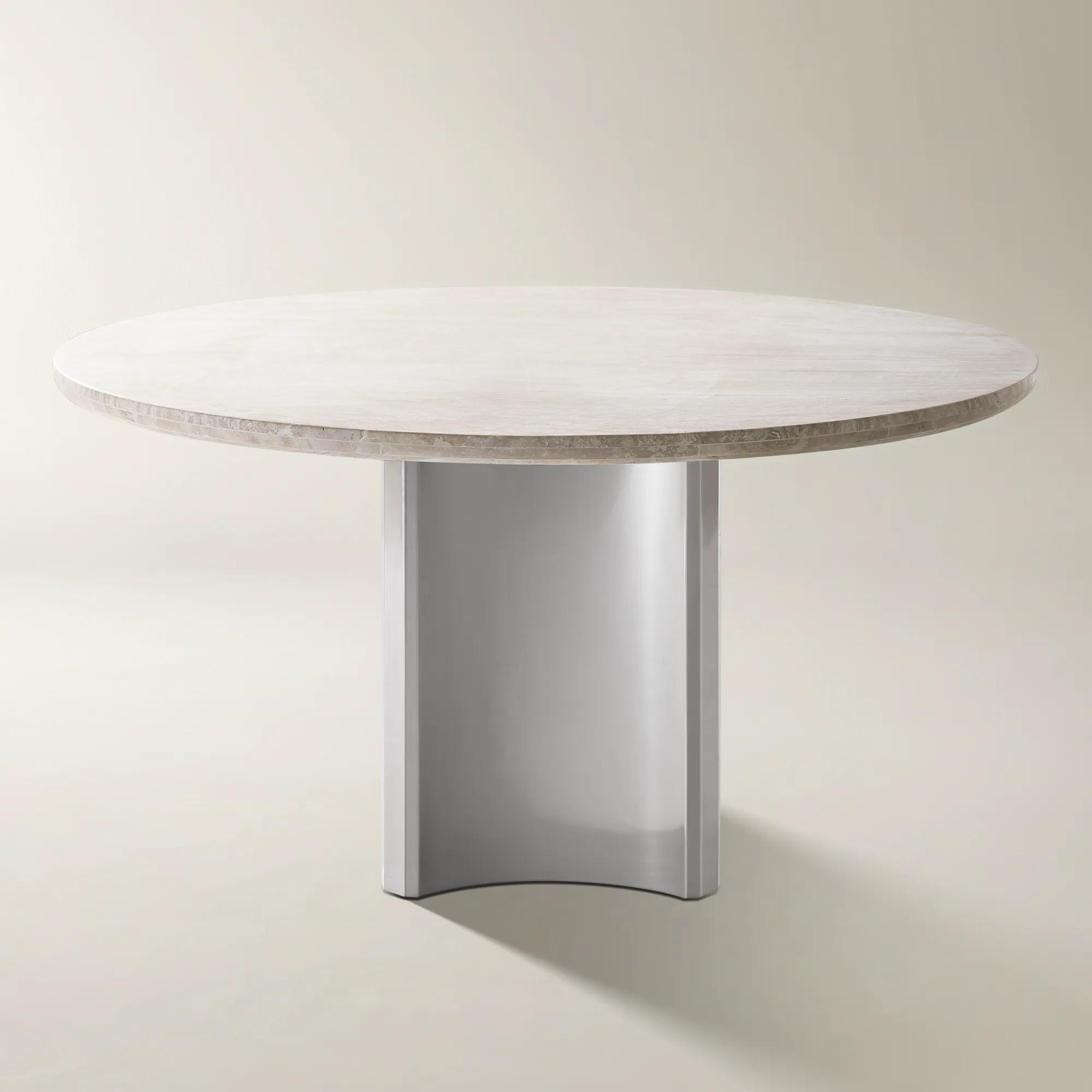 Ventane Round Tan Marble and Stainless steel Dining Table (58")$2999
A round tan travertine marble table with a polished stainless steel base for modern, elegant dining spaces.
Add To Cart -
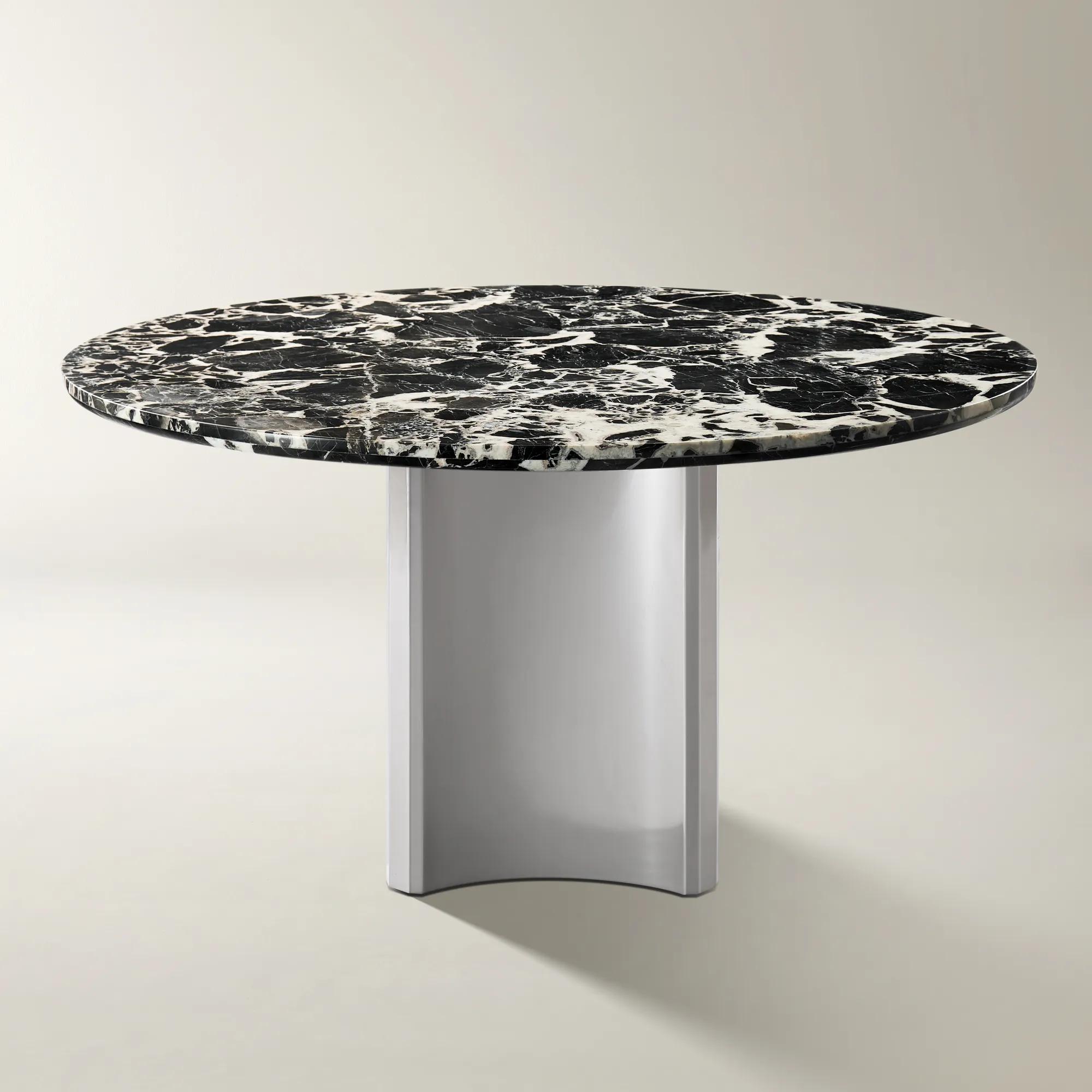
 Ventane Round Black Marble and Stainless steel Dining Table (58")$2999
A dramatic round dining table featuring a natural black marble top and polished stainless steel base.
Add To Cart -
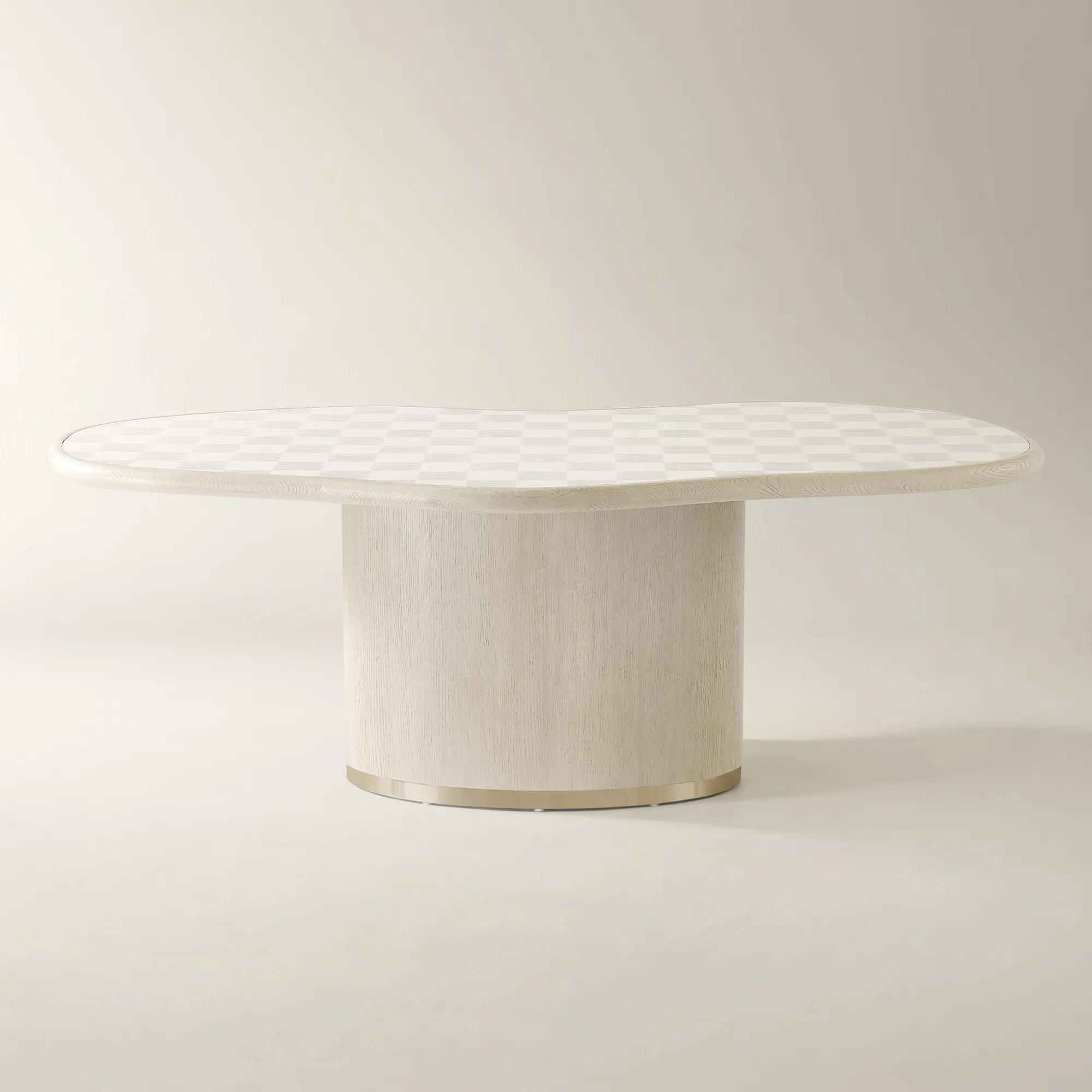 Vetra Checkerboard Oak and Maple Dining Table (84")$2399
A striking dining table featuring a hand-arranged oak and maple checkerboard veneer with soft gold accents.
Add To Cart -
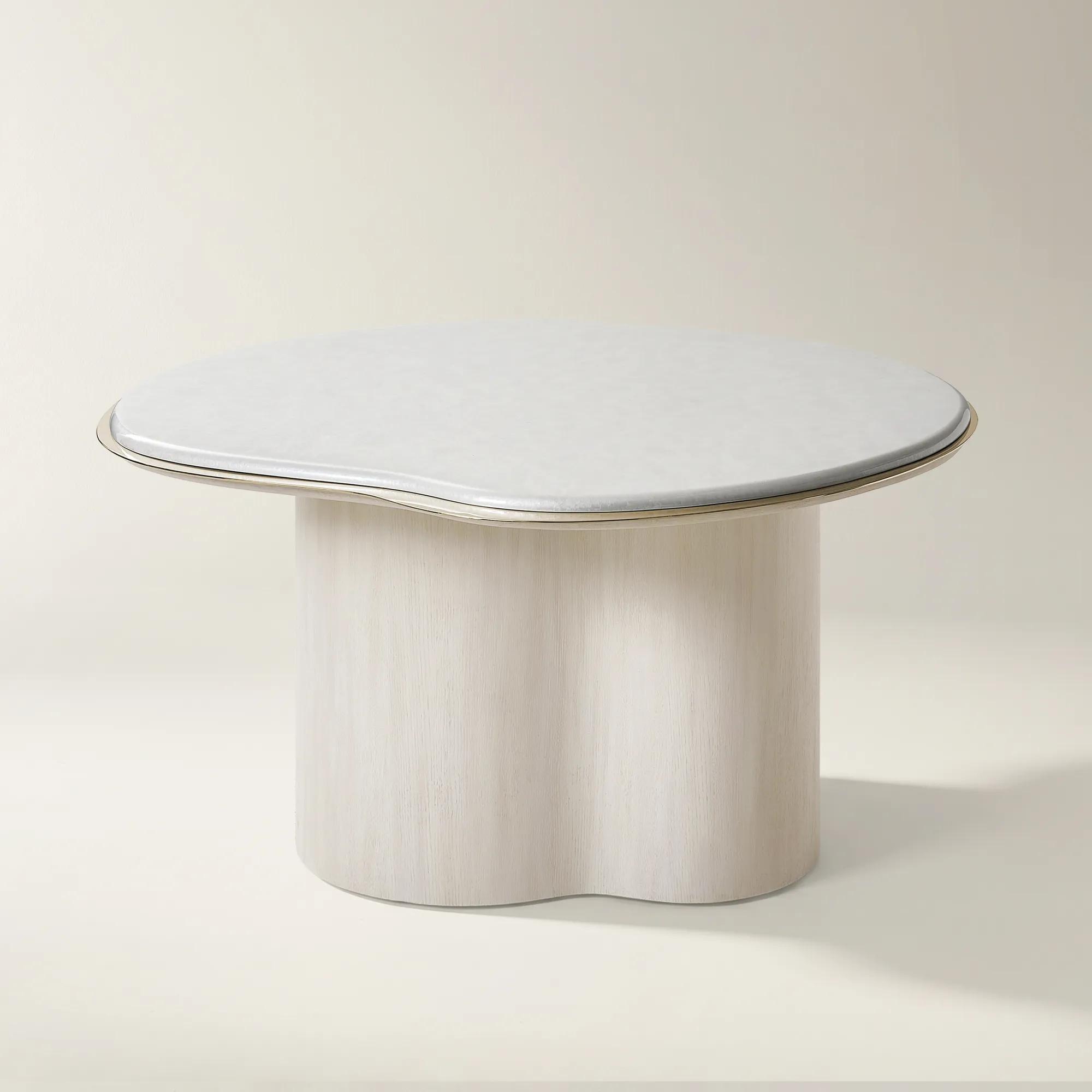 Lumina Bleached Oak Dining Table With Pearl Lacquered Top (58")$2699
A sculptural dining table featuring a pearl lacquered top, bleached oak base, and champagne gold trim.
Add To Cart -
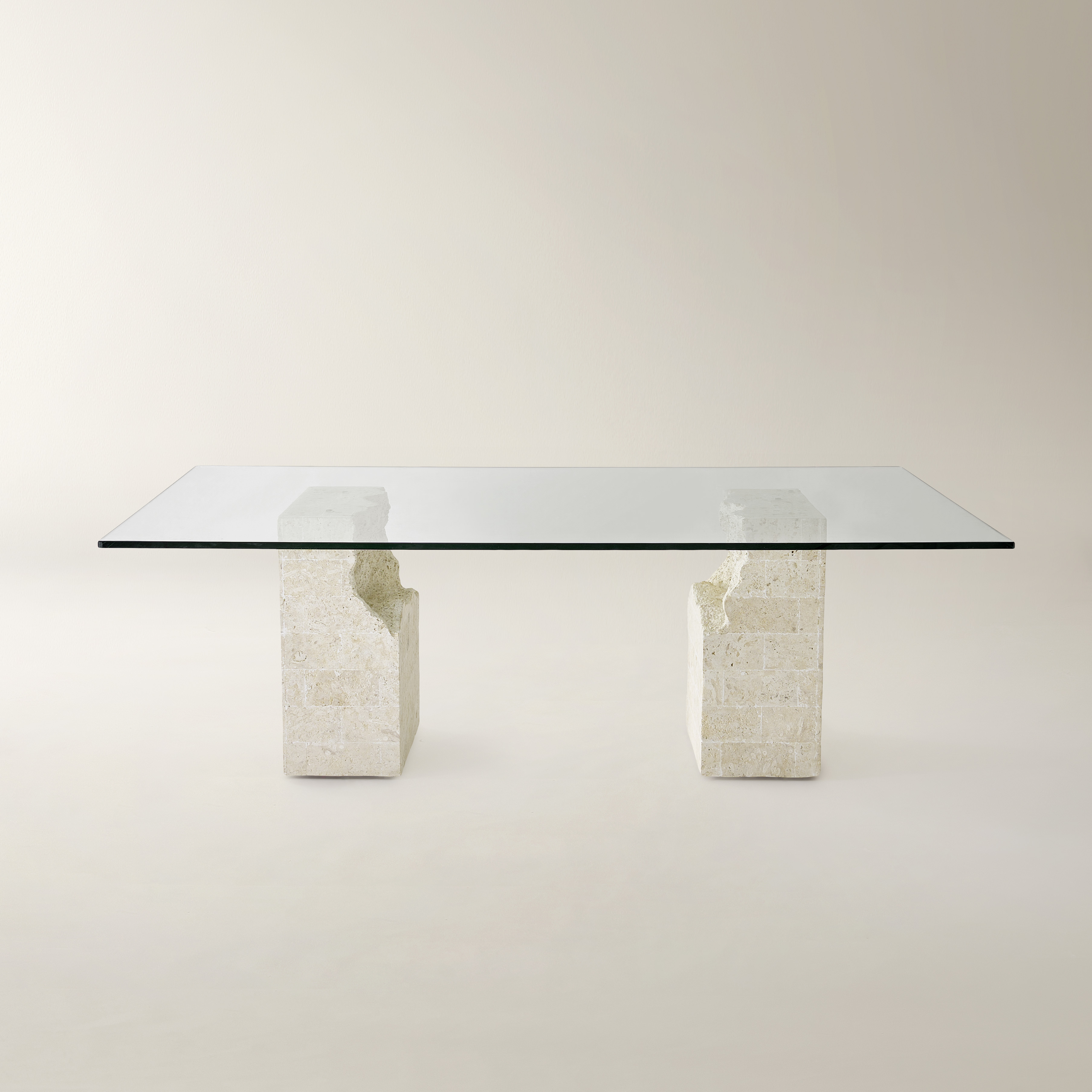 Cairo Rectangular Mactan Stone Dining Table With Glass Top (86.6")$2399
A contemporary dining table featuring a clear tempered glass top over hand-carved Mactan stone bases.
Add To Cart -
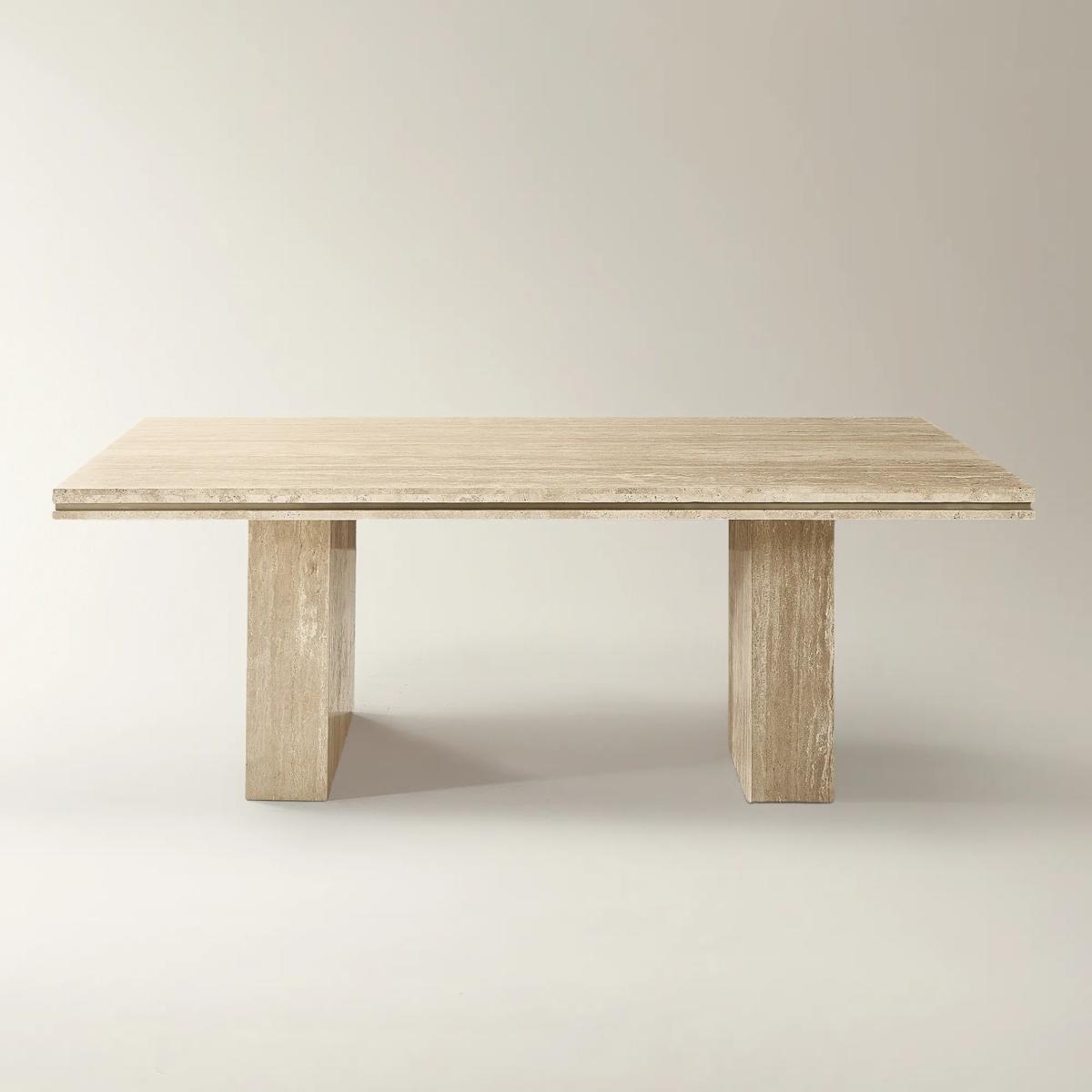 Vanta Rectangular Travertine Dining Table (84")$4199
A genuine travertine dining table with ivory-gold hues and a shimmering gold stainless steel inlay.
Add To Cart -

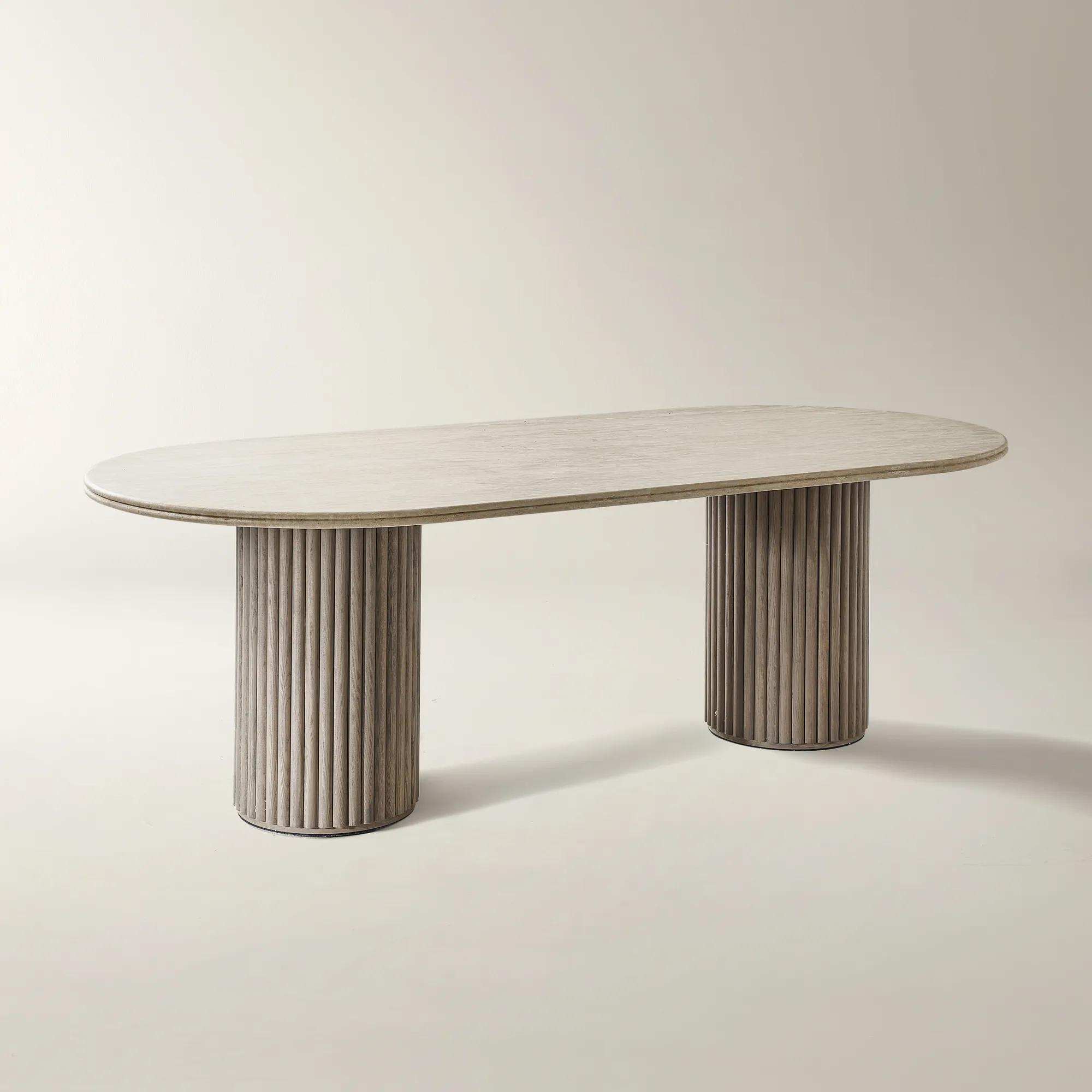 Bond Oval Reeded Travertine and Wood Dining Table (94.25")$4599
A natural travertine stone top pairs with a fluted solid ash base for refined, organic elegance.
Add To Cart -
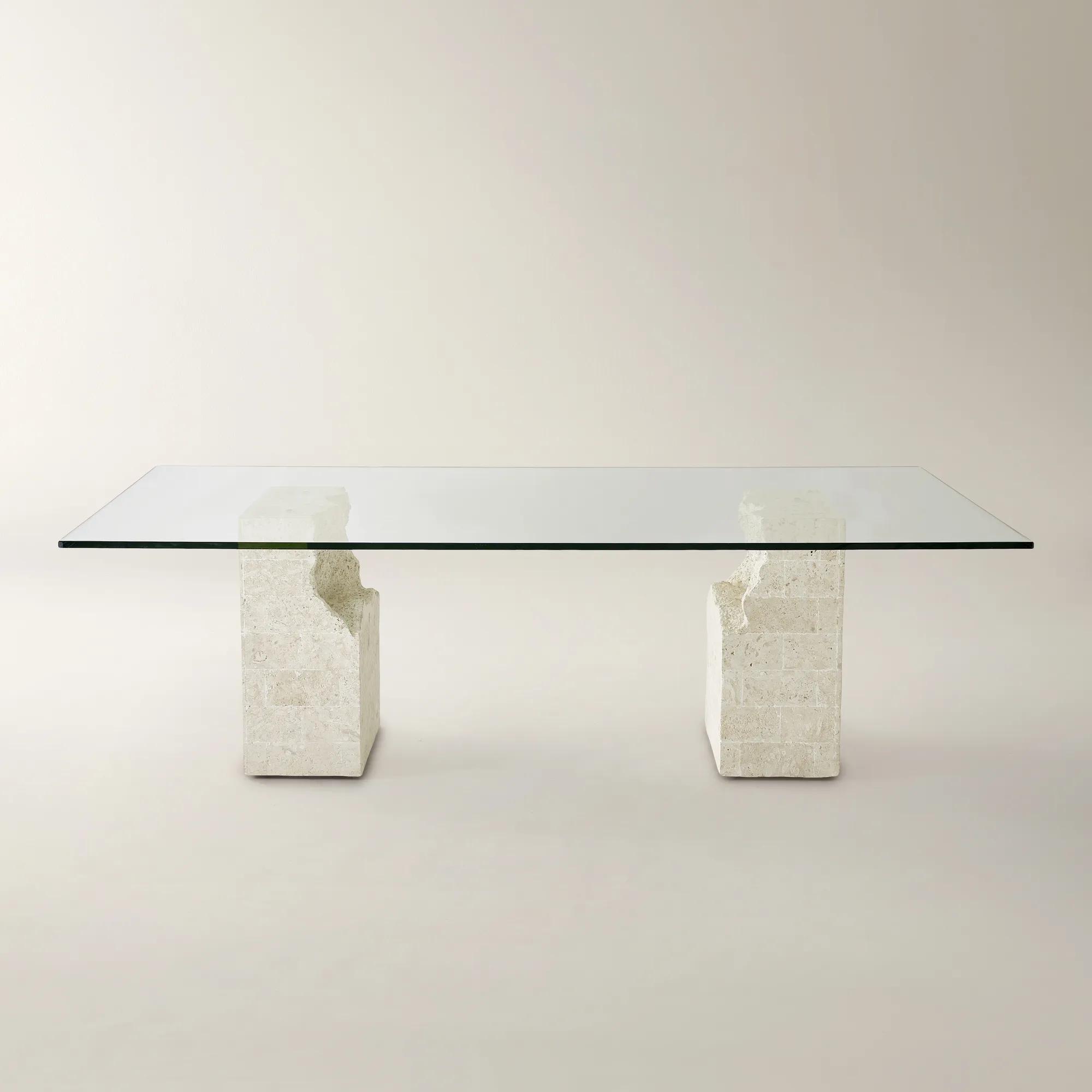 Cairo Rectangular Mactan Stone Dining Table With Glass Top (96")$2599
A contemporary dining table featuring a clear tempered glass top over hand-carved Mactan stone bases.
Add To Cart -
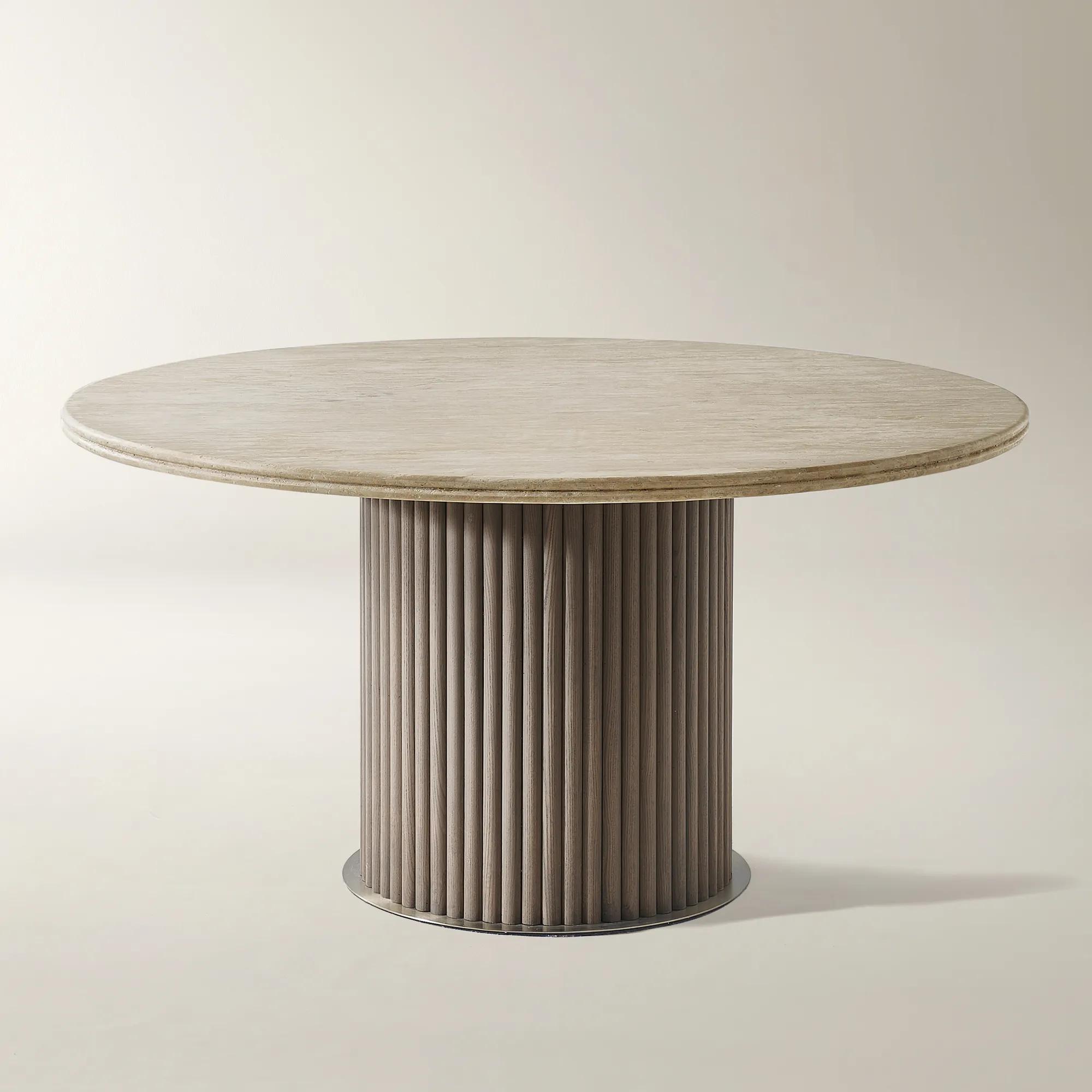 Bond Round Reeded Travertine and Wood Dining Table (59")$3499
A round dining table featuring a genuine natural travertine stone top and a fluted solid ash base.
Add To Cart -
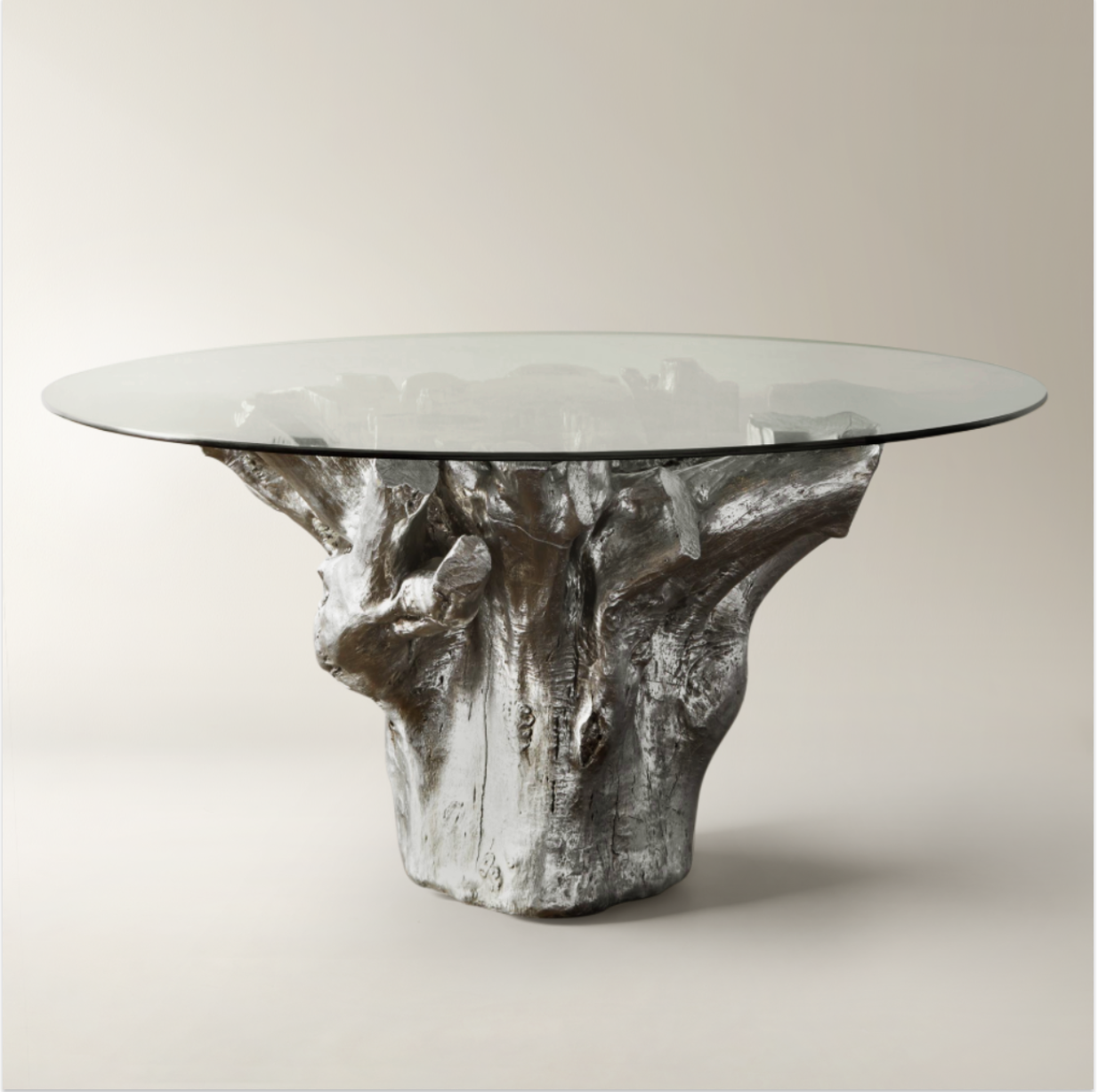 Sequoia Silver Resin Dining Table With Glass Top (60")$2199
A sculptural resin base with hand-applied silver leaf supports a round tempered glass top for modern elegance.
Add To Cart -
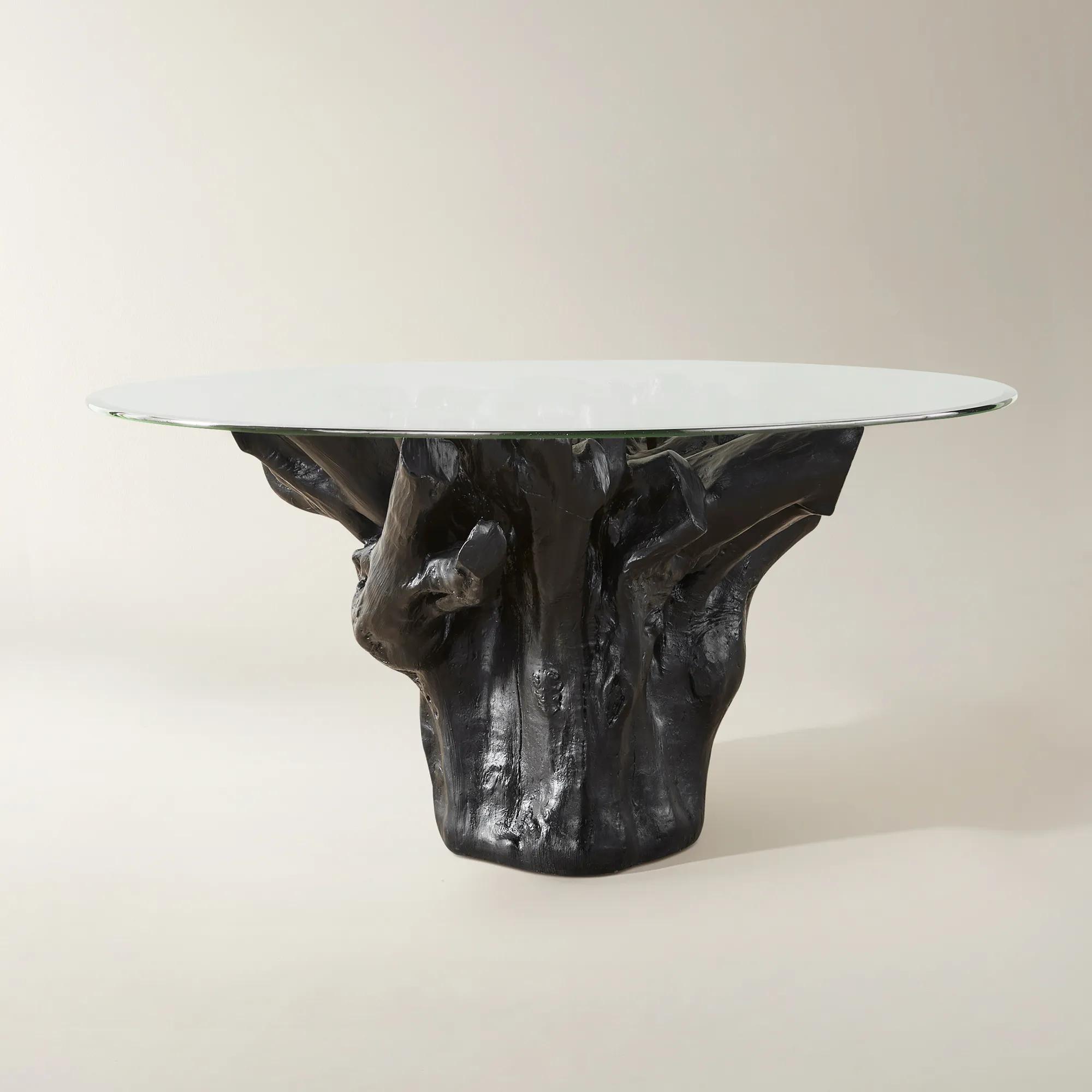 Sequoia Black Resin Dining Table With Glass Top (60")$2299
A sculptural black resin base with real stone fragments supports a round tempered glass top for organic elegance.
Add To Cart -
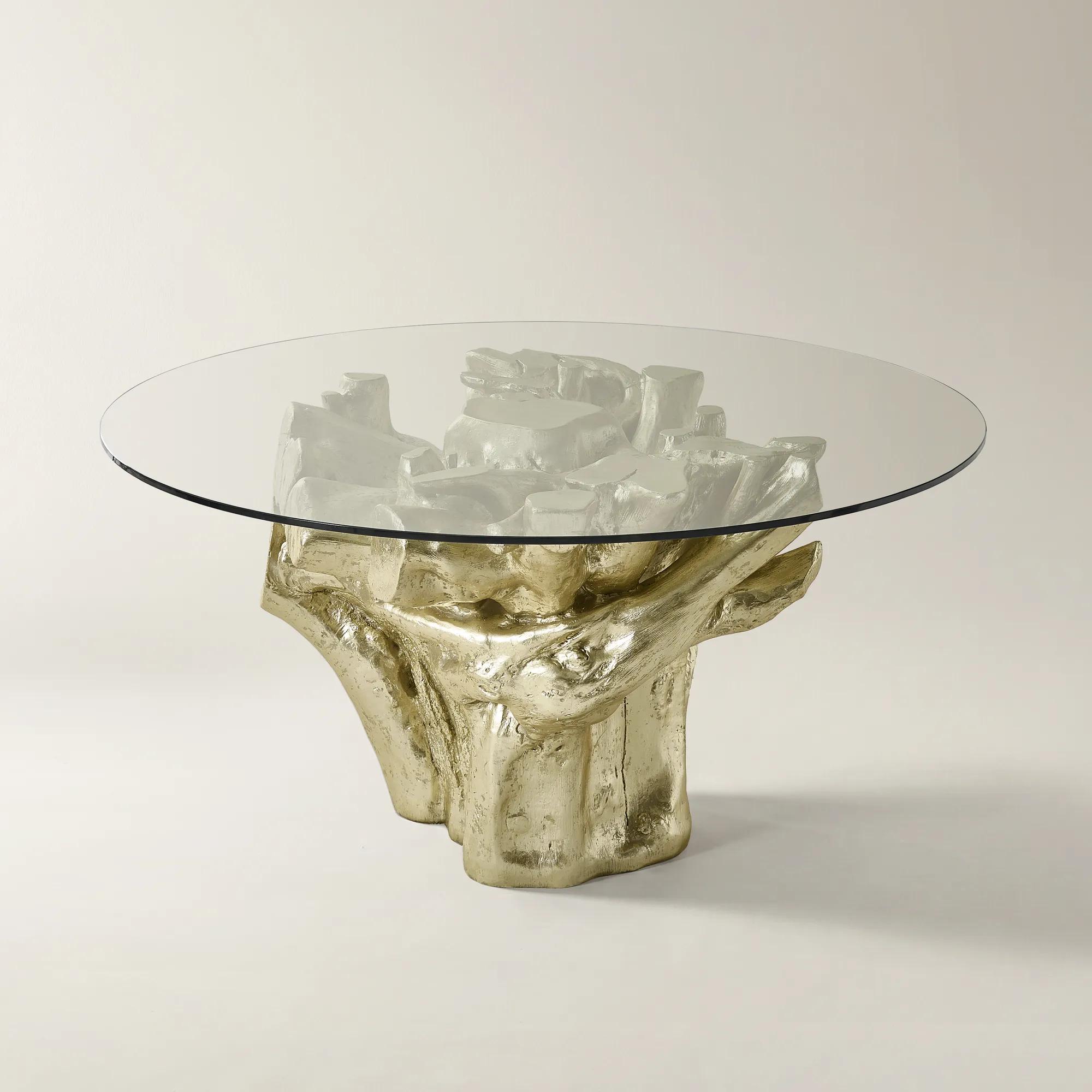 Sequoia Champagne Gold Resin Dining Table With Glass Top (60")$2199
A sculptural resin dining table with a champagne gold leaf base and a clear tempered glass top.
Add To Cart -
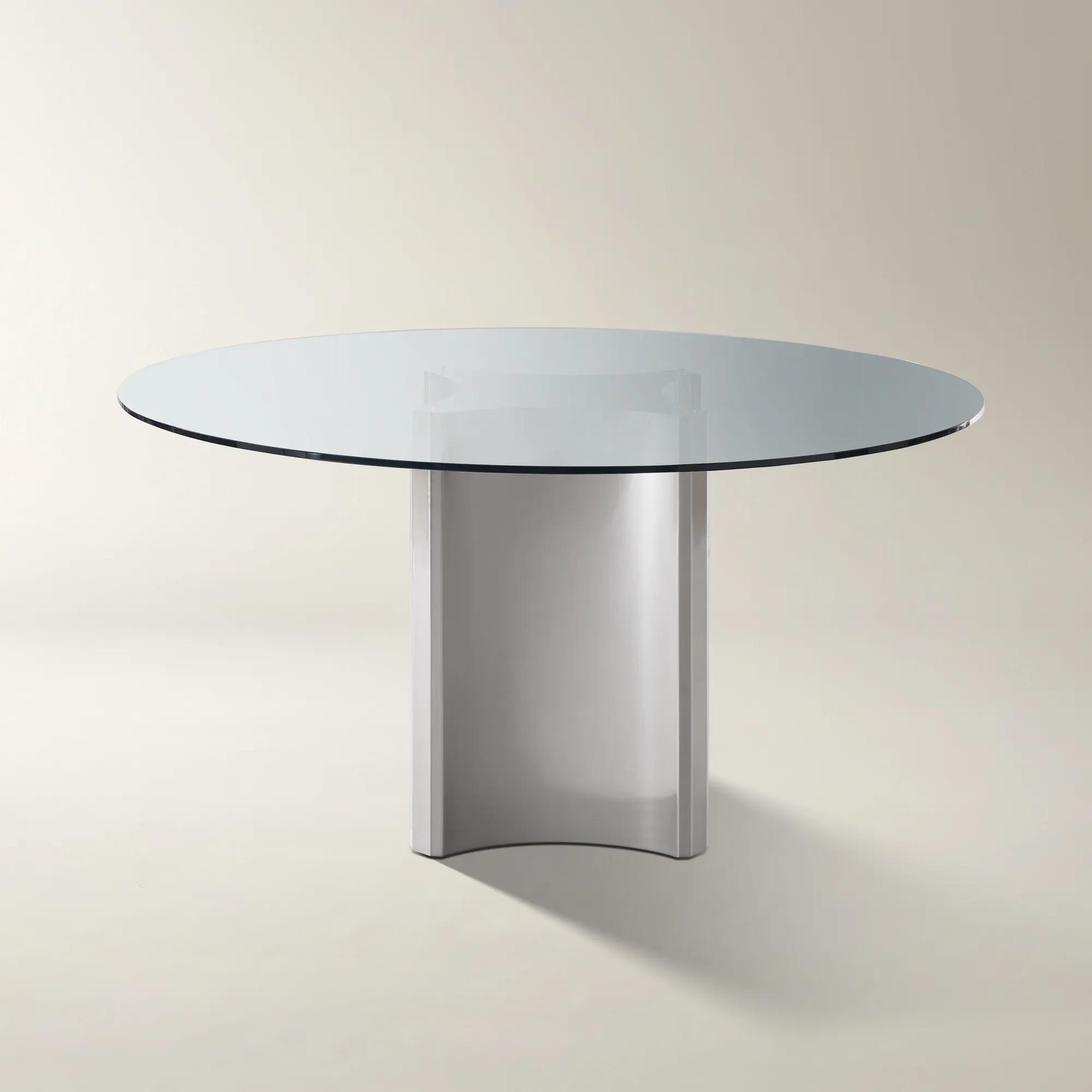 Ventane Round Clear Glass and Stainless steel Dining Table (58")$1499
A modern dining table featuring a clear tempered glass top and polished stainless steel base with anti-fingerprint finish.
Add To Cart -
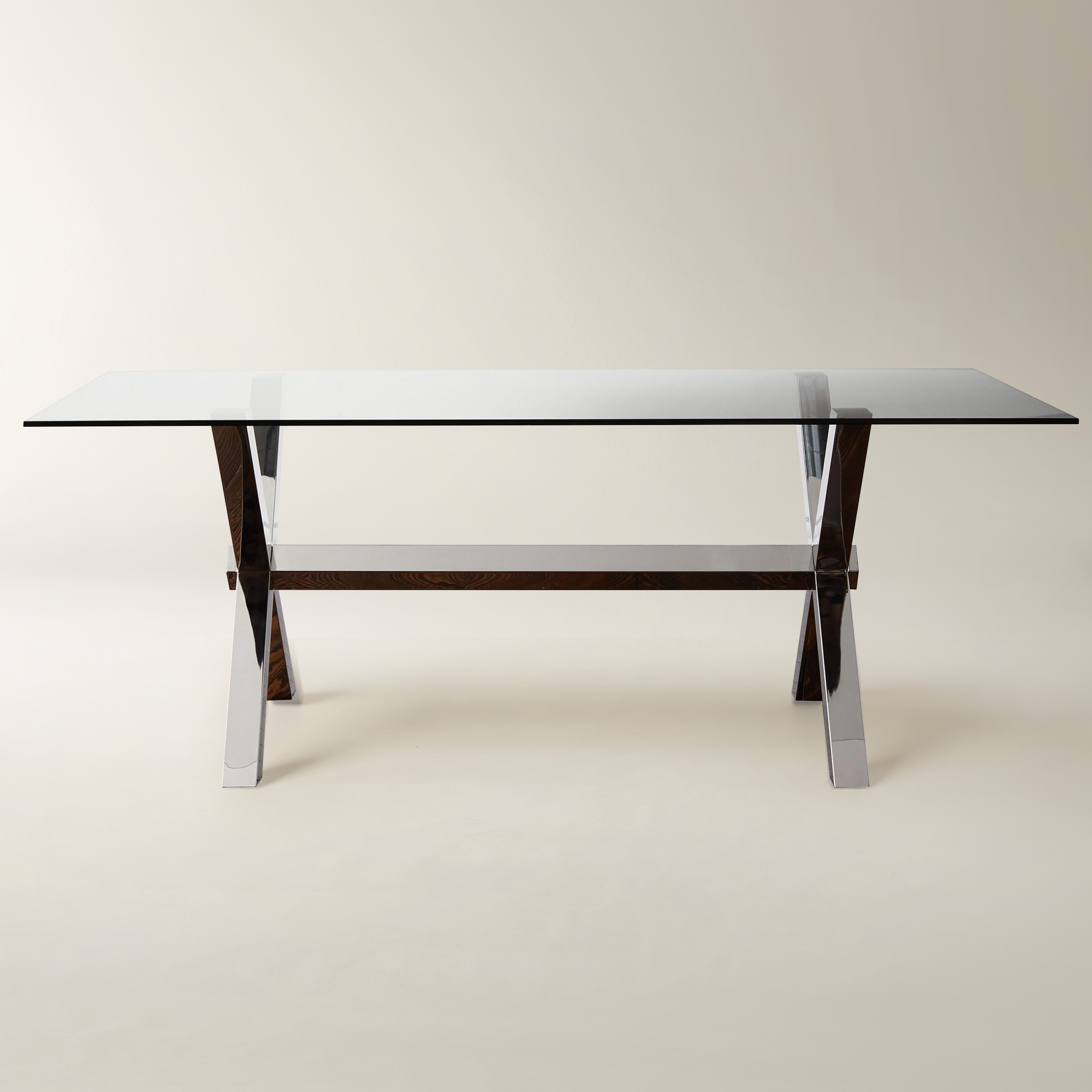
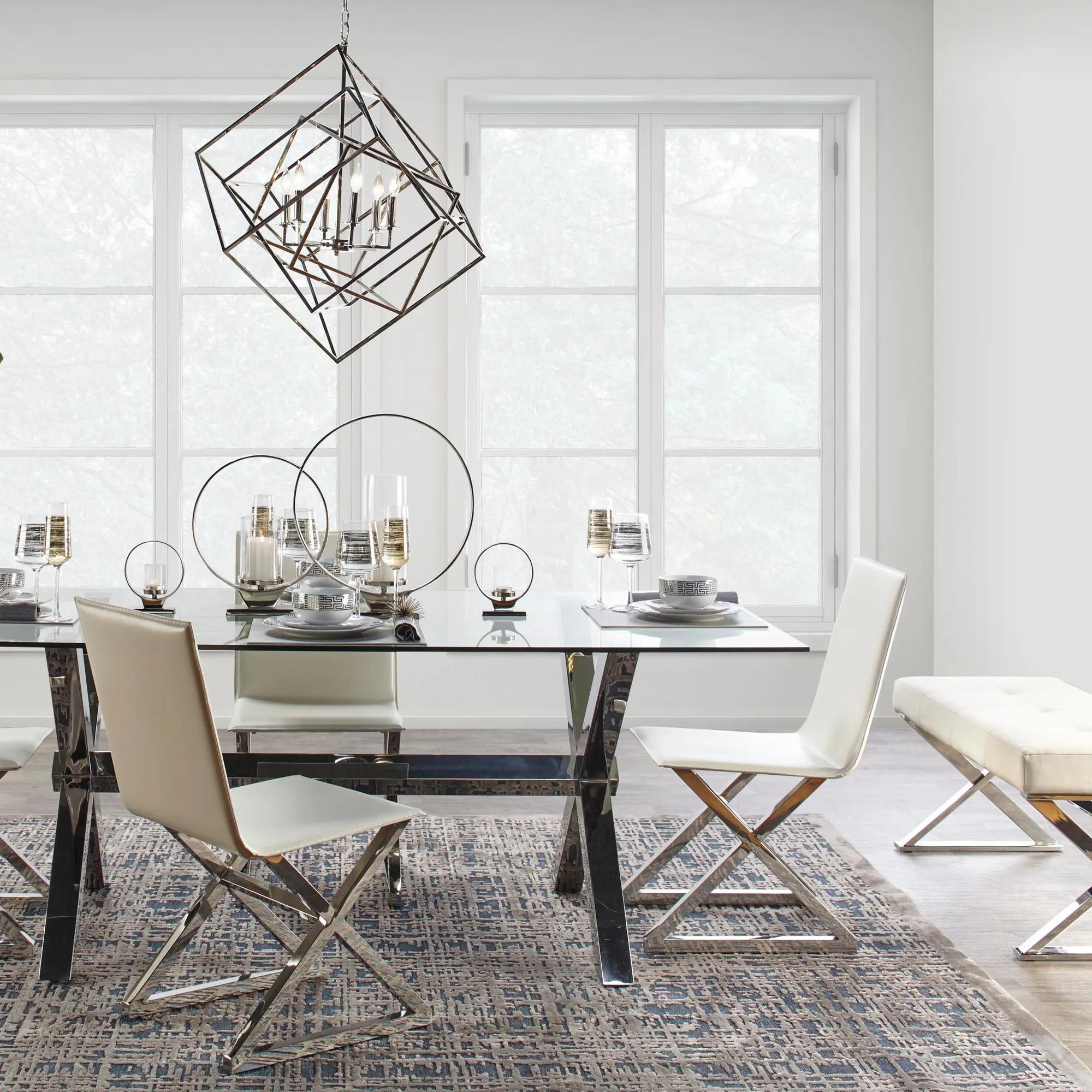 Axis Rectangular Silver Dining Table With Glass Top (78")$1199
A contemporary dining table featuring a polished stainless steel base and durable tempered glass top.
Add To Cart -
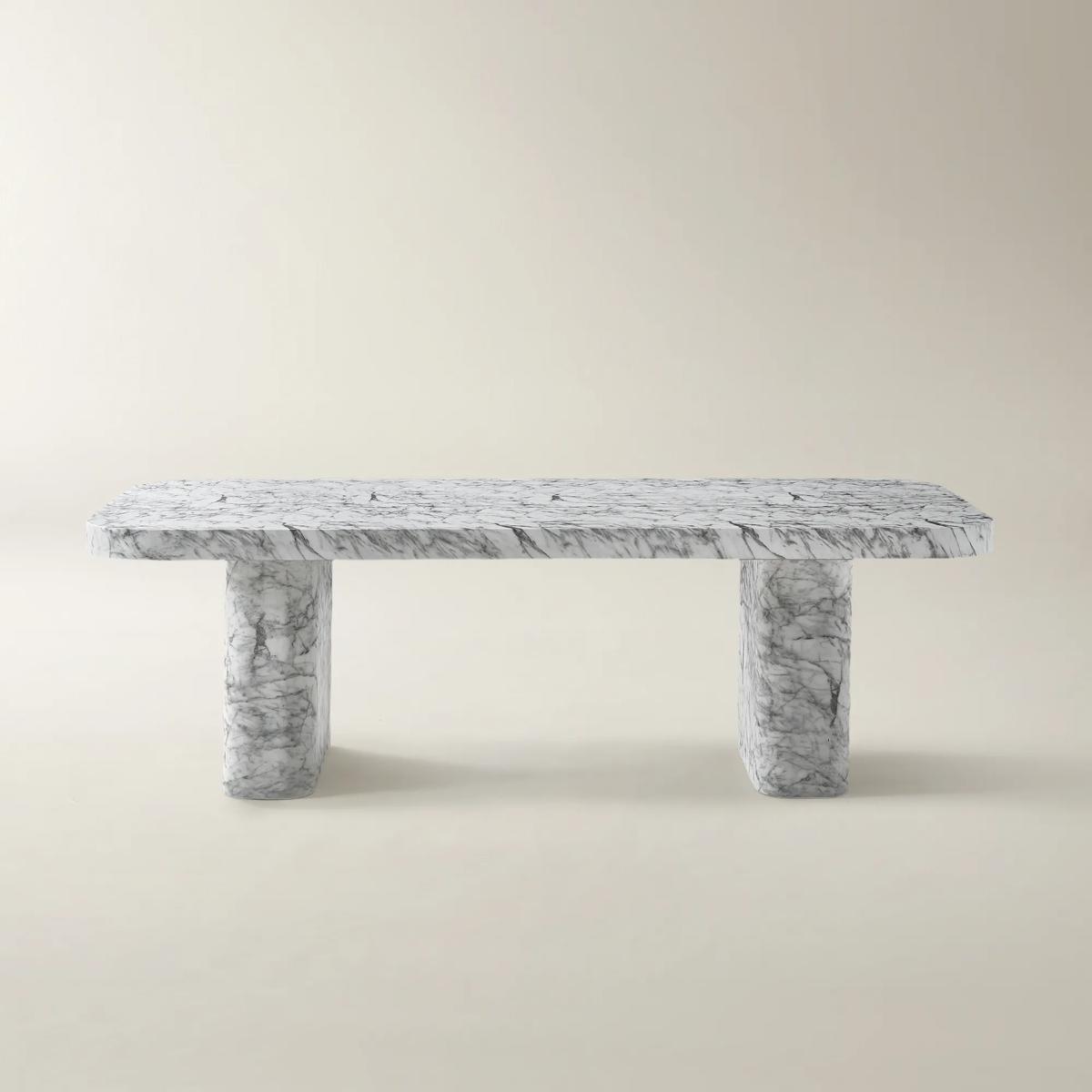
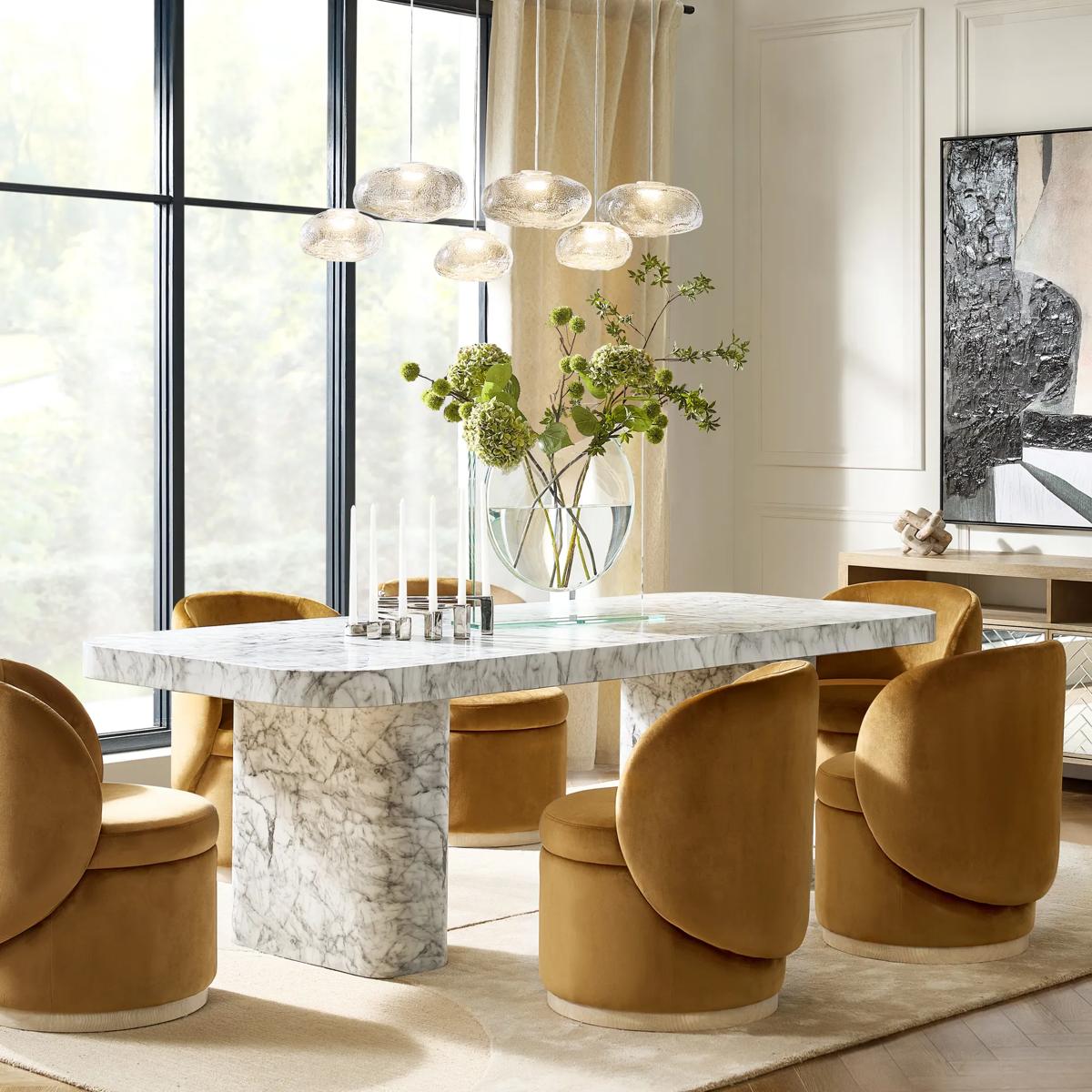 Silex Rectangular White Concrete Indoor/Out Door Dining Table (94.5")$1999
A white marble-look dining table crafted from ultra-rigid, lightweight fiber concrete for indoor or outdoor use.
Add To Cart -
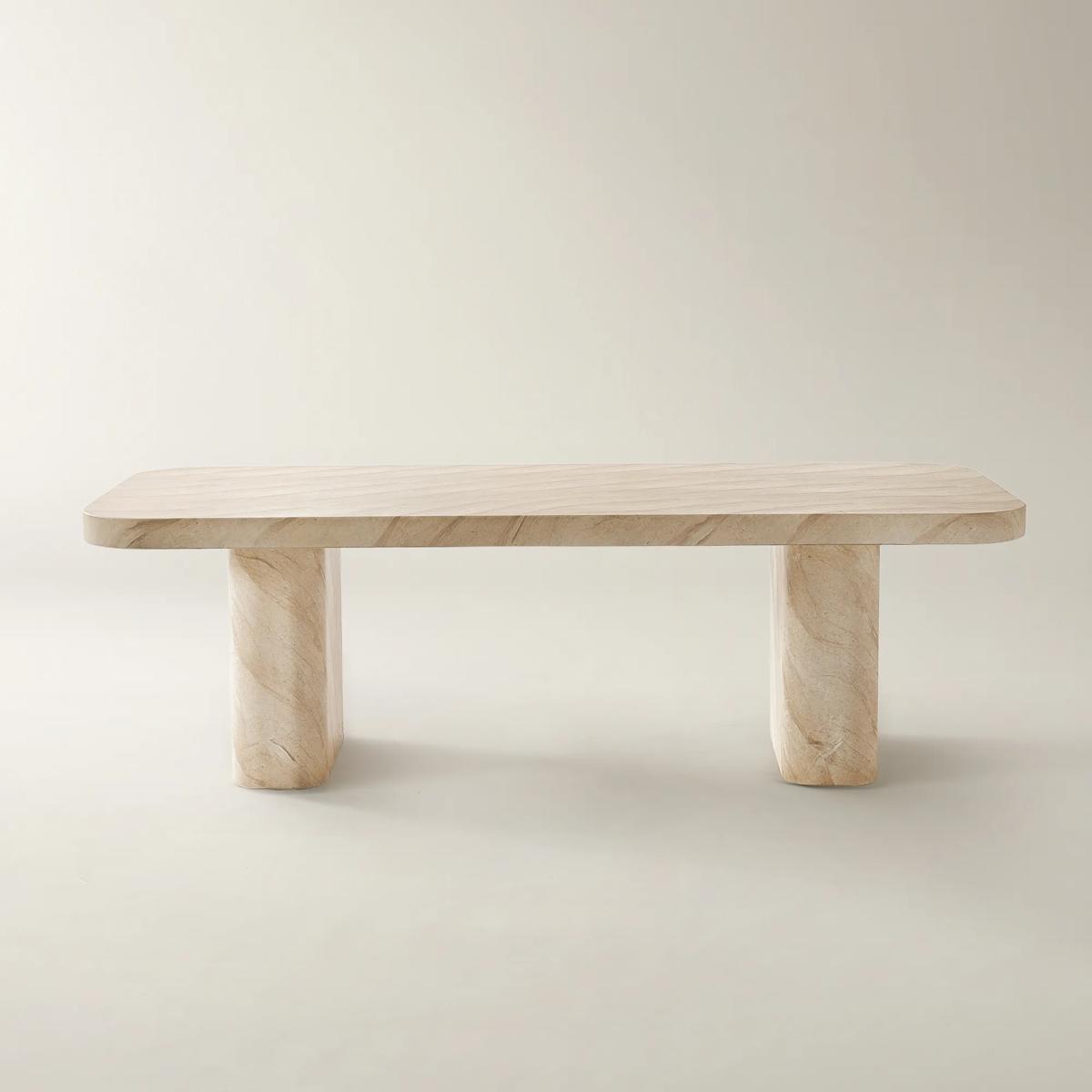 Silex Rectangular Travertine Concrete Indoor/Out Door Dining Table (94.5")$1999
A seamless travertine-look dining table crafted from ultra-rigid, water-resistant fiber concrete for indoor or outdoor use.
Add To Cart -
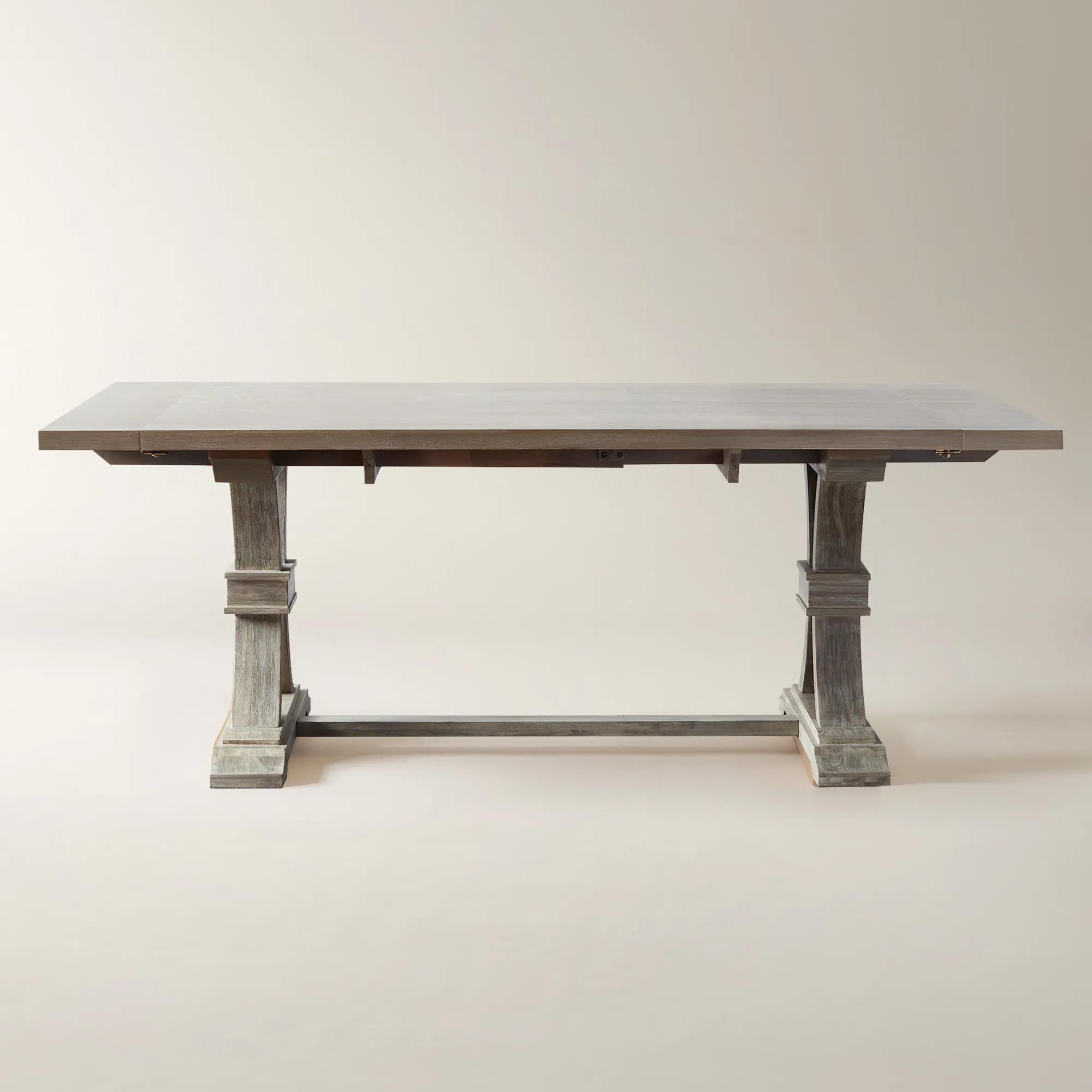
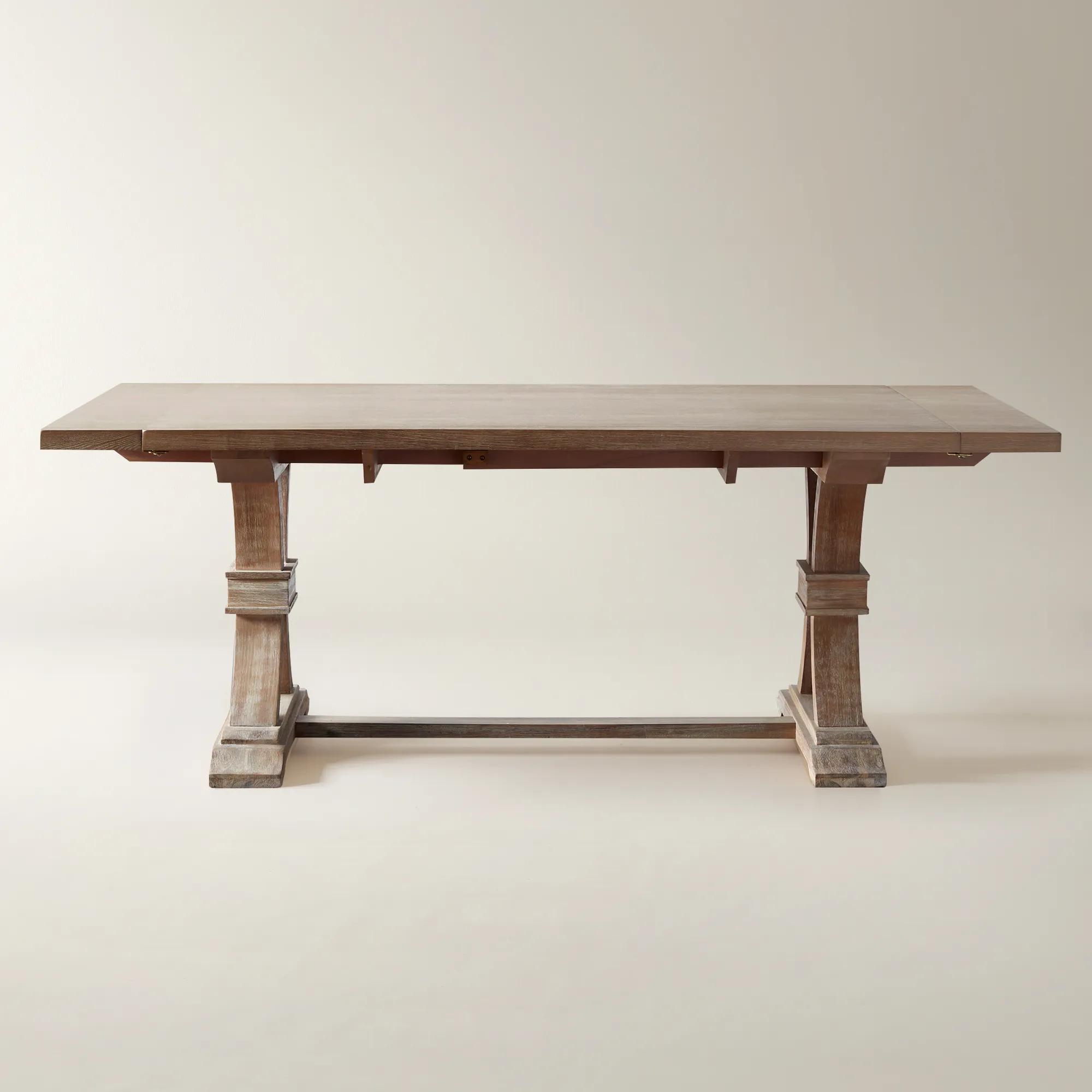 Archer Rectangular Whitewashed Acacia Wood Extending Dining Table (78" - 110")$2499
An extending dining table crafted from kiln-dried hardwood with a whitewashed oak finish and acacia veneer.
Add To Cart

Formal Dining Room Tables
A formal dining room table is more than a gathering place—it is the stage upon which memorable evenings unfold and timeless conversations linger. With every sculpted edge and gleaming surface, these tables set a tone of grandeur, transforming meals into occasions and spaces into statements. Whether your style leans toward classic opulence or modern drama, formal dining room tables invite you to celebrate artistry at every meal, anchoring your home in elegance and expressive design. Let your dining room become a gallery of taste, where every detail reflects your flair for the extraordinary.
Formal dining room tables give a gathering its center of gravity: a beautifully proportioned surface for candlelight, crystal, layered place settings, and conversation that carries well beyond the last course. Defined by refined materials, substantial construction, and considered detailing, these tables bring a sense of occasion to dedicated dining rooms without reserving their beauty for special events. Traditional silhouettes may feature carved aprons, turned legs, or double-pedestal bases, while modern formal dining tables express the same elegance through sculptural supports, sweeping curves, and restrained architectural lines. Formality comes from the composition, not from ornament alone. A richly grained wood top can feel equally distinguished beside tailored upholstered chairs or more expressive seating with gleaming metal accents. Solid hardwoods such as walnut, cherry, and mahogany offer distinctive grain and depth of color, while fine wood veneers allow intricate surface patterns over a supporting substrate. Neither construction should be judged by appearance alone; joinery, finish quality, and the stability of the base also influence how a table performs. Natural marble introduces veining that makes each surface visually individual, with a substantial presence suited to rooms where the table is meant to command attention. Glass creates a lighter visual footprint, revealing an artful base and allowing a richly patterned rug to remain part of the scene. Polished metal details catch the light, while lacquered surfaces offer a smooth, luminous contrast to textured upholstery. Each material establishes a different mood, from enveloping and intimate to crisp and gallery-like. The most compelling formal dining table feels connected to the architecture and the way the room is used: generous enough for a beautifully dressed dinner, comfortable enough for an unhurried meal, and distinctive enough to hold its presence when the surface is clear. For hosts who enjoy arranging flowers, collecting dinnerware, or composing memorable place settings, the table becomes a lasting foundation for personal expression rather than a backdrop that disappears beneath the linens.
Scale determines whether that visual drama feels inviting. Formal dining room tables commonly range from about 60 inches to 120 inches or more in length, but seating capacity depends on the shape, chair width, leg placement, and amount of space reserved for each guest. Allowing approximately 30 inches of table edge per person accommodates generous place settings and larger upholstered dining chairs; narrower arrangements may work, but can diminish the ease of a formal meal. Rectangular dining tables establish a strong axis in elongated rooms and offer a natural arrangement for hosts at either end. A table around 72 to 96 inches long often accommodates six to eight diners, depending on its configuration, while longer designs may seat ten to twelve or more when the base and chairs allow. Oval dining tables preserve much of that extended silhouette while softening the corners, an appealing balance beside curved-back chairs or in rooms with prominent circulation paths. Round dining tables encourage conversation across the entire surface and make a sculptural pedestal visible from every angle. Diameters of approximately 54 to 72 inches are common for more generous dining arrangements, although the right seating count still depends on the chairs and base. Expandable dining tables provide flexibility for households that prefer a more intimate everyday setting but regularly entertain larger groups. Leaf mechanisms, support placement, and the dimensions of the fully extended table matter as much as the closed footprint. A room generally needs at least 36 inches between the table edge and surrounding walls or furniture for chair movement, with 42 to 48 inches preferable where people regularly pass behind seated guests. Sideboards, door swings, and chairs with deep backs all affect that clearance. Most standard dining tables stand about 28 to 30 inches high; chair seats typically feel comfortable with roughly 10 to 12 inches between the seat and tabletop. Deep aprons can reduce usable knee room, and upholstered armchairs need clearance beneath the table. These proportions let a formal arrangement feel gracious rather than crowded, even with serving platters and a substantial centerpiece.
A formal dining table earns its place through the meals and milestones it supports, so durability deserves the same attention as its silhouette. A stable base, secure connections, and a finish suited to the intended use help the table remain comfortable through frequent dinners, anniversary celebrations, and gatherings that bring several generations together. Pedestal bases can make chair placement more flexible, although their footprint still needs to leave room for feet; corner legs create a familiar frame but may limit seating near the ends. Surface care varies by material and finish, and manufacturer instructions should always take precedence. Wood and wood veneer generally benefit from prompt spill cleanup, soft cloths, and protection from hot serving dishes. Excess moisture, abrasive cleaners, and prolonged direct sunlight can affect finishes, while solid wood may naturally respond to changes in indoor humidity. Marble requires particular consideration: acidic foods and drinks can etch its surface, and sealing may help resist stains without preventing etching. Coasters, placemats, and trivets preserve the experience of a stone tabletop without asking guests to treat dinner as a display. Glass shows fingerprints and benefits from appropriate cleaning products, while polished metal and lacquered finishes need gentle care to avoid scratches or dulling. For a household that dines at the table every day, these practical differences influence long-term satisfaction as much as color or pattern. The surrounding pieces complete the impression: upholstered dining chairs add softness, a sideboard provides a place for serving pieces, and lighting gives the tabletop depth without overpowering it. A rug should extend far enough for pulled-out chairs to remain supported, preserving both comfort and the room’s proportions. Explore Formal Dining Room Ideas for inspiration that brings these elements into a cohesive setting. Whether the room hosts intimate dinners or expansive celebrations, a thoughtfully proportioned table allows beautiful materials and personal rituals to share the spotlight, giving every gathering a setting with lasting presence.
FAQs
A formal dining room table is designed to make a statement, often featuring luxurious materials, intricate detailing, and a refined silhouette. These tables serve as the centerpiece of a classy dining room, setting the stage for elegant gatherings and special occasions. Unlike casual tables, they are crafted to elevate the atmosphere, adding a sense of grandeur and artistry to every meal.
To create a dramatic and inviting tablescape, layer your formal dining table with sumptuous linens, ornate chargers, and statement centerpieces. For winter gatherings, consider rich velvet runners, metallic candleholders, and arrangements of deep-hued florals or greenery. The key is to balance opulence with personal touches, allowing your table to reflect both the season and your unique style.
A formal dining table makes a thoughtful and lasting gift for newlyweds, new homeowners, or anyone who delights in hosting elegant dinners and celebrations. It’s a piece that becomes part of life’s milestones, offering a foundation for countless gatherings and cherished memories.
When selecting a material, consider both the mood you wish to create and the overall aesthetic of your dining room. Marble and glass offer a sense of modern glamour, while richly grained wood brings warmth and timeless sophistication. Mirrored finishes or lacquered surfaces can add a touch of drama, reflecting light and enhancing the room’s ambiance.
Z Gallerie dining tables are celebrated for their bold silhouettes, luxe finishes, and meticulous craftsmanship. From sculptural bases to gleaming surfaces, each piece is designed to be a showstopper, transforming your dining room into a gallery of expressive style. The focus on artistry and detail ensures that every table is as functional as it is visually captivating.