Durable Indoor Swivel Chairs
Durable Indoor Swivel Chairs
-

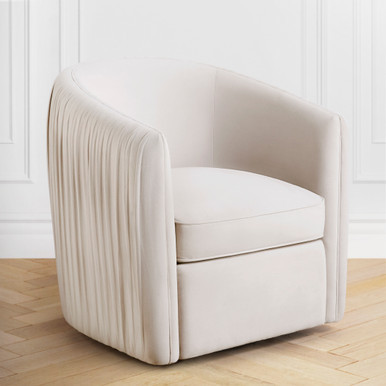
 Aria Pleated Swivel Chair$1349
A barrel-style swivel chair in kiln-dried hardwood, shown in Bella Velvet Pearl with pleated tailoring.
Add To Cart -
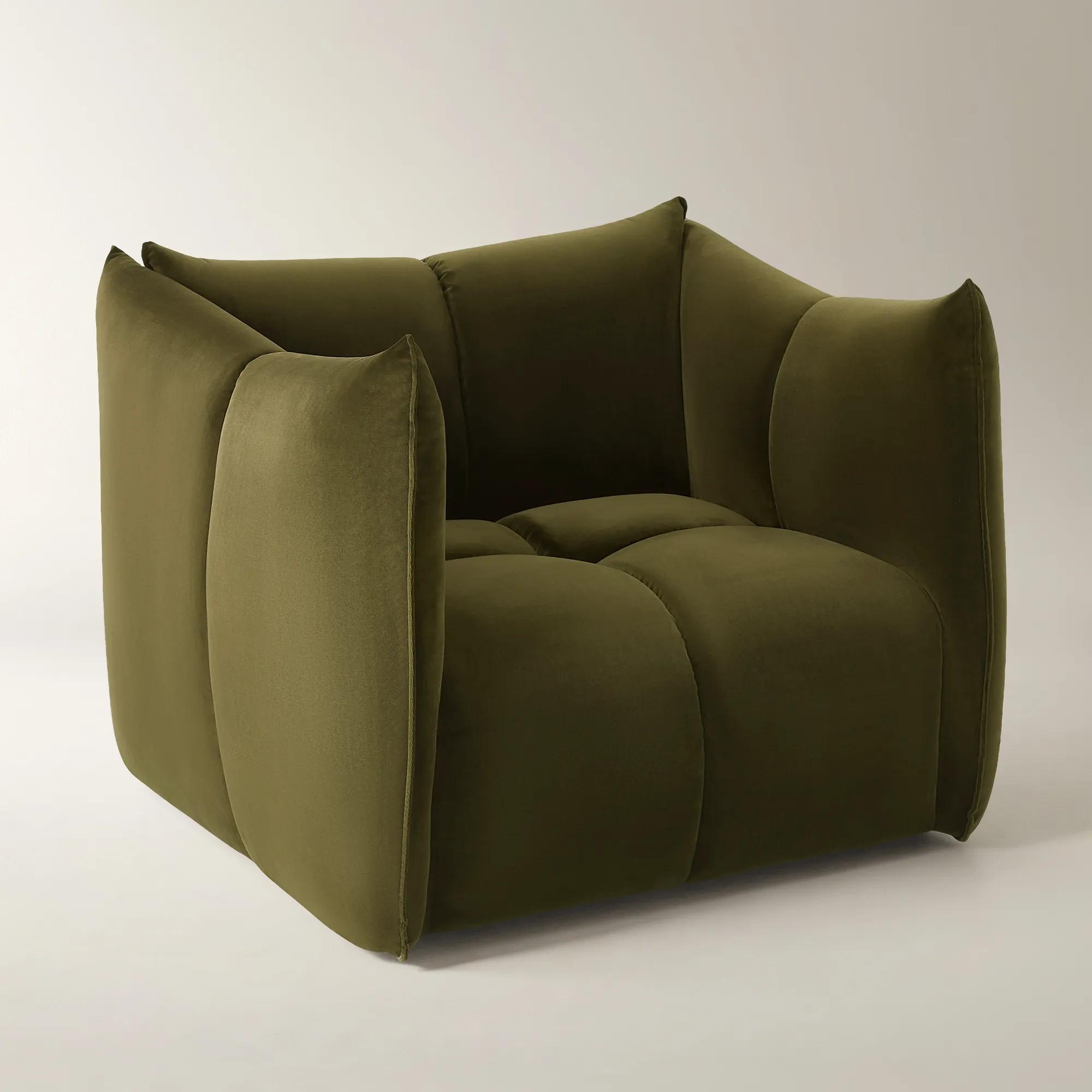 Reina Tufted Deep Olive Velvet Swivel Chair$1099
A green velvet swivel chair with channel tufting, winged architecture, and plush high-density foam comfort.
Add To Cart -
 Reina Tufted Simply Taupe Velvet Swivel Chair$1099
A taupe velvet swivel chair with channel tufting, an architectural winged profile, and plush, sculpted comfort.
Add To Cart -
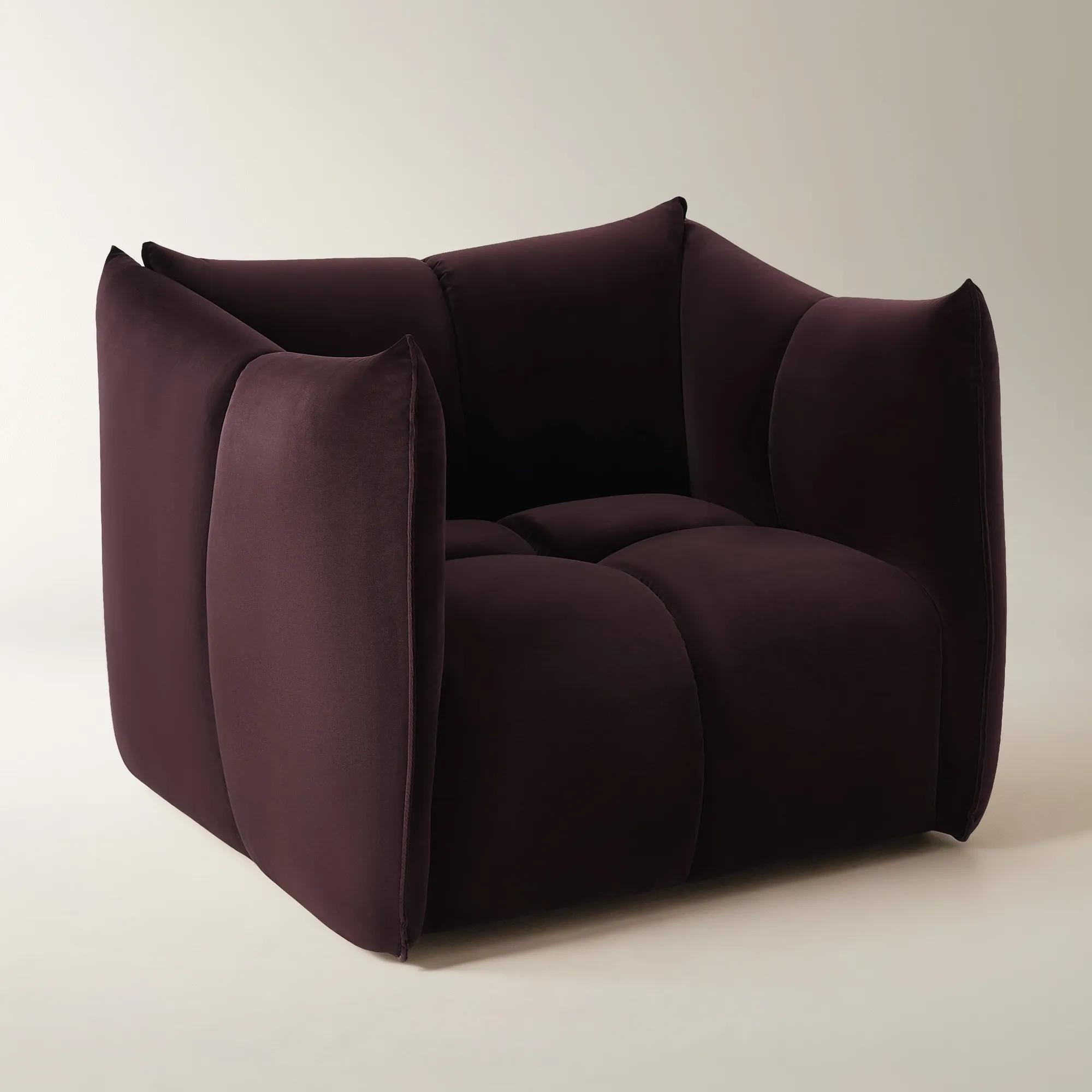 Reina Tufted Fig Velvet Swivel Chair$1099
A fig velvet swivel chair with channel tufting, a sculptural wingback profile, and plush foam cushioning.
Add To Cart -
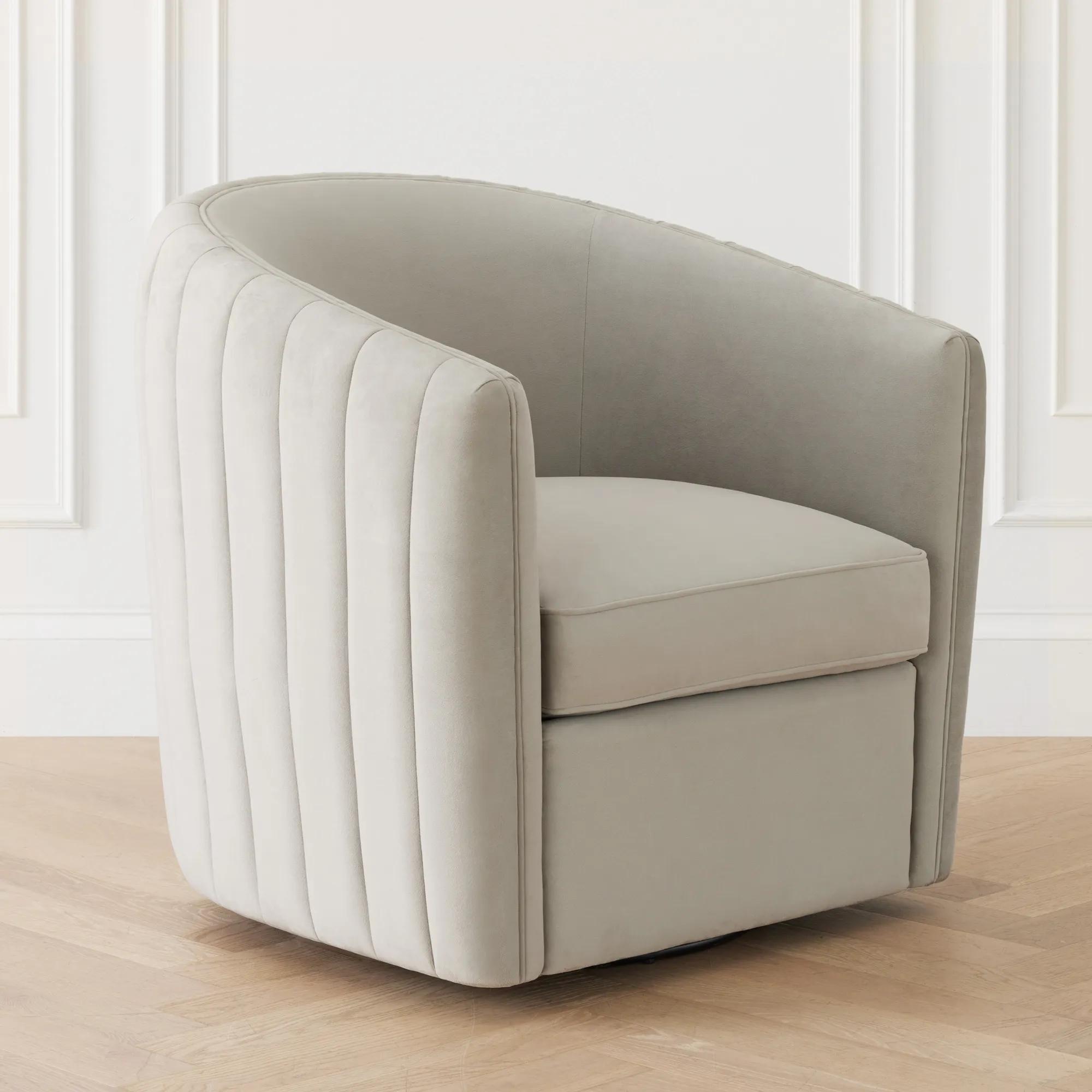
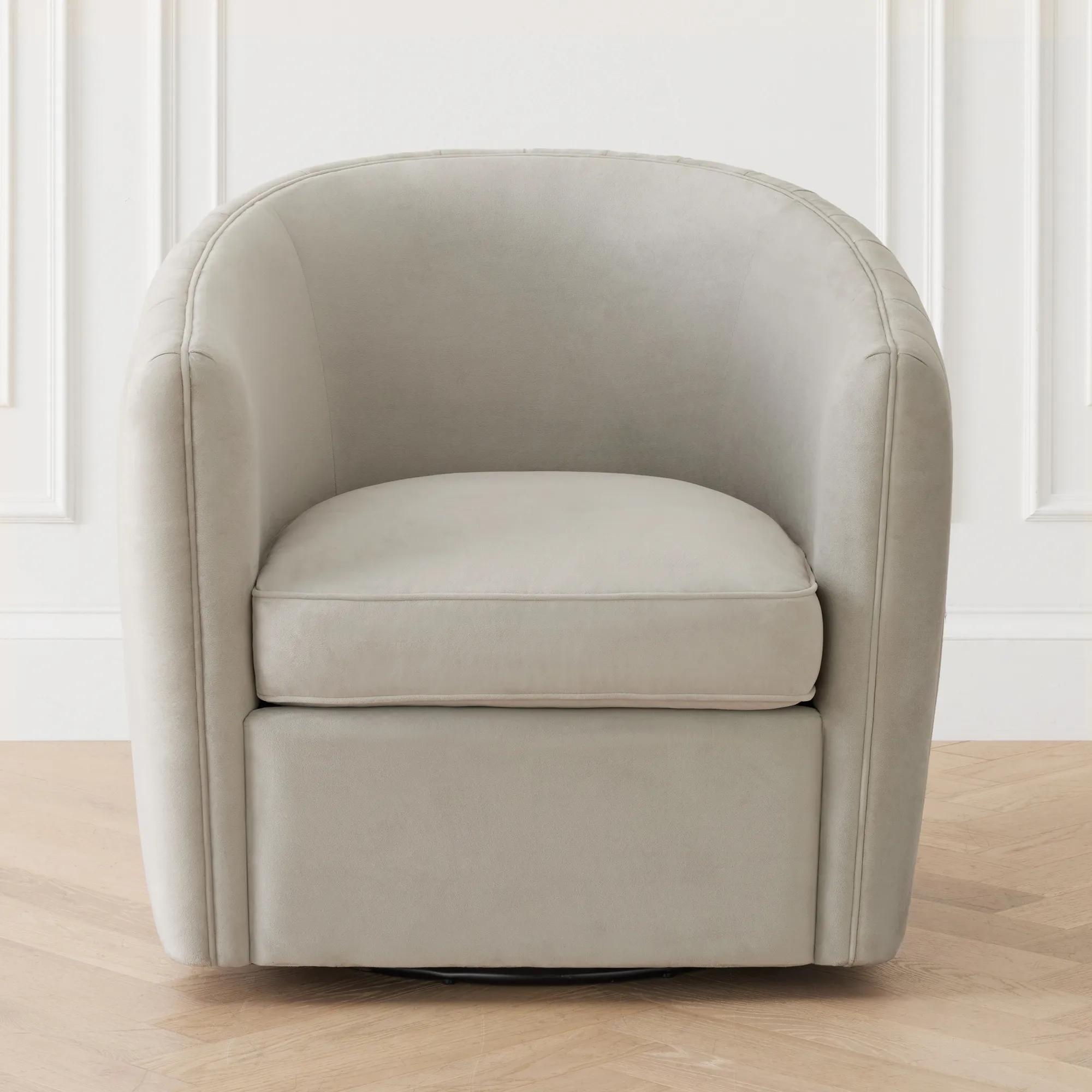 Aria Channeled Swivel Chair$1599
A modern barrel chair in kiln-dried hardwood with channeled velvet upholstery and a smooth swivel base.
Add To Cart -
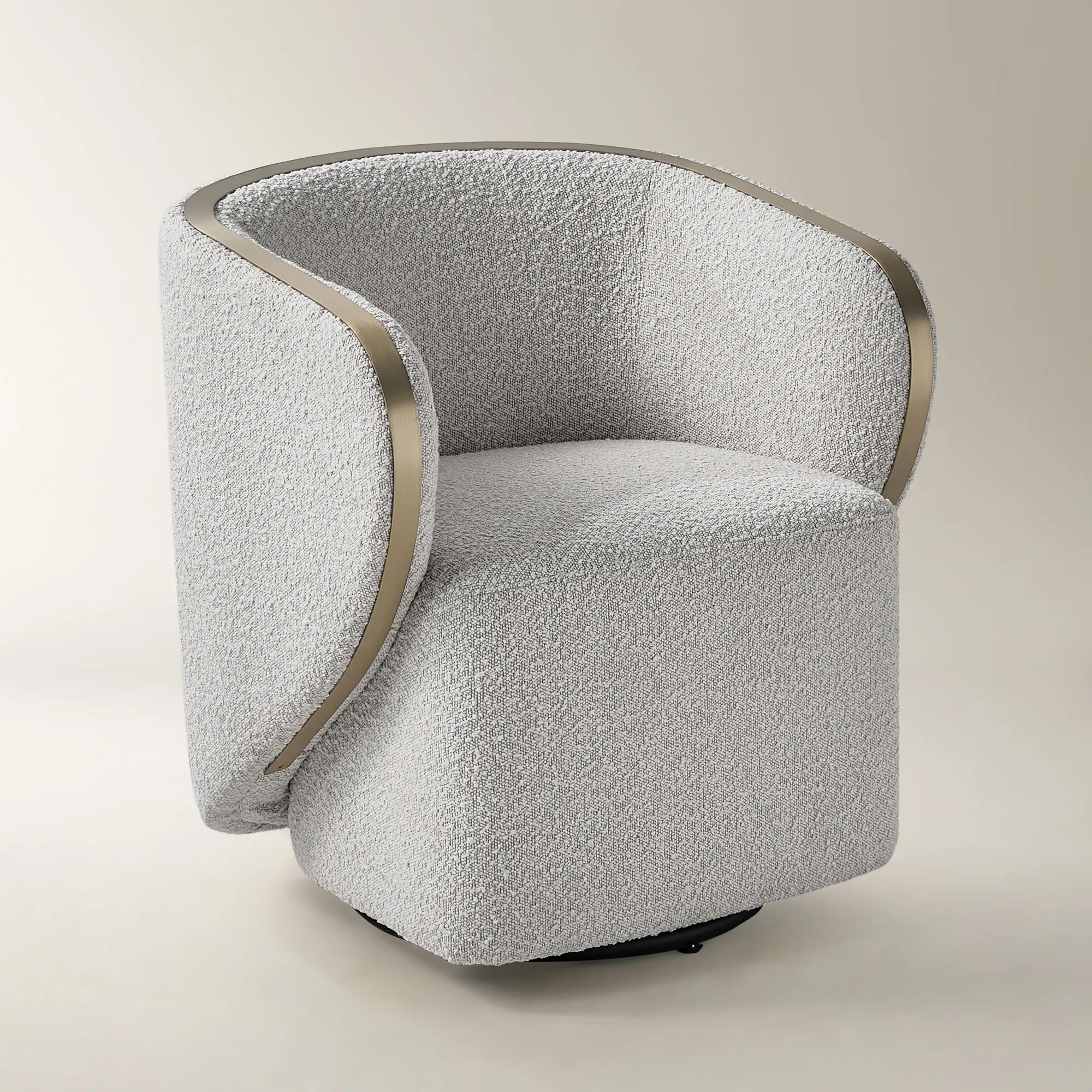 Nova Light Grey Performance Boucle Swivel Dining Chair$699
A sculptural light grey chair in water-repellent boucle with metallic trim and a smooth 360° swivel base.
Add To Cart -
 Lyssa Pleated Simply Taupe Velvet Swivel Accent Chair$1099
A taupe velvet accent chair with pleated panels, curved styling, swivel motion, and gold metal base.
Add To Cart -
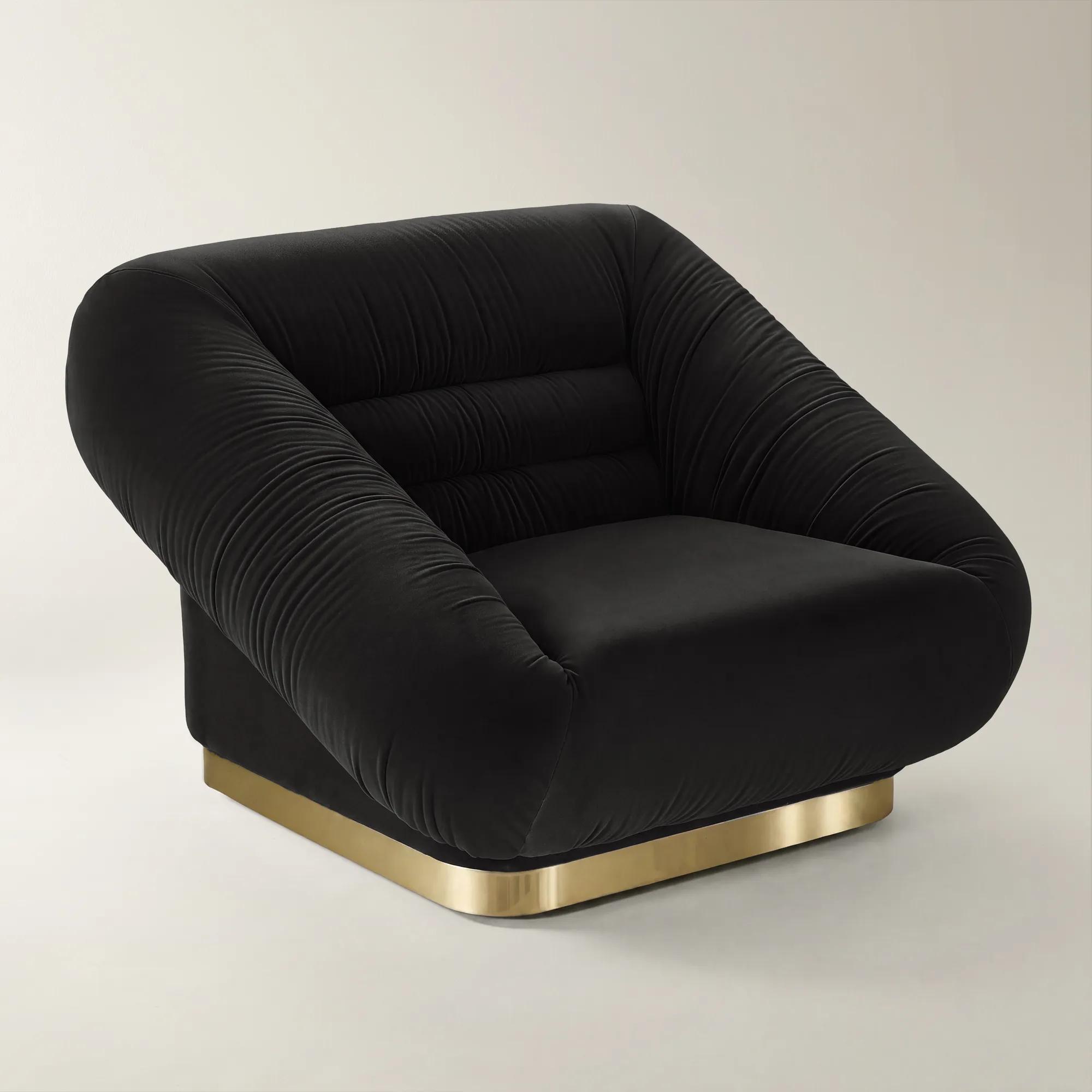
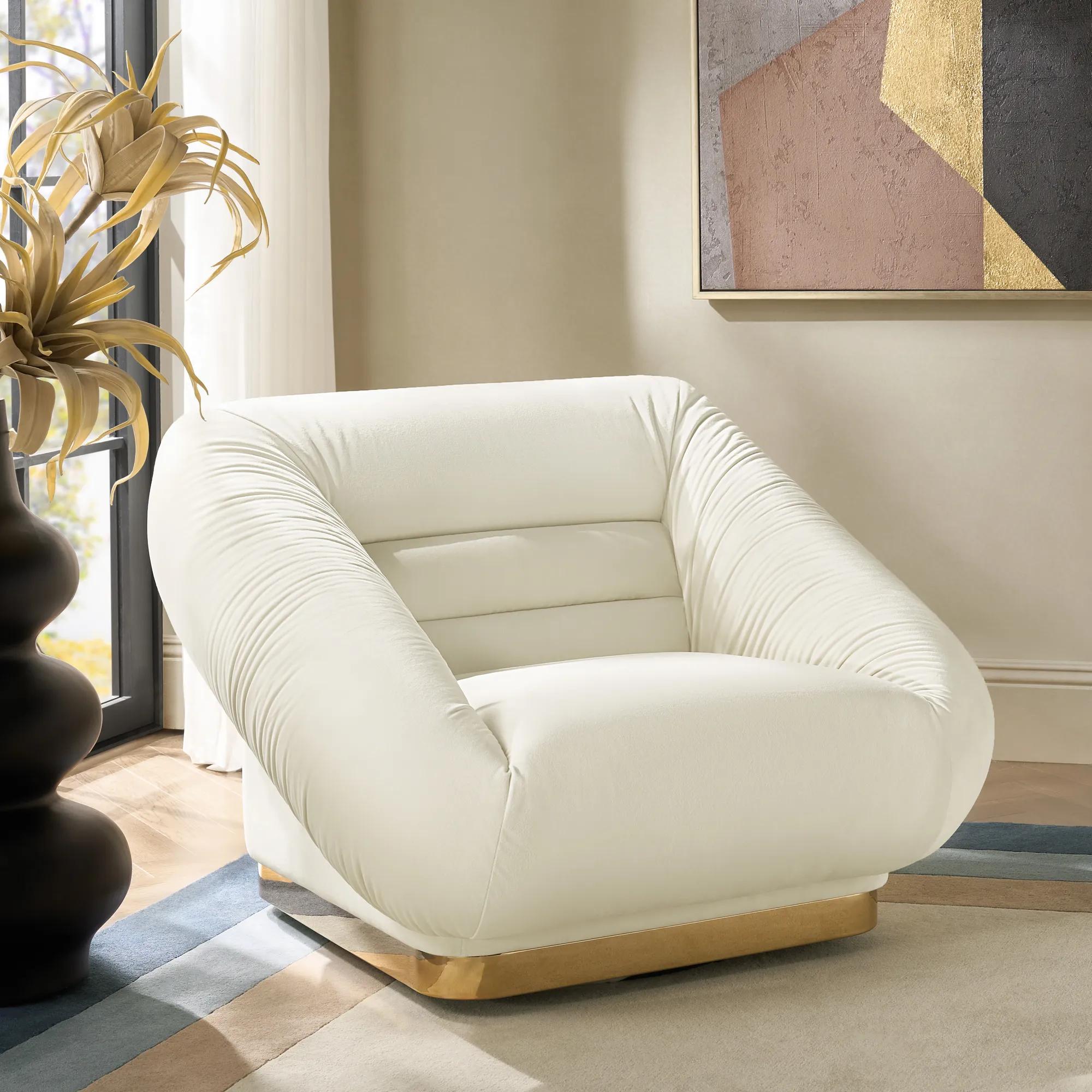 Dover Charcoal Velvet Swivel Accent Chair$1299
A sculptural charcoal velvet accent chair with gathered upholstery, a soft gold–finished stainless steel base, and smooth 360° swivel.
Add To Cart -

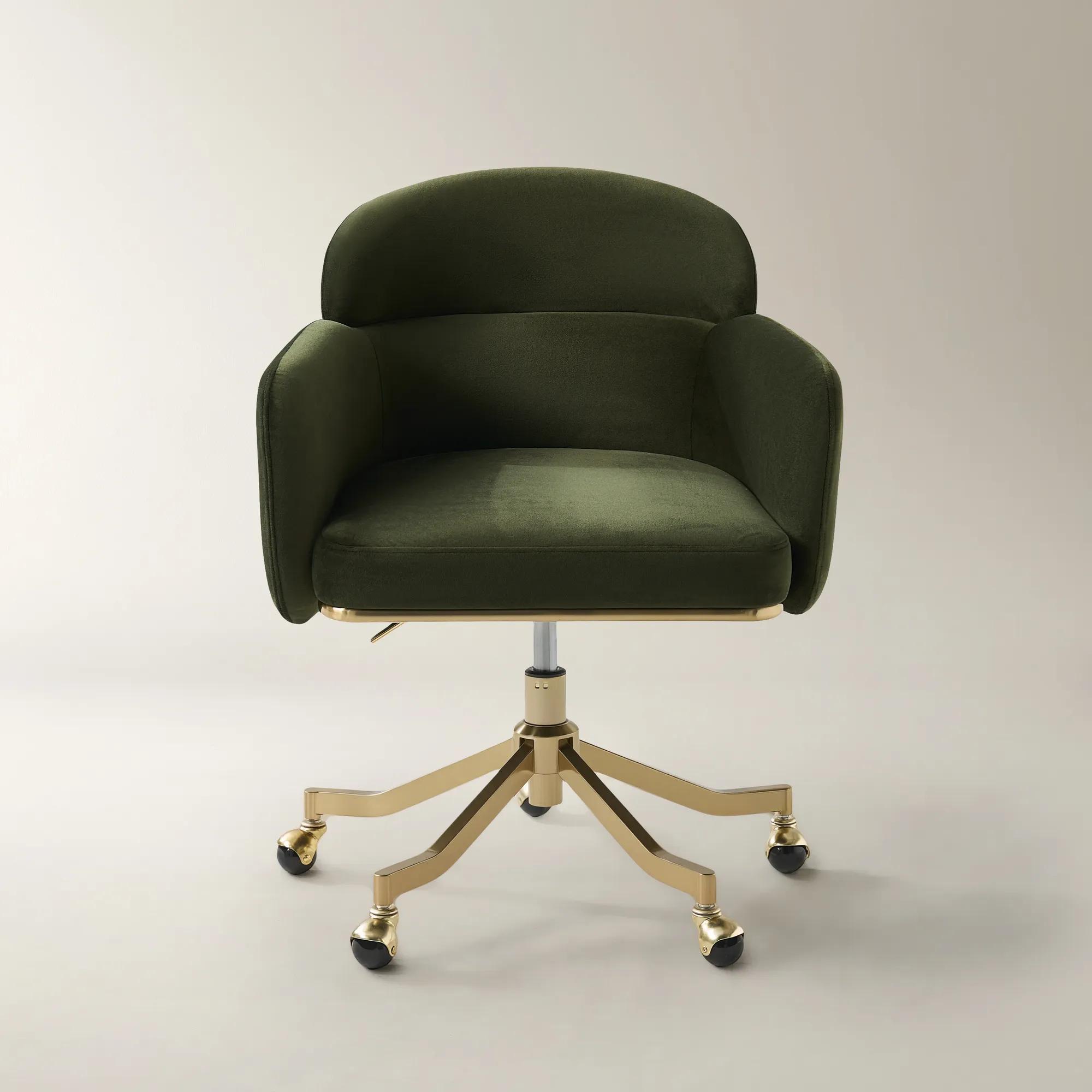 Paige Jade Green Velvet Swivel Desk Chair$399
A jade green velvet swivel chair featuring ergonomic design, adjustable height, and a glossy metal base with casters.
Add To Cart -
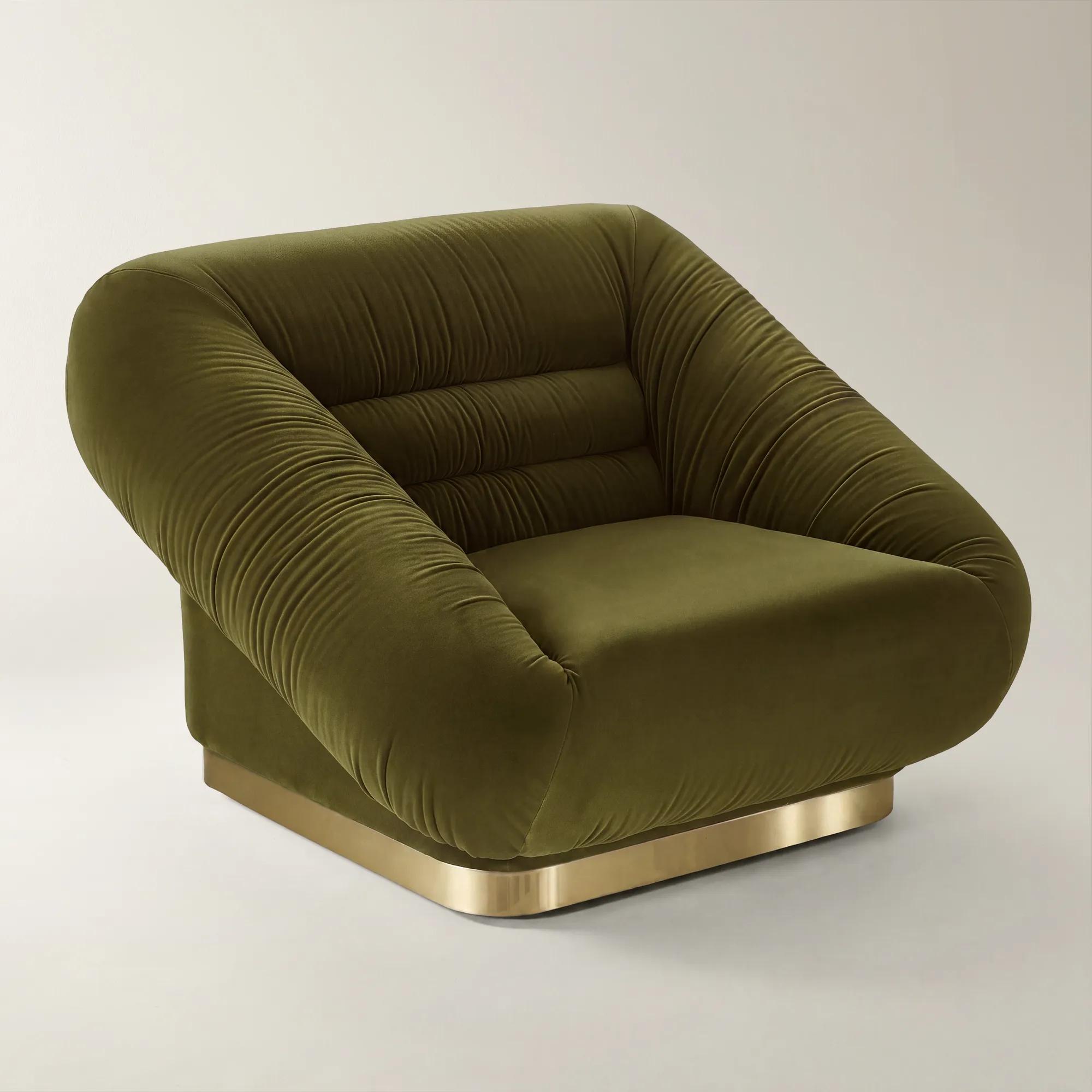
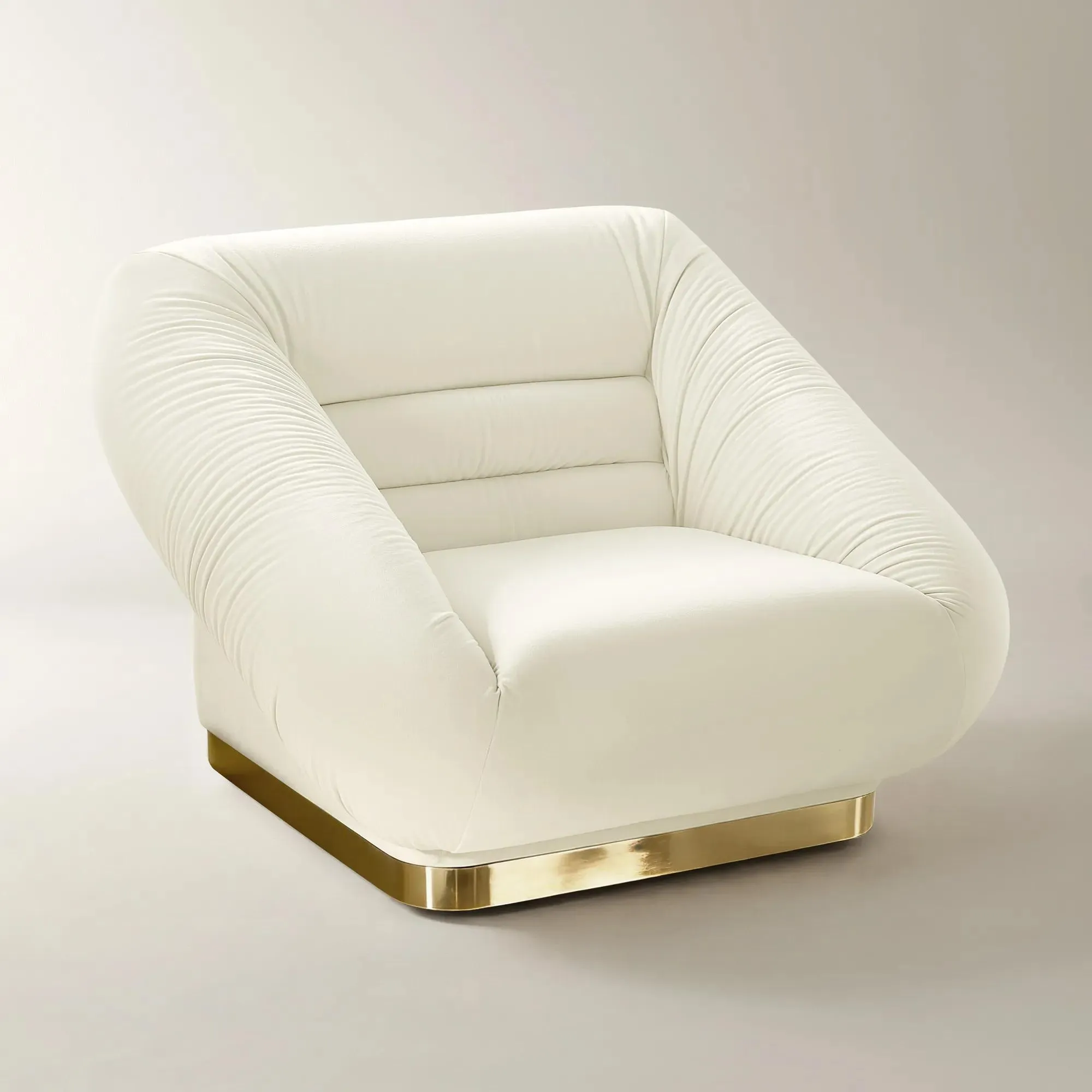 Dover Deep Olive Velvet Swivel Accent Chair$1299
A sculptural deep olive velvet chair with gathered upholstery, soft gold trim, and smooth 360-degree swivel functionality.
Add To Cart -
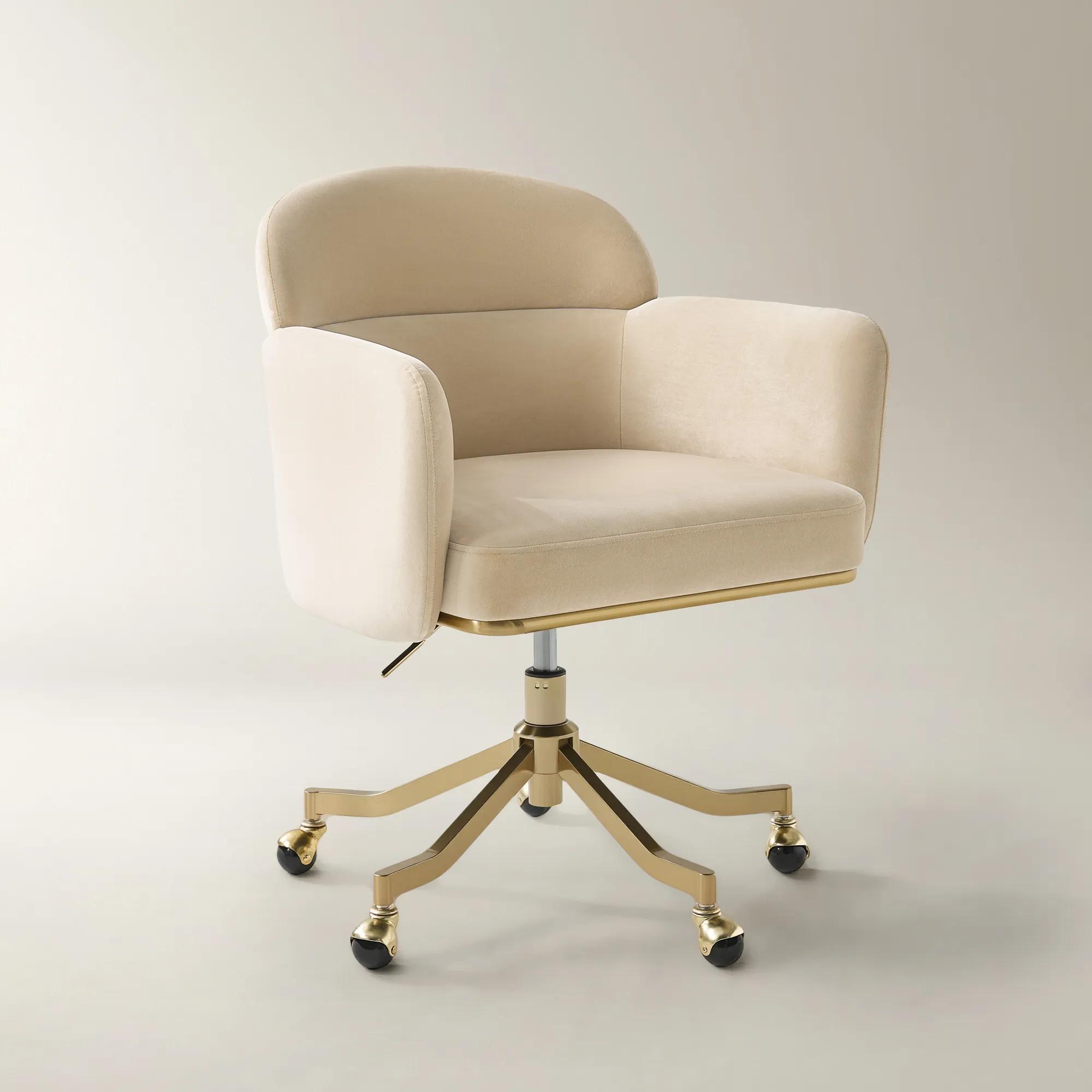 Paige Oatmeal Velvet Swivel Desk Chair$399
An oatmeal velvet swivel chair with adjustable height, ergonomic design, and a polished metal base with casters.
Add To Cart -
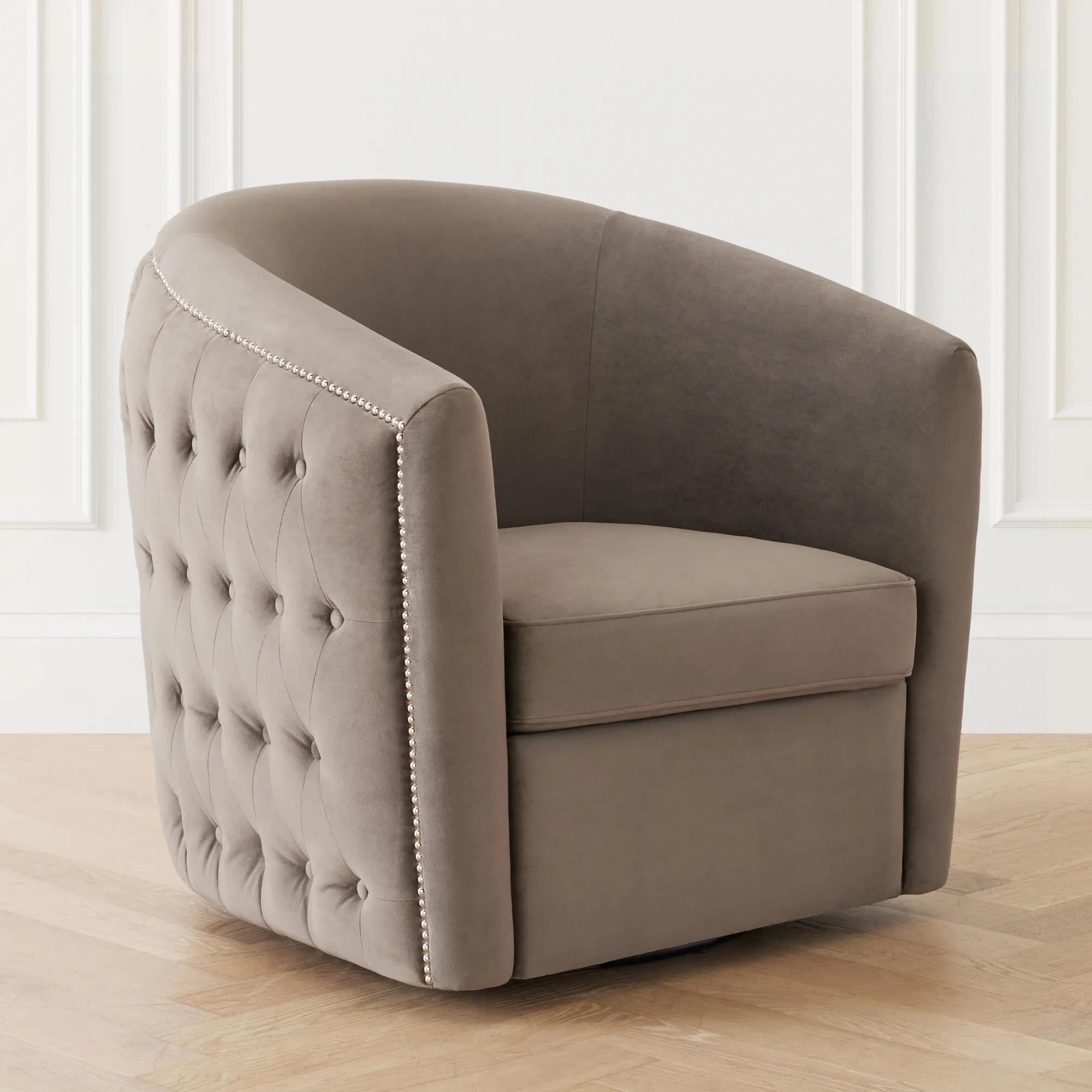
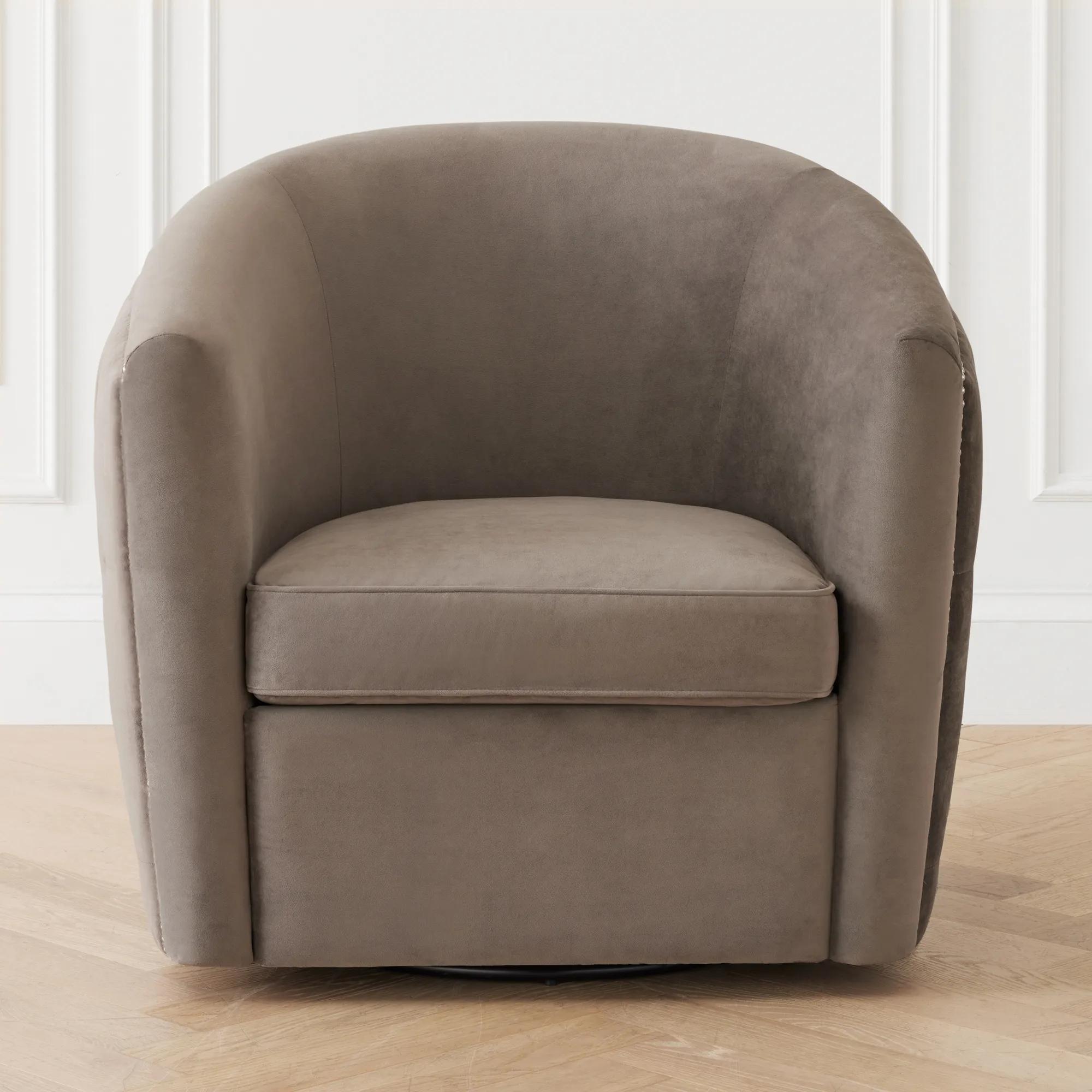 Aria Tufted Swivel Chair$1299
A barrel silhouette swivel chair in Bella Velvet Otter with tufted detailing and bright nickel nailheads.
Add To Cart -
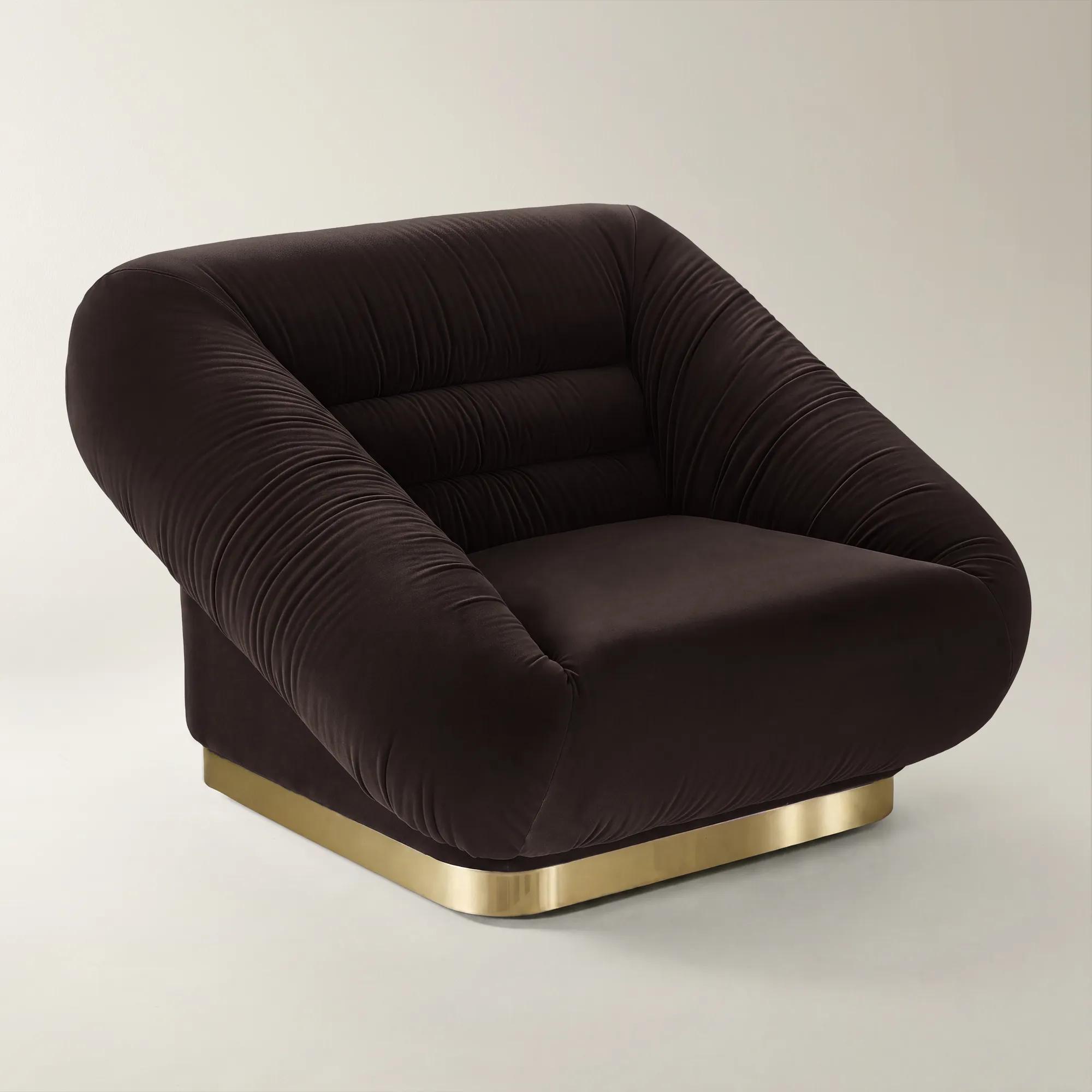 Dover Dark Chocolate Velvet Swivel Accent Chair$1299
A dark chocolate velvet accent chair with a sculptural silhouette, 360° swivel, and soft gold-finished trim.
Add To Cart -
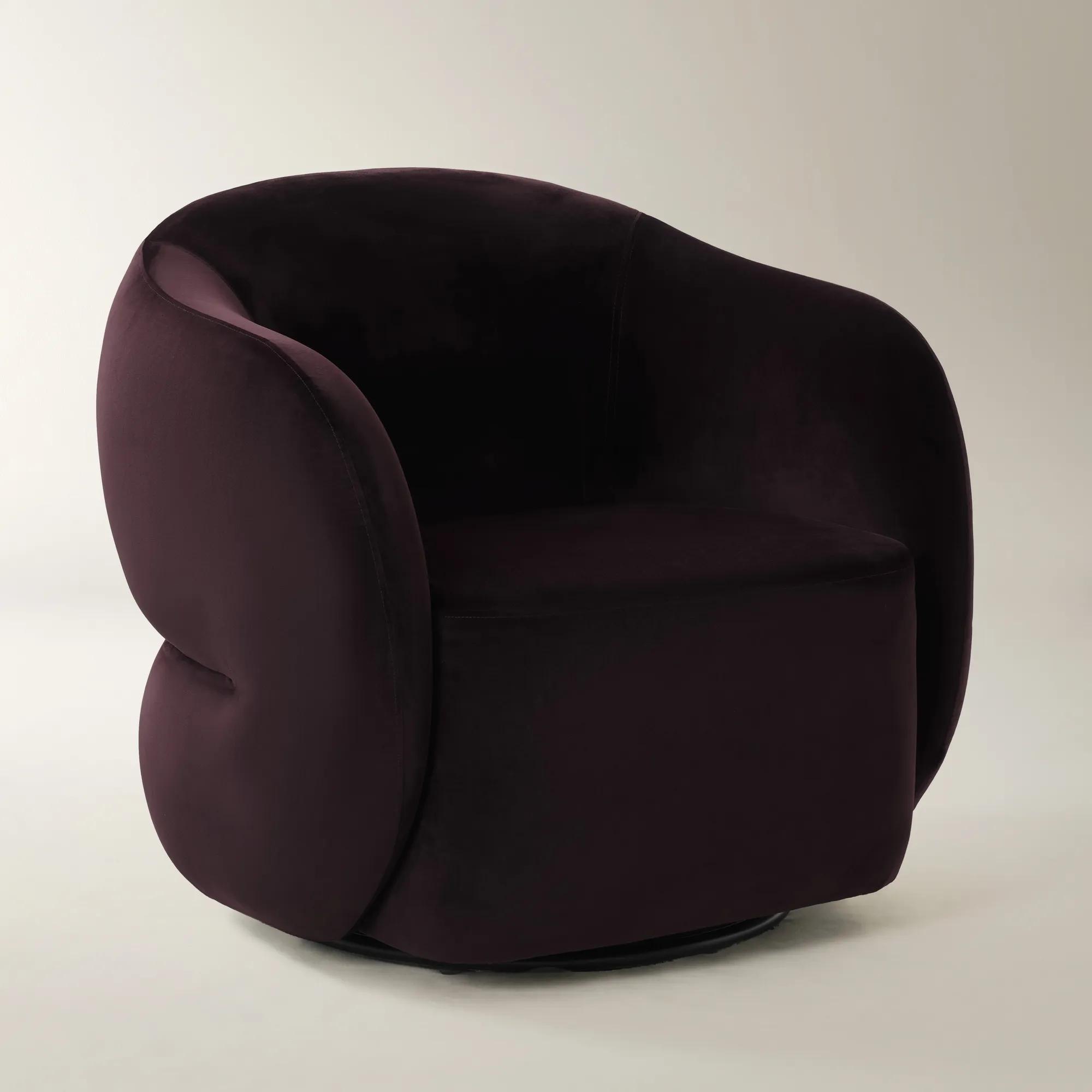 Sierra Fig Velvet Swivel Accent Chair$899
A modern accent chair in plush fig velvet with a wraparound back and smooth 360° swivel base.
Add To Cart -
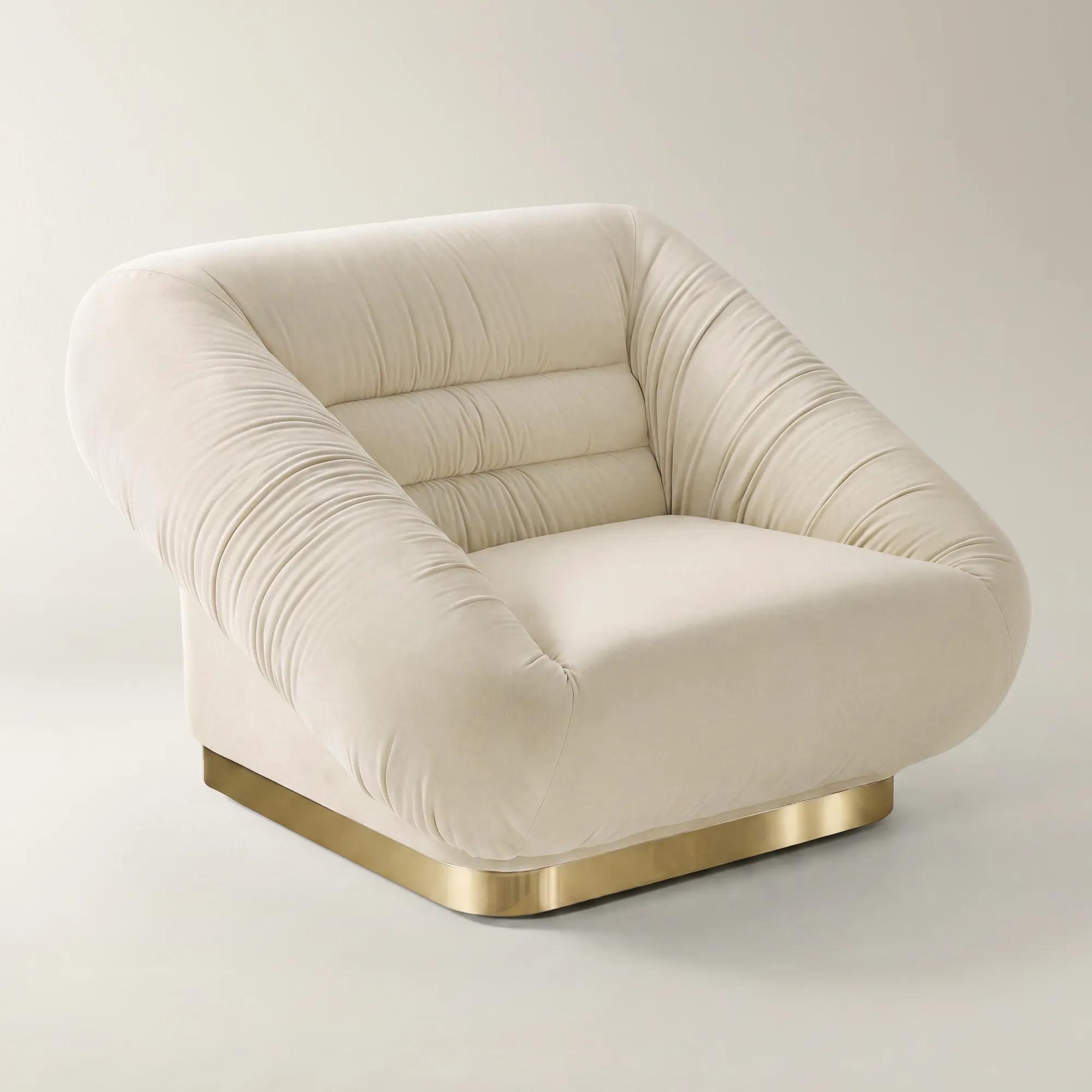 Dover Oatmeal Velvet Swivel Accent Chair$1299
A sculptural oatmeal velvet accent chair with gathered upholstery, a soft gold stainless steel base, and smooth 360-degree swivel functionality.
Add To Cart -
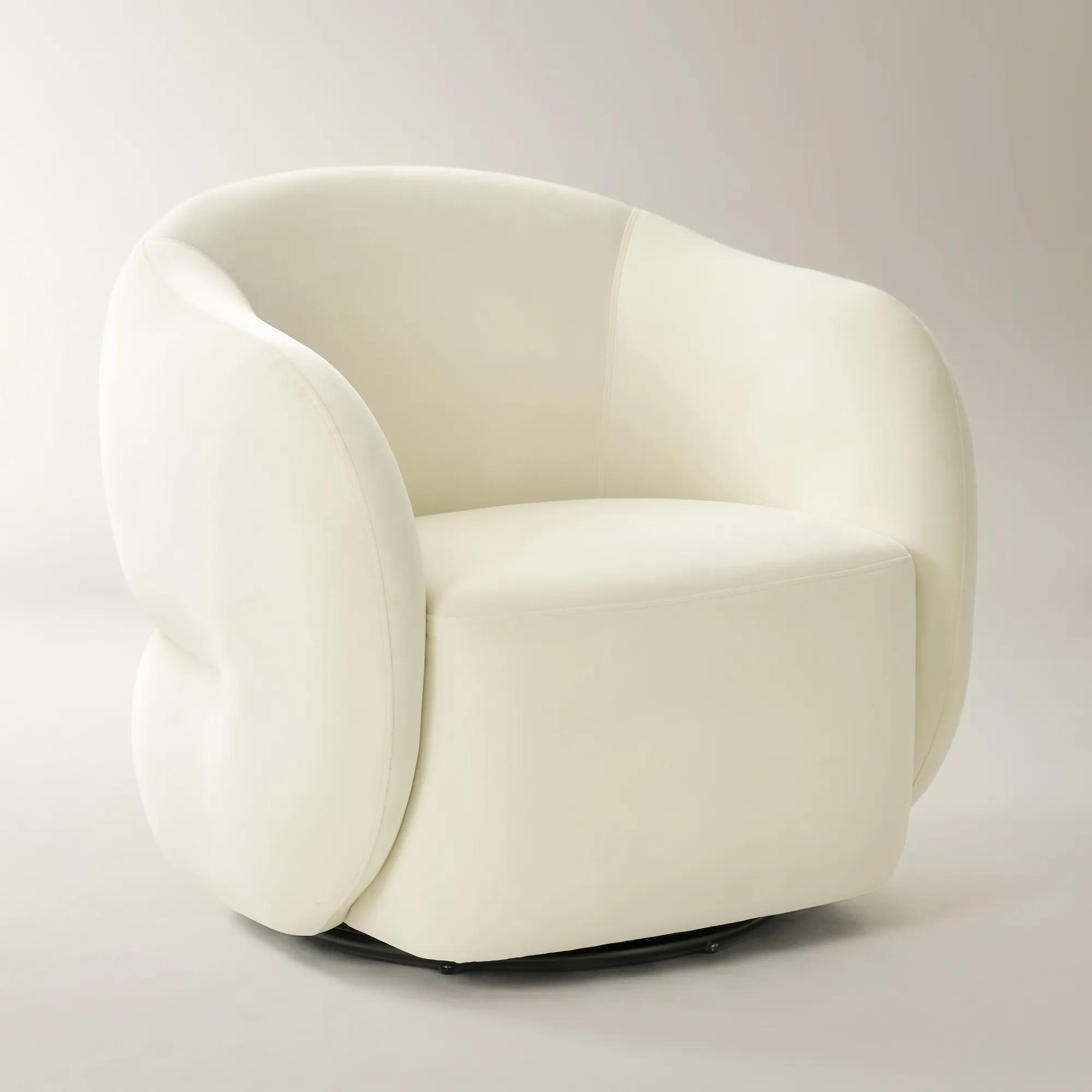
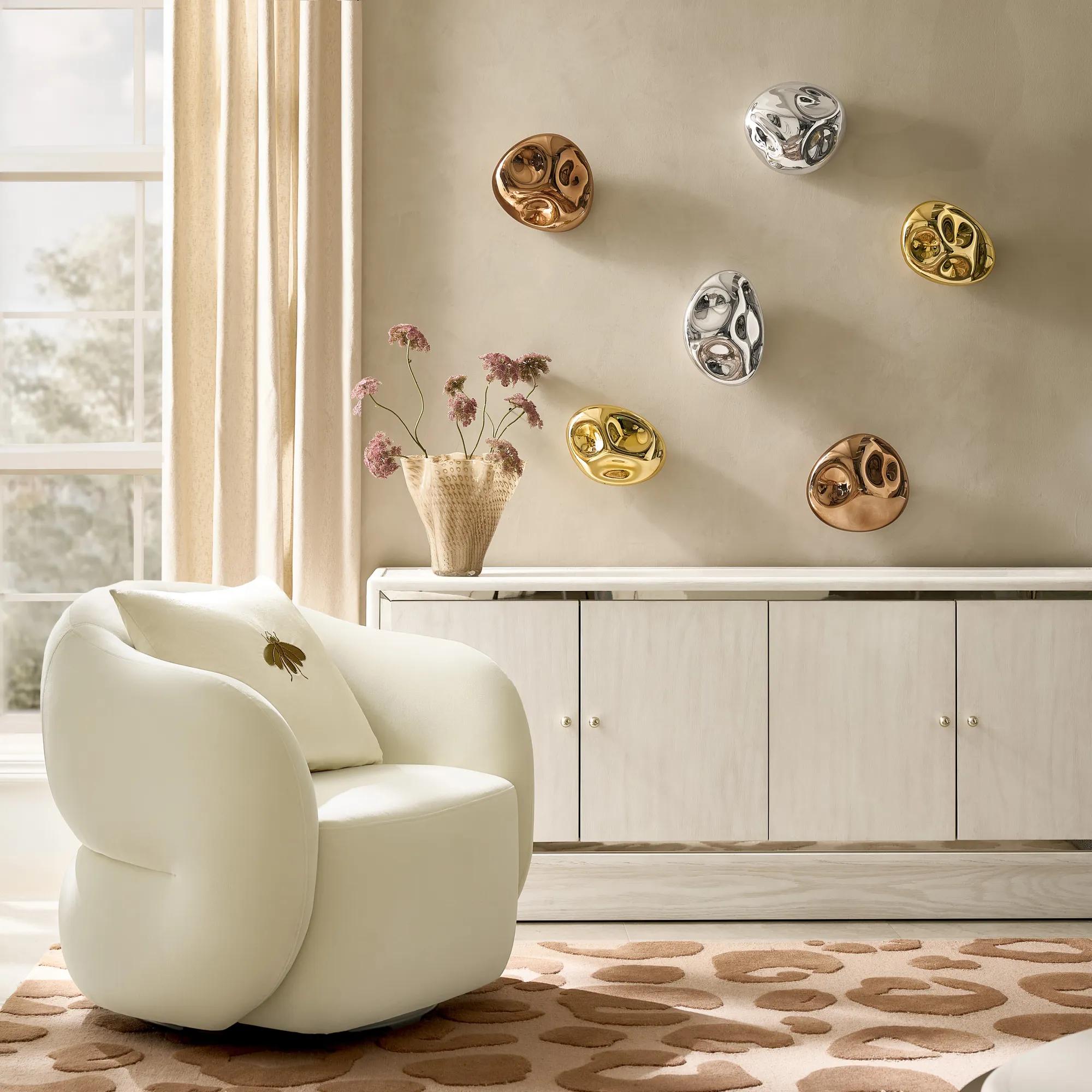 Sierra Cloud Velvet Swivel Accent Chair$899
A plush velvet accent chair featuring a wraparound back, fluid curves, and smooth 360° swivel base.
Add To Cart -
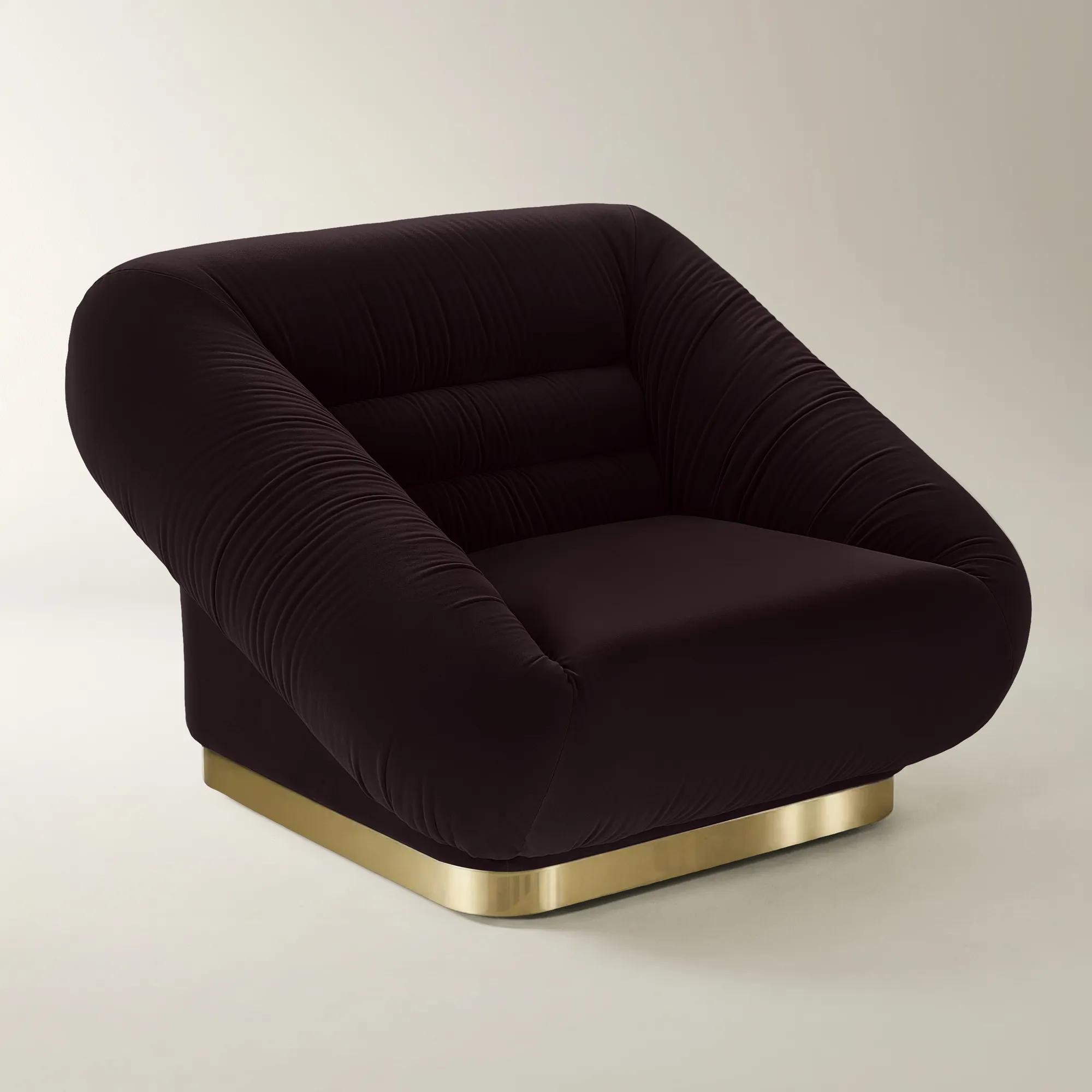 Dover Fig Velvet Swivel Accent Chair$1299
A sculptural fig velvet accent chair featuring soft gathered upholstery, gold-trimmed base, and smooth 360° swivel.
Add To Cart -
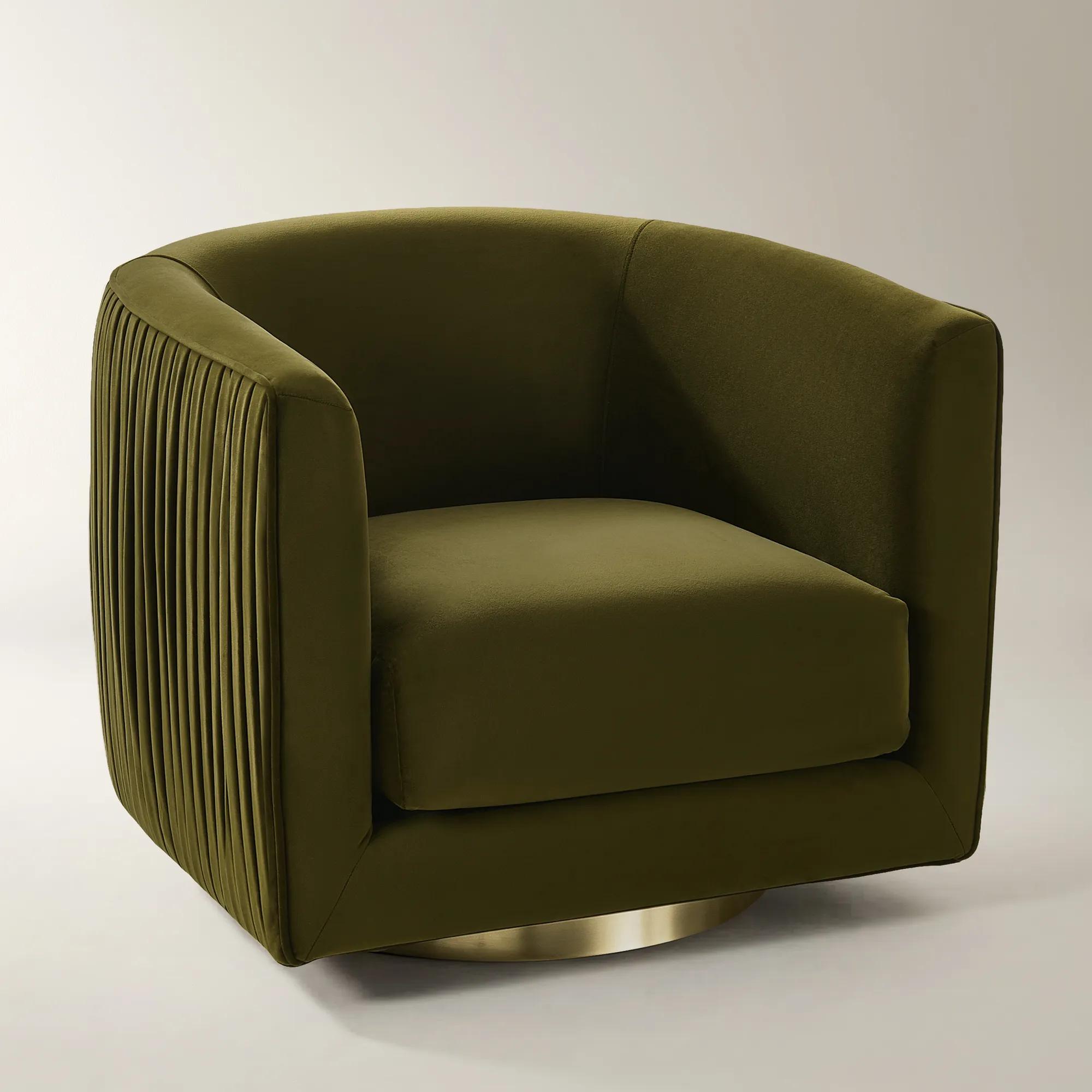
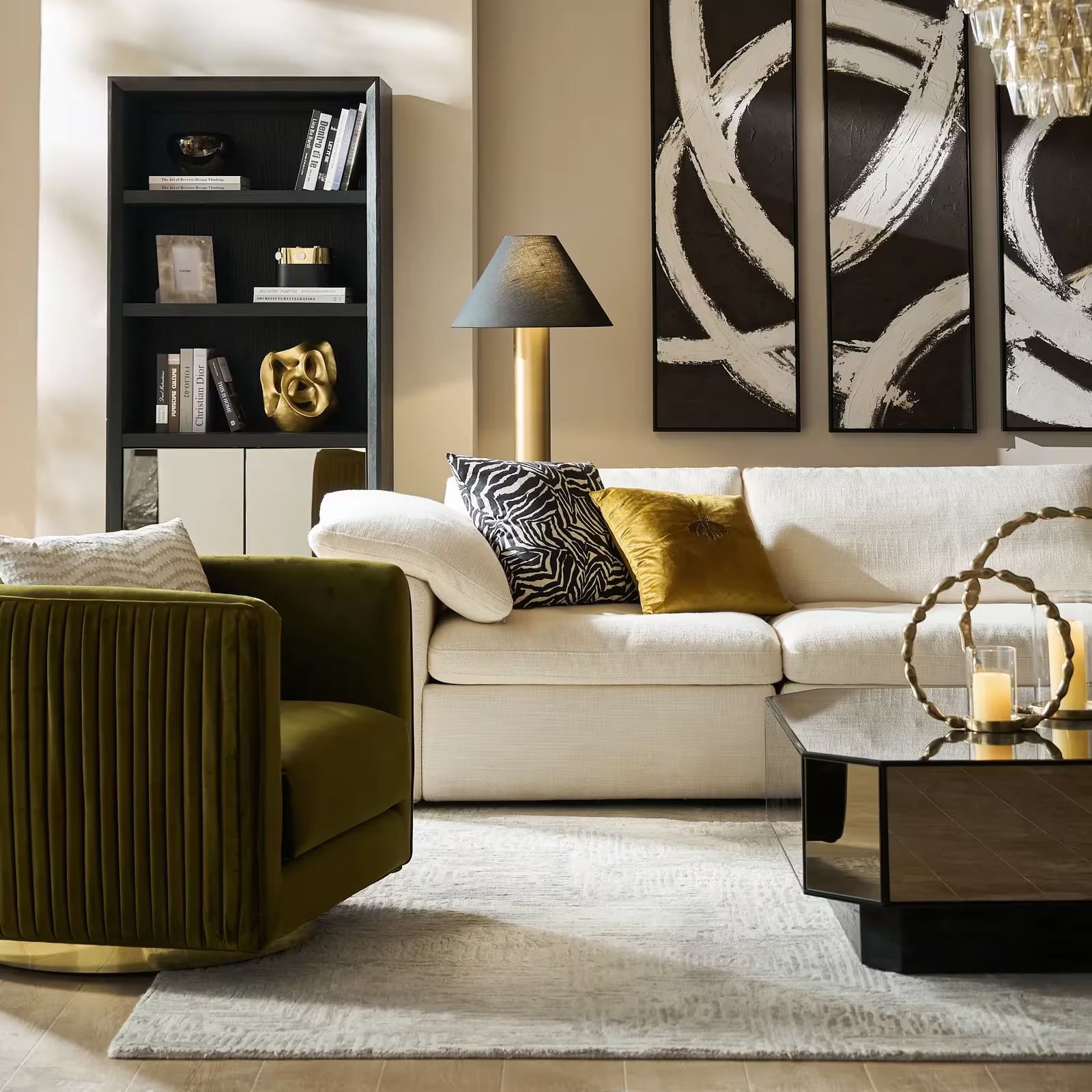 Lyssa Pleated Deep Olive Velvet Swivel Accent Chair$1099
A deep olive velvet accent chair with pleated panels, 360-degree swivel, and gold metal base.
Add To Cart -
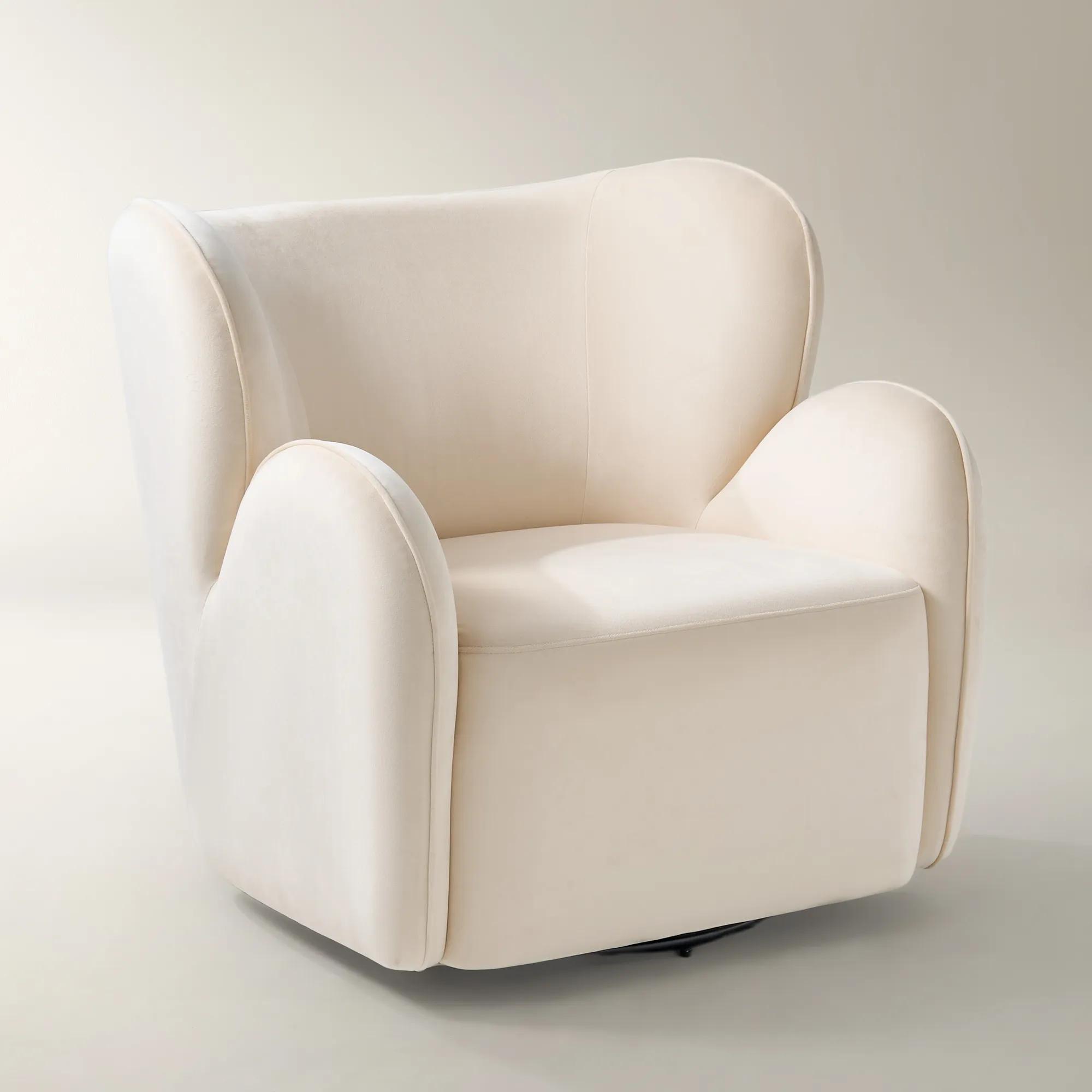
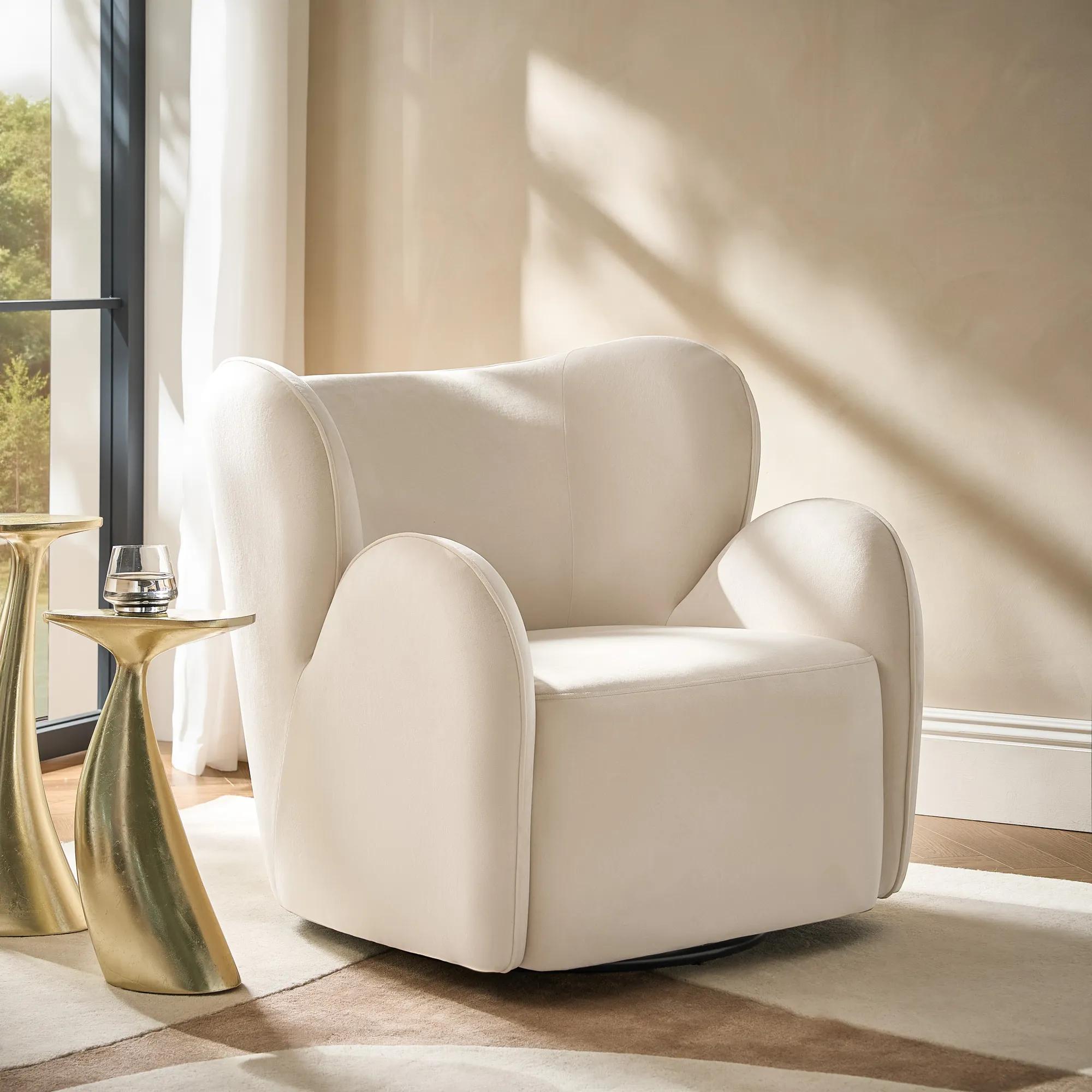 Ceres Ivory Velvet Swivel Accent Chair$799
An ivory velvet accent chair featuring a curved silhouette, 360° swivel, and plush, supportive cushioning.
Add To Cart -
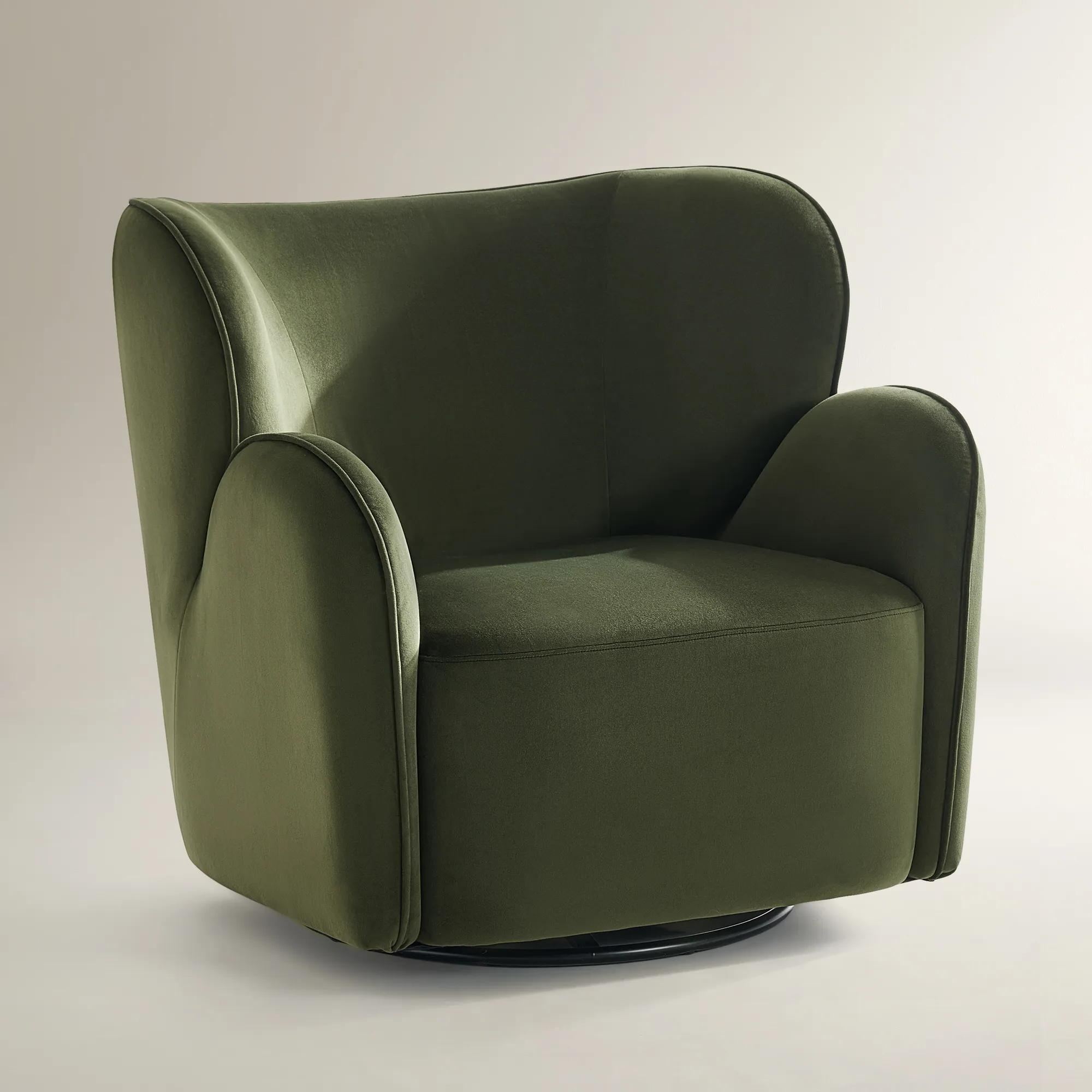
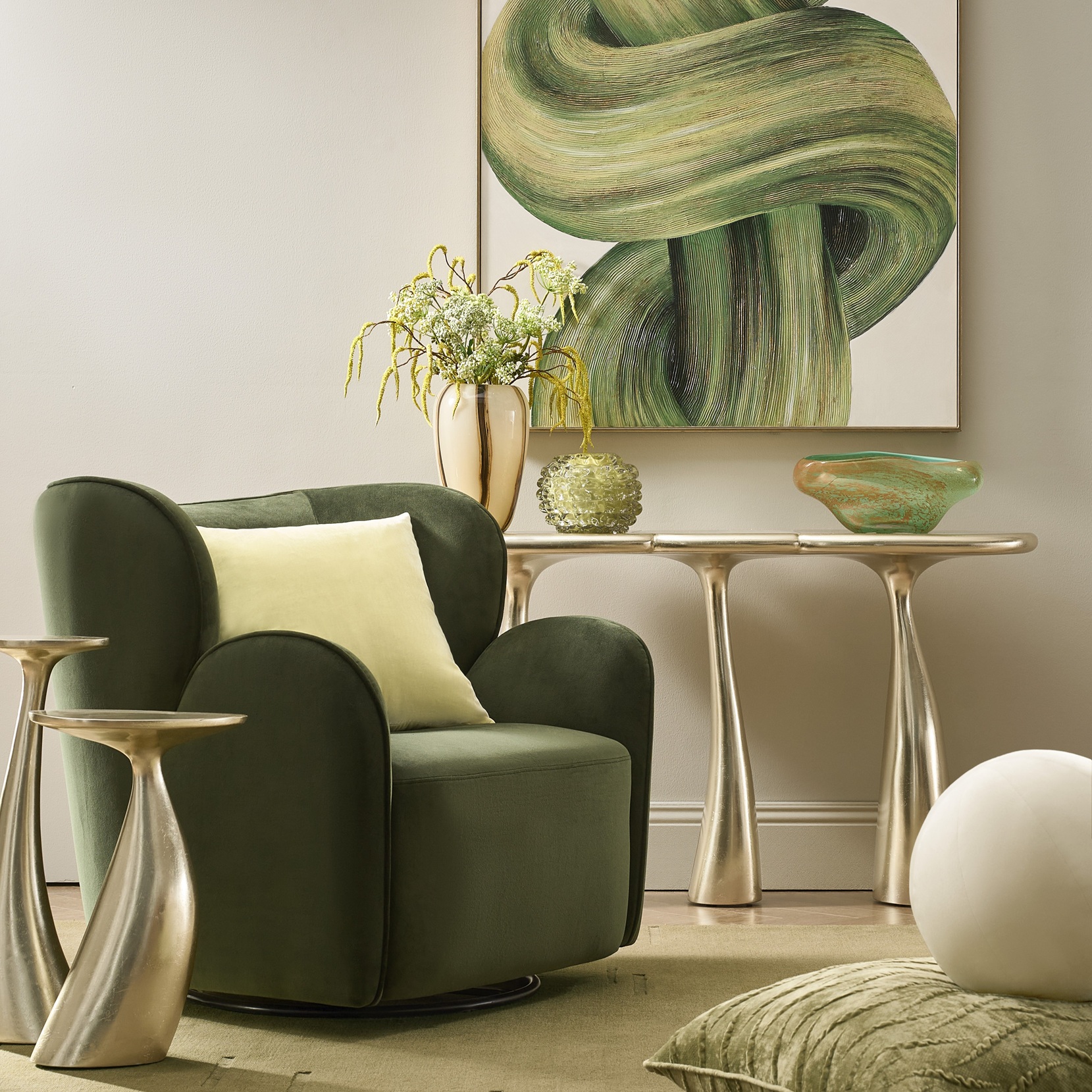 Ceres Jade Green Velvet Swivel Accent Chair$799
A plush jade green velvet chair with a curved silhouette, 360° swivel, and supportive foam cushioning.
Add To Cart -
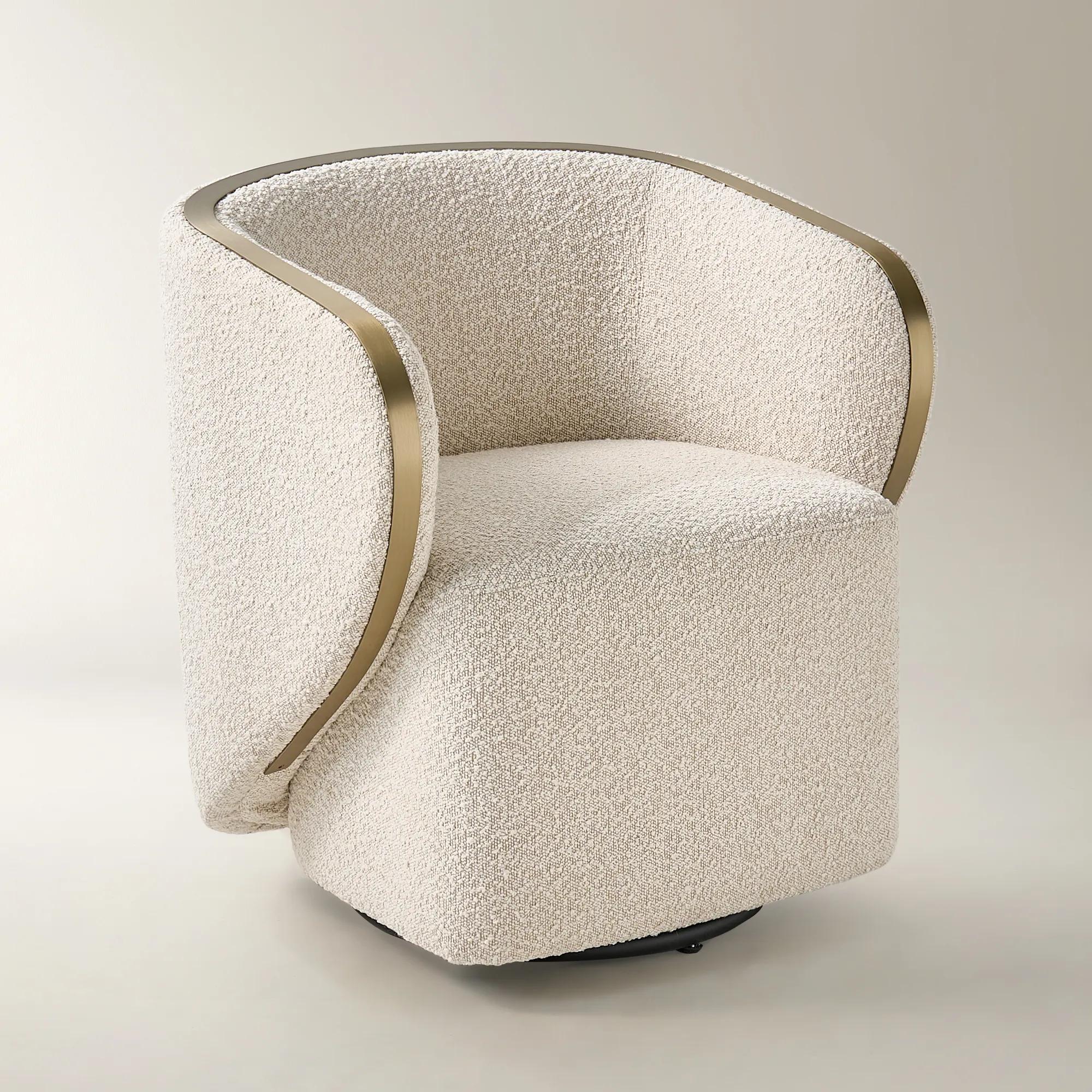 Nova Ivory Performance Boucle Swivel Dining Chair$699
An ivory boucle swivel chair featuring a sculptural wraparound silhouette and elegant metallic trim accents.
Add To Cart -
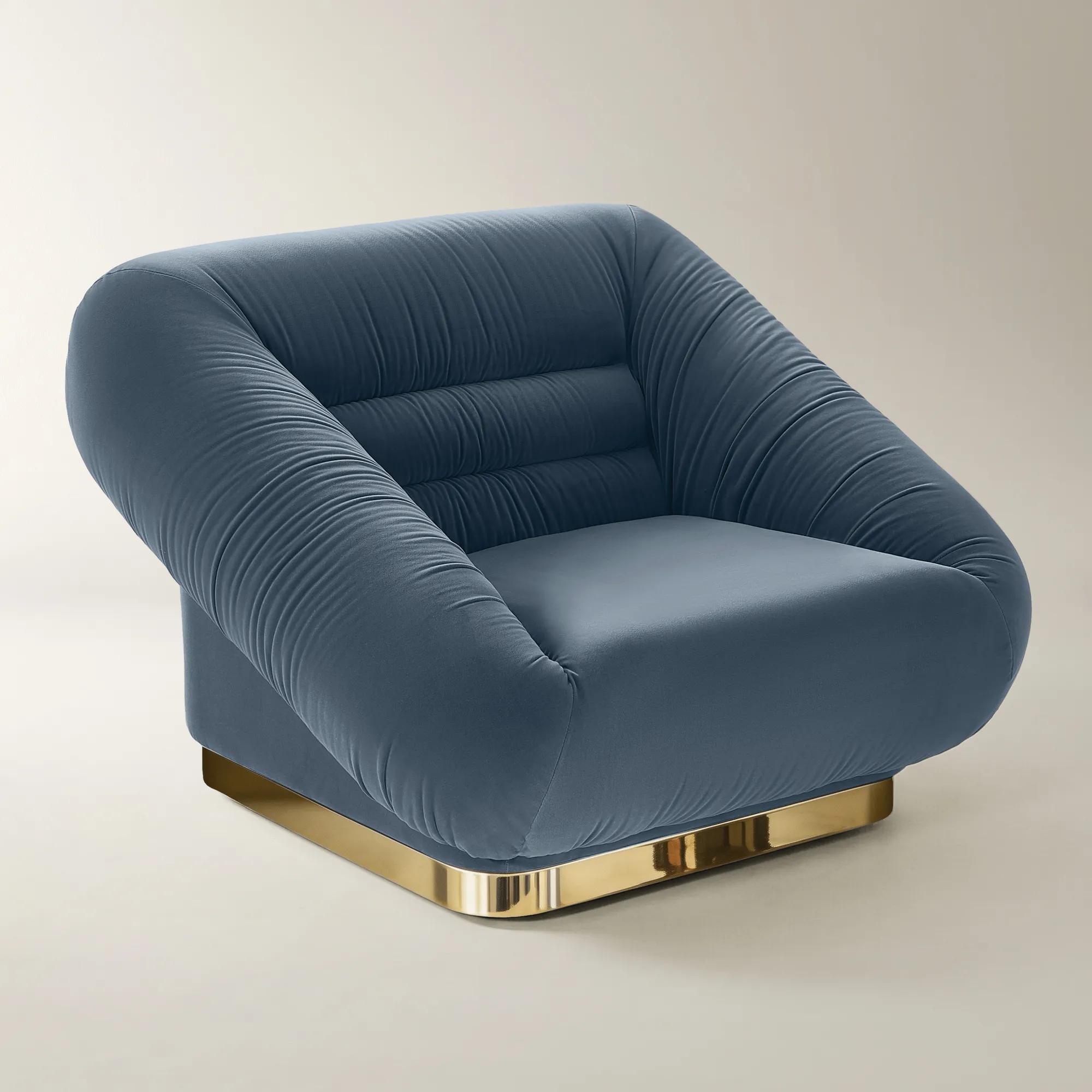 Dover Dusty Blue Velvet Swivel Accent Chair$1299
A sculptural blue velvet accent chair featuring soft gathered upholstery, gold-trimmed base, and smooth 360° swivel.
Add To Cart -
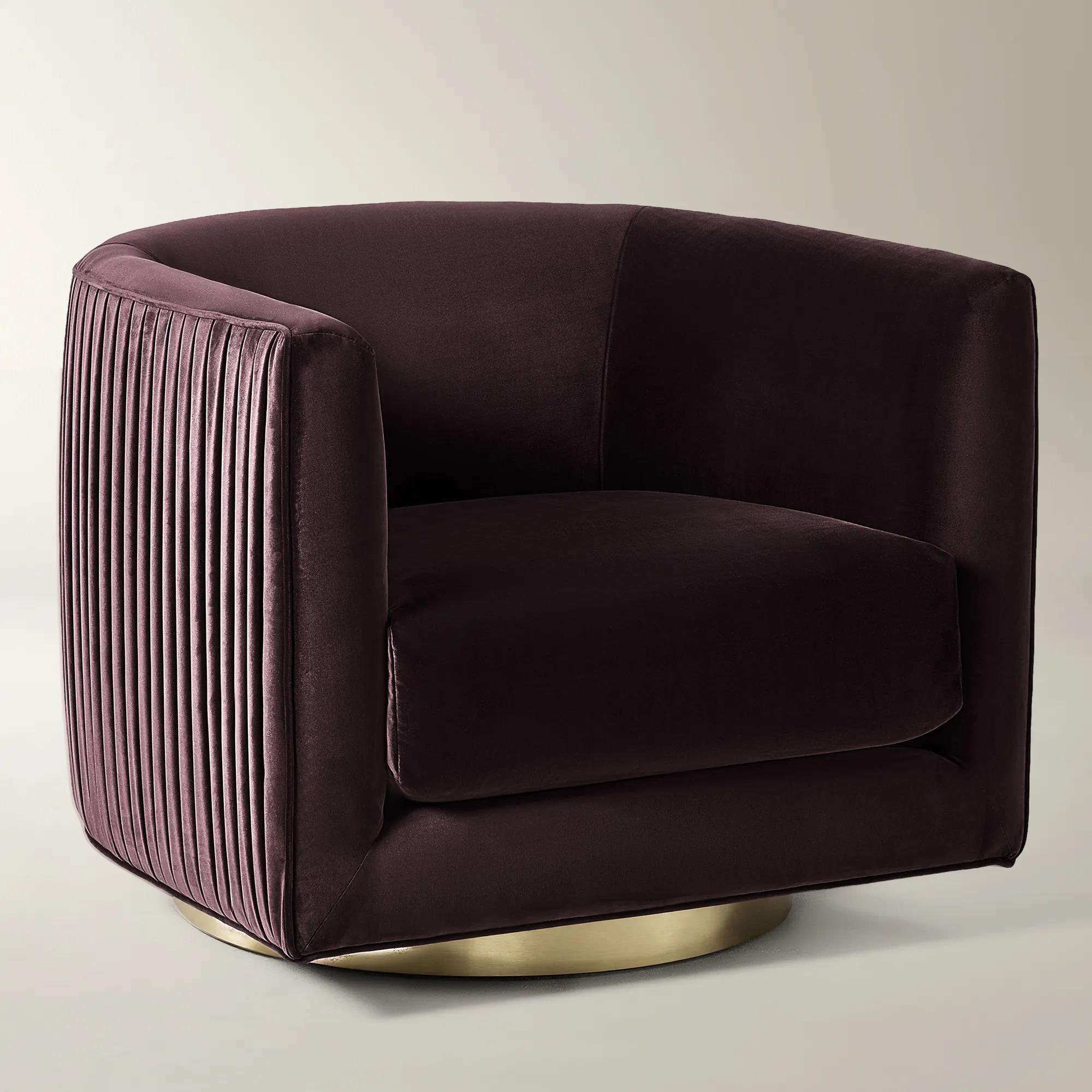 Lyssa Pleated Fig Velvet Swivel Accent Chair$1099
A red velvet swivel chair with pleated panels, curved styling, and a soft-gold stainless steel base.
Add To Cart -
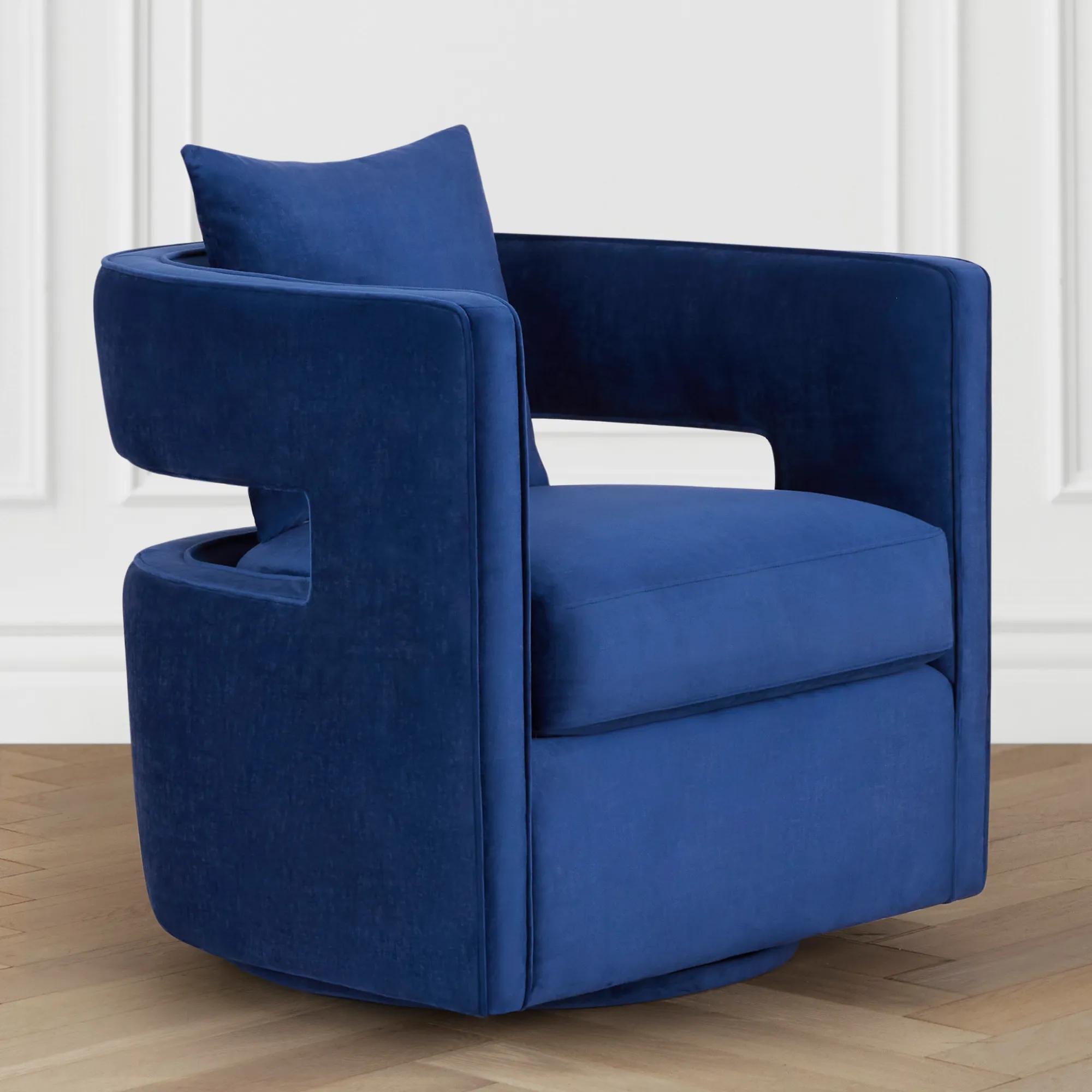
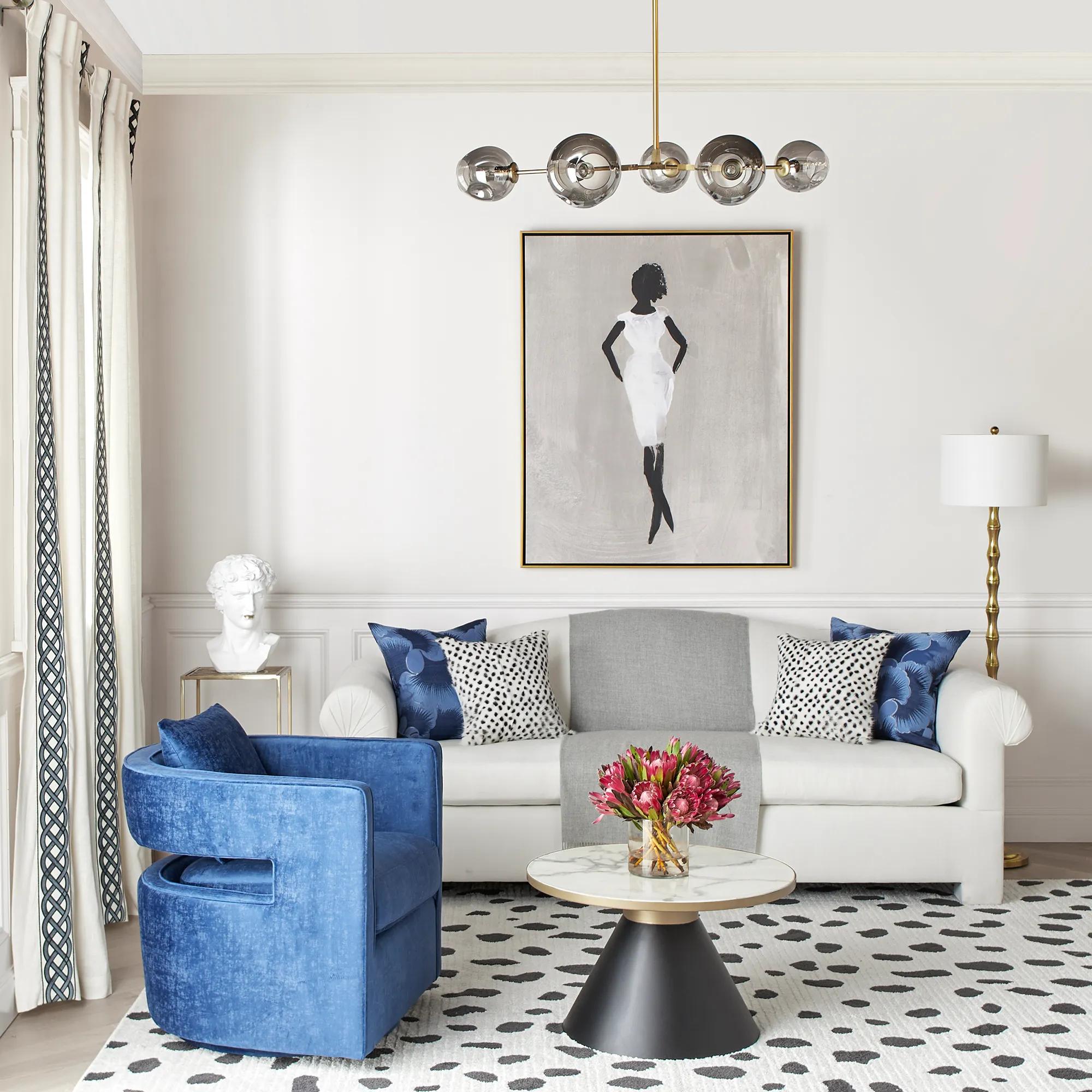 Lottie Navy Velvet Swivel Accent Chair$999
A navy velvet swivel accent chair featuring a sculpted barrel silhouette, open arms, and supportive cushioning.
Add To Cart

Durable Indoor Swivel Chairs
Elevate your living space with durable indoor swivel chairs that strike the perfect balance between artistry and endurance. Each piece is a masterstroke of design—crafted for those who demand both drama and daily resilience. Imagine the effortless grace of a chair that pivots with your every move, transforming conversation corners into captivating vignettes. With sculptural silhouettes and luxe finishes, these chairs invite you to indulge in comfort while making a bold statement. Discover how durable indoor swivel chairs can anchor your room in sophistication and set every moment in motion.
Durable indoor swivel chairs combine supportive seating, a sturdy frame, and a rotating base that lets the sitter change direction without moving the entire chair. Their lasting appeal comes from the relationship between construction, upholstery, and proportion: a beautiful silhouette should feel as assured as it looks. In a living room, a sculptural swivel chair can turn toward conversation, then pivot toward a favorite view. Beside a bookcase, a generously cushioned seat creates a private retreat without visually closing off the room. Curved backs and enveloping arms lend these chairs an especially expressive presence, softening the lines of a tailored sofa or angular cocktail table. Beneath that upholstery, frame materials and joinery help determine how well a chair handles repeated use. Kiln-dried hardwood, well-engineered wood components, and metal can all contribute to durable construction when appropriately designed and securely assembled. Reinforced joints and a stable base matter more than a substantial-looking exterior alone. The swivel mechanism deserves equal attention, since smooth rotation depends on the quality of its components and how securely it connects to the seat. Some designs offer a full 360-degree turn, while others have a limited range or a return-to-center function; individual specifications establish what movement to expect. A swivel feature does not automatically mean a chair rocks, glides, or reclines. Seat support also shapes long-term comfort. Resilient foam, supportive suspension, and thoughtfully constructed cushions help maintain a composed profile, while softer fills create a more relaxed impression and may need regular reshaping. For a chair used every evening, cushion recovery and back support deserve as much consideration as the richness of the fabric. A documented weight capacity, clear construction details, and care instructions provide a more useful picture of everyday suitability than appearance alone. Durability is not a single feature; it is the way the frame, seat, upholstery, and moving parts perform together through repeated sitting, turning, and rising.
Upholstery gives a swivel accent chair its visual character, but the fabric’s construction and maintenance requirements influence how gracefully that character endures. Velvet brings depth and a light-catching surface, making a rounded chair feel almost jewel-like against a matte wall. Its pile can show shading or pressure marks, which are not necessarily signs of damage, and the appropriate brushing or cleaning method depends on the fiber and finish. Tightly woven fabrics can offer a tailored look with fewer exposed loops, while bouclé introduces dimensional texture that may be more vulnerable to snagging from claws or sharp accessories. Leather develops character through use, though its resistance to spills, scratching, and fading varies with the type and finish. Performance upholstery can be especially relevant in frequently used family spaces, but the term does not mean stain-proof or maintenance-free. Specific information about stain resistance, cleaning methods, and abrasion testing is more meaningful than a broad durability claim. When comparing abrasion results, figures are most useful when they come from the same test method, and they do not predict every kind of wear a chair might experience. A household with pets may prioritize a close weave and straightforward cleaning, while someone furnishing a formal sitting room may favor a lustrous surface that rewards more attentive care. Color and texture play practical roles, too: a subtly varied weave can make small traces of daily use less conspicuous than a completely uniform surface. Regular vacuuming with an upholstery attachment helps remove grit before it works into the fabric, and spills generally call for prompt blotting rather than vigorous rubbing. The manufacturer’s care directions should govern any cleaner or treatment, with testing in an inconspicuous area when permitted. Removable cushion covers are not necessarily machine washable. Keeping upholstery away from prolonged direct sunlight and maintaining the swivel hardware according to its instructions helps preserve both the chair’s finish and its ease of movement.
Scale gives durable indoor swivel chairs their place in the room. A wide barrel silhouette can make a generous living area feel intimate, while a narrower profile may bring the same sense of occasion to a bedroom corner or apartment seating arrangement. Overall width alone does not tell the full story. Seat depth affects whether a sitter can lean back comfortably with feet supported, seat height influences the ease of sitting and standing, and arm height changes how naturally the shoulders relax. A deep, low seat may suit someone who loves curling up with a novel, while a higher seat with supportive arms may better serve someone who prefers a more upright posture. These are personal fit considerations rather than promises made by a particular shape. The chair’s turning radius also needs room to breathe. Clearance should account for the arms and back throughout their full movement, not just the footprint of the base, so the upholstery avoids brushing walls, curtains, and neighboring furniture. A side table works best within comfortable reach but outside that turning path. Two swivel chairs opposite a sofa can create a conversational arrangement that also opens toward another part of the room, making them particularly expressive in open-plan interiors. For a connected living and kitchen setting, Durable Indoor Bar Stools can extend the emphasis on resilient seating while allowing each zone its own proportions and purpose. Coordinating an upholstery tone, curved line, or metal finish creates continuity without requiring every seat to match. A pale textured chair beside dark wood, or a saturated velvet silhouette against a restrained rug, gives the arrangement contrast and intention. Swivel lounge seating is best understood as seating for conversation, reading, and unwinding; it does not replace an adjustable task chair for extended desk work. With suitable dimensions, considered construction, and care matched to the material, a durable swivel chair brings lasting substance to a room’s most inviting gesture: a seat that turns toward the moment.
FAQs
Durable indoor swivel chairs are often crafted with solid hardwood or reinforced metal frames for lasting stability. Upholstery choices include performance fabrics, top-grain leather, or plush velvet—each selected for its resilience and tactile appeal. High-density foam or layered cushioning ensures the chair retains its inviting shape through years of use.
Swivel chairs introduce a dynamic sense of movement and flexibility, encouraging effortless conversation and interaction. Their graceful rotation allows you to shift focus from a crackling fireplace to a scenic window view, making every gathering feel more connected and every room more engaging.
Absolutely. With a wide range of silhouettes and finishes—from sculptural, contemporary forms to classic barrel shapes upholstered in rich textures—swivel chairs can be curated to complement any design aesthetic. Their versatility makes them a dramatic yet harmonious addition to both modern and traditional rooms.
Swivel chairs shine in spaces where versatility and comfort are key. Place them in living rooms for conversational seating, in bedrooms as a chic reading nook, or in home offices for a touch of luxury. They’re also a favorite in nurseries, providing a soothing spot for late-night cuddles and stories.
Yes, a well-chosen swivel chair makes a memorable and practical gift for design lovers, new homeowners, or anyone seeking to elevate their living space. It’s a gesture that combines artistry with comfort—a statement piece that invites relaxation and self-expression.