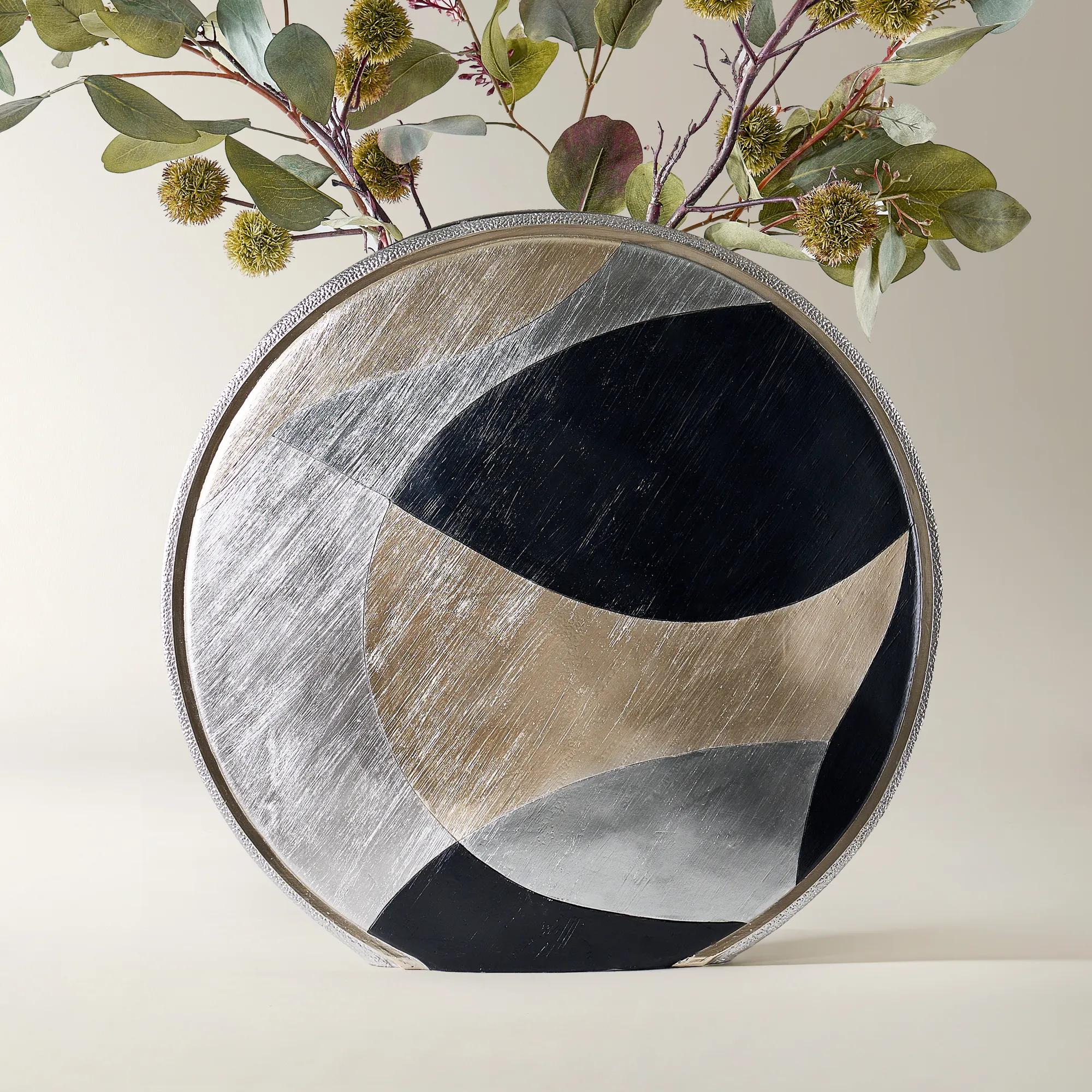
Decorative Vases For Shelves
Decorative Vases For Shelves
-
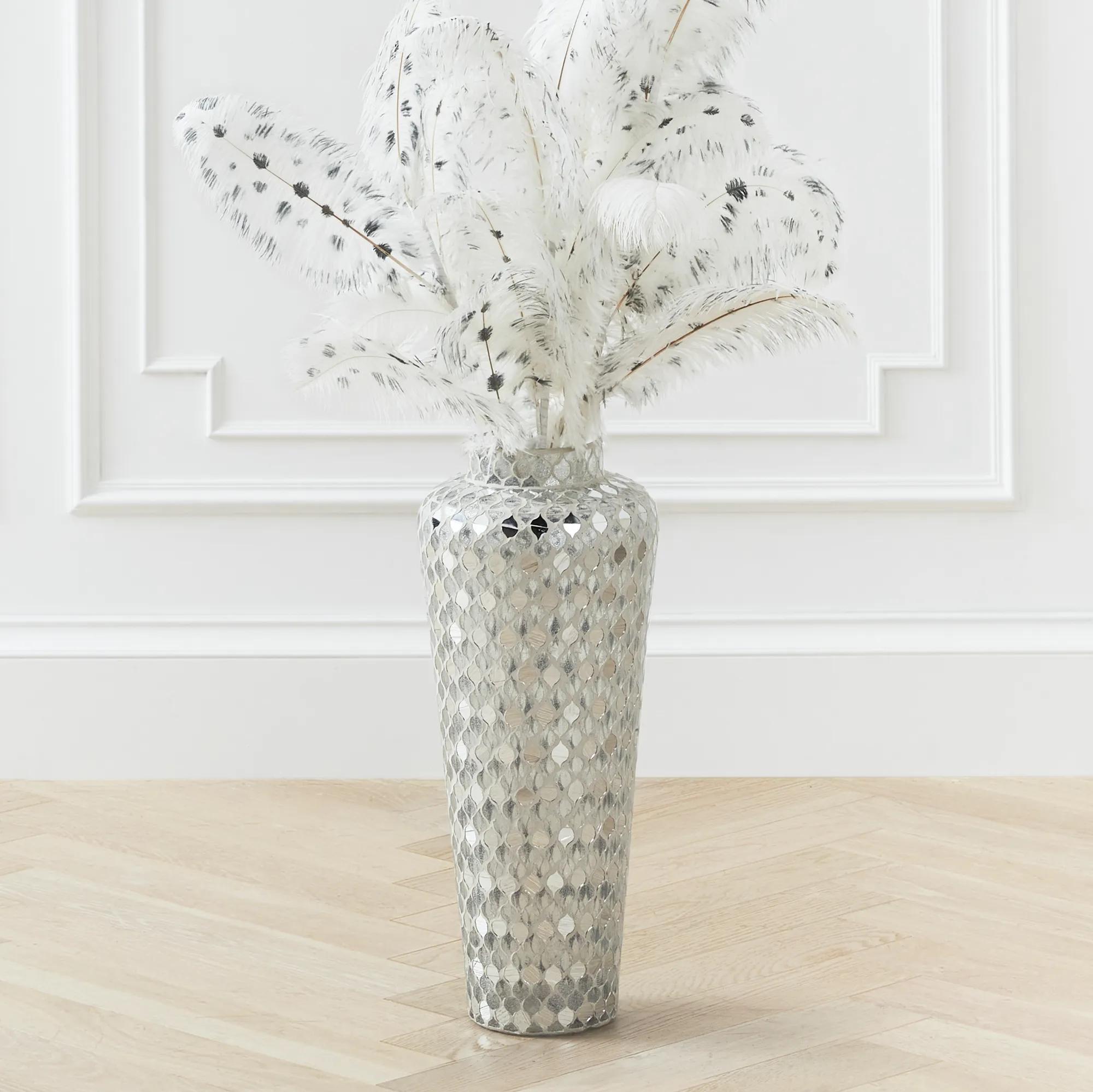 Fez Vase$139
A dazzling glass vase adorned with iridescent mirror and clear tiles for a glamorous decorative accent.
Add To Cart -
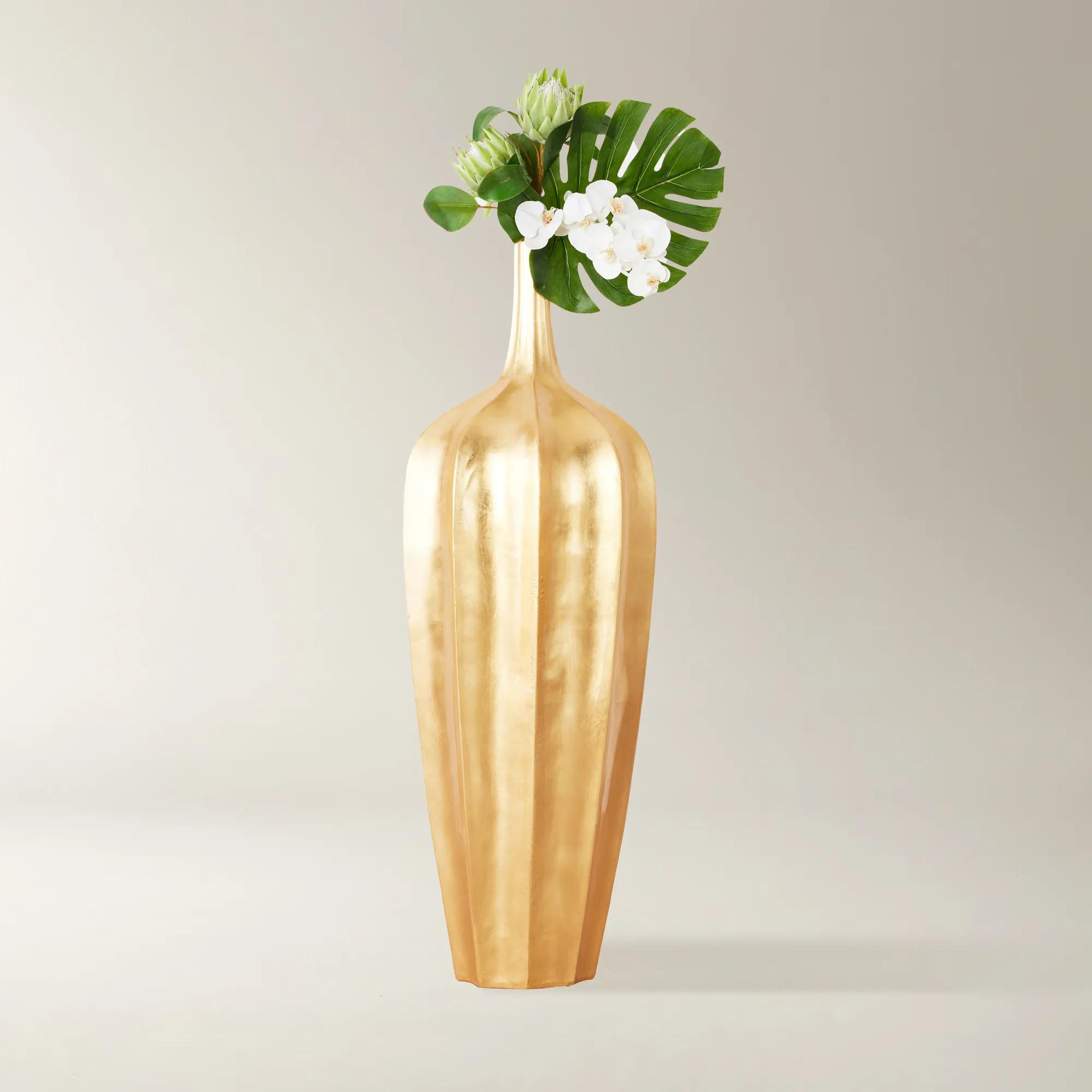 Accolade Gold Leaf Resin Floor Vase 48.75"$539
A fluted fiberglass vase featuring a lustrous gold foil finish for a striking decorative accent.
Add To Cart -
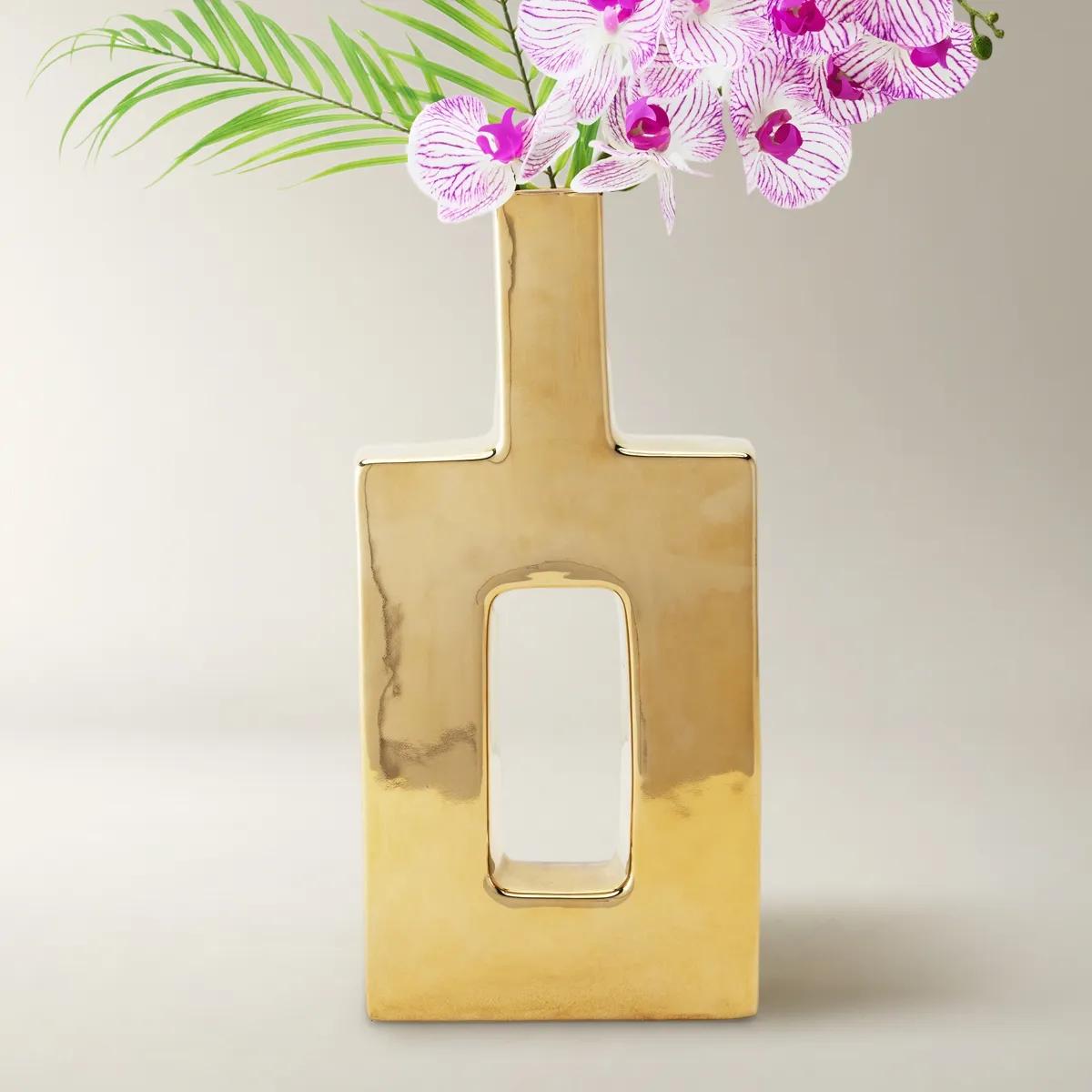 Miami Gold Ceramic High Gloss Vase 18.5"$69
A contemporary gold ceramic vase designed for decorative use or displaying faux foliage.
Add To Cart -
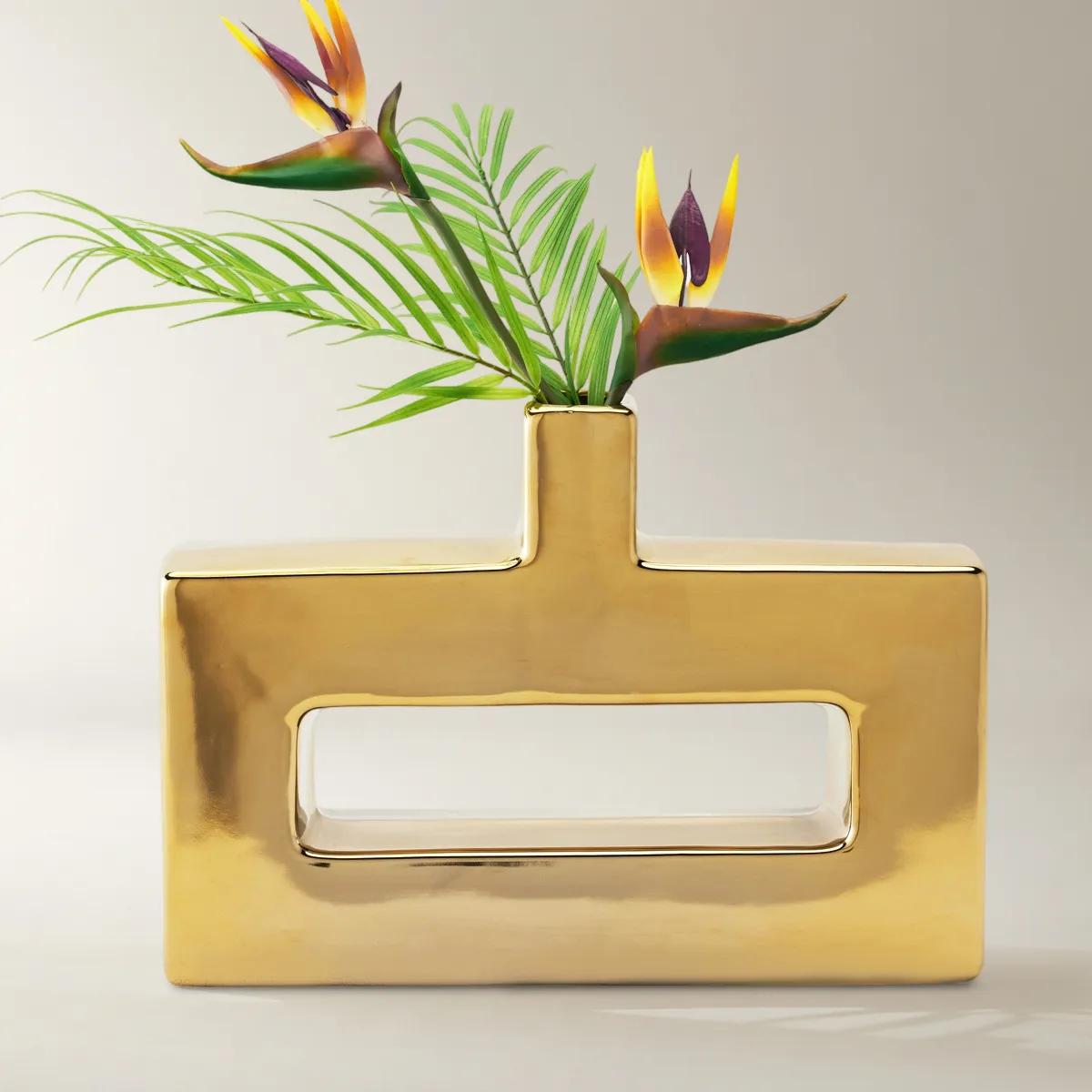 Miami Gold Ceramic High Gloss Vase 11.75"$69
A contemporary gold ceramic vase designed for decorative use as a sculptural accent or with foliage.
Add To Cart -
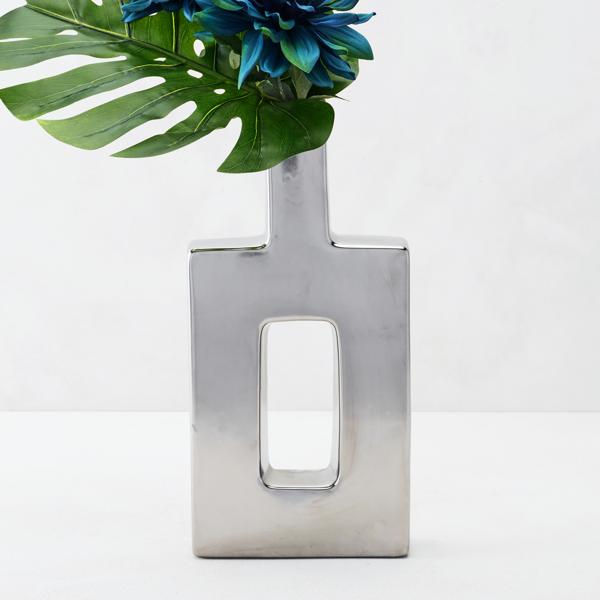
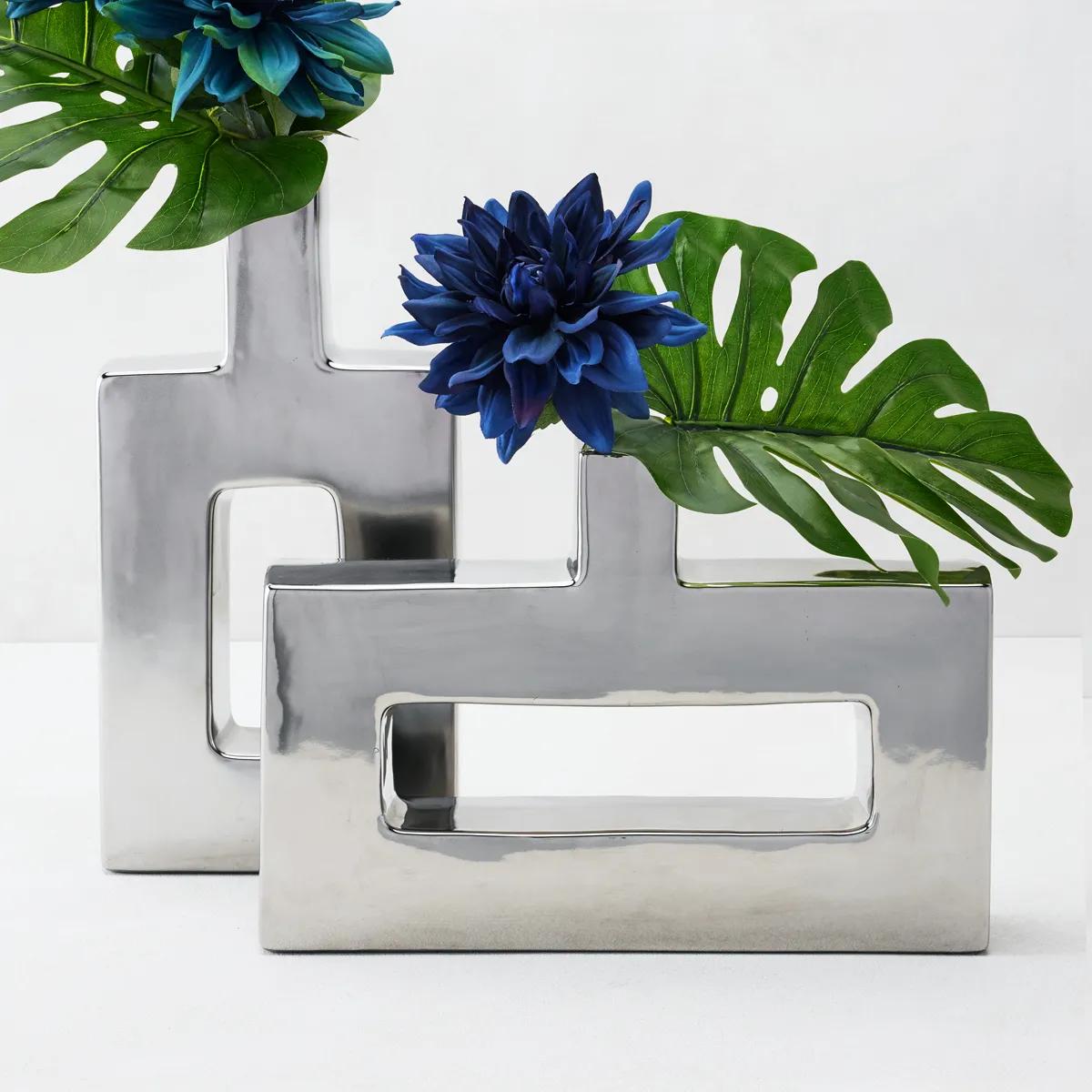 Miami Silver Ceramic High Gloss Vase 18.5"$69
A contemporary silver ceramic vase with a stylish gold glaze, perfect for decorative foliage or display.
Add To Cart -
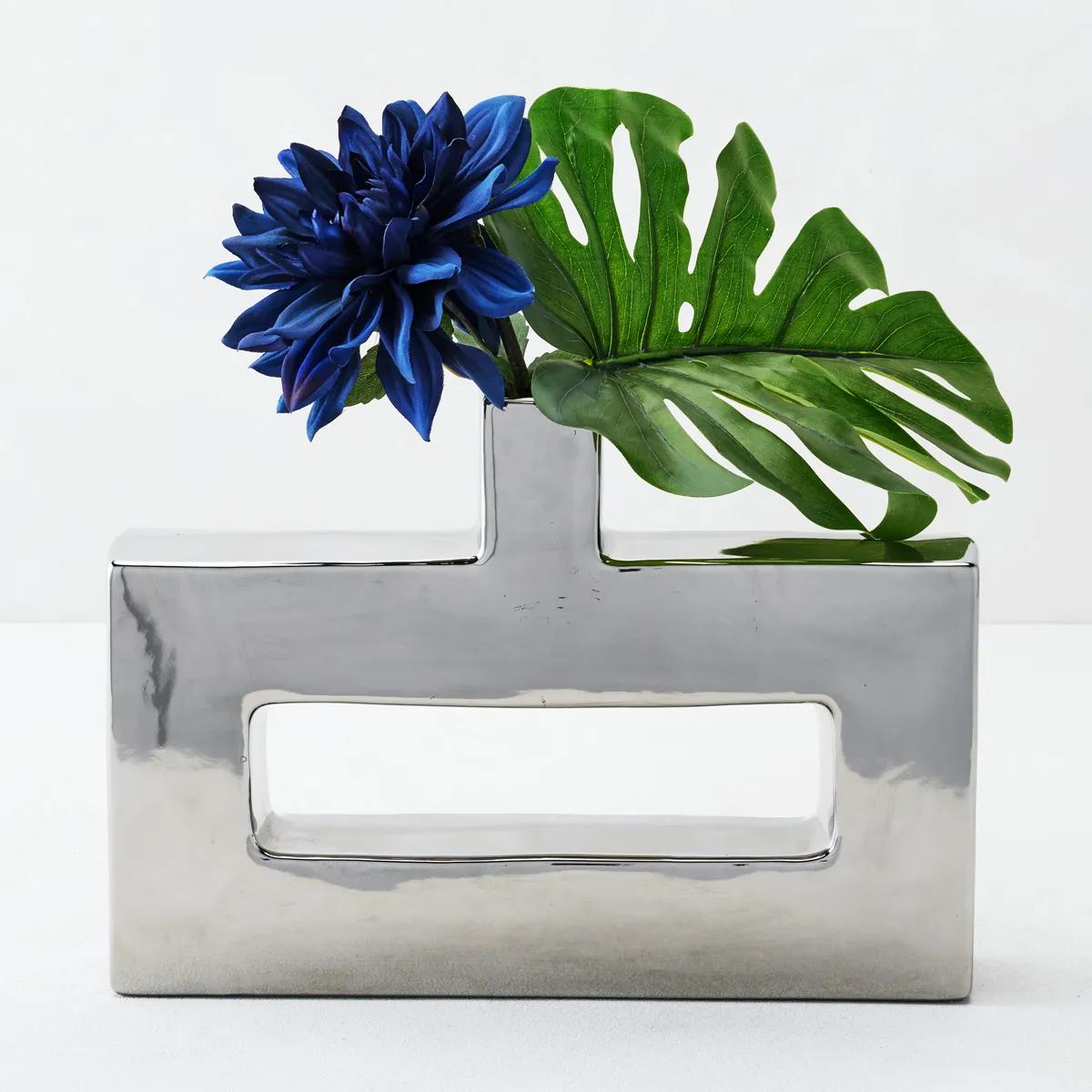 Miami Silver Ceramic High Gloss Vase 11.75"$69
A contemporary silver ceramic vase with a stylish gold glaze, perfect for decorative foliage or display.
Add To Cart -
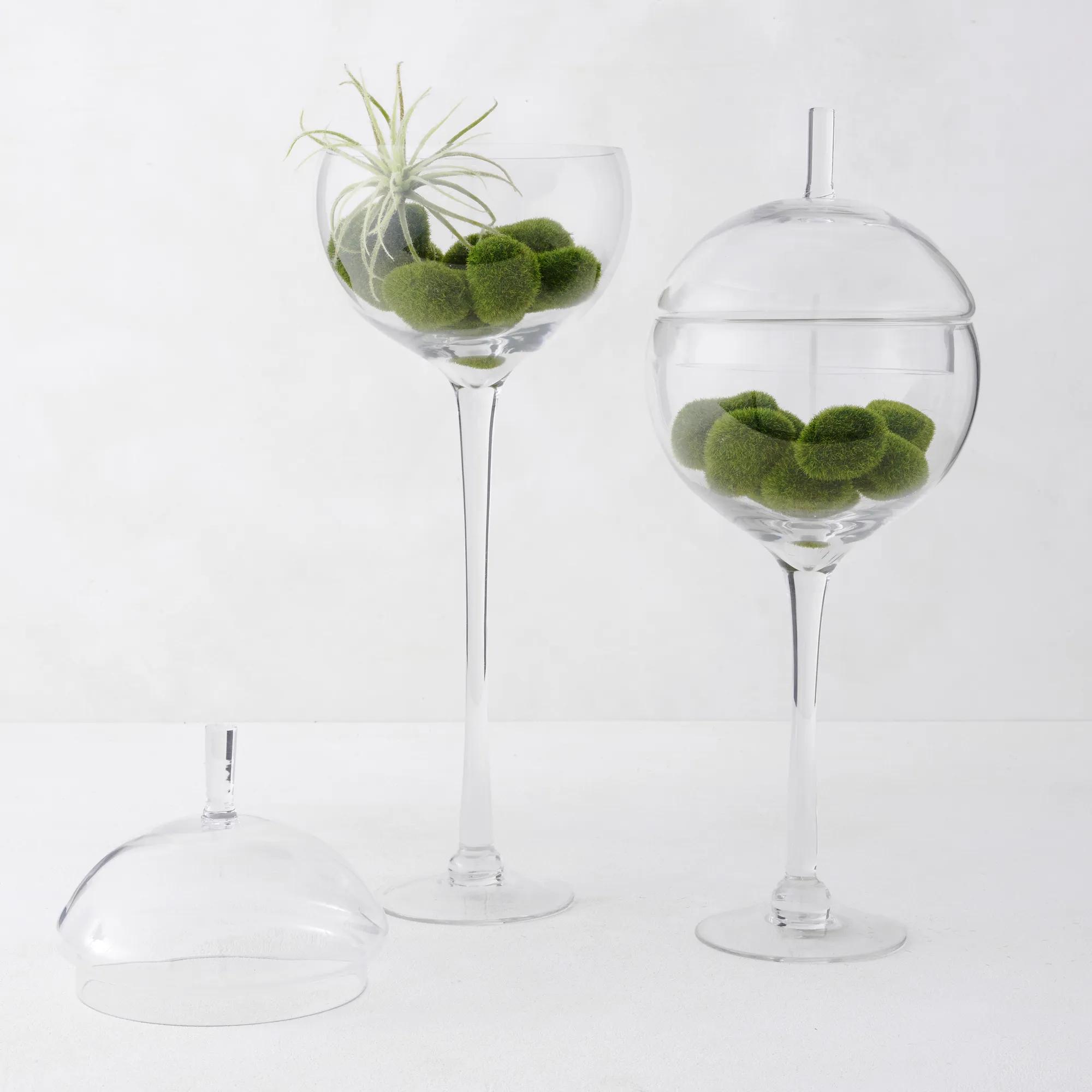 Jules Glass Decorative Canisters$89
A mouthblown glass terrarium perfect for showcasing decorative objects or cherished keepsakes.
Add To Cart -
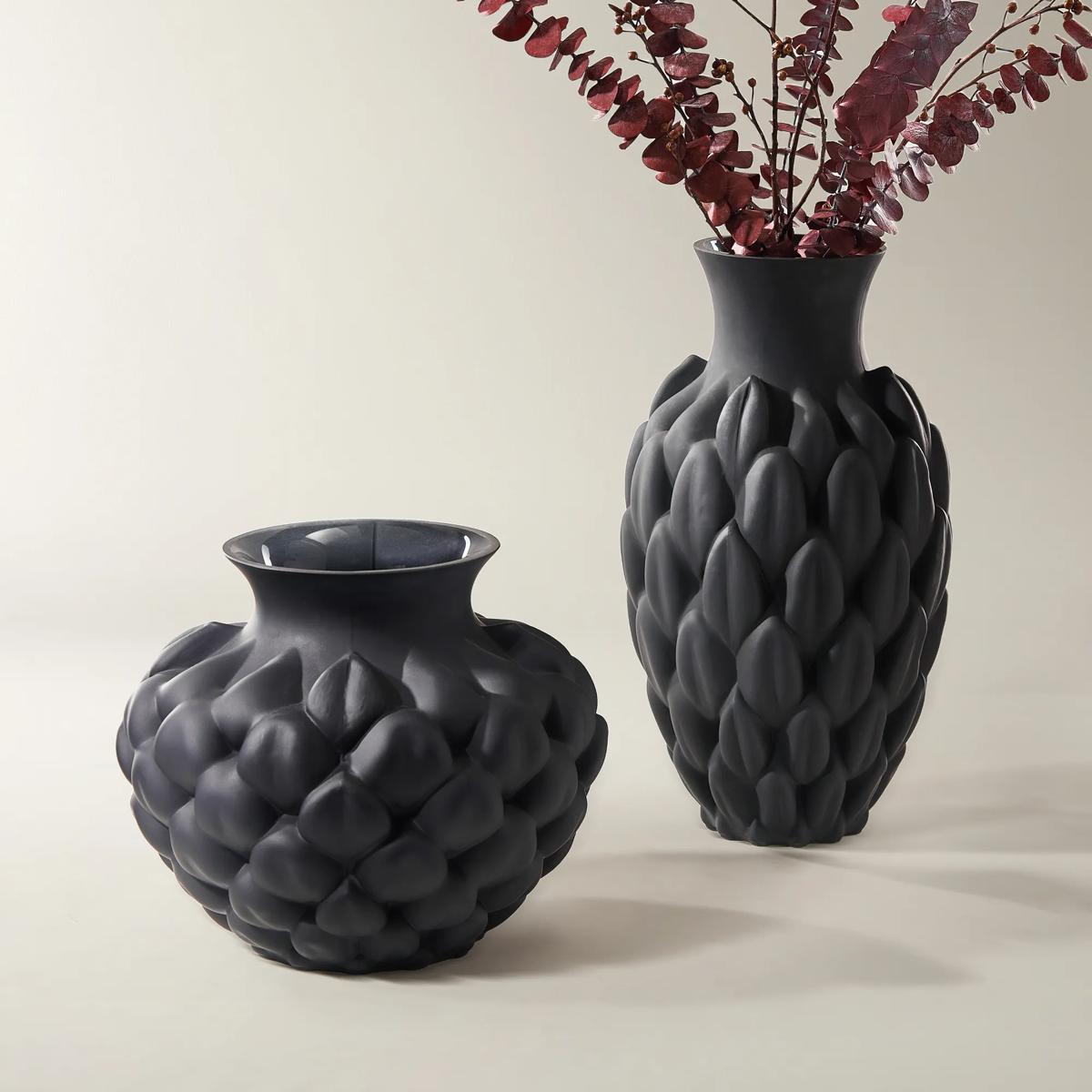
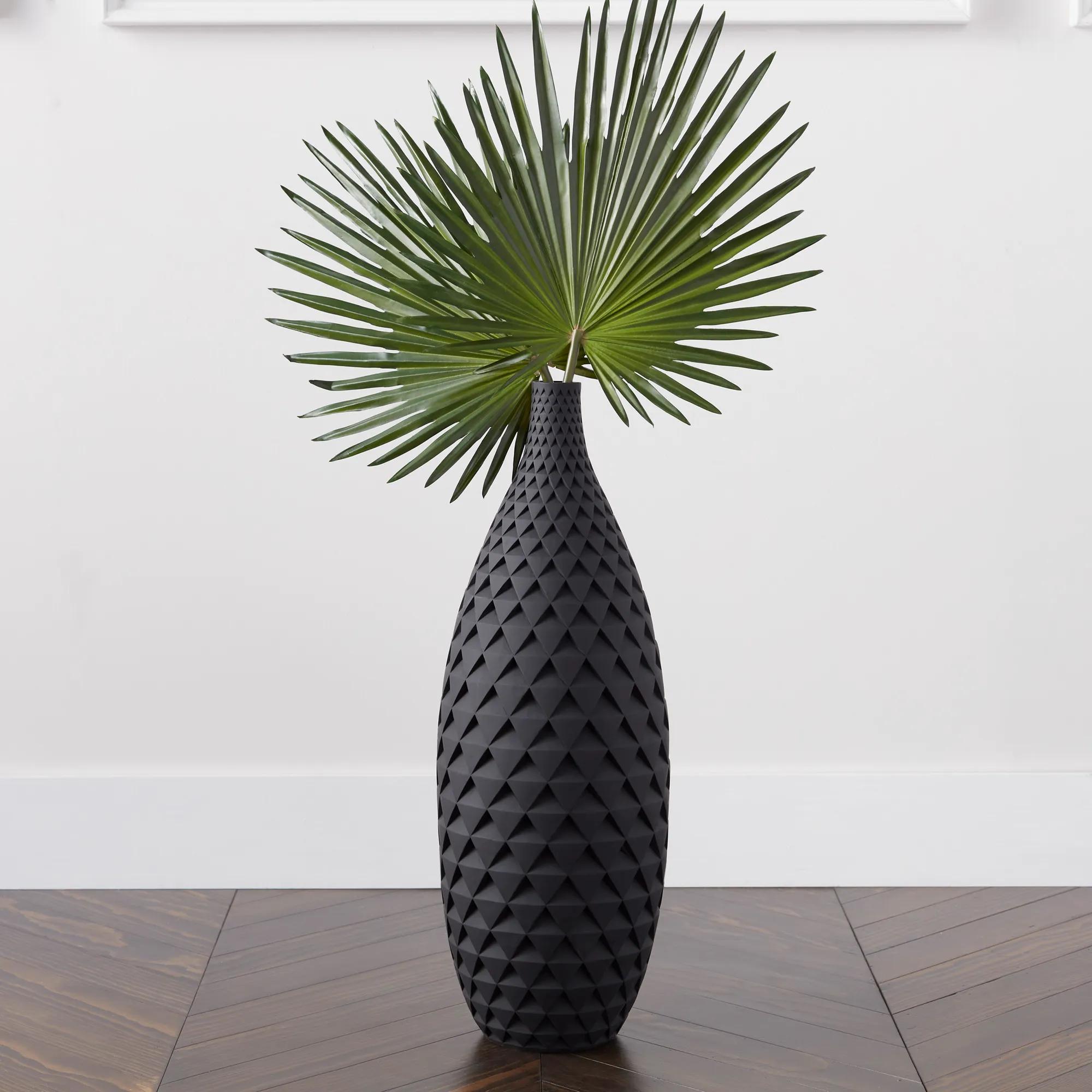 Cairo Floor Vase$99
A lightweight resin floor vase featuring a matte black finish and a striking scalloped texture.
Add To Cart -
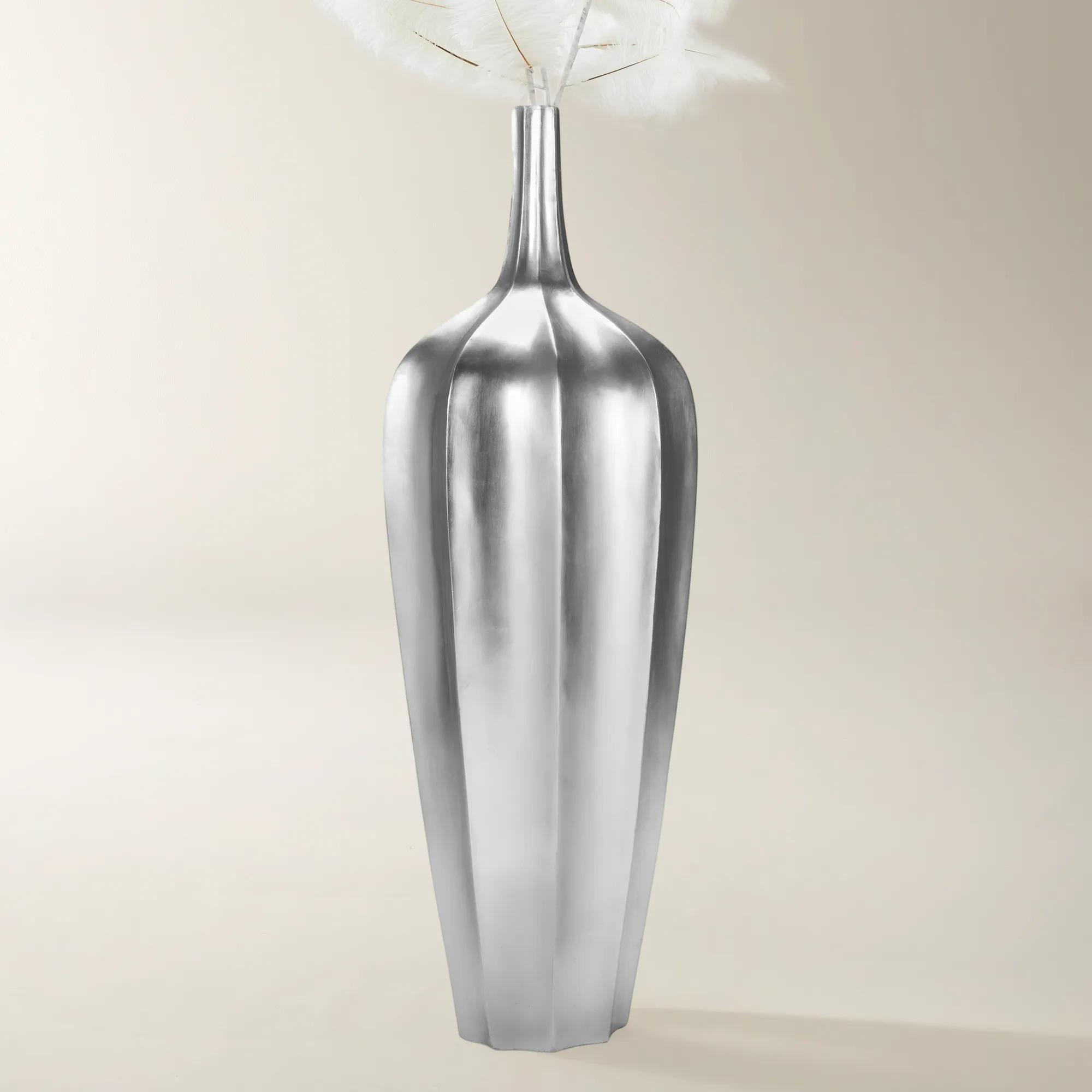
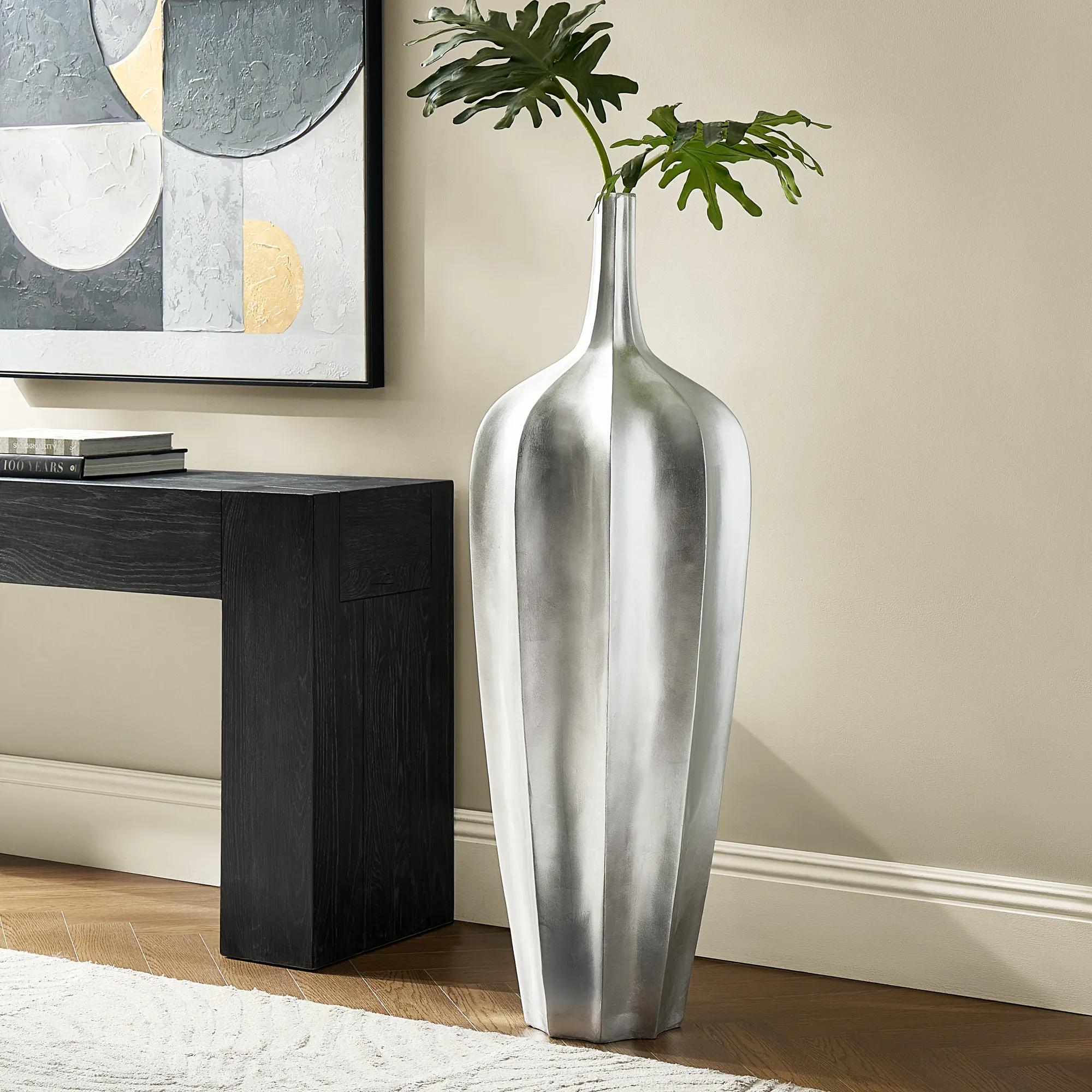 Accolade Silver Leaf Resin Floor Vase 48.75"$539
A fluted fiberglass vase featuring a lustrous metallic silver foil finish for a striking decorative accent.
Add To Cart -
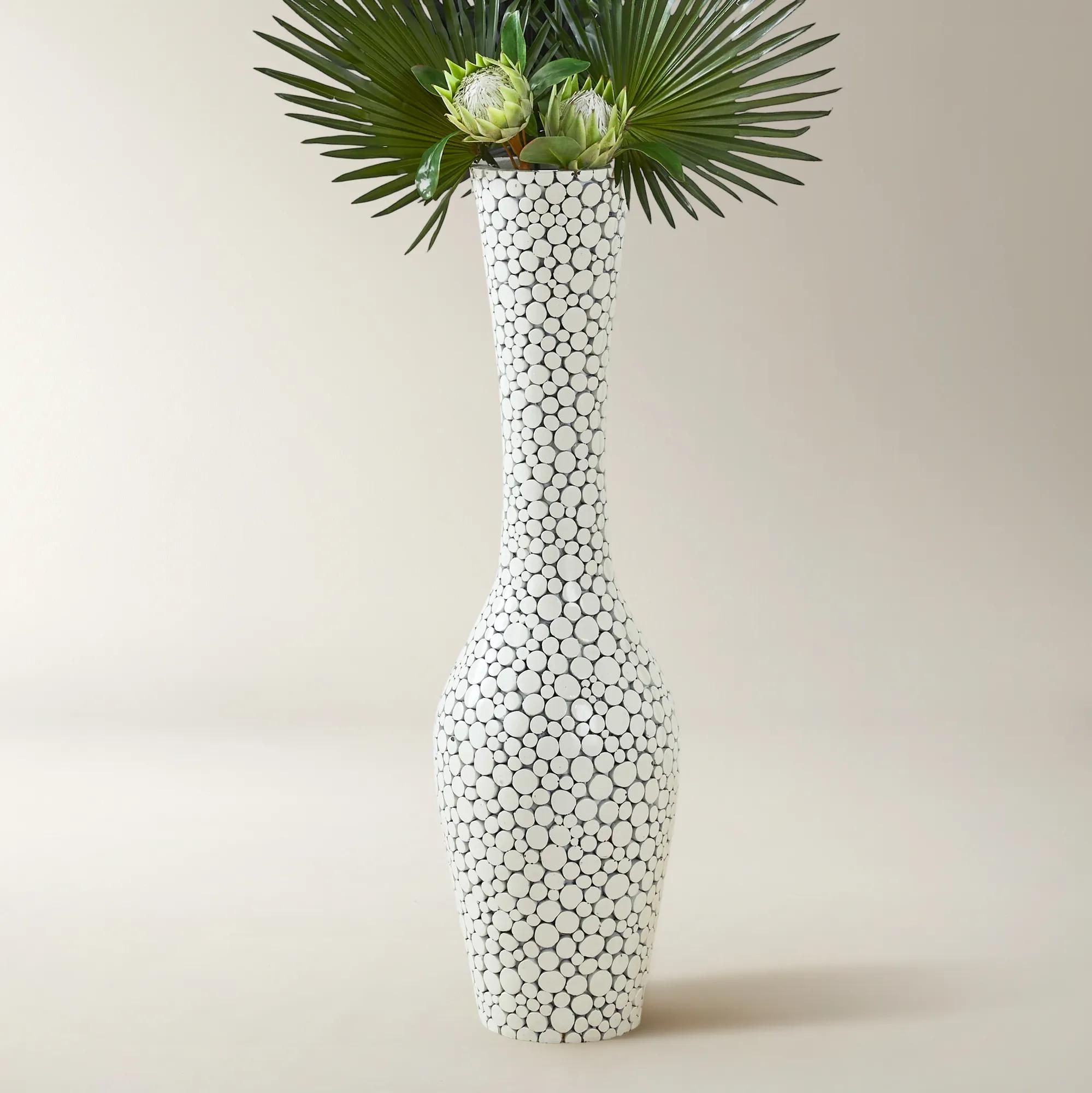 Oslo Floor Vase$299
A contemporary floor vase featuring hand-applied wood accents and a glossy white fiberglass base.
Add To Cart -
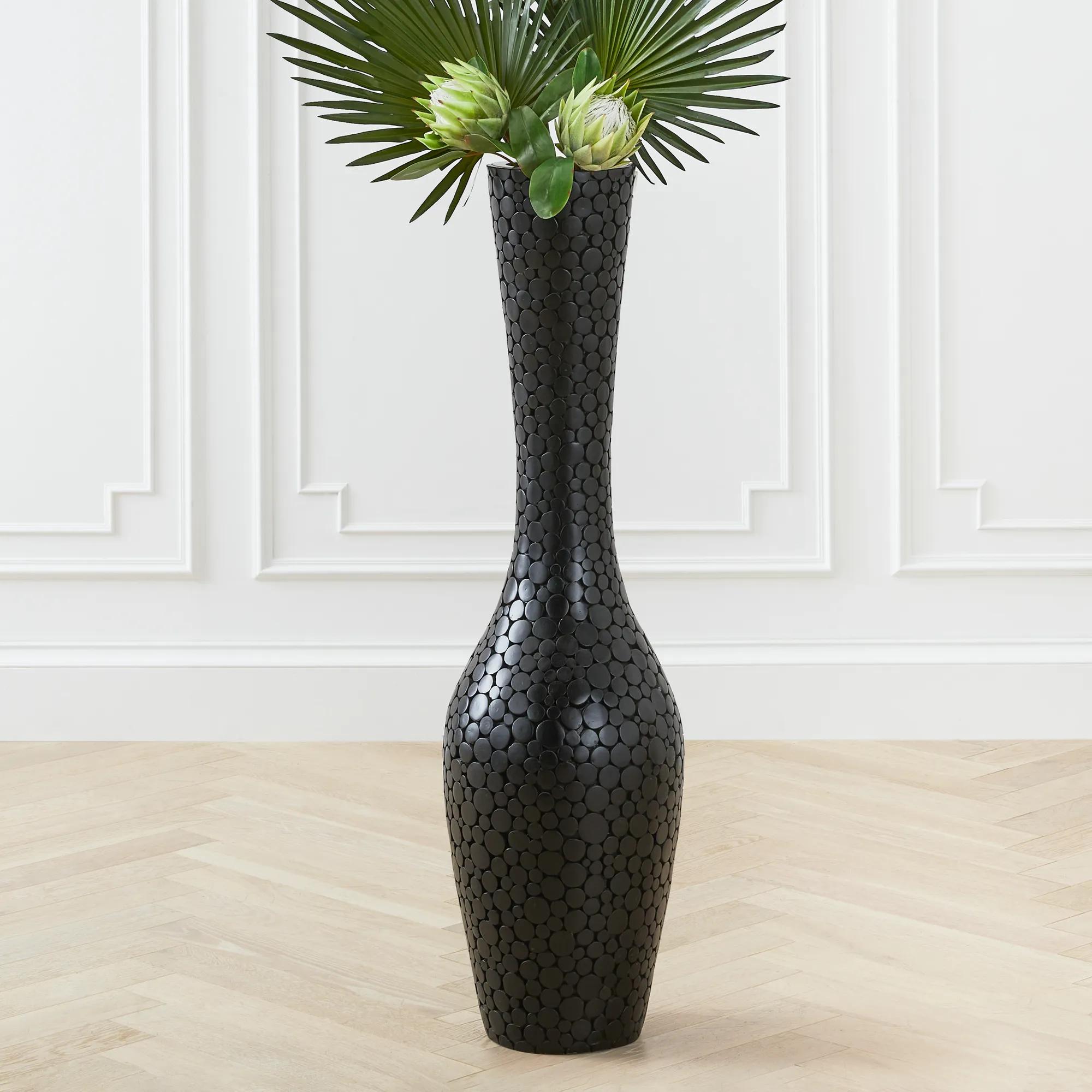
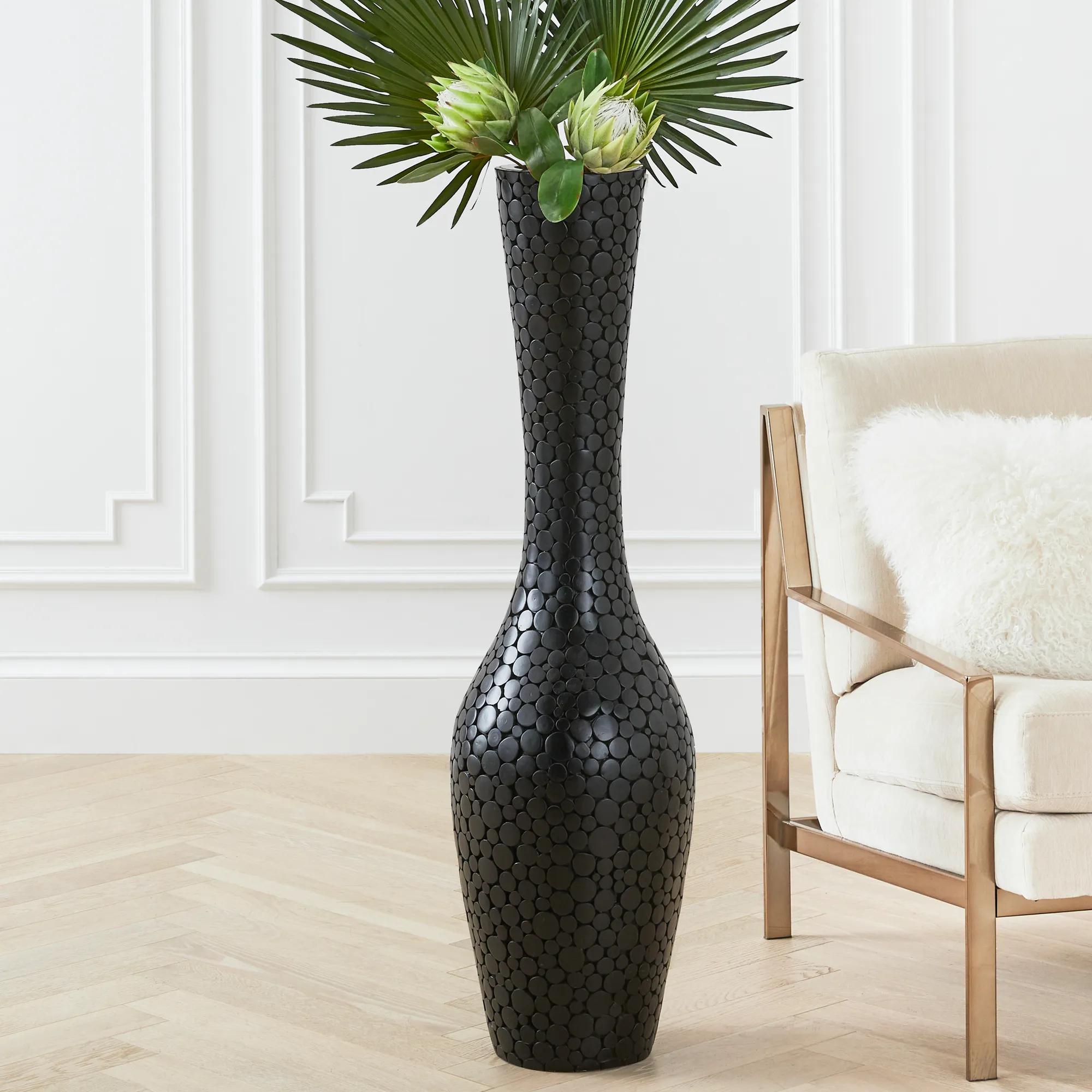 Oslo Black Wood Floor Vase 45"$299
A contemporary floor vase featuring hand-applied wood accents and a glossy black fiberglass base.
Add To Cart -
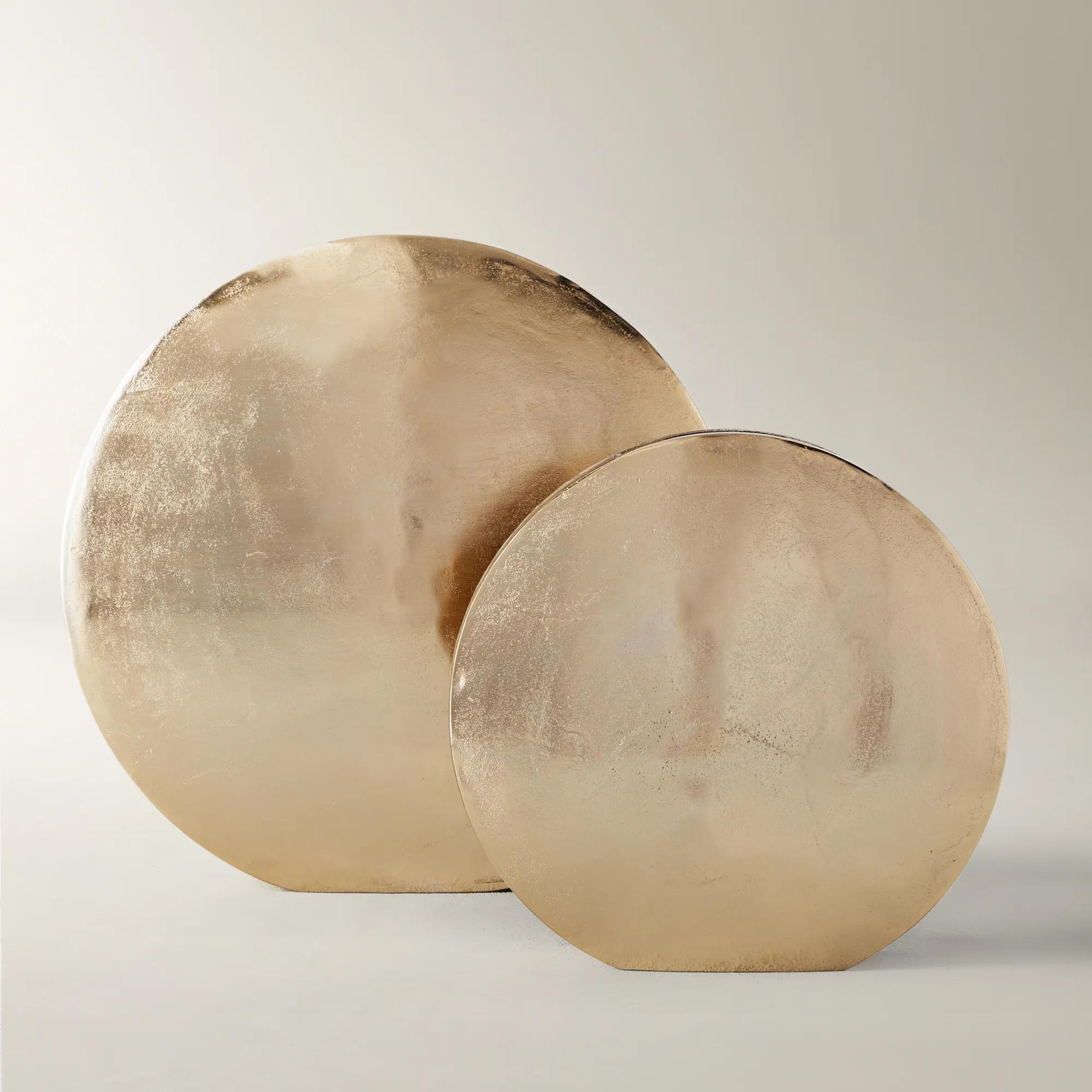
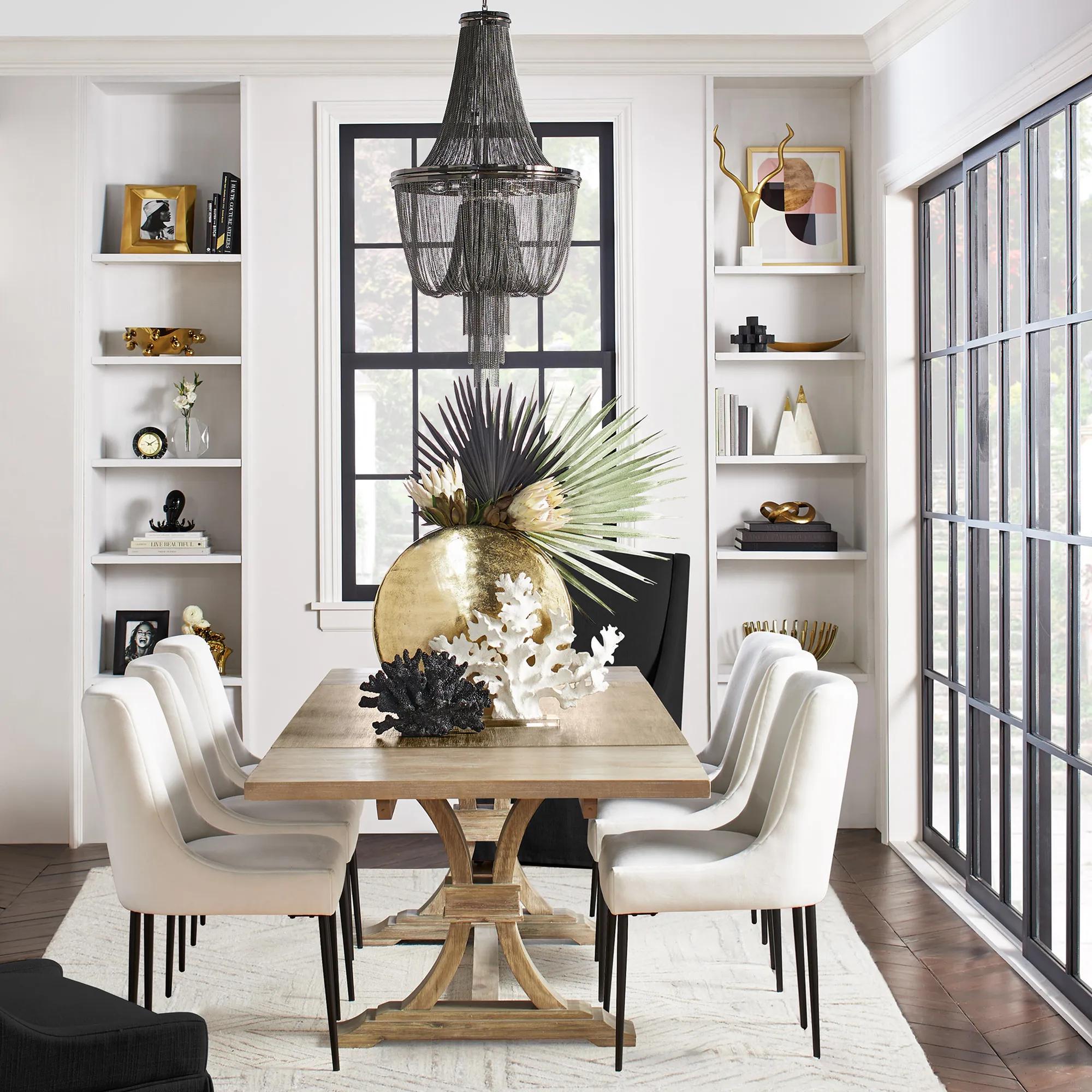 Greer Gold Aluminum Vases$249
A striking gold aluminum disc vase perfect for showcasing dried blooms or as a decorative accent.
Add To Cart -
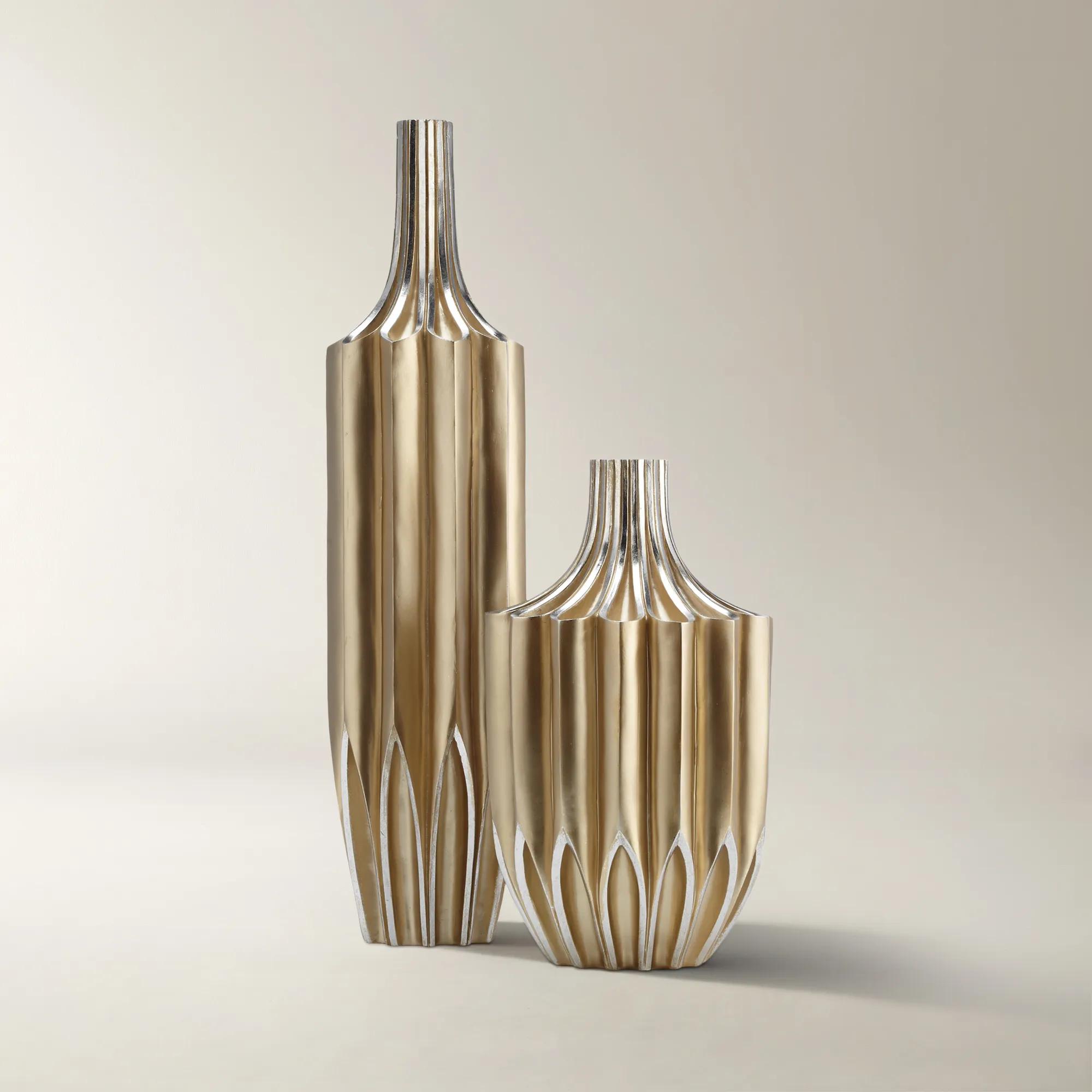
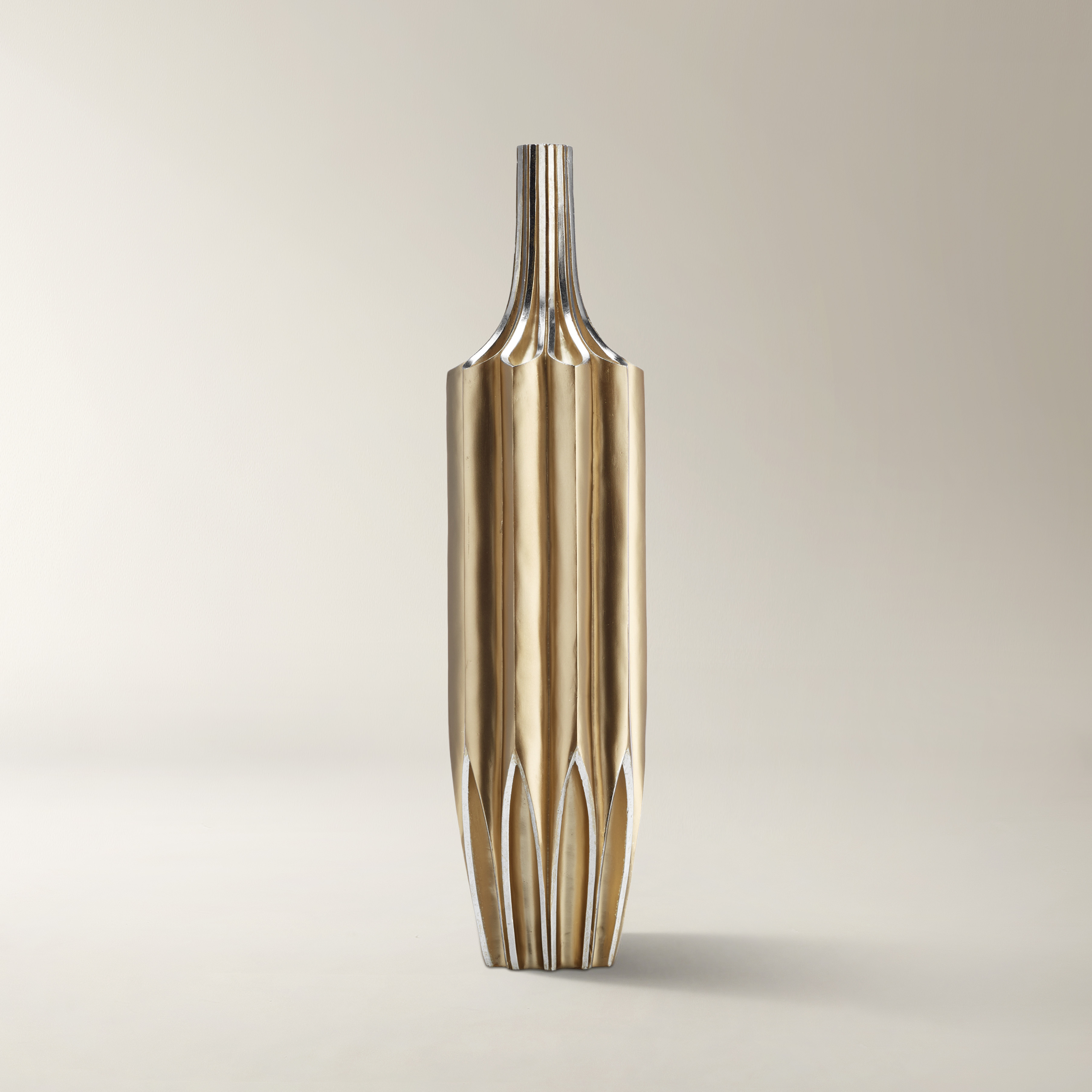 Savannah Gold Resin Vases$79
A sophisticated polyresin vase featuring sleek vertical curves and a modern, inward-flaring design.
Add To Cart -
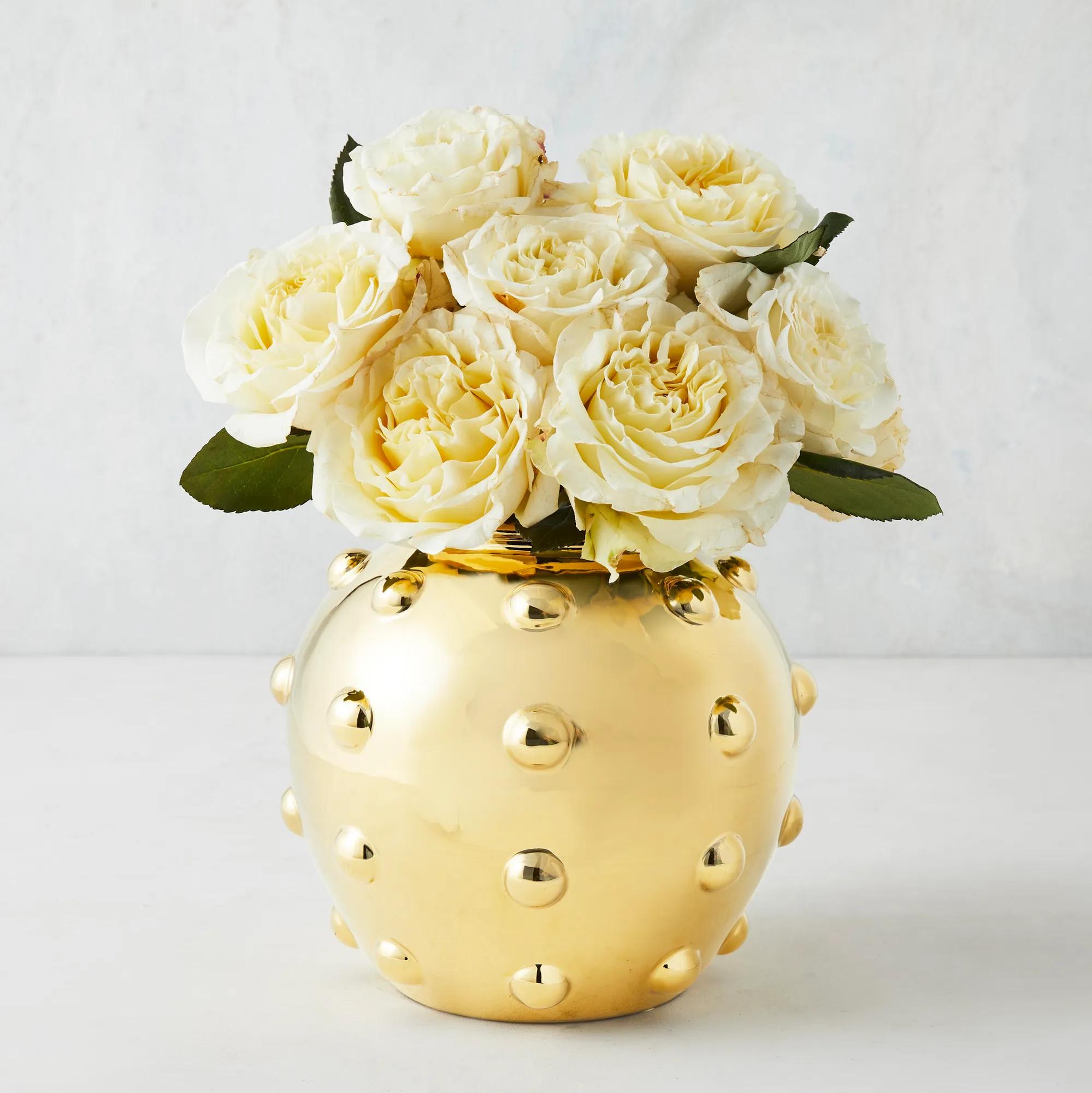
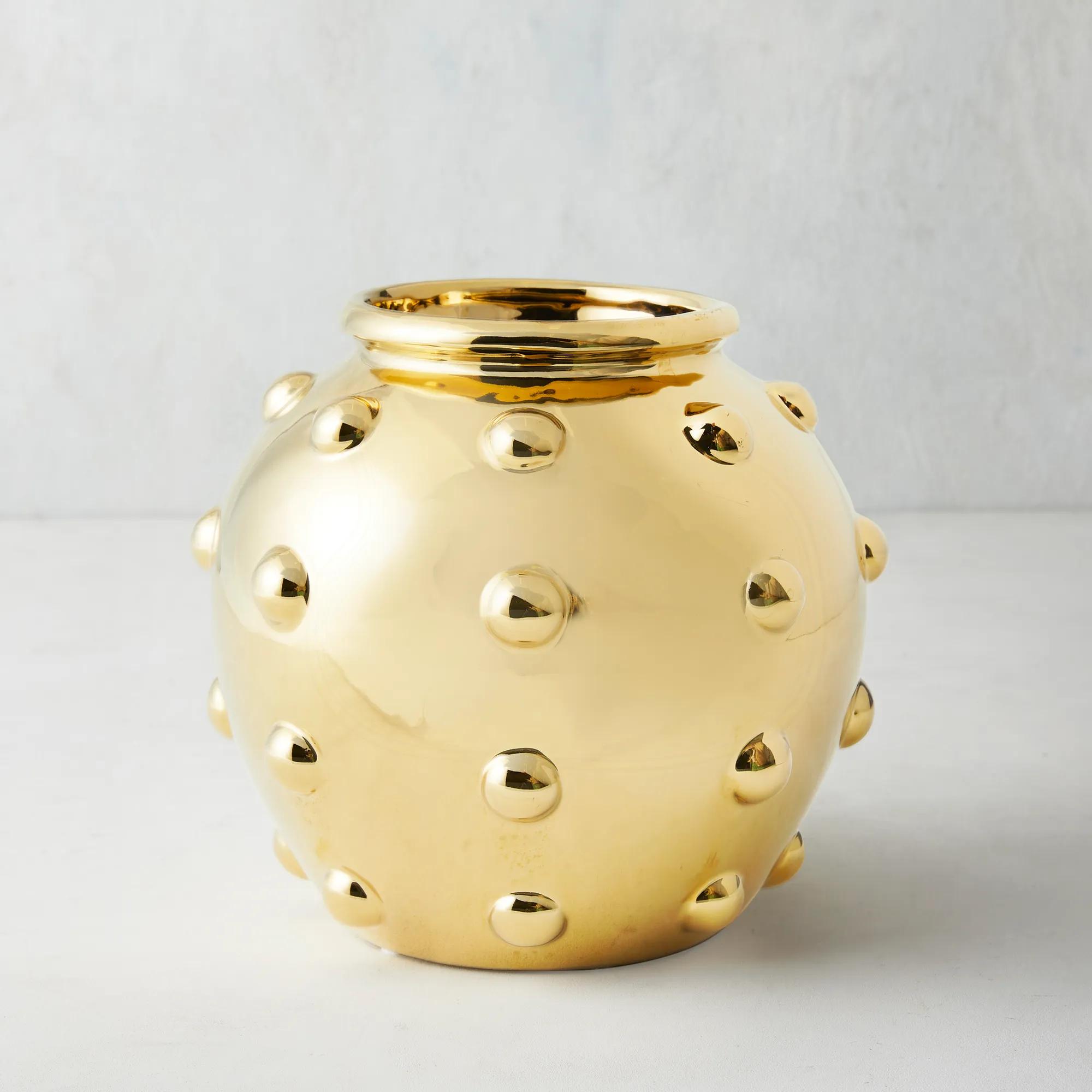 Orb Bauble Vase$59
A ceramic vase with a dimensional dot design and a gleaming gold finish for bold decor impact.
Add To Cart -
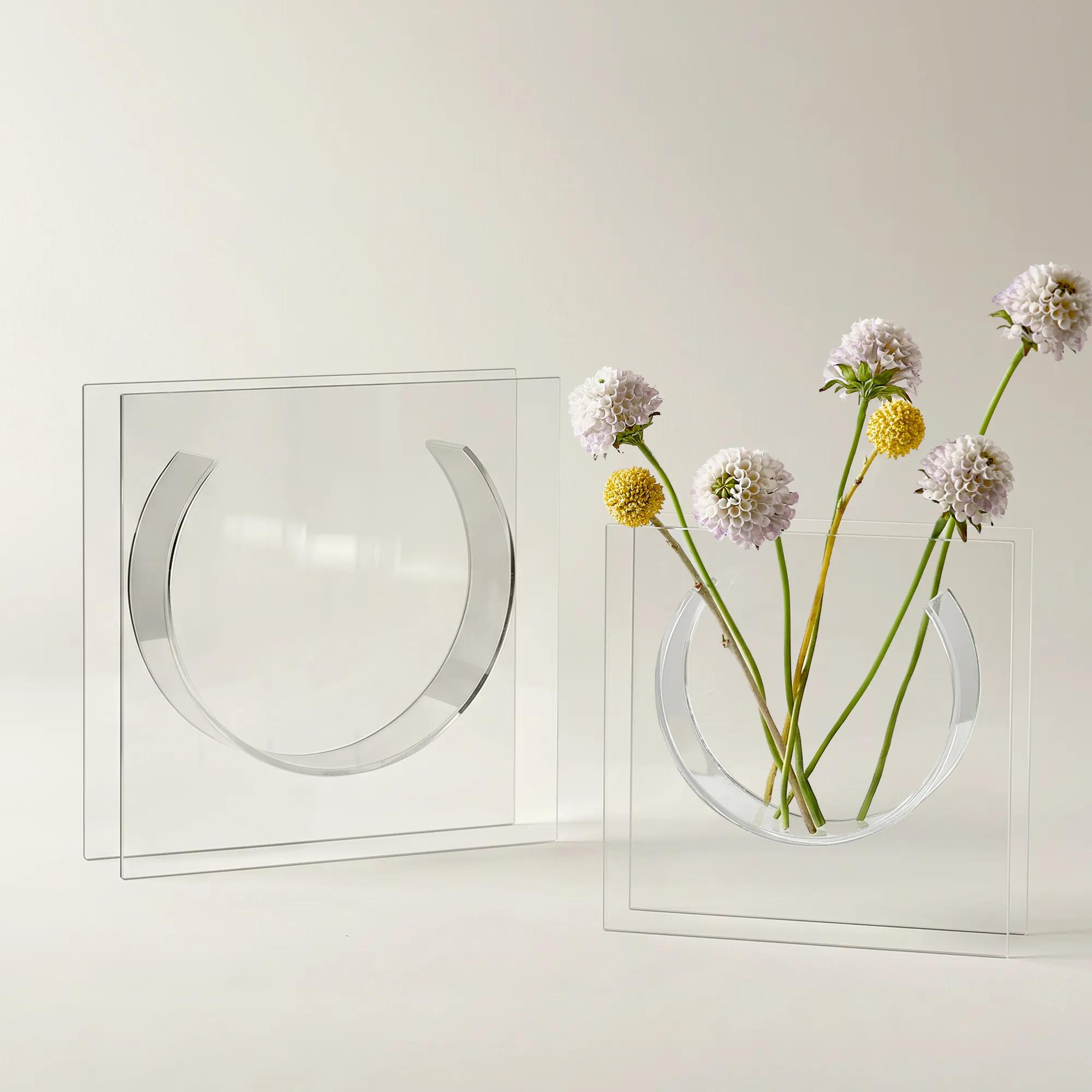
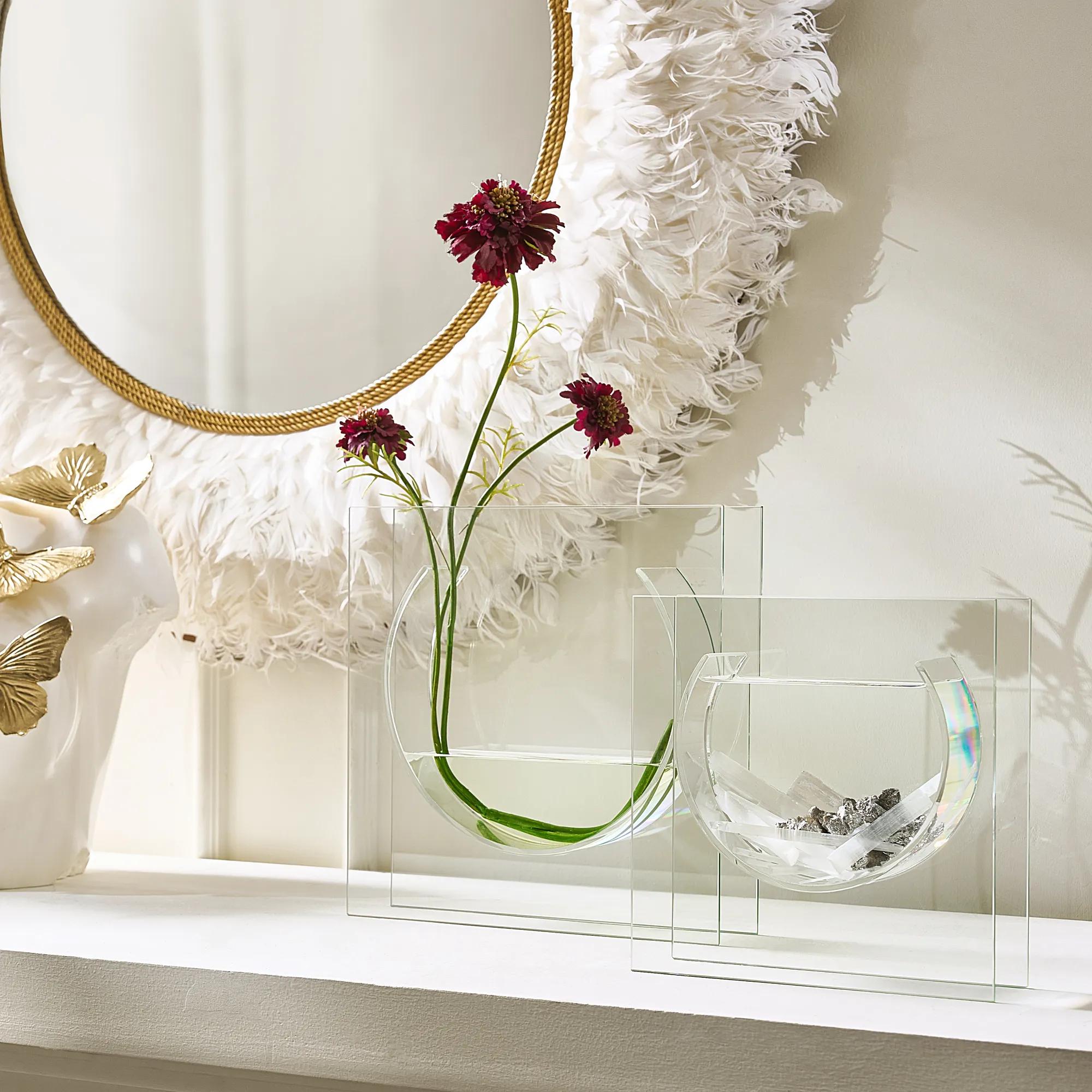 Solaris Clear Glass Vases$29
A clear glass vase with an elliptical bowl and bold modern design between two glass panels.
Add To Cart -
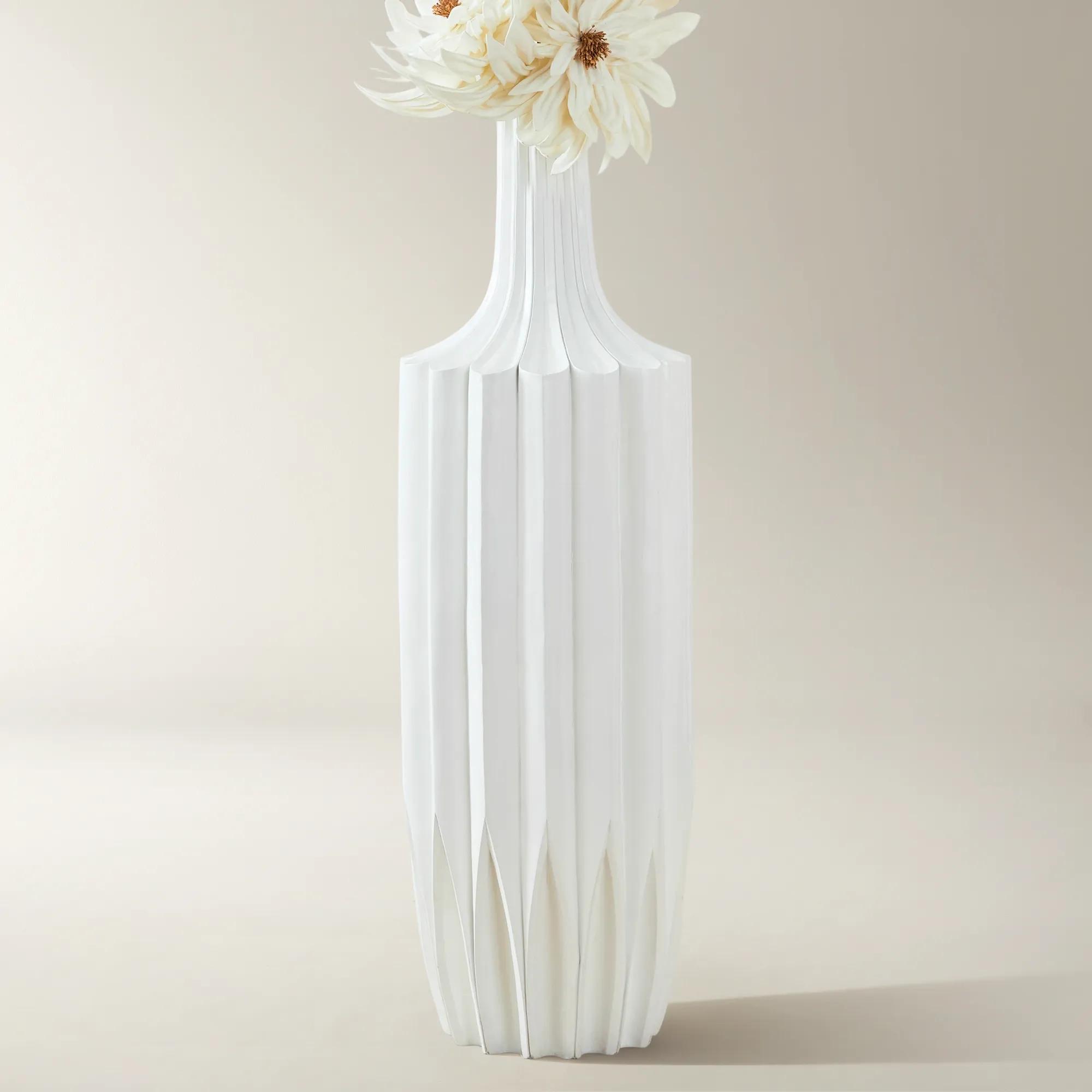 Savannah White Resin Floor Vase 48.75"$509
A sophisticated polyresin vase featuring sleek vertical curves, perfect for displaying decorative flowers or foliage.
Add To Cart -
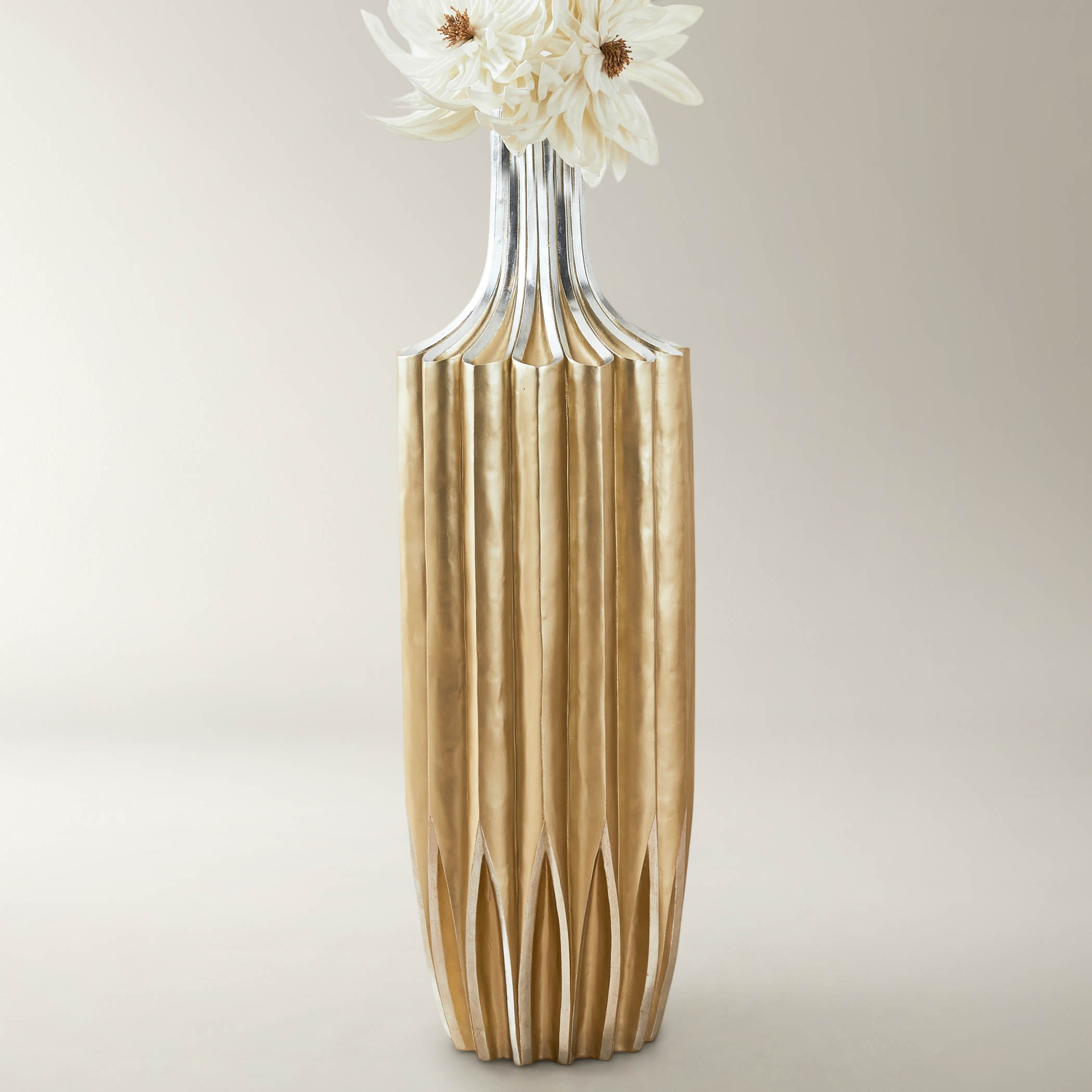
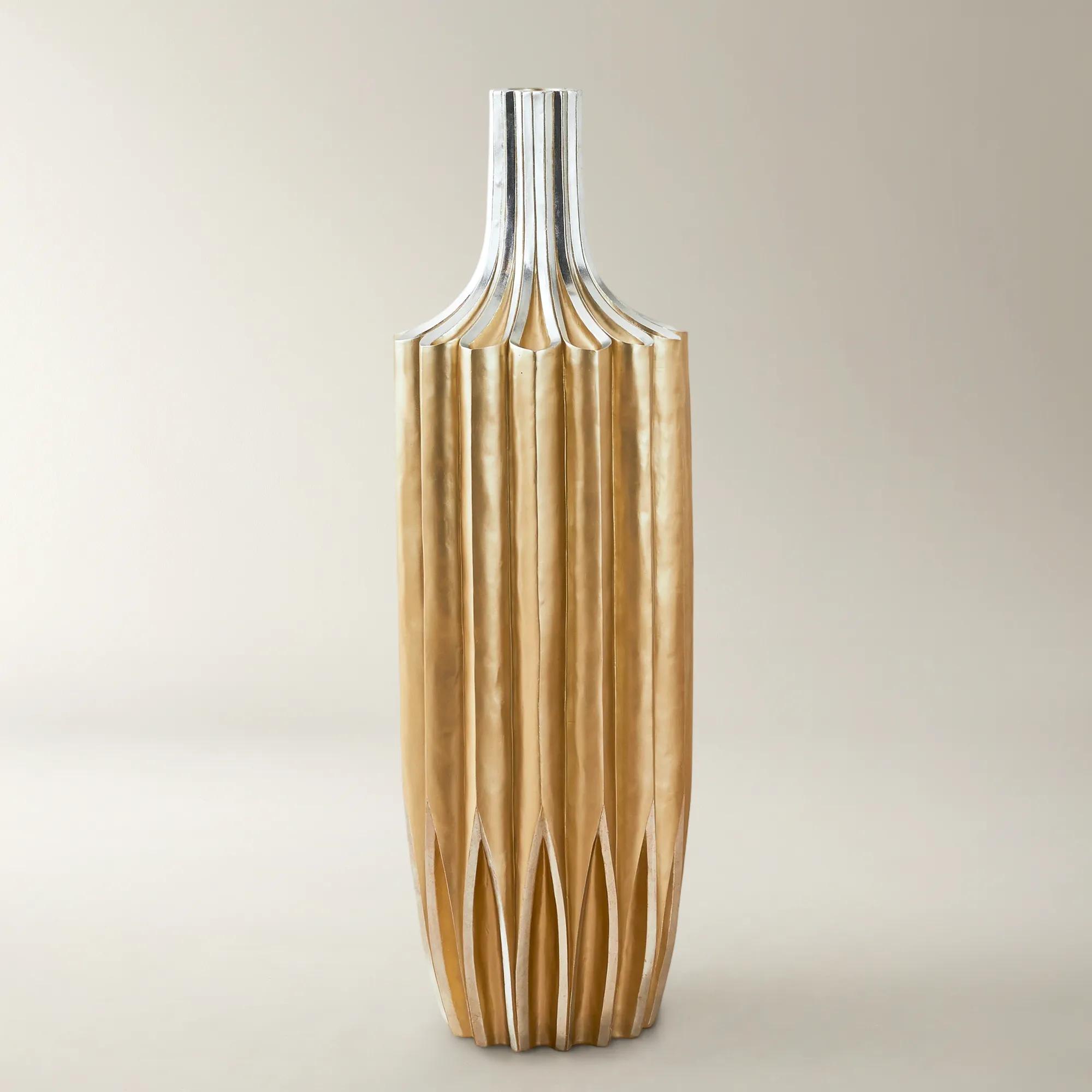 Savannah Gold Resin Floor Vase 48.75"$509
A sophisticated polyresin vase featuring sleek vertical curves for a modern decorative accent.
Add To Cart -
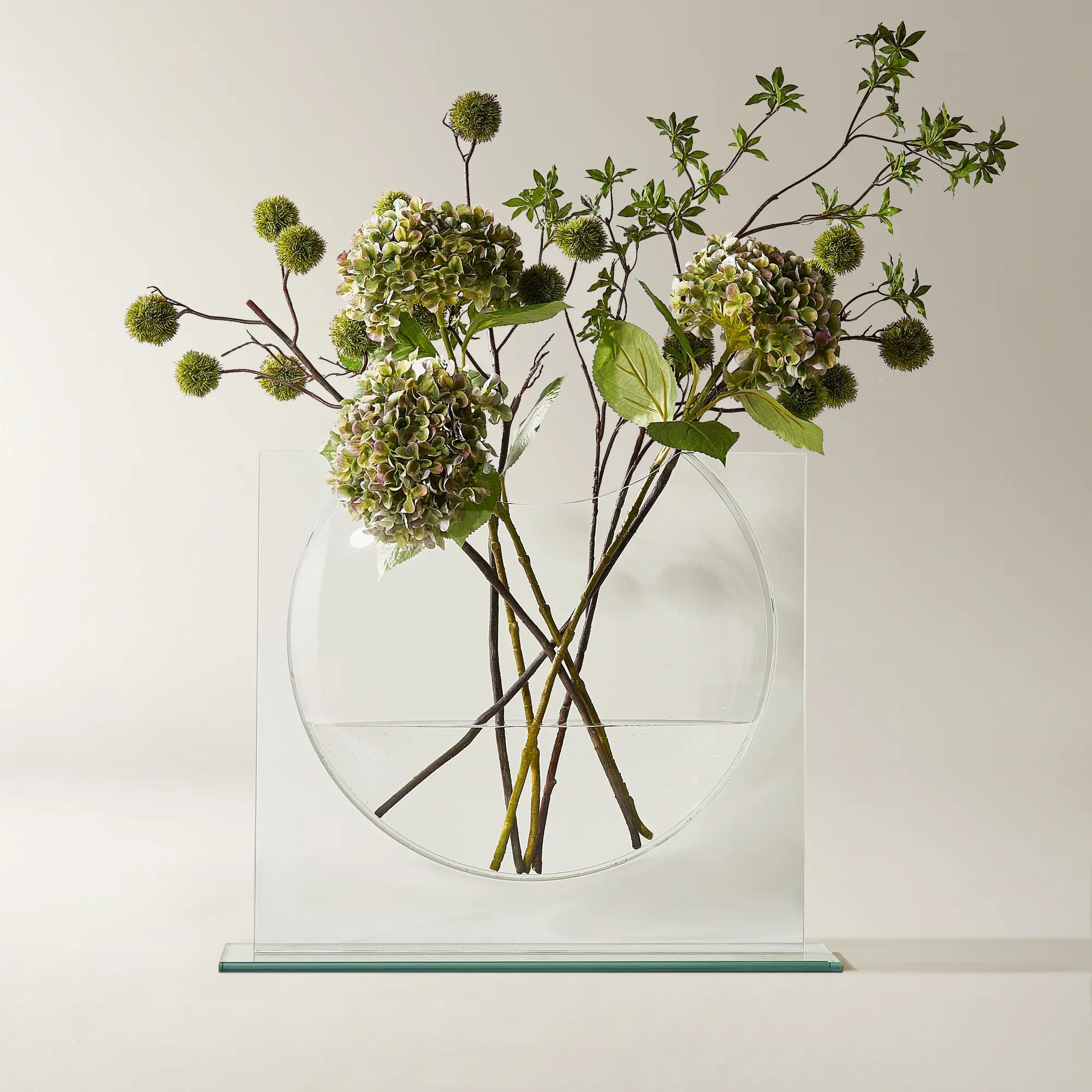
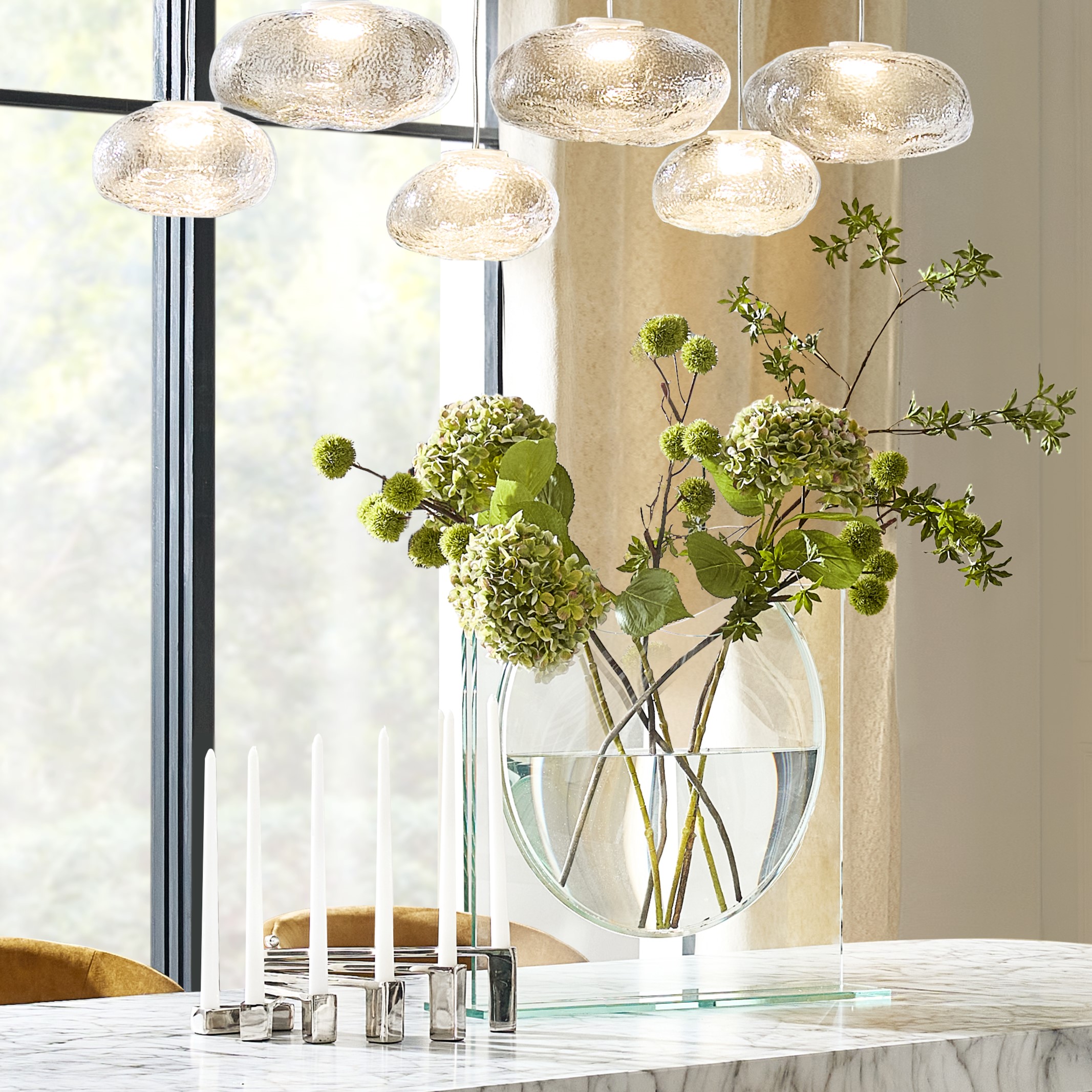 Ellipse Clear Glass Vase 20"$259
A sleek elliptical glass vase offering a modern, functional accent for fresh floral arrangements.
Add To Cart -
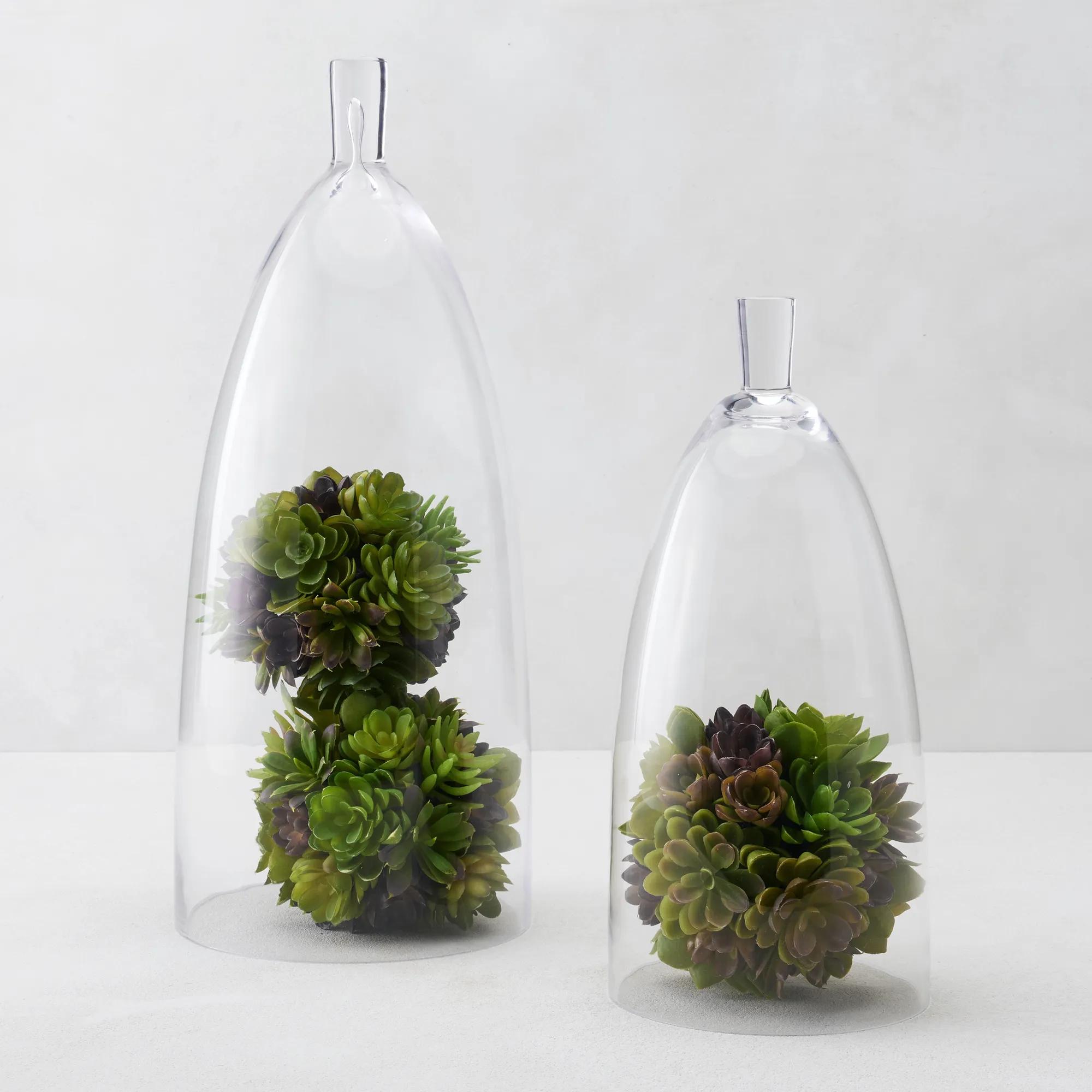 Jules Glass Decorative Cloches$59
A mouthblown glass terrarium perfect for showcasing cherished objects as unique decorative art.
Add To Cart -
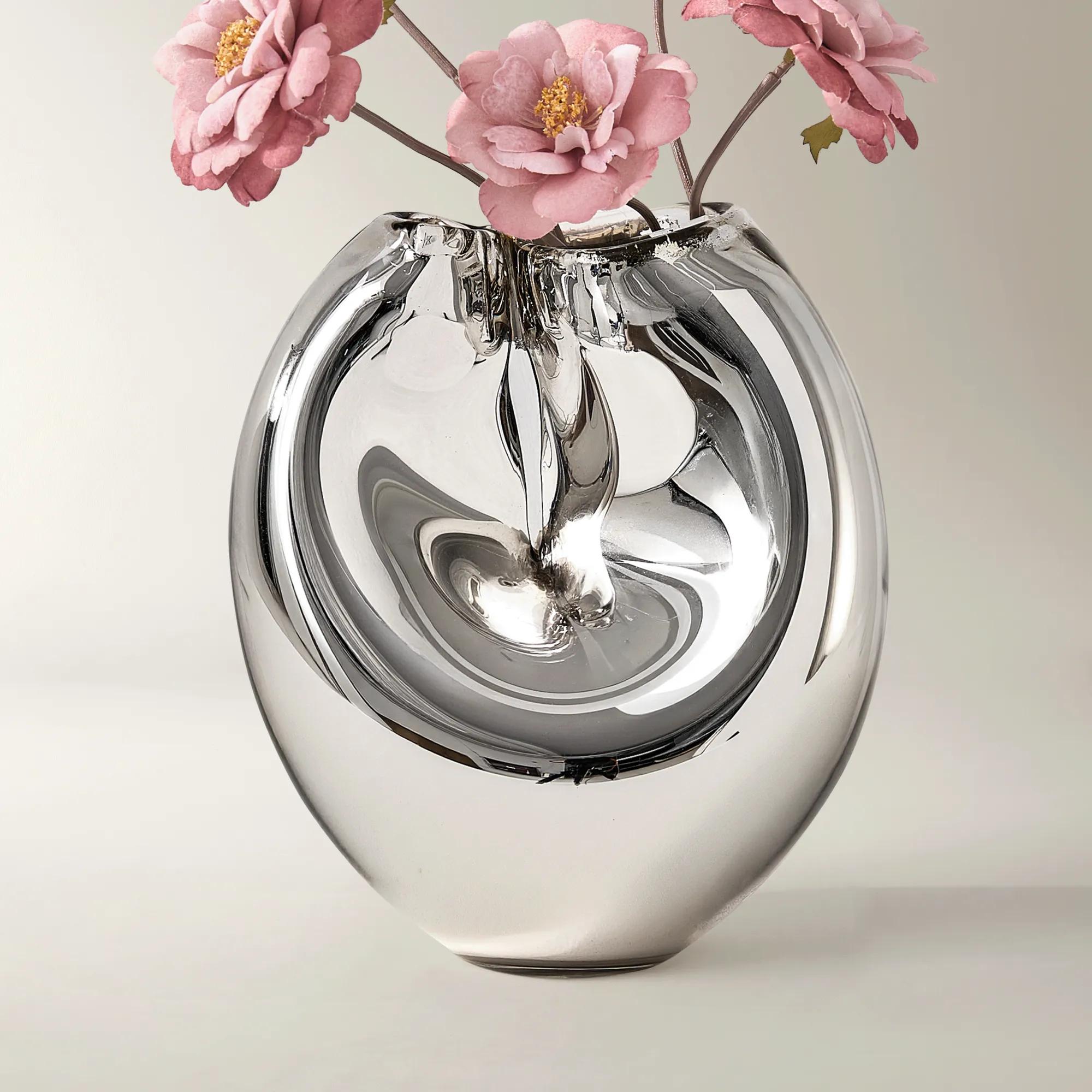 Ono Mouth Blown Mirrored Silver Glass Vase 7.75"$79
A handblown glass vase with a mirrored finish and organic silhouette for modern, artful display.
Add To Cart -
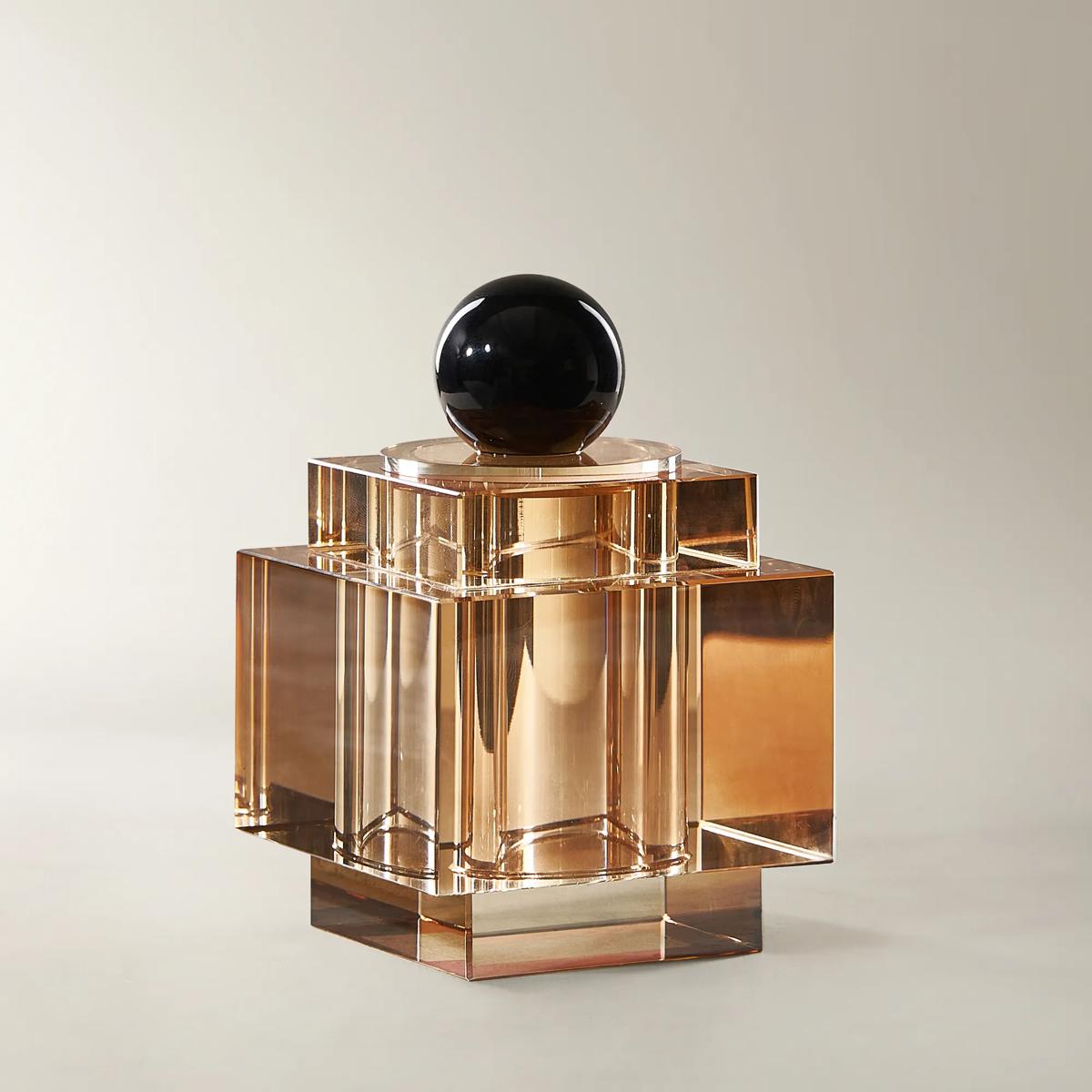
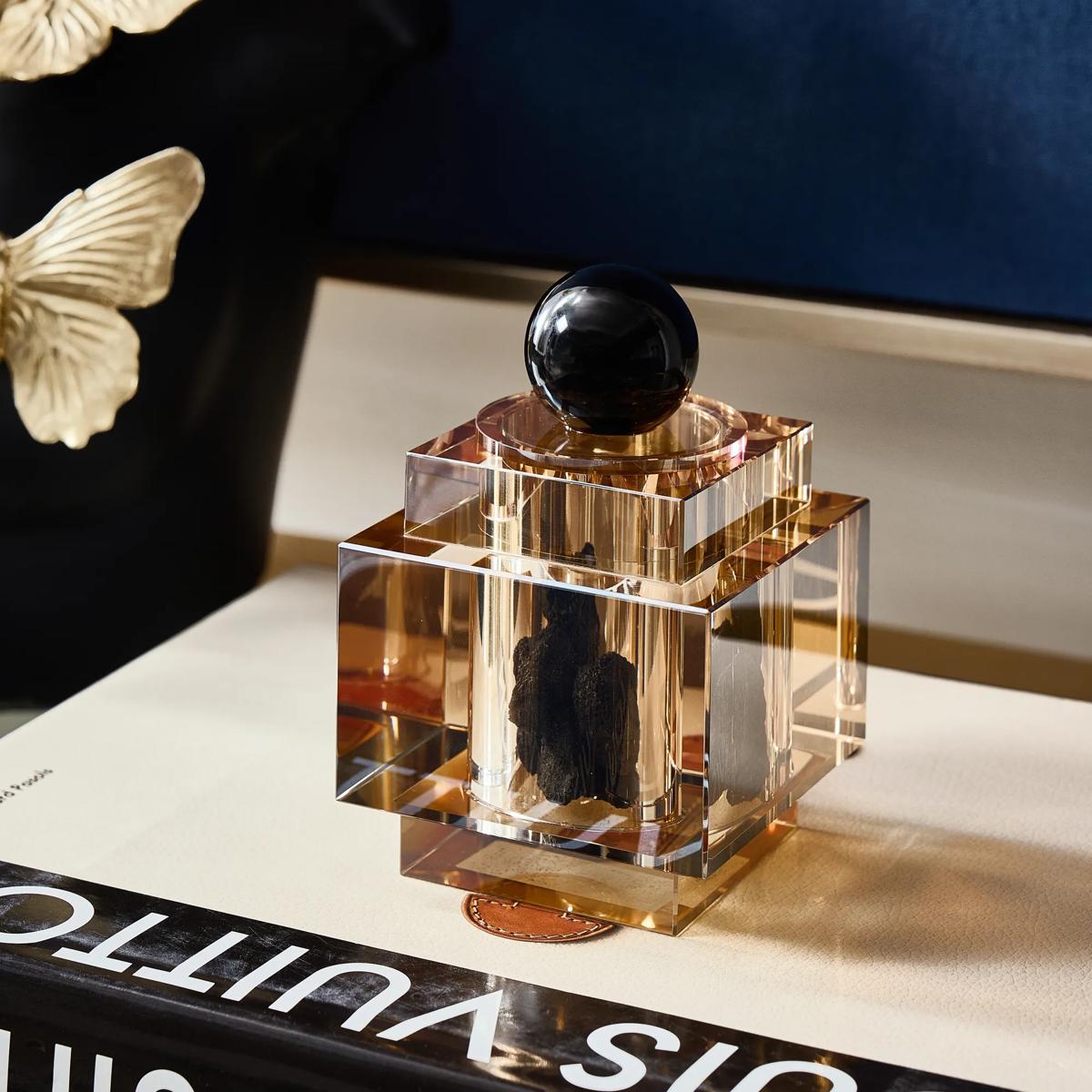 Deco Amber Crystal Glass Perfume Bottle$89
A faceted amber crystal glass accent topped with a glossy black sphere for vintage-inspired glamour.
Add To Cart -
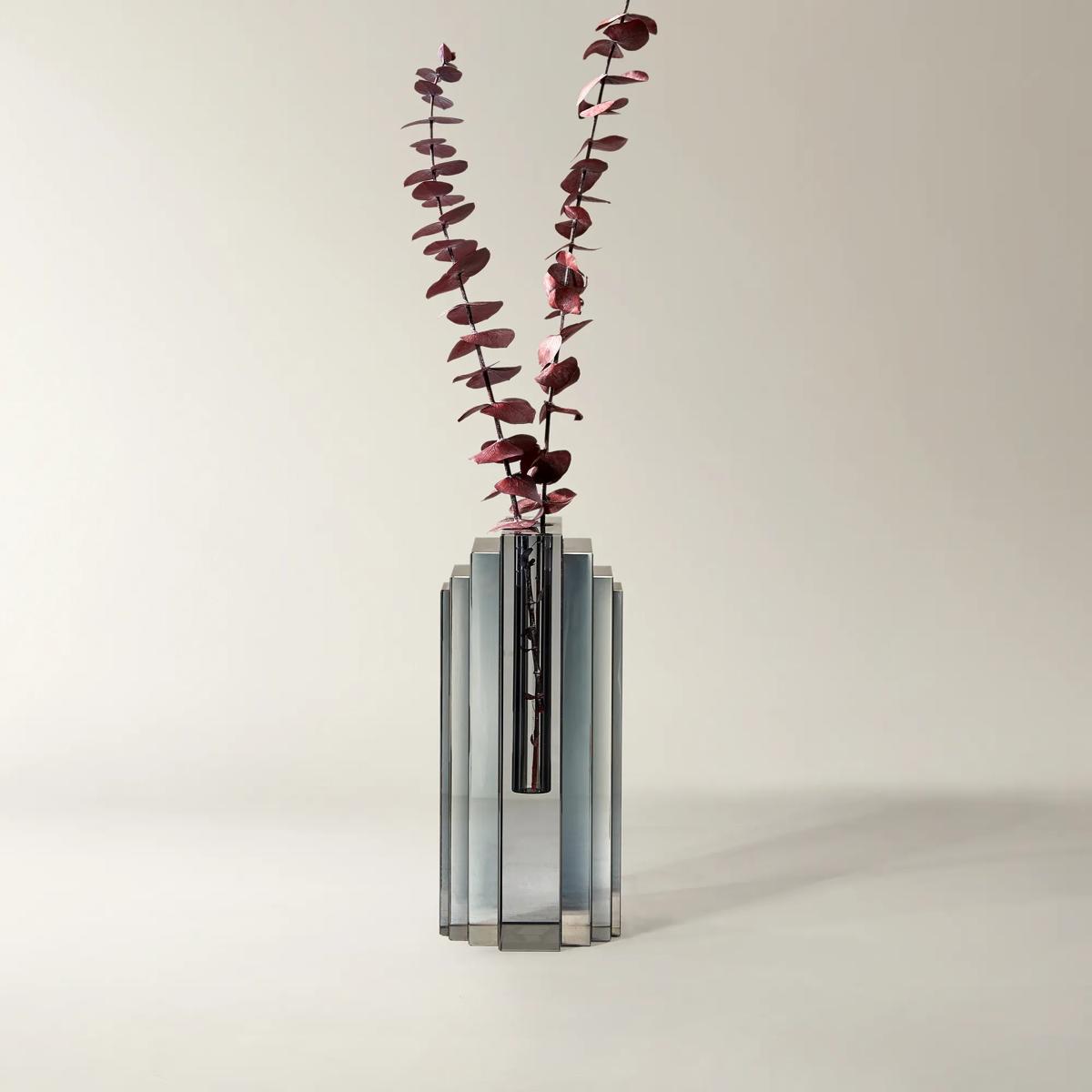 Lucca Crystal Vase - Mirrored Graphite$109
A mirrored graphite crystal vase with a multifaceted geometric design that reflects light for sculptural brilliance.
Add To Cart -
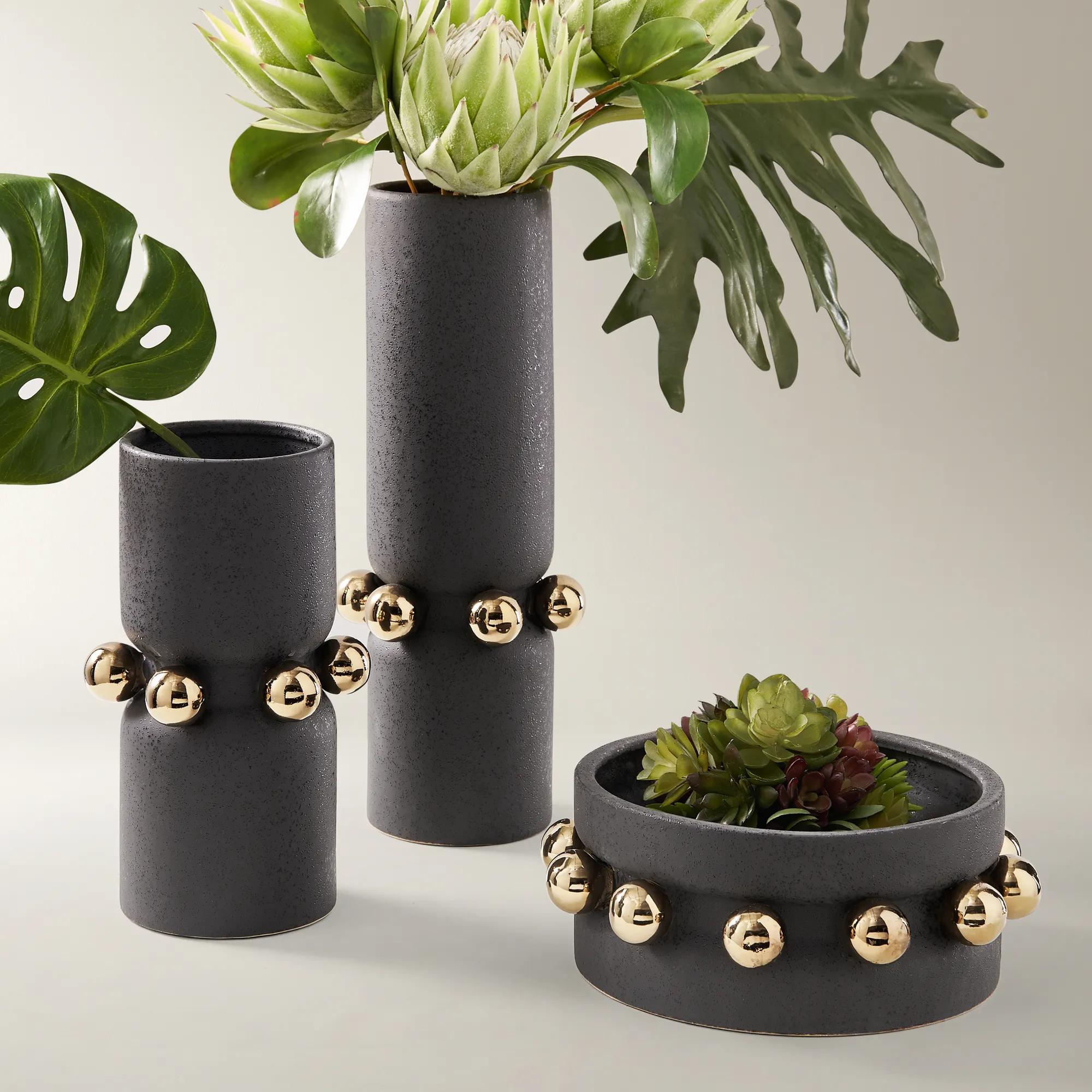
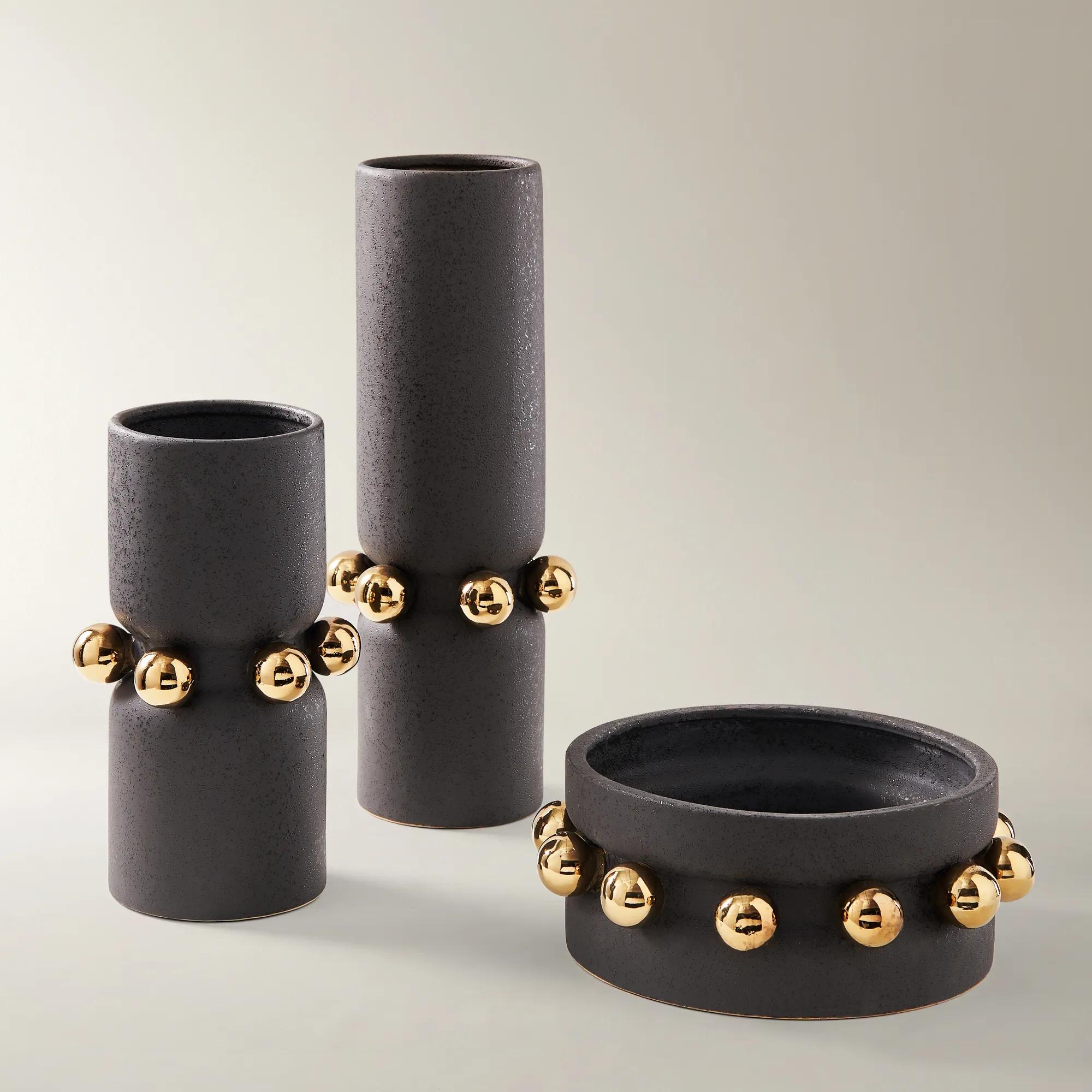 Zerra Vase$99
A ceramic vase featuring a striking matte black and shimmering gold contrast for bold, glamorous decor.
Add To Cart -
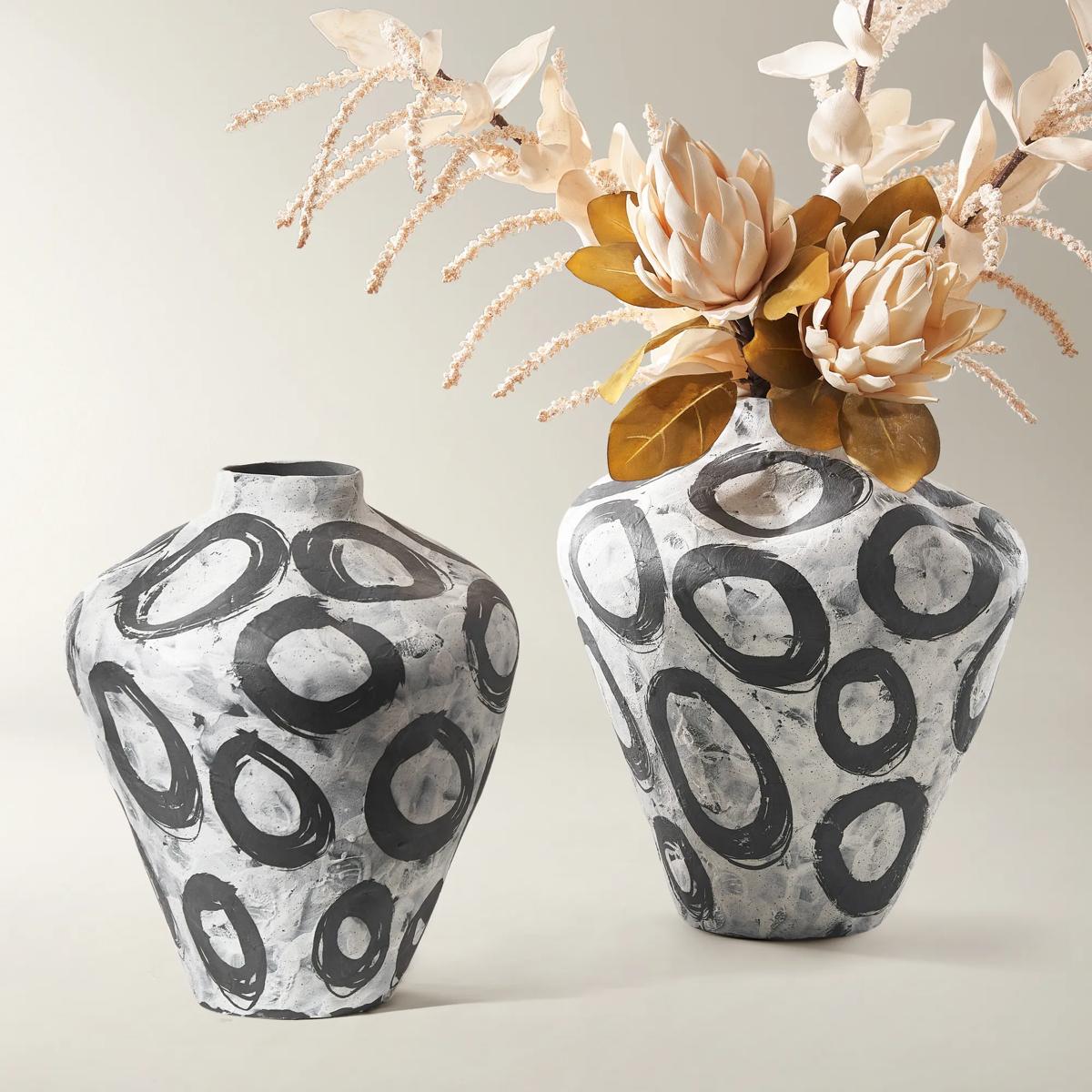
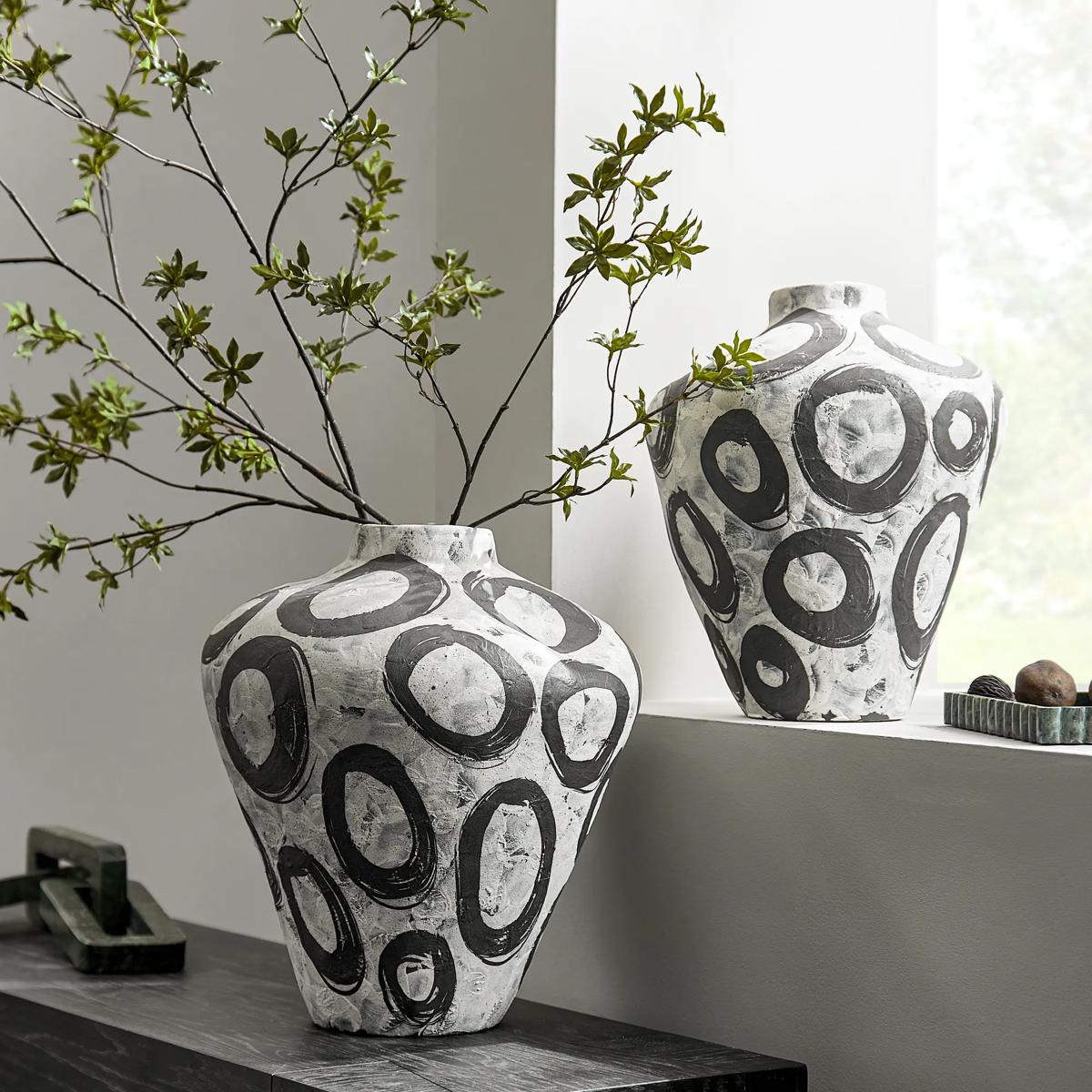 Stone Porcelain Vase$199
A sculptural porcelain vase featuring hand-painted black and white circular brushwork with a matte stone texture.
Add To Cart

Decorative Vases For Shelves
Decorative Vases for Shelves invite artistry and allure into every corner of your home. These sculptural accents transform ordinary shelves into curated showcases, infusing each vignette with texture, color, and unexpected drama. Whether clustered in a striking tableau or standing alone as a statement piece, each vase is an invitation to express your personal style—boldly and beautifully. Elevate your shelves with vessels that capture the light, spark conversation, and turn everyday moments into extraordinary displays of design.
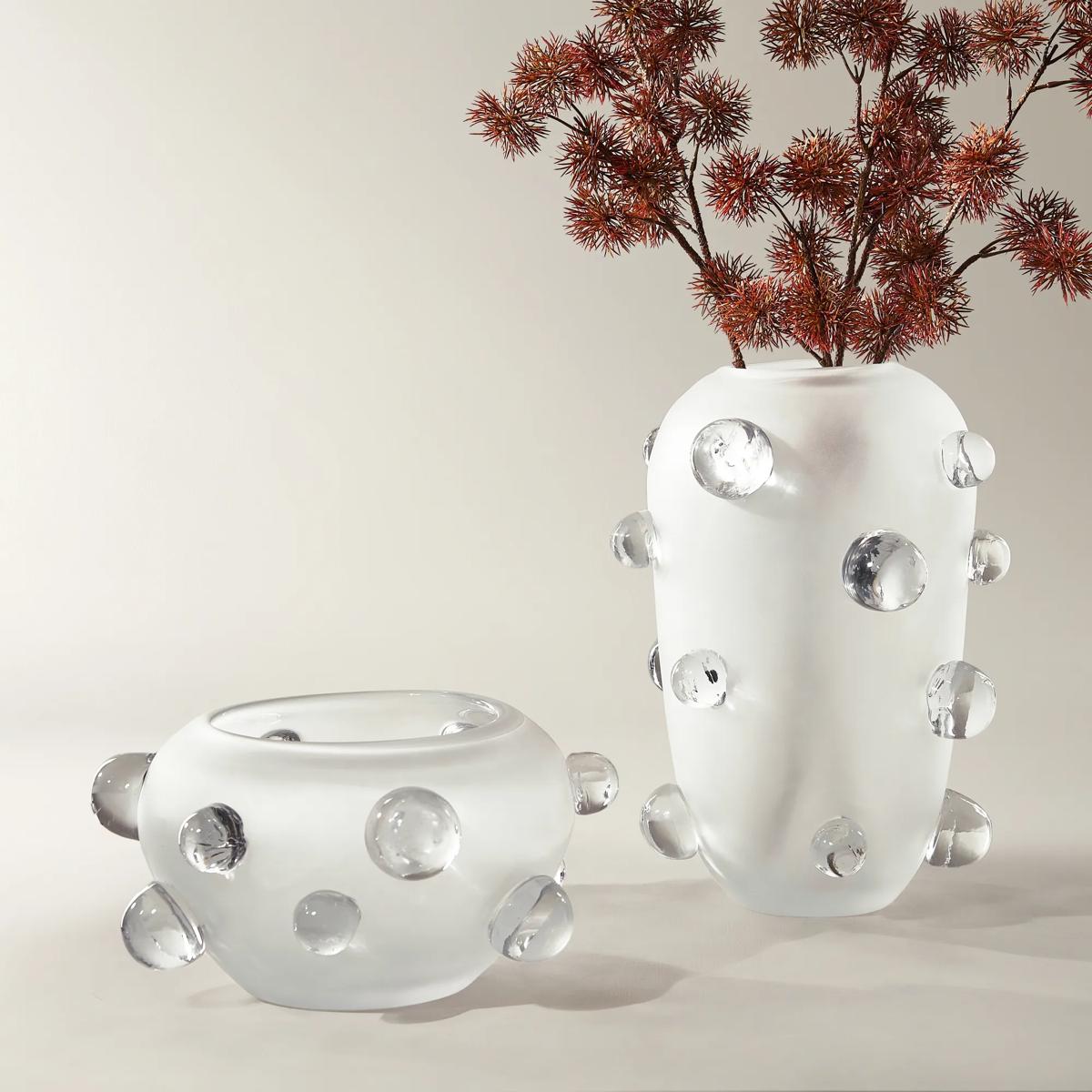
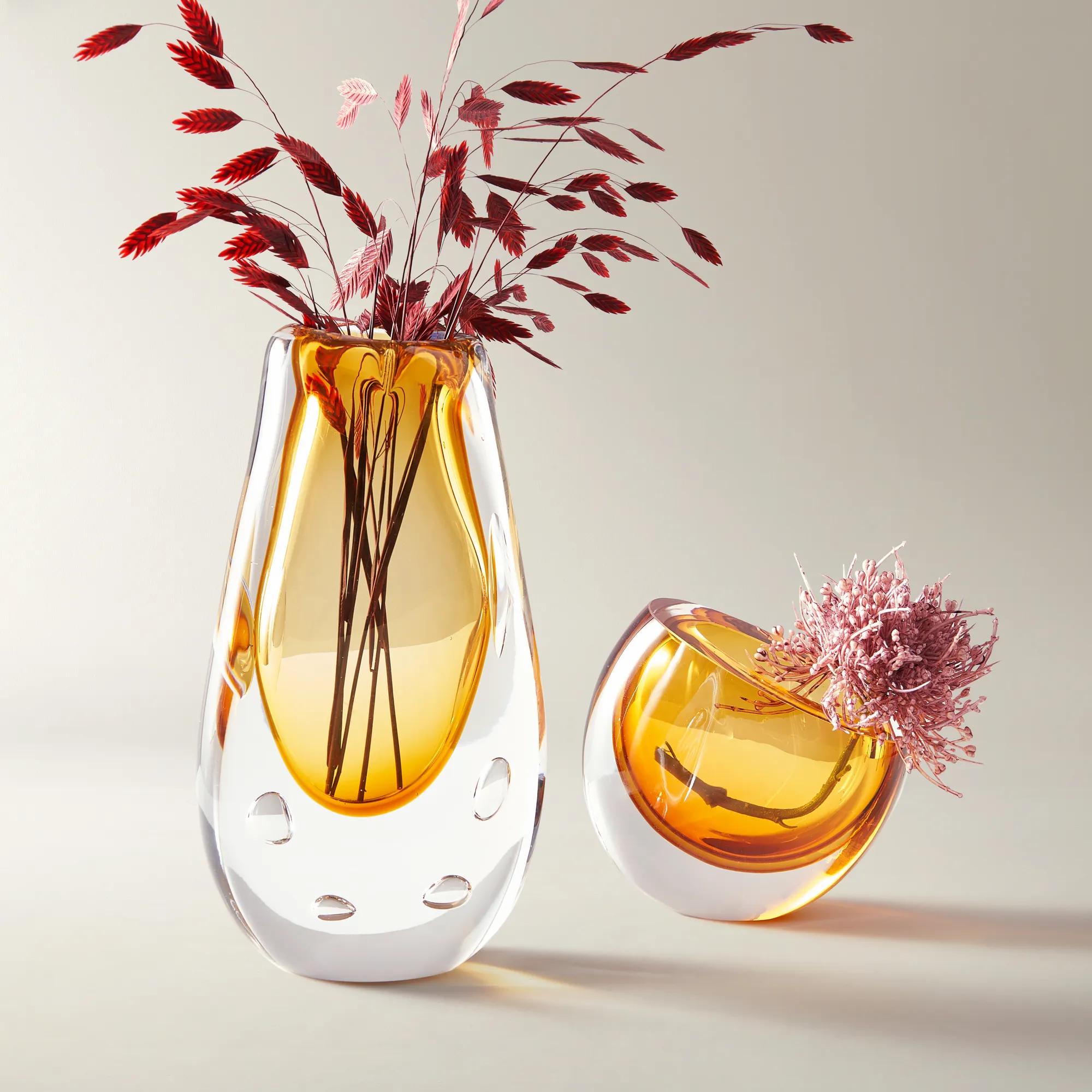
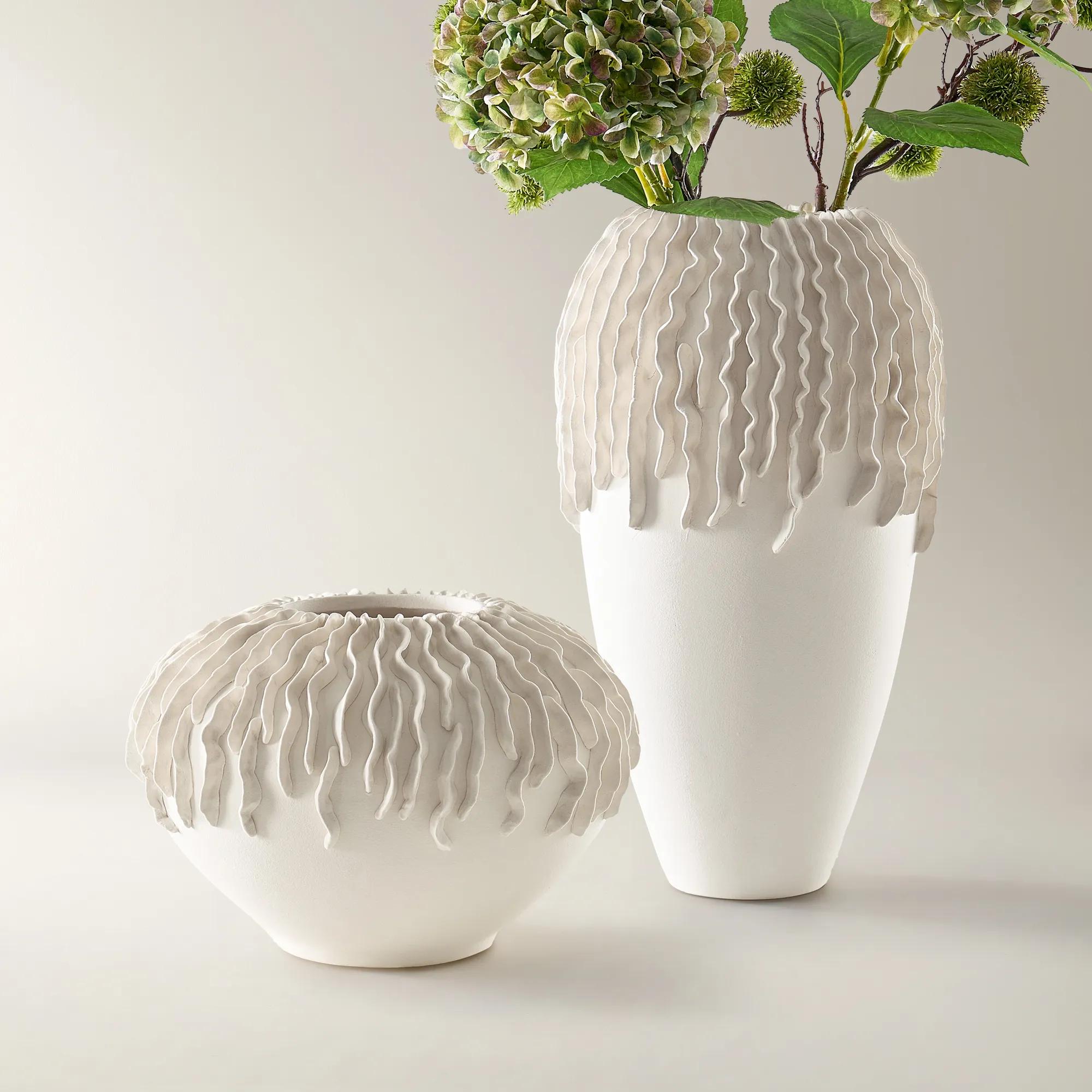
Decorative vases for shelves bring sculptural shape, texture, and color to bookcases, floating shelves, and built-in displays. More than containers for flowers, these vessels can stand alone as artful accents, giving a collection of books or framed photographs a deliberate focal point. A rounded ceramic vase softens the straight lines of shelving, while a slender glass silhouette introduces a luminous contrast beside richly bound books. Open-center ring shapes, angular forms, and softly fluted profiles offer visual interest without needing a single stem. Small bud vases lend themselves to intimate arrangements, holding a delicate clipping or adding a gleam of color within a compact cubby. For a more expressive composition, a broad, low vessel paired with a taller, narrow-necked shape creates rhythm without making every object compete for attention. The effect depends as much on the surrounding space as on the vase itself: a pale, textured surface feels crisp against dark cabinetry, while smoky glass or a polished metallic finish adds depth to lighter shelves. Neutral shades can be equally dramatic when their surfaces differ, bringing matte, glossy, and tactile finishes into conversation. Decorative shelf vases suit living rooms where books and art share the spotlight, dining room displays that call for a polished accent, and home offices that benefit from a little artistic expression. They also offer a way to introduce personality without overwhelming a room, whether the desired mood is gallery-like restraint or a richly layered display. A single sculptural vase can hold its own in a narrow niche; a generous run of shelving can accommodate a sequence of vessels with related colors and distinct contours. Even an empty vase can make a display feel complete when its silhouette has presence. The appeal lies in that versatility: an object with a clear purpose can also become the detail that gives an entire arrangement its character.
Material shapes both the appearance and the everyday performance of a decorative vase. Ceramic is a broad category that includes stoneware and porcelain, with finishes ranging from velvety matte surfaces to reflective glazes. Stoneware often has a substantial feel and an earthy depth that contrasts beautifully with lacquered shelving, glass accents, or polished metal. For displays that favor tactile surfaces and grounded silhouettes, decorative stoneware vases for shelves offer a compelling direction, particularly alongside linen-covered books or carved wood objects. Porcelain can bring a more refined profile, although wall thickness and weight vary by design. Terracotta contributes warmth and a distinctive clay texture; unsealed examples are porous and are generally better suited to dry displays unless the care information specifies otherwise. Clear glass reveals stems and water, giving even a modest arrangement a light, architectural quality, while colored or opaque glass places more emphasis on the vessel’s outline. Metal introduces another kind of drama, from a subdued brushed finish to a mirror-like surface that catches surrounding light. Its suitability for fresh flowers depends on its construction, lining, and manufacturer’s directions. A decorative vase should never be assumed watertight simply because it looks glazed or has a closed base. Some vessels are intended only for faux stems, dried botanicals, or display without a filling, making the stated use an important consideration. Durability also involves more than weight: ceramic and glass can chip when knocked against shelf edges, textured finishes can trap dust, and polished surfaces may show fingerprints. Gentle dusting with a soft cloth keeps most displays looking composed, while washing, soaking, and cleaning products should follow the material-specific care instructions. Abrasive tools can scratch glossy finishes or alter decorative coatings. For a vase approved for fresh flowers, regular water changes and careful drying of the exterior help keep the arrangement presentable and protect the shelf beneath it. A discreet, nonstaining protective pad can help guard delicate finishes, provided it leaves the vessel level and secure.
The most successful shelf vases feel proportionate to their setting, with enough room around them for their shape to register. Height matters, but so do the widest diameter, the base footprint, and the clearance beneath the shelf above. A vase may fit within an opening while leaving too little space to add stems or lift it out comfortably. On shallow floating shelves, a compact vessel with a stable base is often more suitable than a wide-bellied form that projects beyond the edge. The shelf’s weight rating also matters, especially when a display includes heavy ceramics, books, and water-filled arrangements. Lower shelves can accommodate visually substantial shapes, while smaller vessels often sit more comfortably among photographs and collected objects at eye level. In a household with children or pets, secure placement away from exposed edges deserves particular attention; delicate or top-heavy designs are better reserved for protected display areas. Within those practical boundaries, there is ample room for expression. A low, rounded vase beside a horizontal stack of books breaks up repeated rectangular lines. A pair of bud vases separated by a framed photograph creates a subtle connection across a shelf without imposing rigid symmetry. Three vessels with different heights can form a cohesive grouping when they share a color, finish, or recurring curve, but leaving an open stretch nearby keeps the arrangement from feeling crowded. Dried botanicals bring airy movement without the weight and maintenance of water, while faux stems offer consistent shape and color in spaces where tending fresh flowers is less convenient. Both need enough overhead clearance to avoid looking compressed beneath the next shelf. Fresh stems, when the vessel is designed for them, add a living element best kept within easy reach for maintenance. These qualities also make decorative vases thoughtful housewarming, wedding, or host gifts, especially for someone who enjoys collecting art, arranging flowers, or refining a personal library. A versatile scale and an expressive silhouette give the recipient freedom to display the vase alone or weave it into an existing collection. Whether punctuating a wall of books or anchoring a single floating shelf, the right vessel brings dimension, intention, and a distinctly personal sense of drama.
FAQs
Decorative vases bring dimension, texture, and artistry to shelving displays. Whether used alone as a sculptural focal point or grouped in curated clusters, vases introduce visual interest and help tell a cohesive design story. Their finishes—be it glossy ceramic, metallic sheen, or matte stoneware—interact with light and surrounding décor, elevating the mood of the entire space.
Vases offer endless versatility for seasonal styling. In winter, fill them with pine branches, berries, or frosted botanicals for a festive touch. Spring invites fresh blooms or budding branches, while summer calls for airy grasses or vibrant florals. Even empty, a striking vase can serve as an artful accent, highlighting the shelf’s architecture and your personal style.
Absolutely—decorative vases make thoughtful, enduring gifts for housewarmings, weddings, holidays, or any special occasion. Their timeless appeal and versatility ensure they’ll be cherished by recipients with a range of tastes, offering endless opportunities for creative expression in any home.
To create a harmonious arrangement, play with varying heights, shapes, and materials while maintaining a unifying element—such as color palette or texture. Group vases in odd numbers for visual balance, and layer them with books, art, or other objects to achieve a curated, gallery-inspired look.
Popular materials include stoneware, glass, ceramic, metal, and porcelain. Each brings its own character—stoneware adds earthy sophistication, glass offers luminous elegance, and metallics lend a touch of glamor. Choosing the right material can set the tone for the room, whether you’re aiming for modern minimalism, organic warmth, or dramatic luxury.