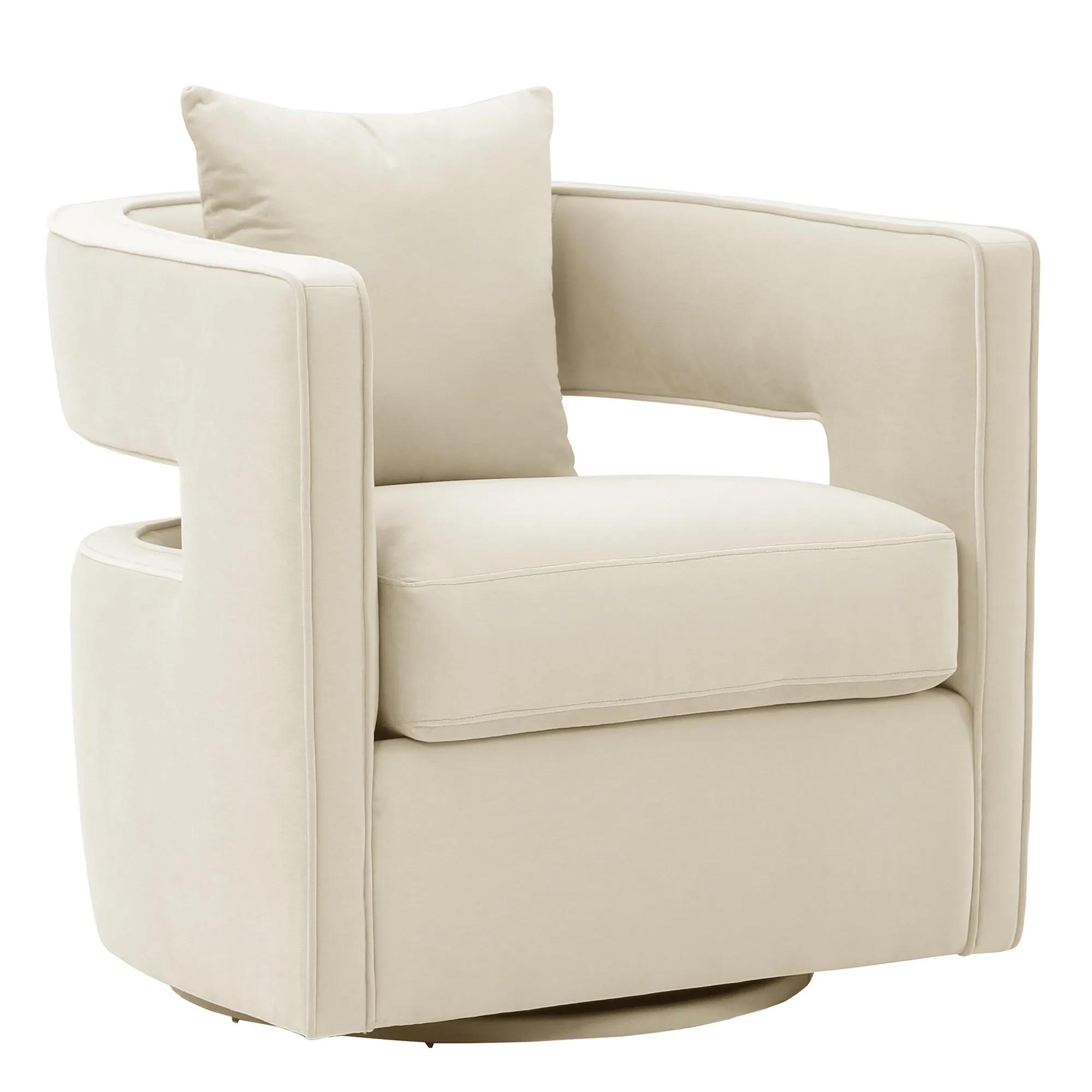
Custom Swivel Chairs
Custom Swivel Chairs
-
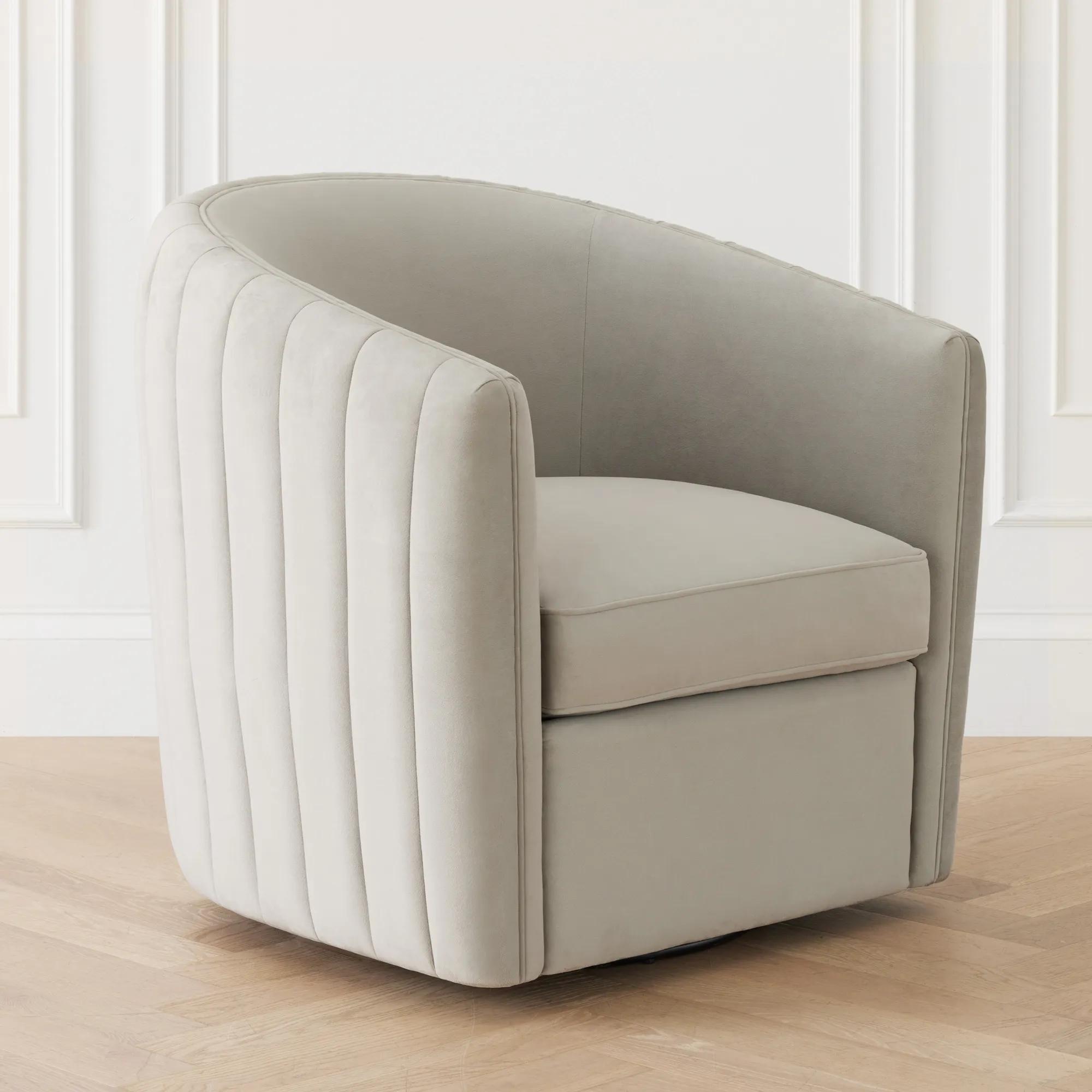
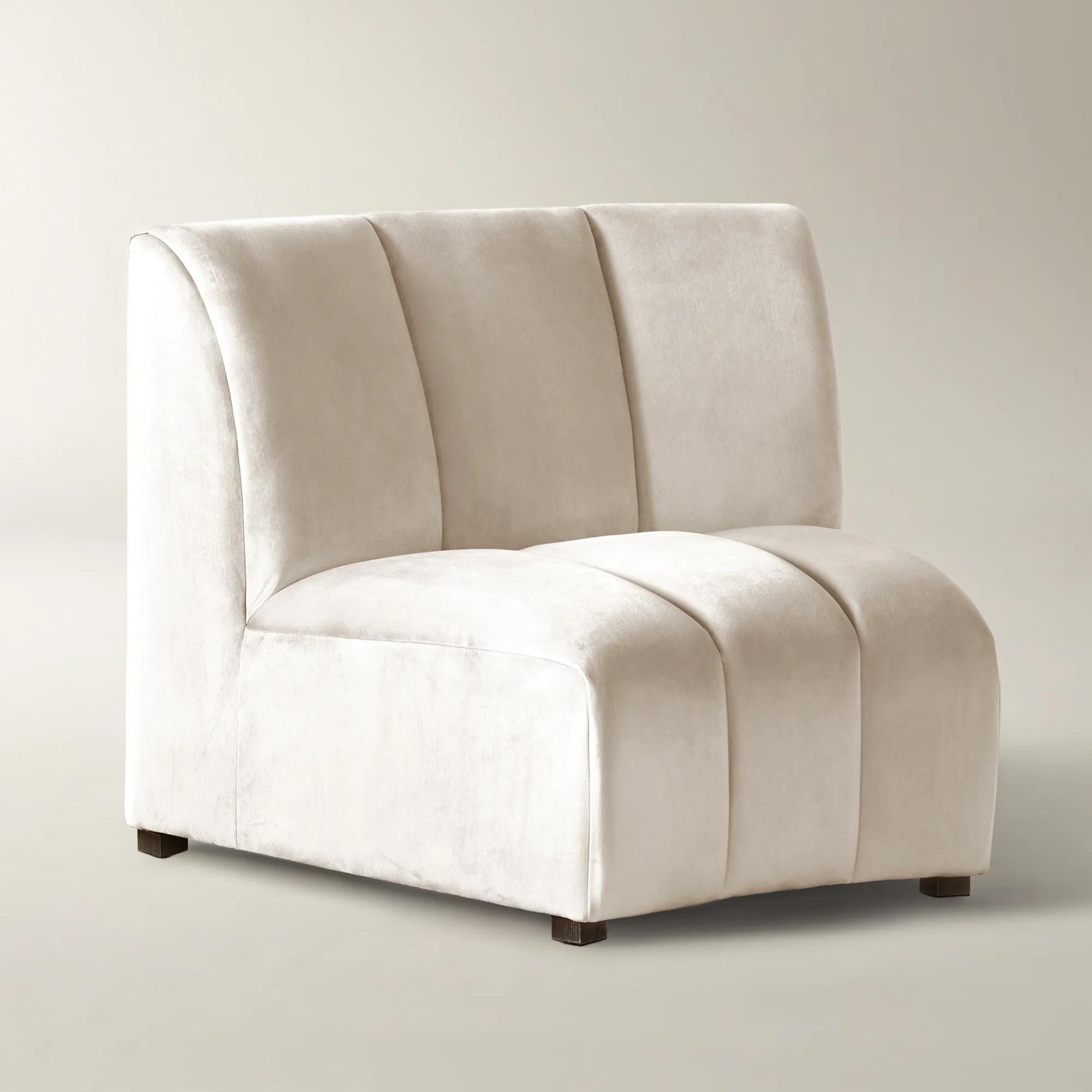
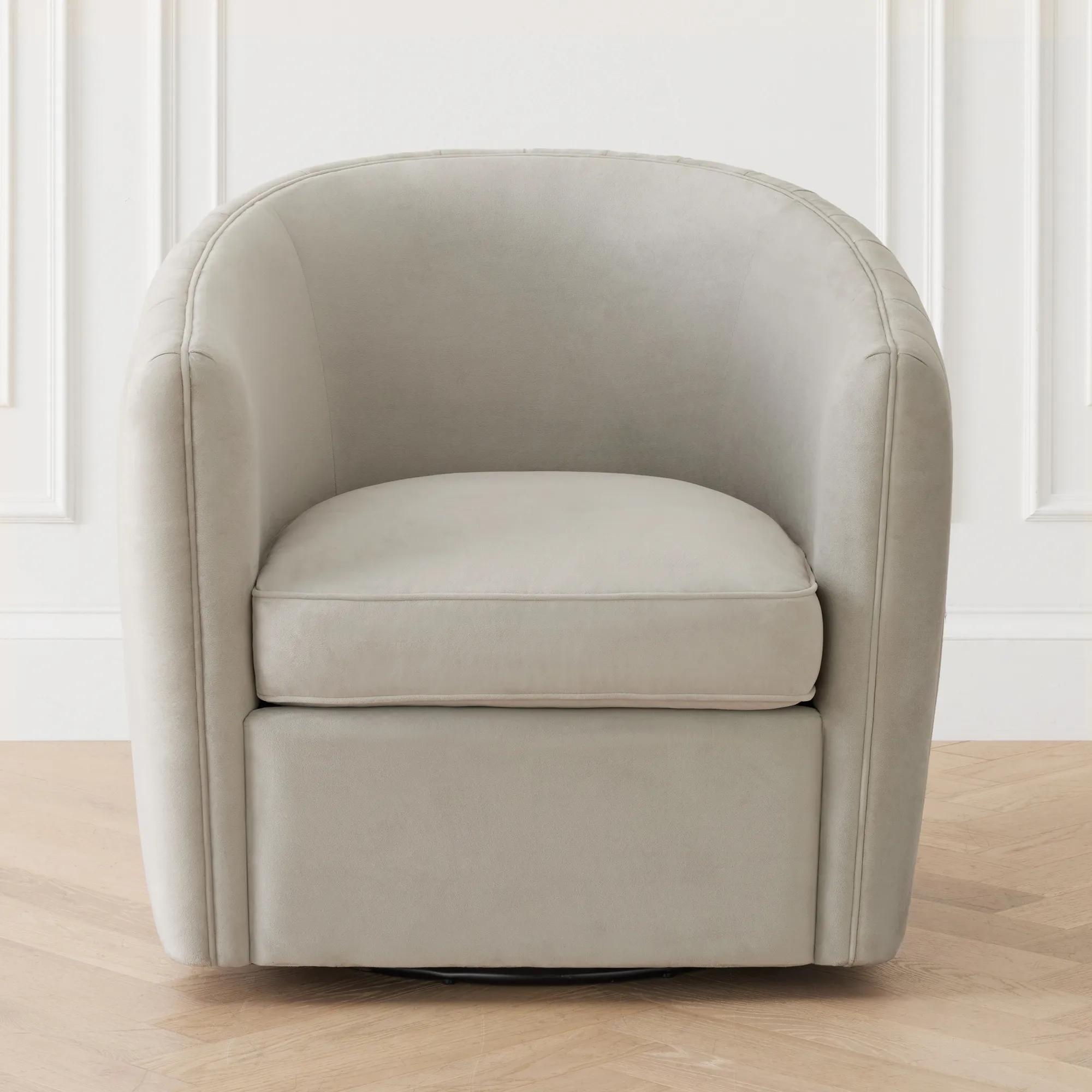 Aria Channeled Swivel Chair$1299
A modern barrel chair in kiln-dried hardwood with channeled velvet upholstery and a smooth swivel base.
Add To Cart -

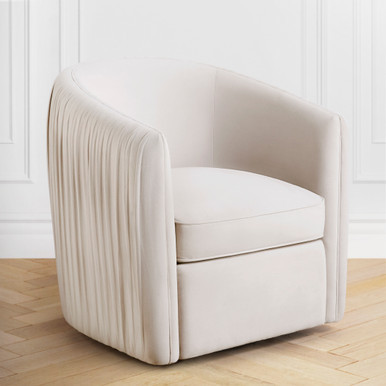
 Aria Pleated Swivel Chair$1349
A barrel-style swivel chair crafted from kiln-dried hardwood and shown in luxurious Bella Velvet Pearl upholstery.
Add To Cart -
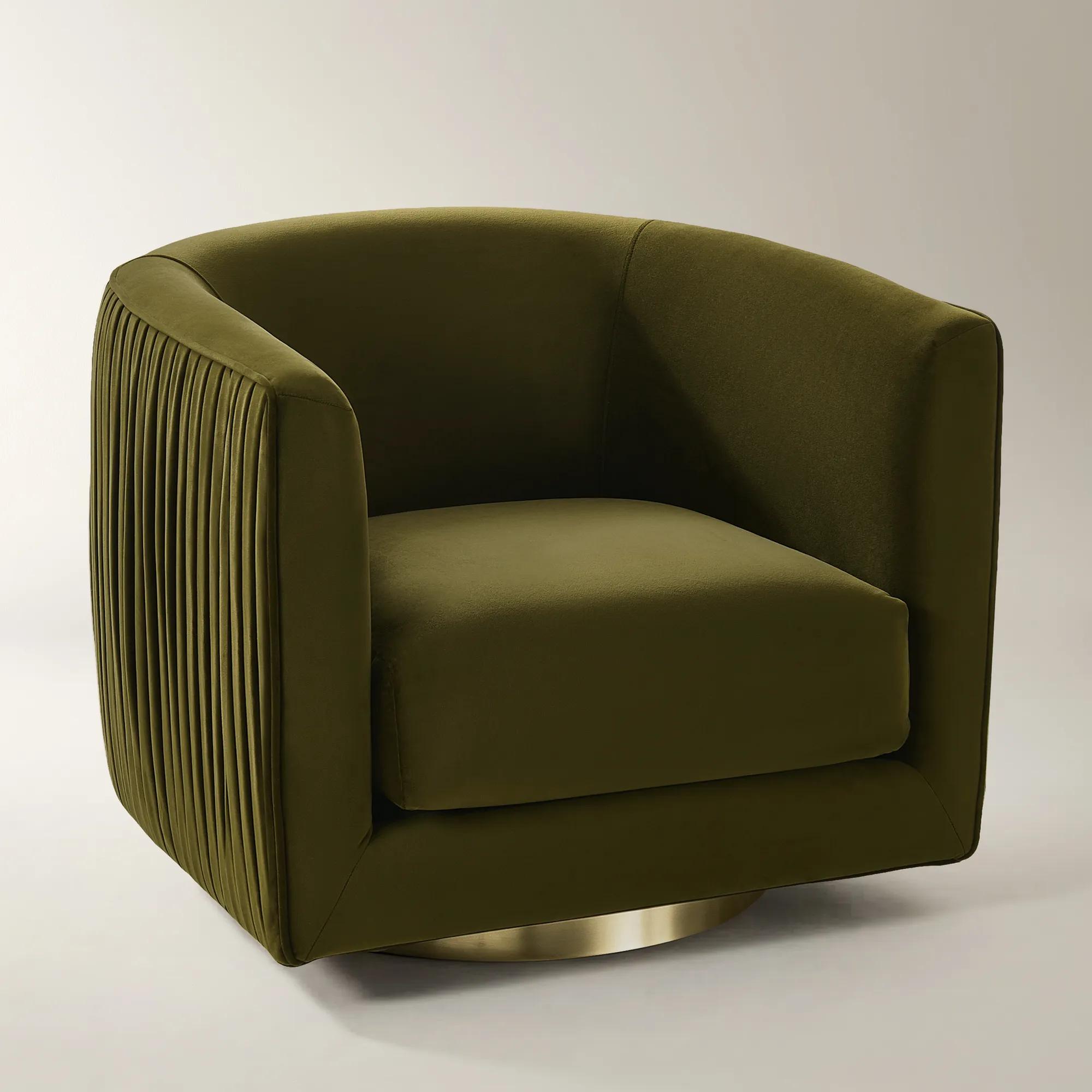
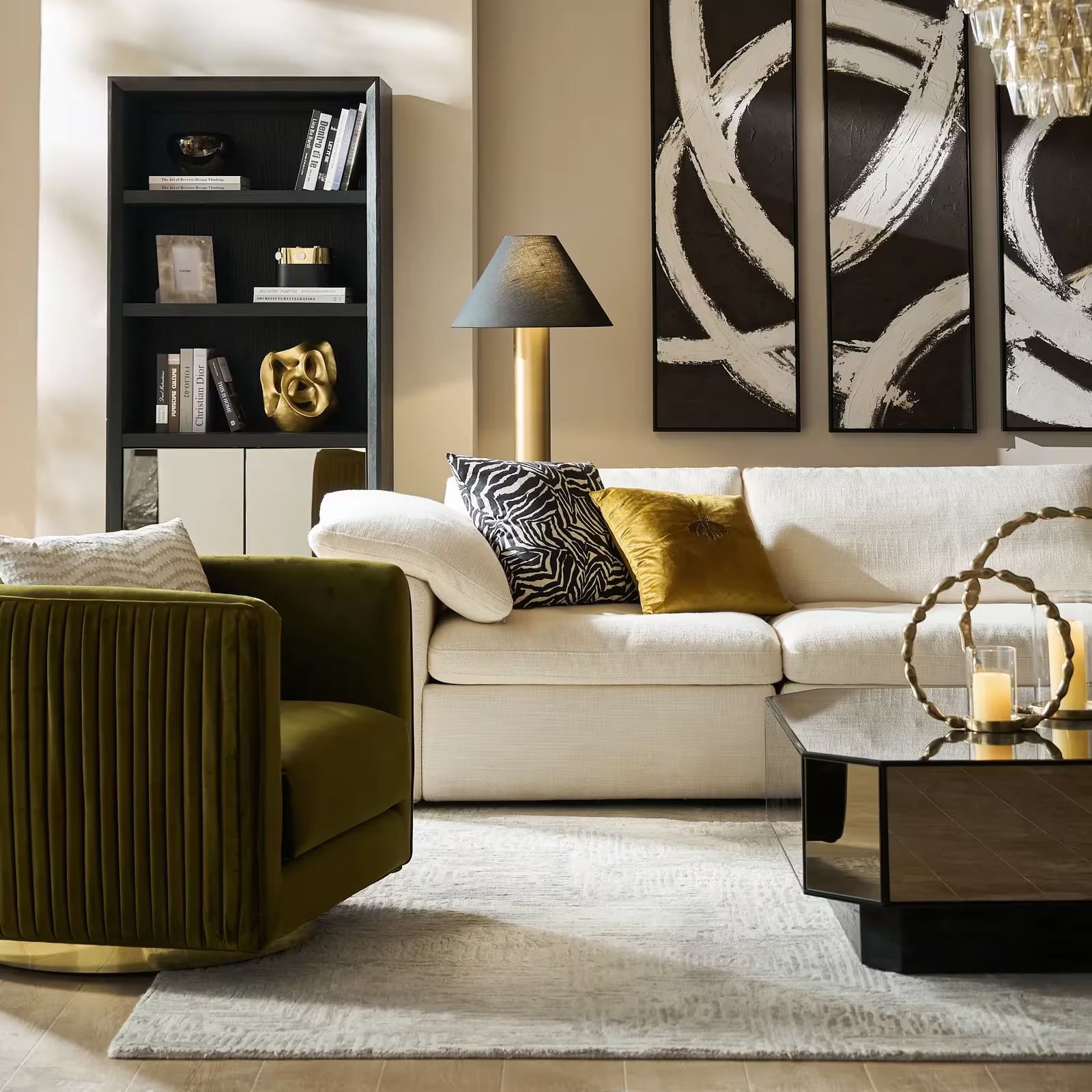 Lyssa Pleated Deep Olive Velvet Swivel Accent Chair$1099
A deep olive green velvet accent chair featuring pleated panels, smooth curves, and a 360-degree swivel base.
Add To Cart -
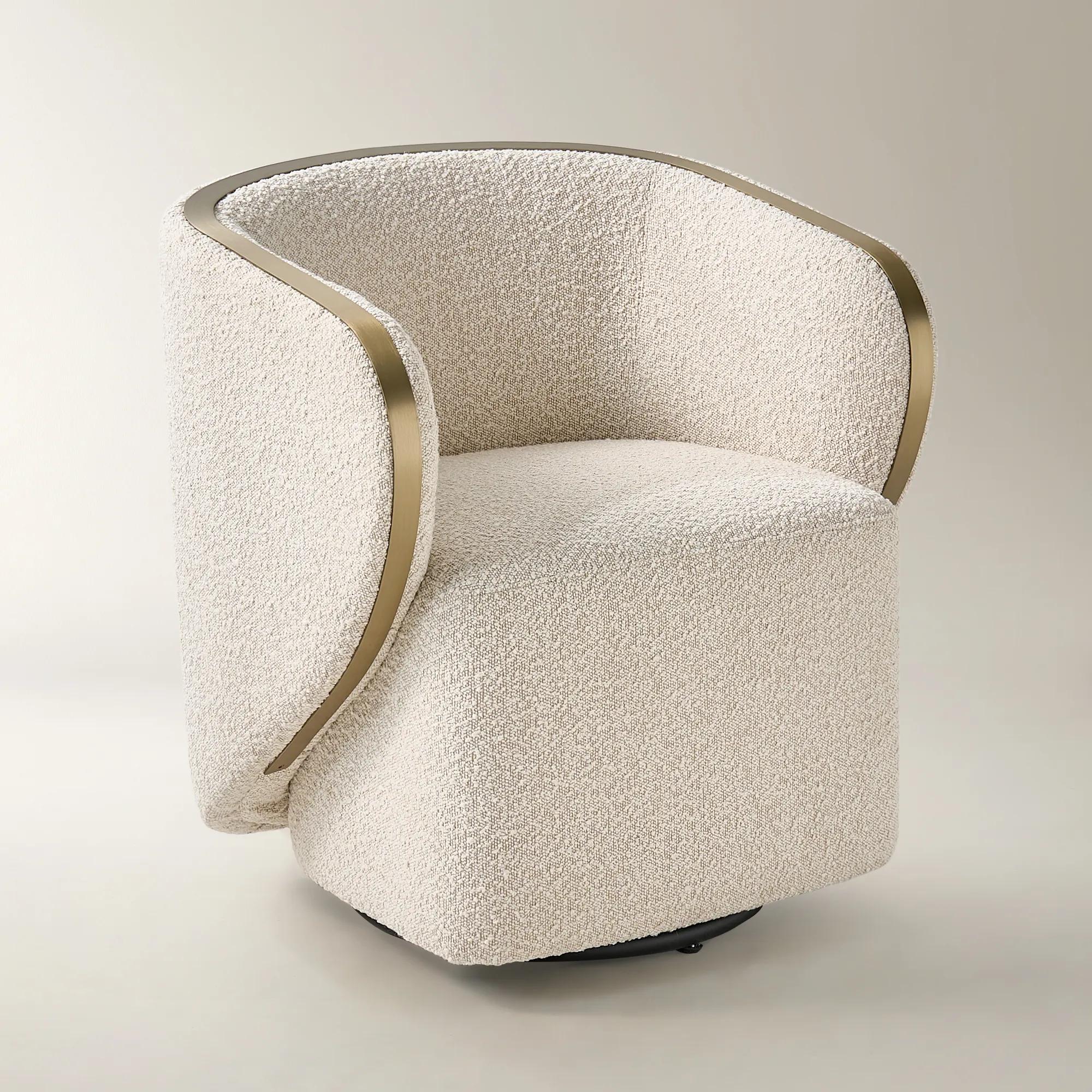 Nova Ivory Performance Boucle Swivel Dining Chair$699
An ivory boucle swivel chair featuring a sculptural wraparound silhouette and elegant metallic trim accents.
Add To Cart -
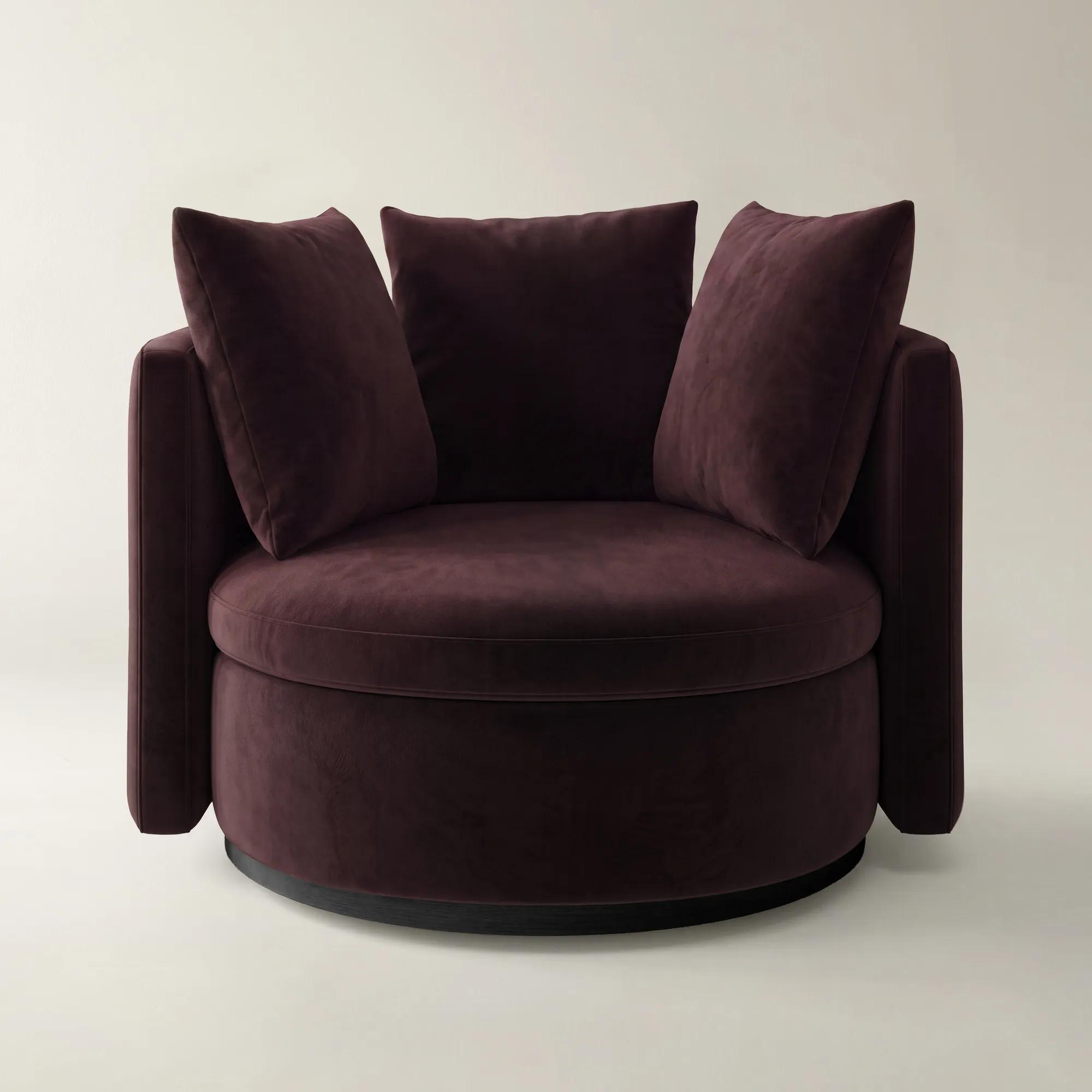
 Stria Fig Velvet Swivel Accent Chair$1499
A fig velvet chair with a sculptural wraparound silhouette, layered foam comfort, and concealed 360-degree swivel.
Add To Cart -
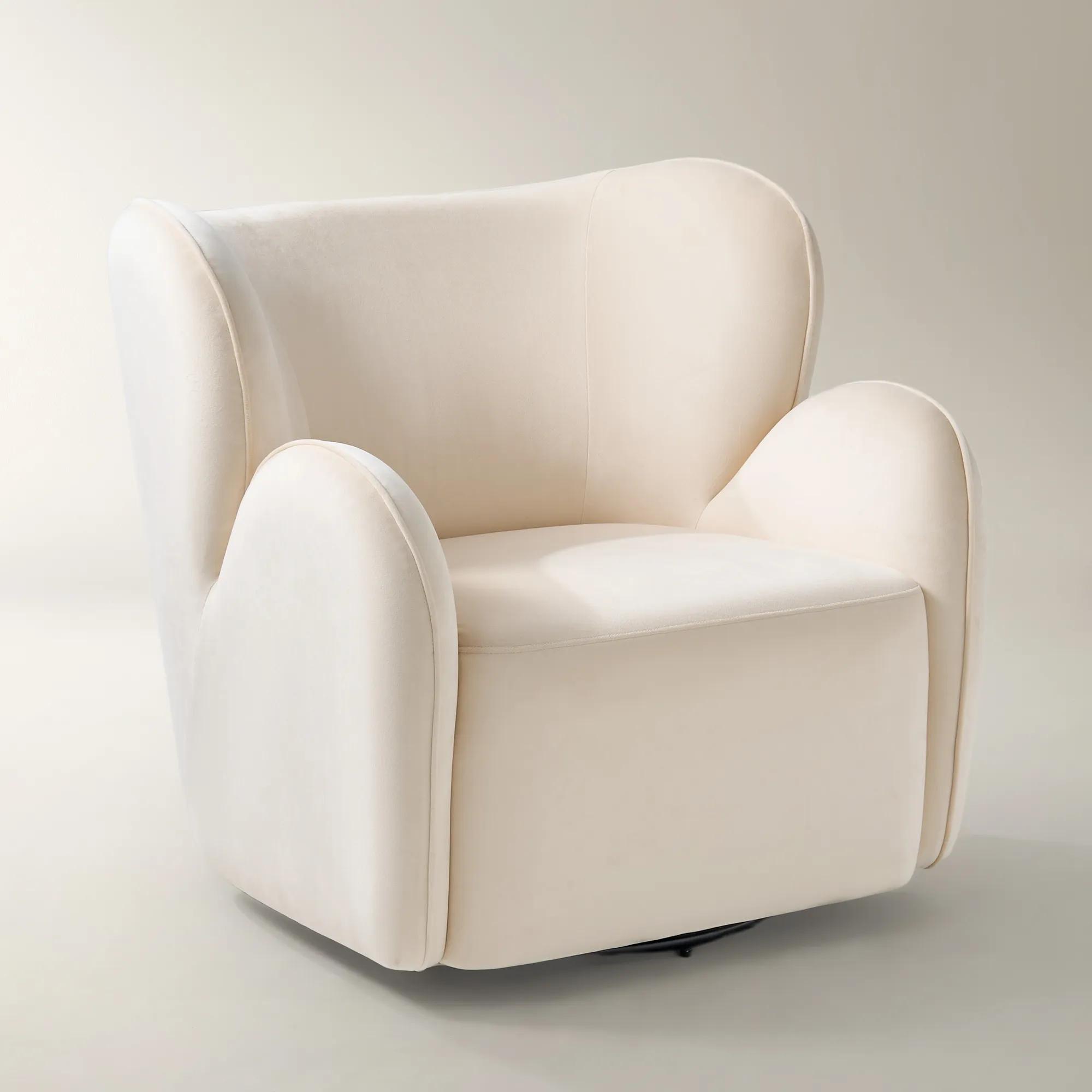
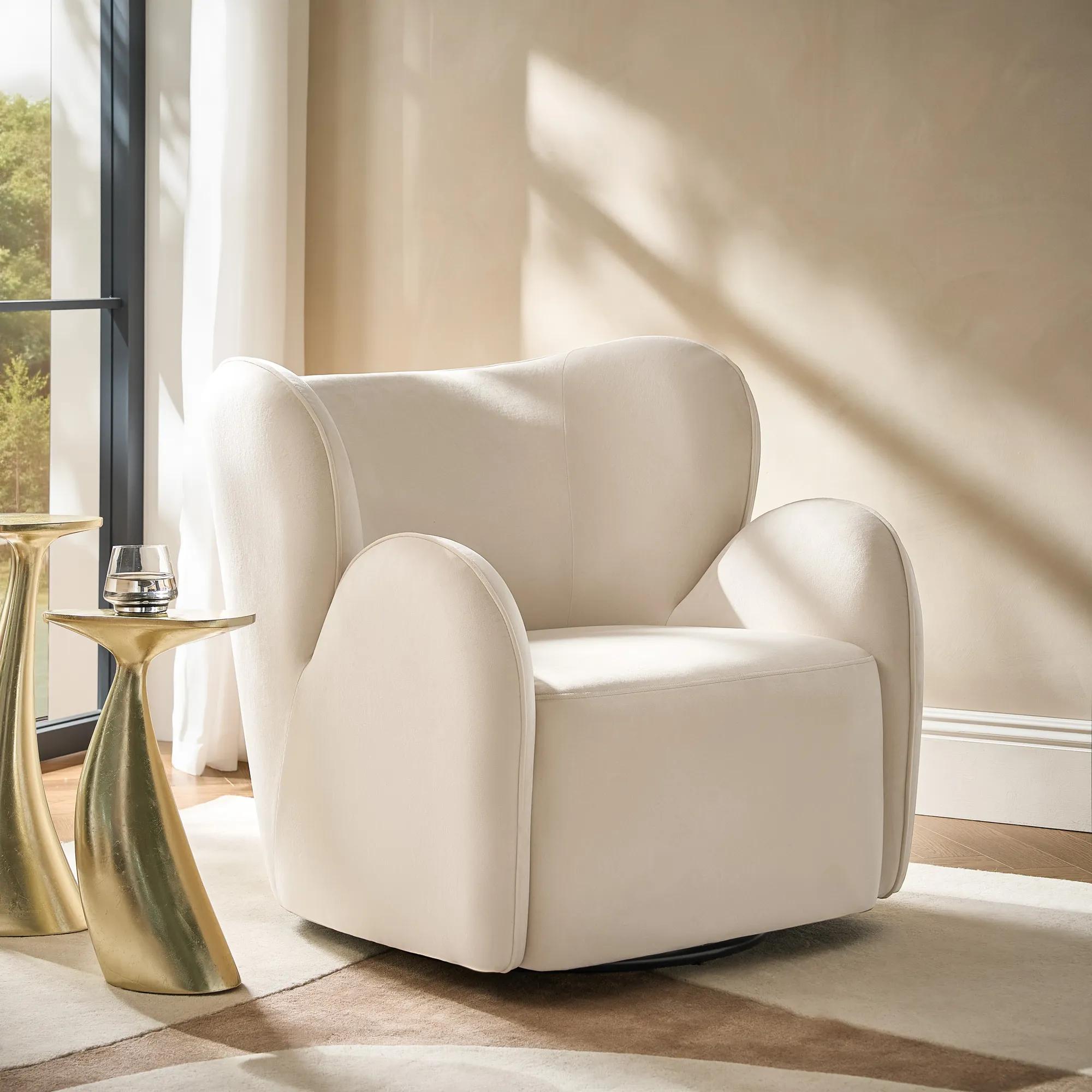 Ceres Ivory Velvet Swivel Accent Chair$799
An ivory velvet accent chair featuring a curved silhouette, 360° swivel, and plush, supportive cushioning.
Add To Cart -
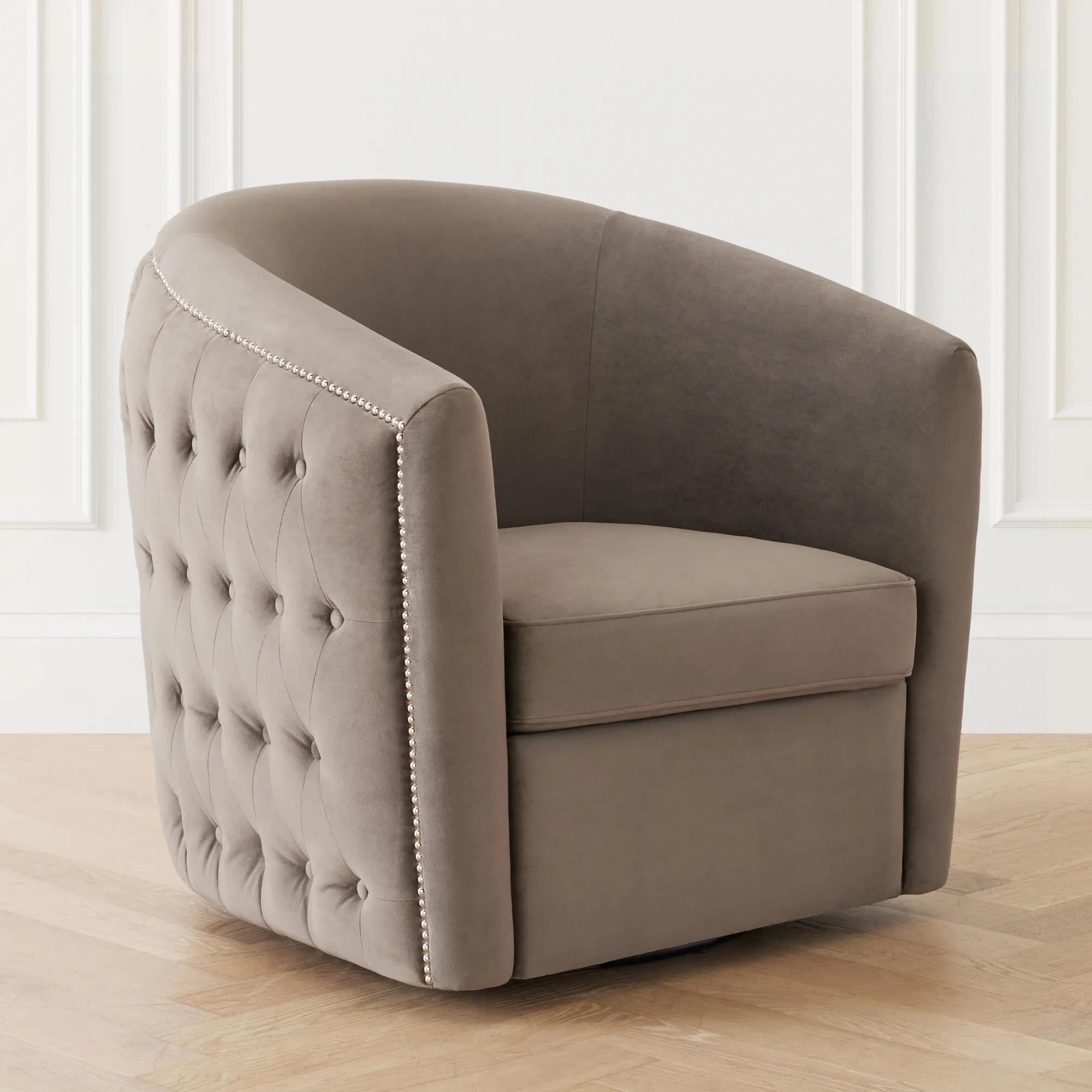
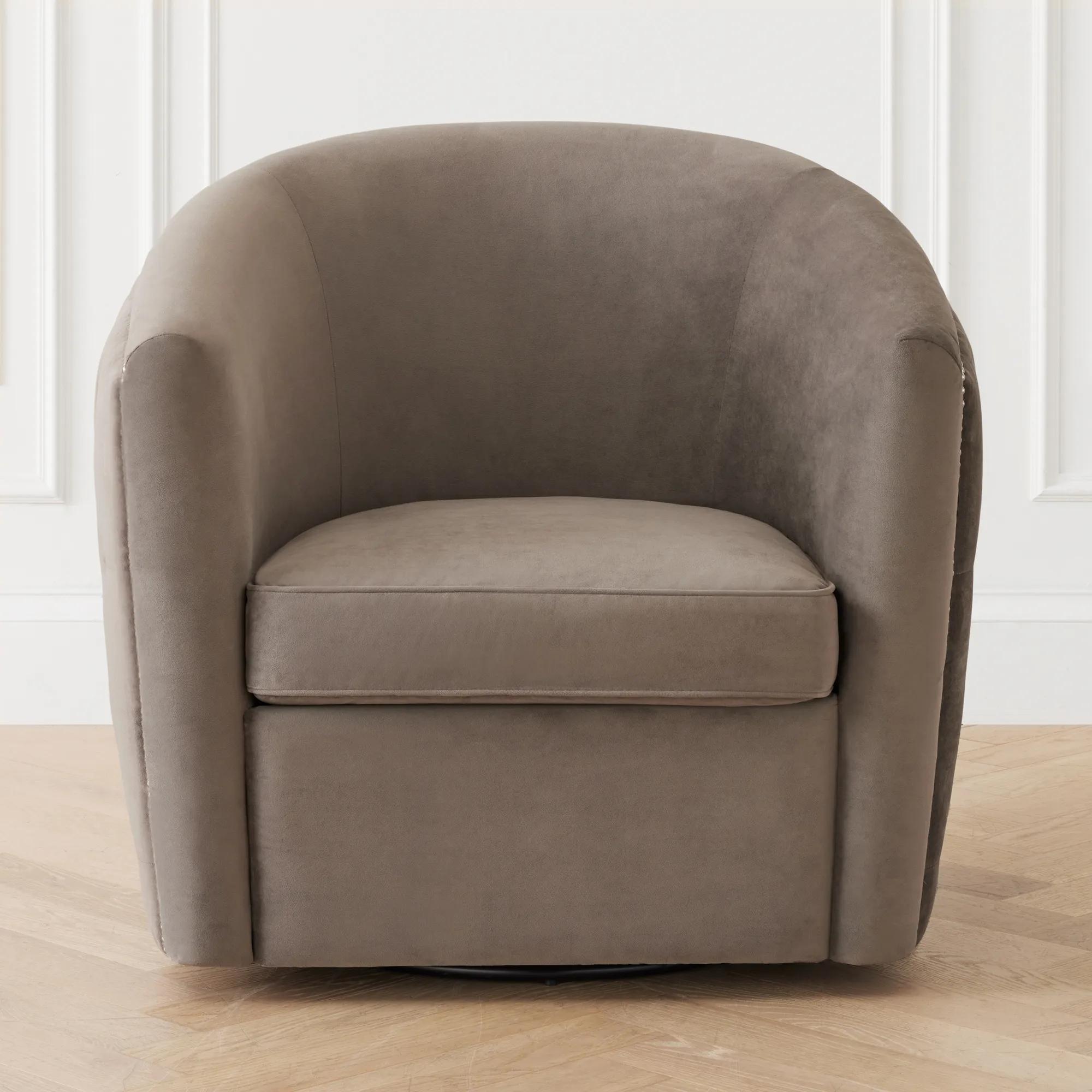 Aria Tufted Swivel Chair$1899
A barrel-style swivel chair in Bella Velvet Otter with tufted detailing and bright nickel nailhead trim.
Add To Cart -
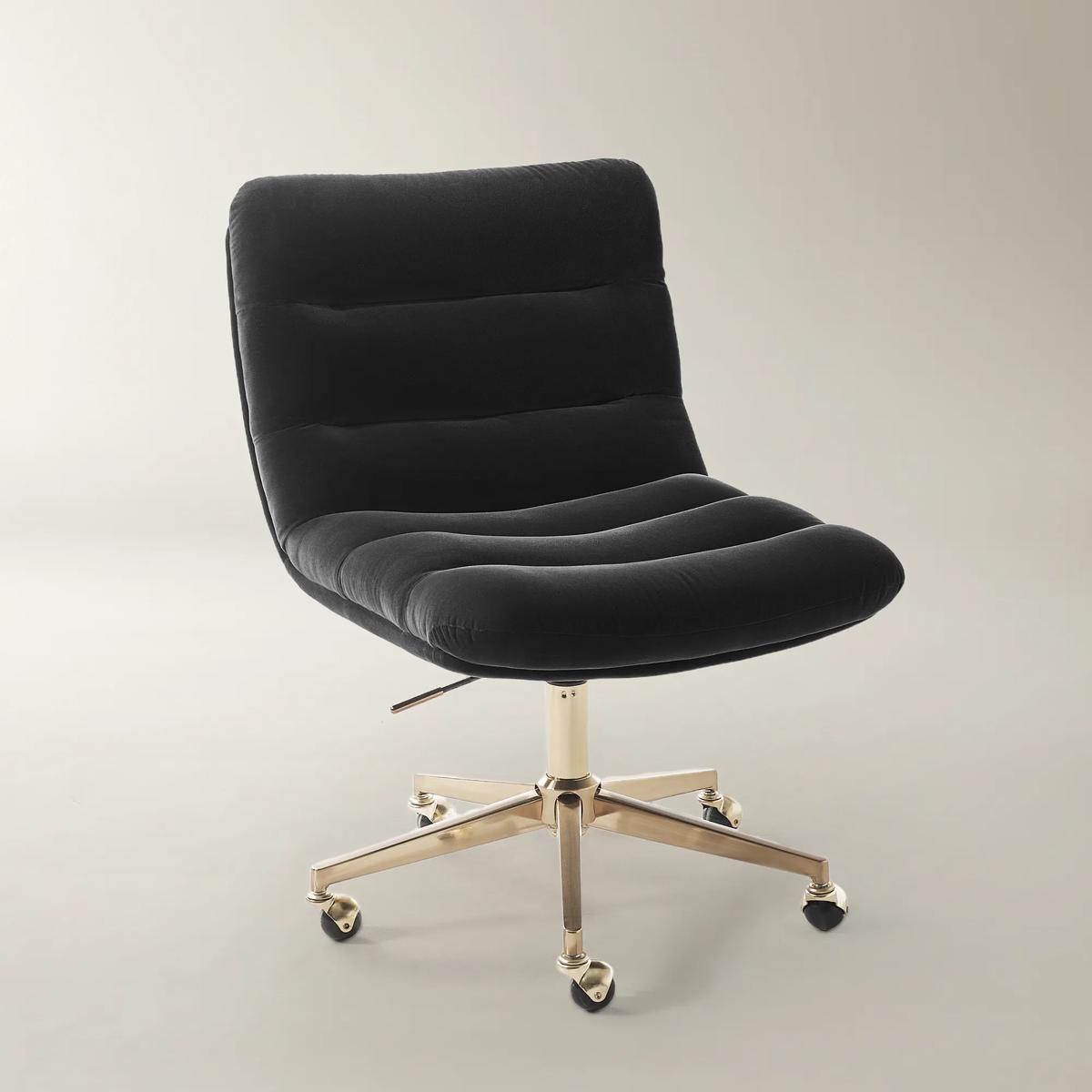 Serena Charcoal Velvet Swivel Desk Chair$399
A charcoal velvet office chair with plush foam cushioning, brass-plated metal base, and adjustable swivel design.
Add To Cart -
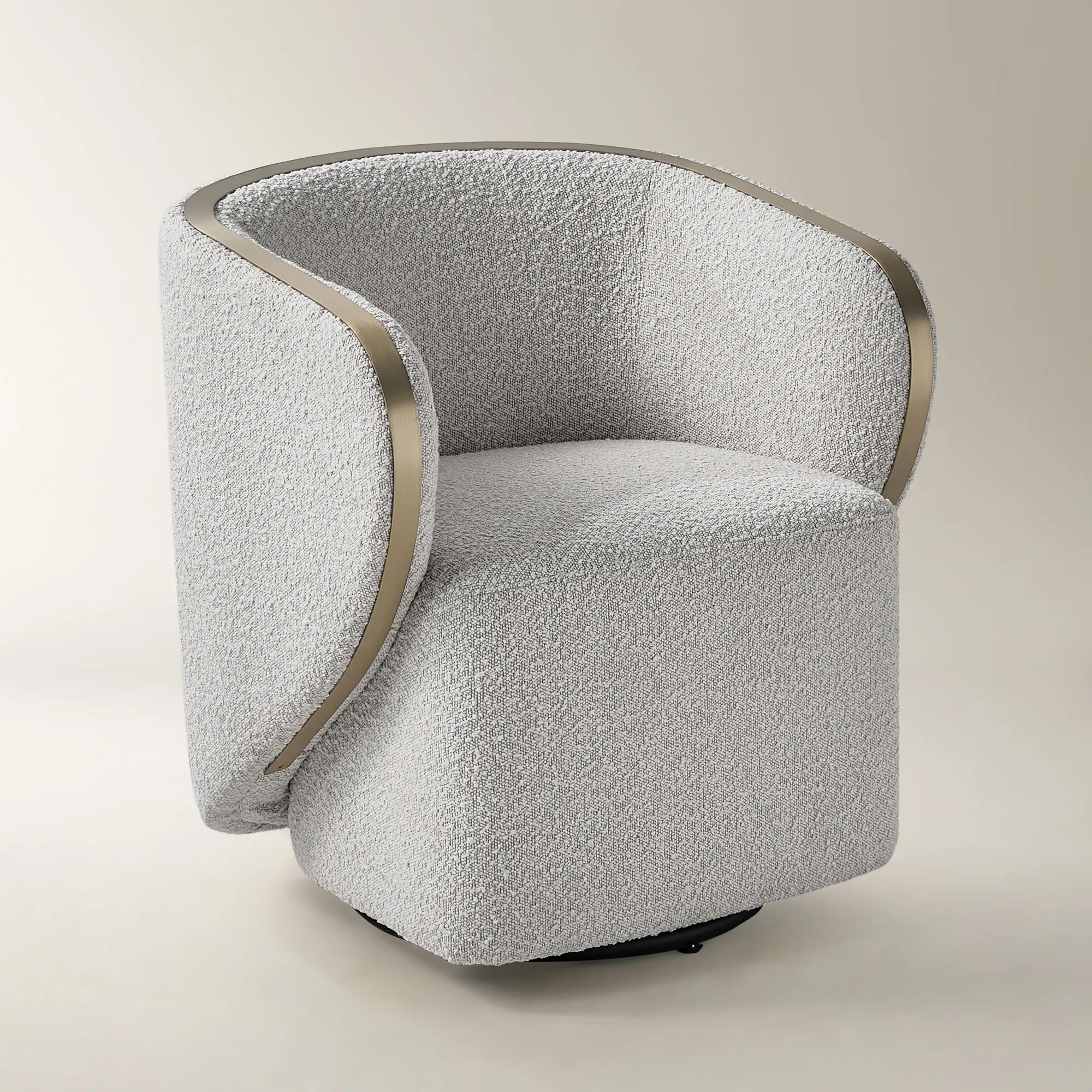 Nova Light Grey Performance Boucle Swivel Dining Chair$699
A sculptural light grey chair in water-repellent boucle with metallic trim and a smooth 360° swivel base.
Add To Cart -
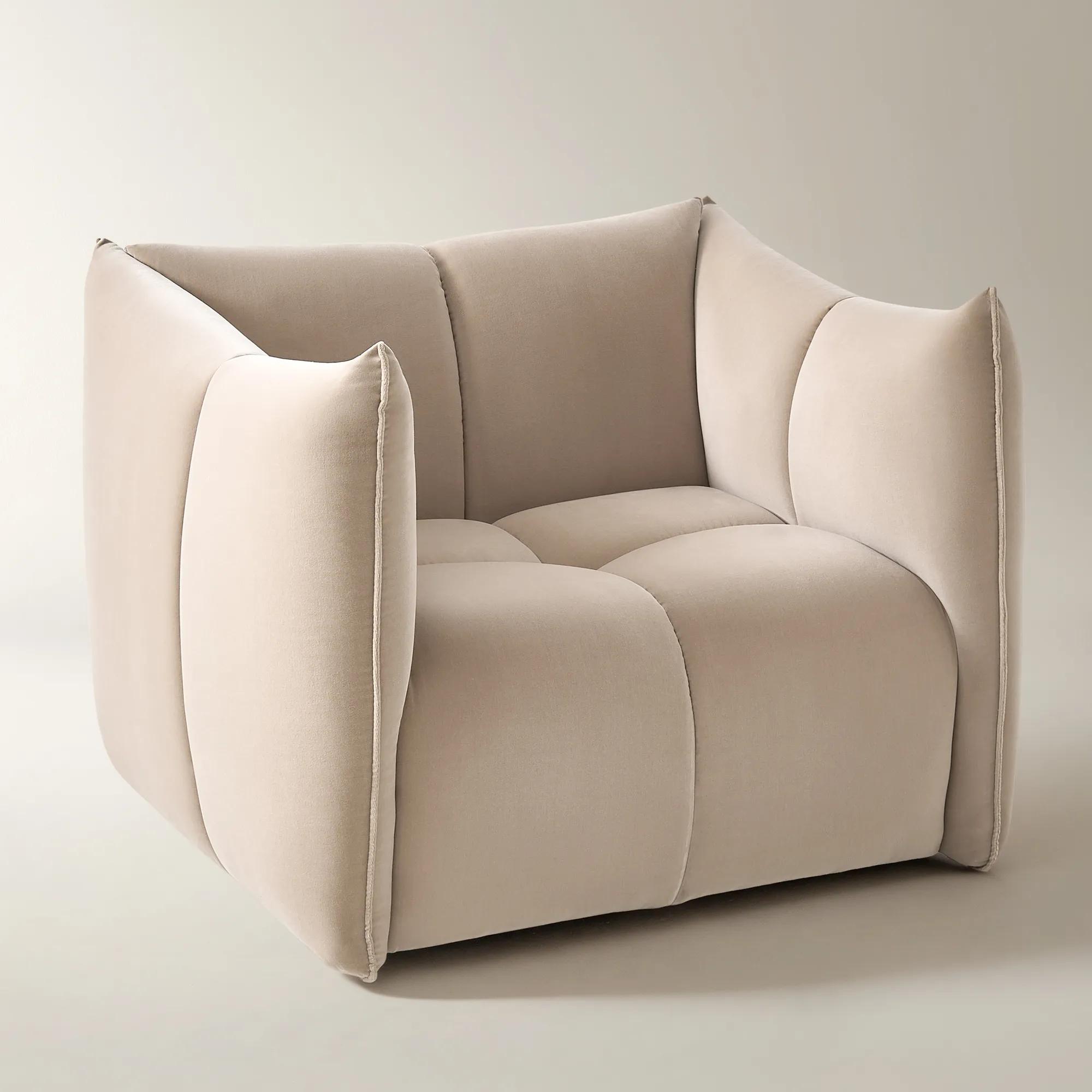 Reina Tufted Simply Taupe Velvet Swivel Chair$1099
A taupe velvet swivel chair with channel tufting, an architectural winged profile, and plush, sculpted comfort.
Add To Cart -
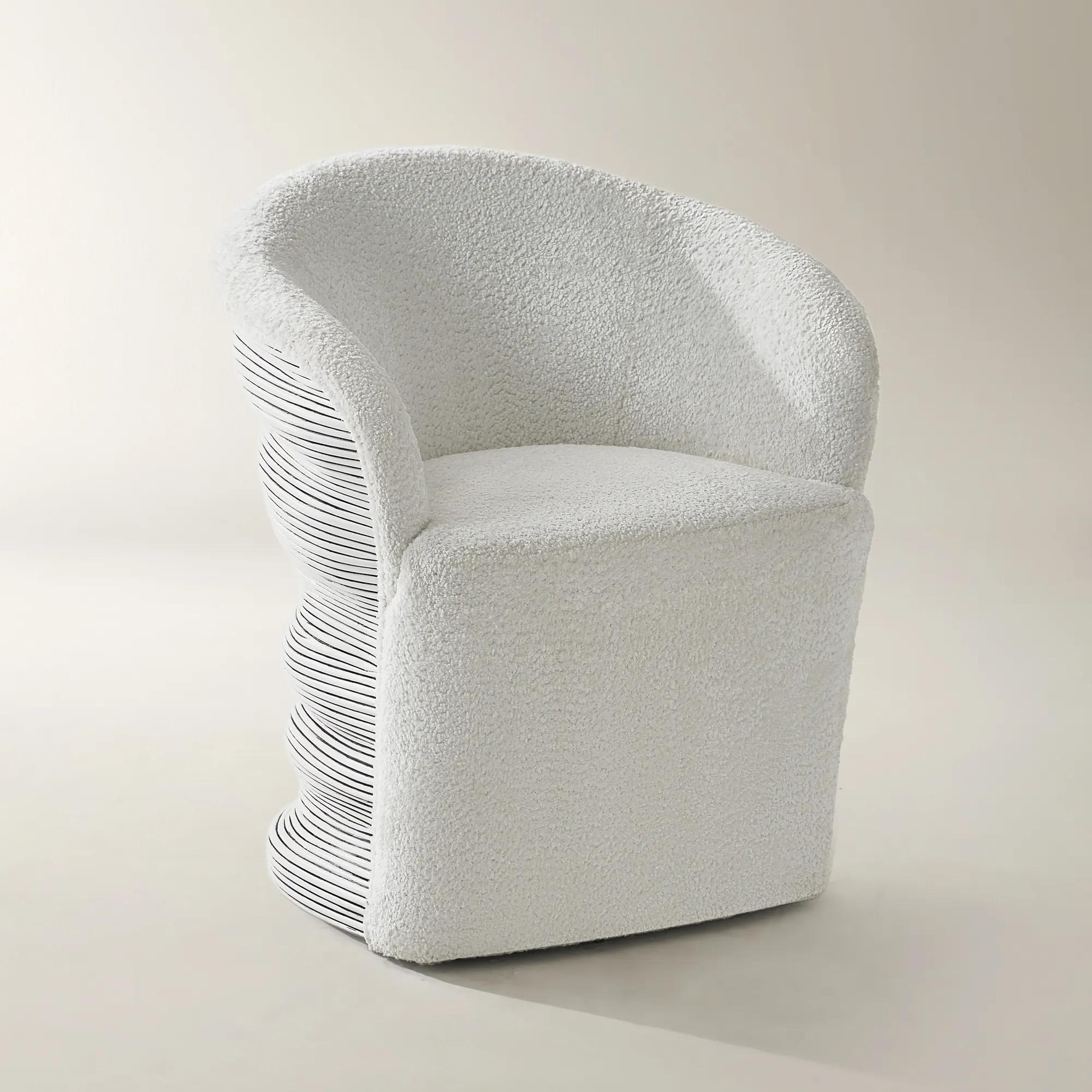
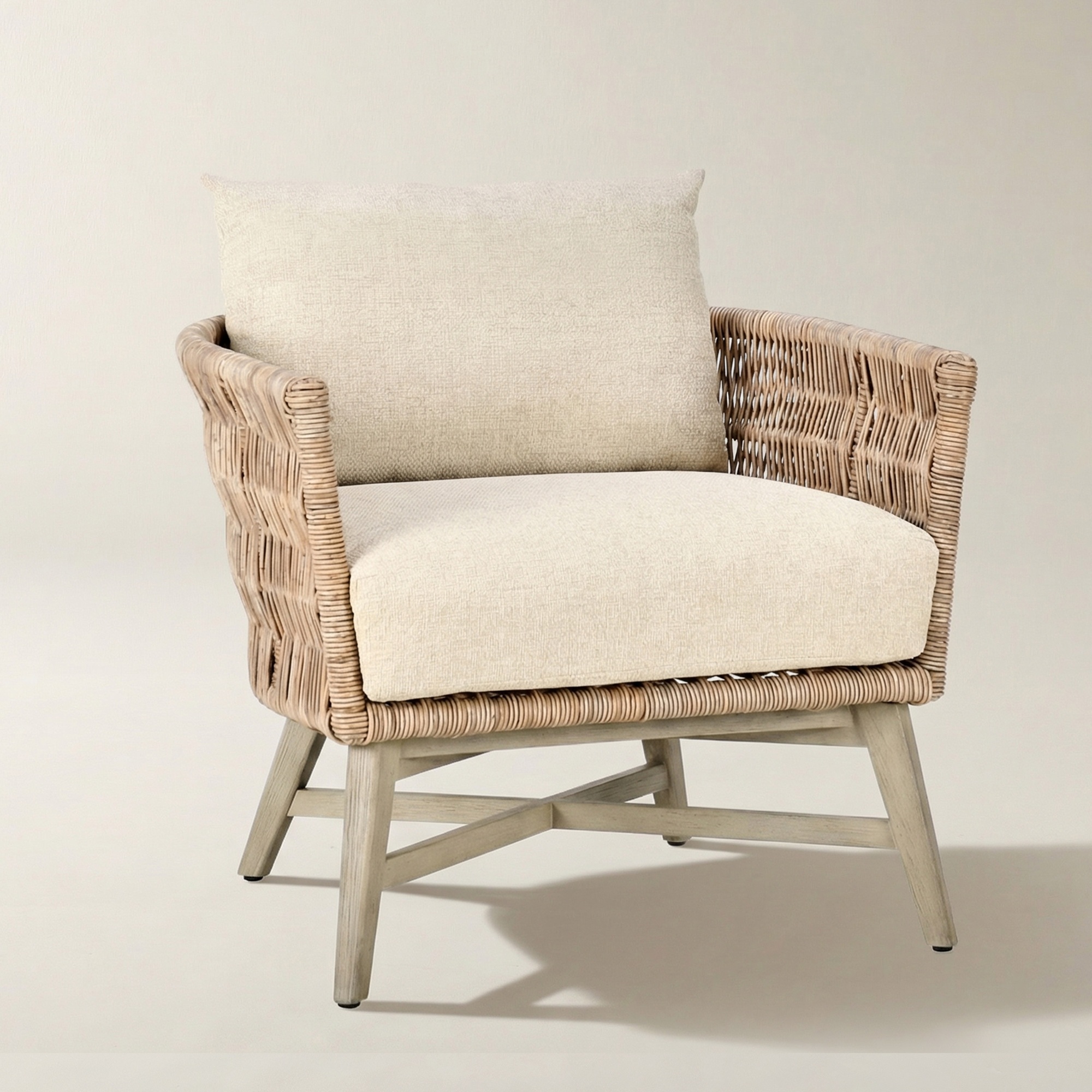
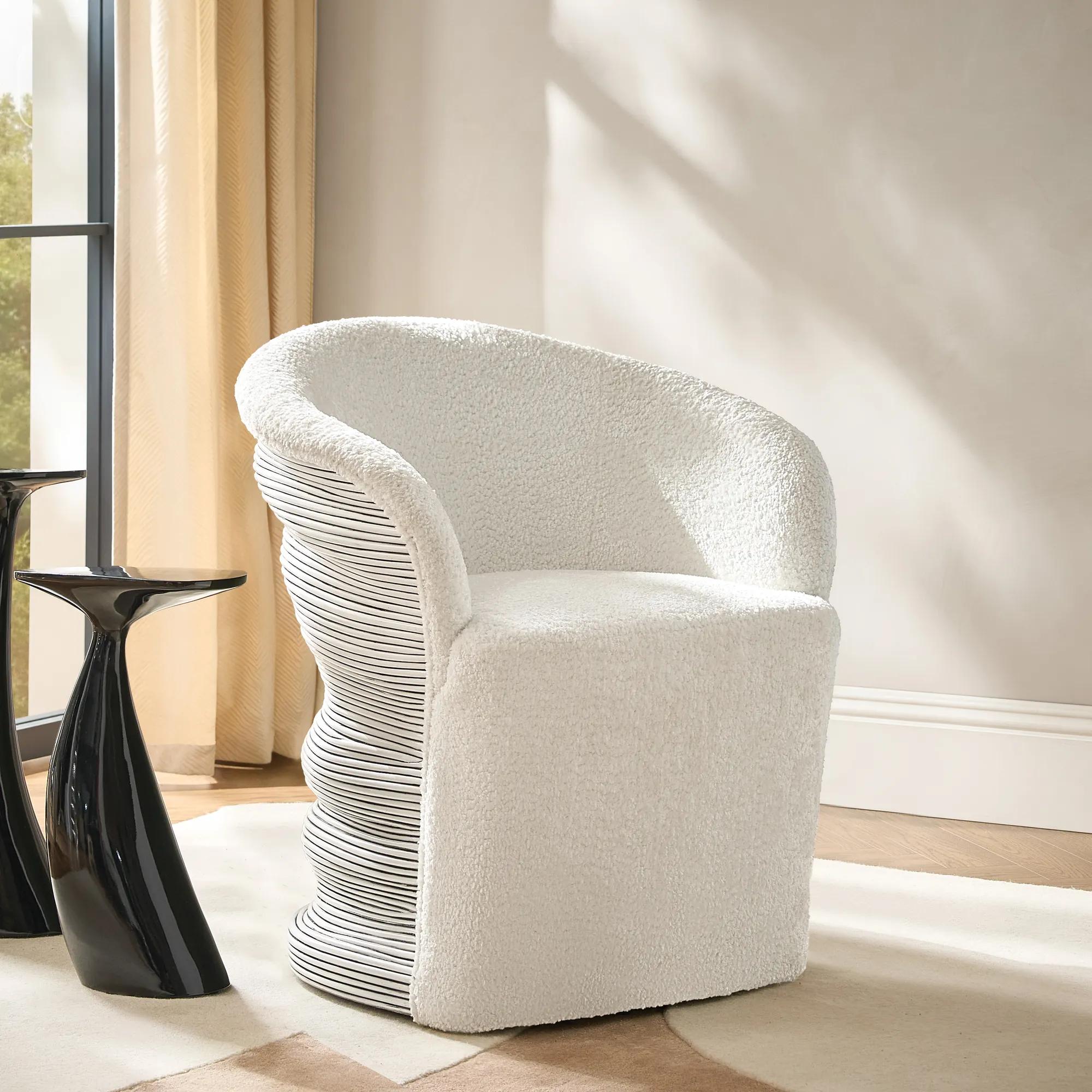 Cairo Rattan Ivory Chenille Dining Chair$999
An artisan-crafted swivel chair featuring handwoven natural rattan and plush ivory chenille upholstery for modern comfort.
Add To Cart -
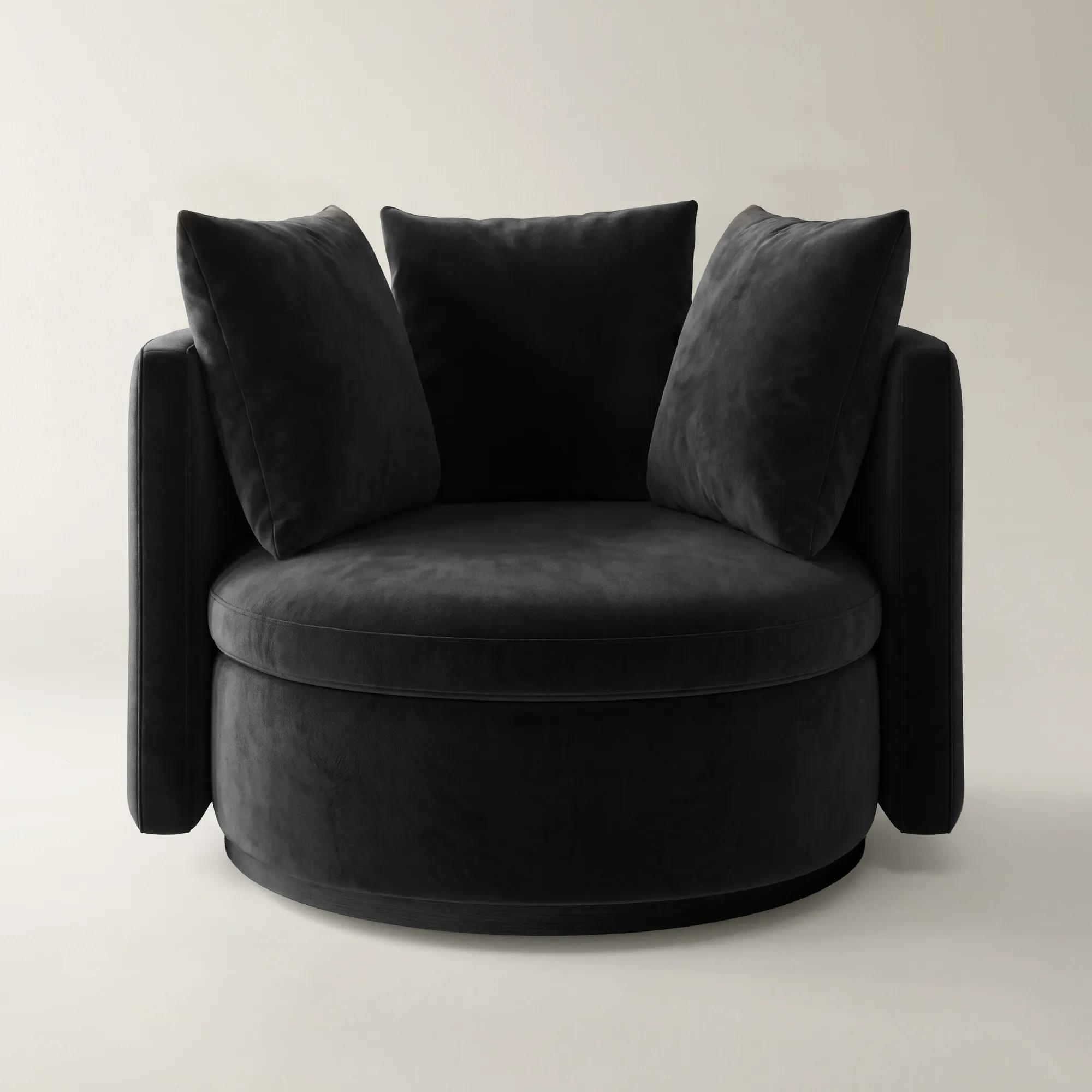
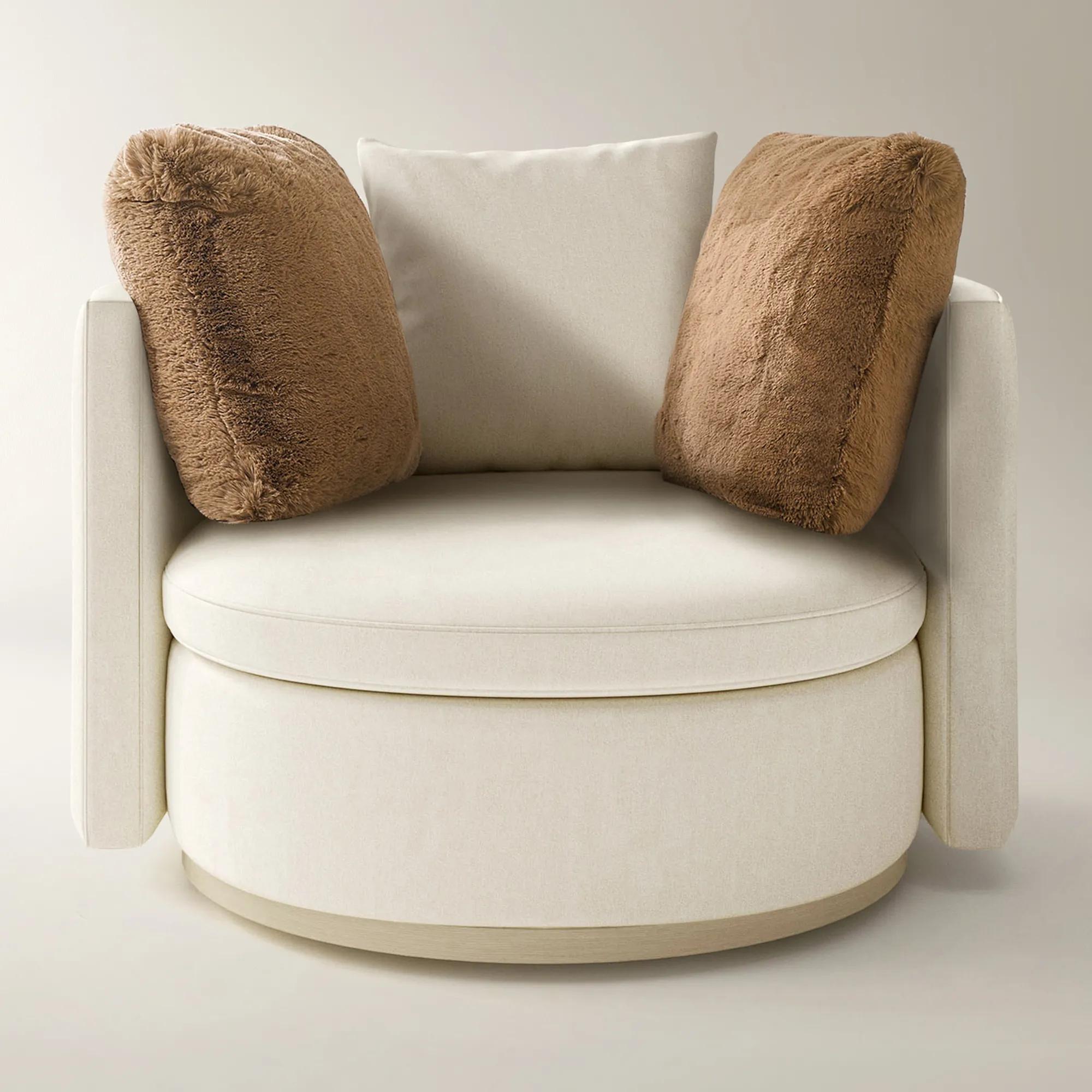 Stria Charcoal Velvet Swivel Accent Chair$1499
A sculptural charcoal velvet accent chair with enveloping curves, layered cushioning, and a concealed 360-degree swivel.
Add To Cart -
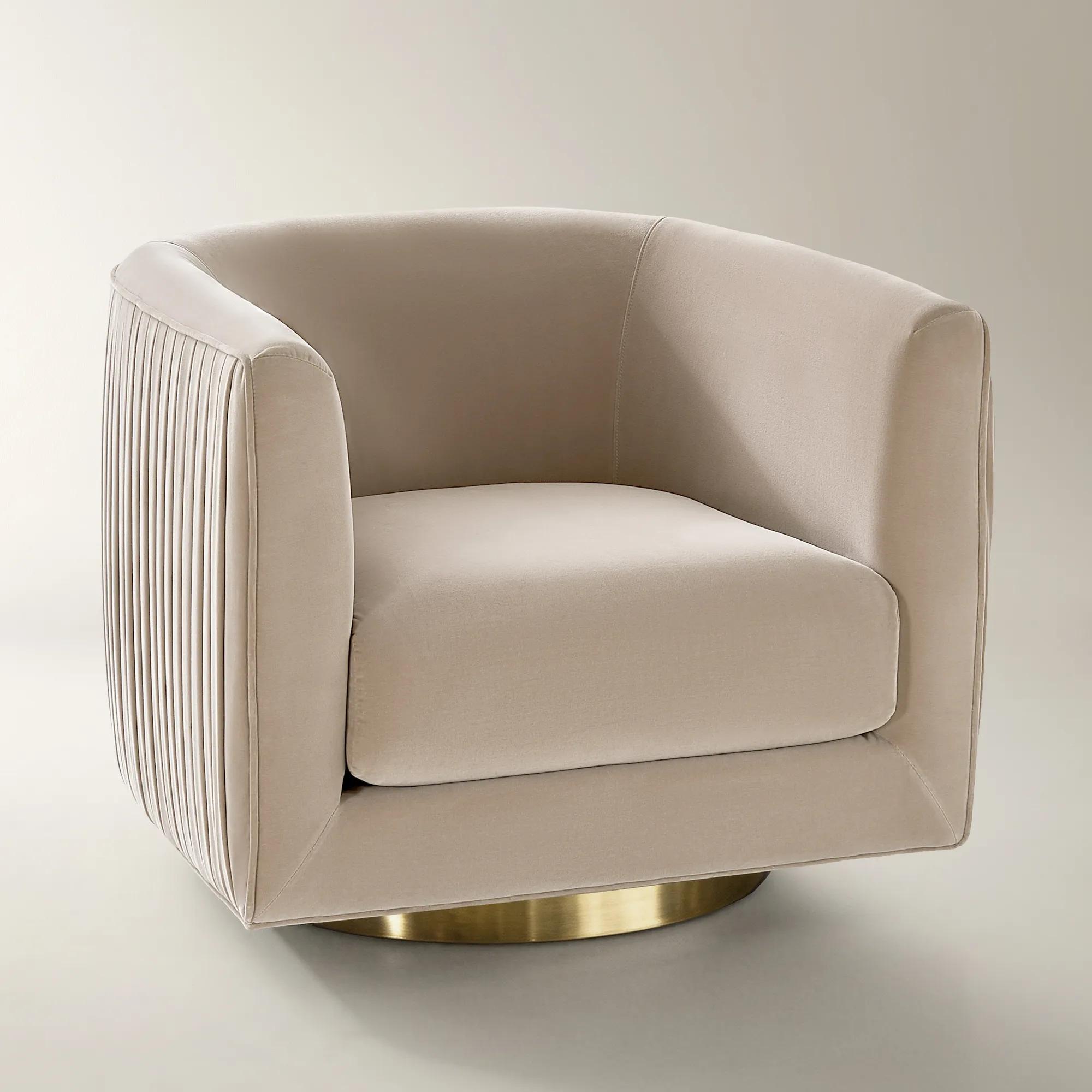 Lyssa Pleated Simply Taupe Velvet Swivel Accent Chair$1099
A softly curved taupe velvet accent chair featuring pleated detailing, 360° swivel, and a gold stainless steel base.
Add To Cart -
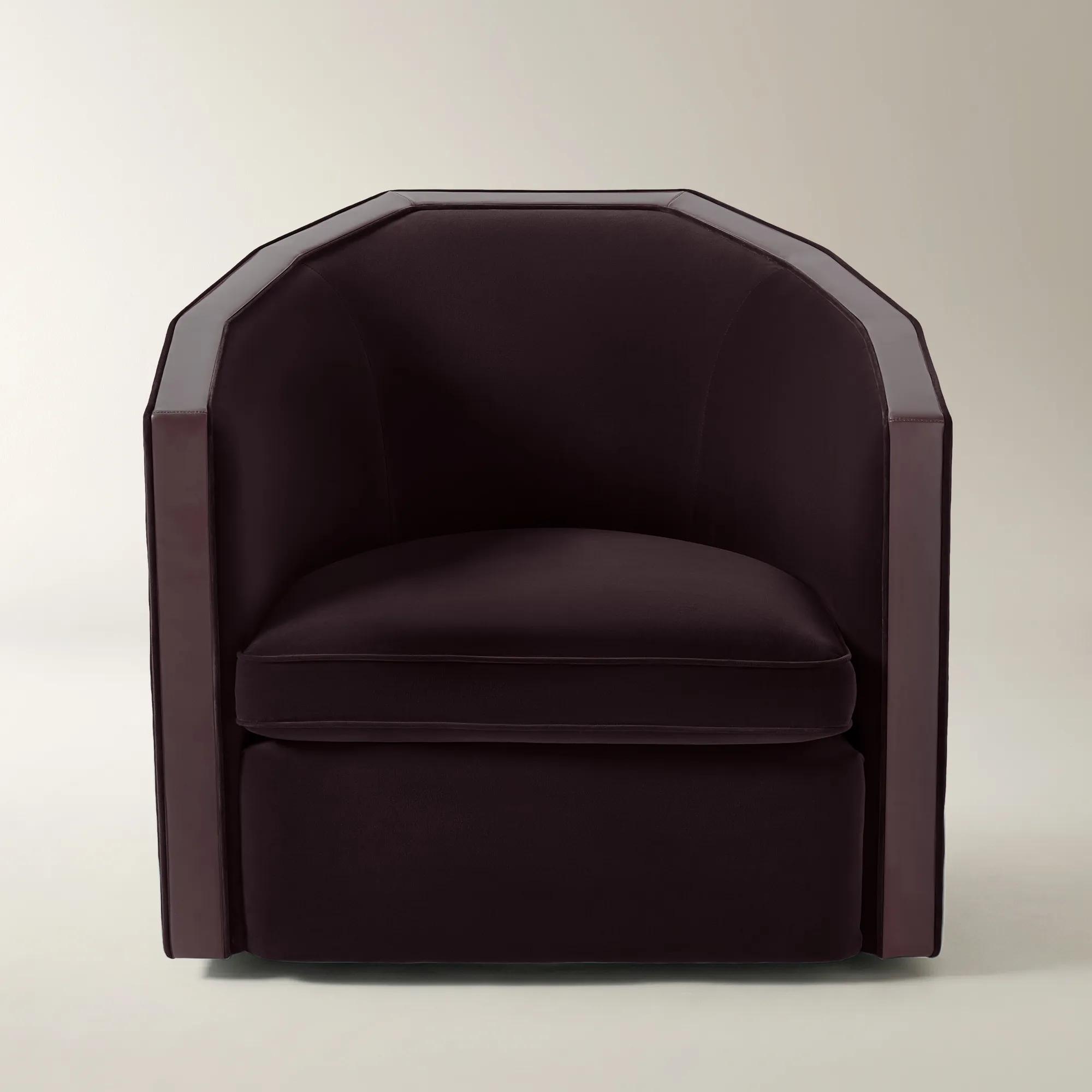
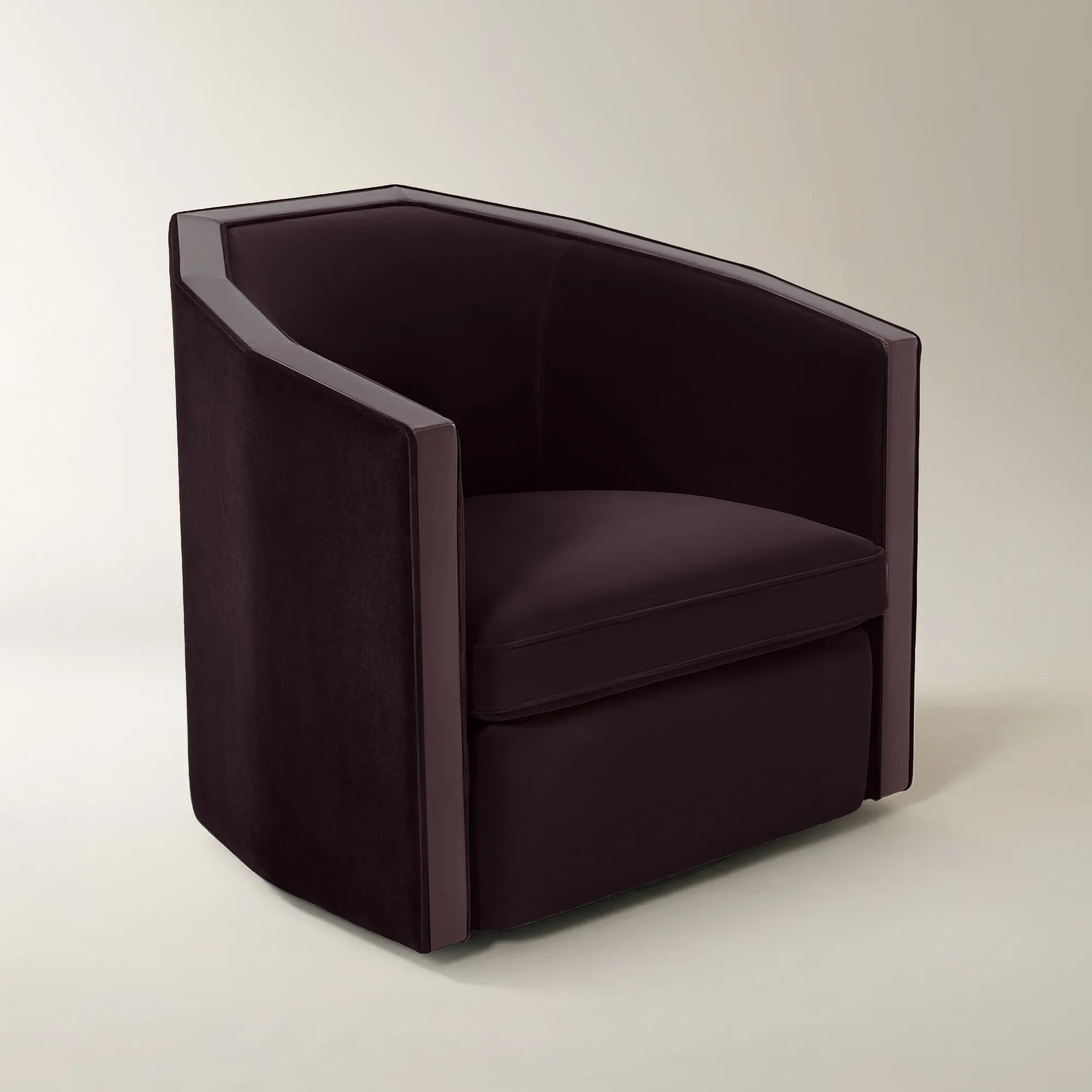 Vesper Fig Velvet With Leather Swivel Accent Chair$999
A modern accent chair featuring fig velvet upholstery, tonal leather trim, and a smooth 360° swivel base.
Add To Cart -
 Stria Ivory Chenille Swivel Dining Chair With Oak Base$699
A sculpted ivory chenille dining chair with a solid oak base and smooth 360-degree swivel.
Add To Cart -
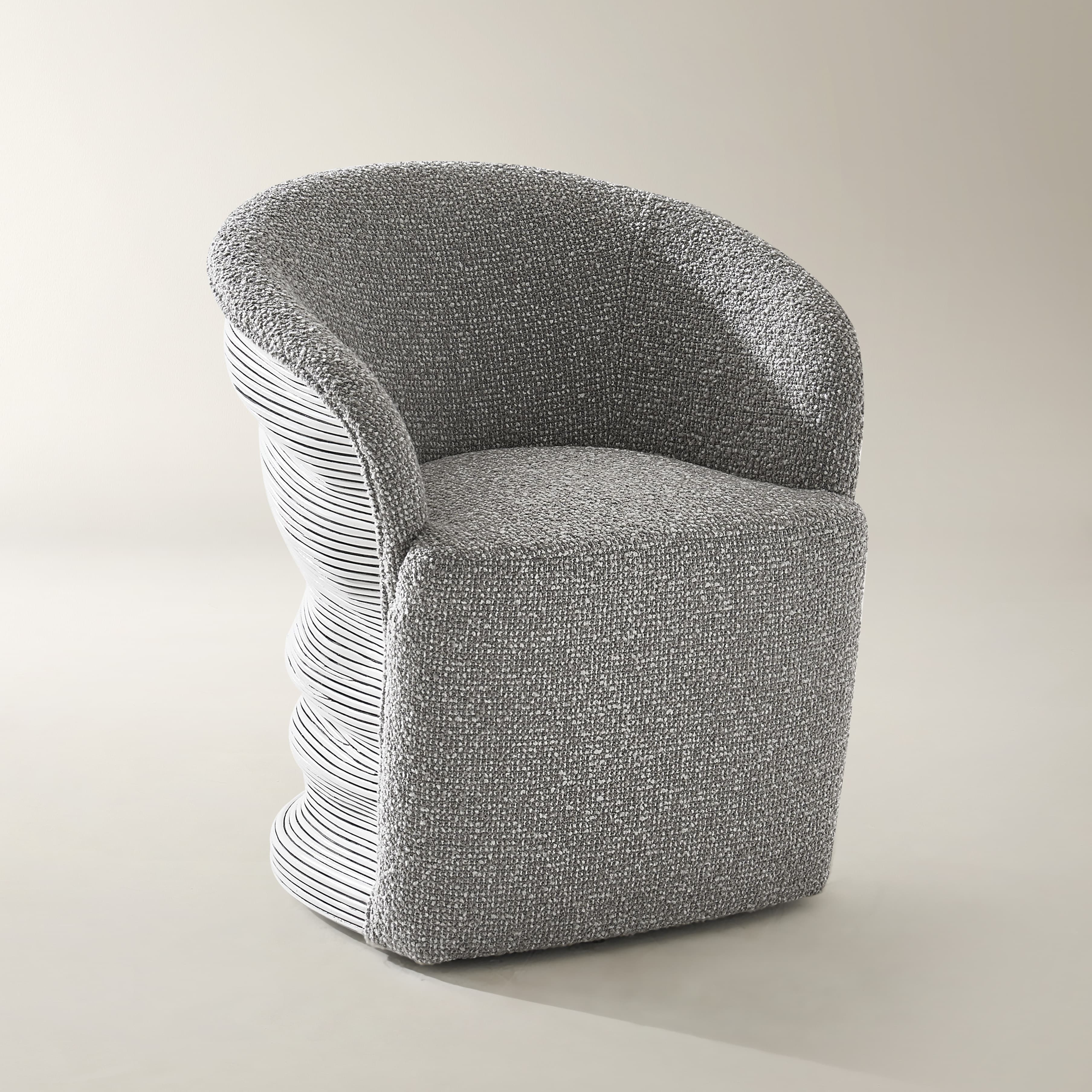
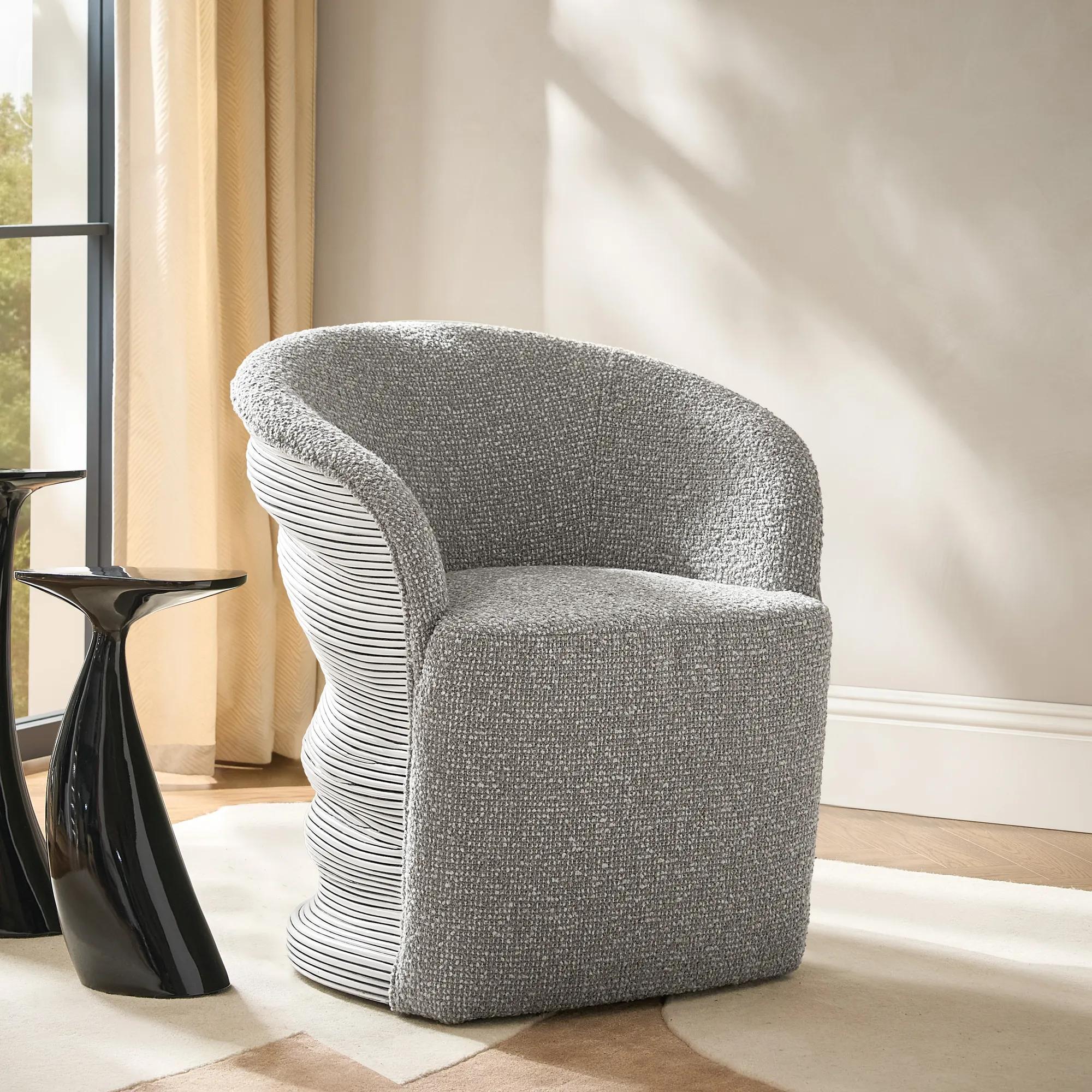 Cairo Rattan Grey Chenille Dining Chair$999
A handwoven natural rattan swivel chair in grey chenille, blending sculptural form with plush comfort.
Add To Cart -
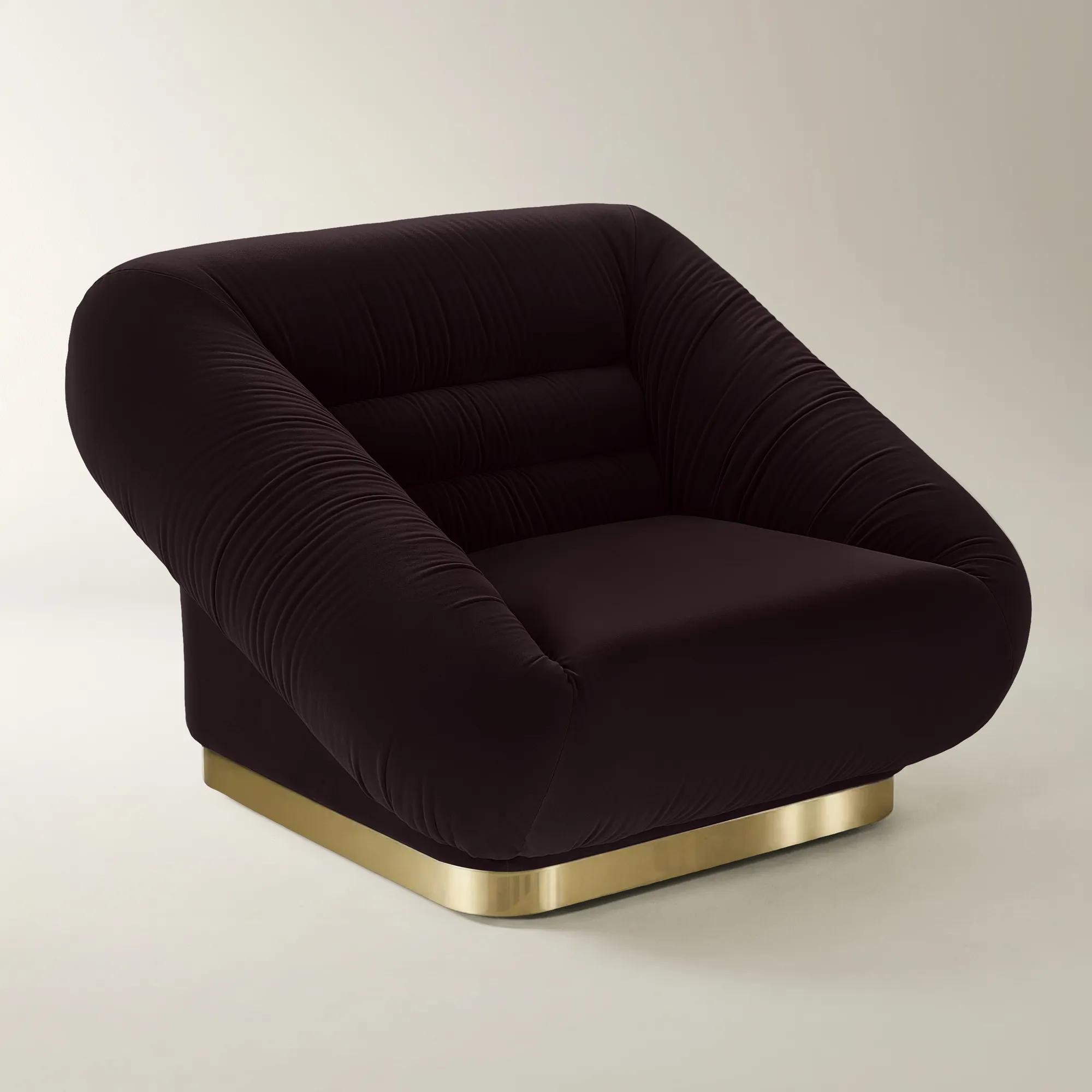 Dover Fig Velvet Swivel Accent Chair$1299
A sculptural fig velvet accent chair featuring soft gathered upholstery, gold-trimmed base, and smooth 360° swivel.
Add To Cart -
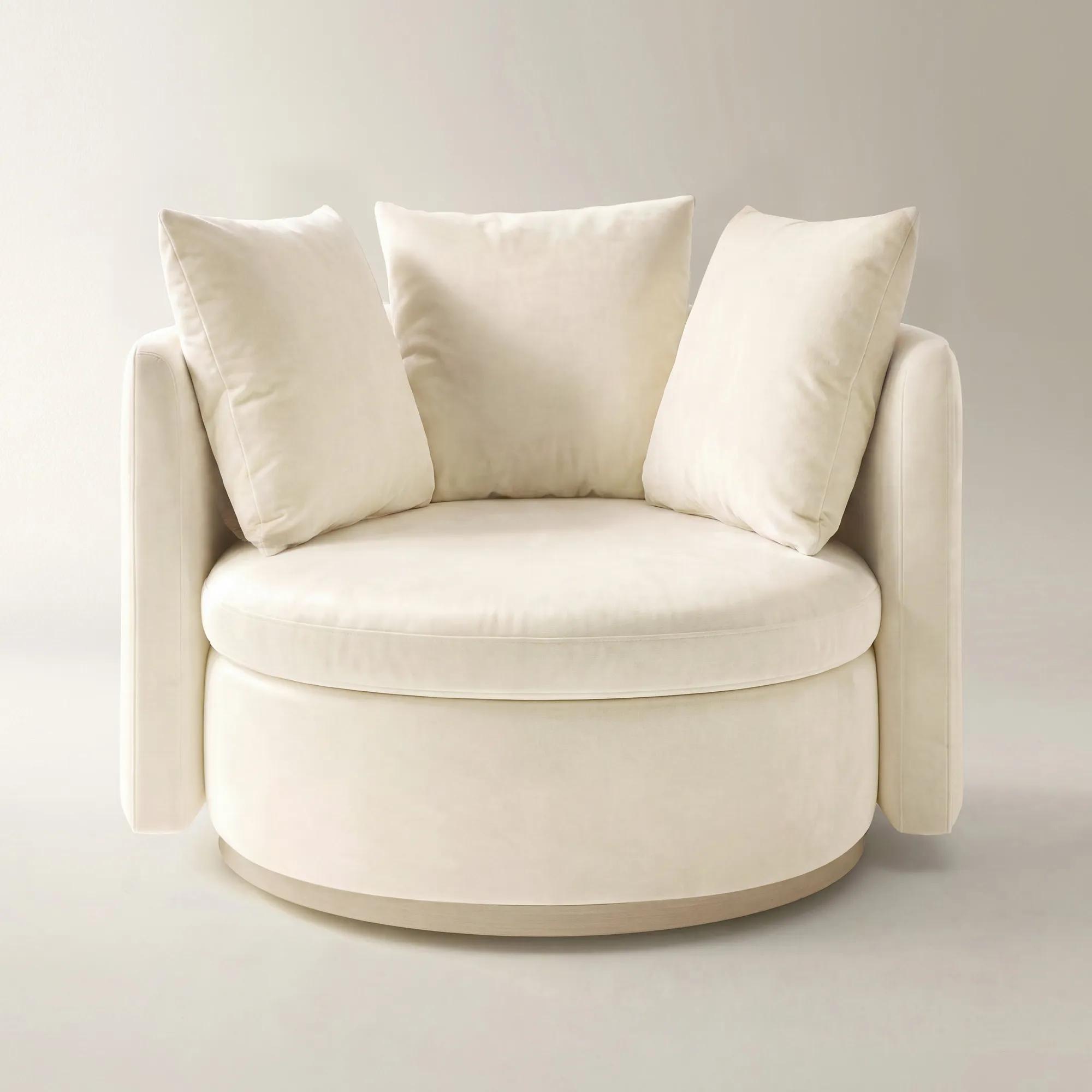 Stria Oatmeal Velvet Swivel Accent Chair$1499
An oatmeal velvet accent chair featuring enveloping curves, layered cushioning, and a concealed 360-degree swivel base.
Add To Cart -

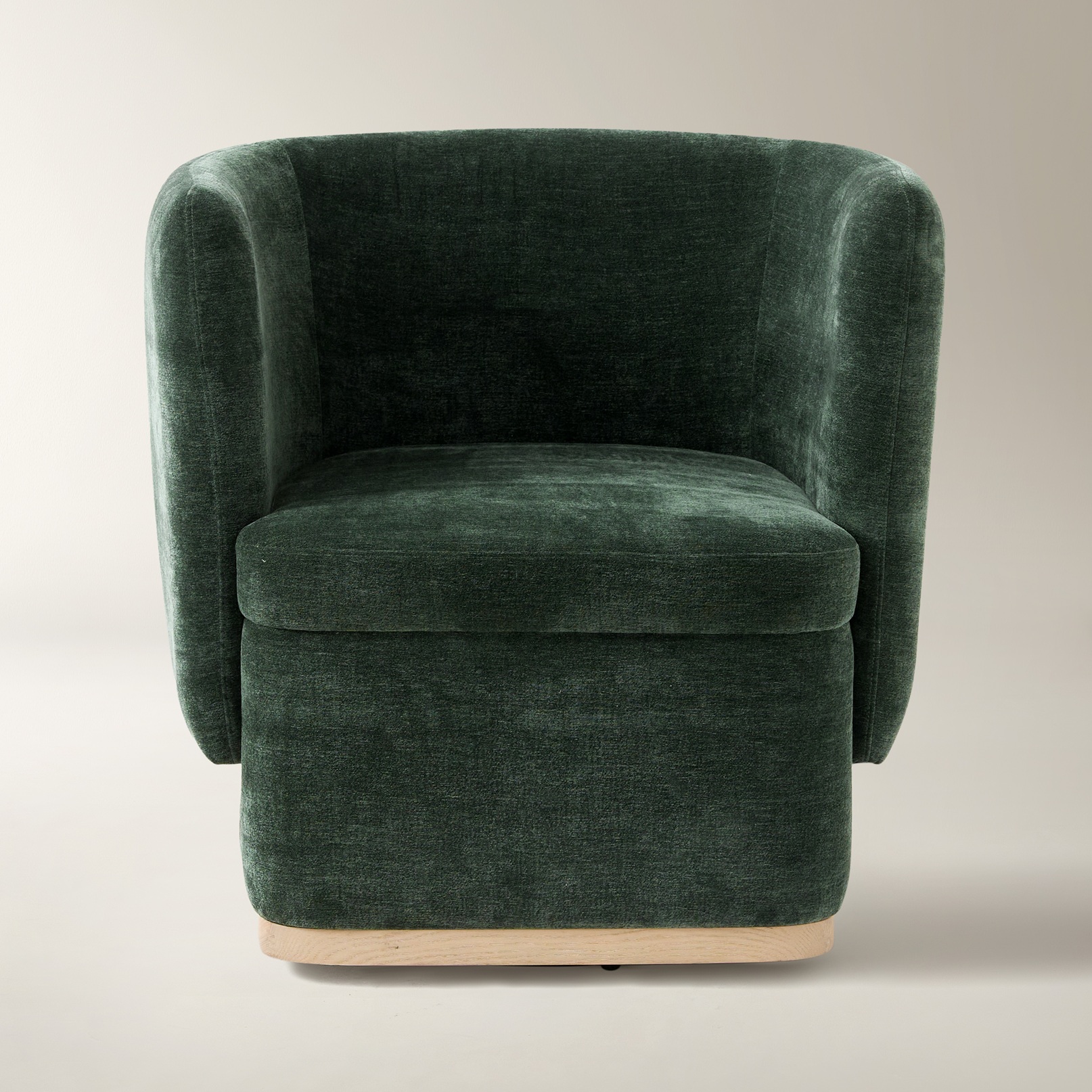 Stria Green Chenille Swivel Dining Chair With Oak Base$699
A green chenille dining chair with a sculpted curved profile, solid oak base, and 360° swivel.
Add To Cart -
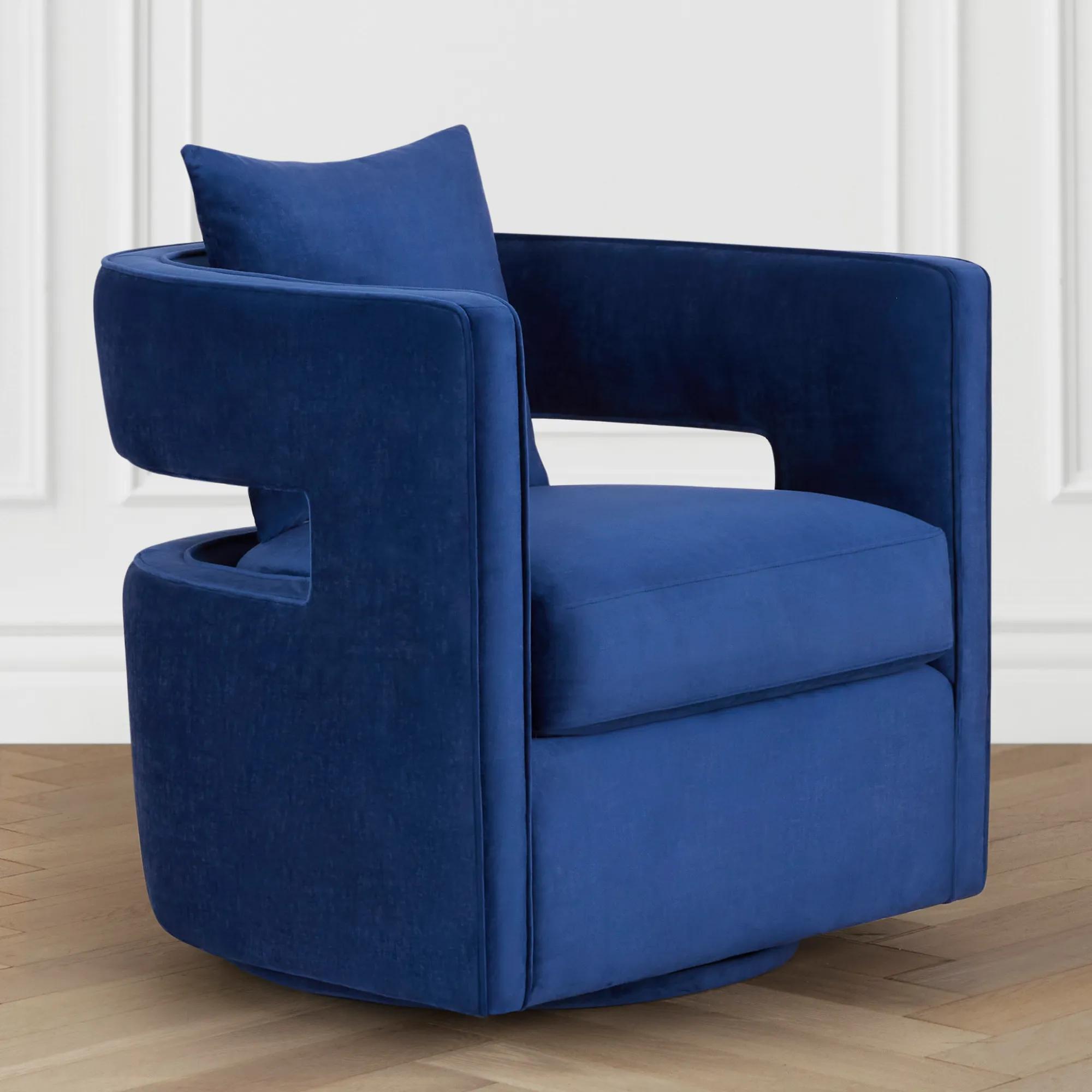
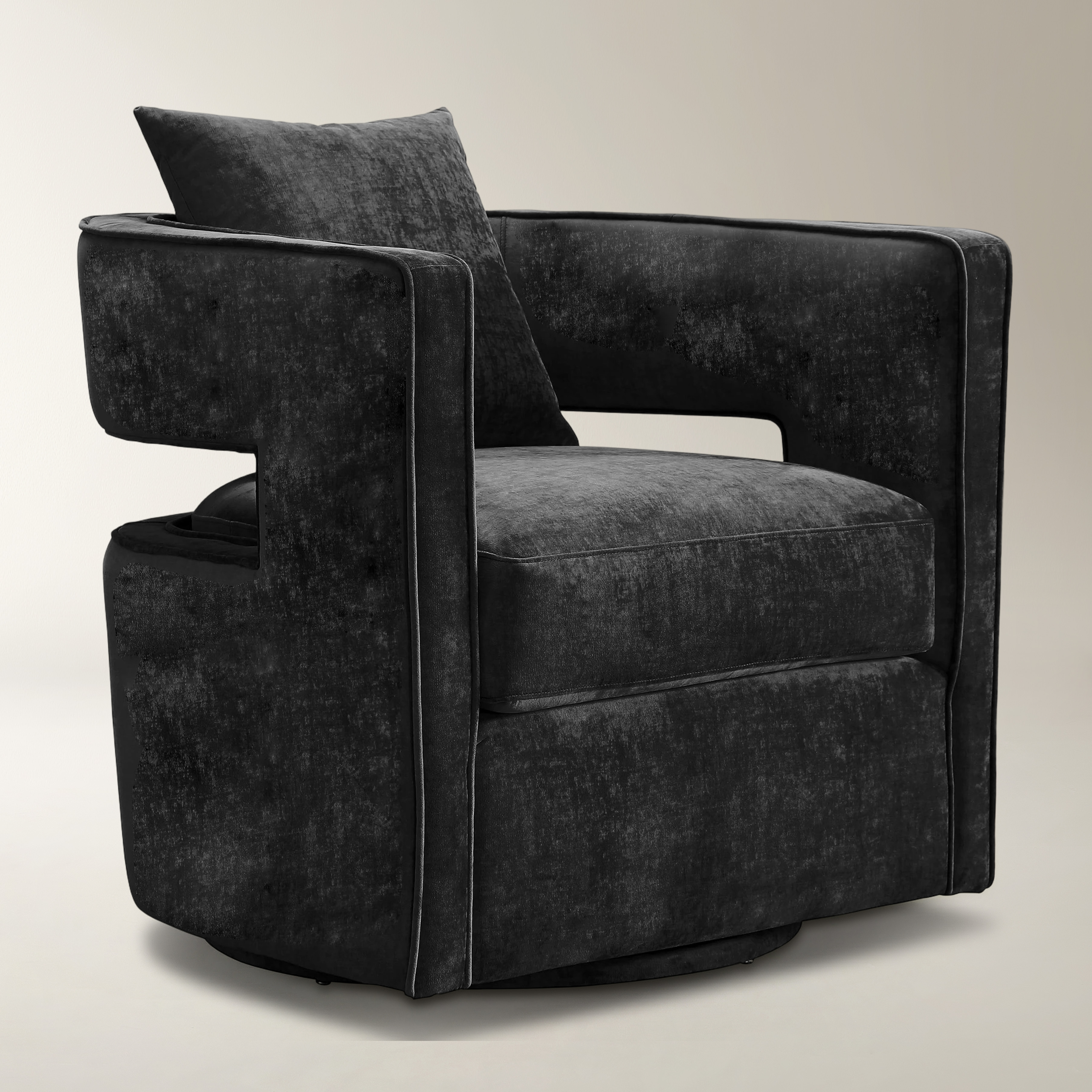 Lottie Black Velvet Swivel Accent Chair$999
A black velvet swivel accent chair with a sculpted barrel silhouette, open arms, and supportive cushioning.
Add To Cart -
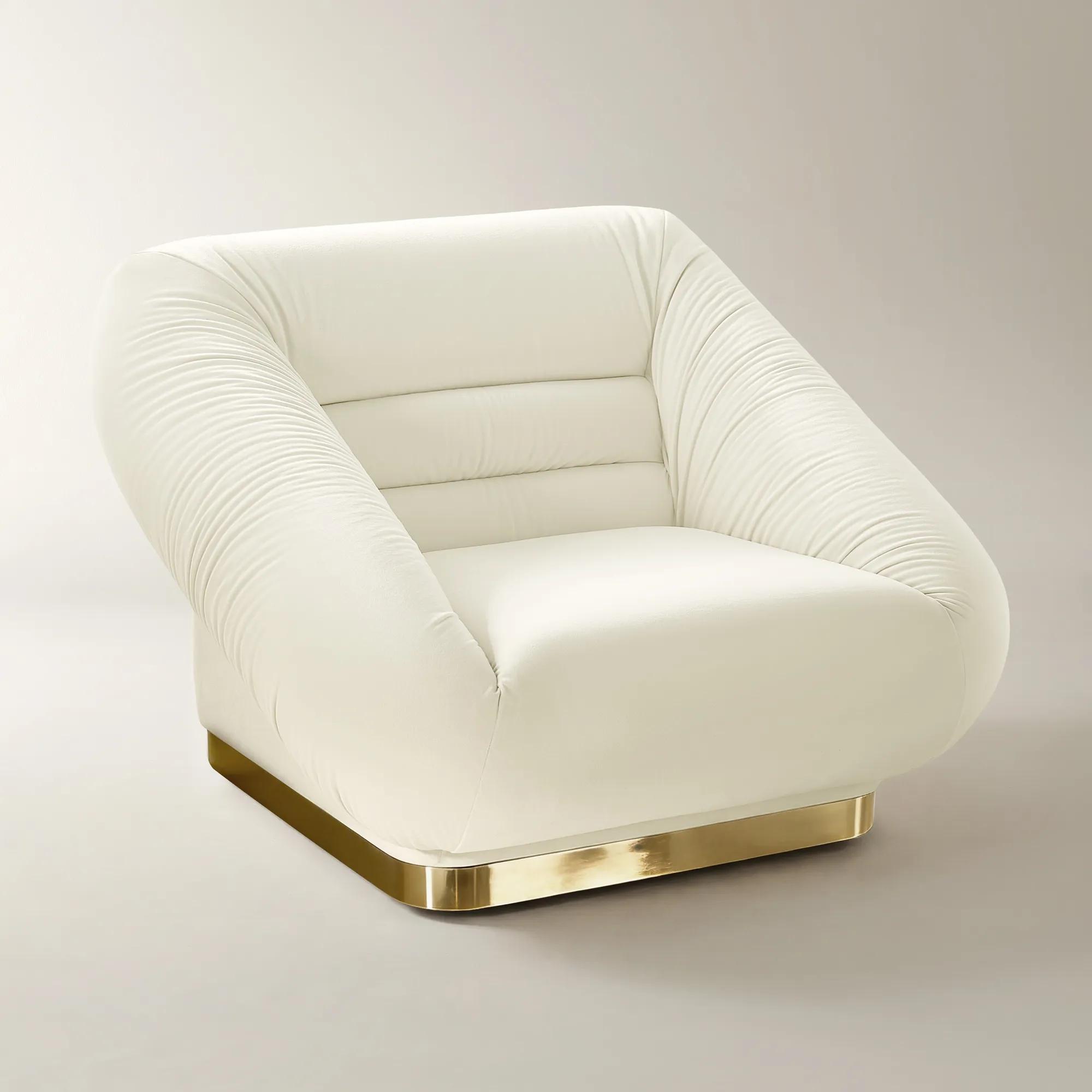 Dover Cloud Velvet Swivel Accent Chair$1299
A sculptural accent chair in cloud velvet with a gold-trimmed base and smooth 360° swivel function.
Add To Cart -
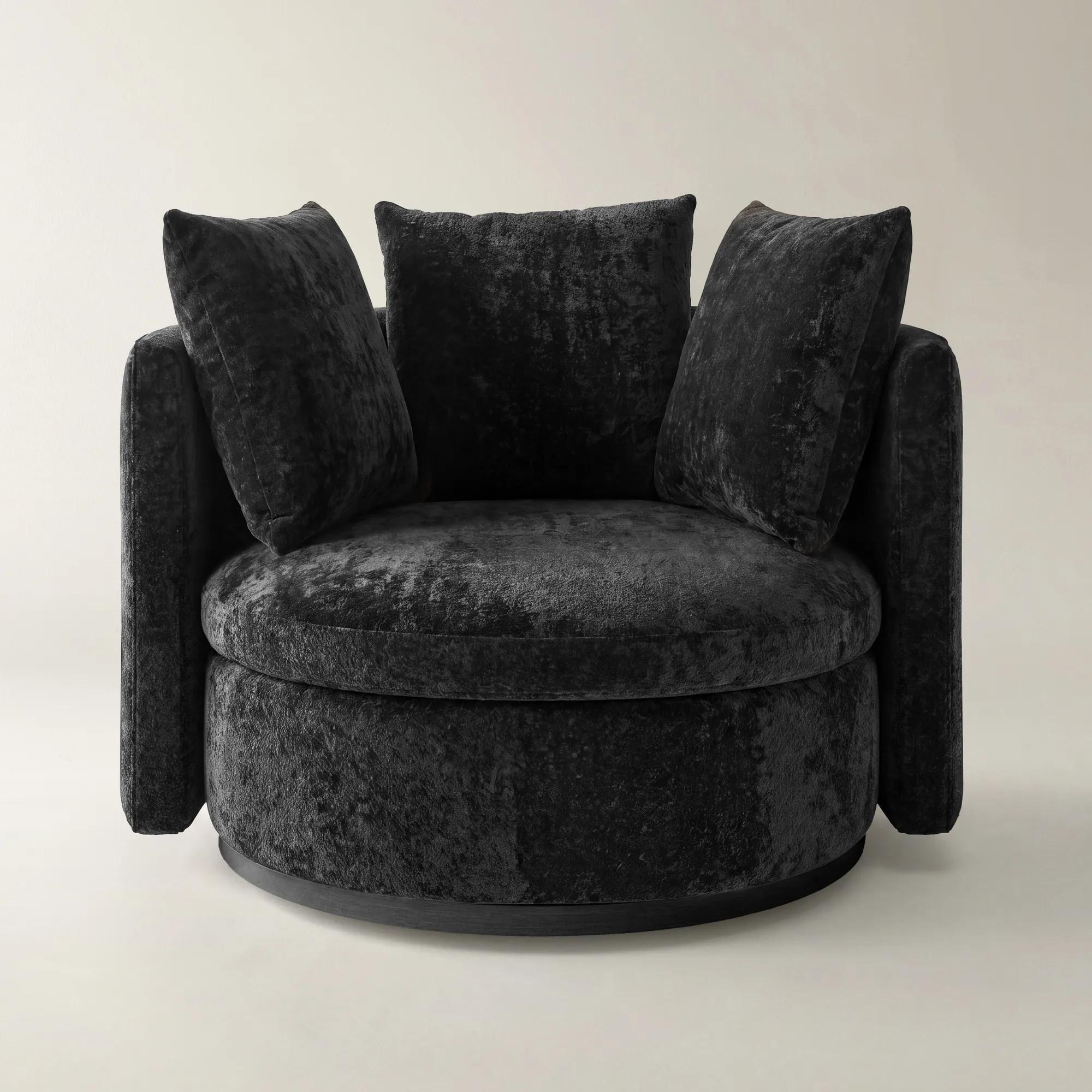 Stria Black Chenille Swivel Accent Chair$1599
A black chenille accent chair with enveloping curves, foam-and-down comfort, and a concealed 360-degree swivel.
Add To Cart -
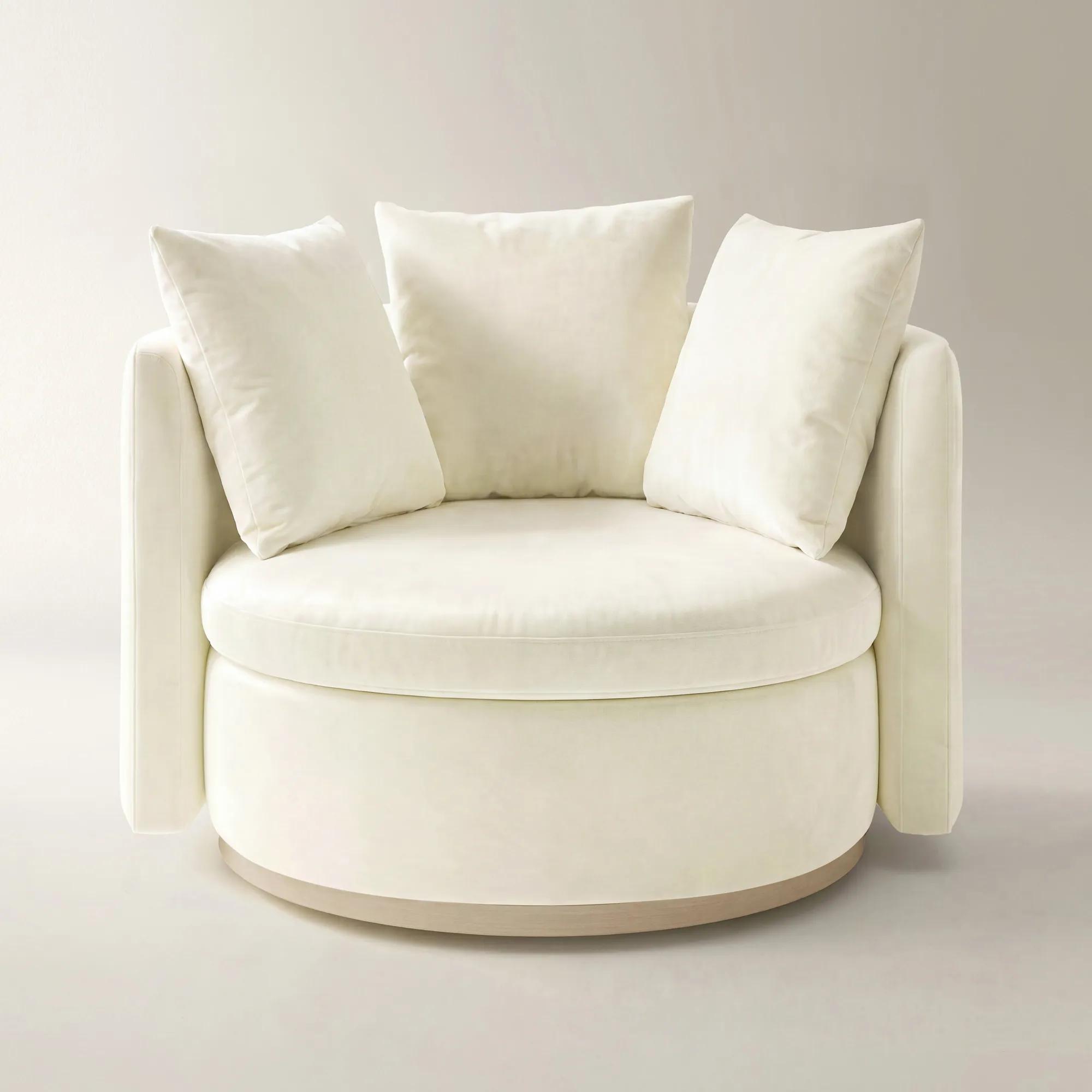 Stria Cloud Velvet Swivel Accent Chair$1499
A sculptural cloud-velvet accent chair with enveloping curves, layered cushioning, and a concealed 360-degree swivel base.
Add To Cart -
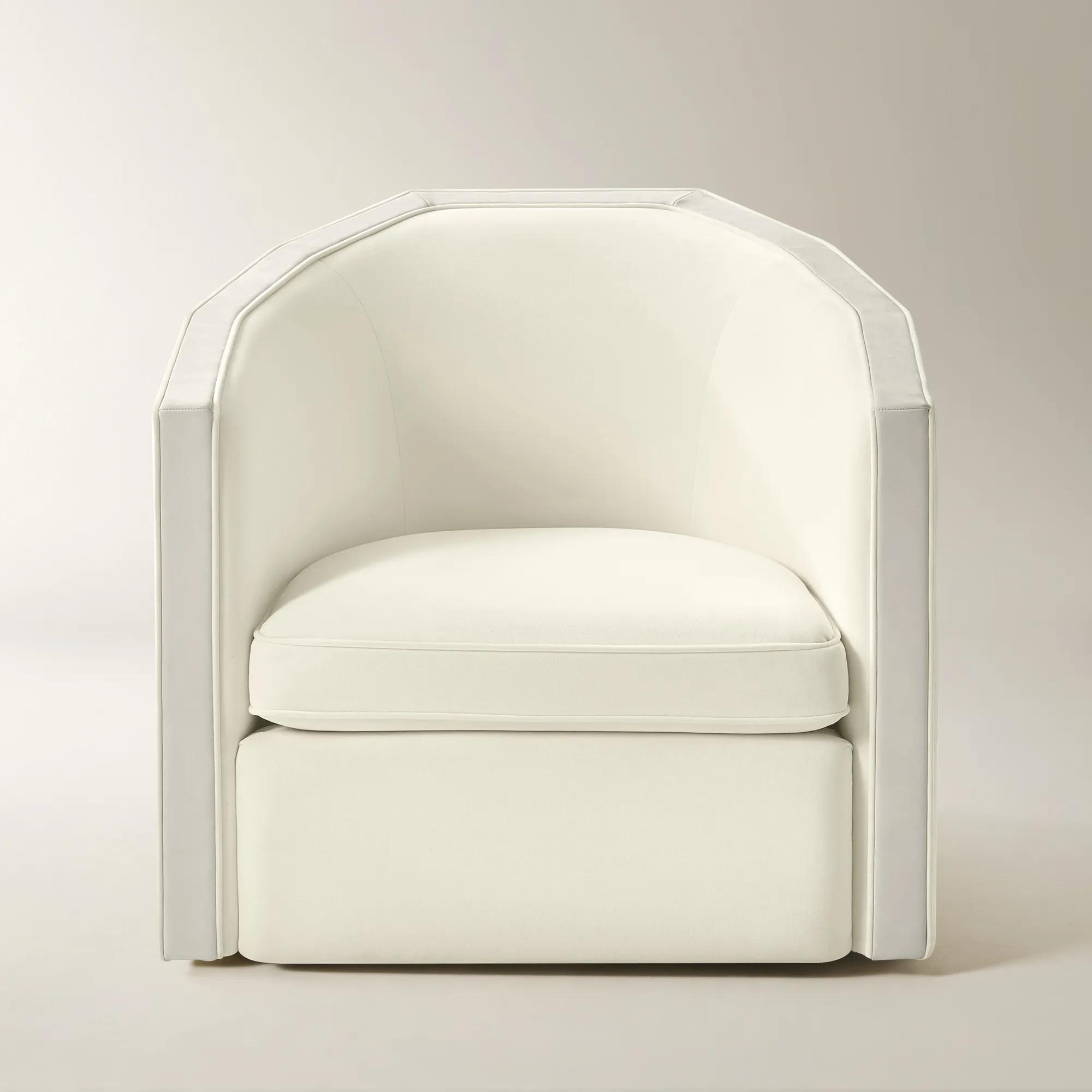 Vesper Cloud Velvet With Leather Swivel Accent Chair$999
A modern accent chair featuring cloud velvet upholstery, tonal leather trim, and a smooth 360° swivel base.
Add To Cart

Custom Swivel Chairs
Explore custom swivel chairs for seating that reflects your style and turns toward conversation or a favorite view. Compare silhouettes, dimensions, and available customization options to find an expressive accent that suits your space, whether you’re creating an intimate reading nook or completing a dramatic living room arrangement.
Custom swivel chairs combine a rotating base with personalized upholstery and design details, bringing expressive style and fluid movement to a room. Many designs offer full 360-degree rotation, while others have a more limited range of motion; fabric selections, base finishes, and other customization options vary by chair. Their appeal is both visual and practical: a sculptural seat can turn toward a conversation, a favorite view, or a nearby table without being lifted and repositioned. In an open living space, that flexibility gives a seating arrangement a more inviting rhythm, allowing one beautifully appointed chair to participate in several moments throughout the day. A curved back upholstered in luminous velvet creates a different impression from a tailored silhouette in a textured woven fabric, even when both occupy a similar footprint. Customization makes those distinctions meaningful, allowing the upholstery to complement the architecture, echo a color in an artwork, or introduce an unexpected note of contrast. Velvet lends depth through its shifting pile, catching light across rounded arms and softening the outline of a substantial chair. Bouclé offers a more dimensional surface, creating visual interest through loops and variations in texture. Tightly woven upholstery can emphasize clean tailoring, while patterned fabric brings another layer of expression to a restrained room. Fiber content matters as much as appearance: natural and synthetic blends differ in feel, maintenance, and resistance to everyday wear. Performance upholstery may offer stain resistance or easier cleaning, but those qualities depend on the particular fabric and its care specifications. A pale chair can feel wonderfully dramatic against dark walls, while saturated upholstery gives a neutral setting a deliberate focal point. The strongest choice connects the fabric’s character with the way the chair will be used, whether that means a polished conversation seat, a generous reading retreat, or an accent chair that looks compelling from every angle. With a swivel design, the back and sides deserve as much attention as the front, especially when the chair sits away from a wall.
Scale gives that visual statement its sense of ease. Overall width and depth determine how a custom swivel chair occupies the room, but seat height, seat depth, arm height, and back shape have a more immediate effect on comfort. A deeper seat can invite lounging, particularly with a supportive pillow, while a shallower seat may better suit someone who prefers to sit upright with both feet resting on the floor. A higher back can offer a more enveloping feel; a lower profile preserves sightlines across a living room and allows artwork or architectural details to remain visible. These differences are especially noticeable when two chairs face a sofa or flank a fireplace, where proportion establishes the balance of the entire arrangement. A pair of rounded swivel chairs can soften the geometry of a rectangular room, while a more tailored form brings definition beside flowing drapery or a richly textured rug. Movement needs space, too. The chair’s turning clearance includes the path traced by its arms and back, not simply the footprint of its base. Nearby tables, walls, curtains, and other seating should remain clear throughout the intended rotation. In a compact sitting area, a swivel chair can connect a conversation grouping with a window view, though it still needs adequate room to turn without contact. In a larger space, two chairs angled toward one another create an intimate setting that can open toward the rest of the room when guests arrive. Some mechanisms return the seat to its original position, helping preserve a composed arrangement; others allow it to remain facing the chosen direction. A swivel function does not necessarily include rocking, gliding, or reclining, so each movement should be considered separately. Custom upholstery also does not automatically mean custom dimensions. The distinction matters when coordinating a chair with an existing sofa, fitting it beneath a window, or planning delivery through a narrow doorway. Accurate measurements support a result that feels intentional rather than crowded.
Lasting satisfaction depends on the construction beneath the upholstery as well as the beauty of the finished silhouette. Frame materials, joinery, suspension, cushion composition, and the swivel mechanism all contribute to how a chair feels and performs over time. Resilient foam can provide a more structured seat, while fiber or feather blends may create a softer impression and require more frequent reshaping; the precise experience depends on the cushion’s construction. A stable base and smooth rotation are particularly important for a chair used throughout the day, whether it anchors a reading corner or becomes the preferred seat for conversation. Upholstery durability should reflect the household rather than appearance alone. Closely woven fabrics may be a practical consideration in busy living spaces, while pronounced loops can be more vulnerable to catching on pet claws or jewelry. No upholstery is entirely immune to wear, and a performance designation does not eliminate the need for care. Routine vacuuming with an appropriate upholstery attachment helps remove dust before it settles into seams and textured surfaces. Spills are best blotted promptly with a clean, absorbent cloth, with further treatment guided by the fabric’s care code and manufacturer’s instructions. Scrubbing, oversaturating, or applying an unsuitable cleaner can leave marks or damage the material. Direct sunlight may fade upholstery, and prolonged rubbing against nearby furniture can wear the fabric unevenly. For velvet, changes in pile direction can create shading that is part of its distinctive surface rather than a stain. Attention to these details helps preserve both comfort and visual depth. Alongside personalized selections, Stylish Swivel Chairs offer another perspective on the relationship between expressive silhouettes and versatile seating. Whether the setting calls for a richly upholstered focal point or a poised companion to a dramatic sofa, the most compelling swivel chair feels connected to daily life. Its color belongs to the room, its proportions welcome the person sitting in it, and its movement makes the surrounding space more enjoyable.
FAQs
A custom swivel chair combines a rotating base with design details selected from the customization options offered for that chair. The appeal is personal expression: a distinctive accent that reflects your aesthetic, whether your room calls for quiet sophistication or a dramatic focal point.
Begin with the mood you want to create, then explore the available upholstery options. Rich color brings depth and drama, while a luminous neutral lets the chair’s silhouette command attention. Consider texture alongside color—a richly layered room feels more intentional when its surfaces complement rather than repeat one another.
Custom swivel chairs can complement modern, glamorous, and eclectic interiors. A sculptural silhouette creates an artistic note in a contemporary setting, while expressive upholstery can amplify a more opulent room. Let the chair echo one element of your decor, then introduce contrast for a look with personality.
A coordinated room does not require identical upholstery. Connect your custom swivel chairs and sofa through a shared undertone, complementary color, or related design detail. For a more expressive composition, contrast a restrained sofa with chairs in a deeper hue or distinctive texture, drawing the palette together through artwork and decorative accents.
Give the chair a deliberate supporting cast: a sculptural side table, an expressive lamp, and artwork that carries its color story through the room. Keep nearby accents edited so the silhouette and upholstery remain the focus. The result is a composed vignette with the chair as its artistic centerpiece.