Colored Glass Table Lamps
Colored Glass Table Lamps
-

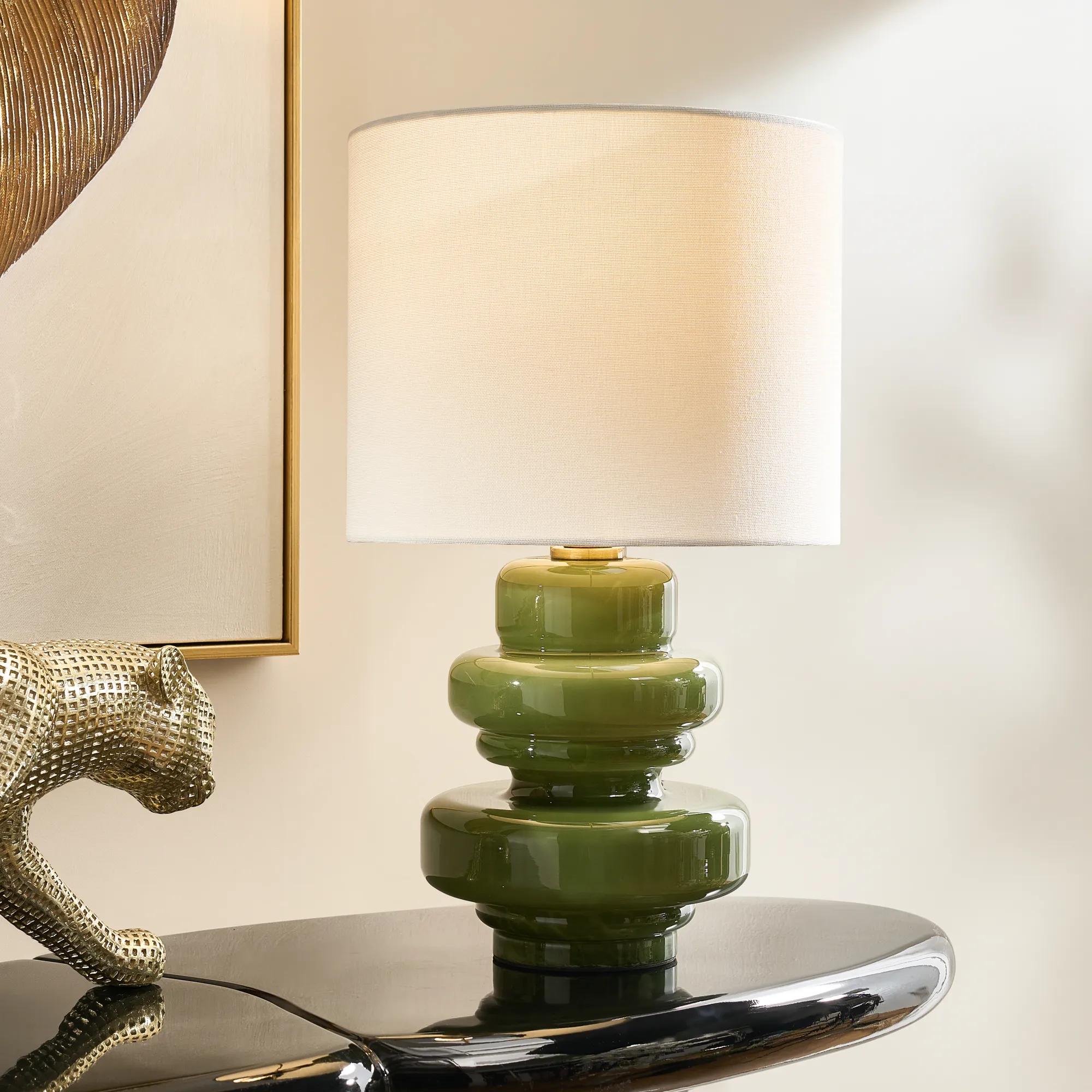 Edin Mouth Blown Pistachio Green Glass Table Lamp 17.5"$99
A sculptural table lamp featuring mouth-blown pistachio green glass and brushed nickel accents with an ivory linen shade.
Add To Cart -
 Blair Mouth Blown Tortoise Brown Glass Table Lamp 25"$229
A mouth-blown glass lamp in a brown tortoise finish with antique brass accents and an ivory linen shade.
Add To Cart -
 Edin Mouth Blown Slate Blue Glass Table Lamp 17.5"$99
A sculptural slate blue mouth-blown glass lamp with brushed nickel accents and an ivory linen shade.
Add To Cart -

 Blair Mouth Blown Sea Glass Blue Glass Table Lamp 25"$229
A mouth-blown glass lamp in soft blue sea glass with antique brass accents and an ivory linen shade.
Add To Cart

Colored Glass Table Lamps
Colored glass table lamps bring expressive color and sculptural presence to nightstands, consoles, and side tables. Let soft green establish a serene mood, blue introduce cool contrast, or brown lend rich warmth. Consider the glass body, silhouette, and shade together to choose lighting that feels as thoughtfully composed as the room around it.
Colored glass table lamps bring the richness of a jewel-toned accent into a room with the presence of a sculptural object. A translucent blue base can lend depth to a pale console, while smoky gray glass gives a lacquered side table a more atmospheric finish. Amber introduces a honeyed note beside cream upholstery; green feels especially expressive against dark wood, ivory walls, or a boldly patterned textile. The effect depends as much on the glass as on its color. Clear, tinted glass allows surrounding light to pass through the base, revealing its contours and the surface beneath it. More opaque or layered glass creates a denser silhouette, making the lamp read almost like a ceramic vessel until reflections reveal its luminous character. Ribbed, faceted, or softly rippled surfaces break up reflections differently, giving even a single color a sense of movement. Smooth glass offers a quieter kind of drama, with broad highlights tracing a rounded body or elongated neck. Where glass is handblown, subtle variations in shape, color, or small internal bubbles may be part of its character rather than signs of damage; the construction and finish details provide the clearest expectations. Within the expressive range of Decorative Glass Table Lamps, colored glass makes hue central to the composition. Metal accents can sharpen that statement: a warm metallic neck emphasizes amber or blush tones, while polished silver-colored details give blue or smoke glass a crisp edge. The shade completes the balance. An ivory fabric shade can soften the overall impression, while a darker shade creates a more defined silhouette. The result is lighting with a decorative presence even when switched off, suited to rooms where color deserves more than a supporting role. It is a compelling choice for anyone who enjoys expressive interiors but prefers to introduce a saturated hue through a considered accent rather than an entire wall or sofa.
The most successful placement gives the lamp room to be seen while keeping its light useful. On a living room end table, a colored glass base can echo a single note from a rug or painting without repeating every color in the room. Beside a bed, a pair brings visual rhythm, especially when the surrounding bedding and furniture allow the glass to hold attention. Matching lamps create a composed, symmetrical arrangement; different silhouettes can still feel connected when they share a color family, shade material, or metal finish. A console offers another setting, where a taller lamp can anchor one end of an arrangement with art, books, and a low decorative bowl. Depth matters here: a broad shade that looks balanced on a generous chest may crowd a narrow entry table or project into a walkway. Overall height, base footprint, and shade diameter work together, so the full dimensions matter more than the glass body alone. For a lamp used beside a chair, the shade should help shield the bulb from a seated line of sight, allowing light to fall comfortably across a book rather than directly toward the eyes. Bedside placement benefits from a similarly thoughtful relationship between mattress height, tabletop height, and switch position. Colored glass table lamps generally provide light through the shade; a tinted base does not necessarily cast colored light throughout the room unless its construction is specifically designed to do so. Shade opacity, bulb brightness, and bulb color temperature have a more direct influence on the glow. A warm-white bulb can flatter amber glass and rich upholstery, while a more neutral light may better suit a space used for reading or detailed tasks. Bulb shape, socket type, and maximum wattage must match the lamp’s requirements, and dimming depends on compatible components. A conveniently placed outlet and an unobtrusive cord route preserve the finished appearance without stretching a cord across a passage. These practical details allow the lamp to feel integrated into daily life, not simply arranged for a photograph.
Glass rewards thoughtful handling with lasting visual clarity, but it deserves a setting that respects its material. A substantial-looking base is not automatically resistant to tipping, and glass can chip or crack if struck against a hard edge. A level, sturdy tabletop with enough clearance around the lamp is especially important in homes with active children or pets. When relocating a lamp, supporting the base rather than lifting by the shade, socket, or decorative neck helps protect its assembly. For routine care, switch the lamp off, unplug it, and allow the bulb to cool before gently removing dust with a soft, dry cloth. Finish-specific care instructions take priority, particularly where color comes from an applied coating rather than the glass itself. Abrasive pads, harsh cleaners, and cleaner sprayed directly onto the lamp can compromise delicate surfaces or allow moisture near electrical components. Fabric shades also benefit from gentle dust removal appropriate to their material, keeping the light clear and the silhouette refined. In everyday decorating, the surrounding surfaces influence how vividly colored glass appears: mirrored furniture may multiply its reflections, pale stone can emphasize its tint, and dark wood can give a translucent base remarkable depth. A little breathing room keeps these effects legible. Rather than surrounding the lamp with equally prominent objects, a low stack of books or a restrained arrangement of vessels can create contrast in height and texture. For a recipient who loves interiors, a colored glass table lamp can also make a considered housewarming or wedding gift when the room’s palette, available surface space, and lighting needs are known. A familiar accent color often feels more personal than an exact furniture match. Whether positioned beside a favorite reading chair or used to complete a carefully composed bedroom, colored glass table lamps unite illumination with artistic expression, bringing color into the room through an object that serves a purpose every day.
FAQs
Yes. The silhouette and surrounding materials help determine the effect. A rounded glass form can soften angular contemporary furniture, while a restrained shade and a color drawn from existing artwork can connect the lamp to a more traditional room. Aim for a deliberate relationship rather than a strict style match.
Matching lamps create a composed, symmetrical arrangement, particularly beside a bed or at opposite ends of a console. Different lamps can feel equally intentional when they share a color family, shade shape, or metal finish. Give the pair a clear visual connection without requiring every detail to repeat.
Echo the green in a separate accent, then vary the form so the arrangement feels collected rather than repetitive. Explore <a href="https://zgallerie.com/o/decorative-green-glass-vases">decorative green glass vases</a> for a complementary note, and introduce an opaque texture, such as a book cover or ceramic object, to give the glass contrast.
Mixed metals can add depth to a room. Let one finish establish the dominant tone, then repeat the lamp’s contrasting finish in another considered detail, such as a frame or decorative object. The repeated accent helps the combination feel connected rather than incidental.
Follow the lamp’s specific care instructions. Use a soft cloth where recommended, and avoid harsh chemicals or abrasive cleaners that may damage decorative finishes. Glass, metal hardware, and shade materials may require different care, so treat each part according to its guidance.