Black Decorative Boxes | Z Gallerie
Black Decorative Boxes | Z Gallerie
-
 Tuxedo Box$159
A sleek black high-gloss lacquer box with a velvet-lined interior for elegant storage.
Add To Cart -
 Studded Black Ceramic Box Large$79
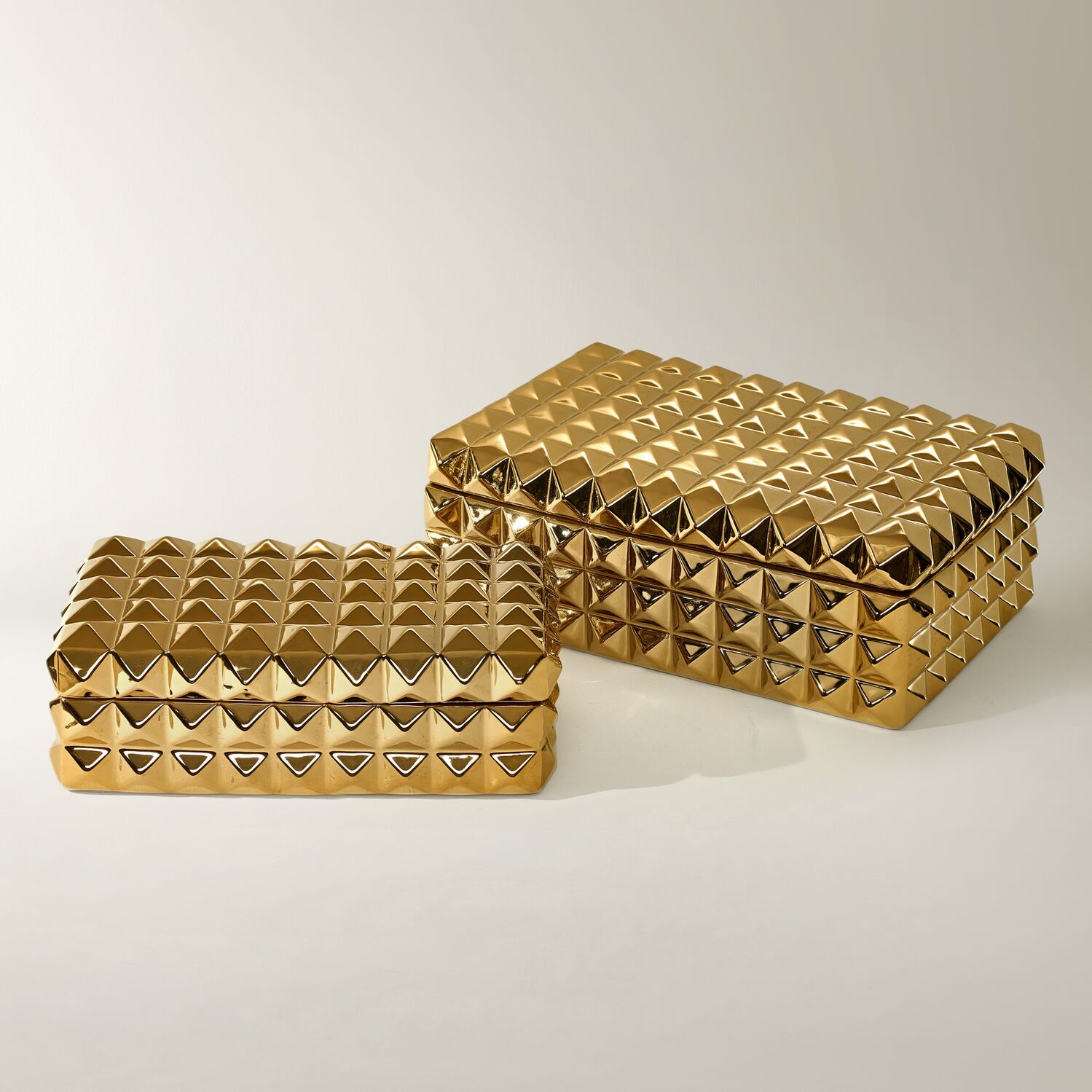
A black ceramic box with raised studded texture, offering bold, modern style for decorative storage.
Add To Cart -

 Paxton Box Black/Gold$159
A high-gloss black lacquer box with gold dome accents and a soft velvet-lined interior for keepsakes.
Add To Cart -
Studded Black Ceramic Box Small$59
A black ceramic box with raised studded texture, offering bold modern style for jewelry or decor.
Add To Cart

Black Decorative Boxes | Z Gallerie
Black decorative boxes bring striking definition to coffee tables, consoles, and shelves while keeping personal treasures discreetly tucked away. Explore decorative storage with an eye for expressive silhouettes, intriguing textures, and finishes that complement your space. The right box adds more than a place for keepsakes—it gives your arrangement a confident finishing touch.
Black decorative boxes bring depth, polish, and a sense of intention to the surfaces that shape a room. More than concealed storage, they introduce a strong visual note: a dark, sculptural silhouette on a pale console, a gleaming accent against richly grained wood, or a tailored finishing touch beside an upholstered bed. Their appeal lies in that balance of presence and discretion. A closed lid keeps small belongings out of sight, while the exterior becomes part of the composition. Materials and finishes give each style its character. Black ceramic can create a substantial, sculptural impression, especially when raised textures or dimensional details catch the light. Lacquered finishes offer a sleek, reflective effect, with crisp edges that suit polished interiors. Wood and wood-based constructions can bring structure and warmth beneath a dark finish, while metal accents introduce another layer of contrast. Gold-tone detailing against black feels luminous and expressive; silver-tone accents create a cooler, more graphic relationship. A matte surface absorbs light for a quieter statement, while high gloss reflects nearby lamps, artwork, and decorative objects. These differences matter as much as color when choosing a black decorative storage box for a particular room. A richly textured exterior can hold its own on a spare tabletop, while a smooth, streamlined shape gives the eye a place to rest within a more elaborate arrangement. Interiors deserve equal attention: a soft lining, when included, can provide a gentler resting surface for jewelry or delicate keepsakes, while an unlined compartment may be better suited to everyday accessories. Construction, lining, lid style, and usable capacity vary, so individual descriptions and measurements help establish the intended use. The result is storage with a deliberate point of view, equally appealing to someone drawn to dramatic interiors and someone seeking a single dark accent to give a lighter room definition. Even a modest surface can gain a more finished appearance from a box chosen for its proportions, texture, and relationship to the surrounding furnishings.
The most compelling placement allows a decorative box to feel both beautiful and useful. On a coffee table, a rectangular silhouette can gather remote controls and other small essentials without leaving the surface visually unsettled. A nearby stack of art books supplies height and color, while the box contributes a clean, architectural line. On an entryway console, a lidded compartment gives keys and frequently used accessories a discreet destination, provided its interior accommodates them comfortably. A dresser or vanity invites a more personal use: watches, jewelry, hair accessories, and meaningful mementos can remain close at hand without becoming part of the visible arrangement. For a home office, black decorative boxes offer an elegant place for small desk accessories and personal belongings, helping a work surface retain its composure between tasks. Scale determines how naturally these pieces fit. Exterior dimensions establish the footprint, but interior dimensions determine what can actually be stored; thick walls, padded lining, and divided compartments may reduce usable space. A remote control needs sufficient length, while a substantial bracelet or watch may require more depth than a slender keepsake. Lift-off lids need a convenient resting place when open, and hinged designs need clearance behind or above the box. Those practical details become especially important on shallow shelves, bedside tables, and consoles positioned beneath artwork. Visually, a box should leave enough breathing room for neighboring objects rather than spanning every available inch. A broad, low profile can anchor an arrangement beneath a tall vase, while a smaller box can punctuate a tray without competing with its contents. Stacking can create an appealing stepped composition when the shapes are stable and the construction permits it, but frequently accessed storage is often more convenient displayed individually. Black also makes a compelling partner for marble decorative objects, bringing a dark counterpoint to natural veining and pale stone. Together, these textures create depth without requiring a crowded surface or an abundance of color.
Lasting beauty depends on matching the material to its setting and treating the finish with care. Decorative boxes are generally intended for indoor display and light storage, rather than heavy-duty organization or exposure to moisture. Ceramic can feel substantial, but edges, corners, and raised details remain vulnerable to chips if knocked against a hard surface. Lacquered and other glossy finishes reward gentle handling because dust, fingerprints, and fine scratches can be more apparent in reflected light. A clean, soft cloth is often appropriate for routine dusting, with any additional cleaning guided by the material-specific care instructions. Abrasive pads, harsh cleaners, and vigorous rubbing can compromise decorative surfaces. Lined interiors may need different care from the exterior, particularly when velvet or another soft textile is present; keeping contents clean and dry helps preserve their appearance. Direct sunlight and prolonged contact with water can affect some finishes, making a sheltered console or dresser a more suitable setting than a splash-prone bathroom counter. Protective backing or a suitable barrier beneath the box can help safeguard delicate furniture, while lifting rather than dragging reduces friction on both surfaces. For jewelry storage, separate compartments or individual pouches may be useful when pieces could tangle or scratch one another; a decorative box alone does not necessarily provide specialized protection against tarnish. These considerations also make black decorative boxes thoughtful gifts for a housewarming, wedding, anniversary, or other personal milestone. They suit the design enthusiast who appreciates a beautifully composed room, the collector with small treasures to protect, and the person whose daily accessories deserve a more considered home. Choosing a finish that echoes the recipient’s existing metal accents or furniture creates a personal connection without requiring an exact match. A deep black exterior can harmonize with richly layered rooms or bring welcome definition to softer palettes. Whether holding cherished mementos or simply completing a tabletop composition, a well-chosen decorative box makes everyday storage feel like an integral part of the room’s design.
FAQs
Ivory and cream create luminous contrast, while camel and warm wood tones soften black’s graphic presence. Jewel tones bring a richer, more theatrical mood. Echoing black elsewhere in the room can help the arrangement feel connected.
Position it beside upright books or on a horizontal stack, leaving some open space around the arrangement. Vary the heights of neighboring objects so the box adds structure without making the shelf feel overly symmetrical.
Yes. A tray can visually unite the box with other accents. Choose contrasting surfaces to give each piece definition, and keep the arrangement edited so the box’s detailing remains visible rather than competing with too many objects.
Black provides a strong visual anchor for mixed metals. Let either gold or silver lead, then use the other as an accent. Repeating each metal elsewhere in the room helps the combination feel deliberate.
Look to the recipient’s decorating style: tailored and restrained, richly layered, or boldly glamorous. Choose detailing that reflects their taste, and include a personal note explaining what drew you to the piece.