Black And Gold Hand Painted Arts
Black And Gold Hand Painted Arts
-
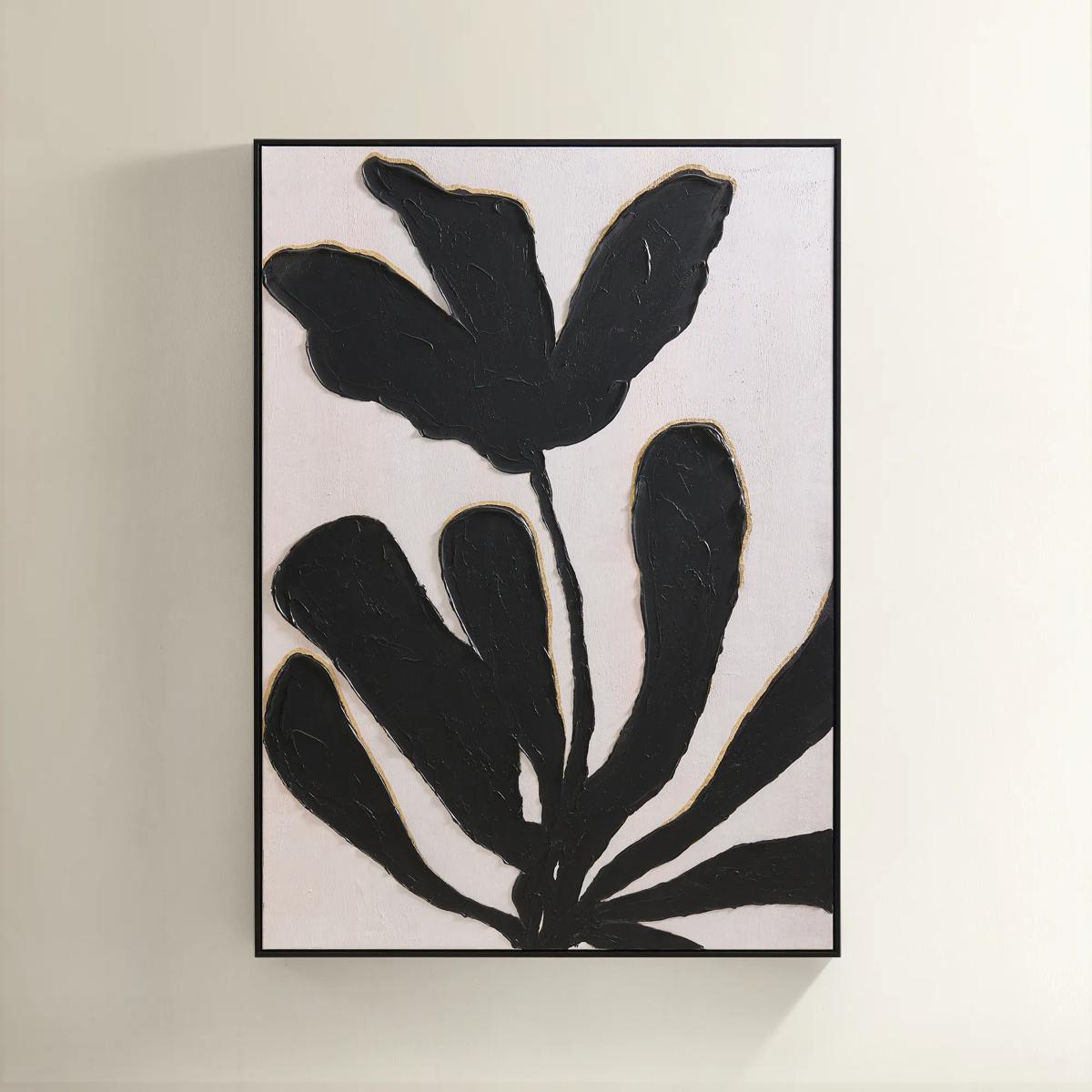
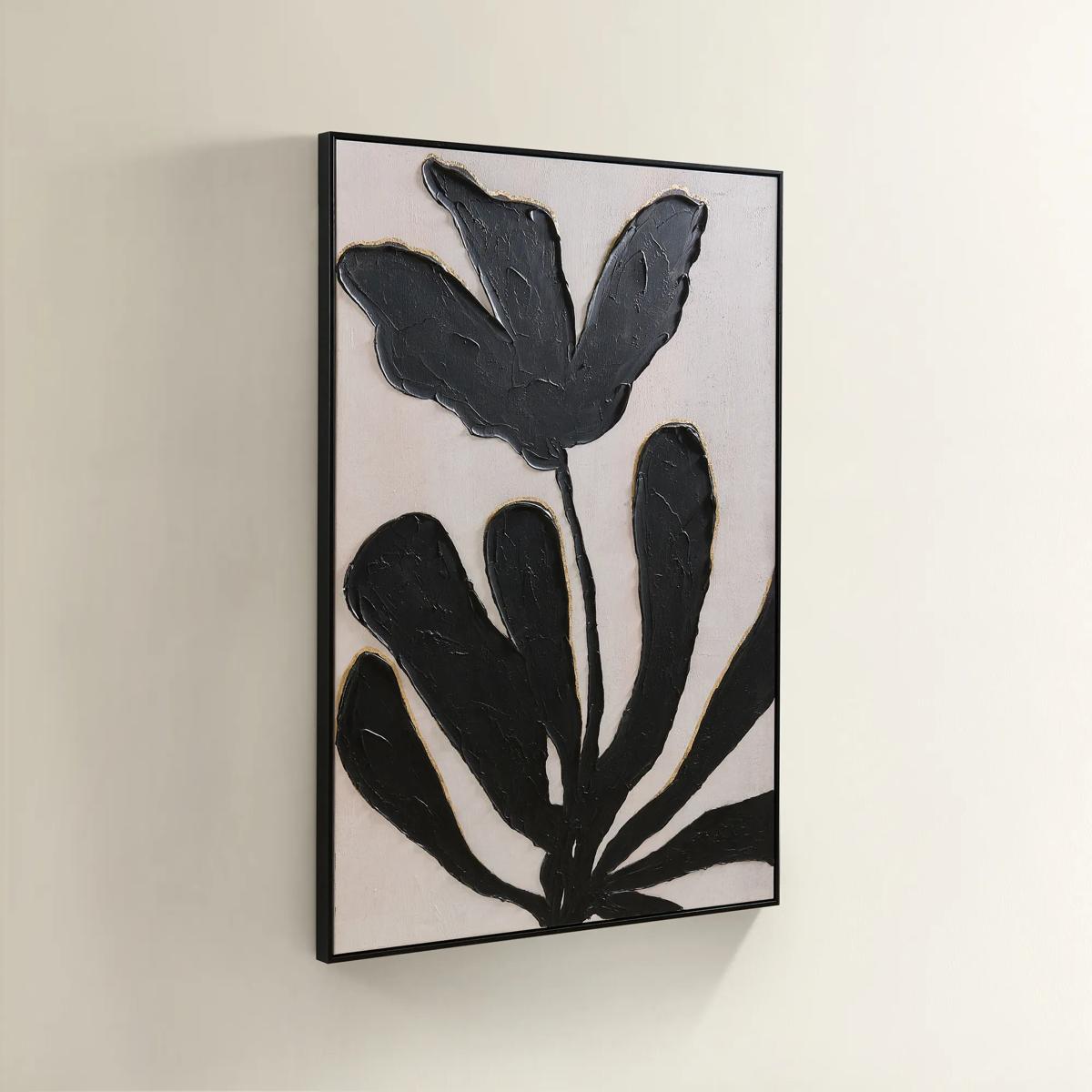 First Bloom Framed Painted Wall Art 39.25" x 55"$499
A hand-painted canvas featuring black abstract leaves and gold leafing on an ivory background in a black frame.
Add To Cart -

 Zebra Pop Framed Painted Wall Art 36" x 48"$449
A bold black painted canvas artwork in a sleek frame, bringing graphic energy to modern interiors.
Add To Cart -
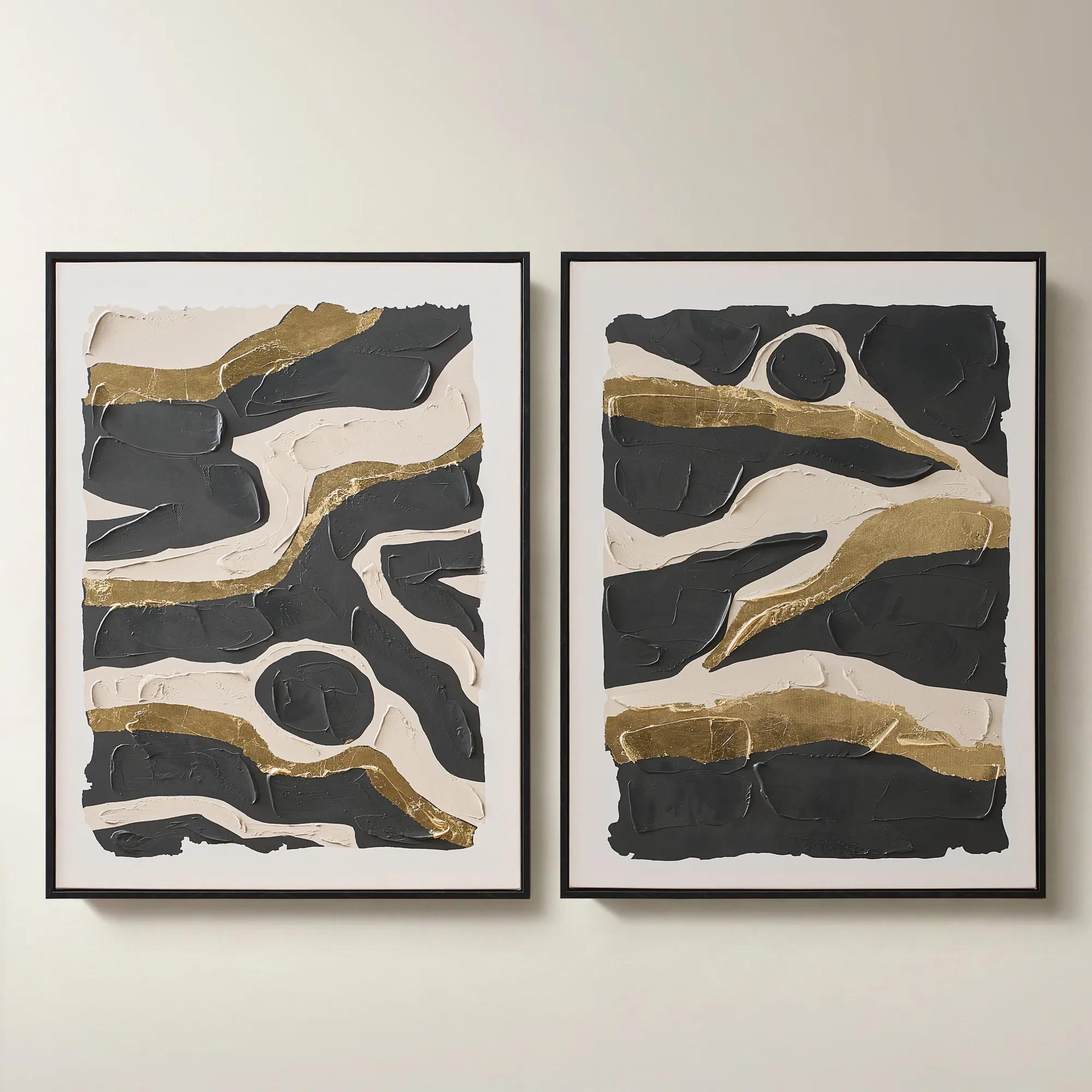
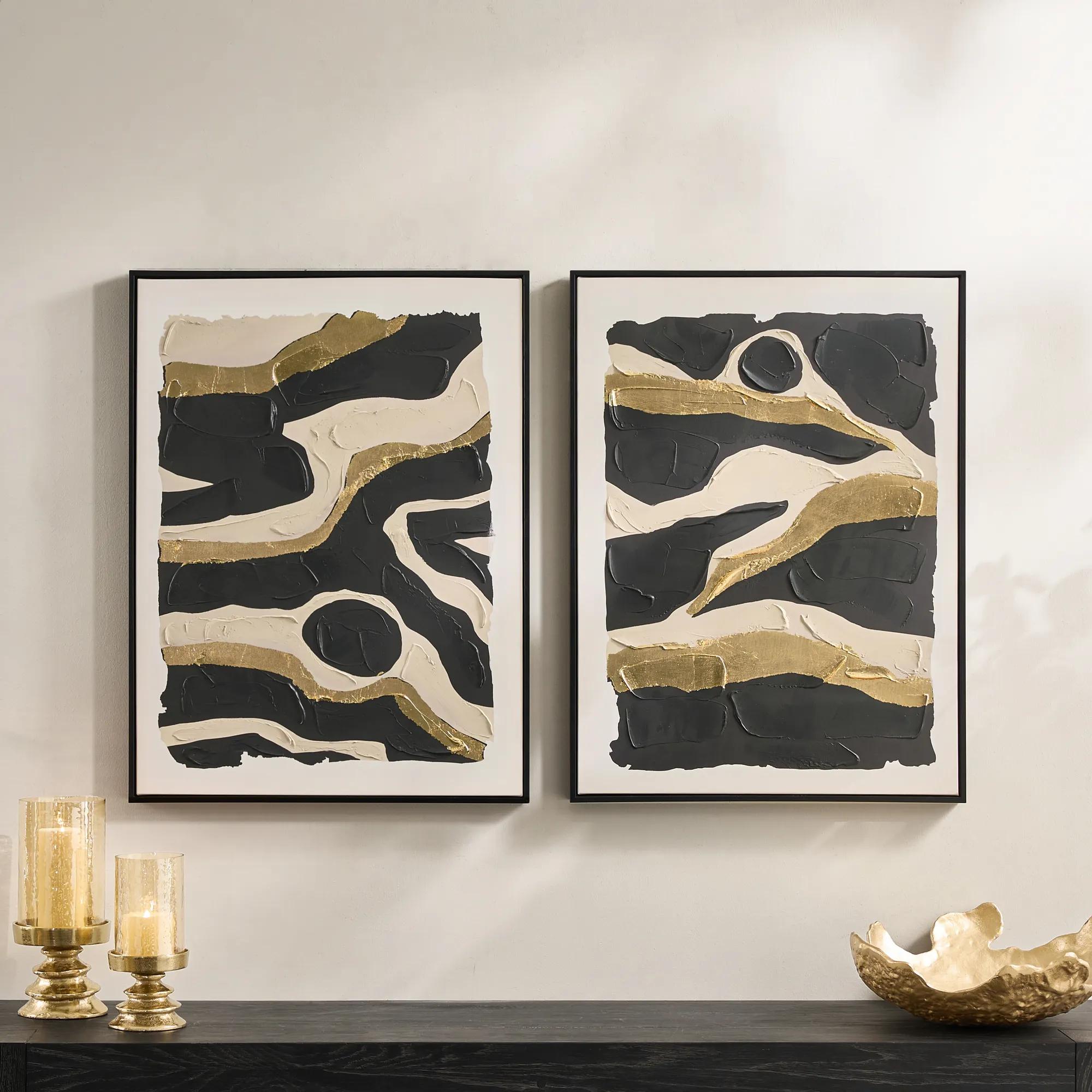 Untamed Framed Gold Leaf Painted Wall Art 24" x 32" Set of 2$199
A hand-painted diptych featuring abstract black and gold canvas art with expressive, gallery-inspired energy.
Add To Cart -
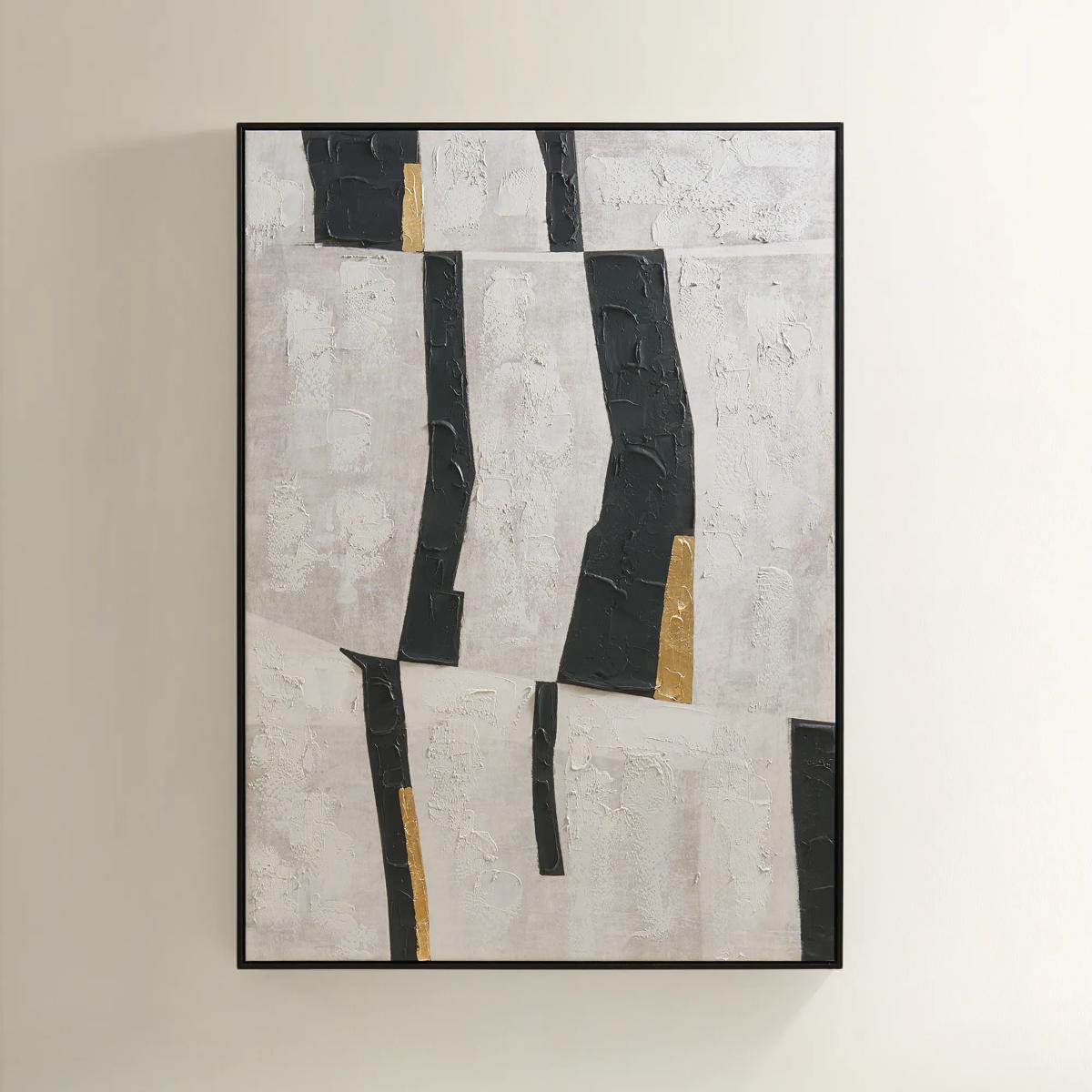
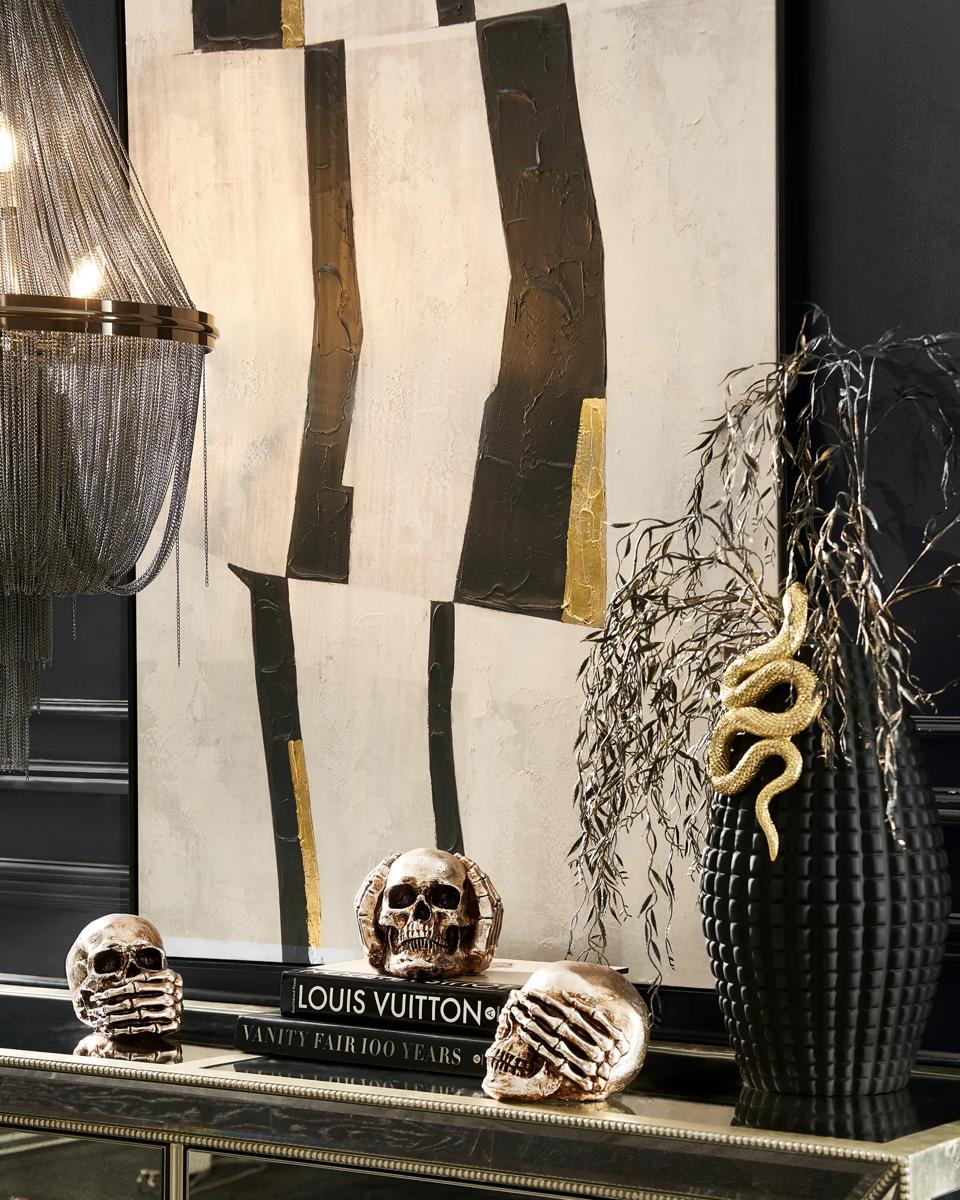 Into the Groove Painting$449
A modern abstract canvas featuring black, gray, and gold leaf accents in a sleek black floater frame.
Add To Cart -
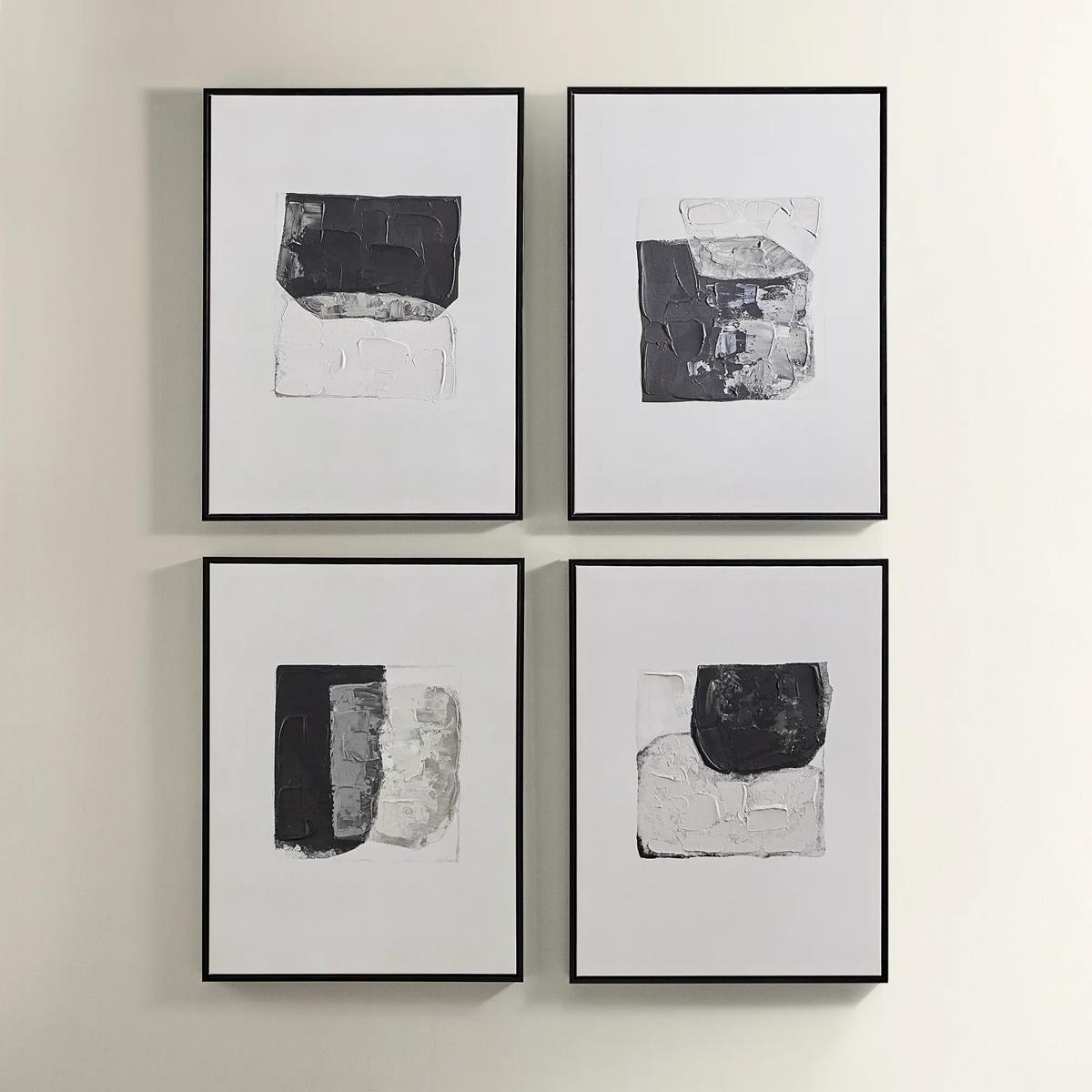
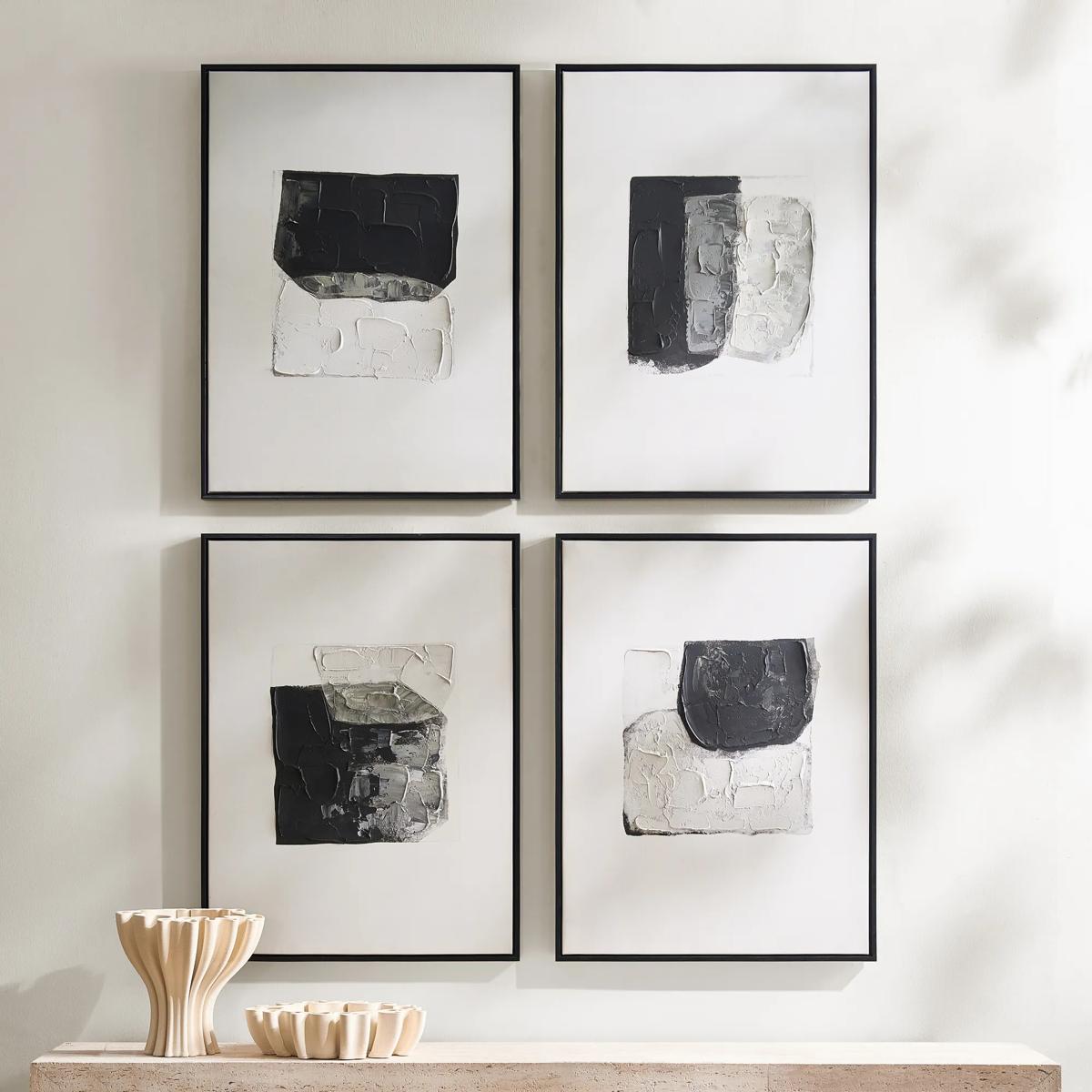 Shadows Framed Painted Wall Art Set of 4$299
A set of four hand-painted abstract canvases featuring black, white, and gold accents in black frames.
Add To Cart -
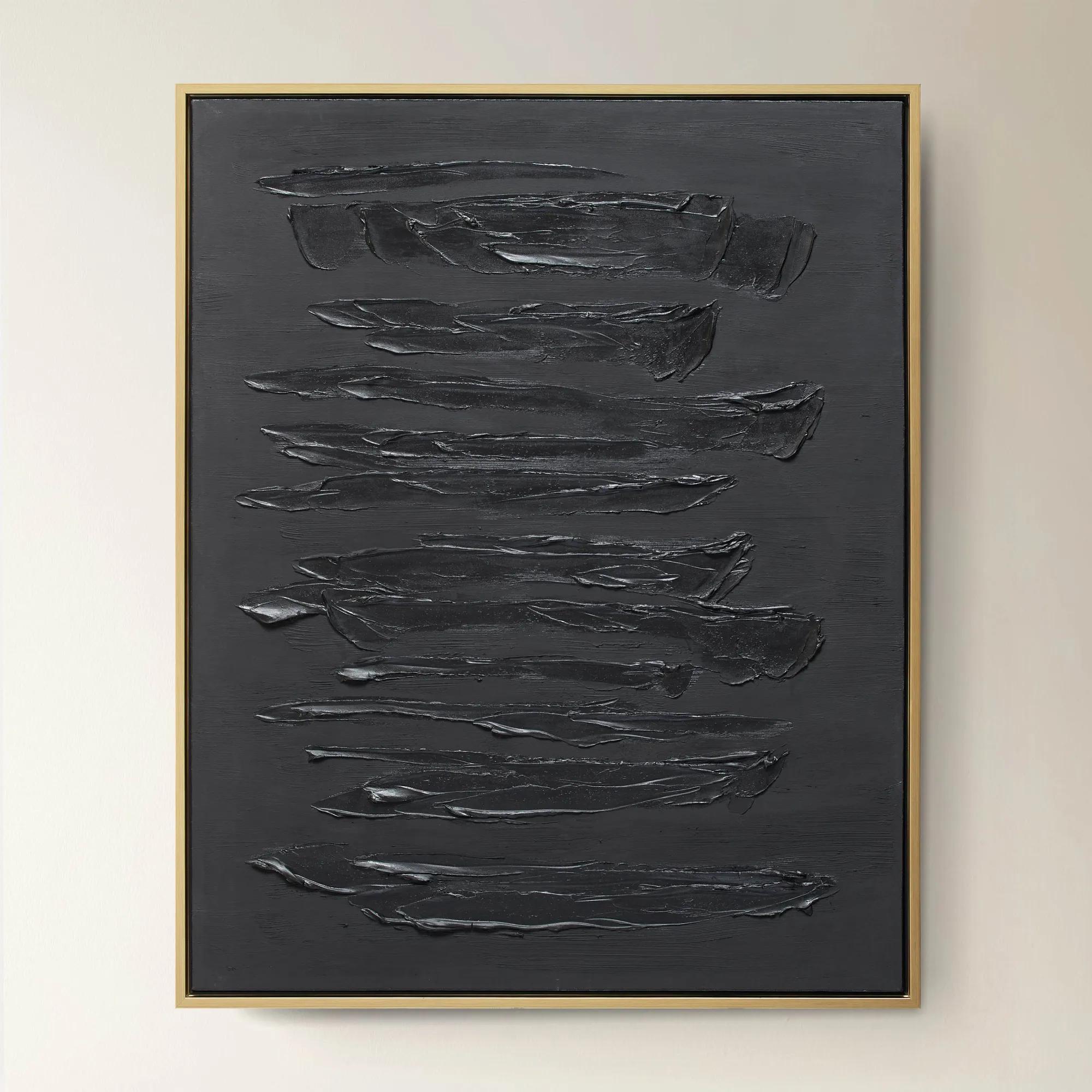
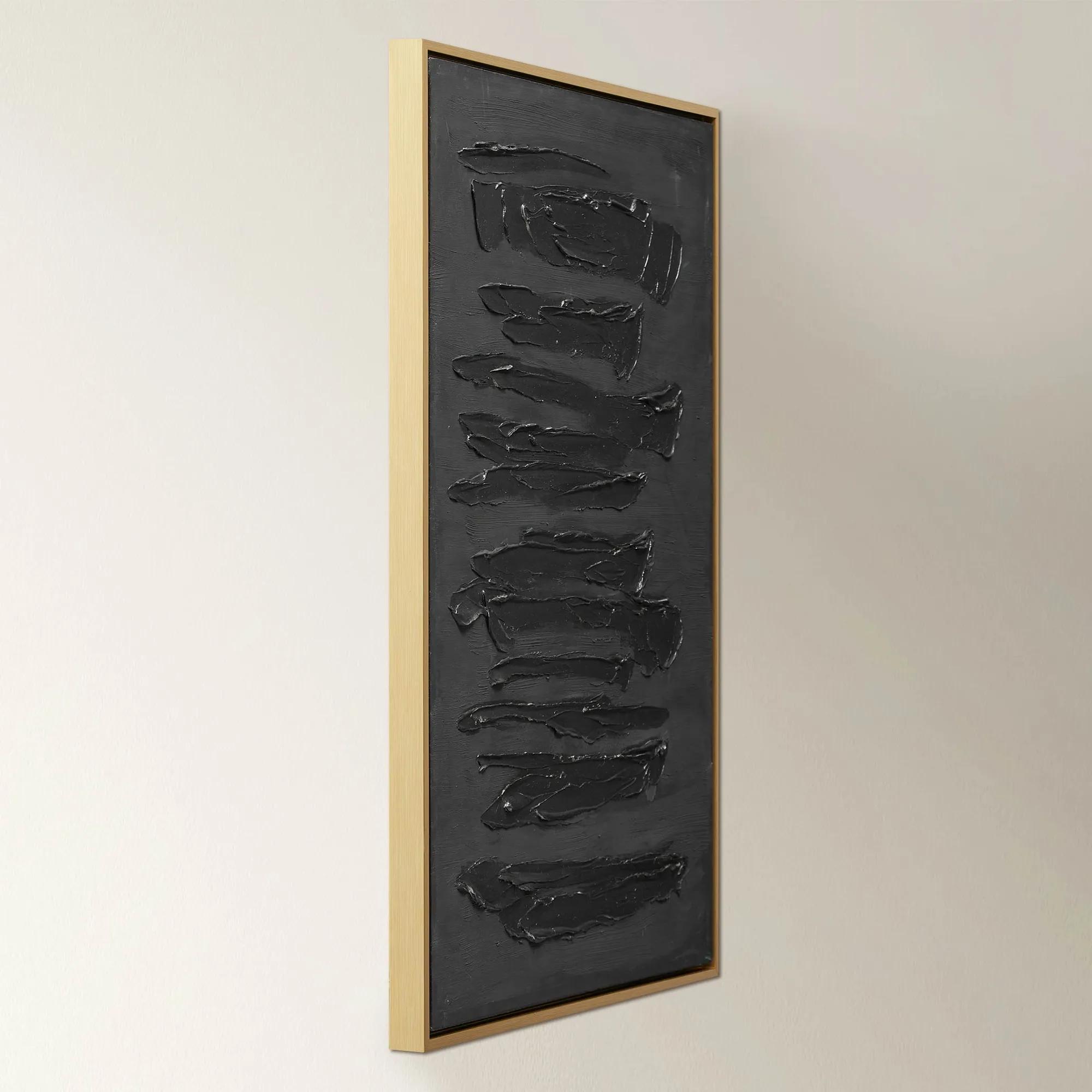 Nocturne$599.95
A dramatic abstract artwork featuring bold, dark brushstrokes on hand-painted canvas in a gold floater frame.
Add To Cart -
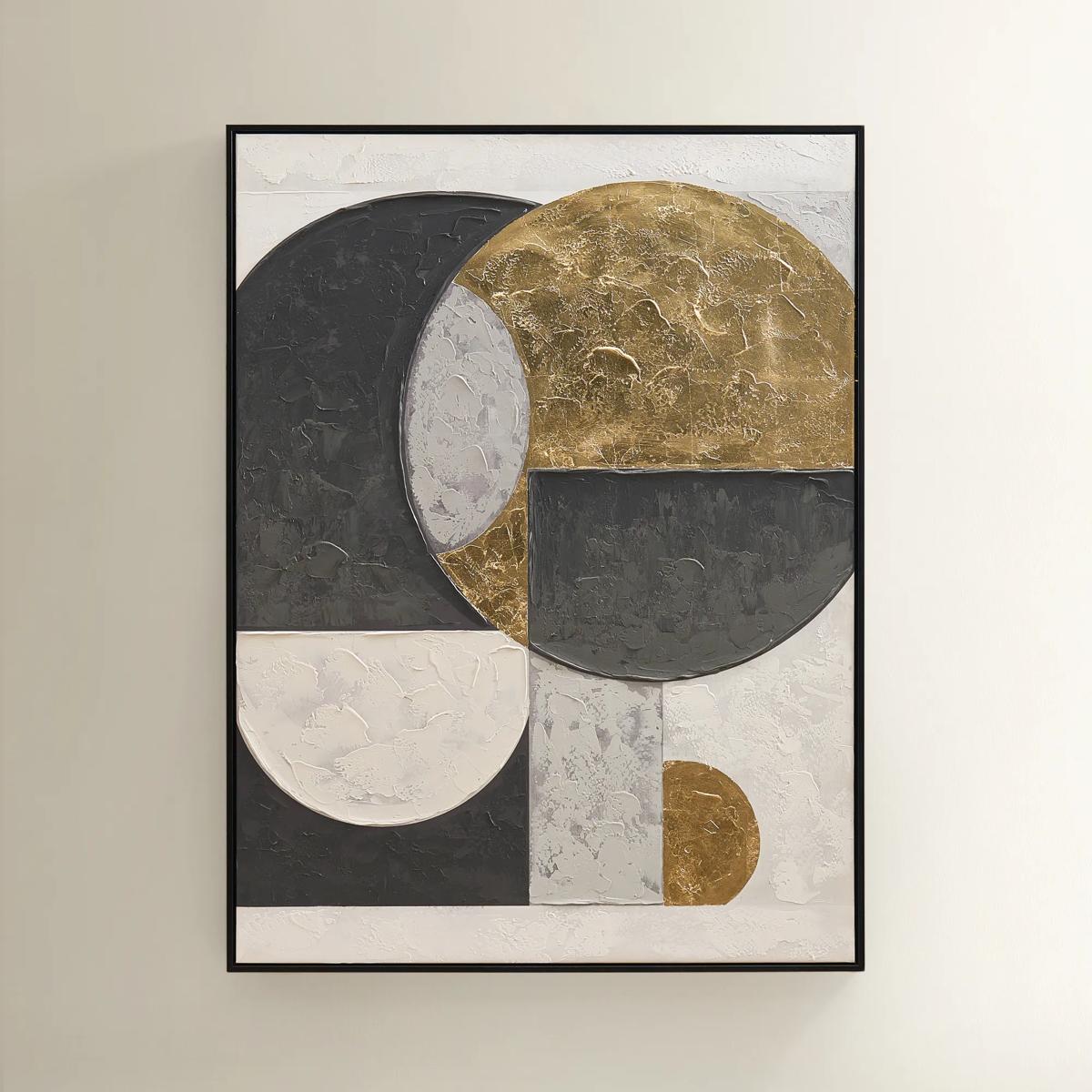
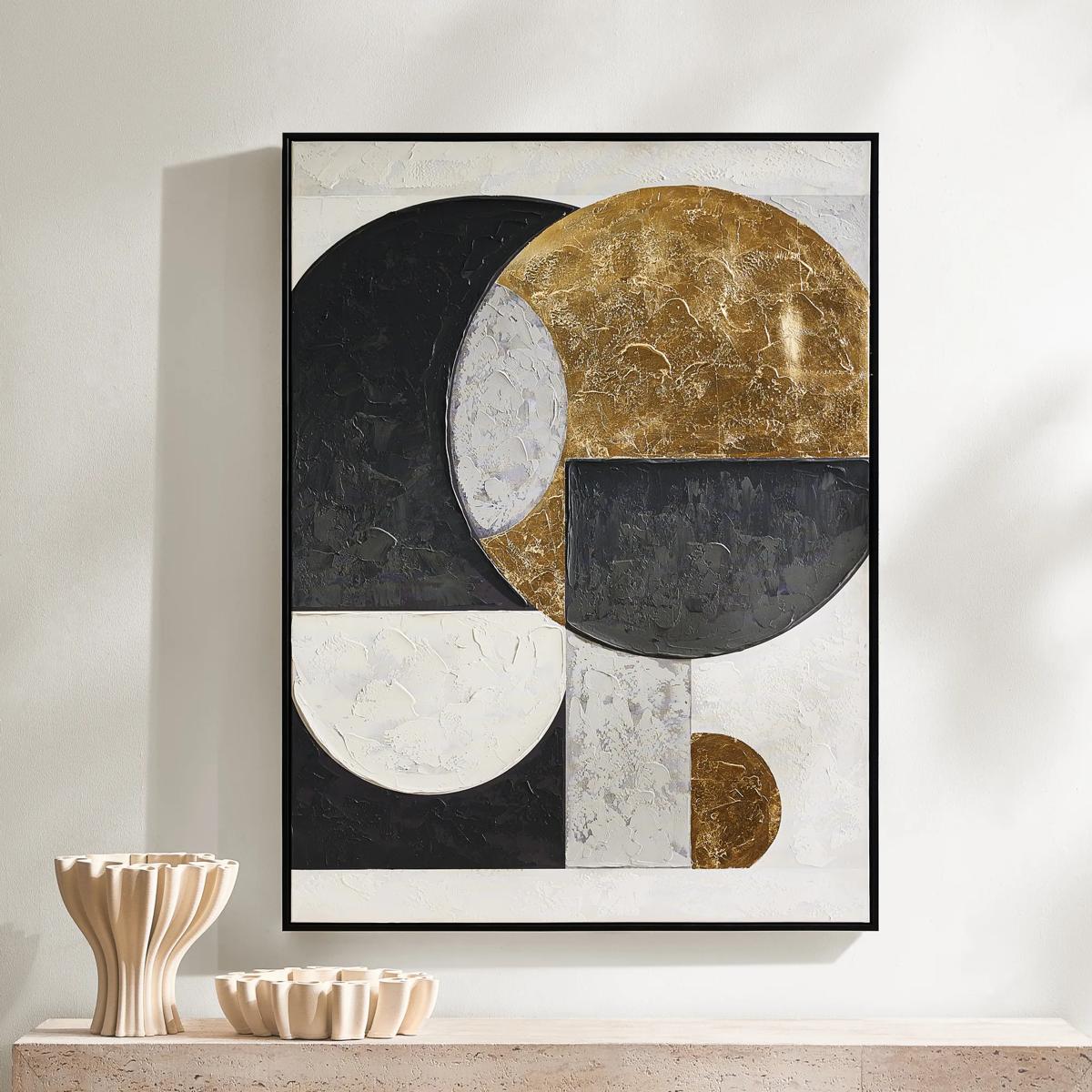 Eclipse Framed Gold Leaf Painted Wall Art 35.25" x 47.25"$449
A hand-painted canvas featuring bold black, grey, and gold geometric shapes with shimmering gold leaf accents.
Add To Cart -
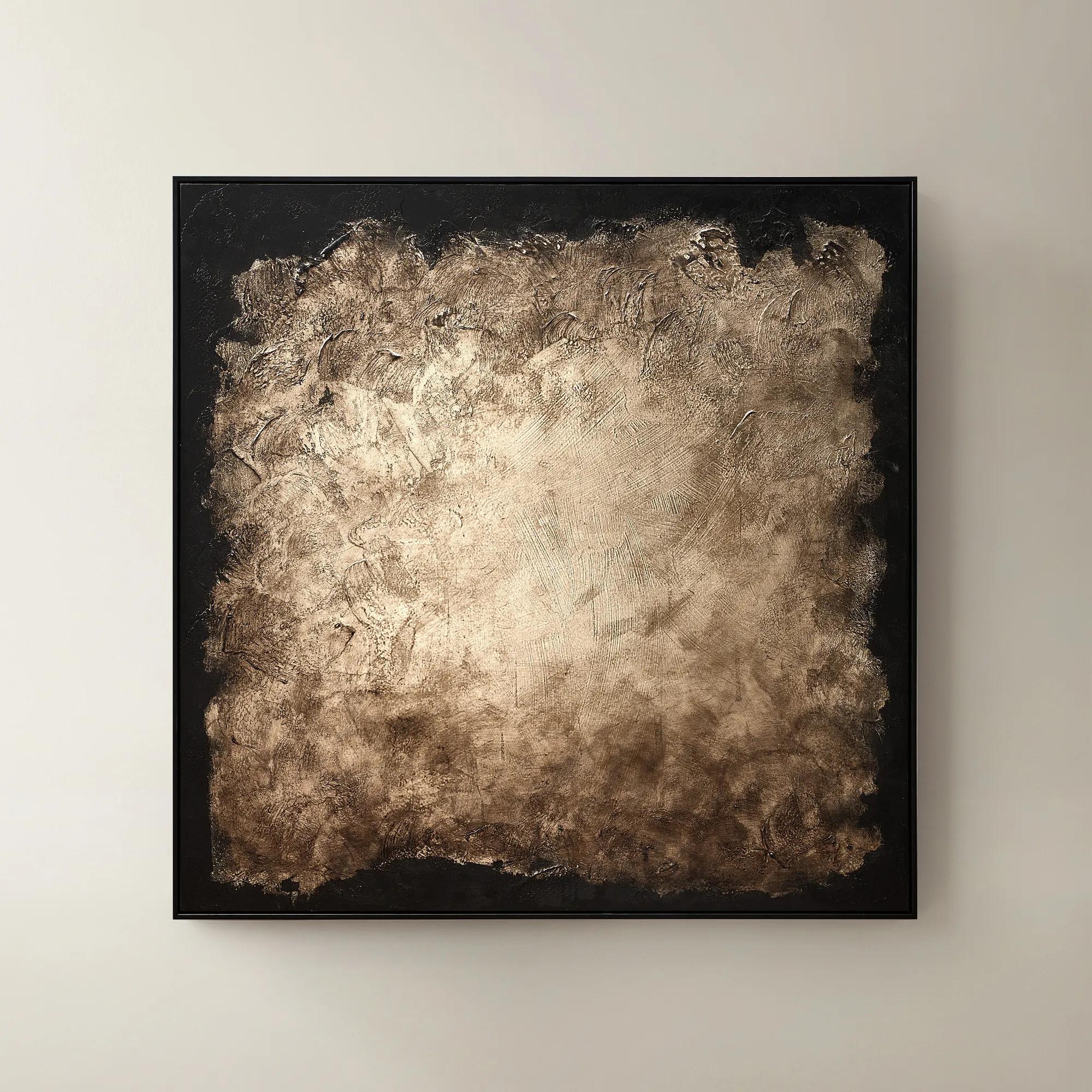 Edge of Knowing Framed Gold Leaf Painted Wall Art 50" x 50"$599
A hand-painted abstract canvas featuring gold leaf accents and a smoked champagne and black palette in a black frame.
Add To Cart -
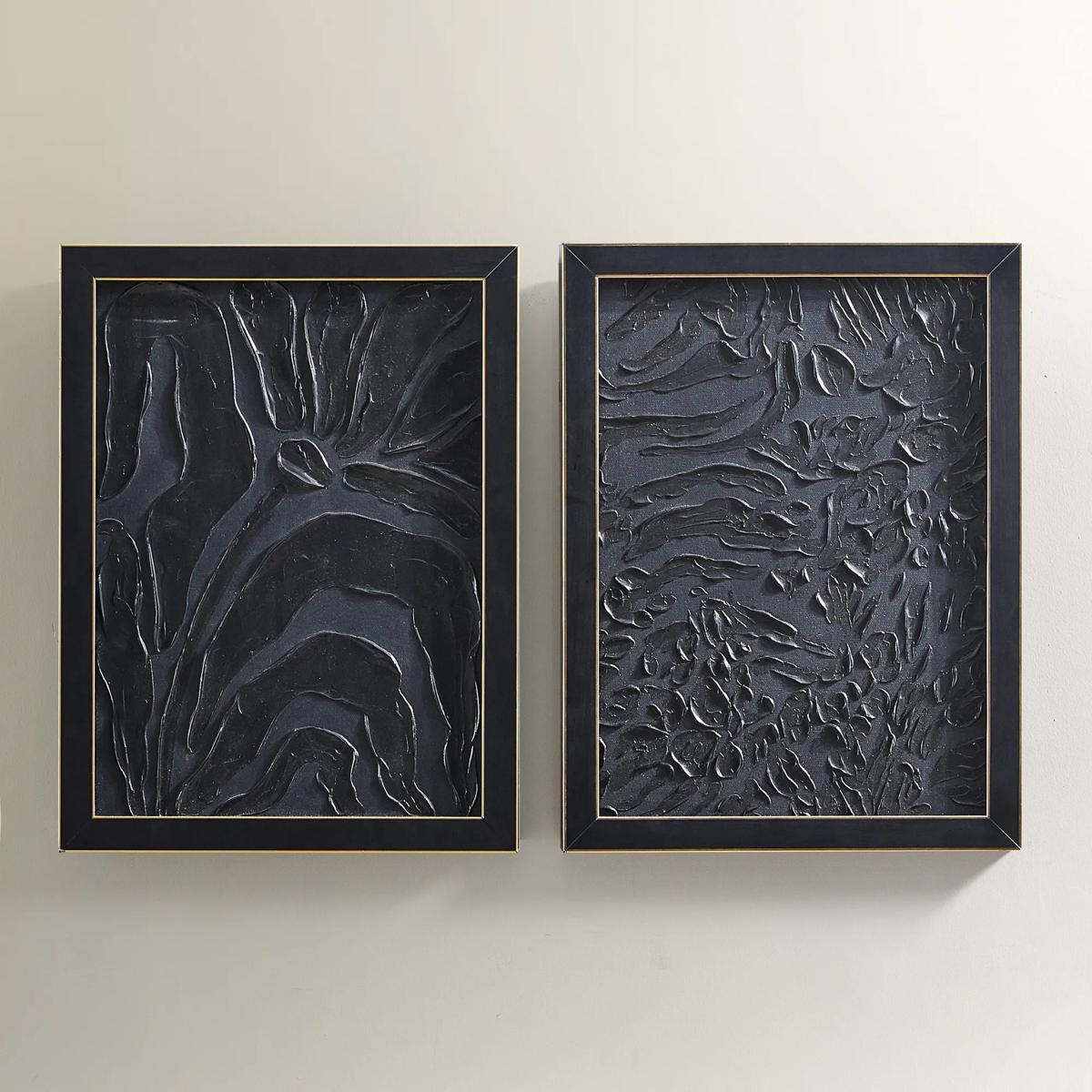
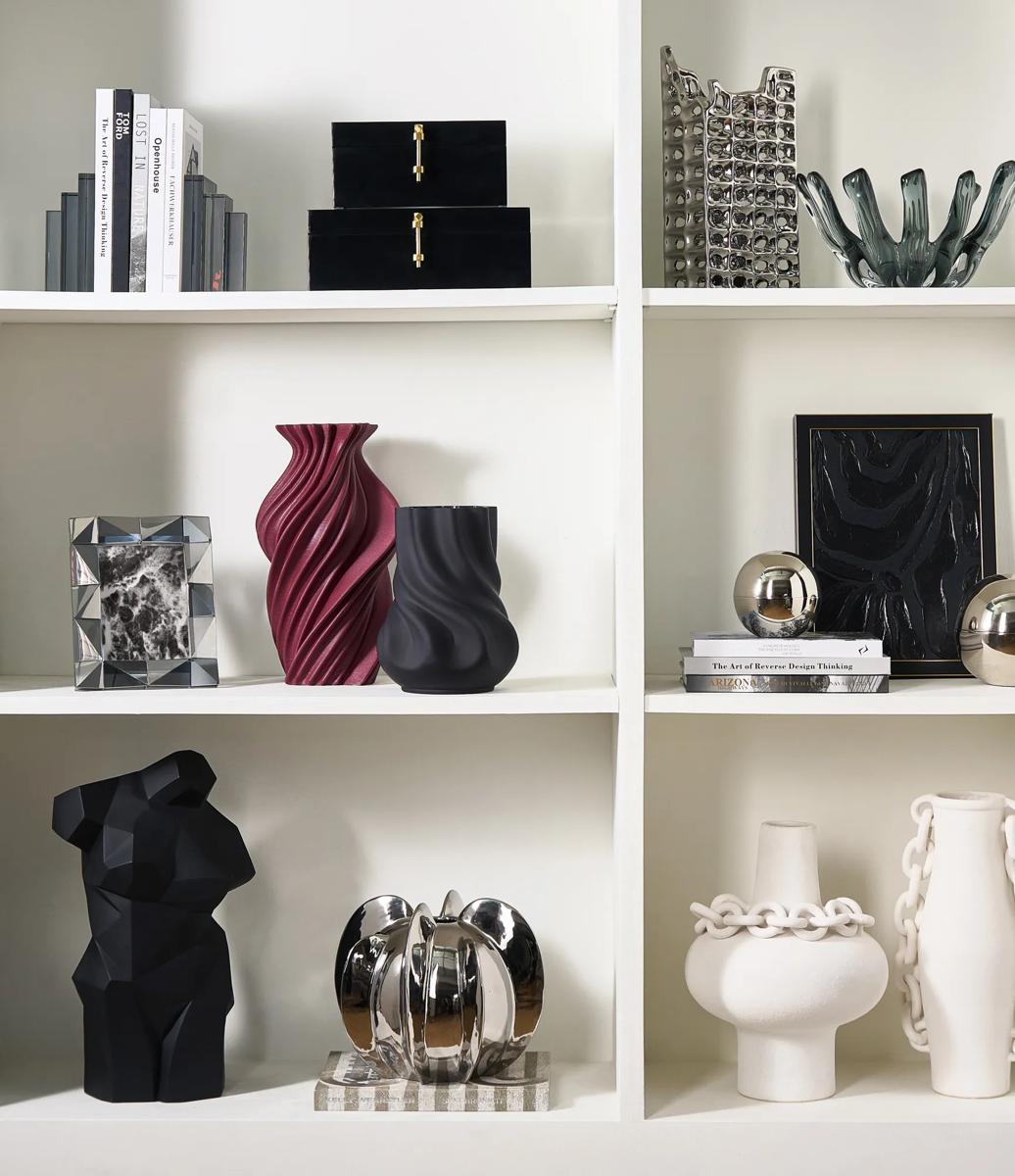 Midnight Animal Painting - Set of 2$119
A set of hand-embellished canvas artworks in black and gold frames, adding depth and warmth to interiors.
Add To Cart -
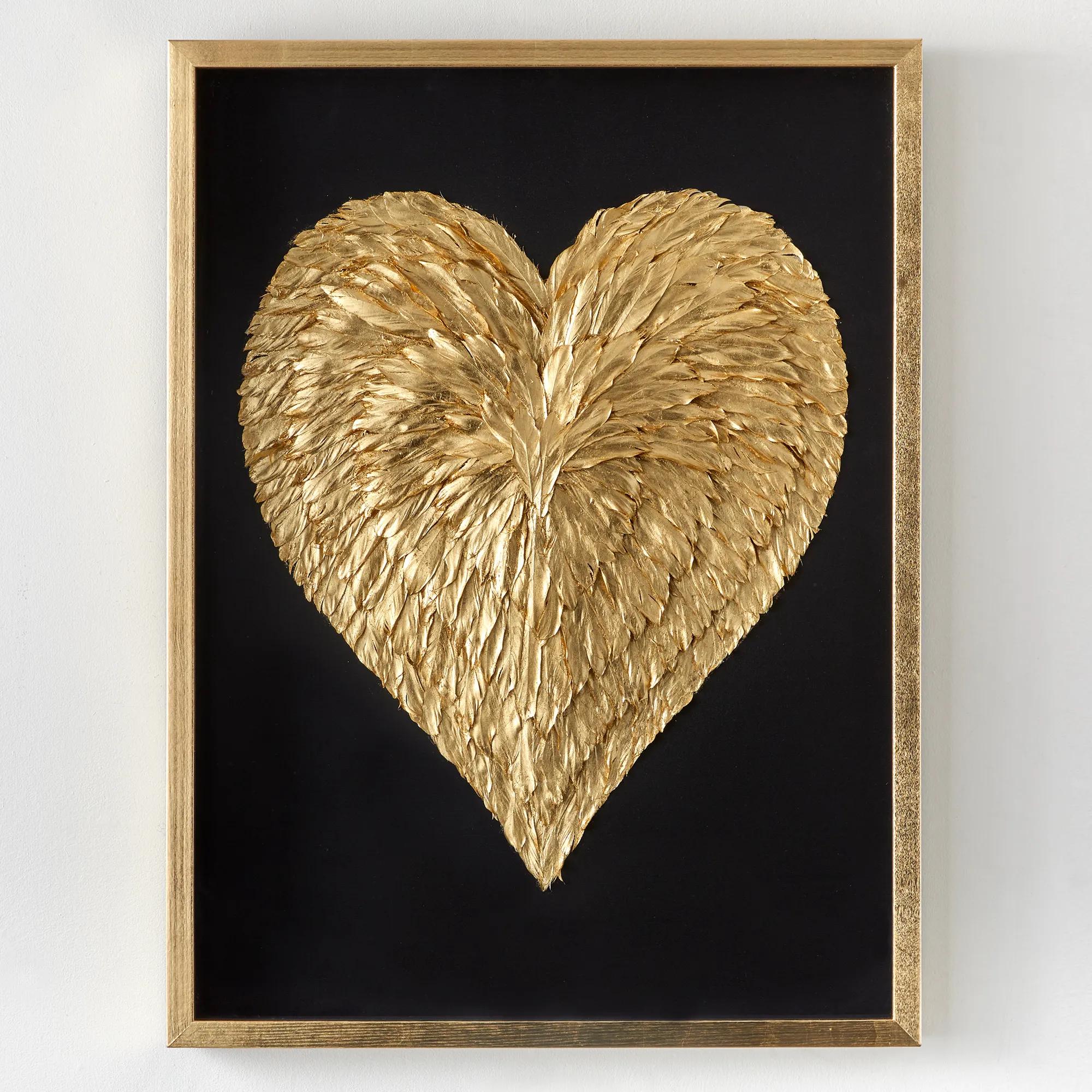 Heart Of Gold Feather Shadowbox 29.5" x 39.5"$449
A hand-painted feather artwork set on black fabric and framed in a gold shadowbox display.
Add To Cart -
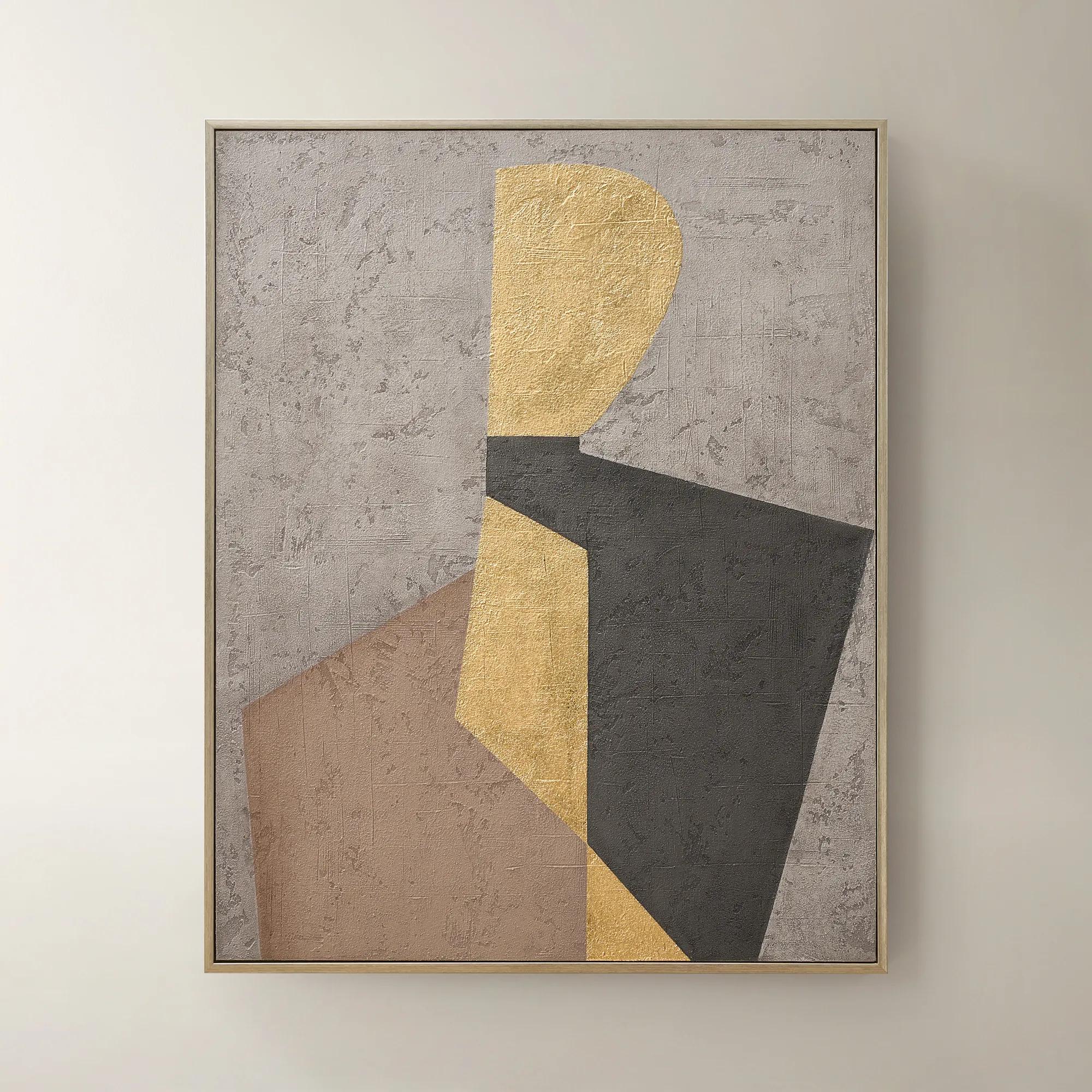 Aura of Gold Framed Painted Wall Art 40" x 50"$399
A hand-painted canvas with champagne leafing and a brushed champagne frame in mocha, grey, black, and gold.
Add To Cart -
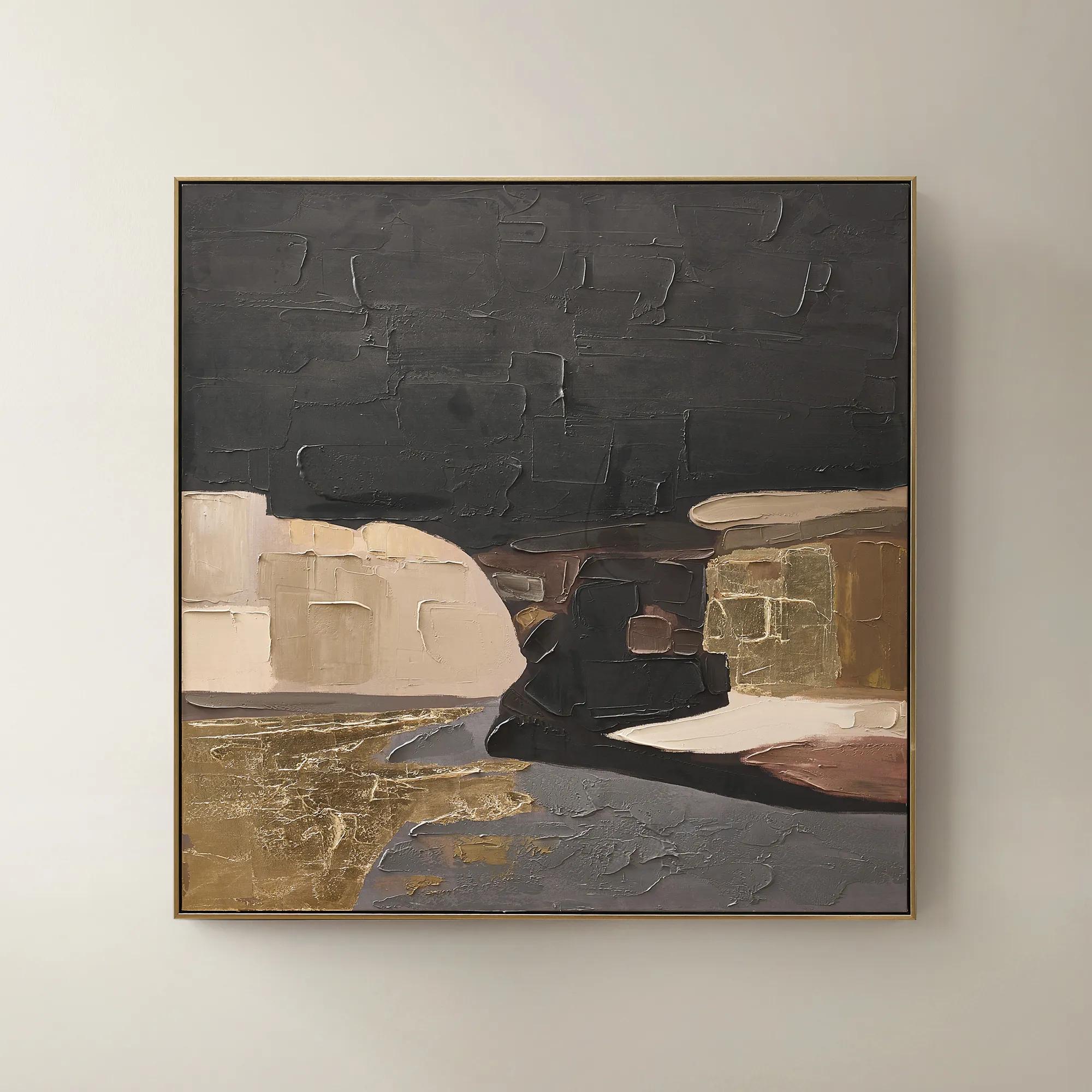 Obscured Light Framed Gold Leaf Painted Wall Art 48" x 48"$499
A hand-painted canvas with gold leaf accents and a black-gold frame in dramatic neutral tones.
Add To Cart -
 Gilded Wings Feather Shadowbox 30" x 40"$399
A striking display of hand-painted feathers on black linen, elegantly framed in a gold shadowbox.
Add To Cart -
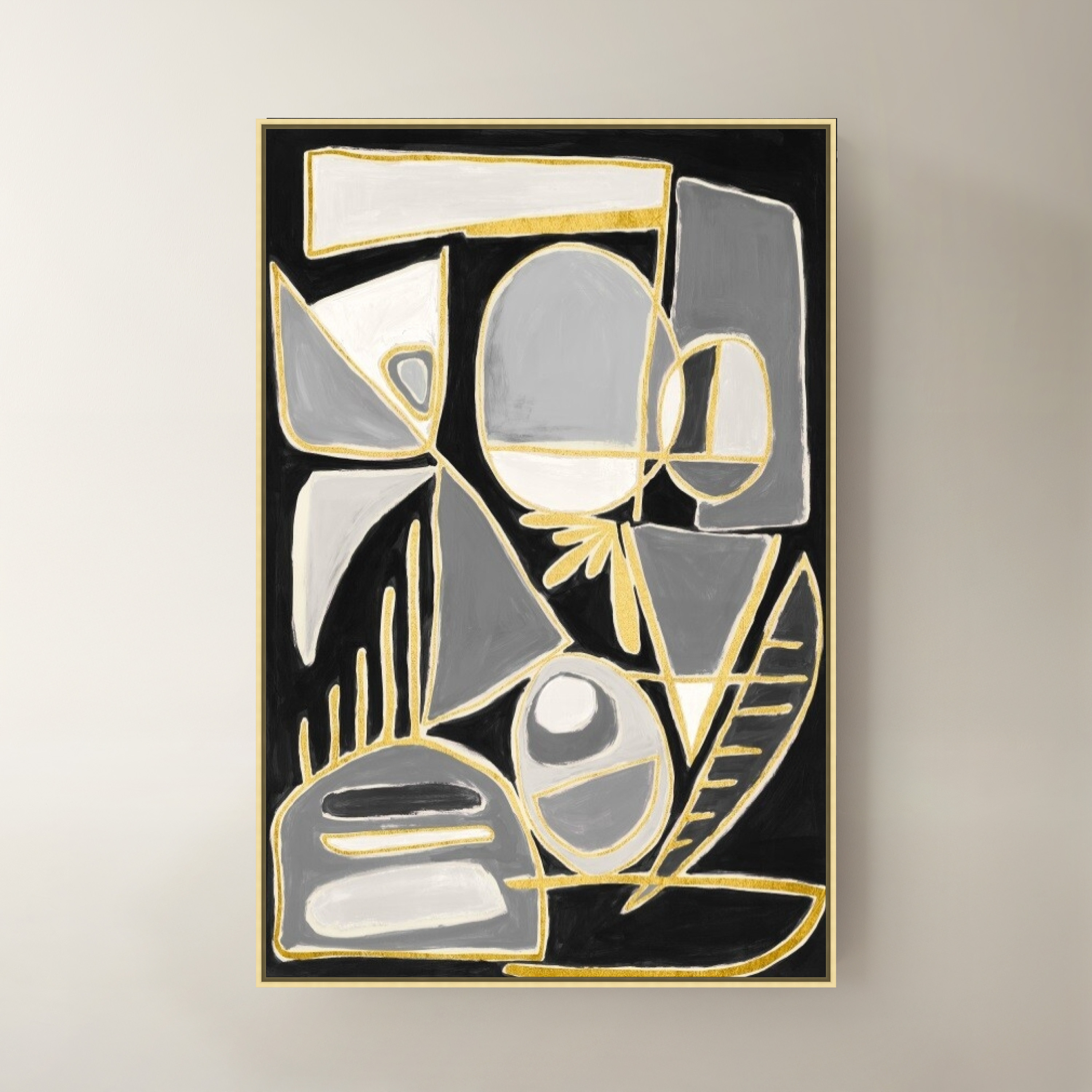
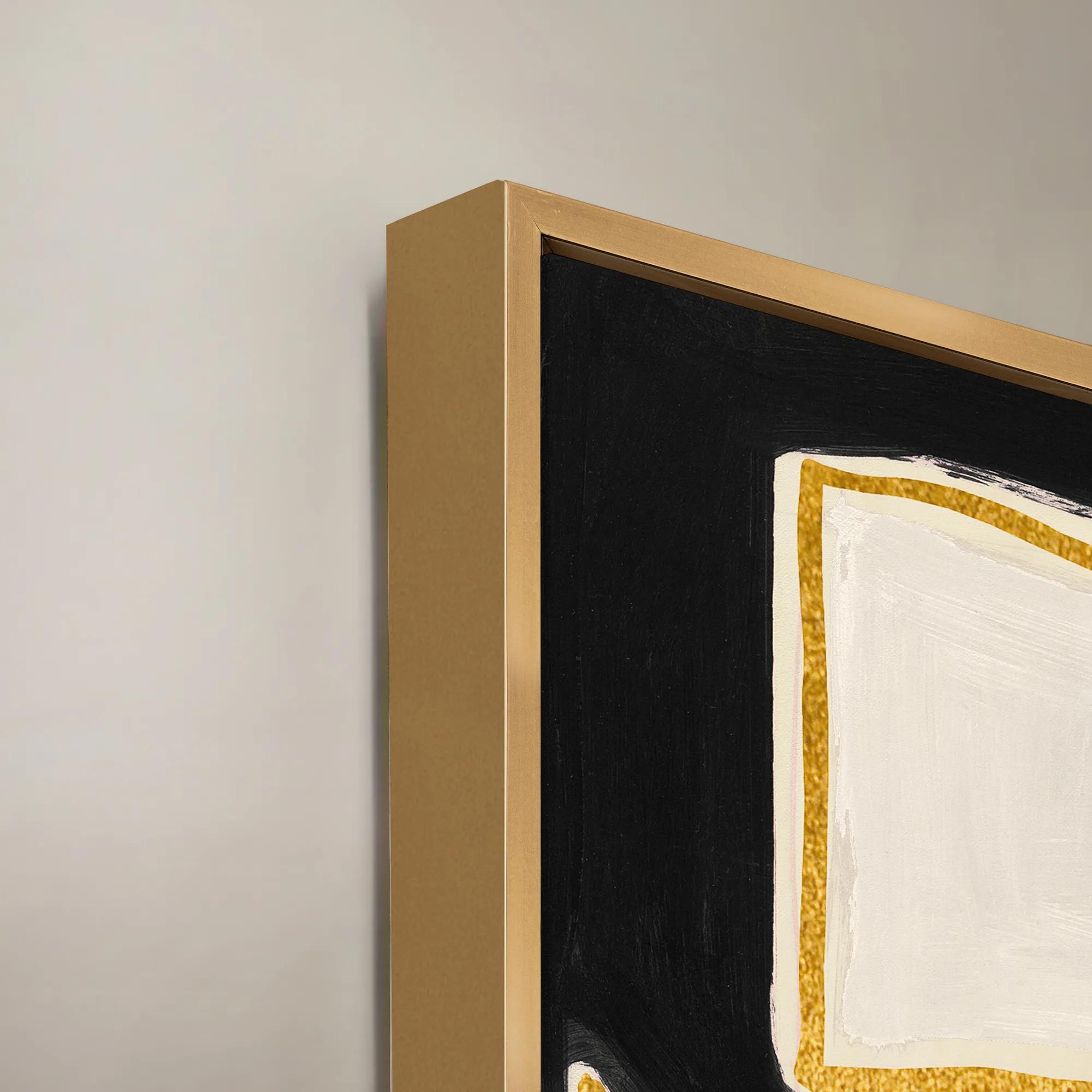 Shuffle City III Framed Wall Art 40" x 60"$1199
A dramatic black canvas wall artwork presented in a refined frame for contemporary interiors.
Add To Cart -
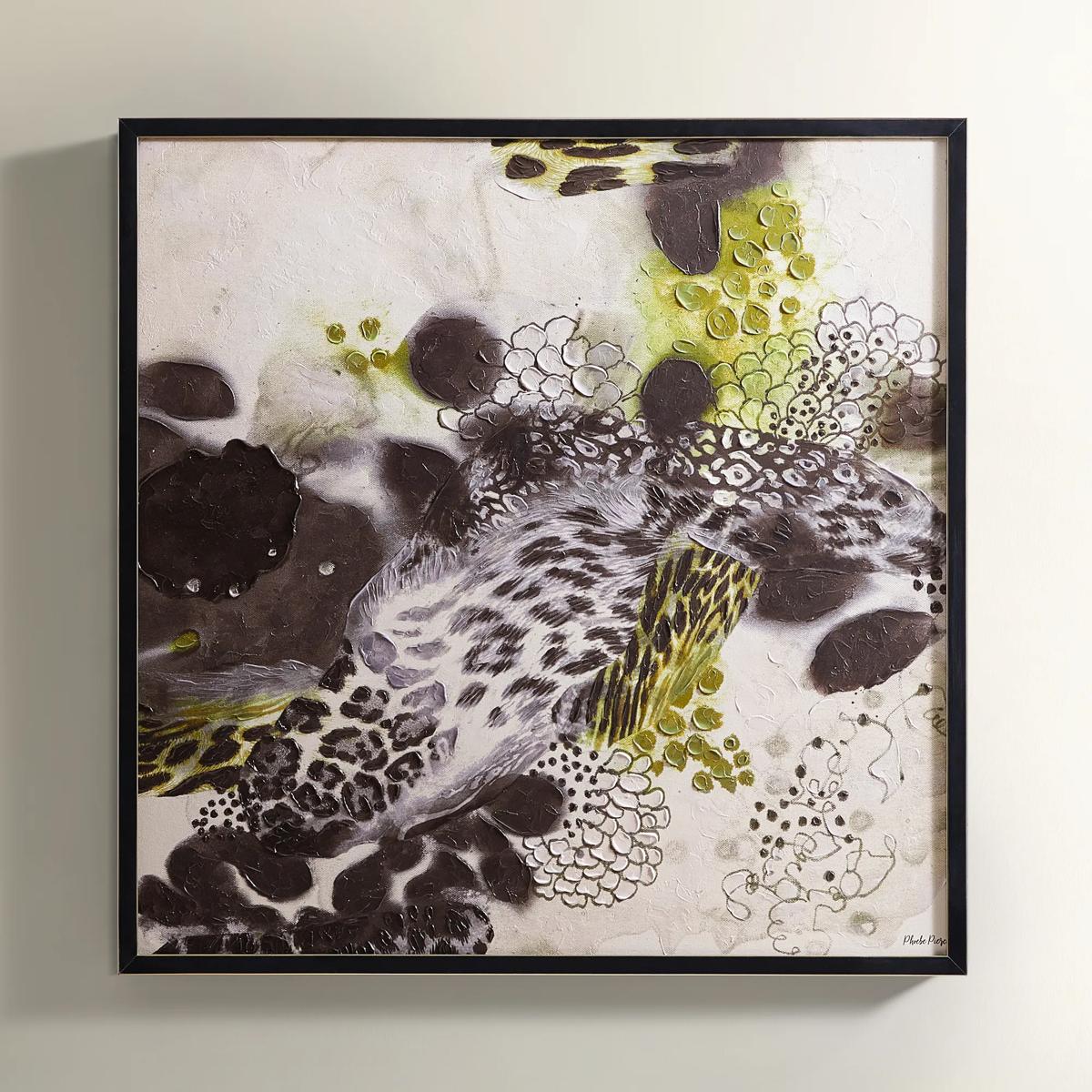
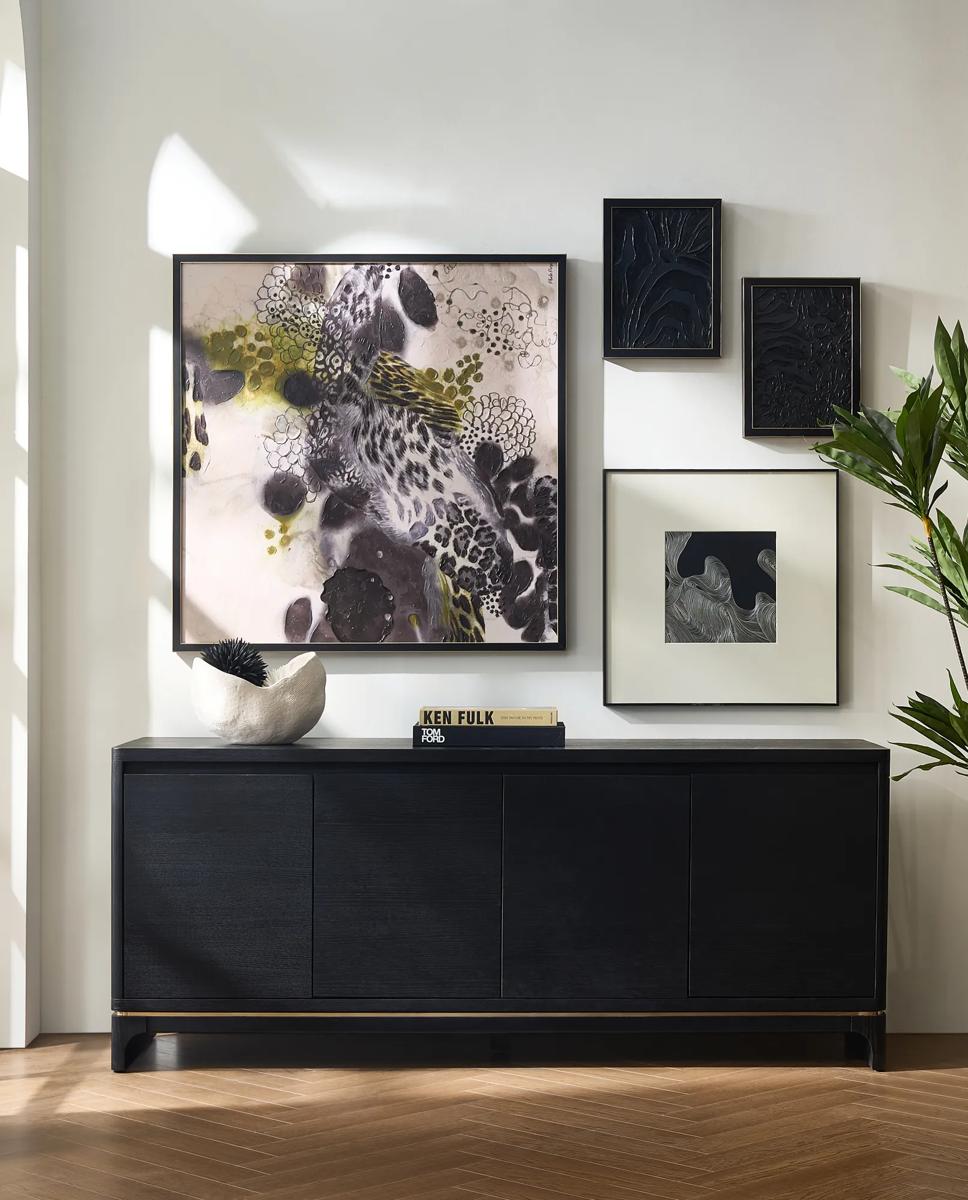 In the Wild$399
A hand-embellished canvas artwork featuring textured strokes in black, chartreuse, and sand, framed in ornate wood.
Add To Cart -
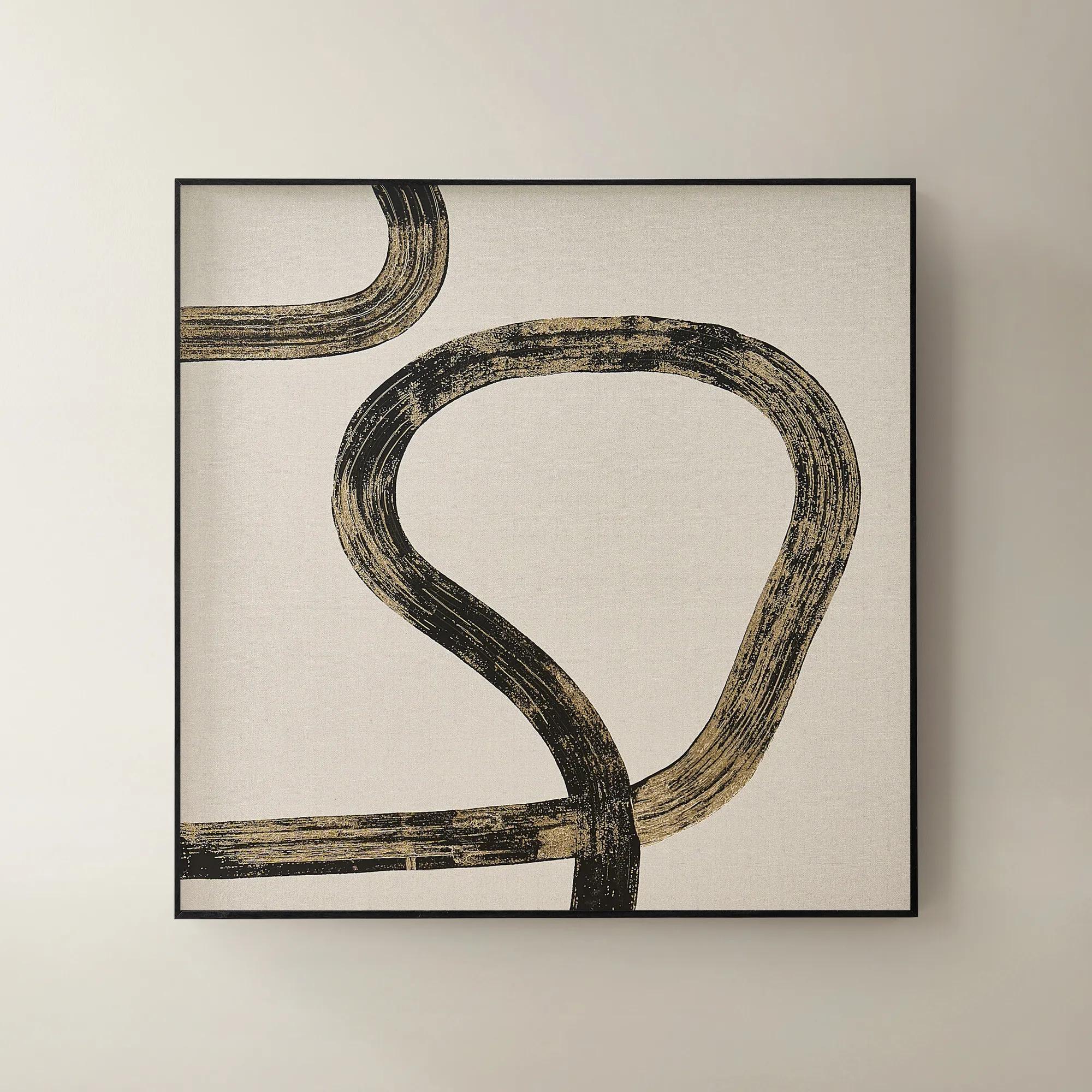
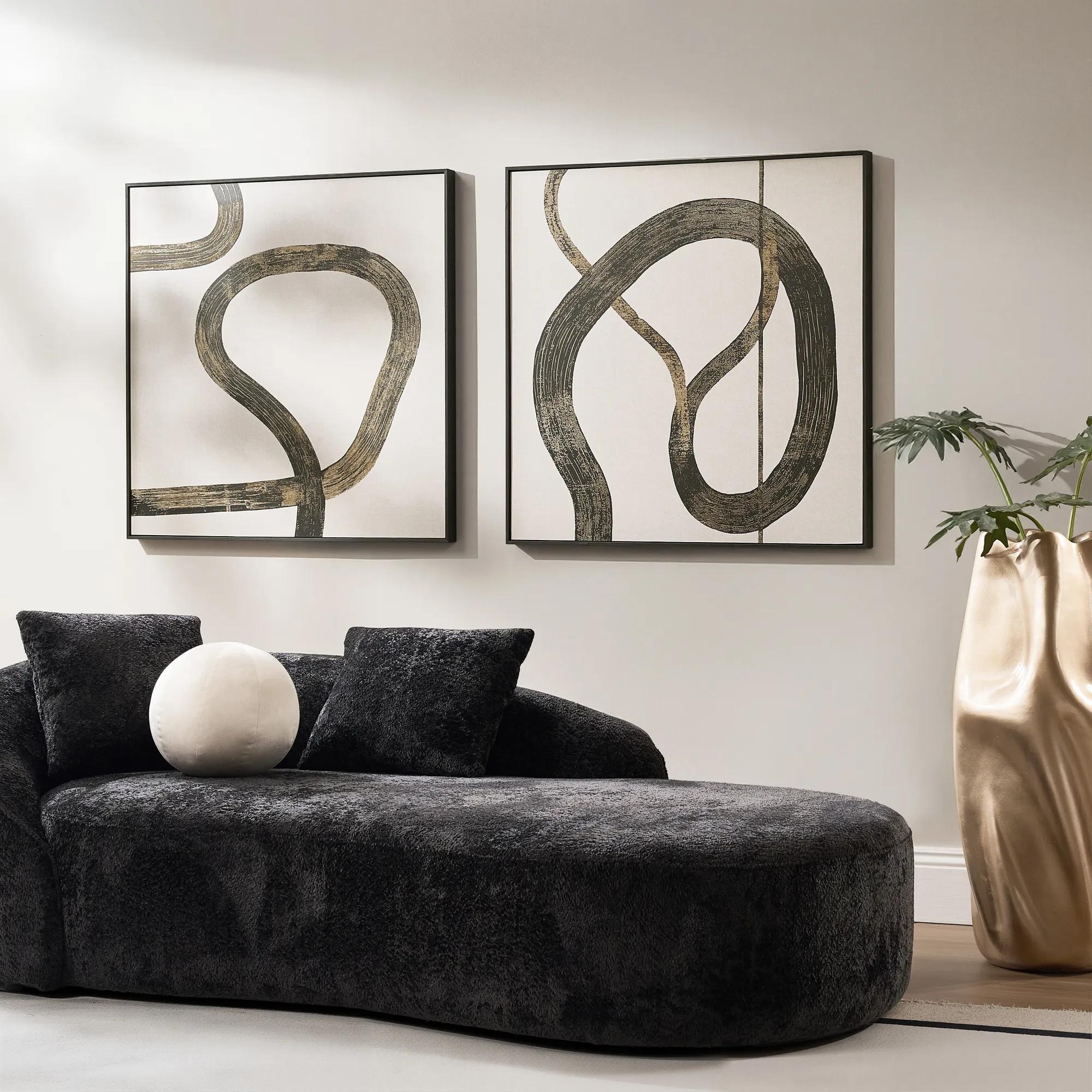 Live Wire Framed Gold Foil Painted Wall Art I 39" x 39"$349
A striking gold foil painting framed to bring modern artistic elegance and luminous texture to any wall.
Add To Cart -
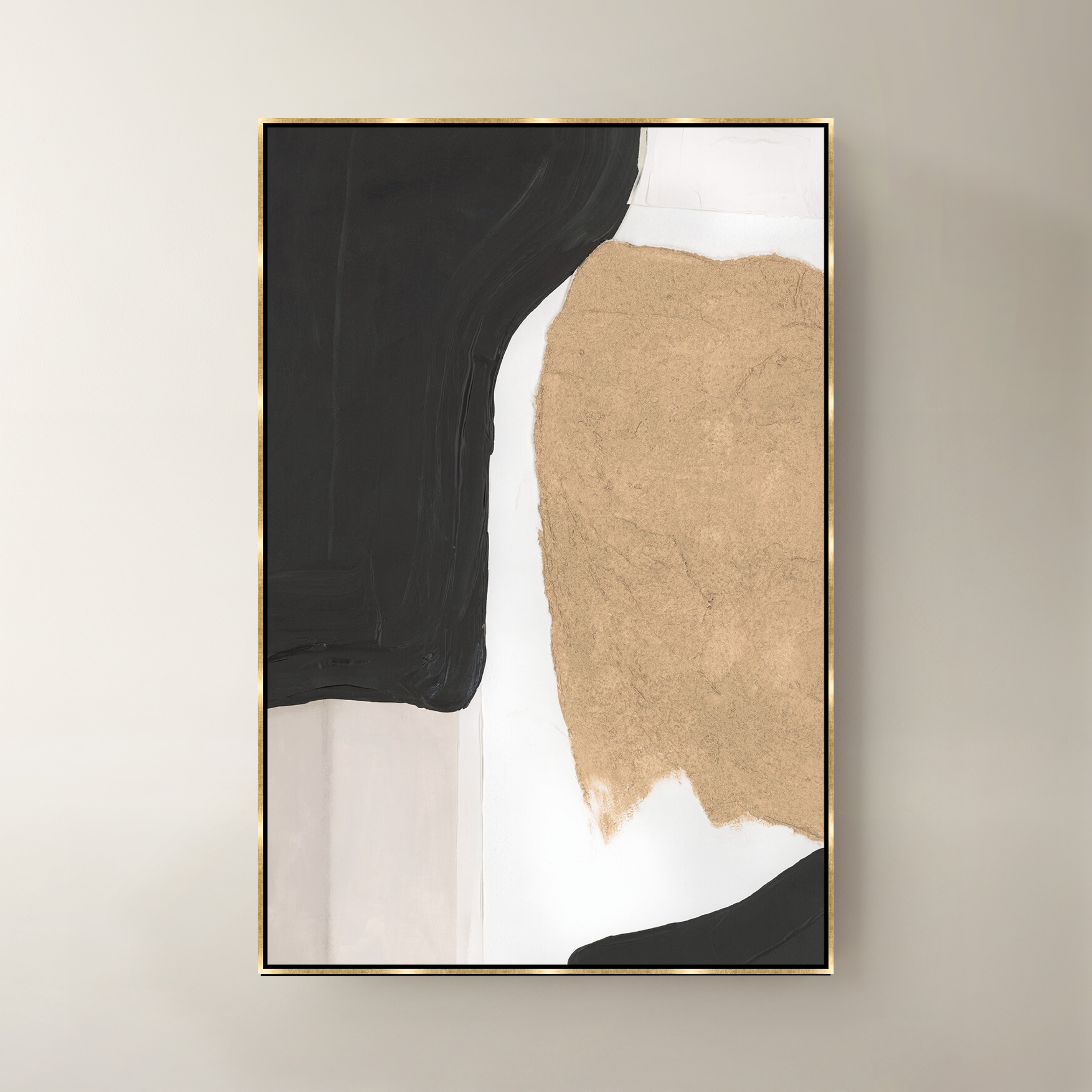
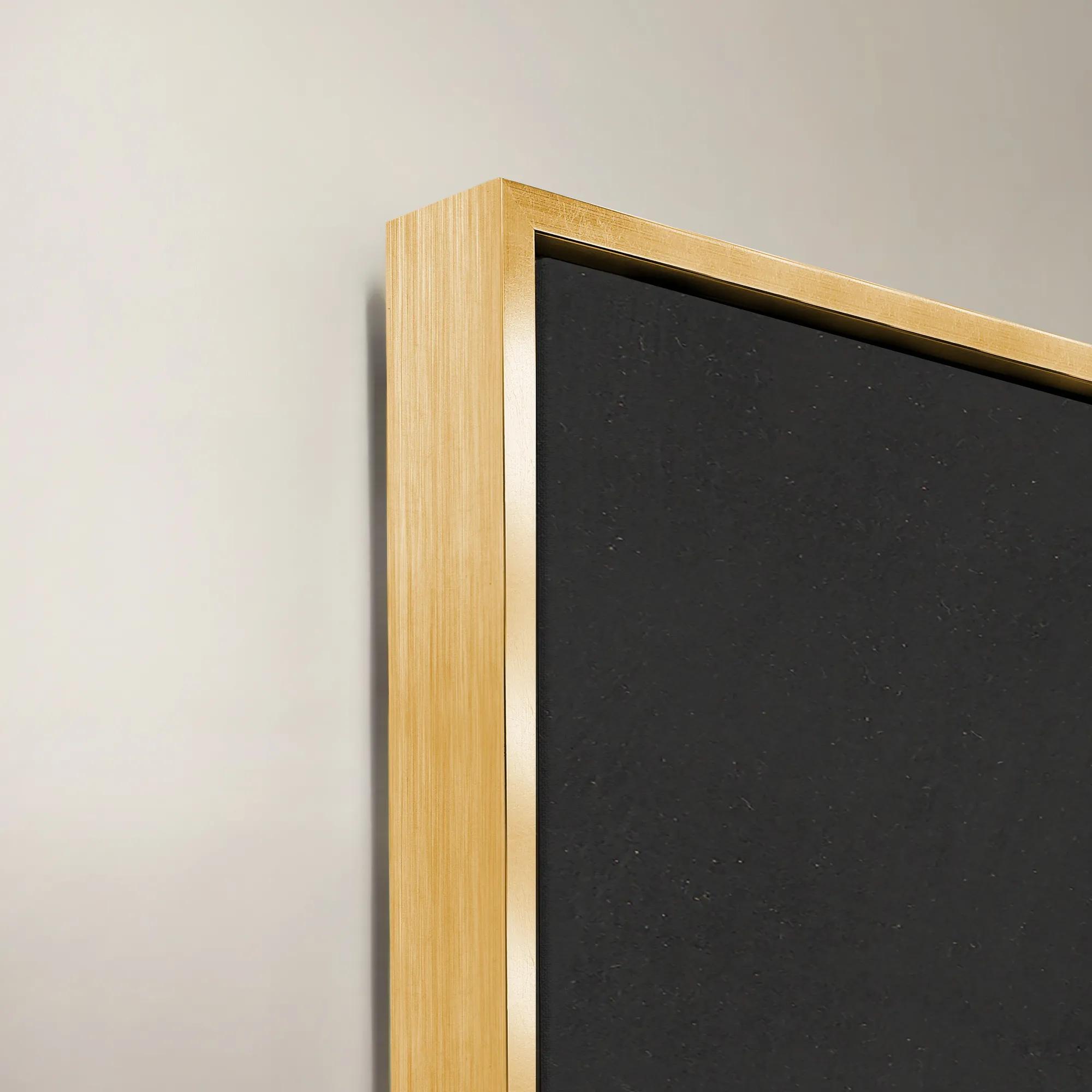 Noir I Framed Wall Art 40" x 60"$1299
A multicolored canvas wall artwork presented in a striking frame for modern interior styling.
Add To Cart -
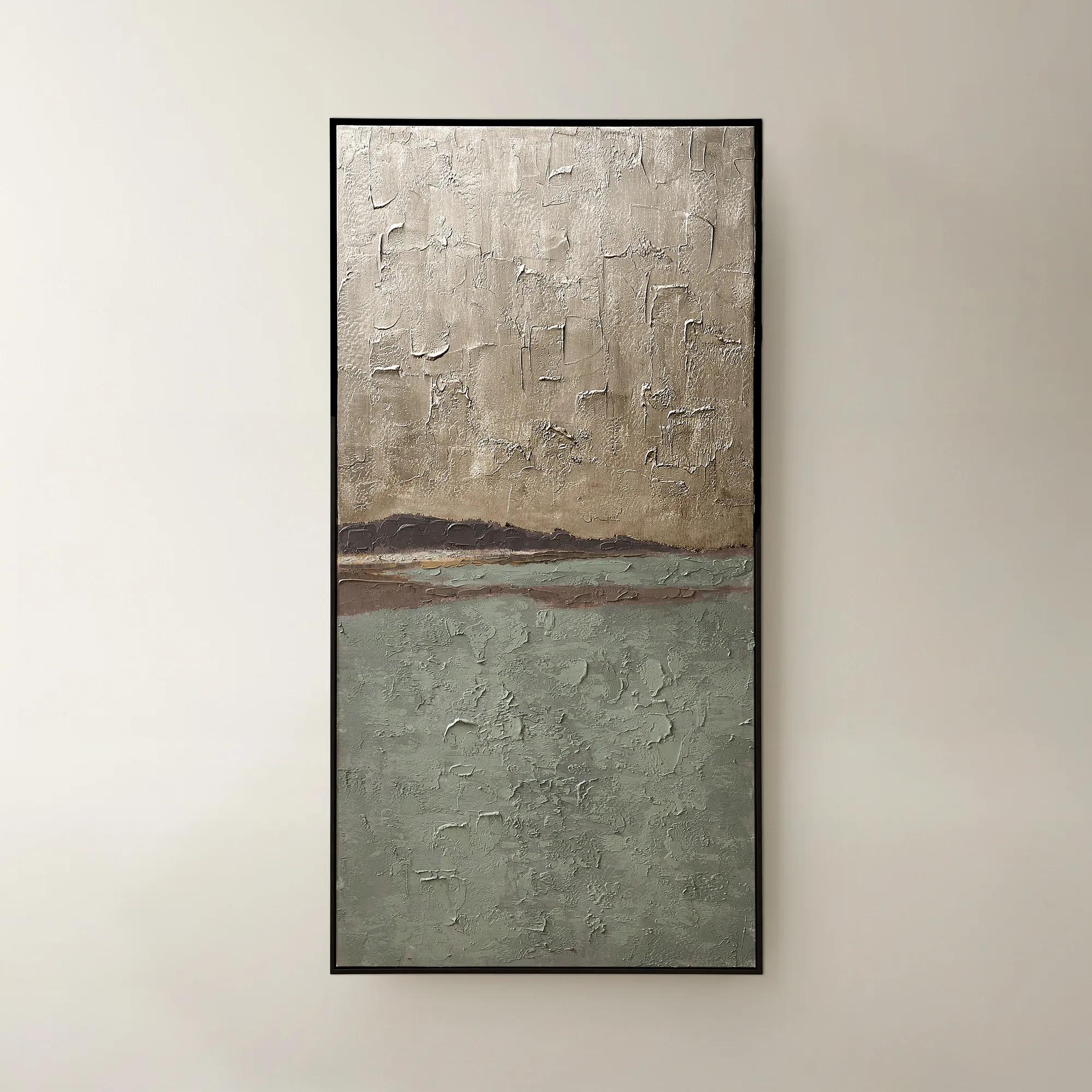
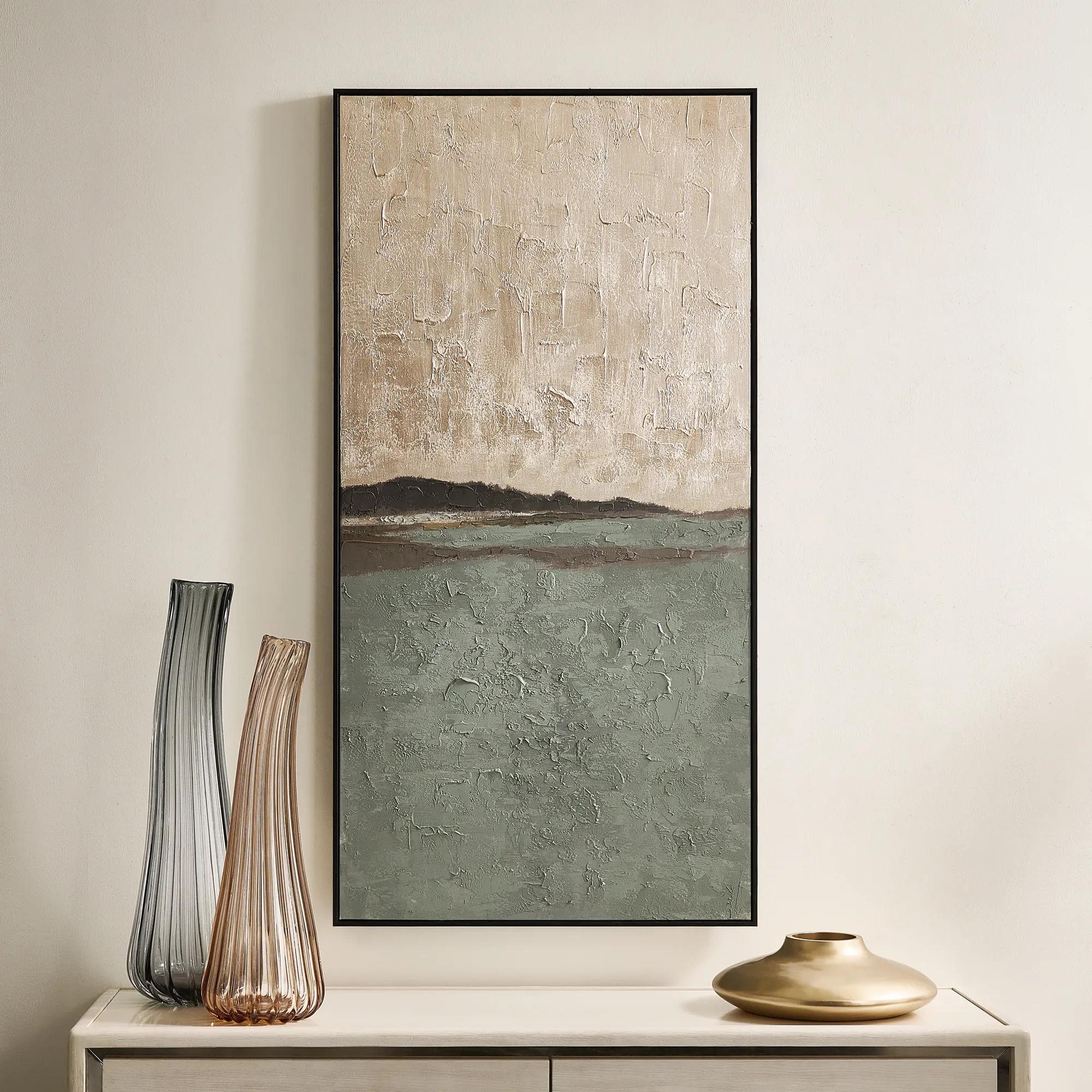 Fields of Gold Framed Painted Wall Art 60" x 30"$399
A hand-painted sage and champagne abstract canvas with a black frame, offering versatile vertical or horizontal display.
Add To Cart -
 Live Wire Framed Gold Foil Painted Wall Art II 39" x 39"$349
A framed wall artwork featuring gold foil-painted detailing for glamorous modern display.
Add To Cart -
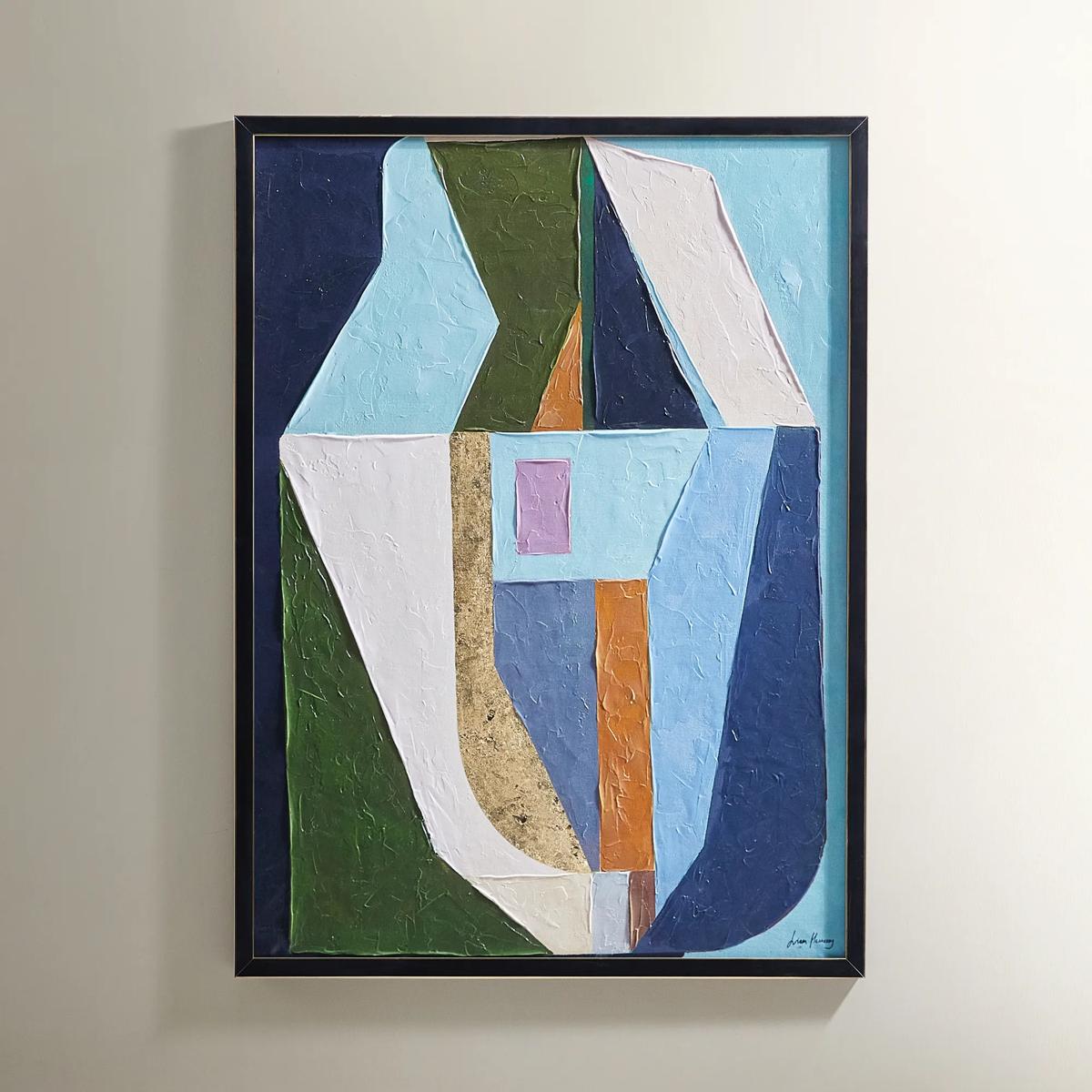 Thought Provoking Painting 2$249
A hand-embellished canvas artwork featuring textured strokes in deep blue, olive green, and gold accents.
Add To Cart -
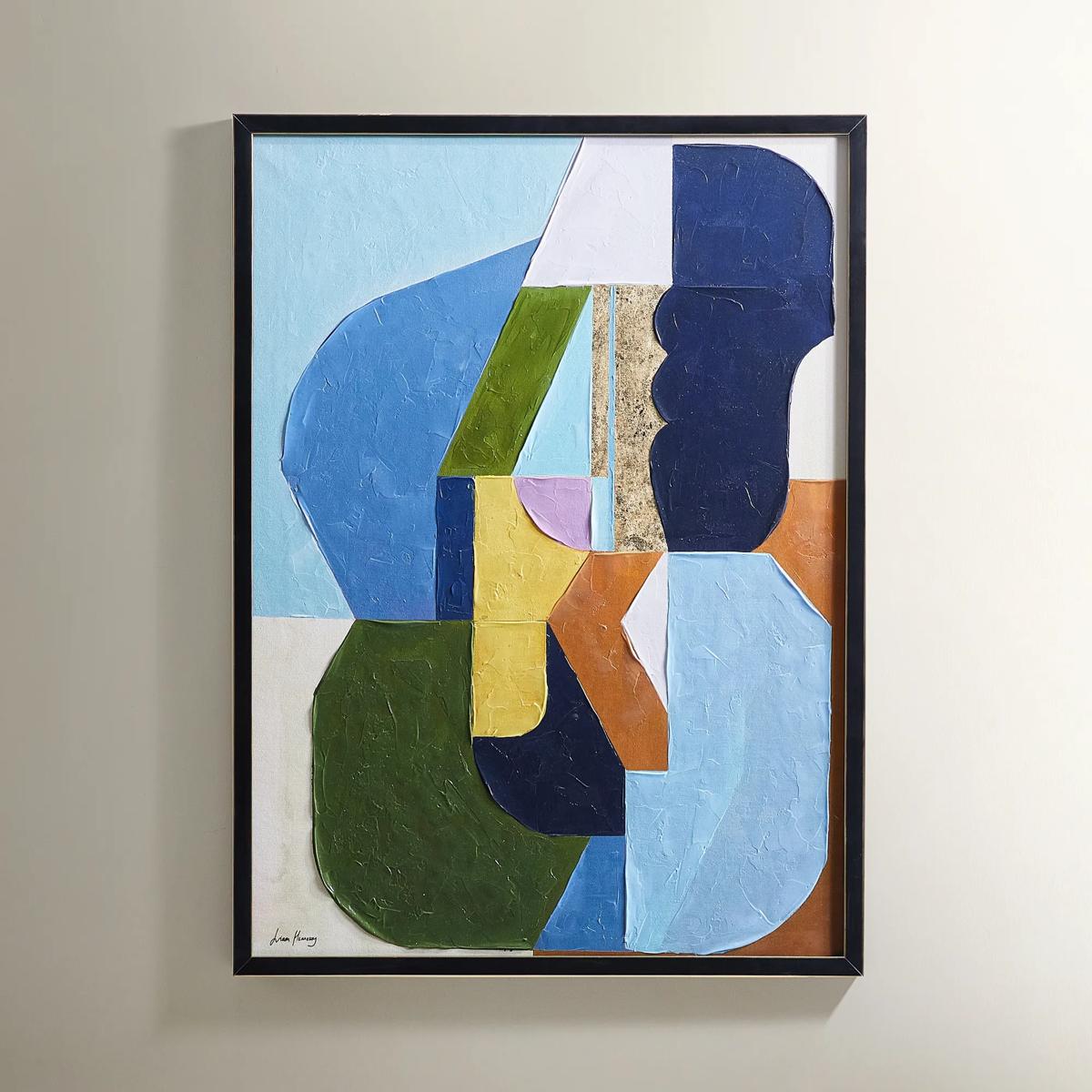
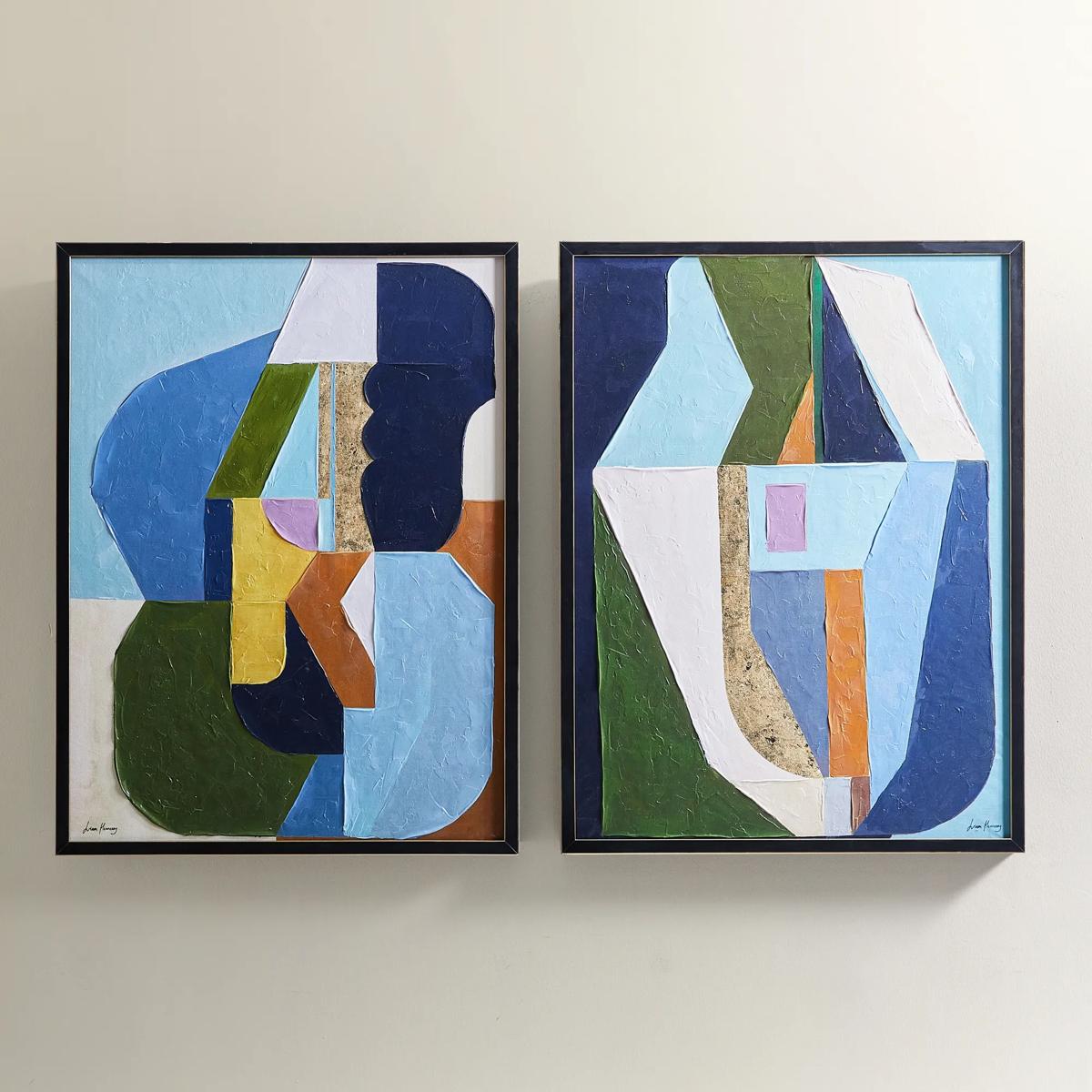 Thought Provoking Painting 1$249
A hand-embellished canvas artwork featuring textured strokes in deep blue, olive green, and gold accents.
Add To Cart -

 Floral Jungle II Framed Wall Art 30" x 40"$799
A striking gold-framed canvas artwork depicting lush tropical foliage in an expressive botanical composition.
Add To Cart -
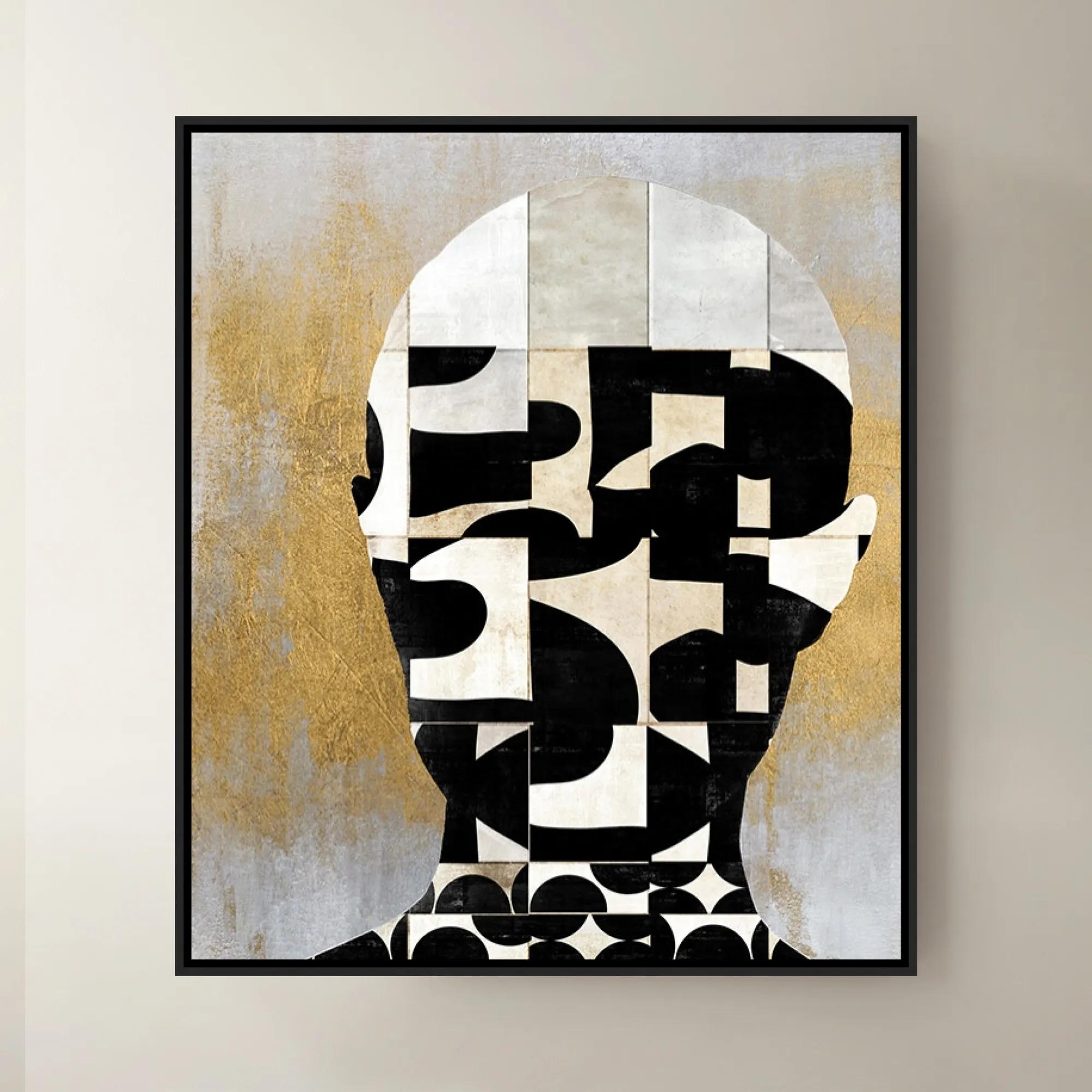
 Lets Face It II Framed Wall Art 30" x 35"$699
A striking contemporary art piece showcasing bold design and creative flair by a renowned interior designer.
Add To Cart -
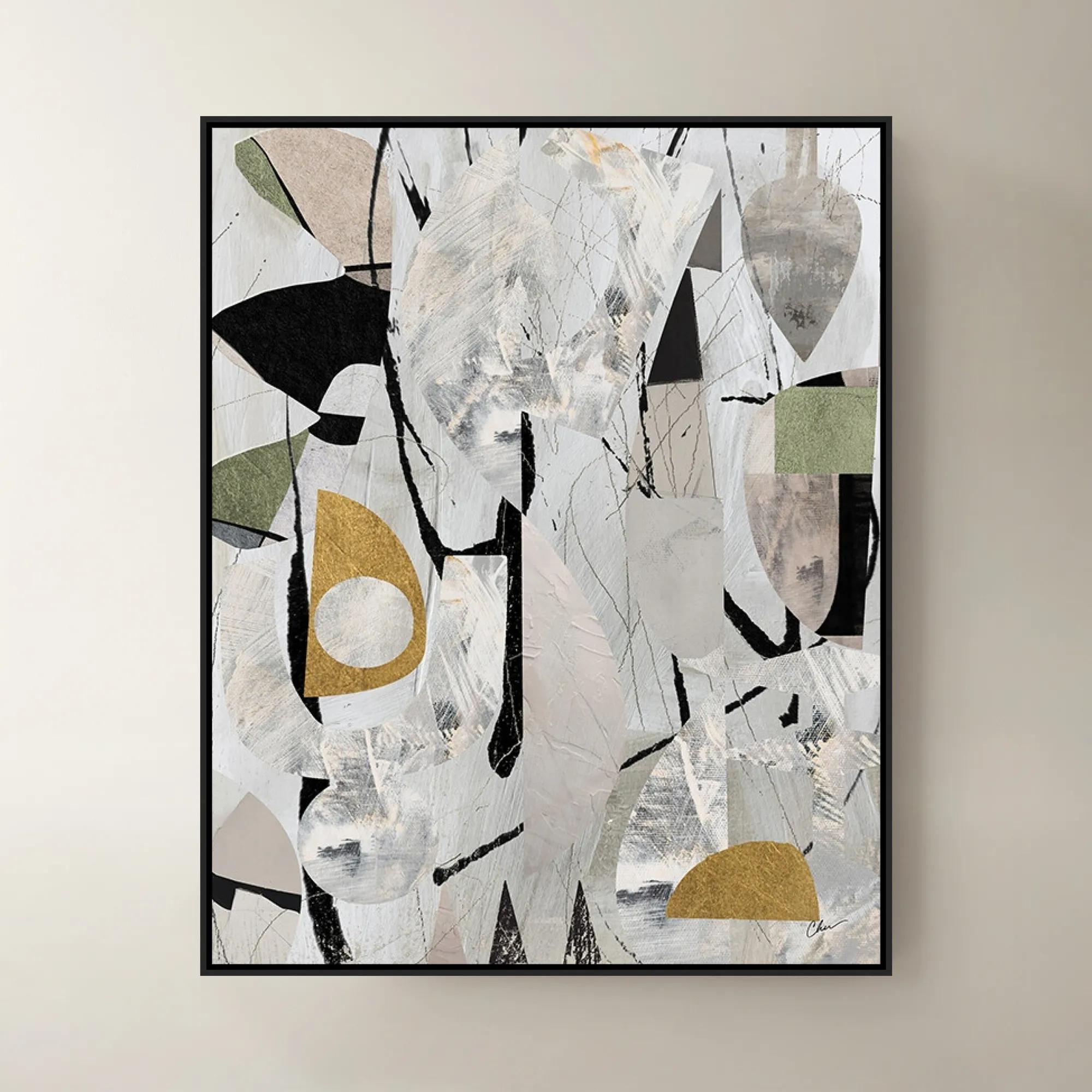
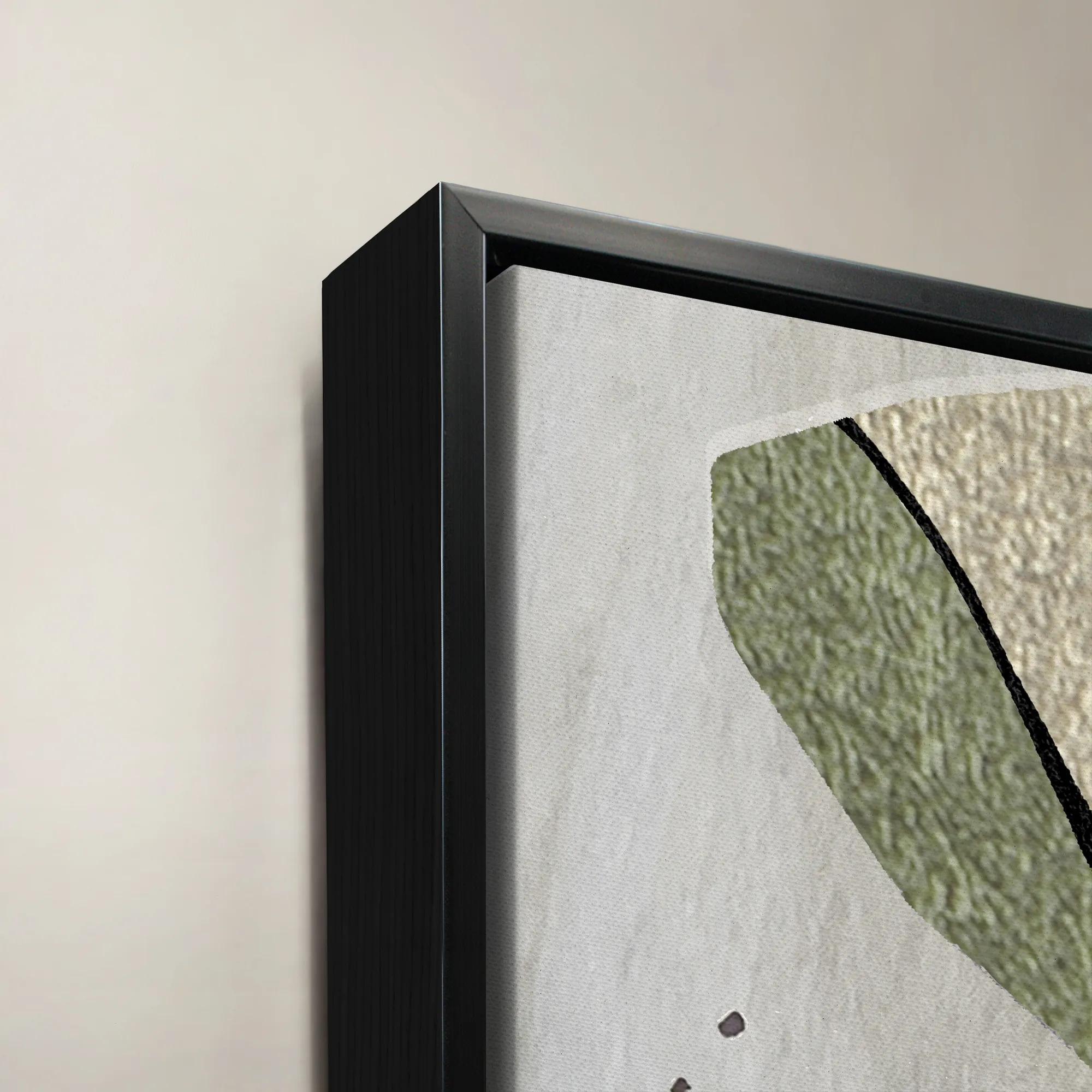 Rogue IV Framed Wall Art 40" x 50"$1199
An abstract art piece designed by Nikki Chu, blending modern style with artistic sophistication.
Add To Cart

Black And Gold Hand Painted Arts
Black And Gold Hand Painted Arts ignite a sense of daring sophistication, transforming blank walls into captivating showcases of artistry. Each piece is a celebration of contrast—jet-black depths kissed by luminous gold, evoking both mystery and opulence in a single brushstroke. These works are more than mere décor; they are statements of confidence, infusing your space with drama, intrigue, and a whisper of glamour. Let your home become a gallery where every glance reveals new layers of texture, shimmer, and expressive design—because true style lives in the details.
Black and gold hand-painted art brings together the depth of dark pigment and the warmth of gold-toned accents, creating wall decor with striking contrast and a distinctly expressive presence. Black gives a composition weight, drawing attention to its shapes, negative space, and movement; gold introduces luminosity, whether it appears as a delicate line, a sweeping brushstroke, or a richly textured passage. Together, these colors can feel architectural and restrained or exuberant and theatrical, depending on how the artist balances them. An expansive black field crossed by fine gold marks offers a different mood from a densely layered canvas alive with gestural strokes. Abstract compositions are especially compelling in this palette because the eye follows the relationship between color, surface, and light rather than a single recognizable subject. Geometric arrangements bring a sense of order, while organic forms and irregular edges introduce spontaneity. The distinction between metallic gold and gold-colored pigment matters: metallic finishes reflect light, while nonmetallic ochre and golden hues convey warmth without the same shimmer. Hand-painted artwork may reveal visible brushwork, uneven layers, and subtle shifts in coverage that give the surface its character. Those variations are part of the appeal, though a hand-painted designation alone does not establish that a composition is a one-of-a-kind original. Fully painted works and prints with hand-applied embellishment are also different constructions, making the stated medium worth considering. Within an interior, black and gold wall art can serve as a dramatic focal point above a sofa, lend depth to an entryway, or bring visual authority to a home office. It appeals to those who favor confident interiors but do not necessarily want an entire room filled with color. Against ivory upholstery, warm wood, or a pale wall, the palette feels particularly defined; alongside velvet, smoked glass, and sculptural furnishings, it creates a more enveloping expression of glamour. Even a composition with generous open space can command attention when its darkest passages and luminous details are thoughtfully balanced.
Materials shape both the appearance and the experience of black and gold hand-painted wall art. Stretched canvas provides a woven foundation that may remain visible beneath thinner paint, while a rigid wood panel offers a firm support for crisp marks and certain dimensional treatments. Acrylic paint can be layered into opaque shapes, translucent passages, or textured gestures; oil paint can produce richly blended transitions and pronounced brushwork. Neither medium guarantees a particular look, so the actual surface treatment is as important as the material name. Raised texture may come from modeling paste, thicker paint, or other mixed-media applications, giving gold accents ridges and edges that catch illumination differently across the composition. Gold leaf, imitation gold leaf, and metallic paint are distinct finishes, not interchangeable terms. Leaf can create fragmented, reflective planes, while metallic paint can carry the direction of the brush through a continuous stroke. A gold-toned appearance should not be assumed to contain genuine gold. Resin and other glossy coatings, when specified, may deepen contrast and add sheen, although their reflectivity can also make window placement and nearby lamps more noticeable. For a wall opposite broad windows, a less reflective surface may preserve the visibility of the composition more consistently. Beside a shaded floor lamp, a lightly textured metallic passage can become an intimate detail rather than a room-wide shimmer. Framing adds another layer of definition: a slim black frame emphasizes the silhouette, a gold-toned frame extends the warmth, and a floating frame creates a narrow shadow around the painted support. An unframed canvas with finished edges has a different presence, allowing the image and its depth to remain the focus. Overall dimensions should account for any frame, and depth matters in narrow hallways where a projecting piece may feel intrusive. Related Hand Painted Gold Wall Decor offers another direction for interiors where gold is intended to take a more prominent role. Across these treatments, the most satisfying choice is often the one whose texture, finish, and proportions echo the room’s character without repeating every detail already within it.
Scale gives this palette its impact. Above a substantial sofa or sideboard, an artwork spanning roughly two-thirds to three-quarters of the furniture’s width often feels connected to the arrangement beneath it, though surrounding architecture and visual density can call for a different proportion. A broad, quiet composition may need more wall space than a smaller work packed with raised texture and bright metallic marks. For a pair or a coordinated grouping, the combined width and the spaces between pieces determine the overall balance. In a dining room, a horizontal arrangement can carry the line of a table; in an entryway with limited wall width, a vertical composition can accentuate height without overwhelming the passage. Placement should also suit how the room is experienced. Art viewed mainly from a seated position benefits from a relationship to the furniture, rather than being hung high simply to fill an empty wall. Leaving a measured gap above a console allows decorative objects to sit beneath the artwork without obscuring its lower edge. Secure installation is essential, with mounting hardware selected for the piece’s weight, its hanging system, and the wall’s construction. Most painted canvas and mixed-media wall art is intended for indoor display in dry, stable conditions, not exposed outdoor settings or areas subject to splashes and persistent moisture. Durability depends on the support, paint layers, finish, and handling; a protective coating does not make a painted surface scratchproof or washable. Direct sunlight can affect pigments and finishes over time, while strong heat and humidity fluctuations may stress supports and layered materials. Routine care generally means gentle dusting only when permitted by the maker’s instructions, without household sprays, abrasive cloths, or pressure on raised details. Flaking paint, delicate leaf, and fragile relief require particular caution. As a housewarming, wedding, or milestone gift, black and gold art is especially personal when the recipient’s taste, wall dimensions, and framing preferences are known. Chosen with that same attention for a living room, bedroom, or workspace, it gives the interior a deliberate point of expression: dark, luminous, and unmistakably individual.
FAQs
Black and gold hand-painted art is remarkably versatile, making it a striking addition to a variety of interiors. Its dramatic palette and luxurious finishes complement modern, contemporary, and Art Deco settings, while also providing a bold accent in more traditional or eclectic spaces. The interplay of deep black and radiant gold can either anchor a minimalist room with a touch of opulence or enhance richly layered spaces with additional depth and intrigue.
To create a captivating focal point, position your black and gold hand-painted artwork where it will naturally draw the eye—above a mantel, behind a sofa, or at the end of a hallway. The contrast and shimmer of gold detailing against a black background create instant visual drama. Pair with complementary lighting to amplify the metallic accents, and consider styling with neutral or jewel-toned furnishings to allow the artwork’s boldness to truly shine.
Absolutely. Black and gold hand-painted art makes an unforgettable gift for those who appreciate expressive design and luxurious details. Whether celebrating a milestone, honoring a special occasion, or welcoming someone to a new home, these pieces exude thoughtfulness and sophistication. Their timeless appeal and handcrafted artistry ensure they will be cherished for years to come.
Common themes include striking abstracts, mesmerizing geometric patterns, and evocative figurative works—such as portraits or silhouettes—often accentuated with gold leaf or foil. Some pieces explore cultural motifs, nature-inspired designs, or fluid lines that evoke movement and energy. The combination of black and gold lends each theme a sense of elegance and drama.
Artists often use gold leaf, gold foil, or metallic paints to achieve the luminous gold accents characteristic of this style. These materials are meticulously applied by hand, sometimes layered over textured paste or thick paint to create a dynamic, tactile surface. The result is a multidimensional effect that catches and reflects light, infusing the artwork with a sense of richness and depth.