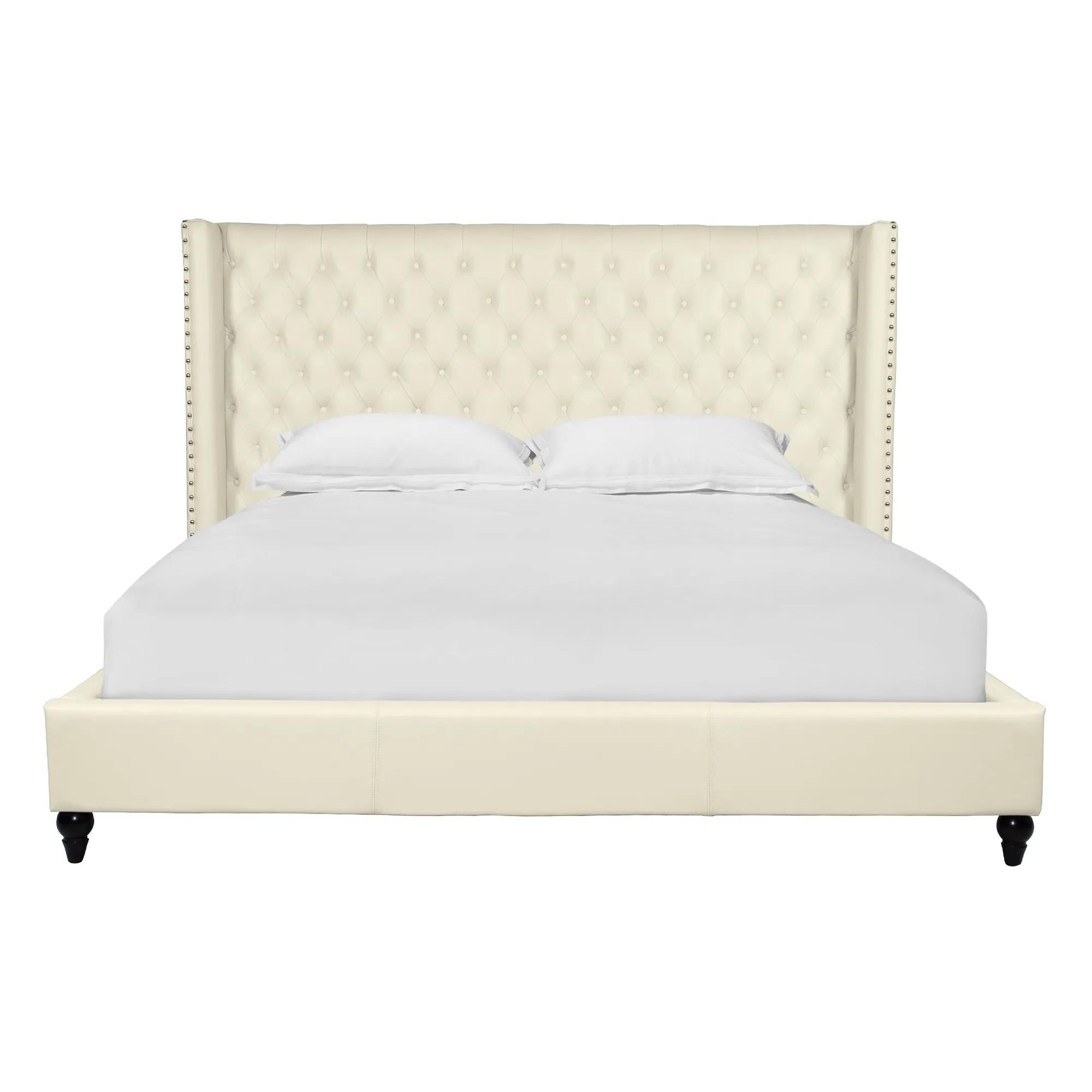
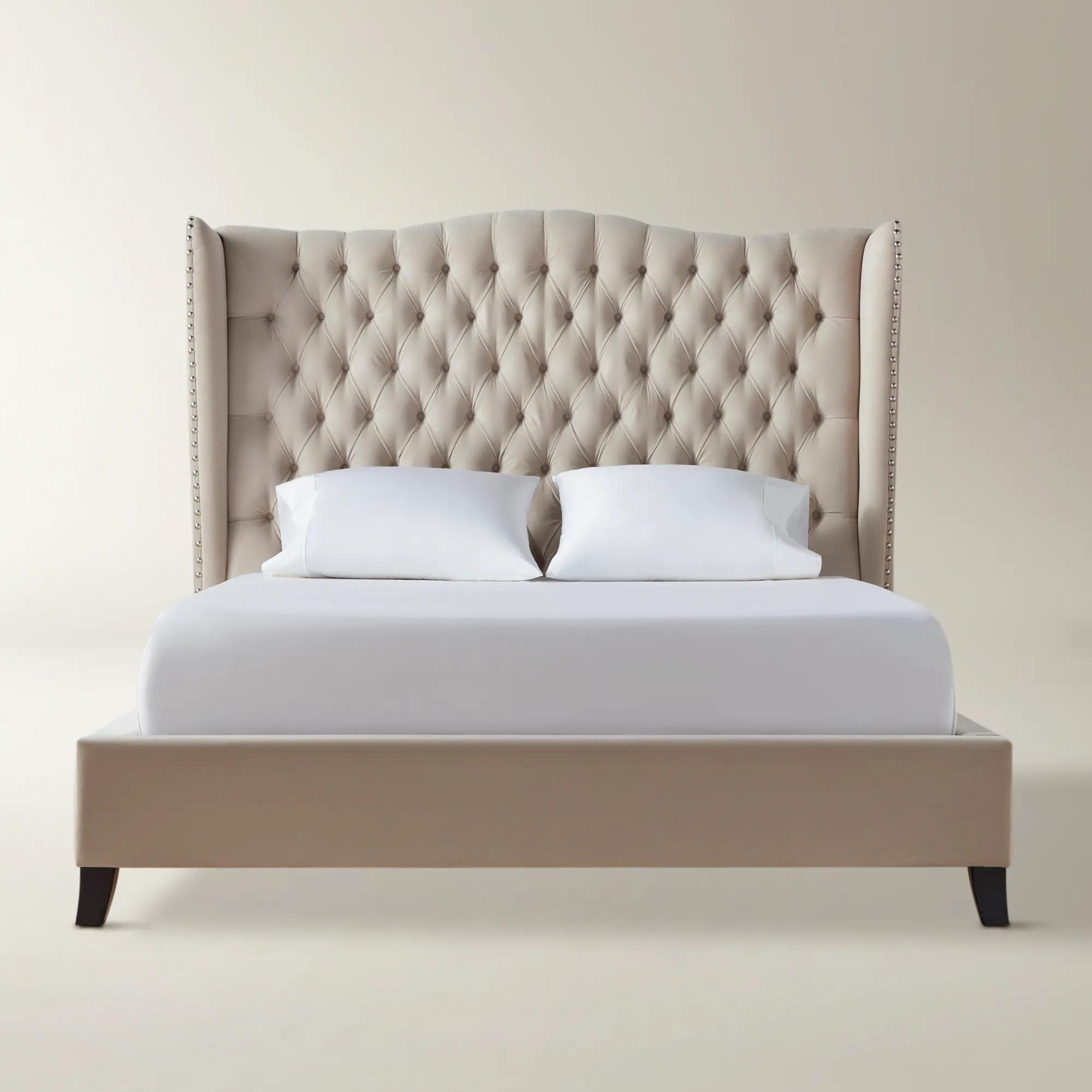
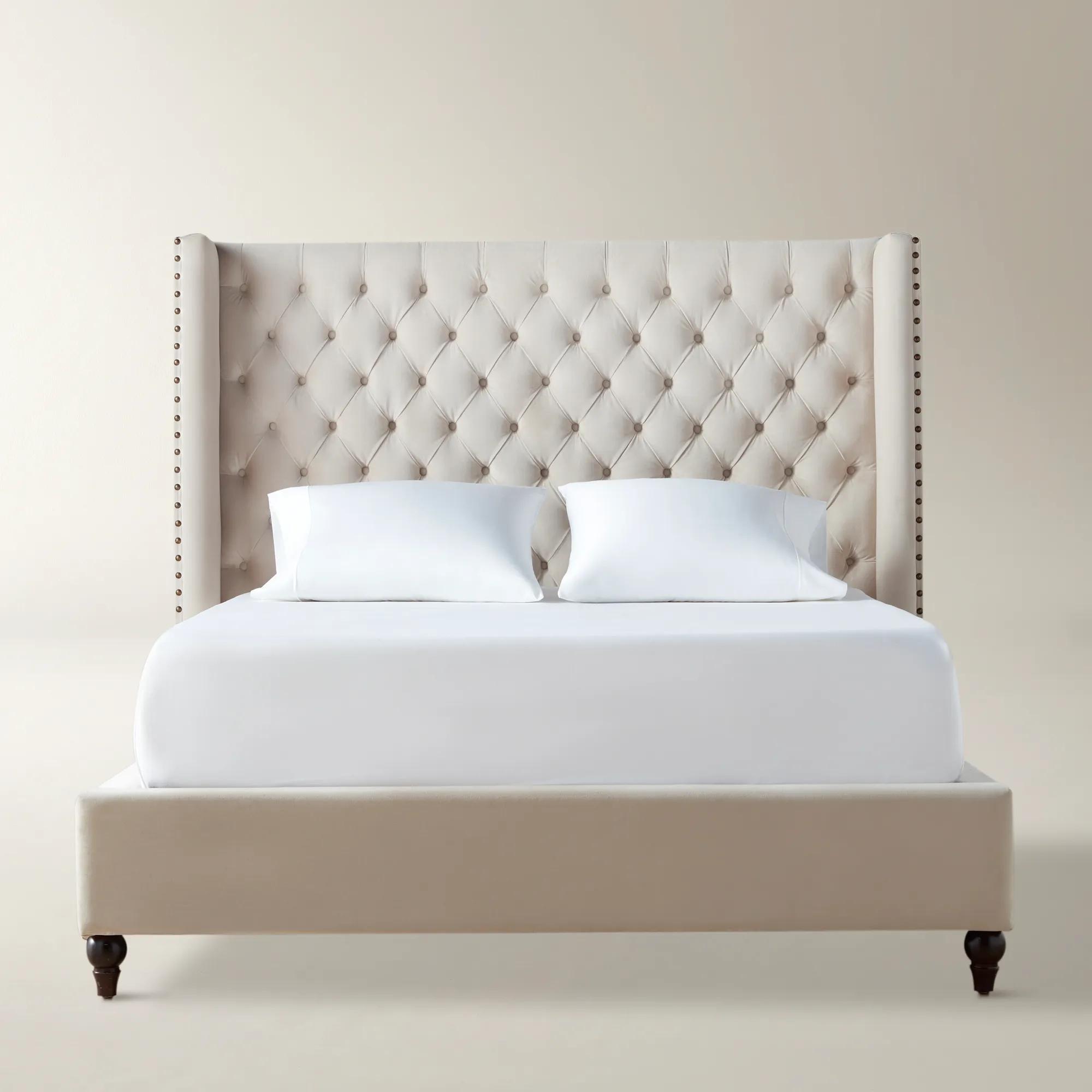
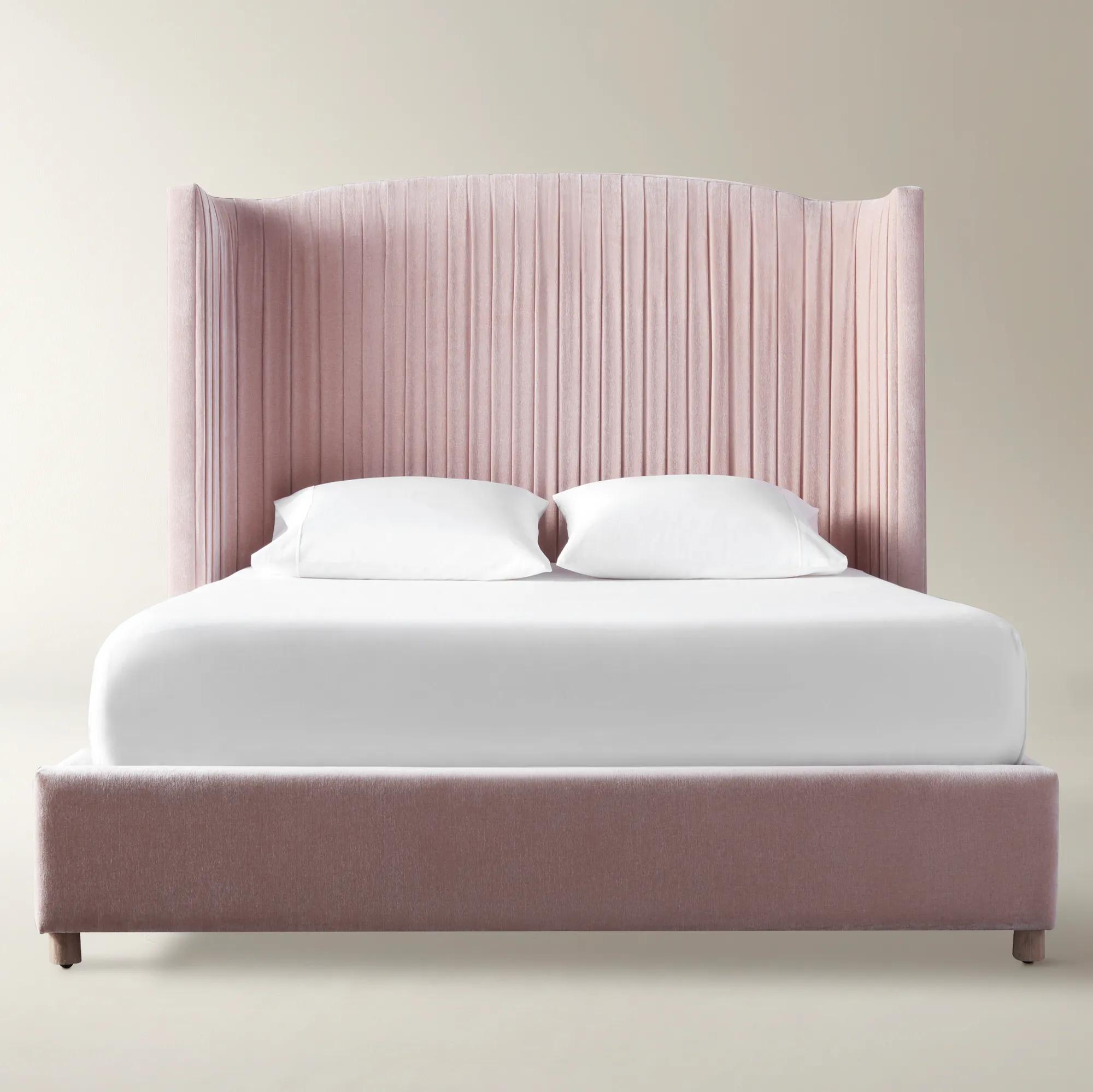
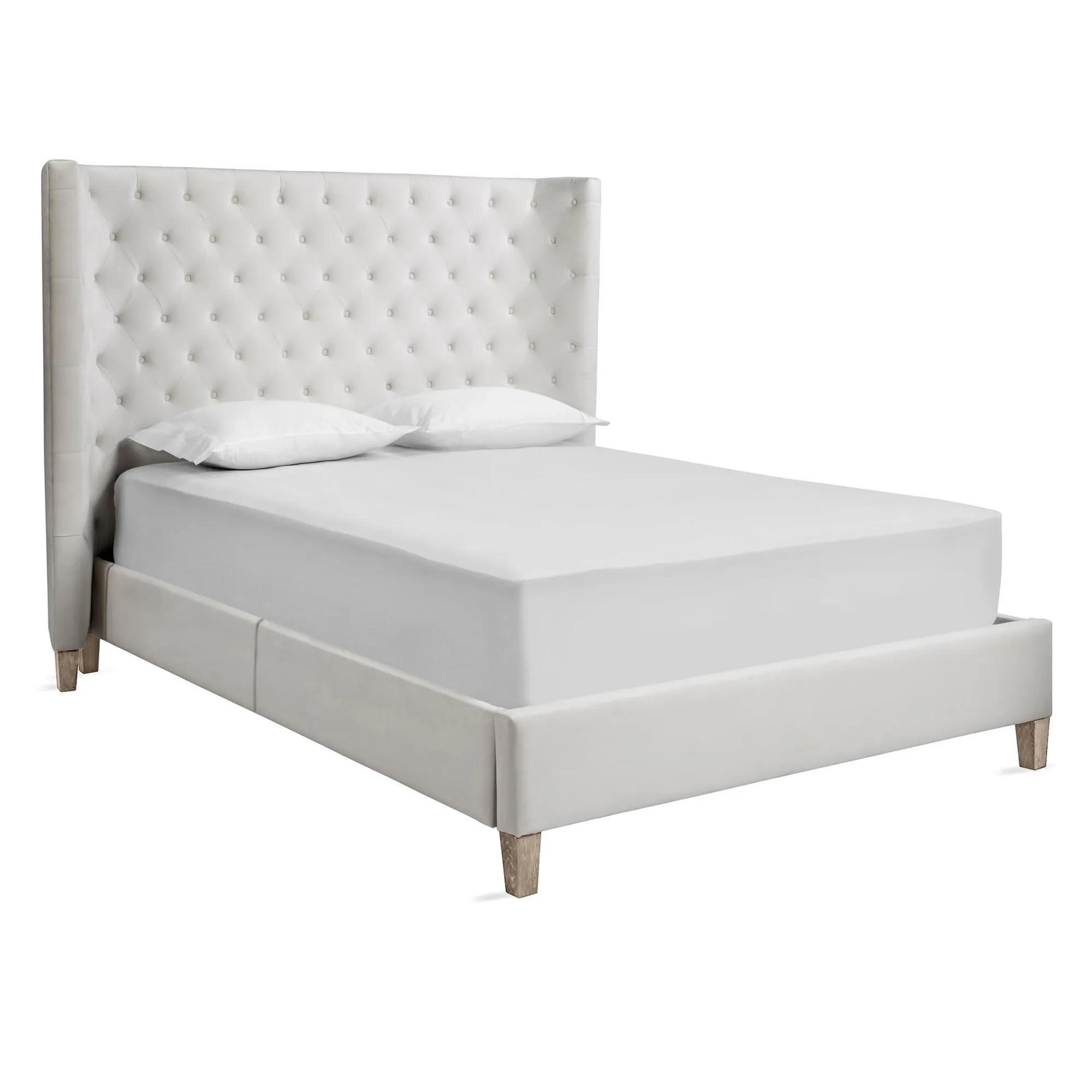
Beds With Velvet Headboards
Beds With Velvet Headboards
-
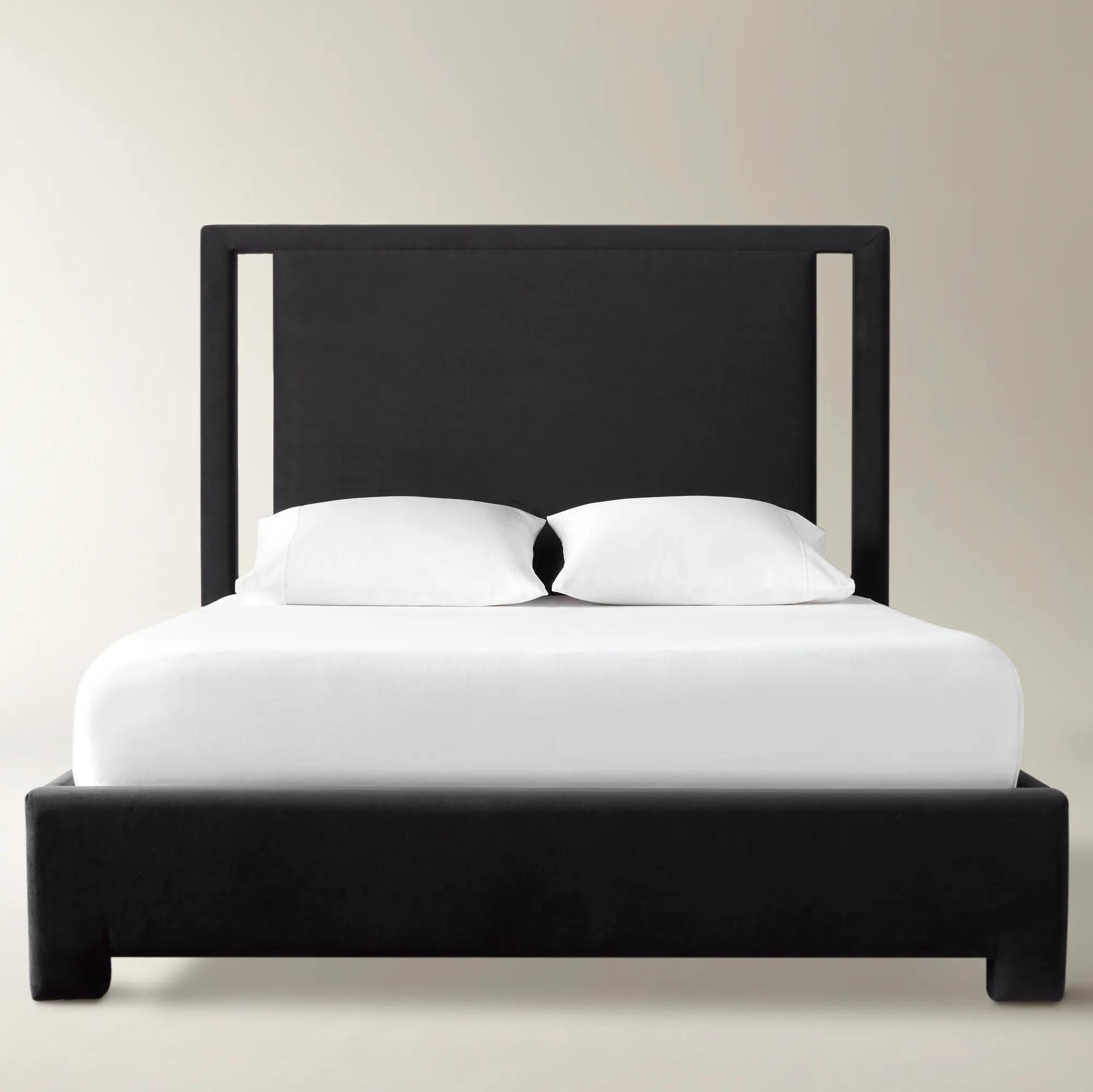
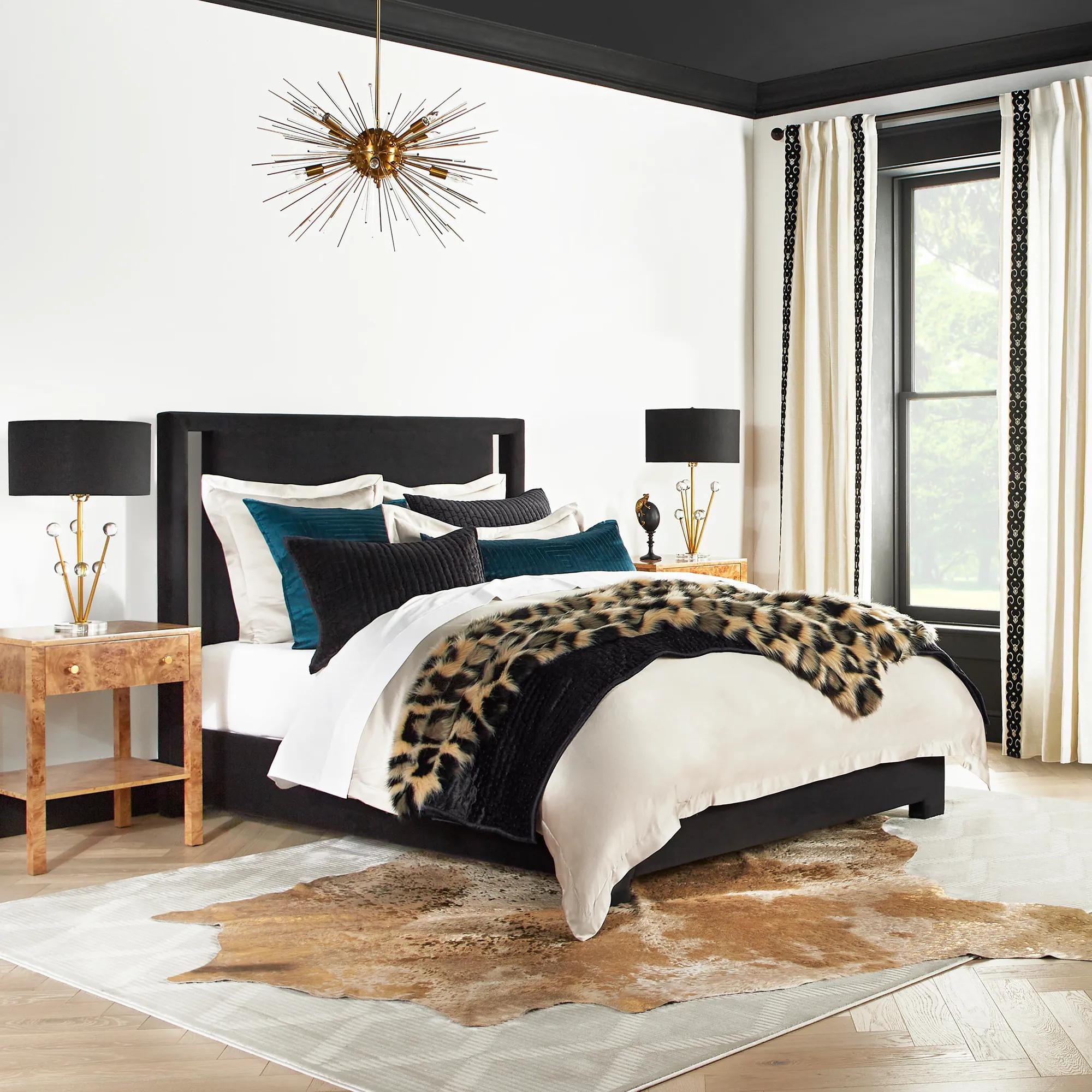 Roya Platform Bed$2199
An elegant platform bed featuring kiln-dried hardwood, hand-tailored velvet upholstery, and dramatic headboard cutouts.
Add To Cart -
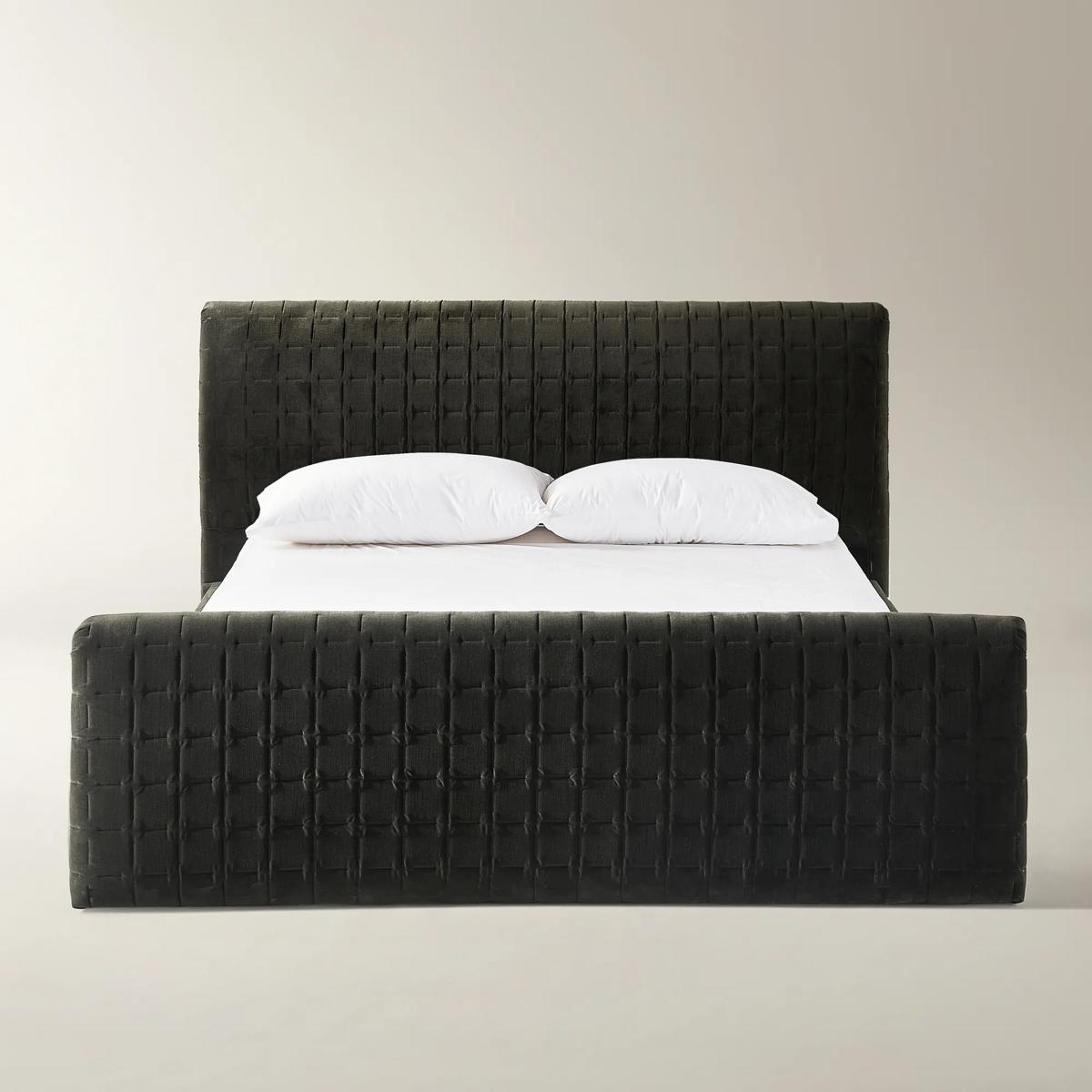 Vanta Charcoal Velvet Upholstered King Platform Bed$2499
A charcoal velvet bed with hand-tufted checker quilting and stainless steel inlays for modern sophistication.
Add To Cart -
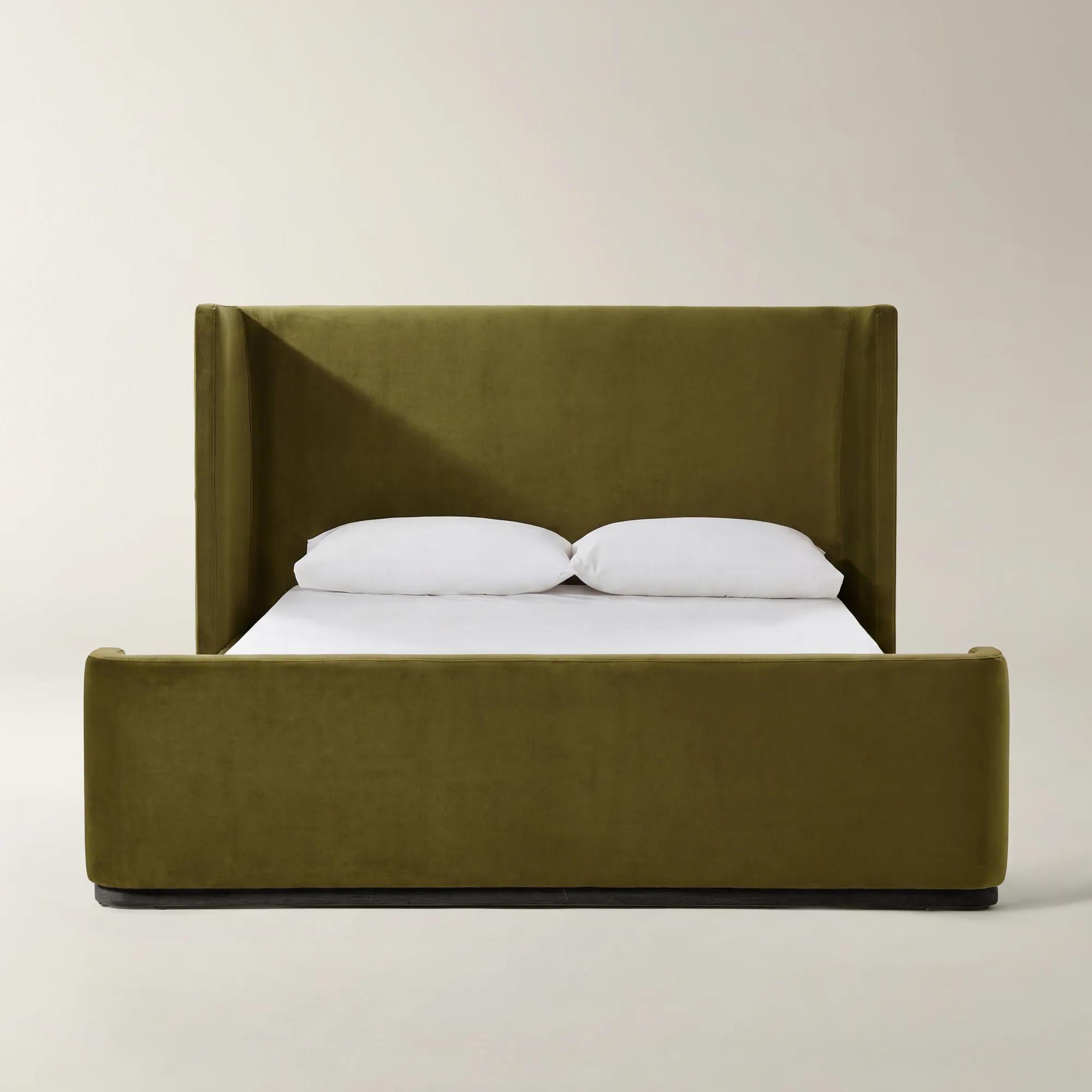
 Stria Deep Olive Velvet Upholstered King Platform Bed$2499
A deep olive velvet platform bed with a sculptural wingback headboard and FSC-certified oak base.
Add To Cart -
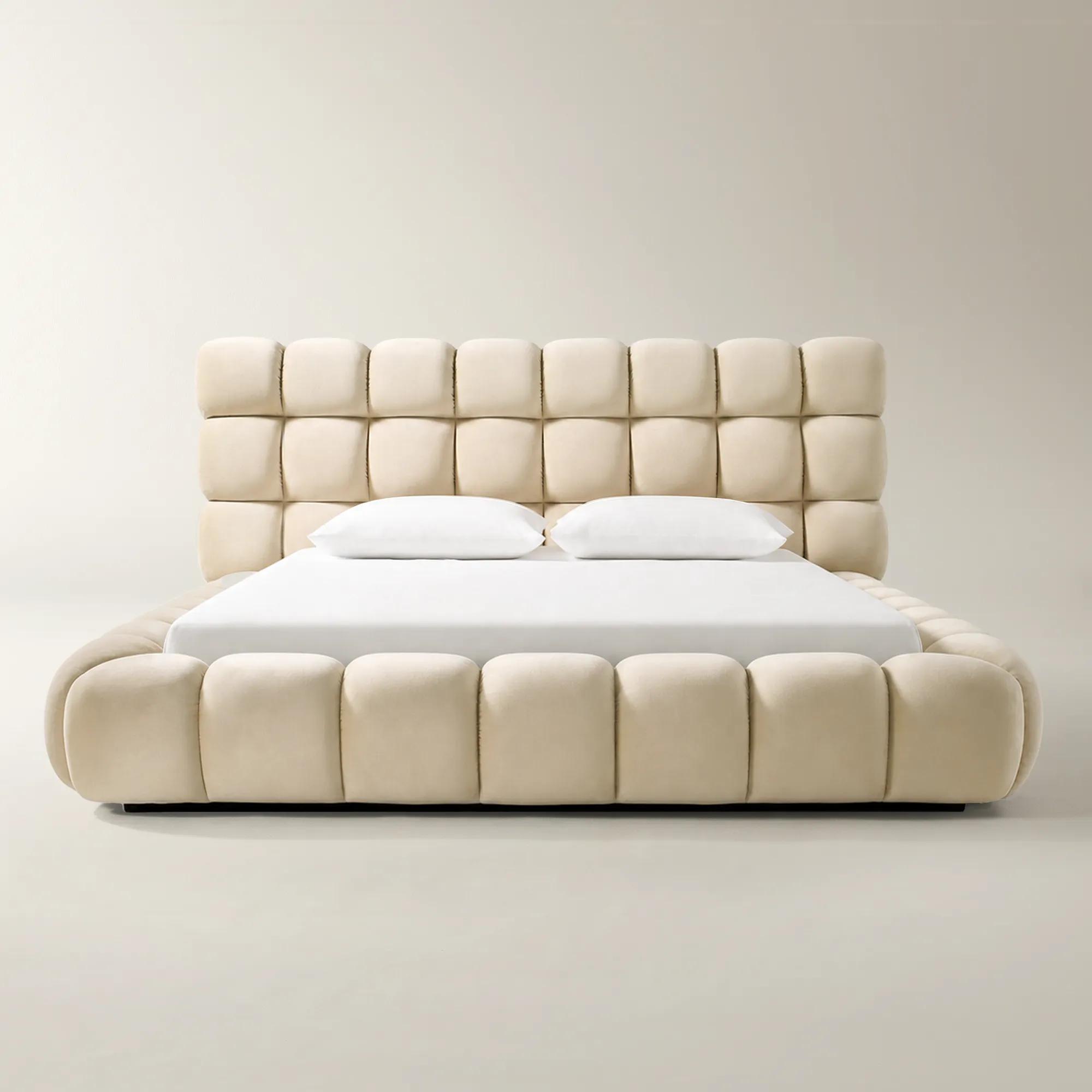 Paloma Tufted Oatmeal Velvet Upholstered Queen Platform Bed$2399
A sculptural platform bed upholstered in plush oatmeal velvet with oversized tufted blocks and solid wood frame.
Add To Cart -
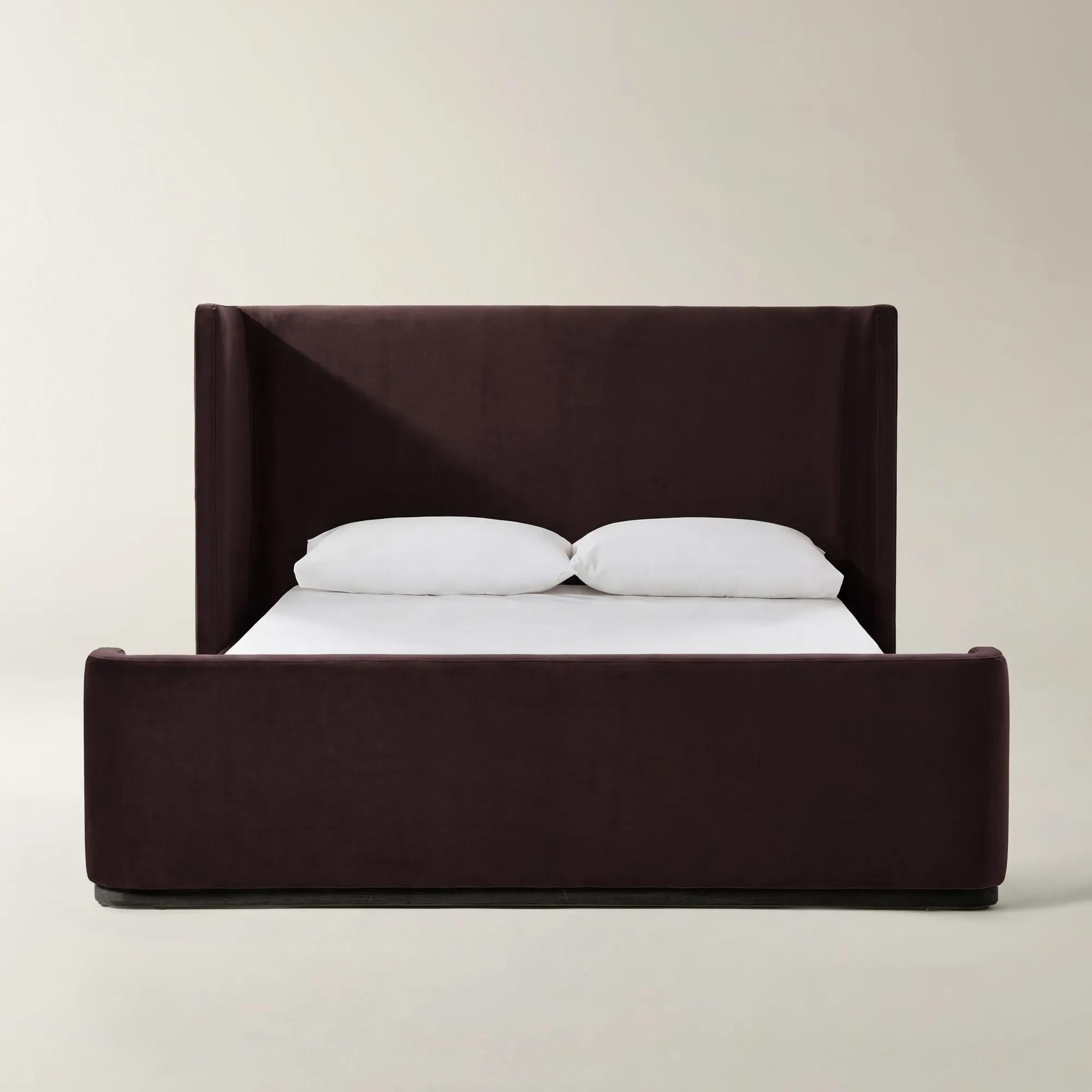
 Stria Fig Velvet Upholstered King Platform Bed$2499
A sculptural fig velvet wingback platform bed with an FSC-certified solid oak base and supportive construction.
Add To Cart -
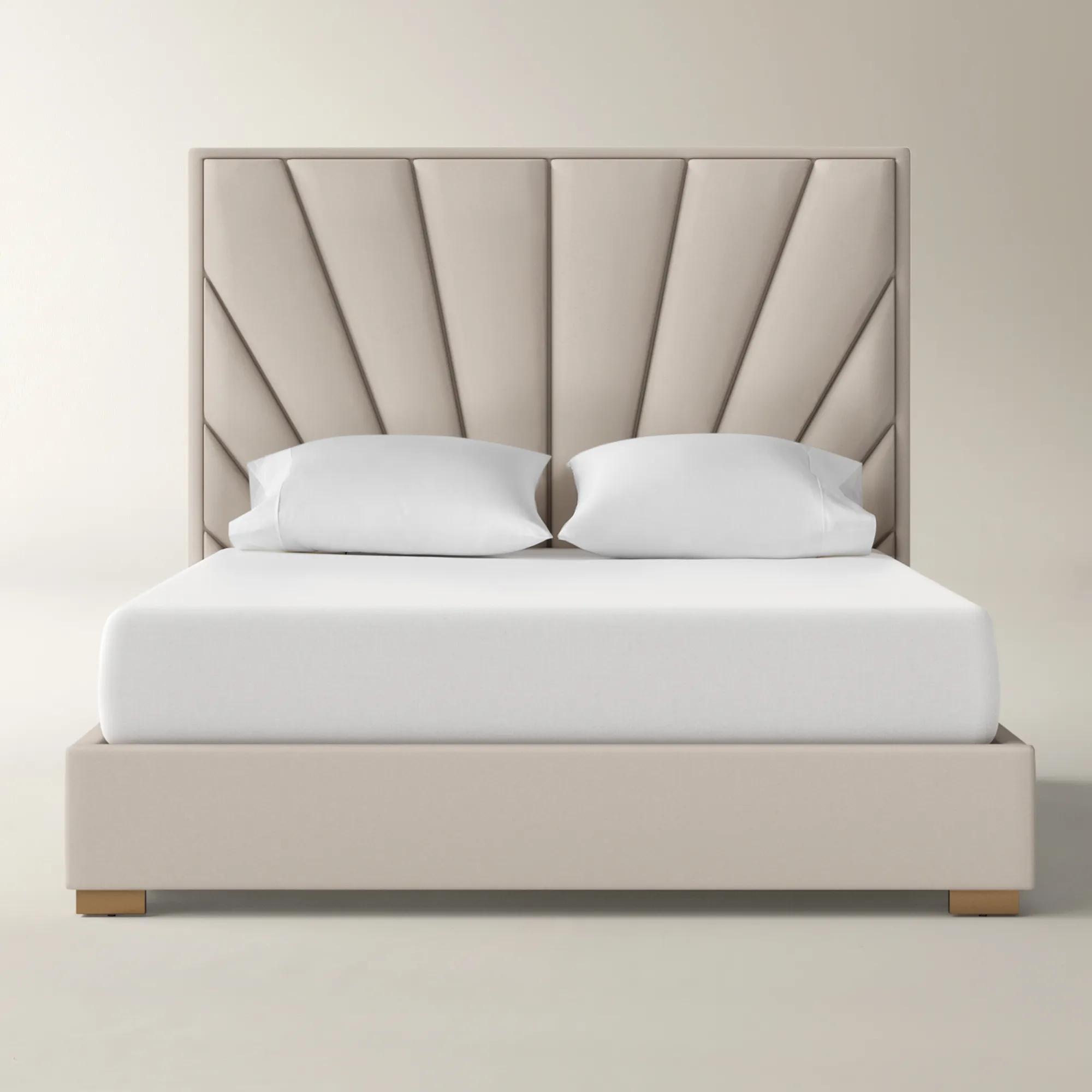 Adriana Platform Bed - 68"H$2649
A hand-crafted platform bed featuring a fan-patterned, upholstered headboard in plush velvet or chenille fabric.
Add To Cart -
Stria Fig Velvet Upholstered Queen Platform Bed$2299
A sculptural fig velvet wingback platform bed with an FSC-certified oak base and supportive foam-padded construction.
Add To Cart -
Vanta Charcoal Velvet Upholstered Queen Platform Bed$2299
A sculptural bed featuring charcoal velvet upholstery, three-dimensional checker quilting, and sleek stainless steel inlays.
Add To Cart -
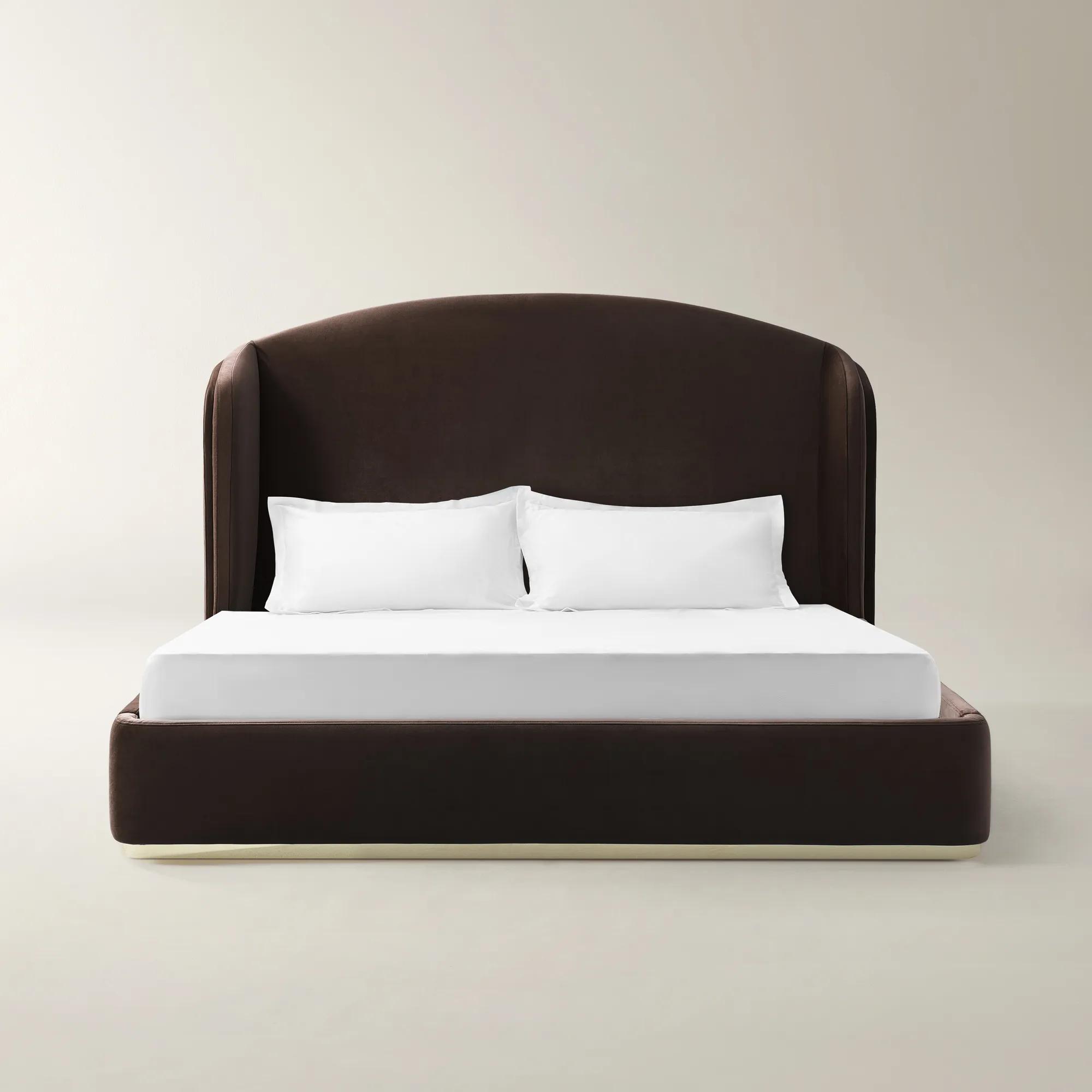
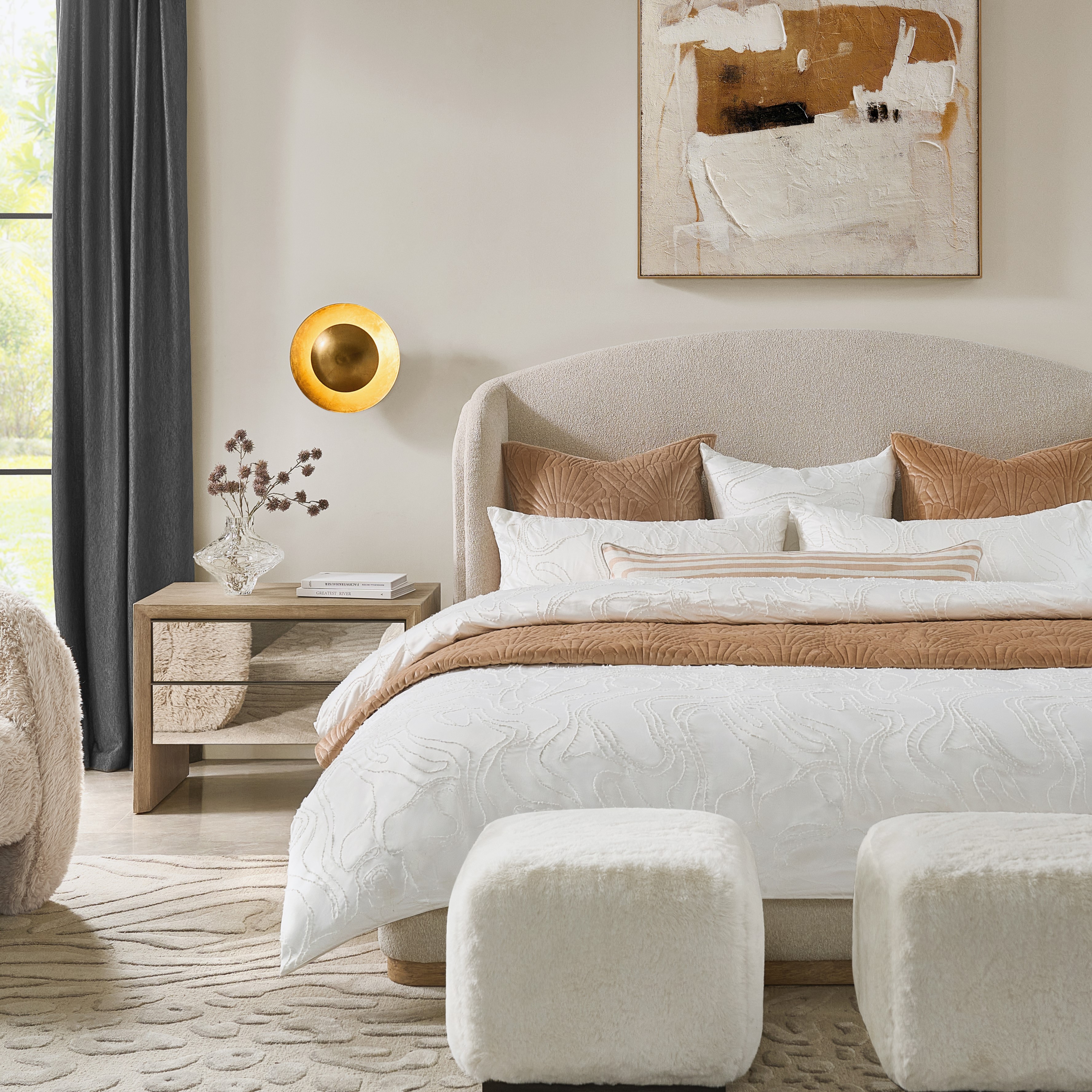 Glimmer Dark Chocolate Velvet Upholstered Queen Platform Bed$2099
A dark chocolate velvet platform bed featuring a sculpted double-layer headboard and solid rubberwood base.
Add To Cart -
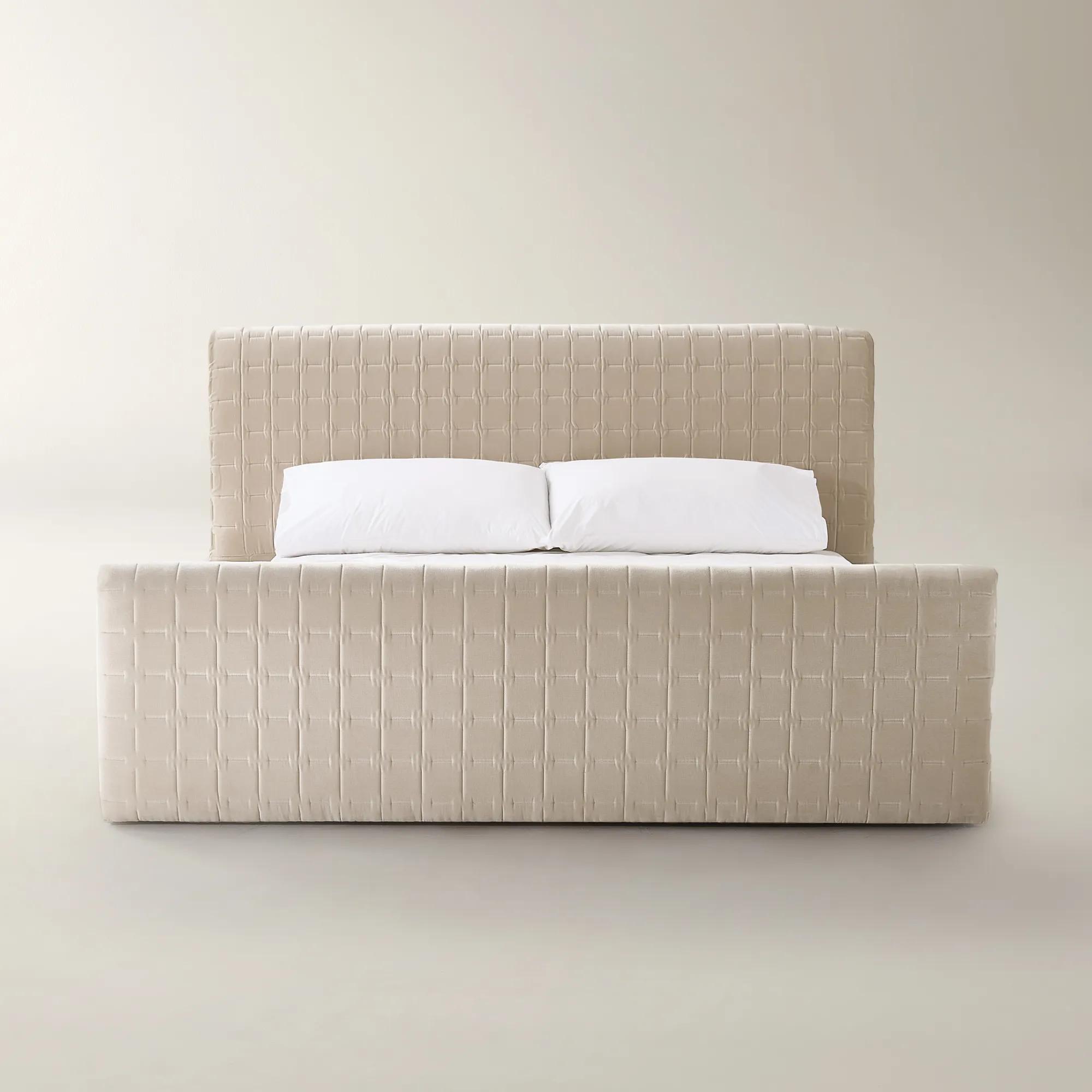
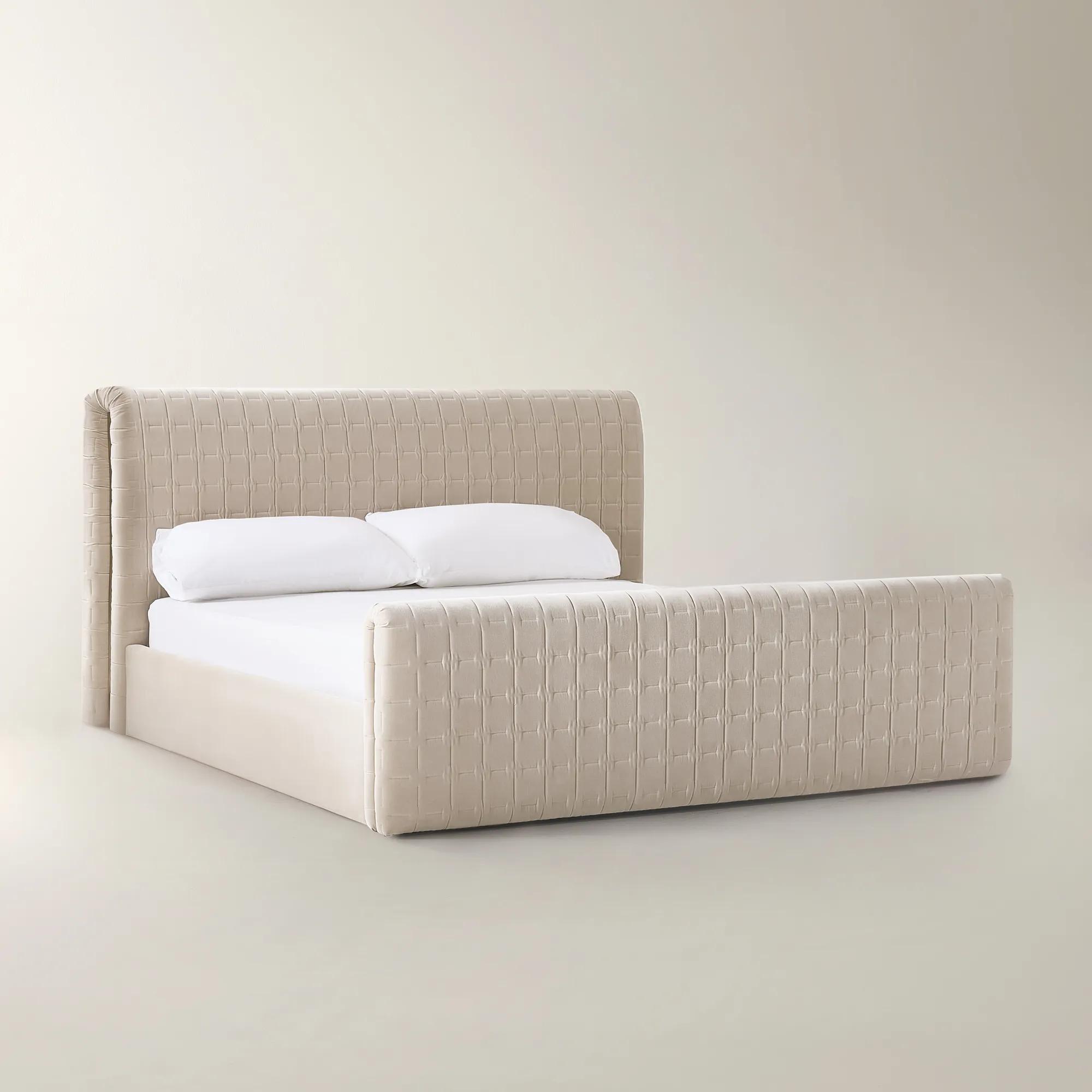 Vanta Oatmeal Velvet Upholstered King Platform Bed$2499
An oatmeal velvet-upholstered bed featuring a checker-quilted headboard and elegant gold-toned metal inlays.
Add To Cart -
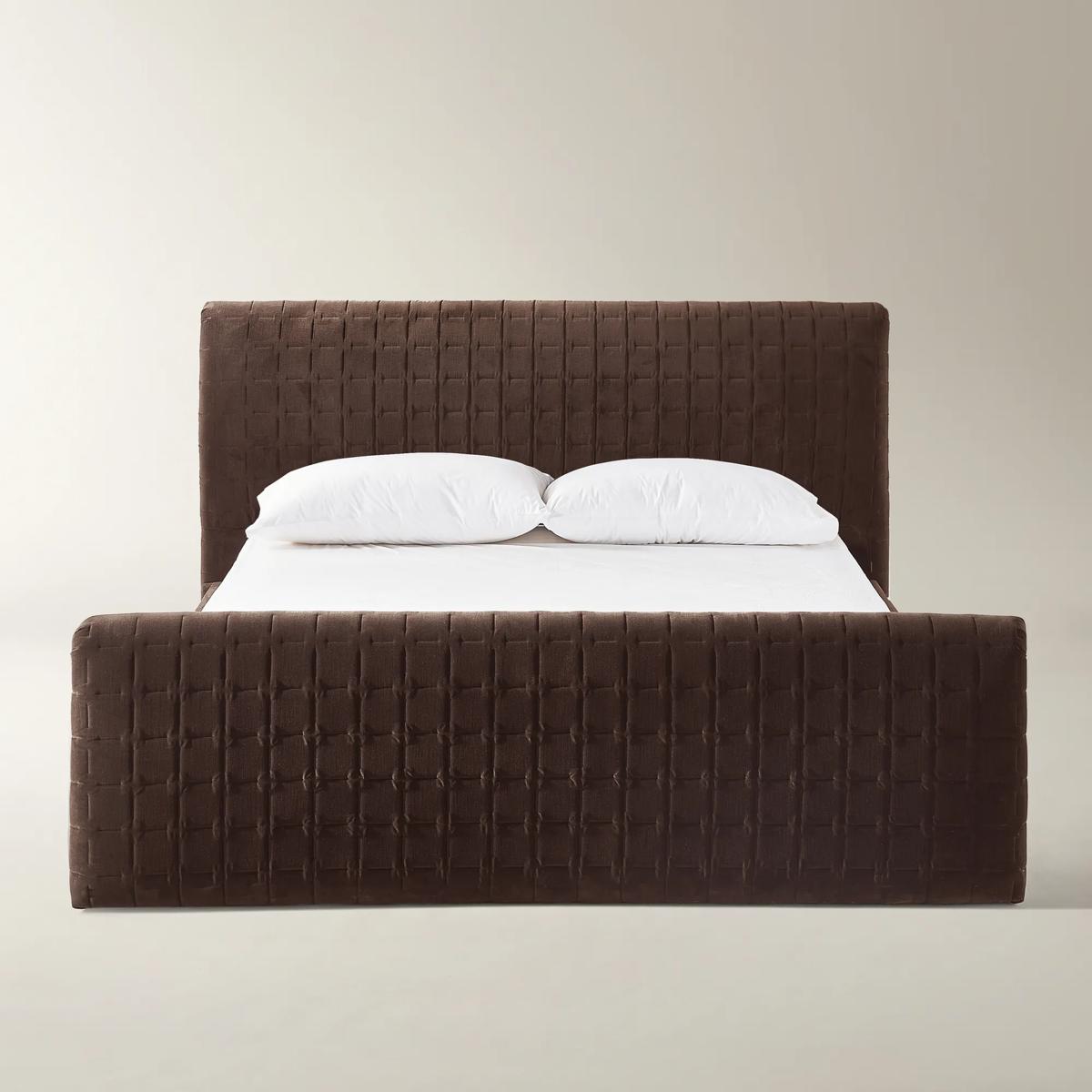
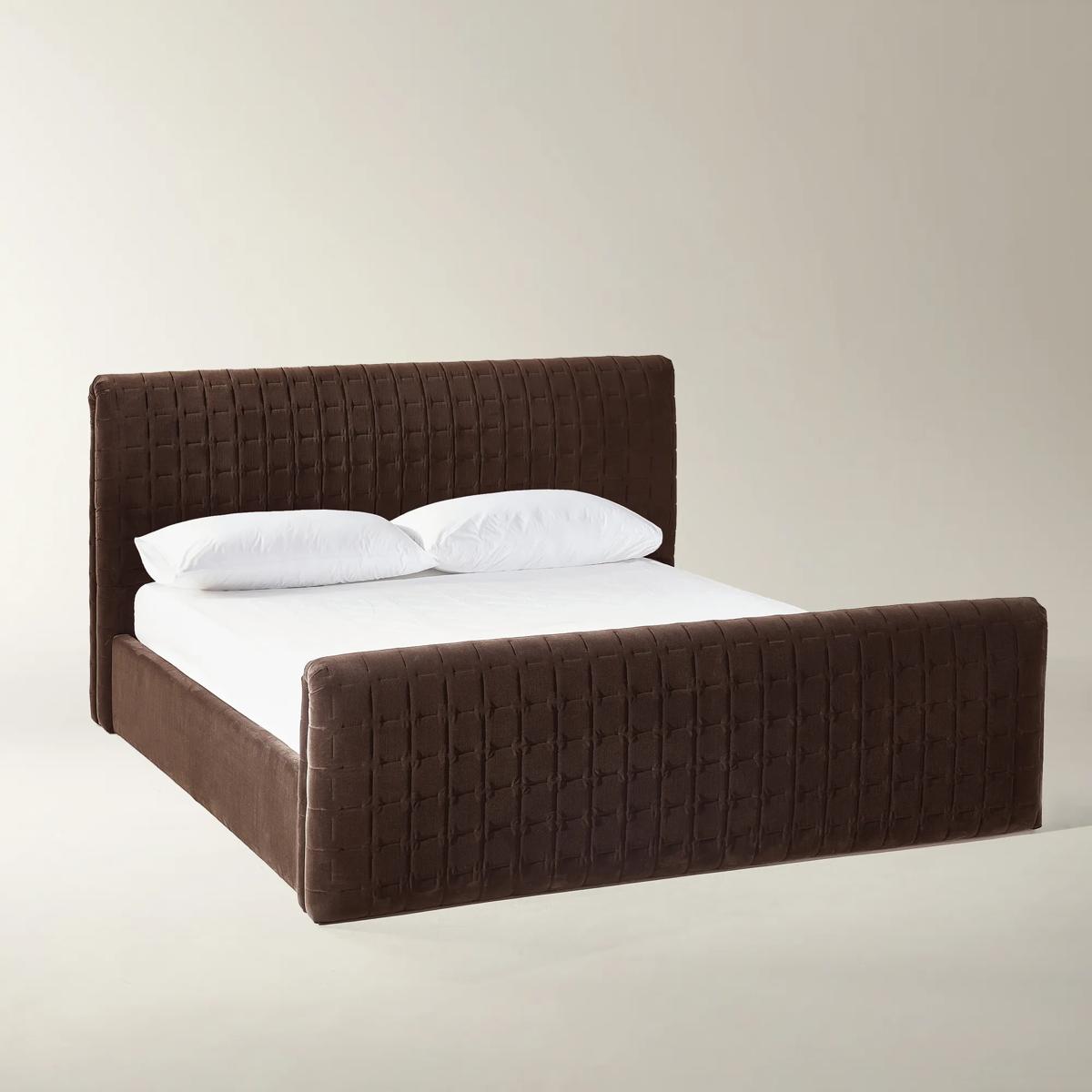 Vanta Burnt Umber Velvet Upholstered California King Platform Bed$2499
A chocolate velvet bed with hand-tufted checker quilting and brushed stainless steel inlays for modern elegance.
Add To Cart -
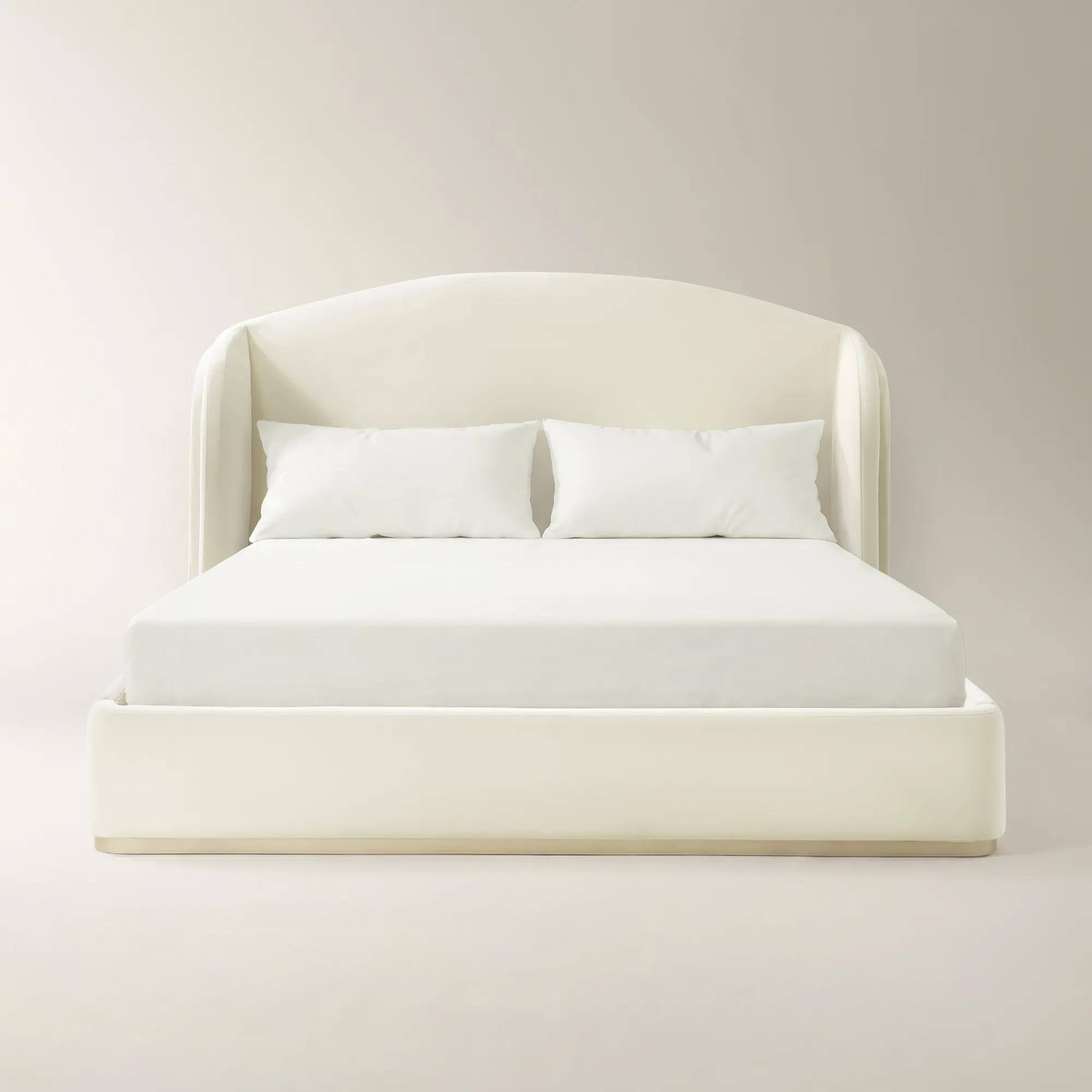 Glimmer Cloud Velvet Upholstered Queen Platform Bed$2099
A sculptural queen platform bed hand-upholstered in soft cloud velvet with a gold-toned metallic base.
Add To Cart -
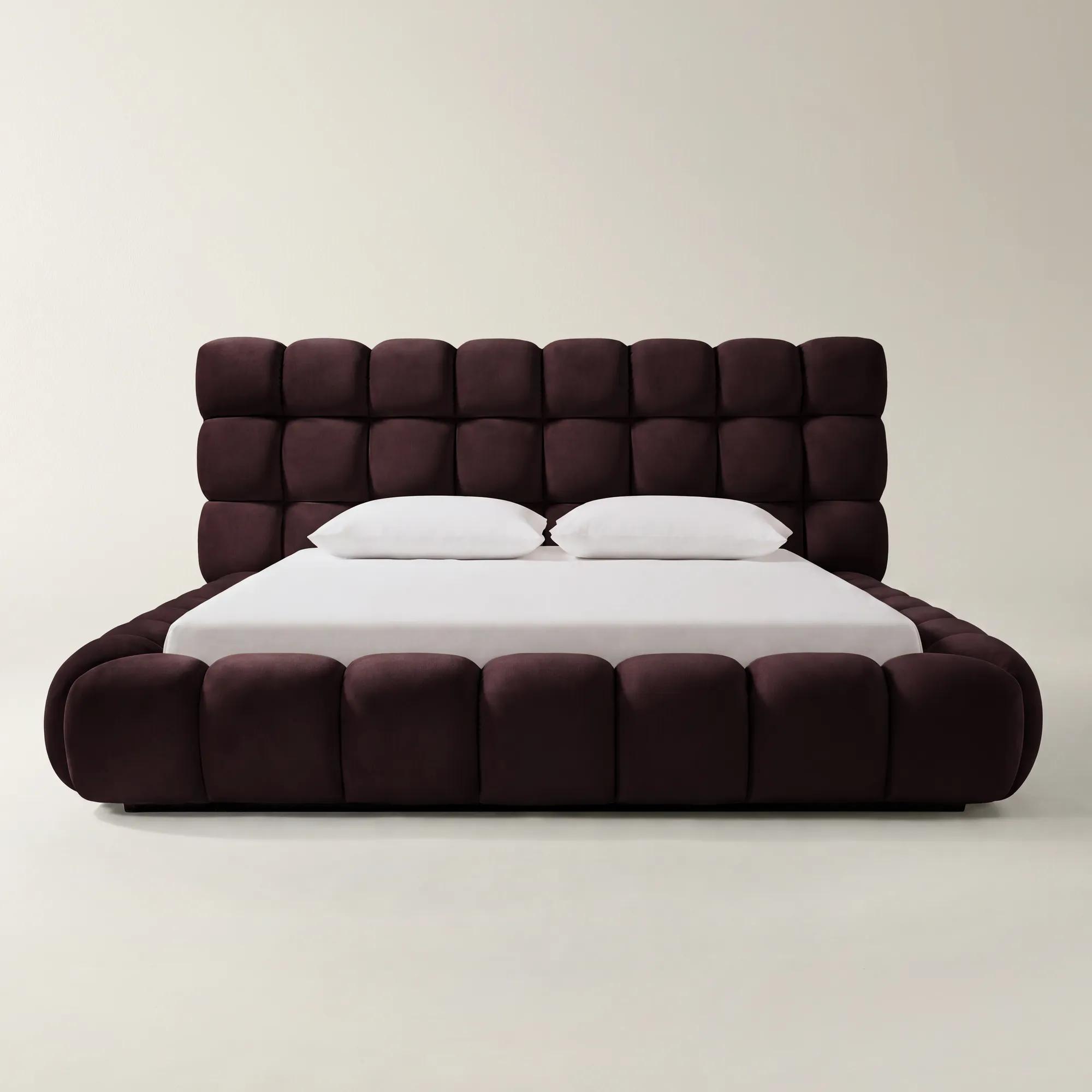 Paloma Tufted Fig Velvet Upholstered King Platform Bed$2599
A sculptural fig velvet upholstered platform bed with plush padding and durable solid wood construction.
Add To Cart -
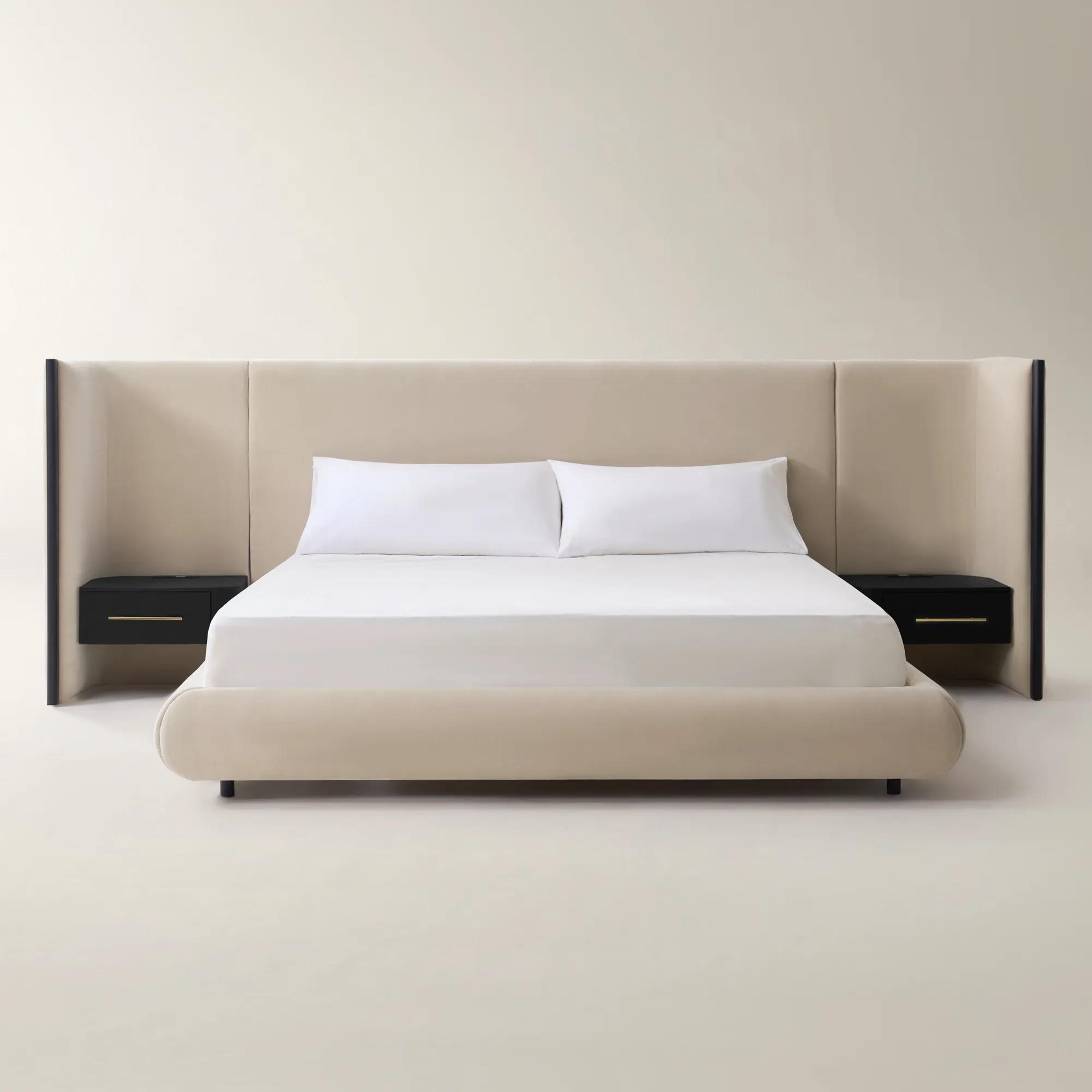 Sierra Oatmeal Velvet Upholstered King Bed With Nightstands$2899
An oatmeal velvet-upholstered platform bed with an extended headboard, floating nightstands, and built-in power access.
Add To Cart -
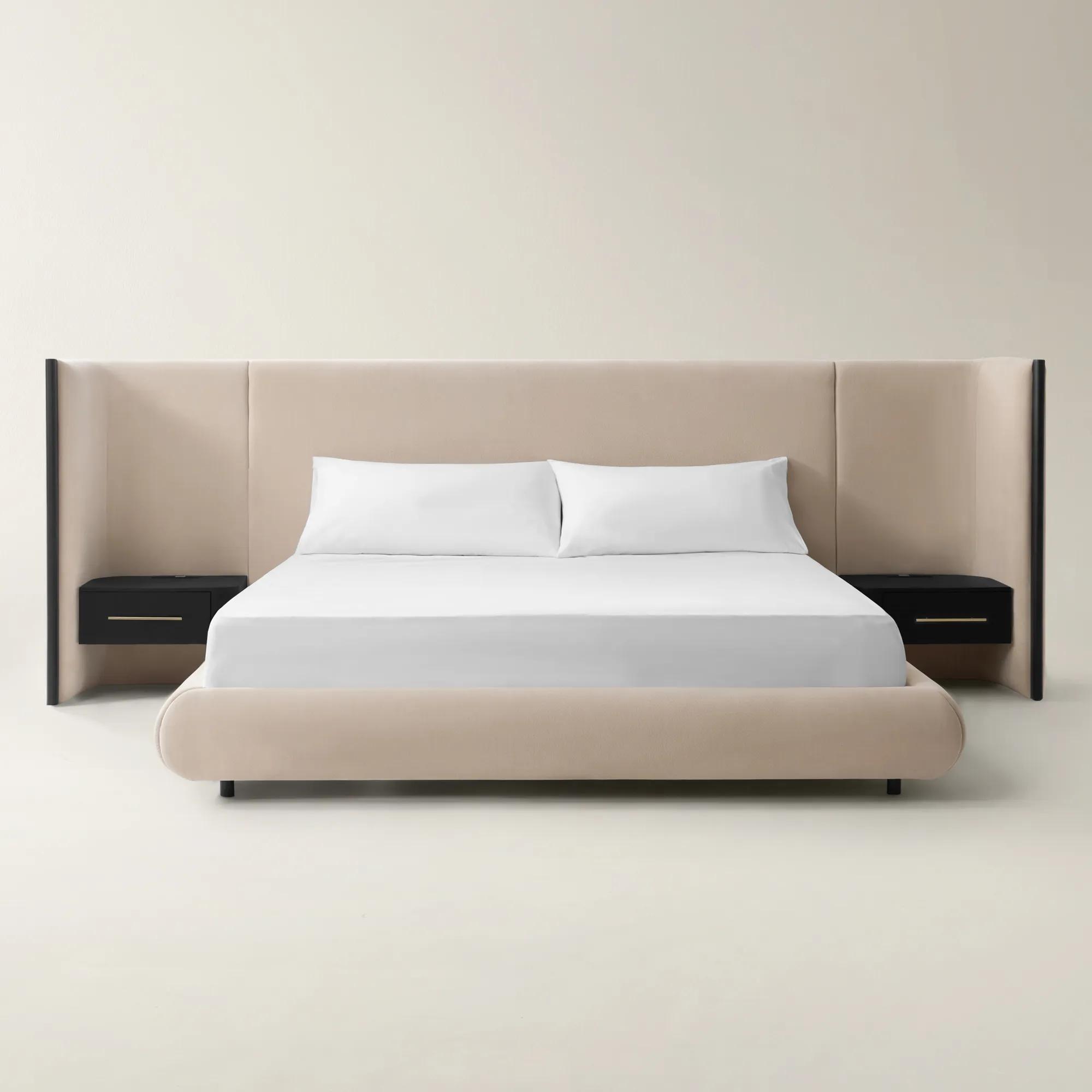
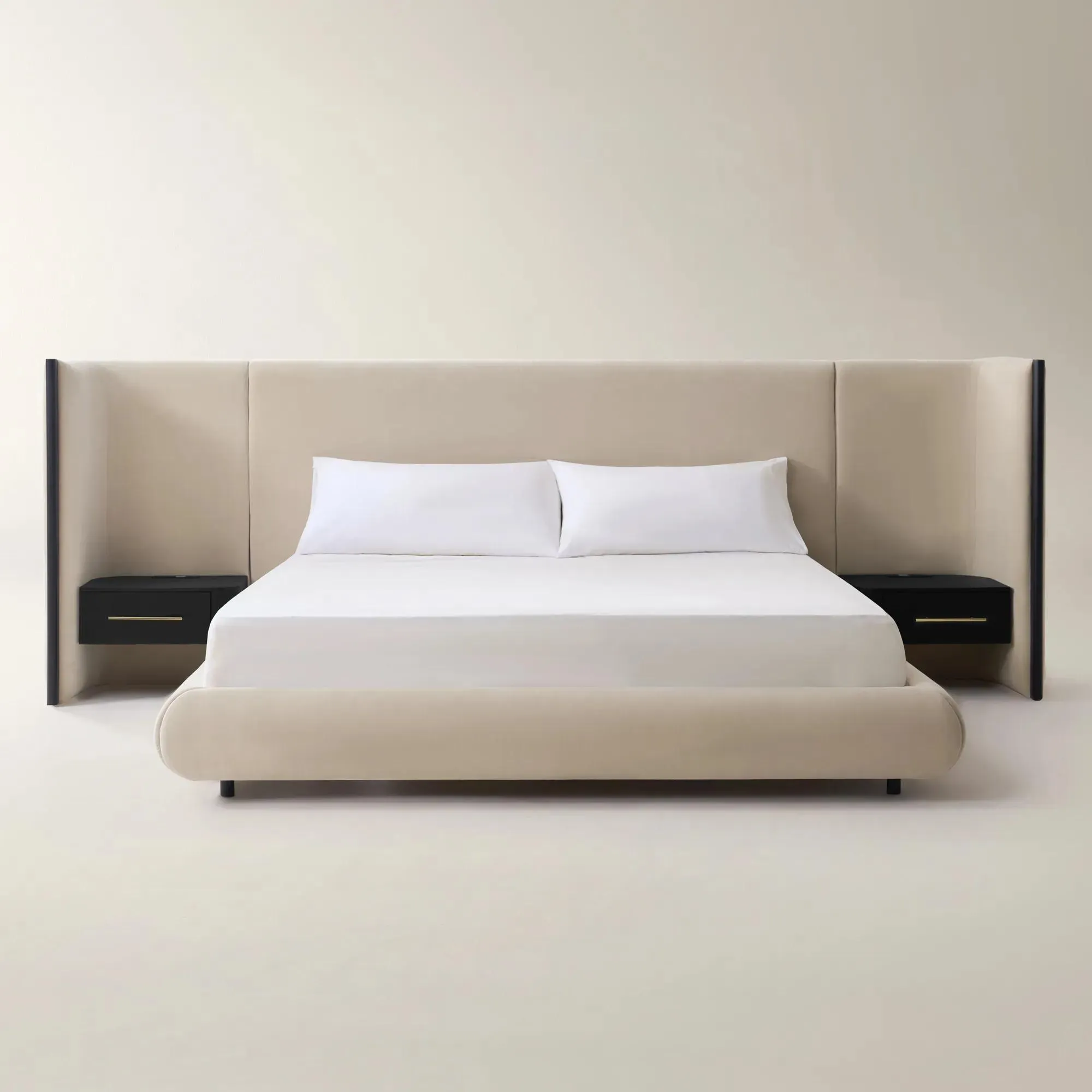 Sierra Simply Taupe Velvet Upholstered King Bed With Nightstands$2899
A taupe velvet platform bed featuring an extended headboard, floating nightstands, and integrated power access.
Add To Cart -
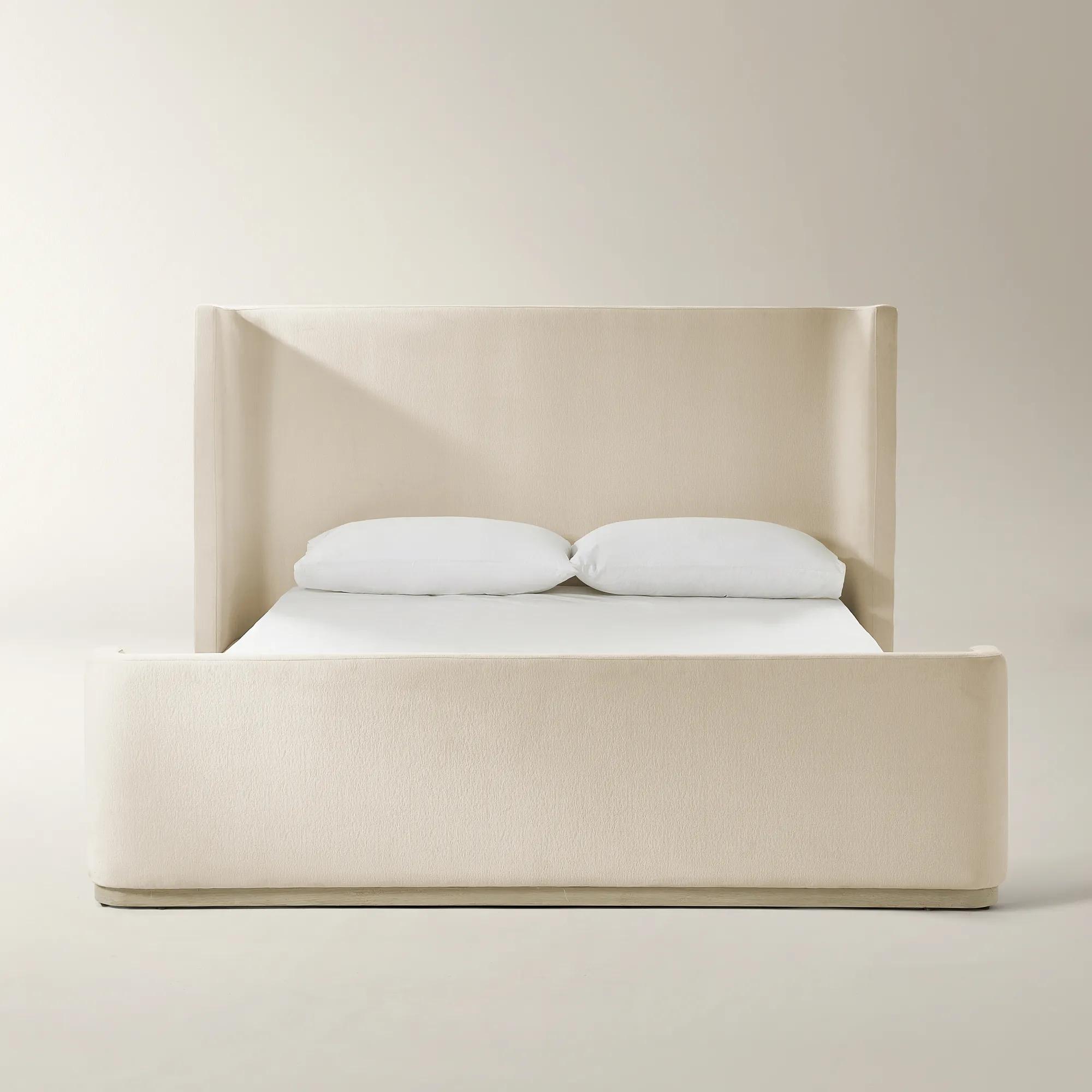 Stria Oatmeal Velvet Upholstered Queen Platform Bed$2299
A sculptural oatmeal velvet platform bed with a tall wingback headboard and FSC-certified solid oak base.
Add To Cart -
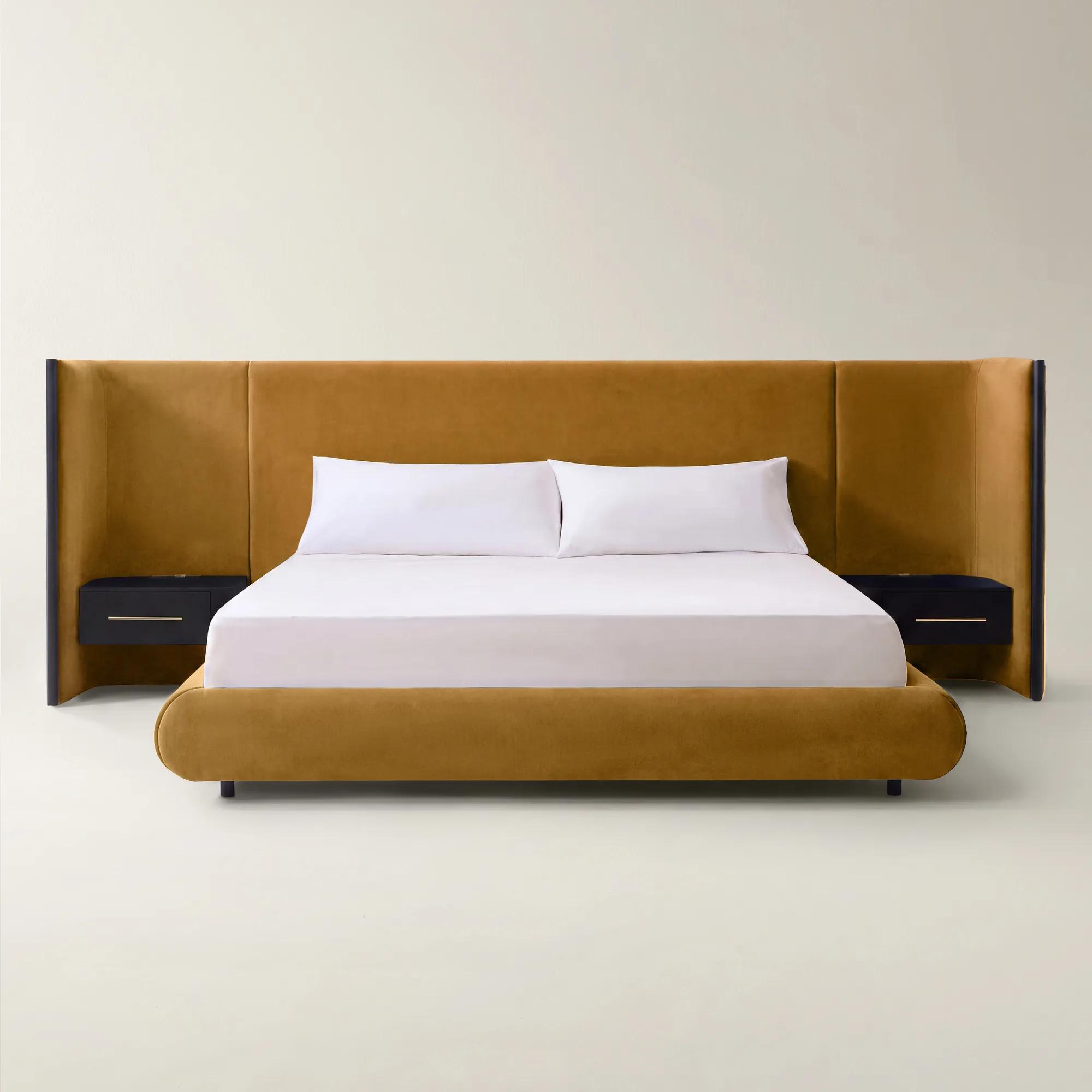 Sierra Roasted Pecan Velvet Upholstered Queen Bed With Nightstands$2699
A roasted pecan velvet platform bed featuring an extended headboard, black wood trim, and floating nightstands.
Add To Cart -
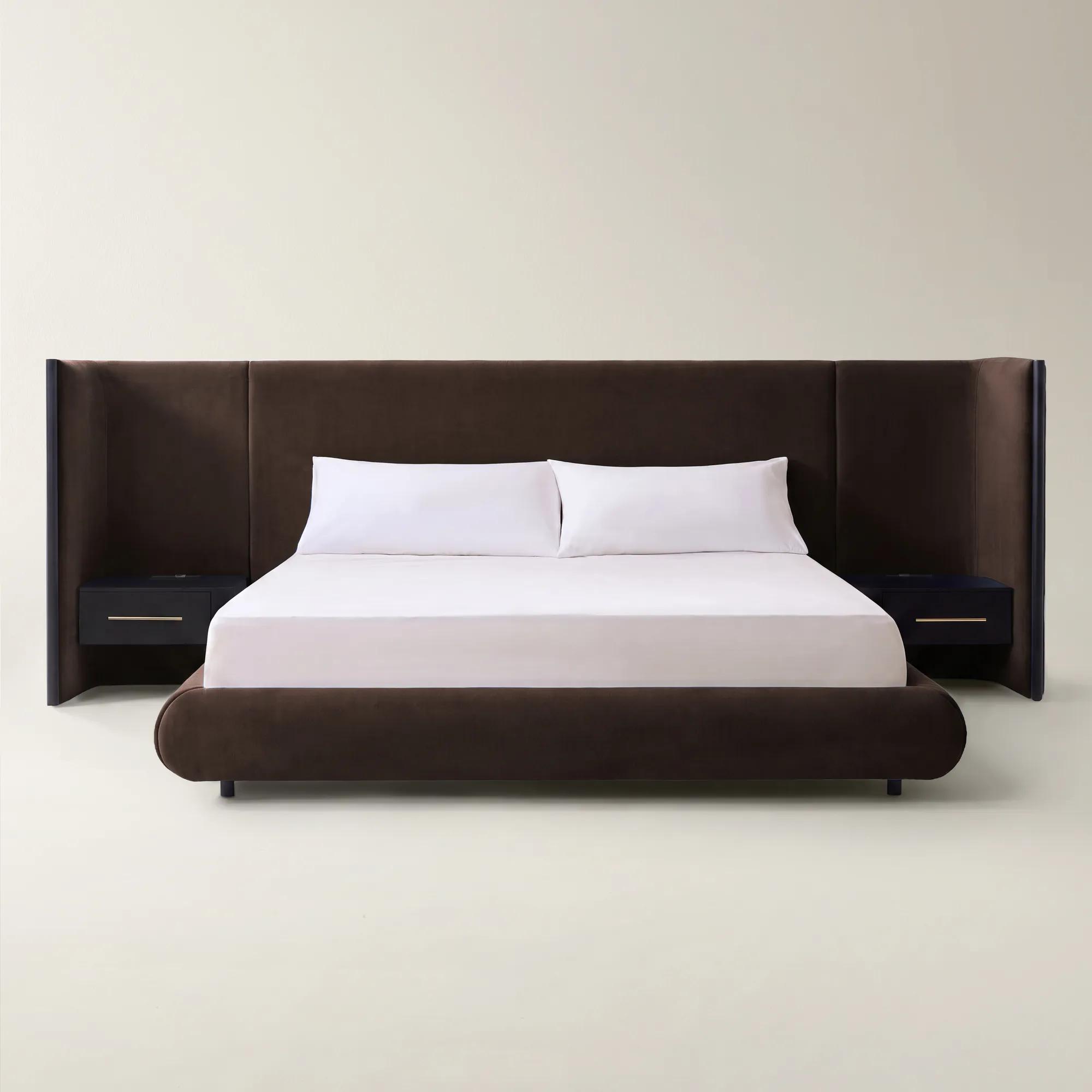
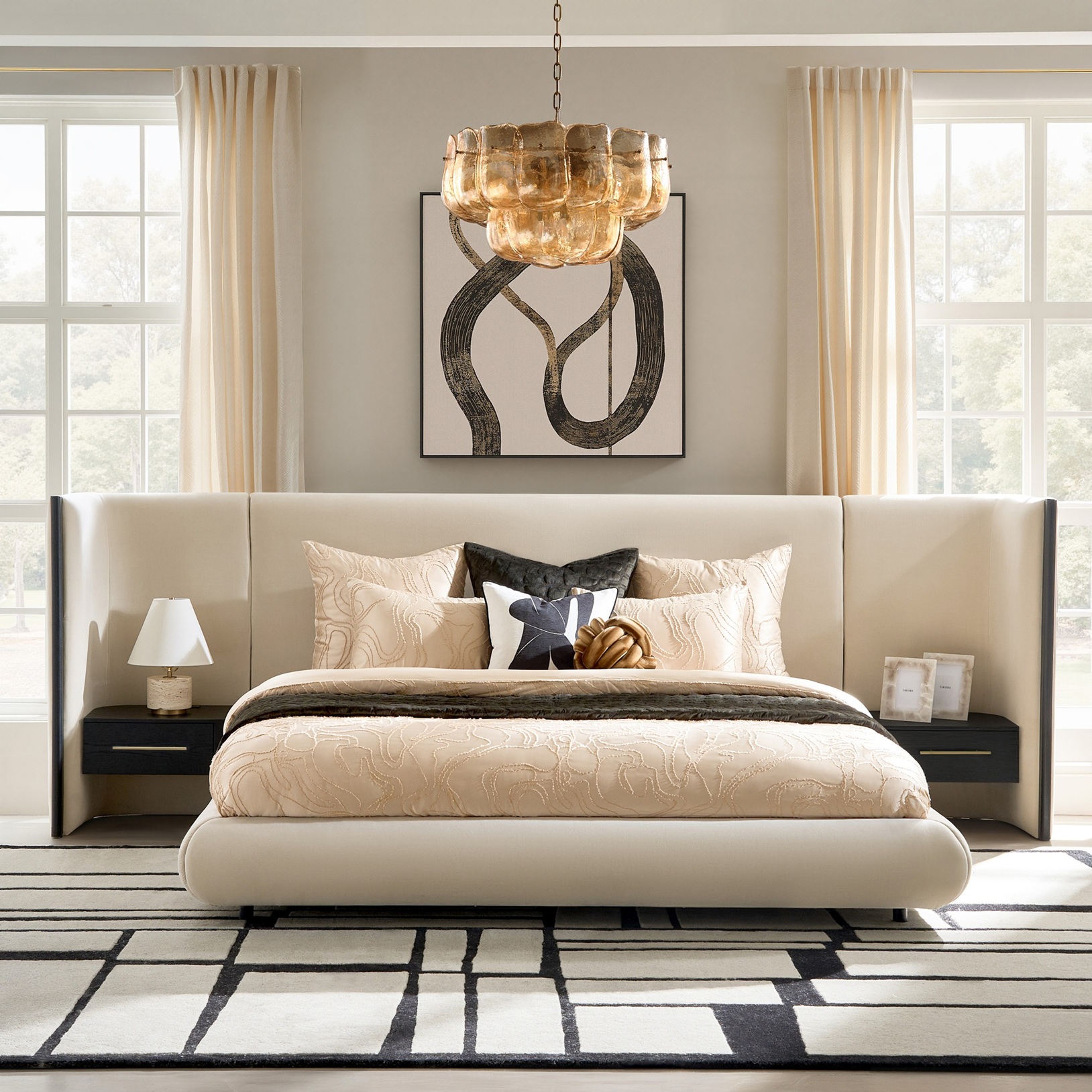 Sierra Dark Chocolate Velvet Upholstered King Bed With Nightstands$2899
A dark chocolate velvet platform bed featuring an extended headboard, floating nightstands, and built-in power access.
Add To Cart -
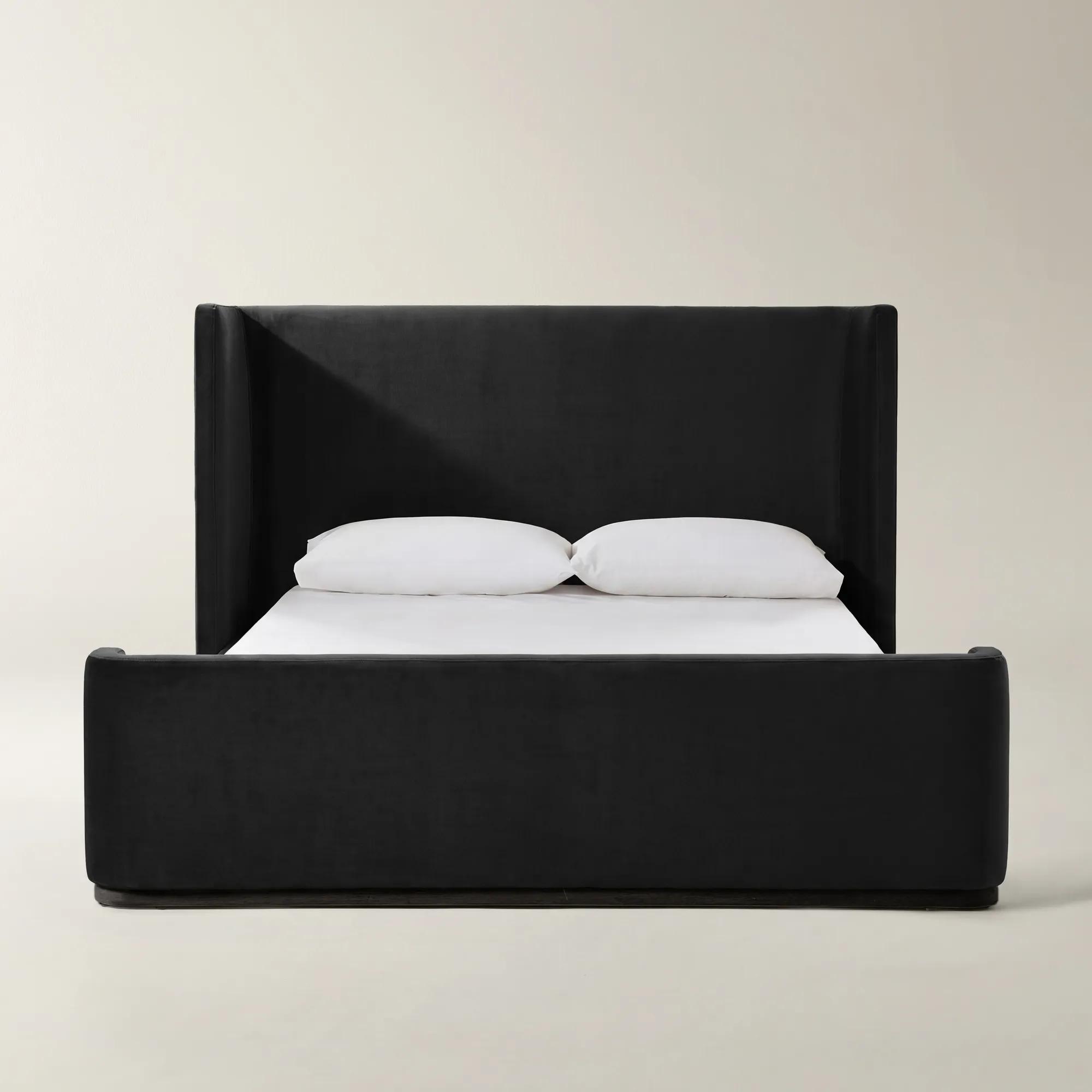 Stria Charcoal Velvet Upholstered Queen Platform Bed$2299
A charcoal velvet upholstered platform bed with a sculptural wingback headboard and FSC-certified solid oak base.
Add To Cart -
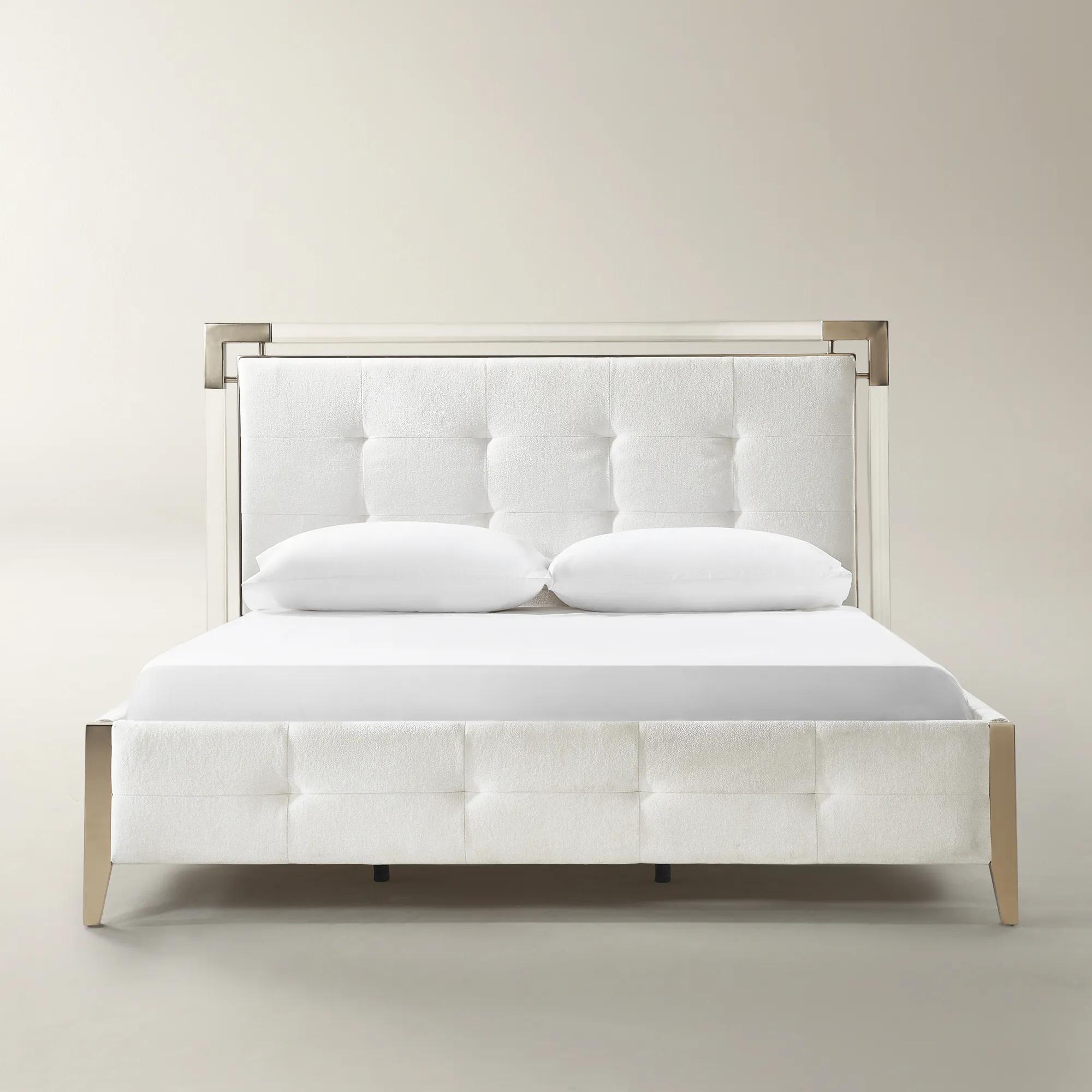
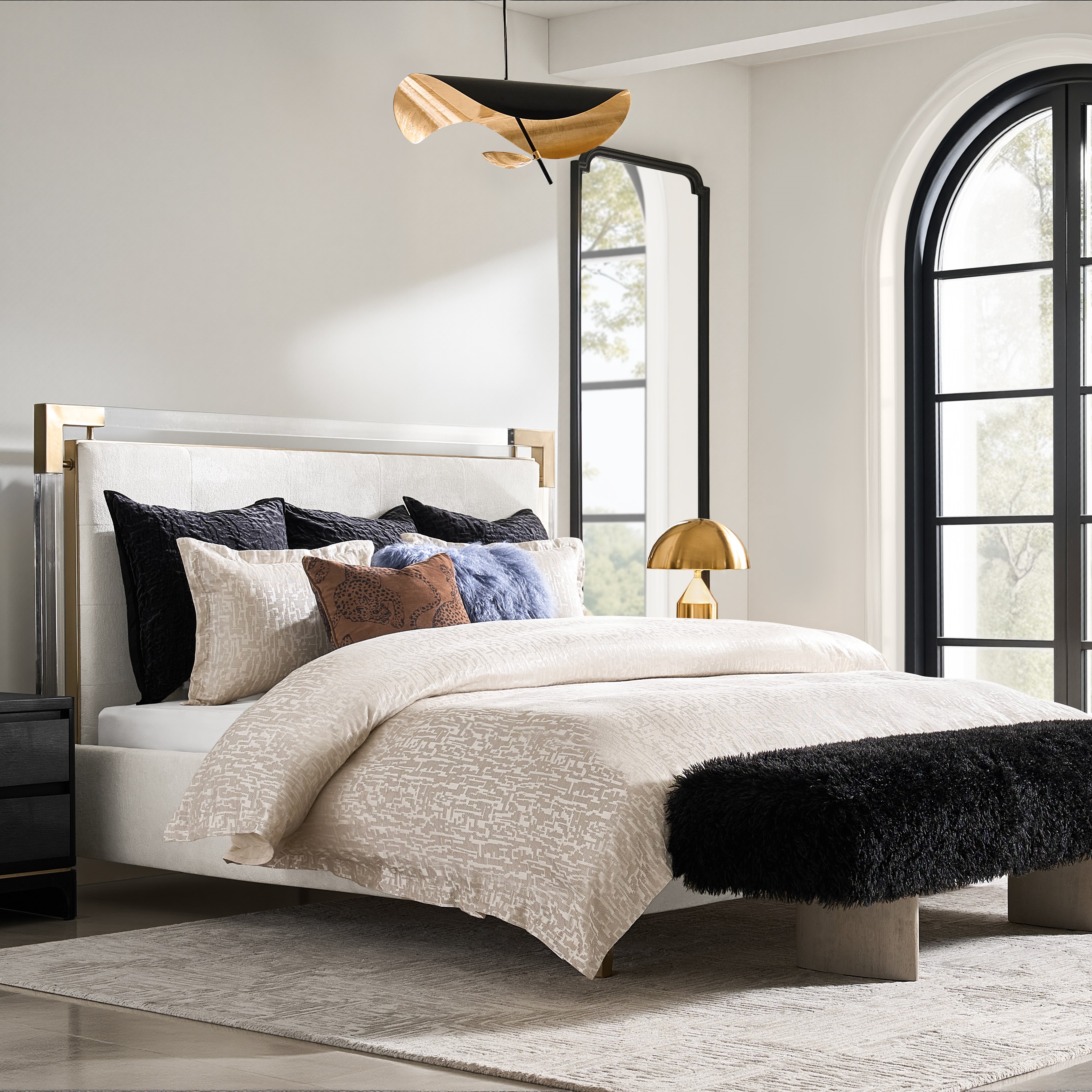 Vitrina Box-Tufted Ivory Velvet Upholstered Queen Platform Bed$2799
An ivory velvet upholstered bed with grid-tufted headboard, acrylic accents, and champagne-finished stainless steel details.
Add To Cart -
Stria Oatmeal Velvet Upholstered King Platform Bed$2499
A sculptural oatmeal velvet platform bed featuring a wingback headboard and FSC-certified oak base.
Add To Cart -
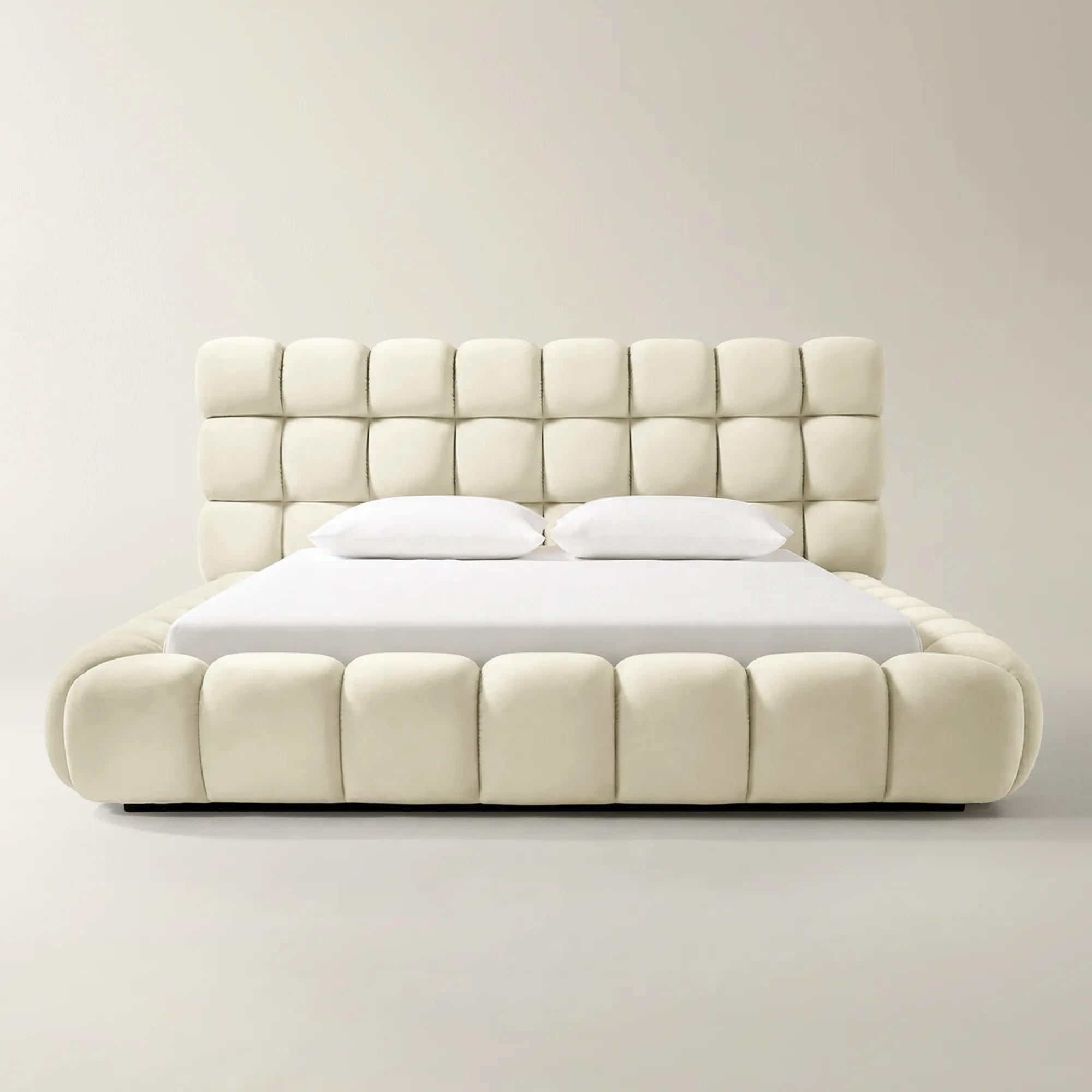 Paloma Tufted Cloud Velvet Upholstered Queen Platform Bed$2399
A sculptural velvet platform bed with plush padding, solid wood construction, and a fully wrapped silhouette.
Add To Cart -
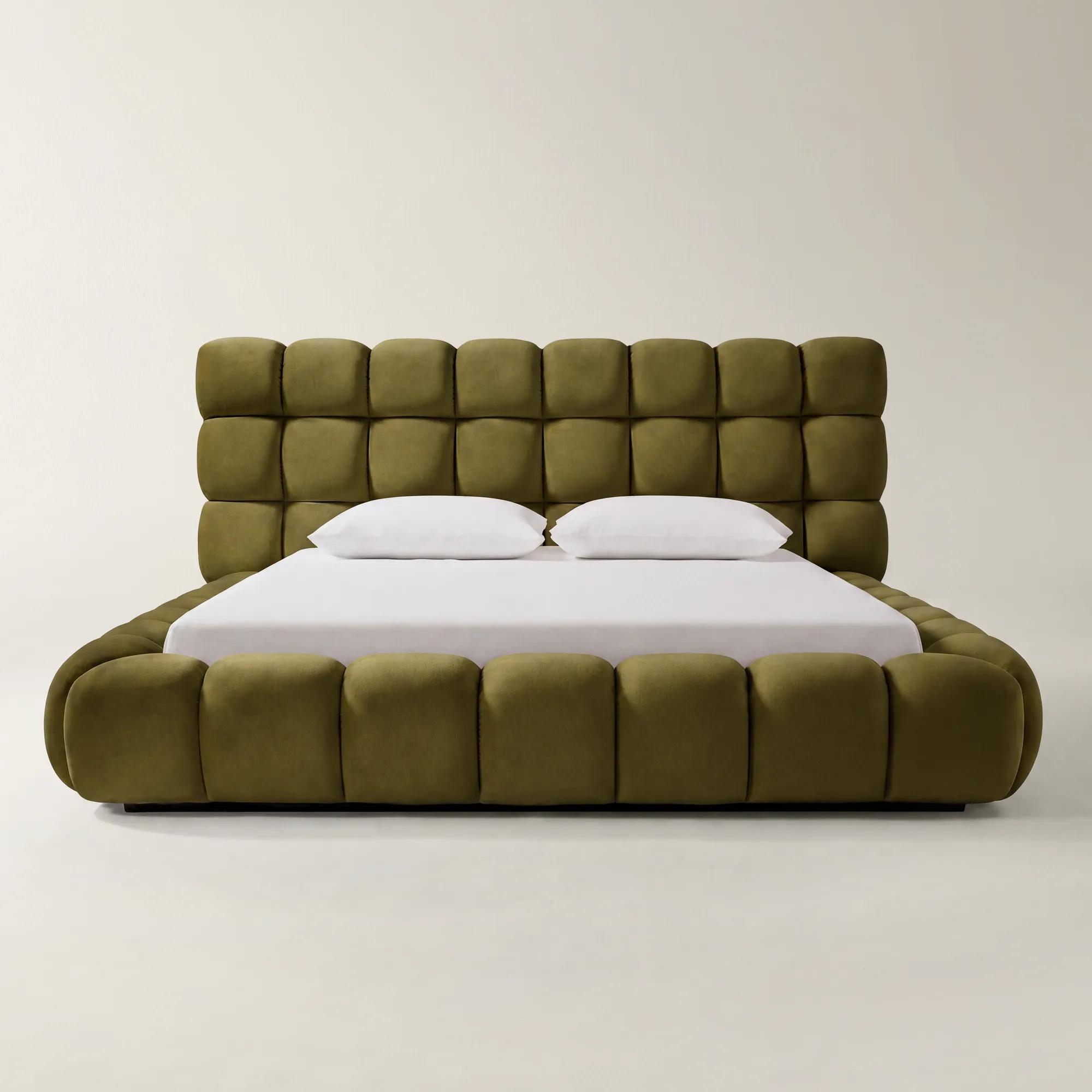 Paloma Tufted Deep Olive Velvet Upholstered King Platform Bed$2599
A sculptural deep olive velvet platform bed with plush padding, fully wrapped upholstery, and wood construction.
Add To Cart -
Sierra Roasted Pecan Velvet Upholstered King Bed With Nightstands$2899
A modern king platform bed in roasted pecan velvet with an extended headboard and floating nightstands.
Add To Cart

Beds With Velvet Headboards
Explore beds with velvet headboards to give your bedroom a sumptuous focal point. Velvet upholstery brings soft texture and visual depth to the head of the bed, setting an expressive backdrop for layered bedding. As you browse, consider headboard height, silhouette, and color to find a design that complements your room’s scale and mood.
Beds with velvet headboards give the bedroom a distinctive center of gravity: a generous sweep of color, a soft upholstered surface, and a silhouette that makes the entire room feel more composed. Velvet brings particular depth to this setting because its raised pile responds to light, revealing subtle shifts in tone as the viewing angle changes. A pale neutral can appear luminous beside crisp white bedding, while a saturated jewel tone creates a richer backdrop for layered pillows and a tailored coverlet. The effect is expressive without depending on an abundance of decoration. In a bedroom with clean-lined furniture, the headboard supplies texture and visual warmth; among sculptural lamps, gleaming accents, and patterned textiles, it holds its own as part of a more dramatic composition. Shape influences that mood as much as color. A straight-edged profile feels architectural, a gently curved outline softens the room, and tufting or channel detailing adds rhythm across the upholstered surface. Where present, decorative trim or an exposed frame introduces another layer of contrast, giving plush fabric a crisp boundary. The beauty of these beds also lies in their ability to balance a commanding appearance with an inviting everyday presence. A padded headboard can offer a more comfortable backdrop for reading or relaxing than a bare hard surface, though cushioning and support vary by design. For someone who prefers a bedroom with personality rather than a purely functional arrangement, velvet makes the bed feel intentional from the moment the door opens. It also gives a guest bedroom a considered focal point, turning an otherwise simple space into a setting with depth and character. Bedding need not compete with the upholstery: smooth cotton, subtly textured linen, or a restrained woven pattern can let the headboard remain the strongest gesture. A few carefully proportioned pillows preserve the outline, while a low, neatly folded coverlet allows the fabric’s color and detailing to remain visible.
The right proportions allow that visual drama to feel effortless rather than crowded. A bed’s stated mattress size does not describe its full footprint, especially when upholstery, a substantial footboard, or a broad headboard extends beyond the sleeping surface. Overall width, length, and height matter alongside the mattress dimensions, as do the clearances needed to move around the bed, open dresser drawers, and reach bedside lighting comfortably. In a compact bedroom, a streamlined upholstered frame can deliver a luxurious focal point without overwhelming the surrounding furniture. In a larger room, a wider or taller silhouette can help the bed relate to generous wall space and more substantial nightstands. For a stronger vertical statement, velvet beds with tall headboards draw attention upward and give the upholstered surface more presence. Headboard height should also be considered in relation to the mattress and any foundation: a deep mattress can conceal lower decorative details, while a lower sleeping surface exposes more of the upholstery. Windows, wall art, outlets, and wall-mounted sconces all influence how gracefully the bed fits into its intended position. Beyond the visible fabric, construction shapes the experience of living with an upholstered bed. Frames may incorporate solid wood, engineered wood, metal, or a combination of materials, while the mattress-support system may use slats, a platform, or a foundation-dependent arrangement. These differences affect compatibility, assembly, and the feel of the finished setup, so the stated support requirements and weight limits deserve attention. An adjustable base requires its own compatibility check rather than an assumption that every upholstered frame will accommodate it. Delivery access is another practical detail with lasting design consequences: doorways, stair turns, and elevators must accommodate the packaged components, particularly a broad, one-piece headboard. When scale, support, and access are accounted for, the bed can settle naturally into the room, leaving the velvet’s texture and silhouette—not a cramped layout or mismatched mattress height—to define the impression.
Velvet is a fabric construction rather than a single fiber, and that distinction is important when considering feel, care, and long-term use. Cotton, polyester, silk, and blended fibers can all produce velvet, with different levels of sheen, softness, and maintenance needs. Some upholstery has a more subdued, brushed appearance; other versions catch the light with a pronounced luster. Fiber content alone does not establish durability, so fabric specifications, care instructions, and any stated performance testing provide a more useful picture of how the material may suit a particular household. A primary bedroom used daily calls for attention to the areas most likely to receive contact, especially where pillows, hair products, or hands meet the headboard. A guest room may see less frequent use, but the same thoughtful maintenance helps preserve its finished appearance. Velvet’s nap can show shading or temporary impressions, which are part of its distinctive surface character rather than automatically a sign of damage. Gentle vacuuming with an appropriate upholstery attachment, when permitted by the care instructions, helps remove dust before it settles into the pile. Spills should be addressed promptly according to the fabric’s cleaning code, without vigorous rubbing that can disturb the surface. Cleaning products, water, and steam are not universally suitable, and an inconspicuous test or professional upholstery advice is preferable to treating every velvet the same way. Placement also matters: prolonged direct sunlight can affect fabric color, while repeated abrasion from an object resting against the upholstery may alter the nap. In homes with pets, the potential for claws, loose hair, and frequent contact should inform fabric selection and expectations for care. These considerations do not diminish velvet’s appeal; they clarify how its beauty fits everyday life. With suitable construction, a well-proportioned layout, and care matched to the upholstery, a velvet-headboard bed offers lasting visual richness. It anchors the bedroom with a tactile, expressive surface that can support bold color, restrained elegance, or a layered, artful mix without losing its unmistakable sense of occasion.
FAQs
A velvet headboard brings sumptuous texture and a subtle play of light to the bedroom, turning the bed into an expressive focal point. Its plush appearance softens crisp architectural lines and creates a richly layered backdrop for bedding, artwork, and sculptural lighting.
Beds with velvet headboards lend themselves to glamorous, Art Deco-inspired, contemporary, and eclectic interiors. Pair velvet with gleaming metallic accents for high drama, or balance its richness with warm wood and restrained silhouettes. Let the headboard establish the mood, then repeat a few complementary colors and finishes throughout the room.
Consider whether you want your headboard to anchor the bedroom quietly or command attention. Neutral tones create a sophisticated backdrop for expressive bedding, while jewel tones introduce depth and a more theatrical mood. Velvet’s pile can make color appear lighter or darker as the light shifts, so consider both daylight and evening lighting when shaping your palette.
Contrast gives velvet its moment. Crisp cotton bedding creates definition against a plush headboard, while linen introduces an inviting, tactile counterpoint. For a more opulent composition, layer tonal pillows with a patterned coverlet, allowing a shared accent color to connect the textures without making every detail match.
Follow the care instructions for the upholstery, since velvet fabrics and finishes can require different treatments. Where permitted, gently remove surface dust with a soft upholstery attachment, and blot spills promptly rather than rubbing the pile. Avoid applying cleaners without checking the recommended care method and testing in an inconspicuous area first.