White Chenille Sectionals For Bright Spaces
White Chenille Sectionals For Bright Spaces
-
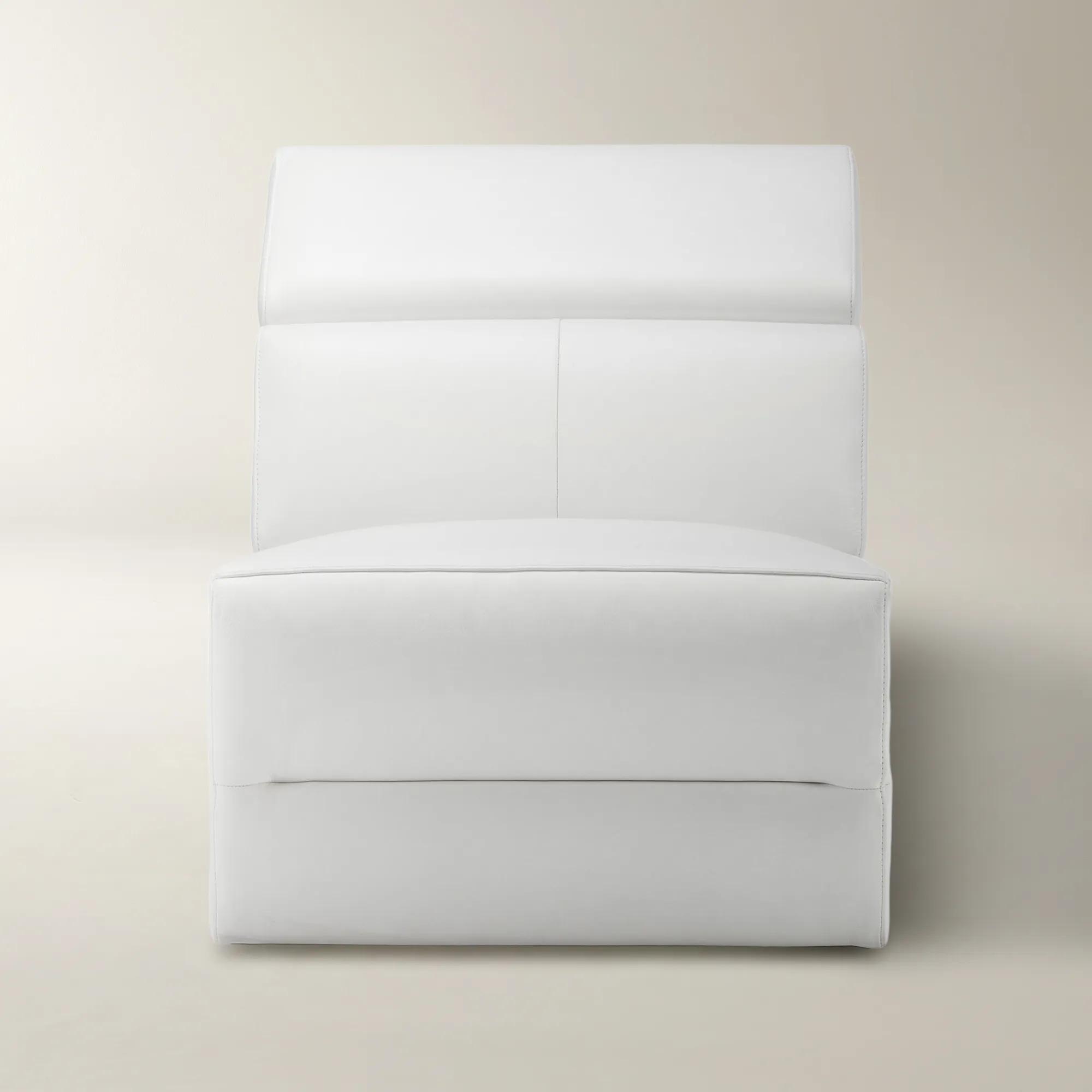
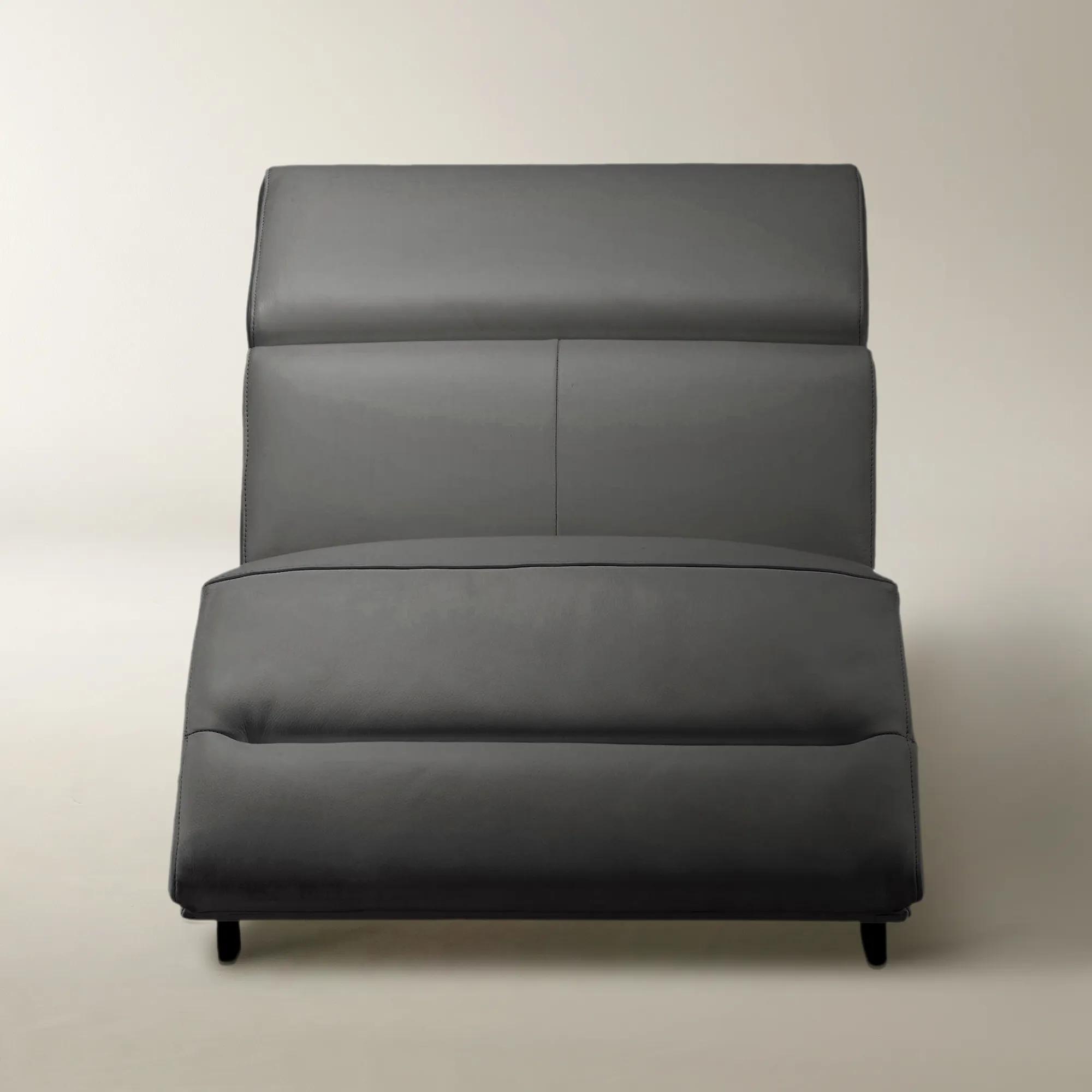
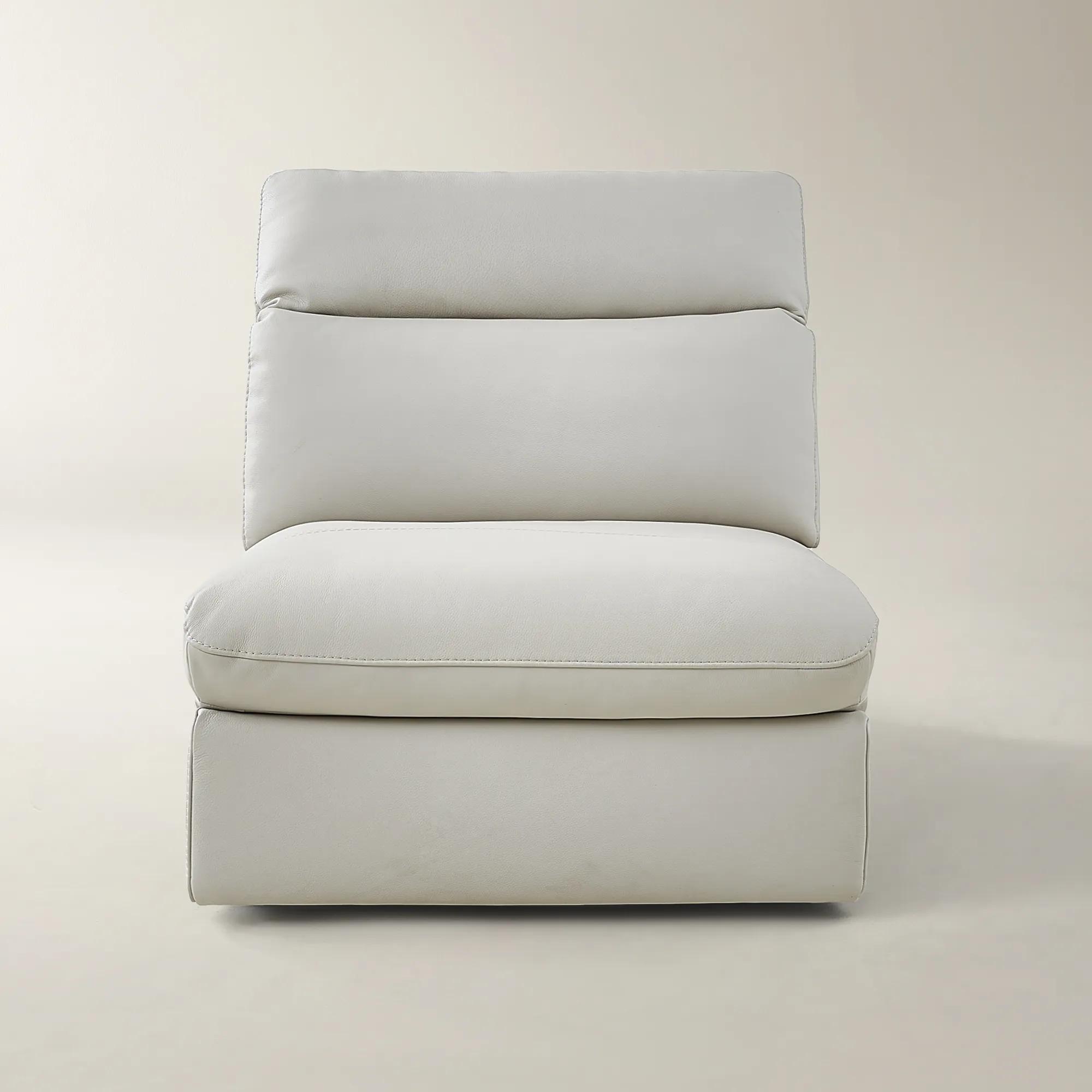
 Verona White Leather Armless Chair$1099
A modern sectional upholstered in supple white semi-aniline leather with adjustable headrests and power-reclining options.
Add To Cart -
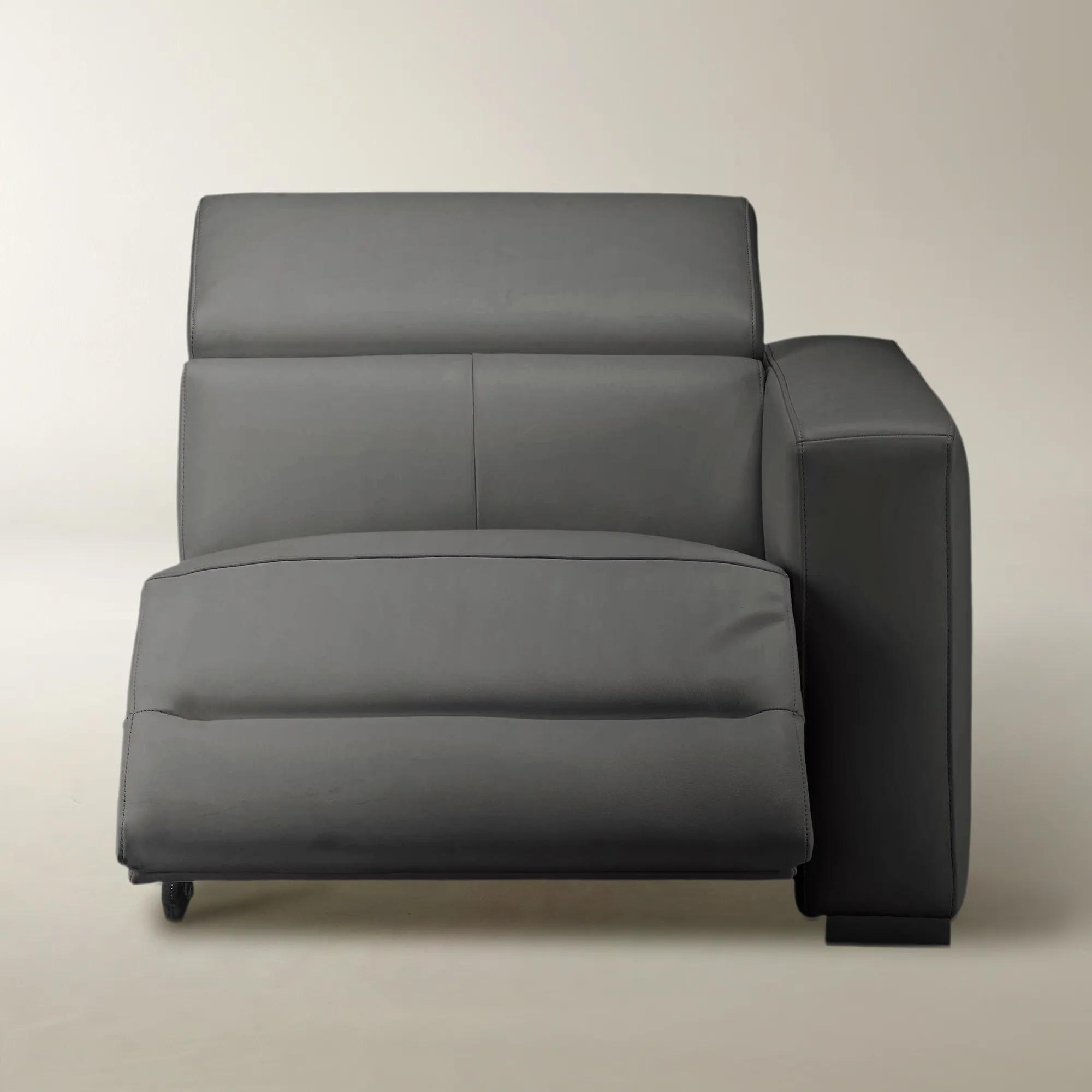
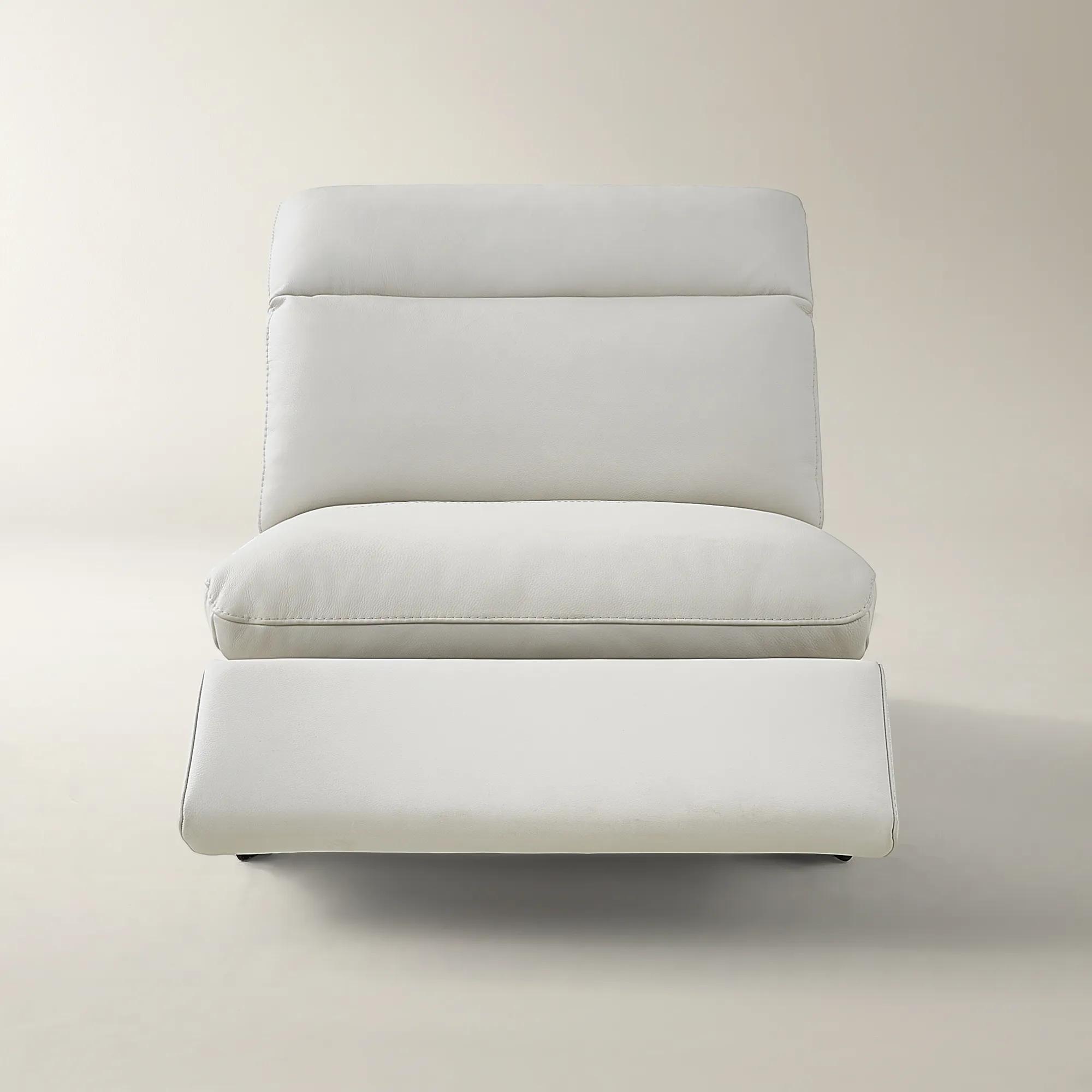
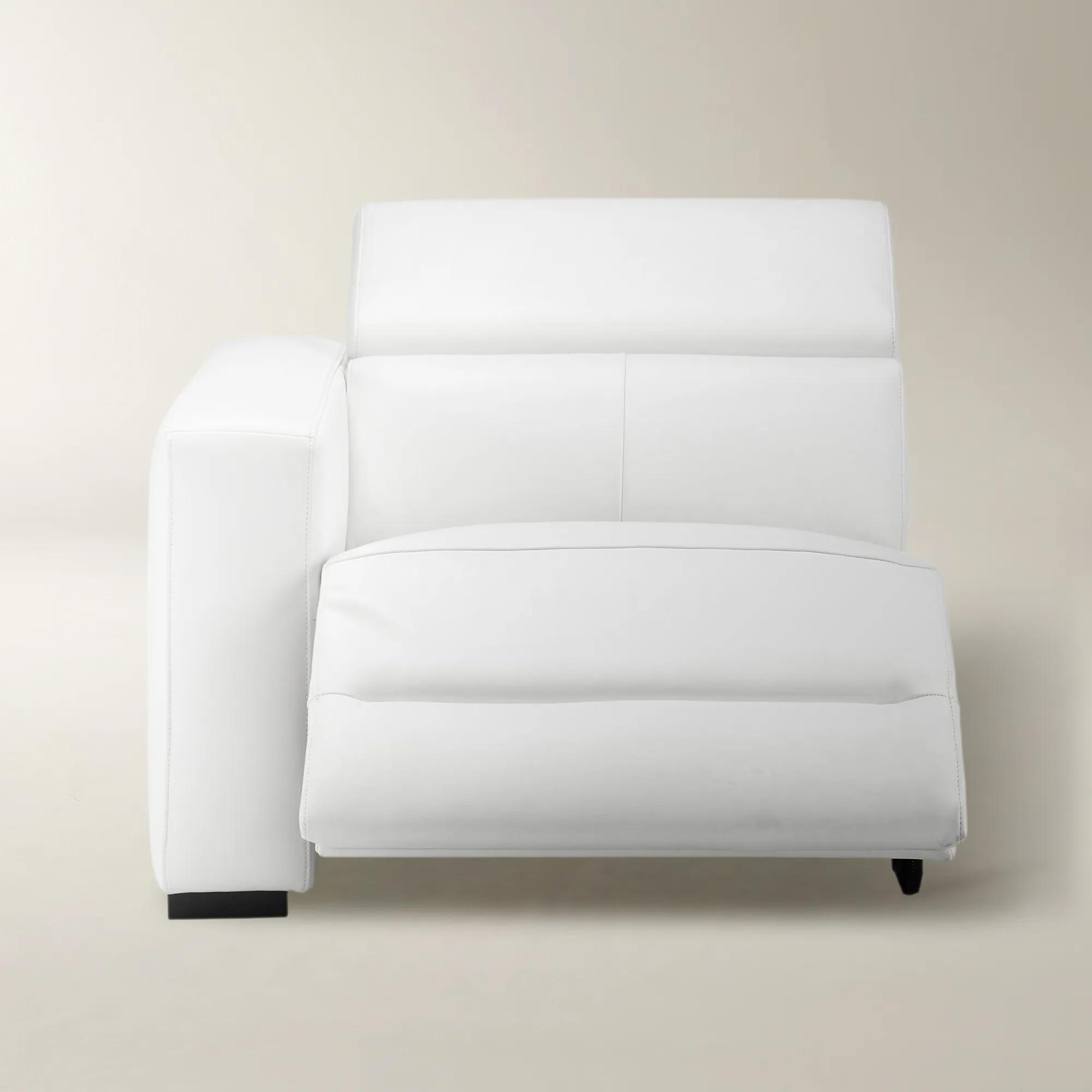 Verona Reclining White Leather Left Arm Chair With Power$1499
A modern white sectional upholstered in supple semi-aniline leather with adjustable headrests and power-reclining seats.
Add To Cart -
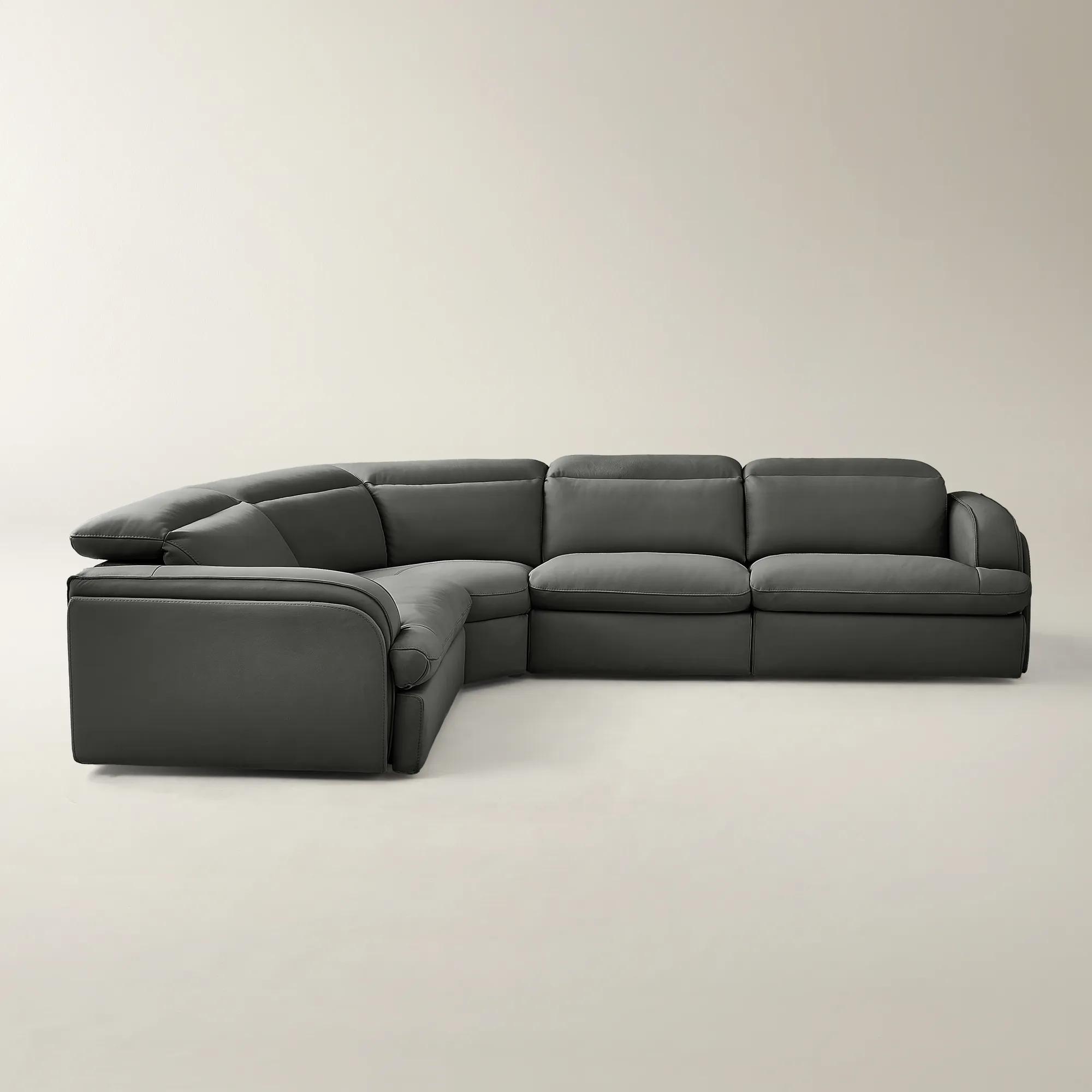
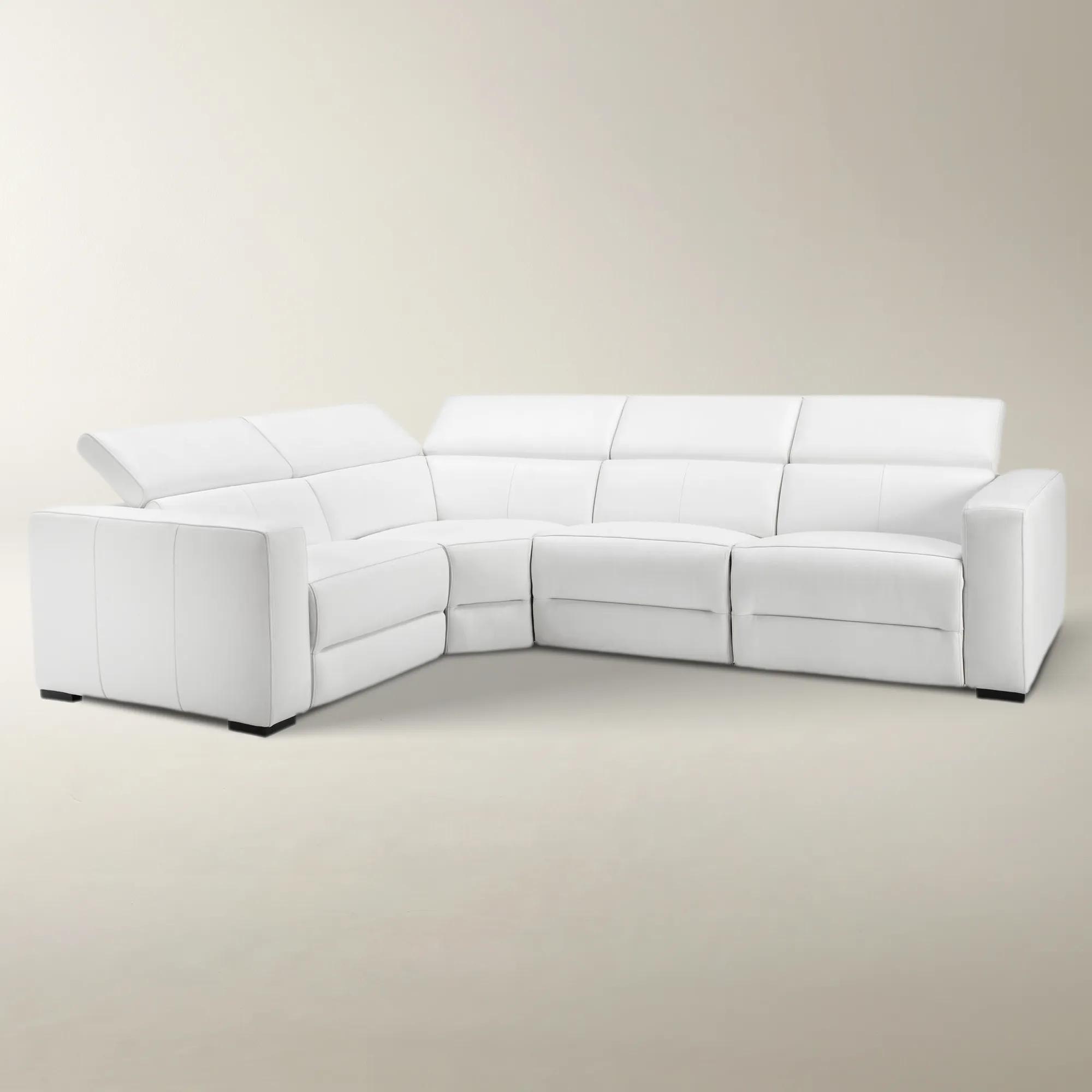 Verona 4-Piece L-Shaped Reclining White Leather Sectional Sofa With Left-Arm$5499
A modern sectional upholstered in supple white semi-aniline leather with adjustable headrests and power-reclining seats.
Add To Cart -
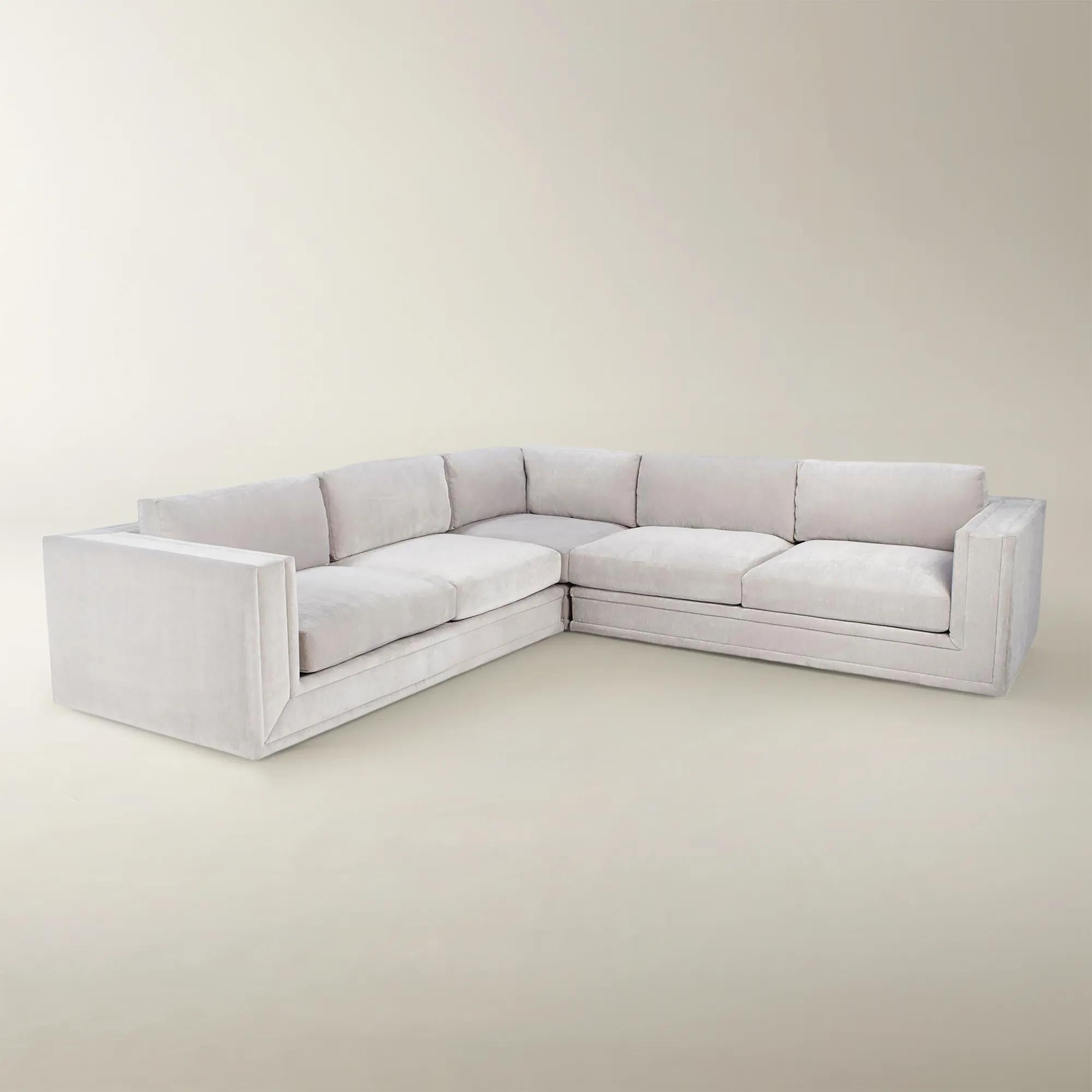 Luka 3-Piece Polar Chenille Sectional Sofa$4999
A modern corner sectional featuring deep seating, high-density foam cushions, and hand-upholstered opulent chenille fabric.
Add To Cart -
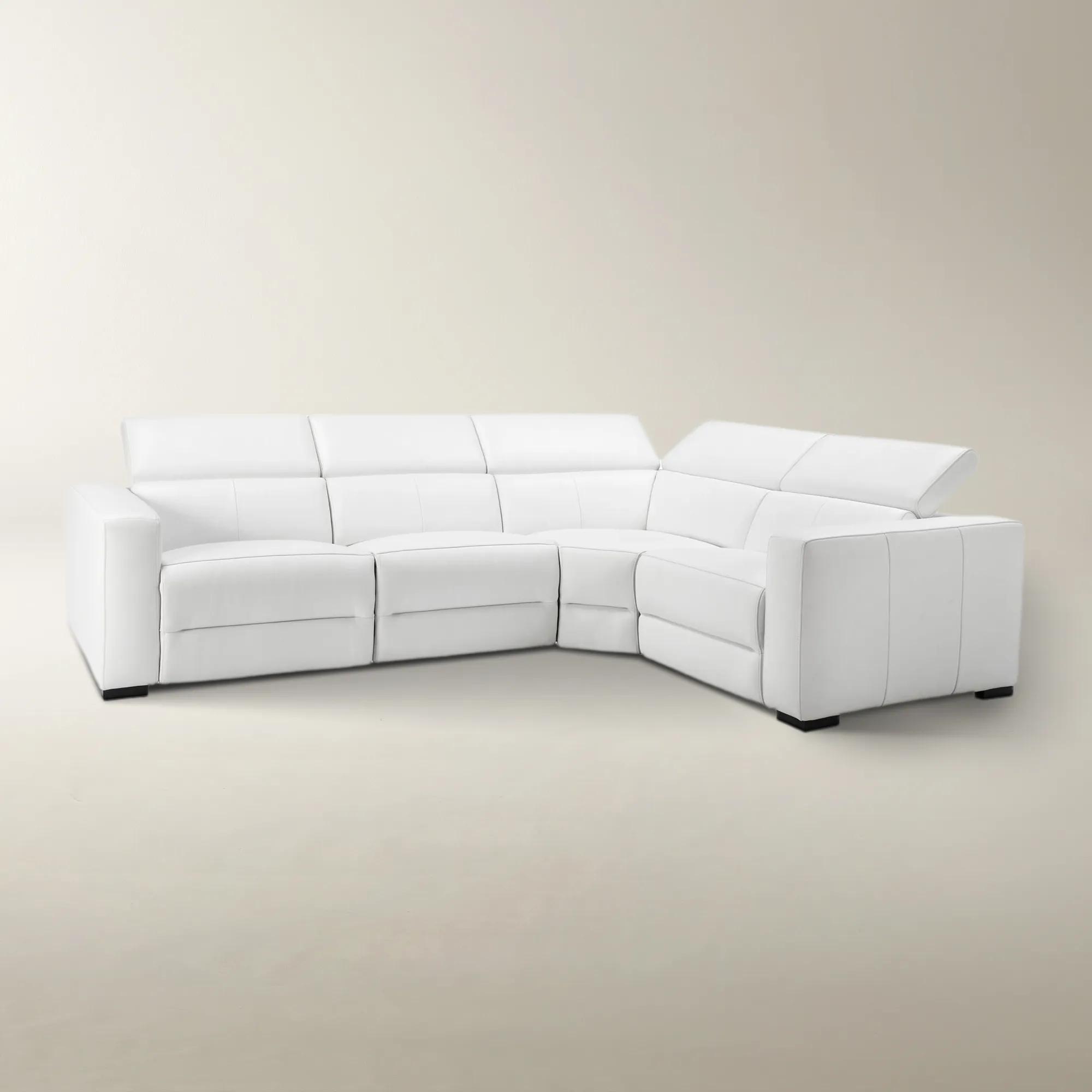
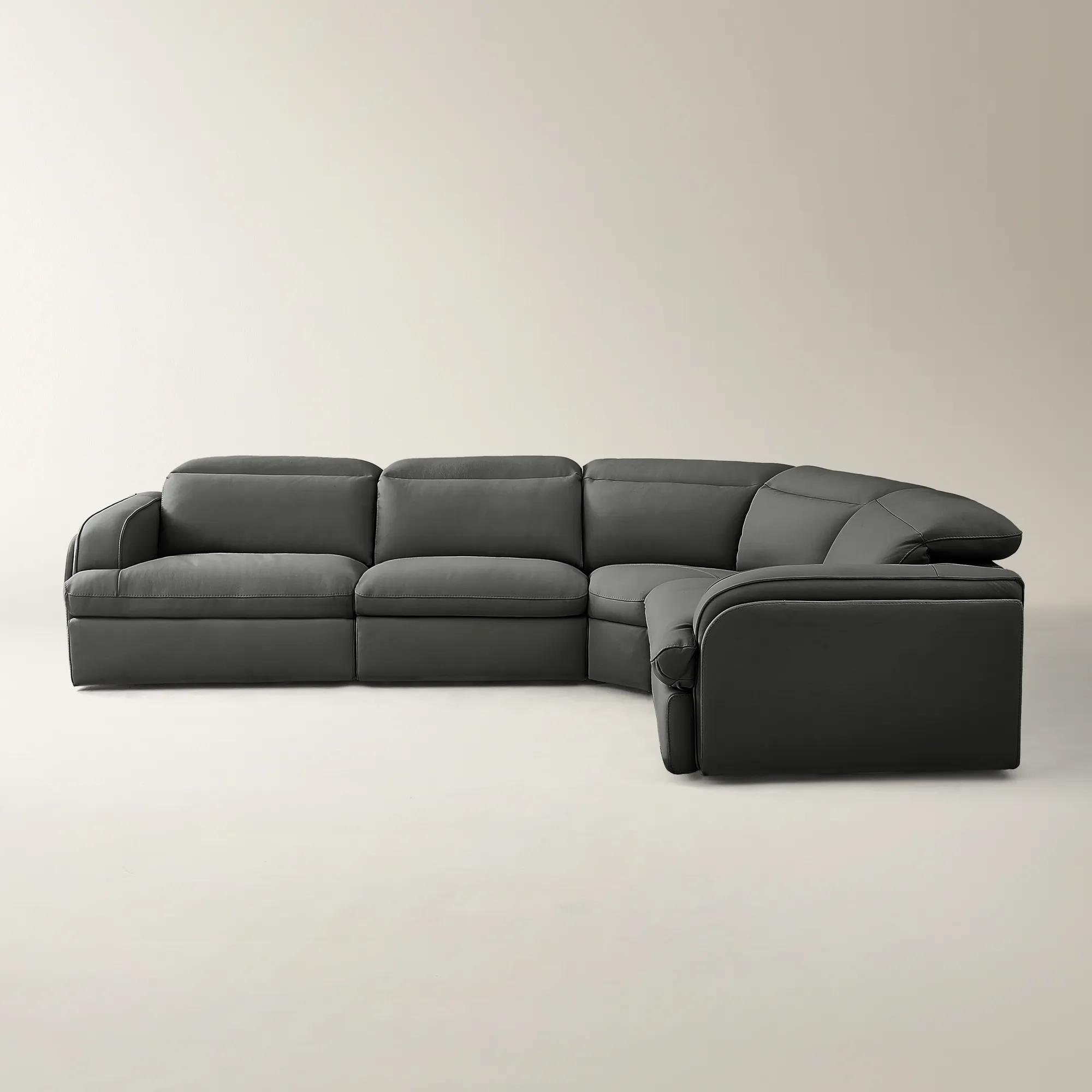
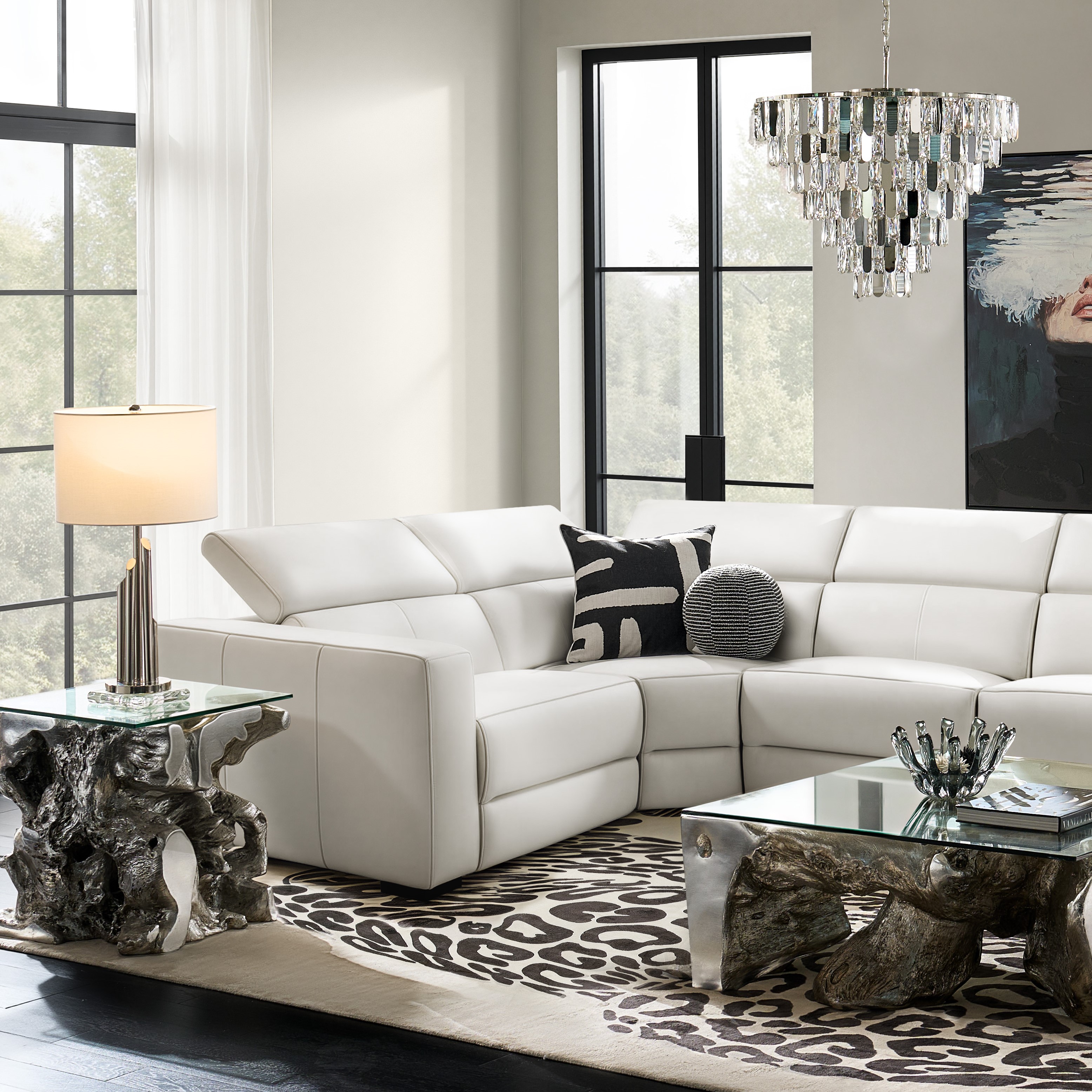 Verona 4-Piece L-Shaped Reclining White Leather Sectional Sofa With Right-Arm$5499
A modern sectional upholstered in supple white semi-aniline leather with adjustable headrests and power-reclining seats.
Add To Cart -
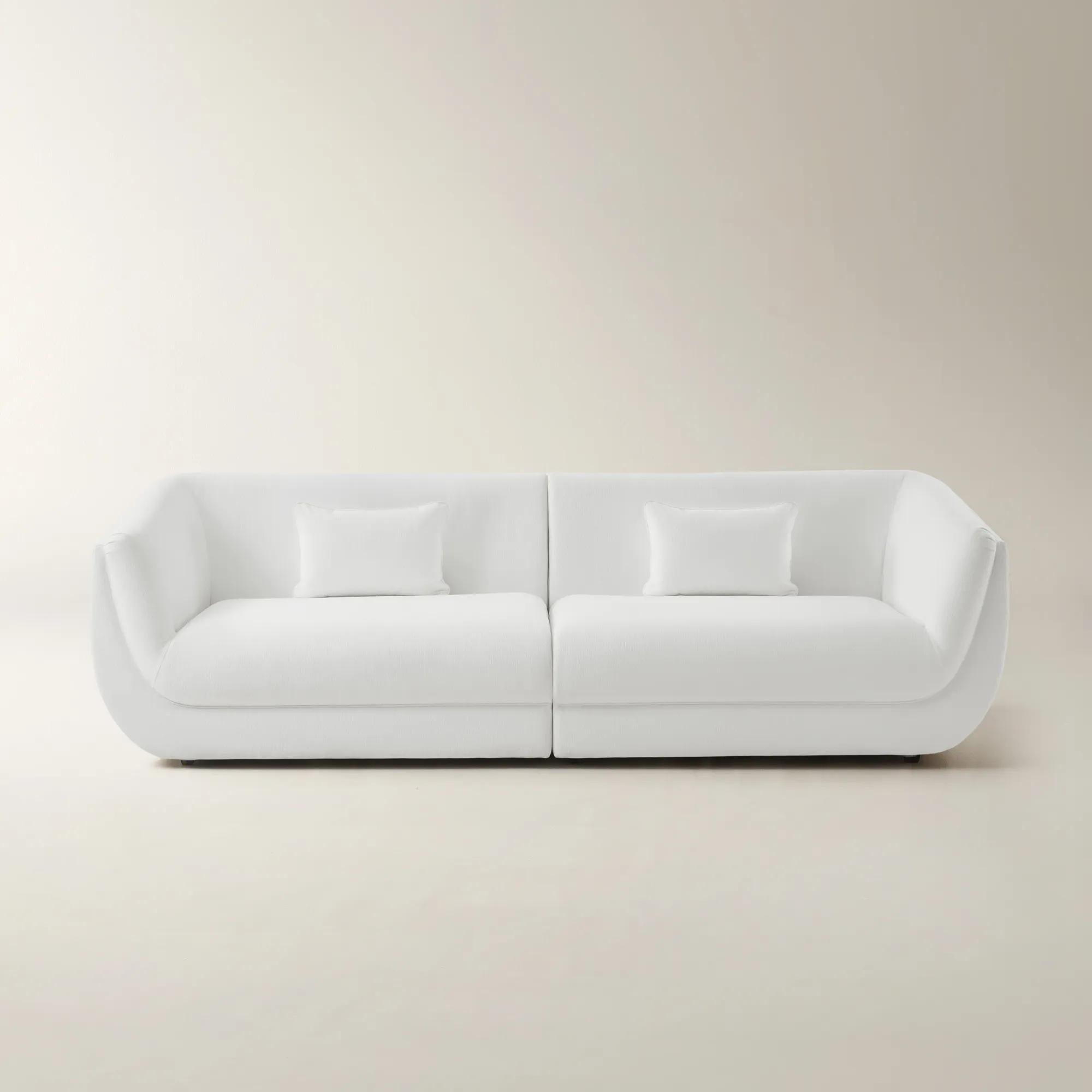
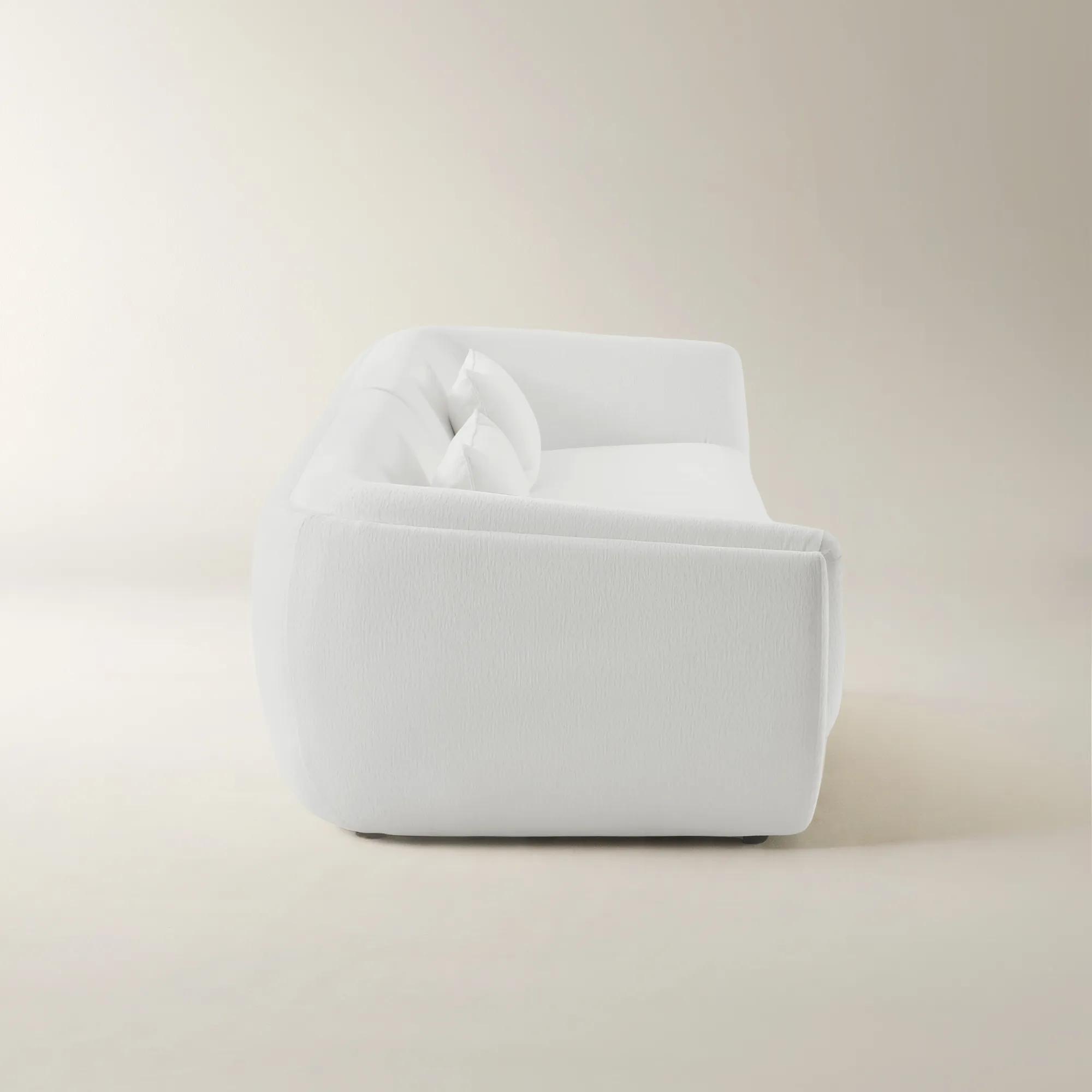 Curvia 2-Piece White Performance Chenille Indoor/Outdoor Sectional Sofa$2599
A sculptural white sectional sofa upholstered in performance chenille for luxurious indoor or outdoor lounging.
Add To Cart -
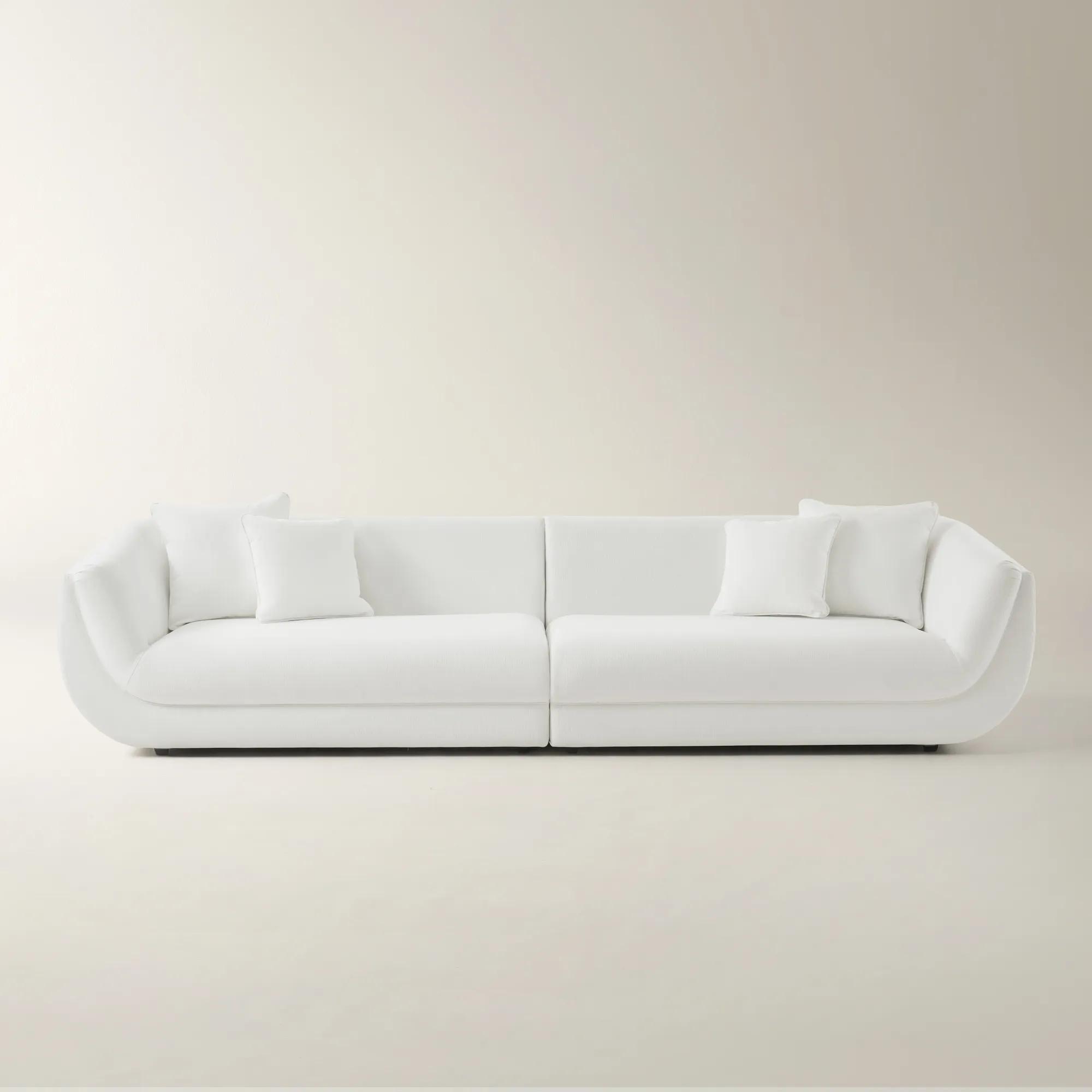
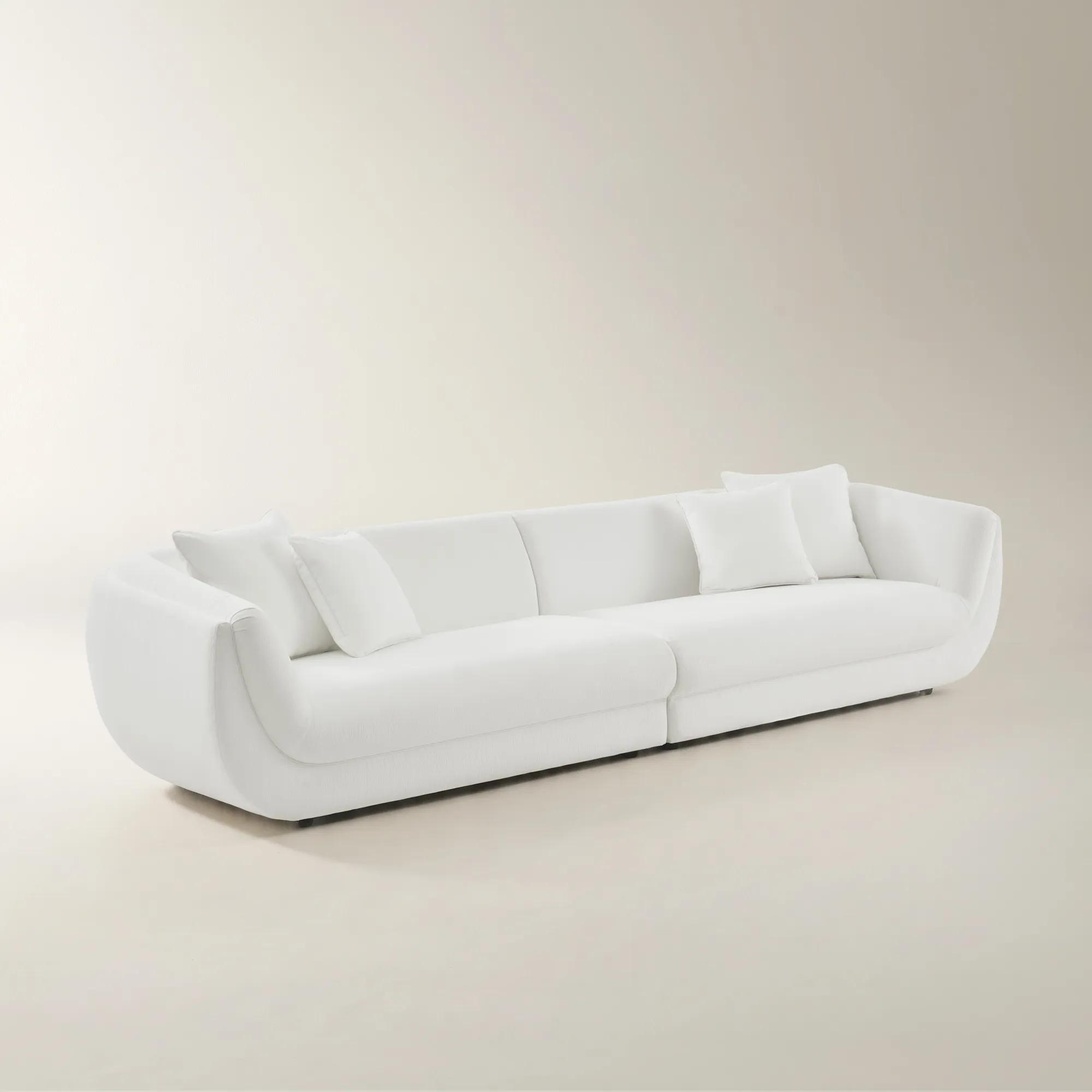 Curvia 2-Piece White Performance Chenille Indoor/Outdoor Grand Sectional Sofa$2799
A sculptural white sectional wrapped in performance chenille, designed for luxurious indoor or outdoor lounging.
Add To Cart -
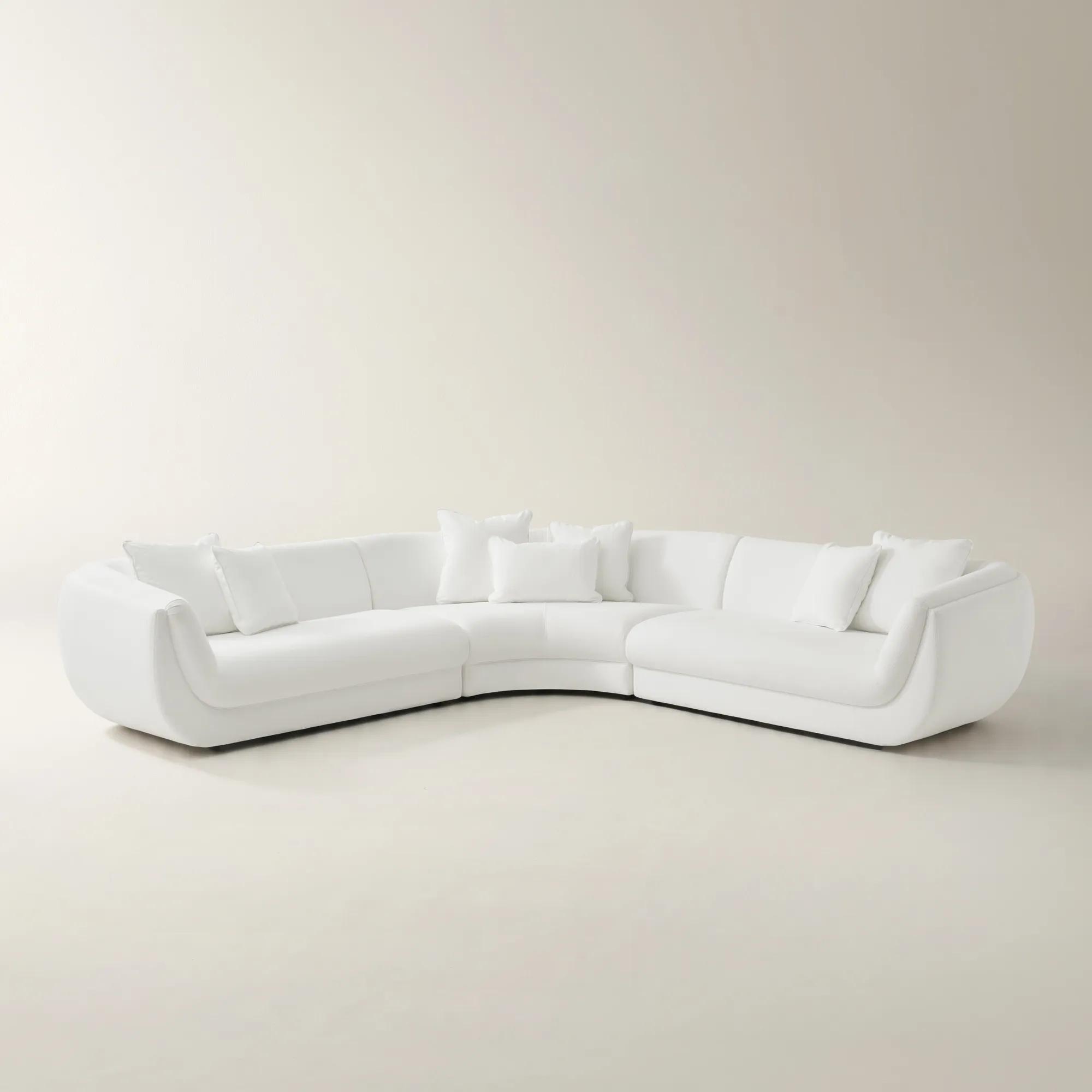 Curvia 3-Piece White Performance Chenille Indoor/Outdoor Sectional Sofa$4299
A sculptural white sectional sofa wrapped in performance chenille for luxurious indoor and outdoor lounging.
Add To Cart -
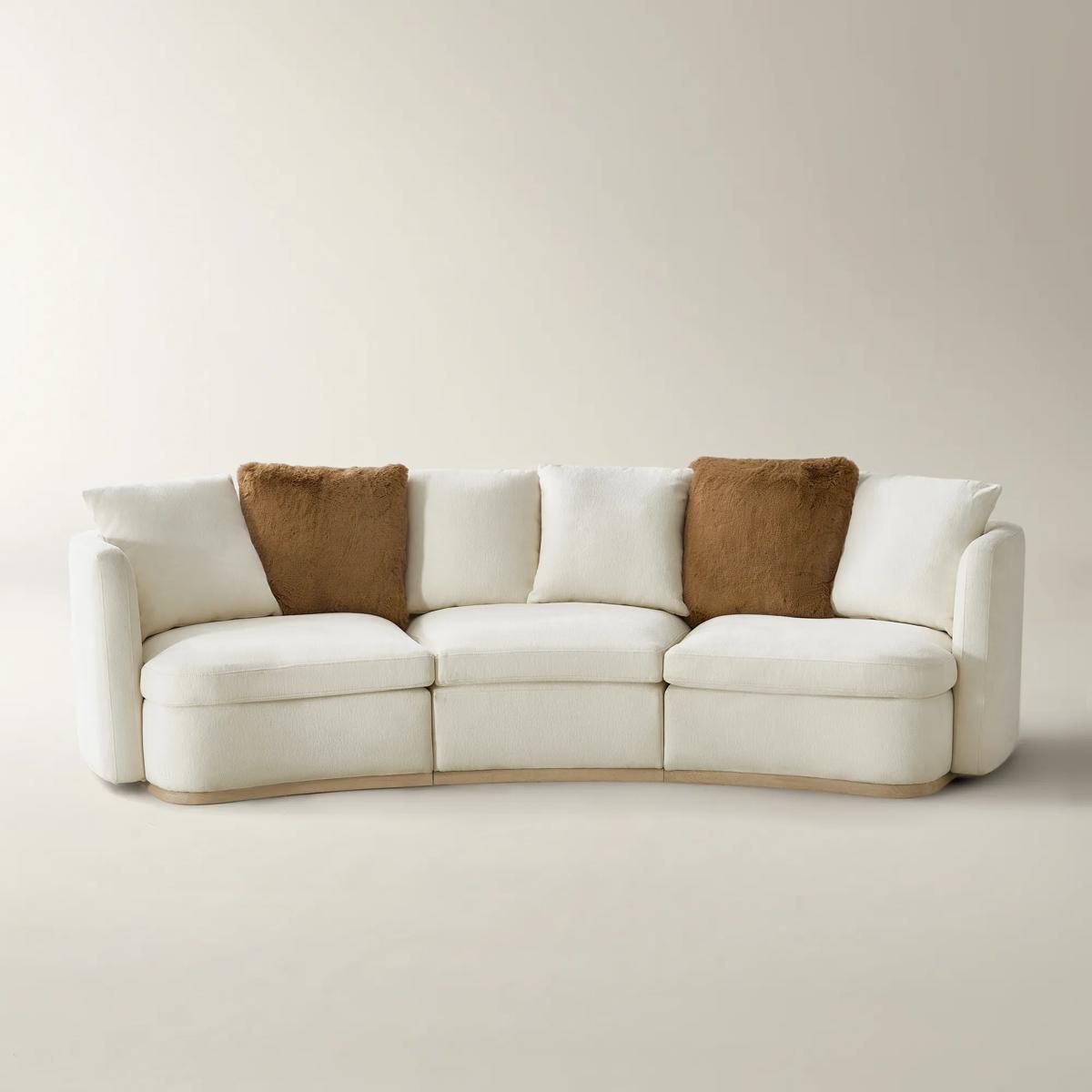 Stria 3-Piece Ivory Chenille Sectional Sofa$3099
An ivory chenille sofa featuring a sculptural curved design, triple-layer cushioning, and a kiln-dried oak frame.
Add To Cart -
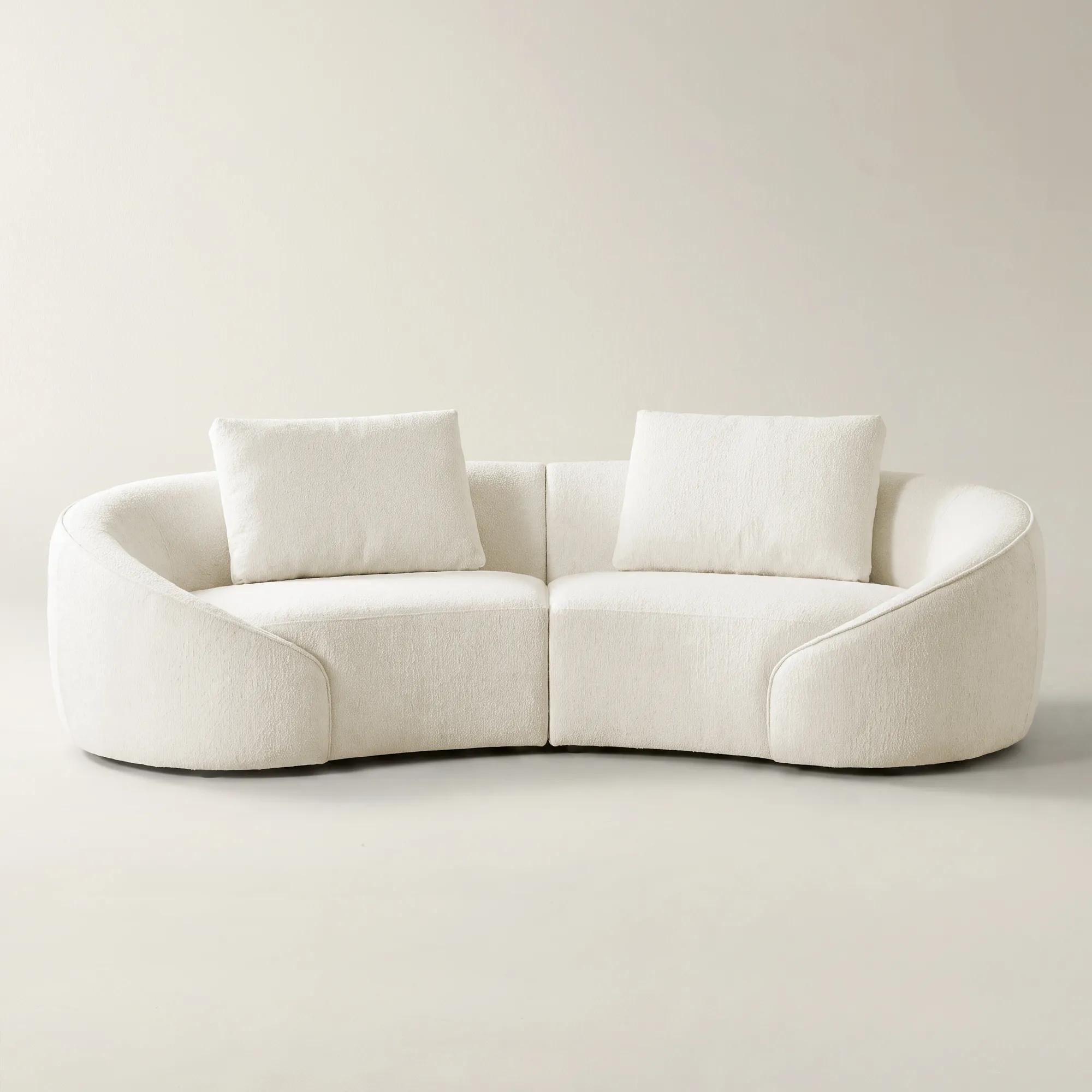
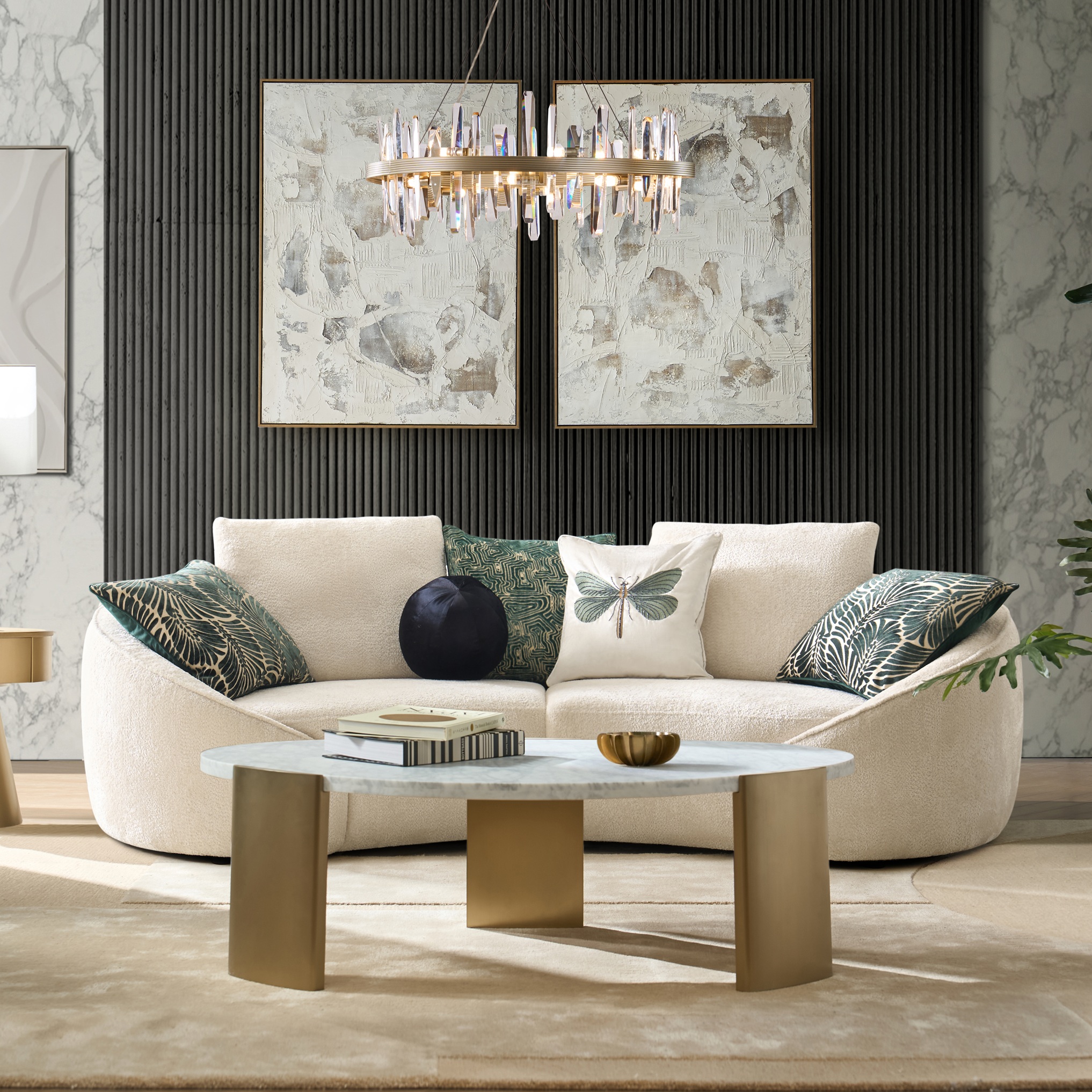 Irene 2-Piece Ivory Performance Chenille Sectional Sofa$2699
A sculptural ivory chenille sectional featuring performance upholstery, high-resiliency foam cushions, and artisan detailing.
Add To Cart -
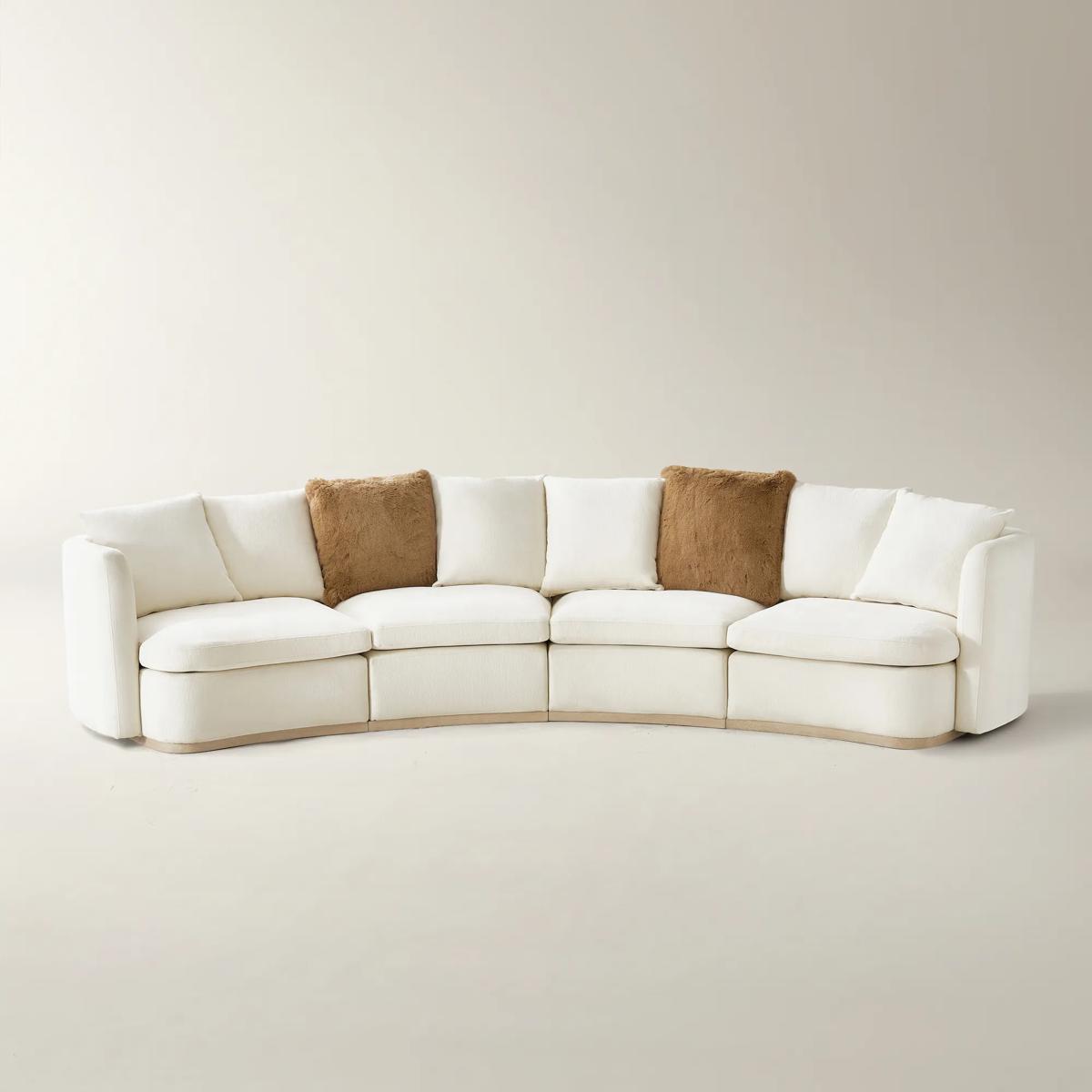
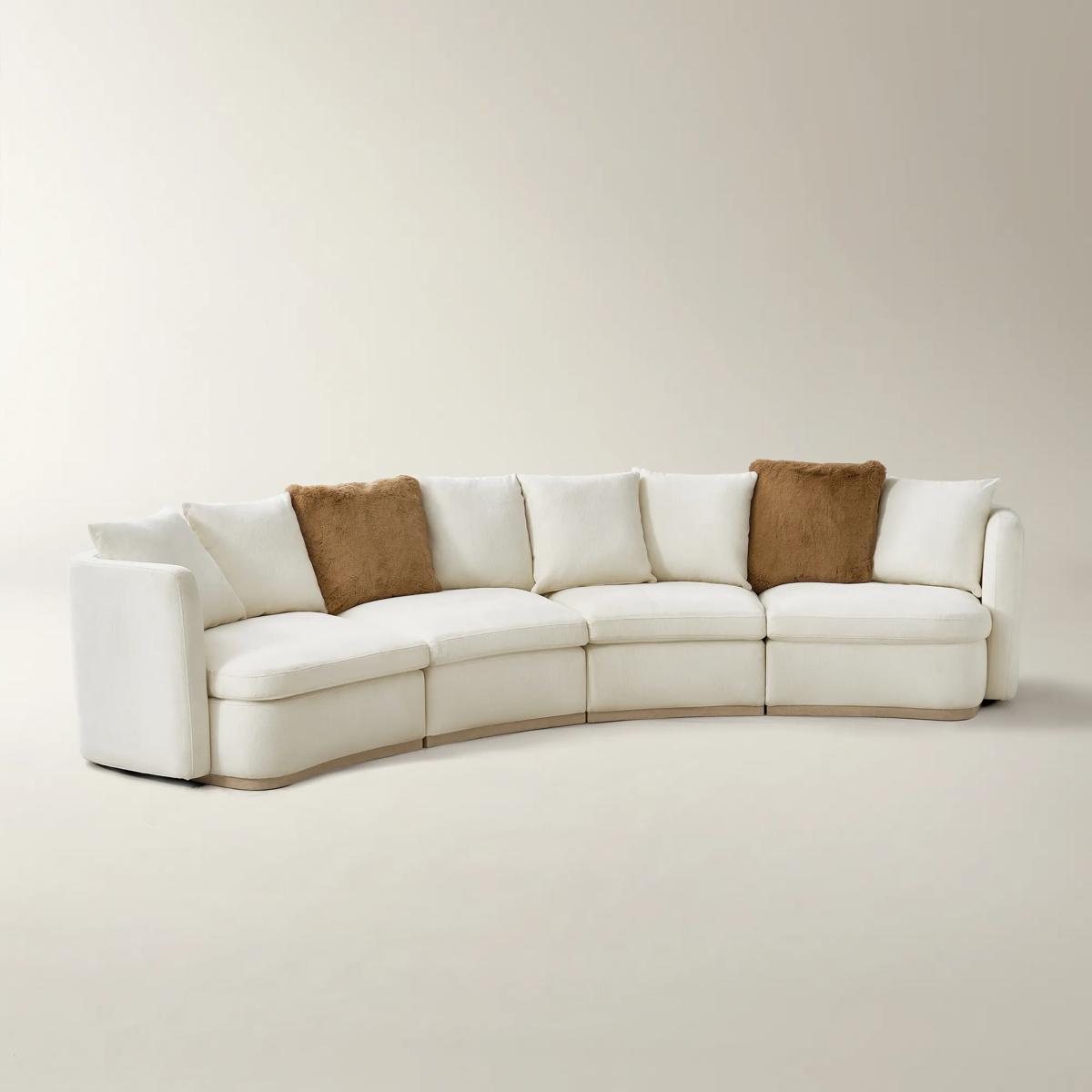 Stria 4-Piece Ivory Chenille Sectional Sofa$4099
An elegantly curved ivory chenille sectional with triple-layer cushioning and a kiln-dried solid oak frame.
Add To Cart -
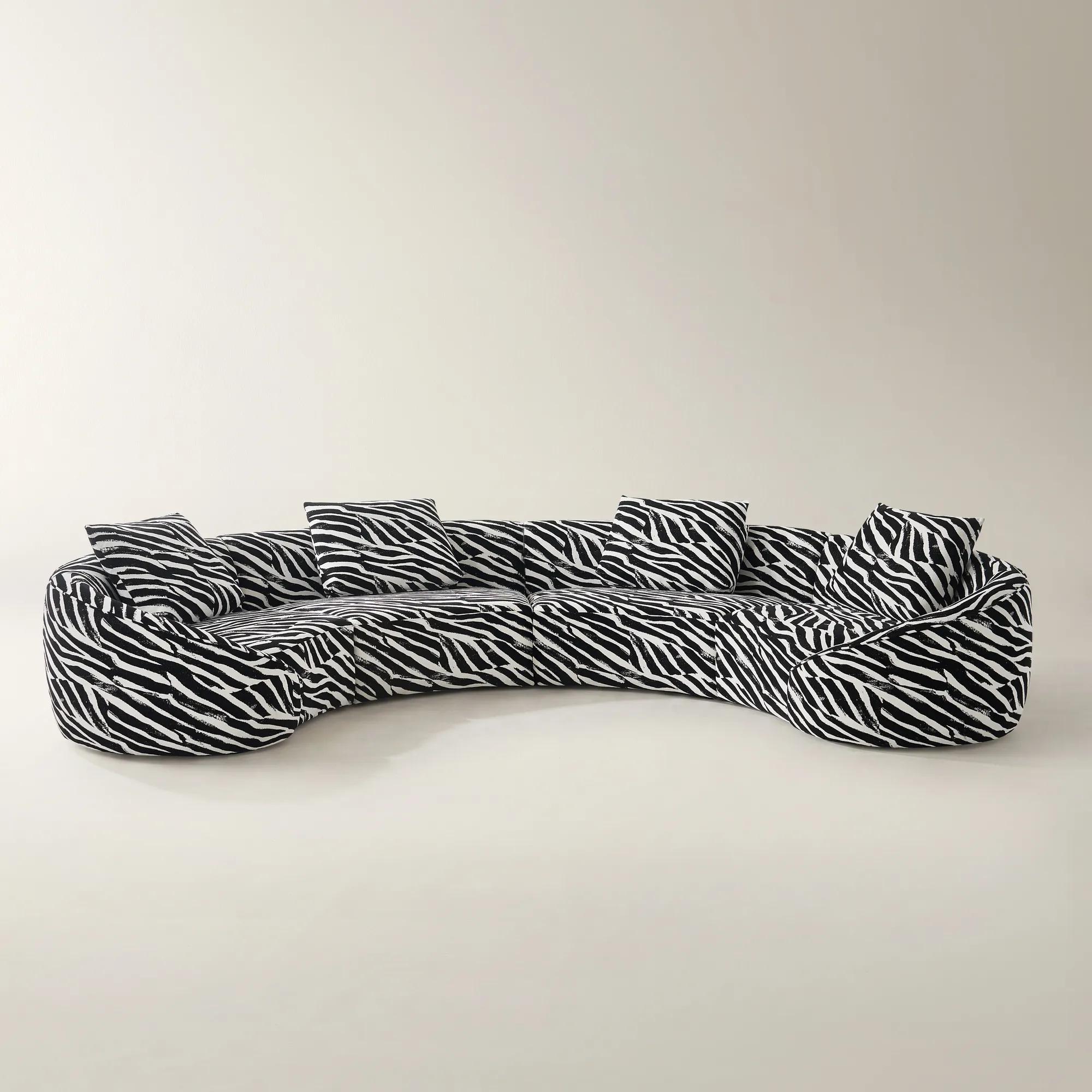 Irene 4-Piece White/Black Performance Chenille Sectional Sofa$4799
A sculptural sectional wrapped in white and black performance chenille with high-resiliency foam cushions.
Add To Cart -
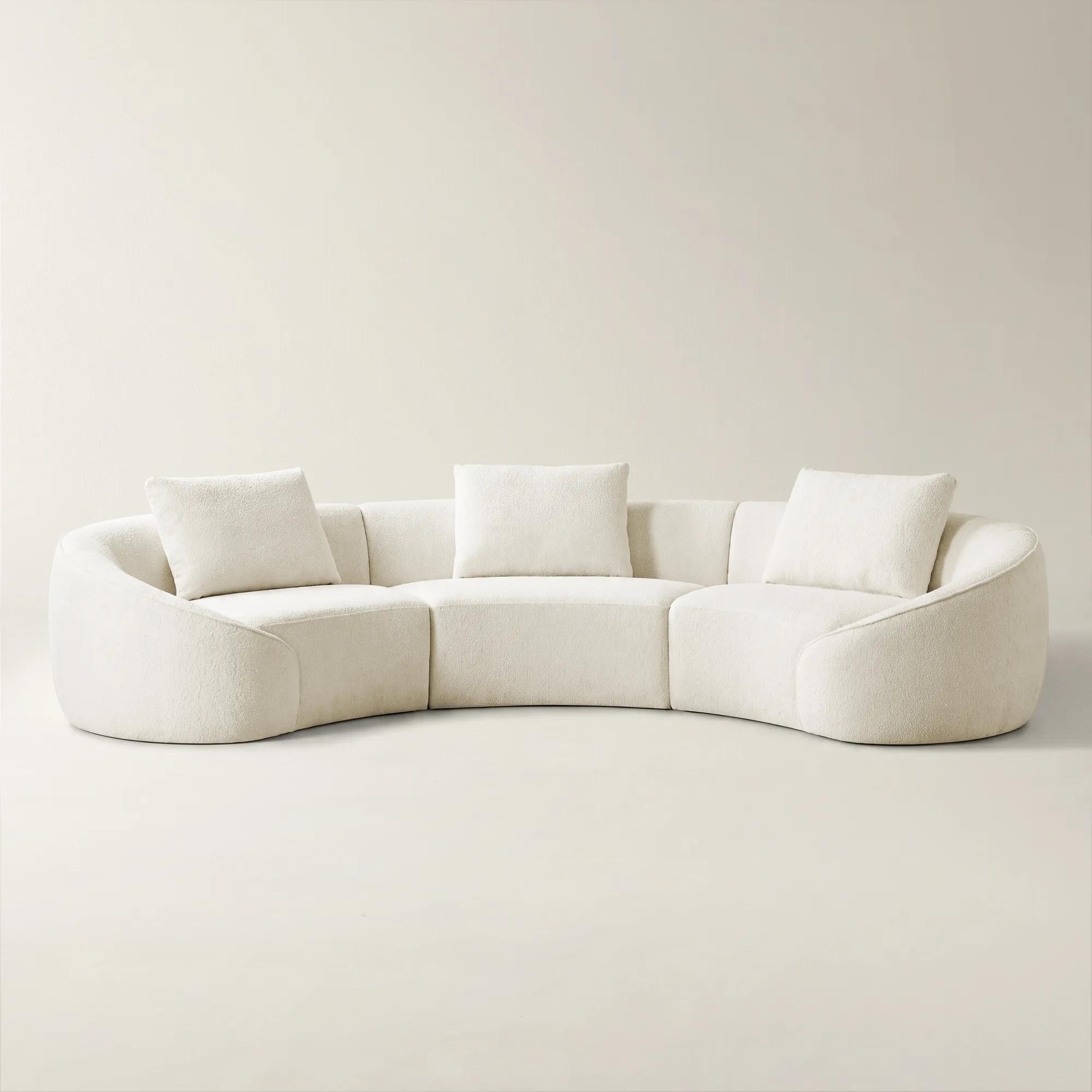
-7622206680239983900.webp?w=1200&h=1200) Irene 3-Piece Ivory Performance Chenille Sectional Sofa$3799
Irene 3-Piece Ivory Performance Chenille Sectional Sofa$3799An inviting ivory chenille sectional featuring sculptural curves, performance upholstery, and high-resiliency foam cushions.
Add To Cart -
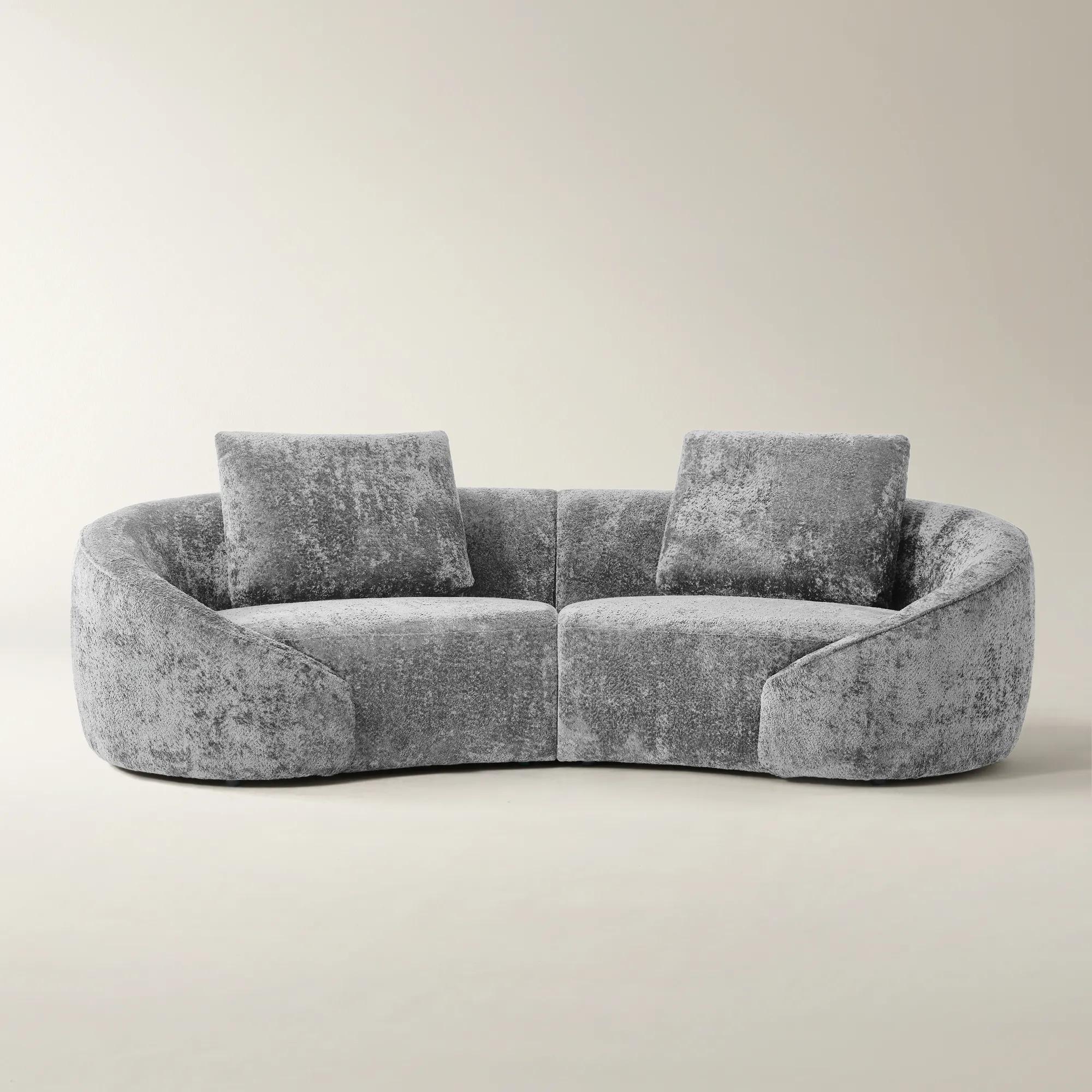 Irene 2-Piece Grey Chenille Sectional$2499
A modern curved sectional upholstered in plush Utopia Sand chenille with high-density foam cushioning for comfort.
Add To Cart -
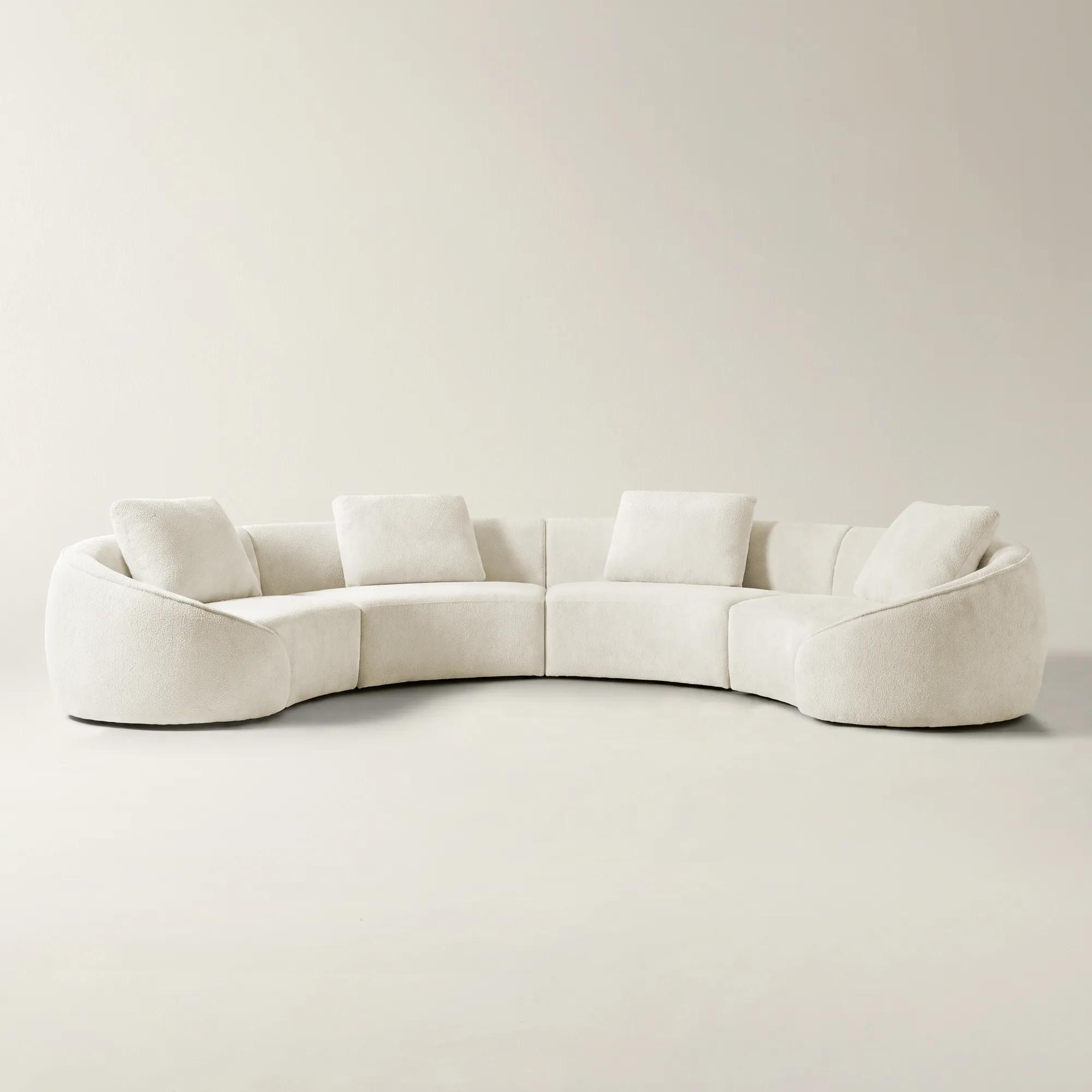
-3.png?w=1200&h=1200) Irene 4-Piece Ivory Performance Chenille Sectional Sofa$4799
Irene 4-Piece Ivory Performance Chenille Sectional Sofa$4799An inviting ivory chenille sectional featuring sculptural curves, performance upholstery, and artisan-crafted detailing.
Add To Cart -
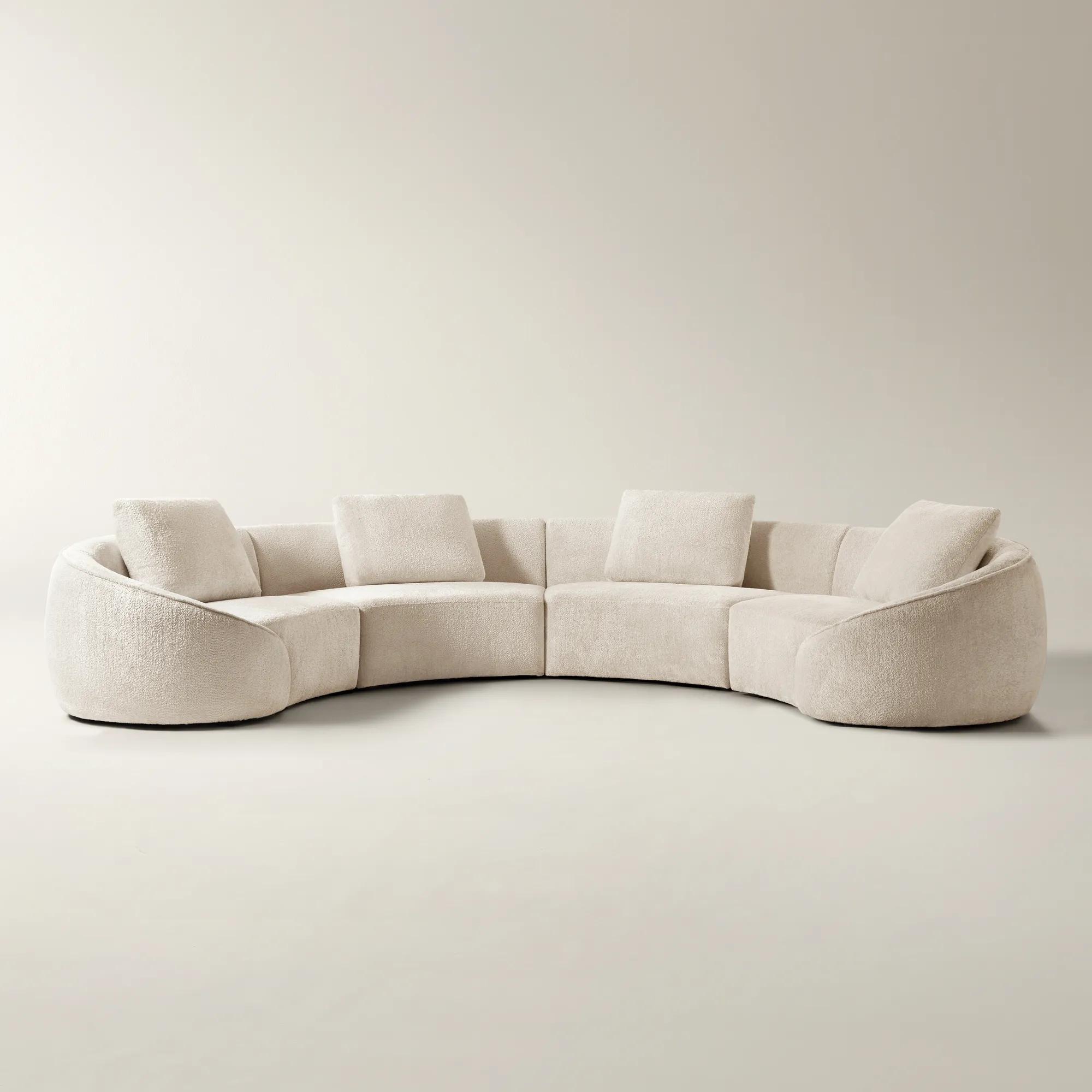
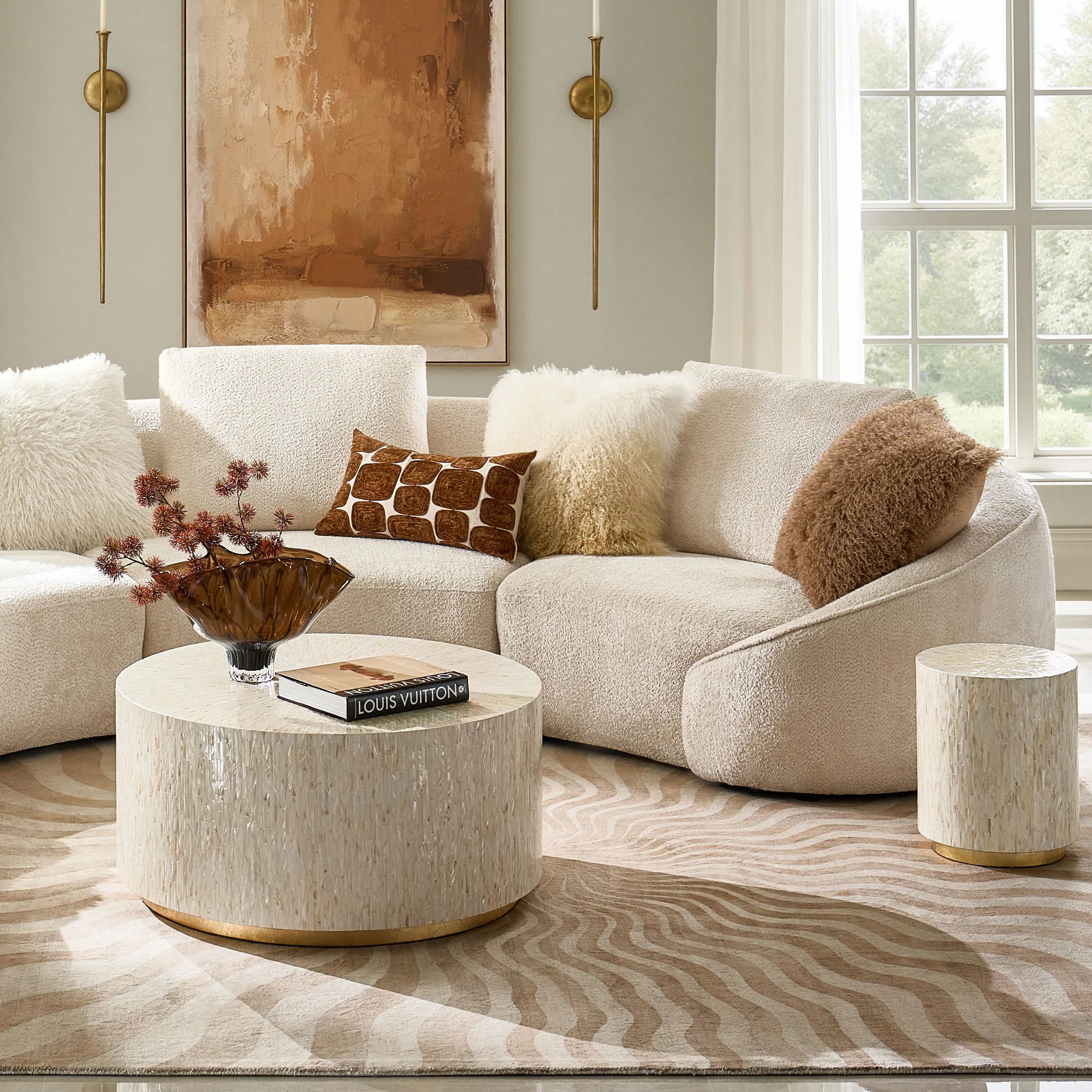 Irene 4-Piece Utopia Sand Chenille Sectional$4599
A modern curved sectional upholstered in plush Utopia Sand chenille with high-density foam cushioning for comfort.
Add To Cart -
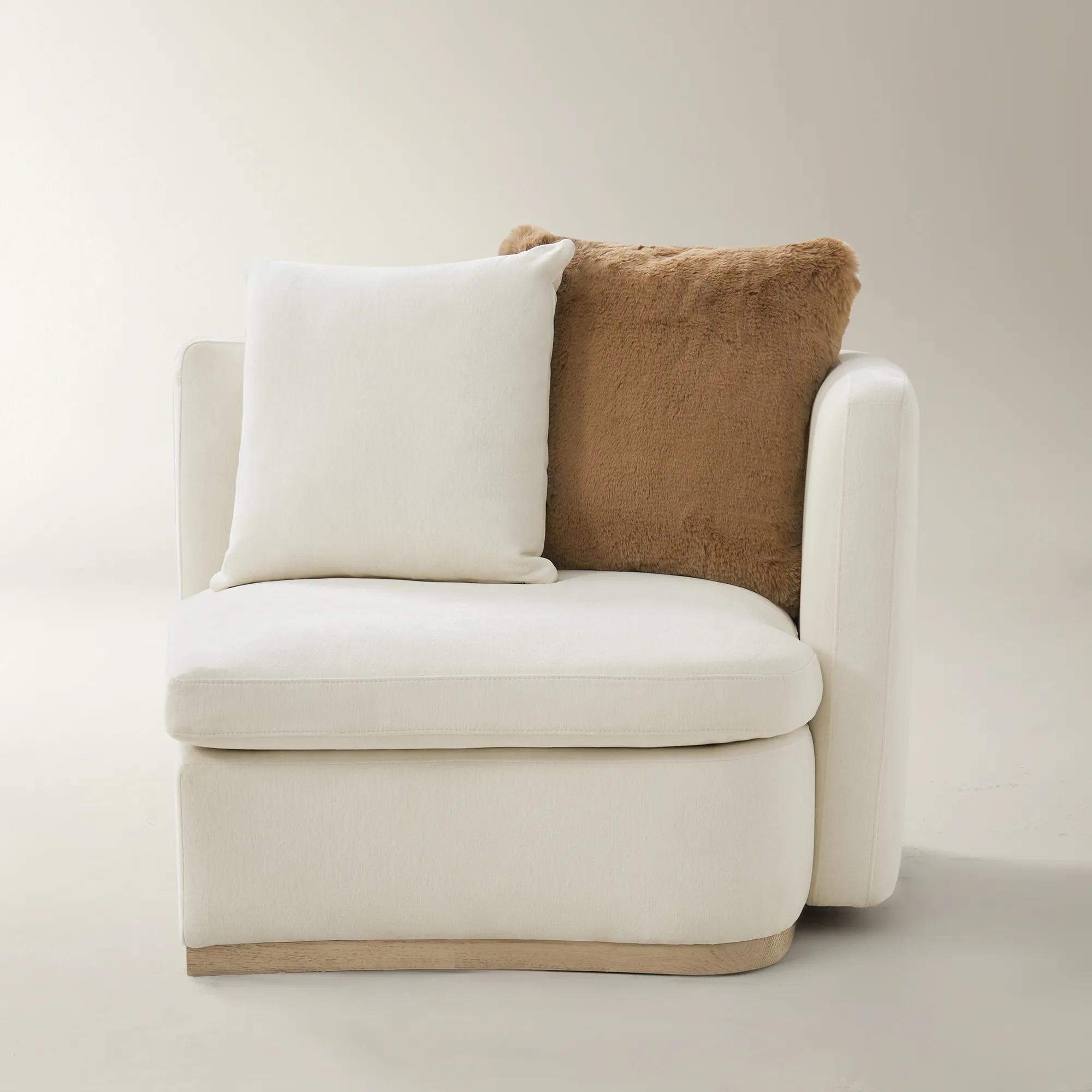
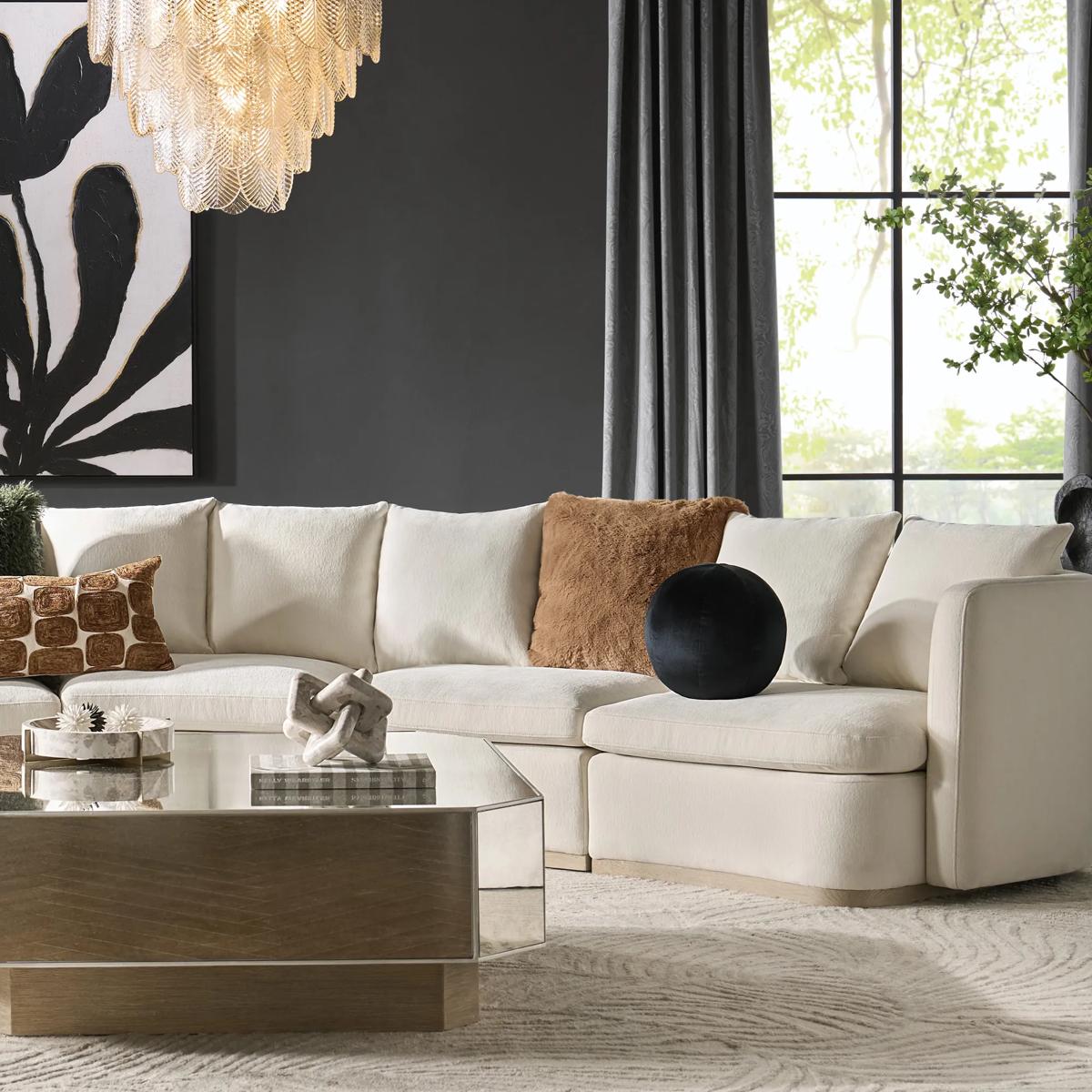 Stria Ivory Chenille Right-Arm Chair$1099
A sculptural ivory chenille sectional with triple-layer cushioning and a kiln-dried oak frame for tailored comfort.
Add To Cart -
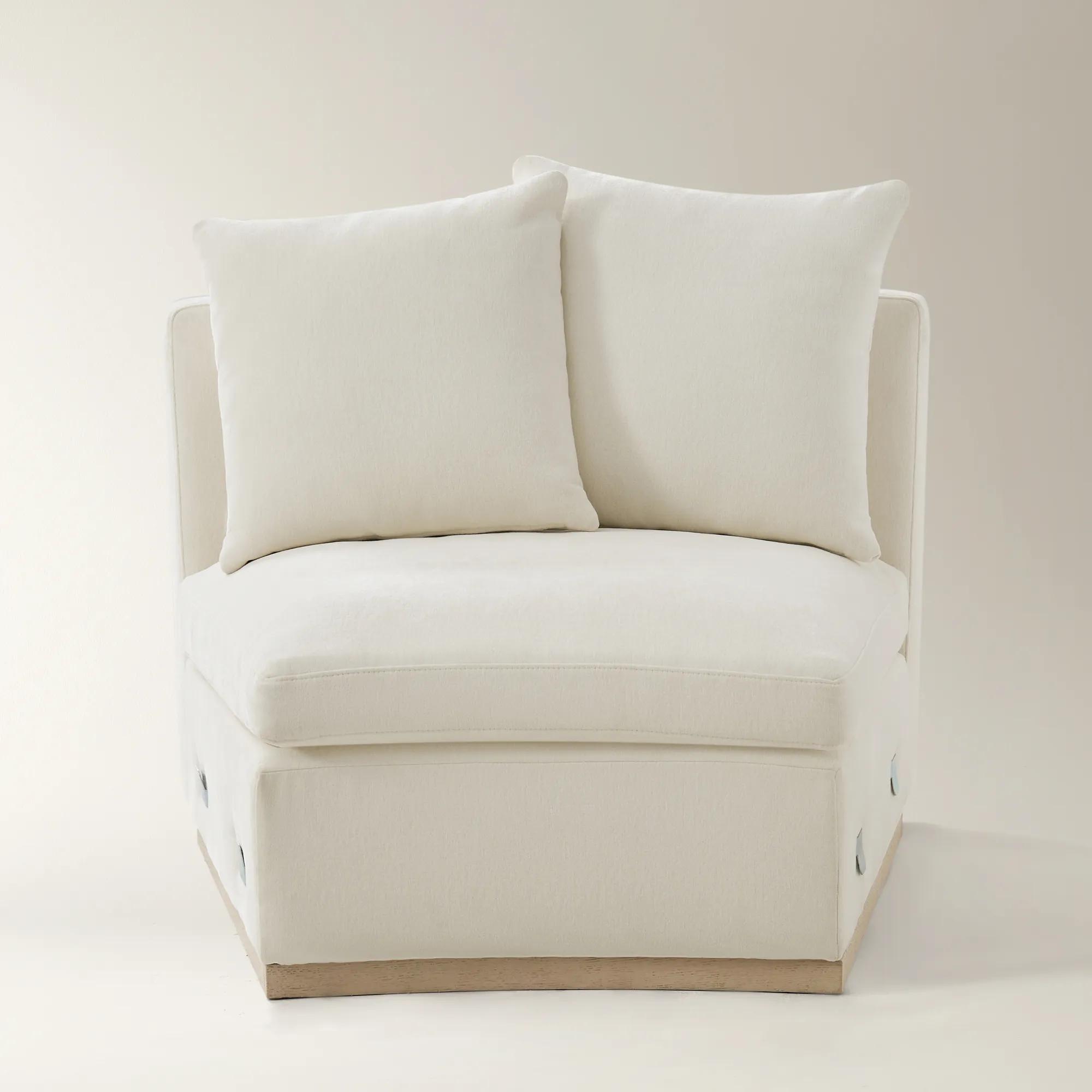
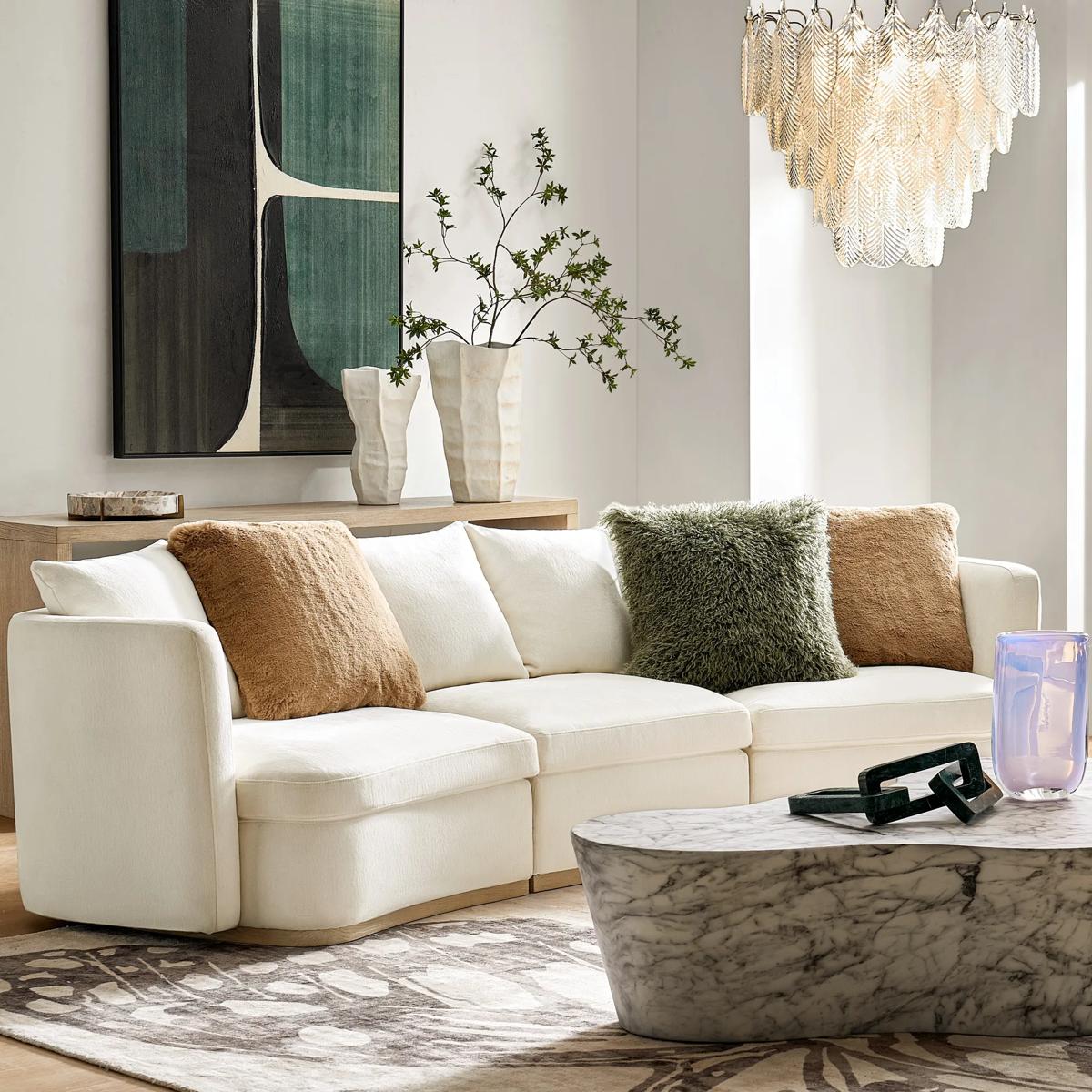 Stria Ivory Chenille Armless Chair$999
A sculptural ivory chenille sectional with triple-layer cushioning and a kiln-dried oak frame for tailored comfort.
Add To Cart -
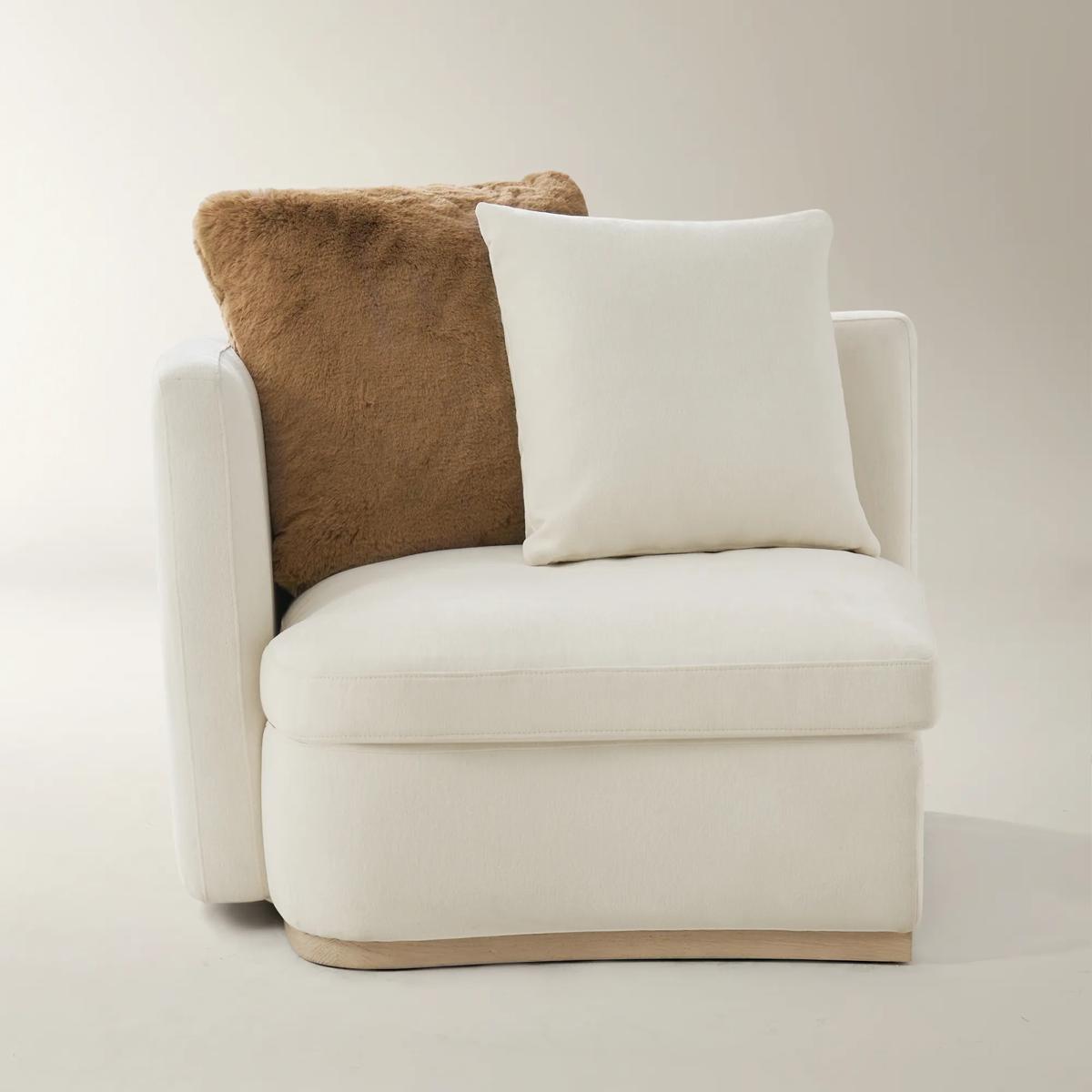 Stria Ivory Chenille Left-Arm Chair$1099
An ivory chenille sectional with sculptural curves, triple-layer cushioning, and a kiln-dried oak frame.
Add To Cart -
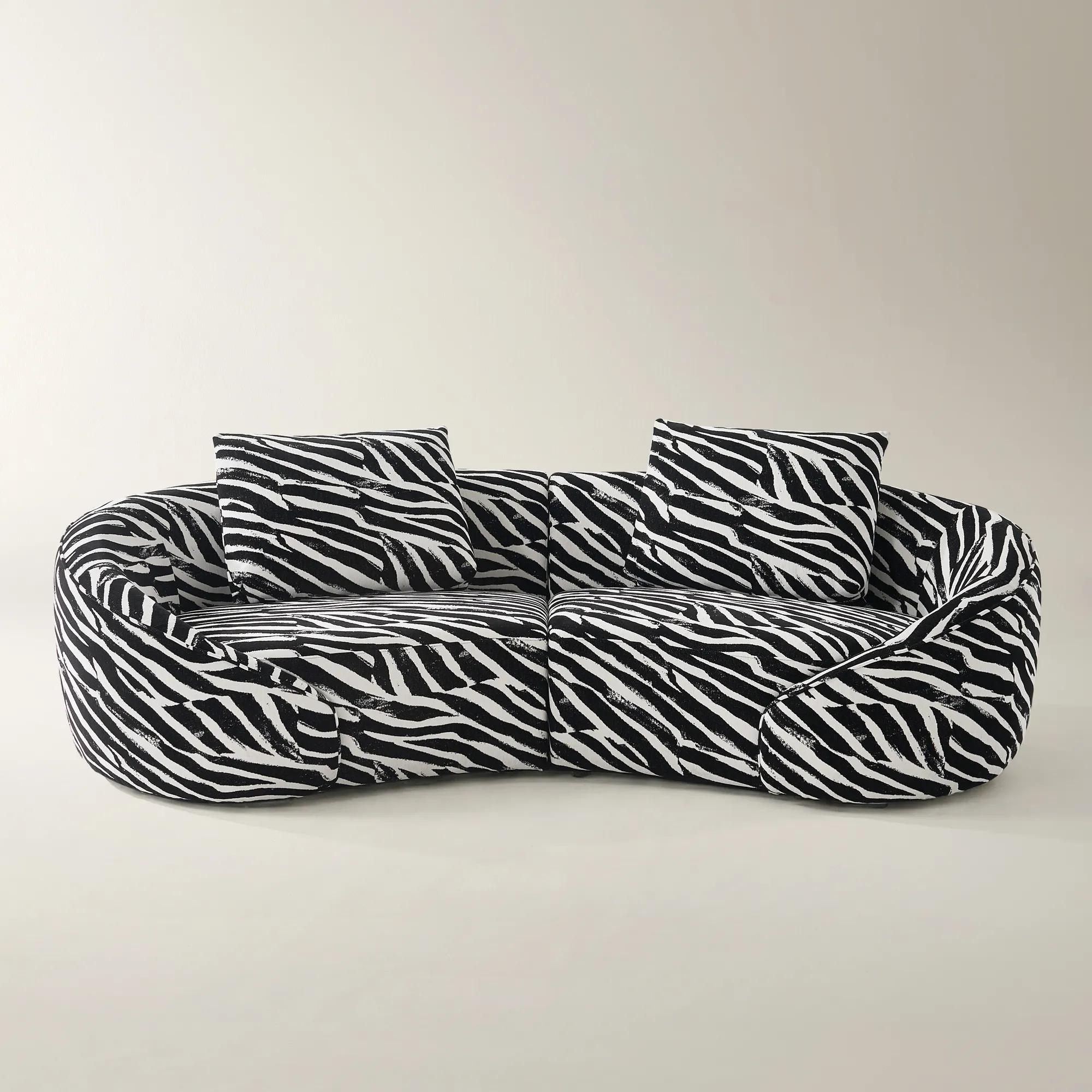 Irene 2-Piece White/Black Performance Chenille Sectional Sofa$2699
A sculptural white and black sectional wrapped in performance chenille with high-resiliency foam cushions and artisan detailing.
Add To Cart -
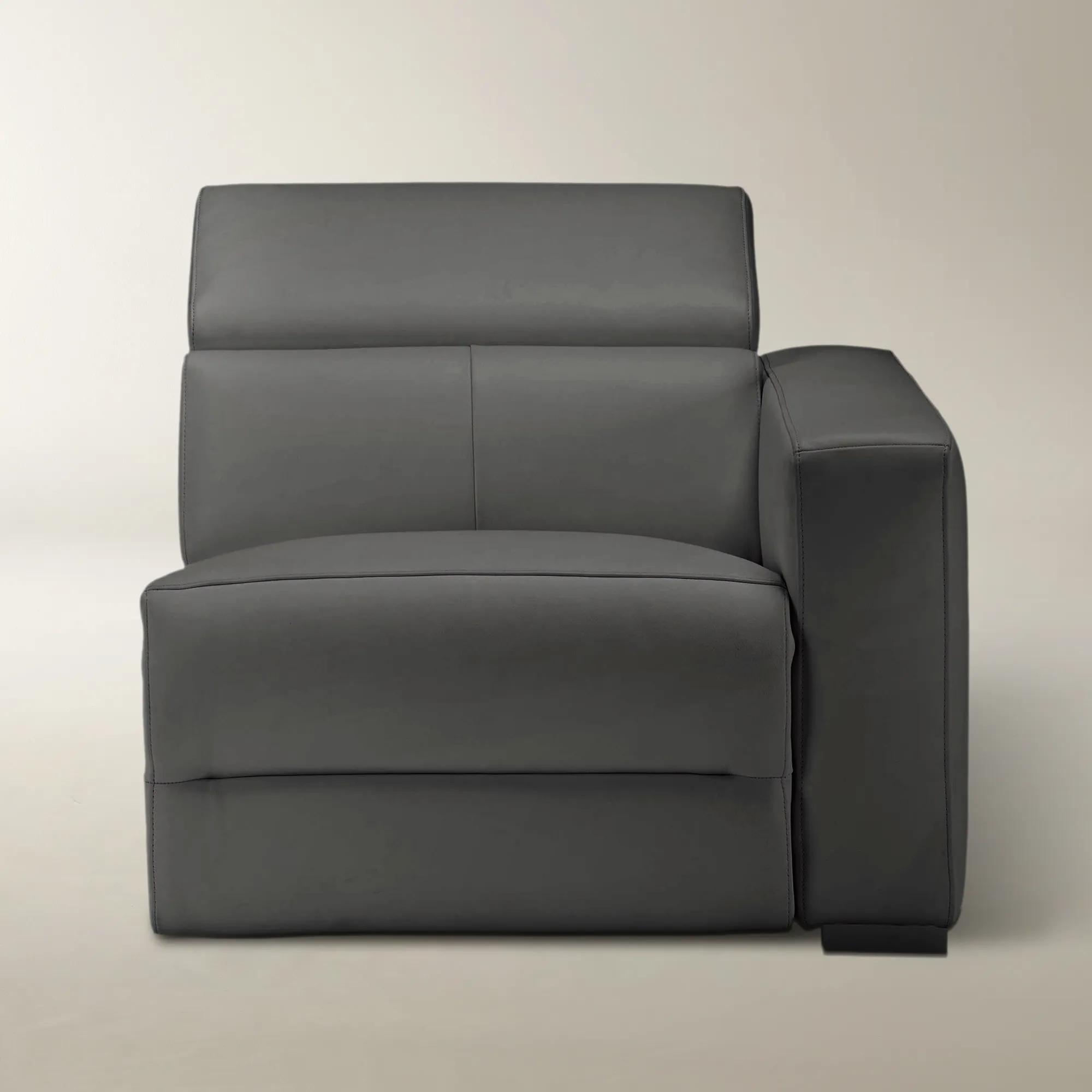
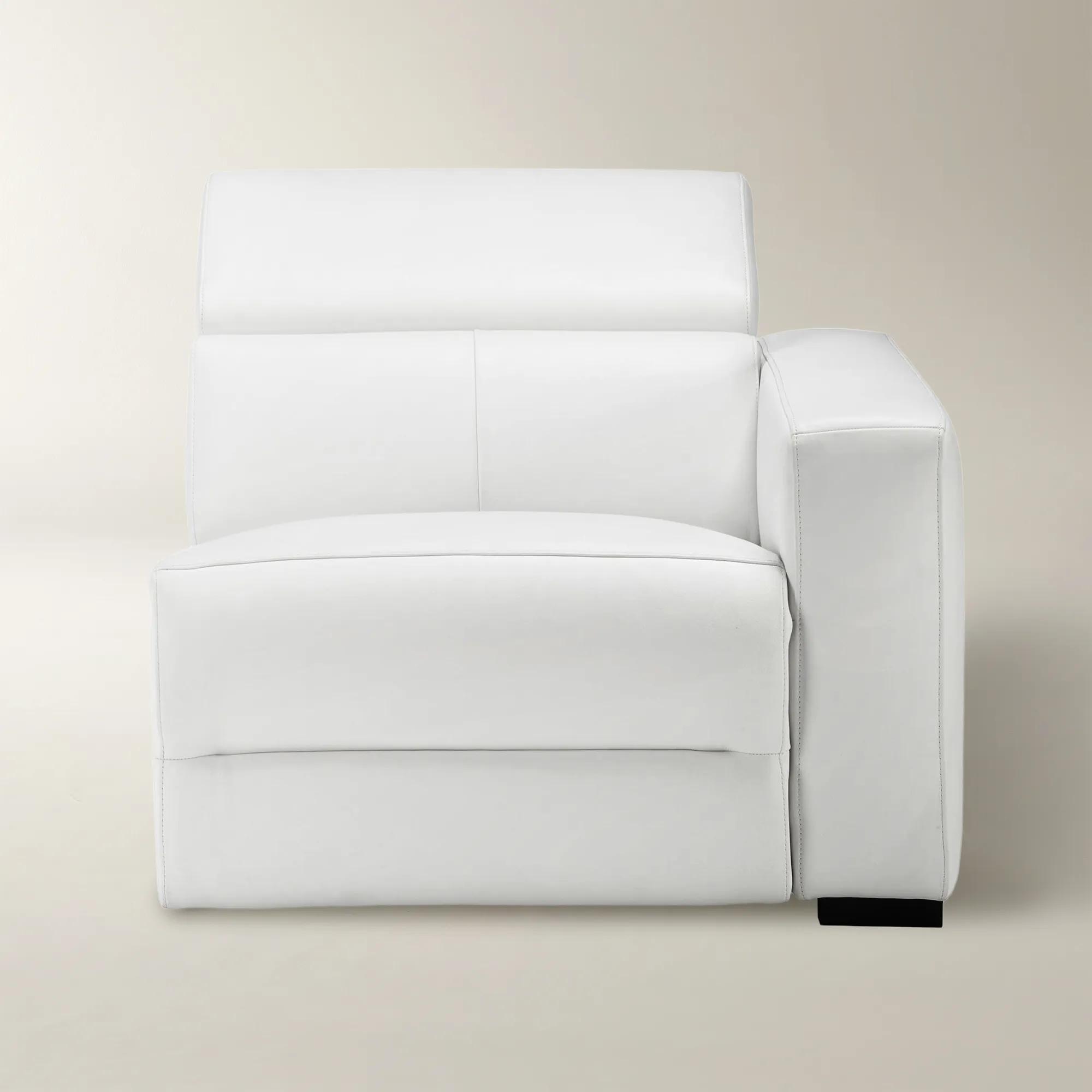
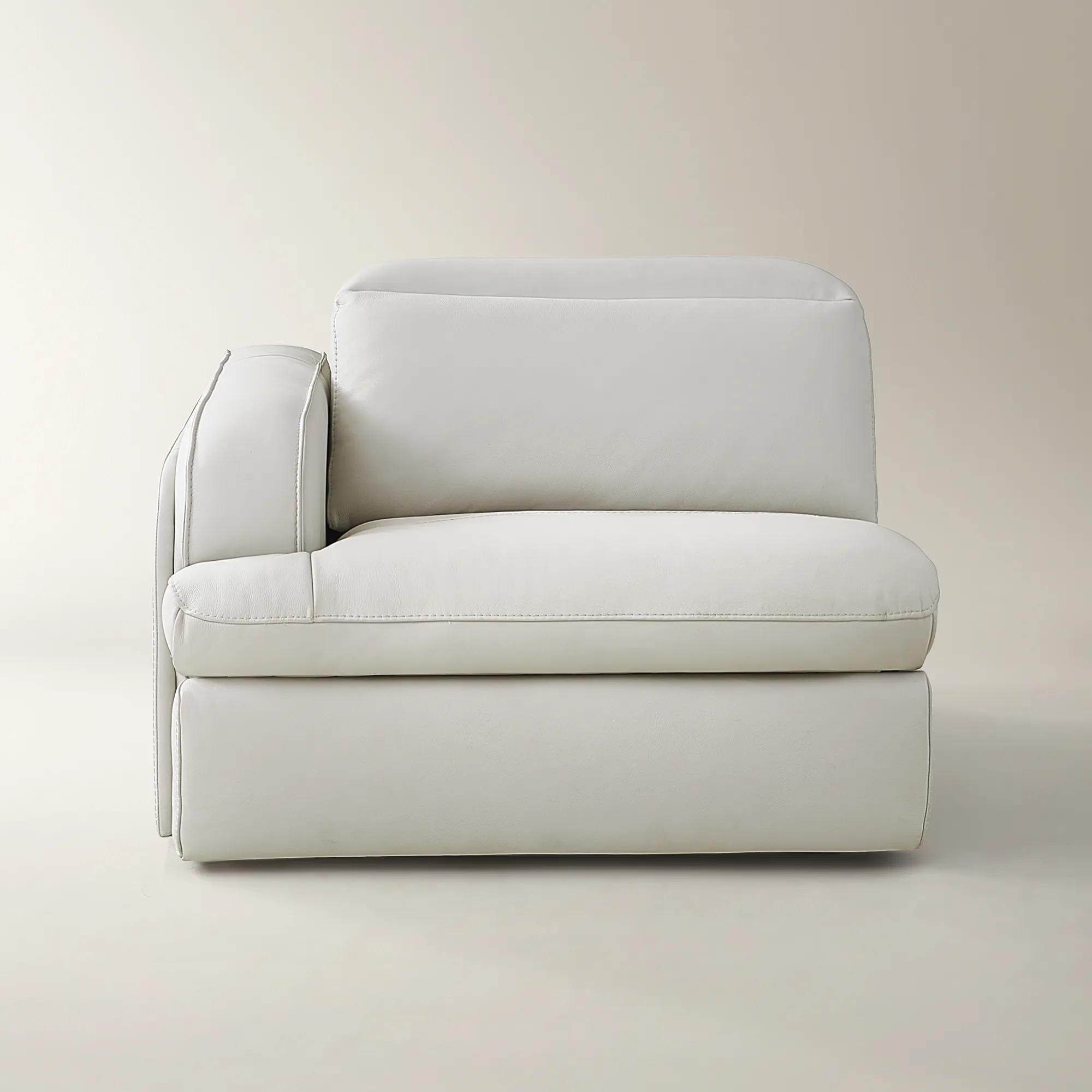
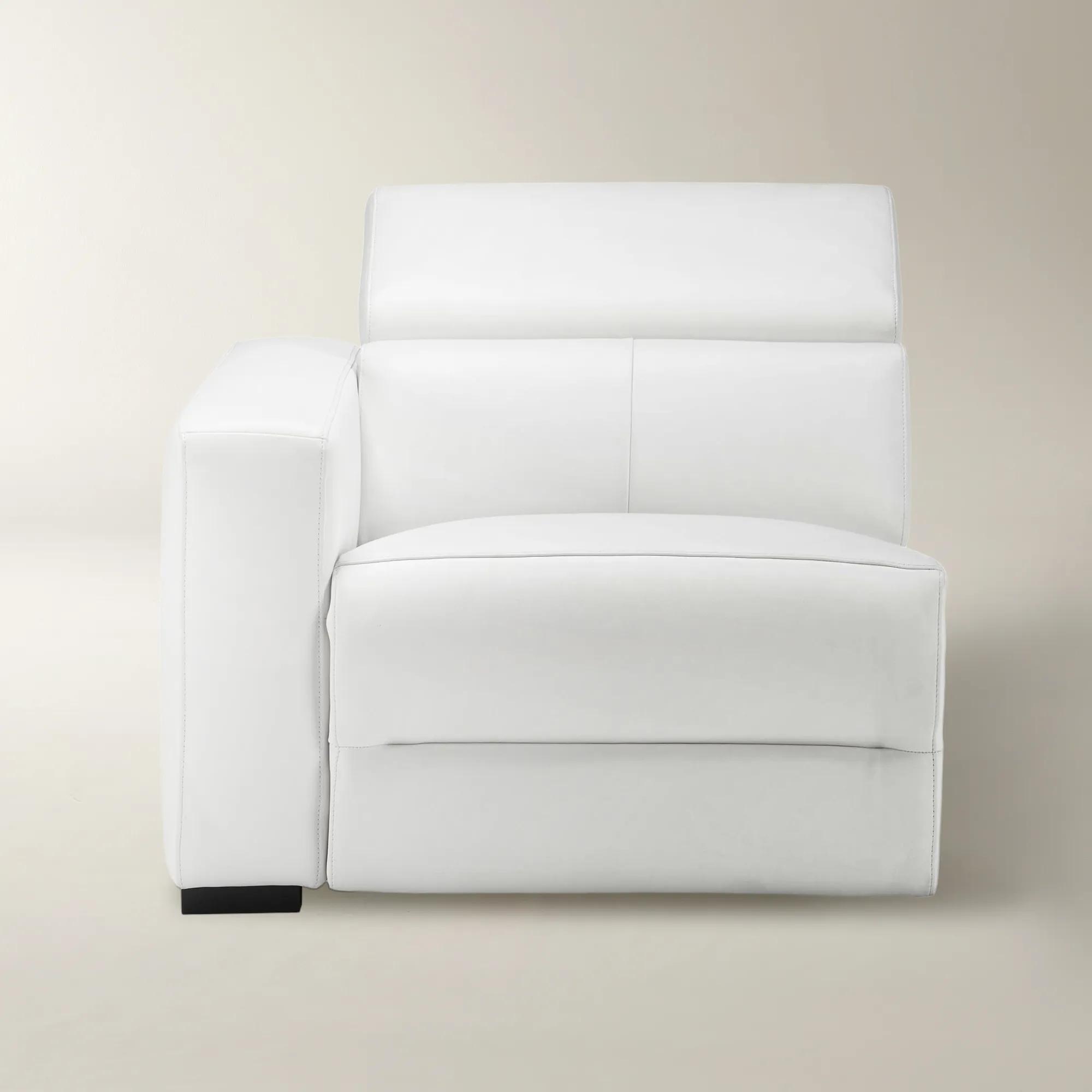 Verona White Leather Left Arm Chair$1299
A modern white sectional upholstered in supple semi-aniline leather with adjustable headrests and power-reclining seats.
Add To Cart -
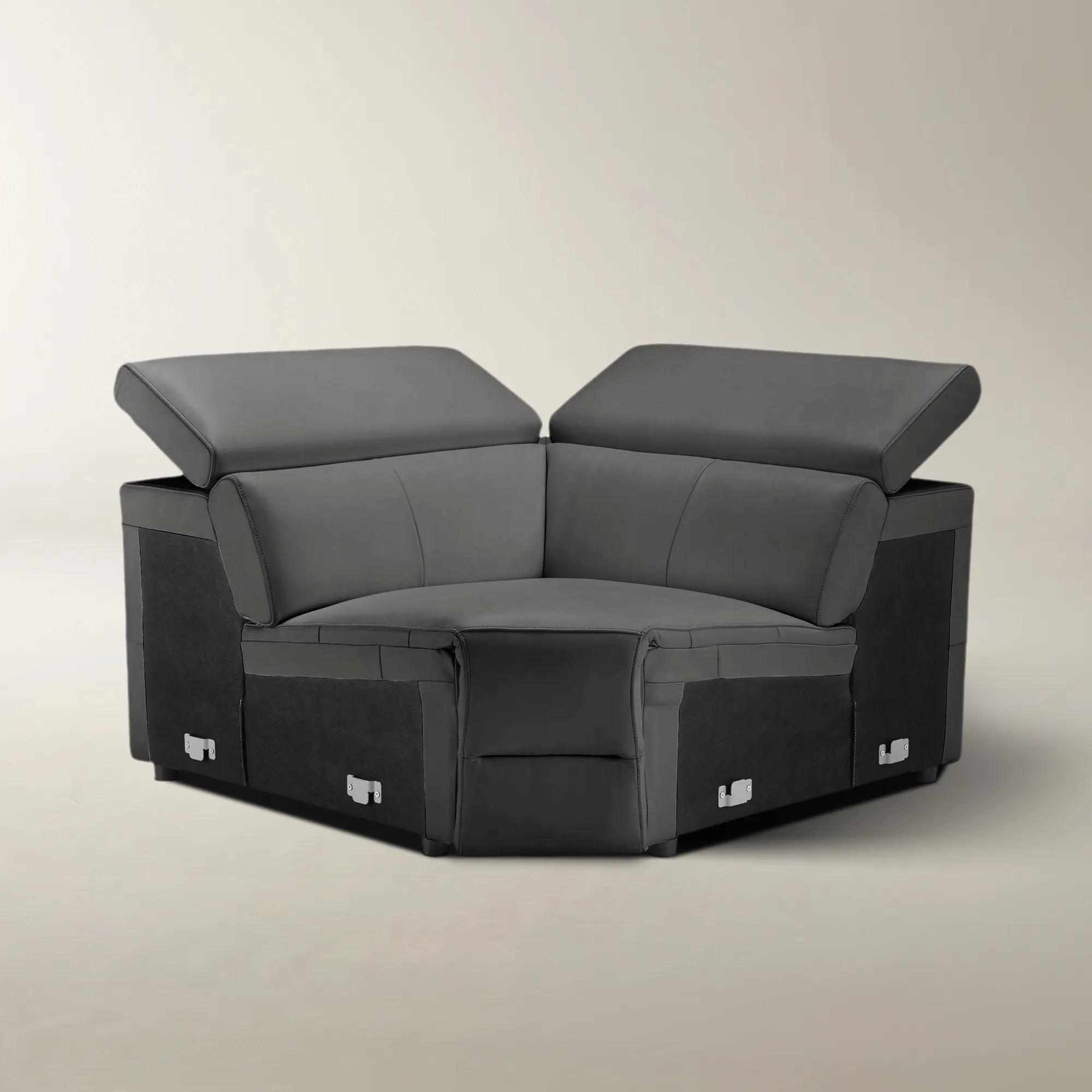
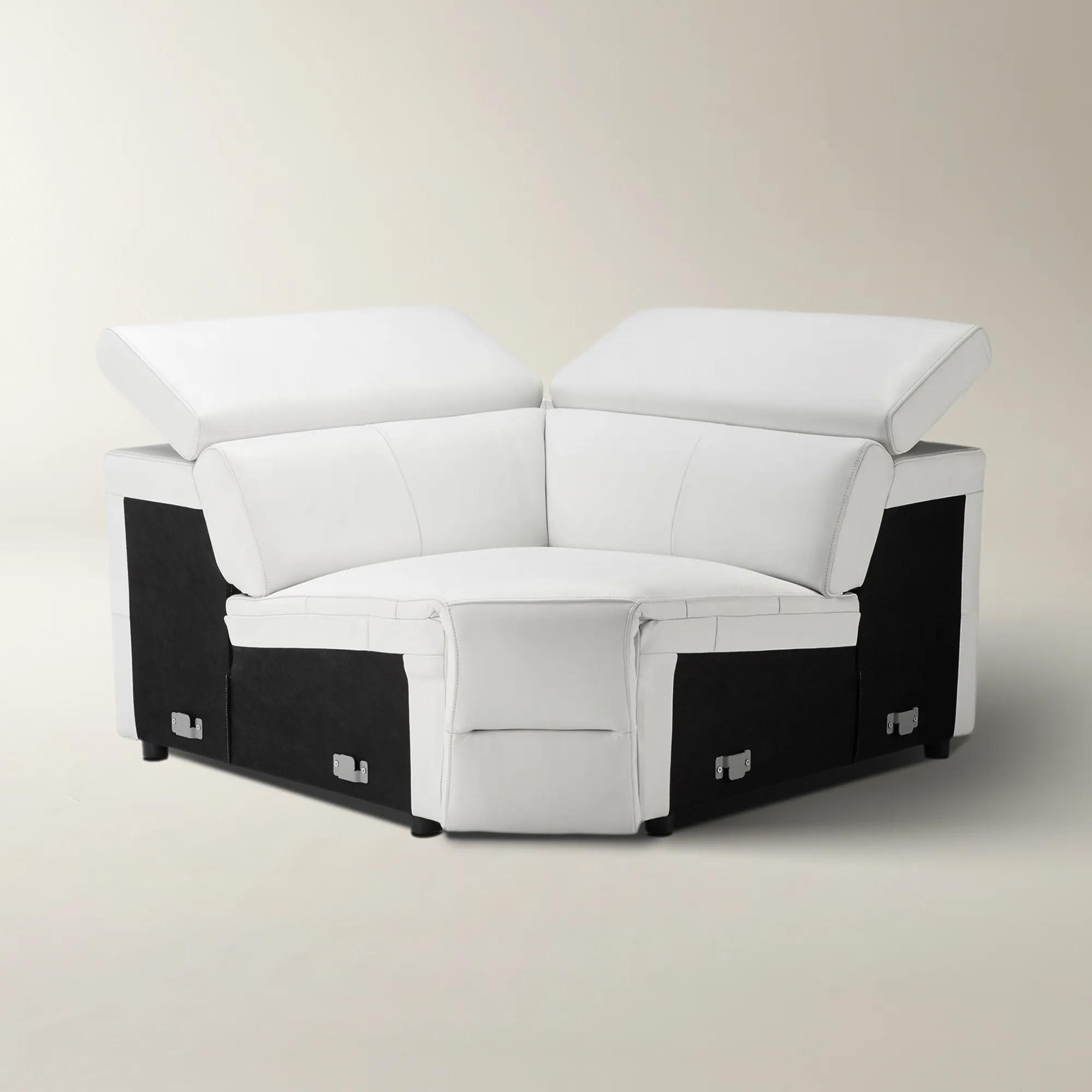 Verona White Leather Corner Chair With Power$1499
A modern sectional upholstered in supple white semi-aniline leather with adjustable headrests and power-reclining seats.
Add To Cart -
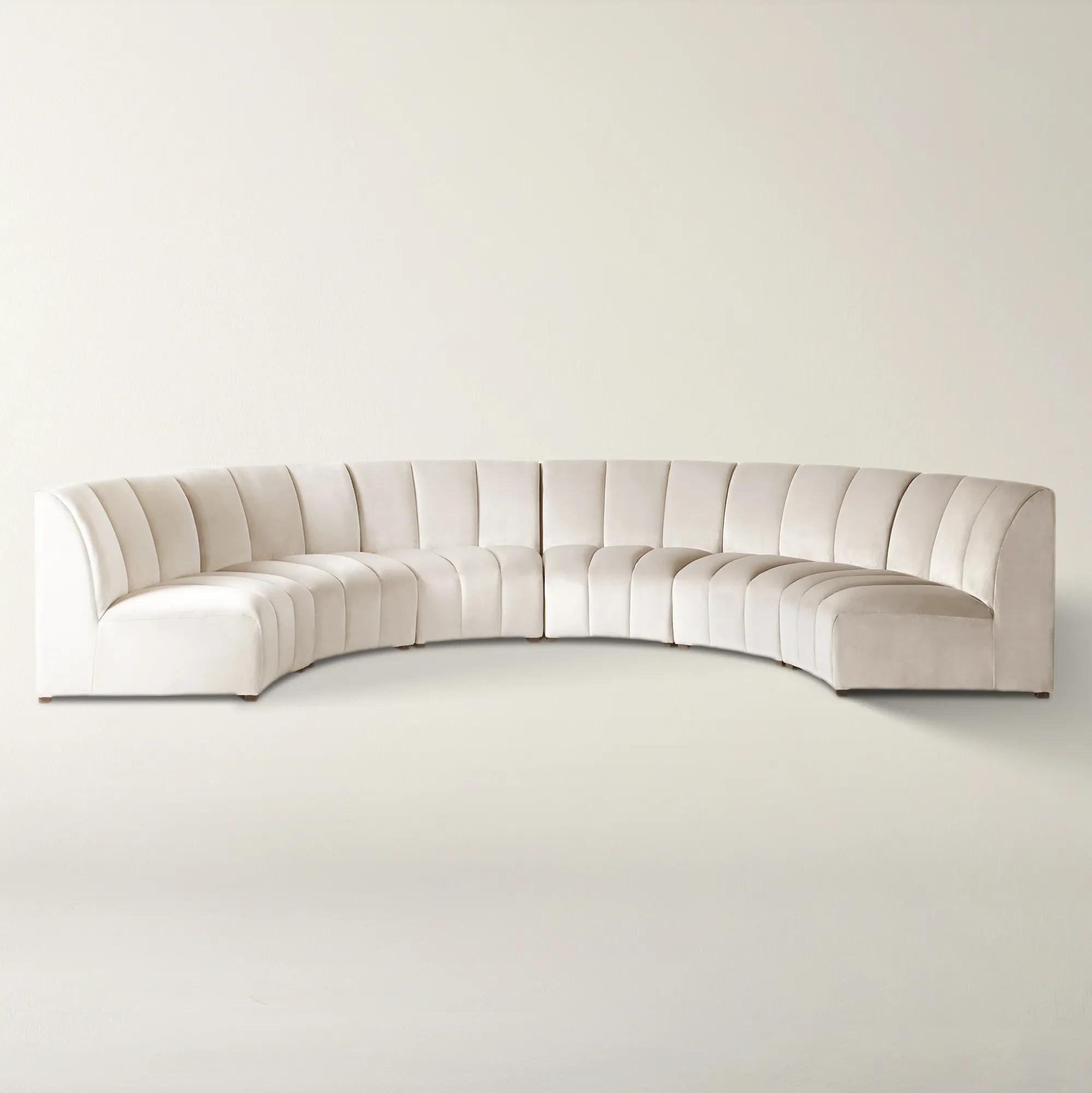 Jayce 6-Piece Channel-Tufted Ivory Velvet Sectional Sofa$5499
A modern curved sectional in stain-resistant Velvet Ivory with deep channel tufting and plush, structured cushions.
Add To Cart -
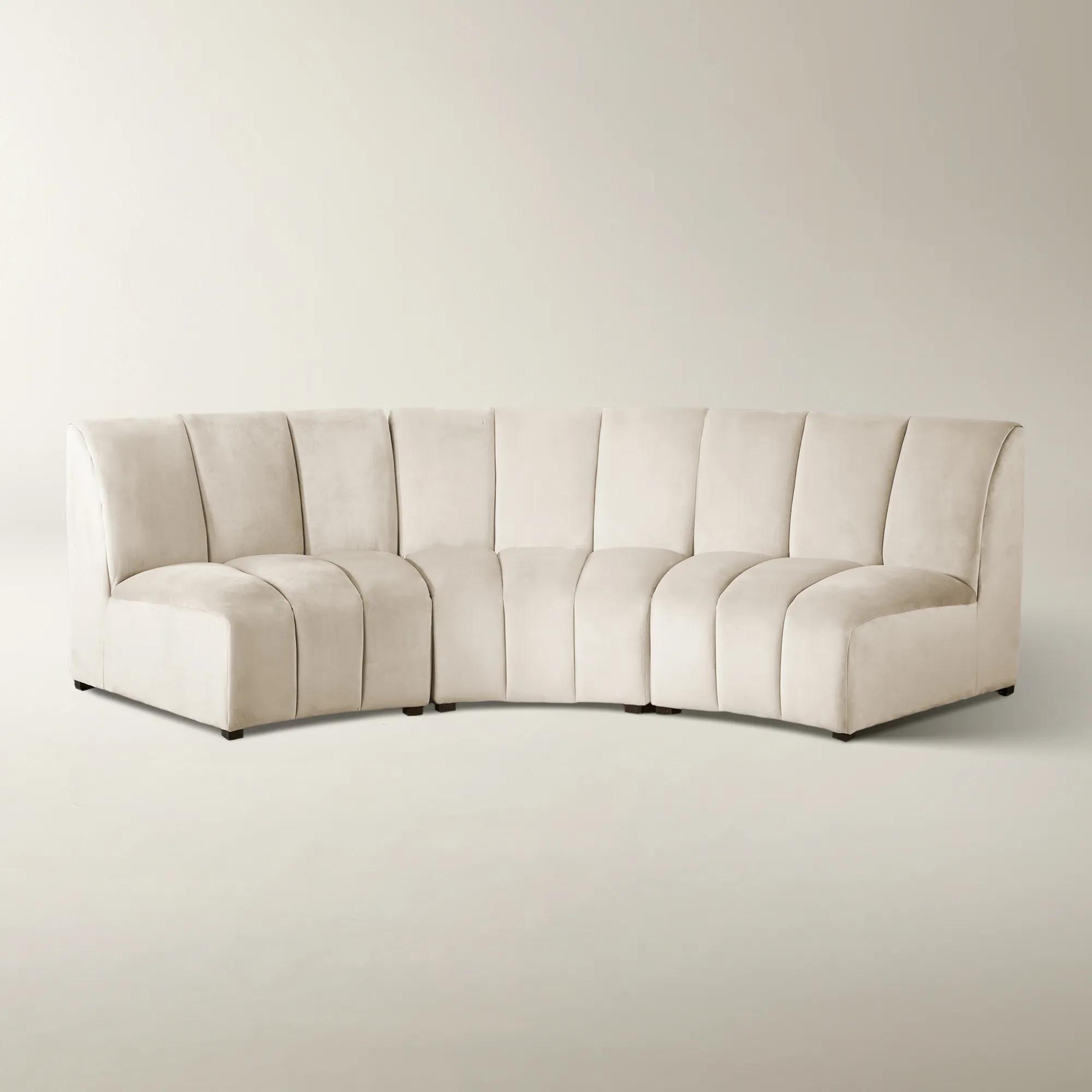
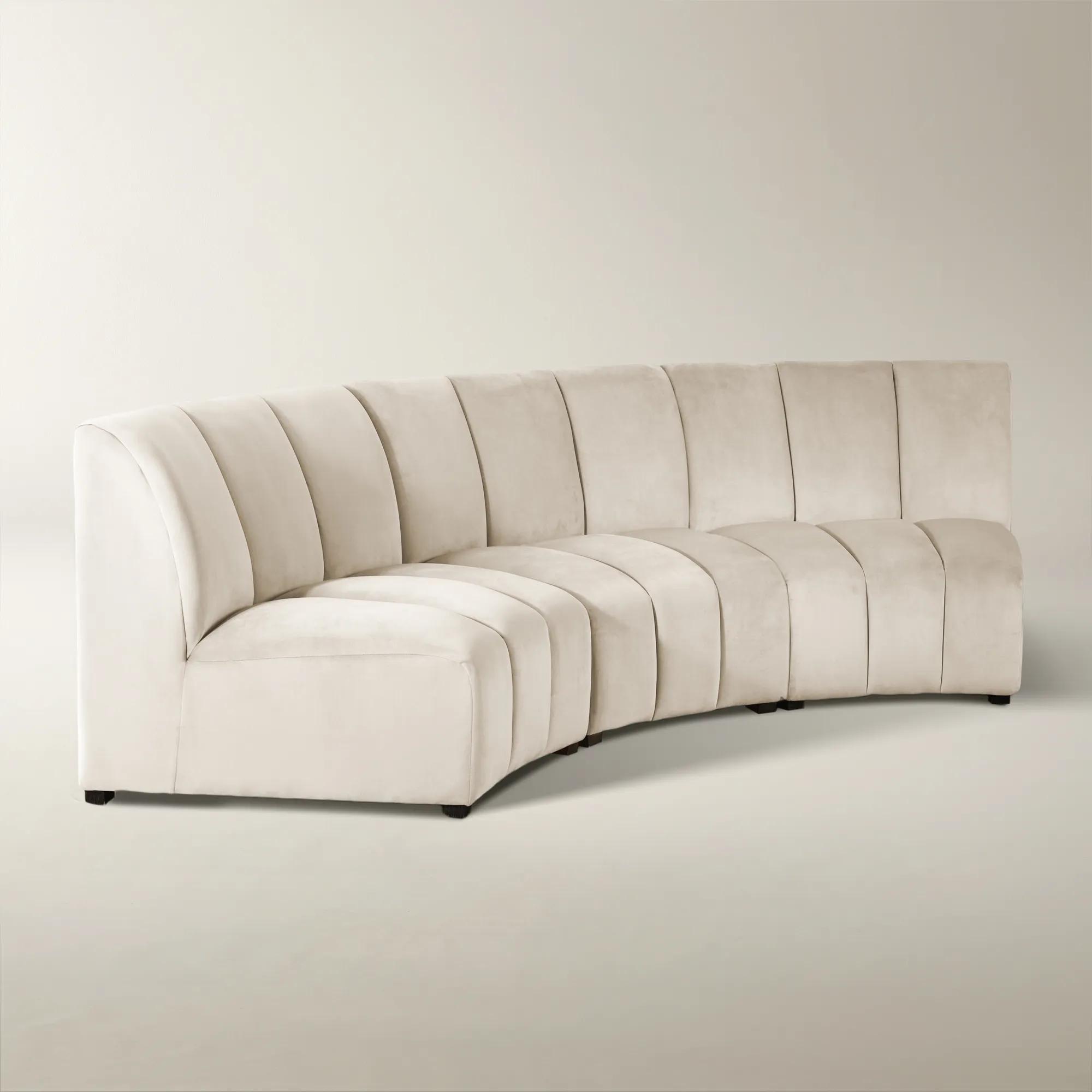 Jayce 3-Piece Channel-Tufted Ivory Velvet Sectional Sofa$2799
A modern curved sectional in stain-resistant Velvet Ivory with deep channel tufting and plush, structured cushions.
Add To Cart

White Chenille Sectionals For Bright Spaces
White chenille sectionals for bright spaces are the very definition of elevated comfort—inviting you to luxuriate in plush, cloud-like softness while transforming any room into a luminous sanctuary. These statement pieces capture the interplay of light and texture, amplifying natural radiance and creating an atmosphere that feels both airy and indulgent. With their sculptural silhouettes and tactile allure, white chenille sectionals become the heart of a space designed for bold living, where every detail shimmers with possibility and style takes center stage. Let your home bask in the glow of sophisticated serenity—where relaxation is always wrapped in elegance.
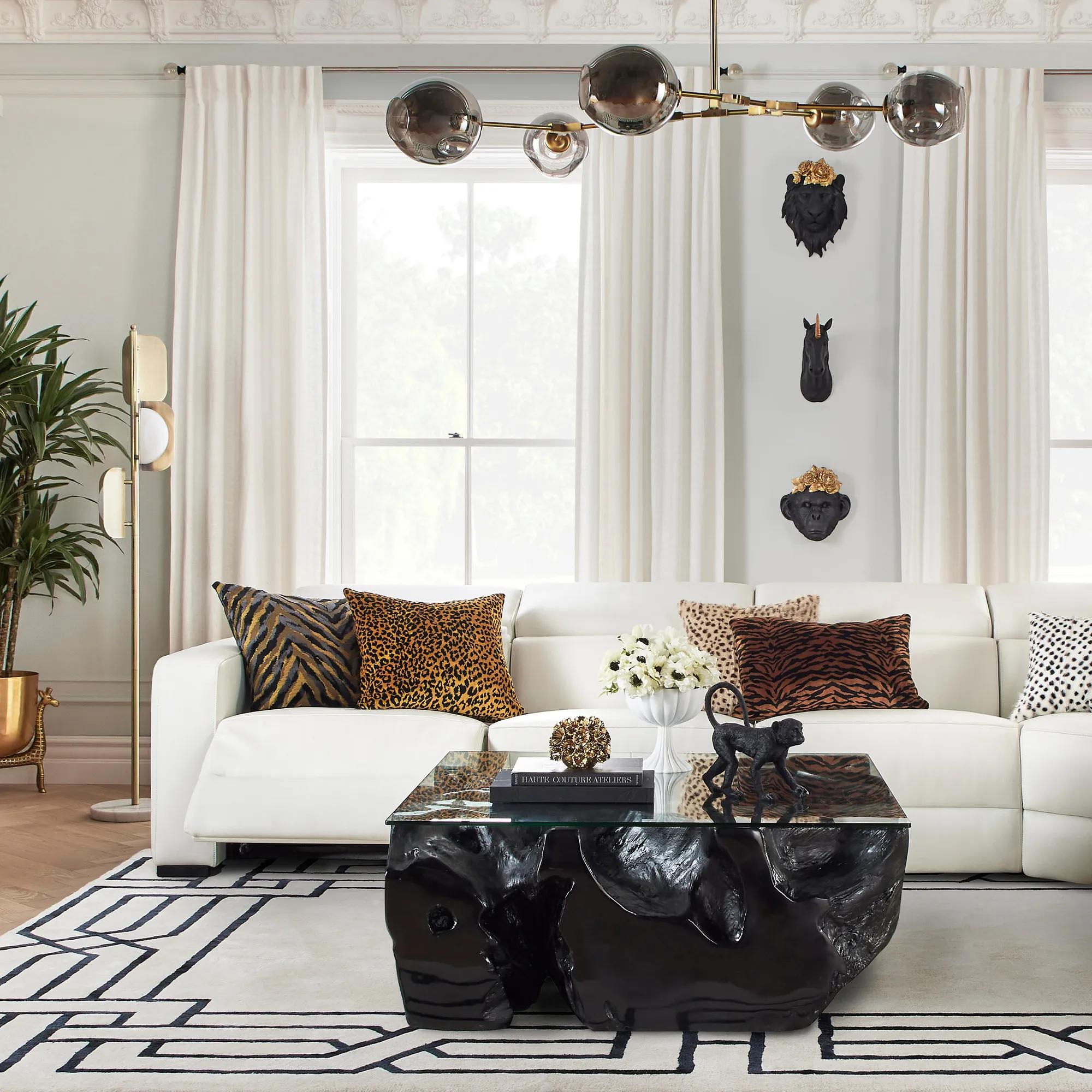
White chenille sectionals bring a luminous presence and plush texture to bright living spaces, creating generous seating without the visual weight of darker upholstery. Their pale surfaces help a room feel open, while chenille’s softly raised pile adds depth that smooth fabrics may lack. In a room with tall windows, that texture catches the light in subtle variations, giving white upholstery dimension rather than a flat, uniform appearance. Chenille describes a yarn construction, not a single fiber: short lengths of fiber held between core yarns create its characteristic fuzzy surface. Upholstery may contain polyester, cotton, rayon, or blended fibers, so softness, resilience, and cleaning requirements depend on the fabric’s composition and construction. The result is a seating category with both a tactile appeal and a strong decorative presence—particularly suited to living rooms where conversation, lounging, and expressive design share equal importance. White also offers more nuance than its name suggests. A warm ivory can sit beautifully against honey-toned wood and brushed brass, while a cooler white can sharpen a composition of glass, polished metal, and charcoal accents. The most harmonious choice relates to the room’s existing whites, including painted walls, rugs, and window treatments; upholstery samples viewed in the intended space can reveal undertones that photographs miss. A white chenille sectional need not disappear into a pale interior. Against a richly veined stone table or a saturated work of art, it becomes a sumptuous counterpoint, allowing neighboring details to command attention while retaining its own sculptural character. Layered pillows in velvet or woven fabrics introduce contrast, and a rug with tonal movement gives the seating arrangement definition. For households that want a bright room to feel inviting rather than pristine, the combination of expansive seating and touchable upholstery creates a setting for relaxed evenings, animated gatherings, and quiet pauses between them. Even an all-white composition gains richness when the sectional’s pile is balanced with matte ceramics, gleaming accents, and distinct shapes.
The appeal of a white chenille sectional is as much about proportion as color. An L-shaped arrangement can define the living area within an open floor plan, while a U-shaped configuration can create a more enclosed conversation setting where the room has sufficient width. A chaise offers space to stretch out, but its projection matters just as much as the sectional’s overall length. In a narrow room, a deep chaise can interrupt the route between a doorway and the rest of the seating; in an expansive room, that same extension may establish a graceful boundary without adding another piece of furniture. Left-facing and right-facing descriptions should be checked against the stated viewing convention, since orientation terminology is not always presented consistently. Modular construction can offer additional flexibility, although the possible arrangements depend on each design’s components, finished sides, and connectors. The configuration should suit the room rather than simply occupy it. Leaving roughly 30 to 36 inches for a main walking route, where the layout allows, helps preserve an open feel, while sufficient clearance around a coffee table makes the seating easier to use. Doorways, elevators, stair turns, and delivery access also deserve attention, particularly with substantial upholstered sections. Comfort comes from the relationship between seat depth, seat height, cushion firmness, and back support—not dimensions alone. Deep seats favor reclining and curling up; shallower seats may better accommodate upright conversation or people who prefer to sit with their feet on the floor. Broad arms and a low profile can give the upholstery a dramatic, architectural silhouette, while slimmer arms reserve more of the footprint for seating. Where a single continuous piece better suits the room’s circulation or symmetry, Large White Chenille Sofas offer a related seating direction with the same light-toned, textural appeal. Either arrangement feels more intentional when it relates to nearby furnishings: a rug extending beneath the front legs anchors the composition, and side tables within reach make generous seating feel considered rather than oversized.
For everyday use, the lasting beauty of white chenille upholstery depends on both its construction and its care. A densely constructed fabric may stand up differently from a looser one, and chenille’s raised surface can show changes in pile direction, friction, or pressure over time. Those variations are worth distinguishing from stains: a shaded patch may simply be fibers lying differently, though any treatment should follow the upholstery instructions. Households with children, pets, or frequent guests may prefer fabrics specifically identified as performance upholstery or treated for stain resistance, but those descriptions should be evaluated alongside the stated care requirements. Stain resistance does not make a fabric spill-proof, and a soft chenille surface is not automatically resistant to claws or snagging. Frame construction, cushion materials, and support systems matter as well. Foam density influences durability, while firmness describes feel; a cushion can be soft yet well supported, or firm without necessarily being more durable. Fiber-wrapped cushions may provide a softer surface, and loose back cushions can offer a relaxed silhouette, but maintenance needs vary by design. Removable covers should never be assumed to be machine washable simply because they unzip. Routine care generally begins with gentle vacuuming using an appropriate upholstery attachment to remove dust and debris before they settle into the pile. Spills are best addressed promptly by blotting rather than rubbing, followed by the cleaning method permitted on the fabric label. Water-based and solvent-based instructions are not interchangeable, and testing an approved cleaner in an inconspicuous area helps reduce the risk of visible damage. Rotating or fluffing cushions, when their construction allows, can distribute wear and preserve a balanced appearance. In a sunlit room, window treatments can soften prolonged direct exposure that may affect upholstery over time. With thoughtful placement and care, a white chenille sectional can serve as a generous everyday gathering place while preserving the luminous, richly textured presence that makes it such a compelling foundation for a bright interior.
FAQs
Chenille sectionals are celebrated for their plush, light-reflective texture, which enhances the natural luminosity of bright spaces. The soft, velvety surface of chenille subtly catches and diffuses sunlight, creating a sense of warmth and inviting comfort while maintaining a crisp, sophisticated aesthetic.
A white chenille sectional offers a versatile foundation for seasonal styling. In winter, pair it with shimmering metallic pillows, faux fur throws, or deep jewel-toned accents for a cozy, dramatic effect. As spring arrives, switch to airy linens, pastel cushions, and fresh greenery to evoke a breezy, uplifting atmosphere.
A white chenille sectional makes a thoughtful, luxurious gift for newlyweds, new homeowners, or anyone embarking on a new life chapter. It’s especially cherished by those who value expressive design, comfort, and the transformative power of statement furniture.
Position a white chenille sectional to maximize natural light, anchoring it with a bold area rug or a dramatic coffee table. Use sculptural side tables and statement lighting to frame the seating area, and layer in textured throws or vibrant pillows for added depth and personality.
Chenille fabric adds a sense of opulence and tactile richness to any space. Its signature softness and subtle sheen create an inviting ambiance, making the room feel both elevated and welcoming. The interplay of texture and light draws the eye, transforming everyday moments into occasions of comfort and style.