Modern Blue Canvas Wall Arts
Modern Blue Canvas Wall Arts
-
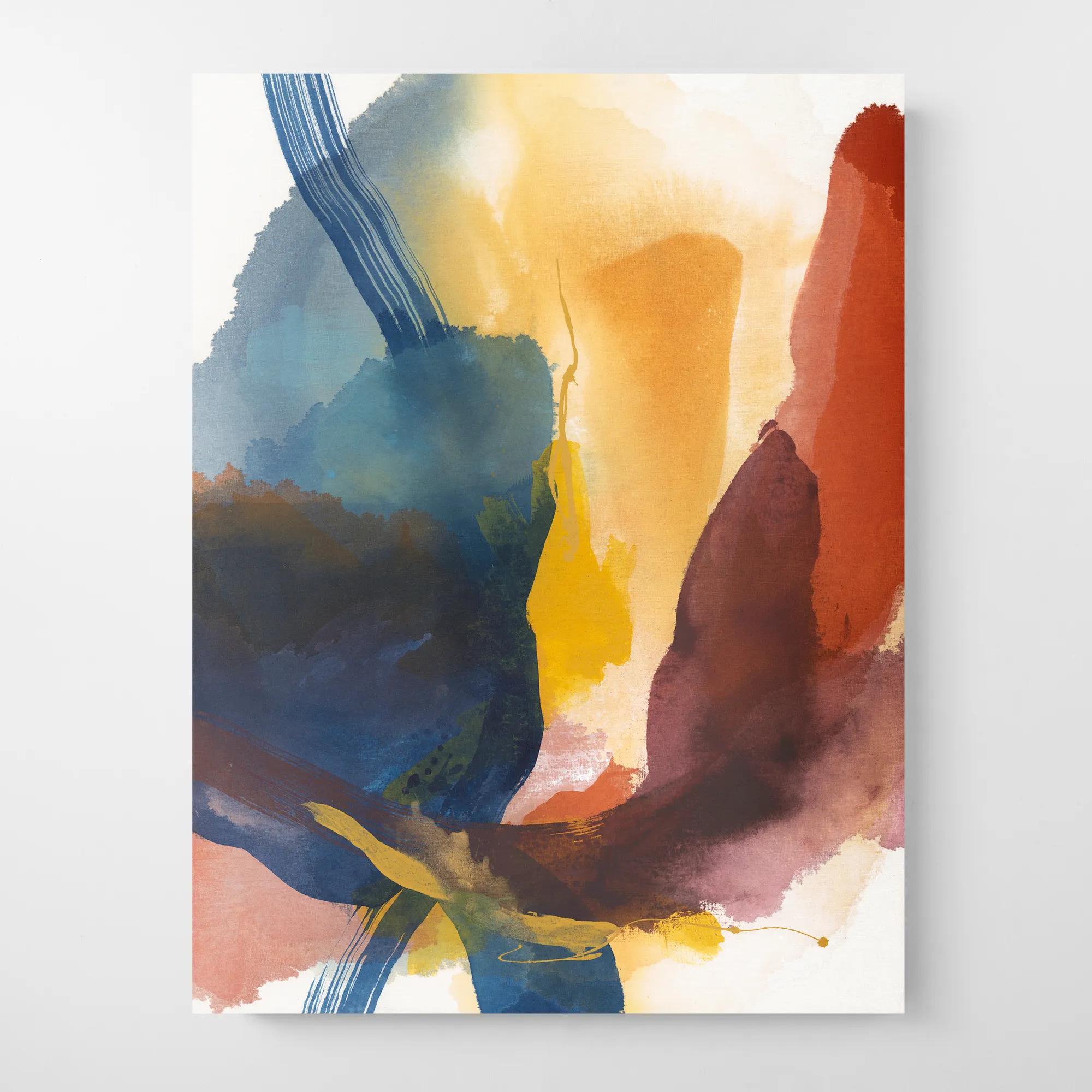
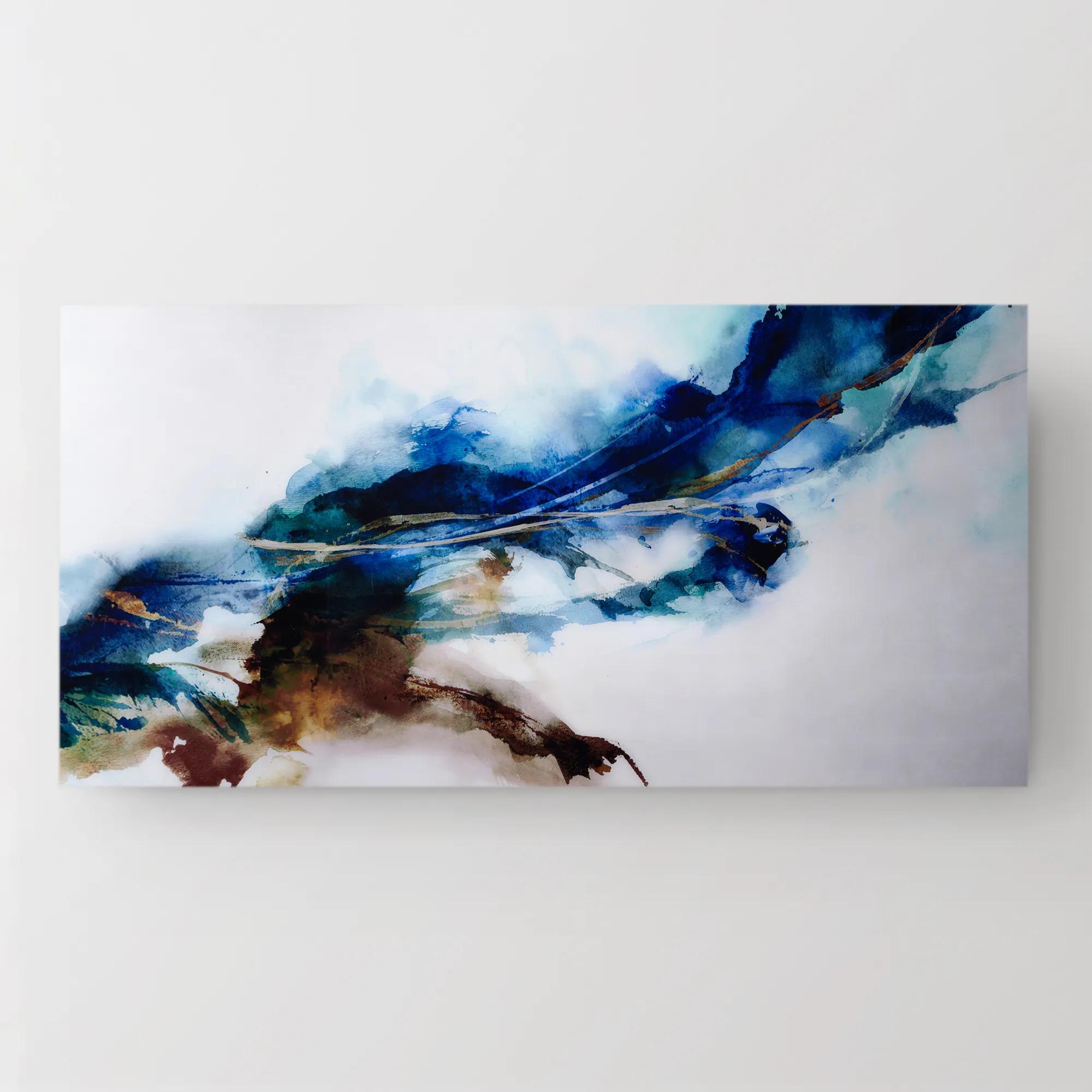 Cerulean Movement Acrylic Art 72" x 36"$1299
A vibrant abstract artwork printed on high-gloss acrylic, infusing your space with dynamic energy and movement.
Add To Cart -
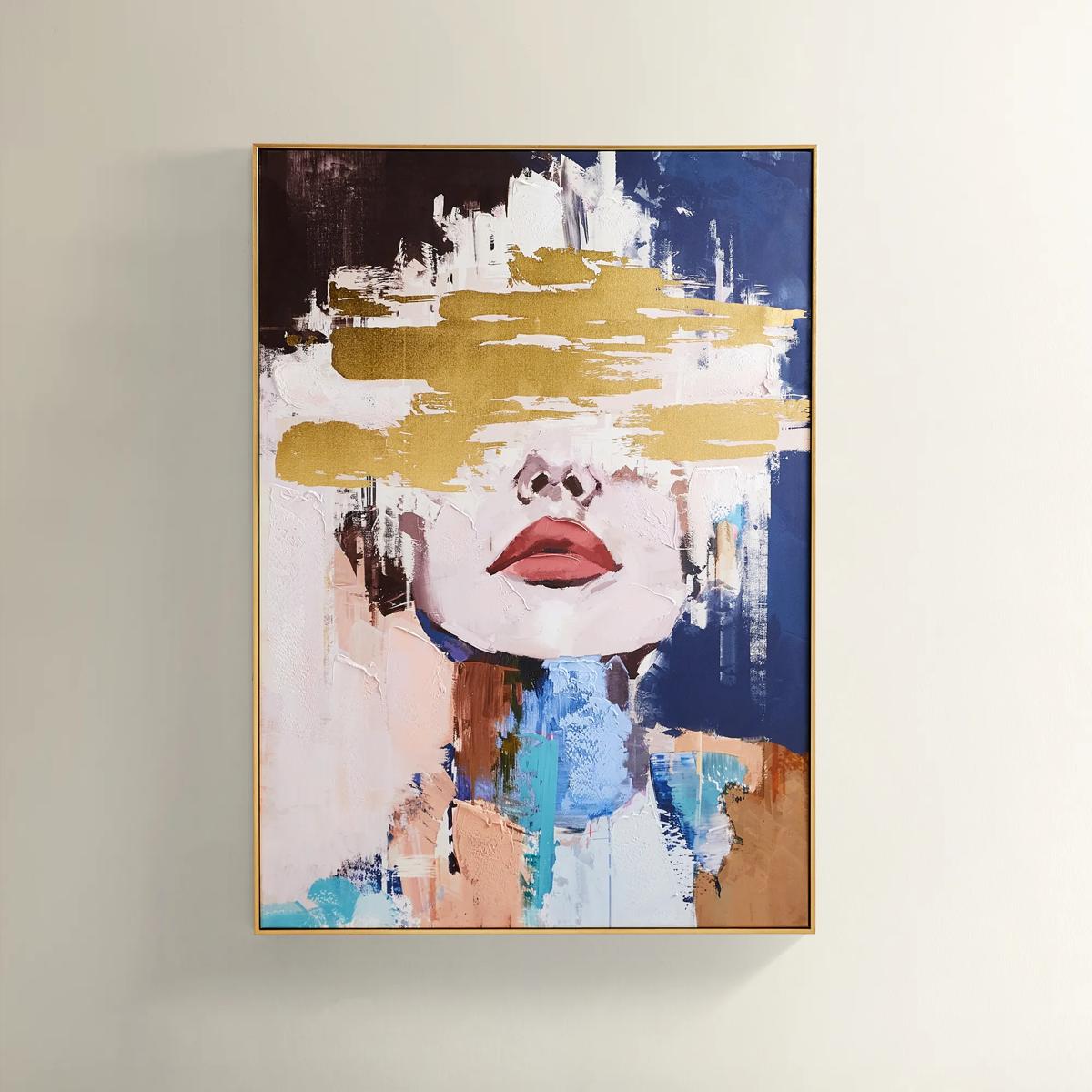
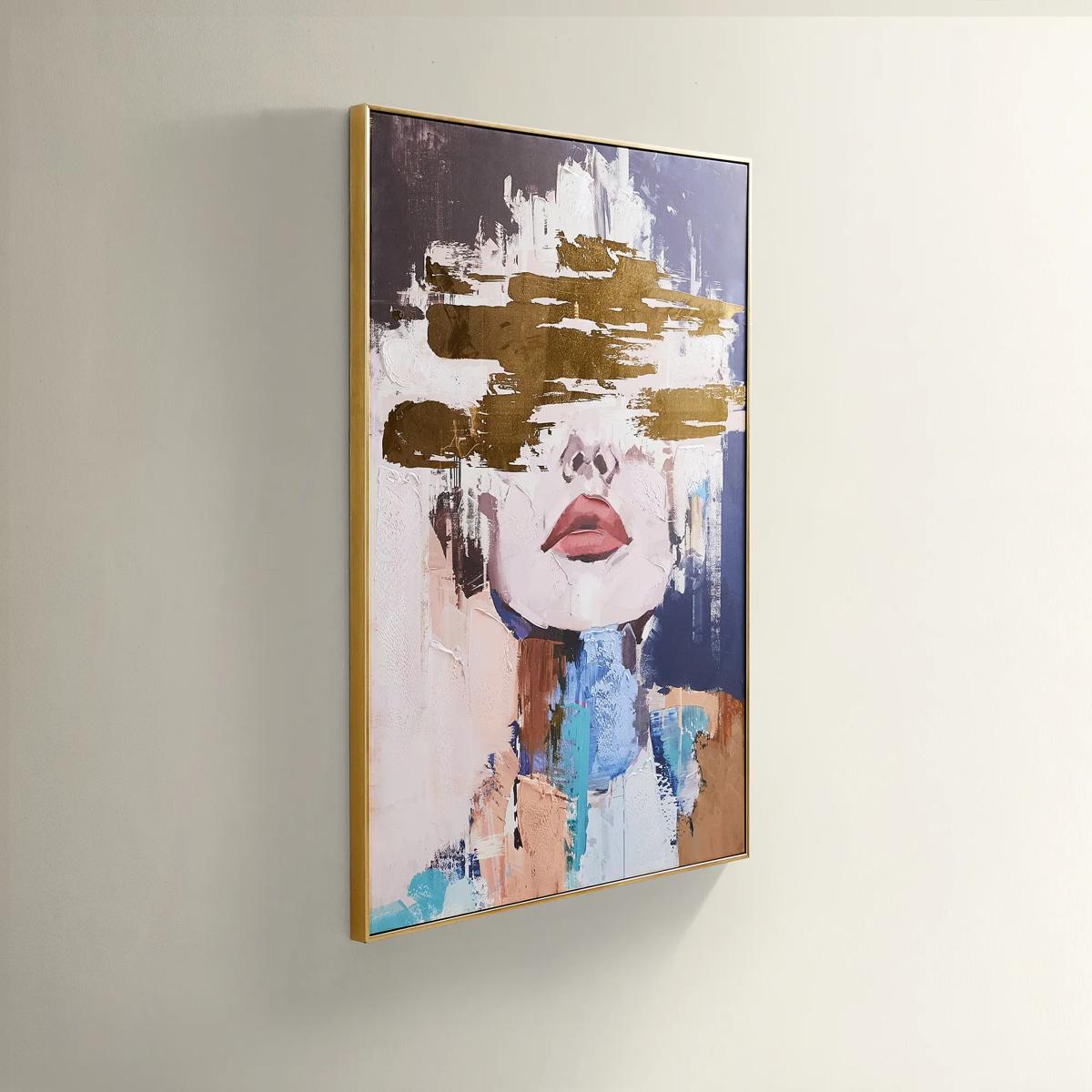 Waiting in Color Gold Foil Painted Wall Art 39.25" x 55"$499
A hand-painted abstract portrait in vivid blue, blush, and gold foil, framed in luxe gold.
Add To Cart -
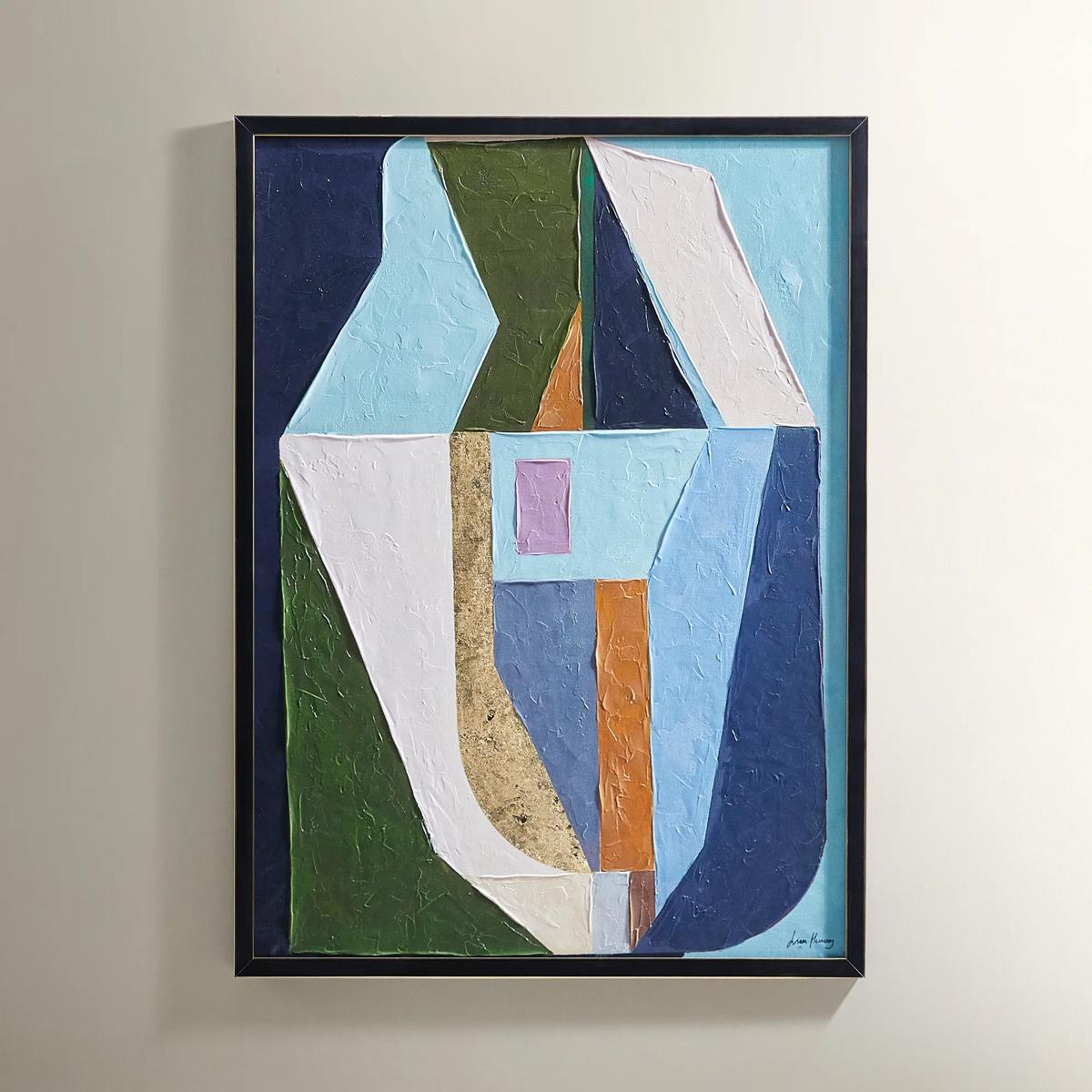 Thought Provoking Painting 2$249
A hand-embellished canvas artwork featuring textured strokes in deep blue, olive green, and gold accents.
Add To Cart -
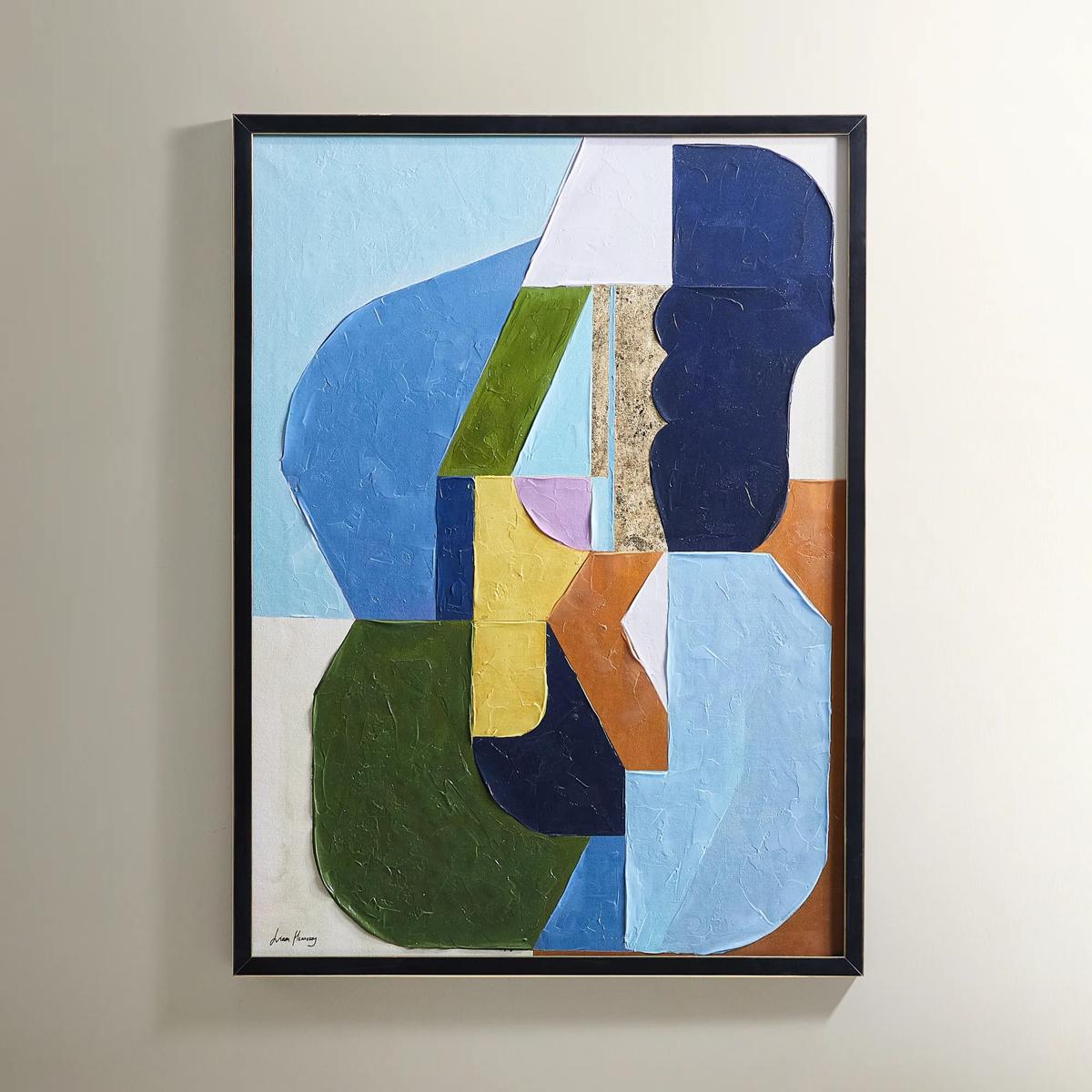
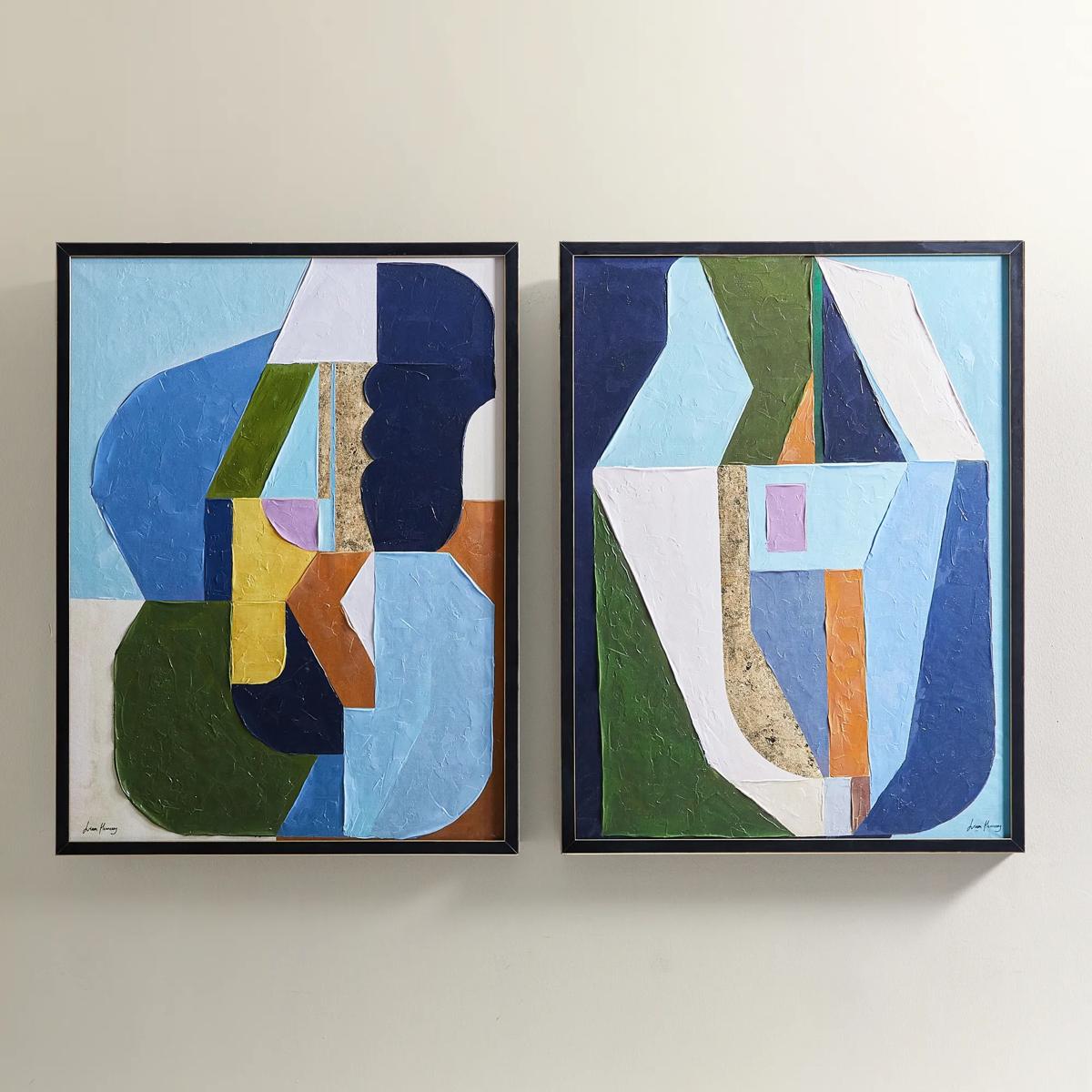 Thought Provoking Painting 1$249
A hand-embellished canvas artwork featuring textured strokes in deep blue, olive green, and gold accents.
Add To Cart -
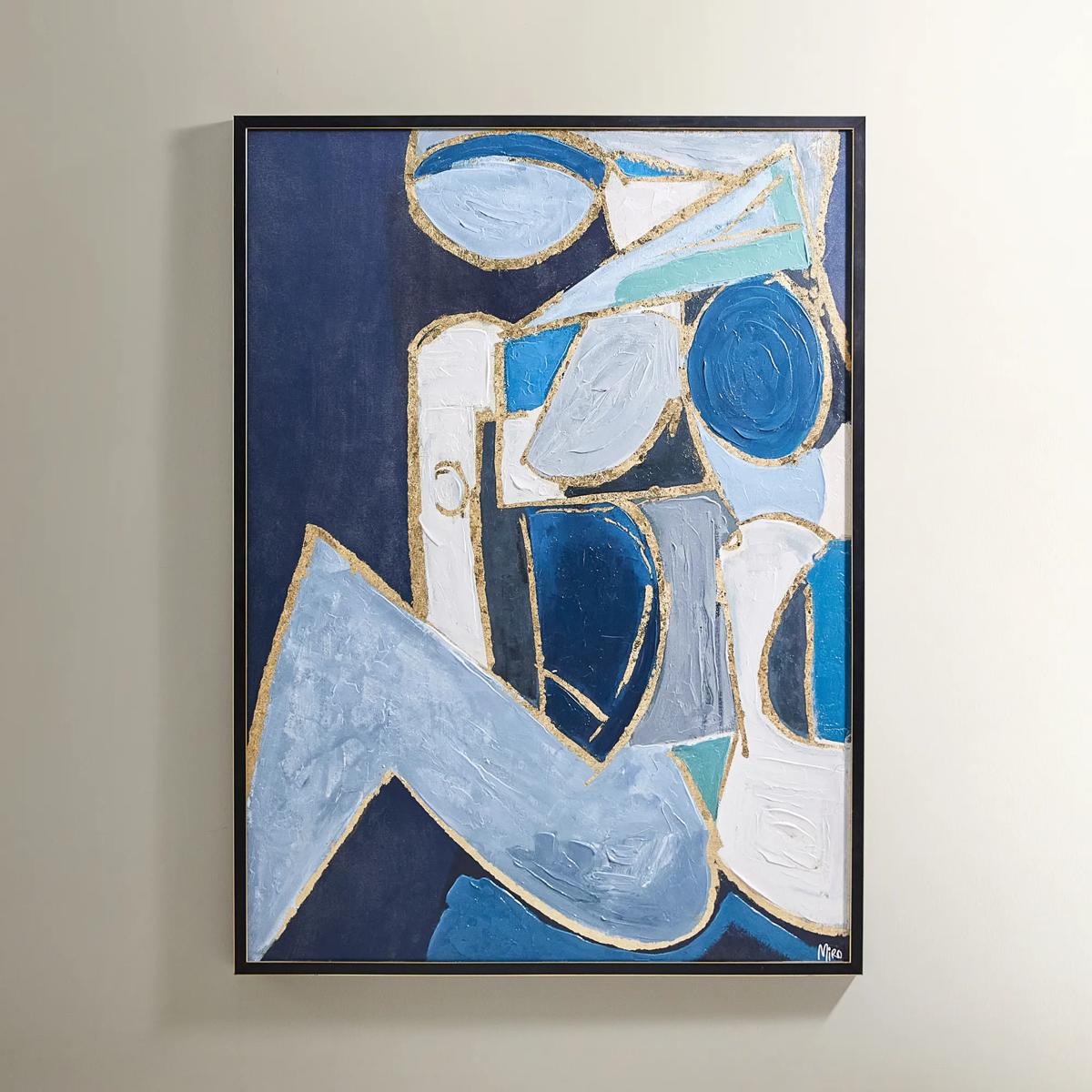
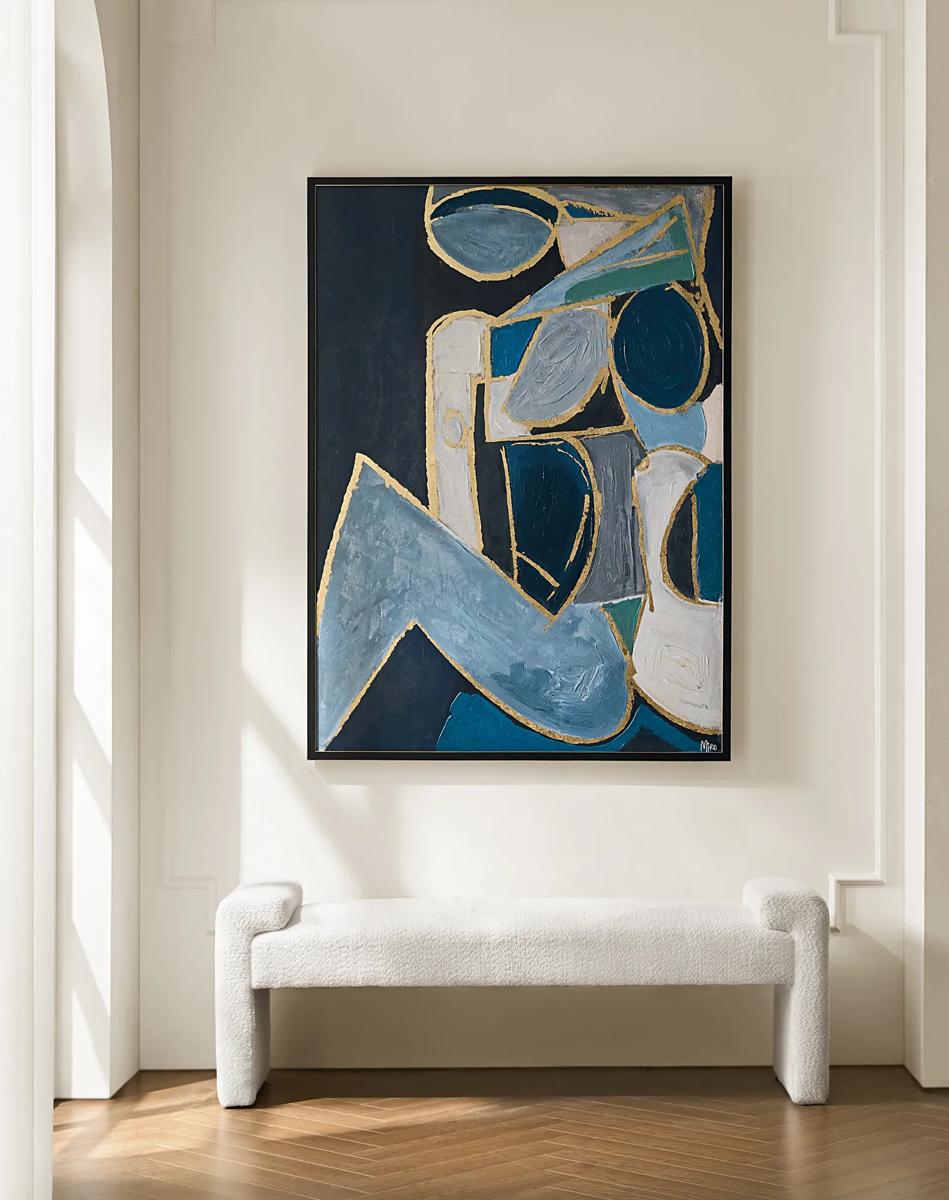 Figure in Cubism Painting$599
A hand-embellished canvas artwork featuring blue, gold, and white hues with elegant silver foil accents.
Add To Cart -
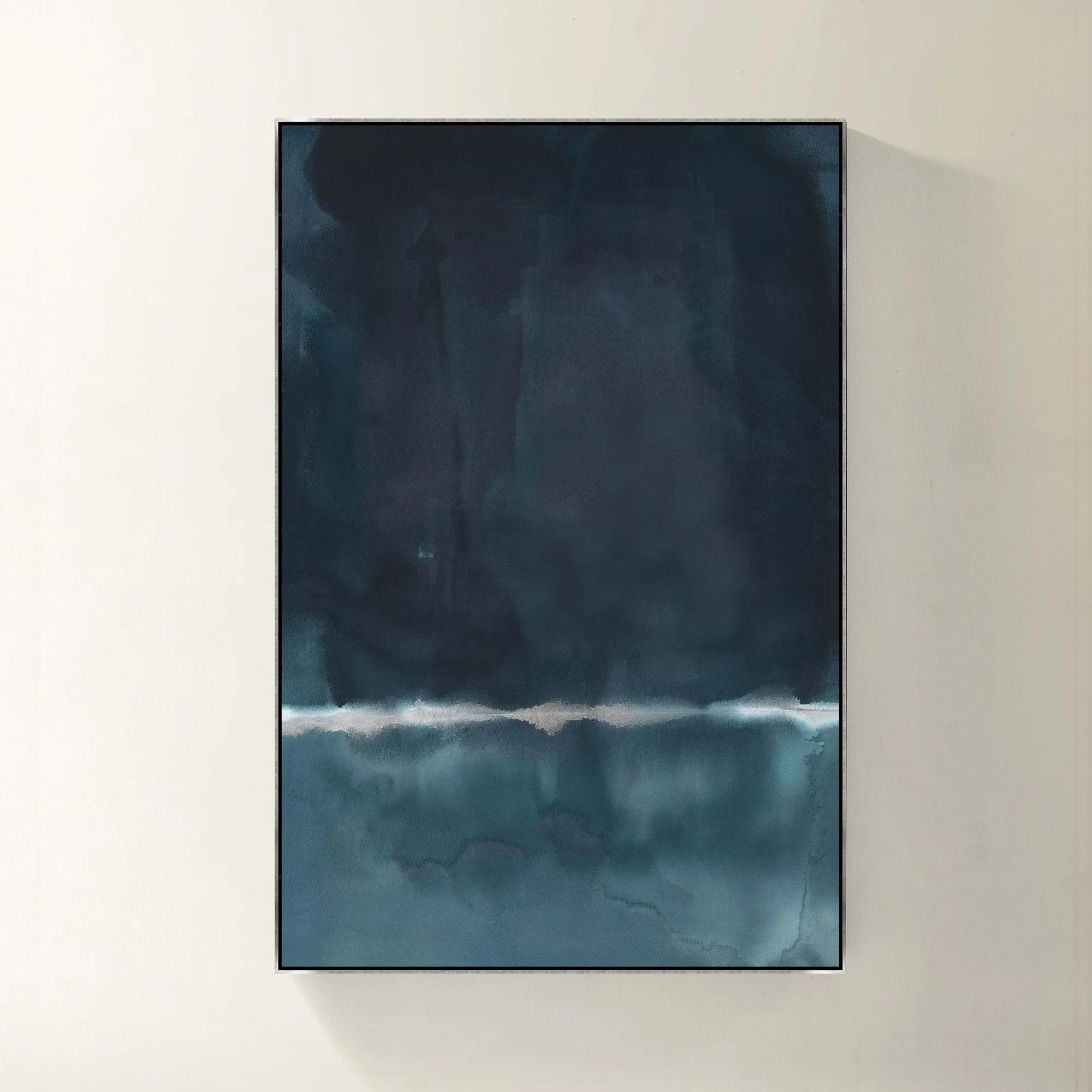 Blue Monday Framed Wall Art 40" x 60"$1119
A gallery-wrapped blue canvas with hand-embellished silver accents in a sleek silver floater frame.
Add To Cart -
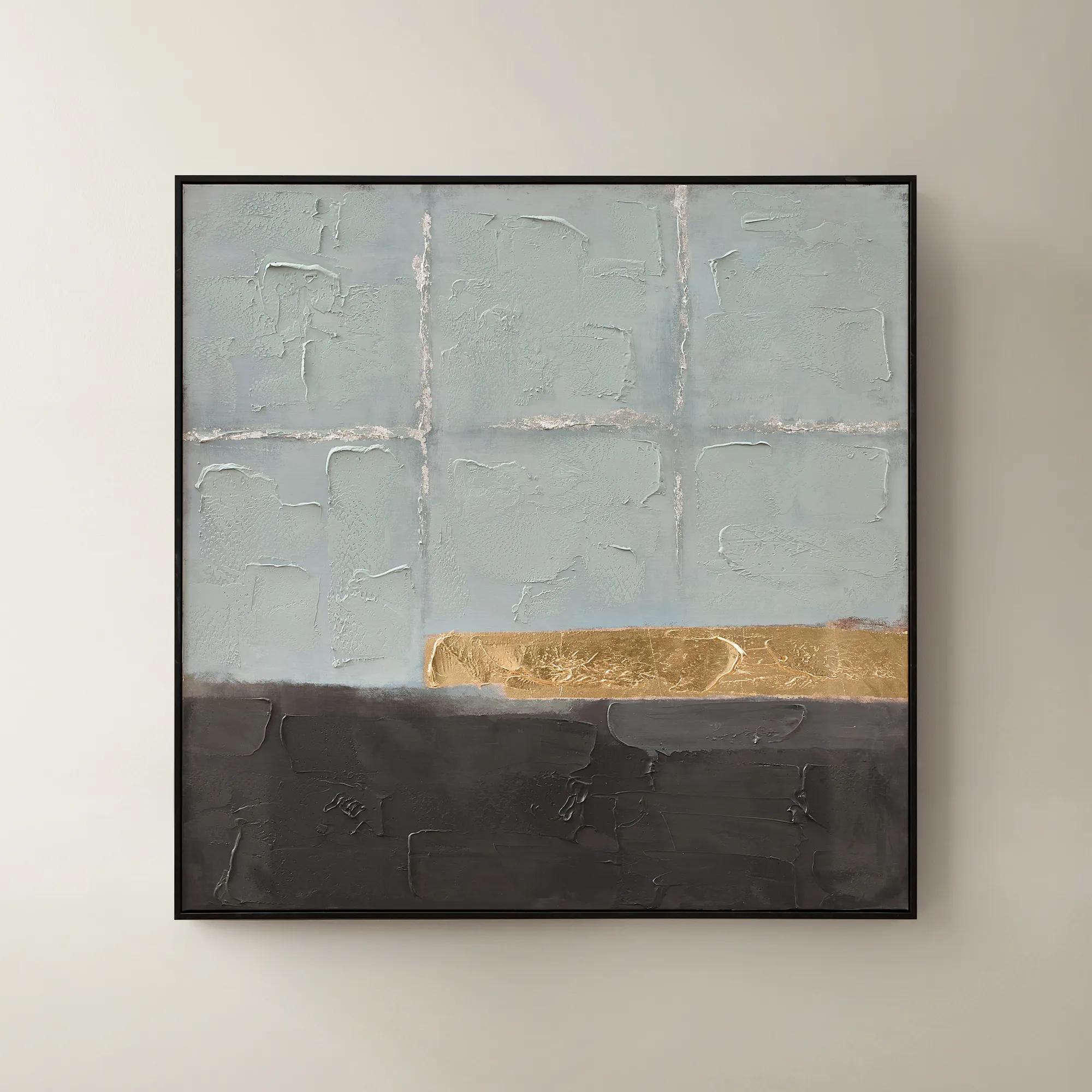
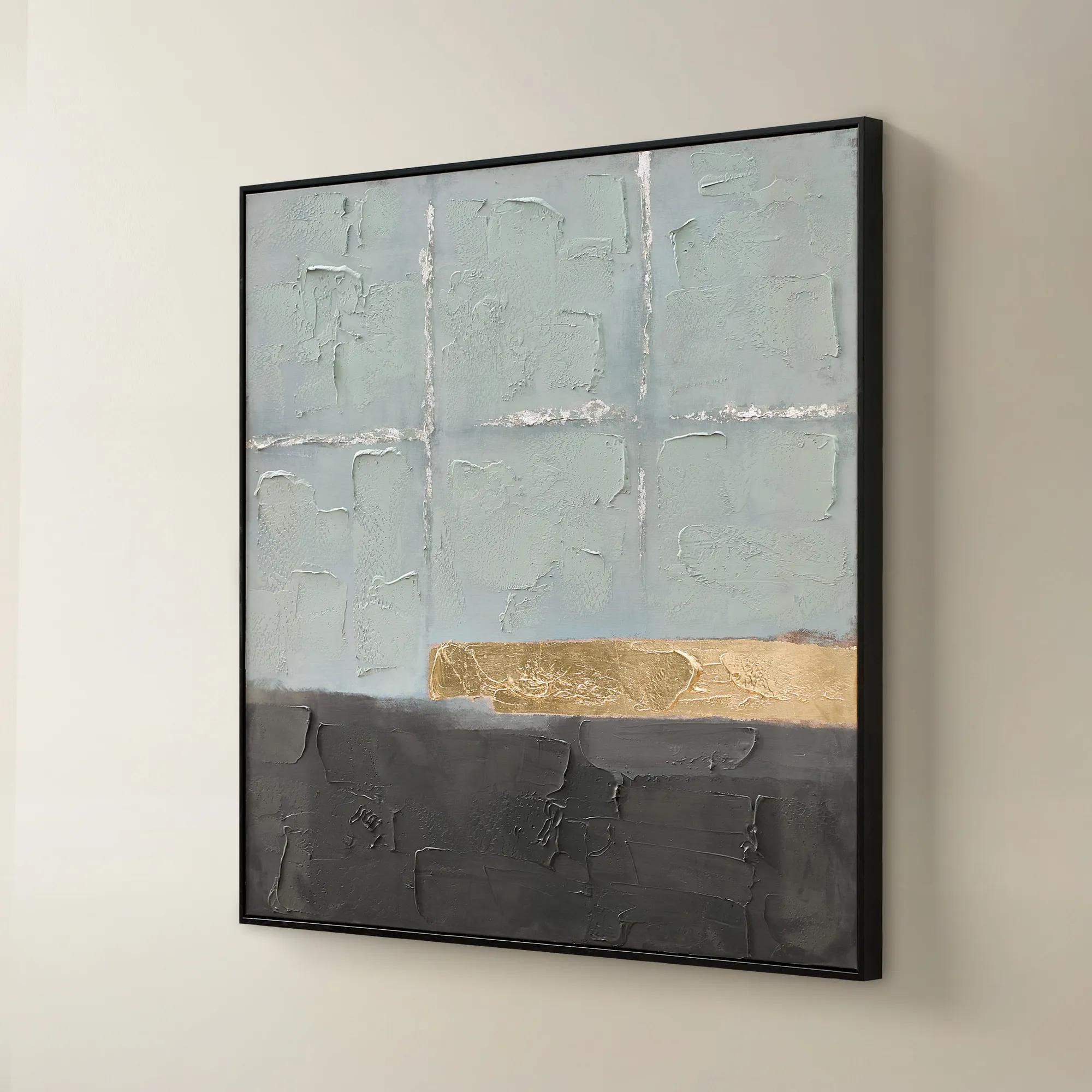 Jules Framed Gold Leaf Painted Wall Art 40" x 40"$299
A hand-painted canvas in mineral blue with gold leaf accents and a sleek black frame for modern appeal.
Add To Cart -
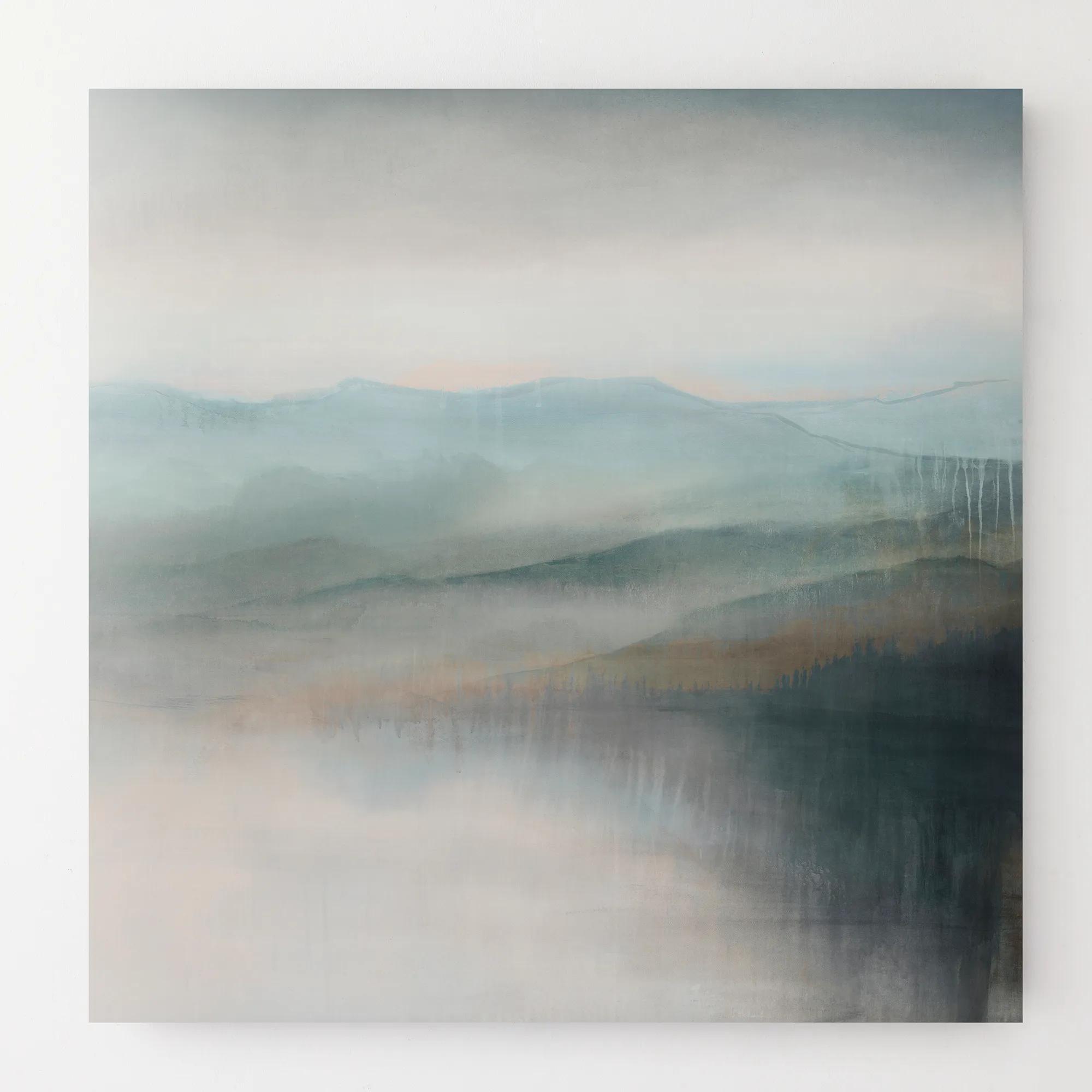
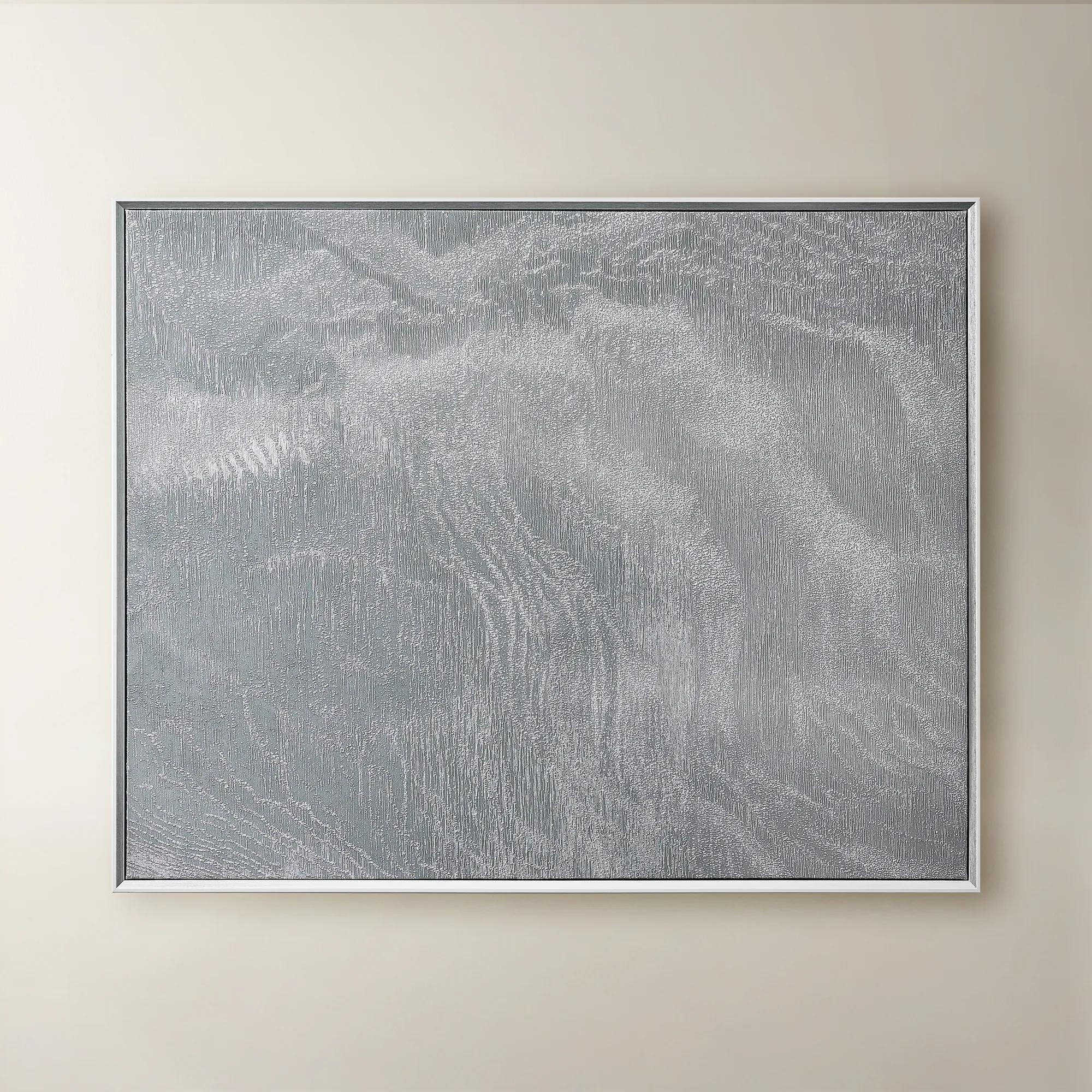 Slow Blue Morning Framed Silver Foil Wall Art 48" x 60"$599
A serene powder blue abstract canvas with silver foil accents, framed in silver and white for modern elegance.
Add To Cart -
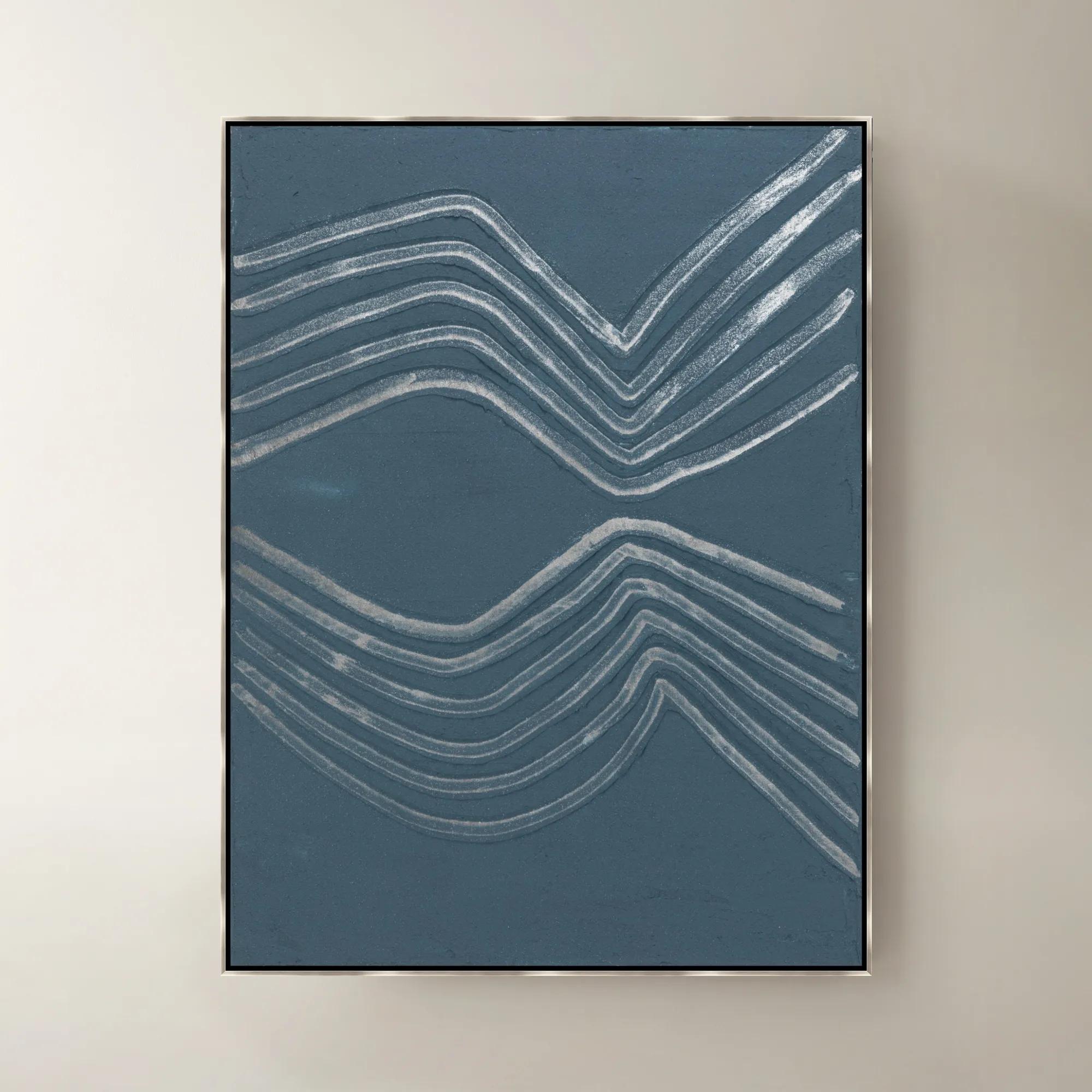
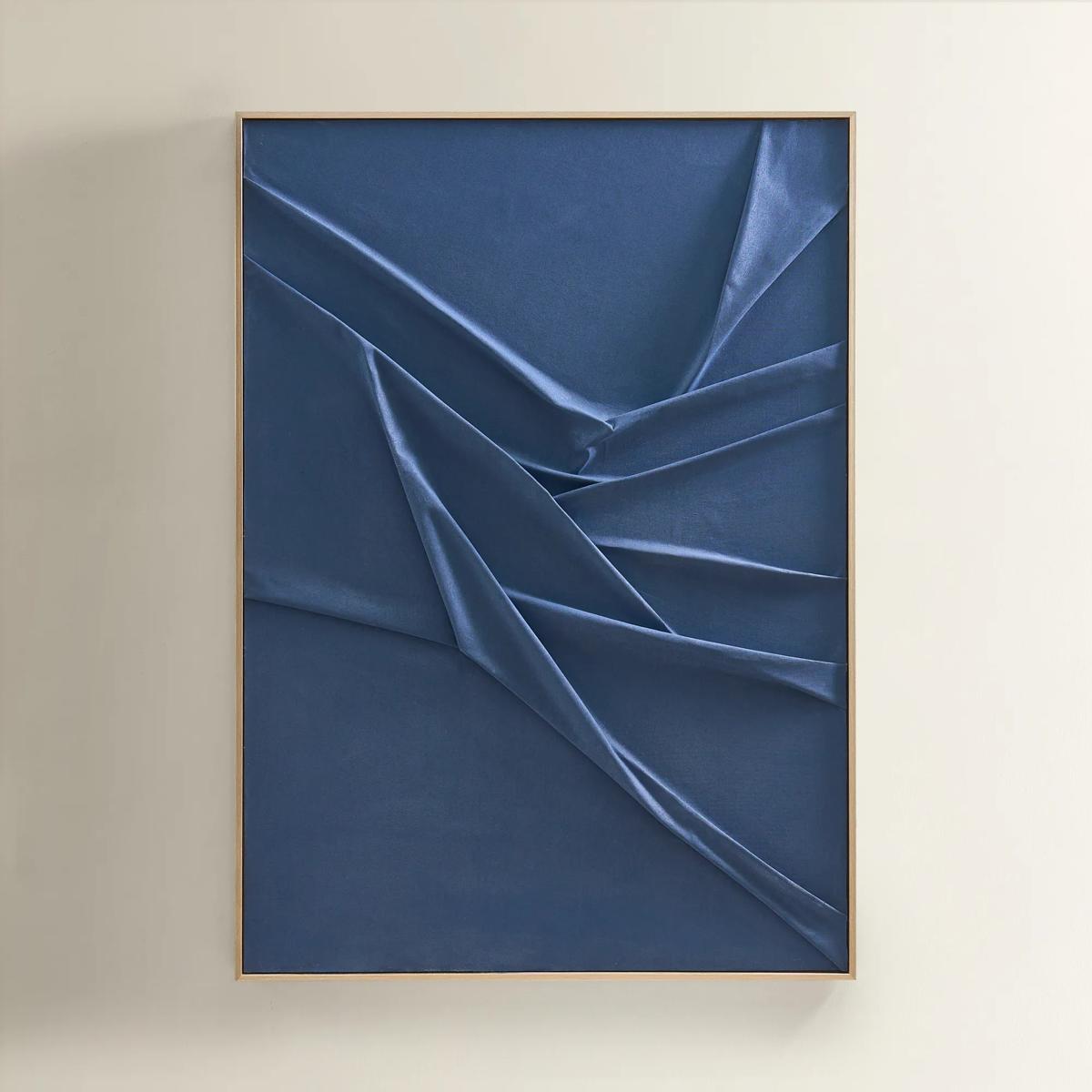 Deep Sea Painting$599
A hand-sculpted navy canvas with dimensional folds, framed in soft champagne for modern, serene elegance.
Add To Cart -
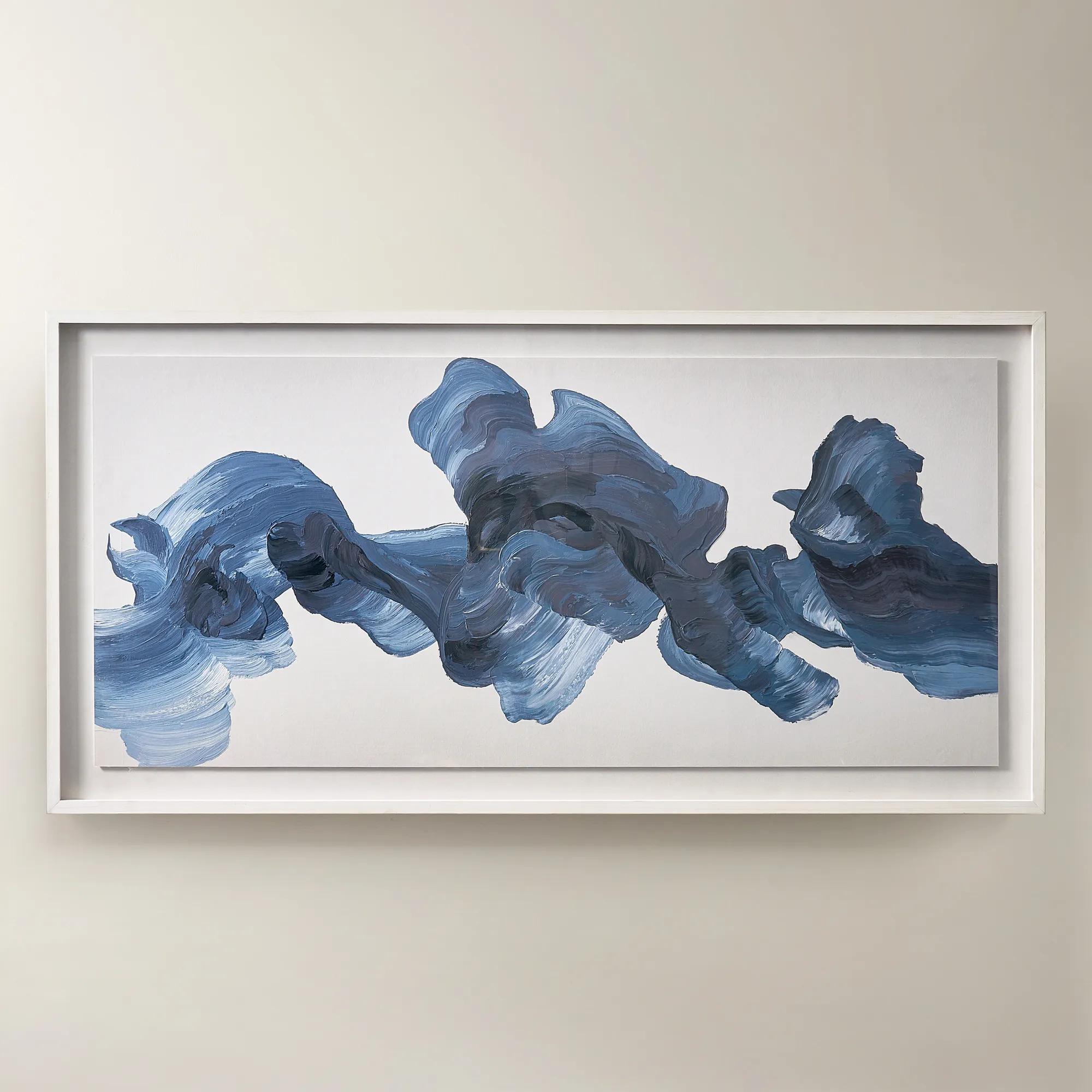
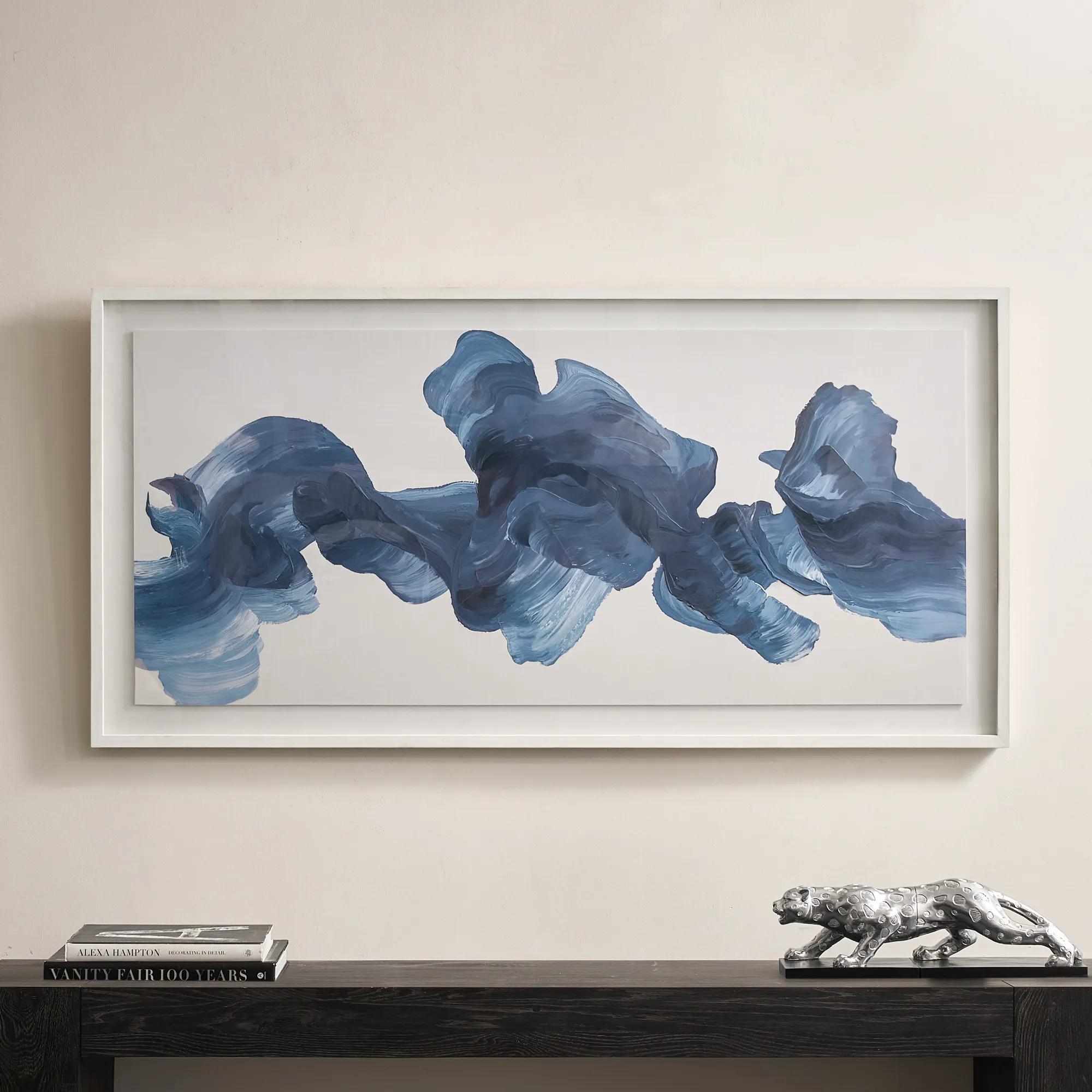 Blue Theory Framed Painted Wall Art in Acrylic 60" x 30"$499
A hand-painted canvas in deep ink blue, framed under acrylic with a whitewashed wood frame.
Add To Cart -
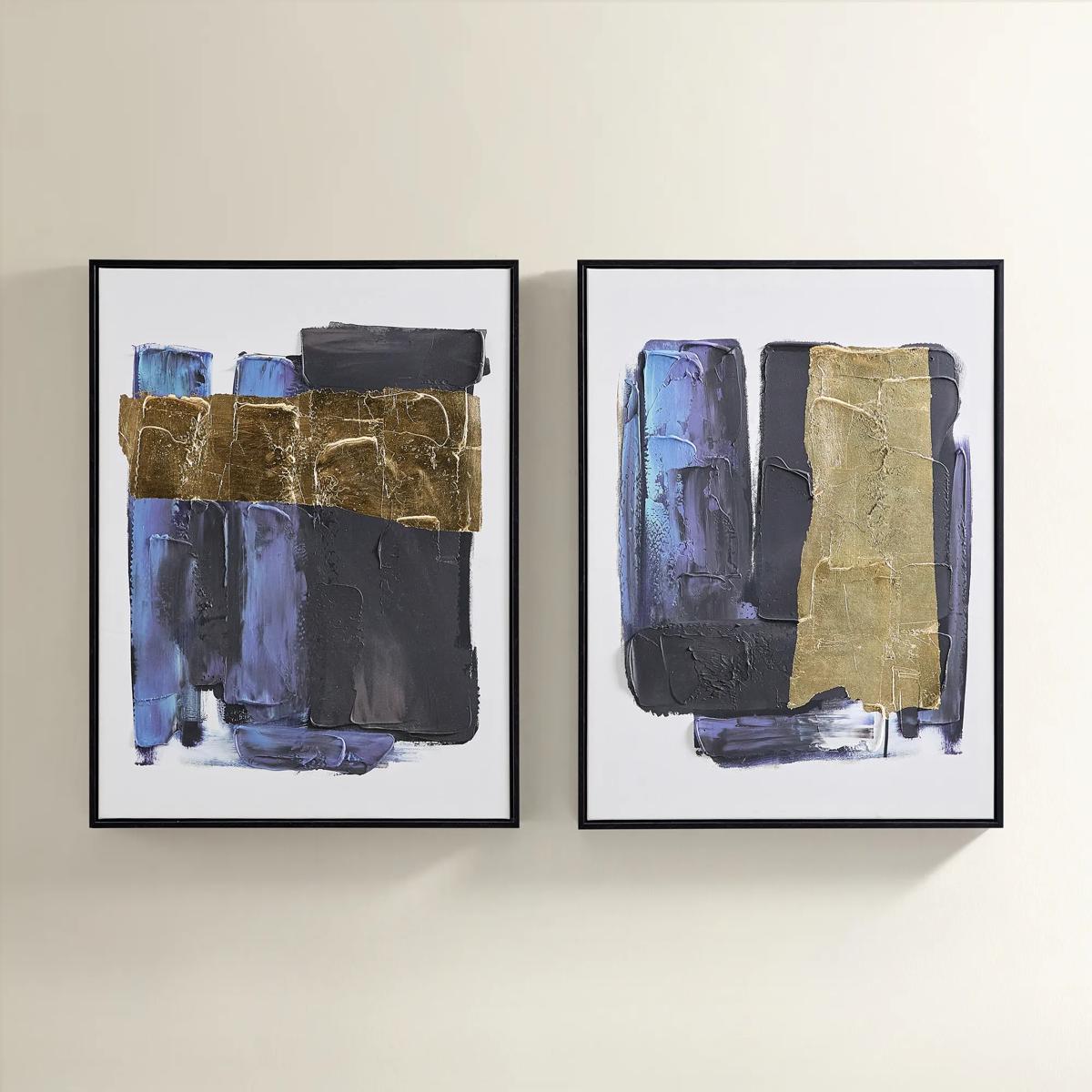
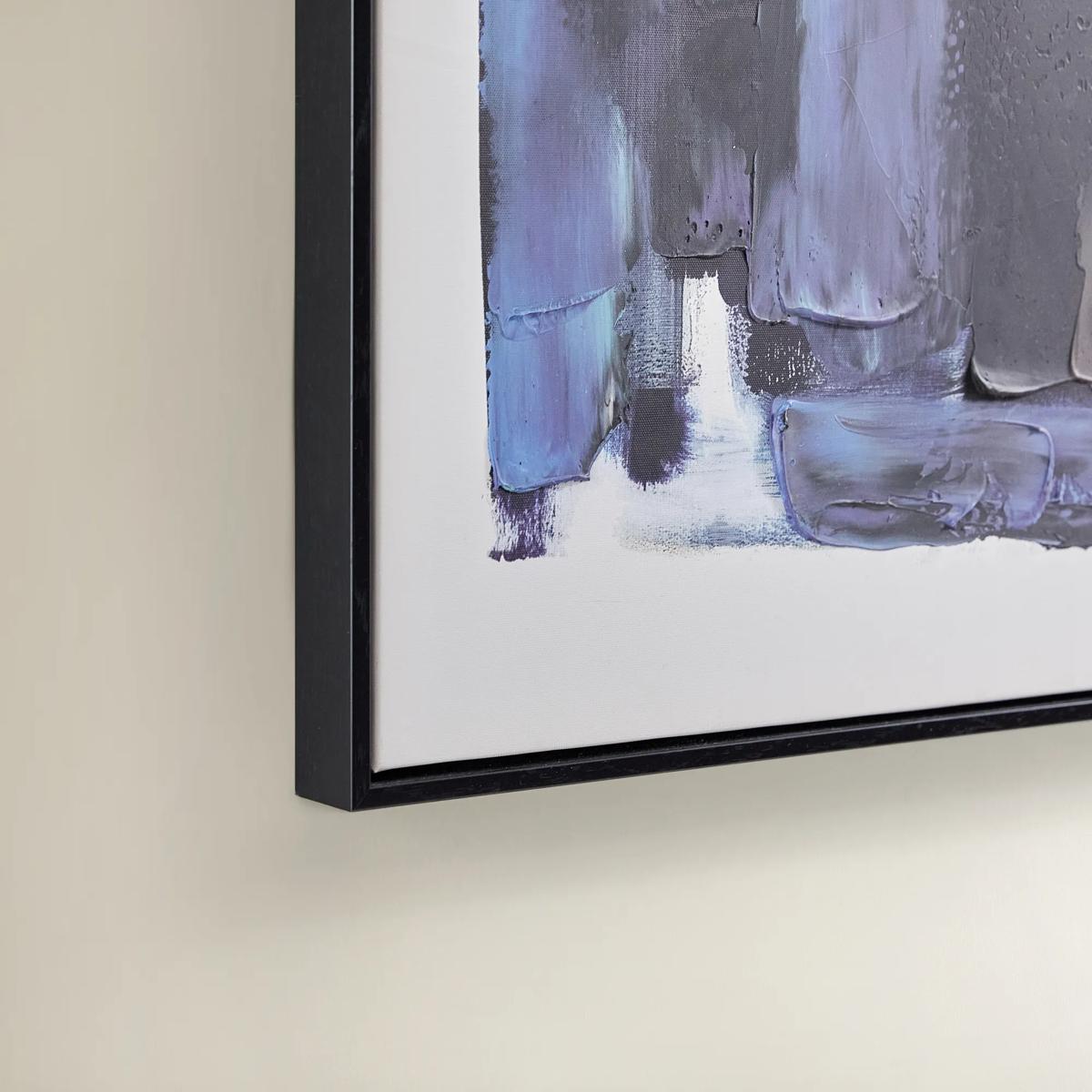 Deep Thoughts Gold Leaf Painted Wall Art Set of 2$199
A set of two hand-painted abstract canvases in blue and gold leaf, framed in sleek black.
Add To Cart -
.jpeg?w=1200&h=1200)
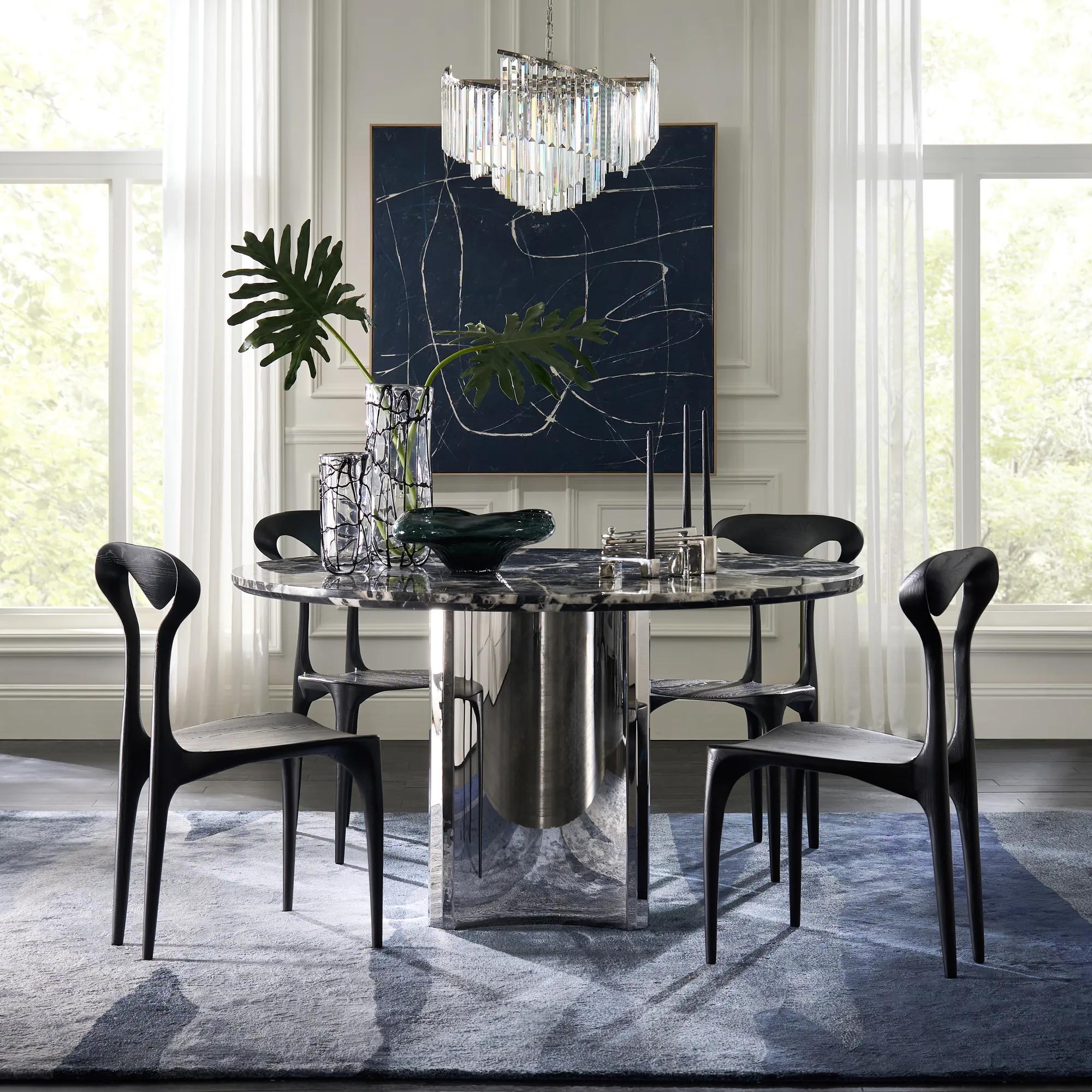 Almost Midnight Painting - Blue$439
A hand-painted canvas featuring bold blue and black tones with delicate white lines in a light wood frame.
Add To Cart -
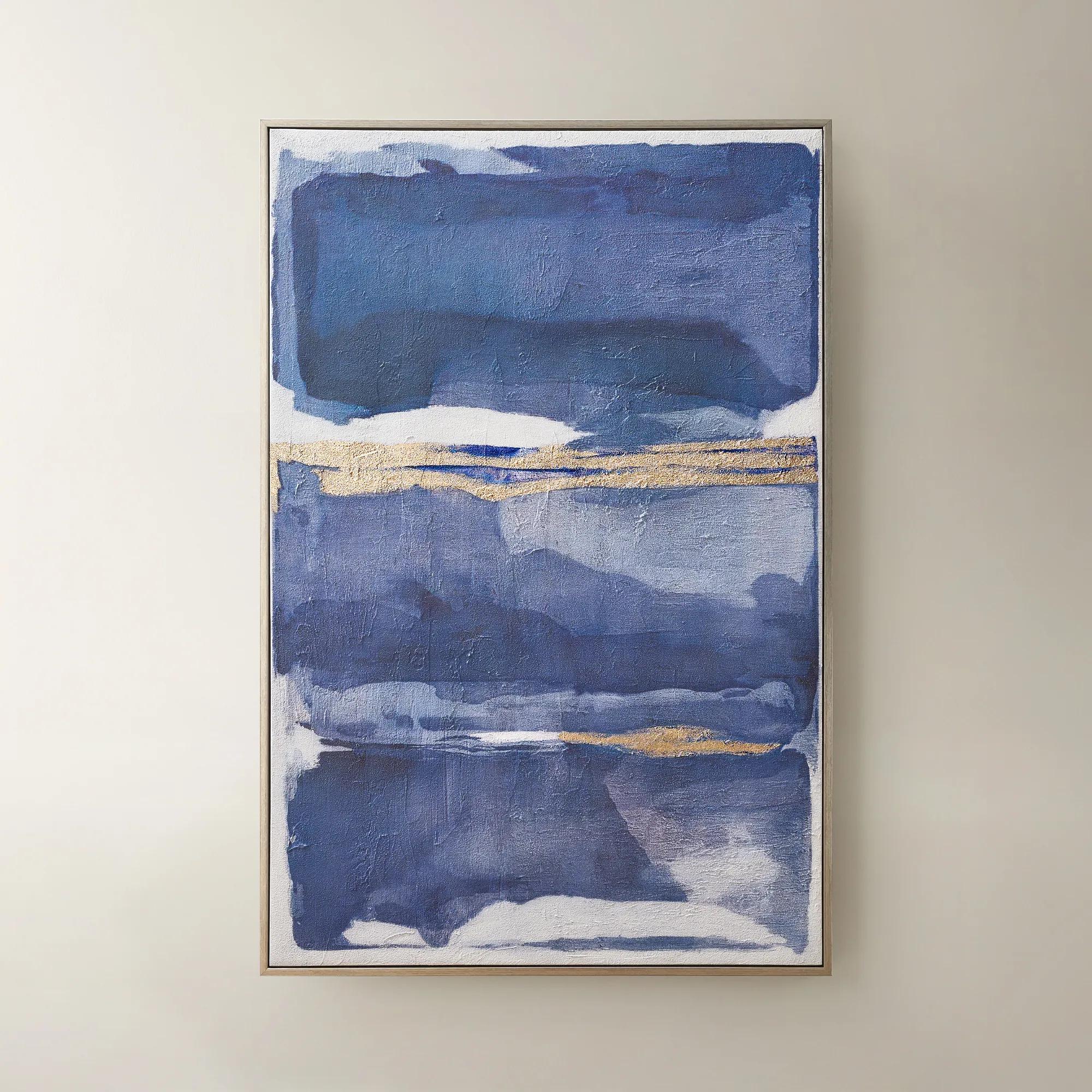
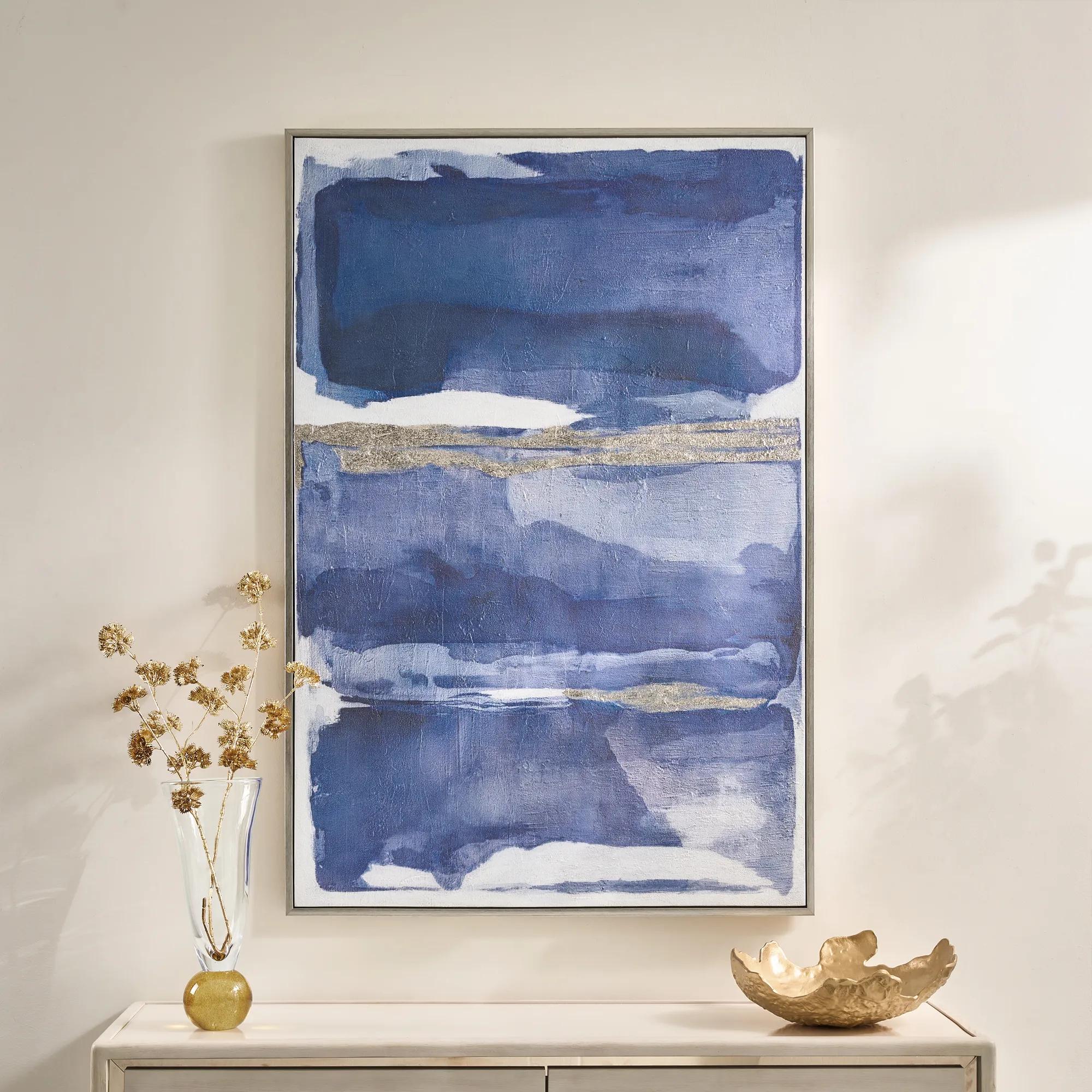 Memories in Blue Framed Painted Wall Art 40" x 60"$499
A hand-painted canvas in deep ink blue with champagne leafing for a sophisticated, gallery-inspired look.
Add To Cart -
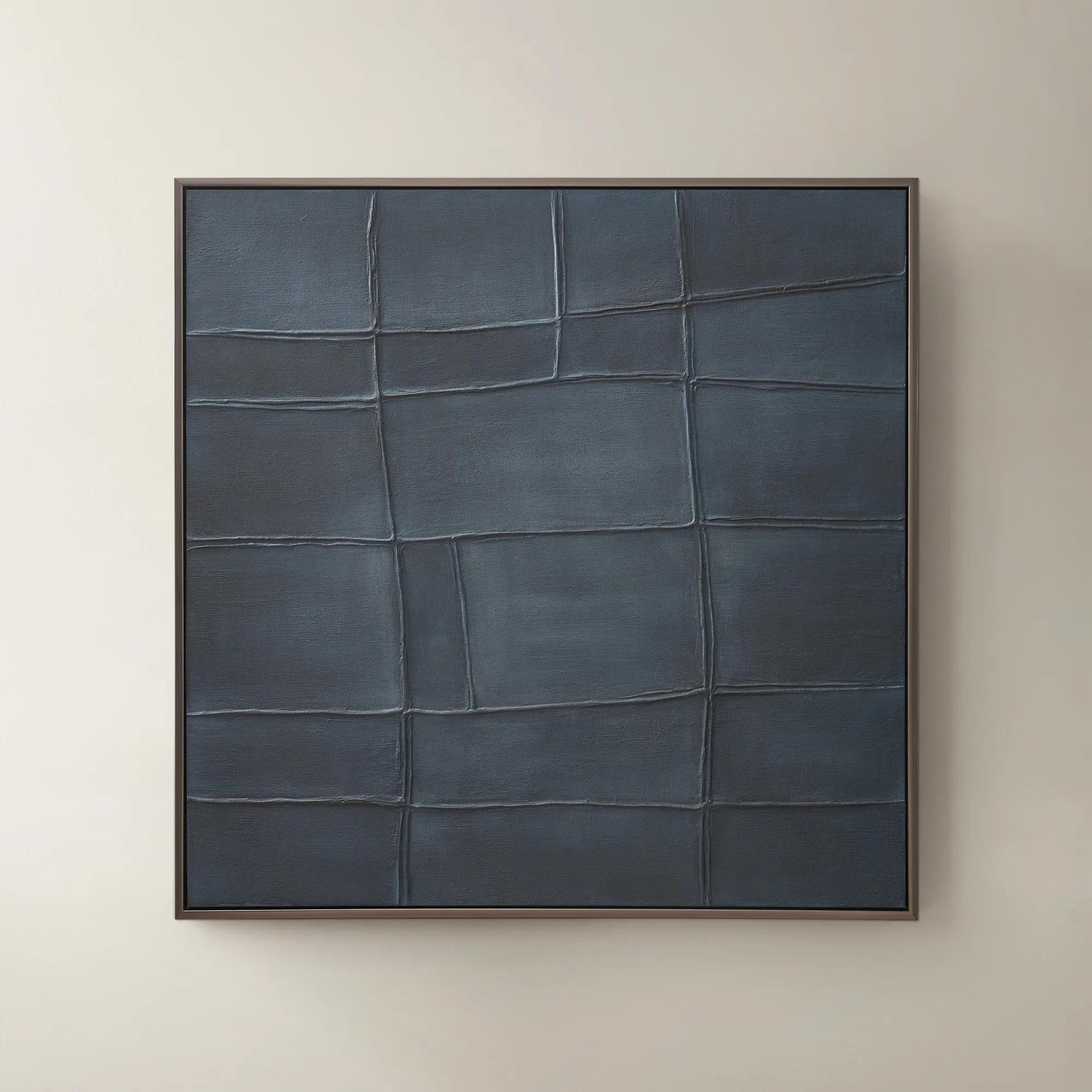
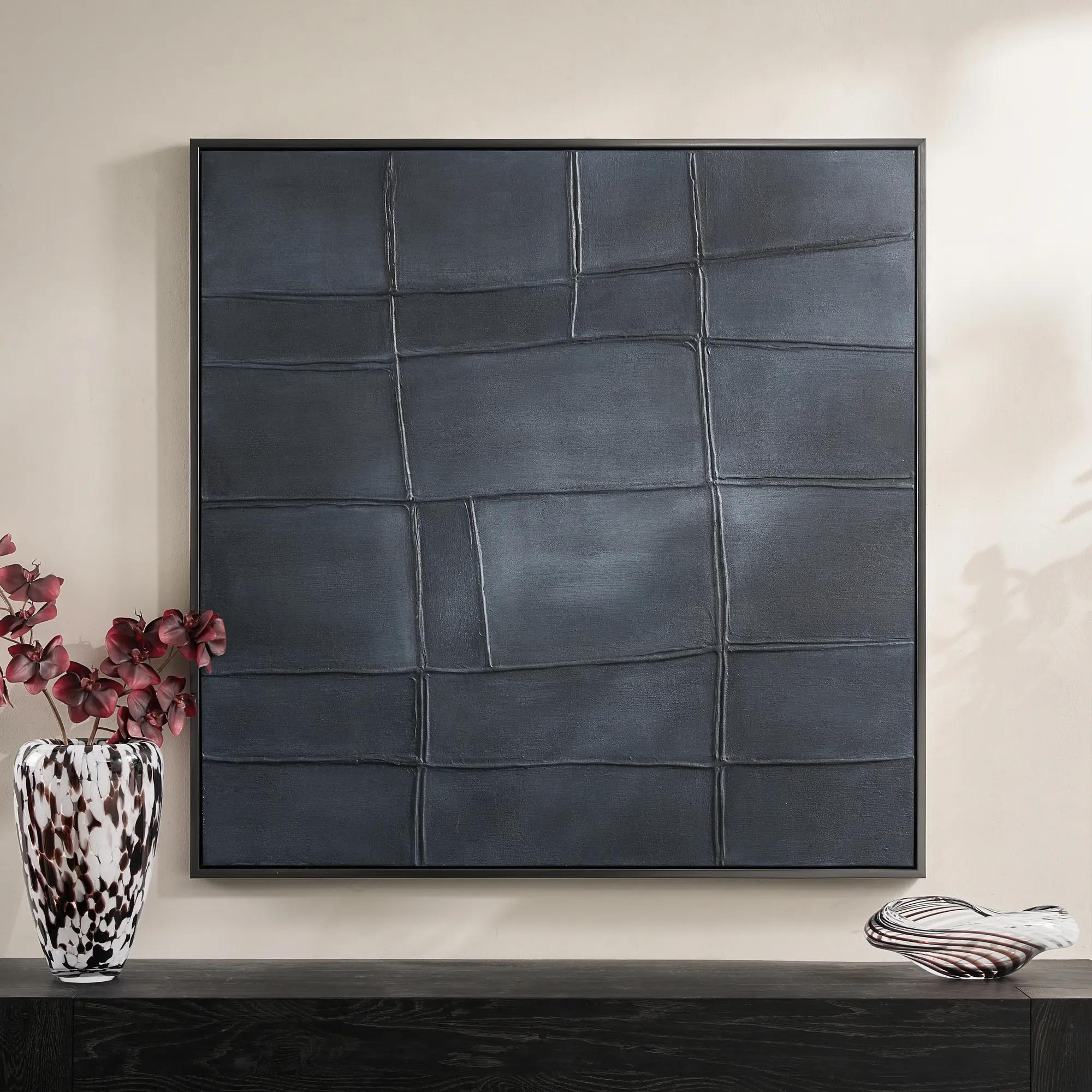 Ink Blue Interval Framed Painted Wall Art 48" x 48"$599
A hand-painted abstract canvas in deep ink blue, finished with a sleek gunmetal frame for modern appeal.
Add To Cart -
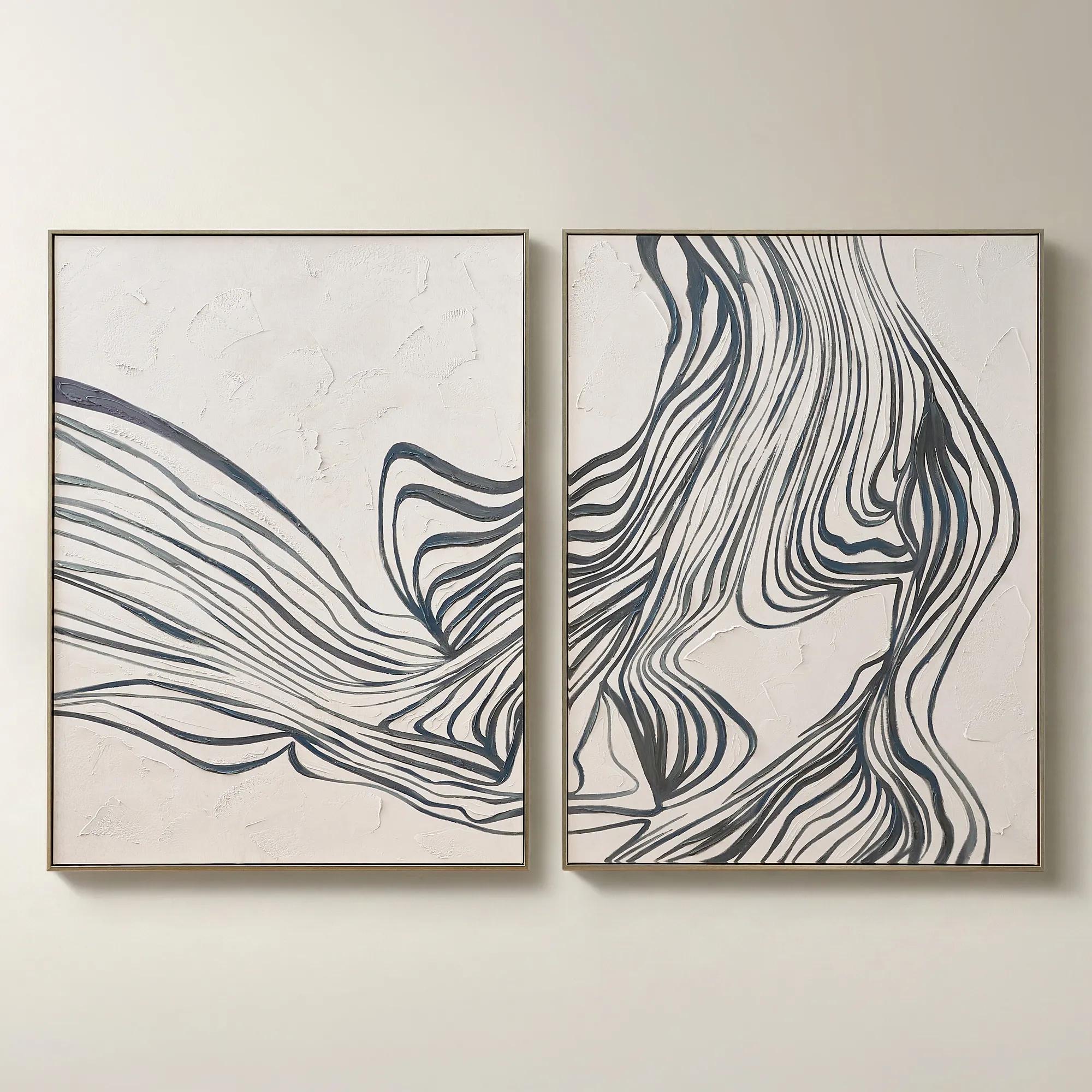
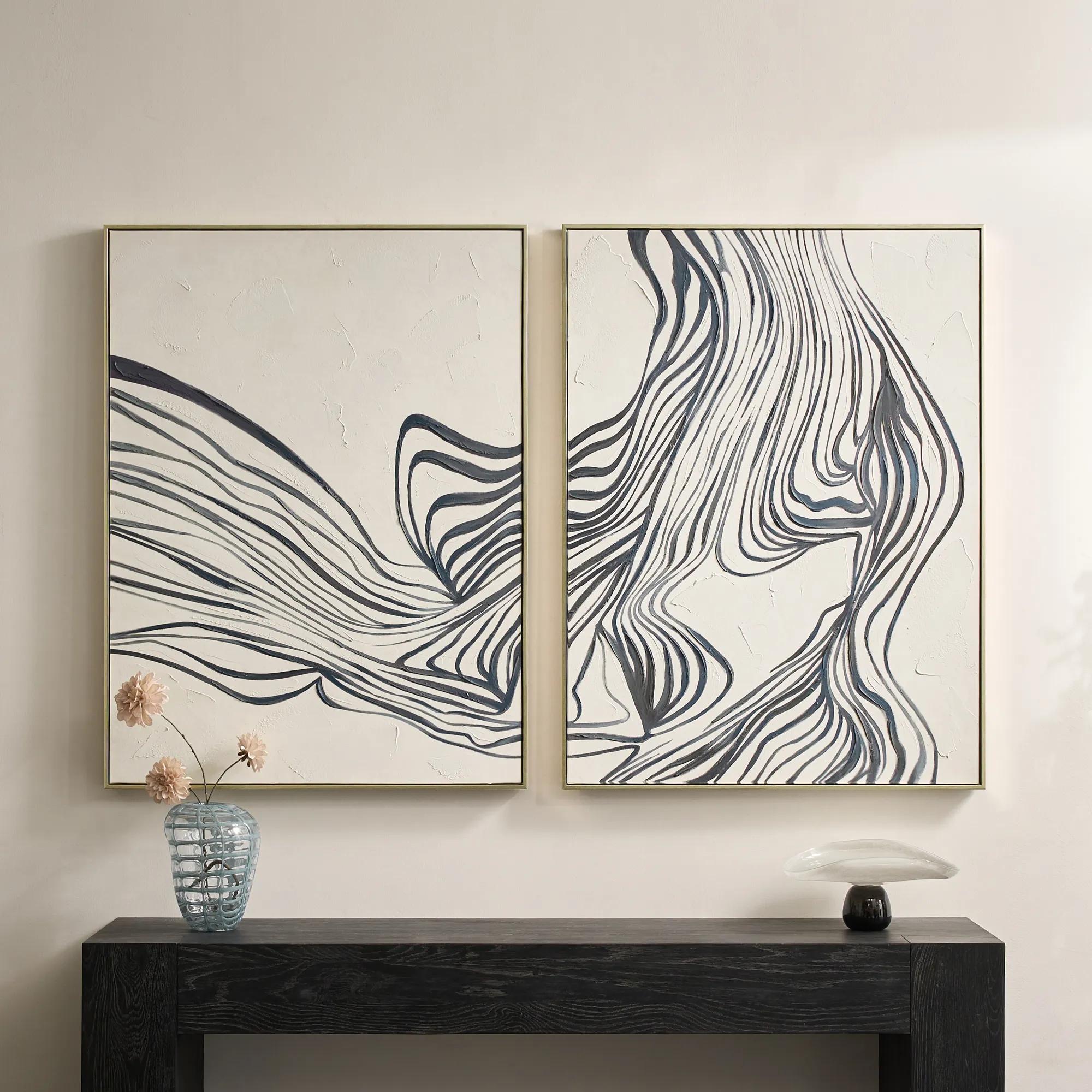 Rhythmic Framed Painted Wall Art 36" x 48" Set of 2$599
A hand-painted diptych featuring bold abstract stripes in dark slate and dusty blue with champagne frames.
Add To Cart -
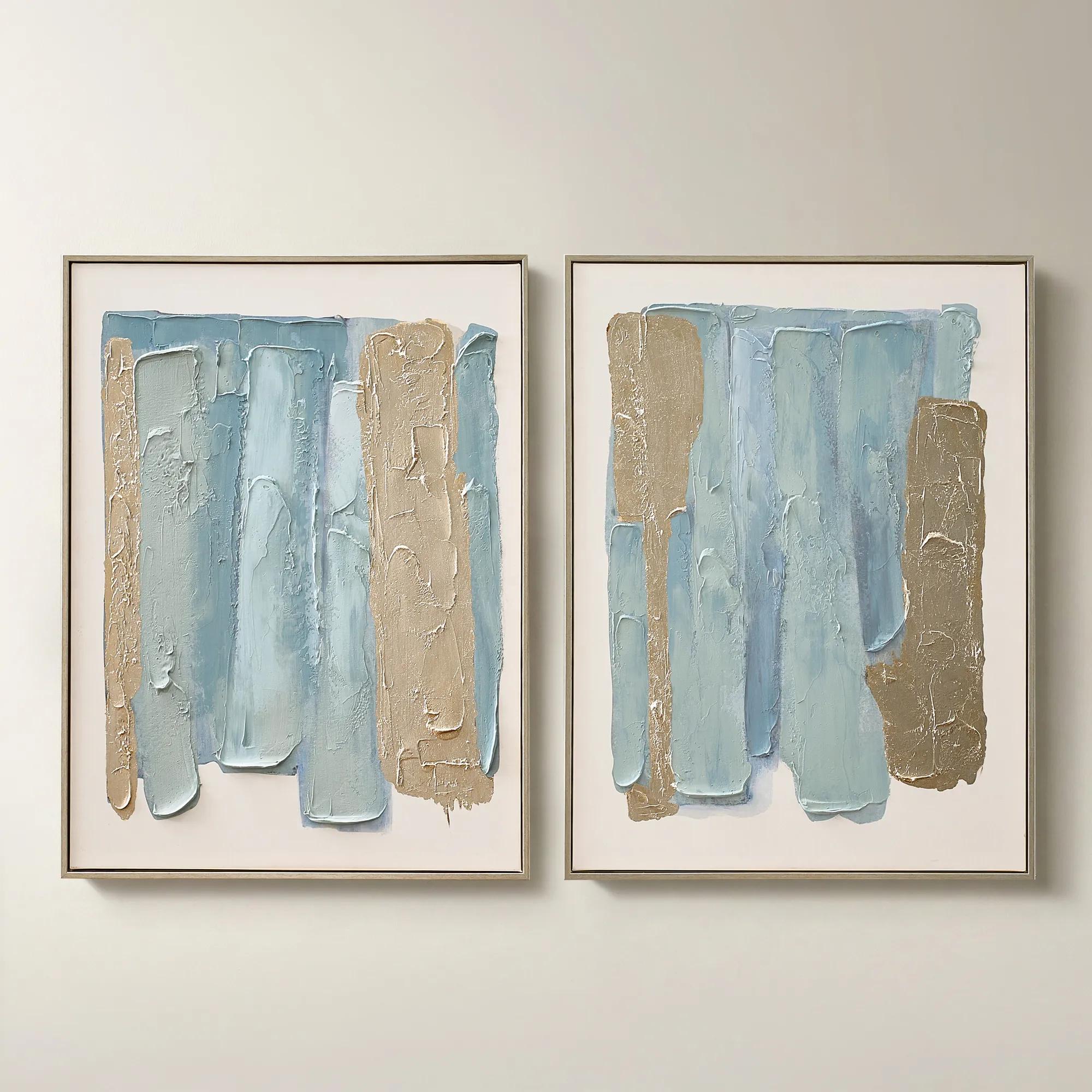
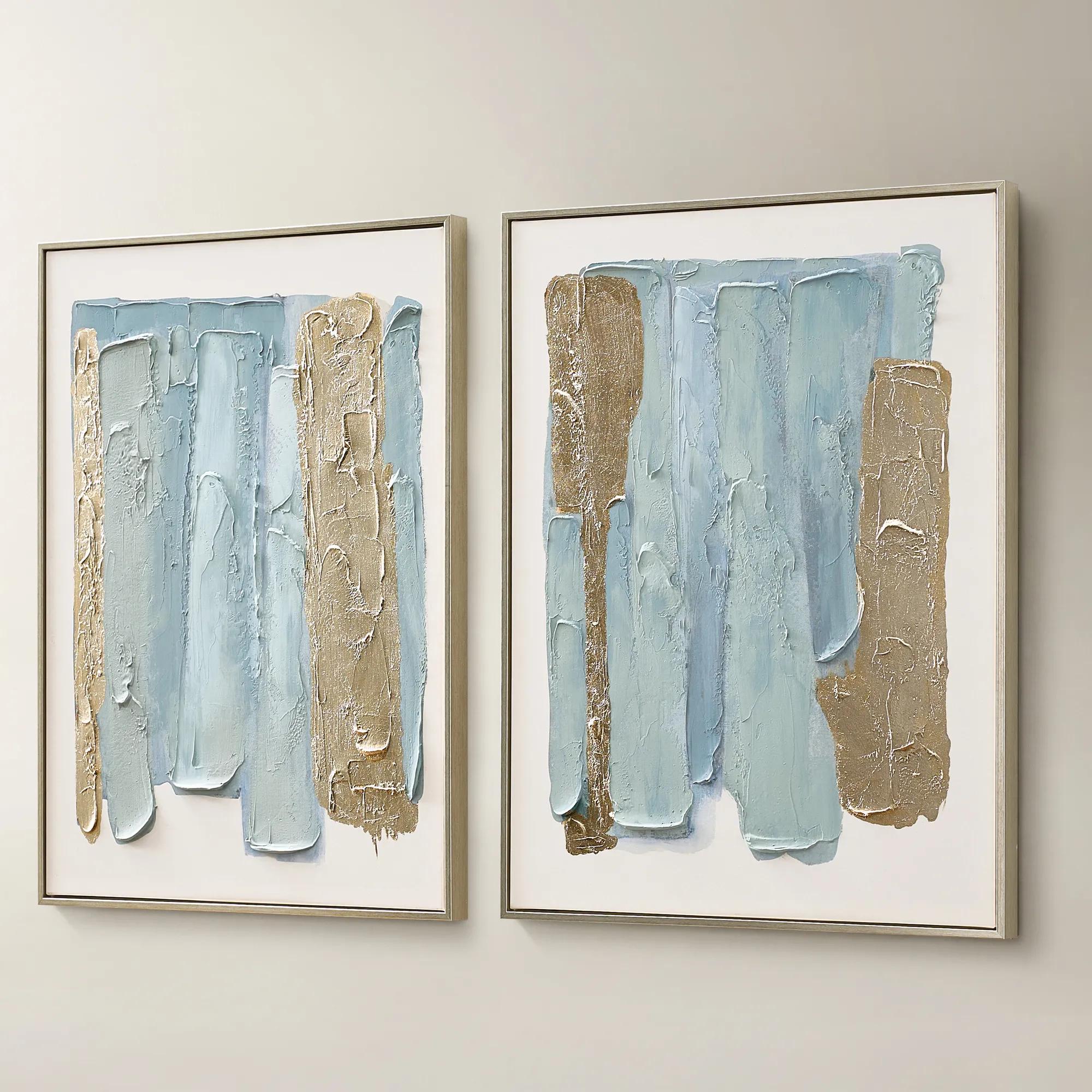 Blue Drift Framed Champagne Painted Wall Art 24" x 32" Set of 2$199
A set of two hand-painted canvases in dusty blue with champagne leafing and modern abstract movement.
Add To Cart -
.jpeg?w=1200&h=1200) Relic Framed Painted Triptych Wall Art Set of 3$399
Relic Framed Painted Triptych Wall Art Set of 3$399A hand-painted abstract triptych in deep navy and neutral tones, set in sleek black floater frames.
Add To Cart -
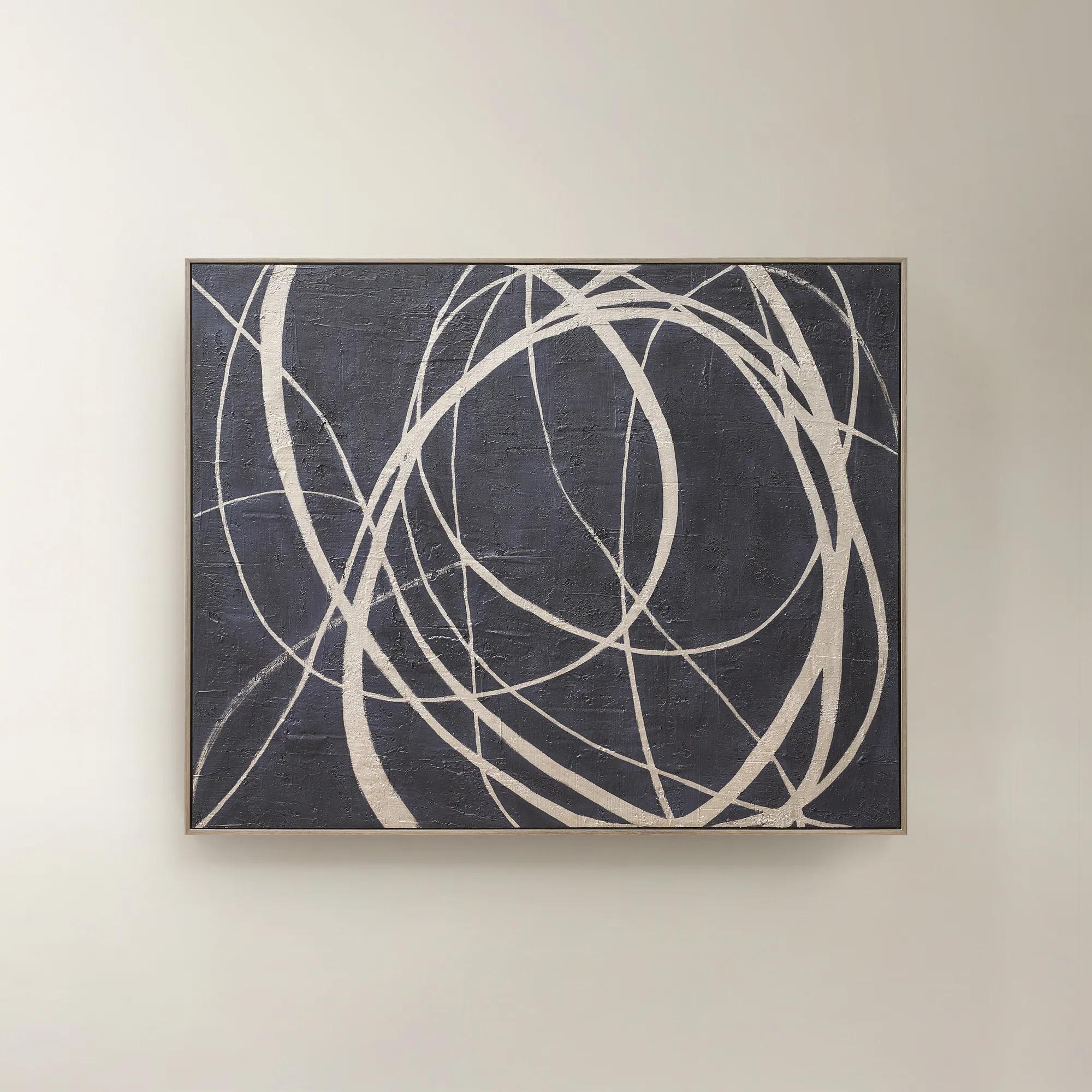 Wandering Framed Painted Wall Art 48" x 60"$699
An expressive hand-painted canvas in deep ink blue with champagne accents for a bold, sophisticated statement.
Add To Cart -
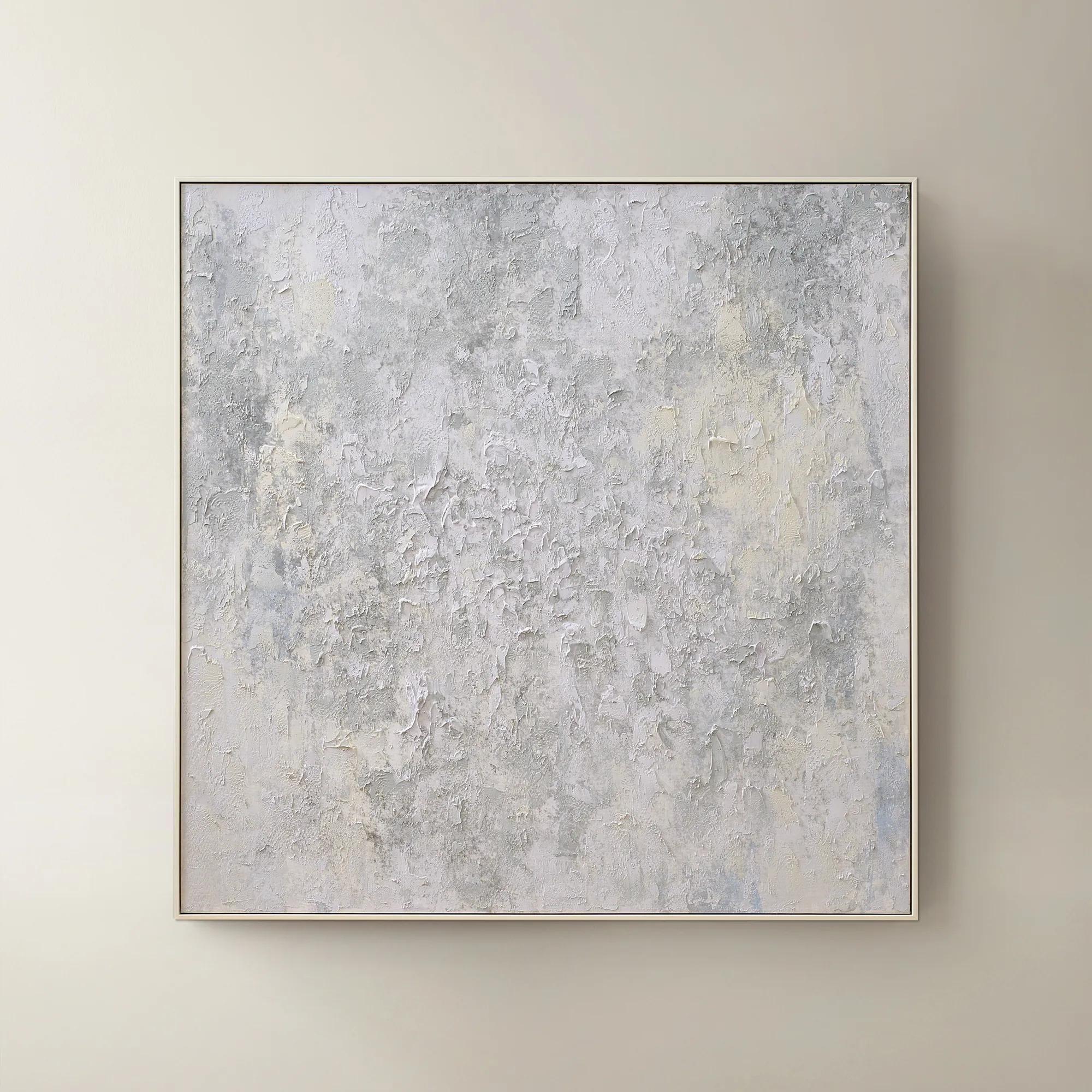 Breathe of Fresh Air Framed Painted Wall Art 50" x 50"$499
A hand-painted abstract canvas in dusty blue hues, elegantly framed in white for a serene, modern accent.
Add To Cart -
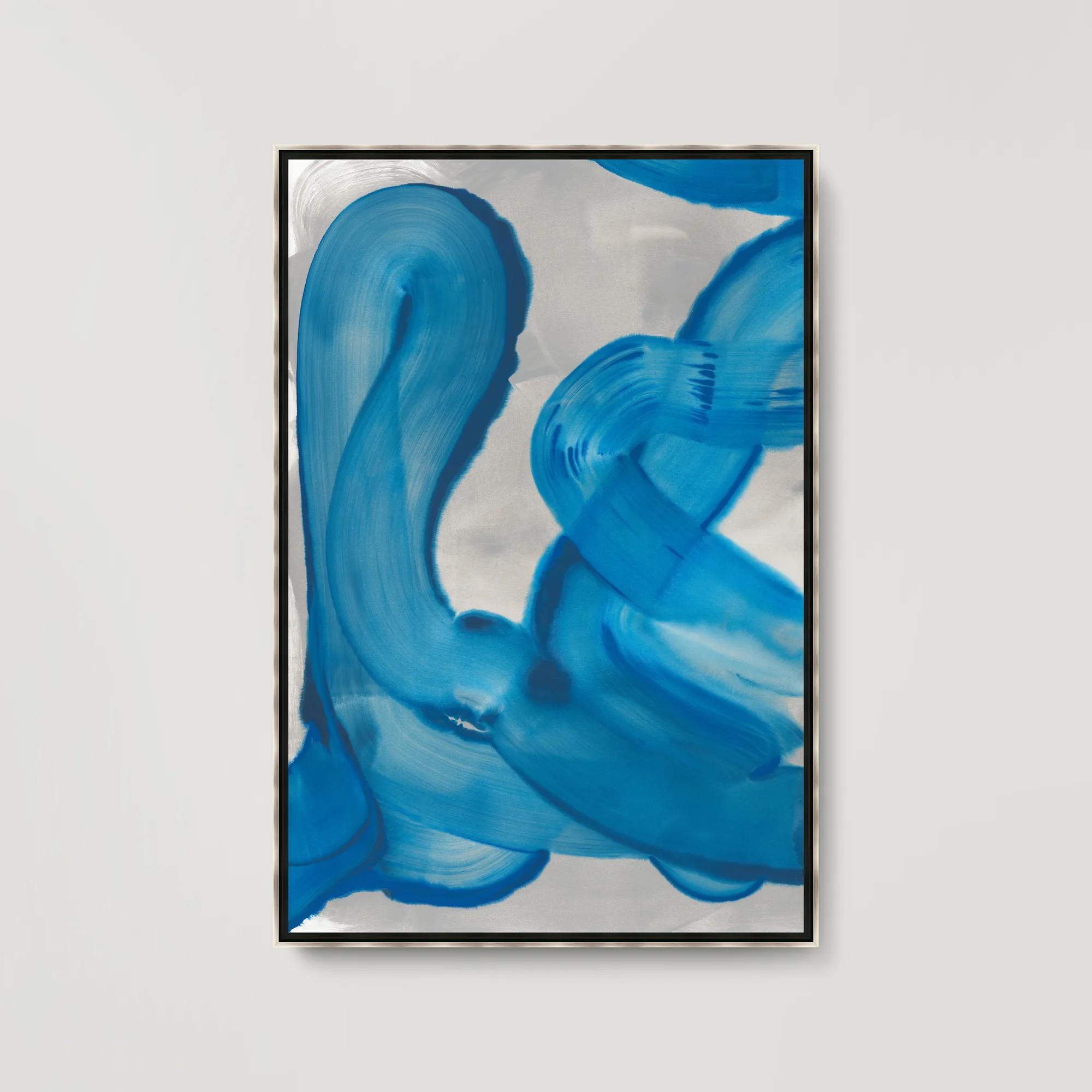 Royal Waves I Framed Wall Art 31.5" x 46.5"$699
A gallery-wrapped abstract canvas featuring hand-applied brush gel and set in a sleek silver floater frame.
Add To Cart -
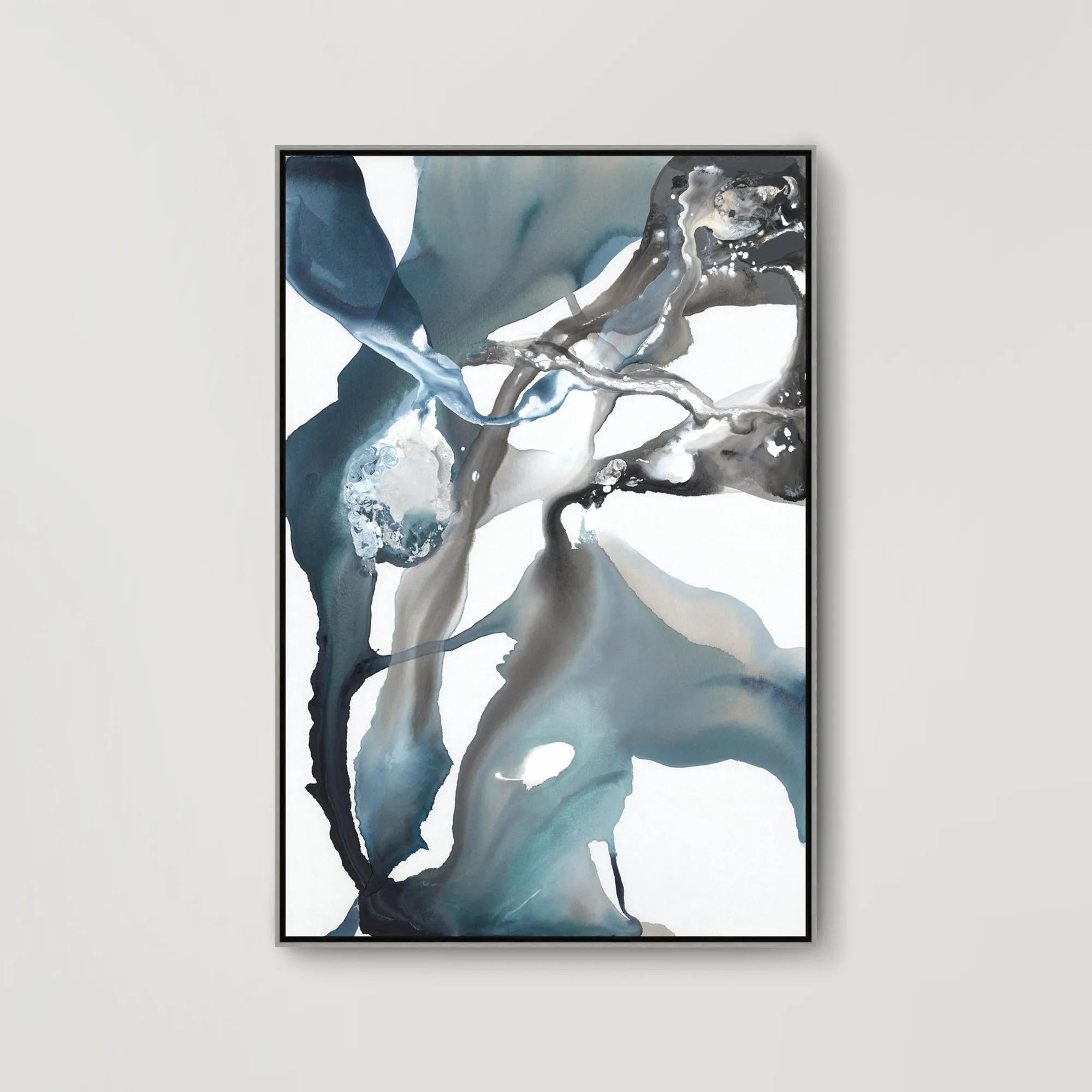
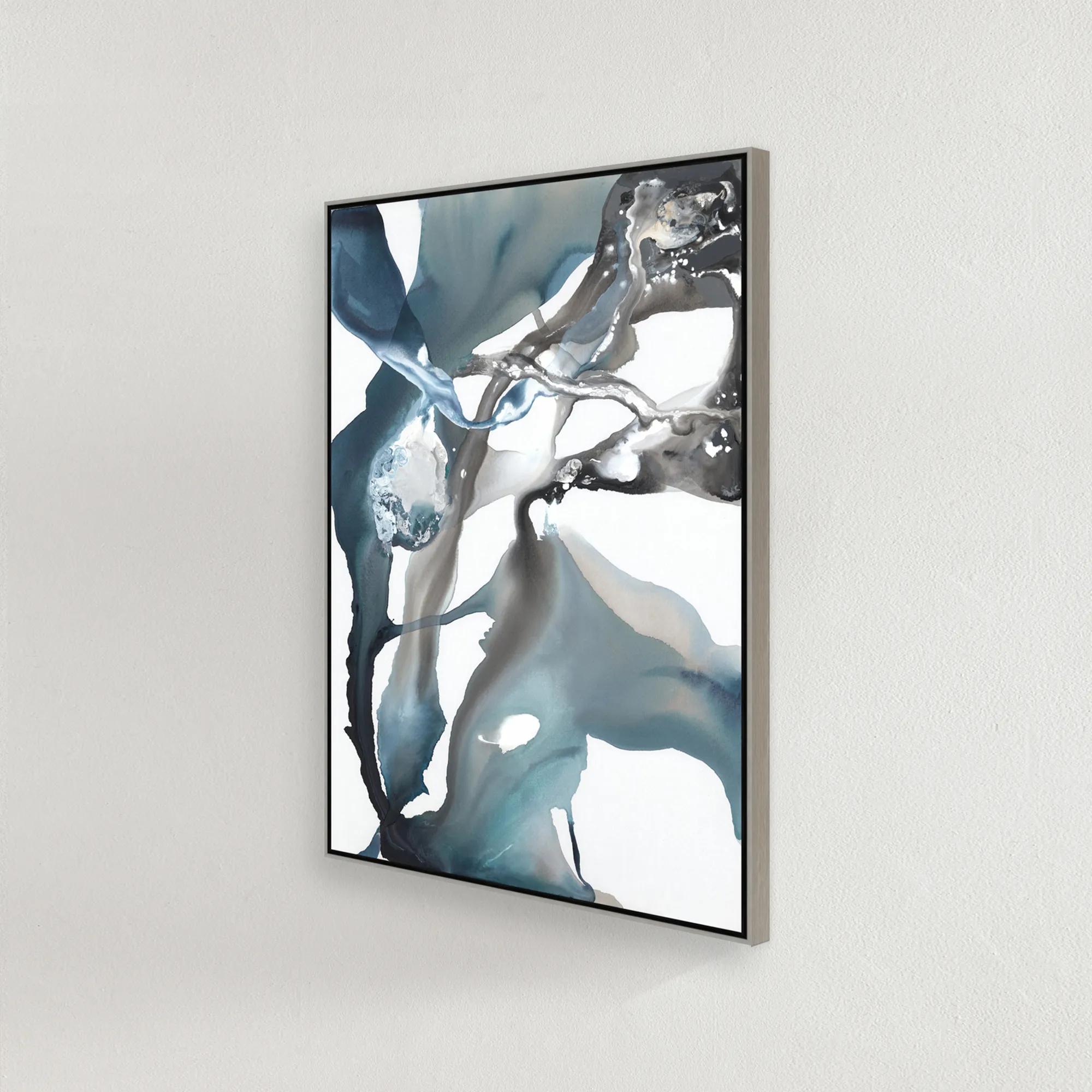 Cool Cascade Framed Wall Art 37.5" x 55.5"$849
A gallery-wrapped canvas artwork featuring expressive colors, hand-applied brush gel, and a gunmetal floater frame.
Add To Cart -
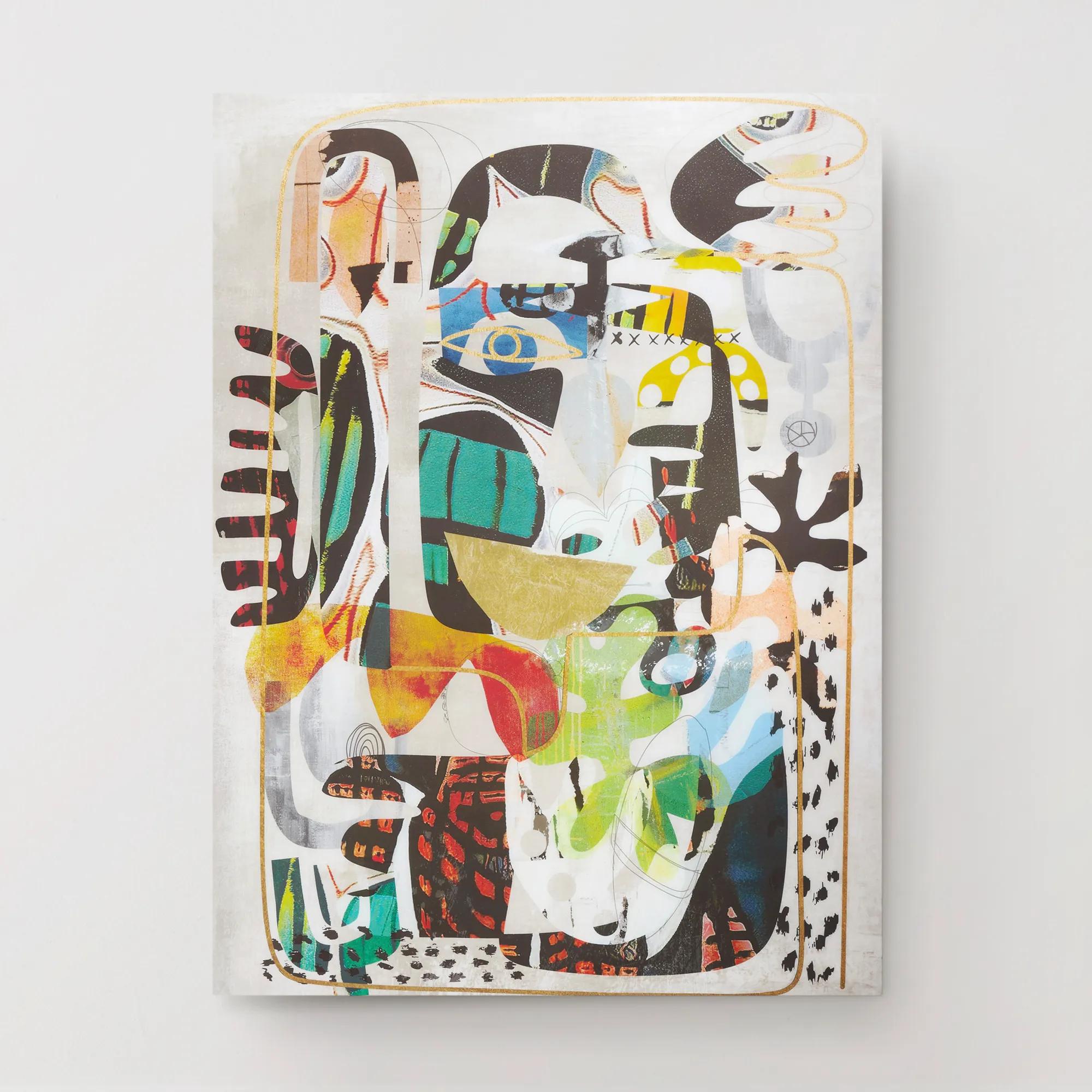
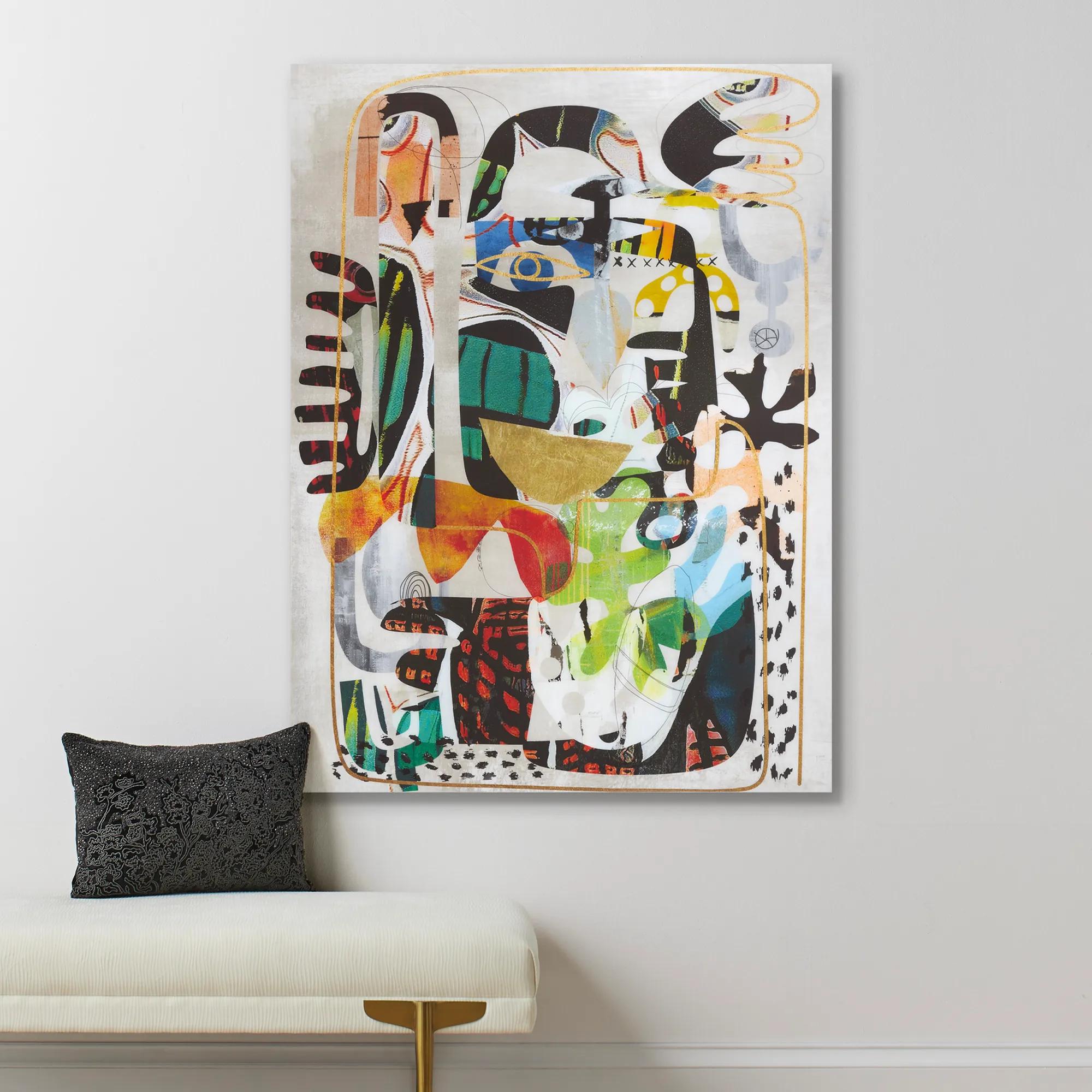 Nikki Chu Masked Wall Art 40" x 54"$899
A vibrant giclee print on canvas featuring a hand-applied glossy finish for a modern statement.
Add To Cart -
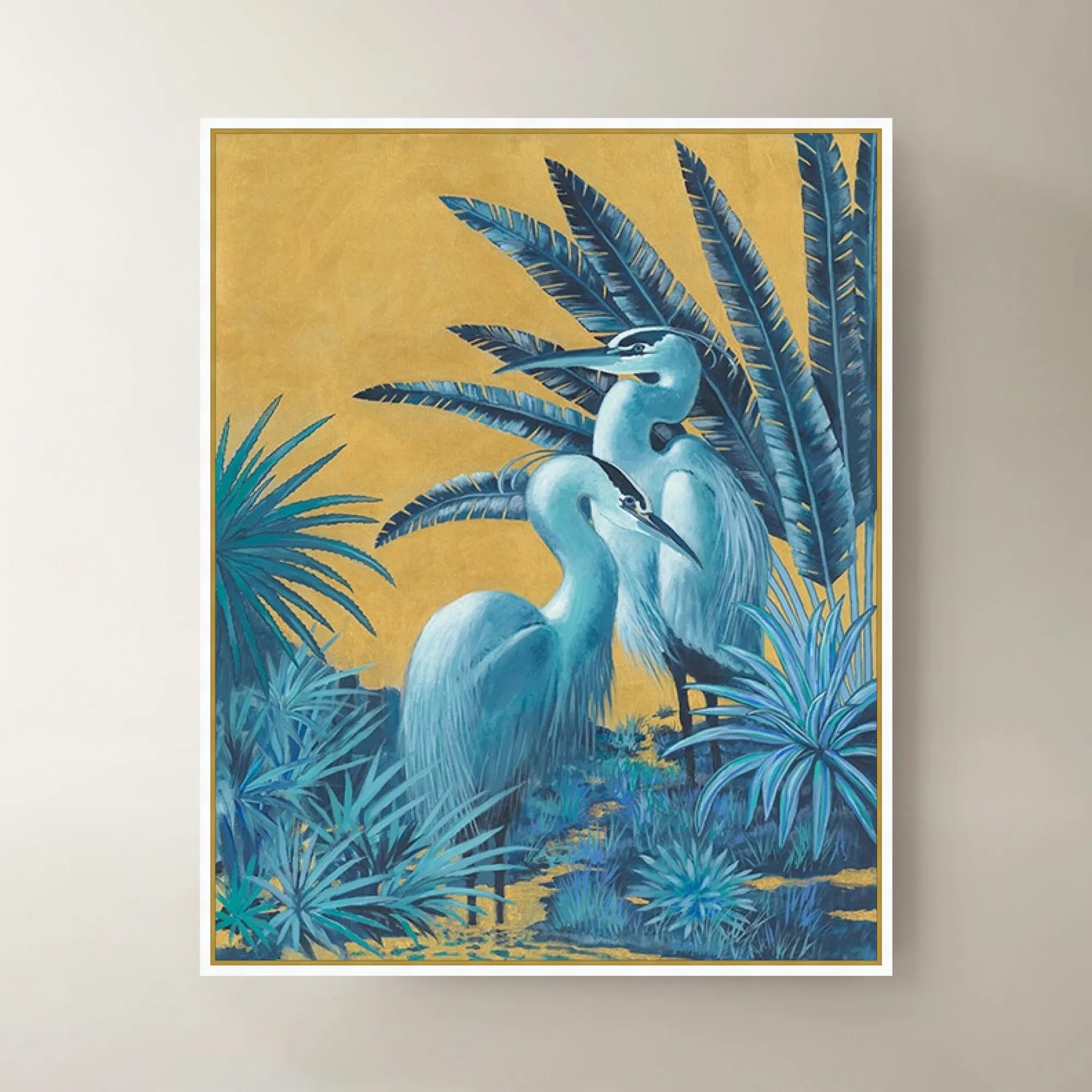
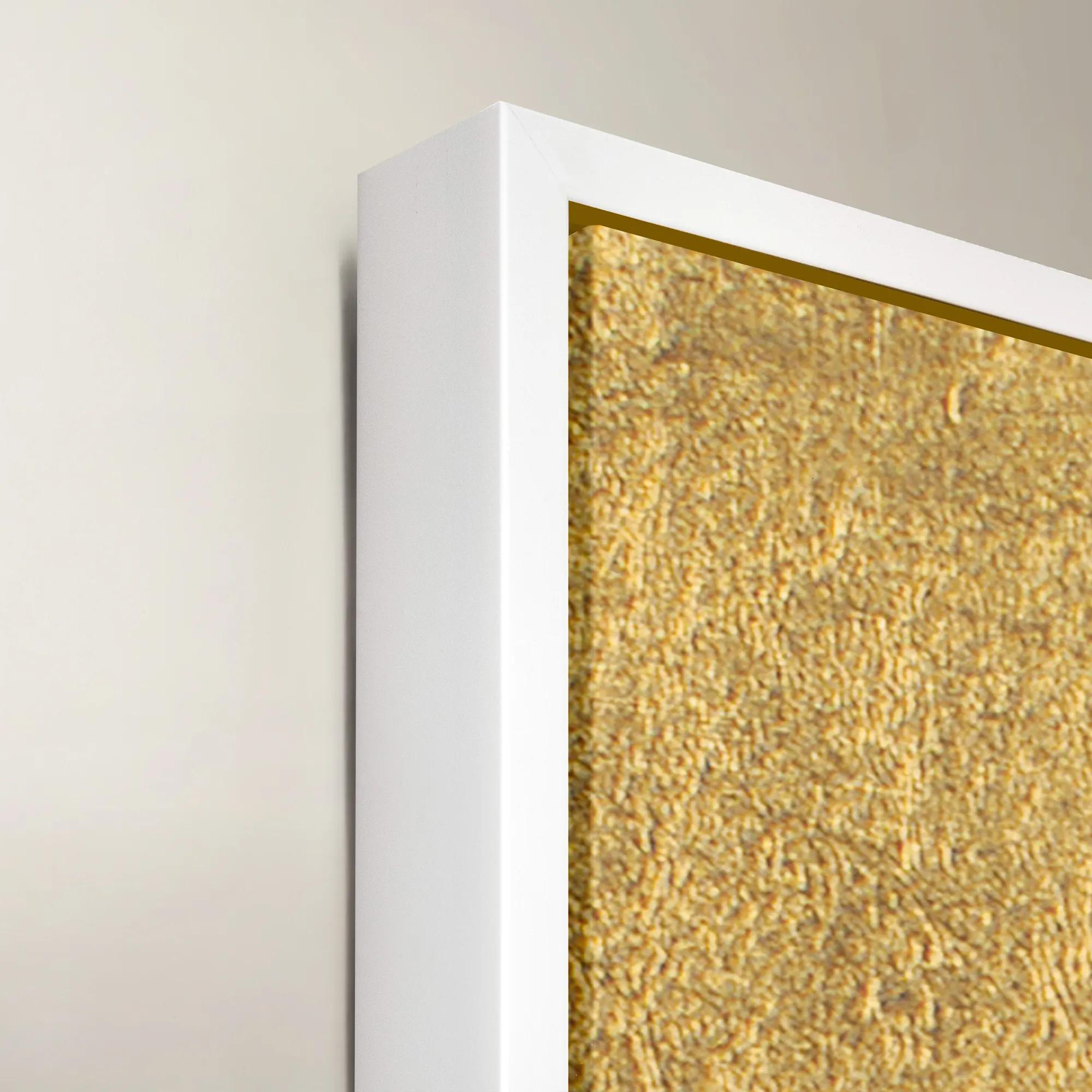 Blue Gold Herons Framed Wall Art 40" x 50"$1199
A striking blue and gold framed canvas artwork featuring elegant herons for sophisticated wall display.
Add To Cart -
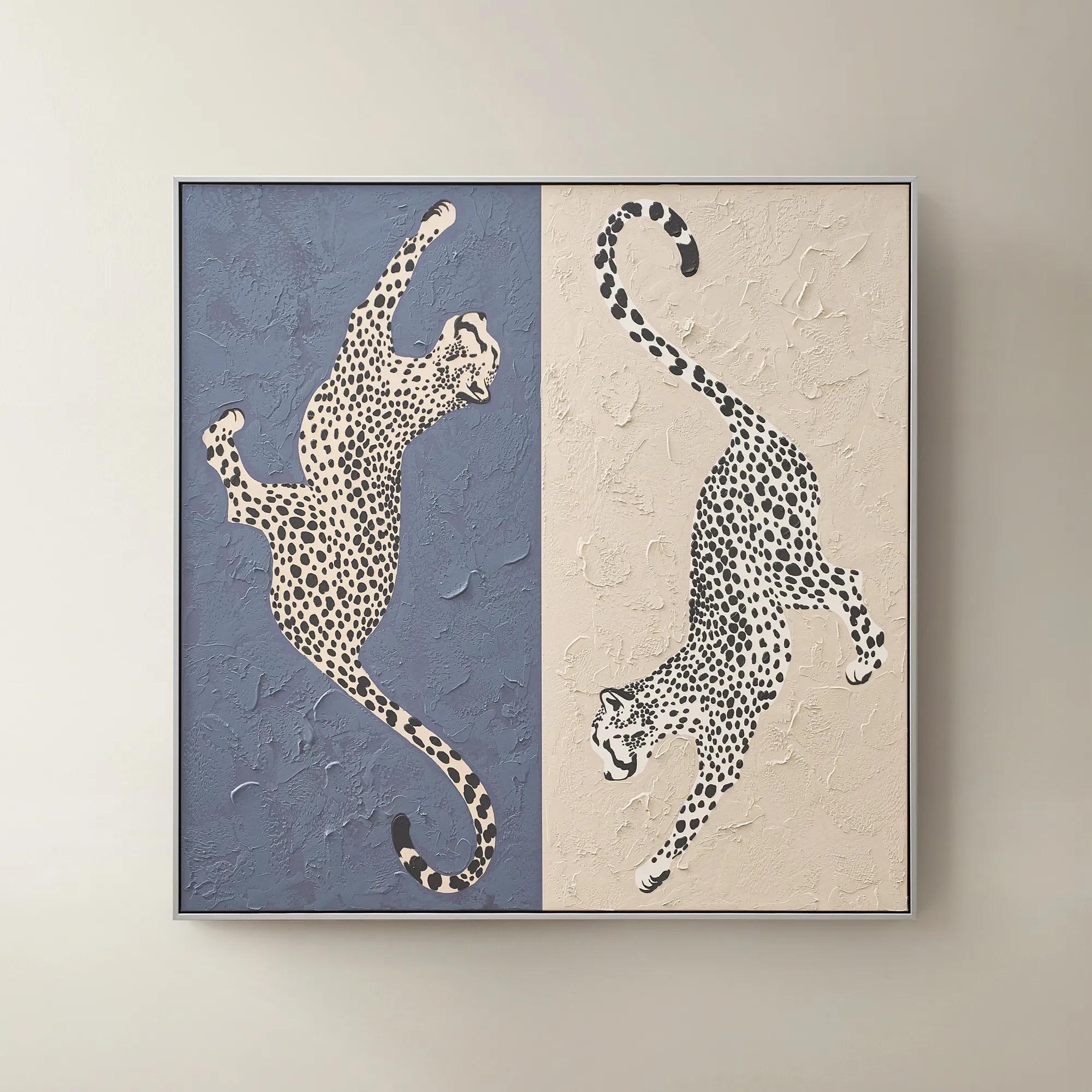 Leopard At Play Framed Painted Wall Art 40" x 40"$299
A hand-painted canvas in ink blue and taupe features playful leopard-inspired art with a silver-black frame.
Add To Cart

Modern Blue Canvas Wall Arts
Modern blue canvas wall arts are the ultimate invitation to transform your walls into captivating works of art. Each piece evokes a sense of serenity and sophistication, infusing your space with a fresh perspective and a dash of daring color. Whether you seek a tranquil wash of sapphire or an abstract burst of cobalt, these expressive canvases set the stage for rooms that radiate confidence and creativity. Let your home become a gallery—where every glance at modern blue canvas wall arts inspires wonder, elevating the everyday with bold strokes and luminous allure.
Modern blue canvas wall art brings depth, movement, and a distinctive sense of composure to contemporary interiors. Its appeal lies in the range of the color itself: midnight navy feels enveloping and architectural, cobalt delivers saturated drama, and cerulean or pale aqua introduces a more luminous expression. Across abstract compositions, coastal imagery, flowing marble-inspired patterns, and expansive color fields, blue can establish a room’s focal point without overwhelming its furnishings. Sweeping brushwork lends energy to a tailored living room, while a softly layered horizon gives a bedroom an unhurried, contemplative mood. The canvas surface contributes its own character, introducing a subtle woven texture that distinguishes it from a glossy photographic print. Depending on the artwork, that texture may remain visible beneath printed imagery or become part of a painted composition with raised strokes and dimensional details. A navy-and-ivory abstract above a cream sofa creates crisp definition; a composition threaded with blue, charcoal, and metallic tones can connect dark upholstery with gleaming accent tables. Blue also makes a compelling partner for warm wood, camel leather, and brass, where the contrast feels rich rather than severe. For a quieter arrangement, slate blue alongside dove gray and softly textured upholstery creates depth through closely related tones. Modern does not have to mean stark: expressive gestures, intricate veining, and layered washes offer visual complexity while keeping the overall composition refined. The strongest choice often echoes something already present in the room—a sapphire cushion, a smoky glass vase, the cool undertone of a rug—without repeating every color exactly. That connection allows the art to feel considered rather than overly coordinated. Whether the room calls for a commanding canvas or an intimate grouping, blue provides a broad expressive range, from gallery-like restraint to an unapologetically dramatic statement. It is especially effective where a neutral interior needs color with presence, or where richly appointed furniture needs an equally expressive backdrop.
Scale and placement determine how that color is experienced. A generous horizontal canvas can visually anchor a sofa or dining-room sideboard, while a tall composition gives a narrow wall beside a console a more deliberate architectural presence. As a starting point, artwork spanning roughly two-thirds to three-quarters of the furniture beneath it often feels balanced, although the room’s proportions and the composition’s visual weight matter more than a rigid formula. A densely painted navy canvas can command attention at a smaller size than an airy arrangement of pale blue washes. Measuring the full exterior dimensions, including any frame, helps avoid a piece that crowds adjacent sconces or disappears above a substantial headboard. Painter’s tape can outline the proposed footprint before hanging, making it easier to assess the relationship from both the doorway and the main seating area. Above furniture, a gap of approximately six to eight inches is a useful starting point, adjusted for ceiling height, furniture shape, and safe clearance. On an open wall, placing the artwork’s center near eye level generally creates a comfortable viewing experience. Multi-panel compositions offer another way to give blue a broader presence, with spacing becoming part of the design rather than an afterthought. Modern Blue Canvas Art Sets can establish a cohesive rhythm across a wide wall or bring related color and imagery to adjoining spaces. When evaluating a set, account for the width of every panel plus the intended gaps, and preserve the recommended sequence when the image continues across canvases. A diptych over a low console can feel poised and symmetrical; a sequence of abstract panels along a dining wall can introduce movement. Leave enough surrounding wall visible for the arrangement to register clearly. Nearby mirrors, shelving, and decorative objects should support the composition, not compete with its strongest lines. In an open-plan interior, repeating a restrained blue accent elsewhere can connect the art to the larger space without making every wall perform the same role.
Construction and finish deserve the same attention as color. Canvas wall art may feature printed imagery, original painted surfaces, or printed designs enhanced with hand-applied details; these treatments create different effects and should be distinguished in the artwork’s description. An image of heavily layered paint may suggest dimension without having a physically raised surface, while applied acrylic strokes or decorative accents can create actual relief. Canvas substrates commonly include cotton, polyester, or blends, and the quality of the finished piece also depends on its coating, printing or painting process, support, and assembly. Stretched canvas is typically secured around an internal frame, giving the artwork depth and allowing it to sit away from the wall. Gallery-wrapped edges carry color or imagery around the sides for a continuous appearance, while a floating frame adds a defined border with a narrow shadow gap. A dark frame can sharpen a pale blue composition; a metallic finish may bring added radiance to deeper tones. Look for clear construction details, appropriate hanging hardware, and care instructions rather than assuming every canvas has the same durability. These works are generally intended for indoor decorative use, and their appearance is best preserved away from prolonged direct sunlight, excessive humidity, and heat sources. A dry, soft cloth or gentle duster may be suitable for some surfaces, but raised paint, metallic embellishments, and specialty coatings can require different handling; follow the maker’s directions and avoid cleaning sprays unless specifically approved. Secure mounting suited to the artwork’s weight and the wall material is particularly important above beds, sofas, or frequently used walkways. Consider lighting as well: soft, even illumination reveals tonal variation, whereas a concentrated beam can exaggerate texture or create distracting highlights. For a home office, a composed blue abstract can give the background a polished identity; in an entryway, a bold canvas establishes the home’s visual character immediately. As a housewarming or milestone gift, blue canvas art is most personal when its scale, subject, and intensity reflect the recipient’s space and taste. Chosen with those details in mind, it becomes more than an accent—it gives the room a lasting point of expression.
FAQs
Modern blue canvas wall art harmonizes beautifully with a variety of interior design styles, from contemporary and mid-century modern to coastal and glam. Its versatile hues and abstract forms can create a striking focal point in minimalist spaces, add depth to eclectic rooms, or bring a refreshing pop of color to traditional settings. The key is to let the artwork inspire your palette and textures, allowing it to anchor your space with both confidence and artistry.
Blue is renowned for its tranquil and restorative qualities. To cultivate a calming atmosphere, choose blue canvases in softer shades like powder blue, sky, or muted navy. Hang them in spaces dedicated to relaxation—such as bedrooms, reading nooks, or meditation corners. Pair with plush textiles, gentle lighting, and organic materials to enhance the soothing effect and create a true sanctuary.
Absolutely. Modern blue canvas wall art makes an inspired and thoughtful gift for housewarmings, weddings, or milestone celebrations. Its universal appeal and ability to complement various decor styles ensure it will be cherished for years to come. Consider the recipient’s personal taste and existing color scheme to select a piece that feels both meaningful and timeless.
Lighting plays a pivotal role in showcasing the depth and nuance of blue artwork canvas. Natural daylight can intensify vibrant shades, while warm ambient lighting in the evening brings out rich, velvety undertones. Experiment with spotlighting or picture lights to highlight textural details and metallic accents, transforming your wall art into an ever-evolving centerpiece.
Mixing various shades of blue within a single space can create a layered, dynamic look that feels curated and intentional. Combine light and dark blues, or introduce pieces with hints of teal, indigo, or even sapphire. Varying the intensity and style of each canvas adds visual interest and depth, while maintaining a cohesive, sophisticated color story throughout your home.