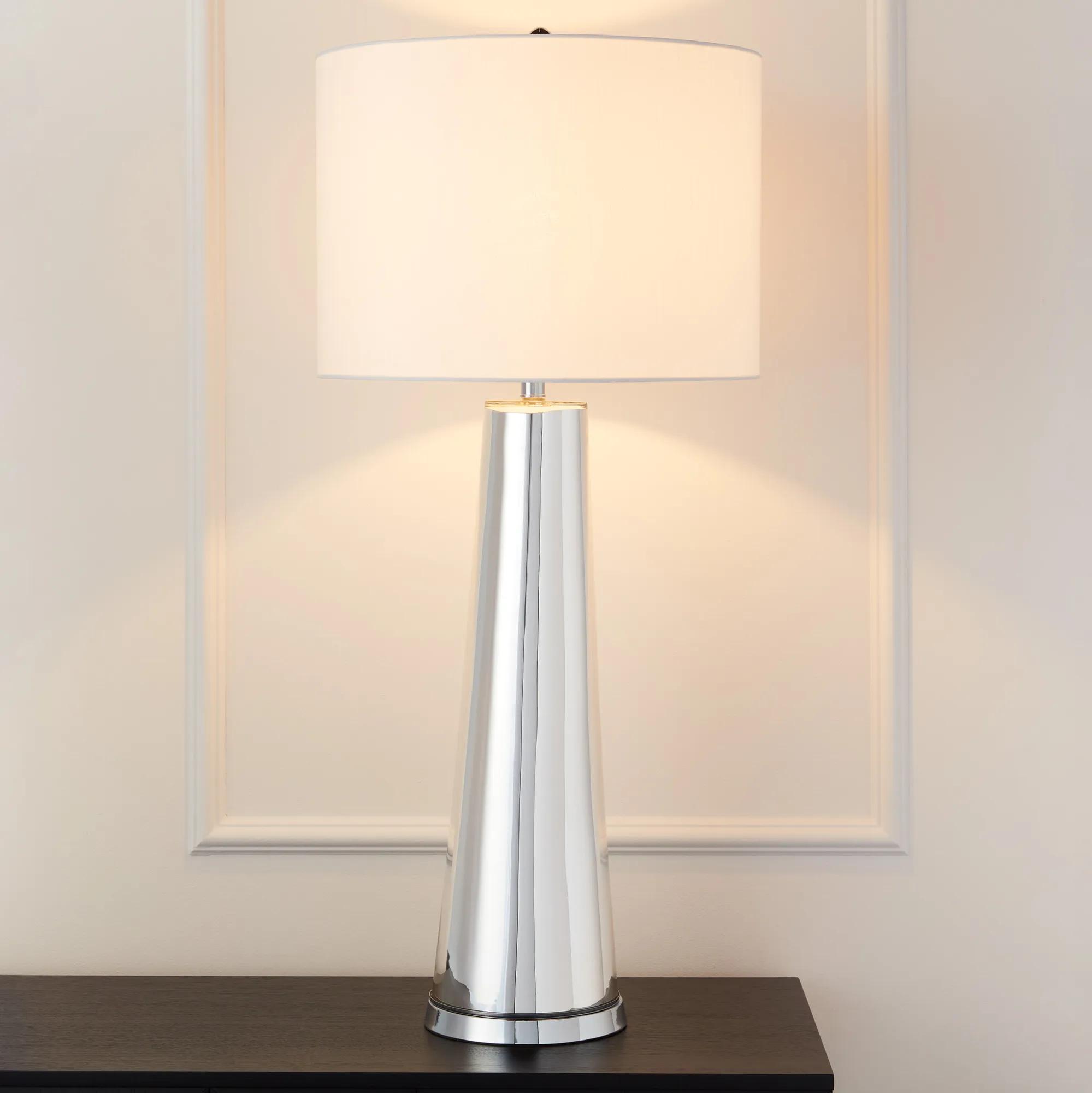
Minimalist Table Lamps
Minimalist Table Lamps
-
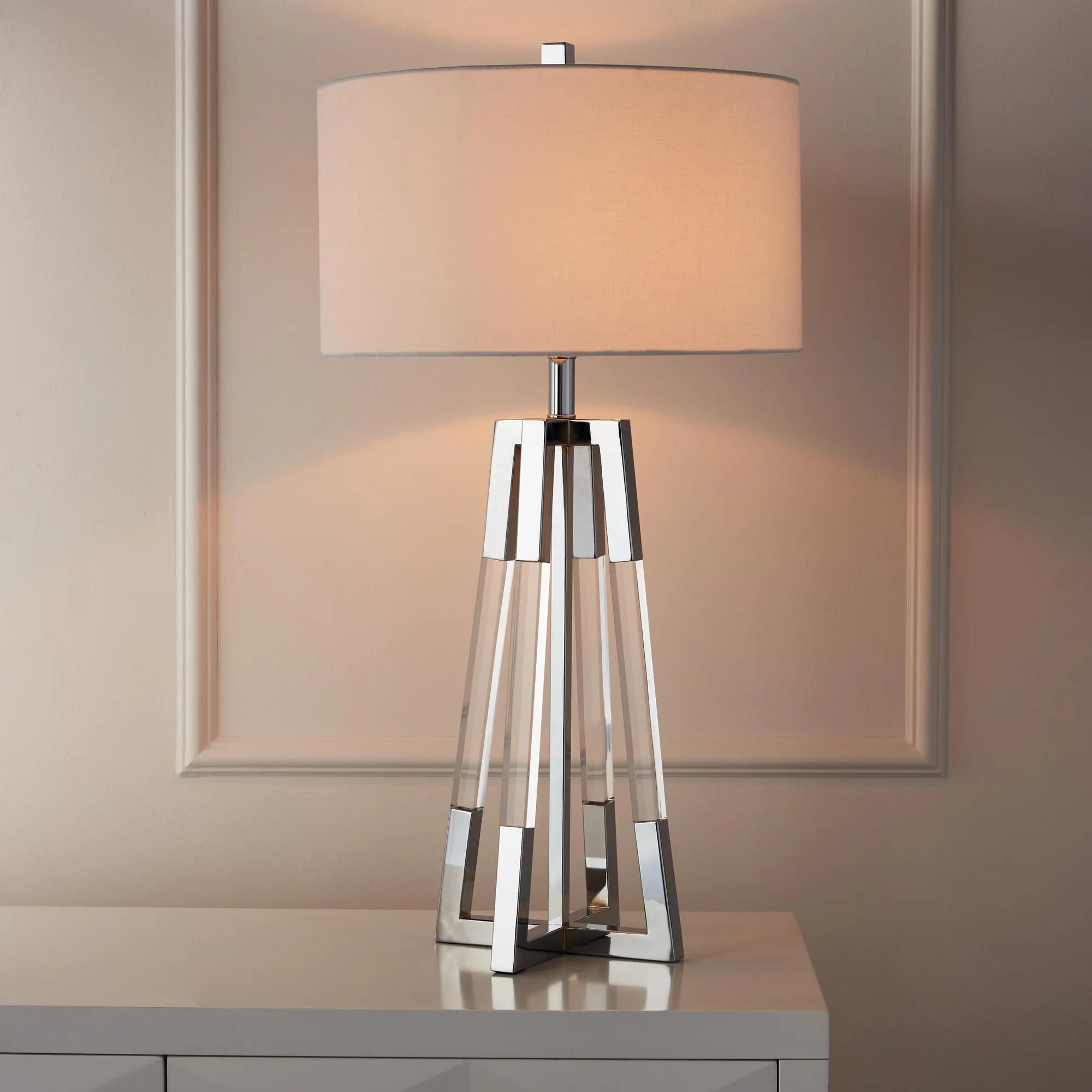 Rollins Table Lamp$439
A sophisticated table lamp featuring clear acrylic and polished nickel accents with a crisp white shade.
Add To Cart -
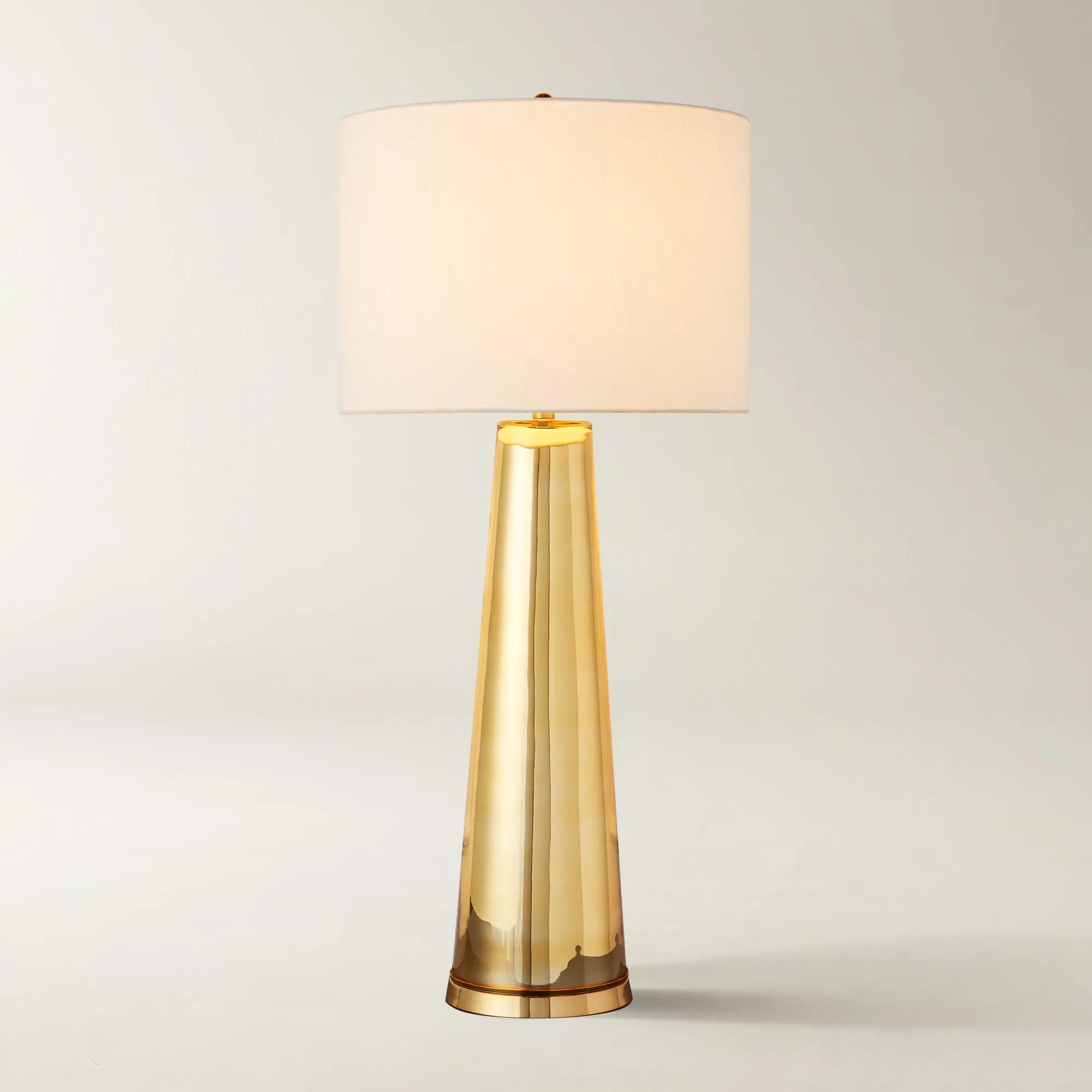
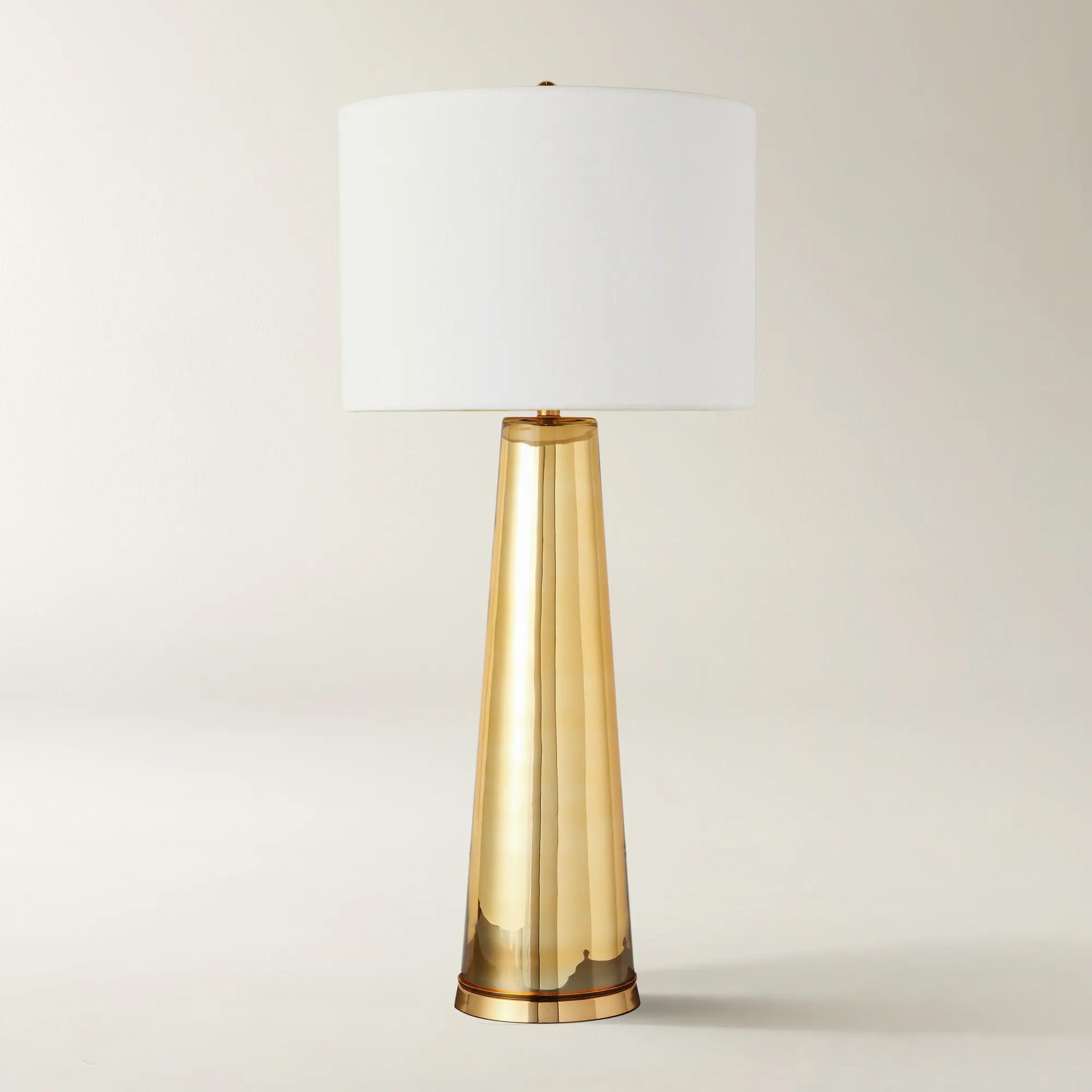 Century Gold Mirrored Glass Table Lamp 40"$299
A modern lamp featuring a mirrored glass base and white drum shade, accented with gold or silver details.
Add To Cart -
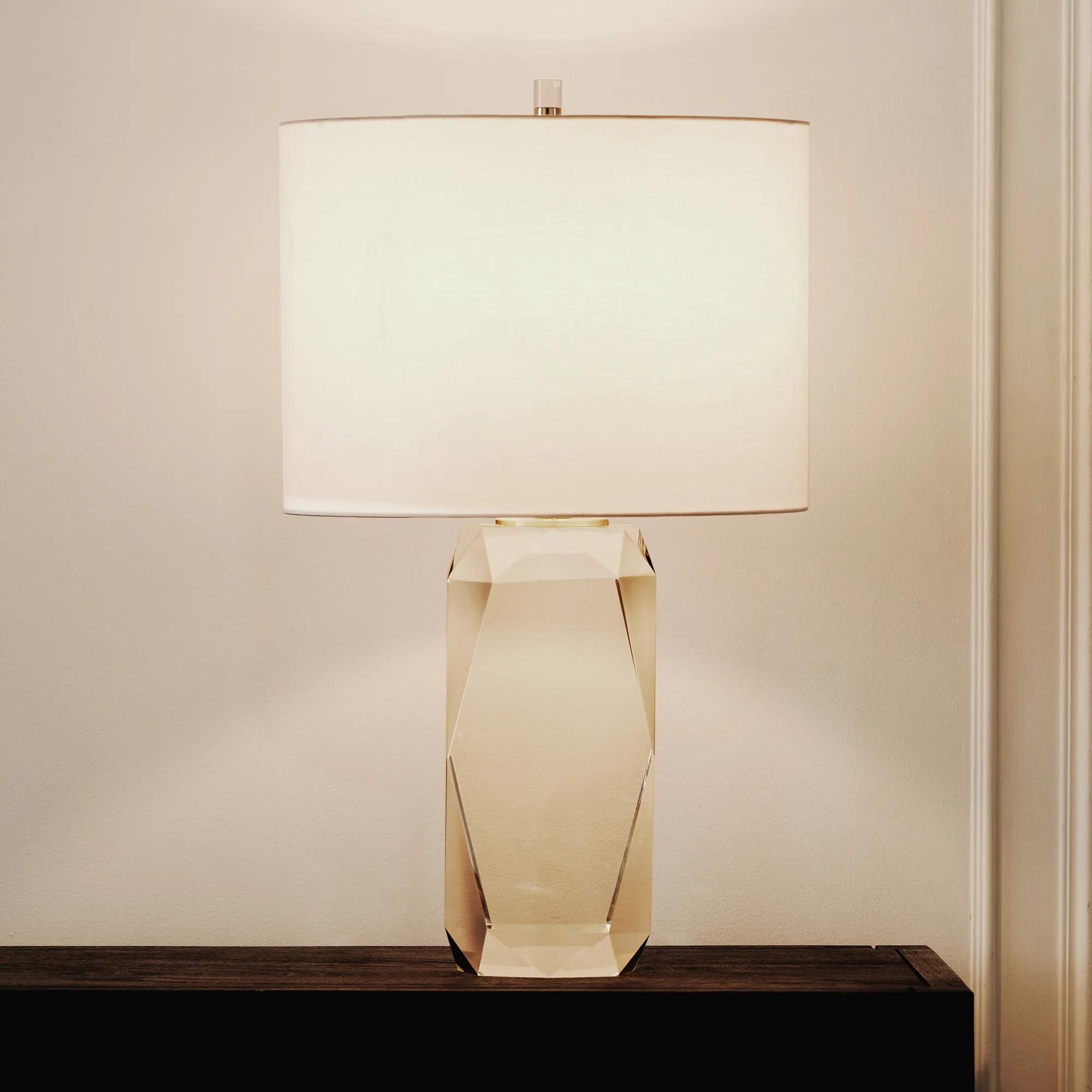 Bianca Faceted Clear K9 Crystal Table Lamp 24"H$499
A clear crystal table lamp with a white drum shade and soft brass hardware for elegant illumination.
Add To Cart -
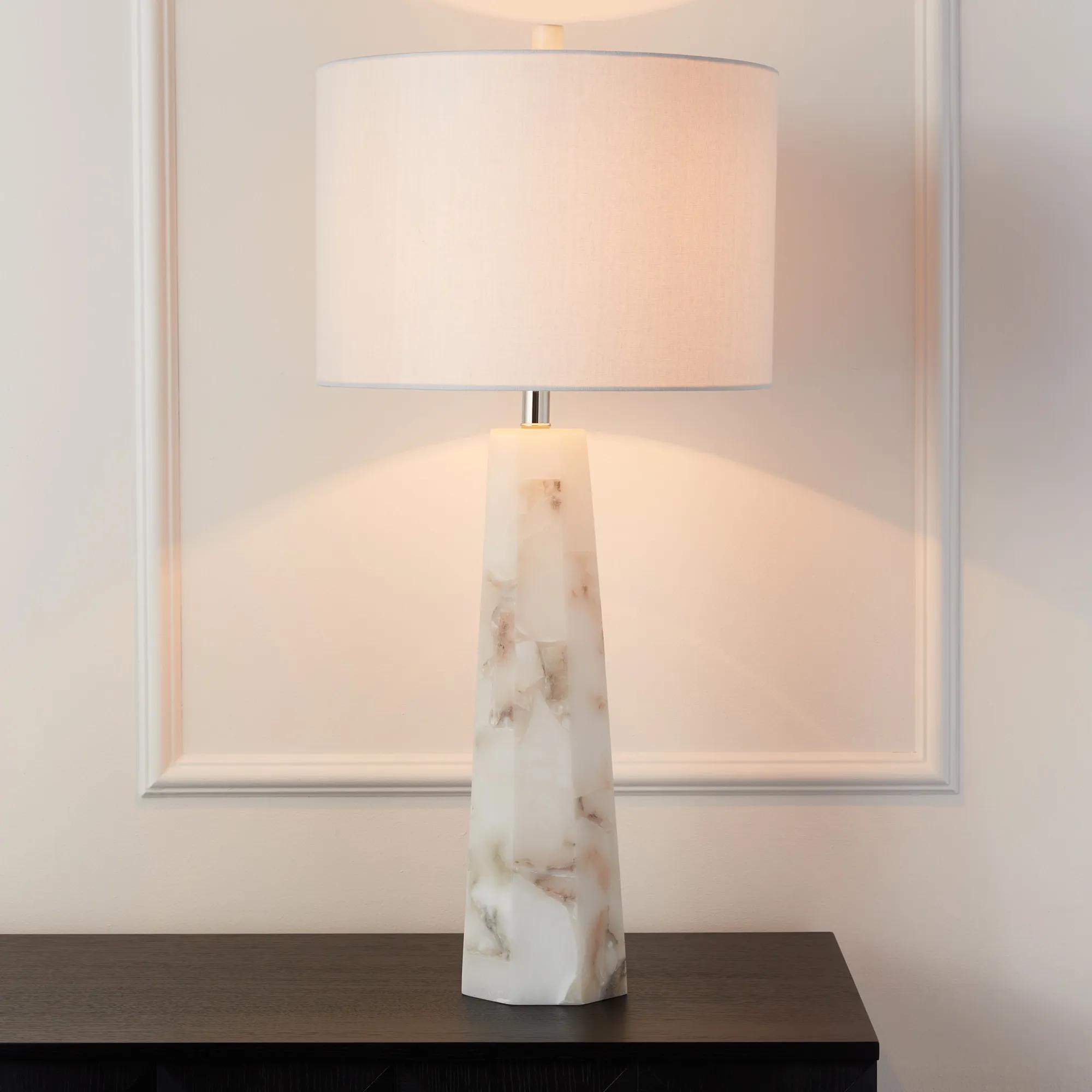 Aurora Alabaster Table Lamp 34"$499
An alabaster stone lamp with a tapered silhouette, white linen shade, and matching alabaster finial.
Add To Cart -
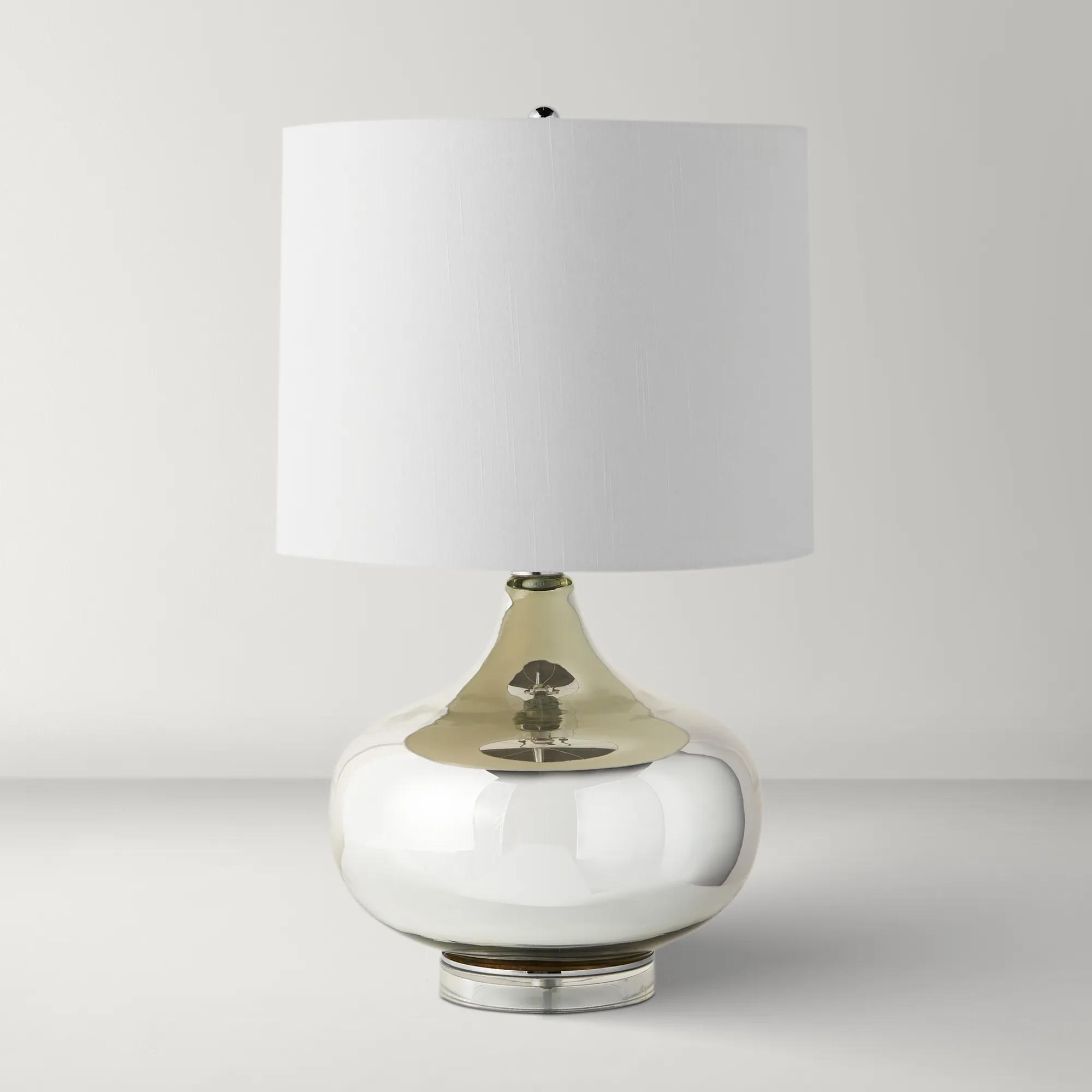 Sabrina Mirrored Silver Glass Table Lamp 27.5"$199
A contemporary lamp featuring a silver mirrored glass base, clear acrylic accents, and a white fabric shade.
Add To Cart -
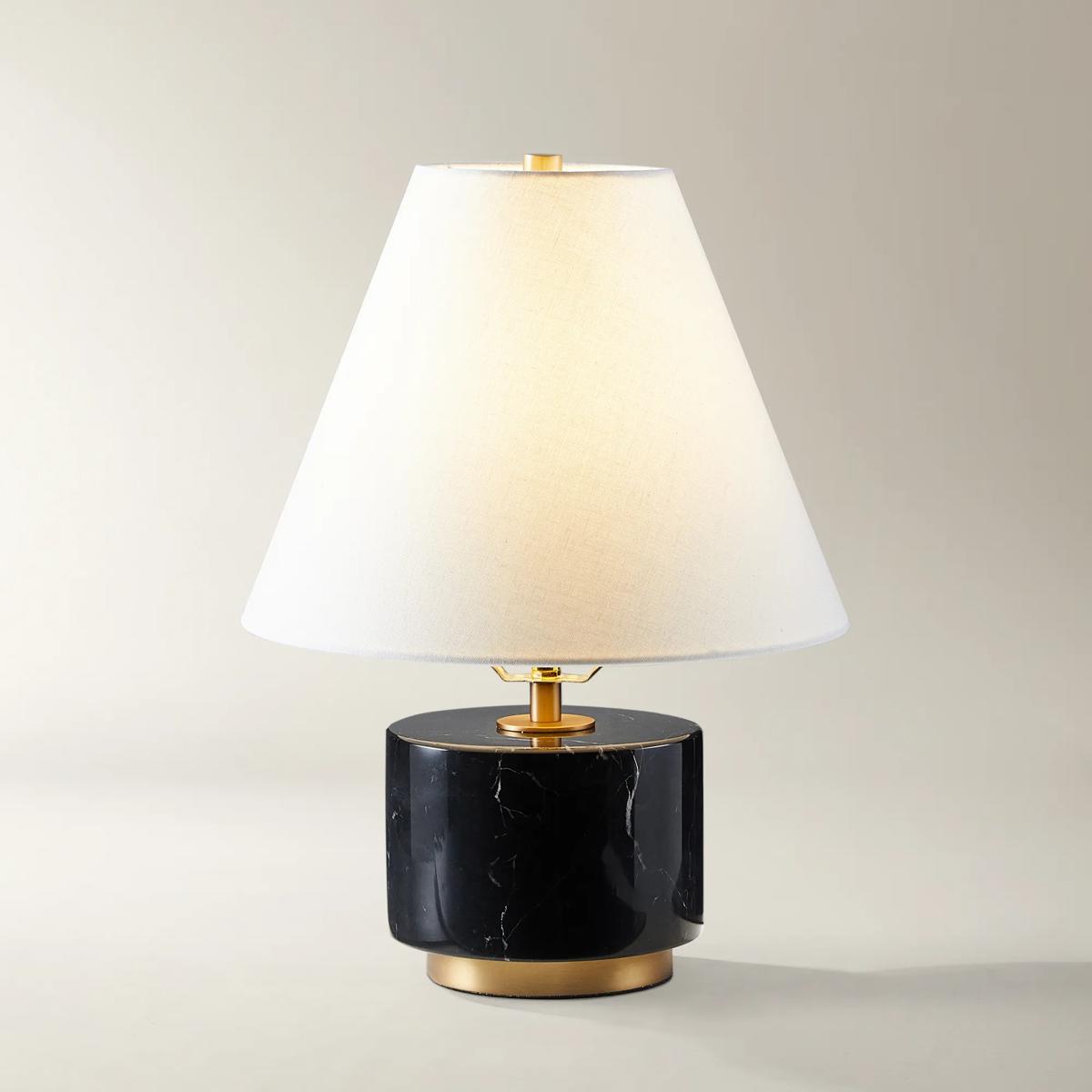
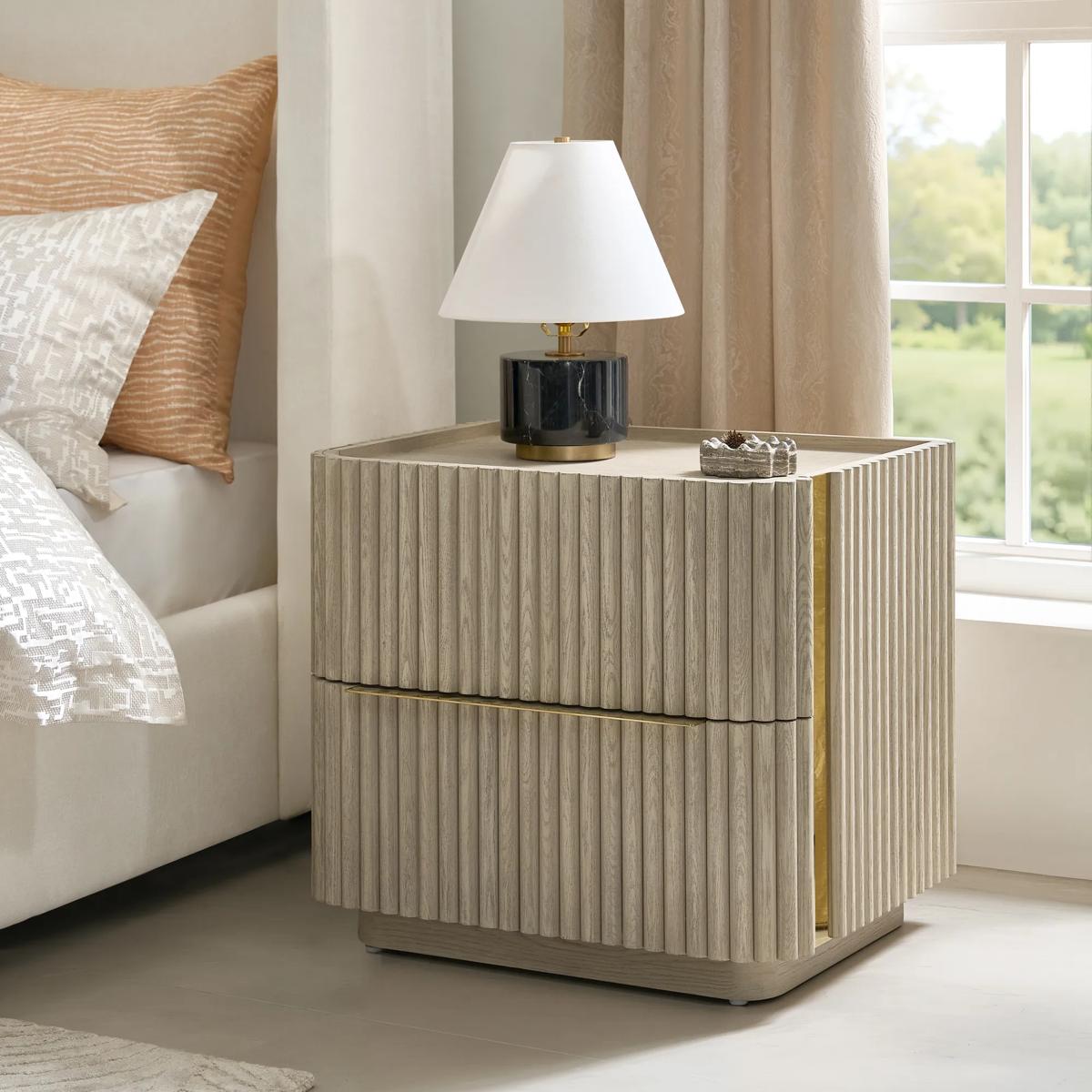 Arden Black Marble Table Lamp 14"$249
A sculptural black marble lamp with brushed brass accents and a warm white linen tapered shade.
Add To Cart -
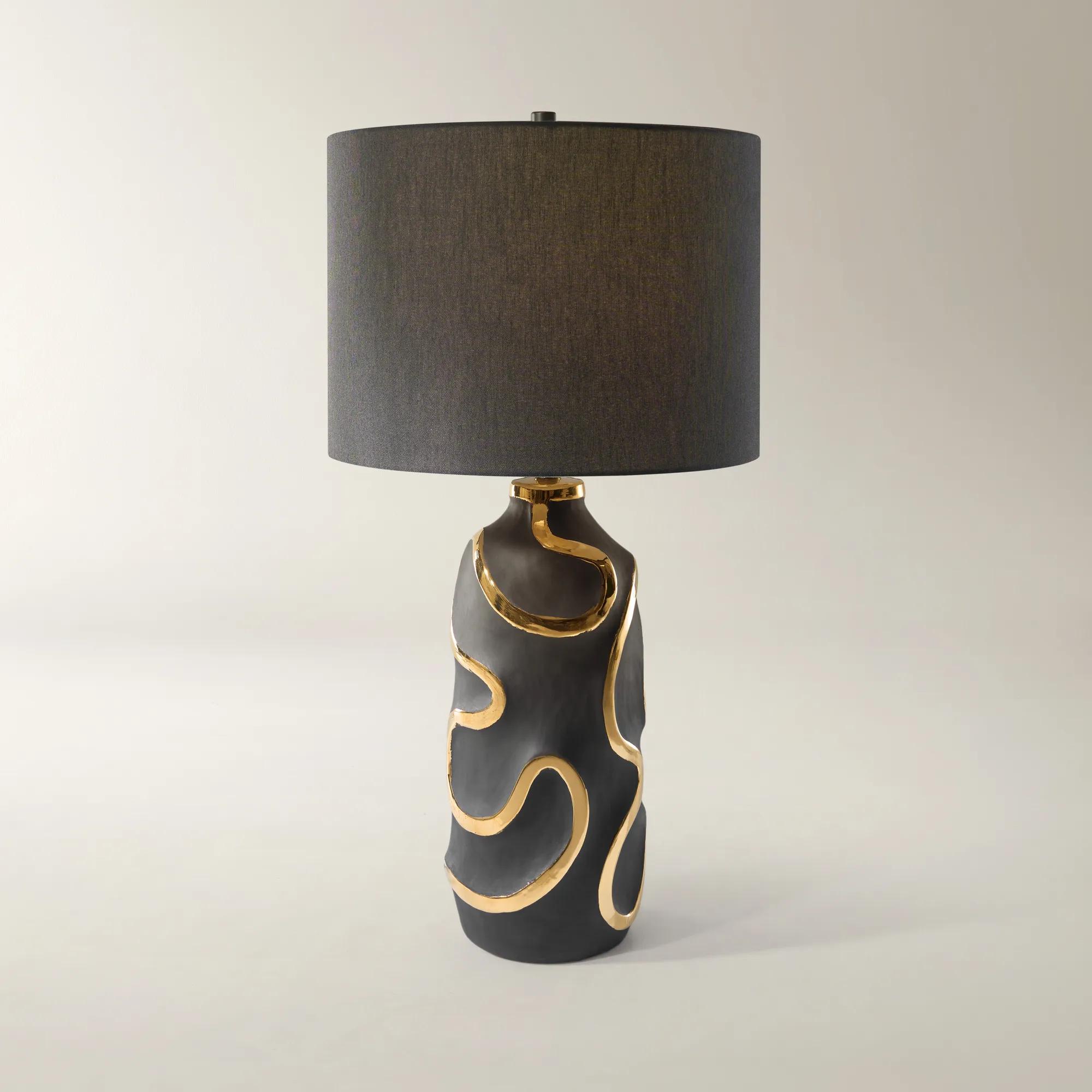 Seraphina Black/Gold Ceramic Table Lamp 32"$249
A matte black ceramic lamp with electroplated gold loops and adjustable three-level lighting.
Add To Cart -
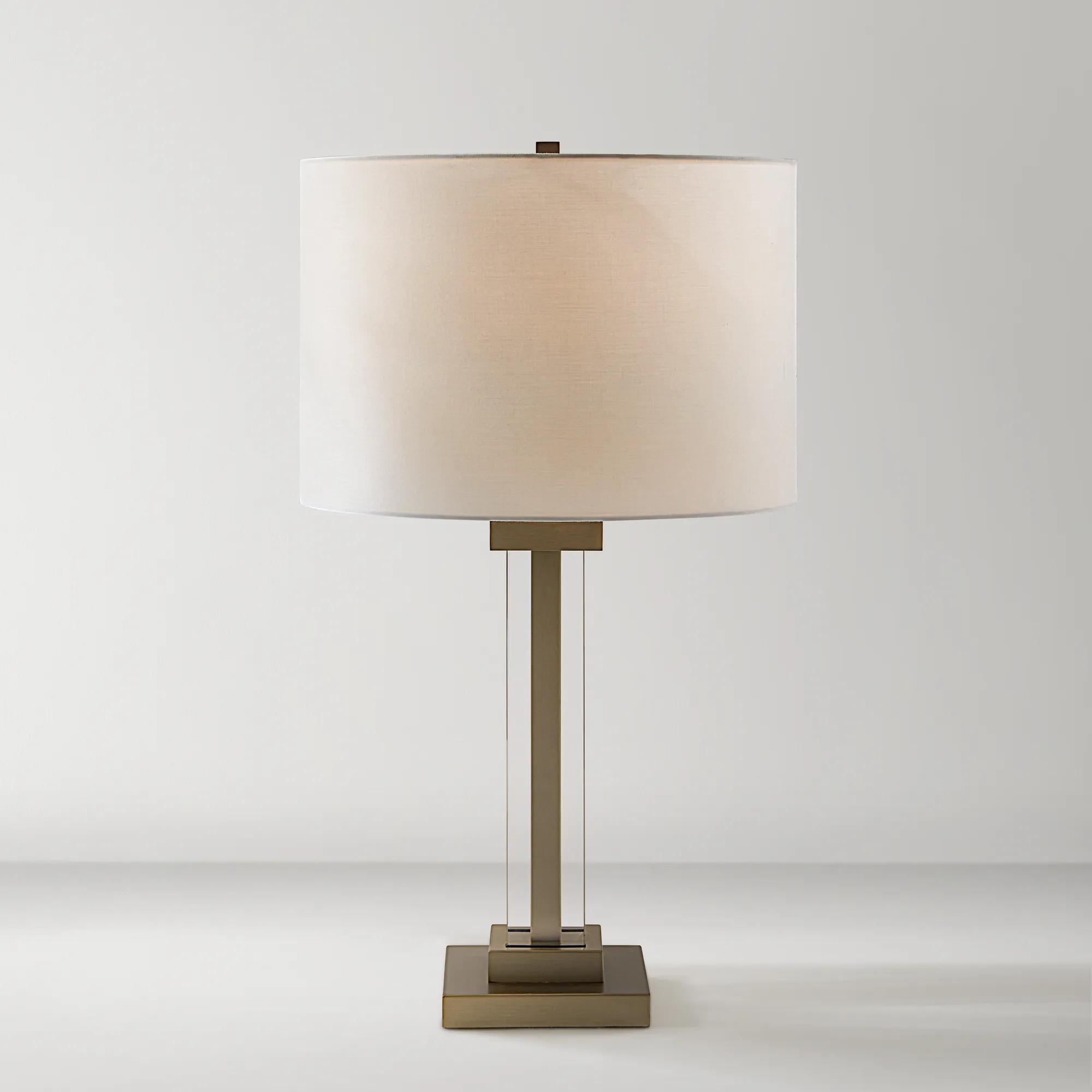
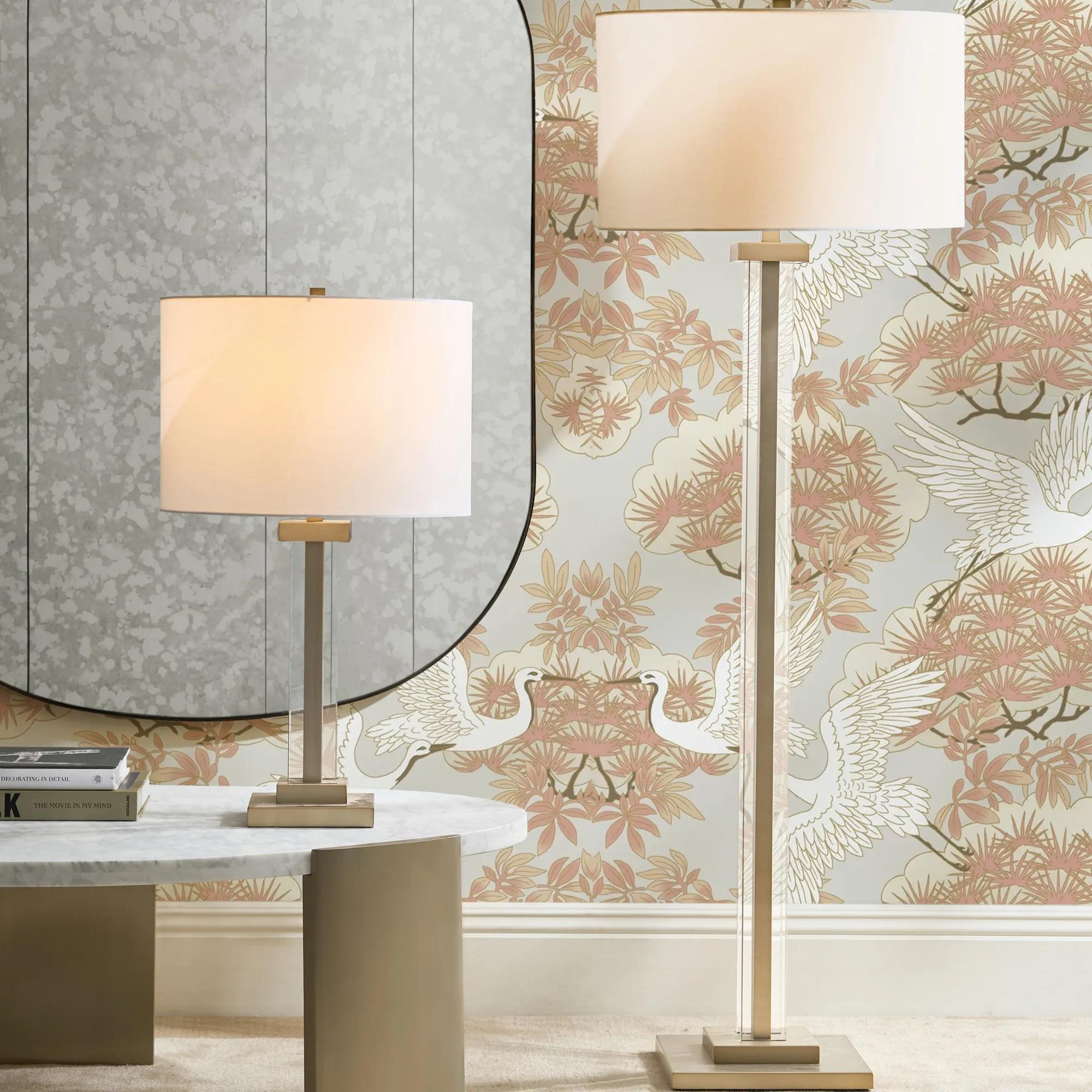 Soren Table Lamp$349
A clear glass and champagne metal lamp with a white cotton drum shade for elegant illumination.
Add To Cart -
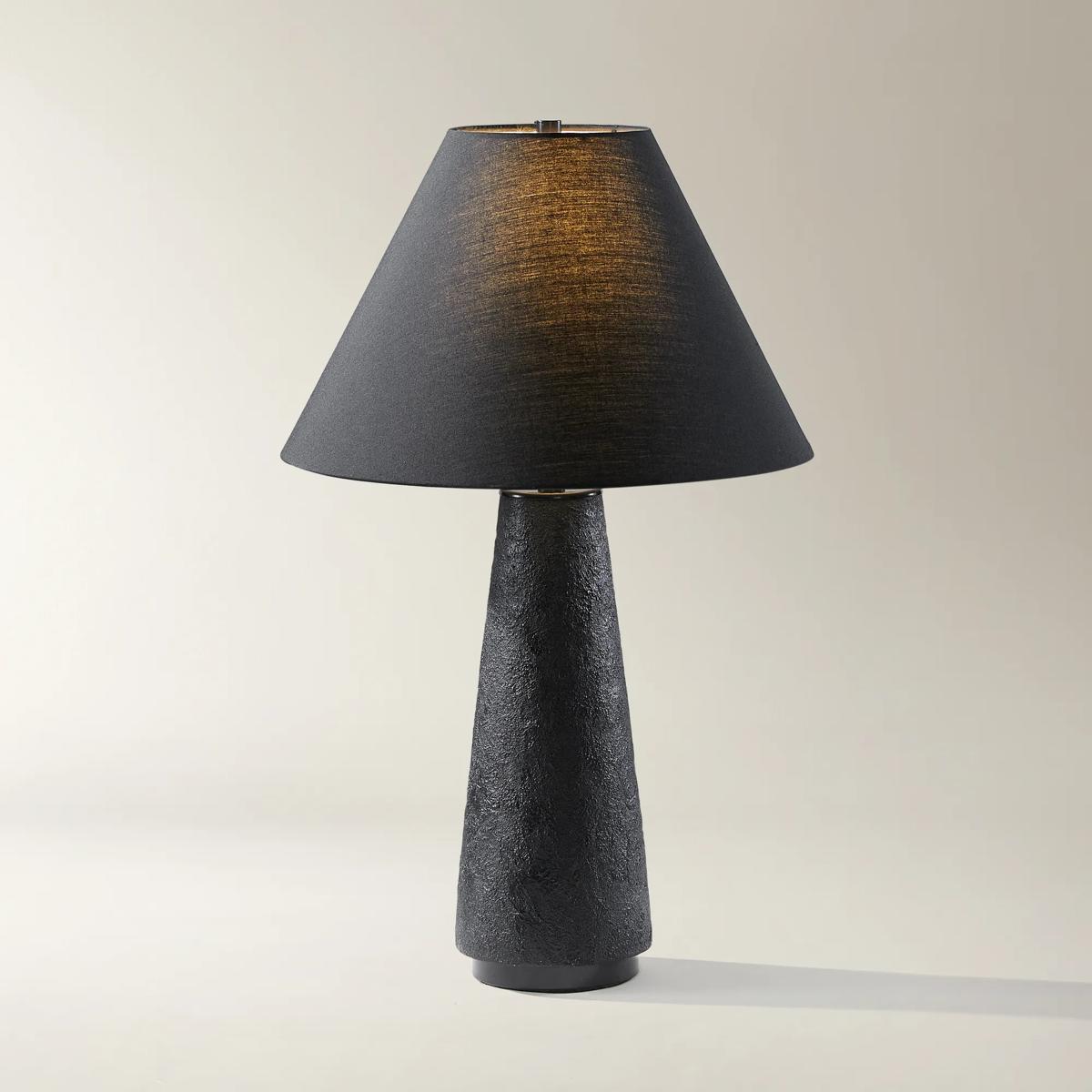 Beton Black Textured Concrete Table Lamp 25"$299
A sculptural table lamp featuring textured black concrete, matte black metal accents, and a black cotton shade.
Add To Cart -

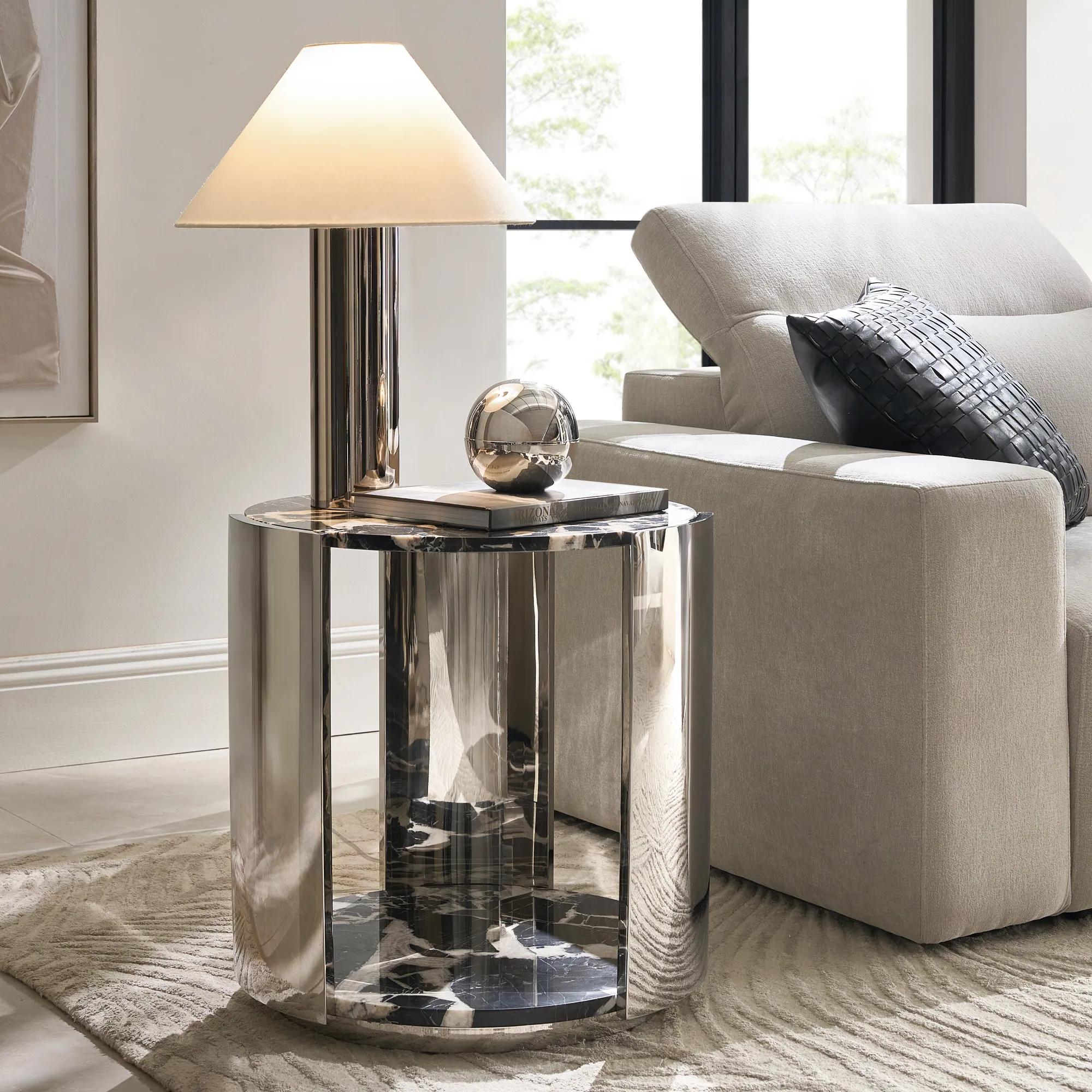 Tova Polished Nickel/White Table Lamp 20.5"$249
A polished nickel iron lamp with a white cotton tapered shade brings sleek, modern style to any room.
Add To Cart -
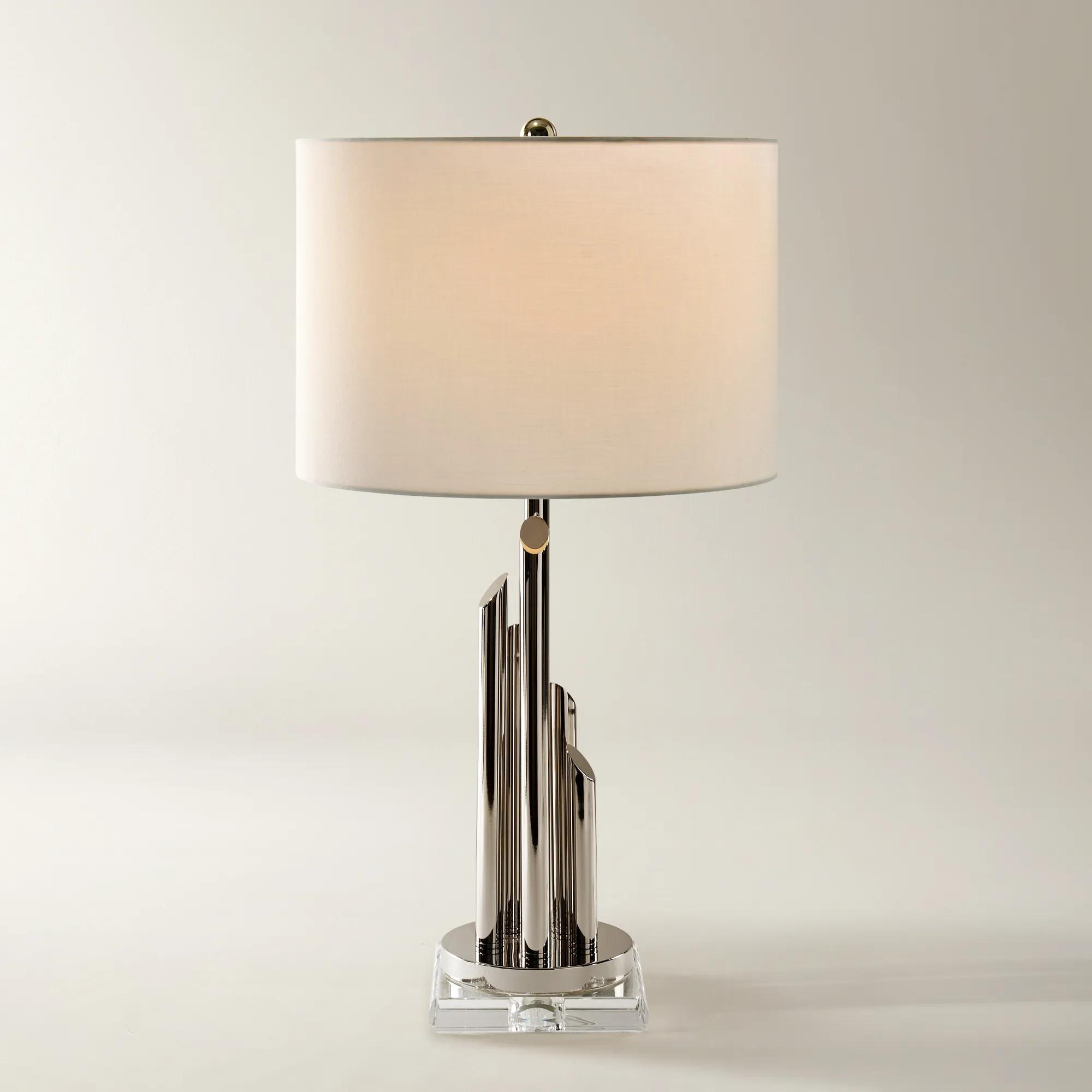
 Jagger Table Lamp$329
A modern table lamp featuring a polished nickel iron frame, clear crystal base, and white cotton drum shade.
Add To Cart -
 Blair Mouth Blown Tortoise Brown Glass Table Lamp 25"$229
A mouth-blown glass lamp in a brown tortoise finish with antique brass accents and an ivory linen shade.
Add To Cart -
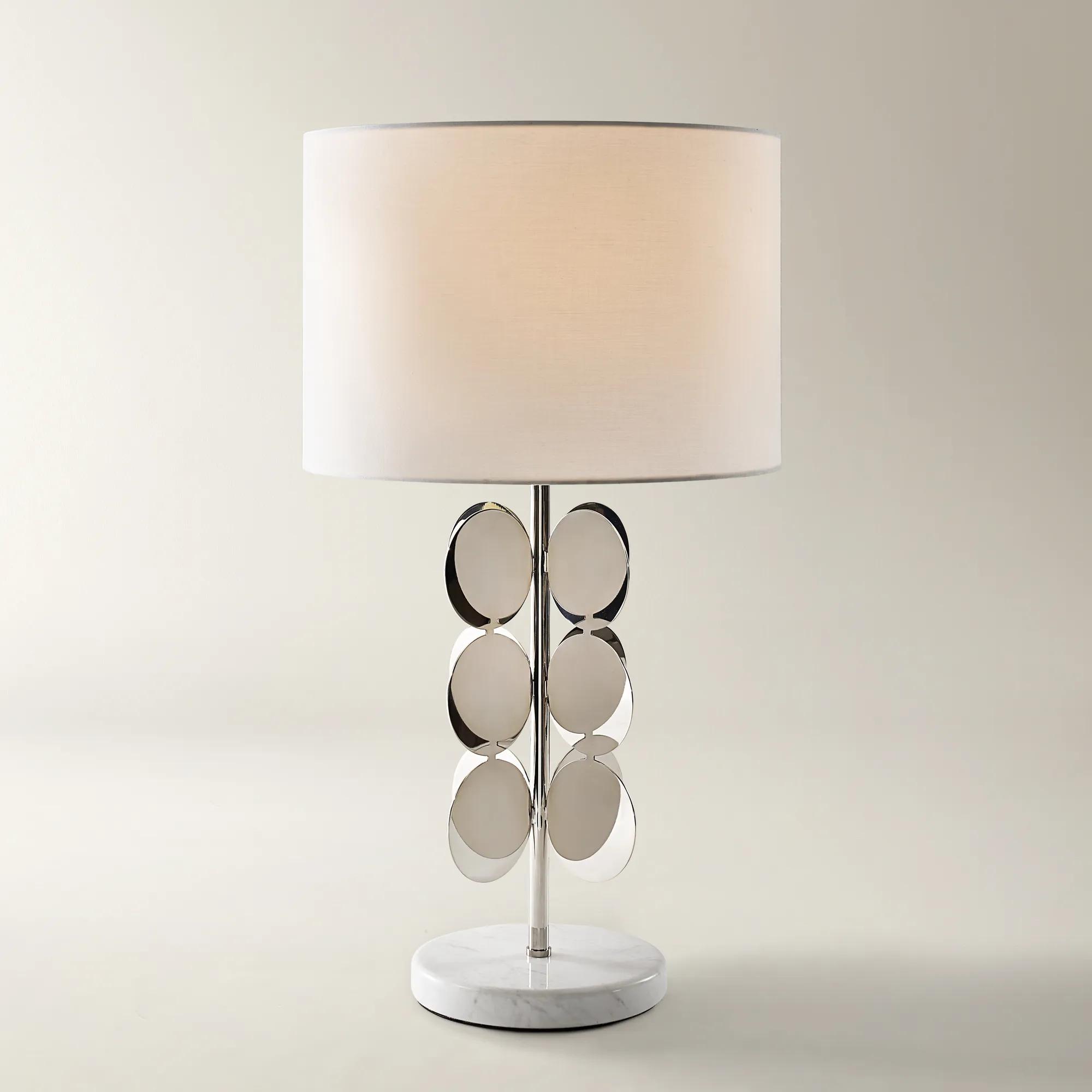 Orion Table Lamp$329
A polished nickel iron lamp with a white marble base and crisp white cotton drum shade.
Add To Cart -

 Blair Mouth Blown Sea Glass Blue Glass Table Lamp 25"$229
A mouth-blown glass lamp in soft blue sea glass with antique brass accents and an ivory linen shade.
Add To Cart -
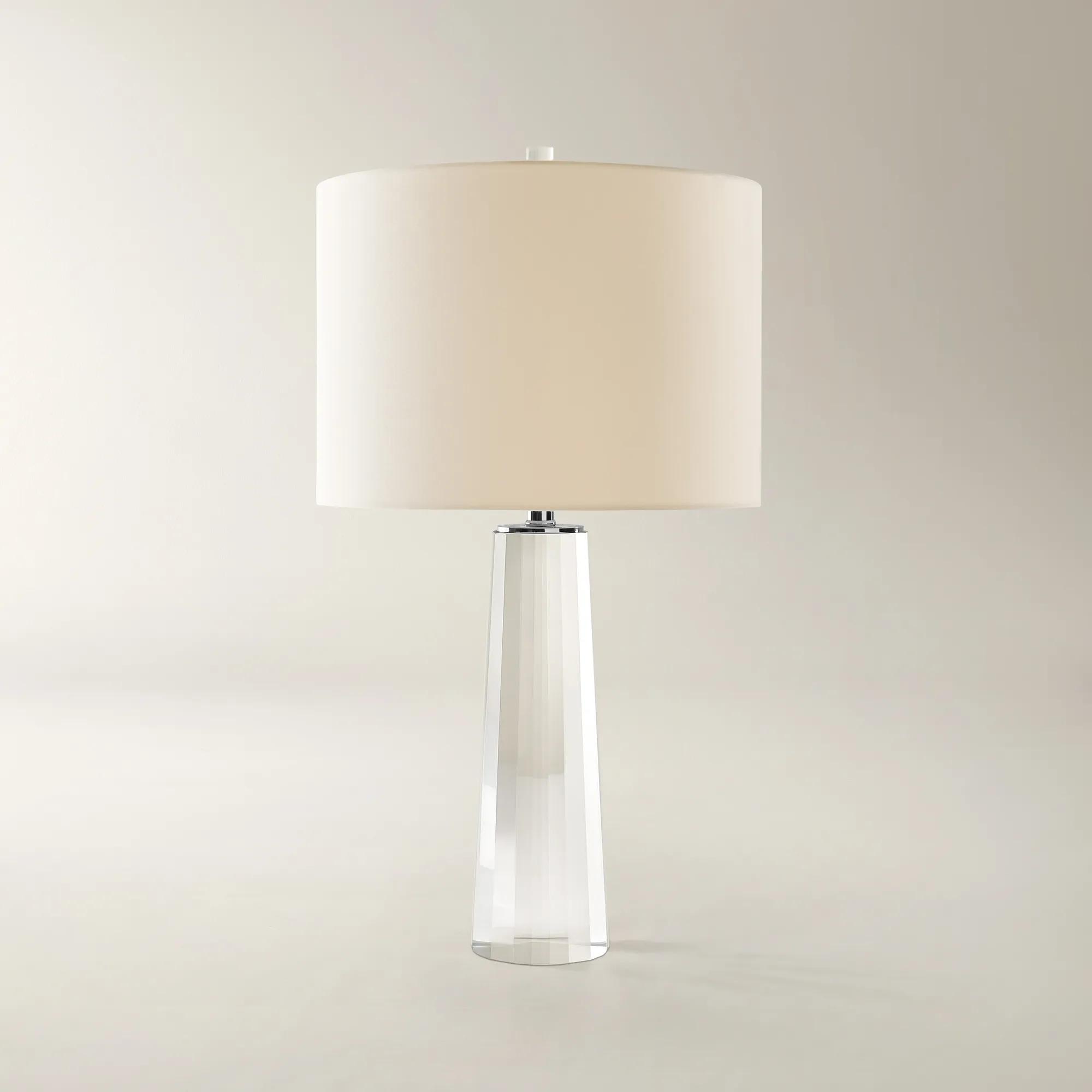
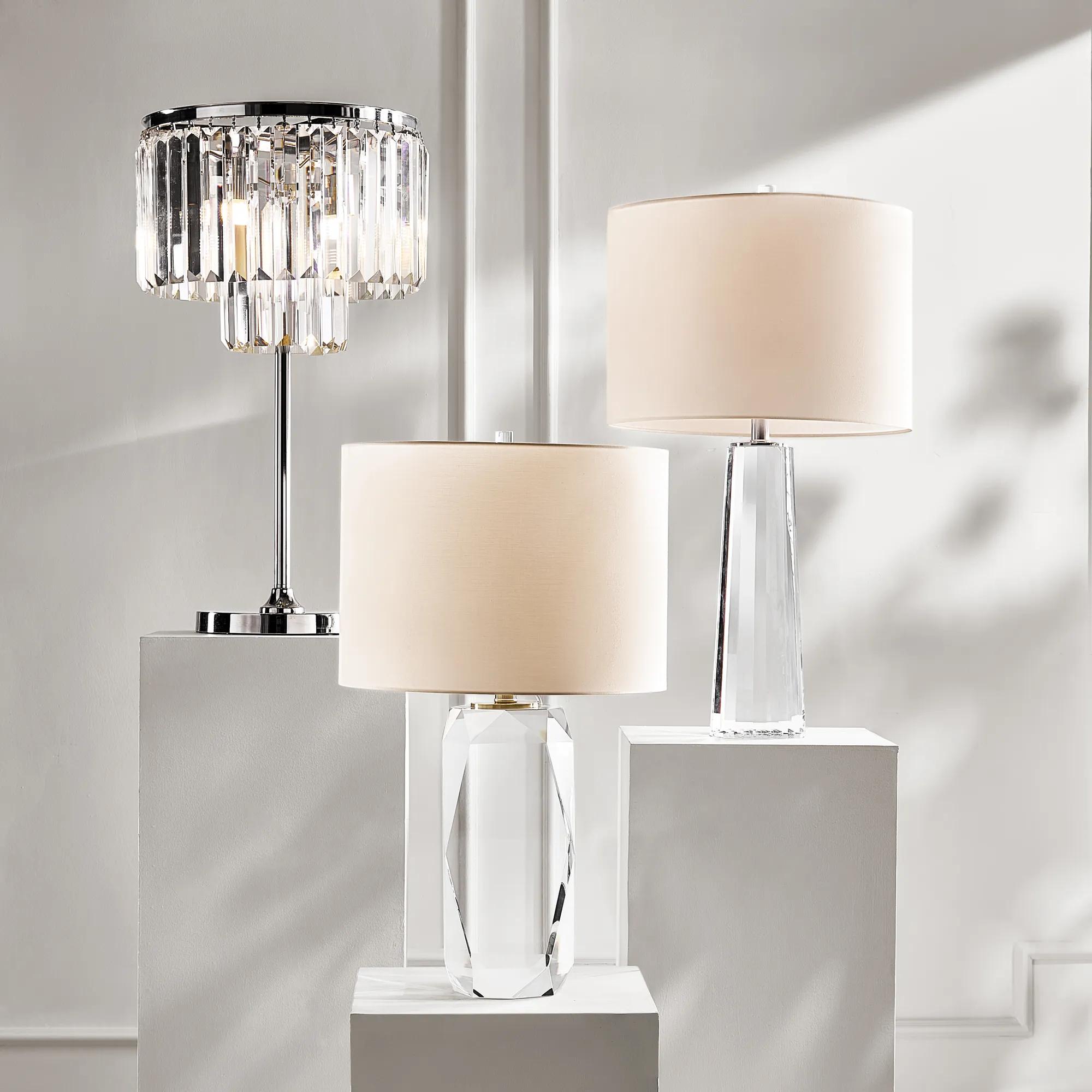 Sasha Faceted Clear K9 Crystal Table Lamp 28"$499
A refined table lamp featuring a clear crystal base, white drum shade, and polished nickel accents.
Add To Cart -
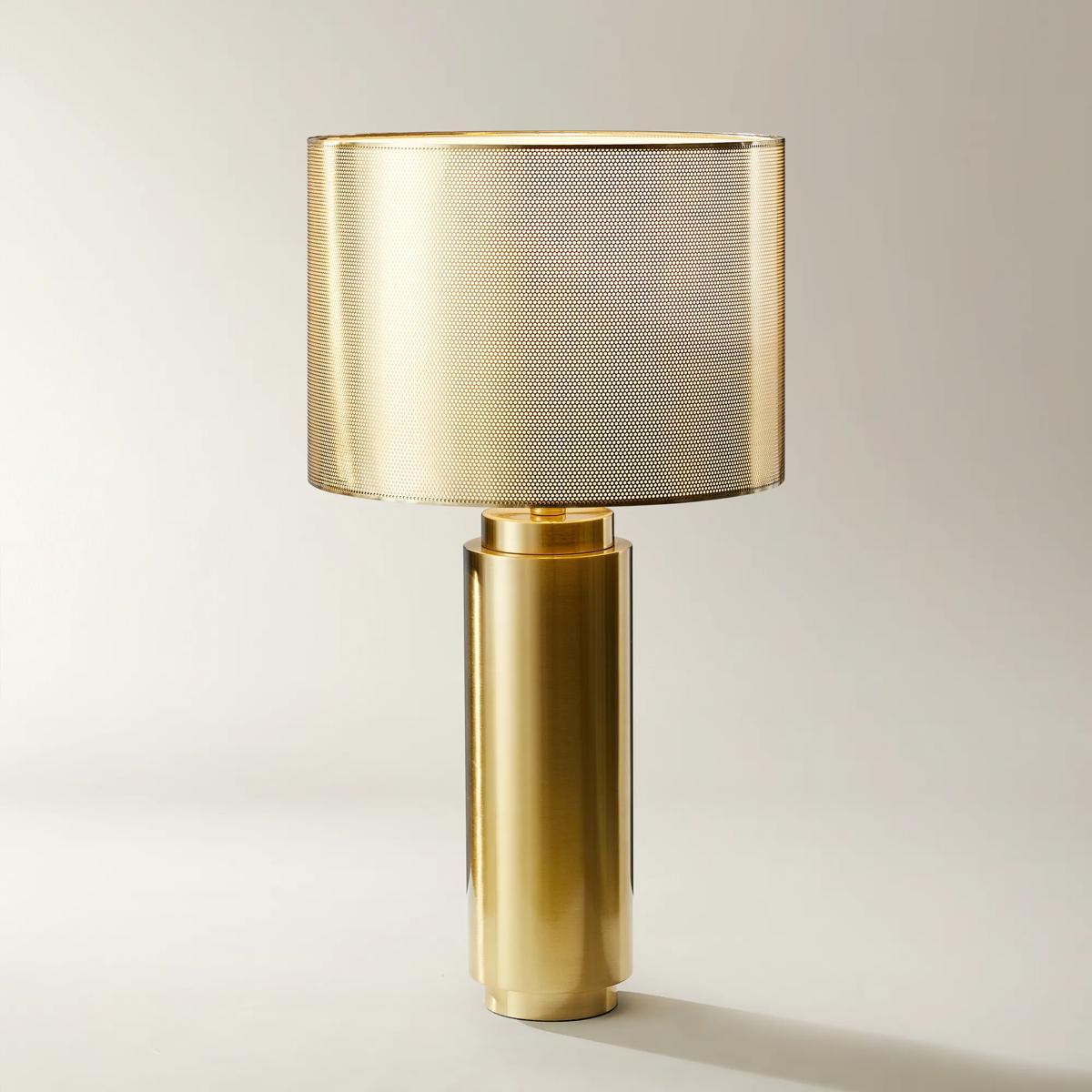
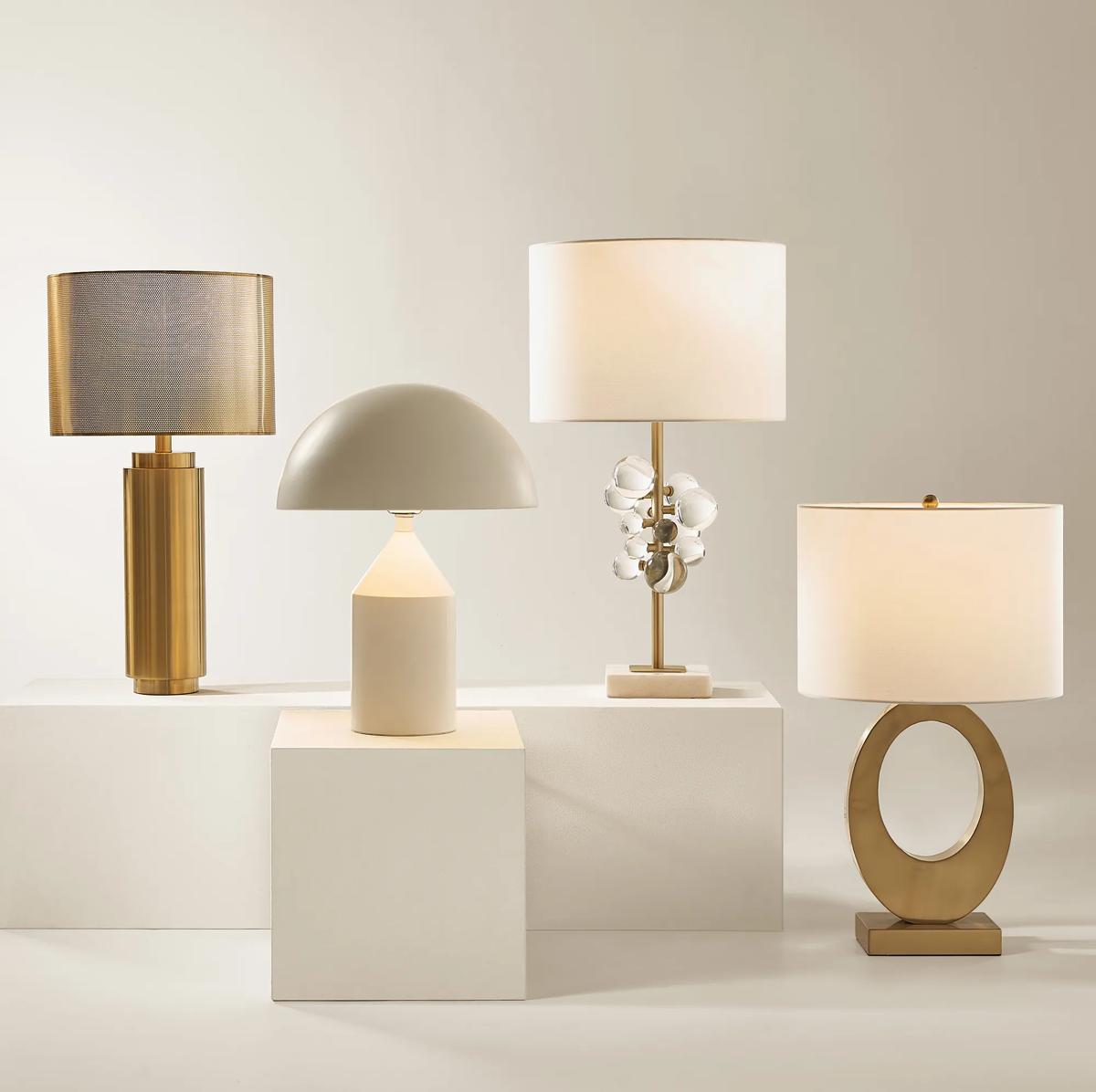 Sibyl Metal Aged Brass Finish Table Lamp 26"$399
A modern table lamp featuring an aged brass iron base and a perforated metal-over-cotton shade.
Add To Cart -
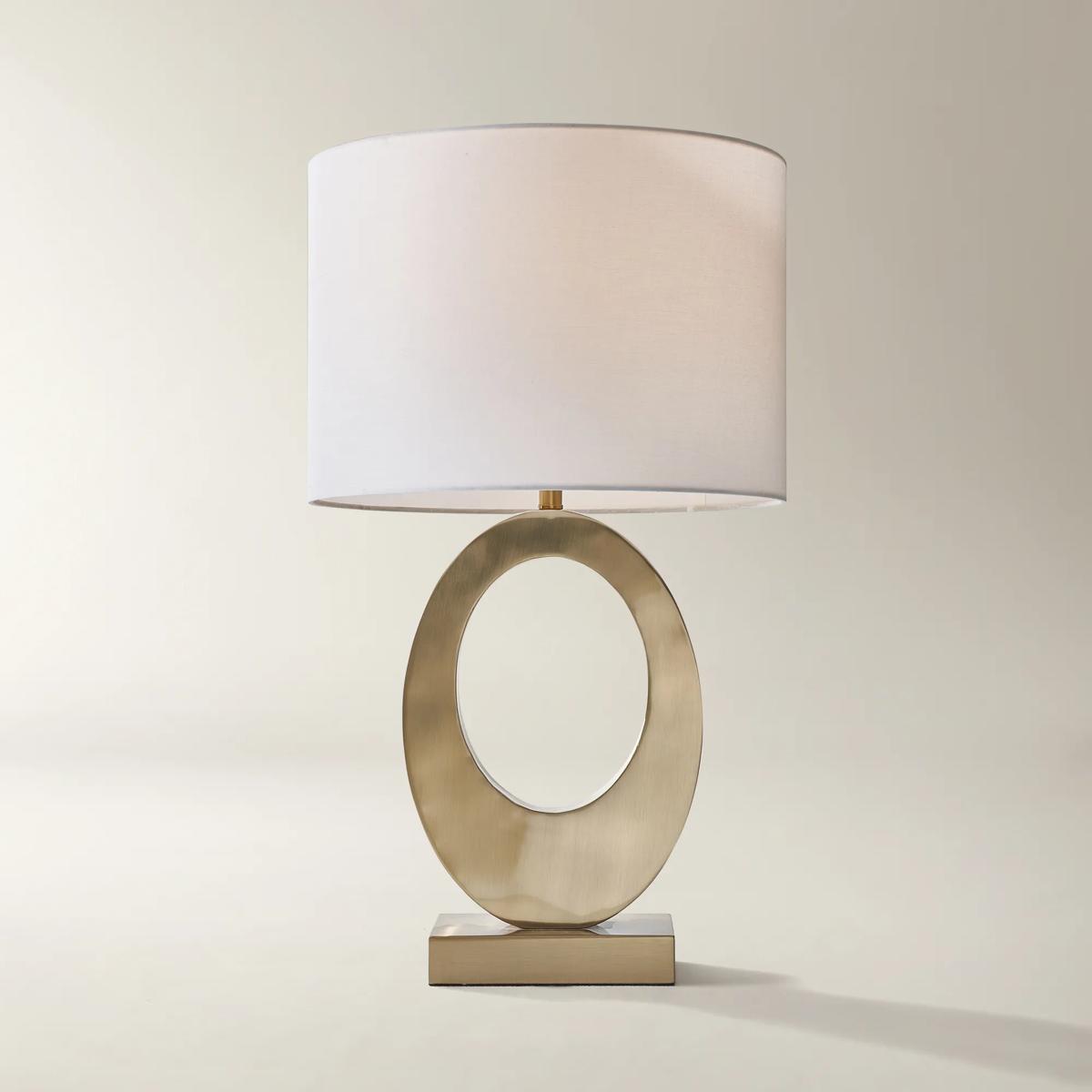 Loop Champagne Gold Metal Table Lamp 26.25"$399
A sculptural iron lamp in champagne gold with a beige cotton drum shade for warm, diffused lighting.
Add To Cart -
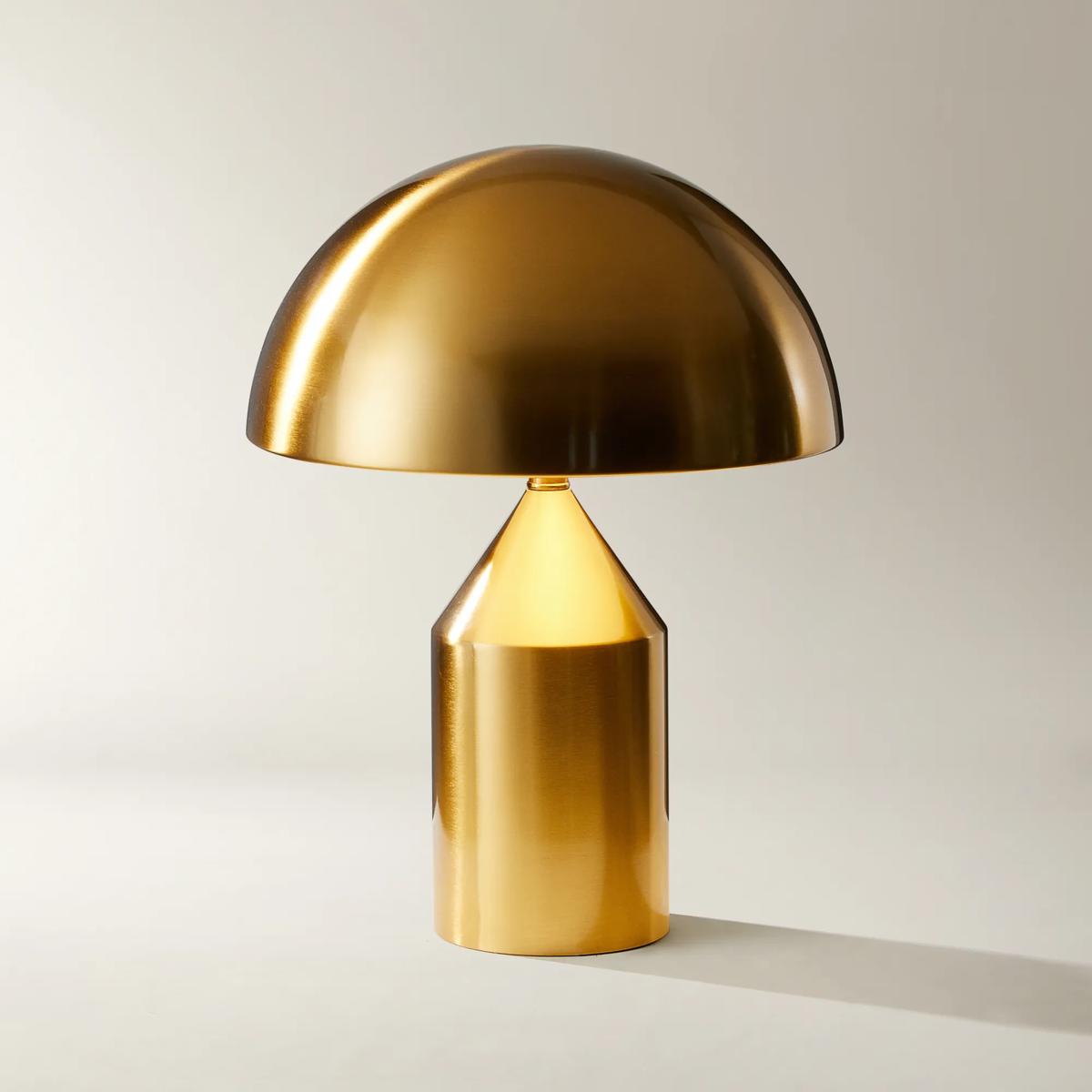 Arlen Gold Metal Table Lamp 19"$249
A modern iron table lamp in brushed gold with a bold dome shade and clean cylindrical base.
Add To Cart -

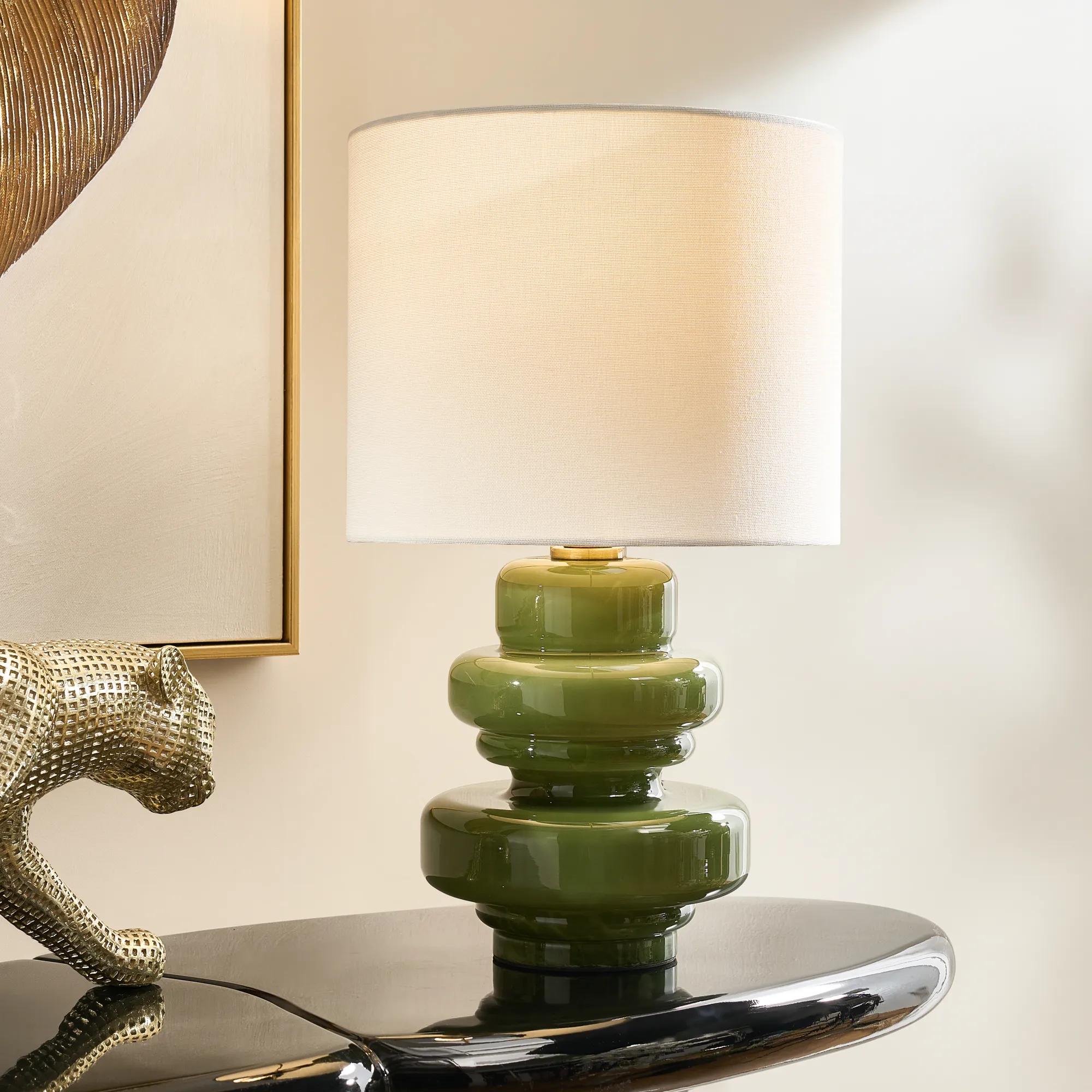 Edin Mouth Blown Pistachio Green Glass Table Lamp 17.5"$99
A sculptural table lamp featuring mouth-blown pistachio green glass and brushed nickel accents with an ivory linen shade.
Add To Cart -
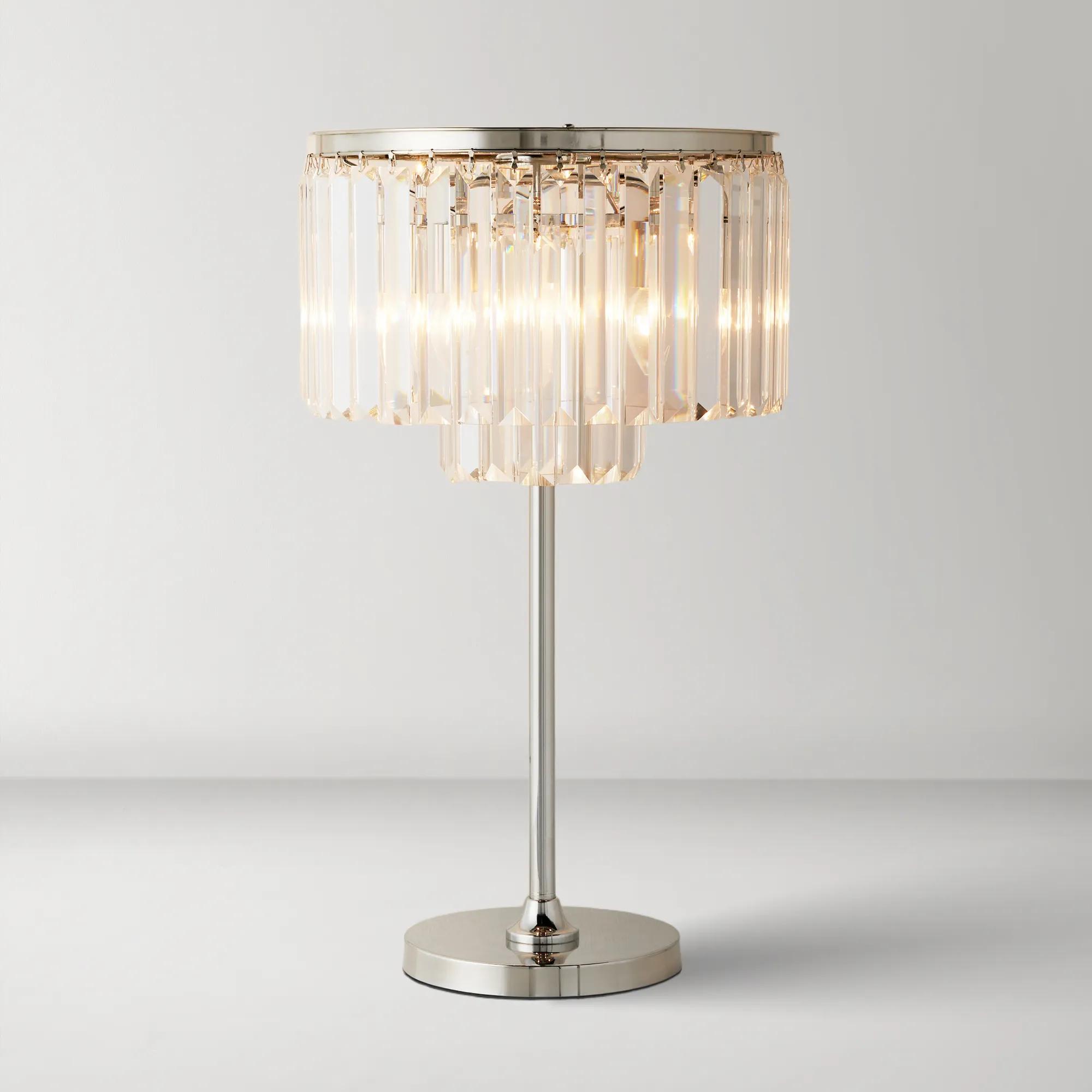
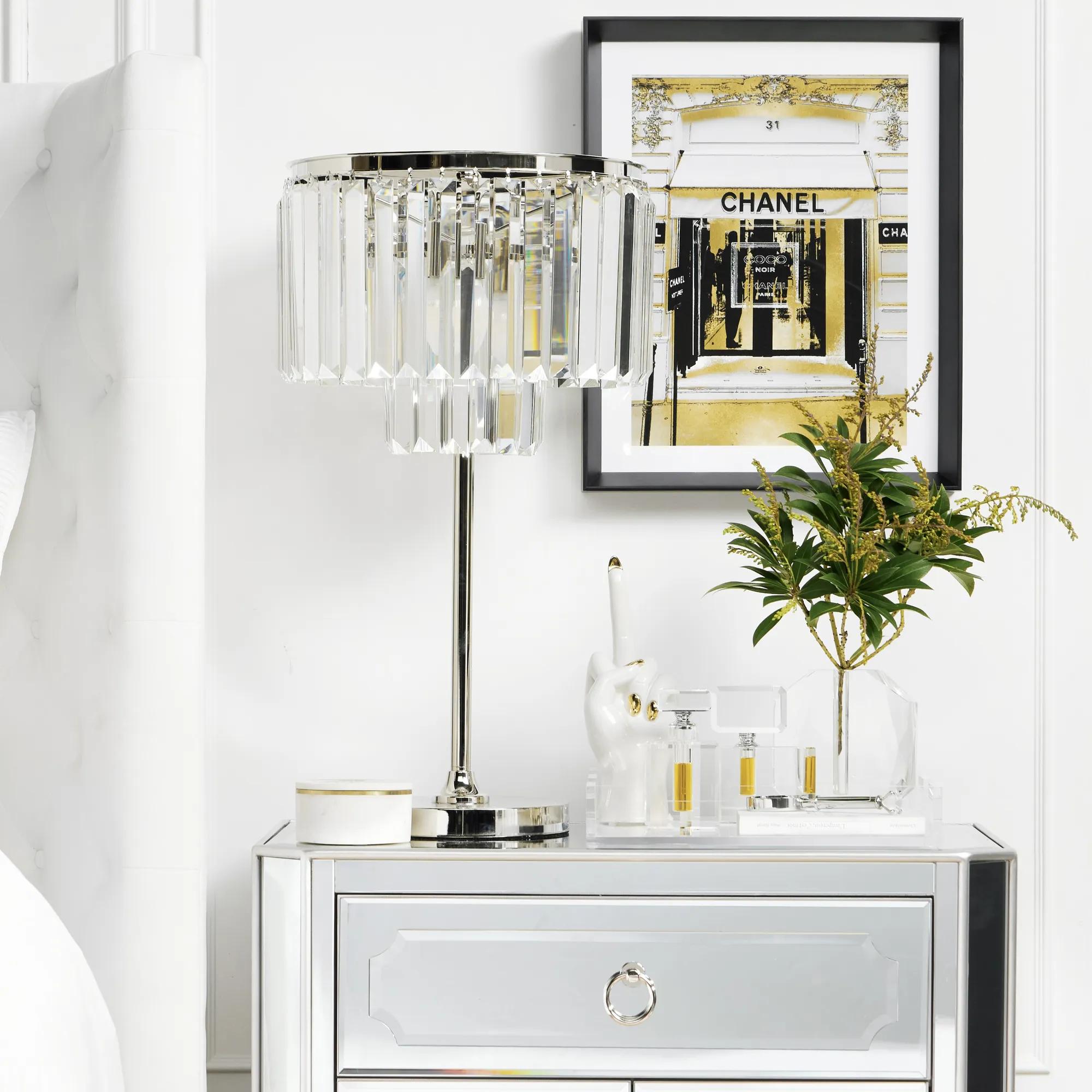 Luxe Table Lamp$499
A sophisticated table lamp featuring faceted ocular glass prisms and a nickel-plated iron frame.
Add To Cart -

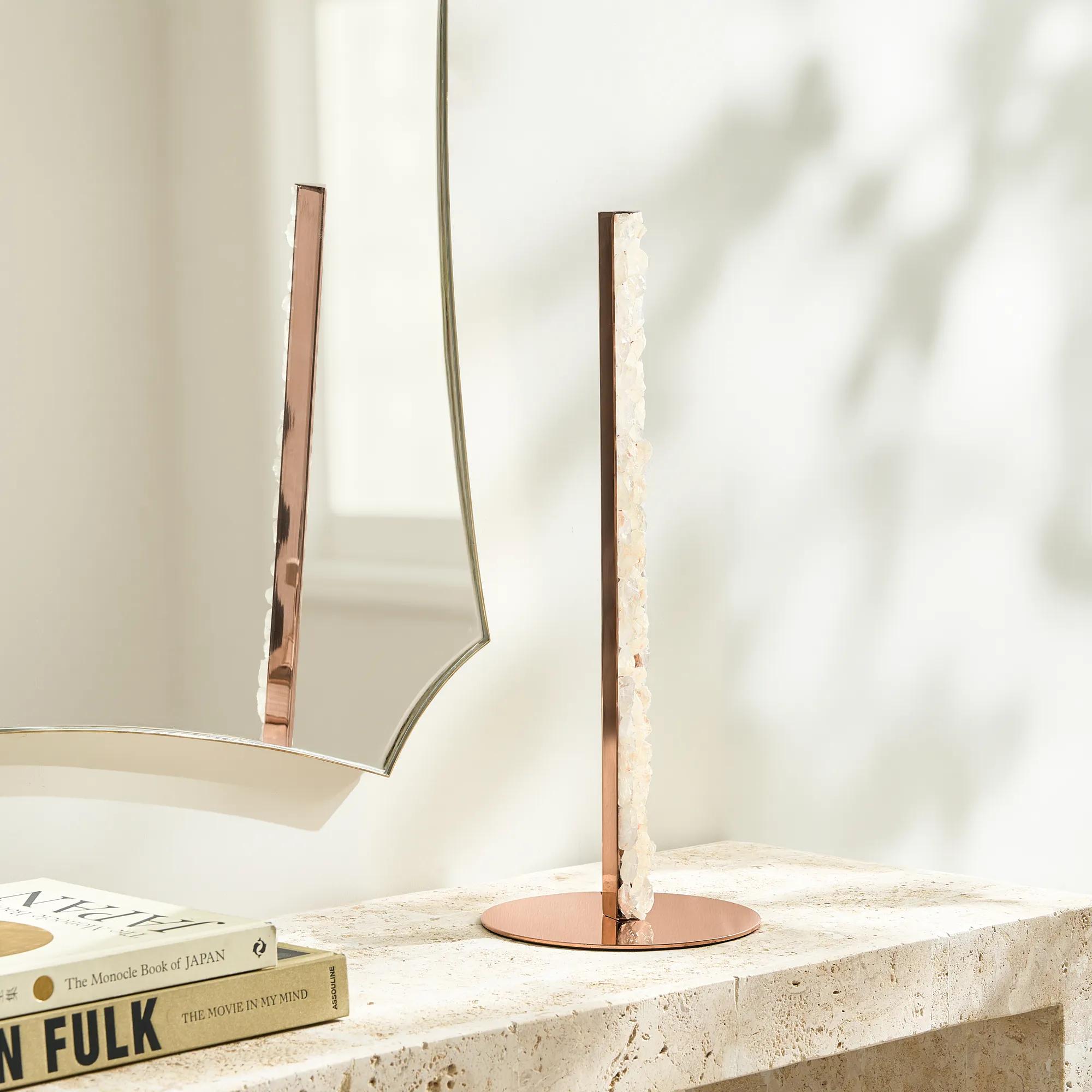 Demi LED Natural Quartz Crystal Table Lamp 19.75"$229
A sculptural LED table lamp featuring natural quartz crystal for a luminous, modern accent.
Add To Cart -
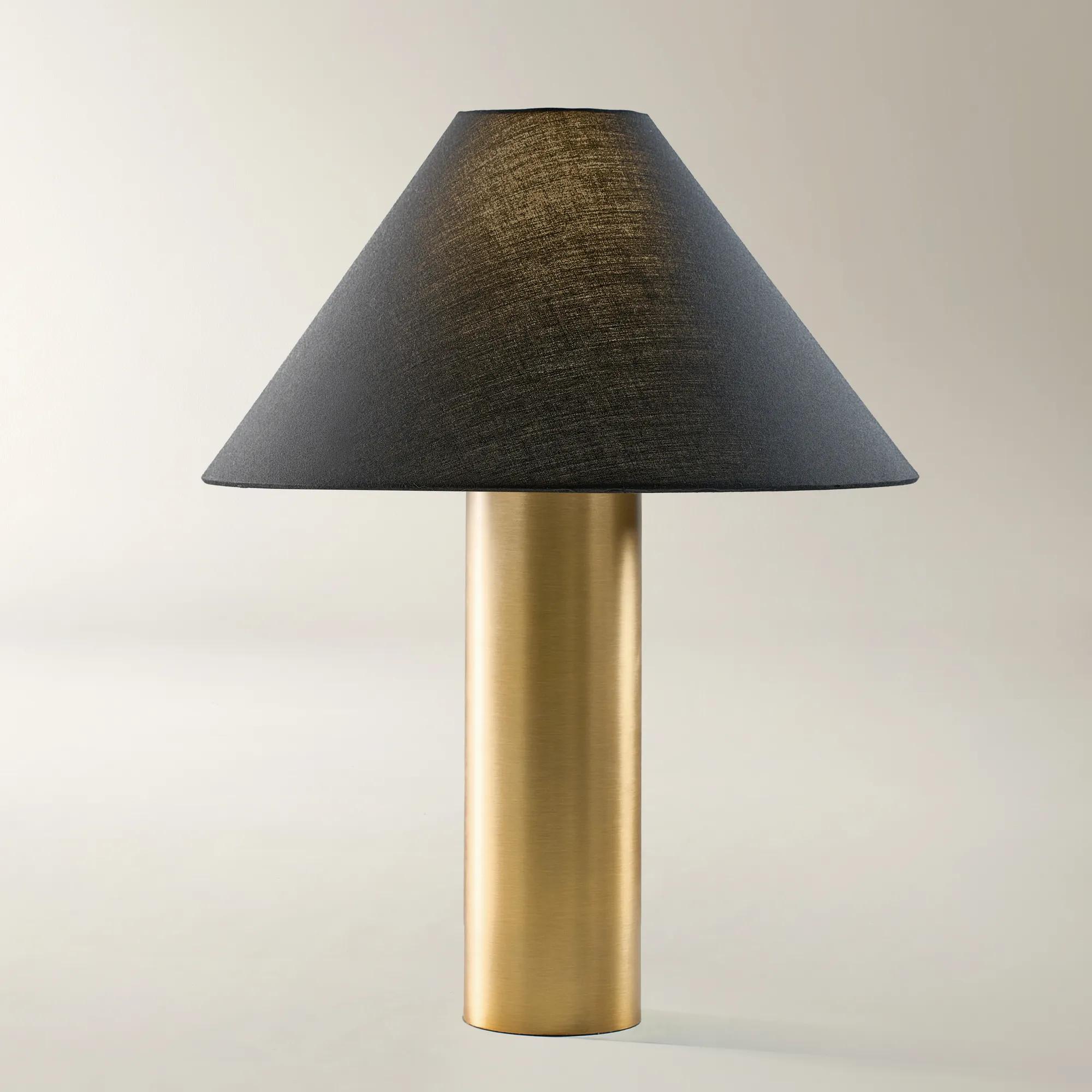 Tova Brushed Brass/Black Table Lamp 20.5"$299
A sculptural brushed brass iron base pairs with a tailored black cotton shade for bold, modern contrast.
Add To Cart -
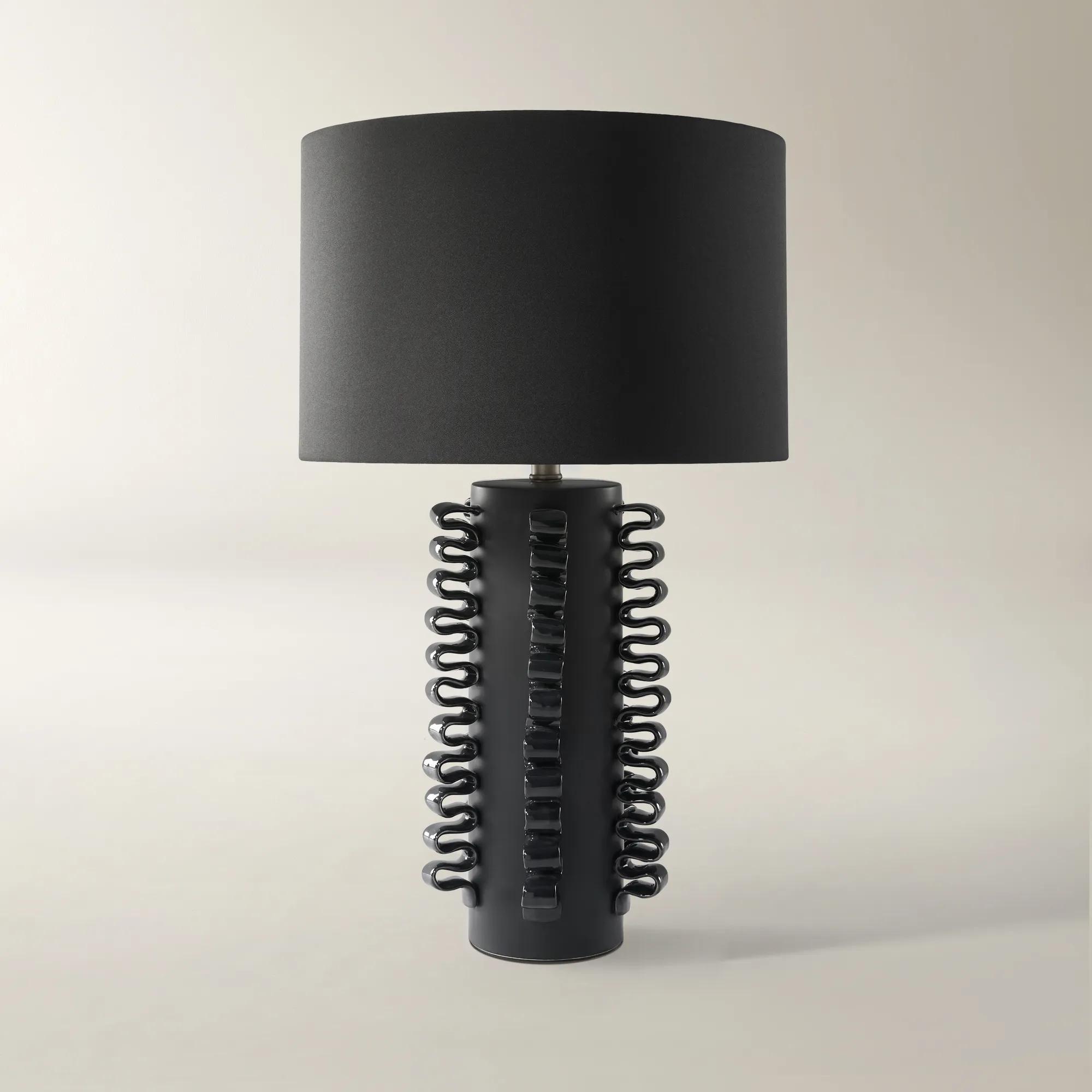
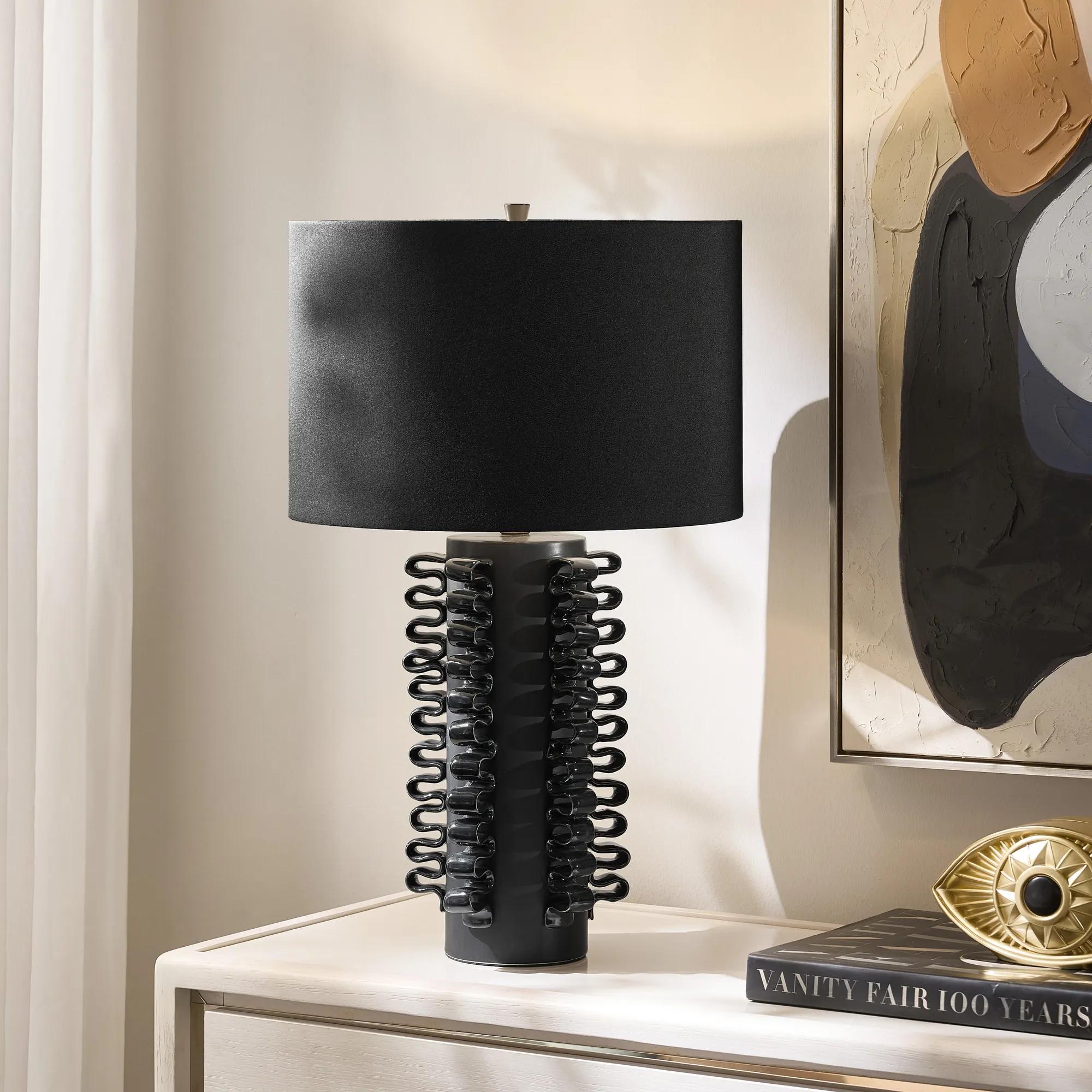 Anello Ruffle Black Ceramic Table Lamp 27"$249
A sculptural matte black ceramic lamp with glazed ribbon accents and a matching black cotton shade.
Add To Cart -
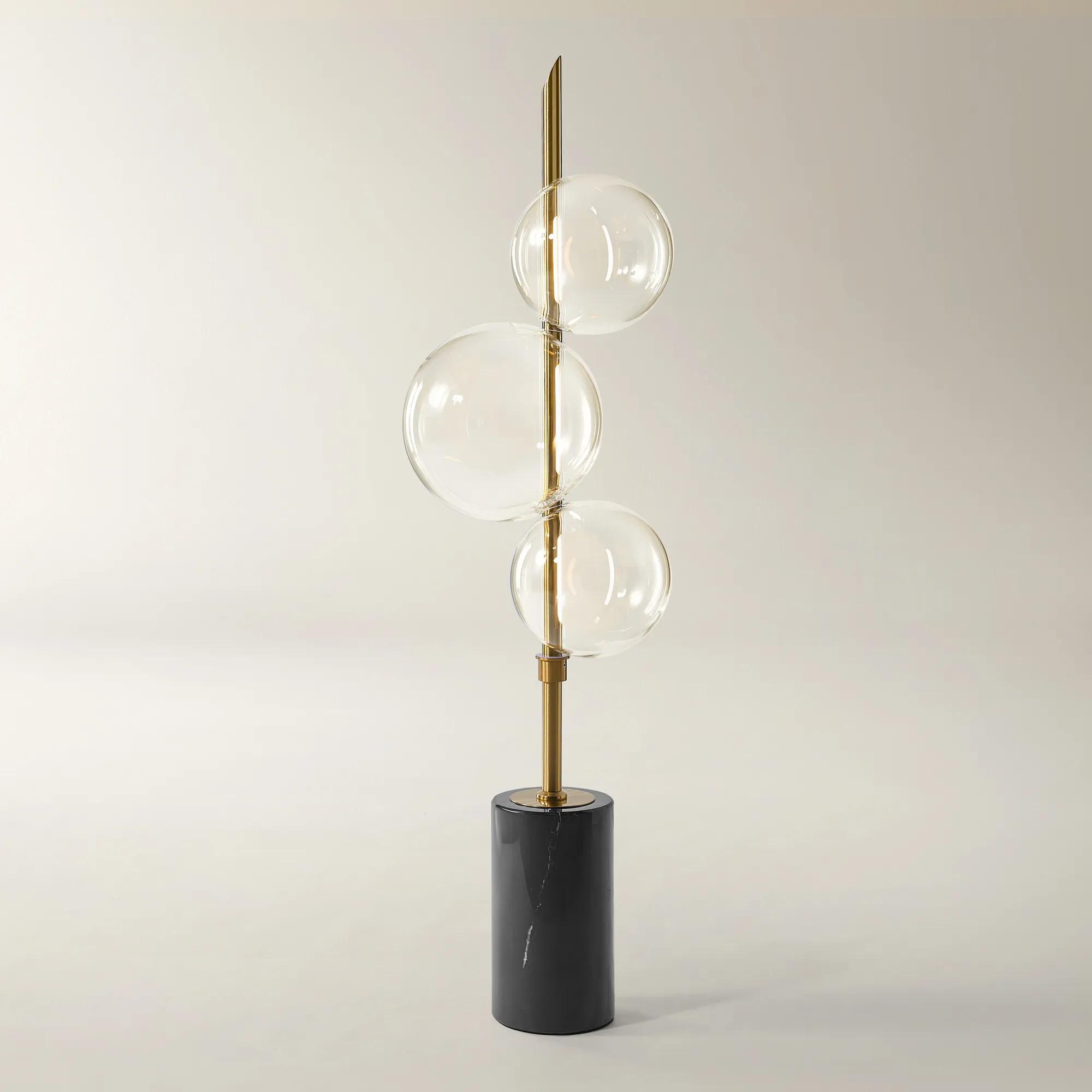
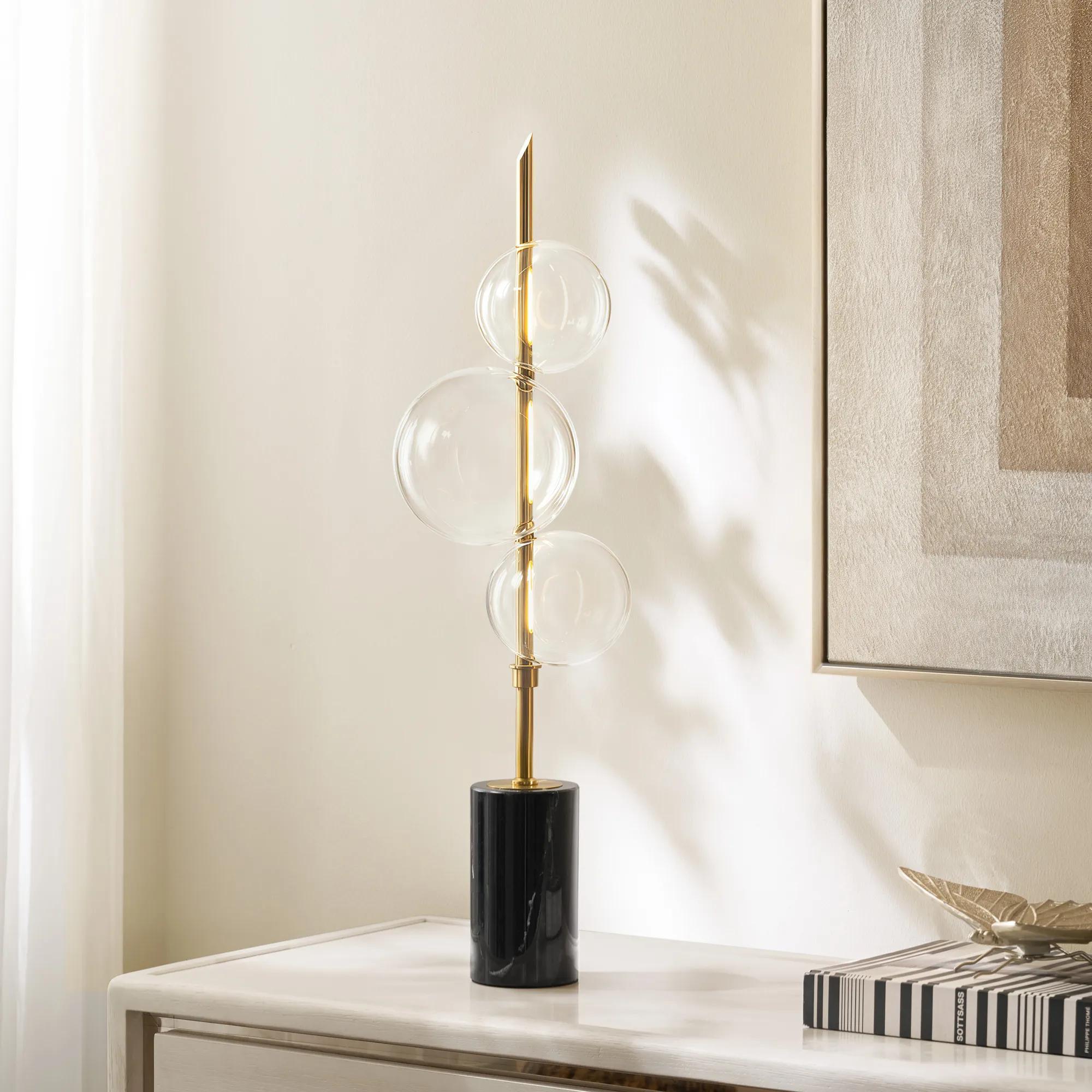 Bolla LED Hand-Blown Glass Bubble And Stone Table Lamp 31.5"$249
A sculptural table lamp featuring clear hand-blown glass bubbles, brass and stone accents, and integrated LED lighting.
Add To Cart

Minimalist Table Lamps
Minimalist table lamps are more than mere sources of light—they are sculptural statements that bring refined serenity to any space. Each piece distills design down to its purest essence, casting a luminous glow while exuding quiet confidence. With streamlined silhouettes and subtle artistry, these lamps invite a sense of calm sophistication, transforming side tables and consoles into curated moments. For those who believe less is infinitely more, minimalist table lamps offer an elevated approach to illumination—where every line, finish, and detail becomes an intentional expression of modern elegance.
Minimalist table lamps bring sculptural presence and purposeful illumination to a room through clean silhouettes, considered proportions, and a restrained use of detail. Their defining qualities are simple forms, uncluttered profiles, and materials that make an impression without elaborate ornamentation. That restraint can feel remarkably luxurious: a slender metallic stem catches the light beside sumptuous upholstery, a rounded ceramic base introduces softness against angular furniture, and a frosted glass shade creates a luminous focal point on a dark console. These lamps suit interiors where each element has room to express itself, whether the setting is a tailored bedroom, an art-filled living room, or a polished home office. Minimalist lighting need not mean an entirely spare room. A quiet silhouette can balance richly patterned textiles, dramatic artwork, or a statement mirror, allowing the surrounding composition to feel intentional rather than crowded. Materials shape that effect as much as form. Brushed metal lends a subtle sheen, polished finishes deliver a more reflective accent, and matte ceramic emphasizes contour and texture. Clear glass can make a base feel visually lighter, while translucent glass softens the appearance of the light source. Natural stone brings weight and distinctive veining; wood introduces grain and an organic counterpoint to sleek surfaces. Each material also affects how the lamp occupies its setting. A substantial stone base creates a grounded impression on an airy table, while a narrow metal profile leaves more of a decorative tabletop visible. Shade shape contributes another layer of character, from the crisp geometry of a drum to the gently expanding outline of a tapered shade. Neutral colors keep attention on these details, especially when the finish contrasts with the furniture beneath it. Ivory ceramic against dark wood, black metal beside pale upholstery, or warm metallic accents on glass can create drama through contrast alone. The result is lighting that supports the room’s larger story while remaining distinctive enough to hold its own.
The most successful minimalist table lamps feel proportionate to both the surface they occupy and the activities around them. On a bedside table, the base and shade should leave comfortable space for a book, a glass of water, and other essentials without pushing the lamp close to the edge. The shade’s lower edge generally works best near seated eye level, helping shield the bulb from direct view; the ideal height depends on the bed, table, and person using the light. Beside a sofa, a lamp should illuminate the nearby seating area rather than simply brighten an unused corner. A broader shade may create a generous pool of light for conversation, while a more focused design can support reading when positioned appropriately. On a desk, a slender profile preserves working space, but the direction of light matters just as much as the footprint. Light placed opposite the dominant hand can help reduce shadows across handwritten notes, and thoughtful positioning keeps reflections off a computer screen. Measuring the full shade width, not only the base, helps establish whether a lamp will fit beneath shelving or beside framed artwork. A cord also needs a discreet, accessible route to an outlet without stretching across a walkway. Beyond dimensions, brightness and light quality determine how the lamp feels in use. Lumens describe light output, while color temperature describes its warmer or cooler appearance. For restful bedrooms and inviting living spaces, approximately 2700 to 3000 Kelvin often creates a warm, welcoming glow; task areas may benefit from a more neutral light, depending on personal preference. A shaded lamp with a compatible LED bulb can provide efficient illumination, but bulb shape, socket type, fixture ratings, and any dimming requirements must align with the manufacturer’s specifications. Fabric and frosted shades typically diffuse light, while opaque shades often direct it upward or downward, depending on their construction. Dimmable designs, when paired with compatible bulbs and controls, offer flexibility between focused activity and a softer atmosphere. Layered with ceiling fixtures or wall lighting, a table lamp gives the room depth, allowing beautiful objects and intimate seating areas to emerge from the broader illumination.
Long-term appeal comes from the relationship between a lamp’s construction, finish, and everyday use. A stable base is particularly valuable on frequently used bedside tables or in homes where surfaces receive regular activity, while secure shade fittings and a well-positioned switch make the lamp more comfortable to use. Compact silhouettes can suit smaller rooms beautifully, provided the design still delivers the necessary light; a small footprint alone does not guarantee useful illumination. For someone who reads in bed, switch placement may be more important than an especially dramatic shape. For a living room arranged around conversation and art, the lamp’s reflected glow and visual balance may take priority. Care should reflect the materials involved. Regular dusting with a soft, dry cloth helps preserve most bases, and lamps should be switched off, unplugged, and allowed to cool before cleaning. Metal finishes can be damaged by abrasive products, while porous stone, wood, and some ceramics may require specific care to avoid staining or surface changes. Glass shades need careful handling, and fabric shades benefit from gentle dust removal using a method approved by the manufacturer. Cleaning instructions should always take precedence, especially for specialty finishes or integrated electrical components. Where bulbs are replaceable, accessible fittings make routine maintenance easier; integrated LED designs call for attention to the stated lifespan, warranty, and service guidance. A cohesive palette also helps a lamp remain relevant as furnishings evolve. For interiors shaped by ivory, taupe, gray, and softly reflective finishes, Modern Neutral Table Lamps offer a related direction with an emphasis on tonal harmony. Minimalist table lamps can also make thoughtful housewarming or wedding gifts when the recipient’s style, available surface space, and lighting needs are understood. A restrained form leaves room for personal expression, whether it accompanies collected books, a favorite photograph, or a sculptural vase. Chosen with attention to scale, material, and light, the lamp becomes more than an accessory: it lends definition to a corner, intimacy to a room, and a deliberate finishing gesture to the home.
FAQs
A minimalist table lamp is characterized by clean lines, uncluttered forms, and a focus on essential shapes and materials. These lamps often feature neutral color palettes, subtle textures, and thoughtfully selected finishes such as matte metal, smooth ceramic, or frosted glass. The design prioritizes simplicity and elegance, allowing the lamp to blend seamlessly into a variety of sophisticated interiors.
Minimalist table lamps create an atmosphere of calm and intentionality, offering gentle illumination that highlights the beauty of your space without overwhelming it. Whether placed in a living room, bedroom, or study, these lamps set a serene mood, accentuate architectural features, and provide a refined touch that elevates everyday moments into something special.
Absolutely. The understated elegance of minimalist table lamps allows them to act as a harmonious bridge between modern and traditional styles. Their versatile design complements contemporary spaces while also providing a refreshing contrast in more classic interiors, making them an inspired choice for a wide range of decorating sensibilities.
Minimalist lamps make exceptional gifts because they offer both beauty and utility, suiting a variety of personal tastes and home aesthetics. Their timeless design ensures they remain relevant as decor trends evolve, while their function makes them a cherished addition to any room—ideal for housewarmings, weddings, or celebrating new beginnings.
Styling minimalist table lamps is about creating balance and contrast. Pair them with bold artwork or rich textiles to let their simplicity shine, or use them alongside other minimalist pieces for a cohesive, serene look. Consider layering with different textures, such as a plush throw or a sleek tray, to add depth and dimension to your vignette.