Master Bedroom Organization Ideas
Master Bedroom Organization Ideas
-
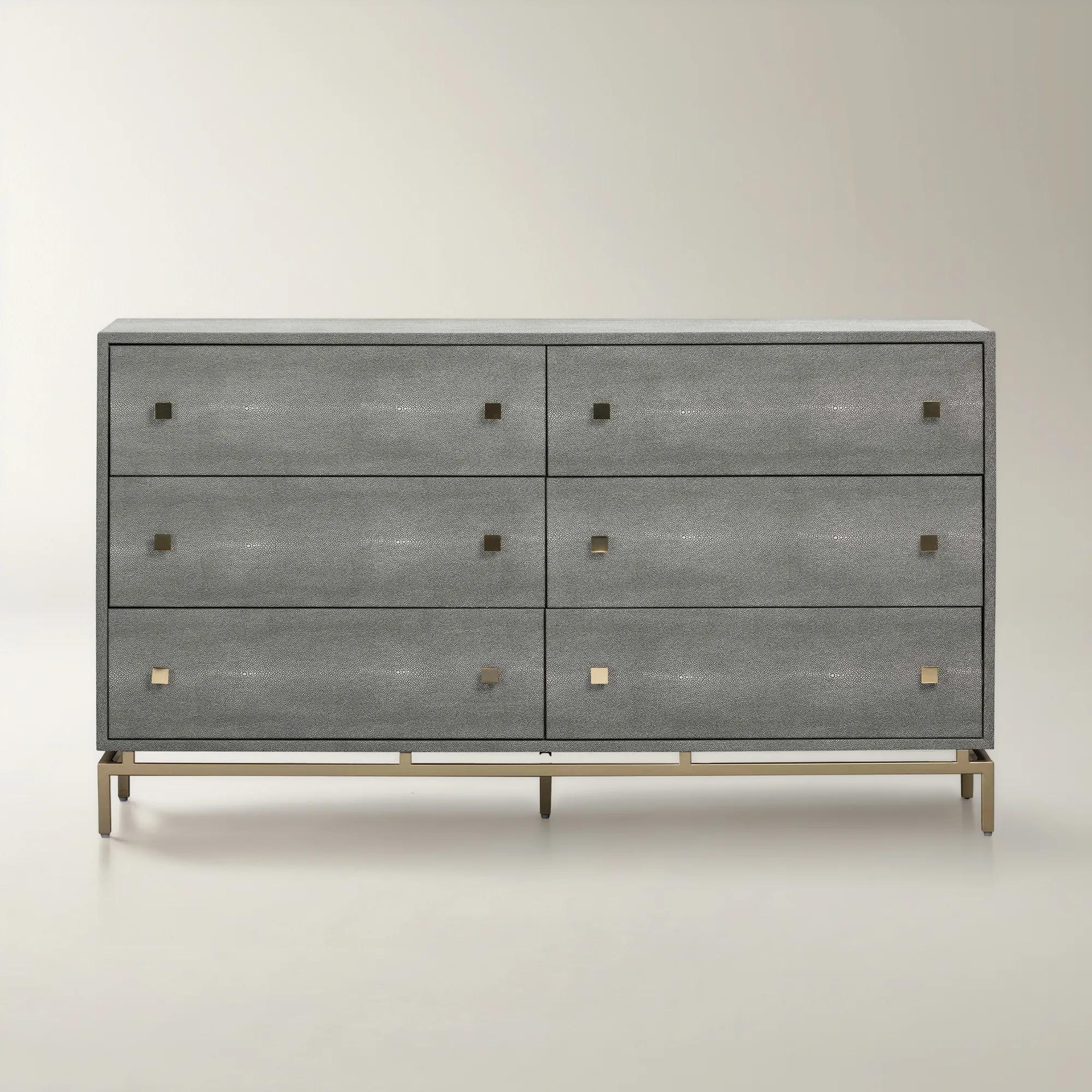
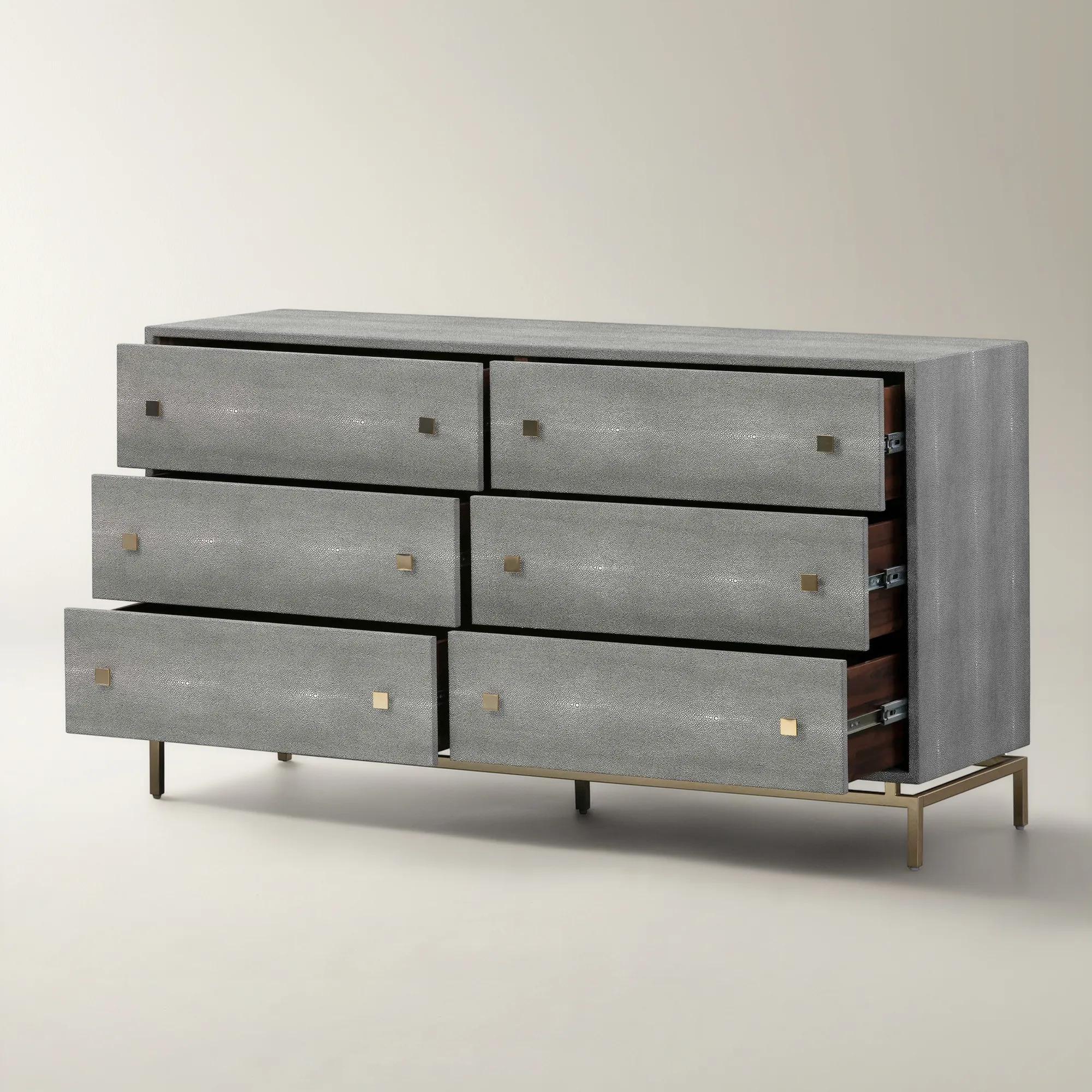 Misha Grey Shagreen 6-Drawer Dresser (57")$2249
A modern dresser featuring faux shagreen texture, brass-finished base, and six drawers with cherry wood interiors.
Add To Cart -
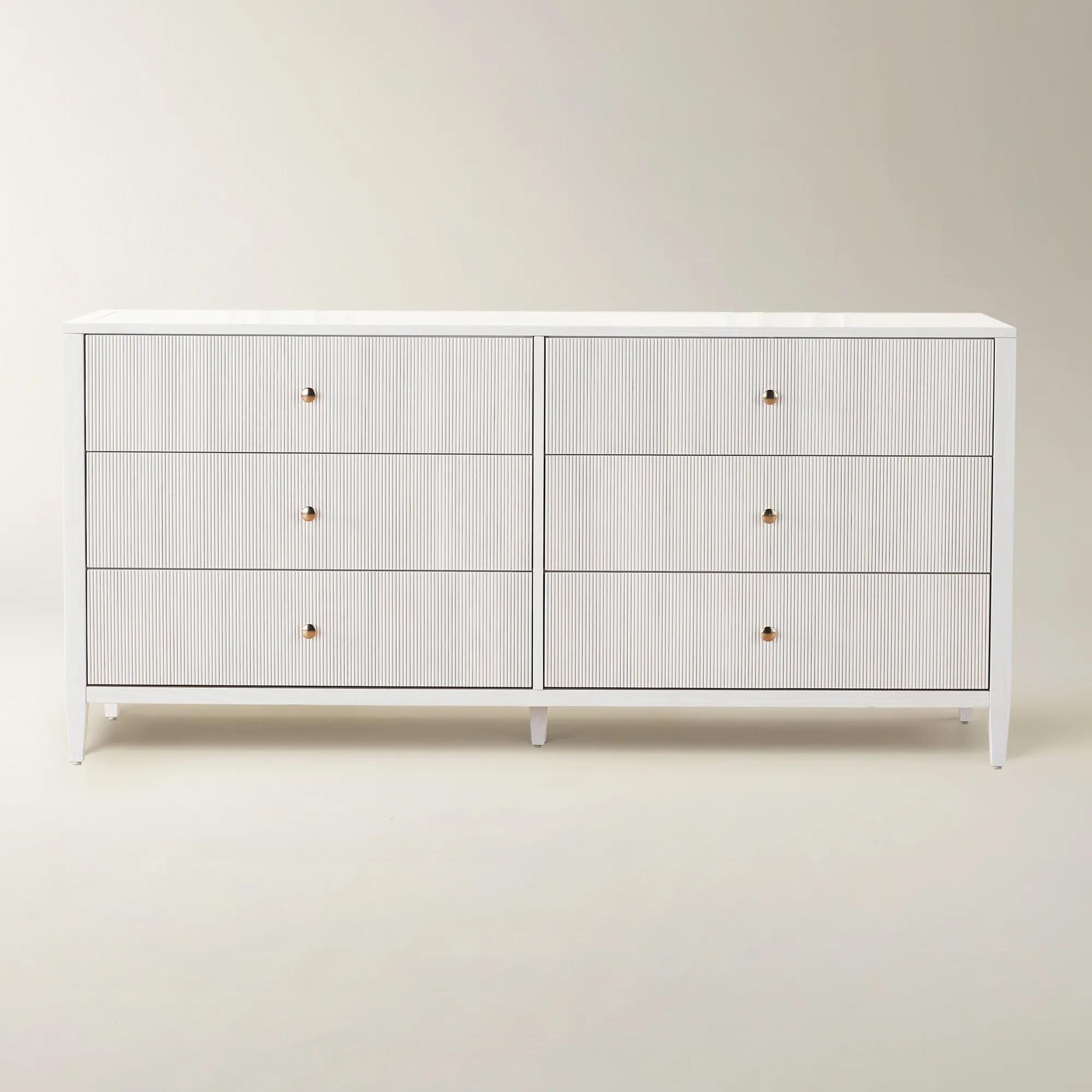
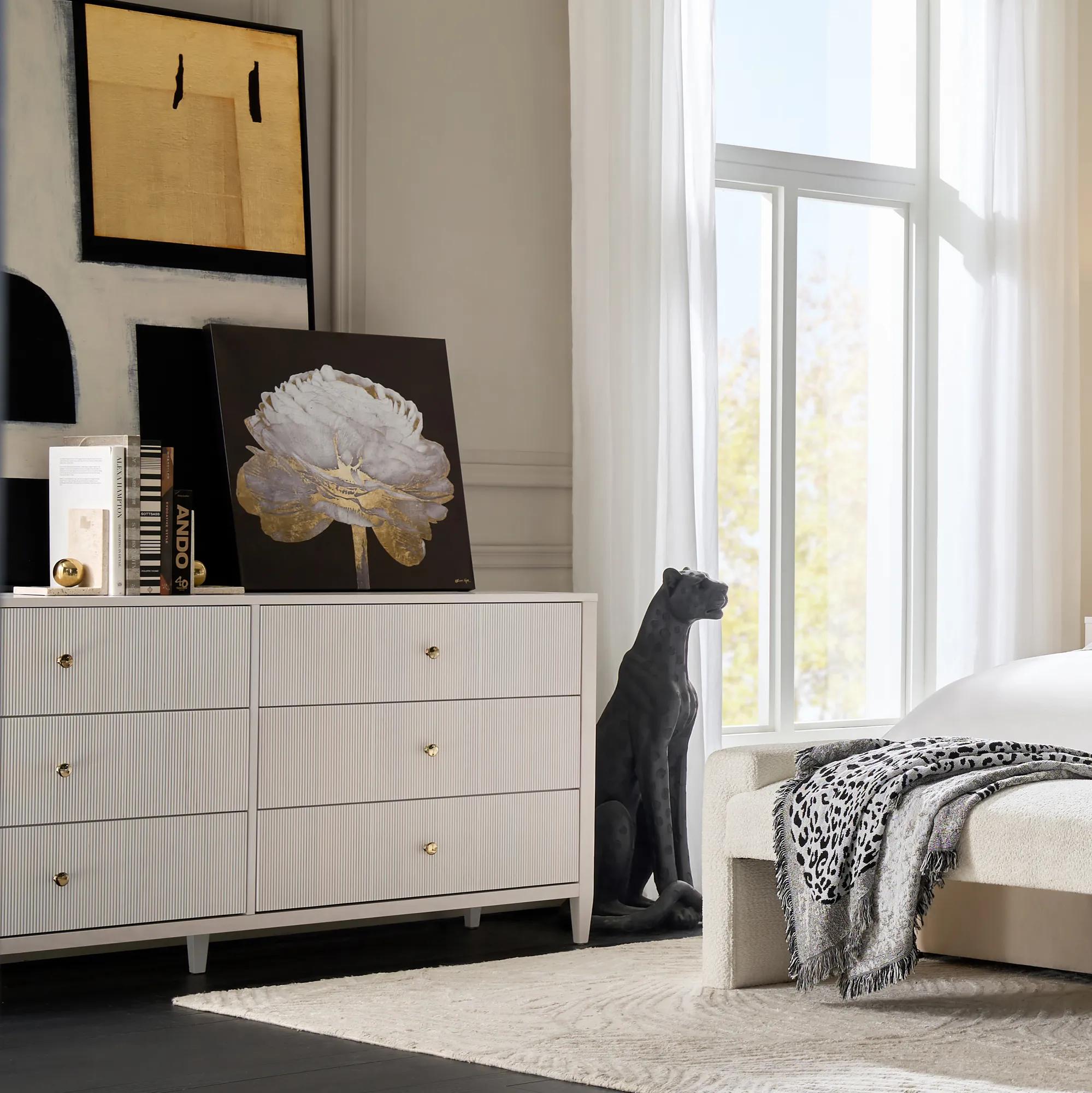 Viola Reeded White Ash Wood 6-Drawer Dresser (70")$1899
A modern dresser in bone white ash wood with reeded fronts and brass hardware for a luxe touch.
Add To Cart -
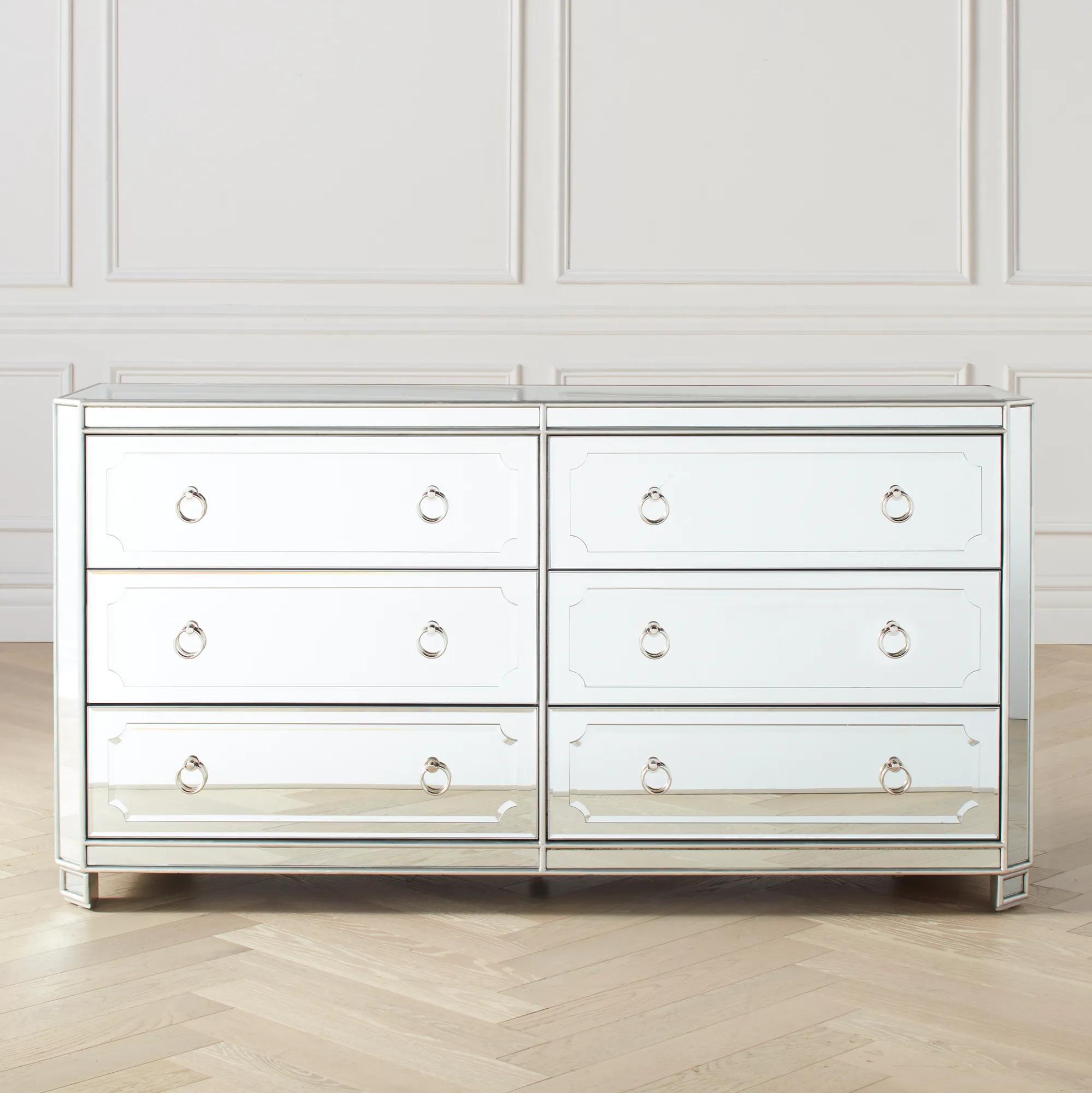
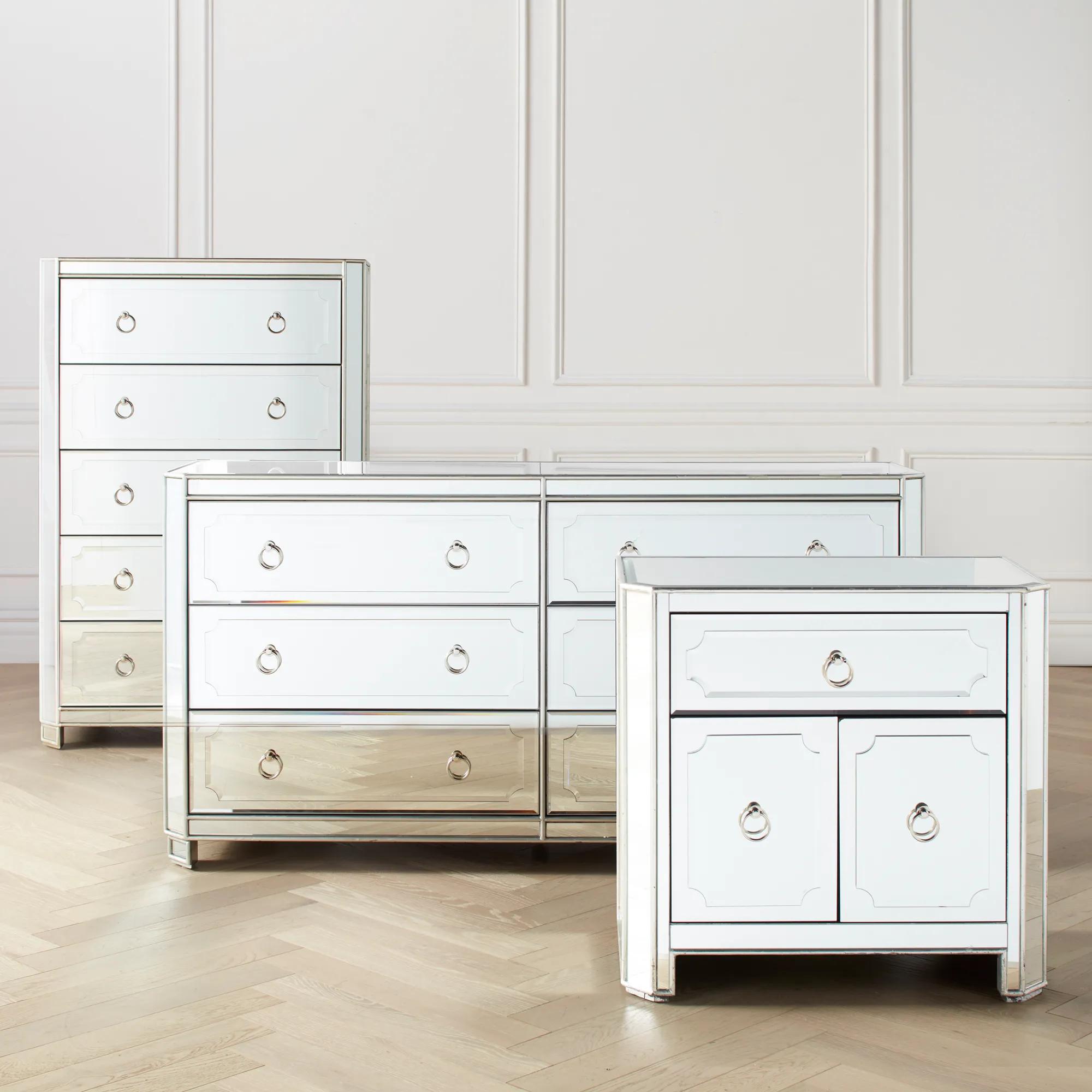 Simplicity Mirrored Silver 6-Drawer Dresser (66")$2299
A glamorous chest featuring beveled mirrored panels, hand-applied silver-leaf trim, and polished nickel hardware.
Add To Cart -
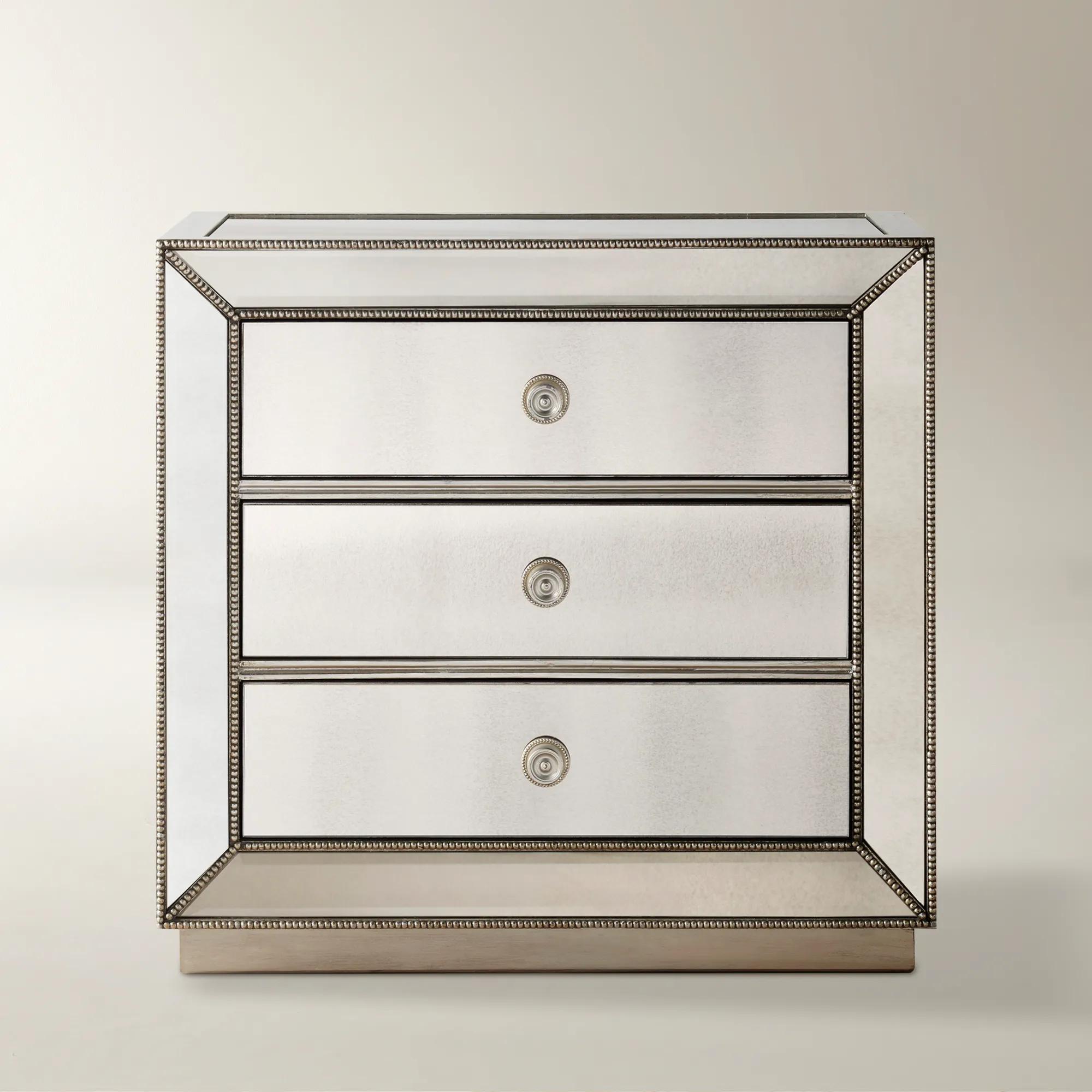
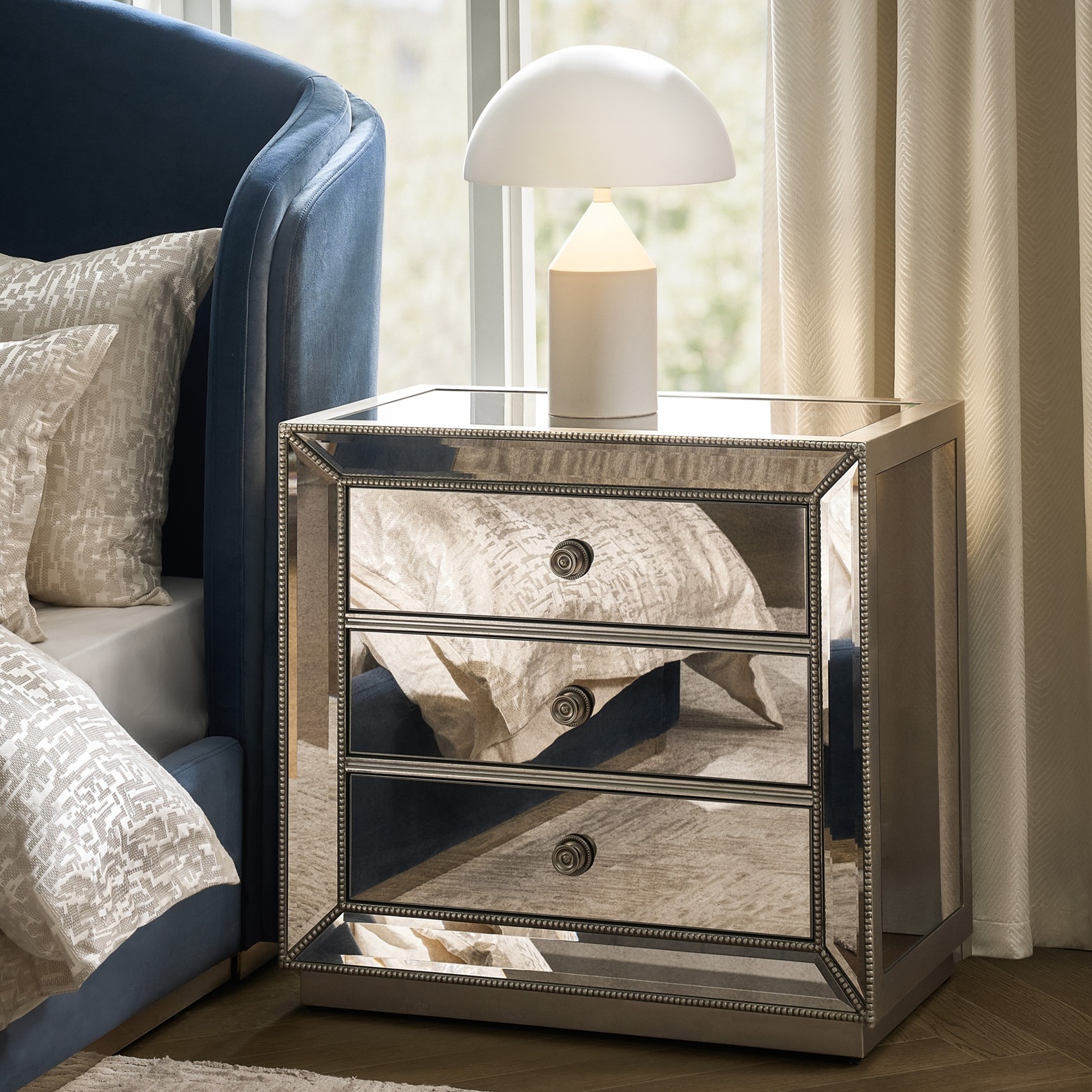 Omni Mirrored Silver 3-Drawer Nightstand (32")$1299
A glamorous chest featuring antiqued mirrored panels, hand-applied silver-leaf finish, and beaded trim.
Add To Cart -
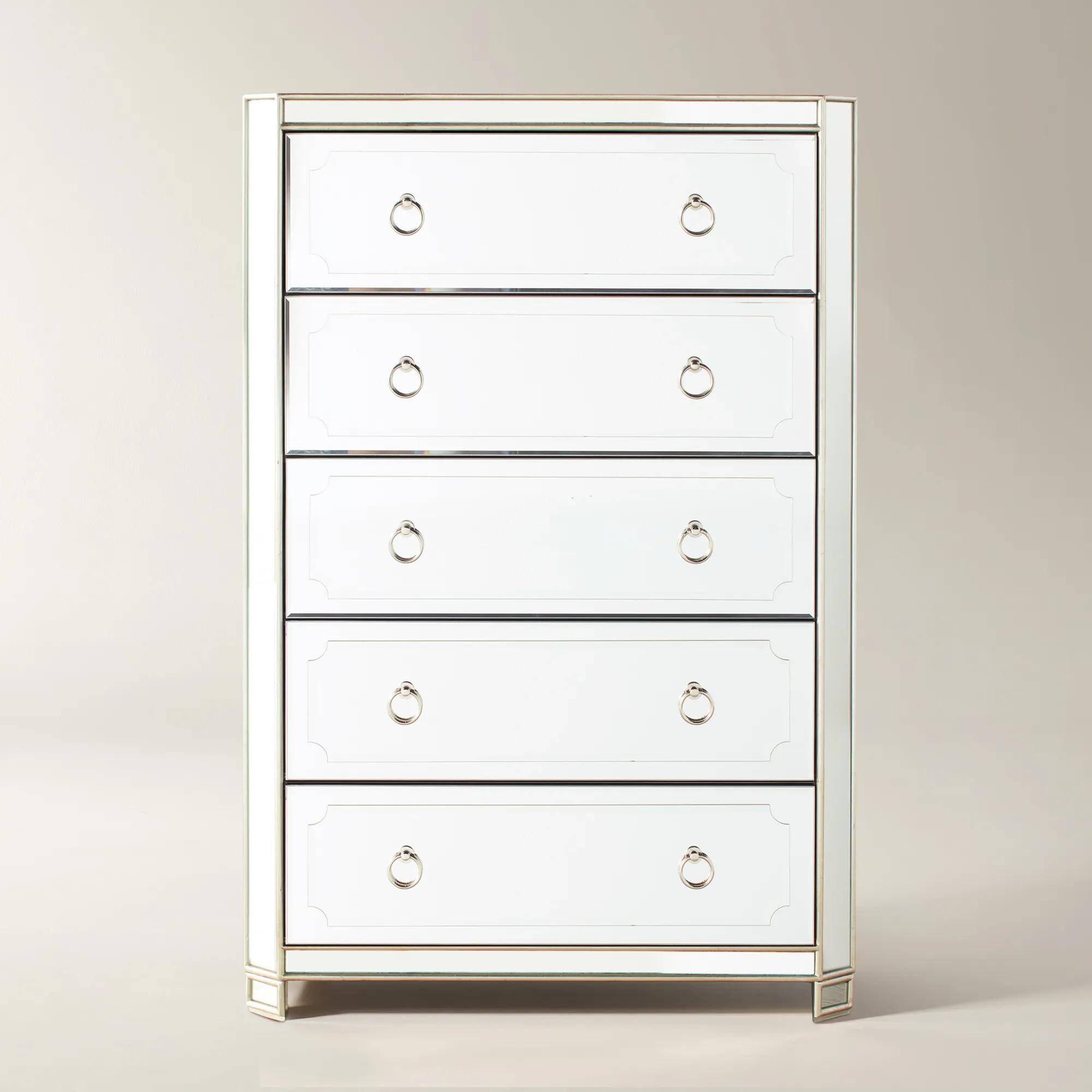 Simplicity Mirrored Silver 5-Drawer Tall Dresser (36")$1999
A glamorous tall chest featuring beveled mirrored panels, hand-applied silver-leaf trim, and polished nickel hardware.
Add To Cart -
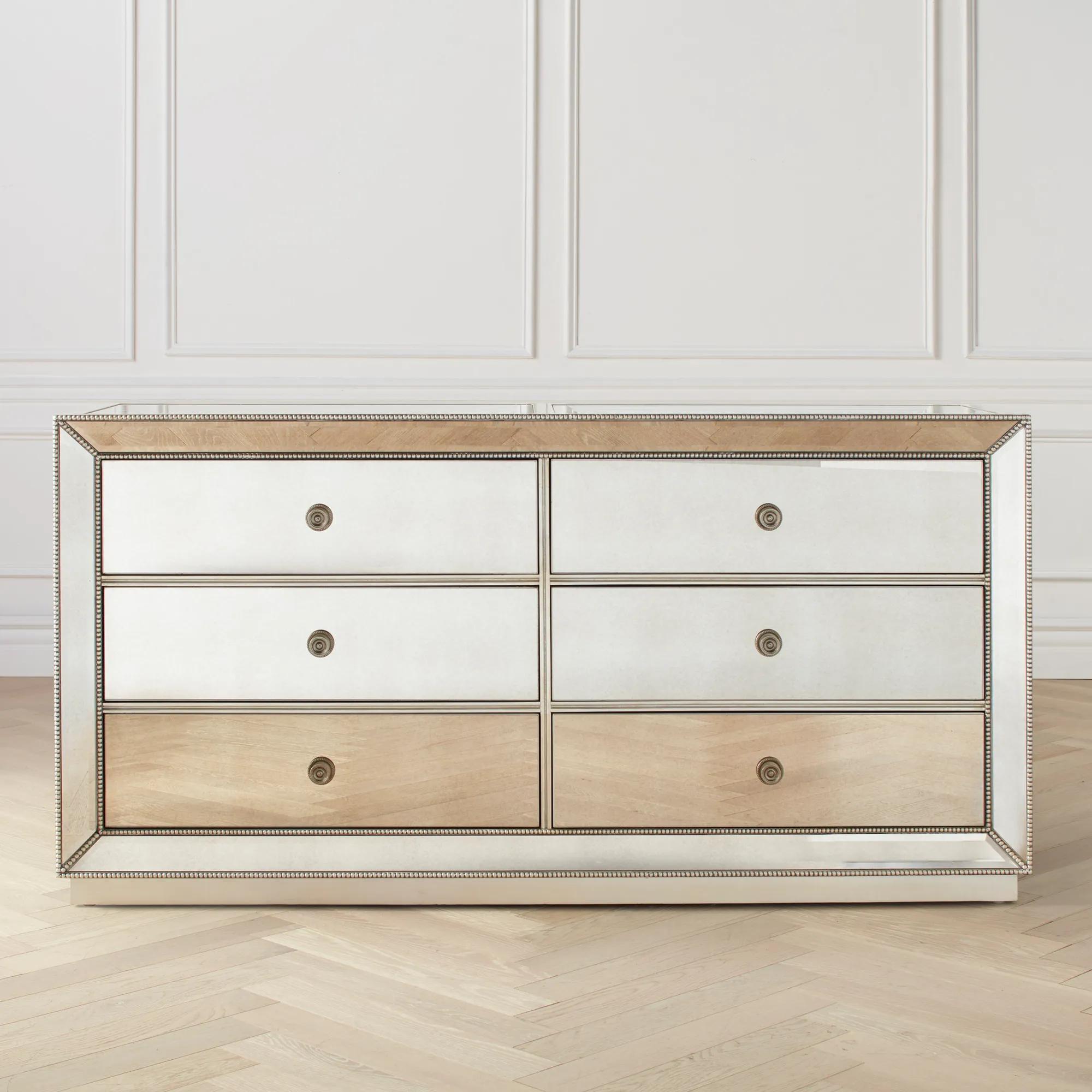 Omni Mirrored Silver 6-Drawer Dresser (72")$2599
A hand-applied silver-leaf chest with antiqued mirrored panels and beaded trim for dramatic bedroom shine.
Add To Cart -
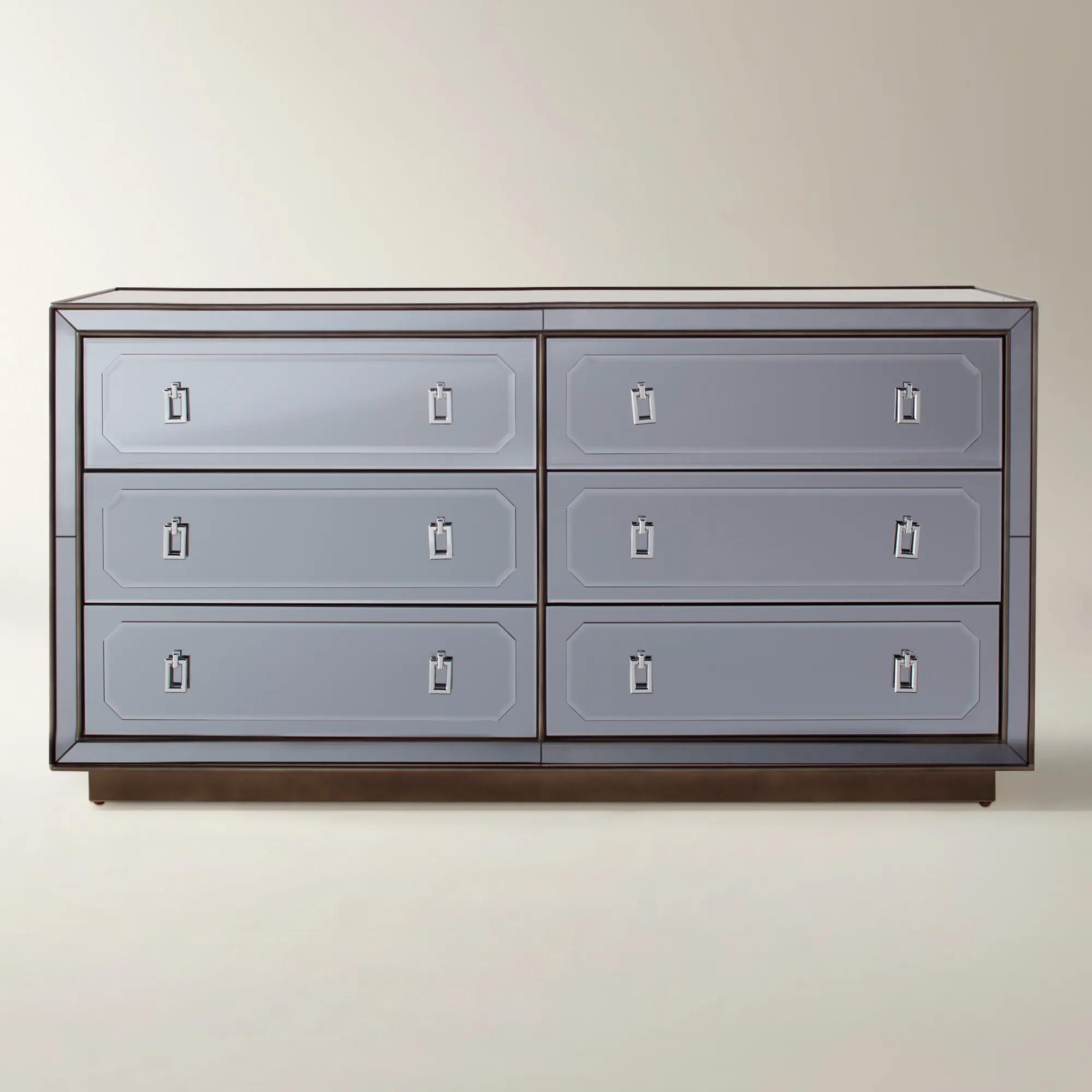 Maddox Mirrored Grey 6-Drawer Dresser (66")$2299
A modern dresser featuring beveled mirror paneling, graphite finish, and polished nickel hardware for sleek sophistication.
Add To Cart -
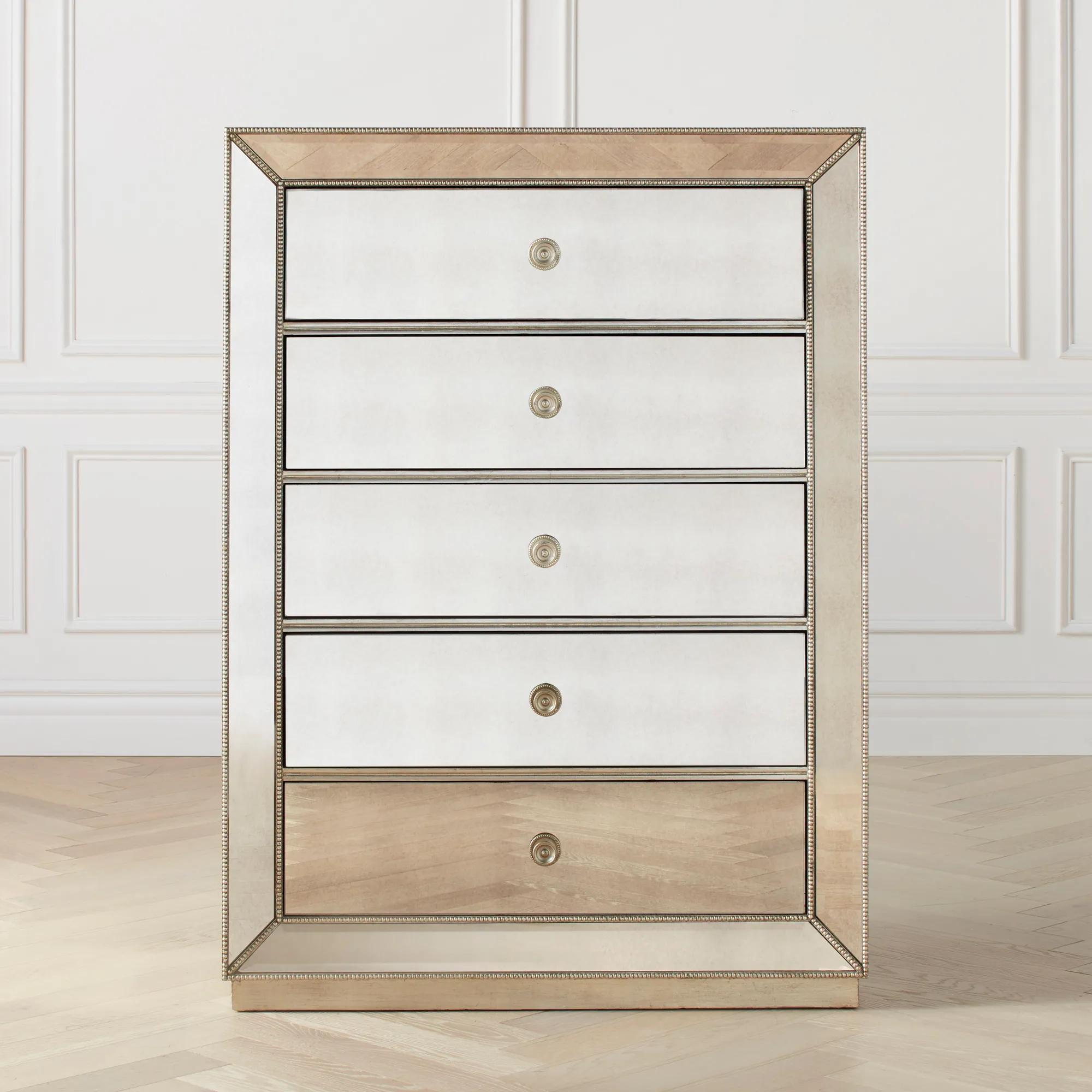
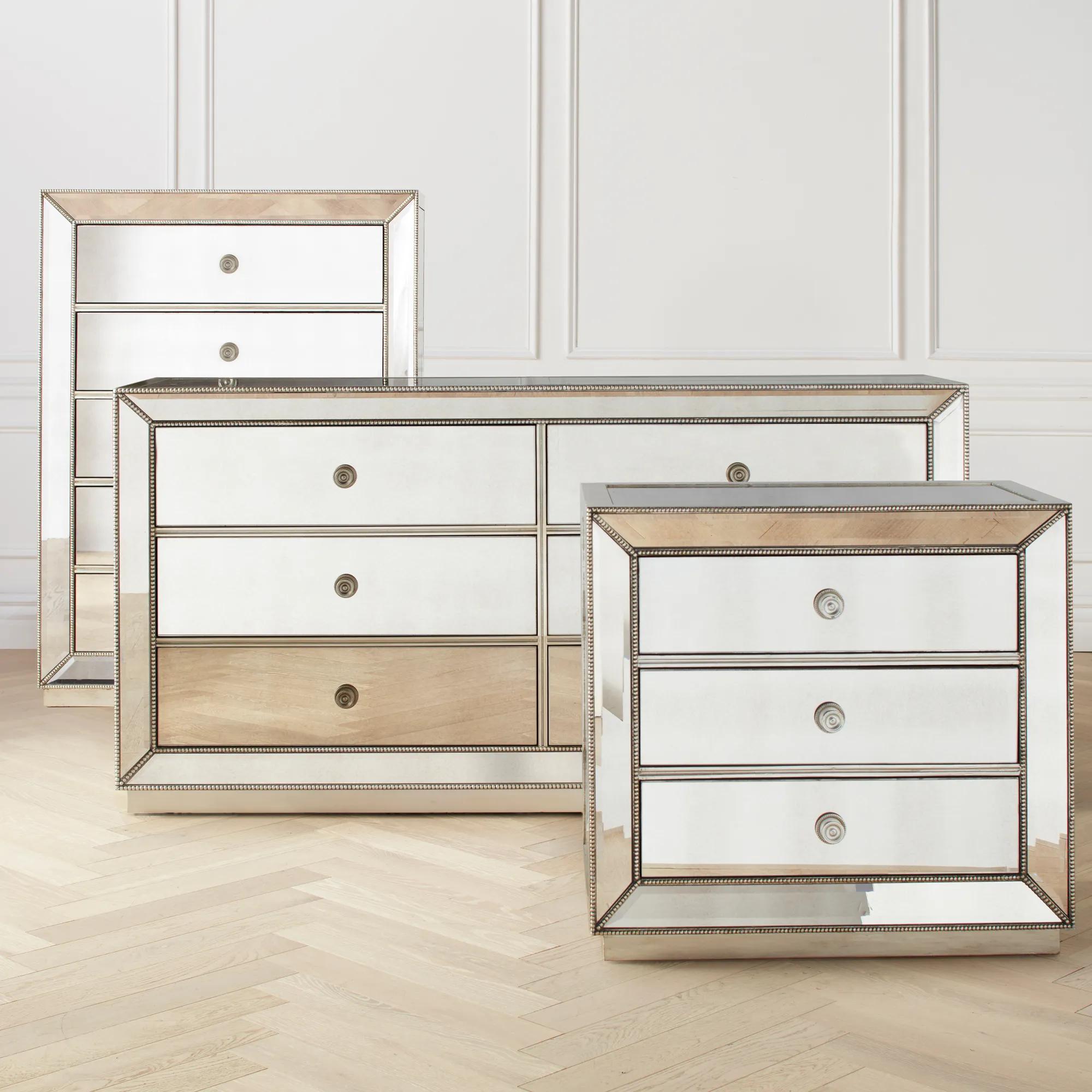 Omni Mirrored Silver 5-Drawer Tall Dresser (40")$2199
A dramatic chest featuring antiqued mirrored panels, hand-applied silver-leaf finish, and kiln-dried hardwood construction.
Add To Cart -
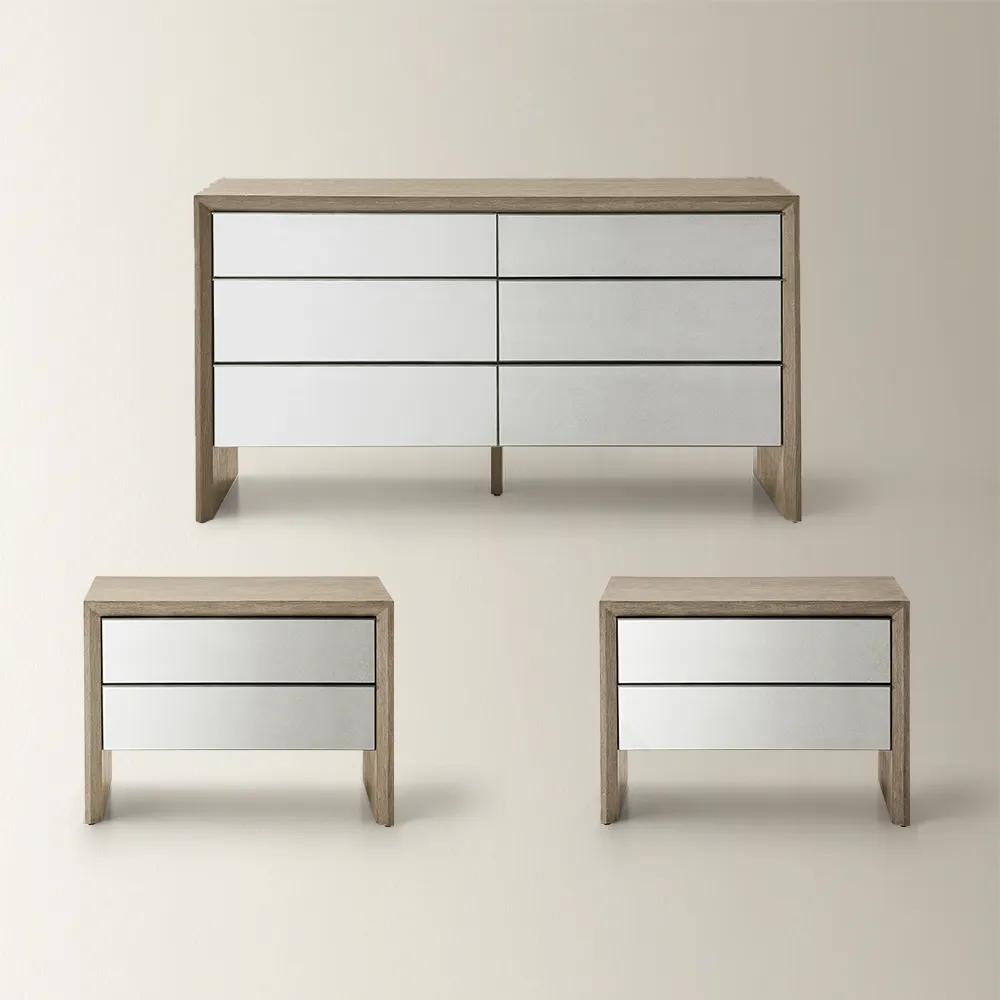 Glimmer Set of 3 Bedroom$3097
A coordinated bedroom furniture set featuring a dresser and two nightstands for cohesive storage.
Add To Cart -
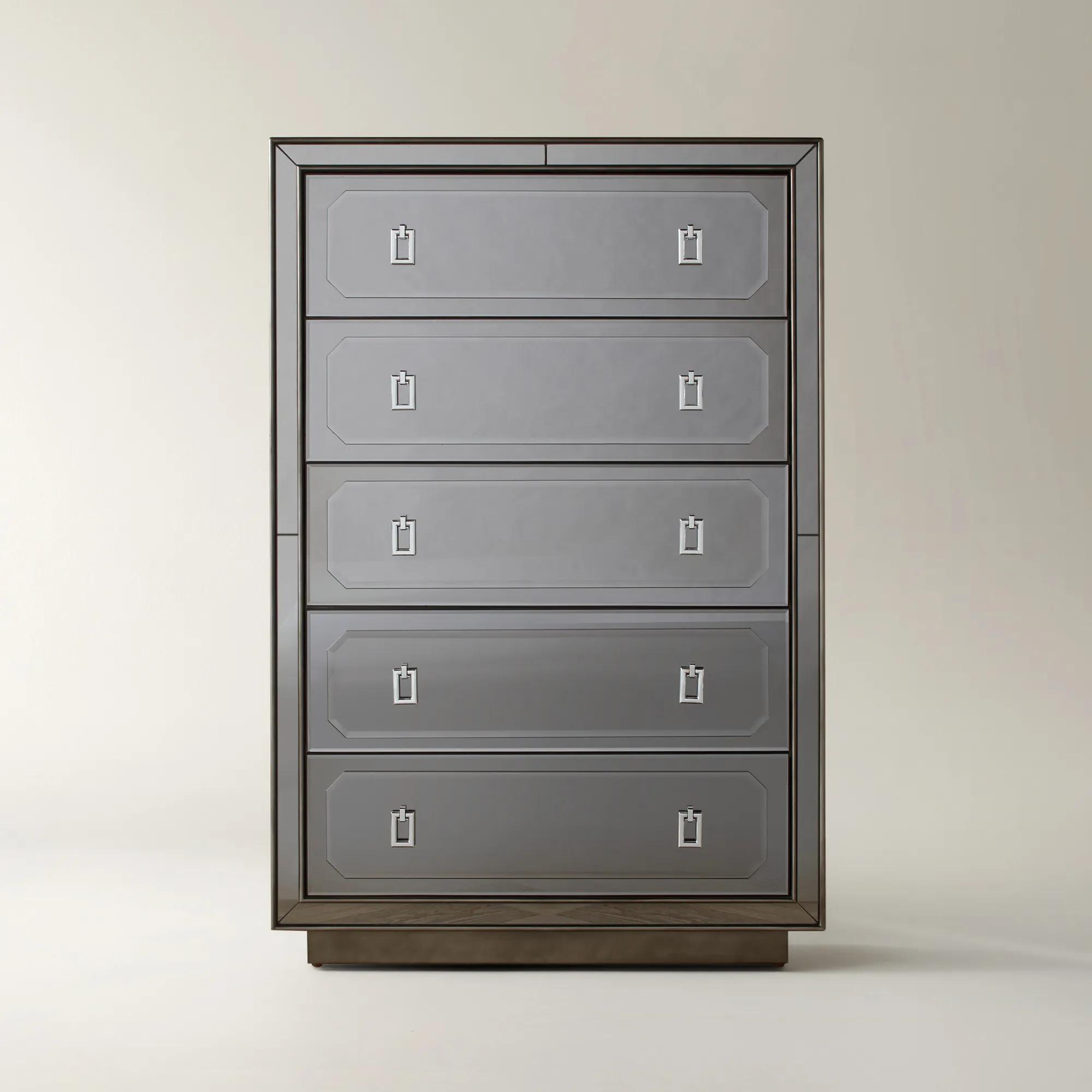 Maddox Mirrored Grey 5-Drawer Tall Dresser (36")$2099
A modern chest featuring beveled mirror panels, graphite finish, and polished nickel hardware for sleek sophistication.
Add To Cart -
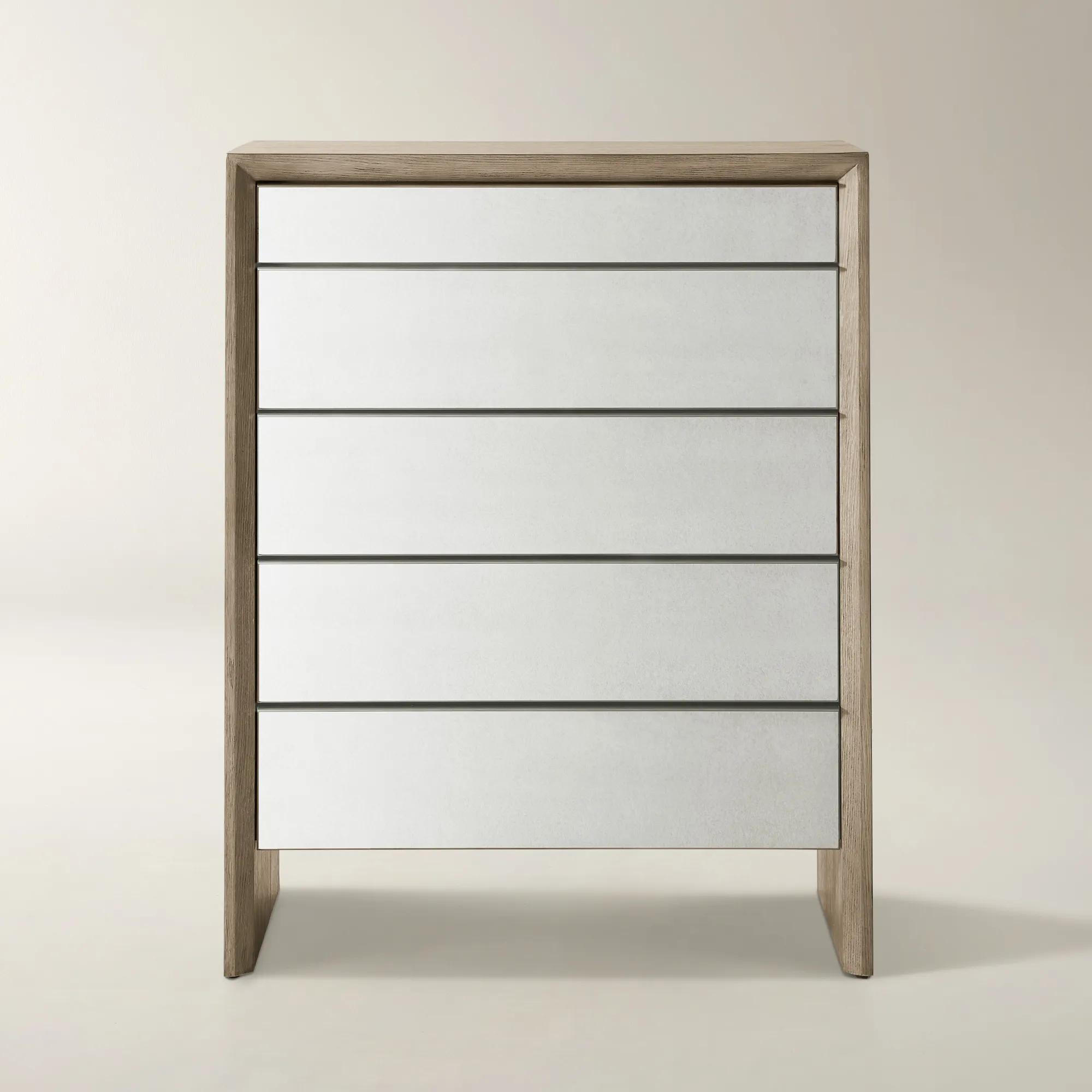
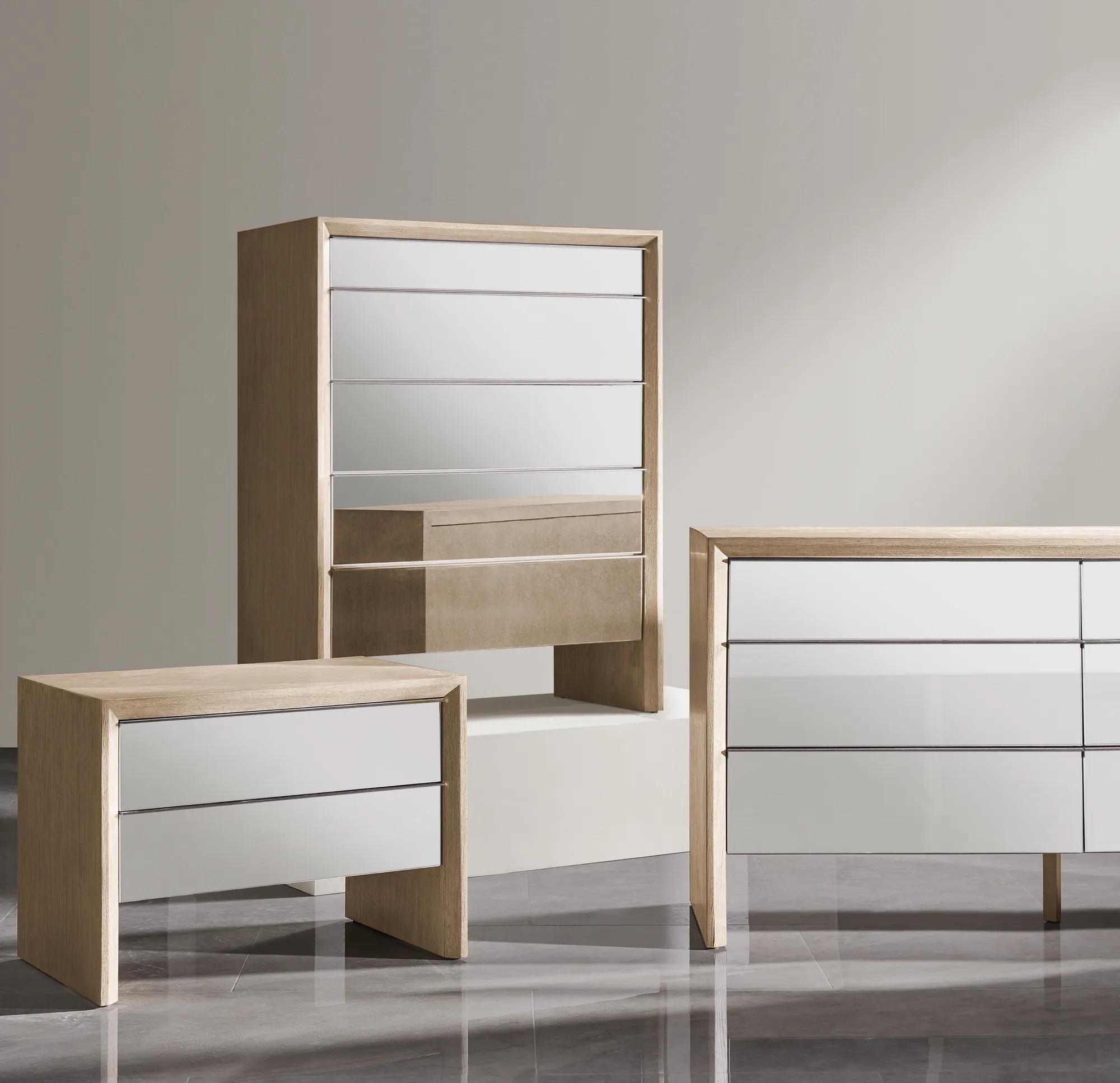 Glimmer Mirrored Seadrift Oak 5-Drawer Tall Dresser (40")$2099
A versatile chest featuring sea drift oak veneer, antique mirrored drawer fronts, and soft-close drawers for elegant storage.
Add To Cart -
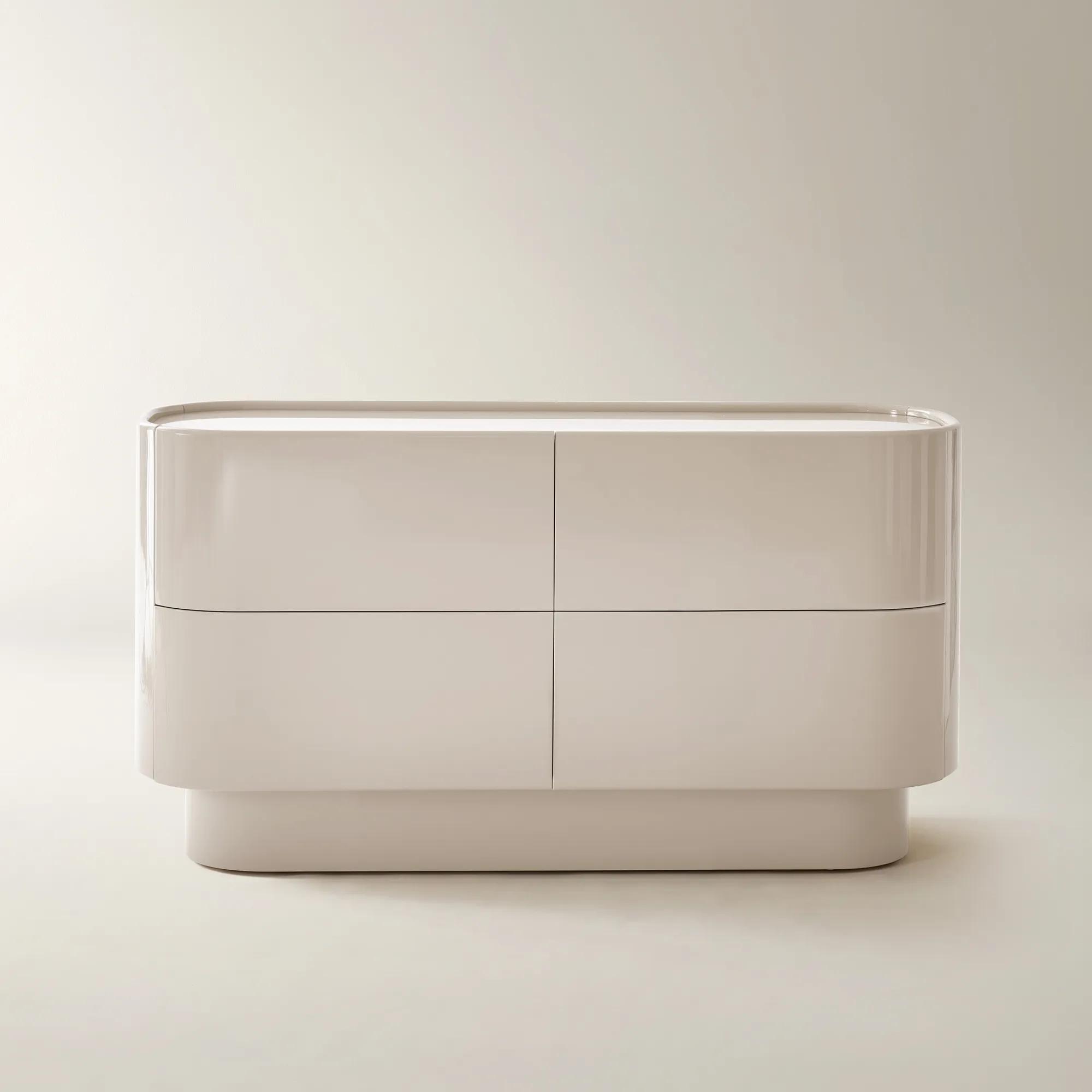
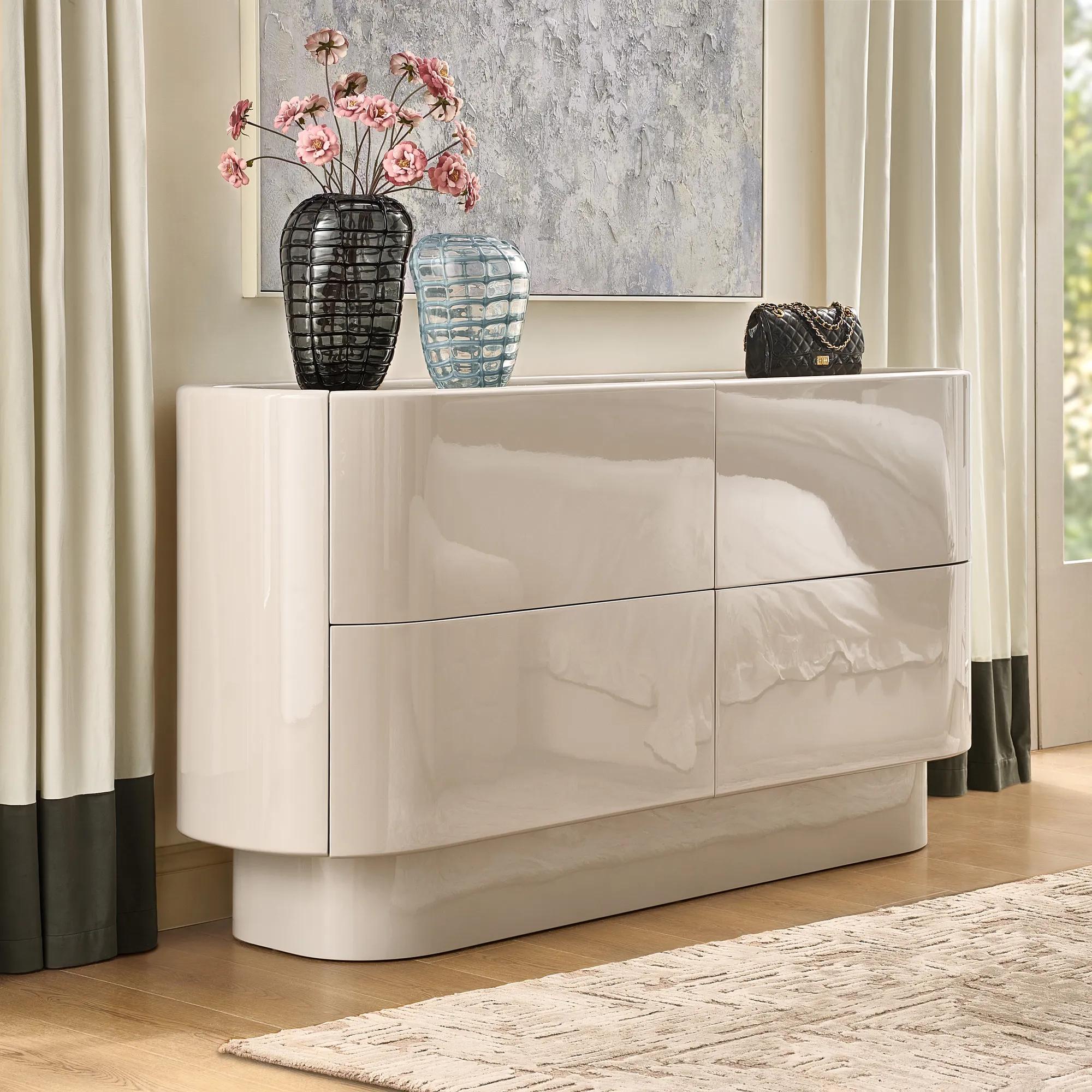 Velar Lacquered Turtle Dove 4-Drawer Dresser With Glass Top (66")$1999
A sculptural dresser in turtle dove lacquer with a back-painted glass top and soft-close velvet-lined drawers.
Add To Cart -
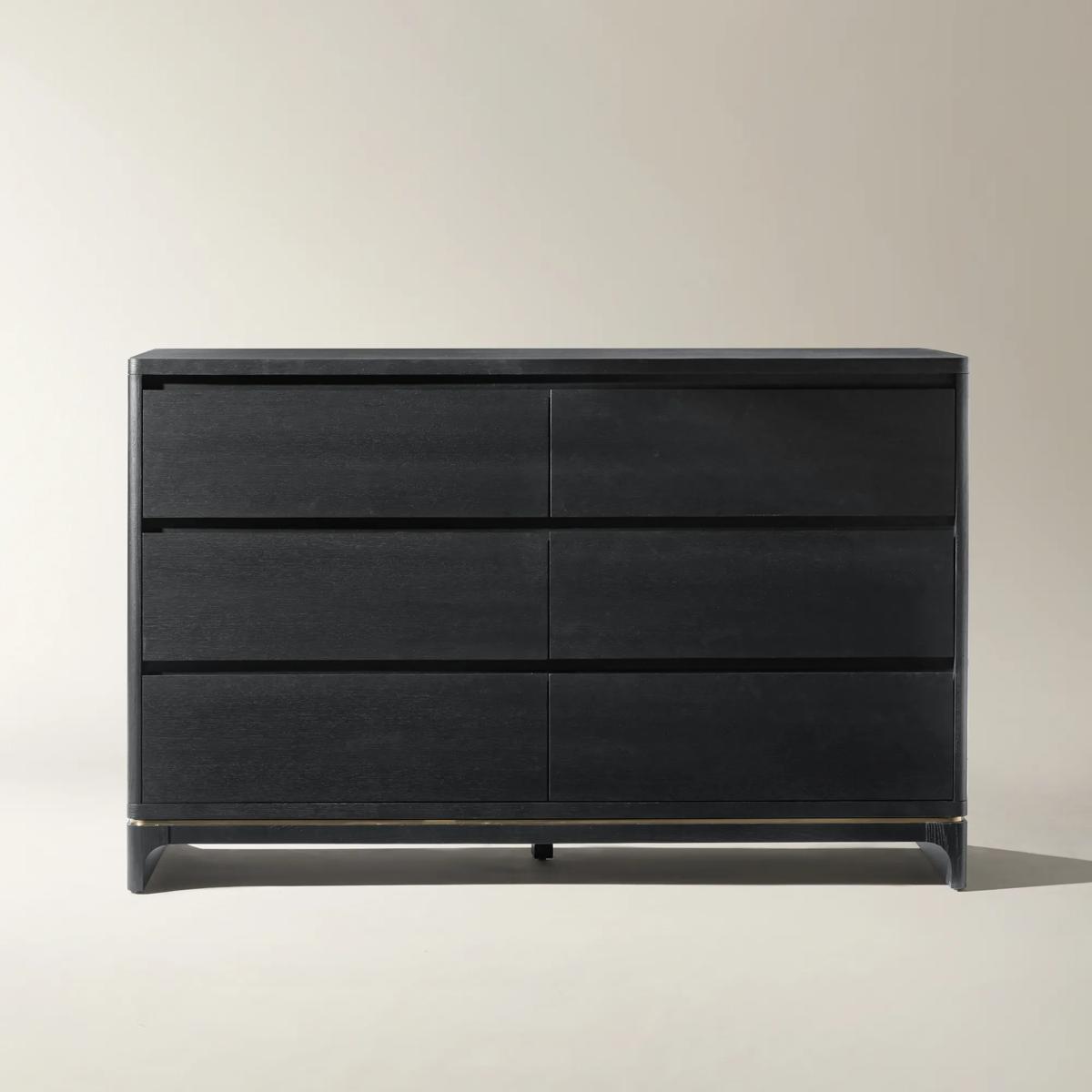
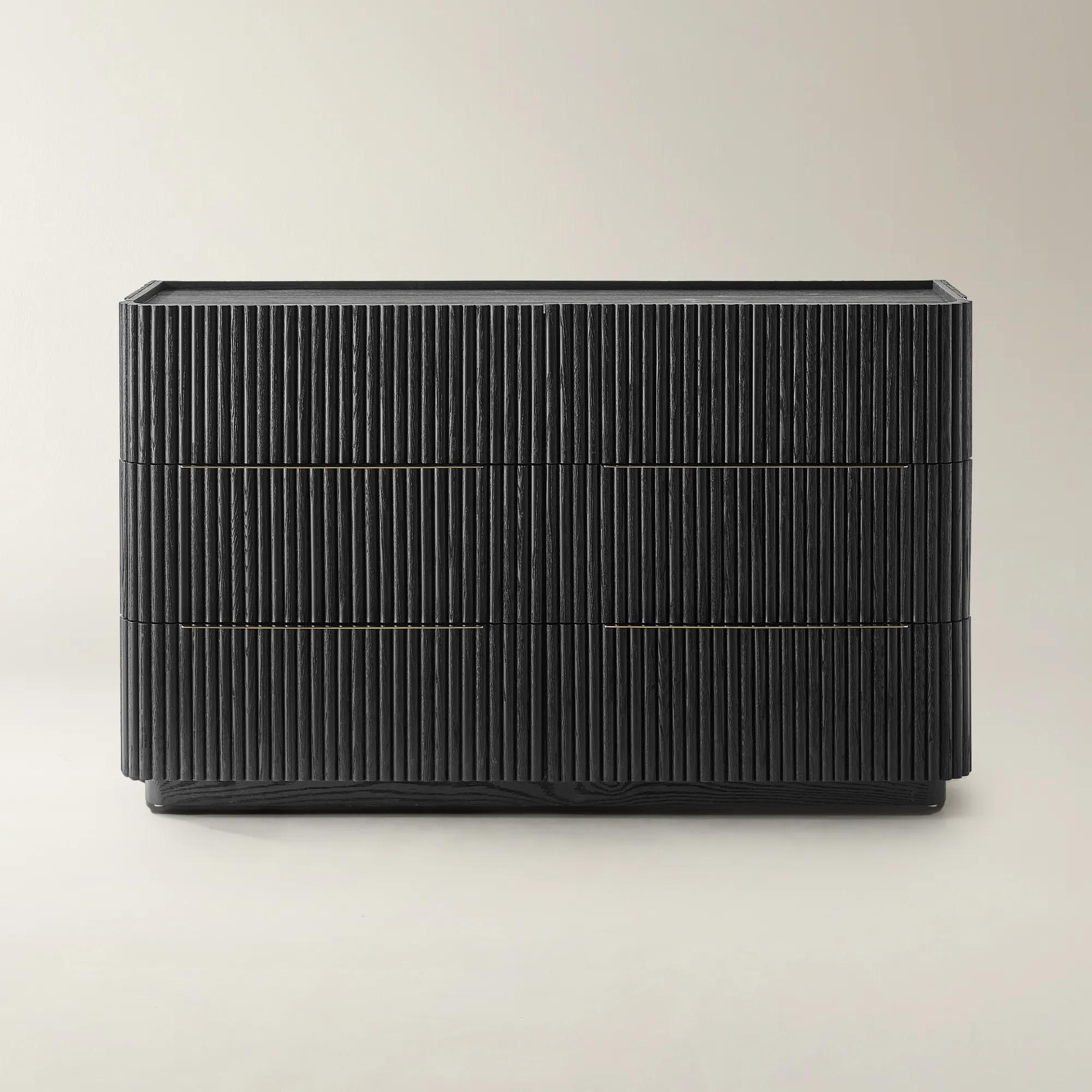 Stria Reeded Black Oak 6-Drawer Dresser (64.5")$2599
A black oak dresser featuring vertical reeded texture, soft gold accents, and six velvet-lined, soft-close drawers.
Add To Cart -
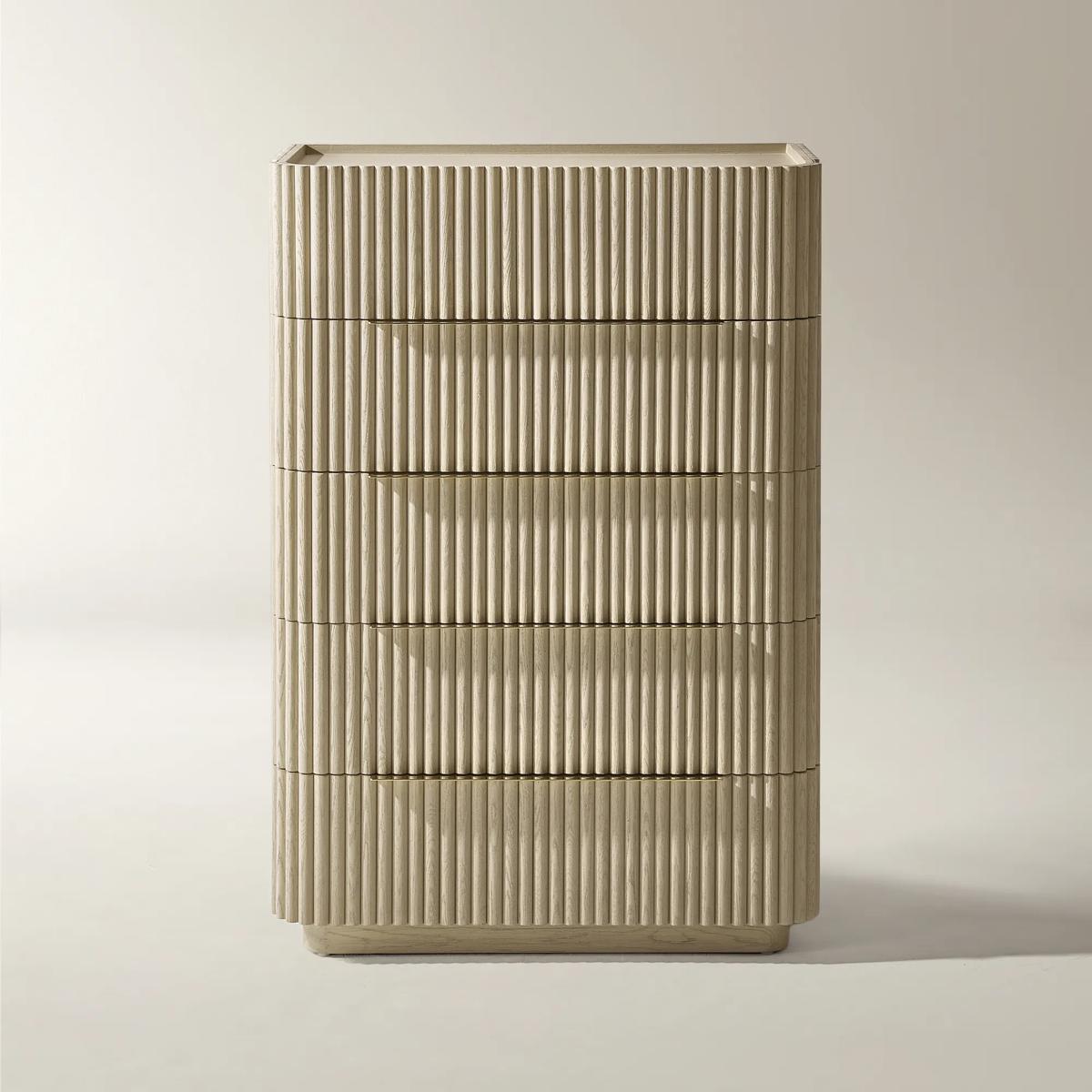 Stria Reeded White Oak 5-Drawer Tall Dresser (36.1")$1999
A sculptural oak chest with reeded detailing, gold-plated trim, and five soft-close, felt-lined drawers.
Add To Cart -
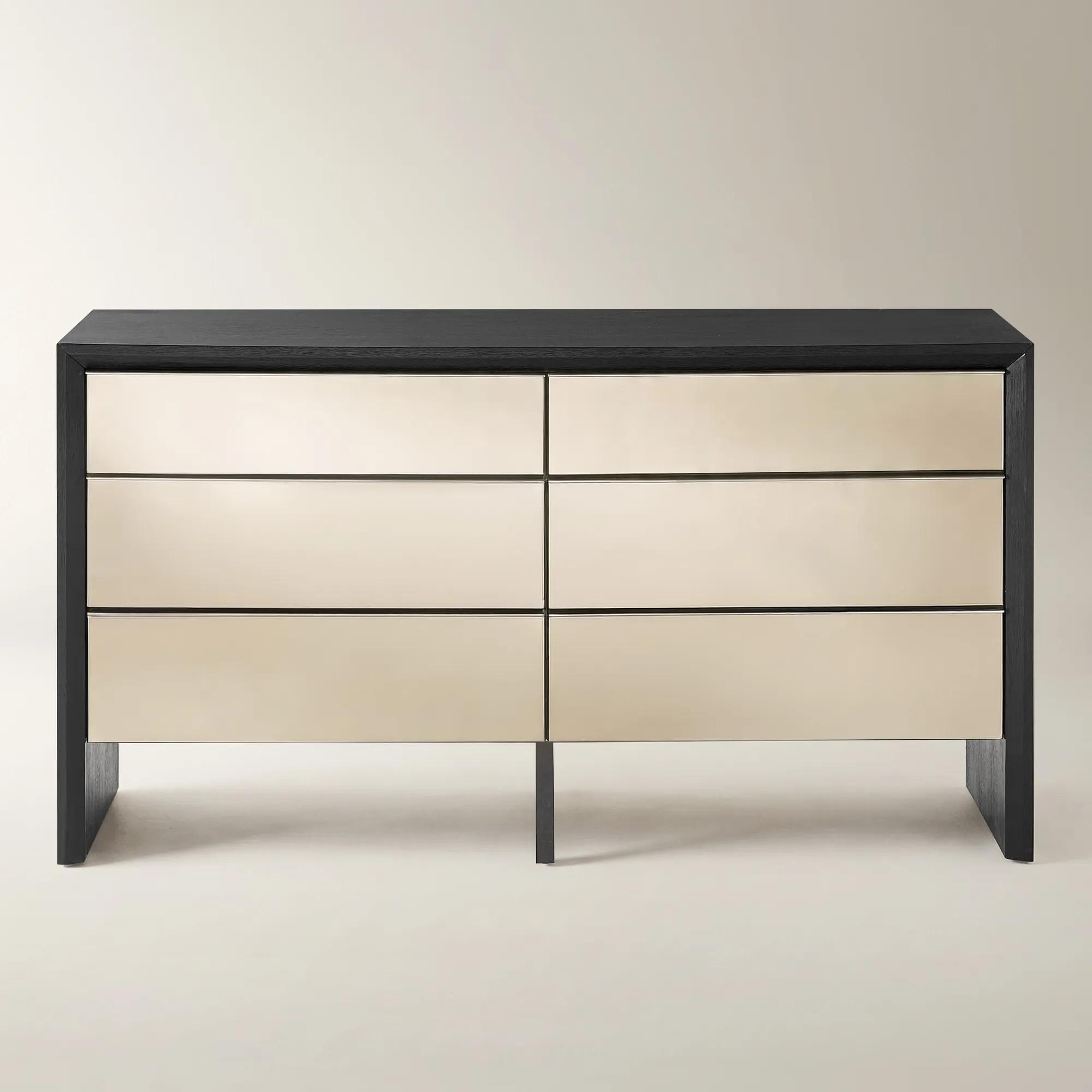 Glimmer Mirrored Black Oak 6-Drawer Dresser (65")$2099
A modern dresser featuring black oak veneer, bronze mirrored drawer fronts, and six velvet-lined soft-close drawers.
Add To Cart -
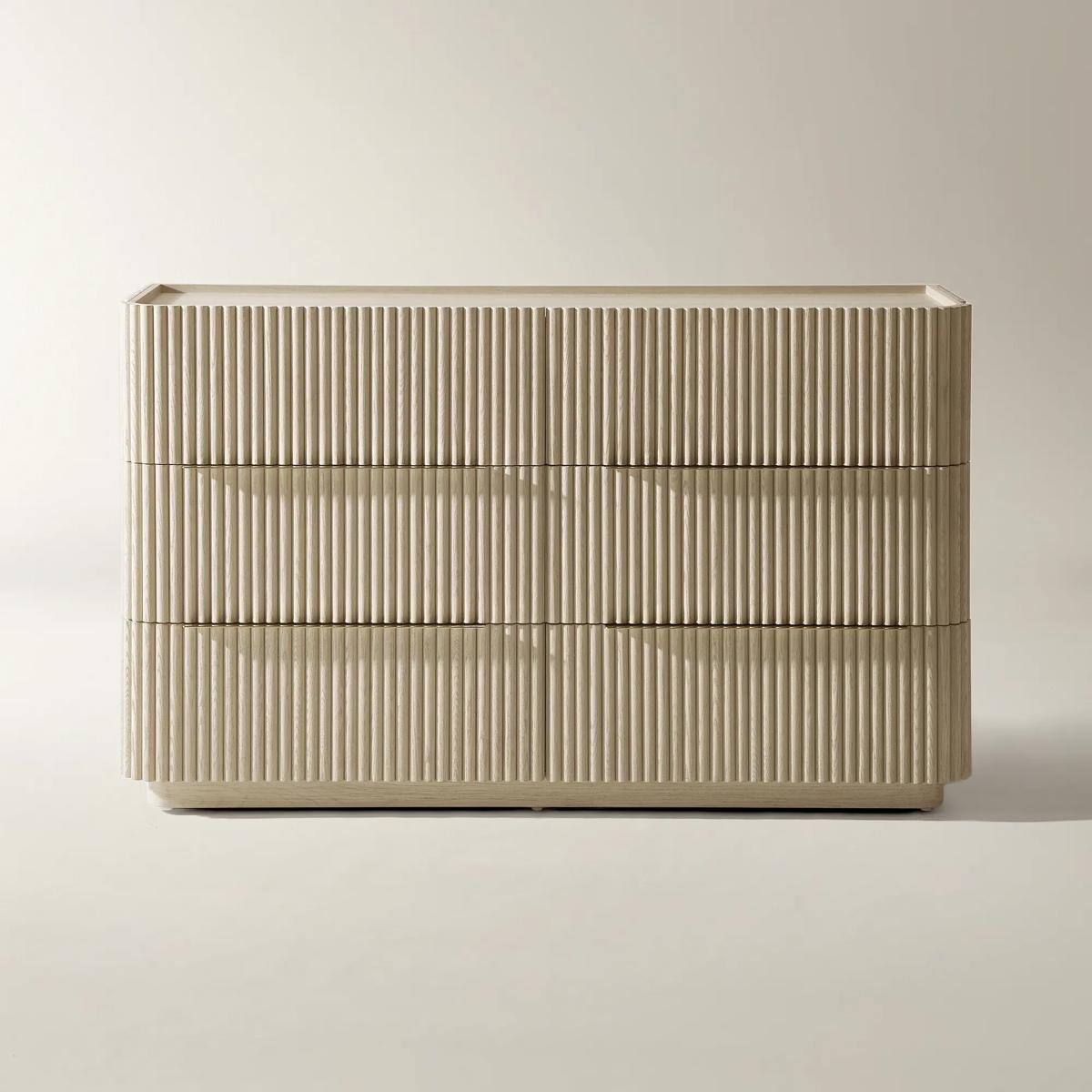
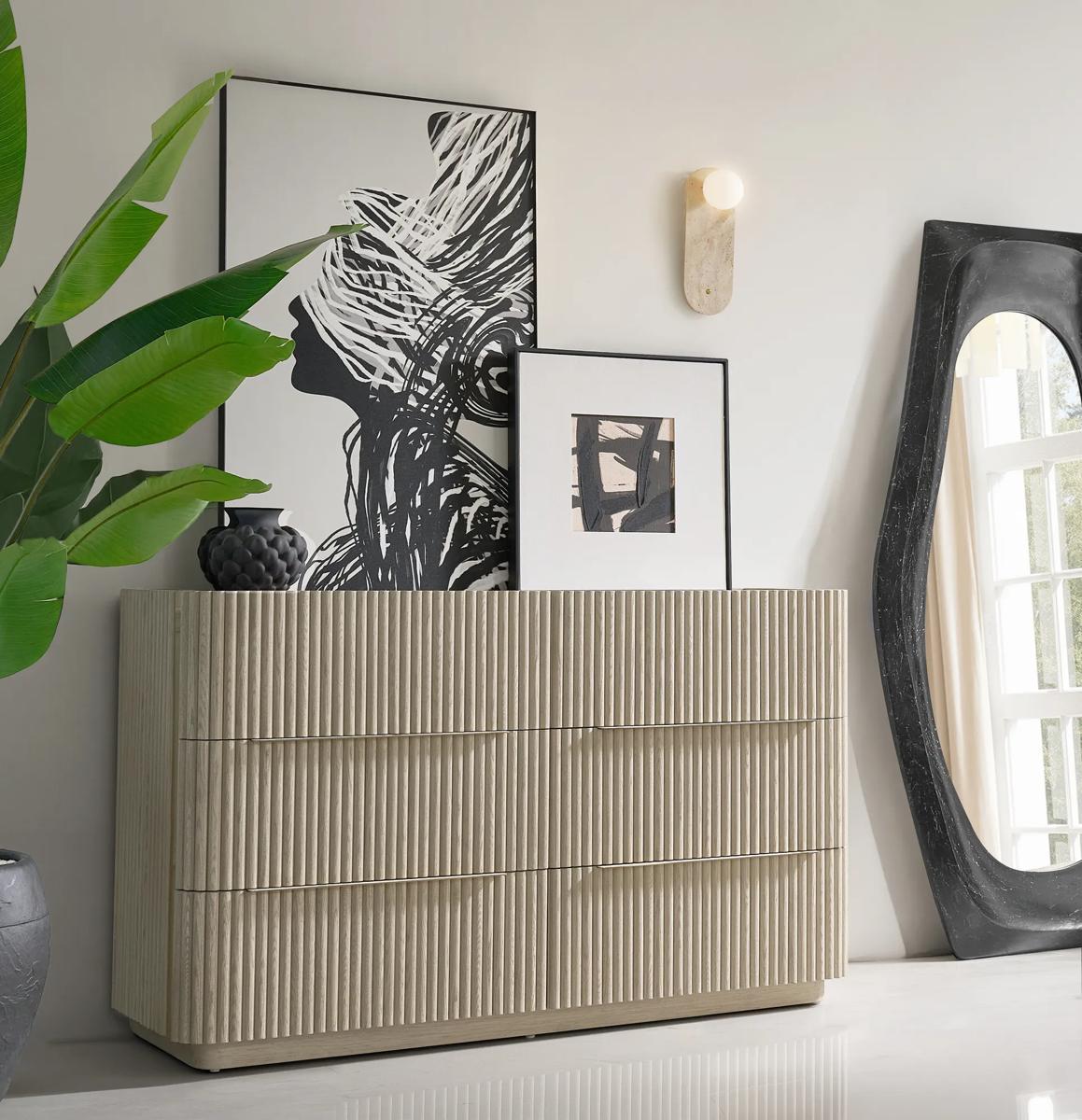 Stria Reeded White Oak 6-Drawer Dresser (64.5")$2599
A sculptural dresser crafted from solid oak with fluted detailing, gold-plated trim, and soft-close drawers.
Add To Cart -
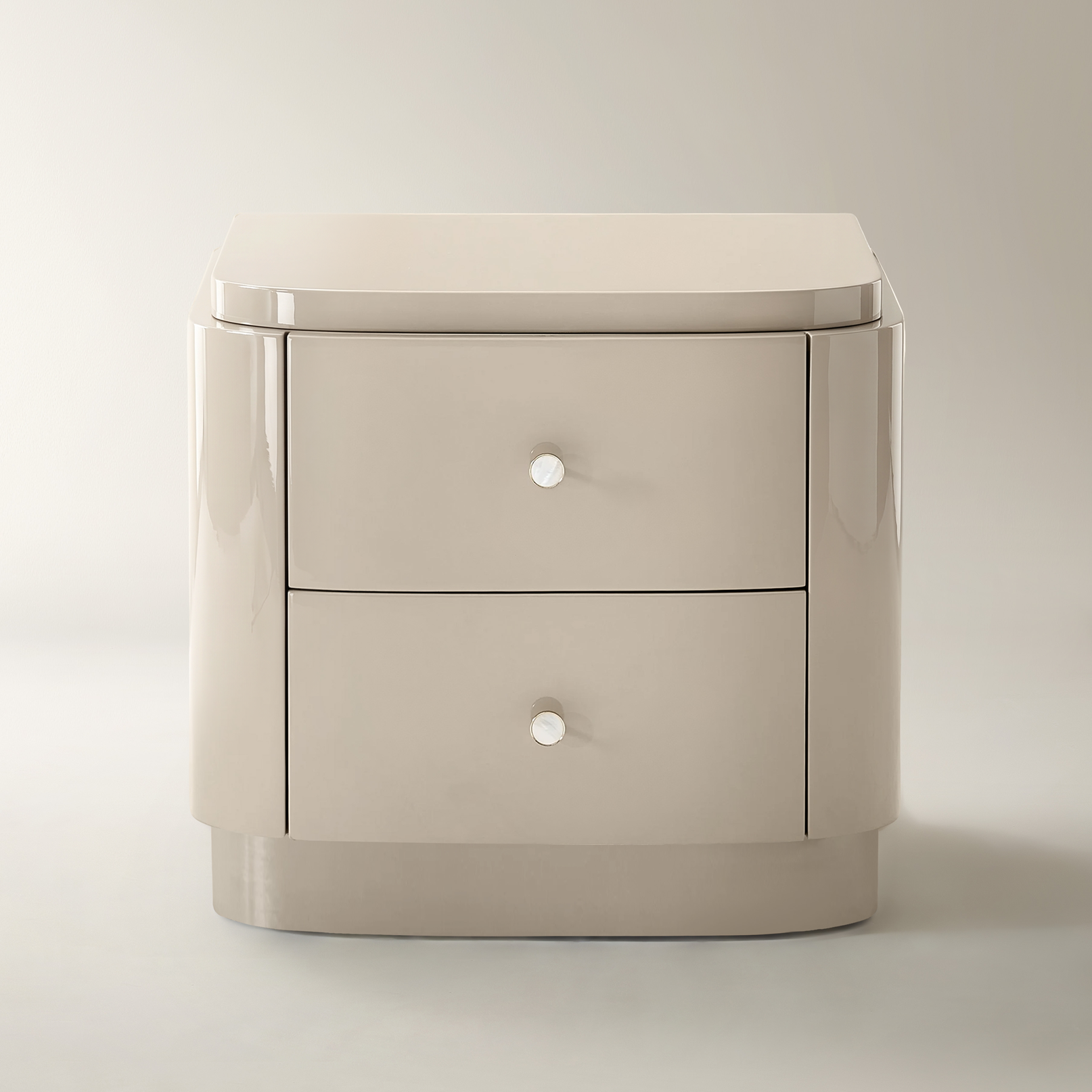
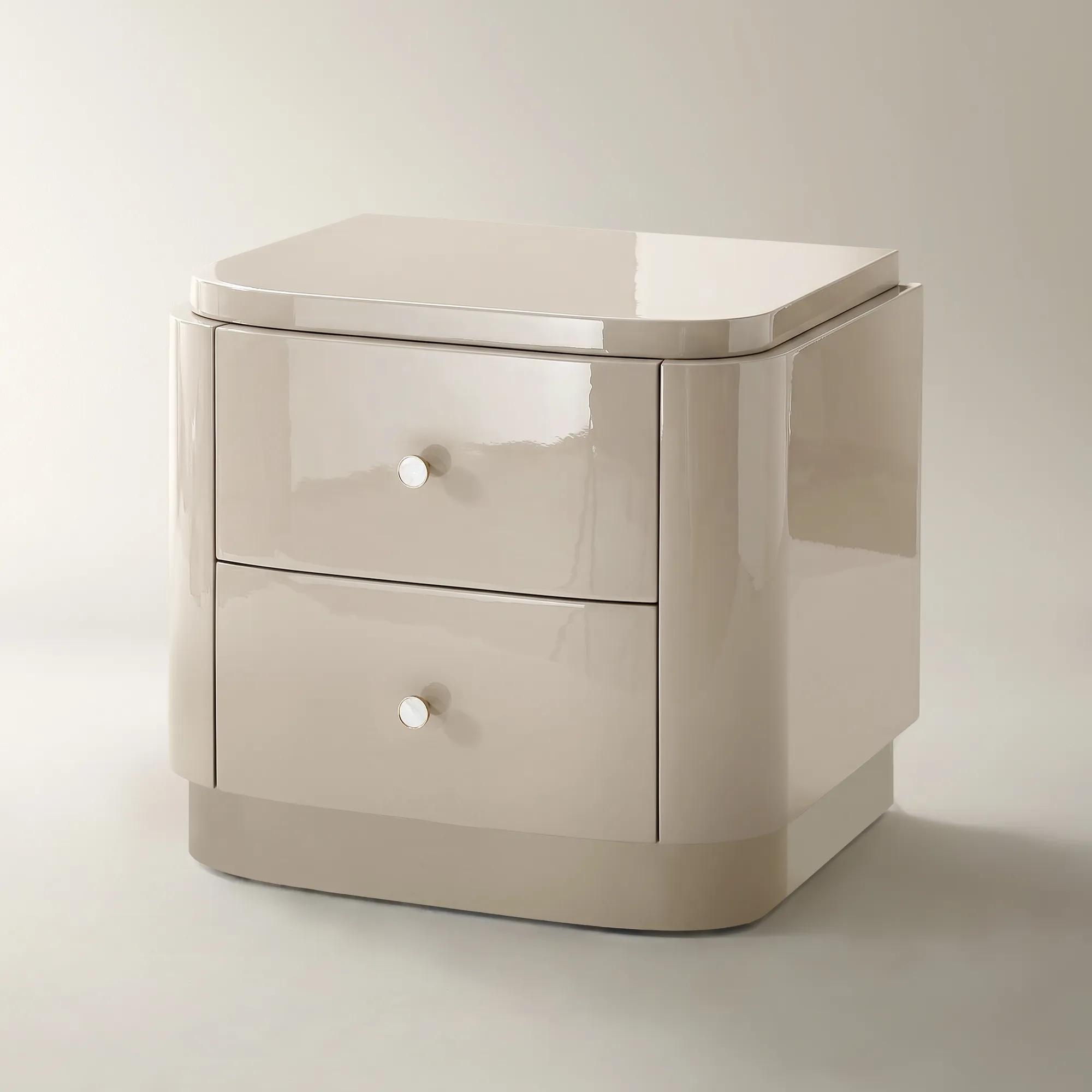 Nia Lacquered Turtle Dove 2-Drawer Nightstand (26")$599
A softly sculpted nightstand in turtle dove lacquer with pearlescent handles and two soft-close drawers.
Add To Cart -
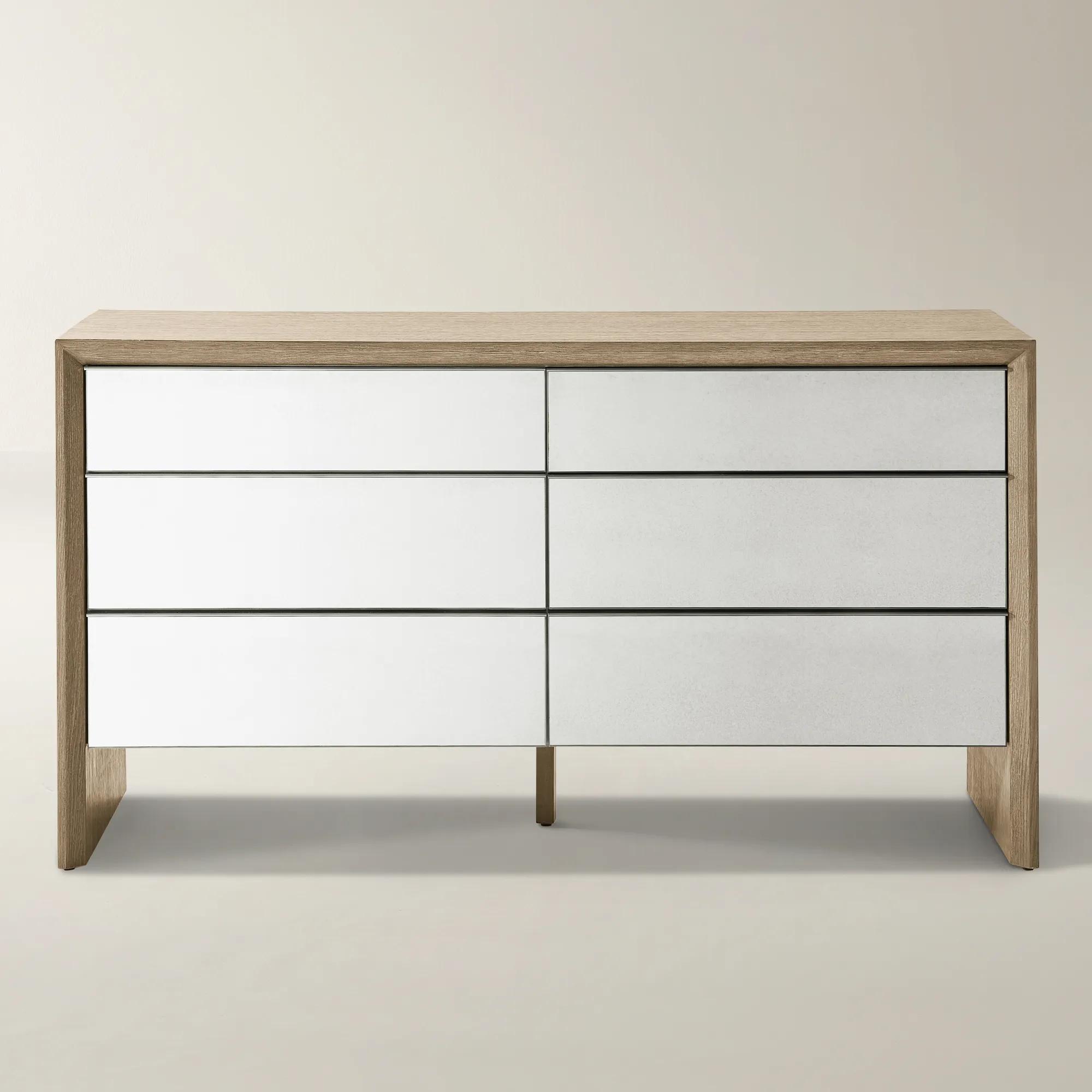 Glimmer Mirrored Seadrift Oak 6-Drawer Dresser (65")$2099
A sophisticated dresser featuring sea drift oak veneer and antique mirrored drawer fronts with soft-close drawers.
Add To Cart -
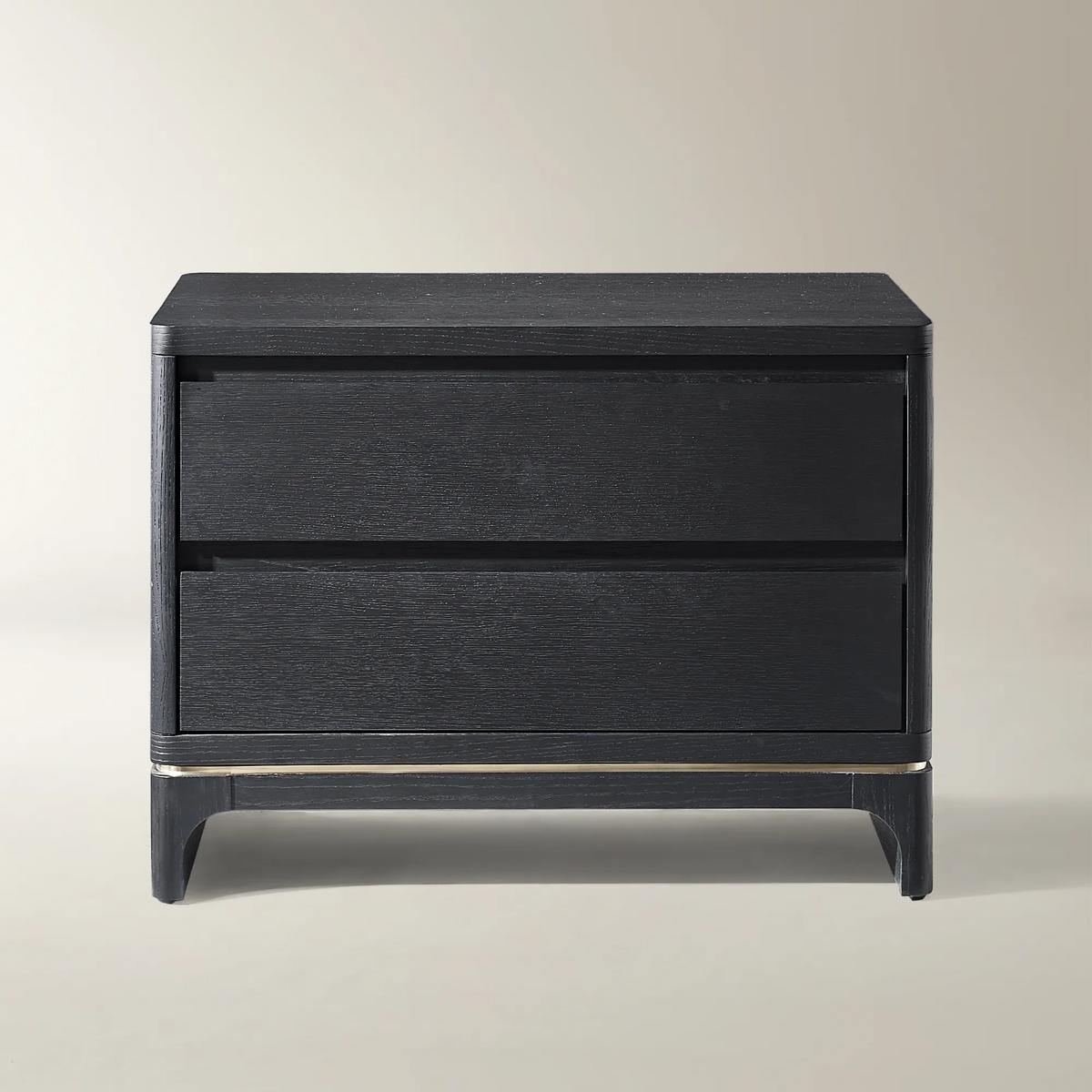
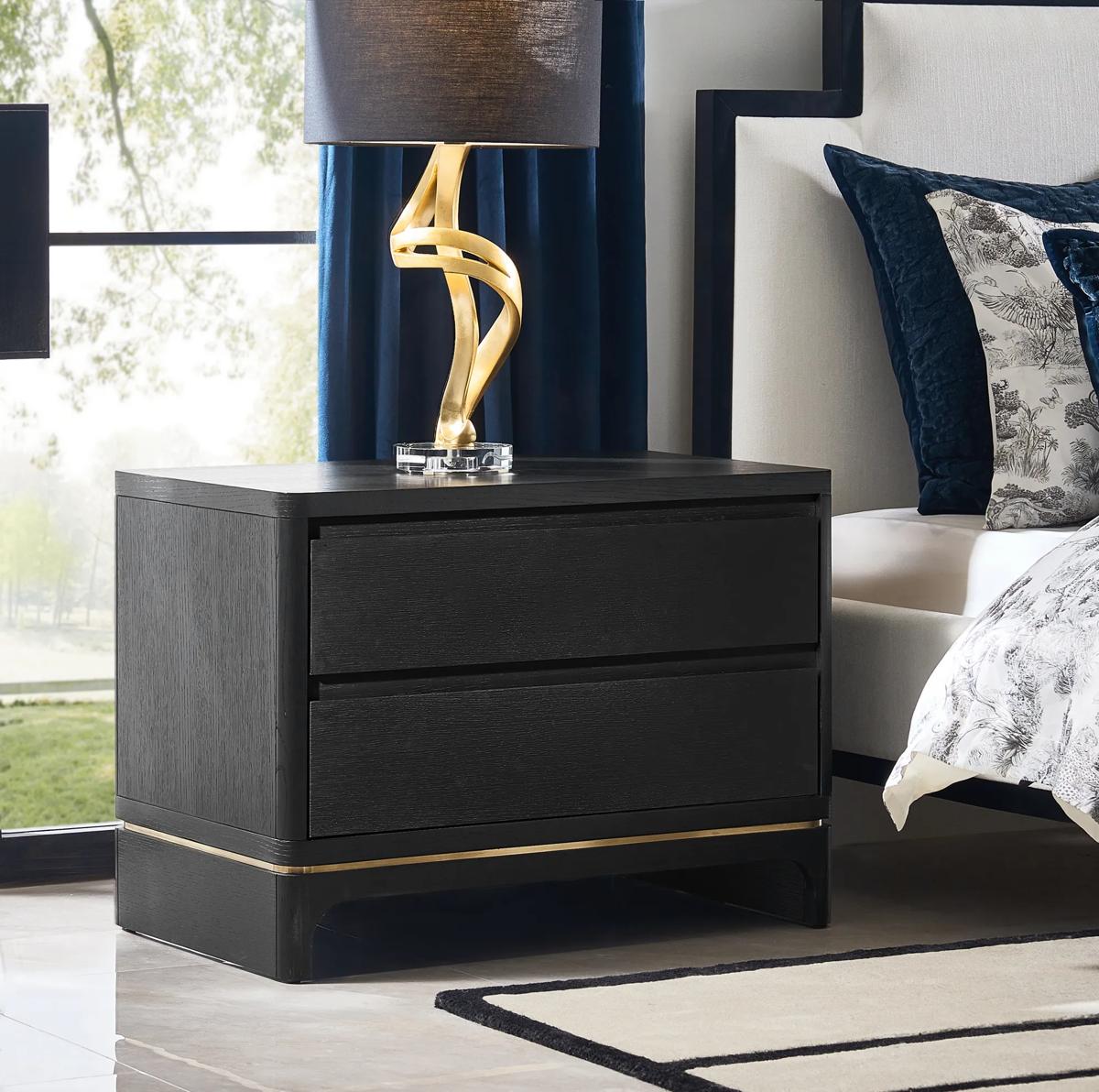 Vanta Black Oak 2-Drawer Nightstand (32")$899
A matte black oak nightstand accented with gold stainless steel trim and soft-close, felt-lined drawers.
Add To Cart -
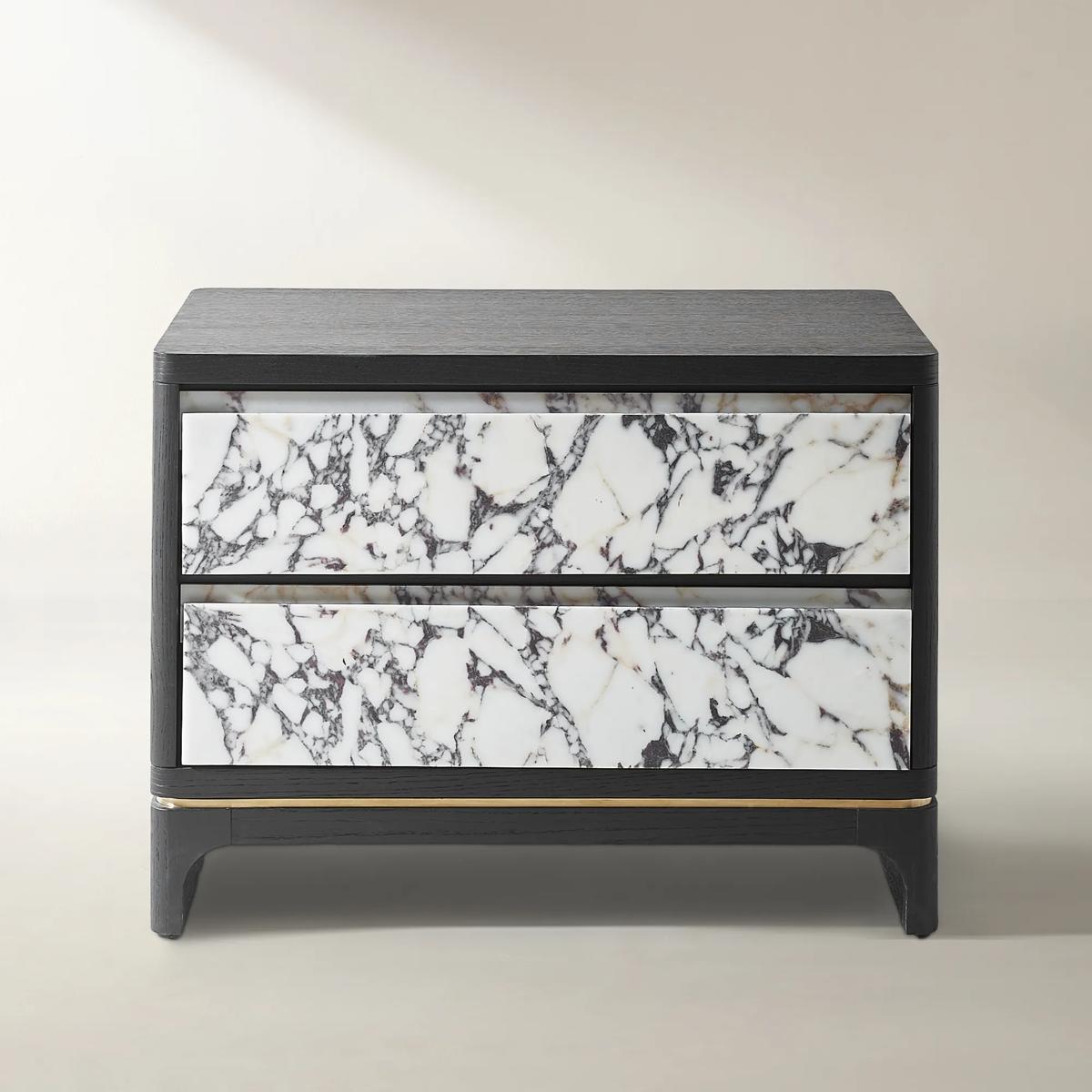 Vanta Black Oak And Calacatta Marble 2-Drawer Nightstand (32")$1099
A striking nightstand featuring genuine Calacatta Viola marble fronts and matte black oak veneer for bold elegance.
Add To Cart -
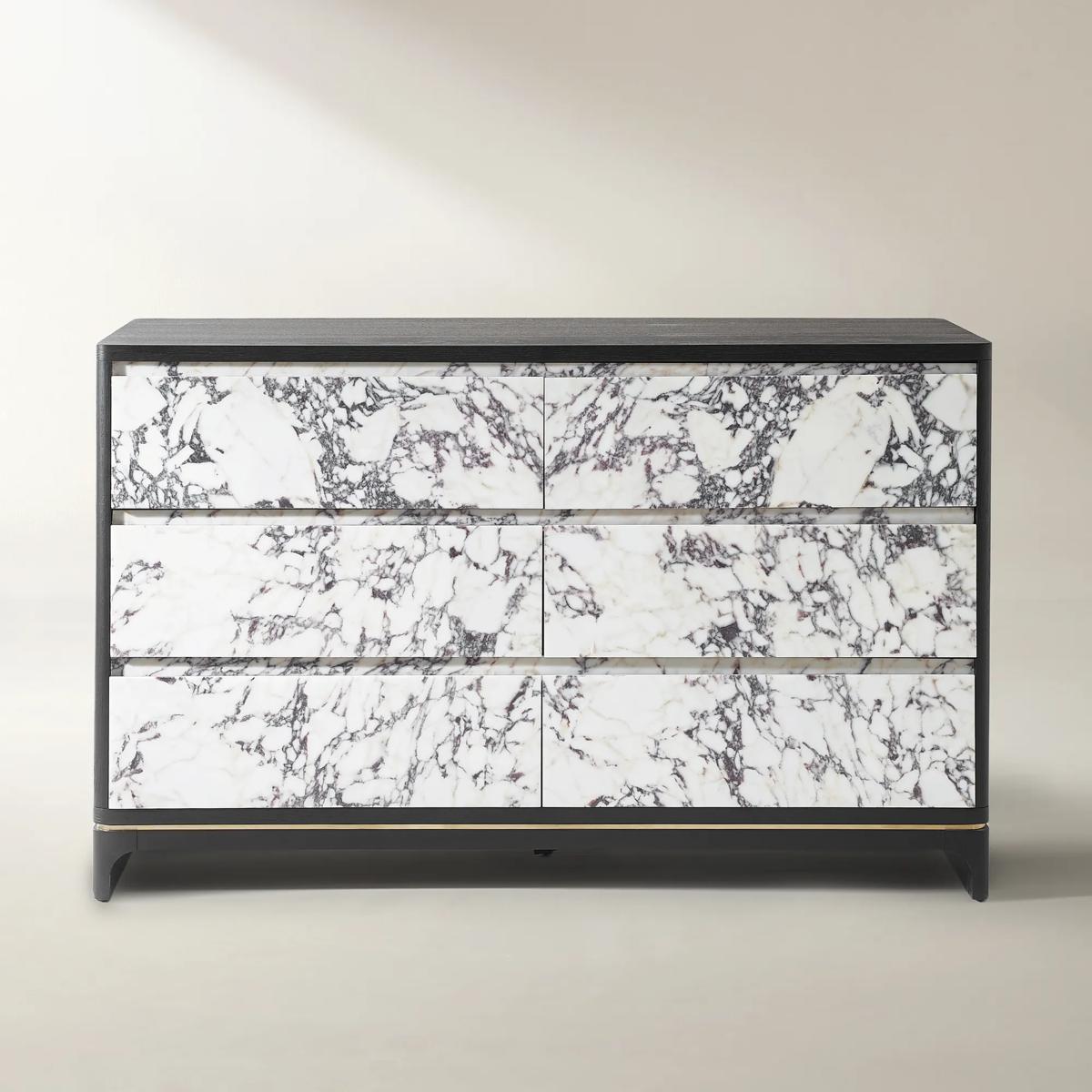 Vanta Black Oak And Calacatta Marble 6-Drawer Dresser (66")$2899
A striking dresser featuring genuine Calacatta Viola marble fronts and matte black oak veneer for modern luxury.
Add To Cart

Master Bedroom Organization Ideas
Discover master bedroom organization ideas that bring everyday order to a polished, personal retreat. Explore furniture and decor with your storage needs and room layout in mind, prioritizing easy access to essentials and comfortable pathways. Keep surfaces thoughtfully arranged so your room’s most expressive details—not visual clutter—command attention.
Master bedroom organization ideas work best when they combine clear surfaces, vertical storage, and multifunctional furniture that gives everyday belongings a defined place. Dressers, nightstands, storage beds, benches, and decorative organizers can bring that structure to a room without diminishing its sense of luxury. The goal is not an empty bedroom, but a composed one: a gleaming tray holding a watch and reading glasses, a generous drawer concealing charging accessories, and a beautifully proportioned bench keeping spare bedding out of sight. Closed storage creates a restful backdrop, while a few open surfaces leave room for expressive objects and sculptural lighting. For anyone whose dresser has become a landing place for jewelry, receipts, and folded clothing, divided storage can make the distinction between getting organized and staying organized. Shallow compartments suit smaller accessories; deeper drawers accommodate bulkier garments without forcing several categories into one crowded space. Nightstands with enclosed storage are particularly useful beside a bed, where books, personal essentials, and electronic accessories can otherwise interrupt the room’s visual rhythm. A small catchall gives frequently worn pieces a consistent home, while less-used belongings remain tucked away. In a shared bedroom, separate drawers or clearly defined compartments help each person maintain a comfortable routine without competing for the same surface. A coordinated mix of Bedroom Organization Products can support these habits while contributing texture, reflection, and architectural presence. Matching every finish is unnecessary; a repeated metallic accent or complementary wood tone can connect different storage pieces with intention. Even a compact bedroom can feel richly appointed when furniture serves more than one purpose and decorative accents are chosen with restraint. A bedside cabinet that holds the evening essentials, for example, earns its place both practically and visually. Organization becomes part of the room’s design rather than something hidden behind it, allowing a dramatic headboard, sumptuous bedding, or a striking piece of art to command attention without competing with everyday clutter.
Scale and access matter as much as storage capacity. A tall chest uses vertical space while preserving floor area, making it a compelling option when a broad dresser would crowd the room. A wider, lower piece offers a substantial surface for a mirror or decorative arrangement, but its depth should leave enough room for drawers to open fully and for someone to stand comfortably in front. Measurements need to account for baseboards, door swings, nearby furniture, and the path between the bed and closet, not simply the width of an empty wall. Storage beds make use of space that might otherwise go untouched, though drawer-based designs need clear access along the sides or foot of the frame. Lift-up designs have different operating requirements, so the mechanism, recommended mattress compatibility, and manufacturer’s instructions deserve attention before selection. At the foot of the bed, an upholstered storage bench can provide seating for dressing while concealing extra linens or decorative pillows; its length and depth should complement the bed without narrowing the walkway. In closets, shelf organizers, hanging compartments, and divided storage make vertical space more useful by separating folded garments, handbags, and accessories into visible categories. Frequently used belongings are easiest to maintain within comfortable reach, while occasional-use pieces can occupy higher shelves in suitable containers. Larger furniture should be secured according to the manufacturer’s anti-tip instructions, and shelves and compartments should never exceed their stated weight limits. For couples with different schedules, accessible bedside storage can also reduce the need to search through a shared dresser early or late in the day. A compact dressing area benefits from organizers that keep daily accessories visible without scattering them across every available surface. These practical relationships between furniture, movement, and routine give master bedroom storage its lasting value: the room remains easy to live in, with enough breathing space for its more expressive details.
Materials and construction determine how beautifully bedroom storage performs over time. Wood and wood-veneer furniture introduce grain and depth, while lacquered or mirrored finishes create a more luminous, polished presence. Neither material nor appearance alone establishes durability; drawer construction, hardware, finish quality, and appropriate use all contribute to how a piece holds up. Smooth-operating drawers and well-fitted dividers make daily access more comfortable, particularly for compartments opened several times a day. Upholstered benches offer softness and an inviting place to sit, with fabric texture influencing both the mood of the room and its care requirements. A richly textured surface can bring dimension to a restrained palette, while a smoother weave offers a different visual character; cleaning methods should always follow the upholstery’s care label. Decorative boxes and trays introduce another layer of organization, especially for jewelry, watches, and small personal belongings that can disappear inside an undivided drawer. Soft-lined compartments help separate delicate pieces, although valuable jewelry may require secure storage rather than an exposed display. Glass, mirror, and polished metal deserve gentle handling, and trays should have a suitable base or protective layer when placed on easily marked furniture. Regular dusting with an appropriate soft cloth, prompt attention to spills, and avoidance of harsh cleaners help preserve finishes, subject to each manufacturer’s care directions. Drawers should remain comfortably filled rather than forced shut, and seating should be used within its stated capacity. These details matter in a first apartment, a shared primary suite, or a long-established bedroom being thoughtfully refined. Smaller decorative organizers can also make considered housewarming or wedding gifts when selected around the recipient’s space, taste, and routines. A jewelry box for someone who treasures statement accessories or a refined bedside tray for an avid reader offers both usefulness and personal resonance. The strongest arrangement balances concealed capacity with a few beautifully resolved displays, leaving the bedroom expressive, comfortable, and ready for everyday life.
FAQs
Treat organization as part of your bedroom’s design story. Give clothing, accessories, and bedside essentials dedicated places, then conceal everyday necessities in decorative boxes or storage furniture. Keep visible surfaces thoughtfully composed with a tray, a sculptural accent, or a favorite photograph. A coordinated palette brings the arrangement together without diminishing its personality.
Create a bedside vignette around the essentials you reach for each evening. Gather jewelry or reading glasses on a decorative tray, tuck personal items into a drawer, and reserve the surface for lighting and one expressive accent. Repeating a finish or color from elsewhere in the room gives this intimate corner a polished connection to the larger space.
Arrange accessories by category, giving rings, bracelets, and watches their own compartments or dishes. Keep frequently worn pieces accessible and place occasional favorites in covered organizers. For a dresser display with presence, anchor the arrangement with a decorative tray and let one distinctive jewelry piece become part of the composition.
Begin by grouping clothing by type, then arrange each category by color for a visually composed wardrobe. Use coordinated hangers and a consistent look for bins or boxes, with discreet labels for concealed contents. Give handbags and accessories designated places so the closet feels like a considered extension of your bedroom rather than a separate design afterthought.
Create individual zones within a shared design scheme. Assign each person dedicated drawers, closet sections, and bedside storage, then establish a place for shared linens and accessories. Coordinating organizers can unify the room, while distinct decorative accents preserve personal expression. The result is a bedroom with a cohesive visual rhythm and room for both personalities.