Glam Gold Coffee Tables
Glam Gold Coffee Tables
-
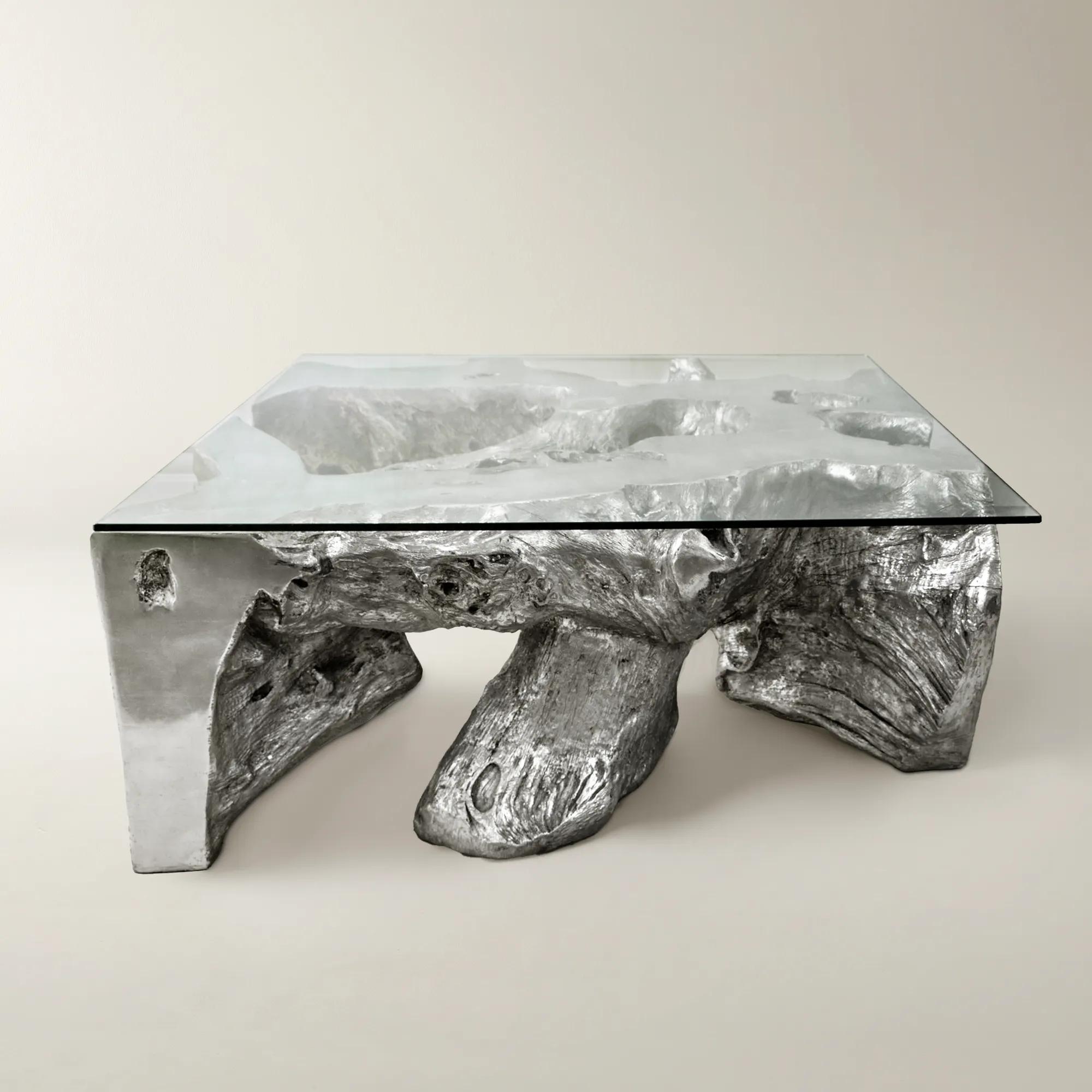
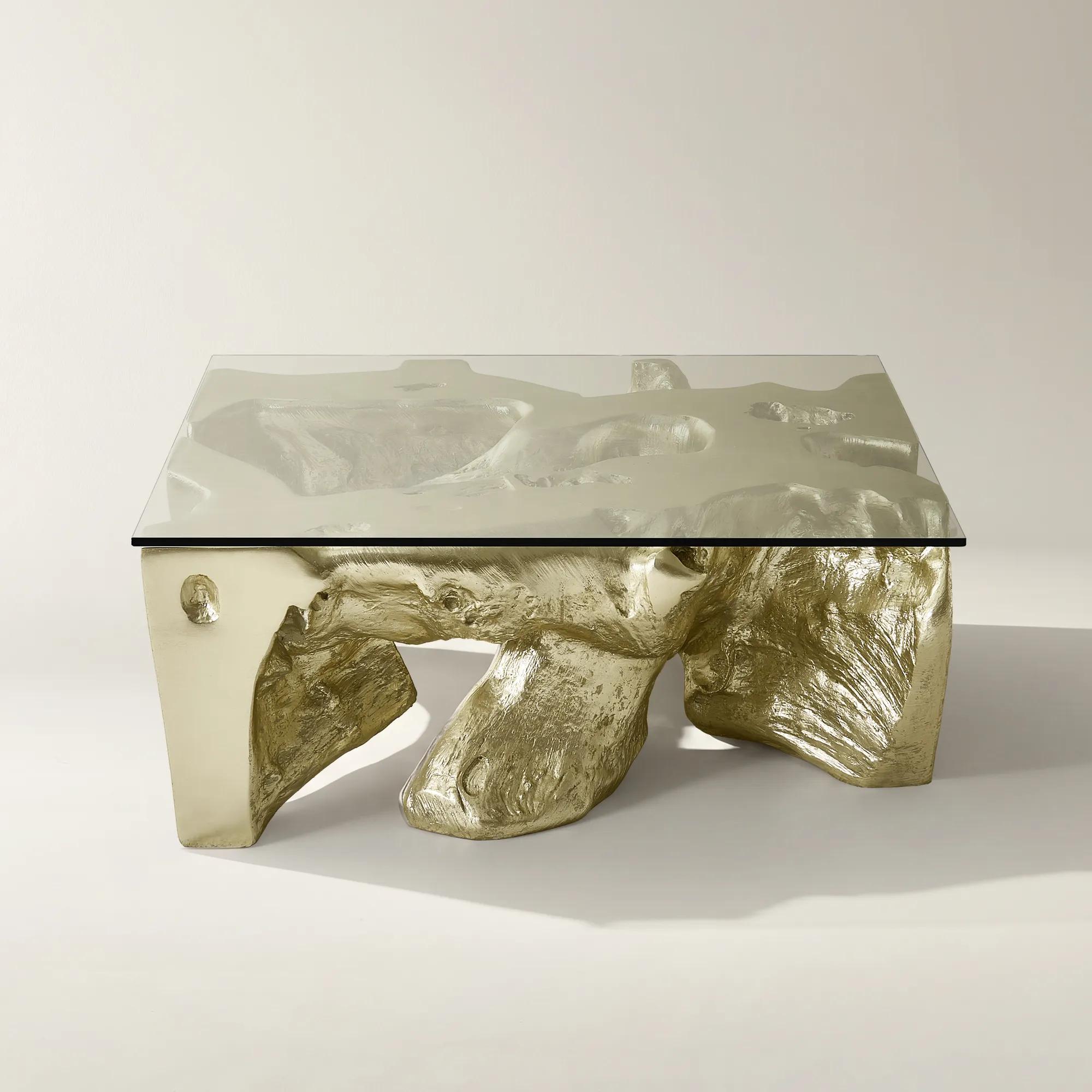 Sequoia Champagne Gold Resin Coffee Table With Glass Top (44")$2299
A sculptural resin coffee table with a champagne gold leaf finish and a clear tempered glass top.
Add To Cart -
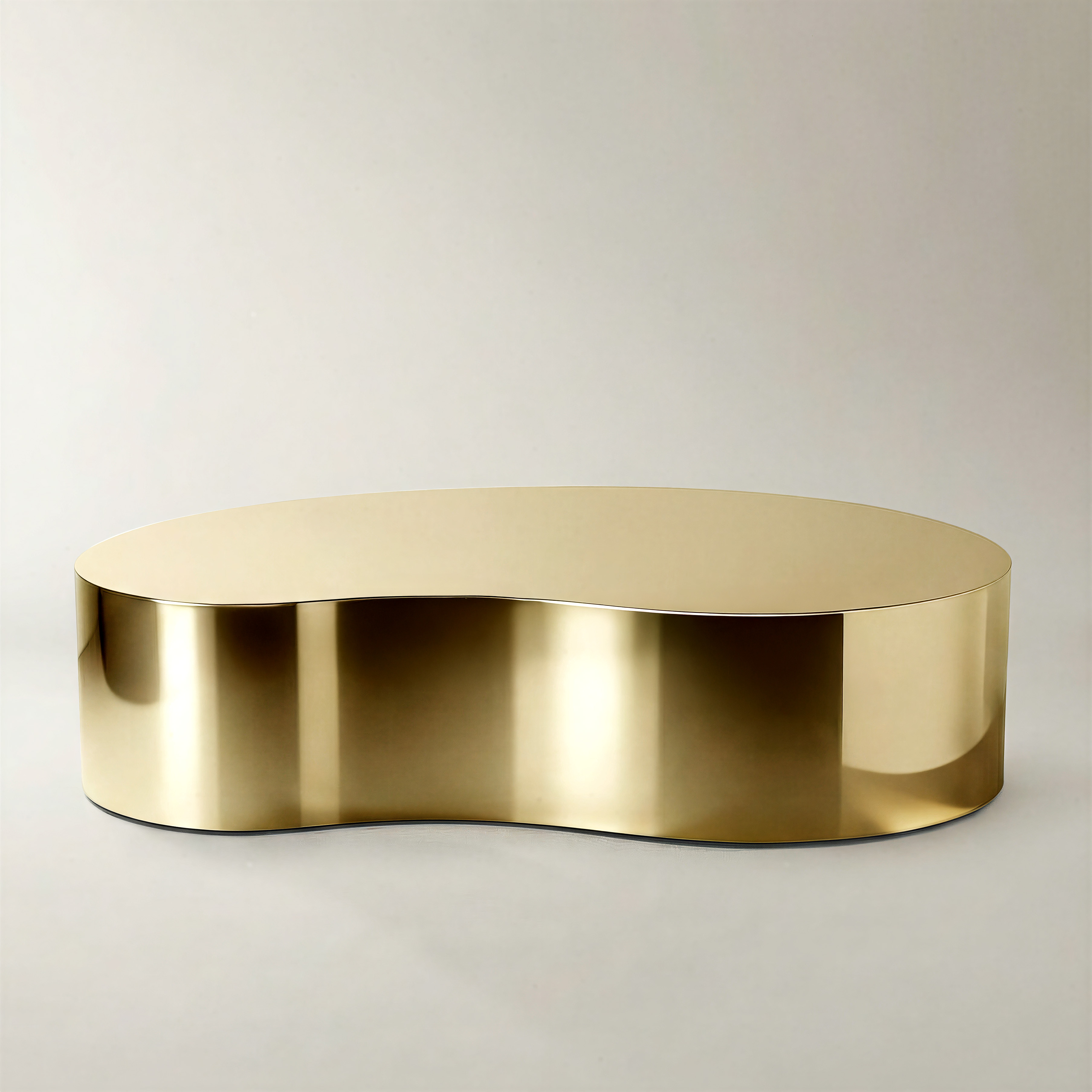
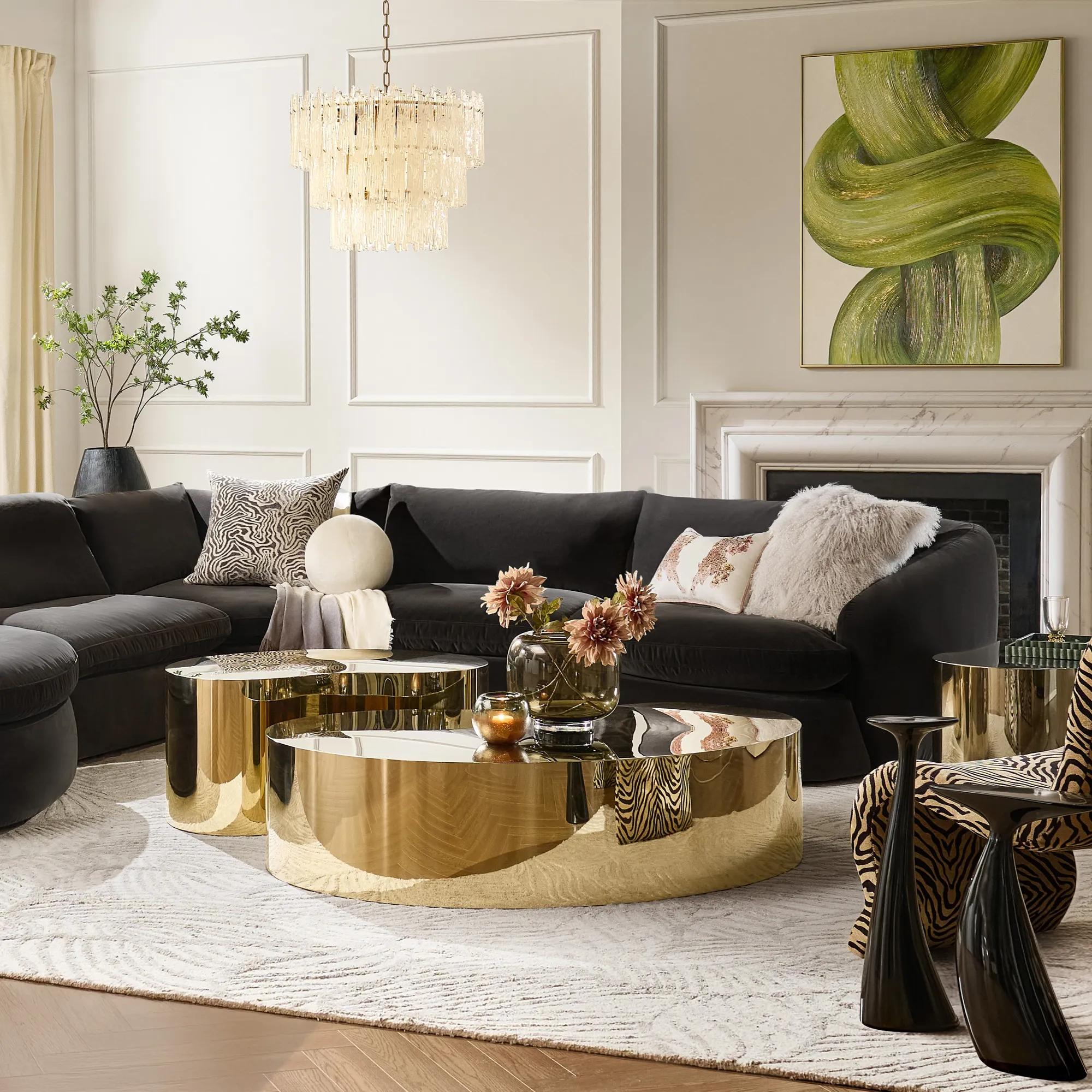 Aurea Soft Gold Coffee Table (57")$1399
A sculptural coffee table crafted from stainless steel with a high-gloss soft gold finish and rounded edges.
Add To Cart -
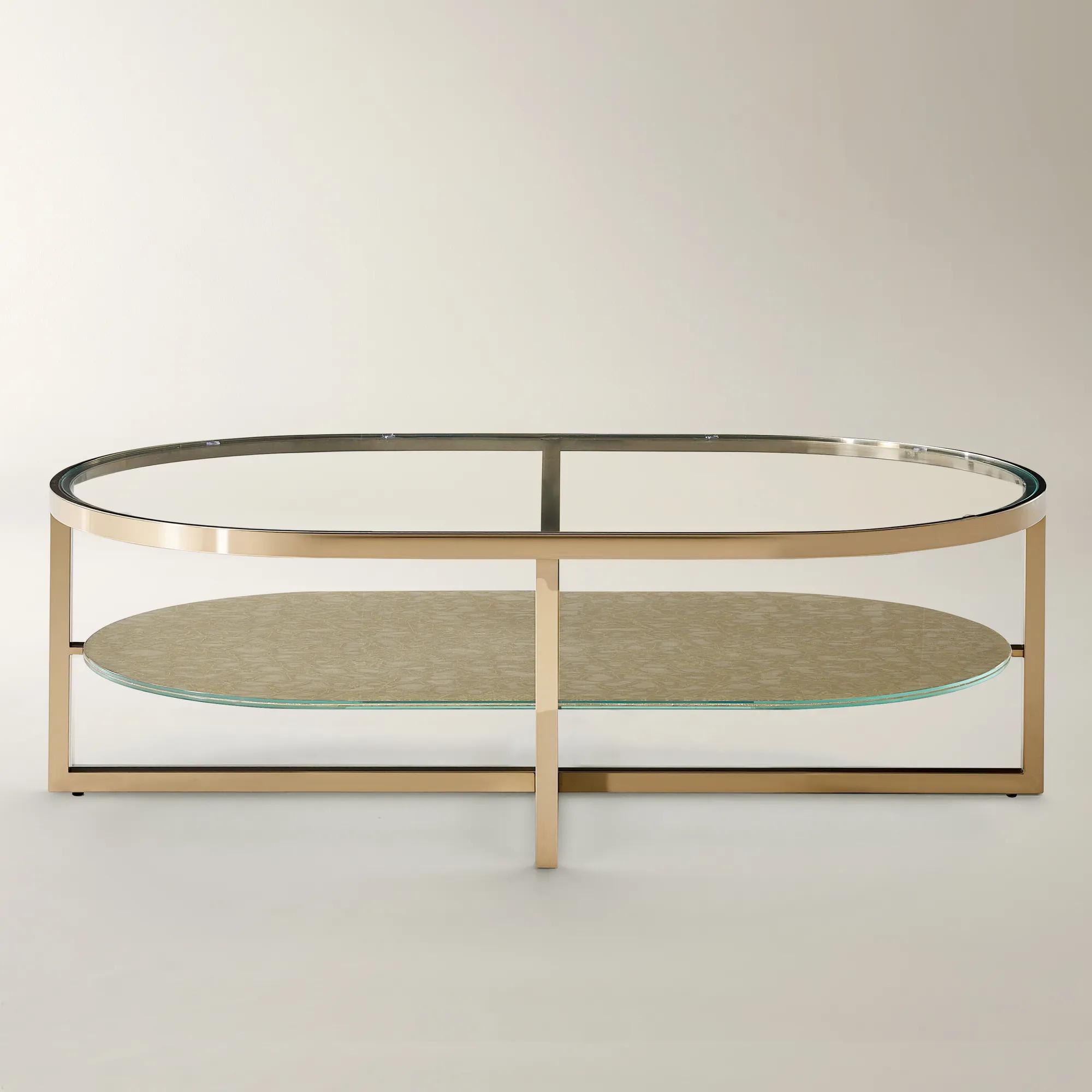
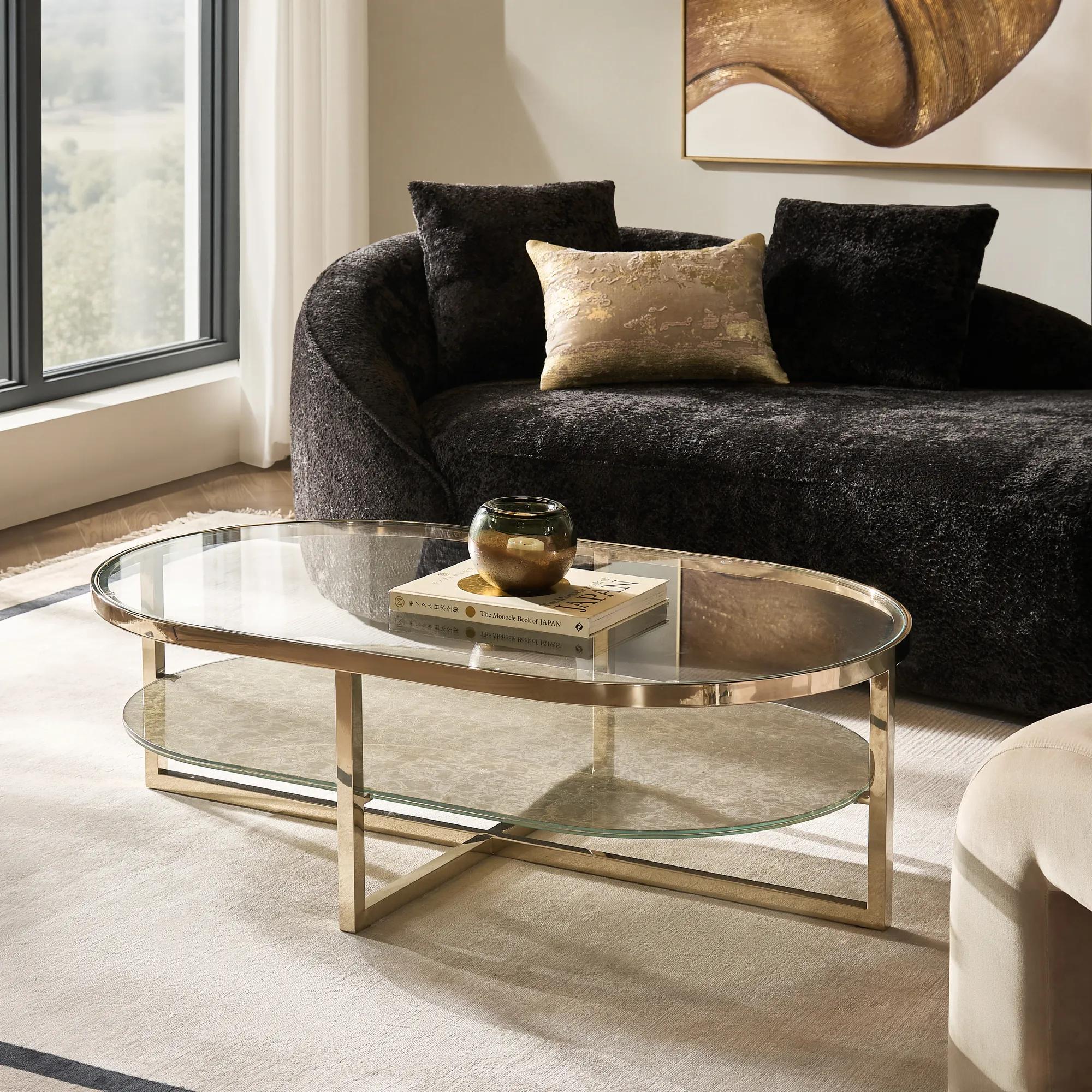 Duality Oval Fabric-Laminated Glass Coffee Table (47")$999
An oval coffee table with a clear tempered-glass top, fabric-laminated shelf, and soft gold stainless-steel frame.
Add To Cart -
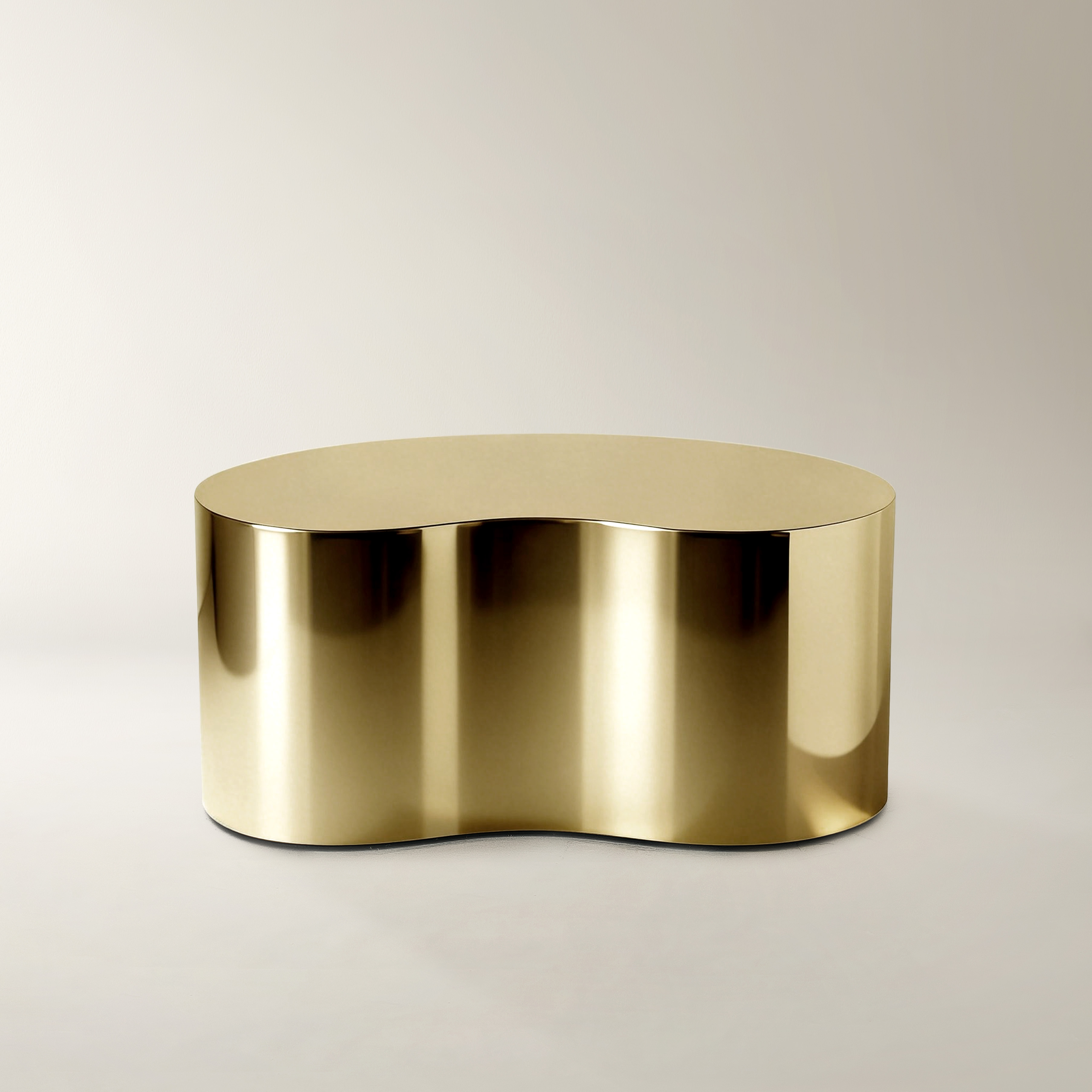 Aurea Soft Gold Coffee Table (37.5")$999
A sculptural coffee table crafted from premium stainless steel with a high-gloss soft gold mirror finish.
Add To Cart -
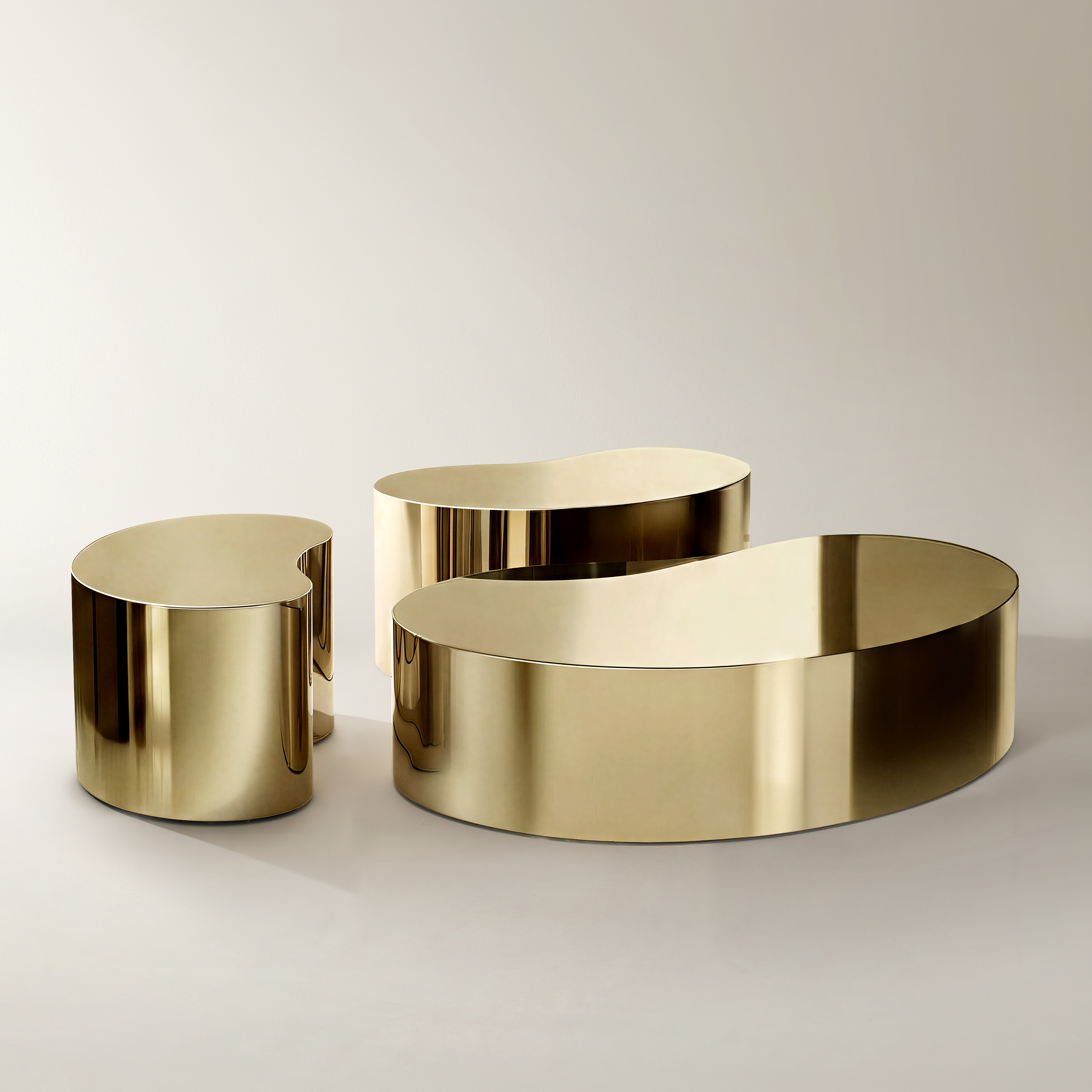 Aurea Soft Gold Coffee Table Set of 3 (32"-57")$3197
A sculptural coffee table crafted from premium stainless steel with a high-gloss, soft gold mirror finish.
Add To Cart -
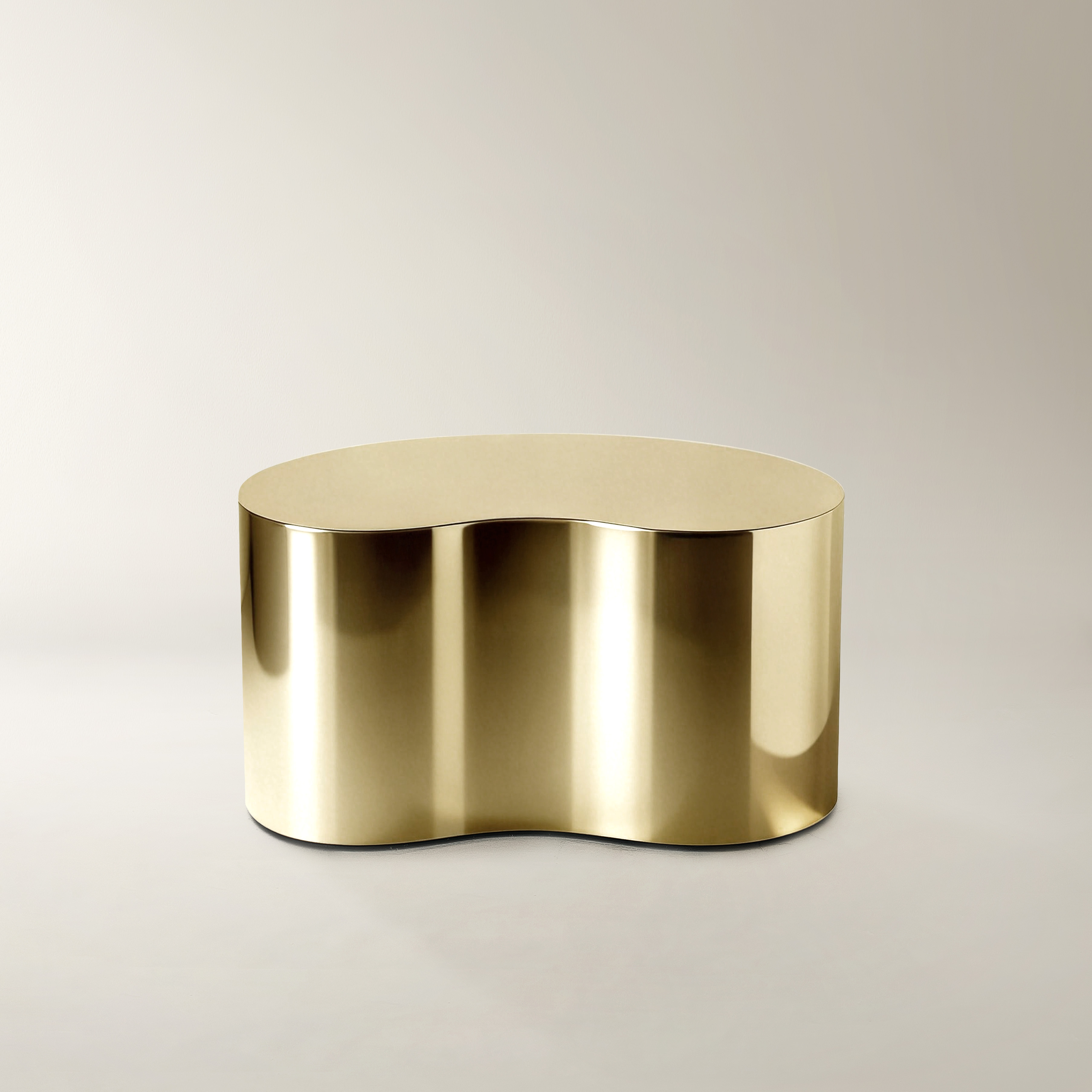 Aurea Soft Gold Coffee Table (32")$799
A sculptural coffee table crafted from premium stainless steel with a high-gloss, soft gold mirror finish.
Add To Cart -
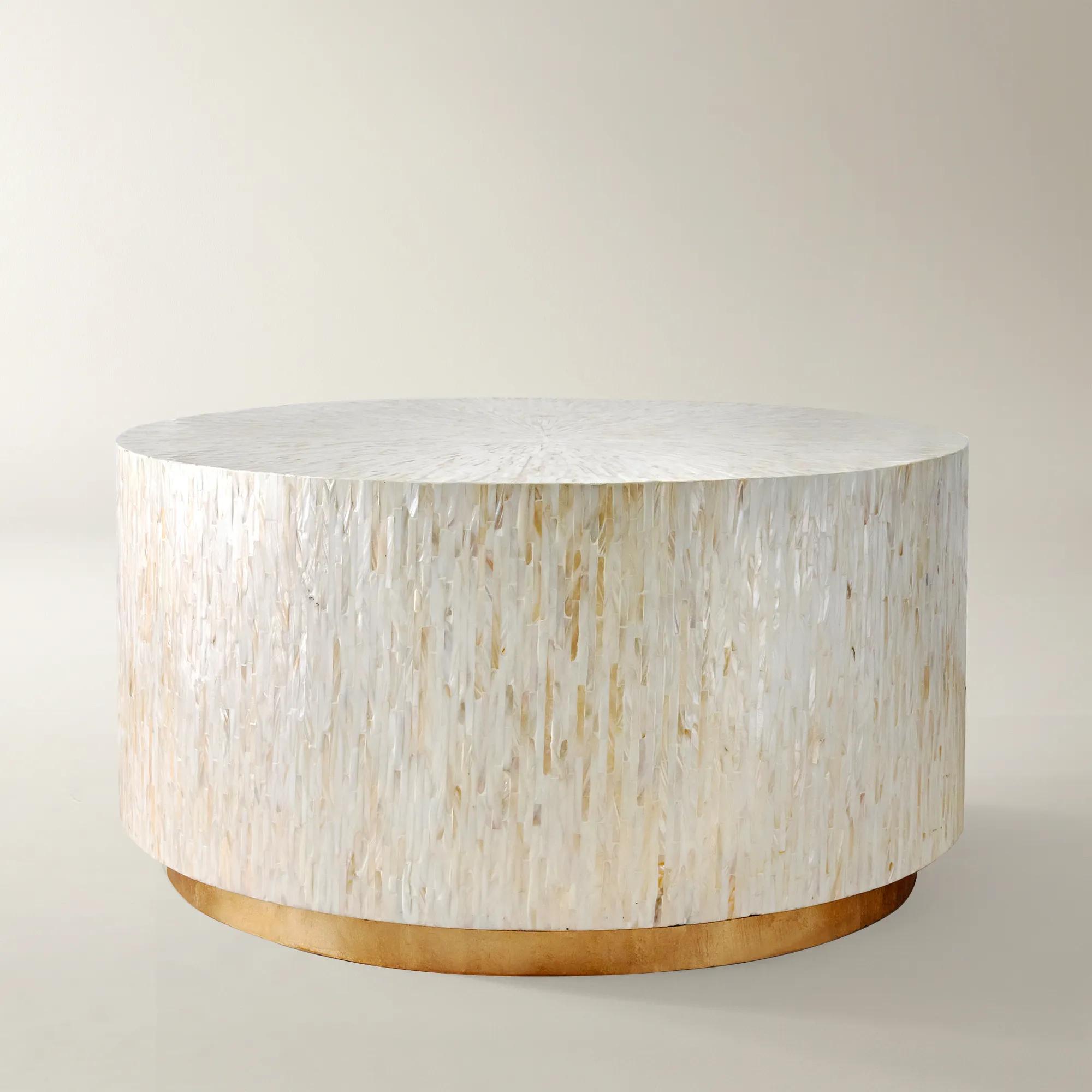
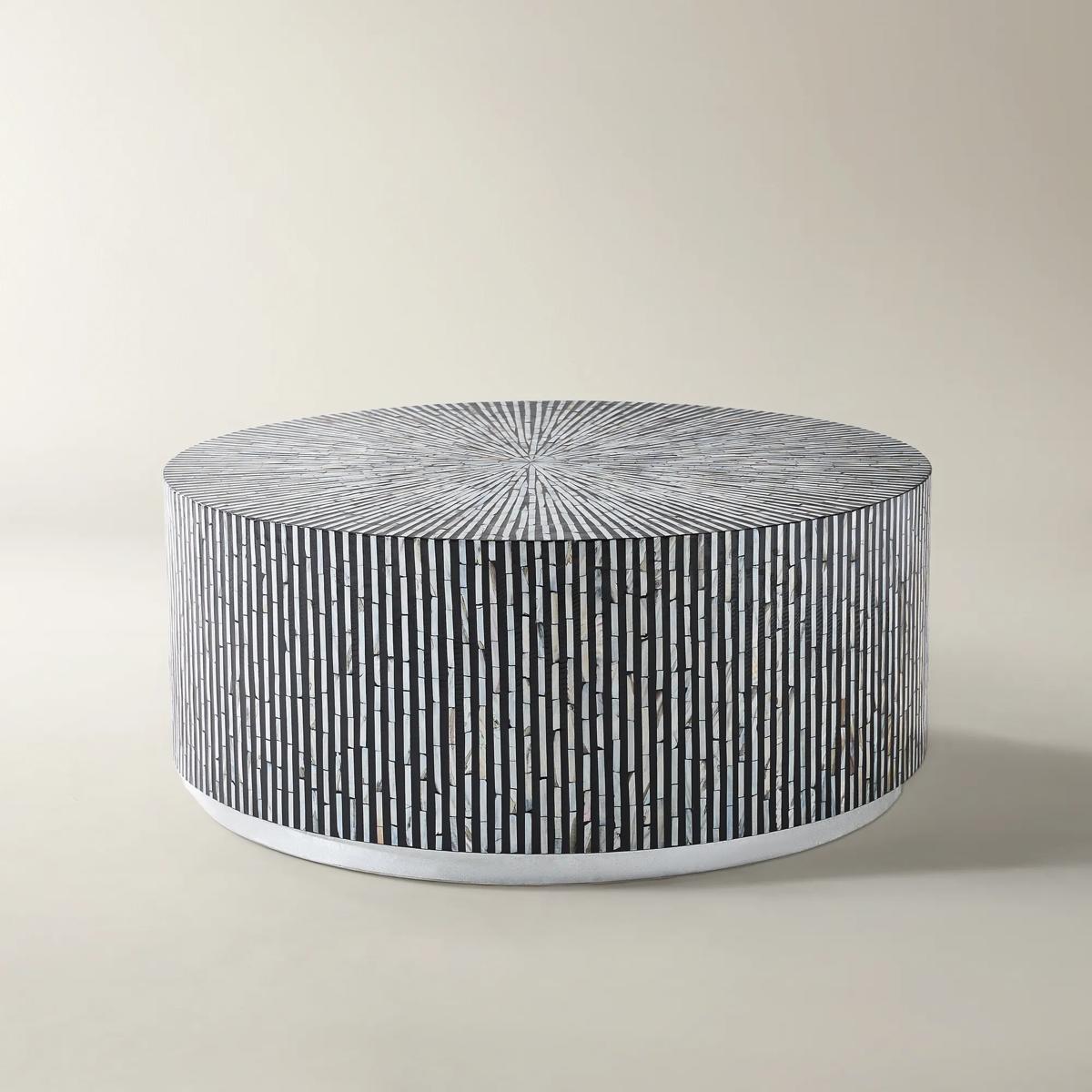
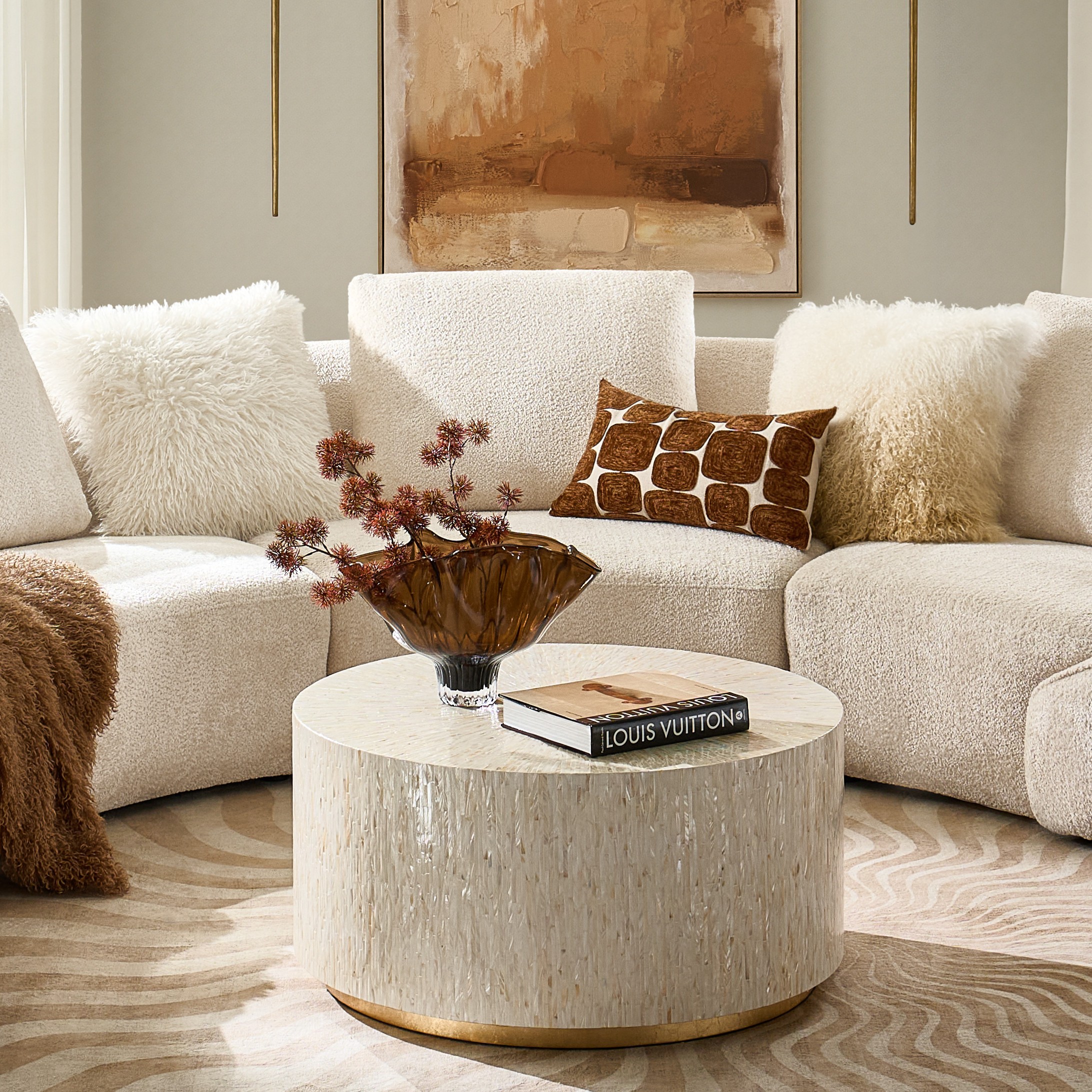 Alexandria Round Mosaic Platinum Coffee Table (36")$799
A luminous ivory coffee table featuring hand-applied mother-of-pearl mosaic and a gold leaf-accented base.
Add To Cart -
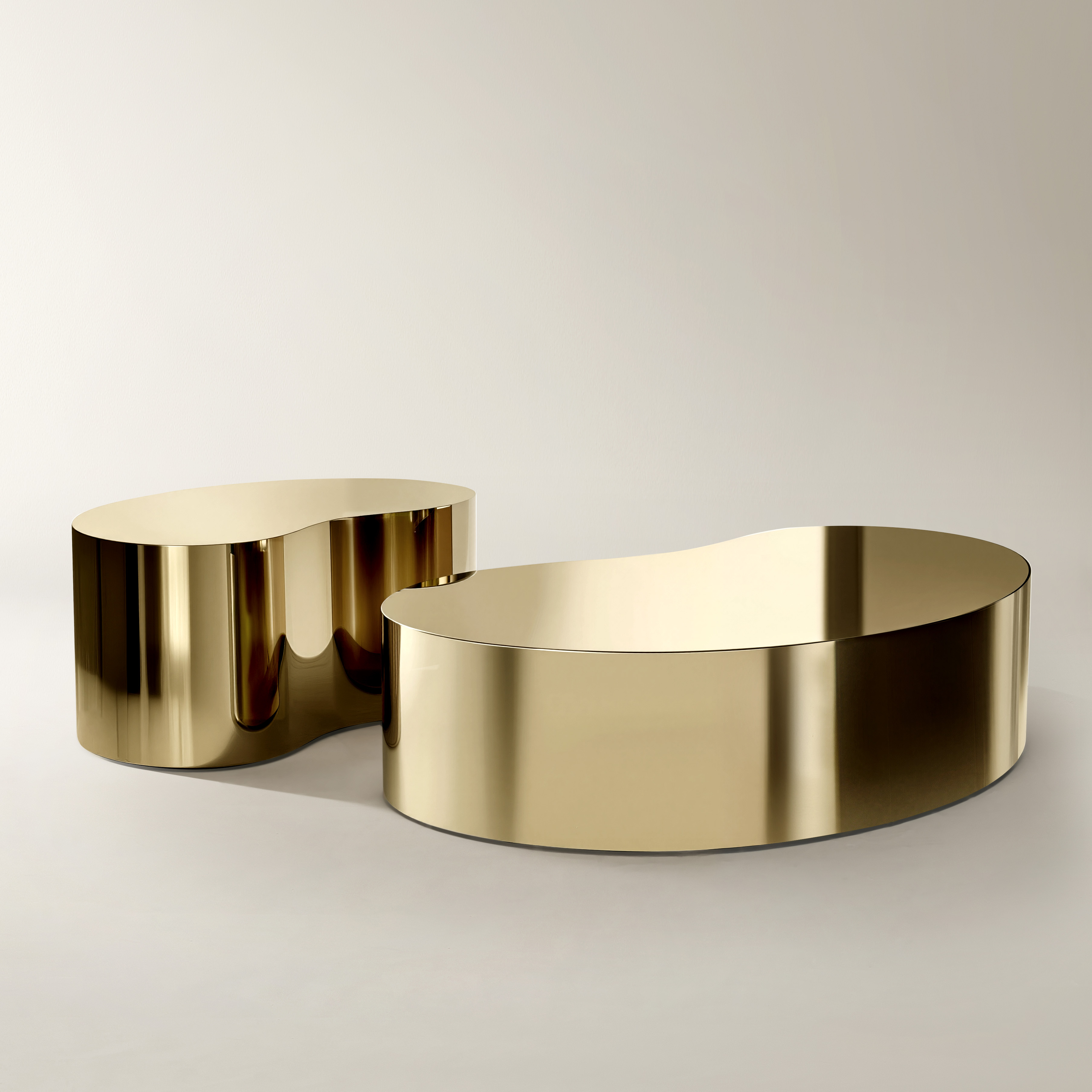 Aurea Soft Gold Coffee Table Set of 2 (37.5"-57")$2398
A sculptural coffee table crafted from premium stainless steel with a radiant, high-gloss soft gold finish.
Add To Cart -
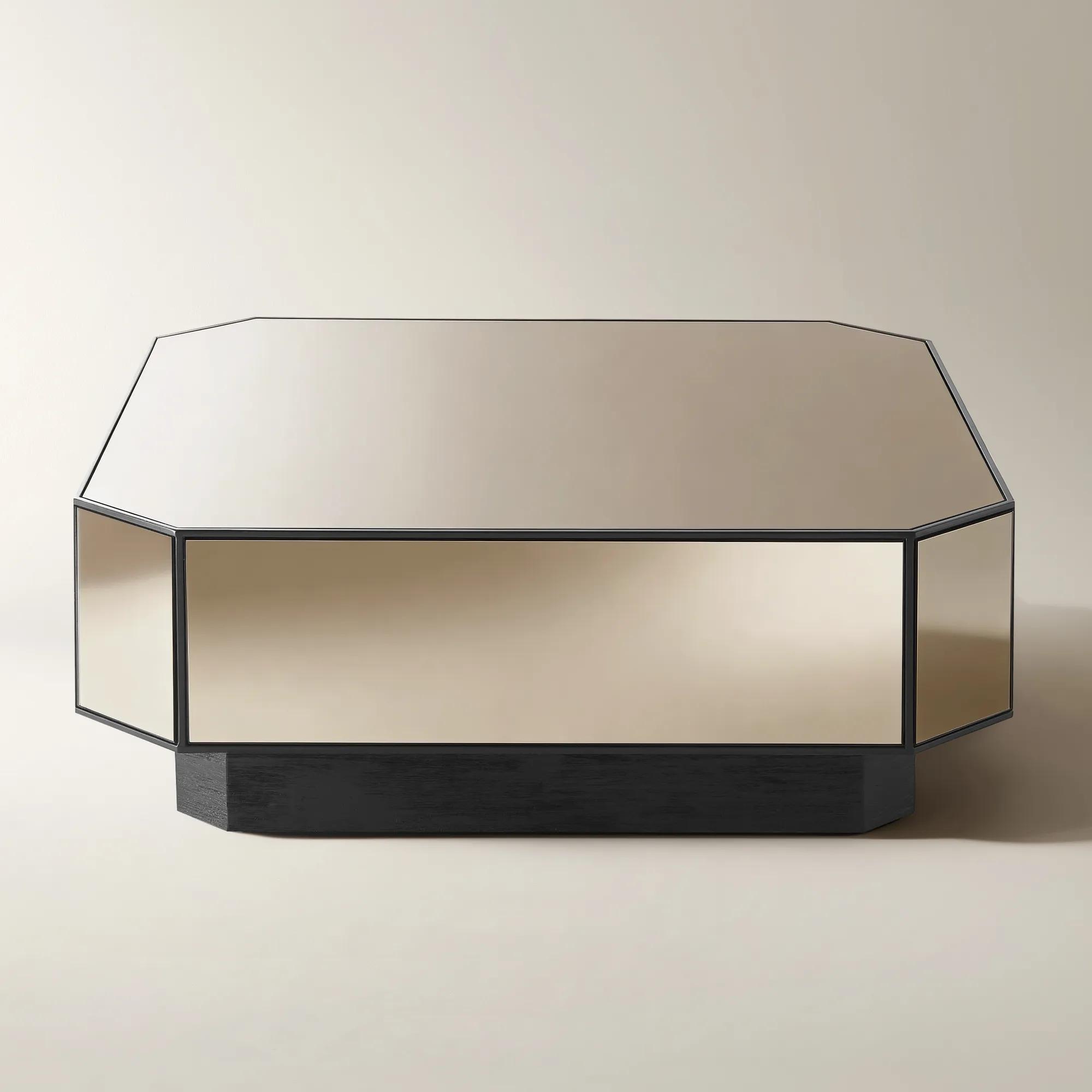
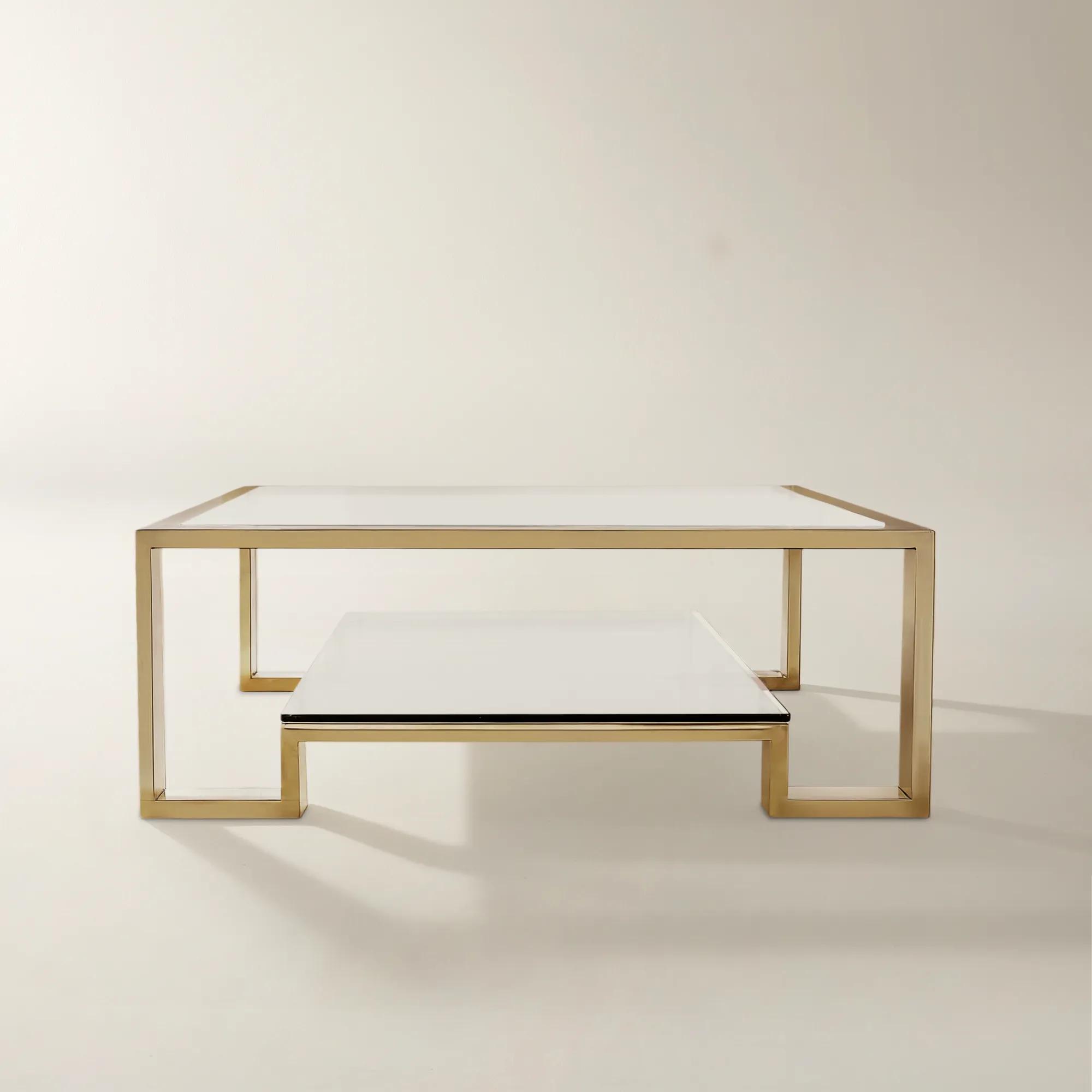 Duplicity Rectangular Gold Stainless Steel Coffee Table With Glass Top (50")$1399
A modern coffee table featuring a stainless steel frame, tempered glass top, and floating storage shelf.
Add To Cart -
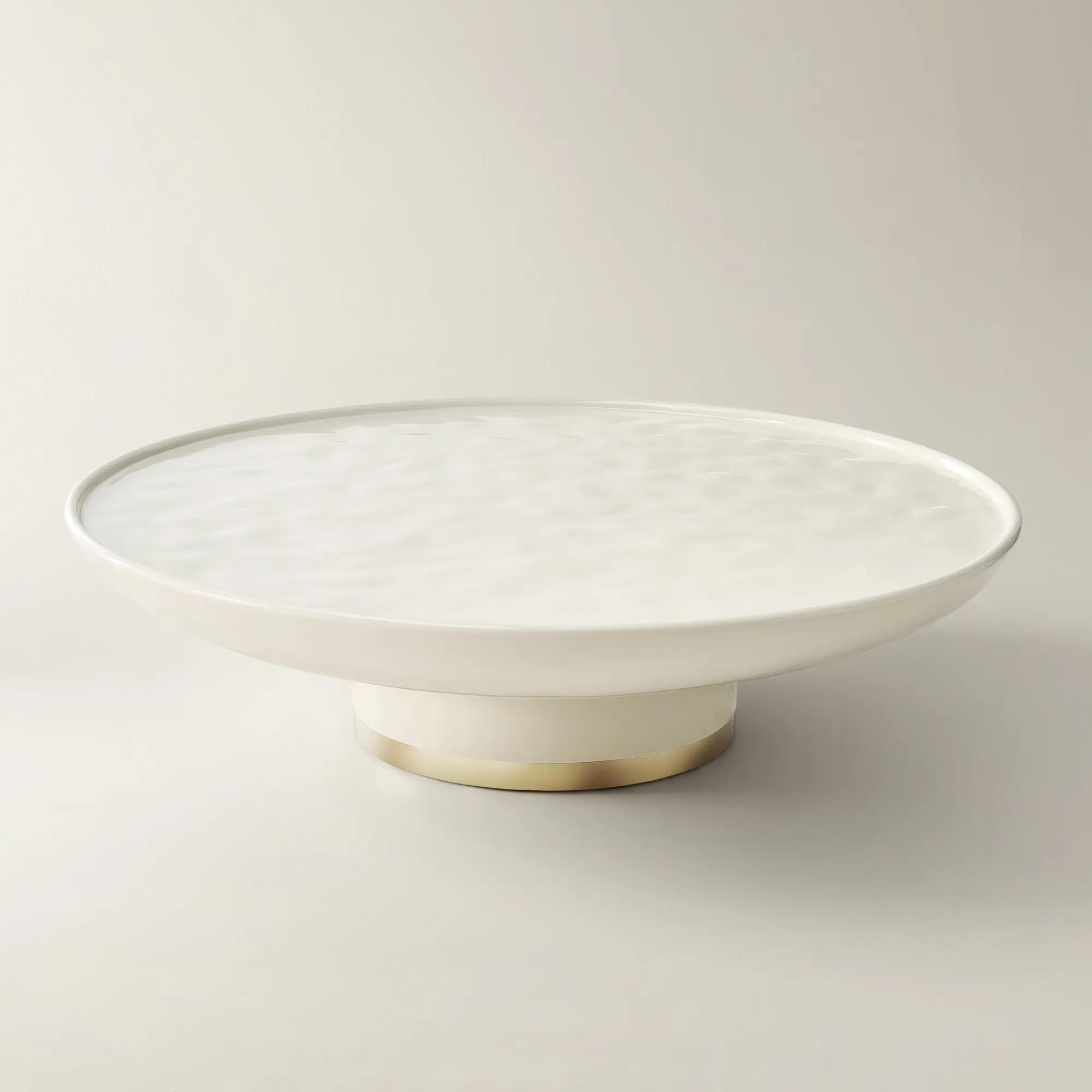
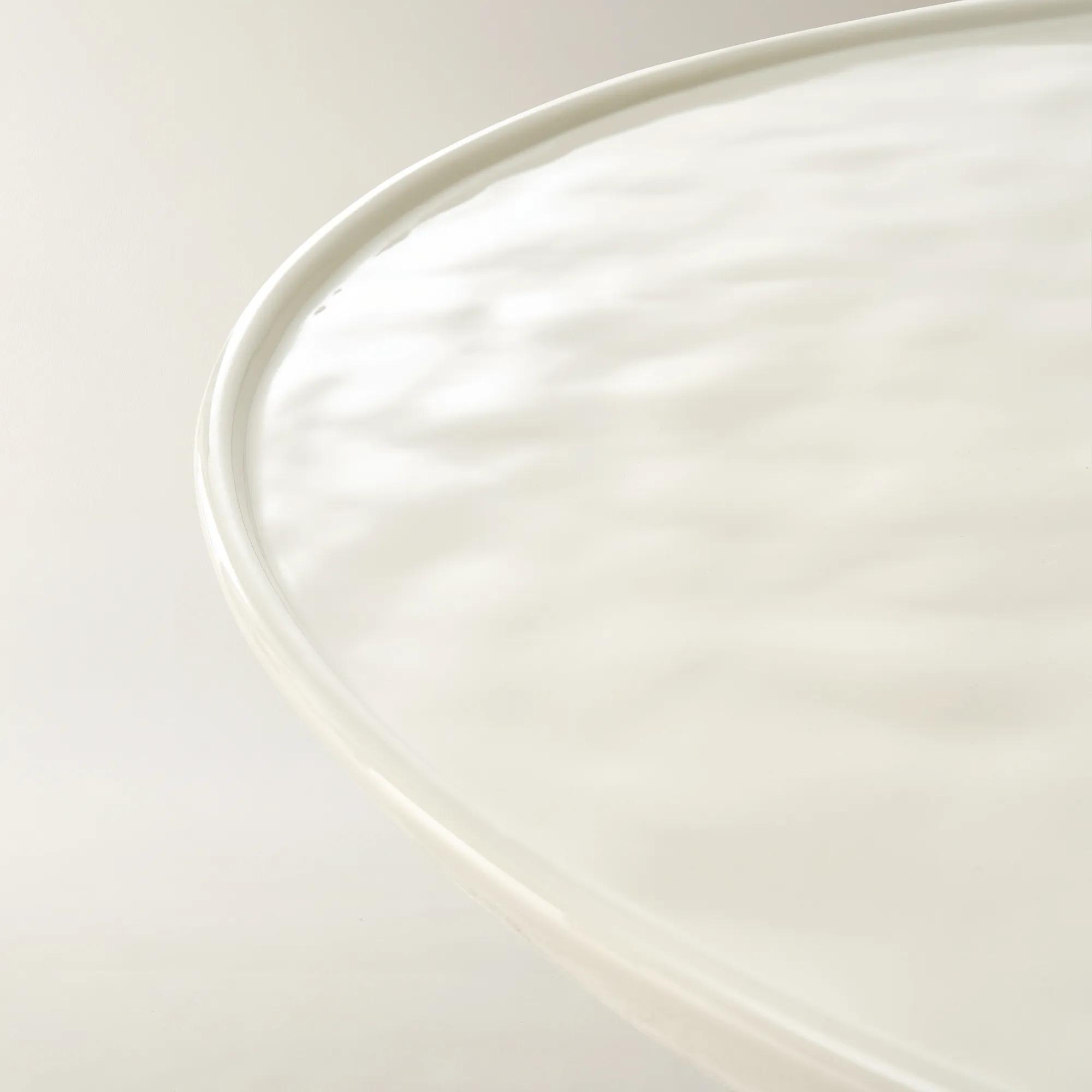 Celia Lacquered Cloud Resin Indoor/Outdoor Coffee Table (54")$1399
A sculptural one-piece resin coffee table with a high-gloss warm finish and gold stainless steel base.
Add To Cart -
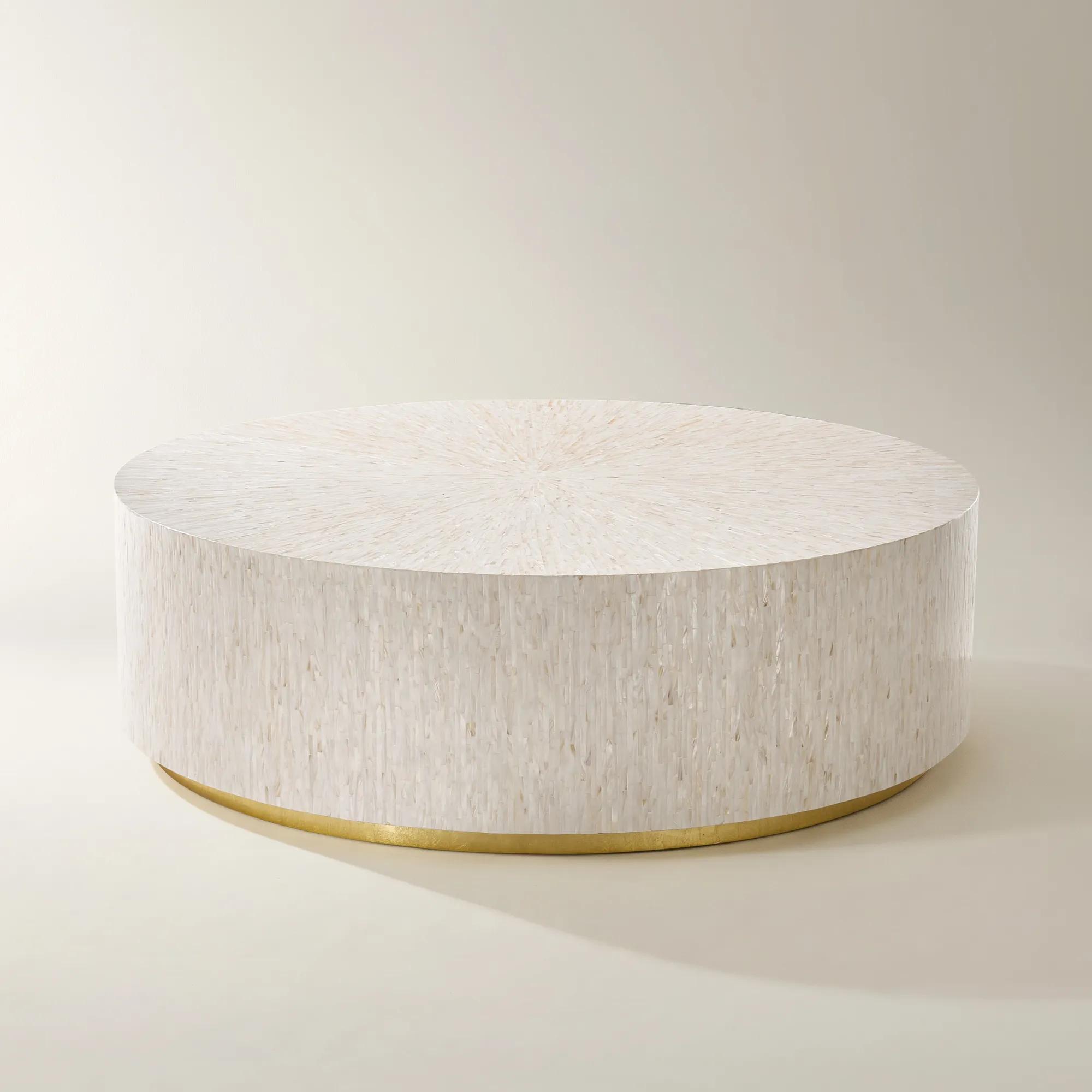 Alexandria Round Mosaic Platinum Coffee Table (52")$1399
A luminous mother-of-pearl mosaic coffee table with a sculptural round form and gold leaf–accented base.
Add To Cart -
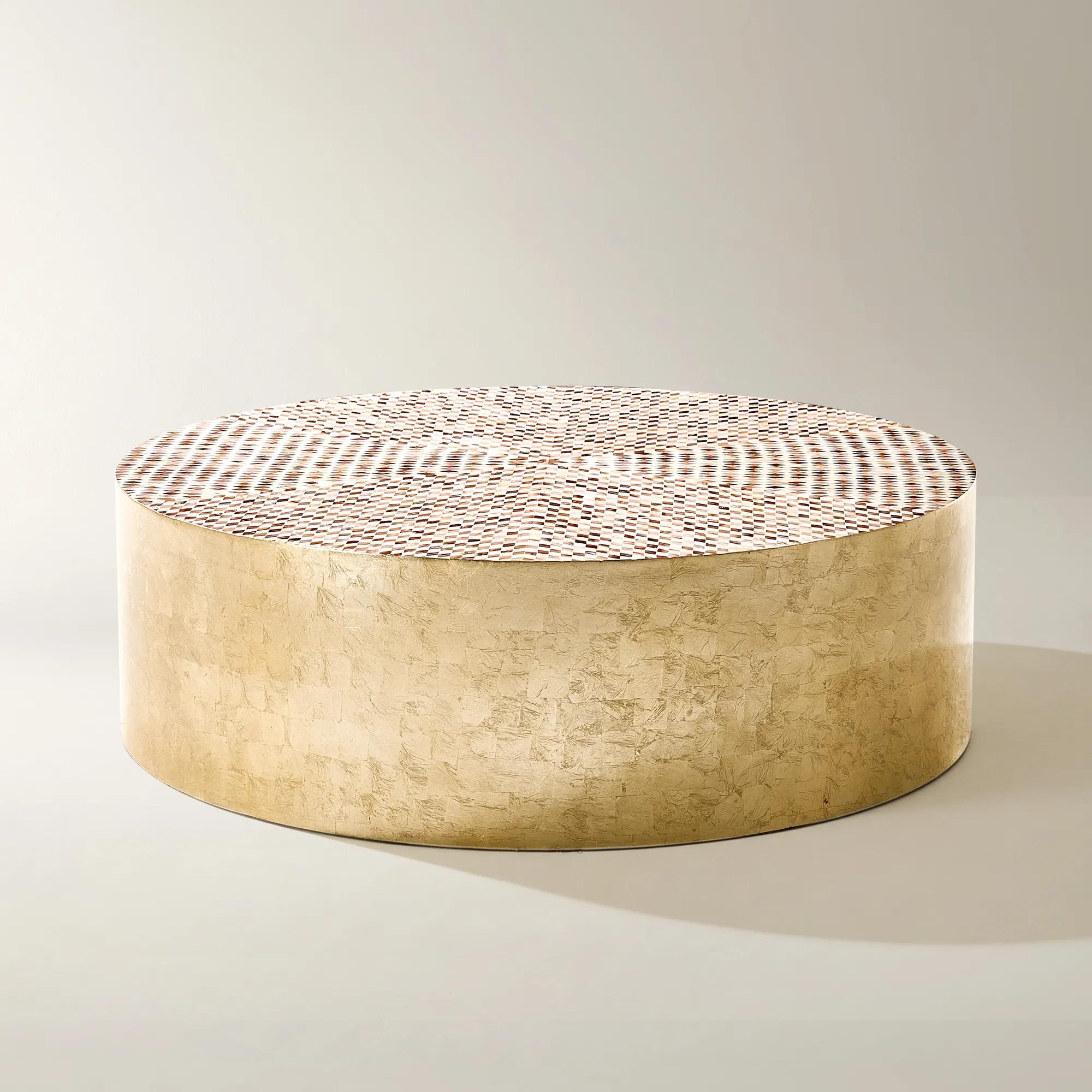
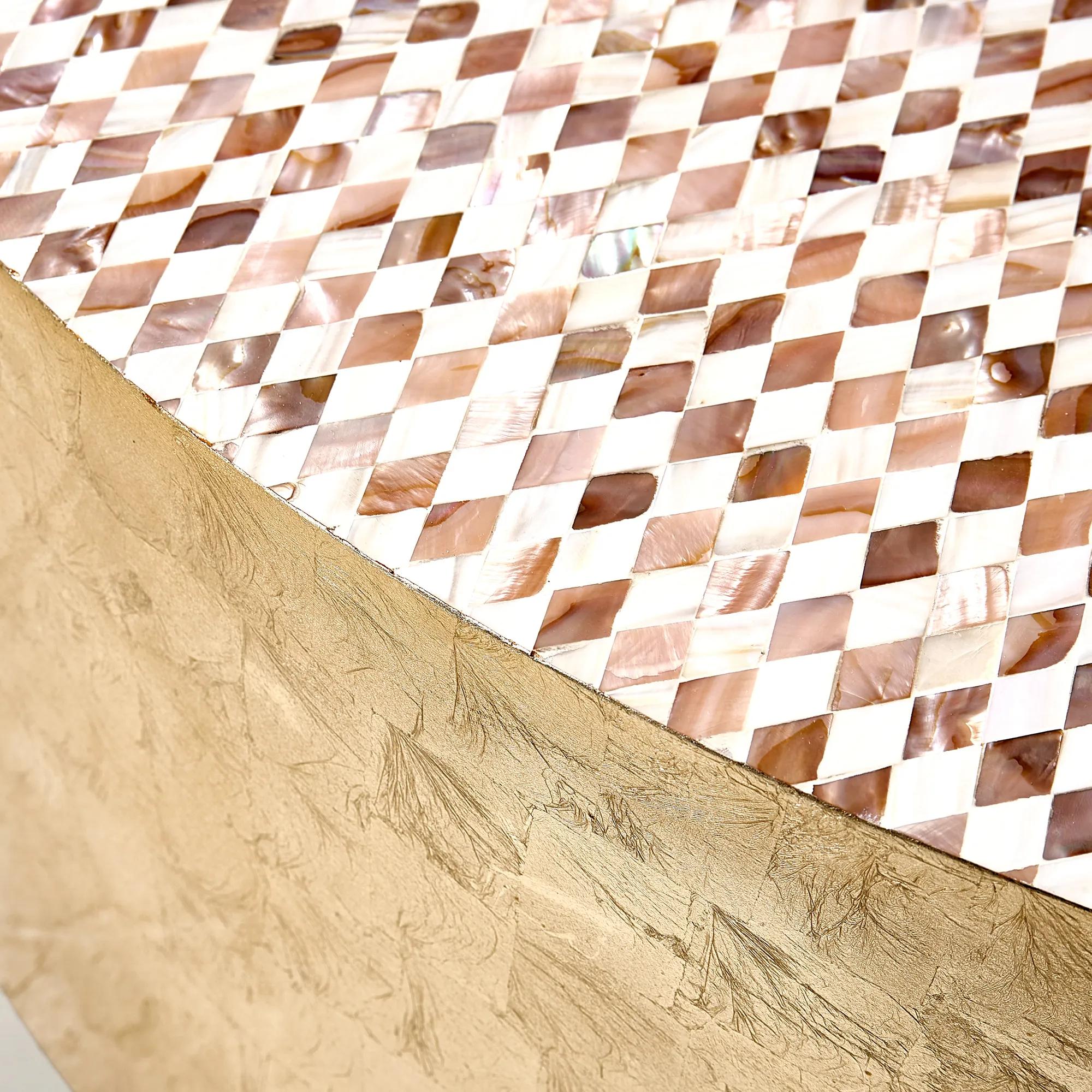 Lucien Round Diamond Coffee Table (47.24")$1299
A sculptural round coffee table featuring a hand-laid mother-of-pearl diamond mosaic and gold leaf sides.
Add To Cart -
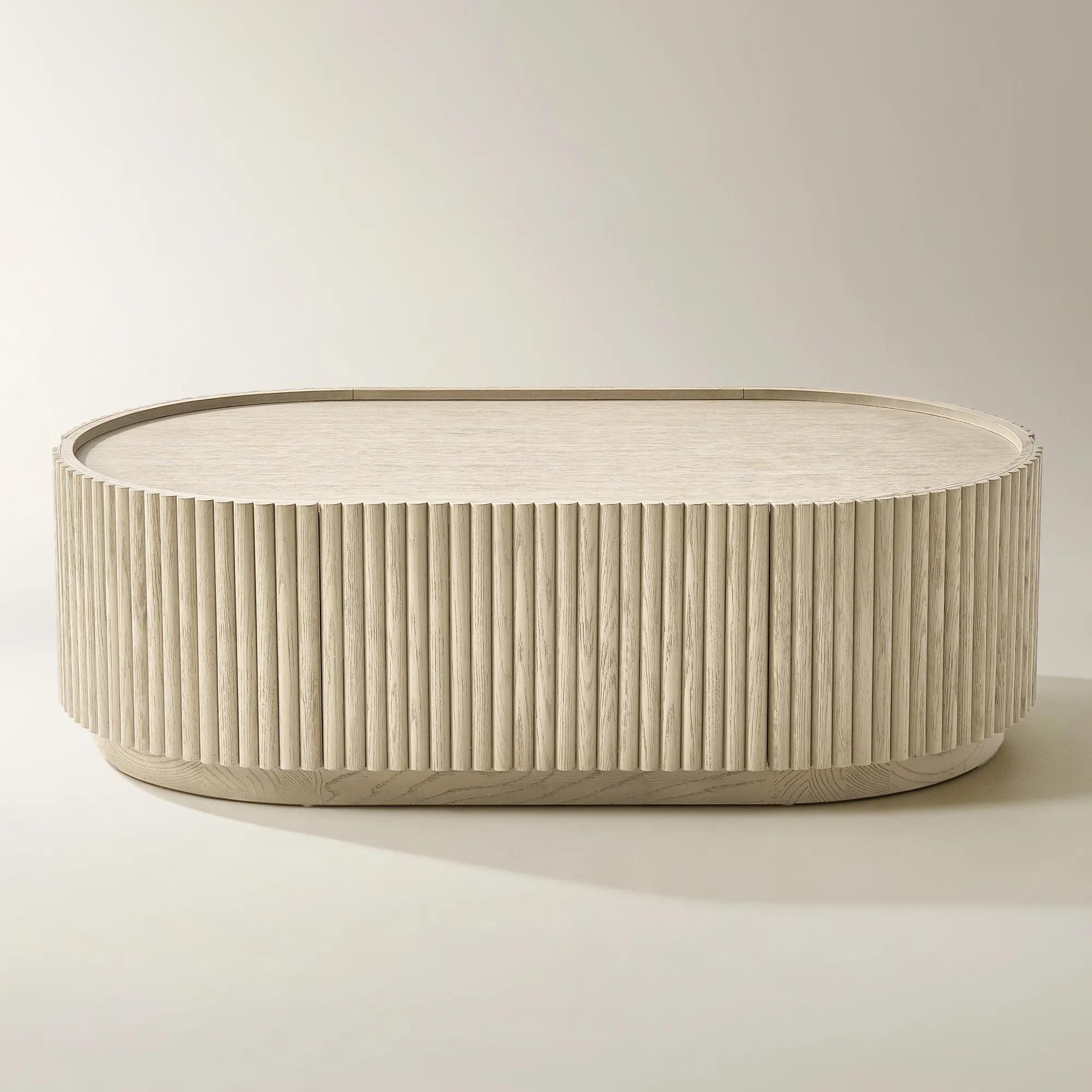
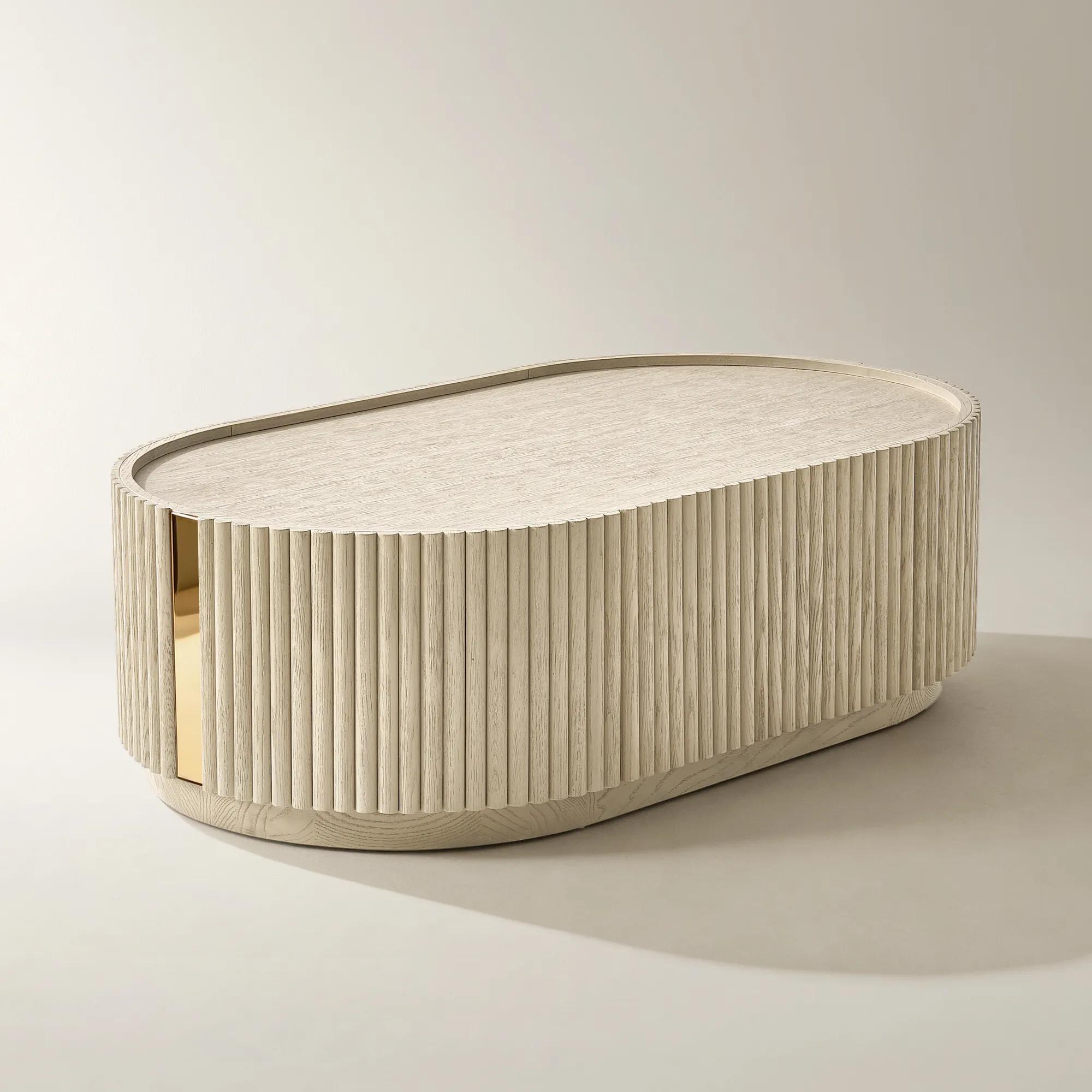 Stria Oval Reeded White Oak Coffee Table with Drawer (52")$1399
A reeded white oak coffee table with soft gold accents, recessed tabletop, and concealed soft-close drawer.
Add To Cart -
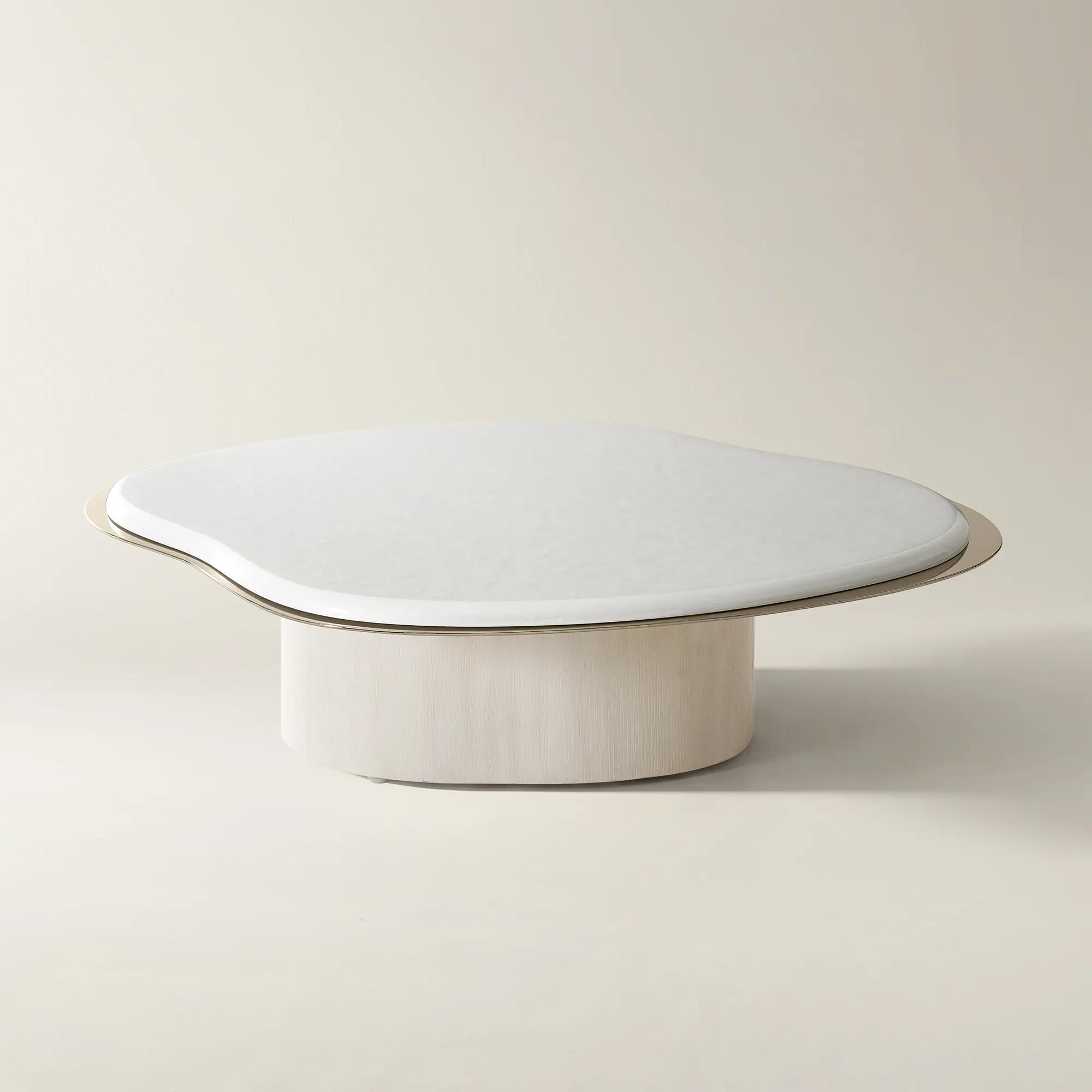
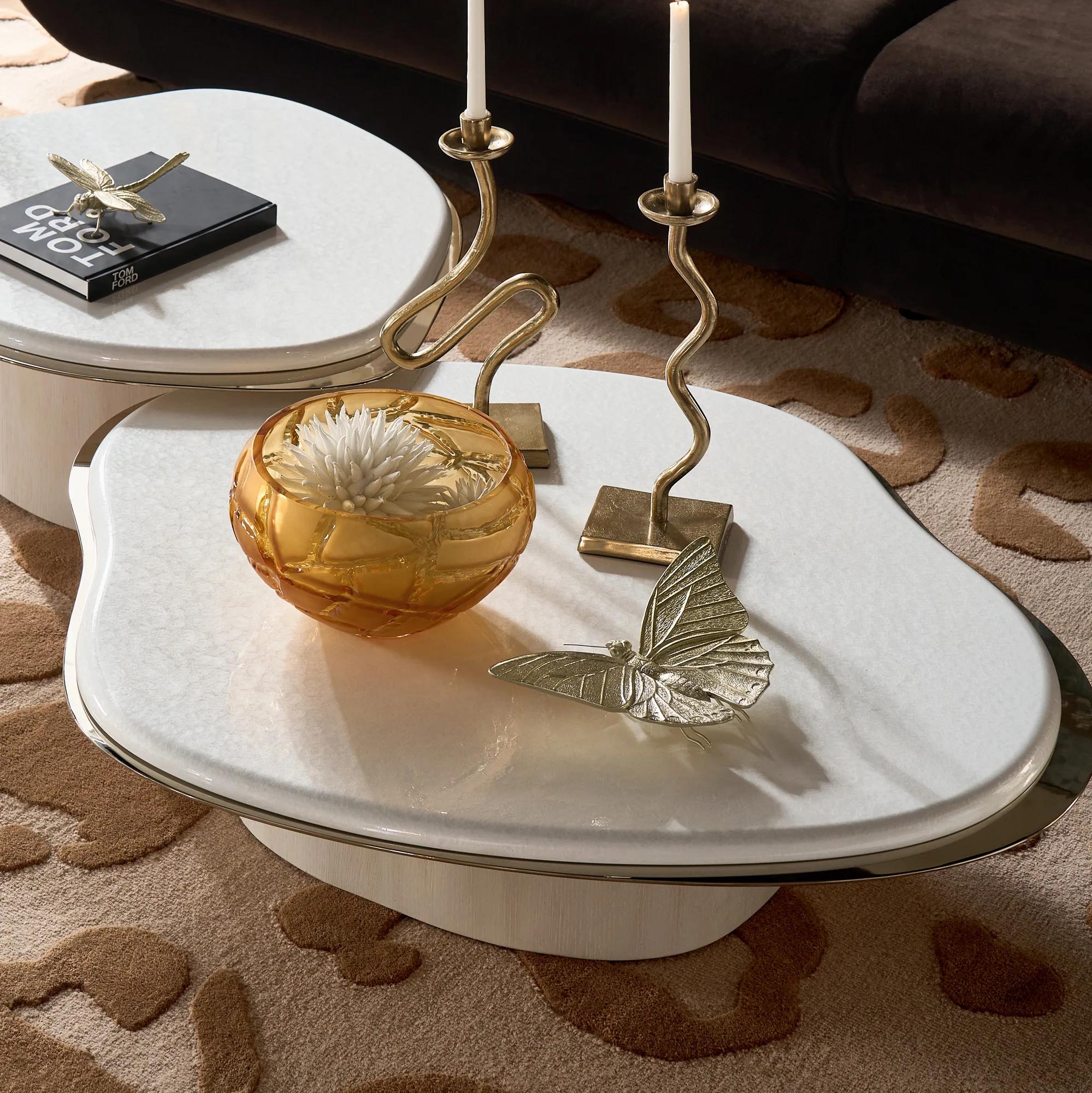 Lumina Bleached Oak Coffee Table With Pearl Lacquered Top (41")$1199
A sculptural coffee table featuring a pearl lacquered top, bleached oak base, and champagne gold trim.
Add To Cart -
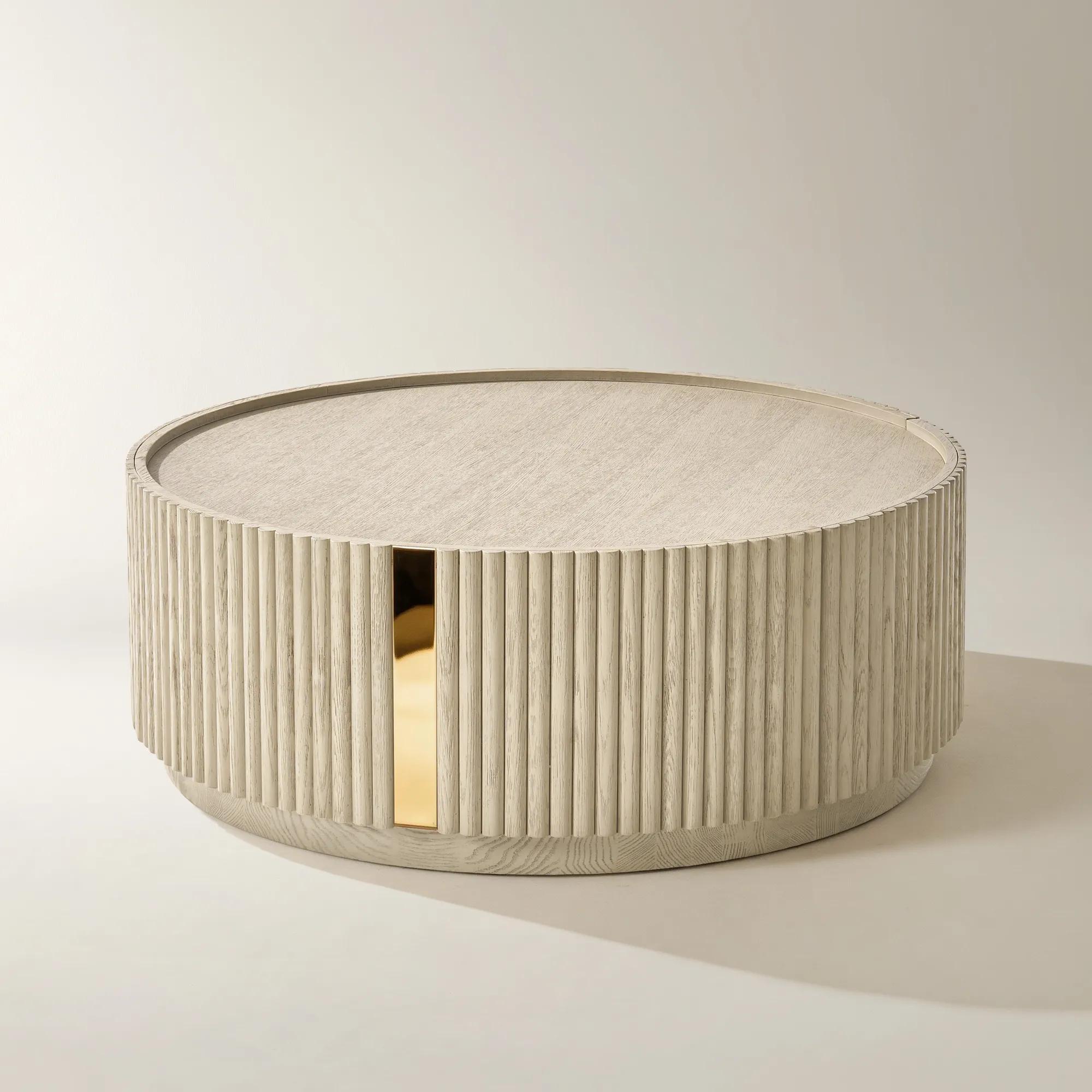 Stria Round Reeded White Oak Coffee Table with Drawer (42.3")$1499
A round coffee table featuring reeded white oak, soft gold metal trim, and a concealed soft-close drawer.
Add To Cart -
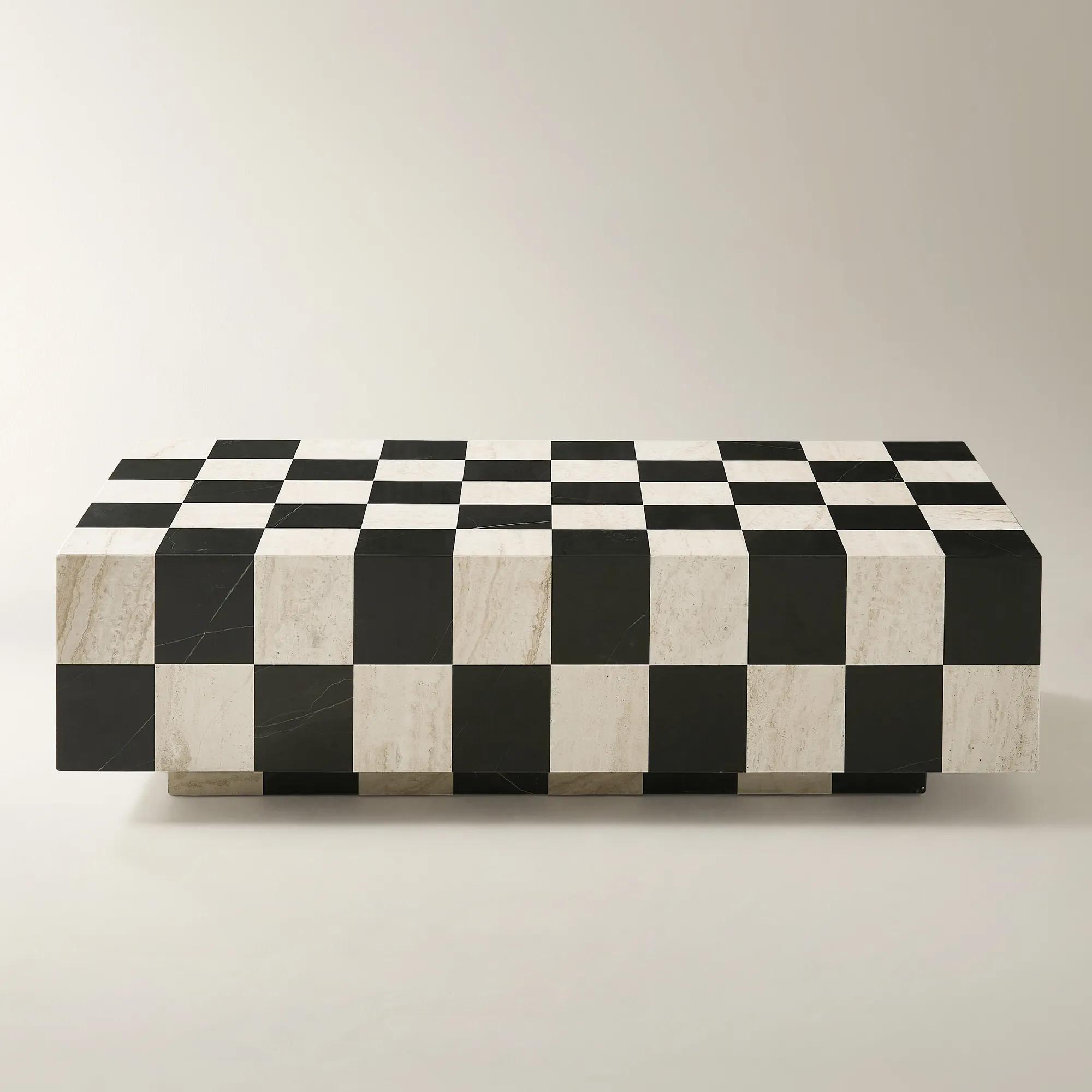
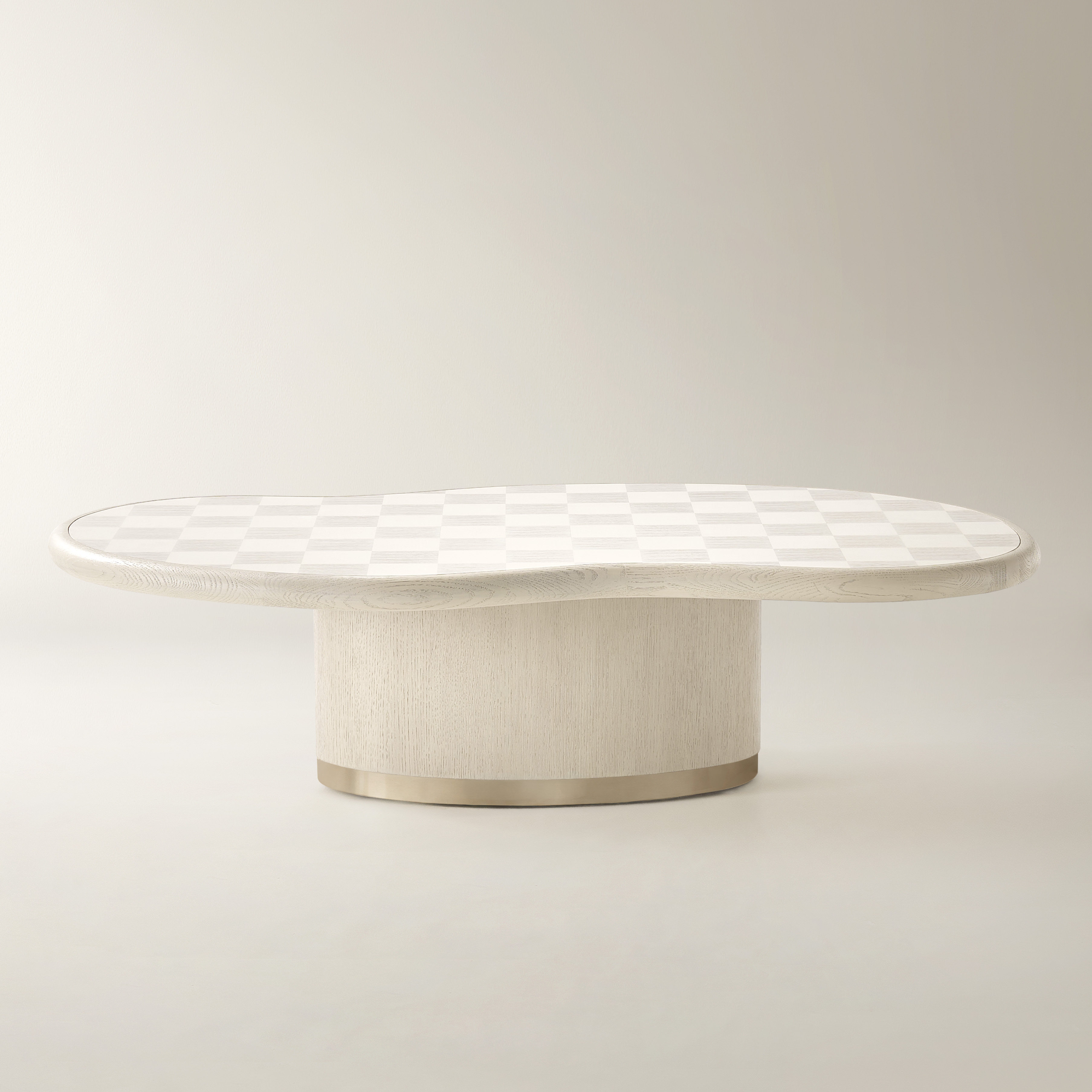 Vetra Checkerboard Oak and Maple Coffee Table (60")$1299
A sculptural coffee table featuring a hand-arranged oak and maple checkerboard top with gold-accented base.
Add To Cart -
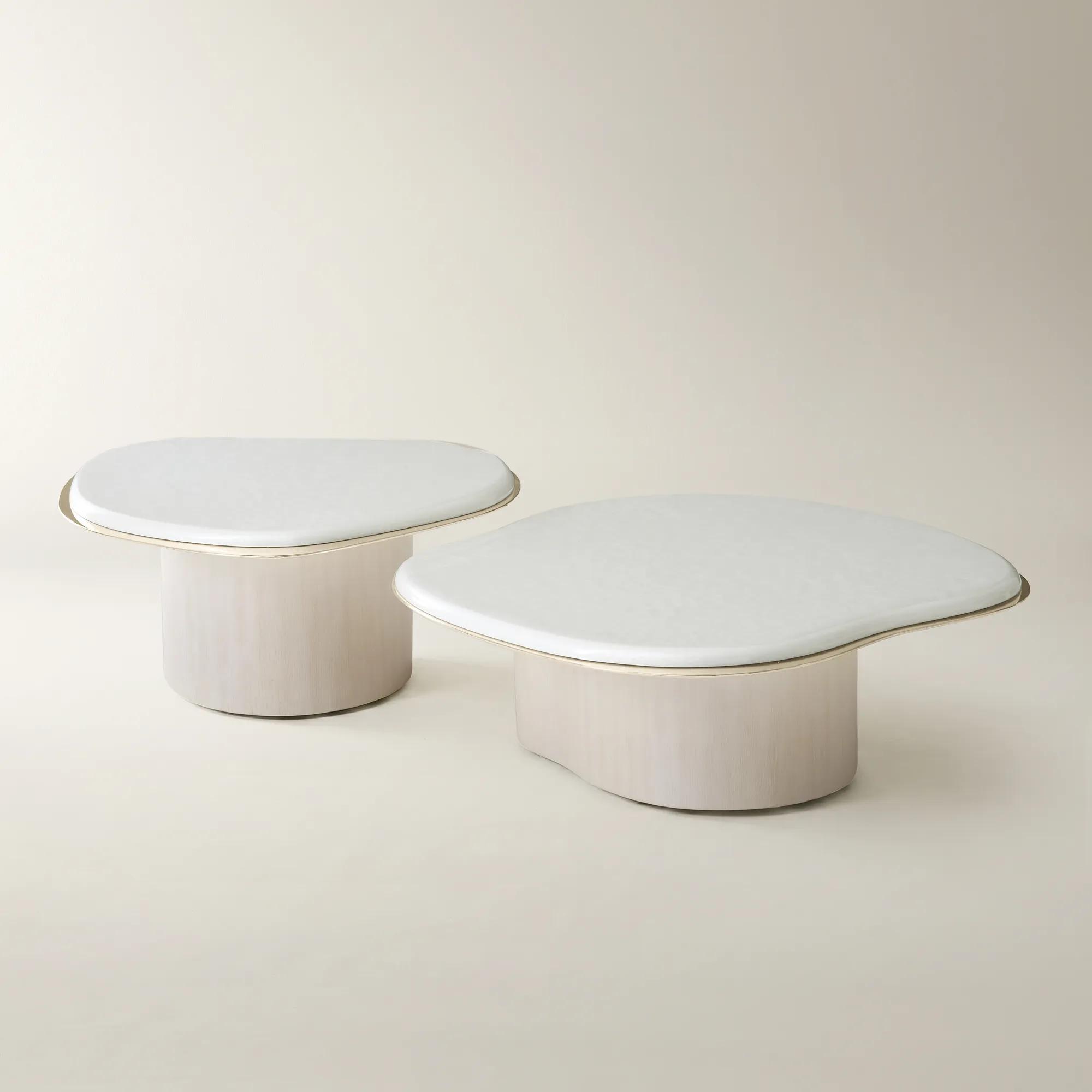 Lumina Bleached Oak Coffee Table Set Of 2$2098
A set of sculptural coffee tables featuring pearl lacquered tops, bleached oak veneer, and champagne gold trim.
Add To Cart -
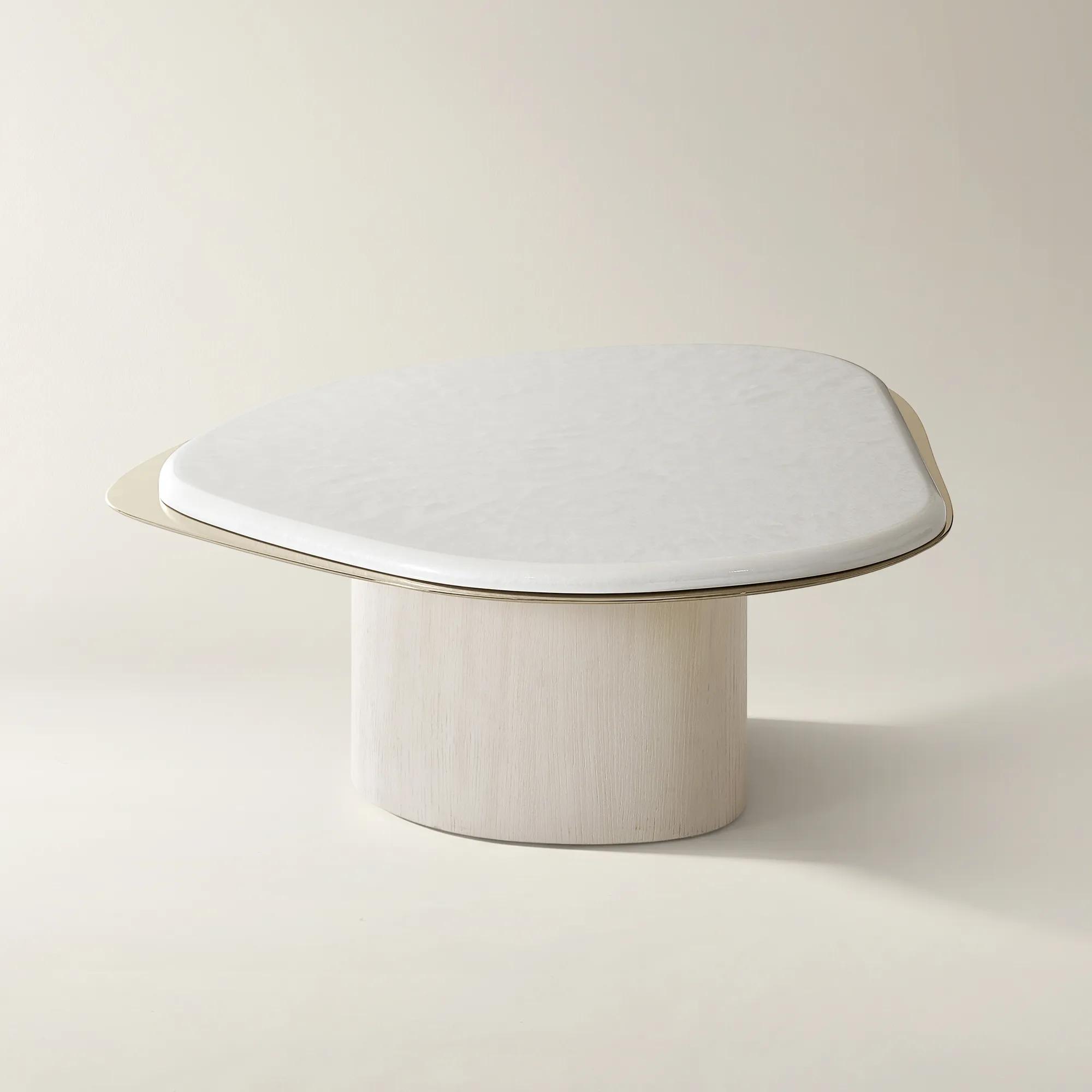
 Lumina Bleached Oak Coffee Table With Pearl Lacquered Top (32")$899
A sculptural coffee table featuring a pearl lacquered top, bleached oak base, and champagne gold trim.
Add To Cart -
 Lumina Bleached Oak Coffee Table Set Of 3$2597
A sculptural set featuring pearl lacquered tops, bleached oak veneer bases, and champagne gold trim accents.
Add To Cart

Glam Gold Coffee Tables
Explore glam gold coffee tables that bring a gleaming focal point to your living room. Look for proportions that complement your sofa and leave comfortable room to move, balancing a dramatic presence with surface space for everyday essentials and an artful display.
Glam gold coffee tables bring a luminous focal point to a living room, pairing gold-tone finishes with sculptural silhouettes and surfaces such as glass, marble, mirrored glass, or wood. Their character comes from contrast: a slender metallic frame beneath a substantial stone top, a gleaming pedestal against deep velvet upholstery, or an open geometric base that turns the space beneath the tabletop into part of the design. Gold describes the finish or color rather than solid-gold construction, and its expression can range from bright, reflective polish to a softer brushed or antiqued effect. Each creates a distinct mood. Polished gold feels crisp and theatrical, catching light along every edge; brushed gold offers a quieter radiance with visible texture; antiqued treatments lend depth and a sense of collected richness. Within modern glam interiors, these tables give plush seating and expressive art a central point of connection. In Art Deco-inspired rooms, stepped forms, symmetrical lines, and circular motifs echo the architecture of the surrounding furnishings without requiring every piece to match. A round gold coffee table can soften a grouping of angular chairs, while a rectangular silhouette draws a confident line through an elongated seating arrangement. Oval shapes offer similar length with a more fluid outline, and sculptural bases introduce drama even when the tabletop remains restrained. Clear glass allows an intricate base or richly patterned rug to remain visible, while an opaque top creates a more substantial visual anchor. Against ivory upholstery, gold reads warm and luminous; beside charcoal, navy, or black, it takes on a sharper, almost jewel-like intensity. Rich wood tones add depth, and touches of silver or bronze can keep the composition from feeling overly coordinated. The appeal extends beyond formal rooms: a gold accent can give a relaxed living space definition, bringing artistry to the place where conversation, refreshments, and favorite objects naturally gather.
Materials shape both the appearance and everyday performance of a glam gold coffee table. Metal frames may use steel, stainless steel, aluminum, or other substrates beneath a plated, painted, or otherwise applied gold-tone finish, so construction details matter as much as color. A substantial base, secure connections, and a tabletop suited to its intended use support daily enjoyment; a lustrous surface alone does not indicate strength or scratch resistance. Glass tops create an airy effect, especially over open metalwork, and make a compact seating area feel less visually crowded. Tempered glass, when specified, is designed to break differently from ordinary glass, but it still requires thoughtful handling and protection from hard impacts, particularly at the edges. Marble and other natural stone surfaces bring individual veining and tonal variation, making each slab visually distinctive. Their weight contributes to a grounded presence, while their care needs deserve attention: acidic drinks, spills, and abrasive cleaners can damage some stone surfaces, and sealing requirements vary. Engineered stone and other composite tops have their own performance characteristics rather than a single universal standard. Wood or wood-veneer tops introduce warmth alongside gold detailing, with grain, protective coatings, and edge construction influencing how the surface wears. Mirrored finishes amplify the room’s light and surrounding colors, though fingerprints and surface marks may be more noticeable. For any material combination, care should follow the manufacturer’s directions, with soft cloths and approved cleaners helping preserve the intended finish. Coasters beneath glasses, protective pads under decorative objects, and prompt attention to spills reduce unnecessary wear. Metal polish is not automatically appropriate for a gold-tone coating and may damage certain finishes; abrasive pads can also dull reflective surfaces. A tray can gather refreshments into a composed arrangement, but its underside should be smooth or protected. These details allow a table to remain part of everyday life rather than a decorative surface that feels too precious to touch.
Proportion gives a gold coffee table its presence without allowing it to overwhelm the seating around it. A useful starting point is a tabletop roughly two-thirds the length of the sofa, with a height close to the seat cushions or slightly lower; the right fit still depends on the sofa’s shape, the table’s base, and how the room is used. Approximately 14 to 18 inches between the table and seating often provides comfortable reach and legroom, while the main walking routes need more generous clearance. In a room with a chaise sectional, the open area inside the seating arrangement matters more than the sofa’s overall length. An oval or round table can ease movement around a tight corner, although rounded edges do not eliminate the need for supervision around children. A broad square silhouette can bring balance to a generous conversational grouping, while nesting forms offer flexible surface space where entertaining and everyday lounging share the same room. Open bases preserve sightlines and reveal more of a statement rug; pedestal or plinth forms feel more architectural and can conceal less of their visual weight. Tabletop depth also matters when the surface needs to hold a serving tray without crowding a sculptural bowl or a stack of art books. For frequent hosts, a clear landing place for drinks is as important as a striking profile. For quieter evenings, room for a book, a cup, and a comfortable stretch of the legs may define the ideal arrangement. Styling can remain deliberate: one substantial vessel, a few beautifully bound books, and a low decorative object often give gold detailing room to register. Nearby Glam Gold Lamps can carry that metallic warmth upward, connecting the table to the larger room without repeating every finish exactly. The most expressive setting lets the table contribute its own sculptural identity while leaving space for the people, textures, and rituals that make the room personal.
FAQs
Glam gold coffee tables bring a jewelry-like accent to the living room through luminous gold tones and expressive design. Their allure comes from contrast: a gleaming finish against plush upholstery, or a sculptural silhouette within a richly layered seating arrangement. The result is a focal point with unmistakable presence.
Treat the tabletop as a curated composition. Pair art books with a sculptural vessel, then introduce a decorative object with an unexpected shape. Leave portions of the surface visible so the table’s design remains part of the story. A restrained palette lets bold forms command attention.
Gold tones create striking contrasts with emerald, sapphire, and deep plum for a richly expressive living room. Ivory and warm taupe offer a softer backdrop that lets the gold glow, while black brings graphic definition. Repeat your chosen colors in pillows, artwork, or decorative accents for a cohesive composition.
Yes—mixed metallic finishes can give a room a collected, artful character. Let the gold coffee table establish the dominant metallic note, then introduce silver-toned or bronze-toned accents with intention. Repeating each finish elsewhere in the room helps the combination feel deliberate rather than disconnected.
A gold coffee table can introduce a luminous counterpoint to modern, Art Deco-inspired, or eclectic interiors. Pair it with tailored seating for a polished composition, or surround it with expressive artwork and layered patterns for greater drama. Carrying its gold tones into another accent helps connect the look.