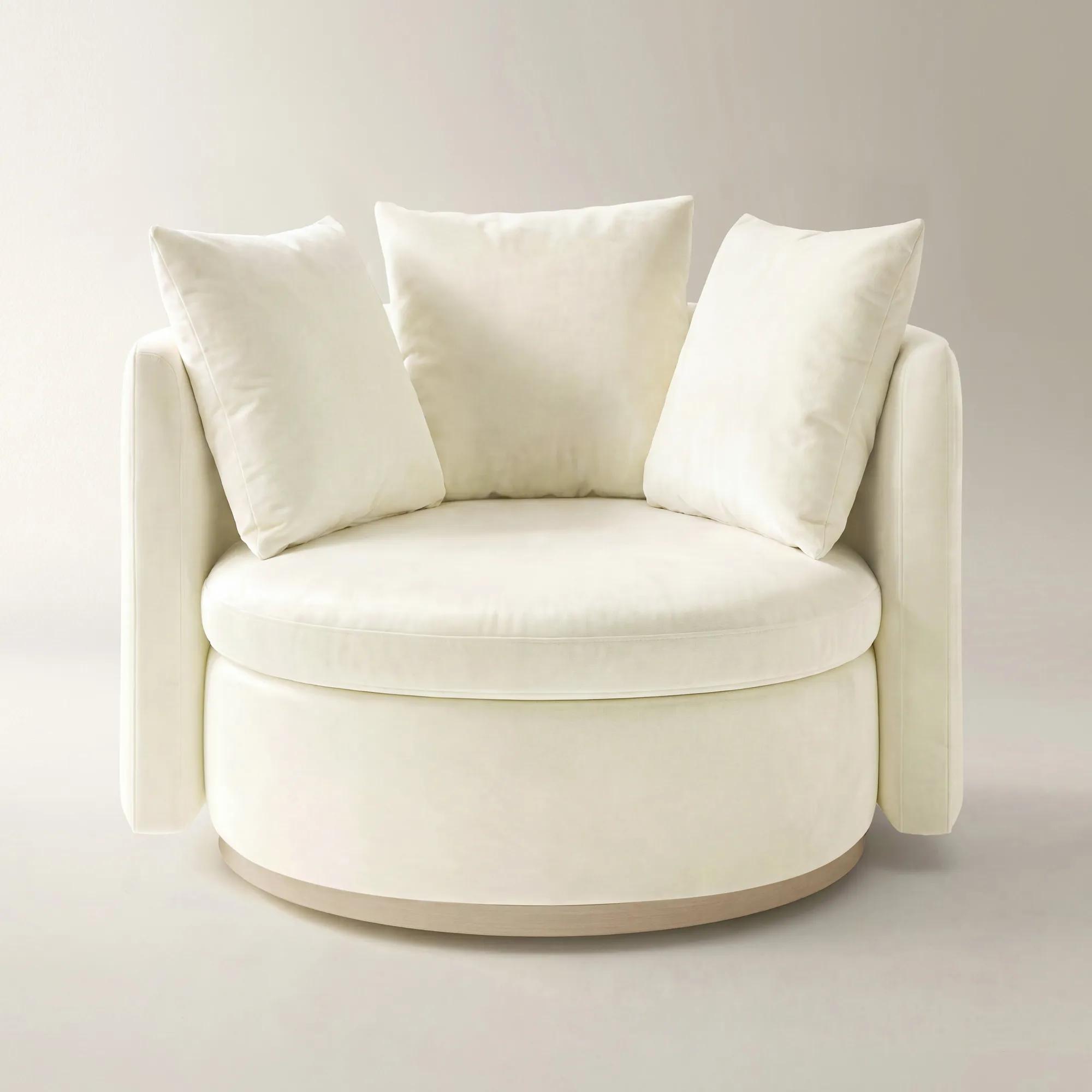
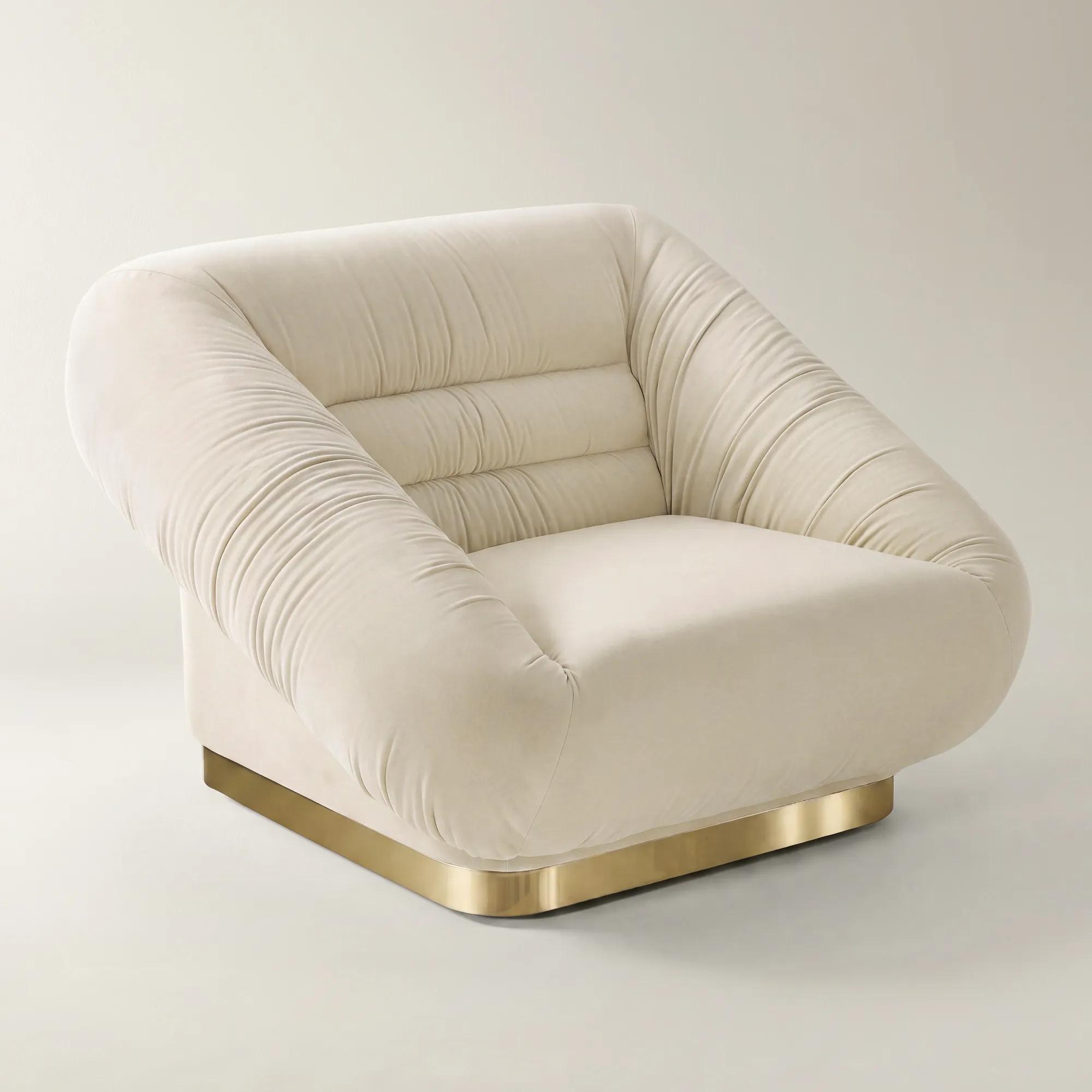
Designer Living Room Swivel Chairs
Designer Living Room Swivel Chairs
-
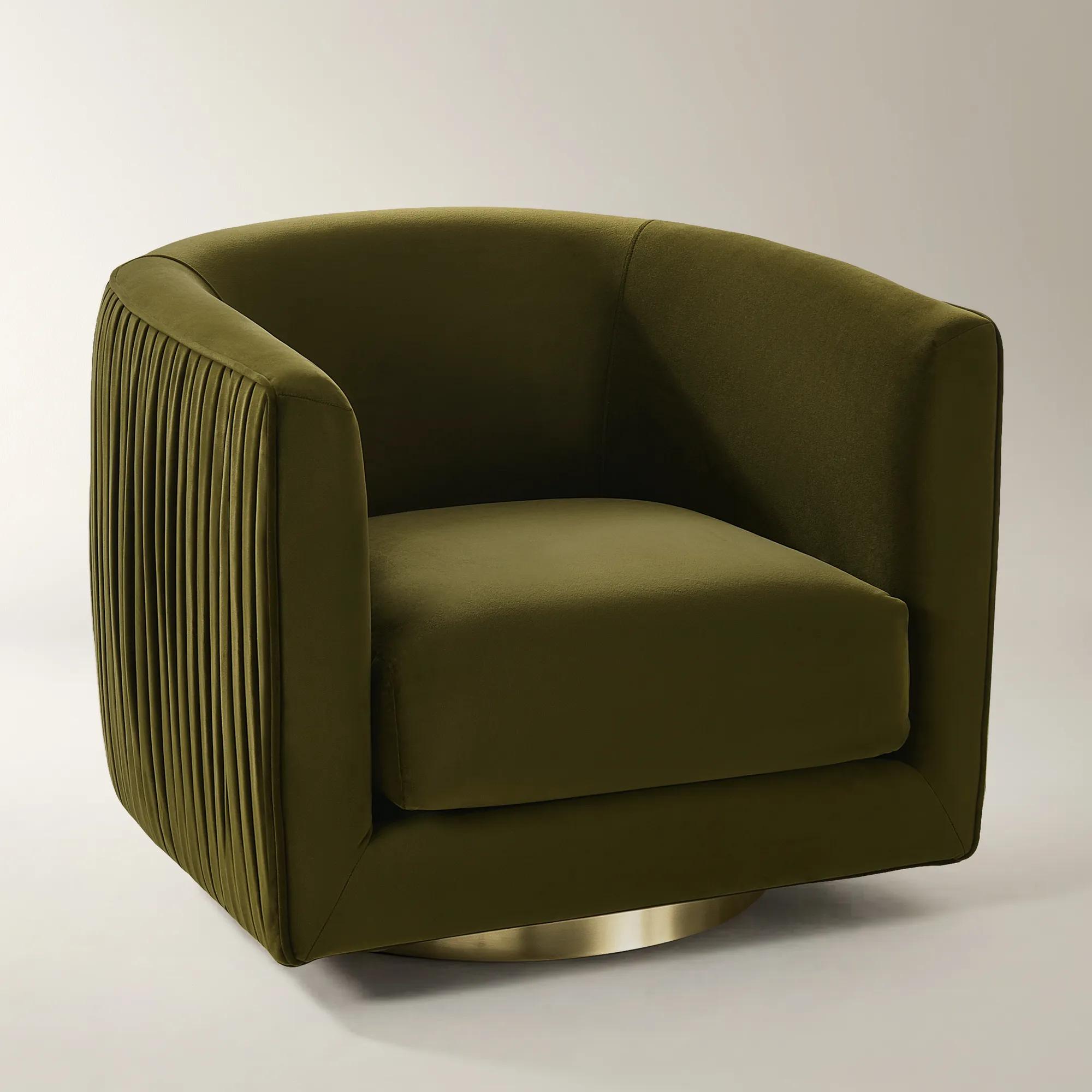
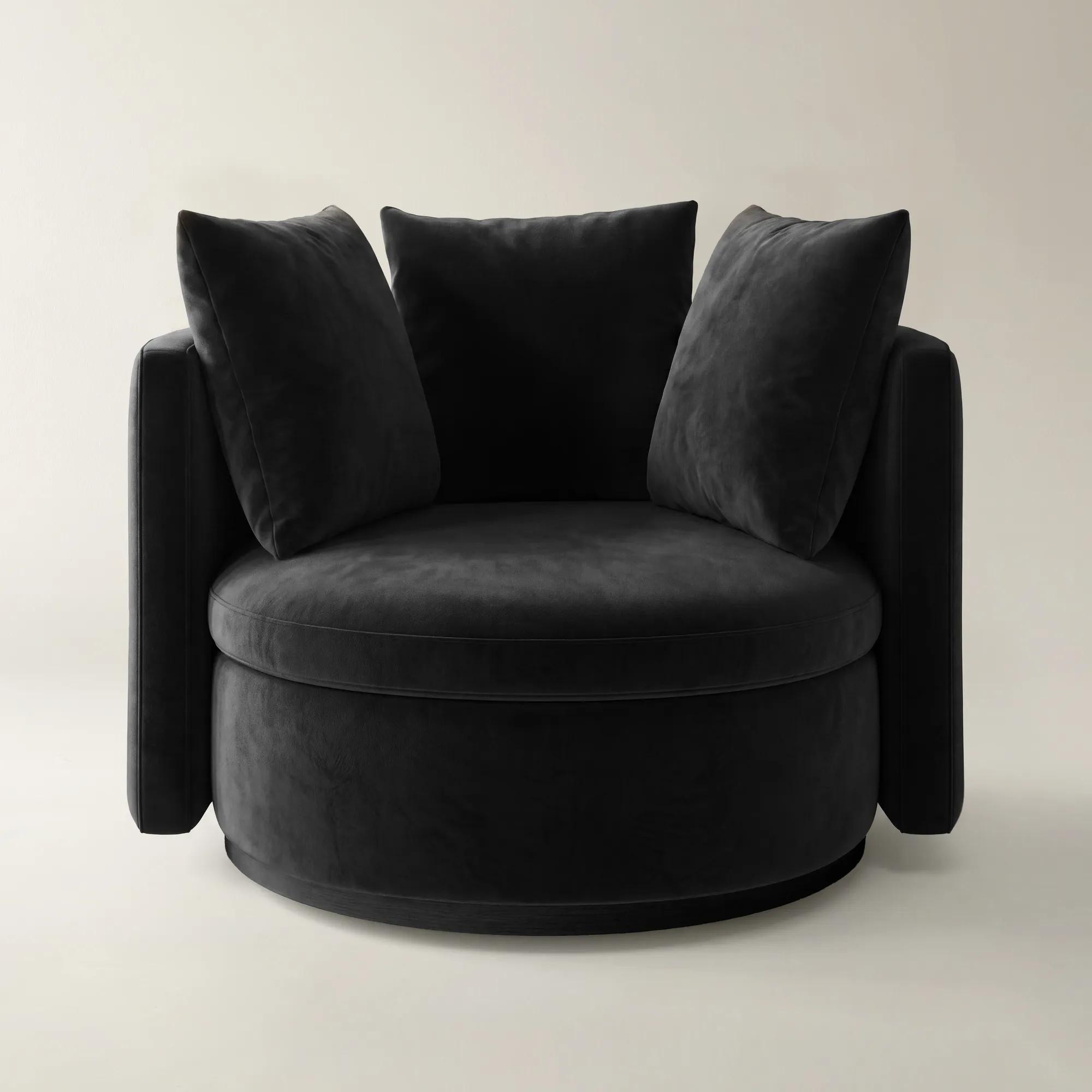
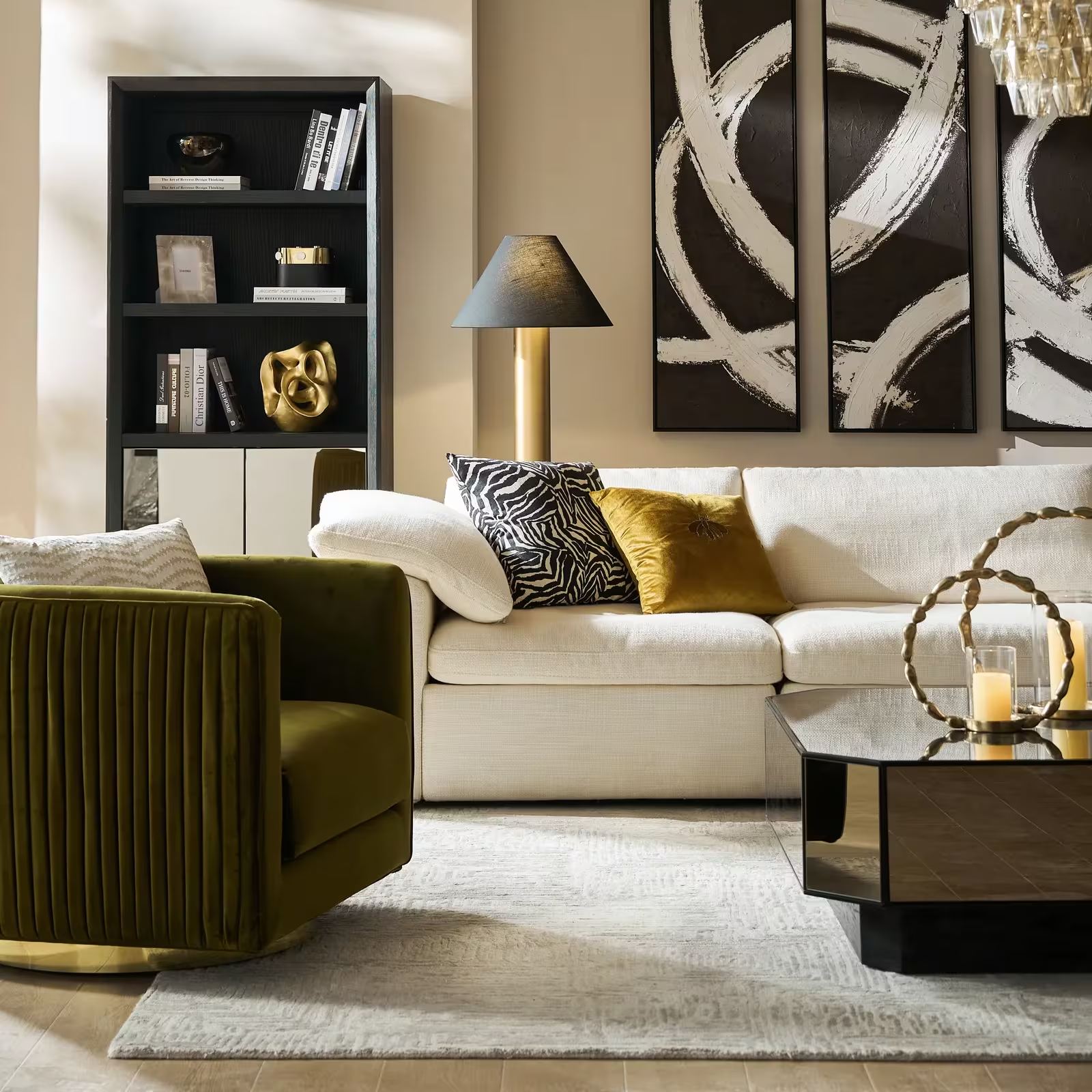 Lyssa Pleated Deep Olive Velvet Swivel Accent Chair$1099
A deep olive green velvet accent chair featuring pleated panels, smooth curves, and a 360-degree swivel base.
Add To Cart -
.jpg?w=1200&h=1200)
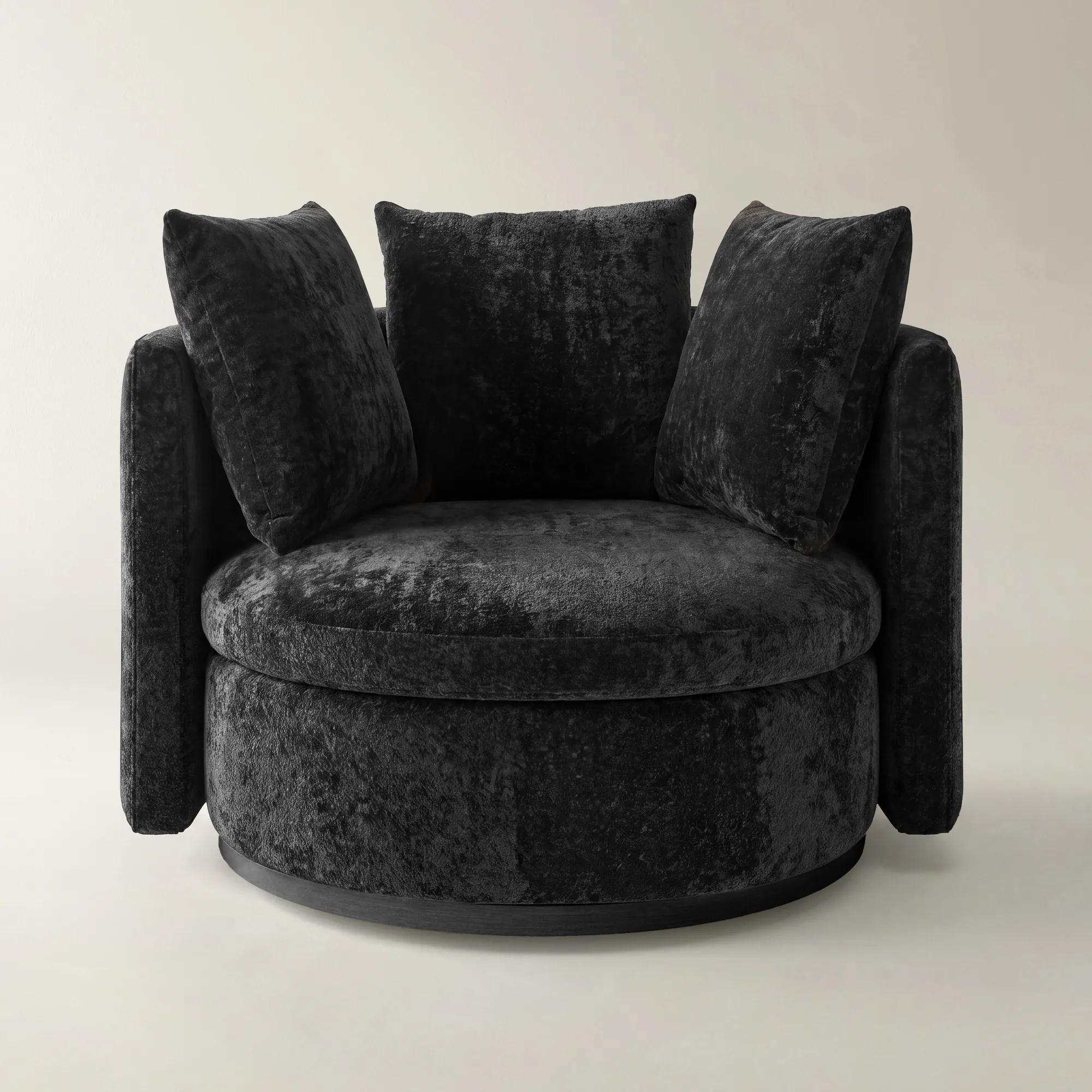
 Stria Light Brown Chenille Swivel Accent Chair$1399
Stria Light Brown Chenille Swivel Accent Chair$1399A light brown chenille accent chair featuring triple-layer cushioning, a 360° swivel, and a solid oak base.
Add To Cart -
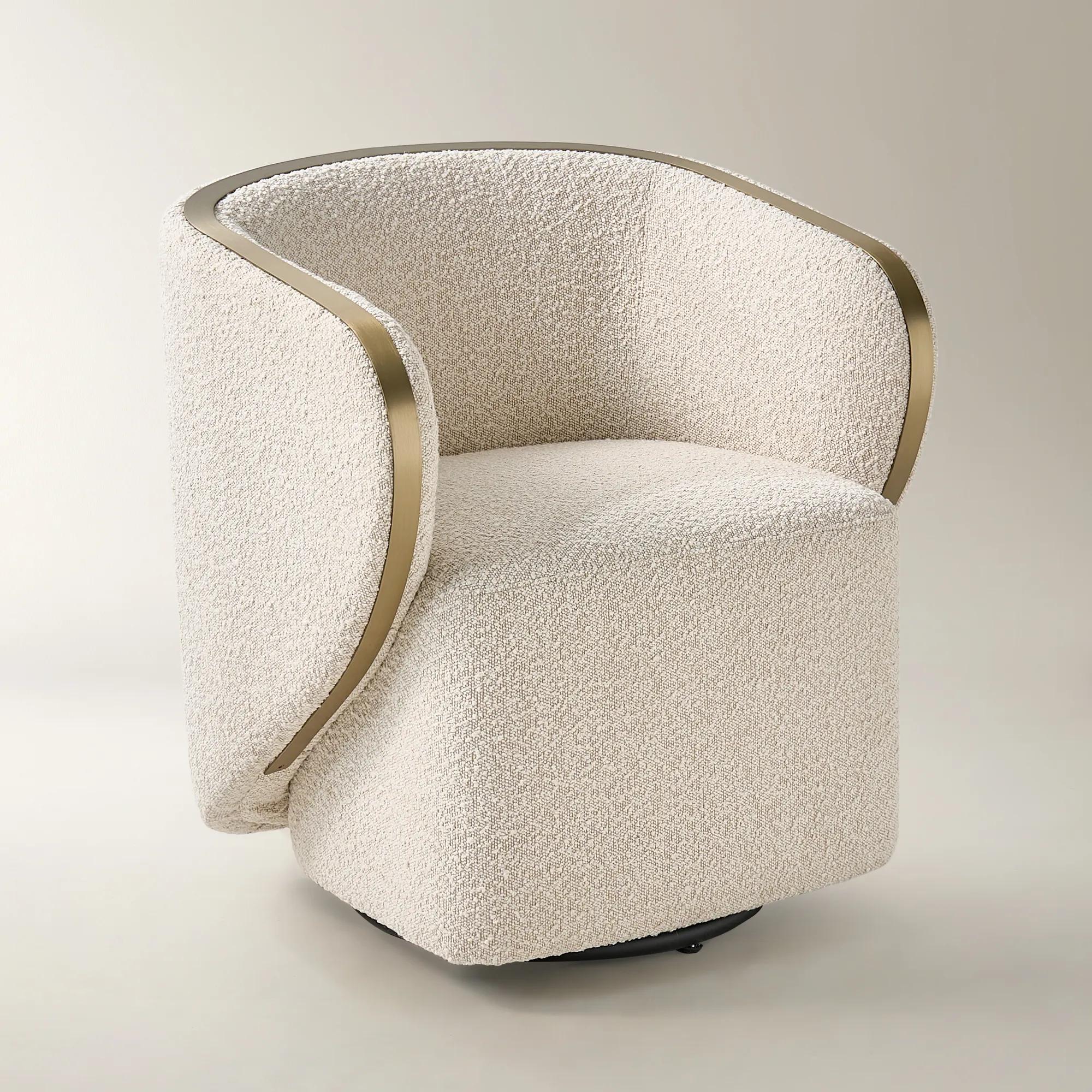 Nova Ivory Performance Boucle Swivel Dining Chair$599
An ivory boucle swivel chair featuring a sculptural wraparound silhouette and elegant metallic trim accents.
Add To Cart -
-6.jpg?w=1200&h=1200) Stria Roasted Pecan Velvet Swivel Dining Chair With Oak Base$599
Stria Roasted Pecan Velvet Swivel Dining Chair With Oak Base$599A khaki chenille swivel armchair with a handcrafted solid oak base and plush, modern comfort.
Add To Cart -
.jpg?w=1200&h=1200)
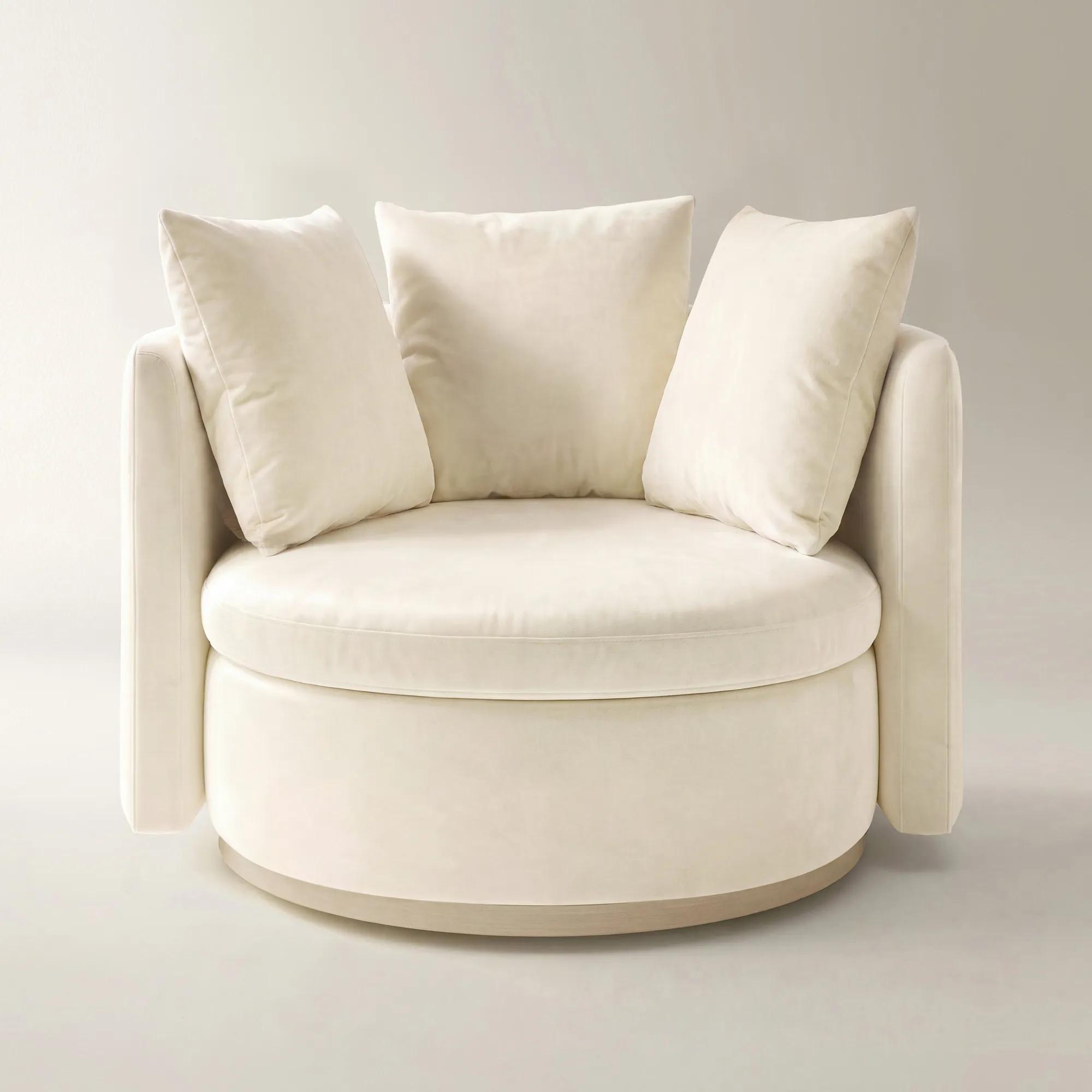
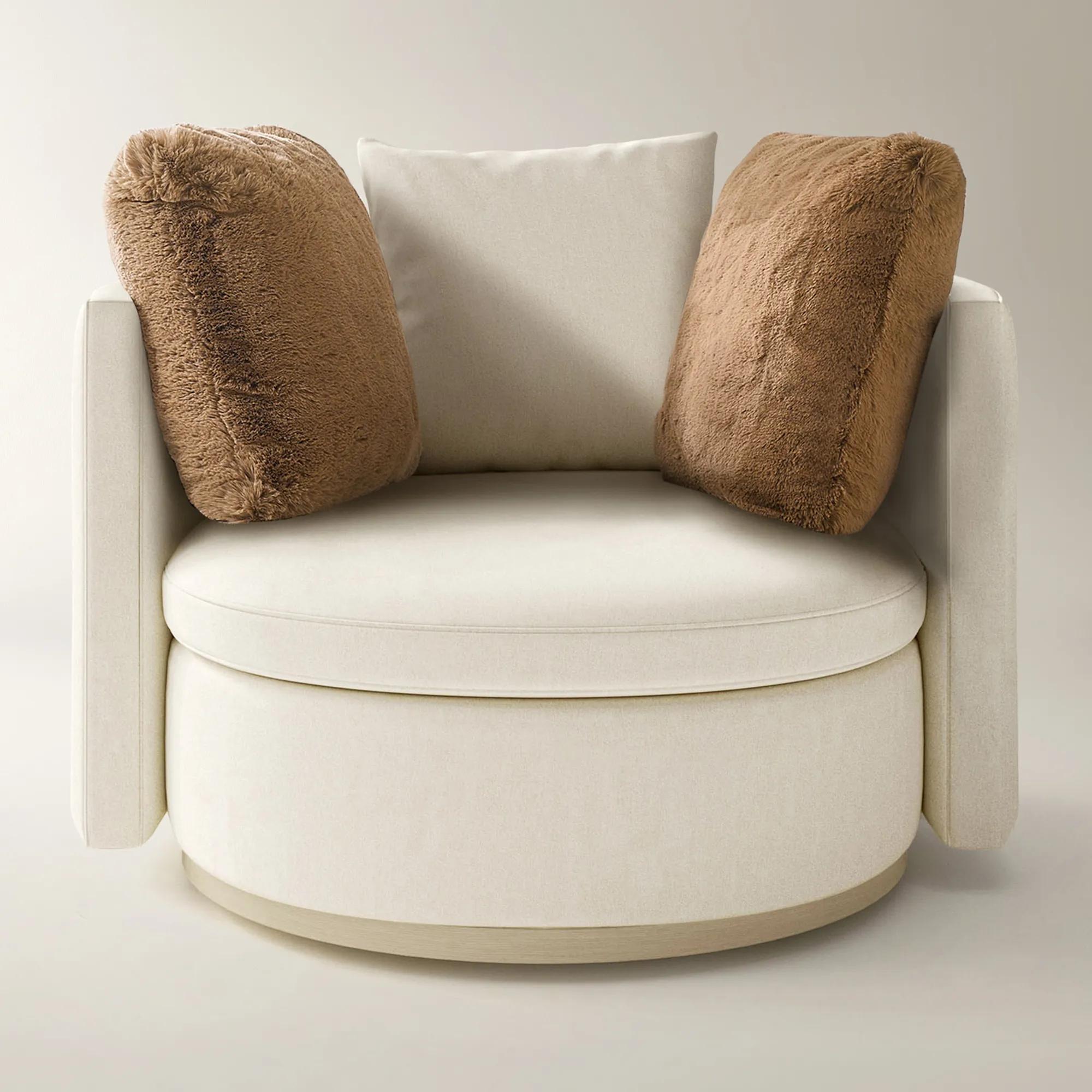 Stria Ivory Chenille Swivel Accent Chair$1399
An ivory chenille accent chair with triple-layer cushioning, ergonomic curves, and a smooth 360-degree swivel.
Add To Cart -
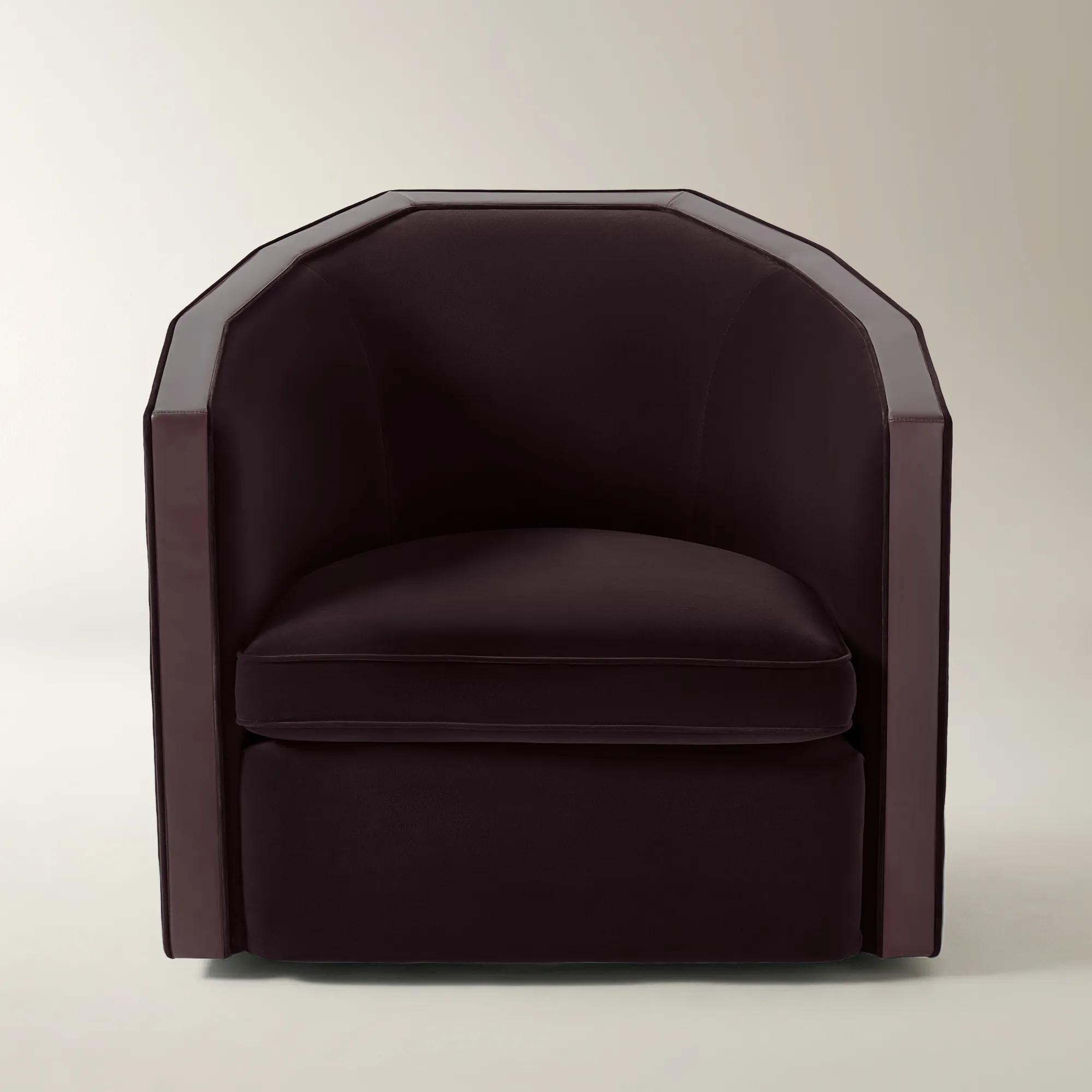
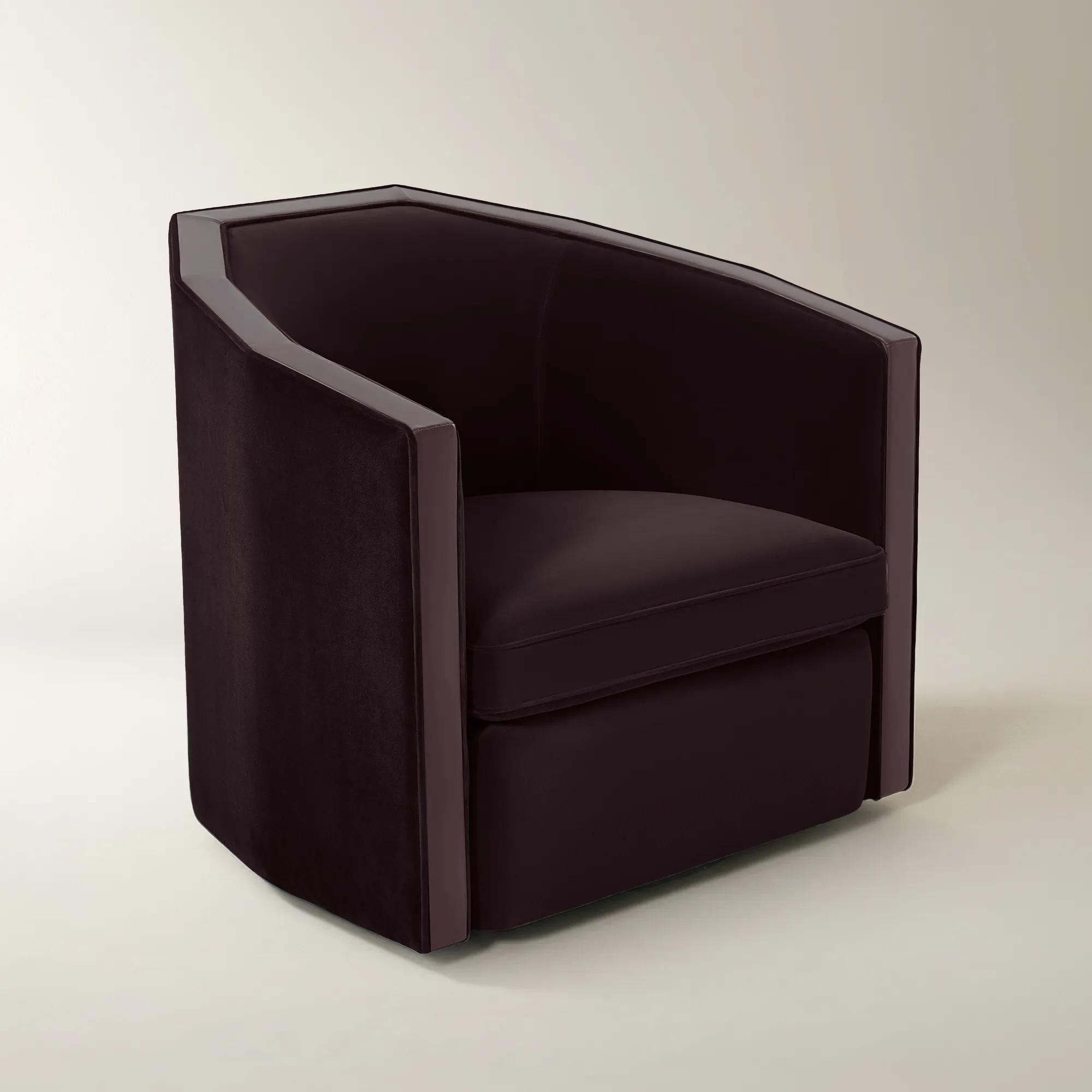 Vesper Fig Velvet With Leather Swivel Accent Chair$999
A modern accent chair featuring fig velvet upholstery, tonal leather trim, and a smooth 360° swivel base.
Add To Cart -
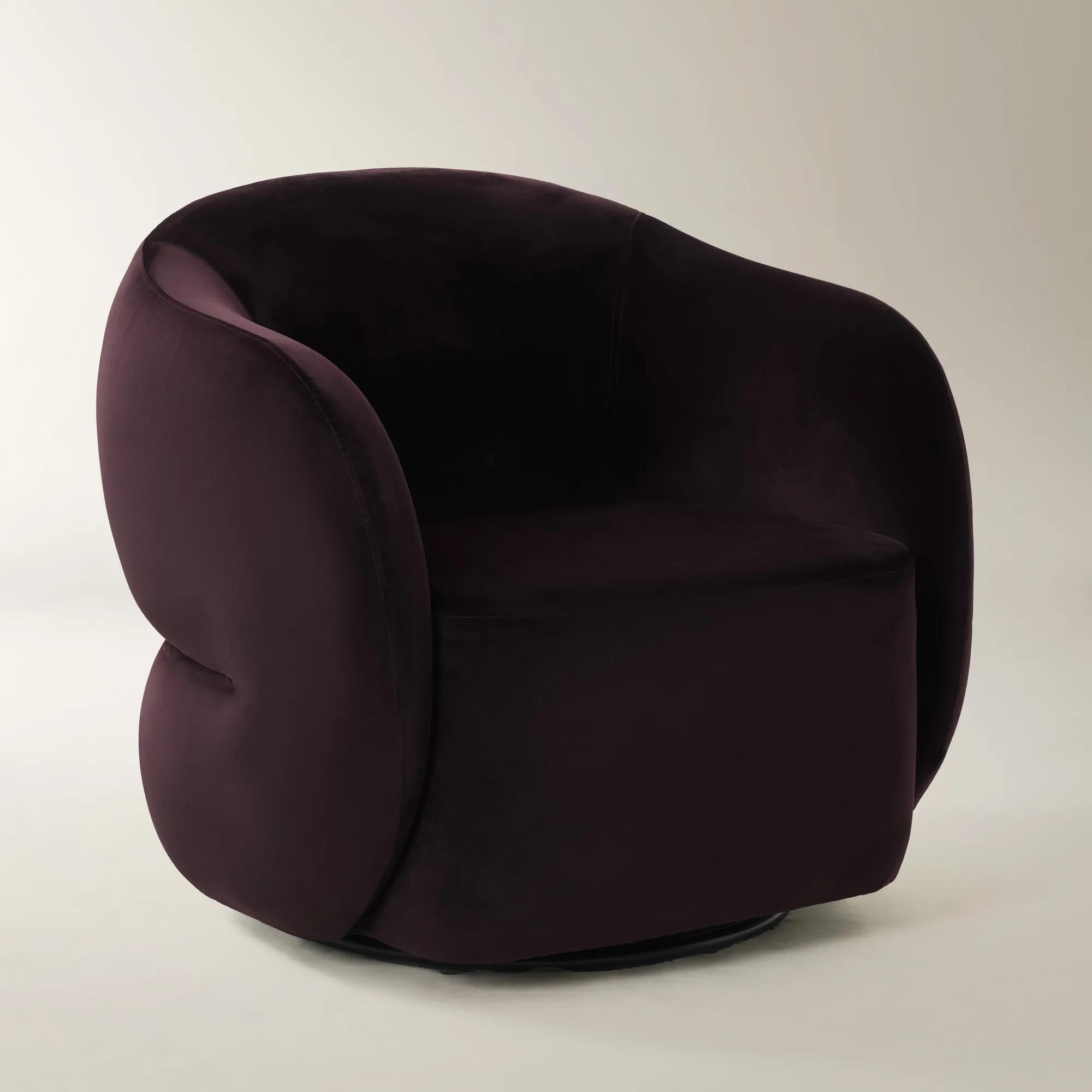 Sierra Fig Velvet Swivel Accent Chair$799
A modern accent chair in plush fig velvet with a wraparound back and smooth 360° swivel base.
Add To Cart -
.jpg?w=1200&h=1200) Stria Ivory Chenille Swivel Dining Chair With Oak Base$599
Stria Ivory Chenille Swivel Dining Chair With Oak Base$599An inviting ivory chenille arm chair with a solid oak swivel base and hand-crafted details.
Add To Cart -
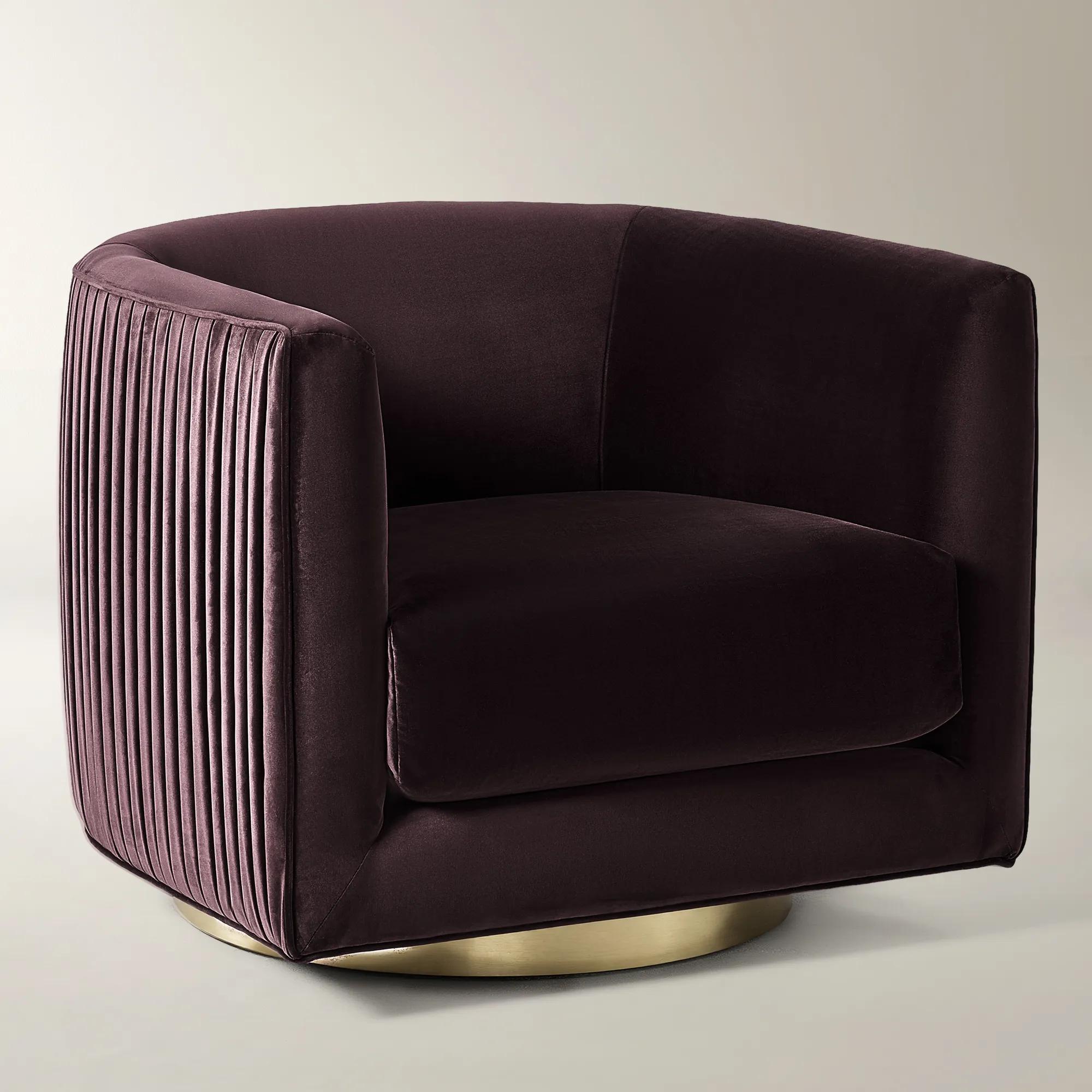 Lyssa Pleated Fig Velvet Swivel Accent Chair$1099
A fig-colored velvet accent chair featuring pleated detailing, a curved silhouette, and a smooth 360° swivel base.
Add To Cart -
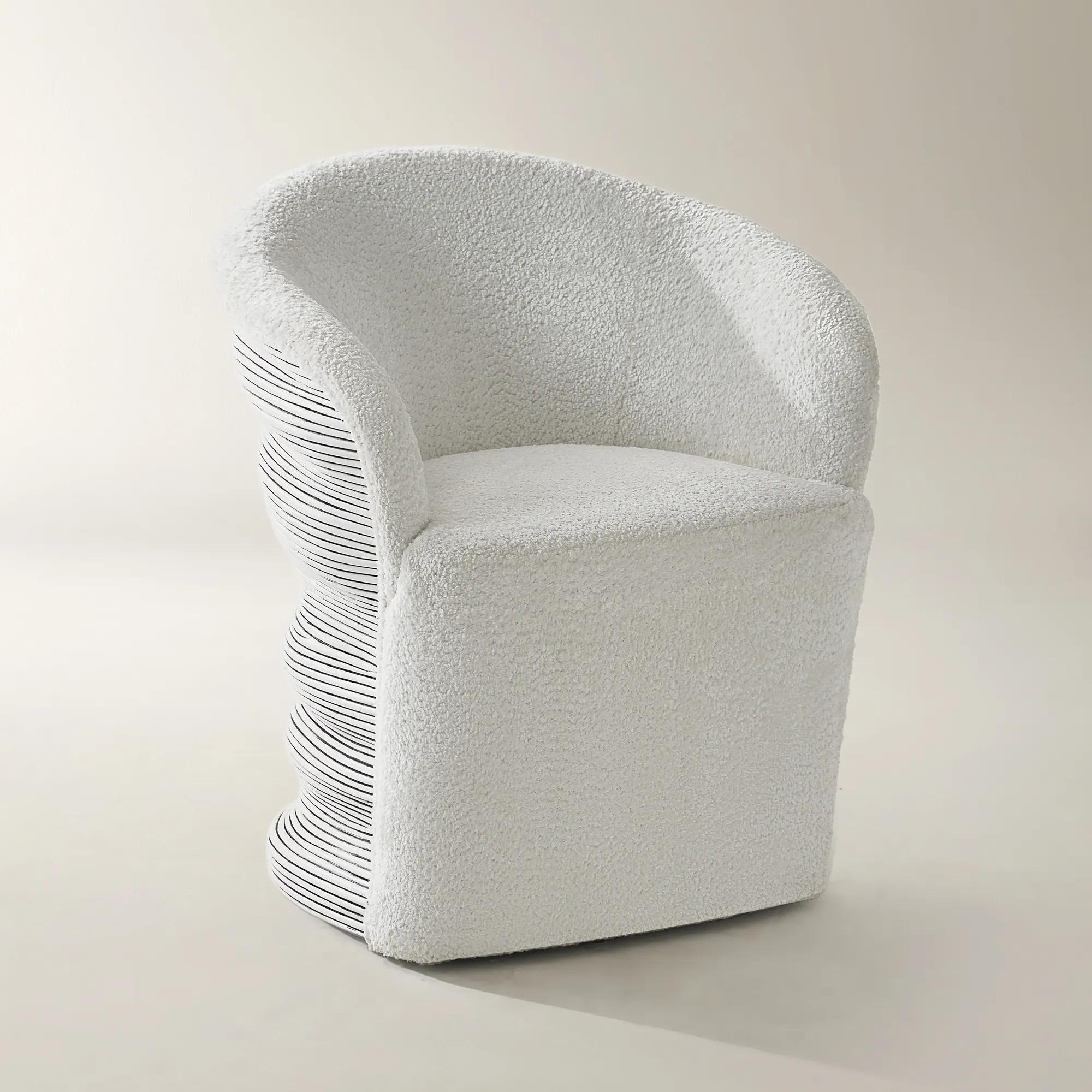
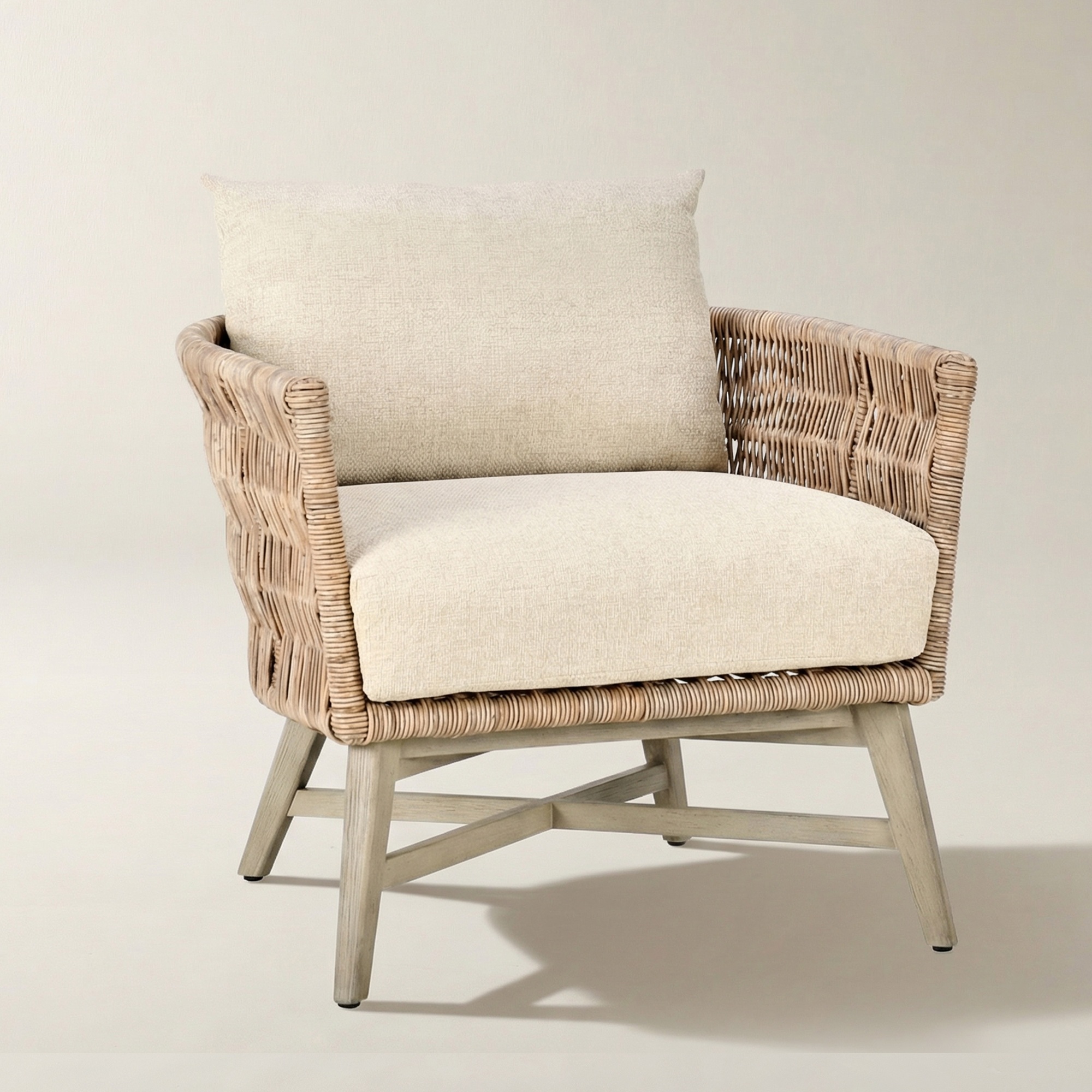
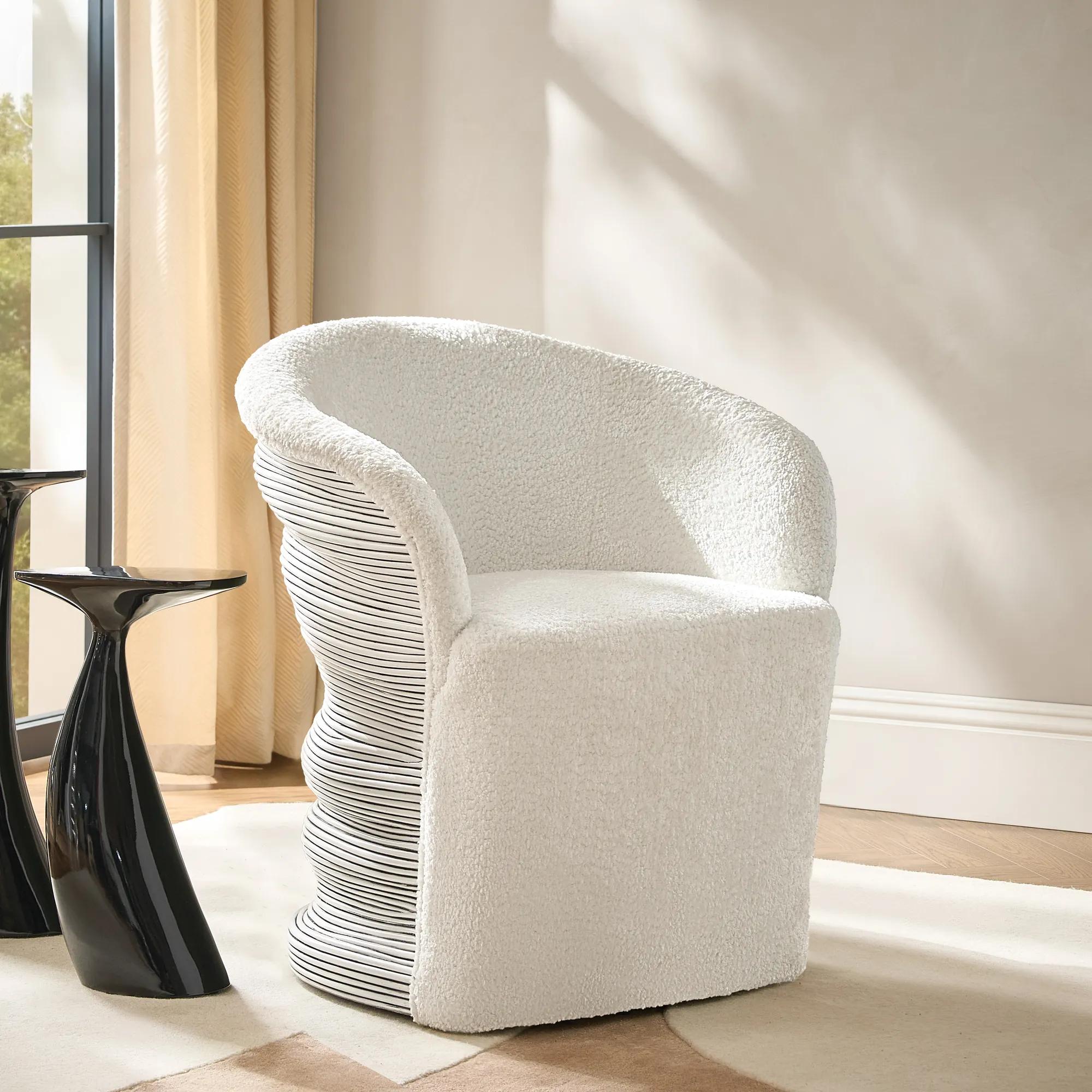 Cairo Rattan Ivory Chenille Dining Chair$899
An artisan-crafted swivel chair featuring handwoven natural rattan and plush ivory chenille upholstery for modern comfort.
Add To Cart -
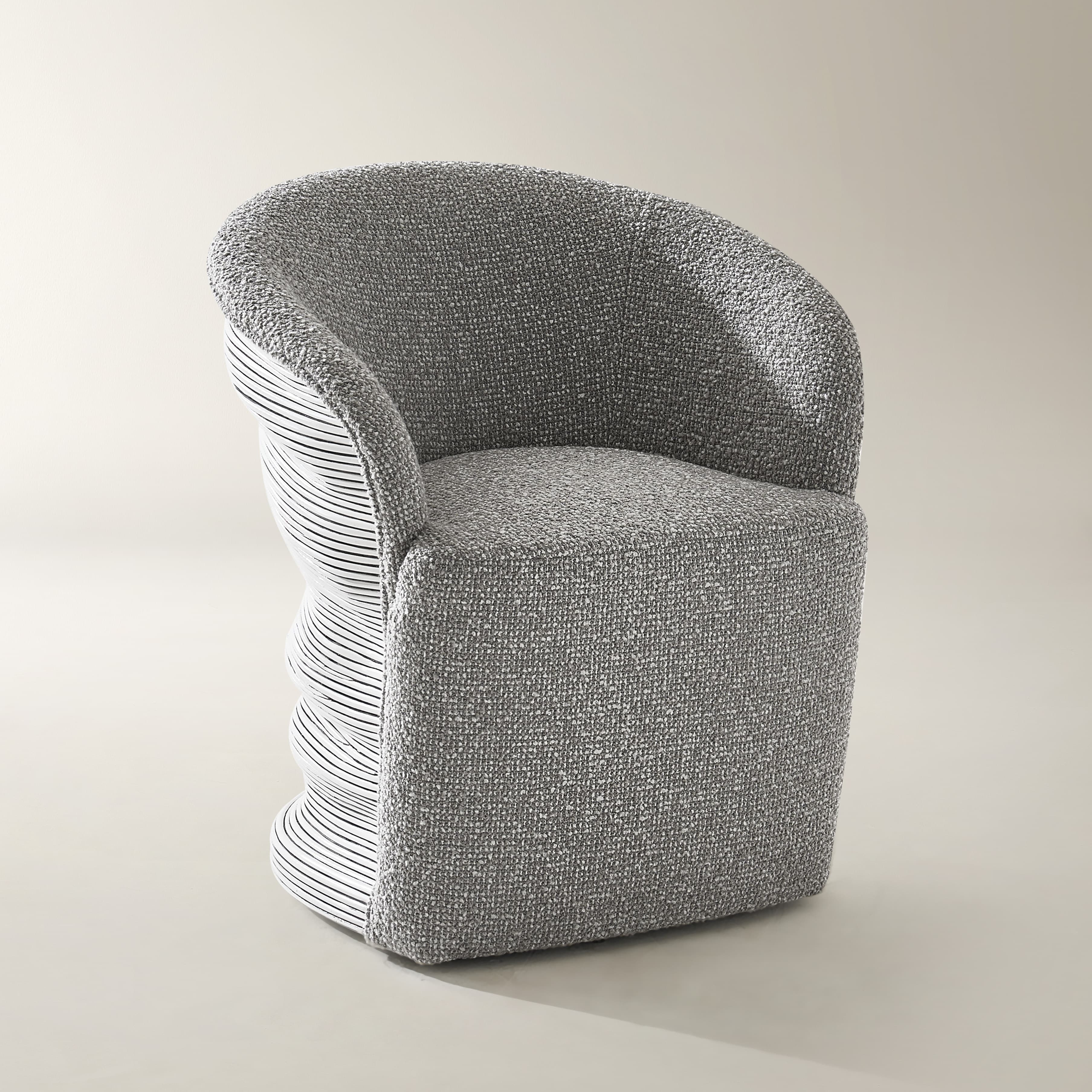
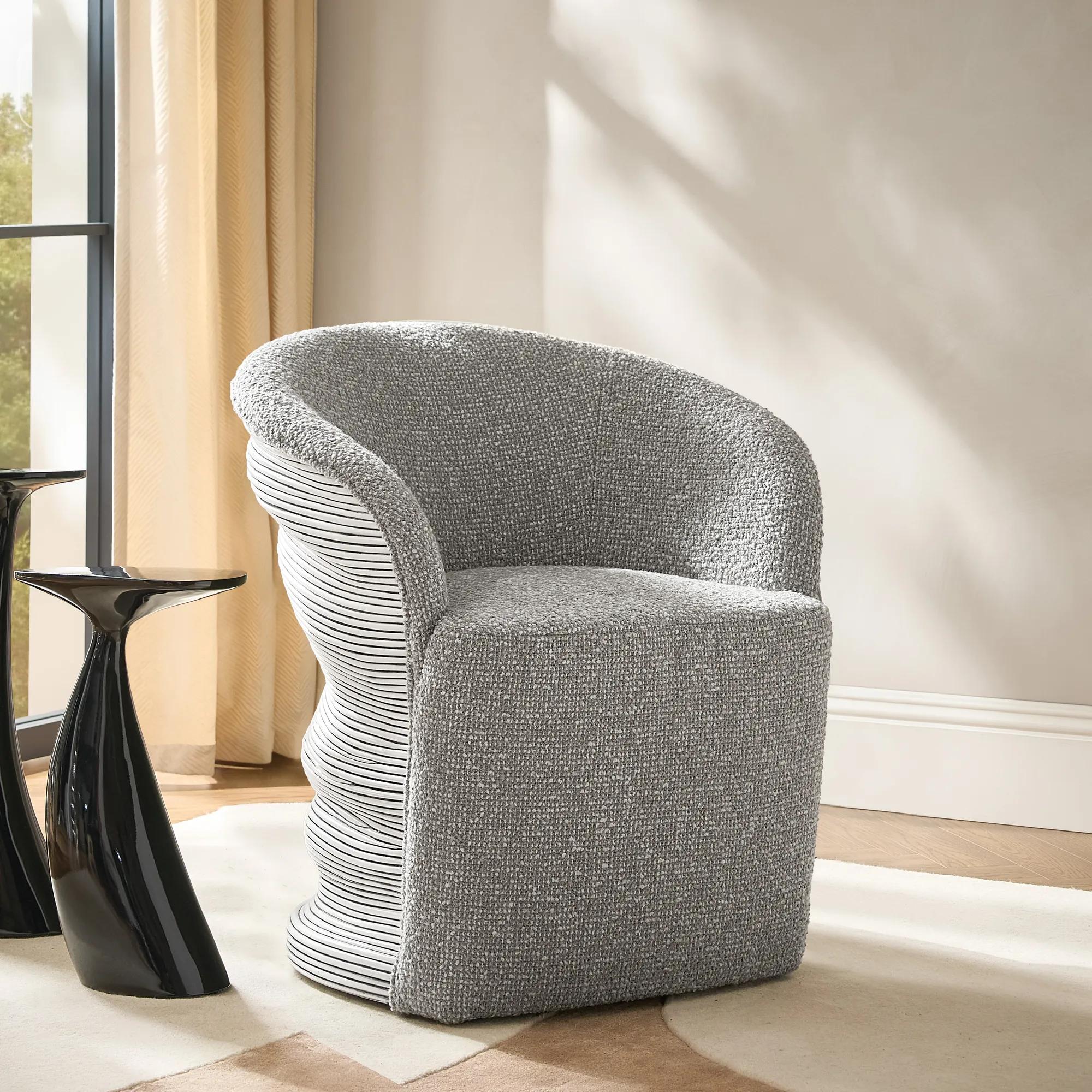 Cairo Rattan Grey Chenille Dining Chair$899
A handwoven natural rattan swivel chair in grey chenille, blending sculptural form with plush comfort.
Add To Cart -
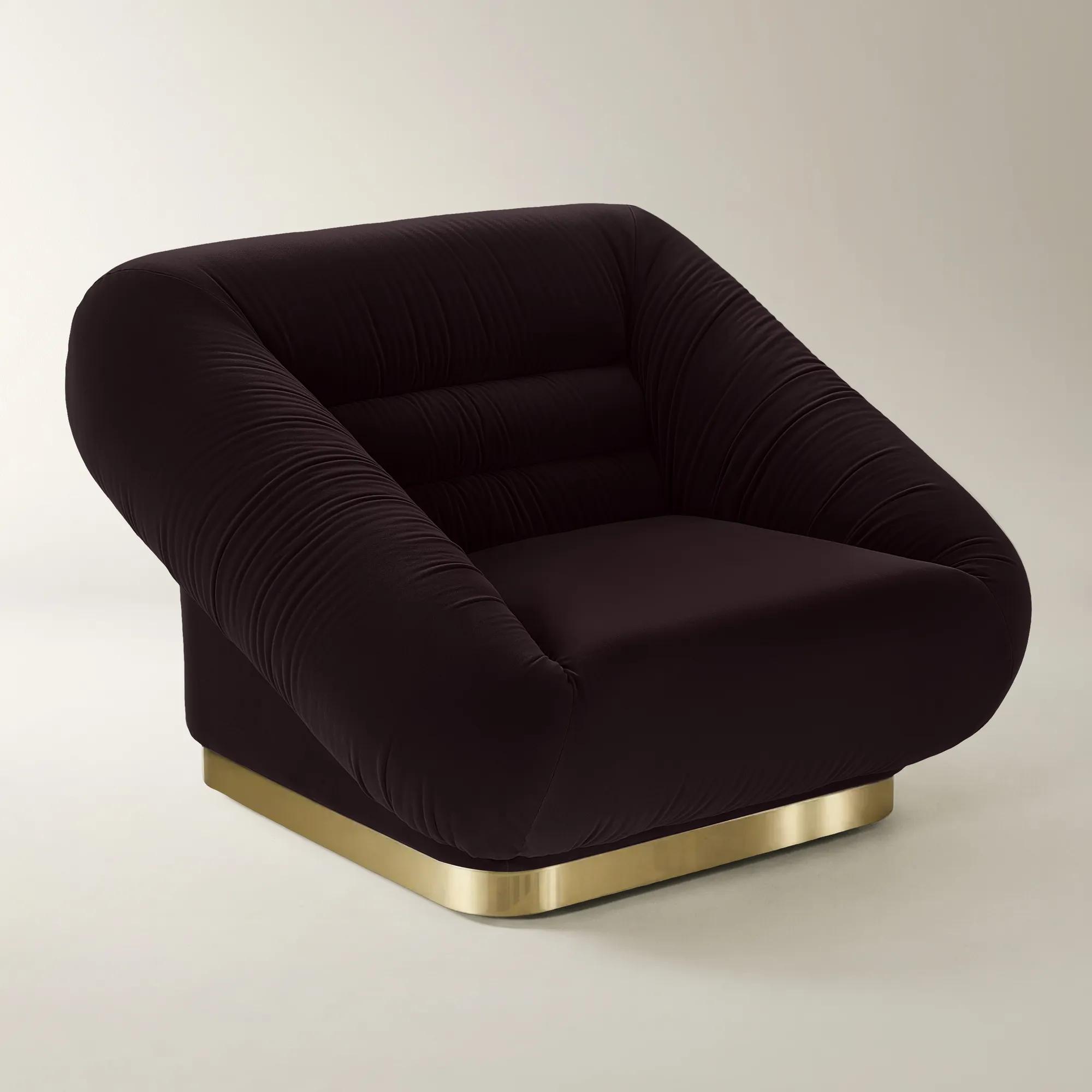 Dover Fig Velvet Swivel Accent Chair$1299
A sculptural fig velvet accent chair featuring soft gathered upholstery, gold-trimmed base, and smooth 360° swivel.
Add To Cart -
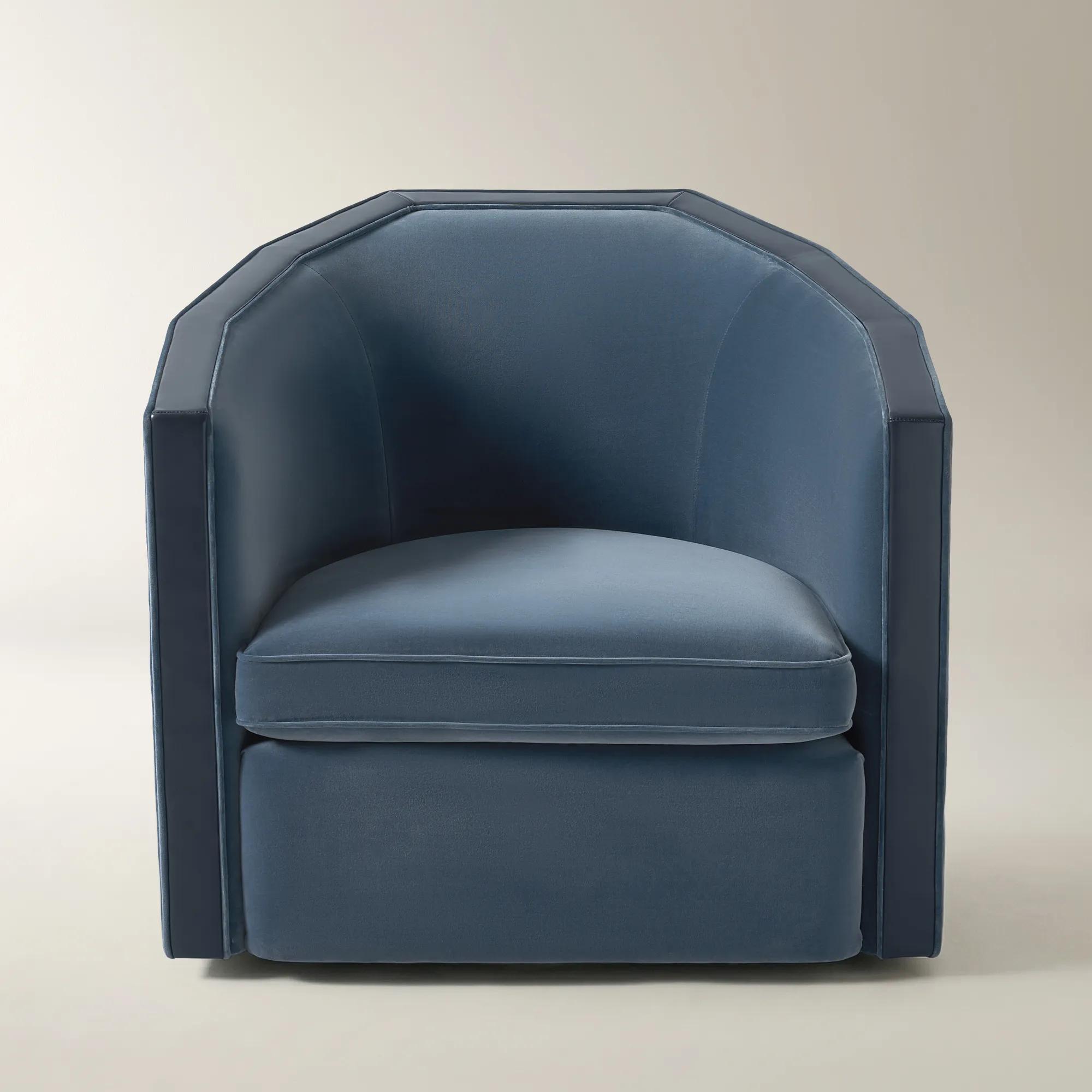 Vesper Dusty Blue Velvet With Leather Swivel Accent Chair$999
A modern accent chair in dusty blue velvet with tonal leather trim and a smooth 360-degree swivel base.
Add To Cart -
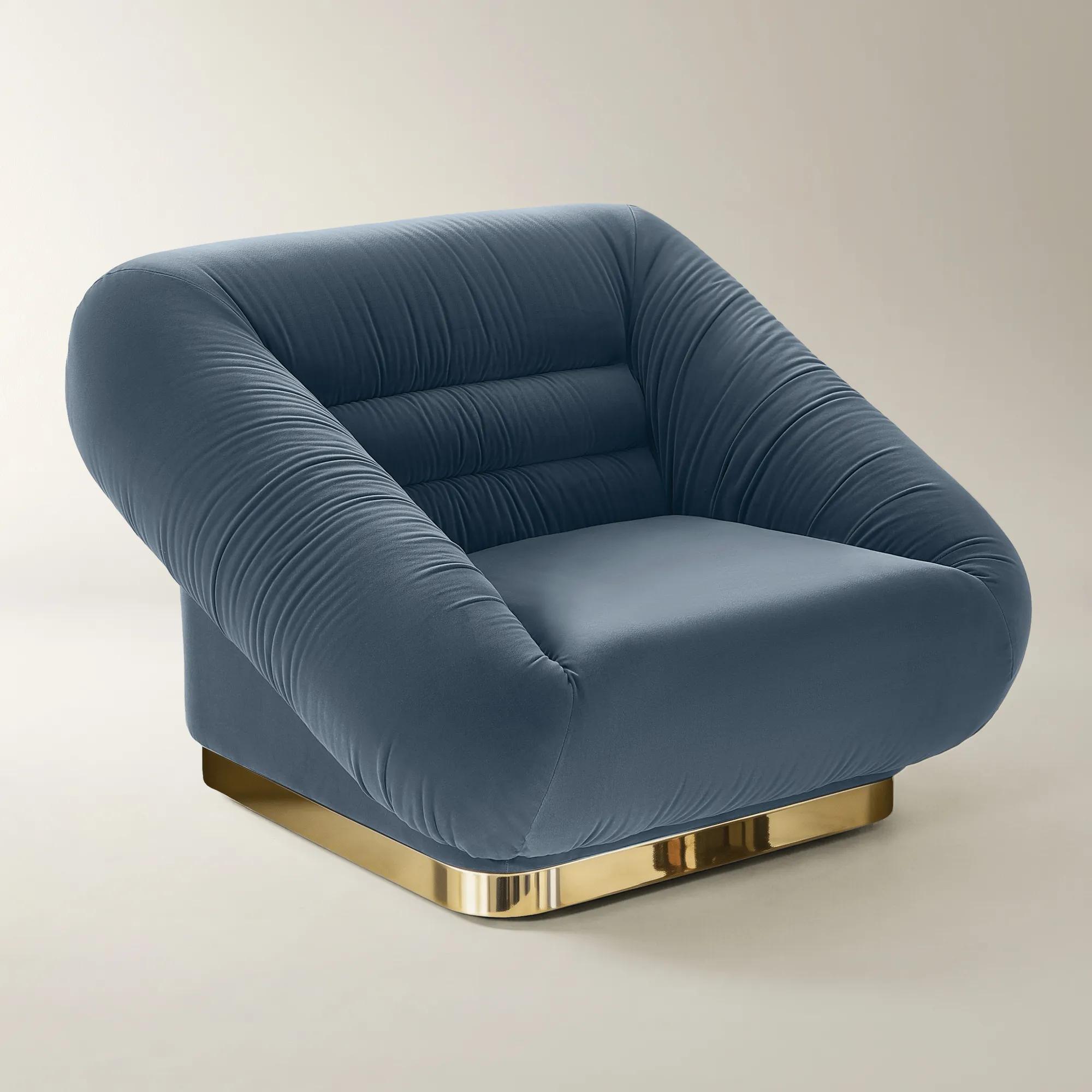 Dover Dusty Blue Velvet Swivel Accent Chair$1299
A sculptural blue velvet accent chair featuring soft gathered upholstery, gold-trimmed base, and smooth 360° swivel.
Add To Cart -
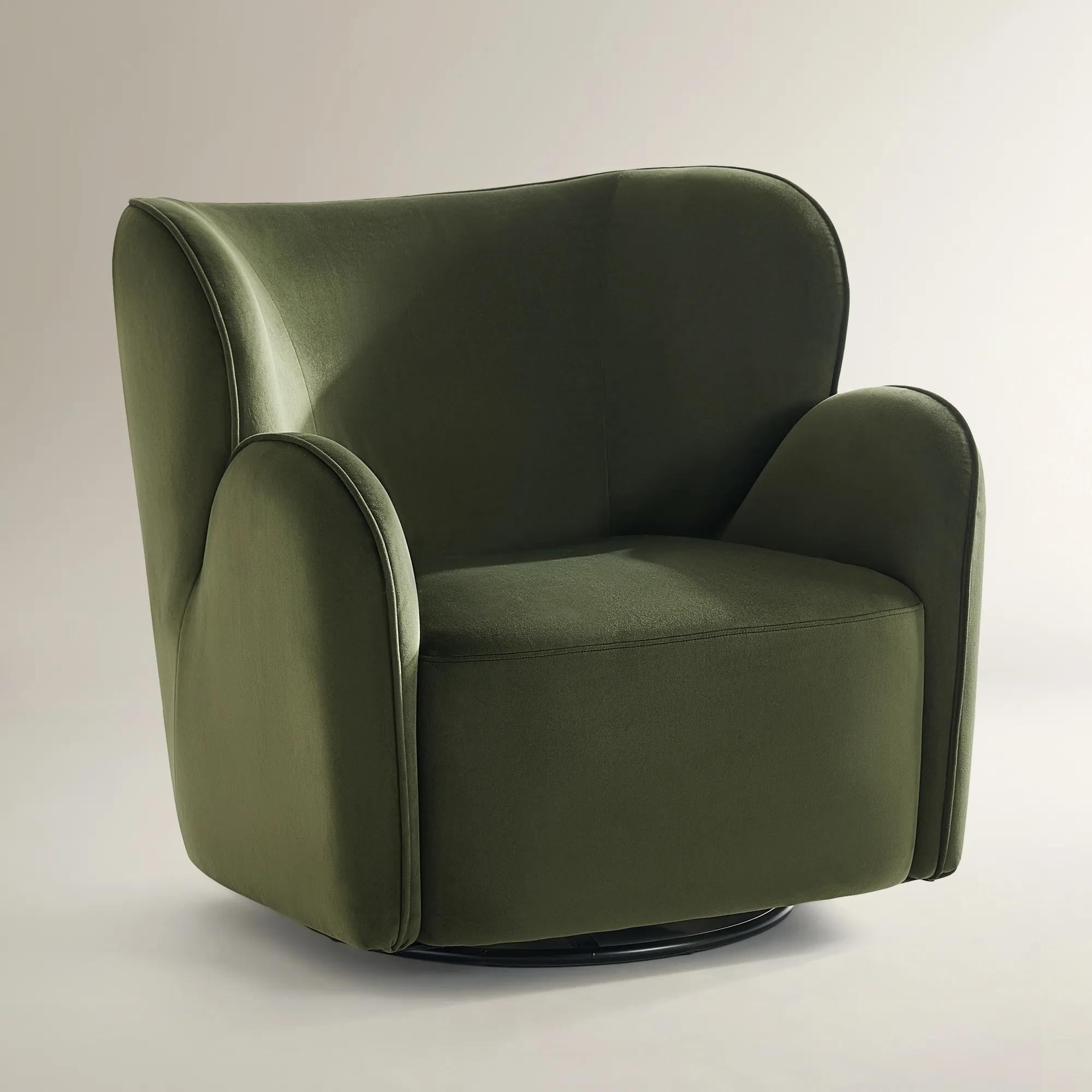
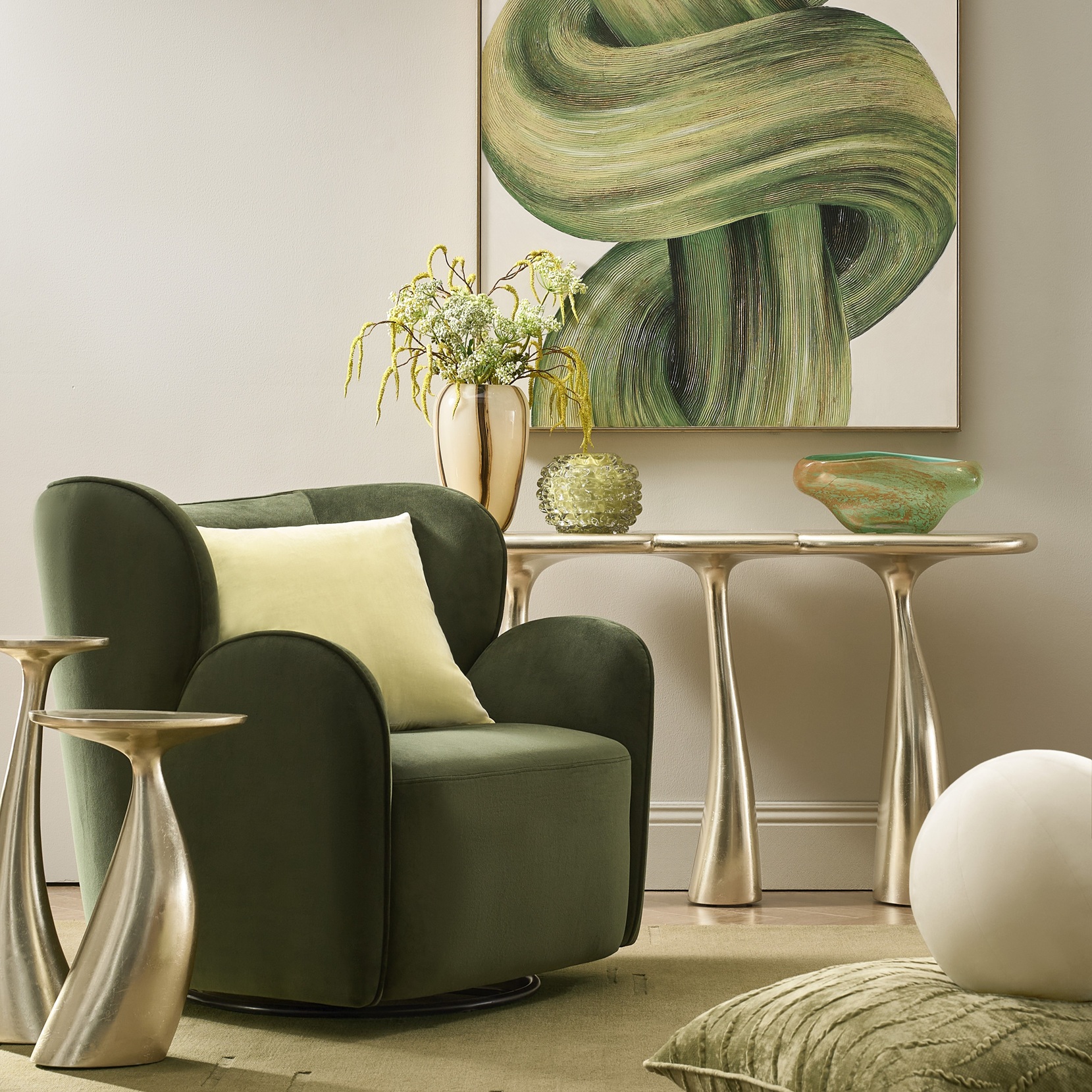 Ceres Jade Green Velvet Swivel Accent Chair$799
A plush jade green velvet chair with a curved silhouette, 360° swivel, and supportive foam cushioning.
Add To Cart -
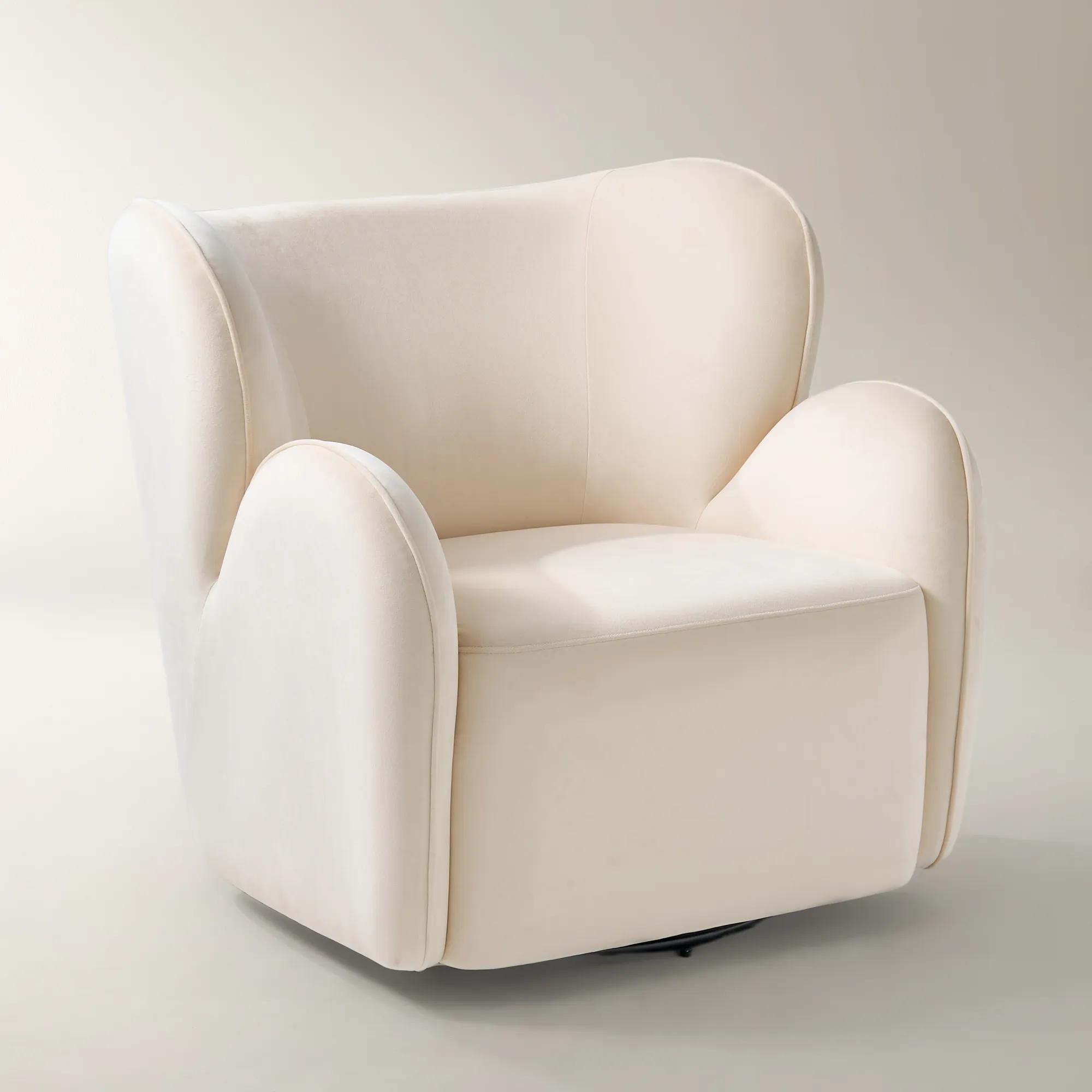
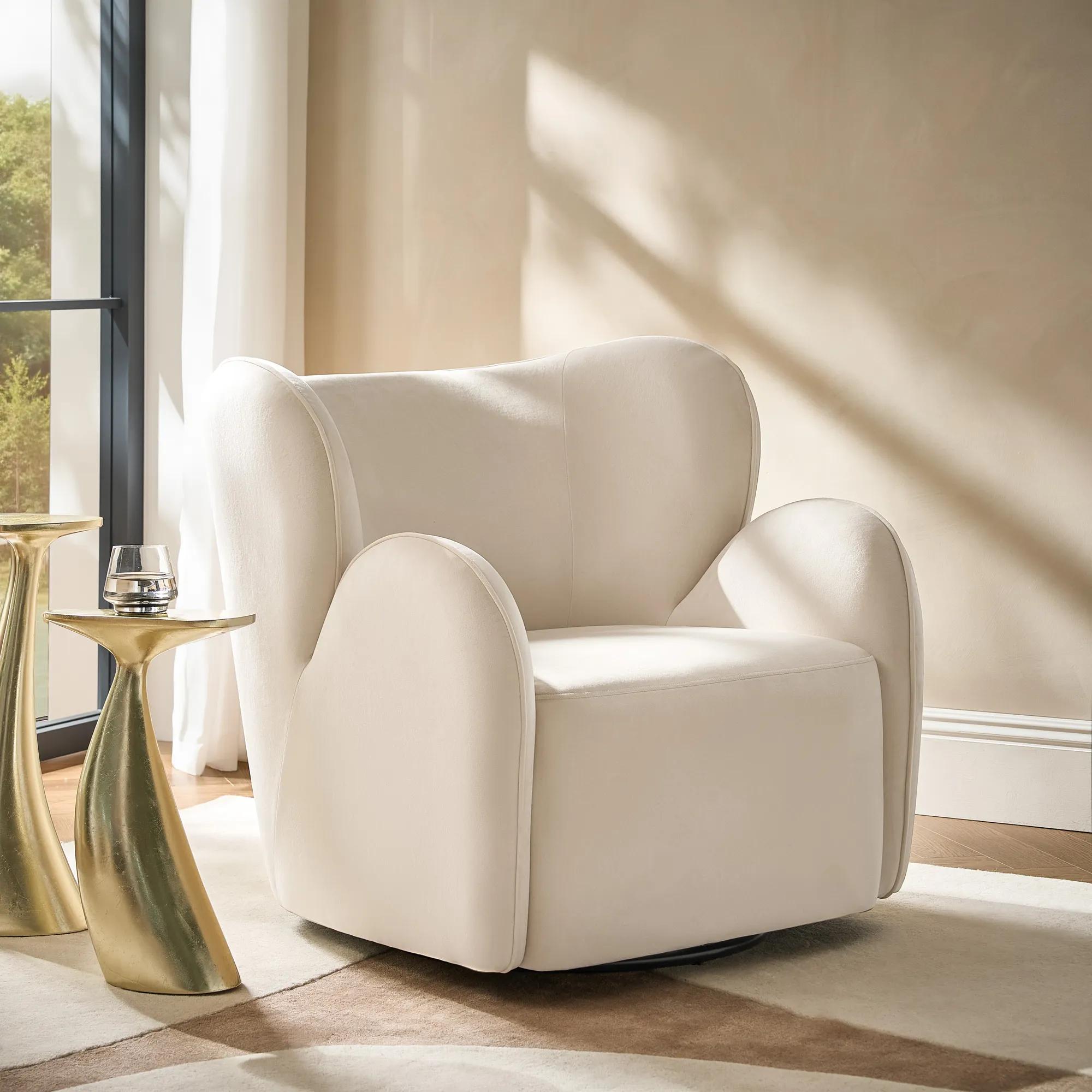 Ceres Ivory Velvet Swivel Accent Chair$799
An ivory velvet accent chair featuring a curved silhouette, 360° swivel, and plush, supportive cushioning.
Add To Cart -
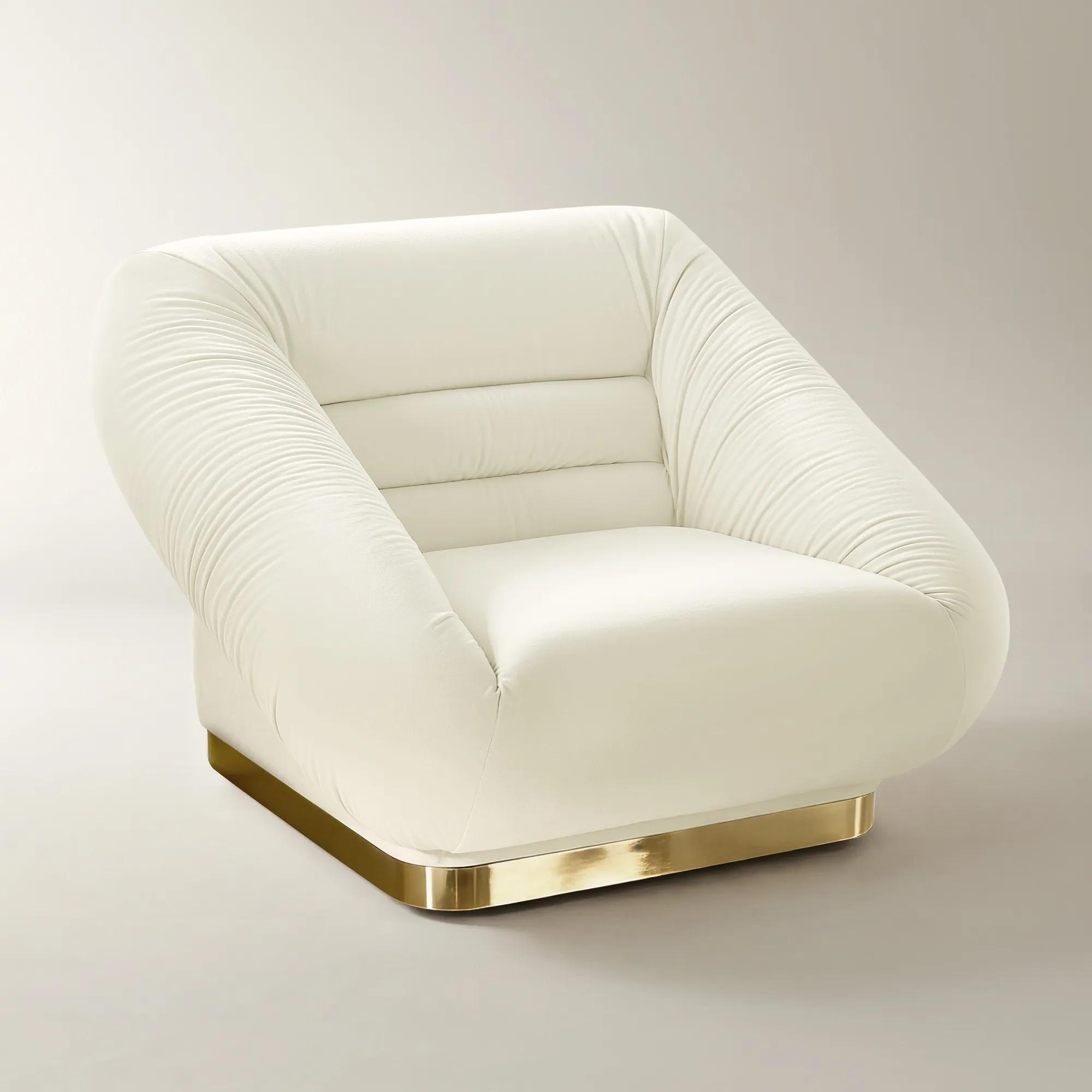 Dover Cloud Velvet Swivel Accent Chair$1299
A sculptural accent chair in cloud velvet with a gold-trimmed base and smooth 360° swivel function.
Add To Cart -
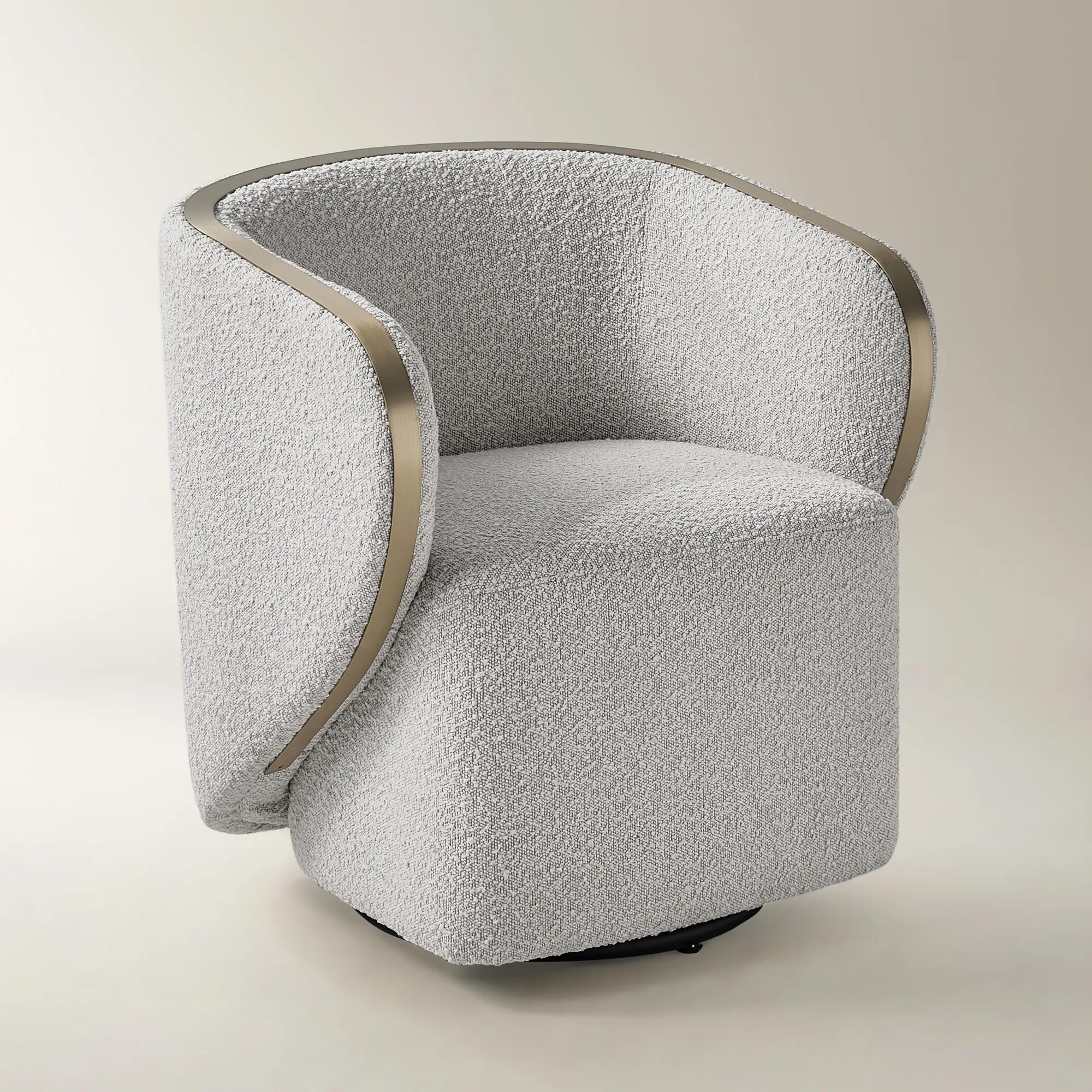 Nova Light Grey Performance Boucle Swivel Dining Chair$599
A sculptural light grey chair in water-repellent boucle with metallic trim and a smooth 360° swivel base.
Add To Cart -
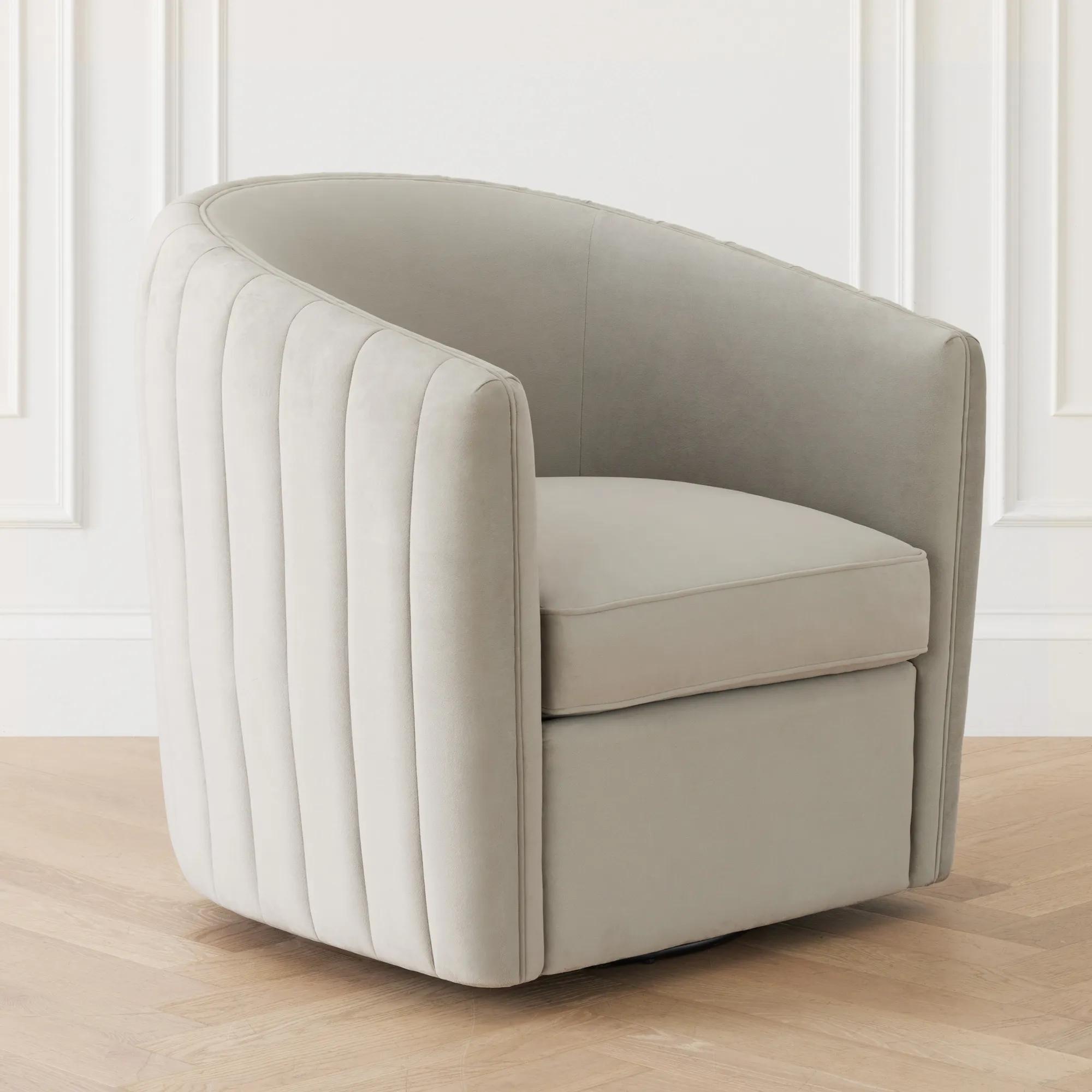
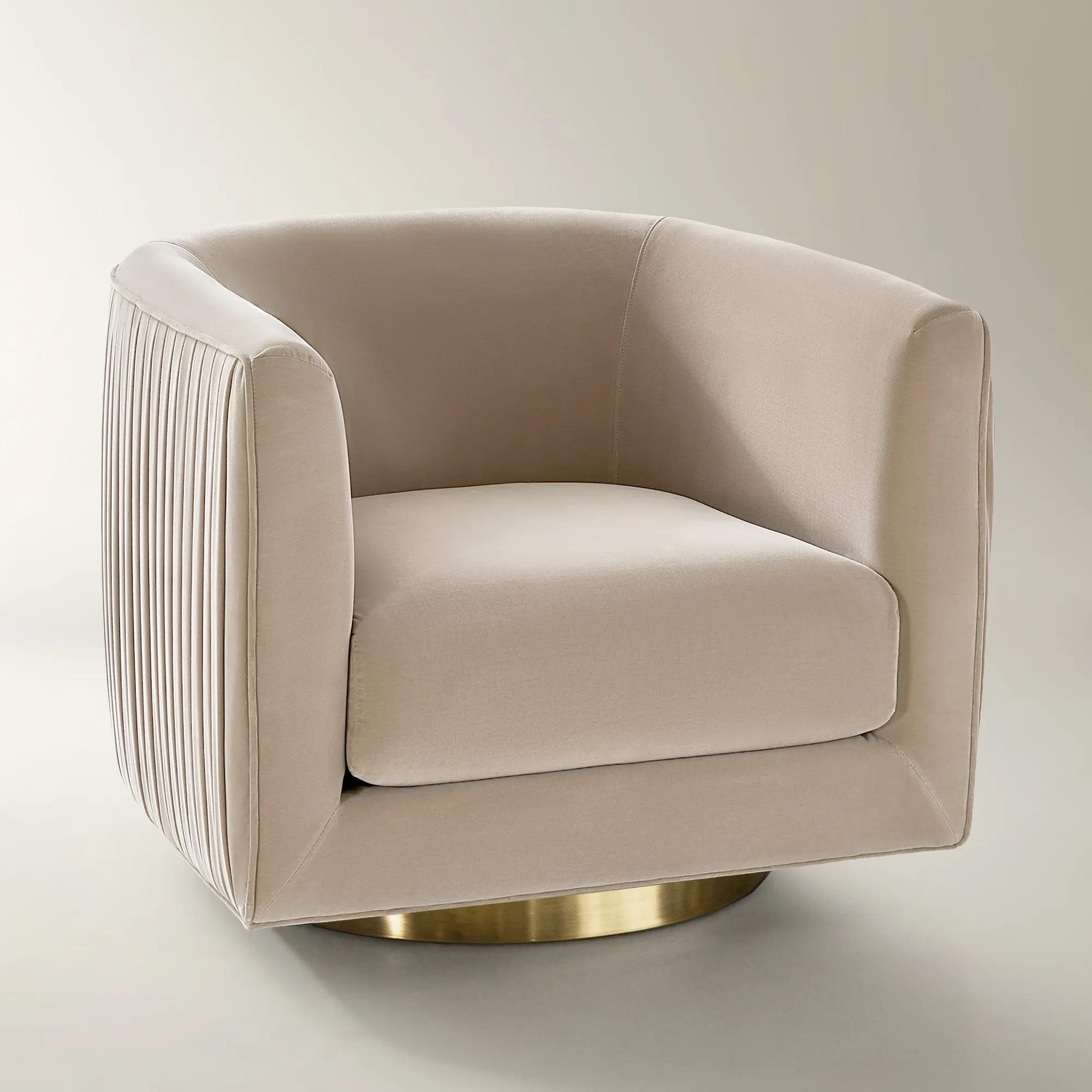 Lyssa Pleated Simply Taupe Velvet Swivel Accent Chair$1099
A softly curved taupe velvet accent chair featuring pleated detailing, 360° swivel, and a gold stainless steel base.
Add To Cart -
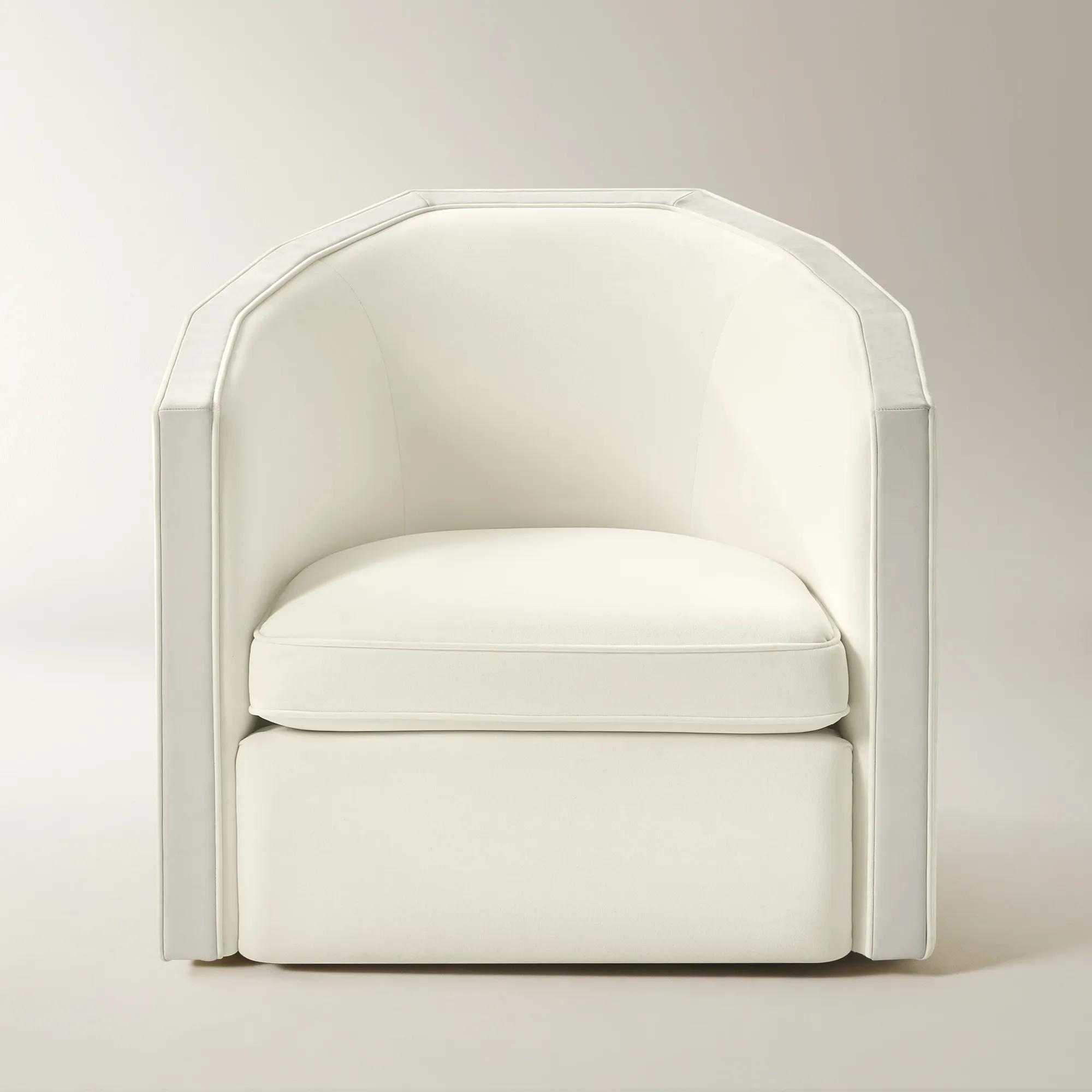 Vesper Cloud Velvet With Leather Swivel Accent Chair$999
A modern accent chair featuring cloud velvet upholstery, tonal leather trim, and a smooth 360° swivel base.
Add To Cart -
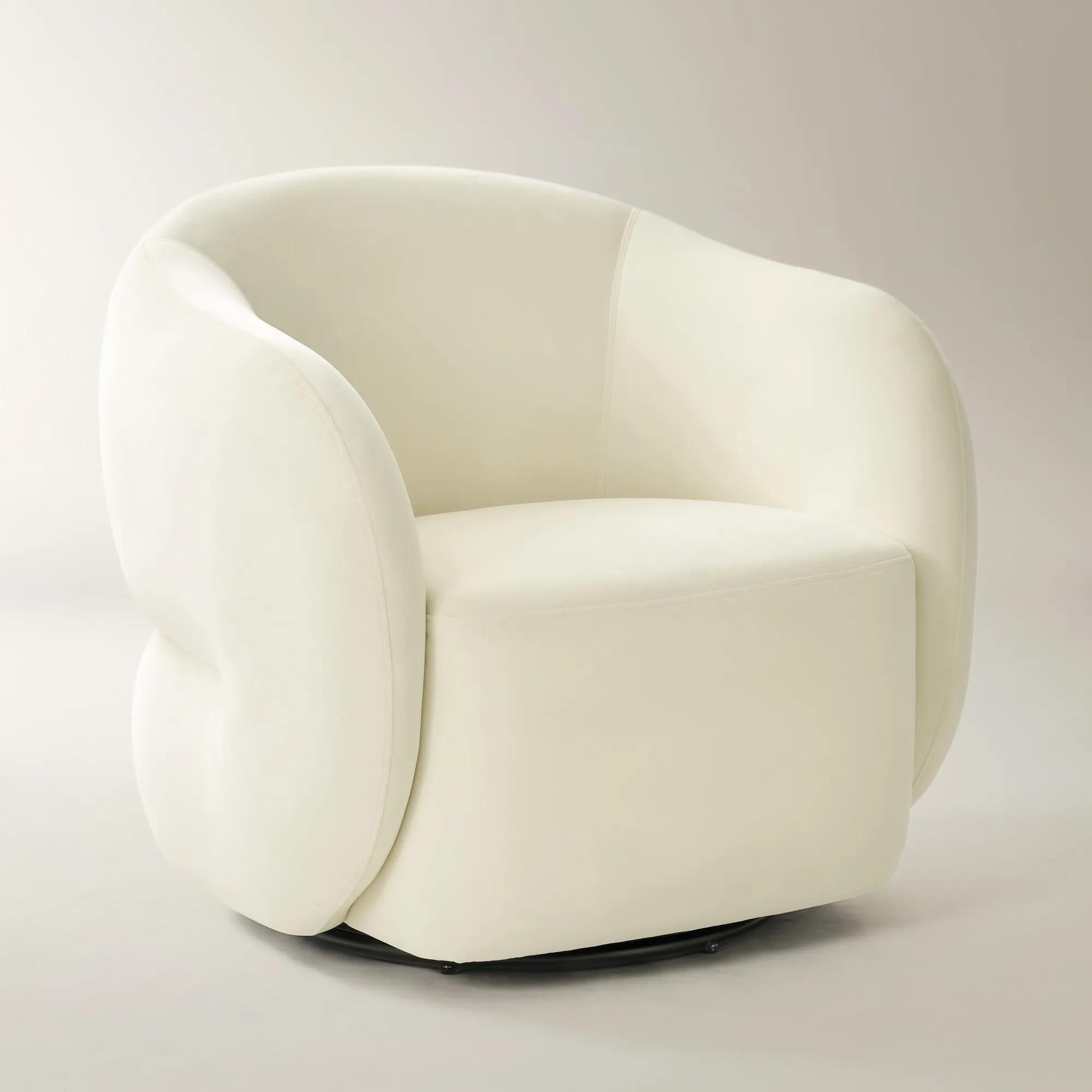
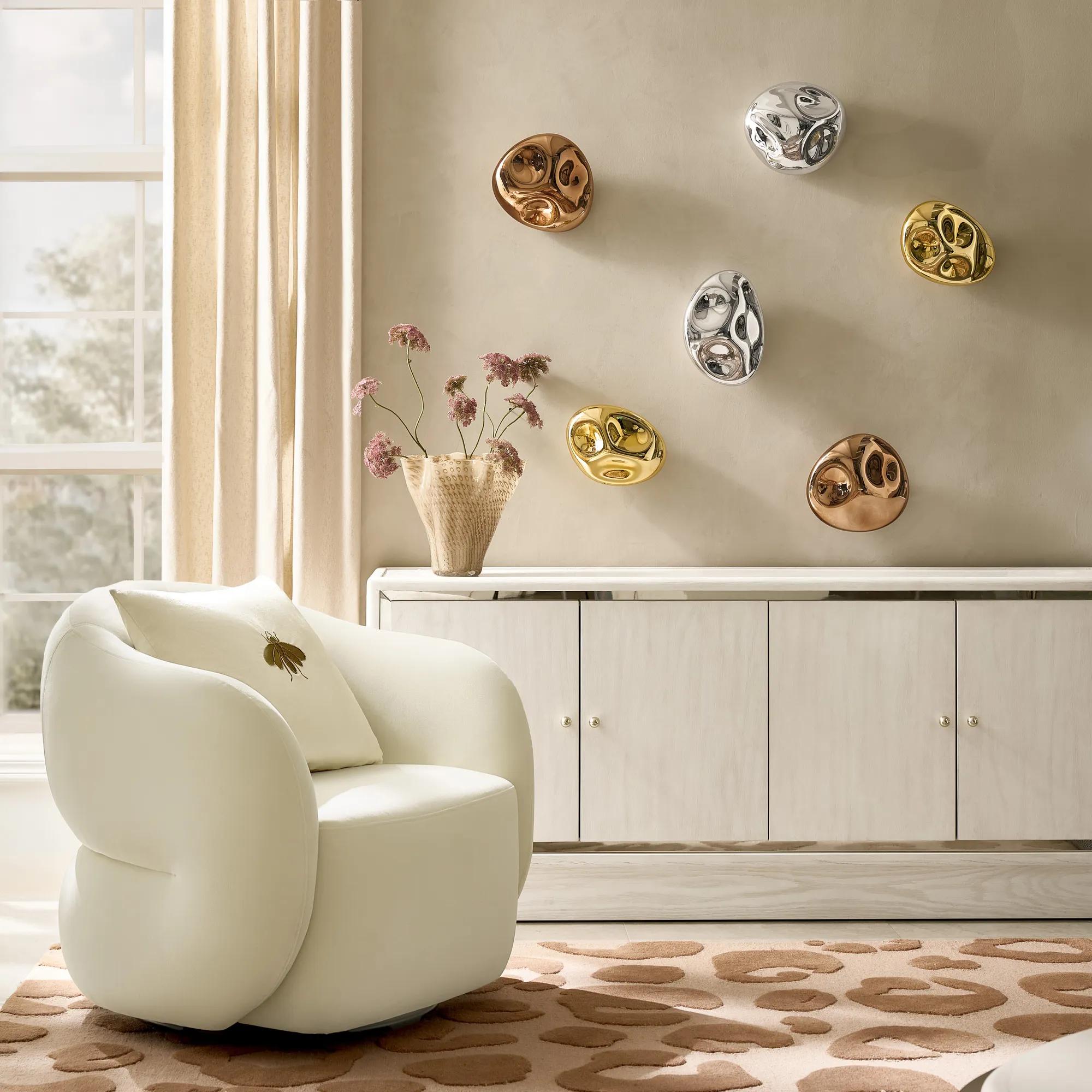 Sierra Cloud Velvet Swivel Accent Chair$799
A plush velvet accent chair featuring a wraparound back, fluid curves, and smooth 360° swivel base.
Add To Cart -
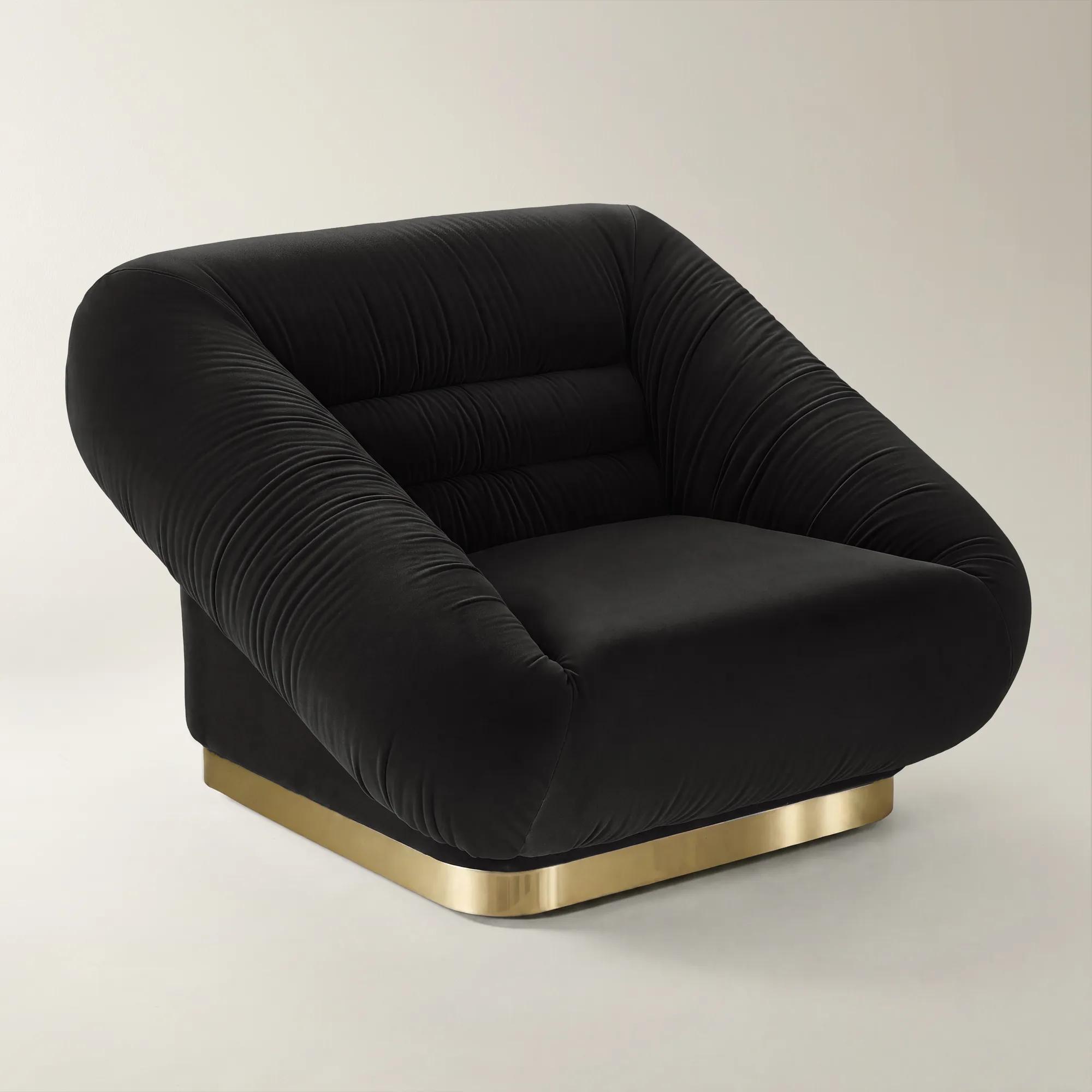
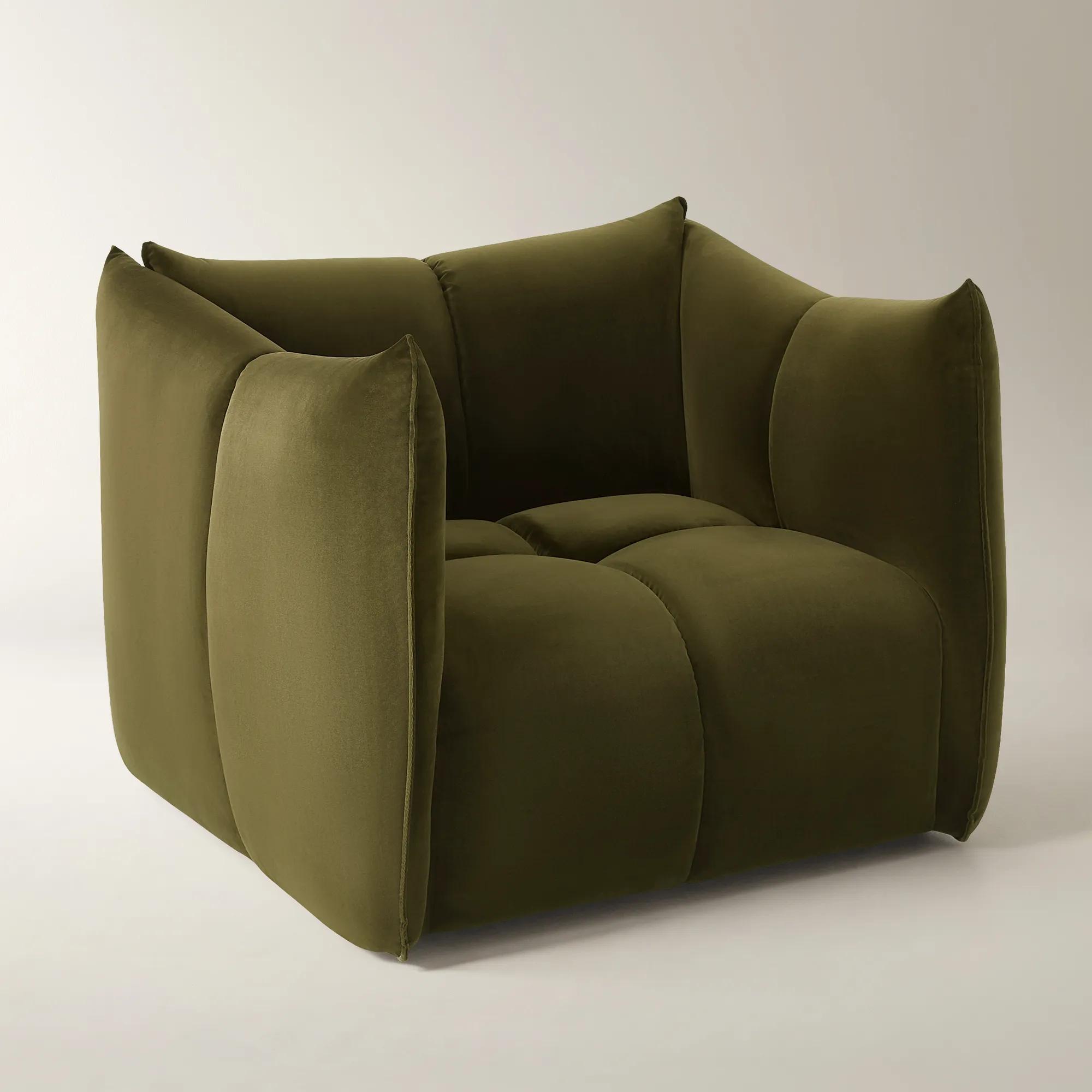 Reina Tufted Deep Olive Velvet Swivel Chair$1099
A deep olive green velvet swivel chair featuring blocked channel tufting and an architectural winged profile.
Add To Cart -
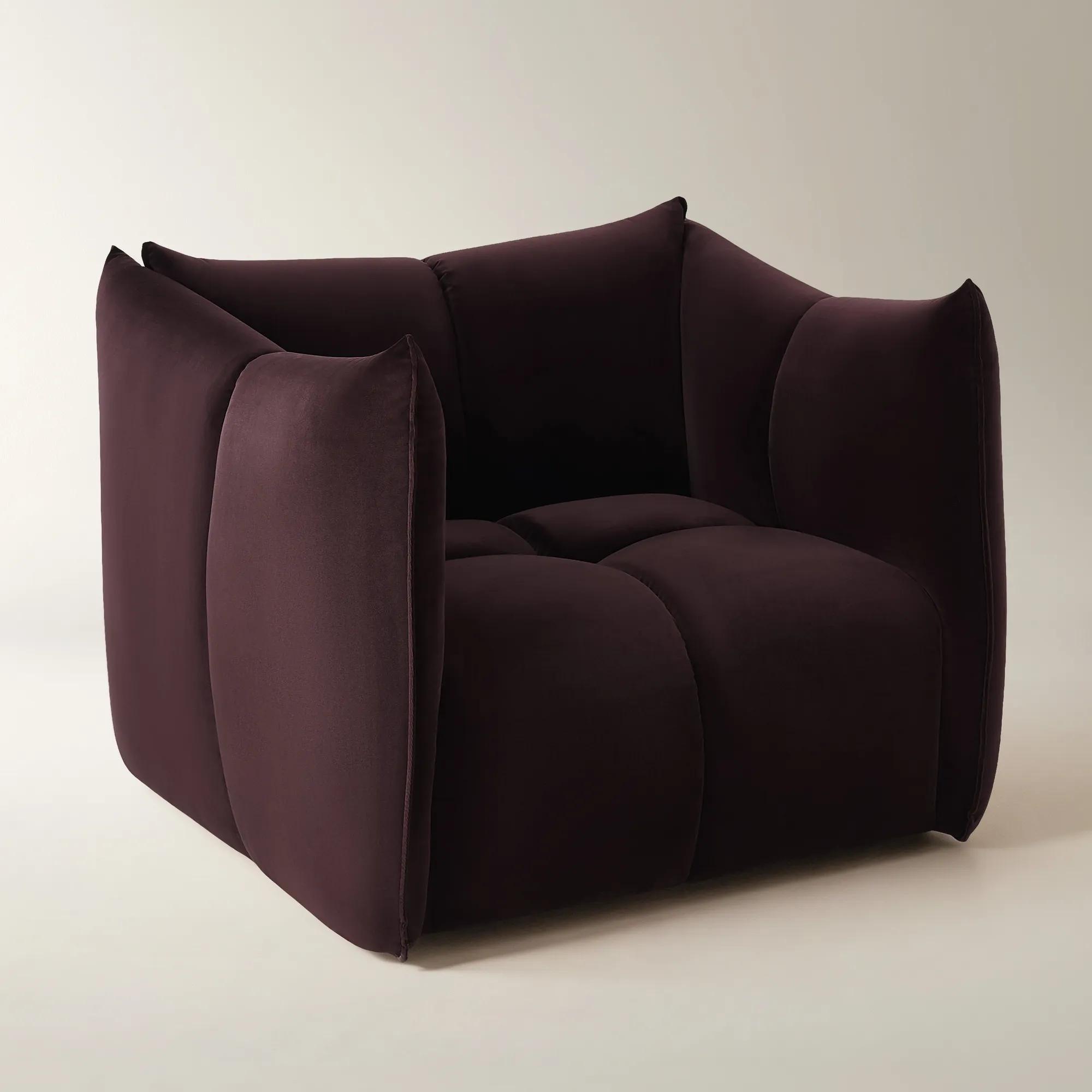 Reina Tufted Fig Velvet Swivel Chair$1099
A plush fig velvet swivel chair featuring blocked channel tufting and an architectural winged profile.
Add To Cart -
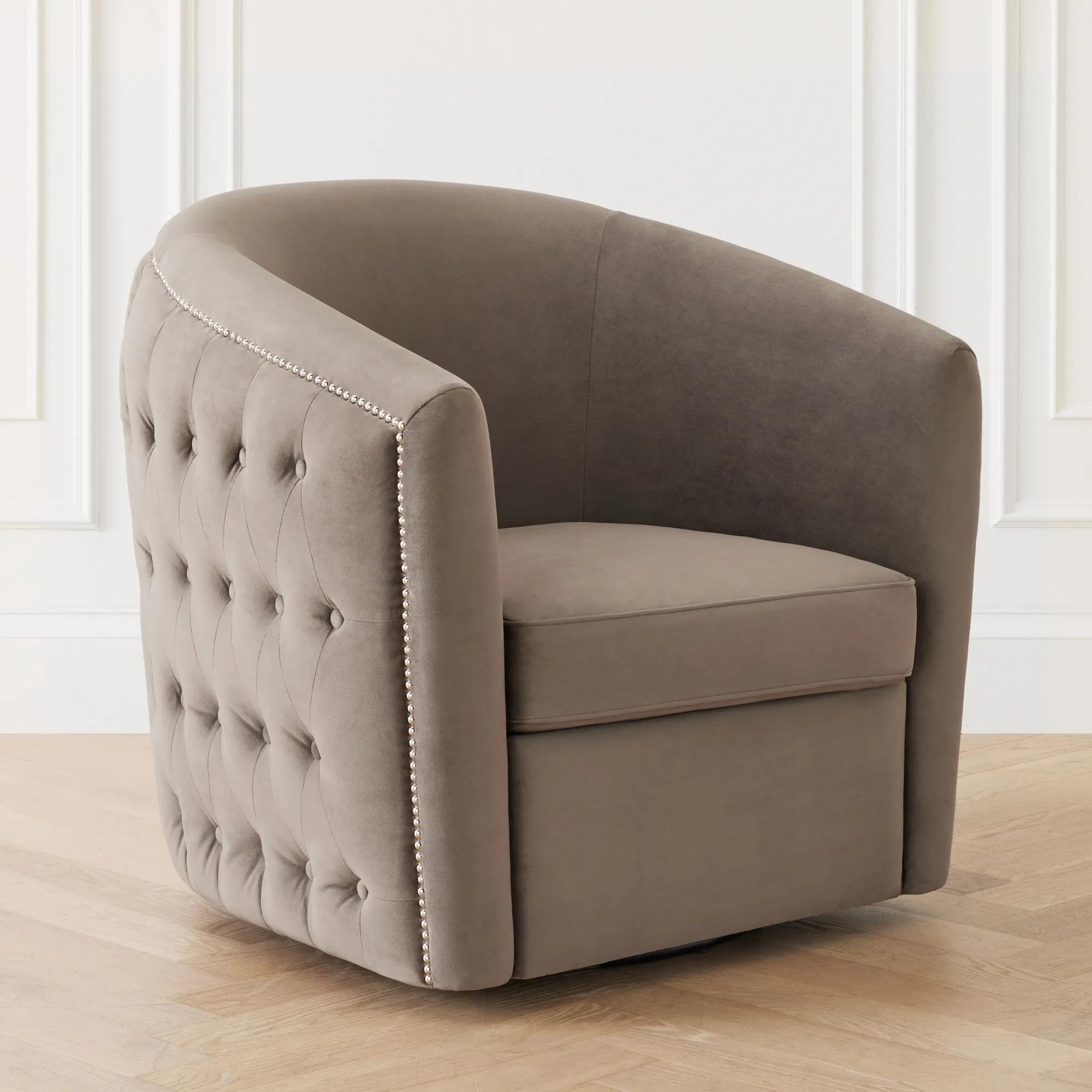
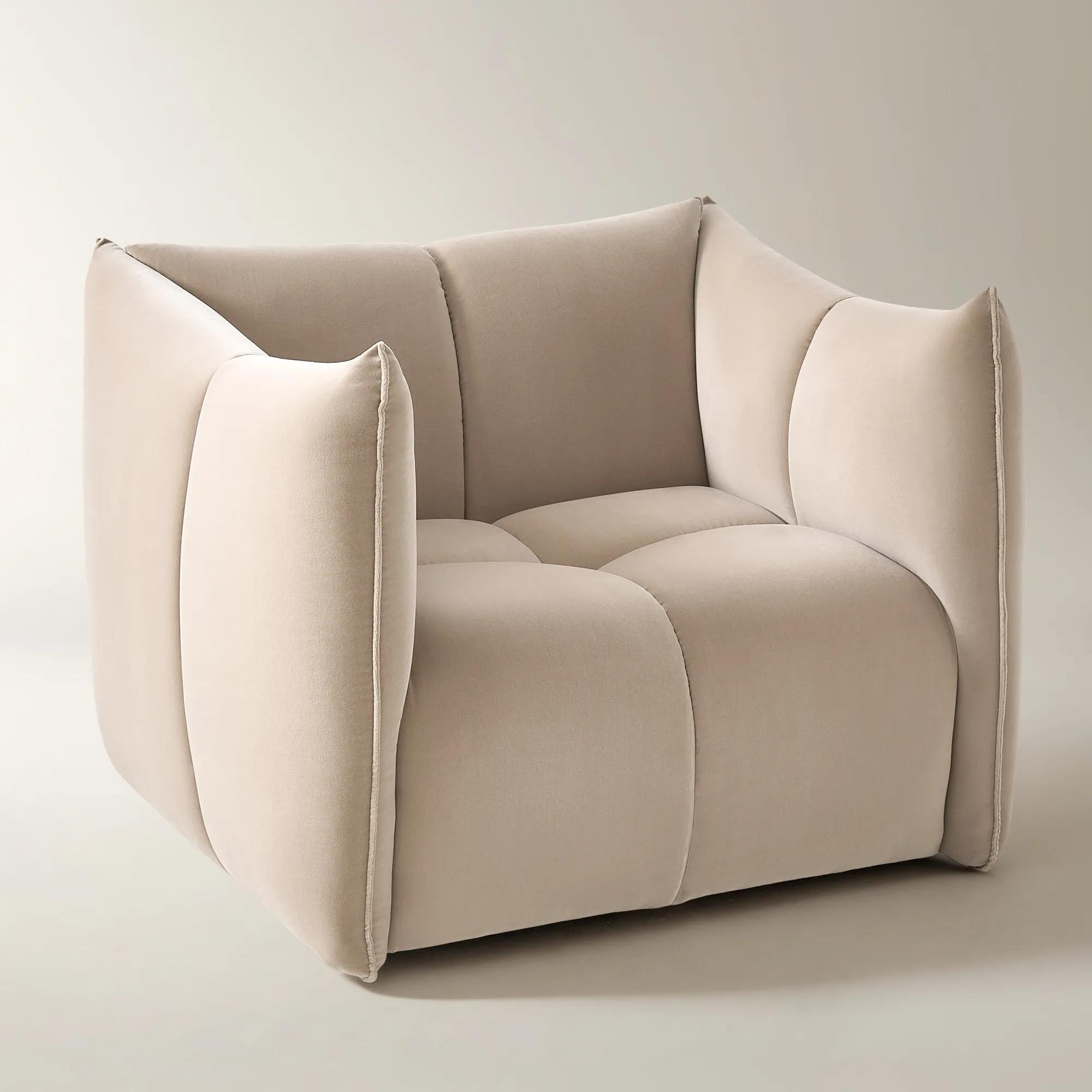 Reina Tufted Simply Taupe Velvet Swivel Chair$1099
A plush taupe velvet swivel chair featuring blocked channel tufting and an architectural winged silhouette.
Add To Cart

Designer Living Room Swivel Chairs
Designer living room swivel chairs are the ultimate invitation to indulge in both comfort and artistry—where every turn transforms the ordinary into the extraordinary. These sculptural seats anchor your space with a sense of movement and modernity, effortlessly blending function with high-impact style. Imagine sinking into sumptuous upholstery, surrounded by curves that command attention and finishes that shimmer under ambient light. With each graceful rotation, designer living room swivel chairs become more than just a place to sit—they become the centerpiece of a living room designed for those who dare to express themselves boldly, beautifully, and without compromise.
Designer living room swivel chairs bring sculptural presence and graceful movement to a room, pairing the visual impact of an accent chair with a seat that turns on its base. Many designs offer a full 360-degree rotation, while others have a more limited range or a return mechanism that brings the seat back to its original position; the individual chair’s specifications determine how it moves. That distinction matters in a living room where conversation, reading, and entertainment share the same space. A chair angled toward the sofa can turn toward a guest without being dragged across the floor, then pivot toward a window when the room becomes a private retreat. The effect is particularly compelling in open layouts, where seating can connect adjacent gathering areas while keeping the furniture arrangement composed. Curved barrel backs create an enveloping silhouette, rounded arms soften the lines of a tailored sofa, and generously scaled seats introduce a sumptuous place to linger. A concealed swivel base lets upholstery take center stage, giving a substantial chair an almost floating appearance. An exposed metal base adds a more architectural note, especially when its finish echoes a nearby lamp or the slender frame of a cocktail table. For people who entertain, a pair of swivel accent chairs can make a seating group feel more conversational; for a reader, one well-positioned chair can establish a distinctly personal corner. Stationary seating has its own appeal, and Designer Living Room Armchairs offer another way to introduce an expressive silhouette where rotation is not a priority. Used together, fixed and swiveling seats give a room both structure and freedom. The most successful arrangement considers the chair from every angle, not just from the doorway: a beautifully shaped back deserves attention when it faces an adjoining space, and a smooth turning motion should feel as intentional as the upholstery. These are chairs for living rooms that invite participation, with enough visual character to hold their own even when nobody is seated.
Upholstery gives a designer swivel chair much of its personality, shaping both the atmosphere of the room and the experience of sitting down. Velvet catches light across its pile, lending curved forms depth and a subtle play of shadow; its surface can show shading or pressure marks that are characteristic of the fabric rather than necessarily signs of damage. Bouclé brings a richly textured, looped surface that makes a rounded silhouette especially expressive, although those loops deserve consideration in homes with pets whose claws may snag them. Tightly woven upholstery creates a more tailored impression, while leather can emphasize clean contours and develop character with use, depending on its finish. No material is automatically the most durable choice for every household. Fiber content, weave, backing, finish, seam construction, and the demands of daily use all influence performance. Where a fabric is described as performance upholstery, check its stated properties and care requirements rather than assuming it is stainproof or suitable for every cleaning method. A frequently used family-room chair may call for different upholstery than an occasional seat in a formal conversation area. Color is equally expressive: ivory allows a sculpted outline to read clearly, smoky gray lends depth without dominating neighboring pieces, and saturated jewel tones can turn a single chair into the room’s focal point. Comfort depends on more than plush-looking fabric. Seat height affects how easily feet reach the floor, seat depth determines whether sitting feels upright or lounge-like, and arm height influences support during reading or conversation. A deep seat can feel luxurious for someone who likes to curl up, yet leave a shorter sitter needing a supportive back pillow. Softer cushions invite sinking in, while firmer cushioning may better suit those who prefer a more supported position. Consider frame construction, cushion materials, stated weight capacity, and intended residential use alongside the exterior. A striking silhouette earns its place when its proportions and support suit the people who will use it most.
Fit begins with the chair’s full dimensions, but a swivel chair needs more than an empty rectangle on a floor plan. Overall width and depth describe its footprint at rest; rotation changes where the back, arms, and an occupant’s knees and feet travel. There is no single clearance measurement that suits every design, so allow space for the chair’s turning path and follow any manufacturer placement recommendations. Painter’s tape can help mark the proposed footprint, with additional room around it to visualize movement. In a compact living room, a rounded chair with a modest footprint may preserve circulation more effectively than an oversized lounge silhouette, but the actual dimensions matter more than how compact a chair appears in a photograph. Near a sofa, leave enough separation that turning does not bring an armrest into contact with neighboring upholstery. Beside a coffee table, account for both seated legroom and the sweep of the chair; a nearby drink should remain comfortably within reach without placing the table in the rotation path. Keep walkways clear, and position the base on a stable, level surface appropriate to the chair’s instructions. If a rug anchors the arrangement, check that its edges or thick pile do not interfere with movement. Delivery access also deserves attention, including doorway widths, hall turns, and stair clearances. Once the chair is in place, thoughtful care helps preserve its finish and feel. Vacuum upholstery with an appropriate attachment, attend to spills promptly by blotting rather than rubbing, and follow the fabric’s cleaning code before applying any treatment. Removable cushion covers are not necessarily machine washable. Leather requires care suited to its particular finish, and prolonged direct sunlight can alter the color of many upholstery materials. Keep the swivel mechanism free of obstructions, check fittings as directed, and use only recommended maintenance methods. With proportions, placement, and care considered, a designer swivel chair becomes an enduring part of the room’s composition: expressive from across the space, inviting at close range, and ready to turn toward the next conversation.
FAQs
A designer swivel chair brings both visual drama and practical versatility to a living room. Its sculptural form acts as a focal point, while the swivel feature allows for effortless movement and dynamic interaction within the space. These chairs are crafted with attention to detail, luxurious materials, and bold silhouettes, making them an expressive addition to any sophisticated interior.
Contemporary swivel chairs invite guests to engage from every angle, making conversations more fluid and inclusive. Their ability to pivot encourages connection—whether facing a crackling fireplace, a dazzling holiday display, or a group of friends. Their striking design also sets the tone for a glamorous, welcoming environment where every detail feels intentional.
Absolutely. Many designer swivel armchairs are thoughtfully scaled to fit compact living rooms, reading nooks, or bedrooms. Their 360-degree rotation maximizes functionality without requiring extra floor space, allowing you to enjoy both comfort and style even in more intimate settings.
Luxury contemporary swivel chairs are often upholstered in sumptuous fabrics such as velvet, bouclé, or top-grain leather. Details like metallic bases, polished wood, or artful tufting add to their opulent appeal. These materials not only provide tactile richness but also elevate the overall aesthetic of the room.
Yes, a contemporary swivel chair often serves as the centerpiece of a living room or lounge. Its bold silhouette, unique materials, and dramatic presence can anchor a design scheme, inspiring the selection of complementary decor and furniture. It’s an ideal choice for those who want to express personality and artistry through their interiors.