Corner Blocked Hardwood Frame Sectionals
Corner Blocked Hardwood Frame Sectionals
-
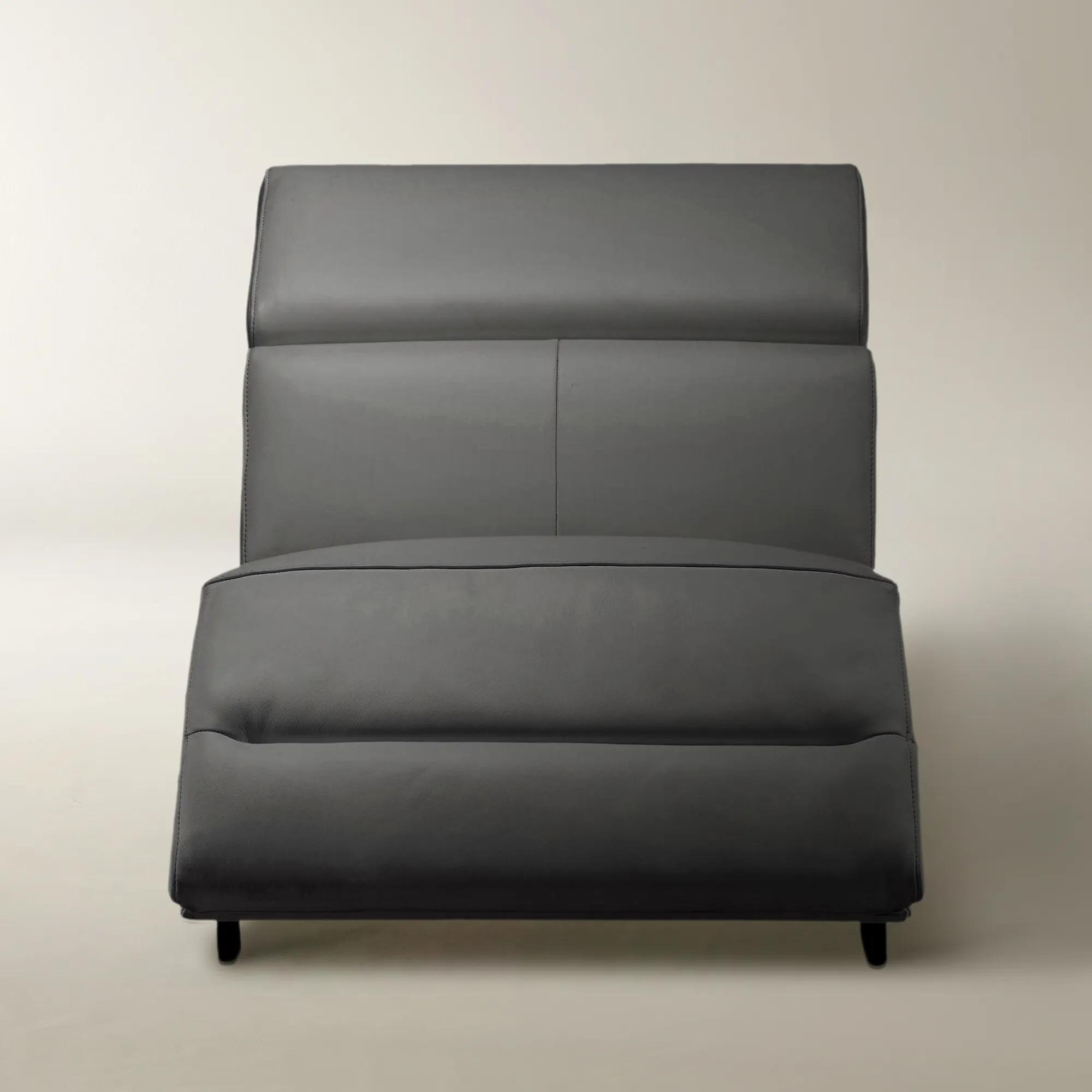
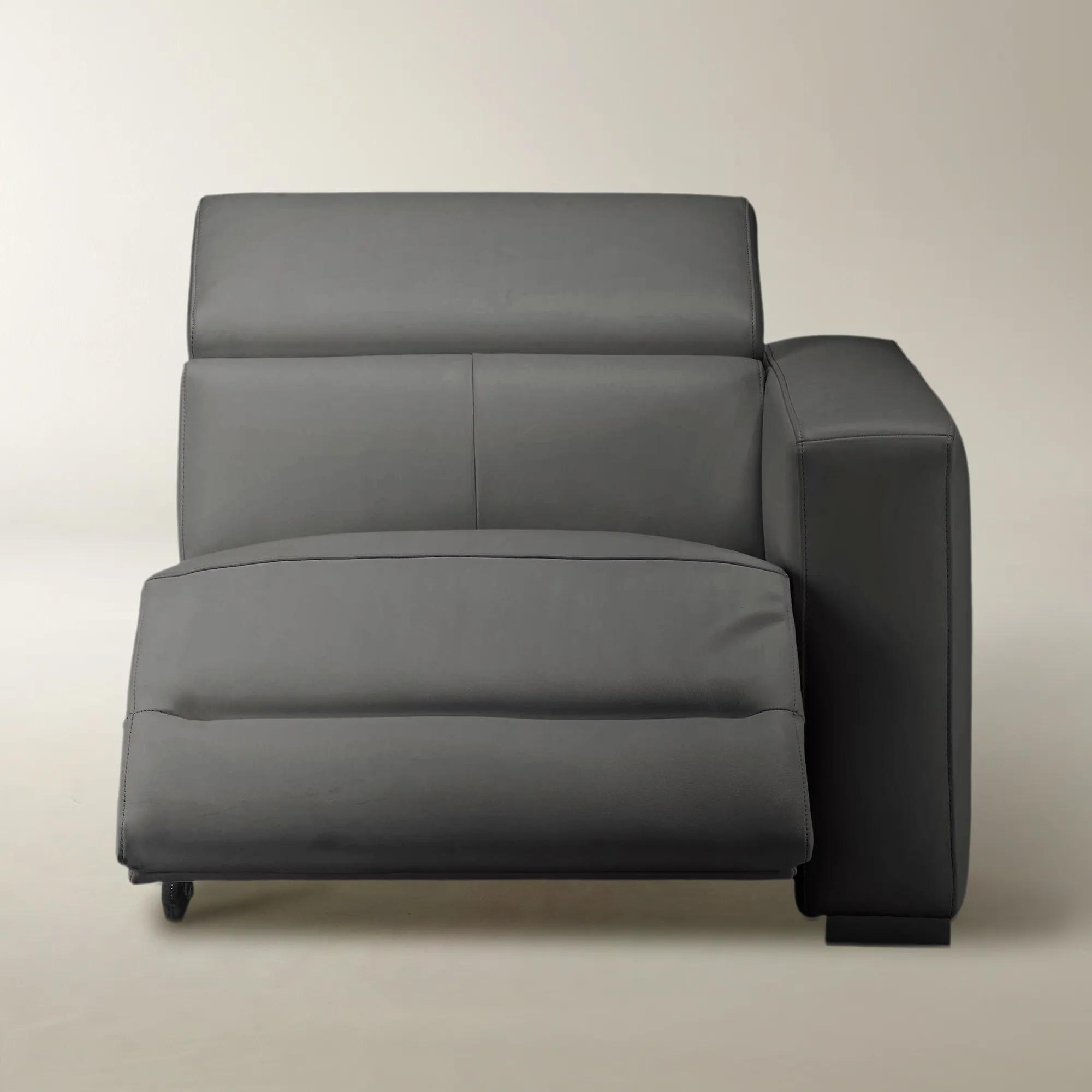
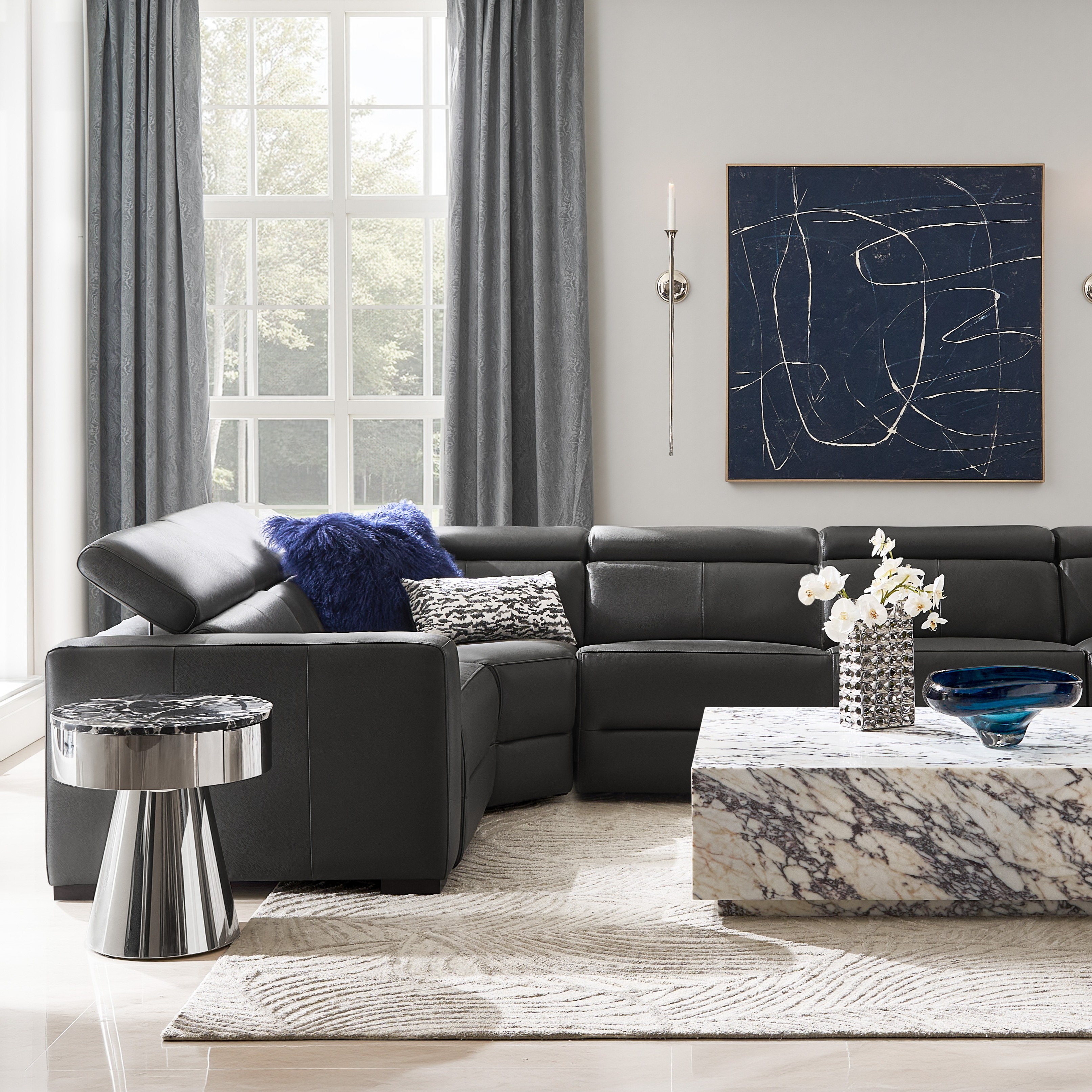 Verona Reclining Charcoal Leather Armless Chair With Power$1249
A charcoal semi-aniline leather sectional with adjustable headrests, power-reclining seats, and kiln-dried hardwood frame.
Add To Cart -
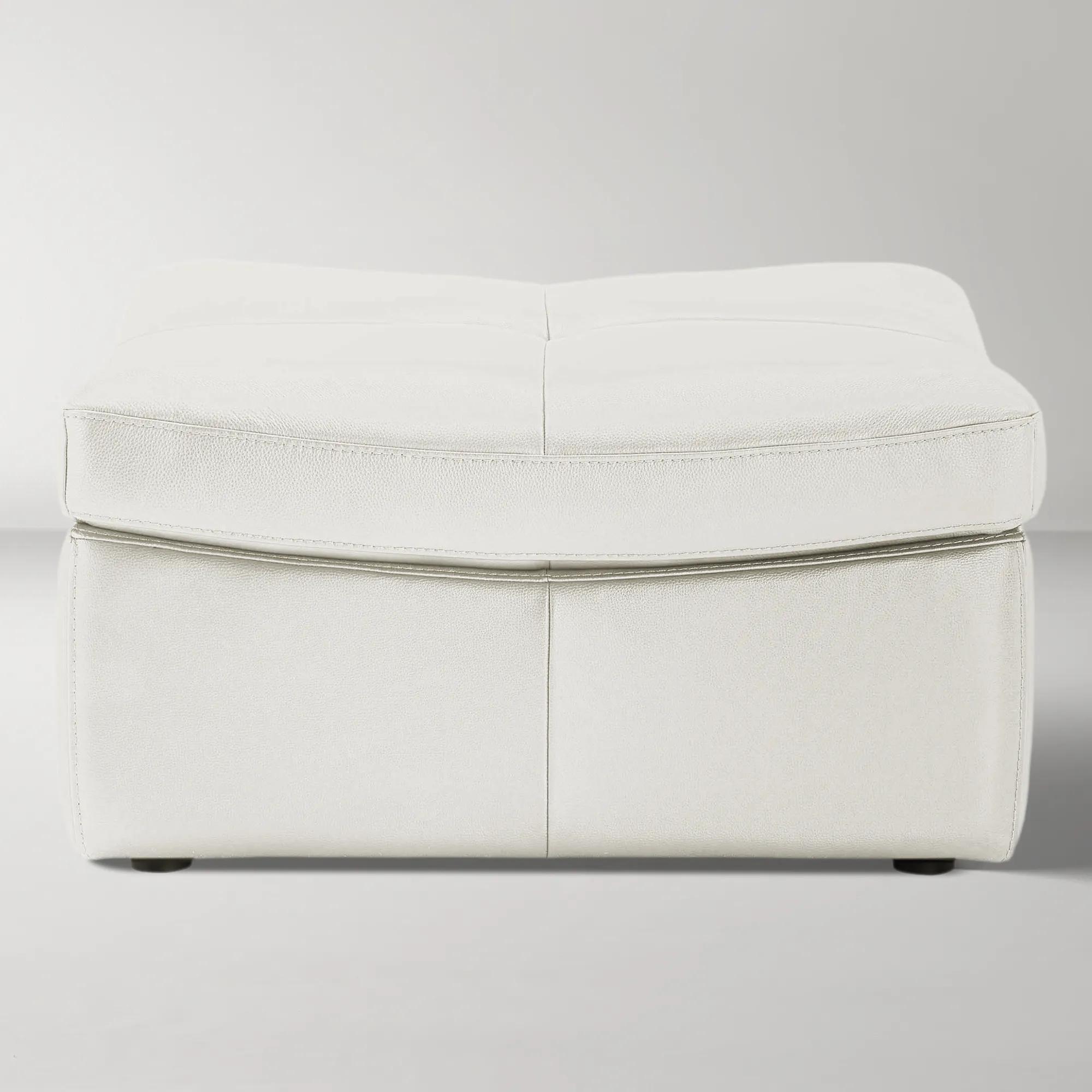 Convo White Leather Ottoman$849
A modular sectional with kiln-dried hardwood frame and charcoal semi-aniline leather upholstery for modern versatility.
Add To Cart -
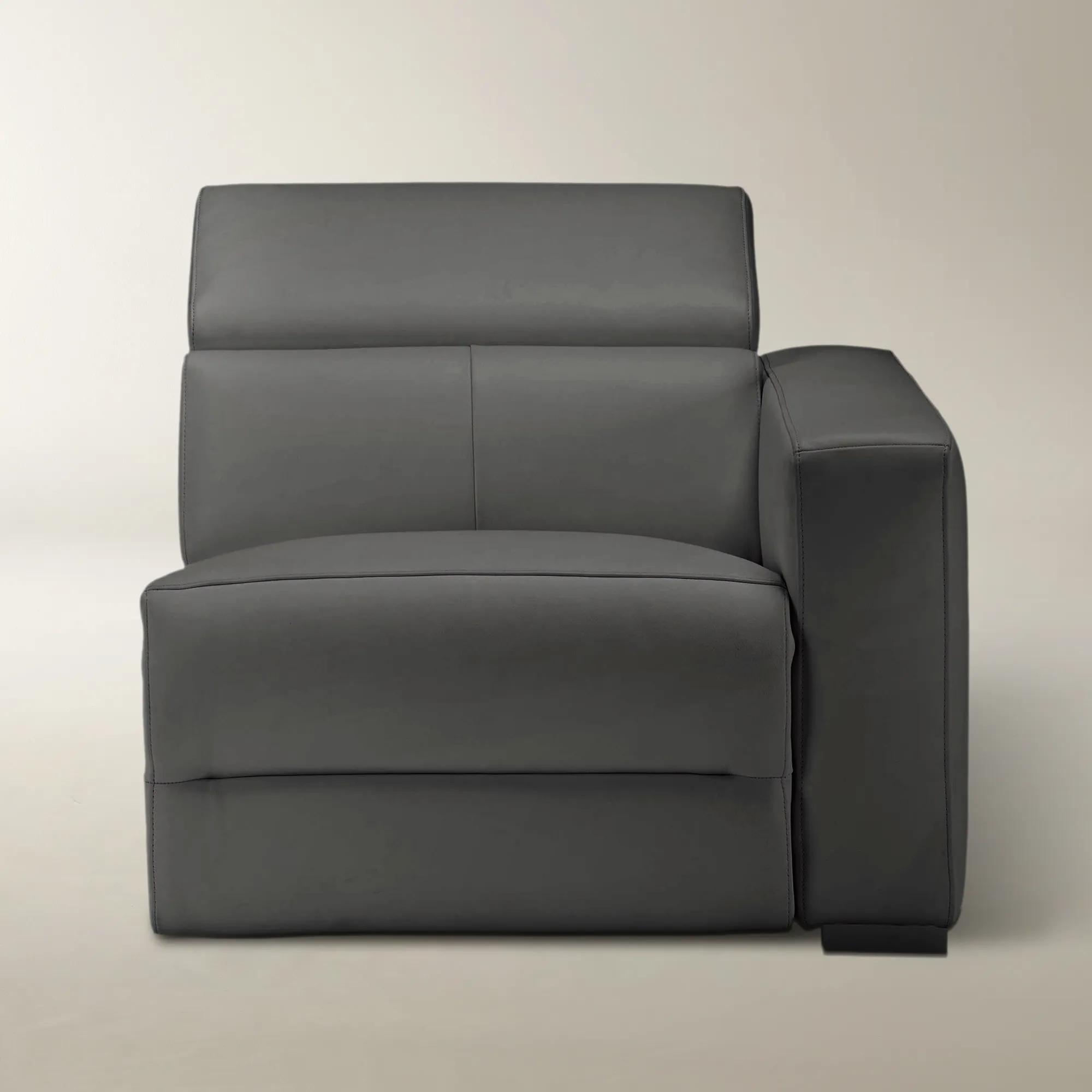
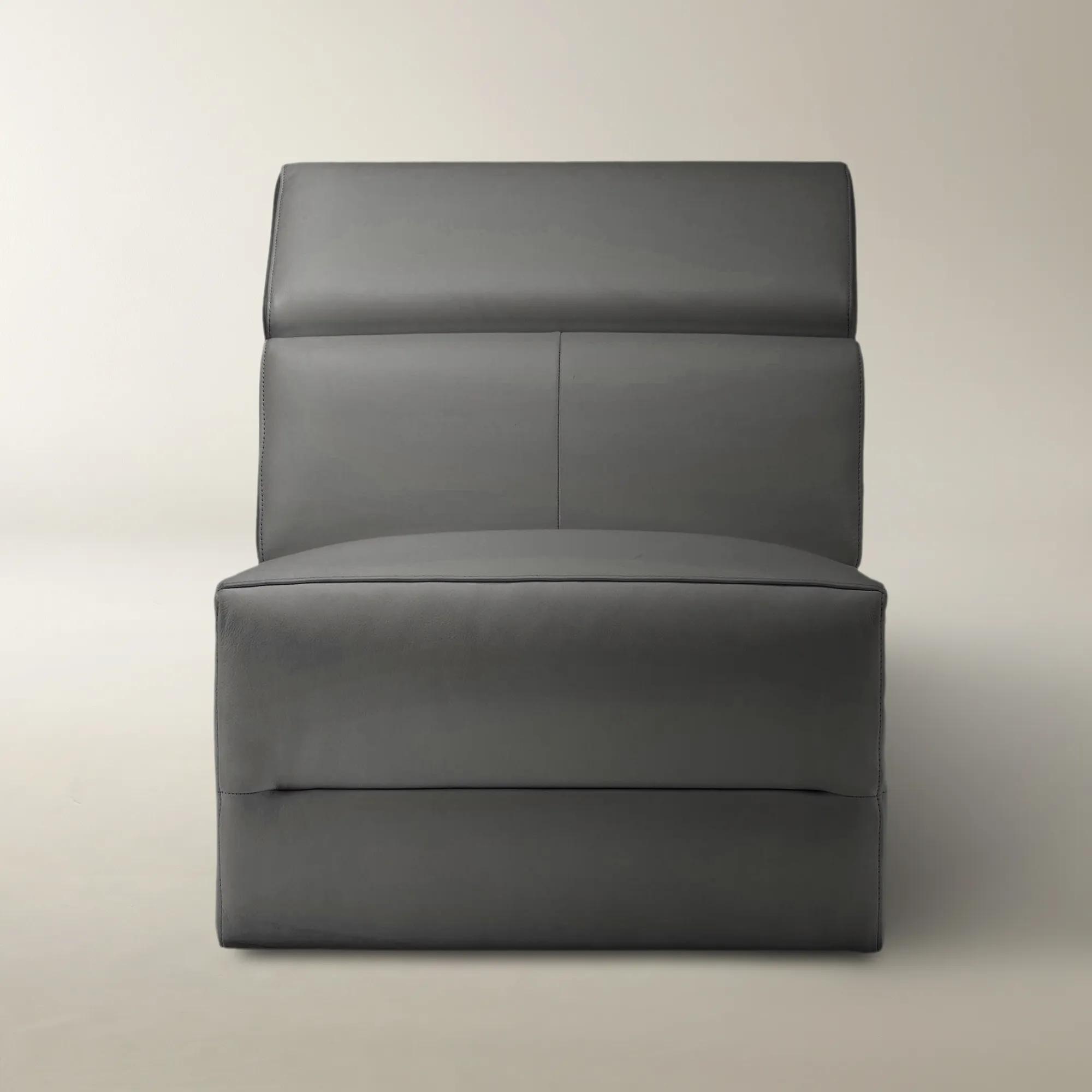 Verona Charcoal Leather Armless Chair$1099
A charcoal semi-aniline leather sectional featuring adjustable headrests and optional power-reclining seats for comfort.
Add To Cart -
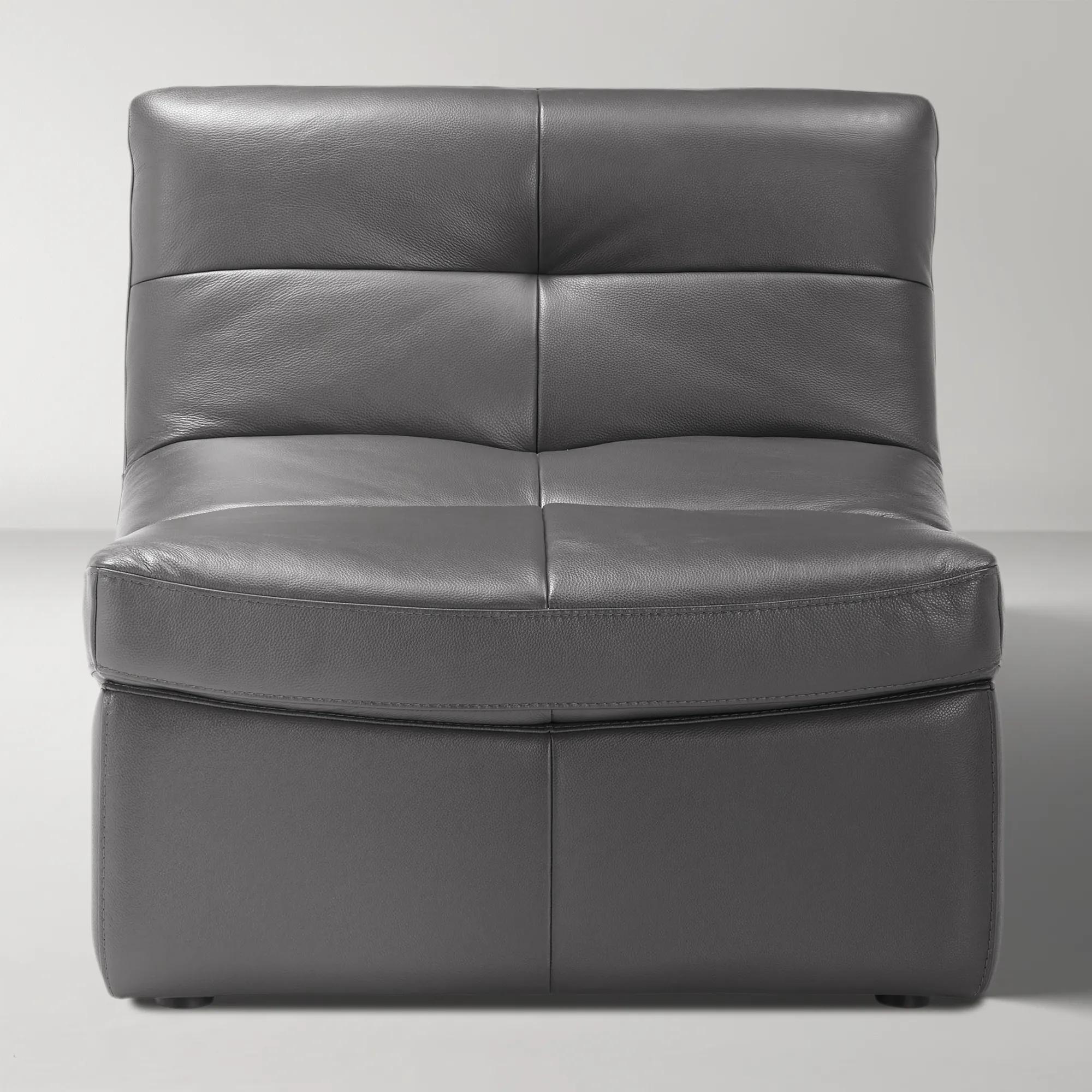
.jpg?w=1200&h=1200) Convo Charcoal Leather Armless Chair$1199
Convo Charcoal Leather Armless Chair$1199A modular sectional with kiln-dried hardwood frame and charcoal semi-aniline leather upholstery for modern versatility.
Add To Cart -
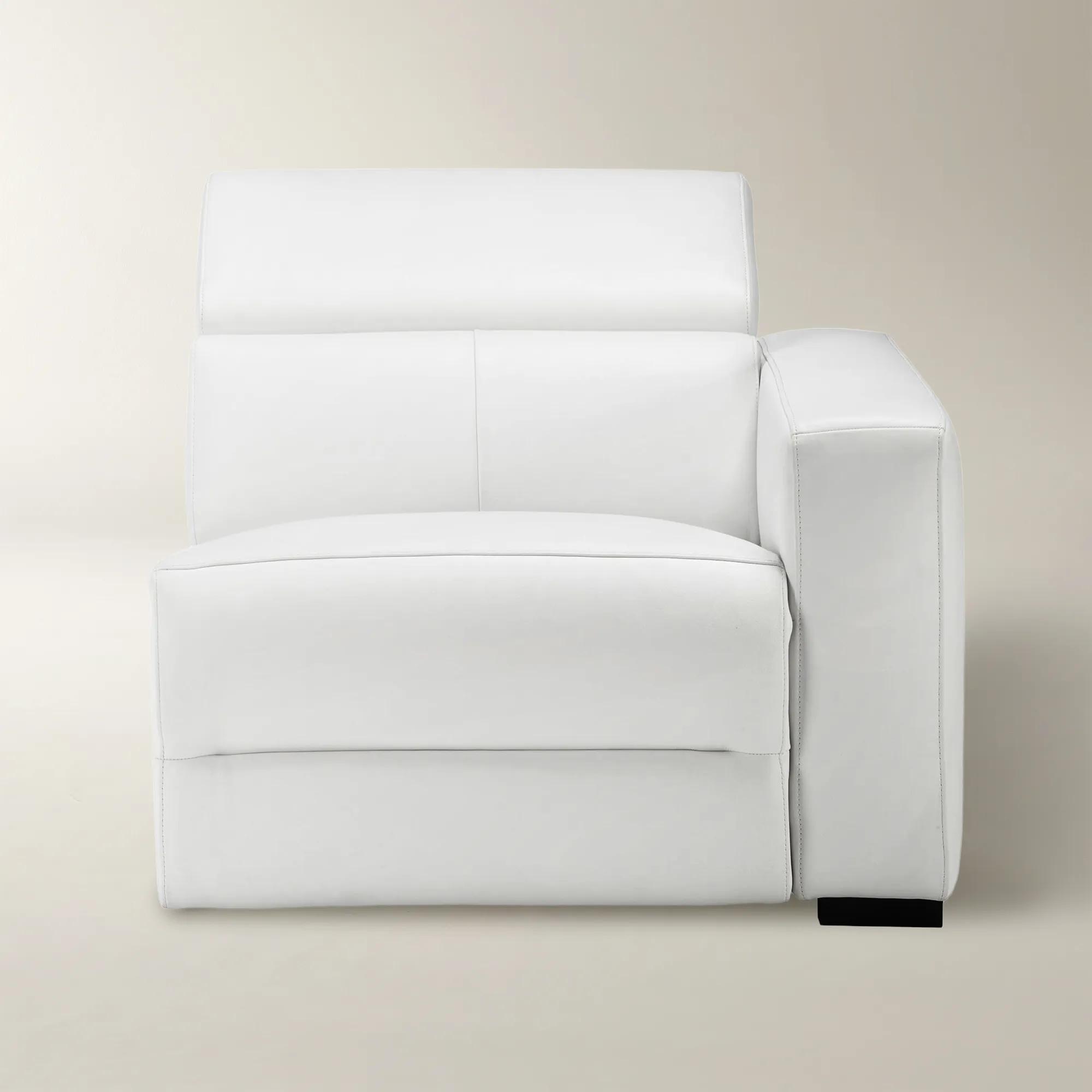
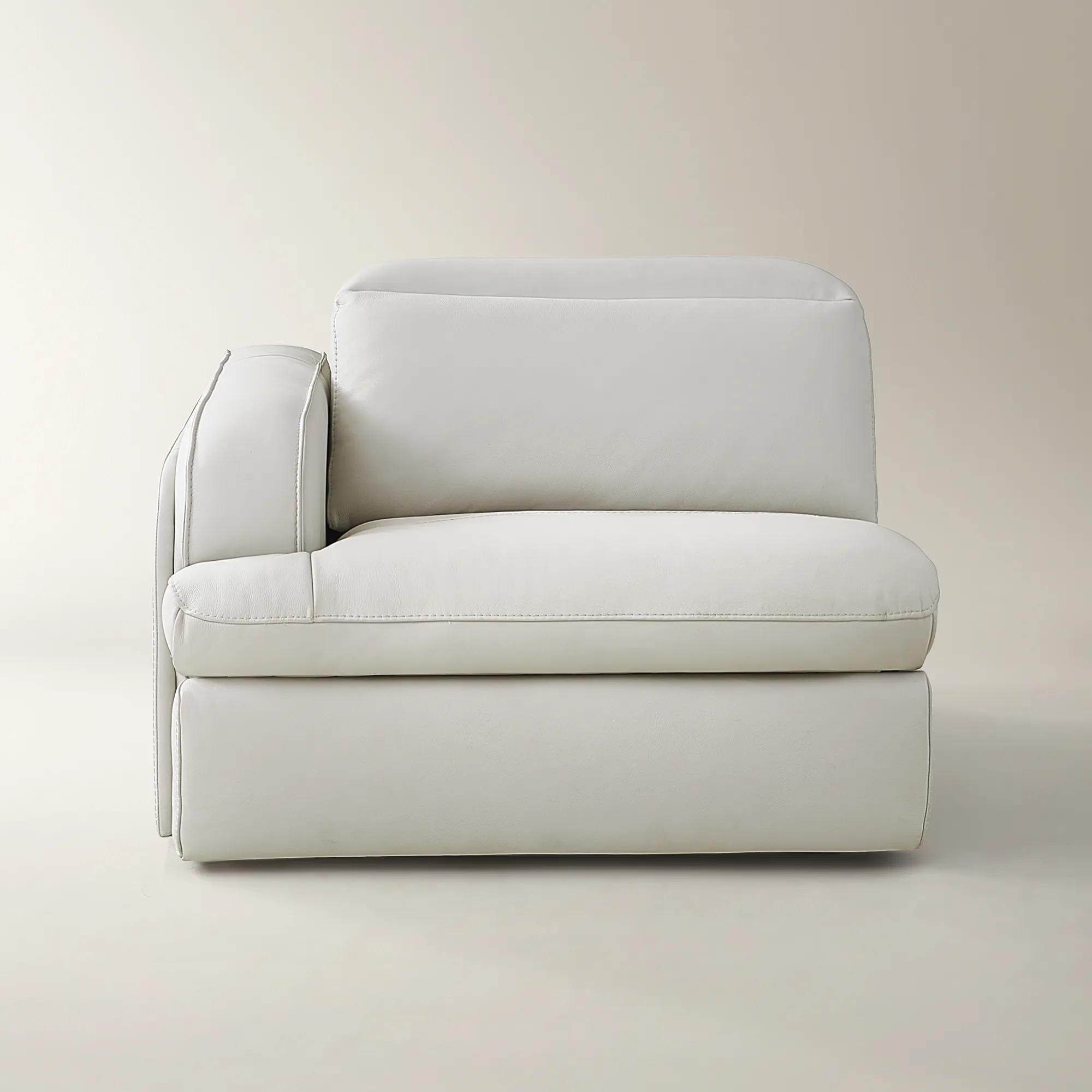
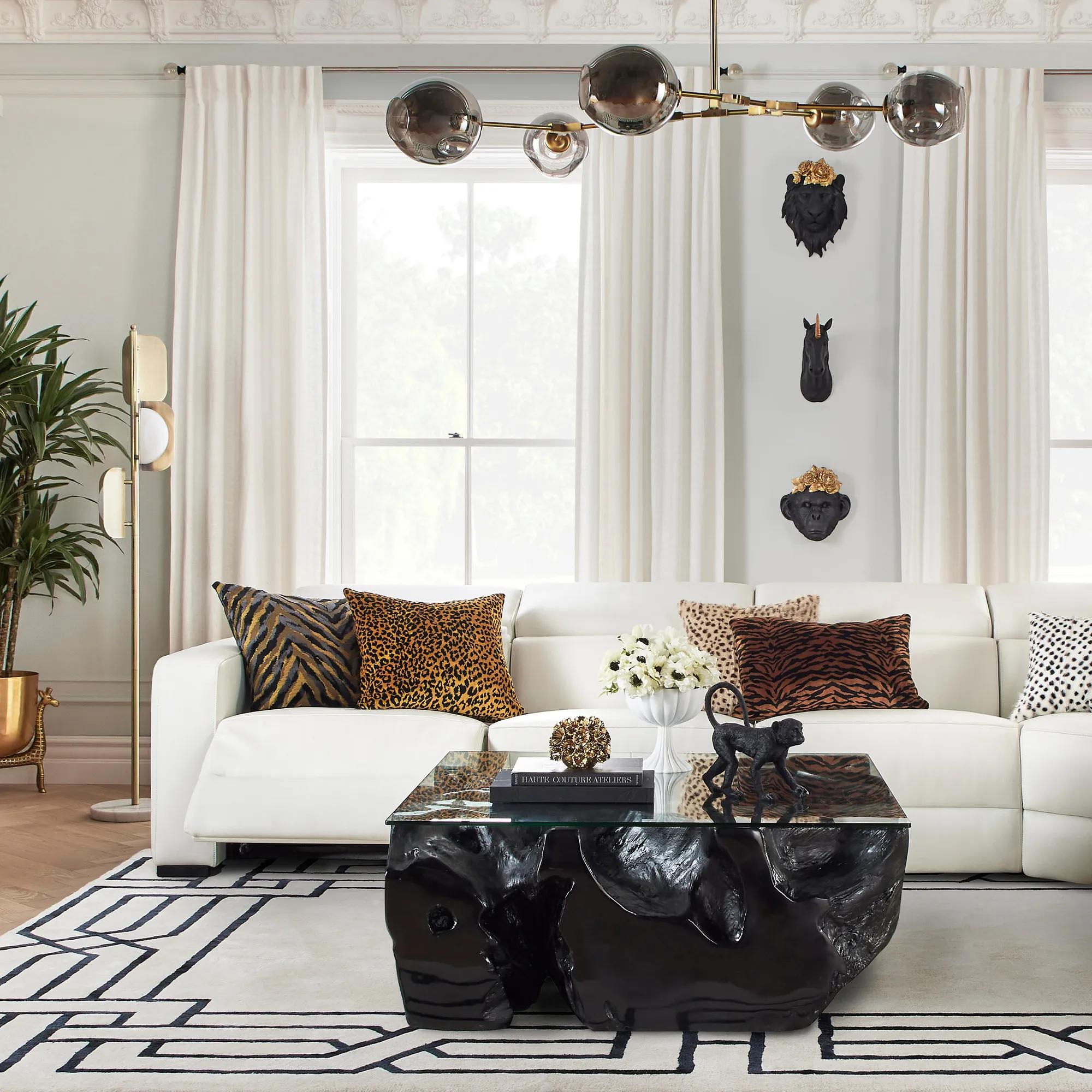 Verona White Leather Right Arm Chair$1299
A modern white sectional upholstered in supple semi-aniline leather with adjustable headrests and power-reclining options.
Add To Cart -
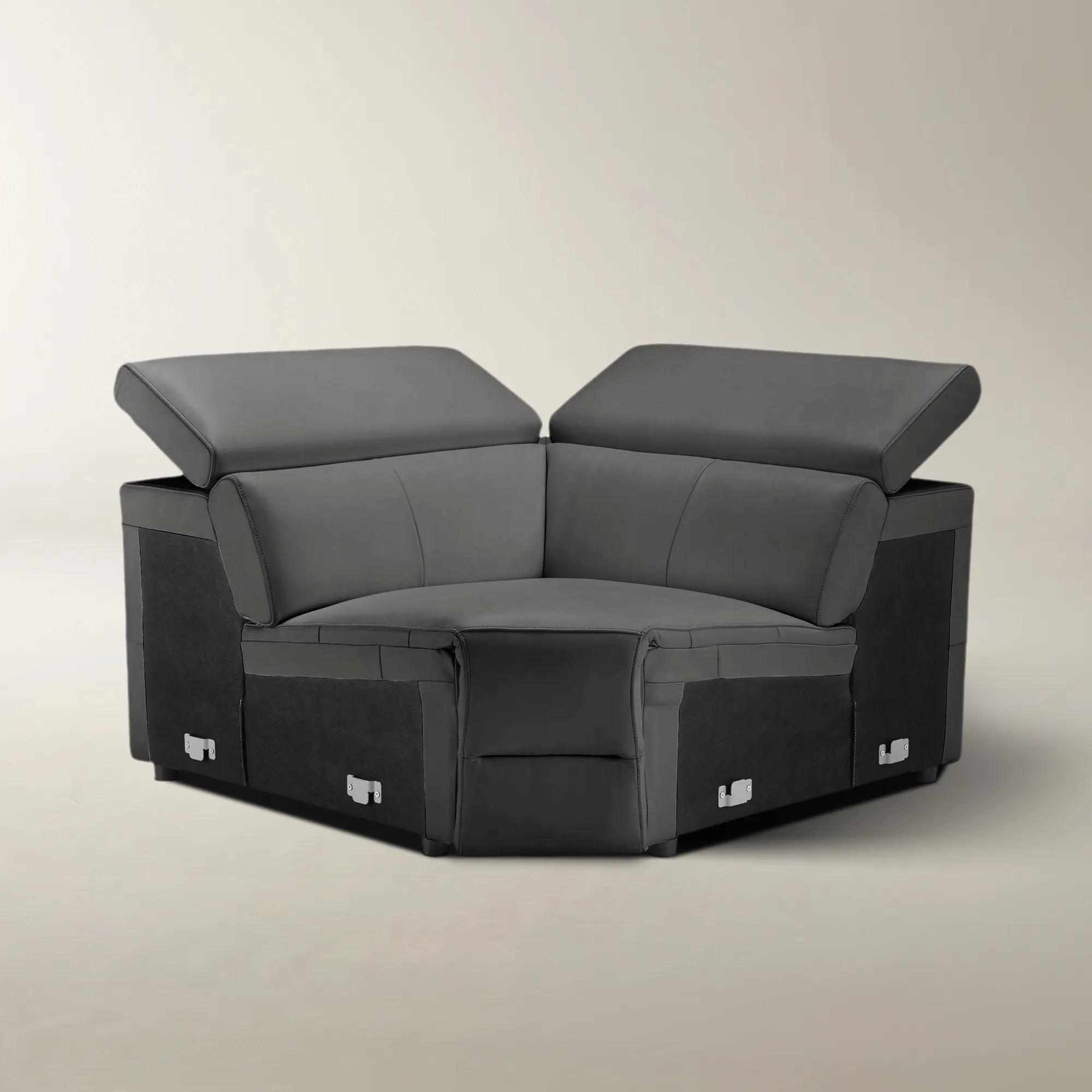
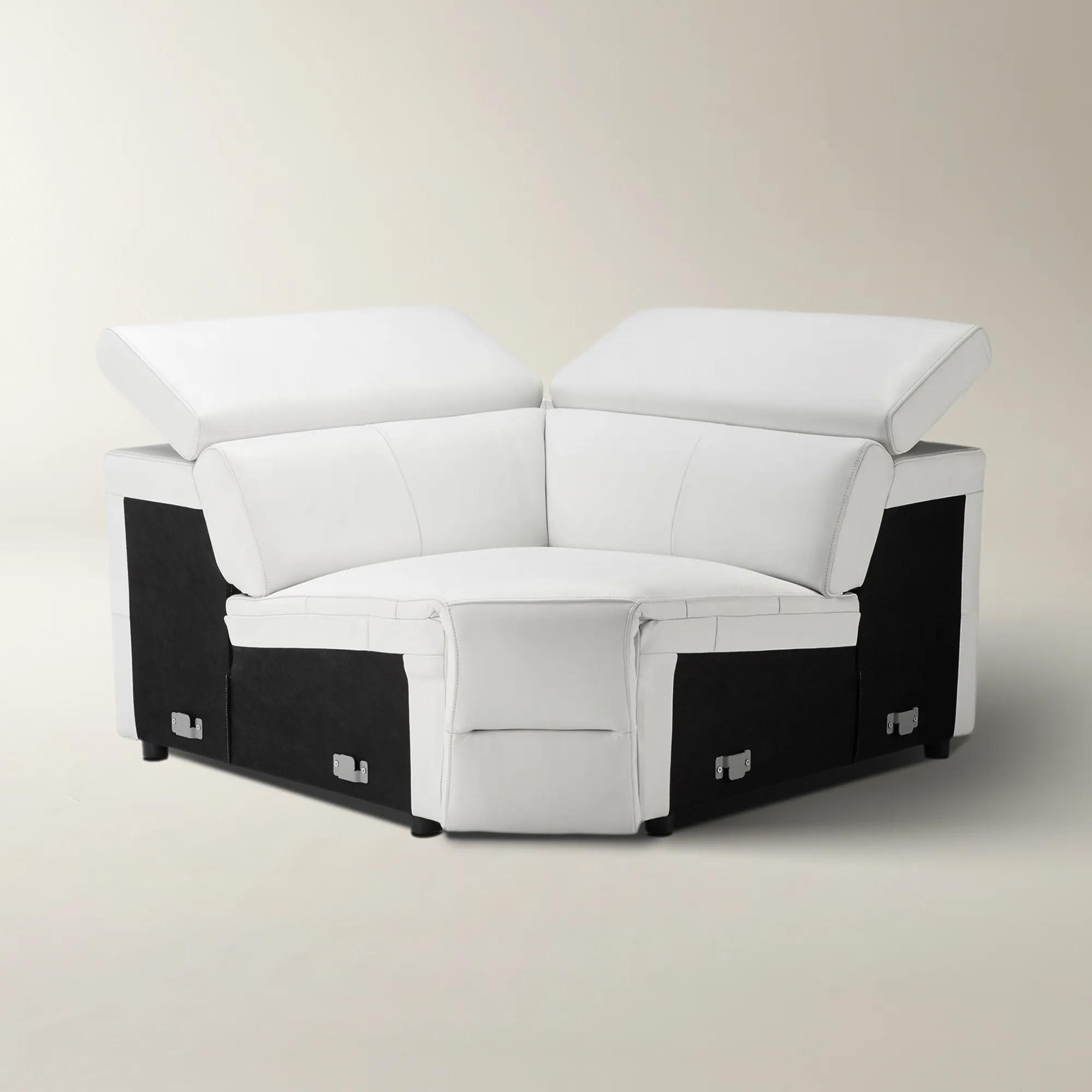 Verona White Leather Corner Chair With Power$1499
A modern sectional upholstered in supple white semi-aniline leather with adjustable headrests and power-reclining seats.
Add To Cart -
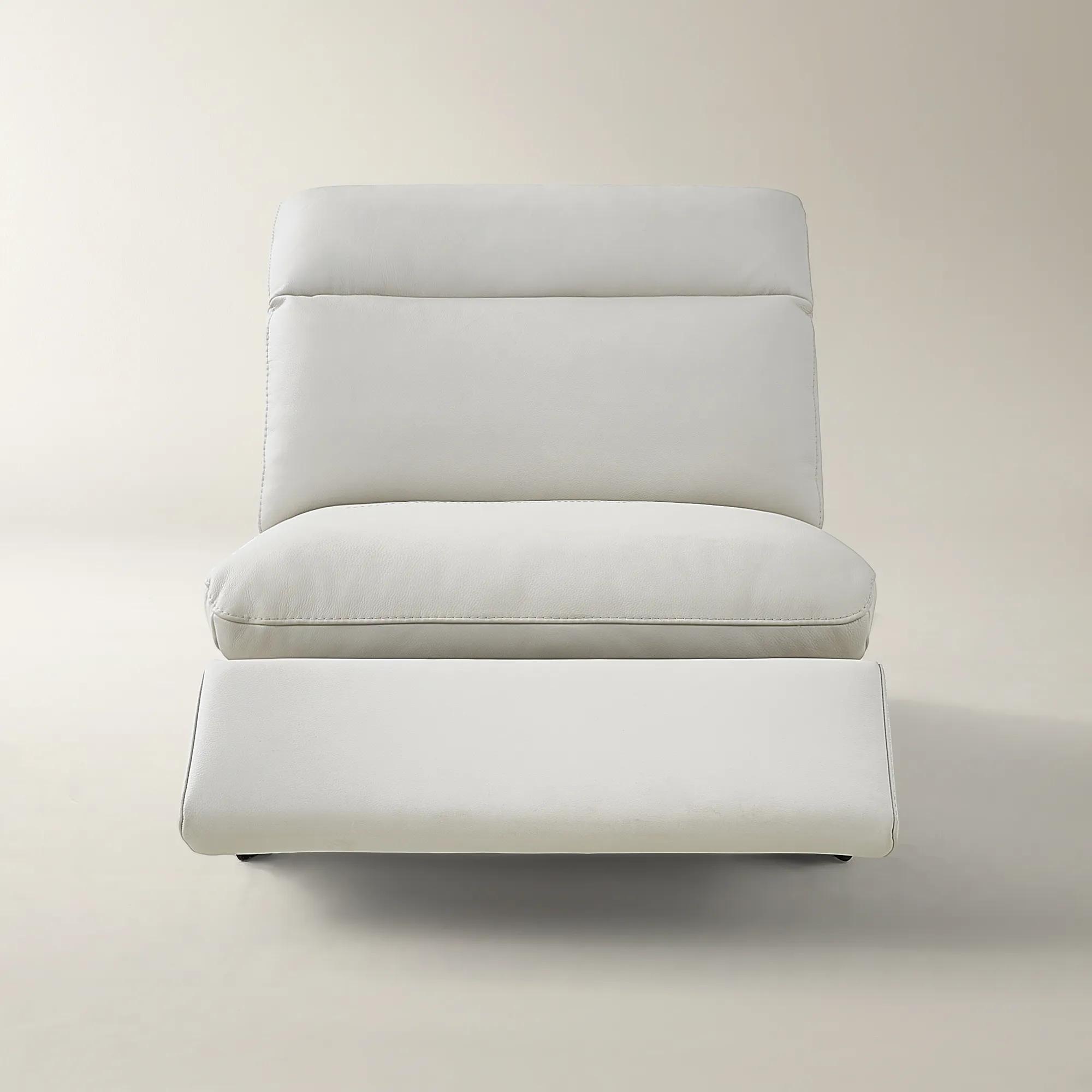
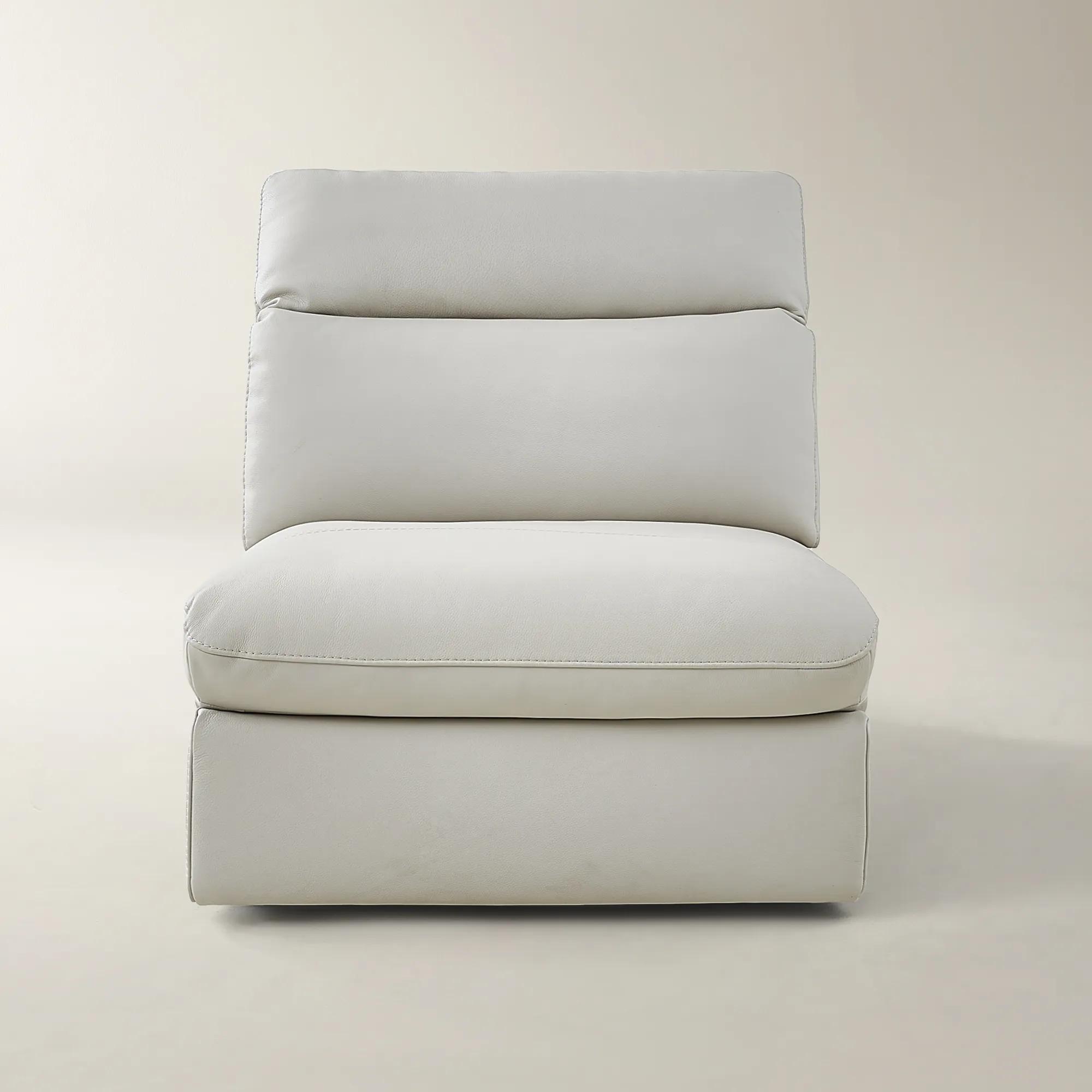
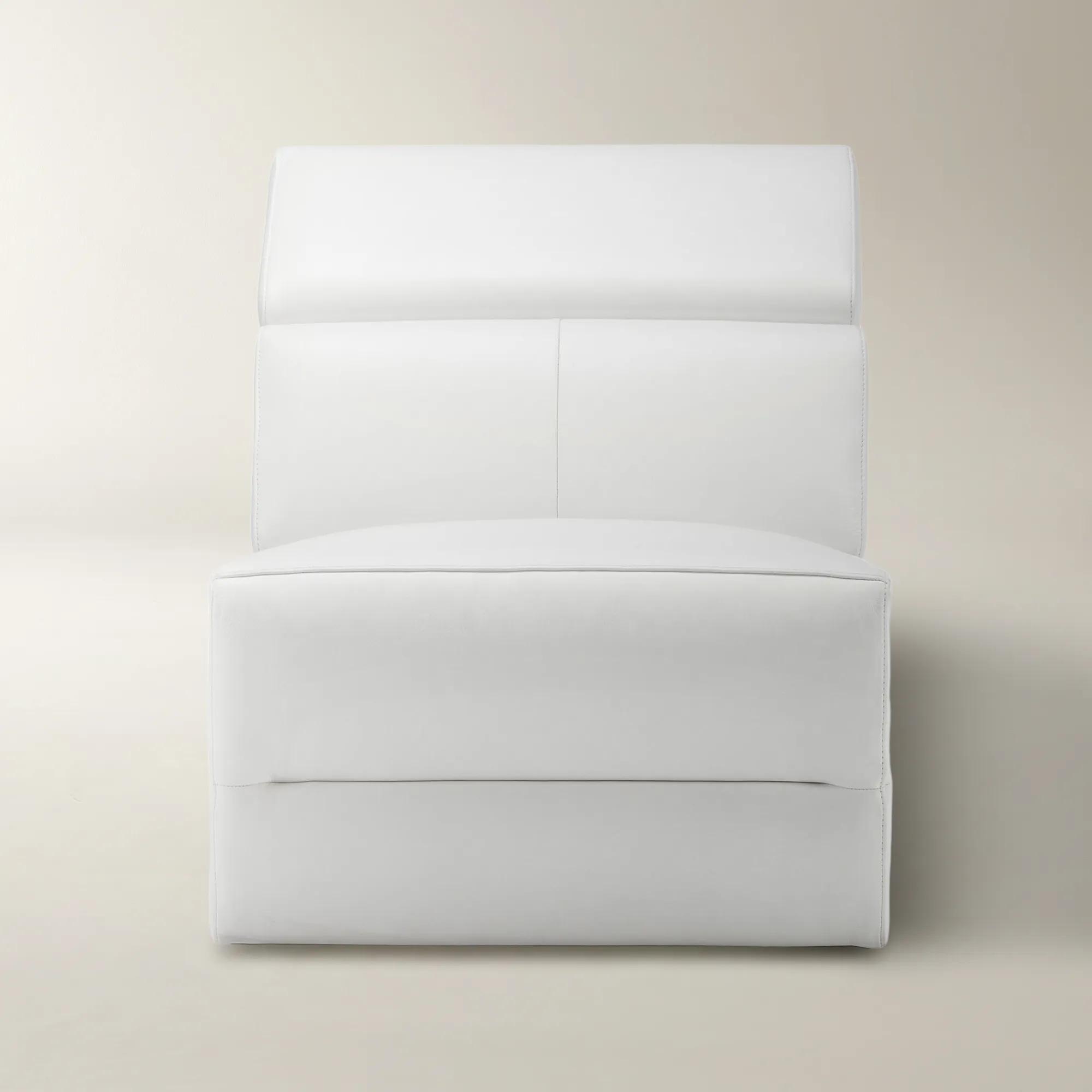 Verona White Leather Armless Chair$1099
A modern sectional upholstered in supple white semi-aniline leather with adjustable headrests and power-reclining options.
Add To Cart -
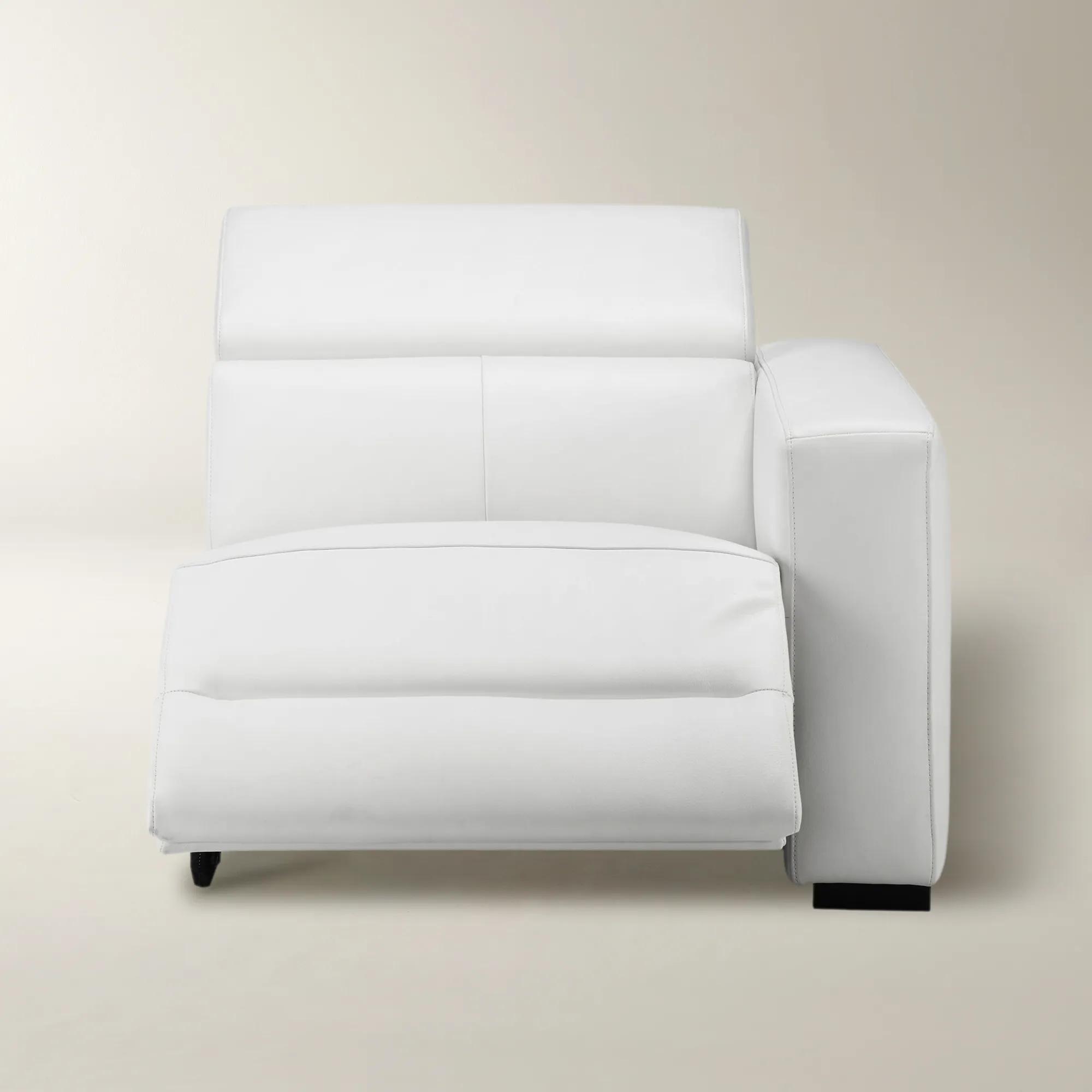 Verona Reclining White Leather Right Arm Chair With Power$1499
A modern white sectional upholstered in supple semi-aniline leather with adjustable headrests and power-reclining options.
Add To Cart -
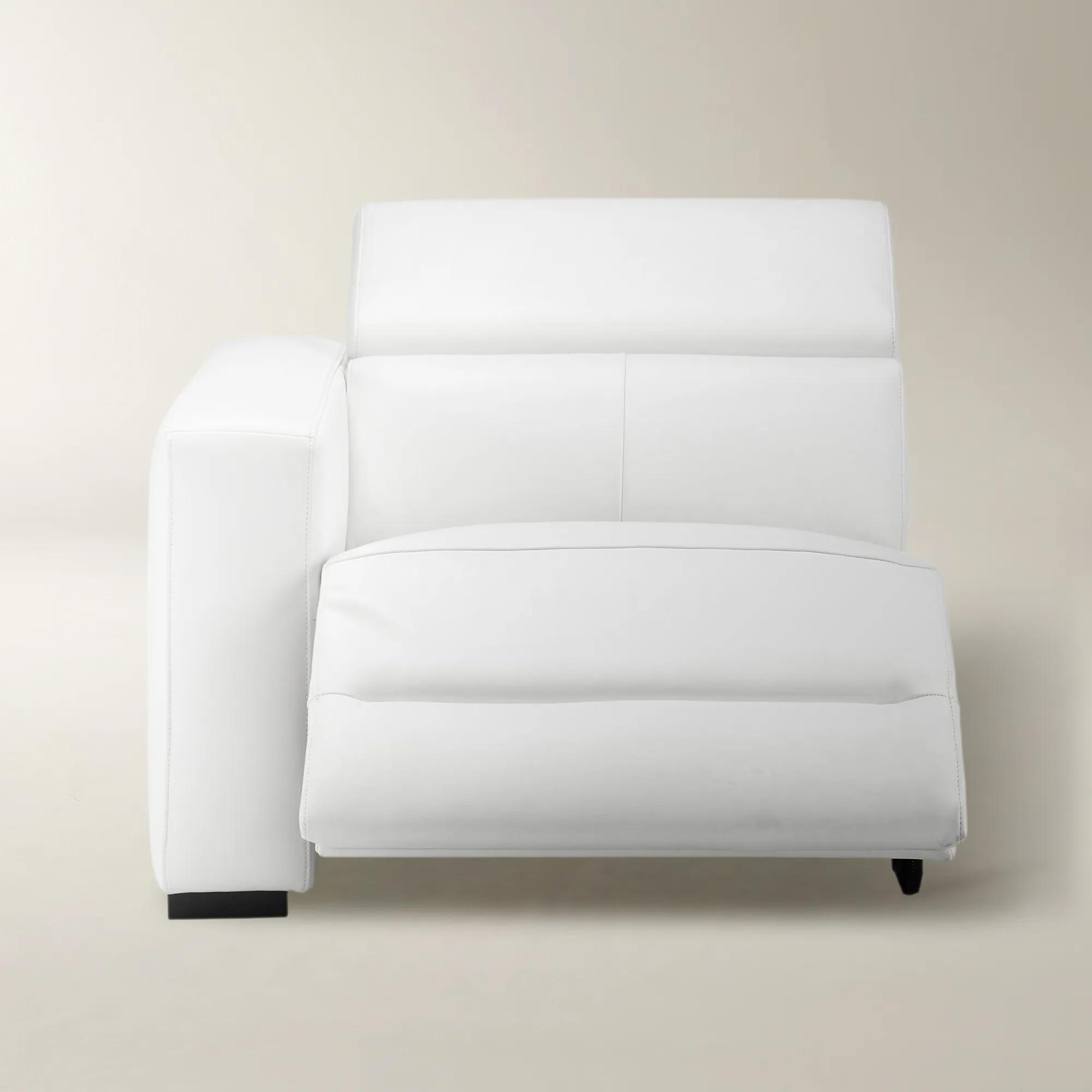 Verona Reclining White Leather Left Arm Chair With Power$1499
A modern white sectional upholstered in supple semi-aniline leather with adjustable headrests and power-reclining seats.
Add To Cart -
 Convo White Leather Corner Chair$1399
A modular sectional featuring kiln-dried hardwood frames and charcoal semi-aniline leather upholstery for modern versatility.
Add To Cart -
 Convo White Leather Armless Chair$1199
A modular sectional in charcoal semi-aniline leather with kiln-dried hardwood frames and gently curved seats.
Add To Cart -
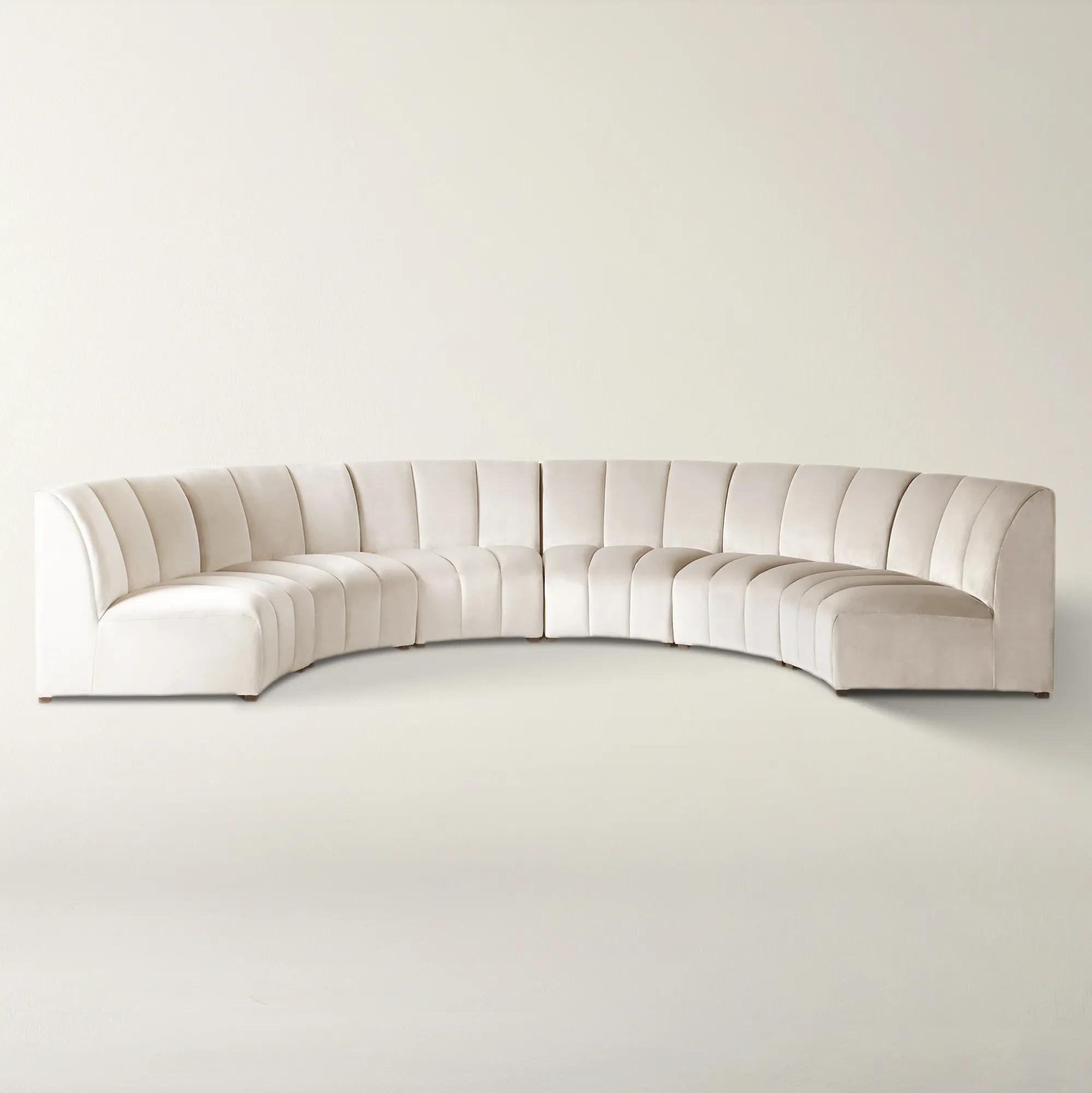 Jayce 6-Piece Channel-Tufted Ivory Velvet Sectional Sofa$5499
A modern curved sectional in stain-resistant Velvet Ivory with deep channel tufting and plush, structured cushions.
Add To Cart -
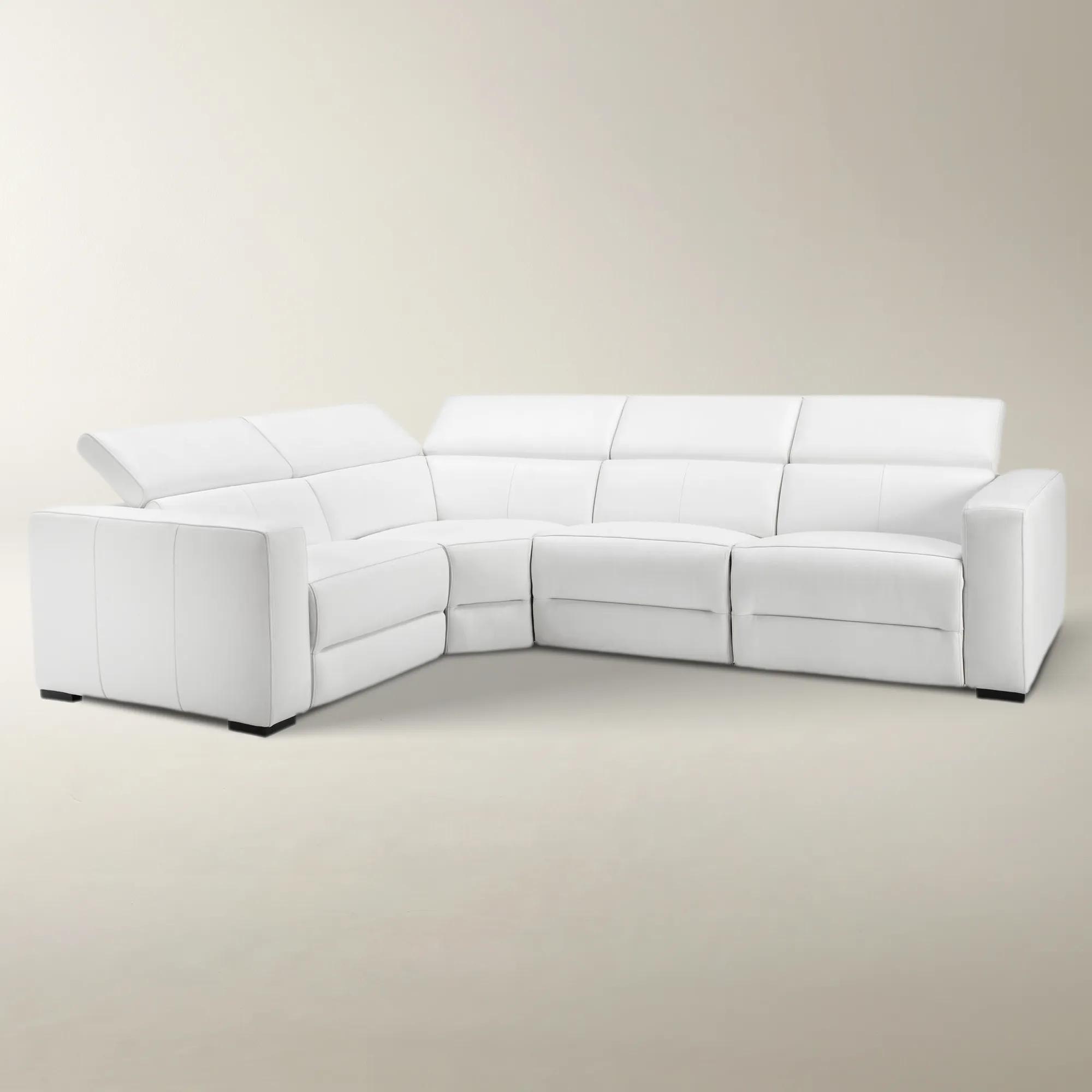 Verona 4-Piece L-Shaped Reclining White Leather Sectional Sofa With Left-Arm$5499
A modern sectional upholstered in supple white semi-aniline leather with adjustable headrests and power-reclining seats.
Add To Cart -
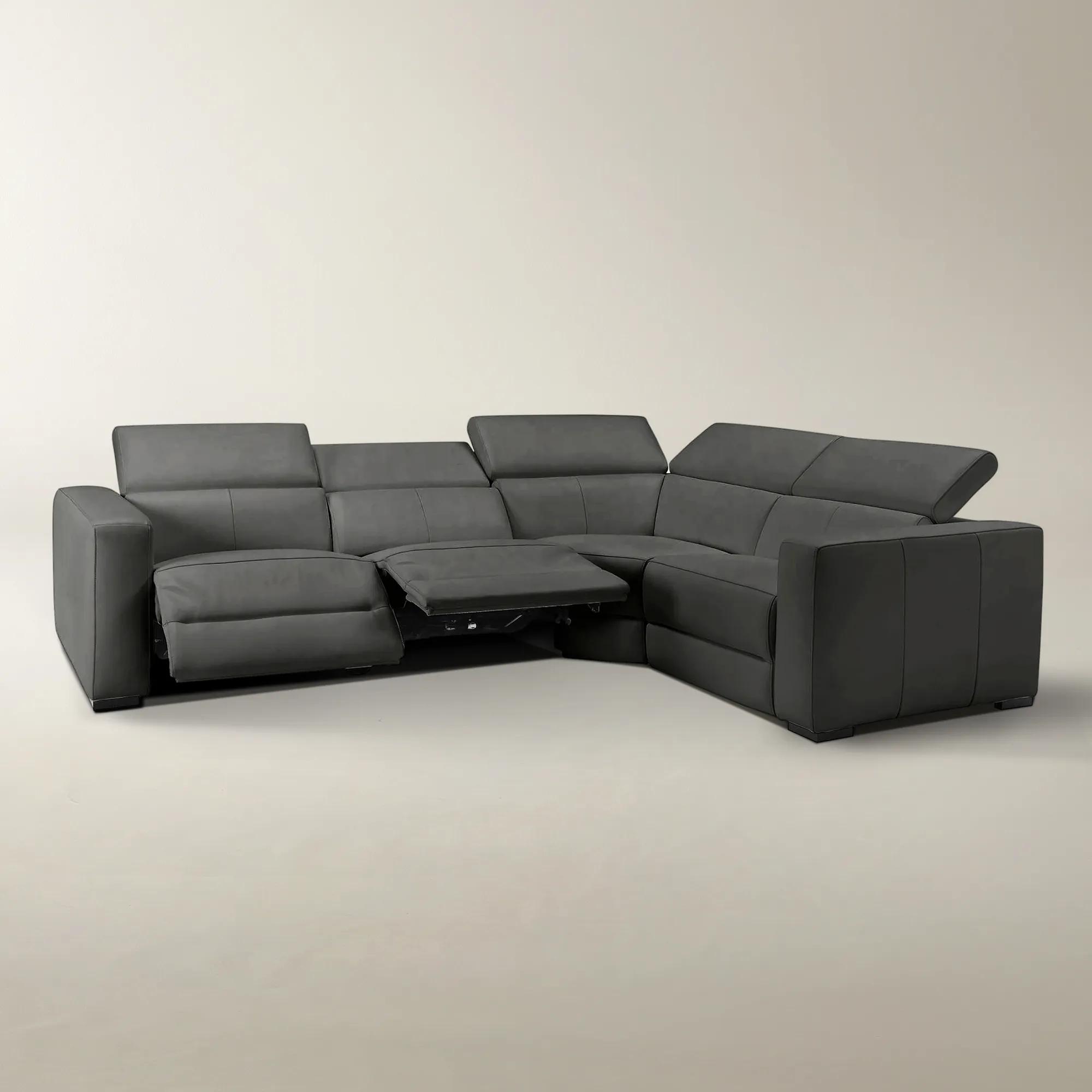
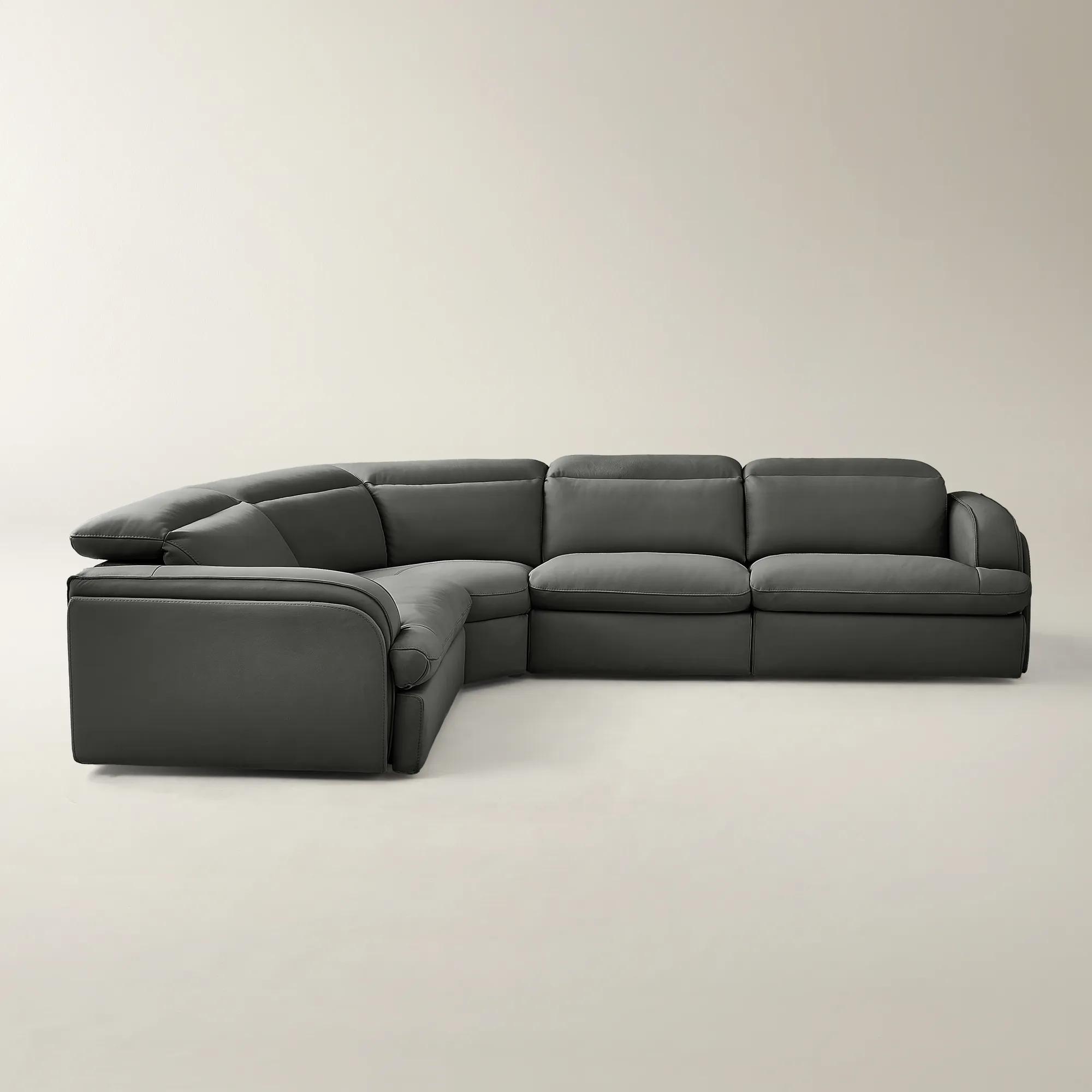
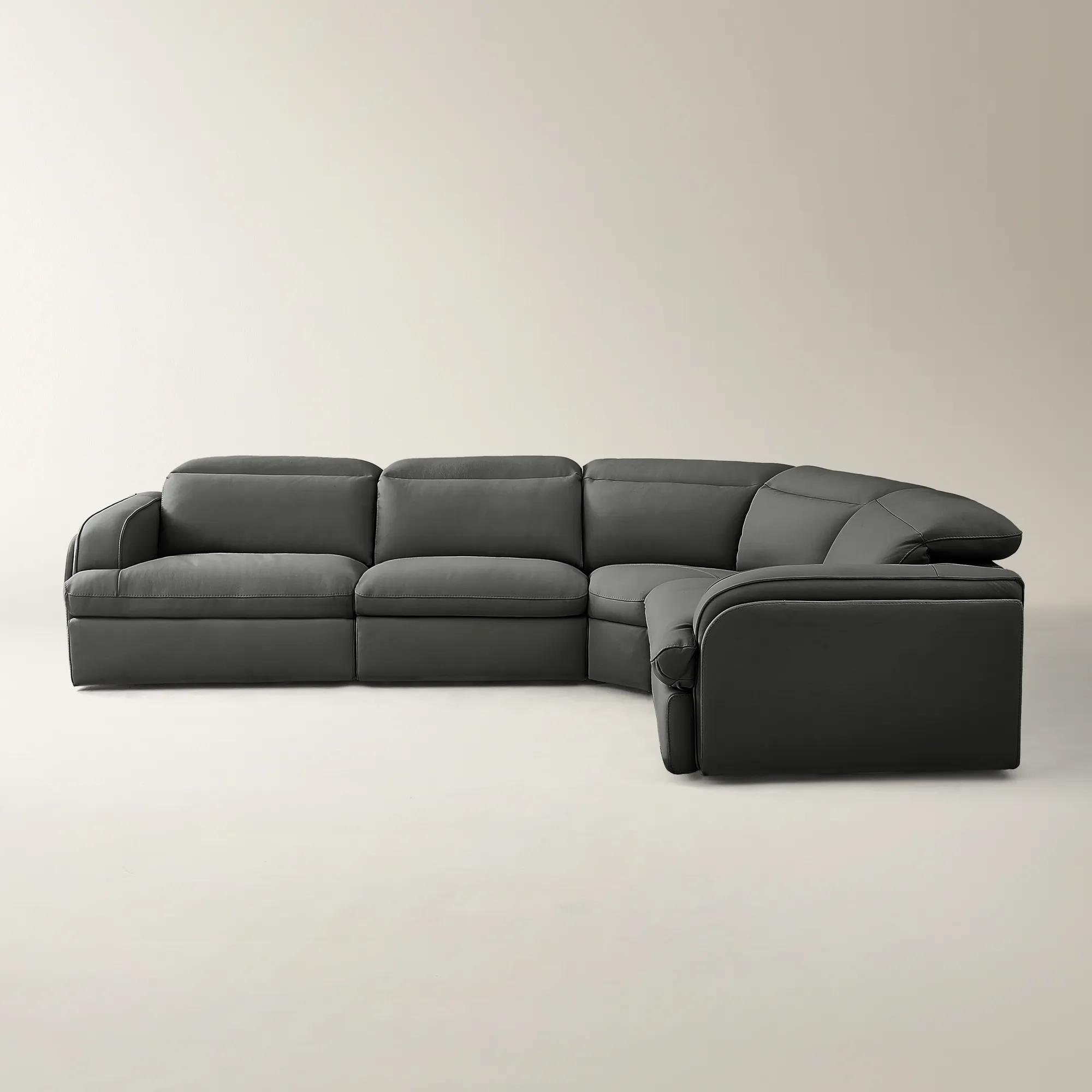
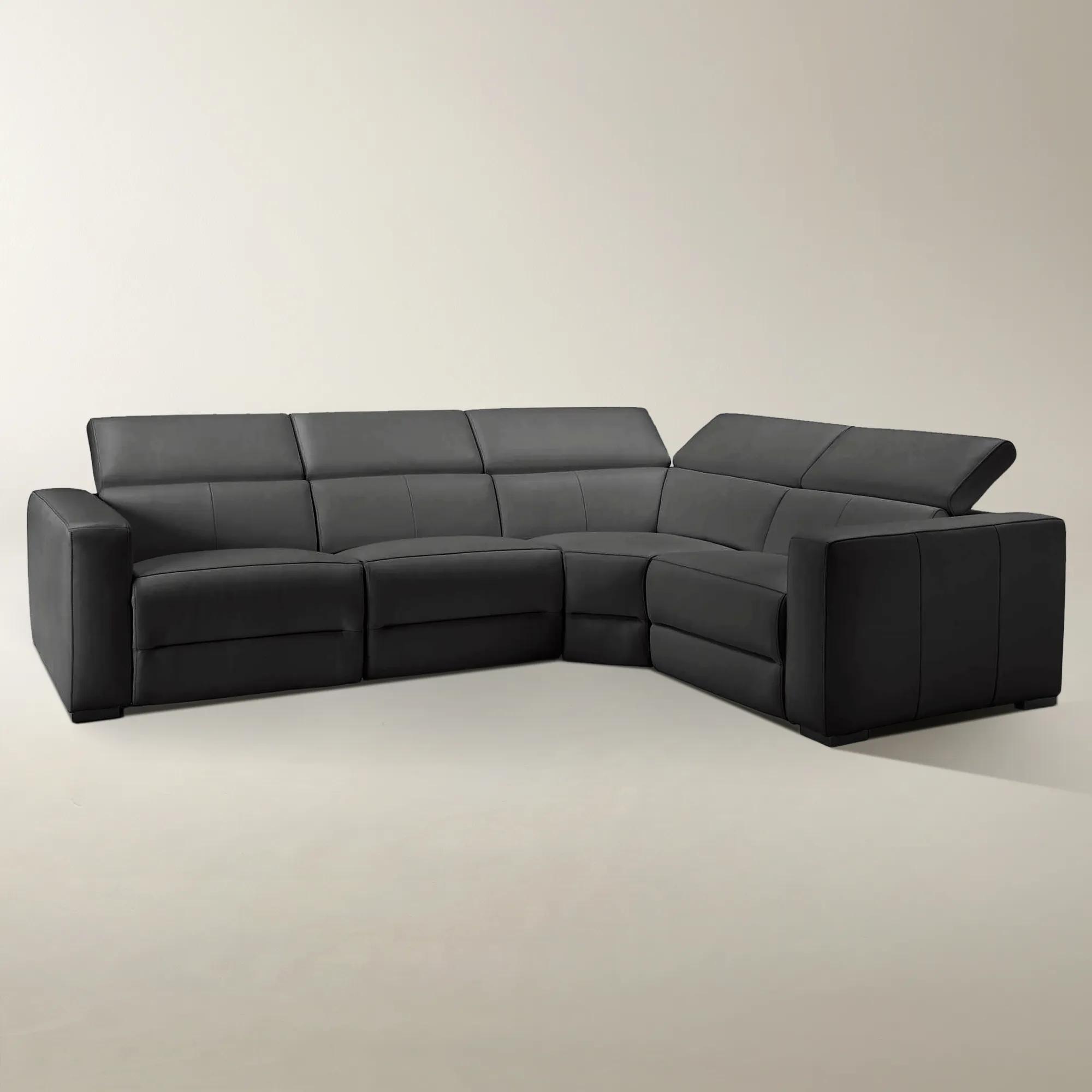 Verona 4-Piece L-Shaped Reclining Charcoal Leather Sectional Sofa With Right-Arm$5499
A charcoal semi-aniline leather sectional featuring adjustable headrests, power-reclining seats, and kiln-dried hardwood frame.
Add To Cart -
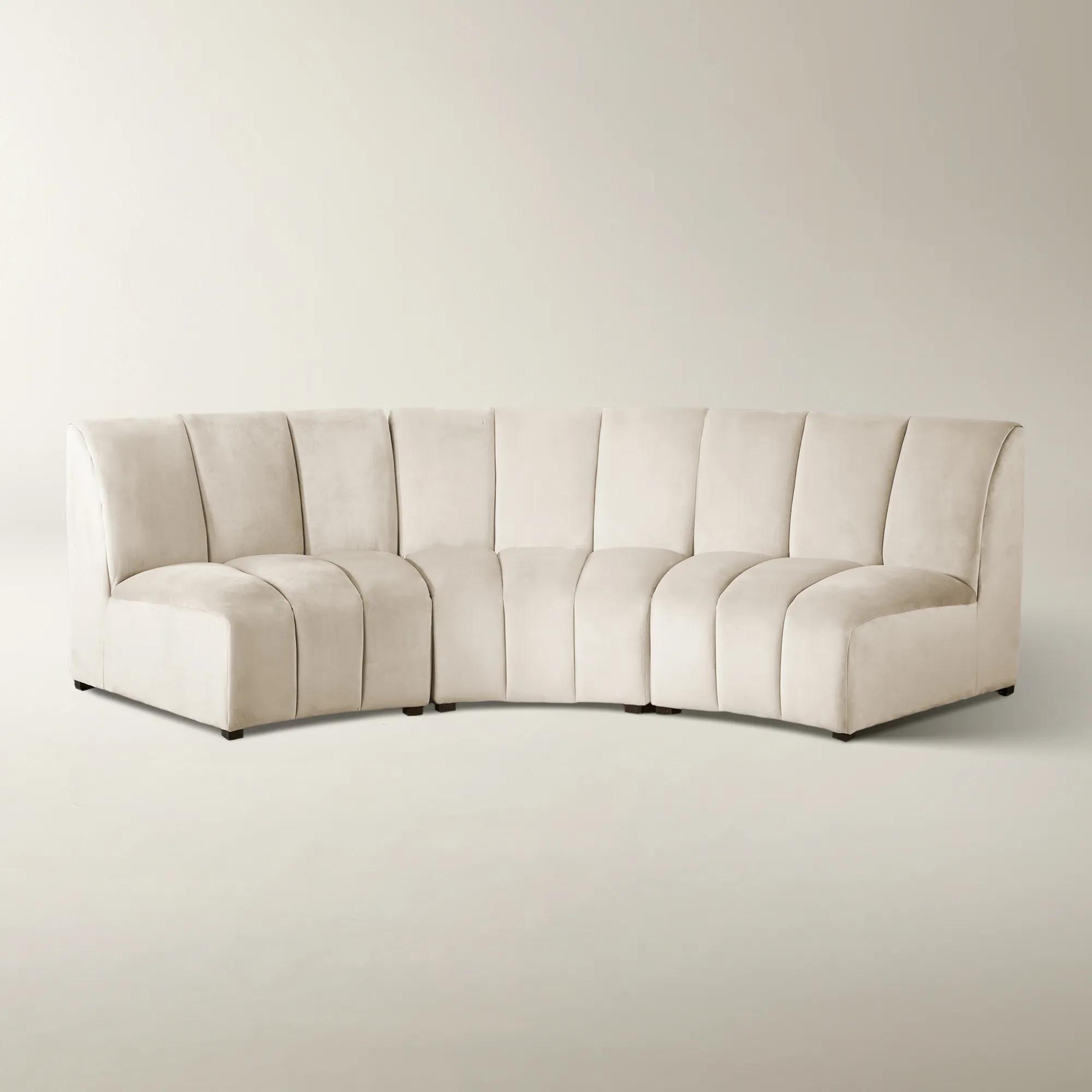
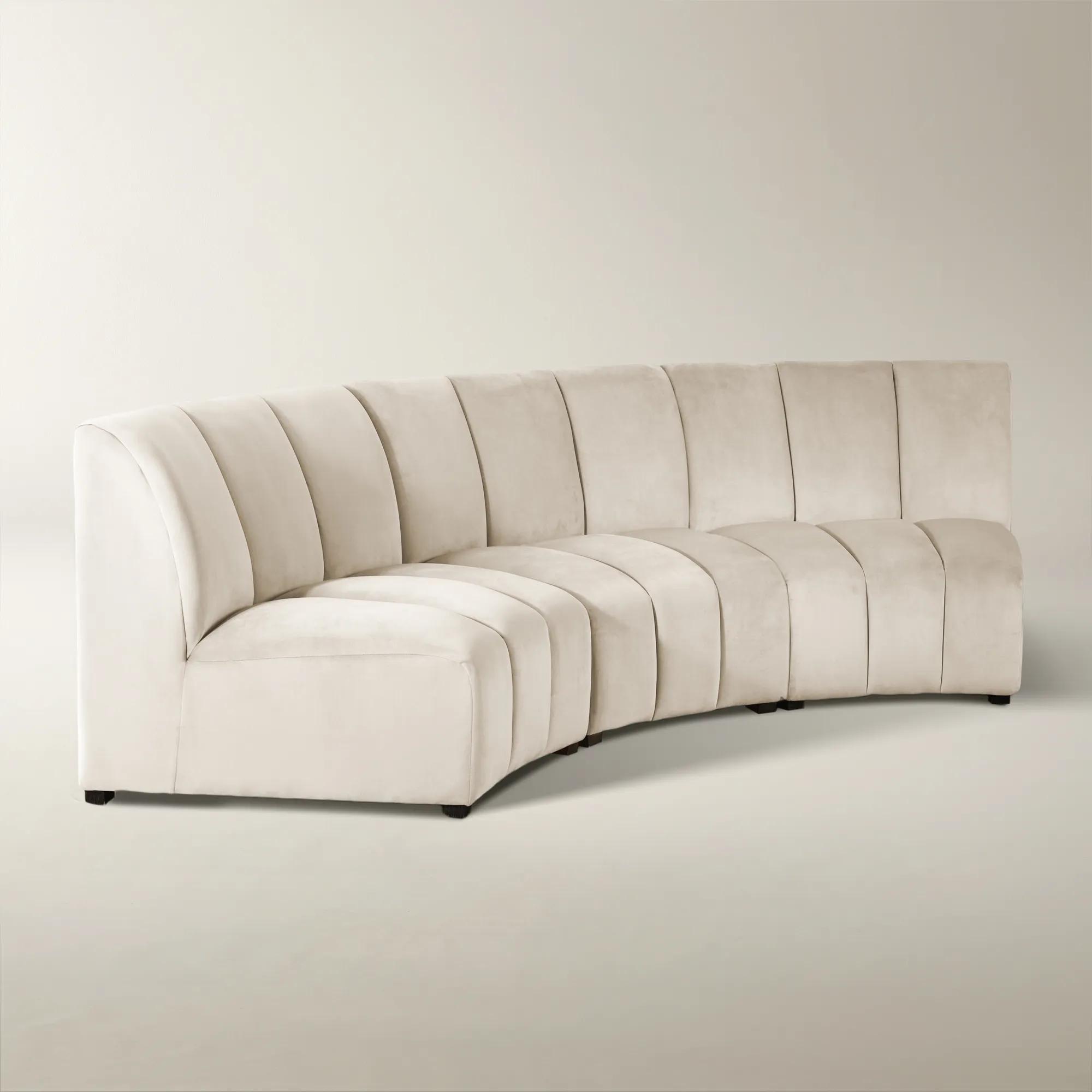 Jayce 3-Piece Channel-Tufted Ivory Velvet Sectional Sofa$2799
A modern curved sectional in stain-resistant Velvet Ivory with deep channel tufting and plush, structured cushions.
Add To Cart -
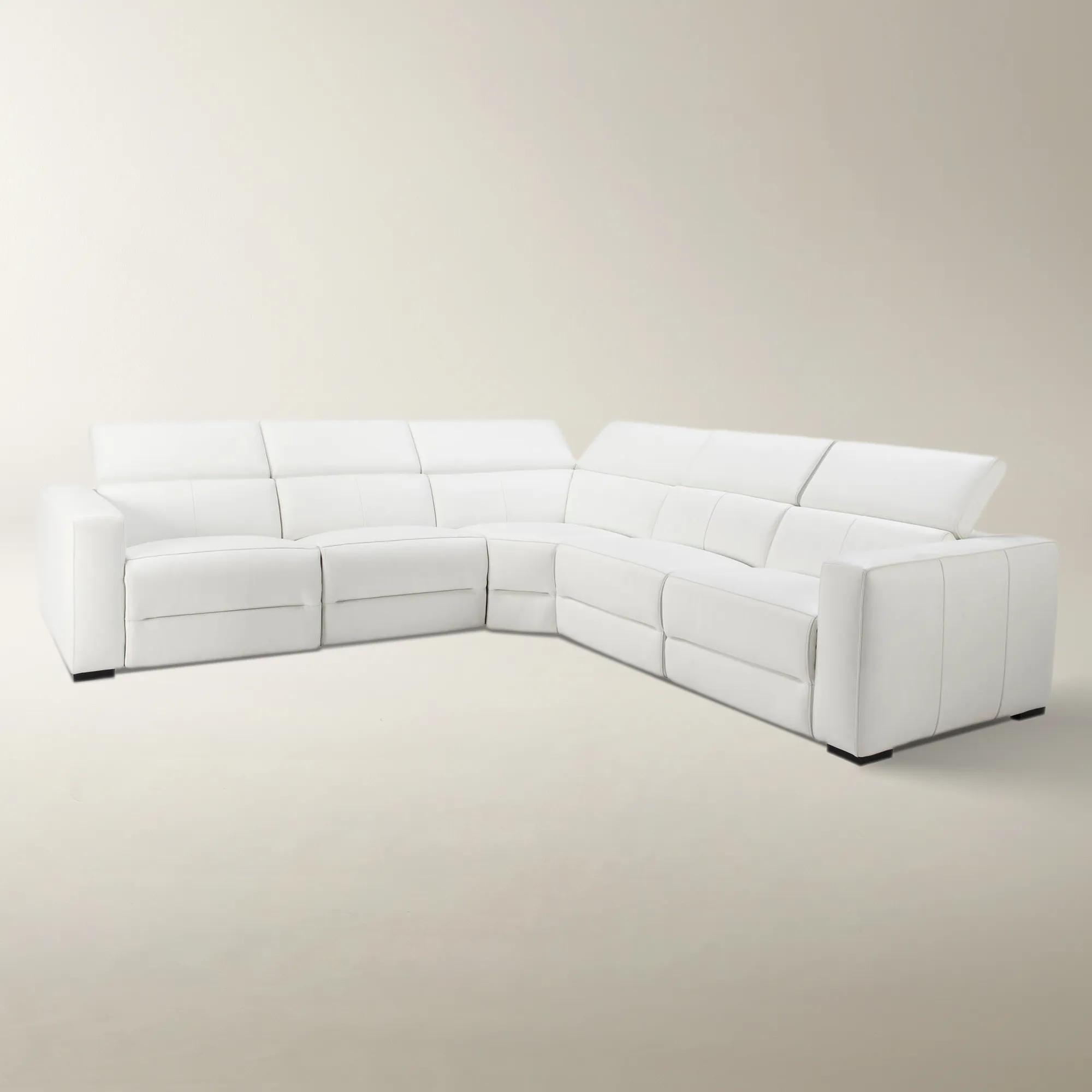
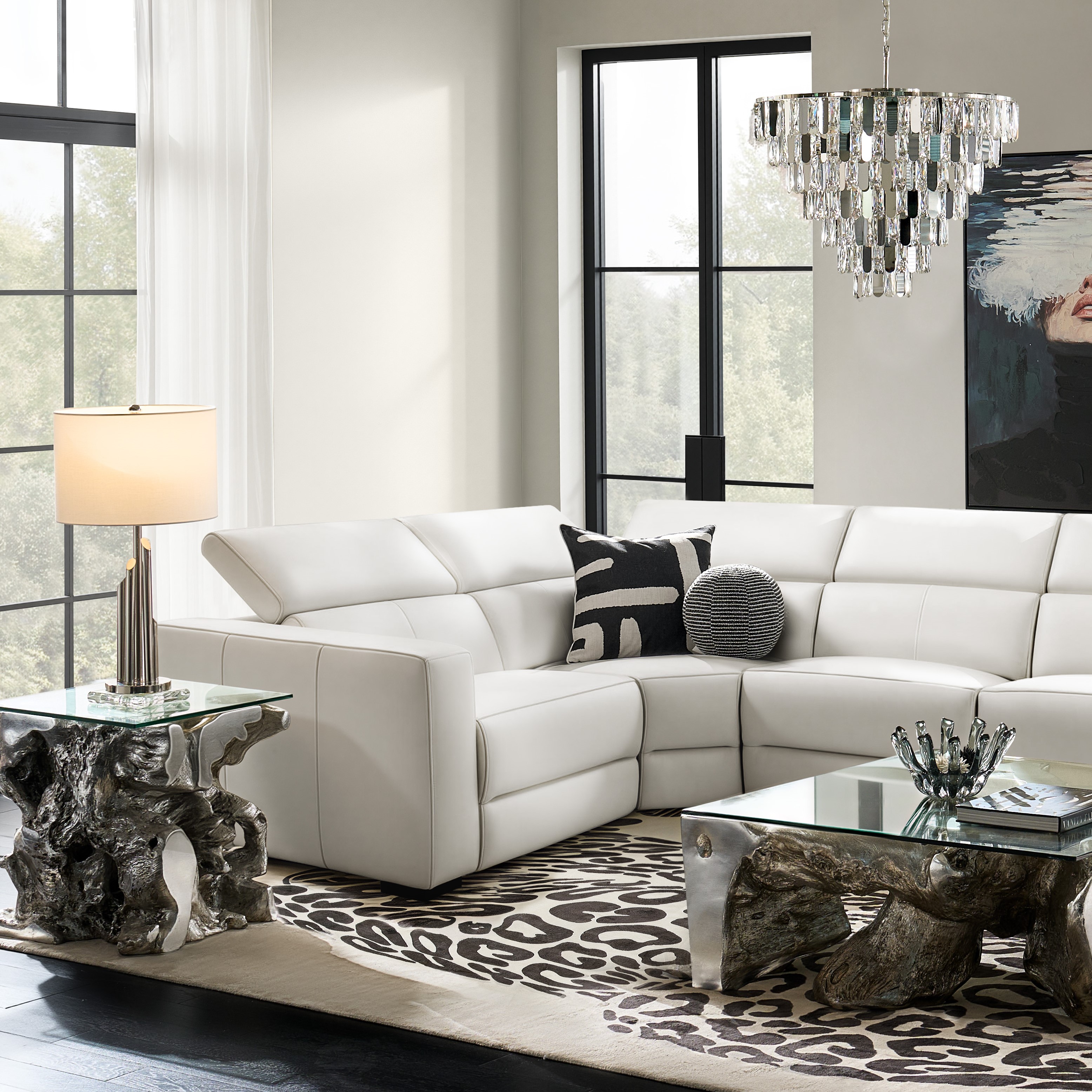 Verona 5-Piece Reclining White Leather Sectional Sofa$6799
A modern sectional upholstered in supple white semi-aniline leather with adjustable headrests and power-reclining seats.
Add To Cart -
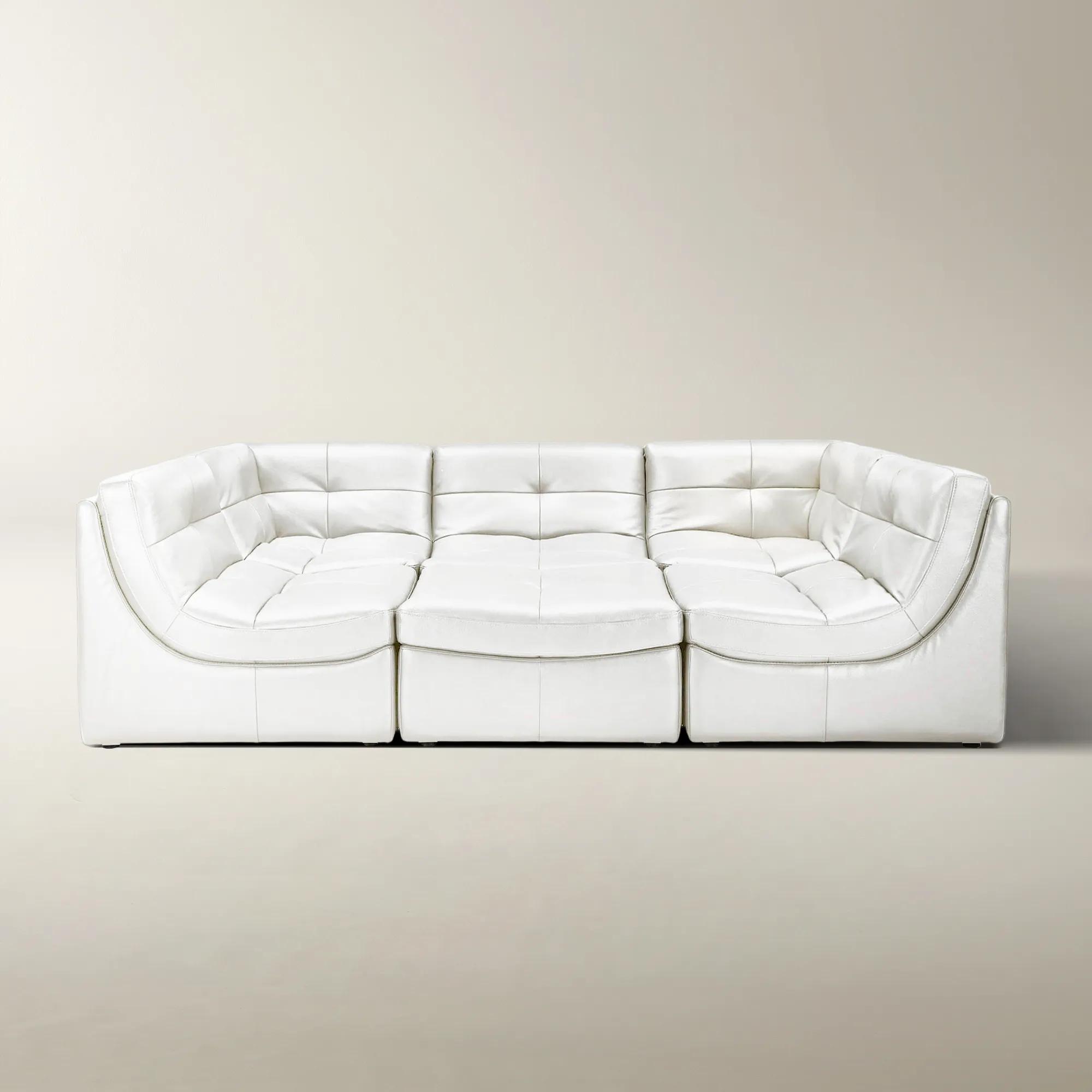 Convo 6-Piece White Leather Sectional Sofa$7249
A modular charcoal leather sectional with kiln-dried hardwood frame and gently curved, blind-tufted seats.
Add To Cart -
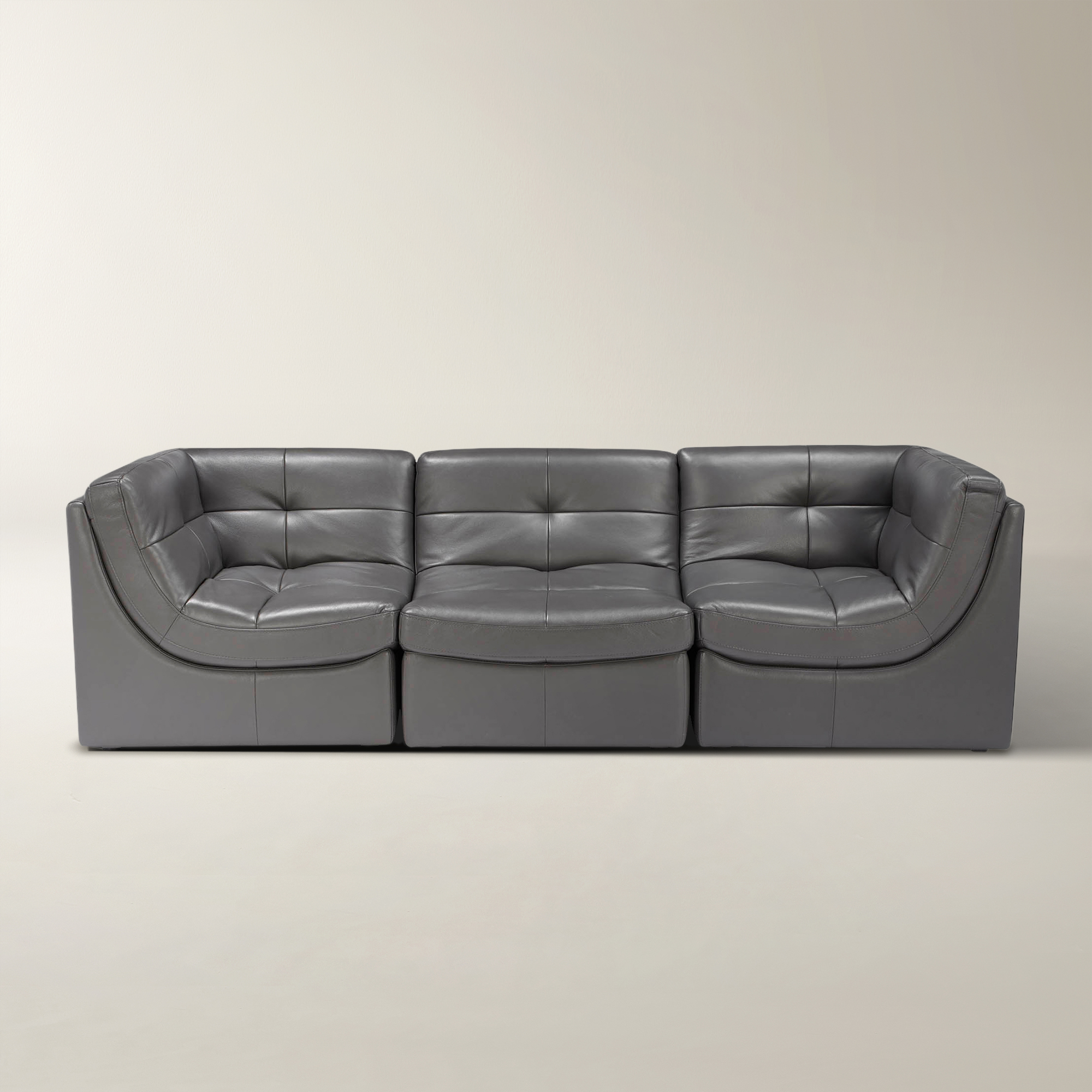 Convo 3-Piece Charcoal Leather Sectional Sofa$3999
A modular charcoal leather sofa with kiln-dried hardwood frame and gently curved, blind-tufted seats.
Add To Cart -
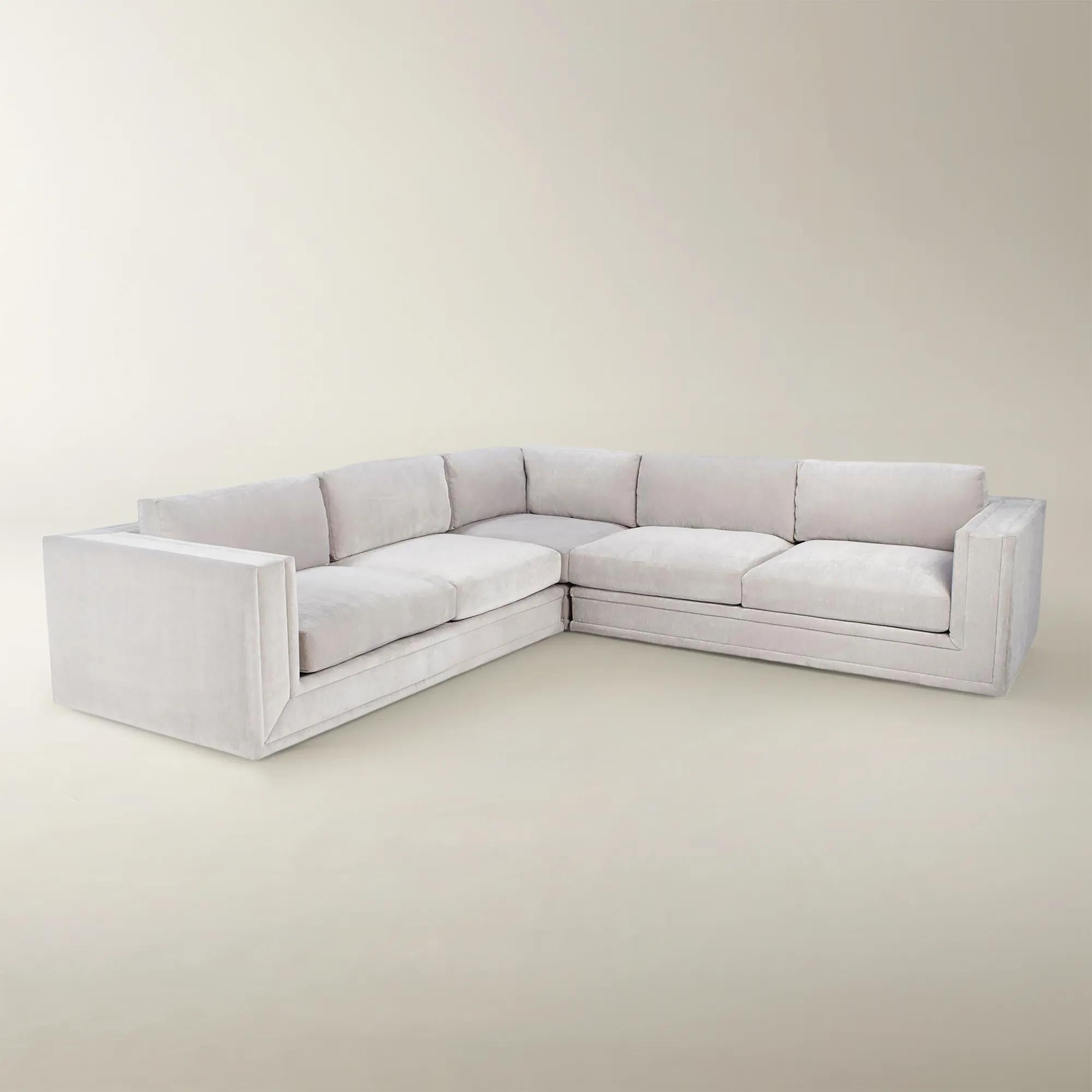 Luka 3-Piece Polar Chenille Sectional Sofa$4999
A modern corner sectional featuring deep seating, high-density foam cushions, and hand-upholstered opulent chenille fabric.
Add To Cart -
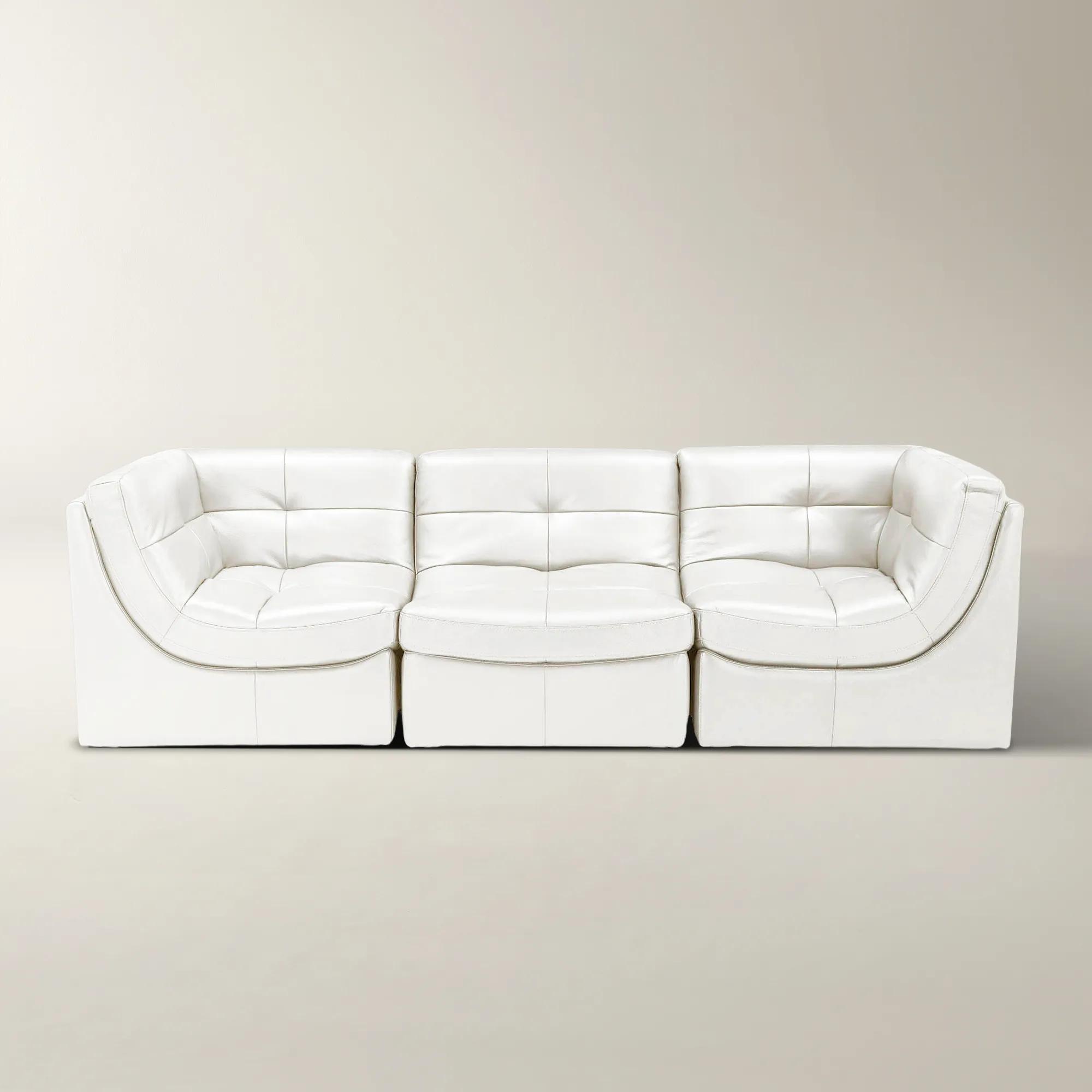 Convo 3-Piece White Leather Sectional Sofa$3999
A modular charcoal leather sofa with kiln-dried hardwood frame and blind-tufted, semi-aniline upholstery.
Add To Cart -
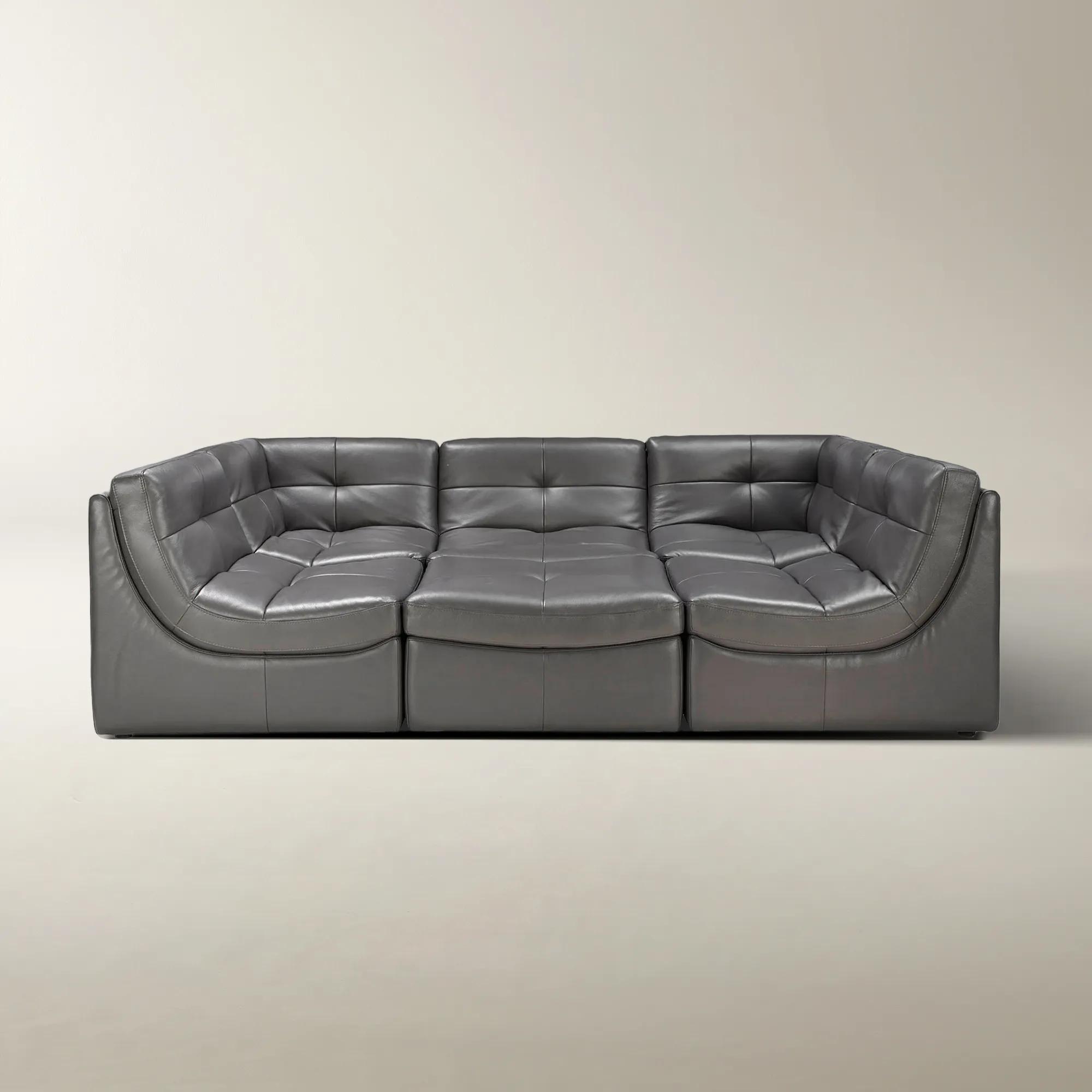
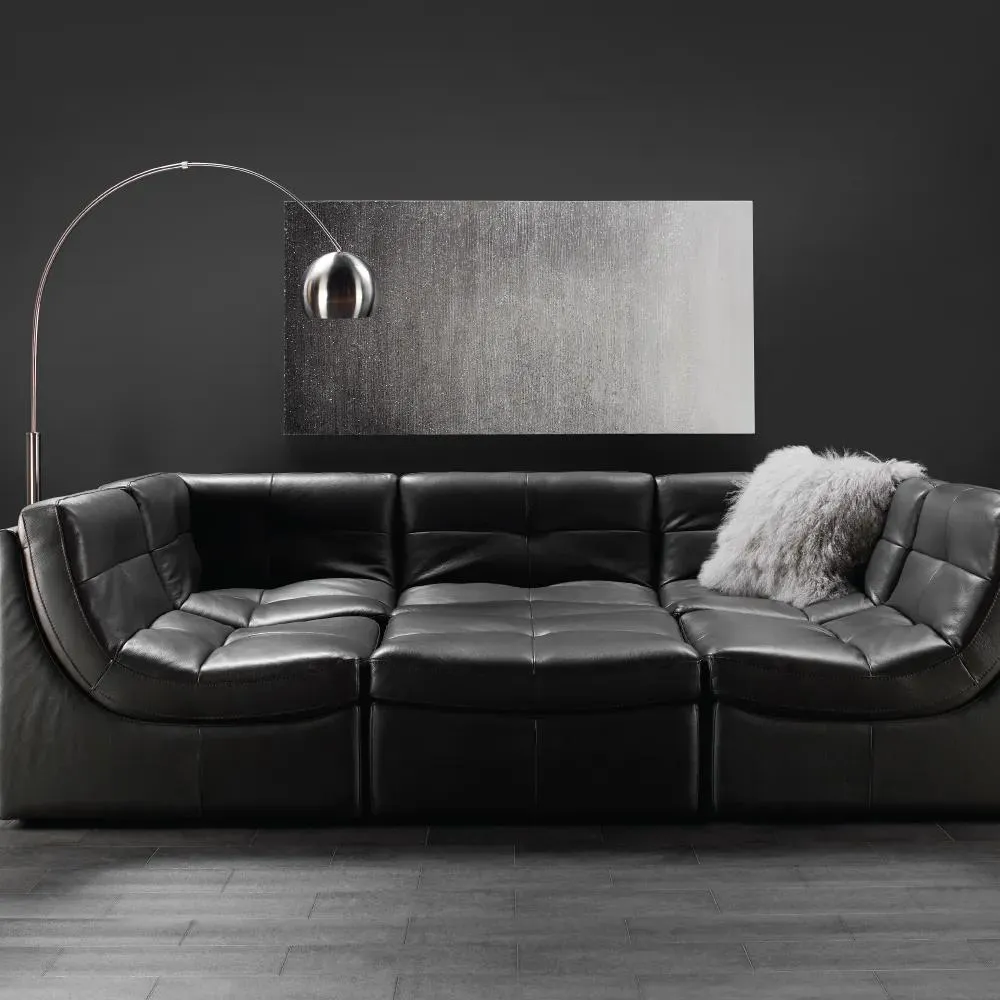 Convo 6-Piece Charcoal Leather Sectional Sofa$7249
A modular charcoal leather sectional with kiln-dried hardwood frame and blind-tufted, semi-aniline upholstery.
Add To Cart -
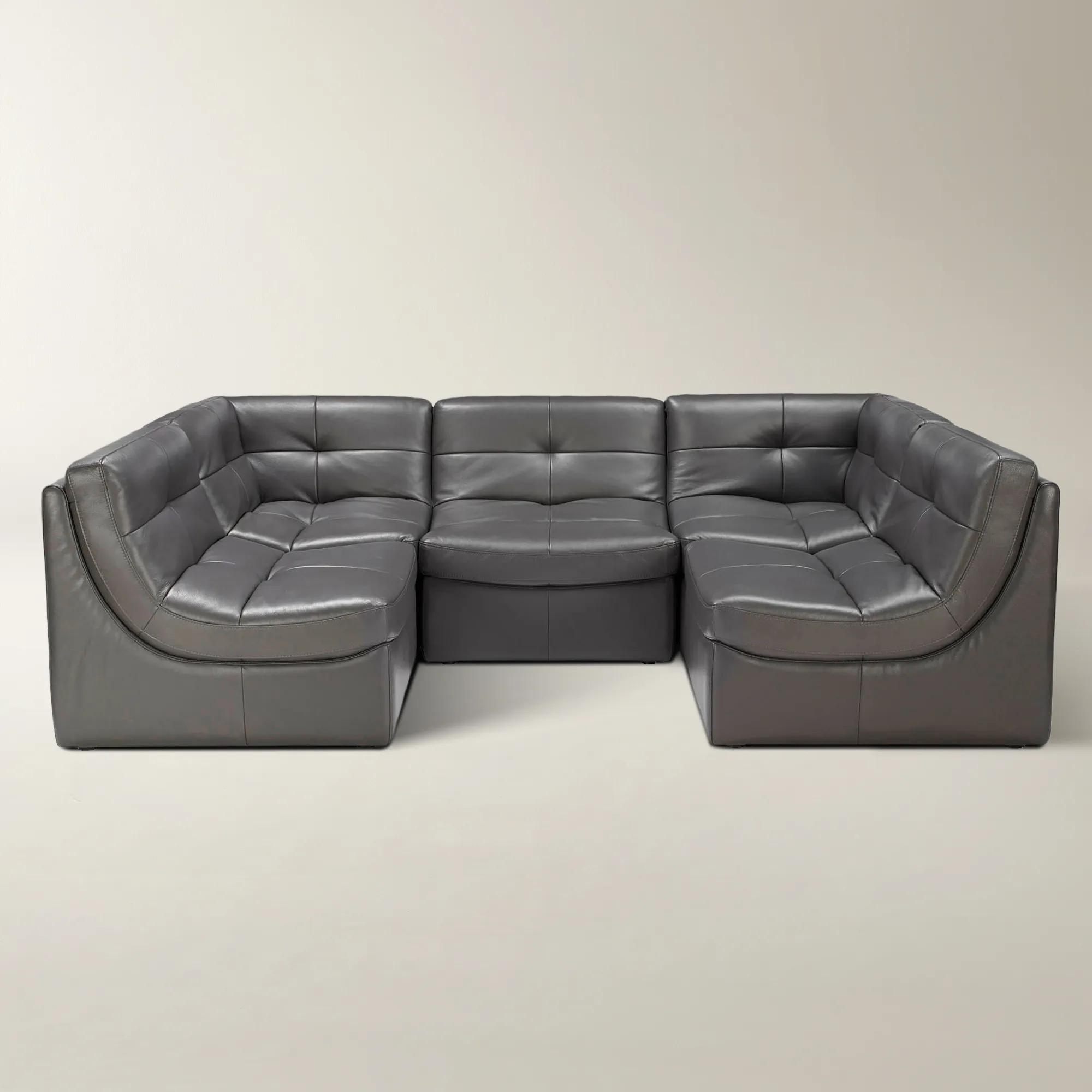 Convo 5-Piece U- Shaped Charcoal Leather Sectional Sofa$6399
A modular charcoal leather sectional with kiln-dried hardwood frame and blind-tufted, semi-aniline upholstery.
Add To Cart -
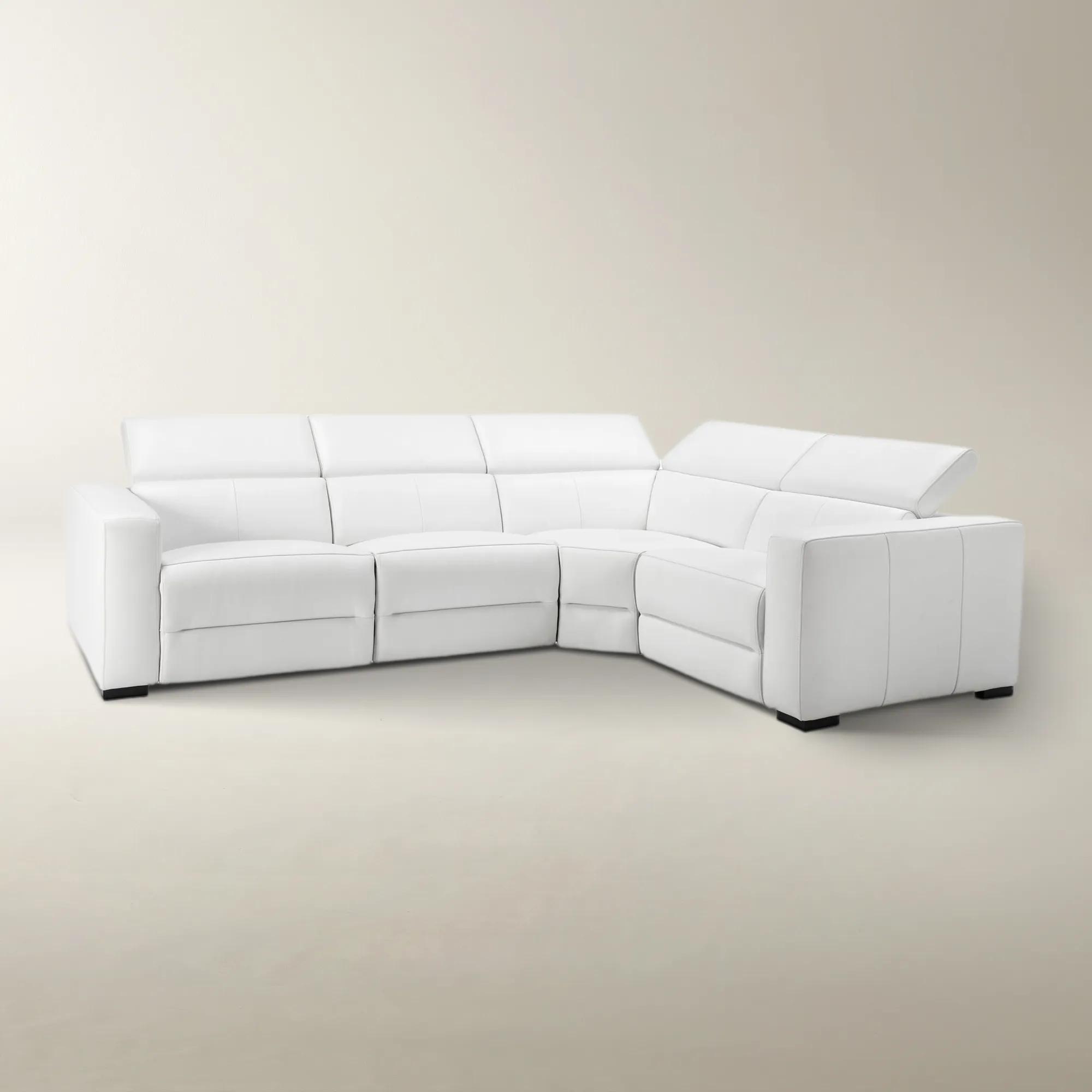 Verona 4-Piece L-Shaped Reclining White Leather Sectional Sofa With Right-Arm$5499
A modern sectional upholstered in supple white semi-aniline leather with adjustable headrests and power-reclining seats.
Add To Cart -
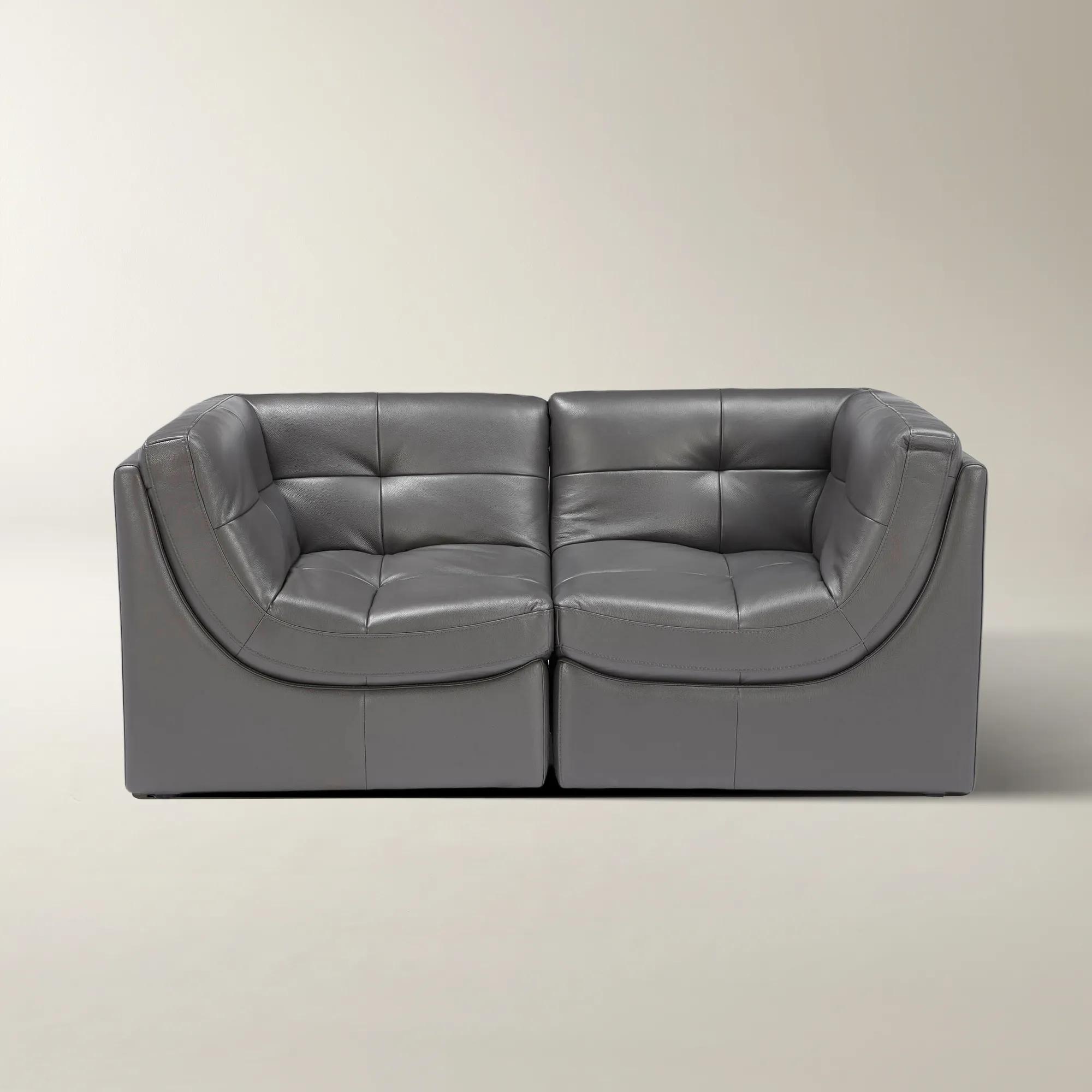 Convo 2-Piece Charcoal Leather Sectional Sofa$2799
A modular charcoal leather sofa with kiln-dried hardwood frame and blind-tufted, semi-aniline upholstery.
Add To Cart

Corner Blocked Hardwood Frame Sectionals
Elevate your living space with corner blocked hardwood frame sectionals—where architectural integrity meets sumptuous comfort. Designed for those who crave both drama and durability, these sectionals transform any room into a stage for sophisticated lounging and bold entertaining. With sculptural silhouettes and rich, tactile upholstery, each piece becomes a statement of artistry, anchoring your home in elegance and inviting you to indulge in the extraordinary. Discover how corner blocked hardwood frame sectionals can redefine your interiors, offering a foundation as enduring as your sense of style.
Corner-blocked hardwood frame sectionals pair an expressive silhouette with reinforcement beneath the upholstery, giving generous seating a foundation designed for everyday living. Corner blocking refers to additional wood blocks fitted into the frame’s interior corners to strengthen the joints. These blocks are often triangular and secured with glue and screws, helping distribute stress where frame members meet and reducing the movement that can gradually loosen a joint. Hardwood describes the frame material, while corner blocking describes a construction technique; together, they provide useful clues about structural quality, though neither alone guarantees lasting performance. The wood species, joinery, seat suspension, cushion construction, and assembly all contribute to how a sectional feels and wears. Kiln-dried hardwood can be particularly valuable because controlled drying reduces moisture in the lumber, helping limit the dimensional changes that can occur as wood adjusts to indoor conditions. Corner reinforcement supports the frame, but it does not make cushions immune to softening or prevent every source of seat sagging. That distinction matters in a piece intended for long evenings, lively conversation, and the daily ritual of claiming a favorite corner. A well-built sectional should bring confidence to those moments without asking its internal structure to do the work of its springs, webbing, or cushioning. Beneath a sweeping chaise or a crisply tailored arm, thoughtful construction allows the visible design to take center stage: a sculptural profile against a richly colored wall, a low back that preserves a dramatic sight line, or deep upholstery that lends softness to polished stone and gleaming metal. For a primary living room, an entertainment space, or a gathering area shared by several generations, this combination of reinforcement and expansive seating has particular appeal. Construction details are most meaningful when considered alongside the way the room is used, whether that means frequent guests, relaxed evenings with children, or a quieter space where a single substantial piece establishes the entire composition.
The right proportions turn a corner-blocked hardwood frame sectional from a large piece of furniture into a room-defining presence. Overall width and depth establish its footprint, but seat depth, seat height, back height, and arm width determine how comfortably that footprint serves the people using it. A deep seat invites reclining with a textured throw, while a shallower seat may suit someone who prefers to sit upright with feet supported on the floor. Broad arms create a bold architectural line but occupy space that might otherwise become seating, an important distinction in a compact living room. An L-shaped arrangement can frame a conversation area without enclosing it completely; a U-shaped layout creates a more enveloping setting for a spacious room. A chaise offers a place to stretch out, although its projection needs to leave a comfortable route through the space. Mapping the full outline on the floor makes those relationships tangible, especially near a fireplace, a frequently opened cabinet, or a passage to an adjoining room. Leave enough clearance to move around the coffee table and reach each seat without squeezing between furniture. Orientation deserves equal attention: left-facing and right-facing descriptions are commonly based on looking at the sectional, but the diagram and stated convention should always confirm the layout. Modular construction may offer flexibility, though not every sectional can be reversed or rearranged, and connecting hardware should keep compatible sections aligned during normal use. Delivery fit is a separate consideration from room fit. Doorways, stair landings, elevator interiors, and tight turns all affect whether the individual sections can reach their destination; removable legs or backs should never be assumed. Once the scale is resolved, upholstery gives the arrangement its emotional character. Velvet can catch the light with a sumptuous shift in tone, a dimensional weave can temper glossy surfaces, and leather can lend depth through subtle variations in grain. For a leather-focused interpretation of reinforced seating, Corner Block Leather Sectionals brings that material into the conversation, where its finish and care requirements deserve as much attention as its visual richness.
Durability in hardwood frame sectionals is best understood as a partnership between the hidden structure, the upholstery, and the habits of the household. A reinforced corner helps stabilize a joint, while the suspension beneath the cushions provides seat support and the cushion fill shapes the sitting experience. Foam density and firmness are different characteristics: density describes the amount of material within a given volume, while firmness describes resistance to compression. A firmer feel alone is not proof of greater durability. Fiber or feather blends can create a softer, more relaxed surface, but may need regular fluffing to maintain an even appearance. Removable cushions can make routine maintenance easier, and rotation can help distribute wear when the design permits it; attached or one-sided cushions require a different approach. Upholstery selection should reflect real routines rather than appearance alone. In a room shared with pets, closely woven fabric may be less inviting to claws than an open, looped texture, though no upholstery is impervious to scratching. Performance treatments may improve resistance to certain spills or stains, but their capabilities vary and do not replace prompt care. Blot spills instead of rubbing, follow the specified cleaning code, and test approved cleaners in an inconspicuous area. Velvet may show changes in pile direction, while leather care depends on its finish and should follow the supplied instructions rather than a universal conditioning schedule. Gentle vacuuming with an appropriate upholstery attachment helps remove debris from seams and creases. Positioning the sectional away from prolonged direct sunlight and concentrated heat can help protect fabric color, leather surfaces, and the wood beneath. When moving sections, lift them with adequate help rather than dragging them, and follow any instructions for disconnecting the units first. These practical details preserve the pleasure of the piece: an inviting sweep of seating for cooler evenings, a generous setting for guests to linger, and an anchor for layered pillows, luminous accents, and art with unmistakable presence. The most compelling choice balances that visual drama with proportions, materials, and construction suited to the life unfolding around it.
FAQs
A corner blocked hardwood frame sectional stands apart due to its reinforced construction technique. Wooden blocks are strategically placed at the joints of the hardwood frame, dramatically increasing stability and durability. This method ensures the sectional maintains its shape and strength over time, even in high-traffic living spaces, making it a luxurious and lasting investment.
Anyone who values both artistry and resilience in their furniture will appreciate a corner block frame sectional. It’s especially ideal for families, entertainers, or those who host frequent gatherings, as the robust construction handles daily use with ease. Design enthusiasts who crave a dramatic, sculptural centerpiece will also find these sectionals to be a perfect match for their expressive interiors.
To elevate your living room, pair your corner-blocked frame sectional with bold accent pillows, a statement area rug, and ambient lighting. Consider upholstery in rich velvets or textured performance fabrics to add depth and drama. The sectional’s substantial silhouette serves as a canvas for layering colors, patterns, and metallic accents, creating a space that feels both inviting and artfully curated.
Absolutely. The corner block reinforced construction provides exceptional stability, ensuring the sectional withstands the energetic play of children and the occasional leap of a pet. Opting for performance fabrics adds an extra layer of practicality, making cleanup simple while preserving the sectional’s opulent appearance.
The meticulous craftsmanship involved in creating a corner-blocked hardwood frame greatly extends the life of a sectional. By reinforcing the frame’s joints with solid wood blocks, the structure resists warping, sagging, and loosening over time. This attention to detail not only preserves the sectional’s beauty but also ensures it remains a cherished piece in your home for years to come.