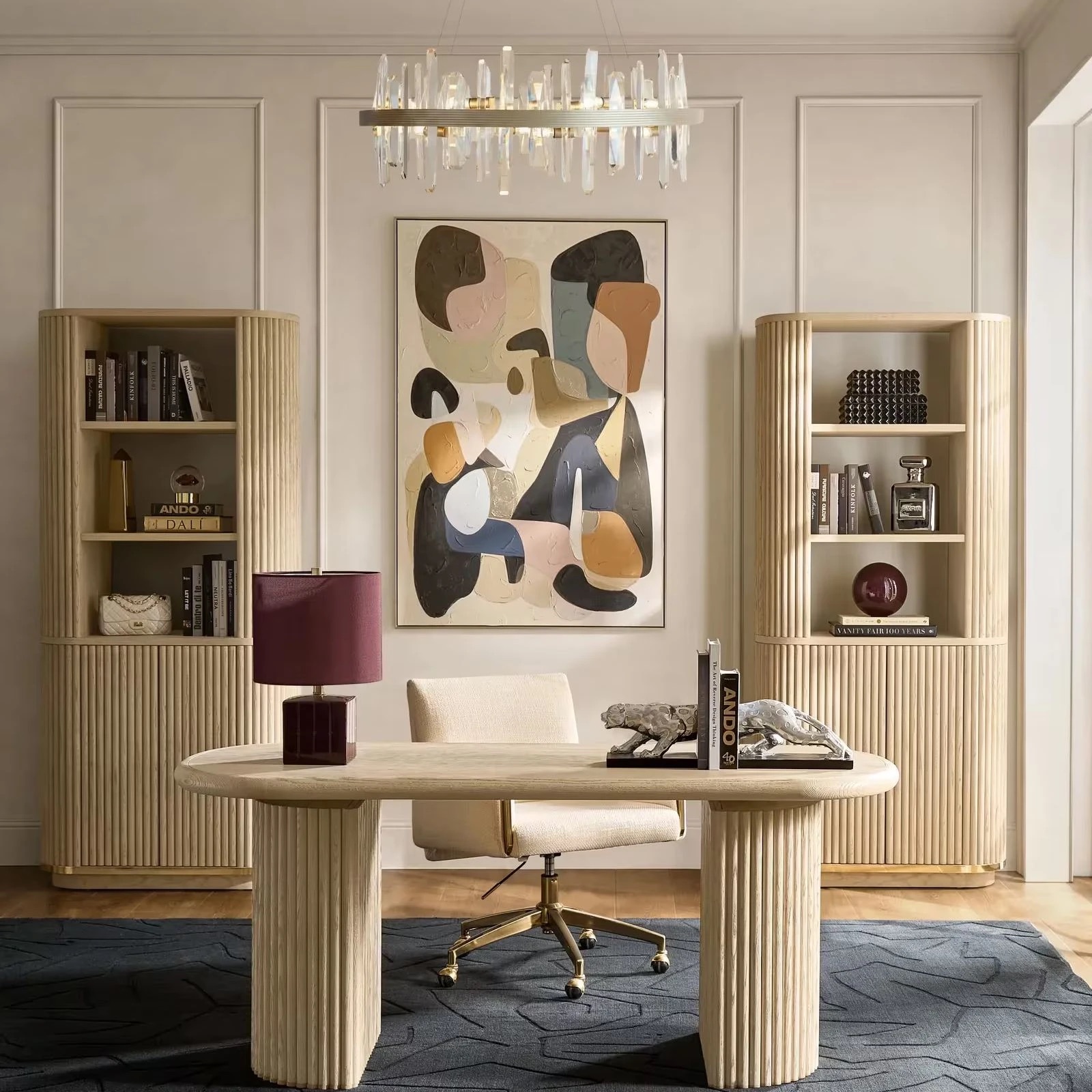
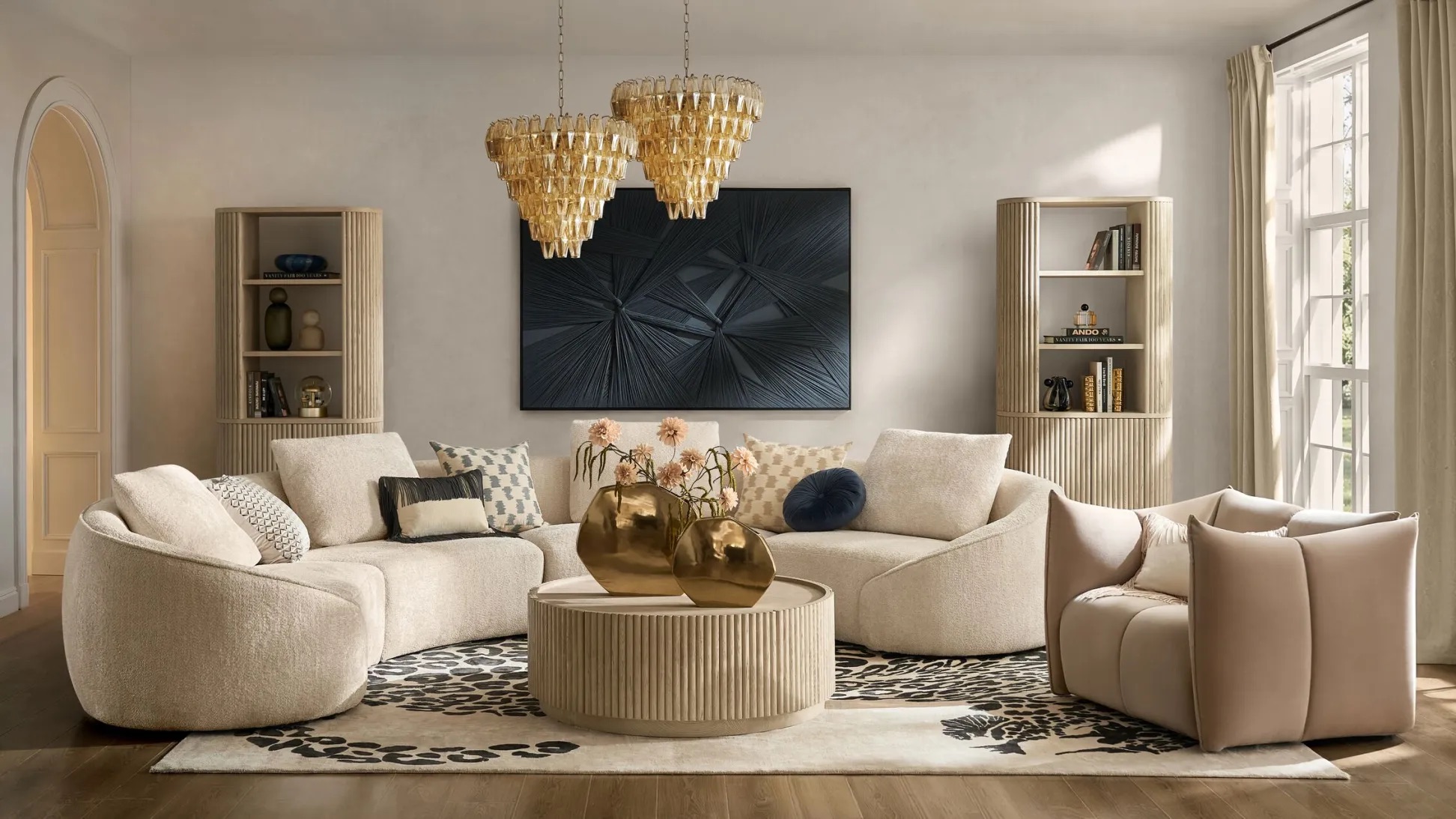
When comparing round vs rectangular dining tables, the question is never only about shape. A dining table sets the rhythm of a room. It influences movement, conversation, seating, and the visual mood of the space itself. In a smaller home, the right silhouette can make the dining area feel effortless and open. In a larger room, it can create a sense of structure, presence, and ceremony.
That is why this decision deserves more thought than dimensions alone. The choice between round vs rectangular dining tables affects how guests interact, how easily chairs pull in and out, and whether the room feels soft and fluid or defined and architectural. The most successful interiors understand that form and function are not competing ideas. They are the same conversation, expressed beautifully.
The Sculptural Softness Dining Room
.jpeg?w=2260&h=1271)
Why Table Shape Matters
Dining tables do more than offer a place to gather. They establish how a room works. A round table invites guests inward, creating a feeling of intimacy and ease. A rectangular table extends the eye, reinforces order, and often becomes the anchor around which the rest of the room is arranged. In both cases, shape becomes part of the architecture.
This matters even more in design-forward homes, where a dining room is rarely treated as an isolated space. It may open into a kitchen, sit within a larger great room, or share sightlines with a living area. In those settings, table shape affects flow as much as aesthetics. The best dining table shape is the one that supports how you move through the room and how you want people to feel once they are seated.
A round silhouette softens a space. A rectangular silhouette sharpens it. One feels conversational and fluid. The other feels composed and grounded. Neither is inherently better. The more refined question is which one supports your layout, your hosting style, and your design point of view.
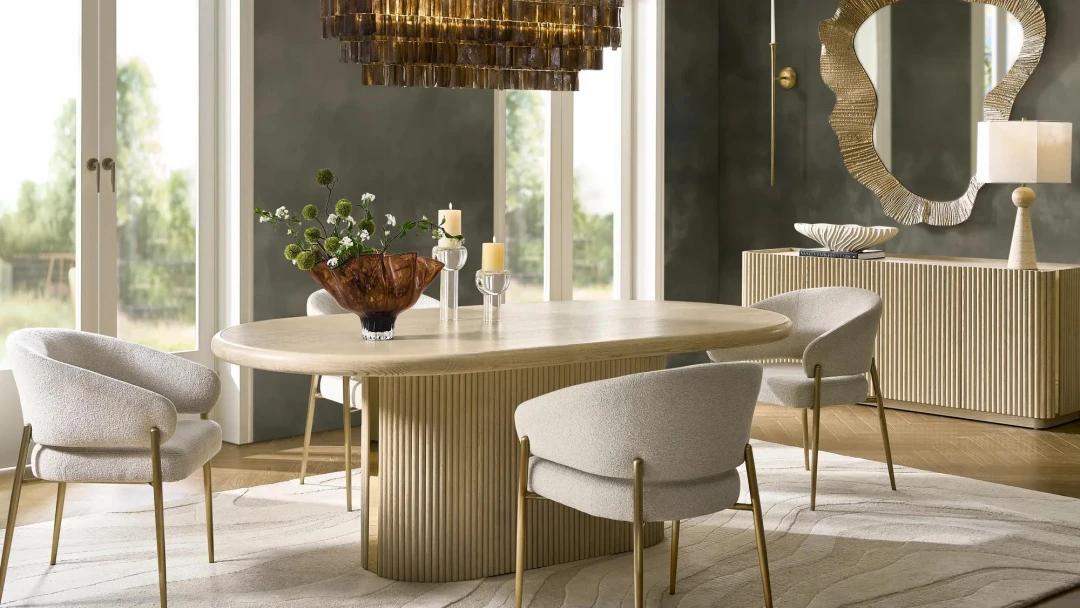
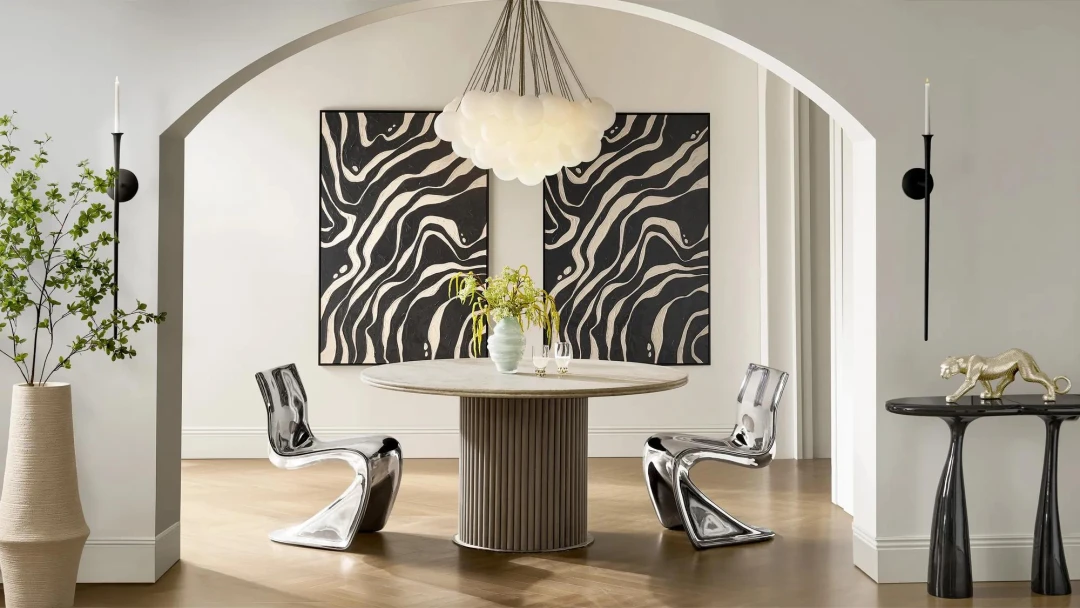
Table shape changes more than seating, it changes the atmosphere of the room.
Round vs Rectangular Dining Tables in Smaller Spaces
In compact rooms, scale is everything. This is where round vs rectangular dining tables becomes a particularly useful comparison. A round dining table for small spaces often feels lighter because it has no corners to interrupt circulation. You can move around it more easily, and the room reads as more open, even when the footprint is not dramatically smaller.
That softness is especially valuable in apartments, breakfast nooks, and dining areas tucked into open layouts. A round table creates a natural focal point without feeling rigid. It allows chairs to slide in at slightly varied angles, and a pedestal dining table can make seating even more flexible by removing the obstacle of corner legs. In a space where every inch matters, those details quietly improve everyday comfort.
A rectangular table, however, should not be ruled out for smaller homes. In a long, narrow room, it can actually feel more natural because it follows the architecture already in place. If your dining area sits between a kitchen island and a window wall, or if the room itself has a strong linear footprint, a rectangular table may feel more resolved than a round one. The key is proportion. A slim, thoughtfully scaled rectangular table can feel elegant rather than crowded.
For open-concept homes, the decision becomes more nuanced. A round table helps carve out a softer zone within a broader space, while a rectangular table creates a stronger visual axis. If you want the dining area to feel relaxed and integrated, round often wins. If you want it to feel intentional, anchored, and slightly more formal, rectangular tends to hold the room with greater authority.
Round Tables: Intimate, Space-Savvy, and Sculptural
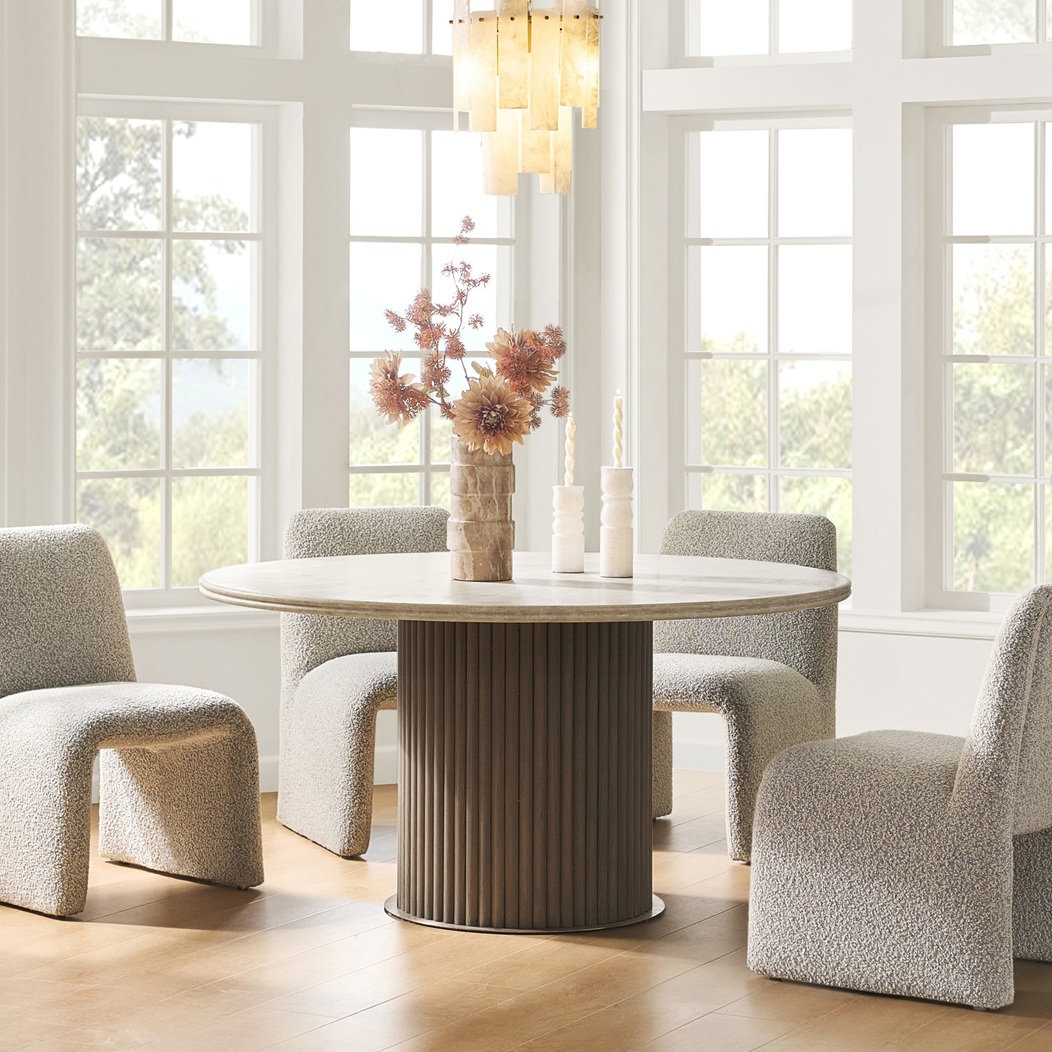
There is a reason round dining tables remain such a compelling choice for modern living. They encourage conversation in a way few other shapes can. Everyone faces one another more naturally, which makes the table feel democratic, intimate, and quietly generous. There is no obvious head of the table, no hierarchy of placement, only a shared center.
This makes round tables ideal for smaller gatherings, weeknight dinners, morning coffee, or spaces designed to feel welcoming rather than ceremonial. They also lend themselves beautifully to open layouts, where softer lines can balance the harder edges of cabinetry, walls, and windows. When you want a room to feel composed but never severe, a round table offers that balance.
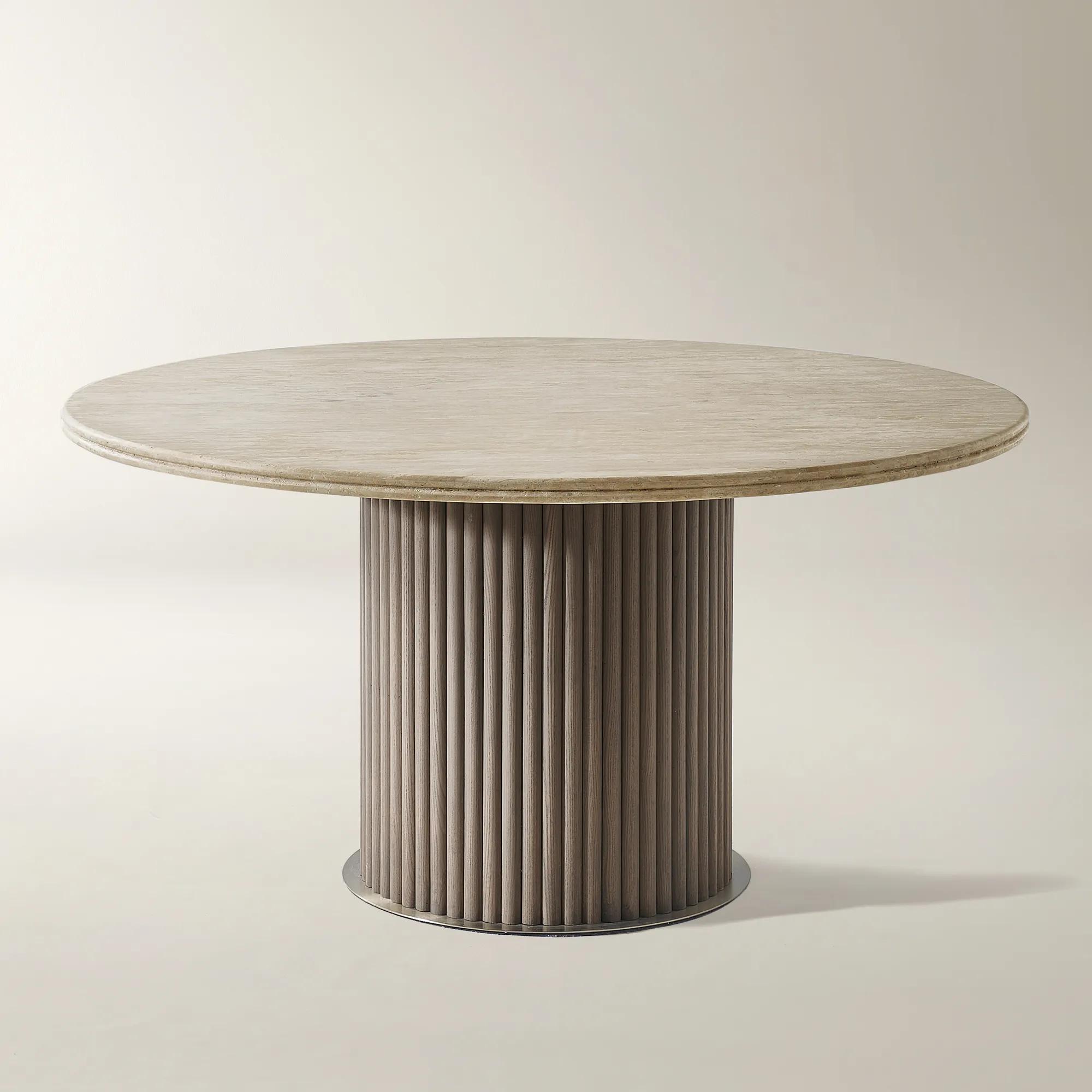
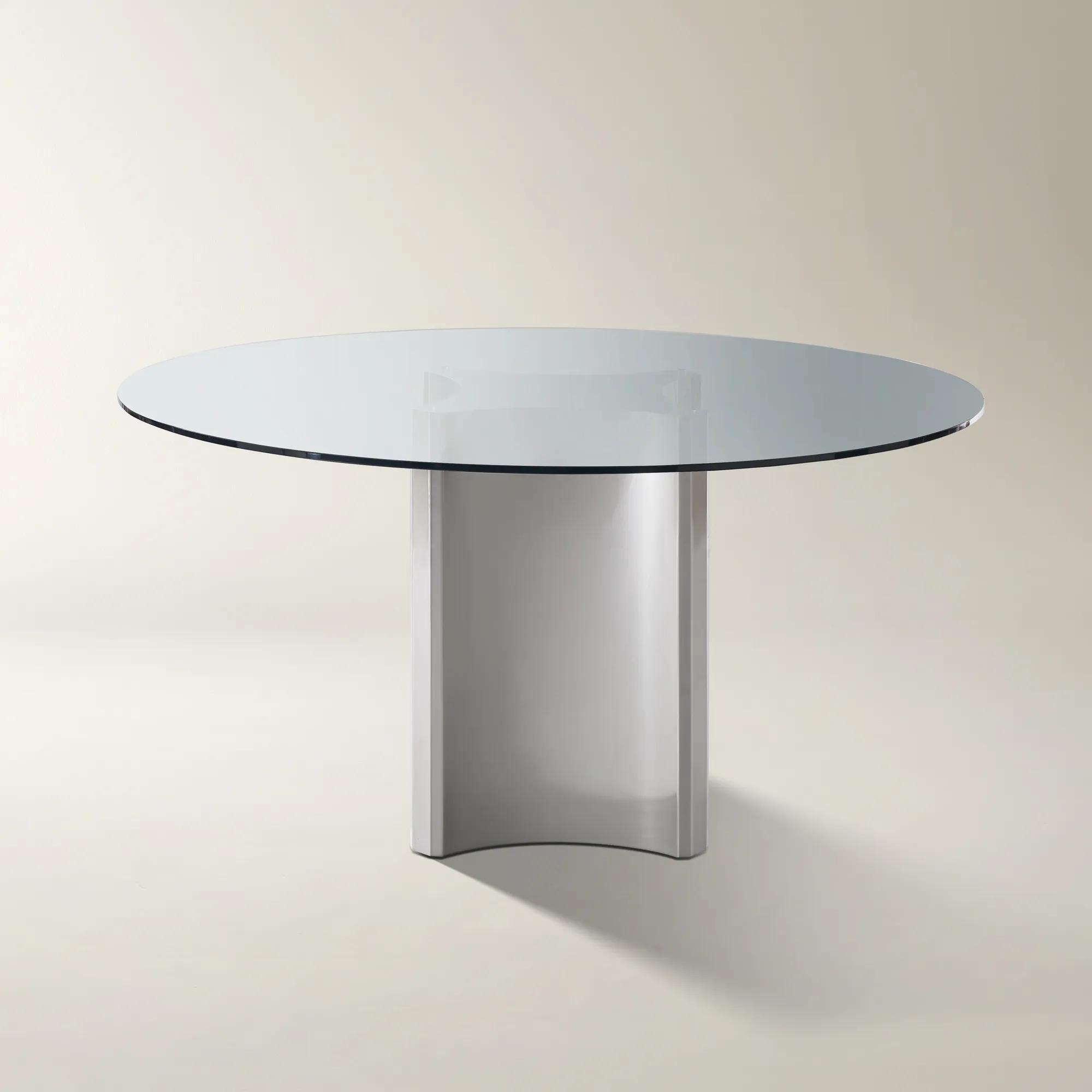
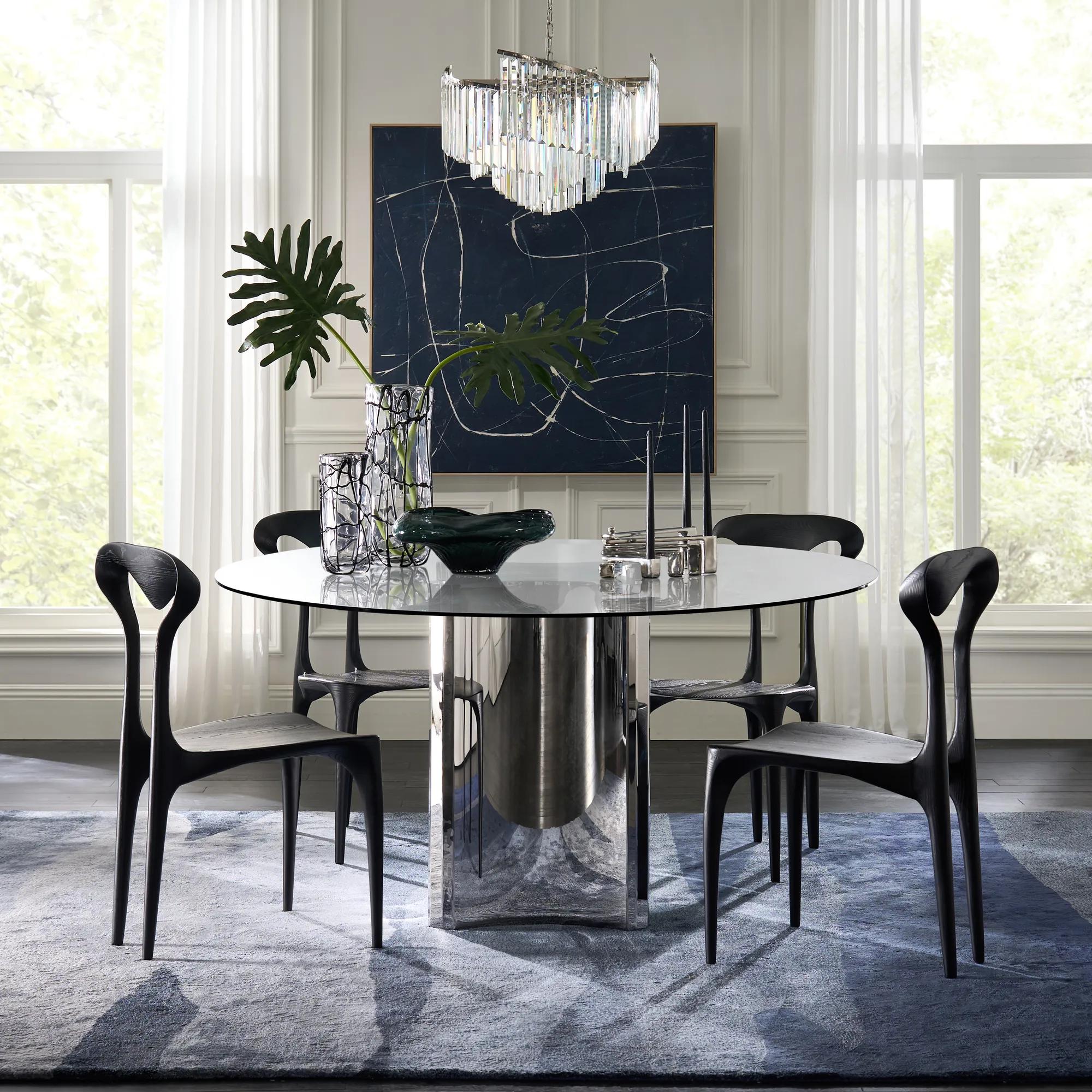
In 2026, the appeal of the round table feels even stronger. The mood is moving toward soft curves, sculptural bases, and organic forms that bring warmth to modern interiors. Think carved pedestal silhouettes, fluid contours, and richly expressive materials that turn the table into functional sculpture. Stone surfaces, subtly fluted bases, and tactile finishes give a round table an almost gallery-like presence without sacrificing ease.
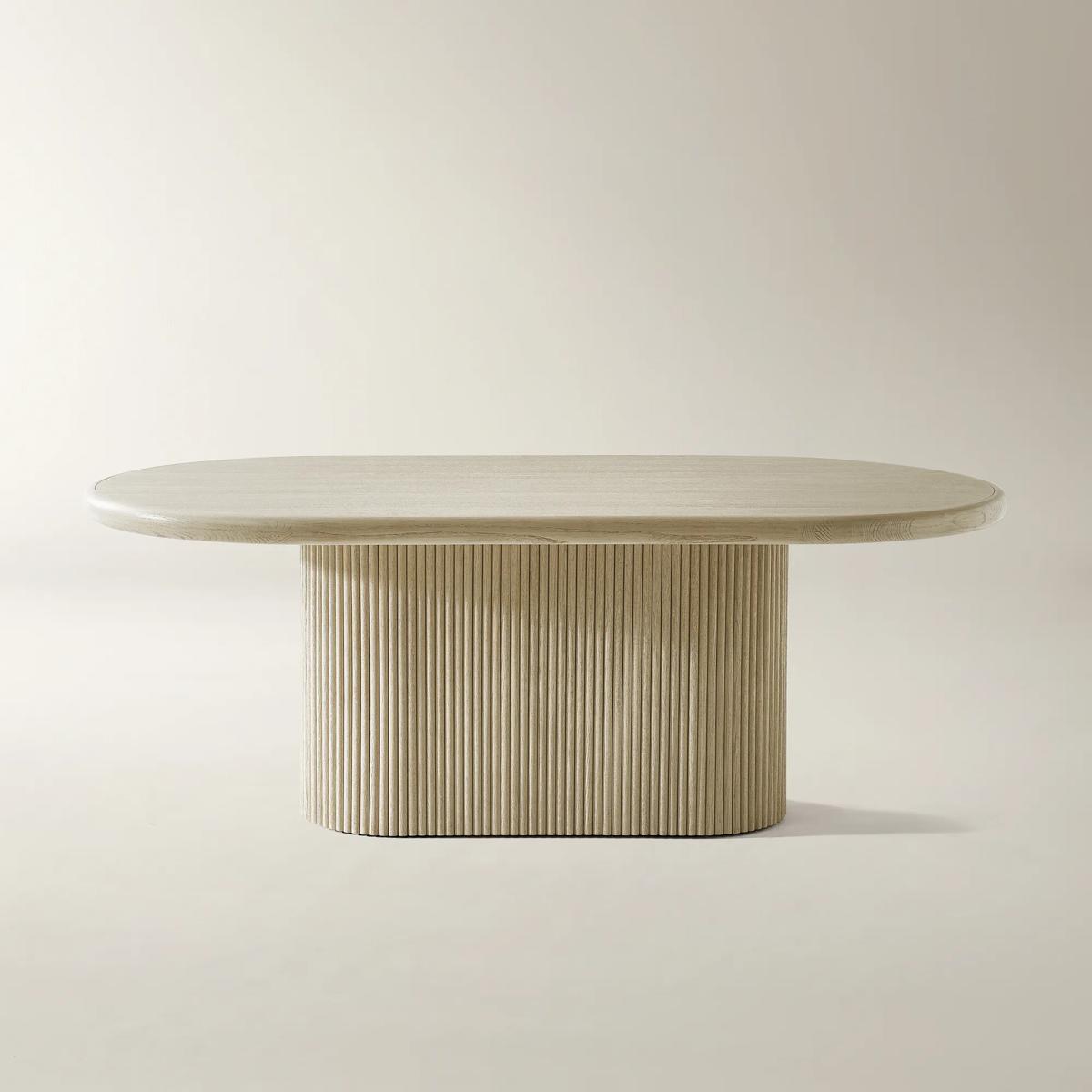
If you love the softness of a round table but need a bit more length, an oval table deserves attention. It offers many of the same benefits, easier circulation, a more relaxed outline, a sense of intimacy, while accommodating a slightly larger guest list. For anyone weighing oval dining table vs rectangular table options, oval often feels like the most graceful middle ground.
.jpeg?w=3360&h=1890)
A round table brings visual softness and a closer, more conversational atmosphere.
Rectangular Tables: Structured, Generous, and Statement-Making
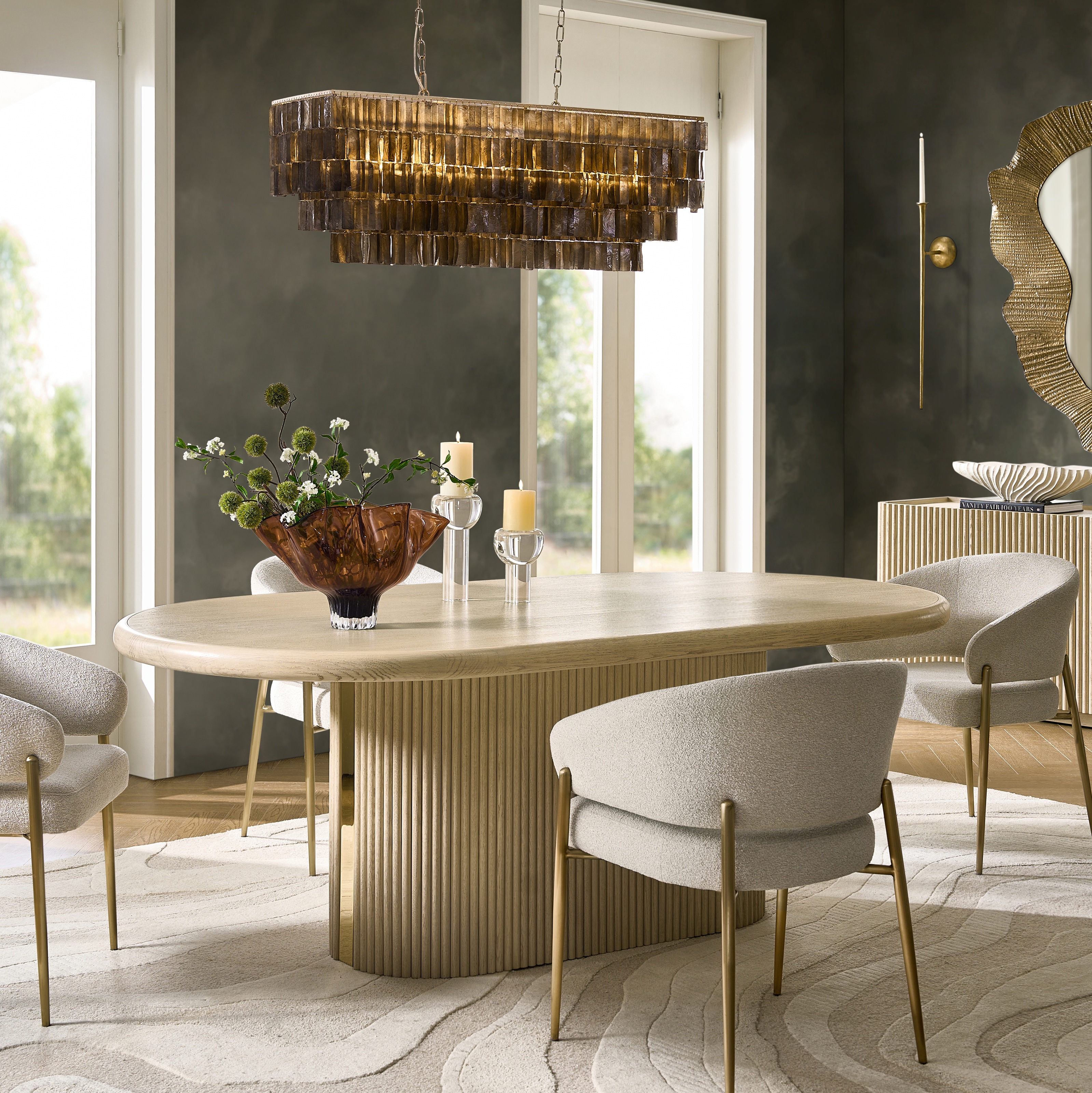
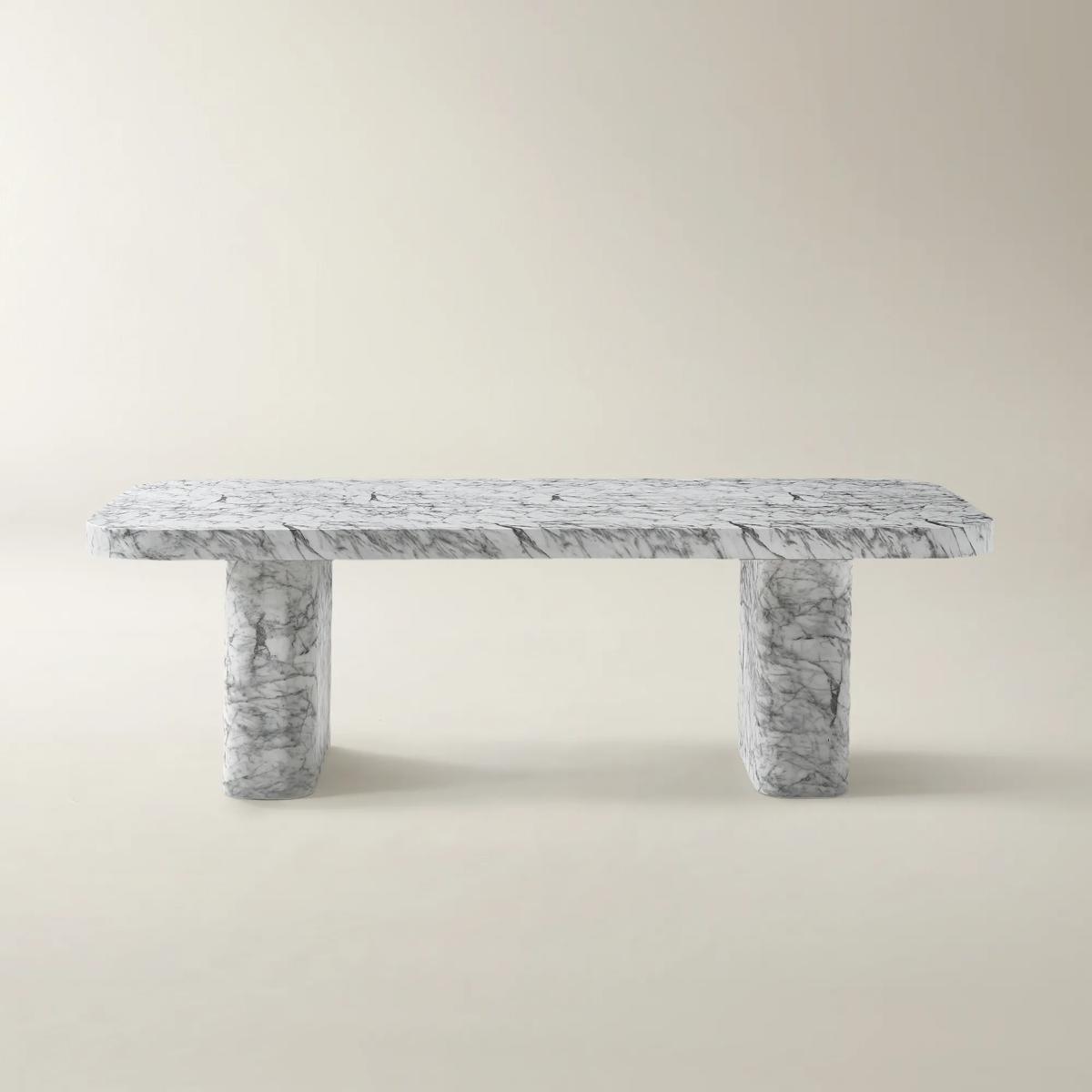
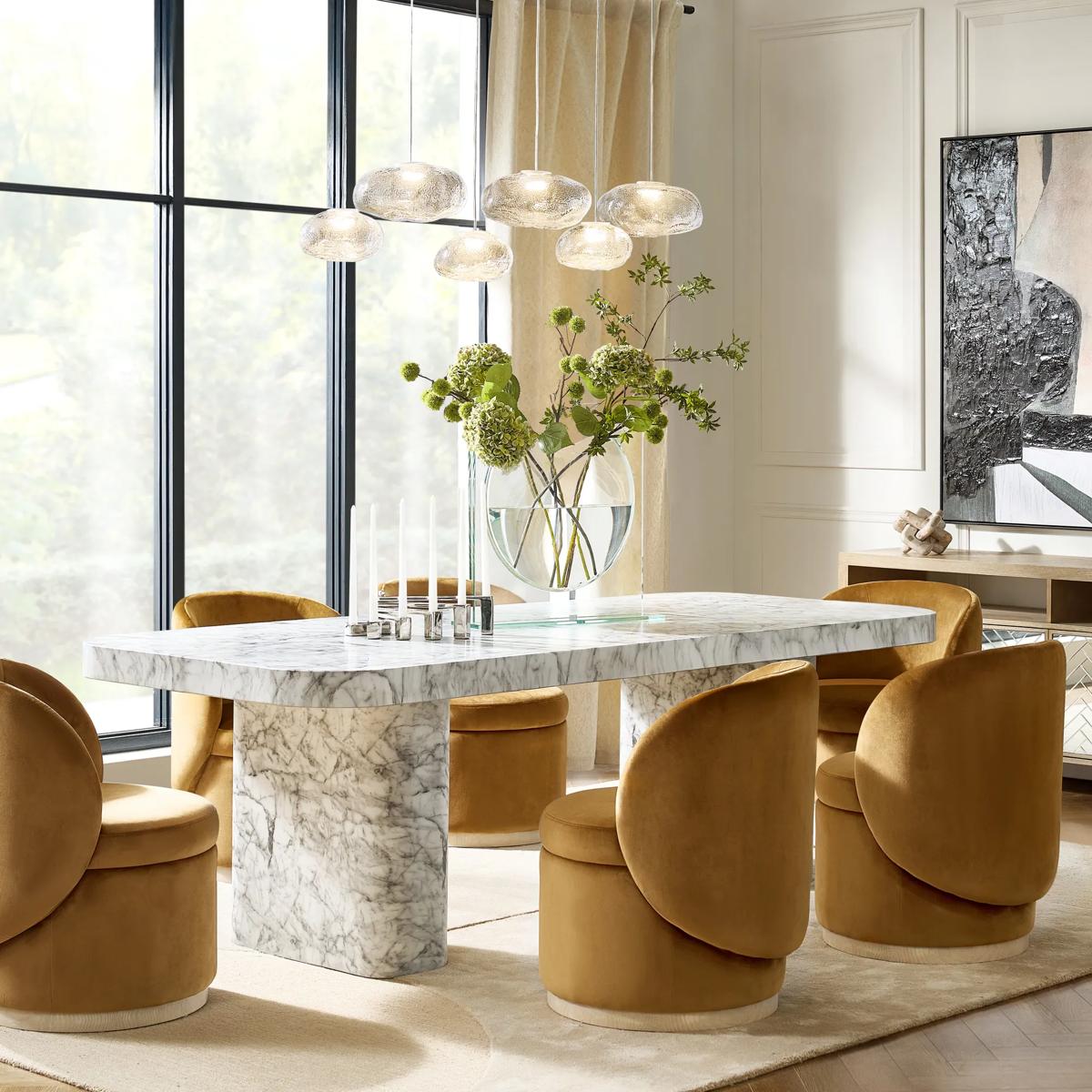
If round tables are about softness, rectangular tables are about presence. They feel architectural by nature. They establish a strong line in the room, define edges clearly, and create a sense of order that can be incredibly elegant. For larger rooms, they often feel instinctive, not simply because they seat more people, but because they give the space a stronger center of gravity.
A rectangular dining table for large rooms offers practical advantages as well. It typically provides greater dining table seating capacity, particularly for households that host often or prefer flexibility for larger dinners. The format works especially well when paired with benches, armchairs at the ends, or extension features that allow the table to expand when needed. If your version of entertaining includes holidays, dinner parties, or long, layered tablescapes, rectangular is often the more accommodating shape.
There is also a design discipline to the rectangular table that appeals to more structured interiors. It aligns beautifully with long rugs, linear chandeliers, buffets, and paneled walls. It gives the eye direction. It creates a room that feels arranged, intentional, and complete. In homes where the dining room is meant to carry visual weight, that clarity matters.
For 2026, rectangular tables are taking on a more elevated character through elongated silhouettes, mixed materials, and bold finishes. Travertine tops, dramatic marble, wood burl veneers, lacquered surfaces, and metallic detailing all lend the form a more collected, high-design quality. Rather than feeling traditional, the modern rectangular table feels refined, sculptural, and deeply assured.
Round vs Rectangular Dining Tables: Form Meets Function
The choice between round vs rectangular dining tables becomes much clearer once you stop thinking only about style and start thinking about use.
Consider the room first. If the room is square, compact, or part of an open-plan layout, a round table often feels more fluid. If the room is long, formal, or architecturally linear, a rectangular table usually feels more natural.
Consider how many people you seat most often. For four people or fewer, a round table can feel luxurious in its intimacy. For six, eight, or more, a rectangular table usually provides more comfort and flexibility. It also allows for easier hosting when occasions grow beyond the everyday.
Consider traffic flow. In rooms where people are constantly moving past the dining area, between kitchen and patio, for example, a round table softens circulation. In rooms with ample clearance, a rectangular table can create a stronger sense of placement without disrupting movement.
Consider the mood you want. A round table feels relaxed, inviting, and slightly more spontaneous. A rectangular table feels composed, confident, and more architectural. If your home leans organic, sculptural, or softer in palette and form, round may feel right. If your interiors lean tailored, dramatic, or symmetrical, rectangular may feel more aligned.
This is where round vs rectangular dining tables stops being a simple comparison and becomes a design decision. You are not just choosing a tabletop. You are choosing how the room holds people, how the room carries style, and how daily life unfolds around it.
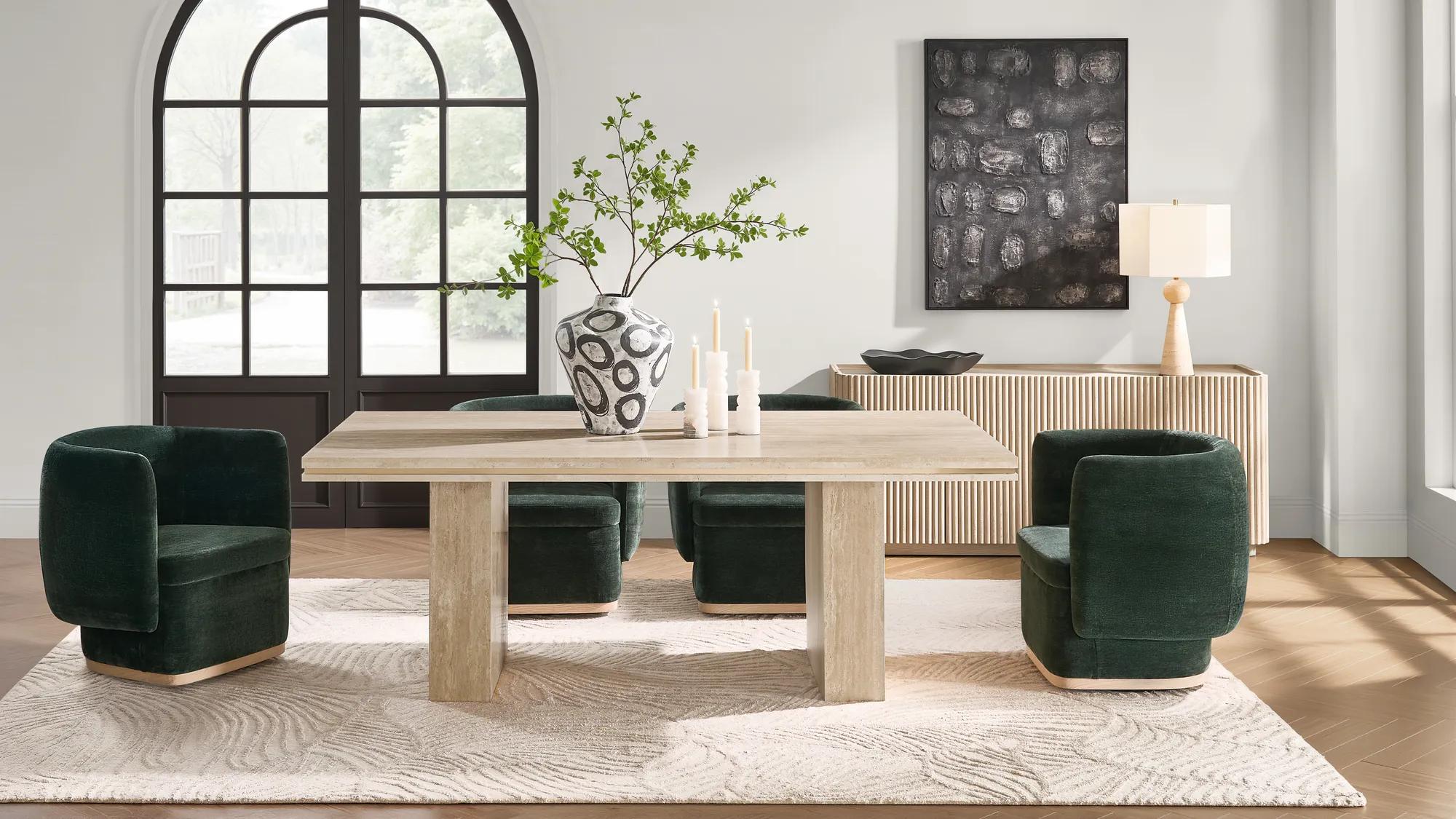
A rectangular silhouette brings order, scale, and a stronger architectural line.
Material and Style Trends for 2026
Shape may start the conversation, but material finishes it. The most compelling dining table ideas for 2026 pair organic silhouettes with refined surfaces, creating rooms that feel both tactile and polished. Marble and travertine continue to bring quiet luxury. Wood burl introduces pattern and depth with a richer, more decorative sensibility. Metallic accents, especially in brushed brass, burnished bronze, and softened gold tones, add a measured sense of glamour.
For round tables, these materials often emphasize sculpture. A stone top on a pedestal base feels monolithic and serene. A burl or lacquer finish introduces softness with a bit more personality. Curves and luxe materiality together create a table that feels less like furniture and more like an object of art.
For rectangular tables, material can heighten the table’s architectural role. Mixed materials, such as stone with metal, or burl wood with polished detailing, give the silhouette depth without losing its structure. The result is a room that feels grounded yet expressive, refined yet warm.
The strongest interiors will not choose between organic shapes and polished finishes. They will combine them. That balance is exactly what gives a dining room longevity.
Discover Dining Room Lighting Ideas
Frequently Asked Questions
Is a round dining table better for a small dining room or breakfast nook?
In many cases, yes. A round table tends to improve circulation, soften tight corners, and make a smaller dining area feel more open. A pedestal base can make it even easier to seat guests comfortably.
How many people can a rectangular dining table seat compared with a round table?
Rectangular tables usually offer greater capacity, especially for six or more guests. Round tables are excellent for intimate gatherings, but rectangular tables generally scale more easily for entertaining.
What dining table shape works best in an open-concept layout?
A round table often works beautifully in an open-concept space because it creates a softer zone within a larger room. A rectangular table is ideal if you want the dining area to feel more anchored and architecturally defined.
Should I choose an oval dining table instead of a round or rectangular table?
Choose oval if you want the softness of curves with a longer footprint. It is an elegant option for rooms that need visual flow but still require more seating than a true round table can typically provide.
How much space should I leave around a dining table for comfortable traffic flow?
Aim for about 36 inches of clearance around the table when possible, and more in high-traffic areas. That allows chairs to move comfortably and keeps the room feeling easy to navigate.
The Shape of Gathering
In the end, the answer to round vs rectangular dining tables is not about a universal winner. It is about proportion, ritual, and atmosphere. Choose the shape that supports the way you gather, the way your room flows, and the visual language you want your home to speak. The right table does more than fill a space. It gives the room its point of view.