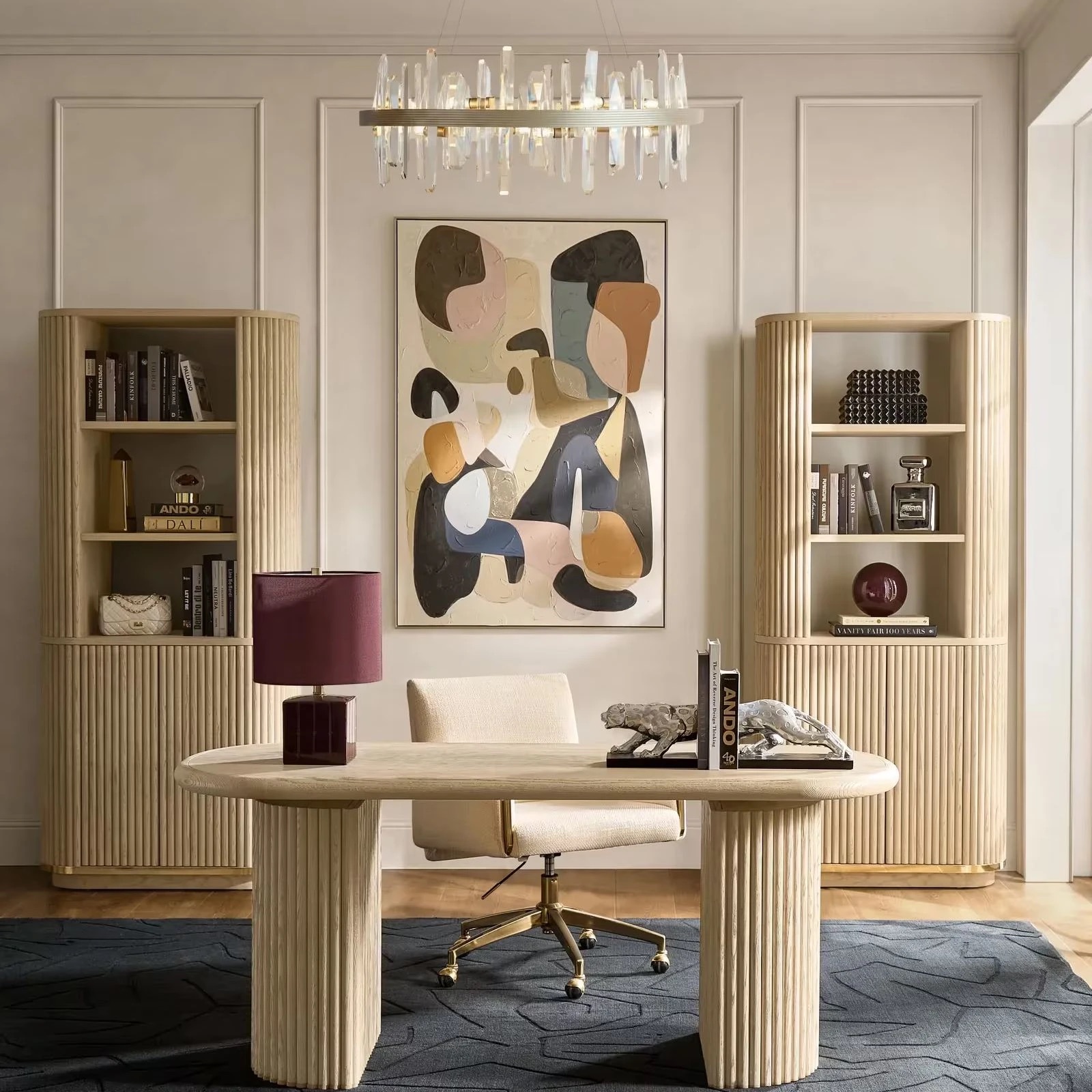
Reeded oak, sculptural curves, and soft-gold details bring a more polished point of view to natural wood.
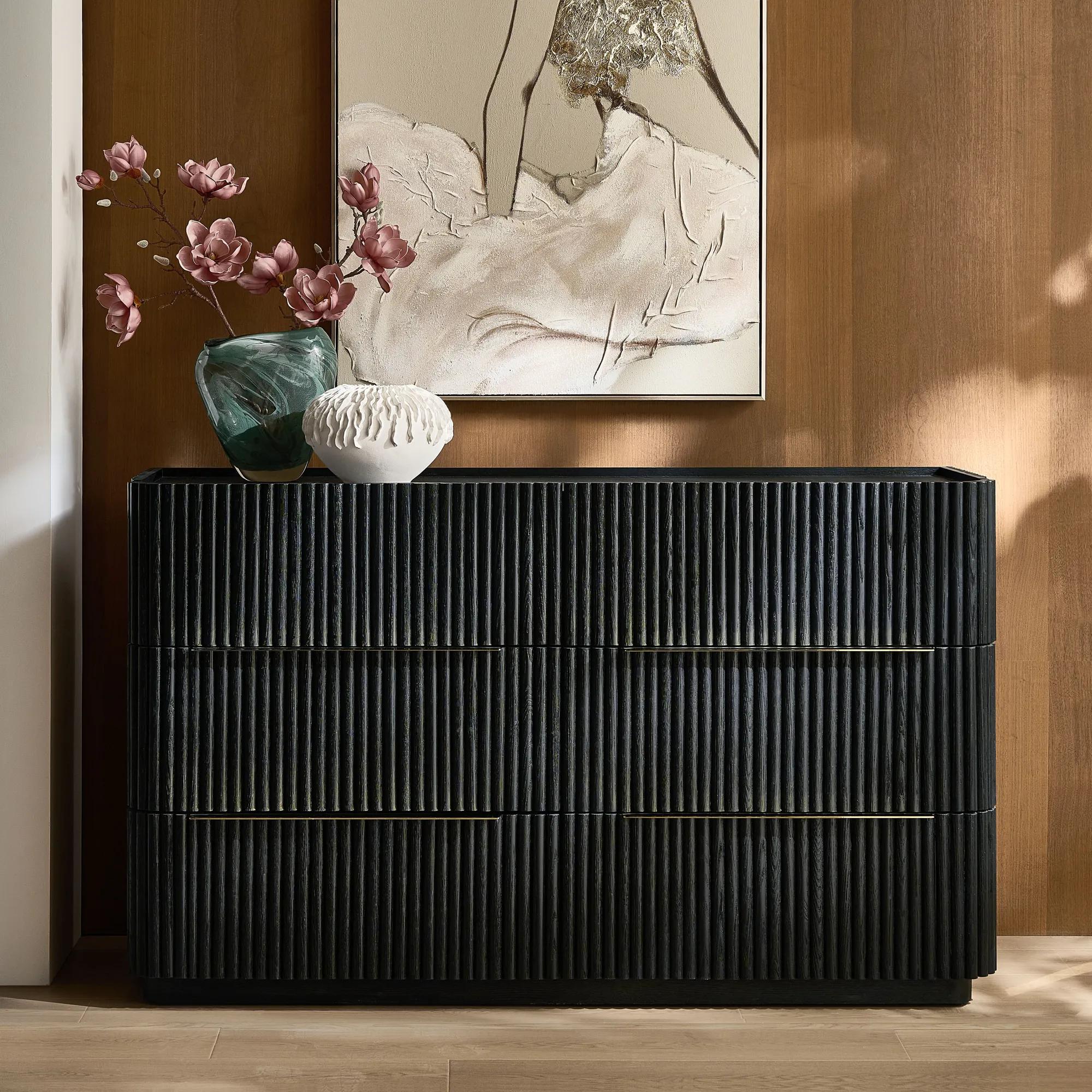
Learn how to style wood furniture in living rooms, bedrooms, dining spaces, and home offices. This room-by-room Stria guide covers reeded oak, mixed materials, color, scale, storage, and the details that make natural wood feel modern and refined at home.
Wood is often described as warm, which is true but incomplete.
Grain can calm a room. Reeding can sharpen it. A dark finish can make pale upholstery look softer, while white oak can bring light to a room without making it feel washed out. Wood is not a mood on its own. The silhouette, finish, and materials around it decide what it becomes.
That is the thinking behind the FW26 Stria collection. Vertical reeding gives oak a graphic rhythm. Rounded forms soften its architectural weight. Soft-gold edges catch the light, and concealed storage keeps the overall impression composed. It is the Mod Naturalist idea in practice: raw meets refined, and neither side loses its point of view.
To style wood furniture in every room, begin with one dominant wood tone, repeat it two or three times, and place it beside something unlike itself: glass, velvet, stone, lacquer, or metal. Let the grain remain visible. Give larger pieces enough breathing room. Most importantly, resist the urge to surround wood furniture with an entire forest of other “natural” objects.
The room should feel layered, not themed.
What Makes Wood Furniture Feel Modern?
Wood furniture feels modern when its natural warmth is paired with clear architecture, controlled contrast, and enough open space for the material to register.
A simple oak shape can feel traditional, coastal, minimal, or contemporary depending on what surrounds it. Add fine vertical reeding and the surface begins to play with shadow. Introduce a curved profile and the form feels more sculptural. Edge the piece in soft gold and the wood gains a cleaner, more polished tension.
The Stria furniture collection extends that material language through living, dining, bedroom, and home-office pieces. Reeded oak, rounded silhouettes, recessed surfaces, metallic trim, and concealed storage create continuity without requiring every room to use the same furniture in the same way.
| Design Element | What It Adds | How to Style It |
|---|---|---|
| Natural oak grain | Warmth and visible variation | Pair it with smoother materials so the grain remains distinct. |
| Vertical reeding | Rhythm, depth, and shadow | Keep nearby patterns restrained. |
| Rounded silhouettes | Softness and easier visual flow | Repeat the curve once in a lamp, mirror, or upholstered form. |
| Soft-gold trim | Light and refined contrast | Coordinate the temperature of nearby metals rather than matching them exactly. |
| Recessed surfaces | Architectural definition | Style sparsely so the framed edge remains visible. |
| Concealed storage | Visual calm | Use the closed storage to protect the surface from everyday clutter. |
Why Reeded Oak Feels Different
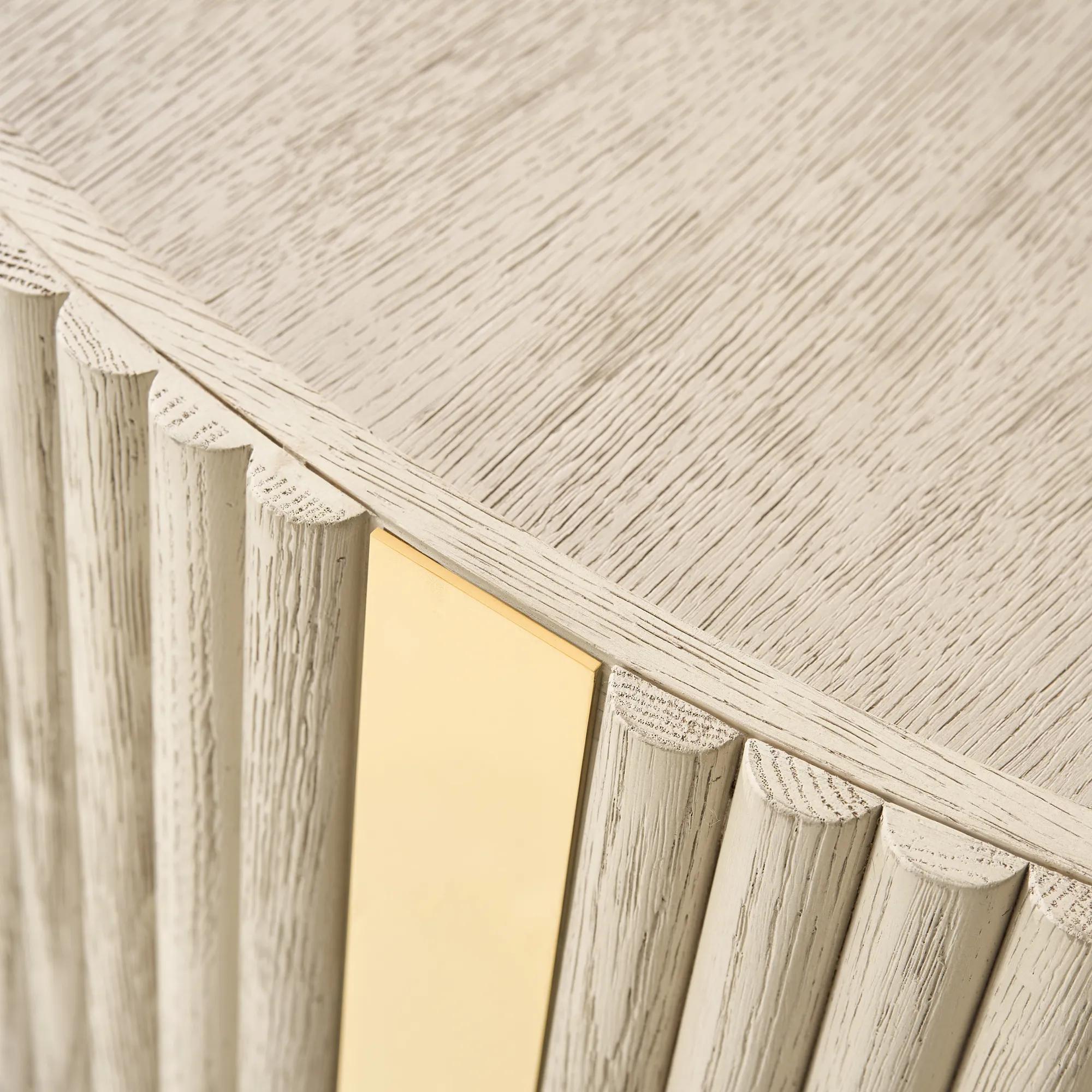
Reeded wood changes as the light moves through the day. From the front, the surface reads as an orderly series of lines. From an angle, those lines create alternating bands of light and shadow, giving the furniture more movement than a flat wood panel.
That makes reeded wood especially useful in quiet, tonal rooms. It introduces pattern without requiring a print and texture without adding another color.
It also asks for restraint. Place heavily fluted vases, ribbed lamps, striped pillows, and linear artwork around a reeded piece, and the rhythm becomes noise. The wood should be the strongest repetition in the room.
Read the Shadow, Not Just the Color
When choosing where to place reeded wood furniture, look at the direction of natural and artificial light. Side lighting tends to reveal the texture most clearly. A lamp placed slightly off to one side of a dresser, buffet, or bookcase can bring the reeding forward after dark.
Direct, flat light makes the same surface feel quieter. Neither effect is wrong. The question is whether the piece should lead the room or settle into it.
How to Style Wood Furniture in a Living Room
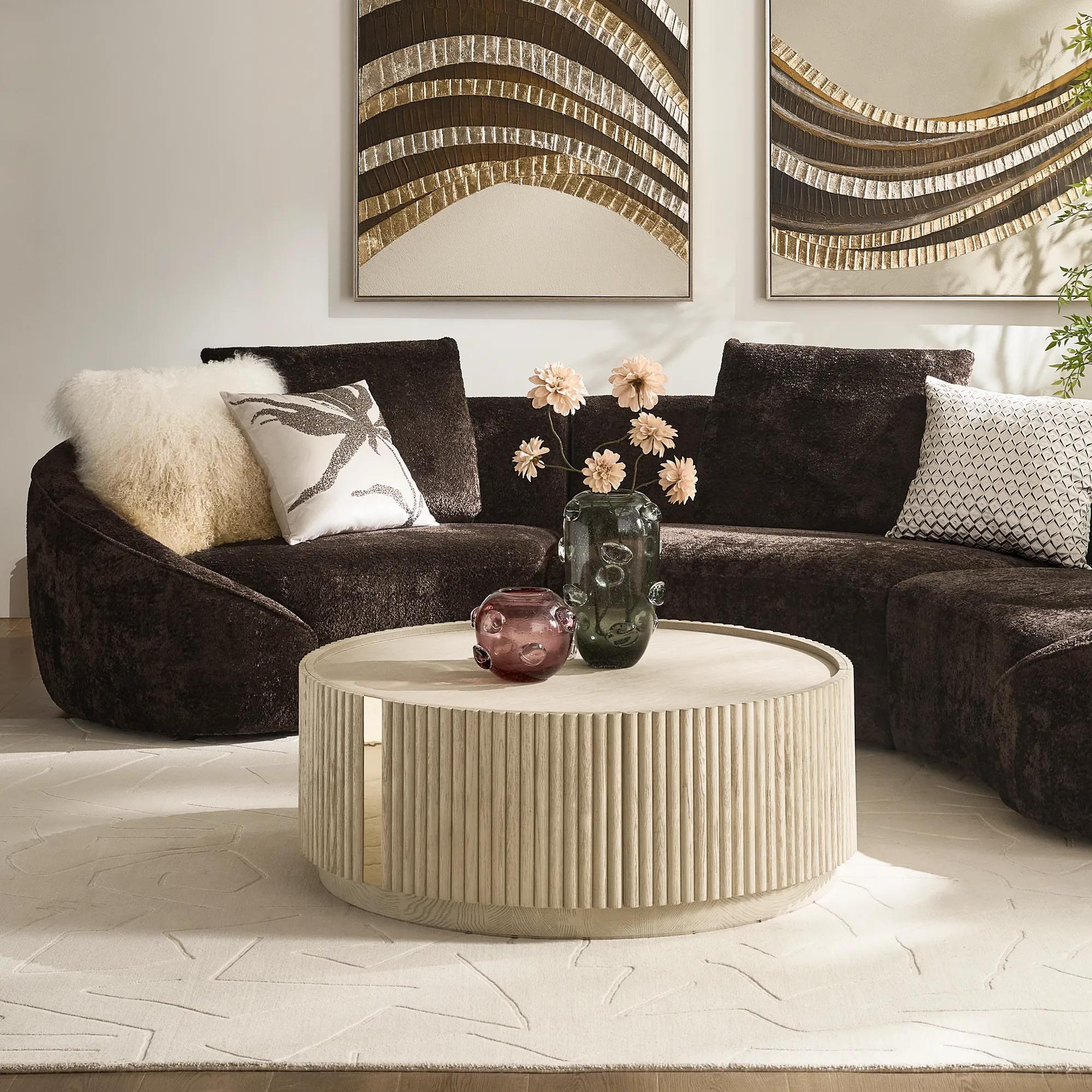
To style wood furniture in a living room, allow one substantial piece to establish the material direction, then repeat the wood in one or two quieter places. Balance it with upholstery, glass, metal, or stone so the room does not become visually heavy.
The coffee table is usually the natural starting point. It sits at the center of the seating plan, where its shape influences circulation and its material affects almost every nearby finish.
Let the Coffee Table Set the Material Language
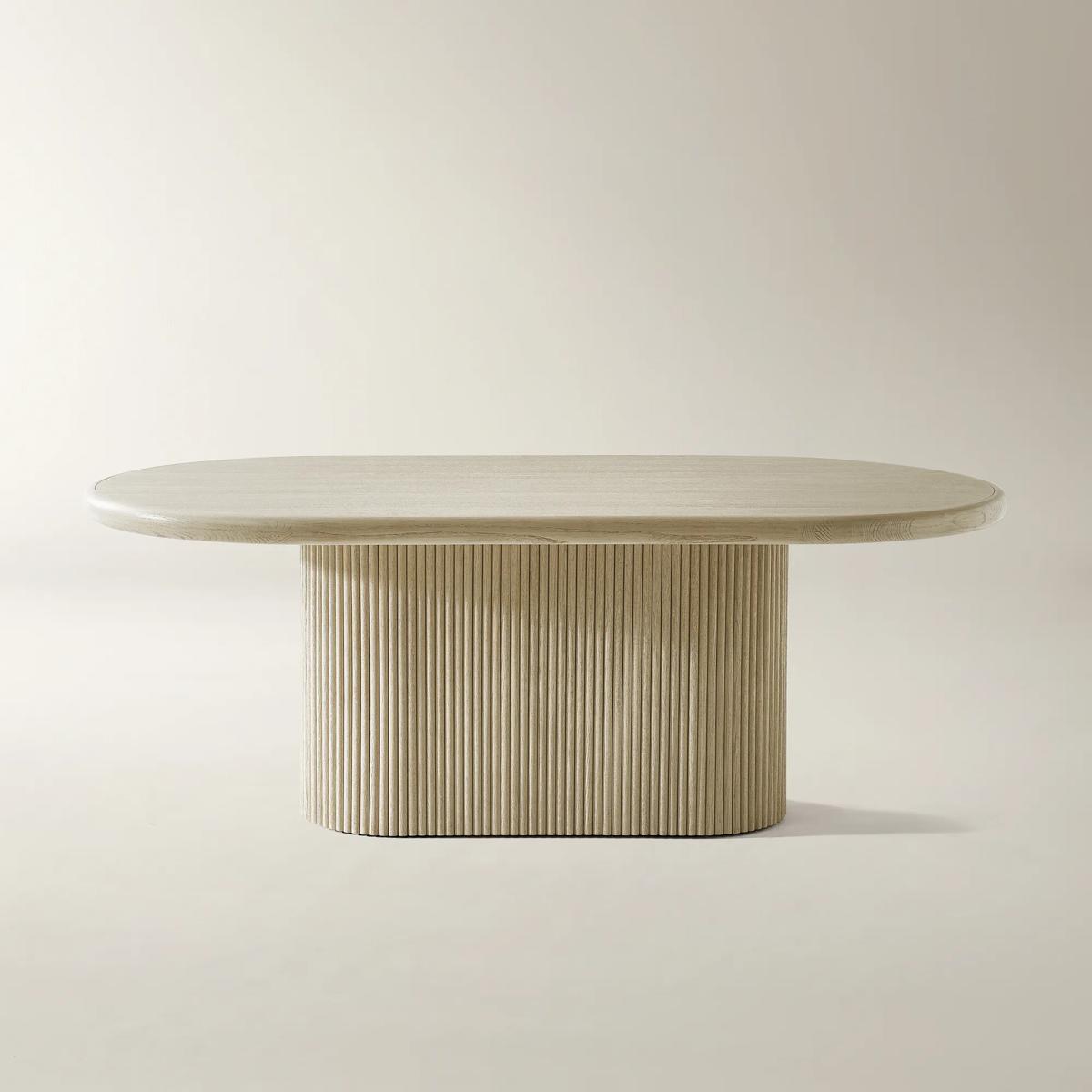
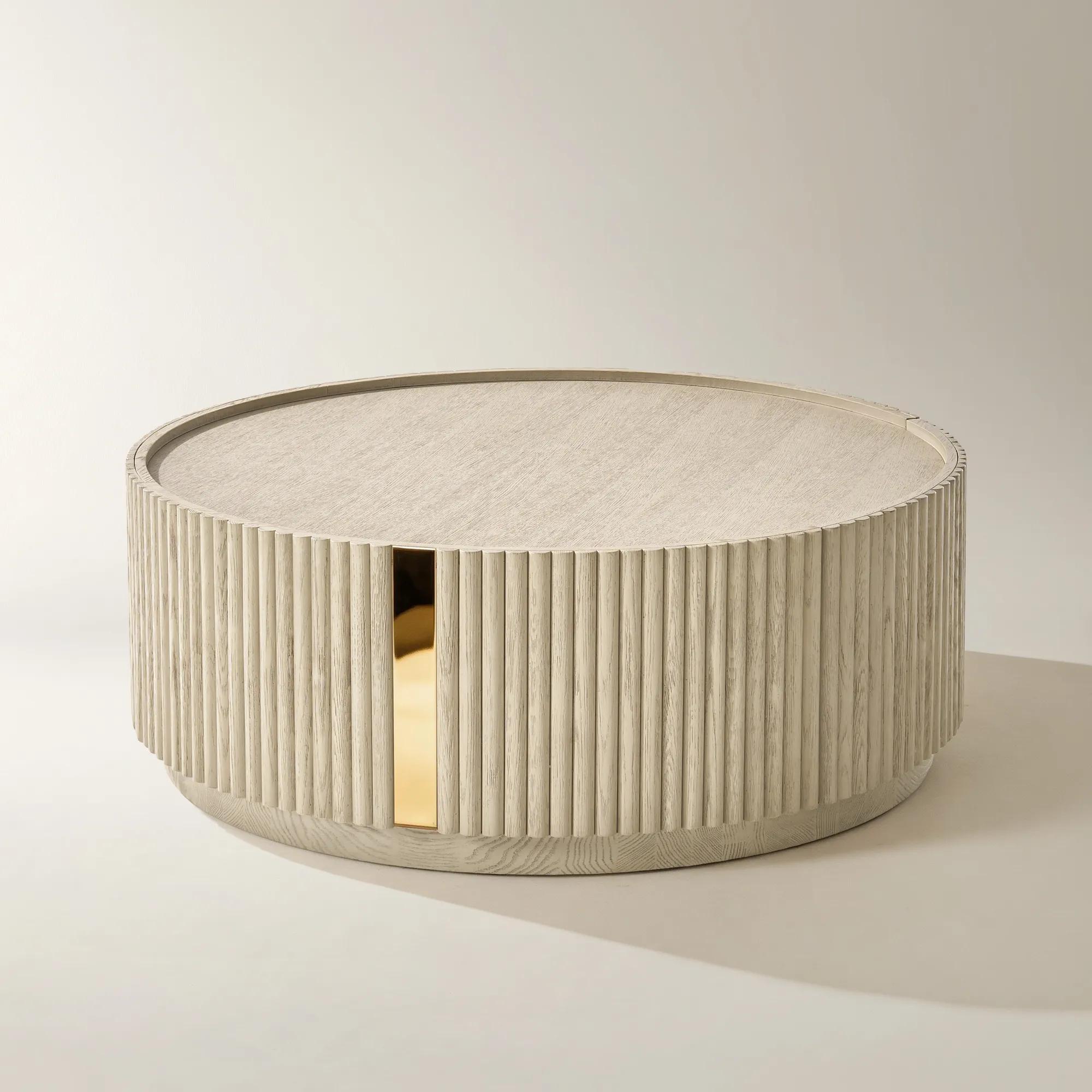
The Stria Oval Reeded White Oak Coffee Table With Drawer works well with a long sofa or sectional because its elongated shape follows the seating line while the curved ends soften movement around it. Its recessed top and concealed soft-close drawer allow the piece to feel architectural without sacrificing everyday storage.
A more compact conversation area may benefit from the Stria Round Reeded White Oak Coffee Table With Drawer . The circular form can make a square seating arrangement feel more fluid and gives every seat similar access to the surface.
| Choose the Oval Coffee Table When… | Choose the Round Coffee Table When… |
|---|---|
| The room has a long sofa or sectional. | Seating is arranged in a tighter conversation group. |
| You want to emphasize the room’s horizontal line. | You want to soften a room with several right angles. |
| The walking path runs around the ends of the table. | People need to circulate around all sides. |
| The table will divide a larger open-plan space. | The room is smaller or more centrally arranged. |
Style either shape with one low bowl, a small stack of books, and an airy branch or vase. Leave enough of the recessed top exposed for its outline to remain part of the composition.
Repeat Wood at the Room’s Edges
Once the coffee table establishes the dominant wood tone, repeat it away from the center of the room. A console behind the sofa or along an open wall can create that second material beat without making the seating area look like a matched set.
The Stria Oval Reeded White Oak Console Table carries the collection’s curved top, reeded pedestal, and soft-gold detailing into a slimmer footprint. Its proportions make it useful as a display surface in a living room or as a transition piece between the living area and entry.
Keep the styling asymmetric: a lamp at one end, a shallow tray or sculptural object nearer the center, and open space at the other. A console does not need an object in every available inch.
The Three-Repeat Rule
A useful starting point is to repeat the dominant wood three times at different scales:
- One large anchor, such as the coffee table
- One secondary piece, such as a console or cabinet
- One smaller echo, such as a frame, lamp base, or decorative object
The three pieces do not need to match exactly. They only need to look as though they belong to the same conversation.
How to Style Wood Furniture in a Bedroom
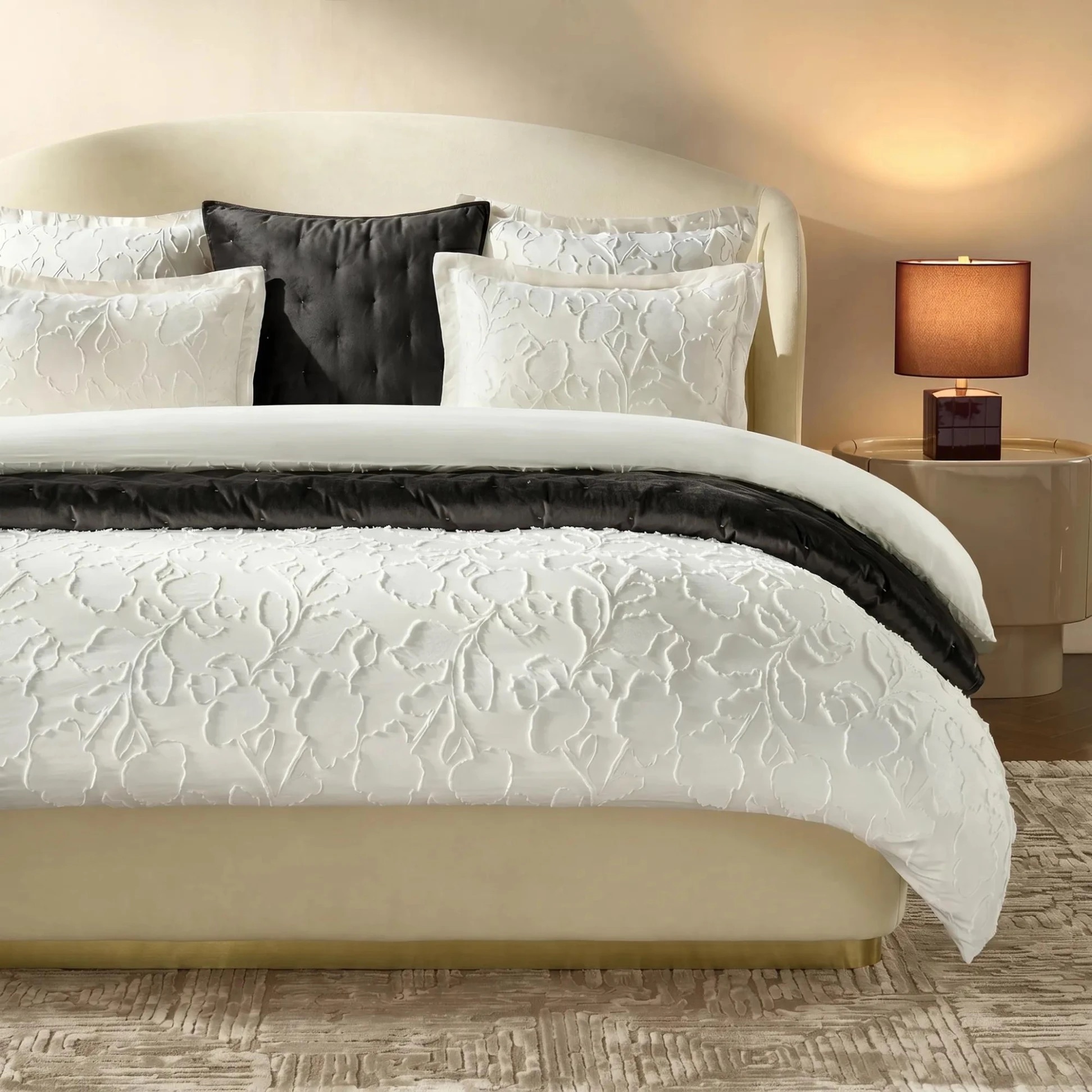
Wood furniture brings structure to a bedroom, but the room should still feel soft enough to rest in. Use wood to frame upholstery, bedding, and light rather than allowing every major surface to become hard and grain-heavy.
A bedroom usually needs one clear contrast: pale wood with deeper textiles, dark wood with lighter upholstery, or highly textured wood against a quiet wall.
Make Wood the Frame Around Softness
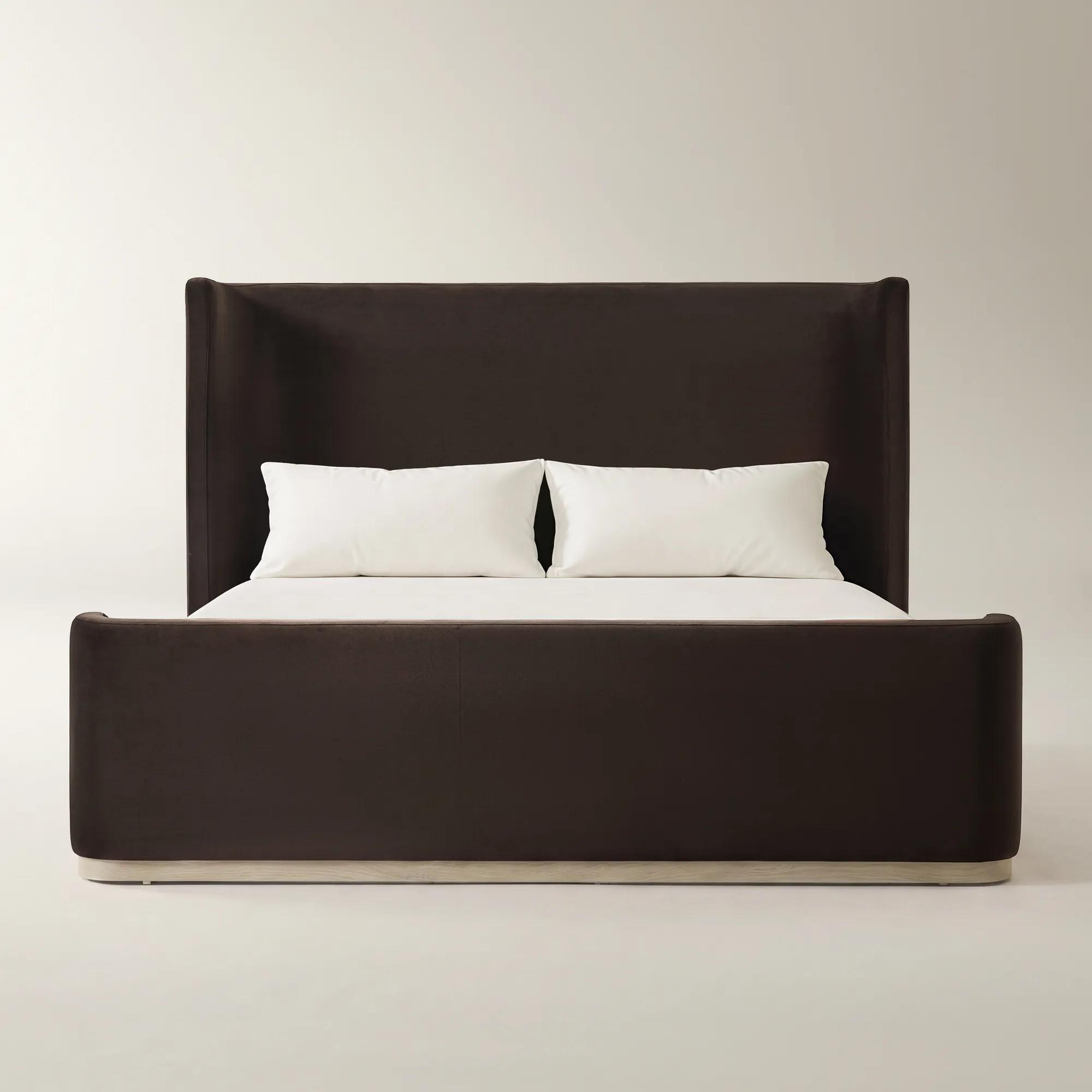
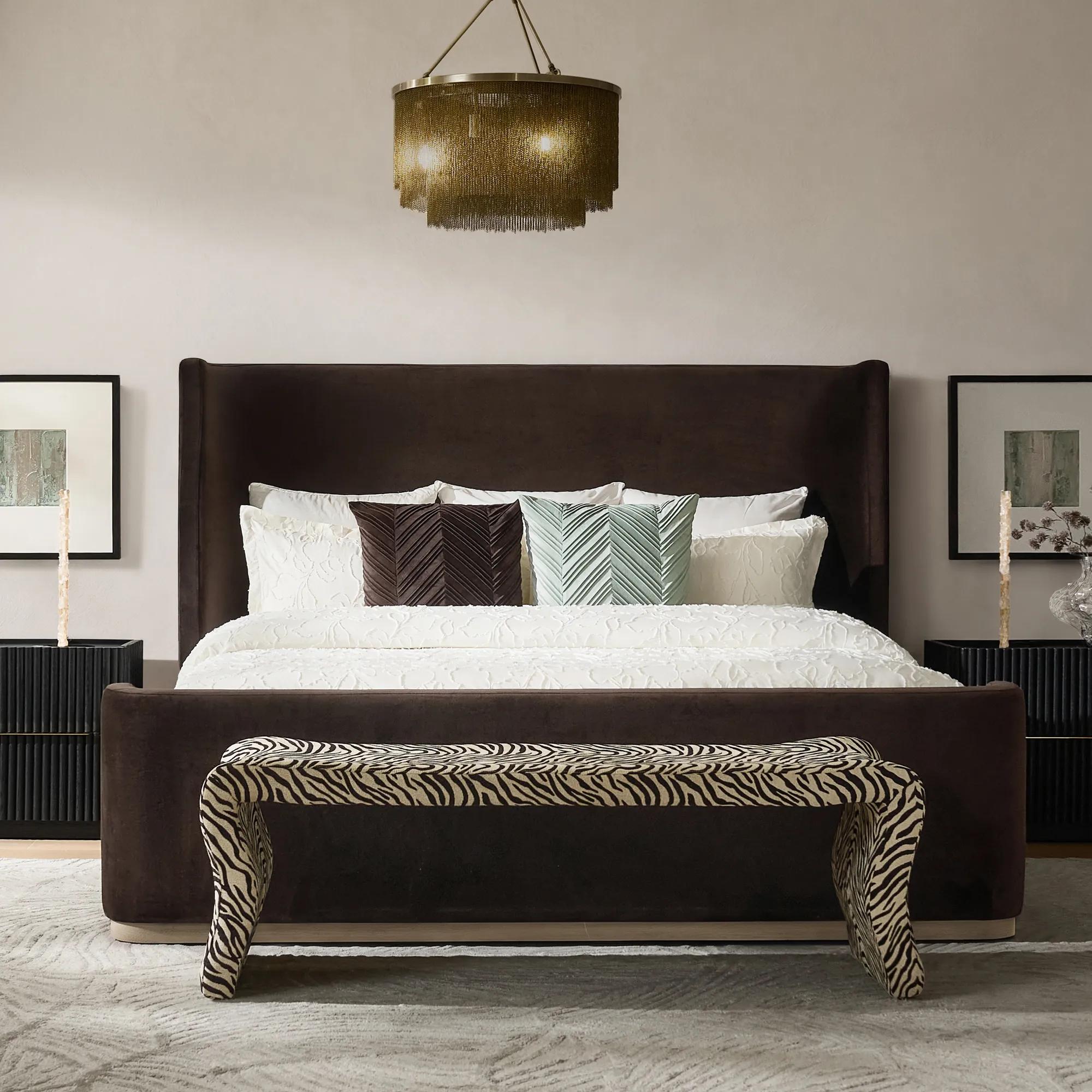
The Stria Ivory Performance Chenille Upholstered Bed demonstrates how a relatively small amount of visible wood can ground a much softer form. Its tall wingback headboard is upholstered in performance chenille, while a hand-finished solid-oak base creates a warm line beneath the bed.
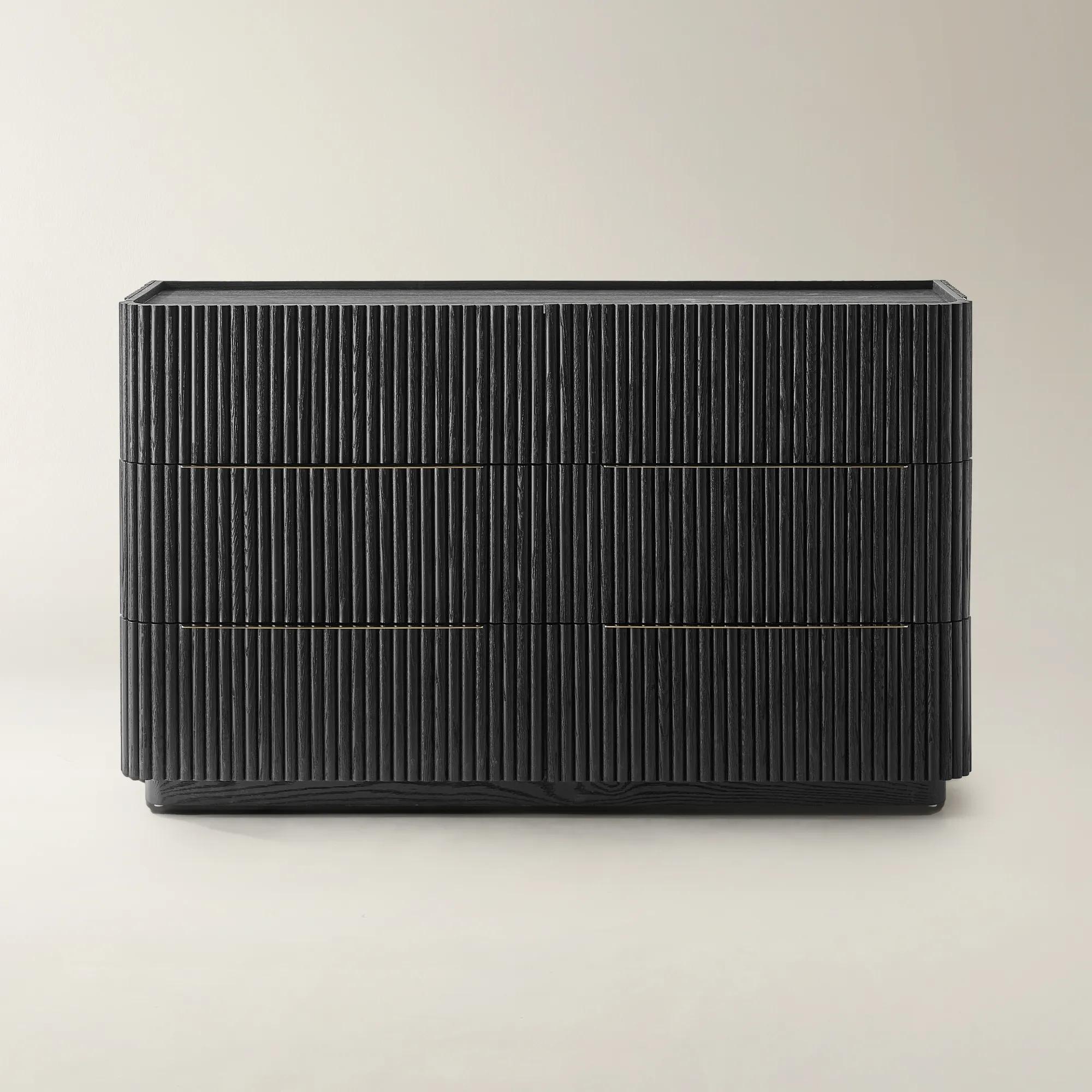
That oak base gives the rest of the bedroom a material cue. The Stria Reeded White Oak Nightstand can repeat the warmth beside the bed, while the Stria Reeded White Oak Six-Drawer Dresser carries the rhythm to the opposite wall. Both pieces combine reeded fronts, recessed tops, soft-gold trim, and soft-close storage.
The bed remains the softest, largest form. The wood pieces bring order around it.
Choose White Oak for Lift or Black Oak for Contrast
White oak and black oak create very different bedrooms even when the silhouettes remain related.
| Finish | Best Used When | Pair It With |
|---|---|---|
| White oak | The room needs lift, warmth, or a softer transition from pale walls. | Ivory, sand, fig, olive, camel, cloud gray, and soft gold. |
| Black oak | The room needs definition, contrast, or a stronger frame around light upholstery. | Cream, pale taupe, blush, cognac, clear glass, and warm metallics. |
| Mixed white and black oak | The room already has both light and dark architectural elements. | Repeat each finish at least once and keep the textiles relatively quiet. |
The Stria Reeded Black Oak Nightstand and Stria Reeded Black Oak Six-Drawer Dresser retain the collection’s reeded texture and soft-gold detailing but create a more graphic relationship with pale walls and bedding.
Keep the Bedside Quieter Than the Bed
A nightstand does not need to display the full personality of the room. Use a lamp, a small landing tray, and perhaps one object or framed photograph. Leave enough room for the items that actually arrive at night: a book, a glass, a pair of glasses, or a phone.
The most successful bedside styling looks considered during the day and remains useful after the lights go down.
.jpeg?w=2260&h=1271)
How to Style Wood Furniture in a Dining Room
In a dining room, wood furniture should create a sense of permanence without making the space feel overly formal. Let the table establish the architecture, then use upholstery, lighting, art, and reflective accents to soften its visual weight.
The dining room is also one of the few spaces where several substantial wood pieces can comfortably coexist. The key is giving each one a different role.
Let the Table Carry the Architecture
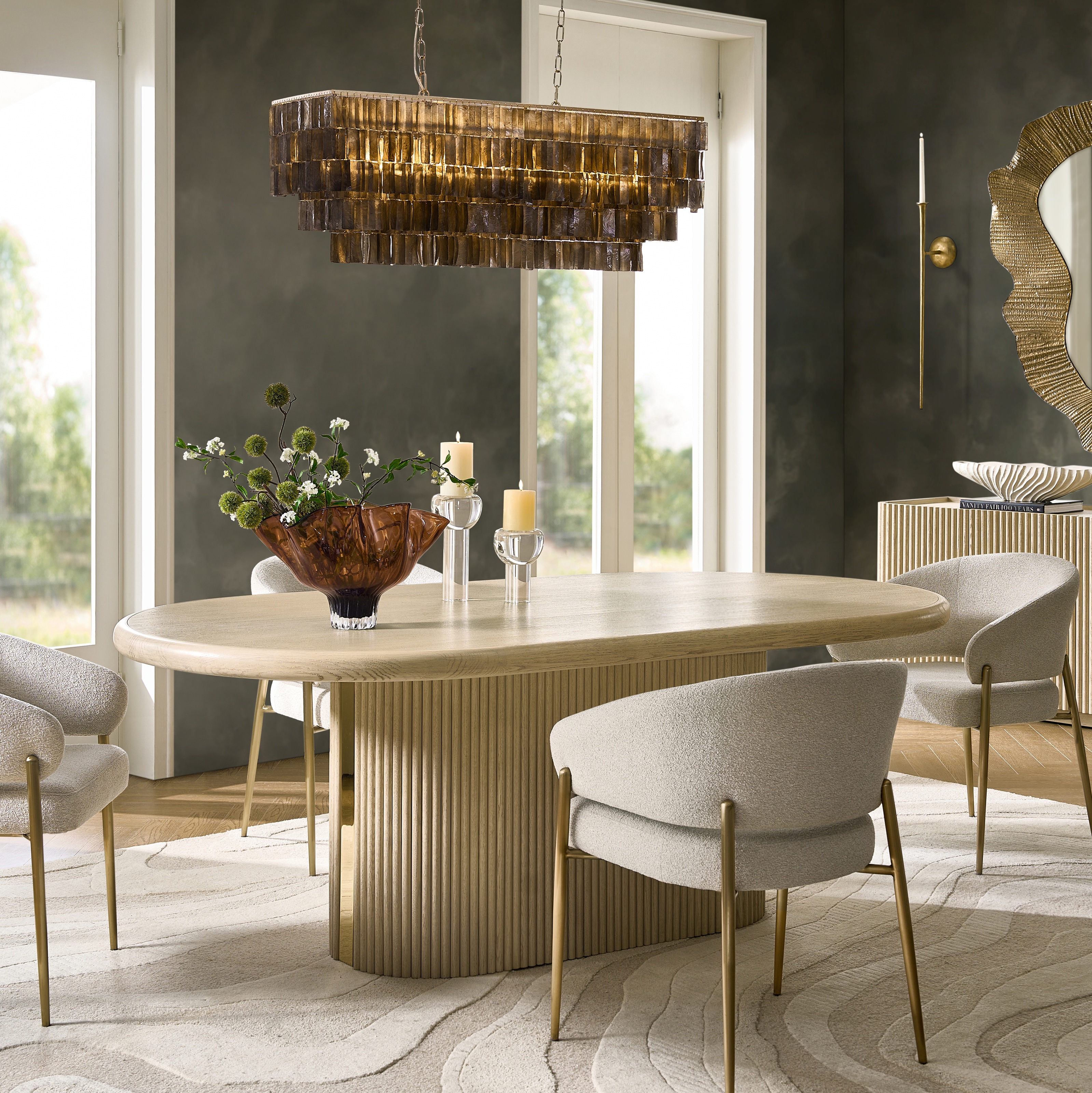
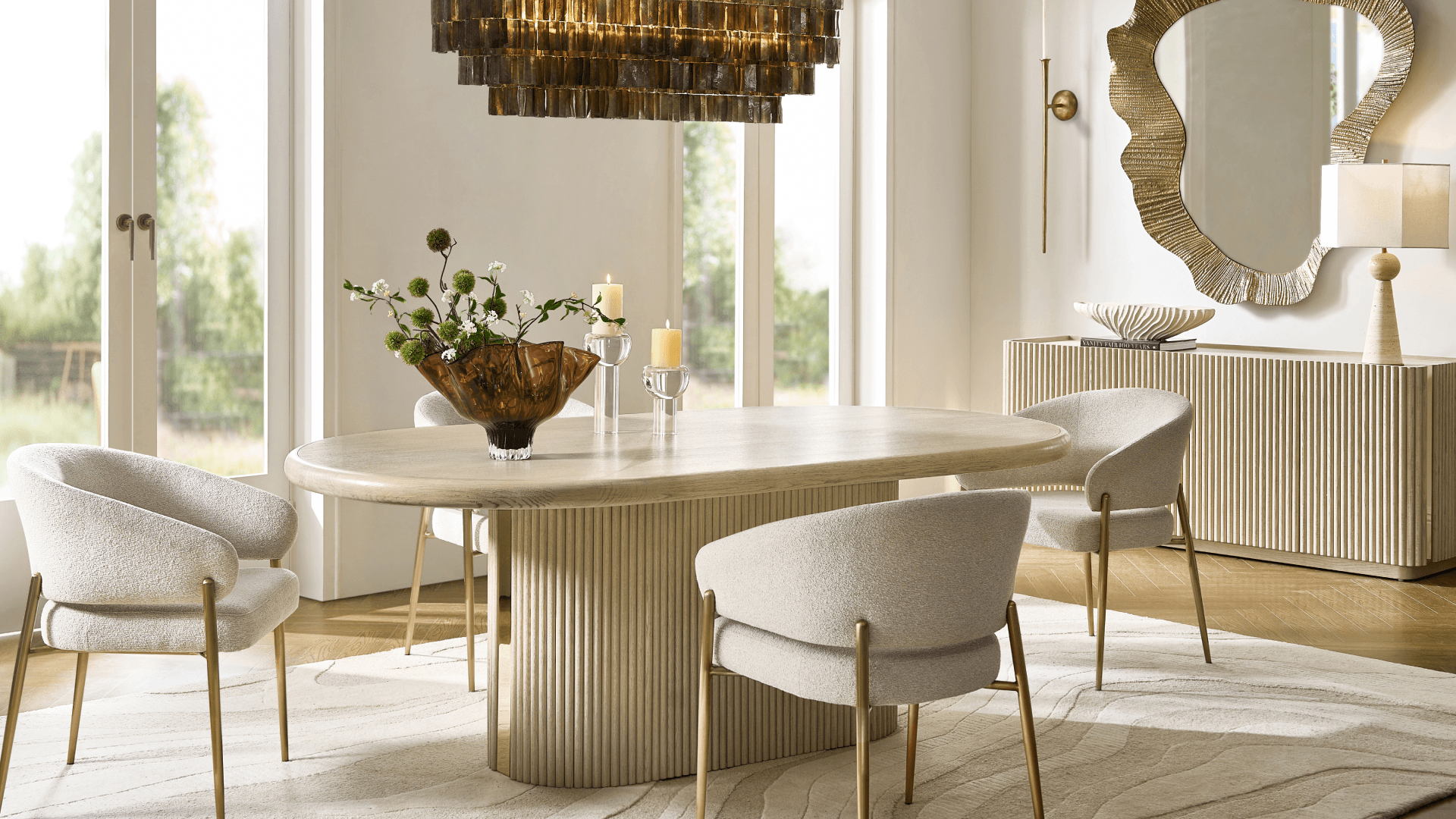
The Stria Oval Dining Table uses an oval top and single reeded-oak pedestal to create a strong center without the visual interruption of four corner legs. Its soft-gold end details catch the light, while the curved outline supports easier movement and conversation around the table. The 82-inch surface is designed to seat six to eight.
Because the pedestal already supplies texture, the dining chairs do not need to repeat the reeding. Upholstered chairs in ivory, boucle, chenille, or another tactile fabric can create a calmer perimeter.
Above, choose lighting with enough scale to hold the center of the room. A rounded chandelier can continue the table’s curves; a more linear fixture can create useful contrast.
Use Storage as a Second Horizon
A buffet gives the dining room a second horizontal line and keeps the table from carrying every serving piece, candle, and object on a daily basis.
The Stria Buffet spans 72 inches and combines a reeded white-oak facade with soft-gold trim, four soft-close doors, and adjustable interior shelving. It can function as dining storage, a sideboard, or a media console in another room.
In a smaller dining space, the Stria Reeded White Oak Buffet offers a narrower two-door option with adjustable shelving and push-to-open hardware.
Style the Top in Three Unequal Gestures
Begin with one vertical element, such as a lamp, tall vase, or piece of art. Add a lower grouping—perhaps a tray with glassware or a shallow bowl—then leave a visible section of the wood surface open.
The three elements should not sit at equal intervals. A little imbalance keeps the arrangement from feeling like a display window.
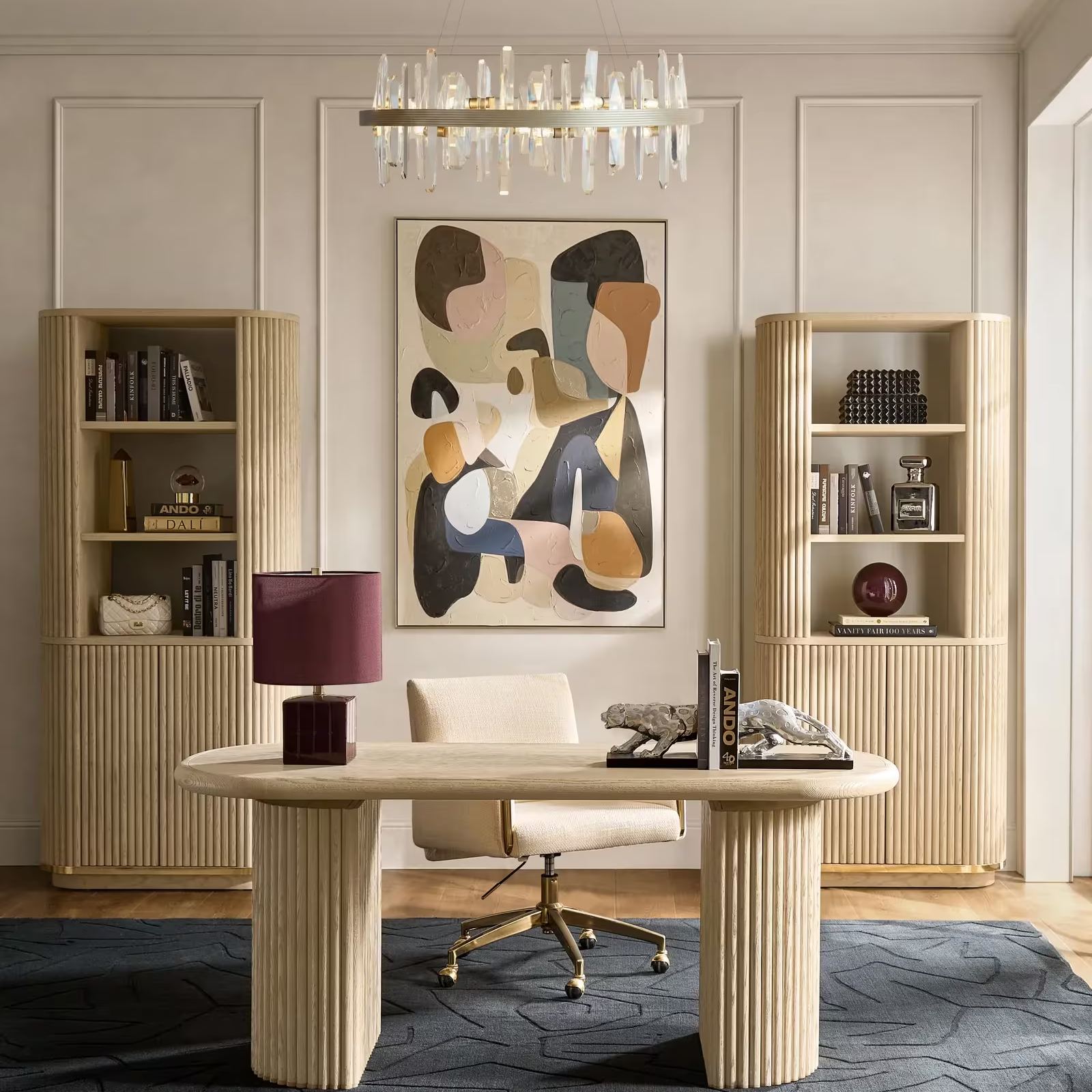
How to Style Wood Furniture in a Home Office
Wood furniture can make a home office feel connected to the rest of the house rather than separated into a purely practical zone. The best office pieces manage technology, storage, and ergonomics without looking overtly technical.
Start with the desk, then decide which items deserve to remain visible.
Choose Function That Disappears Into Form
The Stria Oval Reeded White Oak Electric Lift Desk pairs an oval oak surface and reeded pedestal bases with a dual-motor lift system. Three memory presets allow the top to move between preferred sitting and standing heights while preserving the collection’s architectural silhouette.
That combination changes how the desk should be styled. Keep the surface flexible enough to move through the day. A lamp, a shallow tray, and one small object are usually enough. Store charging cables and paper out of sight whenever possible, and avoid placing a tall arrangement where it will become awkward as the desk rises.
The room should still look composed when the desk is standing.
Balance Open and Closed Storage
Open shelving gives a home office personality. Closed storage gives it discipline. Most rooms need both.
The Stria Reeded White Oak Bookcase combines three open display shelves with a two-door cabinet below, allowing books and objects to remain visible while files and less decorative necessities disappear.
The Stria Reeded White Oak Open Bookcase offers five open shelves for a lighter, more architectural effect. It works best when the room already has concealed storage elsewhere.
A Shelf Needs a Quiet Spot
Do not fill each shelf from edge to edge.
Allow some shelves to hold books, others to hold a single sculptural object, and at least one to remain lightly styled. Change the direction of the books, vary the height of the objects, and keep the heaviest visual weight lower in the unit.
A bookcase should reveal interests, not inventory.
How to Mix Wood Tones Without Making the Room Feel Busy
To mix wood tones successfully, identify the undertone of each finish, let one wood dominate, and repeat the secondary tone at least once. The pieces do not need to match, but they should share another point of connection.
That connection might be shape, scale, metal finish, upholstery color, or line.
Start With Undertone, Not Species
Two different woods can work beautifully together when their undertones relate.
White oak generally reads pale and warm. Black oak feels cooler at first glance, but the visible grain and soft-gold detailing can still connect it to warmer finishes. Walnut and darker brown woods bring richer red or chocolate notes.
View samples in the actual room whenever possible. Morning and evening light can change the way an undertone reads.
Let One Finish Dominate
Choose the wood tone that will carry the largest pieces. The secondary finish should appear in a supporting role rather than competing for equal attention.
For example, a white-oak coffee table and console can remain dominant while black wood appears in a lamp, frame, or accent chair. In a bedroom with a black-oak dresser and nightstands, the bed’s lighter oak base can act as a warm counterpoint rather than a mismatch.
Repeat Shape or Metal Instead of Exact Color
Matching is only one way to create continuity.
A curved coffee table can relate to an oval dining table even if the finishes differ. Soft-gold trim can connect white oak and black oak. Vertical lines can recur in reeded furniture, curtain folds, or a tall mirror.
The eye looks for relationships. It does not require duplicates.
| When Mixing… | Use This Bridge |
|---|---|
| White oak and black oak | Soft gold, ivory upholstery, and repeated curves |
| Oak and walnut | Warm textiles, bronze, and caramel leather |
| Oak and painted furniture | A shared hardware finish or similar silhouette |
| Wood and mirror | Matte ceramics, books, or textured upholstery |
| Wood and stone | Glass or metal to create a lighter transition |
Use Textiles to Regulate the Temperature
A rug, curtain, sofa, or upholstered chair can soften the transition between two wood finishes.
Cream, sand, camel, olive, fig, and charcoal work especially well because they sit comfortably beside both pale and dark wood. A very cool white can make warm oak appear more yellow; a softer ivory tends to create a gentler relationship.
How to Keep Wood Furniture From Looking Rustic
To keep wood furniture from looking rustic, choose clean silhouettes, use texture selectively, and pair the wood with polished or tailored materials.
Rusticity usually comes from accumulation: wood furniture, wood accessories, woven baskets, heavily distressed finishes, dried botanicals, and several earth-tone textiles all appearing at once. Remove two or three of those signals and the same wood can feel sharply modern.
Use:
- Smooth glass against visible grain
- Velvet or chenille against reeded wood
- Soft gold or polished metal beside oak
- Large-scale art instead of many small natural objects
- One sculptural branch rather than several botanical arrangements
- Clean-lined lighting rather than overly decorative fixtures
The Stria collection feels refined because its organic material is held within disciplined forms. The reeding is precise. The curves are deliberate. The metallic edge gives the eye a clean stopping point.
Raw meets refined because both are present. Neither is merely implied.
How to Care for Wood Furniture
Wood furniture should be cleaned gently and protected from excessive moisture, heat, and prolonged direct sunlight.
For Stria wood pieces, wipe with a soft, dry cloth and avoid harsh chemicals, abrasive cleaners, and excessive moisture. Natural wood veneer can also react to changes in temperature and humidity, so pieces should not sit directly beside heating vents or air-conditioning units.
For reeded surfaces, use a clean microfiber cloth or a soft brush to lift dust from the grooves. Work in the direction of the reeding rather than across it.
Use coasters beneath drinks, wipe spills promptly, and lift decorative objects rather than dragging them across the surface. Small habits preserve the finish more effectively than occasional aggressive cleaning.
The Stria Room-by-Room Edit
| Room | Stria Piece | What It Brings to the Space |
|---|---|---|
| Living Room | Stria Oval Reeded White Oak Coffee Table With Drawer | A low sculptural center with concealed storage |
| Living Room | Stria Round Reeded White Oak Coffee Table With Drawer | Softer circulation for compact or conversational seating plans |
| Living Room or Entry | Stria Oval Reeded White Oak Console Table | A slim architectural surface that repeats the collection’s curves |
| Bedroom | Stria Ivory Performance Chenille Upholstered Bed | A soft wingback form grounded by a solid-oak base |
| Bedroom | Stria Reeded White Oak Two-Drawer Nightstand | Textured bedside storage with a refined metallic edge |
| Bedroom | Stria Reeded White Oak Six-Drawer Dresser | A substantial storage piece with enough surface for an edited display |
| Dining Room | Stria Oval Dining Table | A sculptural pedestal and generous oval surface for six to eight |
| Dining Room | Stria Buffet | Concealed storage and a second horizontal anchor |
| Home Office | Stria Oval Reeded White Oak Electric Lift Desk | Adjustable function within a polished furniture silhouette |
| Home Office | Stria Reeded White Oak Bookcase | A balanced mix of display and concealed organization |
Frequently Asked Questions
Is Wood Furniture Still in Style?
Yes. Wood furniture is an enduring material category rather than a single decorating trend. What changes is the treatment: current designs often use cleaner silhouettes, lighter or deeper finishes, curved forms, reeded surfaces, and mixed-material details to make wood feel more architectural.
Does All Wood Furniture in a Room Need to Match?
No. Wood furniture does not need to match exactly. A room usually feels more collected when one wood tone dominates and a second finish appears in a supporting role. Connect different woods through undertone, shape, upholstery, or a repeated metal finish.
What Colors Look Best With Wood Furniture?
Ivory, sand, camel, olive, fig, charcoal, blush, and soft gray all work well with wood furniture. Pale oak benefits from colors that provide gentle definition, while black or dark oak often looks strongest beside lighter textiles and warm neutrals.
Can White Oak and Black Oak Furniture Be Used Together?
Yes. White oak and black oak can create a sophisticated light-dark contrast. Let one finish carry the larger pieces, repeat the other at least once, and use a shared detail—such as soft-gold metal, curved silhouettes, or ivory upholstery—to connect them.
How Do You Style Wood Furniture in a Small Room?
Choose wood furniture with rounded corners, concealed storage, and a controlled footprint. Use one substantial piece instead of several small ones, keep the surrounding palette relatively light, and leave visible floor or wall space around the furniture so the material does not feel visually dense.
How Do You Make Wood Furniture Look More Modern?
Pair wood with tailored upholstery, sculptural lighting, glass, stone, lacquer, or polished metal. Choose pieces with clear silhouettes and avoid surrounding them with too many rustic accessories. A restrained palette allows the grain and construction to feel intentional.
Is Reeded Wood Furniture Hard to Style?
No. Reeded wood already supplies texture and pattern, so it often requires less decoration than a flat-front piece. Pair it with smooth objects, solid textiles, and quieter surrounding patterns so the vertical rhythm remains visible.
How Much Wood Furniture Is Too Much in One Room?
A room may feel overloaded when nearly every large surface uses the same wood at the same visual weight. Break up the material with upholstery, glass, painted finishes, metal, or open space. Wood should create continuity, not make every object blend into one continuous block.
How Should You Decorate the Top of a Wood Dresser or Buffet?
Use one taller element, one lower grouping, and open surface. A lamp or vase can establish height, while a tray, bowl, or small stack of books provides a lower counterpoint. Avoid lining up several objects of equal size across the entire top.
How Do You Clean Reeded Wood Furniture?
Dust reeded wood with a soft, dry microfiber cloth or clean, soft brush, working in the direction of the grooves. Avoid excessive water, harsh chemicals, and abrasive tools. Wipe spills promptly and keep the furniture away from prolonged direct sunlight and strong heat sources.
Wood, With a Point of View
Wood furniture does not need to fade politely into the background.
It can shape the circulation of a living room, frame the softness of a bedroom, give a dining room its architecture, or make a home office feel connected to the rest of the house. The most effective rooms do not rely on wood for warmth alone. They use its grain, shadow, scale, and structure with intention.
Stria brings that thinking into focus. Reeded oak supplies rhythm. Curves bring ease. Soft gold introduces light. Storage disappears into the silhouette, allowing the room to feel composed even while it is being lived in.
The result is natural, but never rustic by default. Polished, but never distant.
Explore the complete Stria furniture collection and discover wood furniture designed for the living room, bedroom, dining room, and home office.