Curtains are not decoration. They are the final architecture of a space, shaping light, scale, and atmosphere with quiet authority.
There is a point in every room where everything is in place, and something still feels unresolved. The furniture sits correctly. The palette is considered. The lighting is intentional. And yet, the space lacks tension, softness, or scale.
This is where knowing how to choose curtains becomes decisive.
Curtains do not finish a room. They define it. They control light, establish proportion, and determine whether a space feels composed or incomplete. In modern interiors, they act as a structural layer, one that brings clarity, movement, and presence.
To choose them well is not a styling decision. It is an architectural one.
In This Story
-
Why curtains define proportion, not just light
-
How fabric changes the way a room absorbs and reflects atmosphere
-
The rules of height, width, and fullness that separate styled from resolved
-
How layering turns curtains into a spatial element, not an accessory
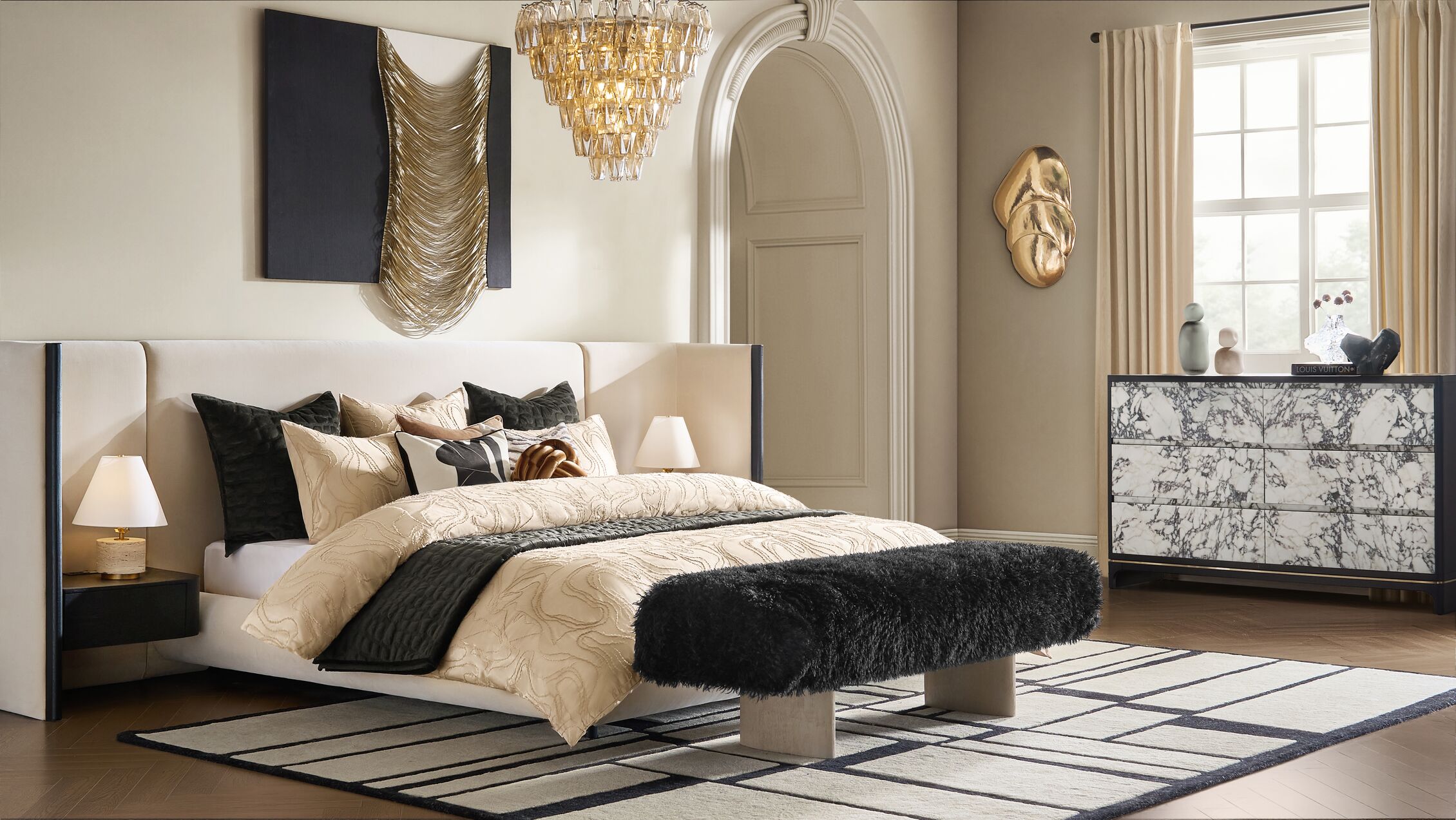
How to Choose Curtains That Hold the Room Together
The first decision is not visual. It is spatial.
When considering how to choose curtains for living room or bedroom spaces, begin with what the room requires. Not what it looks like, but how it behaves. Light, privacy, and weight determine whether a space feels open, contained, or intentional.
-
Light filtering curtains soften daylight without flattening the room
-
Blackout curtains for bedroom spaces create stillness and remove distraction
-
Layered window treatments allow the room to shift between exposure and retreat
A room without light control feels unfinished. Curtains are what allow it to settle.
Stylist Note: Light is not something you decorate. It is something you shape.
Fabric Is Not Texture. It Is Atmosphere.
Fabric does more than drape. It changes how a room holds light.
Understanding how to choose curtains fabric means understanding how materials behave. Some reflect, some absorb, some diffuse. Each one alters the tone of the space.
-
Linen curtains for living room interiors soften structure without losing clarity
-
Velvet curtains for luxury spaces absorb light and deepen shadow
-
Sheer panels dissolve edges, allowing light to move freely
The most compelling interiors balance restraint with richness. Organic textures sit beside polished surfaces. Soft weaves contrast with reflective finishes. This tension creates depth without excess, a direction seen across modern design landscapes .
.jpeg?w=2260&h=1271)
Sheer drapery allows light to move, softening edges without removing structure.
Height Is Power: Where Curtains Begin Matters
Curtains change the way a room is read.
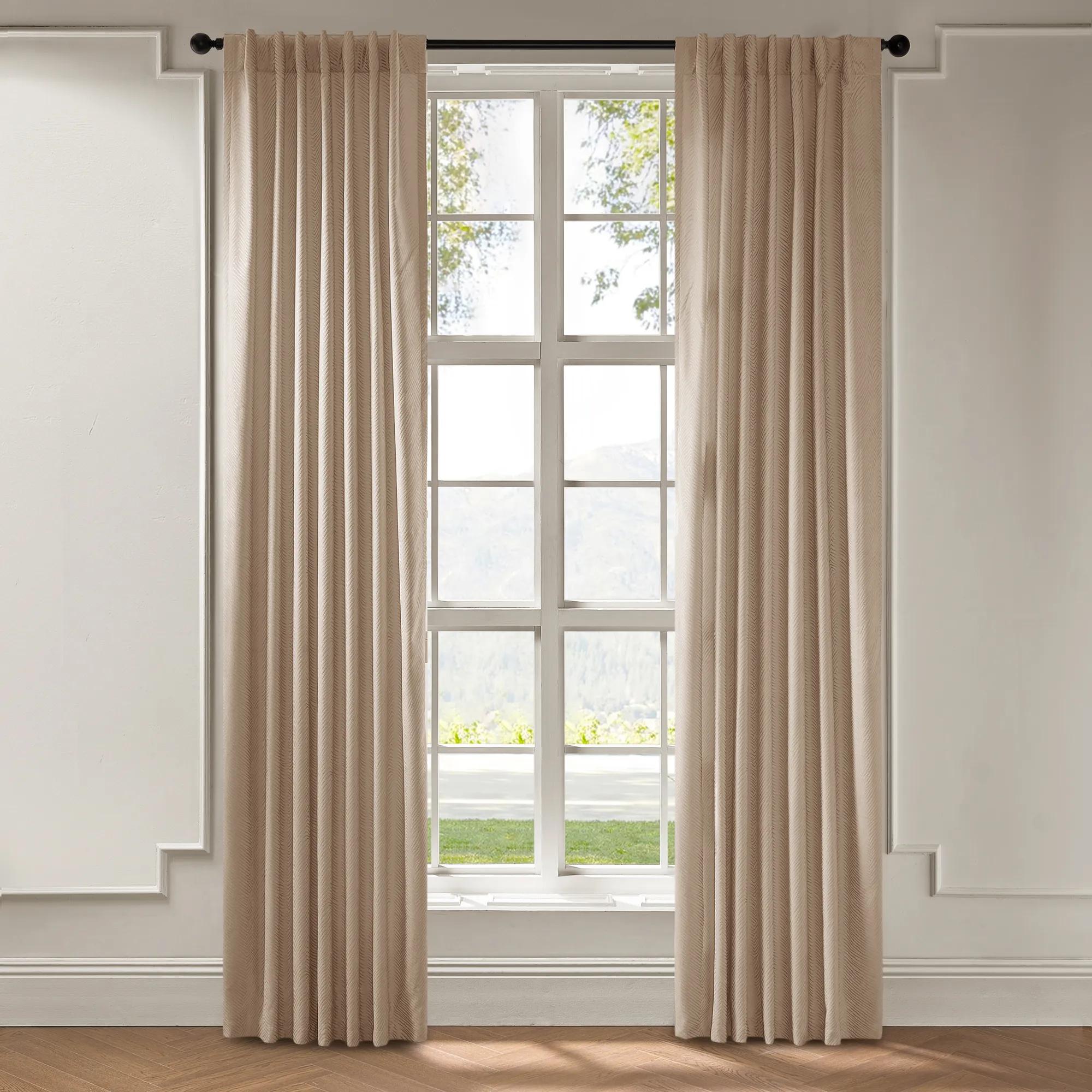
One of the most defining elements of how to choose curtains is placement. Poor placement compresses a space. Correct placement expands it.
-
Hang curtains above the window, never directly on it
-
Extend rods beyond the frame to widen the wall
-
Let fabric meet or move across the floor
Length Defines Intent
-
Floating: controlled and minimal
-
Breaking: precise and balanced
-
Puddled: relaxed, with a sense of ease
Did you know? Raising curtain height is one of the simplest ways to alter perceived ceiling height. It shifts the entire vertical proportion of the room.
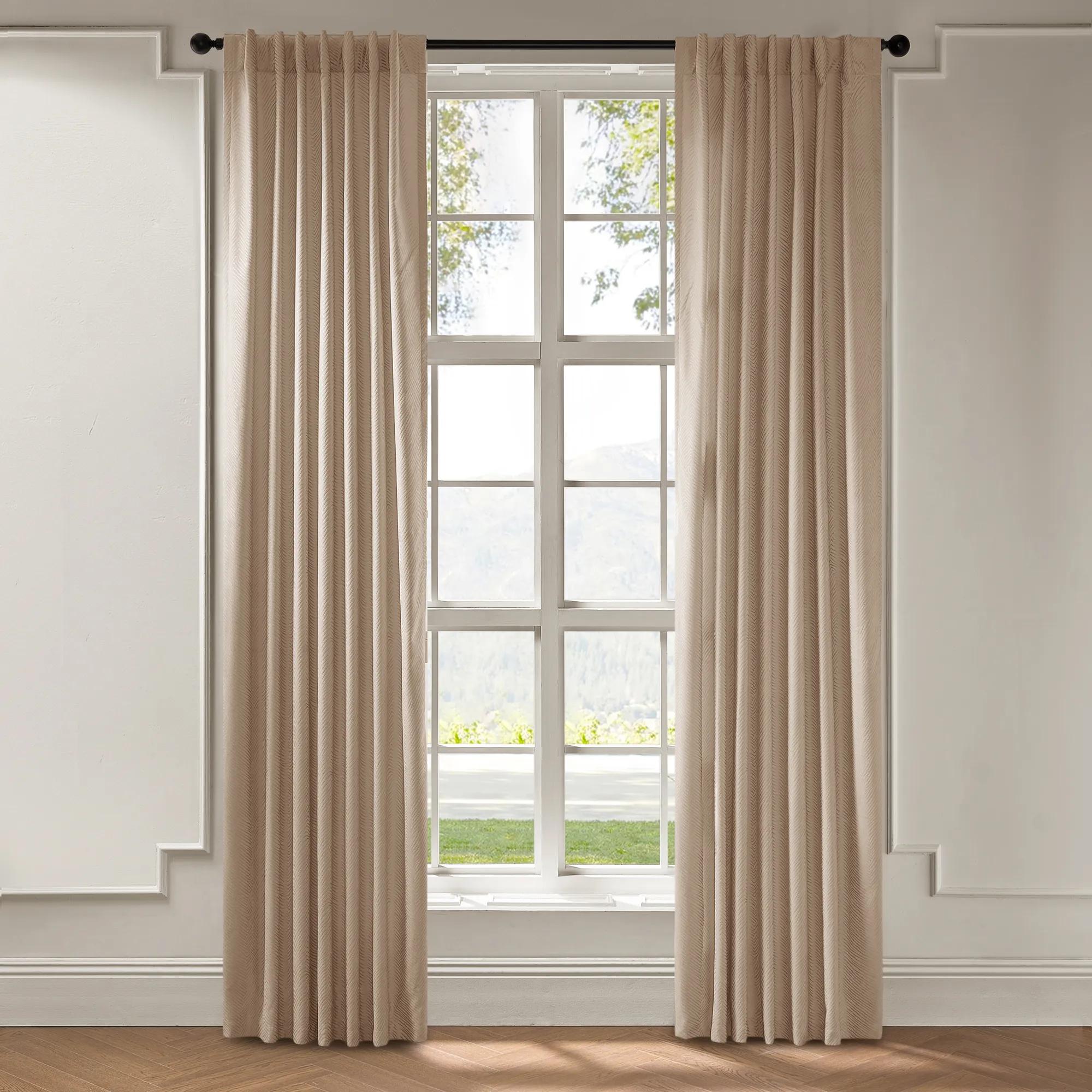
Fullness: The Difference Between Flat and Finished
Flat curtains flatten the room.
Fullness is not decorative. It is structural. It determines how fabric behaves at rest, how it catches light, and how it contributes to the overall composition.
-
Panels should be 2 to 2.5 times the window width
-
Larger windows require multiple panels to maintain proportion
-
Pleats introduce order and rhythm
Fullness signals intention. Without it, the room feels incomplete.
Stylist Note: The way fabric gathers is what gives it presence. Without movement, there is no depth.
Color and Tone: Whether Curtains Lead or Disappear
Curtains can anchor a palette or dissolve into it.
When deciding how to choose curtains color, the question is not what matches. It is what the room needs.
For continuity:
-
Layered neutrals, tonal shifts, and quiet contrast
-
Texture carries the variation, not color
For definition:
-
Deep tones, sculptural patterns, or reflective finishes
-
Contrast introduces structure and direction
Contemporary interiors often balance nature-driven palettes with moments of luminosity. Soft greens, mineral tones, and warm neutrals are paired with sheen and reflective surfaces, creating depth without visual noise .
Layering Curtains: Where Softness Becomes Structure
Layering is what transforms curtains from fabric into form.
A single layer resolves function. Multiple layers resolve the room.
-
Sheers paired with heavier drapery allow control without rigidity
-
Double rods maintain clarity between layers
-
Contrasting textures introduce dimension
Layering is not about adding. It is about refining.
Stylist Note: If a room feels flat, it is often missing a second layer, not another object.
Hardware: The Detail That Grounds the Gesture
Hardware does not draw attention. It holds it.
-
Warm metals introduce glow and continuity
-
Minimal rods maintain a clean architectural line
-
Structured finials add form without excess
The goal is alignment. Hardware should feel inevitable within the space.
.jpeg?h=3825&q=90&w=3825)
Precision: Measuring Curtains Without Compromise
Proportion is not flexible. It is exact.
Understanding how to choose curtains size ensures the room reads as resolved, not adjusted.
-
Width: window width multiplied by 2 to 2.5
-
Height: from rod placement to floor
-
Placement: above and beyond the frame
Anything less creates imbalance.
Styling by Space
Living Room
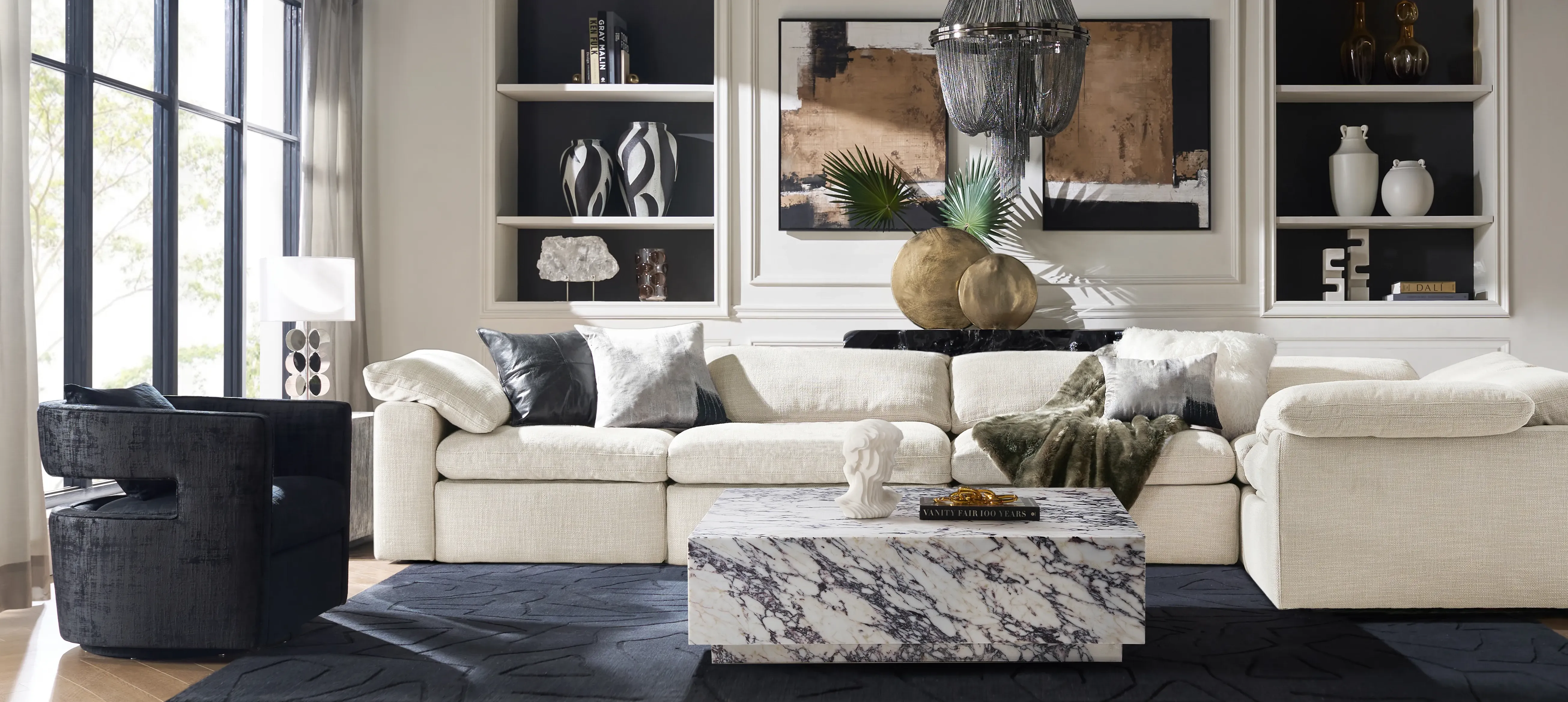
Light filtering curtains or linen panels maintain openness while introducing softness.
Bedroom
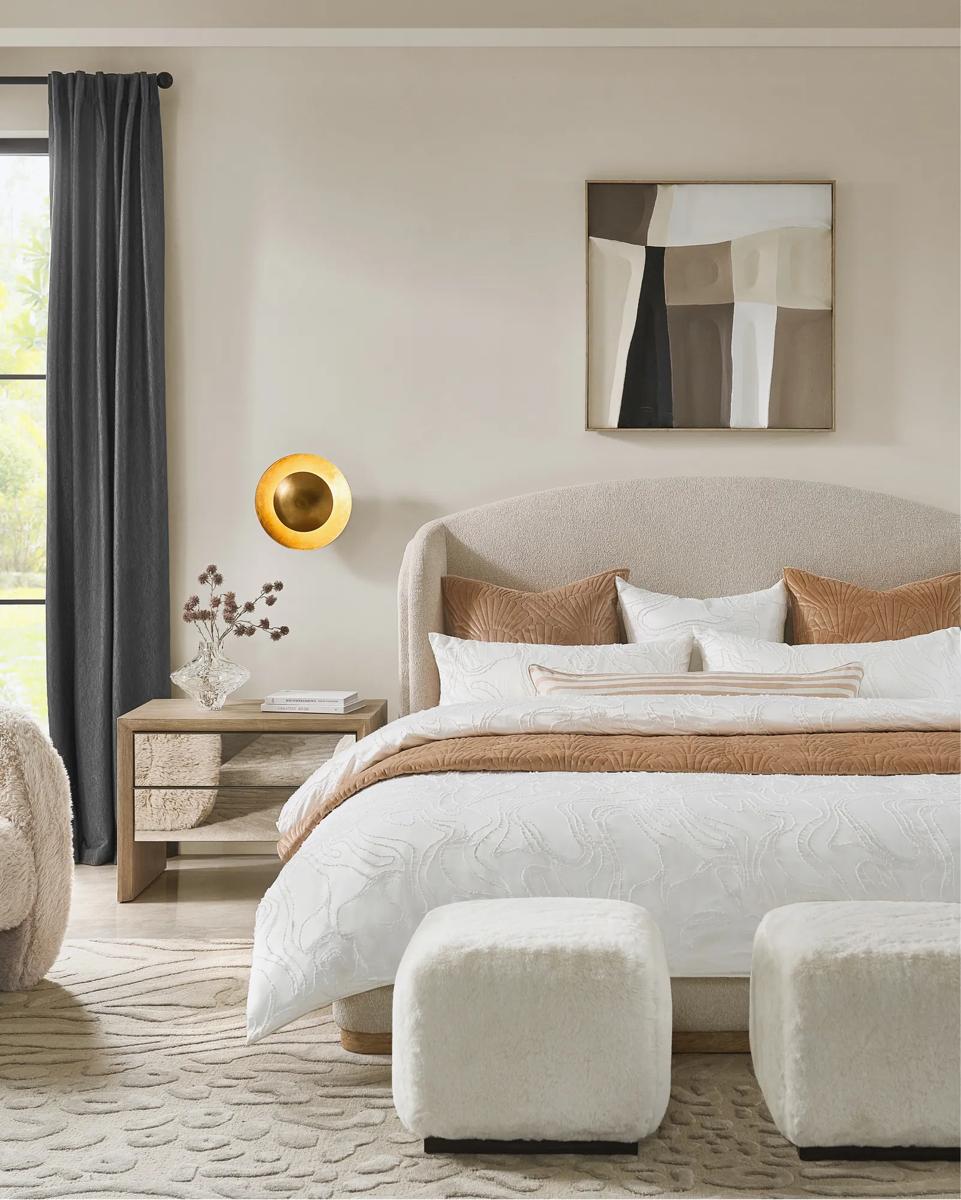
Blackout curtains or layered drapery create depth and remove visual noise.
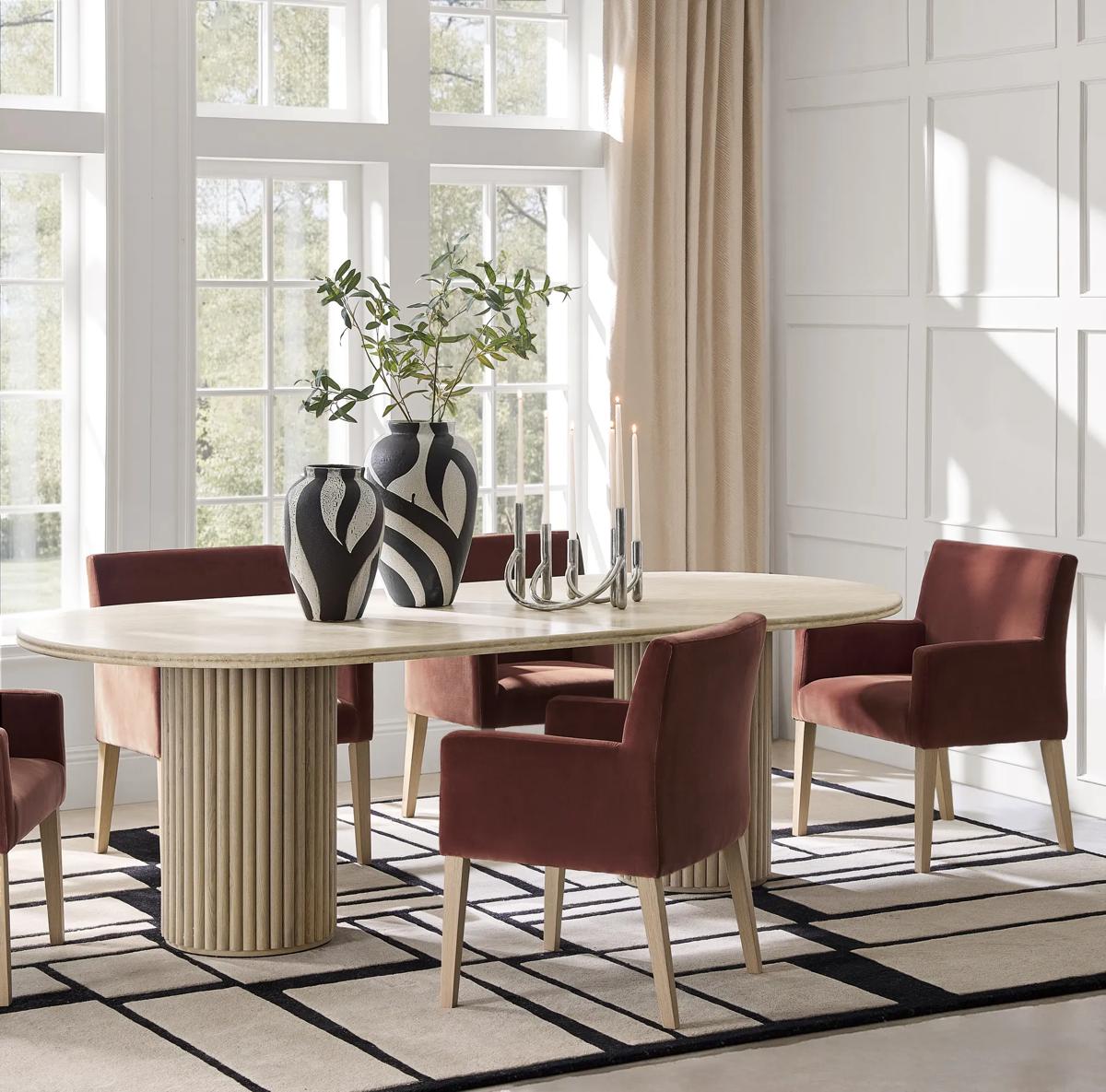
Dining Room
Structured fabrics reinforce proportion without heaviness.
Smaller Spaces
Sheer curtains preserve light and prevent compression.
.jpeg?w=2260&h=1271)
Frequently Asked Questions
How do I choose curtains for a modern living room?
Focus on proportion, light, and material. Linen or light filtering curtains maintain clarity while softening the space.
What curtain fabric creates the most luxurious look?
Velvet adds depth and weight, while textured blends provide a more restrained, refined finish.
How long should curtains be for a designer look?
Curtains should reach the floor at minimum. A slight break or puddle introduces softness and intention.
Should curtains blend with walls or stand out?
Both approaches work. Blending creates cohesion, while contrast introduces structure and visual direction.
How full should curtains be?
Panels should measure 2 to 2.5 times the window width to achieve proper fullness and movement.
The Final Layer
To understand how to choose curtains is to recognize that they are not the last detail. They are the element that allows everything else to hold.
They define the room. They control the light. They determine whether a space feels considered or complete.
See the full composition.
.jpeg?w=3942&h=3942)
.jpeg?w=2831&h=2831)
.jpeg?w=4130&h=4130)
.jpeg?w=2311&h=2311)
.jpeg?w=4130&h=4130)
.jpeg?w=2181&h=2181)
.jpeg?w=2745&h=2745)