Lighting is rarely “just lighting.” It is atmosphere made visible, the finishing touch that turns a room from furnished to unforgettable. If you have ever fallen for a chandelier online and then wondered if it will look too small, too large, or too low once it arrives, you are not alone.
This guide answers the question everyone asks, how to choose chandelier size, with straightforward formulas and a designer’s eye. You will learn how to scale a dining room chandelier, refine foyer lighting tips, and gather the best bedroom chandelier ideas without sacrificing function or comfort.
Did you know? The right chandelier can make ceilings feel taller and rooms feel more intentional, even before you change a single other piece.
Key Takeaways
-
Start with scale, not style. The best look happens when proportions feel effortless, and that begins with a simple sizing formula.
-
Room type matters. Dining rooms, foyers, bedrooms, and living rooms each have different “rules” for diameter and hanging height.
-
Ceiling height is your secret weapon. A chandelier can be dramatic without feeling intrusive, when the drop is calculated.
-
Dimmers change everything. The same fixture can read bright and energizing, or candlelit and cinematic, with one small upgrade.
-
When in doubt, layer. Chandeliers shine brightest when supported by sconces, lamps, or discreet ceiling lighting.
Ready to see your options first, then size with confidence? Explore modern chandeliers for statement silhouettes, then bookmark this guide as you narrow your shortlist.
Why Lighting Is the Jewelry of the Room
A chandelier is not simply a ceiling fixture, it is the room’s signature. Like fine jewelry, it catches light, frames movement, and draws the eye exactly where you want attention to land. Done well, it becomes the focal point that makes everything beneath it look more curated.
Think of lighting as a three-part composition: ambient (general glow), task (function), and accent (drama). A chandelier is usually ambient plus accent, which is why the scale matters so much. If it is undersized, the room feels unfinished. If it is oversized without intention, it can feel heavy or visually loud.
Expert tip: If your room already has bold art or sculptural furniture, choose a chandelier that echoes the same geometry or finish, so the space feels styled, not stacked.
Basic Sizing Formulas by Room and Ceiling Height
If you are searching how to choose chandelier size, the quickest path to clarity is a formula, then a final visual check.
How to choose chandelier size using the room-diameter formula
For most rooms (foyer, living room, bedroom):
-
Measure the room’s length and width in feet.
-
Add them together.
-
Convert that number to inches for an ideal chandelier diameter.
Formula: (Length + Width) in feet = Diameter in inches
Example: A 12 ft x 14 ft room, 12 + 14 = 26, so look for a chandelier around 26 inches in diameter.
Dining room chandelier sizing over a table
Dining rooms are different because the table is the visual anchor.
Use these two checkpoints:
-
Diameter checkpoint: chandelier diameter should be about 1/2 to 2/3 the table width.
-
Clearance checkpoint: leave at least 6 inches from the table edge to the chandelier’s widest point all around.
Quick example: If your table is 60 inches wide, a 30 to 40 inch chandelier often feels right.
Ceiling height, the drop rule that keeps things comfortable
The most common regret is not diameter, it is hanging too low.
-
Standard 8 ft ceiling: hang chandelier 30 to 34 inches above the dining table.
-
9 ft ceiling: 32 to 36 inches above the table.
-
10 ft ceiling: 34 to 40 inches above the table.
For open areas like foyers, focus on walking clearance:
-
Keep the lowest point of the chandelier at least 7 feet from the floor in spaces you walk under.
-
In a two-story foyer, center the fixture visually in the vertical space, often around eye level from the second-floor vantage point.
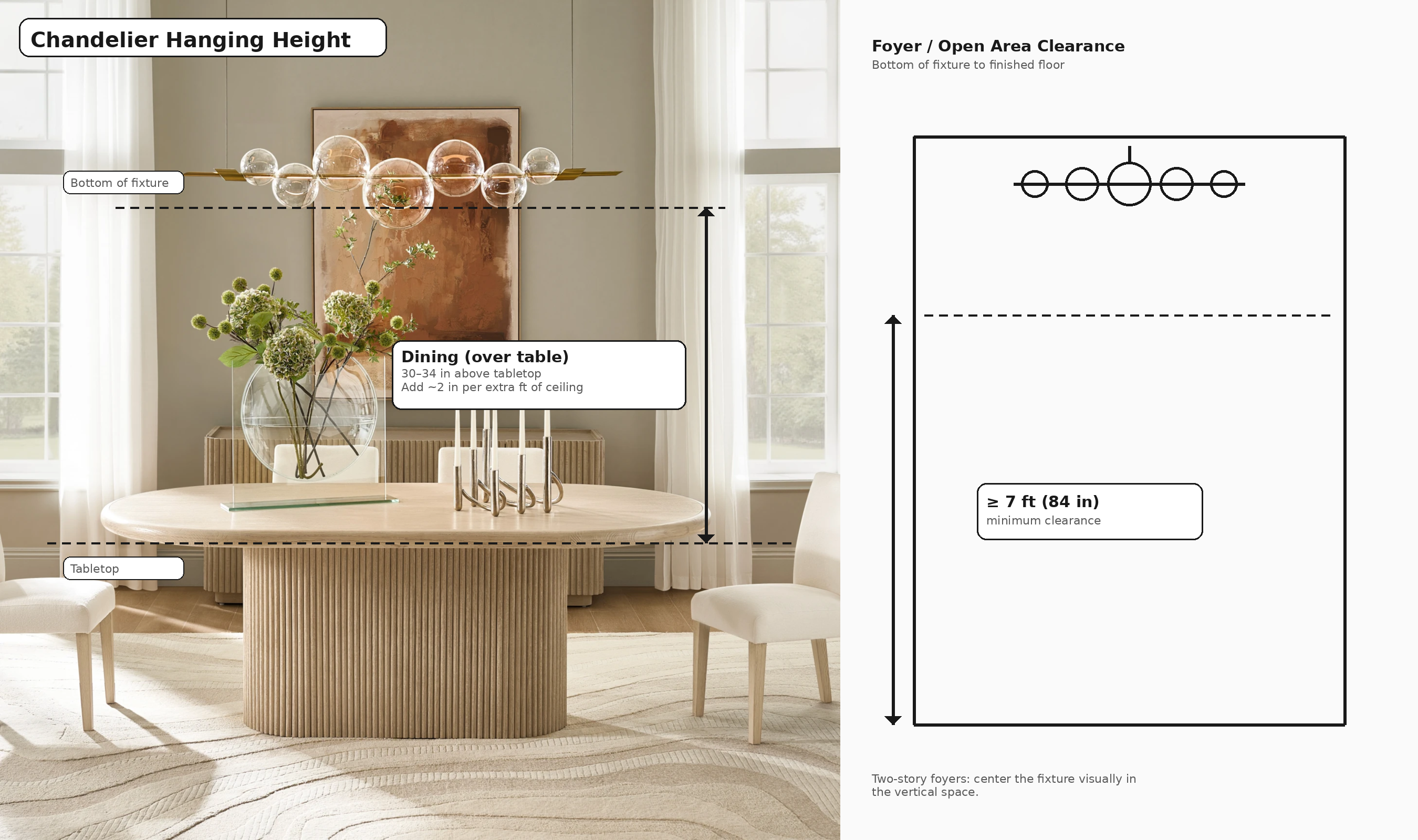
Proper hanging height is the difference between “grand” and “in the way.”
Style Picks by Room, Dining, Entry, Bedroom, Living
Once you understand how to choose chandelier size, you can shop style without second-guessing. Use the room’s purpose as your filter, then choose a finish that complements what you already love.
Dining room chandelier, where drama belongs
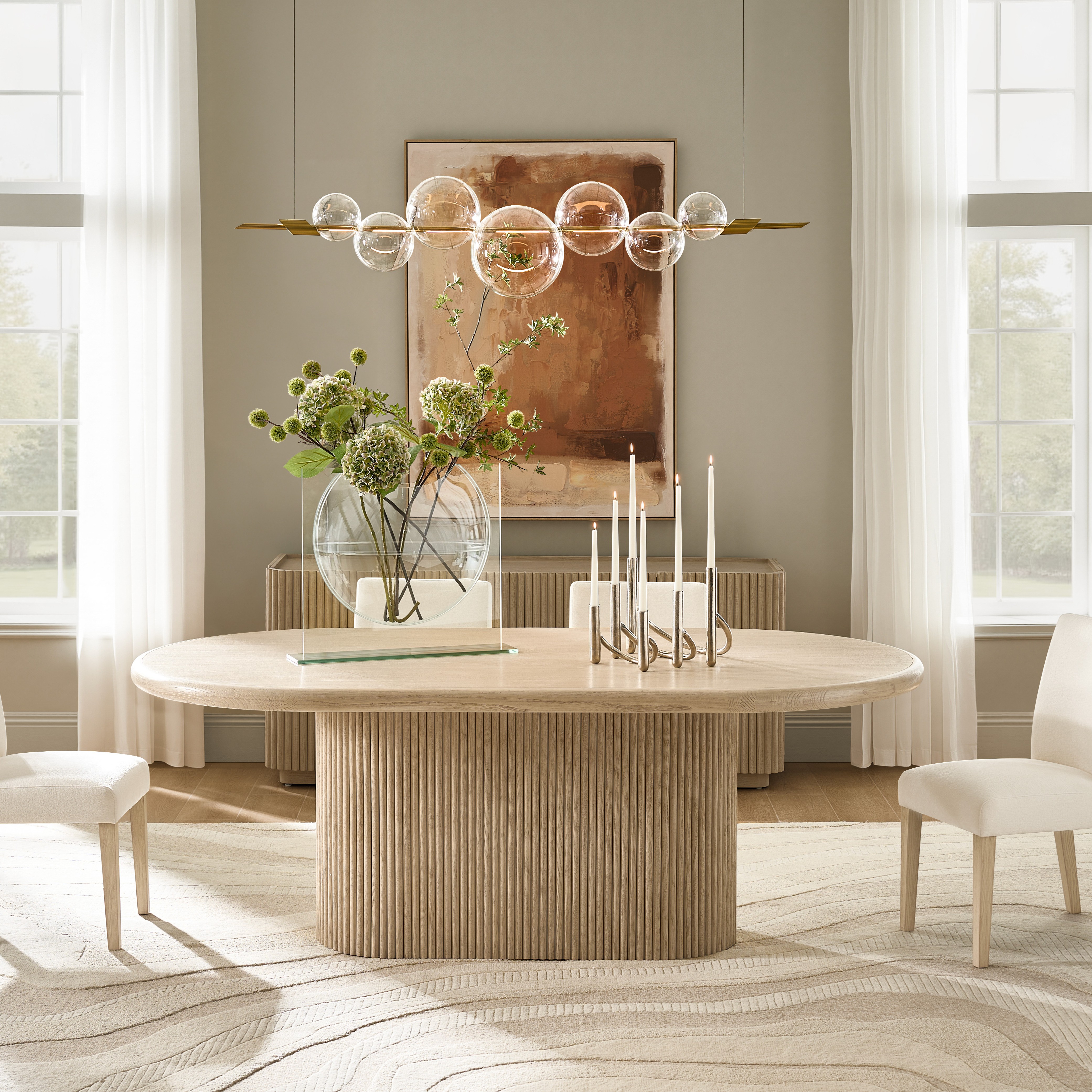
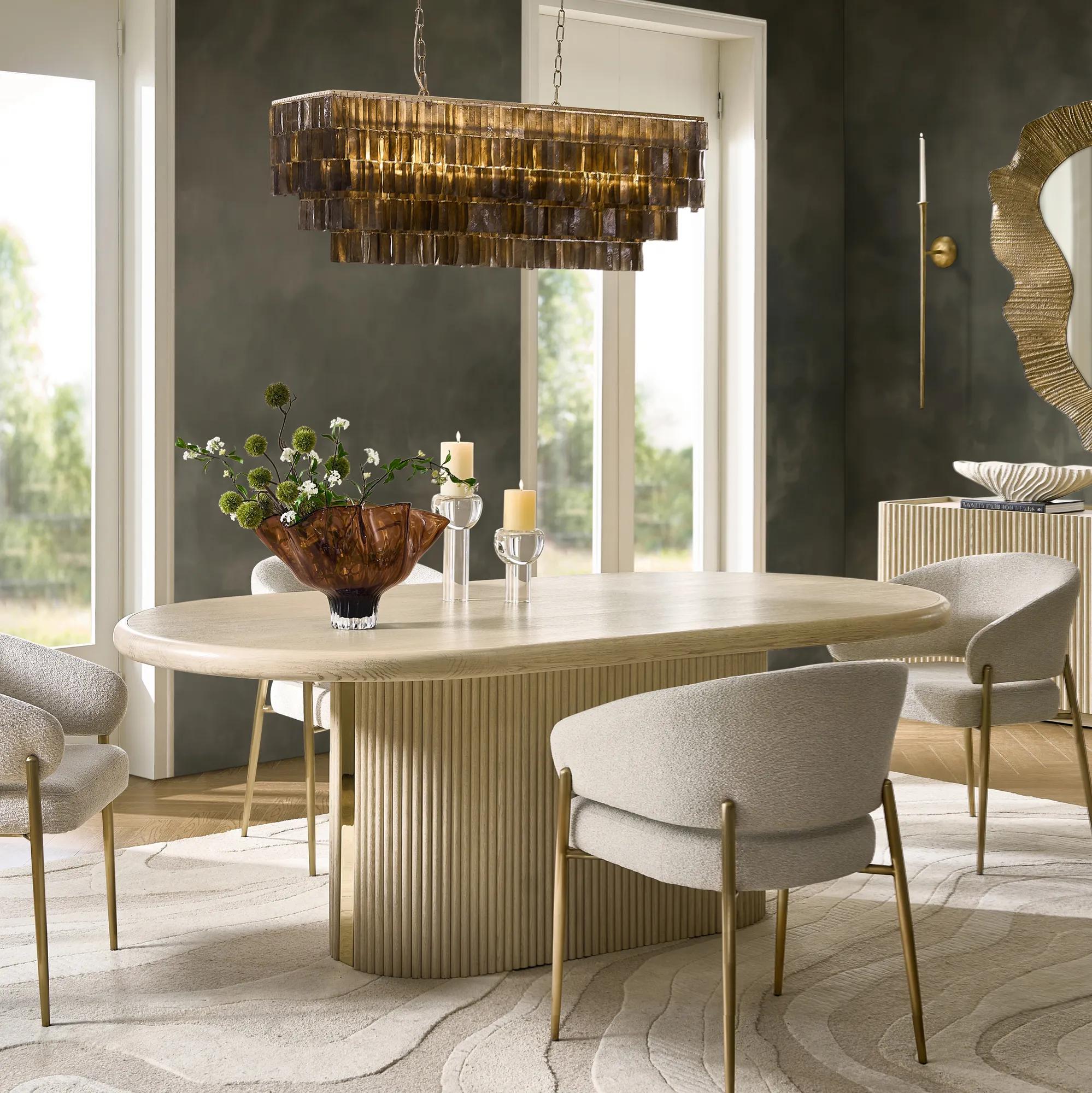
The dining room is the easiest place to go bold. You are seated, the light reads as an experience, and the table naturally frames the fixture.
Best dining room chandelier looks right now:
-
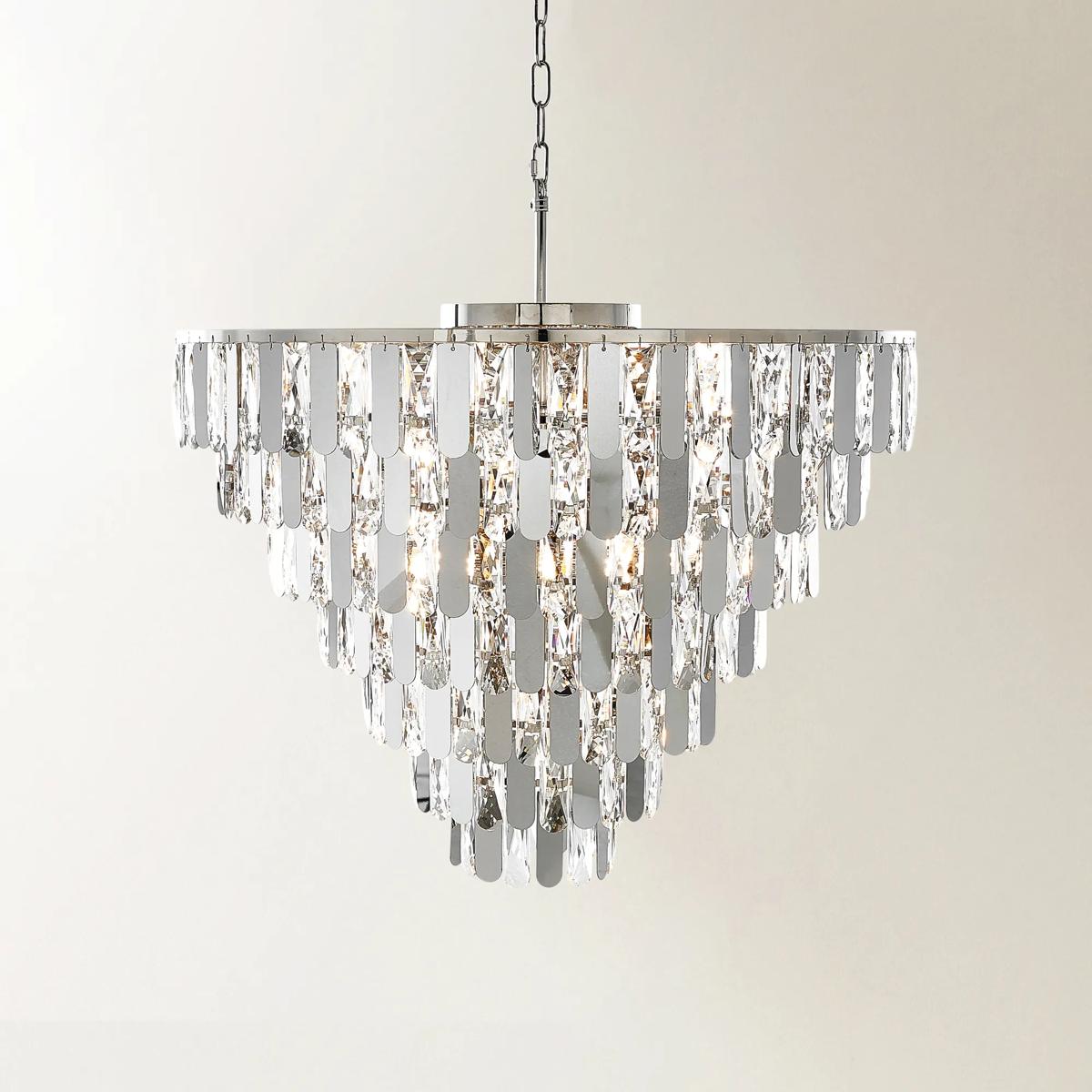
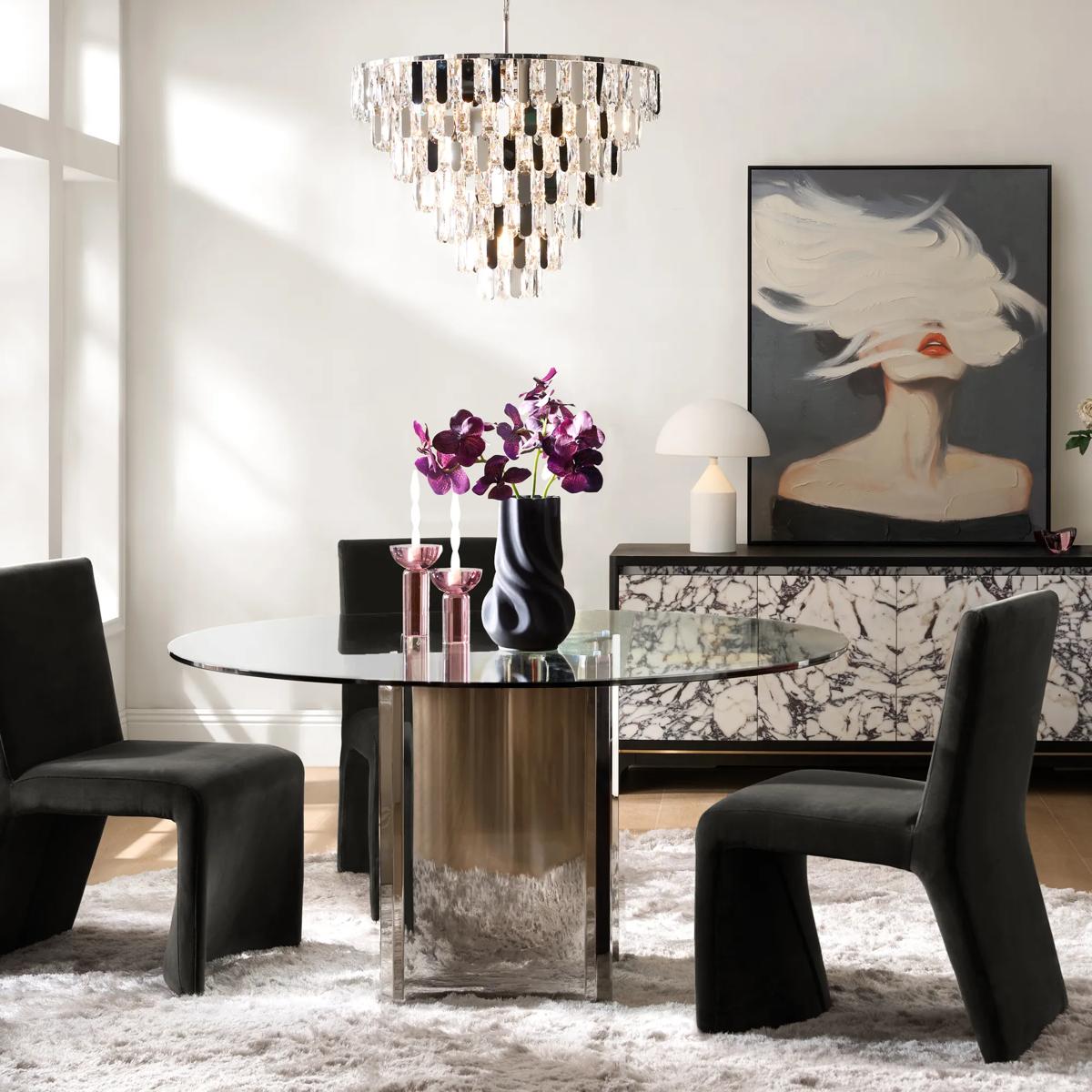
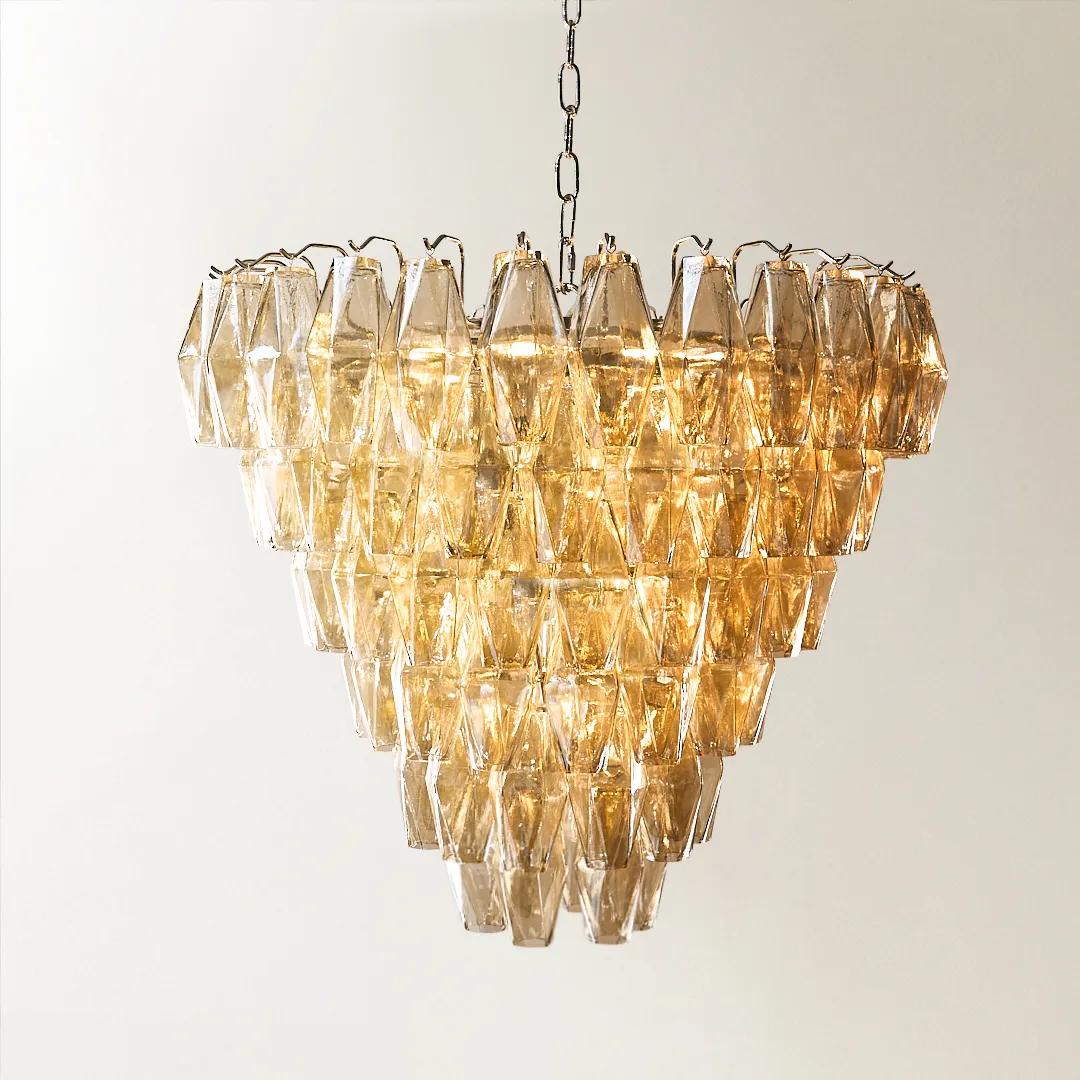
Classic glam: crystal or glass details that shimmer at night
-
Modern sculpture: asymmetric arms, curved silhouettes, or art-glass elements
-
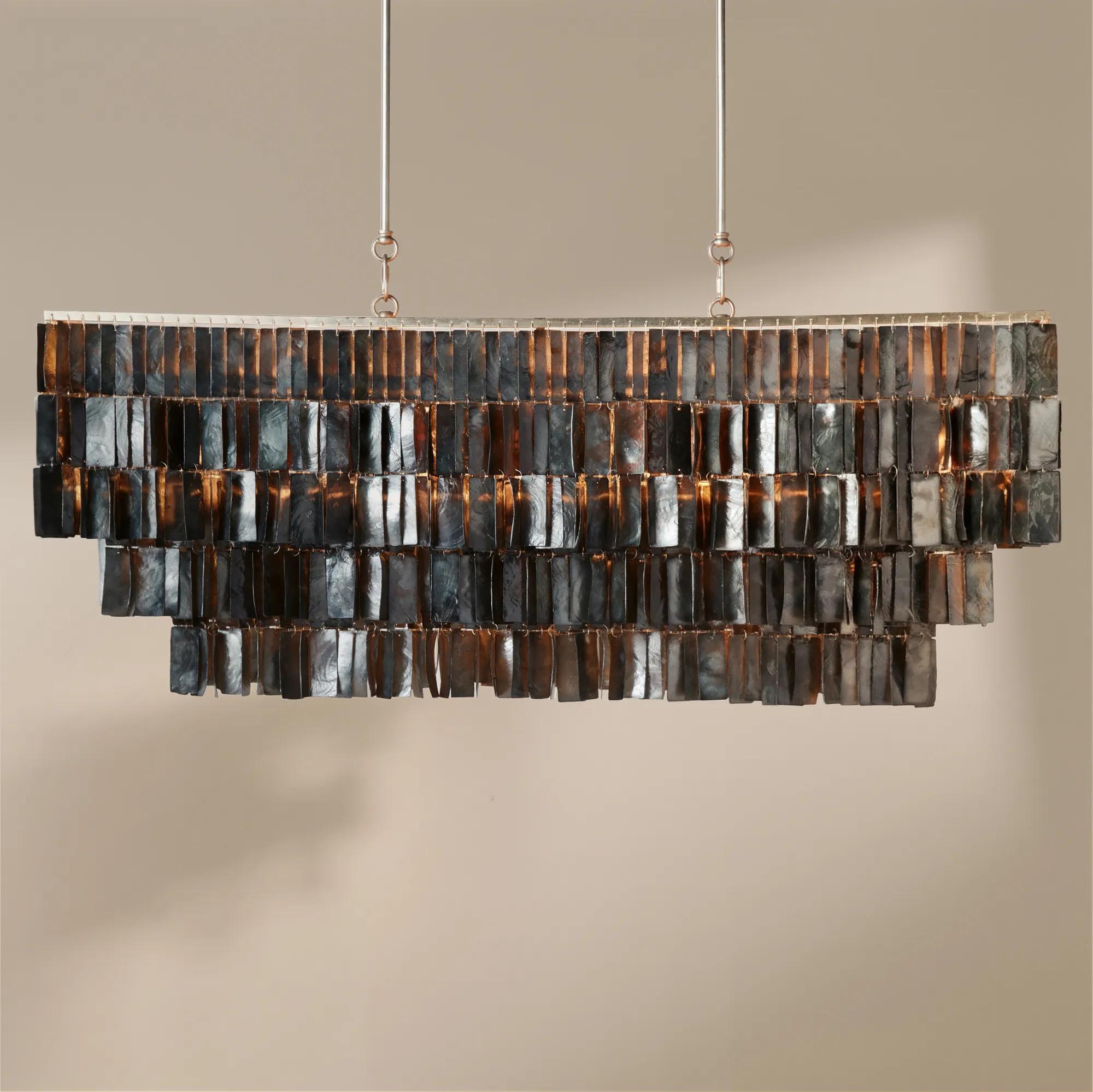
Warm metal: antique brass or burnished finishes that flatter skin tones and elevate table settings
If your dining room is doing double duty as a workspace, prioritize a diffuser or layered bulbs, so light feels flattering, not clinical. When ceilings are lower, consider modern flush and semi flush ceiling lights for a tailored look that still feels special.
Expert tip: Match chandelier “weight” to your table. A substantial table can carry a more substantial fixture, a delicate pedestal table looks best with a lighter silhouette.

A well-sized chandelier frames the table like a portrait, intentional and balanced.
Foyer lighting tips that create a true arrival moment
Your entry sets the tone before anyone sees your living room. The best foyer lighting tips focus on vertical drama and warm, welcoming light.
What works beautifully in a foyer:
-
A chandelier that complements your architecture, not competes with it
-
A finish that ties to door hardware, mirror frames, or stair rail details
-
A bulb temperature that feels inviting, typically warm white
If your foyer is narrow or your ceiling is modest, a pendant can be the elegant compromise. Explore Pendants for that long-line silhouette without the visual spread of a wide chandelier.
Did you know? A chandelier in the entry often looks larger once installed because you see it from multiple angles, keep your formula in mind and trust the math.
Bedroom chandelier ideas that feel luxe, not glaring
Bedrooms want softness. The chandelier should feel like jewelry above the bed, not stadium lighting overhead. The most compelling bedroom chandelier ideas are sculptural, refined, and paired with bedside lamps so you are never relying on the ceiling light alone.
Bedroom chandelier ideas by vibe:
-
Romantic: soft curves, glass petals, gentle sparkle
-
Modern minimal: linear forms, matte finishes, clean geometry
-
Boutique-hotel glam: layered glass, warm metal, a hint of shimmer
Sizing matters here more than you think. If you are figuring out how to choose chandelier size for a bedroom, use the room formula, then ask one more question: will the chandelier sit over the bed, or centered in the room? Over-bed placements often look best slightly smaller, centered-room placements can go fuller.
For low ceilings or a cozier primary suite, flush and semi flush ceiling lights keeps the look elevated without sacrificing headroom.
Living room chandelier strategy, scale plus layering
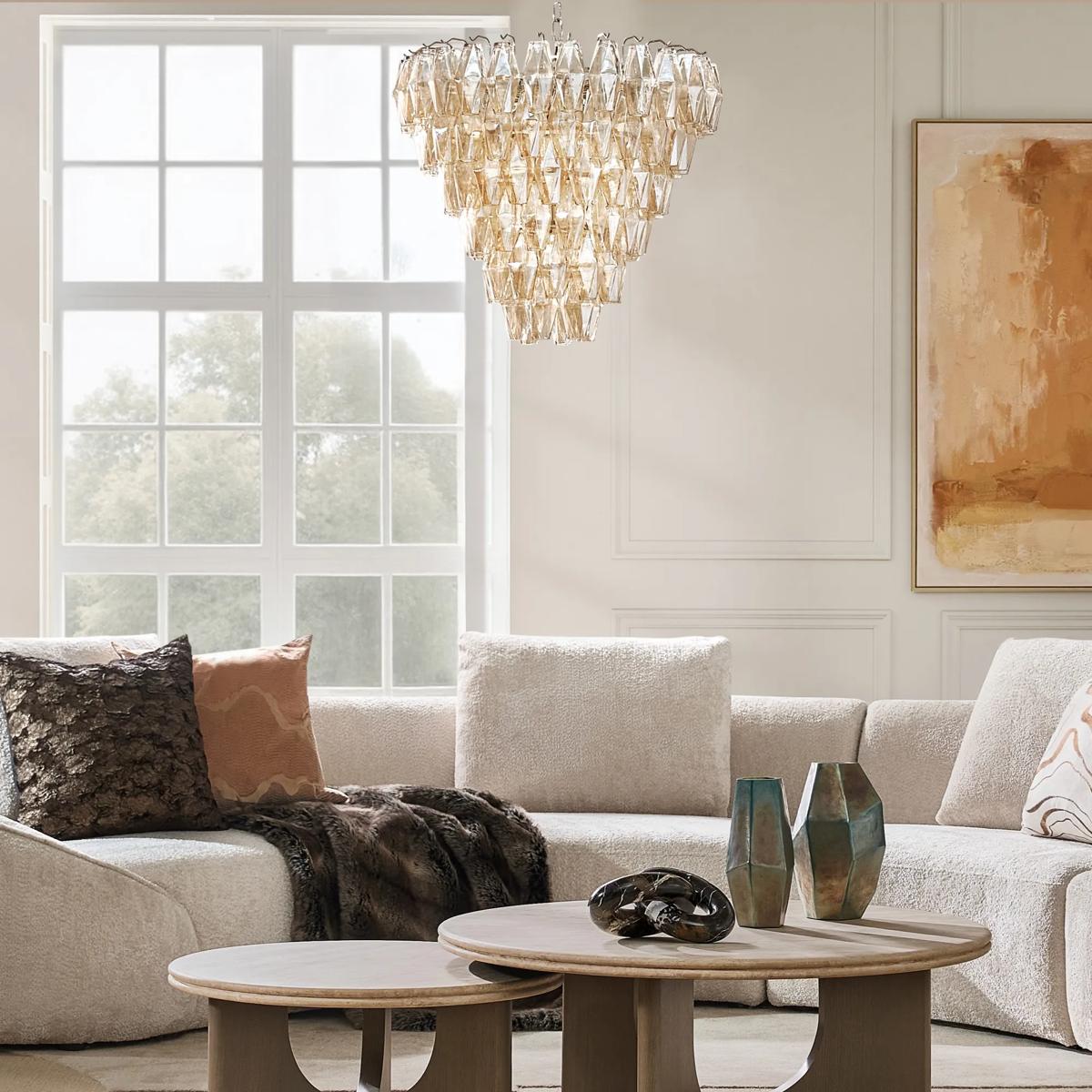
Living rooms are about flexible lighting. You want a chandelier that creates a focal point, but you also need lamps for reading, and accent lighting for art.
Living room chandelier guidance:
-
Use the room formula for diameter, then confirm it does not overpower your coffee table or seating area
-
If you have a sectional, a chandelier can be slightly larger to balance the visual mass
-
Pair with floor and table lamps so the chandelier is never your only light source
If your living room has multiple zones, a pendant can define a smaller conversation area. Again, Pendants are your best friend for zoning without building walls.
Hanging Height and Dimmer Tips That Make It Feel Custom
Even the perfect fixture can feel “off” if the hanging height is wrong. This is where designer polish is made.
The chandelier hanging height rules you will actually use
Over a dining table:
-
Start at 30 to 34 inches above the tabletop for 8 ft ceilings
-
Add 2 inches for each additional foot of ceiling height
In open spaces (foyer, living room paths):
-
Maintain 7 feet minimum clearance from floor to chandelier bottom
-
In two-story spaces, prioritize what looks centered from the most common viewing angles
Dimmer tips, the upgrade that changes your whole room
A chandelier should be able to whisper, not just announce. A dimmer lets you tailor the mood for dinner parties, quiet mornings, or late-night ambiance.
Dimmer best practices:
-
Choose bulbs labeled “dimmable” and match bulb type within the fixture
-
Use warm white light for a luxury feel
-
If your room has shiny finishes, dimmers prevent glare and harsh reflections
Expert tip: If you love a glamorous chandelier, dimming is what keeps it from feeling too bright, too “on,” or too showroom.
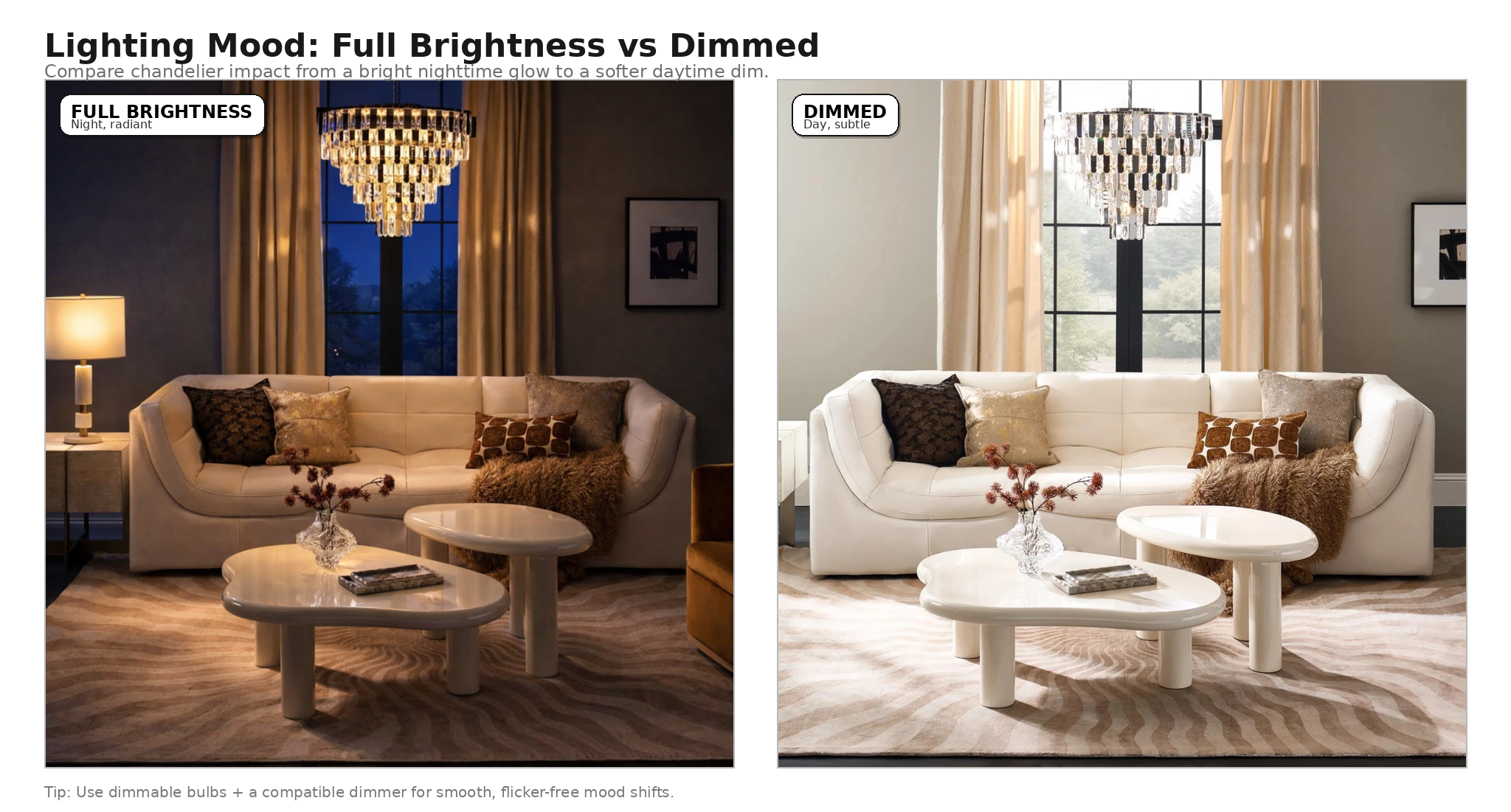
The same chandelier can feel crisp for daytime, then candlelit by night.
Shop-the-Look Grid, Key Chandeliers to Anchor Your Space
Below is a curated grid of chandelier “personalities” to help you shop by mood. Use your sizing formula first, then pick the silhouette that complements your room’s story.
Shop the full edit: Chandeliers
| The Look | Best For | The Chandelier Profile | Finish Direction |
|---|---|---|---|
| Modern Glam | Dining rooms, living rooms | Layered glass or crystal tiers | Polished nickel, warm brass |
| Sculptural Statement | Open concept spaces | Curved arms, artistic asymmetry | Antique brass, bronze |
| Soft Luxury | Bedrooms | Petal shapes, rounded glass | Champagne metal, soft gold |
| Grand Entry | Foyers | Tall drop, elegant volume | Burnished brass, mixed metals |
| Tailored Minimal | Smaller rooms | Clean lines, compact silhouette | Matte black, brushed metal |
| Low-Ceiling Chic | Bedrooms, hall entries | Semi-flush chandelier look | Warm metal, opal glass |
If your ceiling height is limited but you still want that chandelier presence, begin with flush and semi flush ceiling lights, then layer with sconces or lamps for dimension.
Frequently Asked Questions
Q: How do I choose chandelier size if my room is open concept?
Use the room formula for the specific zone you are lighting, not the entire open area. Measure the seating zone or dining zone footprint, then size the chandelier to that “room within the room.”
Q: What size chandelier for a 60-inch round table?
A common guideline is a chandelier around 30 to 40 inches in diameter. Use 1/2 to 2/3 of the table width, then confirm you have comfortable clearance to the table edge.
Q: Do I need a dining room chandelier centered on the table or the room?
Center it on the table. The table is the anchor and the chandelier should align to it, even if the room is off-center.
Q: What are the best foyer lighting tips for a small entry?
Choose a fixture with more vertical presence than width, and keep the lowest point at least 7 feet from the floor. A pendant can be ideal for narrow foyers.
Q: Can bedroom chandelier ideas work with ceiling fans?
Yes, but placement matters. Consider a chandelier over a seating nook or centered where it will not conflict with fan blades, or opt for a semi-flush style for a refined look.
Closing Thoughts, Choose Size First, Then Let Style Speak
If you remember one thing, let it be this, how to choose chandelier size is the step that makes everything else look effortless. Once your diameter and hanging height are right, style becomes a pleasure, not a risk. Your dining room chandelier can feel like an event, your foyer lighting can create an arrival, and your bedroom chandelier ideas can feel quietly indulgent.
When you are ready to bring it home, start with the silhouettes that best match your space, then refine by finish and detail. Explore Chandeliers, browse Pendants for layered looks, and consider modern flush and semi flush ceiling lights for low-ceiling elegance.
.jpeg?w=3897&h=3897)