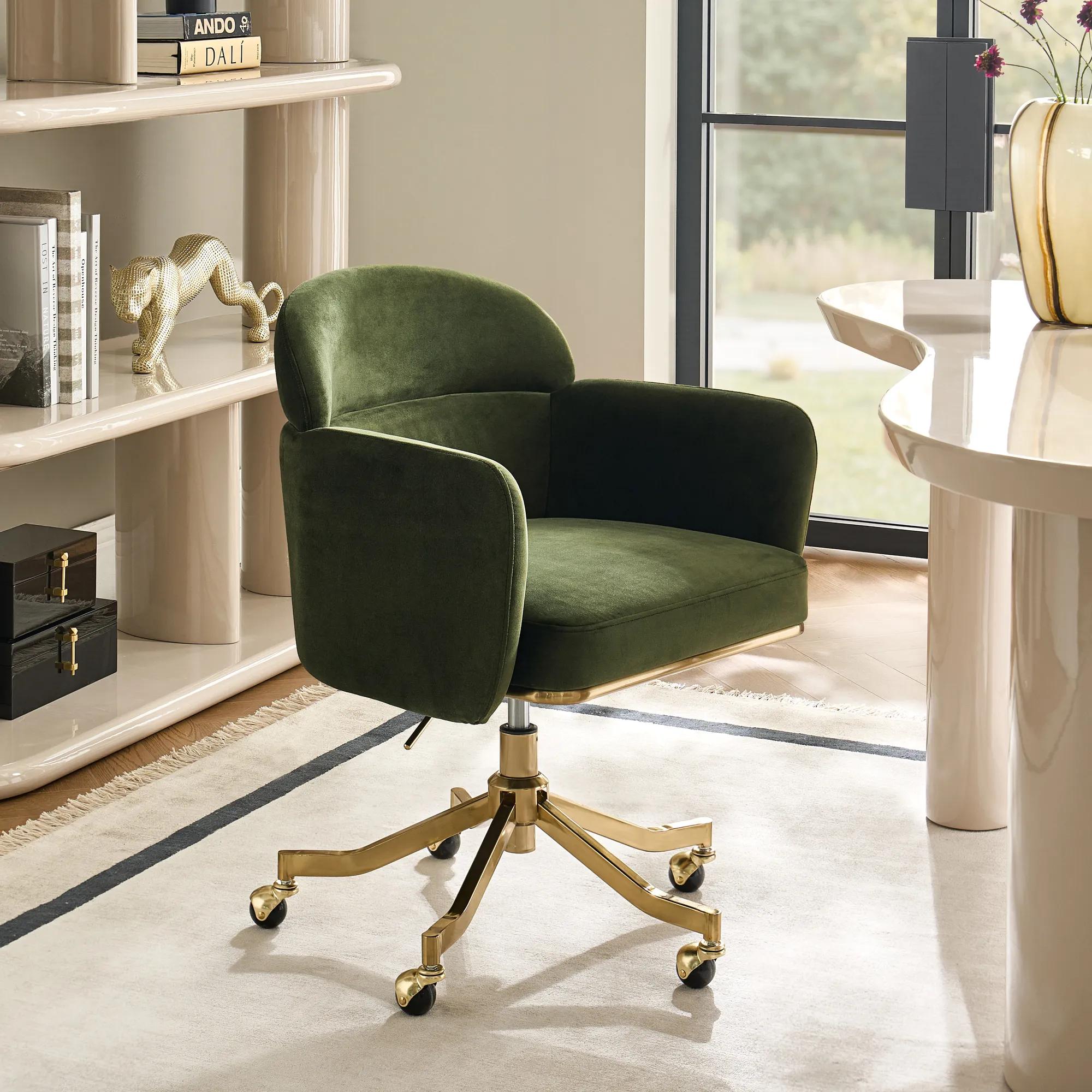
The right pair supports your work, fits the room, and still looks at home after the laptop closes.
A home office often goes wrong in pairs.
The desk is generous, but the chair cannot tuck beneath it. The chair looks beautiful, but it sits too low for the keyboard. A large desk fills a small room because more surface seemed useful at the time.
A desk and chair should not be treated as separate purchases. One sets the working height. The other determines how your body meets it. Together, they shape the comfort, flow, and look of the room.
A strong home office desk setup must pass two tests. It should fit the room, and it should fit the person using it.
That does not mean the space has to feel clinical. Z Gallerie’s FW26 “designed function” story takes a warmer approach. Reeded oak, lacquer, velvet, bronze mirror, soft-gold metal, and sculptural lighting bring the office into the visual world of the home.
The goal is not to hide the work. It is to give it a better setting.
Choose the Desk and Chair as One System
The best desk-and-chair pairing lets you sit close to the work. Your feet should feel supported. Your shoulders should stay relaxed. Your keyboard and mouse should sit near elbow height. Start with your body. Then consider the style. A desk may fit the wall but still be too high for its chair. A chair may adjust in height but be too wide for the opening below the desk. Arms can catch on drawers. Casters can require more floor space than expected. A pairing only works when it functions in motion.
| Fit Question | What to Check |
|---|---|
| Can the chair reach the desk? | You should not need to lean forward to use the keyboard or mouse. |
| Is the work surface comfortable? | Your shoulders should remain relaxed while you work. |
| Are your feet supported? | Keep your feet flat on the floor or on a stable footrest. |
| Is there enough legroom? | Your knees, thighs, and feet should move freely. |
| Does the chair fit below the desk? | Check the chair width, arms, casters, drawers, and desk supports. |
| Can the chair move easily? | Leave space to sit, turn, roll back, and reach storage. |
| Do the pieces look balanced? | A large desk usually needs a chair with enough visual presence. |
The desk shapes the room. The chair shapes the experience. Both matter.
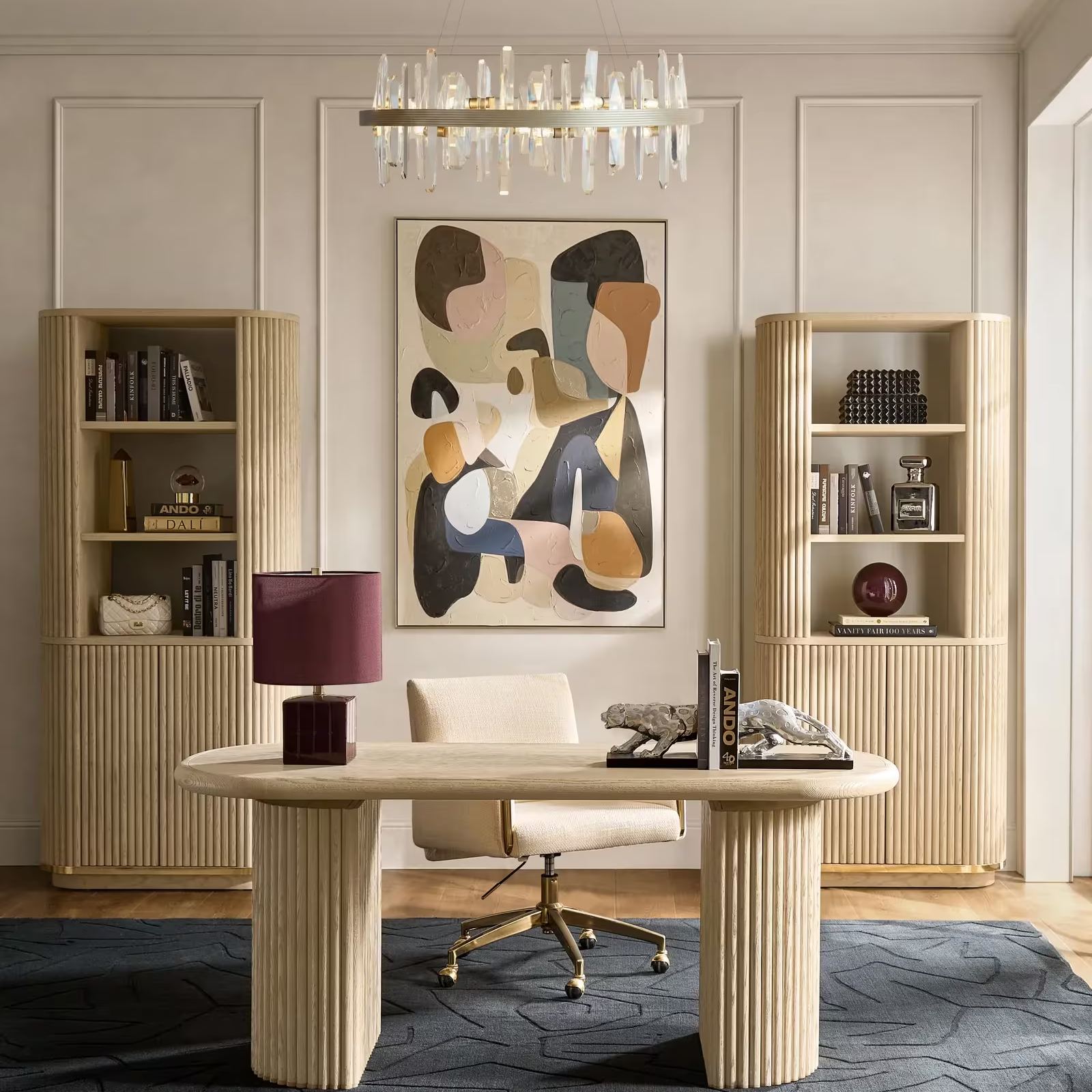
Desk Size Guide: How Much Surface Do You Need?
A useful desk size guide begins with your work, not the empty wall. A laptop and notebook need less space than two monitors, samples, or stacks of paper. A desk against a wall needs less room than one placed in the center. Built-in drawers may reduce the need for another cabinet, but they can also limit legroom.
As a general guide, many writing desks measure 48 to 60 inches wide. Larger desks often measure 60 to 72 inches wide. A depth of 24 to 30 inches works for many home office setups.
Creative work and large screens may require more space.
| Work Style | Suggested Width | Suggested Depth | Best For |
|---|---|---|---|
| Laptop and writing | 48–60 inches | 24–30 inches | Guest rooms and compact offices |
| Single-monitor work | 55–62 inches | 24–30 inches | Daily hybrid work |
| Two screens or paperwork | 60–72 inches | 28–36 inches | Dedicated home offices |
| Creative work | 68 inches or more | 30 inches or more | Samples, plans, or large projects |
| Sit-stand work | Based on equipment | Usually 28 inches or more | Users who change positions during the day |
These ranges are starting points, not strict rules.
A wide desk can still feel light when its base is open. A smaller desk can feel more substantial when it uses dark wood, lacquer, or built-in storage.
Choose the Width Based on Your Work
Your desk should hold the equipment you use every day. It should also leave some open space. For laptop work, that may mean room for a notebook and lamp. For a monitor setup, you will need space for the screen, keyboard, mouse, and forearms. Creative work may require a clear section for samples, drawings, or materials.
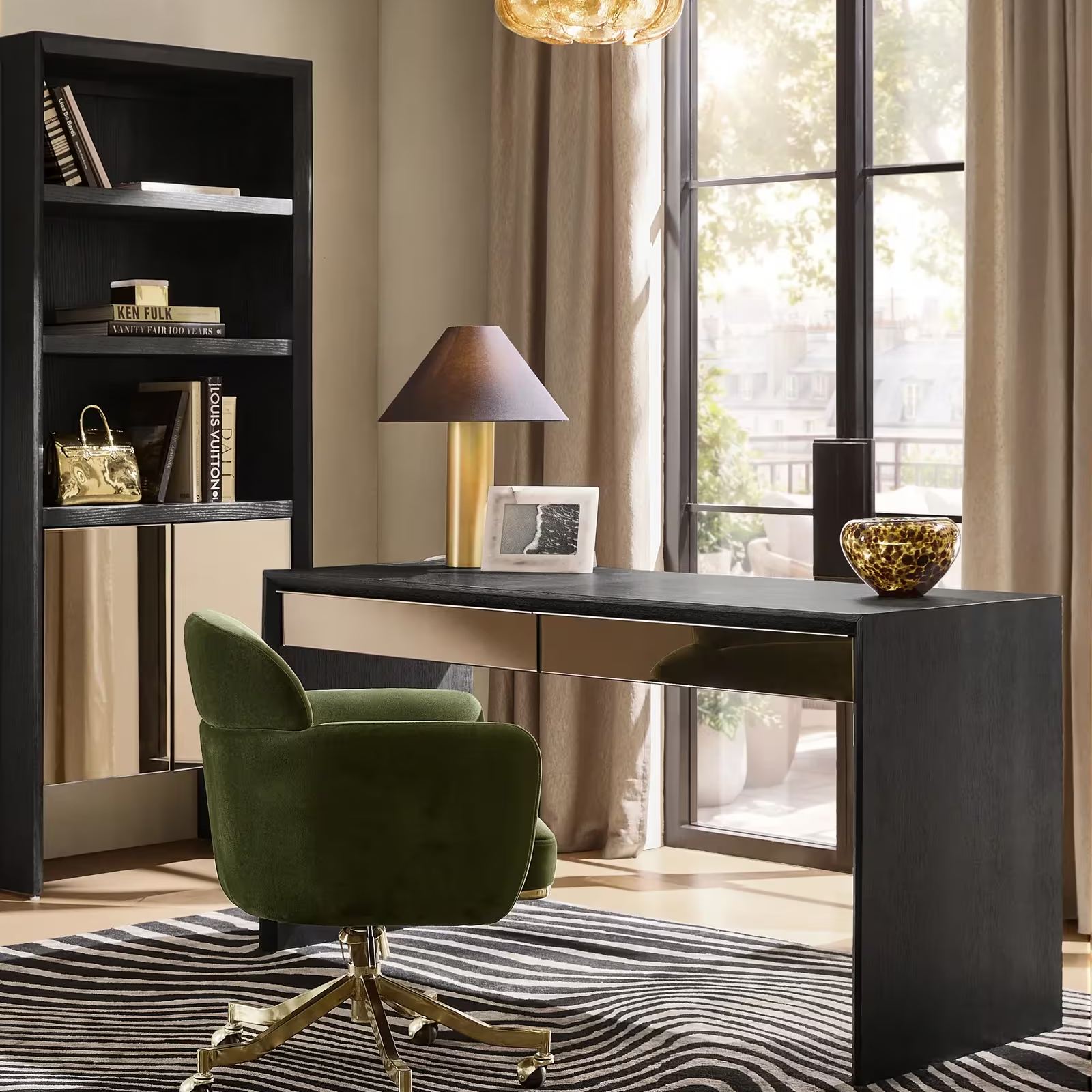
The Glimmer Mirrored Two-Drawer Black Oak Desk and Nia Lacquered Desk in Turtle Dove are both 62 inches wide. This gives them enough room for a dedicated workstation without making them oversized.
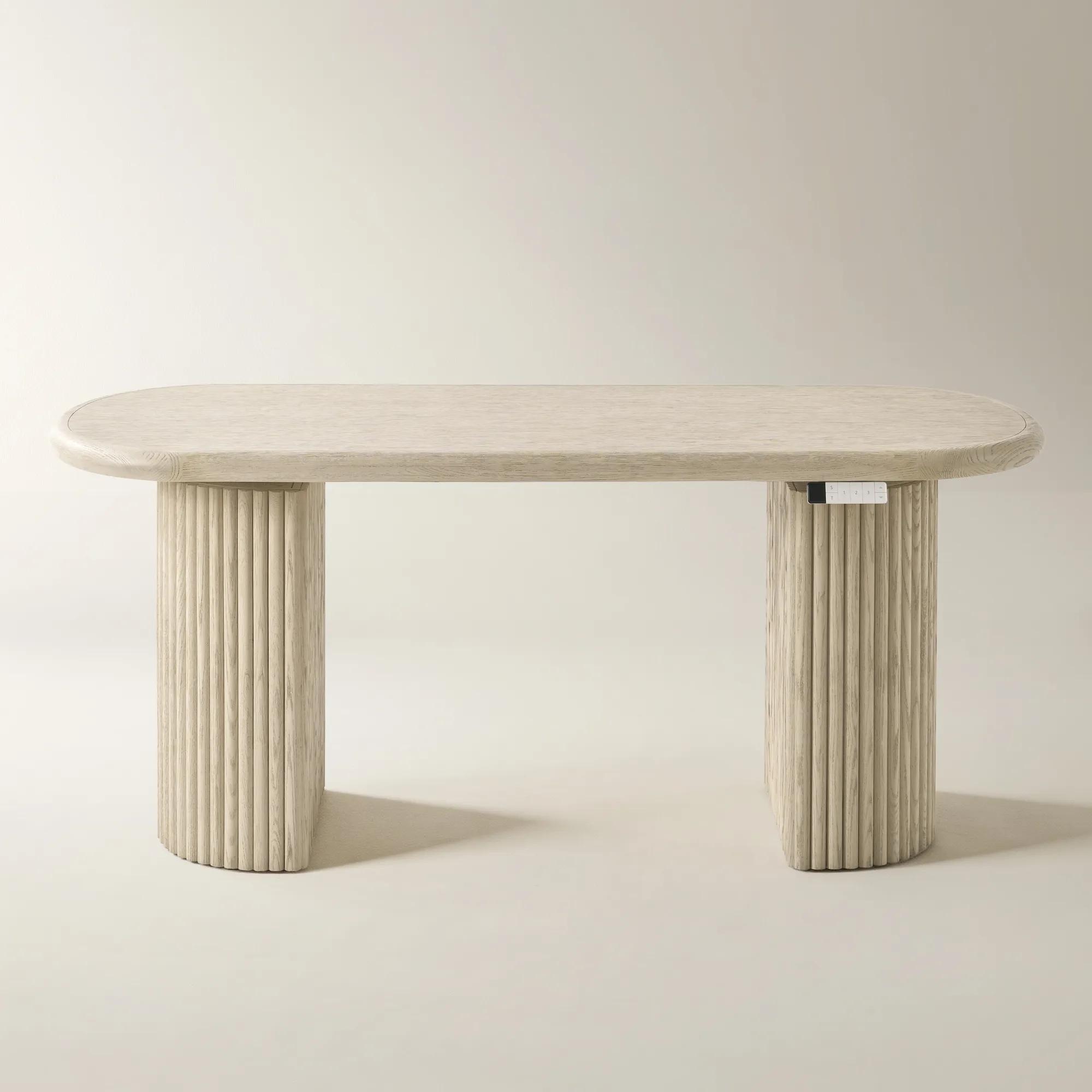
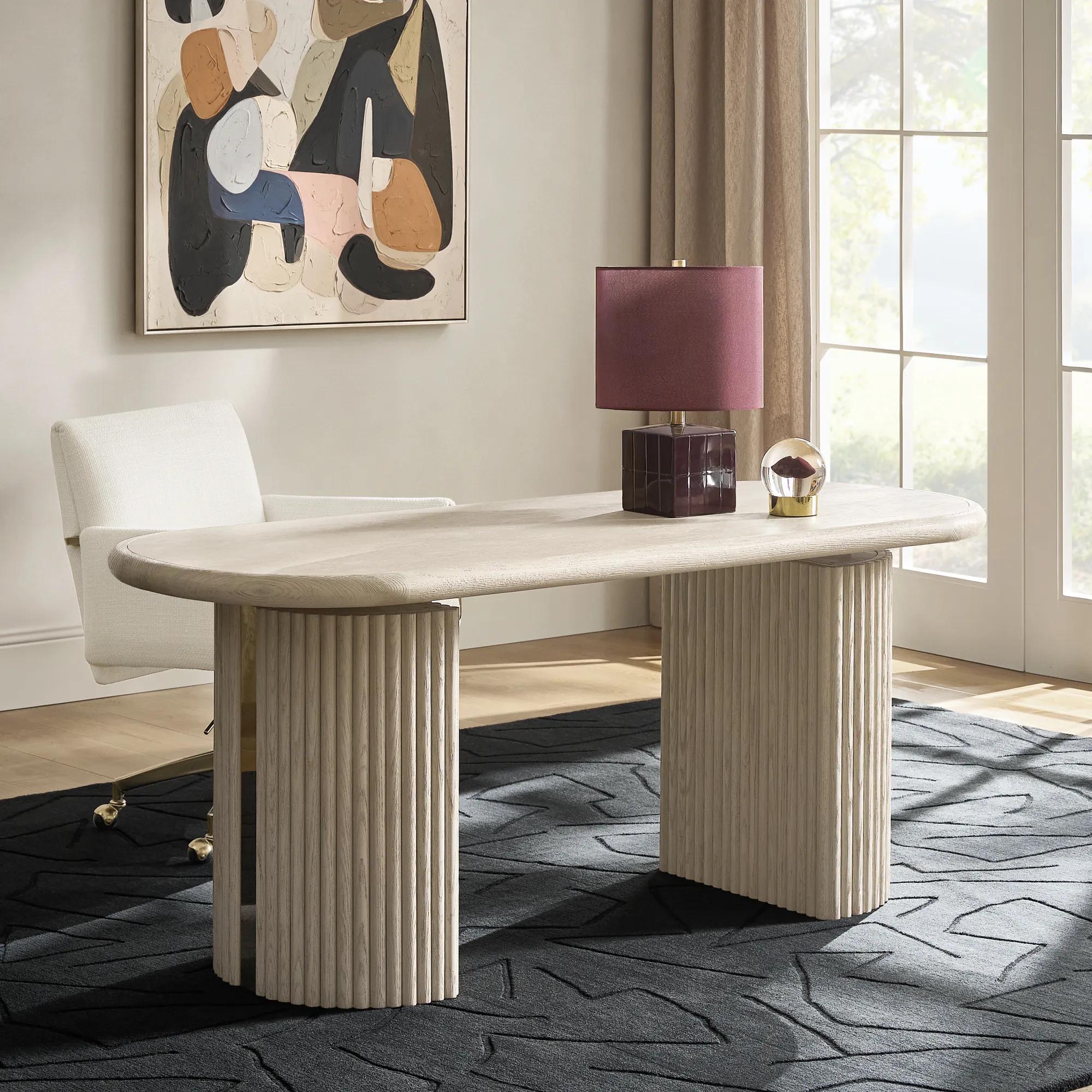
The Stria Oval Reeded White Oak Electric Lift Desk measures 68 inches wide. The Vetra Checkerboard Oak and Maple Desk spans 71 inches and offers a deeper work surface.
Choose the Depth Based on Your Screen and Room
Desk depth is easy to overlook. A 24-inch-deep desk can work well with a laptop or compact monitor. It is also useful when floor space is limited. A depth of 28 to 30 inches gives you more room for a monitor, keyboard, lamp, and writing space. A deeper surface can feel generous. It also requires a larger room.
Keep the objects you use most within easy reach. A deep desk should not force you to stretch across the surface.
Leave Room Behind the Chair
Plan for at least 36 inches behind the desk chair when possible. You may need more room when the chair sits near a walkway, door, bookcase, or cabinet. Measure with the chair pulled out, not pushed beneath the desk.
The Ten-Minute Tape Test
Use painter’s tape to map the full setup before ordering.
- Mark the desk width and depth.
- Mark the chair in its working position.
- Add at least 36 inches behind the chair.
- Open nearby doors, drawers, and cabinets.
- Walk from the room entrance to the chair.
- Check where the cords will reach the outlet.
The outline may look larger than expected. That is useful information. It is also easier to move than a 71-inch desk.
What Is the Best Desk Chair for a Home Office?
The best desk chair for a home office supports your body and fits your desk. It should adjust to a useful height, support the lower back, and allow your feet to rest flat. It should also suit the length of your workday. A softly upholstered chair may work well for writing, planning, or a few focused hours. A full day of computer work often requires more support and adjustability.
| Chair Feature | What to Look For |
|---|---|
| Adjustable height | Your feet stay supported while your elbows align with the desk. |
| Supportive back | The chair supports your lower back without pushing you forward. |
| Correct seat depth | The seat supports your thighs without pressing behind your knees. |
| Stable base | A five-point base offers balanced support for a rolling chair. |
| Easy movement | Swivel and casters help you reach nearby areas without twisting. |
| Useful arms | Arms should support relaxed shoulders and clear the desk. |
| Right scale | The chair should suit both the desk and the room. |
Match the Chair to Your Workday
For shorter work sessions, comfort may come from a curved back, soft upholstery, and easy movement. For longer days, adjustability becomes more important. The chair should help you change position and keep the work close.
The Paige Velvet Swivel Desk Chair offers adjustable height, a 360-degree swivel, casters, and a curved back. It measures 25 inches wide by 25.5 inches deep.
The Serena Desk Chair also adjusts in height and rolls on casters. Its 22.5-inch width may suit a tighter desk opening or smaller room.
The Lucia Desk Chair in Beige has a wider 26-inch profile, textured upholstery, and an adjustable gas lift.
The Five-Minute Chair Test
Sit in the chair as you would during a real workday.
Check that:
- Your back reaches the backrest.
- Your feet feel supported.
- The seat does not press behind your knees.
- Your shoulders remain relaxed.
- The chair moves close to the desk.
- The arms clear the desk and drawers.
- You can turn without hitting nearby furniture.
A chair should support the body. Your body should not have to adapt to the chair all day.
How to Match Desk and Chair Proportions
Once the practical fit is right, step back and look at the pair. A chair may fit beneath the desk but still look too small. A wide desk with thick supports can make a light chair seem temporary. A narrow writing desk can feel crowded beside a large, high-backed chair. The two pieces should feel connected without looking like a set.
Match Visual Weight
A large desk needs a chair with enough presence. That presence can come from upholstery, color, shape, or a strong metal base. The chair does not need to be physically large. It simply needs to hold its place next to the desk.
A slim desk often works best with a cleaner chair profile. Too much volume can make the setup feel crowded.
Compare Desk Height With Chair Height
Fixed-height desks need careful chair planning.
The Nia desk is 30 inches high. The Glimmer and Vetra desks are 31.5 inches high. Check whether your chair can create a comfortable working position at that height.
A higher desk may require the chair to rise. When your feet no longer reach the floor, add a footrest.
The Stria electric lift desk offers more flexibility. Its surface adjusts from 28 to 45.25 inches. The desk can move to the user instead of asking the chair to solve every fit issue.
Check the Space Under the Desk
Desk height does not tell the whole story. Drawers, braces, aprons, and pedestals affect legroom. They may also limit how close the chair can move to the desktop. Measure the clear opening below the desk. Do not rely only on the full desk width.
Connect the Materials
A good pairing often repeats one detail and contrasts another. A brass-plated chair base can connect with soft-gold desk trim. Velvet can soften reeded oak. Oatmeal upholstery can balance mirrored fronts. Jade green can bring energy to pale lacquer.
The desk and chair should look related, not identical.
| Desk Material | Chair Direction | Why It Works |
|---|---|---|
| Reeded white oak | Oatmeal, ivory, jade, or warm neutral upholstery | Soft fabric balances the wood texture. |
| Black oak and bronze mirror | Beige, cream, mustard, or another matte textile | Fabric softens the dark, reflective finish. |
| Checkerboard wood | A solid-color chair with a simple shape | The chair does not compete with the desktop. |
| Pale lacquer | Saturated velvet or a sculptural neutral chair | Contrast gives the desk more presence. |
| Soft-gold accents | Brass, champagne, or warm metallic chair base | Related metals create a clear link. |
Four Desk and Chair Pairings That Work
These pairings begin with scale and function. Material, color, and texture complete the look.
1. Stria Electric Lift Desk With the Paige Oatmeal Chair
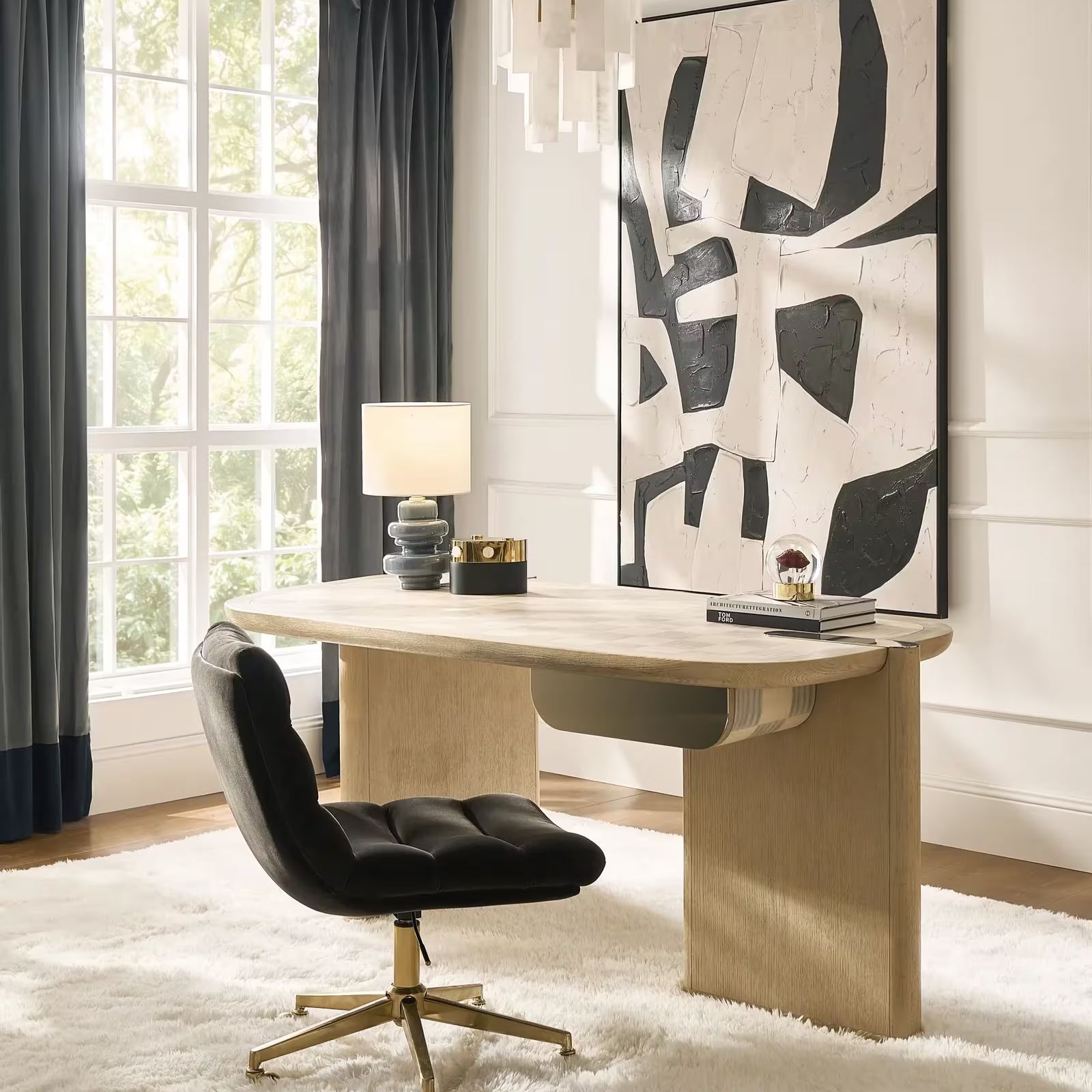
The Stria Oval Reeded White Oak Electric Lift Desk offers a flexible work surface. Its lift system, three memory settings, 68-inch width, and 28-inch depth support both sitting and standing. The design still feels like furniture. Reeded oak and a curved top give it a warm, architectural look.
Pair it with the Paige Oatmeal Velvet Swivel Desk Chair . Its adjustable height and casters make it practical. The oatmeal velvet softens the strong lines of the desk.
Best For
A dedicated office used for several hours each day.
Styling Direction
Add one dark object for contrast, a soft-gold lamp, and an ivory rug. Keep the desktop simple so it can move without catching cords or decor.
2. Glimmer Black Oak Desk With the Lucia Beige Chair
The Glimmer Mirrored Two-Drawer Black Oak Desk measures 62 inches wide and 24 inches deep. It works well in a standard office or along a bedroom wall. Black oak gives the desk definition. Bronze mirror drawer fronts reflect light. Two soft-close drawers hide smaller work items.
Pair it with the Lucia Desk Chair in Beige . Its textured fabric softens the mirrored surface. The warm metal base also connects with the bronze tone.
Best For
A polished office where hidden storage matters.
Fit Note
The Glimmer desk stands 31.5 inches high. Check the chair height, foot support, and desk opening before ordering.
3. Vetra Desk With the Serena Chair
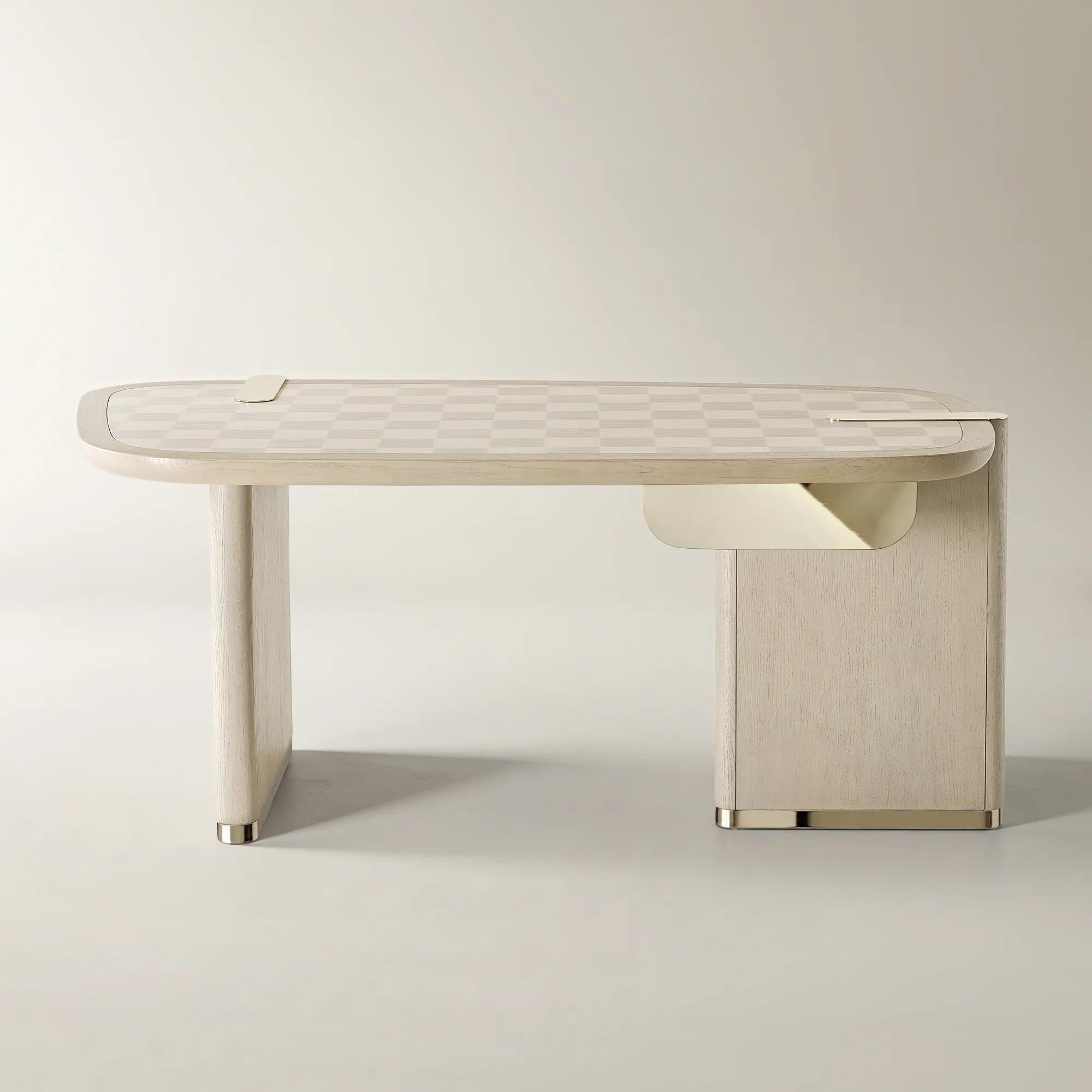
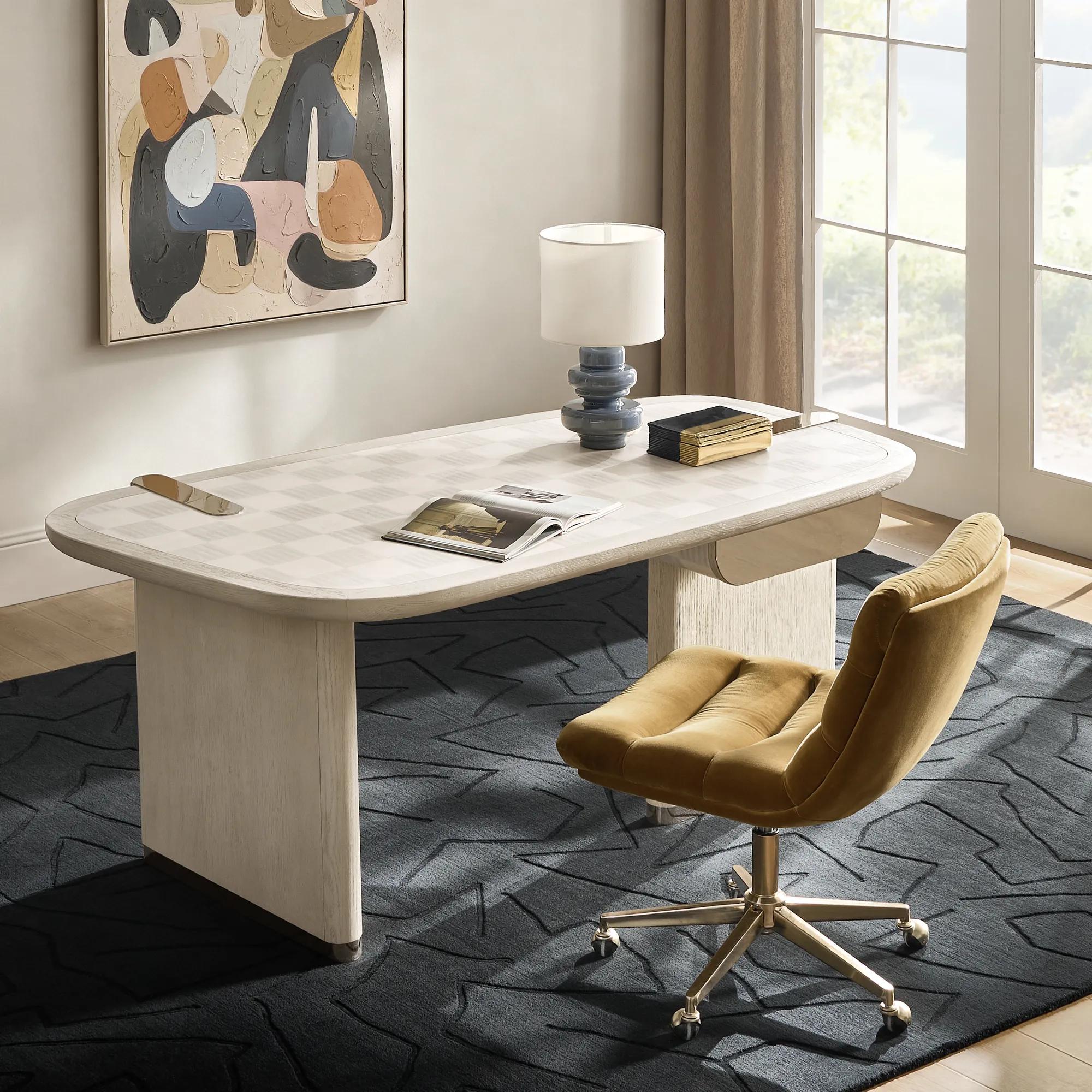
The Vetra Checkerboard Oak and Maple Desk is the largest desk in this edit. It measures 71 inches wide and 39 inches deep. Its checkerboard veneer gives the surface a strong pattern. A hidden soft-close drawer adds storage without changing the clean shape.
The Serena Desk Chair adds mustard velvet, adjustable height, swivel movement, and casters. The solid color allows the patterned desk to remain the focus.
Best For
A large study, creative office, or room where the desk is the main statement.
Styling Direction
Keep the rest of the room quiet. Use warm white walls, simple curtains, and one large piece of art.
4. Nia Turtle Dove Desk With the Paige Jade Green Chair
The Nia Lacquered Desk in Turtle Dove measures 62 inches wide and 30 inches deep. Rounded corners and cylindrical bases give it a soft, sculptural shape. The quiet lacquer finish allows the desk to work in an office, bedroom, library, or dressing room.
Pair it with the Paige Jade Green Velvet Swivel Desk Chair . The rich color gives the pale desk a clear focal point. The chair’s rounded back also repeats the curves of the desk.
Best For
A multipurpose room where the desk may also serve as a vanity or writing table.
Styling Direction
Move storage to the wall. Use a nearby bookcase or cabinet so the lacquered top remains calm and open.
Build the Room Around the Pair
Once the desk and chair work together, the rest of the room should support them. Storage, lighting, art, and decor complete the office. They also keep every practical object from landing on the desk.
Combine Open and Closed Storage
Open shelves make an office feel personal. Closed cabinets keep it calm.
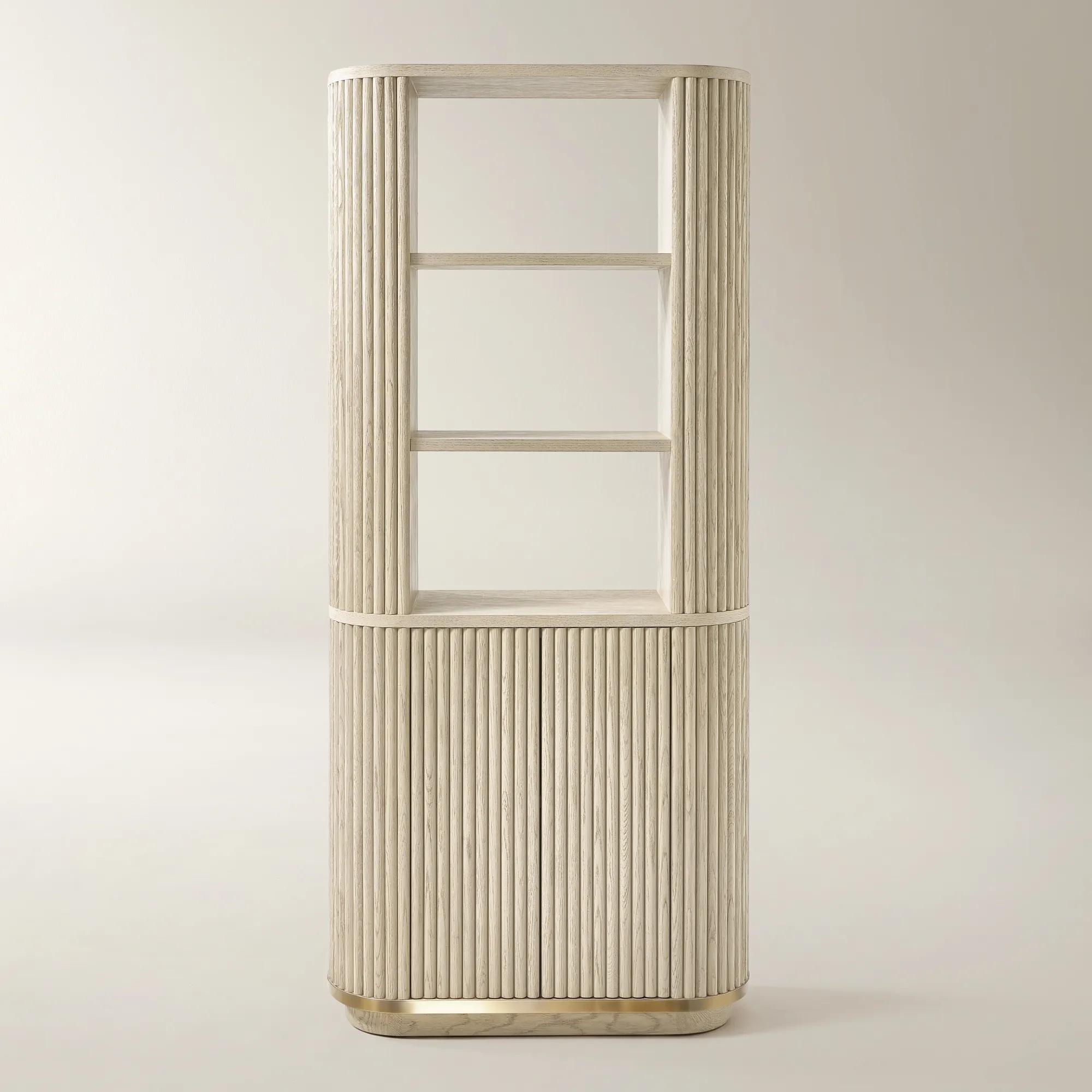
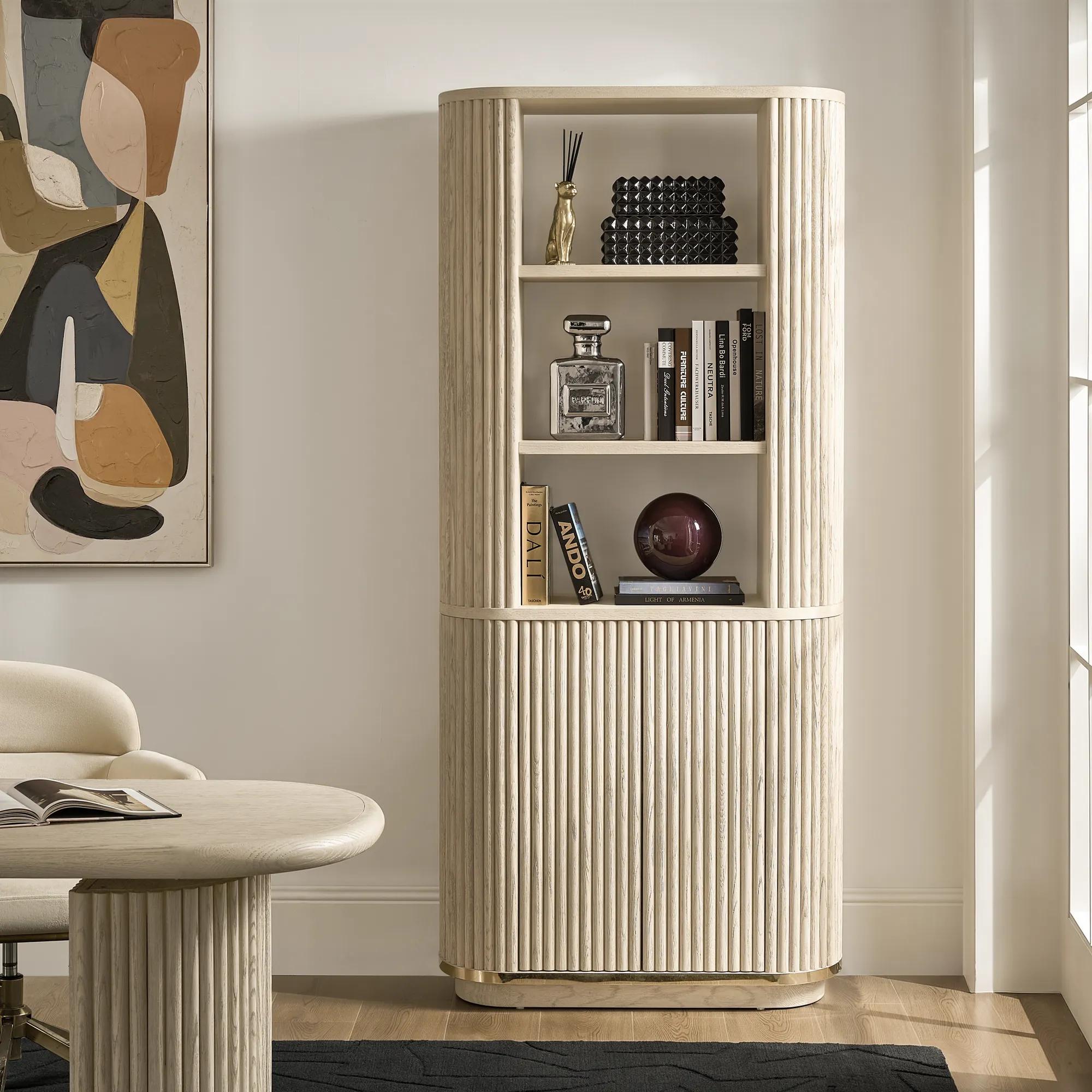
The Stria Reeded White Oak Bookcase combines open shelves with a lower cabinet. At 36 inches wide and 17 inches deep, it adds useful storage without taking over the floor.
The Glimmer Black Oak Bookcase With Mirrored Door measures 34 inches wide and 16.5 inches deep. Its bronze-mirror cabinet front makes it a natural partner for the Glimmer desk.
Use the open shelves for books and a few objects. Use the cabinets for files, cables, and office supplies.
Keep Heavy Objects Low
Place large books and storage boxes on lower shelves.
Leave more open space near eye level. This keeps the bookcase from looking crowded.
Secure tall bookcases to the wall with the supplied anti-tip hardware.
Layer the Lighting
A home office needs more than overhead light. A desk lamp supports reading and writing. A floor lamp or bookcase lamp adds softer light to the room. This also keeps the computer screen from becoming the brightest object in the space. Place the task lamp where your hand will not cast a shadow across the desk. Keep glare away from the screen.
Explore table lamps in glass, ceramic, stone, or warm metal. Choose a size that suits the desk without taking over the work surface.
Keep the Decor Simple
A desk does not need a full display. A tray can hold small essentials. A vase or sculptural object can break up the long surface. One framed photograph can make the room feel personal.
Browse decorative objects and vases and canisters with restraint.
The keyboard still needs somewhere to go.
Home Office Desk Setup Ideas by Room Type
The same desk and chair will feel different in each room. A dedicated study can support a floating desk and tall storage. A bedroom office should settle back into the room after work. A living-room workstation must look considered from every angle.
The Dedicated Home Office
A dedicated room offers the most freedom.
Float the desk when the room has enough space. This can create a stronger focal point and a better background for video calls.
Plan the outlets first. Cords across an open floor can quickly spoil the effect.
Use one wall for storage and another for art. Keep at least one surface quiet.
The Bedroom Office
A bedroom office should not make the room feel permanently on duty.
Choose a desk with hidden storage or a furniture-like shape. Store paper, cables, and supplies out of sight at the end of the day.
The Nia and Glimmer desks work well here. Both can look like a writing table or vanity once the equipment is put away.
The Living-Room Office
A desk in the living room is visible from several directions.
Choose a chair with a finished back. Manage the cords carefully. Use storage that can hold both office items and decor.
Repeat one finish from the living room, such as a metal, wood tone, or fabric color. This helps the office feel connected to the rest of the space.
The Small Home Office
A small office often works best with one useful desk and vertical storage.
Choose a desk that is large enough for the real work. Then use a bookcase instead of several small cabinets. Select a chair with a controlled footprint and useful adjustment.
Keep some wall or floor space visible. Not every empty wall needs furniture.
Place the Equipment Before the Decor
Set up the monitor, keyboard, and mouse before styling the desk.
Place the main monitor directly in front of you. Keep it at a comfortable distance. Position the keyboard and mouse close together so your elbows can stay near your body.
Once the work tools are in place, add the lamp and decor.
.jpg?w=3471&h=3471)
The Curated Home Office Edit
| Product | Dimensions | Best Feature | Design Role |
|---|---|---|---|
| Stria Oval Reeded White Oak Electric Lift Desk | 68"W x 28"D; 28–45.25"H | Adjustable height and three memory settings | Warm and flexible |
| Glimmer Mirrored Two-Drawer Black Oak Desk | 62"W x 24"D x 31.5"H | Two soft-close drawers | Dark and reflective |
| Vetra Checkerboard Oak and Maple Desk | 71"W x 39"D x 31.5"H | Large surface and hidden drawer | Graphic and expressive |
| Nia Lacquered Desk in Turtle Dove | 62"W x 30"D x 30"H | Broad multipurpose surface | Soft and sculptural |
| Paige Oatmeal Velvet Swivel Desk Chair | 25"W x 25.5"D x 30–32"H | Adjustable height, swivel, and casters | Soft and neutral |
| Paige Jade Green Velvet Swivel Desk Chair | 25"W x 25.5"D x 30–32"H | Adjustable height and bold color | Rich and sculptural |
| Serena Desk Chair | 22.5"W x 29"D x 33.5–38"H | Slim width, swivel, and casters | Warm and compact |
| Lucia Desk Chair in Beige | 26"W x 25"D x 35"H | Adjustable gas lift | Textured and polished |
| Stria Reeded White Oak Bookcase | 36"W x 17"D x 80"H | Open shelves and closed storage | Warm and balanced |
| Glimmer Black Oak Bookcase With Mirrored Door | 34"W x 16.5"D x 80"H | Open display and hidden storage | Dark and space-conscious |
Frequently Asked Questions
What Is the Best Desk Chair for a Home Office?
The best desk chair for a home office adjusts to your body and fits your desk. It should support your back, keep your feet stable, and let you work with relaxed shoulders.
The right choice depends on your body, desk height, and workday.
What Size Desk Is Best for a Home Office?
A desk between 48 and 60 inches wide can work for a laptop or compact room. A desk between 60 and 72 inches wide offers more space for monitors and paperwork.
A depth of 24 to 30 inches works for many setups.
How Much Space Should Be Behind a Desk?
Allow at least 36 inches behind the chair when possible.
Add more space when the chair sits near a door, walkway, cabinet, or bookcase.
How High Should a Home Office Desk Be?
Many fixed desks measure about 29 to 31 inches high. The best working height depends on the person and chair.
Your keyboard should sit near elbow height. Your shoulders should remain relaxed.
Should a Desk and Chair Match?
No. They should coordinate, but they do not need to match.
Repeat one detail, such as a warm metal or curved line. Then add contrast through color, fabric, or texture.
Can an Accent Chair Be Used as a Desk Chair?
An accent chair may work for short writing sessions or occasional laptop use.
For longer workdays, an adjustable swivel chair is usually more practical.
How Deep Should a Desk Be for a Monitor?
A depth of 24 to 30 inches works for many monitors. The exact need depends on the screen size and stand.
Large screens may need a deeper desk or monitor arm.
Should a Desk Face a Wall or the Room?
Facing a wall can save space and simplify cord access.
Facing the room can create a stronger focal point and a better video-call background. Choose based on the room, outlets, light, and traffic flow.
How Do I Make a Home Office Feel Less Utilitarian?
Use a sculptural desk, upholstered chair, warm lighting, art, and hidden storage.
Bring in a rug or curtains so the office feels connected to the rest of the home.
What Storage Does a Home Office Need?
Most offices benefit from both open and closed storage.
Use shelves for books and decor. Use drawers or cabinets for files, cords, paper, and supplies.
Designed Function, Without the Office Look
The best home office does not force a choice between comfort and style. It begins with a desk that suits the work and a chair that meets it at the right height. It leaves room to move. Storage hides what does not need to stay visible. Lighting supports the work and softens the room after dark. Then the materials can speak.
Reeded oak brings warmth. Bronze mirror reflects light. Lacquer adds polish. Velvet softens the hours spent sitting. Soft gold connects the useful pieces to the decorative ones.
The office still works hard. It simply looks more at home doing it.
Explore the complete home office furniture collection , then finish the space with table lamps, decorative objects , and vases and canisters .
-compressed.jpg?w=3614&h=3614)