The extra seat has spent long enough being treated like furniture’s plus-one.
Benches and accent stools may be compact, but they can settle an entryway, finish the foot of a bed, loosen a living room layout, or appear exactly when entertaining becomes more ambitious than the seating plan. Their usefulness is obvious. Their design value is easier to miss.
The strongest versions do not disappear. They bring a sculptural line, a flash of zebra, plush faux fur, velvet depth, or the quiet gleam of a soft gold base. Small scale gives these pieces permission to be expressive, and that is precisely why they can define a room without taking it over.
In this guide
-
The extra-seat playbook
-
Begin in the entryway
-
Finish the foot of the bed
-
Build flexibility into the living room
-
Let the smallest seat carry the biggest texture
-
Style the silhouette, then protect the path
-
Benches and accent stools FAQs
-
Shop the edit
The extra-seat playbook
| The Placement | Why It Works | What to Look For |
|---|---|---|
| Center a bench on the entry wall | Creates a landing place and anchors art | Upholstered benches |
| Keep the bedroom bench inside the bed width | Finishes the bed without blocking the room | Short or extended benches |
| Park a stool beside a chair | Adds a seat, footrest, or tray surface | Accent stools |
| Tuck a pair beneath a console | Stores extra seating inside the composition | Matching stools, ottomans |
| Put the boldest texture on the smallest piece | Small scale contains pattern and pile | Velvet, faux fur, zebra |
| Protect the main path | Flexible seating should improve circulation | Right-sized silhouettes |
The aim is not to fill every open wall or corner. It is to place one useful piece where the room needs a pause, a little softness, or a more interesting silhouette.
Begin in the entryway
An entryway bench makes the first room feel considered before anyone has taken off a coat. It gives the wall an anchor, creates a practical landing place, and establishes the home’s point of view in one move.

Choose a bench that gives the wall a center
A long blank wall does not always need a console. An upholstered bench brings softness at a lower height, which leaves room for art or a mirror to do the vertical work. Zebra is especially effective here because the pattern reads quickly, even in a space people move through rather than linger in.
Leave a little air around it
Keep the bench visually inside the wall composition and resist filling both ends with baskets, lamps, and decorative objects. One object beside it, perhaps a tall vase or floor lamp, is enough. Negative space makes the seat feel intentional rather than parked.
Stylist Note
Let the bench and the wall piece share scale, not subject. A broad artwork over a broad seat feels composed; matching zebra to zebra would feel more like a theme.
Explore benches and ottomans for an entryway that feels finished before the front door closes.
Finish the foot of the bed
The foot of the bed is the bench’s most familiar address, but familiarity is not a reason to make it quiet. This is where proportion and texture can bring a tailored finish to the room without adding another large case piece.
.jpeg?w=2260&h=1271) The bench should finish the bed, not compete with it.
The bench should finish the bed, not compete with it.
Keep the bench inside the bed’s silhouette
A shorter bench leaves a clean margin on both sides and suits a room that needs breathing space. An extended silhouette has more visual weight and can answer a broader bed or a longer wall. The Romy Short Bench Zebra and Romy Extended Bench Zebra make that scale choice part of the design rather than an afterthought.
Let texture interrupt the bedding
Velvet against crisp cotton, faux fur against a tailored coverlet, or zebra beside a tonal duvet creates depth without asking for more color. A Vanta Velvet Bench in Oatmeal keeps the palette hushed; Fig or Charcoal changes the mood.
At the foot of the bed, contrast is more useful than matching.
Explore bedroom benches and upholstered seating that give the room a deliberate final line.
Build flexibility into the living room
A living room does not always need another chair. It often needs a smaller piece that can sit close to the conversation, move out of the path, and change jobs without a committee meeting.
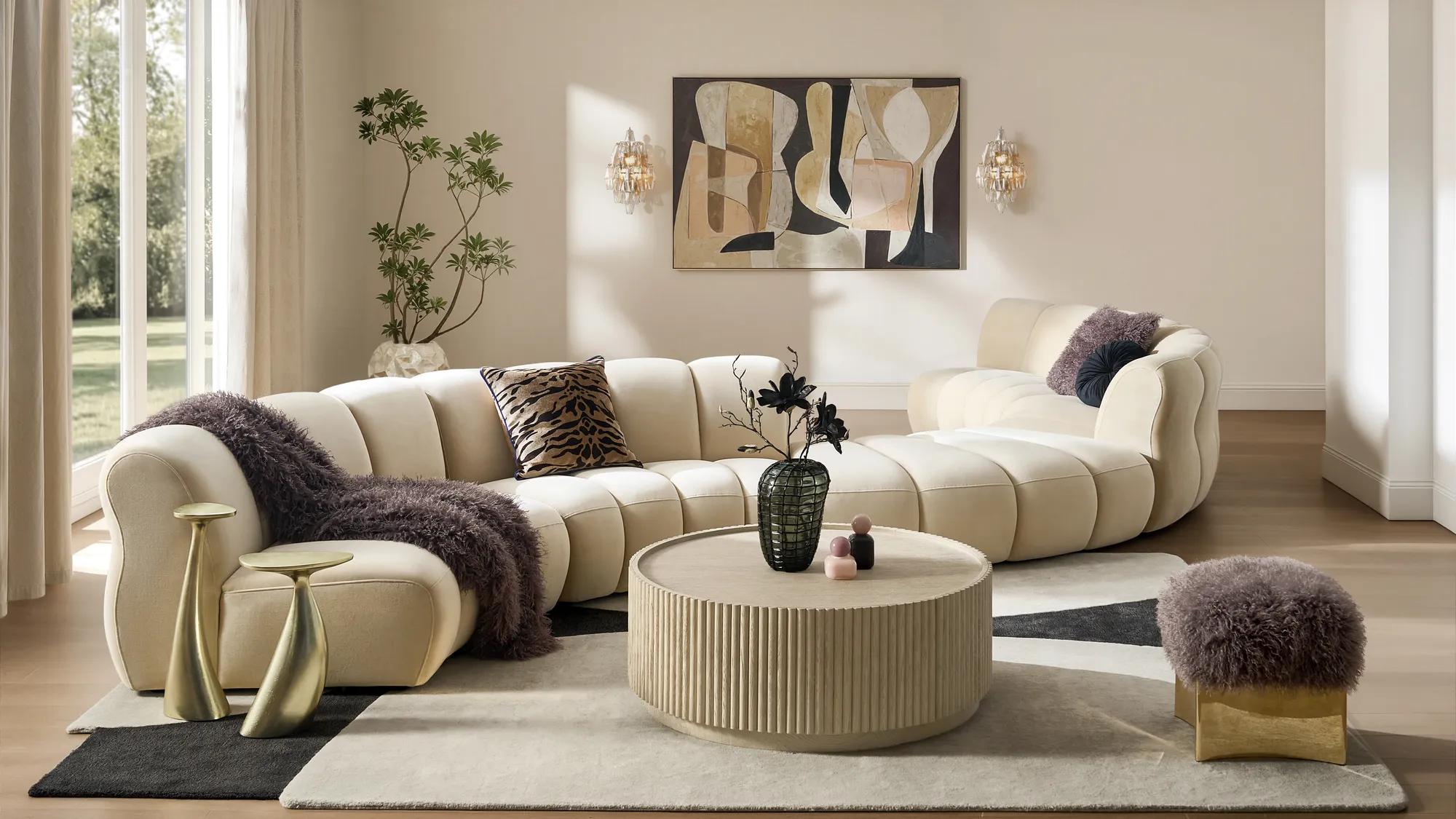
Place one stool where a chair would be too much
A sculptural accent stool beside a sofa adds a seat without building a wall of upholstery. The Loopie Velvet Stool has the kind of curved, unexpected silhouette that reads as an object when it is not occupied, especially in Fig, Oatmeal, or Ocean Teal.
Let it do more than sit
An accent stool can become a footrest, a perch, or a side surface with a tray, then move across the room when guests arrive. That mobility is its real advantage. The room stays composed, but never fixed.
Pair, do not crowd
Two matching stools tucked beneath a console or placed near the hearth create symmetry and useful reserve seating. Pull them apart when the room is full. Push them back when the room wants its negative space again.
Explore accent stools and ottomans for a living room that can change without looking improvised.
Let the smallest seat carry the biggest texture
Benches and accent stools are the safest place in a room to take a material risk. Their scale keeps velvet, faux fur, long pile, animal pattern, and shine from becoming too insistent, while their function prevents the gesture from feeling decorative for decoration’s sake.
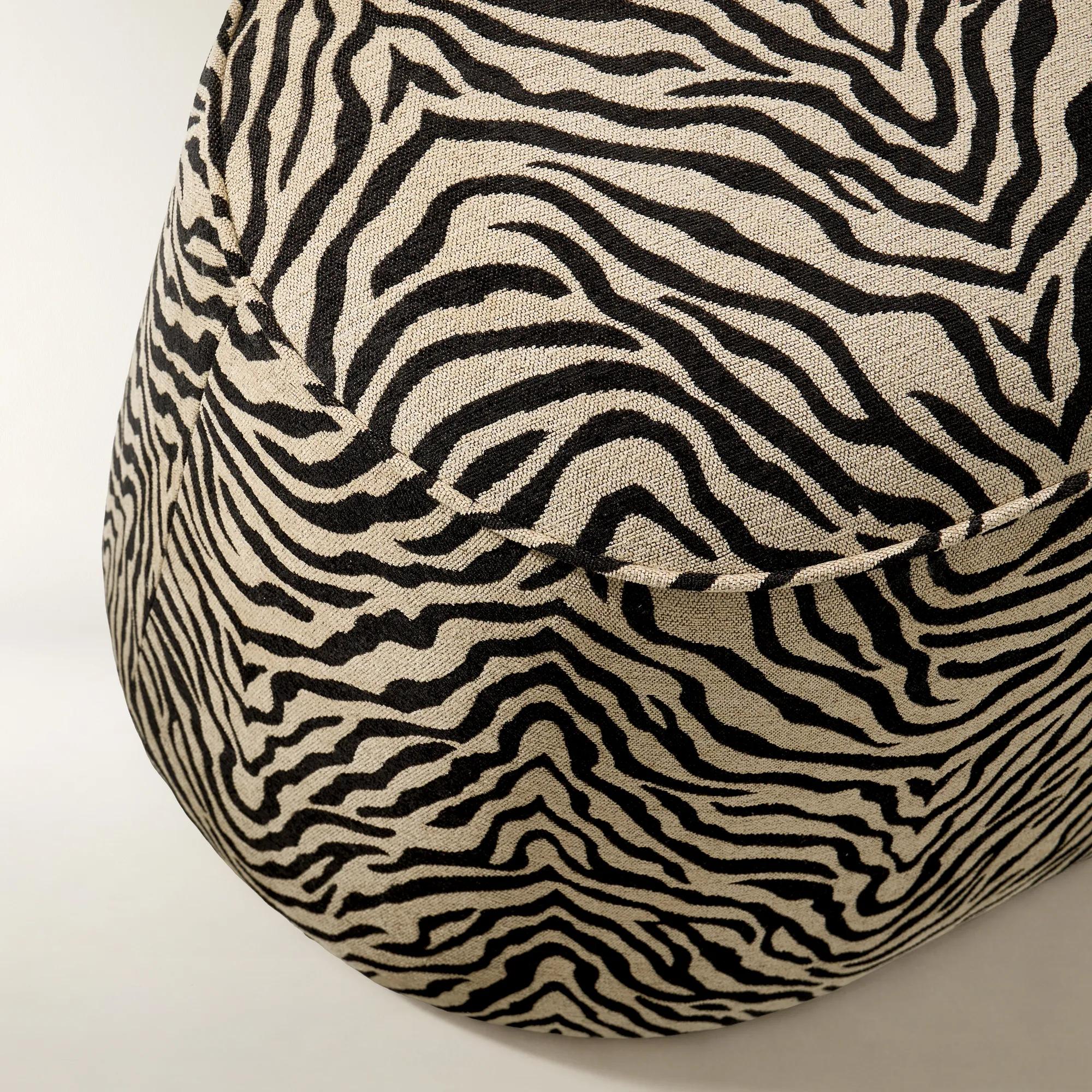 Small furniture can carry strong texture without overwhelming the room.
Put velvet where the room needs depth
Velvet changes with the light, so a compact seat can add dimension even in a restrained palette. Kendra, Vanta, Dexter, Loopie, and Reims each bring that material into a different silhouette or color story. One is enough to make the room feel layered.
Use faux fur as a controlled interruption
The Lush Faux Fur Stool in White can soften dark wood and graphic art; Plum Truffle can deepen a room already working in fig, brown, or black. Keep the pieces around it more tailored so the texture remains the event.
Explore the FW26 bench and stool edit through texture, color, and silhouette.
Style the silhouette, then protect the path
A compact piece can still be badly placed. The room should feel more flexible after the bench or stool arrives, not as though everyone has been assigned a new obstacle course.
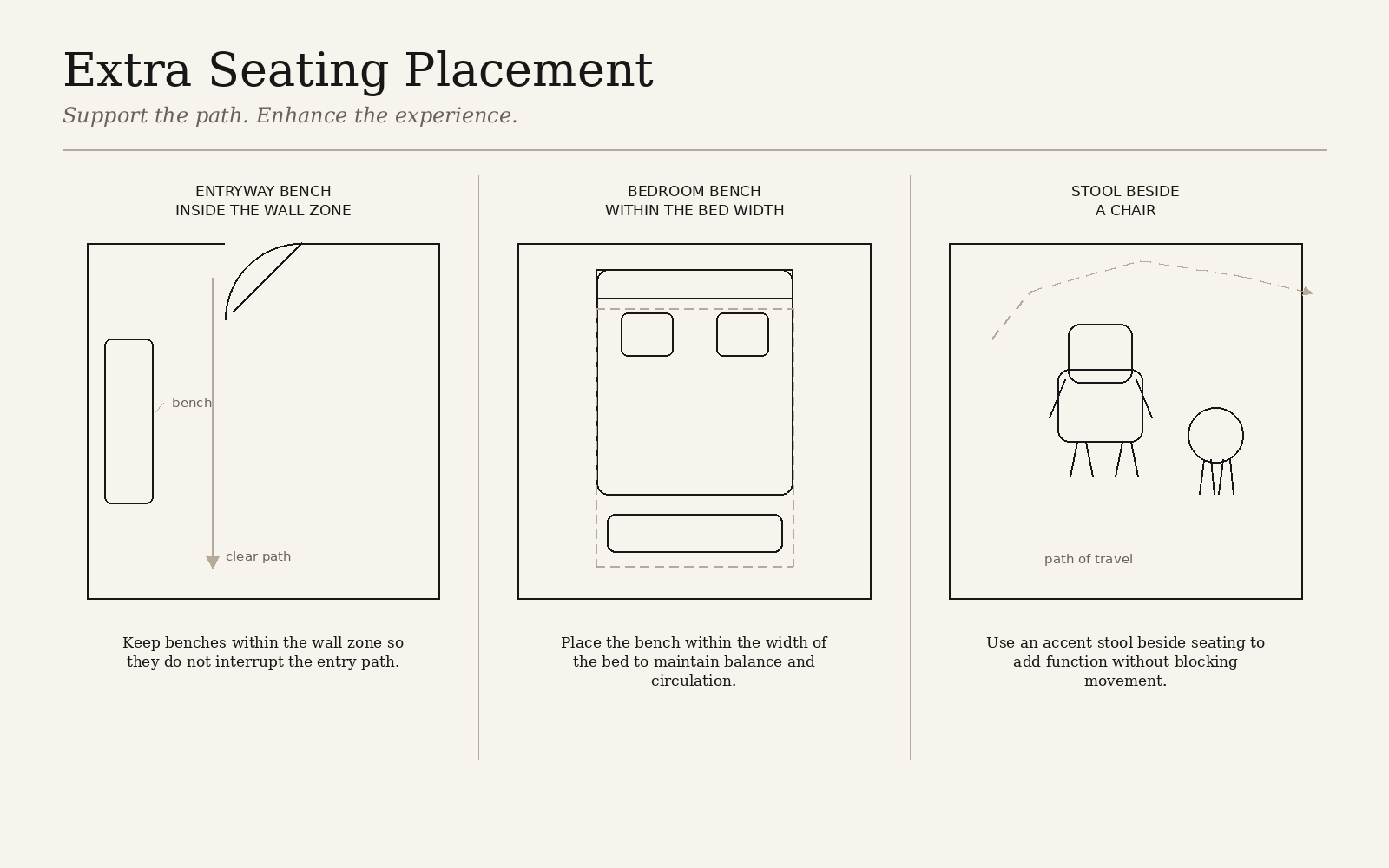
Extra seating should support the path through the room.
Match scale to architecture. A broad wall can support an extended bench; a narrow passage needs a shorter profile. Under a window, keep the bench lower than the sill so the opening remains visually clear. At the foot of a bed, the seat should read as part of the bed composition, not as a barrier across the room.
Keep an accent stool within reach, not in the route. Park it beside the arm of a chair or just beyond the main walkway, close enough to pull forward but far enough that circulation stays obvious. Useful furniture should not require a warning label.
Use pattern once. A zebra bench can be the room’s graphic note, then repeat black, ivory, or a curved line elsewhere rather than adding another animal print. Repetition should create rhythm, not evidence.
Repeat shape, not the whole piece. A rounded stool can answer the curve of a sofa, mirror, or lamp without matching it. This gives the room continuity while keeping the composition collected.
Then edit
Remove the basket that no longer has a purpose, the side table the stool has replaced, or the decorative object competing with the bench.
Stylist Note
The extra seat earns its place by making the room work harder, not by giving the room one more thing to style.
Benches and accent stools FAQs
Where should a bench go in a bedroom?
The foot of the bed is the most natural placement, provided the bench stays within the bed’s width and below the mattress line. It can also sit beneath a window or along a blank wall when the room needs a reading or dressing perch.
How do you style an entryway bench without making it feel crowded?
Give it one strong wall companion and leave part of the seat open. A large artwork or mirror, one floor-level object, and a clear stretch of upholstery will feel more polished than a row of small accessories.
Can an accent stool be used as a side table?
Yes, an accent stool can serve as a side table when its surface is stable or topped with a tray. Place it beside a chair or sofa arm, and keep anything breakable away from the edge if the stool will also be moved for seating.
Should benches and stools match the rest of the furniture?
No. Benches and accent stools should relate through one element, such as color, curve, texture, or finish, rather than duplicate the room. A contrasting piece often looks more deliberate because it gives the eye a clear reason to stop.
One more seat, one stronger room
The best extra seating does more than wait for company. It gives an entryway a center, a bedroom a finished edge, a living room more freedom, and an entertaining space a graceful backup plan. Style benches and accent stools with the same attention given to larger furniture, and their small scale becomes an advantage: expressive, useful, and entirely room-defining.
Not sure where the extra seat belongs? The Design Services team can help refine the placement and build the room around it.
The FW26 pieces from this guide are collected below, or explore the full benches and ottomans category to continue the story.