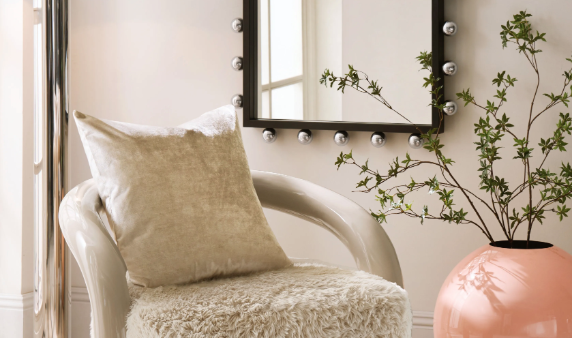
Decorative pillows might seem like small accessories, but in the hands of a designer, they become one of the most transformative tools in home décor. With a few well-chosen cushions, you can shift a room’s energy, tie together a color palette, or add texture and depth—no paintbrush or renovation required. Whether you’re craving a seasonal refresh, experimenting with patterns, or aiming for that effortless, magazine-worthy look, the right pillow styling can instantly elevate your space. In this ultimate guide, we’ll break down the principles, tricks, and insider tips that make even the simplest arrangement feel curated and intentional.
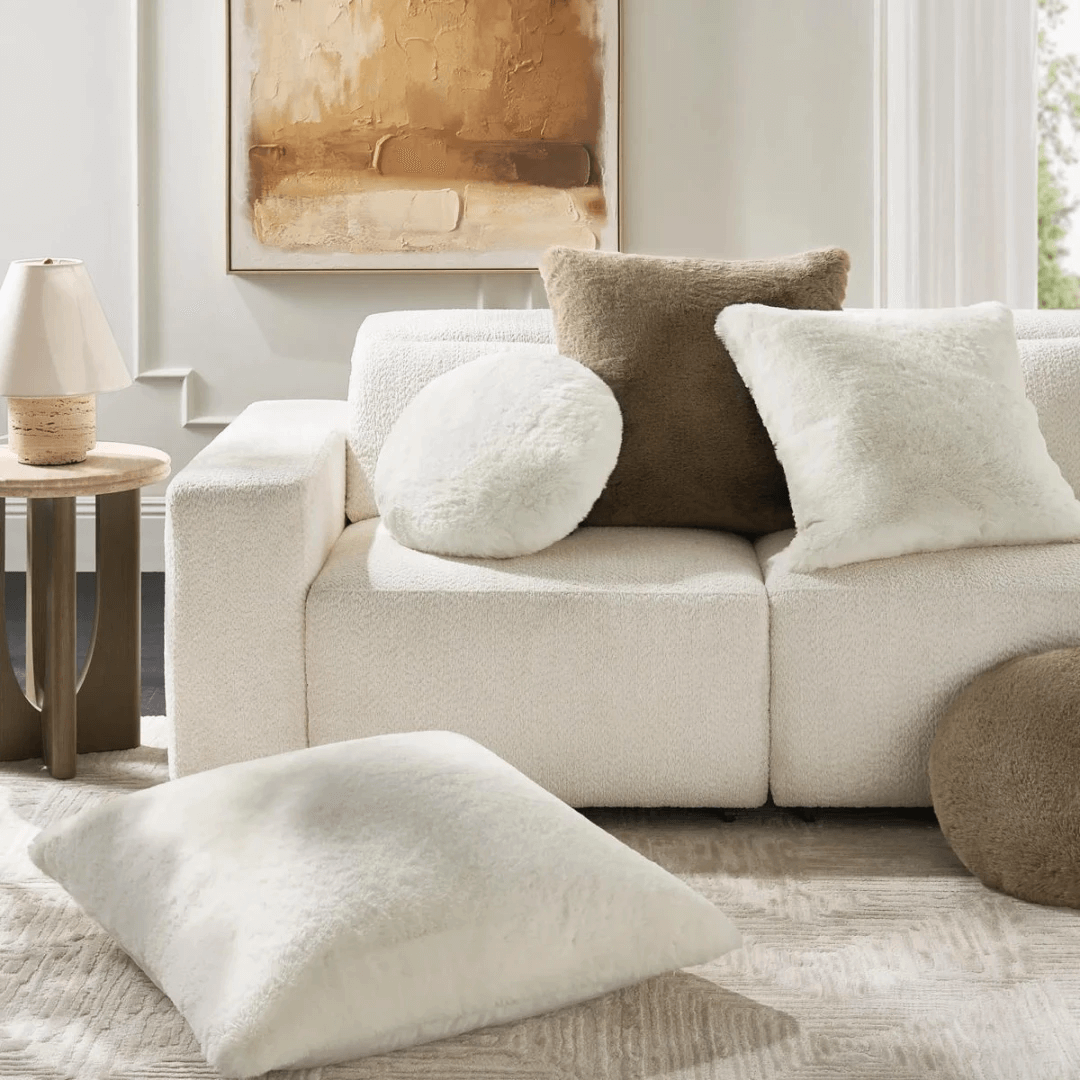
The Ultimate Guide to Styling Decorative Pillows Like a Designer
There’s a reason decorative pillows appear in almost every magazine spread, showroom vignette, and Pinterest board: they deliver instant color, shape, and personality without requiring paint cans, power tools, or a five-figure renovation budget. Swap a few covers and you can shift a room’s mood from coastal calm in July to chalet coziness in January in under ten minutes. This guide shows why pillows matter, lays out designer-approved principles, offers room-by-room formulas, and ends with real-life scenarios—proving great styling is less about strict rules and more about confident rhythm.
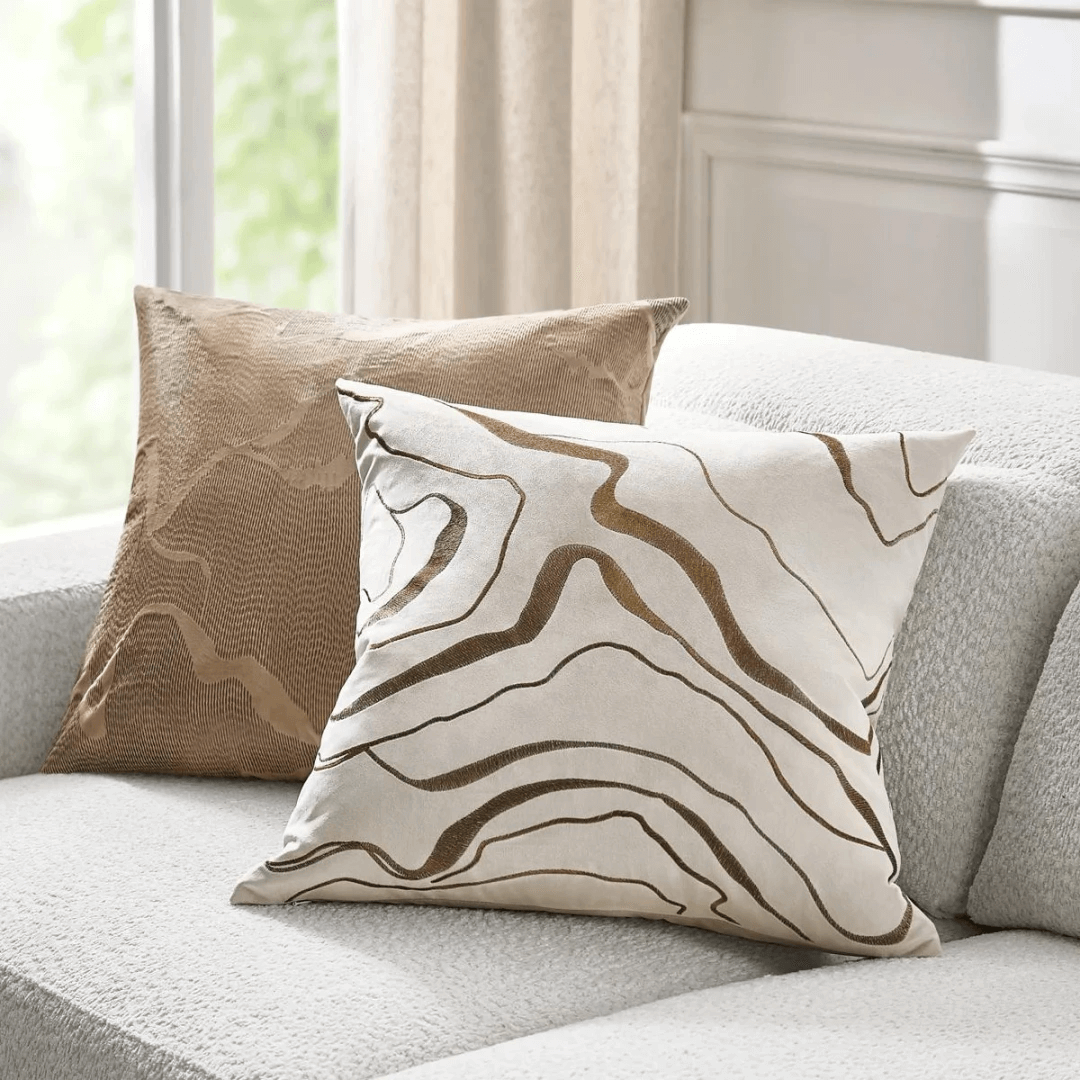
Why Pillows Matter More Than You Think
A sofa without cushions looks unfinished; a bed without accents feels flat; a window seat without softness rarely entices anyone to linger over coffee. Small but mighty, pillows soften hard edges, echo art or rug colors, and add tactile dimension that paint alone can’t provide. Because they’re easy to swap, you can test-drive trends—bouclé this season, velvet next—without regret. Think of pillows as a room’s jewelry: modest in scale, enormous in impact, and unbelievably versatile.
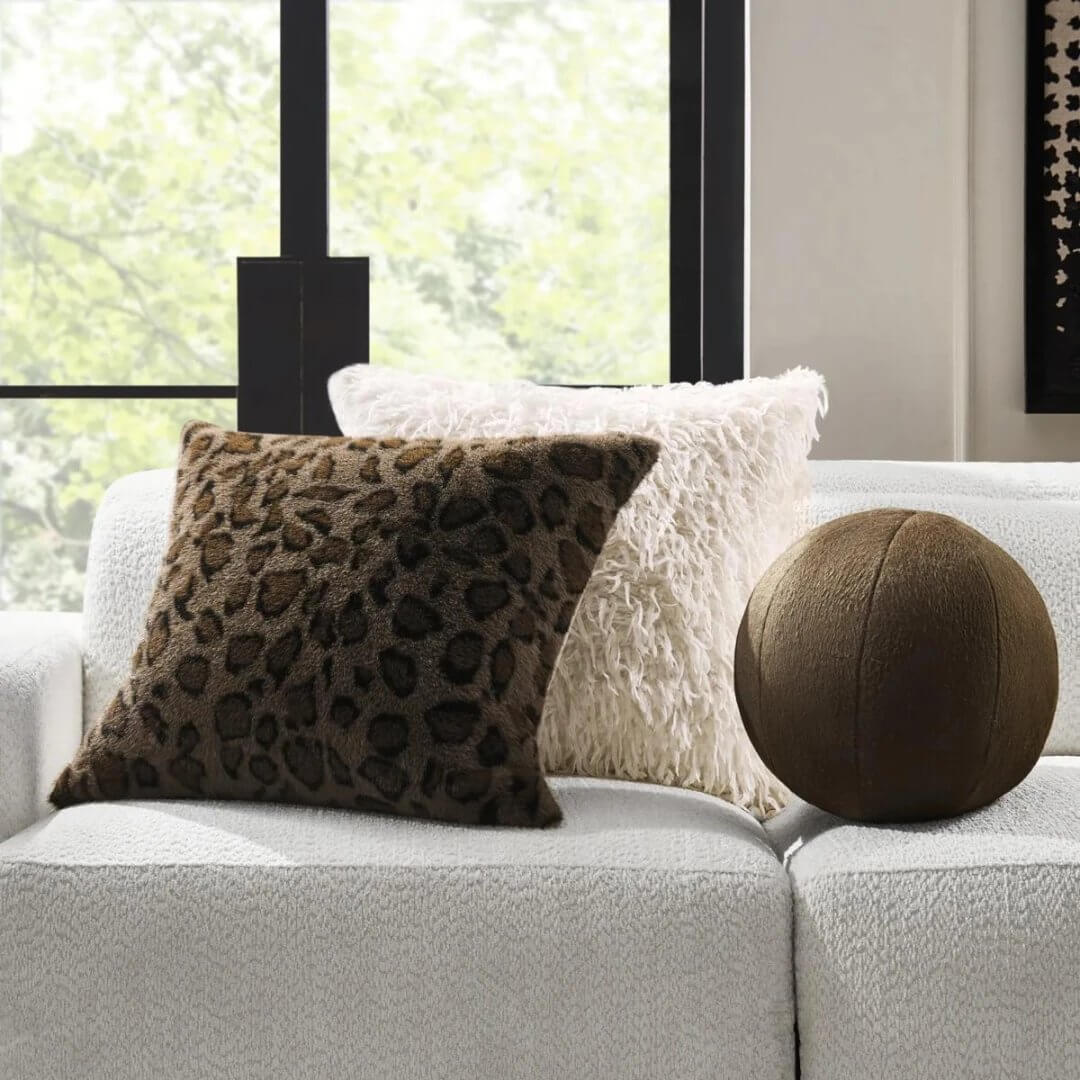
Five Core Principles Every Stylist Swears By
1. Anchor With Scale
Begin with two oversized 22- to 24-inch squares at the outer corners of a sofa or flanking a headboard. Generous inserts establish proportion and prevent the dreaded “floating” look. Down-blend fills keep loft longer than basic poly-fill and allow for that satisfying designer “chop.”
2. Layer Color With Intention
Pull two or three hues from something permanent—your rug, artwork, or drapery. On a charcoal sectional, camel, slate, and cream feel refined; in a coastal cottage, sea-glass, soft sand, and crisp white strike an airy note. Aim for harmony, not uniformity.
3. Mix Patterns Confidently
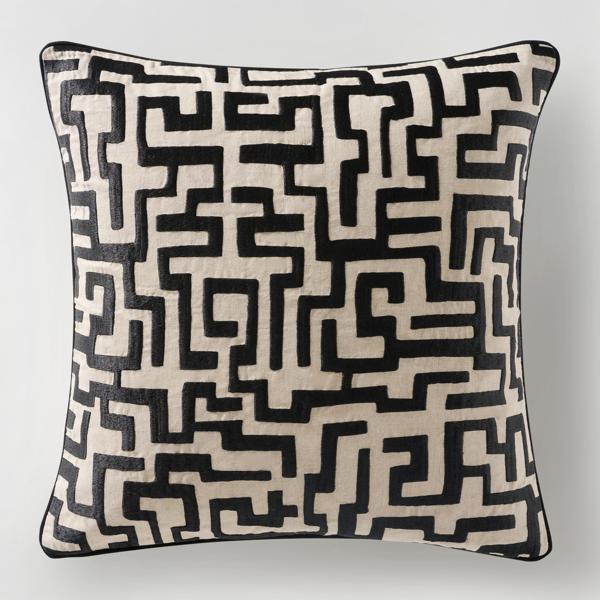
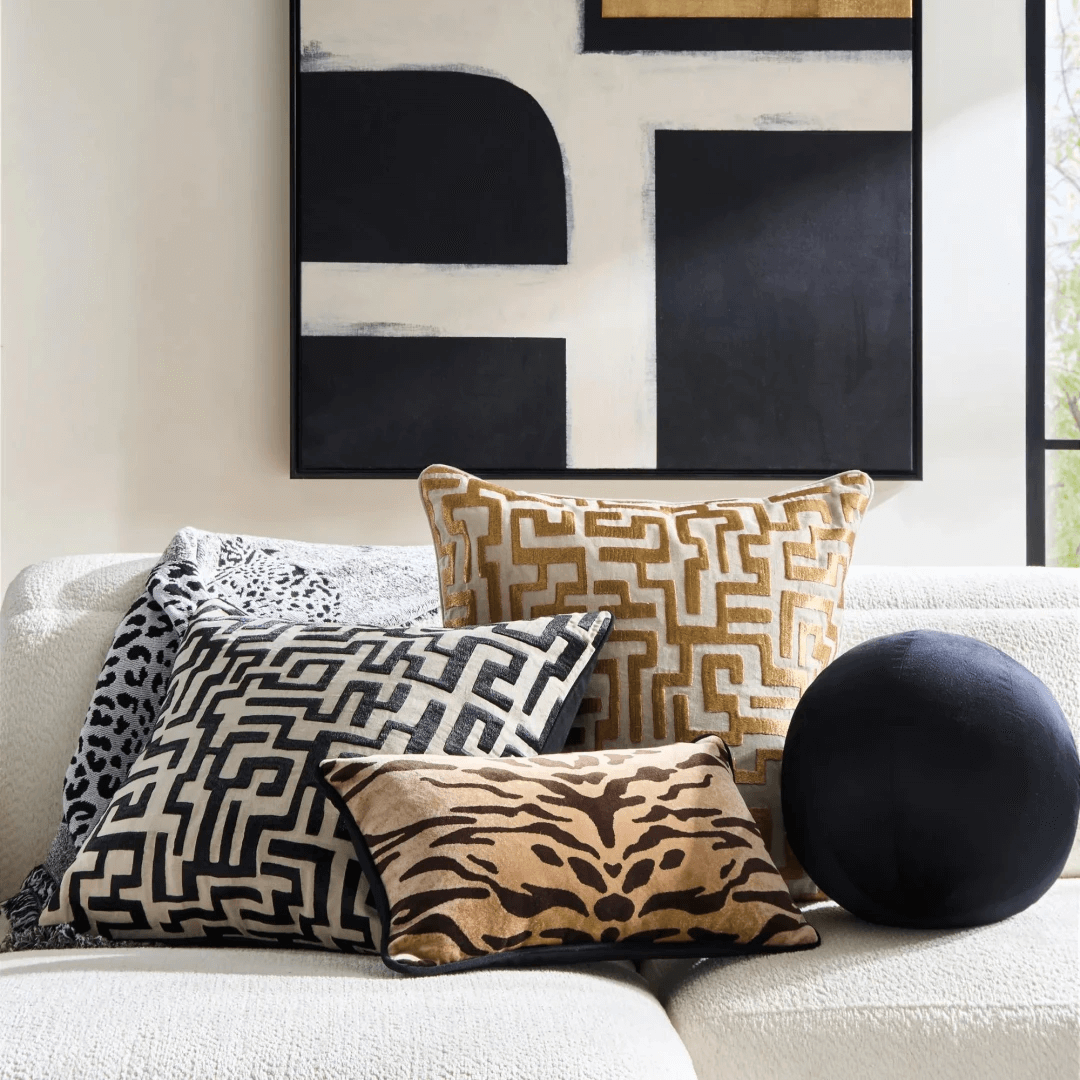
Follow the 60-30-10 guideline: 60 % solid or subtle texture, 30 % medium-scale pattern, 10 % bold print. Vary motif size so designs complement instead of compete. A broad brush-stroke stripe paired with petite houndstooth and a plush velvet keeps the eye moving.
4. Celebrate Texture
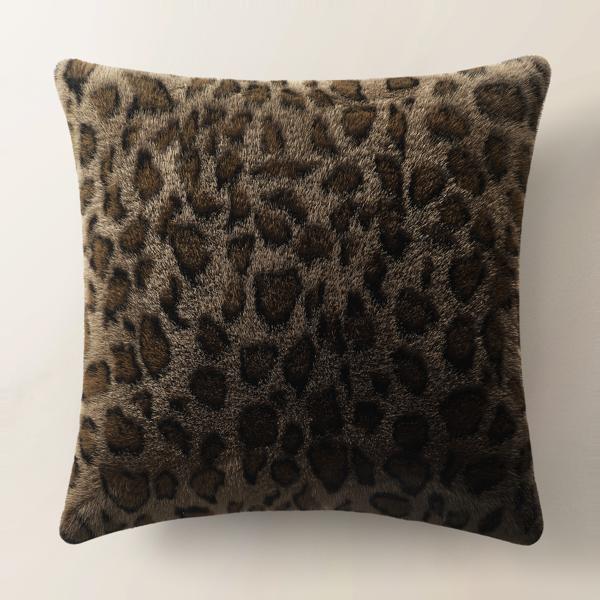
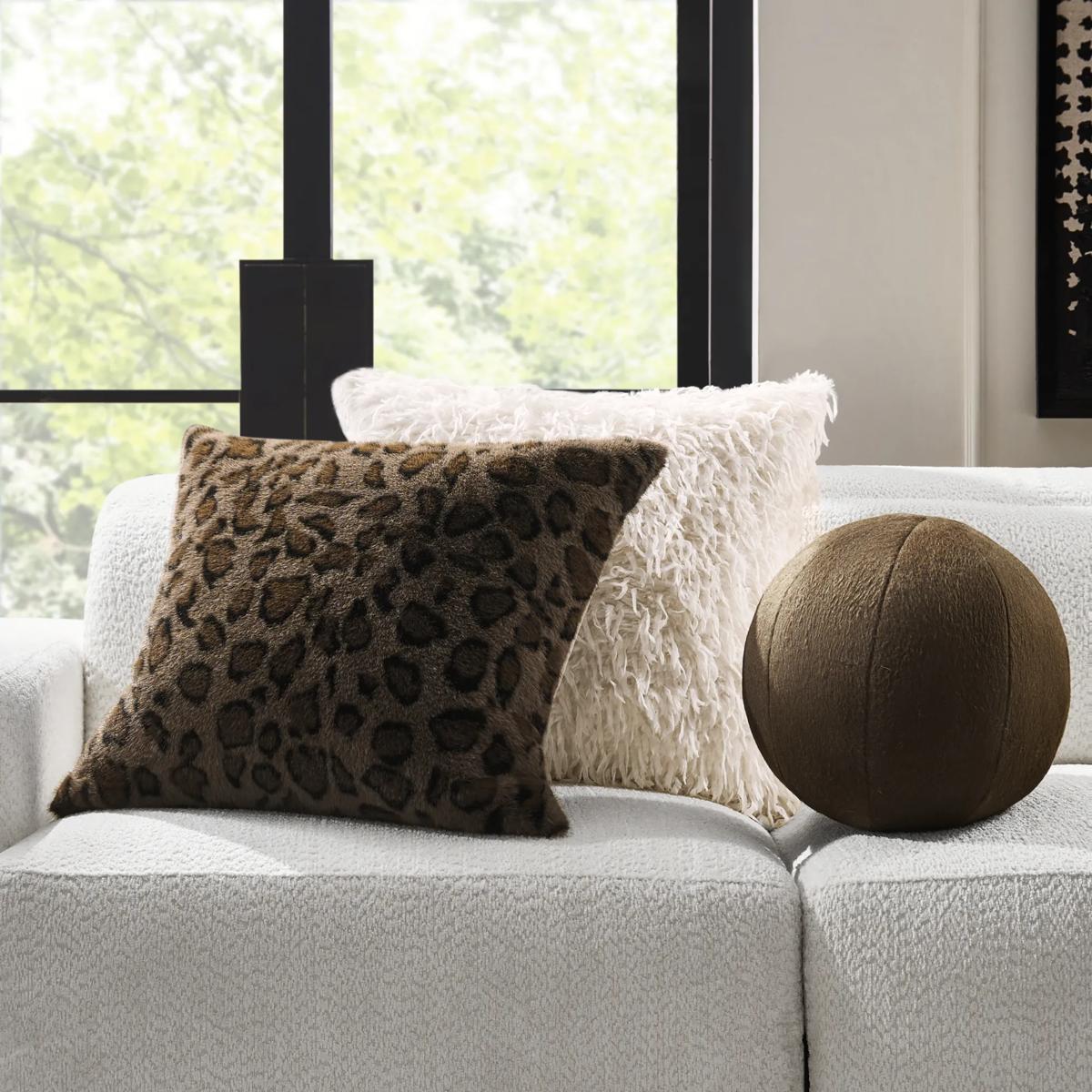
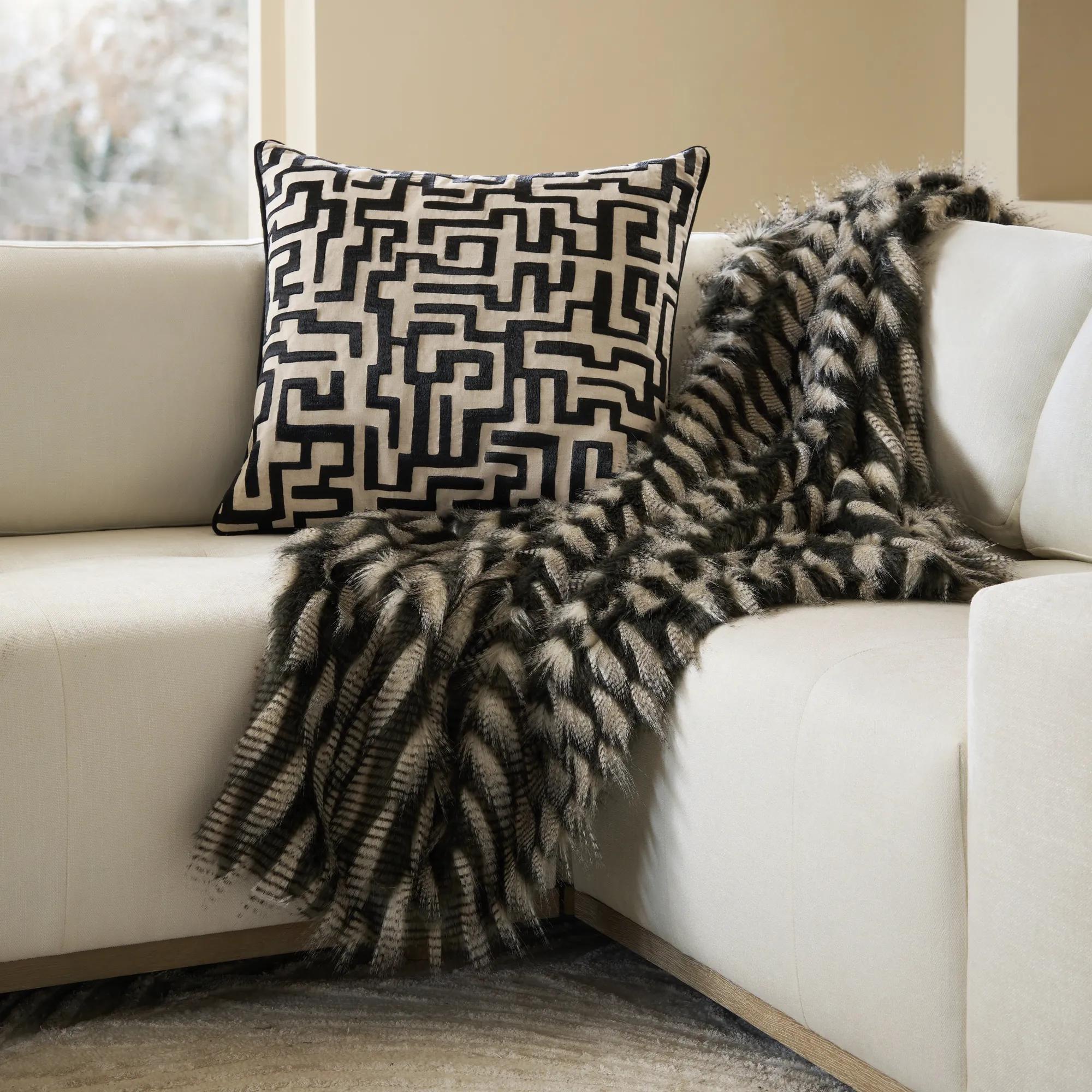
Texture is the secret sauce that turns neutrals into something special. Combine at least three distinct hand-feels—think bouclé, silk velvet, stone-washed linen—so even a monochrome arrangement reads as layered and luxe.
5. Mind the Numbers
Odd numbers (three, five, seven) feel relaxed and organic; even numbers read formal. A standard three-seat sofa loves five cushions, while a king bed shines with seven, layered tallest to smallest.
Room-by-Room Styling Recipes
Living Room
Goal: Conversation-ready chic
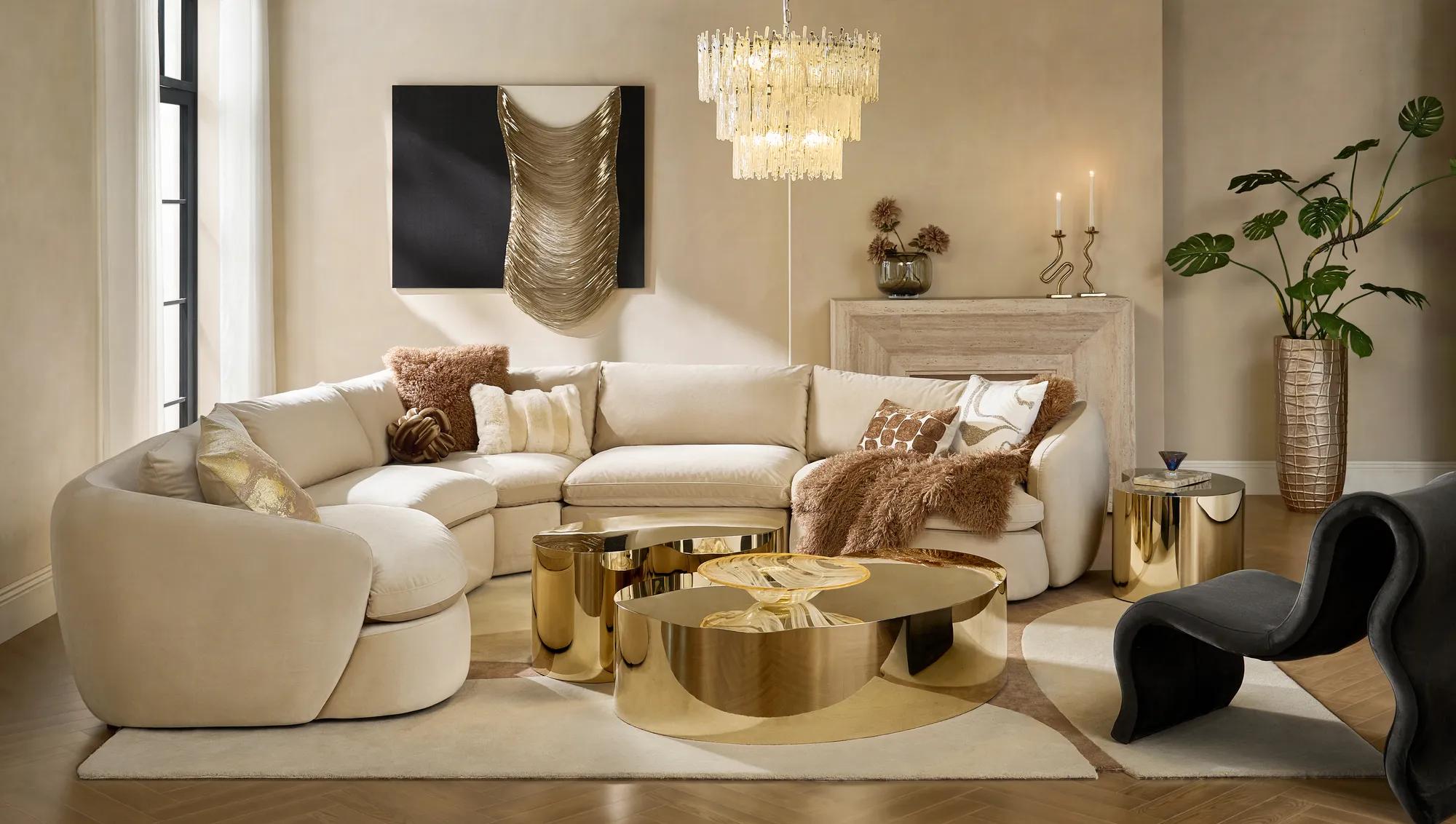
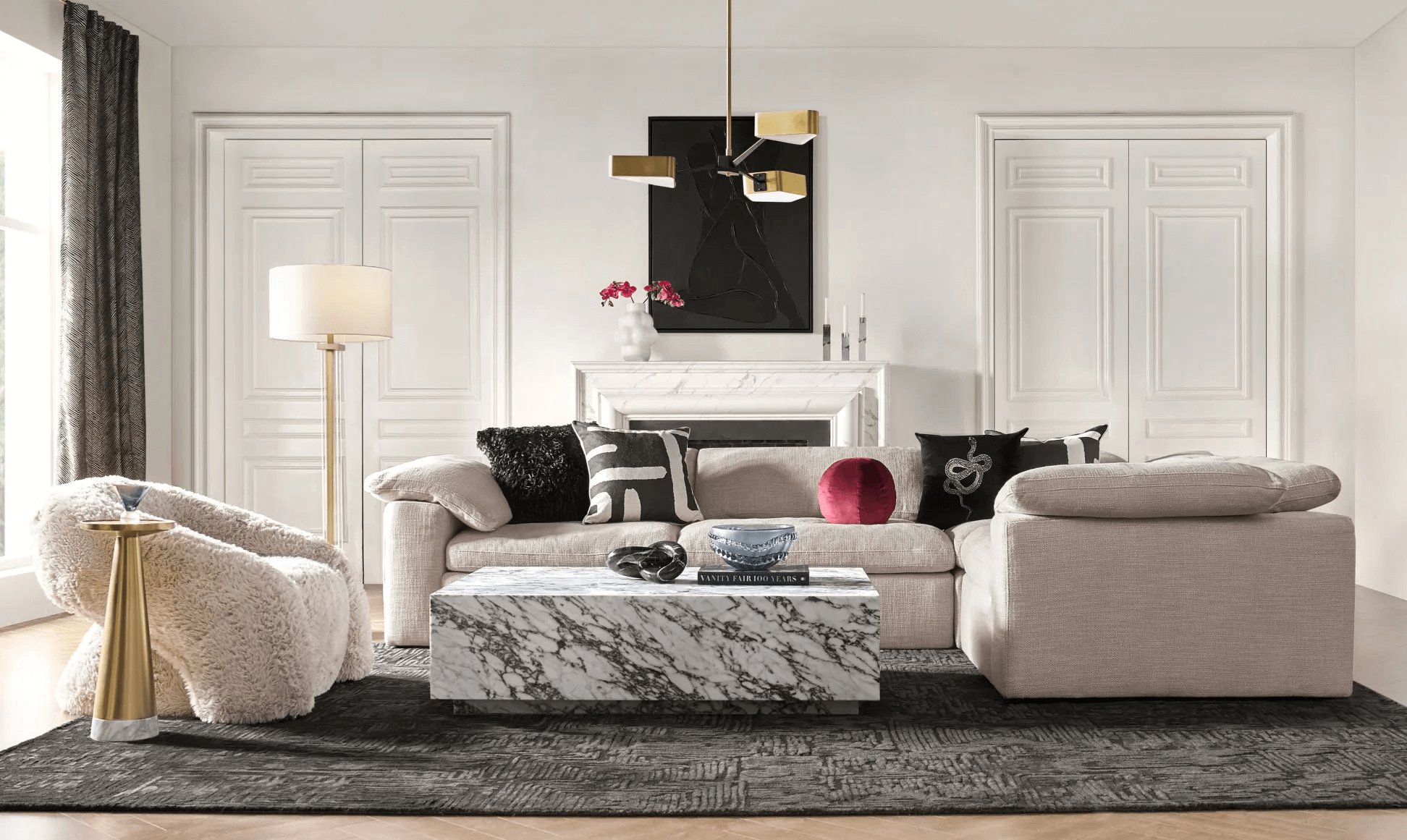
Formula: Two cream chenille 24-inch squares + two 20-inch rust linen squares + one 12 × 20 striped lumbar. Warm rust echoes artwork, while the stripe breaks symmetry and ties in the rug border.
Bedroom Retreat
Goal: Boutique-hotel calm
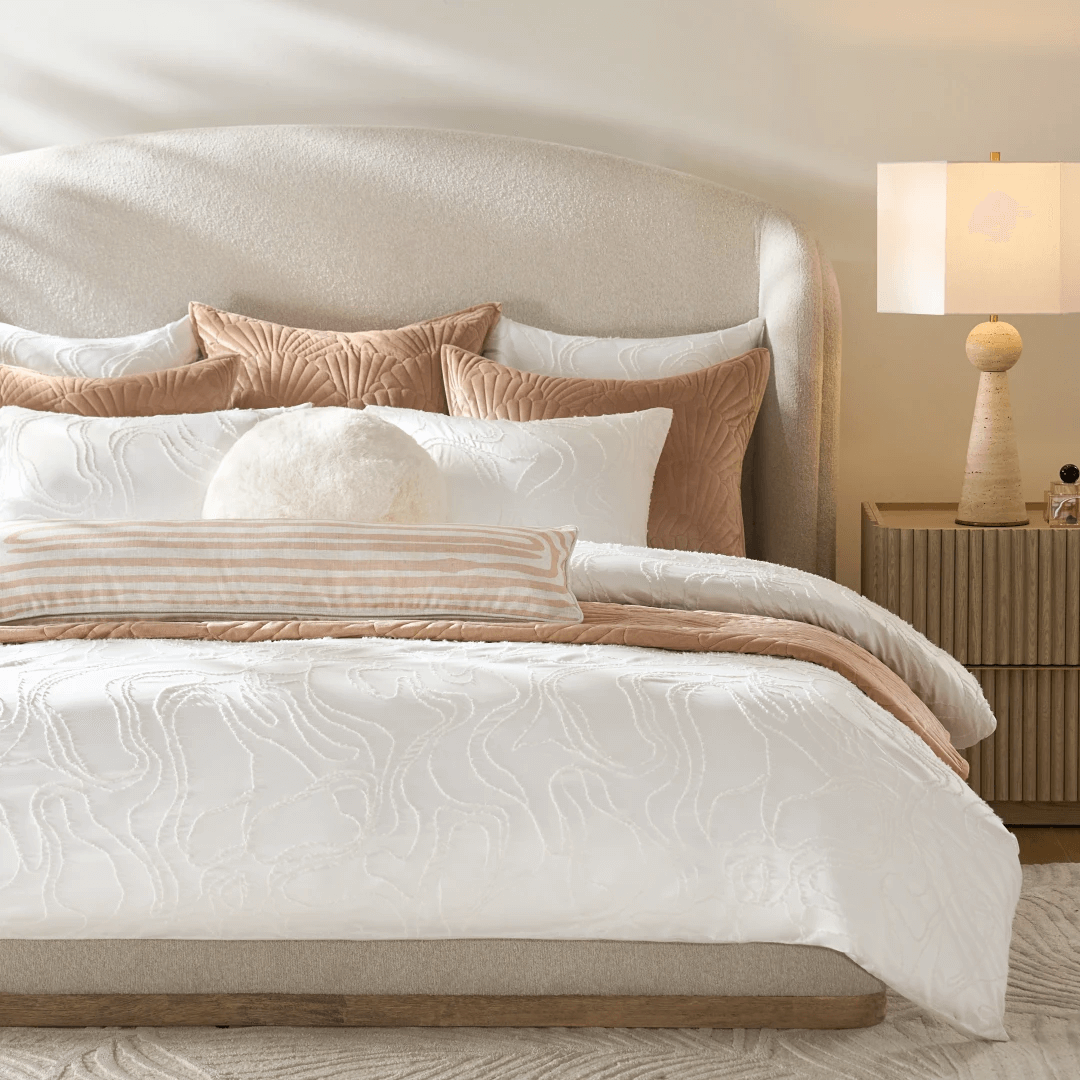
Formula: Three ivory matelassé Euro shams, two muted sage silk standards, one cylindrical botanical bolster. Sage pulls from leafy wall prints, and the bolster delivers tailored polish.
Outdoor Lounge
Goal: Resort vibes—minus airfare
Formula: Two UV-resistant navy canvas squares, two ivory geometrics, one nautical lumbar. Quick-dry inserts defeat mildew, while navy-and-ivory feels timelessly coastal.
Nursery or Kids’ Nook
Goal: Soft, safe, imagination-friendly
Formula: One hypoallergenic cloud-shaped cushion, two pastel cotton squares. Skip buttons a child might tug off; machine-washable covers are sanity savers.
Home Office
Goal: Zoom-ready professionalism
Formula: One abstract-art pillow as focal point, two tonal solids that match wall color. Instant backdrop upgrade—no paint roller required.
Entry Bench
Goal: Warm welcome
Formula: Two linen squares and an embroidered lumbar with your family monogram. Guests feel invited before you even say hello.
Sustainable & Ethical Choices
Eco-minded decorators increasingly demand organic cotton, recycled-PET fill, and Responsible Down Standard feathers. Look for OEKO-TEX®, GOTS, or RDS labels to verify green claims. Z Gallerie’s Eco-Luxe line uses post-consumer polyfill and plant-based dyes, proving luxury and responsibility can coexist beautifully.
Care, Cleaning & Storage
-
Weekly: Fluff to redistribute feathers and keep shapes crisp.
-
Seasonally: Vacuum covers on low suction; launder zip-offs per fabric code.
-
Annually: Air inserts in sunlight to neutralize odors naturally.
-
Storage: Slip covers off, fold with acid-free tissue, and store in breathable cotton bags—plastic traps moisture.
Budget Tiers: Where to Spend and Where to Save
| Tier | Price Range | What You Get | Ideal Shopper |
|---|---|---|---|
| Essential | $20–$50 | Polyfill; machine-wash cotton | Dorms & first apartments |
| Elevated | $60–$120 | Feather blend; designer prints | First-time homeowners |
| Luxe | $130–$250 | Pure down; hand-loomed fabrics | Design devotees |
| Heirloom | $300 + | Artisan embroidery; limited runs | Collectors & stylists |
Remember: inserts outlive covers. Invest in quality guts; rotate fabrics to stay on trend without breaking the bank.
Seasonal Swaps & Trend Forecast
Fall 2025: Cocoa brown meets burnished copper.
Winter 2025: Oversized cable-knit pairs with faux-mohair checks.
Spring 2026: Sorbet pastels meet sculptural quilting.
Summer 2026: Mediterranean tile prints on breezy linen dominate patios.
Swap just three covers per season to keep rooms fresh and Instagram-friendly.
Common Mistakes to Avoid
-
Pillow Overload: If you remove cushions every time you sit, edit ruthlessly.
-
One-Note Texture: All-linen may photograph flat; weave in velvet or wool for depth.
-
Floating Colors: Tie at least one pillow hue back to something else—art, rug, or drapes—so it feels intentional.
-
Ignoring Seat Depth: Deep sectionals swallow tiny pillows; petite accent chairs drown under 24-inch squares.
Real-Life Styling Scenarios
Urban Loft Makeover
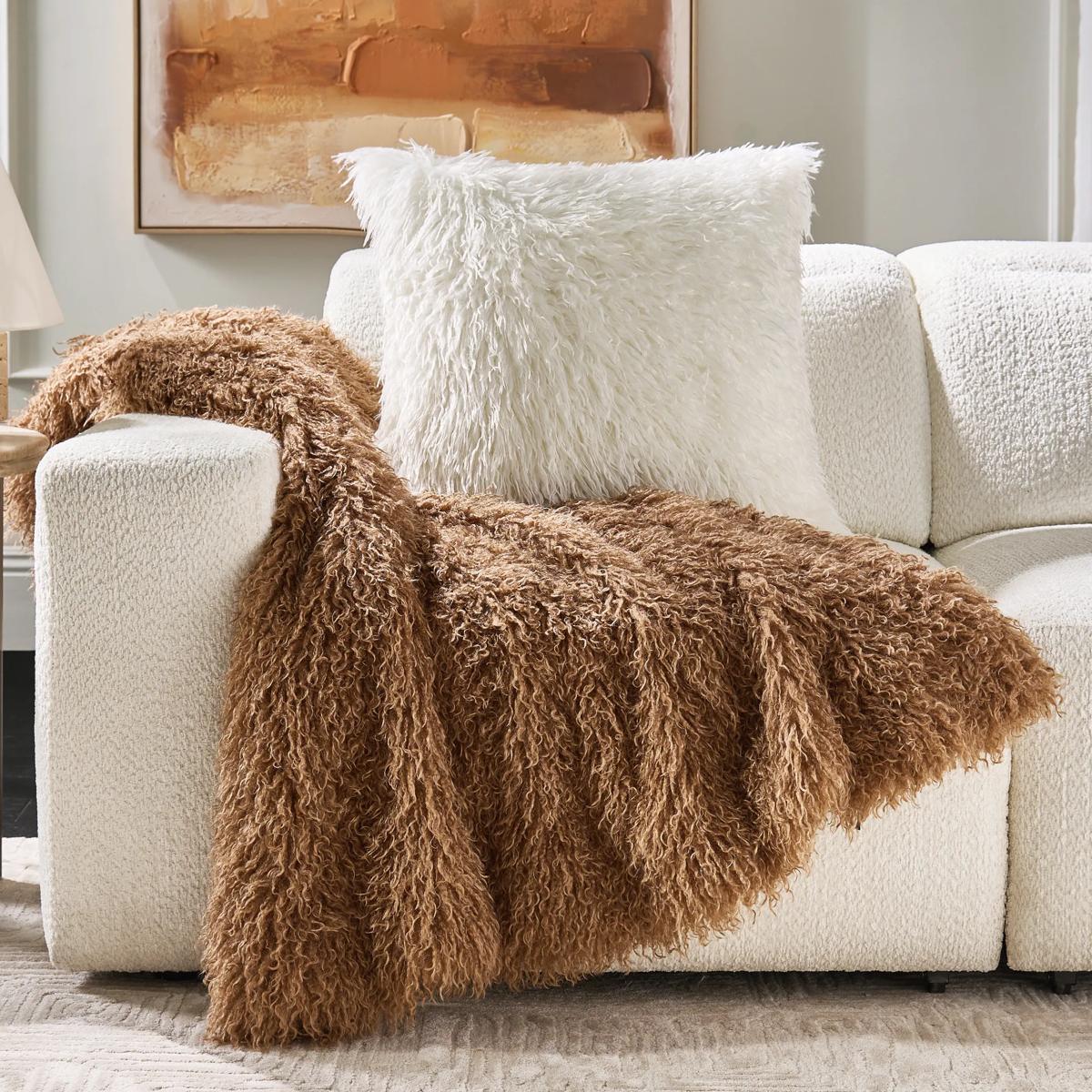
A pale-gray sectional felt nondescript until five cushions stepped in: cream velvet anchors, terracotta linen mids, and a flax-striped lumbar. A chunky knit throw unified the palette, while a brass tray mirrored rust tones back into the mix. Result? Editorial polish without a contractor.
Rental Refresh on a Budget
Landlord won’t let you paint? Swap pillow covers to sandy beige and sea-glass blue, add a jute rug, and suddenly the space screams boutique beach bungalow—no security deposit endangered.
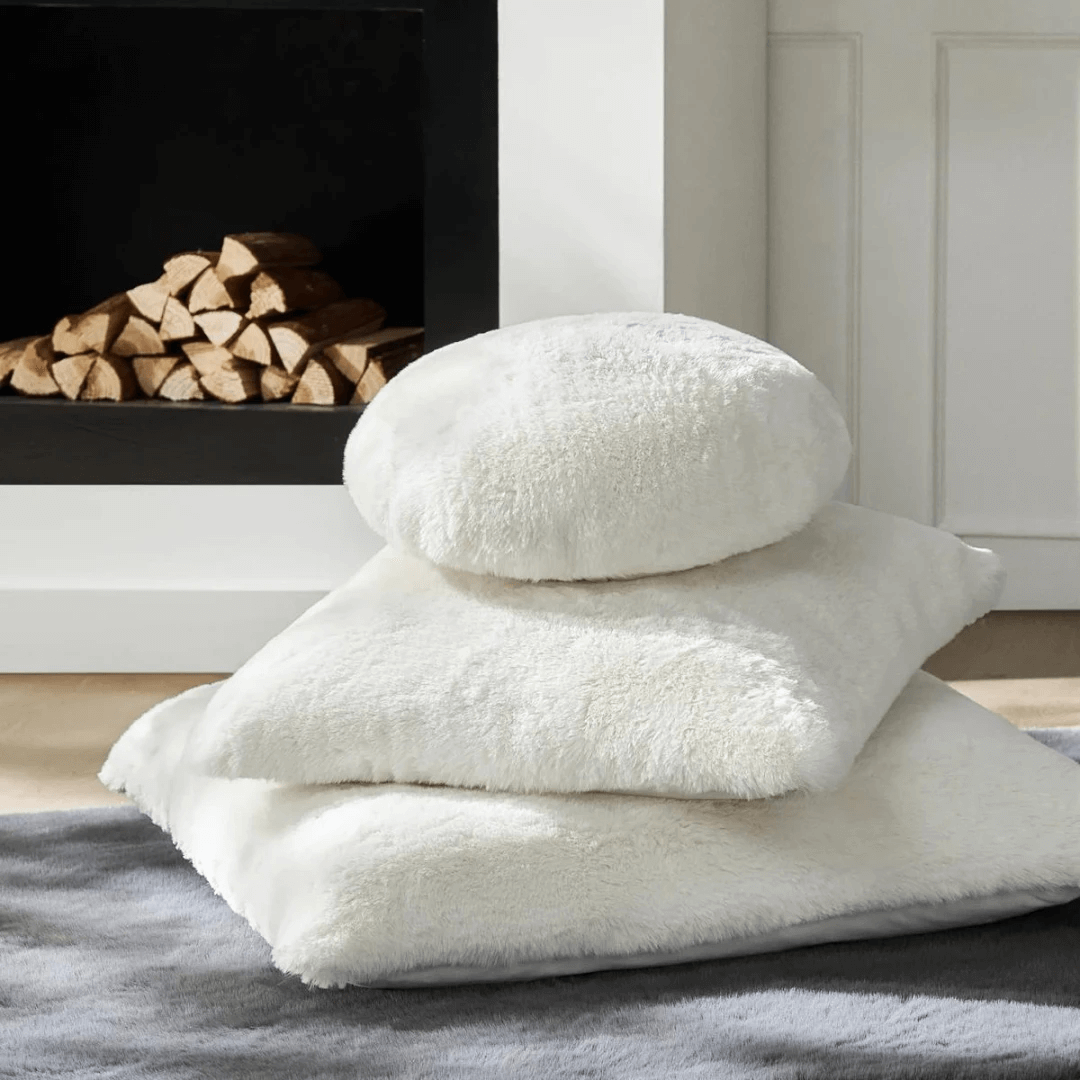
Choosing the Perfect Insert: Down, Down-Alternative, or Foam?
Selecting the right fill is just as important as picking the prettiest cover—after all, an under-stuffed cushion can sabotage even the chicest vignette.
-
100 % Down: The gold standard. Ultra-light clusters create that sink-in softness hotels are famous for. Because down naturally springs back, it holds the designer “chop” longer. The trade-off is price and the need to fluff weekly. Always look for Responsible Down Standard certification so your decorative pillows feel good ethically, too.
-
Down-Alternative: A hypoallergenic microfiber engineered to mimic down loft without feathers. It’s budget-friendly, machine-washable, and cruelty-free, making it ideal for kids’ rooms and rental properties. Choose a high-denier shell and you’ll still get a convincing karate-chop crease.
-
Memory-Foam or Poly-Cluster: Firm support that keeps its shape on high-traffic benches and entryways. If you prefer a crisp, un-chopped profile—or plan to lean on lumbar cushions while you read—this fill stands up to daily use. Just remember foam adds weight, so prop lighter pieces in front for balance.
A quick rule of thumb: if a pillow is for lounging, splurge on down or down-alternative; if it’s mainly for structure or outdoors, foam or cluster fiber will outlast the elements.
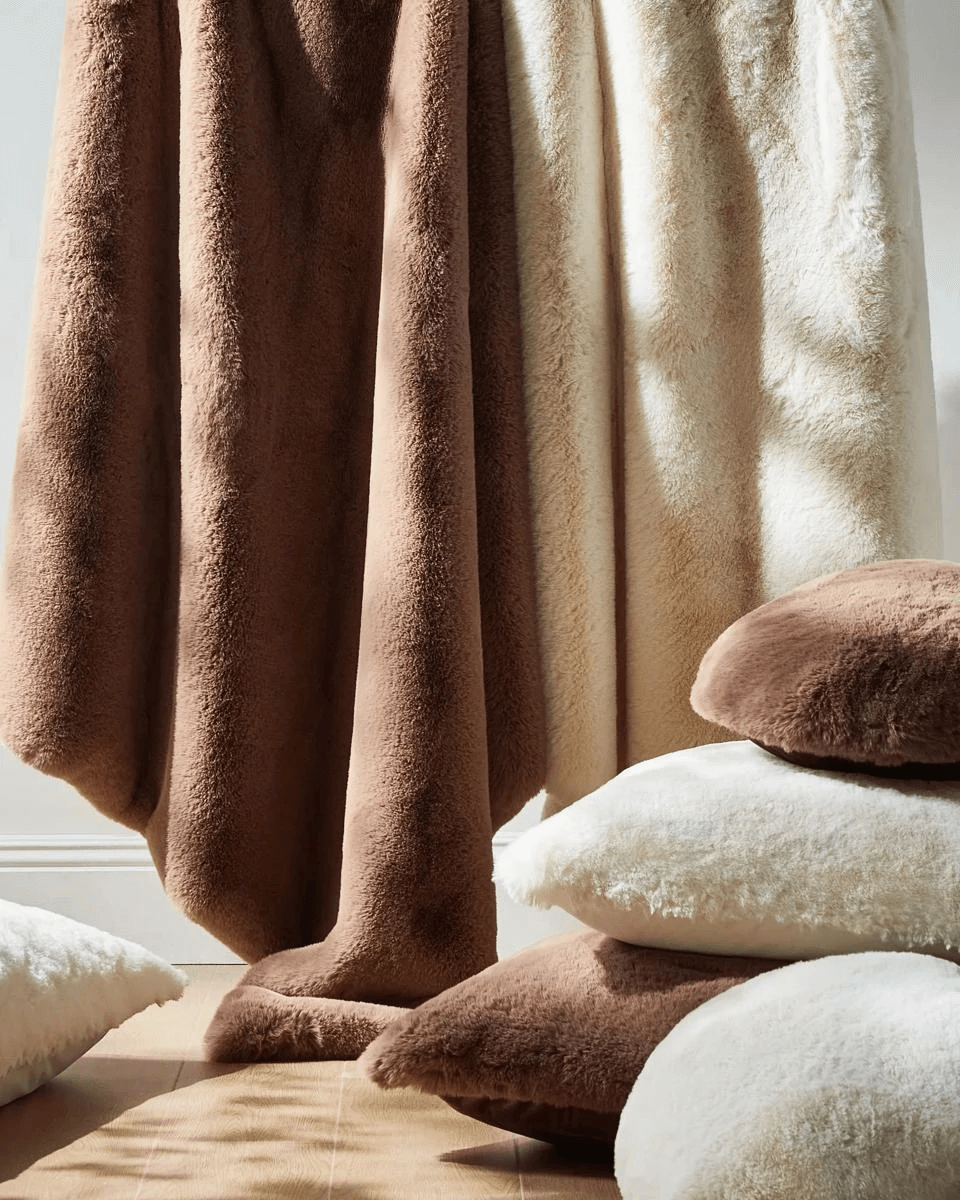
Two Five-Minute DIY Pillow Upgrades
-
Add a Hand-Tied Corner Tassel
Slip a length of baker’s twine or leather cord through each corner seam, knot, and trim the ends for instant boho flair—no sewing machine required. This tiny detail looks custom, especially on neutral linen covers. -
Stencil-and-Stamp Remix
Grab fabric paint plus a simple geometry stencil (think half-moons or stripes). Lay a flat cotton cover on cardboard, tap paint through the stencil, let dry, and heat-set with an iron. Suddenly last season’s solid becomes a one-of-a-kind art piece that plays nicely with your new patterned decorative pillows.
Both tricks cost under $5 and satisfy the urge to personalize without a full shopping spree—proof that creativity, not cash, is the real styling super-power.
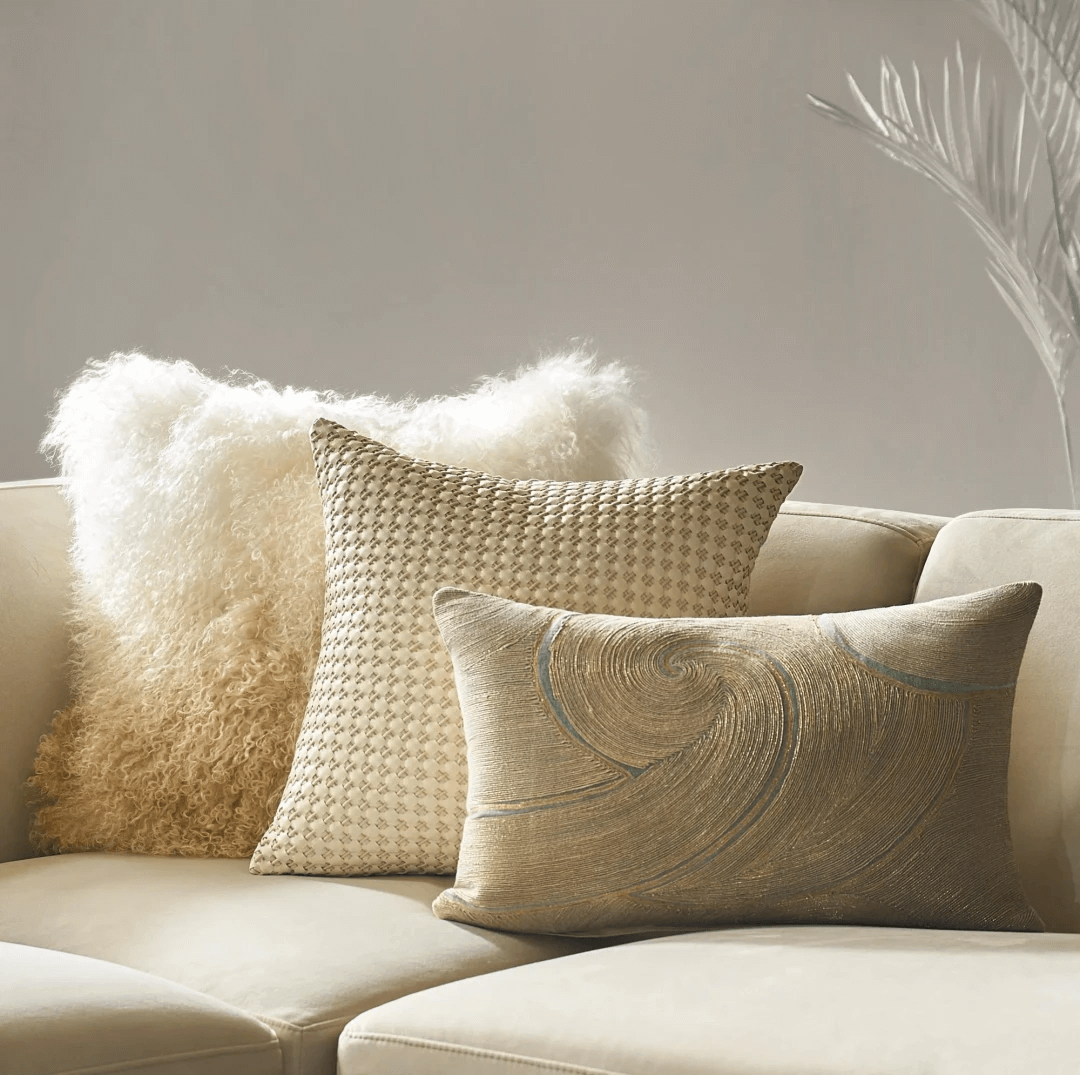
Final Thoughts
Mastering pillow styling is less about rigid rules and more about balanced playfulness. Anchor with generous scale, weave in complementary color, energize with pattern, enrich with texture, and sprinkle personal flair. Follow these guidelines and any sofa, chair, or bed transforms into a designer-level statement—faster than an app can schedule a contractor. Ready to experiment? Browse Z Gallerie’s latest arrivals; the right set of decorative pillows is the quickest, smartest makeover money can buy.
Frequently Asked Questions
How many decorative pillows belong on a three-seat sofa?
Five: two large, two medium, and one lumbar for focus.
Can I mix velvet and linen?
Absolutely rich meets relaxed equals depth.
What’s the best insert for allergies?
Hypoallergenic down-alternative mimics feather loft without allergens.
How often should covers be washed?
Every season, or immediately after spills.
Are round pillows dated?
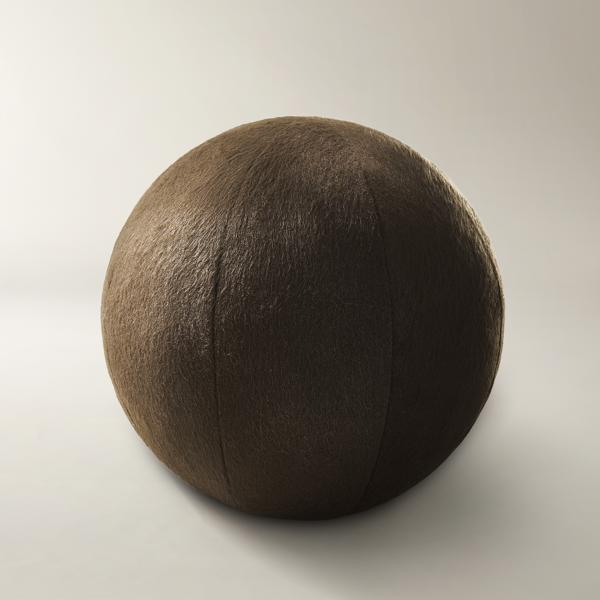
Not at all—use one to break up squares and lumbar for a sculptural twist.