A small living room asks more of you than a large one does, and that is exactly what makes it satisfying to get right. When there is no square footage to spare, every piece you bring in has to earn its keep, which is really just another way of describing good styling.
The advice you have heard a hundred times is to shrink everything, paint it white, and line the walls with furniture, and while that will technically make a small living room recede, it also drains out everything that made it yours. Making the room feel bigger while still feeling like you takes the opposite instinct, and the pieces and rules below are where that starts, from showing off the floor and moving light around to hiding the clutter that quietly eats your space and keeping a clear path to walk.
And you certainly do not have to go beige to go big, because a small footprint is no reason to hold back on color, shine, or a little drama.
In this guide
- The small-space playbook
- Start with the right seating
- Reflect and see through it
- Make every piece work twice
- Draw the eye up
- Get the spacing right
- Small living room FAQs
The Small-space playbook
| The Tactic | Why it Works | What to Shop For |
|---|---|---|
| Float the sofa and choose legs over a skirt | Visible floor reads as more room | Modular sectionals, leggy sofas |
| Hang a large mirror opposite a window | Reflects light and doubles the sightline | Floor mirrors |
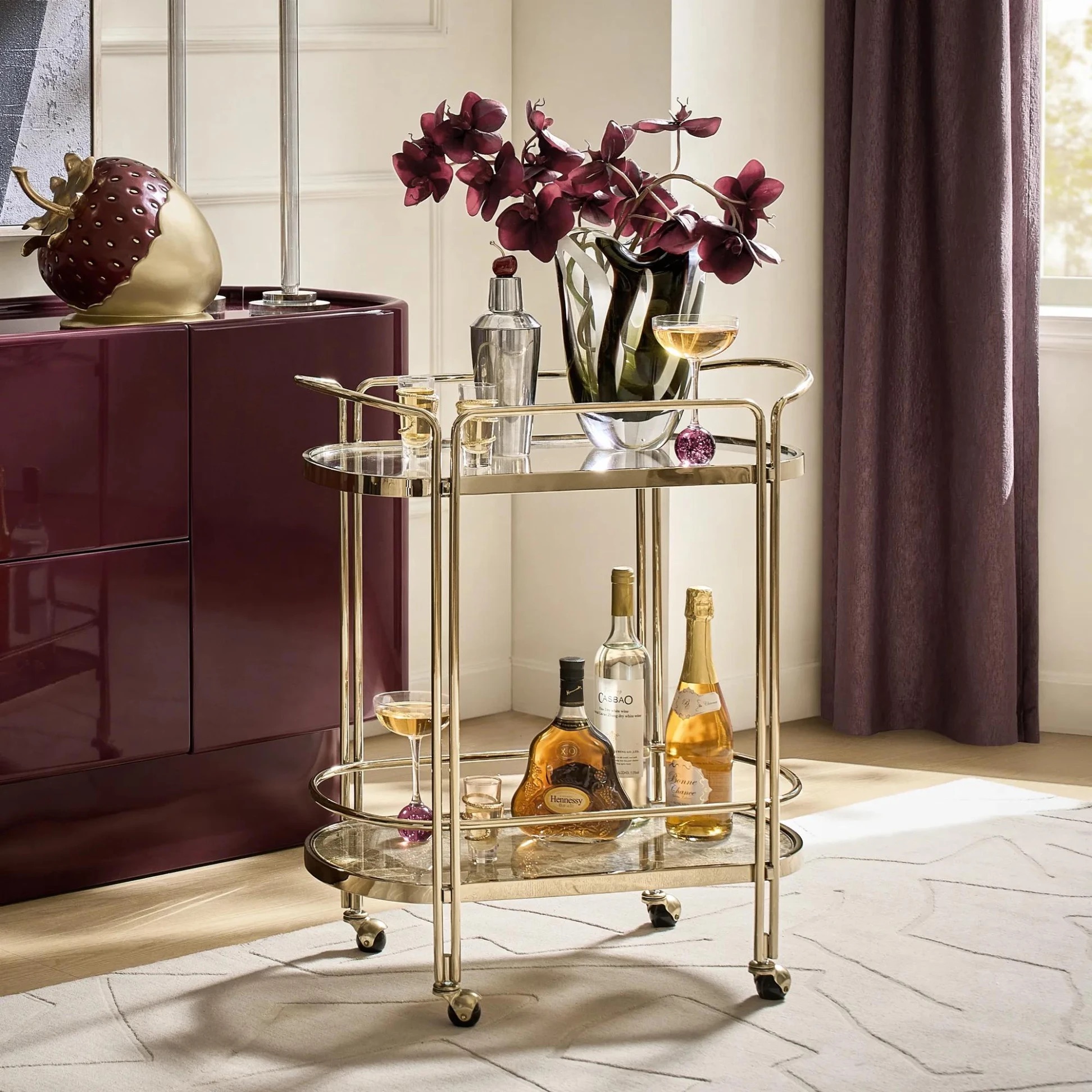
| Pick mirrored or glass-topped tables | The surface disappears, the room opens up | Coffee and console tables |
| Make furniture store things and do two jobs | Less clutter is the real space-maker | Storage coffee tables, benches |
| Go vertical with lighting and curtains | Draws the eye up and adds height | Slim floor lamps |
| Leave 30 to 36 inches to walk | Clear paths read as open space | Right-sized layout |
Throughout, the aim is a room that feels edited and intentional, where a little restraint reads as confidence rather than as empty space.
Start with the right seating
Seating is the biggest thing in the room, so it sets the ceiling on how open the space can feel. Get the seating right and everything else in the room falls into place more easily.
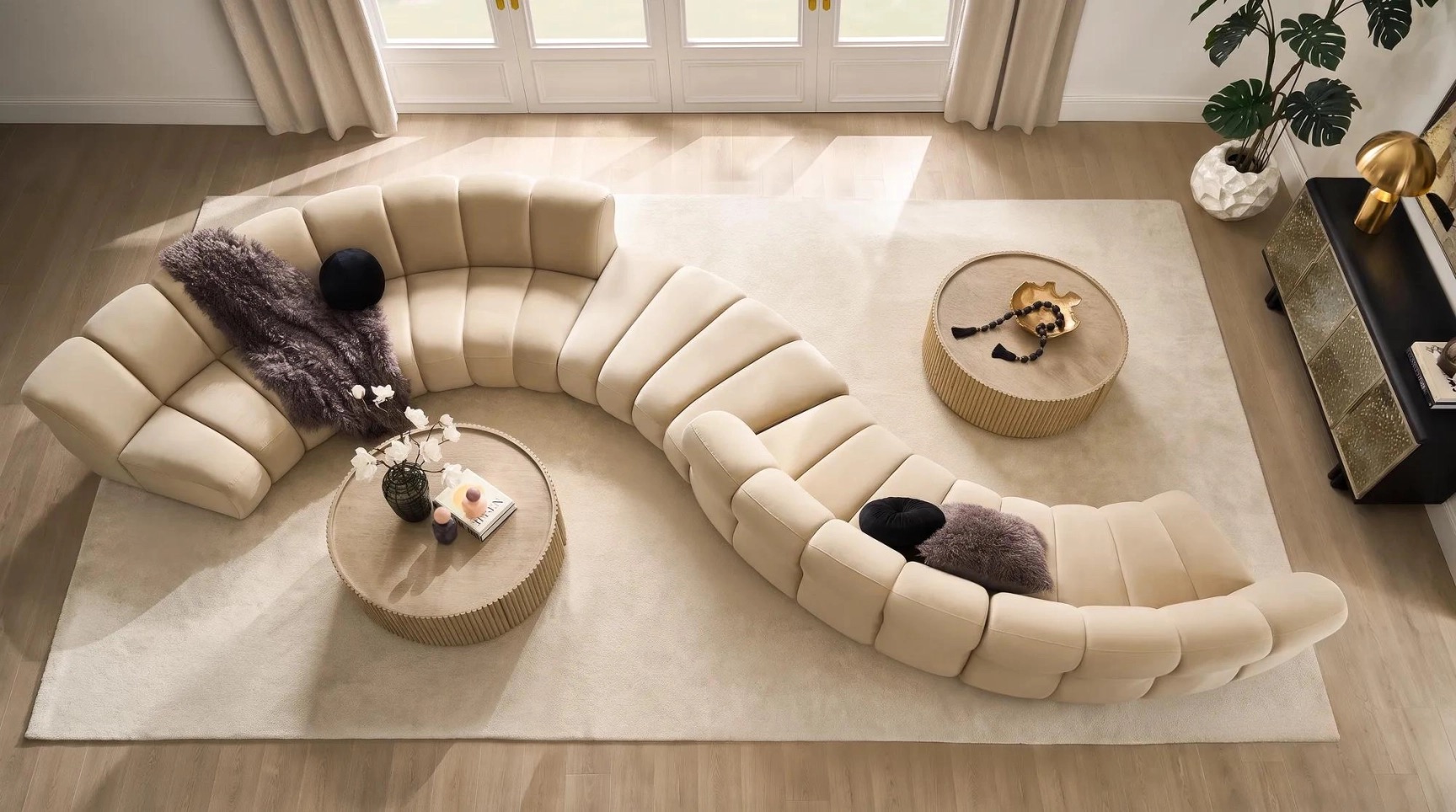
Size down a sectional instead of skipping it. The instinct in a small room is to avoid the sectional. The smarter move is to shrink one. A two-piece like the Irene Chenille Sectional seats more people in the footprint a sofa-and-chair pairing would eat, because it turns the corner instead of lining the wall. Prefer curves where paths are tight: the Curvia Velvet Sectional sends the eye around the room rather than into a hard corner.
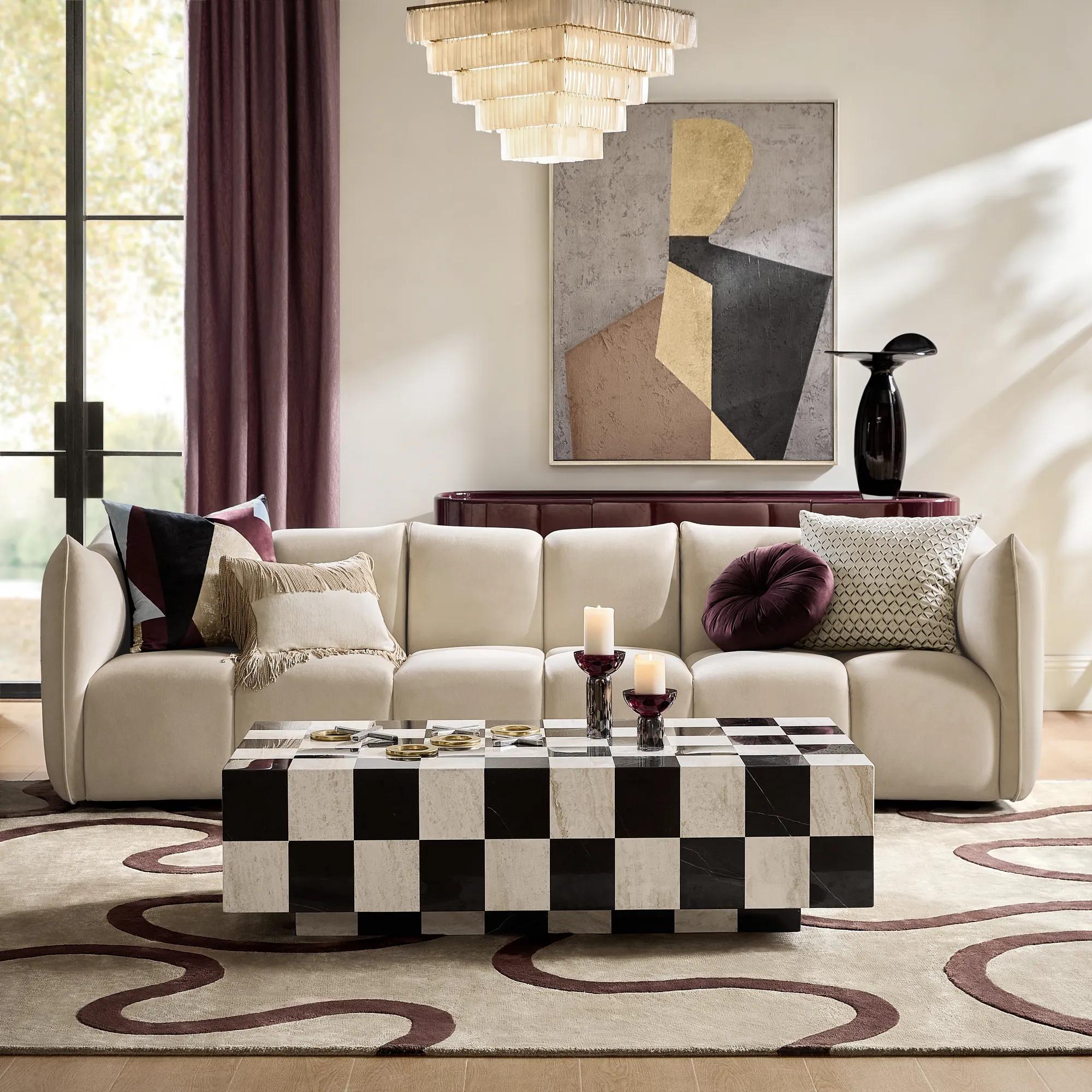
Float it, and put it on legs. Pull the sofa three to five inches off the wall and the room reads deeper, not smaller. Choose a frame that shows its legs, like the Kayla Sofa on its exposed hardwood base, so the floor runs unbroken underneath. Visible floor is one of the most reliable ways to make a room feel larger.
Let a slipcover earn its keep. A slipcovered sofa suits a room that has to be a den, a guest room, and dinner on your lap. The cover comes off and goes in the wash, so it stays crisp in a space that lives hard.
Shop the sofas and loveseats and sectionals sized for tight spaces.
Reflect and see through it
This is the part of the room where working with a small footprint and leaning into a little glamour turn out to want exactly the same things. Reflective and transparent surfaces bounce light and let the eye travel, so the room feels bigger and looks richer at once. Mirrored furniture is not a compromise in a small space. It is the point.
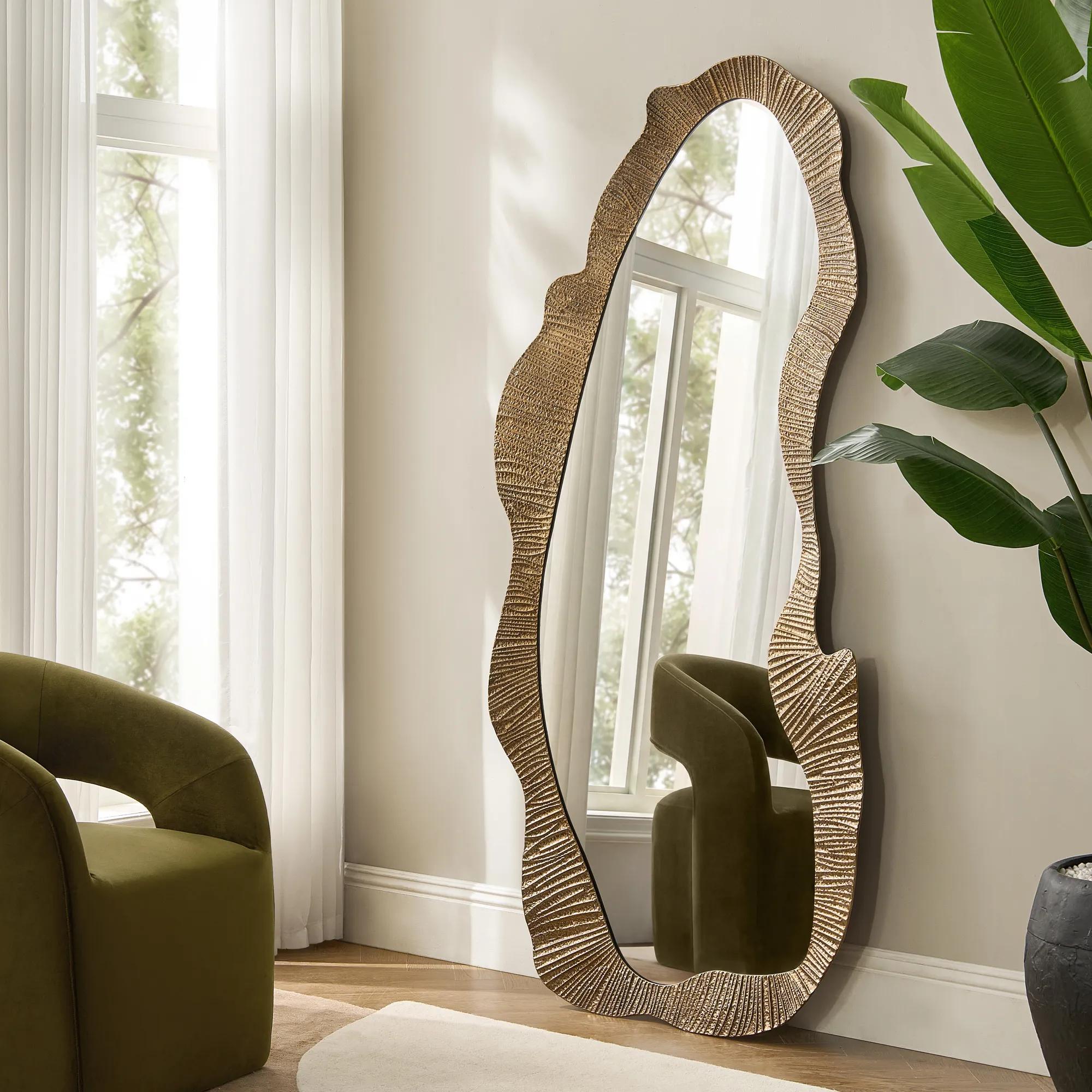
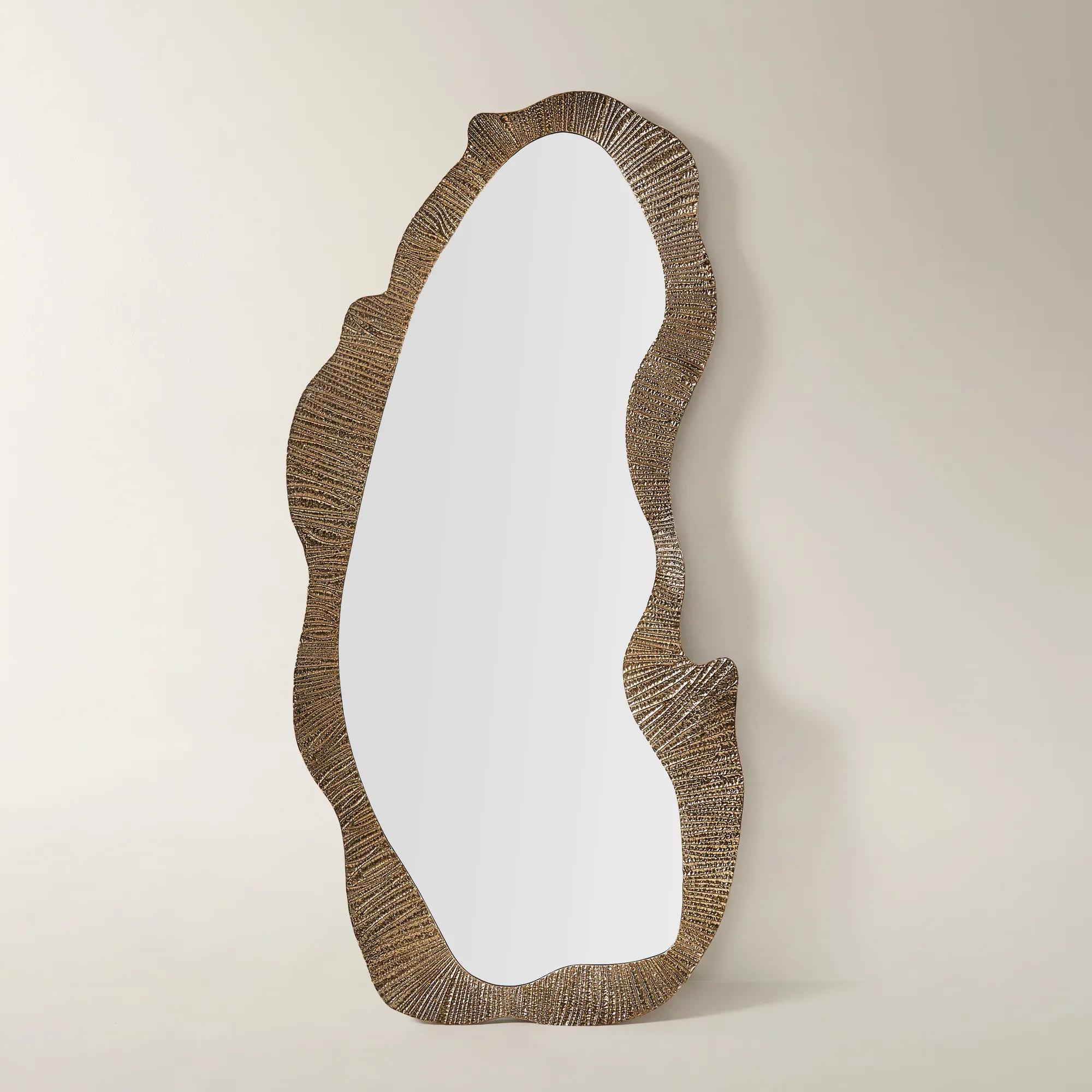
Hang an oversized mirror opposite the window. A large mirror across from a window reads as a second window, throwing daylight back and doubling the depth of the room. Go big, because a small mirror does small work. The Cara Floor Mirror stands over eighty inches in hand-forged iron, so you get height, light, and a sculptural line in one lean.
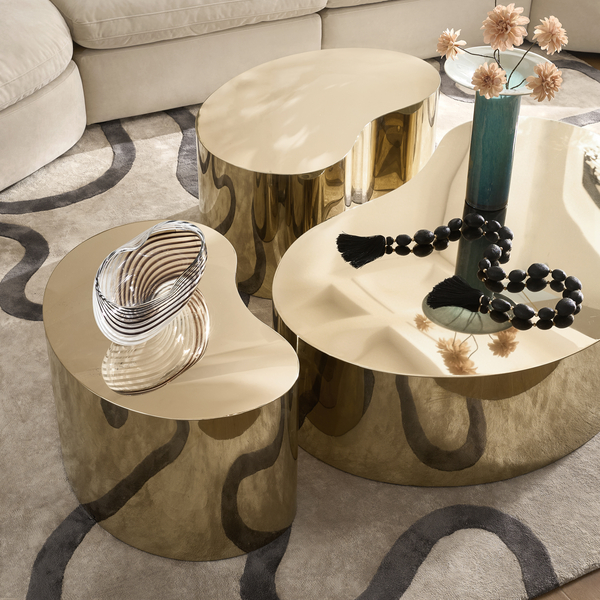
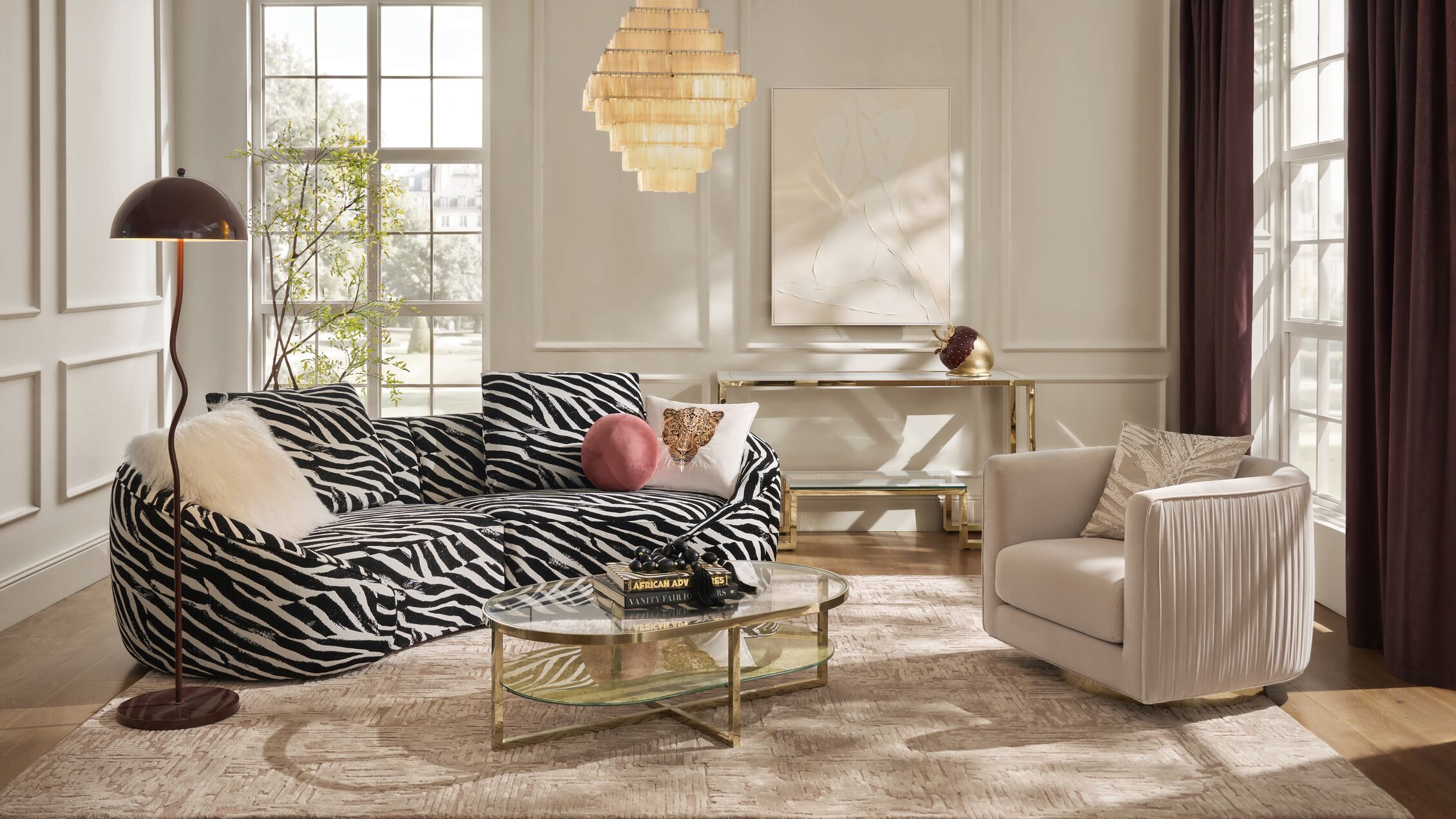
Choose tables you can see past. The coffee table sits dead center, so it is the piece most worth making disappear. A mirrored top like the Glimmer Bronze Coffee Table reflects the rug and ceiling instead of blocking them, and a glass top like the Sequoia is there when you need it and gone when you look past it. On a bare wall, a slim Glimmer Mirrored Console adds light and two drawers of hidden storage at once.
A reflective surface is the most flattering thing you can do to a small room.
Shop floor mirrors and console tables.
Make every piece work twice
More than any oversized sofa, it is clutter that makes a room feel small, so the most useful fix is furniture that quietly hides the mess and earns its place by doing two jobs in the space of one.
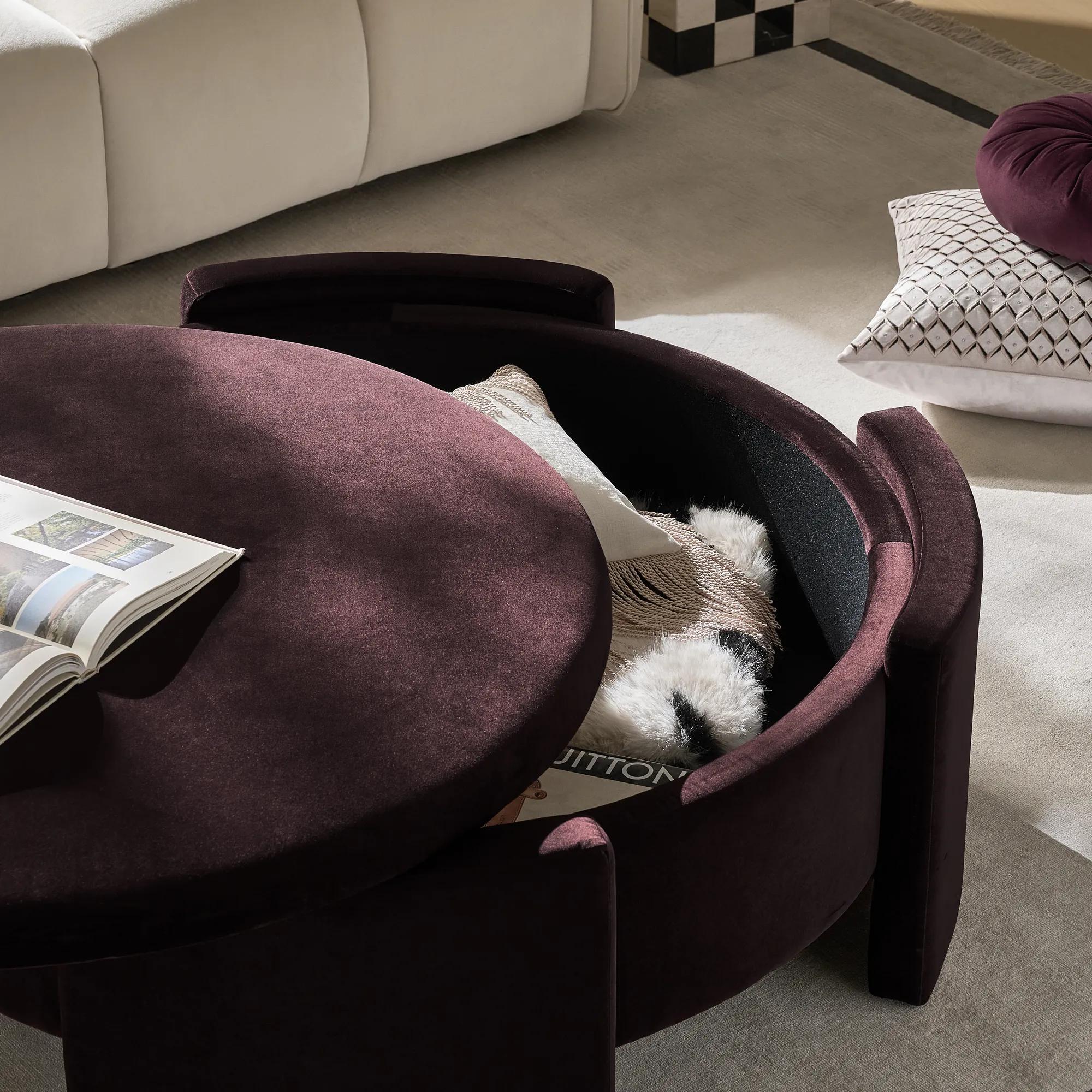
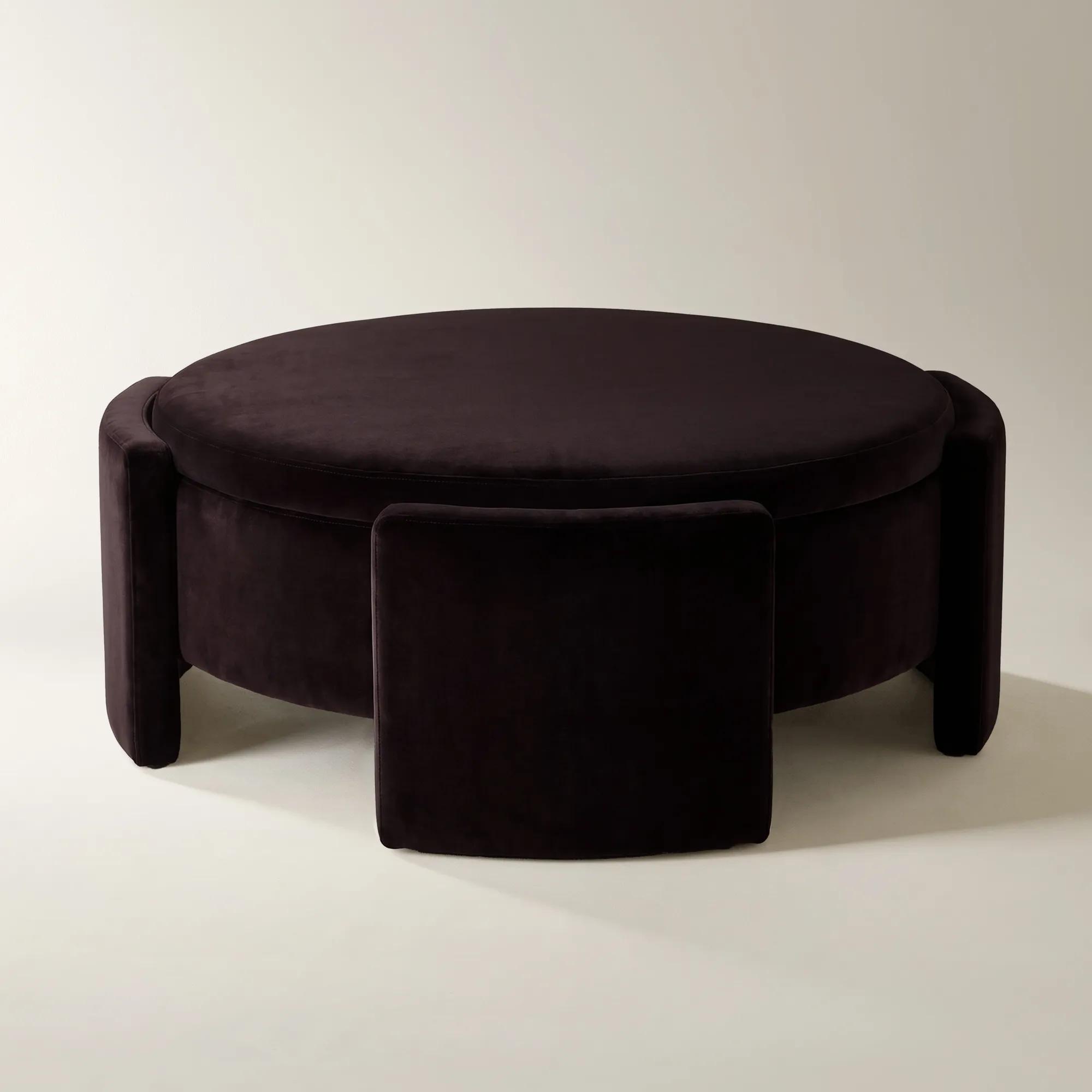
Swap the coffee table for one with storage. The Jora Storage Coffee Table opens to a roomy interior and flips between a soft velvet top and a hard surface, so it is an ottoman, a table, and a hidden chest in one footprint.
Keep tables you can tuck away. The Bond Nesting Coffee Table is a set of three in travertine and ash that spreads out for guests and stacks back into one small footprint when they leave.
Turn dead space into storage seating. A storage bench under the window adds a seat and a hidden chest for throws and games, and a channel-tufted ottoman pulls up as a footrest, a drink table with a tray, or an extra seat. In a small room, a piece that does only one thing is a luxury you cannot afford.
Shop storage-smart coffee tables and benches and ottomans.
Draw the eye up
When you cannot borrow floor space, borrow height. Anything that lifts the eye makes the ceiling feel taller, and the room feel larger with it.
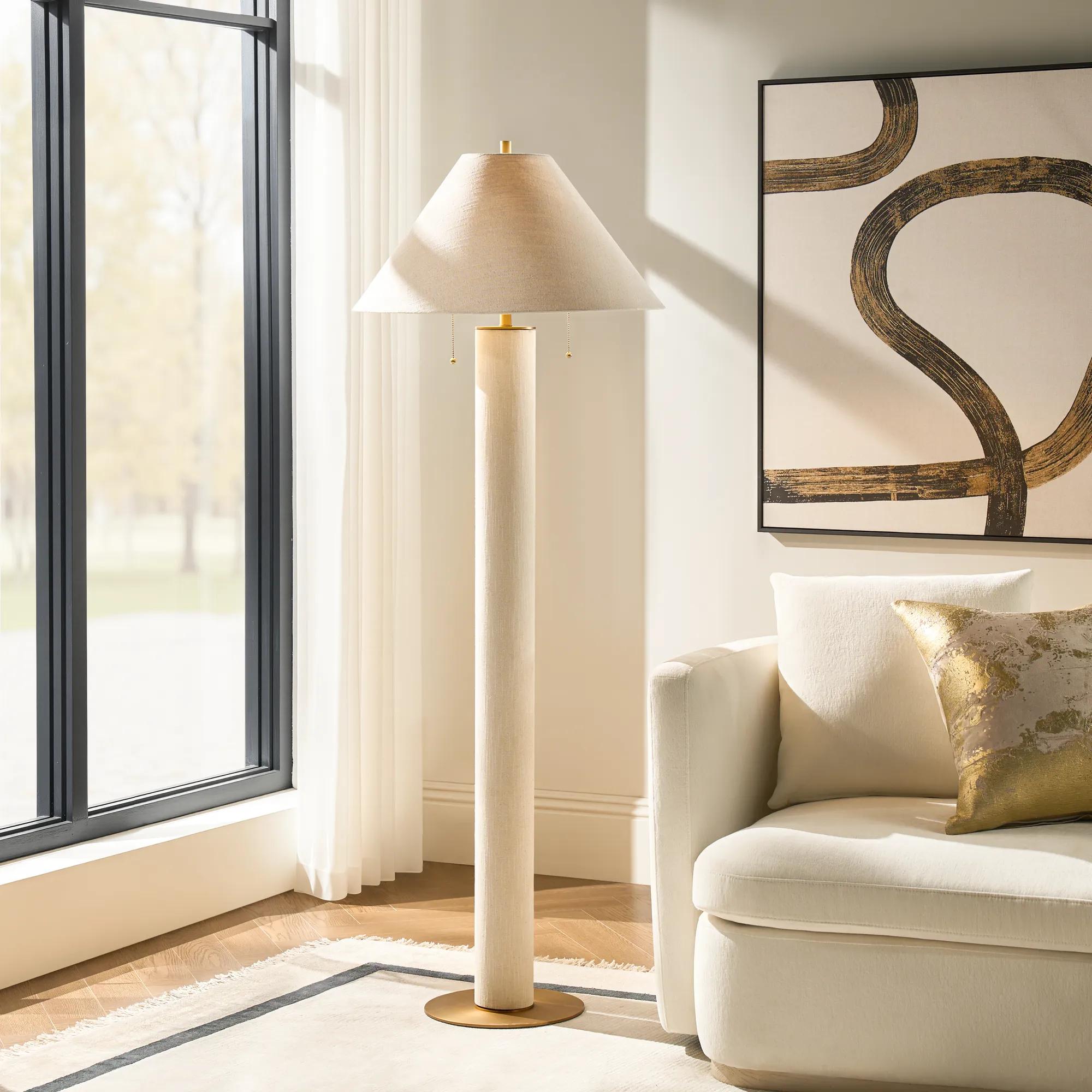
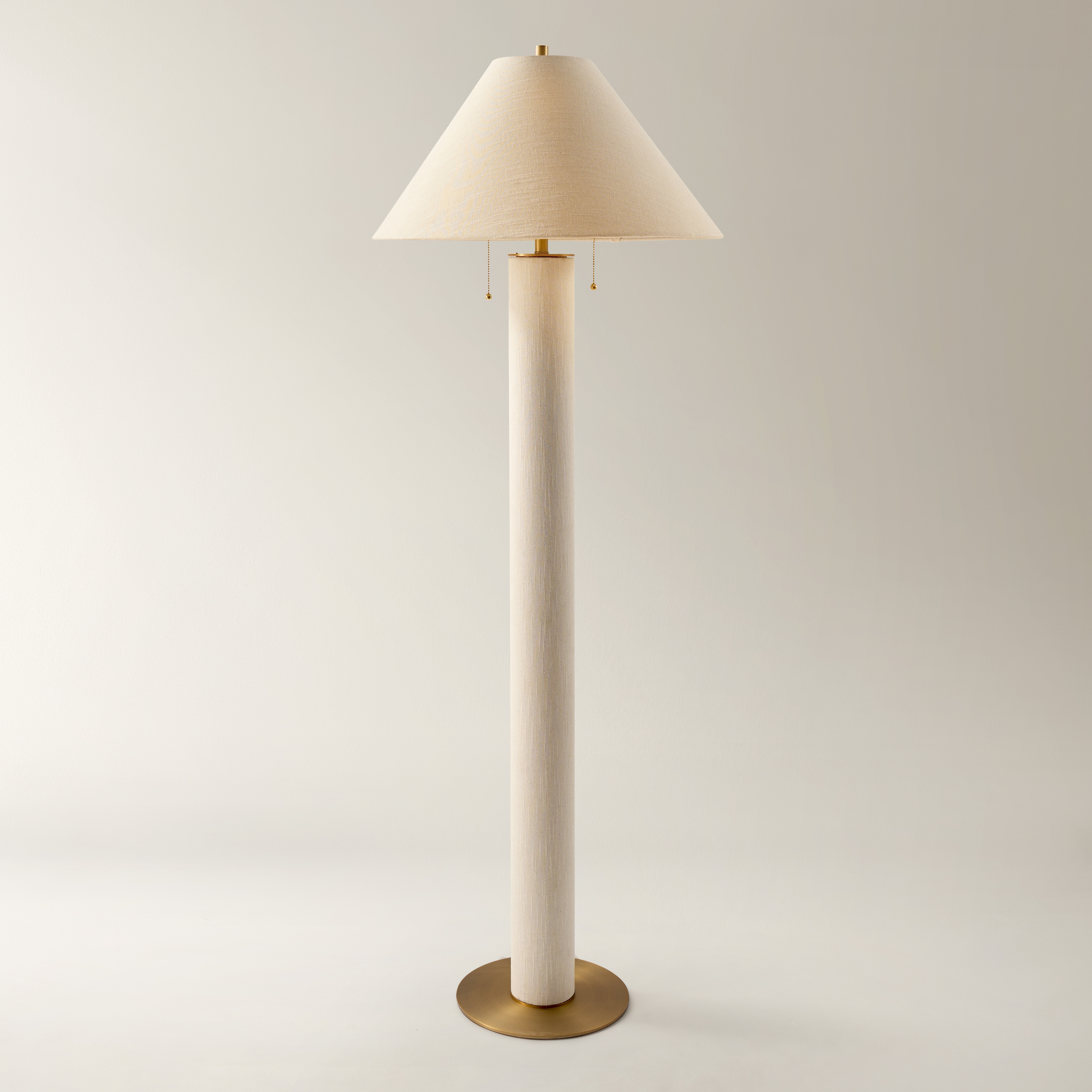
Trade the table lamp for a slim floor lamp. A table lamp claims a surface you cannot spare. A slim floor lamp lights the same corner from the footprint of a dinner plate and adds a vertical line while it does it. Prefer an open or glass form, like the Bolla Bubble Lamp, so the light reads as sculpture rather than a solid column.
Hang curtains high and wide. This one is free and it is the fastest way to add height. Mount the rod six to twelve inches above the frame and let it run eight to twelve inches past each side. The window looks larger, the ceiling looks taller, and floor-length panels close to the wall color keep the line unbroken. Hang your art on the high side too, and let it lead the eye toward the ceiling.
Shop slim floor lamps.
Get the spacing right
You can own every right piece and still feel cramped if the spacing is off. This is the part most guides skip, and it is what separates a room that works from one that only photographs well.
- Leave room to walk. Keep main walkways between 30 and 36 inches, and never drop a primary path below about 18. Clear paths read as space.
- Mind the sofa-to-table gap. Leave 14 to 18 inches between the sofa and coffee table, near enough to reach a drink without getting up and with room to stretch your legs past.
- Buy the bigger rug. The most common small-room mistake is a rug stranded in the middle of the floor. Size up so the front legs of your seating sit on it, and the whole floor reads as one surface.
- Round off sharp corners. Where paths are tight, a round coffee table keeps traffic moving and takes the hip-check out of the walkway.
Then edit. Pull one thing out of the room and look again. A small space with three considered pieces feels richer than one crammed with eight, because the eye has somewhere to rest. Editing is what makes a room feel expensive, and it costs nothing.
Small living room FAQs
What colors make a small living room look bigger?
Light, cool, tonal palettes open a room because there are fewer hard breaks for the eye. But "always white" is not a rule. Wrapping the walls, trim, and ceiling in one deep color can make a small room feel like an intentional jewel box. The move that always works is keeping those surfaces in a single family, light or dark, so nothing chops up the space.
Does mirrored furniture actually make a room look bigger?
Yes, and it is one of the most underused small-room tricks. A mirror reflects light and extends the sightline, so the eye reads more depth than the walls hold. A large mirror opposite a window does the most work; mirrored tables add the effect at furniture scale while giving you a surface or storage too.
What patterns make a small living room look bigger?
Large-scale, tonal patterns open a room, while tiny, busy, high-contrast prints can clutter it. Vertical patterns like a stripe add height. Do not avoid pattern altogether: one confident pattern gives the room a focal point, and a room with a focal point reads as more composed.
How do you arrange furniture in a small living room?
Float at least one piece off the wall, leave 30 to 36 inches for walkways, and anchor the seating on a rug big enough to sit under the front legs. Keep 14 to 18 inches between sofa and table, and give the room one clear focal point to organize around.
Big style, small footprint
A small living room rewards deliberate choices far more than cautious ones, which is what makes it the more interesting room to design in the first place. Show off the floor, move the light around, tuck the clutter away, and leave yourself room to walk, and a tight space starts to feel generous. Then add the one bold piece that makes it unmistakably yours.
Not sure where to start? Our Design Services team will help you plan the layout and pick the pieces, at no cost.
The pieces from this guide are shoppable below, or browse the full living room collection to keep going.